Need a job? Want a better job? Just looking for a change? You are in the right place. Don’t miss these recent job announcements. (Remember, you can always stay abreast of jobs as soon as they get listed by signing up for our Job Listings email.)
These are paid listings. And they work! We’ve helped hundreds of people find great jobs and great staff members. If you’d like to post a job on the Portland region’s most popular bike and transportation news platform, you can purchase a listing online for just $100. Learn more at our Job Listings page.
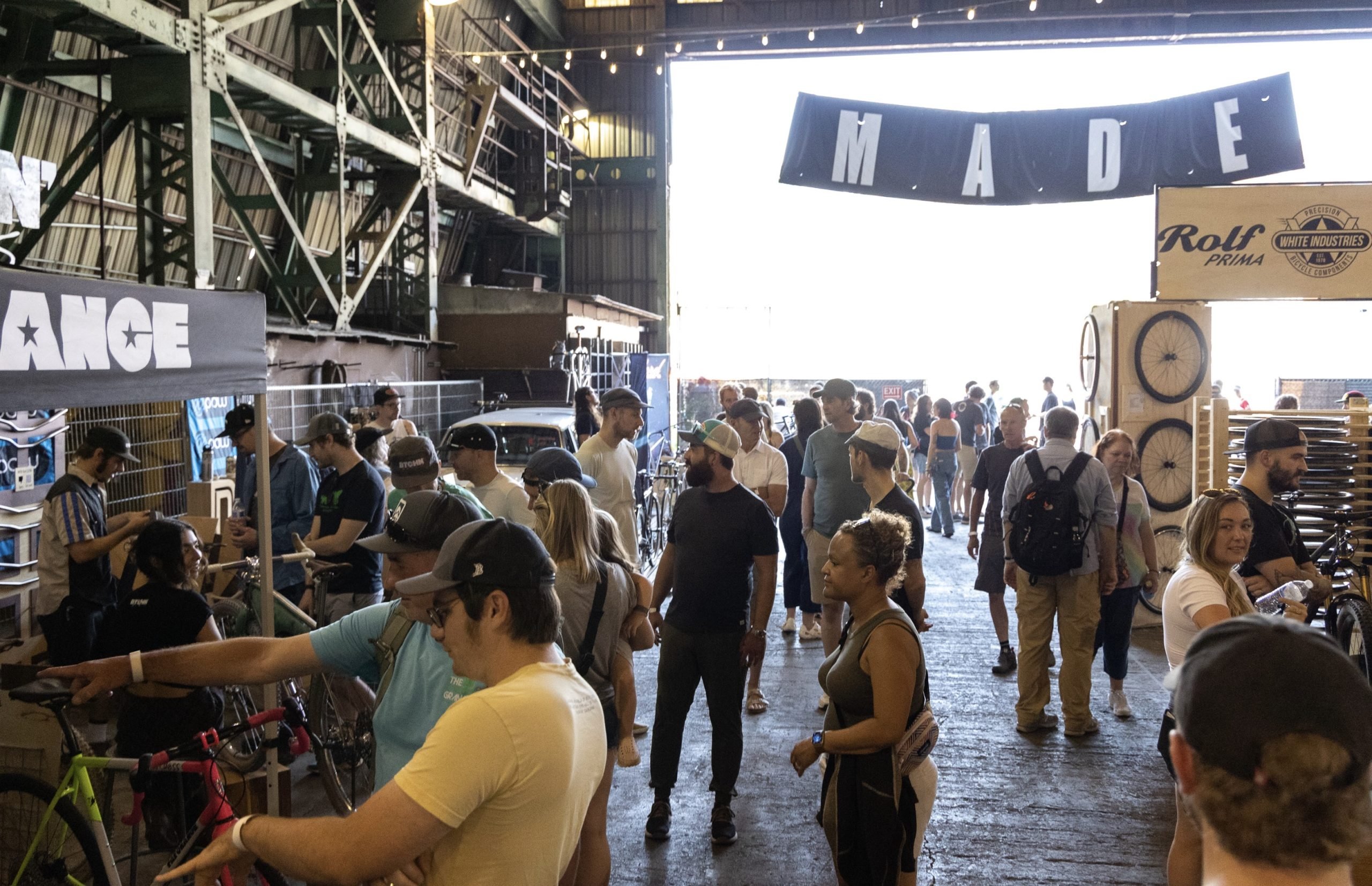
Get hyped all you silly bike lovers, the biggest show of the year is coming! MADE will return for its third year at the Zidell Yards in South Waterfront starting this Friday, August 22nd and running through the weekend. MADE is your chance to revel in the artisanal beauty and craft of bicycles, parts, and all types of other cool things that are made by actual cool human beings — many of whom you can actually meet in person at the show.
Just think: Right now, dozens of builders from across the country are putting finishing touches on brand new bikes they’ve made specifically for MADE. The colorways, the build, the lines and angles — each element thoughtfully chosen so that the whole is something much more special than any individual part. Whether it’s the complete bikes you’re most excited about, or the intriguing parts and components you’ll find, or even the oft-whimsical swag that’s likely to emerge from the show floor — MADE has something for everyone.
Official poster.
This year, show organizer Billy Sinkford (who some of you met at Bike Happy Hour last week) says they’ll have a test ride area. Now that should be interesting. And of course there are some pre-show events already scheduled like a social ride Thursday morning and the big shindig at Cyclepath NW later that night where No. 22 Bicycle Company will offer a sneak peek of their rigs.
Advertisement
Over 200 builders and brands are expected to be at the show and this year the floor plan has been expanded to fit them all. I’ve also heard that adult beverages can be consumed throughout the show floor, so you don’t have to remain corralled in the beer garden.
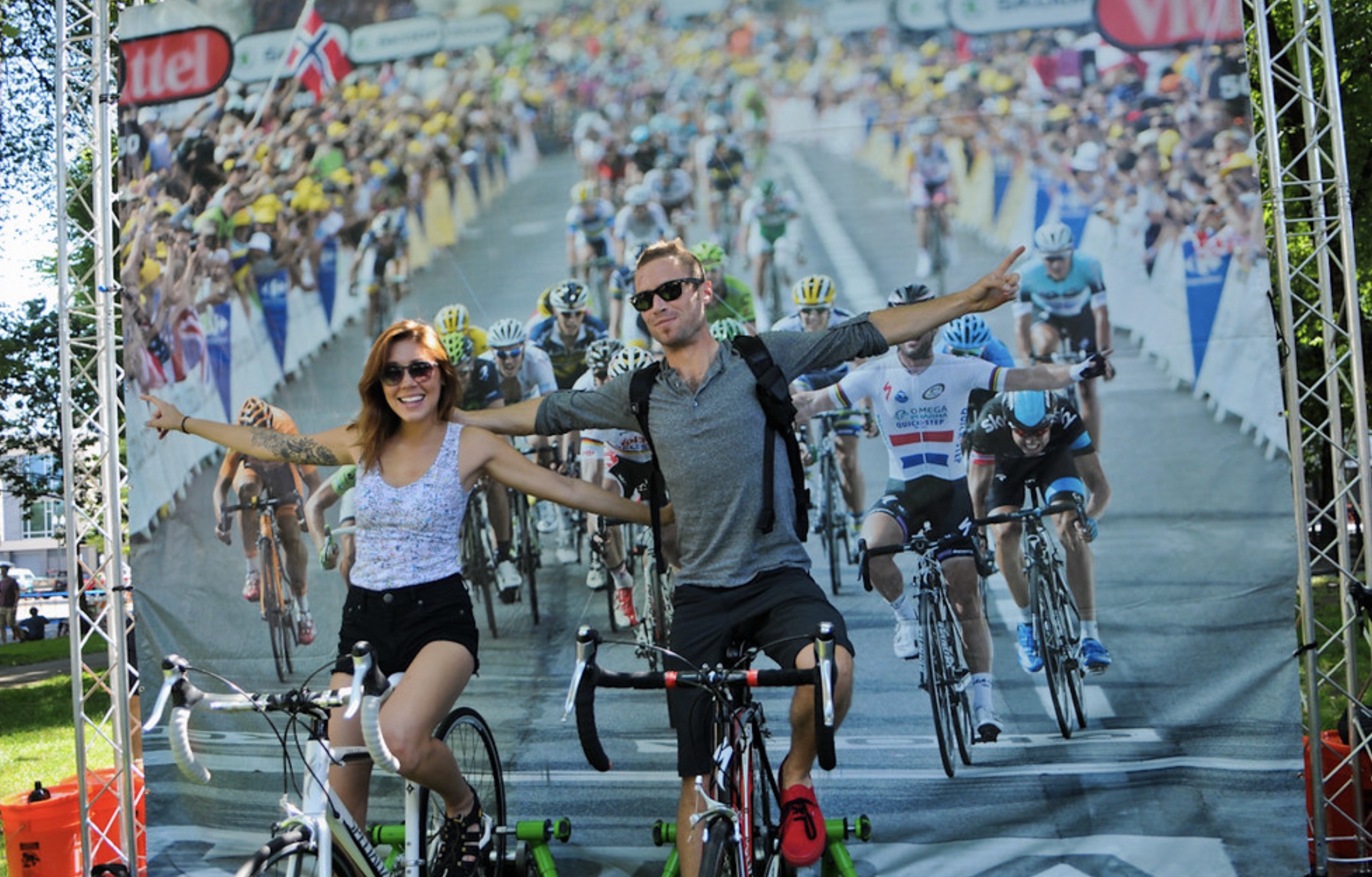
I’m more excited than usual this year because it’ll be my first time attending! I’ve been out of town the first two years and haven’t been able to be there, so I am very hyped to finally take part. I’ll talk to builders and attendees, shoot photos and share them here, and probably do a video or two as well. If you plan to attend, I’ve got a discount code that will give you 25% off a single day or weekend pass (good for one ticket only). Just use code BPMADE (case sensitive) when you check out on the ticket purchase page.
Check the MADE.bike website for all the official info and tickets and be sure to follow MADE on Instagram for the latest and greatest updates.
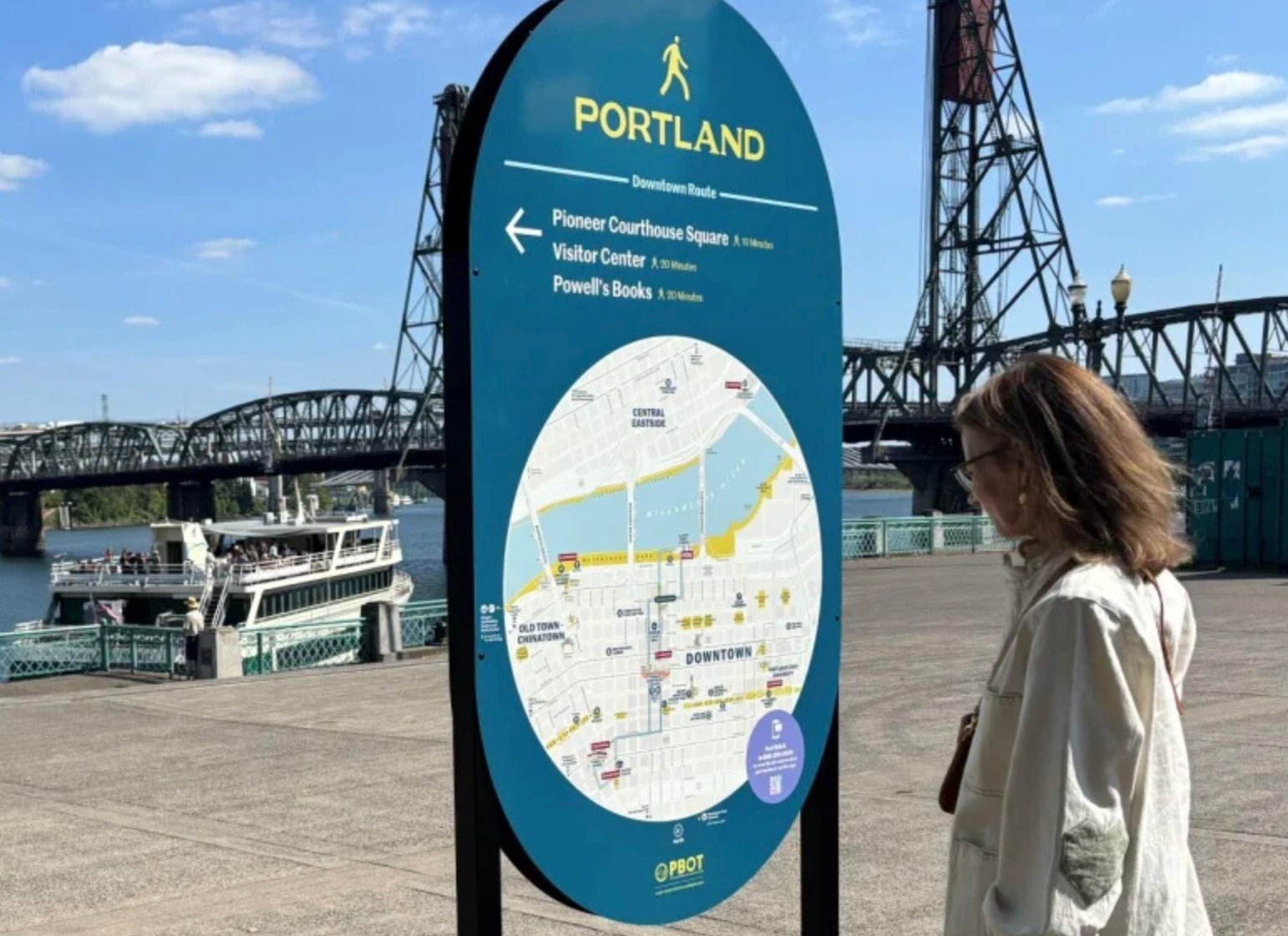
One of the new signs at Salmon Street Springs. (Photos: City of Portland)
There’s often backlash whenever we talk about spending money on marketing instead of infrastructure. But sometimes you just need to show people that something exists (a.k.a. marketing), and then try and persuade them to do it. When it comes to downtown Portland, contrary to all the haters and false narratives, it really is a great place to walk. It’s not that big and we’ve got nice things to see, awesome events going on (especially in summer) with cool shops and food destinations all over.
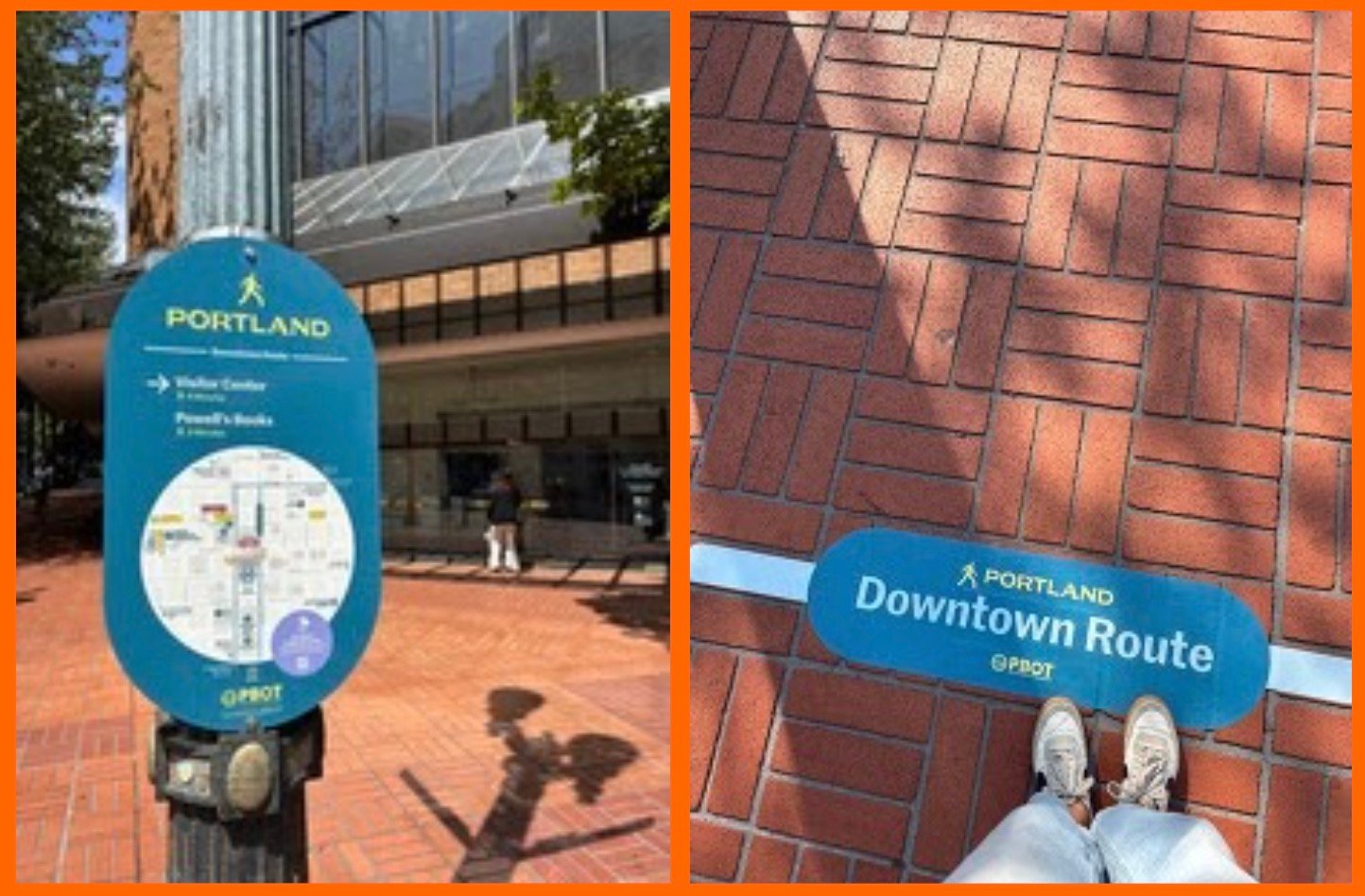
So I’m pretty optimistic about the joint pedestrian wayfinding effort from nonprofit Oregon Walks, Travel Portland and the Bureau of Transportation (PBOT). Officially launched the first week of August, this $150,000 project (and please don’t tell me how many crosswalks they could have built with that because the funding comes from a tourism-related grant), is a bunch of signs and markings that help folks get around downtown without a car. There’s also a companion website that lists events and shops along the route.
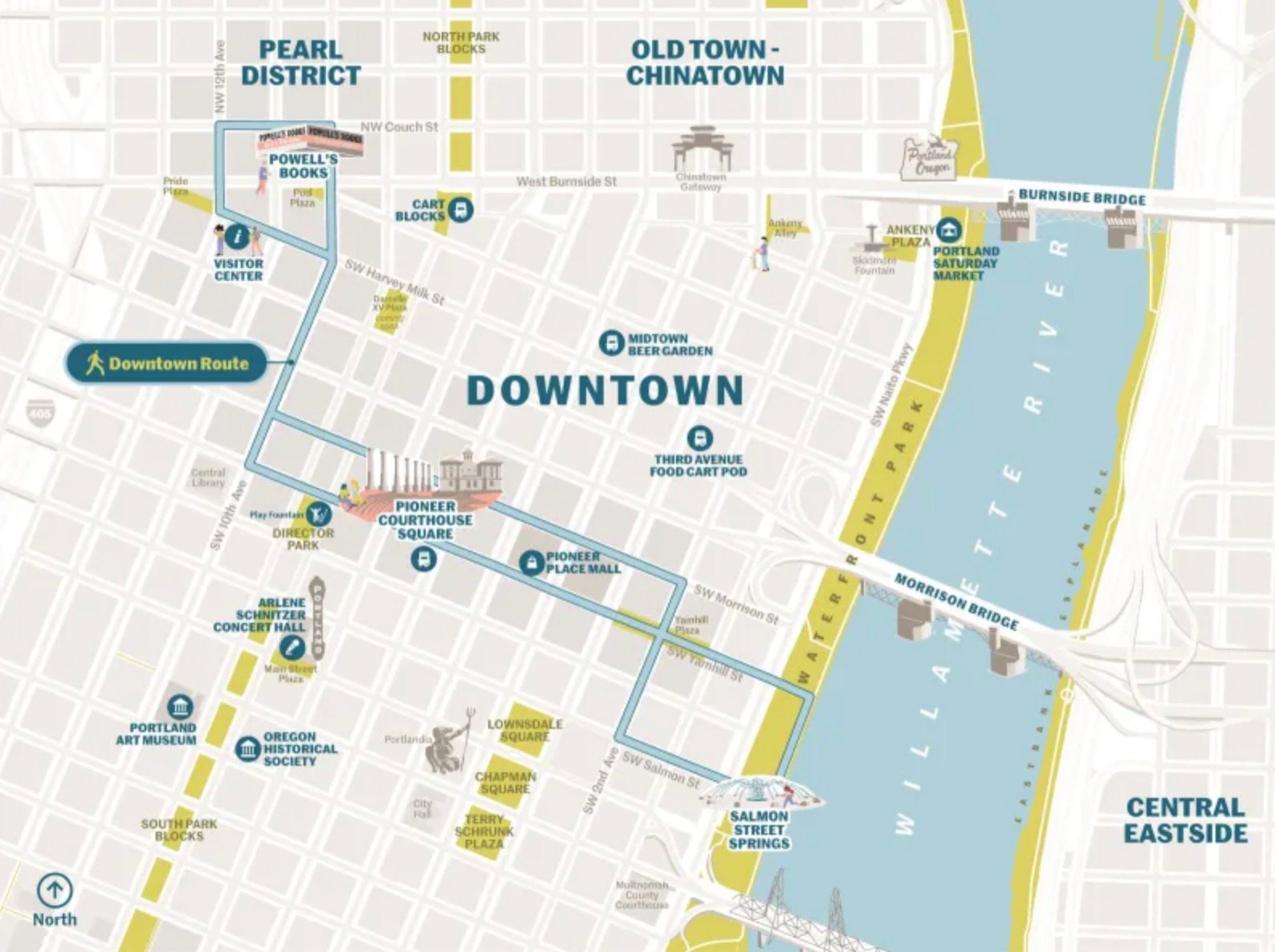
The route.
It’s called “Walk Portland” and it’ll be a three-month pilot that will run through the end of October. It’s a pilot and yet another effort to increase foot traffic in the downtown core. After the three months is up, professional planners and marketing folks will get together to assess what they’ve learned, combine it with public feedback, and design a future permanent wayfinding system
Advertisement
The Walk Portland route goes between Salmon Street Springs on SW Naito to Powells Books on NW Couch. They’ve chosen the SW Yamhill/SW Morrison couplet to take folks between SW 2nd and SW 10th. The route also utilizes SW Harvey Milk Street.
Oregon Walks Executive Director Zachary Lauritzen said the system will help people feel more confident — whether you’re new to town or have lived here your whole life. And Travel Portland President and CEO Megan Conway says it’s about being inclusive: “A place cannot be truly welcoming without being accessible and pedestrian-friendly.”
If you need an excuse to check out the cool new signs and markings, be sure to put the Downtown Sunday Parkways on your calendar for September 14th — part of the route intersects with the Walk Portland route.
Advertisement
And tomorrow night (Tuesday, August 19th), PBOT Pedestrian Advisory Committee will meet in person for a walking tour of the system. Everyone is welcome to join them. If you’d like to hear about the Walk Portland initiative from city planners and other smart folks, meet at 6:00 pm at the southwest corner of Pioneer Courthouse Square. The plan is to do a one-mile walking route that will, “allow participants to see all of the different interventions for the pilot, including both directional (small) and orientation (large) signs, nudge signs, sidewalk decals, and viny storefront window coverings.”
If you can’t make Tuesday’s night walk (where you can share feedback directly with city staff), be sure to take the survey after you’ve taken a closer look. Feedback is really important on things like this, because it’s being done specifically to see how people respond to it.
For more info on the project, check out WalkPDX.com.
Here are the most notable stories of the past seven days…
Seattle’s biking stride: It’s hard not to be a bit envious of the groove that Seattle’s transportation bureau is in right now. With several key bike projects lining up and solid political leadership behind adopted bike plans, their DOT has dubbed this “Hot Bike Summer.” (The Urbanist)
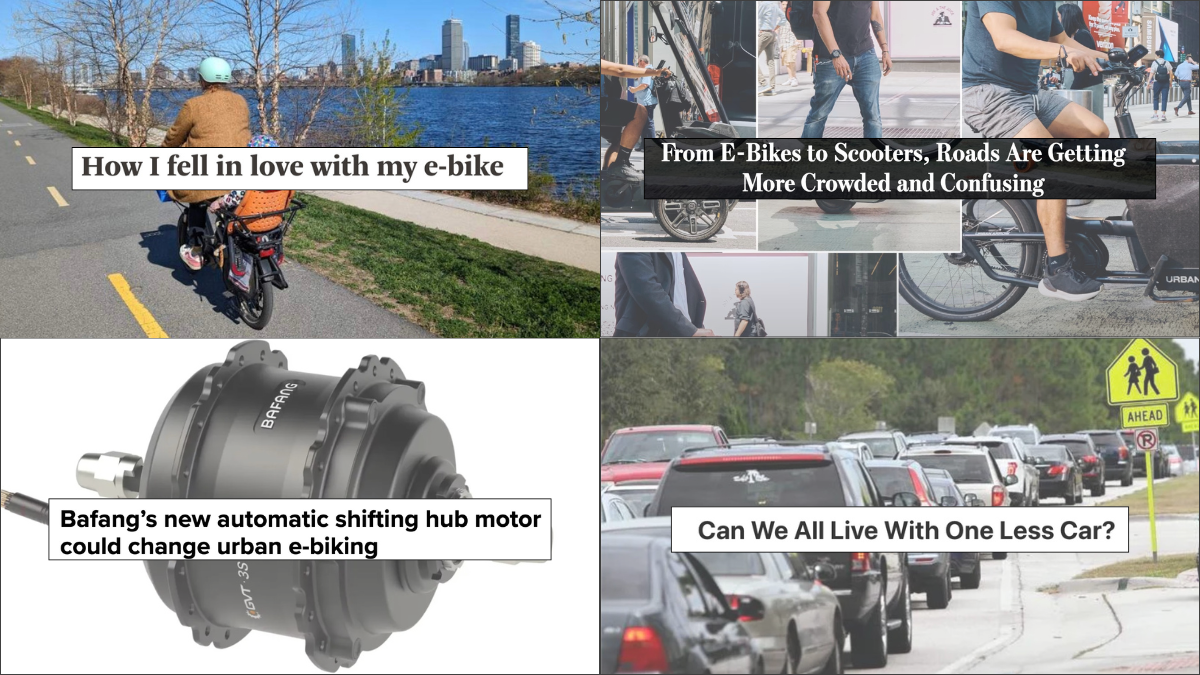
Auto-shifting, finally? The bike industry has chased automatic shifting systems for many years, but this attempt from Bafang, which integrates it all into a nifty three-speed rear hub looks very promising. (Electrek)
Body image: Concerns and debate over pro cycling’s dysfunctional relationship with food, body image, and personal health have reached such a high level that a rider advocacy group has called on the UCI (international governing body of pro cycling) to act. (Velo)
Not just cars: As non-car vehicles like bikes and scooters have gotten more popular, cities must adapt and create more safer space on the road for them. If not, we risk backlash from Big Auto and public sentiment will sour. (Wall St. Journal)
Advertisement
Manhattan revitalization: Lots of talk in Portland about how to revitalize downtown and I’ve been saying the same damn thing the entire time: Make it harder and more expensive to drive there, while boosting the quality of bikeways and walkable public spaces and we’ll see a renaissance of the central city on par with what’s happened in Manhattan. (Gothamist)
Armadillos in L.A.: Looks like Los Angeles’ DOT is also looking to upgrade from plastic posts, but instead of the nice concrete curbs we get, they’re using plastic “armadillo” curbs from Zicla. (Streetsblog LA)
No more street art: Cities are facing a mandate to remove rainbow-colored crosswalks and other street art due to an order from the Trump Administration whose DOT Secretary believes they are often political in nature and don’t belong in the street. (Washington Post)
It’s all about power: I like how this essay gets at one of my key talking points about why e-bikes are so popular: Because they alter the typical power dynamic on American roads and make bike riders feel like they’re on a bit more equal footing with car users. (WBUR)
The low-car trend: I love seeing a level-headed analysis of how it’s actually not that big a deal to live with one less car. This type of article gives me hope! (The Future of Where)
Video of the Week: OK, it has finally happened. I’ve said for years that Portland is the best city for bicycling in the world and some folks just don’t understand. Well, look at this, YouTuber David Wen visited and says Portland is the “coolest city for cycling in the world.” Now just add better bike infrastructure and we will be the Best Cycling in the World for real!
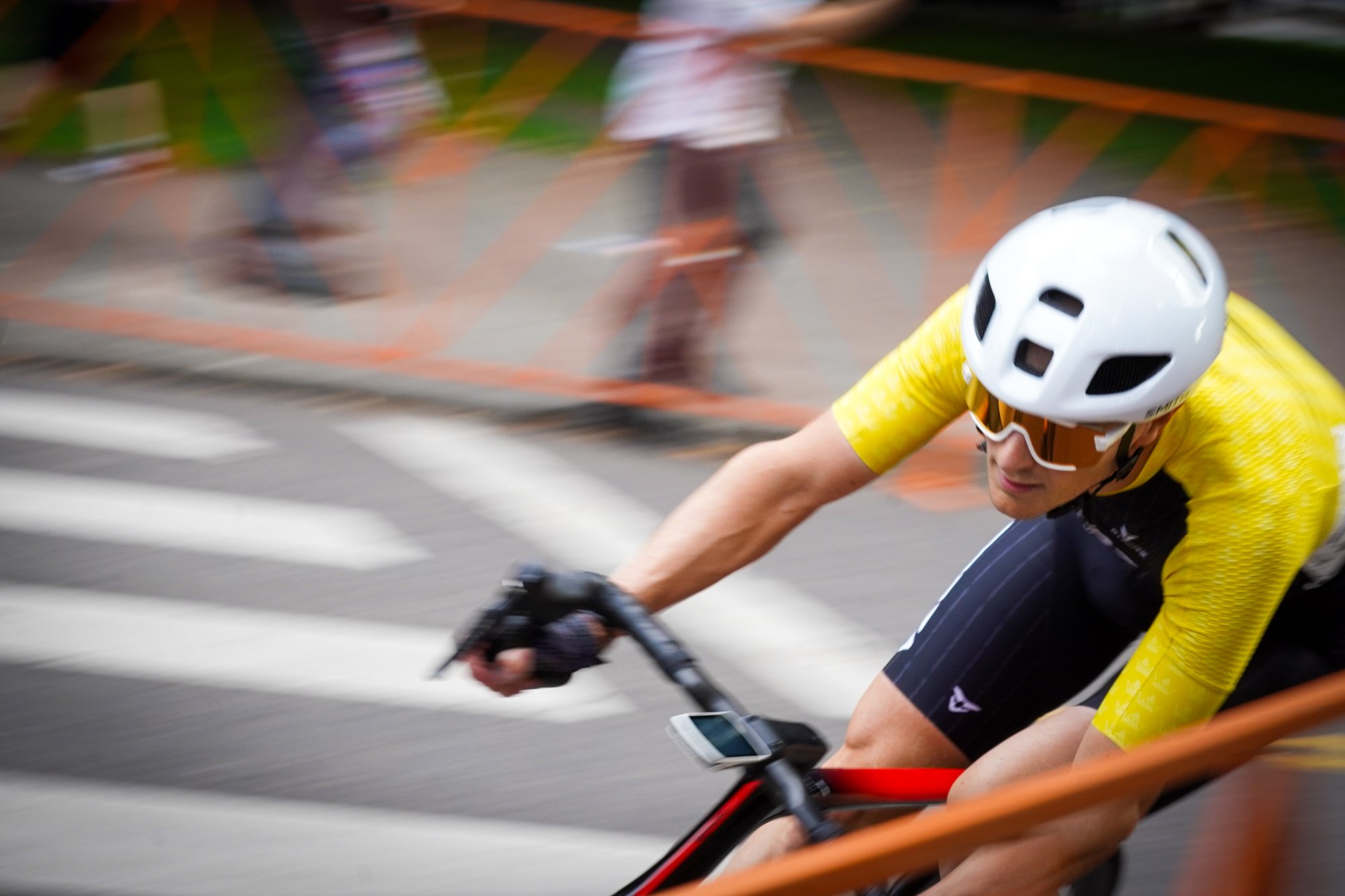
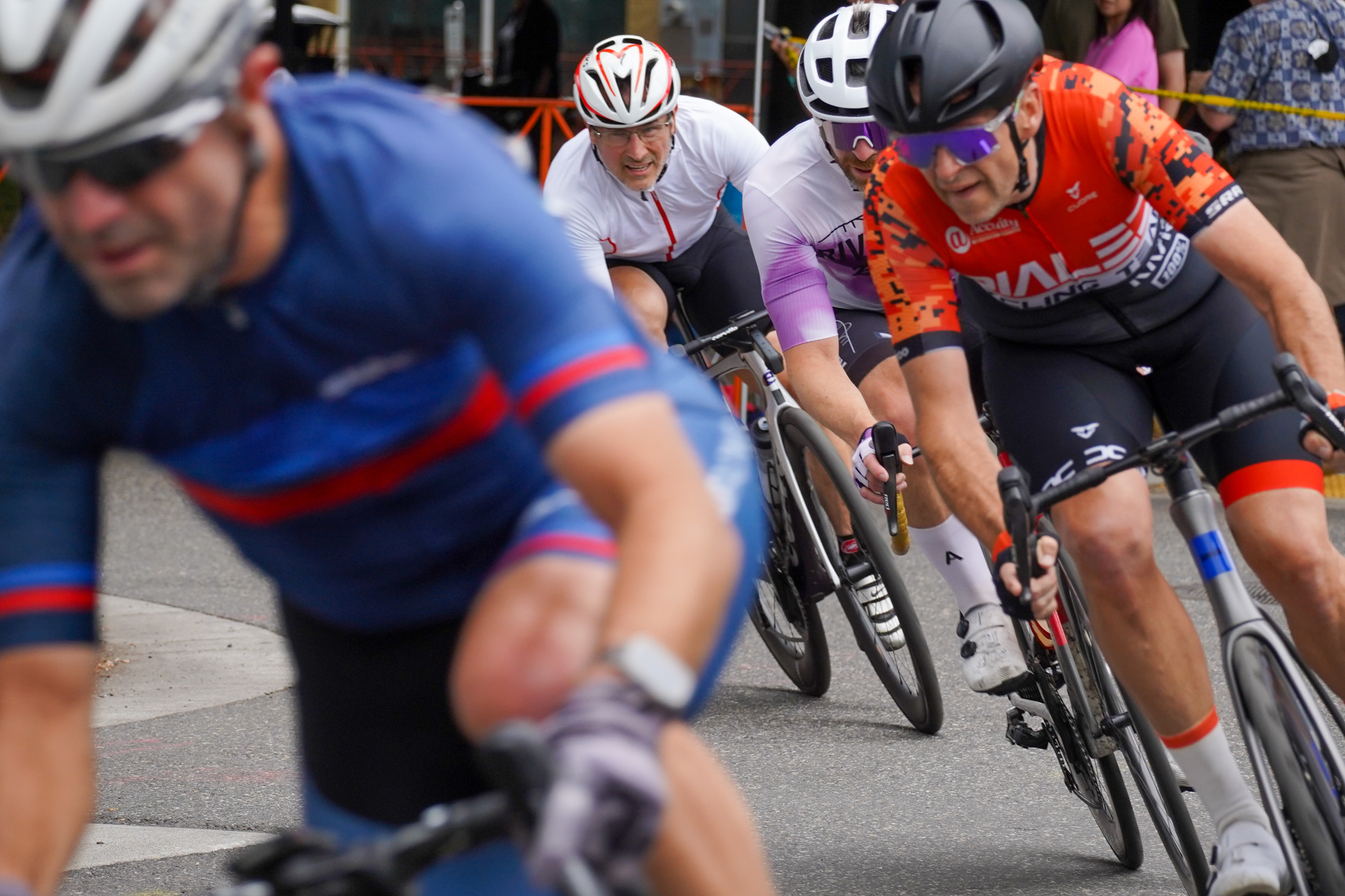
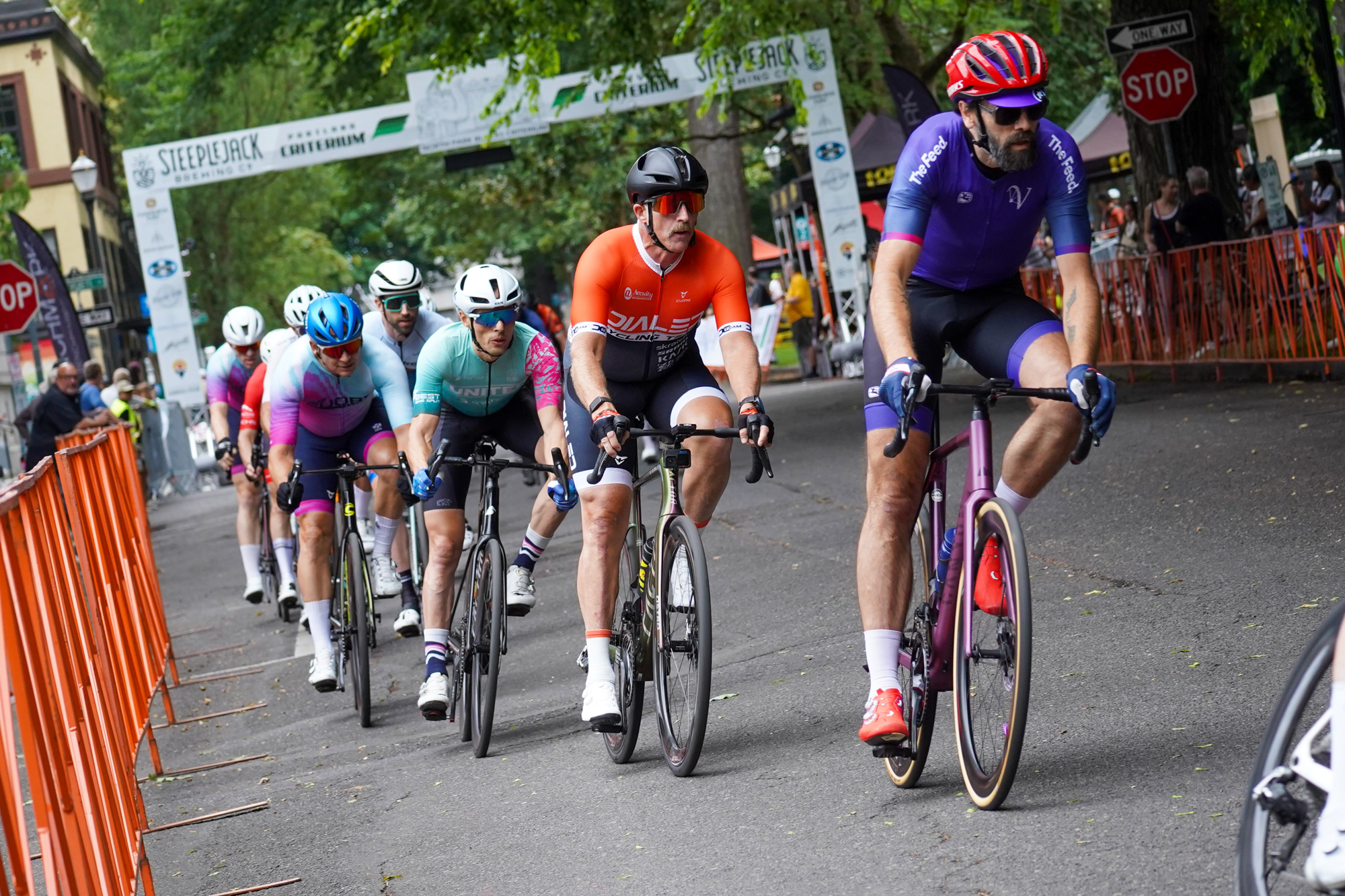
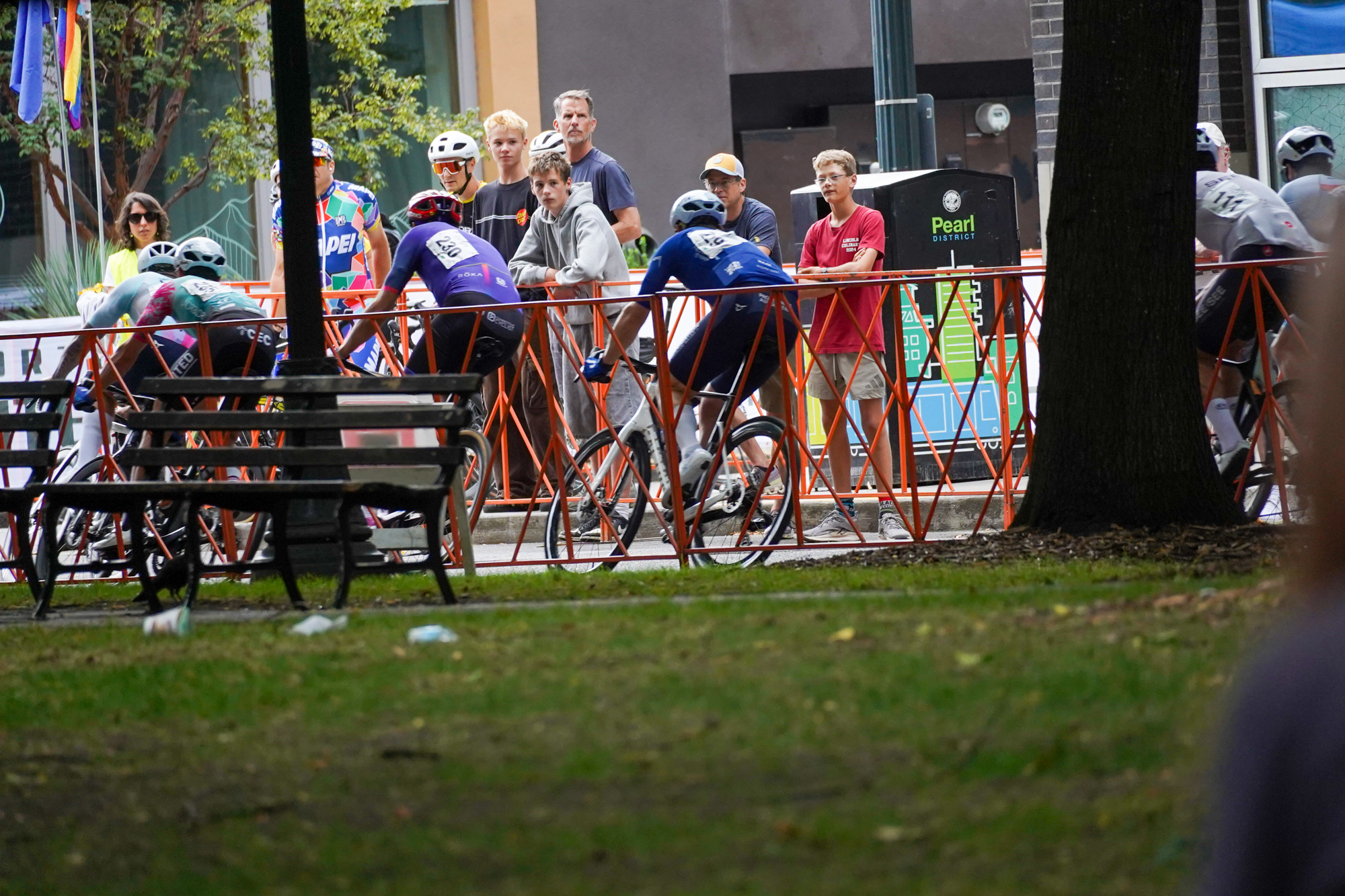
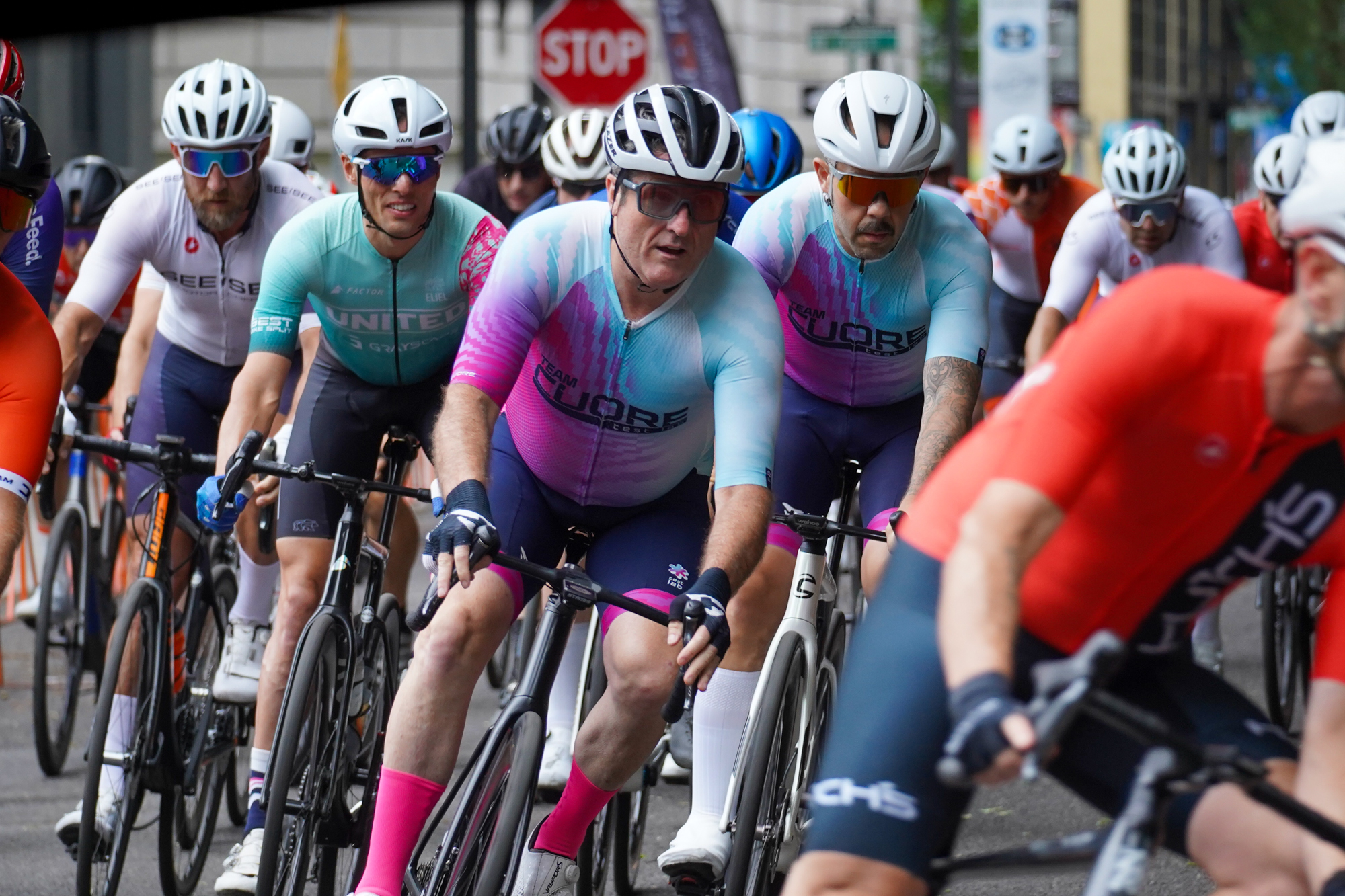
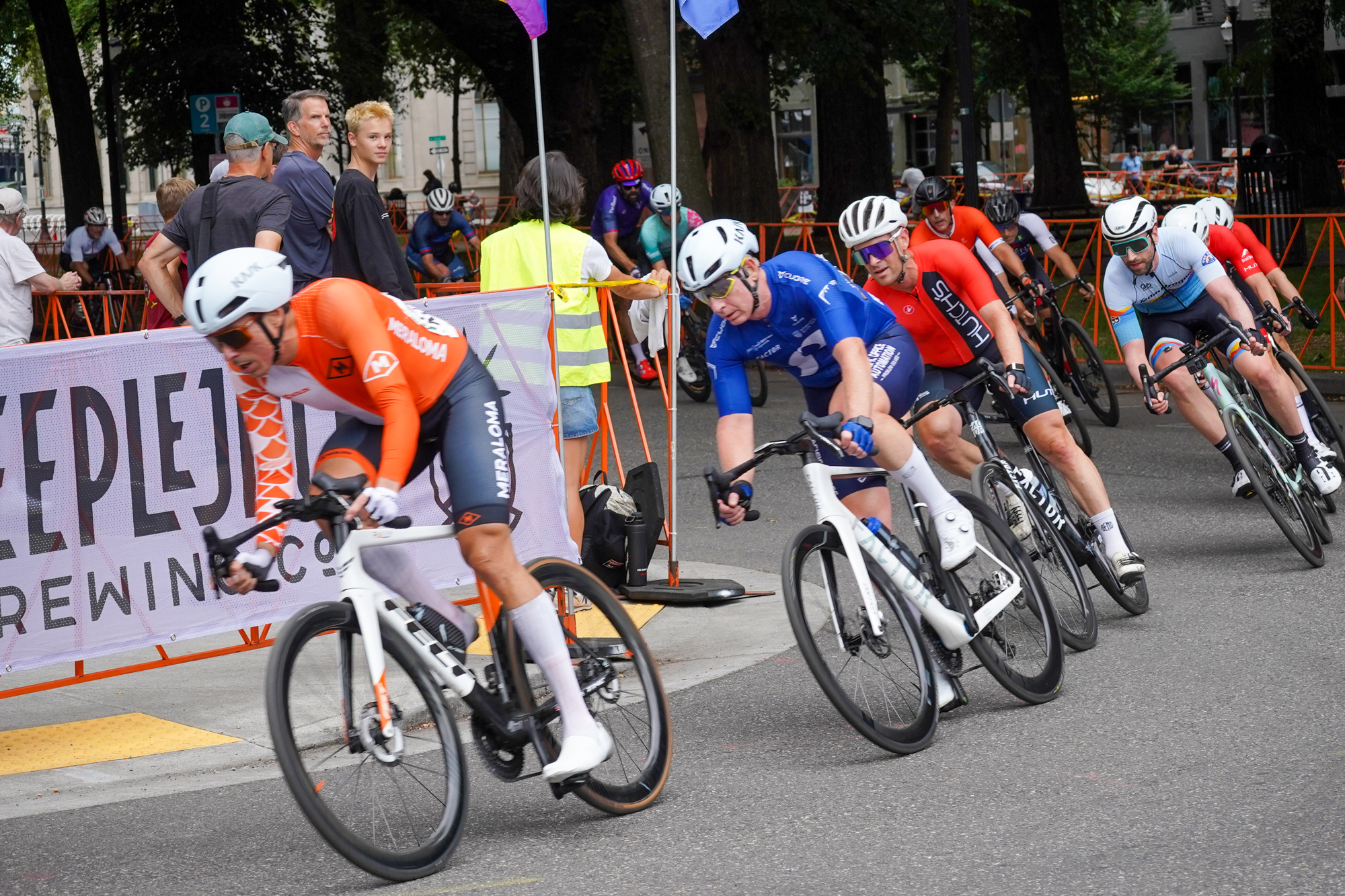
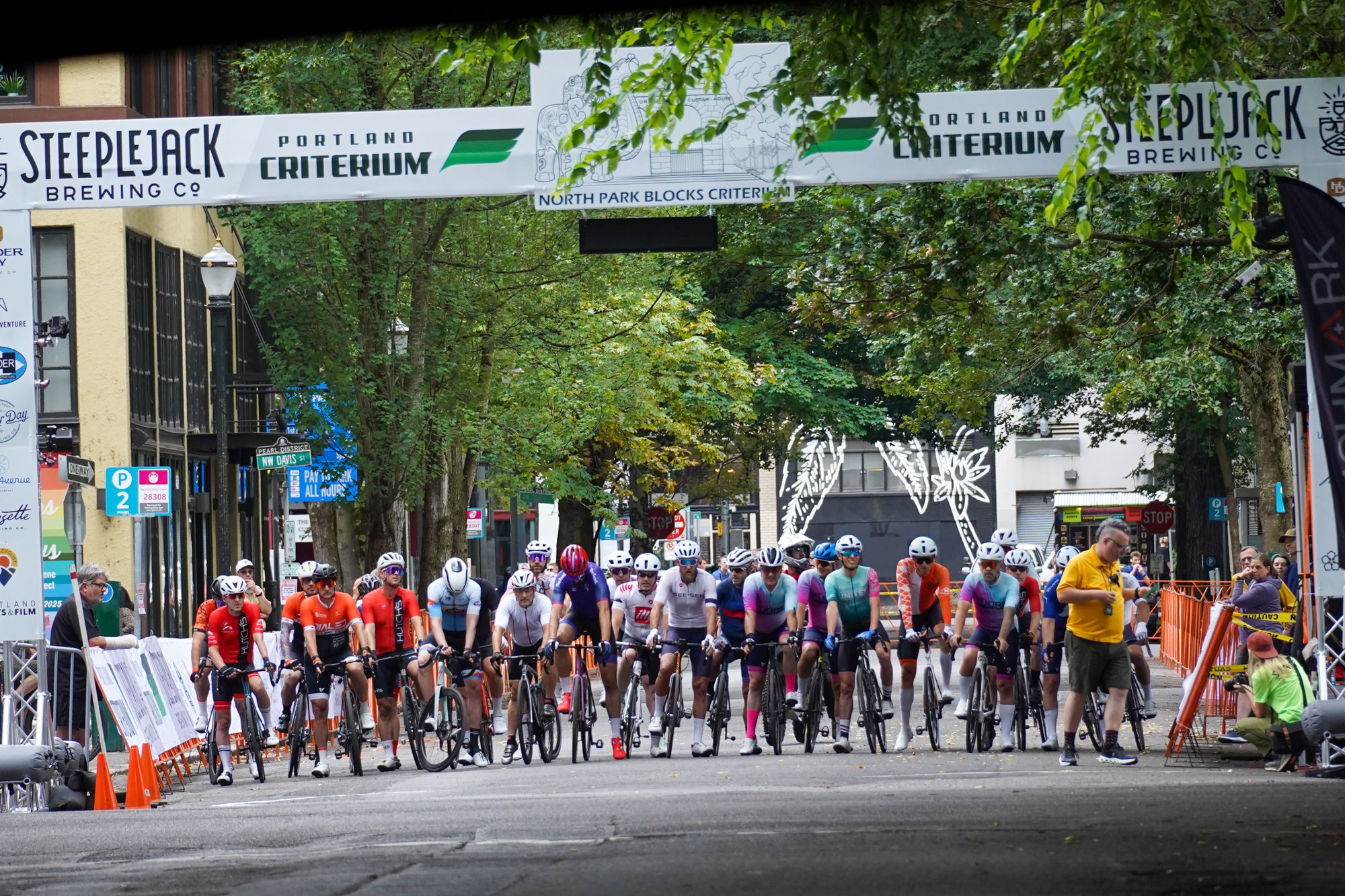
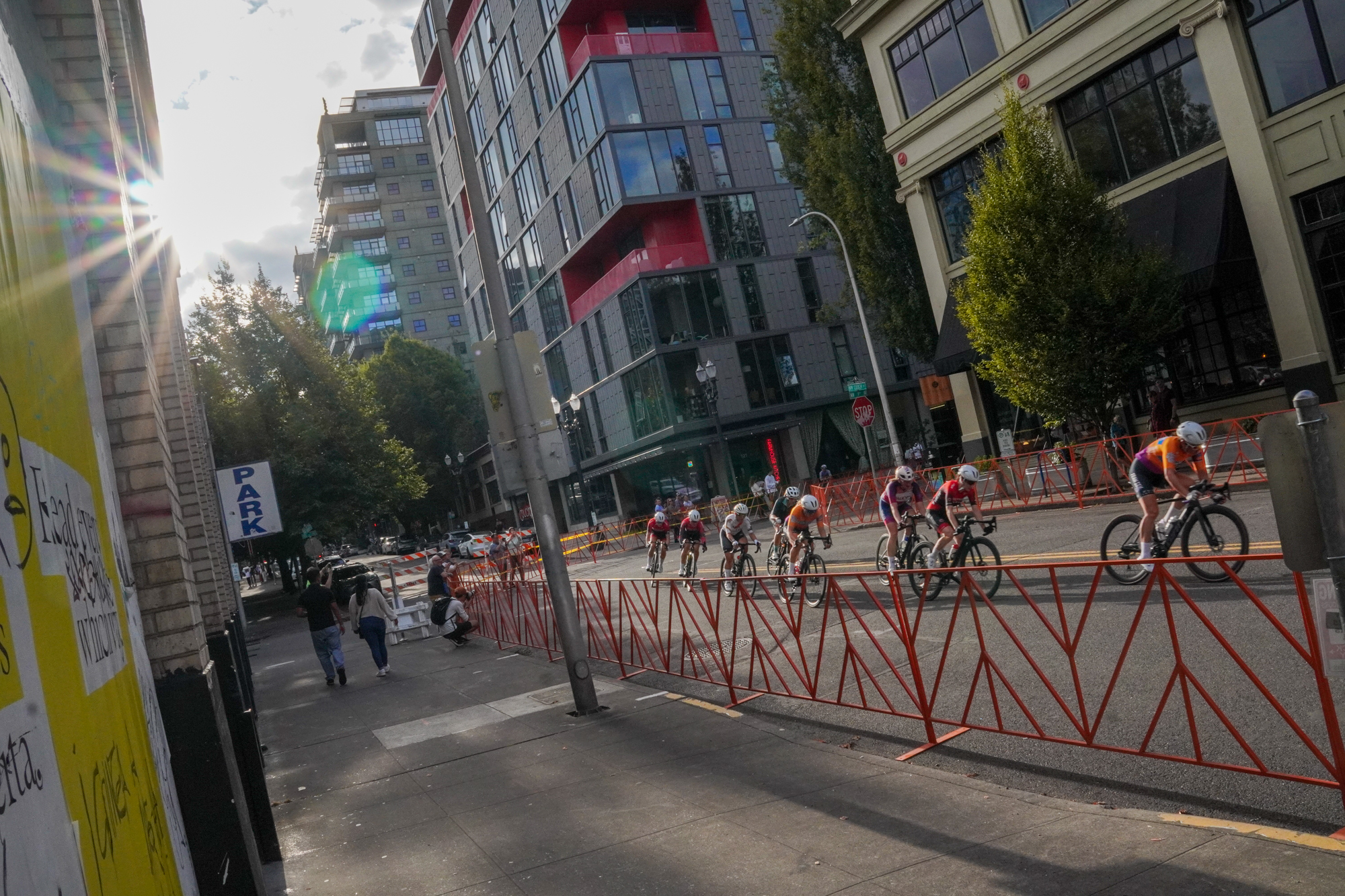
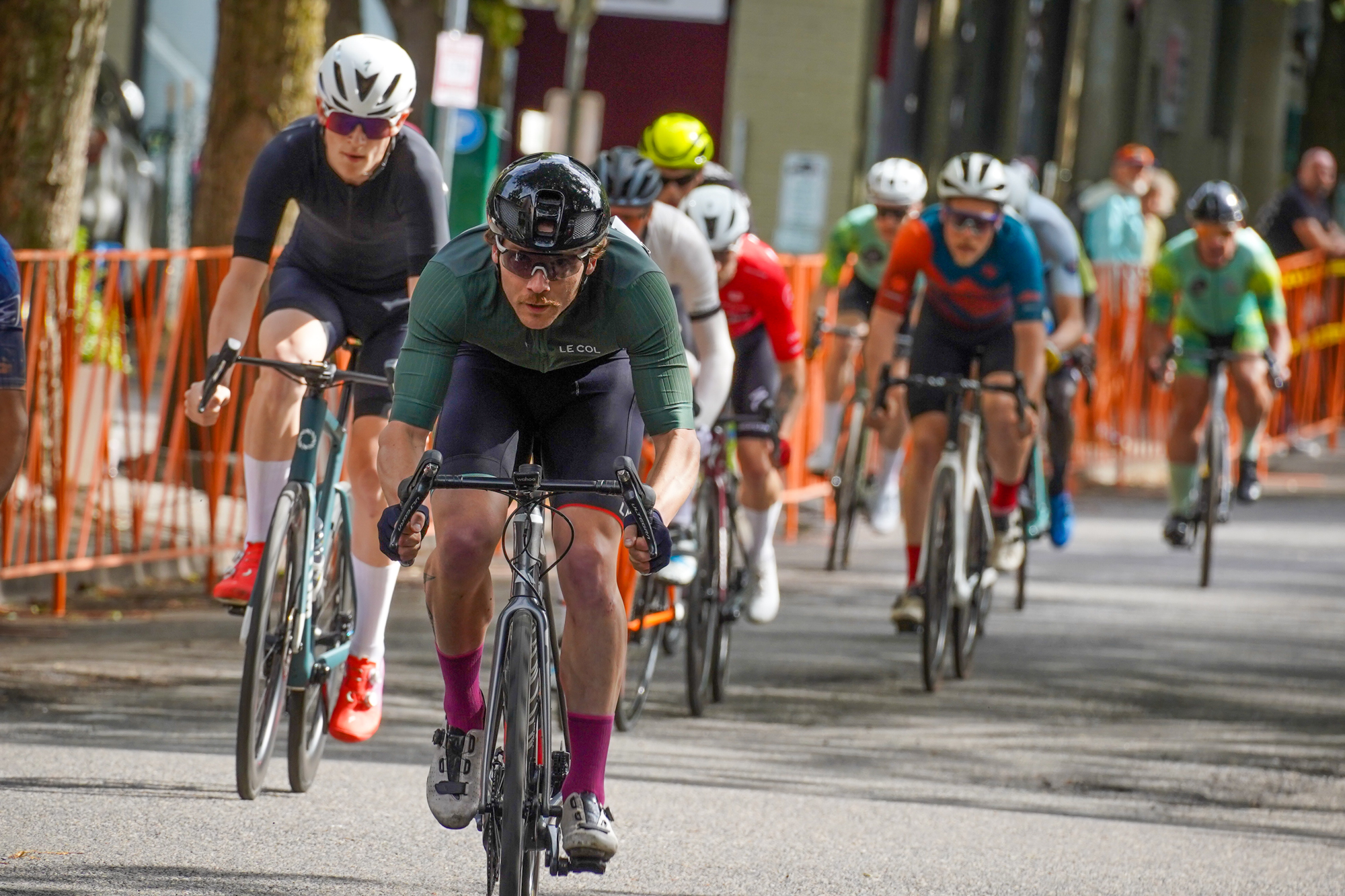
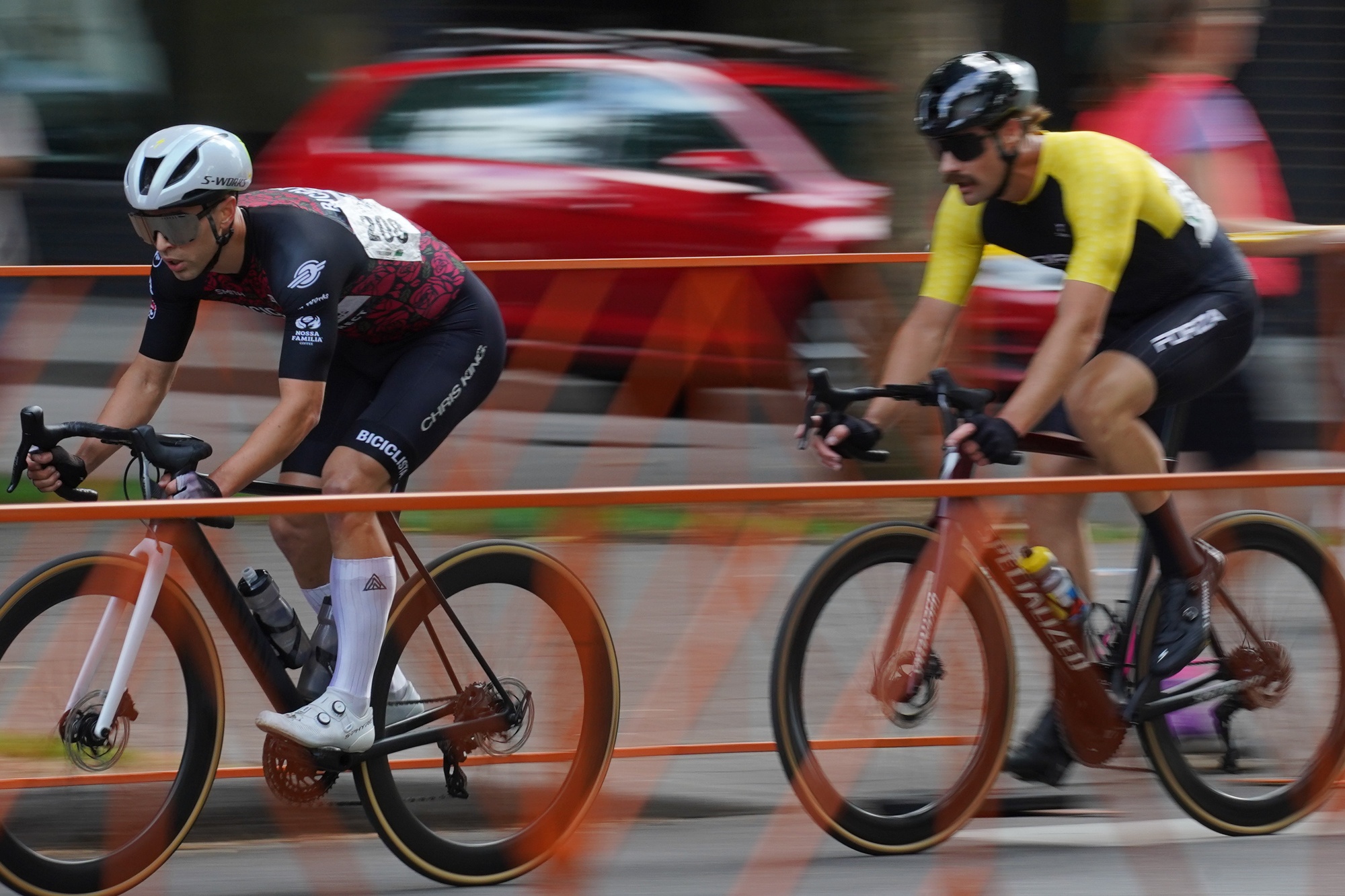
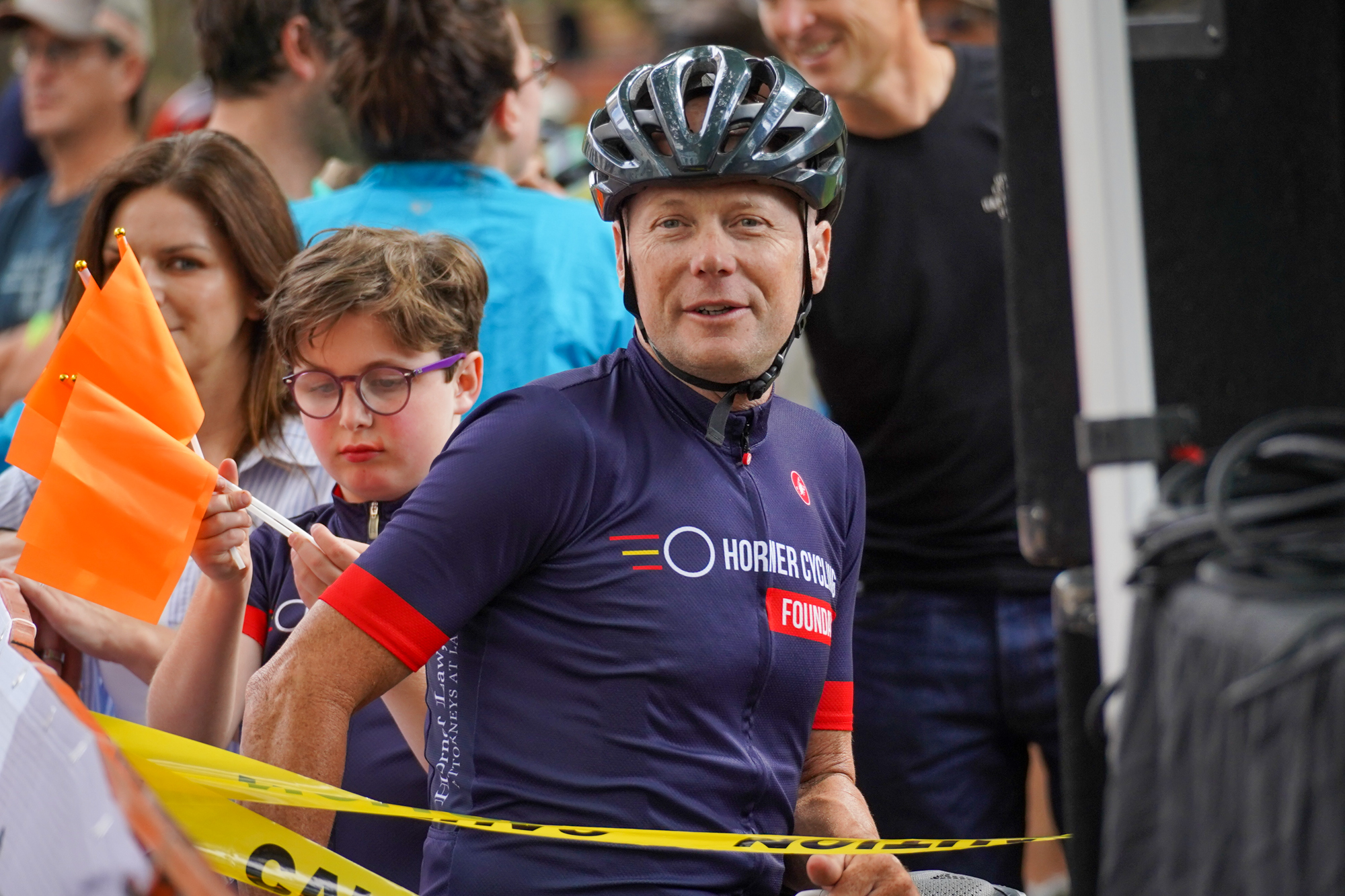
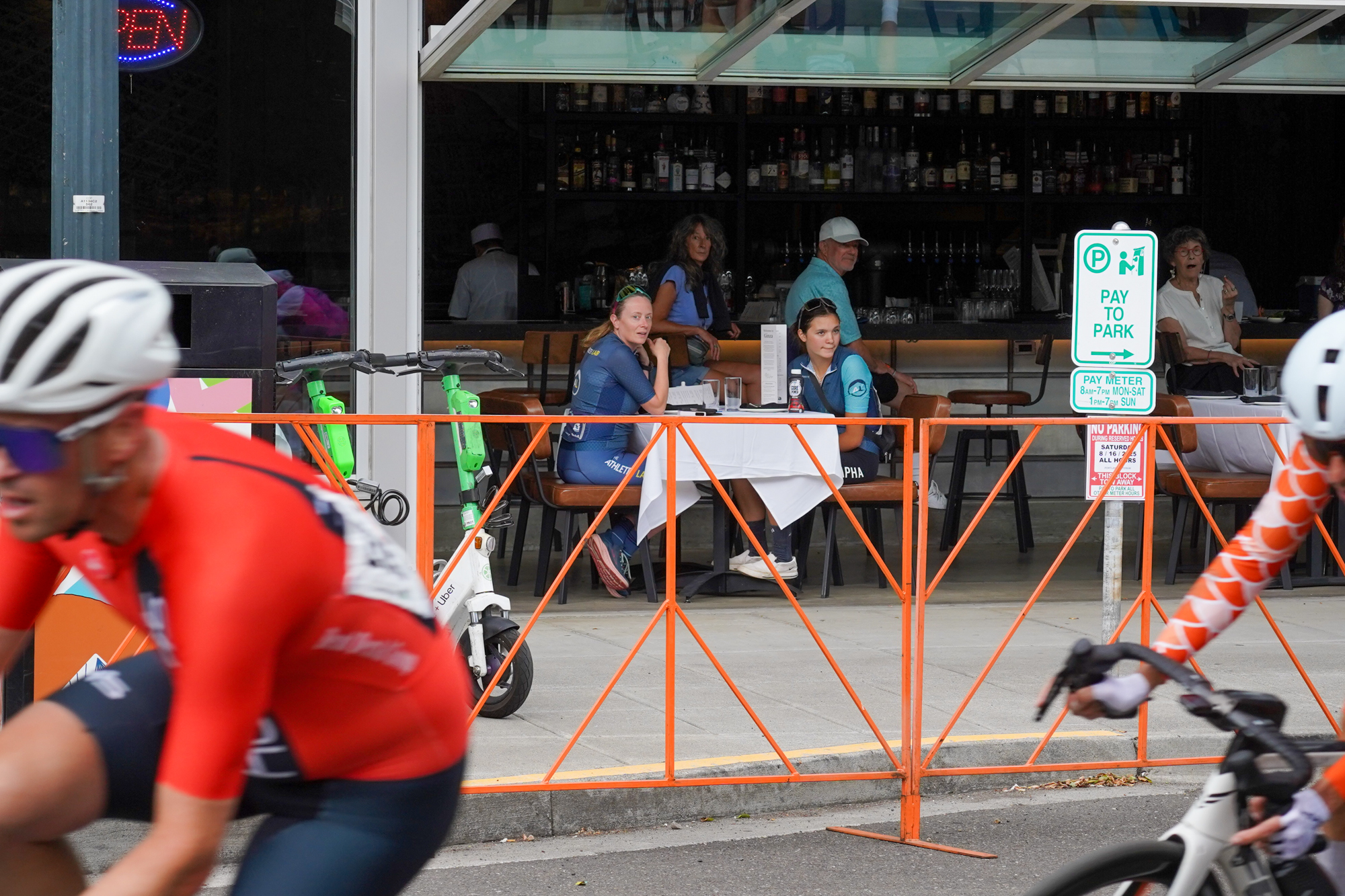
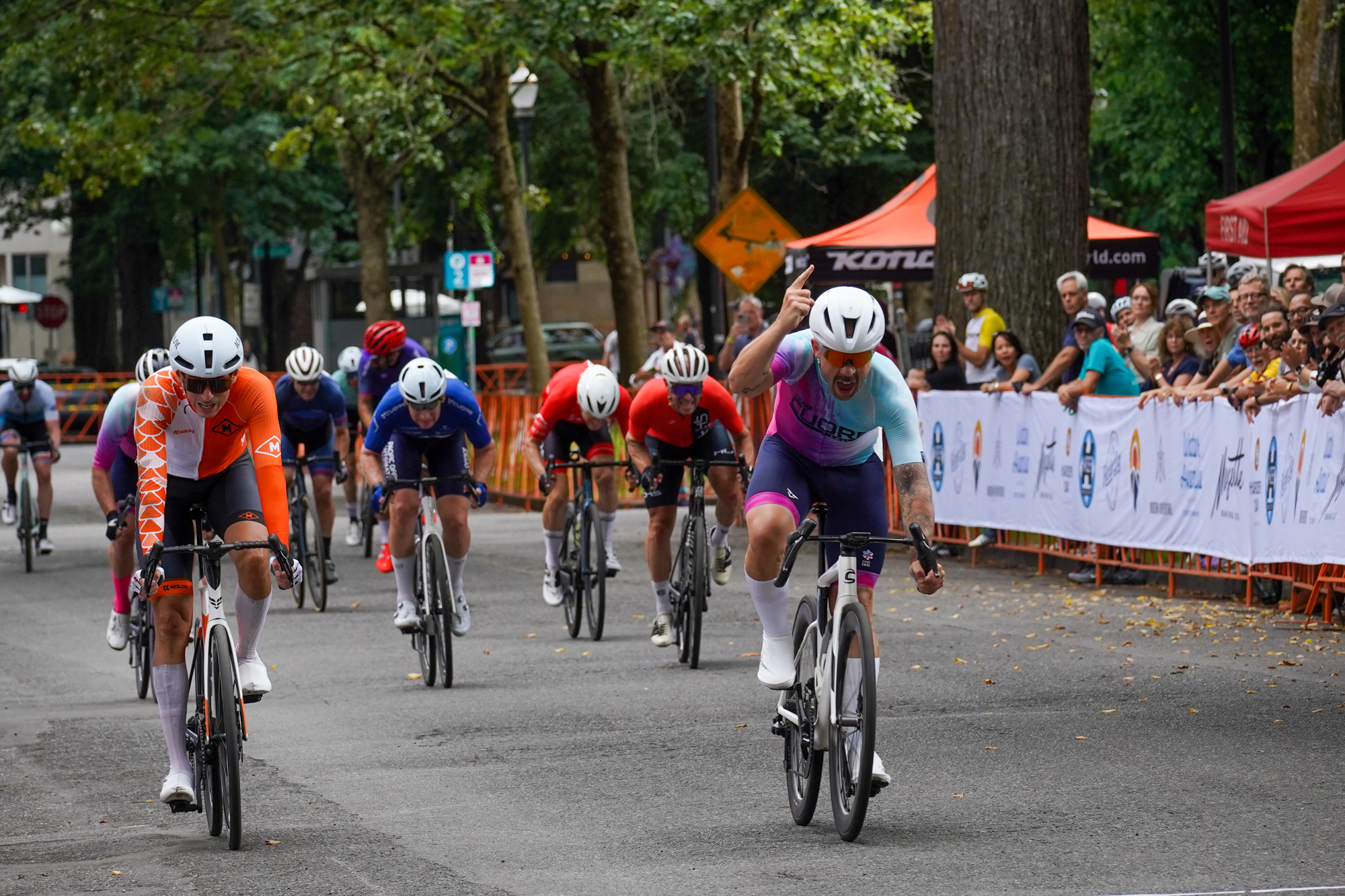
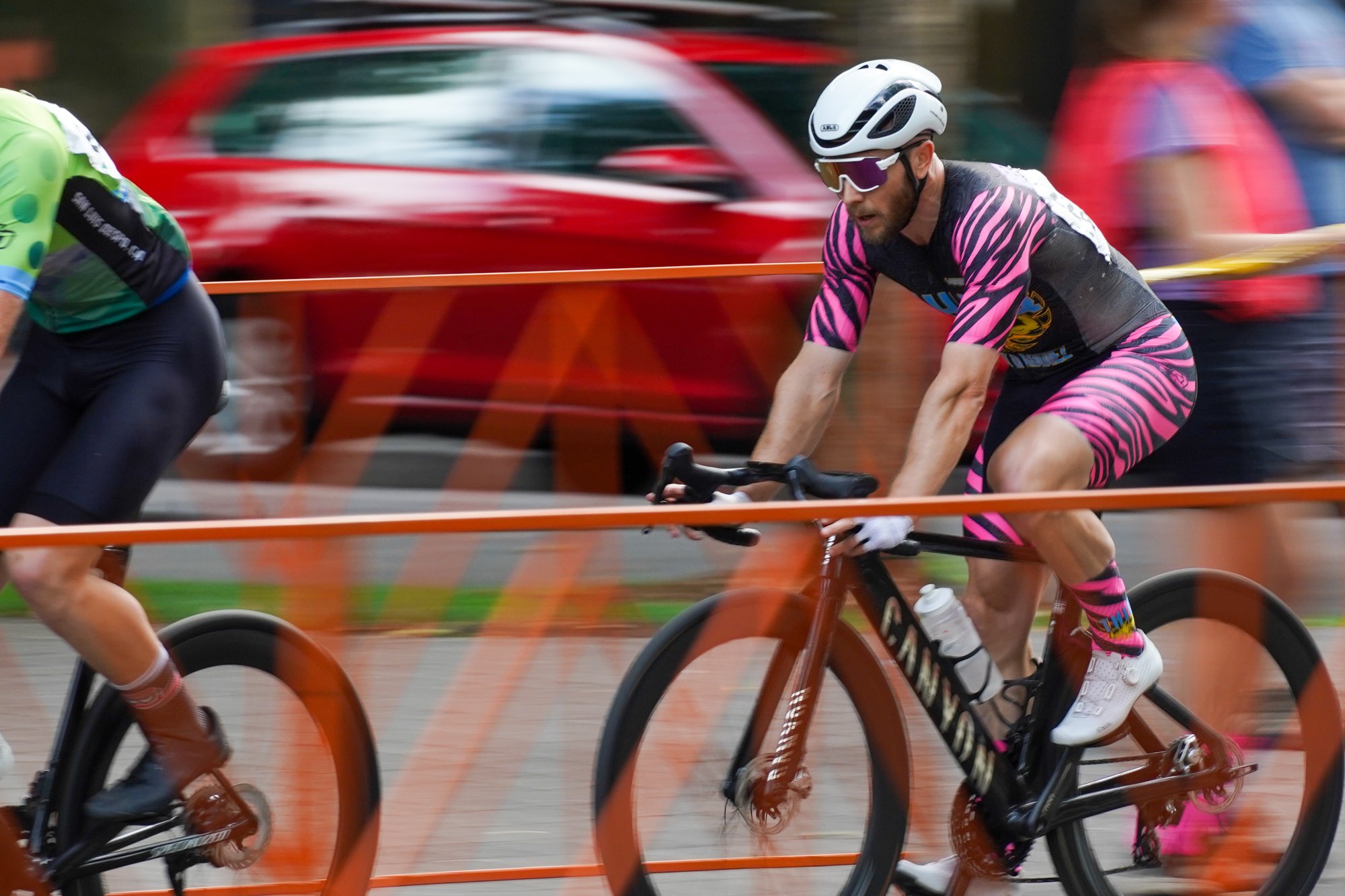
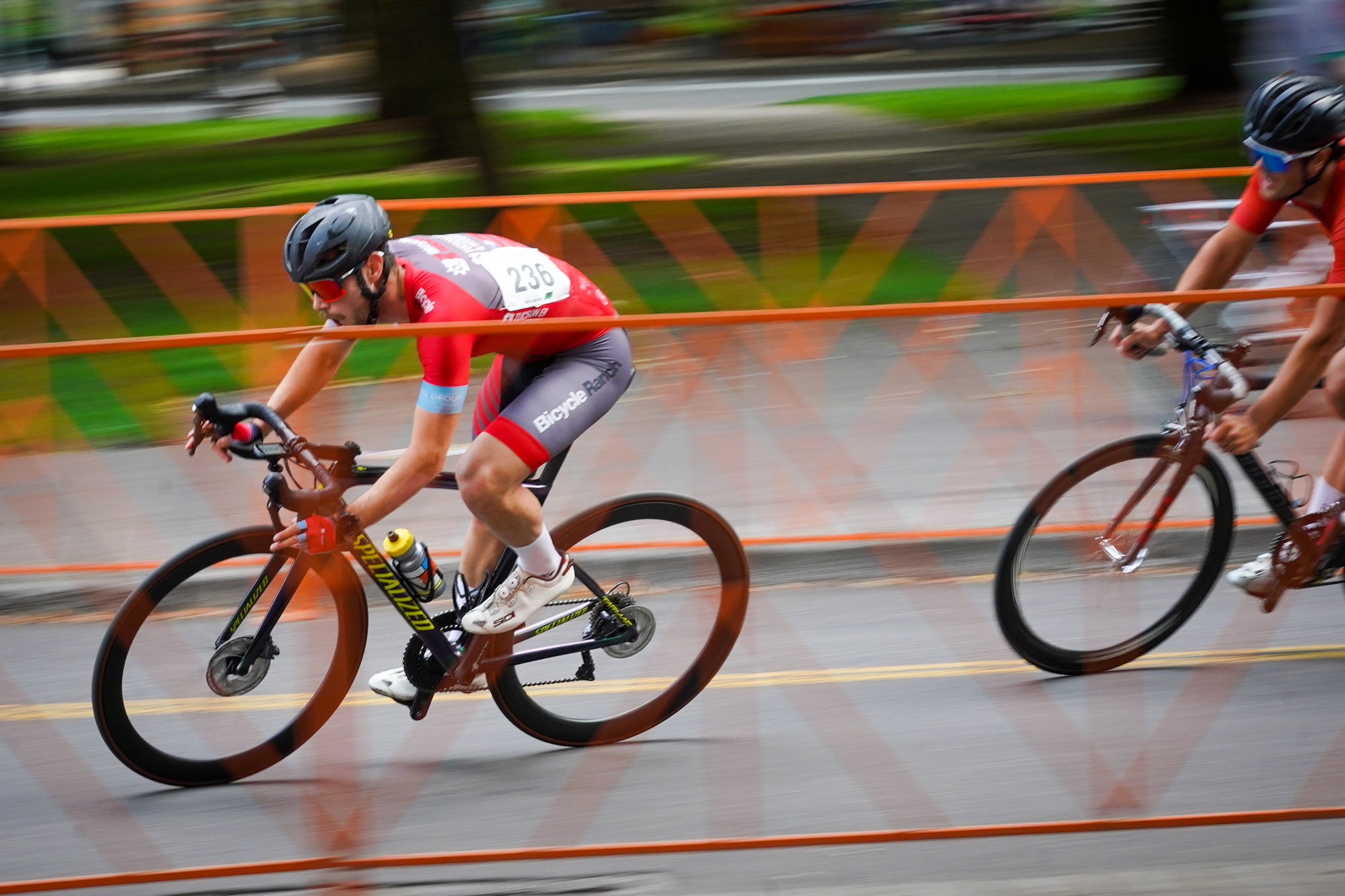
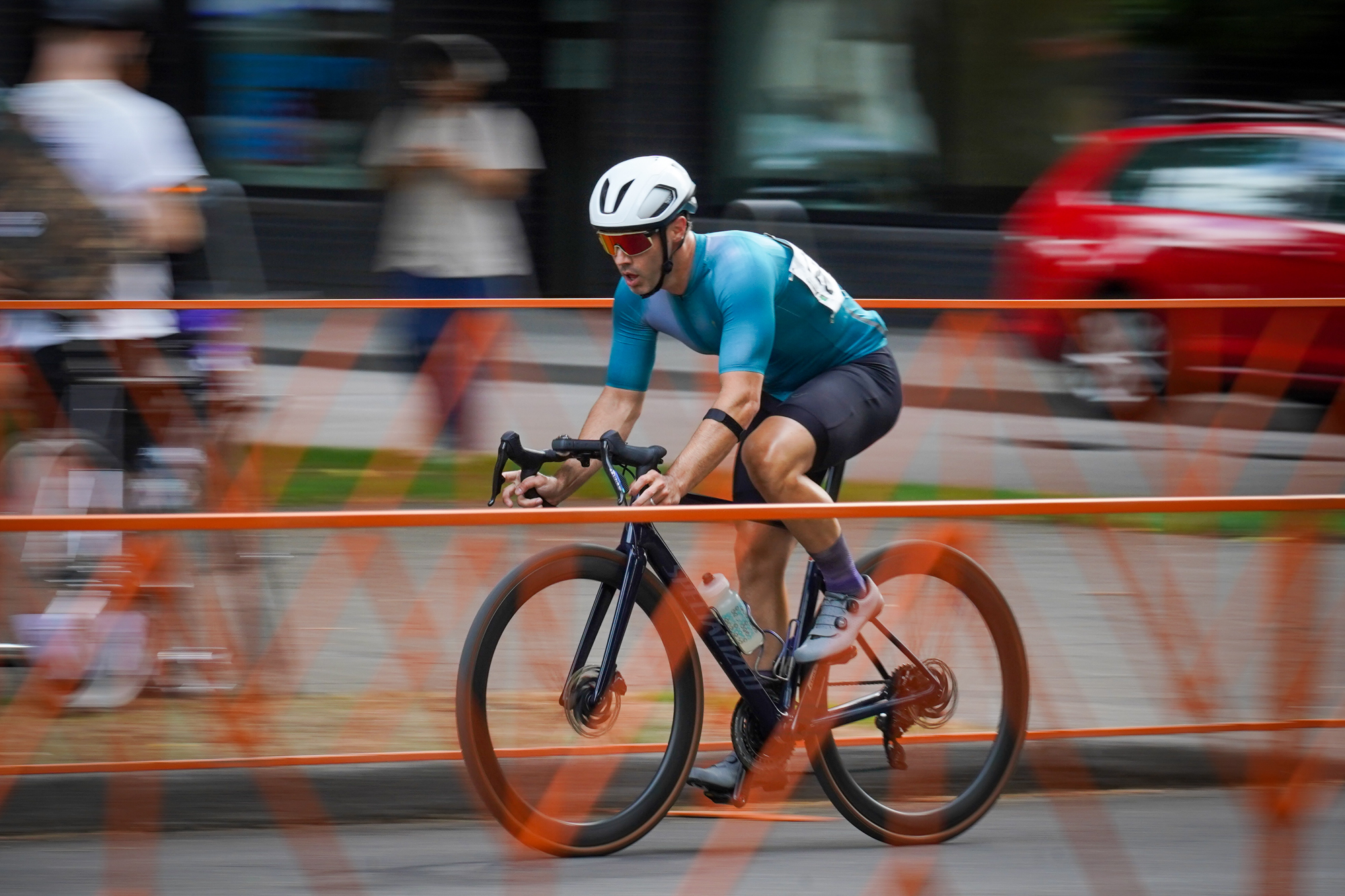
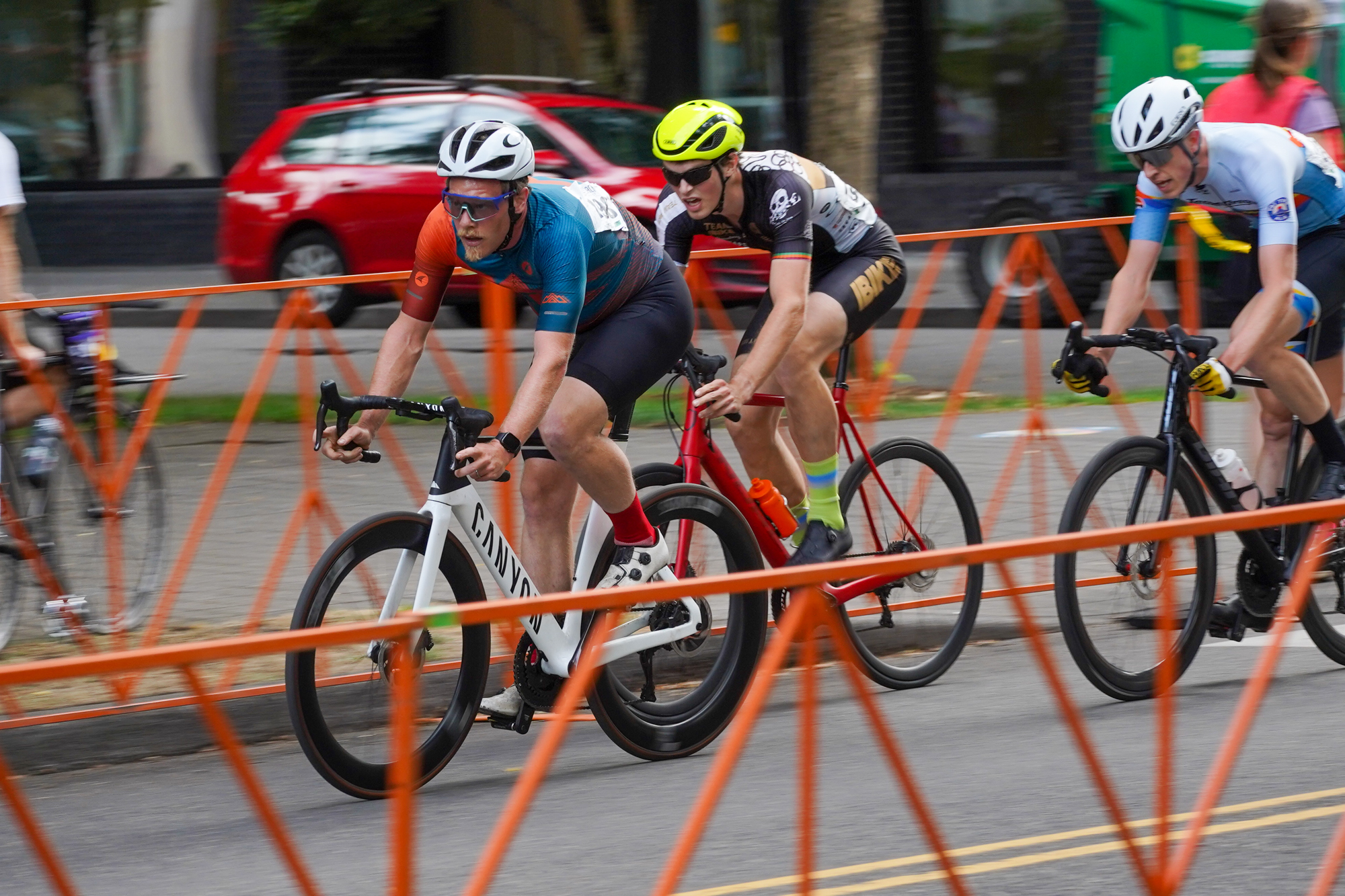
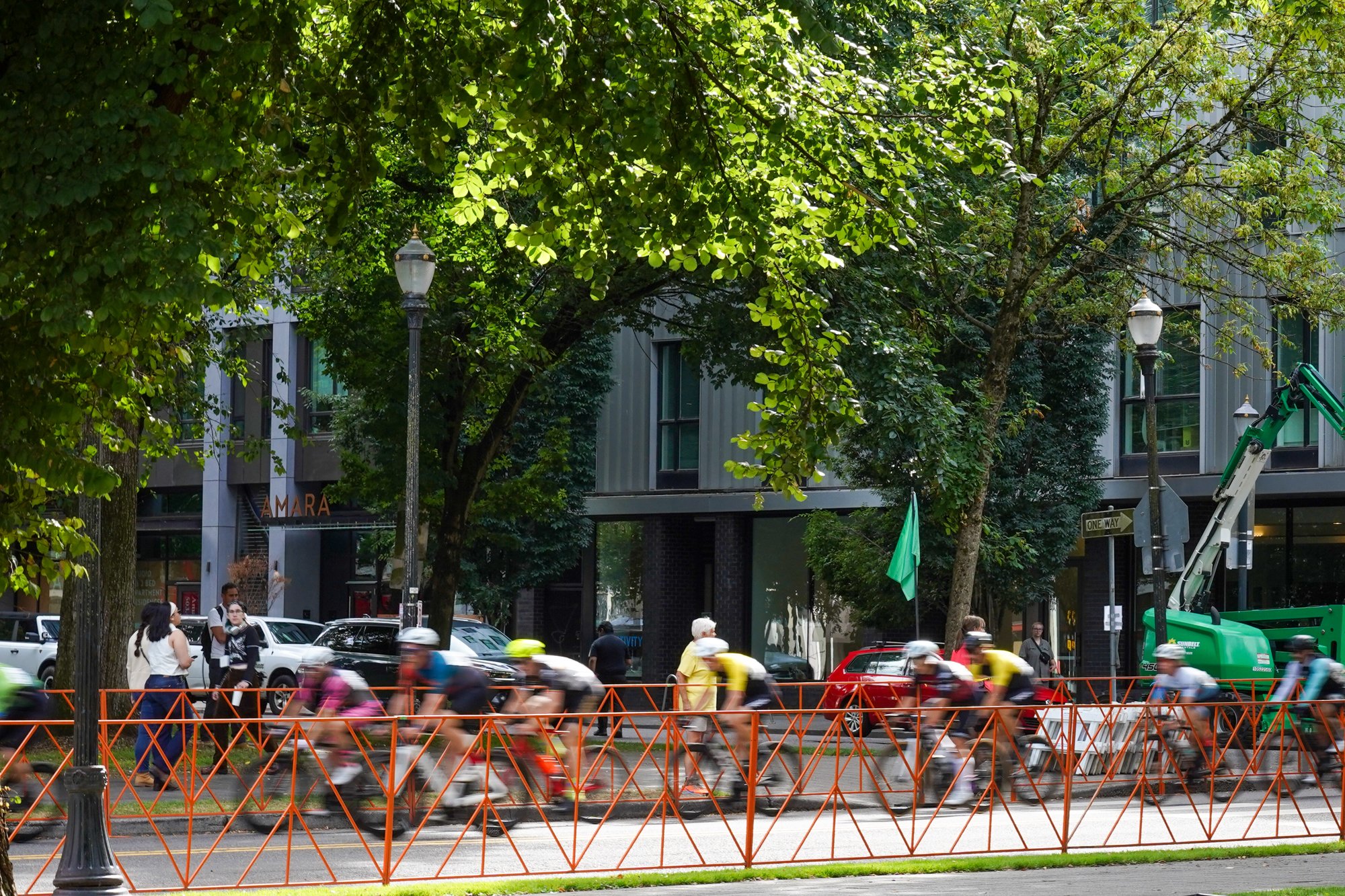
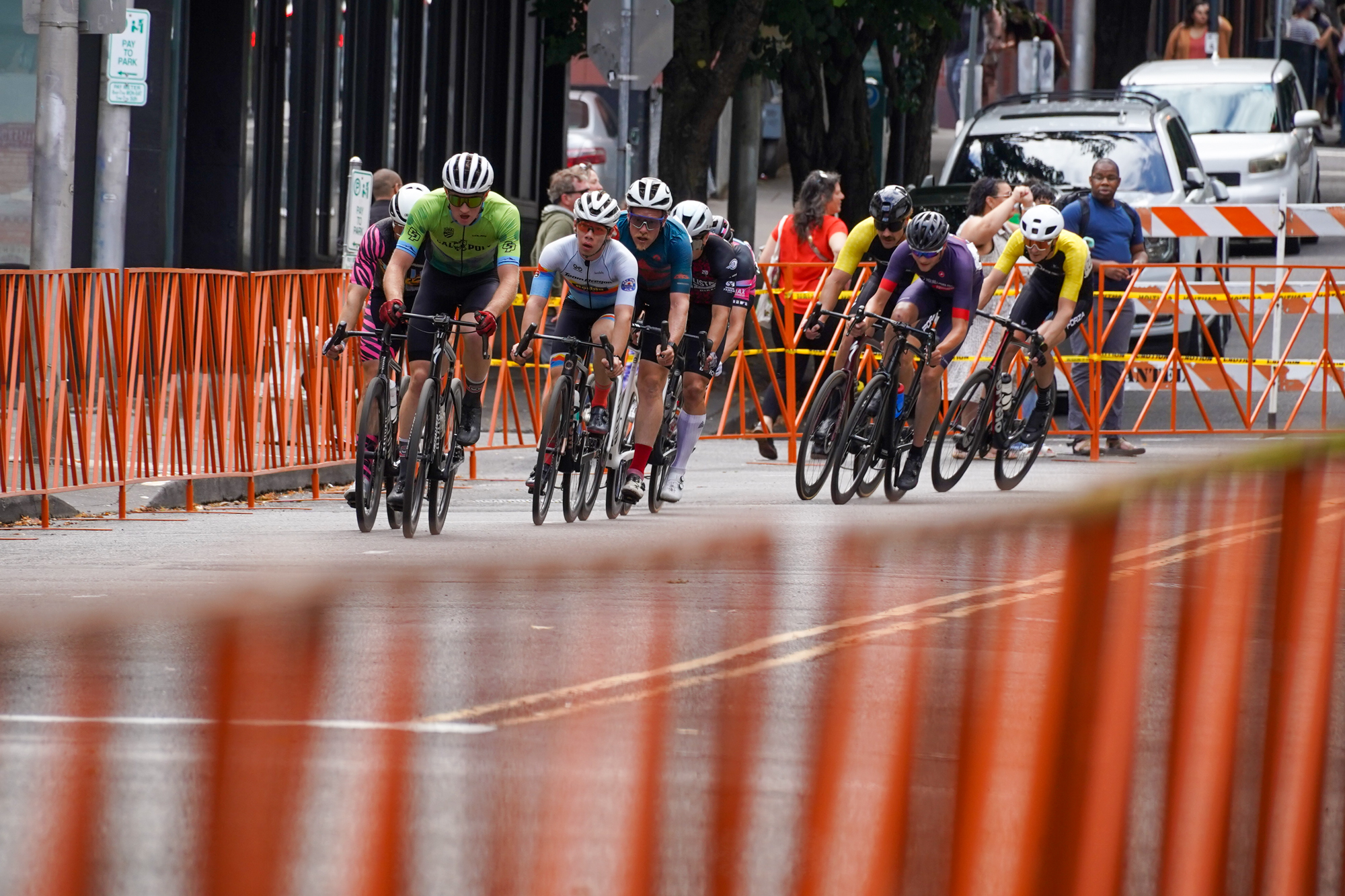
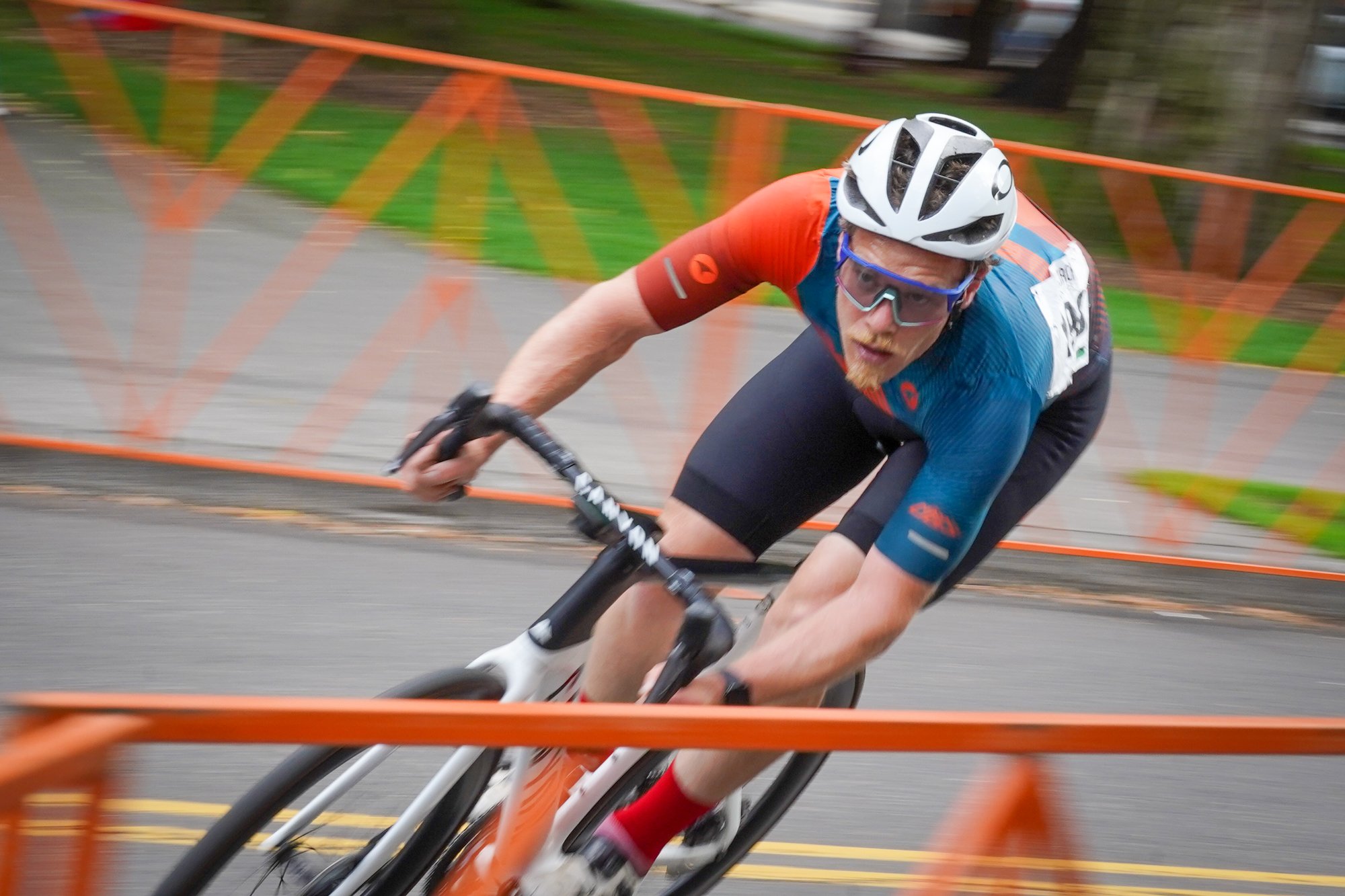
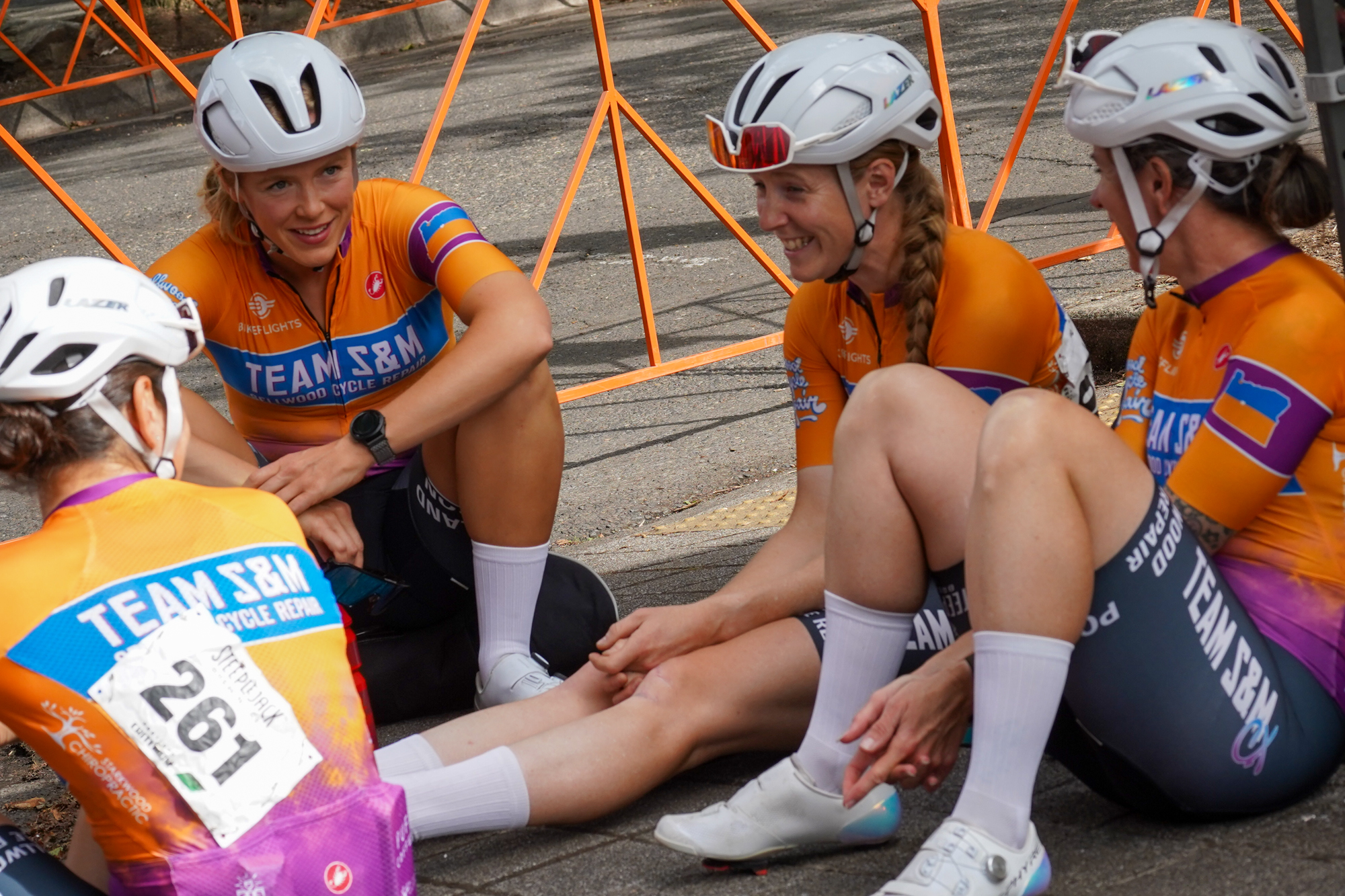
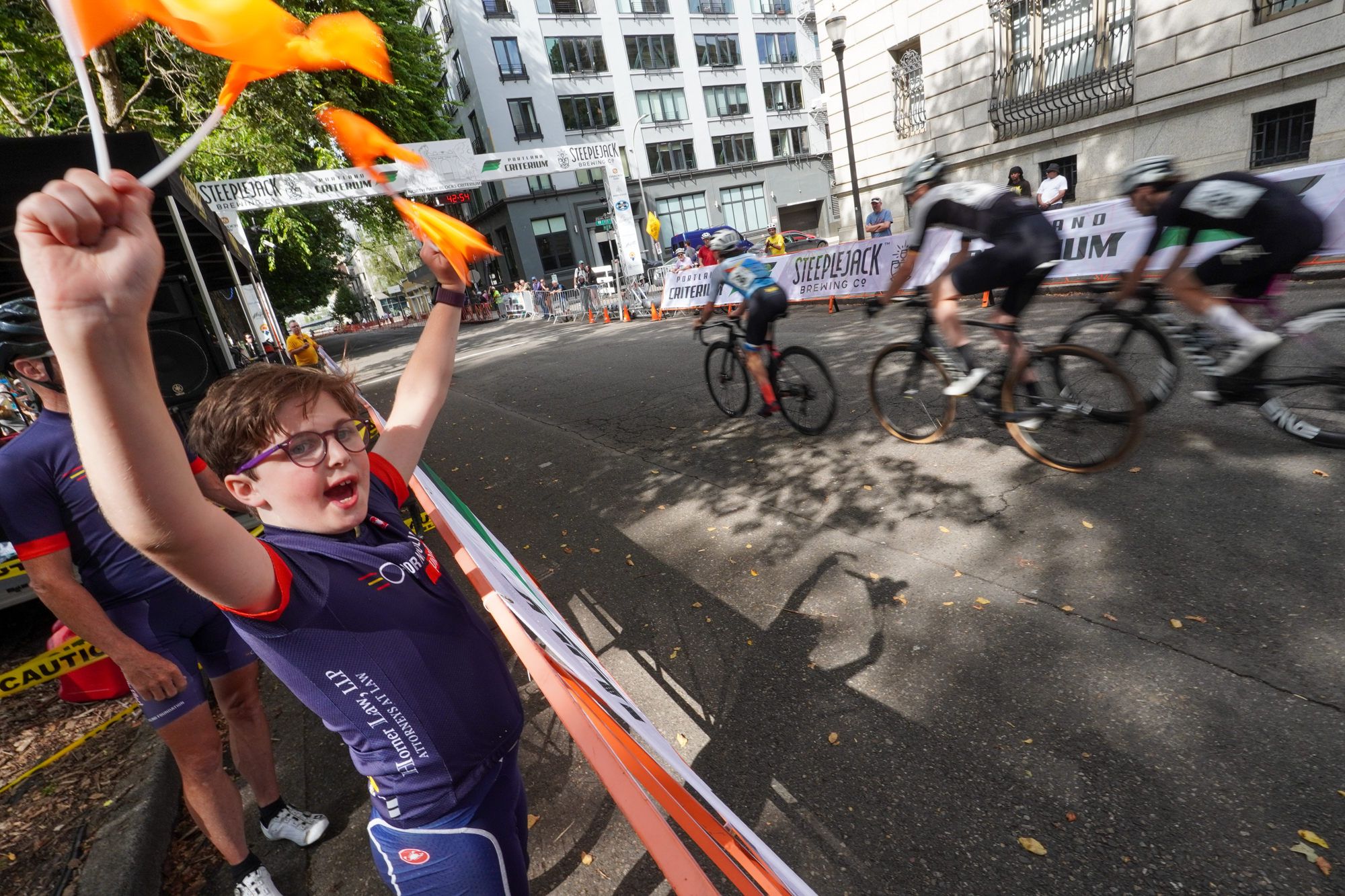
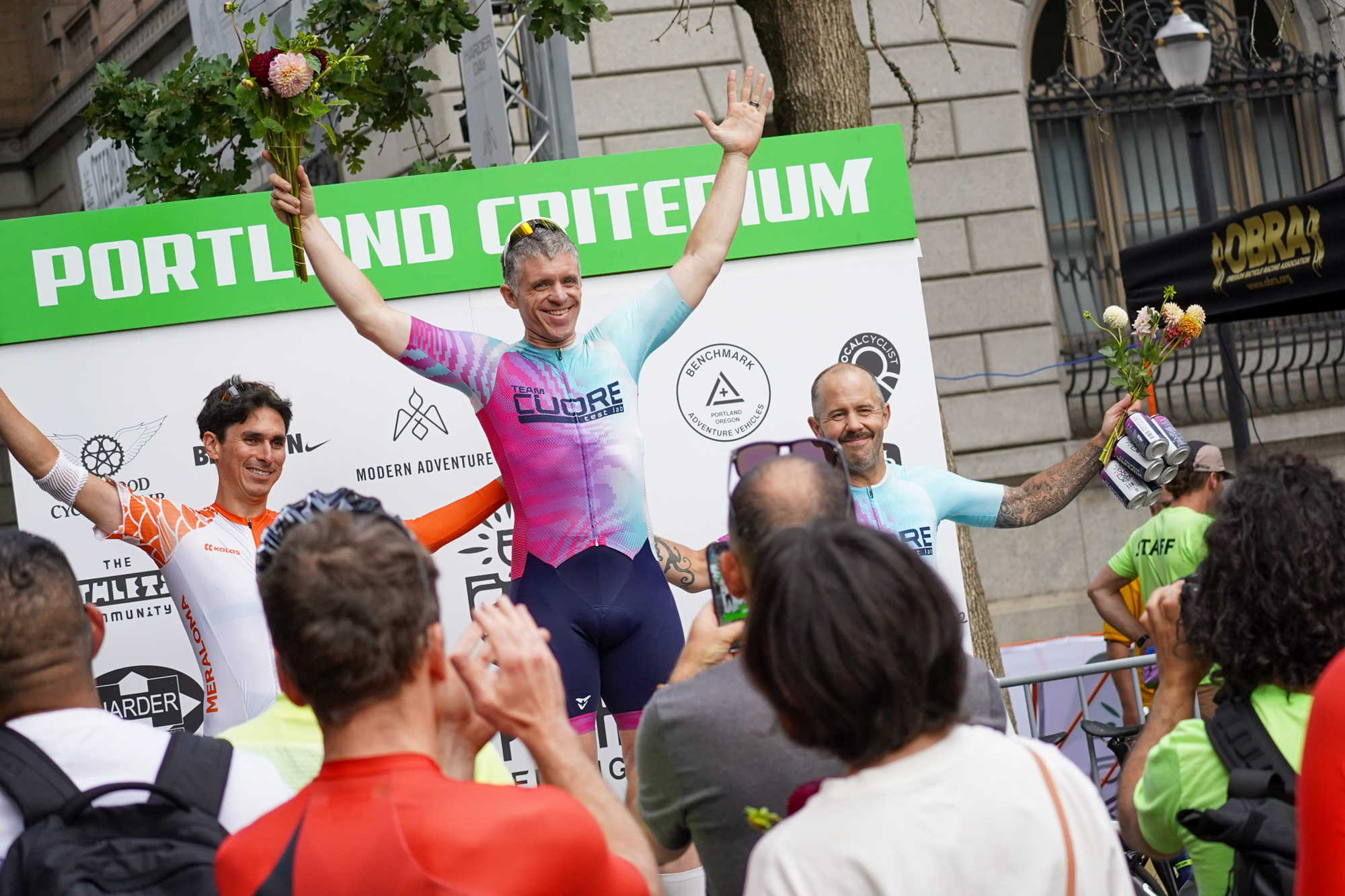
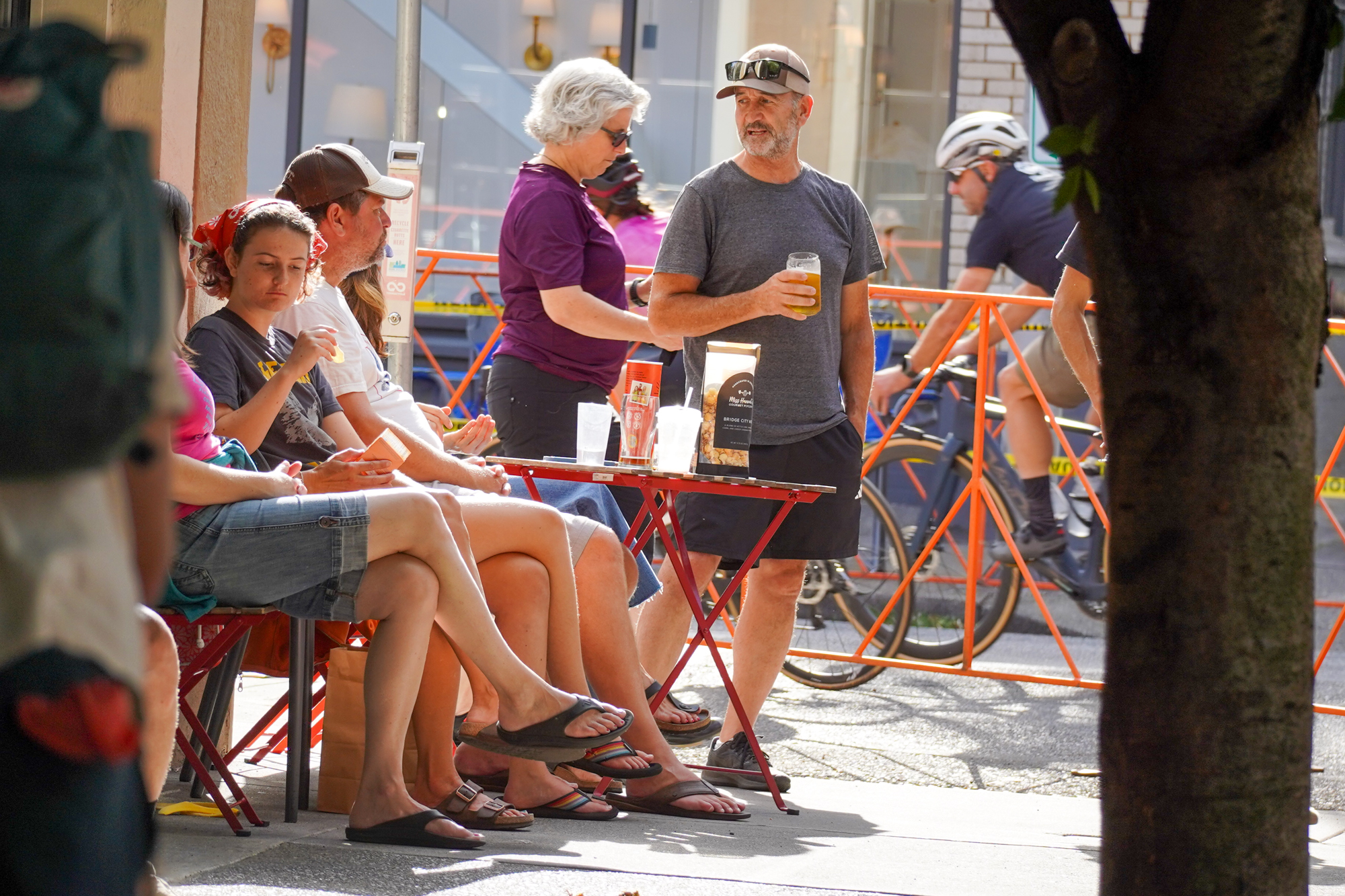
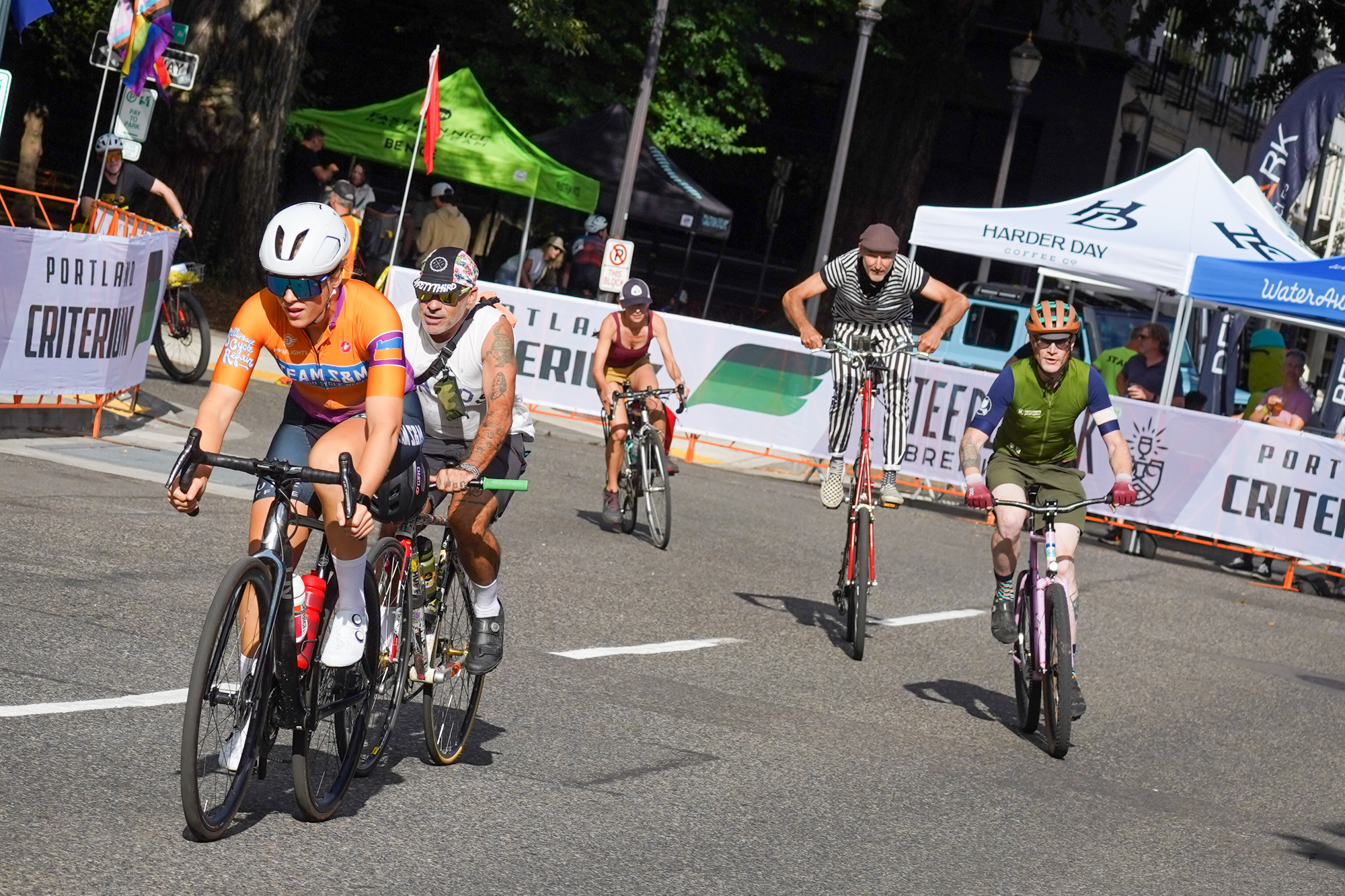
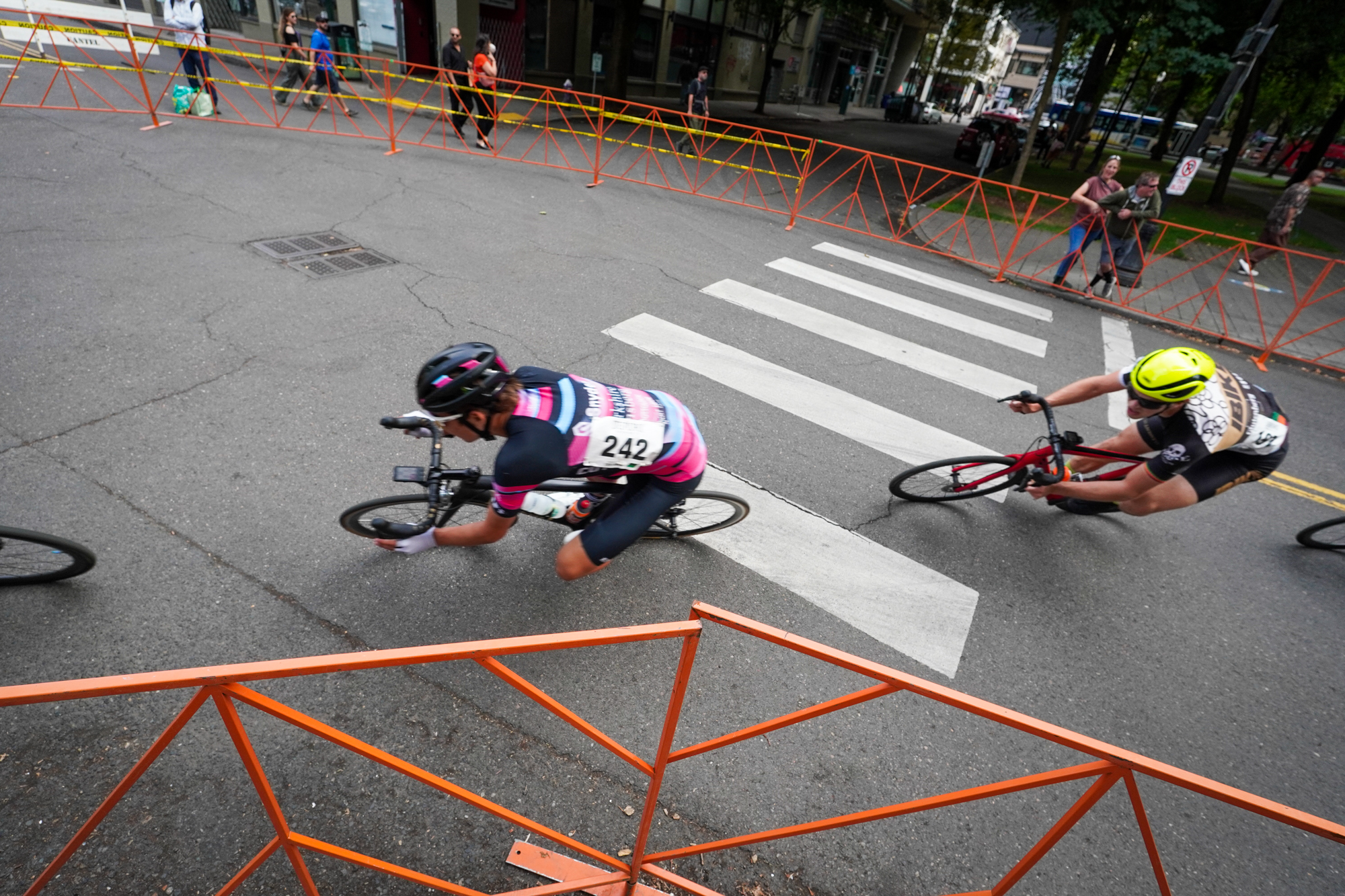
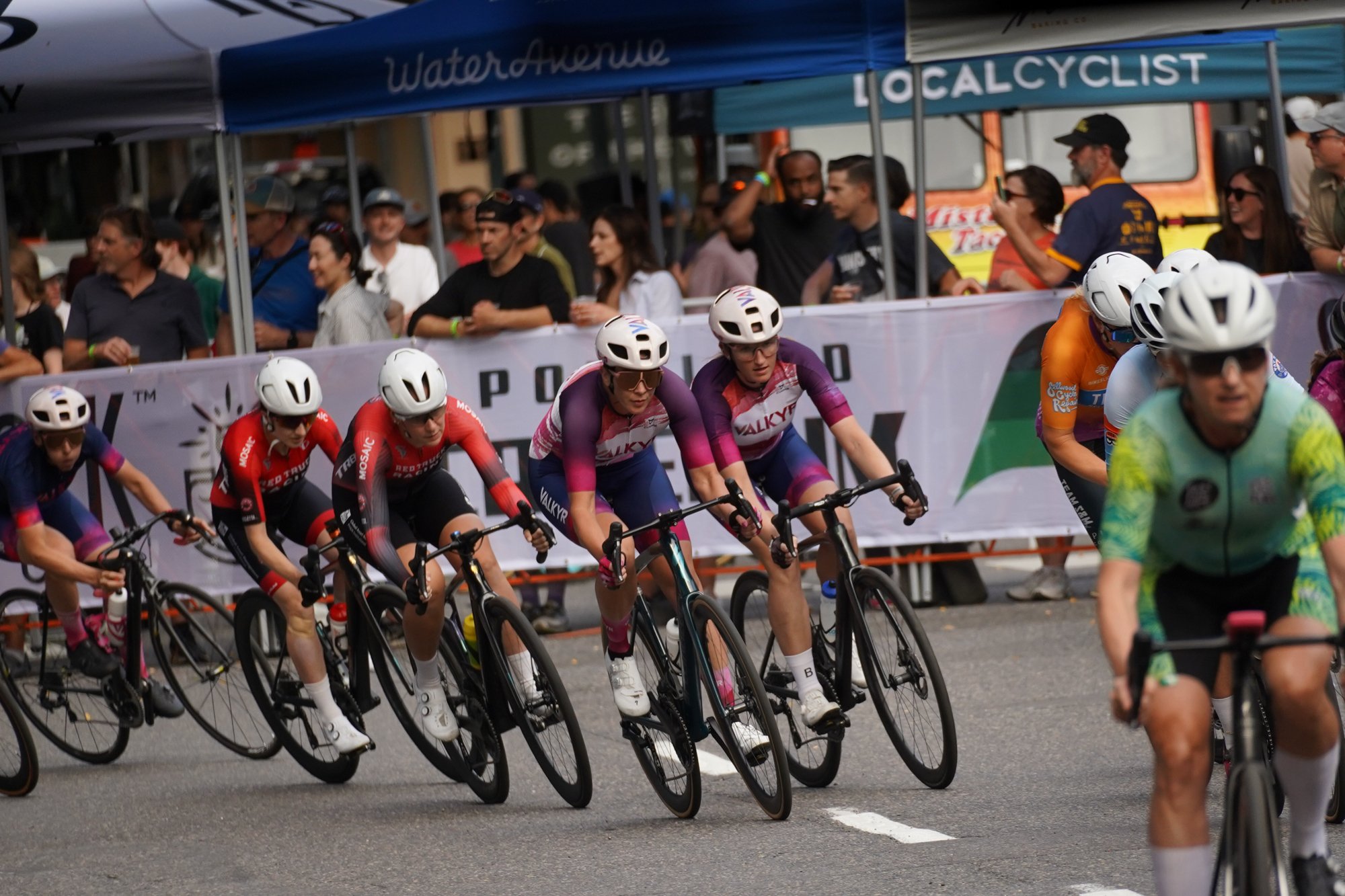
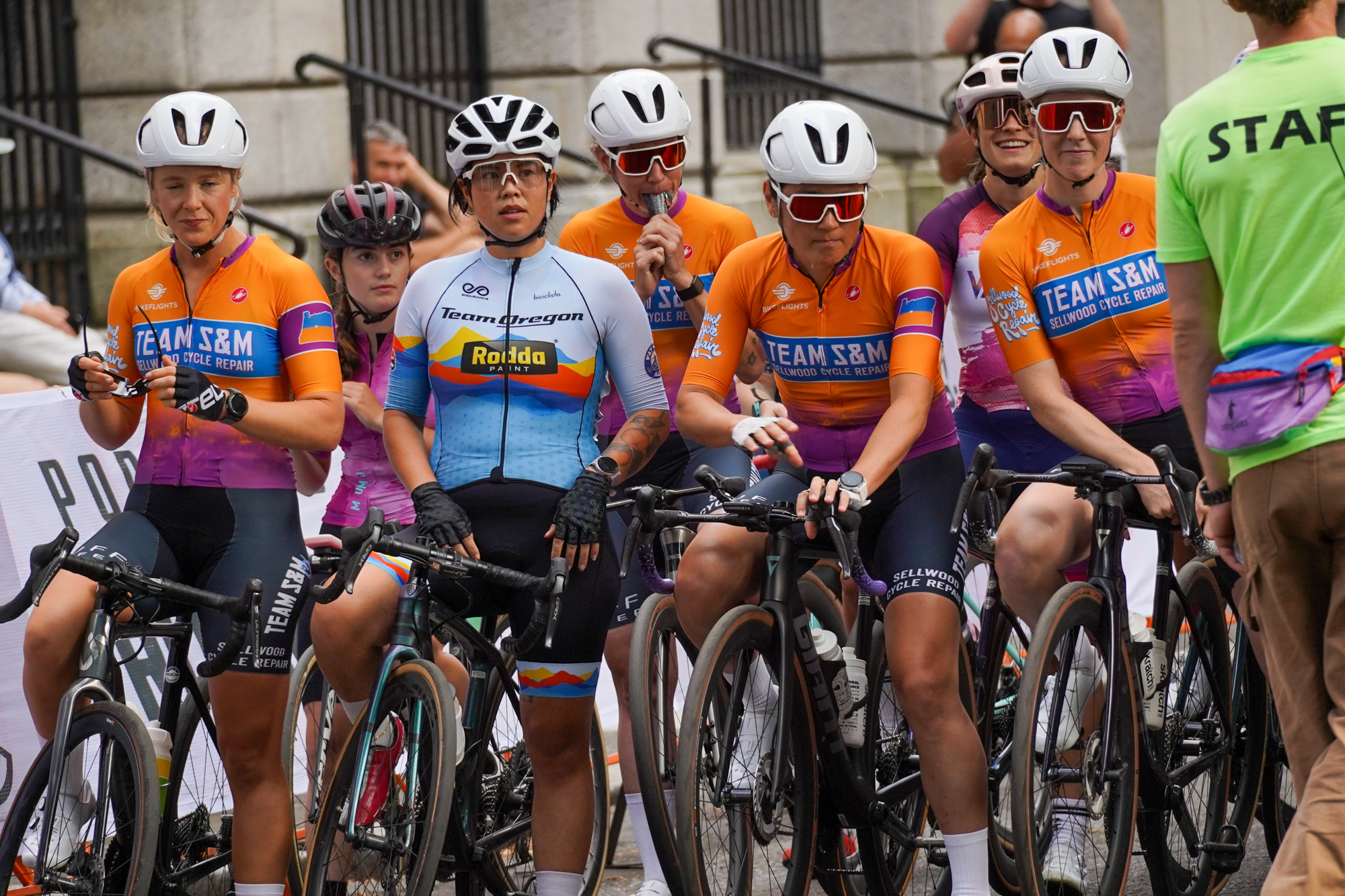
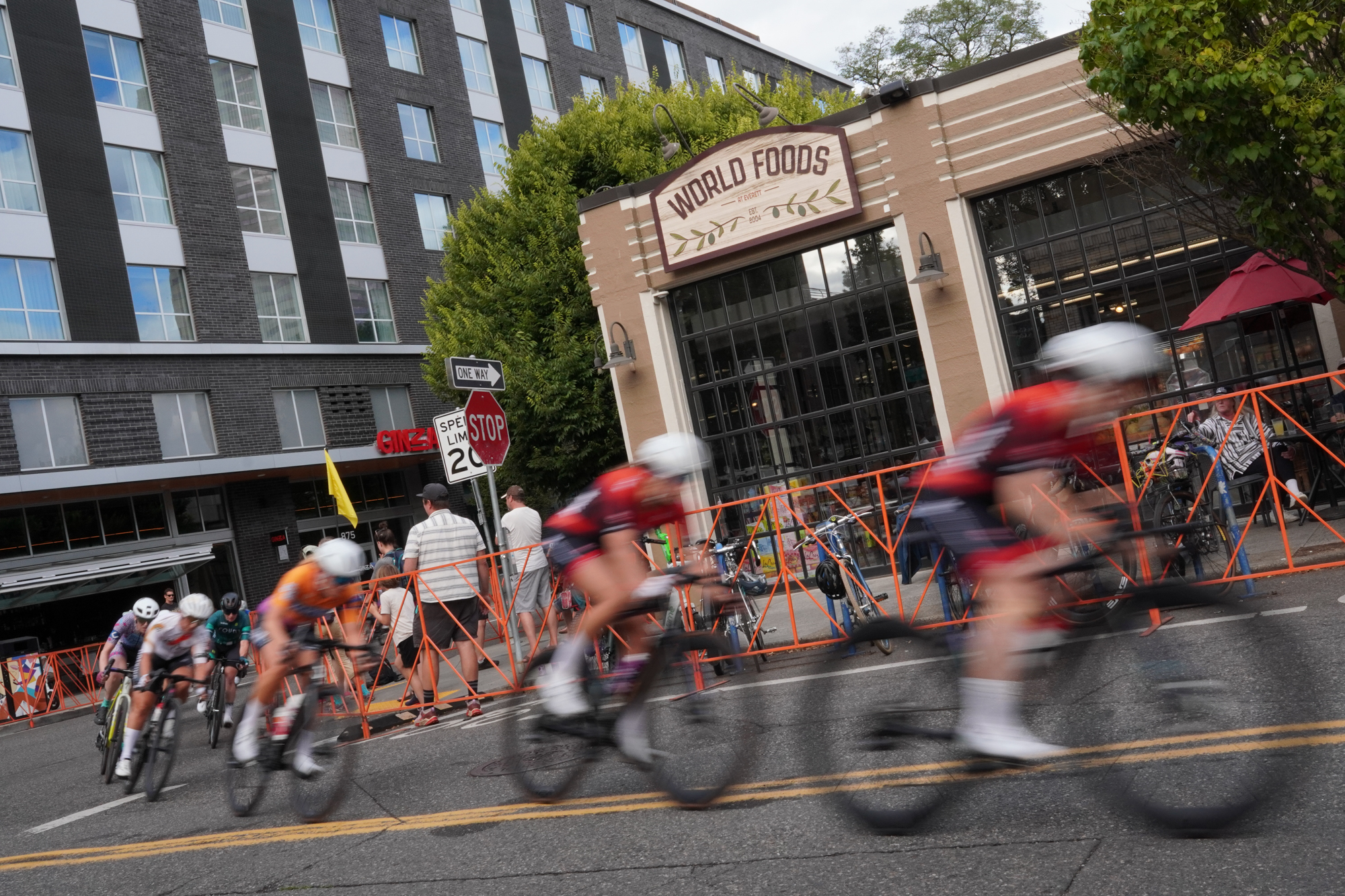
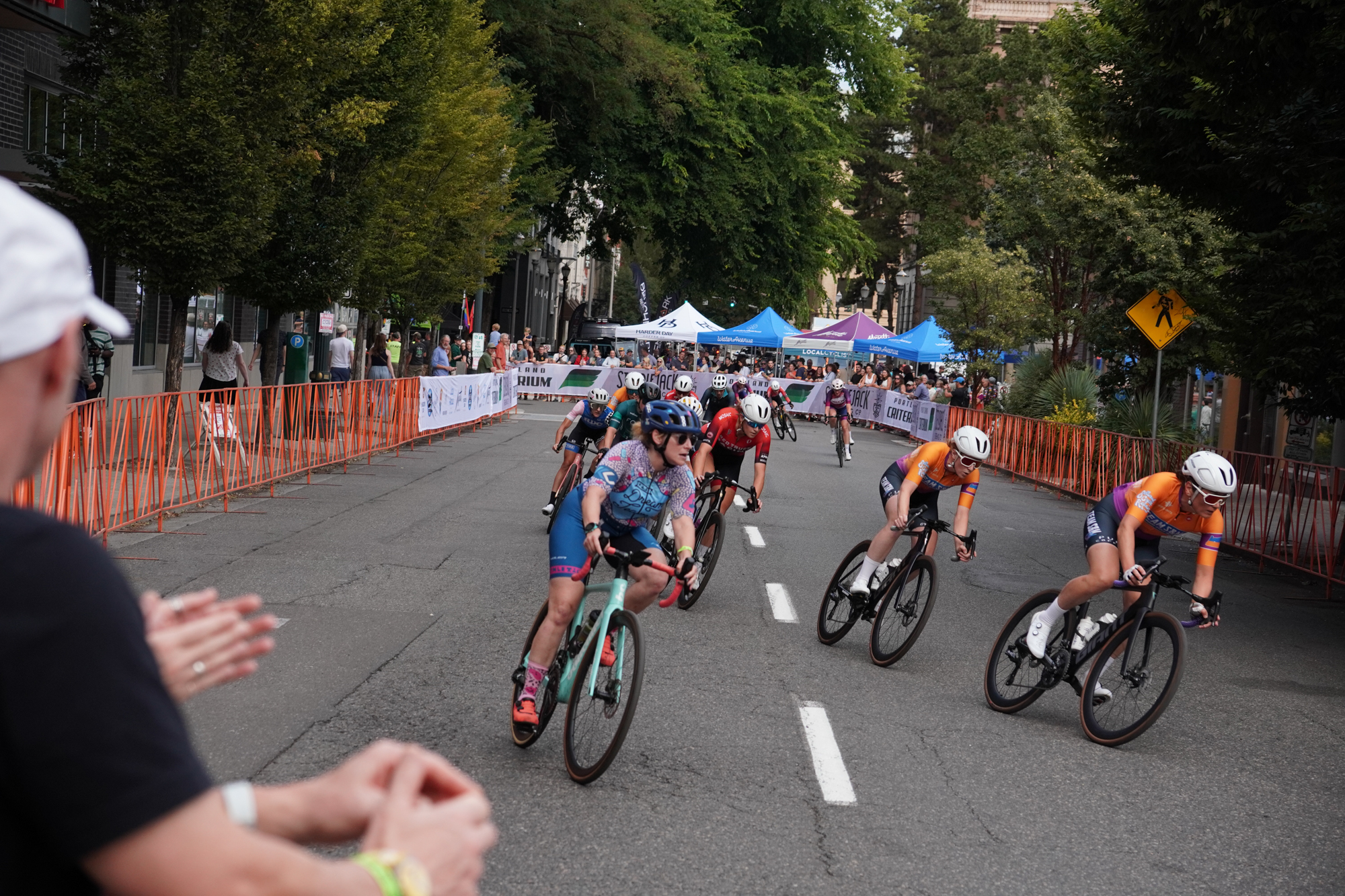
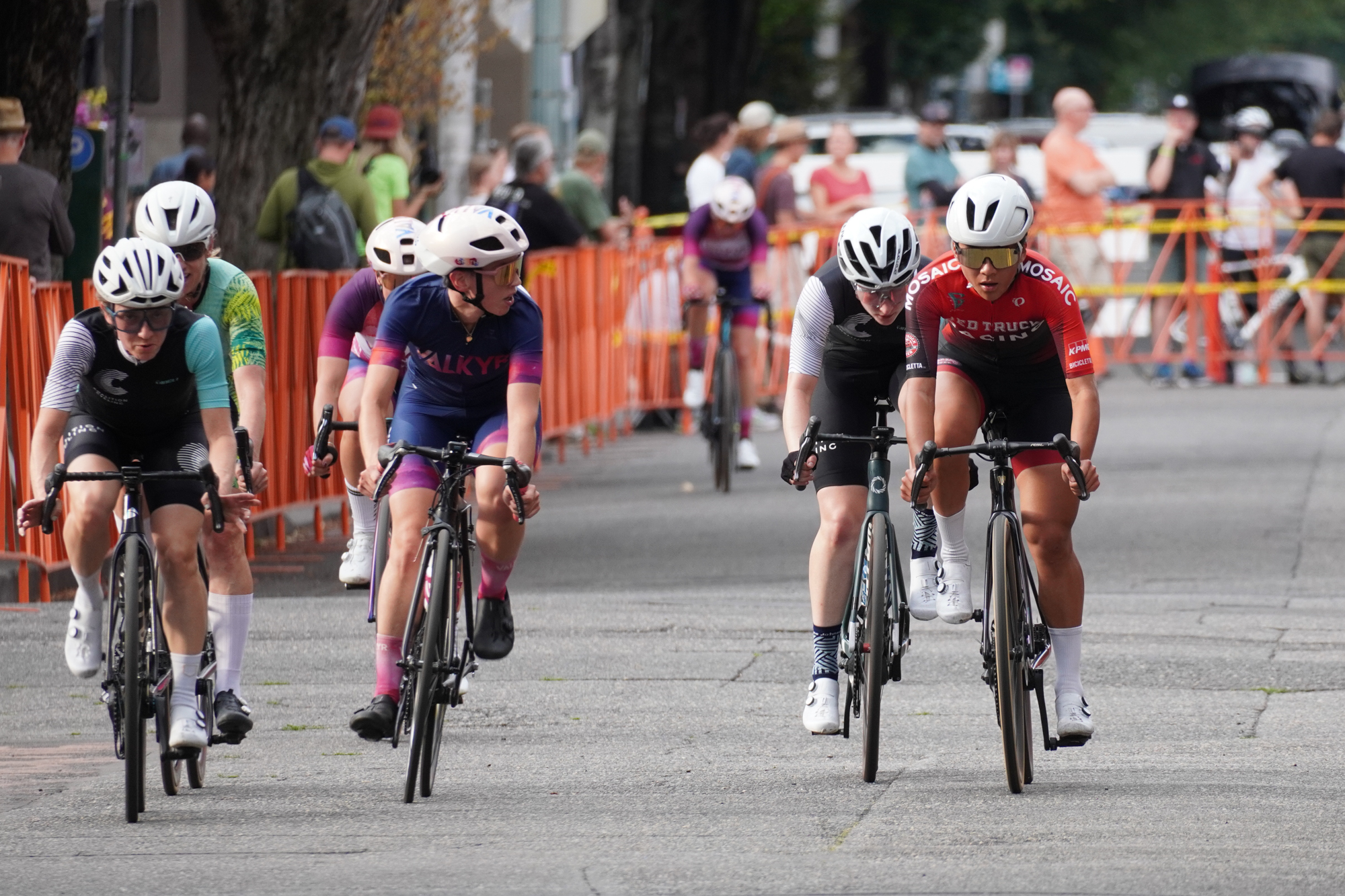
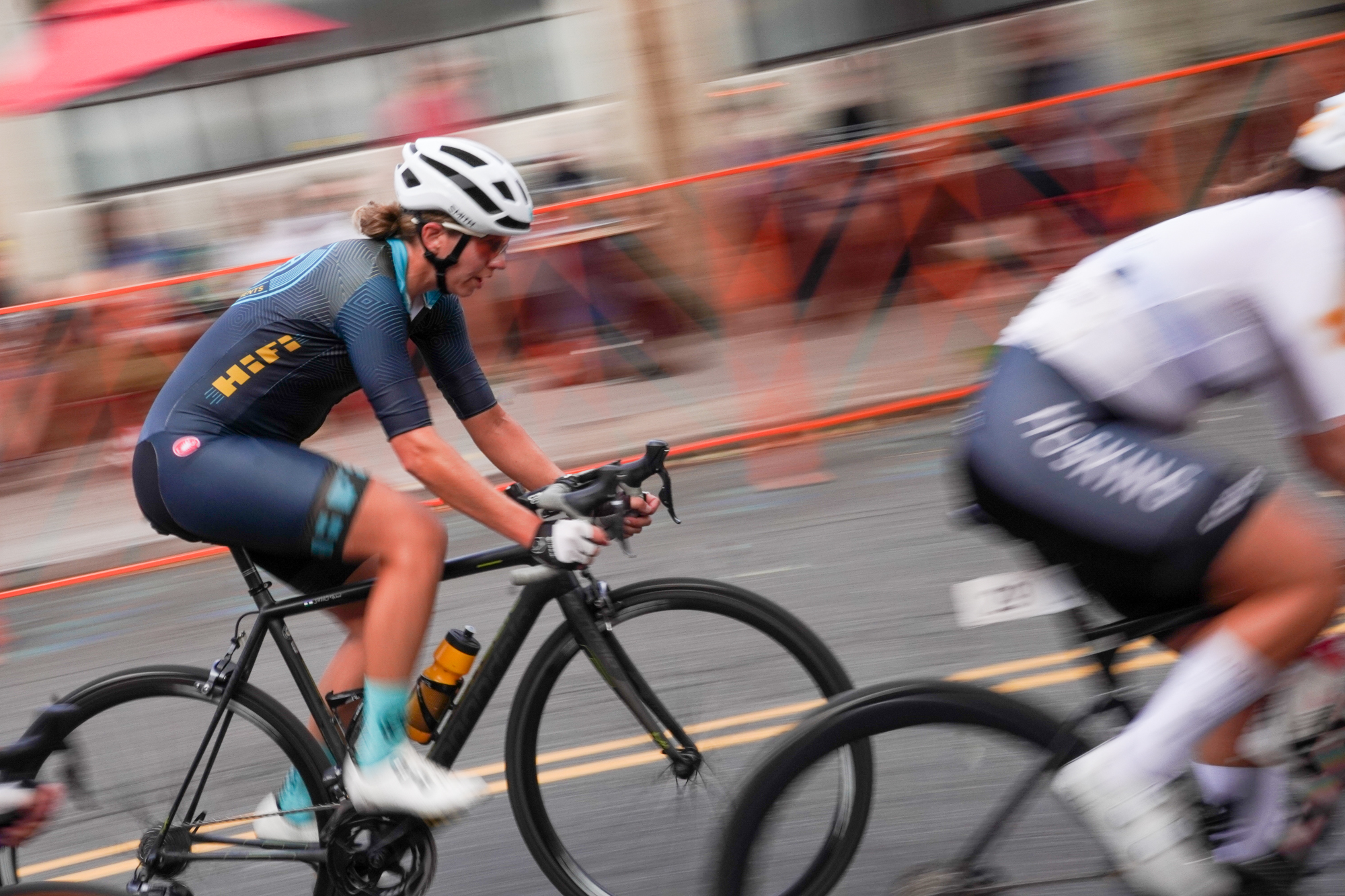
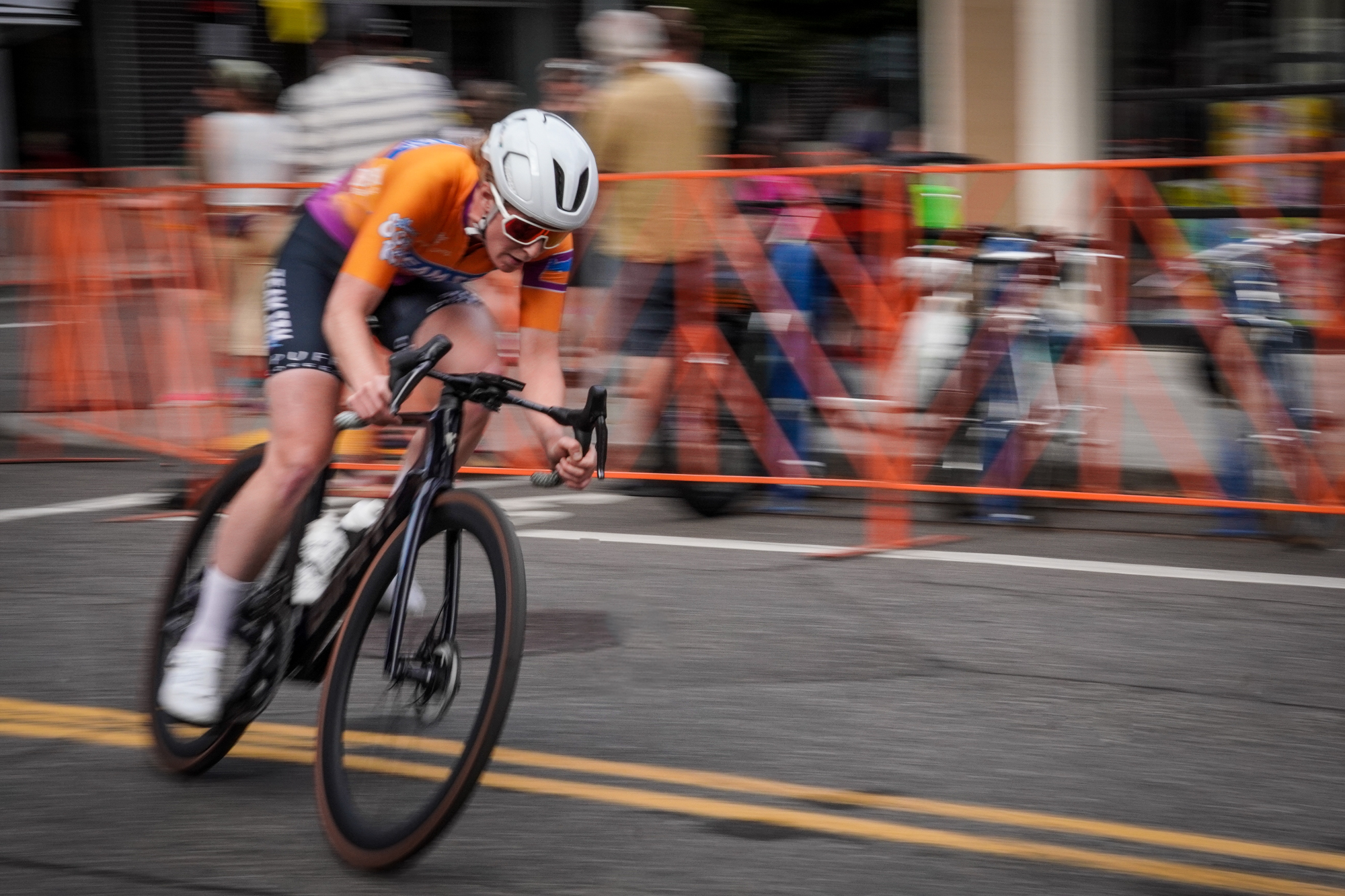
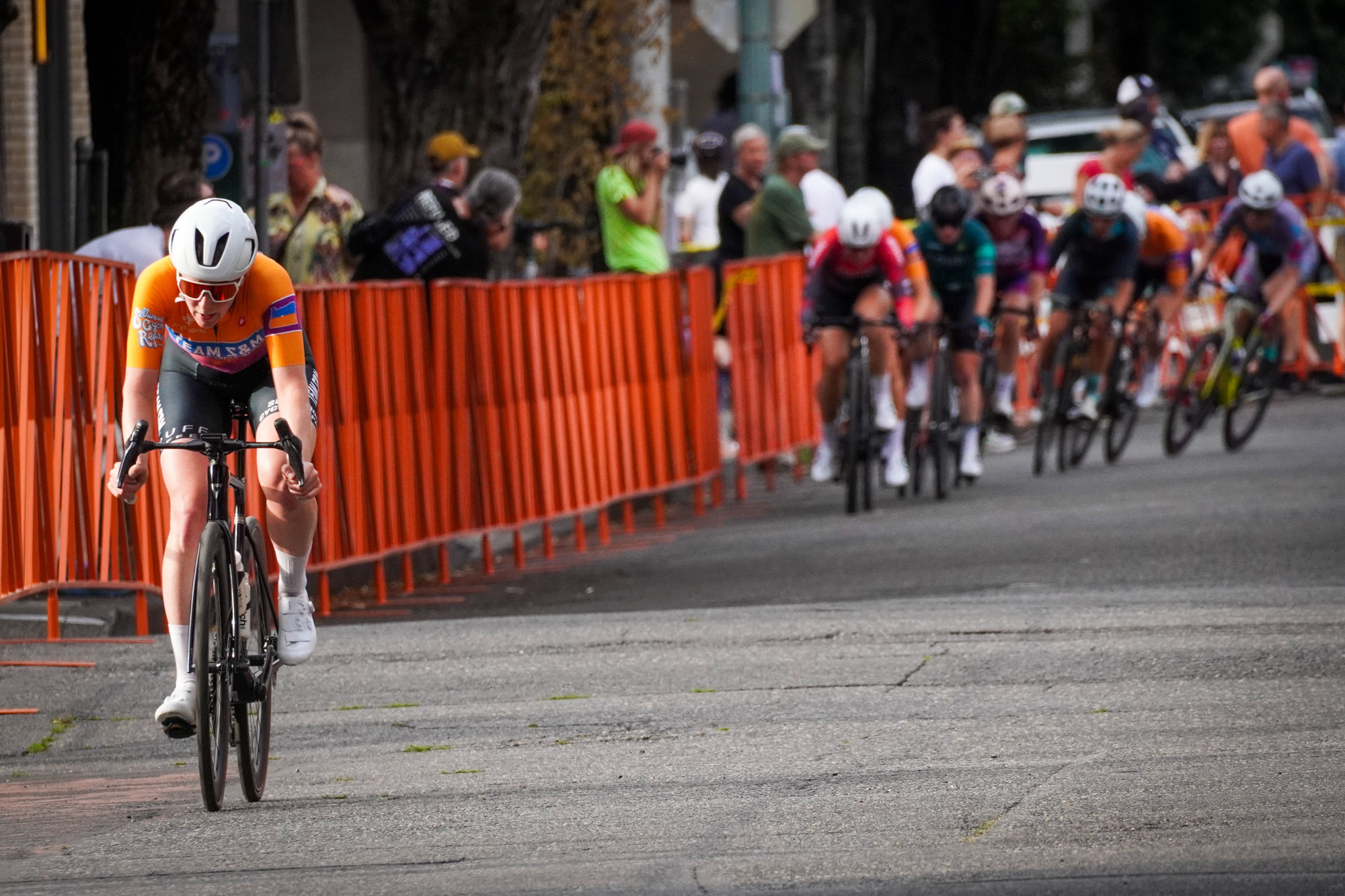
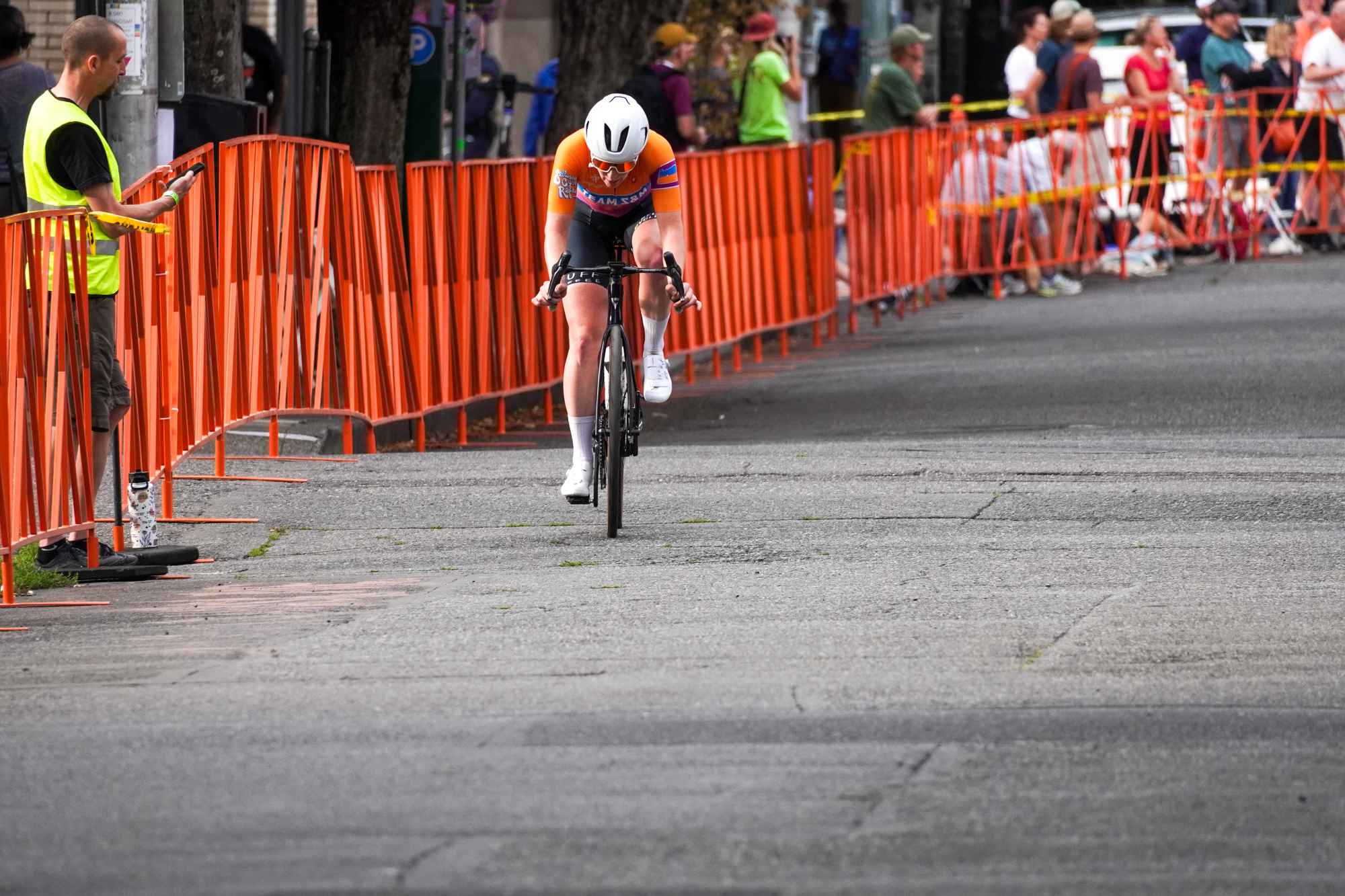
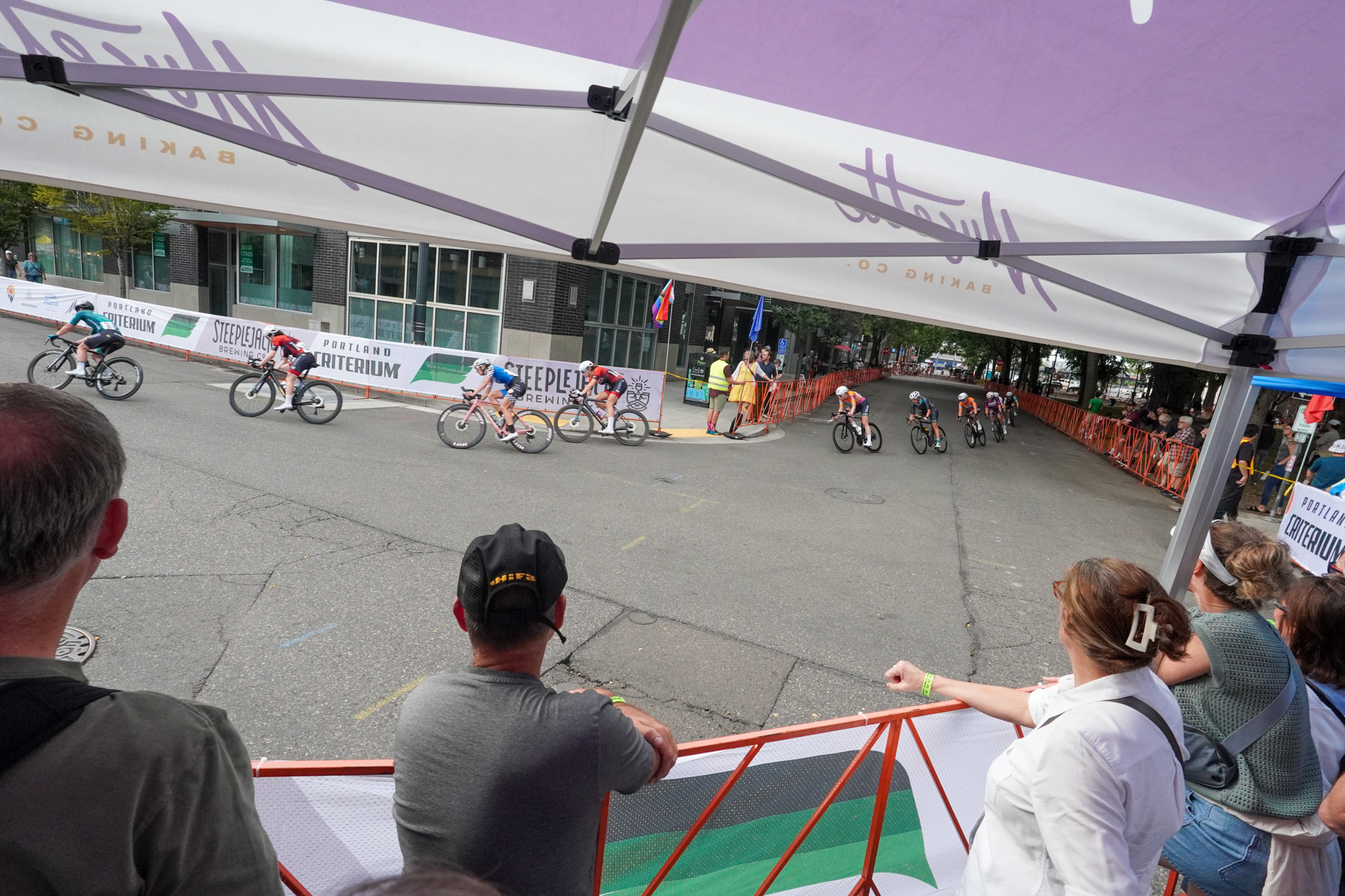
Speed, beauty, bikes. What more could you want? (Photos: Jonathan Maus/BikePortland)
UPDATED: Scroll to end of post to watch video!
Bike racing rocked the North Park Blocks today thanks to the return of the Portland Criterium presented by Steeplejack Brewing.
There was food, a great DJ, a beer garden, solid announcers, lots of cool people and rad bikes — and of course all types of racing action. If you missed it, there’s more racing tomorrow as day two gets underway in The Lloyd.
Check out my full gallery below and stay tuned for a video coming soon.
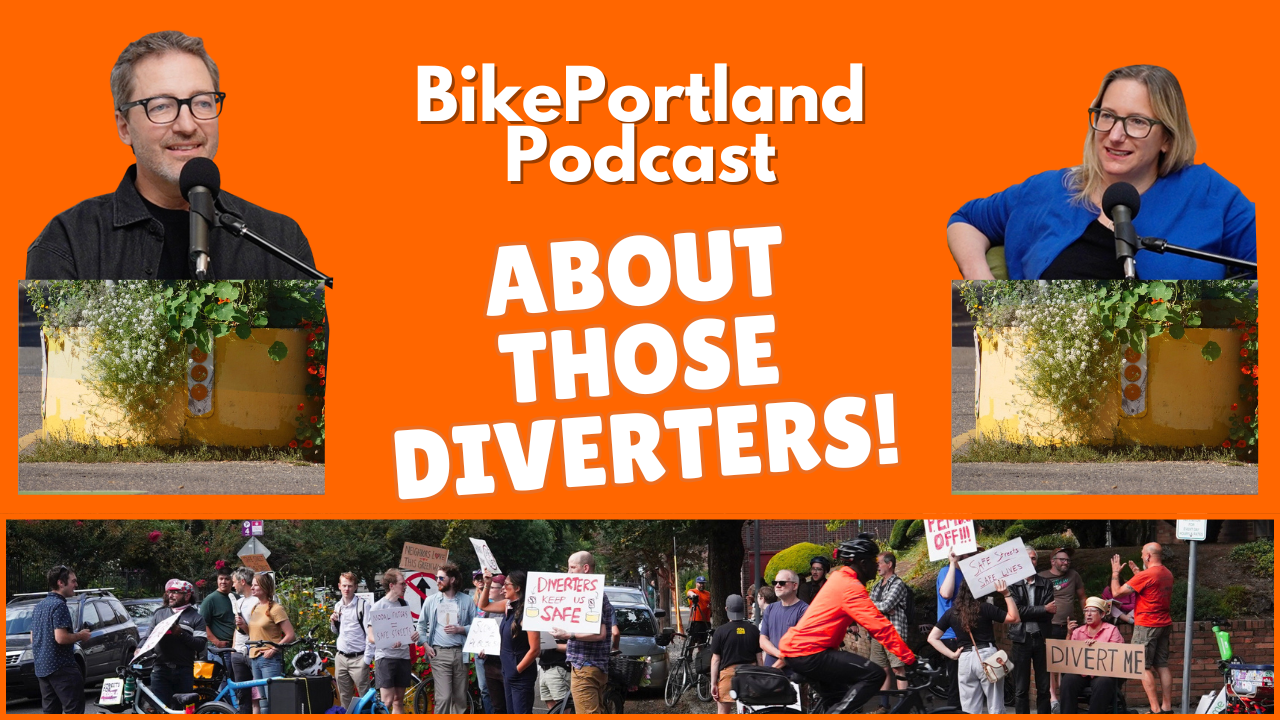
You knew I had to make at least one podcast out of the northwest diverter plan saga. As we enjoy this pause period on the City’s plans to increase access for cars on two key neighborhood greenways, I asked Joan Petit to join me in the Shed for a chat about it. Joan has been posting about the story on Bluesky and I know she’s fired up about what’s been going on. She’s also one of the former co-hosts of the Sprocket Podcast, a fellow politics and biking nerd, and someone who knows her way around city government.
We touch on everything from how the issue could lead to local government reforms, why this story touched such a nerve for so many people, a few conspiracy theories, and more.
Listen in the players above, directly on YouTube, or wherever you get your podcasts.
The Portland Police Bureau baited someone into stealing a bike and it worked so well they want to do it again.
According to a statement shared this afternoon, the PPB worked with their specialized Bike Squad and Entertainment Detail on a “bait bike crime reduction mission.” They focused the mission in the Downtown core, Old Town, South Park blocks, Couch Park, and Goose Hollow. The mission resulted in three arrests: two for outstanding warrants and one for Theft in the First Degree. In addition, more than 14 grams of cocaine were seized and two vehicles towed.
This mission came in response to one particular bike theft that happened in broad daylight last month on SW 10th Avenue. “While two people acted as lookouts, an individual used a power grinder to cut a lock and steal an e-bike,” the PPB described in the statement. “The bike was equipped with an AirTag and it tracked to North Portland.”
Advertisement
Police are still looking for the suspects and the bike (see below). Anyone who recognizes the individuals is asked to contact crimetips@police.portlandoregon.gov and reference case number 25-183852.
This isn’t the first time the PPB has used trackers to bait a bike. Back in 2017, I reported on a theft in Old Town, and even Washington and Clackamas County Sheriff’s Offices have used bait bikes. It’s unclear whether this time around the PPB used video as part of their mission; but back when they had a Bike Theft Task Force (R.I.P.), using video along with the tracker was considered essential in order to prove to judges that the person they caught with the bike was the same person who initially stole it.
Bike theft remains a problem in Portland. If you want to keep your bike safe, here are a few things to keep in mind.
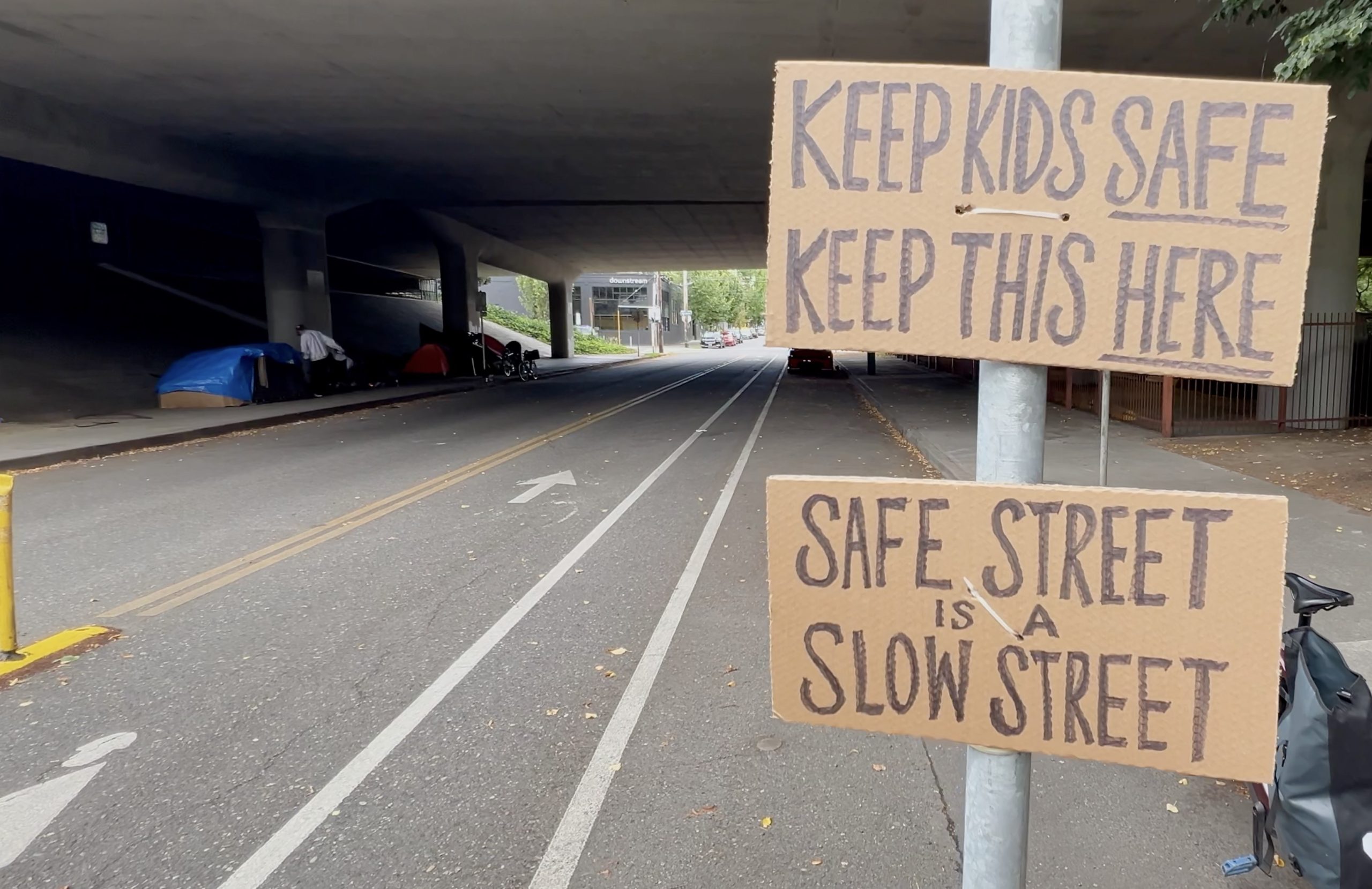
Signs on diverter on NW Johnson at 15th. (Photo: Jonathan Maus/BikePortland)
Nearly two weeks after we first heard of a plan by the City of Portland to remove two traffic diverters on neighborhood greenways in northwest Portland, we have yet to hear directly from one of the main characters: the Portland Police Bureau. That now has changed as I’ve just read an email from the Central Precinct Commander that lays out their case.
Before I share that, I can also share the latest from Deputy City Administrator of Public Works Priya Dhanapal. In an email this morning to Mayor Keith Wilson’s office and other city leaders, Dhanapal confirmed the state of the pause on the city’s plans I reported yesterday. “After listening to your perspectives and reviewing recent feedback,” Dhanapal wrote. “I am writing to let you know that we are temporarily pausing to review the recommendation and allow for more consultation with community partners.”
Here’s more from Dhanapal’s email:
Advertisement
DCA Priya Dhanapal
“When City Administrator Jordan is back next week, he will be providing an update outlining the issues that led to this recommendation and clarifying next steps, including our commitment to balancing public safety, transportation safety, and livability in our neighborhoods… Thank you for your leadership and advocacy on behalf of our city as we navigate a complex and emotional issue together, with both transparency and care for the communities we serve.”
Dhanapal also shared a message from PPB Central Precinct Commander Brian Hughes. Thus far PPB have been quiet about the issue, even though their patrols are central to the rationale for the diverter removal plan. An officer I asked for comment on August 1st has not responded to me. And in a story published this morning by Oregon Public Broadcasting, they say the PPB declined to comment.
Here’s the message Commander Hughes shared with city leaders:
Advertisement
Commander Brian Hughes (Photo: LinkedIn)
Thank you for including me in this discussion. I want to provide some law enforcement context on the public safety considerations that informed our support for removing the NW 20th Ave traffic diverters.
The issue is not simply about travel convenience for officers. This corridor has become a known pass-through route for individuals involved in thefts and other criminal activity at Fred Meyer, Couch Park, and surrounding areas. The diverters have inadvertently created a shielded environment, allowing offenders to quickly move between locations on foot or bike while evading police observation and response.
With the current diverter configuration, our patrol and neighborhood response units are limited in their ability to:
Pursue offenders who leave these locations, especially when the route is blocked to vehicles.
Conduct timely area checks or establish quick perimeter containment, since officers must loop several blocks around.
Deter crime through visible presence in the exact cut-through area offenders are using.
We have examples in other precinct areas—Old Town/Chinatown and segments of East Precinct’s 82nd corridor—where improved direct access for patrol vehicles allowed for quicker intervention and containment of suspects, contributing to a measurable drop in repeat thefts and assaults in those specific hot spots. While removing the diverters alone will not solve all crime in the area, it eliminates a current tactical disadvantage and allows us to layer in other strategies, such as increased directed patrols, targeted missions, and plainclothes operations.
I agree that we should evaluate results.
Brian Hughes Central Precinct Commander
Dhanapal is speaking about the diverters at the City Council Climate, Resilience, and Land Use Committee meeting as I type this. Councilor Mitch Green is also on deck to speak. Stay tuned for updates.
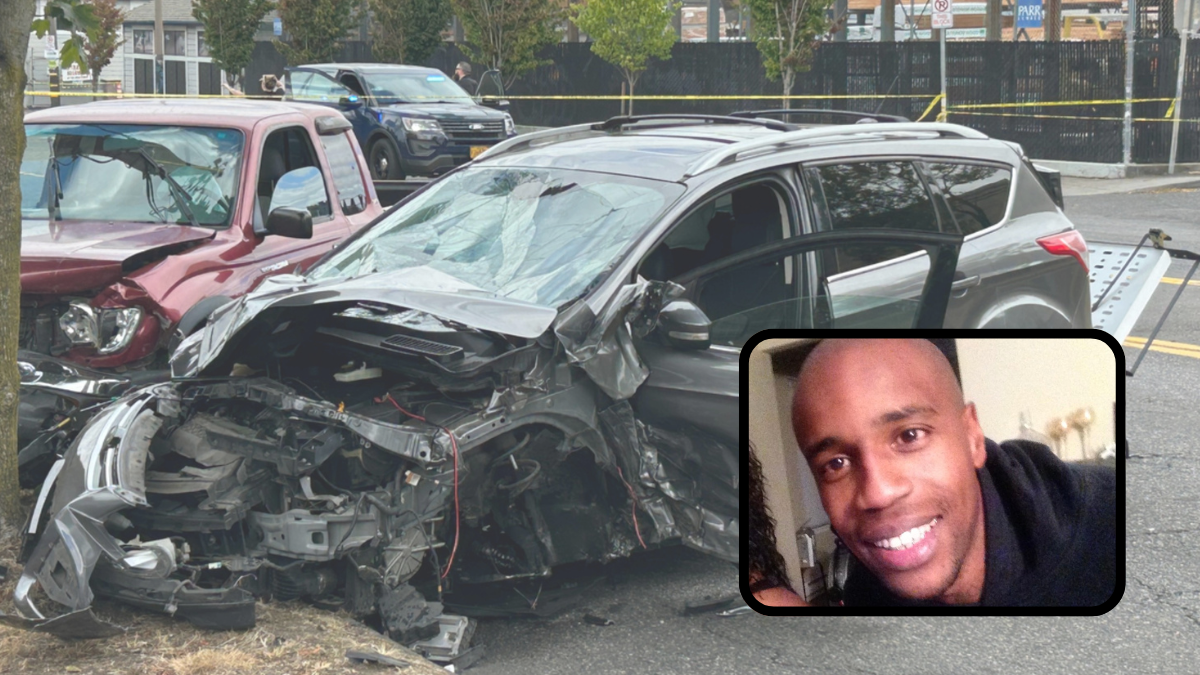
The man who drove his car onto a sidewalk on Northeast Martin Luther King Jr. Blvd and killed a man who was standing just outside a Subway sandwich shop on NE Jarrett last week, has also died. Portland Police say 60-year-old Curtis Palmer died at the hospital on Tuesday.
Palmer drove his Ford Escape SUV about three blocks after hitting 49-year-old DaRon Craig (and nearly hitting Craig’s 12-year-old son), eventually coming to a stop when he slammed his car head-on into other drivers after he jumped a planted center median just north of NE Ainsworth.
According to a story in The Oregonian, Craig was a beloved family man who raised five children of his own and took in three others, “all of whom he treated as his own,” his ex-wife Angeline McKinney-Craig said.
Advertisement
McKinney-Craig has appealed to the community for help after this unfathomable tragedy struck her family. In a GoFundMe post, she said her family is “shattered” and that their son who was with McKinney-Craig when he was struck is “struggling deeply with grief and guilt” as he processes the trauma.
“DaRon was a devoted father who loved all of his children deeply,” McKinney-Craig wrote in the post. “No matter the distance or circumstances, his love for each of them was constant, unconditional, and the core of who he was. His children were his pride, his joy, and the light of his life.” So far the family has raised nearly $25,000.
In an update shared on Tuesday, McKinney-Craig said a fire tore through the family’s home, furthering their loss and taking away many of the memories they had with their late father.
Aftermath of a crash on NE Airport Way and Mason on August 10th where the driver sustained life-threatening injuries.
Police haven’t released any further information about what might have caused Palmer to lose control of his car and cause so much damage to this family and the community. Three days after this tragic episode of traffic violence, PPB said there were two more serious injury crashes in northeast Portland — one of them was just 0.6 miles away from where Craig was hit. Both of the crashes on August 10th happened in the very early morning hours, involved drivers that were going too fast for conditions and were suspected of being impaired by drugs and/or alcohol. Later that same day, someone driving a truck on the Morrison Bridge accelerated into the back of a bicycle rider, threw the rider onto the ground and injured them, then sped away. Police are still searching for that driver and I’m working to find out the latest information about the investigation and the condition of the rider.
This could be you! Come out to the big Portland Criterium on Saturday (North Park Blocks) and/or Sunday (Lloyd) to get close to the action and celebrate cycling in Portland. (Photo: Jonathan Maus/BikePortland)
Time to get your weekend plans in order. I can help with that! Here are my picks…
Saturday, August 16th
Sew Many Bikes – 10:00 am at Sewcial Studies Studio in Milwaukie (SE) Billed as a craft club on wheels, this ride is a gathering of folks who love to craft and sew — and share their creations with others. Expect a short, slow ride with stops at fabric and craft stores. More info here.
Portland Criterium – Noon to 8:30 pm at North Park Blocks (NW) Cycling races around a short track with lots of speed and sharp turns. Also come out for the running races or the public, open-streets session. Bring the kiddos for the kids bike skills area and youth art station while you enjoy local food and drink and a celebration of Portland bike culture. More info here.
Inner Eastside for All Ride – 1:00 pm at Colonel Summers Park (SE) Housing and land-use wonks unite! Join Portland Neighbors Welcome for this annual mixed-use housing love-fest while you network and learn how you can help them win a campaign to upzone the inner eastside and create more housing options for everyone. More info here.
Loud N’ Little – 6:00 pm at Sewallcrest Park (SE) OK this is very cute. One of the founders of the mega-epic annual party ride Loud N Lit has had a kid and wants to do a version for families and little ones. Expect playgrounds, bubbles, and fun kids dance music. More info here.
Advertisement
Sunday, August 17th
Cyclepath NW Grand Opening – 9:00 am to 3:00 pm at Cyclepath NW (NW) It’s a celebration of a local bike shop’s second location! Start the day with coffee and pastries while you hang in the gorgeous new shop (in what used to be Fat Tire Farm), then roll out for a bike ride and return to the shop for fun games and a $3,000+ prize raffle!! More info here.
Cargo Bike Picnic – 9:00 am at Peninsula Park (N) Hang out, chat and snack with other cargo bike riders at the park and then roll out for a fun, short ride. Sounds like a perfect Sunday to me. More info here.
Portland Criterium – 9:00 am to 3:30 pm in The Lloyd (NE) More racing action with even higher stakes because winners will be crowned Oregon State Champions. Course will go around Lloyd Center Mall and even through it (sort of!). Coincides with a street party in Holladay Park with lots of family-friendly activities. More info here.
PaddleCanooza – 1:00 pm at Cathedral Park Boat Ramp (N) “Leisurely bike ride to a sandy beach for snacks and lawn games. Did we say bike? We meant canoe. Bring your own canoe!” More info here.
Zoobomb – 8:00 pm at the Pyle (SW) Join ZB legend Handsome Dave for a ride up to Washington Park on the MAX, then bomb down the hills with reckless abandon. Safety third! More info here.
— Did I miss your event? Please let me know by filling out our contact form, or just email me at maus.jonathan@gmail.com.
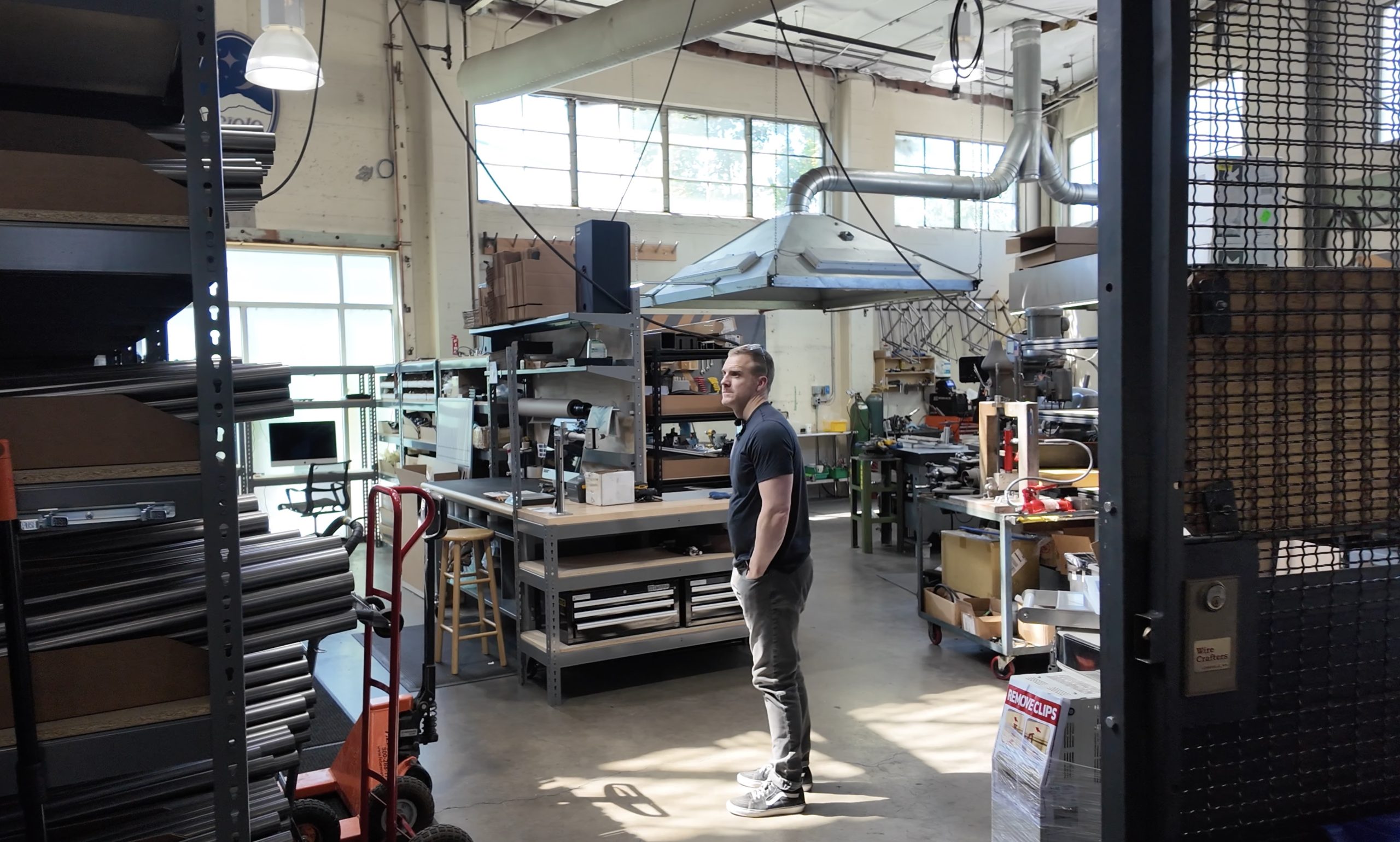
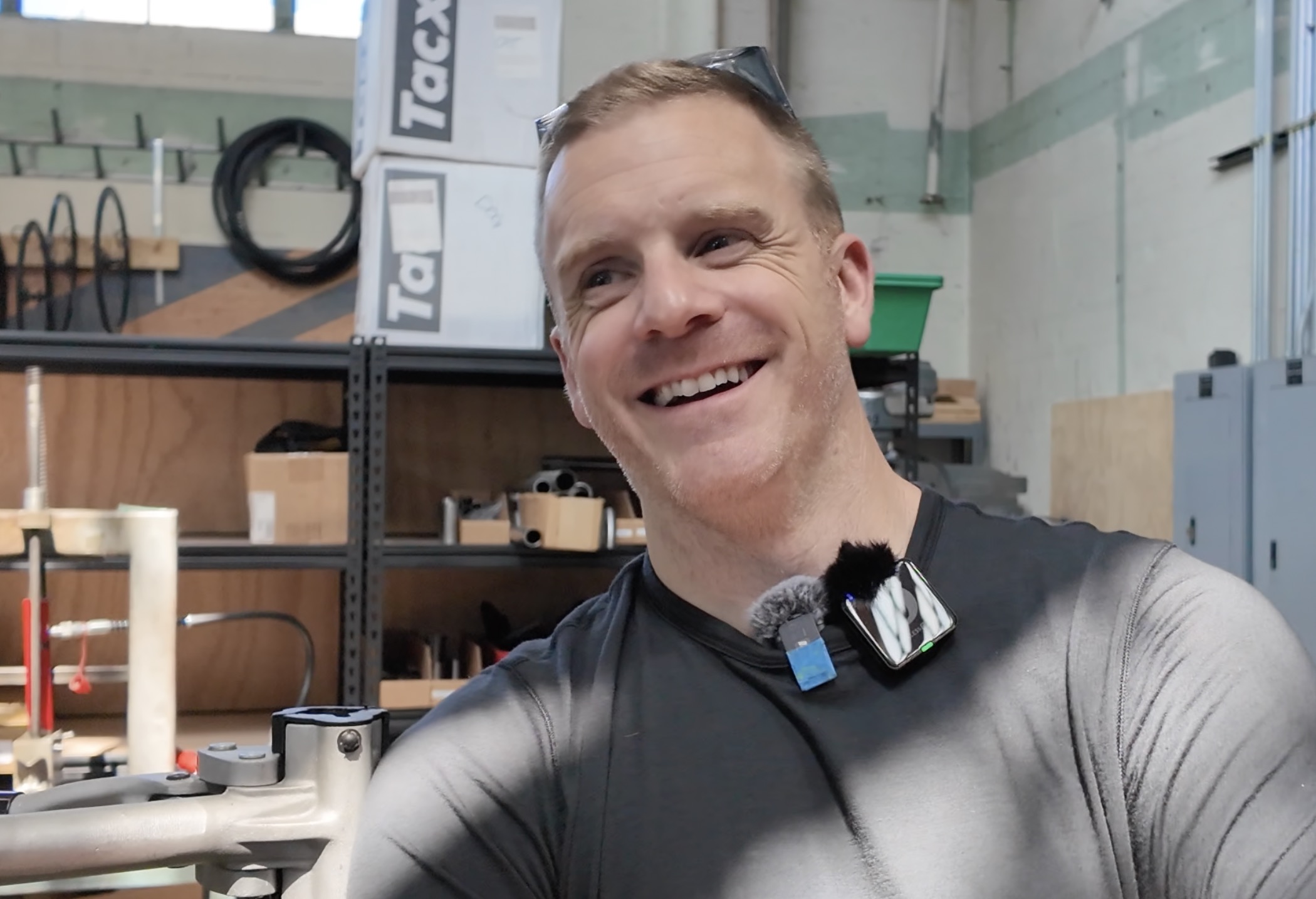
Chris Blandford of Firsthand Bike in a temporary spot for his framebuilder supply business located inside the Chris King Precision Components factory in northwest industrial. (Photos from video screenshots: Jonathan Maus/BikePortland)
Chris Blandford has picked up the torch he hopes will reignite Portland’s vaunted reputation as the epicenter of American bicycle building. His Firsthand Framebuilding business is set to expand into a framebuilding school and shared shop space scheduled to open next summer.
I recently met Blandford as his current space in northwest industrial to learn more about his exciting project.
Advertisement
Tucked away in a corner of the vast, 70,000 square-foot Chris King Precision Components factory where some of the world’s most sought-after bicycle parts are made, Blandford and I talked about his plans and why he was inspired to “take the plunge” on this new business venture.
Blandford, 40, grew up in what he called, “car-centric Phoenix” and then lived in Durango, Colorado, which is where he caught the cycling bug. In 2016, he came to Portland to take framebuilding classes from (the now closed) United Bicycle Institute (UBI). He and his wife were living in Chicago at the time. “We experienced Portland, kind of fell in love with it, and we moved out here,” Blandford shared. “And I’ve been trying to poke my way into the bike industry ever since.”
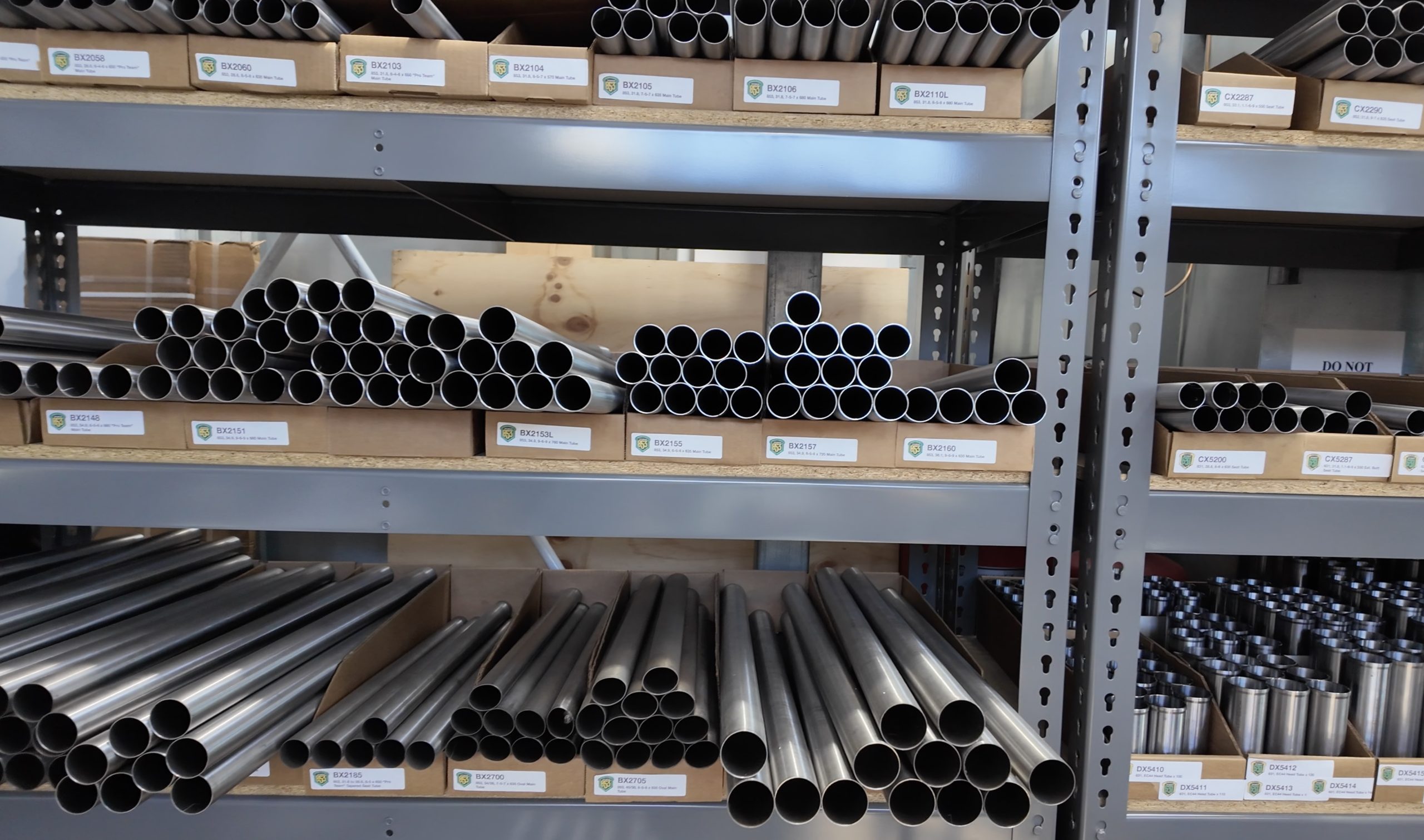
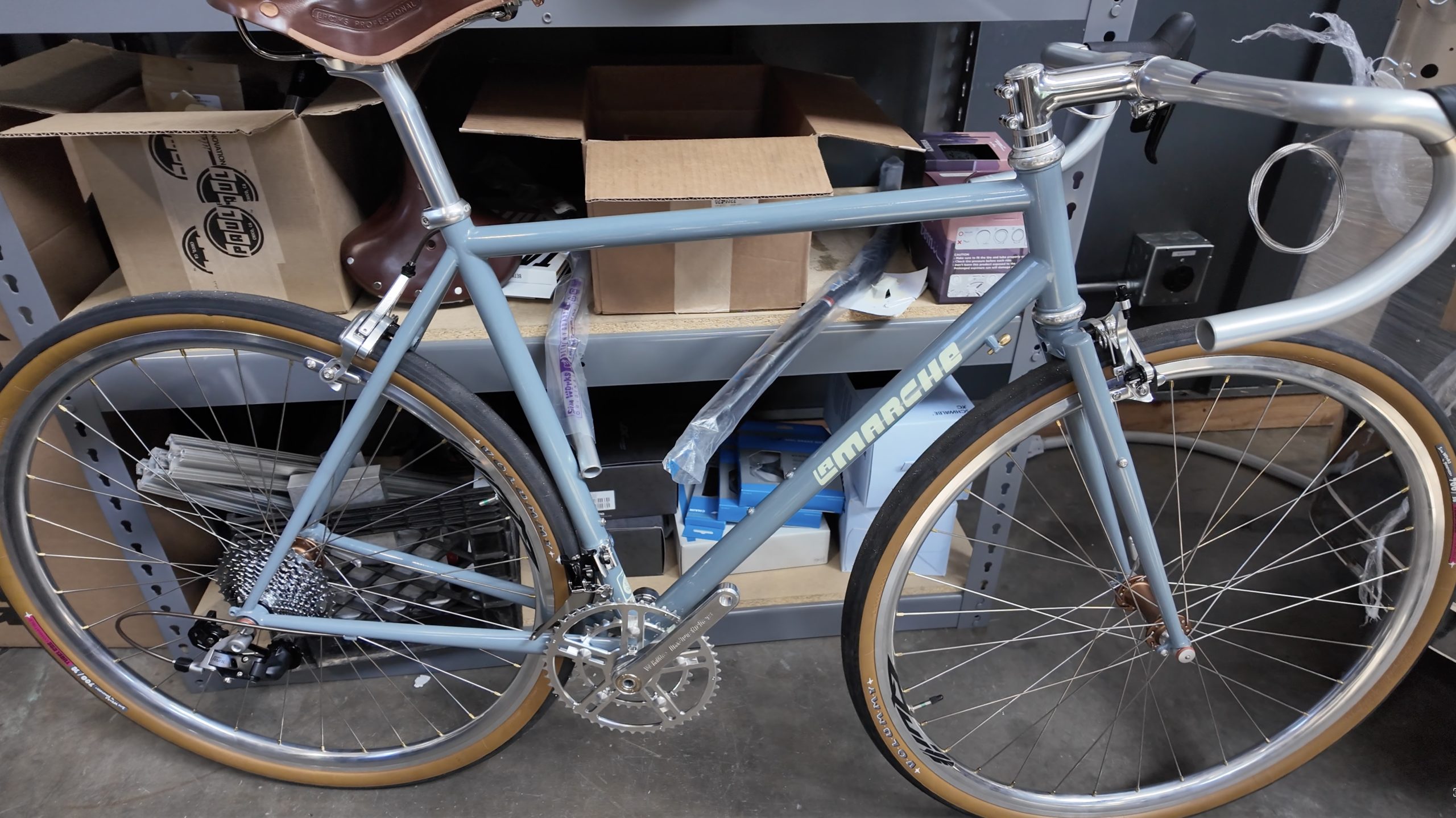
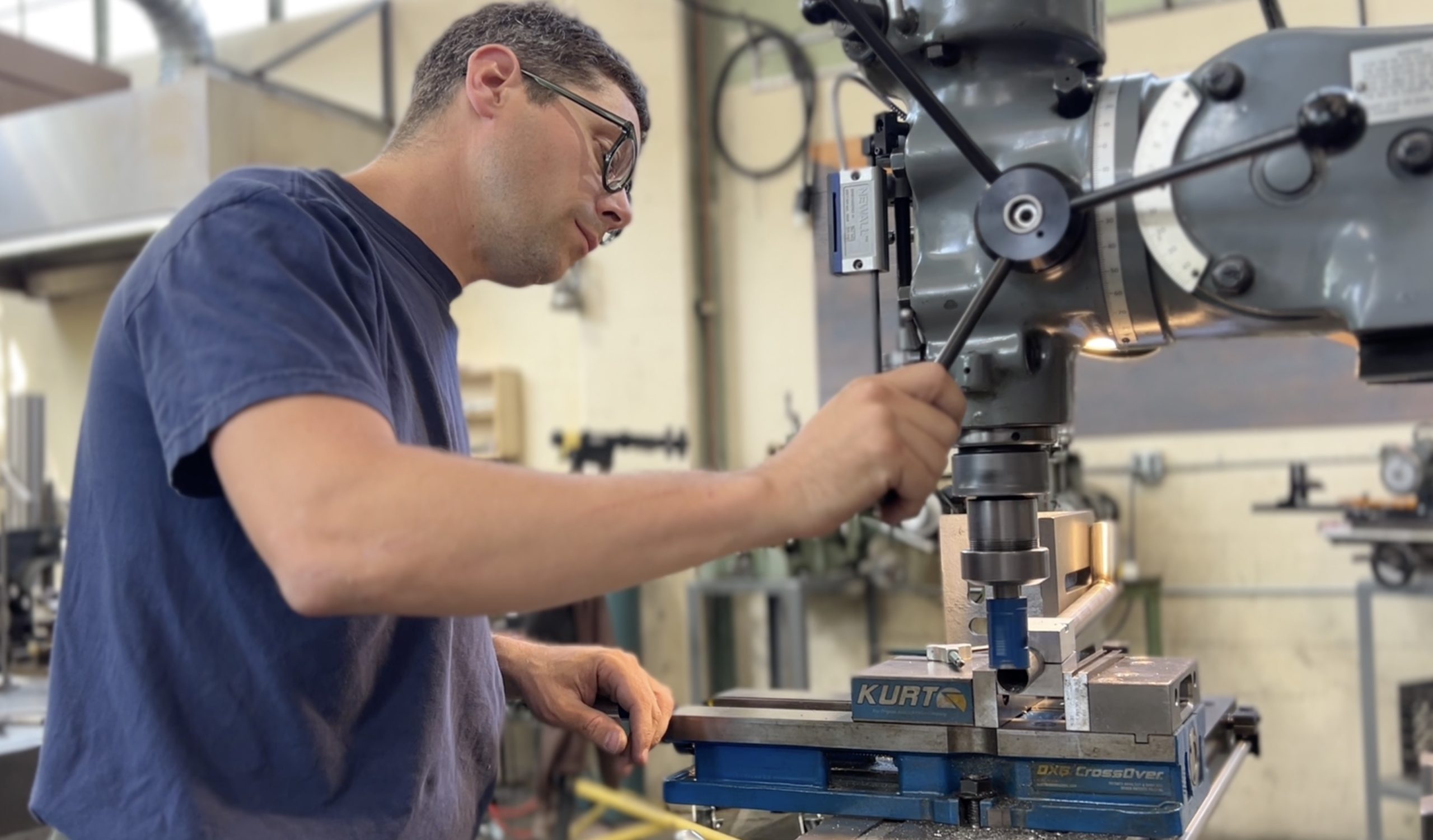
Reynolds tubing.Bicycle by Tom LaMarche.Tom LaMarcheBlandford in the shop.
As he made custom bikes for himself and a few clients, he saw UBI close their Portland location in 2019. “That kind of planted the seed in the back of my head that there might be room for a new version of a framebuilding school,” Blandford reflected. He continued building and teamed up with Oscar Camarena and Simple Bicycle Company (a business that made bikes for other labels) in 2021. Then, late last year he seized an opportunity to take over the North American distribution of Reynolds bicycle tubing. He now sells high-end steel and titanium tubes for bicycle frames, handlebars, and seatposts — as well as a full selection of framebuilding supplies and tools — from his e-commerce site Firsthand.bike.
As a framebuilder himself who loves the process and craft that goes into each bike, and understands the financial side of the business, Blandford can appreciate the struggle of young builders trying to scratch out a living doing what they love. And sharing resources can mean the difference between building and breaking the bank. Blandford understands that the vast majority of the cost of making bikes is spent on buying and storing tools that are only used 10% of the time. He’s found that many builders, especially younger ones, are interested in sharing these resources.
That’s part of why Blandford taking the plunge with his new concept of a framebuilding school, community hub and shop space which he calls Firsthand Bike.
Advertisement
“In order to learn something, you have to do it firsthand,” he shared when I asked where the name came from. “You can watch YouTube videos or read a book, but the benefit of seeing this stuff done firsthand is huge and there’s currently no public place you can see it.” Blandford also said the name pushes back on today’s all-digital world. “So many things are on screens these days that to have an actual, firsthand experience with something is hugely valuable.”
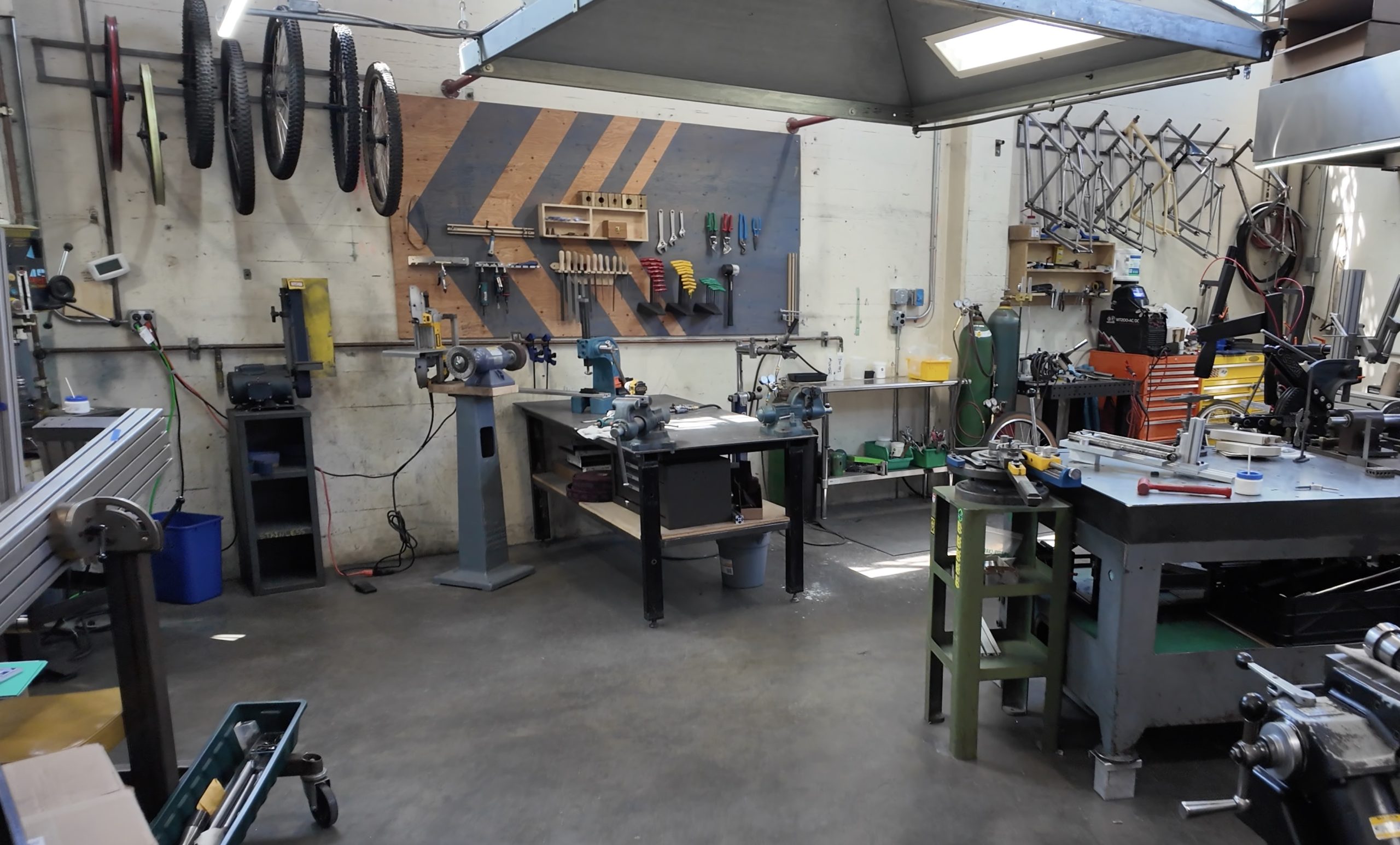
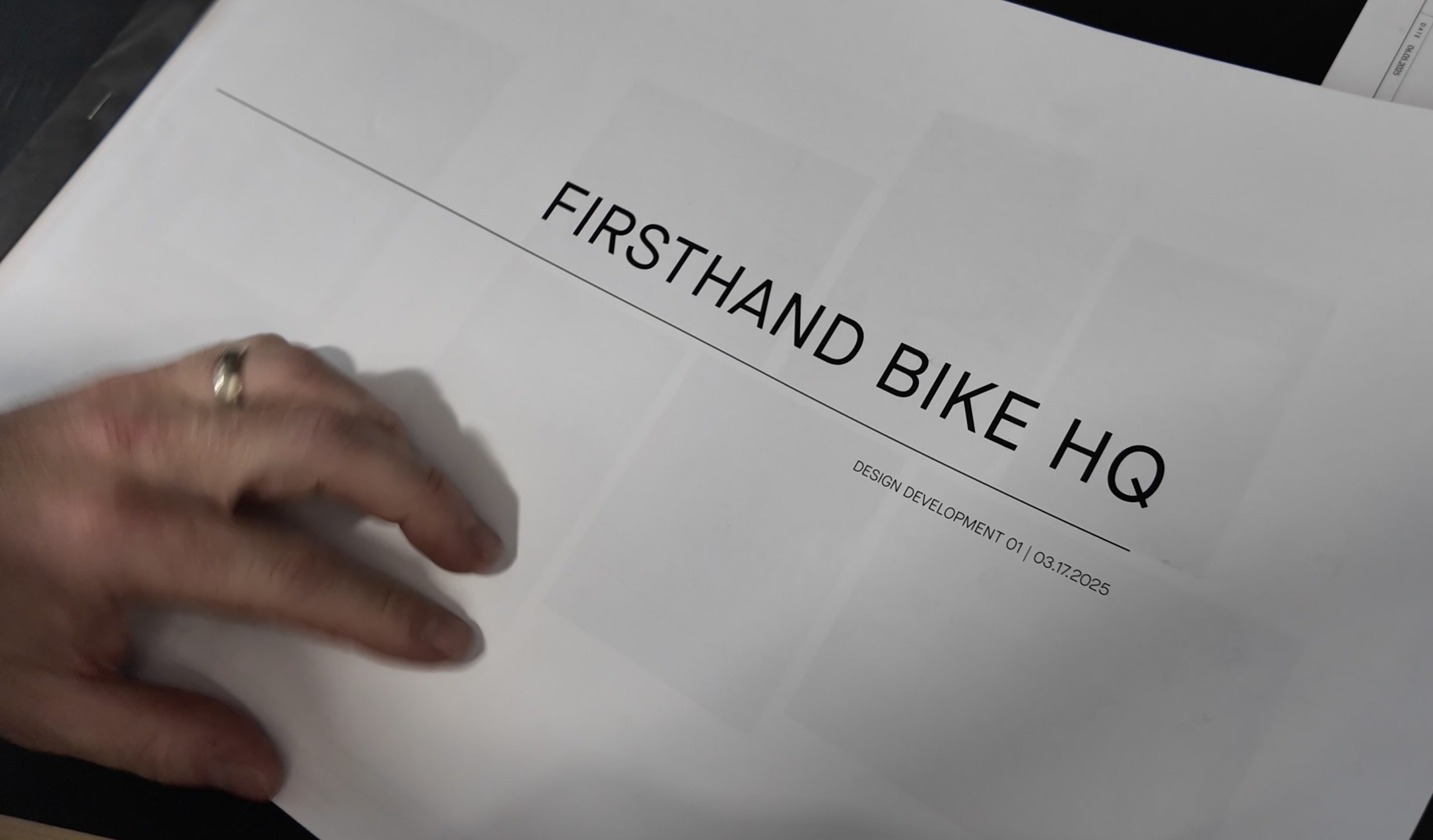
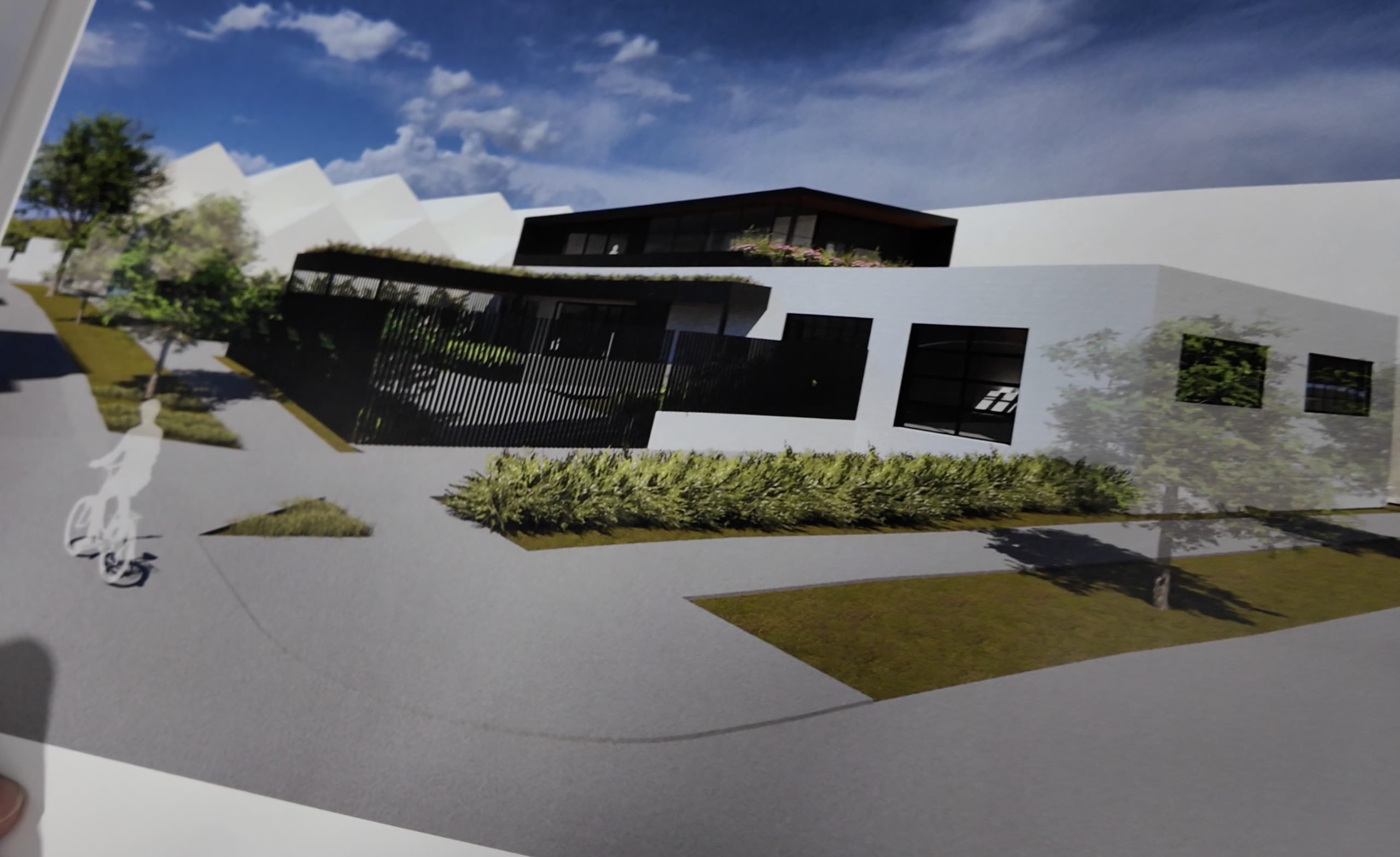
Firsthand will be a 5,000 square foot, multi-level space in the Johns Landing neighborhood. As he flipped through pages of architectural renderings, Blandford described his new space: a frame shop, a classroom, an upstairs event space, a patio, a small retail showroom, a courtyard, even an on-site apartment for visiting instructors. He also hopes to host events like small bike shows and swap meets. “I’m really hoping it evolves into sort of a community hub that’s centered around metal fabrication and bicycle building,” he shared. “I would love to see this thing become the place for builders to come, hang out, share knowledge, and figure out what’s next in framebuilding.”
Blandford and renderings of his project.
Blandford wasn’t willing to share who the first batch of in-house builders will be, but he’s currently testing the shared space concept at his current location. The builders working under one roof include B Vivit of HotSalad Bicycles, Bradford Smith of After Hours Framebuilding, and Tom LaMarche of LaMarche Bike Co.
Advertisement
15 years ago Portland was the center of the American framebuilding scene as it played host to the largest handmade bike show in 2008 and then cultivated its own brand of show with the Oregon Manifest, which was held five times between 2009 and 2014.
But as the cost of living in Portland skyrocketed and our cycling culture shifted into a new era, the framebuilding scene ebbed. Blandford thinks the tide is ready to come back in. “In the last couple of years, especially with the MADE show that Billy’s [Sinkford] is putting on, I felt like there’s a renewed enthusiasm. And so I thought, if someone was going to do it, now might be the right time and I thought I’d just take the plunge.”
“I’m going to build something really cool,” he added. Judging from what I saw and heard on Tuesday, I could not agree more.
Blandford will make an official announcement about his plans at the MADE Bicycle Show, coming to Portland August 22-24th. Renovation of his space will take about six months and he said he plans to move in this coming spring and be open to the public by next summer. Watch this space for updates.
Hear from Chris and see his current shop in the video below:
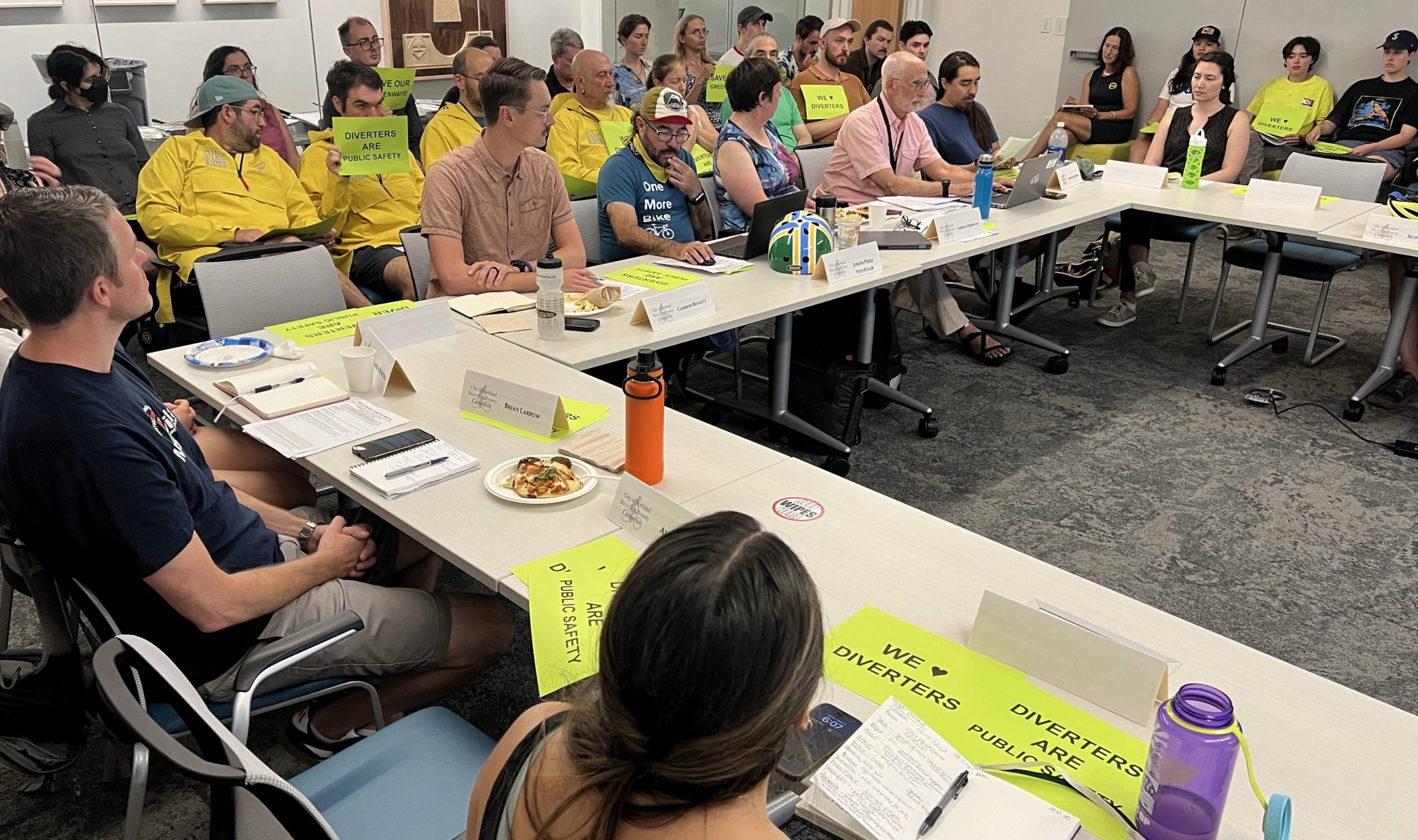
It was the largest turnout for a Bike Advisory Committee meeting I’ve seen in 20 years. There was also an overflow room and about 50 people attending online. (Photos: Jonathan Maus/BikePortland)
Facing intense pressure from a wide array of concerned Portlanders and one of their own advisory committees, the City of Portland has decided to hold off on a plan to remove diverters and make changes to traffic flow on two neighborhood greenways in northwest.
Last night’s Bicycle Advisory Committee (BAC) meeting began with an announcement from the committee chair that Mayor Keith Wilson has seen and heard enough. Just minutes before the meeting, Wilson notified BAC Chair Jim Middaugh that he wanted to pause the plan (this would be a stronger and longer pause than previously announced). Wilson’s epiphany came just one day after his own city administrator, Michael Jordan, penned a five-page memo that attempted to explain the city’s rationale for removing the diverters.
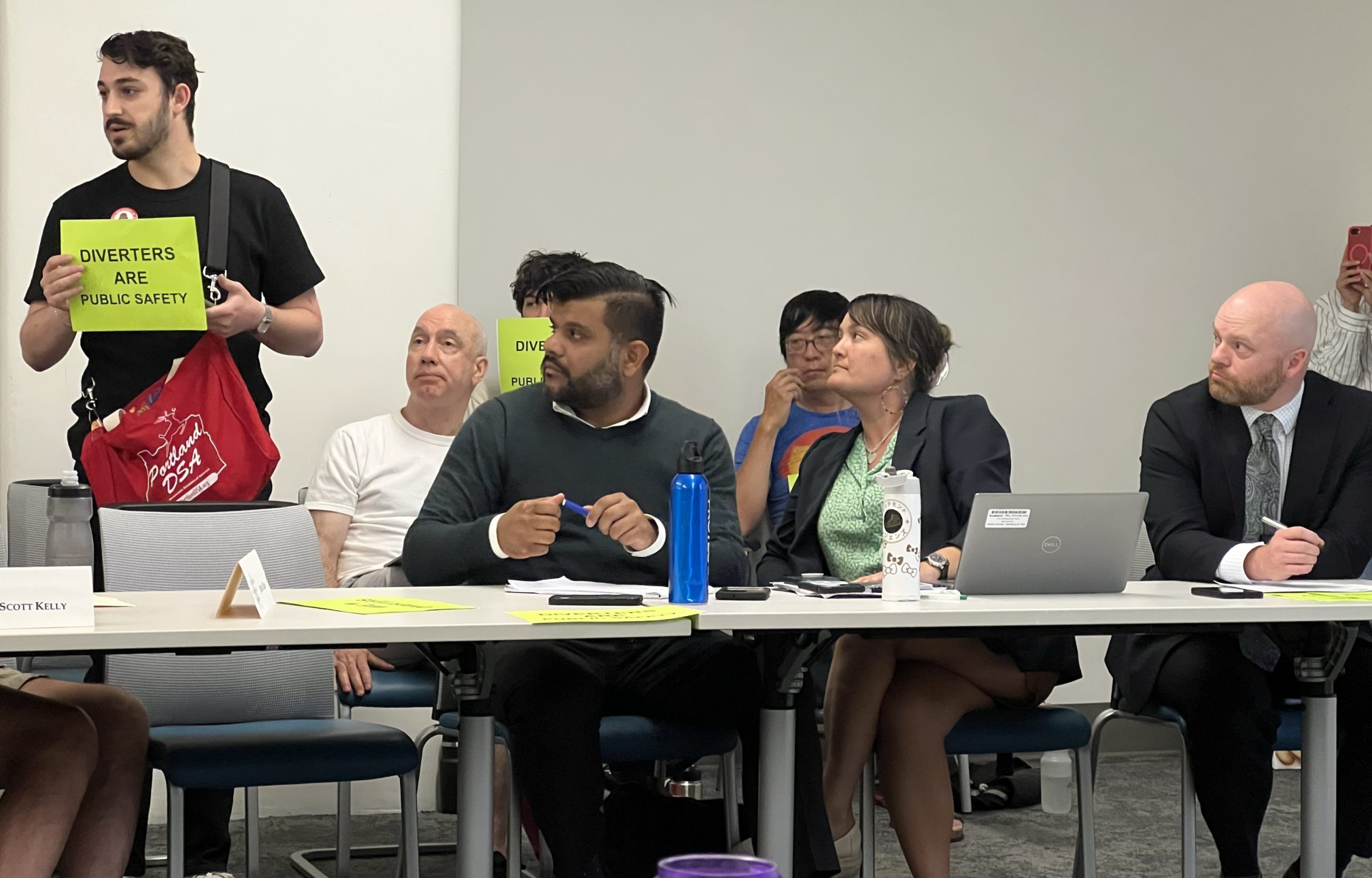
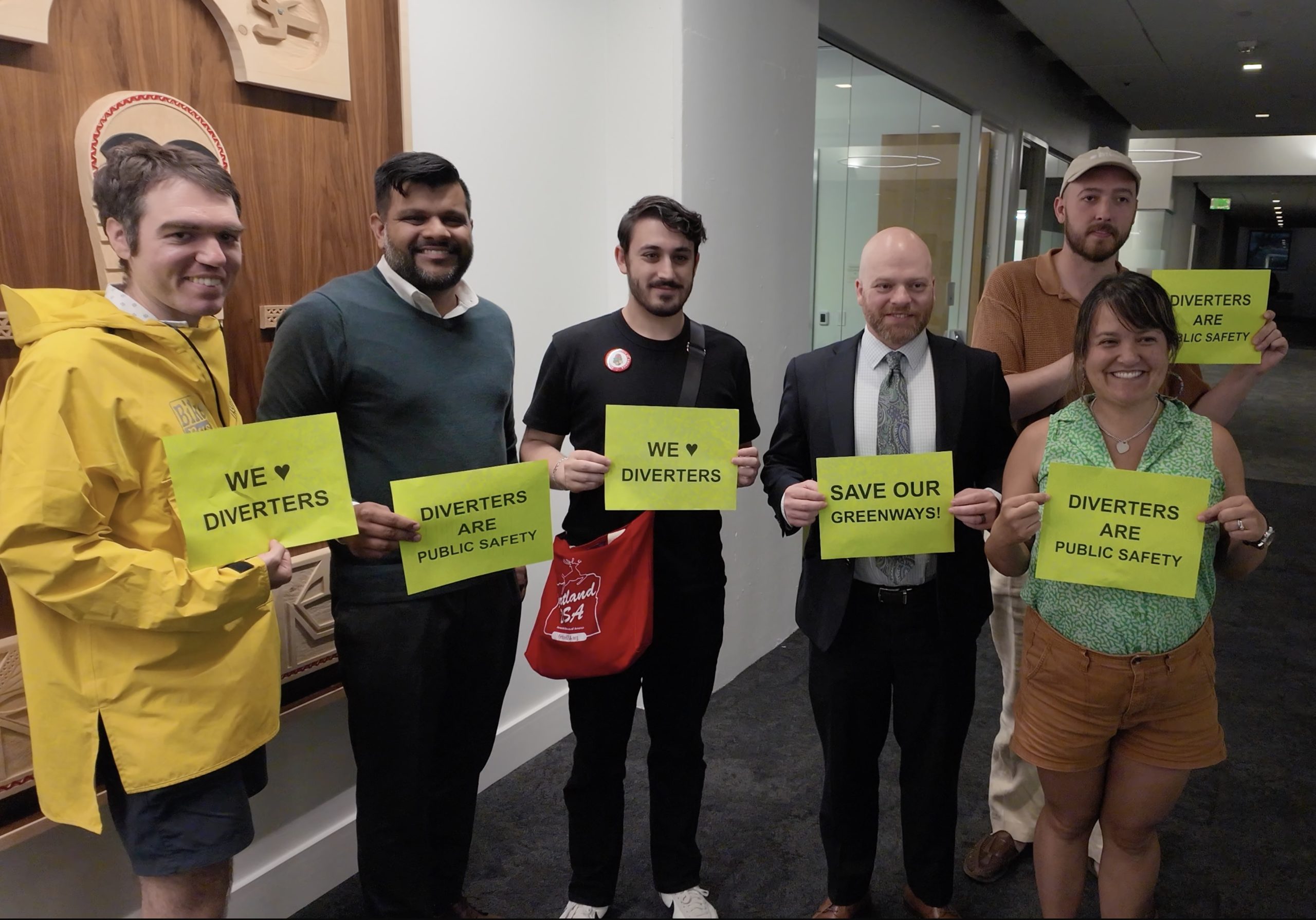
That memo was unanimously panned by BAC members, by the three city council members who showed up in person, and by the dozens of Portlanders who attended — nearly all of whom held up bright green signs in the packed room that read, “We Love Diverters,” “Diverters are Public Safety,” and “Save Our Greenways.”
Advertisement
People are watching this issue closely.Councilors Kanal, Koyama Lane, and Green listen to testimony.L to R: Bike Bus PDX advocate RJ Sheperd, Councilor Sameer Kanal, Portland DSA Lobbyist Ben Gilbert, Councilor Mitch Green, Portlander Jordan Lewis, Councilor Tiffany Koyama Lane.
Middaugh spoke on the phone this morning with Deputy City Administrator of Public Works Priya Dhanapal and Mayor Wilson’s Chief of Staff Aisling Coghlan to debrief about the meeting. According to Middaugh, “They’re hearing the need for more conversation. They are anxious about the livability issues [that spurred the diverter removal plan], but recognize there’s a need for a little bit more process.” Middaugh made it clear in my conversation with him after that call that Dhanapal and Coghlan feel the livability issues outlined in the city’s memo must be addressed as quickly as possible. (It’s unclear to me where this urgency is coming from since the issues have been going on for years and they have not provided evidence of any imminent threat to public safety.)
The initial agenda of the monthly BAC meeting included PEMO Director Anne Hill. She was slated to explain her office’s rationale for increasing access for car drivers on NW 20th and NW Johnson. Prior to the meeting, I heard that DCA Dhanapal, Portland Bureau of Transportation Director Millicent Williams, and even Mayor Wilson himself would attend; but none of them showed up. It remains unclear what exactly transpired in the hours leading up to the meeting, but their absence spoke volumes and validated an ongoing concern that no one at the City wants to be held publicly accountable for this diverter removal plan.
“I really wish there were city staff leadership here to answer questions,” said District 3 City Councilor Tiffany Koyama Lane at the meeting (she also shared that she “was begging that they be in the room”). “It is absolutely reasonable for Portlanders to expect data driven decision making, open communication and transparency around changes to our streets which impact our lives.” This issue is not in Koyama Lane’s district, but she’s thrust herself into it because she wants to be known as the political champion of traffic safety and Vision Zero (she also used to live at NW 20th and Flanders).
Advertisement
Koyama Lane was supported at last night’s meeting by District 2 Councilor Sameer Kanal and District 4 Councilor Mitch Green. (District 3 Councilor Angelita Morillo would have also attended but had another commitment. The fifth councilor to oppose the diverter plan is District 3 Councilor Steve Novick).
After hearing sharp criticisms about the city’s plans from BAC members and others at the meeting, the councilors shared their thoughts.
Green, who said he’s “frustrated” by what’s transpired over the last 11 days, assured everyone that “the new form of government is working right now.” “They mayor and city manager made a decision. They didn’t tell anyone. They decided to do a thing, but then a couple of your councilors raised some red flags. We reached out to press and said, ‘Hey, this is a big issue,’ and then community mobilized.” Green added that he felt CA Jordan’s memo was “really problematic” because it, “lays out a series of specious arguments that back into the result they chose to do.”
“There is nothing currently prohibiting the Portland Police Bureau from driving a car through that right-of-way,” Green added. “So if they can do it now, these planters are not a barrier to doing policing. So the benefits of taking the diverters out completely wash out — all you get is the cost of taking them out and now you have a very angry public.”
Green and Koyama Lane are not happy about the lack of transparency around the diverter removal plan, and they have a plan to make sure it doesn’t happen again. The duo plan to amend the provision in Portland City Code (16.10.100) that deals with “Road Authority.” That provision currently reads (emphasis mine),
“As the City’s elected body, the City Council is the road authority for all public streets, except state highways, as designated by state law. The City Council may delegate specific road authority to the City Administrator or Emergency Incident Commander as the Council deems appropriate.”
Advertisement
In laying out his argument that City Council is the ultimate road authority, Green said, “City Council adopted the NW In Motion Plan which led to these diverters. That was city council’s will. The city administrator is allowed to execute our vote. It’s inappropriate for the city administrator to pull back on investments they’ve made without at least notifying city council and asking for permission. That needs to change and that will change.”
Koyama Lane then clarified that she and Green are moving forward with legislation they hope will clarify road authority and they are, “Evaluating this specific incident to see if public involvement principles were followed.”
Councilor Kanal echoed concerns about the lack of transparency from PEMO, who’s cited their Problem Solver meetings as the origin of concerns around the diverters, yet does not take minutes, share agendas, or track attendance of those meetings. (However, Kanal shared with me after the meeting that he does not think PEMO violates state public meeting laws.) Kanal also said he’s skeptical that the PPB actually asked for the diverter removals to begin with. “I’ve seen no evidence that PPB asked for this. I hear people talking about it, but we have not seen it directly, and I’m the co-chair of the Public Safety Committee on City Council.”
Kanal went on to say this situation “is not unique.” “We have a lot of examples where regular people have to go through process after process after process to get in a small piece of community, a small piece of literal space, a small piece of belonging, and the feeling of safety — and then an entrenched interest comes along and, boom! it’s gone.”
The video above features just one of the people who testified in support of the diverters last night. Sabrina Williams lives right near NW 20th and Everett and to her, these aren’t just concrete barricades. She credits the diverters and community garden inside them for restoring her confidence and faith in her community after being victim of a horrific bias crime.
BAC members did their part last night to prevent that from happening this time. In an unprecedented move spurred by support from Councilors Green and Koyama Lane, they penned a future City Council resolution in real-time at the meeting. The text of the resolution (I will share it when I get a final version) makes it clear the committee opposes the diverter removal plan and that any such plan to make changes to neighborhood greenways in the future must go through a public process. The text of the resolution will be handed to Green’s office who will run it through the city attorney’s office and then propose it at a future City Council meeting.
With pressure ratcheted way up by the BAC, an increasingamount of mediaattention on this issue (there were three local news crews in attendance last night), and with CA Jordan on vacation this week, leaders of the assemblage of city offices that pushed for this ill-fated plan (Portland Solutions, the Public Environment Management Office (PEMO), city administrators and the Mayor’s Office) will likely huddle next week to figure out their next moves. This means the diverters are safe for now, but the community has no assurance about what changes might come in the future.
— The next opportunity for public discussion on this issue will come Thursday when Councilor Green attends the Climate, Resilience and Land Use Committee meeting. He was invited to brief the committee about the diverters by Councilor Novick.
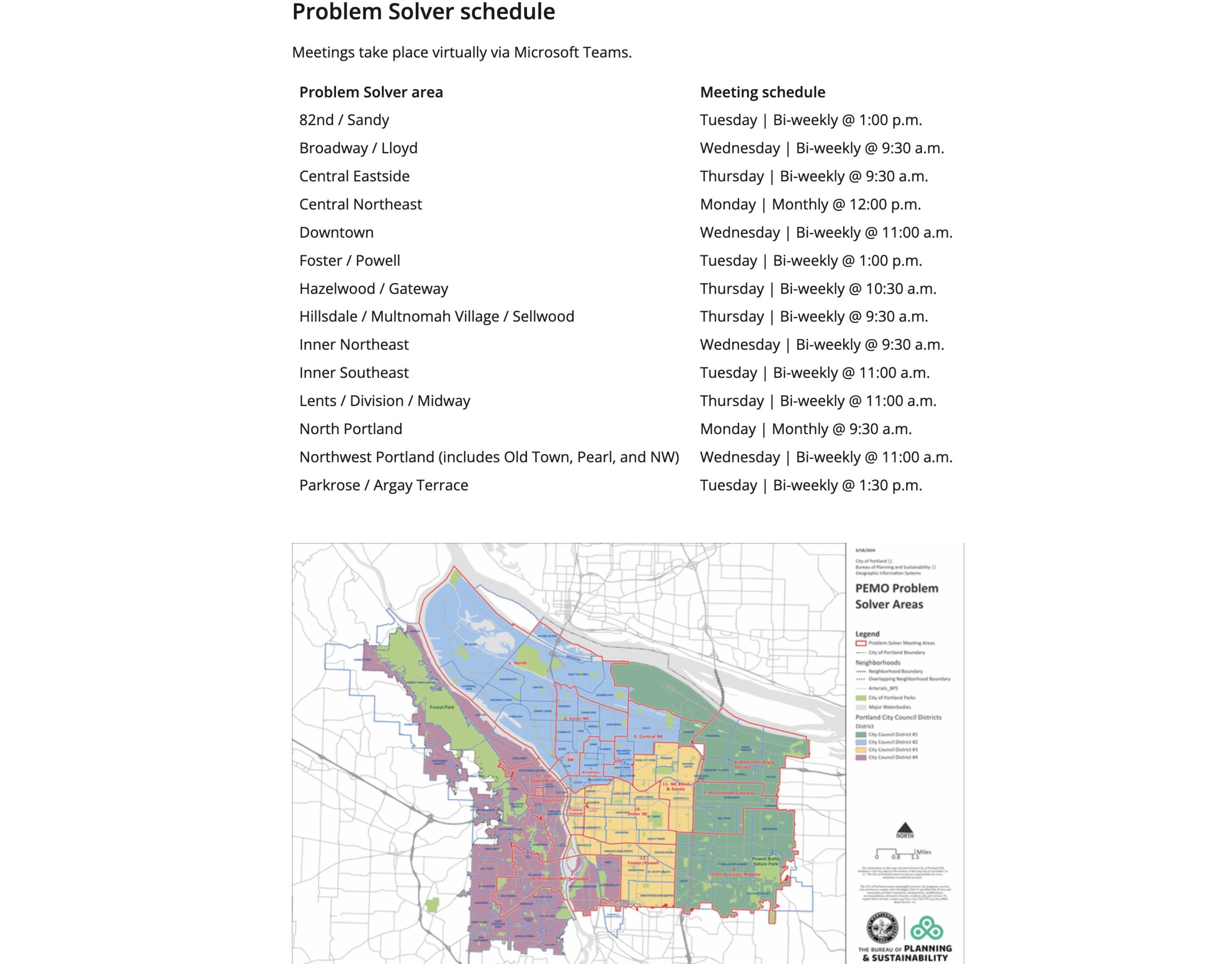
UPDATE, 12:54 pm: I was just informed that PEMO has updated their Problem Solver Network website with times, dates and more information about their meetings (which are all held virtually).Check the screenshot below: