Monday Roundup: Oil shock, counting pedestrians, and more

Another sunny Monday… In February! Can you believe some cherry blossoms are already in bloom? Wild times we are living in.

Below are the most notable stories that came across my inbox this past week…

Foot traffic: Very exciting development in counting pedestrians from MIT shows the value of getting counting right and how science can help make cities better. (Fast Company)

Micromobility report: The State of Massachusetts assembled a special commission to study micromobility and their final report is a very thoughtful and thorough document that I hope some Oregon advocates can copy from. (Massachusetts DOT)

Gas prices: Because of the Trump War Against Iran we could be at the precipice of another gas price shock that sends people into bike shops and bus stops. (Associated Press)

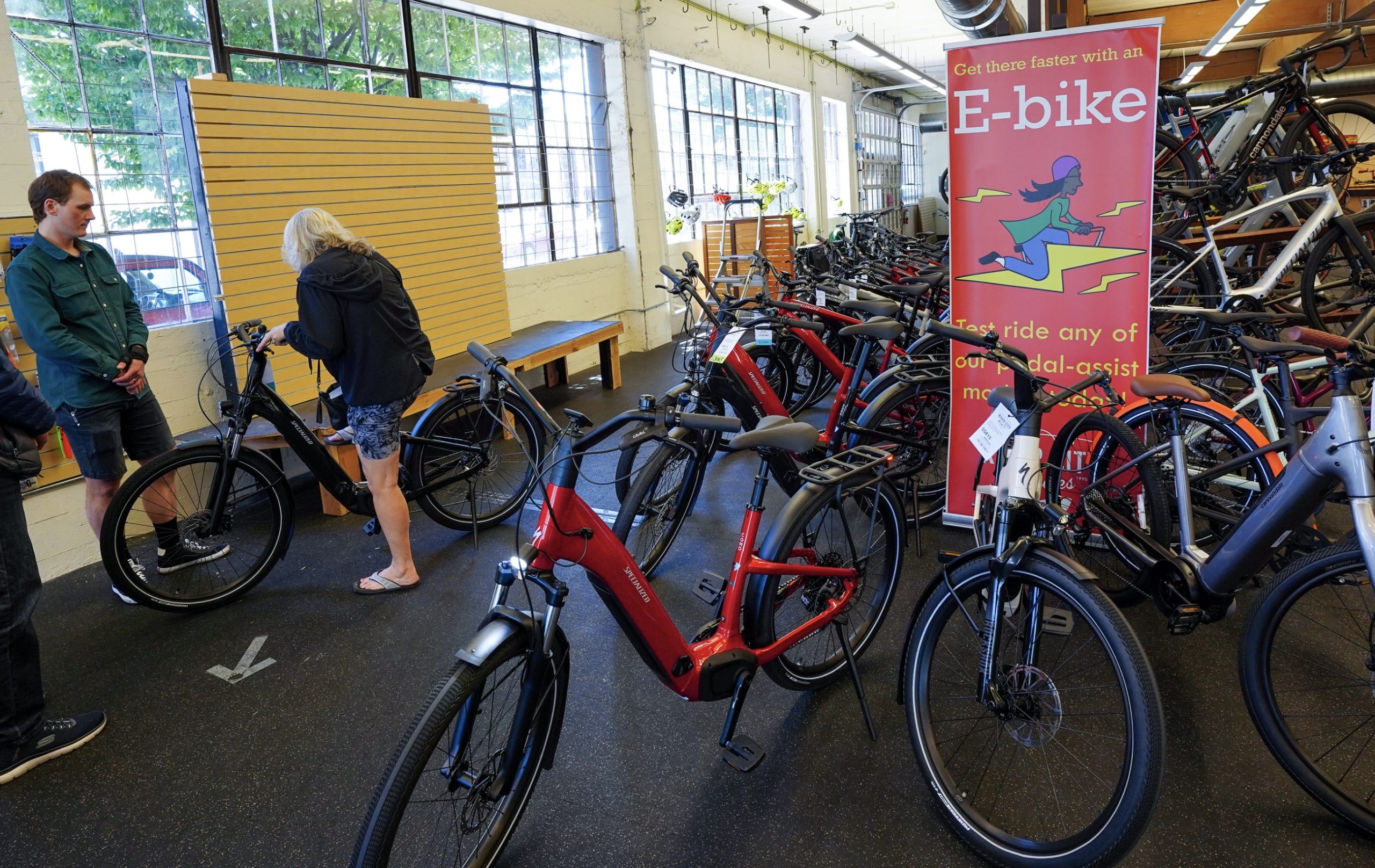
Calling names: Noted bicycling superstar Hans “No Way” Rey has an idea for combatting the proliferation of anti e-bike laws sweeping the country: He think we should label anything that’s not a Class 1 (20 mph max, no throttle) as an “e-moped.” (Bicycle Retailer)

Florida, man: Looks like really good e-bike policy from Florida. Seriously. Instead of the boneheaded idea of regulating bike types, a new bill making its way through their statehouse would legislate behavior. Specifically it would create a 10 mph e-bike speed limit on paths and only when passing others. (Electrek)

Transforming lives: A wonderful profile of a 67-year old woman with osteoporosis from the UK who received an e-bike through a government program and credits the vehicle for changing her life for the better. (Oxford Mail)


Thanks to everyone who sent in links this week. The Monday Roundup is a community effort, so please feel free to send us any great stories you come across.

Bill seeks to cut $25 million from Safe Routes and bike path program to balance ODOT budget

Students use a new crosswalk in front of Harriet Tubman Middle School in North Portland. (Photo: Jonathan Maus/BikePortland)

The rumors BikePortland reported on back in January have unfortunately turned out to be true. In the final week of the session, the Oregon Legislature is considering a cut to Safe Routes to School funding in order to balance their budget and save the Oregon Department of Transportation from mass layoffs.

In addition to a $17 million which could be redirected from the Safe Routes to School program, the bill proposes to axe $8 million from the Community Paths program. These funds are not currently obligated to any projects or grants and it would only be a one-time re-allocation. The thinking among Democratic lawmakers is that these and other budget balancing steps are necessary to buy time until a full transportation package could be considered in 2027.

We expected reallocation of Safe Routes funding, but the hit to Community Paths — a program funded in part by Oregon’s $15 tax on new bicycles — is a surprise.

Lawmakers unveiled their plans over the weekend. They’re a mix of cuts and re-allocations hinted at in a presentation by ODOT staff back in February. The proposal is outlined in the -3 “dash 3” amendments to Senate Bill 1601.

Here’s the breakdown of redirected funds according to Oregon Capitol Chronicle:

Lawmakers will take and reallocate:

  • $5 million from the student driver training program
  • $6 million from Oregon Highway 58 enhancements and expansions that have since wound down due to environmental issues and lack of local support
  • $8 million from the Community Paths program for building and maintaining multi-use public paths
  • $17 million from Safe Routes to Schools grant program
  • $20 million from the Transportation Operating Fund, or the “lawnmower” fund, which is funded by non-road gas tax funds
  • $35 million in dedicated revenue for bridge projects, seismic improvements, preservation of highways, culvert projects and safety projects
  • $42 million from the Connect Oregon program, which provides grants for marine, aviation and rail projects
  • $85 million of federal funds that can be tied to projects that don’t need a match from the State Highway Fund, freeing up those local dollars

The nonprofit Oregon Trails Coalition has issued an action alert, urging its supporters to fight the proposed cuts to Safe Routes and Community Paths. “The proposal cuts funding from the only state sources of funding for multi-use paths in order to backfill highway maintenance needs, including redirecting funds from our state’s tax on bicycles from off-street paths to highway maintenance,” reads a statement issued by the group a few minutes ago.

Graphic from Oregon Trails Coalition action alert.

The public will have a chance to weigh in on this proposal at a meeting of the Joint Subcommittee on Capital Construction tomorrow (Tuesday, March 3rd). A possible vote on the measure could also take place at that same meeting.

Portland bike thief sentenced to four years in prison

McGinnis eyeing his next victim. (Photo: Multnomah County District Attorney)

A man who broke into bicycle storage rooms of Portland apartment buildings 11 times in a four-month theft spree was sentenced to 50 months in prison. In a Multnomah County courtroom today, Christopher McGinnis pled guilty to six counts of Burglary in the First Degree and two counts of Theft in the First Degree. 

In addition to the four years and two months of prison, McGinnis will be subject to three years of post-prison supervision.

“Portland is a world-class biking city and the Burglary Task Force intends to keep it that way.  People who break into buildings to steal bicycles will be prosecuted and held accountable to the fullest extent of the law.”

According to the Multnomah County District Attorney’s office, of the prosecutors in the case had this to say after today’s sentencing:

According to the Portland Police Bureau, McGinnis used a crow bar to pry open the doors to bike rooms at apartment buildings. He targeted bicycles at three specific buildings and hit them a combined total of 11 times between June 2025 and September 2025. The buildings he broke into includel; The Frankie Apartments and Memoir Buckman in Southeast, and The Cosmopolitan in Northwest. McGinnis was arrested on September 19th, 2025.

Bike storage facilities in apartment buildings have a very notorious record of security. Some bike theft prevention experts say to avoid them entirely given how easily they can be compromised.

NOTE, March 2nd, 9:06 am : The MCDA released an incorrect date for the start of McGinnis’ crimes. It was June 2025, not June 2005 as they originally shared and as I initially posted here. Sorry for the confusion.

An homage to Portland’s bikeway network signs

Crazy that a quick search of my photo archives turned up several dozen shots of them. (Photos: Jonathan Maus/BikePortland)

I’ve been really into my feelings lately. For a lot of reasons, I’ve been thinking a lot about the last 20 years of BikePortland and what the hell comes next. I’m not ready to talk more about all that yet, but one thing I’ve been doing as part of this emotional ride I’m on is to look back at the 28,320 front page stories in the archives.

I don’t have a plan for a series of history posts or anything, so I’ll probably just share interesting things I come across. Like when I searched back on this week in 2006 I stumbled on a story I did about Portland’s bikeway network signs.

In February 2006, these green signs that give mileage and timing information about key destinations were a big deal. As per usual back then, Portland’s transportation bureau was a national leader in doing cool stuff for cyclists. Our guy with his hands on the bars back then, Roger Geller (who remains PBOT’s bike coordinator to this day), was big into pavement markings and network signage. His little, round bike markings with arrows were an early innovation that sprung up before we started putting shared-lane markings (called “sharrows”) on the ground.

The signs emerged from a federal grant PBOT was awarded in August 2005.

Geller and PBOT were building America’s best residential bikeway network and they wanted to make the routes as legible as possible. It’s still a work in progress (today Geller laments that this amazing feature of our city’s cycling infrastructure is hidden from most Portlanders), but the combination of thousands of sharrows and these green bikeway network signs are — in my opinion — one of the best things about biking here.

Beyond the sheer utility of knowing where you are, where you can go, and how long it will take to get there (based on a bicycling speed of 11-12 mph), what I like about these signs is the respect they give to cycling. I’m big on respect. If a government demonstrates through its infrastructure that your mode of travel is respected enough to deserve cool innovations and bonus features, that says a lot about where you live. It sends a signal that bicycling is expected and honored.

Today when I see these signs it feels like I’m in the right place. A sense of being at home in the city. And when I’m on one of these routes, I know that Geller and his team at PBOT have done more than put up a sign. There’s a very good chance they’ve added safer crossings, a 20 mph speed limit, speed bumps, and maybe even some diverters to keep car volumes down.

You ever notice these signs. Do you use them? What do you think about them?

Exciting progress on Willamette Blvd project

The bright-colored sidewalk that extends into the N Saratoga/Vincent intersection is all new! I call it a pedestrian peninsula. (Photos: Jonathan Maus/BikePortland)

The City of Portland has made major progress on what will soon become Portland’s longest protected bikeway. Once construction is completed on the North Willamette Blvd Active Transportation Corridor project this coming fall, the concrete curb-protected bike lanes on North Willamette Boulevard will connect to existing ones on N Rosa Parks Way for a five mile corridor that connects the Woodlawn and St. Johns neighborhoods with a (relatively) safe bikeway.

Since I live in this area and travel Willamette almost every day, I’ve watched with excitement as the Portland Bureau of Transportation (PBOT) has embarked on key pieces of the project as they prep for the major repaving work this summer. Before the pavement is poured, all the new intersection changes must be finished. And with this project there are some major intersection changes! I’ve covered the entire project in the past, but today I’ll just share photos from four intersections that have already been transformed: N Chautauqua, N Wabash/Bryant, N Vincent/Saratoga, and N Liberty/Oatman.

N Chautauqua

This is one of the locations where there will new bus stop islands will float between the bike lanes and general travel lanes. You can see one of the new bike paths through the island already built.


N Wabash/Bryant

A similar bus stop design will be built here, and much of the new sidewalk and bikeway work has been done. Eventually the last section of N Wabash where it enters Willamette will be bike only!


N Vincent/Saratoga

These next two are situations where PBOT is narrowing down very very wide intersections. At this location, PBOT has extended the sidewalks where Willamette and Saratoga meet way out into the intersection in order to provide a safety peninsula for walkers and rollers. This neckdown will force drivers to slow down and it will vastly improve safety of the adjacent neighborhood.


N Liberty/Oatman

Another pedestrian safety peninsula thanks to an extremely generous curb extension. I cannot wait to see people hanging out here.


About Rep. Nelson

Some of you might be wondering how things are going with concerns aired by Oregon House Representative Travis Nelson. His concerns are based on how it might create diversion onto other streets and how some folks in the neighborhood might have not been properly notified about it.

According to his office, Rep. Nelson met with PBOT staff last week to learn more about the public outreach process and traffic analysis. An aide tells BikePortland that Nelson is, “still waiting on additional information and data regarding diversion modeling.”

Nelson shared his concerns in a constituent newsletter last Friday. Here’s an excerpt:

“I want to be clear that there is a lot in this project that I think is beneficial to the community. My biggest concern is related to how diversion from Woolsey will impact narrow residential side streets in University Park and Arbor Lodge. PBOT will be providing me with more data on diversion modeling which may help ease these concerns. We also discussed ways the bureau can better engage with the Black community which has faced a long history of exclusion from the process. It’s important we continue the work of repairing harm and rebuilding trust. PBOT has made commitments to better engage with the Black community in the future.”

I’ll continue to follow up with Nelson and will be watching his next newsletter in case he shares any updates. For now, have fun watching PBOT’s progress and please use extra caution in work zones when you are using N Willamette.

Jobs of the Week: Bike Clark County, Metropolis, Cycle Portland, and more

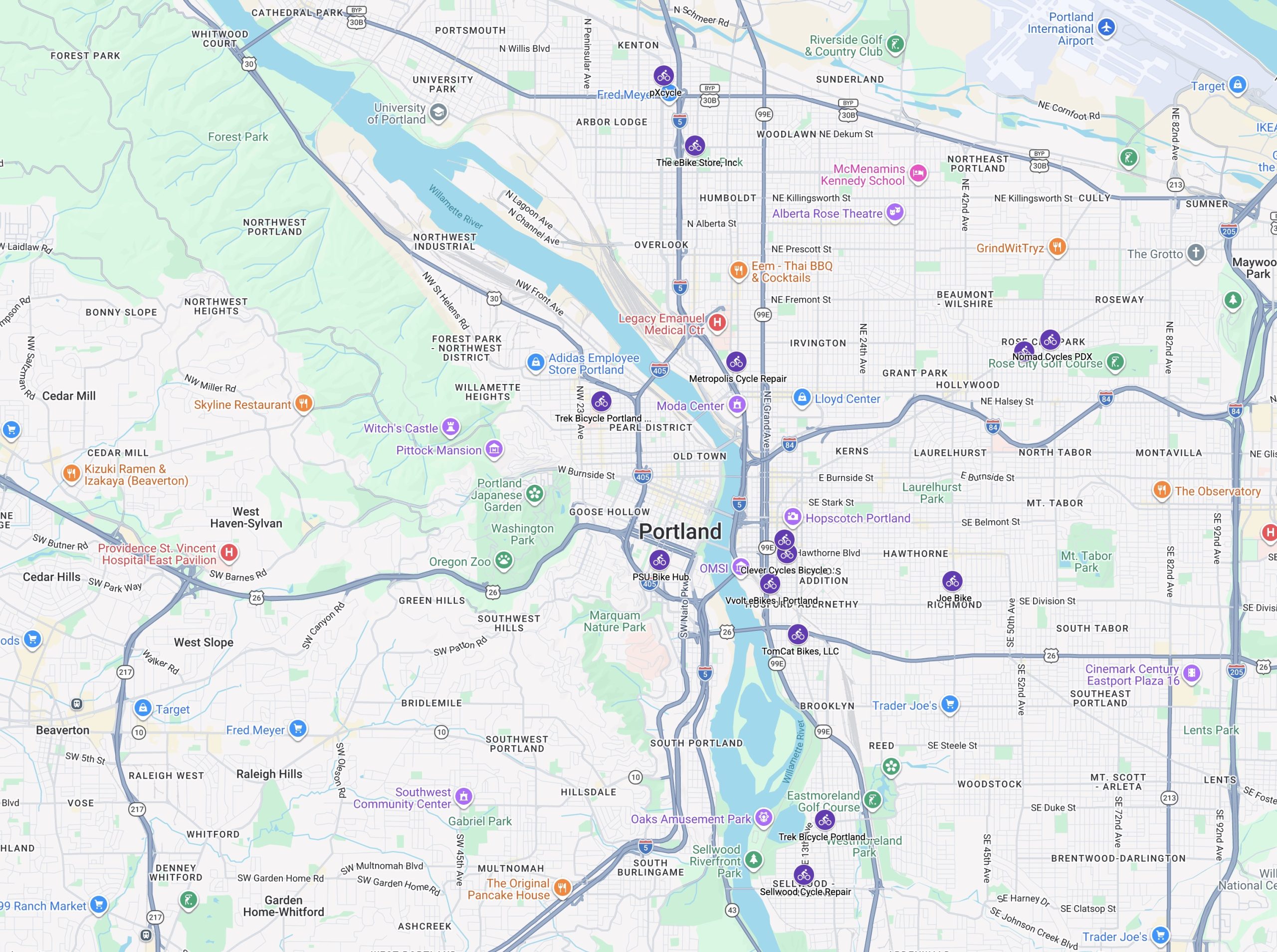
Need a job? Want a better job? Just looking for a change? You are in the right place. Don’t miss these recent job announcements. (Remember, you can always stay abreast of jobs as soon as they get listed by signing up for our Job Listings email.)

NOTE: Yes, I know some of these are older than a week. I just haven’t changed the name of the post. I keep listings open until the company tells me the position has been filled. As always, be sure to contact the lister to make sure the job is still available!

For a complete list of available jobs, click here.

Be the first to know about new job opportunities by signing up for our daily Job Listings email or by following @BikePortland on Bluesky

These are paid listings. And they work! BikePortland has helped hundreds of people find great jobs and great staff members. If you’d like to post a job on the Portland region’s most popular bike and transportation news platform, you can purchase a listing online for just $100. Learn more at our Job Listings page.

Guest Opinion: Portland needs more protected bike lanes — and we need them now

A section of Beaverton-Hillsdale Hwy that PBOT has already upgraded to concrete curbs. A plan for similar treatments faces neighborhood opposition from an unlikely source. (Photo: Jonathan Maus/BikePortland)

This guest opinion is by BikeLoud PDX Vice Chair Kiel Johnson. It’s a response to news that the District 4 Coalition is opposed to planned bike lane upgrades in Southwest Portland.

In cities where bicycling has grown rapidly, local governments have streamlined the installation of curb-protected bike lanes. They treat them as standard transportation infrastructure, not as optional amenities. Portland already has the policies in place to do the same. If we want to become the best bike city in North America, we must follow the policies we’ve adopted instead of second-guessing them every time a project moves forward.

Portland’s Transportation System Plan classifies every street in the city. Engineers and planners have determined what type of infrastructure belongs on each classification. Those policies were vetted through multiple layers of review and formally adopted by our elected officials. We have clear design standards for transit, freight, automobiles, pedestrians, and bicycles. Bicycle infrastructure should be treated no differently than any other mode — and it should be applied consistently across the city.

Our policies call for protected bike lanes on Southwest Capitol Highway, SW Bertha, and Beaverton-Hillsdale Hwy. The opportunity to build them is in front of us, and we should take it.

The recent effort to oppose protected bike lanes amounts to a rejection of this adopted framework — but only for bike infrastructure. It suggests that the Portland Bureau of Transportation (PBOT) must secure a vague and undefined “community support” threshold before installing protected bike lanes. We do not apply that standard to other forms of infrastructure. PBOT has installed hundreds of ADA curb ramps across the city. If each ramp required broad community approval, we would have only a fraction of them. We recognize ADA access as essential infrastructure. Protected bike lanes should be treated the same way.

There are times when PBOT gets things wrong. Public oversight matters. When Commissioner Mapps attempted to remove the Broadway protected bike lanes — despite their consistency with city policy — the community spoke up and stopped it. The claim at the time was that there wasn’t sufficient “community support.” But policy already provided the direction. Those lanes should have been installed a decade earlier.

Community engagement is important. The city should communicate clearly, gather feedback, and make reasonable adjustments when warranted. But we do not require a popularity contest to install water lines, traffic signals, or sewer upgrades. Protected bike lanes are basic safety infrastructure.

Everyone has opinions about where lanes should go or how they should be designed — curb height, parking removal, materials. Those are fair implementation questions. But at some point we must trust our adopted plans and our professional staff to execute them.

If every bike project is subjected to repeated demands for undefined “community support,” we will continue to spend disproportionate time and resources debating whether to build rather than actually building. Portland cannot afford that delay.

We have the policy. We have the standards. We have the opportunity. Now we need to follow through — and build the protected bike lanes our city has already committed to.

District 2 finally gets representation on key city council committee

Councilor (then candidate) Sameer Kanal, with bike helmet tied to his backpack, at Bike Happy Hour in July 2024. (Photo: Jonathan Maus/BikePortland)

There’s been an important shift in how policy is made in Portland City Hall. Last week, council voted in a new committee structure that come with significant changes — including a new member of the committee that oversees the Portland Bureau of Transportation.

Portland is just one year into a brand new form of government, so when they adopted the committee structure last January, it was their first time doing so. The idea is that committees can get deeper in the weeds on topic areas and hash out policy details before final votes at the full, 12-member council. It’s been a good system in many ways, but almost immediately there was grumbling about how many committees were stood up (eight), and the fact that some of them lacked representation from all four council districts.

The new structure reduces the number of committees from eight to five, aligns them more closely with existing service areas, and comes with changes to membership. Most of the stuff BikePortland cares about was in the (now defunct) Transportation and Infrastructure Committee. That committee no longer exists and PBOT-related issues will now be discussed at the Public Works Committee. (The other four committees are; Housing and Permitting, City Life, Community and Public Safety and a Committee of the Whole.)

Another key change is that District 2 (North and Northeast Portland) is now represented on the committee (the old T & I Committee didn’t have any councilor from D2). The councilor who will represent D2 on the committee is Sameer Kanal (he takes the place of Councilor Angelita Morillo). This is good news for folks who know Kanal. He’s a thoughtful leader who’s shown himself to be interested in transportation issues, is a policy wonk who cares about the details, and is a good listener. He’s come to Bike Happy Hour several times and I’ve watched him spend hours talking to folks about a wide variety of issues.

Kanal will be joined on the committee by Chair Olivia Clark from D4, Vice Chair Loretta Smith from D1, Tiffany Koyama Lane from D3, and Mitch Green from D4. (Learn more about all the new committees and rosters here.)

In addition to transportation matters, the new Public Works Committee will also take on issues related to the Water Bureau, Bureau of Environmental Services, Parks programs, and Fleet and Facilities.

Speaking at the Council meeting this morning, Kanal said he’s grateful for being named to the committee.

Councilor Kanal also wasted no time playing his new role. During a discussion about a crossing and sidewalk project on NE Martin Luther King Jr. Blvd, Kanal spoke up about other things going on in the nearby area.

“The Boise neighborhood has been bringing up, with some of the other neighborhood associations as well, improvements to crosswalks on Northeast Seventh, Irving, and Skidmore.” Then Kanal added, “I think there’s a lot of work that’s been done on planning, but not necessarily on implementation and I’m looking forward to collaborating with folks in the administration who I know share the desire to implement all of those types of improvements as well.”

Kanal also made a point to mention that he wants to hear more from PBOT about projects in his district.

If you live, ride, or work in D2, you’ve finally got a strong rep for your area! It’s my district too, so I’ll be sure to invite Councilor Kanal on a ride soon.

Stay tuned for more details, agendas and schedules for the new committee.

Job: Bike Tour Guide and Rental Specialist – Cycle Portland Bike Tours and Rentals

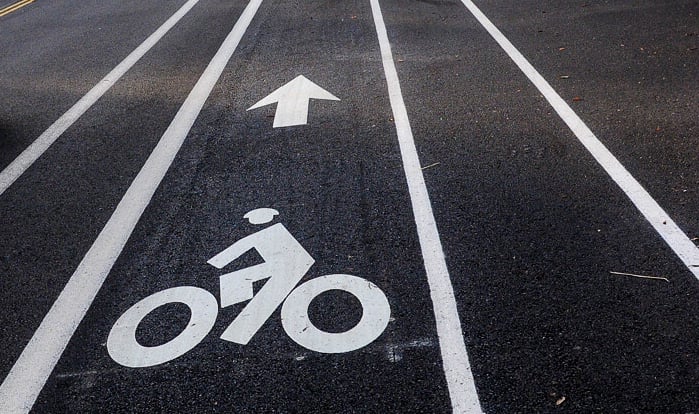
Buffered Bike Lane with a bike symbol and arrow pointing forward

Job Title

Bike Tour Guide and Rental Specialist

Company / Organization

Cycle Portland Bike Tours and Rentals

Job Description

We are hiring for 2026!

Seeking likeminded staff with a passion for all things bikes and an interest in showcasing Portland’s history and uniquely progressive bike culture with visitors. We specialize in showcasing Portland’s varied bike scene. Our offerings range from cruiser bikes and e-bikes to carbon gravel and road bikes.

Where: Cycle Portland is in Old Town, NW Portland, conveniently located a few blocks from Waterfront Park.

When: We are looking to train candidates in mid April. The deadline to apply is 3/31 but we will begin evaluating and interviewing prospects as they apply.

Responsibilities:
• Clean and prep bicycles for guests to ride
• Lead 1-2 bicycle tours per day. Tours vary in length from 2 to 4 hrs
• Operate booking platform and POS systems
• Perform retail stock and inventory
• Check customer bikes in for service
• Perform occasional flat repair services and minor repairs for customers
• Offer guidance to customers partaking in our services

As part of our small team, you’ll have the opportunity to advise travelers about your favorite local attractions and hotspots, fit folks on rental bikes, help plan their route, lead guests around town as a guide on one of our cycling tours, and lend a hand to our full-service bike shop.

While primarily focused on tour guiding, this position will encompass guiding up to 2 tours per day (2-5 hours of outdoor time, rain or shine) on our Foodie, Brewery, City, or Gravel bike excursions. Back at the shop you’ll help guide clients through our bike rental process, answer questions about the products and services we offer, and help keep the shop running smoothly. You’ll also be provided with resources to help you dive deeper into the history of our city in both past, present, and future as we work to keep our tours engaging, fun, and informative.

Cycle Portland is part of a family of small companies associated within The Adventure Hub. Many opportunities for growth including the potential of guiding multi-day vacations with our sister company Bicycle Adventures for the right candidate.

Part-Time and Full-Time positions available.
Seasonal employment positions available from April through October.

Positional Commitments as a Cycle Portland Guide

• Shifts: 9:30am-6:30pm, Cycle Portland is open 7 days per week
• Scheduling: 2-4 shifts per week at Cycle Portland
• Availability on weekends required from May to September.

Compensation:
$17-19/hr starting DOE (plus gratuities and bonuses)

Extras:
• Pro Deals
• 45% Discounts on bike products and shop services.
• 1 week – paid vacation (accrued)
• 1 week – paid sick leave (accrued)
• Paid training in bike mechanics and interpretive guiding

Knowledge and skill in the following areas is preferred (but not required), and represents core strengths as part of this position:
• You Love Bikes
• Genuine desire to work with and listen to the public both as a tour guide, and as part of our shop staff to meet client where they’re at with their needs
• Excellent public speaking skills, comfortable working with and projecting to engaged audiences of up to 15 individuals at a time
• Strong verbal and written communication skills
• Curiosity! We love learning about Portland, and it’s up to us to be informed as our city and region evolve
• Self-motivated and comfortable asking for support when needed
• Experience in the performance arts, teaching, previous bike shops, bike mechanic knowledge, and tour guiding is a plus.

We are committed to building a diverse team that reflects the world we serve. We believe that a variety of backgrounds, perspectives, and skills makes us a stronger, more innovative, and better company. We encourage all qualified applicants to apply, regardless of background. BIPOC and LGBTQIA+ strongly encouraged to apply.

Please email resume and cover letter, feel free to come say hi at Cycle Portland – 180 NW 3rd Ave

How to Apply

Please email resume and cover letter to james@cyclepdx.com. You may also deliver to our location at Cycle Portland – 180 NW 3rd

Lawmakers want $3 million from state coffers for 82nd Avenue bus lanes

Line 72 bus services passengers on 82nd Ave. (Photo: Metro)

As I reported last week, the decision from TriMet to build semi-dedicated bus lanes on 82nd Avenue isn’t a done deal. General Manager Sam Desue made it clear that adding these “business access and transit,” or BAT lanes to the project would require a financial commitment from project partners that goes above and beyond what the agency is prepared to pony up themselves.

In total, TriMet is about $8-10 million short on funding needed to implement the BAT lanes.

Today we found out that about one-third of that total might come from the state’s general fund. House Representative Thuy Tran wants lawmakers to allocate $3 million to the cause. Rep. Tran represents House District 45, which includes a section of 82nd Avenue from SE Stark to NE Lombard. Tran’s request is supported by Senator Khanh Pham, another vocal supporter of transit in East Portland.

In an action alert emailed from Sen. Pham’s office today, she called 82nd Avenue “East Portland’s main street” and said the $3 million is necessary to make good on TriMet’s plans and to, “ensure that our community gets the transit investment necessary to make 82nd Avenue a safe, walkable, vibrant corridor.”

The total estimated cost of the 82nd Avenue Transit Project is $350 million, with $150 million expected to come from a federal grant. The base project (even without the BAT lanes) will include longer (articulated) buses, station upgrades, bus priority signals, and more. Pham and Tran say BAT lanes are essential to help the Line 72 service reach its full potential along the corridor. The line is already the busiest in Portland with about 10,000 daily boardings — but it also has the most delays.

“This $3 million commitment from the state legislature will help close the gap to fully fund the comprehensive plan to transform a car-centered, dangerous state highway to a safe and welcoming neighborhood street,” reads the action alert.

The request will be part of House Bill 5204, an omnibus bill that includes all requested general fund appropriations. Stay tuned for more details and check out the action alert for more info.

Neighborhood group, backed by bike advocate, opposes bike lane upgrades

A section of Beaverton-Hillsdale Hwy bike lane that PBOT plans to upgrade with concrete curbs.

Most Portland neighborhoods would jump at the chance to upgrade their bike lanes. But the coalition that represents 32 neighborhoods in District 4 is different. At their meeting Wednesday night, the District 4 Coalition (D4C) plans to finalize a letter to Portland Bureau of Transportation Director Millicent Williams that outlines their opposition to $760,000 of planned bike lane projects in Southwest Portland.

These projects are part of the bike lane hardening effort I reported on in August 2024. With marching orders from a city traffic engineer directive, PBOT is going through a list of protected bike lanes citywide that were initially built with just paint and/or plastic wands and replacing them with concrete curbs. The idea is permanent curbs offer a more pleasing aesthetic, provide a stronger safety benefit, and will require less maintenance (the wands are frequently uprooted). PBOT is also responding to some bike advocates who see paint and plastic as a poor substitute for more robust materials.

In a draft version of the letter about the projects in Southwest, D4C Land Use and Transportation Co-Chair Nicole Zimmerman (who’s also a candidate for City Council District 3) says they oppose planned hardening projects at three locations: Beaverton-Hillsdale Highway between SW 39th and SW 65th, SW Capitol Hwy between SW Valona and Stephenson, and Bertha Blvd between Vermont and 13th (see map below).

Blue lines show location of three bike lane sections called out by D4C.

Below is an excerpt from the letter that lays out the reasons for their objections (emphasis theirs):

  • No practical value. B-H Hwy., the proposed segment of Capitol Hwy., and Bertha Blvd. are among the lowest performing bike routes in all of SW Portland. This can be attributed largely to their lack of connectivity with the fractured bike network in SW. Any cyclist using these facilities must be confident riding on busy streets in the travel lane to reach and leave these bike lane segments. Providing an A+ bike facility on these isolated sections will not entice more cyclists to use them. Progress must be measured not by the miles of protected bike lanes but by the number of people traveling by bike.
  • This is not maintenance. Converting them into physically separated facilities is an improvement project – not simple maintenance. If maintenance is an issue, the wands could simply be removed or just not replaced. If removed, there would continue to be very good, painted buffered bike lanes, which could again be swept with conventional equipment. Reliance on the small bike lane sweeper has resulted in infrequent sweeping and B-H and Capitol Hwys. are typically plagued by gravel, glass, leaves, and weeds.
  • Chronically inadequate funding. Funding for capital projects to enhance pedestrian and bicycle safety is severely constrained. For perspective, D4 can expect about $2.3 million from FOS3 for the next 4 years. Other pots of funding are available, but the cost of the B-H Highway project will make it among the most expensive projects proposed in D4 and SW over the next four years.
  • Higher priority needs and lack of community support. Given all the high-priority network and safety improvements, many of which have languished for decades, PBOT should not spend $490,000 on this project followed by the Capitol Hwy. project totaling around $757,000 and an undetermined amount for Bertha Blvd. when the bike lane hardening lacks community support and The BH Hwy. and Capitol Hwy. projects are not identified in the TSP or SWIM. Until bike routes are completed and not disjointed, it is premature to spend scared funds for first-class facilities on random segments.

If this sounds familiar, it’s because BikePortland reported on a Southwest-based cycling advocate who shared many of these same concerns back in fall of 2024. I reached out to that person, former PBOT Bicycle Advisory Committee member and veteran bike advocate Keith Liden, and he confirmed he was the inspiration for the D4C position. “Yes, my fingerprints are all over it,” Liden shared with me via email last week.

“We feel it makes no sense to spend scarce dollars to ‘gold plate’ isolated sections on routes with serious gaps,” Liden said. “Hardening these bike lanes will do nothing to attract less confident/inexperienced riders, while the current users will still be fine with painted buffers.” Liden wants PBOT to offer a more complete route before spending money to improve isolated sections.  

Keith Liden in 2023. (Photo: Jonathan Maus/BikePortland)
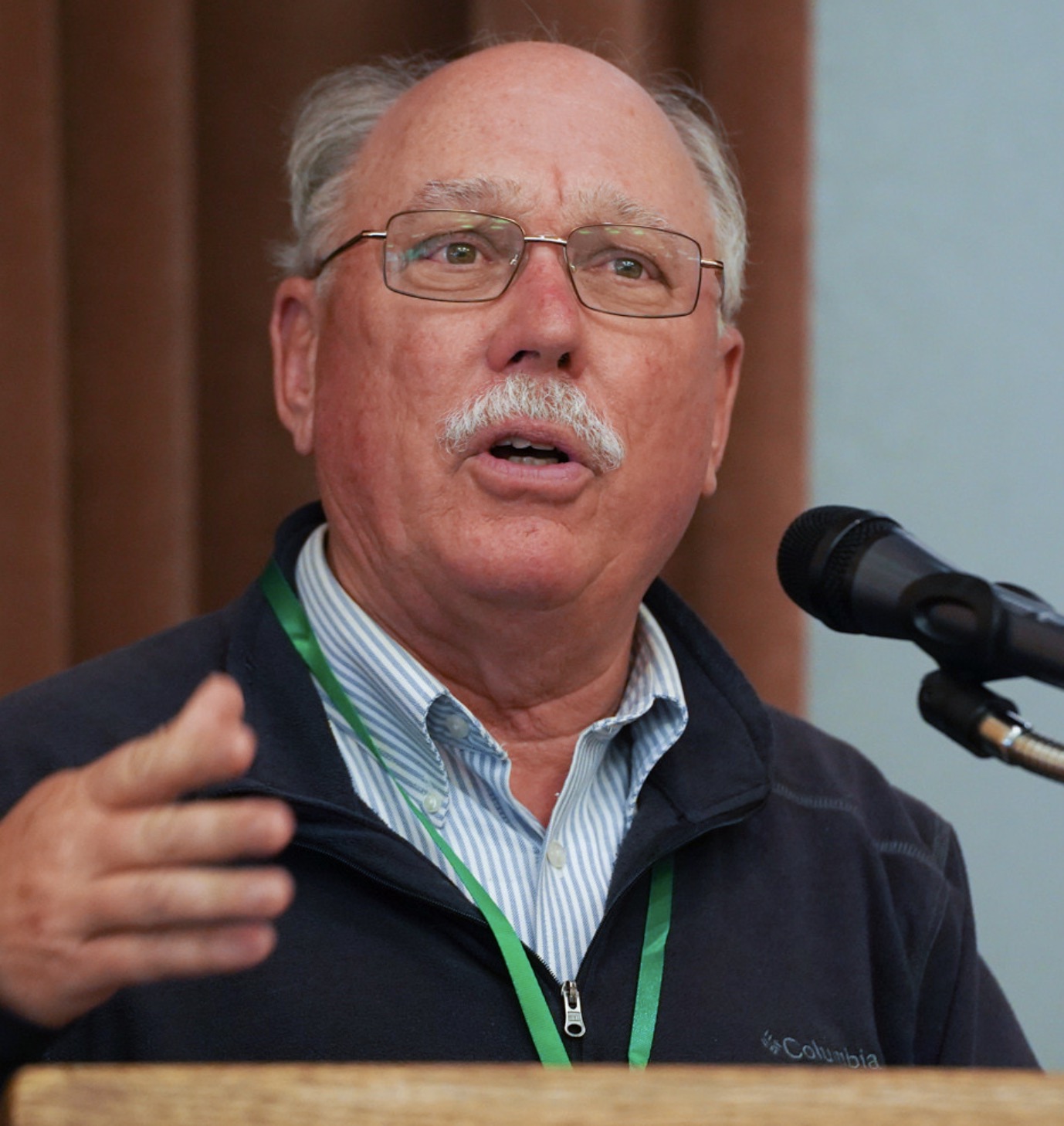
Kiel Johnson with nonprofit BikeLoud PDX disagrees with Liden and has sent a message of his own to PBOT, urging them to move forward. In an email sent Thursday, February 19th, Johnson wrote that Beaverton-Hillsdale Highway currently feels like a freeway due to its design, and changes are needed to attract more riders. “Paint and plastic wands are not protection,” Johnson wrote. “Physical barriers—concrete curbs, continuous raised protection, and median refuge islands—would reduce conflict points, prevent encroachment into bike space, and narrow the effective roadway in a way that calms traffic without eliminating access.”

The D4C coalition wants PBOT to allow them to help review and evaluate the projects to find, “an acceptable approach for improving and maintaining these facilities at reduced cost and to redirect the remaining funds to improvements that support more pressing priorities in District 4 and identified in our adopted plans.” Liden and others in Southwest feel PBOT’s project selections are too “top-down” and they want a more collaborative process to determine future bikeway investments.

Learn more about PBOT’s bike lane upgrades on their website.

The D4C Land Use and Transportation Committee meets tomorrow (Weds., 2/25) from 6:30 to 8:30 pm via Zoom.