Despite clear evidence, officer’s lack of citation illustrates discretionary loophole

Video from a nearby home captured the driver of this blue car just before she struck Timmerman (hidden by trees in this screenshot) at the intersection of SE Clinton and Cesar Chavez Blvd.

The person with the green traffic signal went through the intersection. The person with the red signal failed to stop and hit the person with the green signal, who sustained serious injuries in the collision. The entire incident was clearly captured on video.

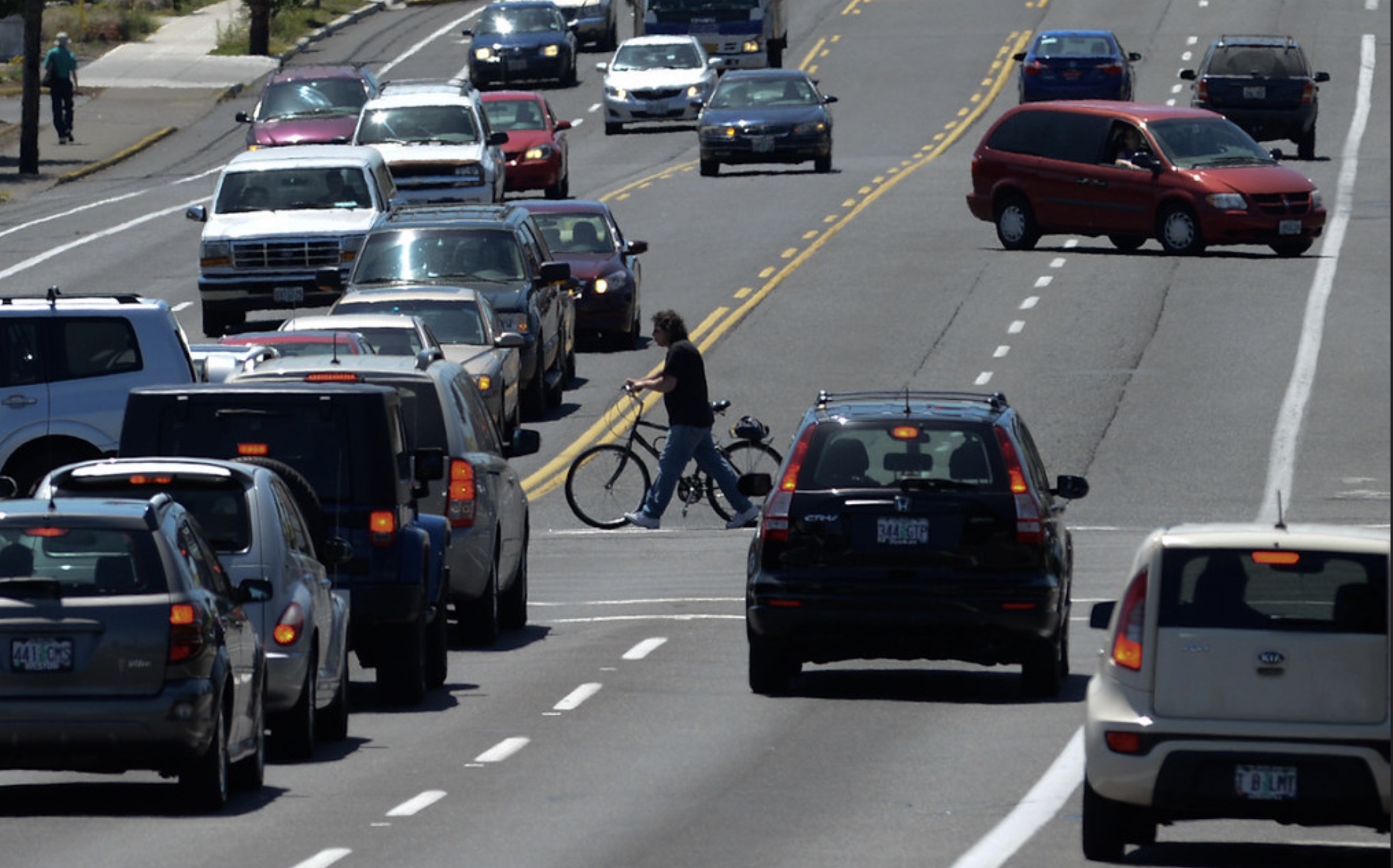
What happened to Lisa Timmerman while cycling on Southeast Clinton Street on June 27th, 2024 was as much of an open-and-shut case you could ever get. Even the responding officer understood that the driver of the blue sedan that hit Timmerman was at fault (and said so in the police report). But the officer chose to not issue a citation to the driver because she was, “remorseful and apologetic for hitting the cyclist.”

This jaw-dropping reason for letting someone off the hook who so clearly and egregiously failed to operate their vehicle in a safe manner was was hard for Timmerman (and any rational person) to swallow. On November 17th, 2025 she filed a complaint with the City of Portland’s Independent Police Review (IPR), claiming that the officer who worked her case should have issued the driver a citation.

The response from IPR wasn’t what Timmerman hoped for.

“In this case, the officer’s actions appear to be within policy,” wrote IPR Director Ross Caldwell. “Portland Police Bureau Directive gives officers discretion to issue citations. This is even true when a driver appears to be at fault. Because the Directive allows for this discretion, we cannot prove that there was misconduct.”

That makes sense from a technical and policy point-of-view; but its implications are maddening in the real world where there are vast disparities in the safety of road users and where so many people drive cars as if they are the only ones on the road.

“It seems like we could come up with all the creative consequences we want to deter dangerous driving,” Timmerman shared with me via email after reading the IPR response. “But if individual officers are not committed to roadway safety, it ultimately doesn’t matter.”

Timmerman added that she recently received a parking ticket, paid the $165 fine (she admits reading a sign incorrectly), and couldn’t help but notice the contrast in penalties.

On December 11th, Deputy City Administrator of Public Safety Bob Cozzie emailed Portland city councilors after several of them inquired to his office about Timmeman’s case. Speaking for the PPB, Cozzie wrote, “They recognize that some people feel frustrated that a citation was not issued in this case. PPB and I hear that concern, and we don’t take it lightly.”

“I disagree,” Timmerman said, when I asked her to respond to Cozzie’s statement. “I feel like they did take it lightly. This seems like a ‘thoughts and prayers’ response to me.”

What’s particularly galling about this case is that community and traffic safety advocates worked hard to pass a law in 2007 that addresses this exact situation: Where a driver causes serious injuries to a vulnerable road user and doesn’t face stiff enough consequences. To have someone simply say “Oops I’m sorry” to an officer and get off scot-free makes a mockery of that law.

In his email to councilors, Cozzie wrote that, “a citation is only a part of the potential consequence, the driver may also face civil liability.” This is also known as the “let the insurance companies figure it out,” approach. But that’s inherently unfair and unjust. “It puts the burden and cost of seeking the remedy on the crash victim,” Timmerman shared with me. She also pointed out that Oregon insurance minimums have not kept up with current medical costs. And, she says, “It’s a highly inequitable system because the outcome is dependent on who hits you: The outcome is completely different if a middle aged successful business person hits you versus a recent college grad versus a hit-and-run or uninsured driver.”

We need a better solution. What happened to Timmerman should never happen again.

“I just want there to be some consequence to communicate to the driver that this was very serious and they need to not repeat this action ever again,” she wrote to me via email. “There’s some real cognitive dissonance when we say safety is a priority, we know this is a dangerous corridor, and yet, when we stare the real-life consequences in the face we fail to act.”

Family searches for answers in mysterious death of SE Portland cyclist

Mike Sloan in St. Augustine, Florida, after a month-long bike tour from San Diego, CA with his daughter. (Photo: Sarah Pattillo)

One truism about investigating fatal bicycle crashes is that we often never know what happened because one of the best witnesses is no longer around to share their story. In the case of Mike Sloan, the 69-year-old who died on Southeast Division Street around 8:30 pm on January 5th, it remains unclear what precipitated his fatal crash.

The two main assumptions — made by myself, the Portland Police Bureau, and others immediately following his crash — were incorrect. Sloan was not riding eastbound on SE Division and he very likely did not lose control of his bicycle due to a large pothole located just west of the intersection of Division and SE 52nd.

A witness who’s shared their account with BikePortland and the PPB has confirmed that Sloan (who was wearing a helmet) was stopped at the southbound traffic signal on SE 52nd prior to his crash. That witness told me via email: “Sloan began riding southbound when the signal changed and lost control about halfway across the intersection.” The witness also recalls seeing Sloan “swerve toward the pothole.”

View south on 52nd at Division. This is where Sloan would have been waiting for the signal prior to his crash. Note location of the pothole. (Photo: Jonathan Maus/BikePortland)

If Sloan lost control in the intersection, there’s no way he hit the pothole initially, because it’s located several yards outside the intersection. It’s also important to note that this witness claims Sloan, “bobbled a bit as he began to accelerate” and that he was rolling “quite slowly” before being seen flipping over his handlebars.

A few other factors I’ve considered while trying to understand Sloan’s final minutes: he was riding with cleats and clipless pedals, the cleat on his right shoe was broken, his body came to rest about one foot east of a large pothole, and this was a route (north and south on 52nd) he’d ridden dozens of times (which I learned from viewing his Ride With GPS account where he logged several rides per week).

Given that Sloan was a very experienced and veteran rider, it’s hard to fathom what could cause him to lose control of his bicycle. What I think is most plausible is that he had trouble clipping in to his pedal, reached down to mess with his cleat (which was broken, likely before this crash), lost his balance, and ended up veering to the right where he crashed near the pothole. It’s hard to say exactly what transpired without video solid video footage.

I’ve heard nothing to make me think there was another road user involved. That matters because solo fatal crashes don’t get the same type of resources from the PPB as multi-vehicle/multi-person fatals. You’ll note there was never a standard police statement about Sloan’s crash. That’s because the PPB (and Portland Bureau of Transportation, who follow the same reporting protocols) don’t consider this a “traffic-related fatality” as per National Highway Traffic Safety Administration guidelines (which don’t count intentional acts (homicides, suicides), medical events, non-motor vehicle crashes (like this one or a MAX/train collision), crashes on private property, or deaths occurring more than 30 days after the crash).

Also because this was a solo crash, the PPB Major Crash Team was not sent to the scene. If not for BikePortland’s coverage and the public/media interest it generated, there would have only been a very cursory investigation. Thankfully, now the PPB has assigned a crash investigator to take a closer look. That investigator has been in contact with Sloan’s family, witnesses, and I’ve traded notes with him as well.

It will be interesting to see what the PPB concludes about the cause of Sloan’s death. Sloan’s family is skeptical of the pothole explanation and feels the official story about what happened (that the pothole caused his crash) doesn’t make sense. And since this was a solo crash and is not considered a traffic-related fatality, the State Medical Examiner declined to do an autopsy. That leaves family members without a full understanding of what might have happened.

“The initial explanation we were given was that Mike’s accident was caused by a pothole in the road; however, the evidence we’ve seen does not align with that account, and our family is seeking clarity,” writes Sloan’s son-in-law Joshua Pattillo in a GoFundMe post where the family is trying to raise $8,000 to pay for a full autopsy.

Sloan was dearly loved by many people in our community and was clearly a shining light on a bicycle. He and his family deserve as much clarity and closure as possible. Please consider helping the family pay for costs related to his death by donating at the GoFundMe.

Councilor floats using climate tax funds to reverse TriMet service cuts

Bus riders on SW Alder. (Photo: Jonathan Maus/BikePortland)

Portland City Councilor Mitch Green is worried our public transit system might be headed for a “doom loop” and he favors tapping into the Portland Clean Energy Community Benefits Fund (PCEF) to prevent it. His comments at a meeting of the Transportation and Infrastructure Committee this morning come just one week after TriMet proposed serious service cuts they say are necessary to grapple with a $300 million budget gap.

“In my view, the biggest threat to our climate goals is backsliding and losing ground on ridership,” Green said. “Which is a potential doom loop for transit.”

Green said making an investment into transit with PCEF dollars is something folks have been whispering about in private City Hall conversations, but now it’s time to bring it into the public. PCEF is a voter-approved fund administered by the City of Portland Bureau of Planning and Sustainability and made up of revenue collected from a 1% tax on the Portland sales of large retailers (companies that sell over $1 billion nationally and $500,000 locally).

Green was just spit-balling at this morning’s meeting, but he is clearly serious about the idea, which he described as, “Potentially approaching the climate investment plan (CIP, the plan that sets PCEF investment strategy) amendment process with a lens towards using some PCEF revenue to support TriMet through some sort of IGA [Inter-governmental Agreement].”

T & I Committee Chair Olivia Clark said she liked Green’s idea and wants to discuss it further at their next meeting.

T & I Committee Vice Chair Angelita Morillo said the topic of using PCEF funds for transit is already on the agenda for a meeting of council’s Climate, Resilience, and Land Use Committee scheduled for this Thursday, January 15th. The PCEF CIP adjustments on that agenda are part of a regular review process to make sure investments are set up for success and are in alignment with program goals. Separate from a larger investment in TriMet via an IGA as Councilor Green proposed, there’s currently a $15 million reduction to the CIP’s Targeted Electric Vehicle Financing Tools program that was slated to be spent instead on the Clean Energy in Regulated Multifamily Affordable Housing program. At least one councilor I talked to about that switch was uncomfortable that the funds were going from a transportation program to a housing program (given that transportation is the largest contributor to greenhouse gas emissions). Given Morillo’s comments today it seems there’s an opportunity here — given the severity of TriMet service cuts that have recently come to light — to keep this $15 million in transportation and put it toward bus service.

If a PCEF deal between Portland and TriMet was struck, it wouldn’t be the first time climate tax dollars funded transit. Back in December 2024, TriMet won $55.5 million from PCEF for their 82nd Avenue Transit project.

At this morning’s meeting, Councilor Morillo said the Climate Committee (which she co-chairs) will, “discuss different options for about $15 million in PCEF dollars that are available.” “Whether or not we should keep using them for housing infrastructure and making that more climate-friendly, or, what if we invested it on the bus? This is an open discussion.”

And since there’s often heartburn among climate advocates and politicians whenever PCEF funds get stretched into new places, Morillo added, “And as a transit user that desperately needs some of the bus lines that are getting cut, we need to balance the need to protect PCEF and its integrity and what it was meant for, and also look at some of these emerging issues given that the federal and state legislature abandoned us on public transit issues.”

That sense of urgency to fund transit is shared by Councilor Green.

“Once people switch away from riding a bus and they decide to get in that car, they’re never going to go back to riding a bus,” he said at the meeting today. “Or if they do, it’ll take pretty herculean effort to do so.”

— Learn more about Thursday’s Climate Committee meeting and view the PCEF CIP ordinance here.

Monday Roundup: Why I’m a great driver, suburban transit, cost of cars, and more

Hi folks. I’m slowly getting the gears turning again after a nice and needed holiday break.

Cyclists drive better: This is a topic that comes up a lot in conversations, so it’s neat to see an article about it. The author shares a list of 10 ways being a cyclist carries over to safer driving. (Canadian Cycling Magazine)

On affordability: With all the talk of affordability in political and general policy circles, let’s not forget the huge impact the cost of cars has on Americans’ pocketbooks. (Streetsblog USA)

More about car costs: It’s not just advocacy outlets that are talking about the high cost of driving and how monthly payments have skyrocketed for folks whether they opt for a new car or a used one. (Washington Post)

Suburban divide: Fascinating dynamic in Dallas where several suburban cities want to leave the regional transit partnership because they don’t feel their residents get enough bang for their buck. Will they design their own transit systems or just not offer any service? Will the defections hurt the transit agency’s other customers? (Texas Tribune)

Yamhelas update: The proposed rail-trail in Yamhill County could be deleted from the transportation system plan if anti-trail County commissioners get their way. Meanwhile, supporters of the trail have mapped out an exciting plan to save the trail regardless of political shenanigans. (Newberg Graphic)

The O weighs in: In news that shouldn’t surprise anyone, the editorial board of our state’s paper of record has penned an essay saying Oregonians shouldn’t have to pay more for transportation services and they blame Oregon Governor Tina Kotek for the transportation bill SNAFU. (The Oregonian)

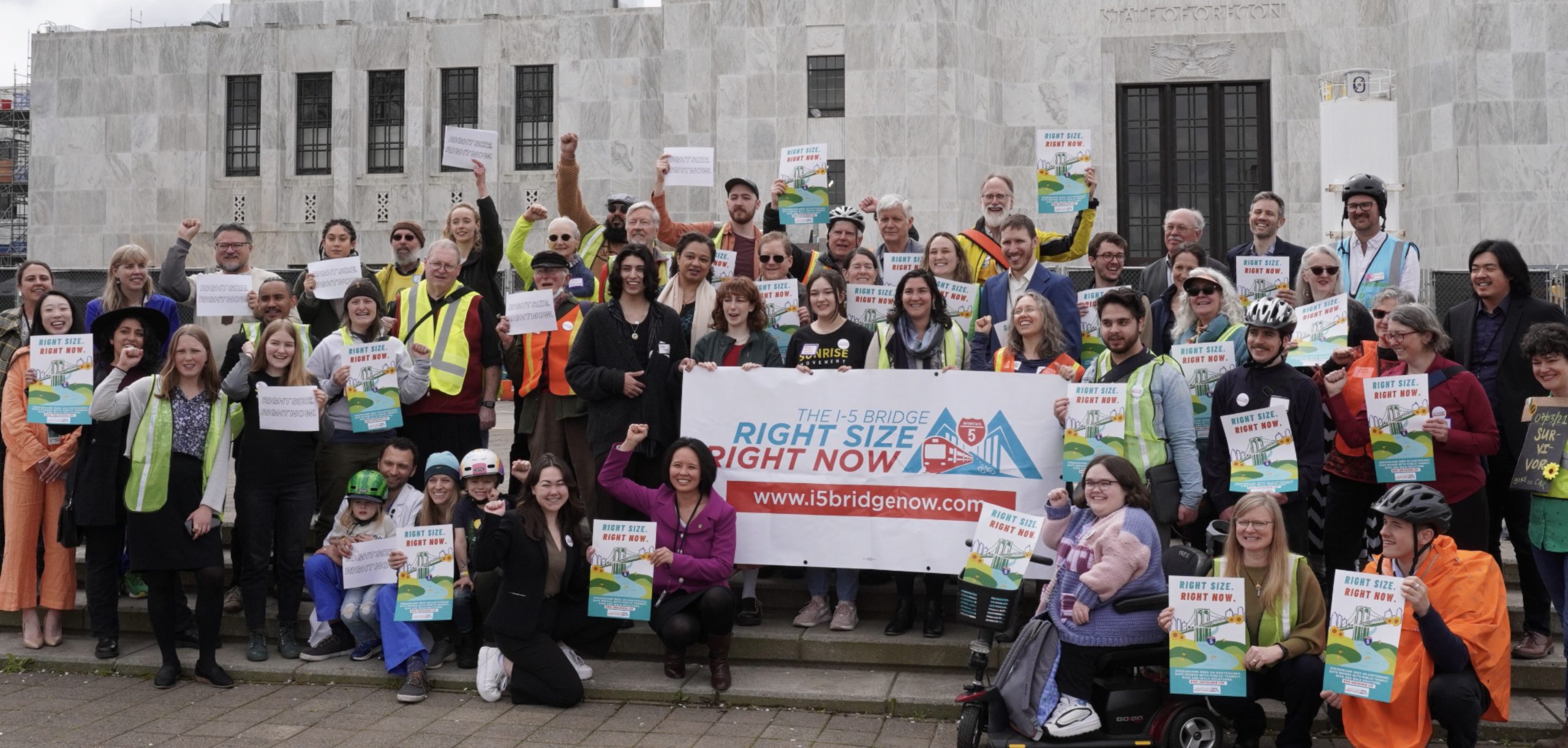
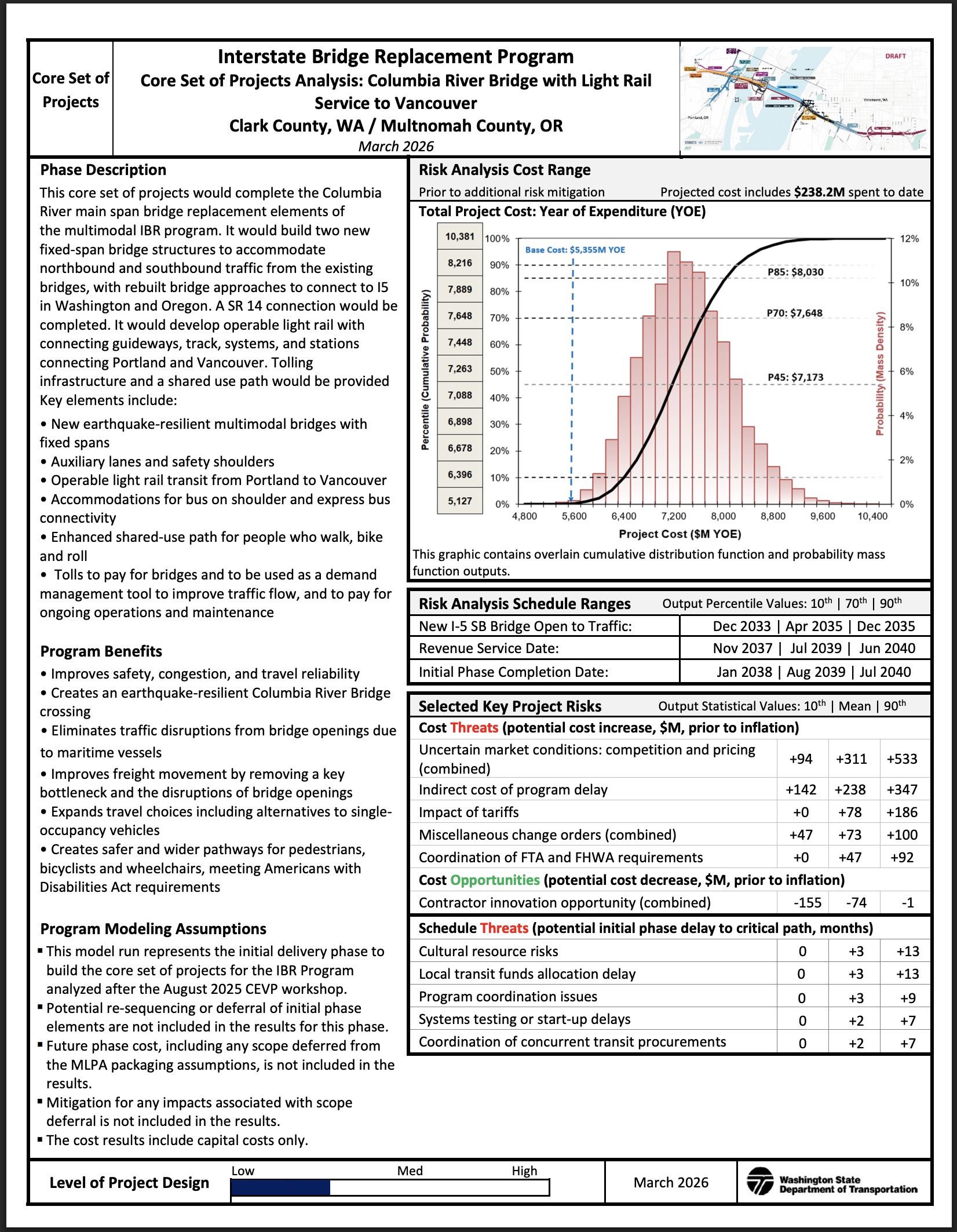
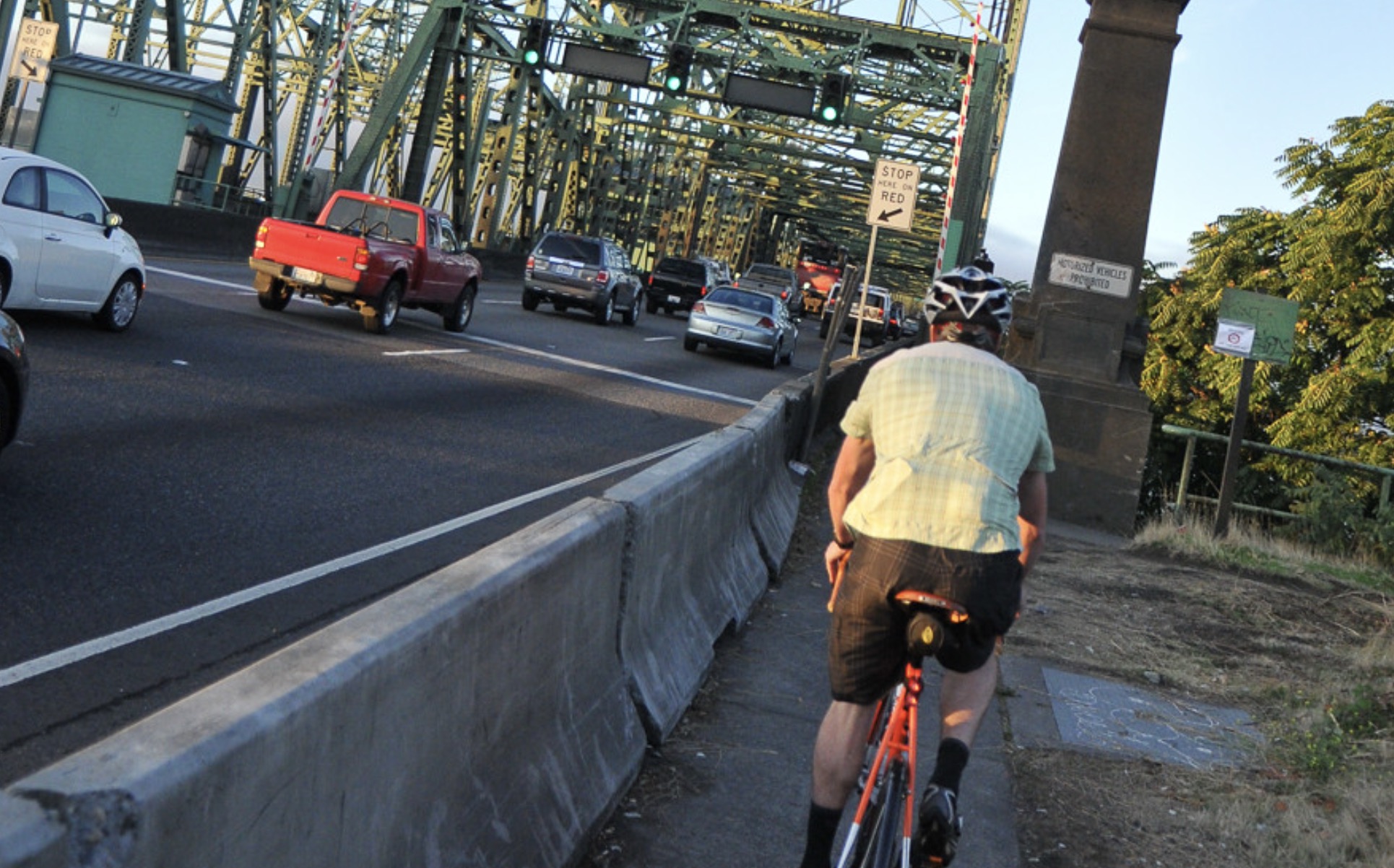
Grim outlook for IBR: This is a solid recap of where things stand with the beleaguered Interstate Bridge Replacement project with some interesting quotes from a Washington lawmaker about how one way out might be to drop the light rail component to save money. (The Urbanist)


Thanks to everyone who sent in links this week. The Monday Roundup is a community effort, so please feel free to send us any great stories you come across.

A quest to ride all of Washington County’s historic communities

(Photos: Matt Traverso)

Bacona, Greenville, Meacham, Mountaindale, Five Oaks, Philips, Lenox. Chances are, unless you’ve lived there, you’re a local history buff, or you’re a cyclist who likes to get off the beaten path, you’ve probably never heard of these oft-forgotten communities sprinkled throughout Washington County.

For Hillsboro resident Matt Traverso, these historic communities are the inspiration for what he calls the “Grand Cycling Tour of Washington County.” He’s on a mission to ride to all 150 (or so) small communities in the county — including abandoned logging camps and farming outposts that survive only as mysterious names on maps or on dilapidated wooden signs on the side of a dirt road.

Traverso is a PhD with a day job as a technical writer in the STEM field who also publishes articles on Medium about a wide range of topics from energy efficiency to gardening. He moved to Washington County in 2011 and says, “I won’t move again.” The county is Traverso’s “forever home,” and being a transplant has given him the curiosity to learn more about the area. Being a cyclist has given him the perfect vehicle to do it. Turns out that pedaling and pondering history pair perfectly.

Matt Traverso selfie.

On the website where he documents each ride (26 so far) with photographs and illuminating details about history, flora and fauna; Traverso says his goals for the Grand Tour are twofold: He wants to showcase Washington County as a top locale for cycling, and he wants more people to slow down and appreciate their surroundings.

“This is an exploration of our home,” Traverso writes on his website. “We tend to reduce our local environment to a few important places (work, home, shop, etc.). We ignore everything else as the junk we drive past. This is a community-driven journey to expand our perception of our surroundings. On each trip, I seek out the significant touchstones in each community to learn and share.”

He began this quest in September and far he’s about half-way done. He keeps a detailed record of which communities he’s explored on a map (see above) and his ride reports are excellent. If you are looking for inspiration or just need intel for fun cycling routes in Washington County, bookmark Traverso’s website and follow his adventures on Bluesky and/or Facebook.

Video: Joe Cortright says massive new cost estimate means I-5 Bridge project is “dead”

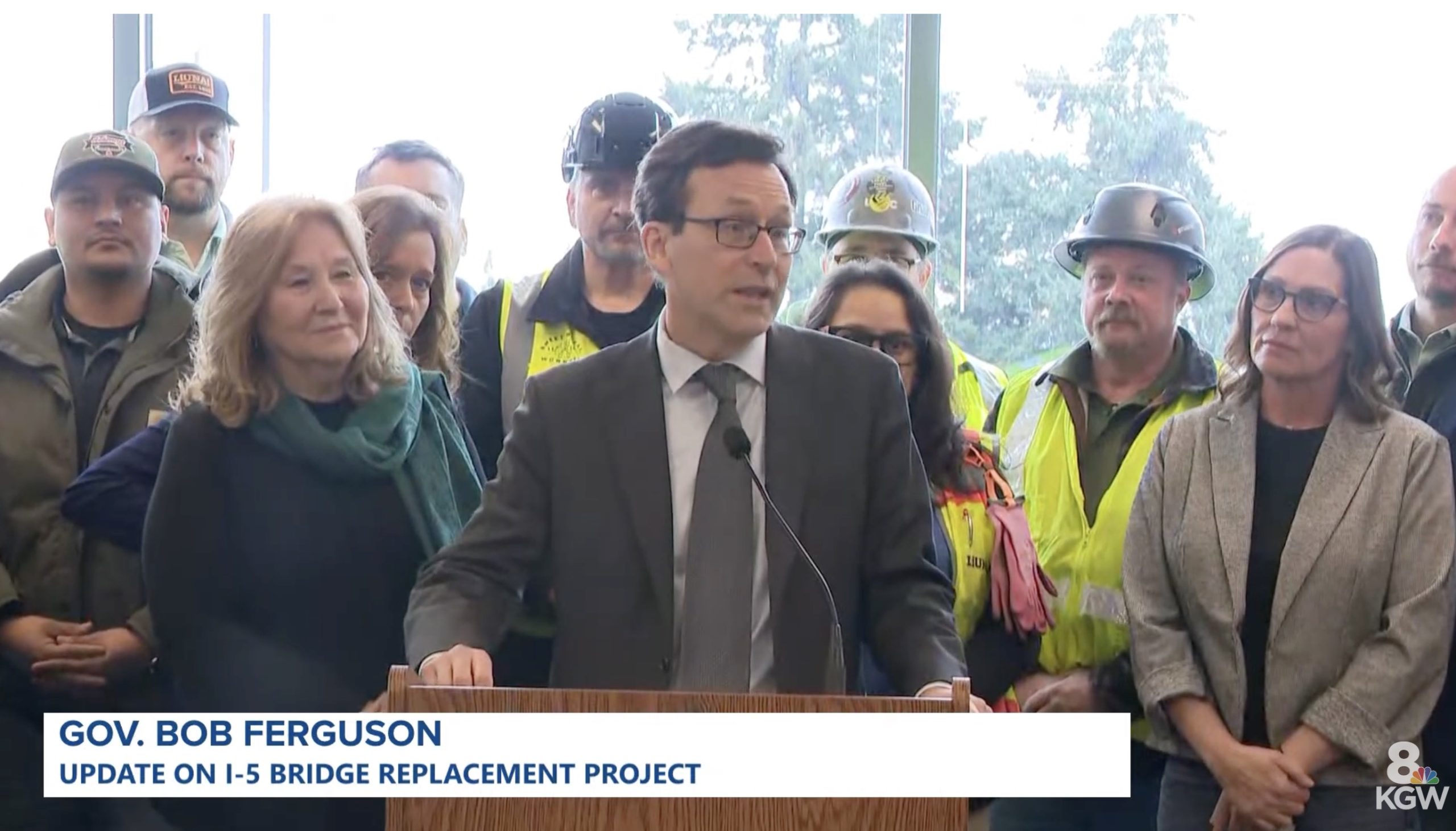
The local transportation world is buzzing about the news uncovered by Joe Cortright and first published in the Willamette Week yesterday that the Interstate Bridge Replacement project’s estimated cost has doubled to about $13 billion. Not only that, but this new number was so politically toxic among project staff they intentionally hid it from lawmakers at a meeting last month.

I interviewed Cortright this morning to get his take on what it all means for the project. Watch the full interview in the player above or on the BikePortland YouTube channel.

Kotek calls for repeal of transportation bill

Oregon Governor Tina Kotek speaking in Portland in September 2025. (Photo: Jonathan Maus/BikePortland)

In a speech this morning, Oregon Governor Tina Kotek offered a roadmap that should give some transportation advocates hope after months of bruising news. Many BikePortland readers watched in pain as Kotek and lawmakers fumbled the ball multiple times during the 2025 legislative session. What was supposed to be a transformational infrastructure package, ended up an over-compromised mess. And while Democrats had all the power, they squandered it and left us with a bill nobody likes.

A signature-gathering effort (backed by anti-tax groups and led by Republicans) to reverse key fundraising elements of House Bill 3991 (the bill that passed in the special session) succeeded last month and now those funds are frozen until a vote of the people in November. Kotek doesn’t want to wait.

The governor told a gathering of transportation agency staffers, advocates, and industry professionals this morning that she’d rather repeal HB 3991 than see it be further gutted. In her speech, she outlined a three-part plan that shows she is (finally!) ready to take transportation spending seriously.

The first step in her plan is to redirect funding from House Bill 2017 (the previous major transportation package) to operations and maintenance. That means millions of dollars currently set aside for projects and programs could be transferred to basic needs of the Oregon Department of Transportation. This move will require statutory changes and “hard conversations about tradeoffs,” Kotek said. Laws will need to be amended because HB 2017 earmarked some revenue to specific capital projects (the first time Oregon had ever done that and likely the last).

While Kotek said she would not support any cuts to transit, she added that, “Nearly every transportation fund and program must be considered.” Since one of the major expenditures in HB 2017 were several freeway expansion megaprojects in the Portland region — including the beleaguered I-5 Rose Quarter project — Kotek’s announcement today puts those projects into even further financial peril and could be the nail in the coffin if legislators follow her lead.

The second big step Kotek is asking Oregonians and lawmakers to take is to fully repeal HB 3991. Calling it a “stopgap measure” that was only passed to “prevent collapse” of ODOT, the governor would rather scrap it and start over in the 2027 session than starve Oregon of transportation revenue during what she calls a “crisis” moment. Another reason she wants HB 3991 gone? “Leaving the law in place forces ODOT to bear implementation costs without new resources, prolongs instability, and delays the real conversation we need to have about long-term solutions,” she said.

And the third step of Kotek’s plan is regroup and try again for a comprehensive funding package in the 2027 legislative session. But unlike last time around, the governor won’t leave its fate up to Democratic party leaders. “The last successful transportation package followed a governor-led process,” she said this morning. “I am committing my office to that work.”

These are significant announcements from Kotek and are likely to improve morale of her supporters as she enters a re-election battle.

Now attention will turn to the short legislative session, which due to begin the first week of February. Lawmakers will only have about 35 days to make changes. That means Democrats must coalesce and be unified in order to flex their slim supermajorities in the House and Senate in order to take the steps Kotek has outlined.


— Read Kotek’s full remarks here.

Pothole suspected as primary cause of cyclist’s death

Looking north across SE Division at 52nd. The victim’s body came to rest just to the right of that pothole. (Photos: Jonathan Maus)


I’m typing this on my phone while standing at the corner of Southeast Division and 52nd, where a man died while bicycling Monday night. It happened around 8:30 pm at the southwest corner of the intersection. The man, who I’ve identified as Mike Sloan, appears to have been riding southbound on 52nd prior to hitting a large pothole. “We were driving and used our car to block off the road when the two witnesses who watched him fall off the bike flagged us down,” one reader has shared with me today. “At least one accounted that they witnessed him hit the pothole.”

Below is the statement I just received from the Portland Police Bureau:

At approximately 8:30 p.m. Monday, officers responded to the area of Southeast Division Street and Southeast 52nd Avenue. When they arrived, they located an adult male cyclist deceased. Officers spoke to numerous witnesses who stated they saw the cyclist lose balance/control and go over the handlebars. The witnesses stated that no vehicles were involved. Officers canvassed the area for cameras and did not locate any. They did find a pothole and believe this could have been the cause of the incident.

Soon after the incident, I received several photos and messages from the scene. I rode over this morning to take a closer look. There’s a pothole just inches from where the victim’s body came to rest. Gravel from the approximately one-foot square pothole is sprayed all around and its edges are sharp. In photos shared by readers, I could see Sloan’s bicycle, a Trek road bike, propped up against a fire extinguisher.

This block of Division is not a popular bike route, given its lack of bike lane, the high volume of car users, and an FX-2 bus stop just prior to the corner. SE 52nd, however, is a very busy neighborhood greenway. Perhaps Sloan was just on Division for a block or two in order to connect to the greenway* (UPDATE: I am now learning that he was riding southbound on 52nd prior to the crash — not eastbound on Division as I previously thought.)

Unless good video footage emerges, we may never know exactly what caused this experienced rider to crash. A witness I met at the scene said the bike was equipped with good front and rear lights, but of course it’s unknown whether or not Sloan would have seen the pothole.

Acccording to friends who knew Sloan, he was a popular member of Portland Bicycling Club. “He was a pillar in the PBC community for many years, a friend shared with me a few minutes ago. “One of the first and best ride leaders I ever met. We are stunned.”

While I was standing at the corner, a woman walked over and began taking photos of the pothole. It was Sloan’s daughter. She told me Sloan lived around SE 60th and Woodstock and was on his way home.

This is the third fatal crash in Portland so far this year. It comes just three weeks after Portland City Councilor Olivia Clark launched a new effort to raise revenue for the transportation bureau. In an interview, I ask how she’d respond to a person who opposes paying more in taxes and fees. “I would say, personally, I’m sick of potholes,” Clark responded. “Are you tired of having to get your car realigned, or you’re falling on your nose on your bike when you go into a pothole? It’s not safe.”


UPDATE: A BikePortland reader who lives across street says PBOT crews are already on the scene filling the pothole police say might have contributed to this crash. See photo below.

UPDATE: A friend sent along this photo of he and Mike on a ride in the Gorge. Mike is on the left.

1000002813

Protected bike lanes coming to SE Stark/Washington couplet over I-205

Existing conditions on SE Washington at 102nd. PBOT plans to add a wider bike lane and on-street parking, while reducing the number of driving lanes.

The City of Portland is ready to spend $11.5 million on dramatic changes to a busy section of the Southeast Stark/Washington couplet. Their SE Stark & Washington Street Safety Project will reduce space for driving, add protected bike lanes, install bus-only lanes, and upgrade bus stops and traffic signals between SE 92nd and 108th. The project aims to make it safer to walk and take transit along the corridor, while enhancing bikeway connections east and west of I-205 between Montavilla and the Mall 205 shopping center.

The new bike lanes will offer safer and more convenient connections to destinations, including the I-205 bike path.

This section of Stark and Washington are very driver-centric at the moment and PBOT wants to encourage a more diverse mix of modes — while taming car traffic at the same time. Their plan is to re-stripe the roadway to make space for wider bike lanes, while removing one of the existing driving lanes. As a nod to how people use the corridor, PBOT says they’ll maintain the turn lanes and freeway ramps as well as add 47 new on-street parking spaces.

PBOT has chosen to invest in this project primarily because of how dangerous the current design is for humans. An analysis by their Vision Zero team found that there have been an average of about five serious injury crashes along this corridor per year since 2015. Of those crashes about half of them involved someone walking, including one person who was killed while on foot. A bicycle rider was the victim in 14% of the crashes in the past decade, with two of those being fatalities. Between 2015 and 2022, PBOT found that there was a serious injury crash at every intersection along the corridor.

Why are there so many crashes? The car-centric design encourages people to drive fast. One-third of all car users in the corridor drive over the speed limit, and at the SE 105th intersection that number rises to 40% and 60% (on SE Washington and Stark respectively).

Changes coming to the corridor include (taken from PBOT website):

  • Safer pedestrian crossings between 99th and 106th avenues
  • Enhanced bus stops at 92nd, 99th, and 105th avenues
  • Signal upgrades at 99th Avenue, 102nd Avenue, and 103rd Drive
  • Safer bike lanes from 92nd to 108th. Wider bike lanes protected from vehicle traffic with buffers, parking and concrete barriers. This would be a huge improvement over the current bike lanes which are 5 feet wide (or missing) and have no buffers or physical protection.
  • Signal upgrades. At key intersections, PBOT will modify timing and add new bike signals to eliminate conflicts between bikes and turning vehicles.
  • Pedestrian safety and access. New curb extensions, curb ramps, and pedestrian push buttons that comply with the Americans with Disabilities Act (ADA) will make the corridor safer for pedestrians.
  • Safer crossings. Work will include new marked, enhanced crosswalks as well as safer signals where pedestrians get a walk sign ahead of vehicle traffic, known as a “pedestrian head start.”
  • More parking. Plans call for adding on-street parking on SE Washington Street and SE Stark Street to serve businesses and support the area’s Main Street designation. This will mean about 47 more parking spaces along this corridor.
  • More trees. Planting street trees on SE Stark Street will provide shade for pedestrians and people biking as well as add to the overall tree canopy in East Portland.

PBOT expects to spend this year finalizing the design and engineering and will begin construction in 2028. Funding for the project comes from a mix of funding including: federal (distributed through Metro), local gas tax (Fixing Our Streets), and the Portland Clean Energy Community Benefits Fund. For more information, check out the project website.

TriMet set to axe portion of MAX line in latest round of service cuts

(Photo: TriMet)

When TriMet announced the first round of service cuts last summer year they told us the worst was yet to come. Now that the second round has been announced, we get an even stronger taste of what they meant.

“With rising costs and less money coming in, we must reduce spending now to avoid more severe cuts down the road, which would affect many more riders,” reads a TriMet statement released today. The agency faces a $300 million budget gap due to rising inflation, low ridership numbers and other factors.

One of the highest profile cuts is the elimination of about half of the MAX Green Line. The line, which opened in 2009, currently runs from the Clackamas Town Center, north to the Gateway Transit Center in Northeast Portland, and then along I-84 into downtown. Starting in August of this year, the line will only service stops between Clackamas Town Center and Gateway. All east-west travel on the line will be cut. Other cuts include changes to 35 bus lines (including the elimination of all bus service in south Gresham; along Stafford and Salamo roads in West Linn; and Tualatin-Sherwood Road in Tualatin).

To prep the public for the cuts TriMet will hold 11 open houses (eight in person and three online) this month across the region.

TriMet says that since before the pandemic they’ve, “faced staggering cost increases in almost everything related to running the transit system, including labor, vehicles, facilities, contractors, equipment and software.” That increase includes a 53% jump in cost per service hour between from 2019 to 2024. In addition to higher costs for materials they need for daily operations and lower revenue, they say their system is aging and needs maintenance and equipment upgrades. A major increase in safety and security-related expenses was also listed as a reason for the cuts.

But what, it gets worse. To reverse the transit doom loop, TriMet says a fare increase in likely to come in 2028.

Meanwhile, the Trump administration is not likely to throw transit a lifeline and even the state legislature is keeping service down. An increase to the statewide payroll tax was agreed to by lawmakers in the 2025 special session (albeit much smaller than many had hoped), but in a bid to ensure quorum, Democrats gave Republicans a sunset on that tax, which means it would end on January 1, 2028. And currently, even that bump in funding is on hold due to a successful petition effort that has frozen new revenue sources until a vote in November.

The proposed cuts will be discussed by TriMet’s Board of Directors at their meeting in March and will be voted on in April. Learn more and find an open house near you at TriMet.org/servicecuts.

Monday Roundup: Messengers, Mamdani, e-bike rebates and more

Hi folks. I’m slowly getting the gears turning again after a nice and needed holiday break.

As per usual, here are a few stories I’ve come across (either flagged by myself or by readers) that I think are worth reading. Can’t wait to see you all again at Bike Happy Hour and to share more great stories and videos with you in the coming days and weeks. 2026 let’s go!

Livable streets in the limelight: How much of a priority are livable streets to NYC Mayor Zohran Mamdani? He shared his mic with his pick for transportation commissioner at his swearing-in and he has already reversed bad policies by his predecessor. (Streetsblog and Streetsblog)

Pricing works in NYC: “Since congestion pricing began one year ago, about 11 percent of the vehicles that once entered Manhattan’s central business district daily have disappeared.” (NY Times)

Lessons learned: A new report from the State of Washington shows that people are much less likely to redeem an e-bike rebate when the amount is just $300. (The Urbanist)

The depths of messengers: A new film from a PhD researcher who studies cultural identity and motion in public space (rad topic!) goes into depth on bike messengers and alleycat races. (The Radavist)

Funding stuck: A cautionary tale for when the Portland region passes a big transportation revenue bond: In Atlanta, projects are taking so long to implement that much of their new funding is having trouble getting out the door. (WSB TV)

Adventure inspiration: A man in England rode across the UK on a very interesting wooden bike and discovered community along the way. (The Guardian)

Cycling without age: I’m going to keep sharing links to this awesome program that gets senior citizens out on the streets via pedal power until someone in Portland steps up to open up a local chapter. (Reasons to Be Cheerful)

Not enough people have been hit by cars: A reader shared this story from Vancouver about parents who organized in hopes of getting safety changes to an intersection near their kids’ school, only to have city engineers say engineering rules prevent them from doing anything. (Fox 12)


Thanks to everyone who sent in links this week. The Monday Roundup is a community effort, so please feel free to send us any great stories you come across.

Five rides to roll in the new year

Emergency Naked Bike Ride participants on Naito Parkway on October 13th. (Photo: Jonathan Maus/BikePortland)

Getting out on bikes with friends old and new on the first day of the year is a proud Portland tradition. If you want to take part, and start the new year on a positive pedaling note, I’ve got five ride ideas for you to consider.

From the “Ding Ding Ride” that starts at midnight, to a plunge in the Willamette — and even something in Washington County — check below for all the details you’ll need. (Note: Times listed are meet-up times, because it’s fun to get there with time to spare.)

Midnight Ding Ding Ride – 12:00 am Ladd Circle (SE)

Join in for a special edition of this fun and simple “ding ding” tradition. Just show up and ride laps of the 0.16-mile circle and ring your bike bell. Get their before midnight to get the full New Year’s Eve experience. Ladd Circle is a special place in Portland bike culture lore and it’ll be a great spot to be on this auspicious evening. More info here.

All Bodies on Bikes New Year’s Day Ride, Polar Plunge and Sauna – 11:30 am at Crema Coffee (SE Ankeny)

All Bodies on Bikes is a national nonprofit that works to make cycling more inclusive and welcome to everyone. Now that its co-founder Marley Blonsky has moved to Portland, she’ll lead this ride that includes a fun and new (to Portland) twist: a dip in the Willamette River! Expect a 5.5 mile ride to Sellwood Park for the plunge and a fun mix of folks on all types of bikes. There’s also a sauna to warm up on afterwards (RSVP required). More info here.

Portland Bicycling Club New Year’s Day Ride – 12 noon at Wilshire Park (NE)

If you’re looking for a more moderately paced, traditional “road ride” (where most folks will be in lycra), hook up with members of the Portland Bicycling Club, the oldest bike club in the area. This ride will be led by Doug Myers, who says the route is 16 miles and the pace will be set at about 13-15 mph. Non-members are welcome. More info here.

The New Year’s Day Ride – 12 noon at The Cart Blocks (North Park Blocks on W Burnside)

Called The New Year’s Ride because it’s a proud tradition that has been organized by various cycling clubs and organizations since the 1950s. Come out and join its current hosts, The Street Trust, for an eight-mile ride around the city that will include a spin along the new protected bike lane on SW 4th Avenue and end at the new bike tunnel through the Portland Art Museum. Registration (and donation) required, but no one turned away due to lack of funds. More info here

Ride Westside New Year’s Day Ride – 12 noon at The Round/Beaverton Central Station (Washington County)

The grassroots Ride Westside has had a solid year of growth as they’ve tapped into huge demand for more bike rides and bike advocacy in Washington County. If you’re on the west side and are tired of having to come to Portland for your bike fun fix, now you can find your people closer to home! I confirmed with the ride leader this morning, so if the event listing page lacks details, just check back later today for all the info. More info here.