Weekend Event Guide: De Ronde, Train Day, a road race, and more

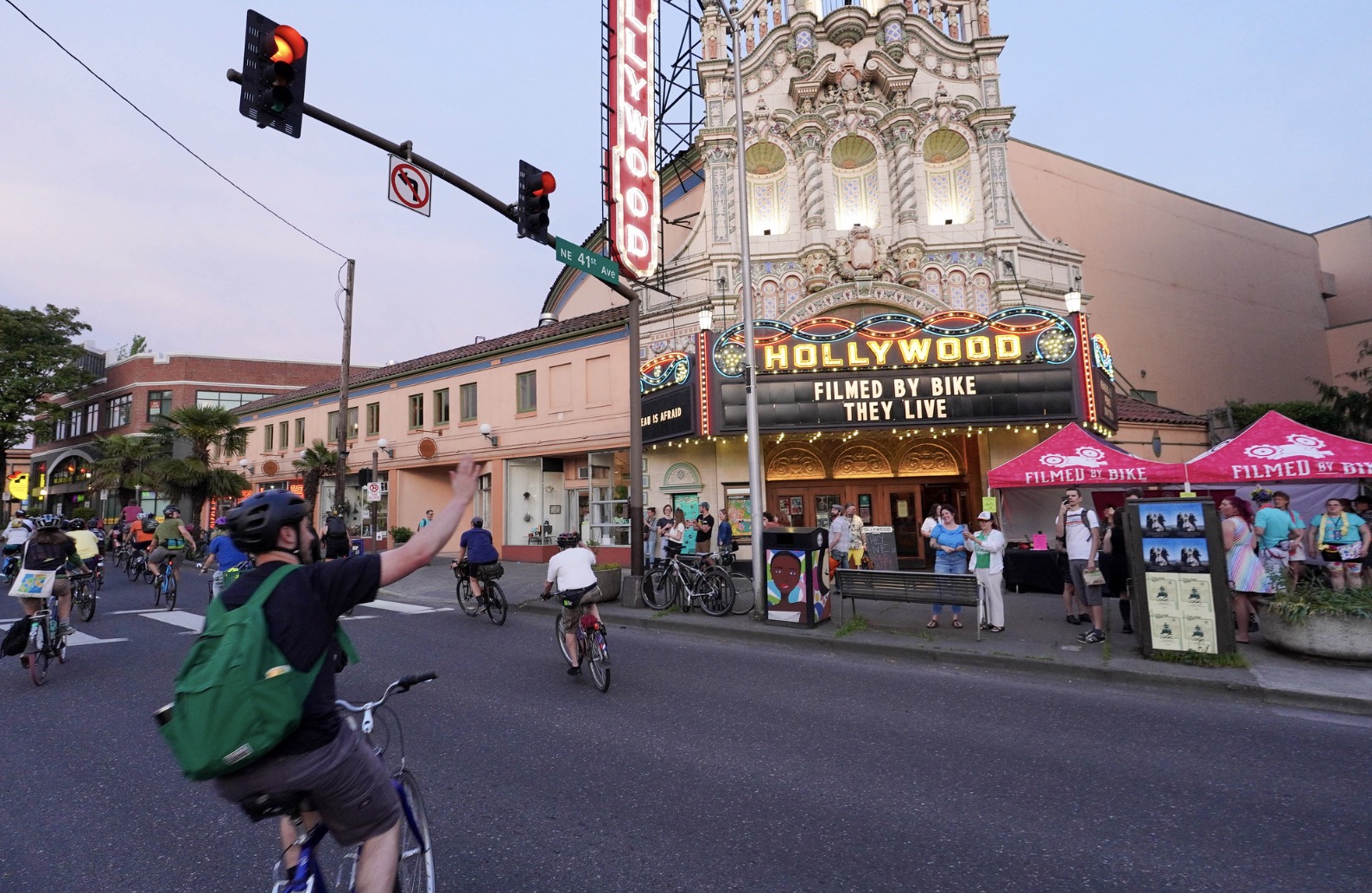
The De Ronde has become such a tradition that folks who live in the West Hills come out to support the riders! (Photo: Jonathan Maus/BikePortland)

Happy Bike Month! I rode myself to Bike Happy Hour yesterday and it was so nice to be back out on the streets. I’m hoping the next few weeks I’ll be out there again with my cameras and such.

Also, if you haven’t already done so, now is the time to hit up your local bike shop to make sure your bike is in perfect working order for the upcoming onslaught of amazing rides. Speaking of which, see this week’s picks below. And happy biking!

Friday, May 9th

Midnight Mystery Ride – 11:30 pm at Errol Heights Park (SE)
Monthly magical mystery tour promises all types of fond memories and shenanigans among a crew of late night riding aficionados. More info here.

Saturday, May 10th

Barton Park Road Race – All Day in Barton Park (Estacada)
A special event that brings road racing back to a really cool location. You’ll be tested on a seven-mile circuit. More info here.

Saturdays in May Ride – 10:00 am at Peninsula Park (N)
Hosted by advocacy nonprofit BikeLoud PDX, this ride is sure to scratch your itch for infrastructure and policy nerdery. Get to know north Portland bikeways and discover cool new routes along the way. Expect a 7-10 mile route at a family-friendly pace. More info here.

Train Day – 10:00 am at Oregon Rail Heritage Center (SE)
A special day just for train lovers! Expect food, activities, train rides, expert docents giving tours of train cabs. You’ll have a rail-ly good time! More info here.

Sunday, May 11th

Ronde PDX – 9:00 am at 3610 NW St. Helens Rd (NW)
Portland’s beloved spring classic that tackles all the grueling climbs in the West Hills. A way to suffer among others with a lot of cool trimmings set up by great organizers over the years. Unsanctioned fun and a bucket-list item for sure. More info here.

Coffee Outside Ride – 9:00 am at Rose City Park (NE)
Don’t you love the vibes from making coffee outside during a bike tour? You can mimic that sensation by meeting up with this nice group, doing a chill, five-mile ride, and then brewing coffee and sharing snacks at the end. More info here.

Ride Safe: Outside the Lines – All Bodies All Wheels – 2:30 pm at Irving Park (NE)
Feel like you don’t fit in? Come to a ride where you’ll always be welcomed and where organizers says, “Bring your whole self, whether it’s silly and social, quiet, or somewhere in between.” More info here.


— Did I miss your event? Please let me know by filling out our contact form, or just email me at maus.jonathan@gmail.com.

Port unveils plan to smooth traffic to and from PDX airport

Screenshot of Port of Portland video rendering showing design of westbound (toward PDX Airport) NE Airport Way approaching NE 82nd Way. The flyover on the left are eastbound traffic lanes. Lanes in the middle are left-turn lanes onto 82nd Way. (Watch full video below)

At an advisory committee Tuesday morning, the Port of Portland fleshed out plans for big changes to the intersection of NE 82nd Way and Airport Way.

As I reported last week, the Port is moving forward on a project to relieve congestion at the busy intersection that feeds directly into Portland Airport terminals. At their meeting today, Port Aviation Planner Mike Coleman shared more details about the project and fielded a question about why the Port will invest over $100 million for a car-focused project when there’s a light rail line that goes directly to the terminal.

Coleman said Airport Way is the busiest surface street in the state of Oregon with 60,000 car users passing through it each day. The intersection handles airport traffic and regional traffic headed to and from the I-205 bridge. Currently there are 13 general travel lanes entering the intersection, as well as two tracks of MAX light rail vehicles. This leads to long signal wait times, made even longer because of the eight MAX trains that rumble by each hour (something that “interrupts the operation of the intersection,” Coleman said).

Port Planner Mike Coleman at Tuesday’s meeting

Coleman said the Port isn’t planning to expand the width of the roadways or add any more lanes. Instead, their design reduces the number of traffic movements that require separate signal phases . Their solution creates a flyover on Airport Way for eastbound (toward Cascade Station/I-205) drivers to avoid the signal altogether. Westbound (toward the airport) drivers would also avoid a signal by having two through lanes without facing cross-traffic. The two left turn lanes that come from 82nd Way would be separated as they join the westbound lanes on Airport Way and there would be no need for merging. People who want to use 82nd Way would turn under the overpass.

“So really, lane-wise, nothing changes,” Coleman said at today’s committee meeting. “We just move some of those conflicting movements out of the intersection. So no additional lanes, and yet a snappier, single operation.”

Coleman also claimed new design would make crossing Airport Way easier for people walking and biking. Non-drivers would still need to cross nine lanes (plus the two MAX tracks) to reach the Airport Way frontage road, but that’s two less than today’s crossing. And the new design would mean walkers and bikers would face only one lane of eastbound car traffic instead of four. Put another way, if you want to get to the frontage road from NE 82nd Way today, the crossing currently consists of six different segments — a slip-lane, then the MAX tracks, then three eastbound lanes, then two westbound turn lanes, then three more westbound lanes, then the two lanes of the frontage road. The new design removes one of those segments.

Coleman said the new crossing will be a, “Much safer, much simpler approach to pedestrian and bicycle access at the interchange.”

For a project estimated to cost well over $100 million and that’s being pitched as a safety project (more on that below) that type of crossing still leaves something to be desired for folks who aren’t driving. Non-drivers will cross underneath a short tunnel, creating possible public safety concerns. And it remains unclear what type of crossing walkers and bikers will have. Will they be flashing beacons or full signals? Will the detection be responsive?

During his presentation Tuesday, Coleman said no new lanes are in the plans at the moment. But the Port understands width exists for adding more in the future. Speaking about the two westbound lanes and generous shoulder width, Coleman said, “Early on, I’m confident that this could actually be done with only two through lanes, but three lanes would be available in the future.”

After Coleman’s presentation, another member of the committee questioned the intent of the project, saying he felt it was being designed to allow more driving. “$100 million for a project that facilitates more cars coming to the airport when we have a light rail system that connects directly to it? I think funds could be better spent,” the commenter said.

Coleman responded by saying typical trip generation rules don’t apply to the airport and he believes induced demand is “less likely.” Coleman pushed backed at the notion the project was about increasing capacity for drivers. “This is a multi-category project. I’d say it’s safety-oriented; it’s delay-reducing.”

The Port’s Chief Aviation Officer Dan Pippenger backed up Coleman. “Many of our passengers don’t have access to the light rail system. They’re coming from outside of it.” Pippenger then said backups on the road can be “pretty rough” during peak times and “We just want to get [those drivers] through and out.”

“You know, we’re still a car-based economy,” Pippinger added. “And what we can get out of it, we can maybe foresee those reductions that we would all like to see in emissions and things of that nature.”

So far, the Port has completed preliminary design work and is confident they have a buildable project. The design will be finalized in the coming year and they hope to break ground in 2027.


Job: Shop Manager & Lead Mechanic – bike works by p:ear

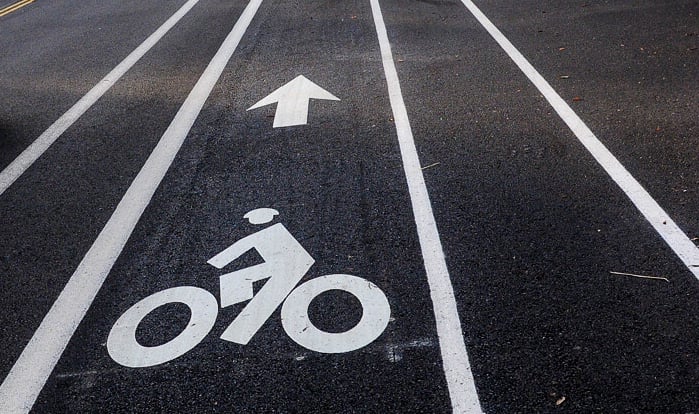
Buffered Bike Lane with a bike symbol and arrow pointing forward

Job Title

Shop Manager & Lead Mechanic

Company / Organization

bike works by p:ear

Job Description

Position: Shop Manager & Lead Mechanic

1 FTE: Tuesday-Saturday. Requires occasional evenings and Sundays
Reports To: p:ear Works Director
Compensation: $57,000 – Benefits include 4 weeks paid vacation, health, dental, 3% Simple IRA match, short-term disability, 8 paid sick days

Position Description
You are a dynamic individual and Lead bicycle mechanic, who will help lead and support our social purpose community bike shop in East Portland. bike works supports Portland’s Eastside communities, providing low cost, low barrier access to bike repair, sales and education of refurbished bicycles and parts. This position will support the p:ear Works Director, oversee the other mechanics, assist with daily shop operations, teach our bike mechanic school and help mentor p:ear youth bike mechanic interns at the shop.

Essential Job Functions
As the Shop Manager and Lead Mechanic, you will provide direction, oversight and leadership to a small, but diverse group of mechanics and youth interns. You will be expected to build and maintain strong relationships with staff and the community. You will help produce a successful, profitable shop that builds and contributes impact and belonging to our community and community partners.

Required Qualifications & Competencies
● Committed to personal growth with a high degree of humor + emotional intelligence
● Must be a positive and strong role model, have a collaborative, team-oriented work style, and strong strategic and problem-solving skills
● Must be committed to non-violence, trauma informed care + compassionate responses

● Must have awareness of one’s own identity, an understanding of differences, and an excitement about building relationships cross-culturally
● Strong commitment to advancing equity and inclusion and creating and maintaining a diverse environment
● Ability to learn & build on the varying cultural & community norms of p:ear youth
● Self-initiating, independent and highly motivated
● Strong leadership skills and capacity to work in a deadline-oriented, chaotic environment
● Commitment to advancing equity and creating and maintaining an inclusive environment that is welcoming for all
● Commitment to non-violence and compassionate responses
● Bike shop mechanic experience – minimum of 5 years in a professional setting
● Excellent customer service and communication skills; bilingual a plus
● Able to work independently, problem solve and complete tasks with minimal oversight
● Proficiency in Lightspeed POS
● Build and sustain relationships with community partners and donors

Essential Duties & Responsibilities
● Teach 3 bike mechanic cohorts annually (8 weeks/1 day week per cohort)
● Proficiently execute assembly, repairs and maintenance for all types of bicycles, particularly used and older bicycles
● Assist in daily shop operations: ordering, inventory, forecasting, bike repair
● Exemplifies compassion and understanding around the barriers of homelessness and underrepresented populations in the community – see above
● Maintain an organized and efficient work environment
● Represent bike works and p:ear and its mission to positively and professionally identify barriers and recommend solutions to better serve the community
● Attend p:ear fundraisers & community building activities
● Be a positive role-model and mentor for our bike mechanic interns

Mechanics
● Properly assess and determine bike repairs and recommend customer options
● Repair and refurbish bicycles to be sold in the shop, as well as to be donated
● Track all parts and new & used for each repair or build
● Maintain a neat and organized workspace
● Maintain a high level of professionalism
● Perform quality control checks on bikes repaired and/or built

Shop Operations
● Assist Shop Mechanics with a variety of tasks, including maintaining an inventory of new and used parts, placing orders with distributors as needed, maintaining shop tools and restocking as necessary
● Assist customers in the shop with purchases and bicycle repairs during sales
● Strong proficiency with bicycle tech
● Collaborate with Director on an annual budget. Manage budget for the fiscal year
● Experience opening new accounts with distributors as needed
● Run inventory 2x annually

Community Programming
● Safety check all Everybody Bikes! complete bicycle prior to distribution
● Build and sustain relationships with the Rosewood Initiative community
● Represent p:ear and its mission positively and professionally
● Participate in Sunday Parkways, Free Bikes 4 Kids monthly wrenching, as well as the occasional community bike/ride events

Physical Demands
● Able to sit or stand and walk throughout the scheduled work shift
● Ability to lift and/or move up to 75 lbs

Work Environment
This job operates in an often chaotic, loud environment. This role routinely uses standard (kitchen and) office equipment such as stoves, commercial dishwashers, microwaves,
refrigerators, freezers, computers, phones, photocopiers, filing cabinets and fax machines.

Physical Demands
The physical demands described here are representative of those that must be met by an employee to successfully perform the essential functions of this job. While performing the duties of this job, the employee is regularly required to talk or hear. The employee is frequently required to stand; walk; use hands to finger, handle or feel; and reach with hands and arms.

Travel
Only local travel expected for this position.

AAP/EEO Statement
It is the policy of p:ear to provide equal employment opportunity (EEO) to all persons regardless of age, color, national origin, citizenship status, physical or mental disability, race, religion, creed, gender, sex, sexual orientation, gender identity and/or expression, genetic information, marital status, status with regard to public assistance, veteran status, or any other characteristic protected by federal, state or local law. In addition, p:ear will provide reasonable accommodations for qualified individuals with disabilities.

Other Duties
Please note this job description is not designed to cover or contain a comprehensive listing of activities, duties or responsibilities that are required of the employee for this job. Duties, responsibilities and activities may change at any time with or without notice.

How to Apply

To apply: Please submit a resume, cover letter and references as PDFs to nathan@bikeworkspdx.org or mailed to contact information below. No phone calls. Successful applicants will be contacted for an initial screening.

p:ear
Attn: Nathan Engkjer
338 NW 6th Ave.
Portland, OR 97209

Parks bureau shares latest designs for trail system in Rose City Golf Course

View from Rose City Golf Course looking southeast toward McDaniel High School. PP&R is considering two trail alignments in this location, one would stay to the left, the other would dive into those trees on the right. (Photo: Jonathan Maus/BikePortland)

The City of Portland has has reached a key design milestone for the Rose City Recreational Trail project. This is the project that will build new biking and walking trails and paths in Rose City Park and Rose City Golf Course.

According to a project update released by Portland Parks & Recreation last week, the $4 million project will build a total of 2.2 miles of new paths around and through the park. Boundaries of the project are NE Sacramento to the north, NE Tillamook to the south, NE 60th/62nd to the west, and NE 78th/McDaniel High School to the east. The project consists of three distinct trail segments that would create a loop around the park and golf course, as well as a north-south trail along NE 72nd Drive which bisects the parcel.

As you’ll recall, there was a bit of a dust-up with this project when it first went public one year ago. Parks planners initially overlooked the inclusion of bicycle users on the new paths and it took some pressure from BikePortland coverage and local trail advocates to correct the oversight.

The trail plan is broken into four distinct segments: the Primary, Trail, the Bluff Trail, the 72nd Connector Trail, and the Back Nine Trail. Below is a short summary of each one.

Primary Trail (Red): A 1.2-mile, 10-feet wide paved path that will be fully ADA-accessible and open to bicycle riders. This will be the main off-street, east-west route across the site. There will be ramped entry points at NE 62nd, 65th, and 80th. PP&R plans to build a trailhead and kiosk with new signage and tree plantings at the NE 65th entrance (near the old Rice Elementary School building).

Bluff Trail (Green): A 0.6 mile gravel and natural surface trail that will vary between three and four-feet wide. This trail exists today on a bluff just below NE Sacramento Street, but PP&R will update and restore it with a more consistent surface, bump-out areas, new fencing, seating and rest stops. Bicycles will be allowed on this trail.

72nd Connector Trail (Yellow): A 0.4 mile gravel surface trail that will connect to the existing one-way road on NE 72nd Drive (that was recently updated as part of the 70s Neighborhood Greenway proejct). At the northern end where it connects to the bluff, PP&R will create a series of switchbacks to create an easier grade to NE Sacramento. Boulders will separate the road from the new path and there will be new seating, fencing, and even a row of new bike racks for park users. Bicycle riders will also be allowed on this new segment.

Back Nine Nature Trail (Blue): This is the closest thing the new trail system will have to singletrack, but for some reason I don’t yet understand, PP&R says bicycle riders are not allowed. The current plan is for a 0.8 mile gravel trail to complete the loop in the northeast corner of the golf course. This is in the most remote section of the golf course. I’ve asked PP&R for clarity on their decision-making since last summer, because the initial plan was for the alignment to go along the outside edge of the property and bicycle access was still under consideration. Now they appear to have switched to an alignment that dives into a grove of trees. PP&R said this week both alignments are currently under review. I’ll share an update on the bicycle access question when/if I hear back.

These new paths and trails will be a very exciting addition to the biking and walking network and will give folks a much safer and pleasant option than local streets. I imagine all of them being well-used and well-loved by locals as walking, jogging, and slow cycling paths.

It would be a real shame if the Back Nine Trail prohibits cycling, because it would mean folks couldn’t complete the loop. Perhaps they can construct both alignments and have one for cycling and one for walking. Or folks can simply share the trail.

From here the designs will be reviewed by PP&R staff and leadership. Once all the feedback is accounted for, the permit process will begin and other city bureaus will need to sign off on the designs. Once that process has played out, 100% designs will be completed. Stay tuned for more project updates this summer. If you have questions and/or want to connect with PP&R staff with feedback, find contact information and more details on the official project website.

If all goes according to plan these trails will be constructed next fall.

Mayor wants to raise parking and rideshare fees to buoy PBOT budget

Mayor Keith Wilson at his acceptance speech on November 7th, 2024. (Photo: Jonathan Maus/BikePortland)

Portland Mayor Keith Wilson released his city budget proposal today, announcing a mix of staffing changes, fee increases and cuts aimed at blunting the force of an estimated $93 million general fund shortfall.

Calling it a “back to basics” approach, Wilson’s proposal for how to balance the city’s $8.54 billion budget includes some relief for the transportation bureau. As BikePortland reported, the Portland Bureau of Transportation (PBOT) prepped for bleak cuts to address impacts of an estimated $38 million budget shortfall. The agency braced for widespread layoffs and cuts to programs and services like street sweeping, traffic signal repairs, striping crosswalks, Sunday Parkways, Vision Zero, the street plaza program, and more.

The mayor’s budget seeks to slice $15.4 million from PBOT. This means the agency will see some cuts, but the most dire warnings will not come to pass.

To boost transportation revenue, Wilson’s proposal seeks to raise parking and rideshare fees, reinstate a leaf cleanup fee, and finance the city’s legal commitment to ADA curb ramp construction.

When it comes to new parking revenue, the mayor’s plan is to raise an additional $6.8 million via what he characterized as, “modest increases in parking fees in line with peer cities.” $5.5 million of that will be generated through a 25% increase in hourly parking meter rates in each district. Hourly event parking meter rates would also go up. To raise another $350,000 per year, the cost to park in the Providence Park district would increase from $5 to $7 per hour and Moda Center area parking would increase from $3 to $5 per hour. Event parking district hours would also be extended from 7:00 pm to 10:00 pm, which Wilson says would generate another $1 million per year.

An increase in the fees charged to rideshare customers is also in Wilson’s plan. Currently, folks who use Uber or Lyft pay an extra 65-cents per ride, with an additional surcharge for airport trips and for trips that start or end outside Portland city limits. Wilson wants to double that fee to $1.30 and use the $5.1 million in estimated new revenue to invest in pothole repairs and street cleaning activities such as graffiti removal, and towing derelict RVs (PBOT has said they’d be forced to reduce derelict RV removal 75% — from 550 to 140 RVs annually — without new revenue).

Wilson will stave off the elimination of all street sweeping services by moving $3.1 million from the Bureau of Environmental Services (BES) to PBOT. Those funds will allow for the hire of nine new permanent sweeping positions. Because the sweeping would be funded by BES, the locations chosen for sweeping must drain to surface water or groundwater sources.

The mayor’s budget creates additional funding for PBOT by saving them money in the short-term through a refinance of the City’s legal obligation to build and replace ADA curb ramps citywide. The plan is to work with the City Attorney’s Office and the Public Works Service Area on a new bond issuance. Those bonds will create near-term revenue for PBOT above and beyond the interest it will cost to pay them back.

When it comes to cuts, PBOT will be impacted by the citywide “enterprise efficiencies” cuts — these are staffing cuts on positions like communications and equity compliance that are currently duplicated across several bureaus that will be consolidated into the Public Works Service Area. This could be a significant loss if the media loses the ability to get timely, accurate, detailed information about PBOT. I’ve relied on PBOT communications staff for years and they are a crucial part of my work. If I’m forced instead to speak with a generalist without intimate knowledge of transportation policy or the day-to-day workings of the bureau, the community could suffer.

Wilson’s plan will also reduce $113,000 from PBOT’s share of the city’s general fund (all bureaus were asked to cut 8%, and since PBOT gets very little from the general fund, their share is small). Those cuts were expected and will include: a $44,000 reduction in PBOT’s central city street cleaning budget (a reduction to anti-icing efforts); $46,622 from a program that paves gravel streets; and $11,082 from Sunday Parkways. PBOT says the Sunday Parkways reductions, “Would reduce safety programming for these events such as barricades, traffic control and parking signage, and traffic flagging.”

PBOT will also see its allocation from the Recreational Cannabis Tax reduced by $277,664. That’s fortunately only about one-third of what PBOT expected, but it’s still funding that will directly hit Vision Zero-related projects like intersection daylighting and other safety projects.

Overall, Mayor Wilson has prioritized PBOT and saved the agency from significant cuts. That might be because he sees transportation as a key element in his push for a green economy. At his State of the City event Friday, Wilson was asked a question about job development and he responded by saying he believes Portlanders should, “leave the cars at home.” Here’s an excerpt:

“We should be the greenest city in the nation and using those jobs as that catalyst to move us forward. I really think that green leadership is the way we move our city forward. We are a car-centric focus; we have to focus on a multimodal transportation system. So we need to unlock that potential. We need to focus on streetcars, which is that elemental approach to transportation-oriented villages, and then it has to be anchored with high speed rail. And we have to change how we lead our society, leave the cars at home, take that income and invest it in our communities, for the health of our community.”

One open question is whether state lawmakers will come to the rescue and pass a transportation funding package (Wilson’s budget counts on the state passing a funding plan and sending $11 million to PBOT). Any increase in the gas tax would automatically flow to the City of Portland. “This package adds revenue in anticipation of a state gas tax increase,” reads one line of the budget. But there’s no additional explanation of what would happen if or when that increase doesn’t come to pass.

From here, the budget will be debated among the 12 city councilors and the public will have opportunities to weigh in. City Council will ultimately adopt the final budget in mid-June. Stay tuned for more updates, as the budget will be a major focus of council for the next 4-6 weeks. For more coverage of today’s news, see this OPB story.

Monday Roundup: London’s success, Pee Wee’s bike, and more

Happy Monday everyone. I’ve removed the special notice from the site about my knee surgery recovery. I’m 24 days or so post-operation and feeling better every day. Still can’t bike around or cover events yet, but I hope that’s coming soon. For now I’m still only able to work from home, but I can work almost normal hours — except for getting to PT appointments and getting my leg up very once in a while. Thanks for your patience and support!

Here are the most notable stories that came across my desk in the past week…
Concerts and carbon: A study found that 80% of concertgoers arrived by private vehicle, but that only 60% wanted to. Learn about the latest thinking from major artists and promoters about how to make concert transportation greener. (Rolling Stone)

Boston bike troubles: Looks like the honeymoon is over for Boston’s cycling-friendly mayor as advocates feel progress has slowed — and even reversed — as the east coast city has similar challenges to Portland. (NBC Boston)

London did it: People on bikes now make up 56% of all traffic in downtown London’s “Square Mile” district during peak commute hours and the city has seen a 50% increase in ridership since 2022. (BBC)

Trucker bribery scheme: An investigative journalist uncovered wads of cash tied to peoples’ names and learned that trucking companies in Oregon and Washington were paying CDL training services to pass their drivers. This has created a huge safety risk. (The Oregonian)

$125,000 for Pee Wee’s bike: Given how iconic the movie is and the huge role his bike played in it, I honestly thought it would be worth way more than $125K. (TMZ)

Good distracted driving news: European regulators are helping push a very good trend — the return of analog buttons and dials to car dashboards. Overly digital displays are extremely unsafe and apps like Apple Carplay pose huge distracted driving hazards. (Wired)

Vehicular cyclists won’t go away: It’s truly exhausting how some veteran U.S. cyclists are preventing our country from leaving the dark ages of cycling infrastructure because their egos and self-oriented perspective cannot fathom that by advocating soley for their own interests they are needlessly hurting others. A protected bike lane debate in the southern California coastal town of Encinitas lays out this debate. (The Coast News Group)

Harsh crackdown: I can’t help but think this new policy of writing criminal citations for bicycle riders (instead of traffic citations) is tied to Mayor Eric Adams’ embattled reputation among progressives. Or maybe it’s just typical NYPD being out of touch bike haters. (Streetsblog NYC)

America, welcome to the War on Cars: Rising prices in every aspect of car ownership have led to an over 13% decrease in the number of Americans who expect to buy a car in the next six months. (Newsweek)

Video of the Week: The delightful duo of Rimski and Handkerchief on their bassicle and bicycle piano playing music as they pedal to a gig. (Thanks to reader John B for sharing this!)


Thanks to everyone who sent in links this week. The Monday Roundup is a community effort, so please feel free to send us any great stories you come across.

Cyclepath expanding into historic Fat Tire Farm bike shop location

Cyclepath owner Michael Jellinek (right) with Reid Stolberg, his first customer at the new NW Thurman location. (Cyclepath West isn’t open yet — Stolberg picked up a bike that had been moved from Cyclepath’s NE MLK location.) (Photos: Michael Jellinek)

Cyclepath Bike Shop will open a second location on Northwest Thurman Street, seizing an opportunity to take over the historic location of Fat Tire Farm.

When news broke in March that Fat Tire Farm would end its run at NW 27th and Thurman at the base of a popular entry to Forest Park after 40 years in business, it deflated spirits across the city. Losing yet another bike shop in that part of town, especially one with a legacy like FTF, was a tough pill to swallow for off-road cycling lovers around the region.

Cyclepath owner Michael Jellinek confirmed with BikePortland today that he and Fat Tire Farm owner Park Chambers (in photo below) came to an agreement and formalized the deal at the end of last week. Calling it a “somewhat natural fit,” Jellinek also plans to hire a few former Fat Tire Farm employees and will be posting job listings on BikePortland for more staff next week.

Jellinek gave props to Chambers for helping make the transition happen. “He was incredibly supportive and really made this whole opportunity work. He was gracious and excited to pass the torch and we can’t thank him enough.” Chambers bought Fat Tire Farm from its former owners in 1997 and plans to retire.

Not only will Portland retain a bike shop at this location, Cyclepath West will offer a wider selection of bikes and accessories. Fat Tire Farm was legendary for their laser focus on high quality mountain bikes, but Jellinek says he plans to stock a mix of mountain, gravel and road bikes (similar to what they carry at their Martin Luther King Jr store). In addition to bikes, parts, and all the trimmings, Jellinek plans to take advantage of Forest Park’s proximity and will stock a selection of trail running shoes and accessories as well.

“Our intention is to carry on the awesome legacy of the dedicated crew at FTF while adding some diversity in terms of offerings,” Jellinek says.

From a business perspective, Jellinek sees an opportunity to serve cyclists on the west side. “When our friends at West End Bikes [a shop near W Burnside that closed in February] and FTF closed their doors, we got flooded with new faces coming from northwest. Our service queue went from two weeks to six weeks. That’s not ideal. Splitting up the labor between the neighborhoods seemed like a great solution.”

Artist Dustin Klein painting his trademark motif on inside walls of the shop.

Customers can expect a much different aesthetic once Cyclepath is all moved in. Jellinek and his crew are already working on custom fixtures and displays from industry partners like Chris King, Speedland, ENVE, SRAM and others. Portland-based YouTuber and artist Dustin Klein has already completed some custom painting in the shop and the exterior will get a new mural that Jellinek says will, “pay homage to Portland, Forest Park, and our cycling community.”

Expanding to another location in a down economy and amid tariff turmoil in the bike industry takes a lot of courage and optimism. “It’s nerve-wracking,” Jellinek acknowledged, “But it’s right for the community and I think we will be able to meet a lot of need. I’m stoked!”

The new Cyclepath West is expected to open in two weeks. Stay tuned to the shop’s Instagram account for info and updates.

CyclepathPDX.com

Guest Article: We must unite and organize to solve our transportation problems

Me (white tee-shirt, bottom row) and my neighbors at the State Capitol.

— This article is by Jacob Apenes, an organizer with Sunrise PDX.

My bus commute to work is very long. Two buses – forty minutes each – with a ten-minute wait in between and a ten-minute walk to work. It’s not ideal, especially given that my second bus is a commuter bus which only arrives three times per day. However, it’s much cheaper than owning a car. This is a personal case where our region’s transportation system fails to provide good options for its users.

Here’s another personal case. Growing up in southwest Portland, it wasn’t uncommon for me to walk on streets with no sidewalks or to prefer ditches instead of walking next to high-speed SUVs. Being surrounded by low-density housing also meant infrequent or non-existent transit service. And I think my mom would have killed me before a car did if I ever decided to bike on Barbur Boulevard. Unsafe streets. Poor transit. No sidewalks.

Let’s do a systemic case where our transportation system is failing. Given the increase in vehicle weight and size and the poor design of our major arterials, Portland is experiencing an epidemic in traffic fatalities. One death is too many, but this issue continues to get worse and worse each year. We also have crumbling roads and bridges due to a lack of funding, a climate crisis that cannot handle the number of cars on our streets, and potential transit cuts… also due to a lack of funding.

Portland’s transportation system needs a serious overhaul. Portlanders deserve safe, affordable, and useful options for traveling our city and state. We need to be reducing the amount of cars on our roads by offering alternatives that are comparable to driving. We should be taxing car driving for the damage they do to our roads, our air, our climate, and our lives. We should be using that new income to build the alternatives that are comparable to driving, not for more freeway megaprojects.

With so much wrong with our region’s transportation system, we have a lot of work ahead in making the changes that benefit us all. I know that I began organizing with Sunrise PDX two years ago because I felt called to help change the city for the better. You might be reading this and are already part of a group like BikeLoud or Families for Safe Streets or Depave. Or maybe you’re reading this and are fighting for change in your own way. However you’re showing up to fight, we need all hands on deck if we want to transform a transportation system and provide equitable options for all. And we need to fight now.

Portlanders (and Oregonians as a whole) are hungry for change. The Urbanist Happy Hour, which started last week by Strong Towns, joins the choir of transportation and urban planning themed community events. Move Oregon Forward, the statewide coalition fighting for a people-centered transportation package, brought OVER 100 PEOPLE from across the state to Salem and held more than 45 constituent meetings demanding better streets, better transit, and sustainable funding. So many Portland-based organizations—including Verde, BikeLoud, Portland DSA, and 350PDX—are actively collaborating for statewide reform. Could you imagine what could get done in Portland if we were unified and fighting as one? Could you imagine what we could get done if there were more of us?

At Sunrise PDX, our transportation team is working to build a Portland where all can travel through our city quickly and safely without a car. We want a city where our bike network is complete and protected, where transit arrives every 5 minutes instead of every 15, and where we’ve achieved Vision Zero. Most importantly, we need our city to be taking immediate action to improve the state of our streets: our elected leaders should be the ones paving the way, not pulling us in the wrong direction.

Our upcoming Transit Town Hall, hosted by Sunrise PDX and Portland DSA, is one step of many for Portlanders and our elected leaders to become aligned and return to the forefront of transportation justice. Scheduled this Saturday at 2pm, the town hall is a chance for people to share issues and offer solutions on our current transportation system. With the first hour of the town hall set for public testimony, Sunrise and Portland DSA encourage all to share their ideas, large and small, and to be constructive when building off the ideas of others.

The last 30 minutes of the town hall is reserved for a panel Q&A with elected officials from multiple levels of government. There will be a representative from the City of Portland, Metro, and the Oregon State Legislature each ready to answer questions about our region’s transportation system. The goal is to have the collaborative energy from public testimony translate into an energizing discussion from electeds. We are fortunate to have over 12 elected officials planning on attending! We hope the public testimony offers them tangible ideas they can bring back to their offices.

On behalf of fixing my work commute and building sidewalks where I grew up, I’ll be there on Saturday. I hope to see you too.

Port eyeing big changes to 82nd Avenue for airport traffic increase

Not big enough.

The Port of Portland is ramping up urgency of a major expansion of NE 82nd Avenue to meet what they say are future demands at Portland International Airport (PDX).

At a meeting of the Portland Bureau of Transportation Freight Advisory Committee this week, Aaron Ray, the Port’s senior manager of aviation long-range planning, said PDX has rebounded well from a drop in travelers during the Covid-19 pandemic. That, combined with recently completed investments in their terminal facilities, have PDX planners nervous that traffic backups on 82nd (the only road into the terminal) could hurt the passenger experience.

PDX expects 27 million passengers a year by 2027 and says that number will grow to 34 million by 2045. When Ray’s presentation touched on how larger airport crowds would impact traffic on surrounding roads, he mentioned the intersection of NE Airport Way and 82nd Avenue as a pinch-point.

“We are looking at investments to 82nd and Airport Way to fly traffic over that intersection. The idea is that traffic coming from I-205 to and from the terminal won’t have a need to use the [existing] signal, they’ll fly over it,” Ray said.

This project idea isn’t new. The Port has eyed more driving capacity at this intersection for many years. It was also on a top priority list for investment as part of of Metro’s failed 2020 transportation bond measure.

In the Port’s 2024 Transportation Improvement Plan, the project is estimated to cost $119 million, $5 million of which would come from the City of Portland and $73 million of which remains unfunded. Here’s the brief description of the design provided in that plan:

“Grade-separate Eastbound Airport Way over 82nd Avenue to reduce intersection signal phase competition, merge northbound left-turners with westbound traffic without a traffic signal and reduce cross traffic exposure for bicycling and walking across Airport Way. Provide efficient movement of traffic to PDX properties.”

When this project was included in the package of investments in the Metro T2020 bond measure proposal, a coalition of environmental and transportation nonprofits strongly opposed it. The Getting There Together Coalition asked Metro to remove the project due to their concerns around how it would add new lanes and increase driving capacity.

At the freight committee meeting on Thursday Ray sounded confident about the project’s prospects, saying the flyover on 82nd Avenue is, “The next major landside investment that we’ll do.”

If you’d like to learn more, the project will be discussed at the Port’s Community Advisory Committee meeting on Tuesday, May 6th.

PBOT eyes elimination of key programs and services as they await budget fate

Maintenance and striping of Portland’s bike boxes, which reduce the risk of right hook collisions, would be eliminated. (Photo: Jonathan Maus/BikePortland)

This coming Monday Portland Mayor Keith Wilson will unveil his proposed budget. It will be watched very closely by transportation advocates because without a lifeline, key services and programs from the Portland Bureau of Transportation face existential threats.

At a meeting of City Council’s Transportation and Infrastructure Committee on April 21st, we got a glimpse at the gut-wrenching extent of the cuts PBOT has prepped for. The agency needs to reduce $38 million from an already barebones budget — that’s nearly half of the total amount of flexible revenue they have each year. PBOT says that level of cuts would lead to 69 employees losing their jobs and significant cuts to popular programs.

Some of what many would consider essential services — like street sweeping, leaf pickup, striping crosswalks, and replacing traffic signals that get knocked down by drivers — would be completely eliminated.

“The transportation system is at a breaking point,” said PBOT Director Millicent Williams at City Council last month. If more revenue is not identified Williams said, “What we’ll be able to do is maintain minimal operability where possible.” She then repeated for emphasis, “Minimal operability where possible.”

This year’s cuts come after six years of reductions. “We’re not cutting to the bone. We’re cutting into the bone,” Williams said. And Jody Yates, PBOT’s head of operations and maintenance appeared to almost tear up at the meeting as she said, “It’s hard to actually talk about [the cuts] out loud, because they’re so significant.”

If there’s hope, it lies in the Mayor’s budget proposal and on City Council members’ creativity and willingness to do things differently and /or raise fees and taxes. We’ve heard very little so far about the former and just a bit about the latter.

What’s at stake

Below are just some of the notable cuts PBOT is preparing to make:

  • $5.3 million from project planning and engineering programs
  • Elimination of half of the funds ($50 million) currently used as local match for project grants. This means a halt to planned investments in projects like Outer Division, Outer Stark, Cully, 148th, 92nd, SE Foster, and Cesar Chavez.
  • Elimination of the Street Plaza program. As I reported recently, this means even plazas where local businesses come up with funding, PBOT would not permit them due to lack of staff support.
  • Elimination transportation wallet services in parking districts. The wallet is a successful program where PBOT gives deep discounts on bike/scooter share and transit if folks opt out of parking permits. PBOT then uses revenue from increases in parking permits to pay for biking and walking projects in those districts. This cut means they would no longer do those projects, which would make it even more difficult to pass parking rate increases.
  • Portland would suspend its automated enforcement camera program. Existing cameras would remain, but there would be no new ones.
  • 823-SAFE, a phone and email response service where traffic safety issues are addressed, would be severely reduced. Response time would be more than four months.
  • If a signal gets knocked-down by a driver or other cause (happens more than you think!), it would be replaced with a stop sign unless the location was on a designated High Crash Network street.
  • Elimination of striping bike boxes, crosswalks, and stop bars. Head of PBOT Maintenance Jody Yates told Council: “The striping of bike boxes will just continue to deteriorate and eventually will wear itself away with traffic.”
  • All street sweeping would be eliminated.
  • If a city-owned stairway gets cracked or damaged, it would be closed permanently instead of repaired.
  • A $677,000 cut from Cannabis Tax revenue would reduce PBOT’s work on Vision Zero-related programs like intersection daylighting next to schools and spot safety improvements on High Crash Network streets.
  • A cut of $113,000 in PBOT’s share of the General Fund would cut into Sunday Parkways.

After hearing all this, T&I Committee Chair Councilor Olivia Clark said, “This is the most depressing presentation I’ve had since I’ve been here.”

New revenue sources?

From latest Portland Insights Survey.

When discussion turned toward possible new revenue sources, it was clear nothing would come easy. Director Williams mentioned a possible increase in utility license fees given to PBOT, possible parking fee increases, and maybe even a partial bailout from the Oregon Legislature if a statewide funding package is passed this session. But all those things remain uncertain.

“I do have optimism about where we’ll go, but it’s tough for us to be able to, in this moment, speak specifically,” Williams said.

Williams also said PBOT is ready to have “potentially really tough conversations” about new revenue sources and that they have the data and information to back them up. Beyond having receipts to prove that Portland should price transportation a bit higher, another ray of hope exists in the recent findings of the annual Portland Insights Survey. When asked about the most important city services, streets and transportation came in second (with 67% rating it highest) — behind only affordable housing and homeless services (72%) and ahead of community safety (62%).

One place PBOT could see budget savings is in an effort by the Portland city administrator to consolidate core services among bureaus.

When asked about a specific fee (on Uber and Lyft trips) by Councilor Angelita Morillo, Williams said PBOT already levies over 400 fees and that she’d be willing to re-evaluate them, but, “the climate is not particularly ripe for people to see large-scale, broad, wide, sweeping increases.”

What comes next

Regardless of the political lift of increasing transportation-related fees, Williams sounded like it was an inevitability if Portland wants to keep up appearances with peer cities. “In places where you see infrastructure that we aspire to, there are significant fees charged across the board, and we look forward to potentially getting to that.”

Whether Mayor Wilson’s budget on Monday helps get PBOT closer to solvency remains to be seen. And keep in mind this is the very first city budget for our new form of government. While the Mayor will propose the budget, it will ultimately be the job of City Council to change and approve it. Mayor Wilson will only get to vote on the final budget it if a tie-breaker is needed.

Once the mayor’s budget is out on Monday, hearings and work sessions will begin within a few days. There will be Council Budget Committee work sessions the following week on May 14th and 15th from 2:00 to 5:00 pm. May will be full of budget meetings and opportunities for the public to testify. The council will make a final vote to adopt the budget on June 18th.

I hope PBOT staff and leadership rest well this weekend. Because things are likely to get very heated starting next week. Stay tuned and let me know what questions you have about all this so I can tailor my stories accordingly.

Oregon’s House Republican Caucus only cares about car drivers

Oregon’s 24 House Republicans.

Oregon’s 24-member House Republican Caucus has released a DOGE-like funding framework that makes it clear they believe the “core mission” of the state’s transportation department is to only support car and truck drivers.

In a press release yesterday, House Republicans outlined around $730 million in cuts to the Oregon Department of Transportation (ODOT) budget that, if they became law, would have immense negative impacts on how people get around our state and would lower the quality of life for thousands of Oregonians.

The move comes in response to a framework released by Oregon Democrats one month ago.

As just one example of the draconian cuts, House Republicans would slash $306 million from the Statewide Transportation Improvement Fund (STIF) per biennium, an amount that would essentially wipe out the program entirely. The STIF was established by the Oregon Legislature in 2017 to fund bus service statewide (it can’t be used on light rail). ODOT raises STIF revenue from a 0.1% payroll tax, cigarette taxes, ID card fees and a non-highway gas taxes (applied to fuels for things like ATVs and farm equipment).

Republican framework, taken from their 2025 Republican Transportation Stabilization Proposal.

To put the value of this funding source in a local context, TriMet has received about $90 million a year from the STIF since 2023. 52% of that funding went toward service expansions, low-income fare support, safety and security, and bus stop upgrades. The STIF is also crucial for rural transit, and it includes special set-asides for bus service that connects rural towns across Oregon.

To House Republicans, the “core mission” of ODOT is “maintaining safe and reliable roads and bridges.” Based on their funding proposal, Republicans have made it clear they believe only car and truck drivers belong on those roads and that anyone who isn’t inside one does not have the right to safe travel.

Their plan would also cut entirely ODOT’s Bicycle and Pedestrian Program, the Oregon Community Paths Program, the Transportation Options Program, the Great Streets Program (which funds complete street treatments on state highways), the Passenger Rail Program, the Historic Columbia River Highway and State Trail project, and more.

Republicans also want to eliminate the Vehicle Privilege Tax, a 0.5% tax on new vehicle sales that raises $35 million for programs like the Clean Vehicle Rebate administered by the Department of Environmental Quality and ODOT’s Multimodal Active Transportation Fund.

While Republicans want to eliminate a tax on new car buyers, they don’t extend the same courtesy for folks who buy new bicycles. Despite their intention to eliminate the Oregon Community Paths Program, their plan does not call for getting rid of the bicycle excise tax that funds it.

“For years, ODOT has funded ideas instead of infrastructure,” said Rep. Shelly Boshart Davis, a Republican and co-owner of her family’s trucking business, a statement. And Oregon House Republican Leader Christine Drazan said, “This plan protects Oregon families from more tax increases by requiring ODOT to cut wasteful spending that does not align with core functions.”

According to ODOT, nearly 20% of Oregon households use transit at least once per week and 31% of Oregonians are not licensed drivers. One out of every 10 Oregonians of driving age do not have even have a drivers license. While their plan might protect families from tax increases, it would rob them of the freedom to choose how they get around and force more people into a mode of transportation that costs an average of $11,000 per year to use and maintain.

Advocates with Move Oregon Forward have denounced the Republican framework. “In a time when inflation and tariffs are hitting working people hard, Republicans are proposing transit cuts that would make it harder for low-income Oregonians to get to work, school, or the doctor,” said Joel Iboa, Executive Director of Oregon Just Transition Alliance, who called the proposal’s backers, “DOGE-wannabes who are pushing outdated, harmful ideas.”

Executive Director of The Street Trust Sarah Iannarone put the cuts in stark terms. “If you defund the programs that keep our kids and our grandparents safe crossing the street, more of them will die. We must invest in walking, biking, rolling, and transit for all Oregonians, and give them freedom to get around.”

Now that both parties have laid out their framework, we wait for the actual funding package bill to be released. Oregon lawmakers are expected to unveil the bill on May 15th with public hearings in Salem to begin the following week.

2025 Republican Transportation Stabilization Proposal