
This guest article comes from Joshua Rebennack, a trail builder and advocate for urban mountain biking who lives in Central Minnesota. He’s presented to local trail groups and has previously shared two guest articles.
***
A titch over ten years ago, Portland launched the Off-Road Cycling Master Plan (ORCMP). As BikePortland noted at the time, “If at first you don’t succeed, try try again.” After years of false starts, bans by fiat, and protest rides, advocates hoped it would finally deliver real urban mountain biking.
Did it? A decade later, where does Portland stand? On its own and in comparison to peer cities nationwide?
How This Started
This all starts with the River View Natural Area master planning process. After the City bought the property, mountain biking was allowed on existing trails, and the Northwest Trail Alliance (NWTA) even began maintenance with the City’s blessing. But during that master planning process, the shenanigans started.
The City imposed an unnecessary “interior space” rule on the 146-acre site (unnecessary since wildlife impact zones actually exceed the park’s physical dimensions) and designed unsafe, amateurish loops. When this didn’t deter mountain bikers, Commissioners Amanda Fritz and the late Nick Fish banned biking entirely, ensuring the final plan excluded it.
The protest rides and media campaign that followed were surprisingly well coordinated. Mainstream outlets highlighted Portland’s undemocratic meddling and its pattern of blocking mountain bike access. As the brouhaha persisted, Mayor Charlie Hales authorized $350,000 for a citywide master plan, the ORCMP, to be overseen by the Bureau of Environmental Services, given Parks’ long history of anti–mountain bike bias.
Things Do Not Go as Planned
Almost immediately warning signs appeared. The city selected Toole Design Group and Hilride (now defunct) as consultants, neither experienced in citywide urban mountain biking, shared-use singletrack, or the management methods used by the cities that had created trails systems in the decade prior.
The problem deepened when the City failed to vet Project Advisory Committee applicants, allowing anti-mountain bikers to be included. One member, married to a vocal opponent, reportedly shared non-public committee communications with anti–mountain biking groups.
If that wasn’t bad enough, the ORCMP meetings bordered on farce at times. Time was wasted discussing cartoon graphics and abstract equity debates while core issues – shared-trail safety, environmental impacts, and lessons from cities that had already addressed these challenges – were routinely sidelined.
The final blow came with last-minute additions of go/no-go trail areas, specific layouts, and the removal of potential sites. As a trail designer, I can say plainly: none of this belongs in a citywide plan. Such plans should rank and prioritize locations, not dictate designs.
Audio from the meeting where these changes were introduced, and when committee member Kelsey Cardwell questioned them, is difficult to hear. Consultants and staff responded with opaque explanations that amounted to: “We’ve decided. Accept it.”
Even with these negatives, the ORCMP could have been amended or succeeded to reflect nationwide best practices. Sadly, we do not live in that timeline.
The unamended ORCMP languished for seven years before its adoption in March 2023.
NWTA executive director Lisa Olivares said at the time that they “look[ed] forward to continuing our work to support growth in off-road cycling opportunities as presented in the plan.” It’s hard not to be cynical about this statement. While it may be an attempt to find a silver lining, it feels more like a capitulation.
Regardless, one fact remains: a decade after the ORCMP began (and eleven years after the River View Natural Area debacle) Portland’s mountain biking access remains essentially unchanged. While the NWTA often points to Gateway Green as a recent success, that example predates the ORCMP, having been planned in 2015.
What Everyone Else Has Been Doing
Cities other than Portland have not been sitting on their hindquarters during the last ten years. Just a few examples:
- Seattle, WA faced many of the same challenges as Portland – vocal opposition, skeptical officials, and past missteps – yet a small group spent the past decade building political capital to create the Cheasty Greenspace demonstration trail system. Though the demonstration runs through 2027, it has already undercut anti–mountain biking claims and positioned advocates to advance additional projects citywide.
- Des Moines, IA, hardly known for mountain biking, saw a local group raise funds, win over land managers, defeat well-funded neighborhood opposition, and build a widely praised trail system.
- In St. Louis, MO, after years of city resistance, a single advocate partnered with a small Friends group and a local alderperson to secure approval for a one-mile shared-use demonstration trail. Though modest, it became the city’s first, quickly shifting the conversation and prompting discussions of expansion.
There are many other examples, including cities where creating urban trails is easier. The above cases were selected because they required sustained effort, defeating organized opposition, and a willingness to challenge the city directly. Each involved small groups focused on urban singletrack. And every one of them accomplished what Portland has not in the past decade: expanding mountain bike access.
Why Is Portland So Far Behind?
The question is how Portland, already a decade (or more) behind in 2016, could fall another decade behind by 2026. There are three main reasons:
- The ORCMP was a trap. Despite the fanfare, the ORCMP has functioned more as a procedural façade than a true plan. It allows the City to claim progress without meaningfully expanding access. That is not just my viewpoint. In a November 22, 2017 guest article, NWTA warned the plan “falls far below” peer cities, excludes most parks while claiming to be comprehensive, and is “absurd.” They called for revisions and partial rewrites. None occurred.
- NWTA legitimized a broken process. Given its own criticisms, NWTA’s later endorsement of the same plan is puzzling. Doing so granted unwarranted legitimacy and locked future designs into a framework it found inadequate. The result of the NWTA doing their best Pétain impression is that they are now defenders of a policy that actively disenfranchises their own members.
- The Portland Bubble blocks learning. Many lament Portland’s lack of urban mountain biking while ignoring lessons from other cities. Whether from hubris or ignorance, both City staff and local advocates have resisted proven solutions, ultimately strengthening the arguments against urban mountain biking. For instance, during the ORCMP process opponents were somewhat successful in framing urban mountain biking as overly impactful and dangerous. In reality, cities have integrated mountain biking into parks, including natural areas and urban wildernesses, for decades. All while ensuring safe sharing. If you’re unwilling to learn how other cities do that, how can you respond to the false claims made by opponents?
How to Change the Status Quo
If Portland wants real urban mountain biking access, here are three steps to achieve that goal:
- Force a reckoning with the ORCMP… or the NWTA. The NWTA should condition its continued support for the ORCMP on meaningful amendments and a credible implementation plan. If those cannot be secured within a reasonable timeframe, it should publicly withdraw its support and begin organized advocacy and protests. If the current board is unwilling to do so, new leadership may be necessary. Either way, accountability must be non-negotiable.
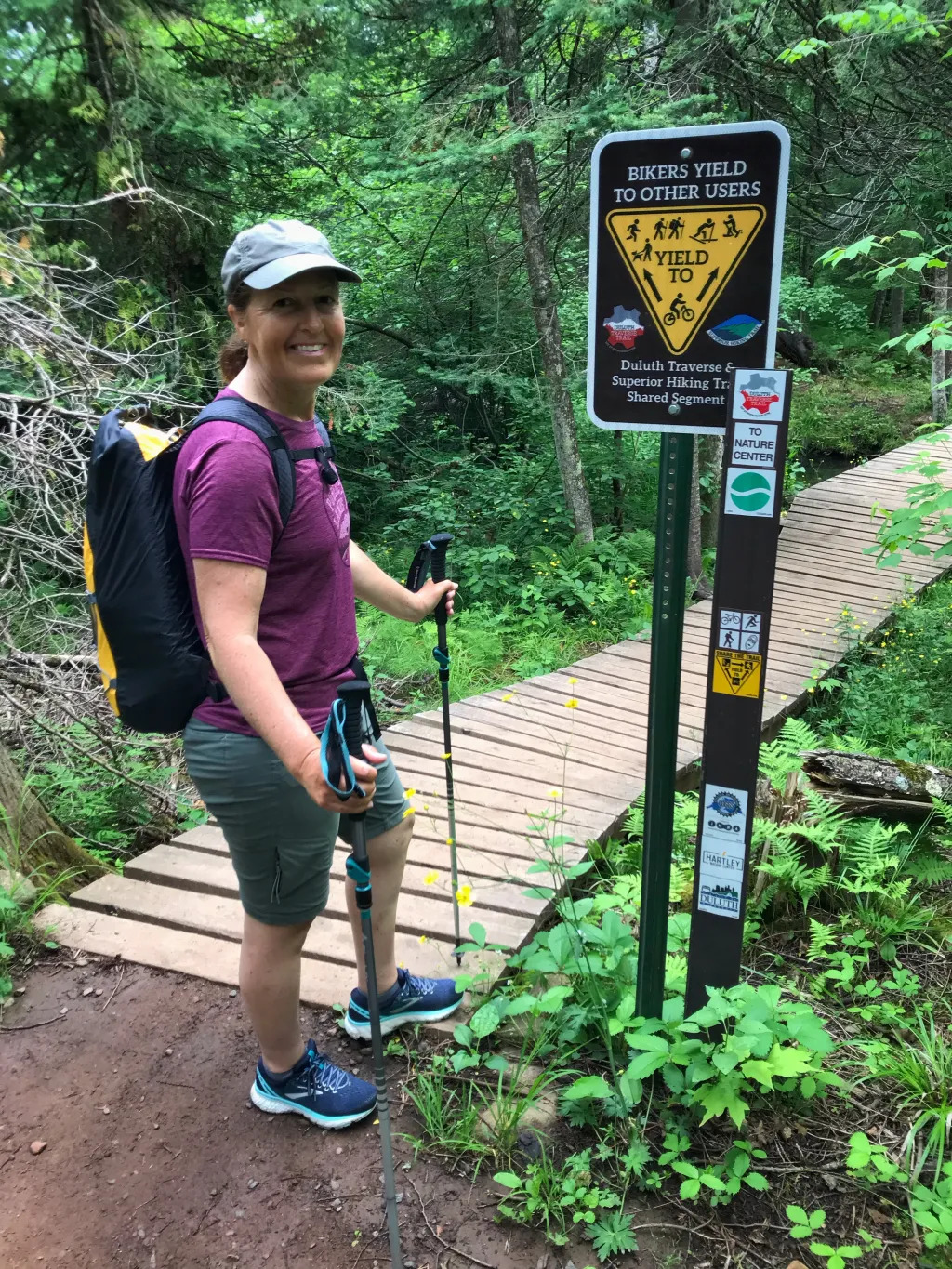
- Start small, win early, then scale. Forest Park is the obvious focal point for mountain biking access. But without proven shared-use and conservation practices, expanding access there would be a difficult uphill battle. That is why most cities begin with demonstration trails: small networks that refine management, build trust, and prove outcomes before expanding. Seattle and St. Louis followed this model; Portland should do the same. It’s tempting to chase the biggest prize first. But demonstration trails would make larger projects much easier by proving Portland’s anti-mountain-bikers to be the grifters and charlatans they are.
- Break the bubble. If Sioux Falls outperforms Portland in urban singletrack, it is time to acknowledge something has gone horribly wrong. Admitting that truth is the first step toward learning. With outside knowledge, Portland can leverage its unique advantages to build some of the best trails in the nation. But that can’t happen until the bubble is broken.
Some might suggest that any criticism of NWTA is unfair, regardless of how gentle it may be, pointing to successes like Stub Stewart or Rocky Point. But those are beside the point. The real issue is urban access, where little has changed since 2015. Unfortunately, through their accepting the strictures the ORCMP imposed, the NWTA shares responsibility for its failures, and it’s fair to discuss that fact.
Some argue that comparisons to other communities are invalid because Portland is unique. However, others see differences as opportunities to adapt, not excuses to dismiss proven ideas. Advocates in Ridgeland, MS, for example, did not have a one-to-one comparable location. But they built a great trail system because they focused on the “how” and didn’t waste time comparing others to themselves.
An Extended Helping Hand
Ten years ago, I gave Portland’s first Knobbies in the Neighborhood presentation.
It addresses the key public concerns head-on:
- Designing shared-use trails that are safe, enjoyable, and serene for hikers and mountain bikers.
- Understanding environmental impacts and management practices that minimize or eliminate them.
- Implementing club- and land manager-led models that reduce municipal costs, lower administrative burdens, and support park restoration.
If it is so valuable, why didn’t it have more impact ten years ago? Two reasons seem likely:
First, the ORCMP was about to begin. At the time, it seemed like the long-awaited cure for Portland’s anti-mountain bike bias. Few imagined it would instead become another opportunity for the City to pull the football away. Or that another decade would pass without a single iota of progress.
Second, the broader urban trail landscape looked very different. Expansive citywide trail systems in places like Knoxville, Bentonville, and Duluth were still under development, and most cities were only beginning to build their first networks. In that environment, it was easy to dismiss ideas from “outsiders.”
But times have changed. The decade hence has shown the ORCMP to be a failure. Meanwhile, a third wave of urban trail building is underway, with many cities now deep into developing expansive, high-quality systems.
Although the NWTA seeks true urban singletrack, that is arguably less possible than in 2015 because the ORCMP conflicts with national standards and best practices while limiting locations. But just reforming (or even abandoning) the ORCMP will not be enough. Portland must start building what other communities already have: mountain-biker-built singletrack designed for shared use.
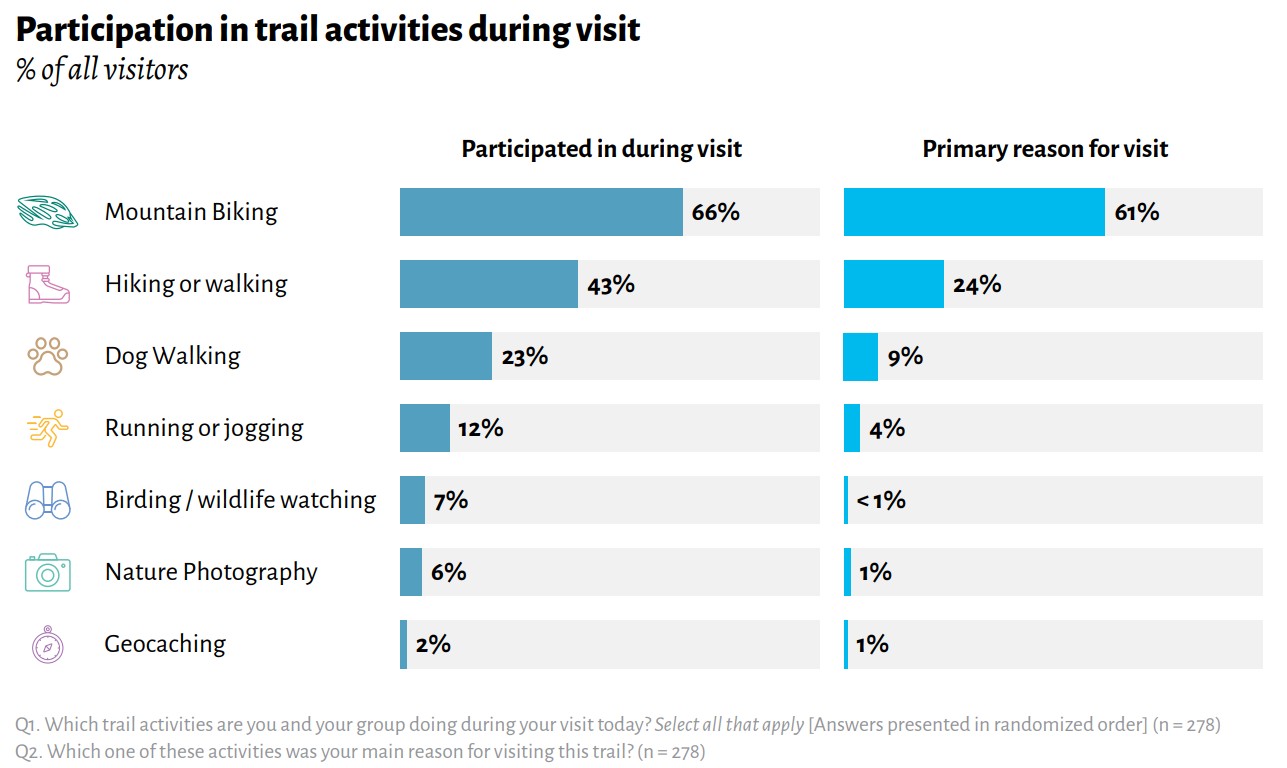
This is a proven model. For instance, Duluth’s 103-mile urban network, built by mountain bikers for mountain bikers, is embraced by all. Greater Minnesota Regional Parks and Trails found the system has a roughly 60/40 male-female split, with 25% of users under 18 and 43% hiking rather than cycling – usage demographics Portland Parks would envy.
The problem is that proposals (before and after the ORCMP) and local trail construction have consistently overlooked the safety measures, environmental mitigations, management strategies, and best practices required for shared-use singletrack. That suggests Portland-area advocates still lack a clear understanding of what’s required.
Therefore, it seems obvious that what is needed is a discussion of the exact points covered in Knobbies in the Neighborhood. And this time, maybe there will be a more accepting attitude.
The next step is easy: host another Knobbies in the Neighborhood presentation in Portland. It would take only an invitation, a venue, with city officials, staff, advocates, and the public in the room. Ideally, NWTA would host it, but any Portland based group serious about urban singletrack could.
In Conclusion
The reality is straightforward: the ORCMP could have sparked real momentum for urban singletrack in Portland. Instead, consultant influence, citizen advisory decisions, and last-minute cloistering transformed it into a framework for segregation.
Yet the ORCMP did contain some foundational elements. Had its constraints been replaced with proven best practices, it might have advanced singletrack access in Portland. Instead, it limits meaningful access while omitting the management, safety, and conservation practices that have become standard across the country.
A decade later, the results are clear. Time has been lost, opportunities have passed, and Portland has fallen further behind.
For Portland-area mountain bikers tired of watching other communities build the trails they wish they had at home, there is a path forward. But it does not run through the ORCMP.
Thanks for reading.
BikePortland has served this community with independent community journalism since 2005. We rely on subscriptions from readers like you to survive. Your financial support is vital in keeping this valuable resource alive and well.
Please subscribe today to strengthen and expand our work.
freeforestpark.org coming soon.
“…most cities begin with demonstration trails: small networks that refine management, build trust, and prove outcomes before expanding. Seattle and St. Louis followed this model; Portland should do the same…demonstration trails would make larger projects much easier…”
Forest Park seems obvious, a very small percentage of the park would accommodate a network of trails. Unfortunately it also has the most entrenched opponents of natural surface bike riding. If we can identify a location for a modest size buildable flow trail that fits in well with other uses, get that done, and havoc does not ensue, that’s a good place to start.
There’s pent up demand for places to ride that are free from large motor vehicles. Almost any bike and rider can handle basic unpaved trails on moderate terrain. Bike preferred one way trails would let pedestrians share the new development and see that it’s actually a win-win.
I would absolutely be in favor of a short flow trail in Forest Park!
I remember when the “rogue trail builder” controversy was hot, the argument from mtb opponents was that the South half of the park was too crowded: bikes aren’t safe there because of all the hikers. They also said the North half of the Park was too *uncrowded* for bikes: the bikes would disrupt the wildlife in the pristine wilderness. How convenient: bikes can only exist where there are neither people nor not-people.
OMG it made me so flipping mad.
Well said! Portland’s bike infrastructure is far from the best, and its urban off-road cycling infrastructure is truly pathetic. NWTA and advocates need to do something about this. From what I’ve heard and based on the lack of results over the past decade, NWTA is doing nothing of substance to remedy this. Change of leadership may be needed.
NWTA board elections are yearly. Throw your name in the hat if you want to be a part of “doing nothing.” Volunteer opportunities also abound.
NWTA has bylaws requiring the organization and its members in good standing to keep their activities legal and permitted, and to work with land owners and land managers.
Meanwhile, since the ORCMP was passed (and shelved) the form of the city council, and most of its members, have changed. Maybe it’s time to look for allies there and go to work with the councilors in your district. It’s no longer the case that one inimical city councilor could also be in charge of the park bureau.
I applied to be on the master plan committee but I was rejected. I recall being dismayed by the number of anti cycling folks who were put on the committee but even more frustrated when reading the meeting minutes by how many of them simply skipped a number of the meetings. Their minds were already made up that no access was needed so why even attend unless there would be a vote I guess…
If you’re not from Portland or haven’t lived here for any period of time, you probably don’t appreciate how difficult it is for almost any change to happen here. People here like to brag “We can walk and chew gum at the same time.” But we really can’t. Portland lacks the resources – chiefly financial resources – to do most things, so it’s not surprising that urban mountain-biking doesn’t rank very high on the city’s list of priorities.
PBOT freely admits that they don’t have the funding to carry out routine maintenance of bike lanes, so it’s not surprising that they would also lack the funding and the will to create urban MTB infrastructure. And if it’s a choice between bike lanes for commuters or single-track for MTBs, commuting (and general mobility) is the clear winner.
Author here chiming in.
PBOT ≠ Parks, FYI.
There is another way, which we call “rolling our own”. Without getting too deep in the weeds here, how that works is simple, the MTB club raises the money for some portion of the design and/or construction by a professional company. All that is needed from the land owner (parks department) is the permission.
Trail building isn’t cheap, but if you do it by building up, it sort of self funds after awhile. Raise enough for the Demo trail, which are usually ~1.5 miles, build it. That drives more interest. Those are people that get leveraged for the first Area trail (typ. 4-8 miles). Raise that money and then build it. Before you know it its easy to build a whole city system.
Also, last night the Hyland Singletrack plan was rolled out. Take a look at it to see what happens when have decades of urban trails behind you. BTW, One Track Mind is fund raising and design/build non-profit. Link to Hyland project page.
The Hyland project is in the Three Rivers Park district in the suburbs of Minneapolis-St Paul,
Minnesota. The location is a little obscure on the website, I was curious.
It’s really encouraging to see what people are doing in other places to construct natural surface trails in urban areas.
Good points on Portland’s overall struggles, however PBOT has almost nothing to do with off-road trails. The overall financial issues of off-road trails are likely not a major source of friction (See Rocky Point – NWTA members are willing to pour tons of time and sweat into the actual construction of the trails. There’s even a signage person). You are right that Portland government doesn’t consider this any sort of priority though, so no one is willing to stand up to the anti-bike crowd.
Like 99% of MTB trail work in the world is done unpaid by volunteer mountain bikers, even when it’s remote and time consuming to access. I can’t imagine a world in which urban trails wouldn’t be regularly maintained at minimal cost to the city.
I am totally on board with adding singletrack in Portland!
I just had one question: I think I understand some of the objections to the ORCMP and some of the plans of a decade ago. But I don’t understand this claim that if we had merely done a demonstration project, we’d be rolling trails out all over. Shouldn’t Gateway Green have fulfilled that role?
Your “rolling your own” plan sounds exactly like the way Gateway Green got built:
“the MTB club raises the money for some portion of the design and/or construction by a professional company. All that is needed from the land owner (parks department) is the permission.
Trail building isn’t cheap, but if you do it by building up, it sort of self funds after awhile. Raise enough for the Demo trail, which are usually ~1.5 miles, build it. That drives more interest. Those are people that get leveraged for the first Area trail (typ. 4-8 miles). Raise that money and then build it. Before you know it it’s easy to build a whole city system.”
GG was built in part a labor of love by dedicated volunteers (some who aren’t even cyclists), and now demonstrates that urban bike trails can be pretty rad. But of course after GG came… nothing.
Is the problem that GG just filled its weird, unloved corner and then had no place to expand?
If space was the issue, what about Powell Butte? I know it’s not where the cool kids ride, but the trail renovation that happened over a decade ago made really fun beginner trails at what look to me like modern mtb trail-building standards.
That project worked: trails were improved and access was retained. So why didn’t it demonstrate that bikes and walkers can coexist?
Or, before Powell Butte got its trail facelift or GG was a twinkle in the eye of some east Portlanders, why didn’t the building of Firelane 5 trail, in Forest Park itself, work the way your other projects have worked?
Did Firelane 5 somehow fail in its job of demonstrating that bikes and hikers belong together, or that local mtb volunteers can build trail?
It sounds like, with all due respect to your experience and expertise with the kind of trail building I’d like to see more of, you’re describing some kind of flywheel system, which merely needs a little push (just a volunteer built 1.5 mile demonstration trail) to get rolling with a lot of momentum. You mentioned that trail building isn’t cheap, but claimed that expansion “self funds after a while.” That sounds… optimistic.
I’m not sure it’s always correct. At least, I’m not sure it takes into account local conditions.
For one, maybe expansion in the City of Portland isn’t that important to many local riders because we actually do have good places to ride: mtb trail builders (and NWTA) have had a great number of successes building new trail systems in the region (Sandy Ridge, Gateway Green, Rocky Point, Cascade Locks, etc), and we do actually have access to miles of trails in Portland. I mean, some riders shit on the gravel roads at Forest Park and flowy singletrack at Powell Butte, but those kinds of paths are rideable by almost anybody, and allow for a great workout, if not progressive skill building.
Perhaps these varied riding opportunities create a pressure release valve, reducing the incentive for local riders to demand more?
Maybe local riders haven’t focused on “self funding” trail expansion in Portland because they’ve been building projects with more amenable land managers outside the City.
Or maybe Portland just has a uniquely dysfunctional political culture: many BP readers would attest to that.
Finally, perhaps Portland’s median voter is actually just way more sensitive about protecting its wild places than Des Moines or Duluth. I think the militantly environmentalist anti-mtb perspective is wrong, but it’s a valid opinion, and one that I think we’d all agree is probably stronger in the PNW than the Midwest. That would blunt City politician’s interest in mtb trails.
Anyway, I don’t disagree with all of the editorial. I do think the ORCMP did kind of divert our attention from actual building, and I hope Portland gets more trails someday.
Boy, a lot here.
I’ll do these in reverse order in a way, because that makes more sense.
“Perhaps Portland’s median voter is actually just way more sensitive about protecting its wild places than Des Moines or Duluth.”
I would argue, as I live in MN, that is opposite is actually true. What I mean by that is many cities in the Midwest have more controls on public lands, especially urban parks, because previous generations cocked up and paved over paradise. So now, its not only a desire to hold onto what exists, but in many cities and states in the Midwest, there are active buy-back and re-wilding programs to expand urban wild spaces. The Knoxville Urban Wilderness is an example of this. The Duluth Forest Preserve (where all 103 miles of Duluth’s trail exist within.)
To me this is part of the “bubble” in Portland, if I may. The belief that ‘because we are so liberal, we must be light years past the hicks in flyover country’, in other words. But when you look at objectively, those “hicks” are actually doing good work, not just believing they are without action. For instance, for trails in parks we have ratios we have to meet, offsets, and other requirements I know Portland parks doesn’t require those because their own proposals break all of these. And almost all trail proposals by 3rd parties here require a full EA, before the trail plan is released the public for the public process.
Additionally, the idea that mountain biking is a high-impact harmer of wild places is false belief. We have a TON of evidence, both historical and scientific, that mountain biking can co-exist with wild spaces. (Nation wide, about 60% of all trail access is in natural areas and urban wildernesses.) As I say in my presentation, if a place is too sensitive for mountain biking, its too sensitive for any human access.
“Maybe expansion in the City of Portland isn’t that important to many local riders because we actually do have good places to ride.”
This is actually might be a large part of the issue here, at least for existing mountain bikers. Those already in the game, so to speak, have the privilege to be able to go to great trails. These tend to be white men and women in their 30s to 60s. And for them, the lack of close singletrack access, while annoying, isn’t particularly harmful. I might argue that some of NWTA’s lackadaisical attitude regarding urban trail access stems from their experiential priviledge – a bounty of riches for people like themselves.
But, that is, statically speaking, a pretty narrow set of people. It also prevents entire classes of persons from getting into a sport or experiencing a new hobby. The thing about urban trails isn’t that they are best trails ever (though Duluth and some other places might argue that), its that they are close to where people actually are. Maybe the best way to describe their positive is this: they aren’t for the fanatic, they are for the family, the newbies, the experimenter, the kid.
What urban trails do isn’t to breed more enduro-bros. What they do is breed more outdoorsy people who mountain bike, who then get involved with a club, who then fight against active uses in public parks, who preserve more natural area, and who bring every shade and color of humanity and personality to our (and other outdoor) sports. Versus, you know, a hobby that looks like a Klan rally with bikes.
“You’re describing some kind of flywheel system… to get rolling with a lot of momentum. That sounds… optimistic.”
You do know that is the history of nearly every city with large amounts of urban trail access, right? History time! Do you know how many miles of urban singletrack trail access existing in the Minneapolis-St. Paul Metro area in 2000? If you include private and quasi-legal access, less than 15 miles. Today, its 115 miles, with another 11 coming in 2027 (Hyland). Knoxville? 0 miles in 2000, 85 miles today. Duluth, 13 miles in 2000, 103 today. I could go on. Atlanta, Kansas City, Cleveland, Pittsburgh, etc. Same story over and over again. Getting the rock up the hill is hard for the first one, maybe two. But there is a tipping point and suddenly its easy and it just becomes normal.
As to the cost, yes, it can be costly to build trail when you self-fund. But its actually not a situation where you are sinking huge piles of cash all the time. Let me explain. Typically, you reach a point, say after the first couple of systems, where the land managers see the value. So the self-funding becomes partial payment (land manager chips in some) or per-a-mile yearly rent (what part of my system does) or its tied in-kind purchases (pay for kiosks, sign, parking, etc.). Some communities have a “voucher” system, where invasives removal, non-trail maintenance, etc. earns the club access to funds that can be used elsewhere.
“Did Firelane 5 somehow fail in its job of demonstrating that bikes and hikers belong together, or that local mtb volunteers can build trail?”
Yes. You do know that Portland’s dedicated anti-mountain biking group put the kabash on this, yes? See: https://bikeportland.org/2013/06/27/forest-park-activists-to-city-council-wilderness-at-risk-and-biker-crackdown-needed-89262
“Is the problem that GG just filled its weird, unloved corner and then had no place to expand?”
Kind of. The bigger issue that GG is not a natural area, nor in a neighborhood the way other parks in Portland are. It was “allowed” and even praised by anti-mountain bikers because it was exactly what they want: a bike carnival space, but not integrated singletrack, on post-industrial land, not “precious” natural areas.
“If space was the issue, what about Powell Butte? I know it’s not where the cool kids ride, but the trail renovation that happened over a decade ago made really fun beginner trails at what look to me like modern mtb trail-building standards.”
Ah… Powell Butte. Its what I’ve ridden the most when I visit Portland. A few things however. Its not modern sustainable standards (post-2007), its the weird Portland trails standard that is deficient in a lot of ways. The renovation didn’t fix the layout issues, and its strangely not as fun as it could be. (Or as safe, more on this in a moment.) Its also very bland feeling, which is weird. My lunch ride, with 65ft of vertical and built by a dude with a backhoe on lawn tractor feels way more lively with personality.
A demonstration trail has 4 purposes:
Thanks for taking the time write an excellent reply! I think I understand you better now.
A few clarifications:
1. With regards to Portland vs midwestern environmentalism: I didn’t mean to imply that I think voters here are “better” environmentalists. I lived in Sioux City when I was younger, but haven’t lived in the north woods kind of country you’re from, so I’d be totally speculating on their political culture. It’s mostly a comment about Portland: I think Portland can lack pragmatism at times, and our politics can err on the side of expressive and ineffective. Our environmentalism can be like that too: like taking a stand against bikes in “wilderness” parks.
2. Regarding Firelane 5, my question wasn’t “did building Firelane 5 usher in a new era of mtb trail building in Portland?” but rather “why, if building a short trail can get the flywheel turning, why didn’t the building of Firelane 5 get the flywheel turning?” Obviously, it failed to fit your model of a “demonstration trail,” but why?
You linked to a BP article about Marcy Houle advocating for Forest Park’s “wilderness values”, but it didn’t explain why Firelane 5 failed. (I *am* glad you included that link: my pissed off comments are near the top of the thread!)
I think I understand from the rest of your comment that the technical details of the way a trail is built will have a big impact on its success as a “demonstration” trail. Firelane 5 might not fit those details. So maybe you’d argue that, in an alternate universe, had 2026 trail building techniques been followed those many years ago, Firelane 5 actually *could* have been a successful demonstration trail, and we wouldn’t have this problem.
I still don’t think that argument gives a sufficiently powerful reason why we have less trail building than Knoxville.
I think the strongest reason for the fact that Portland stalled out on this issue actually embedded in that article: at a few crucial moments in our long local push for mtb access, anti-mtb people just had greater political power. I mean, the article references Commissioner Fritz, who was instrumental at several points (especially Riverview). Nick Fish was more sympathetic, but he literally died. Mayor Hales got the ORCMP started, but who got stuck in the quicksand of our homeless crisis and opted not to run for reelection.
Some of this obviously just random: if Riverview hadn’t been purchased with bond money that supposedly didn’t allow for any kind of trail expansion, or if our rotating-commissioner system didn’t put Fritz in control of Park and Recreation, maybe Riverview would have a nice trail network on it.
On the other hand, for a long time now there’s been an influential constituency of mostly wealthy people living in the West Hills, who are regular visitors to Forest Park, and would rather not see bikes there. MTB access has just never a strong enough counterweight to that influence. Politicians heard the negative sentiment from wealthy Forest Park neighbors and well-connected environmentalists, and made a calculation that it wasn’t worth it.
I used to have epic threads of argument about mtb access on Portlandhikers.org (now Oregonhikers.org), and if you read the comments on that BP article you linked, you’ll see that there was a bunch of people (regular bike riders and commenters!) who really didn’t like the idea of mountain biking! How did mtb builders deal with decades worth of this sentiment in Duluth? Now that’s what I’d like to learn!
I’m sure that attitude is *everywhere*, but the hair-shirt, degrowther brand of environmentalism is pretty strong here, and with powerful allies like Commissioner Fritz and Marcy Houle, it’s not surprising they’ve slowed down our progress.
I just think that if one is looking for a reason why we’re a decade or two behind Duluth or Knoxville, some of these local factors might rank above or at least alongside the technical details of modern trail-building. It’s hard for me to visualize a trail that looks so great to someone like Marcy Houle, or even perhaps looks so great to just a normal, mtb-neutral citizen, that it somehow defeats the kind of sustained pushback we’ve had here.
Anyway, I really appreciate your answer, and I hope we get to build your demonstration trail here someday 🙂
Boy, I thought I was verbose!
2011 where I enter the chat and my knowledge here is partial, at best. Even though I visited Portland Metro because I had friends in the area (Beaverton at the time), we just visited Portland. But my wife and I honeymooned in 2011 and while in Portland I read a article in the paper about trails in parks. That is where my following the drama begins.
Here is my understanding: Firelane 5 is created as demonstration of what singletrack in Forest Park would look like. Great concept, but its just a point point-to-point trail divorced from anything else. Still, it would be a good demonstration of the “look”. But then Fish and Fritz come in like a wrecking ball and fail to follow through (well, mostly Fish, till later, Fritz enters the chat). This leads to a situation where Fireland 5 is the weird trail with no real connectivity and no future as part of a larger system, so its basically abandoned by the city and the NWTA.
Now, this is think were the “demonstration trail” term gets misunderstood. First a true “demonstration trail” might not be a singular trail. It can be one or two or even three trails. That can be anywhere from several tenths of a mile up something like 3 miles. Second, its a complete system, not a divorced stub of point-to-point trail. So its going to have an entrance (usually a separate dedicated one) with complete signage. Its going to be full loop/stacked loop layout so it can be used by itself without the need to access it from another trail network. Third, it has definable metrics that are part of its creation. That is, its created with a goal to fulfill and that goal is tied to its performance during a set time, usually a year or two.
If you just read that paragraph and go “holy crap, that doesn’t sound anything like Firelane 5”, then you understand why I don’t consider Fireland 5 a true demonstration trail.
Just so you know, I totally agree that the Portland government is a large part of the problem here. But the way to fix that problem isn’t to surrender to them. The way to fix the problem is by pushing back against them while showing them to be the bad guy at every turn.
But even then, Portland isn’t the only game in town and the fact that Portland isn’t surrounded by other urban trails would suggest its not all a City of Portland problem. What I mean by that is this: where are the trail systems in Troutdale, Gersham, Damascus, Lake Oswego, etc. If the NWTA was, as they claim, really interested in urban mileage, but Portland is tough nut to crack, then where is all the trail directly outside the city limits of Portland? If their process is actually working or workable, and the City of Portland is 100% of the problem, then NWTA should be announcing new trail in Beaverton or some other adjacent city every couples of years.
And that would suggest to me that some of the issue isn’t a shield around Portland held up by Marcy Houle’s dark magic. Some of it is that the people trying to do this are trying to build an airplane while pushing a cart of parts down the runway after watching the children’s cartoon Tale Spin while actively avoiding answers from the people who make airplanes all the time how they actually build the $%#@ing airplane.
A few quick answers to finish this up.
“if Riverview hadn’t been purchased with bond money that supposedly didn’t allow for any kind of trail expansion”
I have never heard that. I’m not sure that is true. Even if it is, then get a survey grade GPS rig out there and survey every inch of trails, including social trails and propose a 1:1 decommission/replacement with a shared system.
“How did mtb builders deal with decades worth of this sentiment in Duluth? Now that’s what I’d like to learn!”
They didn’t because it didn’t really exist. Parks in MN have a long history of shared use. We have hunting season in most city parks, including those in Minneapolis/St. Paul, for instance. We have anti-mountain bikers here in MN, yes. But they are laughed at because you can go to the next town over and see a trail behind some houses that has been there umpteen years without killing everything. In fact, that has been our biggest way to teach public officials about trails.
Seattle. Seattle is the example to look at. That is basically a 6 year saga spearheaded by the DeJong family. And they did what I’m suggesting in the article: they when to a place, saw the trails, talked to the people who did this before, and then copied what they did. Bonus points here, they were willing to challenge the city and the anti-mountain bikers directly and keep pushing and keep the fight up. Never stopping, always pushing.
Marcy Houle is defeatable, as are her ilk. But you won’t do it with op-eds or screaming at her. You do it with direct challenges to her facts. You do it with photos and videos of a location that looks like Forest Park and is somewhere else. But you have to know what exists somewhere else. And you have to know how that place can teach you the method to do the thing.
The Portland bubble with mountain biking is pretty silly having grown up in Bend and routinely returning there for visits. What was normal for me growing up (hikers, bikers, and runners sharing the trails) is talked about here like it’s unpossible.
Of course, part of the problem is that the people in the Portland bubble think mountain bikers are a bunch of crazed thrill-seekers. Those people exist, but the overwhelming majority of mountain bikers in Bend are basically hiking on a bike. Going for an easy ride because they like being in nature.