Below are the most notable stories I came across in the past seven days. Thanks to everyone who suggested links this week!
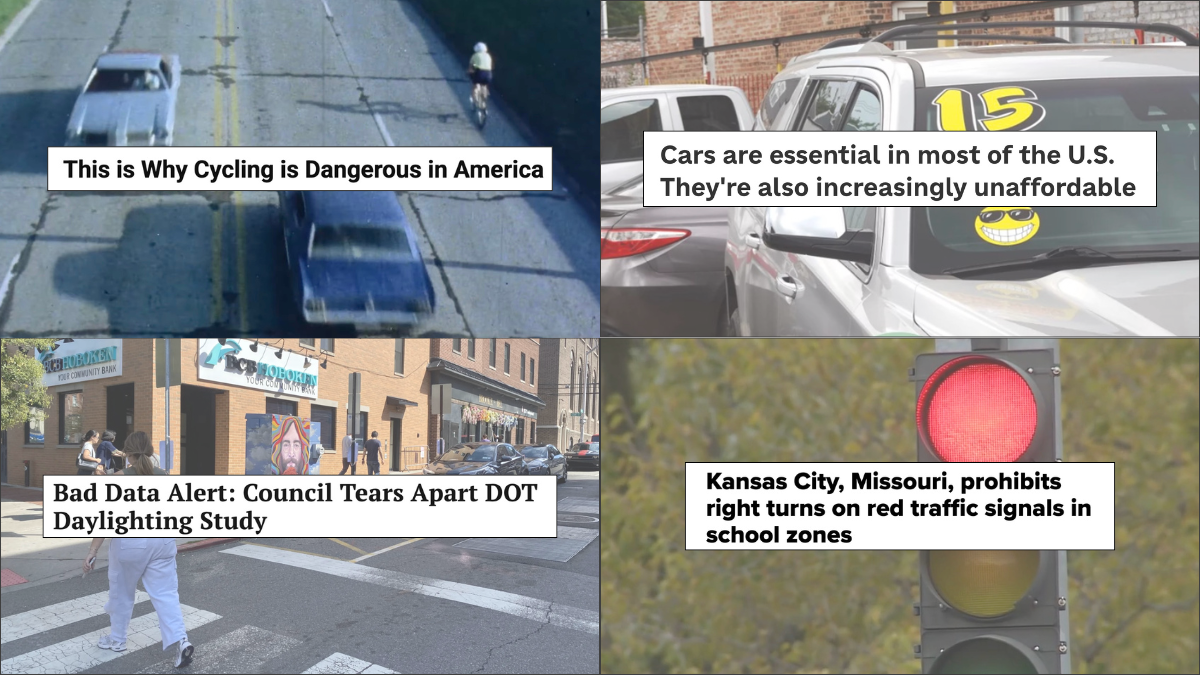
Daylighting data: I love two things about this story: First, it underscores the positive impact of removing parking from corners (aka “daylighting”) and it is an inspiring example of a city council holding a DOT to account. Can you imagine Portland City Council staff launching an investigation of a PBOT decision? (Streetsblog NYC)
Road rage turns ugly: A driver and bicycle rider were detained by police in Marin, California after some sort of altercation caused the driver to get out of their car and stab the bicycle rider with a knife several times. (CBS News)
Cycling award controversy: A UK nonprofit who intentionally excluded trans riders from the winners of its, “100 Women in Cycling Award” now faces backlash. (Bike Radar)
Anti vehicular cycling video: Popular YouTuber Not Just Bikes has released a 90-minute takedown of the late “vehicular cycling” advocate John Forester, whom he credits with single-handedly making cycling dangerous in America. (Not Just Bikes)
Wrong turns on red: A city in Missouri has banned right turns on red in school zones following a collision that killed a nine-year old who was riding to school. The policy allows schools to opt out of the law if they so choose. (KSHB)
Cost of cars: Because of rising prices on cars and service/repairs, the cost of owning a car is up 40.59% since January 2020 and nearly one in five buyers has a monthly payment over $1,000. (NPR)
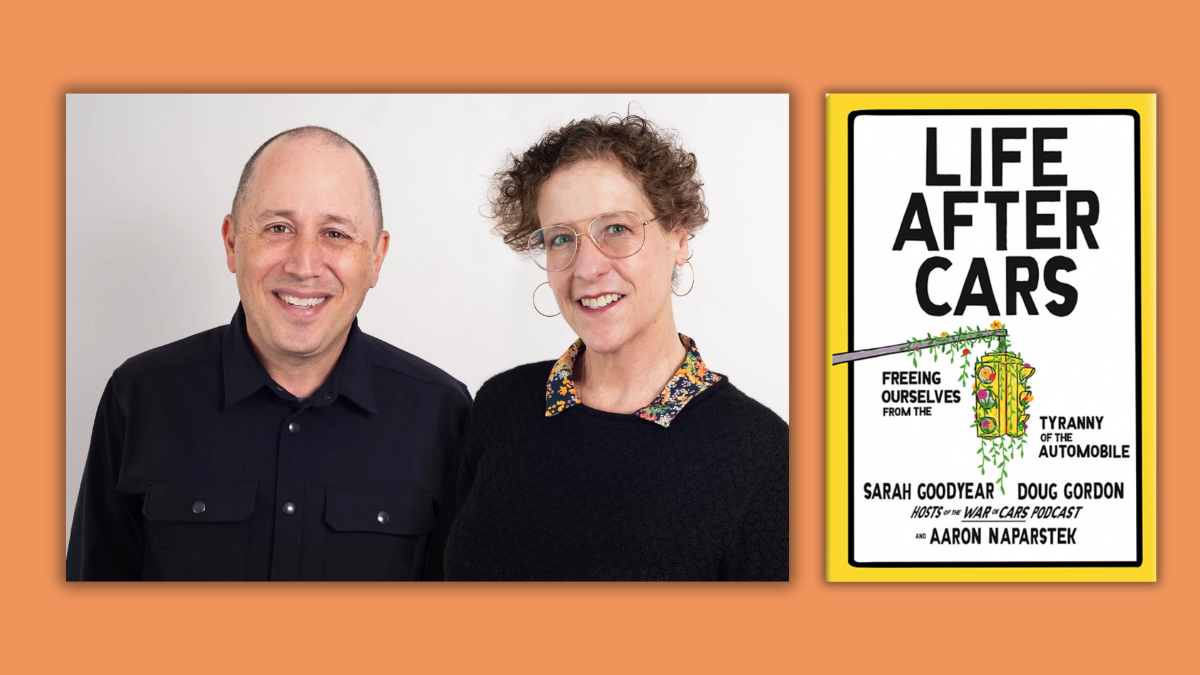
Homework: Get ready for ‘War on Cars’ Week in Portland by reading this short interview with Life After Cars authors and then make sure to see them live at Bike Happy Hour on Wednesday and/or Powell’s on Thursday. (OPB)
It’s official, car bloat kills: What further evidence do elected officials need to make policy that further regulates the purchase of supersized vehicles than an op-ed from the BMJ saying unequivocally that larger cars are a public safety hazard? (British Medical Journal)
LifeCycle Adventures — Local Operator / Area Manager (Oregon)
Location: Portland, OR (greater metro)
Engagement: Independent contractor
Travel Area: Willamette Valley, Mt. Hood, Columbia River Gorge
Overview
LifeCycle Adventures is seeking a Local Operator to deliver our private, self-guided cycling tours in Oregon. This role is ideal for a small local business or an experienced independent contractor based in the Portland area.
What You’ll Do
• Tour Delivery & Guest Care – Meet guests, transport riders/bikes/luggage, provide route briefings, and on-call support.
• Operations & Logistics – Coordinate schedules, lodging handoffs, luggage moves, rider shuttles, and incident response.
• Quality & Safety – Maintain high service standards, ensure adherence to SOPs, complete reports, and uphold safety protocols.
• Local Expertise – Share Oregon’s culture, history, and geography; provide vetted dining/activity suggestions.
We provide training, guidebooks, GPS app, routes, and operating procedures. Day-to-day, you’ll work autonomously and exercise independent judgment in the field.
Seasonality & Workload
• Part-time, variable, based on sold trips.
• Primarily June–September; tour lengths range 3–10 days.
• Requires flexibility for in-season, on-call coverage and multi-day commitments.
What You’ll Bring (Qualifications)
• Exceptional hosting and client-service presence; calm, solutions-oriented communicator.
• Operationally minded, highly organized, detail-focused, and reliable with time management.
• Prior bike guiding or adjacent outdoor guiding/operations experience.
• Strong local knowledge of Oregon riding areas, roads, and conditions.
• Cycling oriented mindset and competent bike mechanic (field fixes & quick triage).
• Clean driving record and driver’s license; able to lift bikes and luggage.
• Current First Aid/CPR (or willingness to obtain promptly).
• Operate from home or small office with stable connectivity.
Nice-to-Haves
• Vehicle/van suitable for guest and bike transport.
Compensation
• Competitive, industry-aligned contractor rates, commensurate with experience and responsibilities.
• Rates vary by assignment type (e.g., transfer days, guiding, on-call coverage, multi-day blocks).
Growth Path (possibility)
• Operations Manager, North America: oversee seasonal staffing, SOPs, service levels, and cost performance across multiple regions.
• New Destination Development: collaborate on route design, vendor curation, and launch operations.
How to Apply
Please email your resume to Gregory Craig at Greg@lifecycleadventures.com
The dream of continuous, semi-dedicated bus lanes on 82nd Avenue is alive; but if it is to become a reality, someone besides our regional transit agency will have to step up and make it happen. That’s the position made clear by TriMet General Manager Sam Desue and the agency’s Interim Director of Major Projects Michael Kiser at a meeting this morning.
The good news from the meeting is that Metro and the Portland Bureau of Transportation appear ready to step up.
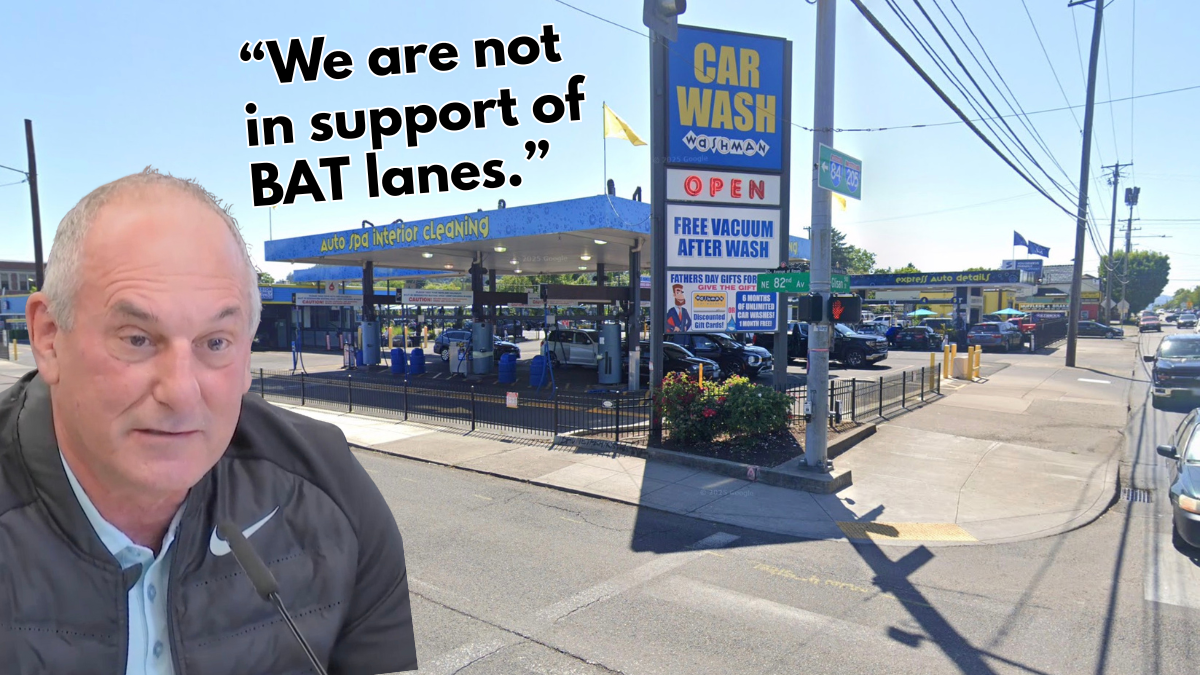
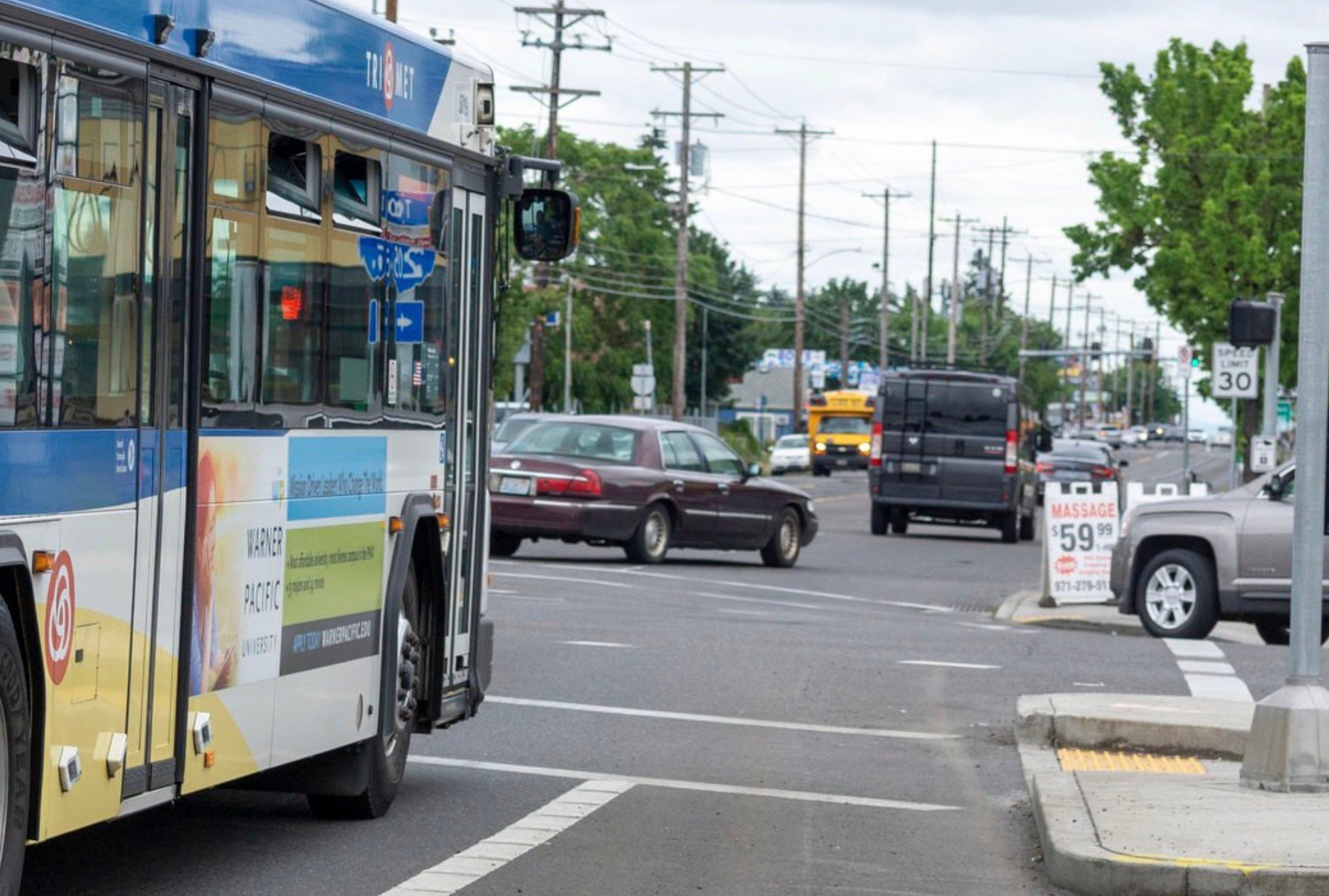
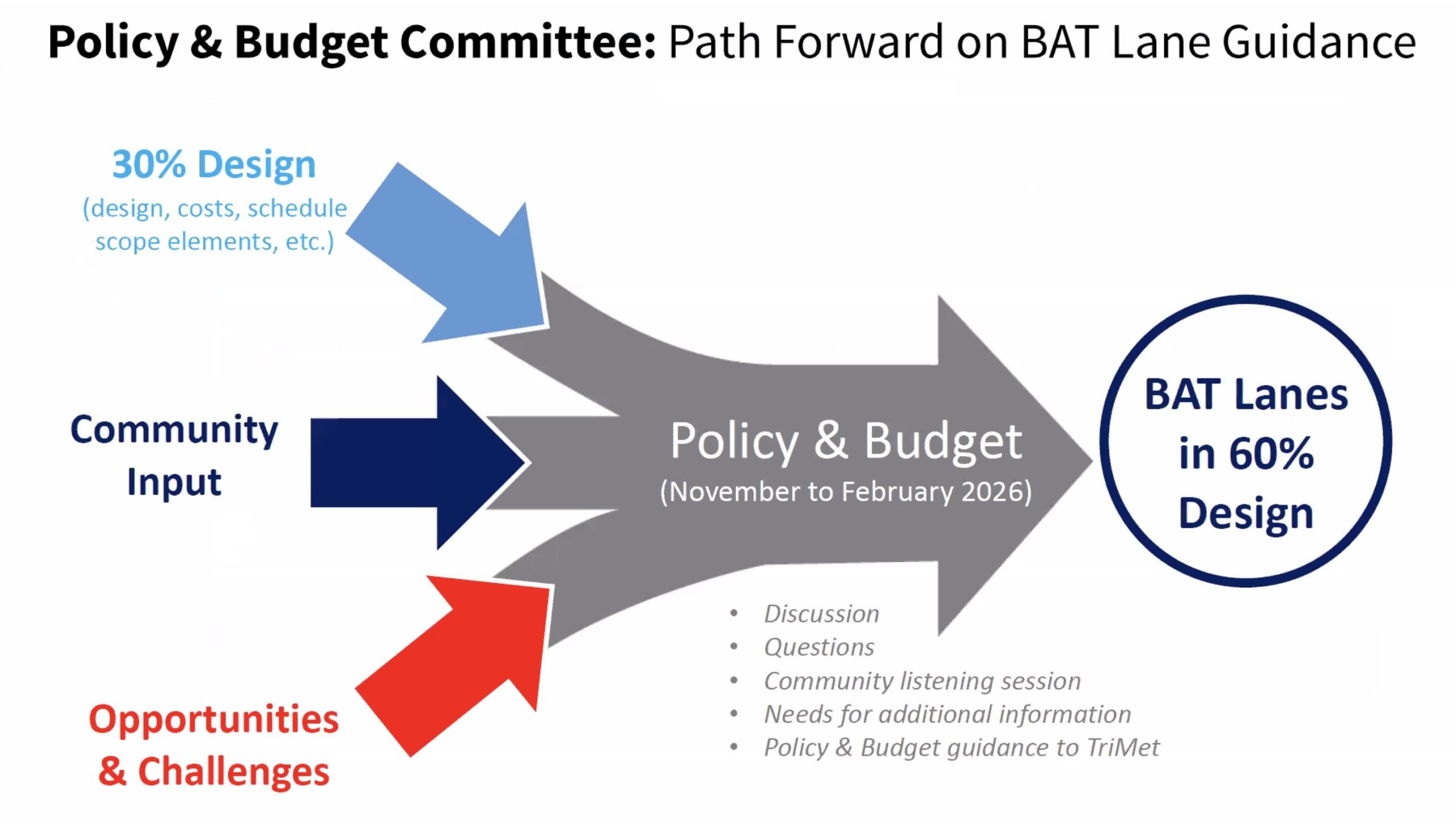
At issue is how many miles of “business access and transit” (BAT) lanes should be built as part of the $350 million 82nd Avenue Transit Project. The two options under discussion are: “Some BAT,” which would build just three miles of bus lanes and leave busiest, central portion of the project corridor with standard lanes where buses are caught behind cars; and “More BAT, which would cost $8 million more and build seven continuous miles of bus lanes from SE Clatsop at the Multnomah/Clackamas county line to NE Lombard Street in the Cully neighborhood.
TriMet caused a stir last month when they released a staff recommendation memo opting for “Some BAT.” They have since walked back that recommendation, but after this morning’s meeting we have a clearer understanding of why our transit agency is choosing the option with less transit: According to Desue and Kiser, a more expensive and ambitious project could jeopardize the budget and timeline. With federal funding, there can be no diversion from the timeline and TriMet wants to take the safest option.
At the outset of the project’s Policy and Budget Committee meeting this morning, Desue said he’s aware the community is, “advocating for a bold vision for 82nd Avenue.” But, he added, “For those of you who know construction, scope is more than just a word, it’s our foundation.”
“Scope defines what we will build, how we will build it, and it serves our promise to deliver on that vision,” he continued. “To keep that promise, we need a budget that matches the scope and a timeline for delivery. Any adjustments to the scope, schedule or budget make project delivery more difficult. So that’s why our direction to the project team is always: scope a project that we can build.”
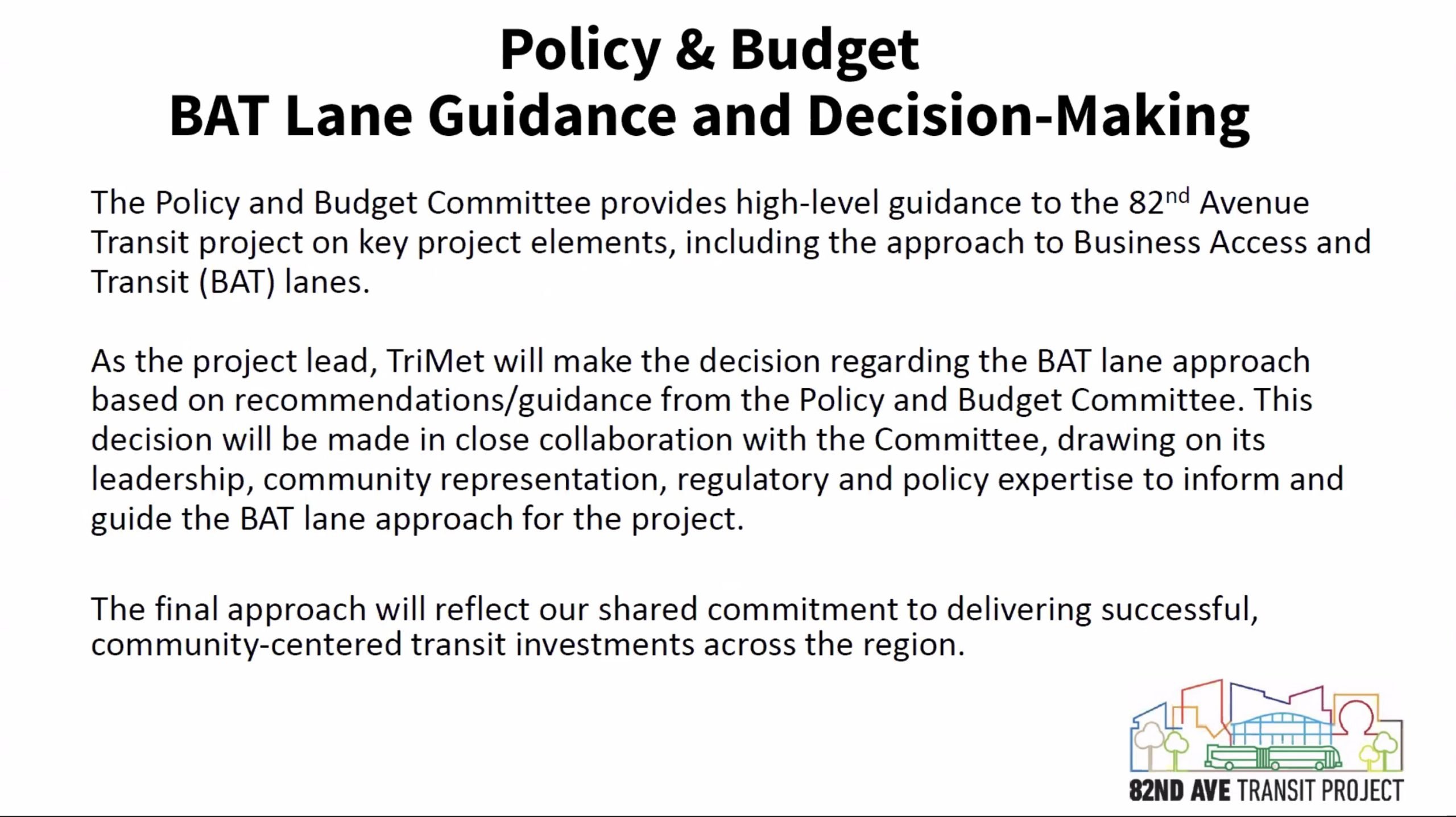
Desue then referred to the bus lane decision as one TriMet “cannot make alone because of the impact on scope, schedule and budget,” and that, “the project has its limits, but our investments can be leveragd by the good work you all do” (where the “you” referred to project partners at Metro, the Portland Bureau of Transportation and the Oregon Department of Transportation).
Kiser has echoed this sentiment. He maintains that the staff recommendation for “Some BAT” reflects the reality of what TriMet can deliver by themselves. In reference to the recommendation at this morning’s meeting he said it, “Didn’t necessarily fit the aspirational expectations of some partners, and also individuals in the community as well.”
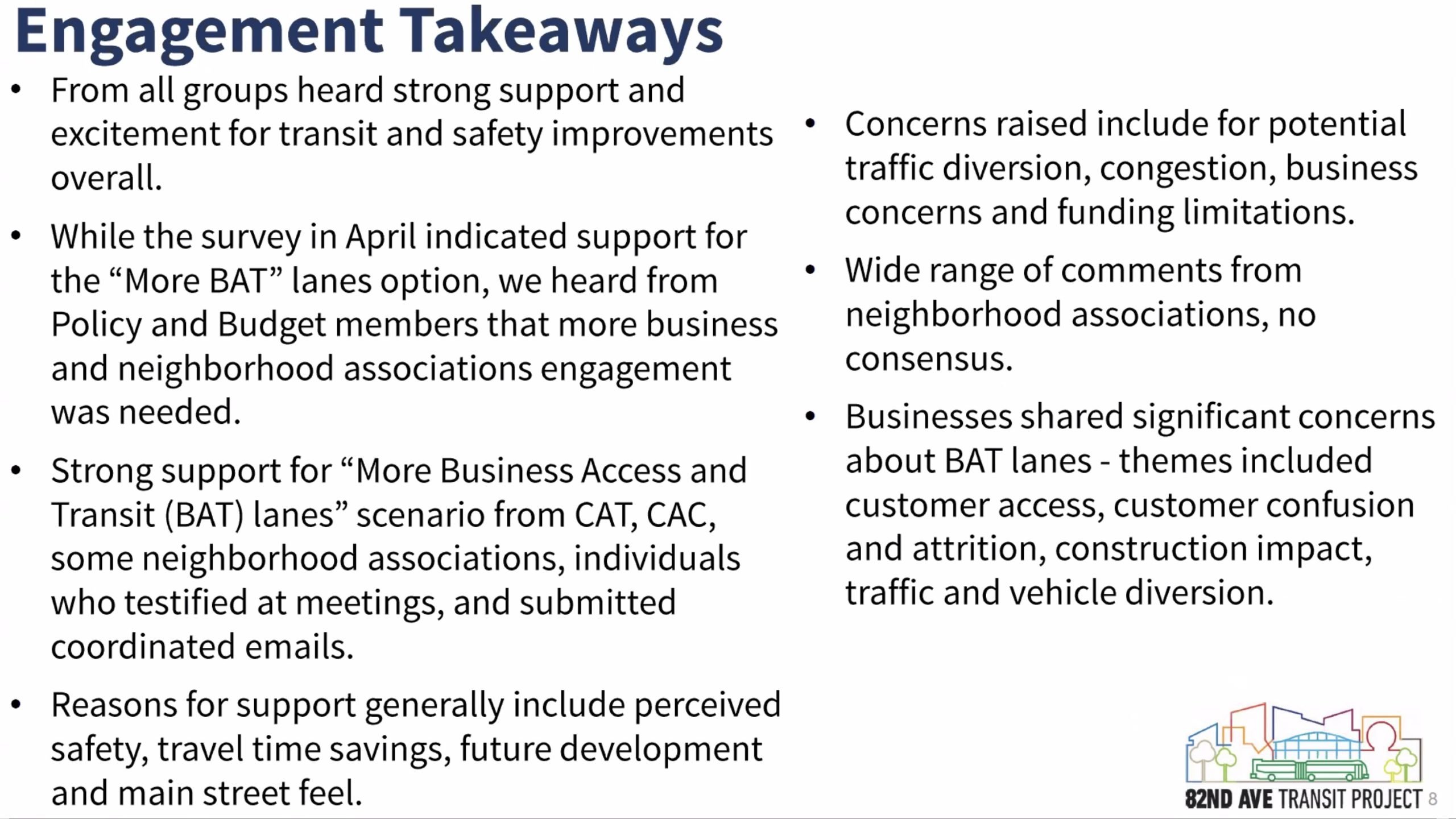
TriMet slides from today’s meeting.
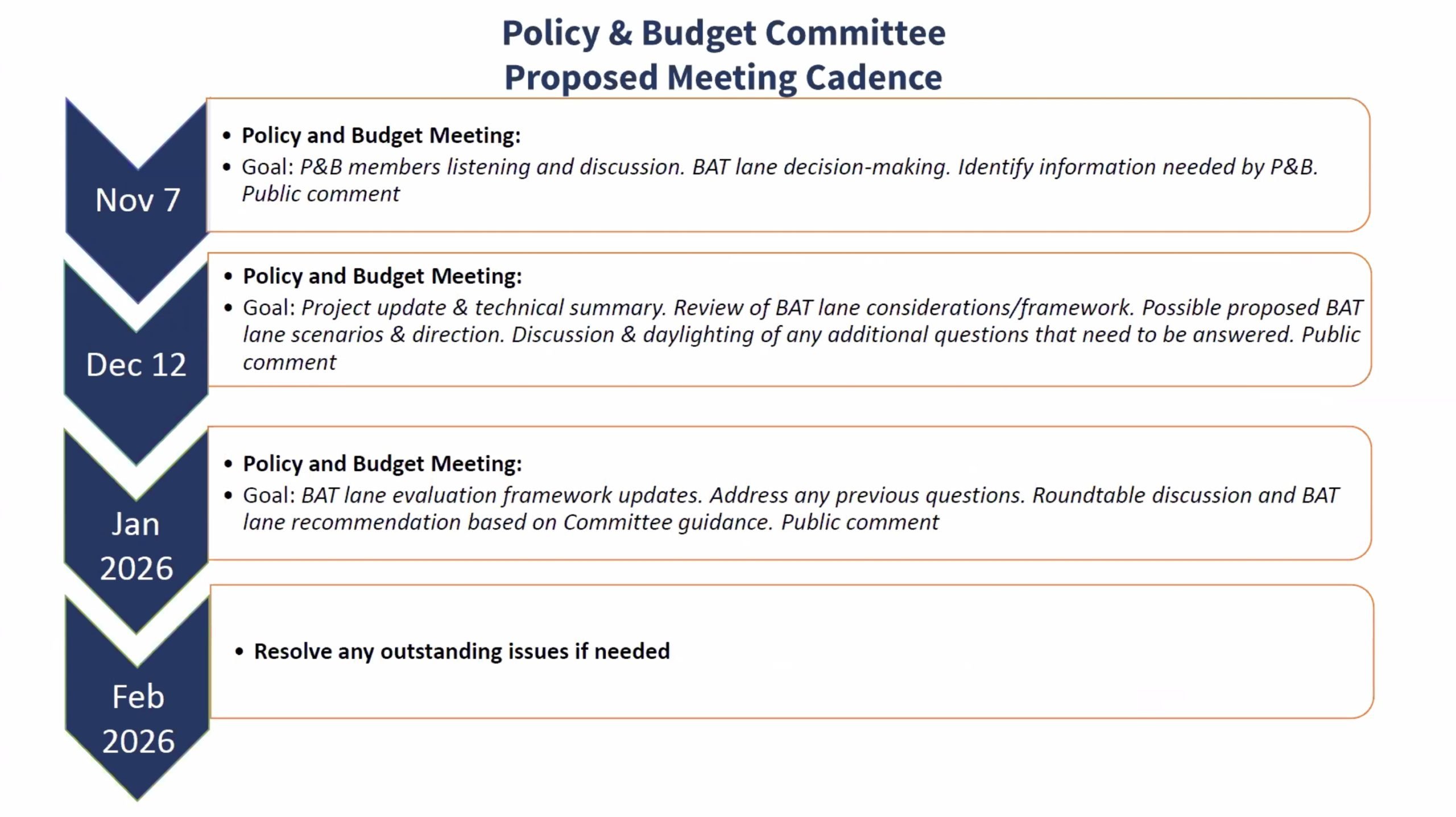
The good news is that TriMet is giving more time for this issue to be debated before a final decision (expected by February 2026) will be made.
Metro Councilor and Policy and Budget Committee member Duncan Hwang, who was one of the people caught off-guard by TriMet’s initial staff recommendation, urged folks to not settle for compromised transit. He sees better transit as vital to the future of 82nd Avenue, especially as development hastens in the near future. “With the new 82nd Avenue TIF [tax increment financing] district, 40% of that [revenue] goes to affordable housing — so you’re going to see 30 more buildings along the corridor over over the coming decade or two,” Hwang said.
“So how do we create the best transit system to support that new vision that’s coming?…I think that requires us to be ambitious at this moment,” he added.
Hwang made it clear he’s ready to advocate for more funding from Metro if that’s what it takes. “Bring us that budget,” he said. “We want the corridor of our dreams, and I don’t want to cut things off before we’ve had that full conversation.”
PBOT Director Millicent Williams also sounded ready to find more money to build continuous bus lanes. “Yes that will be more expensive,” she said. “But that’s what we’re here to do, to help raise money.” Williams also pointed out that the extra $8-10 million needed for the “More BAT” option, “is not a lot of money.” “We can figure out how to raise $10 million if it’s a $350 million investment.”
Williams sees this not just as a question of dollars and cents, but as a symbol of what Portland stands for. “The issue really is: What are we saying as a region? What is the policy statement that we’re making by the choices that we’re putting forward? It’s less about the money, and more about what are we saying about the community that has been historically underserved and underinvested in, and how are we meeting this moment?”
TriMet is still gathering feedback from businesses along 82nd about the bus lanes and plans to present a full community engagement report at the December 12th Policy and Budget Committee meeting. Also at that meeting TriMet and ODOT will share more details about diversion analysis and other technical metrics that could influence the decision. An ODOT rep on the committee pointed out that ODOT has to issue a permit to TriMet because the lane decision will impact two state highways that intersect with 82nd: US 30 (NE Lombard) and US 26 (SE Powell).
The next meeting for this project is a Community Advisory Committee meeting on November 19th. Learn more at the project website.
CORRECTION, 10:51 am on 11/10: This story originally stated that ODOT has to issue a permit to PBOT because the bus lane decision will impact state highways. That was incorrect. The ODOT permit would go to TriMet. I regret any confusion. – Jonathan.
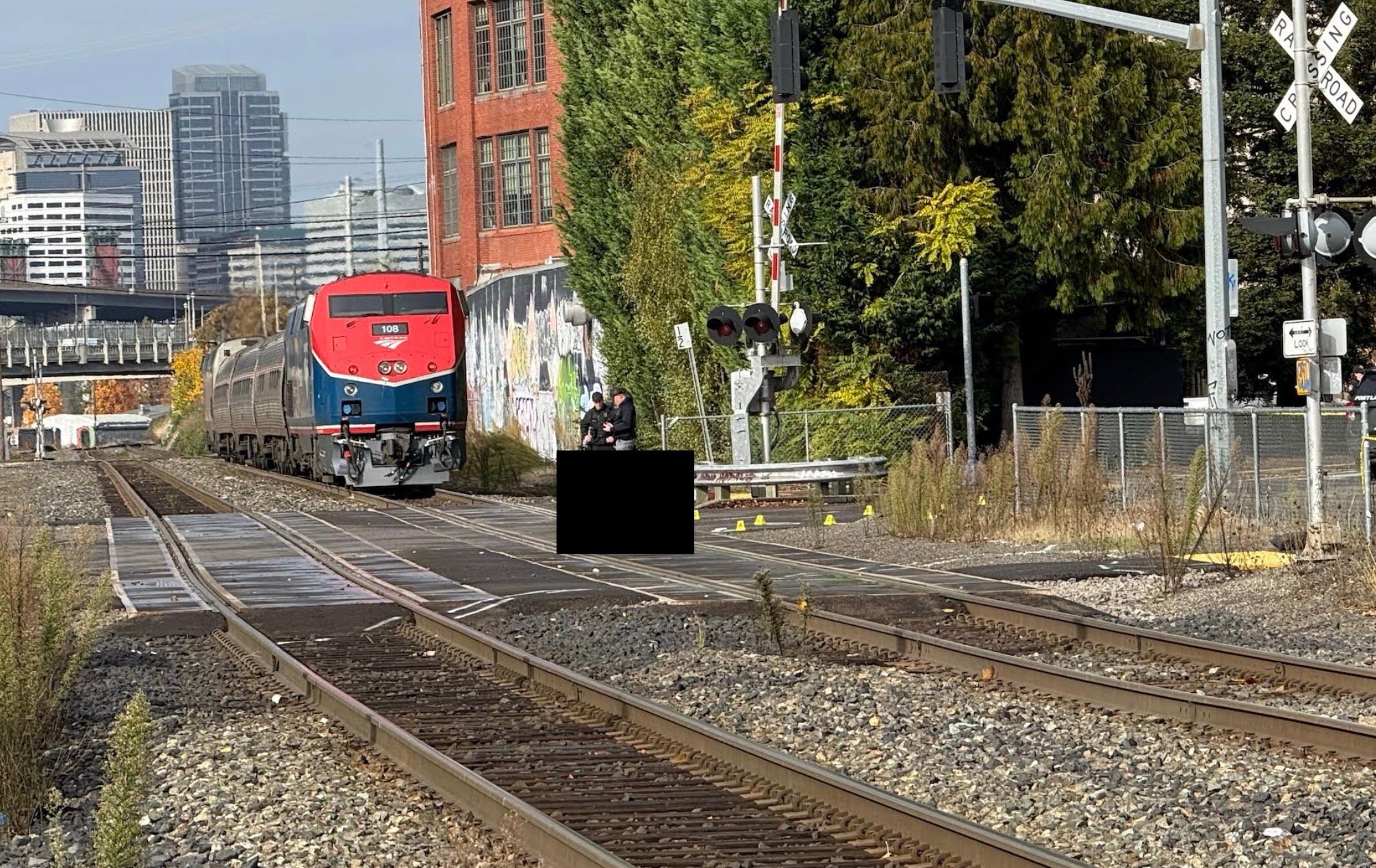
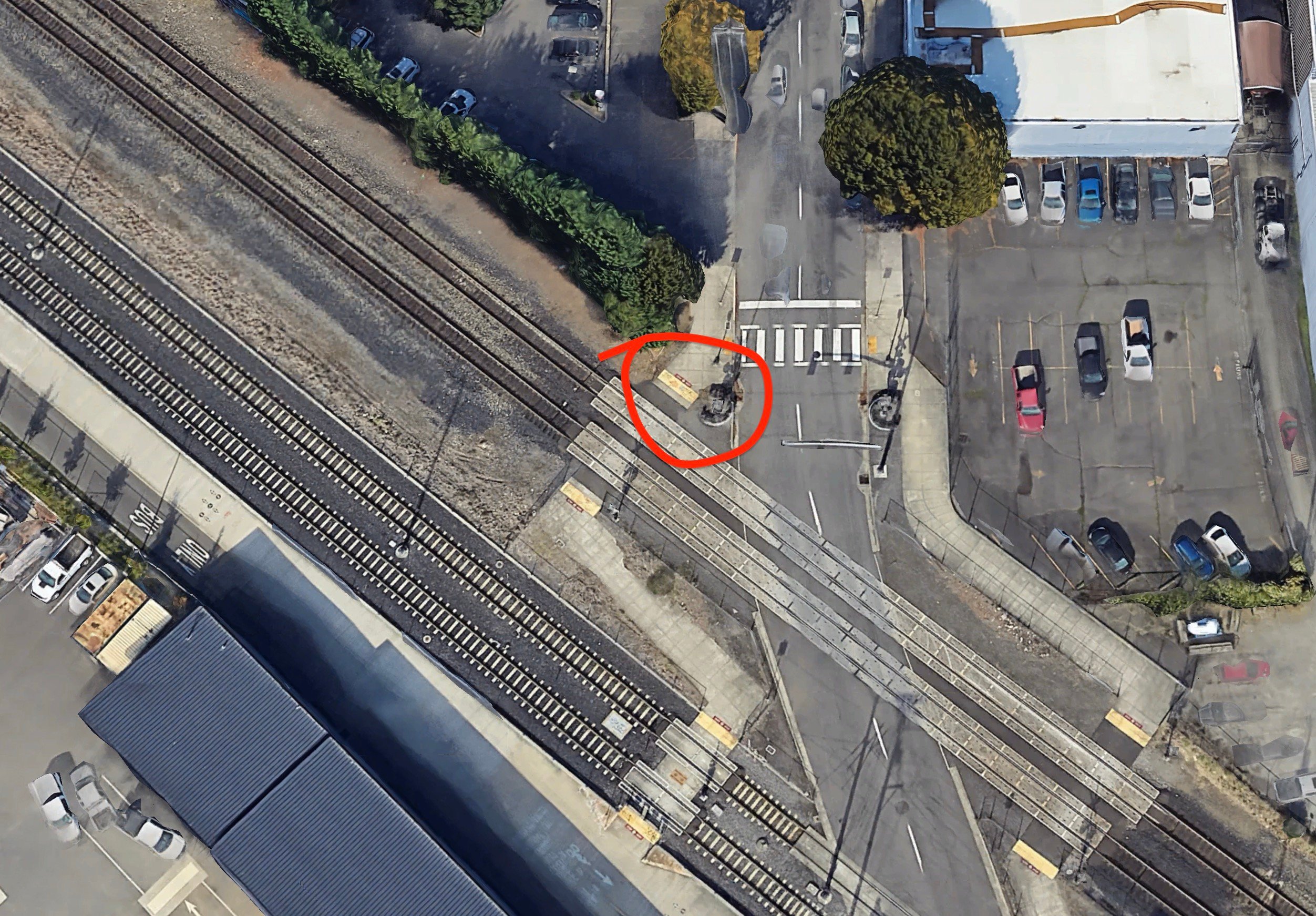
Looking northwest at SE 11th/SE Milwaukie Ave. I’ve added a black box to where the body came to rest. (Photo sent in by a reader)
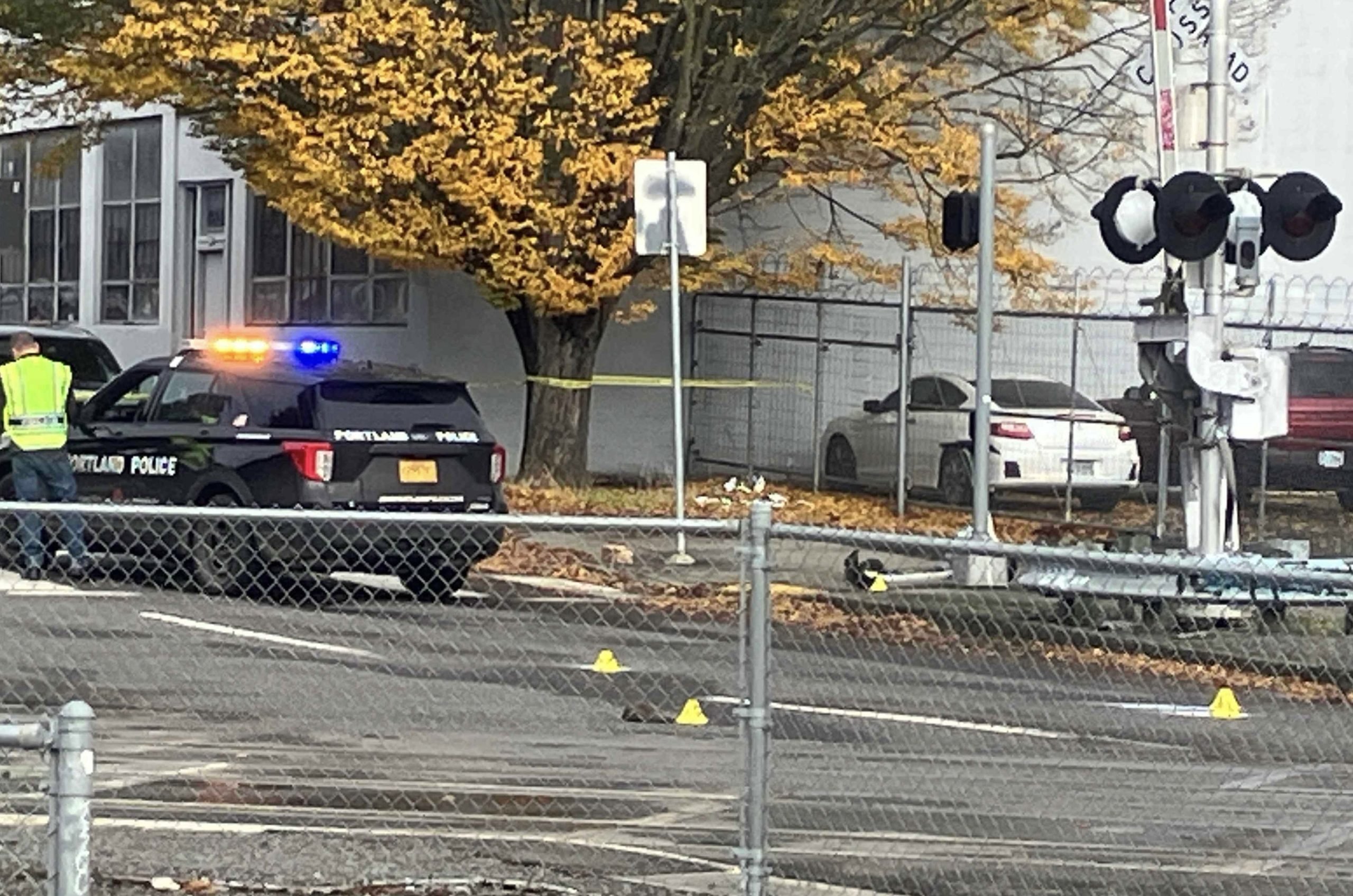
Just after 10:00 am this morning someone riding an electric scooter died following a collision with an Amtrak train. According to photos from witnesses at the scene shared with BikePortland, it happened at the sidewalk crossing of the rail tracks where they intersect with SE 11th/SE Milwaukie Avenue.
The deceased person’s body came to rest on the sidewalk located just north of the northernmost track, just beyond the Ford Building parking lot. According to photos that show the e-scooter and other investigative markings, it appears the collision might have originated at the eastern end of the crossing. Also clear in the photos is that the person was riding a Lime e-scooter that’s part of the City of Portland’s shared electric scooter system.
Police haven’t released any further details.
This is the second fatal collision at these tracks this year. Back in June, a man riding a bicycle was attempting to cross SE 8th in the main roadway prior to being struck and killed by a MAX light rail train.
Since August of this year there have been four fatal crashes involving e-scooter riders. On August 17th a man died from his injuries after being involved in a collision with a tractor-trailer operator near NE Martin Luther King Jr Blvd and NE Holladay St. One day later, a man hit a pothole near SE 52nd and SE Mitchell while riding an e-scooter and later died from his injuries. And on October 22nd, a woman riding a Lime e-scooter collided with another vehicle operator at N Vancouver and N Weidler and died in the hospital one week later.
This is the 36th fatal crash on Portland streets so far this year.
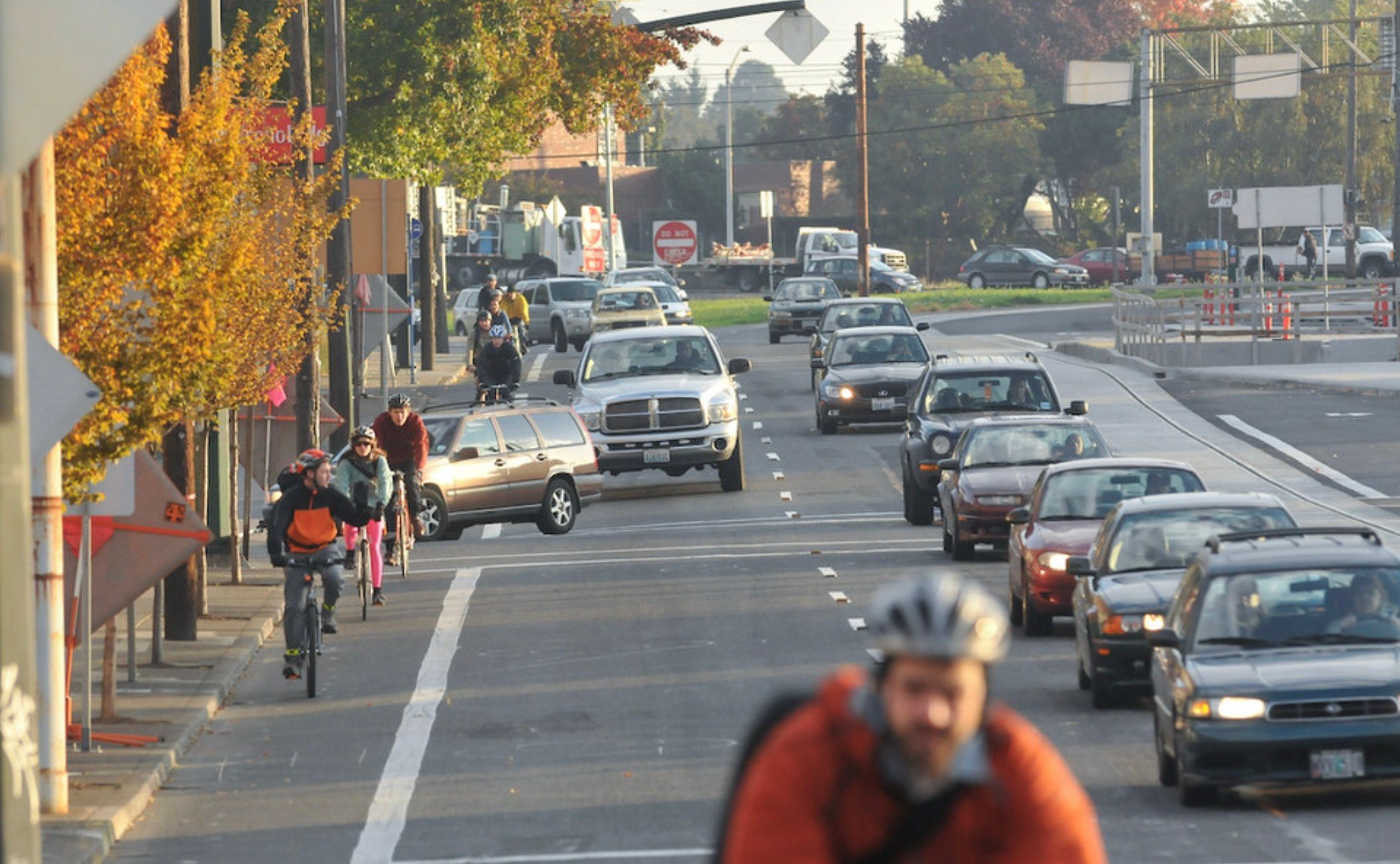
Current conditions on NE Broadway just east of Broadway Bridge. (Photo: Jonathan Maus/BikePortland)
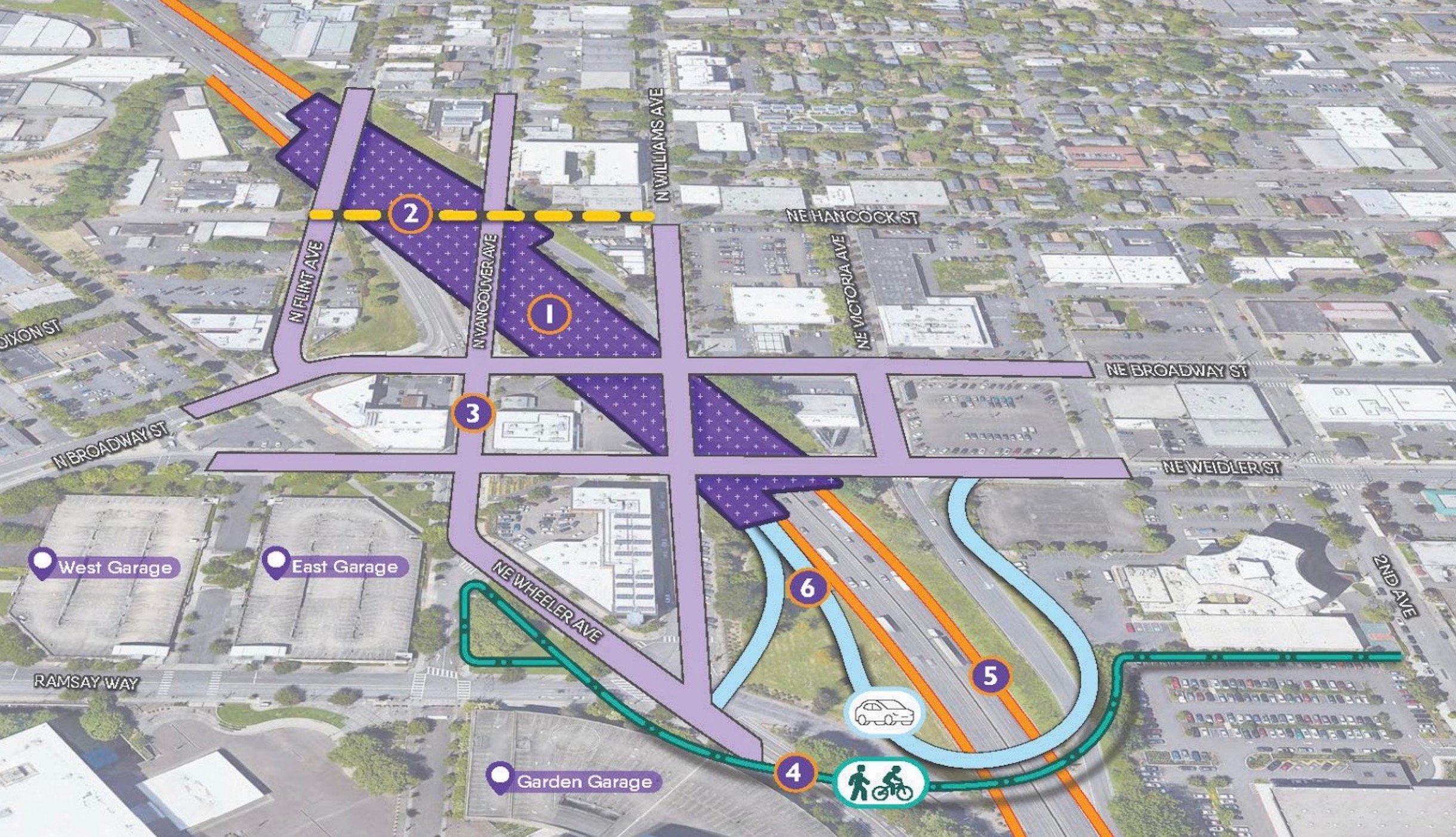
I’ve just confirmed some very good news: The City of Portland has the green light to move forward with the design of the Broadway Main Street project.
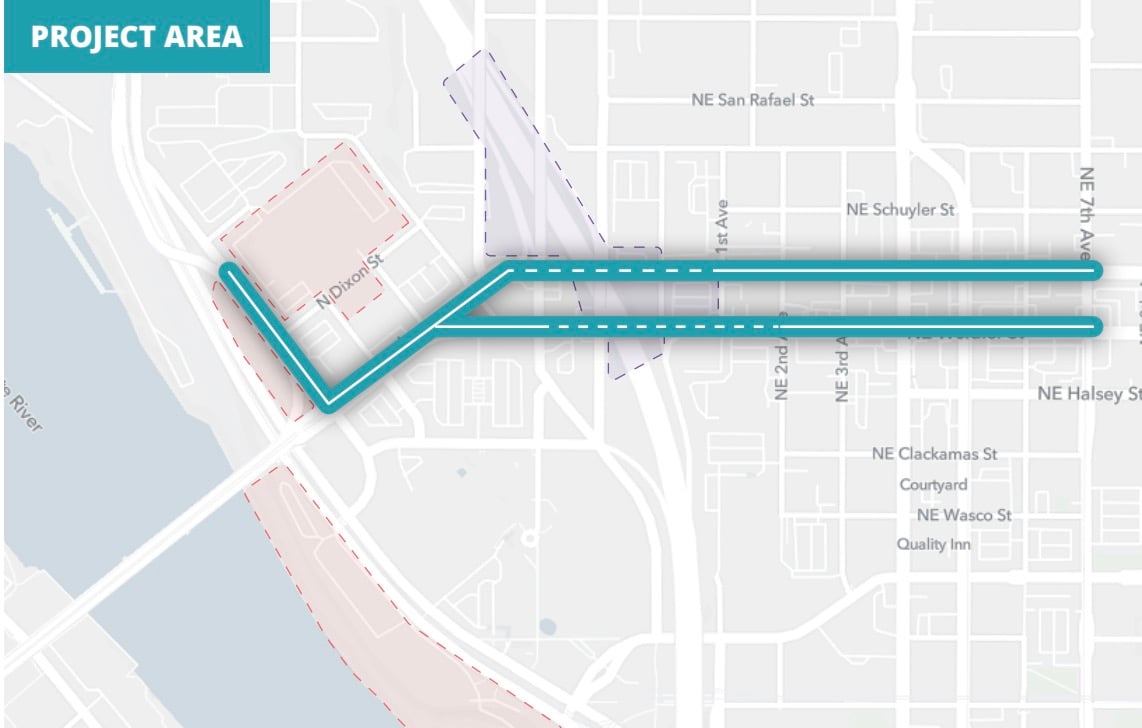
Back in July I shared that the Trump Administration had reneged on a $38 million grant that had already been awarded to the Portland Bureau of Transportation. The grant would have allowed them to transform the currently car-choked section of NE Broadway between NE 7th and the Willamette River into a family-friendly main street. The project is a lynchpin to the city’s Reconnecting Albina planning effort and is seen as an extension to the recently completed Broadway Pave & Paint project.
Unfortunately, the grant was taken back by the Trump Administration with the passage of House Resolution 1 (the “Big Beautiful Bill”), which rescinded all unobligated balances from the Neighborhood Access and Equity grant program.
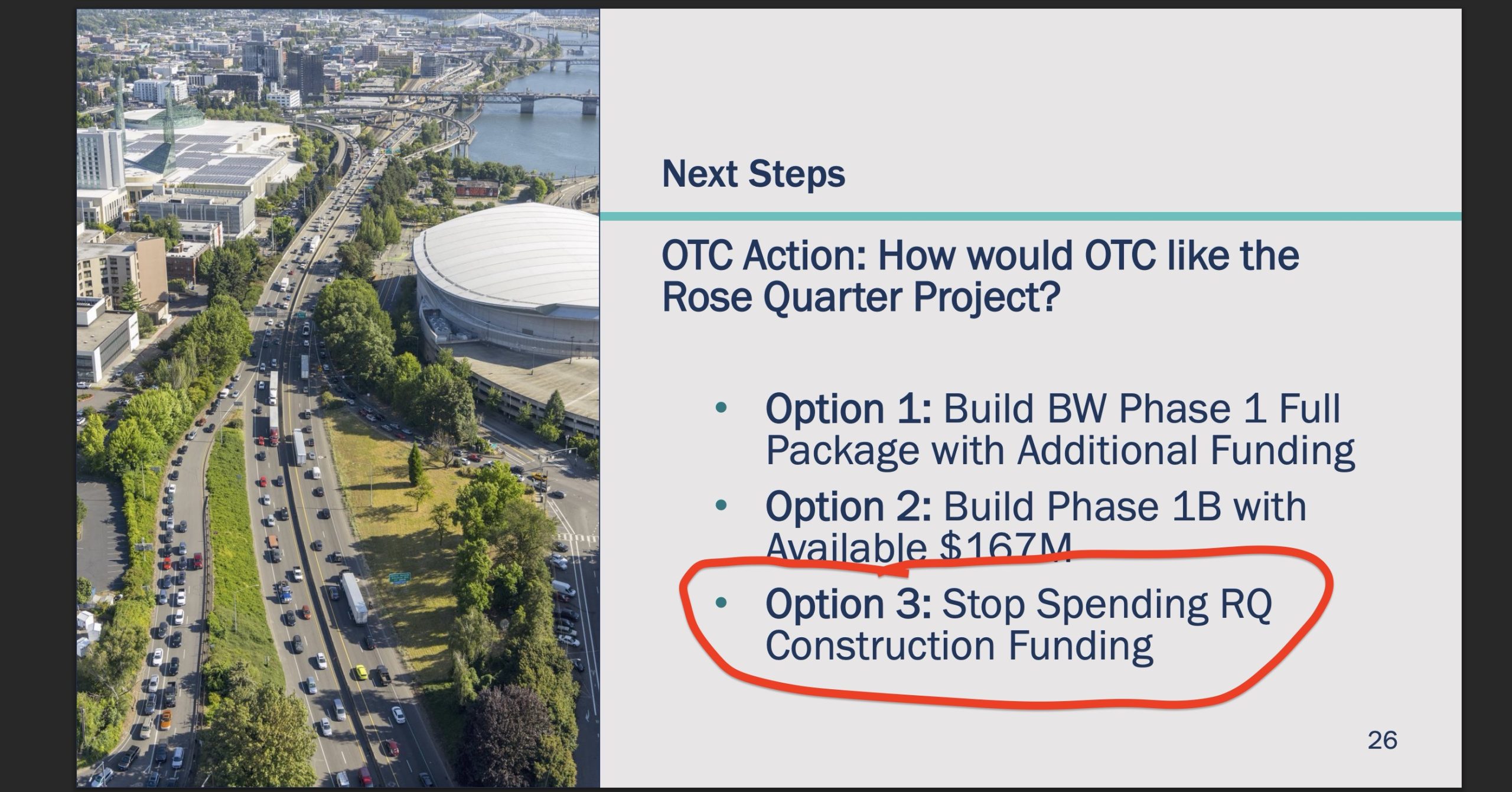
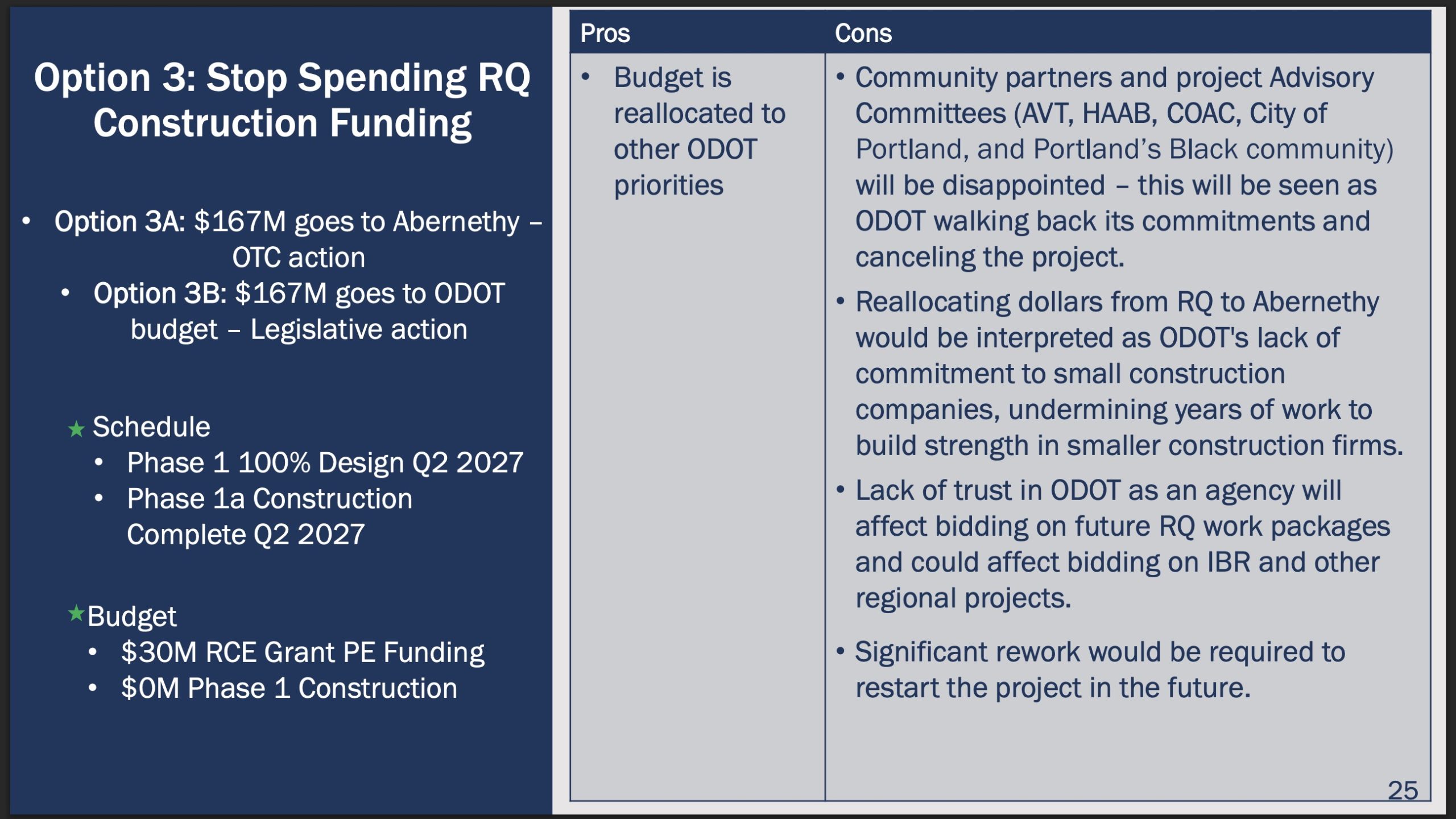
But last month at a meeting of the I-5 Rose Quarter project, a presentation from the Oregon Department of Transportation included a slide stating that PBOT had received funding for the “initial phase of the ‘Broadway Main Street’ project.” I reached out to PBOT to learn more.
On Tuesday I received a clarification from PBOT Spokesperson Dylan Rivera that Oregon’s congressional delegation was able to wrestle away $5 million from the grant for project design.
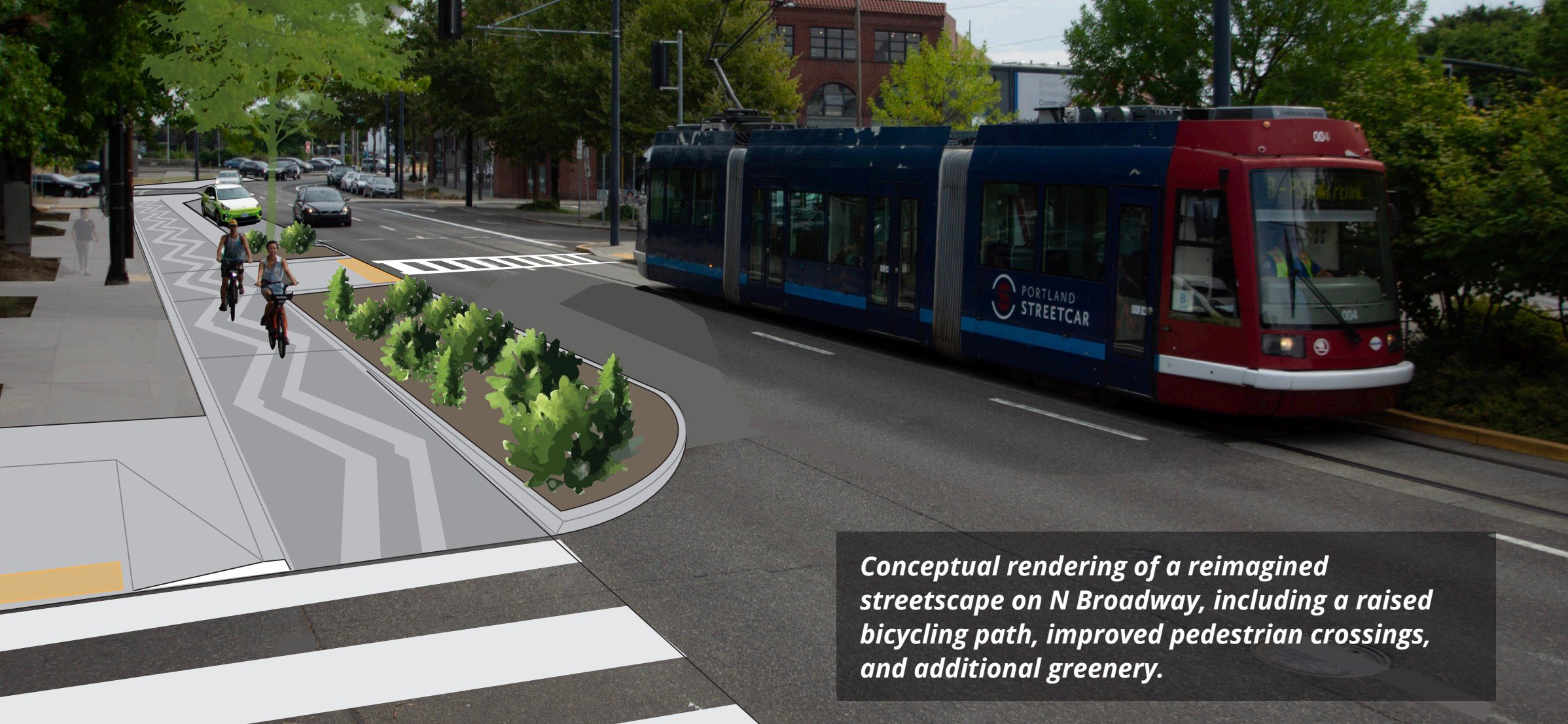
Project map and a conceptual rendering of possible streetscape design.
Rivera confirmed that, while construction of the project has been officially cancelled, the $5 million is enough for PBOT to complete the project design and development. “This project remains a high priority for PBOT and the city. Having a completed design can make the project more competitive for future funding opportunities,” he said.
PBOT will launch a public engagement process early next year to help finalize the project design.
The vision for this project, as described by a PBOT staffer at a meeting in 2023 is that, once complete, someone could, “take a pleasant walk with their young child from NE 7th to Waterfront Park.” Project elements had previously included: a raised bikeway protected from auto users by a planted median; multiple improved pedestrian crossings; a redesign of the Broadway Bridgehead at N Larrabee; improved access to Rose Quarter Transit Center, and more.
Stay tuned for updates and opportunities to weigh in.
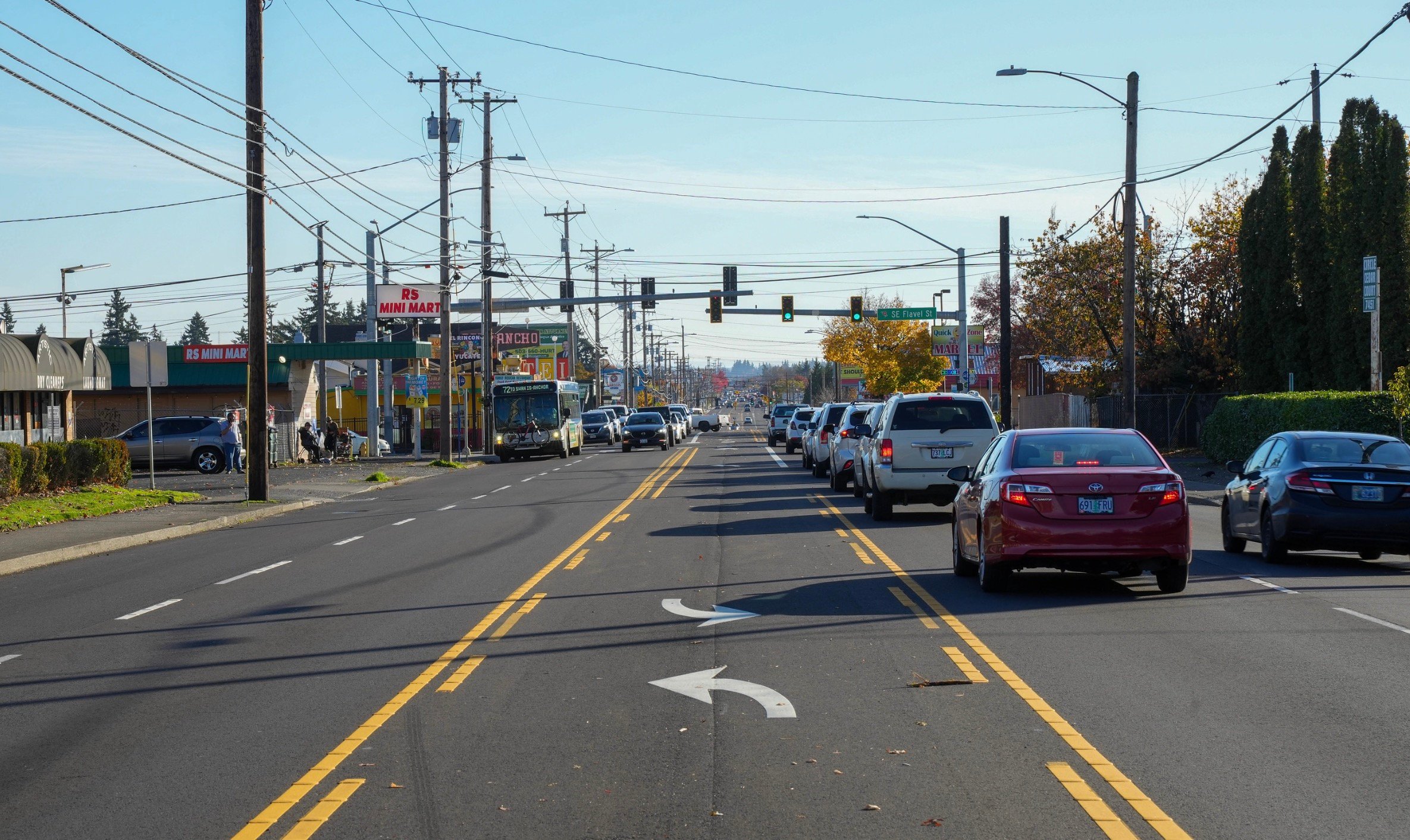
82nd Avenue near SE Flavel. (Photo: Jonathan Maus/BikePortland)
Two days ahead of what insiders expected to be a consequential meeting of TriMet advisory committee, the agency says they’ll delay a decision about bus lanes on 82nd Avenue.
As I reported last month, TriMet shocked many in our region by publishing a staff recommendation on the 82nd Avenue Transit Project that called for only partial business access and transit (BAT) lanes along the project corridor — which spans 10 miles from the Multnomah County border with Clackamas County at SE Clatsop to Northeast Lombard Street. The recommendation is a necessary step for the project to reach a key 60% design completion milestone. In a memo dated October 14th, staff said the project should move forward with three miles of BAT lanes (the “Some BAT” option) instead of seven miles of BAT lanes (the “more BAT” option). Staff have since walked back that recommendation saying it was merely a “starting point in the conversation.” (One board member said the publication of the memo was a leak.)
Regardless, the decision sparked a large outcry from many Portlanders, some of whom showed up to a recent project Community Advisory Committee meeting to make concerns known. Tomorrow is a meeting of the project’s Policy and Budget Committee, where many folks assumed the BAT lane decision would be debated — and possibly made final.
But in a blog post published Monday, TriMet wrote, “No decision will be made during the November 7 meeting. Rather, it’s an opportunity for committee members and the community to hear the latest information from our staff and to ask questions as options continue to be explored.”
TriMet added that a final decision about the BAT lanes, “is expected early in the new year.”
Given the high stakes of this decision, TriMet’s attempt to cool things down won’t stop folks from testifying at tomorrow morning’s meeting. Not only is the Line 72 bus the busiest in the entire state, but it’s impossible for 82nd Avenue to reach its potential unless bus users have faster, more reliable service.
And then there’s the looming issue of the Bike Bill lawsuit hanging over the Portland Bureau of Transportation — the agency that has final say over how the street is used.
That lawsuit was organized by BikeLoud PDX on behalf of 15 individual plaintiffs. While it’s currently in legal limbo due to procedural questions surrounding the Portland City Council, a settlement agreement already signed by the city attorney, PBOT, and BikeLoud’s lawyers mandates full BAT lanes on 82nd Ave (with the expectation they can be shared by bicycle riders). According to the settlement, if PBOT fails to build continuous BAT lanes, they would be in violation of the settlement and the case could go to trial.
Add to that the threat of lawsuits from business owners on 82nd who oppose the BAT lanes and it becomes clear that the seven members of the Policy and Budget committee — TriMet GM Sam Desue Jr., Clackamas County Commissioner Diana Helm, Metro Councilors Christine Lewis and Duncan Hwang, ODOT Policy & Development Manager Chris Ford, Community Advisory Committee Interim Chair Franklin Ouchida, and PBOT Director Millicent Williams — have a lot of perspectives to consider.
— The 82nd Avenue Project Policy and Budget Committee meets Friday (11/7) at 9:00 am. The meeting is at TriMet’s Public Safety Office (1020 NE 1st Ave) and viewable online. More info here.
I’m excited to share that this coming Wednesday (11/12), The War on Cars Podcast hosts and Life After Cars authors Doug Gordon and Sarah Goodyear will join us at Bike Happy Hour.
This dynamic duo is on a national media tour talking up their excellent new book that diagnoses, dissects, and debates how car-dominated places have negatively influenced our lives — and what we’d gain by living life without (or a lot fewer of) them. With a new political era sweeping across our country, it’s the perfect time to talk about ideas that once felt radical, but now feel inevitable.
Suffice it to say; Sarah, Doug and I are kindred spirits who’ve chosen different paths and tools in the fight against motordom, carbrain, motonormativity — or whatever word you want to describe America’s seductively destructive relationship to cars and driving. And what they’ve done with their podcast since its launch in 2018 is nothing short of extraordinary. With a massive following and guests that include actors, entertainers, experts and politicians from around the world, the podcast has transcended the transportation field and has helped shift the Overton Window around the idea of carfree and low-car cities.
Sarah and Doug have a masterful grasp of the evidence to back up their (very well-reasoned, despite the provocative names of their podcast and book!) arguments for helping people see that cars and driving really isn’t all it’s been cracked up to be. In fact, as you can learn in Life After Cars, the entire idea that Americans have a “love affair with the automobile” is nothing more than propaganda to peddle products and cajole capitalists. In one of my favorite passages in the book, I learned that even Superman once considered drivers and their cars worthy of a fight!
You can hang out with Sarah and Doug this Wednesday at Bike Happy Hour. We’ll get there at 3:00 and then sit down for a short chat and have some audience Q & A at 5:30. We’ll be in the back patio of Migration Brewing on North Williams Avenue. Remember you can enter from the alley between N Shaver and N Failing.
On Monday, the City of Portland announced a new focus on cleaning sidewalks citywide. Utilizing contractors and a budget of about $2 million, the plan is to focus on sidewalks along major business corridors and commercial centers.
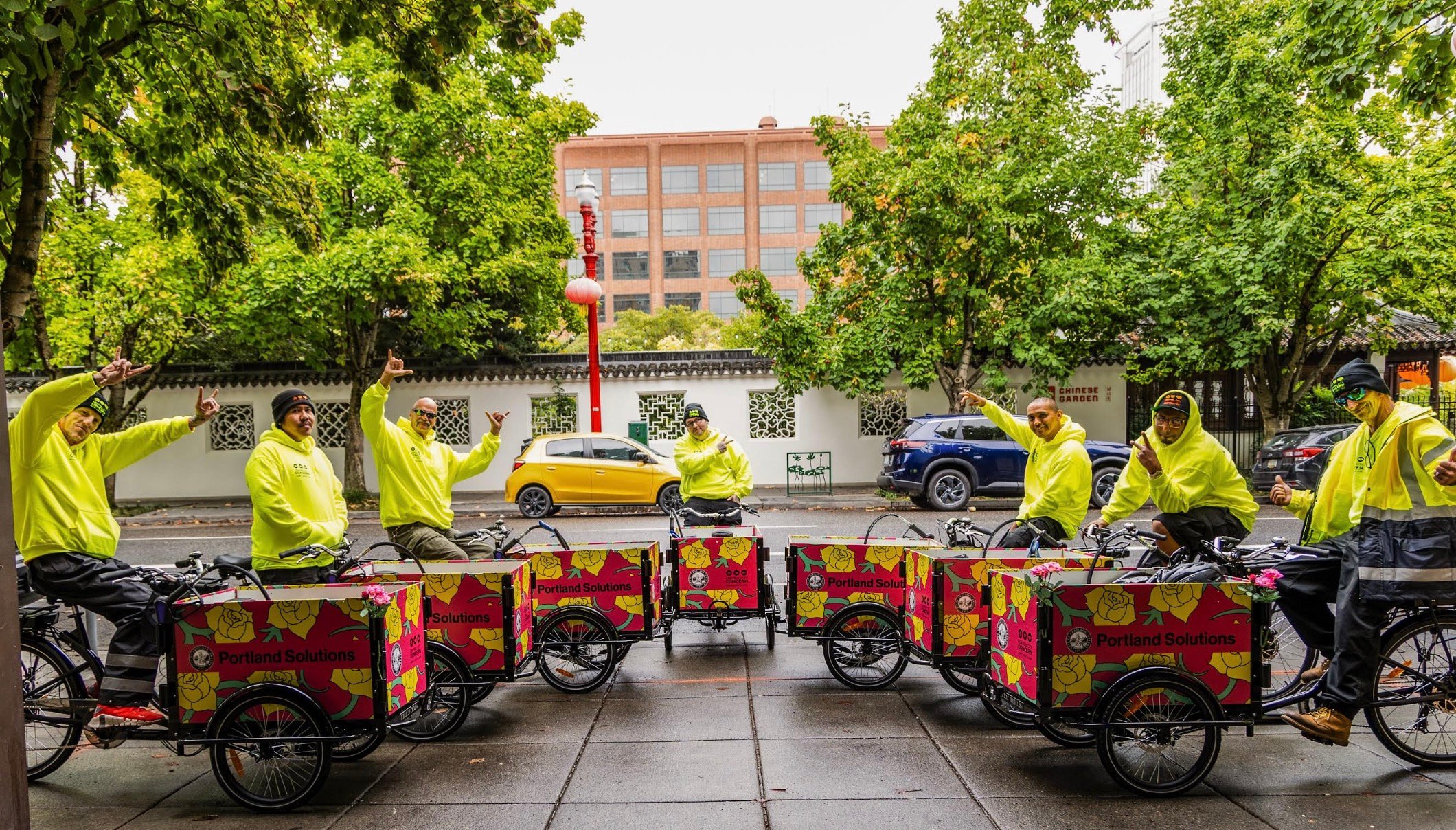
Among the new tools that will employed to do this cleanup work are pedal-powered cargo trikes. These trikes have already proven themselves as perfect vehicles for navigating tight spaces and still having room to cart sizable loads of garbage and debris back to a central location. Last year I profiled a downtown nonprofit that used the same style of trikes in their programs to great success.
In a statement about the new program, the City of Portland said the trikes will be accompanied by a truck and will, “visit Portland’s busiest locations on a regular basis to clean up trash and biohazards from the sidewalks that people rely on to go to school and work, go shopping, keep appointments, and enjoy their neighborhoods.”
Clear and clean sidewalks are important not just for walkers, but in many parts of the city they are a refuge for bicycle riders as well — especially in locations where the adjacent street has no safe space for cycling. (Note: bicycle riding on sidewalks is allowed in Portland, except for a small part of downtown, as described in City Code Chapter 16.70.320.)
Below is a list of streets the city will keep clean as part of this initiative:
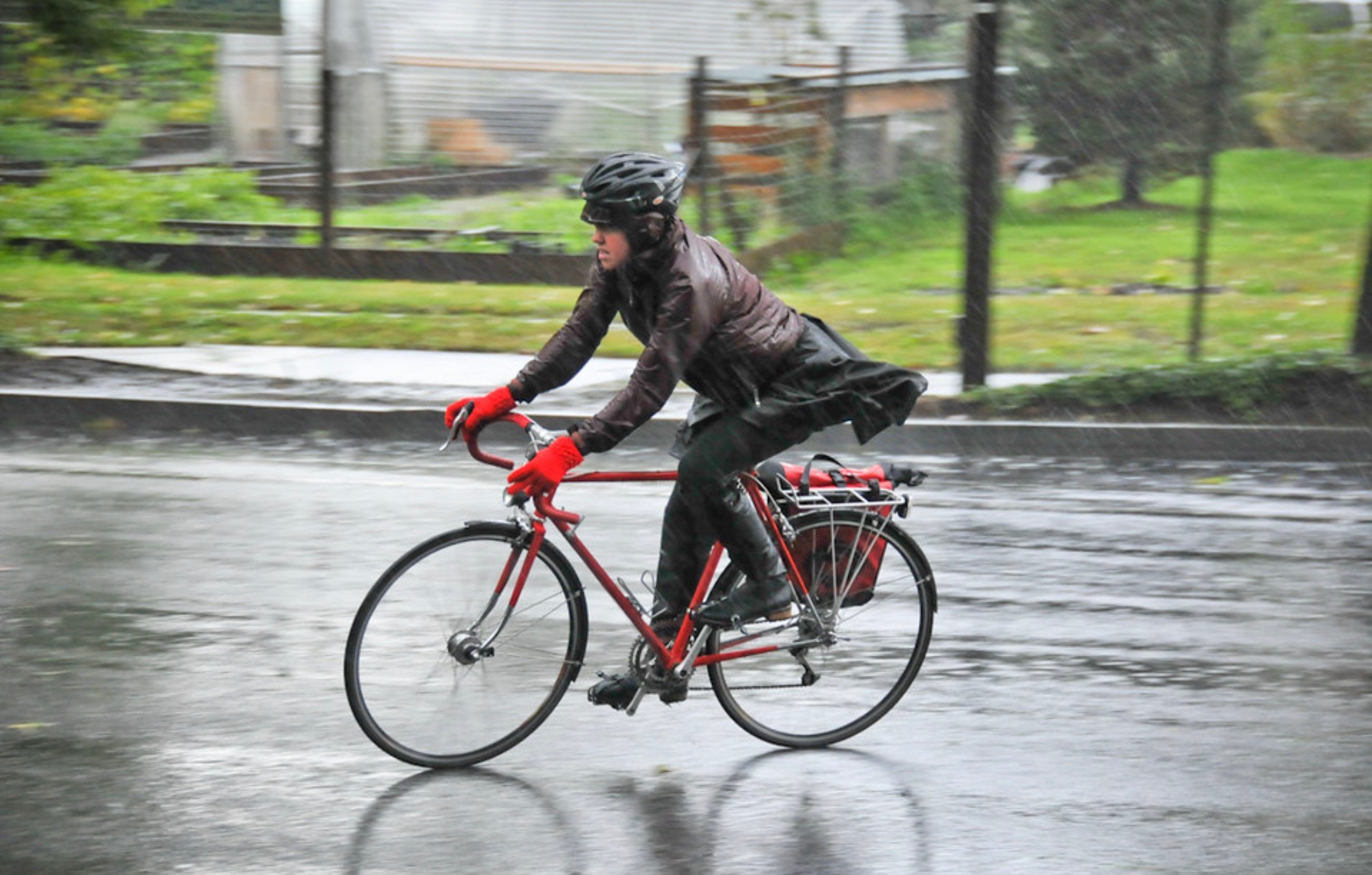
Hope you’re doing OK with all the rain and wind. If you’ve been needing new rain gear, this is a big weekend because the annual Showers Pass Warehouse Sale is on Saturday.
Below is more info on that and the rest of my picks for the weekend. Have fun out there!
Saturday, November 8th
Showers Pass Warehouse Sale – 9:00 am at Showers Pass HQ (SE) An excellent opportunity to score great deals on gear that will keep you dry and comfy. This is a legendary sale where they offer deals you will not get any other time/place. In addition to SP gear they’ll have stuff from TREW, Black Stone Stitchworks, and Vvolt E-bikes. More info here.
I-205 Path Cleanup – 10:00 am at Home Depot (NE) Join the nonprofit SOLVE to pick up trash and debris from the I-205 path near Airport Way. Yes it sucks that we have to do this, but we have to do this. Cargo bikes encouraged! More info here.
North Portland Mutual Aid Ride – 1:00 pm at Wonderwood Springs in St. Johns (N) Riders will roll to a supermarket to buy food and then make a tour of 8-9 mini food pantries and fridges outside homes in North Portland. A perfect way to help folks in need. More info here.
Sunday, November 9th
Overlook Ride – 9:30 am at Stacks Coffeehouse (N) Get to know the beautiful Overlook neighborhood with a knowledgeable ride leader (hi Nic!) who will also help you plug into neighborhood activism if you’re so inclined. More info here.
Sunday Social Ride – 10:00 am at Gateway Transit Center (NE) Roll with members of the Portland Bicycling Club on a metro area excursion. Expect a 13-15 mph pace with most folks on drop bar road bikes. More info here.
Cycle Sundays – 10:00 am at Memento Mori Cafe (NW) Roll out with the fun-loving Cycle Homies for this “moderate-fast” paced ride of about 15-20 miles. More info here.
OBRA Cyclocross Championships – All day in Independence, Oregon If you love bike racing — either on the inside or outside of the tape — you’ve got to be excited about this event. The crew from Sellwood Cycles have organized a brand new venue at a cool main street park in downtown Independence, Oregon. This is an amazing excuse to venture south to discover a classic small town that has become a bike-friendly oasis and will open their arms to this event. More info here.
— Did I miss your event? Please let me know by filling out our contact form, or just email me at maus.jonathan@gmail.com.
Abdulrahman “Abe” Alkhamees in the BikePortland Shed with Issue One of The Paperclip. (Photos: Jonathan Maus/BikePortland)
Abdulrahman Alkhamees’ love of the Pacific Northwest was sparked while watching a documentary on the eruption of Mount St. Helens when he was just 10 years old. Living in his birthplace of Kuwait at the time, Alkhamees and his father would watch documentaries every Friday morning.
When he awoke to St. Helens on the screen, Alkhamees (who goes by “Abe”) recalled, “You mean to tell me there’s a place with volcanoes, rivers, deserts, and trees as old as time? I was blown away. To me, the Pacific Northwest was as close as you can get to a mystical world with this amazing terrain, and I was really enamored by it.”
I invited Alkhamees into the BikePortland Shed on Tuesday to learn more about his latest creative project, a magazine called The Paperclip.
Alkhamees held onto that love and curiosity of the Pacific Northwest and decided to attend Portland State University. And like many people who move here, the gravity of cycling soon began to pull on him. He bought a bike the first week he moved here and now he’s carved a niche as a photographer of his rides and the stories of people he pedals with.
Four years ago he wanted to combine his love of cycling with his love of his home and create a magazine about cycling in the Middle East. That remains a dream, but this past summer he decided to pivot and put together a collection of stories about cycling submitted from riders from all over the globe. The Paperclip is a square-bound publication that looks and feels more like a small coffee table book than a typical magazine. It’s beautifully laid-out and has a nice balance of text and imagery.
The stories in The Paperclip range from a window into the Gaza Sunbirds (a paracycling team that escaped the war and competes in cycling events worldwide) and a first-person account from a guy who trained hard all summer only to be passed on a climb by someone in their 70s — to a story from a woman who shares how riding gravel roads helped her overcome the passing of her parents. While cycling runs through each one, it’s not always the main character. “Cycling is the glue,” he explained. “It’s not necessarily the main story.”
And while Alkhamees personally loves long rides into the “mystical terrain” of our region, he seeks stories that center riders’ lives over extreme physical accomplishments.
“Some of these some of these stories don’t really get a lot of light because they’re not epic,” Alkhamees explained. “I didn’t include any stories about somebody riding a thousand miles in 48 hours or whatever. That has its place, but for me I wanted the stories to be human-forward. I wanted the humanity, the failures, the struggles, the fun parts — all the other stuff that kind of fall in between the cracks — to show up.”
For this first issue, all contributors agreed to donate their work. Alkhamees’ plan is to donate half the proceeds from sales to the Gaza Sunbirds and the other half will pay authors and photographers who make it into the next issue.
Asked what he hopes people take away from the magazine, Alkhamees said, “Connectivity. That everybody has a shared struggle in some sense. But also, that struggle is what makes us, us.”
— Watch a short video of Alkhamees below. Issue one of The Paperclip is available now as a $25 pre-order at ThePaperclip.cc. The order window is open until November 14th. Wholesale pricing is also available for bike shops and other businesses. Follow The Paperclip on Instagram.
The author Megan Ramey (left in blue helmet) talking with Oregon State Rep. Jeff Helfrich (white shirt). (Photos courtesy Megan Ramey)
This should not be illegal.
Written by Megan Ramey, who manages the Safe Routes to School program for Hood River County School District.
Last Wednesday I hosted an e-bike ride with policymakers and elected officials from the Hood River region with one clear goal: to find an Oregon legislator willing to champion a bill that will eliminate Oregon’s age restriction for Class 1 e-bikes (the type that don’t have a throttle and require riders to pedal) in the 2026 short session.
As a mom of a 16-year-old who’s been “illegally” riding a Class 1 e-bike for four years, I can attest to their transformative power. My daughter (in photo, right) has never been stopped by the police. She has, however, gained independence, mobility, and confidence — and shows no interest in getting a driver’s license. She’s part of a growing movement of 10-15 year olds hopping on e-bikes — the second largest age group, just behind baby boomers. Why? They’re too young to drive, but they crave freedom.
E-bikes sell themselves to kids. They’re fun, fast enough to be empowering, and are a sustainable alternative to car rides. The more t(w)eens who ride, the more empathetic, alert, and bike-aware they’ll be as future drivers.
Unfortunately, my 2022 Dawn of the Throttle Kids article has proven prophetic. Because Class 2 throttle bikes and e-motos are cheaper, that’s what parents buy. Many are modified beyond legal limits, blurring the lines between bike and motorbike. In Hood River, some youth zip along sidewalks on these throttled machines, alarming pedestrians and drivers alike. The backlash led our local police to announce in August that they would begin citing under-16 riders for violation of ORS 814.512 — a statute that actually applies to e-scooters, not e-bikes.
This call for enforcement (and its response) highlights a real problem: Oregon law treats a Class 1 e-bike — a traditional bike with a modest boost — like a car. Because under-16s are barred from riding them, schools can’t even legally provide education to the age group most eager to learn.
The ride with policymakers I led last week was designed to change that. Joining me were State Representative Jeff Helfrich and electeds and staff from City of Hood River, County of Hood River, Mid-Columbia Economic Development District, Hood River Parks & Recreation, CAT Transit, Cycle Oregon, The Environmental Center, Oregon Micromobility Network, Port of Hood River, Thomas Coon Newton & Frost law firm, Sol Rides E-bike Tours, and local mothers of e-bike riding teens.
Group shot from the ride.
We rode up steep State Street to Hood River Middle School — ground zero for the youth e-bike issue — then down to the hazardous 13th and May intersection, which is a top Safe Routes to School priority connecting two schools. We discussed infrastructure gaps, jurisdictional barriers, and the opportunity for an ODOT transfer to allow protected bike lanes through The Heights.
After Rep. Helfrich (one of only two Republicans who supported HB 3626, which would’ve lowered the age limit) departed, our group continued across the Historic Columbia River Highway to the Twin Tunnels Trail — what I call “the best under-10-mile bike ride in America.”
At the finish, we heard from two mothers whose stories say it all. Nicole Goode, a teacher at Hood River Valley High School, described how her son’s e-bike has given him independence since age 10, teaching him resilience and navigation skills that are already shaping his adulthood. Jess McGimsey, a mother from Mosier, spoke about her 13-year-old who saved up for an e-bike only to learn he couldn’t legally ride it. “I fully support Class 1 e-bikes for all ages,” she said. “They build confidence and relieve parents from constant chauffeuring.”
That same morning, I presented on best practices in e-bike education at the National Safe Routes to School Summit. The day left me with two truths: 1) We don’t have a youth e-bike problem — we have a youth e-moto problem. And 2) Class 1 e-bikes offer one of the greatest opportunities for a generation of t(w)eens to escape screens and anxiety through free-range mobility that fosters independence and joy.
We have a great example to follow. Marin County has been the national leader in Safe Routes to School and their new law allows all ages on Class 1 e-bikes, while restricting class 2 and 3 e-bikes to 16 years old (watch their PSA below).
It’s overdue for Oregon to honor its proud bike heritage — one that fosters resiliency, health, and mobility choice — and extend it to our youth, who arguably need it now more than ever.
— Megan Ramey is the Safe Routes to School Manager for Hood River County School District and the founder of Bikabout, which now hosts an E-bike Guide for Teens and Families.
In his acceptance speech last night, Mamdani said he would give power to people like this worker who has, “palms calloused from delivery bike handlebars.” (Photo: Jonathan Maus/BikePortland)
A popular cyclist and socialist who has pledged to make transit fast and free is now mayor-elect of America’s largest and most influential city. He has ushered in a new era of American politics, and he could usher in a new era of urban transportation policy that influences streets nationwide.
Zohram Mamdani’s huge win last night is also a massive victory for people who care about urbanism and healthy cities. He’s an unabashed lover of buses and bikes who isn’t afraid of taking bold positions on transportation policy and was the first mayoral candidate to receive over one million votes since 1969. Mamdani embraced cycling on the campaign trail. In one of his many viral videos, a woman yelled “Communist!” as he unlocked a Citibike from a rack during an event and he calmly snapped back, “It’s pronounced ‘cyclist’!”. And on election day Mamdani released a video where he hops in the bucket of a cargo bike for a lift to the polls.
He’s by far the most talented politician since Obama — and the fact that he came from outside the Democratic establishment (and even made a lot of mainstream Dems so nervous they didn’t endorse him), makes his accomplishment that much more impressive.
(Photo: Madison Swart/Mamdani campaign – Screenshot from Mamdani for NYC website)
His entire platform could be boiled down to making New York City more affordable. And one of the three main pillars of that platform was to make buses “fast and free.” The discussion around free transit has split the advocacy community for years. Many people support it, but some experts and advocates say it could only happen if service was cut — and would be a pyrrhic victory. But none of those discussions was based in a reality where an extremely popular mayor was elected with a mandate to restructure the tax code in a way that jettisons scarcity framing and creates the funding needed to make good on “fast and free.”
Cars are to transportation what billionaires are to American society: We’ve been convinced by the media that the negative externalities they create are normal; there’s way more of them than we need; and the forces that maintain their dominance make life worse for the rest of us. Mamdani understands that and he’s in a historic position to shift that dynamic.
I remember in the 2010s when New York City transformed its car-choked streets into carfree plazas, express bus lanes, and protected bike lanes under the leadership of former DOT Commissioner Janette Sadik-Khan. The projects she pushed forward inspired cities across the country to see streets differently. If Mamdani finds the right DOT commissioner (some folks are dreaming of a JSK comeback), New York City could continue this exciting urban evolution.
I’ve always liked to say that it takes more than winning an election to make change. You must also be connected to community, because the people are where the power lies. Mamdani — and his million supporters — understand that.
Mamdani’s ride into City Hall has sparked joy and hope among transportation reformers far beyond the five boroughs. Welcome to the new era of American politics. It’s going to be a wild ride.