🚨 Please note that BikePortland slows down during this time of year as I have family in town and just need a break! Please don't expect typical volume of news stories and content. I'll be back in regular form after the new year. Thanks. - Jonathan 🙏

Bill would replace ‘accident’ with ‘crash’ in Oregon laws

Not an “accident.” (Photo: Jonathan Maus/BikePortland)

If you’ve read BikePortland for a while, you know that we are serious about language and word choice. Way back in 2006 we were one of the first outlets to cover the idea that the way we talk about traffic crashes in America is deeply problematic. Since then, the “crash not accident” movement has grown considerably.

The latest step forward on the march toward making “crash” mainstream is a bill in the Oregon Legislature that seeks to rewrite over 100 existing laws. House Bill 3374 would replace all references to “vehicle accident” and “vehicle collision” in the Oregon Revised Statutes and two sections of Oregon Administrative Rules with “vehicle crash.”

Related: ODOT says US DOT Sec Pete Buttigieg will be Oregon’s ‘new best friend’

The bill is sponsored by House Representative Jeff Helfrich, a Republican who represents the district (52) that covers Hood River, east Multnomah County, Sandy, and Government Camp. Rep. Helfrich lives in Hood River and is a 25-year veteran of the Portland Police Bureau.

Helfrich’s Chief of Staff Natalie Newgard said the bill was introduced on behalf of former House Rep. Ron Noble. Noble is a member of the Governor’s Advisory Committee on DUII and this bill is one of their priorities.

The bill hasn’t been assigned to a committee yet and is still awaiting a public hearing. It should have broad support among transportation safety advocates, many of whom believe that using the term “accident” implies a collision was unavoidable.

The Portland Bureau of Transportation’s Safe Routes to School program wrote in an email newsletter today that using the term “accident” does not align with their goal of making streets safe. “When we use the word ‘accident’ rather than ‘crash,’ we’re implying that a collision was somehow inevitable. We’re not only absolving the person driving from responsibility but also the local transportation agency,” they wrote in the newsletter. “PBOT has strategic commitments to realize Vision Zero … part of [that] strategy is reminding ourselves and our communities that crashes are preventable and predictable.”

We’ll monitor the bill and keep you posted on any developments.

Irving and Colonel Summers among parks losing their lights and lampposts

Lights in Irving Park illuminated huge crowds at the Loud ‘n Lit Redux ride last August. (Photo: Jonathan Maus/BikePortland)

Last week, the Portland Parks & Recreation bureau announced a plan to remove 243 lampposts from 12 parks around the city due to “structurally unsound anchoring systems that may pose a life and safety hazard to the public.” The news concerned many Portlanders who use these parks and don’t want them to go dark after sunset. And given the list of parks where the lights are set to be dimmed, Parks’ decision could hit Portland’s bike community especially hard — because some of the parks on the list are popular gathering spots for evening group rides throughout the year.

The parks affected by the lamppost removal include Irving and Colonel Summers, both of which are frequently used as the meeting/after-party spot for group bike events that sometimes go on late into the night. Those days are over, it seems — even if you can light your own way with headlights, all of the parks in question will now be closed at 10 pm — hours before post-bike ride dance parties could even get started. PP&R will be sending Park Rangers to affected parks to make sure the rules are being followed at night.

What’s the impetus for this? According to a Friday story in the Willamette Week, PP&R may be shutting off the lights because of litigation fears. WW acquired documents revealing that the city began investigating park lampposts after receiving a tort claim by a person who was injured last summer when a light pole fell on her after she tied a hammock to it. Some public responses indicate frustration that the bureau’s reaction to this lawsuit is to limit a public resource for everyone.

“Am I the only one frustrated about PP&R’s reaction to remove light posts over load-bearing that poles weren’t designed to do and because we live in a litigious society?” one person asked on Twitter.

“So endanger everyone’s nighttime safety because of one person’s accident. Yep, makes perfect sense…in Portland,” a commenter on the WW story said.

This incident has also brought to light (sorry) some of the budget woes facing Portland parks. Evidently, similar to the Portland Bureau of Transportation, PP&R has a substantial maintenance backlog ($600 million). This means they can’t afford to replace all the lampposts they’re removing, at least not anytime soon.

“PP&R redirected $5 million from already budgeted major maintenance funding to remove the light poles and begin the partial replacement process. Currently, the project is estimated to cost $15 million.” a Portland parks statement says. (That means $60,000 for each lamppost.) “PP&R does not currently have sufficient funding to replace all light poles in the park system.”

The parks bureau has provided a timeline for replacing only the lamps at Irving and Mt. Scott, where they plan to install replacements within 16 months. That’s a pretty long time, but it’s a better prognosis than what we have for the other parks, which are to remain without lamps indefinitely.

According to PP&R director Adena Long, one in five park assets could be removed or closed within the next 15 years if the bureau doesn’t find a new, sustainable funding source.

One of the ways the city might find the funding for PP&R’s maintenance backlog is by creating a new taxing district for parks funding, allowing the bureau to access its own pot of money just for local parks and recreation needs. For now, though, Portlanders are going to have to deal with the cuts.

So, how will this impact bike meetups? The full reality of the situation might not hit until Pedalpalooza goes into full swing this summer, but I asked Moorland Moss, who leads rides for Naked Hearts: PDX all year-round (many of which are based at Irving Park), and he’s not too worried about it.

“I am prepared to host rides and parties even if the world literally ends,” Moss told me. “We can definitely survive the city taking down some lampposts. I am prepared for the apocalypse.”

Those who aren’t as prepared as Moss might have a more difficult time adjusting to the dark. But it’s good to know that Portland’s bike rides will carry on.

You can find more information, including a list of all the planned lamppost removals, at PP&R’s website.

Jobs of the Week: SimWorks, WashCo Bikes, Albertina Kerr, Metropolis, Velotech, Bike Works, Ride With GPS

Need a new job? Want a better job?

We’ve got eight excellent opportunities for you to consider. Learn more about each one via the links below…

For a complete list of available jobs, click here.

Be the first to know about new job opportunities by signing up for our daily Job Listings email or by following @BikePortland on Twitter.

These are paid listings. And they work! If you’d like to post a job on the Portland region’s most popular bike and transportation news platform, you can purchase a listing online for just $75. Learn more at our Job Listings page.

PBOT’s new initiative to incentivize downtown bike and transit commuters

Bike commuters headed to Portland’s central city via Williams in May 2016. (Photo: Jonathan Maus/BikePortland)
(Source: Here for Portland)

The Portland Bureau of Transportation is trying out a new strategy to encourage people to commute downtown by biking, walking or public transit: free coffee. Every Wednesday morning in March and April, PBOT staff will hold a pop-up somewhere downtown with coffee and $50 Kuto gift card credits for anyone who traveled downtown without a car.

PBOT’s “Ride Every Wednesday” initiative is part of Here for Portland’s larger “Every Wednesday” program, which intends to highlight Wednesday events happening in Portland’s central city to encourage people to get out of the house and visit some places downtown that could use some love.

“‘Every Wednesday’ is a new tradition we hope you’ll embrace,” the Here for Portland website states. “It’s a series of perks and pop-up events to brighten up your midweek and make your time in town as fun and productive as possible.”

Knowing the divisive reactions that are quick to follow most discussions about downtown Portland, Here for Portland offers a disclaimer about their new initiative:

“Every Wednesday is not a cover-up or Band-Aid for the very real challenges facing our city. Revitalization requires structural change,” the website says. “But at the same time, we recognize change is only possible if people show up and spend time in affected neighborhoods.”

It’s good to see PBOT encouraging people to commute with active transportation — though it might not seem like much, some free caffeine really can be a game-changer for overcoming your late-winter hump-day blues. However, given this initiative is happening in the midst of a concerning decline in bike ridership, one wonders if programs like this will really make a dent. Like Here for Portland said, revitalization requires structural change, not just coffee pop-ups.

At a Bicycle Advisory Committee (BAC) meeting earlier this month, members discussed strategies to prompt PBOT to more assertively incentivize cycling for transportation, and how doing this might mean some hard decisions for the bureau.

“It doesn’t seem like there’s a lack of information on PBOT’s part [about declining bike ridership],” BAC member David Stein said. “It’s more the the willingness to go out and do work that might not initially be politically popular.”

There’s also the question of how many people are actually physically commuting downtown given the prevalence of working from home. At the February meeting, BAC Vice Chair Joseph Perez asked whether PBOT should rethink how they measure bike ridership in the age of remote work.

“It’s somewhat challenging to conceptualize that ridership is actually declining in Portland if people are working from home and not commuting to work,” Perez said. “So why are we exclusively measuring commuting relative to Portland ridership?”

Advocates think tactics like closing streets off to cars on a weekly or monthly basis and improving safety for people walking and biking would be the most effective measures for reversing declining bike ridership. It’s an ongoing problem on which the BAC will continue to focus. But hey — I’m sure they wouldn’t say no to free coffee, too.

So, back to the coffee: PBOT will hold the kickoff “Ride Every Wednesday” event this Wednesday, March 1st. You’ll be able to grab coffee and download the Kuto gift card (which you can use at a variety of downtown establishments) from 7:30 to 10:00 am at the Congress Center at 1001 SW 5th Ave. Find out more about the program at PBOT’s website.

Comment of the Week: Cars, kids and (how much) choice?

Welcome to the Comment of the Week, where we highlight good comments in order to inspire more of them. You can help us choose our next one by replying with “comment of the week” to any comment you think deserves recognition. Please note: These selections are not endorsements.


Shannon’s recent column, Our sometimes difficult resolution to keep activities close to home, struck a chord with many readers. She described how the extracurricular activities of her growing family challenged her resolve to get around by bike, and to be true to her and her husband’s “vision of what we want our family life to look like.”

One commenter, Zoe, offered what read like a companion piece to Shannon’s post. Saying that she wanted to “push back gently in one regard,” she went on to describe the many social policies that support — or don’t support — the individual choices we would like to make.

Here is what Zoe wrote:


This is a struggle that resonates a lot with me. Previously a bike or transit commuter and a recreational cyclist, I found myself driving a lot more once I had a child. And I hated/hate it.
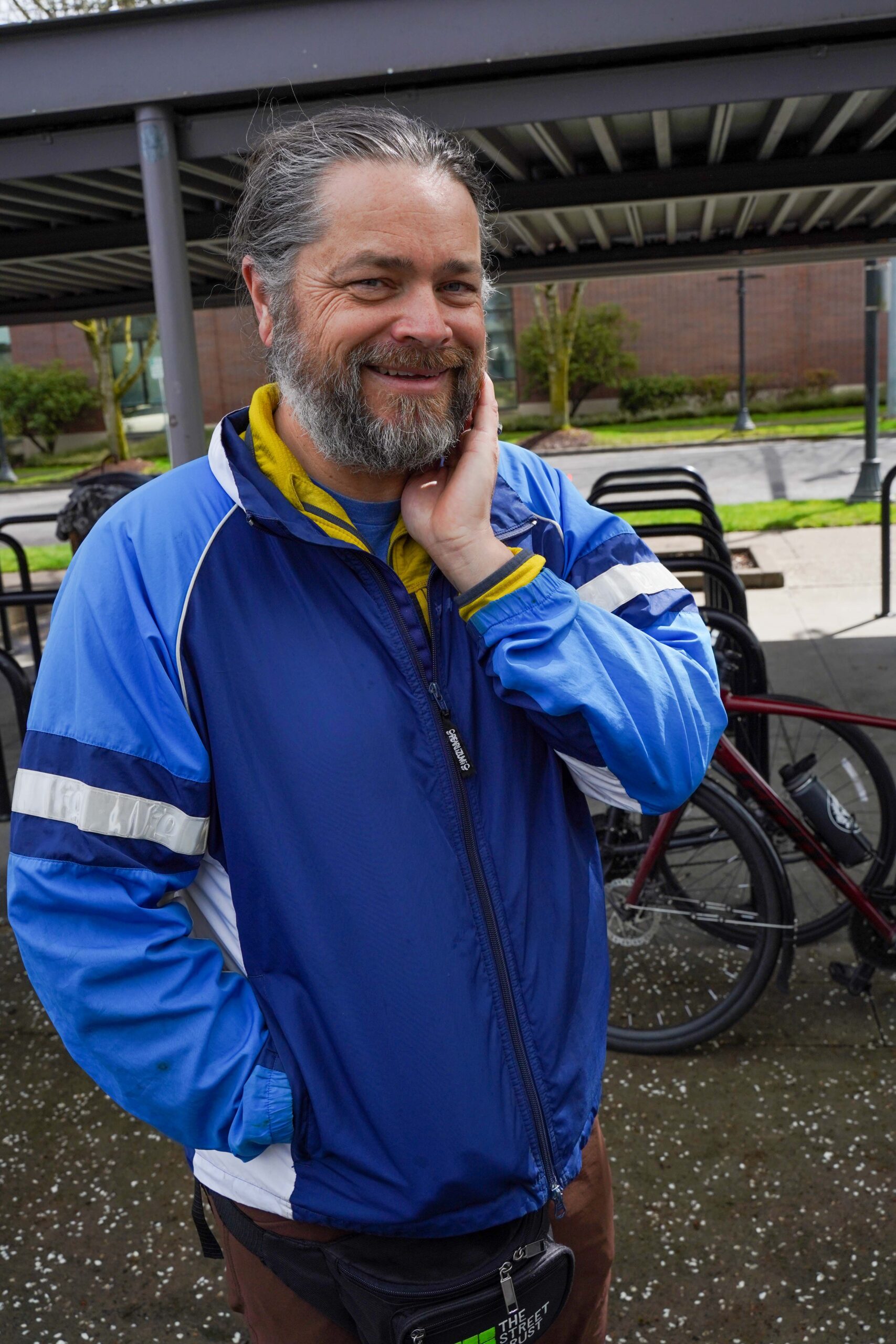
However, I want to push back gently in one regard, namely on the framing of this issue as one to be solved through individual mobility choices. I think it’s important to connect the dots between the need for broader societal changes. Parents’ decision to drive are frequently the result of a lack of family-friendly policies that would enable everyone in the community to live richer and car-free/car-light lives. And I’m not just talking about urban planning measures but broader social reforms.

However, beyond looking for changes in individual choices, I’d like to see us also continue make explicit the connections between the US social policies and how these policies (or lack thereof) ultimately impact and constrain individual choice.

As a point of comparison, I’ve spent about 5 years living in Europe (in Scandinavia but also in lower-income Eastern European countries). In general, families, including the many who were carless, had many more options available not only because of higher urban densities, national policies supporting families. For example, within just a 5-minute walk of one apartment I lived in in Eastern Europe (and not in a wealthy neighborhood), there was an elementary school, two preschools, a small grocery store (that contained a pharmacy), a playground, a dog park, a library, a few cafes and restaurants, and a bus stop for a frequent service line (and children routinely rode city buses by themselves from age 7 onwards). Social policies that support families: national healthcare, paid parental leave for 1 year (or more!); the presence of neighborhood medical clinics, subsidized childcare, subsidized public transit, etc. (Also there were the ‘sticks’- expensive gasoline, extensive paid parking zone, and the cost to get a driving license was roughly the cost of an average monthly salary).

By comparison, I find that even when living in a relatively walkable/bikeable/transit-rich neighborhood in Portland, my decision to drive as a parent has been shaped by myriad factors that at first glance seem only peripherally related to urban form: what neighborhoods I could afford to live in (and tax policies that incentivize home ownership); lack of “third spaces” or insufficient funding for those third spaces in the public sector (parks, community centers, libraries); private health insurance governing where we could get care; the location of affordable (or even available!) childcare; the need to retain my employment as a new parent (because of the need for health insurance, and the lack of any paid parental leave) and insufficient vacation and sick time, Portland Public Schools’ lack of support for the neighborhood school model (I have personal experience with this) resulting in more cars on the road, and TriMet’s family-unfriendly policies (requiring parents to fold strollers upon boarding; not sure if this has changed) making transit a challenge for parents to navigate. And most recently we have employers forcing employees who work remotely to return to the office (when they can effectively WFH).

Individual solutions will come in various shapes. In my case, I chose to limit my carbon footprint by having only 1 child. I will drive my child to some activities (within limits- no traveling sports), in part because I can’t afford to live in neighborhoods where many of the amenities are available, and also to participate in activities with my small cultural community (which is scattered across the region). But I also have been teaching my child from a very early age to ride transit, cycle in traffic, and to navigate his neighborhood on foot, and we try to support local activities. However, beyond looking for changes in individual choices, I’d like to see us also continue make explicit the connections between the US social policies and how these policies (or lack thereof) ultimately impact and constrain individual choice.


Thank you Zoe for taking the time to share your broad perspective. You can find Zoe’s comment, and many other engaging comments too, under the original post.

Monday Roundup: More about youth versus cars, USDOT gives up fighting freeway expansions, and more

Welcome to the week. Hope you’re staying warm and safe from the cold temps and ice!

Here are the most notable stories our writers and readers have come across in the past seven days…

Another look at why young people aren’t driving as much: In last week’s Monday Roundup, we featured a story from The Economist about why young people in North America and Europe are turning away from cars as transportation. But the media momentum for this phenomenon isn’t over yet. Here’s another story on the youth’s war on car culture. (Washington Post)

USDOT backs off about freeway expansion: The U.S. Department of Transportation has previously been encouraging states to spend money from the Infrastructure Investments and Jobs act on fixing highways instead of expanding them. But Republican backlash has prompted to rethink this strategy. (Politico)

How state departments of transportation can help unhoused people: What role might state DOTs have in addressing homelessness? Turns out, there are some things they could do to make a difference. (Streetsblog)

Why Portland Parks is removing lampposts: The City of Portland is dealing with an impending lawsuit by someone who was injured after a lamppost at Irving Park fell when they tied a hammock to it last summer. Now, the Portland Parks Bureau is removing hundreds of lampposts from parks around the city. (Willamette Week)

https://www.wweek.com/news/2023/02/24/tort-claim-notice-alleging-injuries-to-hammocker-offers-insight-into-citys-removal-of-parks-light-poles/

Which states give the most (and least) money to transit?: New research from Transportation for America and the National Campaign for Transit Justice show how U.S. states allocate money to public transit. Most of them dedicate less than $12.50 per person to public transportation annually, but Oregon is doing slightly better. (Transportation for America)
How public transportation access impacts community college students: Apparently, nearly 50% of community colleges in the U.S. are located more than 4.5 miles away from a public transit stop, putting affordable education out of reach for people who don’t drive. (Streetsblog)

Walking is good for you (who knew?): Data shows that people who live in walkable cities are healthier. Unsurprising, maybe, but just another reason to prioritize planning for active transportation. (CityLab)

The War on Cars turns 100: One of our favorite podcasts, The War on Cars, released its 100th episode last week, and it features some shoutouts to Portlanders like Jenna Phillips and local organization the Parking Reform Network. Check it out here (or wherever you listen to podcasts).

Home organization tips for bike people: Need help fitting a bike in a small space? This article has some advice for storing your bike if you don’t have a lot of room. (Washington Post)

California may recognize the dangers of heavyweight cars: People who drive heavy SUVs and trucks in California might need to pay more for vehicle registration due to the increased threat these cars pose to vulnerable road users. (Los Angeles Times)

Taylor talks biking in Europe with Active Towns: BikePortland staff writer Taylor Griggs was featured on the Active Towns channel last week for an interview about her recent bike-centric trip to Europe. Check out the video or listen to the audio-only podcast. (Active Towns)


Thanks to everyone who shared links this week.

Behind ODOT’s decision to close hundreds of Portland-area crosswalks

A “crosswalk closed” sign at SE Powell Blvd and 61st Ave. (Photos: Taylor Griggs/BikePortland)

“It seems once again that the burden of safe behavior is being placed entirely on pedestrians and bicyclists. Nothing is being asked of drivers.”

-Tiel Jackson, Portland Pedestrian Advisory Committee

When the Oregon Department of Transportation quietly released the news that they planned to shut down 181 crosswalks in the Portland metro area two weeks ago, people had a lot of questions — like which exact crosswalk legs were on the chopping block and why ODOT was making this decision. Transportation advocates were also confused and frustrated about the agency’s lack of transparency and public involvement in the process.

“There was no public process, no public notification, no public input of any kind. All of these crosswalk closures just started popping up,” said Tiel Jackson, co-chair of the Portland Pedestrian Advisory Committee (PAC) at a meeting earlier this week. “And that makes it really difficult to build a climate of trust with ODOT, especially with these other major projects that we have going forward.”

These “major projects” include the I-5 Rose Quarter expansion and subsequent plan to cap the freeway and reconnect north Portland’s Albina neighborhood, which has faced scrutiny and backlash for a long time. Given the particularly dangerous conditions for people biking and walking on ODOT-owned streets in Portland, transportation advocates are asking the agency to refocus their financial priorities away from increasing freeway capacity and toward making their streets safer.

To ODOT, these crosswalk closures are essentially a formality — the agency says the crosswalks they’re blocking off have been closed in essence long before now — and keeping them open would pose safety problems.

“The whole point of this is a safety question to make sure we’re directing pedestrians to the safety possible crossing at each state road. We don’t want people crossing at unsafe places across the highway,” ODOT Public Information Officer Don Hamilton said to BikePortland. “We want to make sure that they get to the safest possible crossing specifically on Powell Blvd, where we’ve had some problems in the past.”

Active transportation advocates say this strategy is misguided and puts the onus of safety on vulnerable road users instead of traffic engineers and planners who could make these streets safer with more ambitious — and less car-centric — redesigns. But ODOT is going ahead with their plan — many of the crosswalks are already closed. And without any pushback against ODOT from other local transportation agencies, it’s unclear what the path forward is for fighting these closures.

Reasons for closure

The initial information ODOT provided about the crosswalk closures was sparse in details, but the agency has now released a full list of crosswalk closures in Portland with specifics about which leg of the crossing will be closed and the criteria for the decision.

Some of the criteria ODOT outlines for closing these crosswalks include: median obstructions in the middle of the street with no cut-throughs; lack of pedestrian facilities or shoulders; inadequate sight distance for people driving to see people walking across the street and crossings aligned into driveways.

Portland Bureau of Transportation (PBOT) staff were caught off-guard by the announcement, as ODOT staff didn’t inform them about it ahead of time. But they ultimately came to the consensus that these criteria were acceptable and well-informed.

At a Pedestrian Advisory Committee (PAC) meeting this past Tuesday, PBOT Interim Pedestrian Coordinator Gena Gastaldi gave an update regarding PBOT’s temperature on the crosswalk closures.

Another newly-closed crosswalk on Powell at 57th Ave.

“We didn’t know this was coming — we were not briefed on it beforehand, either. It came as just as much of a surprise to us as it did to everyone,” Gastaldi said. “What my colleagues and I found looking at the list of crossing closures is that a lot of them were just formalizing crossings that were already closed…I think there was some room for improvement with the unveiling or messaging around [ODOT’s decision], but from what we’ve all discussed at PBOT, these are all locations we would probably be closing as well.”

This may not be sufficient reasoning to people who have also criticized PBOT for closing crosswalks in the past.

Another reason ODOT cites for closing a crosswalk is if there’s a crossing nearby they deem safer that they want people to use instead.

This is the case for several crosswalk closures on Powell Blvd, including at 45th, 57th and 70th Aves. ODOT also cites this as a reason for closing the westerly crosswalk on Powell and 61st, an intersection due for an enhanced crosswalk on its eastern side through a TriMet plan. (ODOT has already shut down the western crosswalk at this intersection — but TriMet has yet to deliver on its planned crossing on the other side of the street. TriMet planners didn’t know about ODOT’s plan ahead of time.)

The ADA lawsuit

When ODOT announced their decision to close the crosswalks, they said it was a way to comply with Americans with Disabilities Act (ADA) curb ramp standards at crosswalks that are “unsafe and inaccessible.” But the decision raised eyebrows among people involved in the lawsuit, who thought it may have been ODOT’s attempt to get out of their legal responsibilities.

In 2016, a group of Oregonians sued ODOT, alleging the state hadn’t build ADA-compliant curb ramps while constructing and maintaining state highways. They later settled out of court. Per the settlement agreement, ODOT completed a survey of curb ramps on state highways and found that 97% of the 26,000 ramps they inspected didn’t meet ADA standards. Ten Oregon counties didn’t have a single compliant ramp.

According to the terms of the settlement, ODOT needed to remediate 7,770 curb ramps statewide by December 31, 2022 (30% of the total ramps that need work statewide). Per a 2021 audit report of the ADA Settlement Agreement (pdf), the agency had completed 3,744, leaving about 4000 more to be done in 2022.

Tom Stenson, a senior attorney with Disability Rights Oregon who has been involved in the lawsuit, believes part of why ODOT decided to close the 181 crosswalks is because they weren’t meeting the timeline for fixing the ramps, and he is skeptical about the other reasons the agency cited for the crosswalk closure plan.

“I think what’s troubling is under their own rules, they can’t just close a whole swath of crossings. There are actually pretty specific rules that they have to follow,” Stenson told BikePortland. “And it seems unlikely that they’ve been able to follow the very exacting requirements for closing in this context for hundreds of crosswalks in one go.”

Closing crosswalks is a legally acceptable way to comply with ADA requirements, and ODOT has done this to fulfill ADA standards at a variety of crossings across the state. But Stenson said he doesn’t think this is a good faith reading of the settlement agreement.

At the PAC meeting on Tuesday, Portland ADA Coordinator Lisa Strader — who was ODOT’s ADA Coordinator in the aftermath of the lawsuit settlement — offered a different perspective. She said the locations ODOT chose to close are genuinely unsafe and can’t be remedied, and many of them have already been closed for a long time. The formalizing of the closures is to meet the ADA settlement requirements, but not due to nefarious reasons.

“One of the ways that they can make a corner or the curb ramp compliant is by closing a crossing…ODOT recognized that they already had closers in place, but they didn’t have all the documentation because the process changed over time,” Strader said. “It’s mostly a clean-up process to be sure that they’ve formally done everything they need to do under their under their settlement agreement related to where they close a crosswalk and effectively then close the curb ramp.”

BikePortland reached out to ODOT’s communications team for a comment on the relationship between the settlement and the lawsuit, but haven’t heard back.

What advocates are thinking

A press statement issued last week from advocacy non-profit Oregon Walks states the organization’s intent to keep fighting these crosswalk closures.

“For pedestrians in Oregon, crossing the street is more dangerous than it has ever been. In just the month of January, three pedestrians in Portland were killed on streets that the public has begged ODOT and PBOT to make safer for years,” the statement reads. “Be assured that we are reviewing these closures and where appropriate will advocate for not only the reversal of the closures, but an investment in their improvement.”

Oregon Walks is one group opposed to the crosswalk closures. (Source: Oregon Walks)

Per Oregon law, a crosswalk exists at every public road intersection, whether or not it’s marked. Many of the crosswalks ODOT is closing are genuinely unsafe for a variety of reasons. But advocates still want to know why those problems couldn’t have been remediated instead of just shutting the crossings down entirely.

“It seems once again that the burden of safe behavior is being placed entirely on pedestrians and bicyclists. Nothing is being asked of drivers,” said PAC co-chair Tiel Jackson at Tuesday’s meeting. “What problem is this really trying to solve and it’s the best way to go about solving it? In what world does giving us fewer walking options actually make us safer?”

PAC member Mary Lee Turner, an accessibility advocate who is blind and uses a white cane to help her get around the city on foot, pointed out another safety concern about the crosswalk closures.

“What if I’m out there and I go across the street and the crosswalk is closed? How am I going to know it as a person traveling who’s blind?” Turner asked. “Now it’s getting even scarier [to walk in Portland].”

Jackson said the way ODOT went about this process is only contributing to the feelings of distrust many advocates have about the state transportation agency. Above everything else about the specific qualms with the crosswalk closures, this is the big takeaway many advocates appear to be getting from this situation.

“I started off very challenged with trusting ODOT,” Jackson said. “And I continue to be very challenged.”

Job: Assistant Shop Manager & Master Mechanic – Bike Works by p:ear

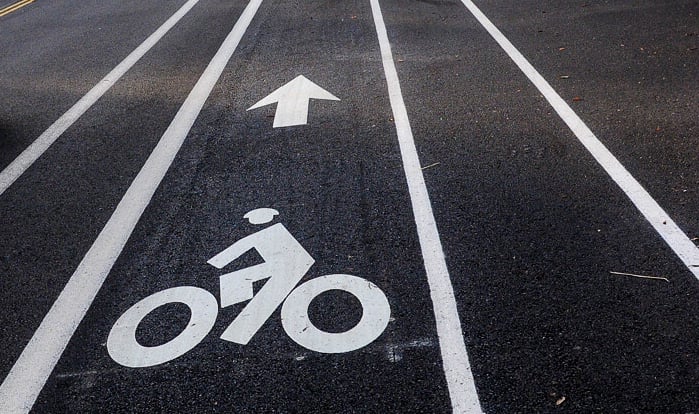
Buffered Bike Lane with a bike symbol and arrow pointing forward

Job Title

Assistant Shop Manager & Master Mechanic

Company / Organization

Bike Works by p:ear

Job Description

POSITION DESCRIPTION
Position: Assistant Shop Manager & Master Mechanic
1 FTE: Tuesday-Saturday. Requires occasional evenings and Sundays
Reports To: p:ear Works Director
Compensation: $50,000 – Benefits include 4 weeks paid vacation, health, dental, 2% Simple IRA match, short-term disability, 8 paid sick days
Bike Mechanic Job Description
You are a dynamic individual and master bicycle mechanic, who will help support our social purpose enterprise community bike shop in East Portland. bike works supports Portland’s Eastside communities, providing low cost, low barrier access to bike education, repair and sales of refurbished bicycles and parts. This position will support the Shop Coordinator, assist with daily shop operations and help mentor p:ear youth bike mechanic interns at the shop.
Required Qualifications & Competencies
• Committed to personal growth with a high degree of humor + emotional intelligence
• Dedicated to ending youth homelessness
• Must be a positive and strong role model, have a collaborative, team-oriented
work style, and strong strategic and problem-solving skills
• Must be committed to non-violence, trauma informed care + compassionate
responses
• Must have awareness of one’s own identity, an understanding of differences, and
an excitement about building relationships cross-culturally
• Strong commitment to advancing equity and inclusion and creating and
maintaining a diverse environment
• Ability to learn & build on the varying cultural & community norms of p:ear youth
• Self-initiating, independent and highly motivated
• Strong leadership skills and capacity to work in a deadline-oriented, chaotic
environment
• Commitment to advancing equity and creating and maintaining an inclusive
environment that is welcoming for all
• Commitment to non-violence and compassionate responses
• Bike shop mechanic experience – minimum of 5 years in a professional setting
• Excellent customer service and communication skills
• Able to work independently, problem solve and complete tasks with minimal
oversight
• Bilingual a plus
Essential Duties & Responsibilities
• Proficiently execute assembly, repairs and maintenance for all types of bicycles, particularly used and older bicycles
• Assist in daily shop operations: ordering, inventory, forecasting, bike repair
• Exemplifies compassion and understanding around the barriers of homelessness
and underrepresented populations in the community – see above
• Maintain an organized and efficient work environment
• Represent bike works and p:ear and its mission to positively and professionally
identify barriers and recommend solutions to better serve the community
• Attend p:ear fundraisers & community building activities
Mechanics
o Properly assess and determine bike repairs and recommend customer options o Repair and refurbish bicycles to be sold in the shop, as well as to be donated o Track all parts and new & used for each repair or build
o Maintain a neat and organized workspace
o Maintain a high level of professionalism
o Perform quality control checks on bikes repaired and/or built
Shop Operations
o Assist Shop Coordinator with a variety of tasks, including maintaining an inventory of new and used parts, placing orders with distributors as needed, maintaining shop tools and restocking as necessary
o Assist customers in the shop with purchases and bicycle repairs during sales o Strong proficiency with bicycle tech
Community Programming Liaison
• Safety check all Everybody Bikes! complete bicycle prior to distribution
• Build and sustain relationships with the Rosewood Initiative community
• Represent p:ear and its mission positively and professionally
• Participate in Sunday Parkways, Free Bikes 4 Kids monthly wrenching, as well
as the occasional community bike/ride events
Physical Demands
• Able to sit or stand and walk throughout the scheduled work shift
• Ability to lift and/or move up to 75 lbs

bike works by p:ear
Bike Works by p:ear promotes the bicycle as a vehicle for social change to leverage possible opportunities for homeless youth and build resilient and diverse communities. p:ear’s social enterprise bike shop works to make bicycling accessible and affordable to Portland’s east side community. Our full service bike shop provides an array of services, from minor adjustments and tune-ups, to full bike overhauls.
p:ear’s Bike Mechanic School serves as a conduit from which our shop’s intern mechanics became educated and trained in the art of bike mechanics. Under your guidance p:ear youth interns will continue to build their mechanical hard skills as well as develop the soft skills of customer service, time management, problem solving and independence to name a few.
The Rosewood Initiative
The Rosewood Initiative connects and empowers Rosewood neighbors to build a safe, prosperous, vibrant and inclusive community. The Rosewood Community Center is a
p:ear Bike Works Agreements
Lastly, we expect the following agreements to be used with regard to every youth intern, customer and individual regardless of race, religion, color, creed, national origin, age, disabling condition, political affiliation or sexual orientation.
Agreements*
Agreements are more than a vehicle to keep conversations safe and focused. When used to their potential, agreements are an actual tool. Agreements are a tool that supports both individuals and organizations in understanding “how” to engage in productive efforts to advance equity and inclusion. We expect all employees, interns and volunteers to honor the following agreements:
 Stay Engaged  Speak Your Truth Responsibly Listen to Understand  Be Willing to Do Things Differently / Experience Discomfort
 Expect and Accept Non-Closure Confidentiality
*Adopted from the Center for Equity and Inclusion
hub where neighbors can help the community as they improve their own lives. Neighbors
come here to interact with one another, work on projects and feel safe. Rosewood builds
capacity in the neighborhood by helping people learn useful skills and by connecting
friends, partners and resources. The Bicycle Shop Manager position is a partnership
between p:ear and The Rosewood Initiative. This person will be expected to follow all
organizational policies and procedures of both organizations.

Work Environment
This job operates in an often chaotic, loud environment. This role routinely uses standard (kitchen and) office equipment such as stoves, commercial dishwashers, microwaves, refrigerators, freezers, computers, phones, photocopiers, filing cabinets and fax machines.
Physical Demands
The physical demands described here are representative of those that must be met by an employee to successfully perform the essential functions of this job.
While performing the duties of this job, the employee is regularly required to talk or hear. The employee is frequently required to stand; walk; use hands to finger, handle or feel; and reach with hands and arms.
Travel
No travel expected for this position.
AAP/EEO Statement
It is the policy of p:ear to provide equal employment opportunity (EEO) to all persons regardless of age, color, national origin, citizenship status, physical or mental disability, race, religion, creed, gender, sex, sexual orientation, gender identity and/or expression, genetic information, marital status, status with regard to public assistance, veteran status, or any other characteristic protected by federal, state or local law. In addition, p:ear will provide reasonable accommodations for qualified individuals with disabilities.
Other Duties
Please note this job description is not designed to cover or contain a comprehensive listing of activities, duties or responsibilities that are required of the employee for this job. Duties, responsibilities and activities may change at any time with or without notice.

How to Apply

To apply: Please submit a resume along with answers to the following questions (in lieu of a cover letter). The below questions along with a resume can be emailed as PDFs to info@bikeworkspdx.org or mailed to contact information below. No phone calls. Successful applicants will be contacted for an initial screening. bike works is located at 14127 SE Stark St, Portland, OR 97233
1. How will you utilize p:ear’s equity statement (see below) to inform your role as the bike works Assistant Shop Manager and Master Mechanic?
2. As the assistant shop manager and master mechanic, how will you share your love and knowledge of bikes to connect and build strong partnerships and relationships within a diverse community?
p:ear
Attn: Nathan Engkjer 338 NW 6th Ave. Portland, OR 97209
p:ear Equity Statement:
p:ear builds positive relationships with homeless and transitional youth through education, art and recreation to affirm personal worth and create more meaningful and healthier lives.
At p:ear, we respect and celebrate the diversity, creativity, and strength of our community. To foster individuality and truly give space to the value that each person brings — from the youth we serve daily to our staff, board, and volunteers — we must continuously work at creating an environment that is equitable and inclusive.
Our organization was built on a foundation of compassion and love, but we know we must confront the systems of oppression that are embedded throughout our community and ingrained in ourselves. This means seeing and understanding systems of oppression in our everyday lives.
Ongoing work toward building an equitable and inclusive organization is a priority at p:ear. We are committed to examining our weaknesses as well as our privileges, and to examining the institutional and individual behaviors and attitudes that may perpetuate the very inequities we wish to change.
We are committed to creating a culture of inclusion, self-reflection, and personal growth. We are committed to using our time and resources — including our social capital — to combat these systems of oppression and create more opportunity. This means applying an equity lens to our decision-making processes, using our Equity Plan as an ongoing organizational guide, and updating that plan as we continue to learn and grow. This work
will create more opportunities for individuals to thrive — from the youth we serve to our staff, board, and volunteers.
p:ear respects and celebrates the diversity, creativity and strength of the p:ear community. Equity and inclusion are a priority across all parts of our organization. We are committed to using our time and resources to help identify and eliminate disparities based on identity and to promote equitable access to our programs so we can all live in the world we want for our young people.

Guest Article: How to make Sunday Parkways better

Sunday Parkways in Cully, 2022. (Jonathan Maus/BikePortland)

This article was written by Portland resident and transportation advocate Andrew Lindstrom. This is a slightly edited version of the post that appeared earlier this week in the City Hikes blog.

Andrew Lindstrom. (Photo courtesy of author)

The Portland Bureau of Transportation is preparing for this year’s Sunday Parkways — open streets events that were modeled after the “ciclovía” program (bike lane in Spanish) in Bogotá, Colombia. But although the events in Portland and Bogotá both happen on Sundays and involve the city shutting down certain streets to car traffic to make way for people on other modes, the similarities stop there.

Each Sunday in Bogotá, for the entire year, the city closes 75+ miles of streets for the ciclovía. In Portland, on the other hand, PBOT has recently downsized the program from five annual Sunday Parkways to just three. Throughout the three events in Portland this summer, the city will manage to close a total of 11.5 miles. Additionally, the kinds of streets that are part of these programs are very different.  In Bogotá, the city opens up major city corridors to people outside of motor vehicles whereas Portland tends to focus the program on smaller neighborhood streets. In other words, the Portland events end up being pretty weak tea compared to the strong Bogotá brew.

But Sunday Parkways are still the marquee “carfree” event in the city of Portland, so I think they’re worth a closer look.

Portland Sunday Parkways is the Taco Bell of ciclovía programs.

Can a carfree event be transformative? In Bogotá, there is plenty of evidence that the ciclovía program has transformed the city: over one million people participate in it weekly! In Bogotá, major streets get closed and people flock to them. It’s impossible not to notice. In Portland, I wouldn’t even know they existed if I weren’t a transportation dork – and while perhaps the longer-tenured Portlanders feel otherwise, it feels like Sunday Parkways hasn’t really gotten the love it needs to thrive as an event. And considering that one event last year featured an angry man brandishing a gun, it’s safe to say there’s a ways to go Sunday Parkways has a transformative effect for the culture of roadway space in Portland.

The streets Bogotá shuts down for the ciclovía aren’t minor ones. Calle 26 is partially grade separated, and connects the central city to the airport. (A Portland equivalent would be something like 82nd Ave.) And that is exactly why it’s a great program. It gives the most important streets back to the people, once a week. In typical USA fashion, we have appropriated something really cool from Latin America and made it mediocre. Portland Sunday Parkways is the Taco Bell of ciclovía programs.

The map of Bogotá’s ciclovía events.

The goal of a ciclovía-style event is to give street space back to the public. If only a few miles of streets (none of them major) are shut to motor vehicles, is it even worth comparing Portland’s Sunday Parkways to Bogotá’s?

What’s the big deal?

The big deal is that Sunday Parkways’ goals are unclear, and I even think the events subtly reinforce car culture because they happen so infrequently. When PBOT is unwilling or unable to run the event more than three times a year, and when it happens only on neighborhood streets, it sends the message that cyclists (and pedestrians) don’t belong on major roads.

PBOT’s latest emphasis on Sunday Parkways as a way to “provide free, accessible, inclusive family-friendly activities in underserved communities” doesn’t make sense in the context of Bogotá-style ciclovía events, which are large enough to encompass the entire city (including previously-underserved neighborhoods). The event in Bogotá also has a static route that has been roughly the same since the 1970s. It’s confusing for everyone to change the streets that are part of the route, both motorists and participants. If Portland’s Sunday Parkways event covered more ground in the city, everyone could benefit, including people in underserved communities.

I’d also like to see PBOT focus more on the benefits of Sunday Parkways as a way to give back space in the streets to people biking and walking, but that goal seems like an afterthought. When cyclists, pedestrians, and non-automobile users are given space on the roads, it normalizes the idea that streets are for everyone and that they are a public space. We have the excellent Pedalpalooza rides to look forward to, but if PBOT got their act together we could have a truly transformative official event rather than something that simply pays lip service like our present program does.

What I would do

I’d like to propose a Bogotá-style plan, with static closures every Sunday during a specific time, on major or semi-major thoroughfares that are typically functionally closed to cyclists. Here’s a potential map for what it could look like:

Sunday Parkways made better. (Source: Andrew Lindstrom annotation of GoogleMap)

It’s not a perfect map, and in a lot of ways it’s not as “radical” as Bogotá. But it would be a good place to start. SE Stark in particular is a street I would really love to see closed for a cycling event. It’s got it all – a mostly flat alignment (outside Mount Tabor), a good amount of smaller commercial areas (around 14th, 28th, and east of Tabor), and it’s also one the most dangerous streets in the city for pedestrians and cyclists east of I-205). There are also plenty of parallel streets that people can use if they want to avoid the event.

But the specific streets that close are less important to me than consistency and frequency. And it needs to happen weekly, year-round, rain or shine. Frankly, when we plan cycling events only in the summer, it reinforces the need for a car. Rain is a fact of life in Portland from October to May – if cycling is to be a fact of life as well, then cycling in the rain needs to be part of that.

We can have nice things too, but it takes a lot of work to get things done. Realistically, all we have to do in Portland to get a real ciclovía event is have visionary leadership and ample public pressure. Maybe don’t hold your breath on this, but you can start by attending the Sunday Parkway events that we do have and demanding more from your public officials. Ride your bike, take the bus, go on walks. If you want your city to be a better place, I think the first place to start is to engage with the city as a human being.

Opinion: Some reflections on my carfree birthday

The actual anniversary came and went unnoticed, but I just realized that it’s now been over a year since I dropped my car off at a dealership, handed over the keys, title and registration and began my carfree life. This doesn’t really feel like a momentous occasion to me, but perhaps that nonchalance is all the more reason I should do some reflecting. So…what have I learned this year?

First, a bit of background. While I was always active on my bike as a form of transportation and leisure starting from a young age, I will honestly say I had some pretty big blinders on when it came to my own car use up until pretty recently. It’s remarkable — and pretty embarrassing — to me that I used to drive so casually, even as I was extremely worried about the climate crisis and thought I was being fairly responsible. Car dependency just wasn’t something I noticed. (I guess my story shows how much people can change in a short period of time.)

If I try to trace back my journey to enlightenment about car culture, I think I can point to a few waves of realization. One of the first one of these came about when I was working on a story about parking at the University of Oregon (UO) for the Eugene Weekly newspaper — my first-ever foray into transportation reporting. My initial angle for this story came from the perspective of disgruntled students and staff who were tired of paying exorbitant parking fees on campus. But I thought it might also be interesting to find out what some transportation faculty had to say about the situation.

I will always remember my conversation with Marc Schlossberg, the notable professor of city and regional planning at UO who very kindly schooled me on parking and transportation policy and changed my life forever. I still have the notes from our conversation on my computer —here are a few pertinent quotes I jotted down, my mouth agape as a new world unfolded before me:

“The existence of so much parking makes it impossible for other options to be viable…a city where walking, biking or transit is most convenient and comfortable and having ubiquitous parking everywhere are mutually exclusive realities…the UO campus is the first experience a lot of people have in an environment where they can’t find a parking space, and it’s always a real shock. If we’re really interested in issues of social justice, cohesion, economic equality, climate change, public health crisis around car crashes, we have to do something.”

I am astounded looking at these notes — how did I not know this stuff? His call to action was very inspiring to me. Through my reporting, I started to become interested in other aspects of infrastructure, and followed a bunch of city planning people on Twitter. Finally I embarked on my first carfree experiment in March 2021, when I was still living in Eugene. My goal was to stop driving for a month. It was a lot easier than I thought it would be, and I realized then that I wanted to fundamentally restructure my life so I could live carfree. From then on, it was only a matter of time.

After the intense climate despair I felt during and after the heat dome event in the summer of 2021 and my move to Portland a few months later, I was completely done with car ownership. Biking was my main form of transportation by that point anyway, and I felt a pit of guilt in my stomach every time I started the engine of my car.

The main reason I didn’t sell it sooner than February of last year is because I was procrastinating dealing with the logistics (cleaning it out, finding the paperwork, choosing where to sell it). But I was a little scared, too. What if I needed it? I knew there was no way I could feel good about driving my own car ever again, however, no matter the possible downsides that I feared might up later. Like Shannon Johnson asked in her great Family Biking column this week, “how does your mode of transportation…align with your values and priorities?” For me, driving a car didn’t. (I was also tired of throwing away money on insurance every month for a vehicle I never used.)

So I sold it! And I can say with 100% certainty that there hasn’t been a single moment of regret all year.

The big takeaway I want to tell people is that even though I don’t drive and the majority of my peers do, my life is pretty much…unremarkable. Obviously, my job is particularly well-suited to getting around on other modes of transportation, so I have a leg up there. But I do a lot of other things, too. I see my friends who live in different neighborhoods across the city, buy too much stuff at Trader Joe’s by accident, move houses…and I’ve been able to do all of that by bike, no problem.

Of course, I’m not saying that it’s always easy: people who don’t drive face a structural disadvantage when it comes to getting around Portland, and that needs to change. But one of the most troubling things to me has been experiencing people making the assumption that the things I have to do are less important than the things they have to do because I ride my bike or walk to get there, and they use a big, heavy machine. Compared to a lot of problems people face, this is a small one, but it’s a bit annoying.

When I tell people I don’t drive, I often find myself cutting their potential defensive comments off at the pass before they’ve even said anything. (I’ve even done it in this article.) I’ve heard these arguments enough times to know it’s easier to just have some justifying remarks ready right off the bat. I might say things like, “I’m lucky because I have the privilege to not need to drive a car…a lot of people aren’t so lucky,” or “We live in a car-dependent society, nobody should be shamed for driving. It’s the structures we need to change, not the individual.”

To some extent, these things are true. I don’t think shame is the best influencing tool. But my goal for the next phase of my carfree life is to stop making so much of those justifications. There are a lot of people who have the same advantages as I do who couldn’t be bothered to think about their car use — I would know, because it wasn’t very long ago that I was one of those people. If we’re ever going to get anywhere with our transportation and climate goals, this has to change.

So, I’m happy I’ve been carfree for a year, and it’s certainly been great for me in a lot of ways: I save a lot of money, I get much more exercise and while I still feel constant climate dread, I don’t feel nearly as much cognitive dissonance, which has been enormously helpful. But I’m not asking for kudos. A lot of people have never had their own car because they can’t afford it or are physically unable to drive one. I live a pretty normal — even exciting! — life, just without a car. Believe it or not, it is possible.

Job: Shipping Specialist – Velotech, Inc.

Buffered Bike Lane with a bike symbol and arrow pointing forward

Job Title

Shipping Specialist

Company / Organization

Velotech, Inc.

Job Description

Velotech, Inc. is a locally owned business that has operated in Portland since 2002. Velotech is the parent company of BikeTiresDirect, Western Bikeworks, and Trisports.

We are always hiring! We have flexible schedules that accommodate multiple needs. Whether you are seeking full time, part-time, or something in between, reach out and let us know what you are looking for. We love to promote from within, so if you are looking to get your foot in the door, this could be a great entry point.

​​​​​​This position is responsible for picking, packing and shipping customer orders. Qualified Shipping Specialists also execute product put-away, clean their work area, execute physical counts, and available for general physical and/or minor administrative labor.

Starting rate is $17.25 per hour.

ESSENTIAL FUNCTIONS INCLUDE BUT ARE NOT LIMITED TO:
Pick incoming web orders and warehouse pick up orders
Pack and ship orders according to supervisor’s guidelines
Maintain accurate inventory through regular cycle counting
Assist receiving department with put away of new items
Maintain a clean and organized workspace
Assist with any projects, or assist in other departments as instructed by supervisor
Perform all duties in a safe manner and report all safety concerns immediately to supervisor

MINIMUM JOB REQUIREMENTS:
Wear closed toe shoes at all times in warehouse
Be able to lift 25 lbs above your head without assistance
Stand for long periods of time
Be able to lift 50 lbs without assistance

KNOWLEDGE, SKILLS, & ABILITIES:
Excellent communication and organizational skills
Solid knowledge of cycling products
Ability to work in a high volume, fast-paced environment
Ability to work independently or with others to manage multiple task with minimal supervision.

BENEFITS:
Generous Employee Discounts
Flexible Schedules
Medical/Dental/Vision for all full & regular part-time employees
Paid Time Off – up to 15 days your first year
Quarterly ‘Get Outside’ days

PHYSICAL/MENTAL DEMANDS:
The physical demands described here are representative of those that must be met by an employee to successfully perform the essential functions of this job. Reasonable accommodations may be made to enable individuals with disabilities to perform the essential functions. While performing the duties of this position, the employee is regularly required to talk or hear. The employee frequently is required to use hands or finger, handle, or feel objects, tools or controls.

While performing the duties of this job, the employee is regularly required to stand; walk, reach with hands and arms, stoop, kneel, crouch and sit for extended periods of time.

The employee must occasionally lift and/or move up to 50 pounds. Specific vision abilities required by this position include close vision, distance vision, color vision, peripheral vision, and the ability to adjust focus.
The noise level in the work environment is usually moderate.

This description is intended to provide only the basic guidelines for meeting job requirements. Responsibilities, knowledge, skills, ability and working conditions may change as needs evolve.

Velotech is an Equal Opportunity employer.

How to Apply

If interested, please click on the link to apply (or copy and paste into a browser):
https://www.paycomonline.net/v4/ats/web.php/jobs/ViewJobDetails?job=4367&clientkey=F102FCECFB43ED66CAD0C8276CB962A9