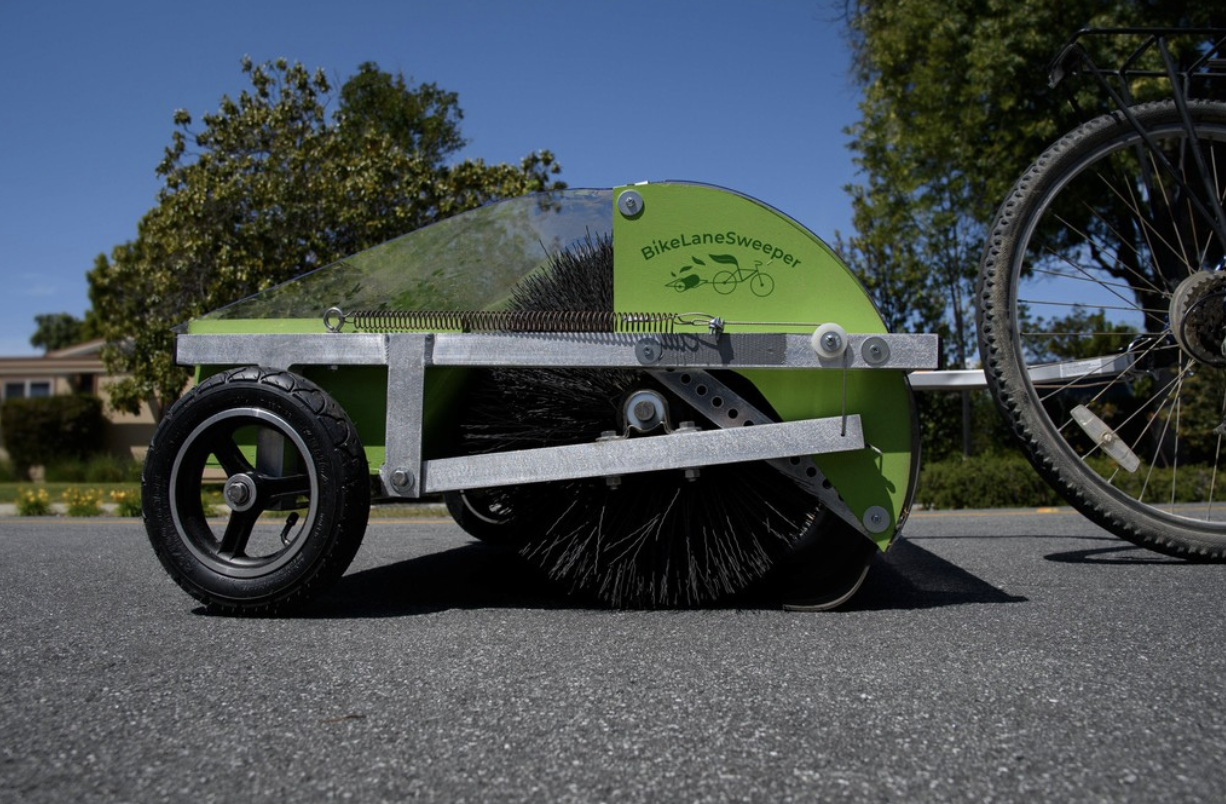
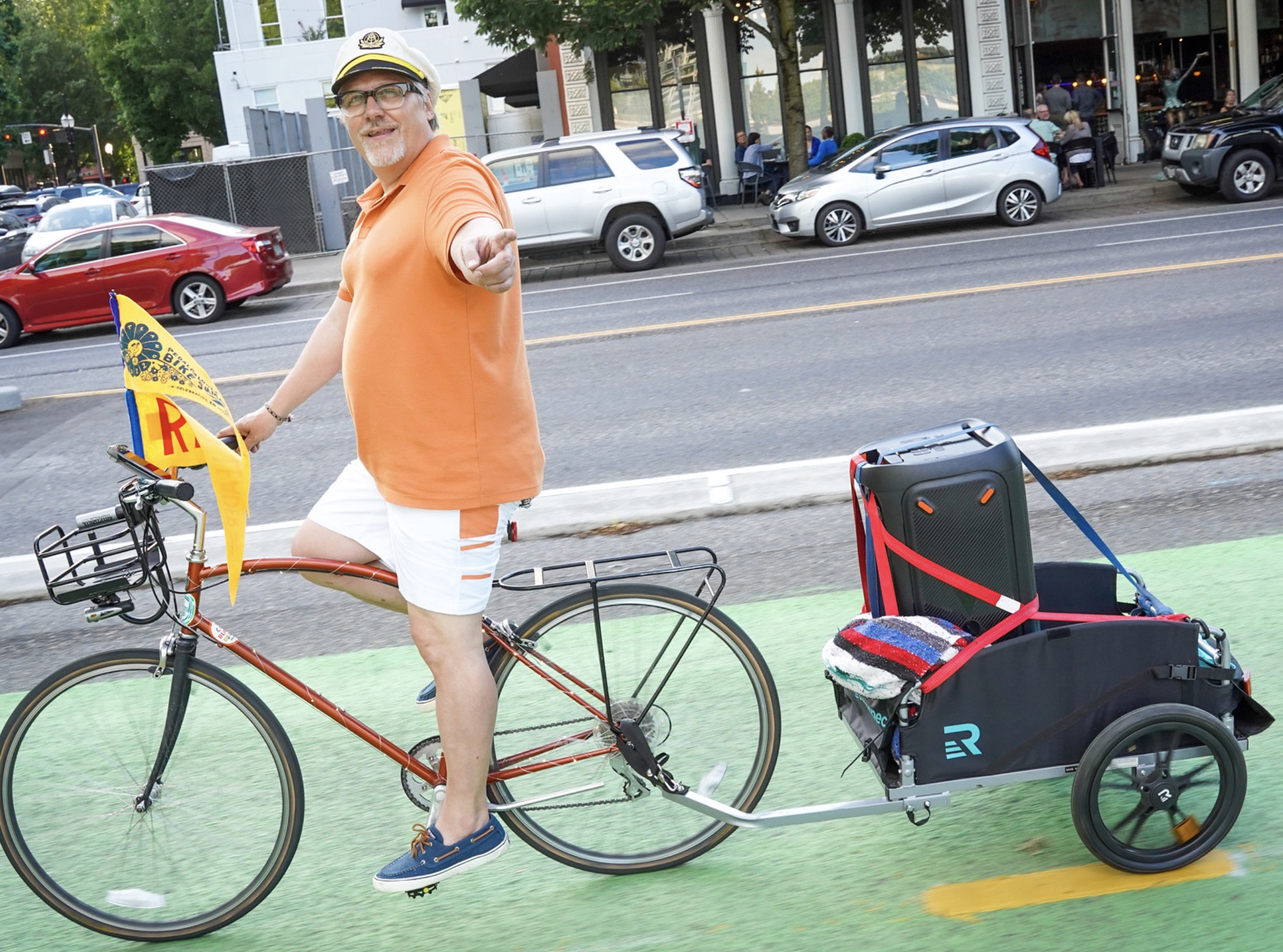
It’s a street sweeper you pull behind your bike. (Photos: Pierre Lermant)
Pierre and his bike lane sweeper ready to make the trip to Portland.
Keeping bike lanes clean is a problem that the City of Portland is yet to solve. And as budget problems worsen at the transportation bureau, a significant improvement to this perennial problem looks further away than ever.
But don’t despair, there’s a DIY solution!
Do you recall back in January 2022 we profiled a California-based inventor who was working on a bike lane sweeper trailer? His name is Pierre Lermant and he’s coming to Portland this week to show off his latest prototype. You can meet Pierre and see his creation outside the MADE Bike Show in South Waterfront this Friday through Sunday.
According to Pierre, his sweeper has gone through major improvements since last year. He’s most proud of his new electric hub motor encased in the brush core. “This allows for a streamlined design, very quiet operations and no chain/belt maintenance,” he shared in an email to BikePortland last week.
Below is more from Pierre, and a video that shows the sweeper in action:
Advertisement
“The sweeper operator can now rotate the hopper around the wheels’ axle, so its content can be dumped directly to the ground by tilting it with a handle attached to it. This provides an alternative way of using a bag inside the hopper to collect the debris.
Finally, I made the brush height adjustment to the ground more convenient with a turnbuckle.”
Pierre has also teamed up with local nonprofit BikeLoud PDX. He plans to leave the prototype with them for an extended testing period. BikeLoud PDX says they’ll loan the trailer out to anyone interested. Pierre says he’ll incorporate testing from Portland users into the design of what he hopes will be the final blueprint before the trailer can become a full-fledged consumer product in 2024.
Look for BikeLoud to begin loans of the sweeper this fall — just as all the leaves return to our bike lanes.
Don’t forget to swing by the MADE Bike Show to meet Pierre. He and his sweeper will be outside the main entrance from Friday August 25th to Sunday, August 27th. Learn more at BikeLaneSweeper.com.
According to traffic numbers and reviews from Portland bicycle riders, it hasn’t taken long for the Blumenauer Bridge to become a vital part of our cycling network.
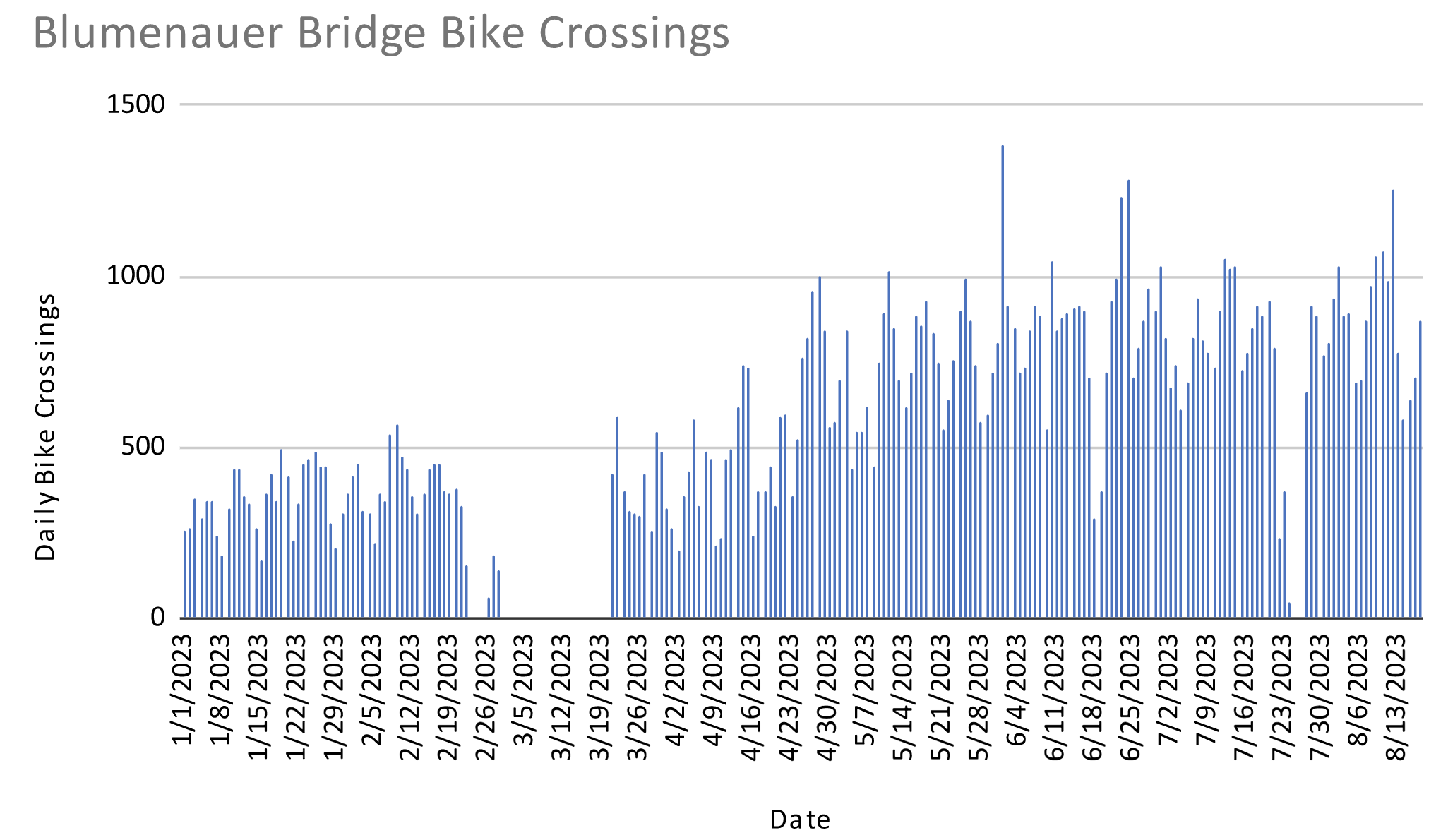
Opened just one year ago, the $19 million, carfree bridge over I-84 at Northeast 7th Avenue gets a relatively robust amount of daily bicycle crossings. Despite a steep decline in the number of commuters due to the popularity of working from home, the Blumenauer Bridge has hosted an average of 773 bicycle crossings per day since May 1st.
The current average weekday bike traffic on the Blumenauer is a bit more than half of the volume we see on the Hawthorne Bridge. Not bad for a new bridge between the Lloyd and a low-density industrial area! (See traffic data below)
Advertisement
Days with zero counts due to damaged hose counter. (Source data: PBOT)
All signs point to further growth as Portland’s bicycle traffic continues to rebound post-pandemic and more bicycle-oriented development springs up in the area.
But what do bike riders think of the bridge? I asked folks via Instagram last week to share their thoughts and the response was overwhelmingly positive. A few people had quibbles and some still prefer to use NE 12th (because it’s flat); but overall it’s clear the Blumenauer has earned a space in the hearts of many Portland cyclists.
Below are some of the responses:
Ben G – While it’s really neat. It’s kind of out of the way and doesn’t really connect me to where I go very often. It is more stressful on Lloyd/7th than just staying on Esplanade or Water to get north/south.
Sam – It’s about the only bike infrastructure this city has done in the last couple years that is actually useful to cyclists, granted they tried to f*** it up with that nasty bump on the south end.
Aaron Brown –Big fan of the bridge; I make a point of going a few blocks out of my way to use it most times I’m crossing the gulch anywhere near it. Wish that 7th through the Lloyd didn’t have the streetcar tracks, and hopeful PBOT is ambitious with significantly limiting car access to the blocks south of the bridge as part of the green loop. Also, while it’s disappointing the bridge wasn’t built by union organized labor, the bridge ultimately cost $19 million. We could literally build 100 bike/per bridges of this size over freeways across the region for the price of the rose quarter freeway expansion!
Kendra Goffredo – A true game changer. Can I have another?
Taylor Griggs – I use this bridge constantly. I can’t believe I ever had to use 12th to cross the freeway; that intersection at Lloyd is much trickier to navigate than just taking 7th all the way down. I don’t really think about the bridge itself very often, it just feels like part of the entire 7th Ave corridor to me. And now that the Sandy/7th crossing is improved and there are crosswalks or bike lanes throughout the whole Lloyd area on 7th, it’s much more pleasant to use.
Katie – I love the Blumenauer Bridge, my boyfriend and I use it as a way to get to our favorite breakfast restaurant. I don’t always feel the safest, for obvious reasons, riding with vehicles so it’s nice to have a bridge that focuses on micro mobility!
John A – I was excited about this bridge when I first heard about it as I work at the Portland State Office Building which is across the street. Quite a bummer that I travel east from work to home which makes this bridge fairly useless to then go east since it means having to backtrack to get back up to Irving bike lane (not many options with the school and sports fields blocking going east at 12th.) I did that once, but felt silly to increase my commute, so I still go Lloyd and then use the 12th avenue bridge. Sometimes Lloyd Blvd. does feel dangerous enough to make me think that the long way around would be better. If the insane constant speeding along Lloyd doesn’t improve, maybe it will seem like the better choice.
On a non-bike viewpoint, it did open up the entire south side of the freeway to venture into for lunch time, which wasn’t really walkable in a lunch break when the only options were Grand (which is half blocked from crossing the freeway entrance) or 12th.
Advertisement
Cam – I skip it most days on my commute to work and take the shared bridge on 12th because I don’t wanna bike uphill and skip it on the way home because the path on 7th on the south side of the bridge has so much downhill traffic flying by with a lot of stop signs for bikes on 7th.
Daniel Remer – I don’t venture out to NE Portland often, but when I do I know to get home safely all I need to do is find 7th and head south.
Nathan Berres – I absolutely love this bridge. It’s the connecting point between my home in NE and where I work in SE. Not only is the intersection on the north side amazing bike infrastructure, but the bridge is beautiful and being able to ride across it going home seeing all the traffic I’m skipping makes me selfishly happy lol. I love this bridge, I hope we make more like them in the future where they’re needed.
Erik Smith – It’s a great bridge, but the infrastructure around it just isn’t great. Going south, it just kicks you into such an odd, non-designated bike area where I have seen many cars run stop signs. Once you get to couch, it’s slightly better with the lights, but feels like it needs a lot of work to tie you into where 7th & Sandy meet. North of the bridge, i wish there was slightly better or protected paths on 7th. It can be a bit rowdy til you get Tillamook.
Jana – Love it and I use it all the time. It’s a critical north-south route. I wish the bidirectional bike lane on the north side continued down to the esplanade. That’s a very awkward connection. But otherwise it’s great and I’m excited for the 7th Greenway to be completed.
Don I – Not become part of my routine, I’ve stuck to the esplanade because the intersections on 7th are scary for bikes, especially at Stark, and I’d still could be inconvenienced by a train crossing at 7th in SE to get to work. So I haven’t been over it in about a year
Bridget – I love it! I work two blocks from the bridge and it creates and easy and safe way to get to work. Bike lanes and traffic signals work great and are respected by cars. Plus it’s a great place to walk in the middle of the work day. 10/10!
Becky M – I love the idea behind it and think it’s beautiful! But I’ve found that I usually still end up using the 12th Ave bridge instead. I don’t go in that direction too frequently, so I may just be slow to break the habit of that route. And I appreciate how flat 12th is!
Mike – Use it all the time, and while steep in the return, the descent is the highlight of my route down 7th. Absolutely love it and love having cycling specific infrastructure.
What do you think about the Blumenauer Bridge? Is it an important part of your route?
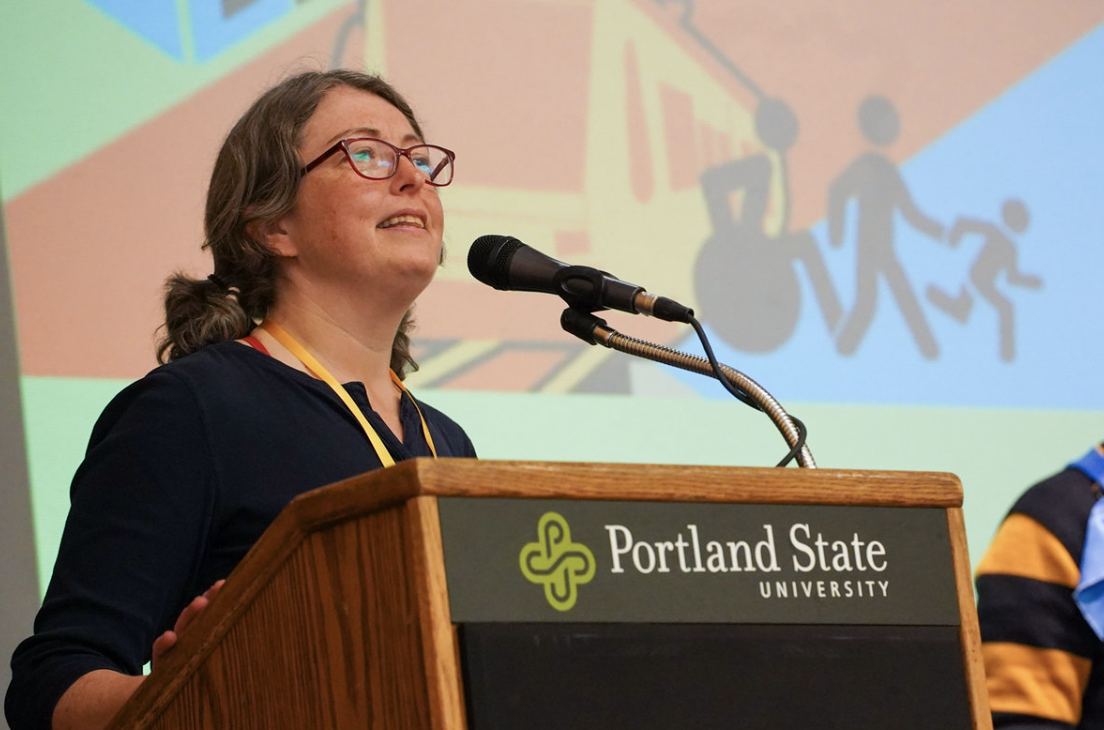
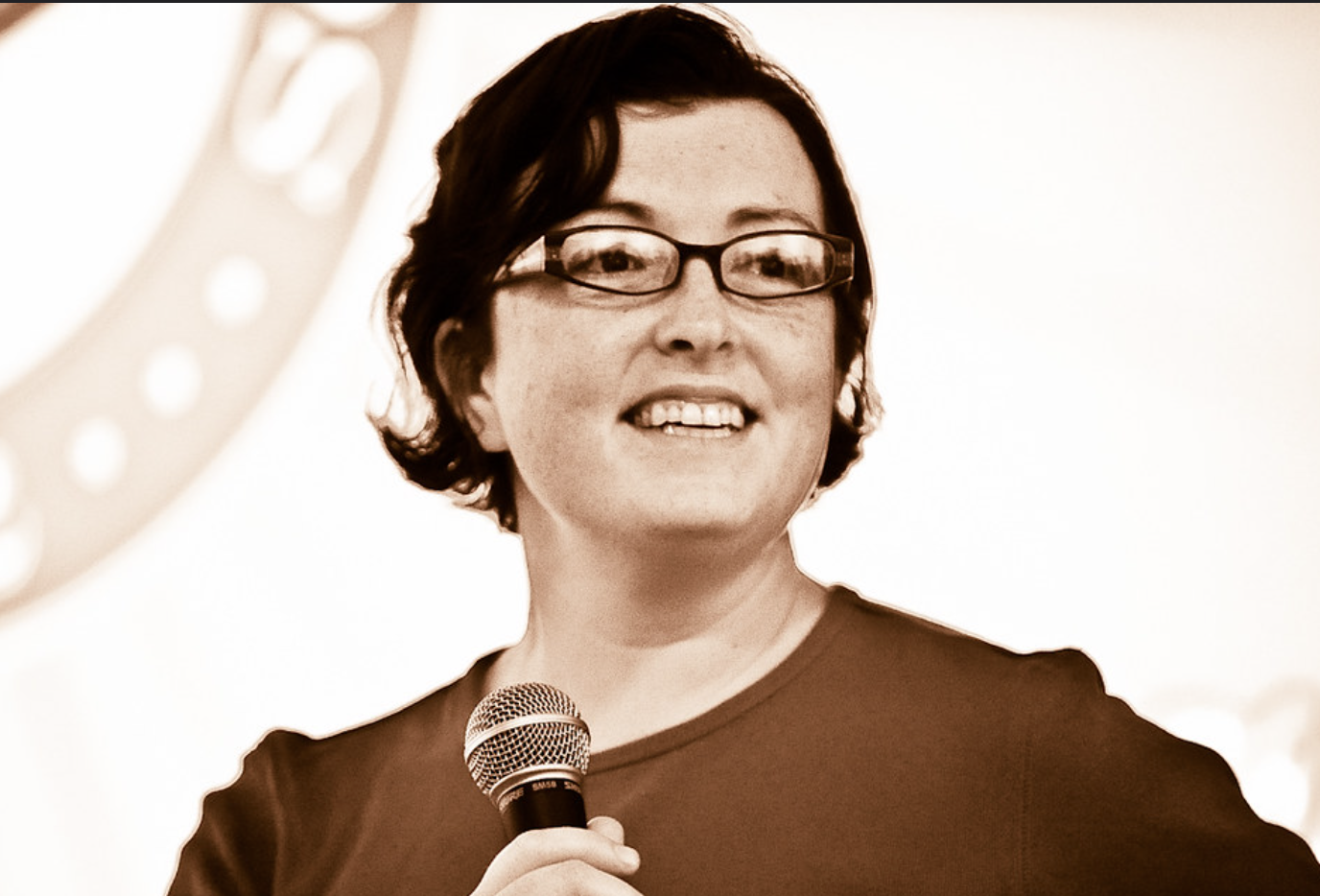
Steph Routh speaking at the YIMBYTown Conference held in Portland in 2022. (Photos: Jonathan Maus/BikePortland)
Steph Routh, a well-known figure in local cycling and transportation advocacy circles, is among the first candidates for Portland’s expanded slate of city council seats.
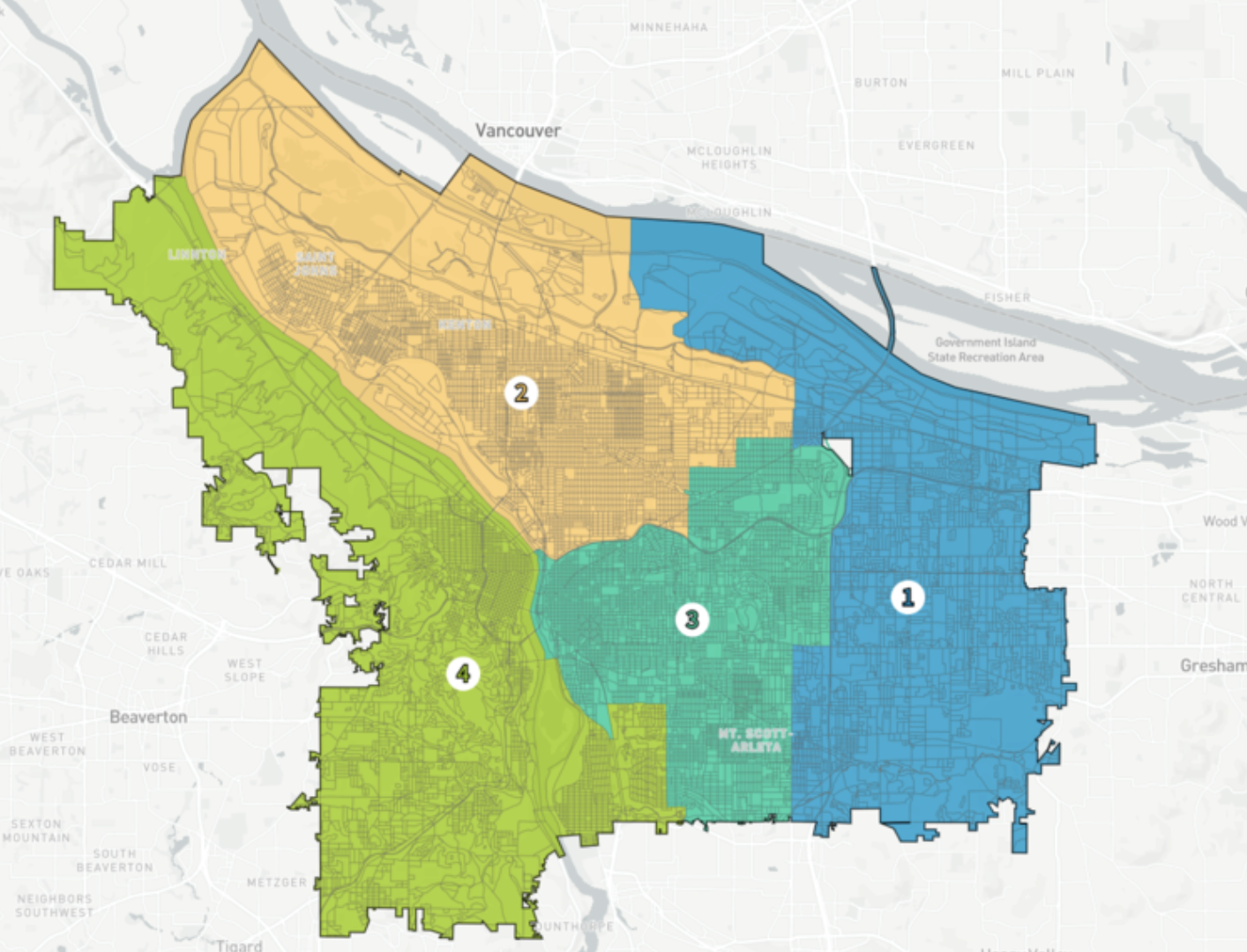
The Independent Charter Commission voted to adopt the new district map on Monday and Routh has put her hat in the ring to represent District #1. The district spans to the northern and southern boundaries of Portland roughly between Parkrose and Lents and includes all neighborhoods east of I-205 and 82nd (south of Division).
On her campaign website, Routh says east Portland is, “the home of my birth and the home of my heart.”
Newly adopted district map.
Advertisement
“I grew up in Parkrose and have memories of East County becoming part of Portland. We heard a lot of promises then, of services on par with the rest of the city,” Routh writes. “I’m running for City Council to make sure the city keeps its promises, that government is accountable to the people of East Portland, and that all of our neighbors can build a life of belonging and purpose here.”
Routh has a long history in local community organizing and transportation reform activism. In 2008 she was on the organizing committee that brought the international Towards Carfree Cities Conference to Portland. She was also a founding board member for Umbrella, a nonprofit that supports numerous events and organizations in the bike scene including, Pedalpalooza, Breakfast on the Bridges, the Ladds 500, World Naked Bike Ride, and more. In 2009 she became the first full-time staffer for Oregon Walks, a pedestrian advocacy group. Since then she’s held positions with the Community Cycling Center, the Portland Bureau of Transportation, Portland Underground Grad School, Sightline Institute, and others. Routh is also one of eight members of the Portland Planning Commission.
Advertisement
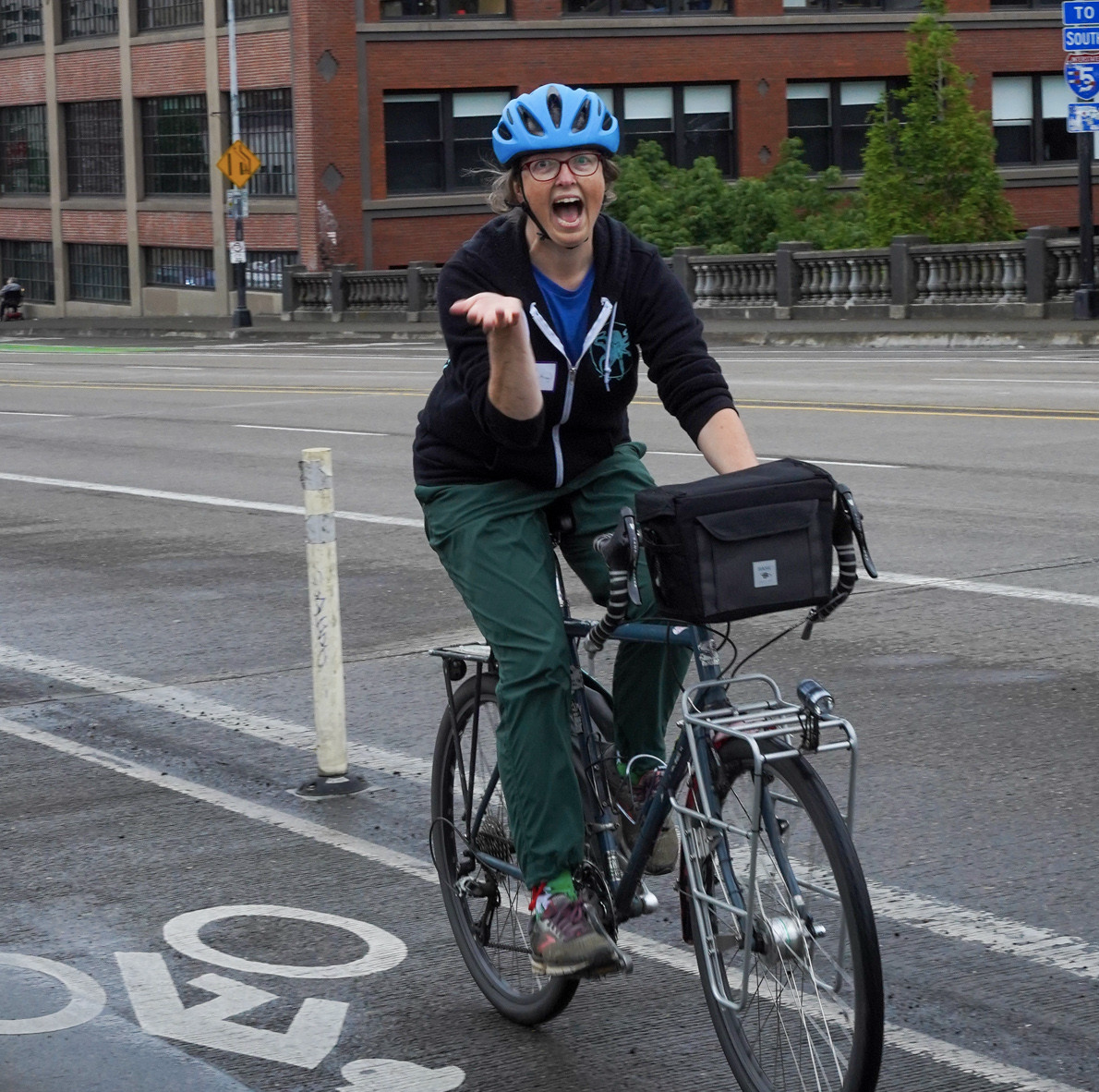
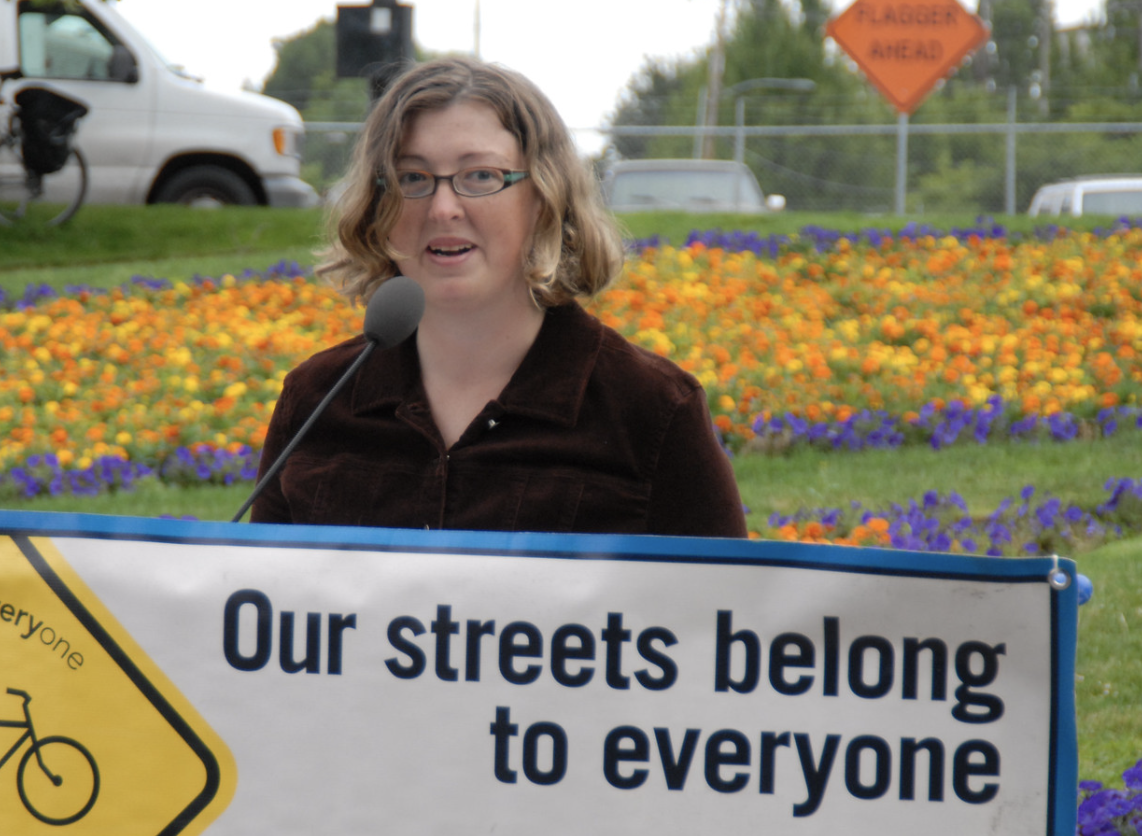
At an Oregon Walks fundraiser in 2012.On a Pedalpalooza Ride in 2022.Speaking for Oregon Walks in 2009.
Routh says she’s running for city council to represent people who are fighting against the odds:
“I have seen a lot of students, neighbors, and coworkers struggle to just get by through a housing crisis, a climate crisis, a pandemic, and a growing wealth gap. I’ve been there, too. We’ve beaten the odds. I’m running for City Council to change the odds. Because the odds are getting tougher to beat, and it just shouldn’t be this hard.”
Routh, whose great aunt is former Oregon Governor Barbara Roberts, is the only person running for District #1 so far. Other candidates that have filed as of today include Mingus Mapps (Mayor), Sandeep Bali (District #2), and Chris Flanary (District #3).
Last week’s post, about how Multnomah County wants to end traffic deaths, described a Multnomah County report on traffic deaths that took an epidemiological perspective. It offered a sensible range of recommendations, some of which were a first, including working with state and city officials to increase the registration fee for heavier and taller, non-commercial vehicles.
What was appealing about the report was that much of it was common sense to people already engaged in trying to make our streets safer, so the County’s quantitative analysis of the problem was a welcome contribution.
But BikePortland commenter Charley pointed out the obvious, what is missing is not good ideas, but political will. And he described what it would take to get everyone on board with tackling traffic deaths.
This kind of reminds me of that “Step 3: Profit” meme. There’s a missing step in the report.
The list of proposed policies mentioned in the report is very reasonable and would head us in a better direction. The problem of automotive violence has been well-tackled in other places, and we don’t have to reinvent the wheel.
What’s missing is Step One: building the political will for those policies and standing up the transportation alternatives that allow people to go about their lives without feeling like their freedom has been stolen.
Many of the policies would force driving voters to endure slower travel, more commuting time, with worse traffic, or even potentially force drivers onto bikes or mass transit unwillingly. As much as us transport nerds understand the benefits of that tradeoff, the average voter will likely hate it.
There’s no guarantee that voters will always be able to live near their job, or near the current bus lines- not to mention people working multiple jobs every day. Some people have co-parents who live on the opposite side of town, but need to shuttle children home from school daily while the co-parent is at work. Contractors work all over the metro area. Some people cannot even fathom the idea of riding a bike in the rain in the winter.
We all have a limited number of hours per day and we have to acknowledge that these policies would increase the amount of time people “spend” on getting around. Less recreation time, less work time, less family time. That’s a hard sell.
Without transportation alternatives in place, forcing people like this into a slow-car or low-car life will probably generate a lot of resentment.
Even if the policies work, would voters care? Just reading the article, a quarter of victims were homeless and four out of five tested positive for intoxicants. Most people probably think “it can’t happen to me”… and from those figures, they’re not entirely wrong.
That’s why the killing of Jeanie Diaz was such big news: she was a “normal” person doing a “normal” thing during “normal” daylight hours. This problem usually isn’t “personal” to the average voter: they don’t see themselves at risk.
As long as this problem is concentrated in less politically engaged constituencies, there will be less political will for the kind of shift that would save lives.
So I wish our leaders would spend more time creating politically attractive alternatives and thinking about how to generate political will for the shift. In a democracy, policy is accountable to the voter, and voters don’t generally vote for deprivation. In the absence of a personally motivating purpose and attractive transportation alternatives, all we have to sell is… slower driving times and traffic. That’s a problem!
Thank you Charley and everyone else who commented last week. Your perspectives are an invaluable addition to our work. You can read Charley’s comment under the original post.
Happy Monday everyone. I hope the smoke is dissipating. I’m down in Cypress, California all week visiting family and experiencing our own climate chaos: Last night we felt a bit of the hurriquake as rain pelted down usually dry suburban streets and we watched lamps in a cafe sway back-and-forth as we ate lunch. On a quick housekeeping note, posting is likely to be lighter around here until I’m back home next Wednesday.
Here are the most notable stories our writers and readers have come across in the past seven days…
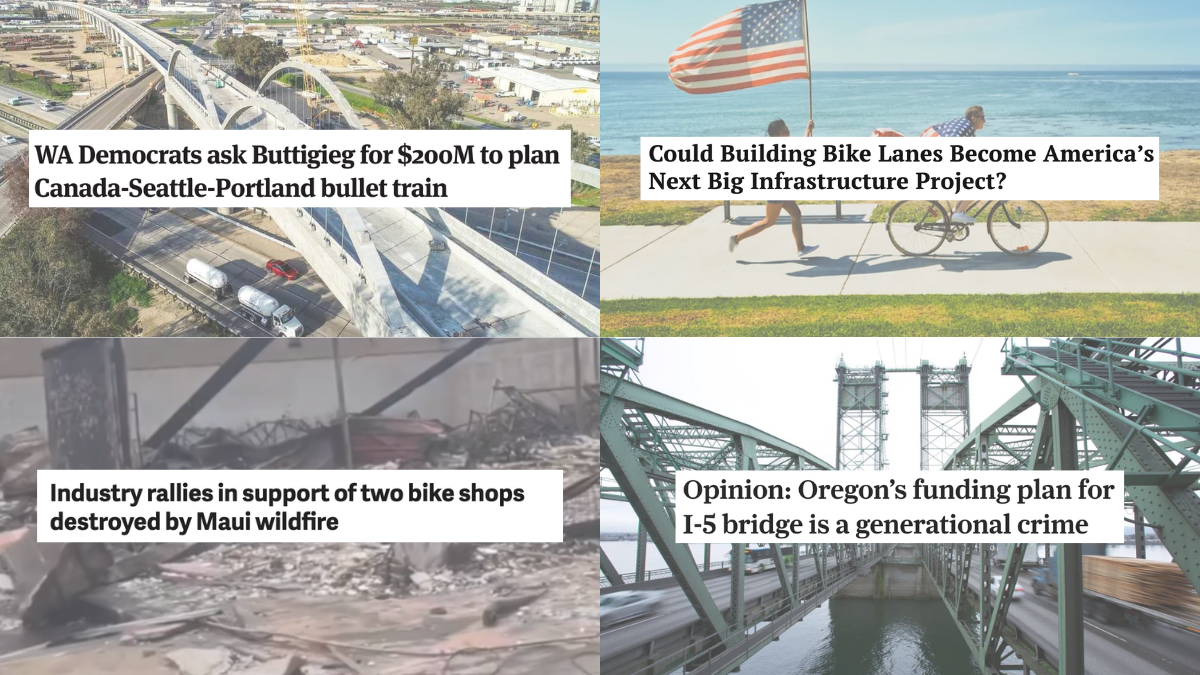
Criminal financing: Economist and anti-freeway activist Joe Cortright explains why he thinks the 11th-hour move by the Oregon Legislature to commit $1 billion to the I-5/Interstate Bridge project was a “generational crime.” (The Oregonian)
Low-car politics: I love the concept of “Low Traffic Neighborhoods” (LTNs) being deployed in some U.K. neighborhoods — especially because they show how there are votes to gain by politicians who push through with low-car policies. (The New Statesmen)
Portland HSR: Washington politicians want $200M from the Biden administration for planning a future a bullet train between Portland and Vancouver BC. (Seattle Times)
Bike ban: I could not believe this story about a condominium association in Ohio that decided to prohibit bicycling on their streets in the name of safety was actually true. I just cannot believe Americans sometimes. (ABC)
Advertisement
Textbook outrage: It’s amazing how, no matter where in America a new bikeway project rolls out, the response from some motorists and TV news media is exactly the same. What a joke of a story this is, but in a way it should make us feel better that Portland isn’t alone. (CBS San Diego)
National bike network movement: I love the idea of seeing local bike projects as part of a national campaign a la the Interstate Highway System. (Streetsblog USA)
Too white and male: A major British bicycle nonprofit has published a report that says the bike industry is hurting because of the overwhelming number of white, heterosexual men in leadership positions. (Road.cc)
A pre-car bicycling vision: This 1895 essay by socialist and political activist Eugene Debs captures the hope and possibility of how bicycling could remake American life in a positive way — before the evil automobile swooped in to forever alter the arc of history. (Jacobin)
Maui e-scape: Two bike shops were devastated in the wildfire that engulfed Lahaina, and the owner of one of them narrowly escaped on an e-bike. (Bicycle Retailer)
The unprotected bus stop on SE Calle Cesar Chavez where Jeanie Diaz was struck and killed. (Photo: Jonathan Maus/BikePortland)
A coalition of Portland nonprofits has signed onto a letter demanding more action on traffic deaths and injuries.
The letter was signed by leaders from six transportation-related advocacy groups including: Andando en Bici y Caminando, BikeLoud PDX, Community Cycling Center, 1000 Friends of Oregon, Oregon Walks and bike works by p:ear. It was sent to local and regional elected officials as well as leaders of the Portland Bureau of Transportation, the Multnomah County Sheriff’s Office, the Portland Police Bureau, TriMet, and the Oregon Department of Transportation.
The letter comes after a spate of traffic deaths and high-profile crashes that forced PBOT Commissioner Mingus Mapps to call a press conference on the issue earlier this month.
“It does not have to be this way,” reads the opening line. “There are likely many reasons we are facing this continued escalation of violence on our streets. However, what is most devastating is that we do not have a shared understanding of why.”
Advertisement
The main thrust of the letter is that the agencies we entrust with solving this problem are not working together. The letter applauds several ongoing efforts by PBOT, the County, ODOT, and local nonprofits, but says, “We continue to be in our siloes, not working together to crack this puzzle.”
As a “critical first step,” the signees want to create a regional “Fatal and Serious Injury Crash Committee with a diverse composition of members, both public and private, that analyzes every fatal and serious injury crash that occurs in our region.”
In addition to this new committee, they are making three other demands.
To address crashes like the one that killed Jeanie Diaz while she waited at a bus stop on July 15th; they want TriMet, PBOT, and ODOT to find the most dangerous locations for walkers, bikers and transit users and then, “harden the infrastructure by installing physical protection (concrete, steel bollards, etc) on sidewalks, crossings, and transit stops.” “This does not affect vehicular throughput, is relatively low cost, and can be implemented immediately,” states the letter.
Advertisement
To address speeding, the coalition wants more enforcement cameras and a lower threshold for triggering citations. Currently, cameras and police officers don’t cite until 10-15 mph over the speed limit. This coalition wants that reduced to 5 mph over.
To complement enforcement, they are calling for a “safe streets public health campaign” centered on the issues of speed, intoxication and houselessness (in line with a recent report by the County’s public health department).
Oregon Walks Interim Executive Director Zachary Lauritzen was the main organizer of the letter. In a phone call today, I asked him to respond to a sense of fear and urgency from many in the community who want more direct action and who are likely to see another letter and committee as falling far short of what’s needed.
Advertisement
“I think folks are right, we need to do a better job of that,” Lauritzen replied. He added that partly due to Covid, “we haven’t flexed those muscles very much and we haven’t activated our membership and volunteer corps and partners who’ve been doing that work for years.”
Lauritzen acknowledged that he too wants to see more public events like the rally organized on Southeast Powell Blvd after the death of Sarah Pliner in October 2022. “We need to do more of that, yes. And I think this [letter] is also something we can do at the same time.”
One group that is notably absent from the list of signees is The Street Trust. When asked why their name isn’t on the letter, Executive Director Sarah Iannarone said today’s submission of the letter caught her off-guard. “The Street Trust was meaningfully engaged in discussions about potential enhancements to the concept, offered substantial contributions to the development of the letter, and had provisionally agreed to sign, contingent upon improvements being made. Regrettably, I haven’t seen a final version so don’t know whether or to what extent our feedback was incorporated and/or attributed to us,” she shared in an email.
Iannarone stressed that TST has been pushing for reforms on many fronts since the death of Pliner last year and that she is, “somewhat encouraged by the progress we’ve been seeing.” Iannarone cited productive conversations with Metro and ODOT.
From here, this coalition plans to tag-team local council meetings and other feedback opportunities to speak out about traffic safety and amplify their demands.
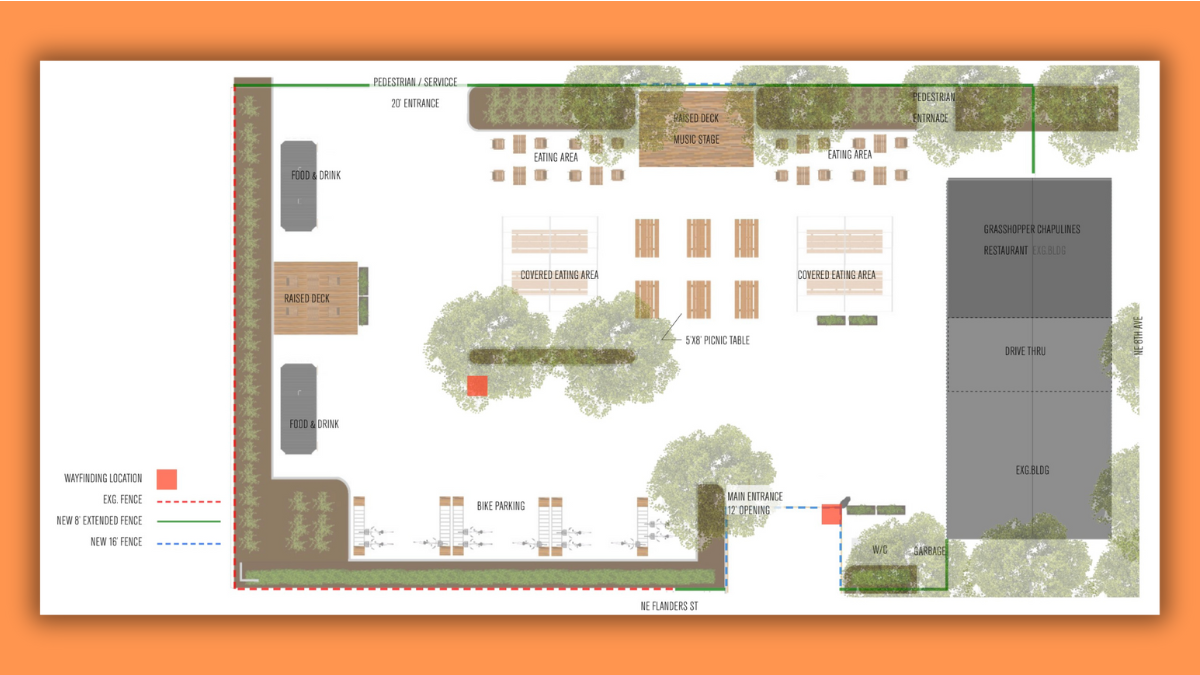
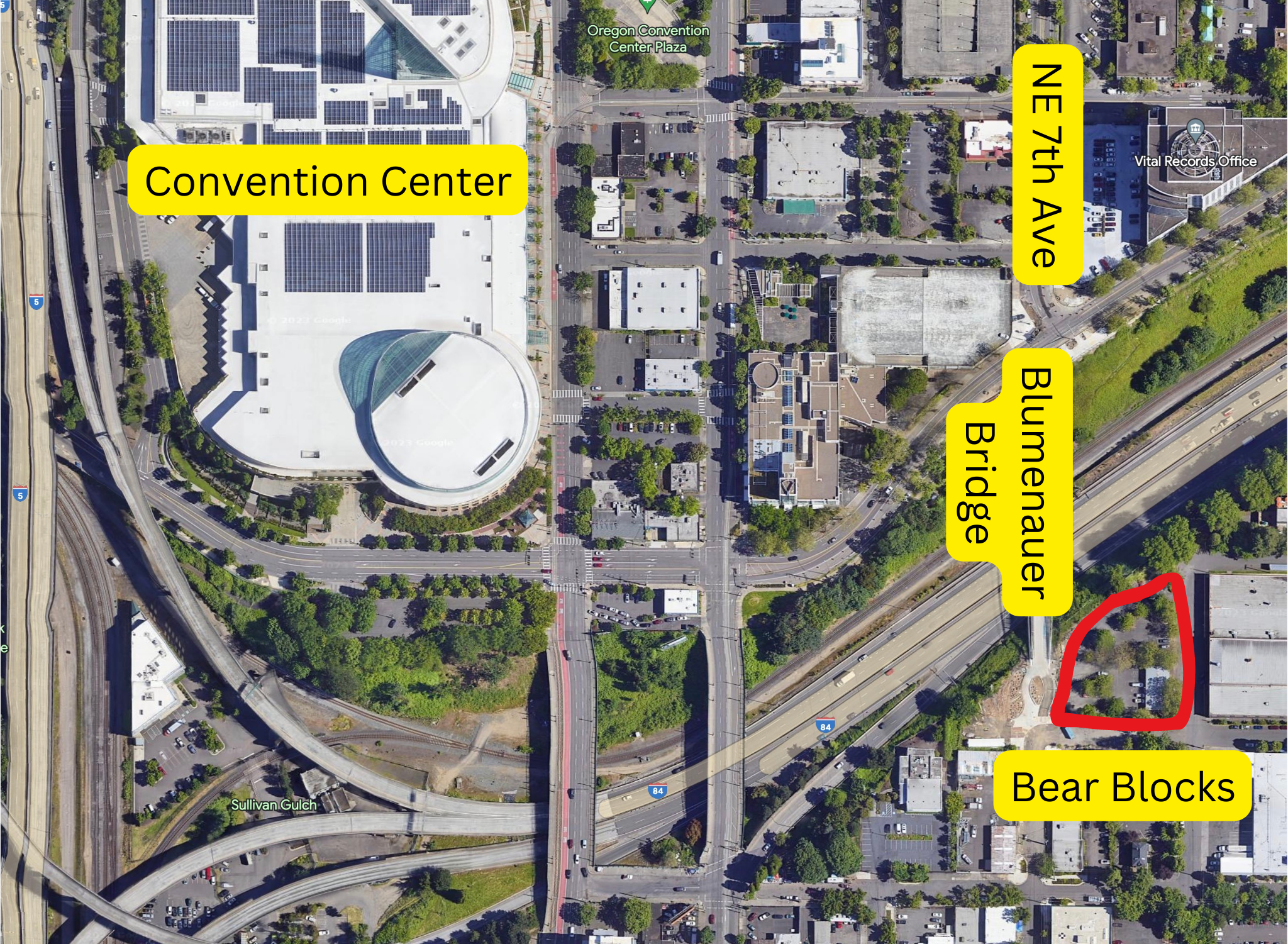
Coming soon to southeast landing of Blumenauer Bridge. Bridge would be on the left. NE Flanders is at the bottom. (Graphic: TwentyFour7)
(Map: BikePortland)
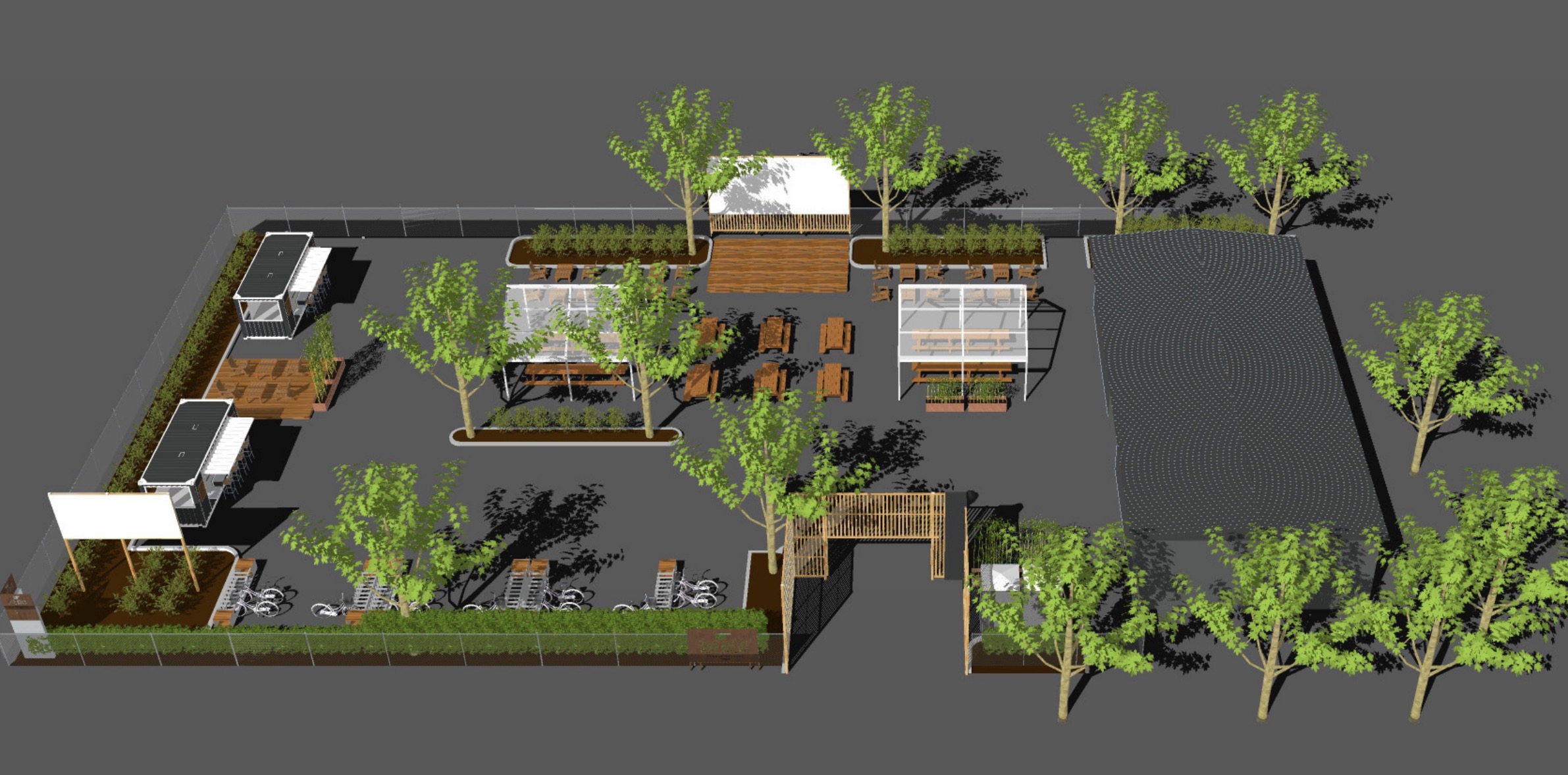
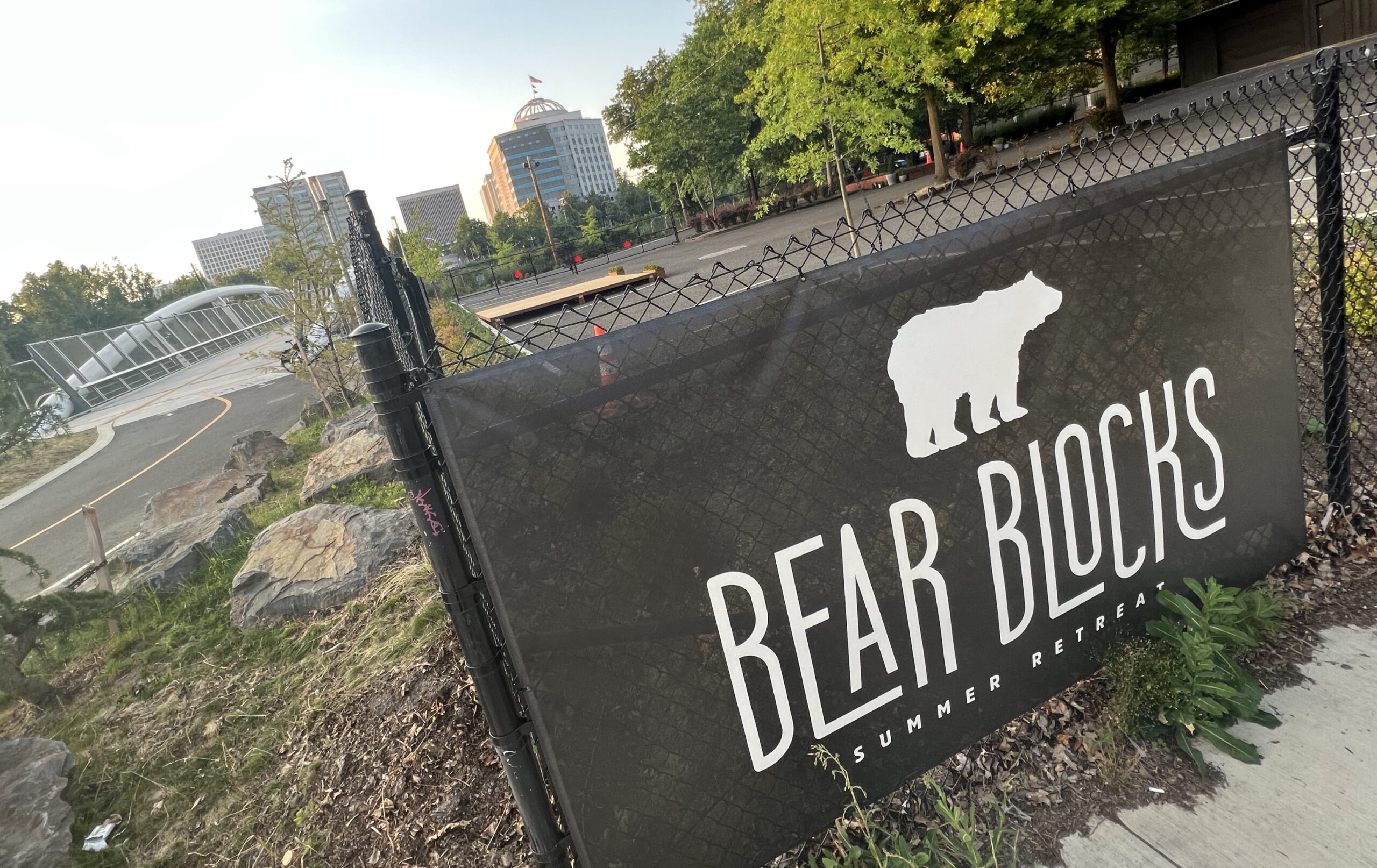
A new public space on the south end of the Blumenauer Bridge is set to debut in the coming weeks. ‘Bear Blocks’ is a collaboration between the owner of a paved lot adjacent to the southeast landing of the bridge, a nearby event management company, and a nonprofit.
According to Friends of Green Loop Executive Director Keith Jones, his organization will manage the project in partnership with TwentyFour7, a brand marketing firm located nearby on NE 9th Avenue. TwentyFour7 will be the programming partner and will do the construction build-out. Friends of Green Loop will lease the space from property owner, TBH LLC.
Jones says it’s all part of an effort to increase activation of public spaces in the Lloyd and along the Green Loop — the City of Portland’s six-mile linear park project that is still in its infancy. “We wanted to do something other than a food cart pod,” Jones shared with BikePortland Thursday. Jones — who gives credit to local bike advocate, business owner, and former leader of nonprofit BikeLoud PDX, Kiel Johnson, for getting the idea off the ground — sees a lot of potential for the space.
Advertisement
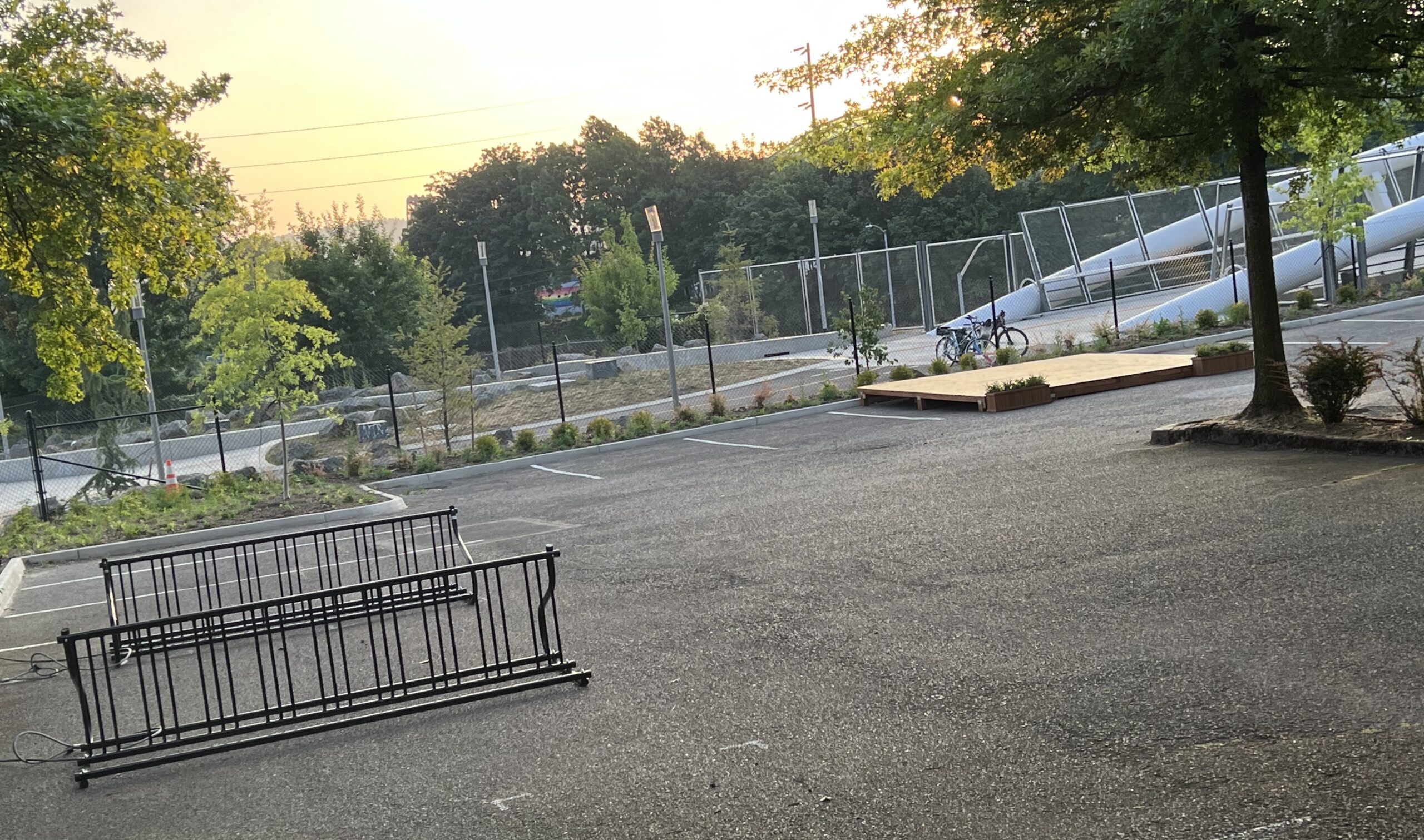
Concept drawing of view looking north from NE Flanders. Bridge would be on the left.Looking northwest from the lot with Blumenauer Bridge in the background.Looking north with Lloyd buildings in background.Looking southeast from the bridge toward NE Flanders.(Plan drawing by TwentyFour7, photos by Jonathan Maus/BikePortland)
The idea is to have outdoor seating, rotating food and drink vendors, two performance stages, new signage on the bridge, and of course, lots of bike parking. PBOT counts show about 700-1,000 people cross the Blumenauer Bridge per day — that’s an impressive number (about half the weekday total on the Hawthorne) that gives Jones and other project partners lots of optimism that this space can become a biker hangout.
“We see this as a perfect landing spot for cyclists,” Jones said.
And Kiel Johnson shared with BikePortland this morning that, “It is an amazing location that should be an important rallying point for Portland bicycling culture.”
Another idea from TwentyFour7 is to build a bike-thru window where you’ll be able to swing in and grab a breakfast burrito and coffee as you ride across town to work or that morning meeting. Or heck, it’s a cool enough spot to be a ride destination!
Advertisement
Friends of Green Loop Executive Director and Bear Blocks project leader Keith Jones leading a Pedalpalooza ride in 2022. (Photo: Jonathan Maus/BikePortland)
Jones attended a private party at the space earlier this year and said, “It’s beautiful. You’ve got the bridge lit up and you can see the entire city. And it’s surprisingly quiet and with the music going, it’s amazing.”
And if done right, the spot could also lure the thousands of convention-goers that stay in hotels in the Lloyd just across Sullivan’s Gulch. Right now, many Portland visitors stay in the Lloyd along the busy MLK/Grand couplet — an area that isn’t all that memorable. But if all goes according to plan, they’ll hop on bikes and roll over to Bear Blocks for a true Portland experience closer to their rooms and easier to access than downtown. Jones says he wants local bike advocacy nonprofit BikeLoud PDX to have a permanent presence at the site.
The northern section of the lot is used as employee car parking for local businesses during the week, but on weekends it will be open for use as a market space. Jones already has plans for a holiday market in December.
This is the second example of bike-oriented development (BOD) we’ve heard about since the Blumenauer Bridge opened in July 2022. Earlier this year a bike shop opened nearby and its owner said he feels the new bridge is a “major draw” for his customers.
The build-out of Bear Blocks is imminent and Jones hopes to have it wrapped up in the coming weeks. Stay tuned for announcement of a grand opening party for the bike community. Maybe we’ll help kick off with a group ride from Bike Happy Hour!
These are paid listings. And they work! We’ve helped hundreds of people find great jobs and great staff members. If you’d like to post a job on the Portland region’s most popular bike and transportation news platform, you can purchase a listing online for just $75. Learn more at our Job Listings page.
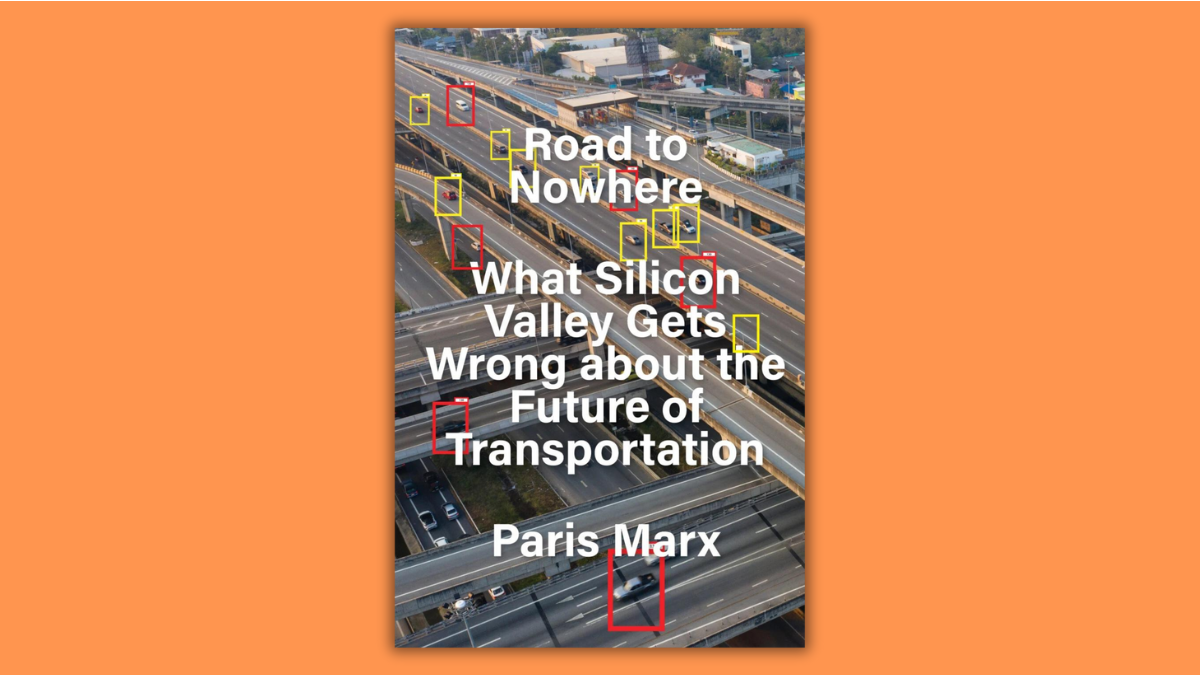
Marx’s contribution is to link the history of automobility in the 20th century to what we are living through now — Silicon Valley’s attempt to remake mobility for their profit.
The book begins with an engaging synopsis of how the car came to dominate US transportation. Its first chapter covers the same ground as Peter Norton’s Fighting Traffic: The Dawn of the Motor Age in the American City, but is shorter and less academic. Marx is a pleasure to read and has a gift for presenting a lot of material so smoothly that it never overwhelms the reader.
Advertisement
the meat of his book, that tech’s attempt to capture transportation perpetuates the problems of automobility, that it does not benefit average people, but rather remakes cities in a form appealing to Silicon Valley’s elite.
He notes that the bicycle and streetcar were early disruptors of urban transportation, and cites researchers John Falcocchio and Herbert Levinson regarding how new transportation technologies have tended to increase travel speeds. The researchers continue, “each time travel speed has increased, the amount of land used for urban growth has increased and population density has decreased.” This explains the fundamental connection between land use and transportation.
But it took the arrival of the automobile, and its mass-production, to alter cities in such a condensed time frame that it can be difficult for us to grasp.
From outrage to normalization
In 1908, there were 8,000 cars on the road. Twelve years later, by 1920, that number had increased by three orders of magnitude to 8 million. Congestion and carnage ensued and reformers pushed back hard.
Children were most vulnerable to the onslaught of cars, and urban residents reached for the language of war to express fury over their deaths. Mothers of children killed by cars were called white- or gold-star mothers, like those who had lost children in Europe. Bells tolled for the dead and lists of names were recited. It was widely publicized that in the four years following Armistice Day more Americans were killed in car crashes than “had died in the battle of France.”
Advertisement
A widespread campaign to restrict automobiles began—Cincinnati residents even pushed for an automatic speed limiter for cars!
If this all sounds a little bit like now, Marx argues that it is, except that mass death by car had yet to be normalized, “Today, if a pedestrian dies by venturing into the street, people often respond by questioning why they were there in the first place.”
In the face of calls for regulation, automakers realized that “the streets did not properly accommodate their product,” and the rest is history. Those set to profit from cars lobbied to redesign cities and succeeded. Pedestrians were restricted to sidewalks and crosswalks, the idea of a “jaywalker” was born.
The con
From that well-trodden history, Marx pivots to the meat of his book, that tech’s attempt to capture transportation perpetuates the problems of automobility, that it does not benefit average people, but rather remakes cities in a form appealing to Silicon Valley’s elite:
These new infrastructures promoted by Musk and Uber executives use egalitarian language to gain public support for a vision of mobility where the urban form and transport systems effectively stay the same, but wealthy people have new ways of paying to opt out of the problems that other residents have to experience every single day.
Advertisement
And in this well-researched and documented book he covers it all: autonomous cars, the 3-D transit system (tunnels and flying cars), electric vehicles, ride-sharing, and dockless micromobility (scooters, bikes). He also details the negative impact the existing services have had on workers, regulation, transit, and congestion. Their presence is not neutral.
Take autonomous cars. One criticism Marx has is that they don’t work, and that testing them has been dangerous. He recounts the cascade of errors and irresponsibility that led to the 2018 death of a woman crossing the street with a bicycle by one of Uber’s self-driving cars. The most shocking aspect of the story to me is the lack of regulatory scrutiny.
Of Uber, Marx writes,
The actions of Uber executives and engineers are in line with the “move fast and break things” culture that is promoted in Silicon Valley, one which is motivated first and foremost by beating competitors to market by launching a minimum viable product and capturing market share as quickly as possible in the pursuit of monopoly.
Unfortunately for all of us, this usually leaves regulators and cities several steps behind in a game of catch-up. But like the automotive interests on the 1920s, tech suggests that maybe the environment should change to better accommodate their products. Autonomous cars would function better if pedestrians wore beacons signaling their presence.
About those pedestrians, Marx’s take on dockless e-scooters shifted my thinking a little. In a chapter titled “The coming fight for the sidewalk,” he presents the encroachment of rental scooters and bikes on the sidewalk in light of the historic relegation of pedestrians to “thin strips” on the side of the road. He also pushes back against the idea that everyone who opposes change is a NIMBY:
Advertisement
The problem with framing the negative response to micromobility as a typical reaction by people who do not know better or simply oppose any and all change is that it ignores the power dynamics at play in the rollout of these services. Residents’ anger at the littering of scooters throughout their communities should instead be seen through the lens of the opposition to the automobile in the 1920s…
Marx ends the book by broadening his discussion beyond transportation to tech’s goal of a “frictionless” society, one in which people don’t get in the way of deliveries, and in which billionaires get their cut of every interaction. Think about that the next time you use Silicon Valley to mediate your food order.
All in all, this book is both a good introduction to transportation issues for someone new to them, and also time well spent for those already familiar with the subject. It is very well researched, with a lot of footnotes, and it is surprisingly easy to read. Marx is a good writer. I think I’ll be keeping this book next to my computer for handy reference.
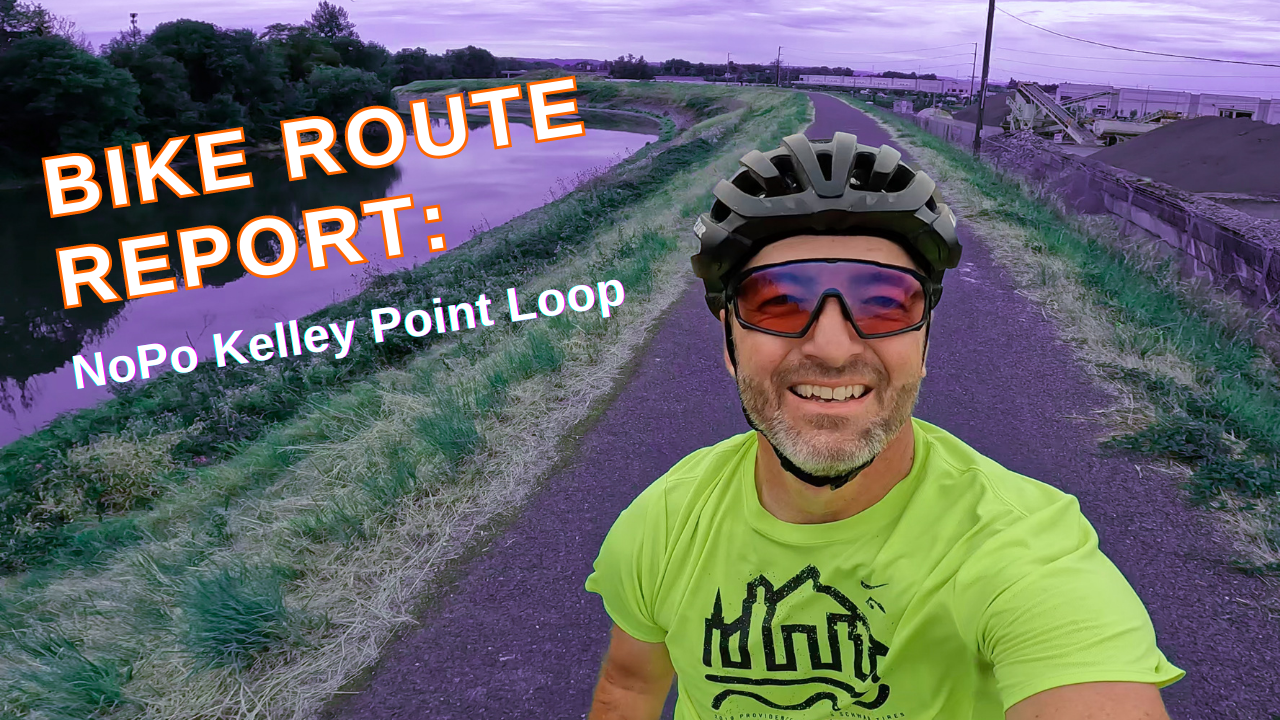
I had so much fun creating that video on local bike path conditions a few weeks ago, I decided to do it again. I’m calling this series Bike Route Report and it’s a fun way for me to share routes, highlight the good/bad/ugly conditions along them, and offer some background and insights about the infrastructure along the way.
This episode’s route is one that’s near and dear to my heart. It starts at Peninsula Park and does an 18-mile loop up to Kelley Point Park (where the Willamette and Columbia rivers meet north of downtown St. Johns). This is one of the best routes in Portland and it has been a staple for me for many years.
In this video, you’ll learn about and see up close: The protected bike lanes on North Rosa Parks Way, the conditions on N Willamette Blvd as we wait for the big changes coming soon, how to connect to the 40-Mile Loop under the St. Johns Bridge, the protected bike lanes on N Lombard, the dicey intersection and bridge on Columbia Blvd, the multi-use path out to Kelley Point, the massive new car storage lot at Terminal 6, the off-road trails at Smith & Bybee Lakes park, the Columbia Slough Trail, and more.
Here’s the route:
If you’ve got info to share about this route, feel free to leave a comment. And thanks for riding along with me! If you like the video, subscribe to our YouTube channel where you can also browse all our past videos.
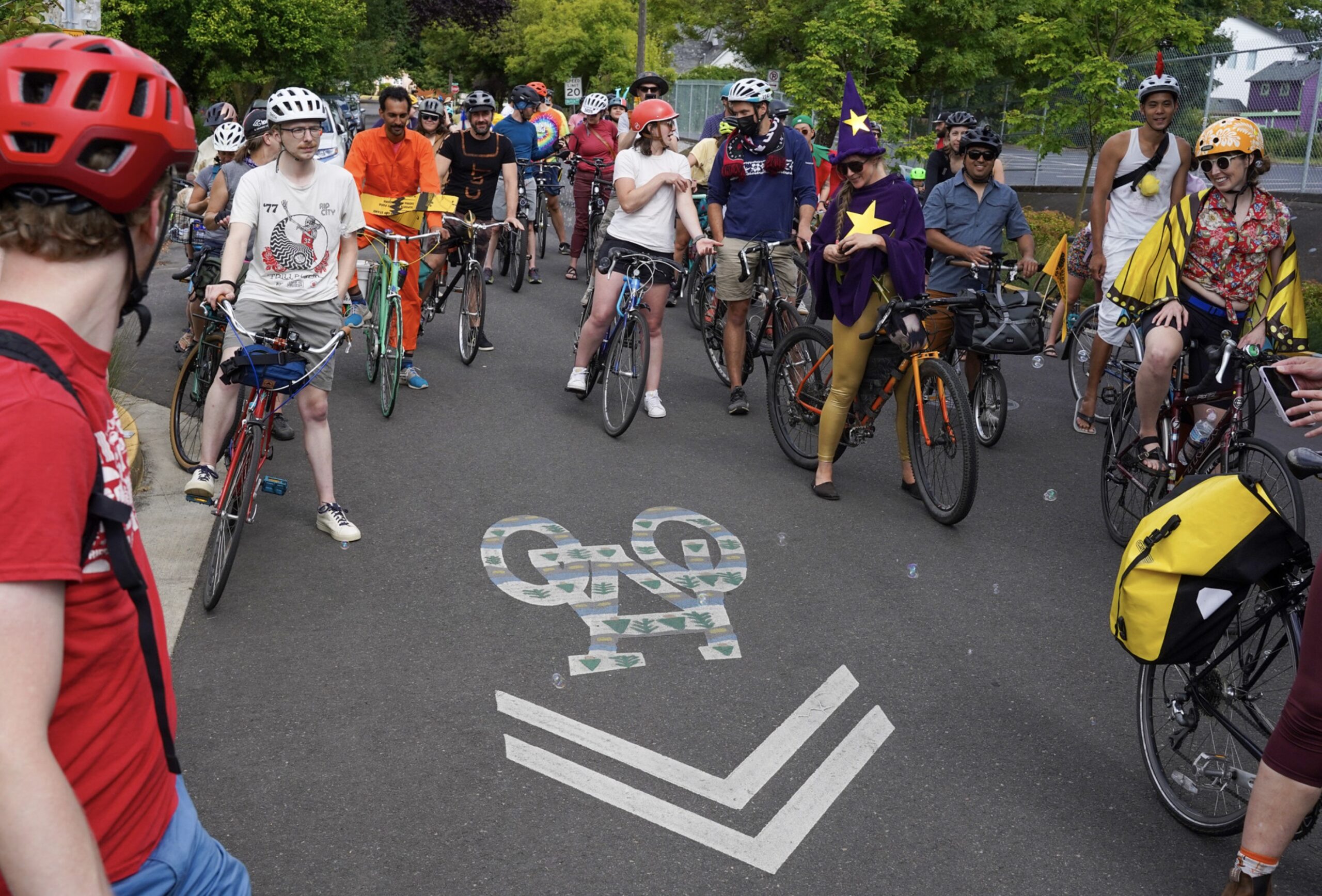
Sunday’s Art in the Bike Lane ride will hunt down stylish sharrows and bike lane characters while celebrating this quirky Portland tradition. (Photo: Jonathan Maus/BikePortland)
Welcome to the weekend! Here’s our weekly selection of rides and events worth your time. Please note, it’s Pedalpalooza season. That means there are tons of rides every day. See them all here. (Also note that rides usually leave 30 minutes after the posted meet-up time.)
Friday, August 18th
Denim Vest Friday Ride – 5:00 pm at Baerlic Brewing (NE) Nothing says Portland bike punk like a patched-up denim vest. If that’s your aesthetic, or if you’re like me and merely aspire to be that cool, this is the ride for you. Also will be a patch exchange. More info here.
Opera Ride – 7:00 pm at Oregon Park (NE) Imagine pedaling in a group next as a carefully curated dramatic playlist with interspersed dialogue reverberates off the walls and surfaces. Then at the end there’s food and live music. Yeah. More info here.
Friday Night Ride – 7:00 pm at Ladd Circle (SE) A big weekly community ride that goes late and is guaranteed to please. More info here.
Advertisement
Saturday, August 19th
River City Bicycles Cyclocross Clinic – 9:30 am at Colonel Summers Park (SE) Cross is coming and RCB has your back. Let their extremely fast and extremely nice staff show you all the tricks you’ll need to have the most fun possible this season. More info here.
Pedal to Paddle – 9:30 am at Beaumont Middle School (NE) Join Columbia Slough Watershed Council for a ride to Whitaker Ponds Nature Park where you’ll get to dip in the water and view wildlife from one of their boats. More info here.
Behind the Bollards Ride – 10:30 am at Ankeny Tap & Table (SE) The local chapter of Strong Towns wants to recruit you into their cabal of tactical urbanists who are dedicated to placing bollards everywhere in the name of safe and sane cities. Bollards will be installed on this ride (paper ones, but still!). More info here.
Ride With a Buddy Group Ride – 11:00 am at Kerr Bikes and Boats (SE) Adaptive Biketown is hosting this ride aimed at getting more folks onto the paths under their own power. Come out and reserve one of their amazing bikes that can help almost anyone feel confident enough to ride. More info here.
Asian Solidarity Ride – 4:30 pm at Laurelhurst Park (SE) “Love in Public” is the mantra for this ride that will center the experiences of Asian and Pacific Islanders and their ongoing struggle to feel safe and seen in public spaces. More info here.
Advertisement
Sunday, August 20th
Ride Westside Ride – 10:30 am at Hillsboro Farmer’s Market (WashCo) This 20-mile loop (you can cut it in half if you want) will introduce you to the good/bad/ugly of bike infrastructure in Hillsboro. More info here.
Tree Hugger Ride – 10:30 am at Arbor Lodge Park (N) Let the Arbor Lodge Tree Team take you on a tour of amazing trees while you learn about what makes them so special. Hugging encouraged. More info here.
Art in the Bike Lane – 2:00 pm at Clinton City Park (SE) The 3rd annual edition of this ride will explore cool bike lane characters in southeast. Come dressed as your fave character and snap a portrait at the photo booth. Special guests and costume contest at the end! More info here.
No Contact Cat – 2:00 pm at Irving Park (NE) A good, old-fashioned alley cat bike race and scavenger hunt that will raise money for a really good cause. Participants will grab pics of iconic Portland landmarks and complete tasks for extra points. More info here.
Mask First: Gateway Connections – 6:00 pm at Gateway Discovery Park (NE) Mask First, Then Helmet is a cycling club that believes immunocompromised people are being left out of group bike rides when folks don’t wear masks. This fully-masked ride will be inclusive of all ages and abilities. More info here.
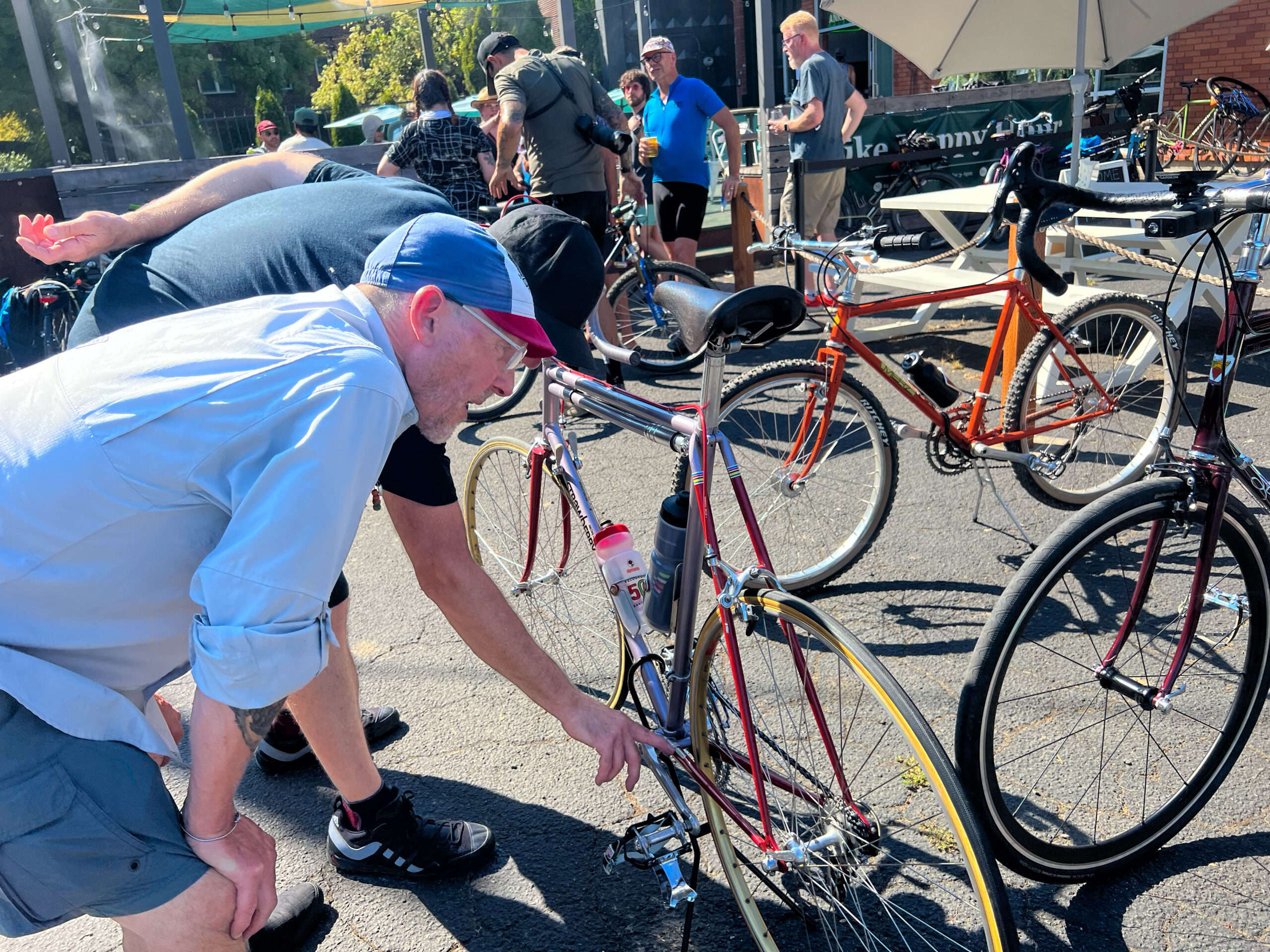
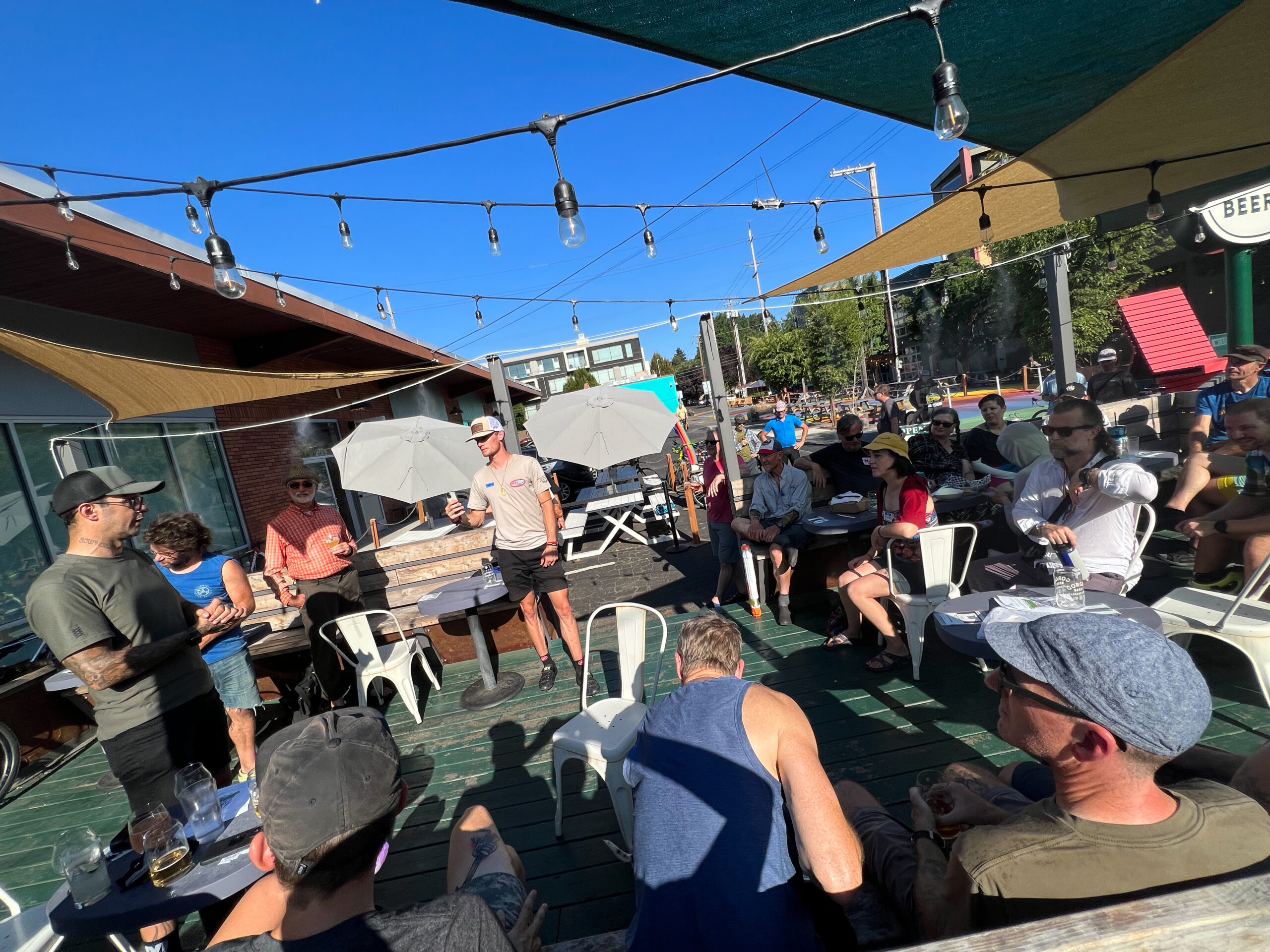
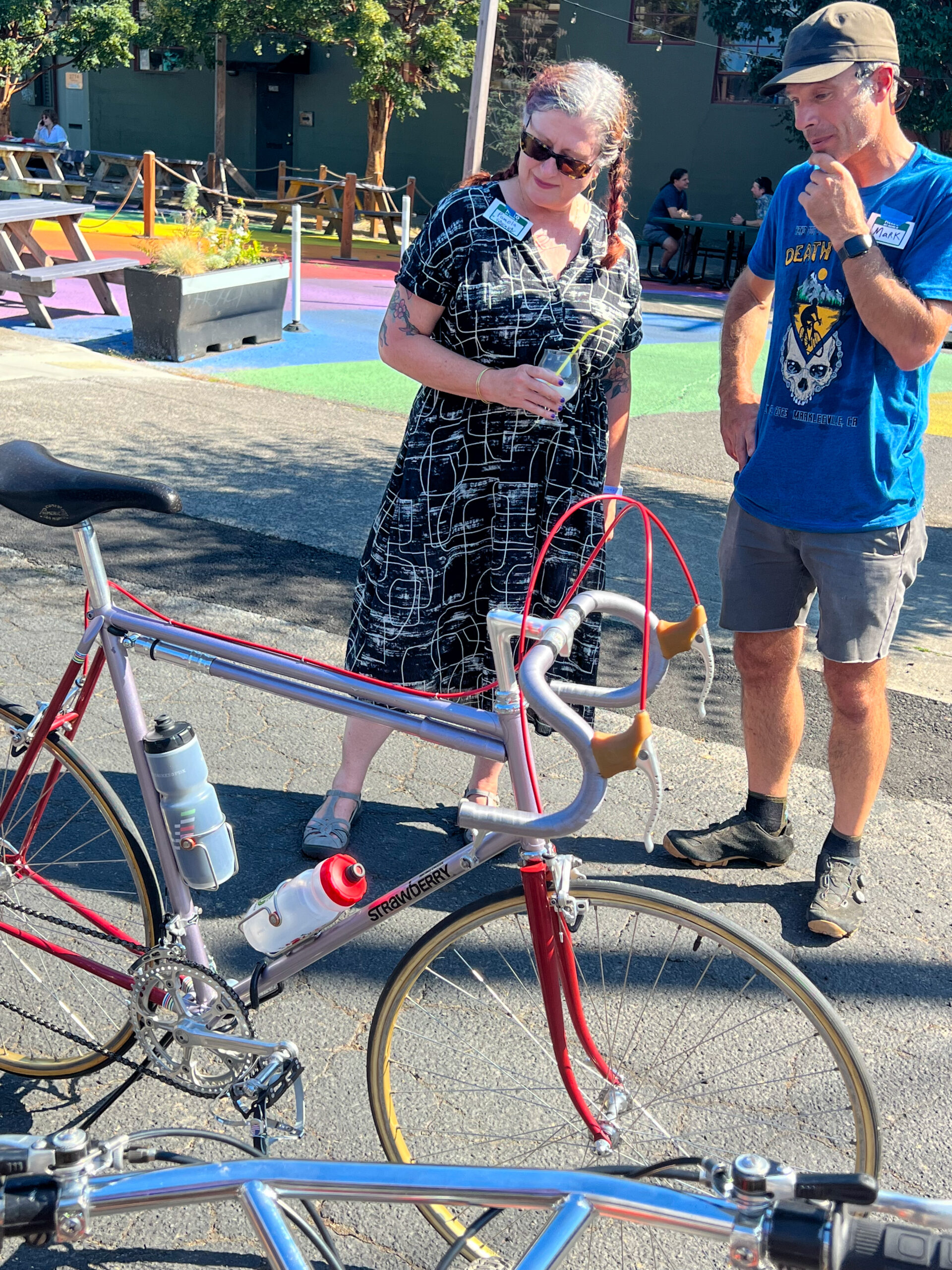
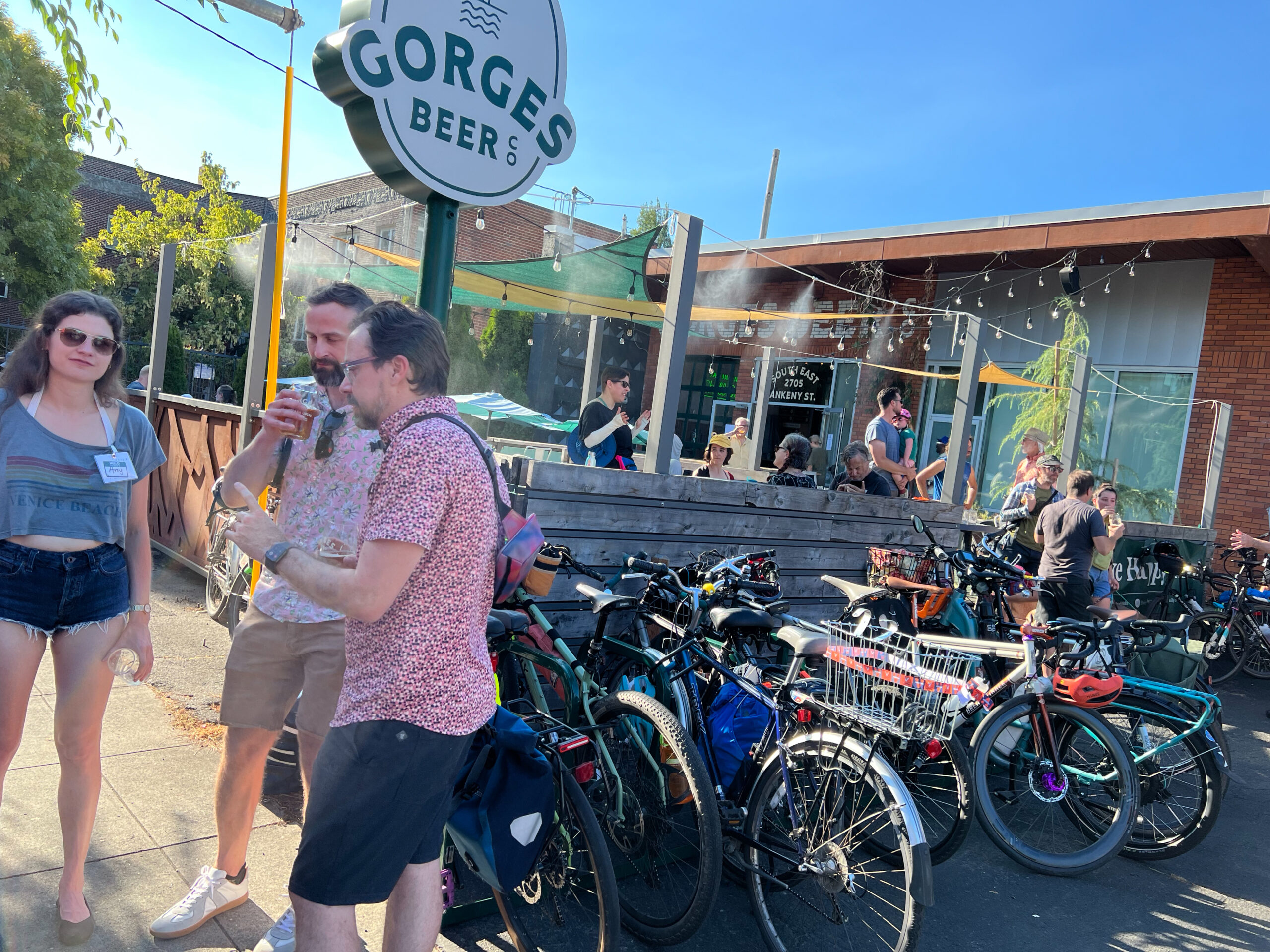
MADE Bike Show director Billy Sinkford (green shirt on left) and the crowd on the patio last night. (Photos: Jonathan Maus/BikePortland)Getting a closer look at a 1974 Strawberry.
We did something at Bike Happy Hour last night I’ve dreamt of for a long time, and it turned out to be pretty neat. Our first “Show & Tell” night was all about paying respects to handmade bikes. Despite stifling heat, we had some fantastic folks and spokes show up.
With the MADE Bike Show rolling into town next week (August 24-27), Portland will be the center of the handmade bike world once again. This will be a massive event and I want it to be a big success, so I hooked up with the creator of the show, Billy Sinkford, and we decided to have a little pre-party.
While Happy Hour regulars stayed cool on the Gorges Beer patio by sitting under the misters, sipping cold drinks, and squirting each other with super-soakers, the adjacent parking lot turned into a mini bike show.
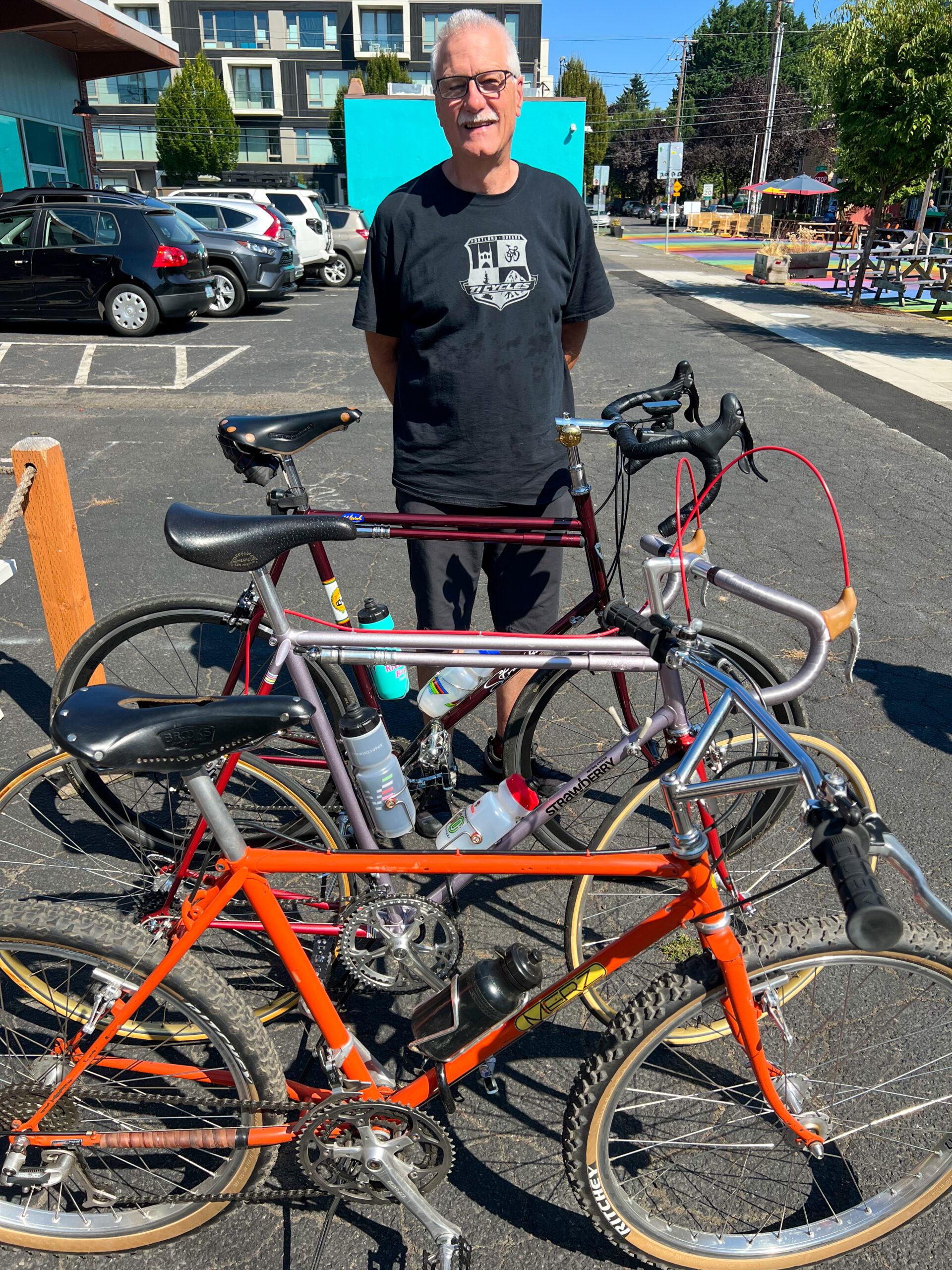
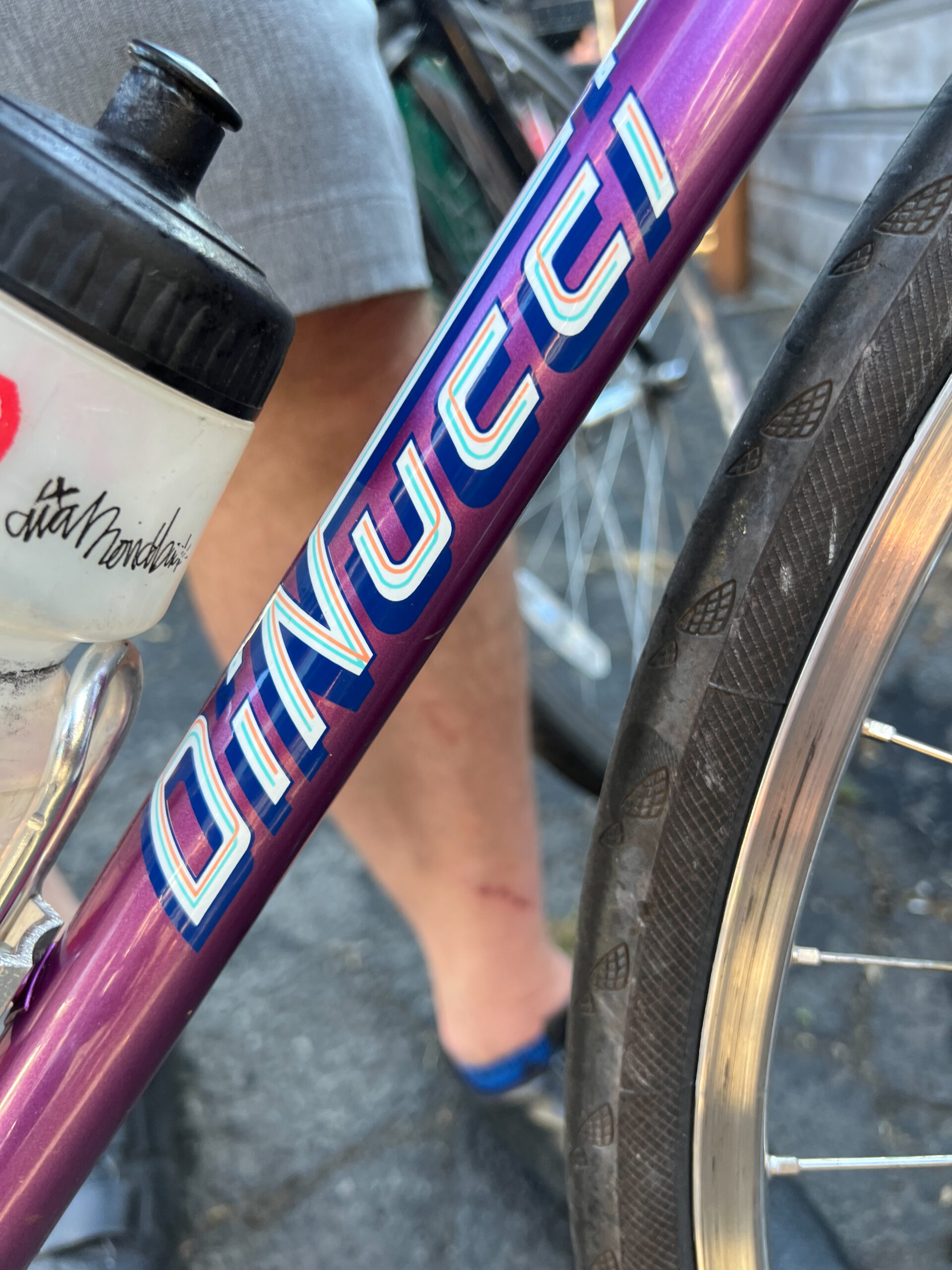
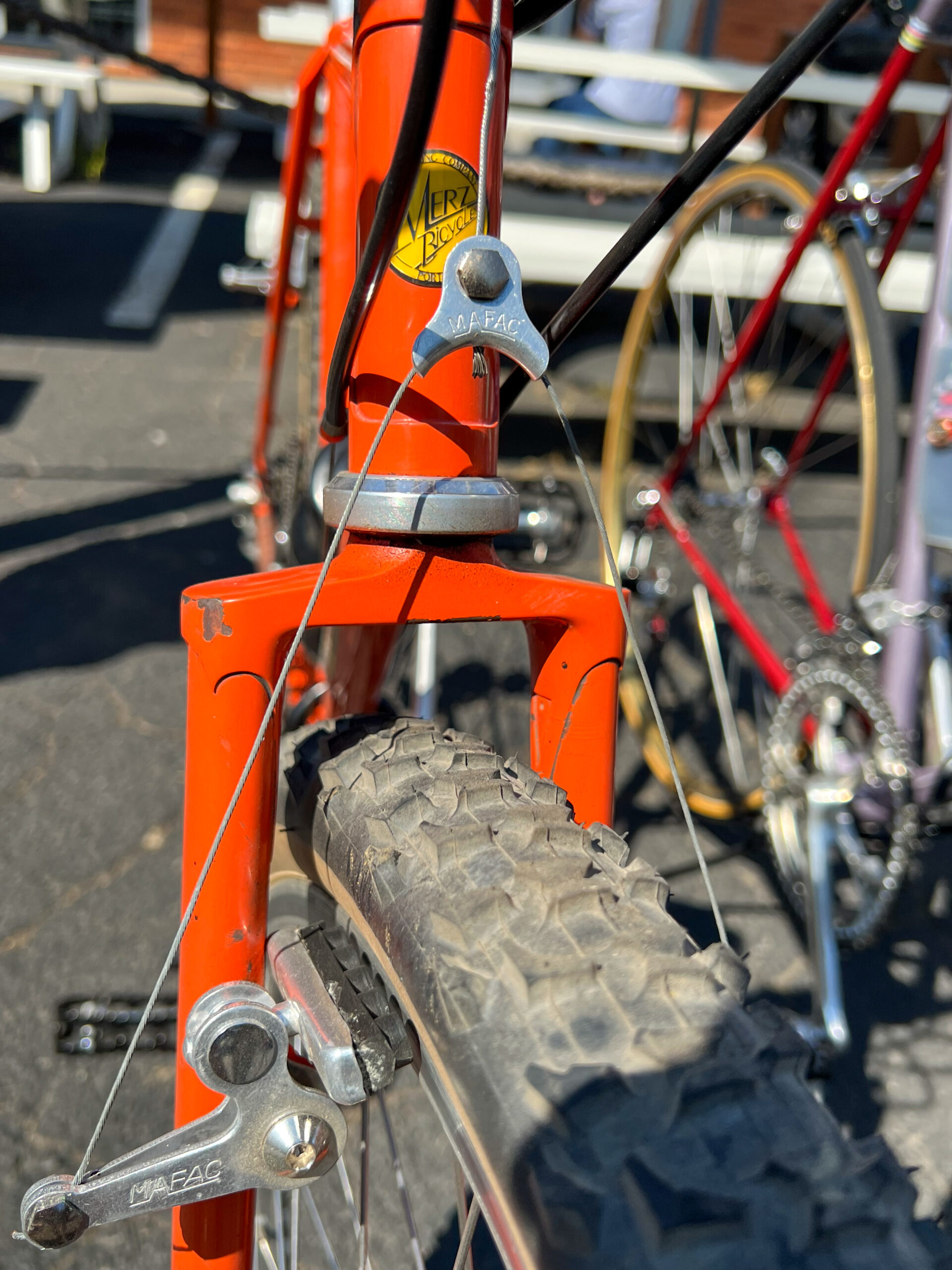
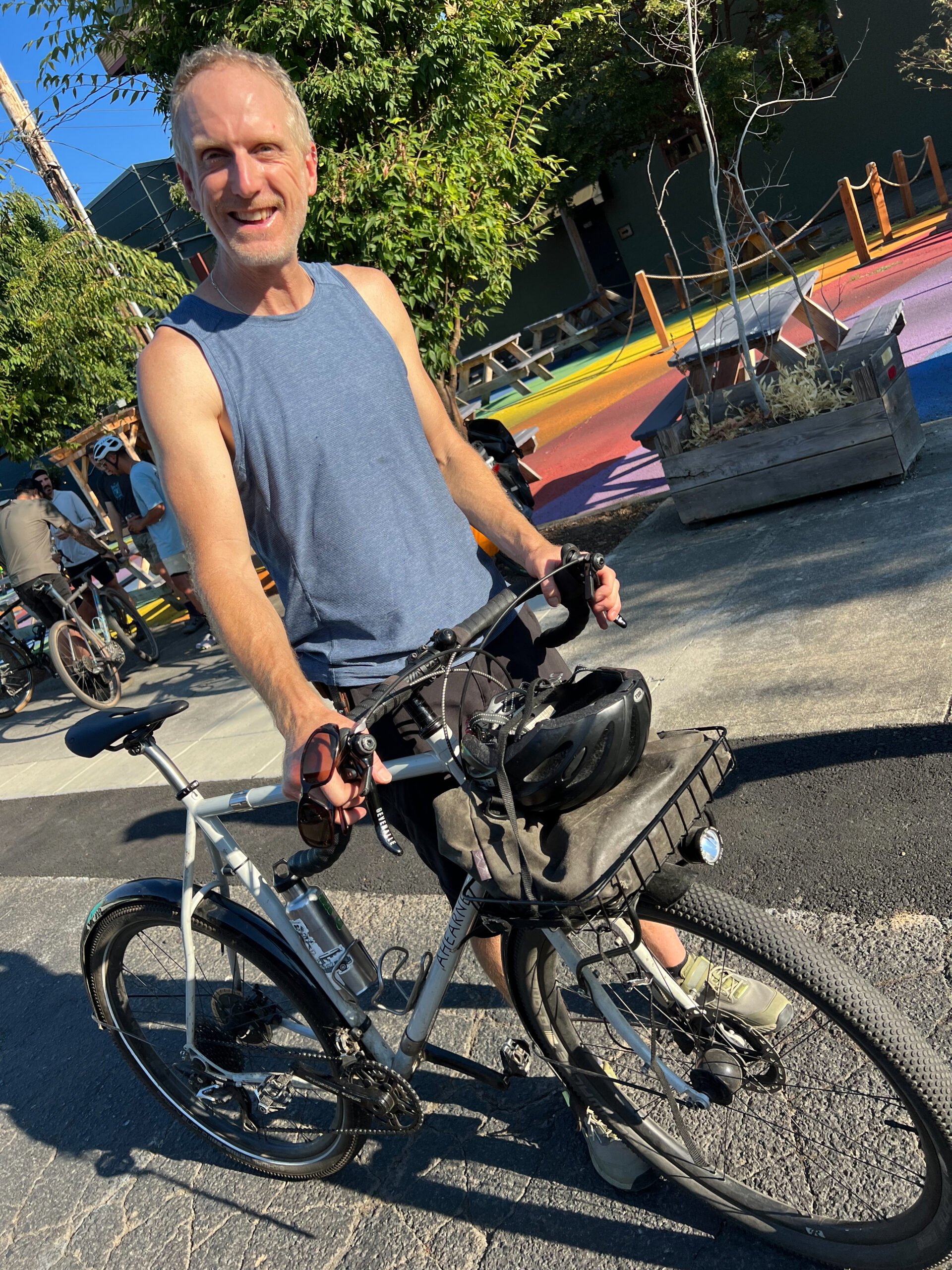
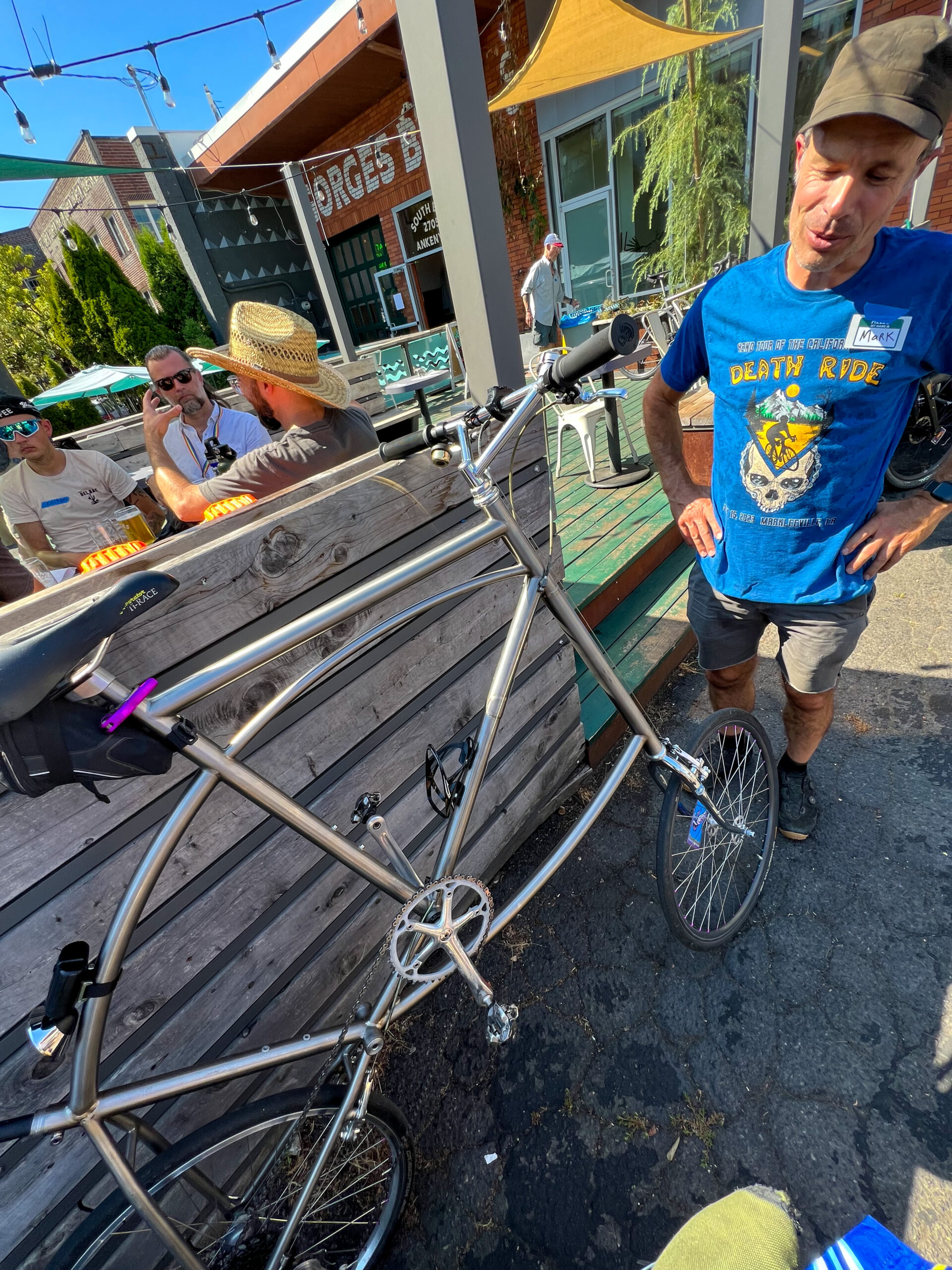
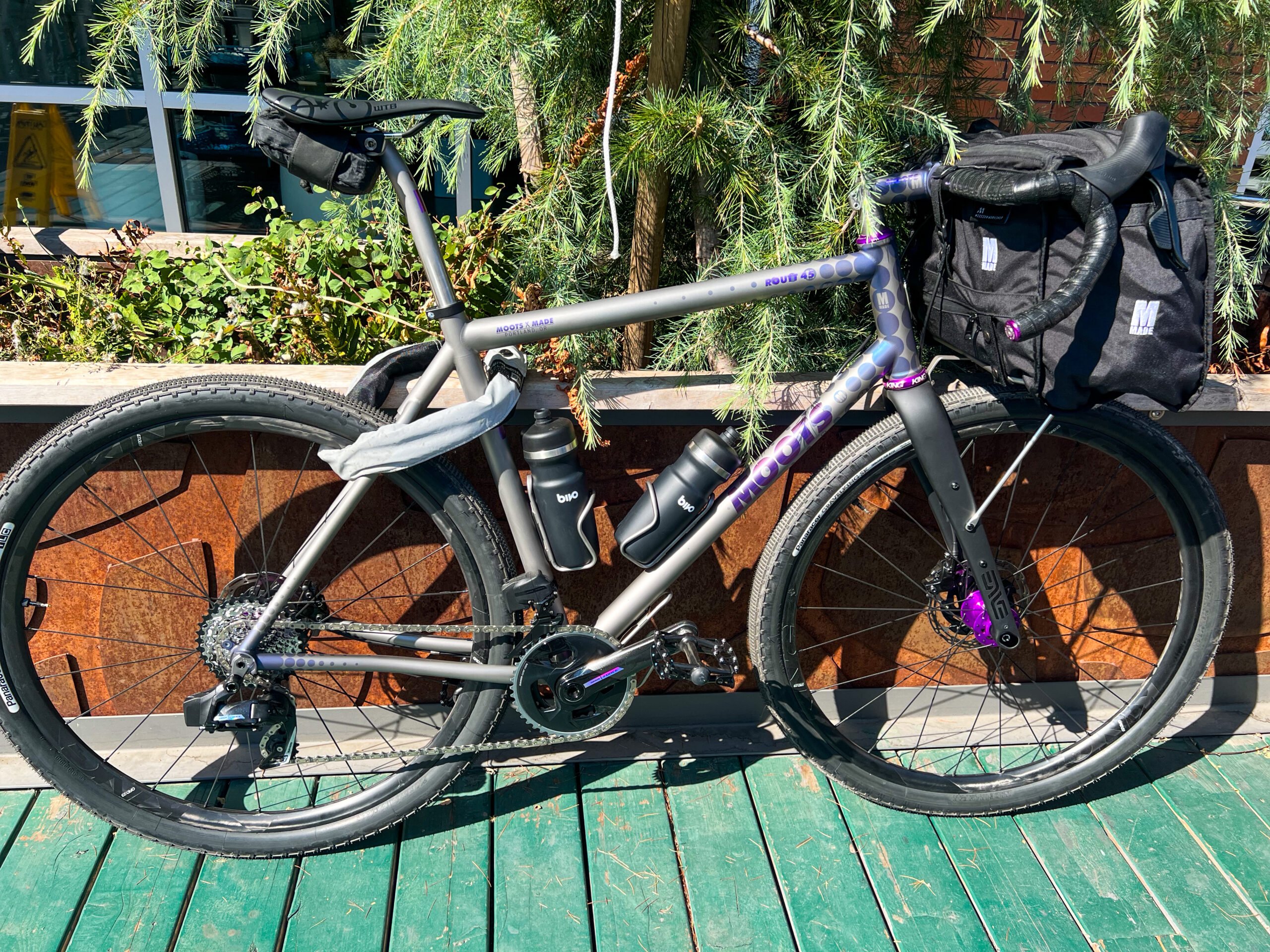
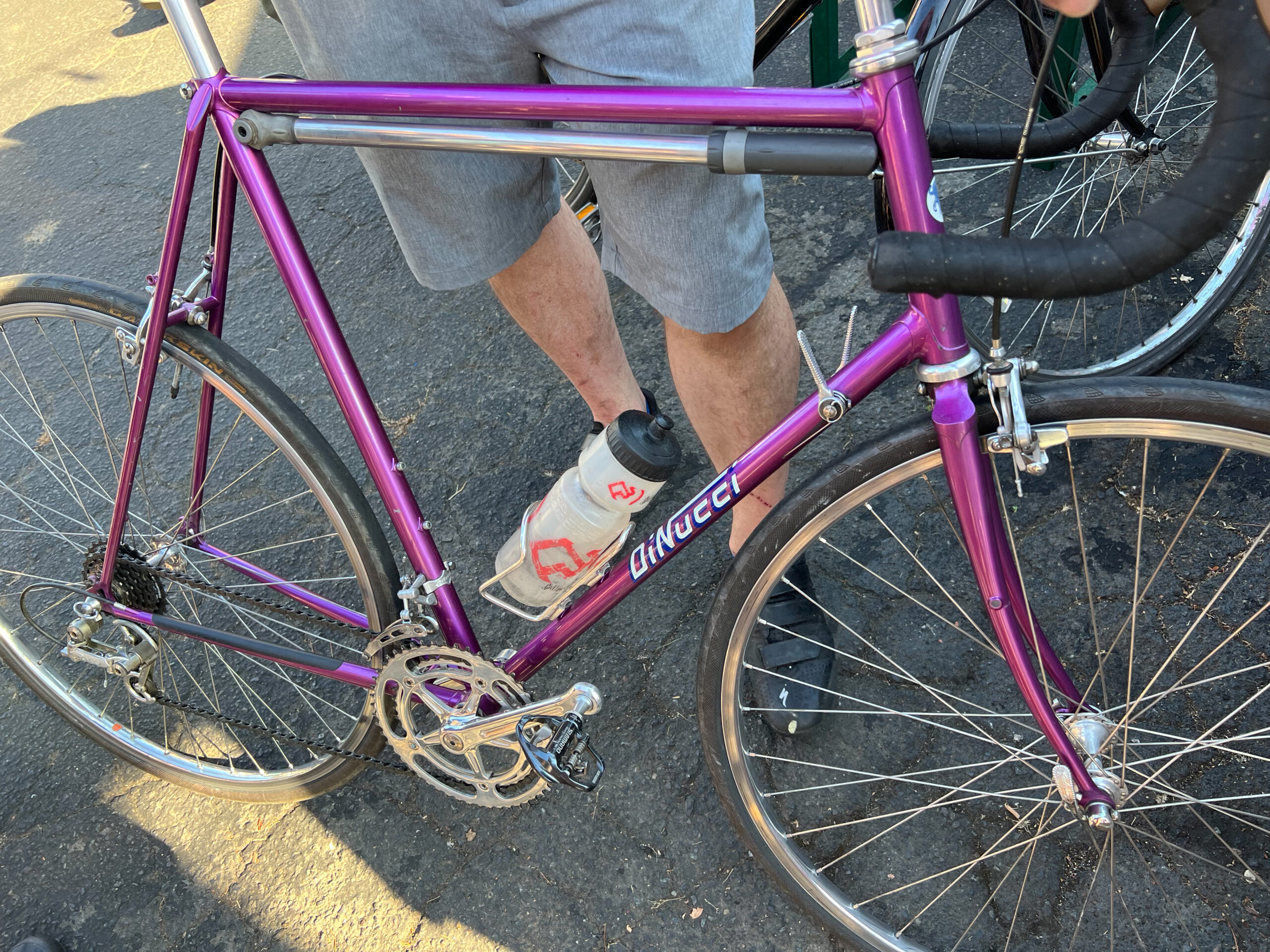
VanThat badge tho.Billy’s new Moots with all the bits.DiNucci headbadge.That’s hemp holding bamboo together.Merz crafted the fork from a block of steel.Joseph Ahearne! Titanium tallbike and its builder, Mark.Mark and Pamela.Sean from Rendered.Robin and her Frances.
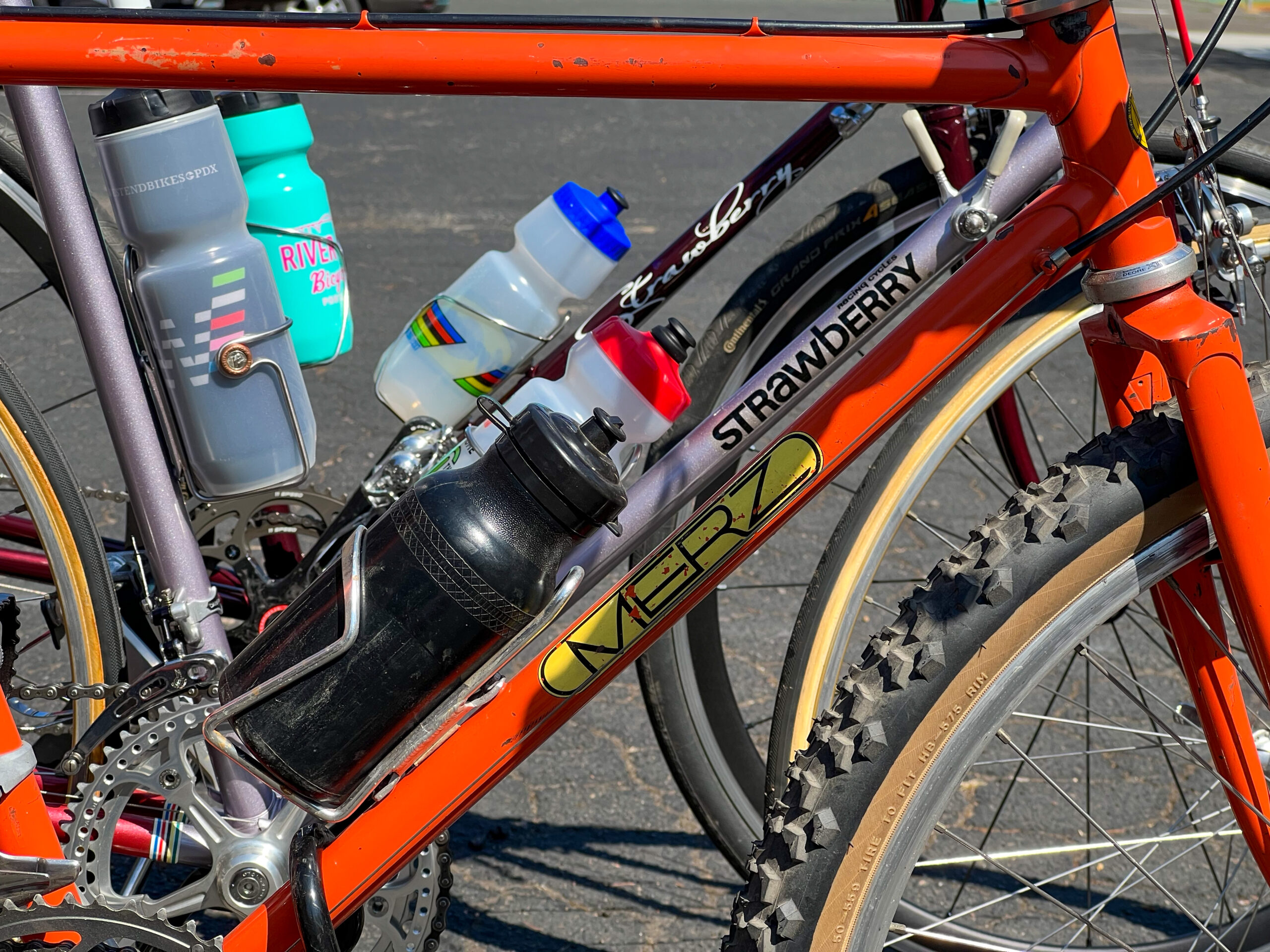
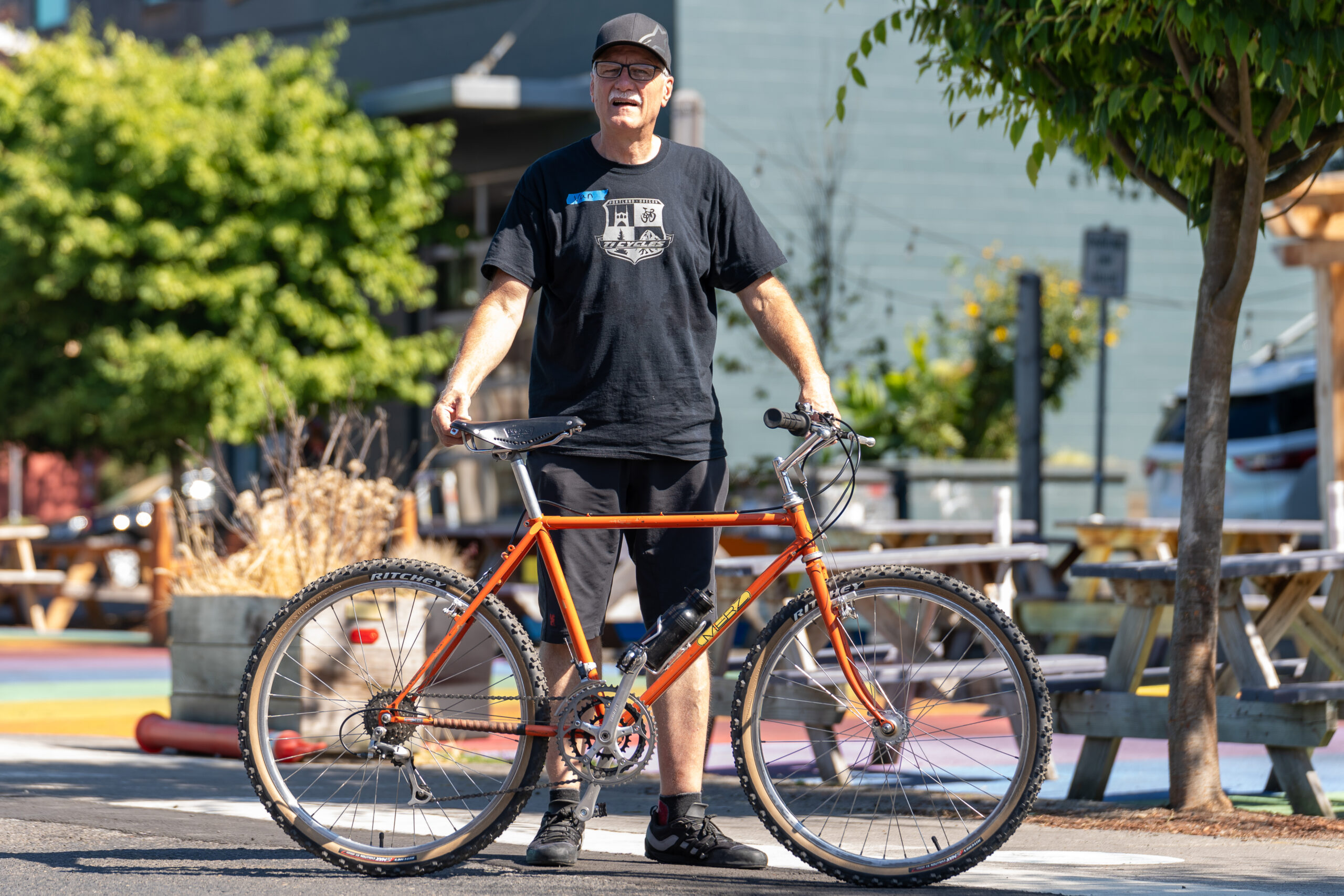
Van set the tone with his amazing trio of Portland-made beauties. His 1982 Jim Merz MTB stole the show. Merz was an early local bike influencer who was befriended by a guy named Mike Sinyard from California. Sinyard, who would go onto launch Specialized Bicycles, brought Merz on early to be one of his main builders. Merz actually welded many of the early Stumpjumpers!
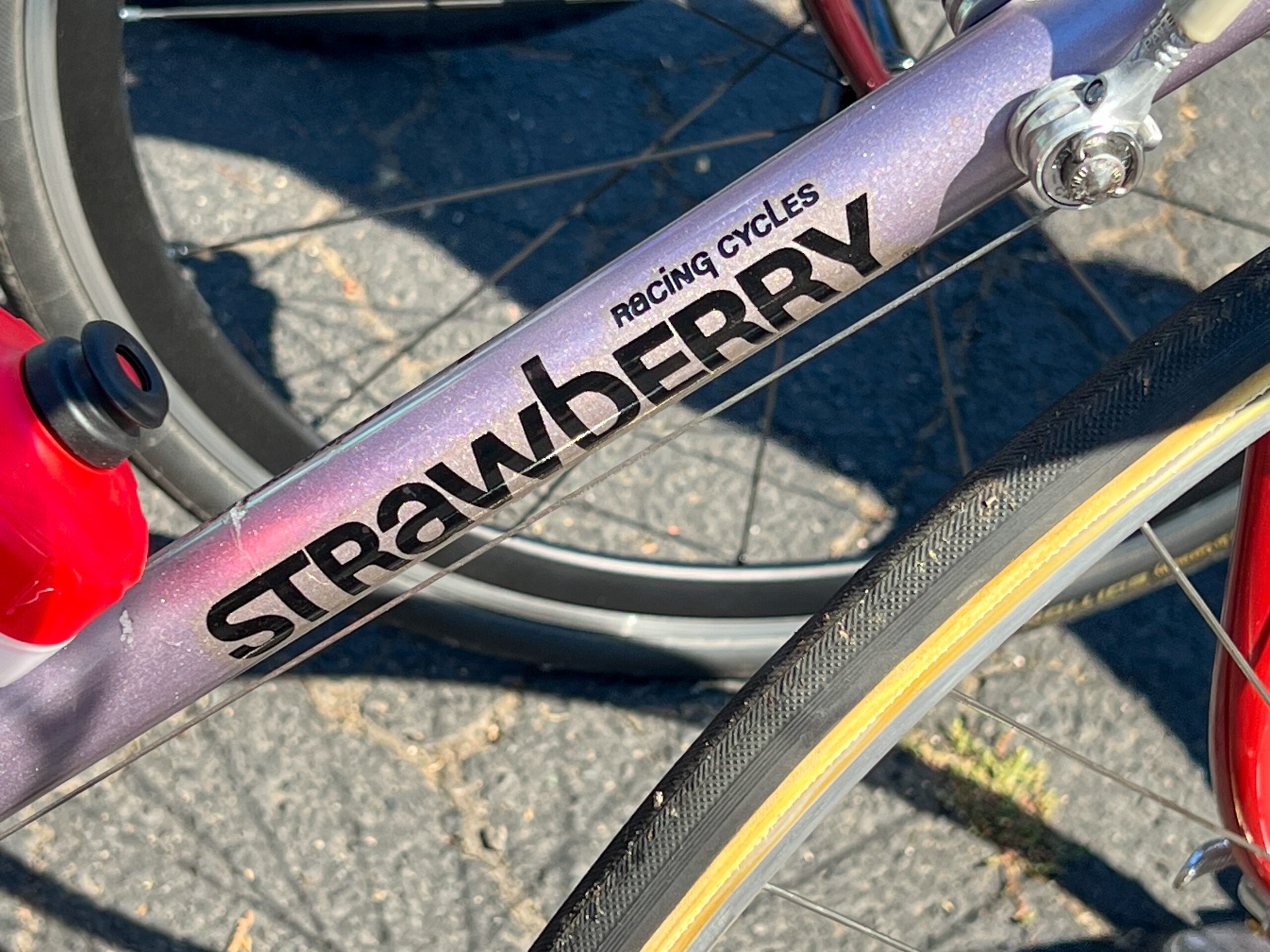
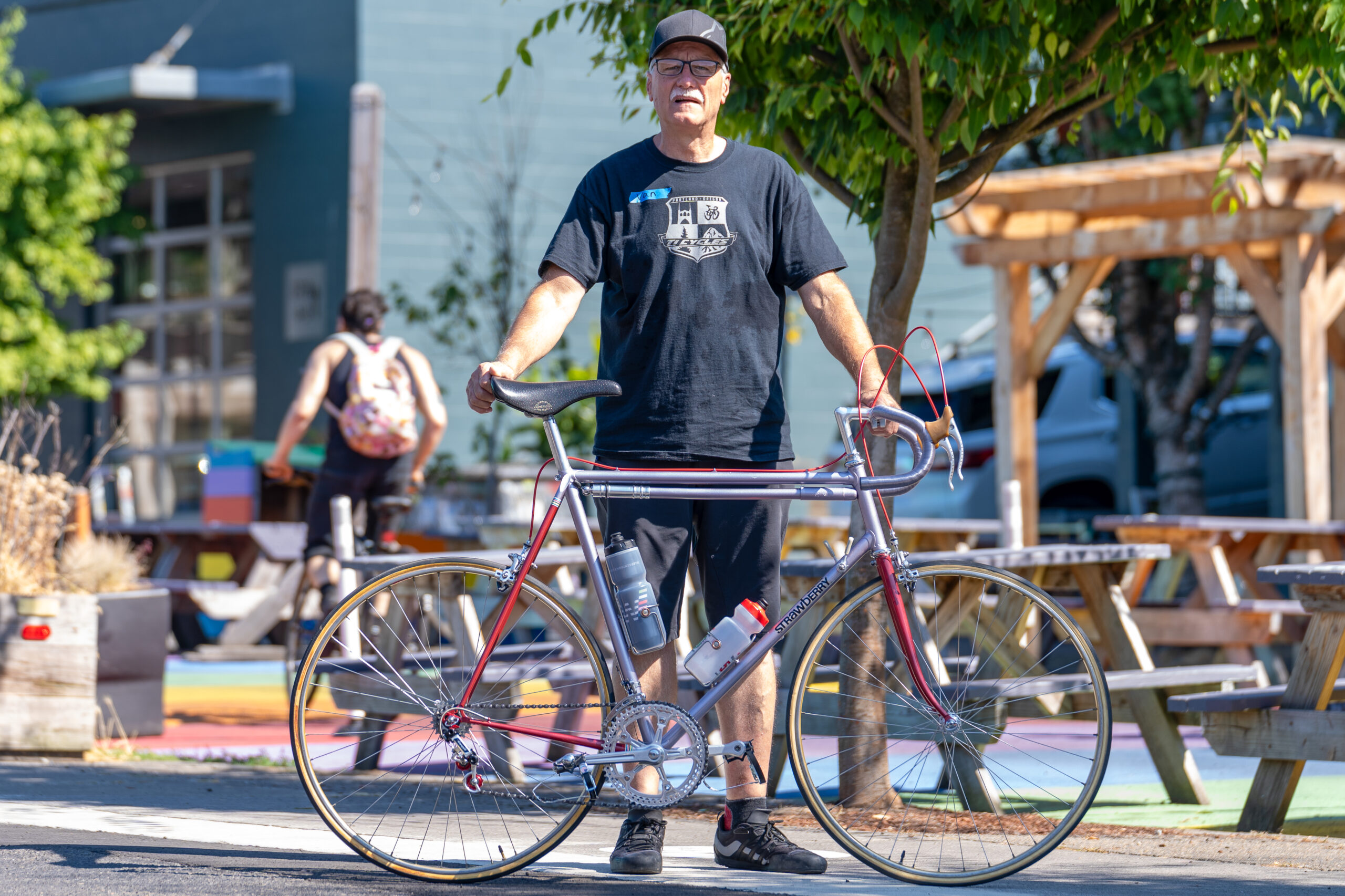
Van also brought a 1974 and 2021 Strawberry. The older one was made in northwest Portland by Andy Newlands and the newer one was built by Dave Levy from TiCycles (also in Portland) with Newlands’ blessing.
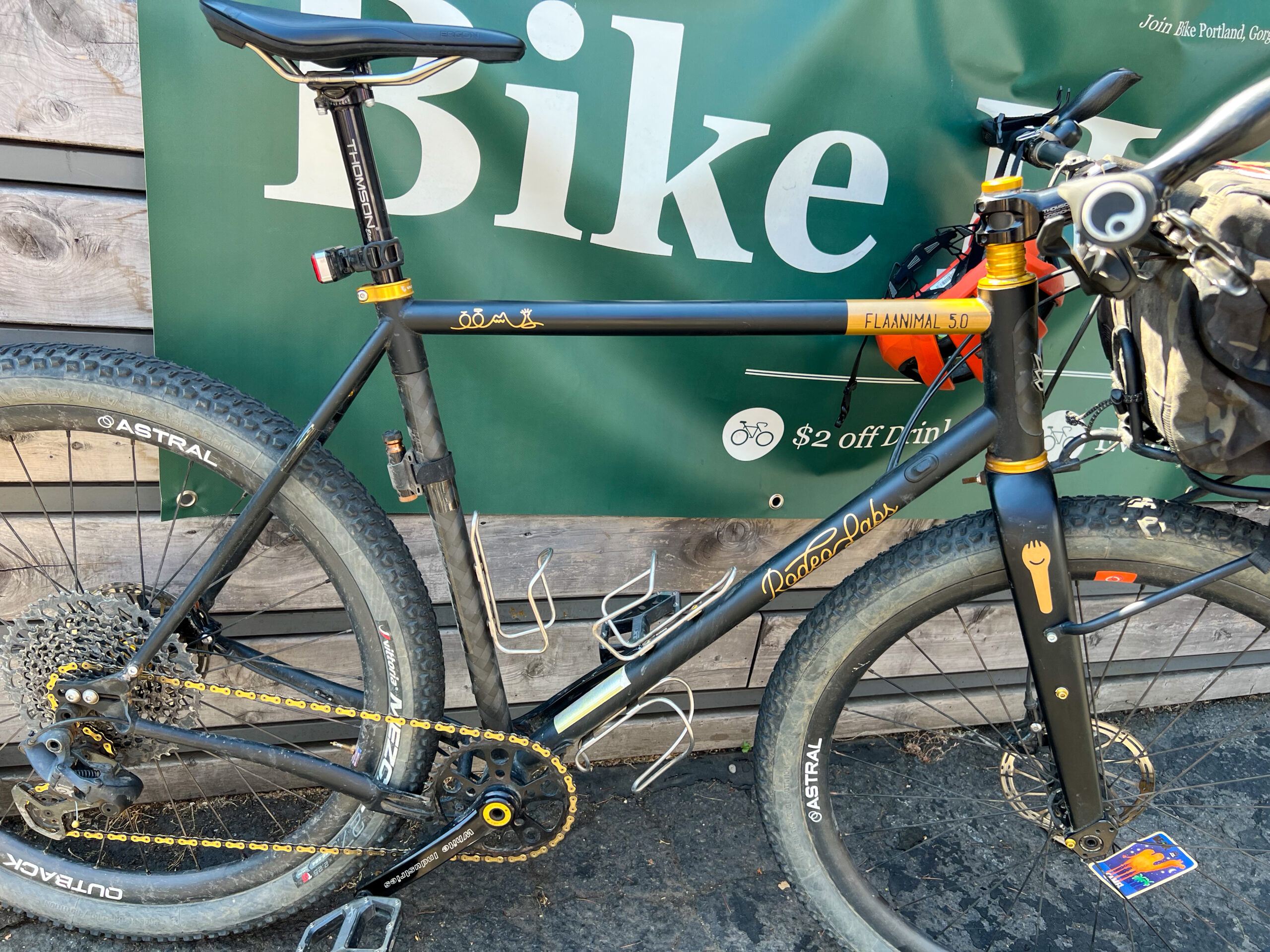
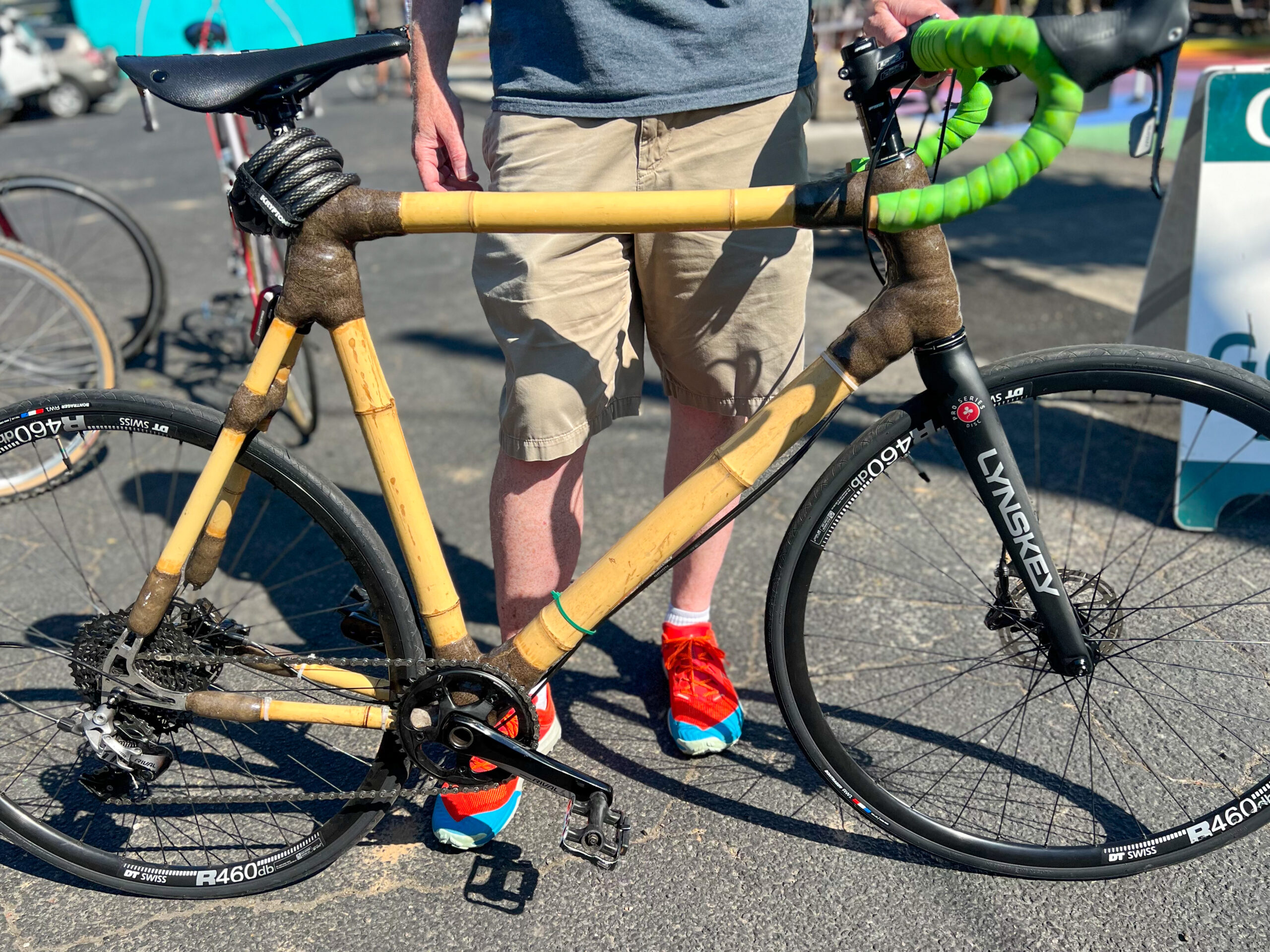
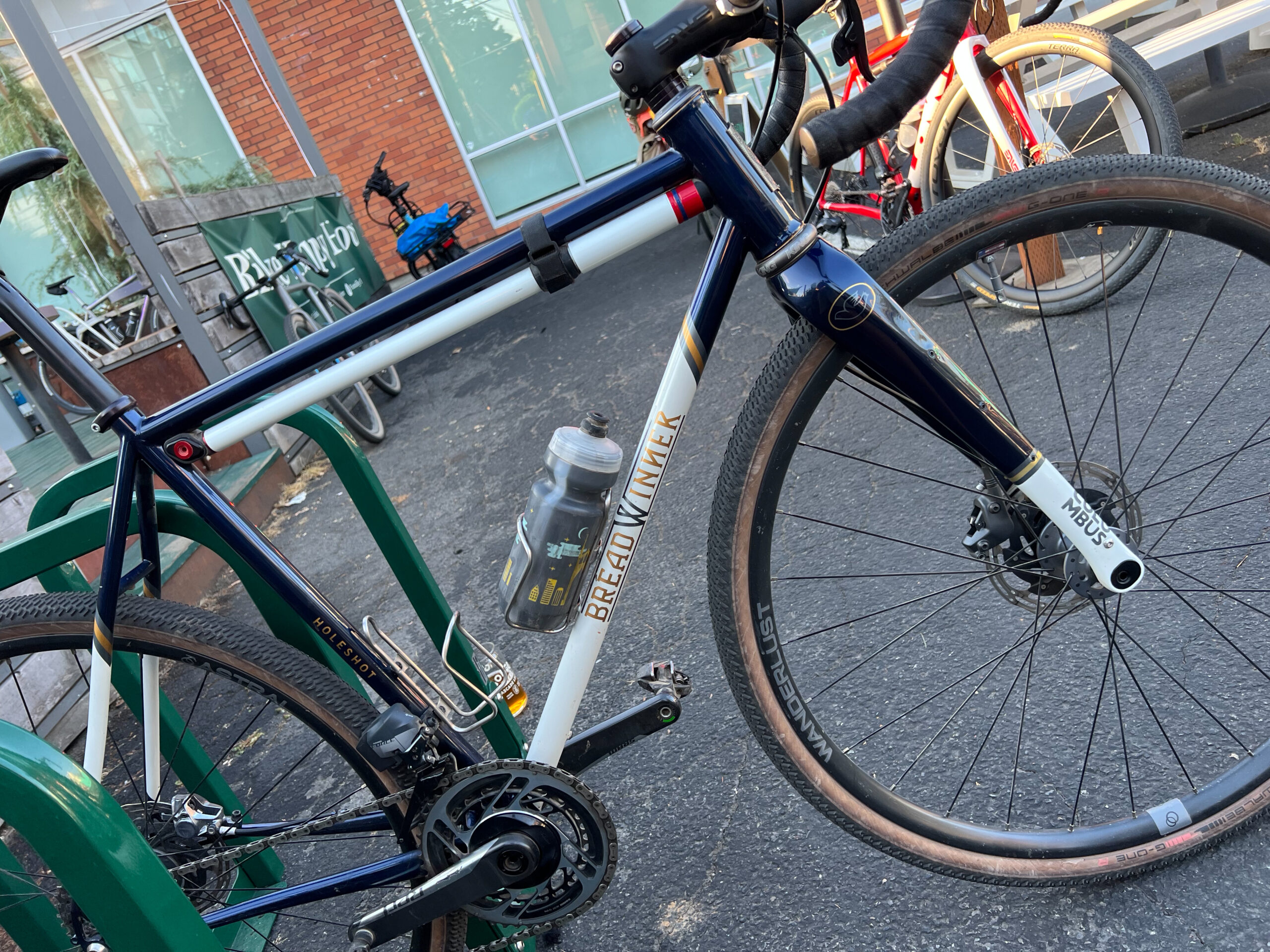
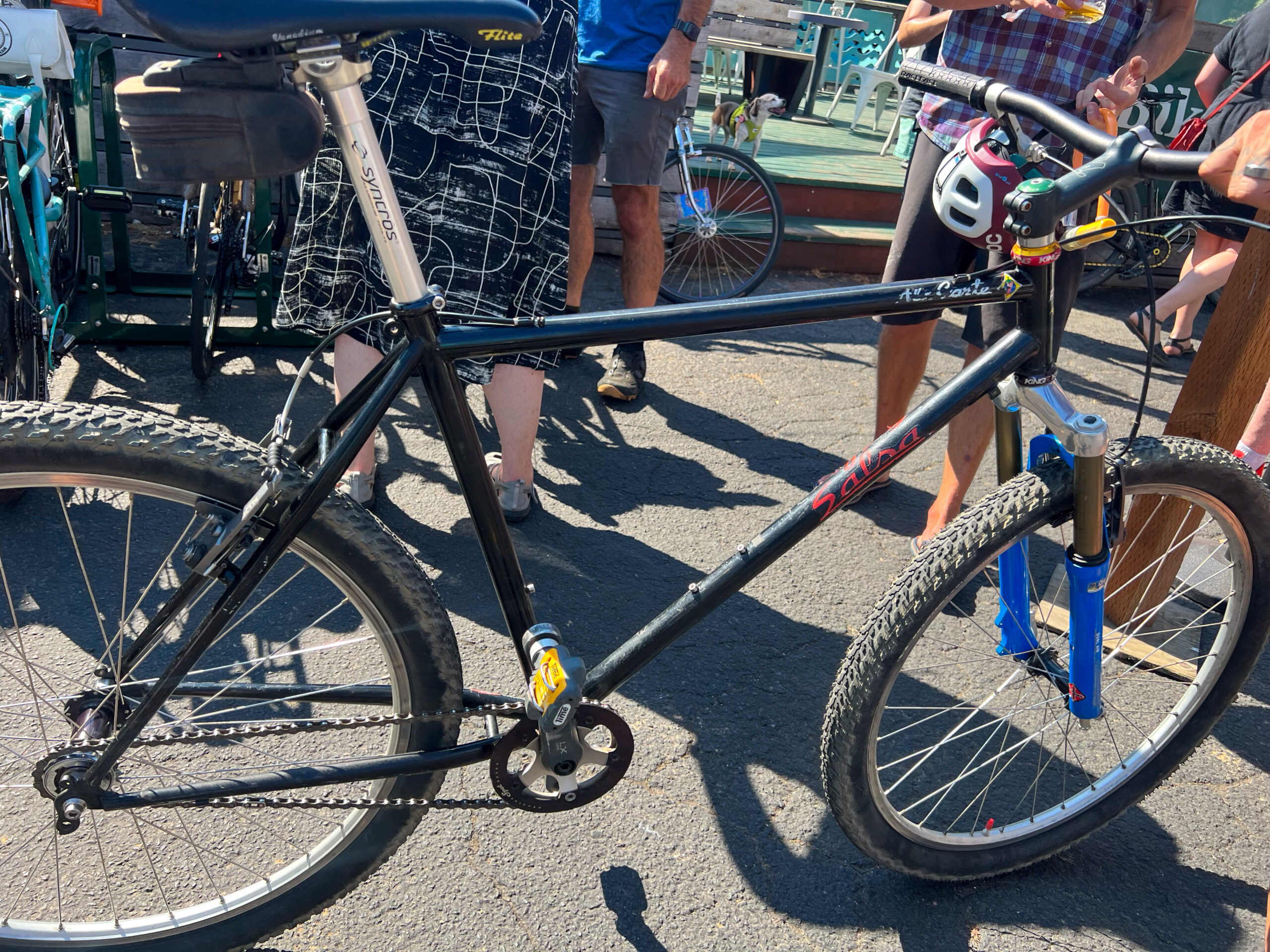
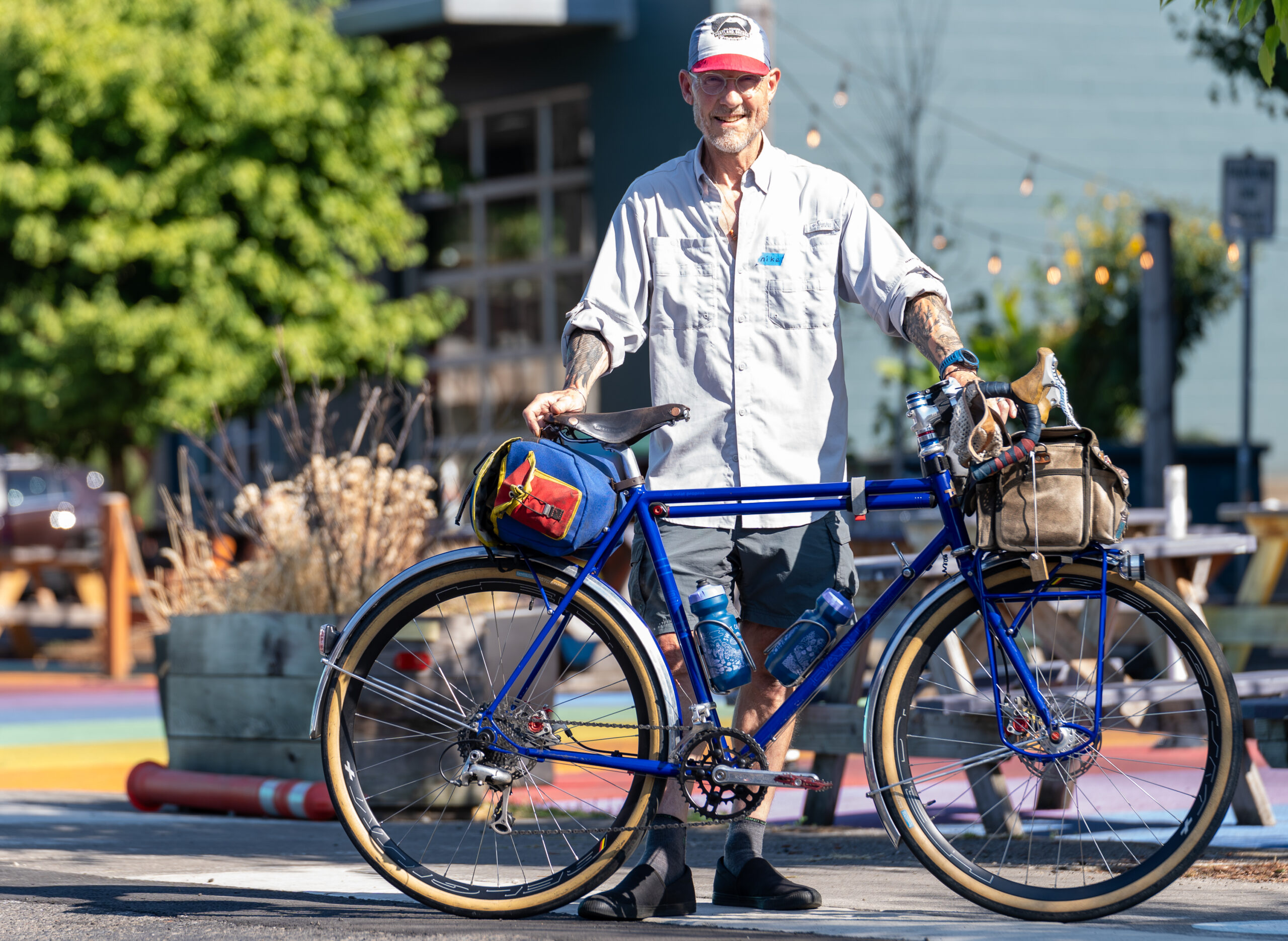
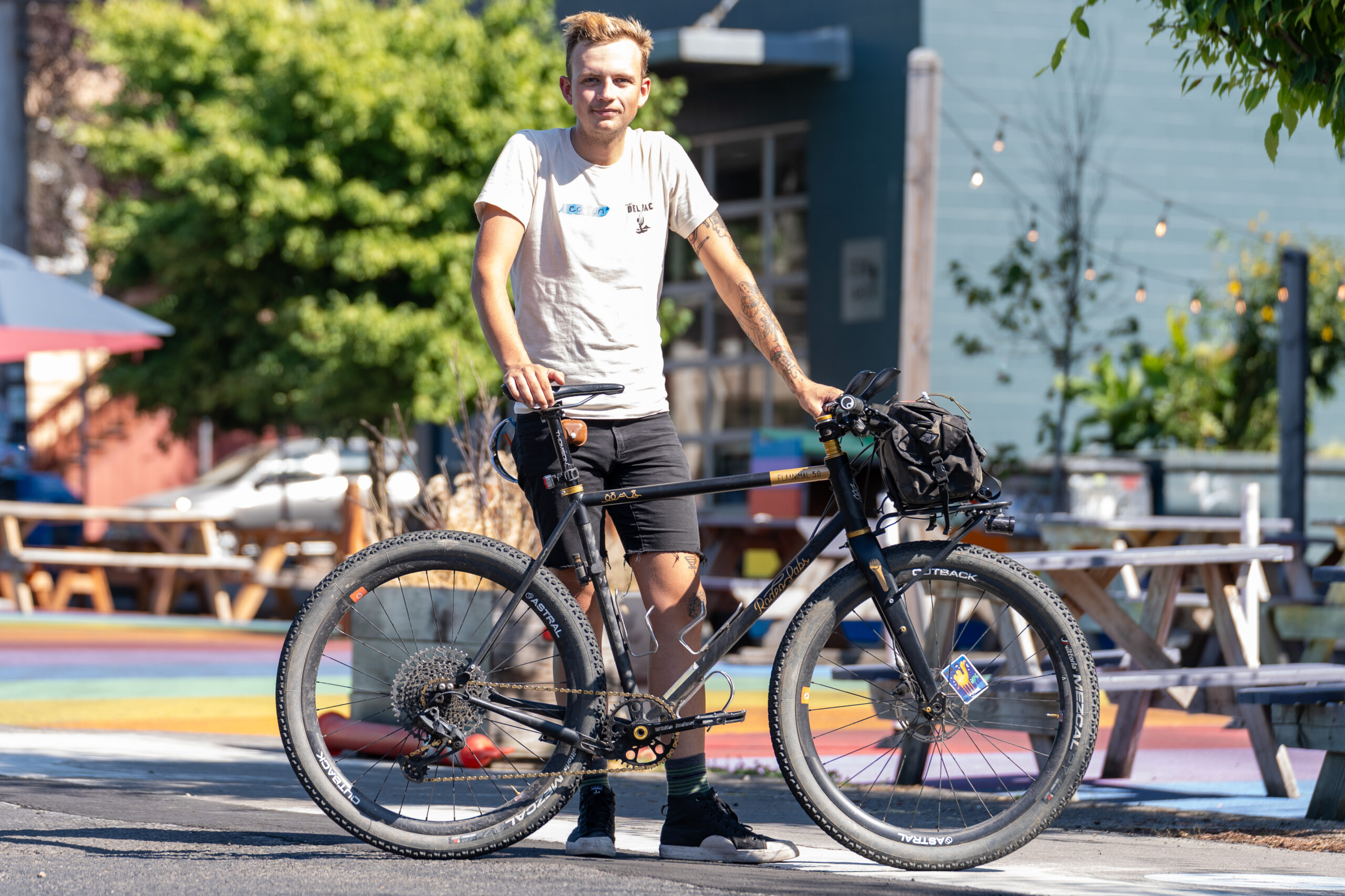
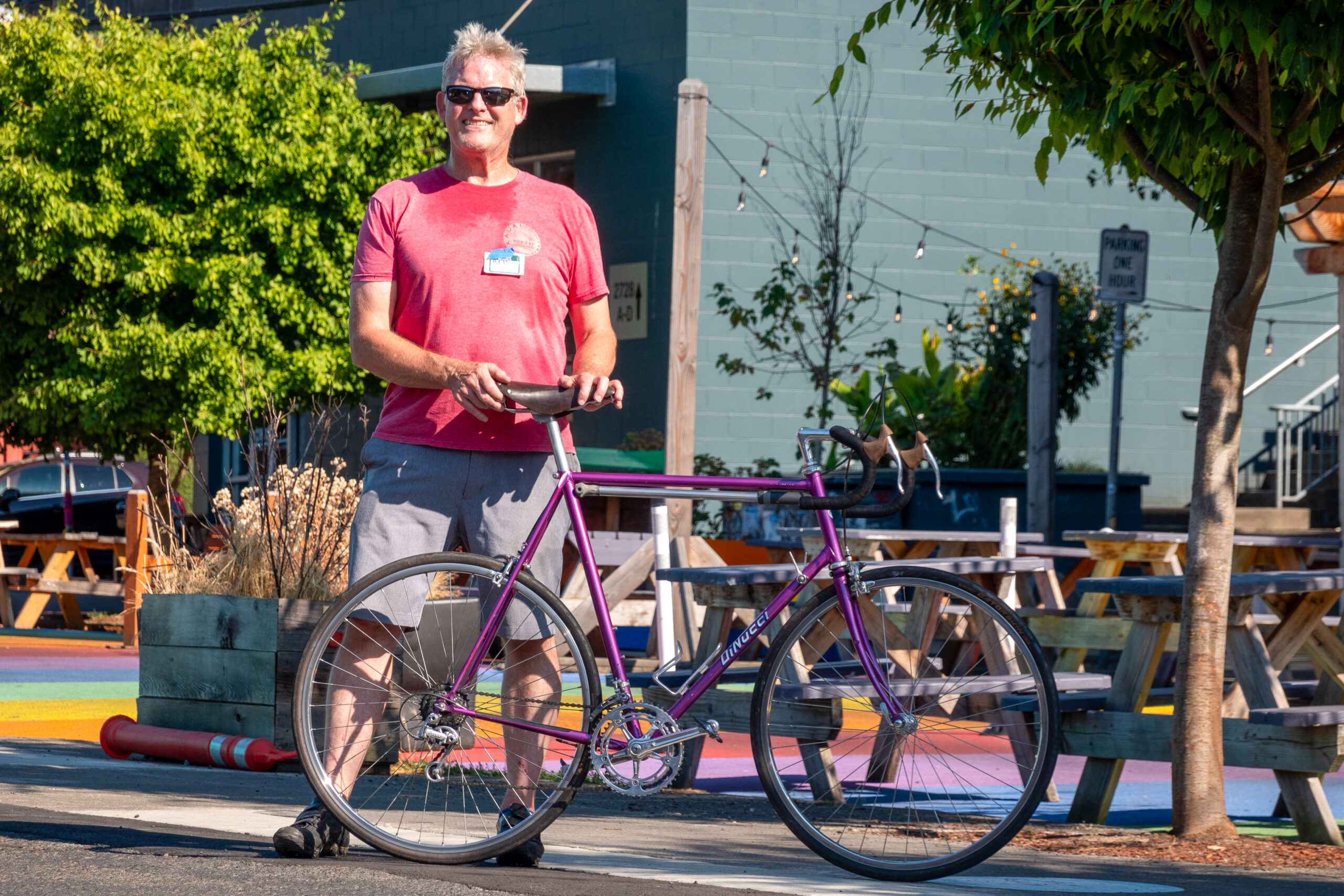
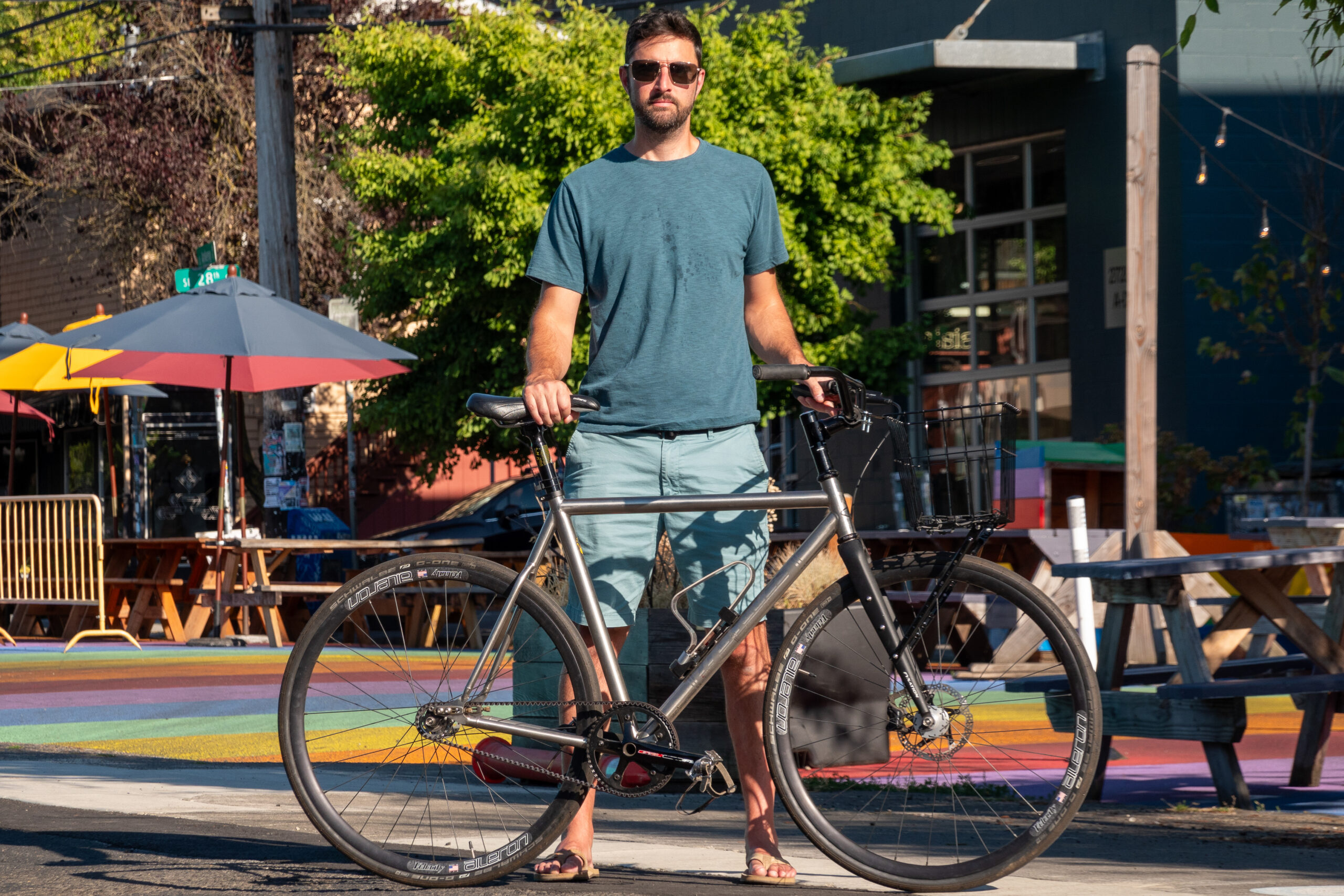
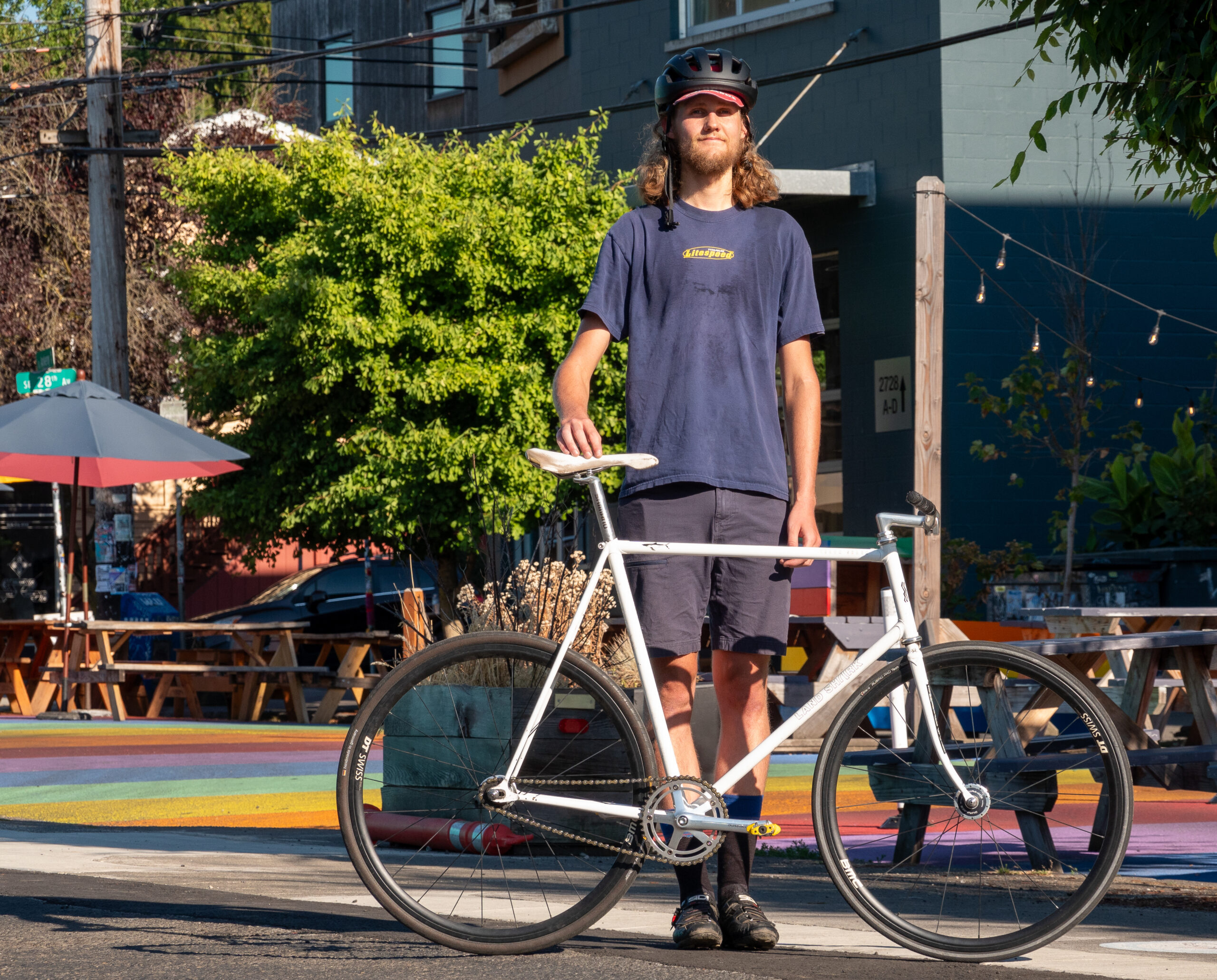
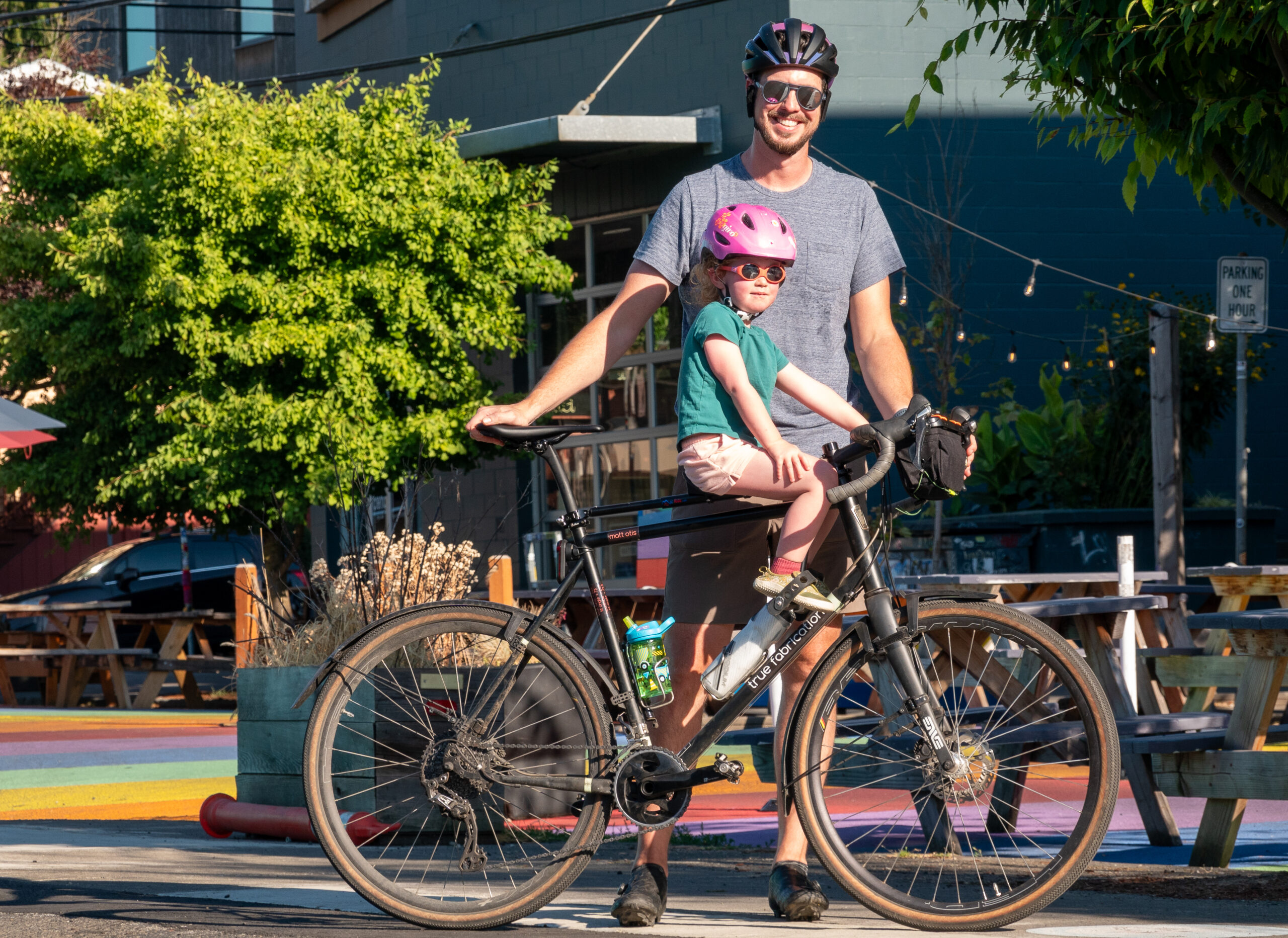
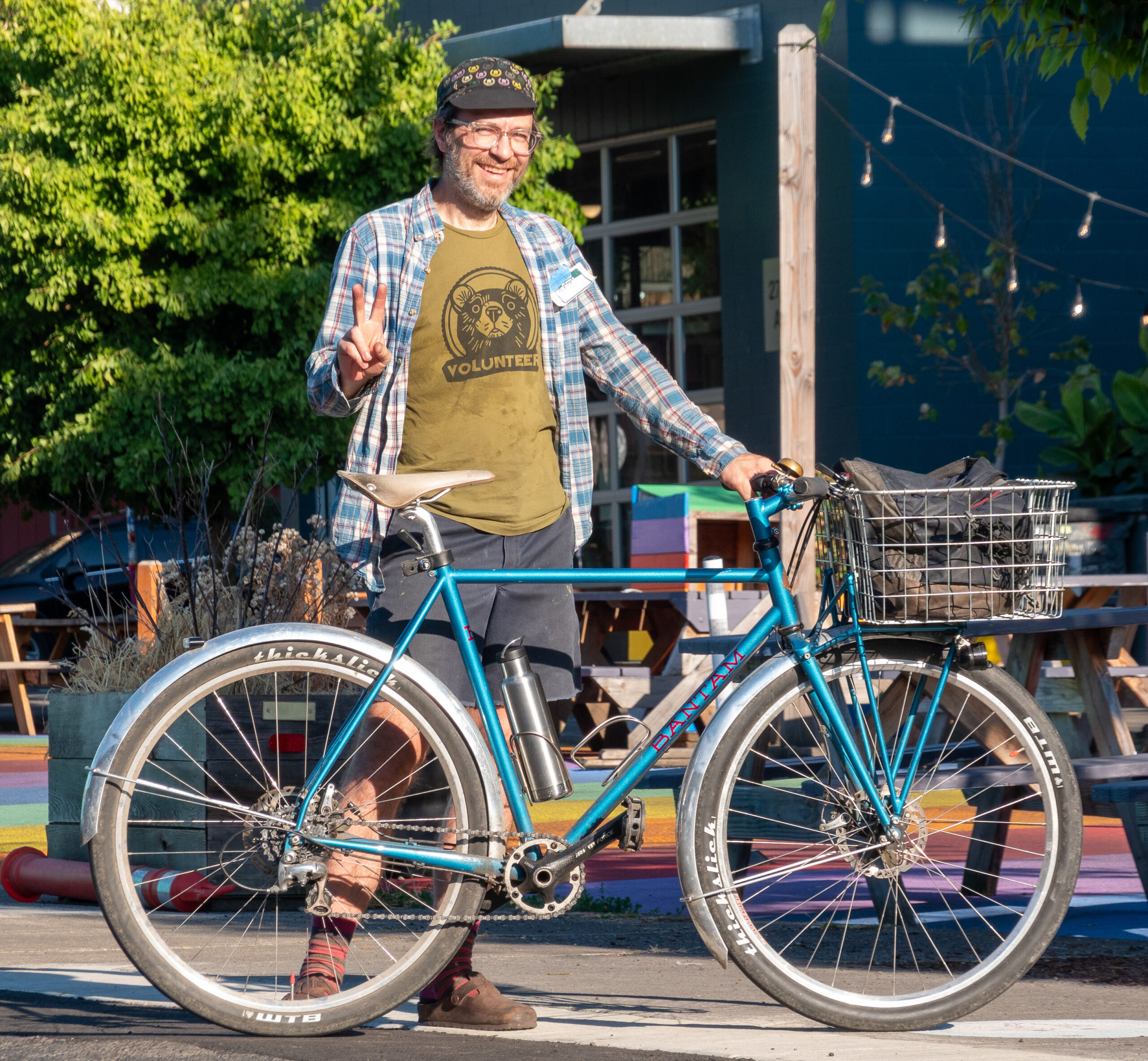
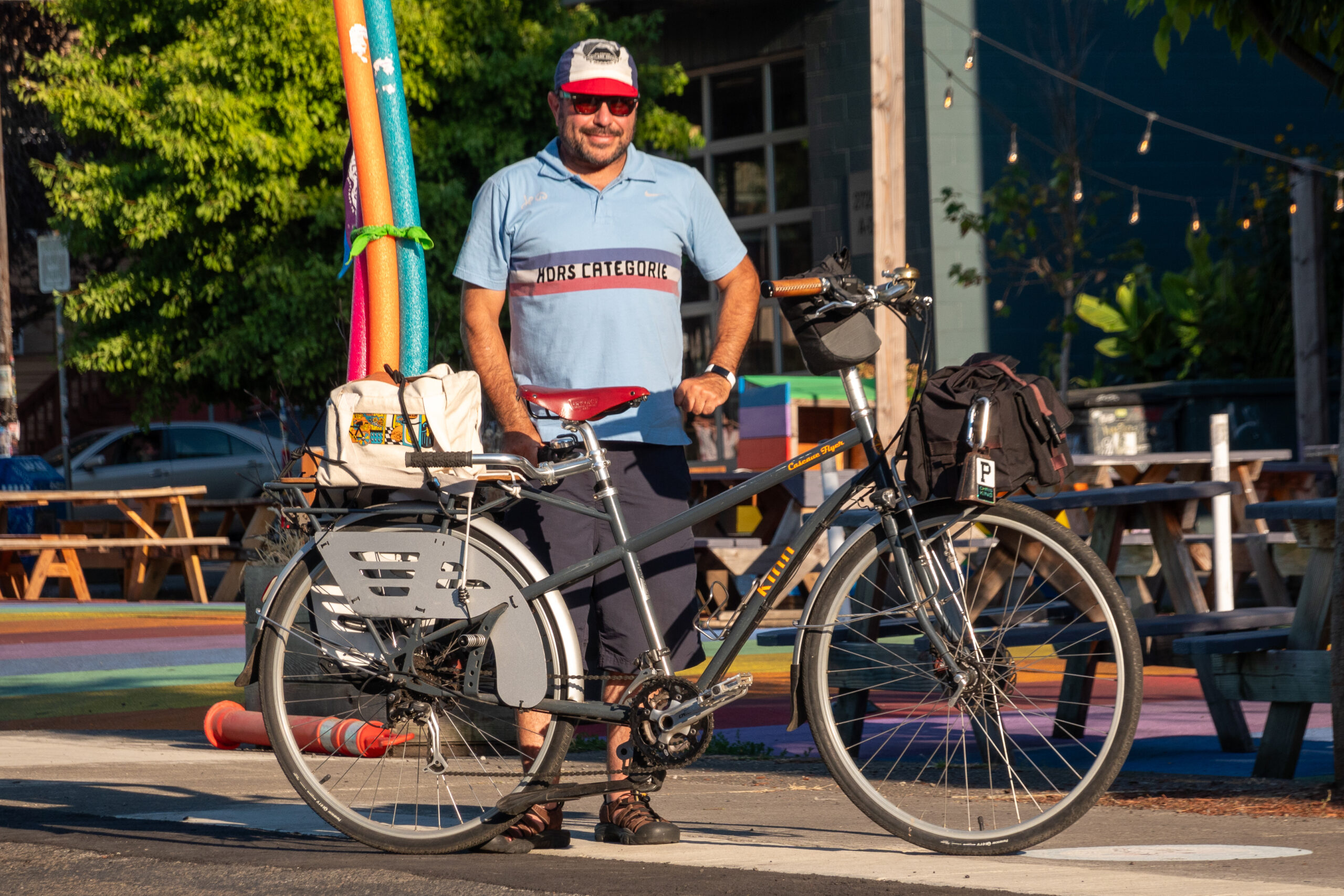
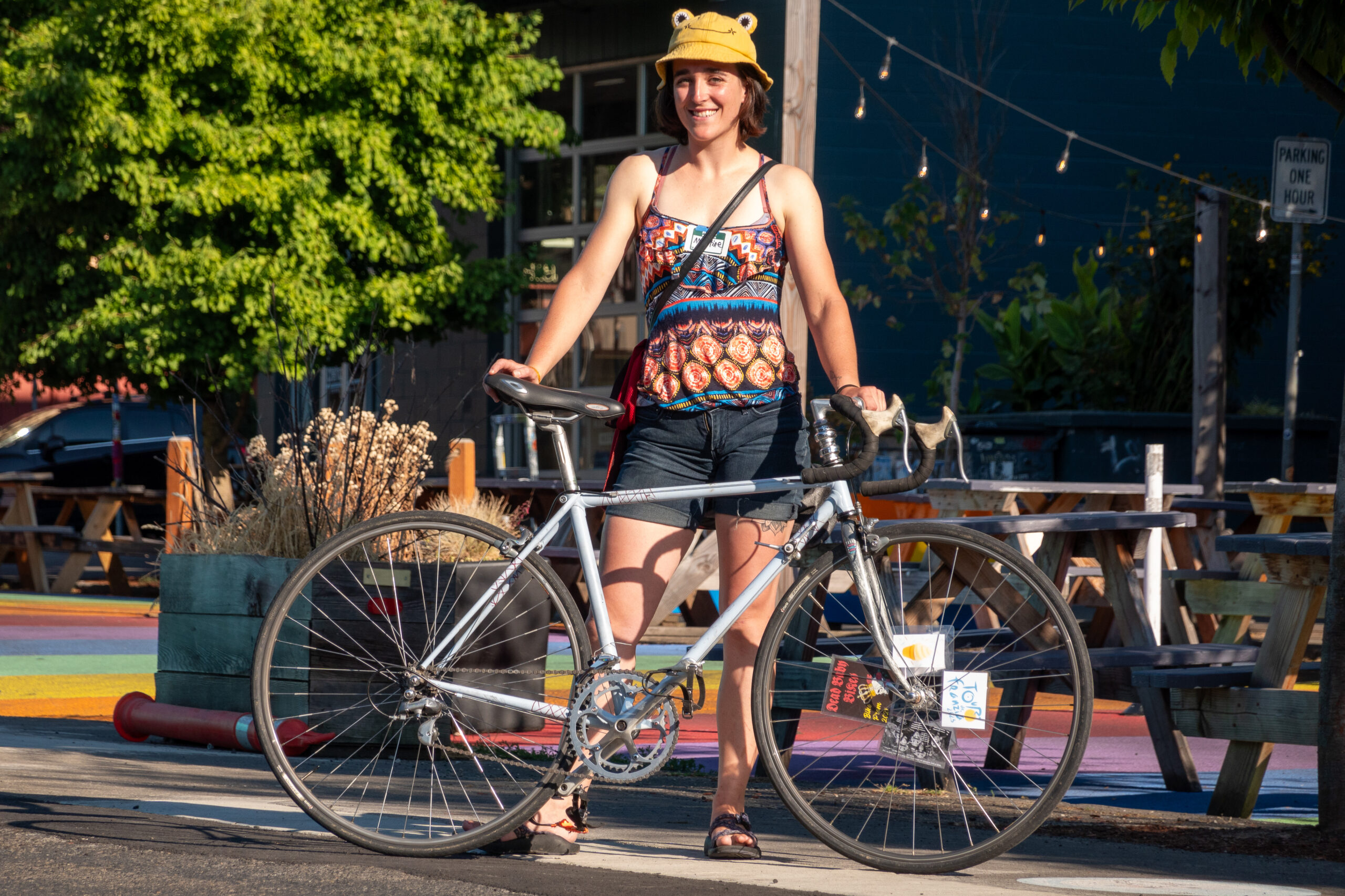
Then there was Colton’s gold and black Rodeo Labs Flaanimal, Art’s 1989 Salsa A La Carte made by Ross Schafer, Eric and his bamboo bike with hemp lugs that he made himself from a kit(!), Sean from Rendered on the recumbent that’s featured on the Pedalpalooza poster, Mark’s tremendous titanium tall bike, Billy’s brand new and custom Moots/MADE Bike Show collab, Joe’s rare Kinn longtail, Robin’s curvy pink Frances, Jeremy’s Destroy singlespeed, Hurl’s Team 7/11-themed Breadwinner, Mike’s Bantam, Martine’s (aka Bahn Mi By Bike) road bike she made herself, Bob’s 1984 Mark DiNucci (another legendary Portlander builder), and we even had Jake swing by with one of the classic Stumptown models made by (now defunct) Portland brand Mountain Cycle.
Check out the portraits Billy made of all the bikes and their people below:
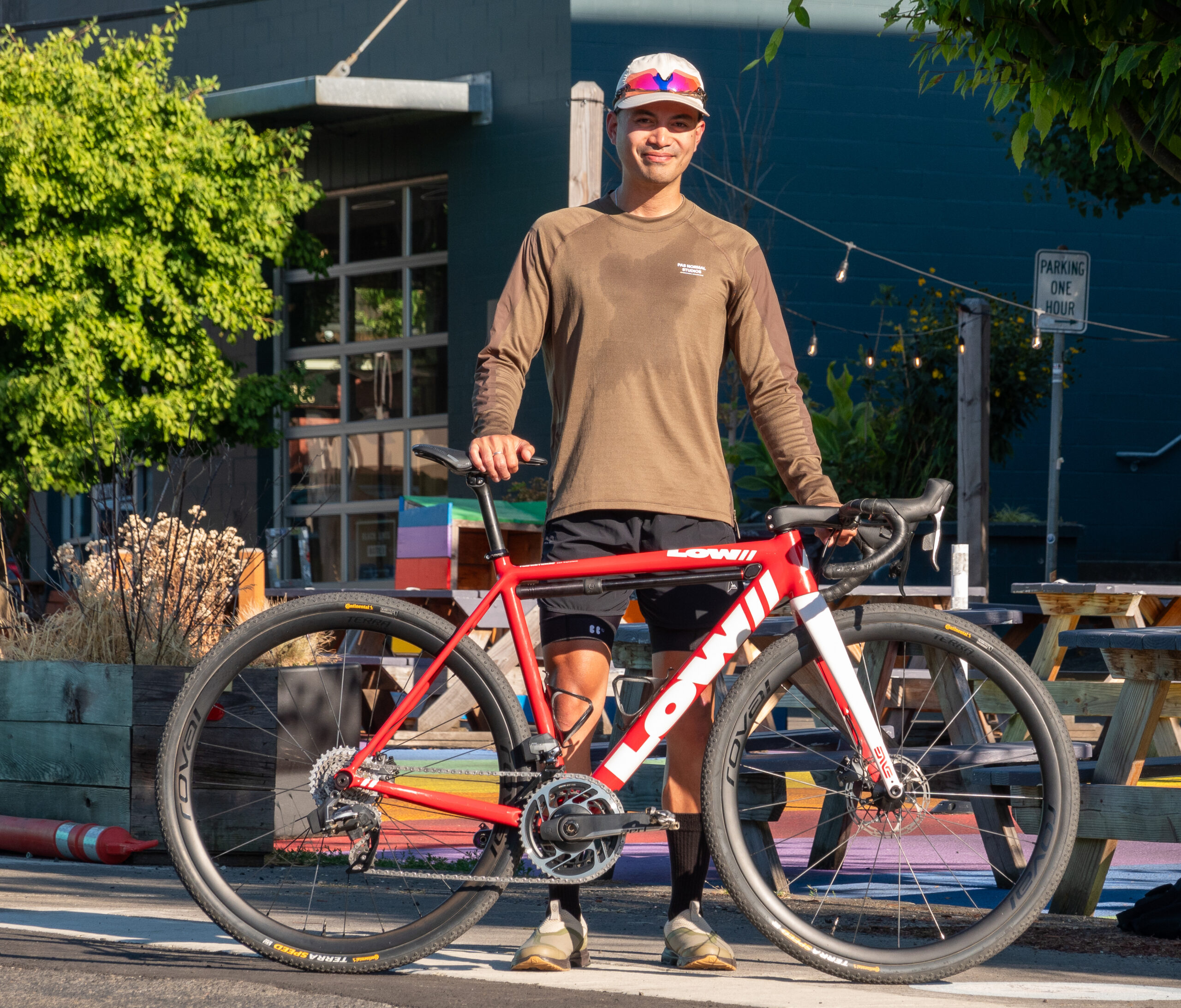
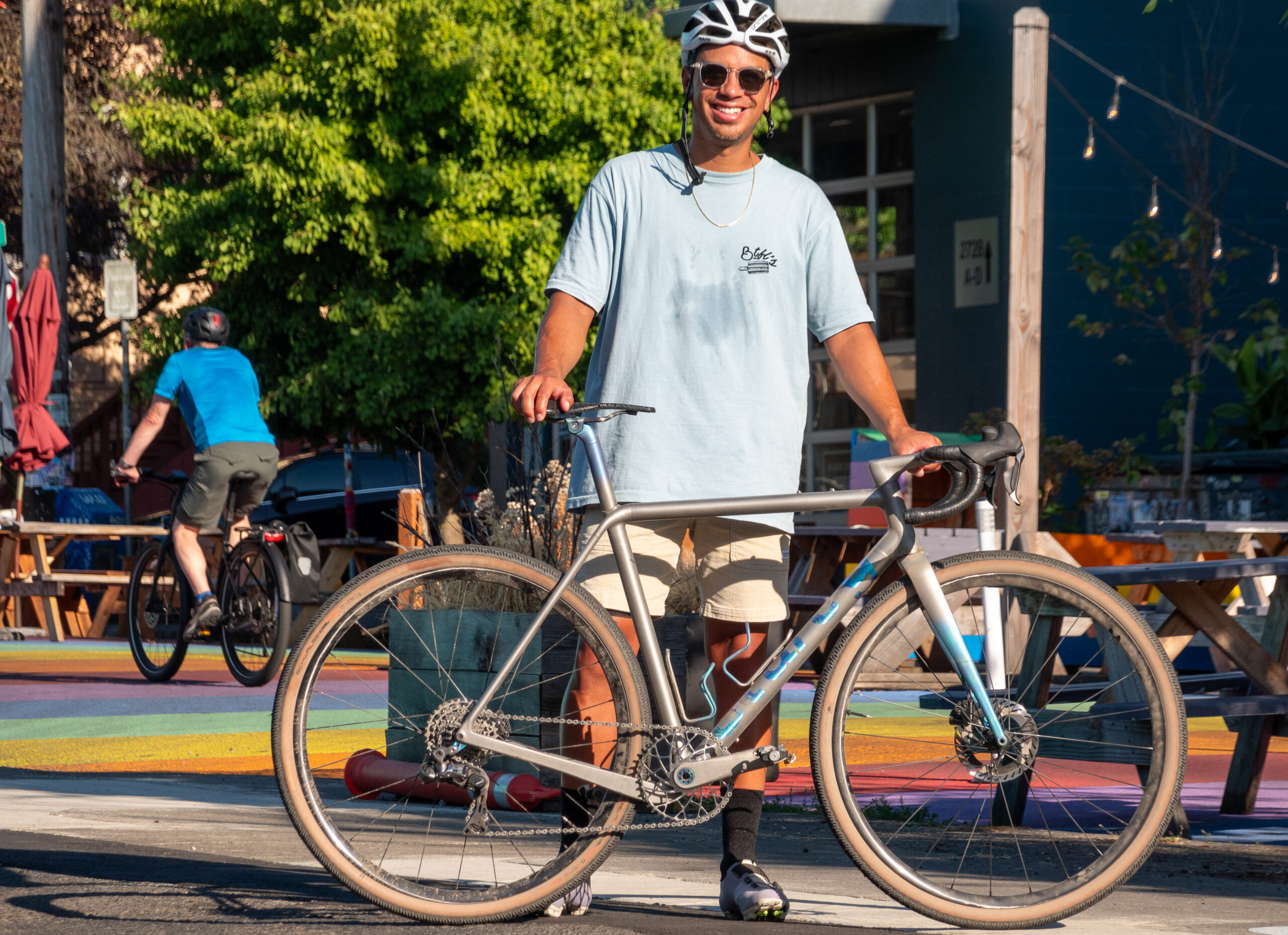
Mike and his Bantam made in Portland by Bob Kamzelski.Robin and her Frances made by Josh Muir.Colton and his Rodeo Labs.Van and his 1982 Jim Merz MTB.Jeremy and his Portland-made Destroy.1974 Strawberry made in Portland by Andy Newlands.Eric made this bamboo and hemp frame from a kit!Bob and his stunning DiNucci.Mark resurrected a damaged Seven Cycles ti-frame to form the main triangle of this beauty. Tony Pereira and his new A-Road model.Hurl and his Team 7/11- themed Breadwinner. Joseph Ahearne with the ultimate balance of form and function as always.Hayli with a custom Breadwinner (and matching kit!).Bob Kamzelski on one of his own.Joe and a rare Kinn longtail. Martine made this bike herself!Sean’s sweet ‘bent.(Portraits by Billy Sinkford/MADE Bike Show)
Speaking of Breadwinner, they had the strongest turnout with four of their rigs showing up.
It was a really great night. Thanks to everyone who came out.
And special thanks to Billy for taking these portraits!
Remember, use code BIKEPORTLAND (yes, all caps) to get 15% off admission to the show. See our recent post for more details, follow made.bike on IG and check out the official show website.
See you next week! (Actually, I’ll miss week 21 but Carey Booth will take over hosting duties in my place.)