A person riding a bike is wanted for what law enforcement is calling a racially motivated assault. It happened August 21st just before 3:00 pm at the intersection SW 2nd Avenue and Pine in downtown Portland.
The Portland Police Bureau released a photo of the suspect on Monday (9/4), along with a $2,500 cash reward for any information that leads to an arrest. The photo shows a bike rider on a flat-bar road bike with a bag in its front rack and the person is wearing a large backpack — the type typically used by delivery riders.
According to the PPB, the bike rider spat on and physically assaulted a group of people who are Asian. One of them was Tommy Ly, owner of a nearby business. Here’s what Ly told KGW:
Advertisement
… he and his family were walking in a crosswalk when the man on a bike “came barreling down” and almost hit his mom. He told the man to watch out and that’s when the situation escalated.
“He turned back around and just started yelling racial slurs at us… stuff I don’t really want to repeat anymore,” Ly told KGW in an interview after the assault.
Ly also said that the man flicked a burning cigarette at his mom and threw a punch at him. He said that’s when he warned the man that he was armed with mace.
“He just biked back around, got close to my mom and spit in her face and at that point I just lost it, and just grabbed my mace and emptied the whole can straight into his face and then he just biked off,” Ly said.
Unfortunately, this is not the first time our community has confronted anti-Asian bias.
Advertisement
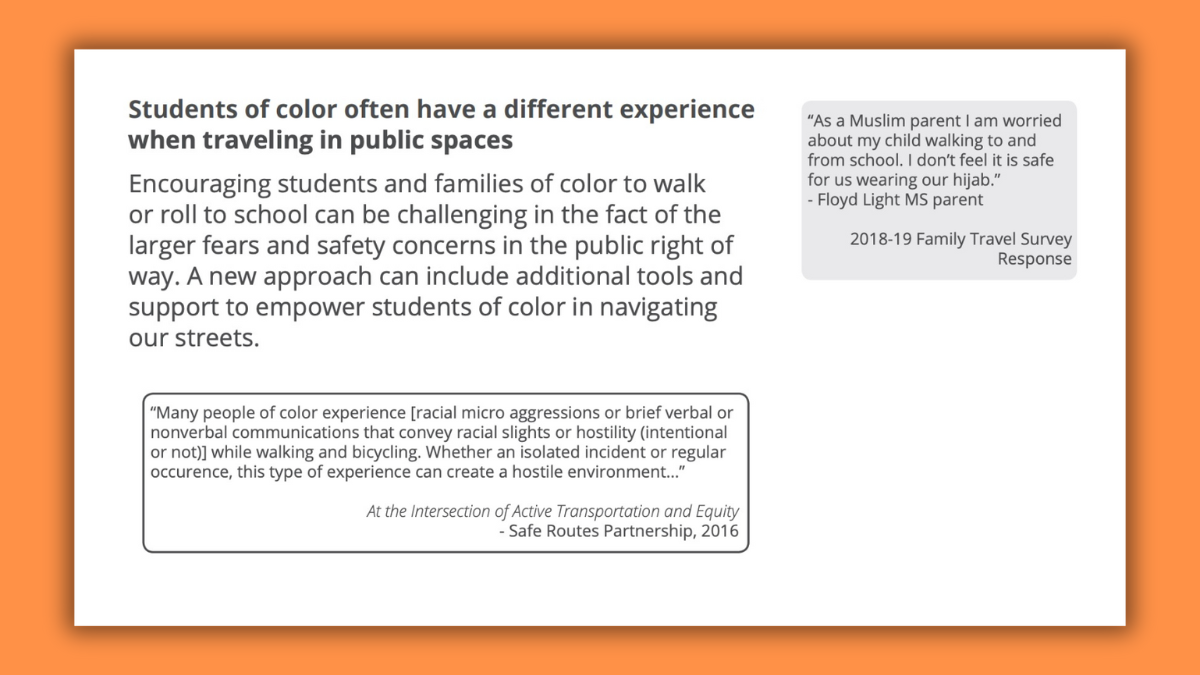
Detail from page 11 of Portland Safe Routes to School Strategic Plan
2018-2023.
A report published by the nonprofit Community Cycling Center last week found that among some east Portlanders, “people of color felt especially unsafe while biking due to concerns of racism and race-based violence, from individuals or police officers.” And the City of Portland’s latest Safe Routes to School Strategic Plan cited a fear of traveling in public by students and families of color as one reason some people don’t choose to walk, bike, or take transit.
If you know the identity of the bike rider in the photo above, you can contact the PPB non-emergency line at (503) 823-3333 or share your tip anonymously online via CrimeStoppers.
Safe streets advocate Ted Buehler played dead while PBOT Commissioner Mapps made a speech at a press conference at Portland City Hall on August 7th. (Photo: Jonathan Maus/BikePortland)
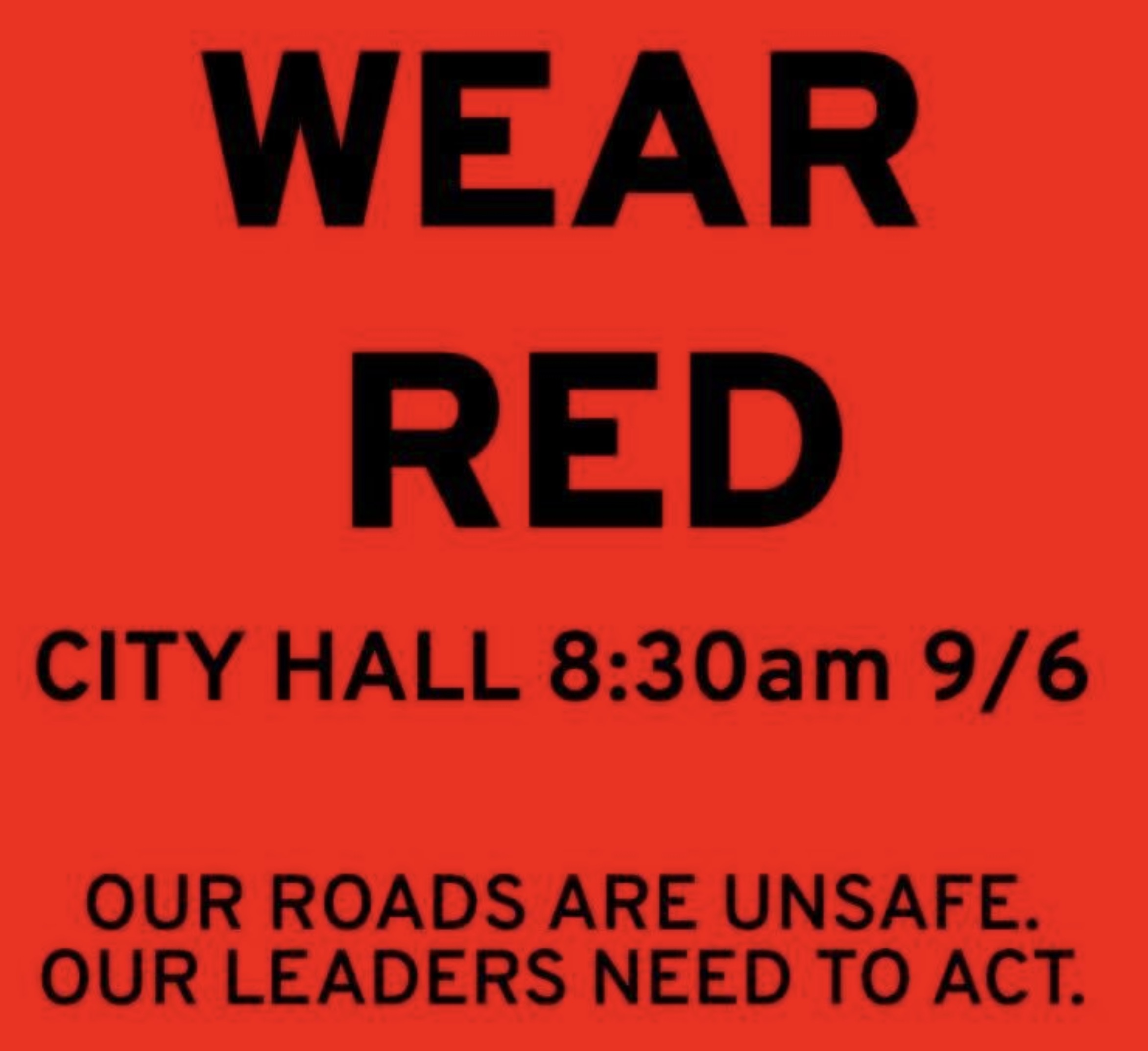
A phalanx of street safety advocates wearing the color of blood will gather on the front steps of Portland City Hall on Wednesday (9/6). Led by nonprofit BikeLoud PDX, the event aims to raise awareness and urgency to remedy what they feel is an “epidemic” of traffic deaths brought on by “streets designed to prioritize speed and capacity over safety.”
The rally will coincide with an event planned by climate group 350 PDX who will be at City Hall to confront “reckless” city councilors they say are responsible for a “backdoor deal” with Zenith Energy, an oil company that operates on the Willamette River.
“We ask participants to wear red to represent traffic violence,” says a statement from BikeLoud. “We will stand alongside our allies at 350PDX who also will wear red to bring attention to the City Council’s negligence in allowing Zenith Oil to harm Portlanders by operating highly dangerous oil trains through our neighborhoods.”
To put a finer point on the protest, BikeLoud has set out a list of four demands:
Advertisement
1) SAFE STREETS:
Our streets are failing us. We Demand the City to respond to every crash with a commitment to implement physical protection that protects our lives. The Safe System Approach is a USDOT program to rethink the planning, design, and operation of our road system to be forgiving of inevitable human mistakes, so that serious-injury outcomes are far less likely to occur. Implementing the Safe System Approach demands decision-makers do the right thing – to always choose to keep all people safe on our streets, whether they are walking, rolling, wheeling, or driving.
2) FUNDING:
The money is here. We demand our leaders fund safety first. Portland needs to fund programs that support Vision Zero, instead of forcing PBOT to cut programs and projects that keep us alive. A huge proportion of Portlanders do not have access to a car and have no choice but to be left unprotected on our roads. Ultimately: the most inequitable action is the City’s lack of action allowing this harm to continue.
Pricing Options for Equitable Mobility (POEM) has a thoughtful menu of smart revenue building mechanisms that are linked to reducing traffic deaths and injuries. Another funding source could be to use liquor/cannabis sales to tax a fund for victims of DUI-involved crashes. We demand Portland reprioritize where our transportation money goes and support safety first.
3) AUTOMATIC ENFORCEMENT:
Short-term: Provide a detailed memo of what is delaying the implementation of roadway traffic safety cameras throughout High Crash Corridors (HCC). Use your positions as leaders to elevate this critical piece of planned infrastructure to state and federal supporters to remove barriers in procuring traffic cameras.
Long-term: Implement automatic enforcement as a standard on Rose Lanes/enhanced transit corridors that will be placed on many high-crash corridors in the next 10 years per the current METRO RTP. Outline clear goals for future expansion of traffic camera locations, including speed enforcement for all schools on arterial streets.
4) VEHICLES:
Large cars are killing us. Oversized, overpowered cars and pickups are 90% more likely to seriously injure or kill people walking, and 50% more likely to injure or kill people in other cars. While there’s no way to completely limit the size of vehicles permitted on Portland’s streets, the City can discourage their use with registration fees and parking permits tied to vehicle size. As vehicles have gotten larger, it’s become more critical that we consider limiting their size as they have a profound impact on roadway users outside these vehicles. Use your roles as city leaders to work with the US Department of Transportation and National Highway Traffic Safety Administration to rein in oversized vehicles on our roads.
Advertisement
This rally comes one month after protestors shouted-down Portland Bureau of Transportation Commissioner Mingus Mapps at a press conference back in August. Mapps held that event after a record 13 people were killed using Portland roads in just one month. After a fatality-free August, there have been two traffic deaths so far this month, bringing the annual total to 47.
Despite telling protestors in August that he shares their rage and frustration, and that the current state of our roads is a “dire threat to public safety,” Mapps has revealed no new plans or further statements about how he’s going to turn things around.
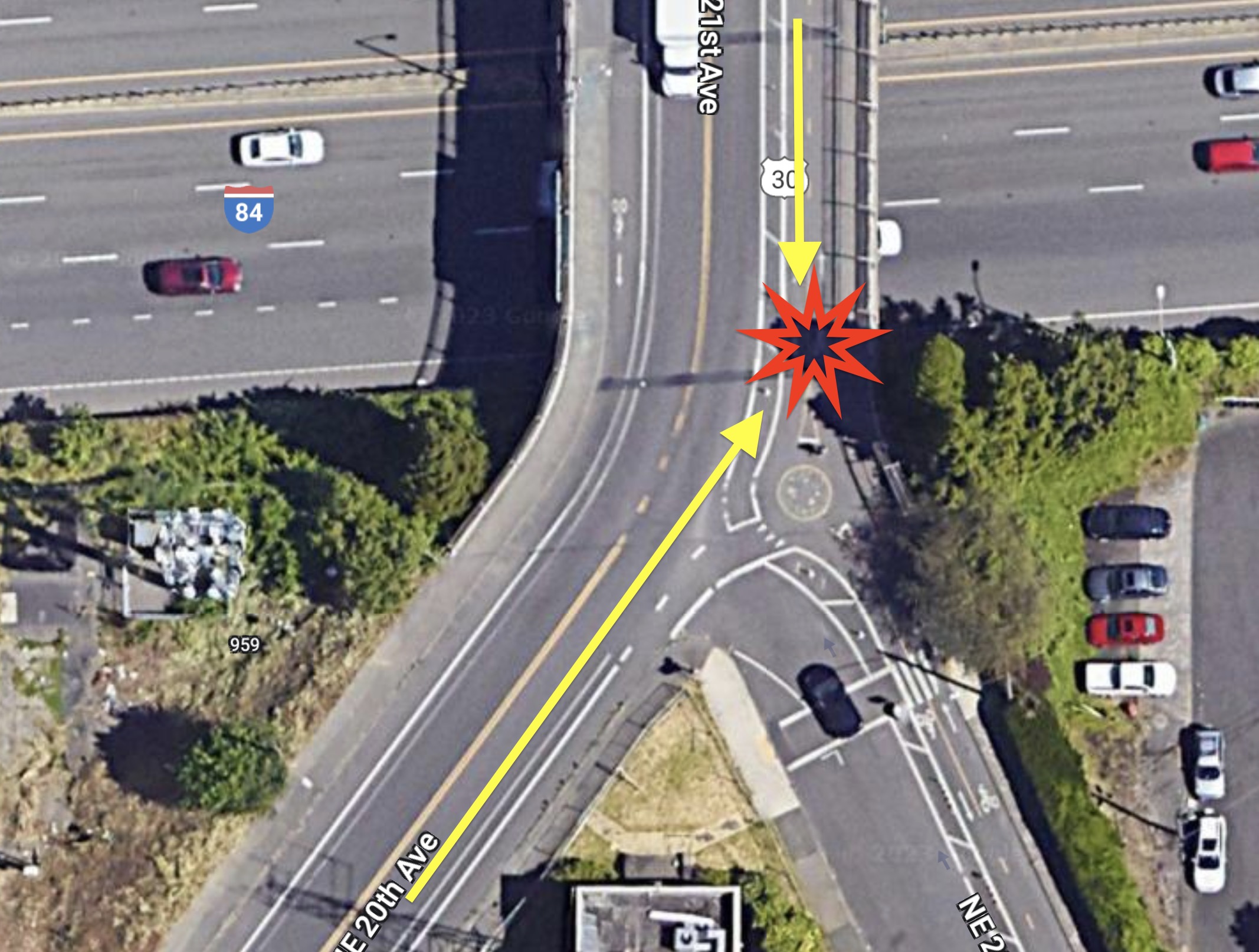
In the past 10 days, we’re aware of at least two horrific cases of drivers showing complete disregard for human life and using their vehicles to badly injure unprotected road users. On August 26th, a woman intentionally drove into a teenager who was walking near NE 72nd and Lombard in the Cully neighborhood. The victim was sent to the ICU with life-threatening injuries and the driver was arrested for attempted murder. And last Thursday, a person drove their car into a bike lane on NE 21st Avenue and slammed into a bike rider going the opposite direction. The rider was injured and is on the road to recovery, while the driver was arrested Sunday (and then released yesterday) for felony hit-and-run.
On August 18th, BikeLoud was one of six local advocacy groups that signed onto a letter to local leaders calling for more action to make streets safe. Following the protest tomorrow, current BikeLoud Chair Nic Cota and another volunteer have signed up to testify in front of Mayor Ted Wheeler and other council members. That testimony is part of the coordinated plan outlined in the 8/18 letter where local groups say they’ll do more lobbying at council each week to make sure leaders hear their voices.
The BikeLoud protest will take place on Wednesday morning from 8:30 to 9:30 am (to coincide with City Council meeting) at City Hall. More info here.
Hope you enjoyed the long weekend. It was just OK for me, since I tested positive for Covid on Saturday morning. Luckily I have a very mild case so far with just aches in my head and body. Hoping it passes soon, but looks like I’ll miss another Bike Happy Hour on Wednesday.
But I’m not too sick to work, so here goes…
Below are the stories you should read, from sources you can trust:
They’re in the money: Portland-based tech company Ride with GPS has landed a $3 million investment. (GeekWire)
No more shared e-scooters: Major news in Paris as that city has banned private companies from deploying e-scooter fleets. Important to note that the problem isn’t with e-scooters themselves (which are still allowed), but the model of companies renting them. (NPR)
Whose streets?: One of the reasons I love controversial issues like congestion pricing is because they force us to debate fundamental questions over what types of road users should have the cheapest access to right-of-way. (NY Times Opinion)
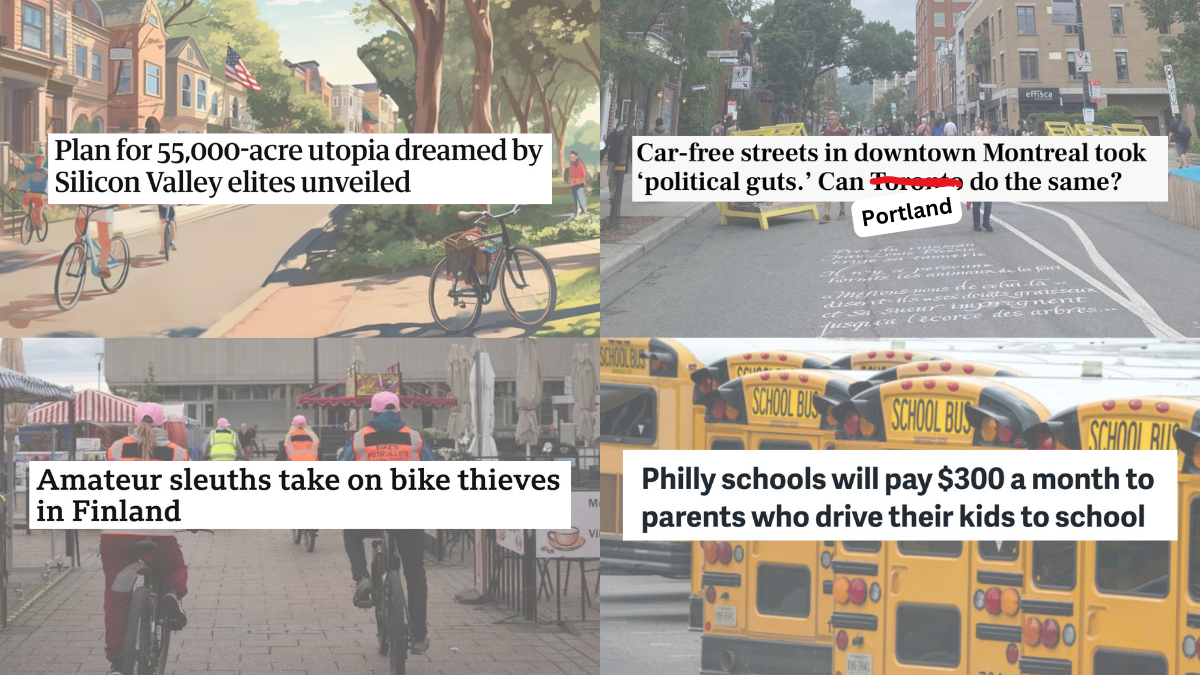
Carfree > tax-free: Montreal is enjoying the fruits of carfree streets throughout their city because they had the guts to go big during Covid and the foresight to make the public street spaces permanent. If we give downtown businesses a tax holiday (like Wheeler and City Council want to do), we should require them to submit a carfree street plan to qualify. (The Star)
Workers unite: With all the strikes and labor momentum in Portland these days, it’s notable that bike share workers in New Orleans have voted to unionize. (Truthout)
Advertisement
Adventure without driving: To bag all 100 of the highest peaks in the Pacific Northwest in one season is an amazing accomplishment. But to do it by bike like three Washingtonians just did? That’s extraordinary. (OPB)
It’s bike bus season: School has started, so what better time to read this in-depth piece on the Portland bike bus craze and how you can start one at your kids’ school. (Portland Monthly)
Bike theft vigilantes: A volunteer group in Finland have banded together to recover almost 1,300 stolen bikes in the past year as police have said the crime isn’t a high priority. Sounds like Portland! (BBC)
America’s failure, part 1: A school district in Philadelphia doesn’t have enough school bus drivers so they’re paying parents up to $300 per month to drive their kids to school in the family car. (WHYY)
America’s failure, part 2: Another sign that the Democratic establishment is clueless when it comes to transportation and climate: Biden, like Obama before him, is eager to subsidize the most unhealthy form of transportation ever invented. (Bloomberg)
Can utopia be bought?: It’s the most tech-bro thing ever to give up on cities and try to build one from scratch. Even so, note that the folks behind this effort want to build the same type of city every one of Portland’s adopted plans calls for. Good luck! (Guardian)
This week we feature a sweet comment that seemed appropriate for the last lazy, long weekend of summer. If you haven’t gotten out yet, there is still another day—enjoy some of it on a bike!
Here’s what SD wrote:
Advertisement
I couldn’t do one kid without a cargo bike or two kids without an e-cargo bike. The secondary market for these has really picked up making them more affordable. This summer, I saw a lot more around.
I’m not exaggerating when I say that the times I’ve spent riding my kids around on a bike are some of the best moments of my life. There is so much to see and talk about and the simple joy of being outside together is the best.
There are probably a good number of cargo bikes that would be great for carrying kids sitting in garages that should be sold to people who want them. True, they don’t work for every trip, but there are so many trips that are done by car out of habit rather than necessity.
Thank you again SD! You can read what SD wrote under the original post.
Note posted 9/4 at 11:40 am: By request of the victim, I’ve deleted the video and all information about this crash from BikePortland. If I hear otherwise from the victim in the future, I will restore this post. Thanks for understanding. – Jonathan
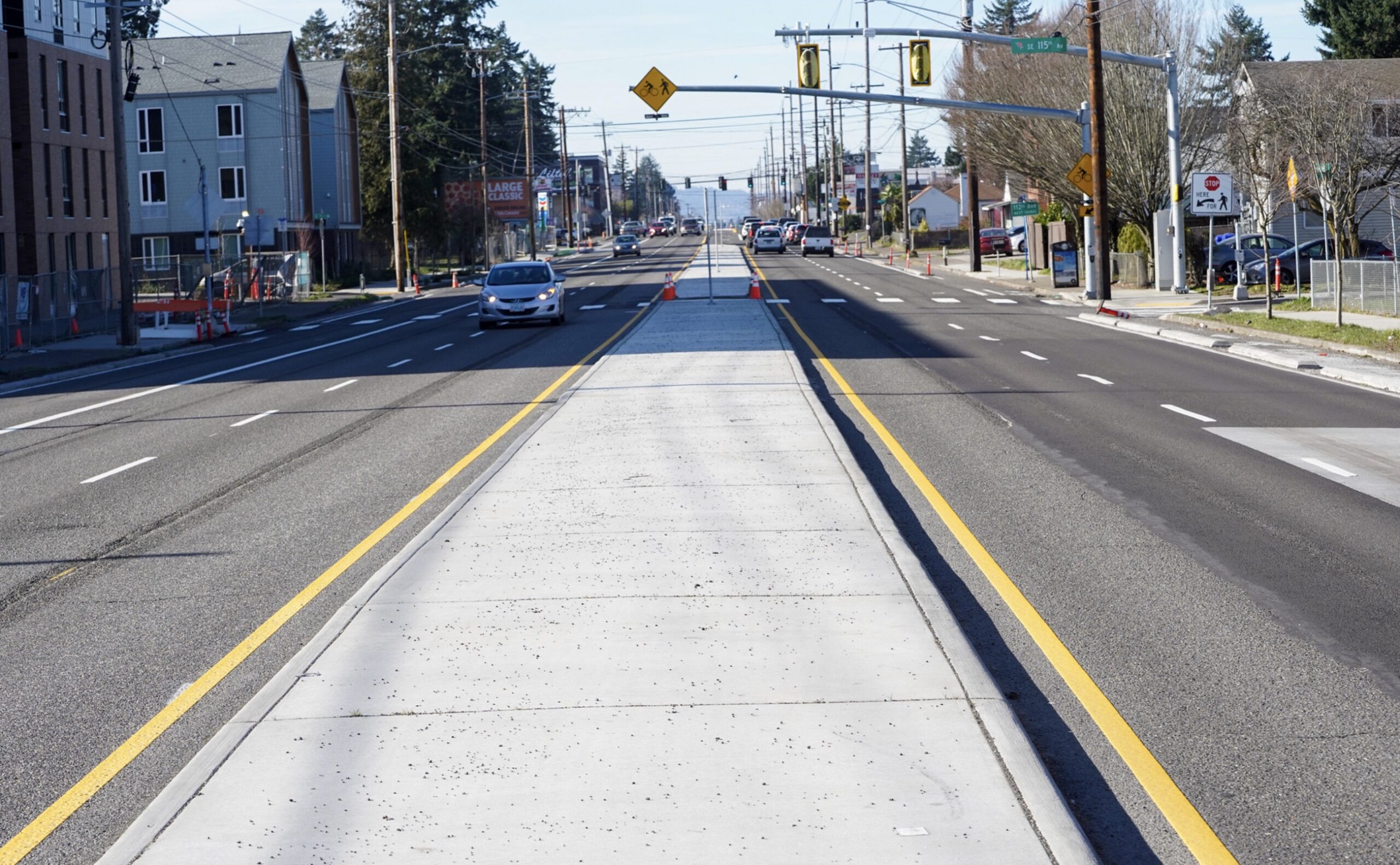
Center median on SE Division near 115th. (Photo: Jonathan Maus/BikePortland)
Remember back in July when a Portlander named Randy Philbrick led a “park-in” protest on Southeast Division to highlight opposition to recent changes to the street that included a bus lane, protected bike lane, center medians, and more?
Now some of the same folks who supported Philbrick’s protest are coming out for an encore, and it’s likely to be a much larger event this time around.
That’s because unlike the lone wolf advocacy of Philbrick and his tiny, almost imperceptible, online following, the latest protest is being led by Angela Todd of PDX Real. Todd is an interior decorator by day and is active in Portland political circles. In 2021 she was one of the first people to spread the false report that former Commissioner Jo Ann Hardesty was guilty of a hit-and-run — an accusation made and spread by the Portland Police Bureau, which resulted in an apology letter to Hardesty issued last month from Mayor Ted Wheeler as part of a lawsuit settlement. Todd and her husband Jeff Church (who runs the PDX Real X/Twitter account), have built a legion of over 100,000 followers across TikTok and Instagram. While most of Todd’s focus has been on politics (her first posts were about encouraging people to vote out Hardesty and she was a major supporter of Commissioner Rene Gonzalez who replaced her) and social issues like crime and homelessness, Todd has now turned her attention to the Portland Bureau of Transportation and their work on SE Division.
Todd says she’s met with PBOT Director Millicent Williams and Commissioner Mingus Mapps. And for weeks now, Todd has been posting opinions about the Division project — especially about how she feels the center medians (installed by PBOT as a safety measure) make it hard to drive and limit auto access to businesses. In a recent post, Todd posted a video from someone who did a u-turn on Division (below). “I turned as hard as I could and I still have to go over the barrier,” she told her followers. As for business access, Todd likes to repeat a claim from sources who say they’ve lost 30% of their customers since the medians were installed.
Advertisement
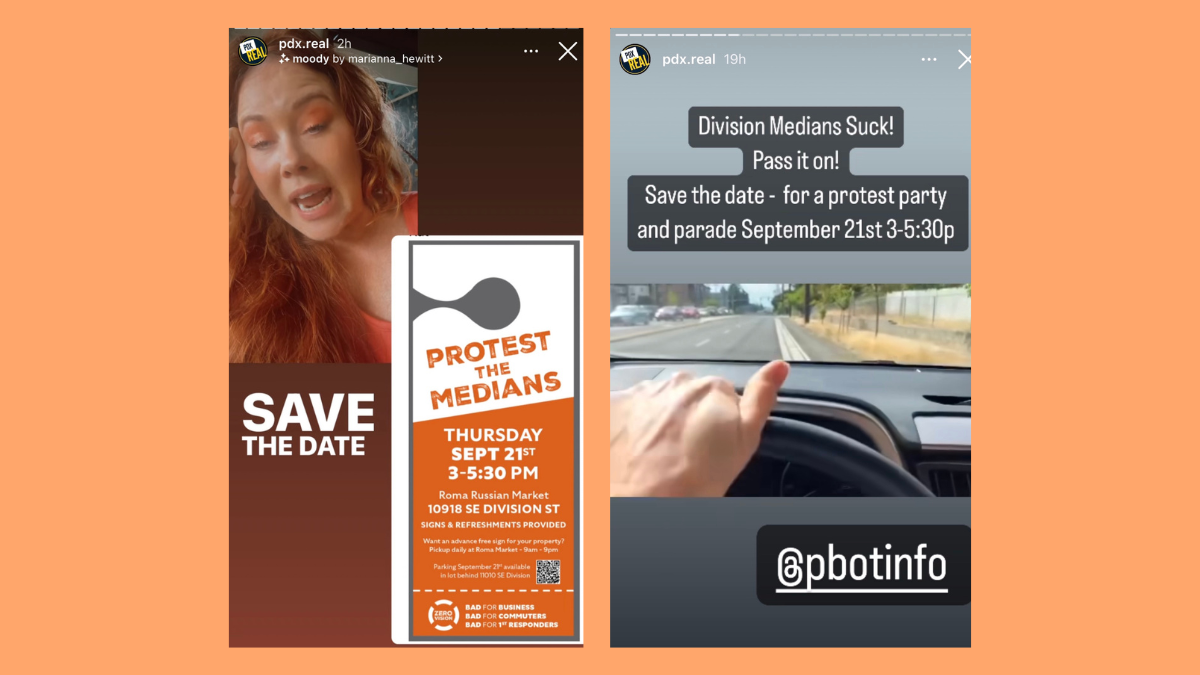
Video of someone making a u-turn on SE Division posted to PDX Real Instagram August 31st, 2023.
Now Todd will take things up a notch with a protest planned for Thursday, September 21st — almost exactly one year since PBOT completed the Division project.
According to PBOT’s project website, they added a center raised median on Division from SE 80th to 174th (border with Gresham), “to reduce left turn crashes and improve safety for pedestrians.” Medians are a standard tool PBOT uses for what they call “access management” — a.k.a. limiting the amount of turning possibilities to make a street more calm and predictable.
In a post on Instagram today, Todd likened PBOT’s actions on the Division Project to the government of Russia during the fall of the Soviet Union in the 1990s.
“I had a meeting with an immigrant of Slavic descent that has a business on Division who’s been impacted by a decrease in business after the $175 million dollar remodel of Division that includes almost a continuous median for 40 blocks or so,” Todd shared in the video. “They talked about their experience during the Soviet Union’s fall in the 90s and how many similarities there are to what is happening right now in Portland… They talked about the land grab going on on Division and also downtown. How the middle working class are losing more and more and the governing is more and more powerful and how essential services aren’t being provided. And they said they experienced that already.”
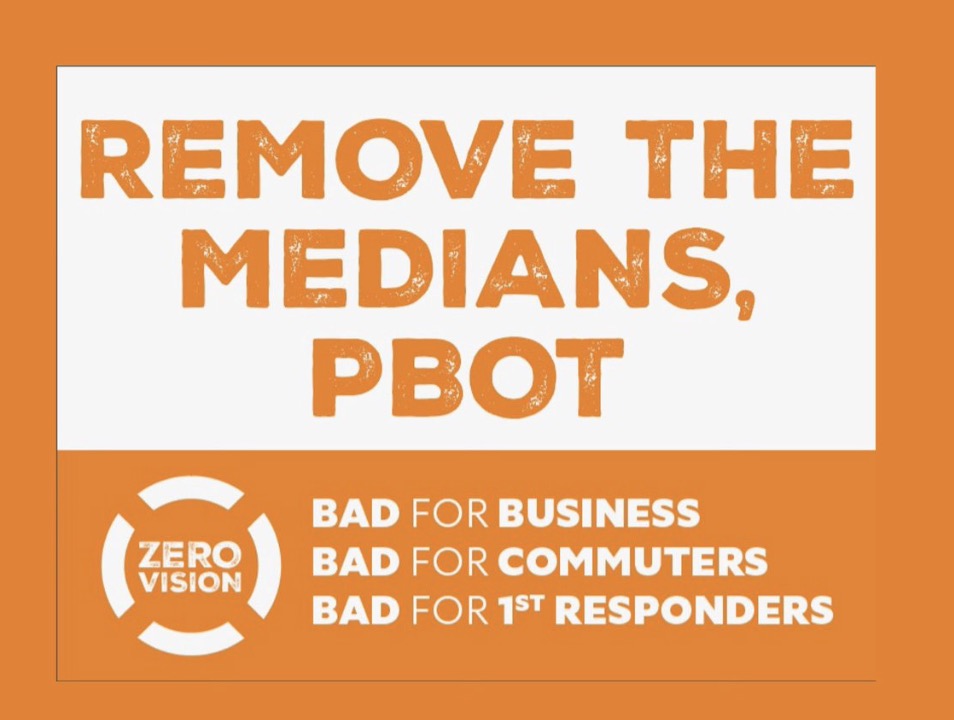
In an August 22nd post on X (formerly Twitter), PDX Real posted a mock PBOT graphic that says, “Remove the Medians PBOT: Bad for Business, Bad for Commuters, Bad for First Responders.” Accompanying the graphic was another reference to eastern Europe: “Tear down the walls! Tear down the walls! Tear down the walls!”
Then, in what started as a call for volunteers to hang flyers on doors to promote the protest, Todd called on her followers to “push against these things that don’t serve us,” and added, “what the hell are we here for if we can’t fight for that? None of us get out of here alive anyway, so let’s fight.”
It’s important to understand that for Todd and her followers, what PBOT did on Division transcends just a transportation project. They see it as emblematic of Big Government taking over their lives and forcing them to do things they don’t want to do.
Advertisement
(Graphic: PDX Real)
“We need to push against these things that don’t serve us. What the hell are we here for if we can’t fight for that? None of us get out of here alive anyway, so let’s fight.”
– Angela Todd, PDX Real
After asking her followers, “What’s your life for?” Todd continued: “What’s going on in Portland, the trajectory is not good… I promise you that this is getting worse, and it’s coming for you. And so my question is, what are you made out of? Do you care about your neighbors?… Will you do it? And just assuming that the dollar is gonna’ crash and we’re gonna continue to allow the destruction of our city, we’re going to politically prosecute people that disagree with the narrative. You’re going to be eating bugs, living in a 15-minute city. Don’t you think it would be good for you to come out of your home and start meeting people in the community that might be able to assist you during said apocalypse?”
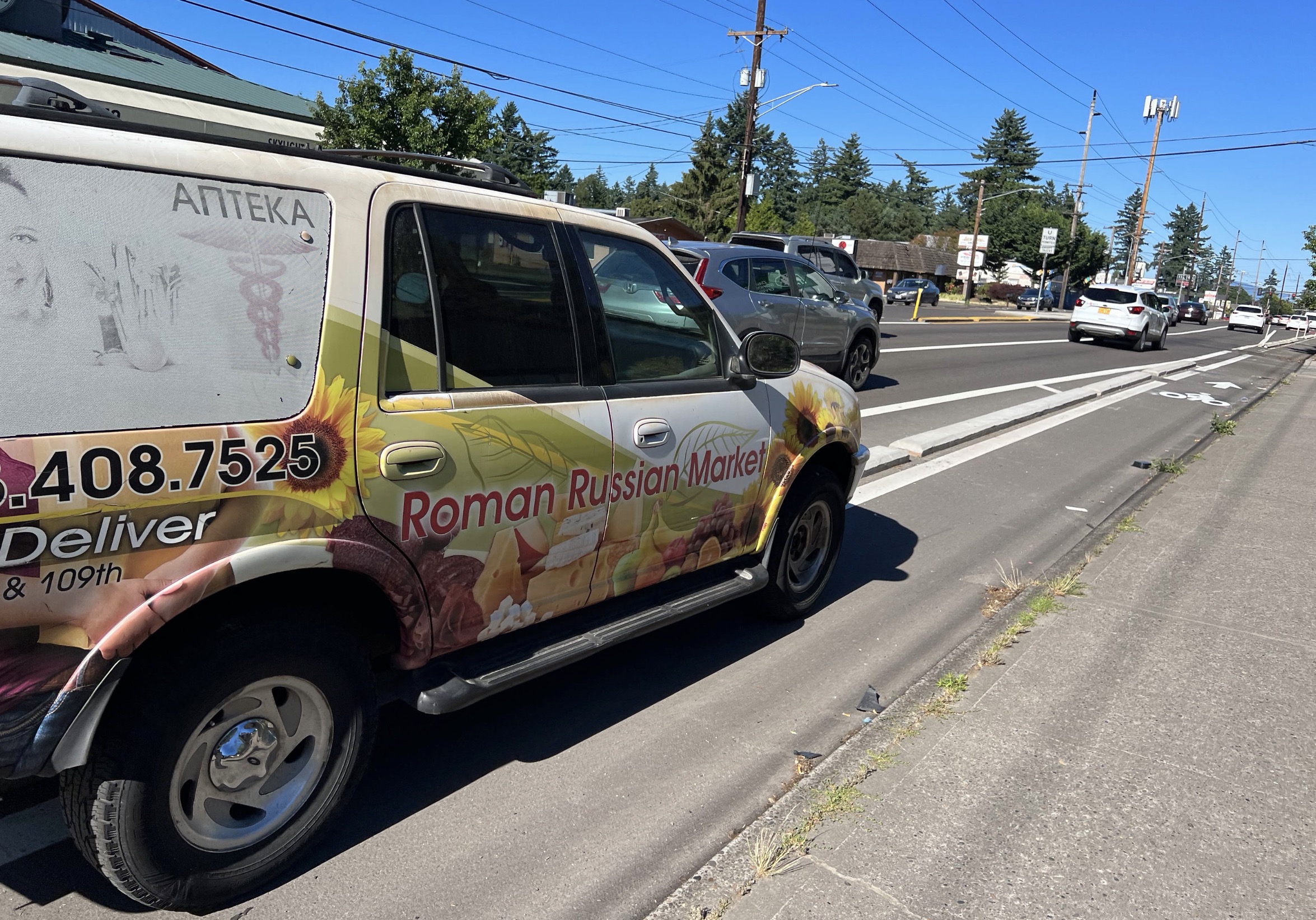
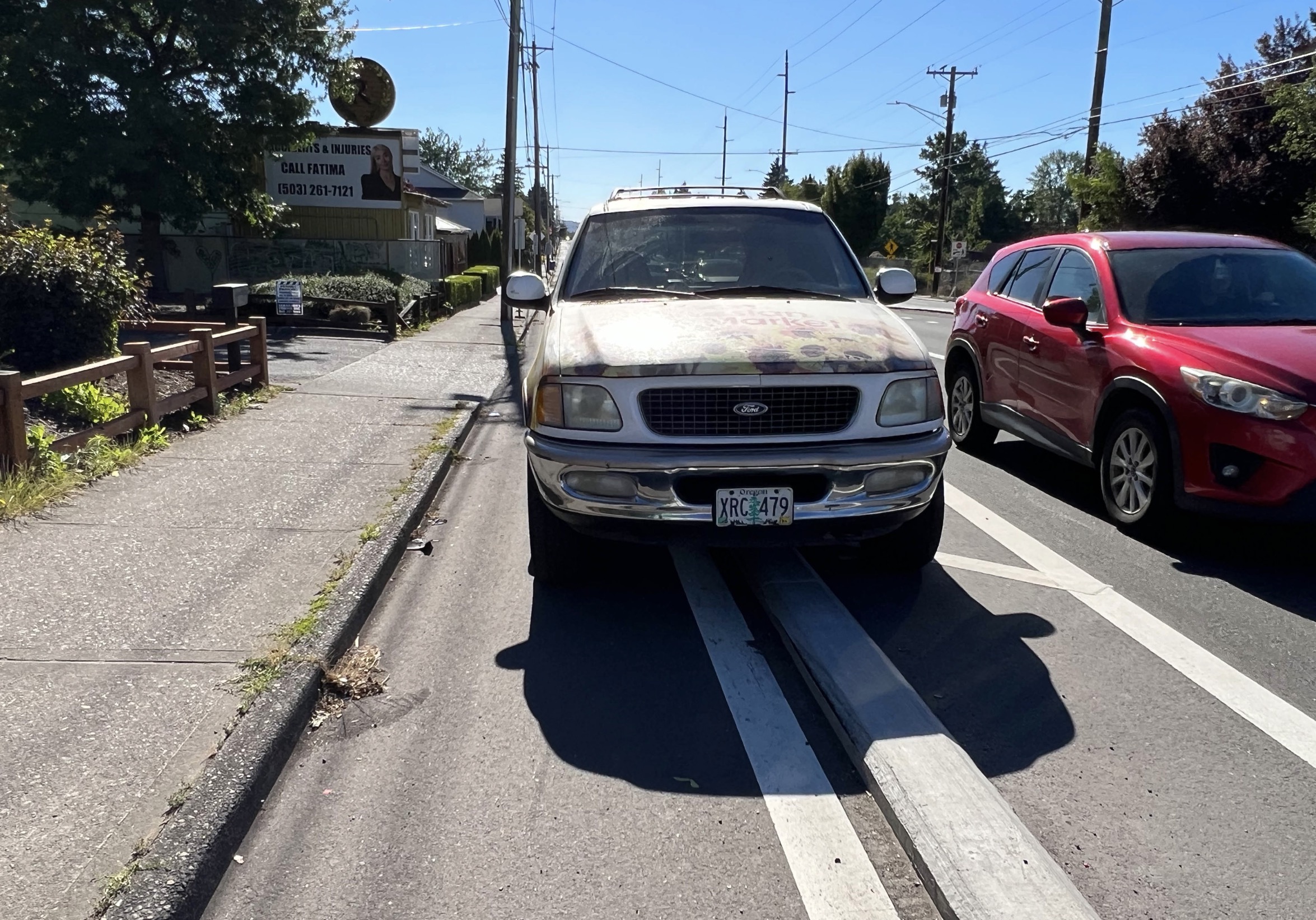
Notably, the protest event will be based at the Roman Russian Food Store on Division and SE 109th. That store is owned by Fatima Magomadova, a noted critic of the medians who’s spent at least the last year sharing her opinions during Portland City Council testimony and to the media. You might also recall that I spoke to Magomadova when she showed up and parked in the bus lane to support Philbrick’s protest in July.
“They are frustrating drivers, there is congestion and traffic, and there’s a huge chance that your car cannot make it,” Magomadova told me back then. “I have videos where trucks actually get on top of the medians, and cars flipping over medians.”
Advertisement
Photos of a vehicle owned by Fatima Magomadova’s business parked illegally in the bike lane on SE Division on July 3rd, 2023. (Photos: Jonathan Maus/BikePortland)
Ironically, a few minutes after that conversation, as I biked home from the protest, I saw one of Magomadova’s cars parked illegally in the bike lane outside her market.
Regardless of what you might think of Magomadova or Todd, they are very respected individuals in the community and wield influence on the current city council (they’re one big reason why Commissioner Dan Ryan has felt emboldened to complain about the medians and the Division project in general. In March of this year he described the changes as “scary” and asked PBOT if it would be possible to “re-assess” the project.)
Suffice it to say, it will be interesting to see if the protest on September 21st leads to any momentum for changes. Todd says they’ll have food, music, and “an impromptu parade that will be very fun.”
“We are asking our people to come out and support these business owners,” Todd said about the protest in her post today. Then she added a warning: “These projects like what happened on Division are planned throughout the city: 82nd 122nd are two that are right within purview right now. So come out, be supportive.”
CORRECTION, 5:01 pm: The initial version of this story said Angela Todd was the person who made the u-turn in the video. That was incorrect. The video was sent to her by a follower and posted to the PDX Real account. I regret the mistake.
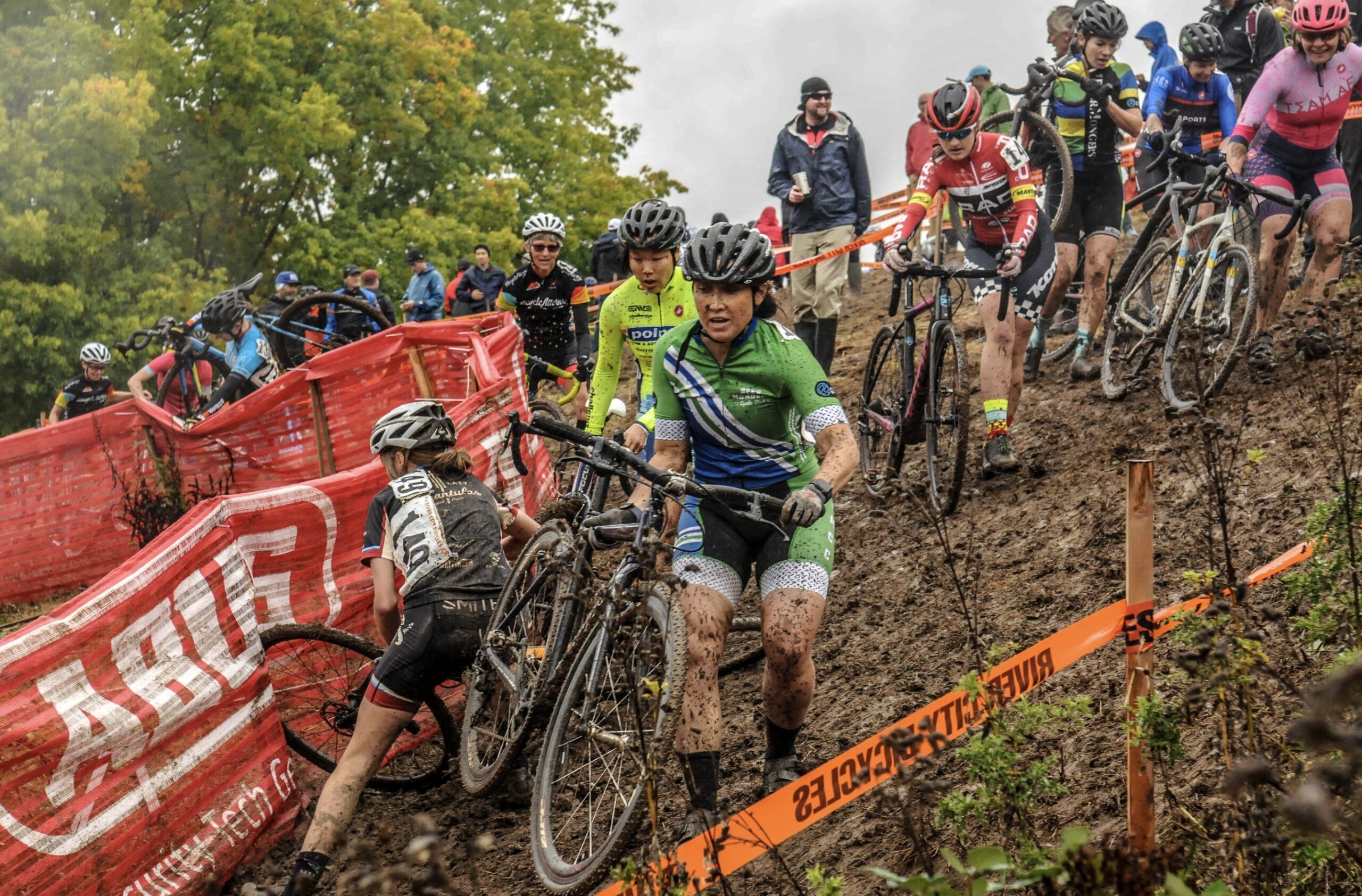
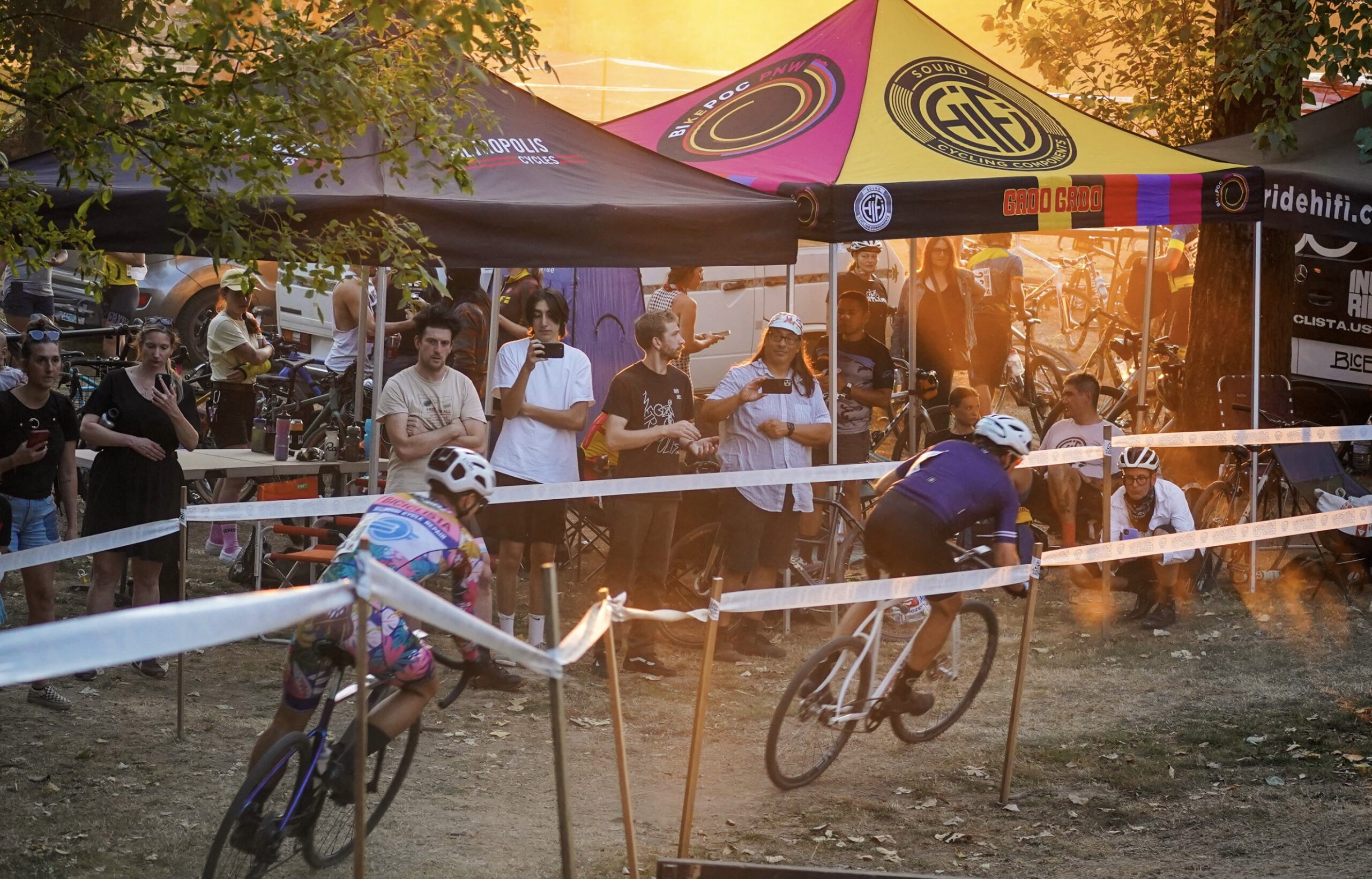
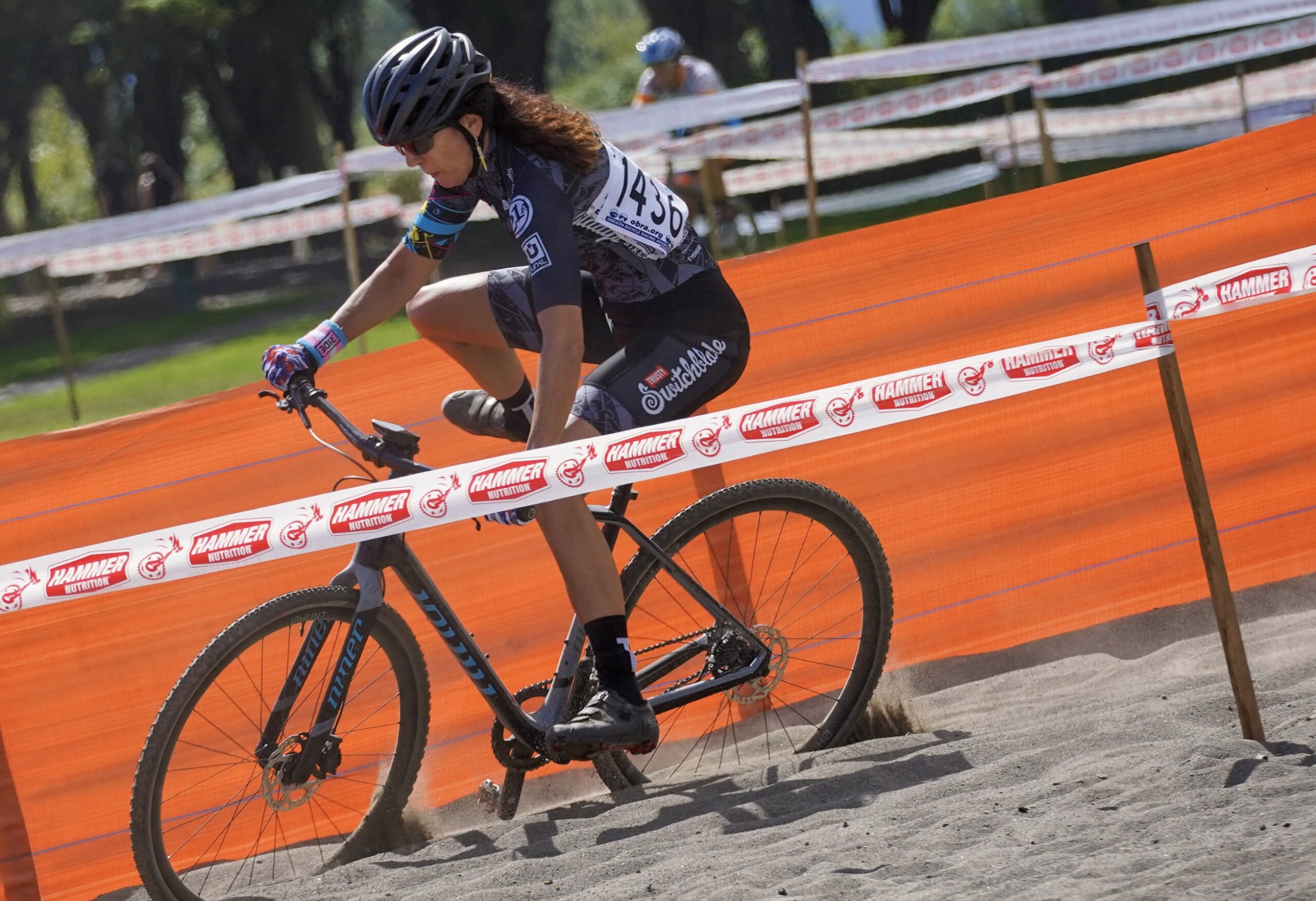
Cyclocross Crusade at Alpenrose Dairy in 2018. Many events offer kid races too! A goat showed up at a Halloween-themed race in Cascade Locks in 2021.Portland Trophy Cup at PIR in 2022.(Photos: Jonathan Maus/BikePortland)
We are just two days away from the start of the local cyclocross season, and it’s gearing up to be another massive year for Portland’s favorite cycling discipline. Three series dominate the calendar: Harvest CX, Portland Trophy Cup, and Cyclocross Crusade. Here’s a bit about each one to get you plugged-into the coming season…
It all kicks off at Sunday’s Het Meer CX event on the shores of Vancouver Lake. With its notorious beach section, it’s a course that makes racers curse and spectators crack-up as they watch all the spills and skills in the sand. If you’ve never been, check out my dispatch and photo gallery from last year’s edition.
Het Meer is one race in the Harvest CX series, which happens over seven Sundays (including one Saturday on the double weekend of 9/16-17 in Washougal) and is known for its diverse and challenging courses. In addition to Vancouver, Washougal, and Brush Prarie in Washington; the series includes stops in Boring, Madras, Dayton. Oregon.
Advertisement
On Tuesday September 12th, the Portland Trophy Cup kicks off its six-week run at Portland International Raceway in Kenton. This year’s series is back for its eighth year and looks to be better then ever with title sponsorships from Bikeflights and The Athletic. This series is known for its low-light shenanigans (later races happen in the dark and folks use bike lights to see the course), its strong community and inclusivity.
All beginners in the Women’s category (where trans women are welcome and encouraged to race) and all Junior category athletes, race free thanks to support from sponsors (but you still need to register). And there are free beginner skills clinics every week hosted by volunteers from BikePOC PNW and free clinics for juniors hosted by Grouptrail Cycling Team.
Trophy Cup is every Tuesday night from September 12th through October 17th. You can race the entire series for just $125 (one race is free!) or pay $25 per race if you pre-reg and $30 on-site. Get registered and hyped at the big kickoff party happening this coming Tuesday (September 5th) from 4:00 to 8:00 pm at High Order Studio (911 SE Salmon).
And of course no mention of cyclocross in Portland would be complete without the Cyclocross Crusade — the granddaddy of them all now in its 30th year! Back again thanks to River City Bicycles, this year’s six-race series starts on October 15th and runs through November 12th. For an extra bit of fun, don’t miss the traditional Grail Hunt. Each year, Crusade organizers bury treasures citywide and only an ancient map can unlock clues to find them all — including the True Grail. The Hunt is open to all registered racers and you can find out more about it here.
If you’ve recently gotten into gravel riding, if you love mountain biking but want a new way to hit the dirt, or if you just love playing bikes with friends — get into ‘cross this year. Check out nearly two decades of local ‘cross coverage (a whopping 145 articles!) in our archives and stay tuned for photos and race reports.
For further inspiration, I recommend taking a look at the new book edited by Drew Coleman. The Family Photo Album is a 96-page homage to the 2022 ‘cross season through the eyes of several excellent photographers.
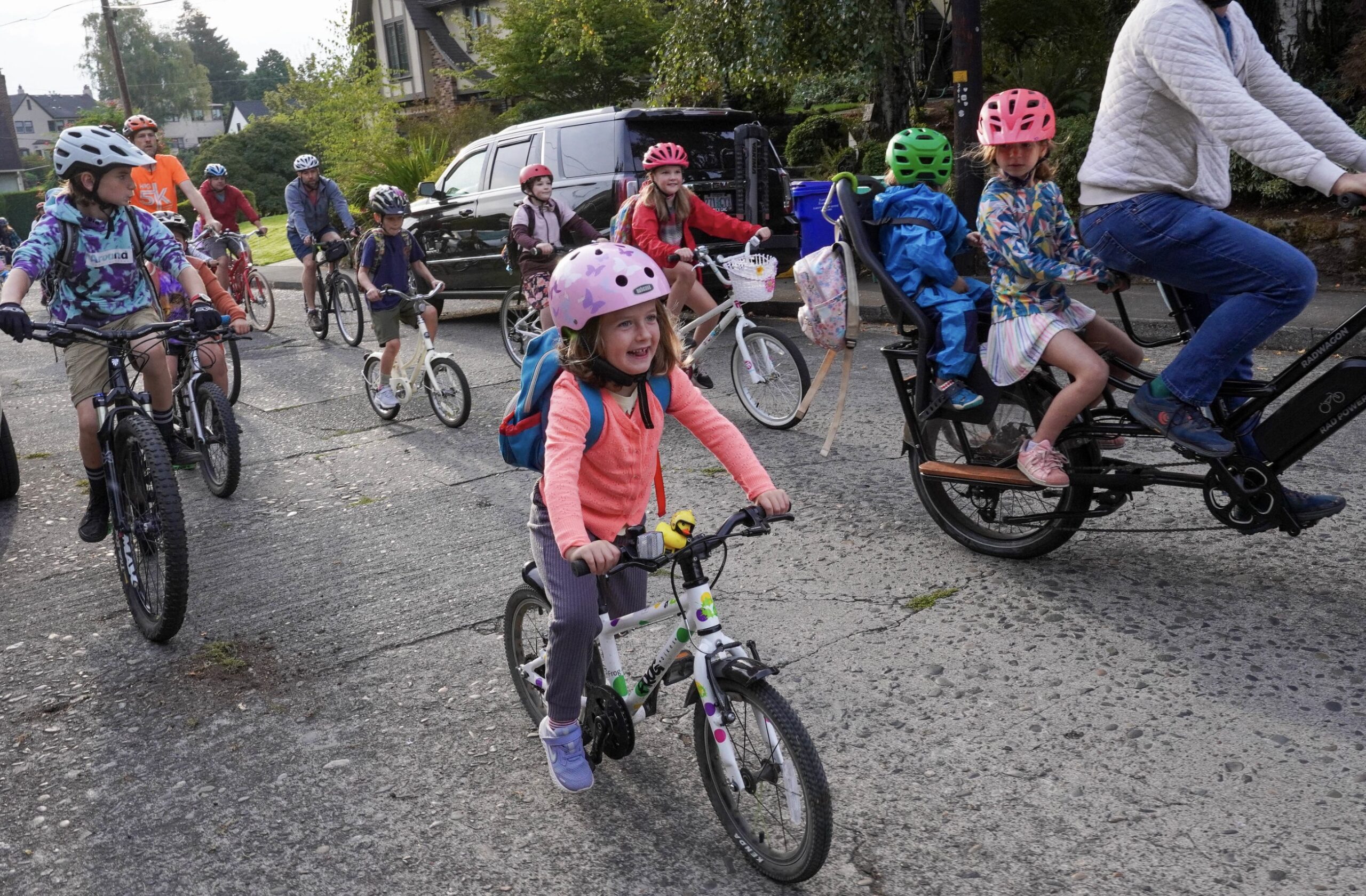
Fresh off a year of remarkable growth, local bike bus advocates have wasted no time leading their corps into the new school year. The famous Alameda Bike Bus was bursting with bicyclists on Wednesday, the official first day of classes for Portland Public School (PPS) district.
But while over a dozen bike buses flourish across Portland, they’ll have to look somewhere besides PPS to fund bike bus organizers and other related expenses. That’s because — despite passage of a new state law that allows schools to be reimbursed for active transportation expenses (like bus buses, walking school buses, crossing guards, and so on) — PPS says they have no plans to end their current practice of spending their entire share of state school transportation funding on TriMet passes.
Undeterred, a growing coalition of bike bus advocates has taken their efforts directly to Portland City Hall and the transportation bureau.
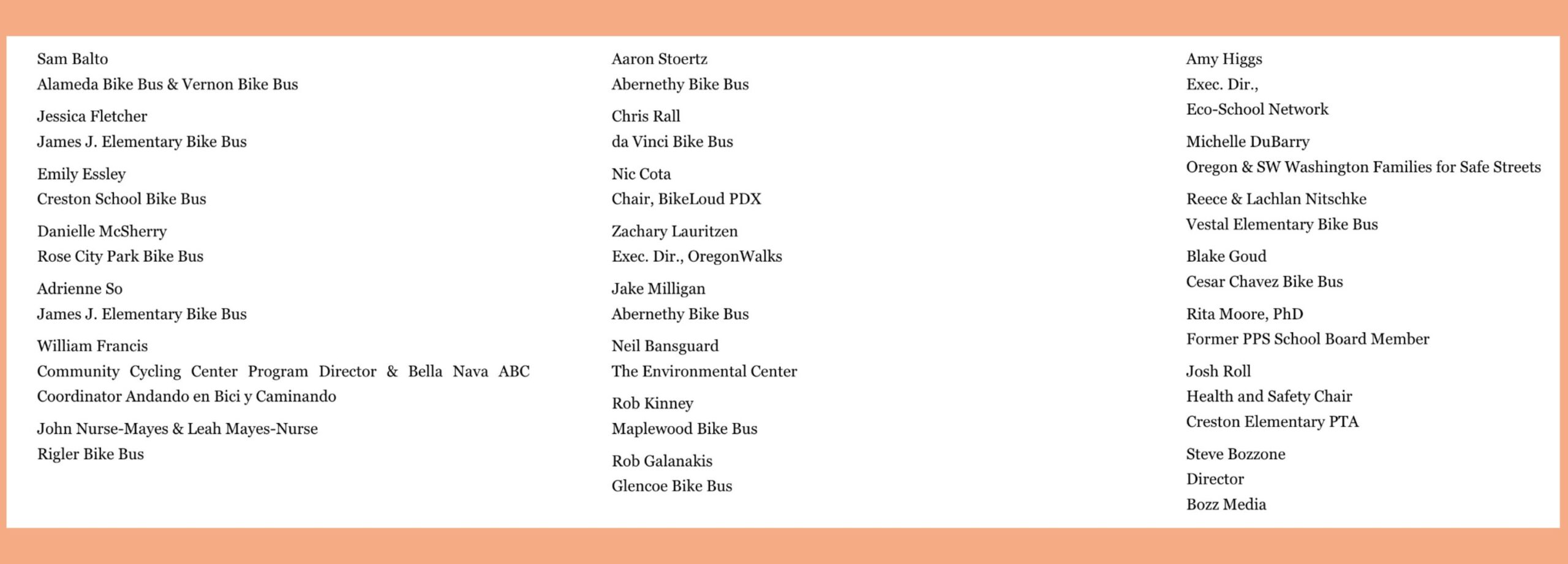
The initial list of signees in suport of the Safer School Streets Pilot at BikeBusPDX.org.
Buoyed by growth and success over the past year-and-a-half, what started at one school in northeast Portland is now a bona fide, citywide movement. A new website launched this week at BikeBusPDX.org includes an open letter to leaders and elected officials signed by leaders of 13 bike buses (see above). The letter demands implementation of several projects aimed at making school bike commute routes safer.
The letter, sent to Portland Bureau of Transportation Commissioner Mingus Mapps and PBOT Director Millicent Williams and cc’d to Mayor Ted Wheeler and the rest of council, calls for a “Safer School Streets Pilot” program that would “contribute to the overall sustainability and livability of our city by reducing traffic, carbon emissions, and promoting community connections.” Here’s what the pilot would include:
Placing permanent diverters (concrete planters) at the locations established during PBOT’s “Slow Streets” pilot, which prioritized equity across neighborhoods (see map).
Lowering the maximum threshold for Neighborhood Greenways (NG) to 500 vehicles/day rather than the current maximum of 2,000 vehicles/day (Source: Neighborhood Greenway Assessment Report).
Reducing speeds on Neighborhood Greenways and Safe Routes to Schools (SRTS) to 15 MPH, where feasible; placing Advisory “15 MPH / Shared Street” signs on remaining NGs/SRTS.
Establishing a clear process for “School Street” permits to allow streets in front of and surrounding schools to be closed to vehicle traffic during drop-off and pick-up hours.
Placing “No Turn on Red” signs at all signals intersecting Neighborhood Greenways/SRTS.
Installing “curb extensions” with planters and paint on Neighborhood Greenways/SRTS to reduce crossing distances and improve sightlines for students and parents.
Adding fixed speed cameras on High Crash Corridors (e.g. 82nd Ave) adjacent to schools.
Funding a $75,000 grant for Portland State University’s TREC program to measure the impact of Bike Bus and Walking School buses on student’s physical activity, learning outcomes, and transportation pollution*. (*PSU tells me they have already initiated a research study that will focus on kids’ and parents’ perception of bike buses, a bike bus inventory, and more.)
Advertisement
“If PBOT can come up with $2.7 million for parking security, they can come up with a fraction of that to improve safety for children and families walking and biking to schools, libraries, parks and local businesses.”
– Sam Balto, Alameda Elementary School bike bus organizer
Alameda Bike Bus leader and PPS physical education teacher Sam Balto is spearheading the effort. Balto says he and other bike bus advocates had a “very productive” meeting with Commissioner Mapps last week.
“PBOT and PPS want more children and families walking and biking to school,” Balto shared in an email to BikePortland yesterday. “To do that we need to improve our city’s hardware and software. The passing of the Bike Bus Bill this year is the software of the social infrastructure to pay for active transportation initiatives like walking school buses and bike buses. Now we need PBOT to provide the hardware, the physical infrastructure to keep us safe from cars in the streets.”
Balto also says that if, “PBOT can come up with $2.7 million for parking security, they can come up with a fraction of that to improve safety for children and families walking and biking to schools, libraries, parks and local businesses.”
Balto used a tiny $500 grant from Metro to start his bike bus at Alameda Elementary School — an effort that increased the number of students biking to school from 1% to over one-third of students in just three months.
Advertisement
“We don’t expect the [bike bus] bill to really have an impact on us.”
– Valerie Feder, Portland Public Schools
A more significant funding and infrastructure boost from City Hall via PBOT could have a dramatic, positive impact on the number of Portlanders willing to bike to school, Balto says. And the City of Portland has adopted many policies to justify action on this issue — from plans to battle climate change, to a Comprehensive Plan with a goal to “make bicycling more attractive than driving for trips of three miles or less.” In a new Safe Routes to School Strategic Plan soon to be released by PBOT, they cite survey data that showed, “families who thought their school supported walking, biking and rolling were more likely to travel by one of those modes on their commute to school.”
When it comes to the role PPS might play in expanding bike buses district-wide, they say the passage of HB 3014 (the “bike bus bill”) won’t impact their 86 schools. PPS spokesperson Valerie Feder told BikePortland that’s because they already spend their entire 5% allotment from the state’s school transportation fund on TriMet passes. “We asked for the exemption to protect our current arrangement with TriMet,” Feder shared with us. “We hope the legislature will continue to build on this policy and expand opportunities for students to use active transportation and explore more ways to fund it.”
So for now, PPS staffers who dreamed of state funding for bike buses and related activities will have to wait. That will put more onus onto parent volunteers and should add even more urgency for the City of Portland to create streets that are so safe and welcoming that riding bikes to school is simply irresistible.
Fred Meyer on SW Barbur Blvd. (Photos: Lisa Caballero/BikePortland)
TriMet just rolled out its second round of transit changes of the year, with southwest Portland as the focus. In particular, big changes came to the routes serving Portland’s largest employer, Oregon Health & Sciences University, on Marquam Hill. And since TriMet also made significant changes to my favorite bus line, I took it for a ride and figured you might want to come along.
But first, a quick refresh…
BikePortland covered TriMet’s planned overhaul of Marquam Hill service last January. The plan discontinued five express lines originating across the region that mainly served administrative and office workers commuting during the standard rush-hour. Many of those employees now work from home and those buses were running close to empty. In place of that network design, this week’s changes accommodate the many hospital and university employees who do not work typical office hours—not even to mention patients, who come and go all day.
The redesign has the Hillsdale neighborhood functioning as a transfer station between buses heading, alternately, to downtown or Marquam Hill. Some riders will have to transfer buses, but the new network achieves all-day service.
Advertisement
These changes were part of TriMet’s Forward Together project, which was developed in collaboration with Jarret Walker + Associates, a Portland-based transit consulting company with national and international clients. Jarret Walker posted on his blog this week “a little deep dive into how bus network designers think,” in which he goes through the reasoning behind the redesigned southwest network. You might not agree with it all, but no matter how you slice it, southwest Portland has been seen.
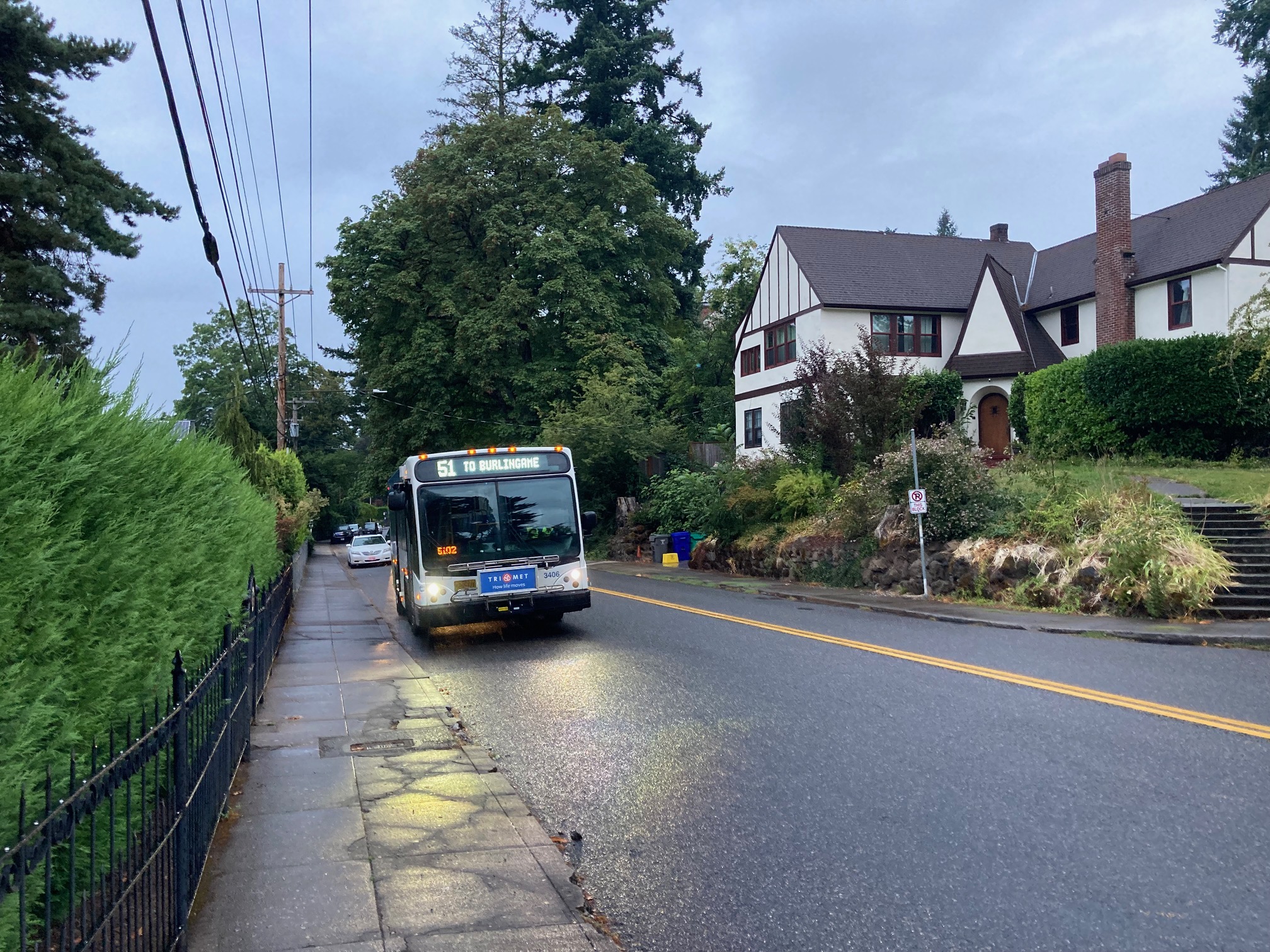
Now for the fun part. I really like buses. My bus route, the 51, is one of the least important in the city, but because it brings all those Lincoln students to high school TriMet can’t completely drop it. Over the years, however, they’ve managed to cut it back to really limited rush-hour only service.
The problem, as Tom Mills (TriMet’s Director of Planning and Policy) once told me, “is that your bus doesn’t go anywhere.”
Until this week!
Forward Together gave my line an outbound destination, and what a destination it is—The Fred Meyer grocery store on Barbur Blvd. (Previously, the 51 just ran from downtown up the hill, and back down.) So in celebration of Forward Together, and to check out the Rose Lane and transfer location in Hillsdale, I decided to do a little early morning grocery shopping. You want to come along?
Advertisement
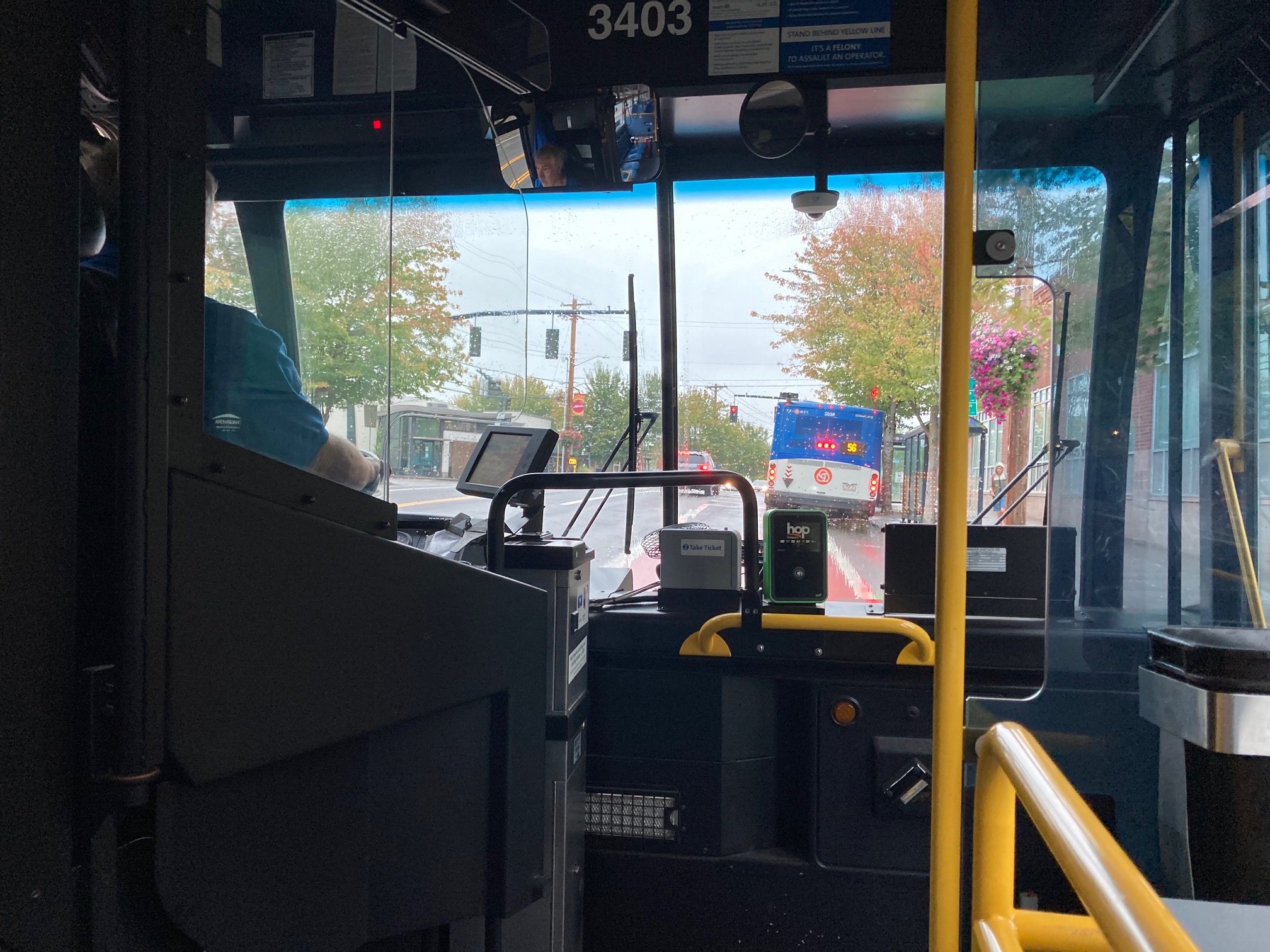
I caught the 6:48 at the corner of Vista and Broadway. The bus was clean, on-time and had a very friendly driver. Upon entering, I immediately noticed a funny screen—and I was on it. Apparently, screwballs are less likely to attack a driver if they seem themselves on TV.
The screen also shows that I was the only person on the bus. And unfortunately, it stayed that way all the way to Barbur. But it was still exciting, this 51 was going where no 51 had gone before.
My 51, and the 43 in front, have just left the bus transfer stop in front of Ida B. Wells High School. The 43 will head up to Marquam Hill, and the 51 will make a right on Terwilliger.
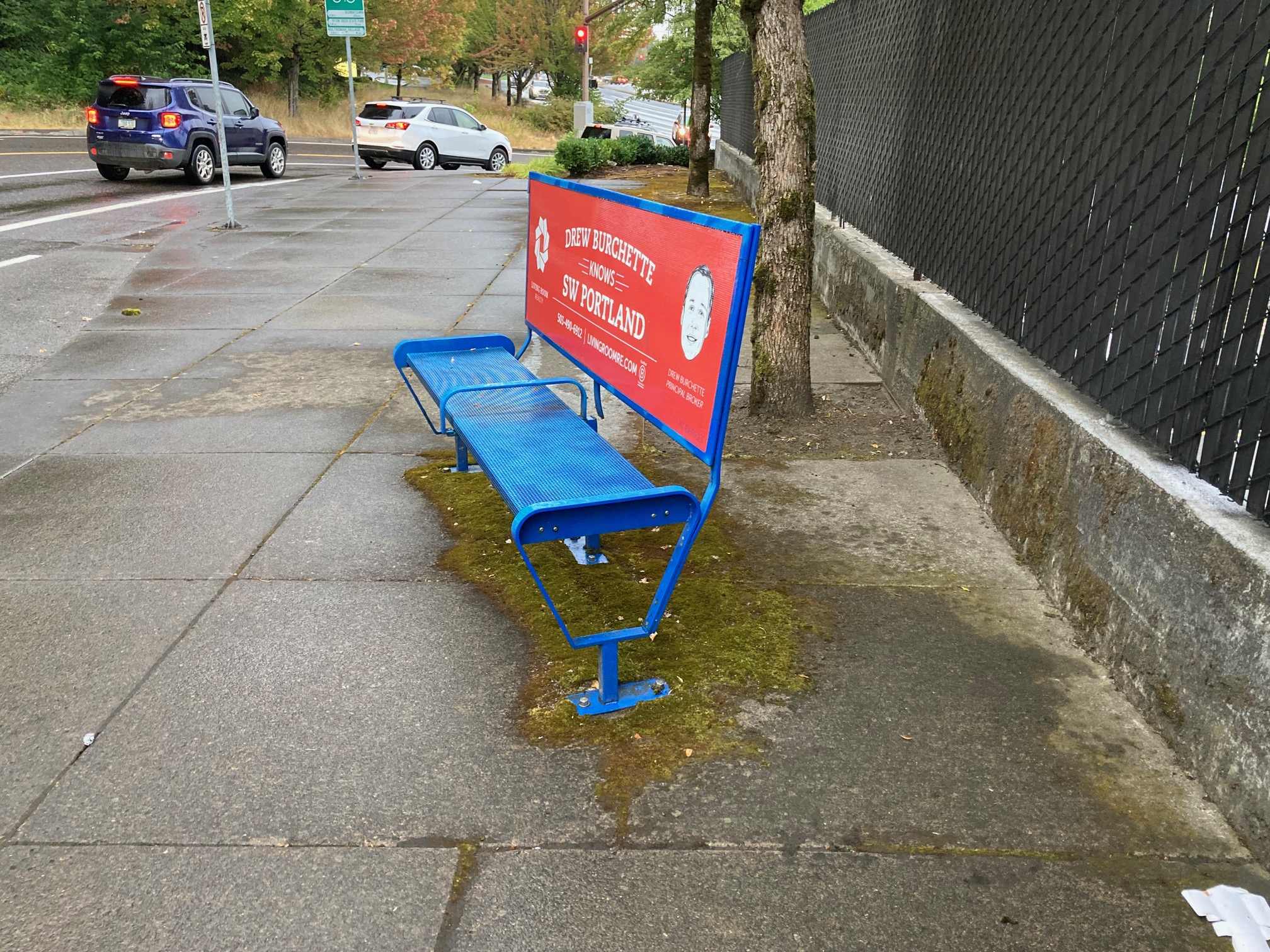
I made it to Fred Meyer, did some shopping, and happily there was a wet bench for me to sit on while I waited for my bus back home.
I rode on the Capitol Hwy Rose Lane approaching Sunset Blvd, and soon my bus began to fill with Lincoln students.
Did you take the bus this week?
I plan to get back in the habit. The 51 is a modest little route, but the strategic jiggling TriMet has done in my local service area has piqued my interest. This is the first time I’ve been able to take a bus to a grocery store. Who knows what I’ll figure out next?
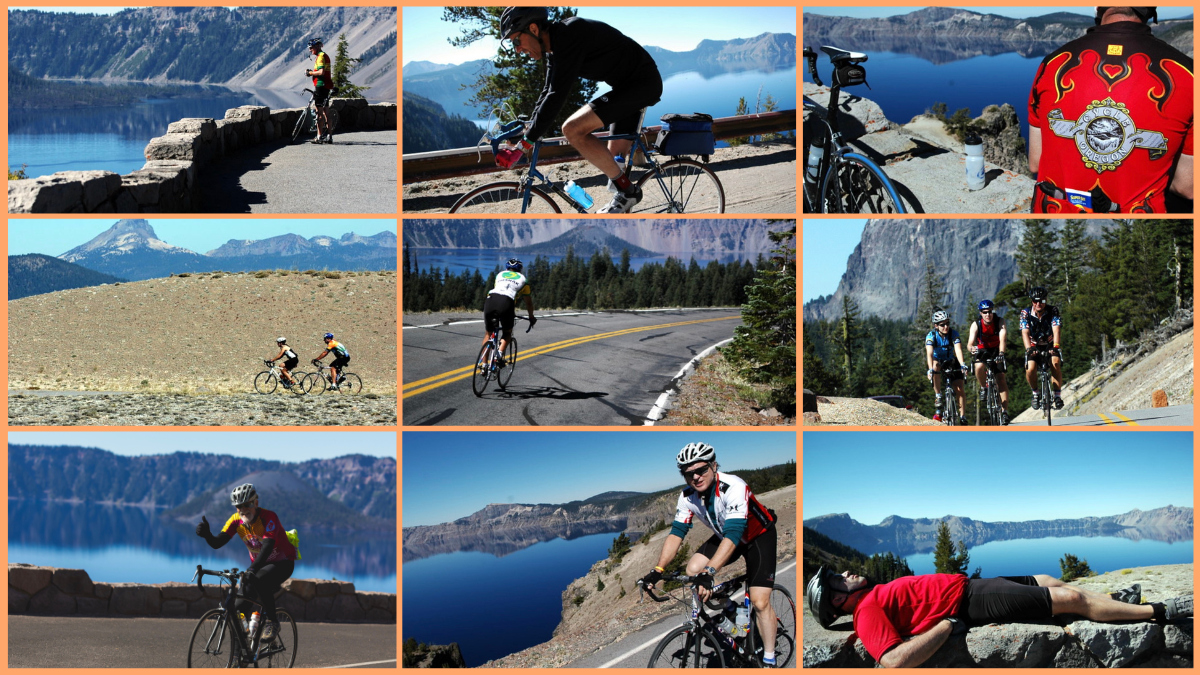
Moments you will not forget. (Photos: Jonathan Maus/BikePortland)
Looking to cap off your summer with an bucket-list worthy ride? How about riding carfree roads inside Oregon’s only national park?
The folks from Crater Lake National Park just announced that Ride the Rim will happen on two coming Saturdays, September 9th and 16th. This is a rare opportunity to pedal your bicycle around the lake’s legendary scenic road in solitude and safety without any bother from drivers.
This even began in 2013 when Travel Oregon wanted to put our state on the map as a bicycle tourism destination. It was such a huge hit that Crater Lake National Park Superintendent Craig Ackerman shared with BikePortland in an email that he wanted it to become an annual event.
By 2019, the event had become so popular 4,200 people showed up from all over the country to take part.
Advertisement
“Ride the Rim provides an opportunity to experience East Rim Drive in a unique way, under your own power, whether you’re on a bike or on your own two feet,” Ackerman shared in a statement yesterday. “It is a strenuous endeavor, but the rewards of a slower pace, opportunities for quiet reflection, and healthy, vigorous recreation make it a special experience for many people.”
The event itself is free, but riders still have to pay the $15-30 park entry fee. And if you go, keep in mind that the entire rim loop is 33 miles, but only 25 miles will be carfree on those two Saturdays. Eight miles of West Rim Drive will remain open to car drivers and you should either use caution while riding on it or hop on one of the free shuttles to avoid that section.
Along the route you’ll find five rest stops stocked with snacks and drinks and any aid supplies you might need. If you go, check route details and make sure you’re ready and willing to do some climbing! And note that electric bikes are allowed, but only if they are pedal-assist only. Bikes that rely on a throttle are not permitted.
‘Cross season kicks off on the shores of Vancouver Lake Sunday. (Photo: Jonathan Maus/BikePortland)
It’s been raining hard across Portland all this morning and it sure feels like we’ve crossed the chasm from summer to fall (regardless of what the calendar says!). But don’t let a little liquid sunshine end your cycling season. There are fun things to do by bike all year round in Portland, you just have to know where to find out about them.
On that note, here’s our selection of the rides and events happening over Labor Day Weekend.
Friday, September 1st
Ride Through The Seasons Kick-off – 5:30 pm at Colonel Summers Park (SE) Join PBOT on this celebration of the changing seasons and come home with your mind full of inspiration and tips to keep riding year-round and maybe even some fun swag (they always have cool stickers and doodads). More info here.
First Friday Art Walk & Ride – 5:30 pm at Sidestreet Arts (SE) Get your fill of great local art on this relaxed roll through galleries in the proud “First Friday” tradition. More info here.
Saturday, September 2nd
Pedal Around Portland – 9:00 am to 4:00 pm at Trek stores throughout Portland This is a collab ride between Trek stores and nonprofits that aims to raise money to buy bikes for kids in need. There’s no start or end, you just tour Trek stores on a pre-determined route and each store is full of prizes, snacks, and so on. More info here.
PSU Farmers Market Ride – 10:00 am at SE Clinton & 41st Grab your weekly groceries and treats while you meet and hang out with a wonderful group of people at this social ride that ends at the downtown market. More info here.
Societe des Rambleneurs – 11:00 am at Normandale Park (NE) Shawn from Urban Adventure League is at it again and promises a relaxing ramble through unbeaten paths in the Cully neighborhood. Expect the unknown and maybe a bit of unpaved. More info here.
Stranger Things Ride – 3:00 pm at Wilshire Park (NE) Are you a fan of the eerie, 80s-era hit show? This is the ride for you! Jim is known for leading cool rides and says, “this adventure promises camaraderie, surprises, and a touch of the supernatural.” More info here.
Moorland Appreciation Ride – 7:00 pm at Irving Park (NE) Moorland is the person behind Nakedhearts PDX who had a nearly ubiquitous presence throughout Pedalpalooza as the pilot of a heart-adorned mobile sound system trailer. This ride will pay homage to this community leader. More info here.
Sunday, September 3rd
Het Meer CX – All day at Vancouver Lake Regional Park The cyclocross season kicks off with a bang at the wild and wooly Vancouver Lake course that features a notorious stretch of beach and sand, with plenty of sections to make up for all time you lose riding through it. More info here.
Fresh Hop Ride – 2:00 pm at Level Beer (NE) If you like your IPA fresh as can be, you won’t want to miss this brewery crawl. More info here.
Learn to Ride Your Bike – 2:00 pm at east side of Robertson Life Sciences Building (S Bond & S Meade in SoWa) Let certified cycling instructor Viv Jeevan teach you how to ride and do it with confidence. This free, drop-in clinic is meant for adults who are new to cycling. More info here.
Japanese Green Tea & Sweets – 7:00 pm at Mocks Crest Park (N) University of Tsukuba professor Tad Hara has been visiting Portland for years now. He and his students are adopting many of Portland’s bike cultural practices for use in their own town. But on this ride, they have something to share with you! Come meet Tad and the Rice Cookers for a wonderful day of friendship and cultural exchange. More info here.
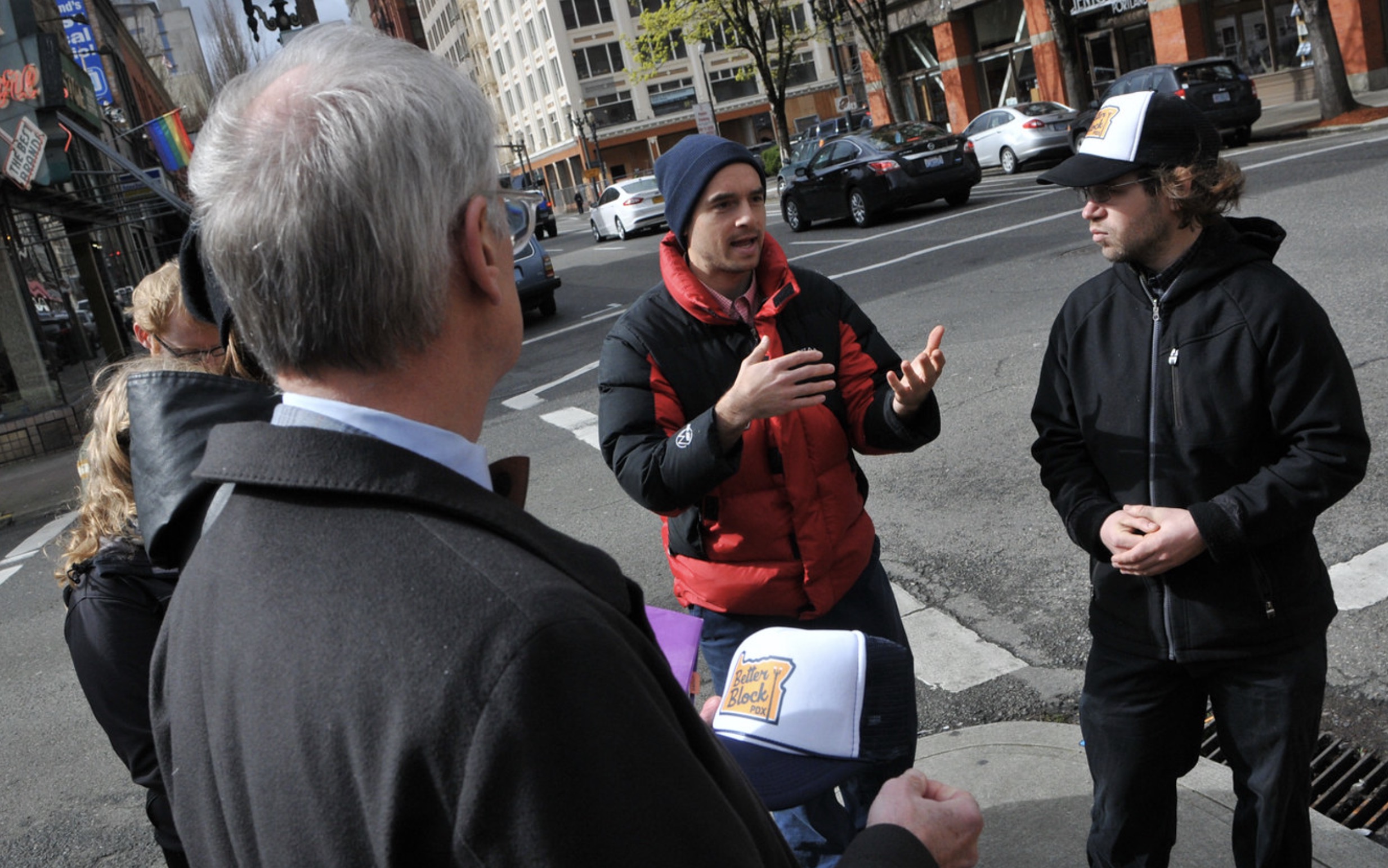
Timur Ender (yellow jacket) at Salmon St. Springs in 2015 with former Metro councilors Sam Chase, Shirley Craddick, and former Metro Planning Director Elissa Gertler. (Photos: Jonathan Maus/BikePortland)
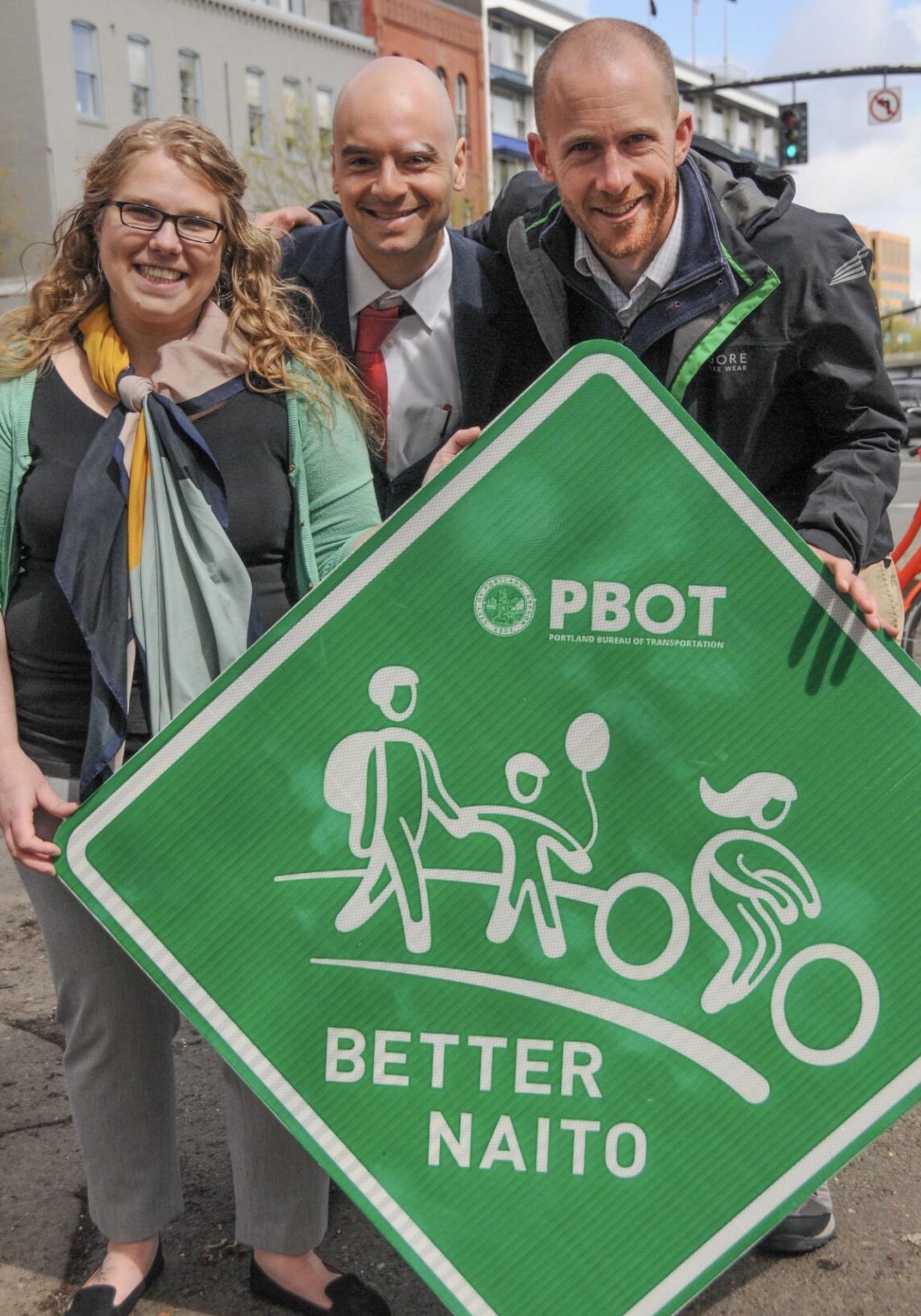
Ender (middle) with PBOT’s Gabe Graff and engineer Gwen Shaw at a Better Naito event in 2017.
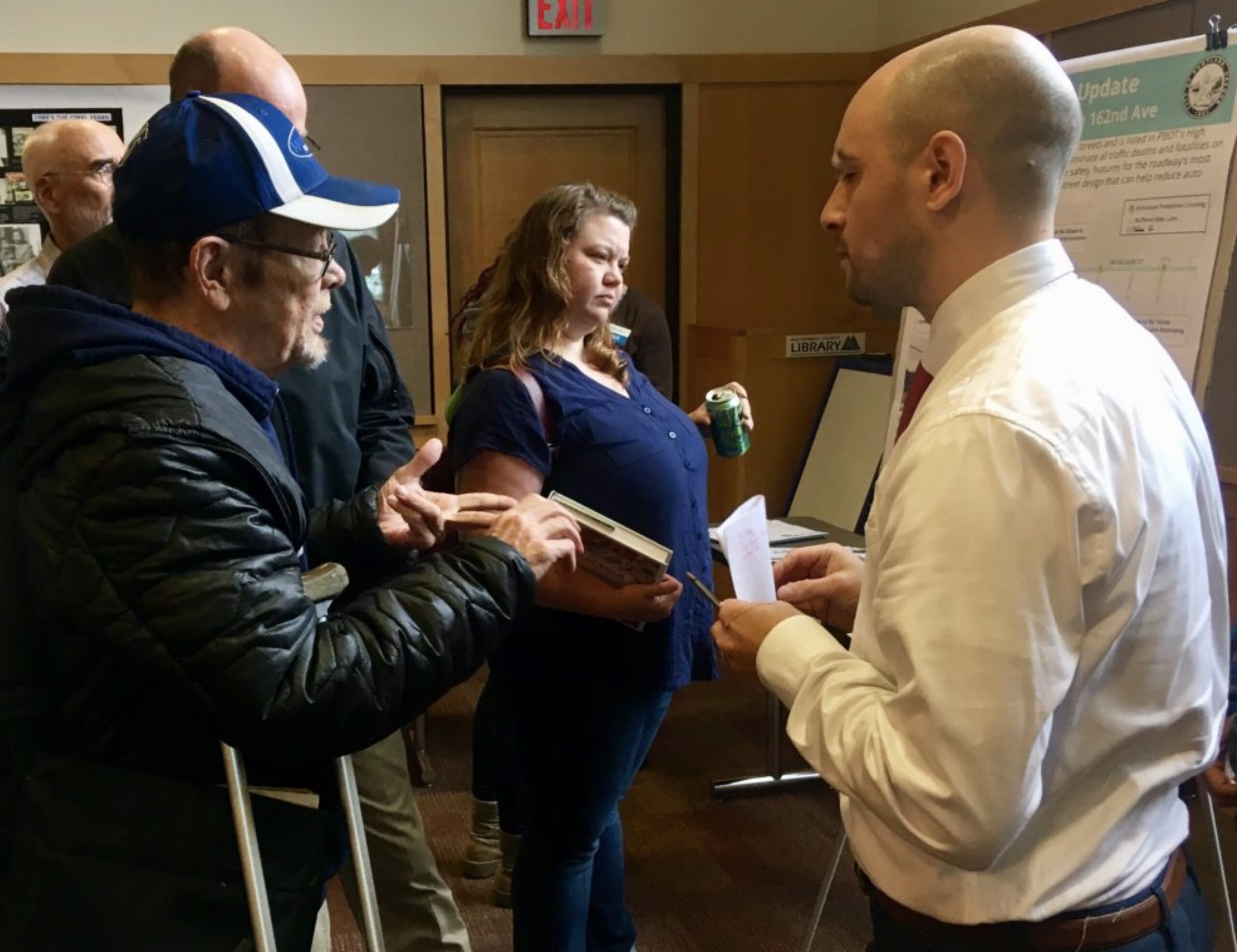
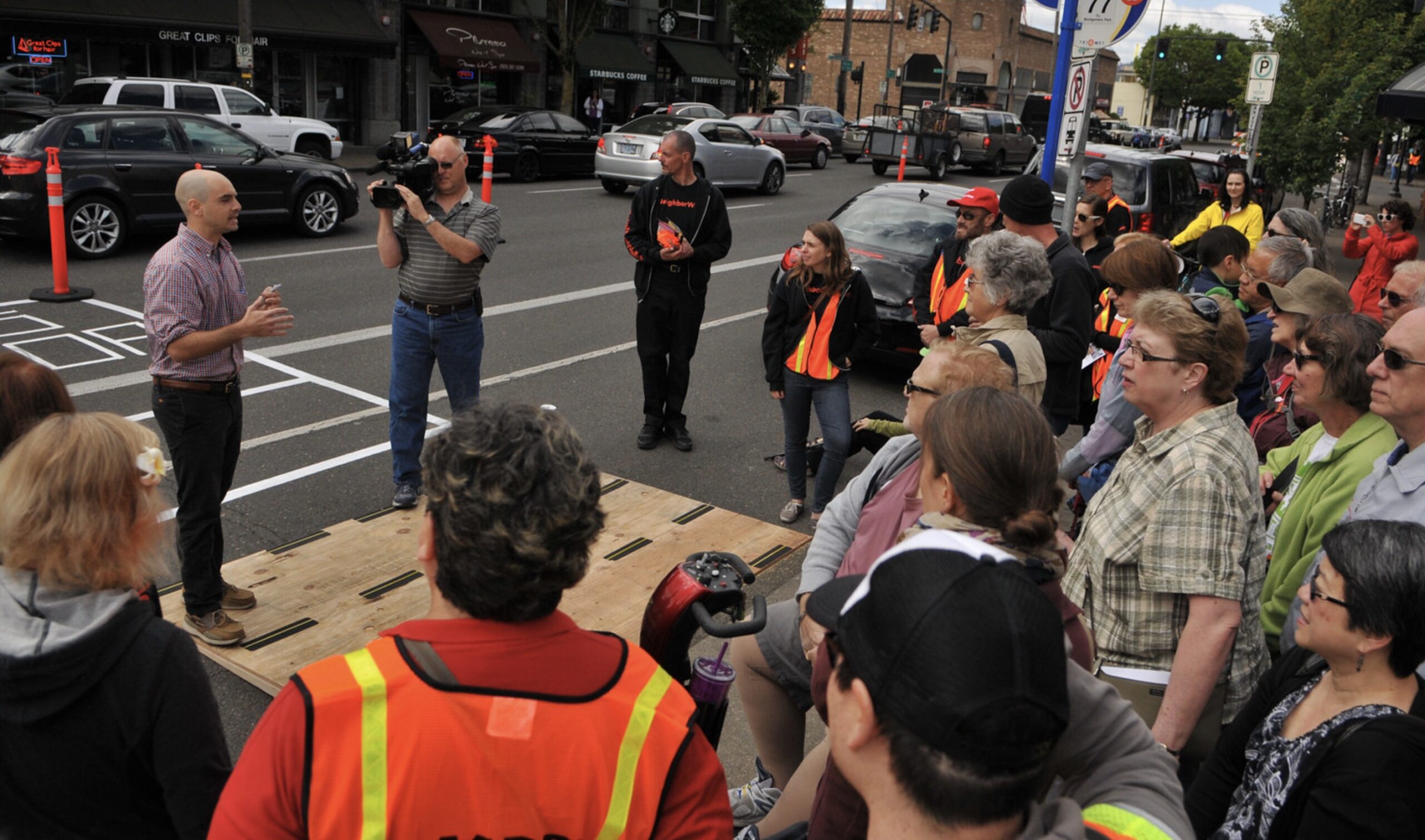
Timur Ender, a 33-year-old former volunteer with Better Block PDX, transportation policy advisor to former Portland City Commissioner Steve Novick and PBOT project manager, is the latest person to announce a run for city council.
Ender wants to represent District 1, the east Portland district that stretches from the Portland Airport and along I-205 to the city’s eastern and souther borders. BikePortlanders will be familiar with Ender since he’s been active in transportation advocacy, projects, and politics since 2013 when he graduated with a law degree from Lewis & Clark Law School.
Ender grew up in Raleigh, North Carolina and did his undergrad at NC State. In 2009 he rode his bike across America with the nonprofit Bike & Build to raise awareness and support for affordable housing (then led another cross-country ride with the same organization two years later).
In a phone interview Wednesday Ender told BikePortland he initially wanted to be a prosecutor, but while riding around Raleigh he noticed vast disparities among people who lived there. “People in other parts of the city didn’t have sidewalks and streets were unsafe. I realized this was largely a result of local government policy. Everyone pays taxes, we shouldn’t have these massive disparities and lower life expectancies in the same city.”
Advertisement
Ender and partner Althea Mickiewicz at Sellwood Bridge grand opening in 2016. Ender speaking with business owner Ryan Hashagen and Congressman Earl Blumenauer in 2016.Ender (white shirt) working at a PBOT open house for east Portland projectsin 2016.Ender and one of his children at 2021 Alice Awards.Ender (left) speaking at Better Broadway launch in 2016.
After law school in Portland, Ender worked briefly as an intern for Congressman Earl Blumenauer (D-Portland) and then was hired as transportation policy advisor for former City Commissioner Steve Novick. Ender was also a volunteer with Better Block PDX, a group that advocates for great public spaces, and played an instrumental role in several high-profile tactical urbanism projects in Portland including: the Ankeny/3rd Ave plaza, Better Broadway, and Better Naito. (Ender won our Comment of the Week in May 2022 for his behind-the-scenes look at Better Naito.)
In 2015, Ender (speaking on behalf of Commissioner Novick) said Better Naito was emblematic of, “PBOT’s efforts to use their streets in a way that fosters economic development, tourism, and public health… a cultural shift… Instead of looking at streets to move people and goods as fast as possible, PBOT is looking at streets as public space.”
Ender’s next move was to PBOT where he worked as a project manager for nearly 5 years before leaving the City of Portland to spend a year in Turkey in 2022 (he wrote about a visit to Turkey for BikePortland in 2019) . Ender has family in Turkey and wanted his kids, now ages 5 and 3, to learn the language. After working as a transportation planning project manager at engineering firm WSP USA since the start of this year, Ender is currently a stay-at-home parent.
Advertisement
“I’m more of a community person than a government person. I went into city government because ultimately that’s where the rubber meets the road.”
A resident of east Portland since 2018 (an intentional move so his children could grow up in a diverse, international community), Ender said he saw parallels between eastern Europe and eastern Portland. “It gets up to 135 degrees in Turkey and streets start melting. They experience climate change more acutely. And that’s true even in east Portland. We’re at greater risk of exposure to climate emergencies.”
To make peoples’ lives better in east Portland, Ender said he’ll take a “bottom-up” approach and will “bridge the gap” between government and people he serves. “I’m more of a community person than a government person. I went into city government because ultimately that’s where the rubber meets the road… If we can get our city government to work in a way that really meets people where they are and addresses their needs. That’s the key to creating a thriving community. “
Asked to share a specific way he’ll approach his work as a councilor, Ender said, “Listening is a key issue. To a lot of my neighbors, City Hall is invisible to them and people just don’t feel heard. That’s the starting block, and that’s going to be key for me.”
So far, Ender’s sole running mate in the District 1 race is Steph Routh, another candidate with deep connections to the local transportation advocacy scene who we reported on last week.
Also in the past week, several more people have announced candidacy for District 3 (inner southeast). They include: Jesse Cornett, a “body man” for Senator Bernie Sanders who we profiled when he ran for council in 2010; Angelita Morillo, a community organizer, former constituent relations staffer for Commissioner Jo Ann Hardesty, and TikTok star; and Robin Ye, a Charter Commission member and chief of staff to Oregon State Rep. Khanh Pham.
Keep in mind that because Portland is moving to ranked choice voting process, we’ll be able to rank our top candidates and the top three in each district will win a seat. This means, candidates with similar views aren’t necessarily running against each other, but rather with each other.