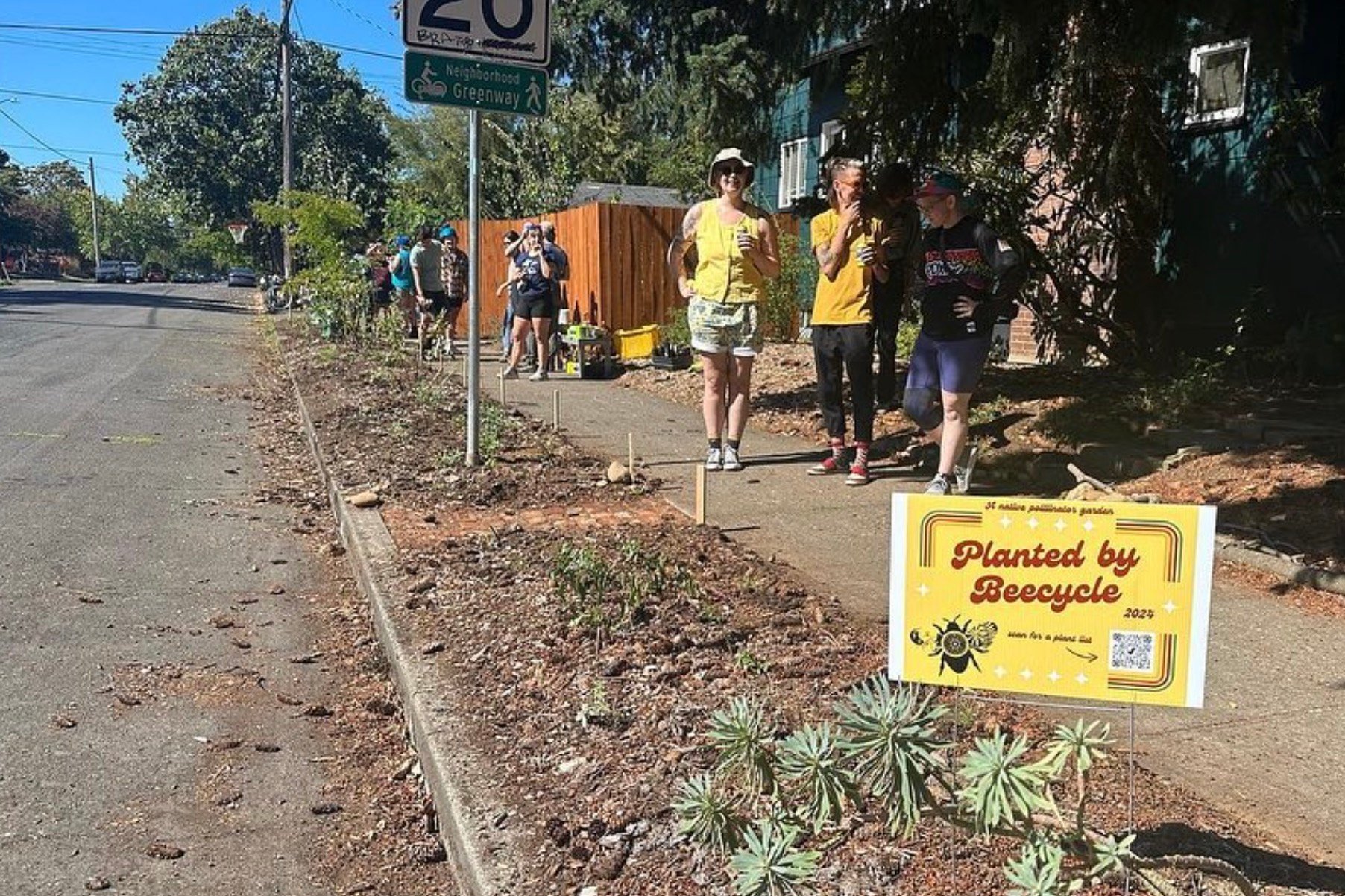
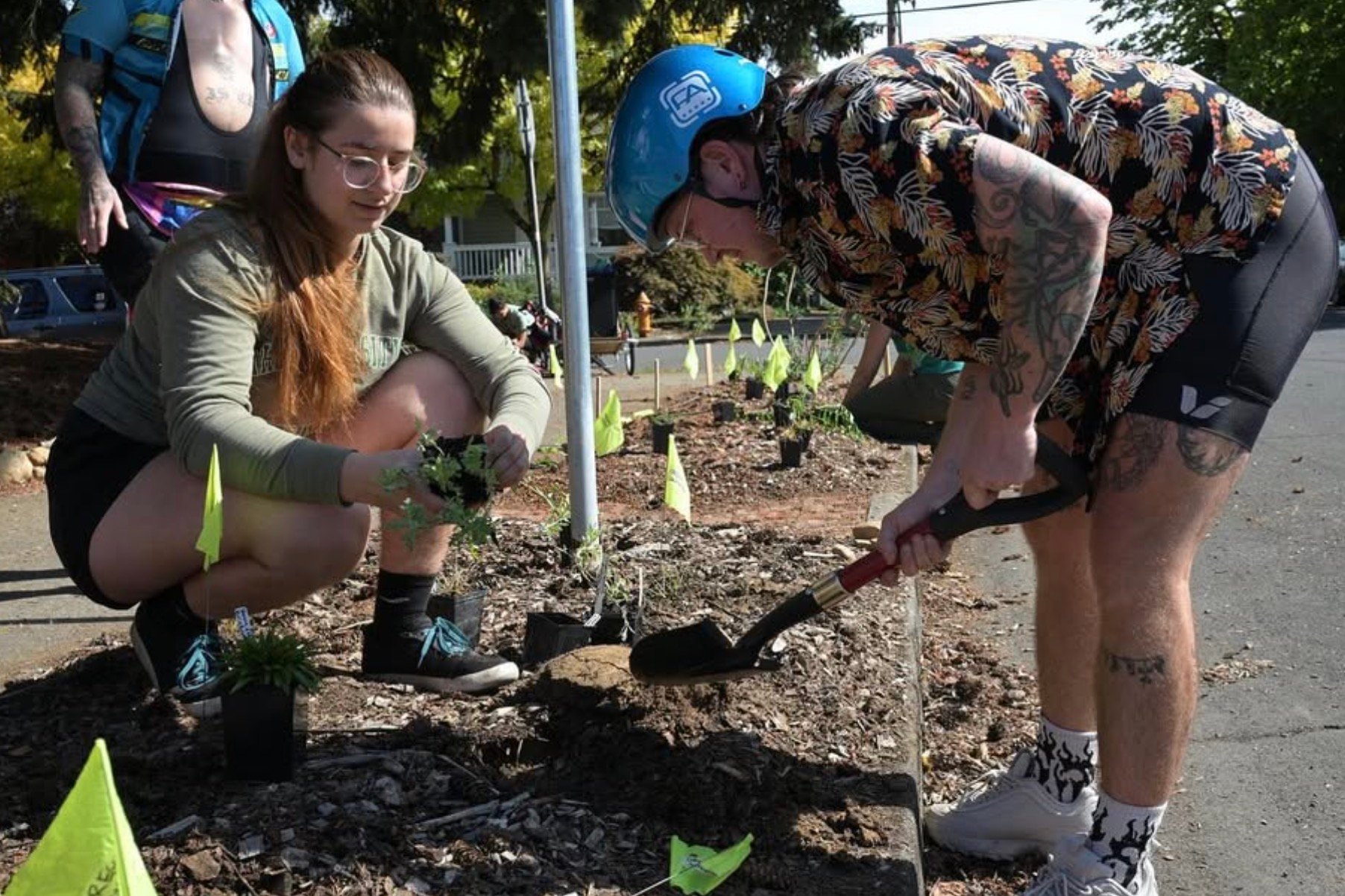
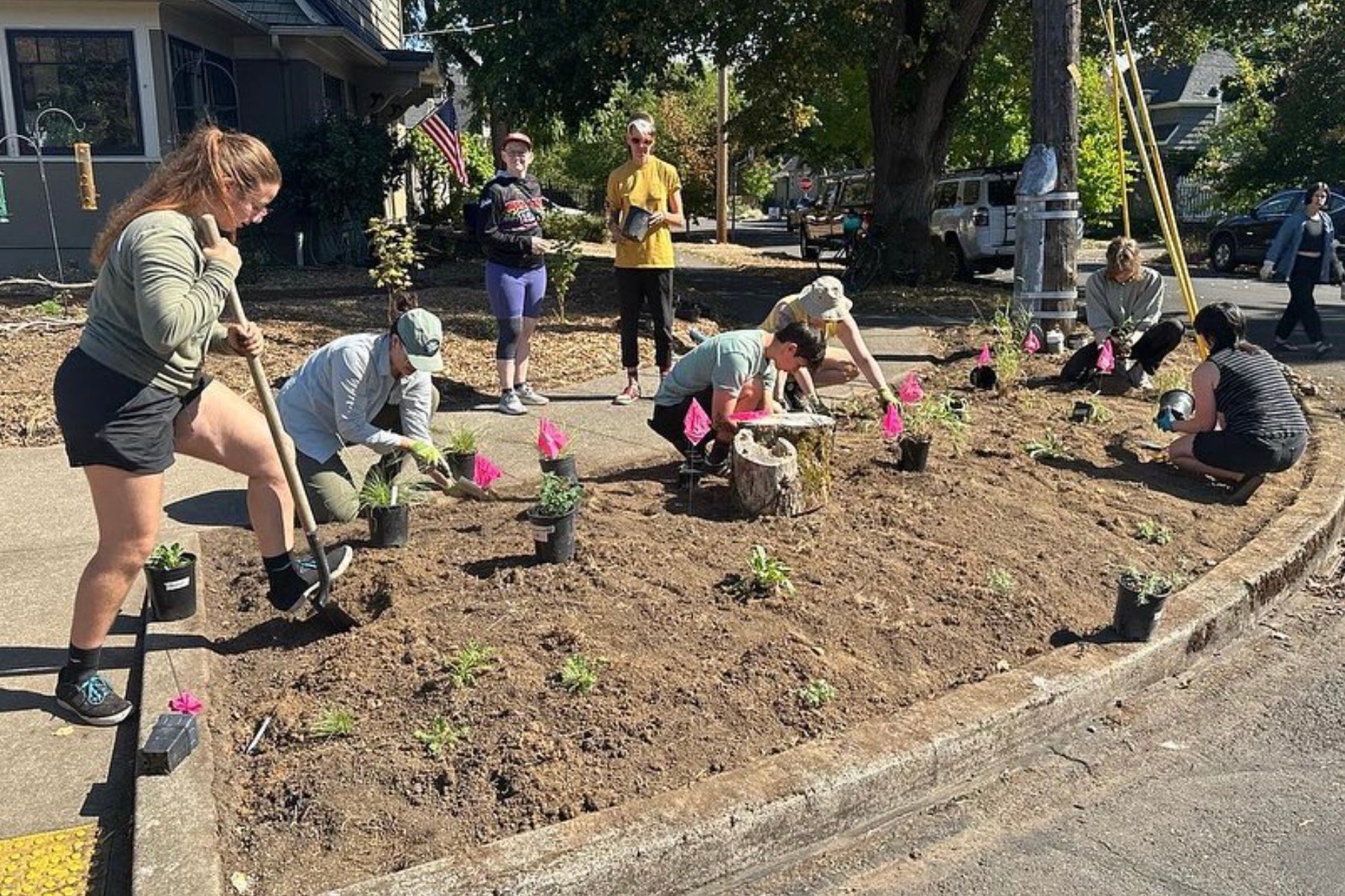
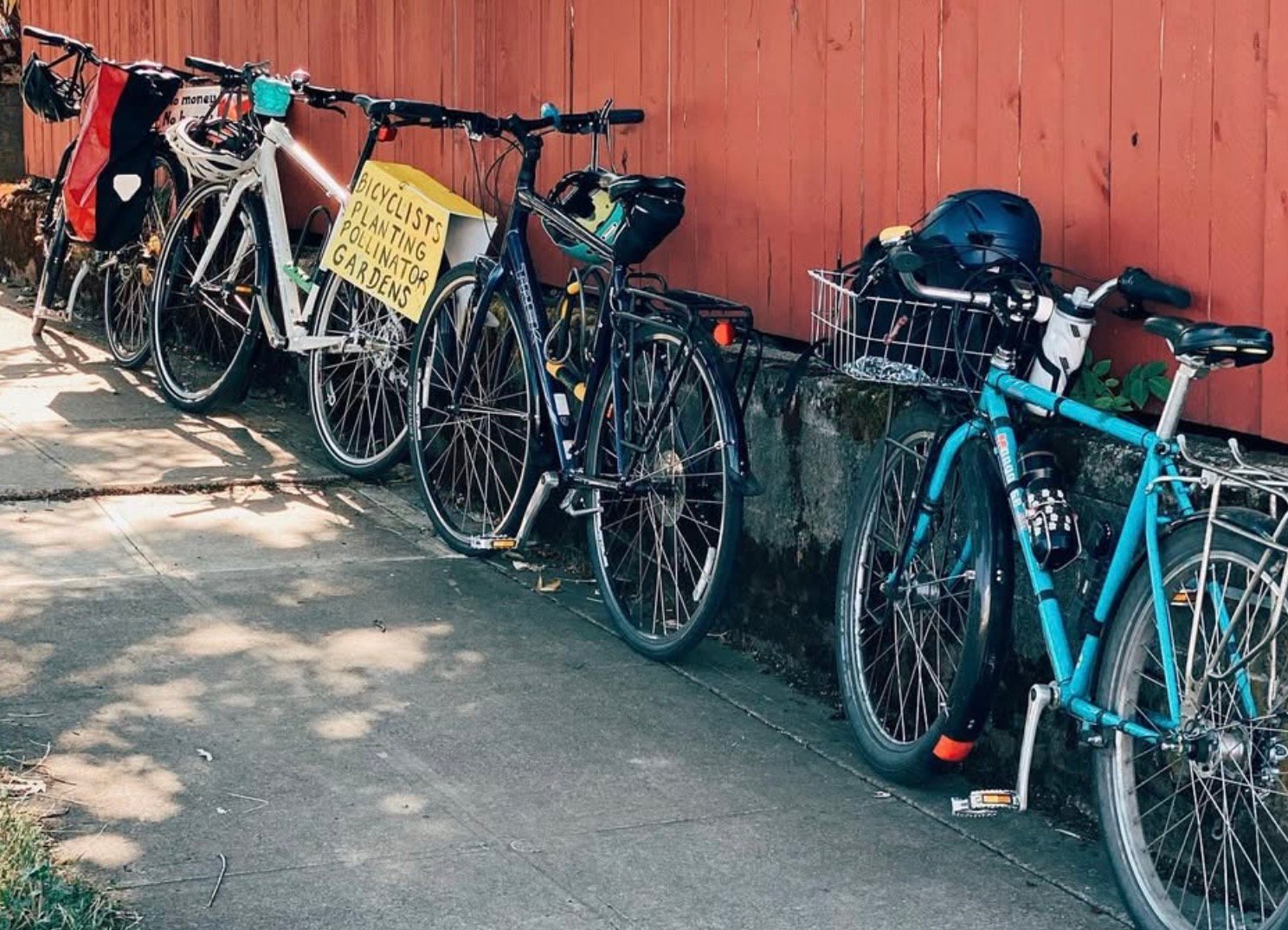
A 2024 planting site. (Photos: Kim Brown/Portland Beecycle)
Parking strips next to sidewalks planted with nothing but grass are like wide roads intended solely for cars: They serve a purpose, but they hurt the planet and could be doing much more to make our city great.
To Portlander Kim Brown — an ecologist, master melittologist (study of bees) with the Oregon Bee Atlas and secretary of the Native Plant Society of Oregon — those strips of grass are a canvas waiting to be painted with native plants. And those roads? Well, that ecosystem also needs a wider mix of vehicles, preferably bicycles.
Brown is the woman behind Portland Beecycle, an annual event that brings together plants and pedalers to help pollinate parking strips citywide. Last month she put out a call for homeowners who’d welcome a re-planting of their front yard strips. When I saw the announcement and realized the work would be done by folks who arrive by bike, I had to learn more.
Event organizer Kim Brown.
“Beecycle is about creating beautiful, accessible spaces in our urban areas that benefit wildlife and the community,” Brown shared in an email to BikePortland this week. She said her inspiration to organize the events comes from three places: to create more native plant areas in neighborhoods; to improve conditions for pollinators, birds, and other wild things; and to help bring a beautiful garden to someone in need.
“We have amazing access to park spaces in Portland, but many people do not actually interact with these areas on a daily basis,” Brown shared. “For many, our daily interaction with nature is our neighbors yards and street strips.”
Brown first got her shovel dirty working with Portland nonprofit Friends of Trees, who’s been doing tree plantings-by-bike for many years. Planting a successful garden is a bit more complicated than planting one tree, so Brown has partnered with the Oregon Native Plant Society and Twinflower Natives, Portland State University’s Rae Selling Berry Seed Bank, and Friends of Backyard Habitat to make her plantings possible.
Each year she seeks out homeowners who apply to have their strip planted. Brown then selects 2-3 homes, makes sure the location is safe for a few dozen cyclists to work at, develops a plant list and garden design, then fundraises for seeds, plants and other supplies.
She’s organized successful rides since 2023. They take place in middle to late September, to make sure the plantings don’t get baked in the summer sun. Riders meet at a park, then ride to the planting locations, then grab a bite to eat nearby.
The event has grown to include hundreds of plants and related supplies. This year, Brown hopes to transport everything by bike, so she’s hoping folks with cargo bikes will join the ranks.
If you’re interested in taking part, follow @PortlandBeecycle on Instagram and stay tuned for updates about the 2025 ride.
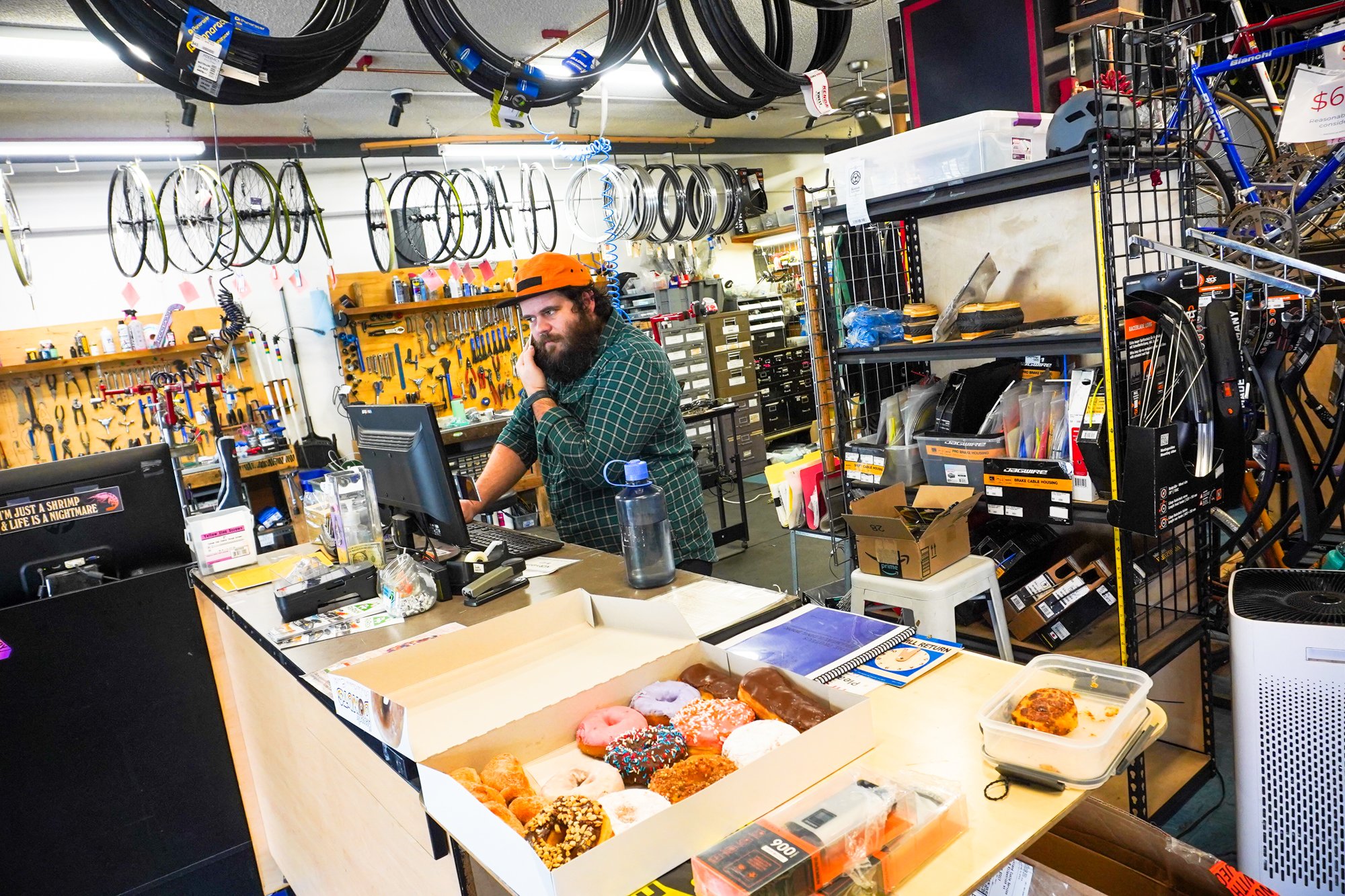
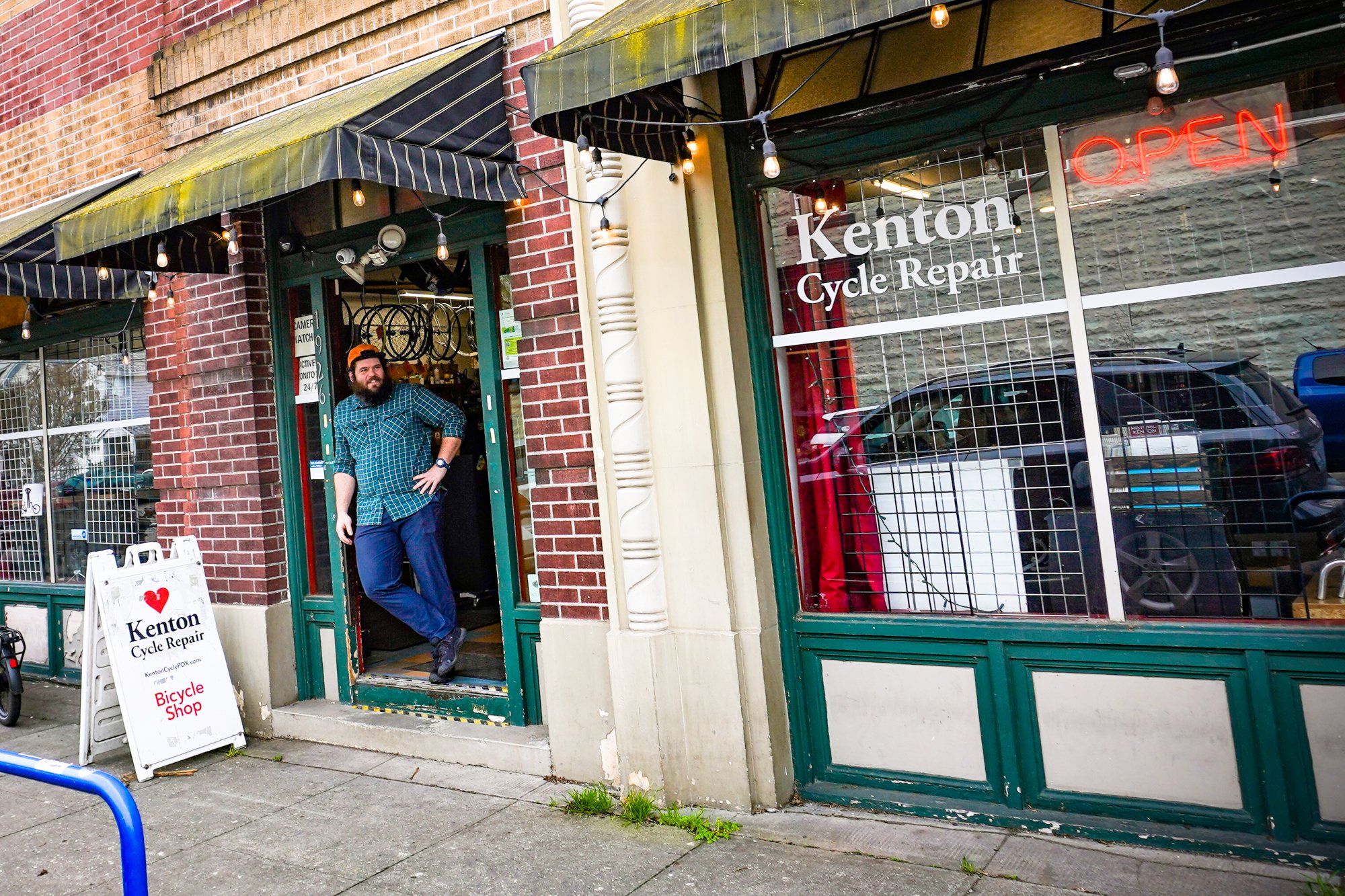
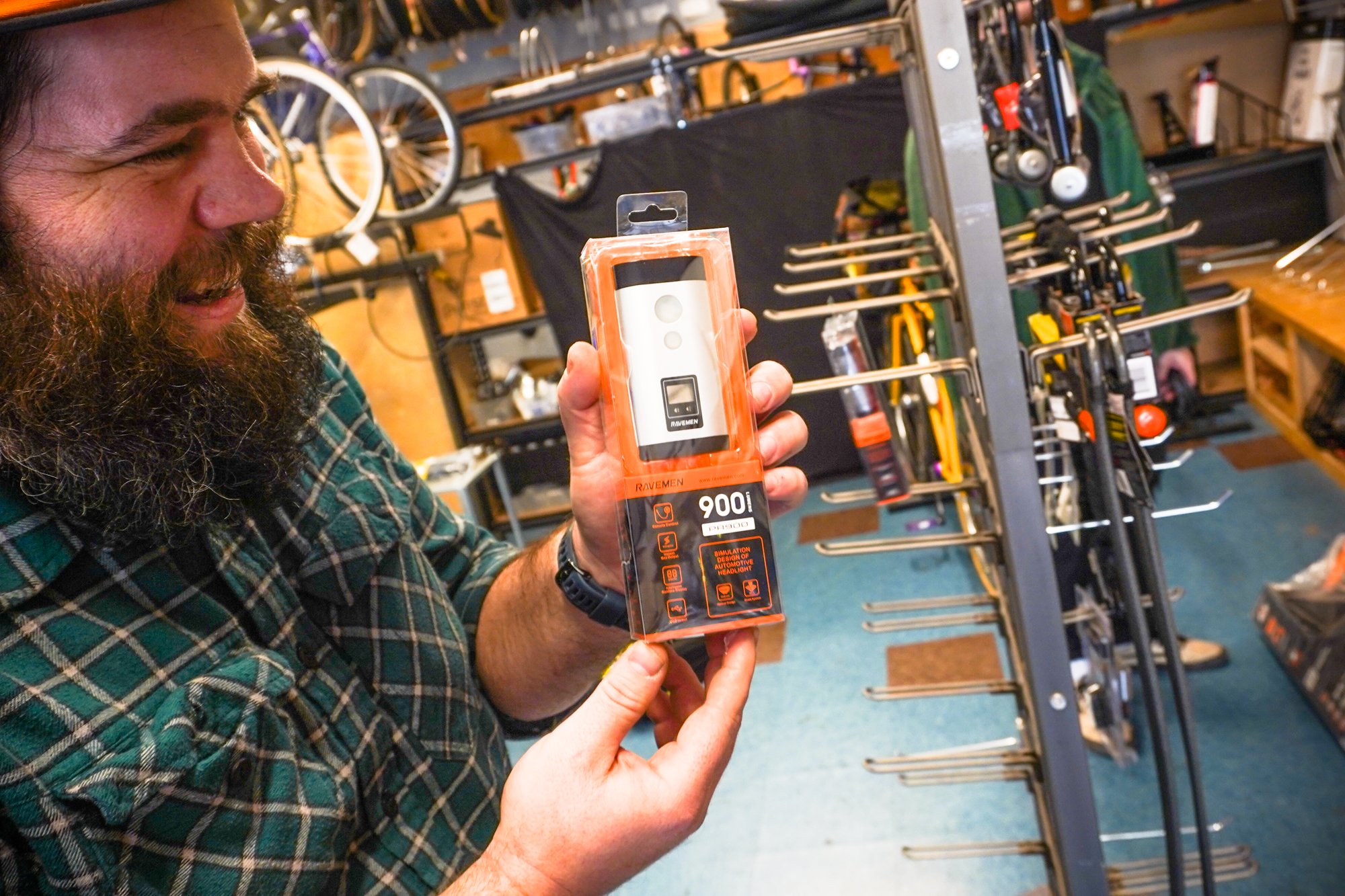
New shop owner Thomas Lawn tries to work and not get distracted by the box of donuts gifted to him by a sales rep. (Photos: Jonathan Maus/BikePortland)
“The amount of people coming in has been really, really solid.”
– Thomas Lawn
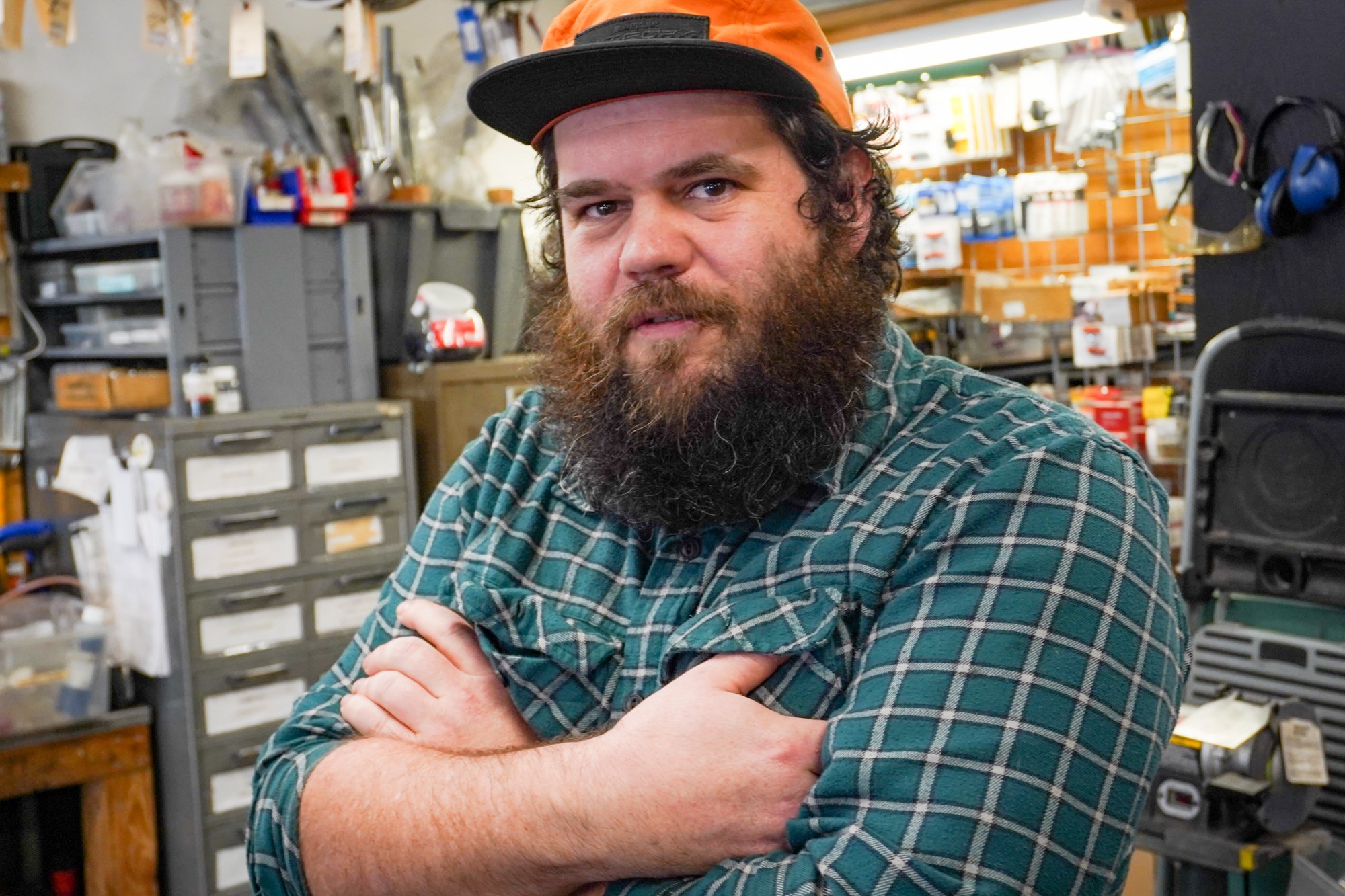
Kenton Cycle Repair has been saved! The small but mighty neighborhood bike shop just off North Denver Avenue in the heart of Kenton’s commercial district reopened on February 7th. Behind the counter is new owner Thomas Lawn, a 37-year-old California transplant who moved to Portland in 2013 and previously managed the service department at Joe Bike in southeast Portland.
“I played around with the idea of having a bike shop for a long time now,” Lawn shared when I stopped by last week. Years as a mechanic had started taking a toll on his body and his mind wandered toward the possibility of a different role in the industry. “At some point I felt like, if I’m in this [for the long haul] having my own shop should be on my radar.”
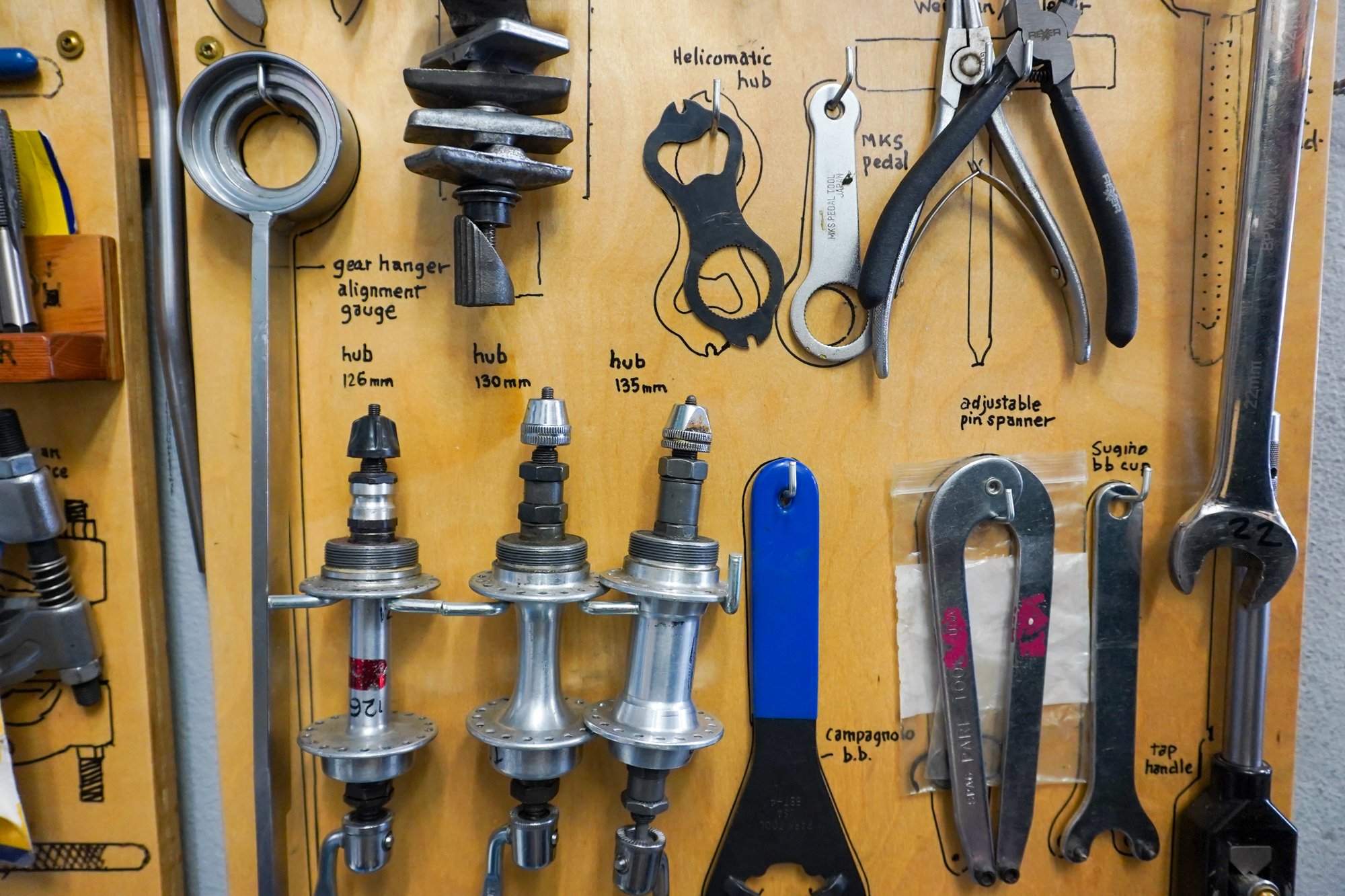
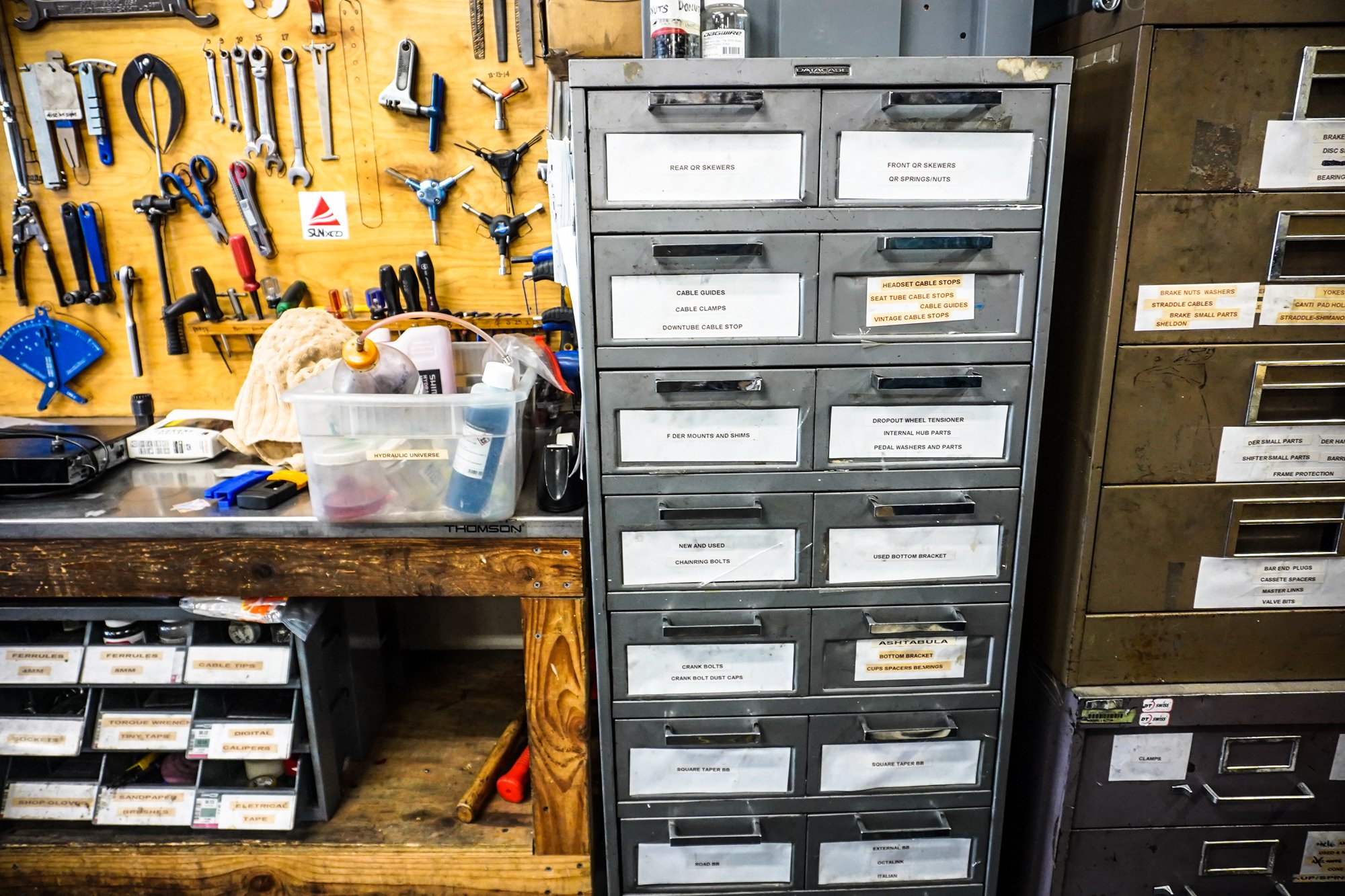
When he heard Kenton Cycle Repair was looking for a new owner, he reached out to former owner Rich Walker and the two reached a deal to keep the shop open. Lawn not only has his first bike shop, but he’s inherited thousands of dollars worth of Walker’s tools and bins of parts so Lawn can hit the ground running. The shop is fully open and ready for service. When I was there a steady trickle of folks popped in, including a sales rep who brought a dozen donuts.
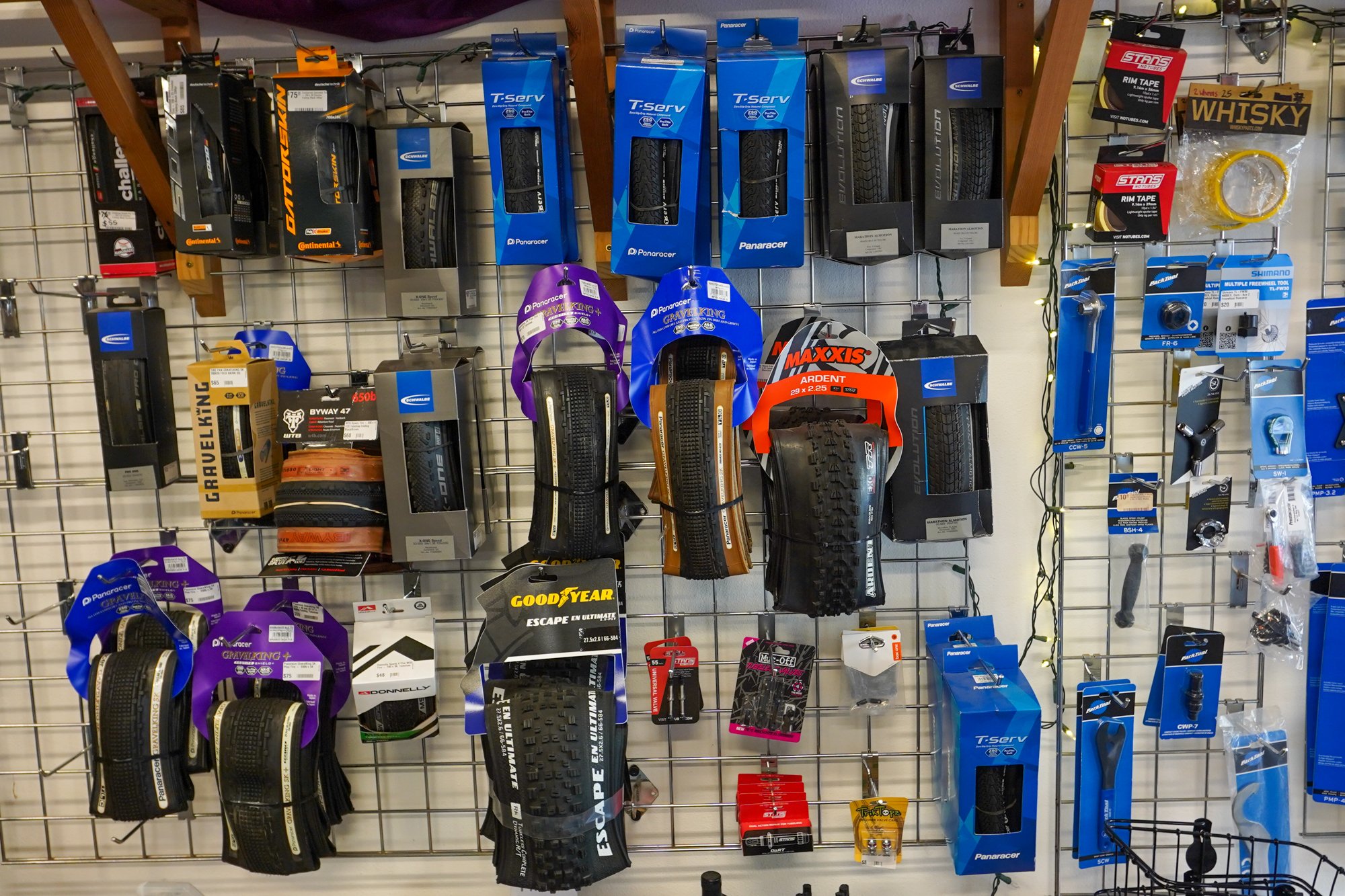
The 1,400 square foot shop is located in an old building on N Kilpatrick just a few doors off Denver. Lawn and his crew aren’t planning any major changes, but the look and feel of the shop has already morphed a bit. The counter is now right in the center as you walk in and there will be a lot more new products and accessories than before. Look for a quality used bike section and consignment service in the future. New bikes are also on the way from brands including Breezer, Fuji, and SE. Kenton Cycle Repair won’t sell e-bikes, but is happy to do minor fixes like flat repairs (as long as it doesn’t include work on the motor or battery due to insurance issues).
In the back of the shop are shelves full of old parts left by the previous owner. Lawn says he looks forward to “modernifying” older used bikes for customers. Sifting through boxes with hundreds of old derailleurs, Lawn said these parts are like an insurance policy. “If the bike industry apocalypse happens, we’re kind of OK. Or if tariffs blow everything up, we have some parts to keep bikes running.”
Lawn shopped at Kenton Cycle Repair just a few times before becoming its owner. Now he says he’ll try to make it a place he’d like to frequent as a customer. According to Lawn, the pillars of the shop will be: “competent repairs, reasonable prices, and a welcoming environment.”
Between taking phone calls, Lawn told me he lives in the South Tabor neighborhood and has enjoyed the new commute to north Portland each day. When he’s not working, you might see him at a Coffee Outside event, or on his bike in Forest Park or Powell Butte. He moved back to Portland (after a stint in Philadelphia which he said was too hot and humid) in 2020 right before the pandemic and has worked at Joe Bike ever since — so he’s been through a challenging time in the bike business; the uncertainty of Covid, followed by the boom in riding and then supply-chain issues.
Given how many small shops have closed recently, I asked Lawn if that made him nervous. “No one has said to me, ‘What are you doing?!’ when I told them I was opening a shop.” We agreed that’s a good sign.
“If I’m up late at night laying in bed thinking about money or whatever, the anxiety is real,” Lawn shared. “But when I’m here in the shop, all those voices are quiet. Everything makes sense when I’m in this space. Not to get all woo-woo, but this feels right. And the community response so far and the amount of people coming in has been really, really solid and it reinforces how I feel. It’s clear this area needs a bike shop and the customers are here.”
From our last sticker swap in September 2023. (Photos: Jonathan Maus/BikePortland)
We will have lots of sun and a high of 60 degrees when Bike Happy Hour begins at 3:00 pm tonight! That’s enough reason to come out and join us at Migration Brewing on North Williams Avenue.
But it’s also Sticker Swap night, which will add even more merriment to our weekly gathering. Stickers are the currency of bike culture and primary purveyors of propaganda. If you’re a sticker hound, grab a few handfuls of stickers from your collection to share, swap, or show-off. If you’re new to town and need inculcation to local lore via these symbol-filled signposts, don’t miss a great opportunity to start a collection of your own and adorn your bike with that sought after, lived-in look. Bike shop or other local industry staffer? Promote your brand and give away freebies!
Those silly kids.
I’m also happy to announce a special exhibit: In 2006, facing a rash of road rage incidents, the City of Portland launched an education campaign that centered around the mantra “I Share the Road” (they initially wanted just “Share the Road” but I was in the meeting and suggested putting the “I” in there, wanting to ultimately expand the campaign to a series of billboards with portraits of Portlanders repeating the mantra). The touchstone of the campaign were thousands of “I SHARE THE ROAD” bumper stickers. The stickers were everywhere! Eventually, a group of silly cycling activists took it upon themselves to prank PBOT and doctor the stickers. Somehow I ended up with a collection of them (see above) and will bring them tonight.
And of course other types of printed ephemera is welcome too so bring your coolest spoke cards, etc…
As per usual, we’ll have two piles: One for display only (for rare, cherished items), and one for stickers that are up-for-grabs. Trades can be made privately among two willing parties.
Tell your friends! Everyone is welcome. Can’t wait to see everyone in a few hours!
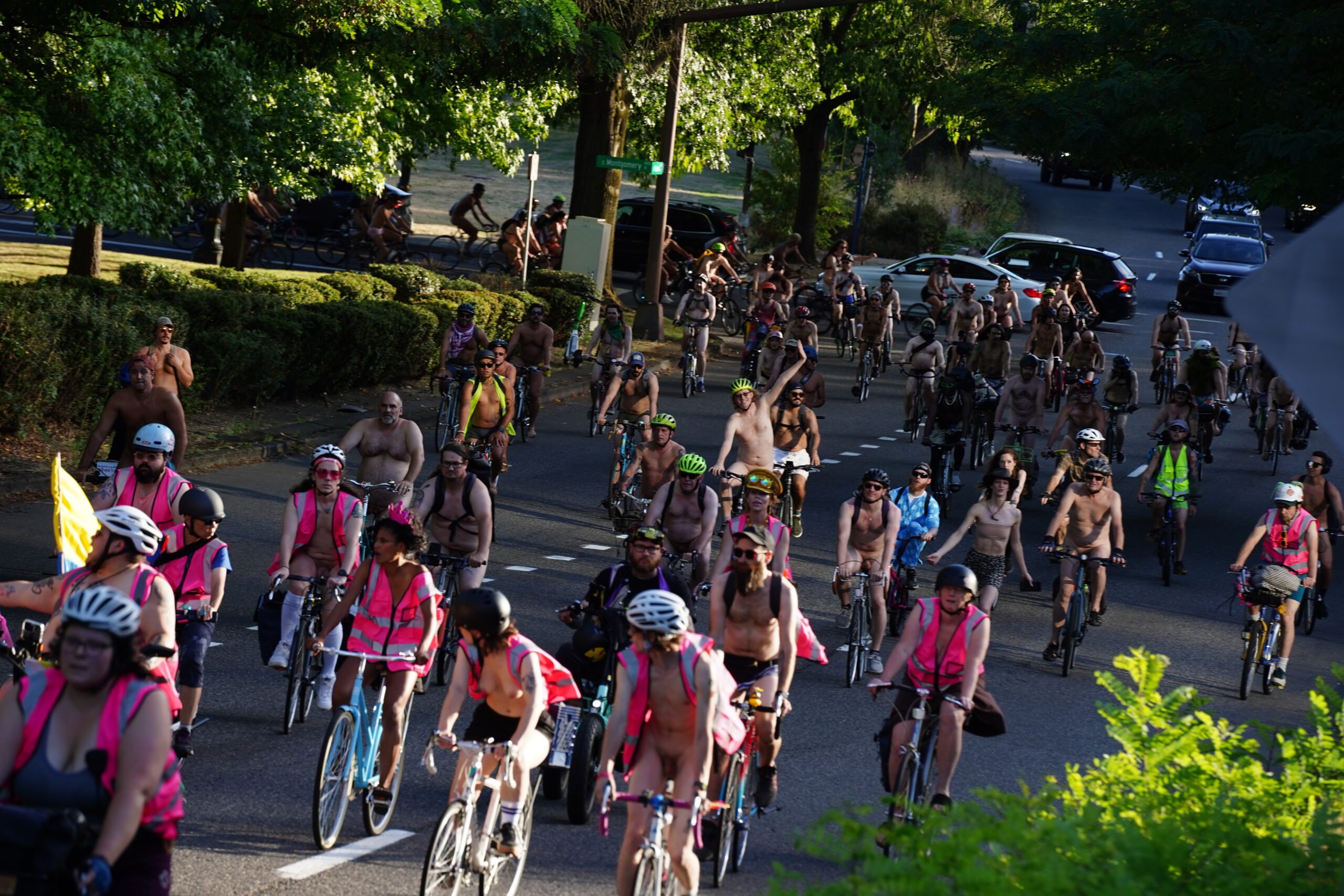
The 2024 World Naked Bike Ride Portland on S Harbor Drive. (Photo: Jonathan Maus/BikePortland)
Portland will get double the fun this summer as two major naked bike rides roll onto the streets.
Last June, when organizers of the traditional World Naked Bike Ride unexpectedly took a year off after 20 years as hosts, a different crop of leaders emerged to fill the void. The new organizers confused some folks by using a very similar name — “World Naked Bike Ride Portland” instead of “Portland World Naked Bike Ride” — and there was a bit of an intra-community riff behind the scenes.
This year both rides will happen: The Portland World Naked Bike Ride will be Saturday, July 26th and the World Naked Bike Ride Portland is Saturday, August 9th.
Portland’s original naked ride is supported by a nonprofit known as Umbrella. The event had turned into a massive party and major destination ride over the years, drawing thousands of participants — many of whom seem to dust their bikes off solely for that one night only. Last year’s ride with new leaders was decidedly different. It was much smaller in size with a crowd in the hundreds instead of thousands, and the focus was clearly on the activist roots of the ride. The route stopped at the headquarters of Zenith Energy in the northwest industrial area where a mass die-in was staged to protest fossil fuel dependency. Zenith Energy is embroiled with Portland City Council and local environmental activists for its pursuit of a permit to transport and store vast quantities of toxic oil along the Willamette River.
The leaders of the original ride say they’re excited to be back after the year off with new leaders and a new theme. “Given deepening global and domestic tensions, the PDXWNBR leadership team decided that community needs to take center stage this year,” reads a statement about the ride. The new theme is “Baring All & Building Bridges” and organizers say it’s all about, “strengthening our local community and its support systems.”
They’re looking for volunteer ambassadors to help support the ride. If you’re interested, be sure to follow @PDXWNBR on Instagram for updates.
Now in year two, the World Naked Bike Ride Portland invites riders to, “Join a ride of celebration, solidarity, and protest under the Sturgeon Full Moon.” The ride will once again focus on environmental justice and be a protest against oil dependency, especially the role of Zenith Energy and their ongoing business in Portland.
Both rides look to make big statements about the need for safe cycling, body positivity and self-expression.
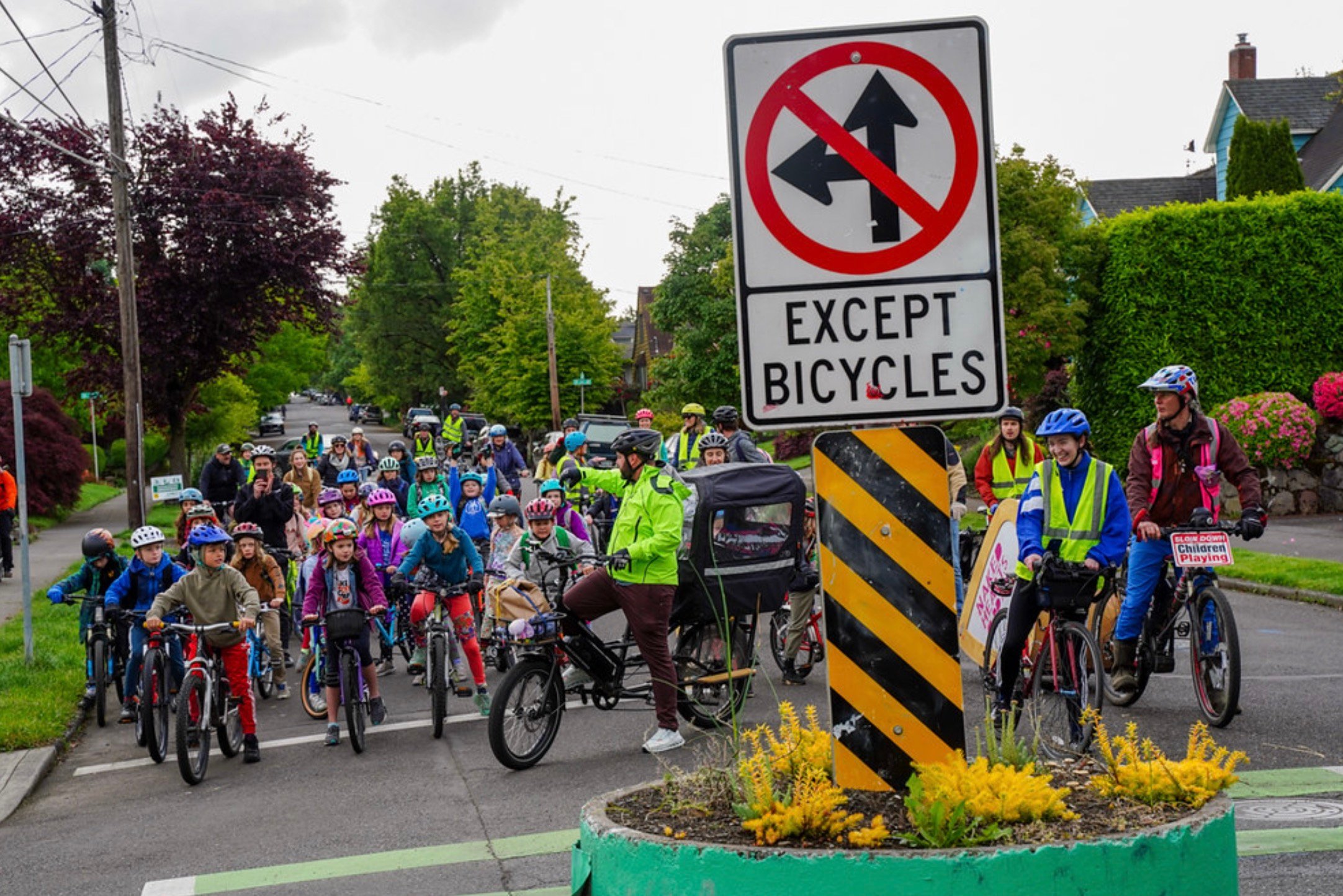
The health of our students depends on the health of our streets. (Photos: Jonathan Maus/BikePortland)
The bike bus movement in Portland isn’t all about fun bike rides to school. It’s also a platform for advocacy. And as those rides have grown, so too has the ability of their leaders to pressure city council for safer streets. After all, an elected can’t say they support bike buses if they don’t also support making sure kids can join them safely.
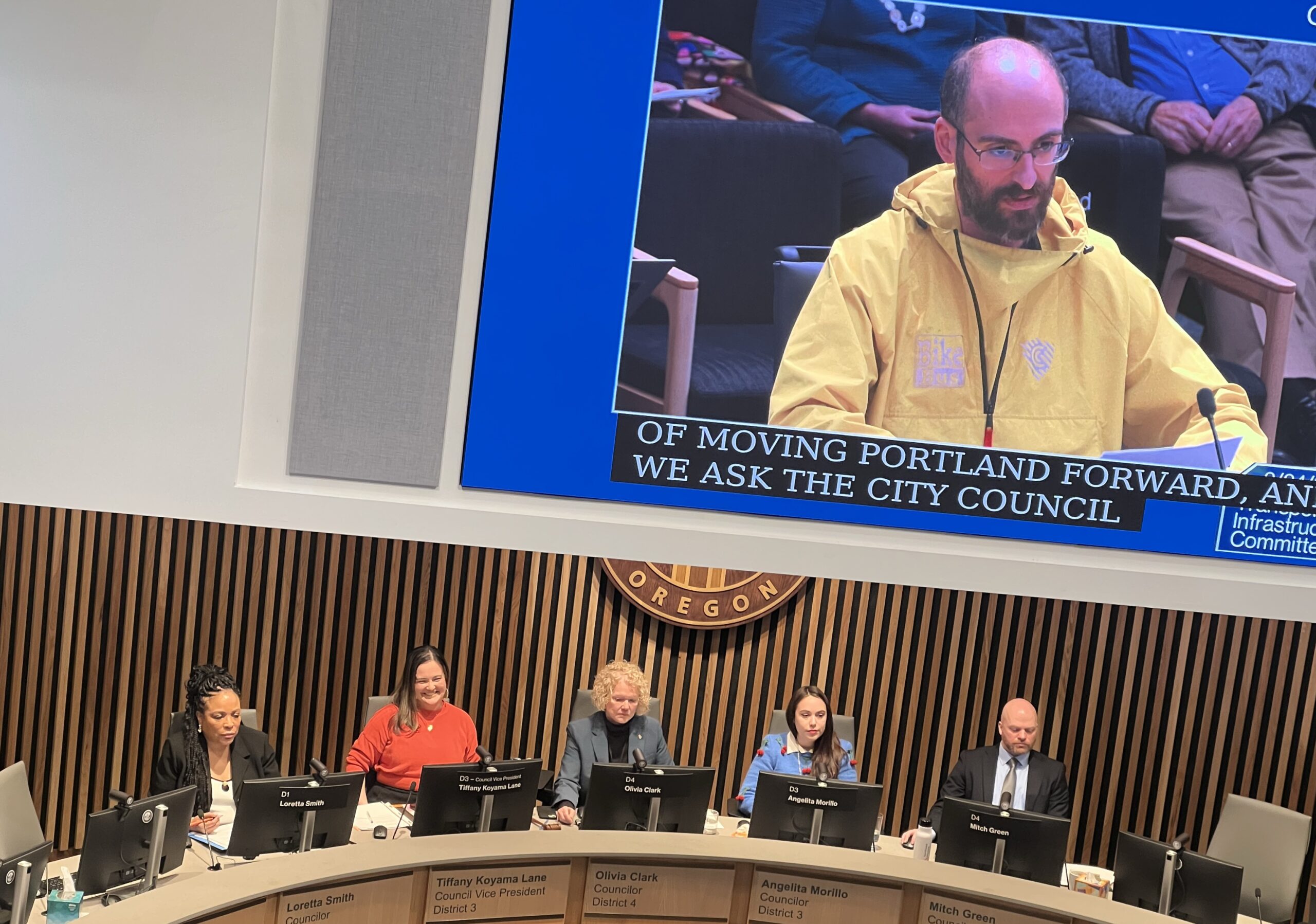
At the Transportation and Infrastructure Committee meeting in City Hall on Monday, Glencoe Elementary School Bike Bus Leader Rob Galanakis told councilors it’s time for Portland to step up and capitalize on the remarkable bike bus momentum. “The bike bus is the software for change, the social infrastructure,” Galanakis said, wearing the bright yellow rain poncho that’s become a de facto bike bus flag. “But we need the city to provide the physical infrastructure, the hardware.”
That “hardware” is modal filtering — an approach that uses hard infrastructure to limit cut-through traffic while still allowing people to walk and roll. (“Modal filtering” is a preferred word of some activists who feel talk of “traffic diverters” leads to irrational opposition.) Modal filters are cheaper, quicker to install, more effective and more modular than speed bumps.
Galanakis on screen during his testimony (which clearly delighted Councilor Tiffany Koyama Lane).
Galanakis (a candidate for Portland Public Schools Board) spoke on behalf of Bike Bus PDX, a coalition of 25 bike bus leaders from across Portland. Galanakis said all the time he and other bike bus leaders have put on the roads in the past four years have made it clear that even Portland’s vaunted neighborhood greenways are still too littered with car drivers. The number one threat to the success of bike buses are drivers and their cars. It’s essential that Portland limits the number of drivers on residential streets if our city wants to see more kids and families ride bikes — not just to school but in their daily lives.
Bike Bus PDX has gone further than just ask for more modal filters. They’ve submitted the “Bike Bus Friendly Neighborhood Greenway Resolution” and are asking councilors to force the Portland Bureau of Transportation to strengthen their approach to traffic diversion.
Currently, PBOT’s preferred average daily traffic volume on a neighborhood greenway street is 1,000 cars per day (measured as average daily traffic or ADT). According to their 2020 Neighborhood Greenways Assessment Report, 1,500 cars per day is “acceptable” and 2,000 cars per day is the maximum. The reason those thresholds are in place is so they can trigger a variety of infrastructure responses by PBOT. Depending on traffic counts, PBOT will decide what type of mitigation is necessary, and (in a perfect world) they’ll continue those interventions until the number is acceptable.
The Bike Bus PDX resolution calls for a pilot program that would change the lower volume to a maximum of 500 cars per day. The idea is modeled after guidelines in use by the City of Vancouver, British Columbia. Their “all ages and abilities (AAA)” cycling routes aim to have fewer than 500 motor vehicles on them per day, which will result in most cyclists encountering just less than one driver per block (in peak hours) on average. The resolution also calls on PBOT to try the lower ADT threshold on 25 neighborhood greenway routes (where active bike buses or walking school buses already exist) prior to the start of the 2025-2026 school year.
To pay for the resolution, Bike Bus PDX says they’d target PBOT’s Fixing Our Streets program which has money set-aside for safety projects (and which the group helped PBOT pass when it was up for another vote last year).
During his testimony yesterday, Galanakis said if PBOT isn’t given the tools to improve safety on neighborhood greenways, the bike bus movement will lose momentum and, “We will lose this critical opportunity to advance city goals.”
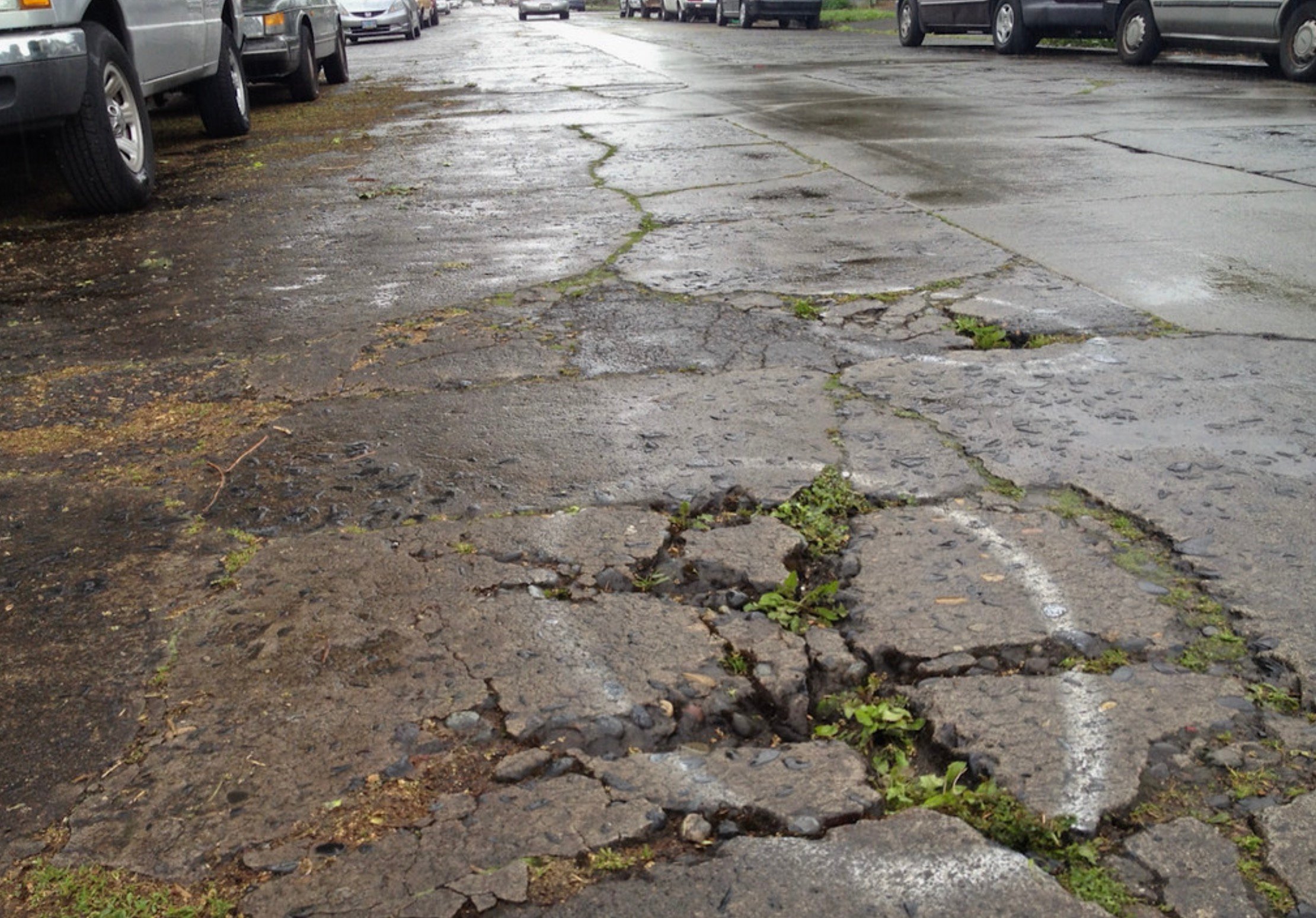
If only we could end the repair and repave cycle. (Photos: Jonathan Maus/BikePortland)
“You should… take some streets out of service.”
– Mitch Green, Portland city councilor
Portlanders have heard for years that our transportation agency cannot keep pace with required road maintenance. As our pavement buckles under the pressure of an ever-increasing number of cars, no one wants to pony-up the funding it takes to keep roads smooth and safe. Something’s gotta’ give.
What if instead of playing catch-up, we reduced the amount of lane miles we maintained, thereby lowering the city’s overall financial burden? That’s an idea I’ve heard in activist circles for years, but closing streets to motor vehicle access to save on maintenance costs had always seemed like a fringe notion. Today it was thrust closer toward the mainstream by a Portland city councilor named Mitch Green.
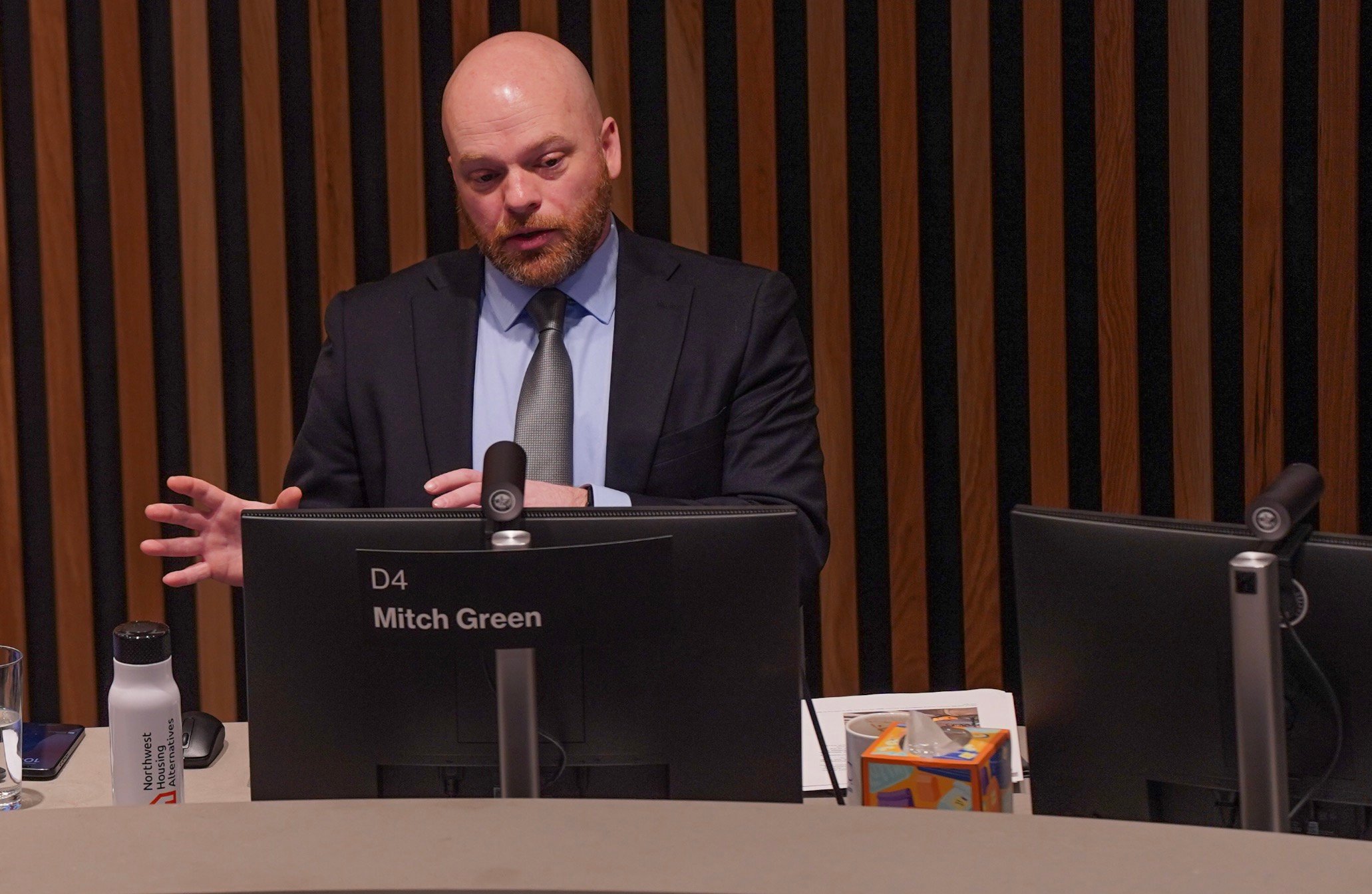
Speaking at a meeting of the city’s Transportation and Infrastructure Committee this morning after a presentation on what Green called the “dire” financial state of the Portland Bureau of Transportation, Councilor Green said, “Every mile of road is a liability in terms of unfunded, ongoing operations and maintenance, which will then be always costlier in the future.” Then, speaking directly to PBOT Director Millicent Williams and Deputy City Administrator of Public Works Priya Dhanapal, Green continued:
“You should work with and have some conversations with the Bureau of Planning and Sustainability and talk about opportunities to take some streets out of service. Turn them into superblocks, turn them into cul-de-sacs, turn them into plazas… Community gardens even. Because if we do that, I think we can lower our expenses over time. I think we can create more buildable land, create more housing density, which will then allow us to have a transit and active transportation-forward city, which is always going to be less costly than continuing to rely upon vehicular lane mileage.”
Councilor Mitch Green at the meeting this morning. (Photo: Jonathan Maus/BikePortland)
Surprisingly, PBOT Director Williams said her agency is already considering the idea. “Our planning team is actively engaging in that conversation,” she replied. “There are a number of projects that are underway that speak specifically to what you’ve outlined.”
I’m still working to get more details from both Green and PBOT (to clarify what exactly Director Williams was referring to), but it’s worth noting Green’s inspiration. Before being elected to city council in November, he was an energy economist for the Bonneville Power Administration and previously taught economics at Portland State University. He also believes addressing climate change is, “the most pressing issue of our time.” It’s the twin emergencies of PBOT’s fiscal cliff and the very real impacts of climate change that are behind Green’s comments.
Councilor Green, a Democratic Socialist, is also an avid BikePortland reader who very well might have perused our recent guest opinion from Sam Balto that advocated for creating more cul-de-sacs throughout Portland as a way to improve quality of life.
Either way, given that PBOT is on the ropes in the fight for a balanced budget, it’s the perfect time for bold, out of the box thinking. And if you consider that PBOT already has mature street plaza, neighborhood greenway, and road diet (or what they call “lane reconfiguration”) programs; decommissioning even more lane miles in order to reduce financial liability and get closer to climate and transportation goals doesn’t really seem all that fringe anymore. (Also worth noting that PBOT has a lot of experience in this realm, like when they’ve partnered with folks to create “play streets.”)
The PBOT 2025-2026 budget proposal is expected to be released at the end of this week. The Transportation & Infrastructure Committee will then make a recommendation to the finance committee. There are more conversations to be had before Councilor Green’s idea is one of them, but at least the conversation has begun.
UPDATE, 4:30 pm: PBOT Communications Director Hannah Schafer has clarified their position on Councilor Green’s comments:
“Because we are investing so little in the maintenance of our streets right now, this wouldn’t actually create any significant cost savings, but it would reduce our risk and potentially add a small amount of savings to our overall $6B in deferred maintenance.
Today, we approach this work through the reallocation of lane space – i.e. changing the way we use our existing roadway space by allocating more pavement from heavy vehicles to less heavy uses such as bikes that will impact our assets less over time. Our street plazas are another example of reallocating pavement for public use. We are also partnering with organizations like Depave to transform lane miles to places through co-investment with adjacent businesses and community, but that is not representing any significant savings at this time (though there are certainly other important benefits!).”
In related news, tonight (Monday, 2/24) is the Streets of Possibility: Well Beyond Cars event hosted by the PDX Design Collaborative as part of their City of Possibility event series. More info here.
Welcome to the week. Here are the most notable news items our community has come across in the past seven days…
Rural bus service: Oregon recently ended service of a key bus route in eastern Oregon, and it’s an unfortunate trend that rural transit is being sacrificed to the budget gods. It doesn’t have to be that way says former Metro President David Bragdon. (EnoTrans)
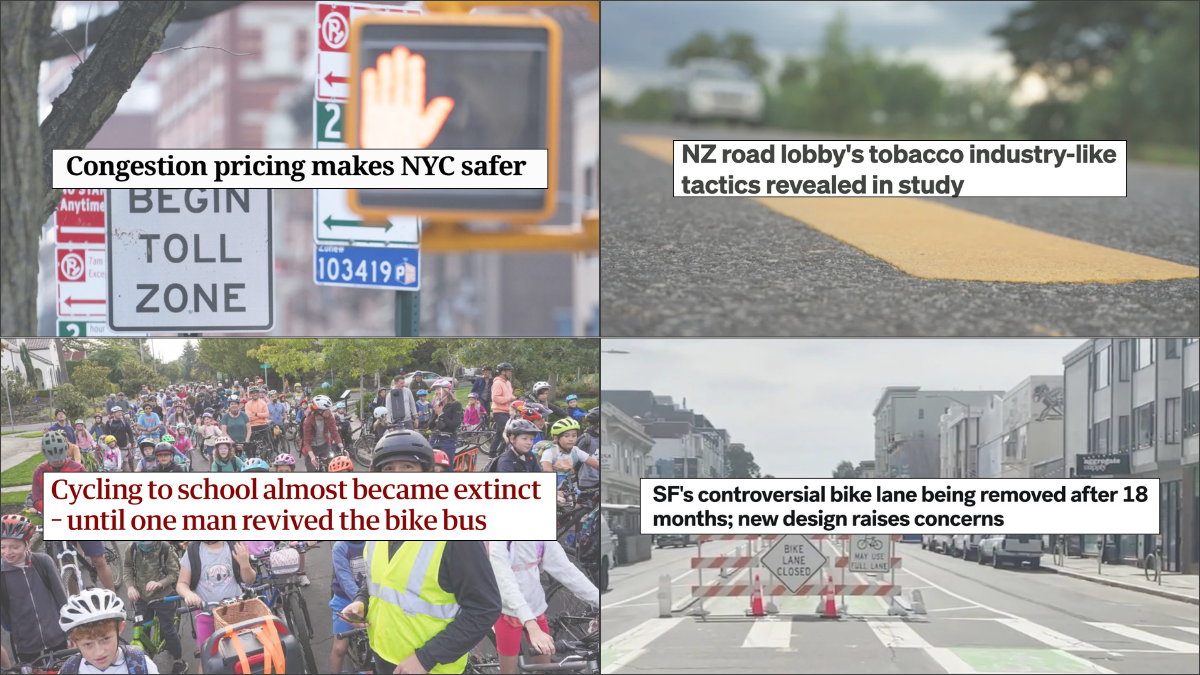
Exposure risks: It’s a truism of transportation that fewer miles traveled by car equals less exposure to the dangers cars pose. So it makes sense that pricing travel and reducing VMT, like NYC did in Manhattan, would lead to safer streets. (Daily News)
Depoliticization: Want to win the debate of whether cities and states should invest in bike lanes or wider freeways? Think about how you frame the debate. (Omer Rafael Bor on Substack)
Social media is good, actually: When it comes to building the bike bus movement, social media has been vital. And I can prove it by sharing what happened when someone tried to popularize the idea before we had social media. (Note: I did not write the headline.) (The Guardian)
Cars are the new cigarettes: “New Zealand’s ‘road lobby’ uses the same tactics as the tobacco industry to obstruct transport policies like walking and cycling, a new University of Otago study says.” (RNZ)
It’s a global epidemic: Lest you think the stubborn scourge of road traffic deaths is an American thing, don’t forget that developing countries across the globe have it much worse. This expert thinks road planning and safety should be treated like a public health epidemic. (The Guardian)
Pay up: Washington D.C. has a law on the books that allows the city to file a lawsuit against out-of-state drivers who don’t pay traffic fines. (Washington Post)
SF is moving from the center to the right: Not politics, but a major bike lane that was piloted in the center of a busy commercial street is being moved curbside — and still folks are mad. (ABC News)
Need a job? Want a better job? Just looking for a change? You are in the right place. Don’t miss these recent job announcements. (Remember, you can always stay abreast of jobs as soon as they get listed by signing up for our Job Listings email.)
These are paid listings. And they work! We’ve helped hundreds of people find great jobs and great staff members. If you’d like to post a job on the Portland region’s most popular bike and transportation news platform, you can purchase a listing online for just $100. Learn more at our Job Listings page.
We are seeking an experienced and skilled Mechanic to join our team. As a Mechanic, you will be responsible for repairing bikes, checking in bikes, and helping provide customers with solutions that work for them. We are looking for someone who has 5+ years of Mechanic experience to help fill out our established service department.
Duties
– Follow work orders to carry out repairs
-Inspect bikes during the check in process and provide the customer with an estimate cost of repairs
-Maintain a clean work station and help maintain the general cleanliness of the shop
-Interact with customers of all experience levels
-Provide excellent customer service
Requirements
– 5+ Years experience
– Positive attitude while facing customers and coworkers alike
– professional communication and problem-solving skills
– Ability to work in a fast-paced environment
This role offers the opportunity to work with a experienced and fun team, develop your skills, and contribute to the success of our small local business. If you have a passion for bikes and are looking for a challenging and rewarding role, we encourage you to apply.
How to Apply
Please send a resume to steven@cascadebikes.com, we will be in further communication from there!
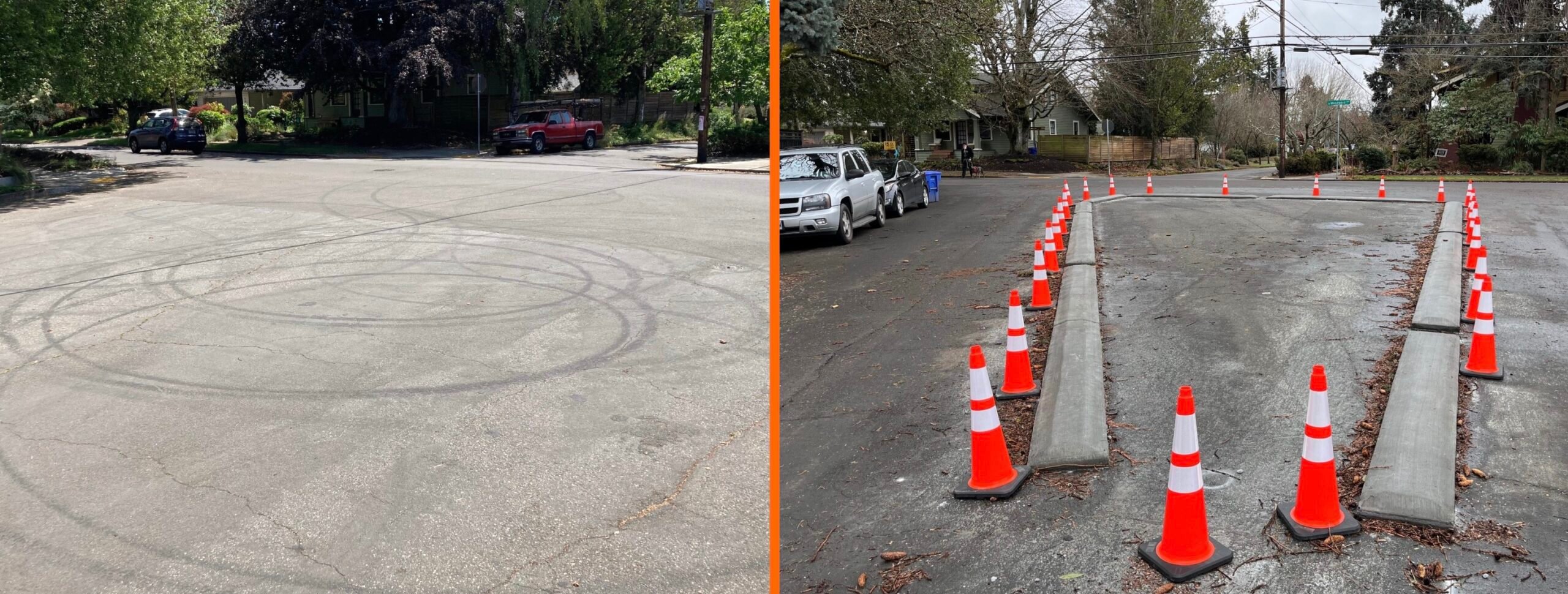
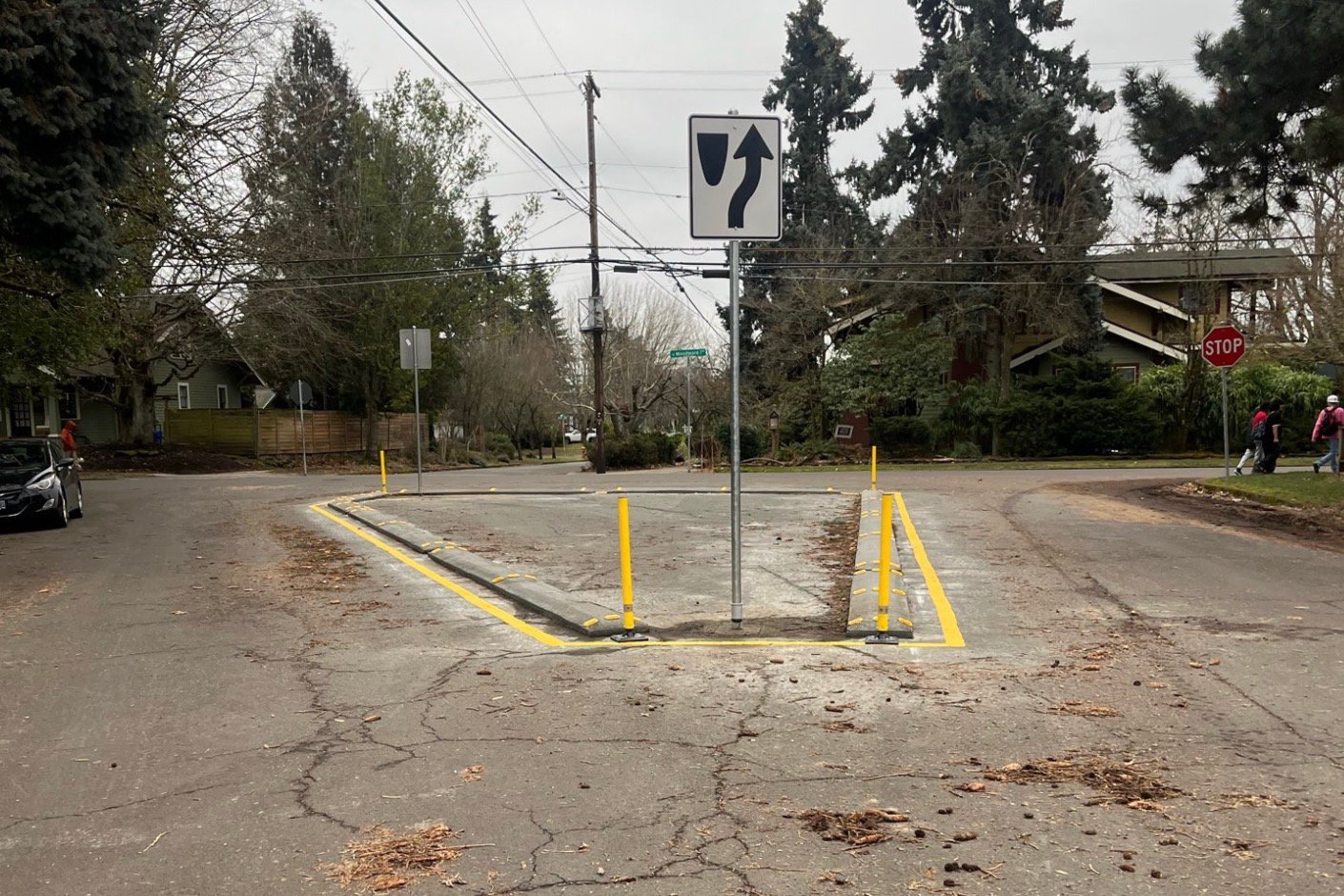
Before and after images of SE Woodward and 59th. (Photos: David Binnig)
The Portland Bureau of Transportation has come up with an infrastructure solution to car users who do donuts and drive recklessly through neighborhoods.
The residential intersection of Southeast Woodward and 59th has an extremely wide opening that measures about 85-feet — that’s over three times the width of a standard neighborhood street. In large part because of that width, people have shared concerns with PBOT about dangerous drivers who speed around the intersection while sliding out their rear tires. This type of behavior is risky on any street, but SE Woodward is a neighborhood greenway popular with bike riders, walkers, and runners.
To remedy this issue, PBOT identified a small amount of funding through their Multimodal Missing Links program, a small and flexible pot of money the city uses to address hot spots and fill minor gaps in the network. The annual budget of the program is about $200,000.
In March of last year, PBOT reached out to people who live in the South Tabor Neighborhood to learn more about the Woodward and 59th intersection and present design concepts that would address its issues. They decided to build a traffic island in the middle of the intersection using 12-inch wide, 4-inch high concrete curb separators (similar to ones used on protected bike lanes citywide). The curbs will reduce the amount of space available for car users and create a more predictable flow of traffic. Most importantly, if someone tried to do a donut, they’d slam into the curbs and severely damage their car.
Local advocate David Binnig snapped a photo of the completed separators and shared it today on the Bike Loud Slack channel. He also shared a before photo that shows skidmarks.
I wrote an opinion piece in 2022 that encouraged PBOT to use basic traffic calming treatments like this to address street takeovers and burnouts. It’s great to see them take action and address this problem with a cheap and easy solution.
Now all that’s left is to do something with that space in the middle of the island. Folks on Bike Loud suggested it would be a perfect spot for a lemonade stand, some potted plants, or a shuffleboard court. It’s amazing what’s possible when we reclaim our streets from dangerous people and their vehicles!
UPDATE, 2/21 at 4:30 pm: PBOT has added signage, paint, and reflective wands to the curbs to increase visibility. Photo below by Liza Norment via Bluesky.
I put Keith Wilson’s campaign kickoff on my calendar but expected to skip it. Saturdays are hectic at best, and sitting for a political speech was a tough sell to my all-gas-no-brakes three-year-old.
I’d first heard about Wilson from a BikePortland piece, and I was intrigued. A trucking executive who’d staked his company on green tech before soft-launching a dark horse mayoral run with a group of bicycle advocates? Even for Portland, it seemed like a stretch, but I had to find out for myself.
With an hour to kill, I told my kid we’d visit the Charles Jordan Community Center playground if he put up with a few minutes of the event. He agreed, so I plopped him into the back of my cargo bike, and we took off for New Columbia.
I slipped in a little late, found a spot in the back of the gymnasium, and held my son up so he could see the speakers. He was soon more interested in the refreshments table than the show, so I let him raid the fruit tray while I listened.
It didn’t take long for Keith Wilson to grab my attention. He was the first local politician to put what I’d seen in my daily life into plain language. Portland’s unsheltered homeless crisis hurt everyone. Other cities had succeeded where we’d failed, and our approach wasn’t working. It was time for real change, and getting folks off the streets and into shelter was a moral imperative and critical to restoring a city where people wanted to live, work, and raise families. Despite our best efforts, compassion and pragmatism don’t always successfully intersect in Portland, but here was a guy who’d traveled the nation on his own dime because he believed a solution that included both was out there, he just had to find it.
I love Portland, but there were times when it felt like the city didn’t love me back. My little hatchback car had a bullet hole from a midday shooting on Columbia Blvd. My wife was driving at the time, with my toddler son strapped in the back seat. I’d been chased through a Delta Park encampment while biking my kids to soccer practice. I’d watched a homeless man go after one of my neighbors with a pitbull and had to decide whether to try to help or get my small child to safety. Then there were the questions every bicyclist in Portland has asked themselves: will my route be blocked by tents or broken-down cars? Can I get around an RV in the bike lane without getting hit from behind? My neighborhood trail seemed okay last week, is it safe enough for my kids today?
Worse, was the feeling of helplessness. As a former Wilderness Search and Rescue volunteer, my instinct (and training) is to check on people if they look like they’re in trouble. In Portland, the smart thing to do is ride past and ignore the visible suffering in your midst. That’s a hard decision to justify to two young kids who still think their dad can do anything and help anyone.
I felt Wilson’s kickoff speech about the missteps and promise of Portland in my bones, even with my three-year-old wiggling in my arms. On my way out, I scribbled my contact information on a volunteer form as he tugged on my leg. The campaign seemed professional and well-organized, and I doubted I’d hear anything from my offer to write a few campaign fundraising emails.
Within a day or two, I got a call from Wilson’s campaign manager, Kristopher Taft. I took his invitation and took my 12-speed Schwinn out to Cyclemaster Coffee on Lombard to meet him. The campaign didn’t need fundraising emails, he told me, at least not for the moment. They needed a website, and wanted to know if I could write it, and handed me nearly two hundred pages of deeply researched policy positions.
Mayor Wilson’s grit, optimism, compassion, and resolve aren’t his alone. They’re our values, too. These values make a wet, hilly city one of the best places to bike in America… They’re the values that I’m convinced will take us through the coming days, no matter what those days might bring.
As a writer, I’d long believed that words without substance won’t hold up to the light of day. The notes in my hand showed the opposite: Wilson had done the work, developed relationships, advanced legislation, formed committees, and laid the groundwork to successfully lead the city. I’d also soon learn that Wilson is a difficult man to turn down, a lesson I suspect many in city, county, and state leadership are now learning.
The following weeks were a blur, and I helped the growing team set up an editorial calendar, coordinate messaging, communicate on the fly, and deploy other critical skills I’d picked up over my career. The campaign continued to gain momentum. Before long, it was time to step up or step aside. I asked that Wilson appoint me his Communications Director, but with one stipulation: the moment he found someone more qualified, I wanted him to fire me. My instructions were simple: don’t worry about my feelings, just do what’s best for the campaign.
I’d remain his Communications Director through election day. Looking back, here’s what I can tell you about Mayor Wilson: he’s a great listener, he’s willing to make mistakes, and he’s always willing to change his mind. I’ve seen him on great days, and I’ve seen him on tough days. He’s the same guy no matter how the winds blow, and the Ted-Lasso-by-way-of-Mr.-Rogers persona is not an act.
I’ve also never seen anyone work harder. Portland has some tough issues to solve. The budget and unsheltered homelessness crisis would be a big deal even if we didn’t have a hostile federal administration on our heels.
Here’s the good news: Mayor Wilson’s grit, optimism, compassion, and resolve aren’t his alone. They’re our values, too. These values make a wet, hilly city one of the best places to bike in America. They’re the values that make Portland a progressive leader, and a beacon of freedom, intentional living, environmentalism, compassion, and acceptance. They’re the values that I’m convinced will take us through the coming days, no matter what those days might bring.
Taylor Zajonc is an author, a father, a bicyclist, and Mayor Wilson’s Deputy Chief of Staff.
Class 3 e-bikes would have been prohibited from the protected bike lane on Naito Parkway if SB 471 was passed. (Photo: Jonathan Maus/BikePortland)
Oregon Senator Floyd Prozanski plans to withdraw a controversial bill that would have banned a popular type of electric-assisted bicycle from bike lanes and paths.
Advocates with The Street Trust met with Sen. Prozanski on Friday and they say he’s agreed to drop the bill.
Senate Bill 471 caught cycling and safe street advocates by surprise when it was introduced last month. It sought to prohibit Class 3 electric bicycles from bike-specific infrastructure and would have made them legally akin to mopeds and motorcycles. Class 3 e-bikes have no throttle, can have maximum speed of 28 mph (from the motor) and the motor only works when the rider is pedaling.
In an interview with BikePortland in January, Prozanski said he and his riding buddies saw many people riding motorized vehicles (which may or may not have been e-bikes) on bike paths without regard for Oregon law or for the safety of others. He then acknowledged the use of “Class 3” in the bill language was incorrect.
Local nonprofit advocacy organization The Street Trust (TST) published an article earlier this month that said Prozanski’s bill threatens, “to saddle e-bikes with unnecessary restrictions rather than advancing policies that make streets safer.”
Here’s more from The Street Trust’s article:
Instead of reactionary regulations, Oregon must implement expert-driven policies developed by stakeholders across sectors — public agencies, industry leaders, and community advocates who understand the realities of how people move using small things with wheels, aka micromobility.
The regulatory focus should be on operator behavior and vehicle speed in shared spaces, and avoiding arbitrary restrictions based on vehicle type which are hard to discern, let alone enforce.
We need clear, enforceable rules that ensure e-scooters and e-bikes remain accessible, while protecting riders and other road users from the risks of higher-speed motorcycles, mopeds, and illegally modified “e-bikes”.
The article was written by Cameron Bennett, a TST board member and policy lead for the group’s Oregon Micromobility Network project. Bennett was also at the meeting with Senator Prozanski last week where they discussed concerns about the proposed legislation.
In a phone call with BikePortland today, Bennett said Prozanski has agreed to they are happy with the outcome now that the bill will not move forward. “We’re excited to have the Senator’s support in our ongoing education efforts around e-bikes, instead of working against us,” Bennett said.
This isn’t the first time Senator Prozanski has proposed a bike-related bill that was ultimately withdrawn after widespread criticism. In 2008 he filed a bill that would have made Oregon’s helmet law apply to all ages of riders. That bill met with fierce opposition from cycling advocates and Prozanski scrapped it a few weeks after it appeared on BikePortland.