Financial Accountant, Castelli USA
Castelli is a cycling apparel manufacturer based out of Fonzaso Italy. Known for performance and innovation, Castelli is responsible for almost every major innovation in cycling apparel and has outfitted pro peloton riders since 1876.
Castelli Sportful USA is a subsidiary of MVC-Italy and has been in Portland, Oregon since 2006. The scope of the business is inline and custom sales, and the brand is sold directly and through wholesale accounts.
The Financial Accountant is responsible for processing Accounts Payable and Accounts Receivable transactions, as well as other general accounting functions. This position reports directly to the Director of Finance. Specific responsibilities include:
• Enter Accounts Payable invoices into the appropriate vendor ledger.
• Ensure vendor payments are processed for payment within vendor terms.
• Process refund payments to customers for approved sales returns.
• Monitor accounts receivable aging, email statements to customers, and recommend changes to customer credit limits.
• Process customer credit card payments and electronically deposit checks.
• Work with TEAM sales to reconcile TEAM A/R accounts.
• Perform month-end reconciliation of designated accounts; create accrual and adjusting journal entries.
• Maintain fixed asset register; record new asset purchases; calculate and record monthly depreciation; record asset retirements.
• Other duties as assigned.
Knowledge Required for the Position/Qualifications:
• This position requires problem solving skills, the ability to work independently with minimal direction, and excellent written and verbal communication skills.
• This position requires the ability to work with colleagues individually or in groups for the purpose of problem solving and creating policies and procedures.
• This position requires knowledge in Excel, Word, Outlook and strong general computer skills. Knowledge of other Microsoft Office products is helpful.
• This position requires a 2-year Associate degree in Accounting or equivalent work experience.
Other Information:
Reports to: Director of Finance
Hours: Full Time (40 hours)
Schedule: 5-day week in office
Compensation: Salaried $45K to $50K, Exempt
Benefits: Health, dental and vision, 401(k), PTO
How to Apply
Please forward your resume to the Finance Director at accounting@castelli-us.com
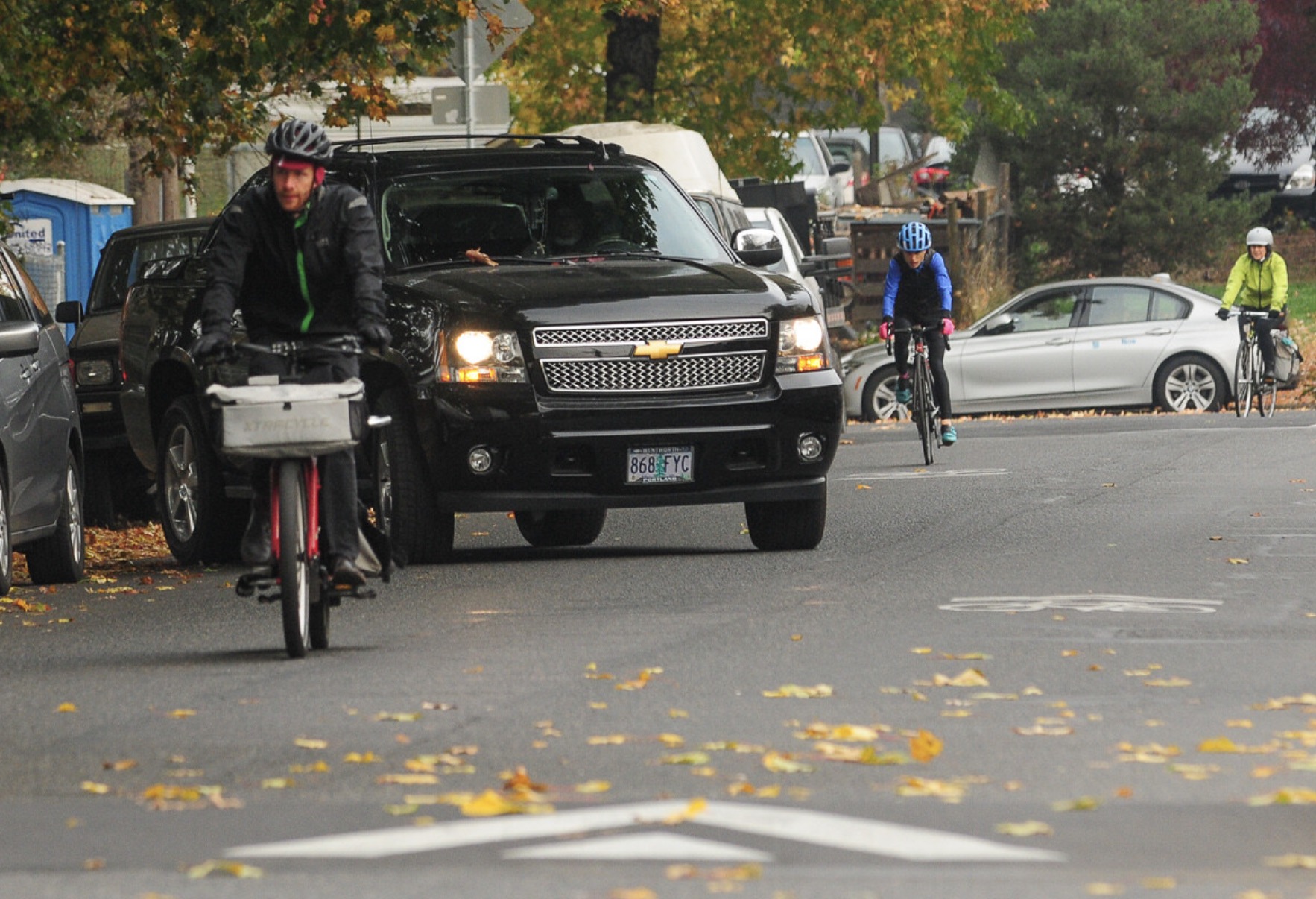
Walk N Roll Program Representative – Community Bike Shop Educator & Mechanic
Intercity Transit’s Walk N Roll program partners with schools and community organizations to offer activities that educate and encourage youth to walk, bike, roll, and take the bus for transportation. The Walk N Roll program strives to create a healthier, safer, and more active community. We are currently recruiting a Walk N Roll Program Representative to oversee the operations of the Walk N Roll educational bike shop, provide bike mechanic education and oversee the repair and maintenance of bicycles that support Walk N Roll’s bike education programs.
If you have:
Skills in bicycle mechanics including the ability to lead and educate others.
The ability to create a welcoming space that fosters community.
Proven ability to manage completing priorities effectively and work independently.
High level of personal accountability for the quality, safety, and impact of your work
Proven ability to work in a collaborative environment and complete projects within a team.
Then this position is for you!
Intercity Transit is looking for a Walk N Roll Program Representative to oversee all operations related to the Walk N Roll educational bike shop. They will be responsible for the repair and maintenance of donated bicycles while coordinating and implementing bicycle mechanics education, programs, classes, and activities. This is a great opportunity to work with K-12 students, adult community members, school staff, parents, volunteers, and community partners. The Walk N Roll Program Representative will also serve as Intercity Transit’s Employee Transportation Coordinator overseeing the agencies Commute Trip Reduction program.
It’s an exciting time to join IT!
Build a career you enjoy, in an agency that is a nationally recognized urban transit system with diverse services and strong community support. Intercity Transit provides fixed route transit, ADA paratransit and vanpool services in Washington state’s capitol city of Olympia in addition to the neighboring communities of Lacey, Tumwater, and Yelm. This is an exciting time with great opportunities, and we invite you to join us in our mission to provide and promote transportation choices that support an accessible, sustainable, livable, healthy and prosperous community.
As a Walk N Roll Program Representative, you will:
Oversee the day-to-day operations of the Walk N Roll educational bike shop. Responsible for creating and maintaining a safe, organized, and inclusive educational space. Monitor inventory and order bicycle parts and tools.
Implement and maintain systems for the retrieval, storage, and repair of donated and fleet bikes. Ensure program bikes are properly repaired and in safe riding condition.
Coordinate, promote and implement bike shop activities, events, and classes.
Handle the waste stream for unsalvageable bikes and bike parts.
Source, recruit, train, and track bike shop volunteers.
Develop curriculum and provide bike mechanic and maintenance instruction and training to youth and adults.
Provide technical oversight for bicycle repair to volunteers, community members and youth.
Support bike, pedestrian, and transit education, activities, outreach, events, and classes.
Collaborate with other staff and volunteers.
Serve as Intercity Transit’s Employee Transportation Coordinator overseeing the Commute Trip Reduction Program (CTR). Facilitate committee meetings; prepare agendas, minutes, and supporting documents. Track data, create reports, attend networking sessions, and send communications to Intercity Transit employees about the CTR program.
Support other marketing and communication activities. Provides administrative support to the WNR program.
Are you the one we are looking for?
Associates degree or a specialized certificate training in bicycle mechanics, bicycle riding safety, education, or other related field AND three (3) years of experience working in bicycle repair; or an equivalent combination of education and experience sufficient to successfully perform the essential duties of the job.
You must have a Washington State driver’s license within the first 30 days of employment and be willing to submit to a criminal background investigation, the results of which must meet the agency’s hiring criteria.
Knowledge of bicycle repair; safe cycling practices and principles; adult and youth education; volunteer recruitment and coordination; collaboration and team-building practices; computers, basic desktop publishing, database and/or spreadsheet design; modern office procedures, methods, and equipment.
Skilled in bicycle mechanics including the ability to ensure that bicycle repairs are done to an excellent standard of safety and functionality; safe, legal, and competent cycling skills; public speaking and presenting; working with the public, youth, educators, and a wide-range of stakeholders; safely operating program van and trailer; using computers and related software applications; prioritizing work and performing multiple tasks; establishing and abiding by project timelines; compiling and distributing data, materials and information; communication, interpersonal skills as applied to interactions with K-12 youth, volunteers, coworkers, supervisor, and the public to exchange or convey information and to receive work direction.
What’s in it for you?
Receive a competitive salary of $29.21 – $39.47 an hour in addition to annual general wage/cost of living adjustments typically received in January and step increases in July (if not at top of salary range).
Comprehensive medical, dental, and vision coverage for employees and eligible dependents.
PERS Retirement Plans (through Washington State Public Employee’s Retirement System) along with voluntary deferred compensation plans (401k and 457) with employer match up to 6.2%.
12 to 25 vacation days per year depending upon date of eligibility and length of service.
12 days of sick leave per year depending upon date of eligibility.
Up to 48 hours of floating holiday time.
$200 incentive for each COVID-19 booster vaccination dose.
Intercity Transit is an equal employment opportunity employer and strives to provide a culturally diverse workforce. We also take pride in being a drug free workplace. Note that Intercity Transit is subject to requirements of the Federal Drug-Free Workplace Act and CFR Part 40 & Part 655, which prohibit the use of marijuana at any time while employed by Intercity Transit.
How to Apply
Ready to jump on board?
We would love for you to apply! Please submit a complete electronic application online at www.intercitytransit.com/employment. Your application package must include a letter of interest and resume that clearly explains how you meet the qualifications of the position. Be advised, we will not consider incomplete applications. Intercity Transit’s preferred method of communication is via email, so an accurate and active email address is essential.
Completed applications must be received by 5:00pm on Tuesday, September 5, 2023.
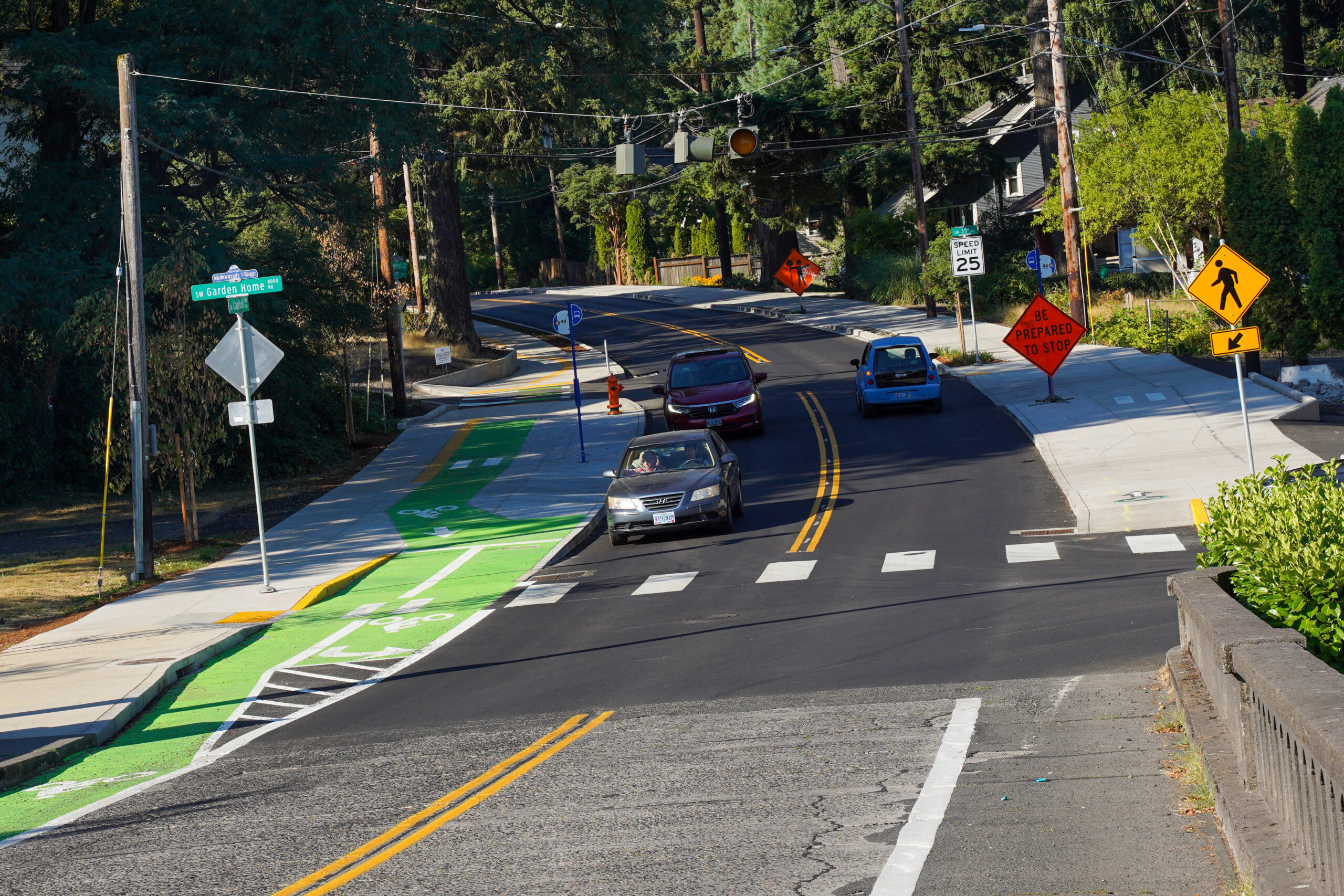
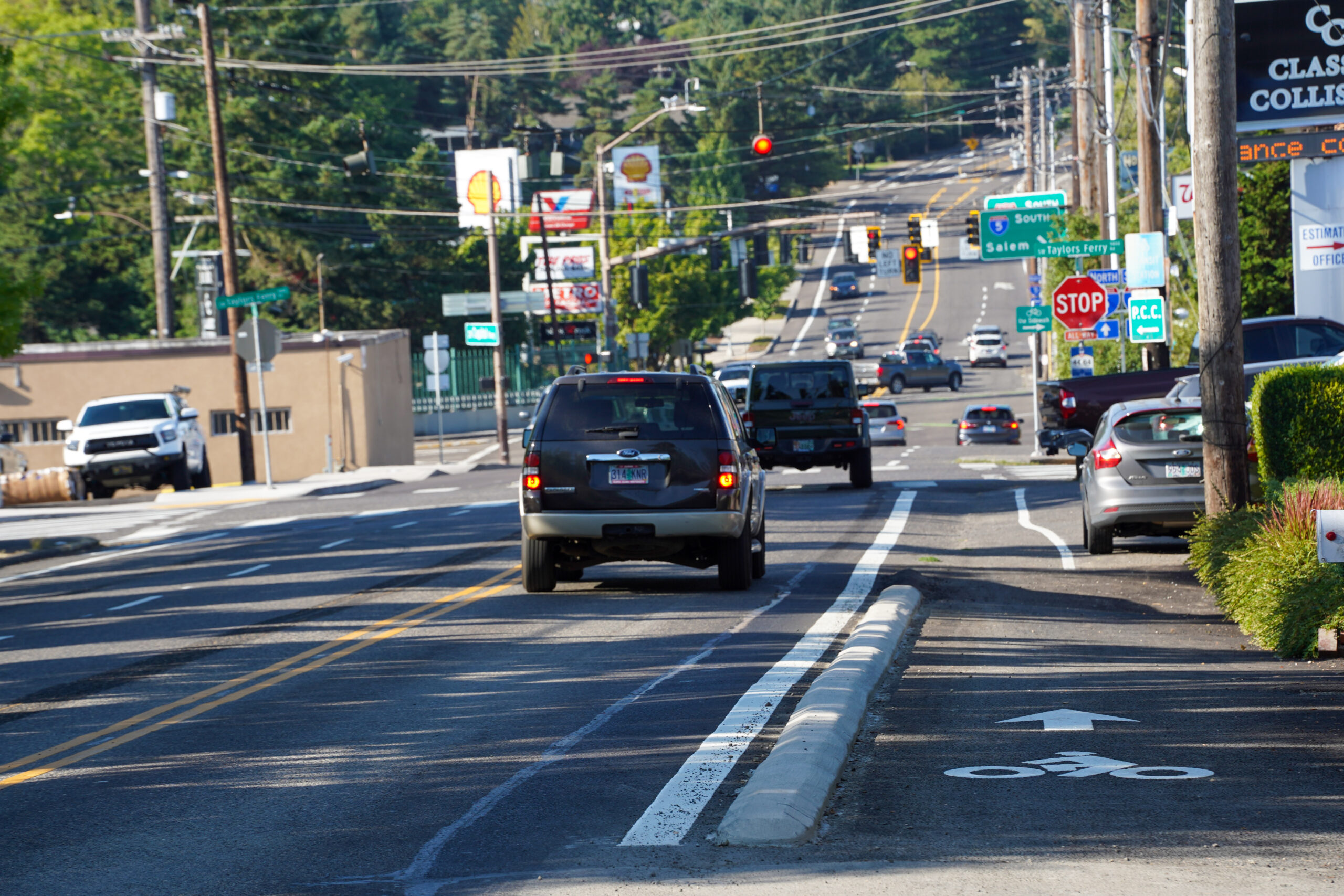
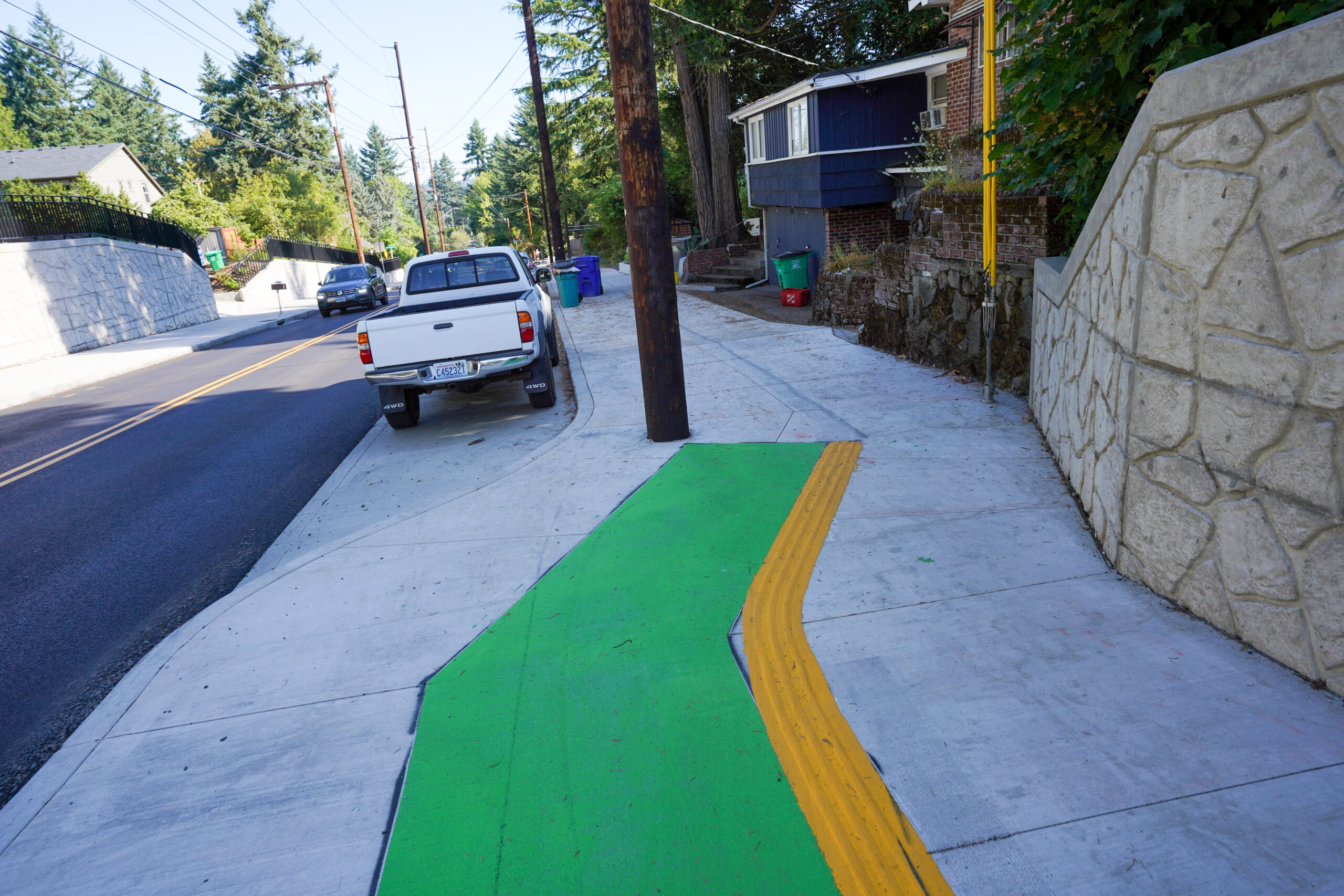
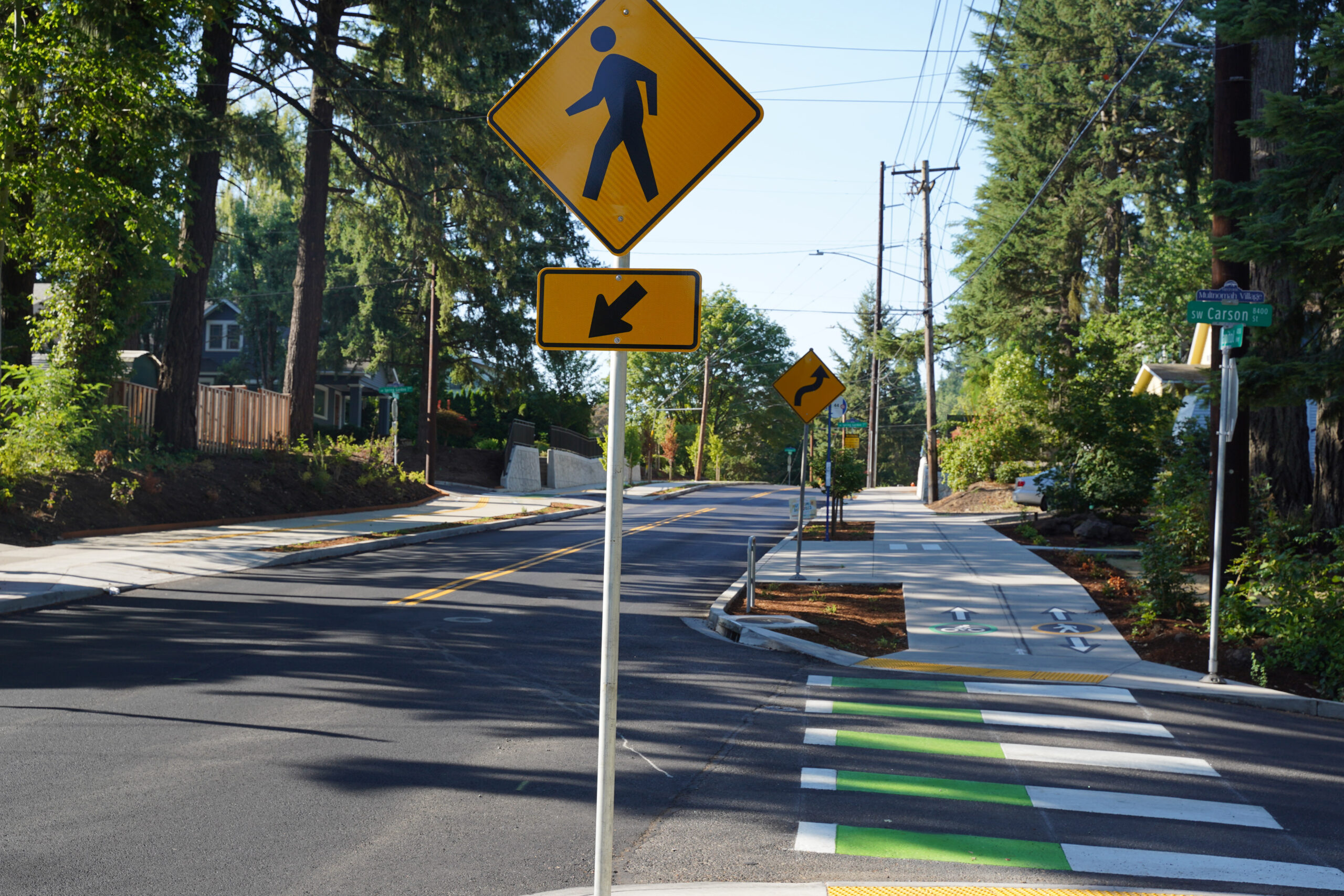
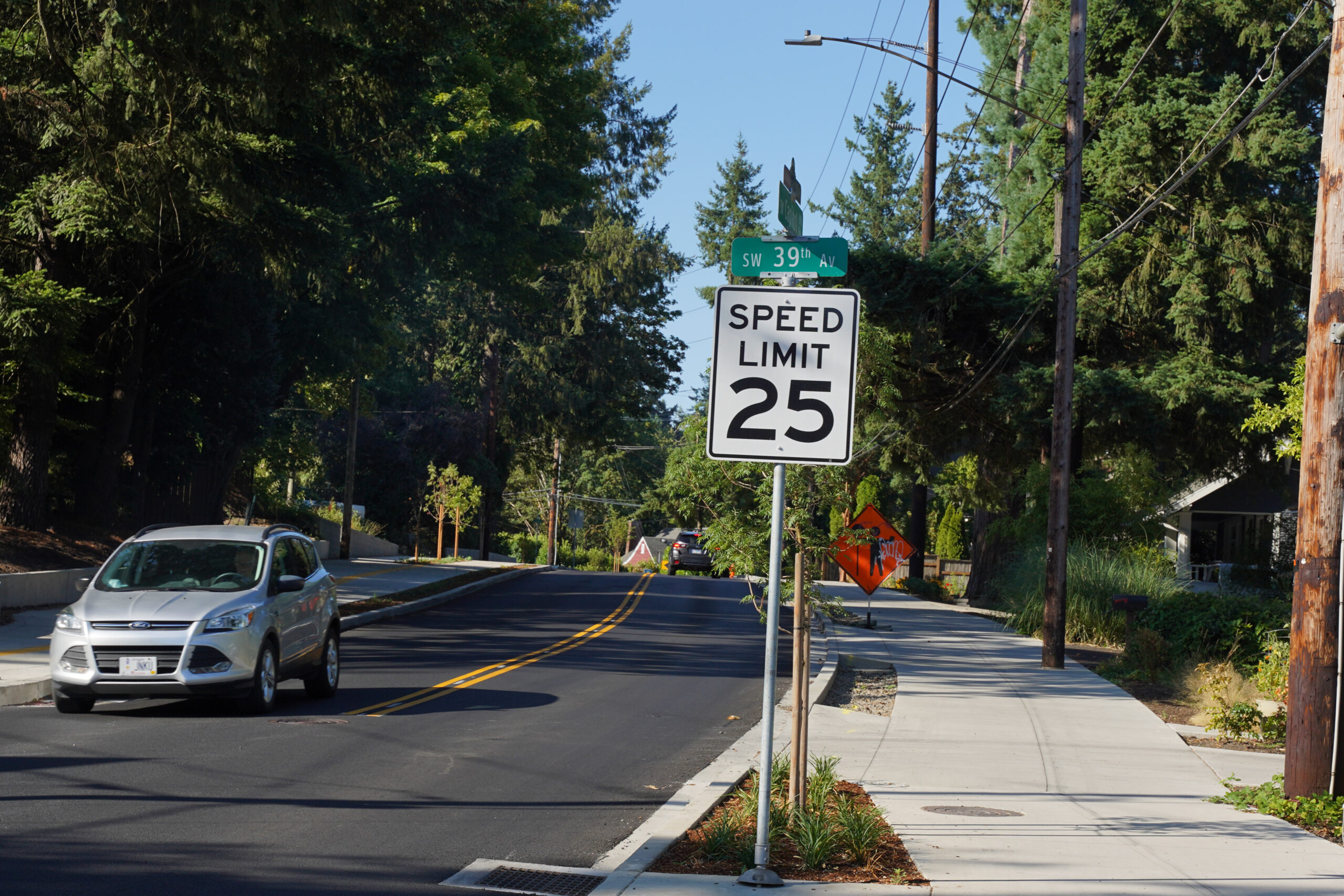
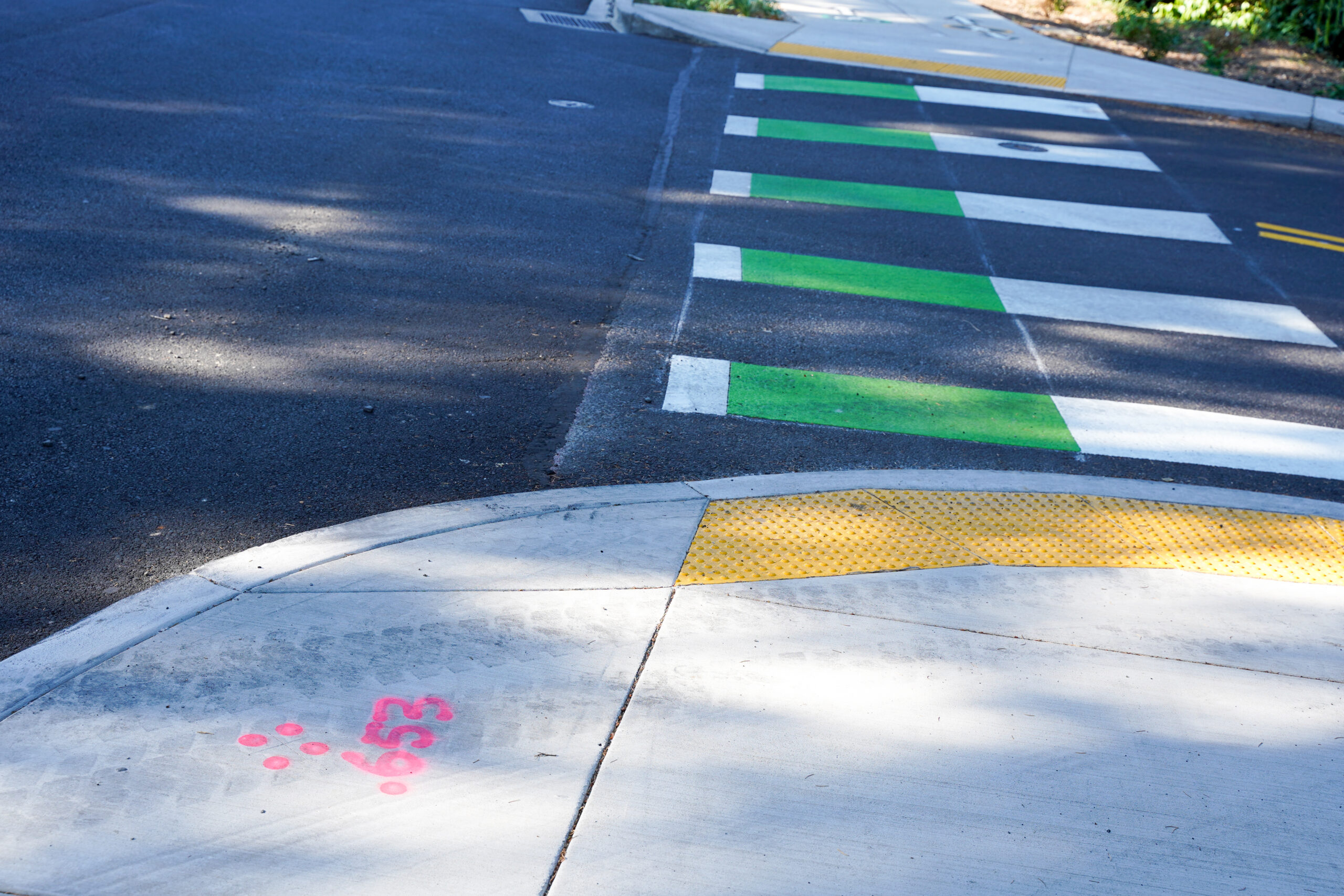
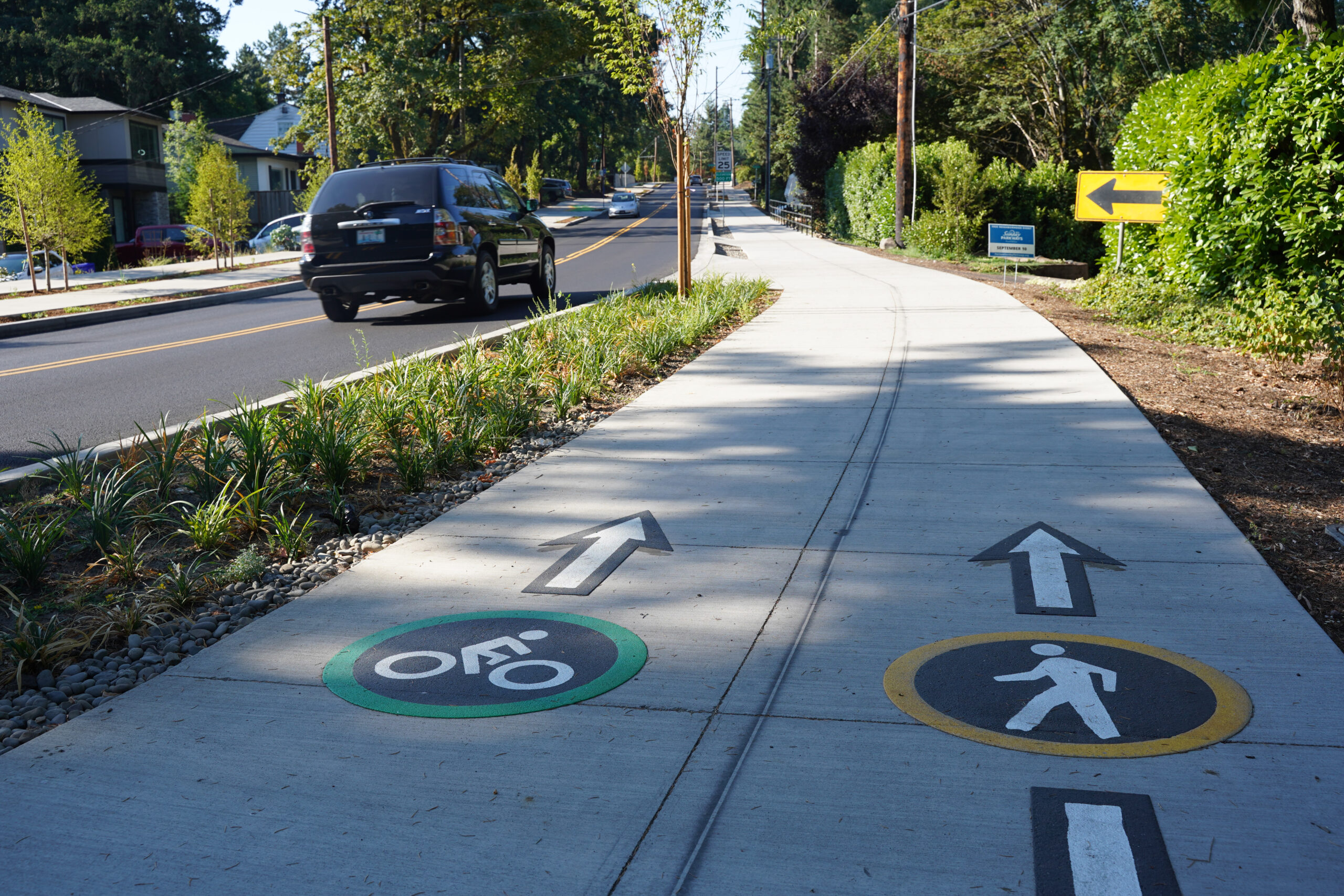
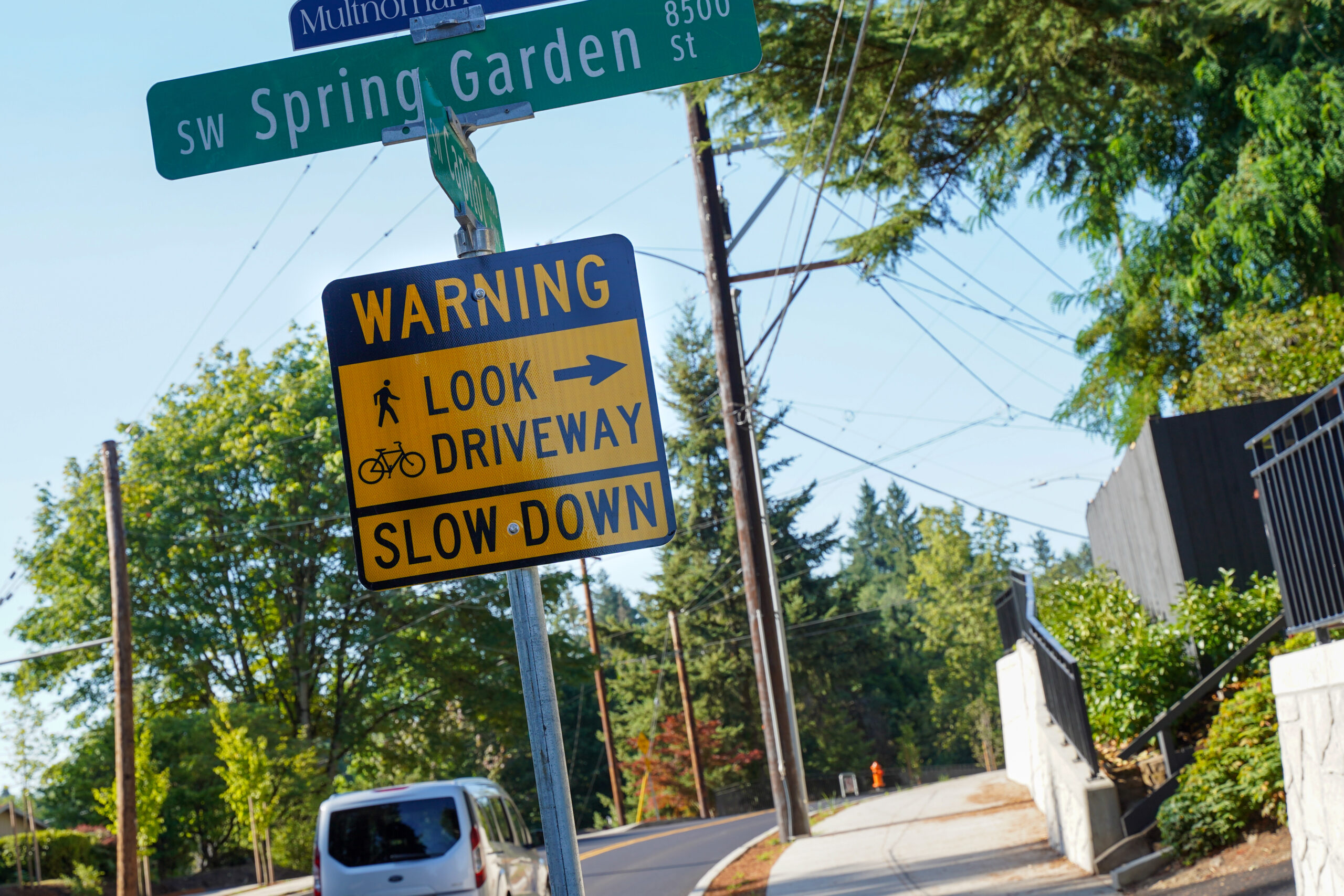
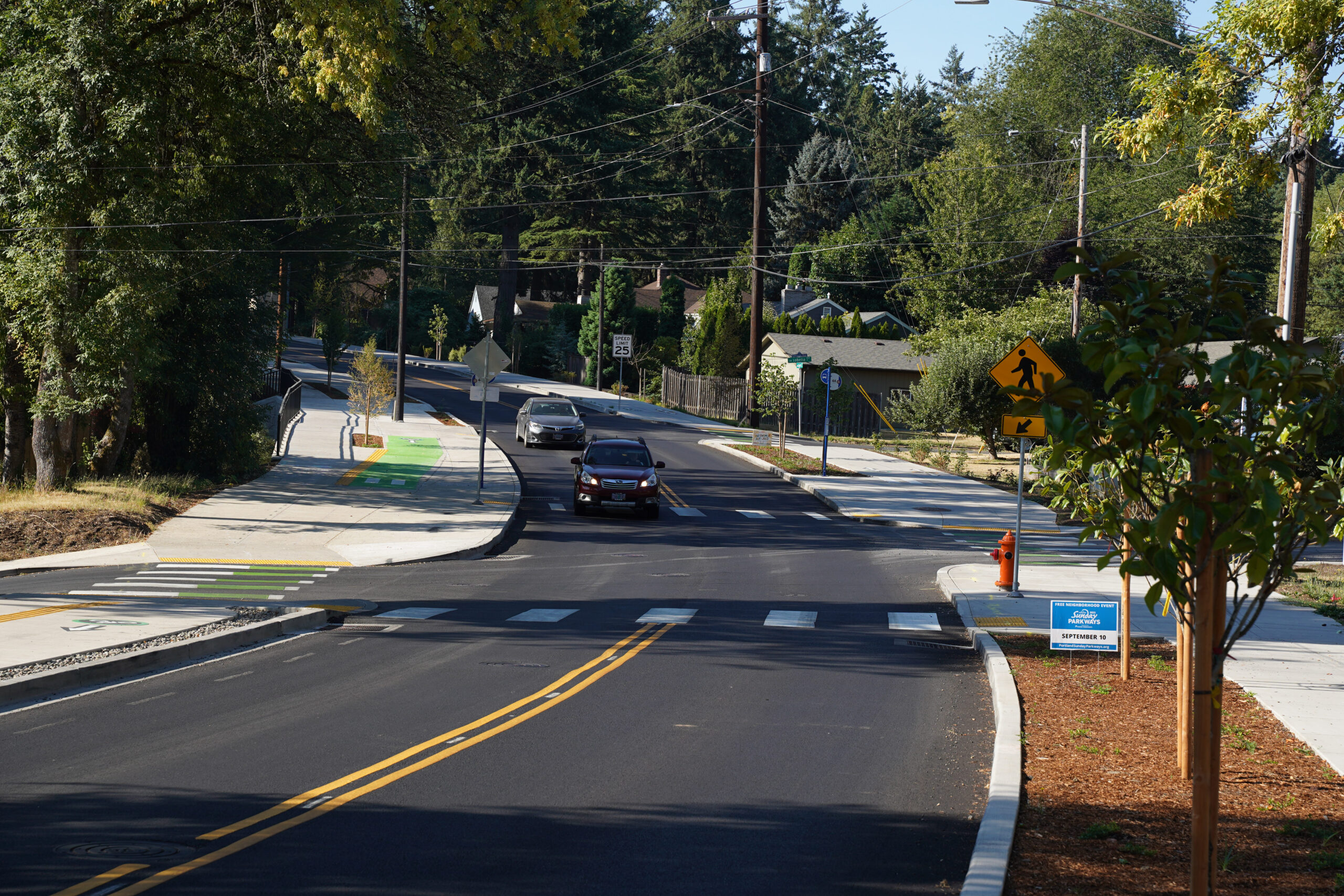
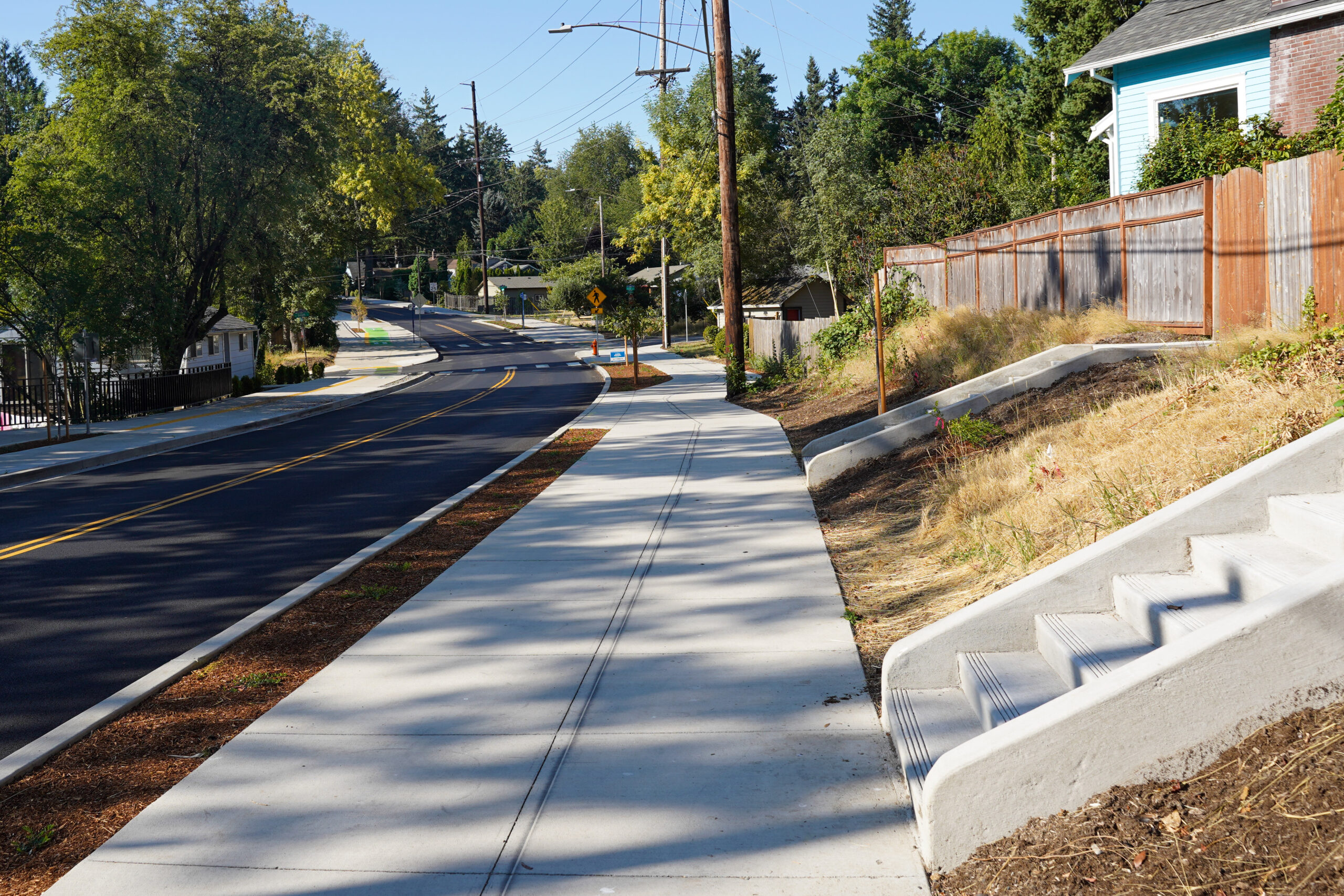
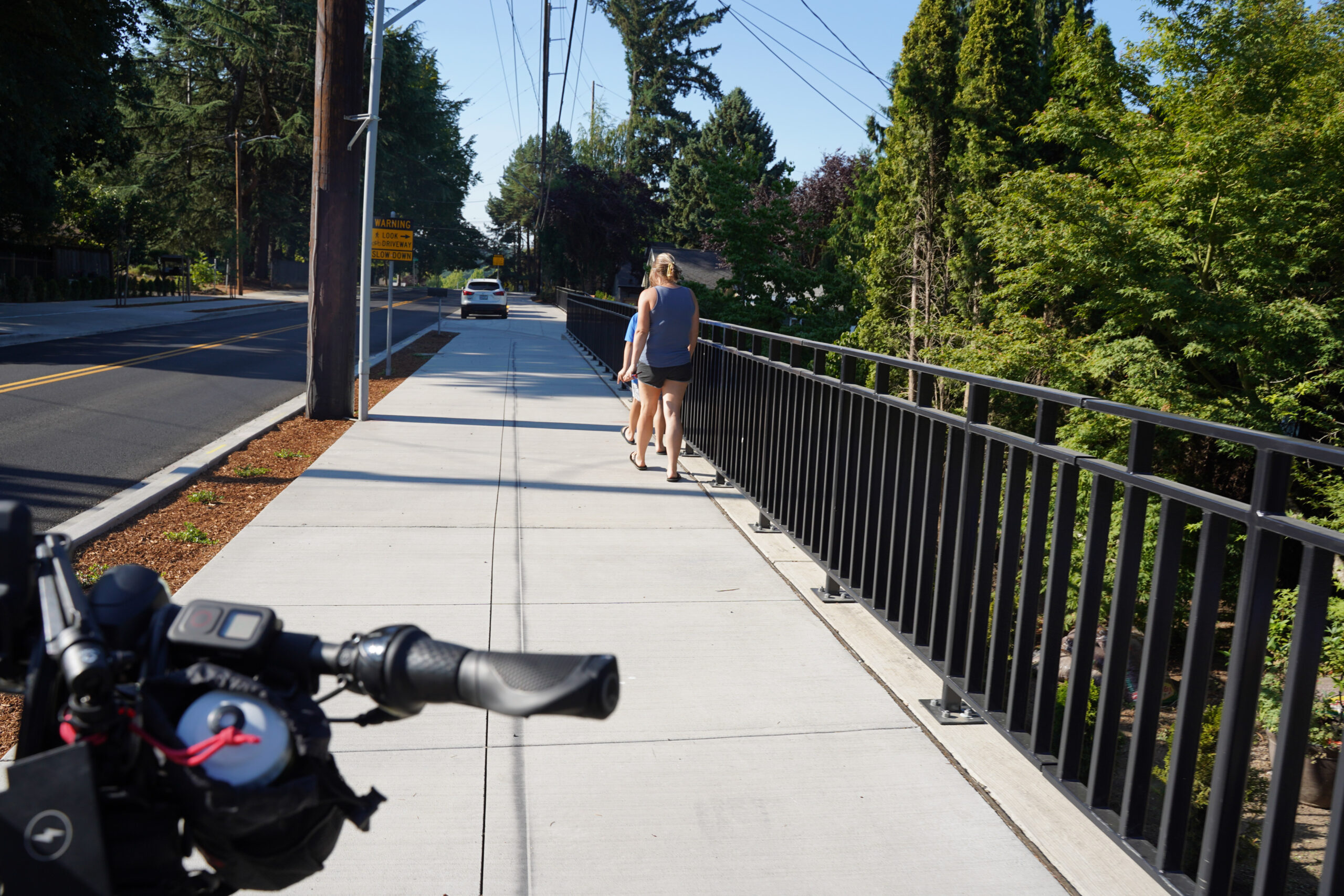
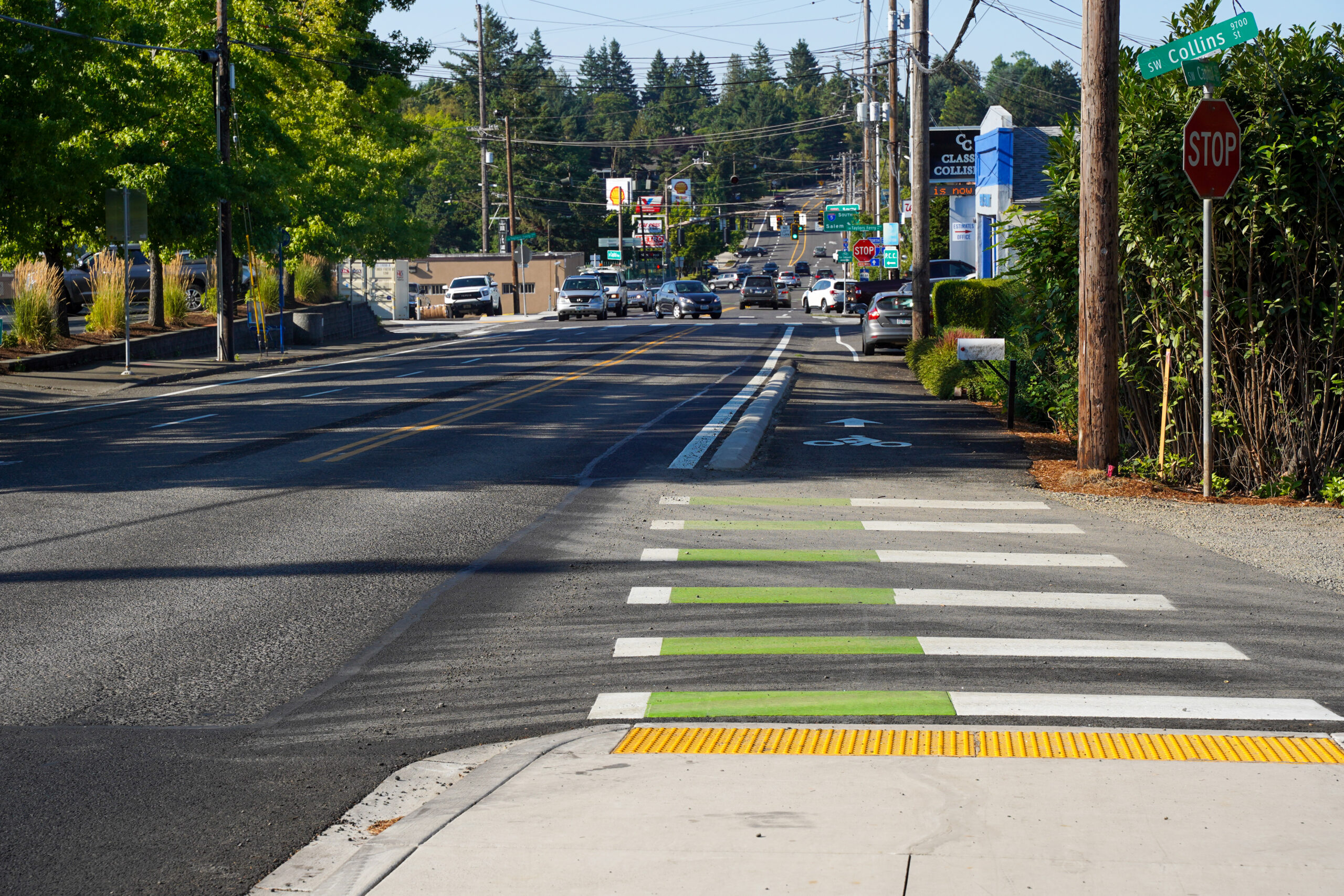
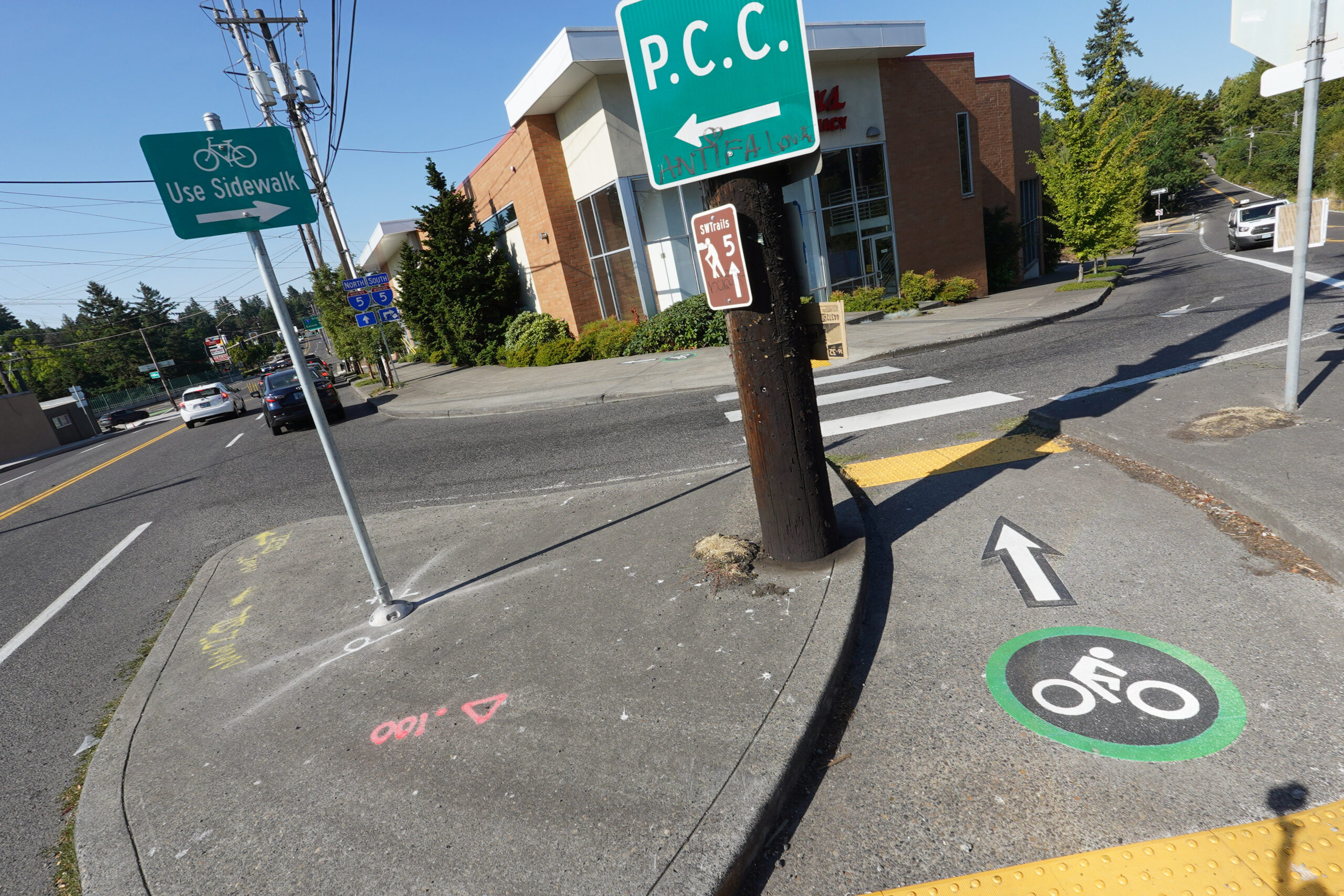
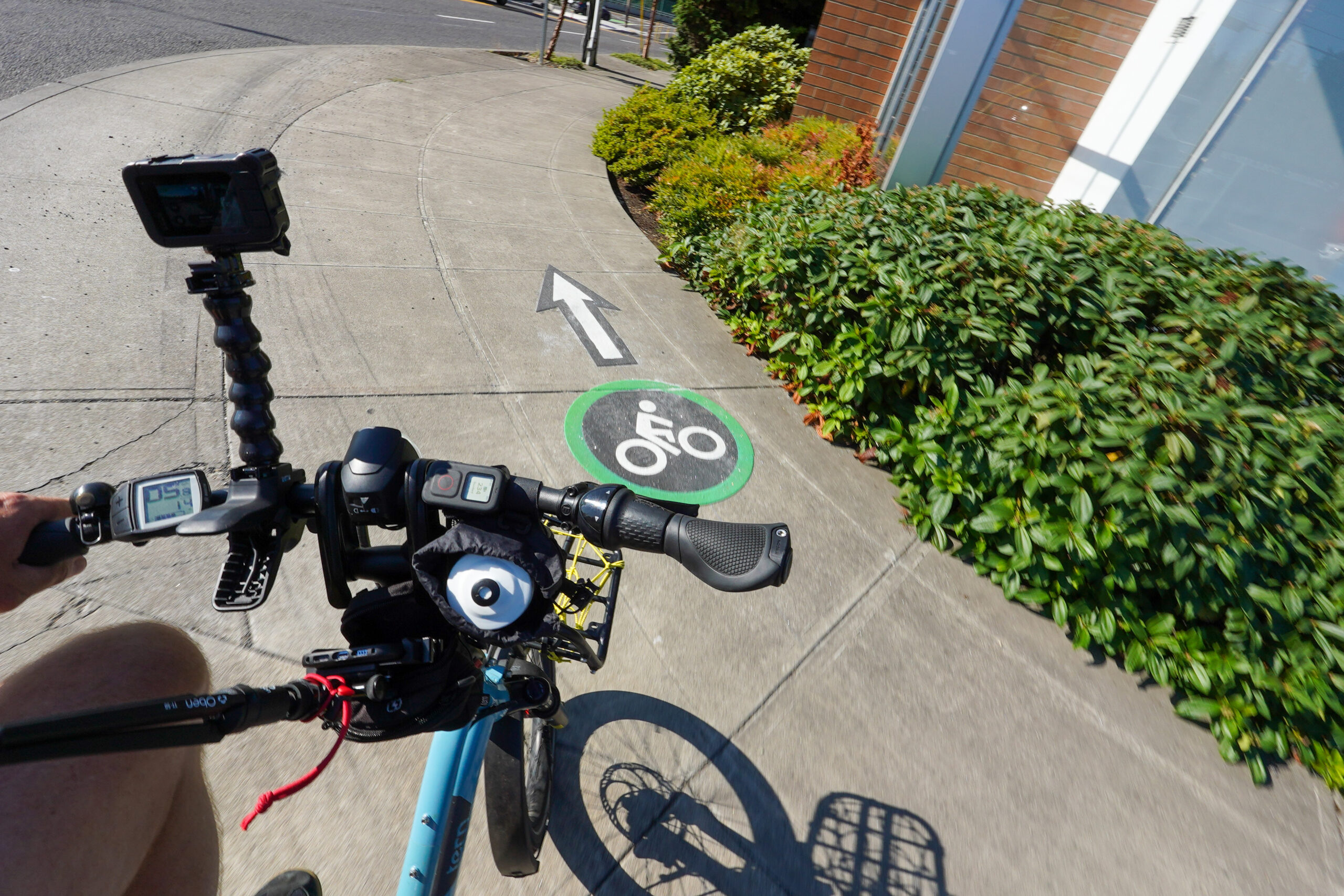
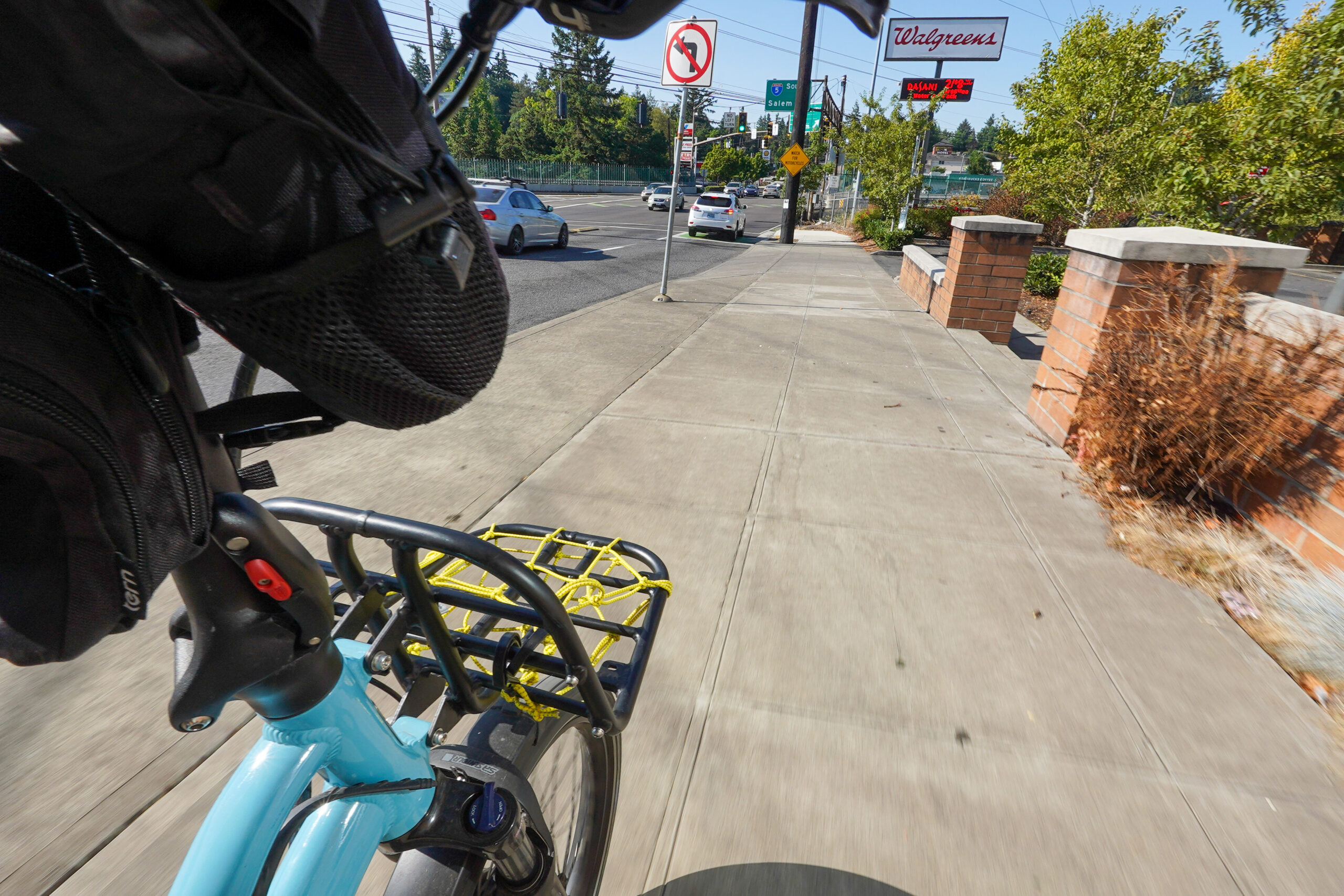
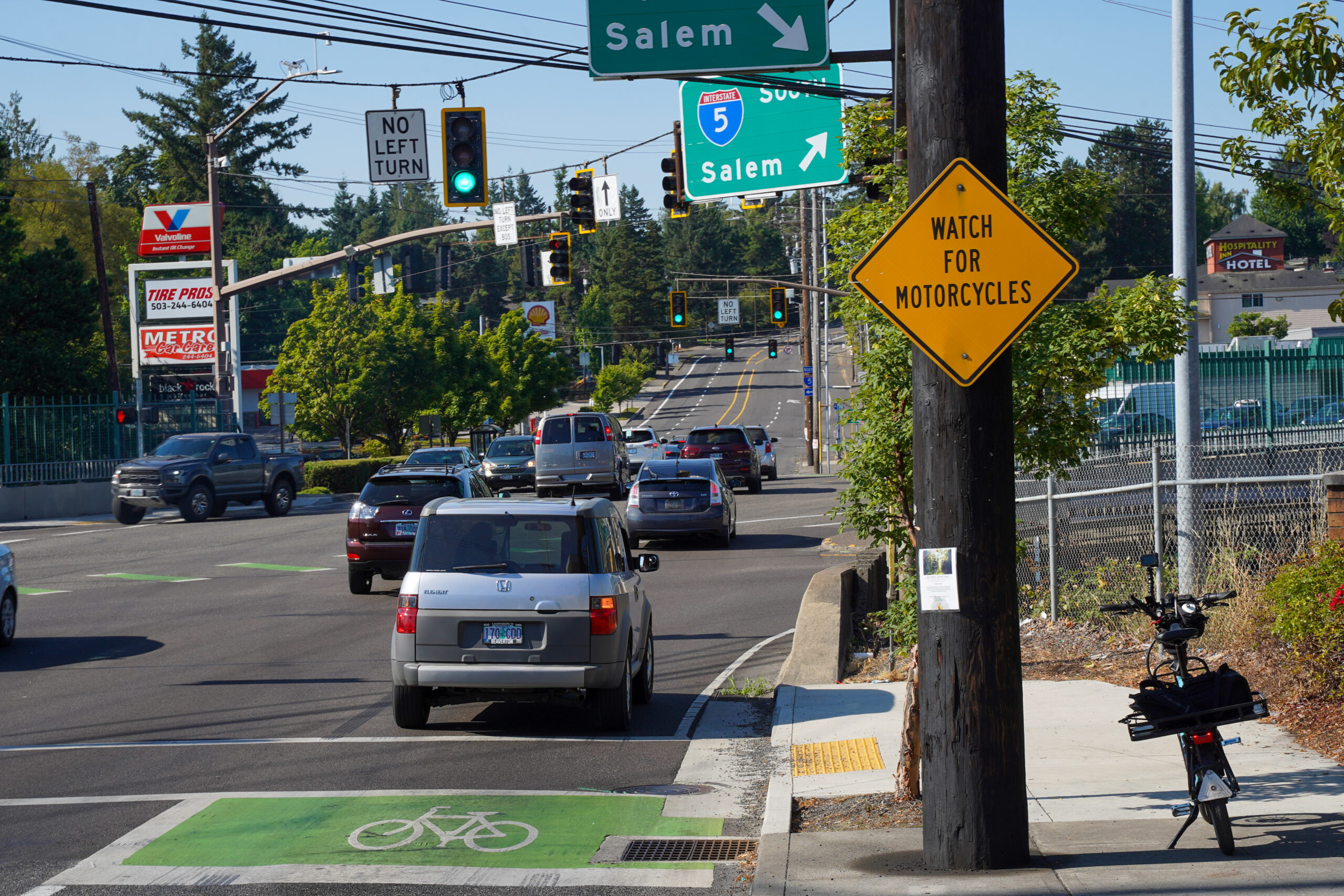
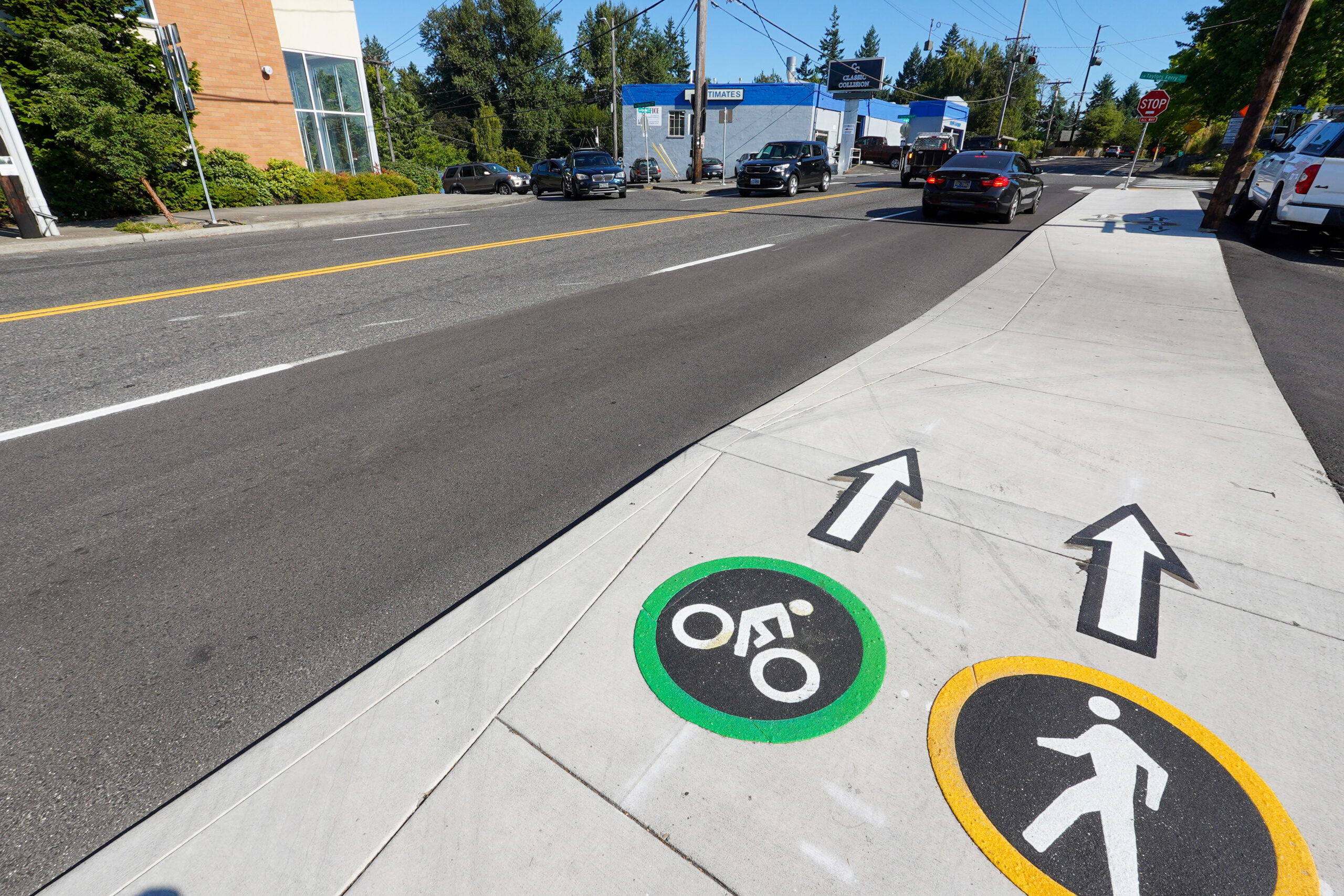
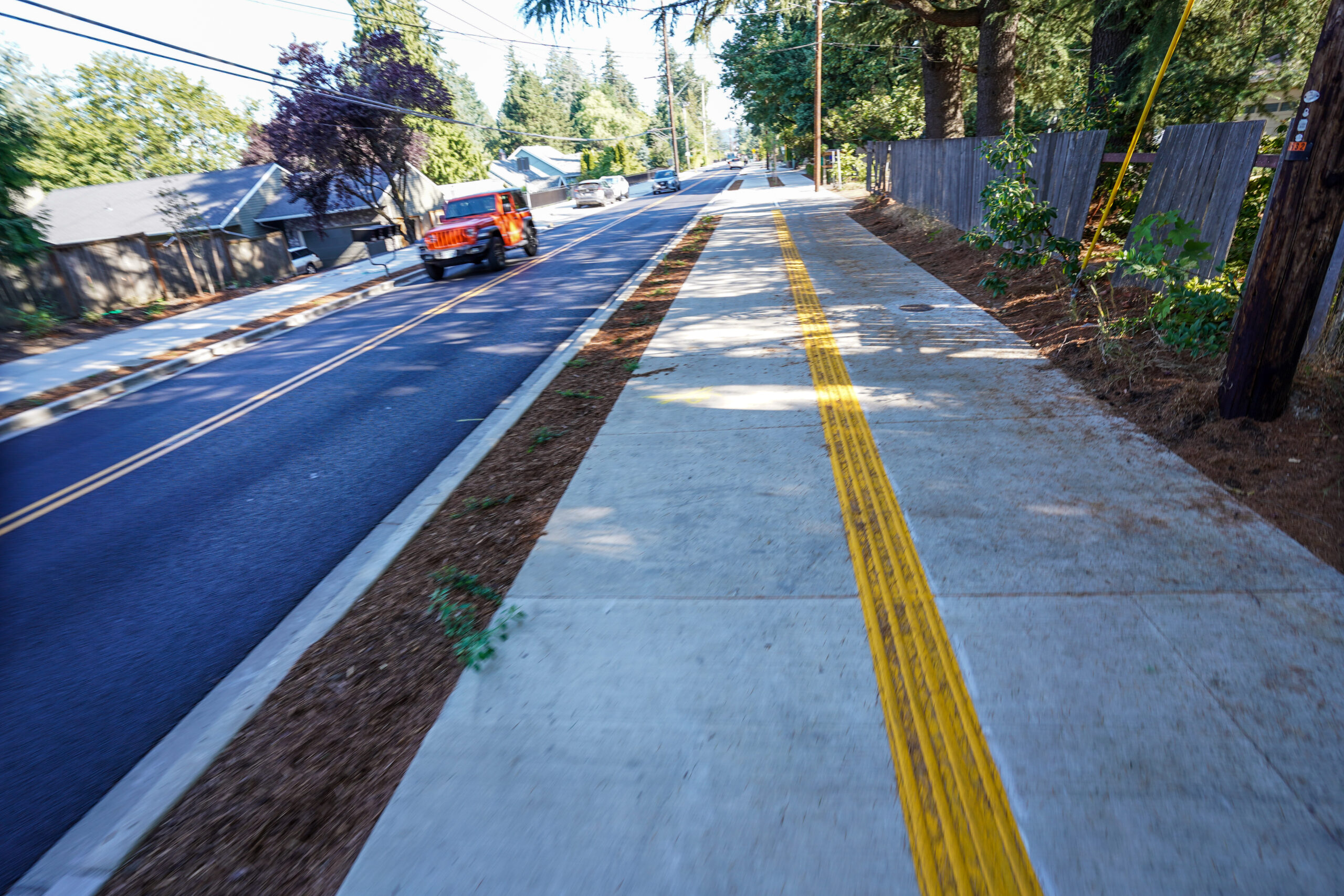
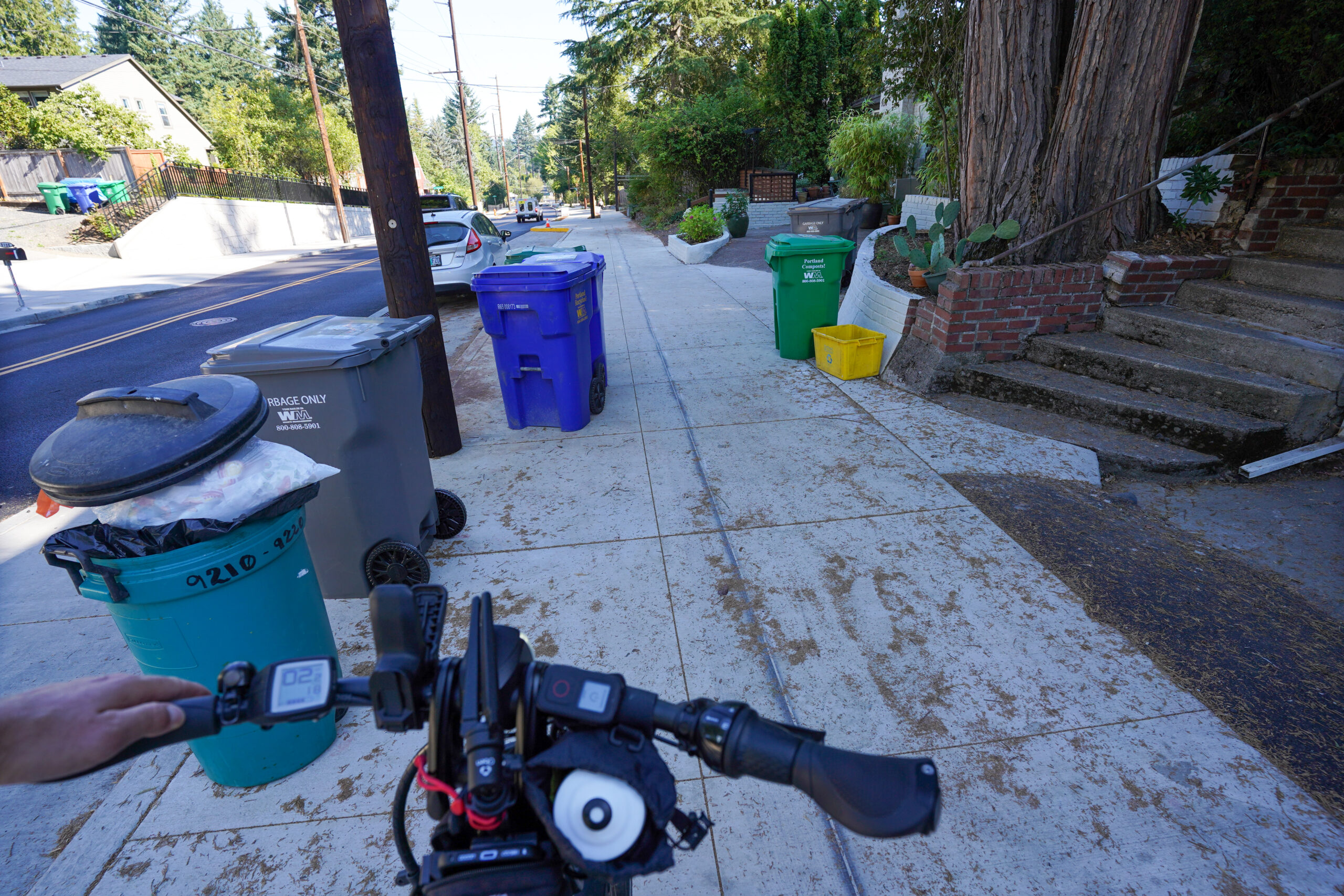
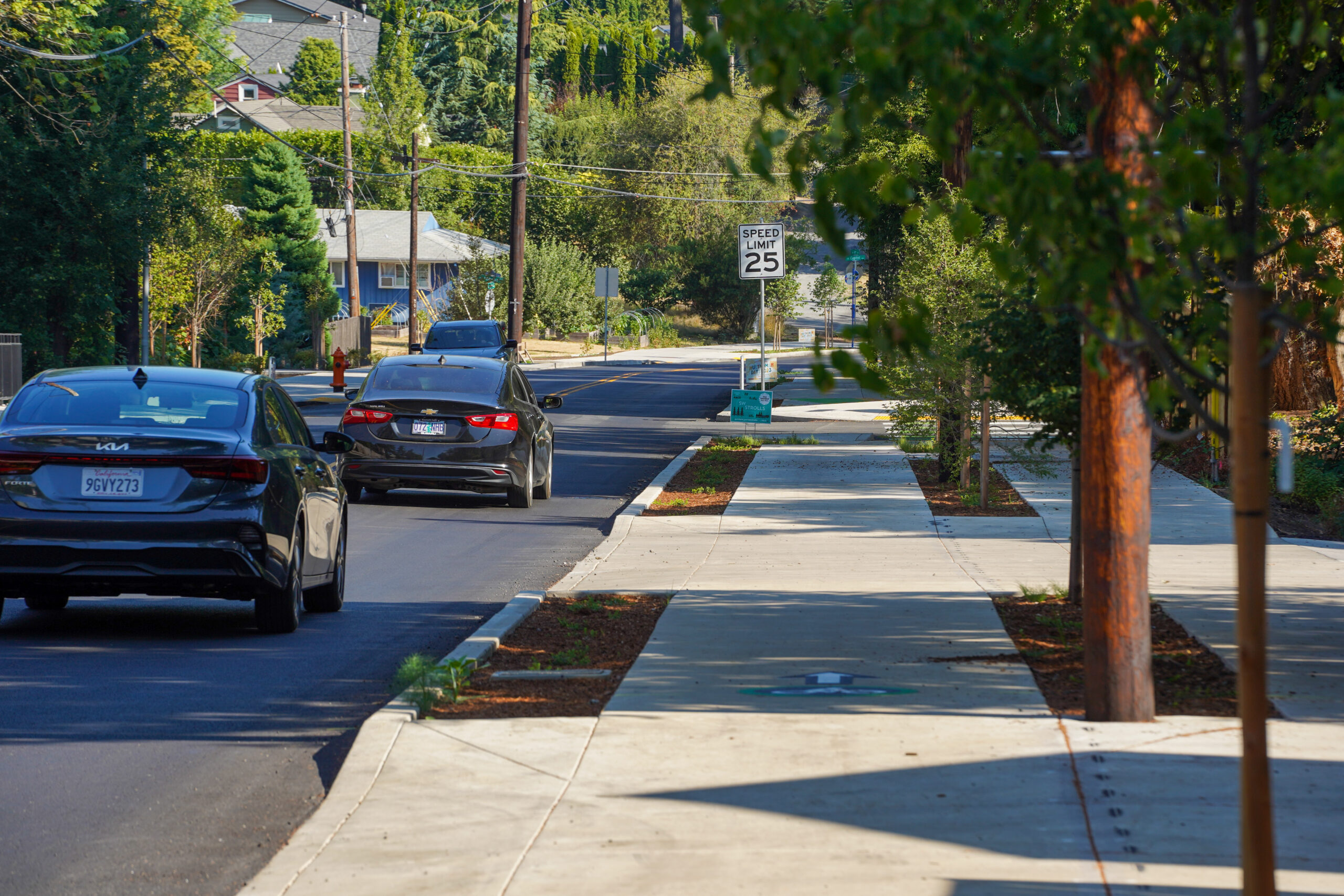
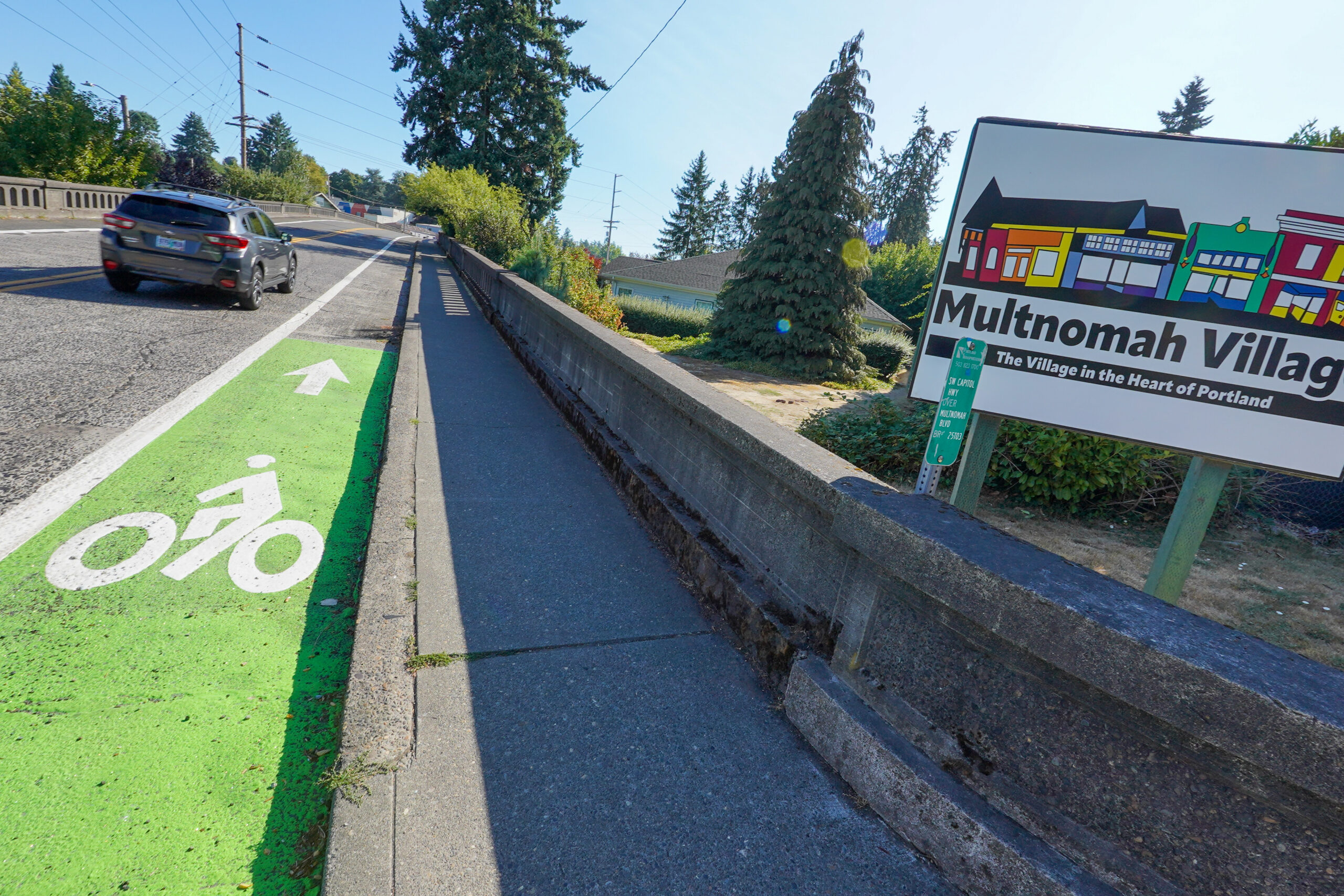
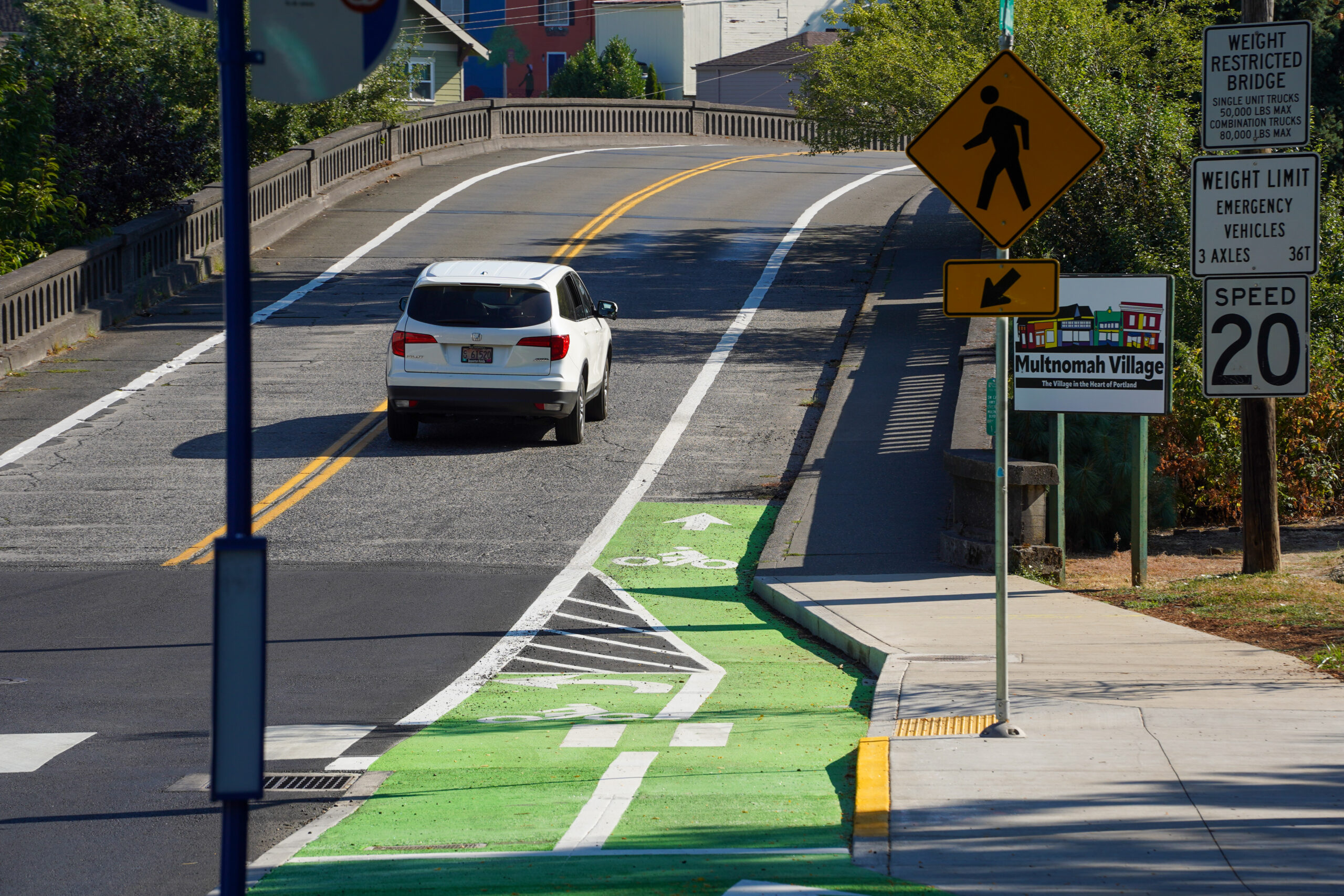
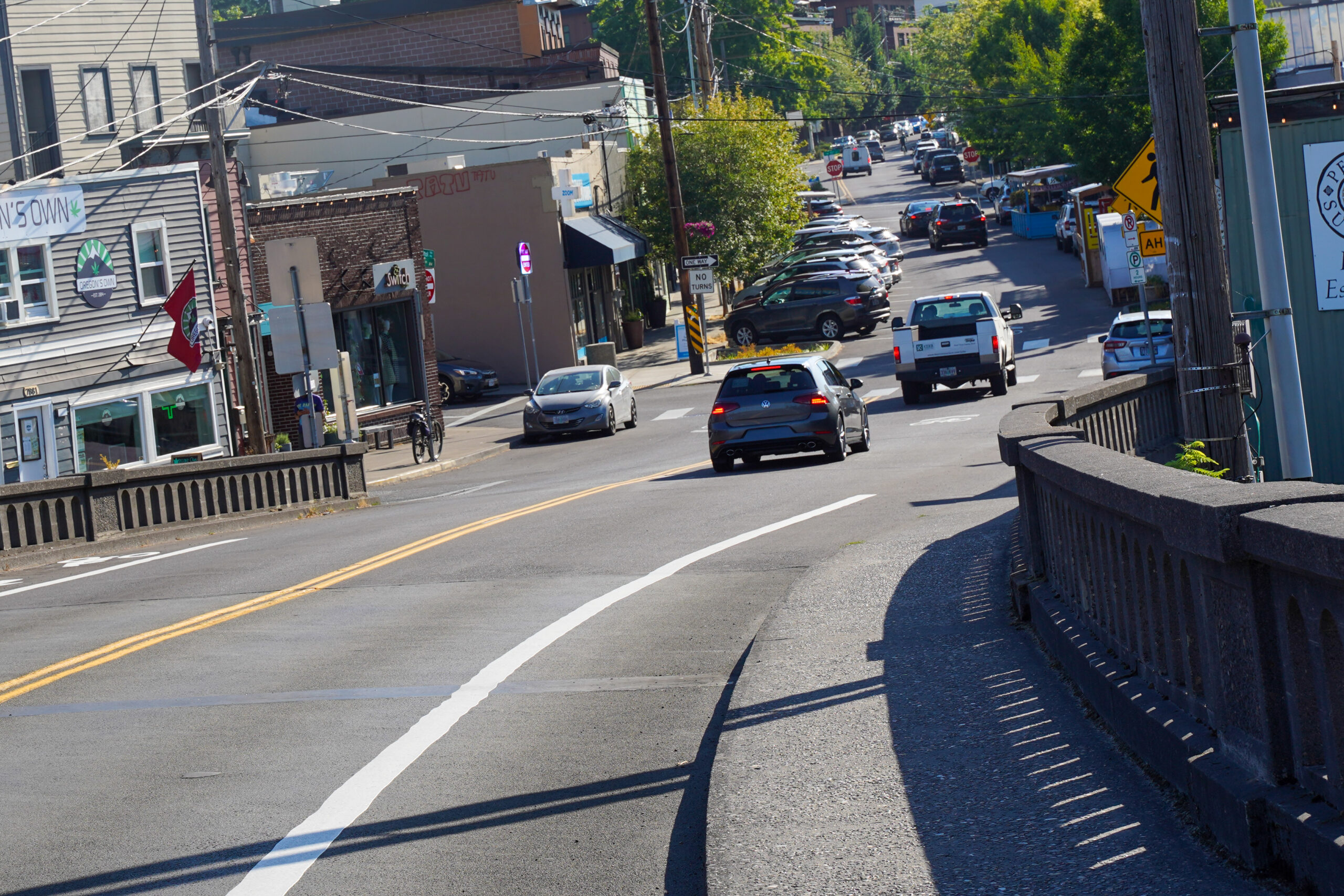
Just south of SW Freeman.Looking south at SW Garden Home.Looking south toward SW Barbur Blvd.Awkward spot just north of SW Alice.
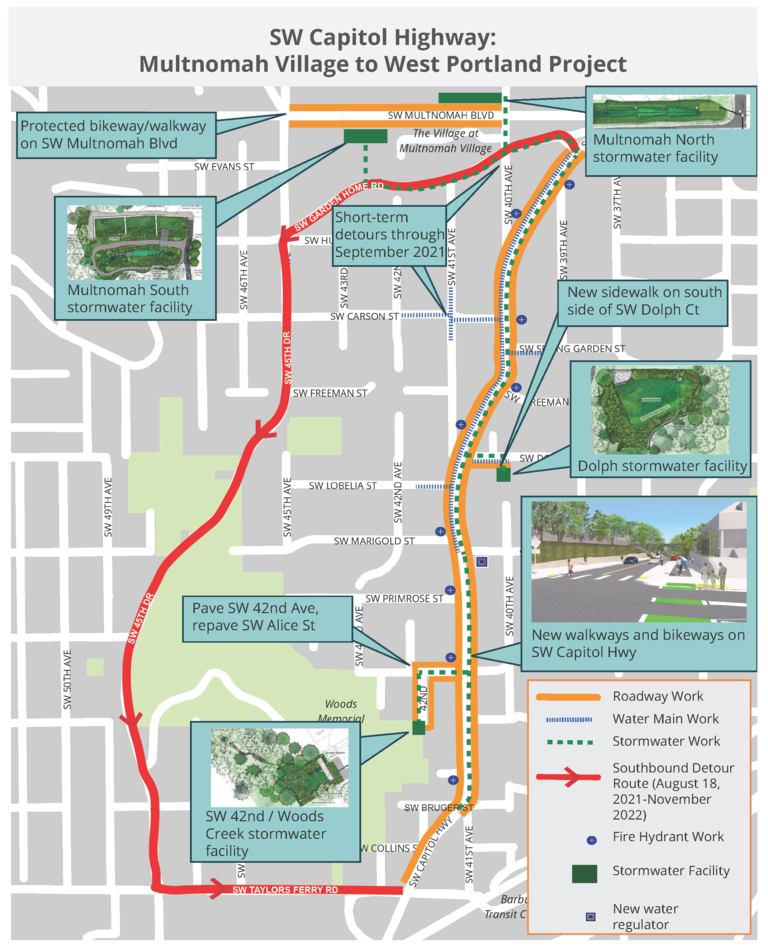
PBOT graphic
Back in July, the City of Portland finally cut the ribbon on their $30 million makeover of Southwest Capitol Highway. This morning I finally got out there to take a closer look.
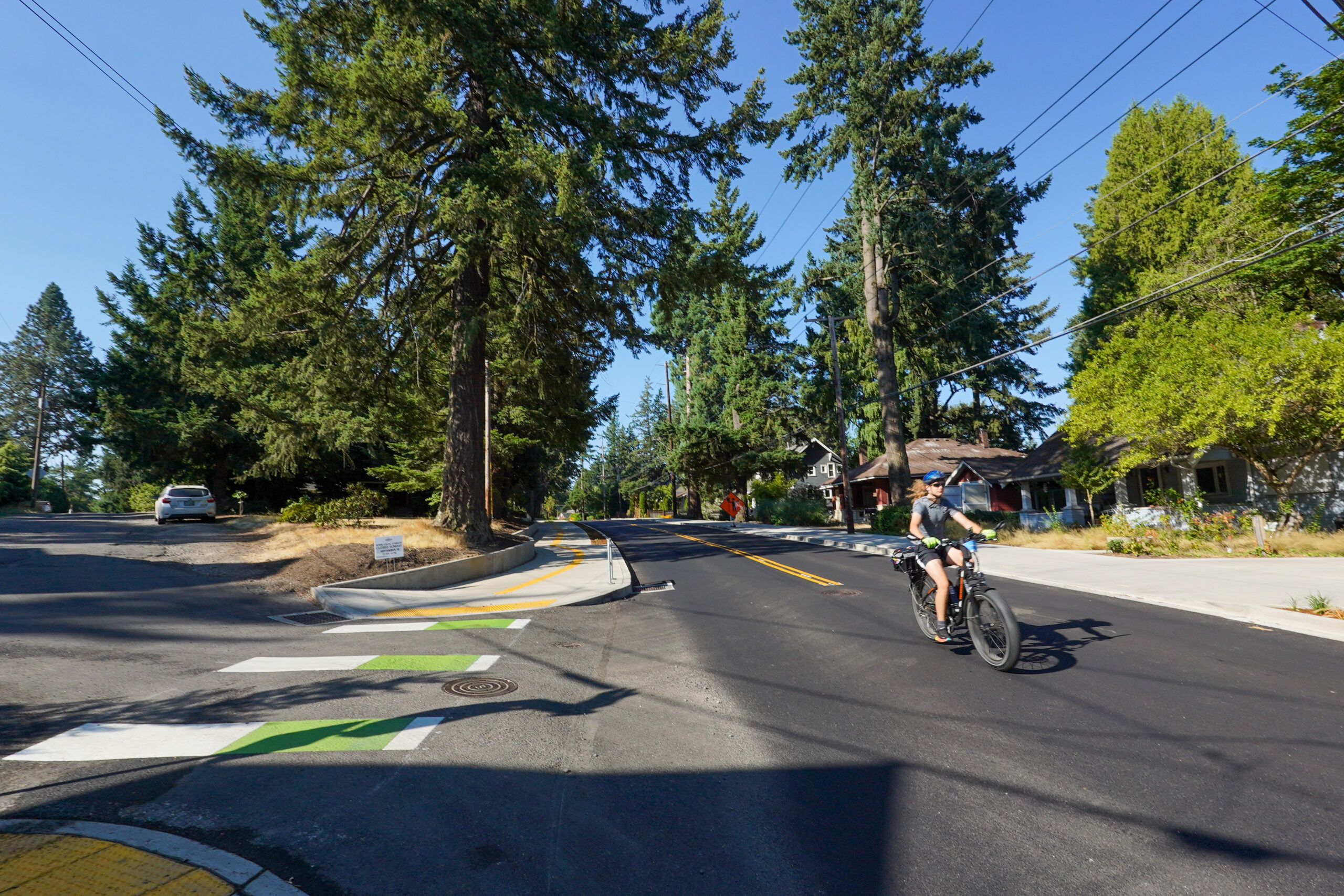
The project stretches about one mile from SW Garden Home Road (near Multnomah Village) to SW Taylors Ferry Rd (near I-5). And if you’re wondering why we spent $30 million on one mile of road, keep in mind that this was much more than just a transportation project. In addition to new sidewalks, bikeways, curbs, and pavement, the City also laid down 7,000 linear feet of stormwater pipe, 3,000 linear feet of water main, built three large stormwater treatment gardens and built 13 retaining walls.
Combine all that with the fact that folks have been asking for this for over 30 years, and the City had to cut into the yards of about 100 homes to gain the width for the sidewalk and bikeway — and you understand why it was such a big deal to finally get it done. And in a part of town like southwest, where it’s almost impossible to ride a bike in most areas, having a mile of protected bikeways on a major street is nothing to shake a frame pump at.
This morning I rode it a few times. Scroll down for a full photo gallery and video ride-through.
Beginning of southbound bikeway at Garden Home Rd. (Note tire marks) At SW Carson.Always gets me in the stomach when I see marks like this.Shared sidewalk is fine now, but as more people walk and bike it could get crowded. Also note sketch line for new dividing stripe yet to be installed.Not sure if these signs were in the plans or were added later.Looking south toward SW Lobelia.Only a few parking spaces along entire mile length.Note the erosion of quality bikeway: protected off-street, then protected, then paint-only, then nothing. Oh, the disrespect of being shoved onto the sidewalk.Freeway on-ramps and Walgreens drive-through: nightmare fuel.Ummm. What now?Gulp.
This is some of Portland’s best work. Besides the cross-bureau collaboration it took to make this happen, the street itself looks and feels really good. At quick glance, the non-driving space is about as wide as the driving space. That’s a great sign that people will feel comfortable walking and biking.
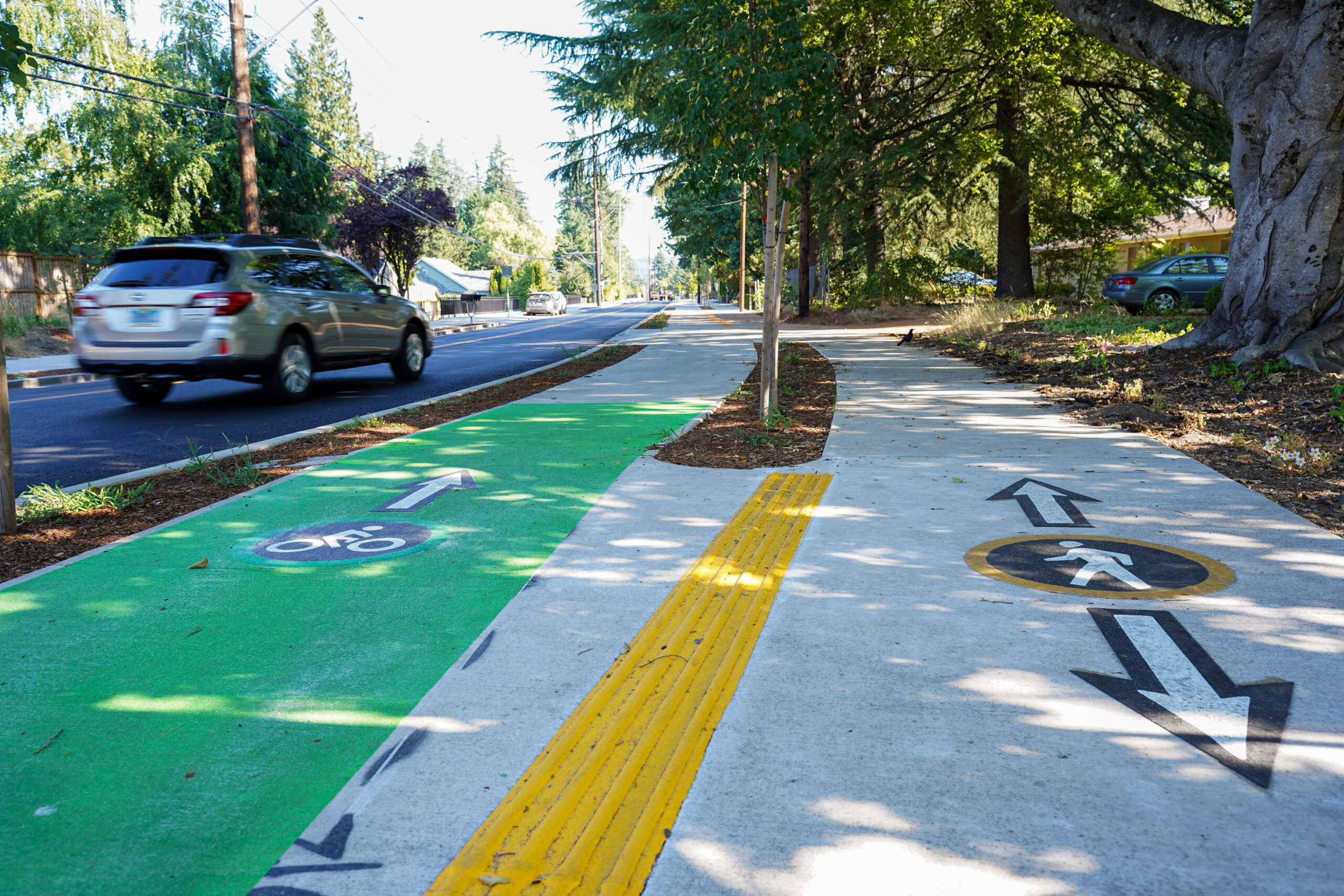
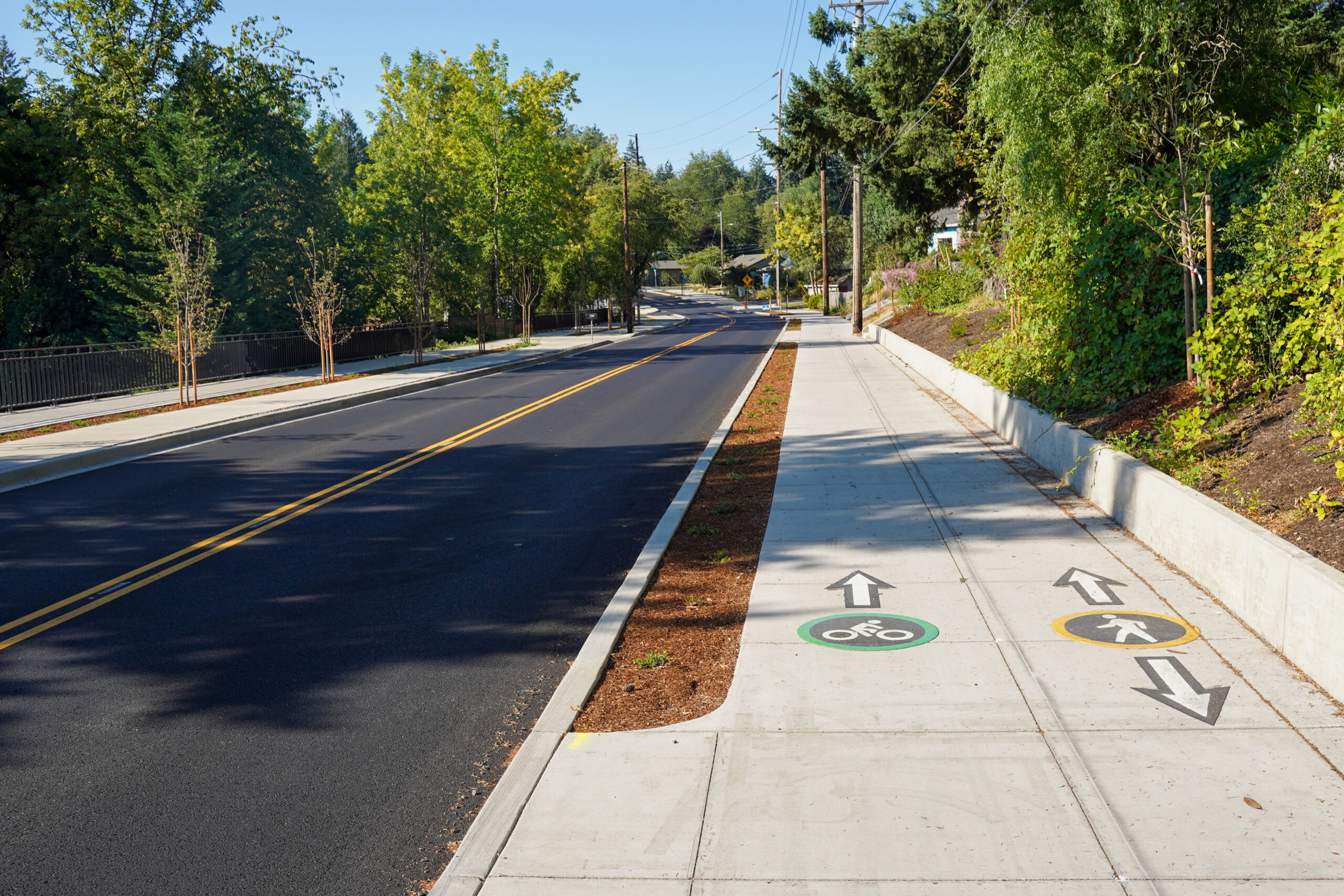
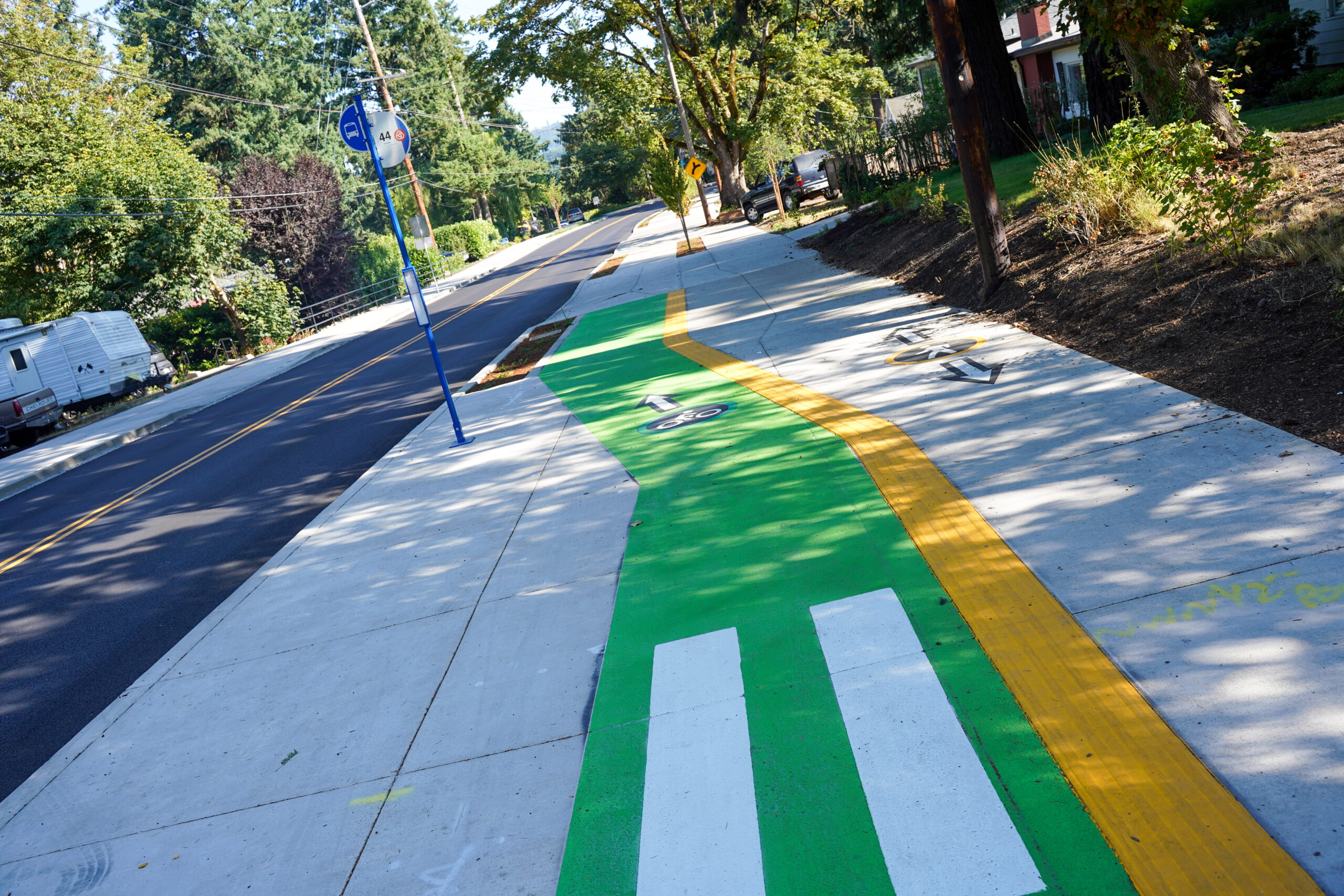
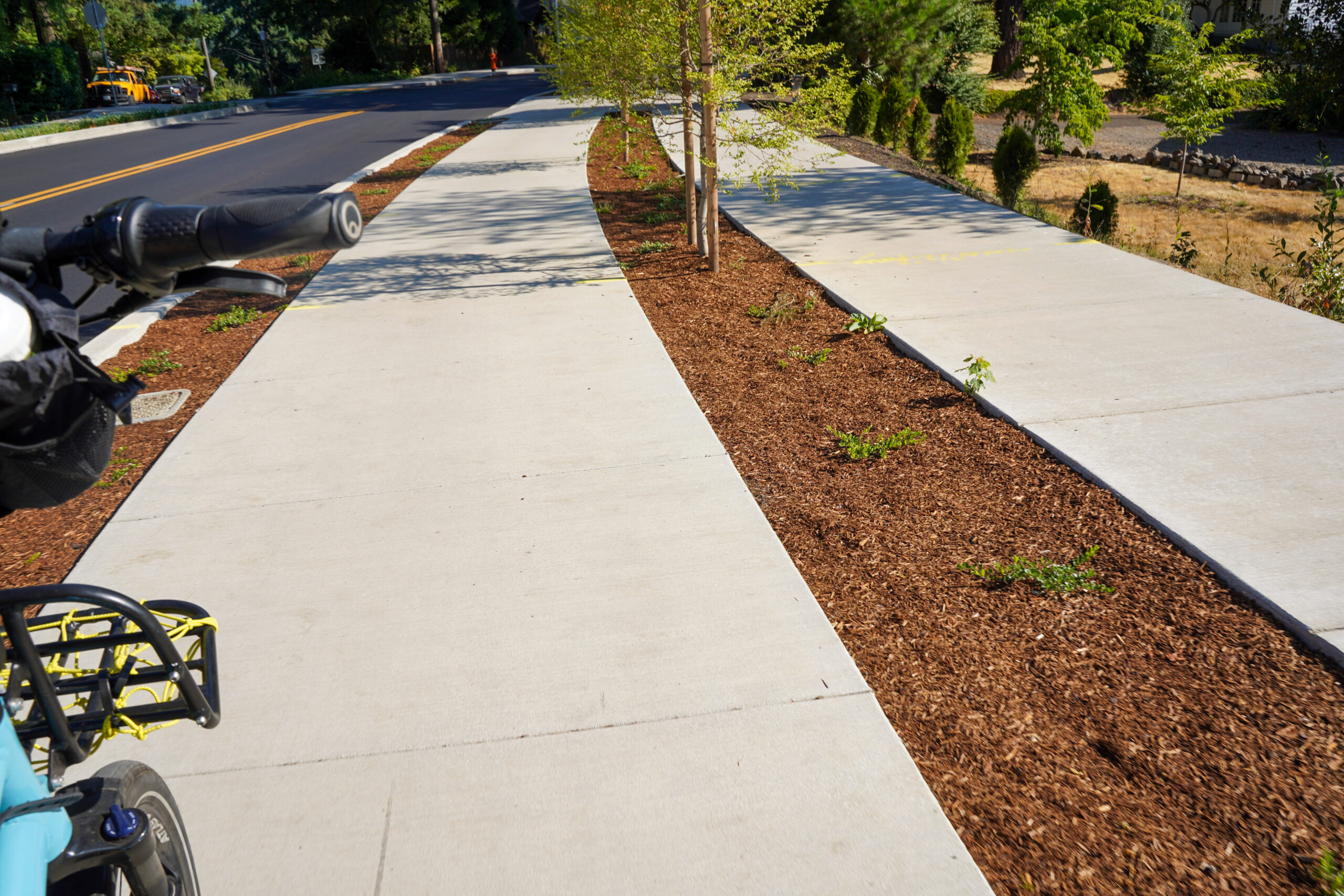
The biking space feels more like a sidewalk than I prefer. It’s separated from the street by a curb, which is great, but the concrete material is indistinguishable from the sidewalk and the bikeway. PBOT is still in the process of laying down a dividing line stripe which should help a bit, but I’d love to see more use of different colors to mark vehicle spaces (which bike lanes are) from walking spaces. (It’s also notable that the concept drawings on PBOT’s website show the bike lane a different color than the sidewalk.).
The bikeway itself is intuitive to use and feels very safe. Because the street is only one lane of car drivers in each direction and the speed limit is just 25 mph, the overall riding environment is pleasant and calm.
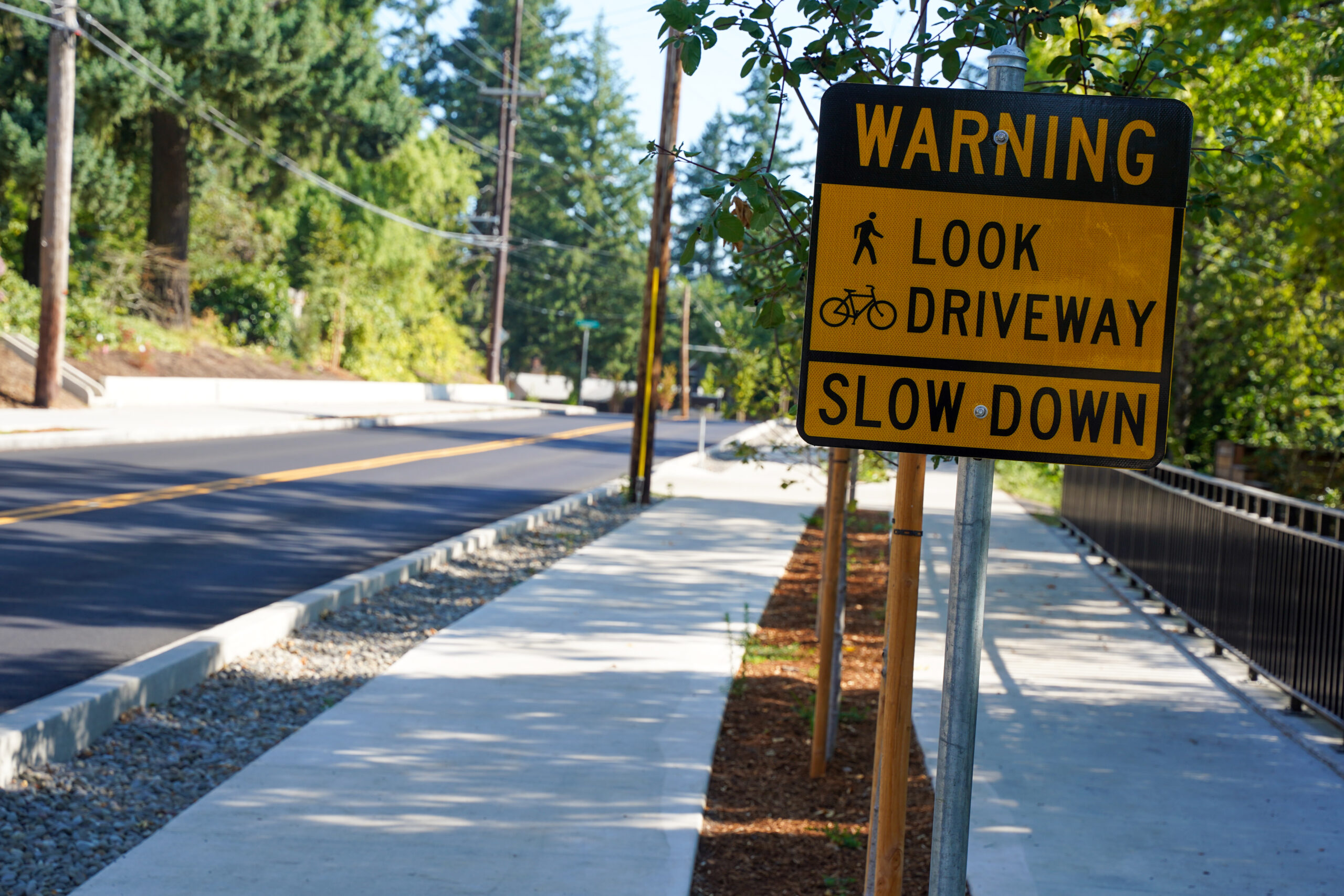
The bikeway crosses a ton of residential driveways. This might not end up being an issue, but any time you have people backing out with their cars over a bikeway, bad things can happen. The fact that PBOT has installed a bunch of yellow caution signs saying, “Warning Look Driveway Slow Down” makes me think they are concerned about this too.
Heading northbound just past Barbur Blvd.This only spot that felt really bad.Note the degradation of bikeway quality as you enter Multnomah Village.
The southbound bikeway is very slightly uphill, so it’s not as wide and has less separation from pedestrians than the northbound (downhill) side. In some spots, both sides feel a bit cramped. If we ever have the type of bike mode share we all expect and dream about, facilities like this will be very tight.
I saw only three bike riders the entire time I was out there (on a sunny, pleasant, weekday morning) and they were all on e-bikes and they were all taking the lane (not even using the new bikeways).
This project is a godsend for runners and walkers! What an amazing new facility for nearby residents.
On both ends of the project, I was sad to see the same thing our bike network suffers from almost everywhere else: the protected environment erodes quickly into narrow, unprotected bike lanes and then drops to nothing right when all the good destinations appear. On the Multnomah Village side, the project dumps riders onto a narrow, paint-only bike lane (that was full of gravel) as it descends into the shops and cafes where it them becomes a shared-lane environment.
At least on the Village end, the street is chill and calm. But on the south side, the project comes to a very ignominious end. In a matter of a few hundred yards, you go from: off-street protected bikeway, to on-street, curb-protected bike lane; then to painted, unprotected bike lane; and then you are discarded into a narrow crossing of a slip lane before being directed onto a narrow sidewalk. Then you come to SW Barbur and I-5 on-ramps where they’ve installed a teeny-tiny bike box. I shudder to think what some folks will do when they reach this point. It takes a big leap of faith to continue southbound to the other side of the freeway.
Overall, this project is a huge step forward for southwest Portland and our bike network in general. It’s a demonstration of what’s possible when the City puts their best foot forward and builds “8-80” all ages bike facilities. I just wish projects like this didn’t take so long to get built. And I wish they connected directly to other bikeways of similar quality.
As it is, with its limited connections and the overall lack of bike-friendly routes in this area, I just hope enough people ride it to solidify the “built it and they will come” narrative that is likely to be increasingly scrutinized in political debates in the months and years to come.
NOTE: I forgot to switch the banner in the second half of the video. Sorry for any confusion.
The County wants to build a “safe system” that inhibits car use, charges more for large vehicles, and builds more traffic calming. (Photo: Jonathan Maus/BikePortland)
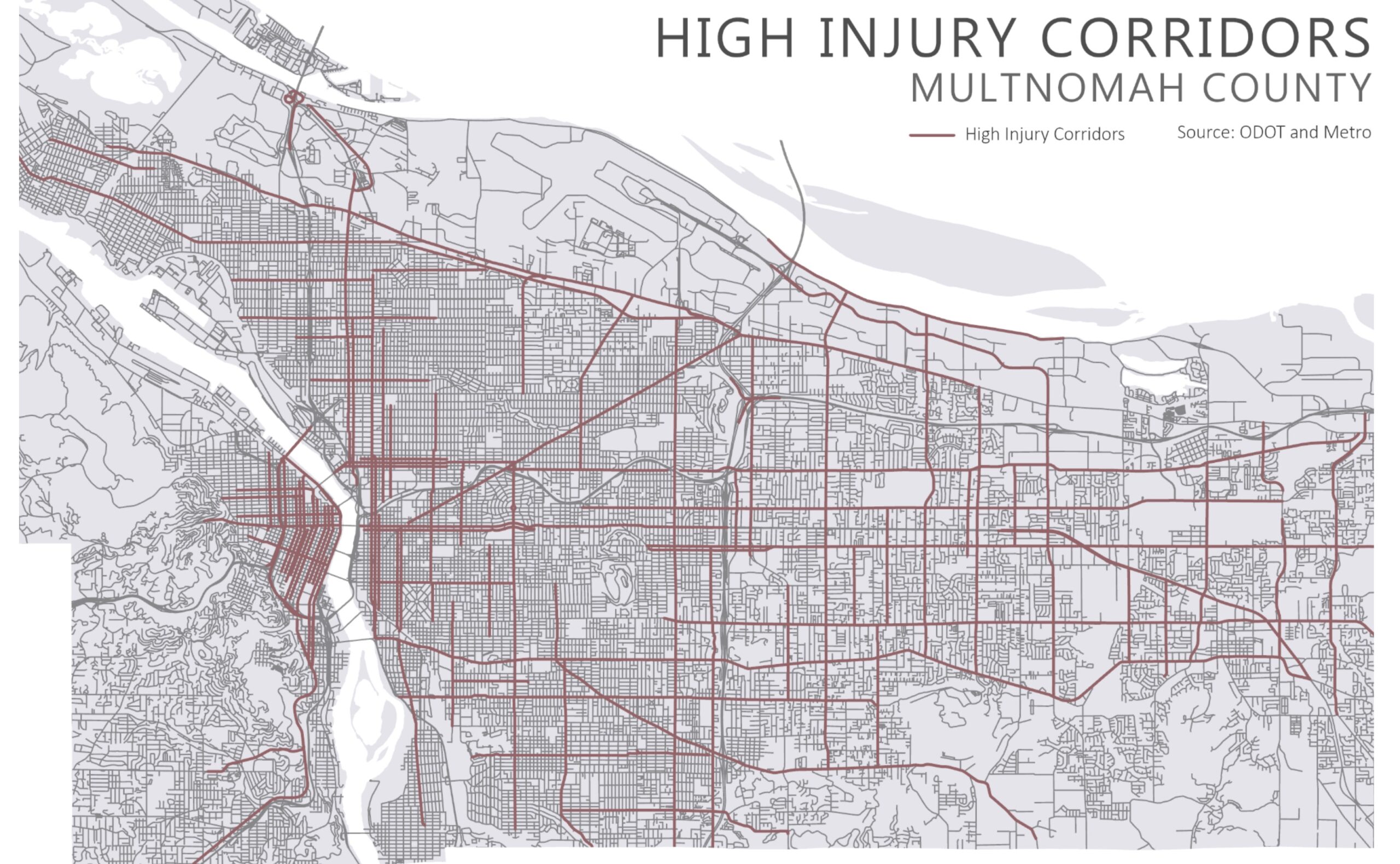
Lost amid the protests, politicking, and police statements at last week’s traffic safety press conference was a new report from Multnomah County that offers clear solutions to our staggering increase in crashes, deaths and injuries.
While Portland Transportation Commissioner Mingus Mapps said the focus of the event was to spark a “culture change” on our roads by focusing on individual behaviors, the County’s report recommends shifting away from behavior change and instead building a “safe system” by investing in safer road designs, changing laws to promote safer vehicles, funding health services to create safer vehicle users, and more.
For the first time ever, the County has gone beyond police records and engineering analyses to understand this problem. Instead, their report relied on data compiled from medical examiner investigation records. The report, Public Health Data Report: Traffic Crash Deaths in Multnomah County Taking a Safe System approach to address traffic-related fatality trends & contributing factors, digs into the data from 2020 and 2021 and comes at the problem from an epidemiological perspective.
From the report.
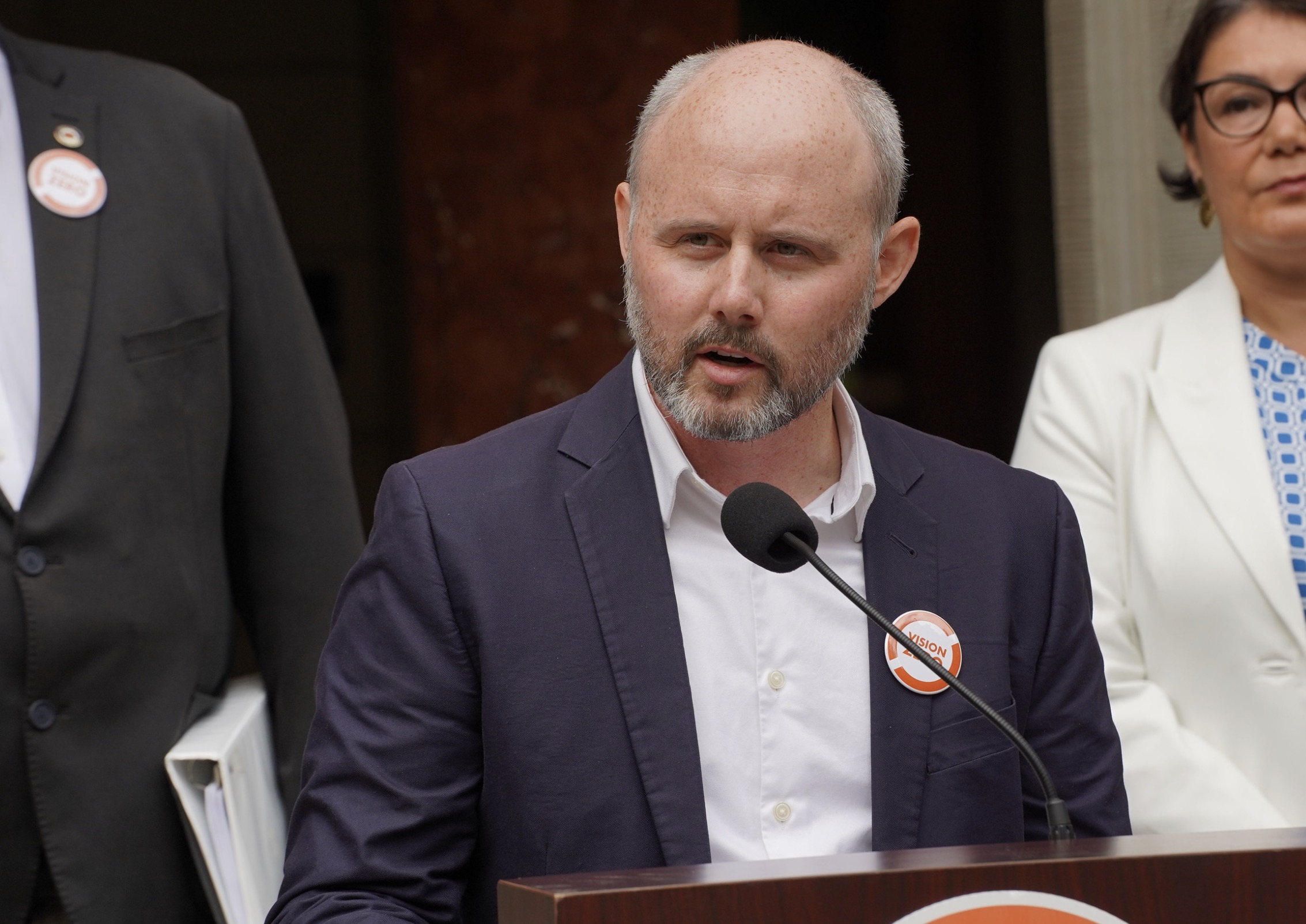
Brendon Haggerty at the press conference Monday.
At the press conference on Monday, Multnomah County Healthy Homes and Communities Manager Brendon Haggerty said the recent rise in traffic deaths and injuries is an “alarming situation.”
“It’s a leading cause of death, the trend is going up, and what’s especially alarming is that we see racial disparities,” Haggerty said in his remarks in front of City Hall.
The County’s report used data from 170 deaths and focused on several factors that influence crash injury severity: speed and roadway design; race, socio-economic and housing status; and use of intoxicants.
Excessive speed was found to be a factor in 42% of traffic crash deaths in 2020 and 2021. Over that same two-year time frame, the report found that a quarter of all traffic fatalities were homeless people and there’s twice the rate of traffic death among Black people as non-Hispanic whites. And when it comes to the use of intoxicants, four out of five victims tested positive for at least one. “That doesn’t necessarily indicate impairment,” Haggerty cautioned. “But it is a very high proportion.”
To turn things around, Haggerty said the answer is in the “safe systems” approach (of which the concept “vision zero” is just one element). Given the role of human behavior in traffic deaths, Haggerty said, “A critical insight of that approach is that humans make mistakes. And our system should be built so that when mistakes happen, they don’t result in serious injury.”
The County’s direct role will be to help people find more stable housing so they spend less time on the street exposed to high-risk intersections. They can also provide more behavior health and addiction support, so that people are in a healthier state when they get behind the wheel of a car.
On other measures, the County will have to use soft power to have an influence. This report is part of that effort.
Fewer people would die, the report found, if people would drive smaller cars. The report was one of the first from a local government agency to specifically identify the role larger, heavier cars have on the death toll. The County wants to work with state and city officials to increase the registration fee for heavier and taller, non-commercial vehicles.
The report offers a range of detailed recommendations. The ones that caught my eyes were: a 30 mph, countywide urban street speed limit that would be supported by investments in proven traffic calming projects; automated enforcement cameras; the use of more unarmed traffic officers; statewide laws on speed-limiting technology and alcohol detection systems in vehicles; and political opposition to all projects that “increase or do not decrease” vehicle miles traveled.
If Commissioner Mapps was looking for a plan of action, this report from the County would be a great place to start. I highly recommend giving it a read. Find the full report here.
Last week’s patio scene. (Photo: Jonathan Maus/BikePortland)
Yes I know the weather has been less than ideal for being outside, but you know how they say, “Misery loves company”? Well, that seems to have been made for us this week as we gird ourselves for some time outside at Bike Happy Hour tomorrow (Weds, 8/16).
I hope you’ll join us for community commiseration and conversations as we embrace cooler temperatures (it won’t even reach 100 degrees tomorrow!) and celebrate the excellent bikes of Portland. Yes it is a special “Show & Tell” Happy Hour where we’ll share our love of great bikes and the people who create and build them.
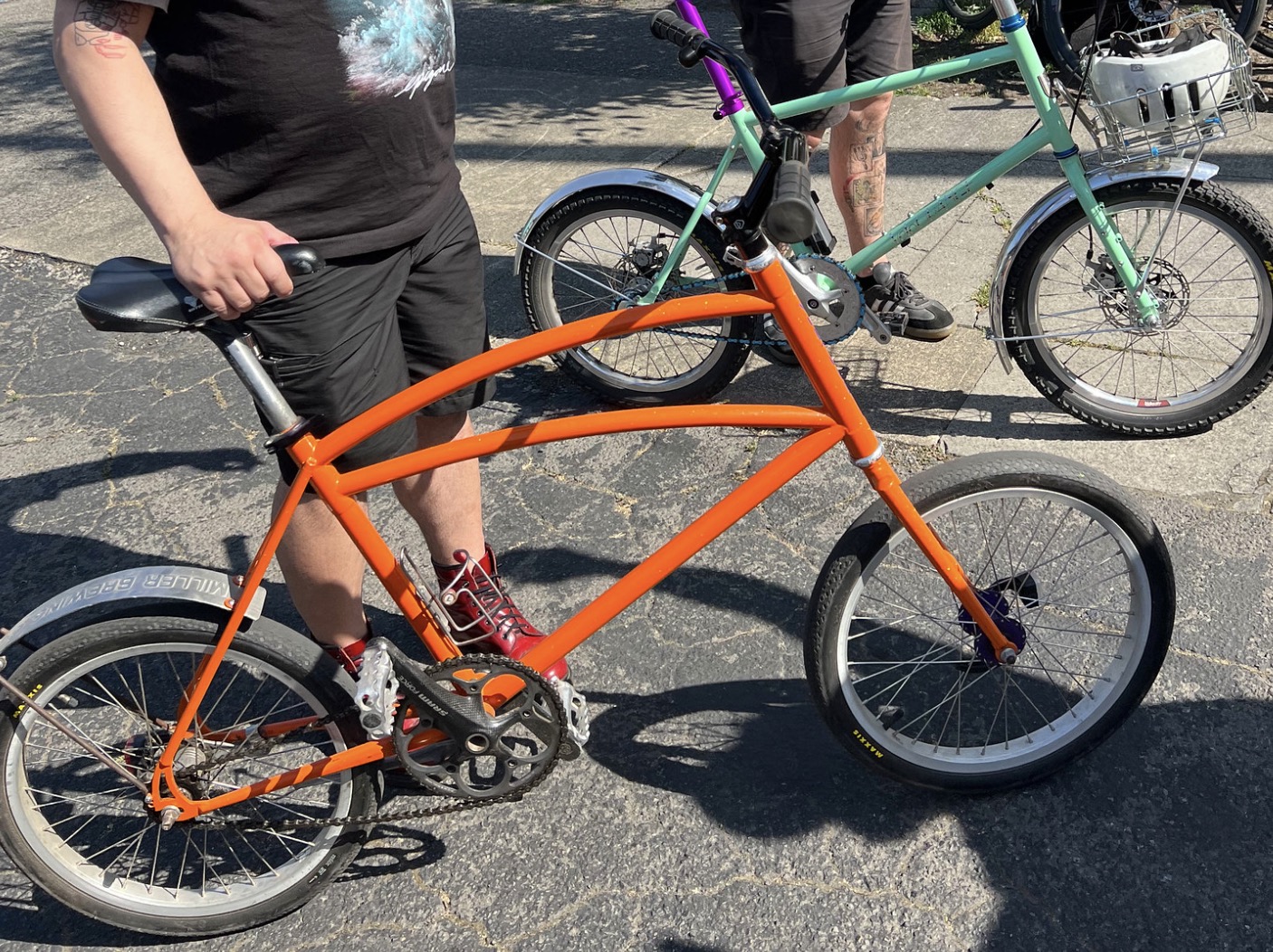
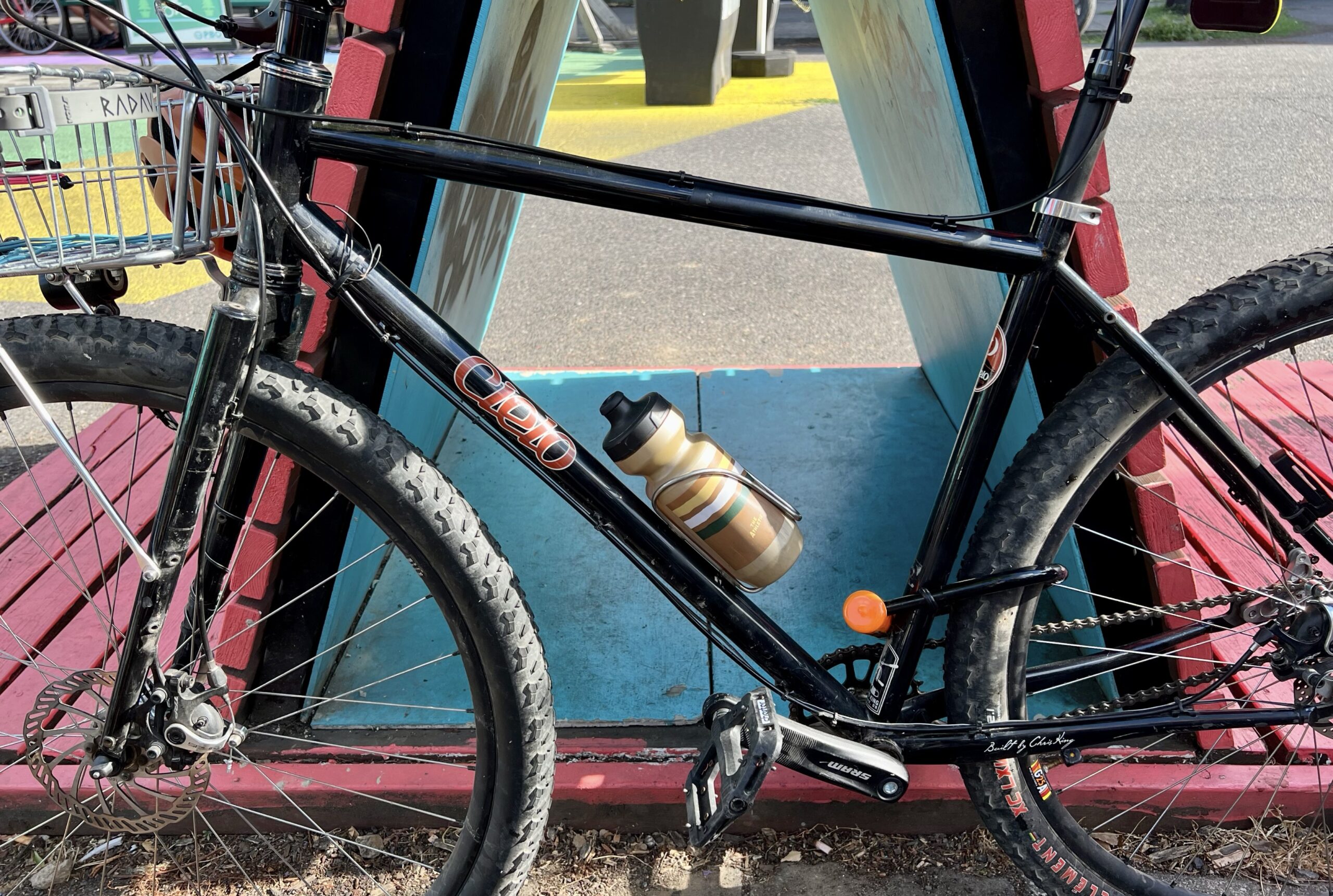
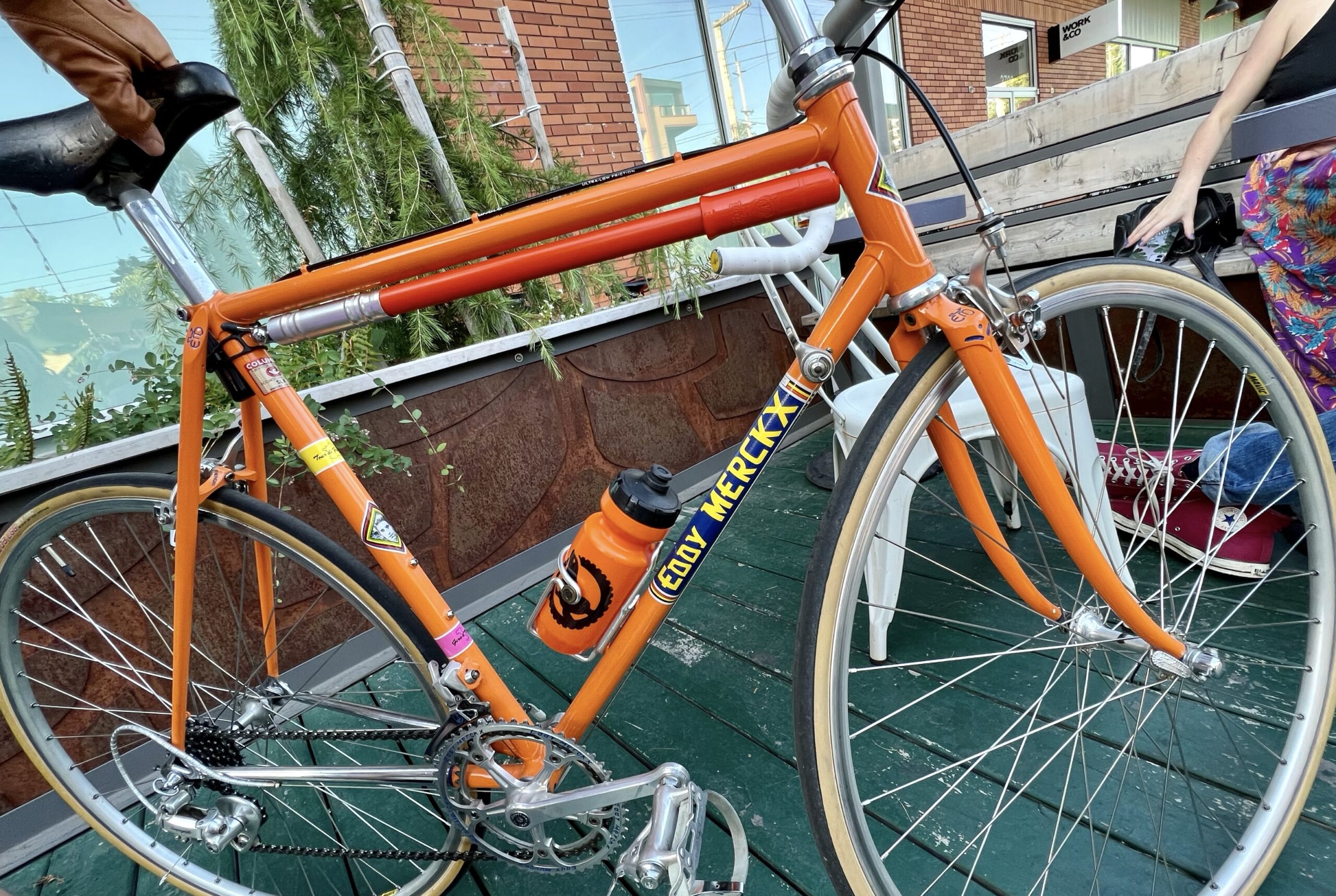
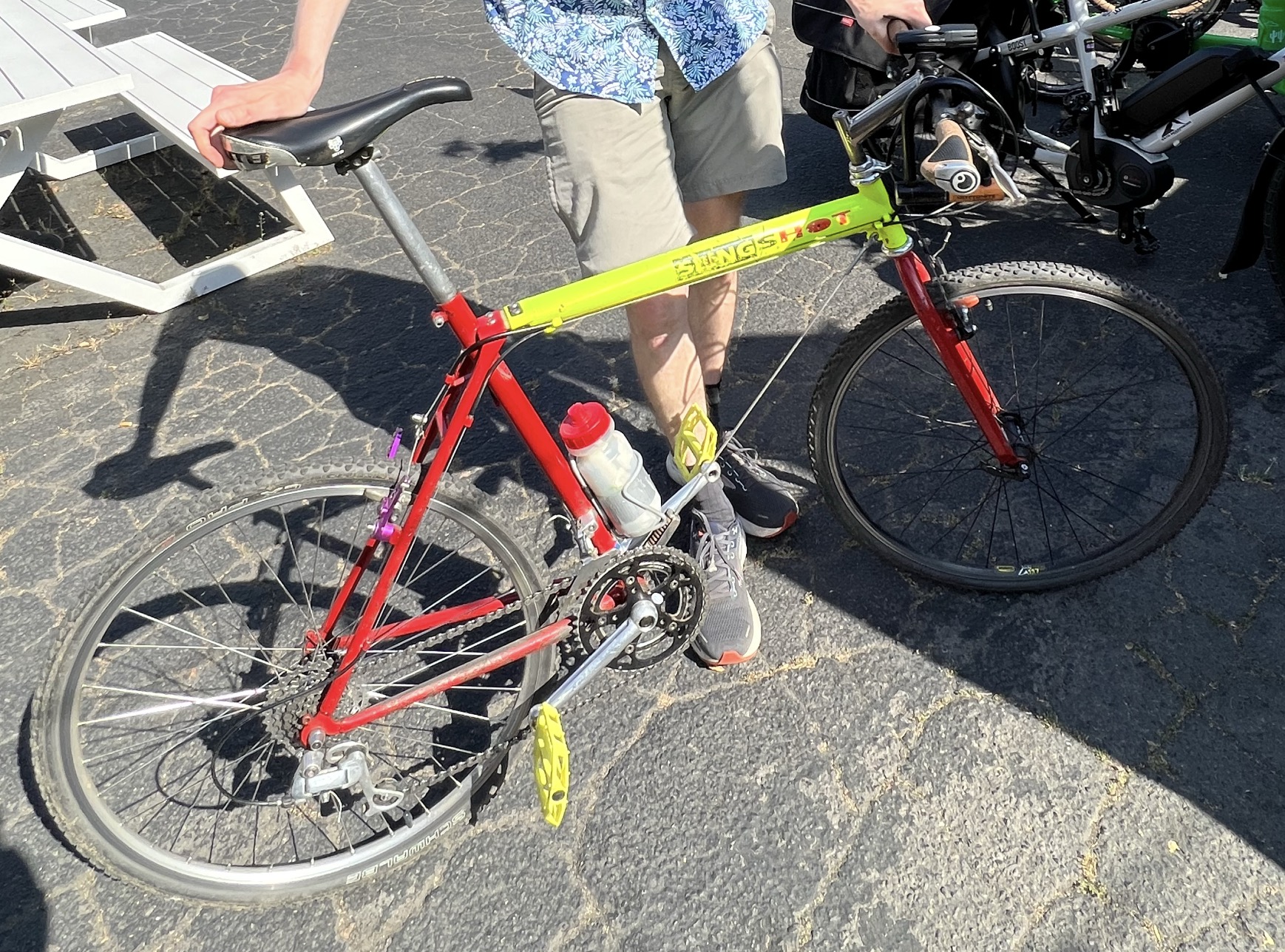
As I mentioned last week, the big MADE Bike Show is coming next week (August 24-27) and to help stoke the stoke, we want you to bring your cool, custom (or customized) bike and get ready to show it off. Whether you’re the lucky few who owns a handmade bike from a custom framebuilder or you’ve just added extra-special details to your beloved commuter, we want to see what you’ve got. (The funny thing about this is I usually take a walk through the racks each week and do this myself anyways, because I love all the neat bikes that show up!).
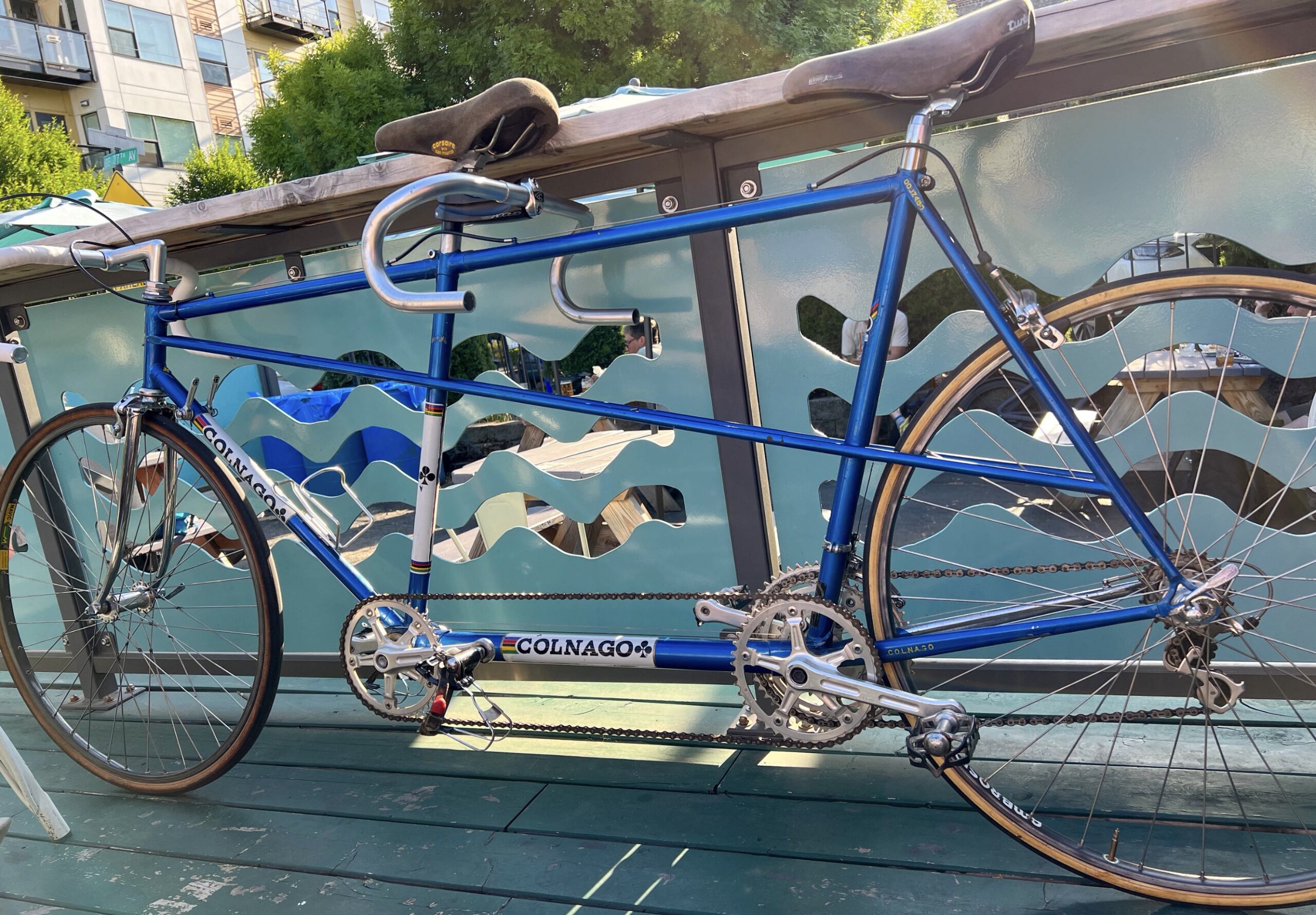
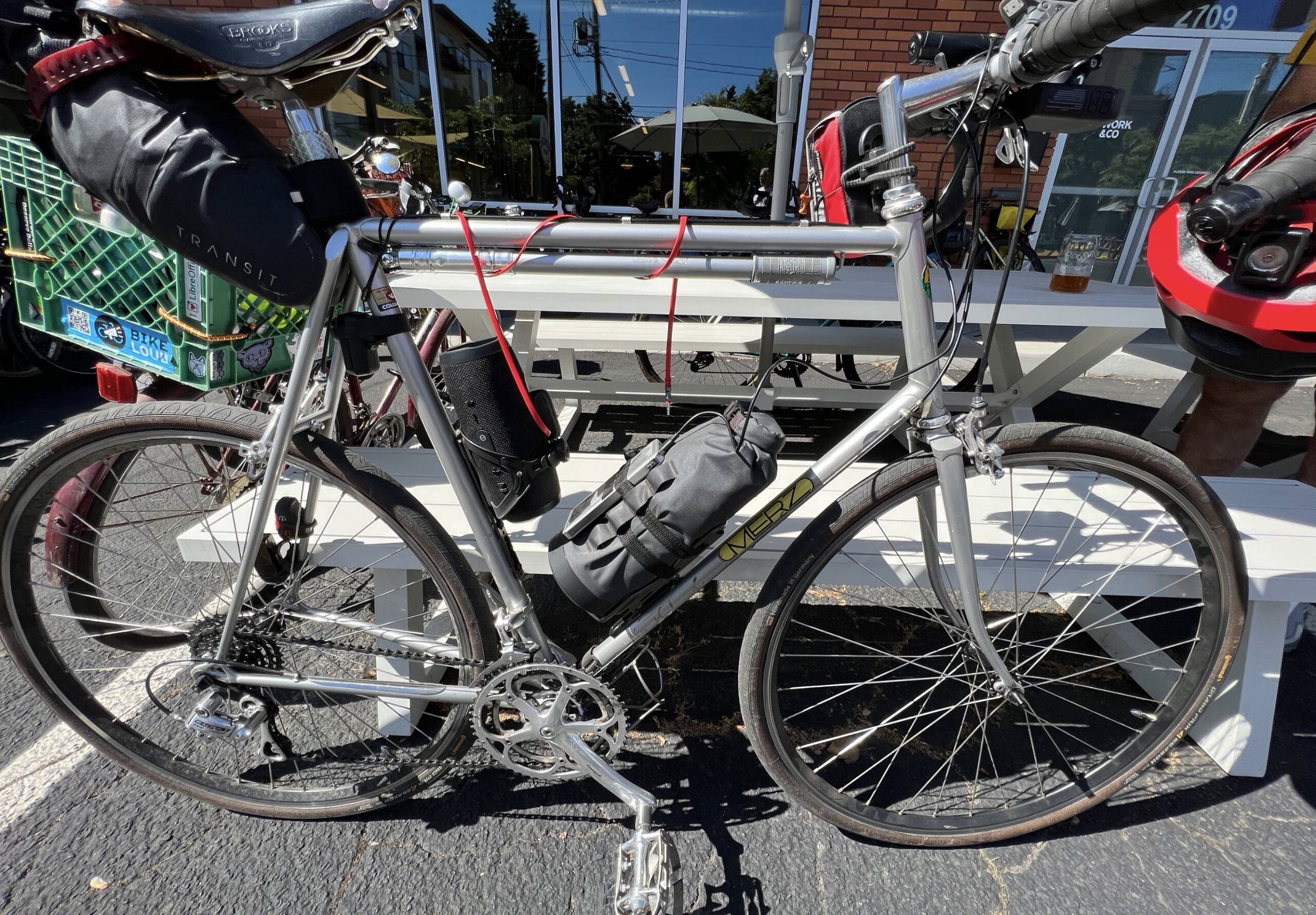
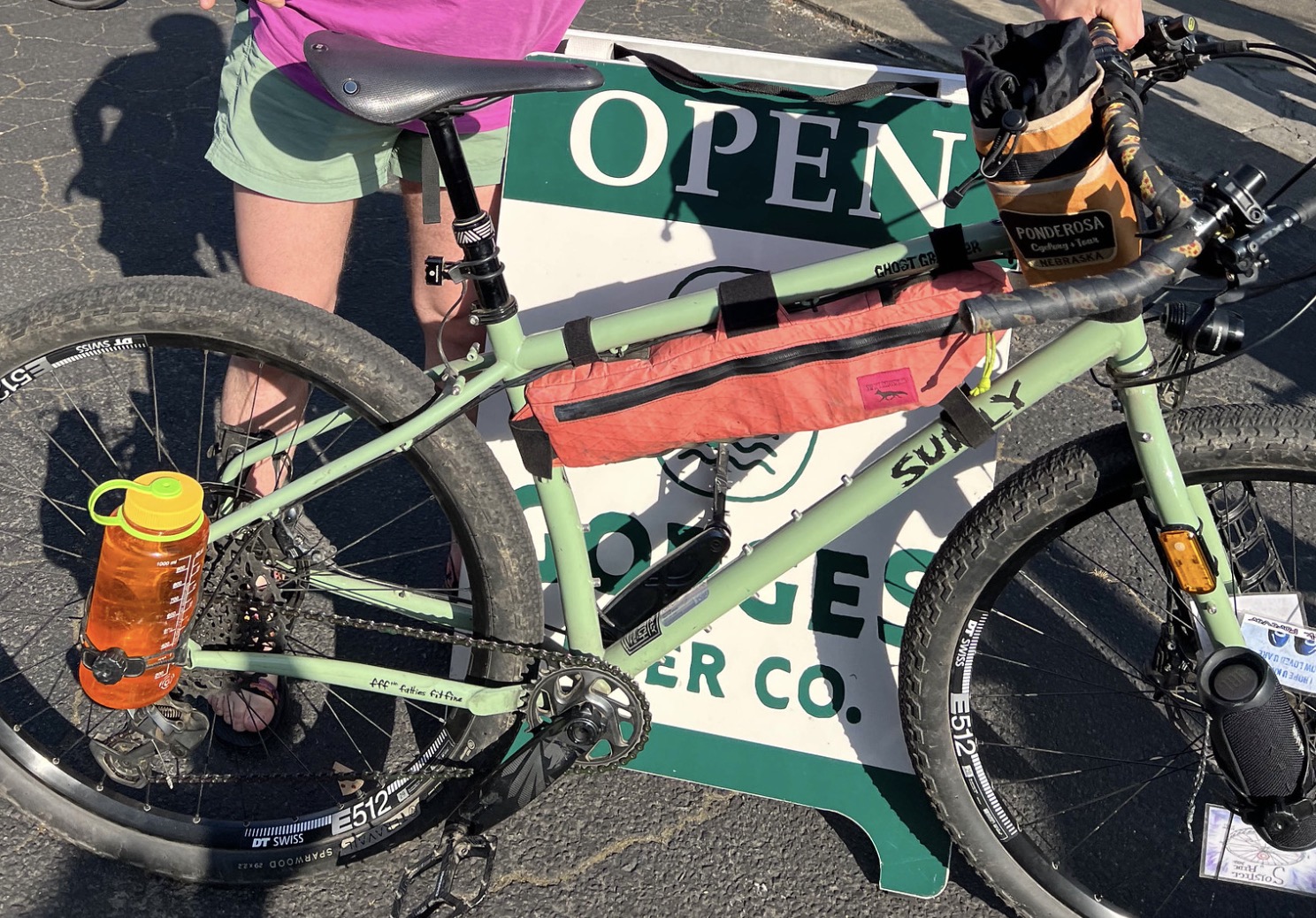
Van’s Strawberry.Robert’s ridiculous vintage Colnago tandem.Van’s Merz! Mini-velos.Cielo MTB!Robert’s Merckx.Scott’s Slingshot.Jerrid’s fun Surly.A few of the neat bikes I’ve seen at previous Happy Hours.
To spice things up a bit more, MADE Bike Show creator and head honch Billy Sinkford will be our special guest. He’ll give away swag and a few tickets to lucky winners. There’s also a very good chance you’ll get to meet and chat with a local builder or two.
Speaking of spice, Travis (owner of Gorges Beer Co and Ankeny Tap & Table) just told me they’ve got two new beers on the menu that are great for hot days: Golden Eagle Golden Ale (4.0% ABV), named after the king of eastern Oregon’s skies, “this ale is light, while remaining powerfully flavorful with notes of red currant, strawberry, and citrus”; and Augtoberfest Festbier (5.3% ABV), a late summer favorite at Gorges, “this German lager has a rich yellow color with a malty, bready sweetness and a super smooth finish with spicy, herbal and floral characteristics.”
And don’t fret the heat! We’ll have the misters on full-blast, there’s AC inside if you need a break, and I’m bringing two super-soakers just in case.
What do we talk about when we talk about bike safety? It’s a topic that is so fundamental — almost trite — to so many of us that we rarely address it on BikePortland these days.
That’s why I was happy that the folks at City Cast Portland asked me about it for the latest episode of their podcast. Host Claudia Meza asked me some important questions that I know I didn’t answer completely, so I figured I’d share them here so you can add to and improve my responses.
The thing that stuck with me from our conversation was how new cyclists feel about the dangers on our streets and what they can do to mitigate them. What I mean is, I always feel uncomfortable when media folks ask me, “Are the streets safe for cycling?” because I know my personal feelings about it are very different than other riders — especially people who are new to cycling and/or Portland.
With Pedalpalooza in full swing, and judging by all the newbies I meet at Bike Happy Hour each week (see you tomorrow, right?!), I know there are a lot of folks just coming into cycling that could really use some tips and advice on how to feel and be safer.
So… Below are the questions Claudia asked me. You can hear my responses by listening to the podcast episode (above). And I’d love to hear your responses in the comments. If any of you take the time to share your thoughts, this post could be a good resource for a lot of people. Here are the questions…
Have you noticed commuting by bike getting more dangerous in Portland?
What are some other safety concerns you see while riding?
How can bicyclists find the safest routes to get around?
Are there any routes that are way too dangerous for bicyclists?
Are there any apps or websites where people can plan their trips?
What are the three things you check for before heading out on ride so you’re not accidentally creating a hazard for yourself?
What can drivers be doing better to ensure riders’ safety while sharing the road?
Like I said in the interview, even though fatal bike crashes have remained at zero or very low for years now; every time tragedy strikes — regardless of it happens to a walker, driver, or whoever — cyclists feel it on a visceral level. The more we help each other navigate those feelings and share tips and resources, the more confident, safe and relaxed everyone will be out on our streets.
I’ve got ten dollars says the words “stochastic” and “sous vide” have never before been used together to make a point. But with today’s temperature predicted to reach 103 degrees, maybe now is a good time to talk about cooking ourselves.
It was hard not to notice the sense of urgency in last week’s comments. Not only were there a lot of them, but gosh, what a selection of strong, informed and passionate writing. SD’s comment came in late yesterday, and even among that crowd it grabbed me by the lapels and made me pay attention.
SD writes in agreement with fellow commenter 9watts, that climate change doesn’t get the emphasis it deserves in Portland transportation discussions. I’ve noticed that too. But it’s anxiety about climate collapse that might be fueling the urgency of our debates.
Climate collapse and heat adaptation should be in the forefront of PBOT’s mission. They should leverage this heavily in reshaping infrastructure to prioritize rational human movement in Portland. Heat islands are a large part of PBOT’s infrastructure.
The emphasis on linear climate changes such as increasing temperature over time or sea level rise are easy to grasp and support with data but do not capture the likely possibility of stochastic changes that will occur as specific elements that buffer climate collapse.
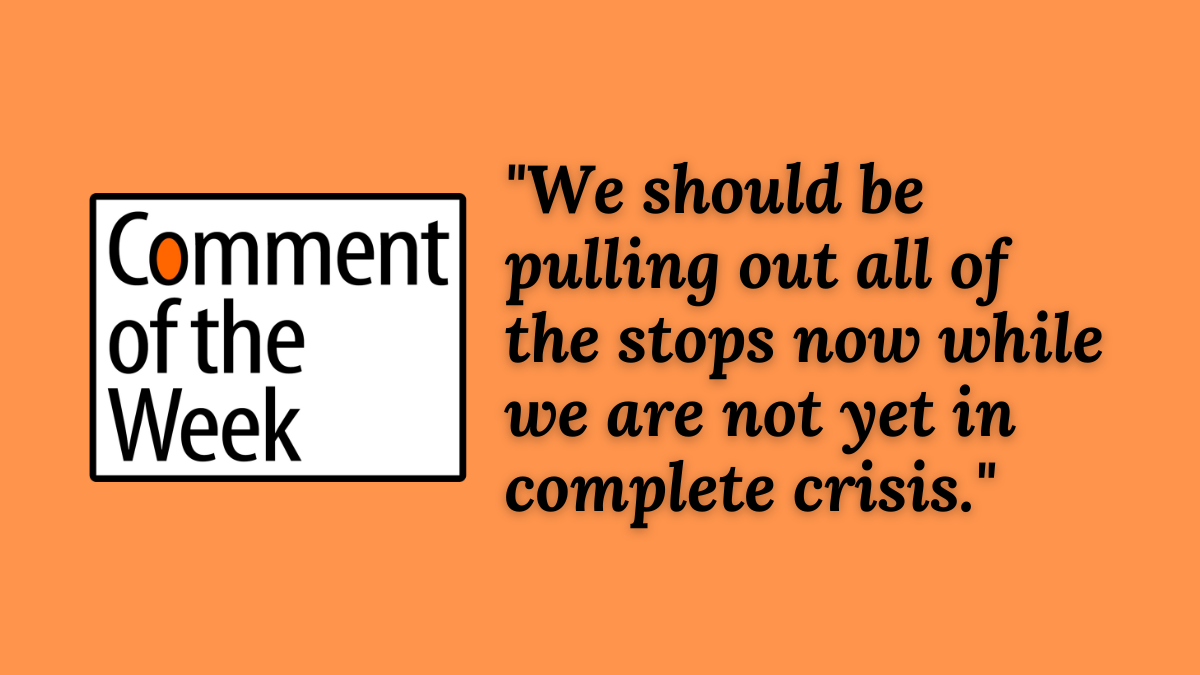
We should be pulling out all of the stops now while we are not yet in complete crisis. Instead, we have self-interested people in decision-making positions, like Mapps, that are more interested in a mundane, forgettable political career than trying to use their agency to find solutions, prepare Portland and create resiliency.
Sous vide for steak is 130ºF. We aren’t far off from fatal temperatures. It is a real possibility that children today or their children will die from heat related causes or starvation.
… And children today are dying due to climate disruption. Yes, we realize that’s a dark note to end on, but it feels appropriate given our situation.
Welcome to the week. Here are the most notable stories our writers and readers have come across in the past seven days…
This week’s sponsor is the Vineyard Tour, organized by Umpqua Velo Club. It’s a full weekend of amazing rides and country roads coming Labor Day Weekend, September 1-4th.
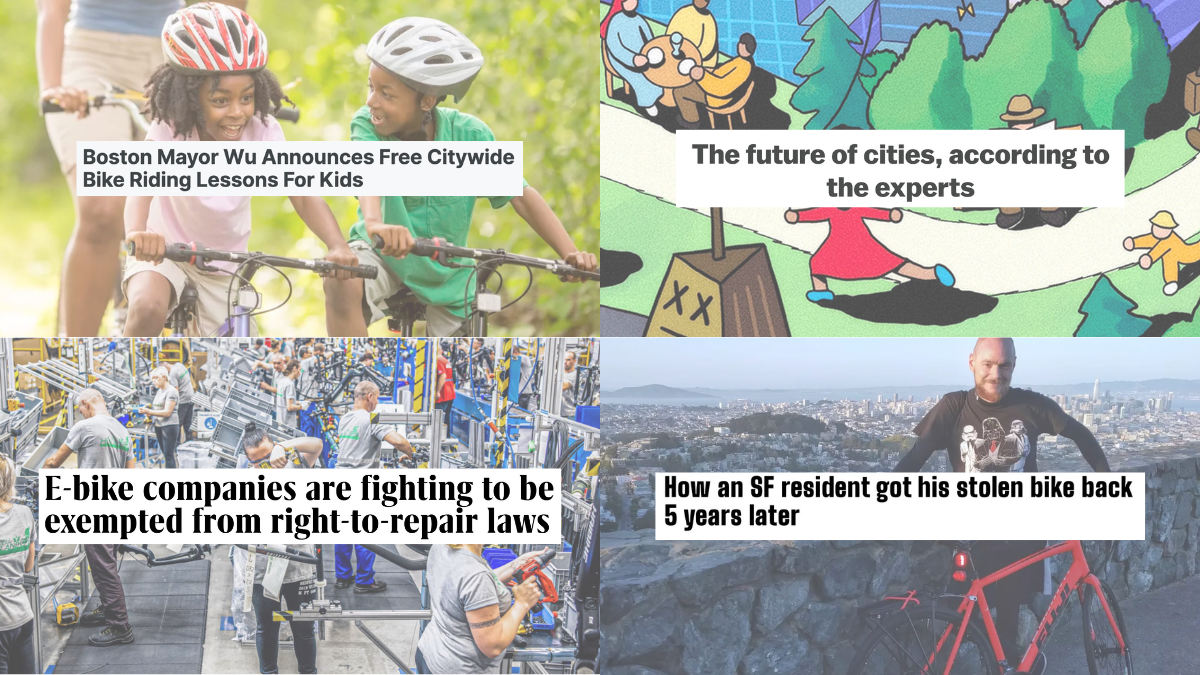
Right to repair: Environmental advocates want e-bikes to be simpler to work on and repair, but the bike industry says the risk of fires is too great. But is the industry just looking to protect big bike brands from cheaper competition? The right to repair debate is definitely something to watch. (Fast Company)
Post-Lyft Biketown? Interesting shifts in the bike share business landscape could impact Portland’s system and heightens the need to look beyond private ownership. (Slate)
Post-car era: PBOT is closing one of their underused large car parking garages downtown to save money. Perhaps a more productive use of the space would be some type of shelter? Or secure bike parking? (The Oregonian)
Other obesity epidemic: I’m heartened that every week another large media outlet picks up on the problem of large EVs and the many environmental and safety problems they pose. (The Economist)
Future of cities: This is a good roundup and update on where American cities stand post-Covid, and how we can make sure they thrive going forward. (Vox)
Free for kids: The mayor of Boston has launched an initiative to provide free biking lessons to kids in parks citywide. (WBZ)
Media literacy: Before America kills off yet another threat to the all-powerful automobile, do your homework and learn how to spot bad e-bike articles. (Streetsblog USA)
Colorado’s e-bike rebates: The statewide e-bike purchase incentive program launches this week and Oregonians should watch it closely as it’s a very similar model to what will eventually be passed here. (Colorado Public Radio)
Ticket-hater = ticket-getter: The creator of hit show “The Wire” lambasted NYC’s DOT on Twitter about a speed camera ticket, then it came to light that he’s a repeat offender. (Streetsblog NYC)
Bike Index FTW: A San Francisco man whose bike was stolen in 2018, recently got it back thanks to someone who saw it on Bike Index. (SF Gate)
Portland City Commissioner Mingus Mapps in April 2023. (Photo: Jonathan Maus/BikePortland)
Monday’s city hall press conference about a troubling rise in traffic deaths was a disappointment. I think I speak for many of Portlanders when I say we were expecting a plan of action and more concrete reassurances that City Hall feels our pain and shares an urgency for safer streets. It was a press conference that should have had an easel with a poster full of a bulleted list of actions that the Portland Bureau of Transportation and its Commissioner Mingus Mapps plan to take in order to defend our streets from dangerous drivers and restore respect among all road users.
But while Mapps lacked a new plan, he didn’t lack a new priority: culture change.
“The next thing that I’m leaning into is, how do we bring about this culture change?” Mapps shared in an interview just before he was whisked back into City Hall by a staffer.
I pressed Mapps several times during the conversation to tell me something new and significant his office and/or PBOT would do to assuage the deep, visceral fear many Portlanders have around using our streets. He wasn’t able (or willing?) to answer that. Instead, he shifted his response each time to this new focus on education and culture change. So let’s delve into it a bit more…
“We need to develop a strategy to consistently do education,” Mapps shared. “My goal is to do an education event, basically, every Thursday, Friday, where we remind people that traffic enforcement is going to be out, and remind people that if you drive drunk or you drive fast, the risk of you killing someone is increases dramatically. I think that piece needs to happen a lot more.”
Mapps continued: “Has our infrastructure actually gotten worse in the last couple of years? Have we been ripping out bike lanes and sidewalks? No. What has changed in the past couple years, frankly, is our enforcement strategy and the way we use our roads. We have made significant progress and turned the corner on enforcement. And now the third leg that I’m trying to build here is the culture change piece.”
I agree with Mapps. Culture eats everything. And right now our traffic culture is so toxic and dysfunctional that it’s erasing all of PBOT’s infrastructure investments, overwhelming their educational campaigns, scaring away bike riders, and lowering the standards for behavior on our streets. The big question is: What is Mapps’ plan to actually create the cultural shift we need? How far are he and his team willing to go to make it happen? Is PBOT even equipped to do this?
To effect real, lasting cultural change (given Portland’s current funding, enforcement and infrastructure constraints), a strong way to start is with great communications and framing. The fact that at a press event where he hoped to debut a focus on culture change, Mapps slipped and used the word “accident” (which absolves road users from taking responsibility for their actions) instead of crash — and where he avoided any tough talk directed at drivers and his remarks fell flat with safety activists who are on the front lines of this crisis — shows he’s not off to a stellar start.
Culture is created by people. Our traffic culture is terrible because many people act terribly when using our roads. But instead of a stern and serious tone targeting those people, Mapps voiced the typical, government “pretty-please-act-nicer-out-there” tone. That should change.
If we want any chance of shifting culture, leaders like Commissioner Mapps must be able to grab the bulls by the horns and speak clearly about the threat we are facing. And that threat is drivers and their cars. I know that fact is uncomfortable for Mapps and that there’s political peril in being perceived as anti-car, but we need to acknowledge this truth if we want to make progress.
Consider the remarks from Portland Police Bureau Sgt. Ty Engstrom at Monday’s press event as an example of what not to do.
“People feel entitled on our roadways,” Sgt. Engstrom said during his remarks. “All motorists, all pedestrians, all bicyclists.” Then, after hearing loud boos and disagreement from some in the crowd, he continued. “You are right, there are motorists out there that are driving in a way that kills people. Absolutely. But there are also people that are on bikes or pedestrians that need to be also more careful with what they’re doing. So it is a shared responsibility and a culture change that needs to happen.”
Read that again. One type of road user is killing other people. The others need to be more careful. Therefore we all have a shared responsibility to change? I strongly disagree. There’s a vast imbalance in that statement and our city leaders must start to recognize it. Cars and their drivers are the force that kills and maims and instills fear. When I get into my car — I don’t have to make a decision to be dangerous — the mere act of stepping into a vehicle with such dangerous and deadly potential, puts me in that position every time I drive.
The way we talk about traffic culture must accurately reflect the issue. Ignoring that cars and drivers are the main problem will tie us to the same outcomes we’ve always had.
So, what would look like to take a stronger stance against this highly problematic subset of drivers who are trashing our traffic culture? Or, in Mapps’ own words, “How do we bring about this culture change?”
Here are just a few ideas:
– PPB and PBOT could share more media content showing the rampant lawlessness on our streets. I’m not talking about street racing or high-profile hit-and-runs. I’m talking about the everyday stuff that’s been normalized. Like when people just blatantly run red signals, block bike lanes, don’t stop for someone using a crosswalk, turn right on red despite massive signs saying not to, drive without license plates, speed down neighborhood greenways; and so on and so forth.
– Commissioner Mapps or someone on his or PBOT’s staff could walk or bike in a location known to be dangerous or stressful. Have someone covertly record him biking around or trying to cross a major street. Then share the content and his first-hand experiences with the public via social media or a blog post.
– Make quick infrastructure changes at locations where people often drive dangerously and where a high-profile fatal or serious injury crash occurred — then tell the media about the bad driver behaviors, why they are so dangerous, and why the installation was necessary.
– Set higher standards for city employees using fleet vehicles by installing speed governors or publicizing a “no pass” pledge on neighborhood greenways. That modeling could influence Portlanders and shift the way people think about speed and residential street safety.
Culture change is hard. Politicians usually avoid it like the plague. But Mapps, being out of options and feeling pressure to do something, has reached for it. Maybe we can help him grab it and do something that will make a difference. I’d love to hear your ideas.
“I believe current bicycle code is too complex, too vague, and too rigid.”
– Victor Duong, project manager at LEEB architects and former PBOT Bicycle Advisory Committee member
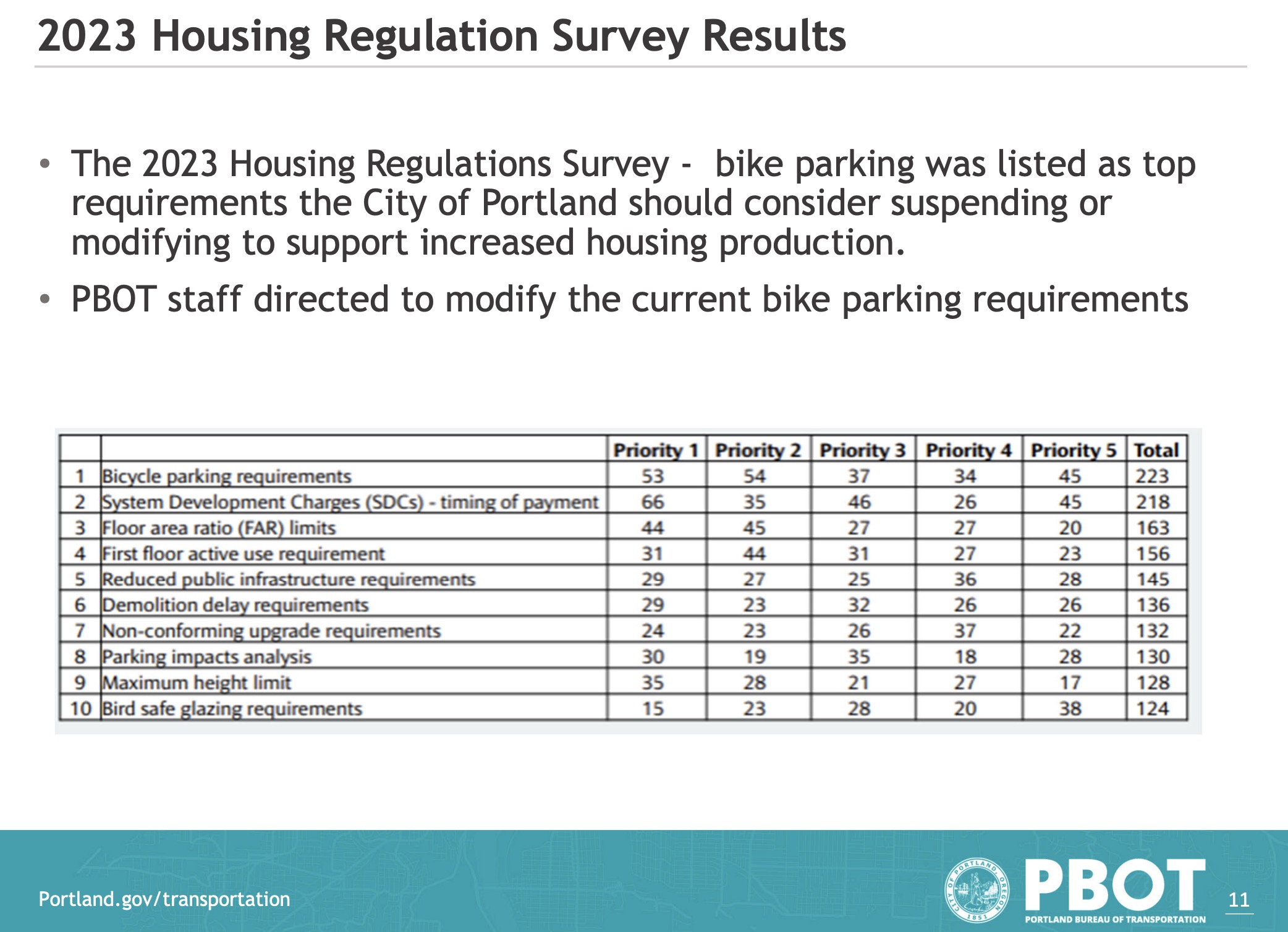
The Portland Bureau of Transportation is under pressure to make changes to their bicycle parking requirements. It’s part of an effort by City Commissioner Carmen Rubio to respond to a recent survey that found PBOT’s bike parking code is considered by many stakeholders to major impediment to housing production.
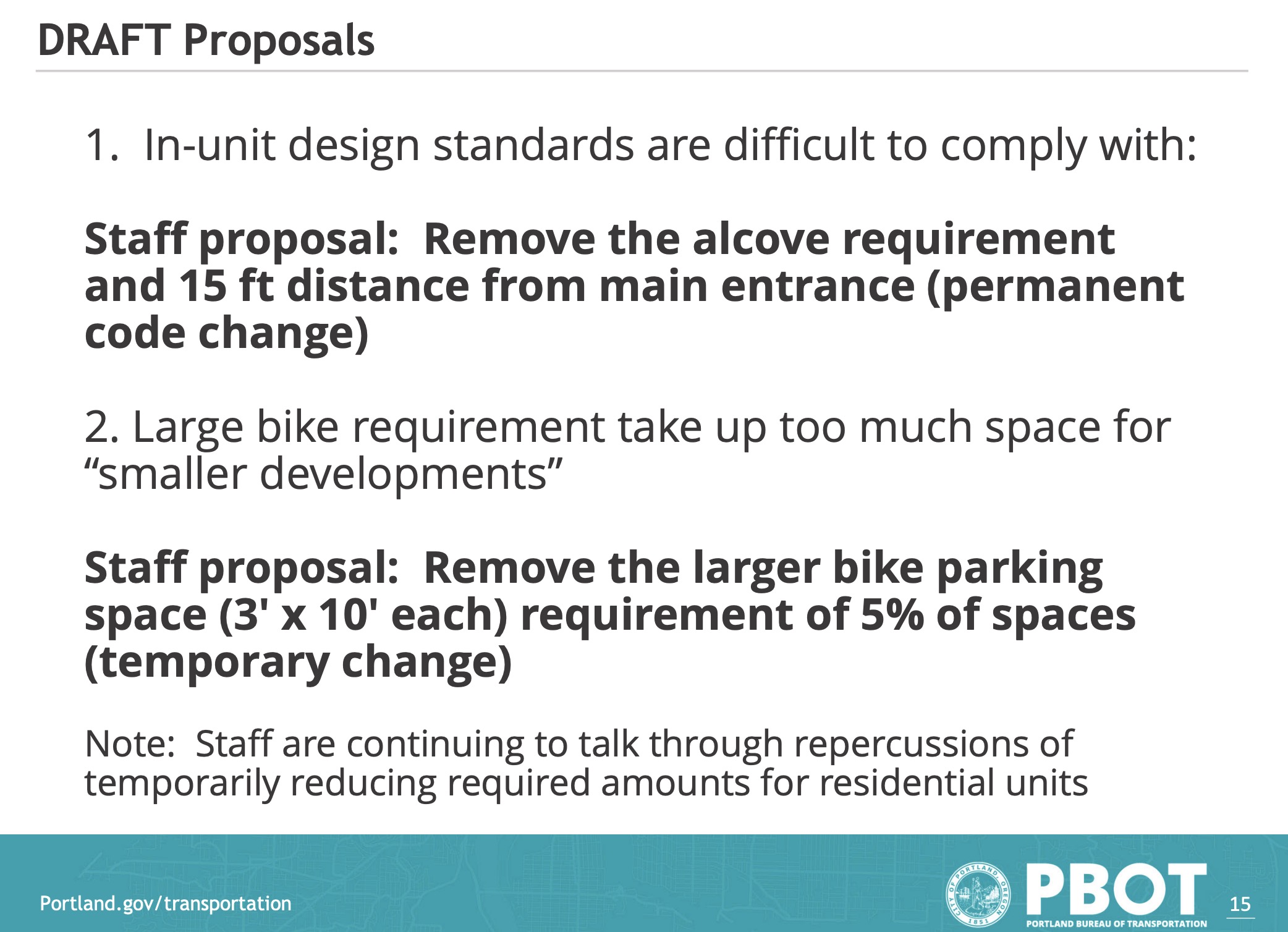
At times during a meeting of the bureau’s Bicycle Advisory Committee Tuesday, PBOT Planner Sarah Figliozzi defended the bike parking code and sought to clarify several aspects of a recent report that shed an unfavorable light on it. But she also accepted feedback and revealed the specific parts of the code PBOT would be willing to put on the chopping block. According to Figliozzi, three possible changes are afoot: removal of requirements to build an alcove within residential units and provide spaces for large cargo bikes, as well an overall reduction in the amount of required spaces in new residential buildings.
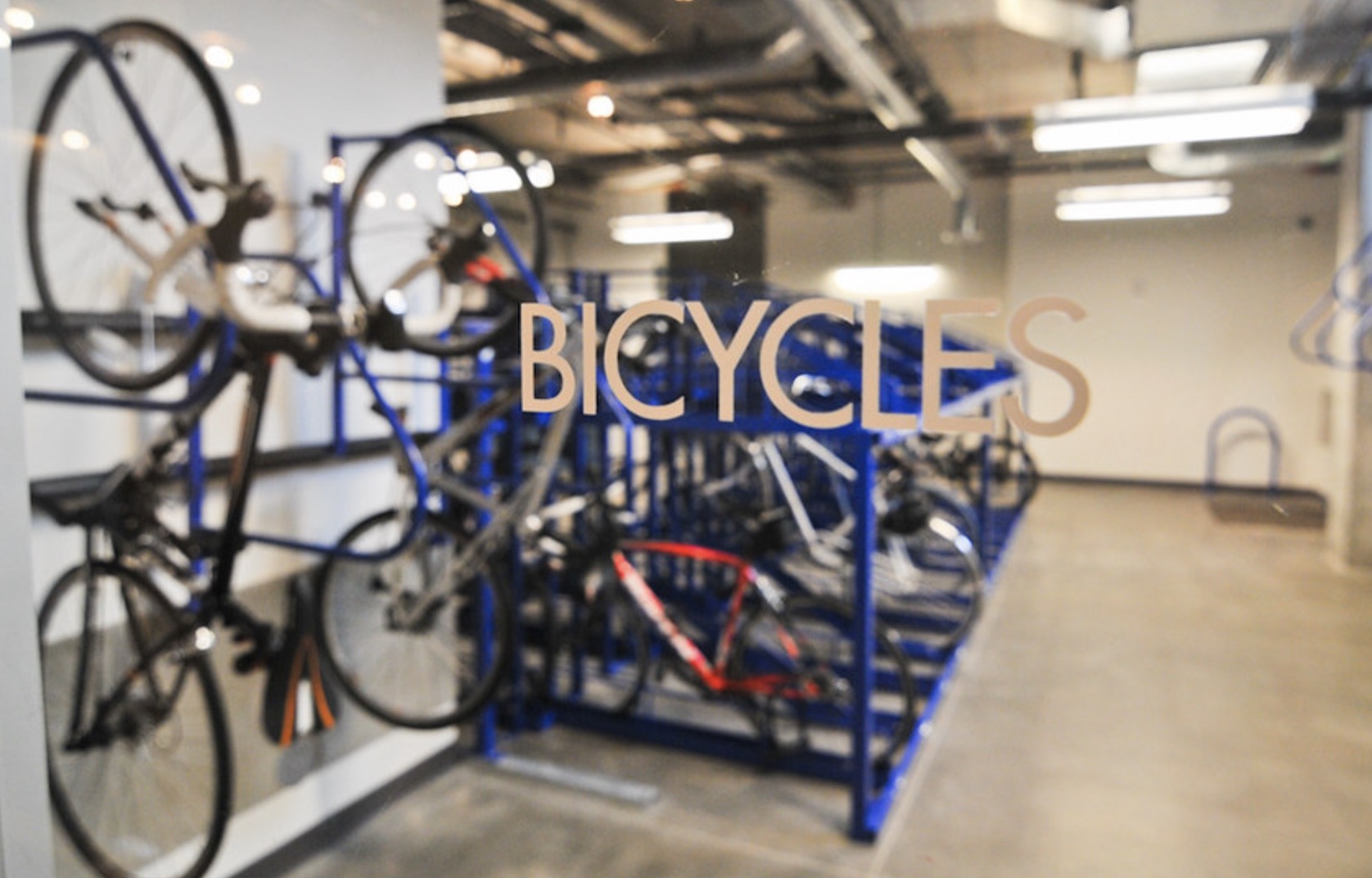
The current code, adopted in 2020 after years of analysis and feedback, allows developers to provide 50% of long-term bike parking for each residential unit within the unit itself — as long as it is located in a closet or alcove within 15-feet of the front door. This was done to avoid the problem of architects and developers deciding to simply hang a rudimentary hook on a living room wall to fulfill their bike parking requirement. After hearing from housing regulation survey respondents (which included hundreds of developers, property owners, and city staff), that those standards are difficult to comply with, Figliozzi said they are considering a permanent removal of that requirement.
PBOT slides shown at August 8th, Bicycle Advisory Committee meeting.
“Some of these design elements are just challenging for the applicants to configure in the types of floor plans that they’re used to working on,” Figliozzi said at the BAC meeting Tuesday. “And they take up a lot of floor space.”
Former BAC member and Portland cycling advocate Victor Duong (an invited guest at Tuesday’s meeting) is project manager at LEEB architects. He’s currently working on a 200-unit project in northwest Portland, “that is currently going through a lot of these bike parking challenges.” He shared several serious concerns in response to Figliozzi’s presentation.
“[The city permitting office] is requiring us to build a bike alcove 15-feet high and there was zero flexibility. I kid you not. A 15-foot wall is just a waste of money,” Duong said. In a follow-up email, he told BikePortland that he’s all for more bicycle parking both personally and professionally, but he believes the current code is, “Too complex, too vague, and too rigid.” He even cited an instance where permit officials from City of Portland “dinged” him for wanting to build more in-unit bike parking than was required.
Duong also said he feels the current code is “devastating” to creating affordable housing in Portland and encouraged BAC members to look at actual plan drawings as they consider the impacts of bike parking requirements. “For every 15 units, the current bike code removes one unit. So on my 200-unit project, it’s effectively removed seven units… it’s very costly.” (A figure included in a consultant’s report used by Rubio’s office of $11,000 in bike parking costs per unit has been the focus of much debate. Figliozzi said that figure is a range between $2,600 to $11,000 per unit and that the consultants have agreed to add additional context about the assumptions and analysis to their report.)
Graphic from PBOT bike parking code.
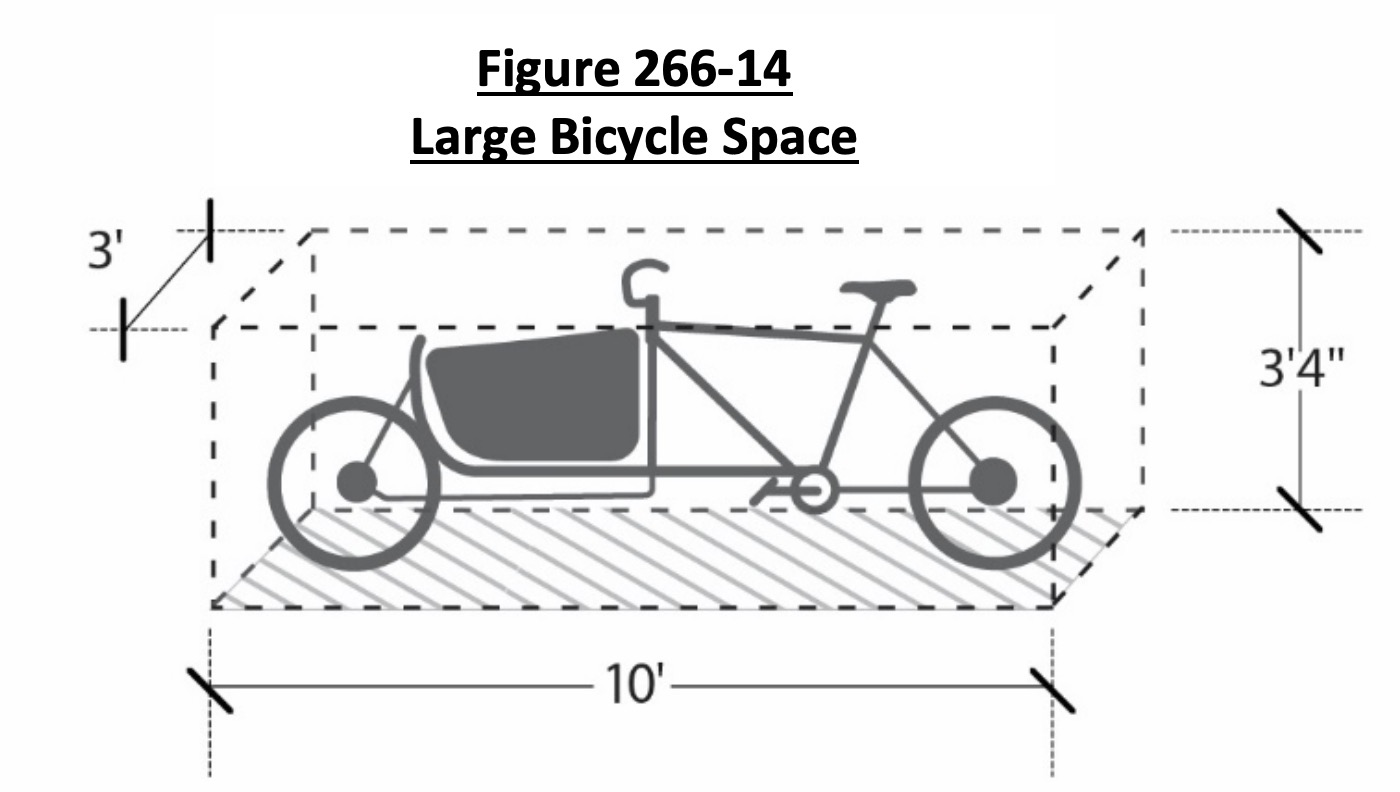
The other part of the code Figliozzi said PBOT will propose for removal is the section that requires a certain amount of spaces for larger bikes. PBOT wanted the code to reflect the growing popularity of cargo bikes in Portland and they added a provision in 2020 that 5% of spaces must be built with a 10′ by 3′ footprint. But now they’ve heard that requirement takes up too much space in smaller developments and they are recommending a temporary removal of that piece of the code.
BAC member Katherine Sheie opposed that idea. “I understand that it’s difficult to to accommodate these larger spaces,” she said. “But I think if we are going to get to a larger mode split, we need to be able to provide cargo bike parking, so that people can not own a car and still move big stuff around.”
But from an architect’s perspective, Duong said the 10 x 3 required footprint didn’t fully capture the amount of space required by that part of the code. “With the maneuvering clearances, the cargo bike requirement is two-thirds the dimensions of a compact car parking stall — and that’s inside the building envelope.”
The third part of the code Figliozzi said PBOT staff are contemplating for revision is a temporary reduction of the required amounts of parking for residential units. The current code requires a 1.5 and 1.1 bike parking space per unit minimum in the central city and outer neighborhoods, respectively. Those amounts could drop to 1 and 0.5 per unit. “Staff are continuing to talk through repercussions of temporarily reducing required amounts for residential units,” stated one of Figliozzi’s slides.
From here, PBOT, the Housing Bureau, Bureau of Planning & Sustainability (BPS) and Commissioner Rubio’s office will continue to discuss and negotiate which code changes will support more housing production. A draft of changes will be available in early fall with opportunities for public comment. A hearing on the draft at the Planning & Sustainability Commission is scheduled for October 24th.
Less than two months after a 15-year old from Bend was killed in a traffic collision while riding an electric bike, a state lawmaker wants to change Oregon’s e-bike laws in the coming legislative session.
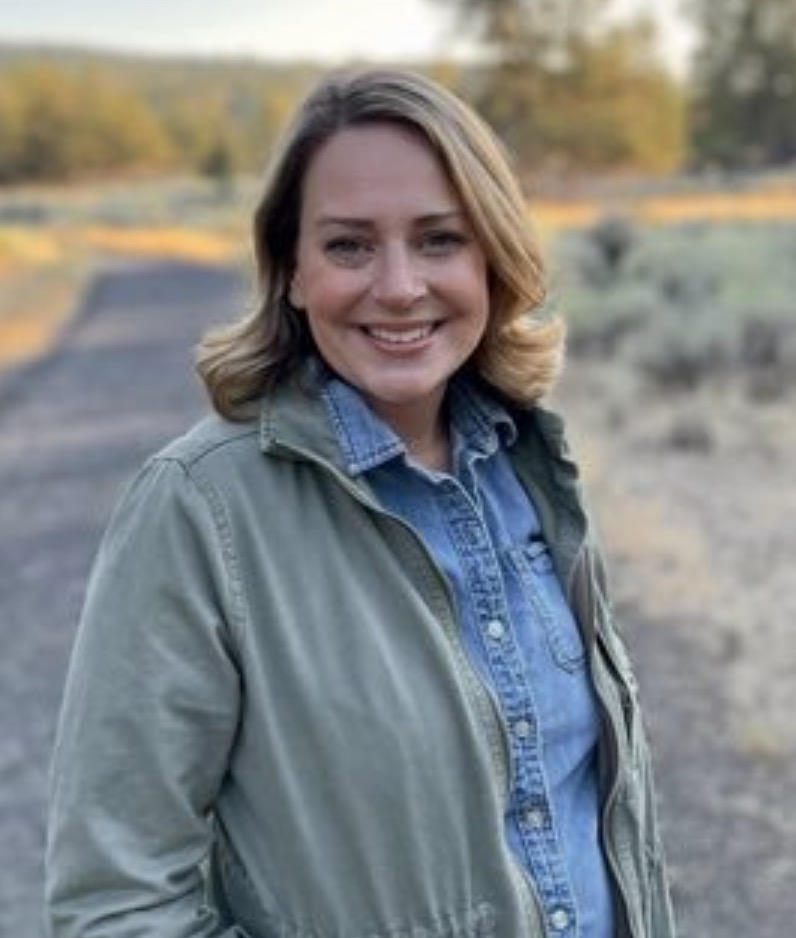
Emerson Levy, a Democrat who represents House District 53, told an electric bike advocacy group about her proposal Thursday morning. “Our laws haven’t caught up with the modern day,” Levy said shared at an online meeting of Electric Bikes For All, an informal working group convened Forth, a statewide electric vehicle nonprofit.
Levy is still formulating specific bill language, but so far the outline includes:
updating Oregon to the three class system recently adopted by the Biden Administration as part of the Infrastructure Investment and Jobs Act (IIJA). Oregon is one of 13 states that don’t use the Class 1 (20 mph with no throttle), Class 2 (20 mph with throttle), and Class 3 (28 mph max without throttle) system to regulate e-bikes;
remove the current age restriction (of 16 years) for riding e-bikes, but maintain a minimum age of 16 to use an e-bike with a throttle;
and require helmets for all e-bike riders regardless of age.
“If we don’t address it quickly, we’ll get to the point where community attitudes will shift very quickly to ‘Just ban them all.'”
– Emerson Levy, Oregon House Rep
Levy
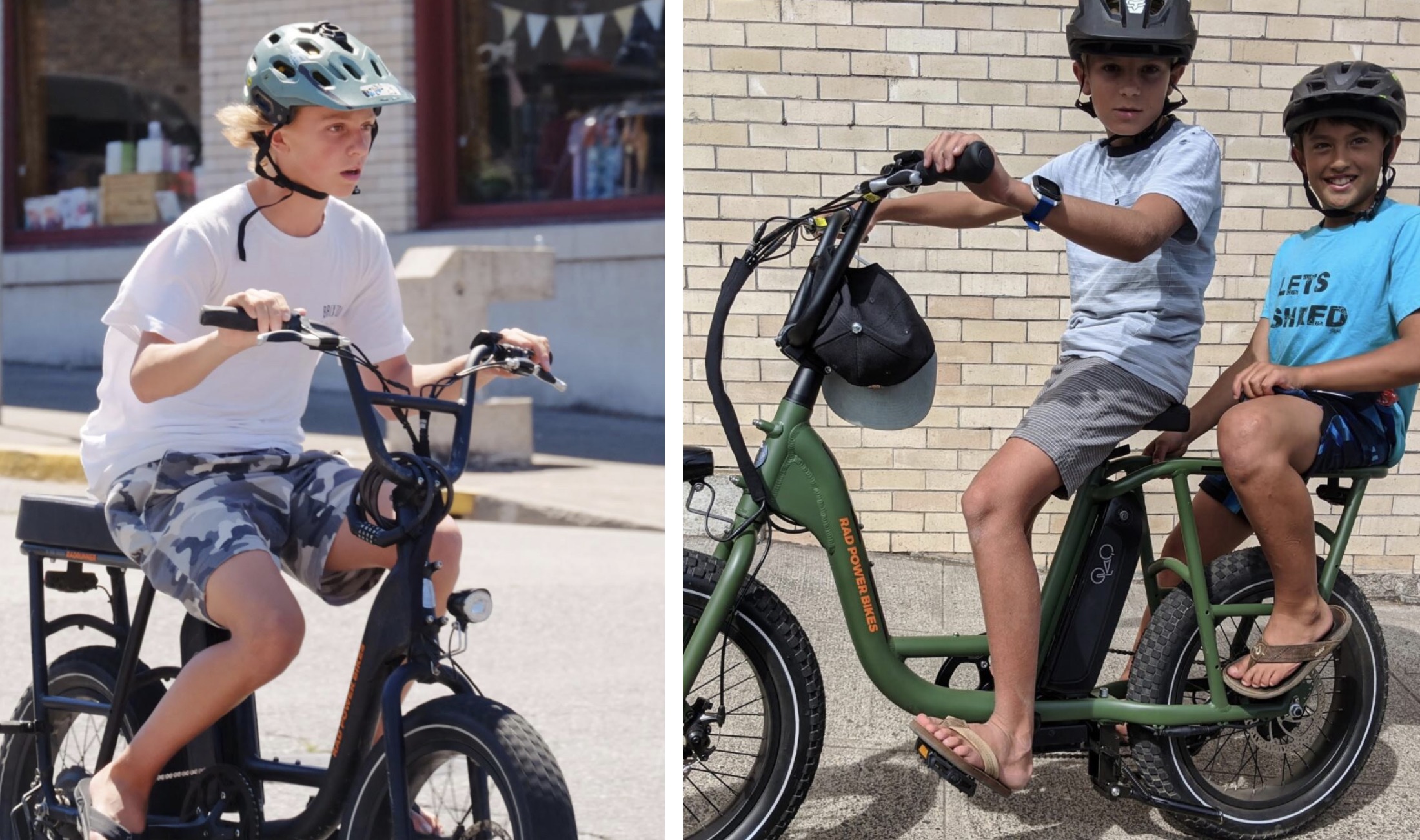
Use of throttles is especially problematic, Levy said, because many young Bend residents ride “souped-up” e-bikes with aftermarket throttles. She said Bend police stopped a young person going 70 mph last week.
At the meeting, Rep. Levy painted a picture of Bend residents who are outraged at the dangerous e-biking behaviors they see from teens and said her constituents are desperate for action after the tragic crash that killed a teen on June 17th. “I would say that we’re at a point where this is an emergency,” Levy shared.
Rep. Levy acknowledged that legal changes are just one part of the issue and that infrastructure and education are just as important. From her perspective as a lawmaker, something must be done quickly to quell local fervor around how many teens are riding e-bikes in a way some perceive as dangerous.
“It is a difficult space to be in,” she continued. “Because I really want kids to have the freedom to be on bikes, but the situation we have right now is quite unsafe… if we don’t address it quickly, we’ll get to the point where community attitudes will shift very quickly to ‘Just ban them all,’ so that’s why I’m trying to step in right now.
Responses to Levy’s ideas at the meeting were mixed, with several people expressing concern that the attempt to regulate e-bikes in this way was misplaced and could lead to unintended consequences.
Neil Baunsgard, an advocate with a Bend-based environmental nonprofit, said he was concerned about limiting e-bikes with throttles because they tend to be much cheaper than bikes without throttles. “Because most pedal-assist bikes are mid-drive [motors], they’re at least twice as expensive as a pedal assist bikes that have a throttle option,” he said. “So the concern that I have… is that it might lead to just gatekeeping the affordable e-bikes.”
Portland State University researcher and noted e-bike policy expert John MacArthur said, “What are we trying to solve here? What is it about a throttle that we think is so much more dangerous?” MacArthur pointed out that a 15-year-old could go very fast on a non-electric bike. “I understand there are concerns. I’m a parent too…. And in some low-income communities will this be another reason for the police officers to go chase down young people of color?… Is an age restriction what the real issue is?”
When it comes to a mandatory helmet law for e-bike users, MacArthur was clearly worried that it could be a slippery slope where lawmakers will try to apply it to all bikes. He also cited how helmet requirements impact bike share systems like Portland’s Biketown. “Cities that have required helmets for bike share fail. Seattle had that and they pulled it back. In Vancouver, BC you have to carry a helmet around or you will get fined.”
In an email follow-up after the meeting, Rep. Levy said she, “Most likely have to give up the helmets [provision of the bill], but I still think it’s important to have the conversation about head trauma on the legislative record.”
Sarah Iannarone, executive director of The Street Trust, encouraged Rep. Levy to explore other avenues to improve e-bike safety. She said Oregon should have e-bike related question on the driver’s test (to which Rep. Levy said ODOT is already amenable to) and that “infrastructure is key.”
“We really need to harden up the infrastructure for people using these light individual mobility devices,” Iannarone continued. “And that is going to be critical for youth. Youth who are not driving are more likely to stay alive. The youth who are dying in Portland are dying in motor vehicle crashes. So if we can get these young people riding transit, riding their bikes, rather than even having to adopt driver’s license to begin with, I think we’re ahead of the curve.”
A different perspective was offered by Forth Senior Policy Manager Shannon Walton-Clark. They were supportive of Levy’s ideas and urged the group to consider the political environment in Salem as talks ramp up for a major transportation funding package in 2025. Rep Levy’s proposal should be seen as a seen, in large part, as a “signal that work is being done,” they said. “If communities are not seeing things done about issues that from their perspective are the most important,” Walton-Clark continued, “It is gonna be much harder to convince those communities that infrastructure to support things like e-bikes is wanted and needed. And it’s going to be a lot harder at the legislative level to fight for infrastructure — specifically to protect things like e-bikes — if the narrative is, ‘E-bikes are unsafe, why are we subsidizing them? Why are we supporting them?'”
Walton-Clark’s view struck me as being very similar to the rationale that led to lawmakers passing a $15 tax on new bicycles as part of the 2017 transportation funding package. That tax was pitched as a way for cycling advocates to earn respect and “have some skin in the game” that would lead to more favorable funding and support in future years; none of which has materialized.
This conversation about how — or if — to further regulate e-bikes in light of their immense popularity (especially among teens) is just getting started. Draft bill language for the 2024 session is due in November and Rep. Levy says she’s open to feedback and input. You can contact her via her State Legislature page or at Rep.EmersonLevy@oregonlegislature.gov.
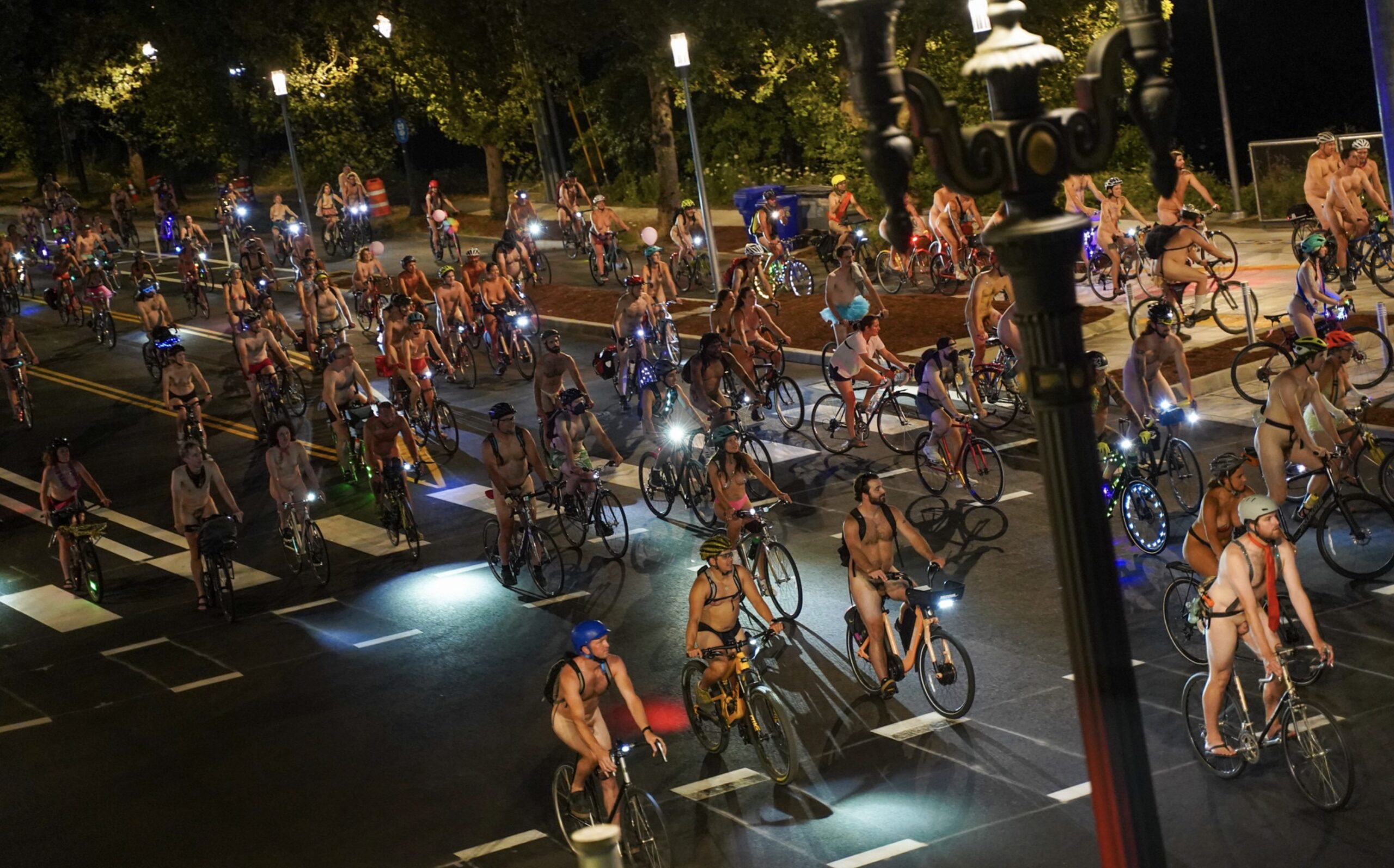
Riders near the Blumenauer Bridge at last year’s World Naked Bike Ride. (Photo: Jonathan Maus/BikePortland)
Welcome to the weekend! Here’s our weekly selection of rides and events worth your time. Please note, it’s Pedalpalooza season. That means there are tons of rides every day. See them all here. (Also note that rides usually leave 30 minutes after the posted meet-up time.)
Friday, August 11th
Cider Ride – 5:00 pm at Swift Cider HQ (NE) Portland’s cider status is legit. Join this ride and sample all the ciders worth drinking as you roll with cider makers and cider lovers from Swift Cider to Rev Nat’s Taproom. More info here.
Midnight Mystery Ride – 11:30 pm at Billy Rae’s Dive (NE) A longtime Portland tradition saddles up for another late night adventure full of warm air and magical vibes. More info here.
Saturday, August 12th – Day of Nakedness
Note: There are nine naked bike rides on this day, culminating with the Big One: The World Naked Bike Ride. See them all here.
Loteria Go Community Bike Ride – 10:00 am at Su Casa Super Mercado (NE) PBOT’s latest community ride promises to be super fun and there will even be a few prizes (including a TriMet annual pass). Goal of the ride is to explore the new bike infrastructure on 162nd Ave. More info here.
Lily and Aaron’s Bike Move – 1:00 pm at Doe Donuts (NE) Moving by bike is a proud Portland tradition and Lily is one of its most veteran practitioners. You’ll be amazed at how bike-power can move an entire apartment’s worth of stuff and your heart will be full with the barn-raising feel of the community coming together to help each other. More info here.
Celebration of Life for Jeanie Diaz – 4:00 to 6:00 pm at The Redd (SE) Friends and family will come together to remember and celebrate the life of Jeanie Diaz, the beloved youth librarian and mother of two who was killed by a driver last month. More info here.
Sunday, August 13th
Bridge Pedal (all day all over the place) It’s the annual ride and rite of passage for true Portlanders that will give you access to amazing views usually reserved for car drivers. Take back your city by bike! More info here.
Bi’s on Bikes – 10:00 am at Waterfront Park (SW) Open to anyone Queer, questioning and gender expansive, this ride will cover some classic Portland riverfront path miles and end with a BYOBrunch at Sellwood Riverfront Park. Costumes admired, but not required. More info here.
Rivendell Ride – 12:00 pm at Lords Luggage (SE) There was a guy named John and his partner Darby who used to own a Rivendell-loving bike shop in Portland. They are gone now but they still love Portland and miss their friends. Their fans also miss them. This ride will be a reunion of those people and anyone else who loves bikes and/or bike shops. More info here.
Beginner Bike Skills Clinic – 2:00 pm at Robertson Life Sciences Building (S) Learn all the basics you need to be a confident and proficient rider with a wonderful (and totally professionally certified) coach and human named Viv. For people 16+. Younger coaching available if parents are present. More info here.
Voting, the Government, and You – 2:30 pm at Portland City Hall (SW) Civics nerds unite at this ride that will help you understand how to navigate Portland’s government and will feature STAR (score than automatic runoff) voting experts who will try and convince you to sign the petition to get STAR on the ballot next year. More info here.