Comment of the Week: Go inside the mind of a city engineer

BikePortland comments at their best were on display last week in response to our post about the “Urban Trails Network” idea put together as a labor of love by a team of designers frustrated over our city’s drop in cycling.

The outpouring of reader responses became a snapshot of the issues facing Portland cyclists, and included some informed sub-threads (I really liked the tree canopy discussion).

But it was Cyclekrieg’s series of four comments which grabbed my attention. Cyclekrieg does “traffic engineering” in Minnesota, and is a self-professed “Strong Towns” guy. He had some advice for active transportation advocates which I think we all need to hear. Basically, to successfully advocate for safer streets it helps to know something about the personality of, and constraints facing, the people who sign off on them.

All four of Cyclekrieg’s comments are worth reading, I’ll get you started with the first which was in response to another commenter:
I do traffic engineering and it’s not as simple an answer as you think to why roads are wider, like highways.

First, are the typical sections that cities have adopted. These often call out wider lane widths. Lane widths are #1 factor in why a road feels like you can go faster. As I harp on a lot here in BikePortland, typical sections are the key to changing how roads are built. (Which, side note here, is why the above plan is so interesting and feasible. It changes the sidewalk portion of the typical section.)

Second, funding often comes with requirements of certain set of standards. If you are getting funding that is from state, that means state DOT standards will have to be met. Same for federal funding. Those standards almost always include wider lanes.

Third, is political pressure from drivers. Nothing is angrier than a group of drivers that might have to go a wee bit slower. This is why enforcement often takes a backseat also.

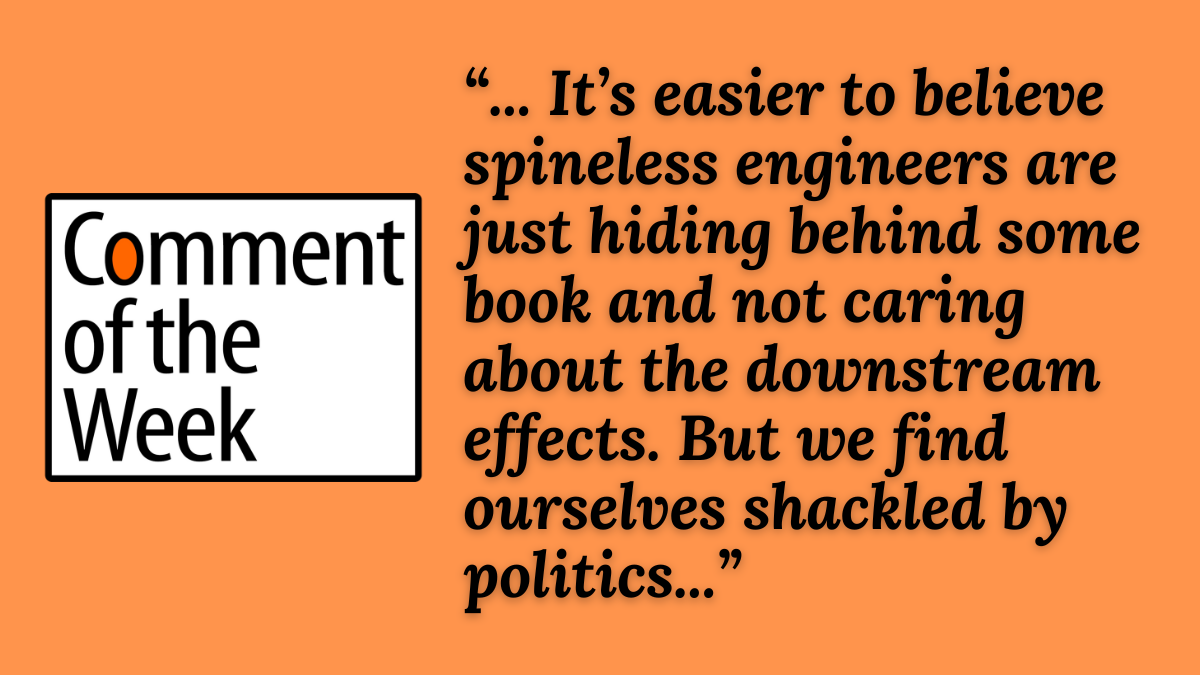
I get it’s easier to believe spineless engineers are just hiding behind some book and not caring about the downstream effects. But we find ourselves shackled by politics, pre-built standards, funding, etc. A lot of this can be changed, but often isn’t because the advocate groups that could push these changes often don’t understand what needs to be changed. Other times they want massive revolutionary changes versus a steady stream of incremental changes, and they can’t convince others (voters, users, etc.) to go big, so nothing gets altered.

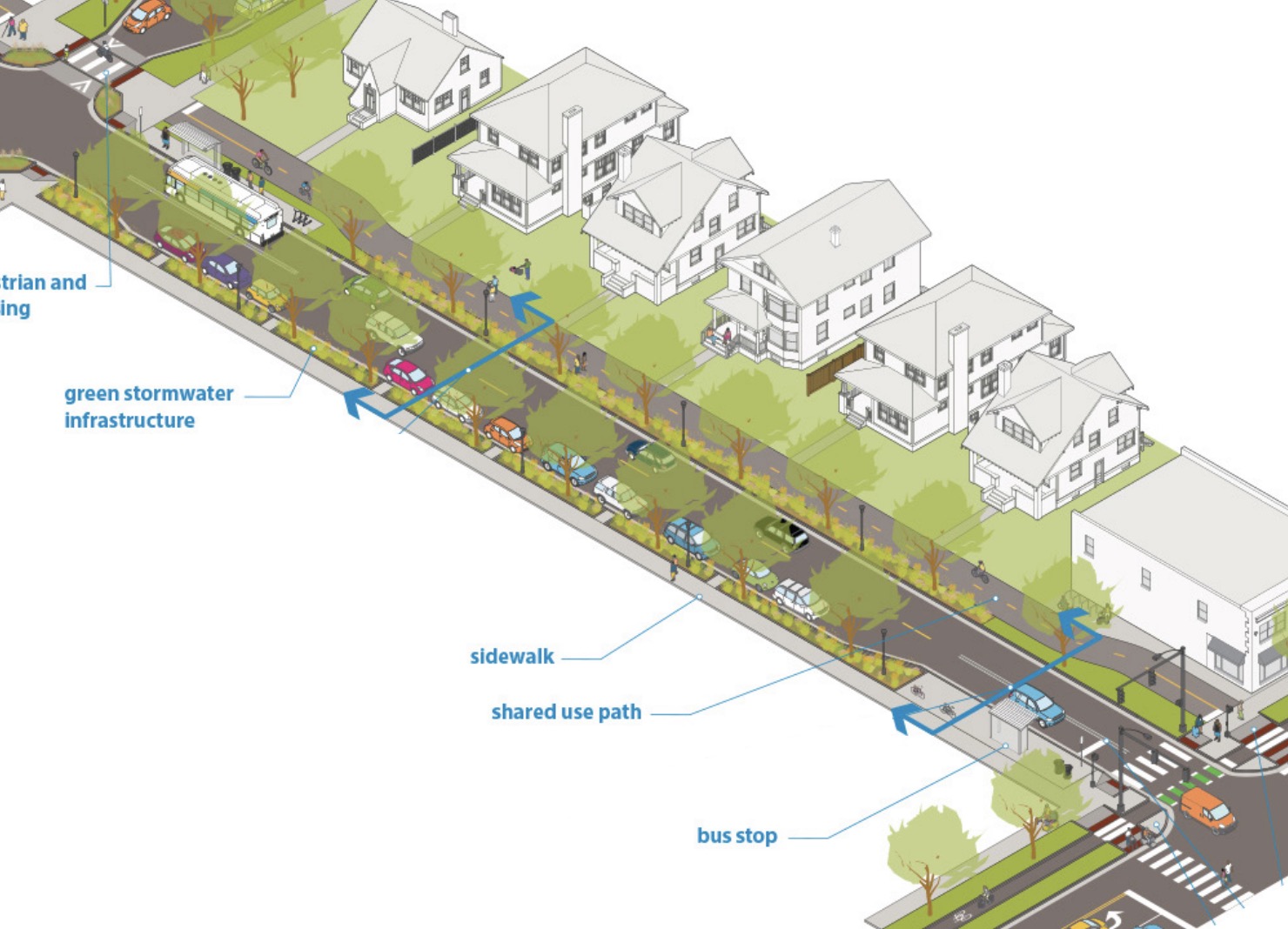
CycleKrieg’s comments (and the tree canopy discussion) got me thinking about PBOT’s Streets 2035 work. You might remember that Streets 2035 is a guide for resolving infrastructure constraints and competing needs in the right-of-way. It has an important graphic detailing the canopy, ROW width, stormwater treatment and sidewalk standards of different areas across Portland.

Thank you CycleKrieg and and everyone who contributed to this outstanding thread. You can read CycleKrieg’s comment in context here.
Monday Roundup: Naked biking fears, streets for housing, and more

Welcome to the week! Let’s make it a good one.

Here are the best stories from the past seven days you should know about, from sources you can trust…

Oh, Wisconsin: Lawmakers in Wisconsin are so afraid of seeing people ride bikes naked they want to pass a law that would make it illegal. I wonder if they realize how this protesting thing works: I guarantee if this law passes, Madison will have the largest naked bike ride in the world the following year. (Men’s Journal)

Goodbye Cross-Check: One of the most ubiquitous bikes in Portland, the Surly Cross-Check, has been discontinued by its manufacturer after a quarter-century run as a stalwart, beloved, do-anything rig. (Velo News)

Noise pollution is a thing: I live right next to a freeway on-ramp and have become radicalized to the idea that people should be punished for loud engine revving. A neighborhood in Manhattan has installed a device that issues sound citations. (Guardian)

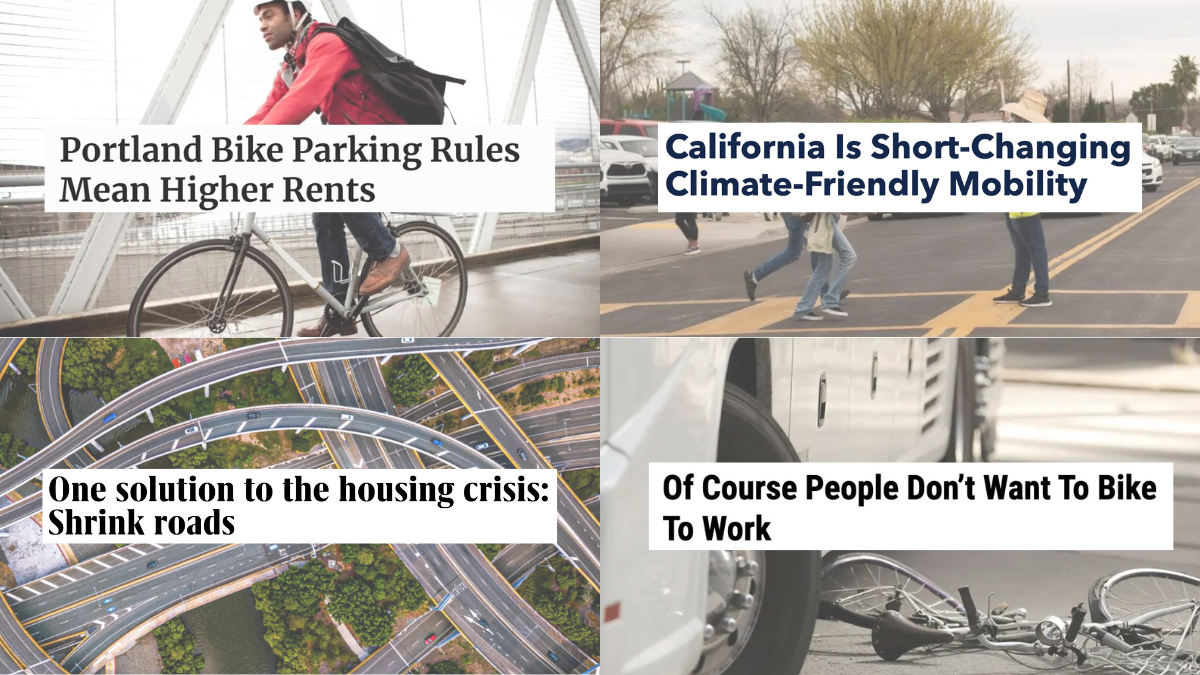
You get what you spend for: An analysis of spending by California’s DOT found that less than 20% of its investments were aligned with their own climate and transportation goals. Would love to see someone do a similar analysis for Oregon. (NRDC)

Shrink roads, build housing: Last week we shared the Urban Trails Network concept that would use existing road space to create active transportation infrastructure. And now this: There are efforts afoot to reclaim roads to build housing. (Fast Company)

Want a huge truck or SUV? Pay for it!: Be still my beating heart… The Colorado legislature is considering a bill that would charge people an extra fee for cars and trucks over a certain weight. It’s one of the first efforts to address car bloat or “autobesity” and I hope Oregon lawmakers take note. (Colorado Public Radio)

Singapore isn’t messing around: On a related note to the above item, it now costs at least $76,000 for a 10-year “certificate of entitlement” — a requirement if you want to drive a car in Singapore (although I fear that in the U.S. if we did that some rich folks would pay for it and then drive like even bigger assholes as they flash their certificate around like a badge). (CNN)

DOT whistleblower: Now this is how you work the inside game. An ex-advocate worked their way up into Caltrans (California’s DOT) and spoke truth about their freeway expansion plans, only to get demoted for speaking against the party line. (Politico)

Affordable housing and bike parking: A former member of Portland’s Bicycle Advisory Committee says the city’s overly-prescriptive bike parking rules for housing developers reduce overall unit production and push up rent prices. (Forbes)

Biking down? Of course it is: If you are a regular bike rider in any major American city, the bad biking stats of late will come as no surprise. And the response should be to improve infrastructure, not give up on cycling. (Jalopnik)

15-minute cities: Creating more neighborhoods where people can live, work, play and shop in close proximity is essential for the survival of the human species on planet earth — so people who think it’s a conspiracy theory should not be taken seriously. But I digress. This is a good summary of the 15-minute city concept and the absurd pushback it tends to receive. (NPR)

Cycling and downtown revitalization: Good to see that bicycling advocates are a big part of the conversation around how best to revitalize an important street in downtown San Francisco. Take note Commissioner Mapps! (ABC SF)


Thanks to everyone who shared links this week!

PBOT announces major progress on automated enforcement cameras

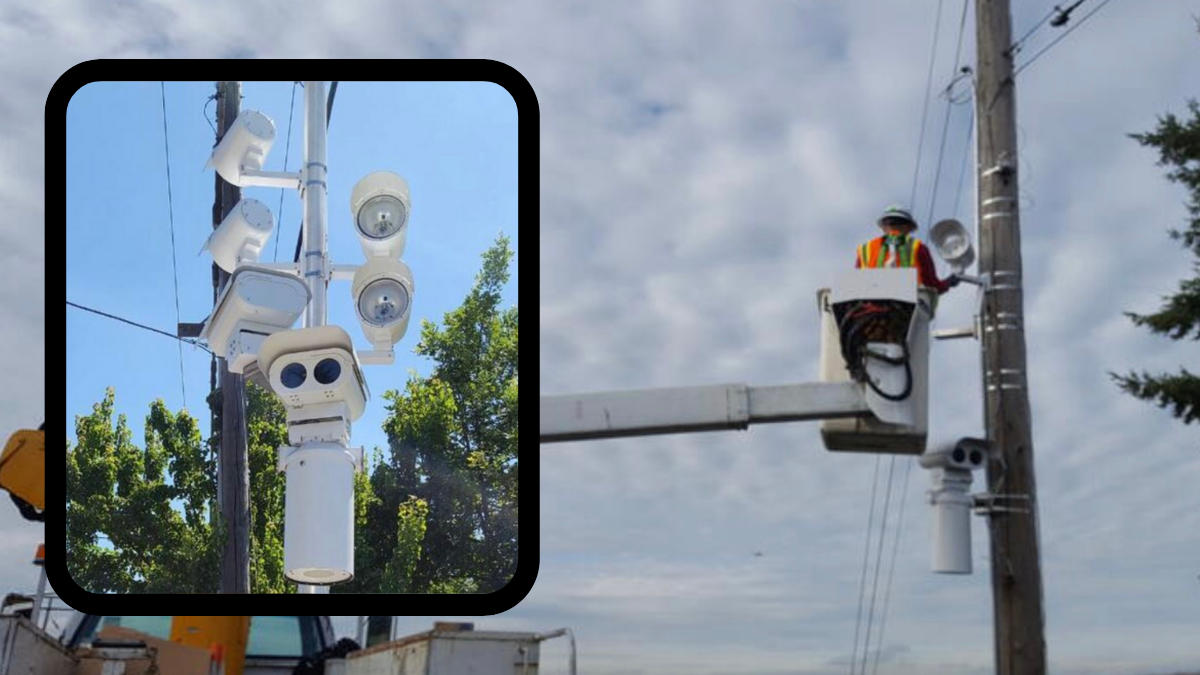
(Photo: City of Portland)

At long last, Portland appears to have broken through its automated enforcement camera logjam.

On Thursday, just as we teased out back in March, the Portland Bureau of Transportation announced that 11 new cameras are currently in operation since we last checked in on this issue and that eight more will be issuing citations by the end of this year. And that’s not all: at least 12 more cameras will come online in 2024.

“With more traffic enforcement, we can send a strong signal that the reckless driving we’ve all seen in recent years is unacceptable in Portland,” said the city commissioner in charge of PBOT, Mingus Mapps, in a statement.

PBOT is installing two types of cameras: one that snaps photos and sends citations to folks driving well over the speed limit (typically the threshold is 11 mph over), and another used at intersections that enforces both speed and traffic signal compliance.

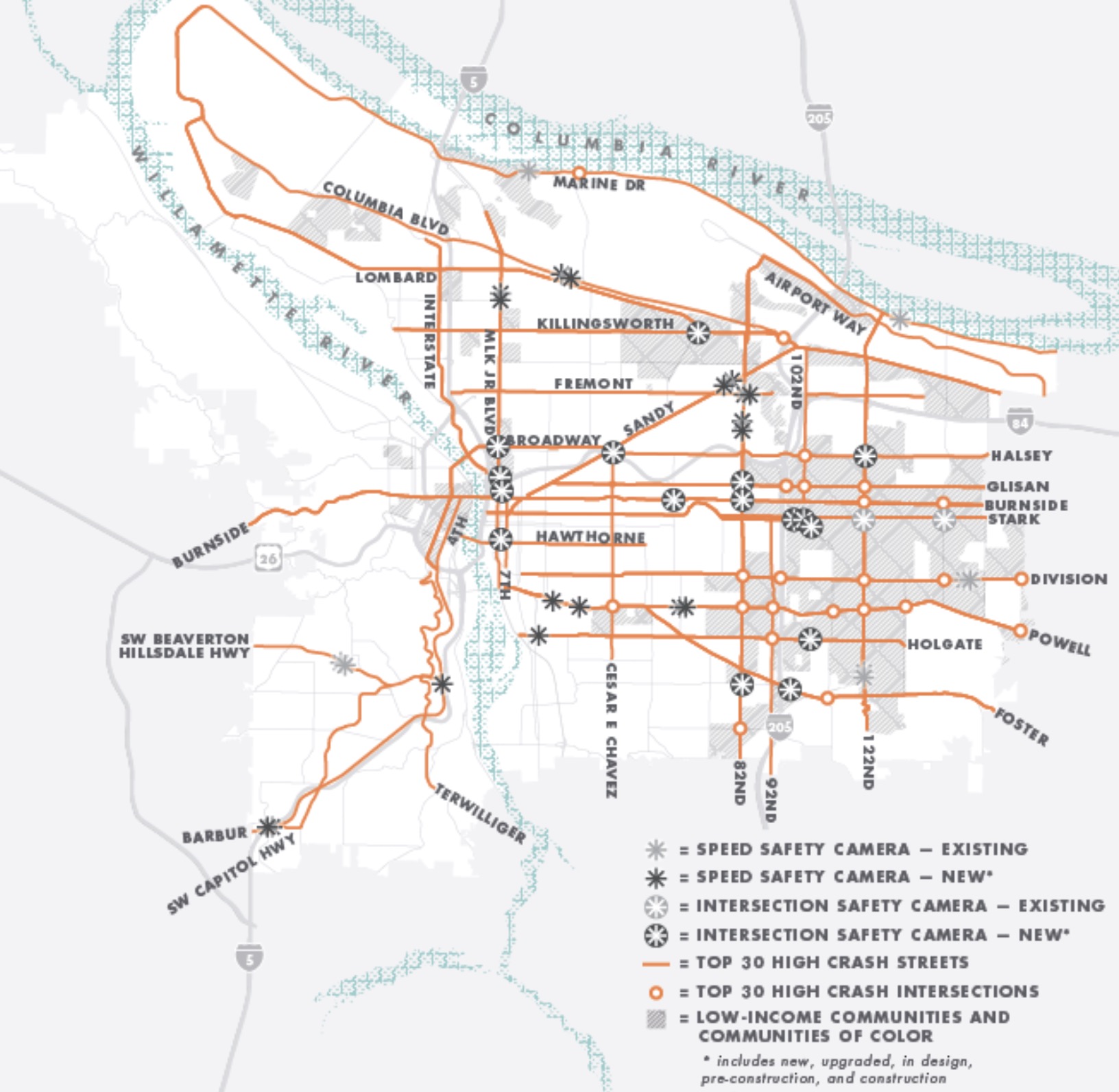
Updated camera location map.

Despite the widespread public and political support for cameras as a safety tool, Portland’s implementation of them has lagged. As of our story back in March, PBOT had only installed nine cameras at five locations since 2016. Officials have blamed everything from contractor and supplier issues, to design problems, vandalism, and electrical challenges for the delay.

Commissioner Mapps has been a very strong supporter of cameras and promised to double the number of cameras in an interview with BikePortland earlier this year. It looks like he’ll meet that goal. “In total, the city will soon operate 40 safety cameras throughout Portland,” PBOT said in a statement yesterday.

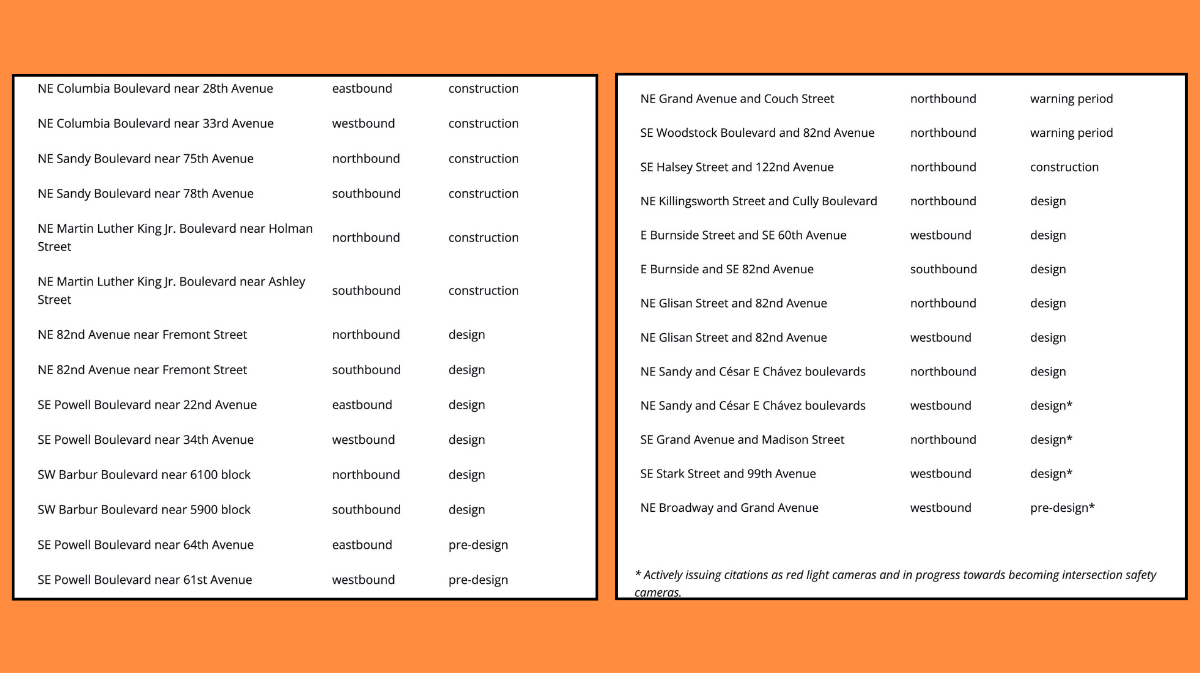
PBOT has also released an updated map (above) that shows the locations of all current and future cameras. See the list of new and upcoming locations below:

Many Portlanders are reasonably concerned that the rise of obscured and/or nonexistent license plates on cars might decrease some of the effectiveness of these cameras. I posed a question about this issue to PBOT.

“The cameras do have limits and your question raises the importance of continued enforcement with trained staff,” Rivera said (note that Portland can now use non-police staff to review citations and is currently staffing up to do that). “There’s really not much that cameras can do to address multiple violations.”

Rivera added that these cameras are just one tool the city uses to slow people down and reduce dangerous driving behaviors. ” We are also partnering with Portland Police, educating people about the impact of speed, and changing street designs to reduce vehicle speeds,” he said.

And what about those folks who try to hide from cameras? Rivera says they’ll use PBOT’s parking enforcement officers to catch those folks.

Learn more about PBOT’s enforcement camera program on their website.

‘Urban trails,’ a bold plan for the next generation of Portland bikeways

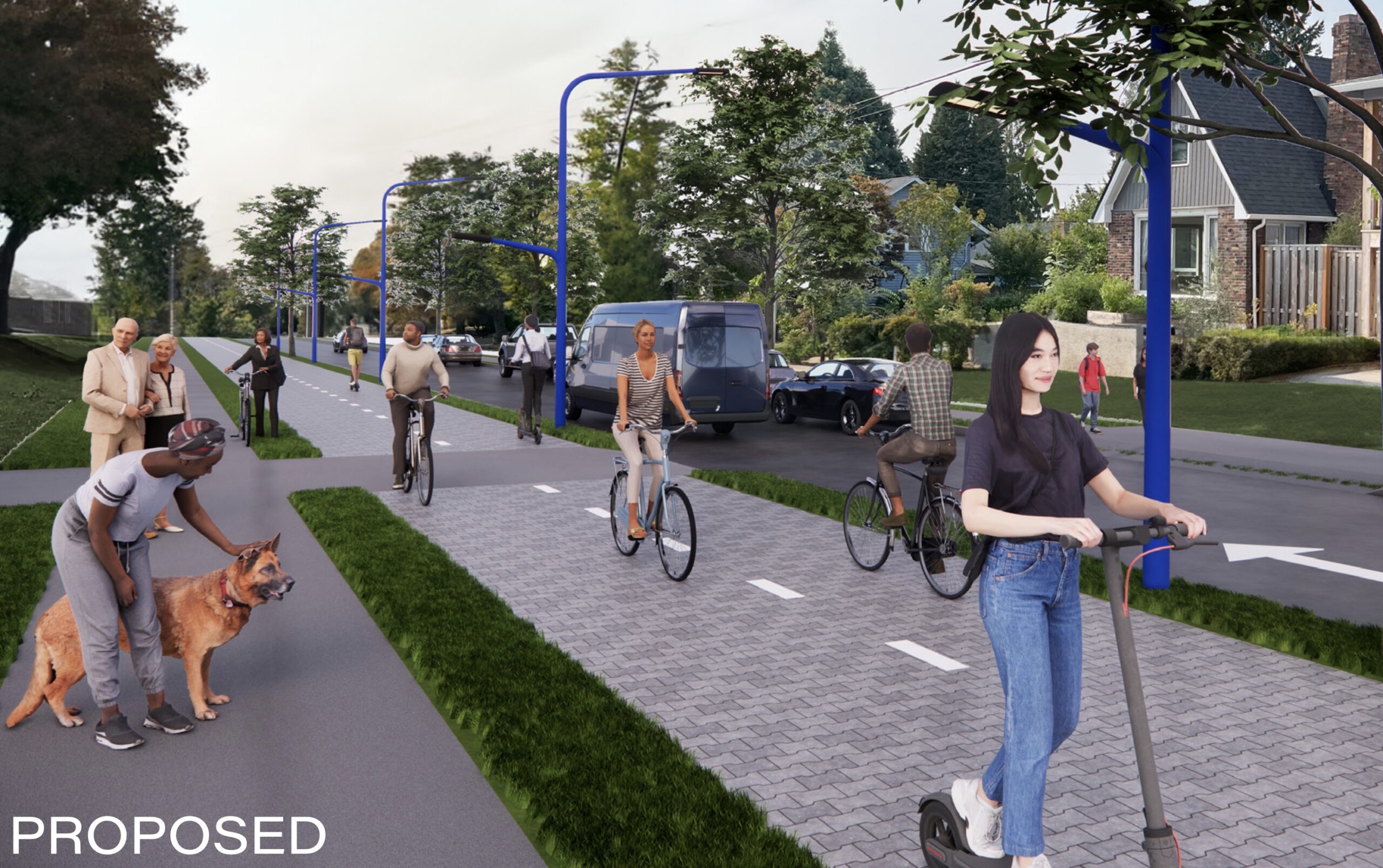
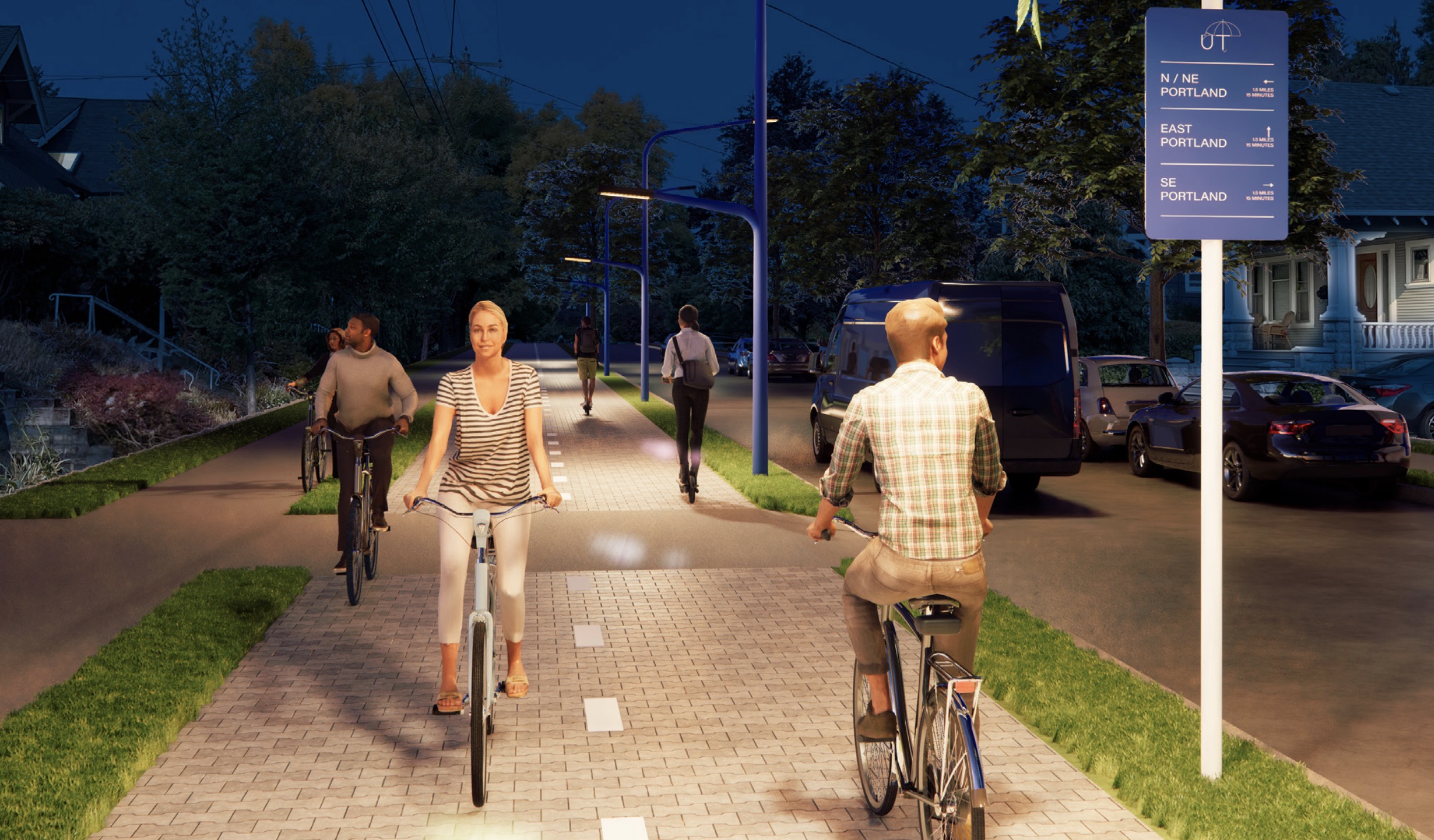
Rendering of Urban Trails Network concept.
The network.

A team of local architects and planners think they’ve found a key that will unlock the door to more bicycling in Portland.

When we finally saw hard numbers about Portland’s cycling decline last spring, it was a reality check for many of us. 2023 counts from Portland’s transportation bureau aren’t ready yet, but other sources show that cycling in our city continues to lag behind not just our past numbers, but peer cities as well (more on that in a separate post).

Contrary to what we often hear from local transportation and elected officials, Portland hasn’t exactly “built it” when it comes to bike infrastructure. Yes, we can point to many projects and lane-miles of bike facilities; but none of that matters if the infrastructure isn’t good enough to entice people to use it.

My opinion piece on the decline last May spurred many conversations about what we should do to turn the ship around. For one group of local planners, it helped crystalize what they feel has been missing from the conversation: A next-generation type of bike infrastructure that could entice more Portlanders to ride.

Water cooler conversations tinged with frustration about the drop in cycling, led to an ambitious side project that mixed professional skills with personal passion and they came up with “An Urban Trails Network for Portland” — a  concept for how we can claim more road space for active transportation, and reclaim our title as a great cycling city.

The team behind this vision is led by 52-year-old Mark Raggett, a 20-year veteran of the City of Portland Bureau of Planning and Sustainability who now works for a private urban design firm. He and three other co-workers — Nick Hodge, 28; Katie Barmore-McCollum, 35; and Ryan Al-Schamma, 27 — have spent months refining their idea and now it’s ready for public scrutiny.

I met with Raggett and Hodge back in June and then again last month and I’m very impressed with what they’ve done.

The Urban Trails Network is built on two pieces of existing policy: the Portland Bureau of Transportation’s neighborhood greenways, and the “city greenways” defined in Portland’s 2035 Comprehensive Plan (adopted in 2020). The network would create a backbone of residential streets with separated cycling facilities on them. Imagine the best elements of a multi-use path, mixed with the convenience and proximity to destinations of neighborhood greenways. 

And the most interesting part? The new paths would be at sidewalk level and use existing right-of-way.

“We propose something new, that could be the ‘next generation’ of infrastructure, that would be more attractive in a low-density city like Portland to the large ‘interested but concerned’ crowd that may be driving more,” Raggett shared. And Hodge added, “Most people in the ‘interested but concerned’ category might not be aware of the greenways, or if they were, they might have a hard time finding and navigating them due to the lack of intuitive wayfinding tools.” 

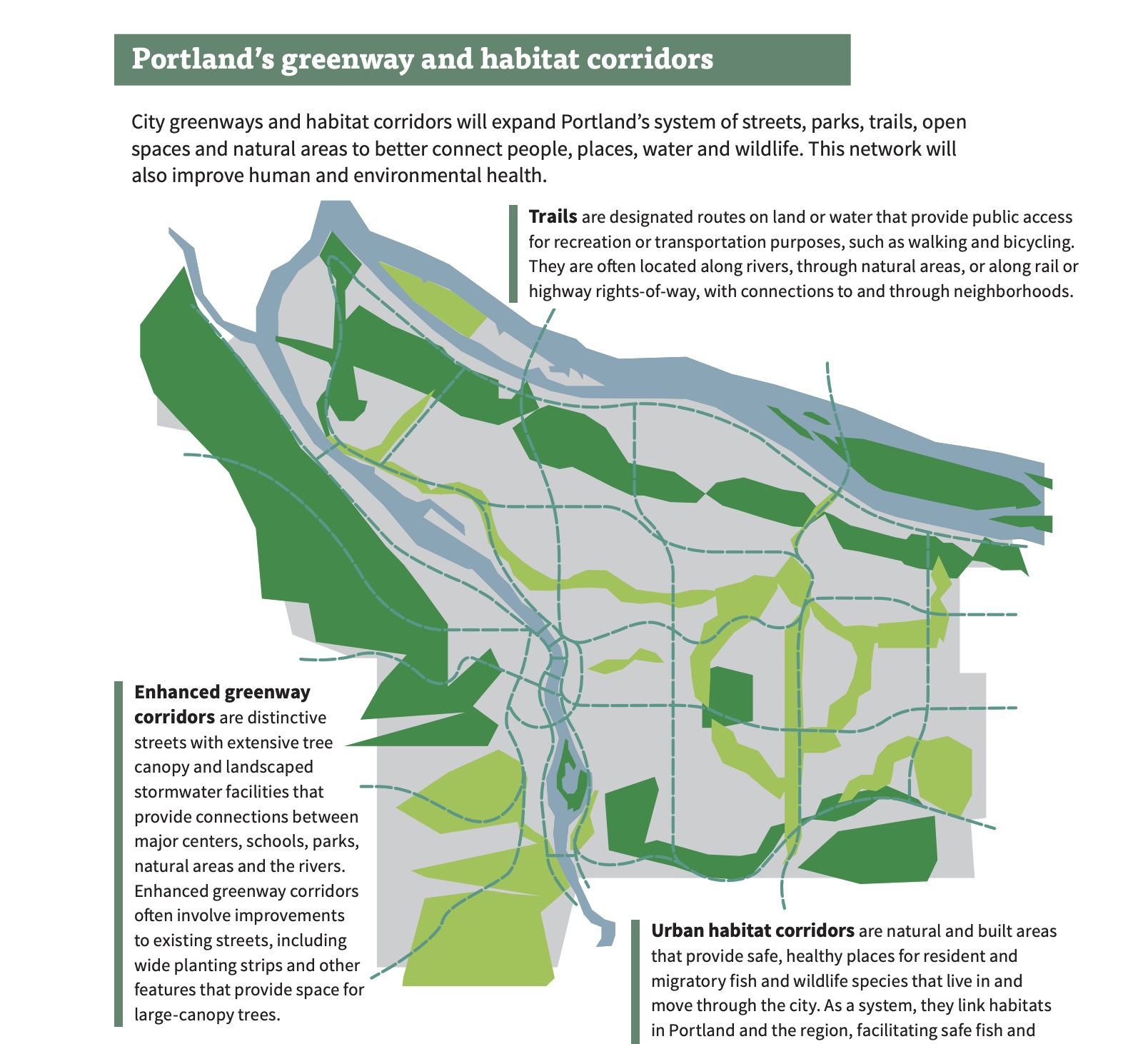
Raggett says the concept builds on the Comp Plan’s “city greenways” network, which is defined as, ” a system of distinctive pedestrian- and bicycle-friendly streets and trails, enhanced by lush tree canopy and landscaped stormwater facilities that support active living by expanding transportation and recreational opportunities and making it easier and more attractive to reach destinations across the city.”

Raggett, Hodge, Barmore-McCollum, and Al-Schamma have put together a nine-page presentation that lays out all the details.

The presentation shows how three types of existing residential streets could be retrofitted with the new Urban Trails Network design. In each type, they demonstrate how space for active transportation on the streets would grow. (The exact streets that would make up the network haven’t been named as this is still just a conceptual exercise.)

On a 36-foot wide street, for instance, the concept preserves 21-feet for car parking and driving (“the concept proposes a more pragmatic relationship with motor vehicles”), and would add a 15-foot, two-way cycling pathway and buffer strip on one side. On an street without sidewalks that has 60-feet of right-of-way but currently only 20-feet paved, the concept proposes a full rebuild that would include a 16-foot, two-way, shared bike/walk path on side and a sidewalk on the other. It would also add 18 feet for parking cars. On a narrow residential street with a 40-foot roadway, they propose adding a 12-foot, two-way path and buffer strip, while maintaining two lanes of on-street car parking and a 14-foot general travel lane that would be shared by both directions of drivers (a “queuing street” that is common on many narrow residential streets today).

With fewer people commuting to and from downtown, the idea is that better bikeways criss-crossing neighborhoods are more important than ever.

“The Urban Trails network will provide a much-needed and intuitive network of connections that will provide a flexible and resilient series of new pathways for all ages and abilities,” the presentation states. “Whether they be walking, rolling, riding, roller-skating or scooting around the city.”

Raggett and his team understand funding for this type of treatment is nonexistent. But they aren’t asking for money, they just think it’s time for Portland to move onto the next level of bike infrastructure and do something bold that will finally move the needle.

“The linked series of citywide pathways will define the next era of healthy, climate-responsive mobility in Portland.”

Take a look at the plan yourself and let us know what you think!

Commissioner Mapps shoots hole in Frog Ferry hopes

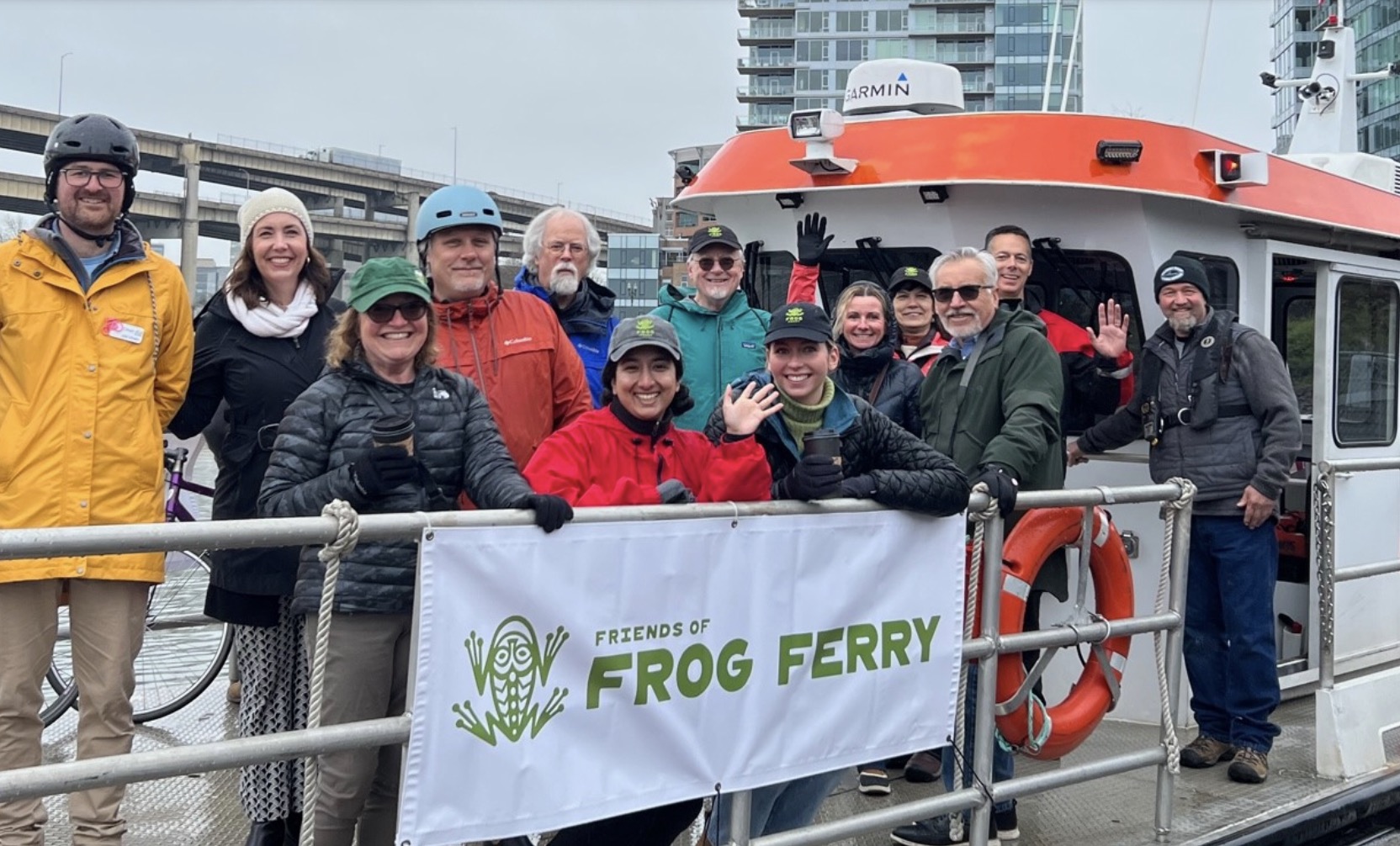
(Photo: Friends of Frog Ferry)

“The headwinds for this project are strong.”

– Mingus Mapps, Portland city commissioner

At a city council meeting Wednesday, Portland Bureau of Transportation Commissioner Mingus Mapps shared very bad news for backers of Frog Ferry, a project that would bring ferry transit to the Willamette River.

In response to Frog Ferry advocates who spoke at the beginning of the meeting, Mapps told them he has seriously cooled on the project. Several ferry backers, including Frog Ferry President Susan Bladholm, came to council to urge them to add the project into the the Regional Transportation Plan (RTP), a federally-required list managed by Metro that puts projects in line for federal funding consideration.

Below is Mapps response in full (edited slightly for clarity):

Mapps. (Photo: Jonathan Maus/BikePortland)

“I support this project, I share your vision. I respect you. And because I respect you, I’m also going to speak some truth right now. And this is going to be difficult.

I think everyone on this council when people all throughout this region can understand and embrace the vision of bringing a ferry to the city. I will also tell you that the headwinds for this project are strong. If you’ve paid attention to some of the conversations we’ve had in this chamber over the last several weeks, you’ve seen me come to my colleagues and talk about the grim economic facts. That PBOT’s budget is fundamentally unstable and flawed. I’m busy trying to figure out how to cut $32 million for PBOT’s budget. That’s about a third of our discretionary dollars, which is a challenge. Which also means that expanding and creating a new mode of transportation, even one which I think would be a great benefit to our community, is awfully difficult.

Now I’m sure some folks will say, ‘But Commissioner Mapps, listen, we’re not asking for dollars from PBOT.’ But in terms of how this fits together, If I put the ferry on the Regional Transportation Plan [RTP], it means I don’t put some other infrastructure projects into that slot, that I kind of have to get done, which the feds might reasonably provide us some help [with].

I also want to talk about some of the other challenges that we face here. I think this project would be great if our partners across the river in Vancouver were enthusiastic, but our elected leaders in Vancouver have told me in no uncertain terms that they do not plan to build a Frog Ferry terminal in Vancouver. And I will also tell you, our partners over at TriMet have also expressed concerns to me about how this project would interact with their transportation system. Now I see some heads shaking; but you know, I’ve talked to them [TriMet] and they tell me that, you know, one of the your requests to them if we move forward with this project, I think they’ve been asked to withdraw some bus lines in certain neighborhoods that we’re talking about… and I’m not a TriMet expert, but I will tell you what I will tell you the kind of reception that I received when I talked to our regional partners about trying to move this forward.

Now, we are not making a vote today. And I know this conversation will continue over the next couple of weeks; but because I respect you and I want to honor your activism, I also just feel obliged to actually be straight with you about what our current field position is. And of course you can reach out to my office you can reach out to my colleagues on council, you can reach out to our partners in Vancouver and our friends over at TriMet. I recognize that it is upsetting to many and this is disappointing. But in my professional evaluation, that is where we’re at today.”

This is a big blow to Frog Ferry, especially as the group tried to regain momentum after missing a key grant deadline and failing to get the previous PBOT Commissioner on board last year.

Weekend Event Guide: Slut Pedal, bike town hall, Zoobomb, and more

It’s so beautiful outside right now, and a bike is a great way to enjoy it. (Photo: Jonathan Maus/BikePortland)

Welcome to the weekend eve eve.

Check out our ride and event picks below. And thanks for riding your bike!

Friday, October 6th

Zoobomb All Wheels Welcome – 7:00 pm up on The Hill (SW Knights & Fairview)
Take the MAX up to Washington Park (or ride, you stud) and meet some nice people before “bombing” down together in the grand tradition of the world famous Zoobombers. Bring a mini-bike if you dare. More info here.

Saturday, October 7th

Take a Kid Mountain Biking Day – 10:00 am to 2:00 pm at Gateway Green (NE)
Grab the bikes and the little ones and roll over to Gateway Green for some fun on the pump track, jumps, trails, and more. It’ll be a big festival of off-road goodness. More info here.

Parkrose Pedal – 11:00 am to 2:00 pm at Parkrose Middle School (NE)
This annual, family-friendly ride brings the Parkrose neighborhood together to spread the joy, empowerment, and community building potential of bicycling. More info here.

E-bikes at El Tigre Festival – 12:00 pm to 9:00 pm at Cook Park (Tigard – Washington County)
As part of Hispanic Heritage Month, the City of Tigard has made bicycles a big part of this year’s El Tigre Fest. Expect great, kid-friendly bike activities and an e-bike demo area where you can try out a cool new ride. More info here.

Winter Gear Clinic – 12:45 pm at Evelyn Schiffler Park (Beaverton – Washington County)
The fine folks of Ride Westside are hosting a clinic to get you up to speed on how to keep riding in the cold and wet. Jackets, pants, lights — they’ll have experts on hand to calm your concerns and boost your confidence. More info here.

Sunday, October 8th

Meet PBC Portland Tour – 9:30 am at Wilshire Park (NE)
Join Portland Bicycling Club leader Ann Morrow for a relaxed ride around Portland. This is Portland’s oldest bike club, and it might be your people. You’ll never know, until you show. More info here.

Bike Town Hall – 1:00 pm to 4:00 pm at Portland Mercado (SE)
Three Oregon state lawmakers are hosting this rolling town hall: Reps Khanh Pham and Thuy Tran, and Senator Michael Dembrow. Imagine, politicians caring this much about transportation, the environment — and community engagement! Swoon!! More info here.

Slut Pedal – 1:30 pm at Irving Park (NE)
“This ride is centered around BIPOC and Queer SW, but ALL local dancers, s*x work*rs, and performers or coaches are welcome for this fun, community oriented bike ride and party event.” Free Biketown and TriMet passes available on first-come/first-served basis! More info here.


— Don’t see an event? Please tell us about what’s going on in your neighborhood by filling out our contact form!

Council candidate competes for best transportation policy platform

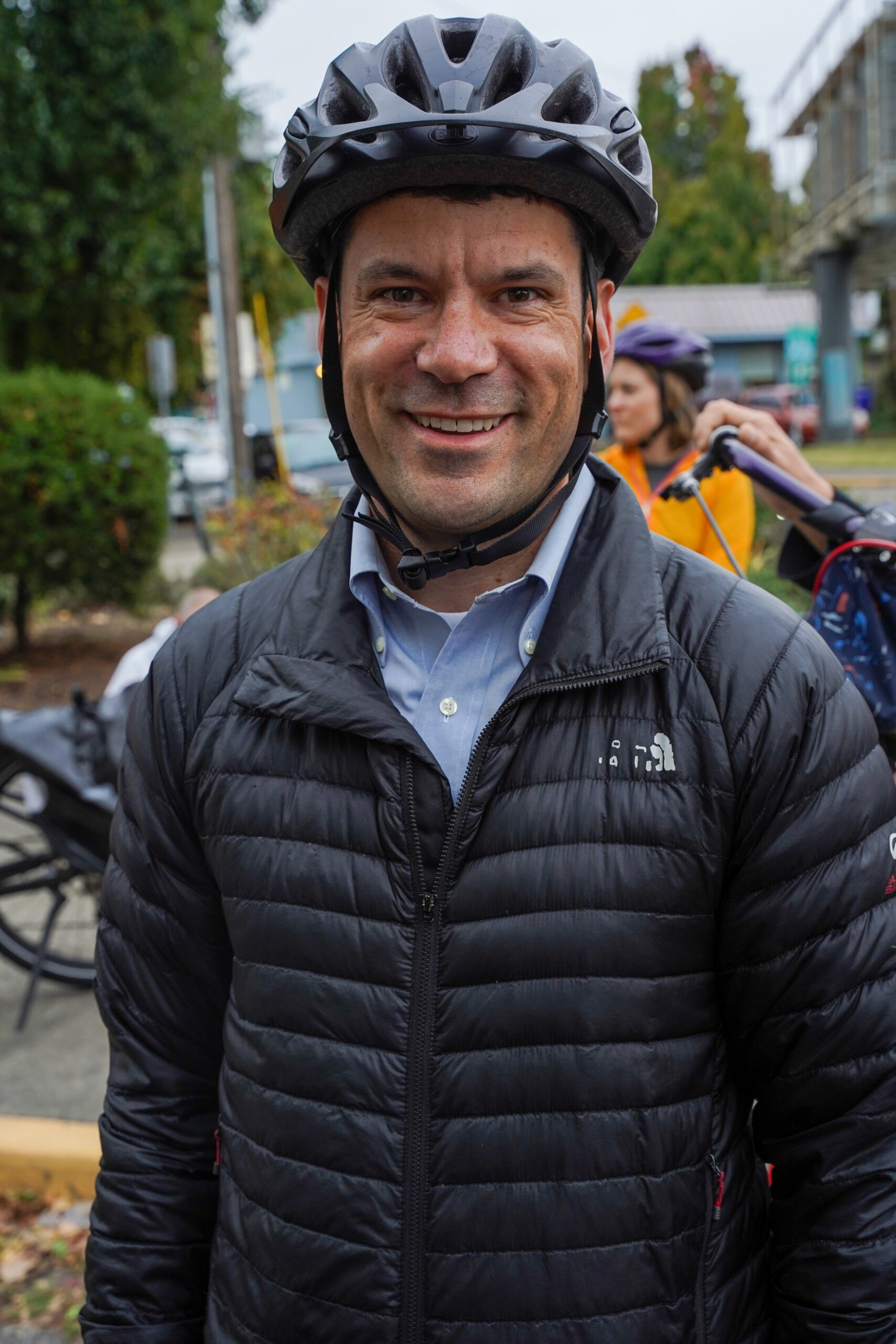
Council District 4 candidate Chad Lykins on Friday, September 29th. (Photos: Jonathan Maus/BikePortland)

The new crop of city council candidates is looking really good from a transportation reform perspective. Keeping in mind that our current City Council is one of the weakest ever when it comes to understanding the vital role safe streets and transportation planning can have on the success of our city, the slate of about 20 or so candidates for 2024 is downright exciting.

A quick scan of the names reveals several that have been involved with bike activism and/or related policymaking. And we’ve already had four candidates show up and give speeches at BikePortland events! One candidate I’ve yet to meet, school teacher Tiffany Koyama Lane, told Willamette Week on Monday that having safe streets for people who walk and bike is a “basic right.”

But District 4 candidate Chad Lykins is on a whole other level.

“I will enact city policies that prevent special interests from rolling back improvements to transportation safety and carbon reduction.”

– Chad Lykins transportation policy platform
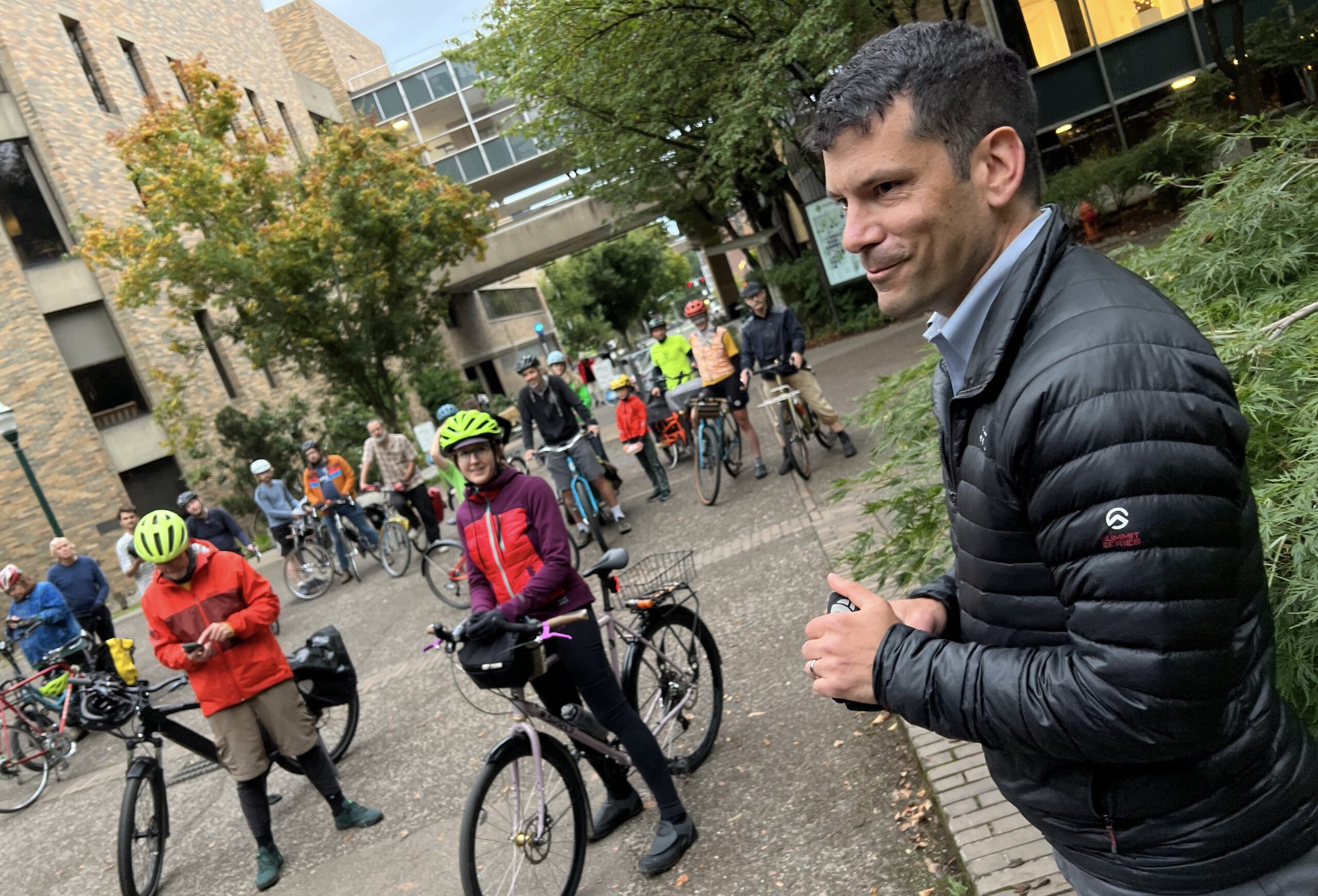
Lykins at the Broadway ride last Friday.

Most candidates don’t have platforms published on their websites yet, much less anything about transportation. But Lykins, founder of a small business that teaches young people how to play chess, has a detailed one. And he’s so confident about it, he messaged me last week to say: “We’re trying to build the strongest transportation platform of any city candidate. Can you have a look and tell me how we can improve it?” Then Lykins showed up to our Broadway bike ride on Friday and shared a bit about it in a short stump speech.

So I figured I’d take Lykins up on his offer. But instead of messaging him back, I thought it would be fun to post his platform here and have all of you weigh in on what he’s got so far.

Below is Lykins’ transportation platform (links are his):

The City of Portland’s Climate Emergency Workplan for 2022-2025 identifies transportation as responsible for 44% of carbon emissions in Multnomah County, the largest source of carbon of any sector.

The best way to reduce the carbon impact of transportation is by making it safer to walk, bike and take public transit. More than 60% of Portlanders say they would ride public transportation and more than 70% would ride bikes, ebikes, or scooters if doing so was safe and affordable. Portlanders are ready to commit to transportation if leaders will support them doing so safely. The Climate Emergency Plan adopted by the City sets clear priorities: “For more Portlanders to use climate-friendly travel options, our streets must prioritize people biking, walking and taking transit” (p. 8).

Though Portland Bureau of Transportation’s staff has been working toward “rapidly reducing the amount of driving in our community” (p. 6), those who lead PBOT have wasted public resources by attempting to spend money to remove infrastructure necessary both to public safety and to our climate goals.

Wasteful spending could not come at a worse time. PBOT is in a budget crisis that has worsened over several years. It has already lost 60 staff positions and is facing an additional $30 million in cuts. This is occurring against a backdrop of record numbers of traffic fatalities.

I will enact city policies that prevent special interests from rolling back improvements to transportation safety and carbon reduction. Specifically, I will propose legislation that prohibits the removal of infrastructure for pedestrians, cyclists, and public transit before (1) the completion of comparable alternatives and (2) validation that these alternatives function as well or better than the infrastructure being removed.

The underlying cause of PBOT’s budget crisis is dependence on fossil fuel consumption. PBOT is funded through gas taxes and downtown parking fees. Gas taxes are declining due to increased fuel efficiency, while downtown parking revenue is decreasing for a number of reasons.

Modest increases in hourly parking fees in highly congested areas can help reduce curbside crowding and increase revenue.

Entertainment districts provide another opportunity. These areas experience crowded curbs in the evenings, making it difficult to access nearby businesses. The city can help small businesses and generate substantial revenue by expanding time-limited parking in these designated areas from 7:00pm to 12:00am.

Portland must have a long-term plan for the way it funds transportation. As revenues derived from fossil fuel consumption dry up, PBOT will likely return to prior proposals for either a transportation utility fee or utility rate increases. I will make sure that any changes to our collective tax obligations do not place an undue burden on low-income residents or any other specific group.

What do you think? What would you change and what should it include if it really wants to be the “strongest”? If you were running for council, what key positions and policies would you be sure to include in your official platform?

Let the competition for the best transportation policy platform begin!

City’s bike committee takes tour of Cully

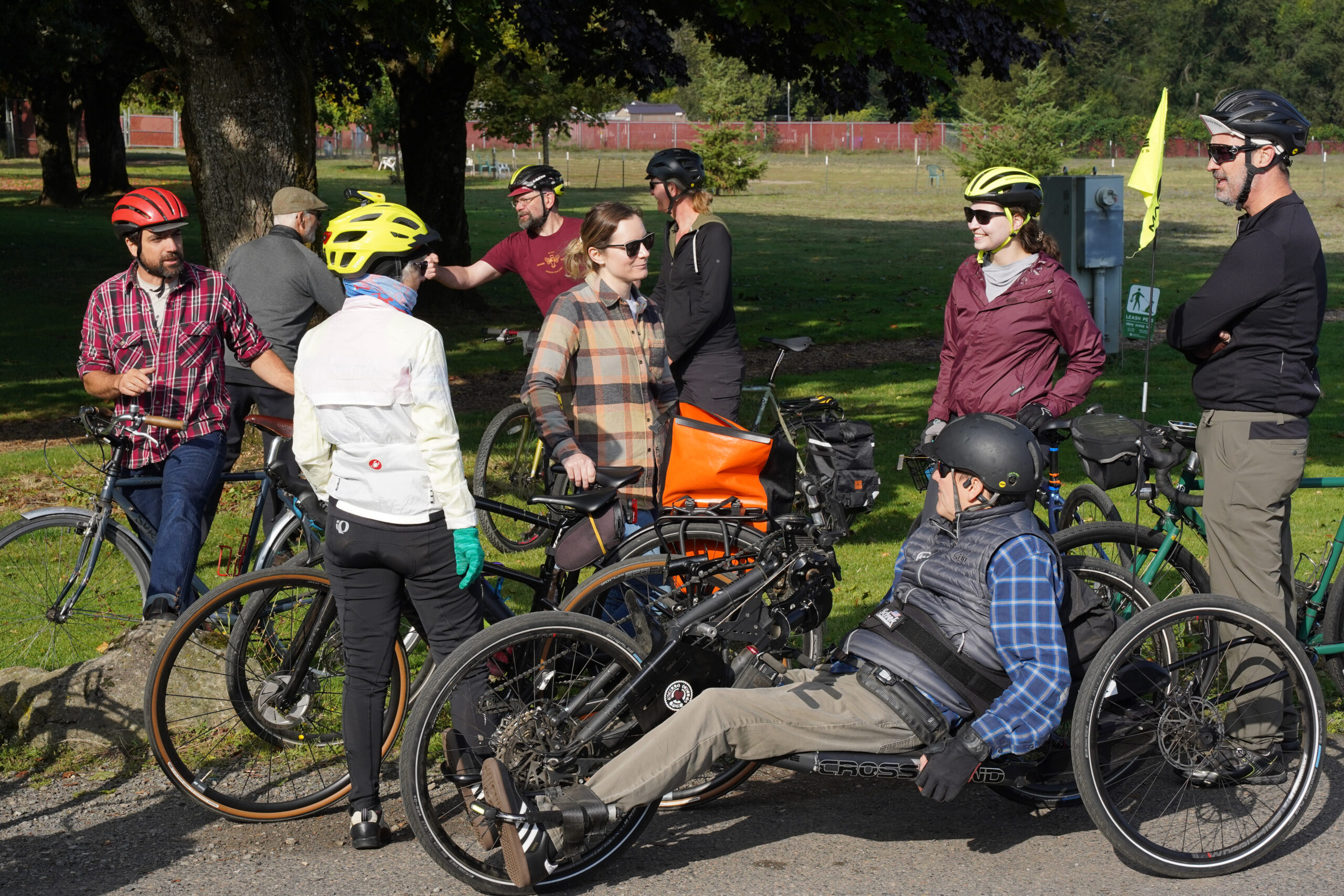
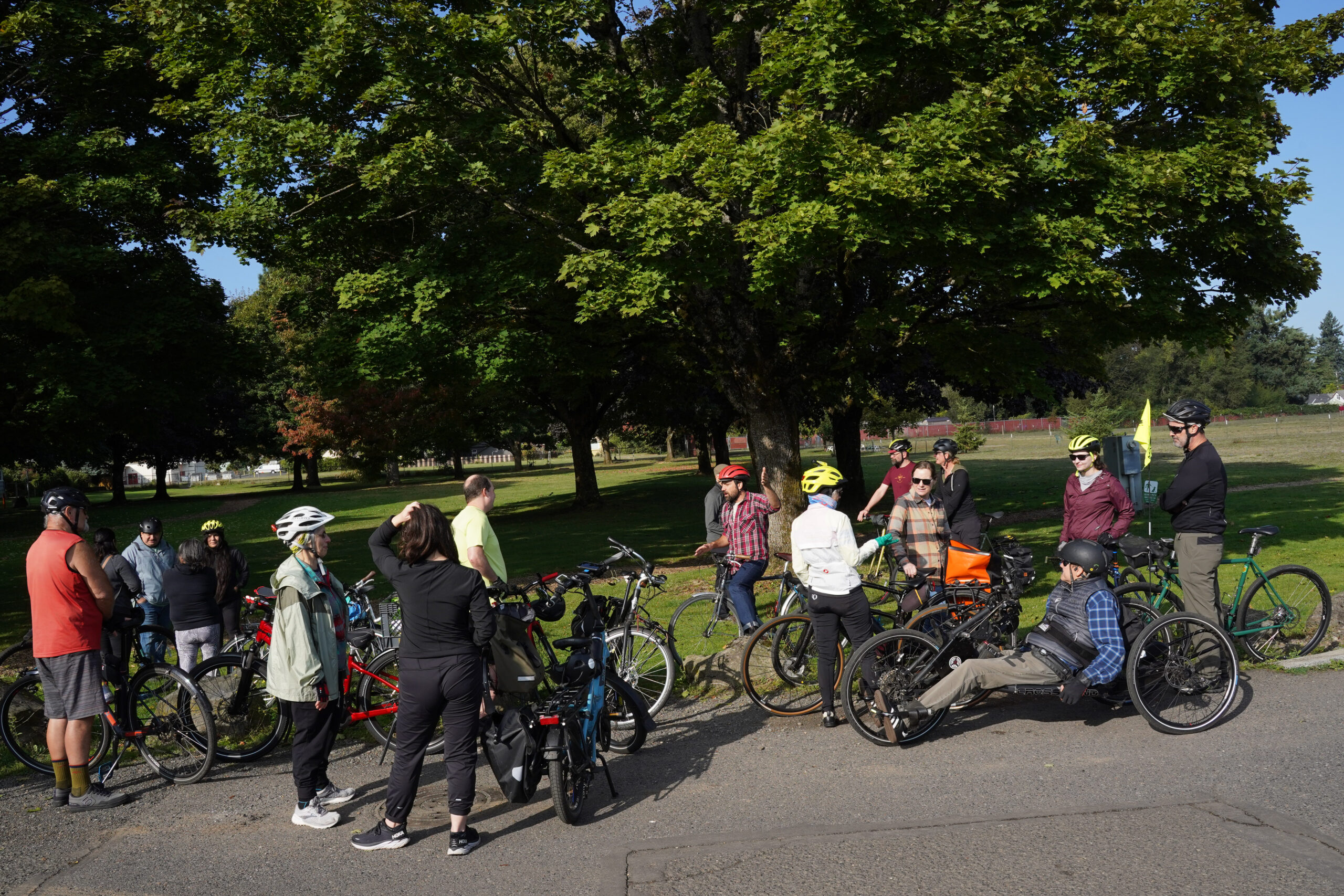
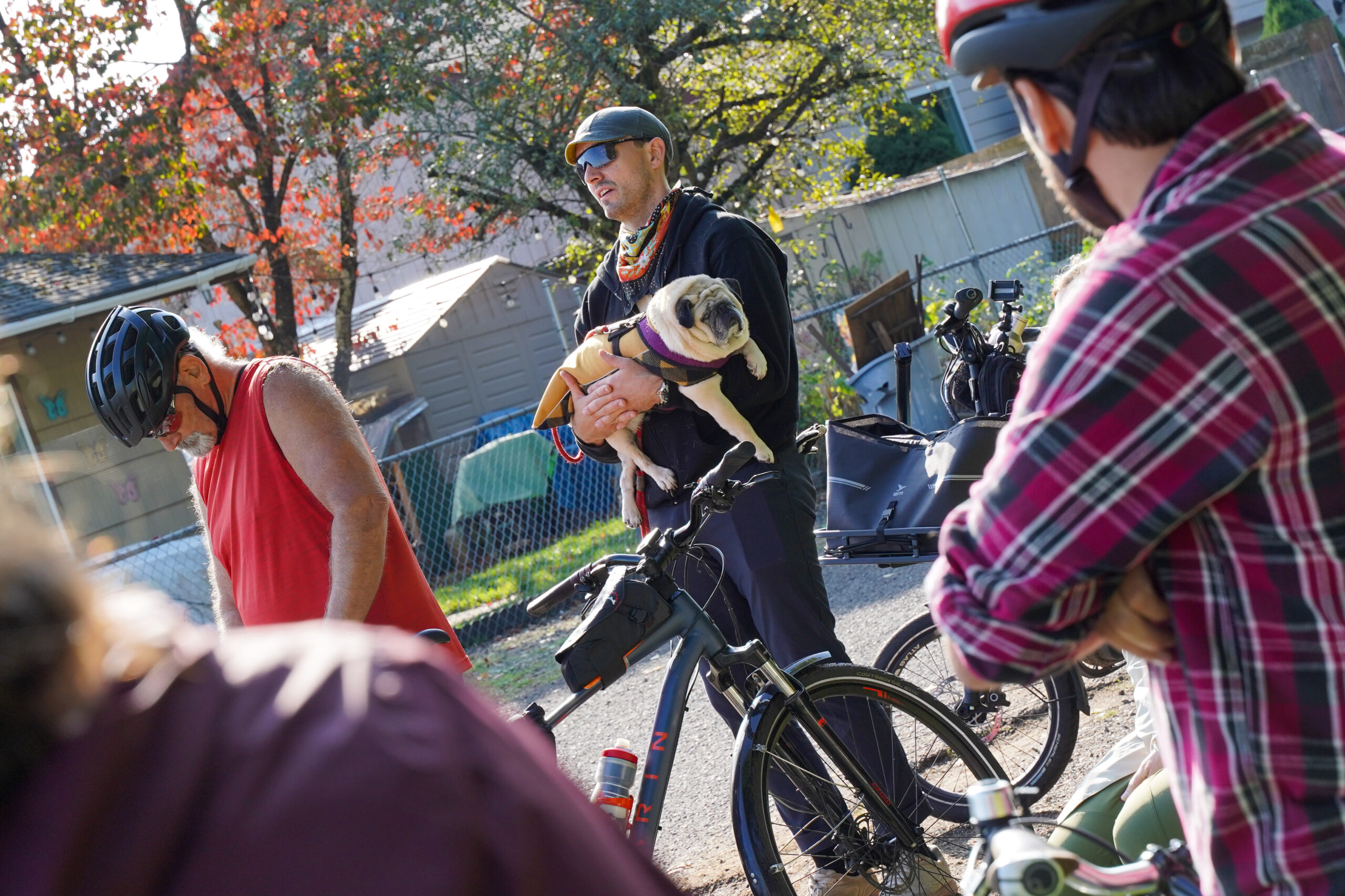
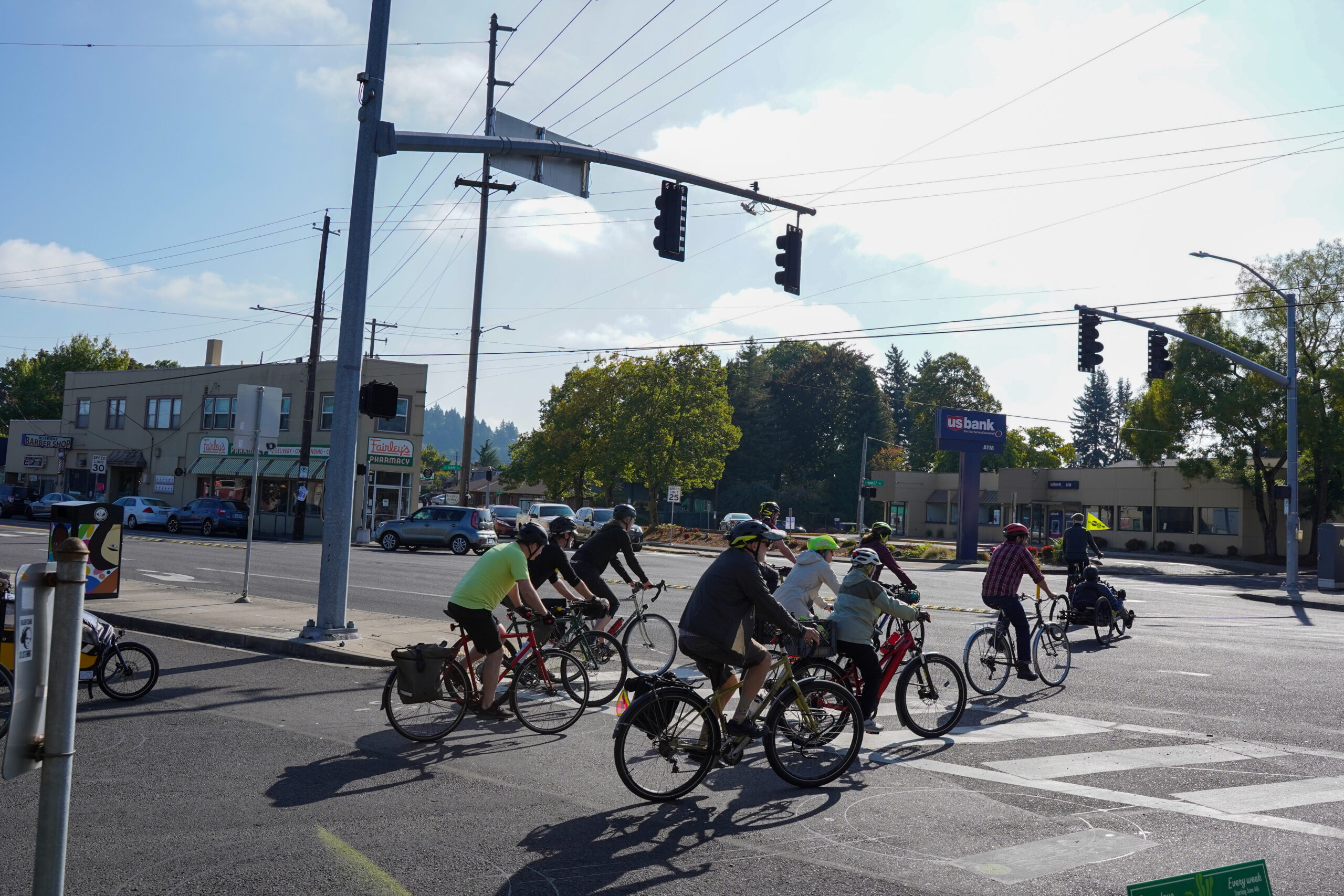
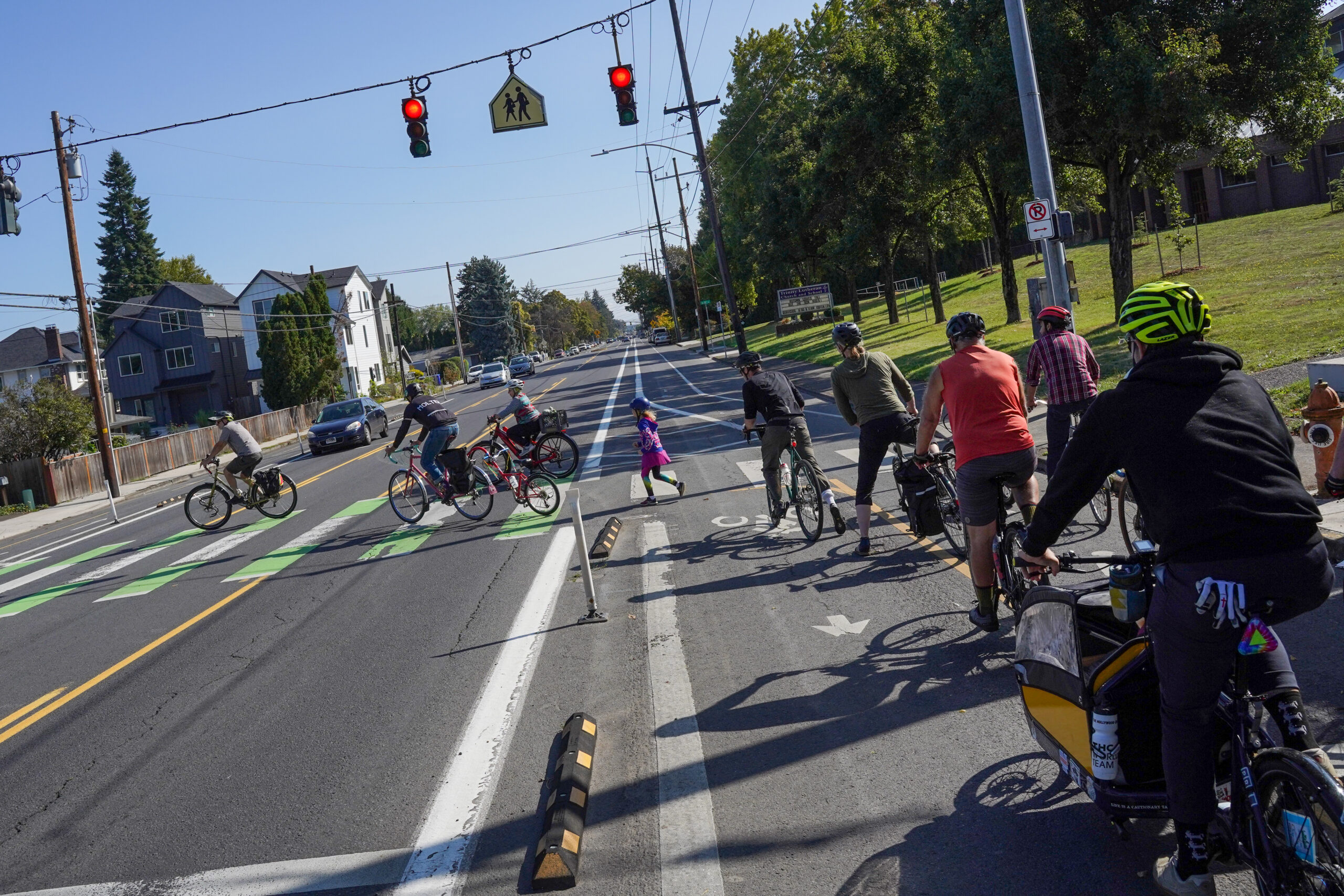
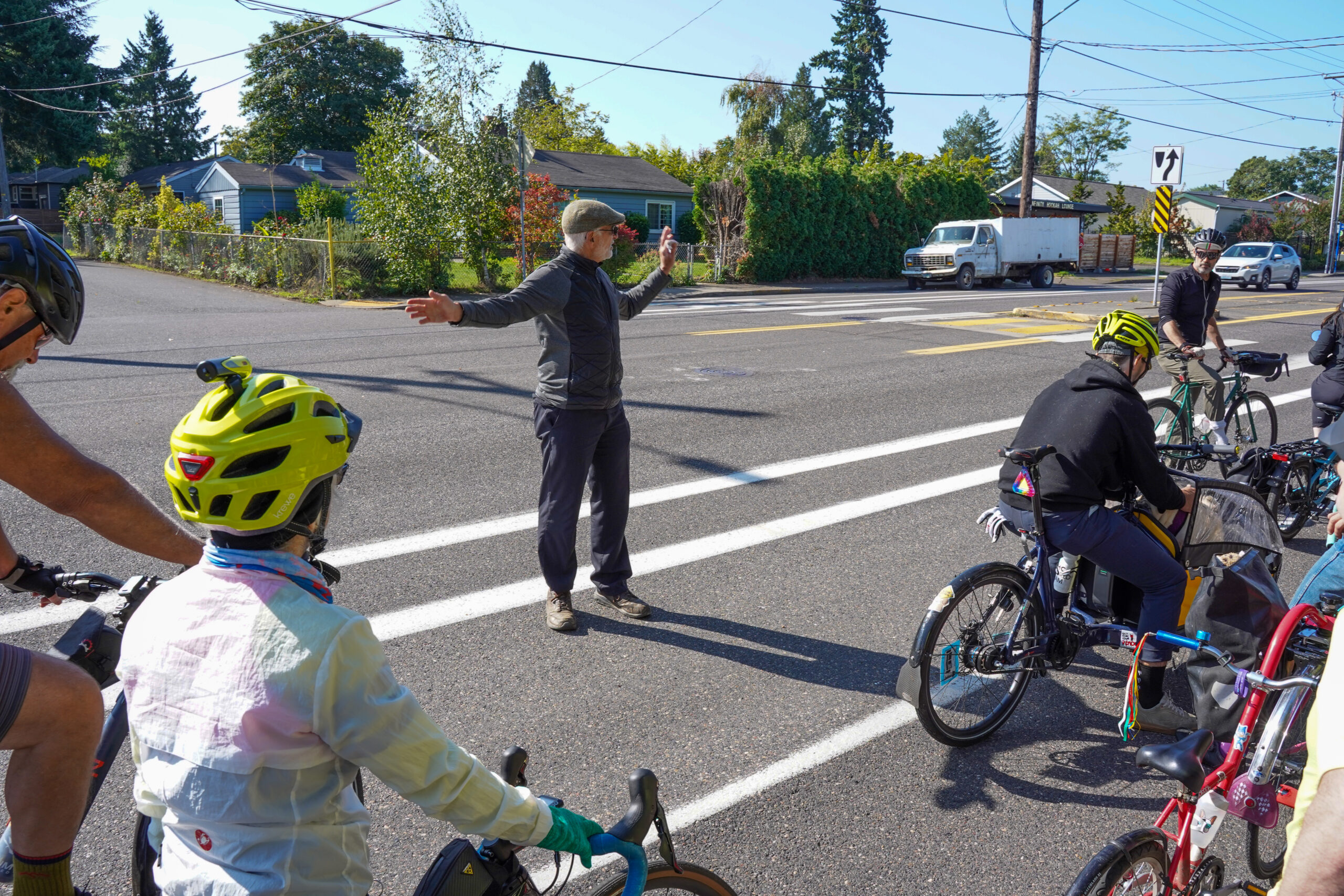
Riders met in Sacajawea Park before a ride Saturday. (Photos: Jonathan Maus/BikePortland)

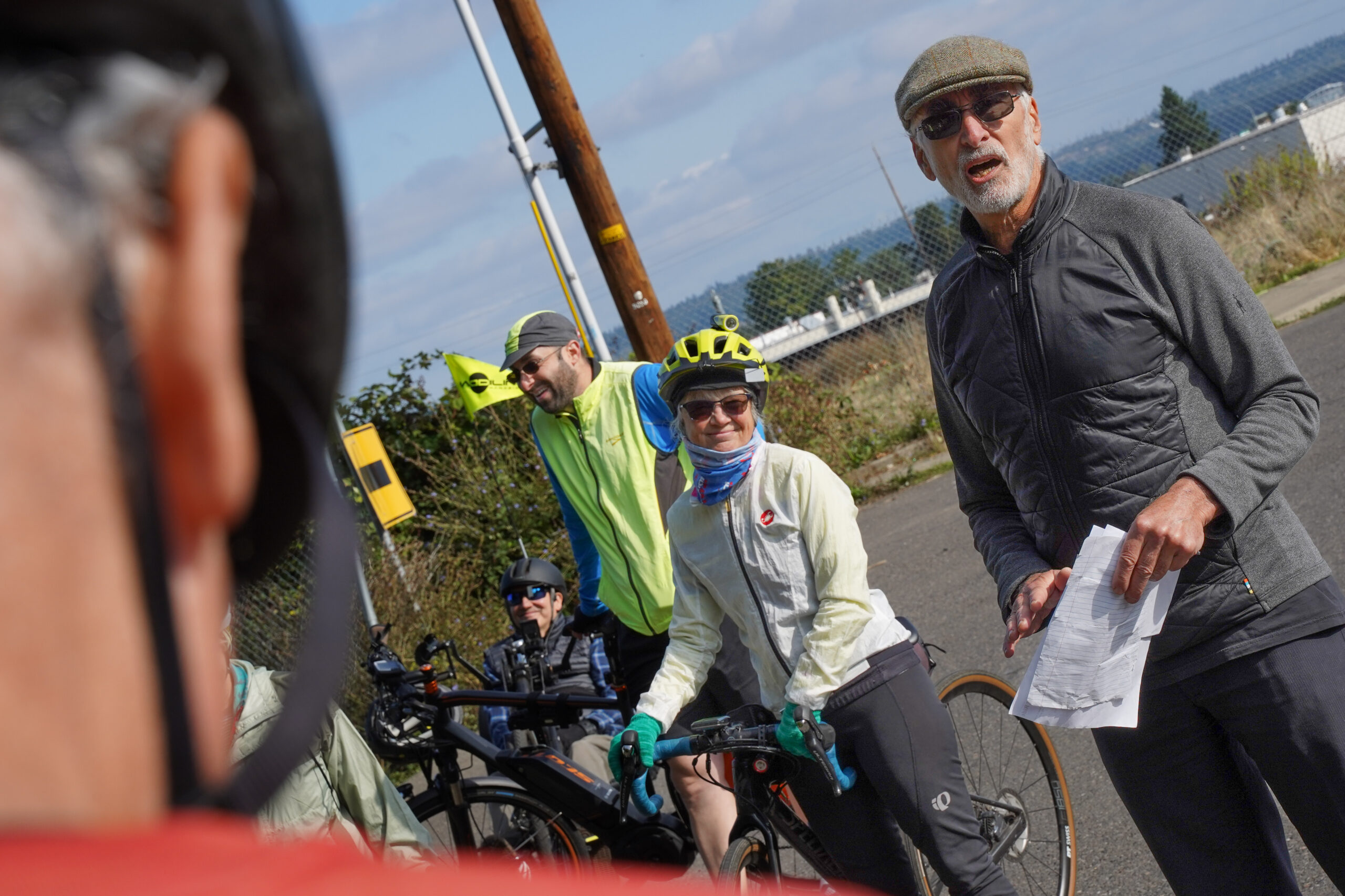
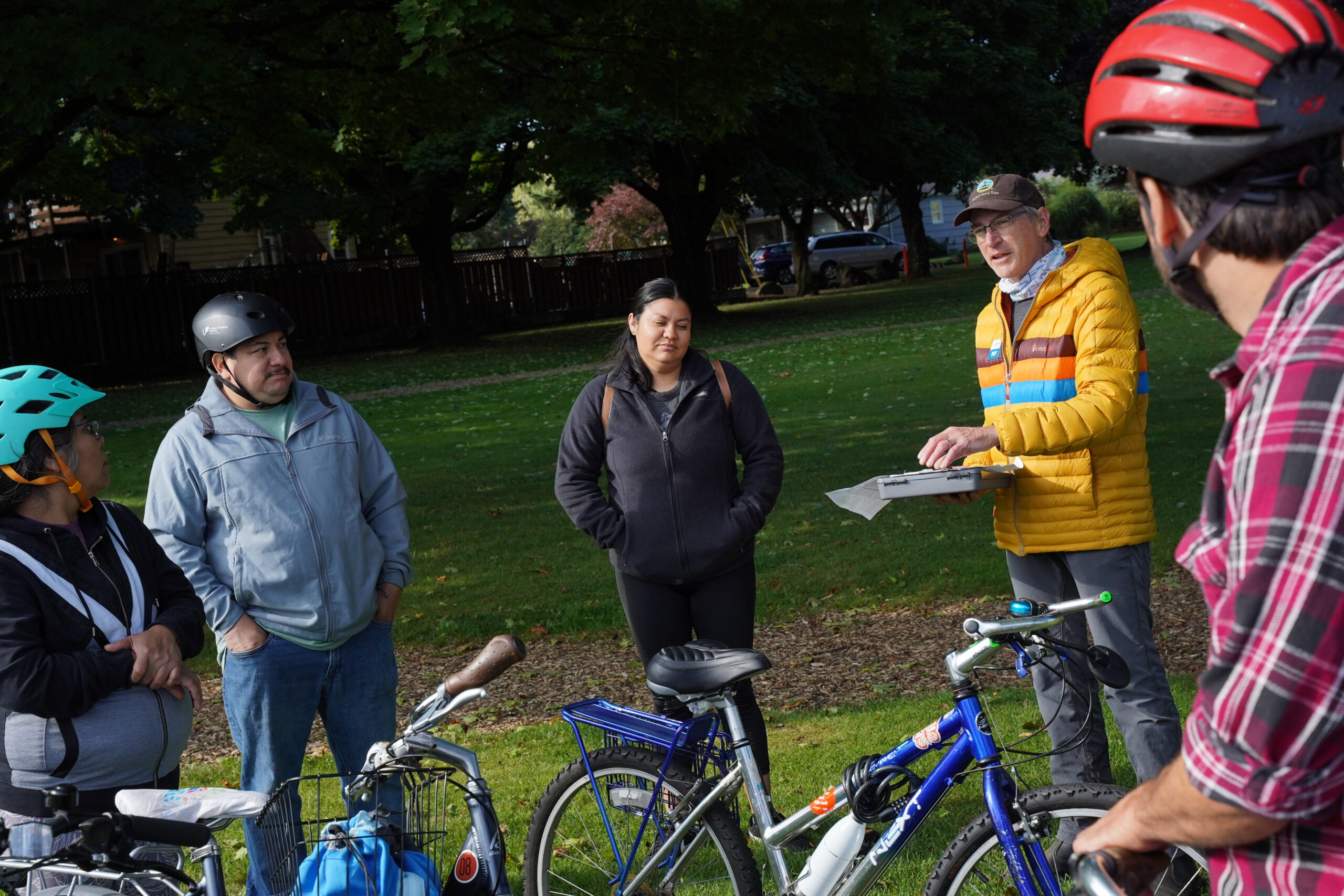
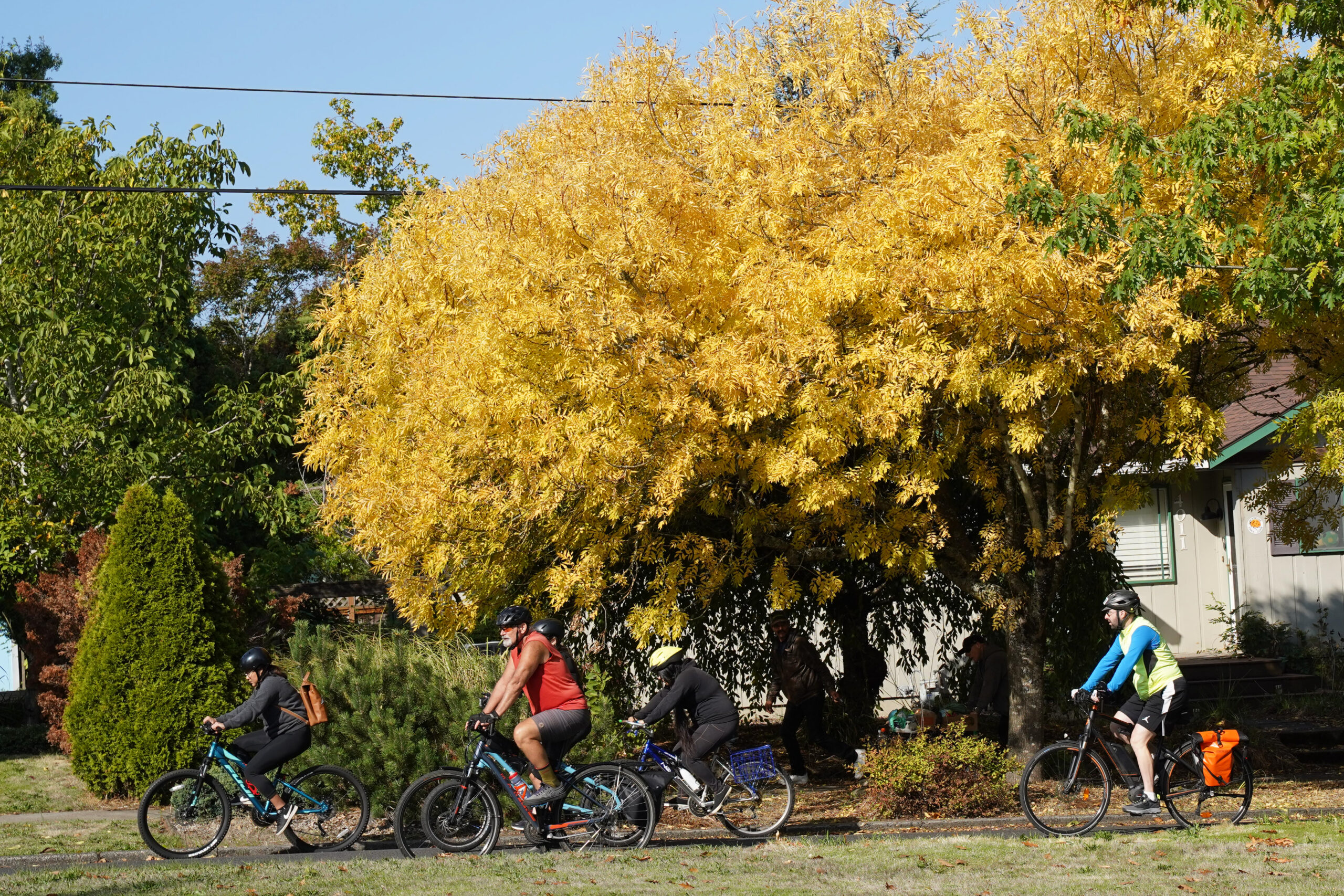
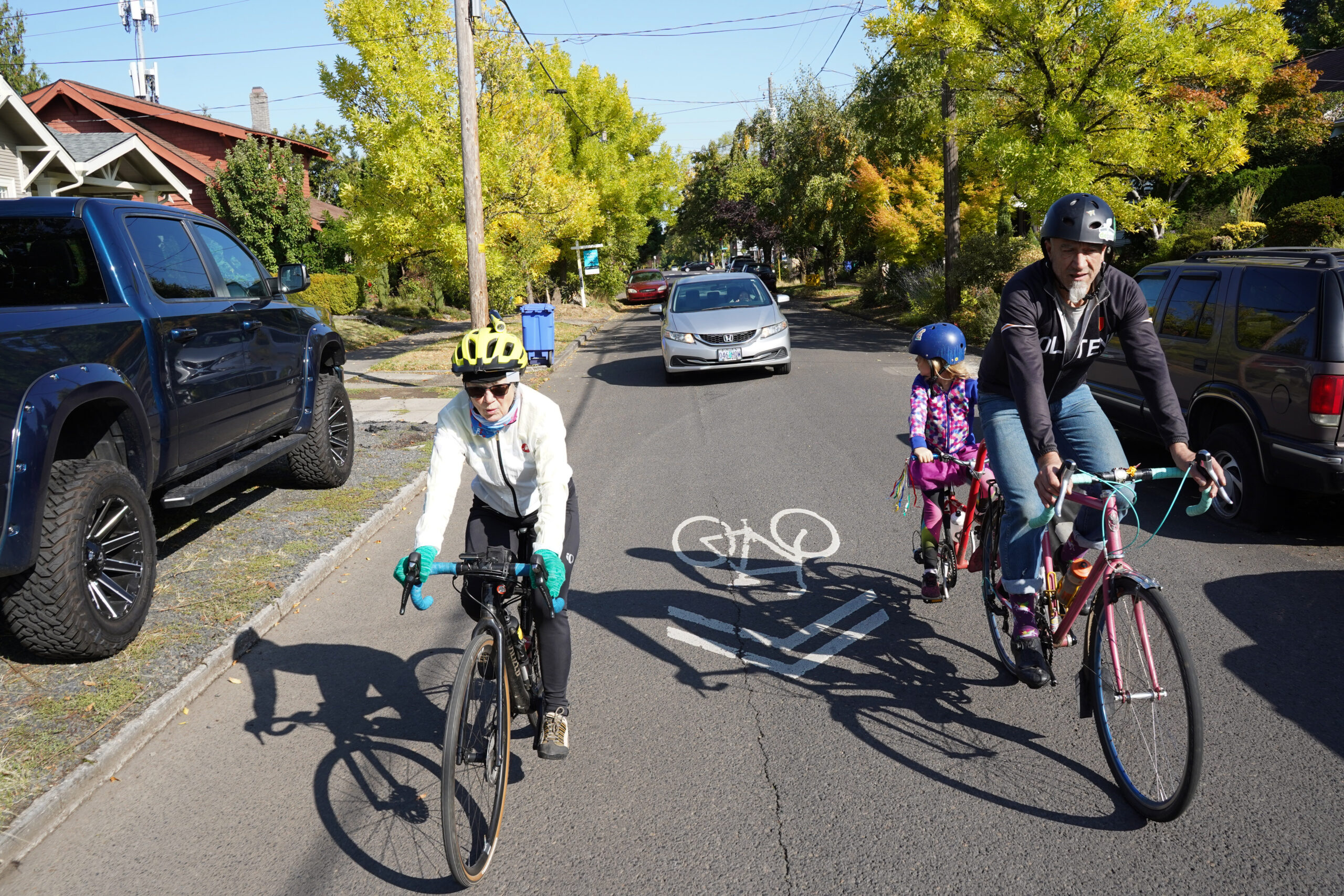
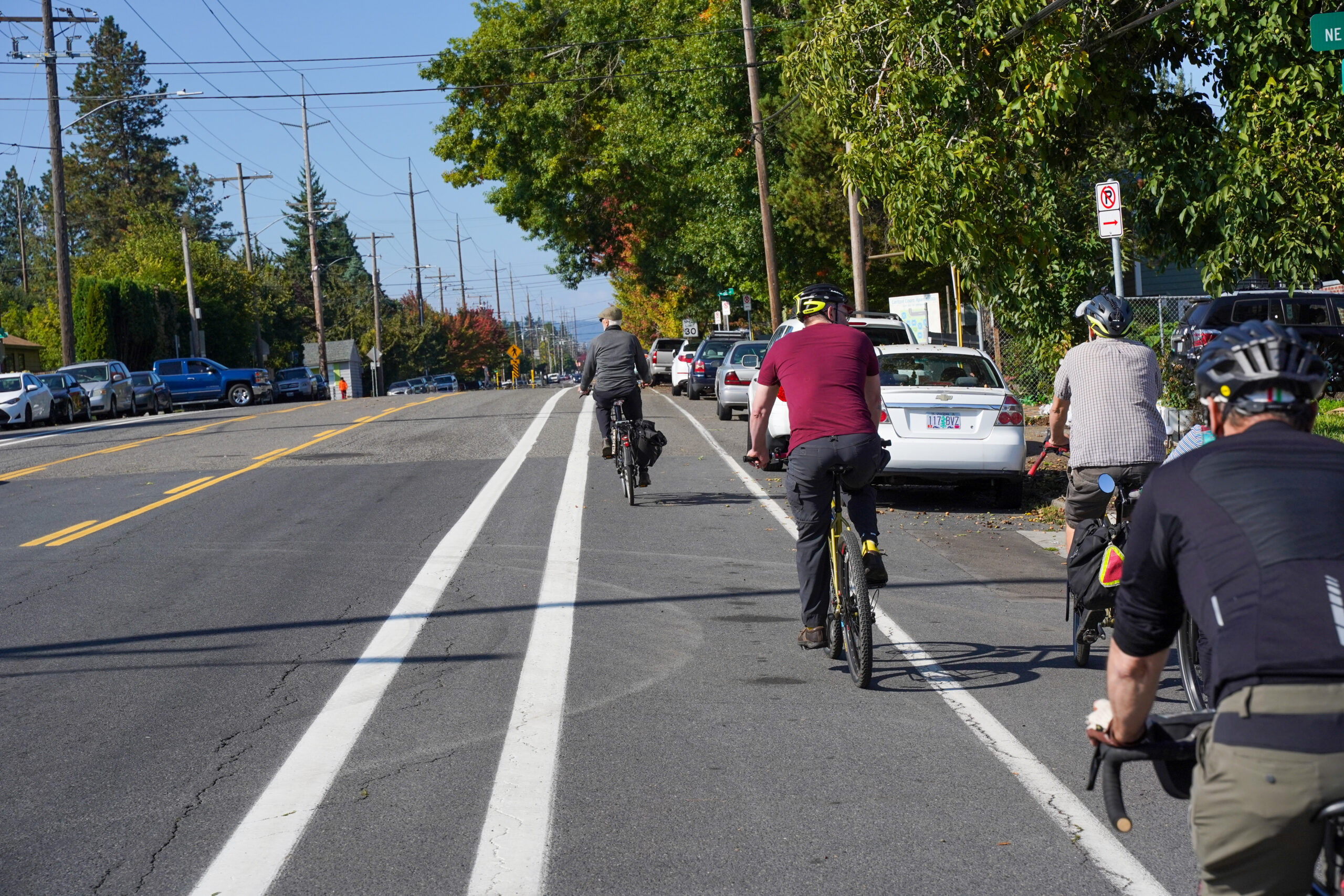
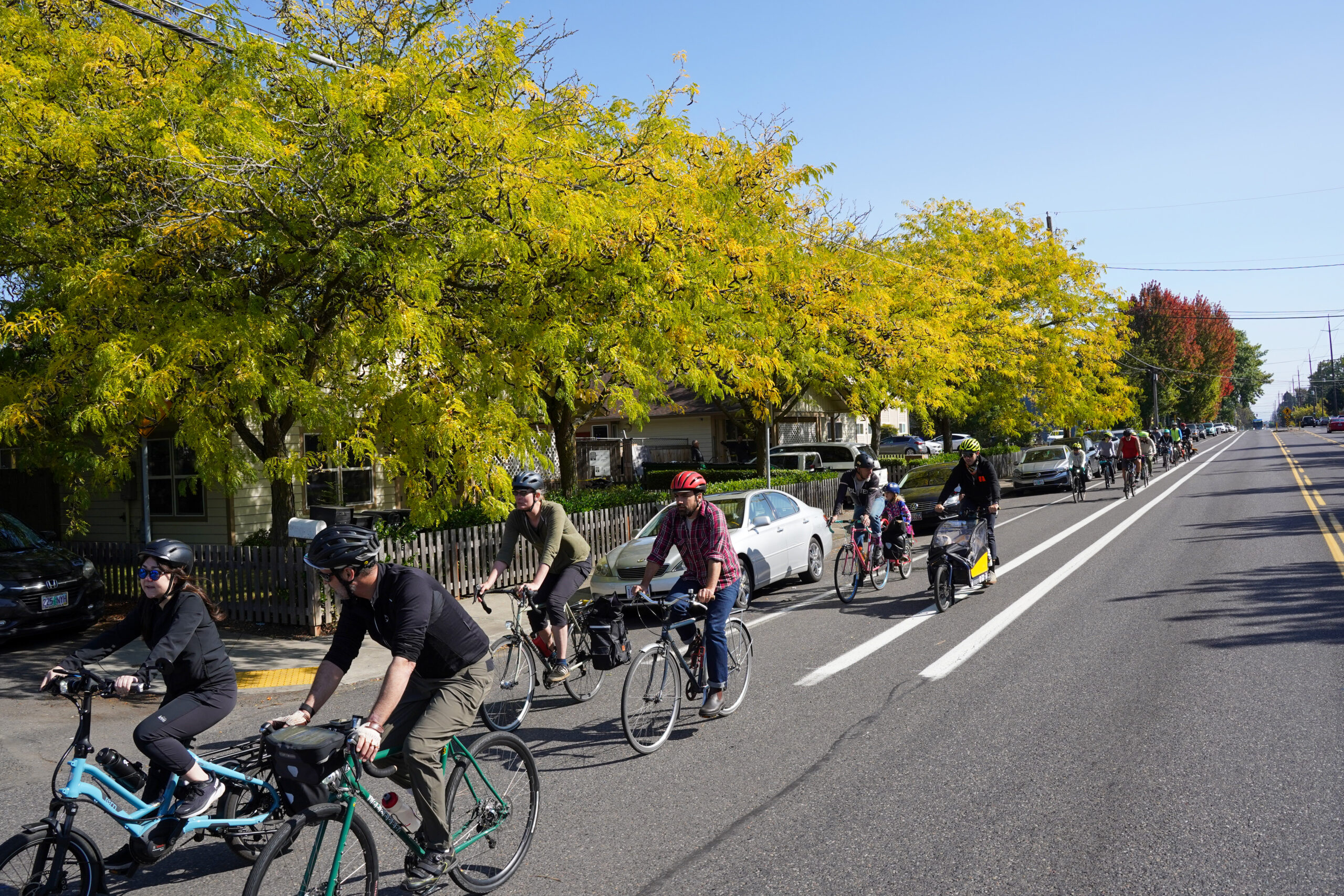
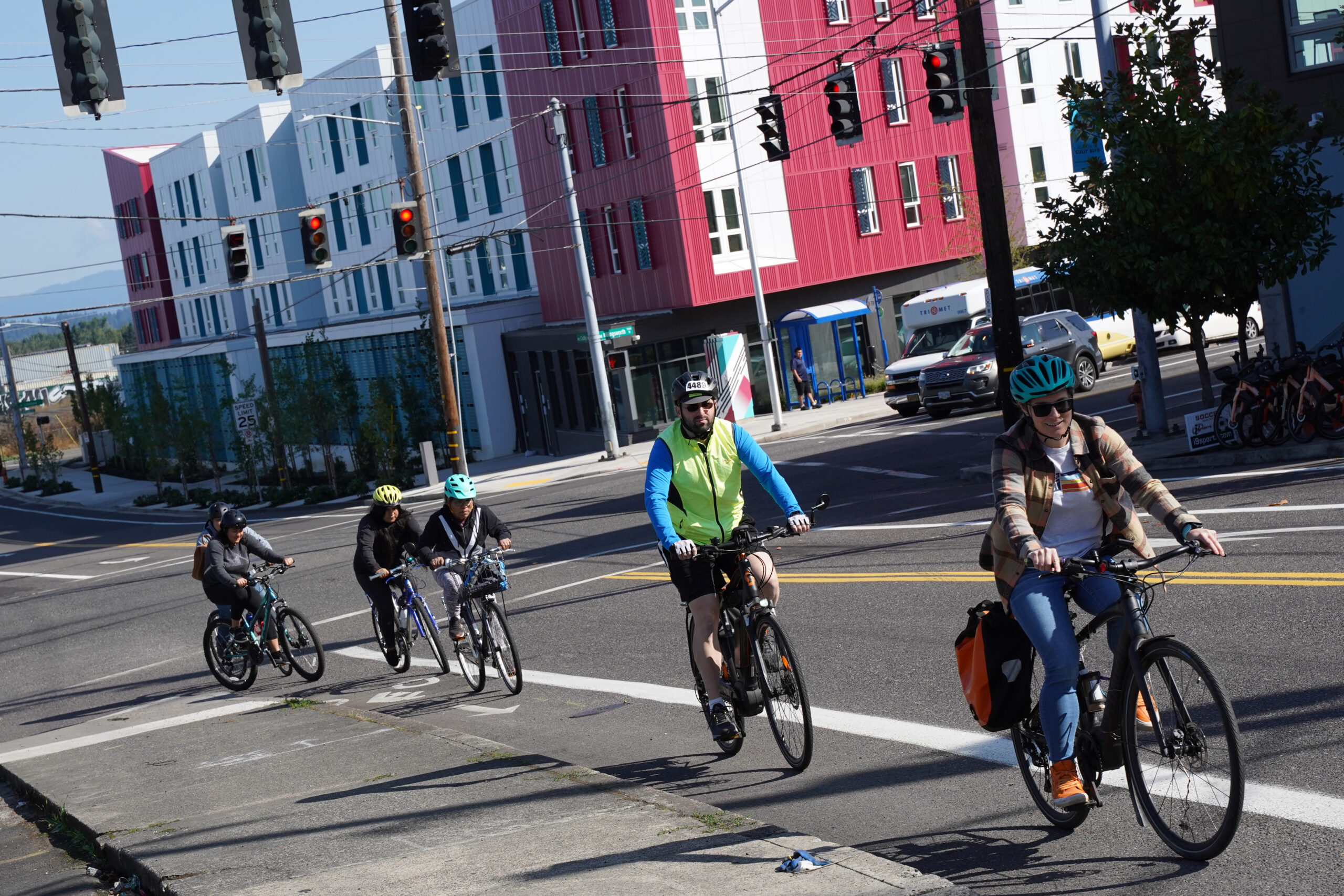
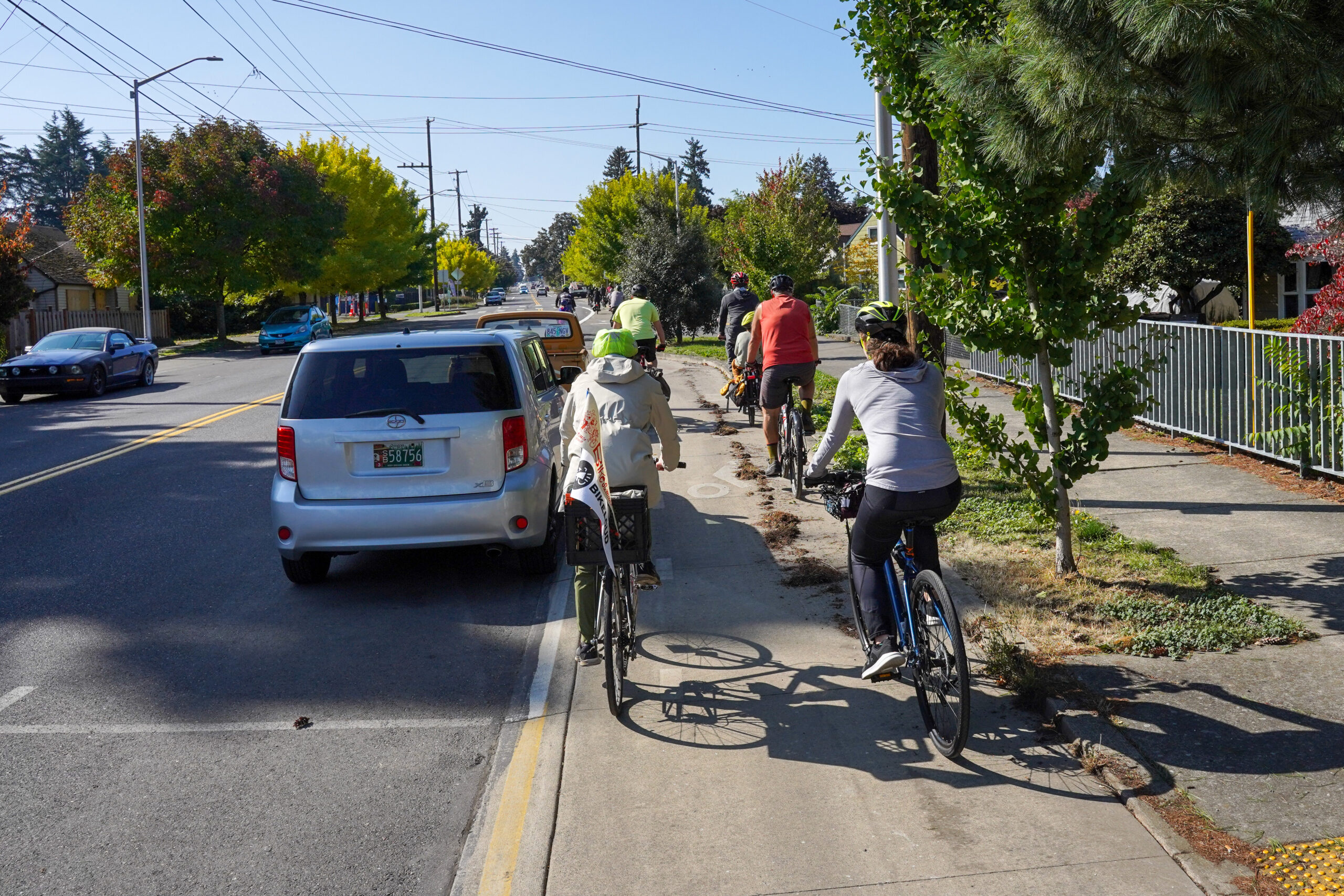
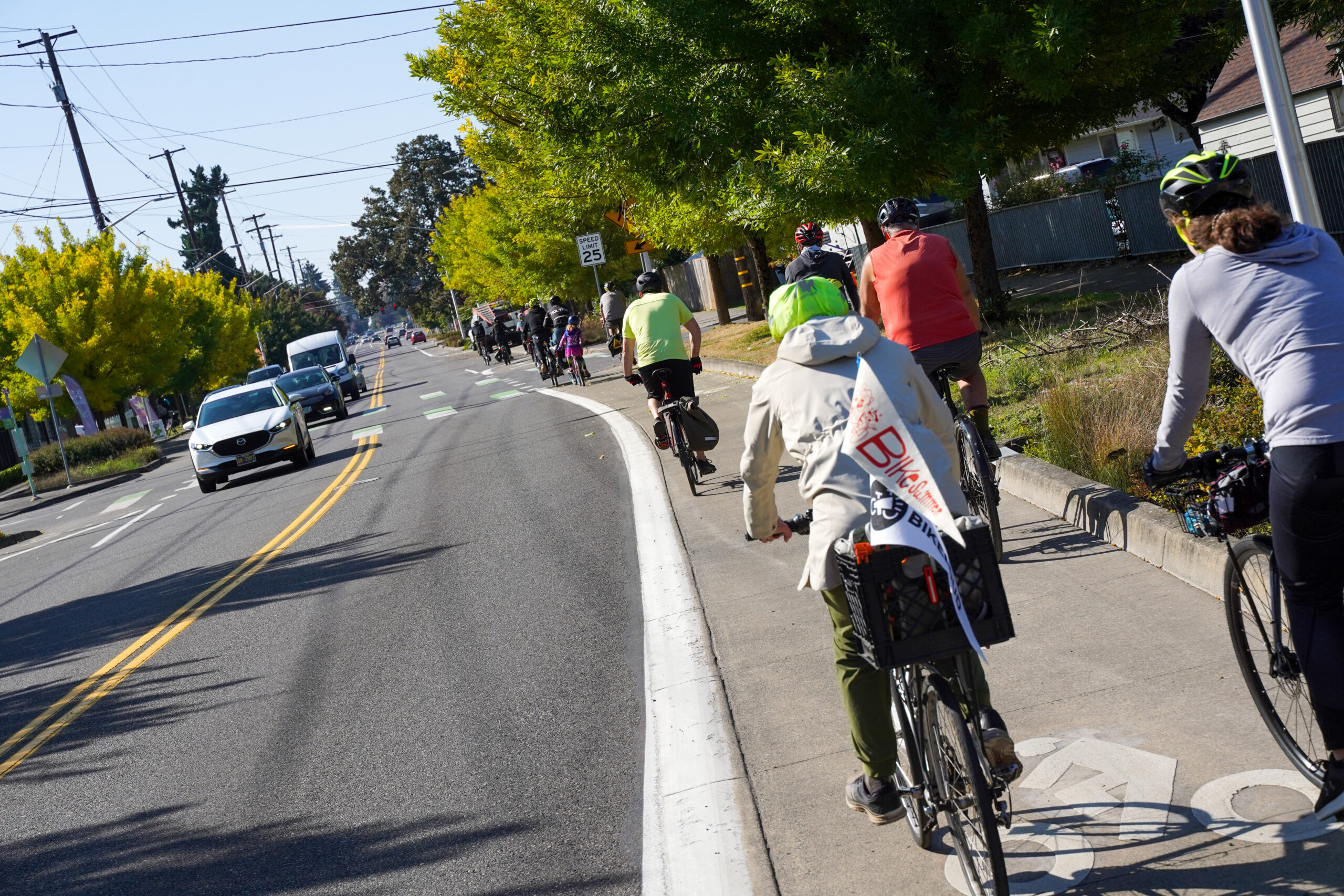
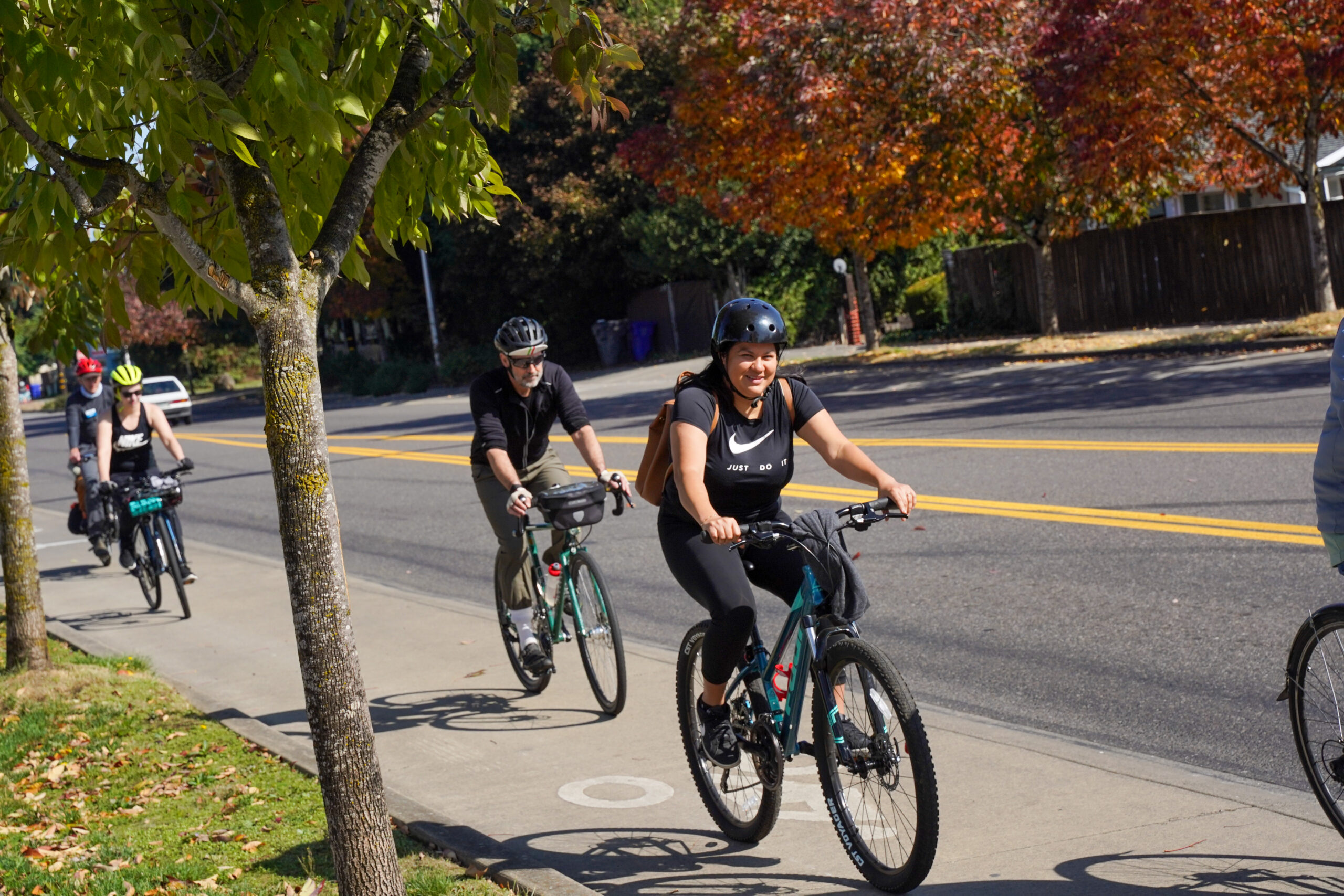
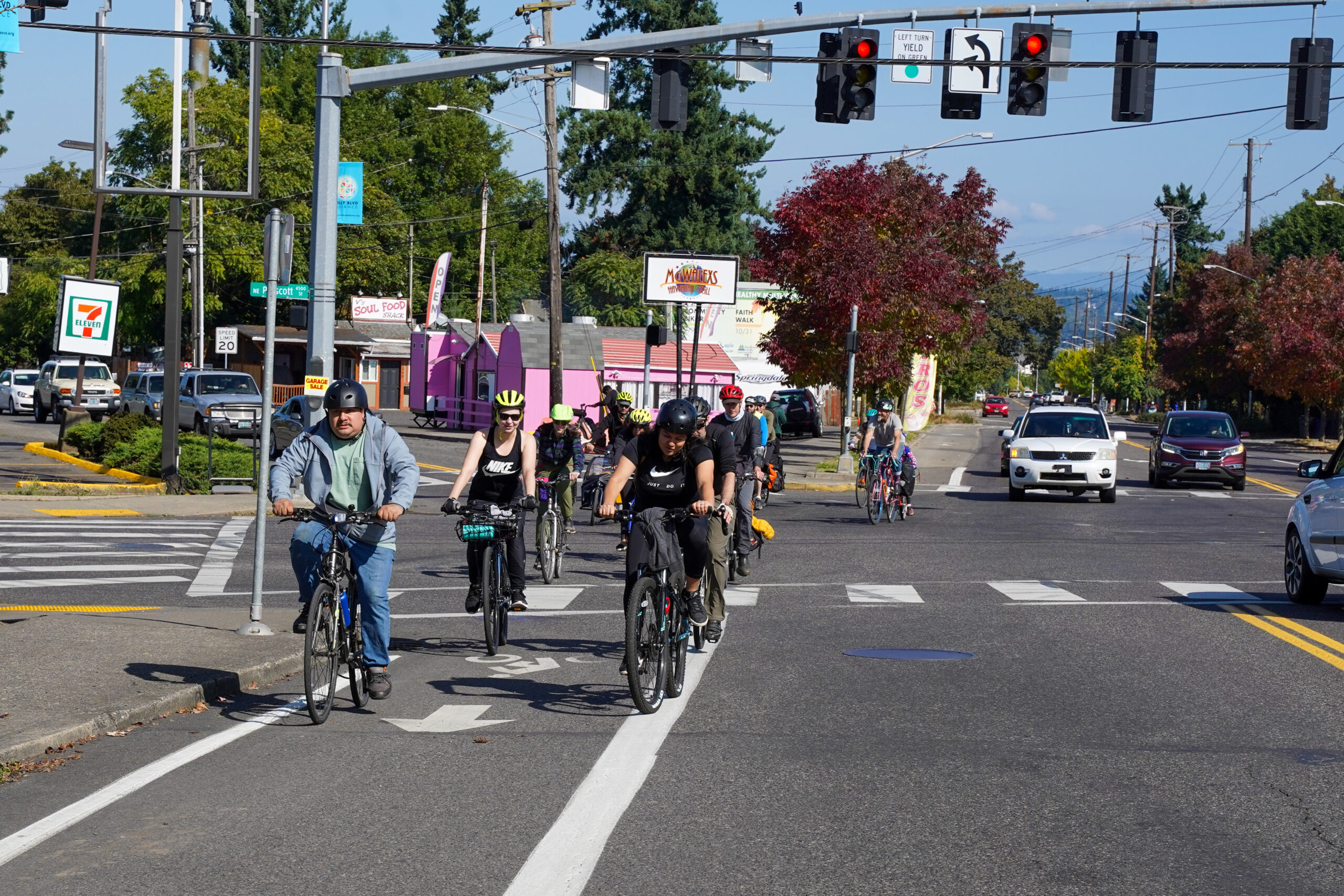
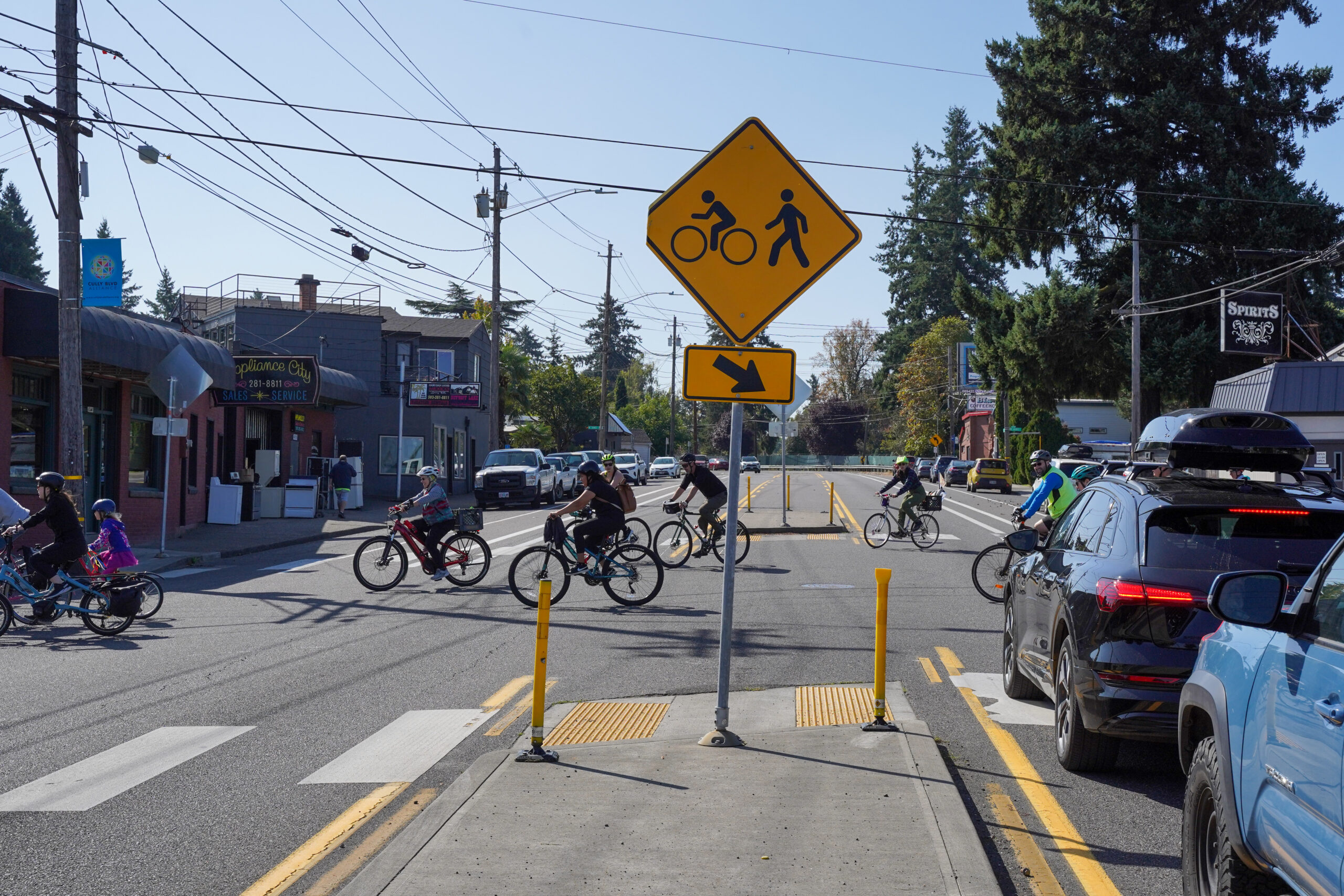
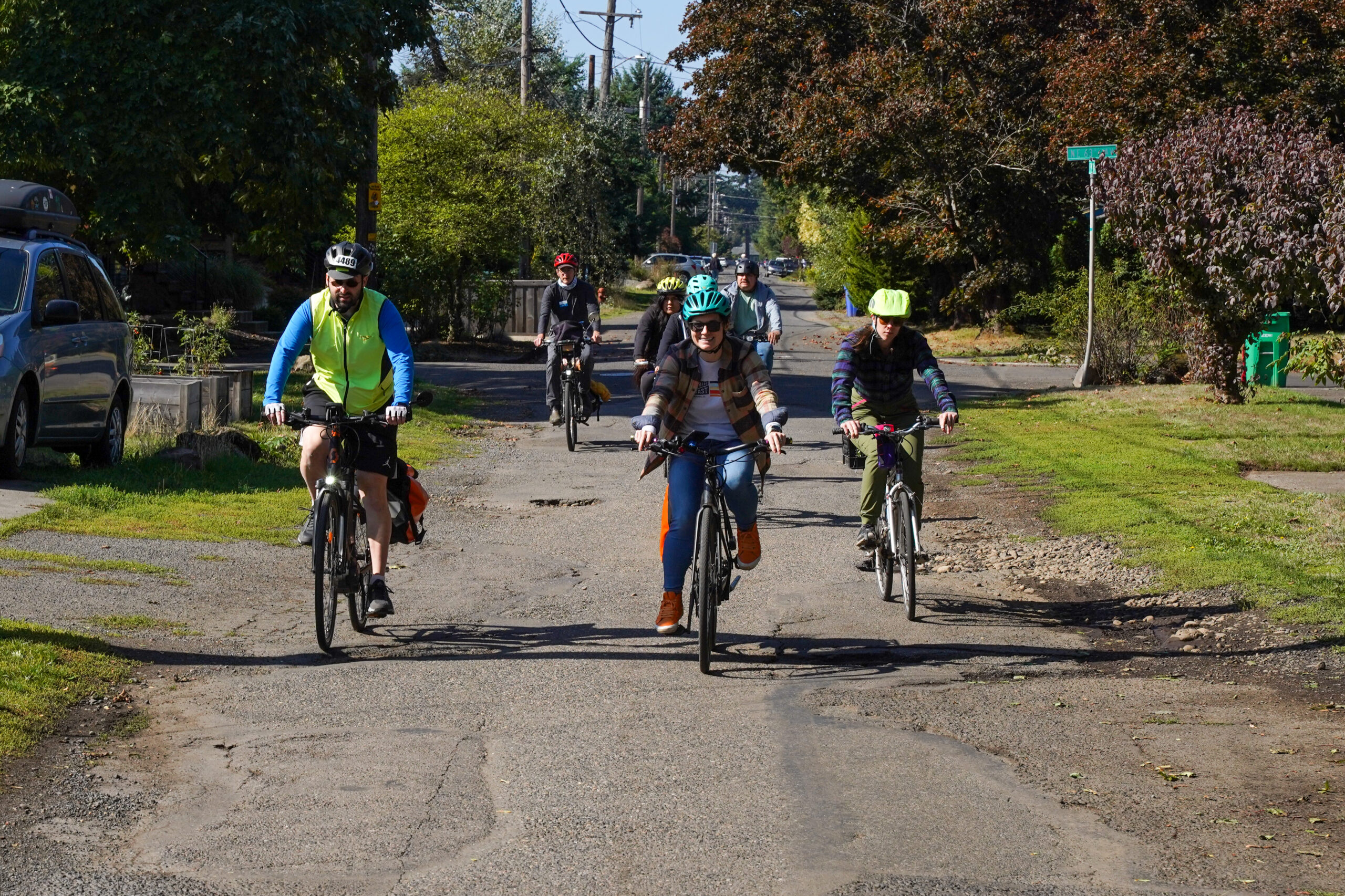
Some of Portland’s brightest biking minds came together under perfect sunny skies Saturday. Their mission was two-fold: get to know one another better after years of Zoom meetings, and learn what it feels like to ride in the Cully neighborhood.

The Portland Bureau of Transportation’s Bicycle Advisory Committee (BAC) plays an important role in how bike projects are envisioned and implemented. PBOT and other transportation agencies throughout the region bring plans to the committee monthly for input, and the group has become an important sounding board for debates and discussions about how to make bicycling better in Portland. The committee’s PBOT liaison, City Bike Coordinator Roger Geller, has led these rides for many years with a goal of fostering stronger relationships among members and getting real-life, first-hand experience with our bike network.

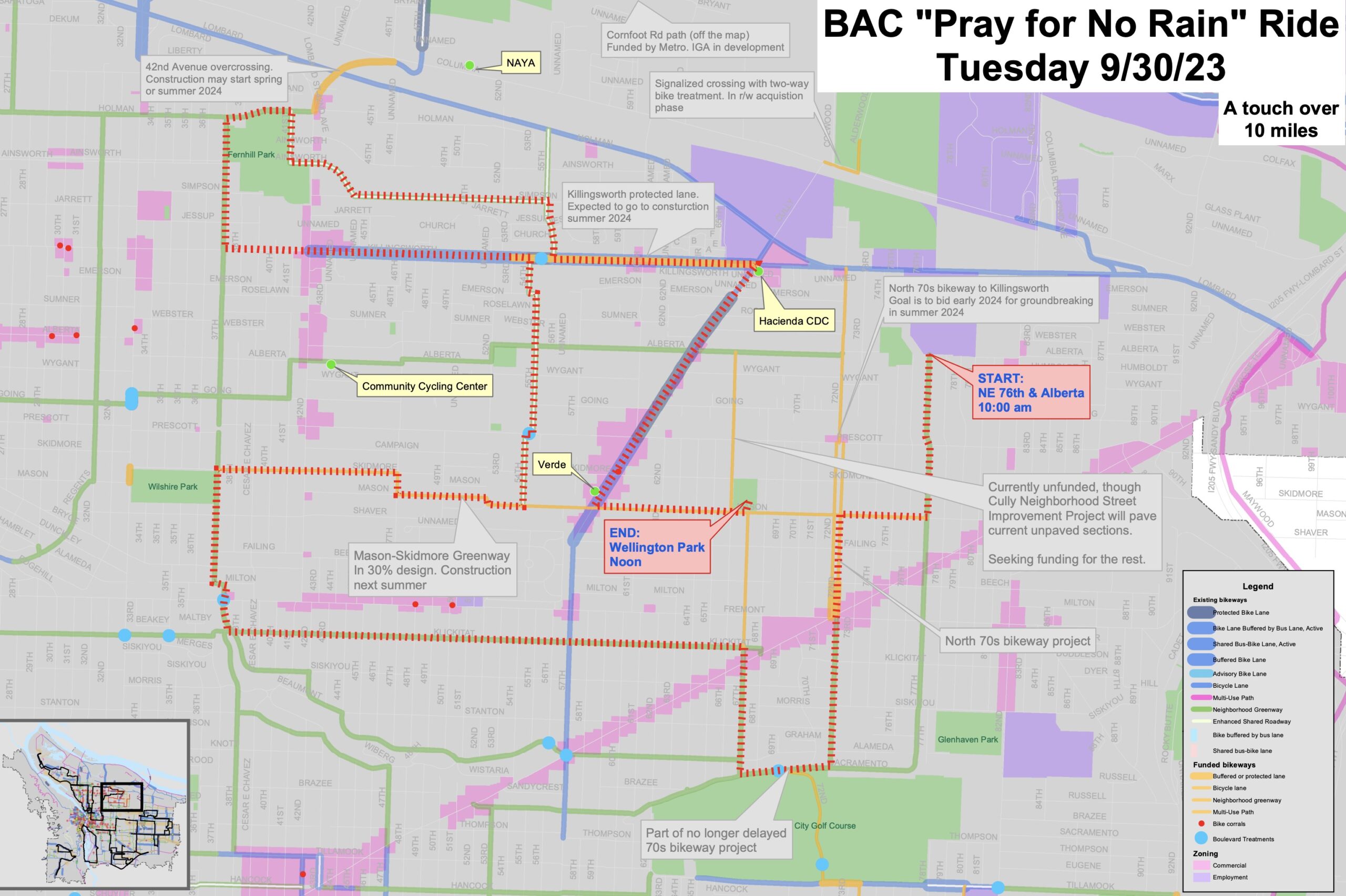
Saturday’s ride was about nine miles (see map at right). It rolled by several key locations where bike projects have been implemented recently or are planned in the near future with stops along the way for short conversations.

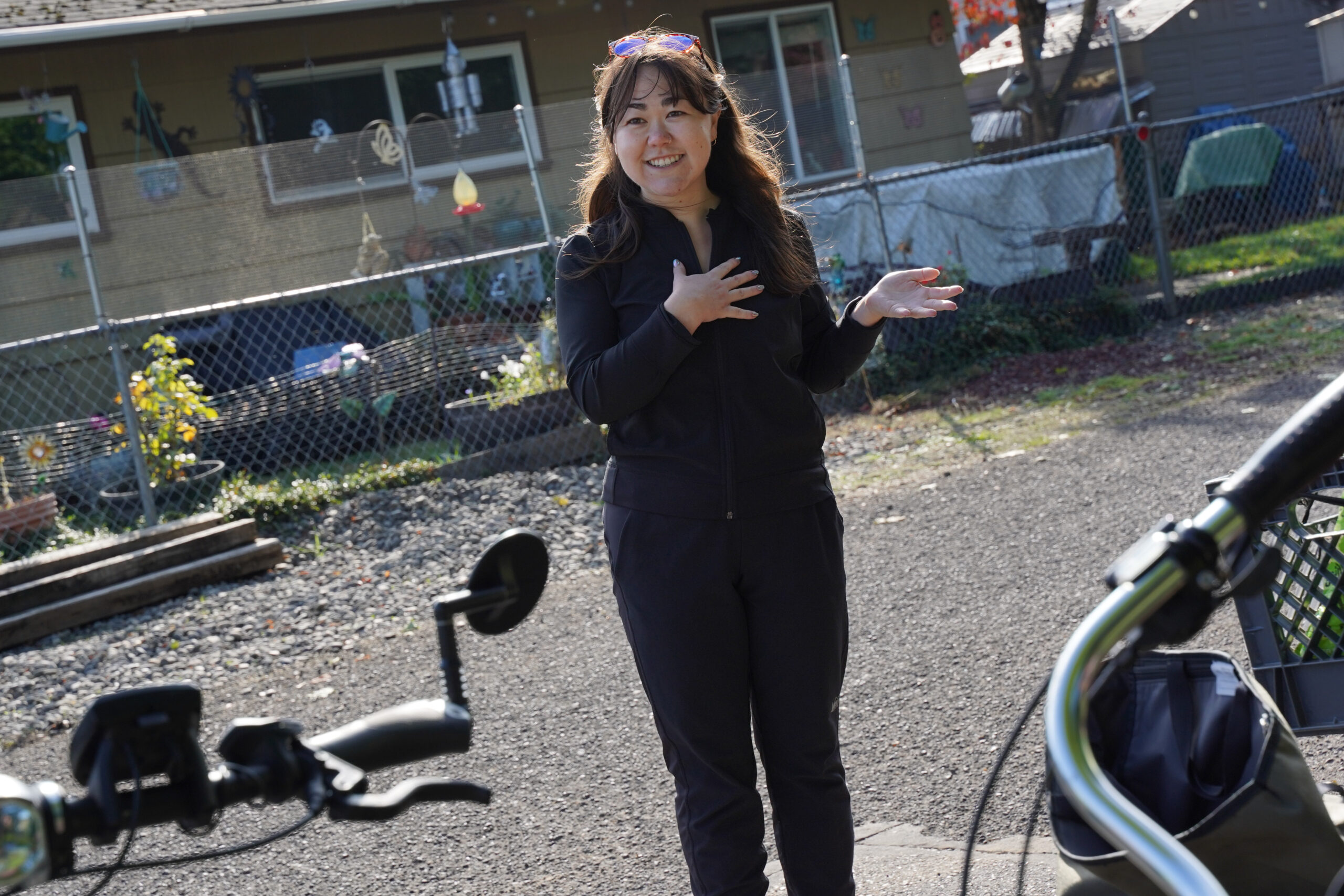
The group met at Sacajawea Park (NE 76th and Alberta) where they heard brief remarks from Indi Namkoong who works on transportation policy (funding, mostly) for Cully-based nonprofit Verde. Namkoong shared that, despite recent progress, just about 30% of Cully streets have sidewalks. She also said as street improvements come to the area, displacement is a big concern. “Poor people also deserve nice things,” she said, as she explained Verde’s efforts to keep people in the neighborhood.

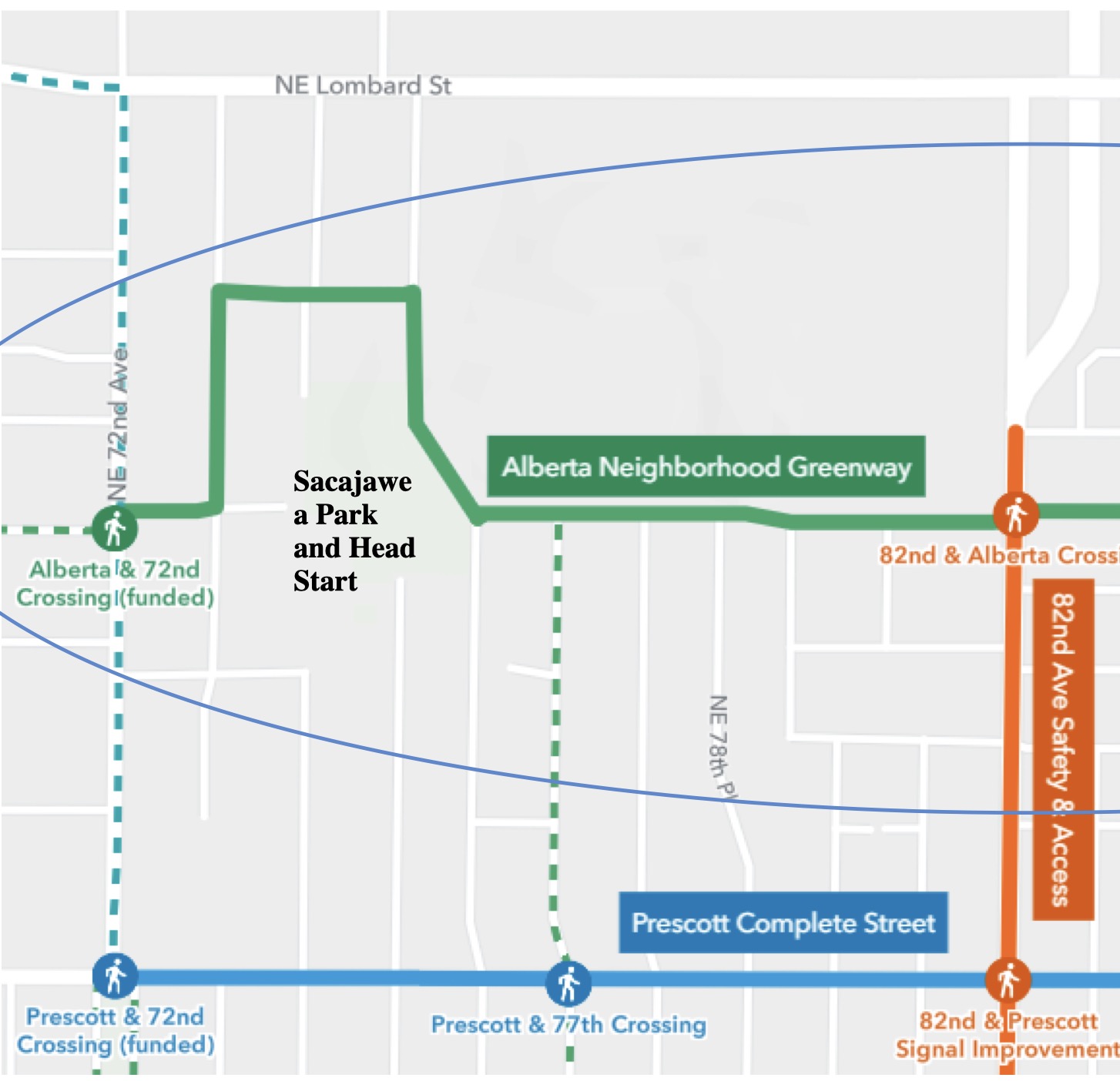
Detail of map showing future connection of Alberta greenway around the park (green). (Map: PBOT)

The ride also welcome several folks who represented Cully’s own bike/walk advocacy group, Andando en Bicicletas y Caminando (ABC, which translates to “riding your bike and walking around”). They were joined by a translator from PBOT and were eager to know when key projects would be built — especially a new signal and crossing of NE Columbia at Cully and Alderwood (northwest of Cully Park). Geller said a project to build a new signal and two-way bike crossing is funded and PBOT is in the process of acquiring right-of-way.

Sacajawea Park was a good place to start because it gave folks a chance to talk about a big problem with the Alberta St. neighborhood greenway (the eastern extension of the Going St greenway). Currently the park creates a gap in the route because there’s no paved path through it. A locked gate at the end of a gravel block on the west side could be opened, but folks at the ride said a woman who lives there doesn’t want bike riders on the street. The only other option is through a nearby school; but if the school gate is closed, riders have go several blocks south to Prescott to reconnect to Alberta. Portland Parks and PBOT need to figure something out here.
Right now the hope is that PBOT wins a big federal grant focused on nearby 82nd Avenue they’ve recently applied for. That grant would fund a continuation of the greenway through new streets being built as part of a future private development. That will be helpful, but would still require a detour around the park. It seems like PBOT and Parks should work together and simply pave a more direct path through the park.

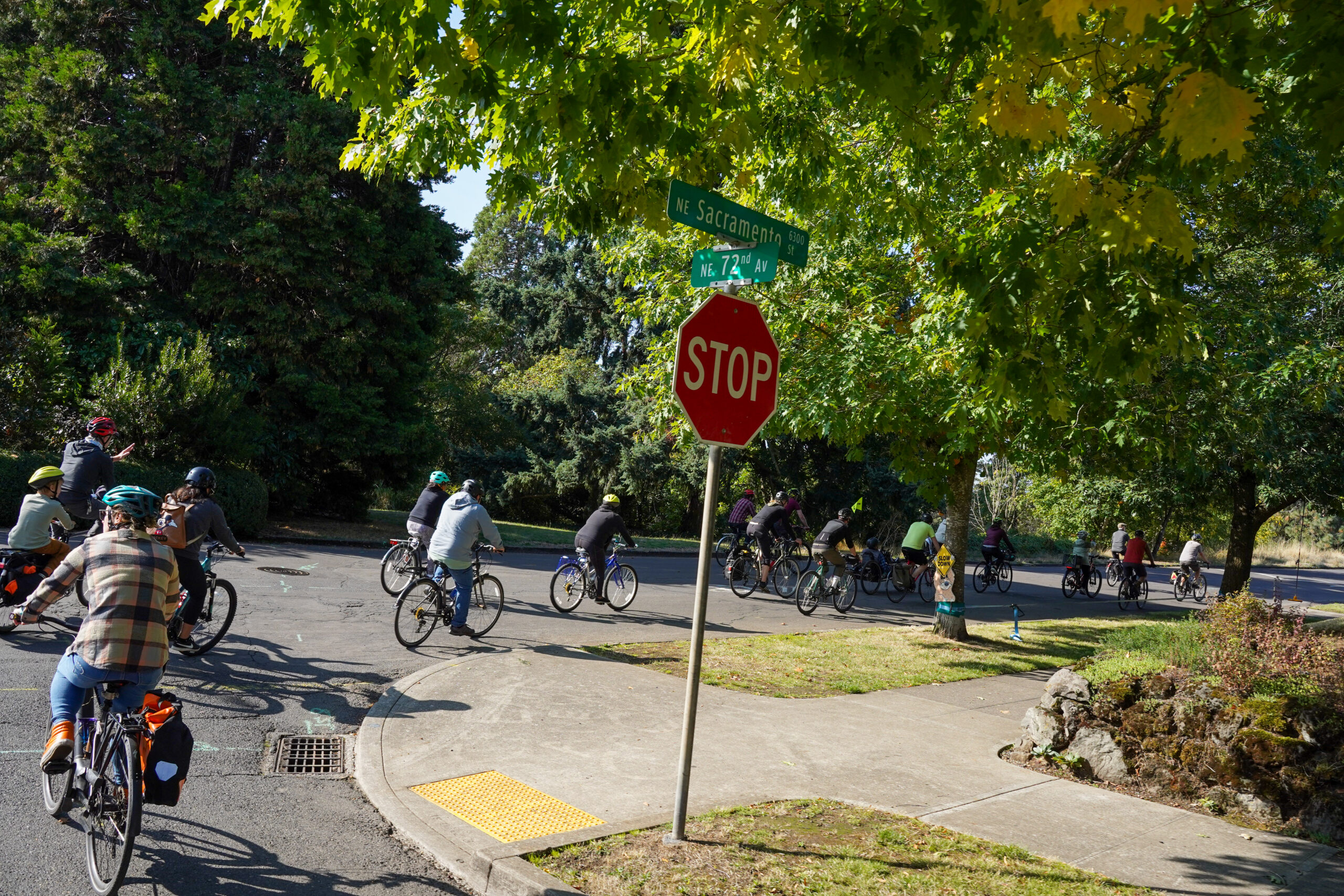
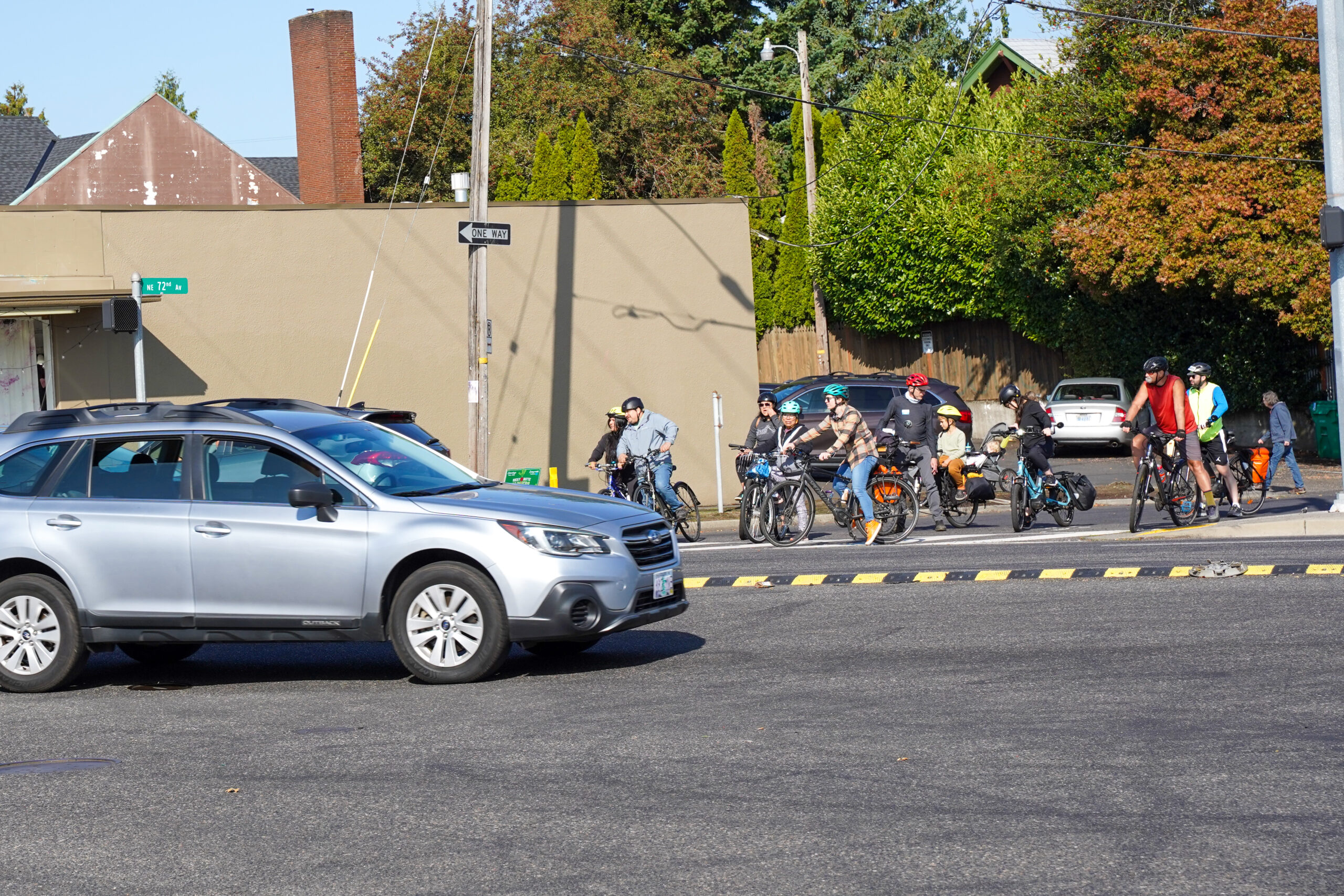
Leaving the park, the group rode south on the NE 72nd Ave parkway — a narrow residential street adjacent to a wide linear park known as the Roseway Parkway. This is a key link in the federally-funded 70s Bikeway project. An original plan was for a paved path through the middle of that park, but it was scrapped due to alleged budget problems and neighborhood opposition. Now the Cully Connector between Lombard and Sandy will include crossing improvements at the south end and a mix of two-way bike lanes and paths on the west side of the Parkway. Design is still being finalized and PBOT says construction will start next year.

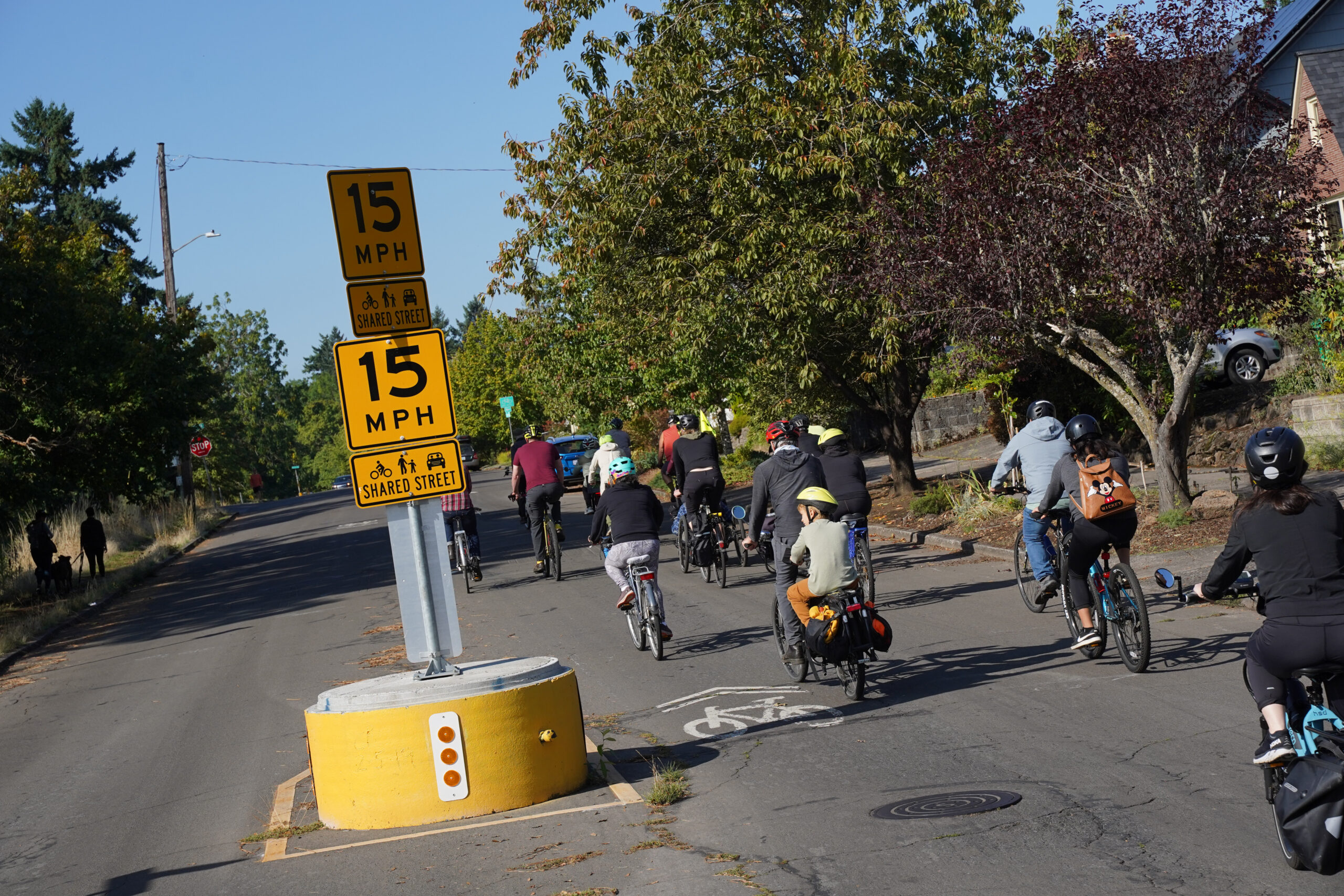
After winding through neighborhood greenways to the shared street on NE Sacramento to see the location of the upcoming project through the Rose City Golf Course, we made our way north back to Killingsworth. That street’s door-zone, unprotected bike lanes no longer serve the growing neighborhood, so by the end of next year — thanks to a big advocacy push led in part by the aforementioned ABC — the current lanes are planned to be replaced by the parking-protected variety from NE 53rd to Cully.

As he stood inches from fast-moving drivers on Killingsworth, PBOT’s Geller said it’ll likely take another push to extend the new bike lanes further west to the existing greenway on 37th. But even without protected lanes west of 53rd on Killingsworth, the new ones will make a safer connection to NE Holman neighborhood greenway which connects at 55th.

After Killingsworth, we made a u-turn and headed to Cully Blvd to sample the elevated cycle track. This neighborhood workhorse was Portland’s first Euro-style cycle track when it was built in 2011. It’s in pretty good shape. We just need a lot more people to ride on it. On that note, I can now highly recommend a stop into La Oaxaqueña (4736 NE Cully Blvd), a small (but mighty!) Mexican grocery store with fresh tamales, pico de gallo, and lots of other wonderful things for the hungry biker.

After snacks were secured, we biked over to Wellington Park where conversations ensued.

Keep your eyes peeled for the next BAC bike ride. They’re a good chance to meet plugged-in people and learn about key bike projects citywide.

New PSU art building to include section of future Green Loop ‘micromobility path’

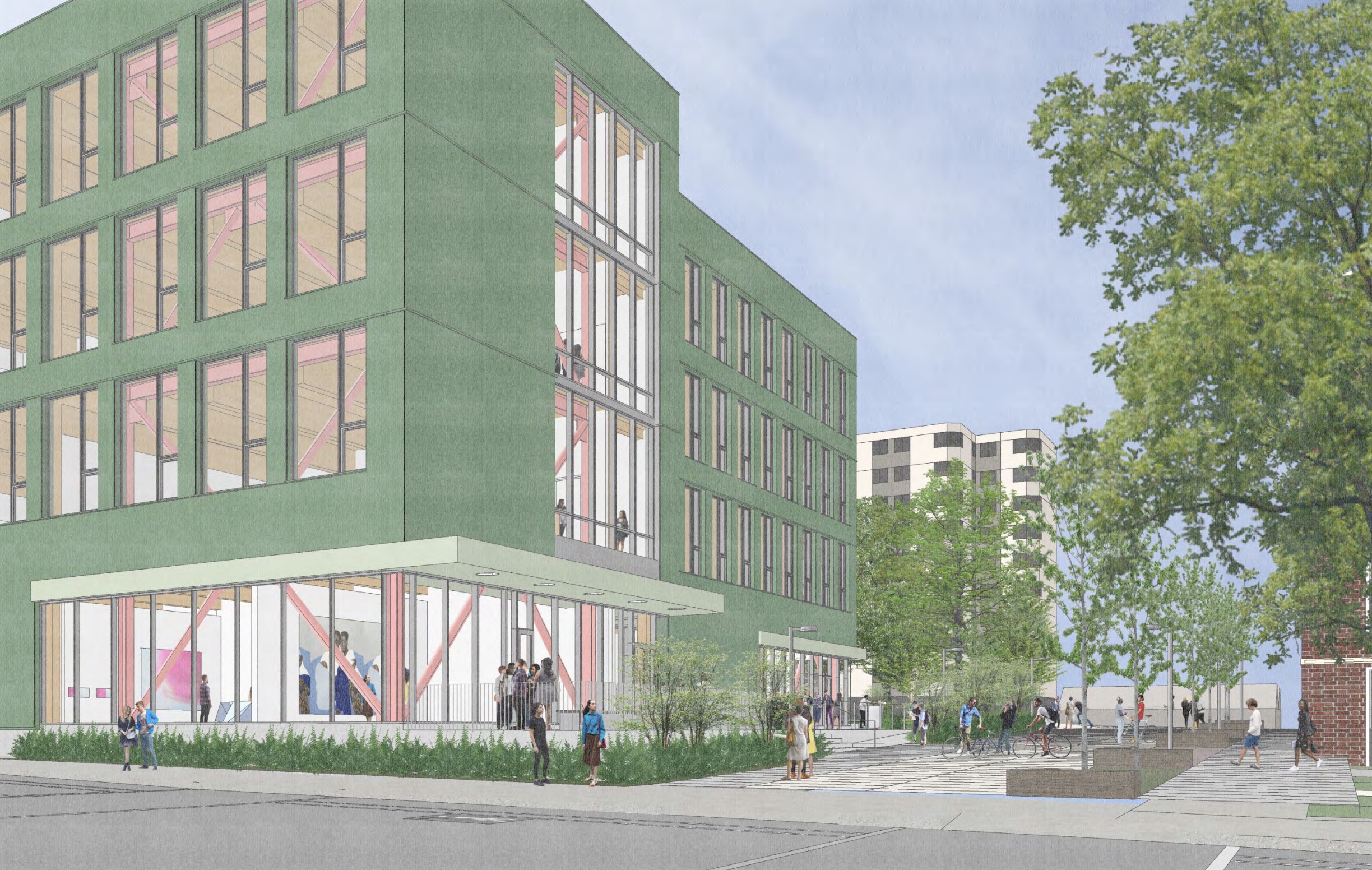
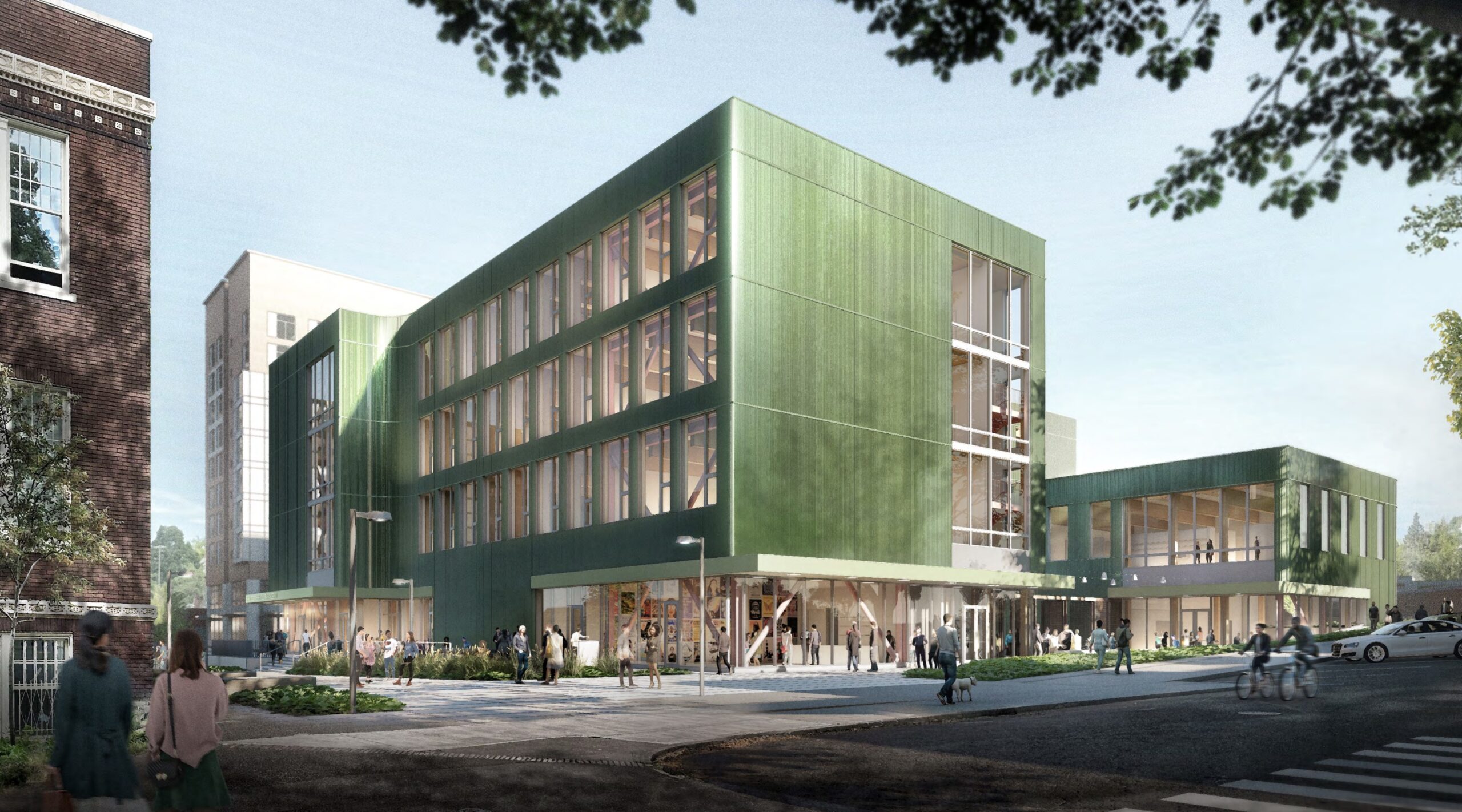
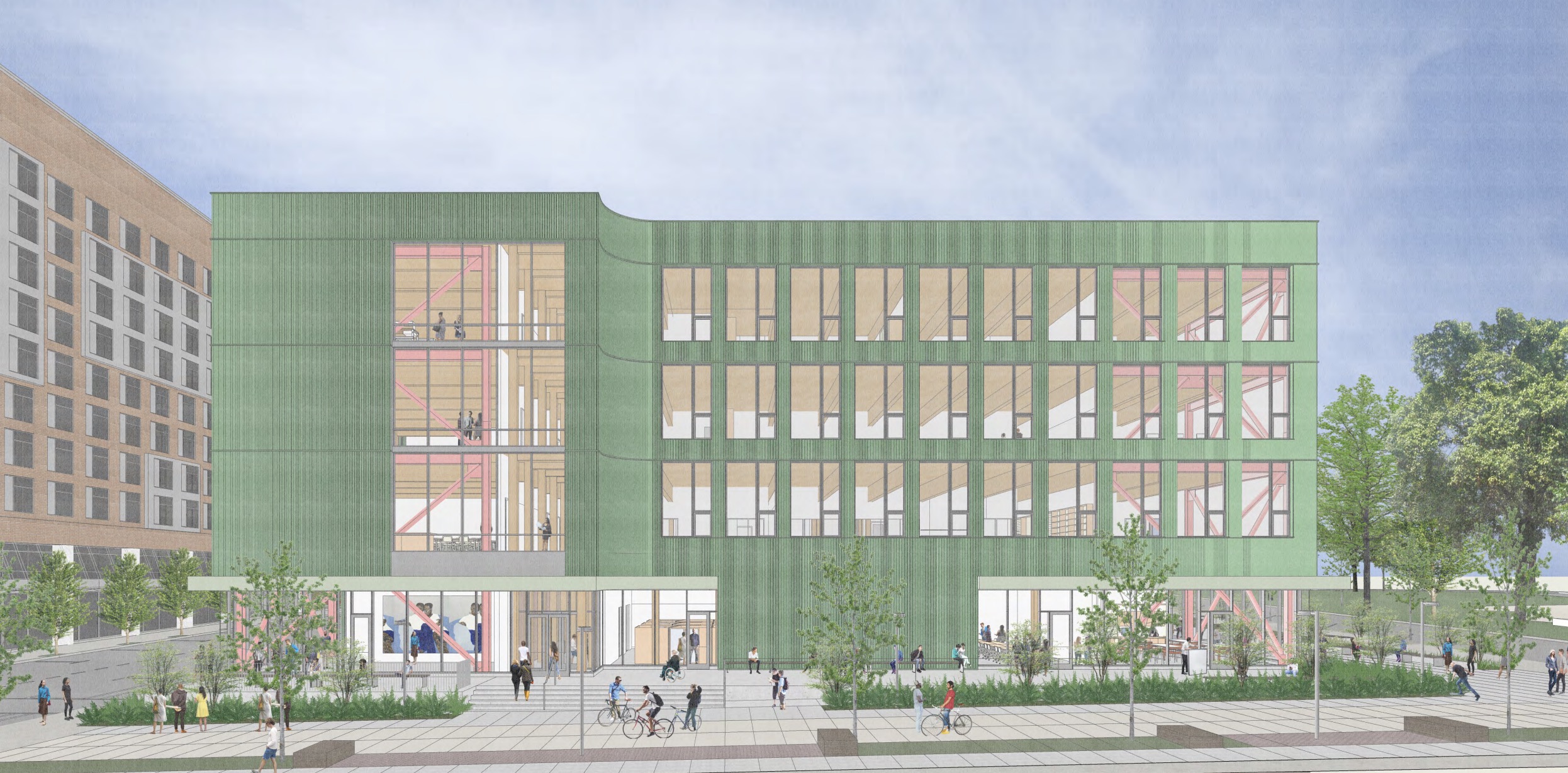
View of the future path on SW College from SW Broadway. (Drawings: Lever Architecture)

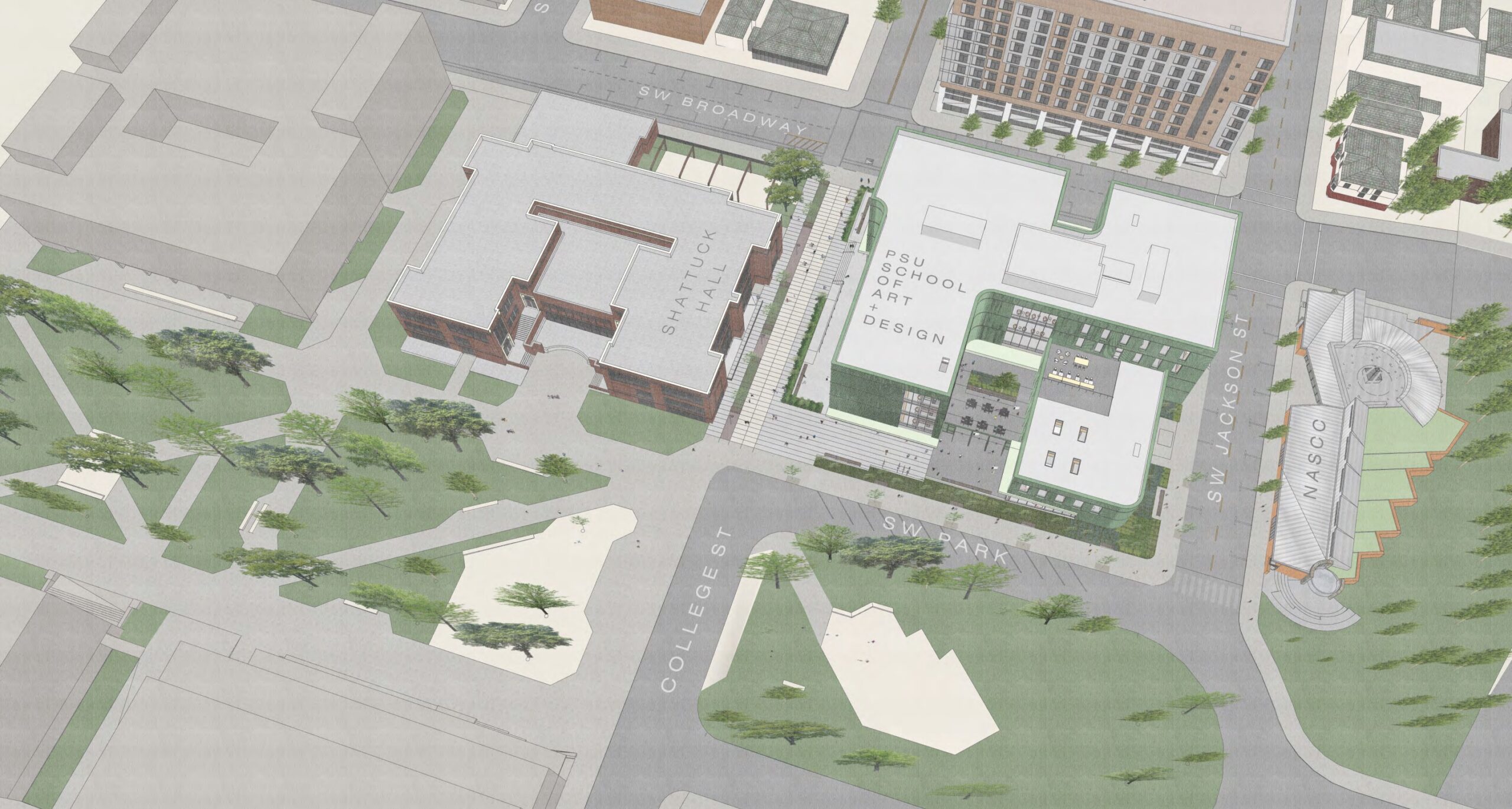
A new building in the works on the Portland State University campus near I-405 will give us one of our first looks of the fabled Green Loop, a future “micromobility path” through the central city. The Green Loop, envisioned as a “linear park around the river,” became ensconced in city policy as part of the Central City 2035 Plan in 2017.

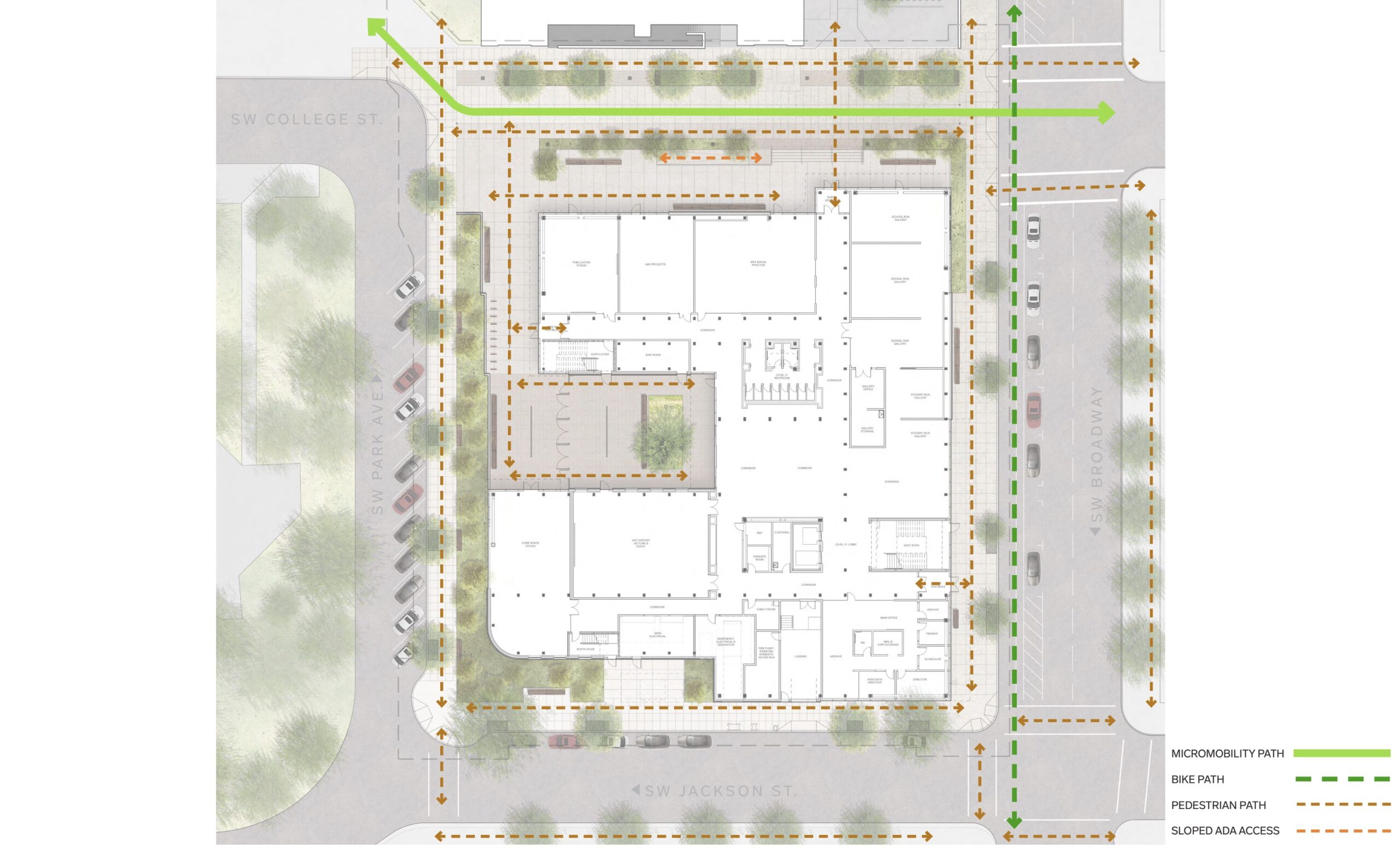
When Lever Architecture builds the new Portland State University School of Art + Design on what is now a surface parking lot adjacent to the Park Blocks at the southern-most end of the campus, the four-story building will create one block of the Green Loop. Plans that will be in front of Portland Design Commission for a hearing tomorrow (10/5) show that the development will connect SW College St (at the norther end of the building) between Broadway and Park with an “art porch” that will spill out onto the future Green Loop.

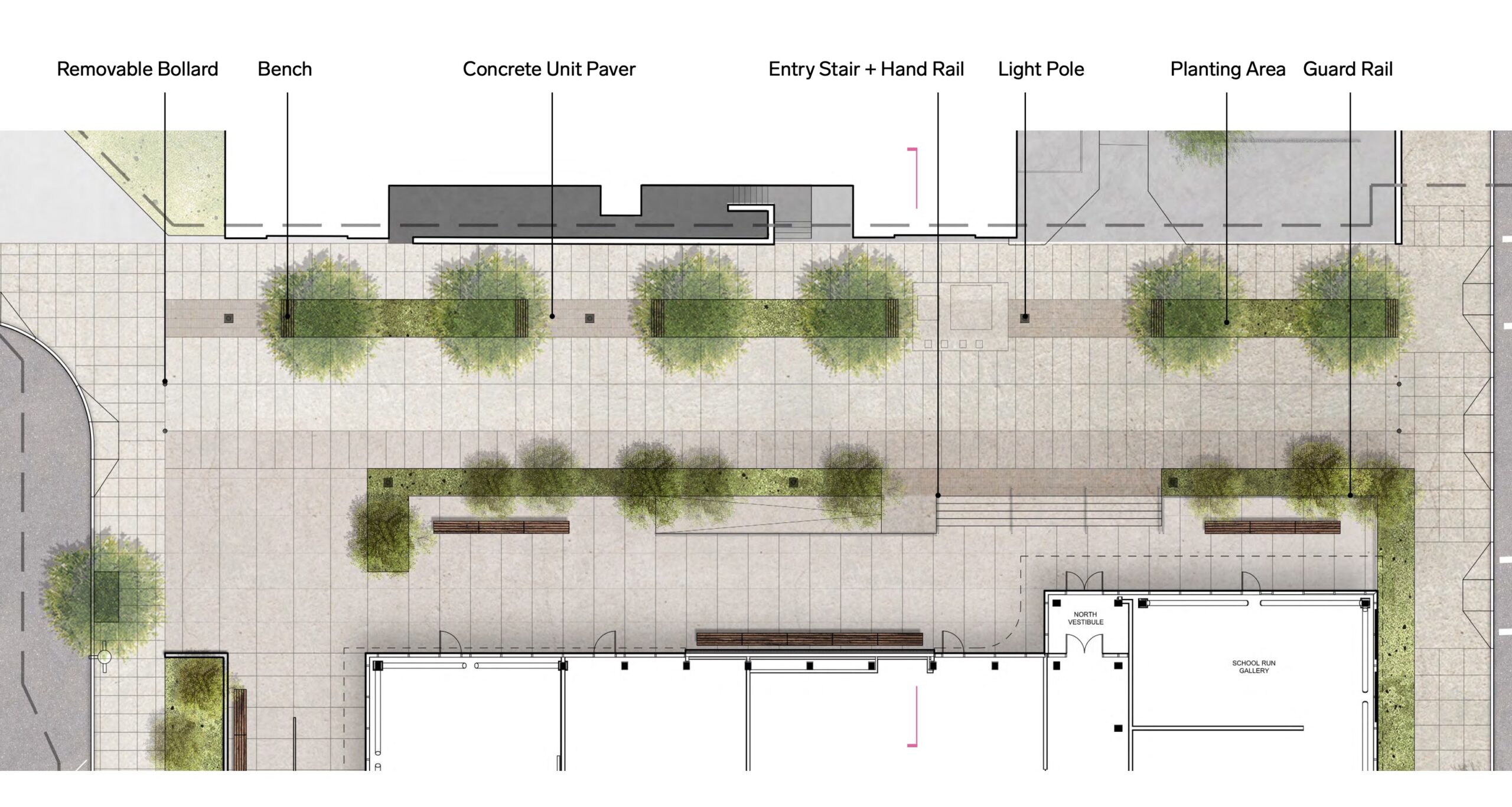
According to hearing documents filed with the Design Commission, “The proposal also includes development of the vacated portion of SW College Street into a linear park to accommodate the future green loop.”

One section of the staff report and recommendation to the Design Commission addresses how the development will “strengthen gateway locations” — a reference to its proximity to the South Park Blocks:

“The Green Loop within the vacated portion of SW College Street is envisioned as a pedestrian street with park like elements and is positioned to be a gateway to the park blocks. The proposal addresses this new gateway location:

  • A 15′ wide multi-modal path is located at the center of the street.
  • An adjacent 6′ wide path and separated 9′ wide path are dedicated to pedestrians.
  • 6′ furnishing zone on the north side of the street contains large street trees, plantings, wood benches, and concrete unit paving.
  • A 4′ wide planting strip at the south side of the street acts as a buffer and a green edge between the Green Loop and the school’s “Art Porch”
  • A central curb cut at the Broadway intersection (as requested by PBOT) provides a connection to the protected bike lane on Broadway and flexibility for future intersection improvements.
  • Studio and Classroom spaces are located along the Green Loop

While several blocks of the future Green Loop have been established (the Cart Blocks on Burnside, Bear Blocks on NE 7th, the Ritz Carlton block, Broadway Corridor, S Moody in South Waterfront), these drawings by Lever Architecture reveal one of the most detailed visuals we’ve seen yet for what the future carfree path might look like. It’s also interesting to see how the existence of the Green Loop in city plans influences private development and architectural plans.

As you look at the renderings, recall what Portland Mayor Ted Wheeler said in his glowing endorsement of the Green Loop back in 2017:

“People may think of the Green Loop as an infrastructure program, but it’s much more than that. It’s a new way to experience the Central City without a car. It’s about bringing people together around a safe, inclusive, attractive, dedicated pathway for walking, biking, rolling and strolling all around the Central City.”

Friends of Green Loop Executive Director Keith Jones has seen the plans for the PSU School of Art + Design. “We’re really excited PSU is embracing The Green Loop and this is an important piece to help link the South Park Blocks down to the riverfront,” Jones said via email to BikePortland Tuesday. “While I can’t say this is a representation of what the Green Loop will look like, it’s a contribution towards what it could be!”

Jones says the next phase of the Green Loop project is working with the City of Portland to create a master plan with design standards and then delving into the nitty-gritty of how loop infrastructure will jibe with a myriad of operations and maintenance issues that are likely to come with a new type of carfree infrastructure.
“That master plan will tell us ultimately what The Green Loop could look like,” Jones said.

YouTuber ‘CityNerd’ does Portland, and has choice words about Broadway

“Portland, I want to think the best of you, but this is extremely unserious behavior.”

– CityNerd

Ray Delahanty is not your average Portland pundit — especially when it comes to transportation takes. A Portland State University graduate and long-time Portland resident, he quit the transportation planning field during Covid and started making videos on YouTube. (Read this great profile of him published last month.)
Today he’s a full-time YouTuber and his channel (“that embraces all things cities and transportation, approaching things with a profound love for urban environments and an analytical bent”) has over 203,000 subscribers. A video he posted six days ago about downtown Portland has over 113,000 views and over 800 conments. Suffice it to say Ray has a ton of very loyal fans and his views on transportation travel very far.
So when his Portland video mentioned the Broadway bike lane scandal, a lot of people heard about it. (Note: When Ray was a planning consultant, he was part of the team hired by the Portland Bureau of Transportation to develop the Central City in Motion plan that the Broadway bike lane came out of, so he has considerable insights to share.)

Here’s what Ray said about Broadway in his video (it starts 9:27 mark):

“For years, my commute took me down SW Broadway, and the new protected bike lane that we did last year was something I was really excited to see — not only because I spent years white-knuckling it in the door-zone bike lane that used to be there, but it is a project that came out of Central City in Motion — a City of Portland effort that I’m extremely proud to have worked on.

Was it super busy? No. But keep in mind Portland State University at the south end of Broadway is a big driver of bike traffic and classes weren’t in yet, so it’s all good. Well… unless… breaking news… like two days after I left Portland, the PBOT director emailed staff and directed them to rip out the bike lane. The story is still evolving as I’m filming this, but pretty much everything we know about this is because PBOT staff aren’t on board and just leaked the whole thing to Jonathan at BikePortland… if it wasn’t for outlets like BikePortland, you wouldn’t even know half the stuff was going on in our cities. Jonathan has written BikePortland for like 18 years and still as important as ever so consider supporting it if you have the wherewithal…

Anyway; Portland, I want to think the best of you, but this is extremely unserious behavior. I worked on this project. It took years of planning and outreach, millions of dollars of staffing consultant time just to get Central City in Motion adopted… It took a whole bunch of analysis, countless meetings and outreach to get agreement on how we were going to fit that protected southbound facility on SW Broadway. And I know there were a lot of business owners who didn’t like it. But when City Council adopted the plan, it was basically saying ‘We think trying to meet mode share targets and climate-related goals is more important than pretty minor inconveniences for a few businesses.’

The hotels on SW Broadway have to put their valet on the far side of the protected bike lane. Well, you know what, when I stayed in Portland on this trip, I’d stayed in a hotel on SW Broadway and I had to take an Uber there from the airport because airport MAX line is under renovation. And guess what? It didn’t even register to me that I had to cross a bike lane with my suitcase. It literally made no difference and it has no impact on my likelihood of staying at that hotel again. What might impact the likelihood of staying in a hotel is whether the hotel owners are jerks or not.

And it’s really pretty insane, planners who are usually pretty progressive-minded people by nature are out here doing years of extensive community outreach to every impacted community. They’re doing land acknowledgments and stuff. But if a rich business owner wants to take out a bike lane, they can just like take a city council member out to a nice lunch or something? I can’t even imagine how demoralizing this is for staff and I know a lot of PBOT staff and I feel for them. All I can say is try to remember why you got into planning and engineering in the first place.”

Watch the video above or on the CityNerd channel.


In related news, I’ve received a trove of emails (1,121 pages long!) from a public records request related to the Broadway bike lane scandal. I’ve gone through it and have learned a lot more about why and how the entire fiasco might have unfolded. I’m working to confirm more details and am considering my next move. Stay tuned.

Podcast: Ayleen Crotty, Filmed By Bike Founder and Portland Bike Culture Creator

There are very few people in Portland who’ve had as large an impact on our bicycle scene as Ayleen Crotty. She moved here in 2000 from central Illinois as a scrappy, artistic kid, fresh-out-of-college. Ayleen quickly found her people — and most of them were on bikes.

Ayleen caught the cycling bug after launching Critical Mass in her college town, and found fertile ground for growing bike culture when she landed in Portland. She, like many other young, creative Portlanders in the early 2000s, were drawn to the Critical Mass ride. Ayleen and a crop of bike-minded folks, used that weekly gathering to network and build the bedrock of the bike culture we all enjoy nearly a quarter-century later.

Many of you know Ayleen as the force behind Filmed By Bike, a festival that draws filmmakers from all over the world and has shown over 1,200 films since it started in a small theater on Northeast Alberta Street 21 years ago. But before that, she was at the table for the creation of major pieces of our scene that still exist today — like Breakfast on the Bridges, Midnight Mystery Ride, Shift, Pedalpalooza, and more.

Now that Ayleen has decided to sell Filmed By Bike and move on to other creative ventures, we both sensed it was time to sit down and have a chat.

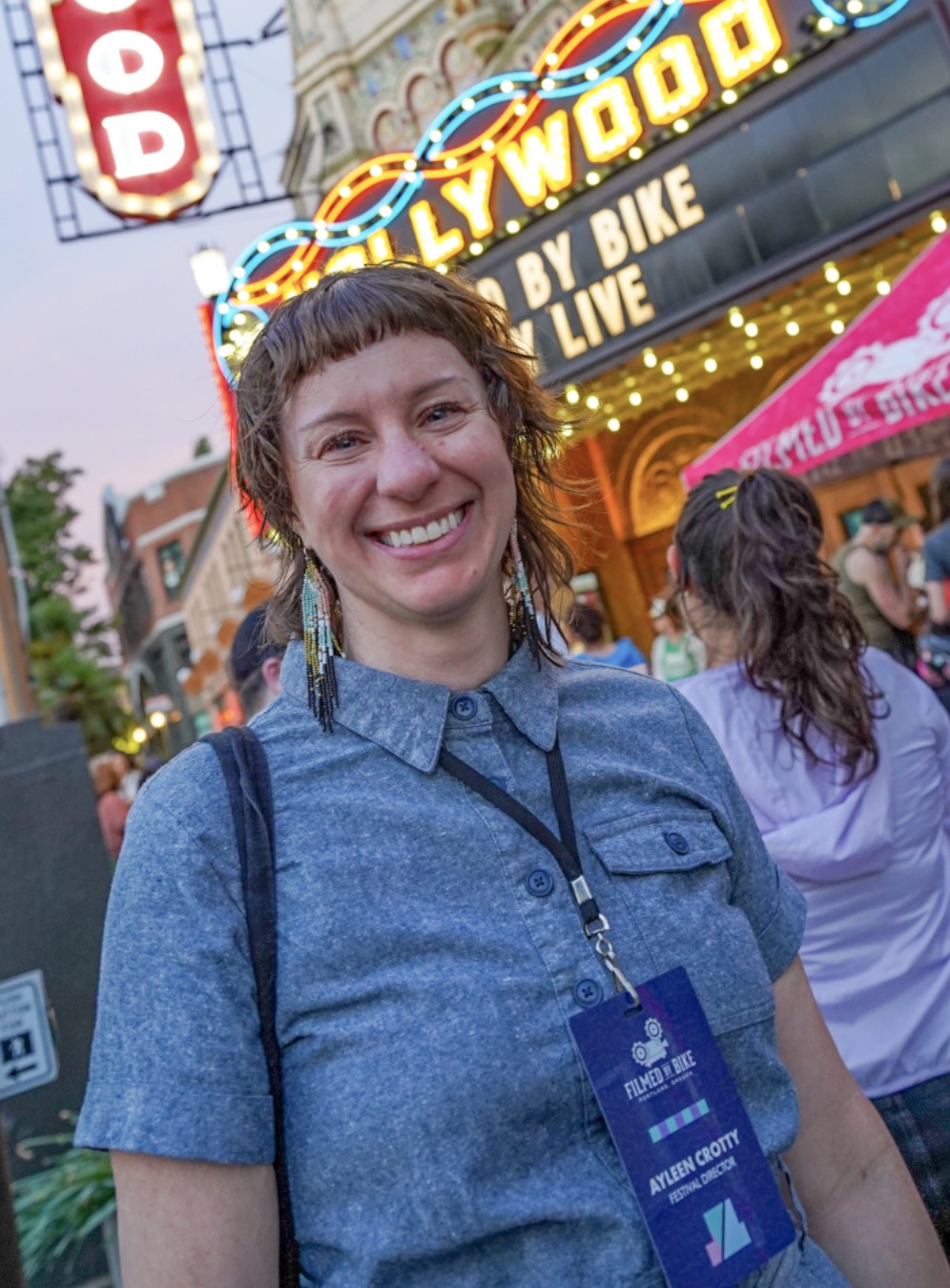
Ayleen in The Shed, October 2nd, 2023.
Ayleen at Filmed By Bike on May 19th, 2023.

In this episode, you’ll hear what Portland was like long before “Portlandia” and the many changes of the past two decades. Ayleen and I talk about early bike culture, why Portland was so ripe to blossom into a leading bike city, her impetus for launching Filmed By Bike, how she’s used bike movies to make our scene more racially inclusive, and much more.

And if you’re as sad about Ayleen taking her prodigious creative and community-building energy away from our bike scene as I am, circle October 26th on your calendar right now. That’s the night she’ll put on one last big show. At 6:30 at Cinema 21 on October 26th, Ayleen will share her Greatest Hits. It’ll be one final blowout, and we’ve got to send her off with a massive and appreciative crowd!

I think you’ll love our conversation. Listen above or wherever you get your podcasts. (View the full transcript below.)


Job: Processing and Production Manager – Community Cycling Center

Buffered Bike Lane with a bike symbol and arrow pointing forward

Job Title

Processing and Production Manager

Company / Organization

Community Cycling Center

Job Description

ABOUT THE COMMUNITY CYCLING CENTER

For nearly 30 years, we have been a nonprofit organization on a mission to broaden access to bicycling and its benefits. Our vision is to continue building a vibrant community where people of all backgrounds use bicycles to stay healthy and connected. We believe that all Portlanders—regardless of income or background—should have the opportunity to experience the joy, freedom and health benefits of bicycling. This is the motivation behind everything we do.

This position operates out of our warehouse work space in NE Portland. Here at the CCC we value and support one another through the work we do and are committed to working collaboratively to meet our goals. We acknowledge and value diversity and its many intersections. We are proud that people of color, women, neuro-divergent, gender non-conforming and LGBTQIA+ folks choose to work at our organization. We encourage more people from varied and diverse backgrounds to join our lively, talented team.

GENERAL POSITION SUMMARY

The Processing and Production Manager is responsible for the smooth and organized intake of donated goods into the organization for production, resale, reuse, or recycle. They supervise mechanics who prepare bikes and goods for sale in our shop or delivery through our programs department; and supervise used inventory processors who sort donated goods. Working collaboratively with the Shop Leadership Team, they will cultivate the delivery of consistent quality, help meet sales goals and support staff working in their department. Experience in a high-volume shop environment, clear communication skills, and proven effectiveness in supporting staff are crucial to the success of this position.

RESPONSIBILITIES

Management of Donated Goods (35%)

• Manage the process and procedure of intake, sorting and processing of donations in the shop
• Adapt procedures as needs and demands of the organization fluctuate through the year
• Continually develop and refine intake and processing procedure to help reduce costs while supplying the shop with quality goods

Management of Production Process (35%)

• Work with the Bicycle Production Coordinator to supervise production mechanics, volunteers, and interns working on new and used bikes for sale or programs.
• Work with Bicycle Production Coordinator and Programs managers to lead quality control efforts to ensure high quality used bikes
• Work with Inventory Coordinator and Membership Coordinator to meet store needs for retail used parts sales and inventory management
• Work with other departments to meet production needs of programs supporting the community. Ex: Earn a Bike and STEM
• Work with shop leadership team to maintain adequate inventory levels of new and used parts to support production needs
• Continually develop and refine the production process to help reduce cost while providing excellent quality bicycles
• Lead by example and work alongside staff to reach production and sales goals

Management of Staff & Shop Operations (20%)

• Partner with Shop Leadership Team to hire, train, and evaluate staff based on the quality and effectiveness of their work
• Partner with Shop Leadership Team to develop and ensure adherence to policies and procedures governing shop practices
• Other duties as assigned
• Manage staff timesheets and schedules

Strategic Planning and Process Evaluation (10%)

• Leverage quality control process to identify growth areas for mechanics and used part processors to provide support and training as needed to improve outcomes
• Work with the Shop Leadership Team to evaluate opportunities, trends and feedback towards financial growth for the shop and professional development for their team
• Contribute to the Shop’s annual budget process

REQUIRED SKILLS AND QUALIFICATIONS

• 2+ Experience supervising, training and supporting staff Strong interpersonal communication skills • Strong organizational skills including the ability to manage multiple assignments simultaneously
• Ability to meet project deadlines and account for detailed objectives
• Experience and success in creating inclusive work environments where people from diverse backgrounds feel safe and welcome
• Ability to lift, bend, squat, climb and more—this is a physically demanding job but reasonable accommodations can be made
• Experience with online sales
• Experience and familiarity with a wide range of bicycle technology, new and old

PREFERRED SKILLS AND QUALIFICATIONS

• 5+ years of professional bike mechanic experience
• Experience with workflow improvement methods
• Experience in a high-volume shop
• Customer service experience
• Experience with Lightspeed POS, Excel, Microsoft Office Suite, Adobe
• Proficiency in Spanish
• Proficiency with eBay sales

REPORTS TO: Bike Shop Director
UNION/NON UNION: Non Union
HOURS: Full Time (40 hours)
COMPENSATION: Salalried $50K, Exempt
TERM: Permanent
SCHEDULE: 5-day week, workdays may vary, hours may fluctuate, may work nights occasionally
BENEFITS: Health, dental and vision, 401k, 144 hrs of PTO at FT + 69 hrs of sick time

How to Apply

HOW TO APPLY:  Send your resume, cover letter, and (3) references to Jobs@CommunityCyclingCenter.org with subject line "Processing and Production Manager". No phone calls, please.