
City beefs up bike lanes, seeks input on SW Alder Street Rose Lane project

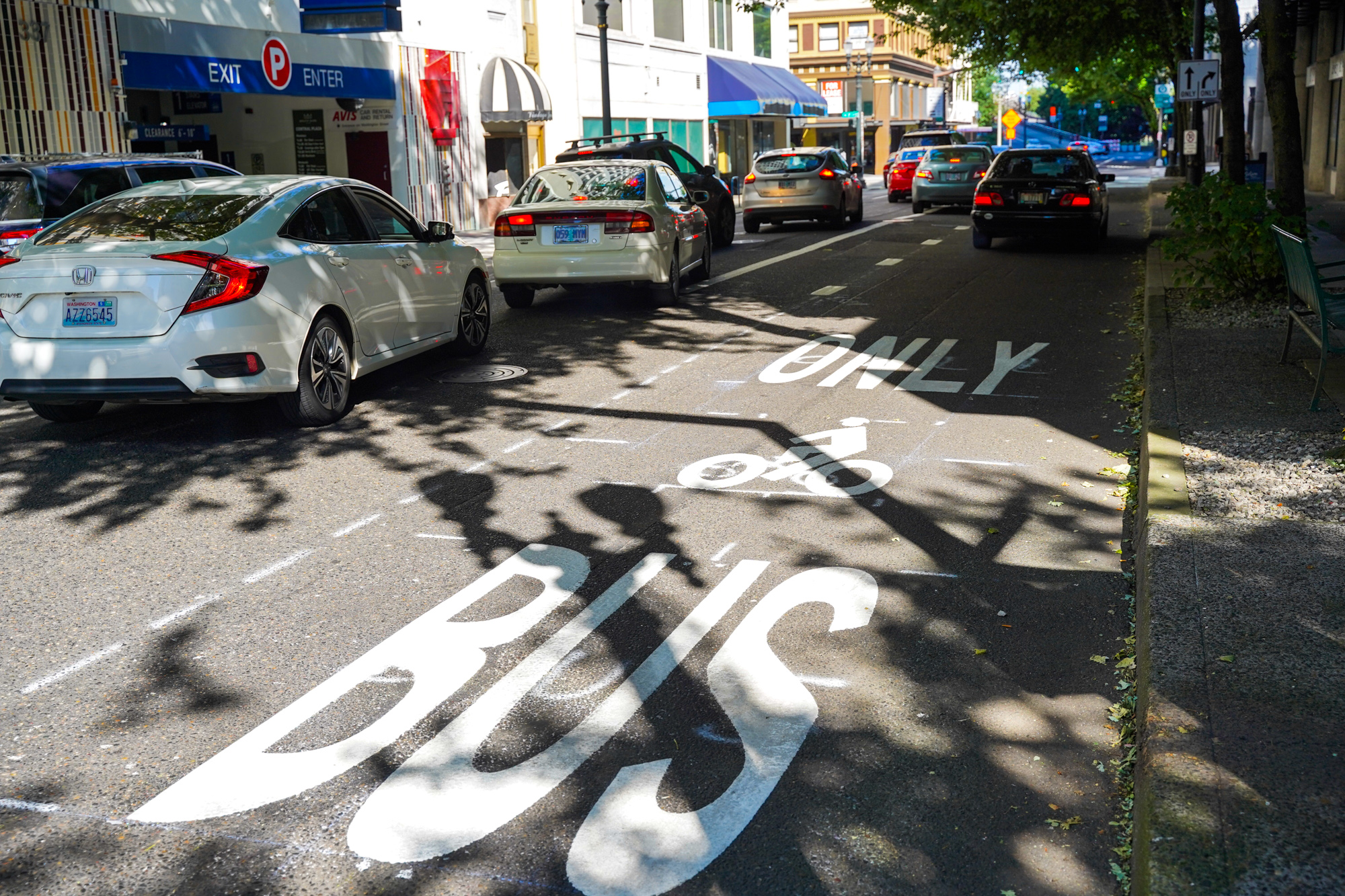
The new bus and bike lane on SW Alder St in between 2nd and 4th Aves. (Photo: Jonathan Maus/BikePortland)

A new addition to downtown Portland’s emerging slate of bike and transit infrastructure opened late last month when the Portland Bureau of Transportation (PBOT) and TriMet debuted the first phase of their SW Alder Street Rose Lane Project. This project is part of the larger Central City in Motion plan to improve active transportation infrastructure in the city center, which includes the recently-completed Better Naito, bike lanes on Broadway, SW 4th Ave, and more. But the Alder Rose Lane project isn’t done yet. As PBOT and TriMet work to plan its second phase, they’re seeking feedback from people about what is and isn’t working in the initial plan rollout.

In addition to bus-related elements, the project comes with two new bike lanes – a shared bus-bike lane between SW 4th and 2nd avenues and one going north on SW 2nd Avenue between Alder and Washington streets to connect to the bike lane north of Washington. When we checked out the project last month, those bike lanes weren’t complete. According to PBOT project managers who spoke at a Central City in Motion Working Group meeting Wednesday, some of the materials needed to complete these bike lanes have been on backorder, but they expect to complete the project with green bike lane striping and plastic “tuff-curb” and wands this week.

PBOT’s Rose Lane initiative is intended to prioritize bus and streetcar transit citywide. But while a two-block bus priority lane downtown is better than nothing – and small changes do make a big difference in the congested Central City – what has been completed of the Alder Rose Lane Project is not yet up to par with what we need to make it safe and convenient to bike and bus downtown.

In response to feedback they’ve received already, project planners will try to improve the experience for people using the new bike lane on 2nd Avenue. Their plan is to add a concrete planter with yield signage at 2nd and Washington to make it more apparent to people driving that they need to pay attention to oncoming bike traffic. This should be implemented within the next two months.

At yesterday’s CCIM Working Group meeting, PBOT project manager Gabe Graff said phase two of the project is still in its early stages, but the basic plan is to solidify the temporary infrastructure changes they made to TriMet stops on Alder with permanent bus stop improvements, concrete curb extensions and shelter amenities.

Graff said the team plans to begin designing the second phase of this project this winter, with installation coming the following year. This kind of timeline isn’t surprising, especially for projects multiple agencies are working on, but it doesn’t relieve people who bike around Portland’s car-clogged city center to know that permanent changes will be coming in two years. And with TriMet ridership still suffering, will this kind of incremental change even be enough to entice people out of their cars?

We’ll update you when the bike lanes and signage for the first phase of the project are complete. And be sure to share your thoughts with PBOT and TriMet about the project via a survey which will be open through August 20th.
New ‘global bike show’ coming to Portland next fall

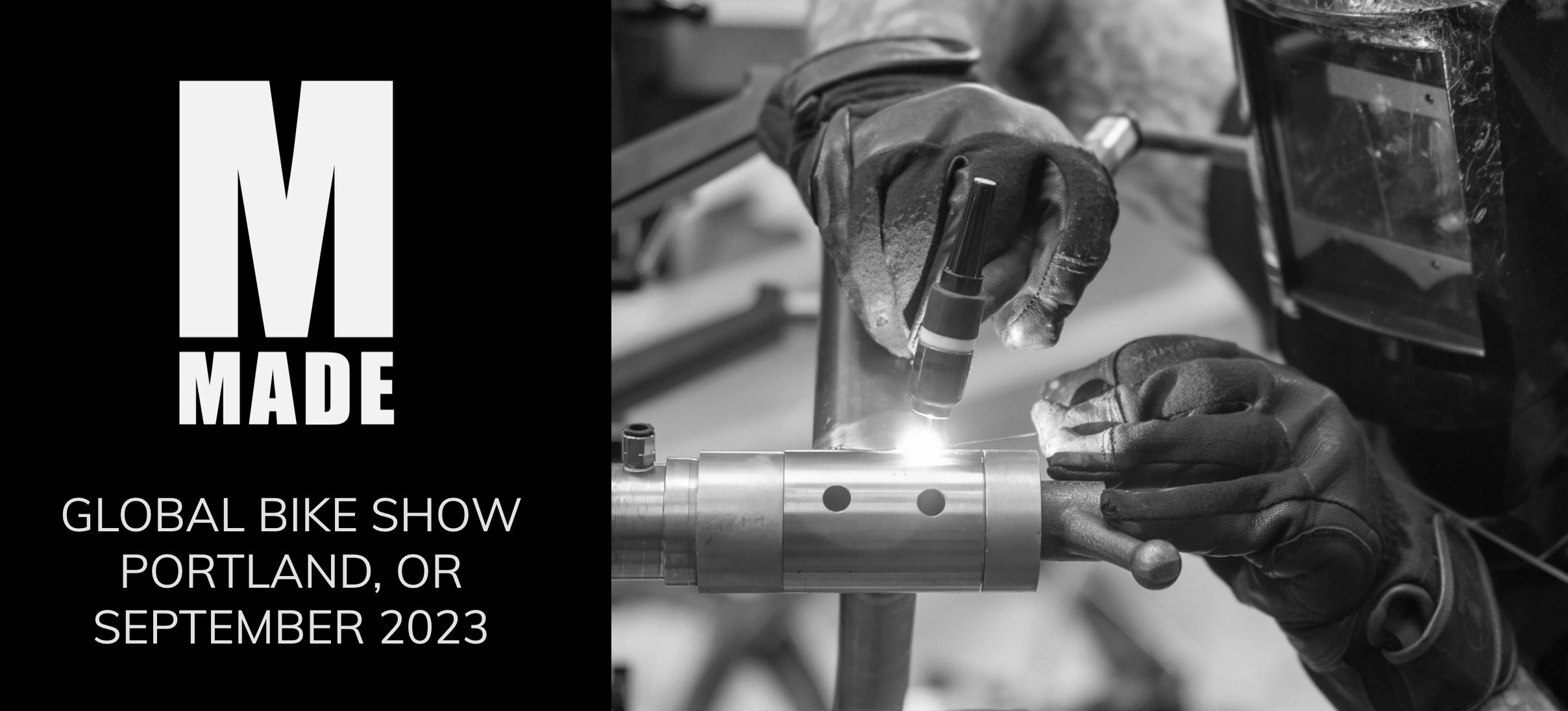
(Source: Made.bike)

After a multi-year dry spell, there’s a new show on the calendar that could re-center Portland as a hotbed of framebuilding and high-end, custom bikes.

Made, is a new “industry and consumer bike event with a mission to bring framebuilders, media and makers together to elevate and inspire”. It will take place in Portland in September 2023. Echos Communications, a PR and marketing firm organizing the the event, are calling it a “global bike show”.

According to today’s announcement, the event’s format will be much different than the traditional booth-and-display vibe of other handmade bike shows. Here’s more from Echos VP (and Portland resident) Billy Sinkford:

“MADE is the next evolution of handmade consumer and trade events, creating a format that is inclusive, exciting and supportive. The event will celebrate and support framebuilders and the culture that surrounds them, and our collective goal is to bring awareness to this segment of the industry. To that end, we will be offering free booth space to all builders for the inaugural 2023 year.”

It’s been four years since Portland hosted a large-scale gathering of framebuilders. In the decade from 2005 to 2015, our city was the epicenter of custom framebuilding in America. We hosted major shows by local and national event companies and boasted dozens of small, independent builders. It seemed like every month there was another collaboration or exhibition to check out. But interest waned, and in 2018 the Oregon Handmade Bicycle Show was cancelled due to what organizers said was “low levels of interest.”

Could Made mark a rebirth for builders and their fans and re-energize Portland’s handmade bike scene?

Open registration to be a part of the event will begin this September, but early confirmations have already come in from: Moots, The Pro’s Closet Museum, Bicycling Magazine, Paul Component Engineering, Mosaic, Breadwinner Cycles, Bike Flights, Schon Studio, Speedvagen, Stinner, Abbey Bike Tools, Chris King, Argonaut Cycles, Breadwinner Cycles, WZRD Bikes, Retrotec, Btchn Bikes, Falconer Cycles, Sierra Buttes Trail Stewardship, Tomii Cycle, Frontier Bikes, Bender Bikes, Bike Flights, Monē Bikes and more.

Check out the event website and stay tuned for more details.

Closer look at overgrown vegetation on SW Terwilliger Parkway

In this quick video I share some thoughts about biking on SW Terwilliger Parkway, a street notorious for its bad bike lane conditions.

While it’s one of the most beautiful roads in Portland and recently earned National Historic Register status, Terwilliger leaves something to be desired for bicycle users. It’s a precious north-south, not-super-hilly and relatively direct route between downtown Portland and southwest neighborhoods that should be a lot more safe and appealing to people on bikes.

Unfortunately the bike lane is unprotected and relatively narrow — and very often the space that is available for cycling on is covered in either leaves or gravel or branches and ivy (depending on the season). Two reasons for this are because there aren’t any commercial or residential destinations adjacent to it and it’s a park — which means its lush greenery has no natural predator and its only caretaker is a city government with a very lackluster maintenance record.

In the past when I’ve looked into why Terwilliger is so often unmaintained, I’ve gotten the classic finger-pointing between the city bureaus of parks and transportation.

As you can also see in the video, Portlanders are forced to deal with unsafe conditions (which are rampant elsewhere, not just on Terwilliger) that put bicycle riders in dangerous proximity to cars and their drivers who are going 30-40 mph. Since the southbound direction has a slight incline, speed differentials between bike and car users are extreme, which adds to the stress.

At this point, I don’t care who is in charge, it just needs to be better maintained more often!

Thankfully, as you can see in the video, the city has recently cut the overgrowth way back. My footage is from July 15th and since then a lot more has been cut back. That’s great.

I hope the future of this street has a physically protected bikeway and a strong, transparent maintenance agreement so the public can hold the City of Portland more accountable to keeping it clear.

Chain across street leads to serious injuries for bicycle rider

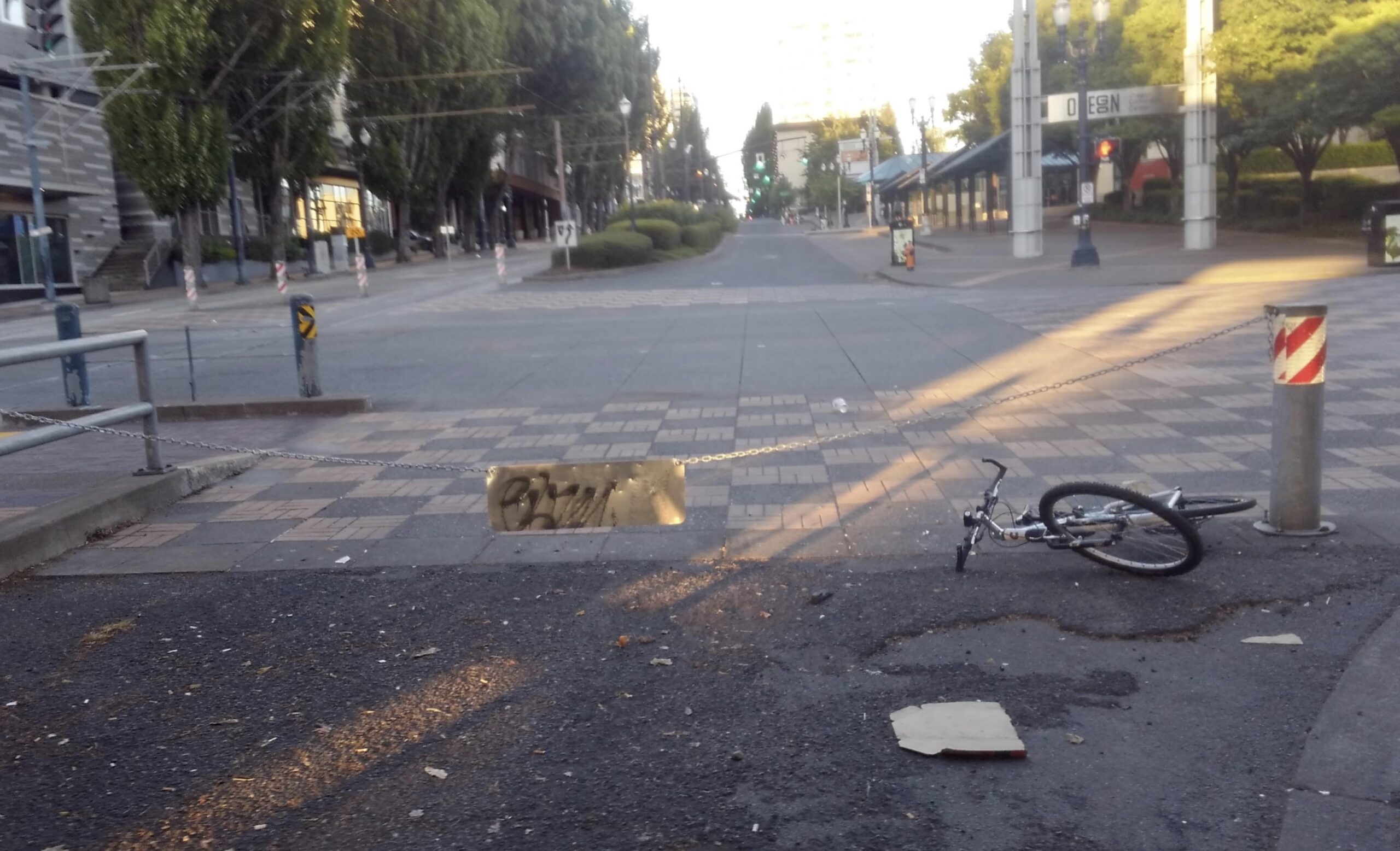
The victim’s bike after the crash. (Photo sent in by reader)

When it comes to making a city safe for cycling, it’s often very minor things that can make the most difference. A pothole, a poorly installed storm drain grate, overgrown vegetation. Or in the case of one very unlucky person, a chain strewn across the road.

On Wednesday night just after 7:00 pm, a man was biking on Northeast Holladay Street under the I-5 overpass near NE 1st Avenue when he was suddenly tangled in a chain and thrown head-first over his bars. The impact led to significant injuries to his arm and both wrists. He also suffered minor impacts to his head, although he (thankfully) was wearing a helmet.

As you can see in the image the rider sent, the chain was nearly invisible and there was no forewarning it was even there. The location is Rose Quarter Transit Center where multiple light rail and bus lines converge. There’s also a major bikeway that runs through the transit center. And although this section of NE Holladay isn’t as popular for bicycling as nearby NE Multnomah, it’s still a designated bike route.

Someone made a huge mistake by putting up this chain! This is a public street that might have been closed for a special event (it’s adjacent to the Oregon Convention Center), but that event was well over before this crash happened. This is a good example of why transportation agencies must pay attention to detail — especially because a mistake that would be a mere inconvenience to some road users can be catastrophic for others.

I’m happy to know that the rider in this case has done his homework and is seeking legal representation.

Where have all the Biketown bikes gone?

Street with empty bike share station
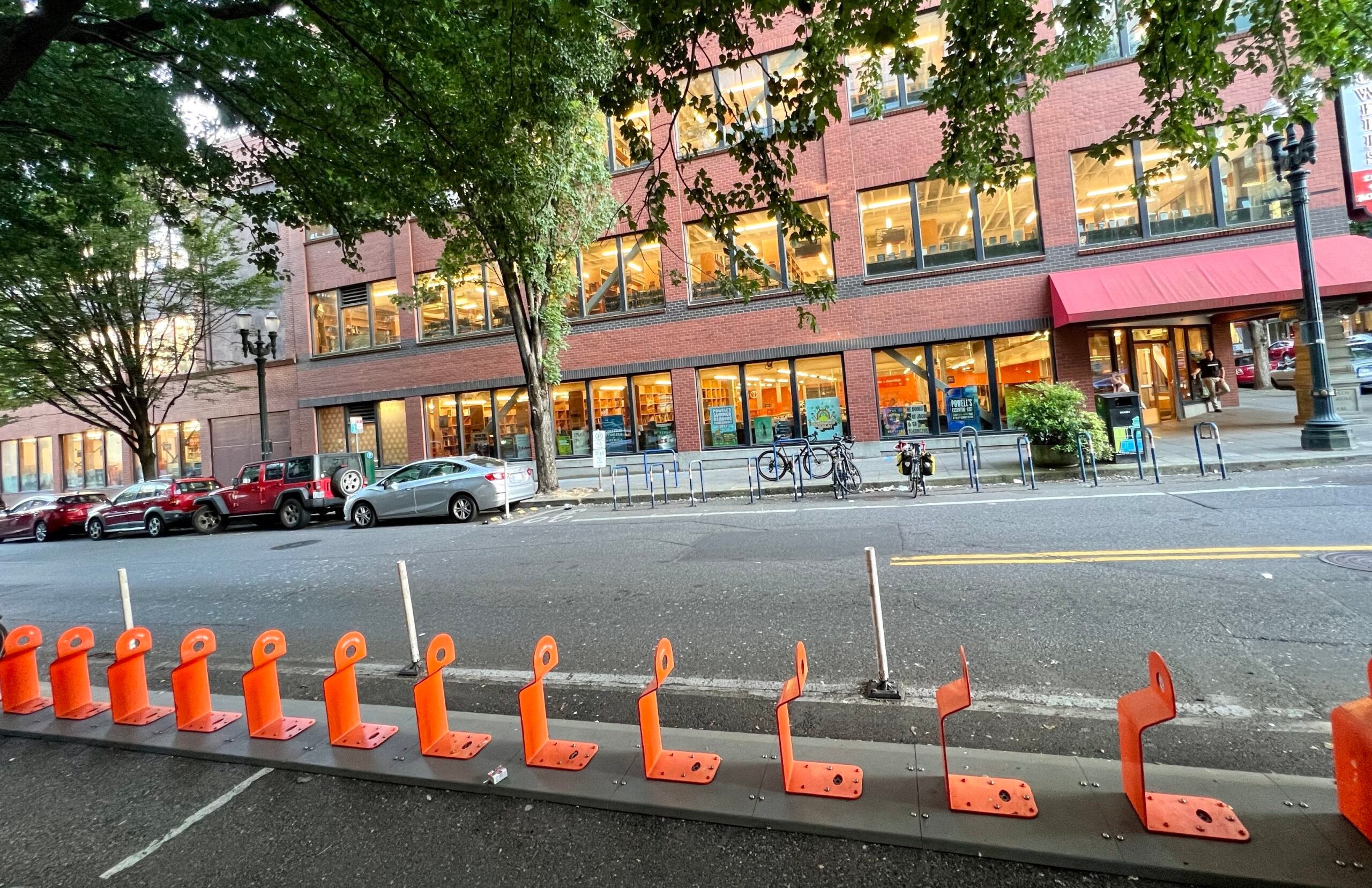
An empty Biketown station downtown. (Photo: Jonathan Maus/BikePortland)

Business at Biketown, Portland’s electric bike share program, is booming. Since rolling out its electric bikes in 2020, the service has expanded across the Portland area, and June 2022 was the highest ridership month in its history, with 50% more rides than the same period last year.

Biketown’s diverse base of users can be attributed to this expansion. So too can the Biketown for All program, which gives people who qualify for low-income government programs like SNAP free ride credits. As we’ve pointed out, high gas prices may also be encouraging people to ride the bikes. These are all good things – we want as many people on bikes as possible!

Unfortunately, it appears the program is having trouble keeping up with demand.

“Bikes parked away from stations are significant operationally. They add to time and effort needed to replenish the stations.”

– Dylan Rivera, PBOT

The last time Biketown added more bikes to its fleet was in 2020 when it went from having a fleet of 1,000 regular bikes to 1,500 e-bikes. Gauging from the empty bike docking stations around the city, however, 1,500 is no longer enough, especially now that the service area has expanded.

Even if there is a bike or two parked at a station, there’s no guarantee it will be charged. And if you’re with a group, good luck. Finding one charged bike is hard enough, but finding two or three near each other can seem an impossible feat.

While biking near SE Division and 34th Avenue the other day, I noticed a couple standing at the Biketown station looking confused. Neither of the two bikes parked at the station were functional, although they were showing up as available on the app. The nearest bike was half a mile away on Hawthorne, and it was hot outside. They told me they didn’t have anywhere they needed to be – they just wanted to try out the bikes they’d heard so much about. This could’ve been a chance for two people to learn how fun and useful electric bikes can be, but since they couldn’t find one to ride, they decided to skip it.

Bike share bike parked to a pole on a sidewalk.
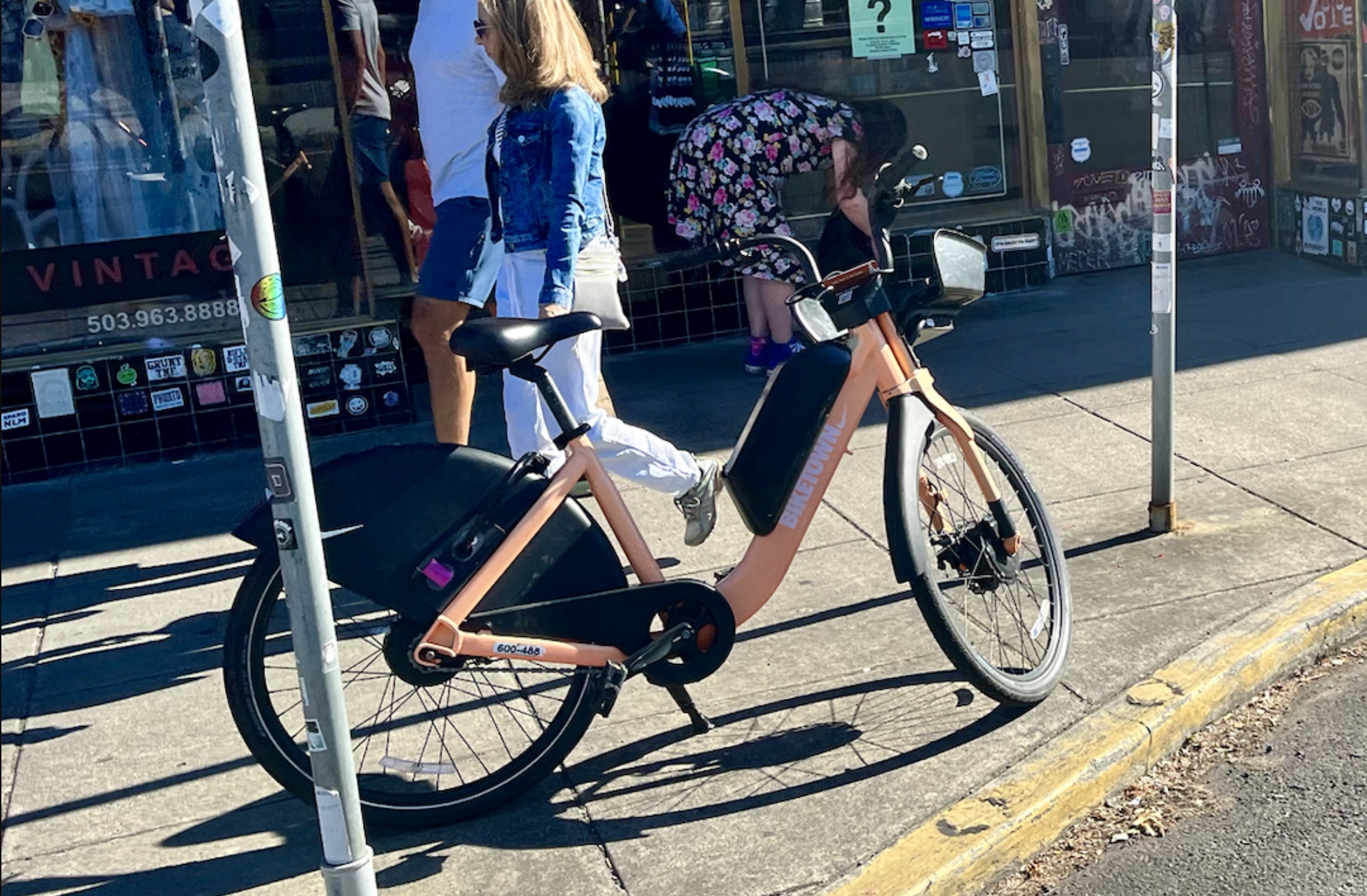
Out-of-station parking jobs like this one are straining the system, PBOT says. (Photo: Taylor Griggs/BikePortland)

I took to Twitter to see if more people had stories to share about their recent Biketown disappointments, and received many disheartening replies.

“I had several friends visit Portland and they couldn’t find five bikes relatively close to the restaurant we met at for lunch so they chose to drive instead,” said Portlander Nick Hodge.

Stories like these are concerning to advocates. A great bikeshare system could be a real game changer for getting people out of their cars. An inadequate one could push people even further into car dependency.

Transportation advocate Tony Jordan, who said he has trouble finding a charged bike near where he lives in Sunnyside, told me via Twitter that while he loves Biketown, he now hesitates to recommend it to people who aren’t already carfree.

“If they have a bad experience, they’ll give up forever,” Jordan said.

Dylan Rivera, Public Information Officer at Portland Bureau of Transportation, said although the trouble people are having with Biketown is real, the program isn’t planning on expanding its fleet in the near future. He attributed the trouble people are having with Biketown to its surge in popularity, along with the fact that people don’t always return bikes to stations, instead parking them in a more convenient location and eating the $1 out-of-station fee.

According to Rivera, 45% of all Biketown trips are ending outside stations, and it’s straining the program.

According to PBOT, 45% of all Biketown trips are ending outside stations, and it’s straining the program.

“The option of parking outside of a station is a super convenient feature of our system,” Rivera said. “But bikes parked away from stations are significant operationally. They add to time and effort needed to replenish the stations, and therefore add to the operational cost of the system.”

I have been guilty of locking Biketown bikes to any old bike rack, and I think it’s reasonable you’d want to do this – the $1 fee doesn’t seem so bad if you’re in a hurry and you can’t find a station right by your destination, or you just don’t want to walk from a station in the heat. But though I wouldn’t shame someone else for doing it, I’ll think twice about parking outside a station now.

I’ve seen the wonders of Biketown in action. When my mom came to visit me in April, I felt completely comfortable knowing we could get around the city without renting a car because of this service. We rode bikes from the Alberta area to Richmond to downtown, and it was easy, convenient and fun.

But Biketown’s fickleness is most impactful for people the organization set out to help with the Biketown for All program. People who rely on public transportation have been unable to depend on TriMet during its bus driver shortage – and now the service intended to mitigate the impacts of inequitable transportation planning is leaving people hanging as well.

It’s unclear if Biketown will impose harsher penalties on people who park outside of stations, or if they have a plan for dealing with this problem at all.

The politics in Portland when the system was first funded required elected officials to promise that “no public money” would be spent on it. But that was then, and this is now: Biketown is a successful public transit service that deserves to be funded as such. We cannot and should not continue to starve this system — especially while Portland’s car use rates skyrocket and transit service plummets.

When the program first switched to electric bikes almost two years ago, the city planned to have a fleet of 4,000 by 2024. Hopefully we’ll see more orange bikes around the city sooner than that.

Mayor validates Commissioner Hardesty’s approach in new gun violence plan

Using tools available as commissioner of PBOT, Hardesty created a carfree plaza in a former slip lane at SE 72nd and Woodstock. (Photo: Jonathan Maus/BikePortland)

“We’re just trying to bring all hands on deck to use every tool we have to to address the drivers for this kind of gun violence.”

– Stephanie Howard, Mayor Wheeler’s director of community safety

When Portland Transportation Commissioner Jo Ann Hardesty used traffic calming tools to address a spate of gun violence in the Mt. Scott-Arleta neighborhood last fall, many people scoffed at the notion. “People are shooting at each other, and she’s putting orange barrels in the road?!” is how many of the derisive comments sounded.

But not only did people who live in that neighborhood appreciate the approach (which included much more than traffic-related interventions and was a multi-bureau effort that included Portland Parks and the Police Bureau), it was also backed up by public health research.

Now Hardesty’s office must be feeling even more validated, because last week Mayor Ted Wheeler gave a serious nod to those tactics in his emergency declaration to combat gun violence:

“We will be expanding place-based interventions in neighborhoods that are caught in the crossfire of gun violence… these efforts will work with communities to identify environmental changes to interrupt gun violence. These interventions could include increased lighting, traffic diversion, or the use of non-law enforcement personnel to maintain positive environments in public spaces.”

In his Safer Summer PDX plan, Wheeler said his team will address gun violence with a three-pronged approach funded by $2.4 million that would include, “place-based investments… to address environmental factors conducive to gun violence.”

The best example in Portland of these “place-based interventions” is the new plaza that has bloomed in the place of a former slip lane on SE 72nd and Woodstock. In that project, Hardesty worked with the Portland Bureau of Transportation to reduce driving access in a location that had been the site of many speeders — who were all too often fleeing a violent act or in the midst of one.

This additional injection of political and financial capital from the Mayor’s office should raise urgency around the idea that the causes of — and solutions to — gun violence and traffic violence are often closely linked. Put another way, if we calm the streets, we calm the violence.

“In some areas it might be as simple as improving lighting at an intersection,” said Stephanie Howard, the director of community safety for Mayor Wheeler, in a phone conversation last week. Howard, a former trial attorney in the Denver, Colorado public defender’s office, said they’ll be looking to fund creative approaches to traffic-related interventions.

“This is a problem that requires all angles to find solutions to. There is no one approach that is the right approach,” Howard said. “It’s going to take every kind of intervention, and this really is about trying to find the most impactful interventions that we can.”

When asked specifically about Hardesty’s efforts in Mt. Scott-Arleta, Howard said,

“What we endorse wholeheartedly is collaboration to solve these problems. If bringing bureaus together that can play a role in this overarching problem is effective, which I think it is, that’s what we’re trying to do. We’re just trying to bring all hands on deck to use every tool we have to to address the drivers for this kind of gun violence.”

We’ll watch this effort closely to see how/if street interventions materialize. For more on the gun violence plan and emergency declaration, see Mayor Wheeler’s website.

Biking through downtown Portland’s network of social services

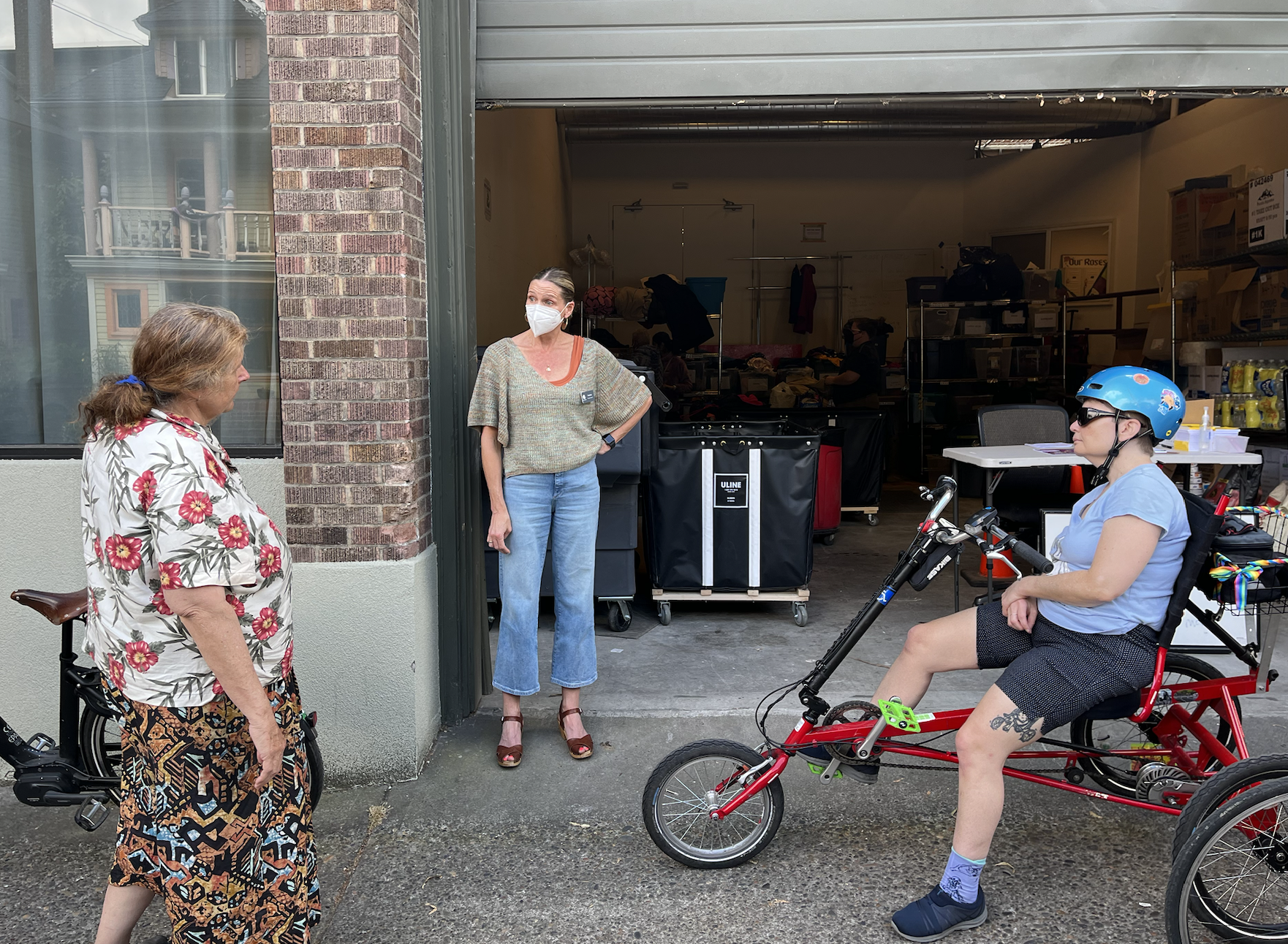
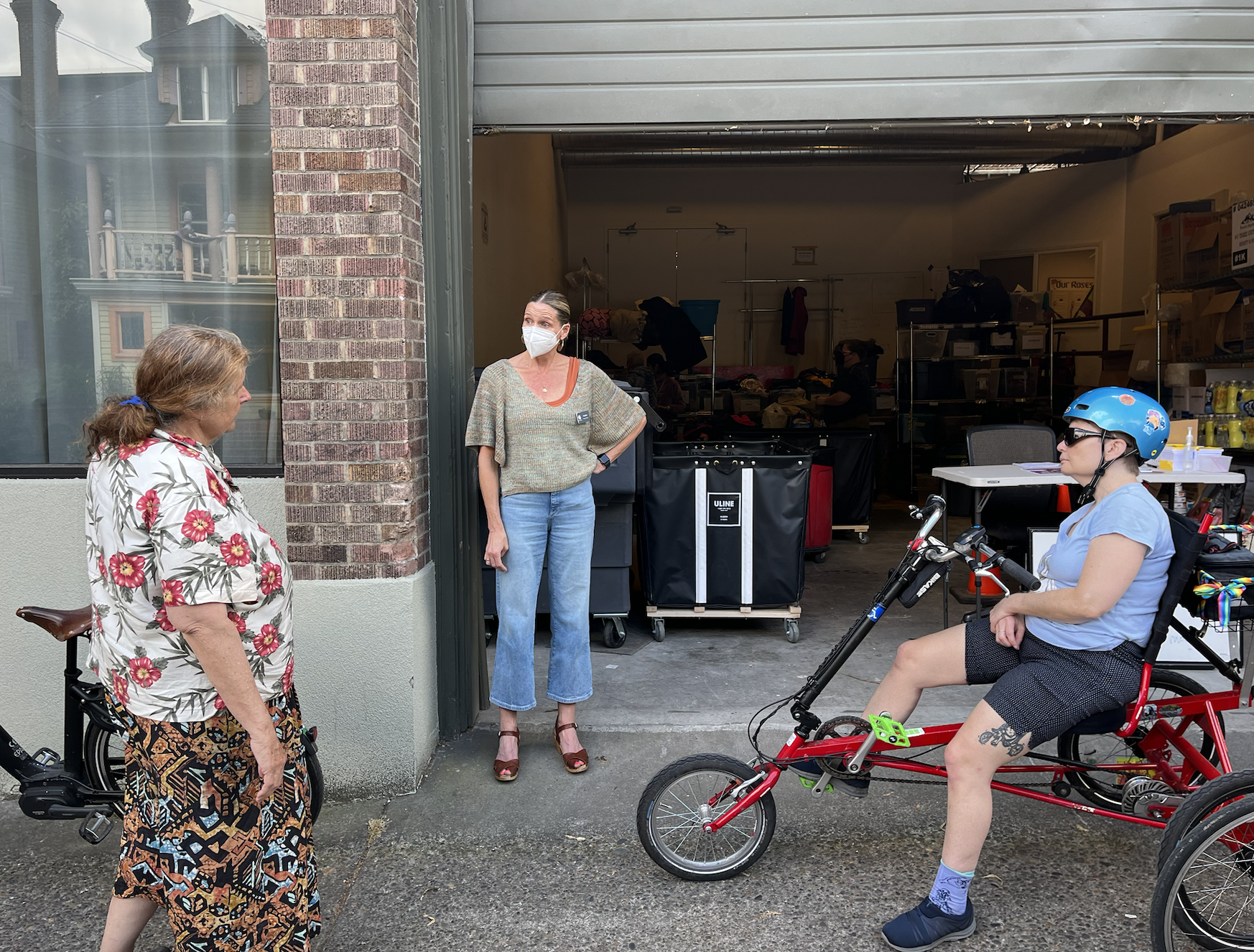
Cathy Tuttle and Bike Loud PDX Vice Chair Serenity Ebert talk with Heather Hilligoss, Rose Haven’s Program Director. (Photo: Taylor Griggs/BikePortland)

Most of the Bike Loud PDX Portland ‘policy rides’ Cathy Tuttle has led so far this year have focused specifically on bike or transportation policy. Last month, for instance, Tuttle recruited Portland Bureau of Transportation’s signals manager Peter Koonce to lead a tour of Central City traffic signals, and the month before, the Parking Reform Network’s Tony Jordan gave riders the lowdown on Portland parking policy.

This month, however, Tuttle went in a new direction and tackled a subject transportation activists aren’t always directly involved in: homelessness and social services. It’s not as cut and dry as a ride looking at bike signals, but Tuttle thought it was just as important to show bike advocates what’s going on in this sector of Portland life.

Tuttle told me she wanted to connect the themes of homelessness and access to social services with transportation advocacy or city planning generally because cities are made up of more than just inanimate physical infrastructure. The network of social services and people working together to help each other make up the fabric of downtown Portland just as much as bike lanes, the Streetcar and MAX rails do.

“People are part of the city,” Tuttle said.

Portland’s Old Town has been a favored place for people to set up camps because it’s a hub for resources that aren’t available in other parts of the city. This became especially pertinent during the pandemic, when many social service organizations around Portland had to restructure and couldn’t provide the same services as they used to. Over the last few years, unhoused people have formed communities in Old Town and become a part of the neighborhood. This has become a hot button issue for people across the ideological spectrum, with some people using the prevalence of tents downtown as a sign of Portland’s rapid decay – a thought process I don’t find conducive to progress and thoughtful city planning.

Bike Loud aims to make Portland accessible without a car, which means acknowledging there are many people in the city who don’t drive whose needs can be overlooked in favor of accommodating car drivers. This group of people includes many homeless people, who – like all of us – should be able to access things they need without traveling very far.

This is why it’s so painful for people when the city sweeps their camps and forces them to go elsewhere, cutting off access to services and a community they’ve grown familiar with.

Along with city-ordered encampment clean-ups, which have been revving up in Old Town in recent months, people living on the streets are subject to hostility from business and property owners. We rode past the unsanctioned bike racks erected on NW Broadway outside a building owned by Schnitzer Properties, which homeless advocates saw as hostile architecture intended to prevent people from setting up tents on the sidewalk (there isn’t demand for bike parking on that block). In contrast, PBOT’s new car-free plaza in Old Town, which we took a quick look at, provides a welcoming space for the public to enjoy. This is an example of how infrastructure can determine who is allowed to exist in a city – how public ‘public space’ really is.

At Rose Haven, an organization in the Northwest District a bit outside Old Town that serves women and children as a community center and day shelter, people who need some help getting around the city can get financial assistance for TriMet passes. They have a designated transportation assistance budget, which just shows how important transportation access is.

We spoke to people from Stone Soup and Sisters of the Road, both organizations that give people a chance to work in food service, which helps people with career training and allows for community connection. We also rode past service providers like Transition Projects, Blanchett House and a day storage facility, as well as P:ear, a program that offers homeless youth the very cool opportunity to learn professional skills including bike repair. Looking at all the programs that exist within about a 1.5 mile radius, I thought it was meaningful that all of them serve to fill some gap. People are in communication with one another, working together to ensure they’re able to serve the community the best they can.

“One organization can’t do it all,” said Lana Silsbe, the kitchen manager at Sisters of the Road. “We rely on everyone; we work together.”

It’s roller-palooza at Secret Roller Disco

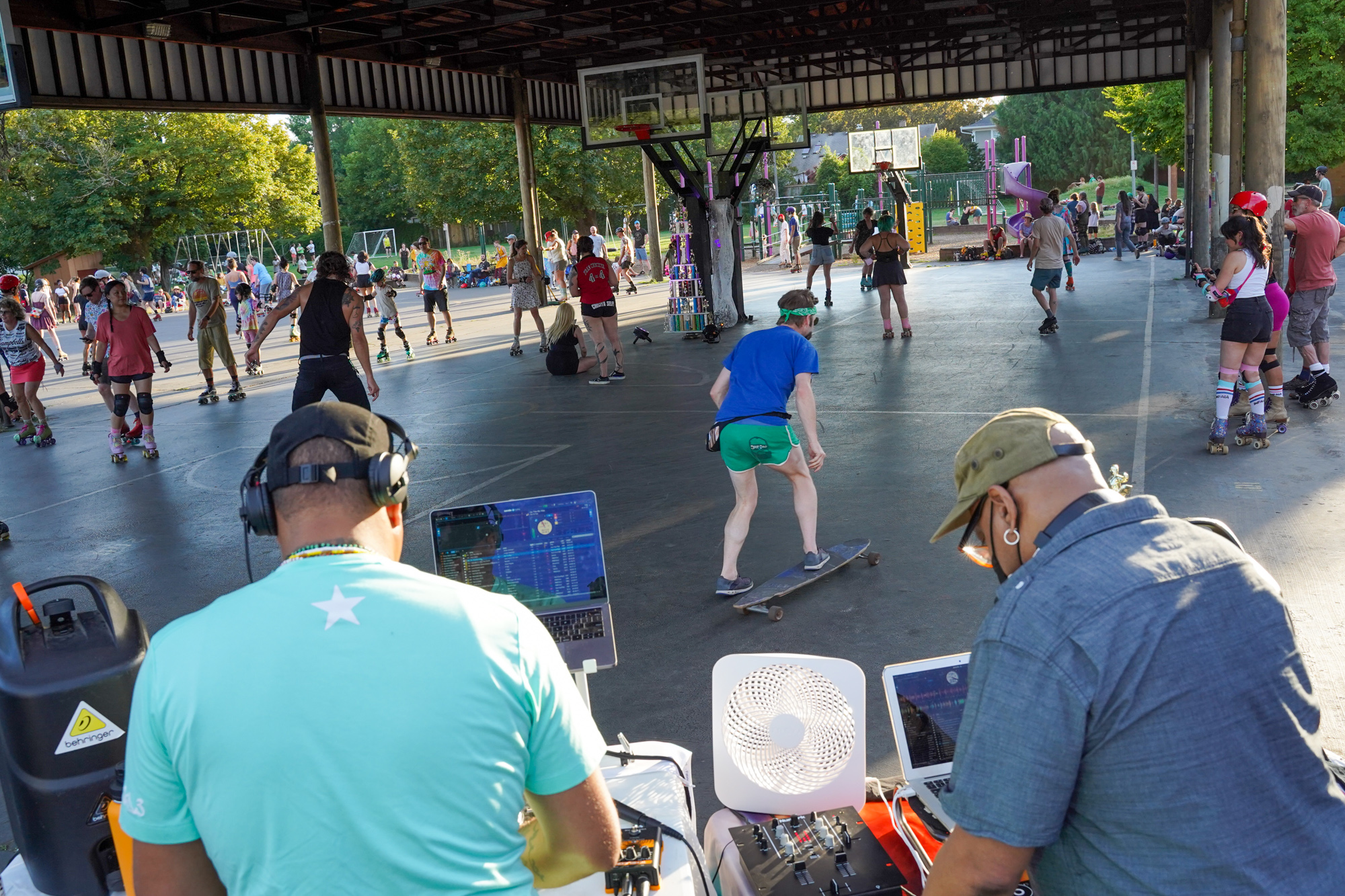
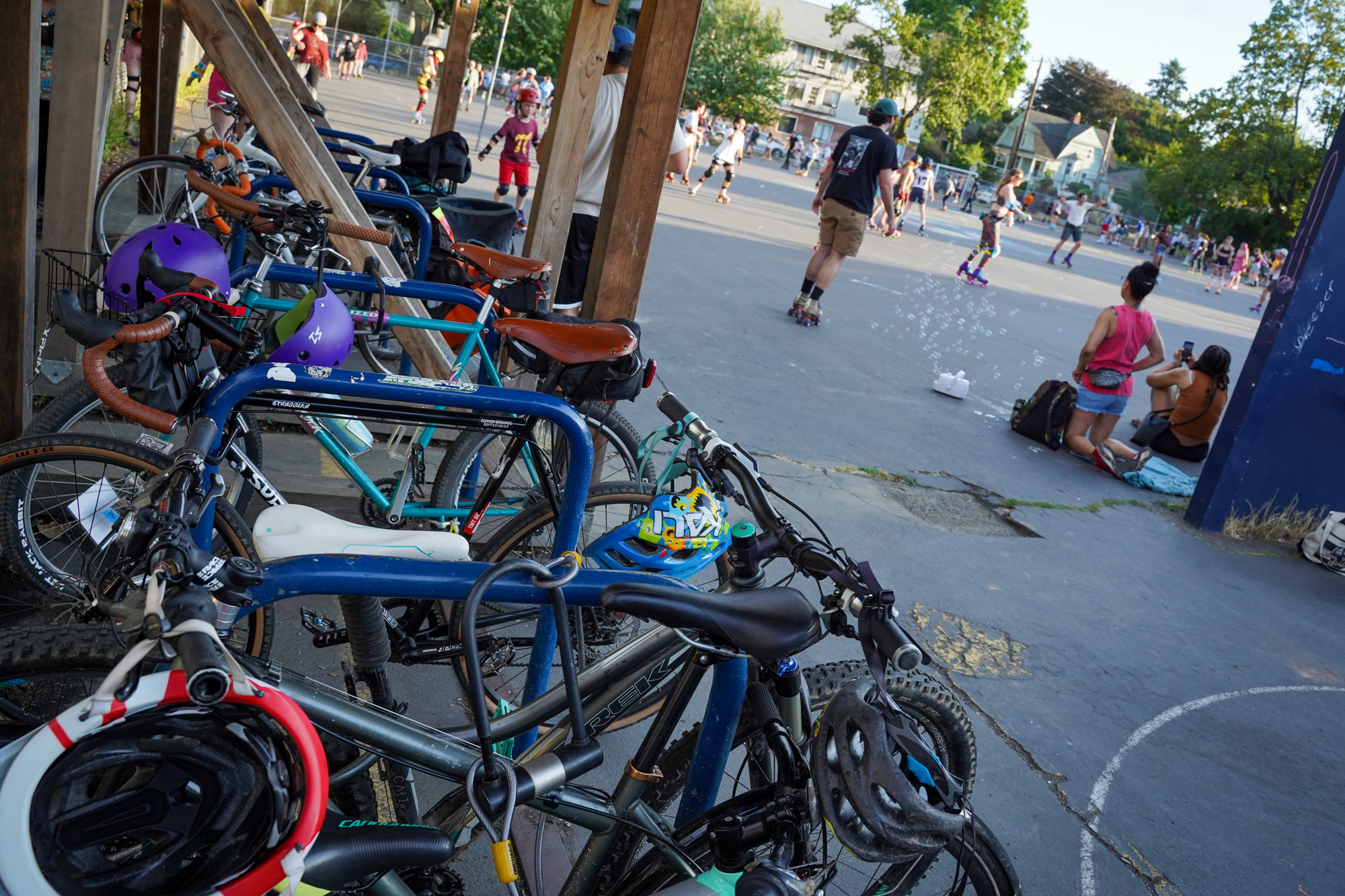
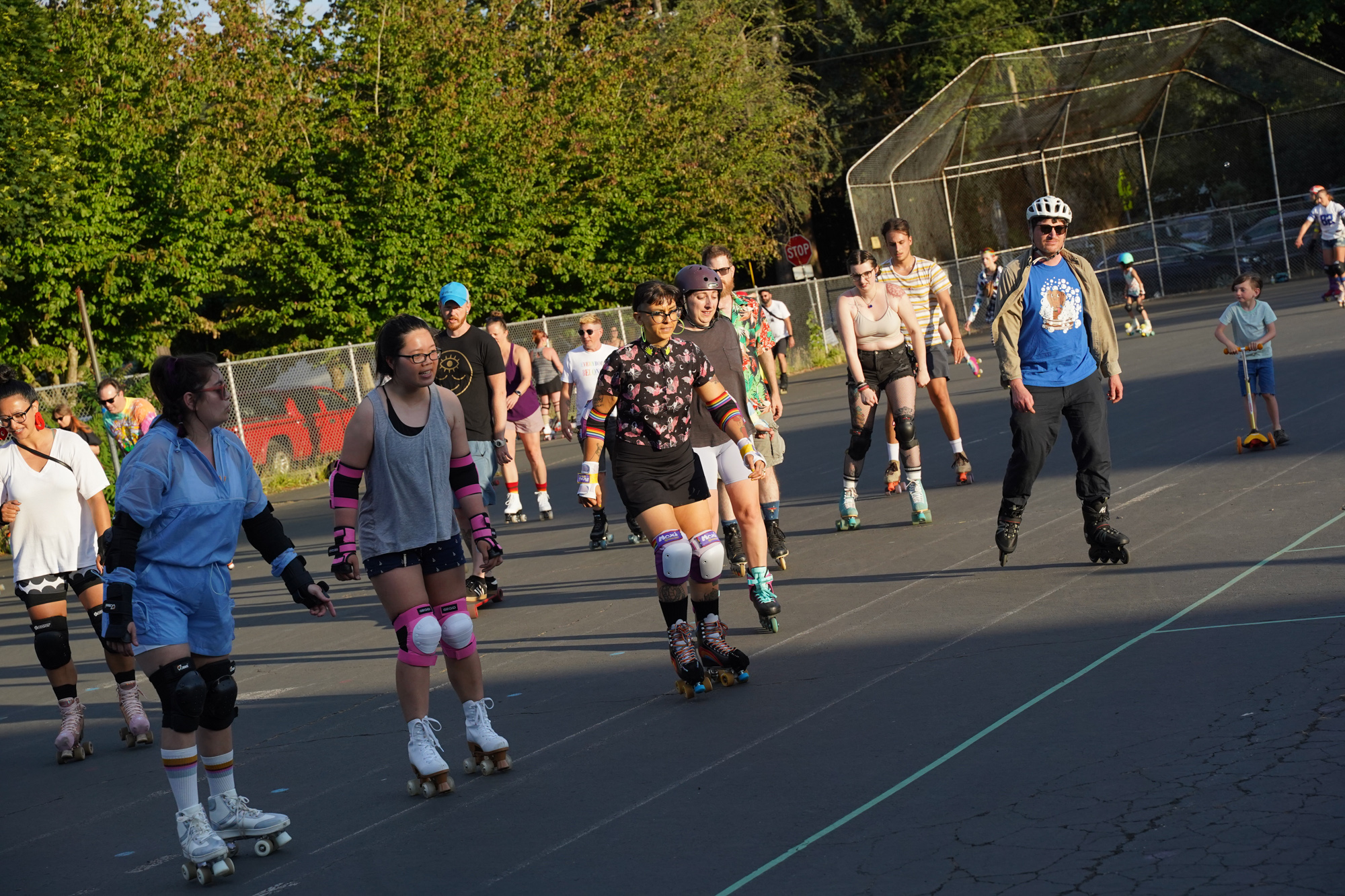
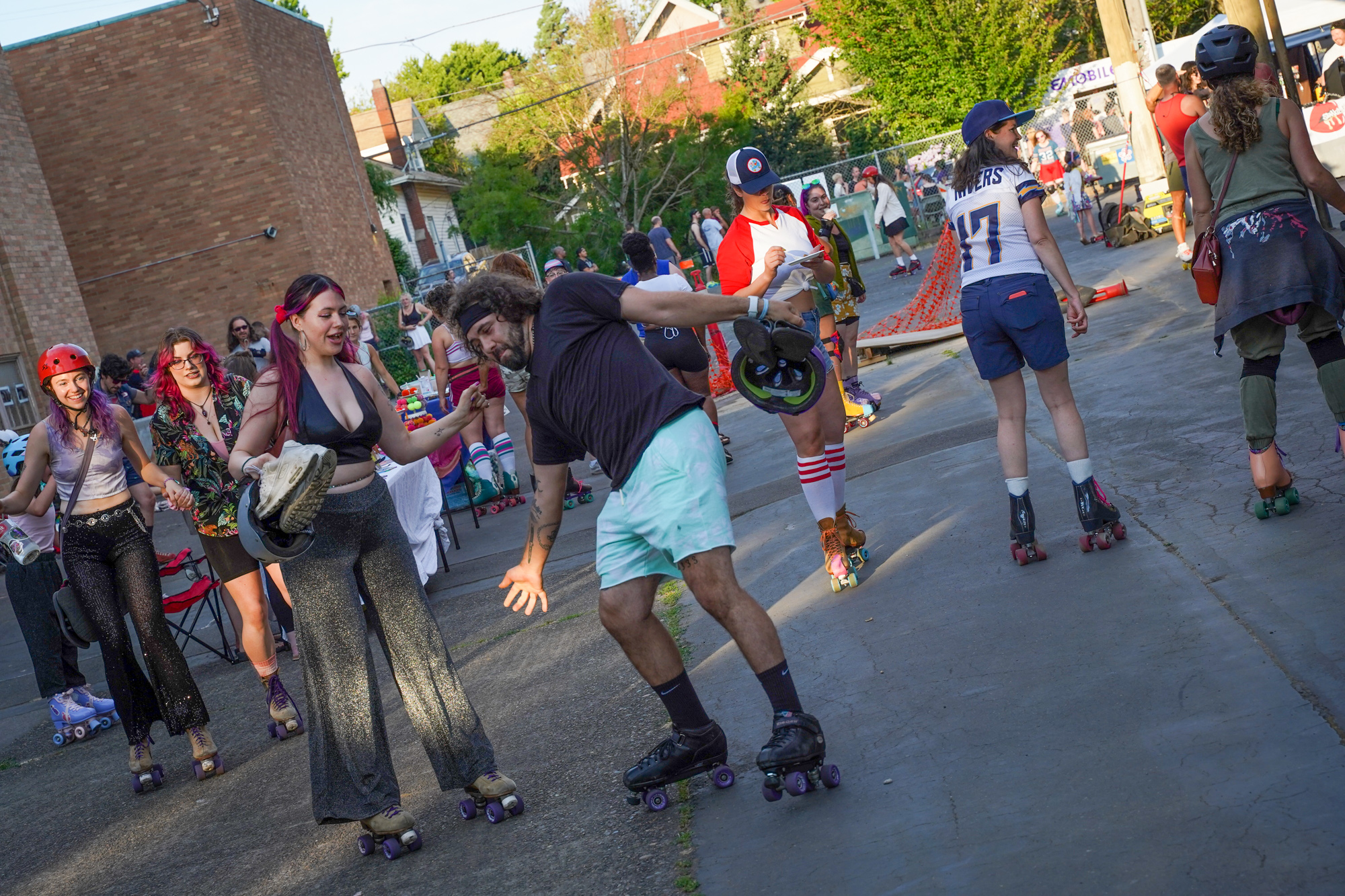
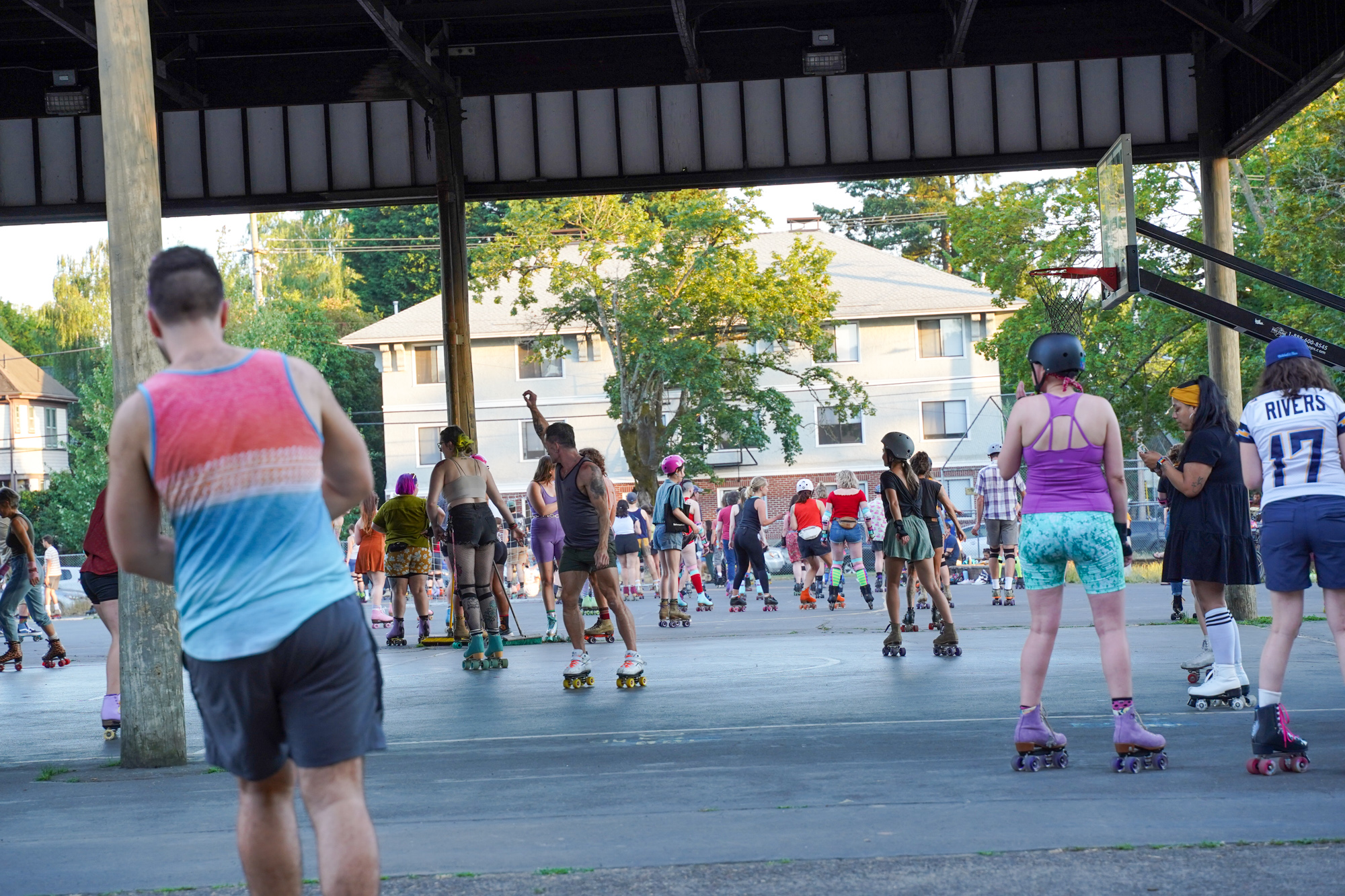
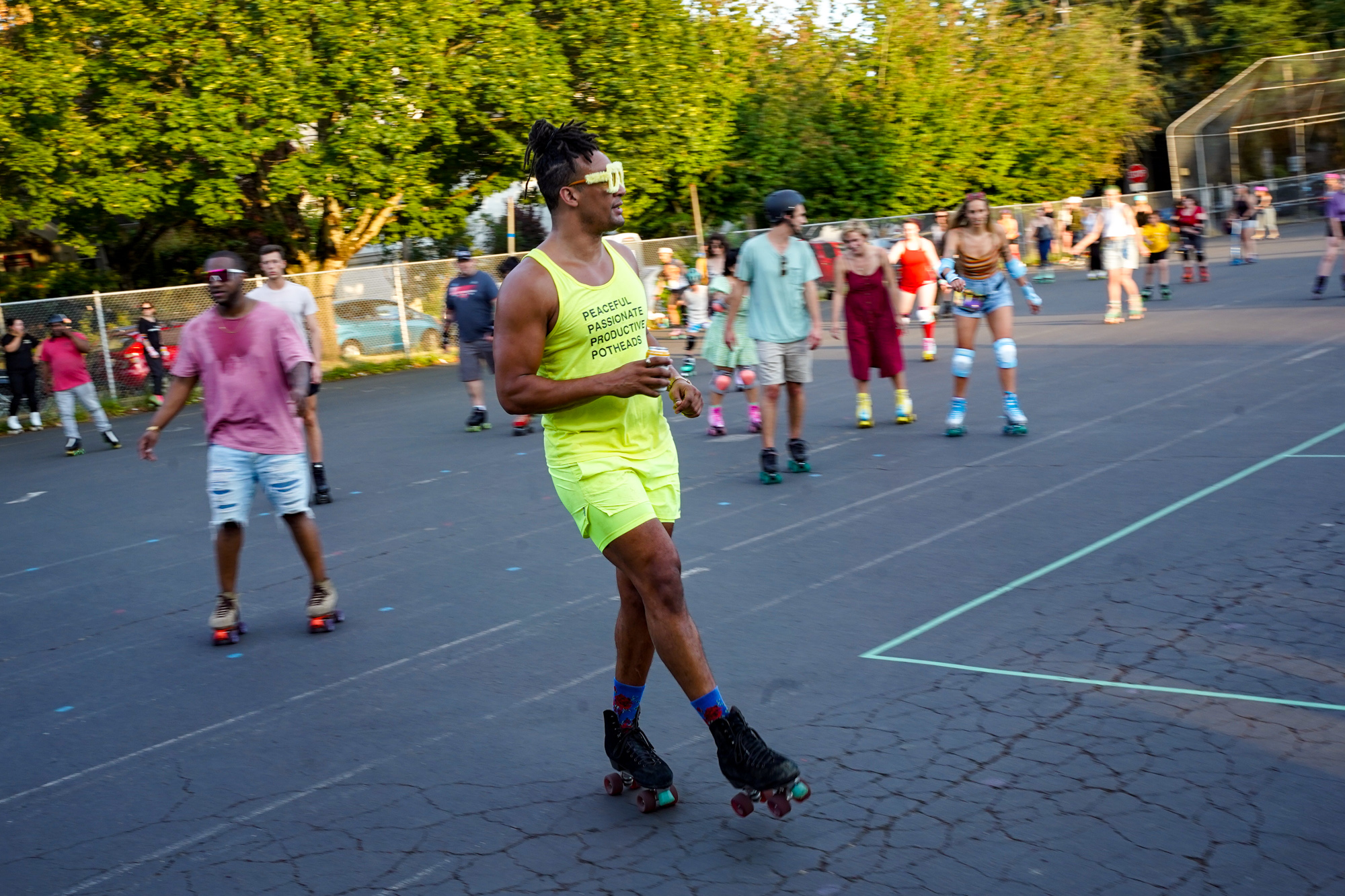
DJs Slimkid Tre and DJKenoy kept the place rollin’. (Photos: Jonathan Maus/BikePortland)

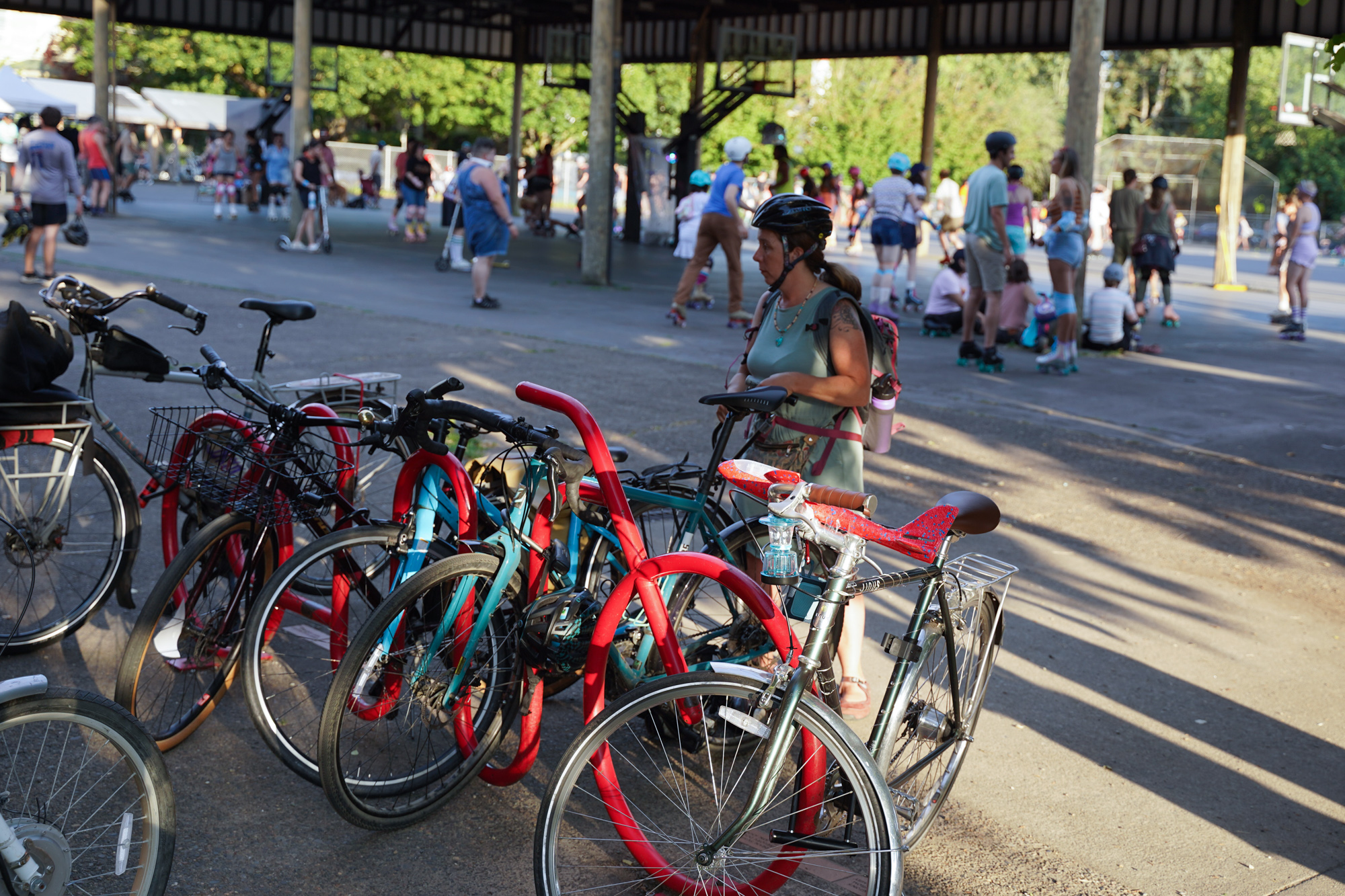
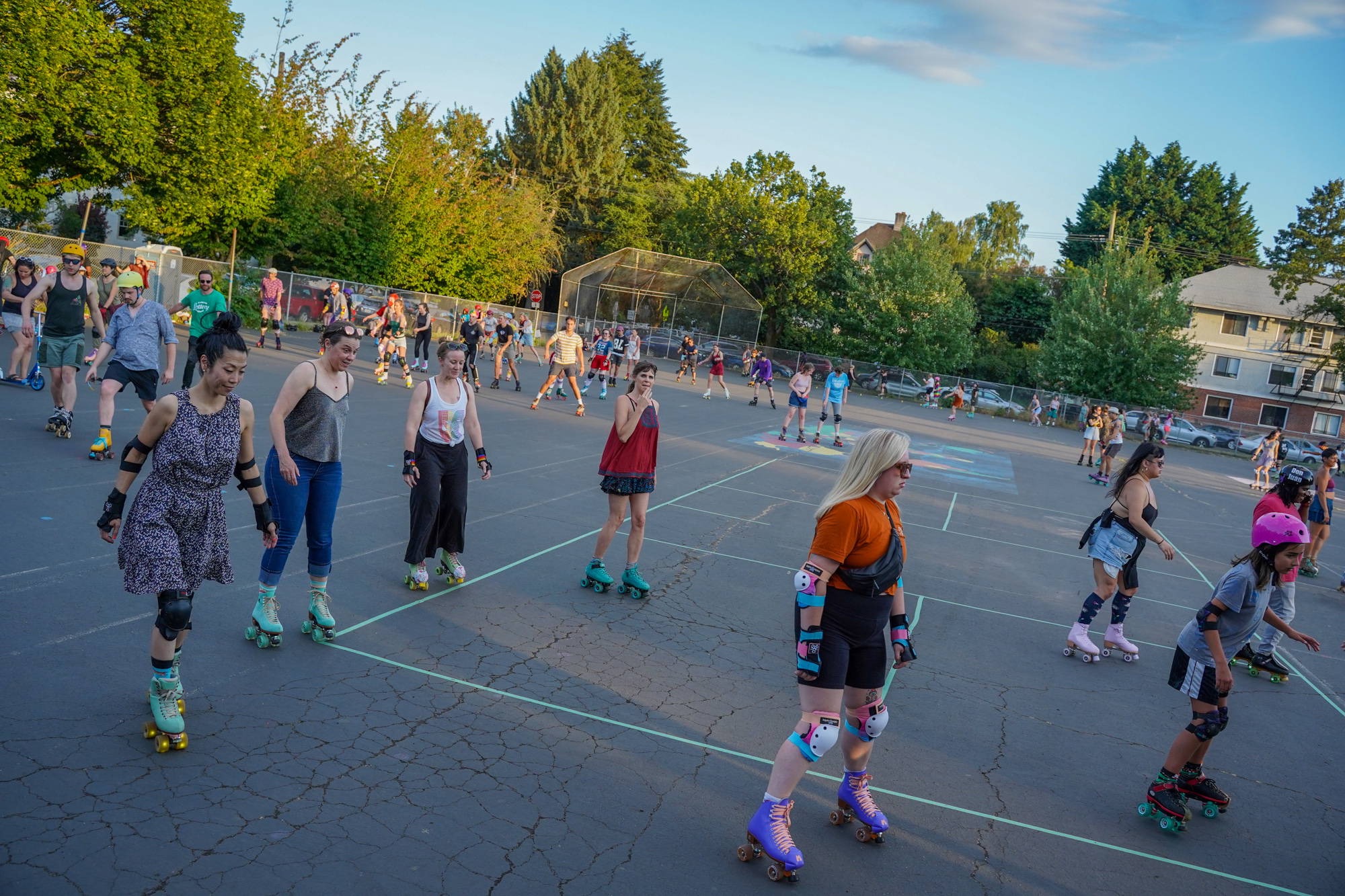
The bike racks at Irvington Elementary School overflowed last Thursday night while music from DJs soothed souls and a wonderful collection of human beings came together to dance in colorful outfits while enjoying a perfect summer evening.

And no, I’m not describing a Pedalpalooza ride. I’m describing Secret Roller Disco. Now in its second year, this weekly, free-fun phenomenon has boomed in popularity alongside a national surge in roller skating.

Started on a whim at the outset of the pandemic in spring 2020, Secret Roller Disco now has a large and loyal following that is ready to lace up skates and roll wherever organizers plant a pin on social media. After months of seeing Pedalpalooza and bike activism mainstay Ryan Hashagen (aka “Saul T. Scrapper“) roller skate on rides (he’s an amazing skater who can more than keep up with bike riders all types of terrain) I finally decided to take him up on the offer to see what was going on with this event.

It was so fun!

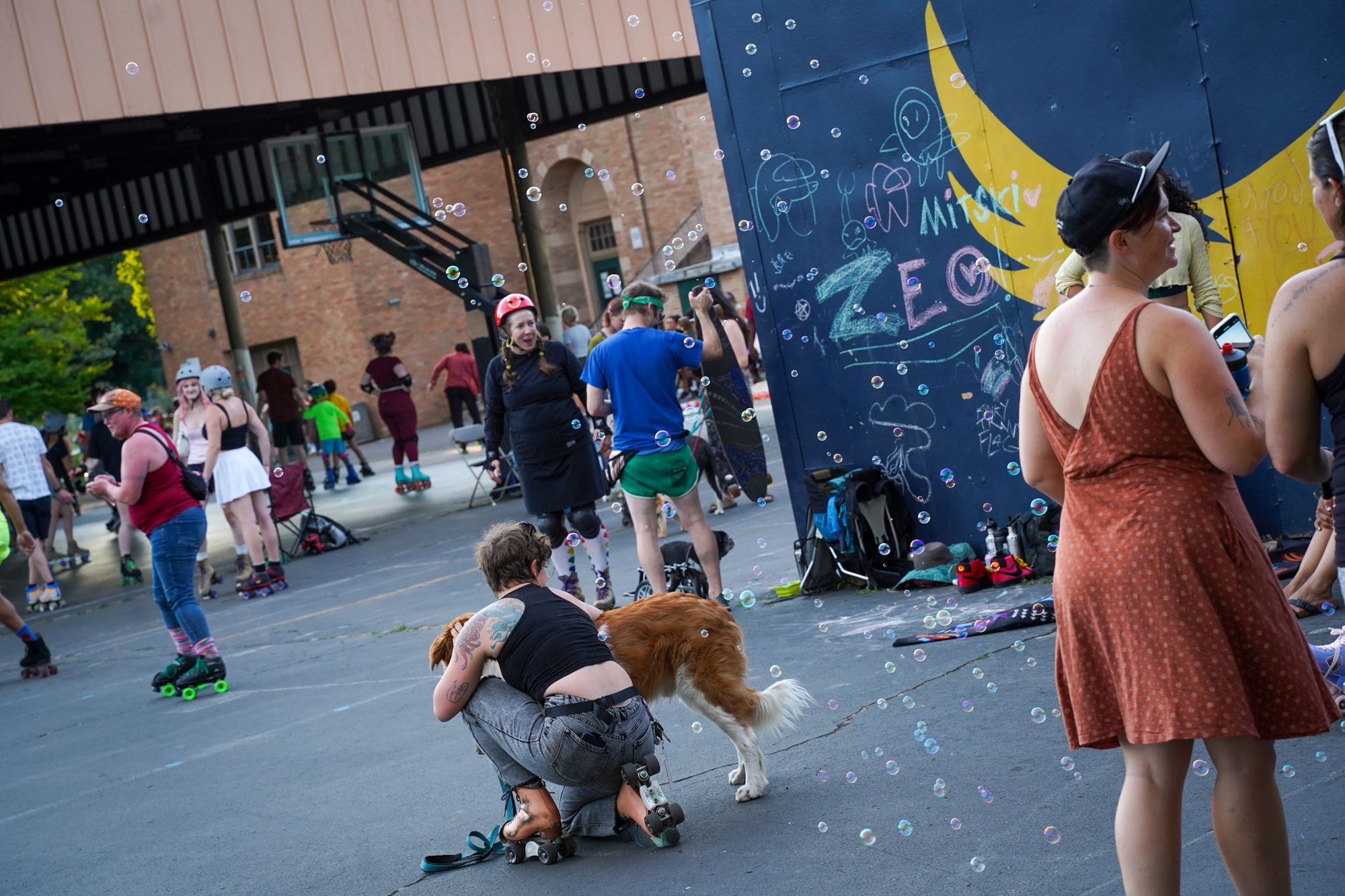
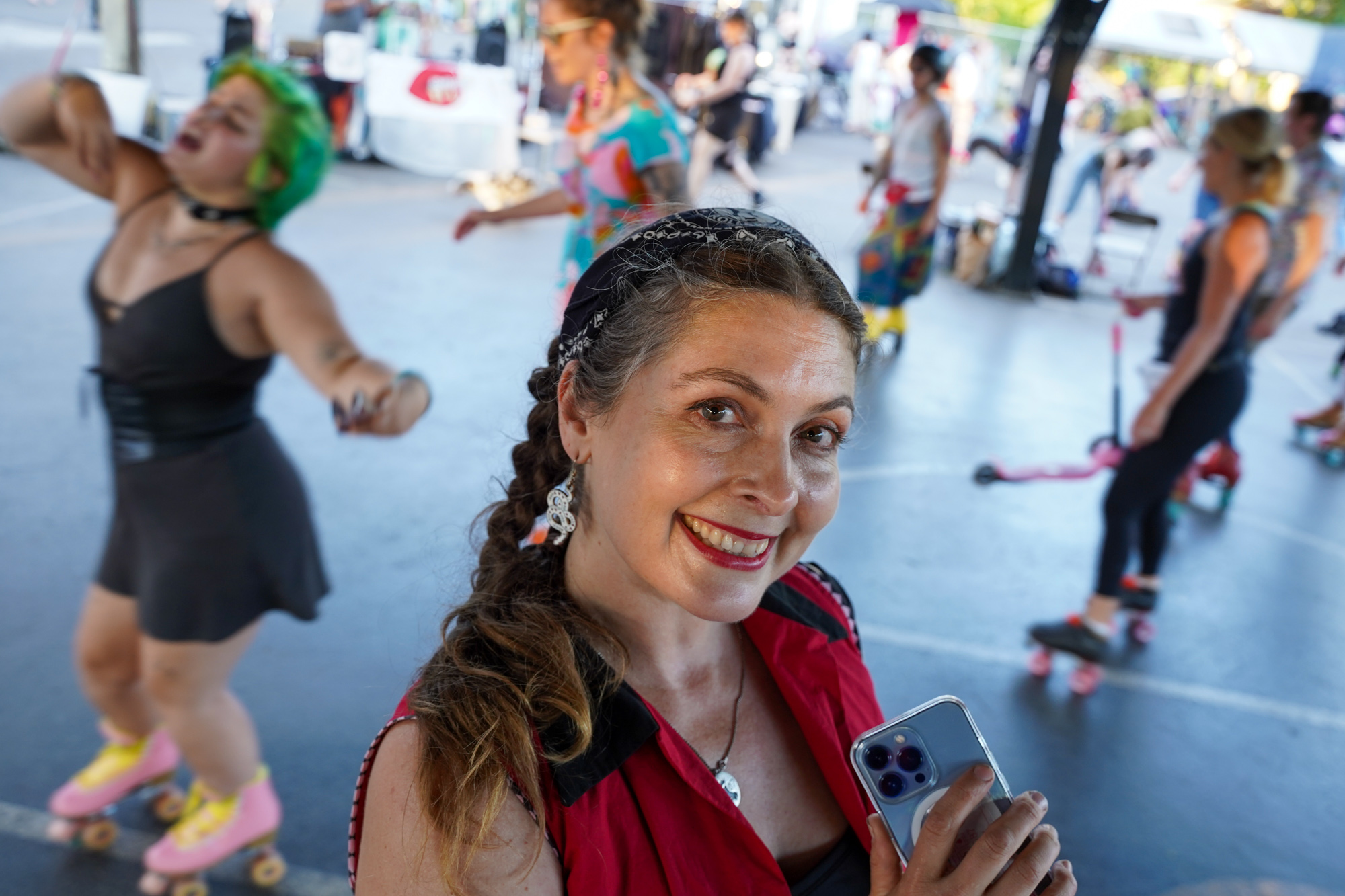
Just like many of the rides I’ve been on lately, Secret Roller Disco was able to breathe life into an otherwise underused public space (in this case, a school playground) by introducing tons of people moving together to music. Thursday’s event was their biggest turnout ever.

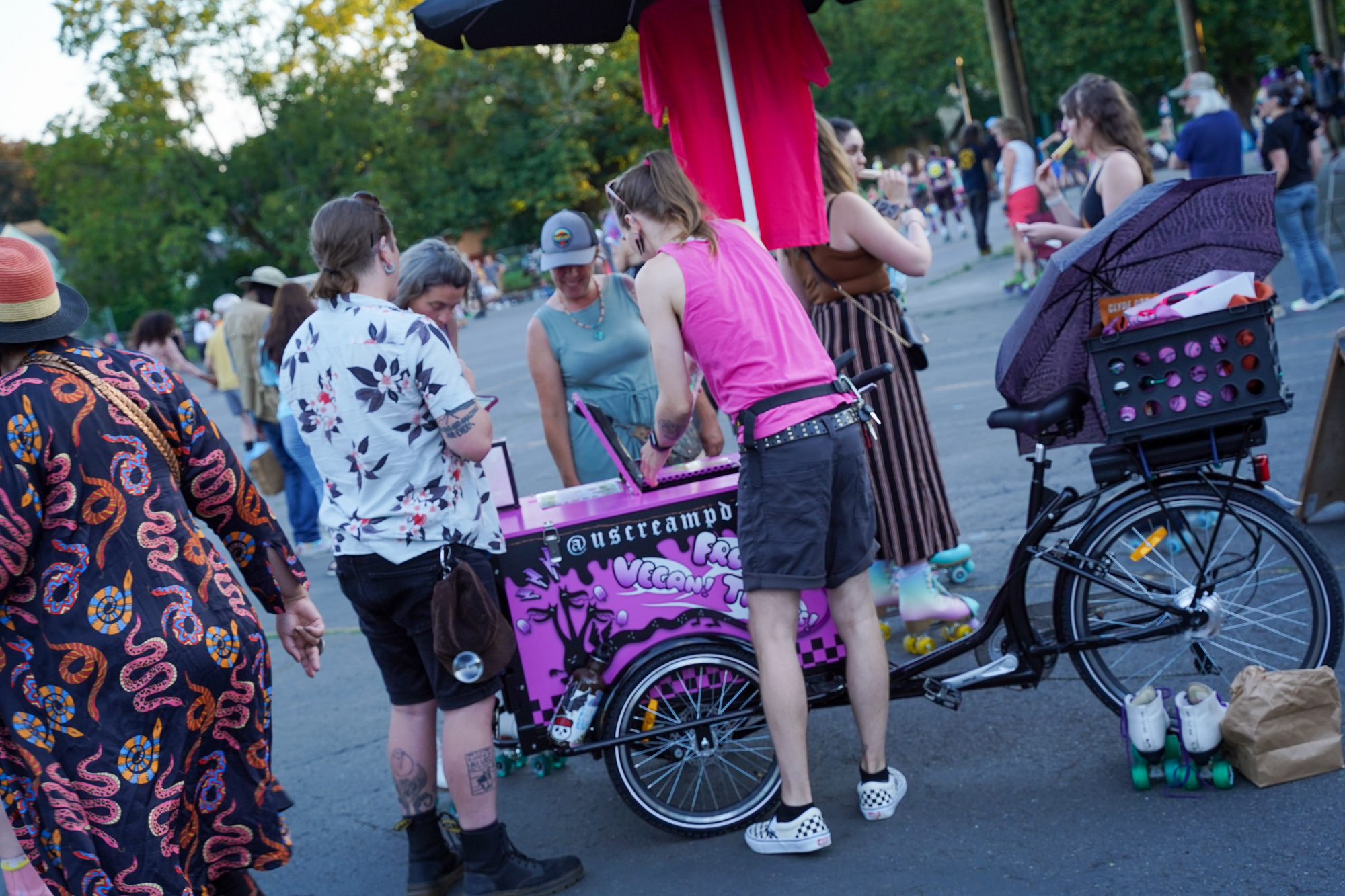
There were free skate rentals thanks to the Rose City Skatemobile and vendors selling treats and crafts. There was a photographer doing tintype portraits, a disco ball, absolutely slamming DJs, and even a porta-potty! People set up picnics and lawn-chairs to rest and watch kinetic visual feast. It was a very impressive spread for something that grew out of a text message between two friends two years ago.

Secret Roller Disco Accidental Co-founder Francesca Berrini.

“Accidental” co-founder of the event Francesca Berrini and her friend April Hasson are both well-known in the local roller derby scene. They’ve watched in awe as their desire to skate together for some healthy, socially distanced fun went from a “We should do this every week!” text, to an email list, and now to an Instagram account with almost 9,000 followers.

Lest you get the wrong idea, they didn’t want to keep it “secret” to exclude anyone, they were just being cautious due Covid concerns. But once vaccines came, concerns eased, and the secret trickled out.

Once that happened, “We were like, ‘OK everybody, come hang out with us!’ and it kept growing from there,” Berrini shared Thursday. “It’s been so joyful!”

Are you trying to make a statement? Is there any activism or larger message behind what you’re doing? I asked her. “No. This is just 100% a joyful, Portland thing. I wanted it to be a happy void, something good we could all experience.”

By that metric, they’ve definitely succeeded.

If you want to check out the next one, follow @secretrollerdisco on Instagram.


Our 2022 Pedalpalooza coverage is sponsored by BIKETOWN, operated by Lyft. Browse more stories and photos at our Pedalpalooza Hub.

Dawn of the ‘throttle kids’

Tweens and Teens are embracing electric bikes for transportation, but it’s technically against the law.

By Hood River resident and cycling advocate Megan Ramey (@bikabout)


We are currently living through the next great transportation revolution. It may be difficult to see it while you’re in the midst of it, but the rapid development of the e-bike market – the development of the tech, the emergence of focused retailers, and finally widespread consumer adoption – is a market shift on the scale of the debut of the practical automobile a century ago.

Each of these major disruptions comes with promise, and with challenges.

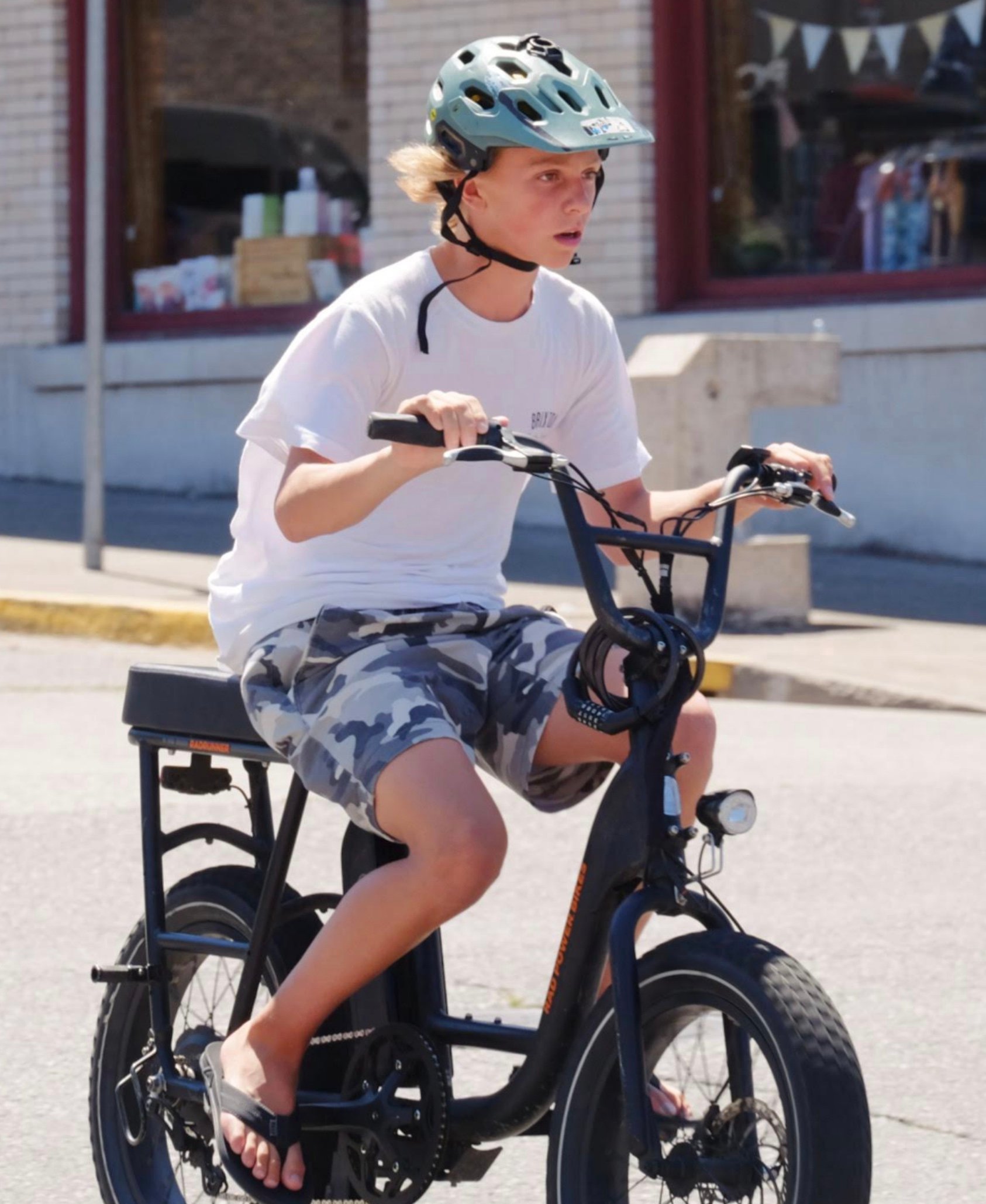
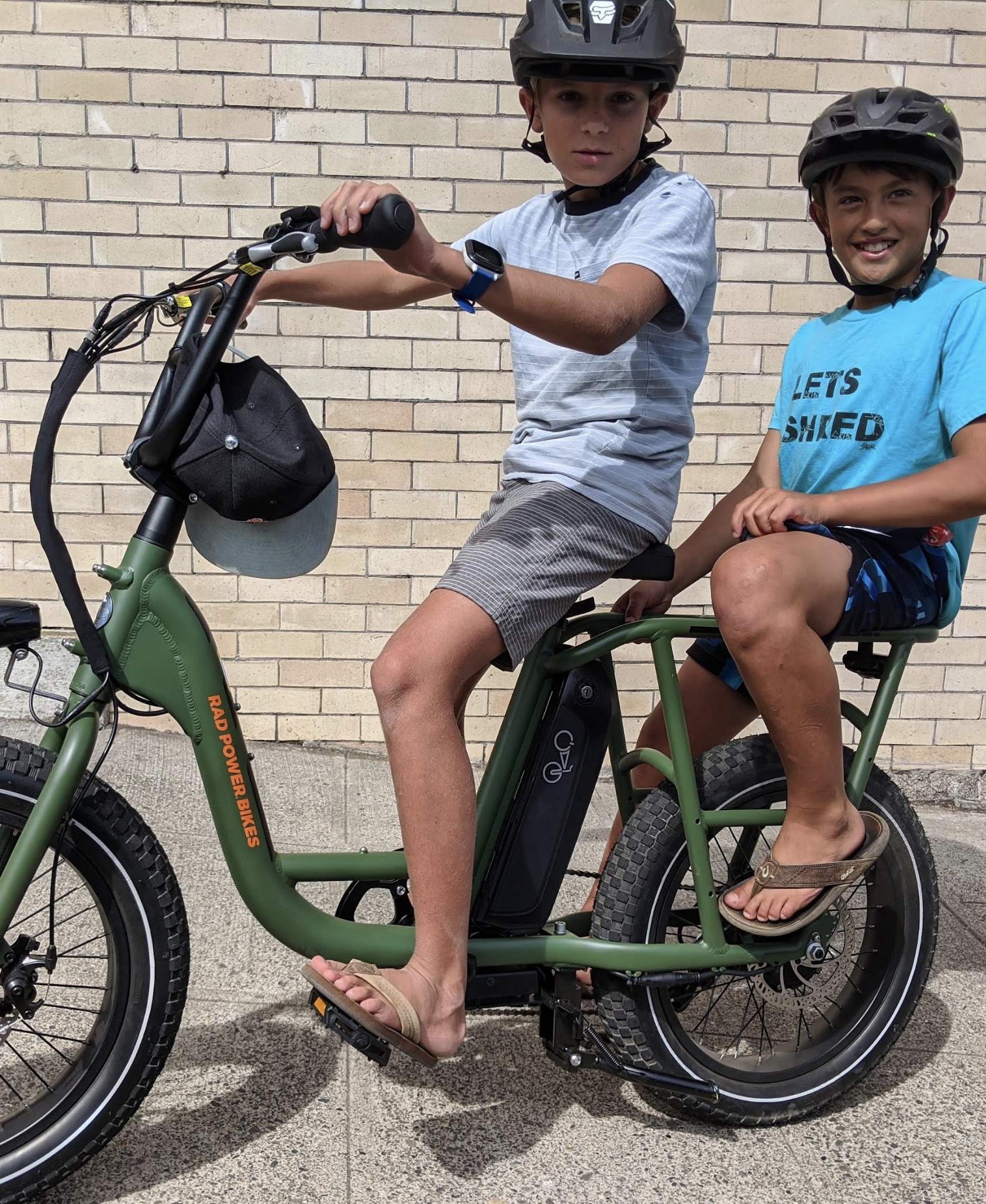
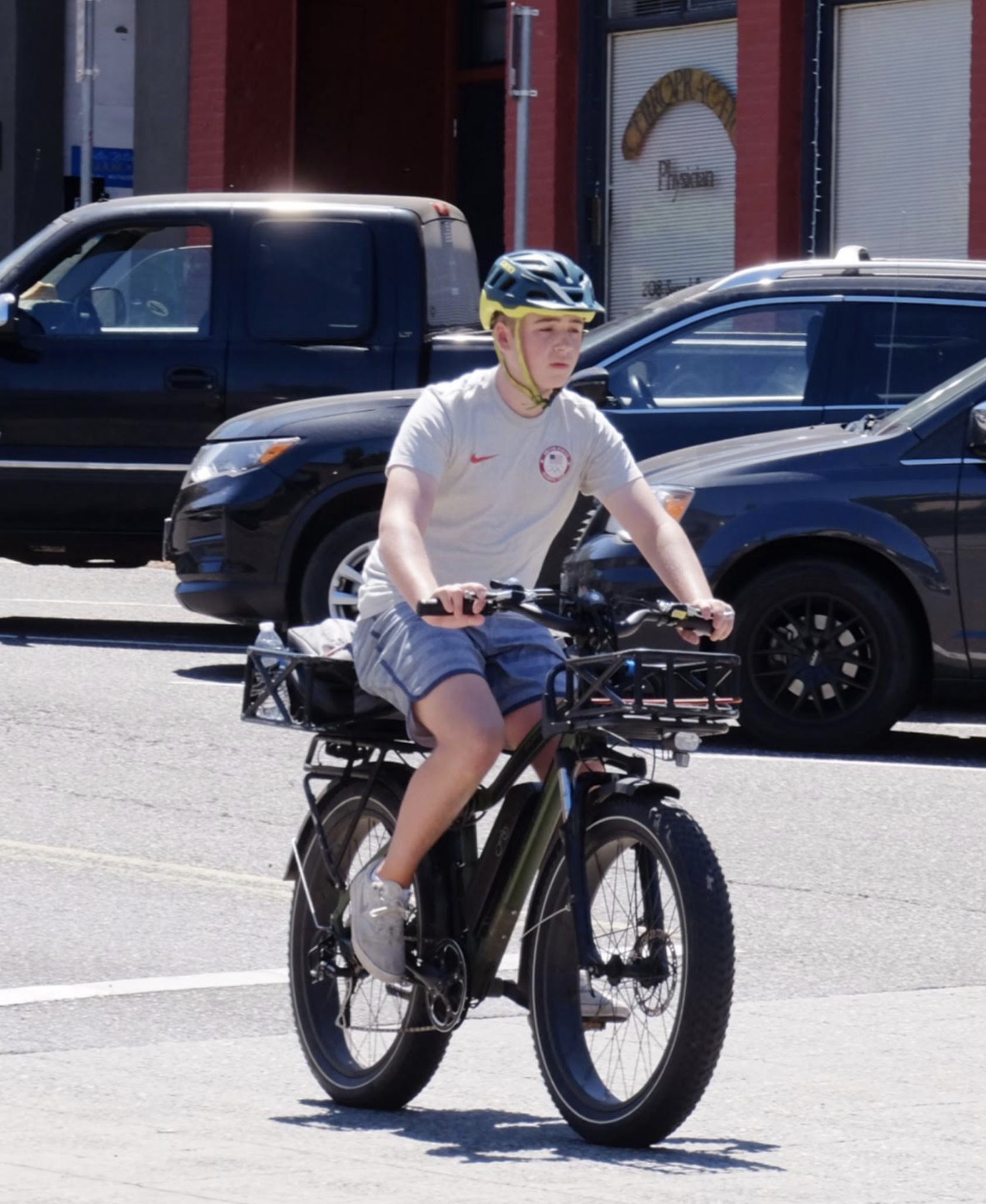
From what I’ve seen, one of the most interesting new challenges with e-bikes are how teens and tweens have flocked to them. In the immediate sense, teens getting around town by e-bike instead of a car is a wonderful thing. Where we live in Hood River, Oregon, we see teens going to lacrosse practice, going to the waterfront to swim, going to school, and going to after-school jobs by e-bike every day. We lovingly call them “throttle kids” because they seem to prefer the Class 2 style bikes that can be powered via a throttle without any pedaling at all.

“All it’s going to take to have this conversation explode is a teen hitting a baby stroller or a senior citizen.”

Traditionally, all of those trips would’ve been in a car – either piloted by the teen, or their parents. I’m thrilled to see “one less car” each time these kids zoom by, and their parents will probably tell you how nice it is to get the time back from being a taxi driver. In the longer term, they represent a potential for a generation of kids to envision a life getting around in something other than single occupancy cars for short trips. A teen who grows up using an e-bike is much less likely to feel like an $800 monthly truck payment is 100% mandatory as an adult.

Now on to the challenges.

The short of it is that the legal system hasn’t yet caught up to the technology, so most people are just doing whatever feels right. Even in states like Oregon, where it’s illegal to ride an e-bike under 16 years old, there are no ordinances or fines for police to cite, making enforcement more or less impossible. In a practical sense, if teens are riding responsibly, there’s not actually a problem to “fix” here. But the teens who are handed an e-bike are not necessarily also trained how to ride in an urban environment, which means someone’s going to get hurt.

All it’s going to take to have this conversation explode is a teen hitting a baby stroller or a senior citizen, or just as bad, hitting a fixed object like a pole or parked car. Crashes like this unfortunately happen with non-electric bikes every year, but if it happens with someone who is under age riding an e-bike, the media frenzy would be harsh. We could see overly restrictive laws passed, police changing their enforcement stance, and a general public backlash that sets bike advocacy back decades. As always, it’s best to get ahead of the issue and create these laws in advance, and not in reaction to a tragedy.
In the long-term, Oregon’s e-bike-related laws should be modified to define the class system (we’re currently one of 15 states without the three class, tiered categorization system), as well as allow kids of all ages on e-bikes with some constraints. Luckily, we have a Washington law to copy-paste which allows kids and sidewalk biking for class 1 and 2 e-bikes.

For a shorter term solution, we need to educate our kids.

This fall, I’ll be coordinating an education and awareness campaign with the Hood River Valley School District and the Hood River Police, letting parents know about the existing law. The school district received the ODOT Safe Routes to School Education grant which funds a program manager at all eight schools. Through this program over the next two years, elementary and middle school students will learn how to bike and older students will learn empathy, etiquette and laws of walking and rolling for transportation. High schoolers will have the option to take an e-bike learners program and e-bike field trip. For any middle school students who pass a biking safety test and receive a “badge” for their bike , I would suggest cities adopt an ordinance to allow kids under 16 the privilege of lawfully riding an e-bike, which can be revoked.

Two weeks ago I had a meeting with Hood River Police Chief Neal Holste. He assured me his team will never pull over a suspected teen on an e-bike because officers want to be seen as allies and don’t want to cause trauma (and yes I’m aware he and I are both white and his assurances might not be as comforting to riders or parents of color). Chief Holste also acknowledged my fear that if anyone gets hurt (or worse) due to a teen on an e-bike, enforcement may get ratcheted up.

My daughter is 12 and rides our e-bike while we ride acoustic bikes. She can even pilot the heavy Urban Arrow cargo bike and loves the sense of accomplishment in hauling stuff that comes with it. She has been riding a bike for transportation since she was in kindergarten and I trust she will be ready to e-bike solo next year.

Parents, please spread the word to educate our e-biking teens and tweens so this amazing privilege continues. 

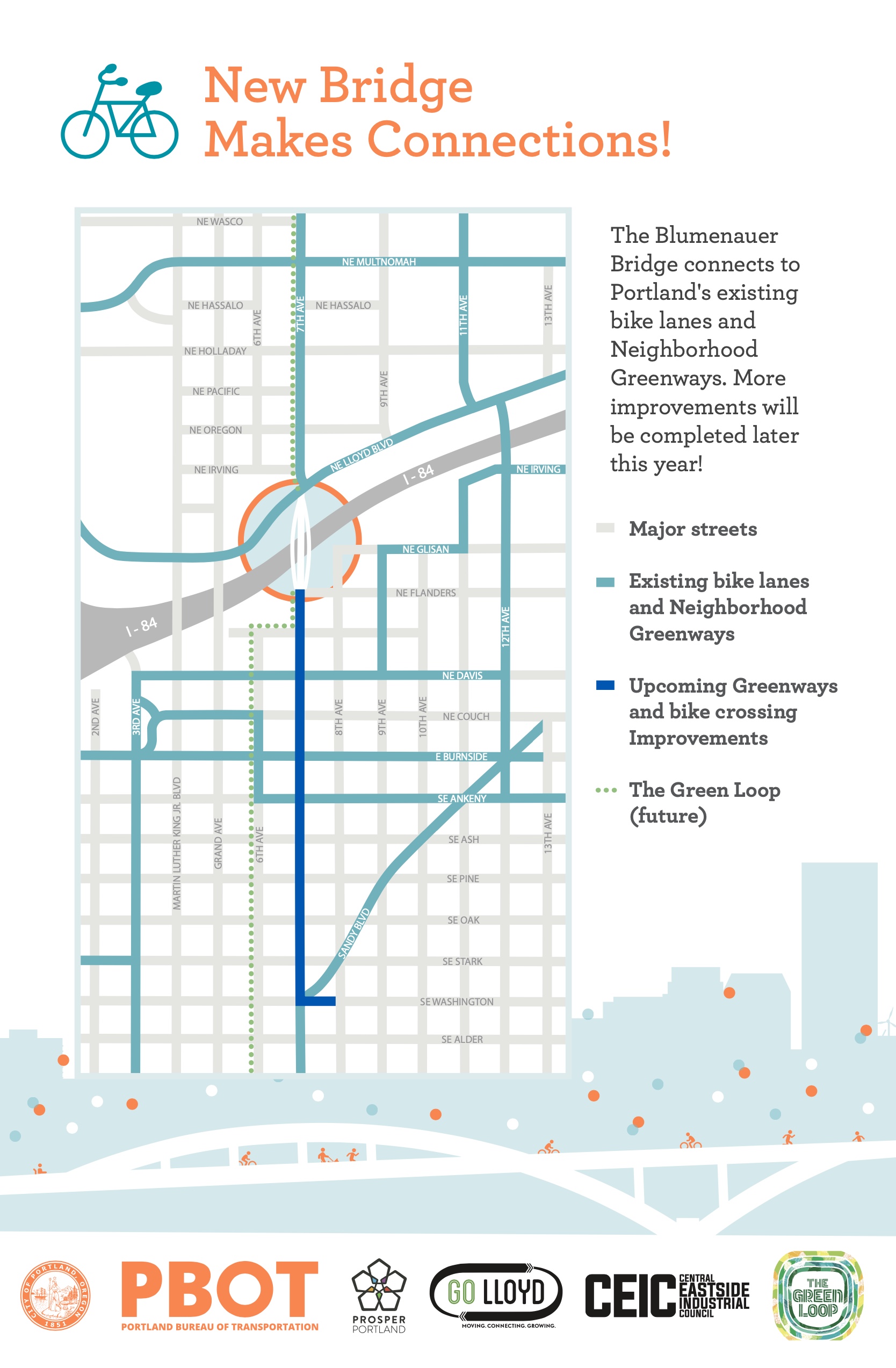
Blumenauer Bridge set to open Sunday: Here’s your guide to the festivities

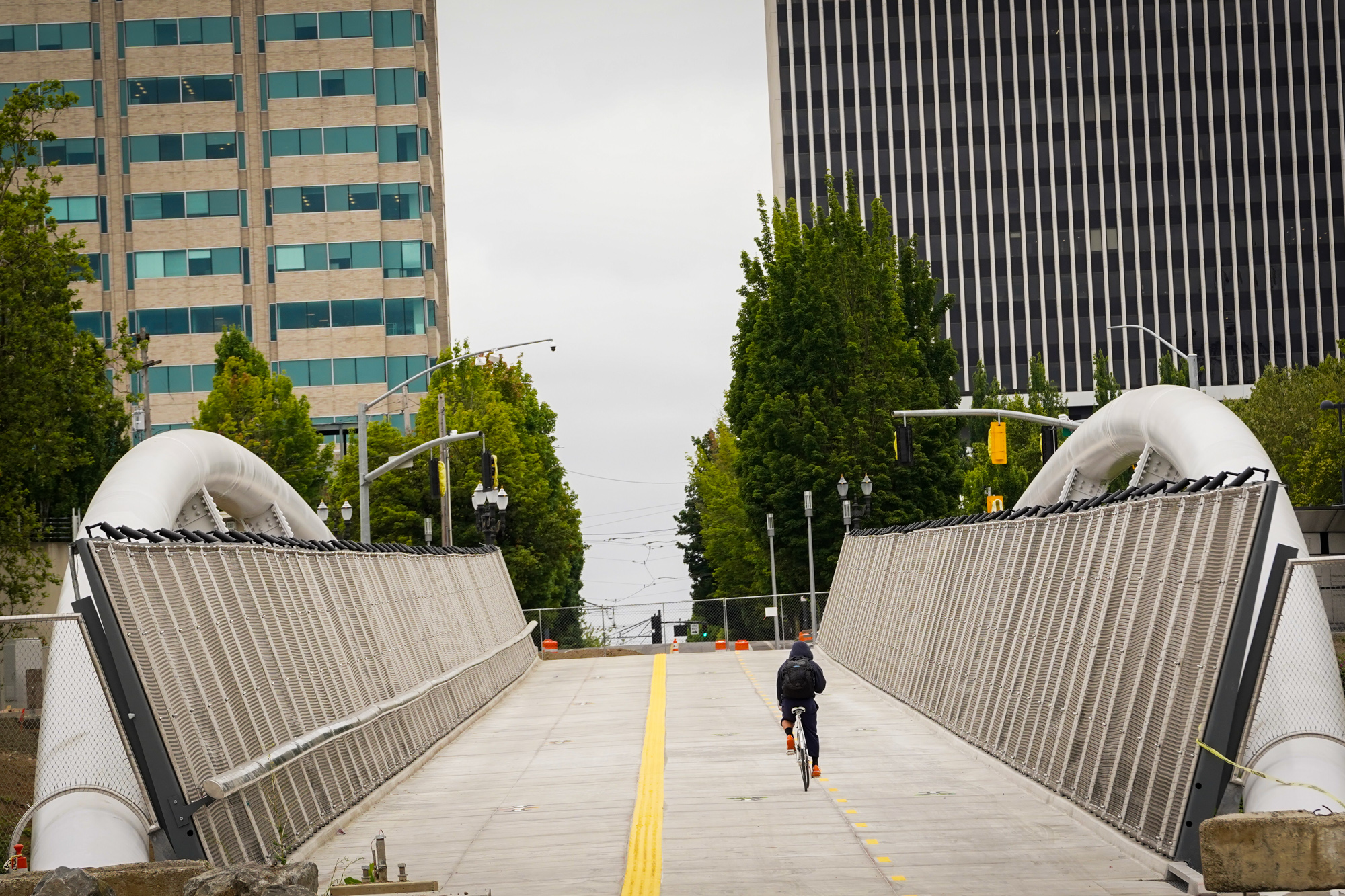
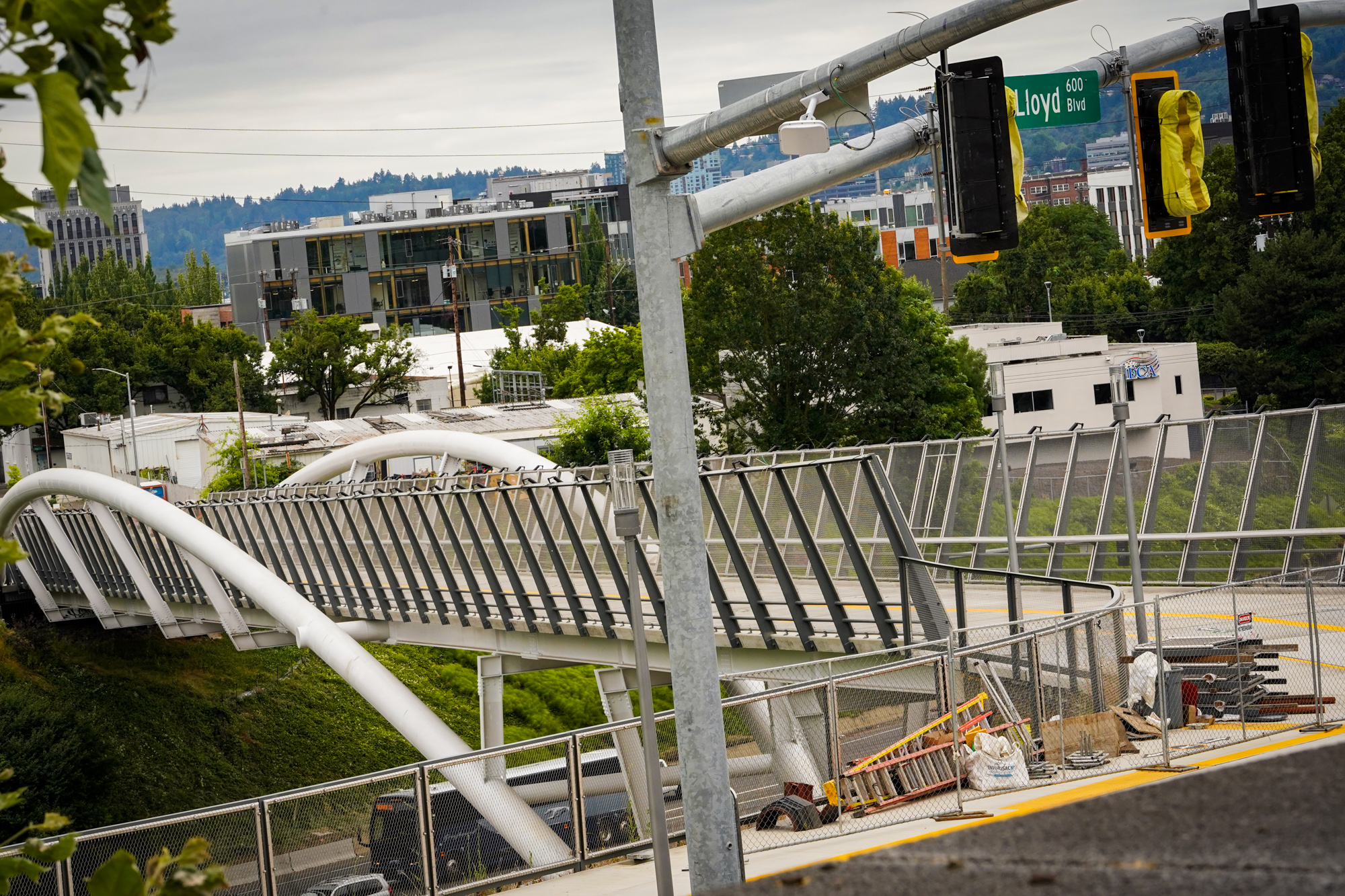
A lone rider squeezed through an opening of the construction fencing on Saturday to cruise up the new bridge toward the Lloyd. (Photo: Jonathan Maus/BikePortland)
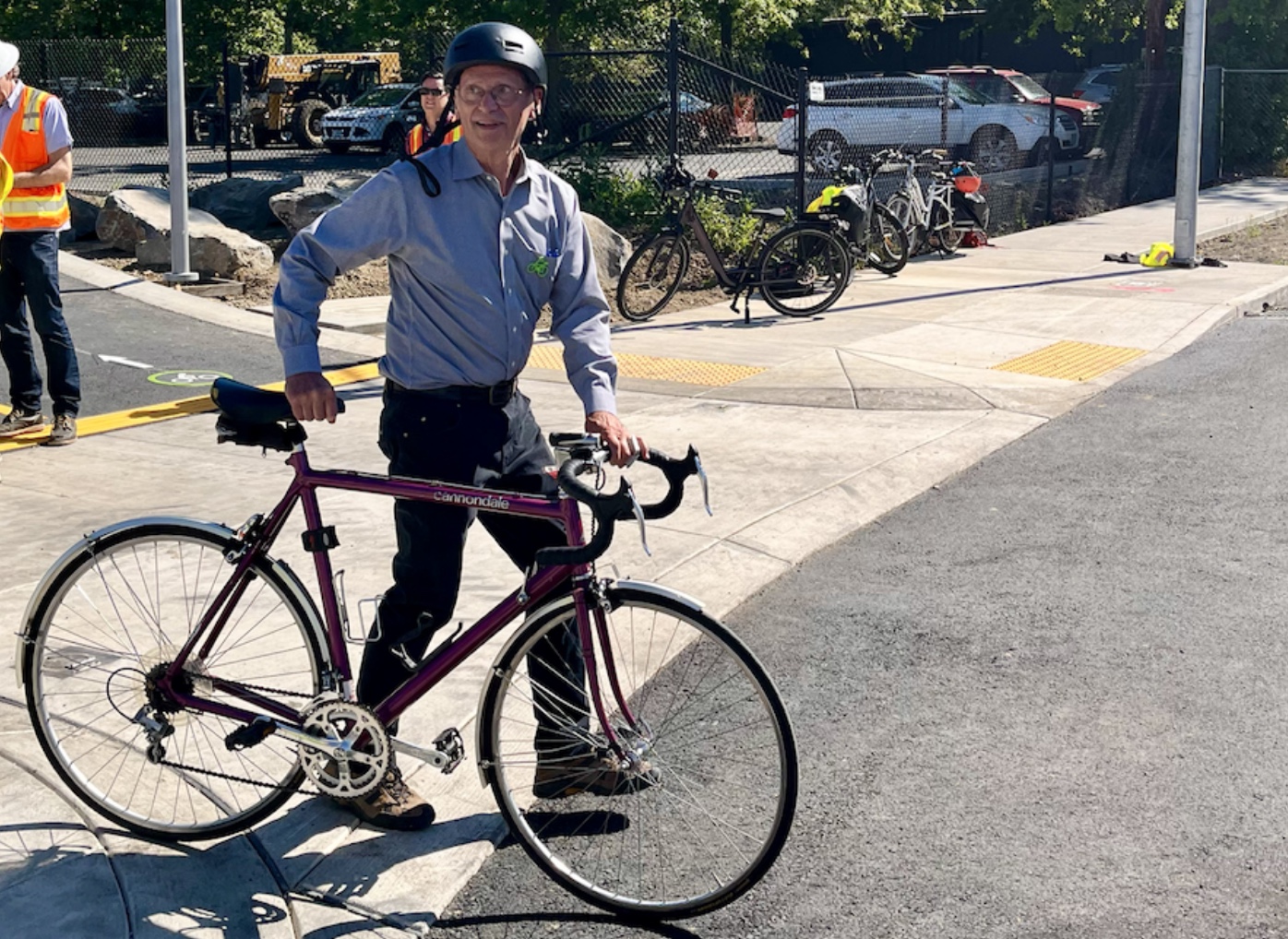
“It’s really a dream come true for me,” Blumenauer said at the bridge this morning. (Photo: Taylor Griggs/BikePortland)

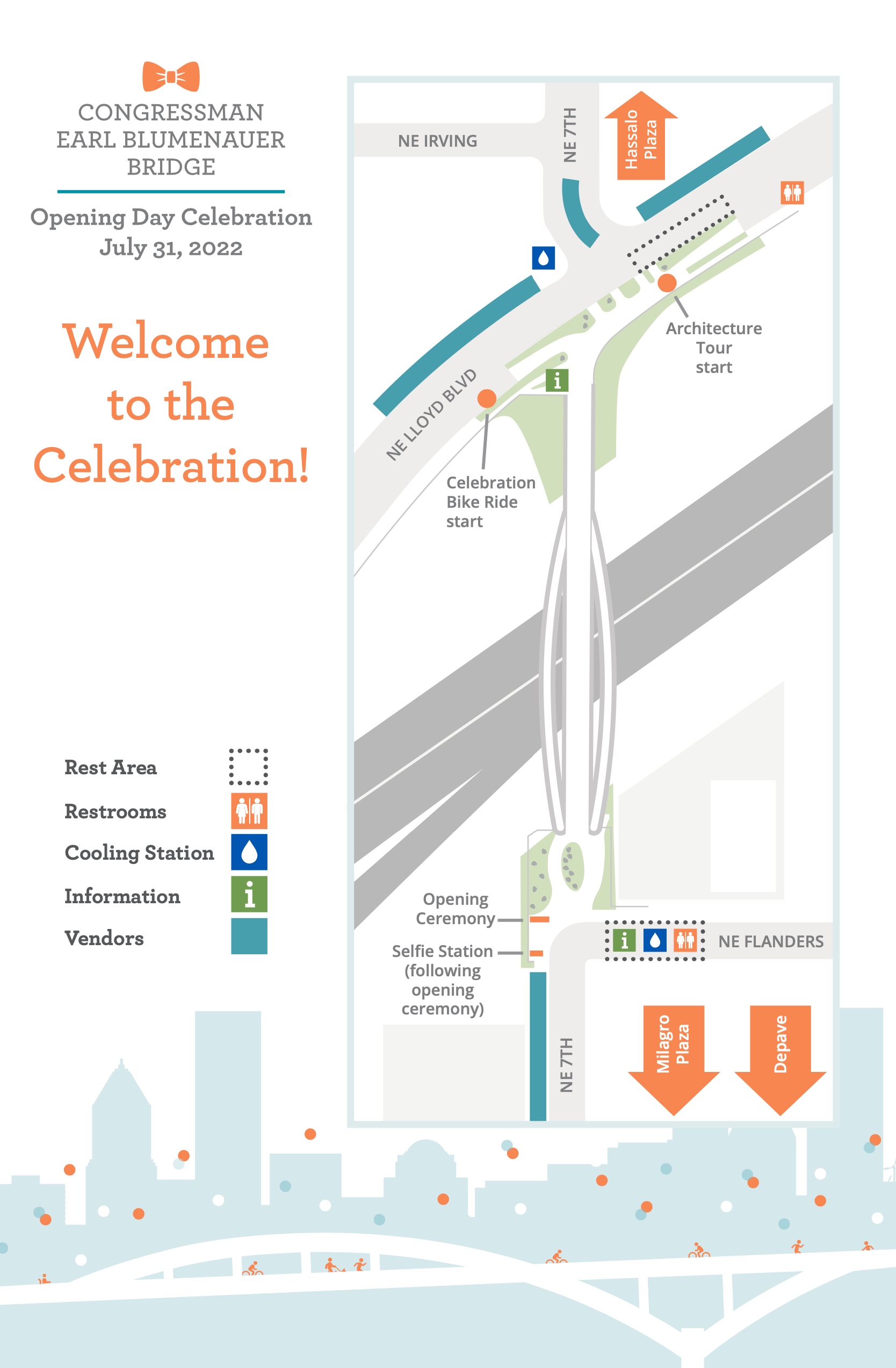
The opening of a carfree bridge across I-84 in Portland’s central city that’s named after a former city transportation commissioner and founder of the Congressional Bike Caucus is a very big deal.

The Lloyd and the Central Eastside will never be the same again!

So it’s fitting that there are a ton of activities lined up to mark the occasion of the official opening of the Congressman Earl Blumenauer Bicycle and Pedestrian Bridge. The big day is Sunday July 31st.

And Congressman Blumenauer is ready. This morning, standing atop roaring freeway traffic he said, “It’s safe, it’s secure and it’s going to make a big difference for our community. This is going to be the next addition to a great network of non-motorized transportation. It’s really a dream come true for me.”

In addition to the standard photo-ops, smiling dignitaries and obscenely-sized scissors, there will also be a festival with 50+ booths, vendors, music, and all types of fun. And since this is Portland, there are several rides planned to and from the festivities.

Here’s a roundup of what’s going on:

Free Biketown

Biketown will offer a $20 ride credit for all trips within the boundary of NE Multnomah to SE Alder and 9th Ave to MLK.

Free Money

The City of Portland is working with Kuto to give away 1,000 $50 gift cards to anyone that shows up to support local businesses. All you have to do is download their app here.

B on B on the BB – 8:00 am

The wonderful Breakfast on the Bridge folks will kick things off by offering free coffee, donuts and welcoming vibes to all who pass (and are smart enough to stop and pull over). B on B has been slinging caffeine and conversation on Portland bridges for 20 years now and what better way to celebrate this big milestone?! More info here.

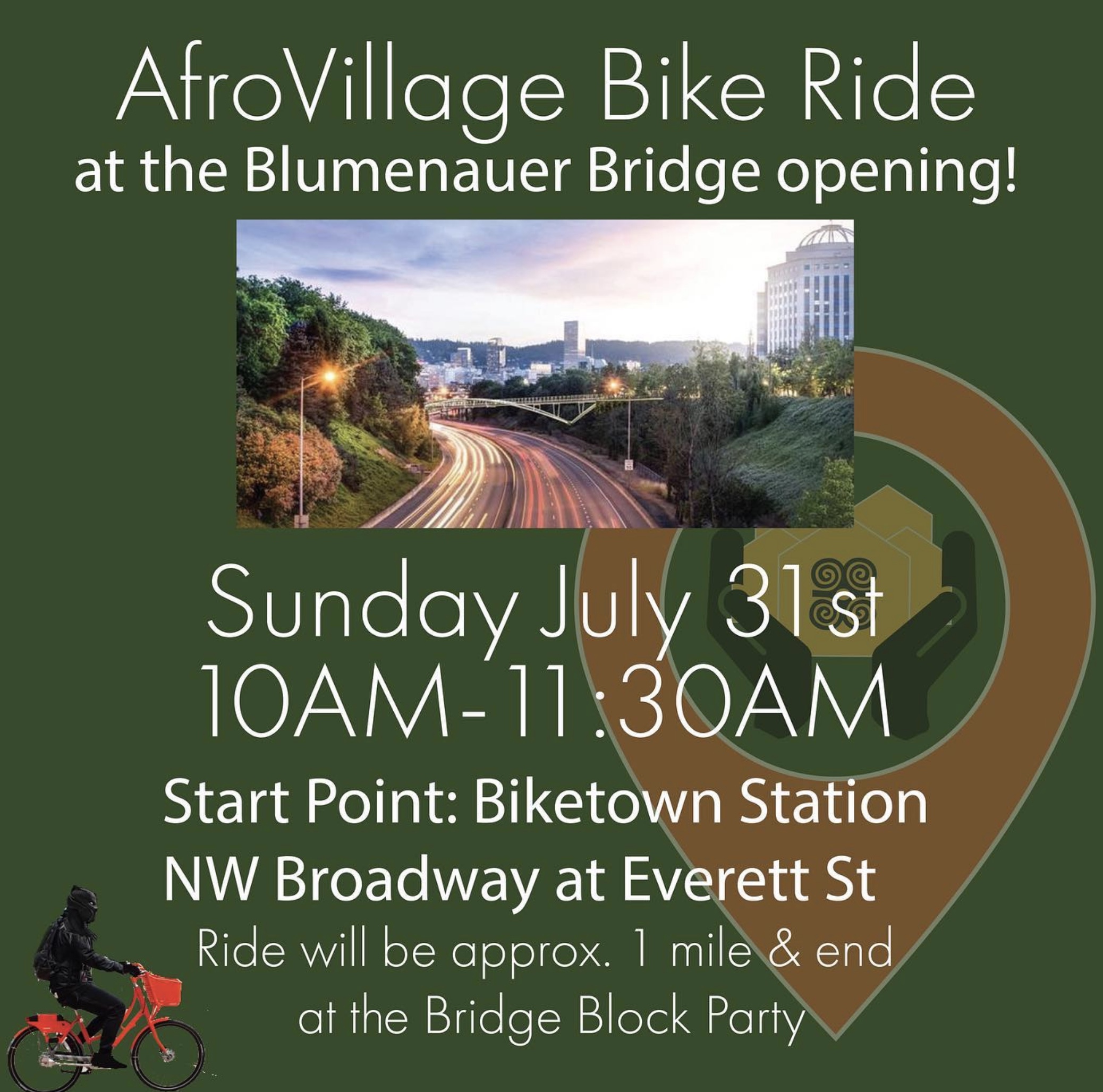
AfroVillage Bike Ride – 10:00 am from Biketown Station on NW Broadway and Everett

This ride will begin with a short (walkable) tour of Old Town to highlight Black history and share a hopeful vision for unhoused Black Portlanders. The ride will end at the bridge for the dedication ceremony. More info here.

Milagro Plaza Block Party – 10:00 am to 3:00 pm on SE Stark and 6th

The Street Trust and Milagro Theater will host a get together with drinks and music and decorations to get your bike ready for a parade to the bridge.

Hassalo Plaza Block Party – 10:30 am to 3:00 pm Plaza at NE Hassalo and Eighth

Show up for coffee and snacks and get your bike decorated for a parade to the bridge for the opening ceremony. Then afterwards, come back to the plaza for a block party with a live jazz band and free bike repairs.

Aaron Appreciate Ride – 12:00 pm from south side of bridge

Friends of Aaron Proton Tarfman will meet and ride together to remember his life. Aaron was an ardent activist who wanted to live in a city free of cars. He would have been so excited to bike on this bridge! More info here.

Official Opening Ceremony – 12:00 to 12:30 pm at South Plaza

Hear remarks from Mr. Blumenauer himself, as well as PBOT Commissioner Jo Ann Hardesty before they unveil the bronze plaque and cut the ribbon.

Bridge Architecture and Design Tour – 1:00 pm at North Plaza

If you are an urban planning and/or architecture nerd, you won’t want to miss this tour. Led by members of the design team, they’ll regale you with stories about the bridge design and its context in the urban setting.

Official PBOT Celebration Bike Ride – 1:30 to 3:30 at North Plaza

Learn everything you need to know about the future Green Loop on this 8-mile ride led by the City of Portland. More info here.

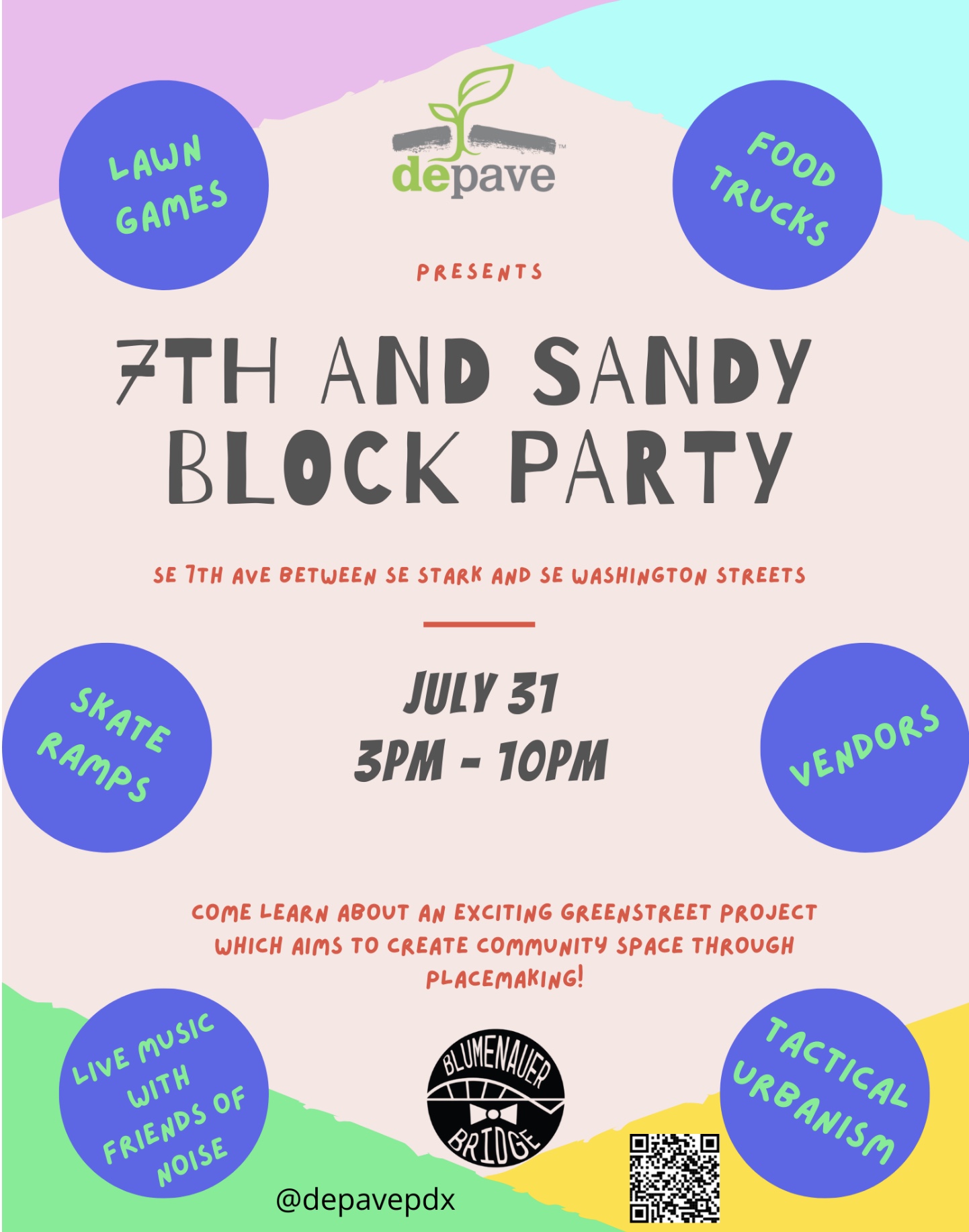
Depave Block Party – 3:00 pm to 10:00 pm at SE 7th and Sandy

As Taylor reported in her recap of the Complete Sandy Ride last week, Depave is planning a major green street project at the expansive SE Sandy/7th/Washington intersection. Come learn about what’s in store and take over your public space. There will be food, vendors, games, live music, and more. More info here.


Let us know if we missed anything and I’m happy to add it. And stay tuned for coverage from the opening.

View of the bridge from northeast looking southwest. (Photo: Jonathan Maus/BikePortland)

Comment of the Week: Politics of a megaproject

“If you are looking to have a popular uprising against the bridge, Washington is probably the place to start it.

Welcome to the Comment of the Week, where we highlight good comments in order to inspire more of them. You can help us choose our next one by replying with “comment of the week” to any comment you think deserves recognition.


Comment of the Week

BikePortland has run 14 “Comment of the Week” features since we recommitted to doing them earlier this year. Is it too soon to repeat a commenter? 

No it is not, not when their comment is as good as Ross Williams’s.

We post a lot about the Interstate Bridge Replacement project, most recently last Friday with No one’s happy with the I-5 bridge project. And that’s a good thing?  Your comments in response to the IBRP posts are an impressive show of knowledge and information—about bridge design, climate change, induced demand, and so on. But Williams’s comments keep jumping out to us because, well, he understands politics.

Here’s what Ross Williams had to say about the politics of winning:

I think [Metro Council President] Lynn Peterson’s list of “everyone” includes people whose support is necessary for the project to move forward and people who have the ability to prevent it from moving forward if they are unhappy enough with the proposal. She may believe, or at least hope, that the activists who oppose the design don’t fit into that second category. She needs to be proven wrong. That is not an issue of intellectual discussion but power.

Since most Oregonians rarely use the bridge the folks with the largest stake in the outcome are in Washington. So if you are looking to have a popular uprising against the bridge, Washington is probably the place to start it. Unfortunately opposition to tolls and light rail are far more likely to kill the project than concern about a climate change inducing highway expansion.

Thank you for that bit of realpolitik Ross! You can read Ross’s comment and the whole comment thread under the original post

The Monday Roundup: America’s deadliest road, cars in parks, Nick Offerman, and more

Welcome to the week. Here are the most notable items our writers and readers came across in the past seven days.

Speaking of seven, this week’s roundup is sponsored by Seven Corners Cycles, where you can get 20% of the entire store during their big liquidation sale going on now through August 14th.

An ode to our mode: This wonderful reflection on what cycling means to NPR journalist Bill Chappell is a much-needed reminder of why the mere act of pedaling can be so deeply necessary for some of us.

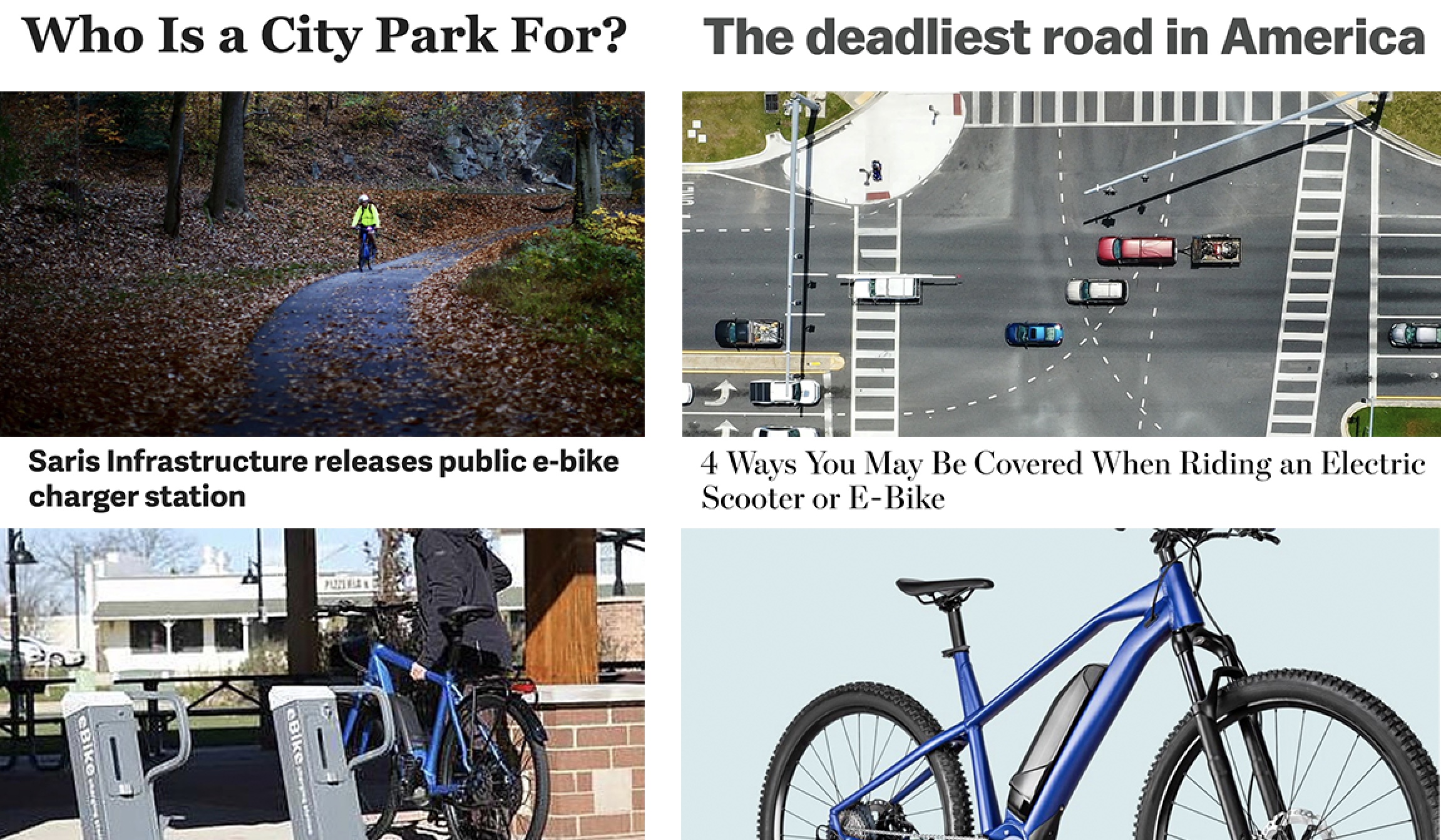
Cars in parks: Slate says a decision by the National Park Service to let drivers back into a formerly carfree park in Washington D.C. is, “is a perfect example of some of the blind spots of modern American environmentalism.”

Times has changed: Feels like the pendulum has officially swung when the editorial board of the LA Times comes out in support of prioritizing people spaces over parking spaces.

E-bike charging: Given my interest in seeing governments investment in EV-bike charging at a commensurate level of EV-cars, this new e-bike charging station made by Saris caught my eye.

Traffic safety and race: The latest national numbers say that the rate of Black Americans as victims in fatal traffic crashes went up 23% in 2020 compared to the previous year, the largest of any racial group.

Free transit in Boston: Given how split Portlanders are on the idea of free public transit, I think it’s a good idea to read about how Boston is faring under the policy thanks to (relatively) newly elected Mayor Michelle Wu.

Nick Offerman rides a bike: The wonderful actor from Parks & Recreation shares tales of his bike commutes in New York City and Los Angeles and throws stinging barbs at jerks in cars.

Bike thieves really suck: A Portland man who got an e-bike after suffering a traumatic brain injury only to have it stolen the first day he rode it (thieves cut through a pole!), is raising money via GoFundMe to buy a(nother) new bike.

Deep dive on a deadly road: This must-read Vox piece explains the national traffic death crisis through the lens of America’s most deadly road, US-19 in Florida.

E-bike insurance: The Wall Street Journal has some good advice on how to make sure you have insurance coverage while riding your e-bike or e-scooter.

Thanks to everyone who sent in links this week!