
🚨 Please note: BikePortland is currently on hiatus and only publishing guest articles. Learn more here. Thank you. - Jonathan 🙏

Job: Bike Tour Guide and Rental Specialist – Cycle Portland Bike Tours and Rentals

Buffered Bike Lane with a bike symbol and arrow pointing forward

Job Title

Bike Tour Guide and Rental Specialist

Company / Organization

Cycle Portland Bike Tours and Rentals

Job Description

We are hiring for 2026!

Seeking likeminded staff with a passion for all things bikes and an interest in showcasing Portland’s history and uniquely progressive bike culture with visitors. We specialize in showcasing Portland’s varied bike scene. Our offerings range from cruiser bikes and e-bikes to carbon gravel and road bikes.

Where: Cycle Portland is in Old Town, NW Portland, conveniently located a few blocks from Waterfront Park.

When: We are looking to train candidates in mid April. The deadline to apply is 3/31 but we will begin evaluating and interviewing prospects as they apply.

Responsibilities:
• Clean and prep bicycles for guests to ride
• Lead 1-2 bicycle tours per day. Tours vary in length from 2 to 4 hrs
• Operate booking platform and POS systems
• Perform retail stock and inventory
• Check customer bikes in for service
• Perform occasional flat repair services and minor repairs for customers
• Offer guidance to customers partaking in our services

As part of our small team, you’ll have the opportunity to advise travelers about your favorite local attractions and hotspots, fit folks on rental bikes, help plan their route, lead guests around town as a guide on one of our cycling tours, and lend a hand to our full-service bike shop.

While primarily focused on tour guiding, this position will encompass guiding up to 2 tours per day (2-5 hours of outdoor time, rain or shine) on our Foodie, Brewery, City, or Gravel bike excursions. Back at the shop you’ll help guide clients through our bike rental process, answer questions about the products and services we offer, and help keep the shop running smoothly. You’ll also be provided with resources to help you dive deeper into the history of our city in both past, present, and future as we work to keep our tours engaging, fun, and informative.

Cycle Portland is part of a family of small companies associated within The Adventure Hub. Many opportunities for growth including the potential of guiding multi-day vacations with our sister company Bicycle Adventures for the right candidate.

Part-Time and Full-Time positions available.
Seasonal employment positions available from April through October.

Positional Commitments as a Cycle Portland Guide

• Shifts: 9:30am-6:30pm, Cycle Portland is open 7 days per week
• Scheduling: 2-4 shifts per week at Cycle Portland
• Availability on weekends required from May to September.

Compensation:
$17-19/hr starting DOE (plus gratuities and bonuses)

Extras:
• Pro Deals
• 45% Discounts on bike products and shop services.
• 1 week – paid vacation (accrued)
• 1 week – paid sick leave (accrued)
• Paid training in bike mechanics and interpretive guiding

Knowledge and skill in the following areas is preferred (but not required), and represents core strengths as part of this position:
• You Love Bikes
• Genuine desire to work with and listen to the public both as a tour guide, and as part of our shop staff to meet client where they’re at with their needs
• Excellent public speaking skills, comfortable working with and projecting to engaged audiences of up to 15 individuals at a time
• Strong verbal and written communication skills
• Curiosity! We love learning about Portland, and it’s up to us to be informed as our city and region evolve
• Self-motivated and comfortable asking for support when needed
• Experience in the performance arts, teaching, previous bike shops, bike mechanic knowledge, and tour guiding is a plus.

We are committed to building a diverse team that reflects the world we serve. We believe that a variety of backgrounds, perspectives, and skills makes us a stronger, more innovative, and better company. We encourage all qualified applicants to apply, regardless of background. BIPOC and LGBTQIA+ strongly encouraged to apply.

Please email resume and cover letter, feel free to come say hi at Cycle Portland – 180 NW 3rd Ave

How to Apply

Please email resume and cover letter to james@cyclepdx.com. You may also deliver to our location at Cycle Portland – 180 NW 3rd

Lawmakers want $3 million from state coffers for 82nd Avenue bus lanes

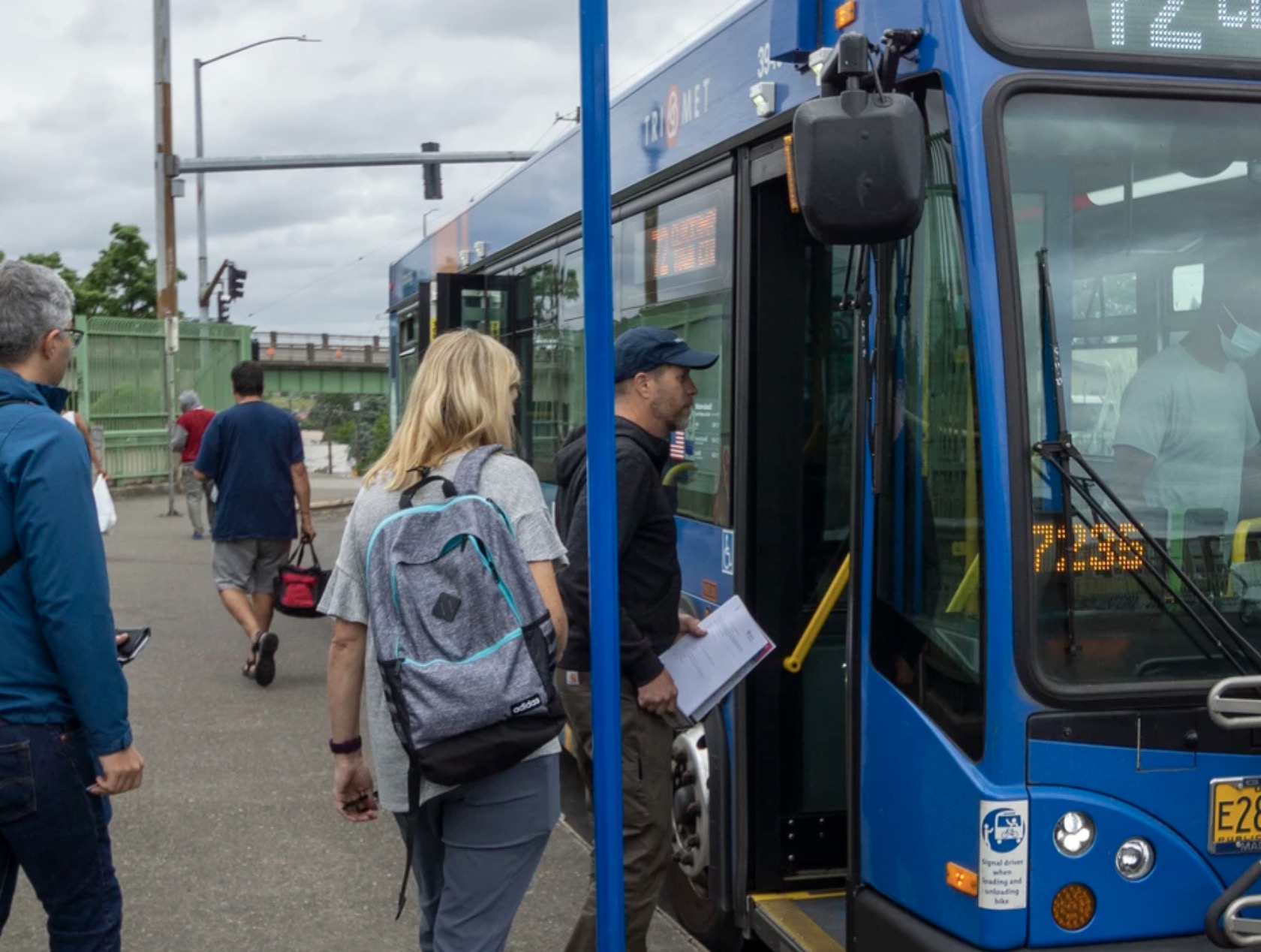
Line 72 bus services passengers on 82nd Ave. (Photo: Metro)

As I reported last week, the decision from TriMet to build semi-dedicated bus lanes on 82nd Avenue isn’t a done deal. General Manager Sam Desue made it clear that adding these “business access and transit,” or BAT lanes to the project would require a financial commitment from project partners that goes above and beyond what the agency is prepared to pony up themselves.

In total, TriMet is about $8-10 million short on funding needed to implement the BAT lanes.

Today we found out that about one-third of that total might come from the state’s general fund. House Representative Thuy Tran wants lawmakers to allocate $3 million to the cause. Rep. Tran represents House District 45, which includes a section of 82nd Avenue from SE Stark to NE Lombard. Tran’s request is supported by Senator Khanh Pham, another vocal supporter of transit in East Portland.

In an action alert emailed from Sen. Pham’s office today, she called 82nd Avenue “East Portland’s main street” and said the $3 million is necessary to make good on TriMet’s plans and to, “ensure that our community gets the transit investment necessary to make 82nd Avenue a safe, walkable, vibrant corridor.”

Advertisement

The total estimated cost of the 82nd Avenue Transit Project is $350 million, with $150 million expected to come from a federal grant. The base project (even without the BAT lanes) will include longer (articulated) buses, station upgrades, bus priority signals, and more. Pham and Tran say BAT lanes are essential to help the Line 72 service reach its full potential along the corridor. The line is already the busiest in Portland with about 10,000 daily boardings — but it also has the most delays.

“This $3 million commitment from the state legislature will help close the gap to fully fund the comprehensive plan to transform a car-centered, dangerous state highway to a safe and welcoming neighborhood street,” reads the action alert.

The request will be part of House Bill 5204, an omnibus bill that includes all requested general fund appropriations. Stay tuned for more details and check out the action alert for more info.

Neighborhood group, backed by bike advocate, opposes bike lane upgrades

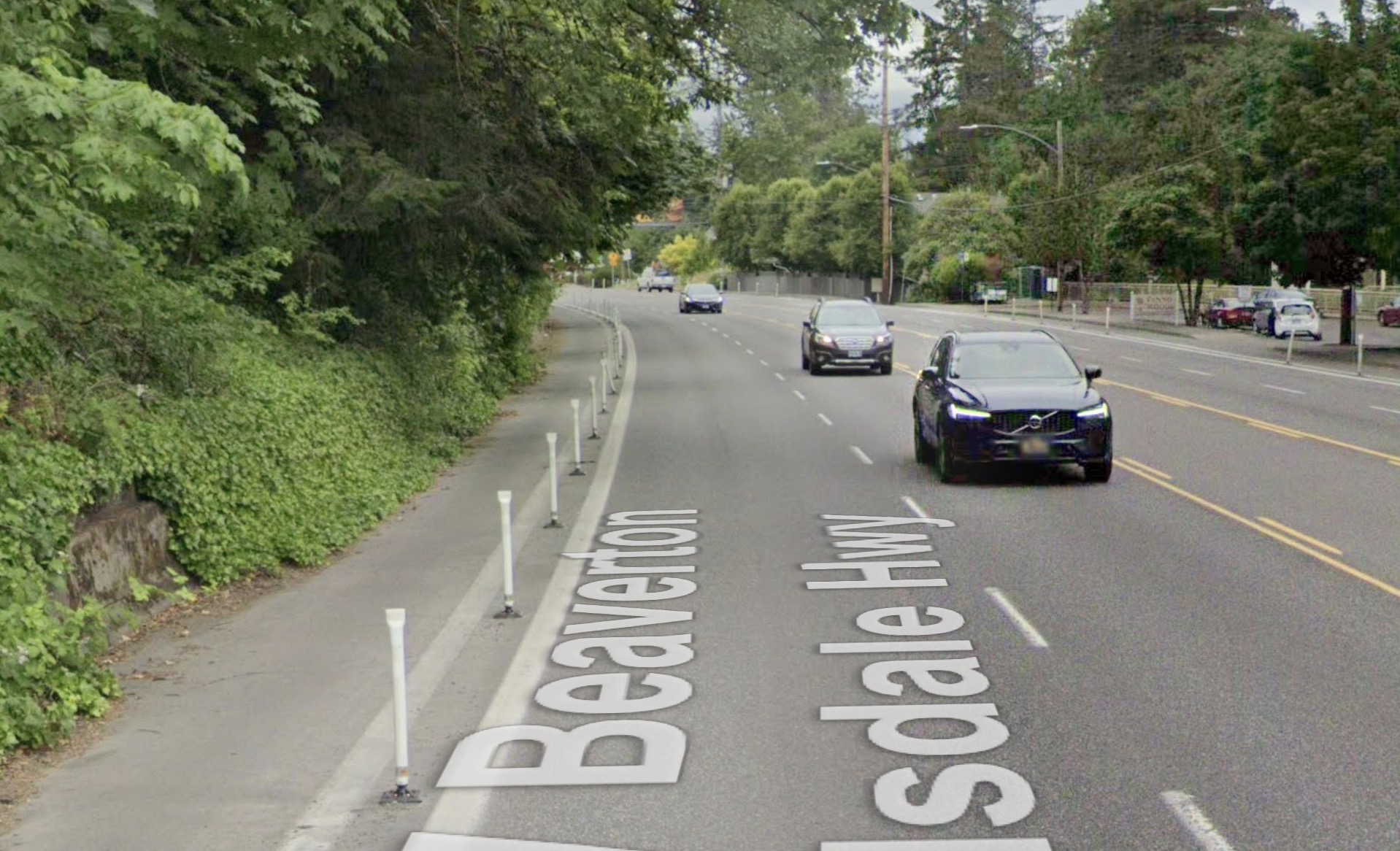
A section of Beaverton-Hillsdale Hwy bike lane that PBOT plans to upgrade with concrete curbs.

Most Portland neighborhoods would jump at the chance to upgrade their bike lanes. But the coalition that represents 32 neighborhoods in District 4 is different. At their meeting Wednesday night, the District 4 Coalition (D4C) plans to finalize a letter to Portland Bureau of Transportation Director Millicent Williams that outlines their opposition to $760,000 of planned bike lane projects in Southwest Portland.

These projects are part of the bike lane hardening effort I reported on in August 2024. With marching orders from a city traffic engineer directive, PBOT is going through a list of protected bike lanes citywide that were initially built with just paint and/or plastic wands and replacing them with concrete curbs. The idea is permanent curbs offer a more pleasing aesthetic, provide a stronger safety benefit, and will require less maintenance (the wands are frequently uprooted). PBOT is also responding to some bike advocates who see paint and plastic as a poor substitute for more robust materials.

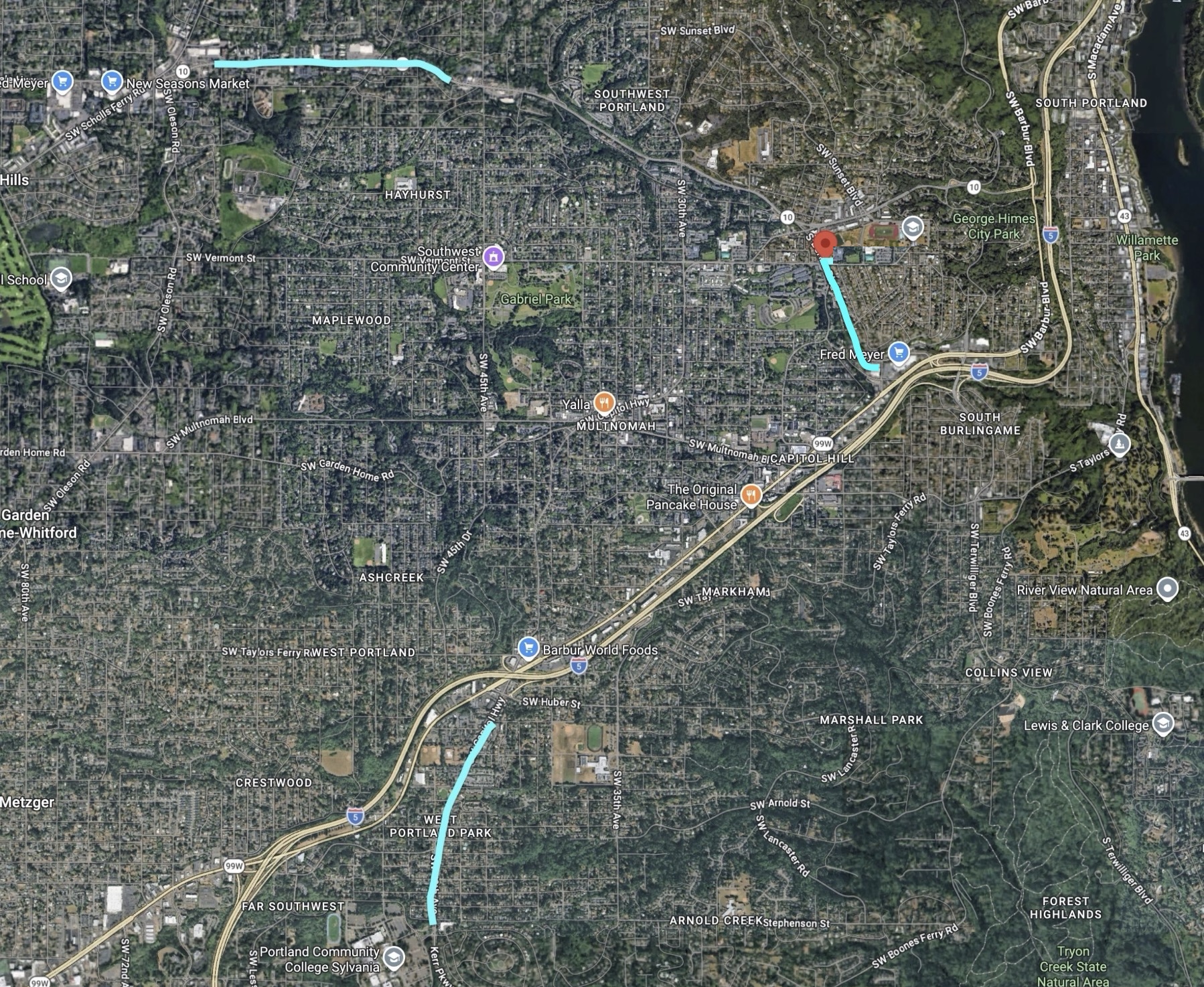
In a draft version of the letter about the projects in Southwest, D4C Land Use and Transportation Co-Chair Nicole Zimmerman (who’s also a candidate for City Council District 3) says they oppose planned hardening projects at three locations: Beaverton-Hillsdale Highway between SW 39th and SW 65th, SW Capitol Hwy between SW Valona and Stephenson, and Bertha Blvd between Vermont and 13th (see map below).

Blue lines show location of three bike lane sections called out by D4C.
Advertisement

Below is an excerpt from the letter that lays out the reasons for their objections (emphasis theirs):

  • No practical value. B-H Hwy., the proposed segment of Capitol Hwy., and Bertha Blvd. are among the lowest performing bike routes in all of SW Portland. This can be attributed largely to their lack of connectivity with the fractured bike network in SW. Any cyclist using these facilities must be confident riding on busy streets in the travel lane to reach and leave these bike lane segments. Providing an A+ bike facility on these isolated sections will not entice more cyclists to use them. Progress must be measured not by the miles of protected bike lanes but by the number of people traveling by bike.
  • This is not maintenance. Converting them into physically separated facilities is an improvement project – not simple maintenance. If maintenance is an issue, the wands could simply be removed or just not replaced. If removed, there would continue to be very good, painted buffered bike lanes, which could again be swept with conventional equipment. Reliance on the small bike lane sweeper has resulted in infrequent sweeping and B-H and Capitol Hwys. are typically plagued by gravel, glass, leaves, and weeds.
  • Chronically inadequate funding. Funding for capital projects to enhance pedestrian and bicycle safety is severely constrained. For perspective, D4 can expect about $2.3 million from FOS3 for the next 4 years. Other pots of funding are available, but the cost of the B-H Highway project will make it among the most expensive projects proposed in D4 and SW over the next four years.
  • Higher priority needs and lack of community support. Given all the high-priority network and safety improvements, many of which have languished for decades, PBOT should not spend $490,000 on this project followed by the Capitol Hwy. project totaling around $757,000 and an undetermined amount for Bertha Blvd. when the bike lane hardening lacks community support and The BH Hwy. and Capitol Hwy. projects are not identified in the TSP or SWIM. Until bike routes are completed and not disjointed, it is premature to spend scared funds for first-class facilities on random segments.
Advertisement

If this sounds familiar, it’s because BikePortland reported on a Southwest-based cycling advocate who shared many of these same concerns back in fall of 2024. I reached out to that person, former PBOT Bicycle Advisory Committee member and veteran bike advocate Keith Liden, and he confirmed he was the inspiration for the D4C position. “Yes, my fingerprints are all over it,” Liden shared with me via email last week.

“We feel it makes no sense to spend scarce dollars to ‘gold plate’ isolated sections on routes with serious gaps,” Liden said. “Hardening these bike lanes will do nothing to attract less confident/inexperienced riders, while the current users will still be fine with painted buffers.” Liden wants PBOT to offer a more complete route before spending money to improve isolated sections.  

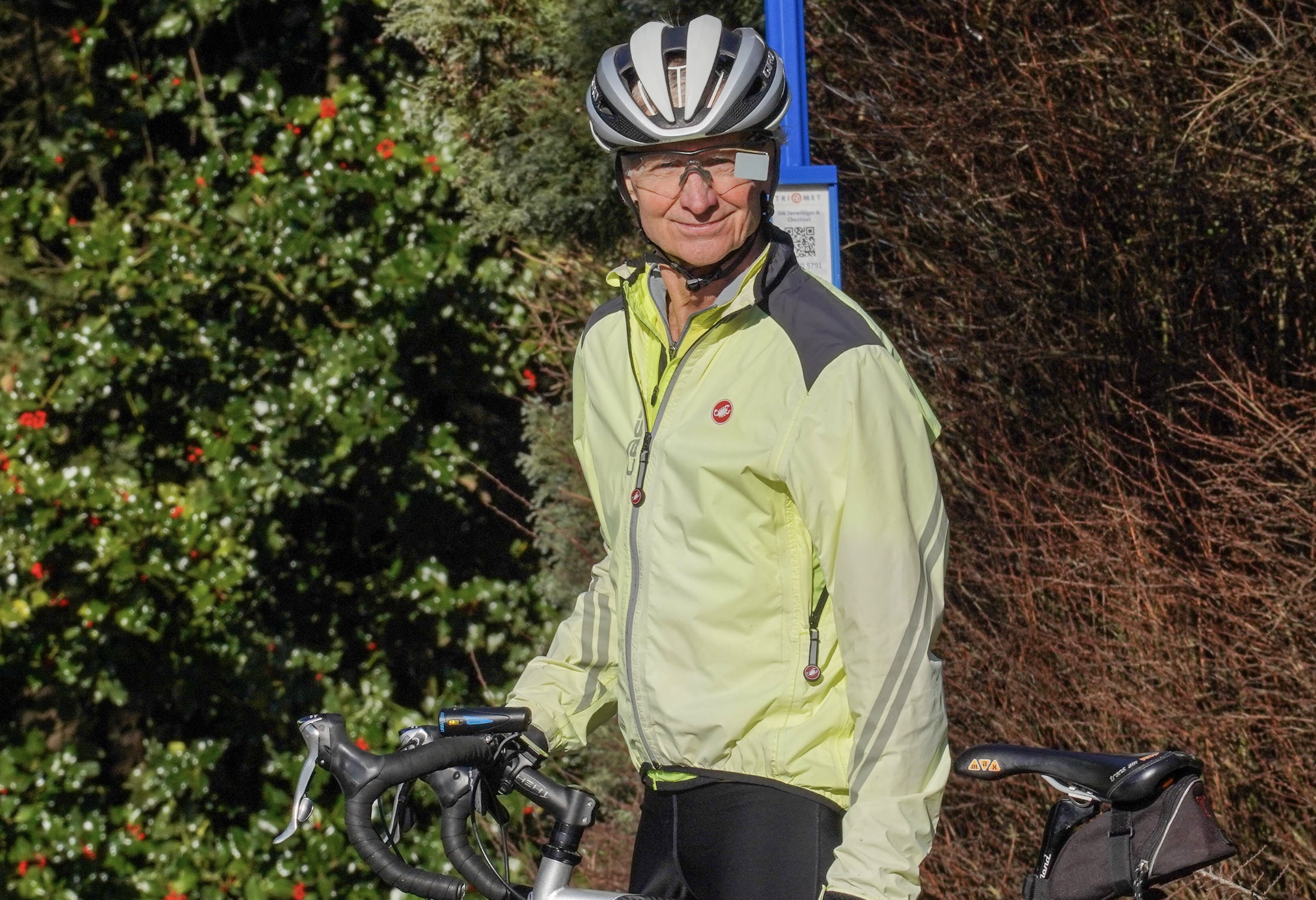
Keith Liden in 2023. (Photo: Jonathan Maus/BikePortland)

Kiel Johnson with nonprofit BikeLoud PDX disagrees with Liden and has sent a message of his own to PBOT, urging them to move forward. In an email sent Thursday, February 19th, Johnson wrote that Beaverton-Hillsdale Highway currently feels like a freeway due to its design, and changes are needed to attract more riders. “Paint and plastic wands are not protection,” Johnson wrote. “Physical barriers—concrete curbs, continuous raised protection, and median refuge islands—would reduce conflict points, prevent encroachment into bike space, and narrow the effective roadway in a way that calms traffic without eliminating access.”

The D4C coalition wants PBOT to allow them to help review and evaluate the projects to find, “an acceptable approach for improving and maintaining these facilities at reduced cost and to redirect the remaining funds to improvements that support more pressing priorities in District 4 and identified in our adopted plans.” Liden and others in Southwest feel PBOT’s project selections are too “top-down” and they want a more collaborative process to determine future bikeway investments.

Learn more about PBOT’s bike lane upgrades on their website.

The D4C Land Use and Transportation Committee meets tomorrow (Weds., 2/25) from 6:30 to 8:30 pm via Zoom.

Monday Roundup: Dakar’s buses, daily steps, e-bike moral panic, and more

Happy rainy Monday.

Below are the most notable stories that came across my inbox this past week…

Federal bikelash: Washington D.C. bike advocates are sounding the alarm that the Trump Administration plans to remove one of the busiest bikeways in the city. (Washington Area Bicyclist Assocation)

Unfair-iffs and the bike industry: One well-known bike brand (Terry Precision) was one of the plaintiffs in the landmark Supreme Court decision that deemed Trump’s tariffs unconstitutional and several other bike companies are already in line for refunds. (Bicycle Retailer & Industry News)

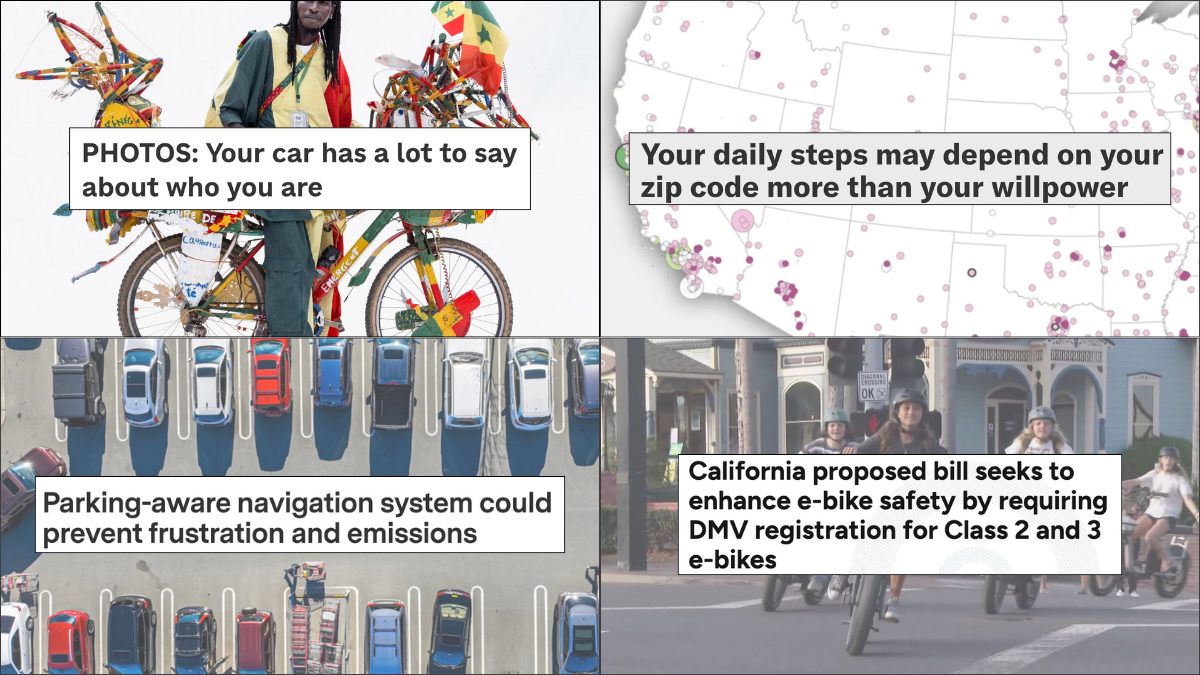
Looking for parking: Scientists and app makers are working hard to to solve the problem of delays due to lack of parking near destinations. If they figure out how to integrate parking availability into navigation apps like Google Maps, they could reduce VMT. (MIT News)

Advertisement

What your vehicle says about you: This very cool photography project includes portraits of people and their cars/bikes/rickshaws with an aim of sharing how the vehicles people use are a reflection of themselves. (NPR)

Truthers: An interesting new initiative set to launch on Bluesky this week bills itself as, “a creative, evidence-based collaboration launched to share the truth and take on disinformation about how to make better cities for people.” (Urban Truth Collective/Bluesky)

More e-bike regulation: The moral panic over e-bikes is spreading as ignorant, paternalistic politicians in California are pushing a law that would require registration and licenses for some types of e-bikes — even though the politician behind the legislation is actually concerned about e-motos. (CBS 8)

Where you live and how you walk: Researchers analyzed the number of daily steps people took after moving between walkable and non-walkable cities to reveal that, “built environments, rather than personal choice alone, might affect not just the amount but the intensity of the exercise their inhabitants get.” (Scientific American)

Video of the Week: Residents of the bustling African city Dakar loves their new express bus service…


Thanks to everyone who sent in links this week. The Monday Roundup is a community effort, so please feel free to send us any great stories you come across.

Weekend Event Guide: Lents cleanup, Zwickelmania, 6-7, and more

Bikes make great clean-up vehicles. Join SOLVE for a Lents Neighborhood cleanup on Saturday. (Photo: SOLVE Oregon)

Saturday, February 21st

Dig Day at Powell Butte – 9:00 am at Powell Butte (SE)
Put on some work pants and volunteer with NW Trail Alliance as they buff out and maintain the trails at Powell Butte Park. More info here.

Zwickelmania: The Ride – 10:00 am at Piccolo Park (SE)
Craft beer lovers unite! It’s Zwickelmania Fest in Portland, so of course there’s a bike ride to go with it. Visit breweries, make friends. More info here.

Lents Neighborhood Cleanup – 10:00 am at Flipside Bar and Carts (SE)
Join nonprofit SOLVE to help cleanup the ‘hood. Bring trailers and cargo bikes to help haul trash and debris. More info here.

Advertisement

The 6-7 Ride – 3:00 pm at Beaverton Central MAX Stop (The West Side)
“6 7!” You’ve heard it and probably been annoyed by it (especially if you’re around teens and tweens) for months now. Might as well embrace it and join this ride. More info here.

Community Walk & Talk on MLK – 3:00 pm at Harder Day Coffee (NE)
A local advocate wants to add street parking to Martin Luther King Jr. Blvd in Northeast. The idea is that it will calm the street and revitalize business access. Join this walk to learn more. More info here.

Sunday, February 22nd

STP Training Ride – 10:00 am at Wilshire Park (NE)
Joint Portland Bicycling Club ride leader Lynn Blanchard for a spirited ride to Troutdale and get your body and mind ready for the Seattle-to-Portland ride — or any big ride you’ve got planned this season. More info here.


— Did I miss your event? Please let me know by filling out our contact form, or just email me at maus.jonathan@gmail.com.

Meet District 3 City Council Candidate Tom Sollitt

This November, half of Portland’s city councilors will be up for re-election. In order to spare us the stress of electing 12 councilors at once, the City of Portland decided to stagger elections and they chose Districts 3 and 4 to go first (District 1 and 2 elections will be November 2028).

In District 3, five candidates have thrown their hat in the ring so far. Tom Sollitt was the first candidate to file and he’s got a solid head start when it comes to campaigning. He’s got a website, an Instagram presence, and he’s already hung out with us at Bike Happy Hour. From what I’ve seen and heard so far, Sollitt is a legit candidate who’s got a shot to win over a lot of fans. He’s exceedingly humble (there’s not even a portrait of him on his website that I could find!), he shows up everywhere, has made his campaign his full-time job, and he’s a student of the game. Sollitt has been attending City Council meetings and reading city plans.

Advertisement

On Thursday, Sollitt came over to The Shed for an interview. During our conversation, he shared a bit about his background. An an adoptee from Korea, he grew up with a family in Corvallis and enjoyed its compact urban form and campus from childhood through college (and still rides the same bike he did back then). He returned to South Korea to teach English and started a business doing marketing for Korean businesses before moving to his current home near Laurelhurst Park.

Tom Sollitt in the Shed, Thursday February 19th. (Photo: Jonathan Maus/BikePortland)

After living abroad for seven years, Sollitt found it difficult to re-integrate in his new city. “My personal network had almost completely disappeared,” he shared with me during the interview. “So I started from scratch.” This difficult experienced fueled Sollitt’s passion to make it easier for others and it shaped his political platform. “I know how hard it is to kind of build up a network from ground zero, and I think it doesn’t need to be that hard.”

In this interview, Sollitt and I touched on several important topics:

  • how he gets around his neighborhood (by foot, mostly)
  • how his community organizing work via Asian American Town inspired his political platform
  • challenges with how the Portland Bureau of Transportation conducts project outreach
  • the PBOT funding crisis, taxes, and why the city should lean more directly on individual Portlanders to get things done
  • whether a “business candidate” (a title he embraces) can also stand for progressive transportation policy
  • the 82nd Avenue Transit Project
  • how to deal with all the cars people want to park near new apartment buildings along busy commercial corridors like Sandy and Belmont
  • his idea for more “park and ride” lots
  • whether he supports a protected bike lane on Sandy
  • Vision Zero
  • Waymo robotaxis
  • and more!

Listen to the interview in the player above or on YouTube.

You can learn more about Sollitt and connect to his campaign on his website or via Instagram.

Building tenants say two year elevator closure on ped bridge violates county easement

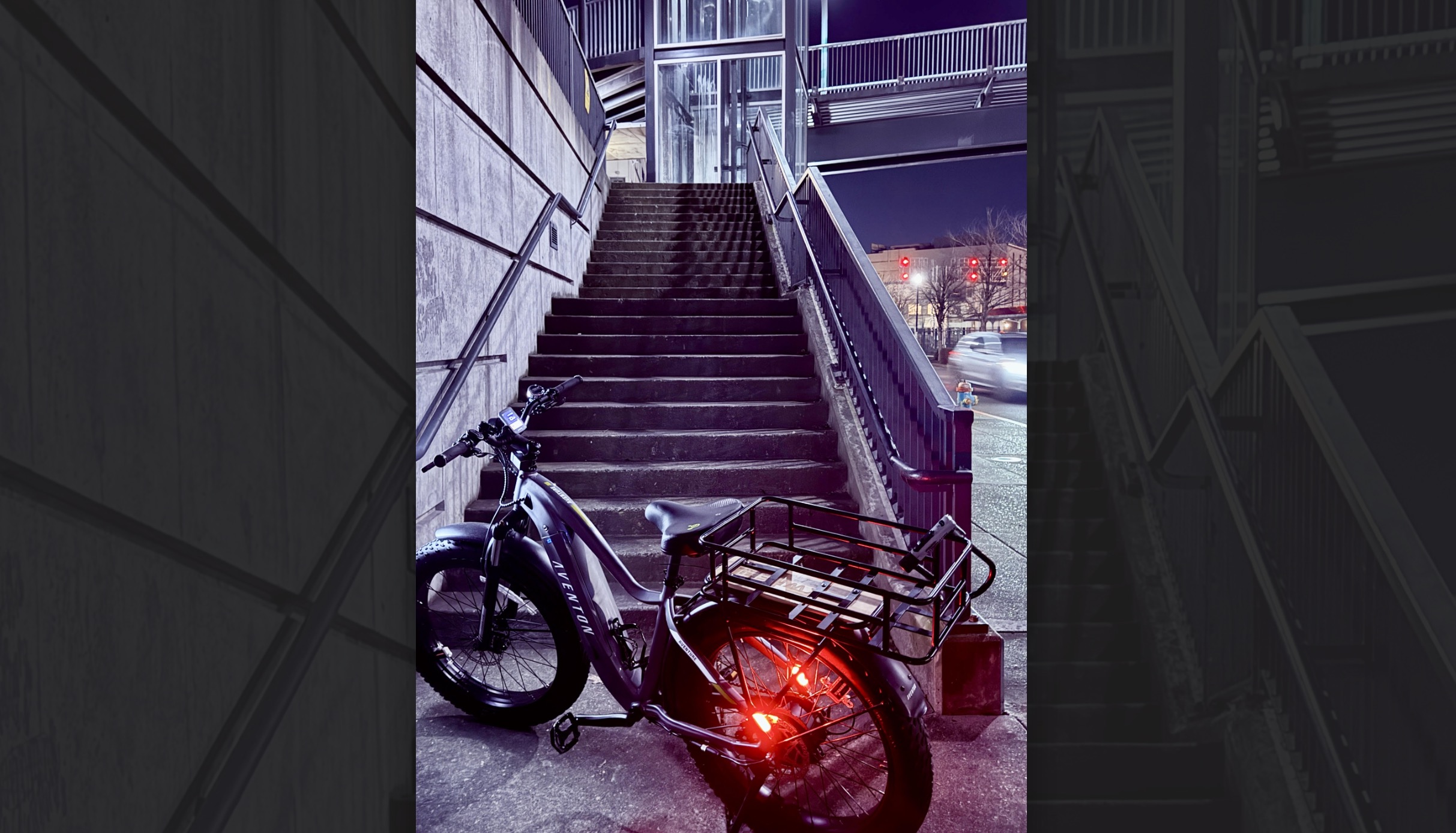
A closed elevator means bicycle riders have to lug their rigs up (and then down) these stairs to use a pedestrian bridge near Union Station. (Photo: Michelle Ryding)

Residents of a multi-building apartment complex in Northwest Portland say their mobility has been unfairly restricted due to a broken elevator, and they want building owners to do something about it.

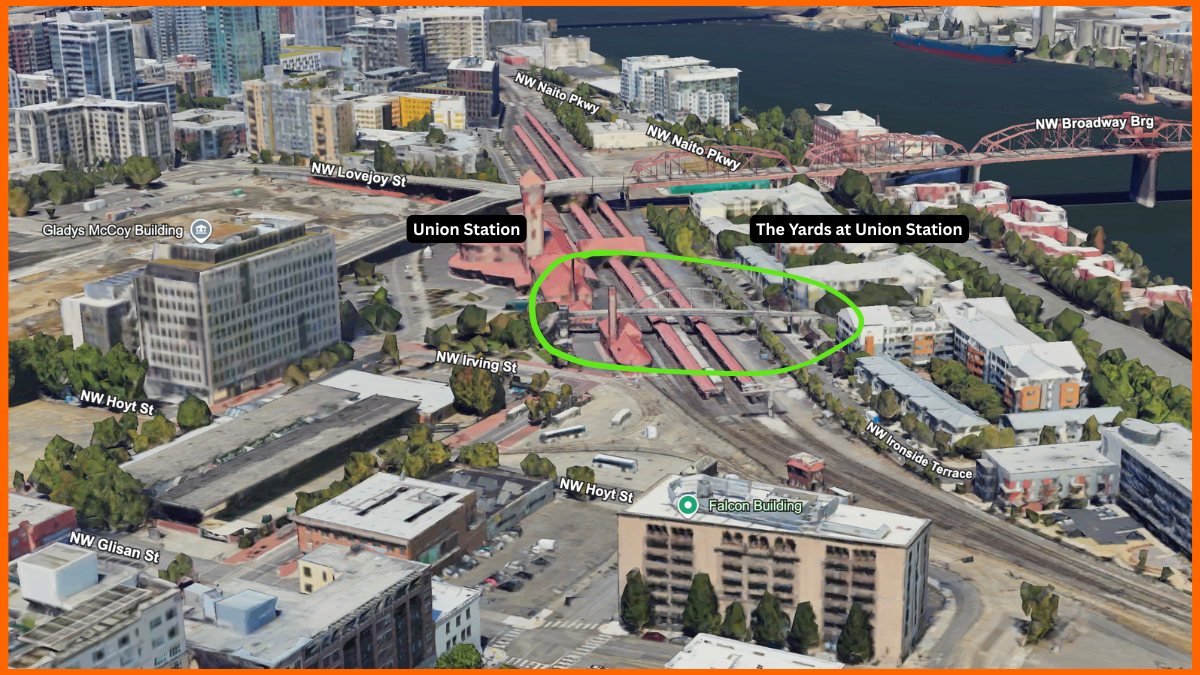
Last week The Yards Tenant Union — a group made up of folks who live at The Yards Union Station, a five-story, 128-unit building between the tracks at Union Station and Northwest Naito Parkway — sent a letter to Walter and Eric Grodahl; managing members of DBG Properties LLC.

The tenants allege the building has been out of compliance with an access easement for more than two years — an easement that requires building owners to maintain the elevator on their side of a pedestrian bridge that goes over railroad tracks between NW Naito and Union Station, and provides access to the transit mall on NW 5th and 6th avenues. Below is an excerpt from the letter:

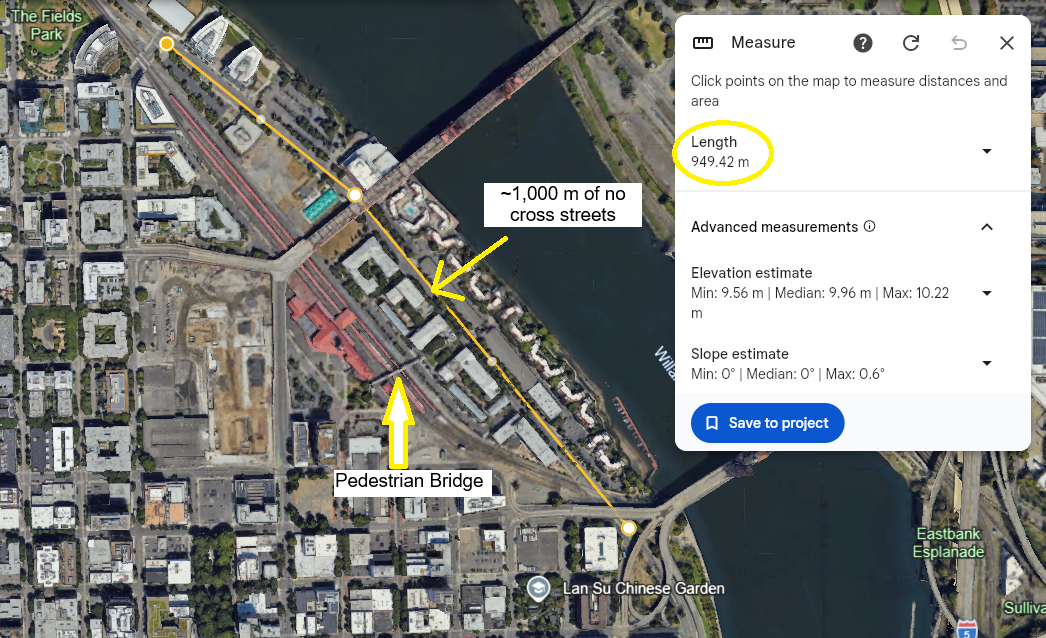
“Because the elevator has remained inoperable for years, mobility-impaired residents are effectively cut off from the Transit Mall and surrounding transit access. The bridge is the only practical pedestrian connection across the rail corridor. The stretch of NW Naito Parkway surrounding it, which contains more than 1,000 apartment and condominium units, has no cross streets for approximately 1,000 meters between the Steel Bridge ramp and NW 9th Avenue.”

Advertisement

Broken elevators that are meant to service pedestrian bridges are a persistent problem in Portland, and bicycle riders are hit especially hard. Due to vandalism and difficulty obtaining parts, the Portland Bureau of Transportation has failed to provide reliable access to the Bob Stacey Crossing and the Gibbs Street Pedestrian Bridge. TriMet has had similar issues with a pedestrian bridge at SE Lafayette St. For people able to walk on stairs, these closures aren’t a major issue; but it’s a different story for bicycle riders who have to carry themselves and their (often very heavy and awkward) bicycles up and down them. It’s also frustrating that bike ramps are a more reliable alternative to elevators that often get passed over due to an alleged lack of funding. Some stairways have ramps at the edges (often called “runnels”) for bicycle tires, but they often don’t work well and/or are difficult to use for people with heavy bikes and/or who have physical limitations.

According the easement, maintenance of the bridge between their building and Union Station are split between DBG Properties and Prosper Portland (owners of Union Station).

For The Yards tenant Michelle Ryding, the broken elevators on the Union Station Bridge have caused major mobility issues. “I can’t use the bridge to get to or from work because I’m not able to carry my bike up and down the stairs,” she shared with BikePortland via email. “And when freight trains block the crossings, it would make a huge difference to be able to load into the elevator and go over the tracks instead of being late for work.”

Advertisement

The Yards Tenant Union believes DBG Properties is in violation of the “meaningful access” clause in their easement. The easement agreement filed with Multnomah County (Recording No. 2015-034466) includes a section that states: “In the event that Grantors, or any one of them, fail to perform their obligations under this Agreement, the City shall be entitled to require such performance by suit for specific performance or, where appropriate, through injunctive relief.”

In their letter, dated February 11th, the tenant union made five demands:

  1. Within 10 calendar days of receipt of this letter, identify in writing the elevator contractor retained to perform repairs to the Yards-side pedestrian bridge elevator, including the contractor’s name, license, and scope of work.
  2. Within 14 calendar days, provide a written repair plan and schedule, including an estimated date that service will be restored.
  3. Return the Yards-side elevator to full operable condition no later than 45 calendar days from receipt of this letter.
  4. Provide a written commitment to ongoing maintenance and prompt repair sufficient to keep the elevator continuously operable, consistent with Section 2.3 of the Easement Agreement and applicable accessibility requirements.
  5. Identify a named individual with responsibility and authority for elevator operation, maintenance, and compliance with accessibility requirements going forward.

If DBG does not address these demands, the union plans to escalate the issue through ADA and building code enforcement channels. District 4 city councilors were copied on the letter.

In the meantime, folks like Michelle Ryding will have to continue to find other routes. Ryding says despite the closure, she still uses the bridge, but it means waiting until she can convince a passerby to help lift her bike up and over the stairs. “Not being able to access the bridge doesn’t just affect my commute. It means I’m less likely to visit shops, stores, or restaurants on the other side, too,” Ryding says.

Tonight’s bike touring slideshows feature Japan cherry blossoms, human powered vehicles, and more

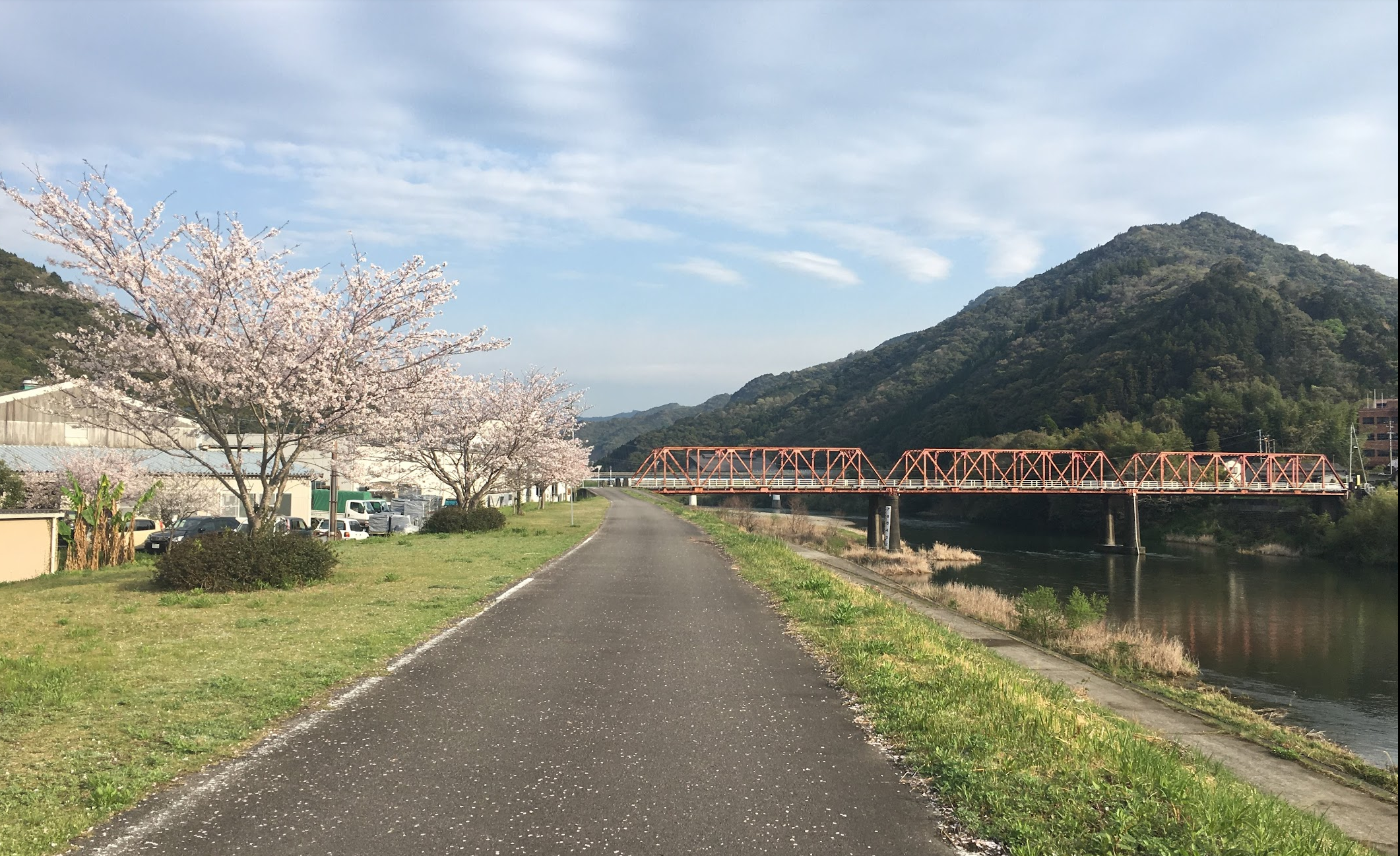
(Photo: Momoko Saunders)

Imagine a bike tour that chases Japan’s famous cherry blossoms. Or one that chases a total solar eclipse. You won’t have to imagine it if you roll out tonight for another Bike Touring Slideshow hosted by our friend Ted Buehler after Bike Happy Hour (6:30 pm Wednesday at Migration Brewing on North Williams Avenue).

Ted is a bicycle touring evangelist who loves sharing two-wheeled adventures. As a special addition to tonight’s event, he’ll share some of the things he’s learned about touring on a budget. Check out the lineup below (as shared by Ted) and consider coming out to Migration tonight for the show. It’s free and there’s yummy food and drinks for purchase.

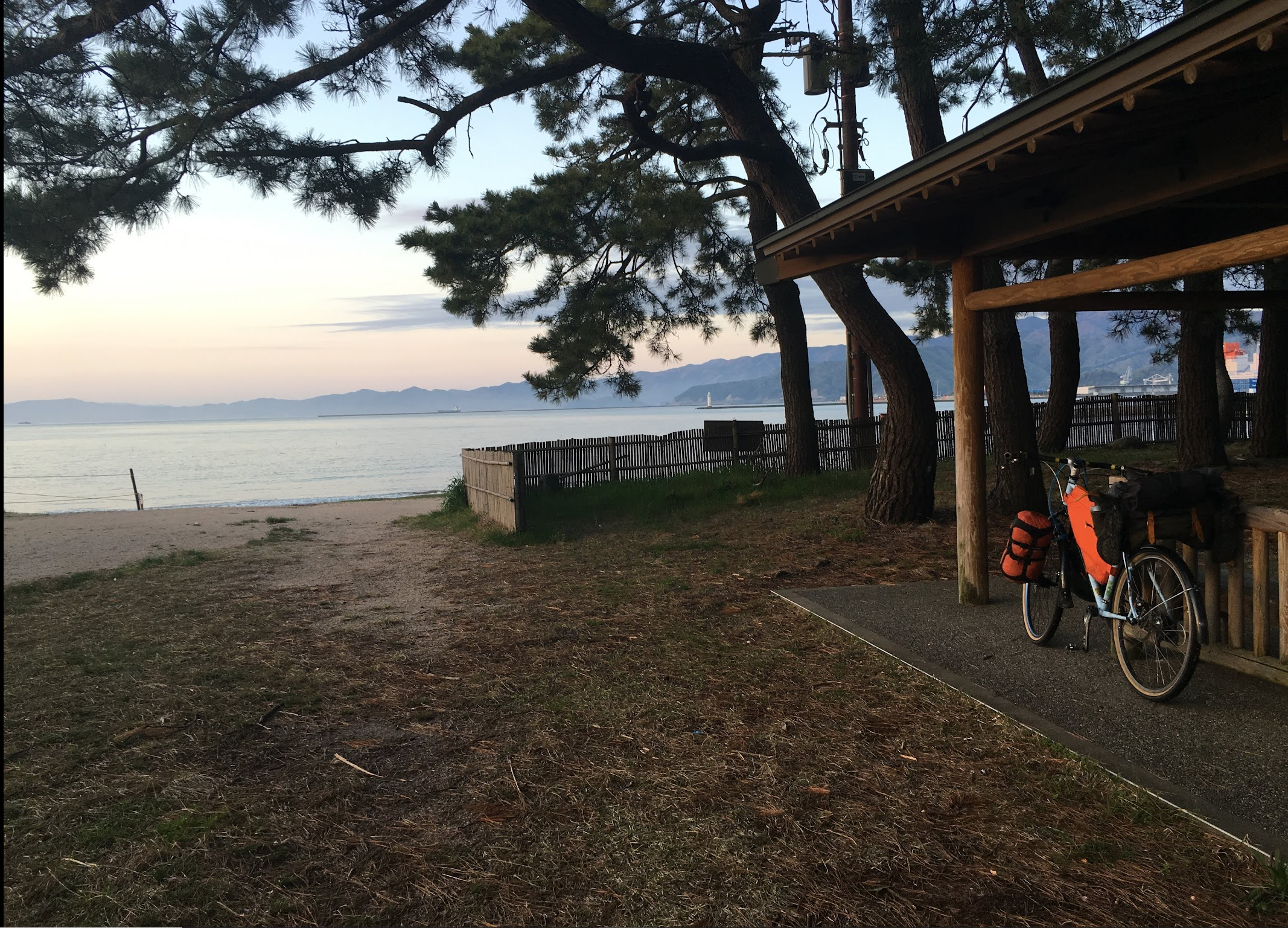
1) Momoko Saunders, bicycle touring in Japan, 2017. 

Momoko started in the south of Japan as the first cherry blossoms were coming out.  And bicycled north, following the cherry blossom season as it slowly moved up the country to the north. 

Momoko stayed in hot springs, wild camped, made friends.  Spring weather, of course, is not generally warm and sunny, but it was still doable and enjoyable. 

2) Fred Tatch, winning the 1979 and 1980 International Human Powered Vehicle Competition road race component.

Fred and friends from Eugene travelled to Ontario, CA with their home built “Manuped” bicycles — recumbents that were pedalled with both hands and feet.  And had fairings made of bamboo and vinyl. 

On arrival, they met all the other teams, many of whom were designed and built by university students in engineering, who all had substantial budgets. 

Advertisement

High speed bicycles were in their youth at the time, and different teams had entirely different approaches to how to build a human powered machine that could travel up to 55 mph.  

Fred will tell us about how he designed and built his bicycle, and how he raced and came out at the head of the pack two years in a row.  

3) Ted Buehler, international bicycle touring on a budget, 2020s.  

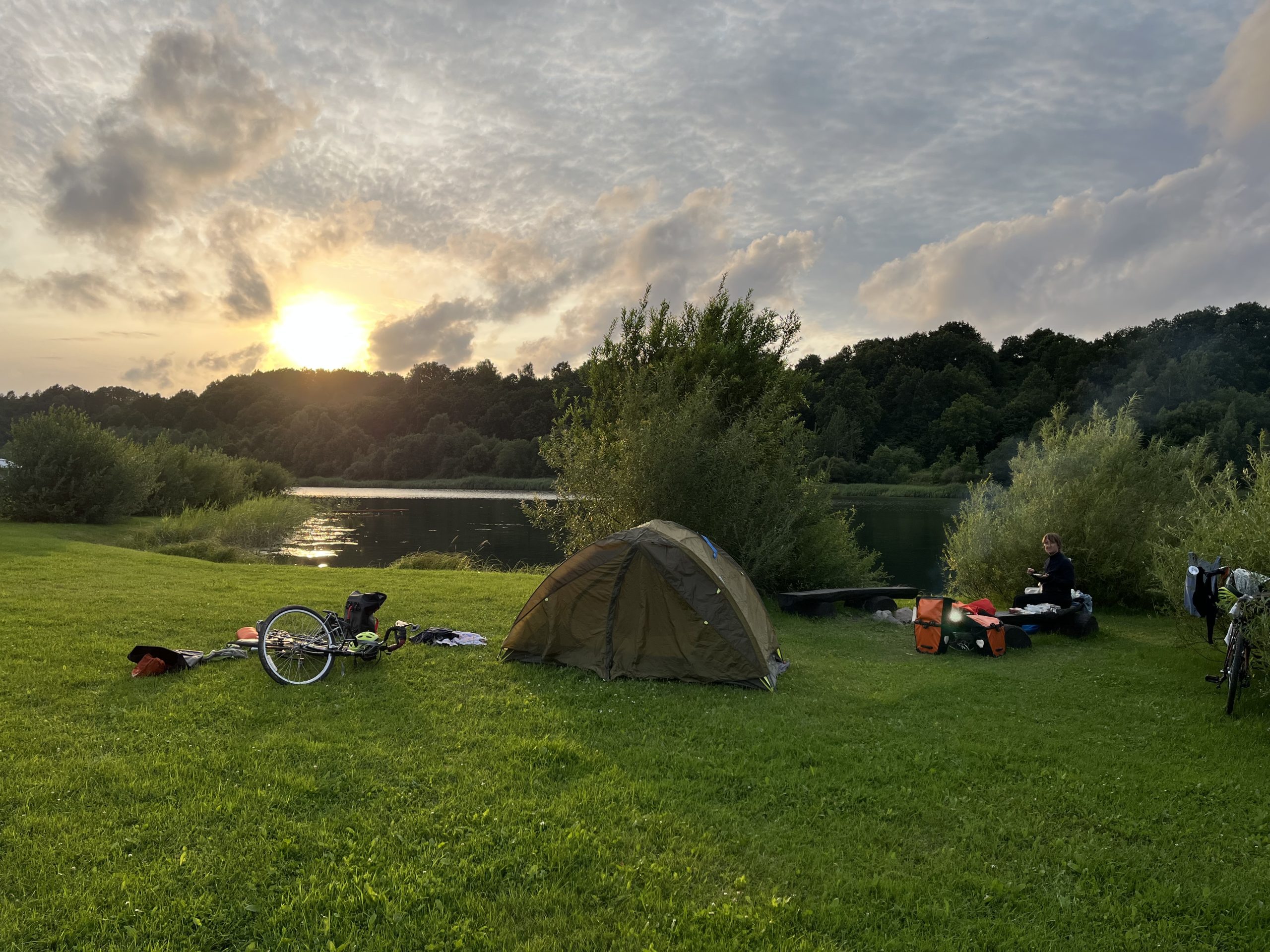
Ted toured through nine countries in eastern and western europe in 2025, on a light budget.  He will show beautiful photos of well maintained bike paths as he explains the best way to get your bike on an airplane, find good routes and regions for bicycling, and ferret out interesting accomodation that supports local economies.  

4) Scott Bacheler, riding to the solar eclipse, 2017.  

Scott was part of a group of Portlanders wo rode to the WIllamette Valley in 2017 for the eclipse.  Scott has an E-assist bike, others rode conventional bikes.  They had a group camp set up, and avoided the greatest traffic jam in Oregon history by coming and going by bicycle. 

More details at the Facebook event listing.

Open houses on local transportation funding begin this week

SW Main Street before it was repaved by PBOT. (Photo: PBOT)

The next phase of the City of Portland’s effort to raise transportation revenue is upon us.

This Thursday, February 19th, the Bureau of Transportation (PBOT) will kickoff a series of four open houses to garner feedback and inform Portlanders about how best to generate more funding to pay for road projects and transportation programs.

As BikePortland has reported for many years, local sources of funding for transportation are woefully outdated and ineffective. PBOT officials say after eight straight years of painful cuts, they are now in crisis mode and the time has come to ask us to pay more to make sure our transportation system remains usable. In years past, we could at least count on state and federal funding to help fill holes in local budgets. But with the failures of the Trump Administration and state lawmakers to do their jobs, even those sources of revenue are no longer certain.

As PBOT continues to develop the policy behind their favorite new revenue mechanisms, they want to take the temperature of us, the tax-paying public. Late last month I shared the initial assessment of costs and benefits associated with each of the city’s top revenue generating ideas. Now they want to workshop those with you in-person at Local Transportation Fund Open House events.

Advertisement

There will be one event in each district and they kick off this Thursday. Below are the dates, times, and locations of each open house.

District 4: Thursday, Feb. 19, 6:30 to 8:30 pm at Rieke Elementary School Gym (1405 SW Vermont St.)

District 1: Feb. 23, 6:30 to 8:30 at Lent Elementary School Cafeteria (5105 SE 97th Ave.)

District 3: Feb. 25, 6:30 to 8:30 pm at Atkinson Elementary School Cafeteria (5800 SE Division St.)

District 2: March 3, 6:30 to 8:30 pm at Dr. Martin Luther King Jr. Elementary School Cafeteria (4906 NE Sixth Ave.)

For more information on the PBOT funding crisis and open houses, as well as a funding survey that opens 2/19, check out the official website.

A win for transit on 82nd, but concerns remain

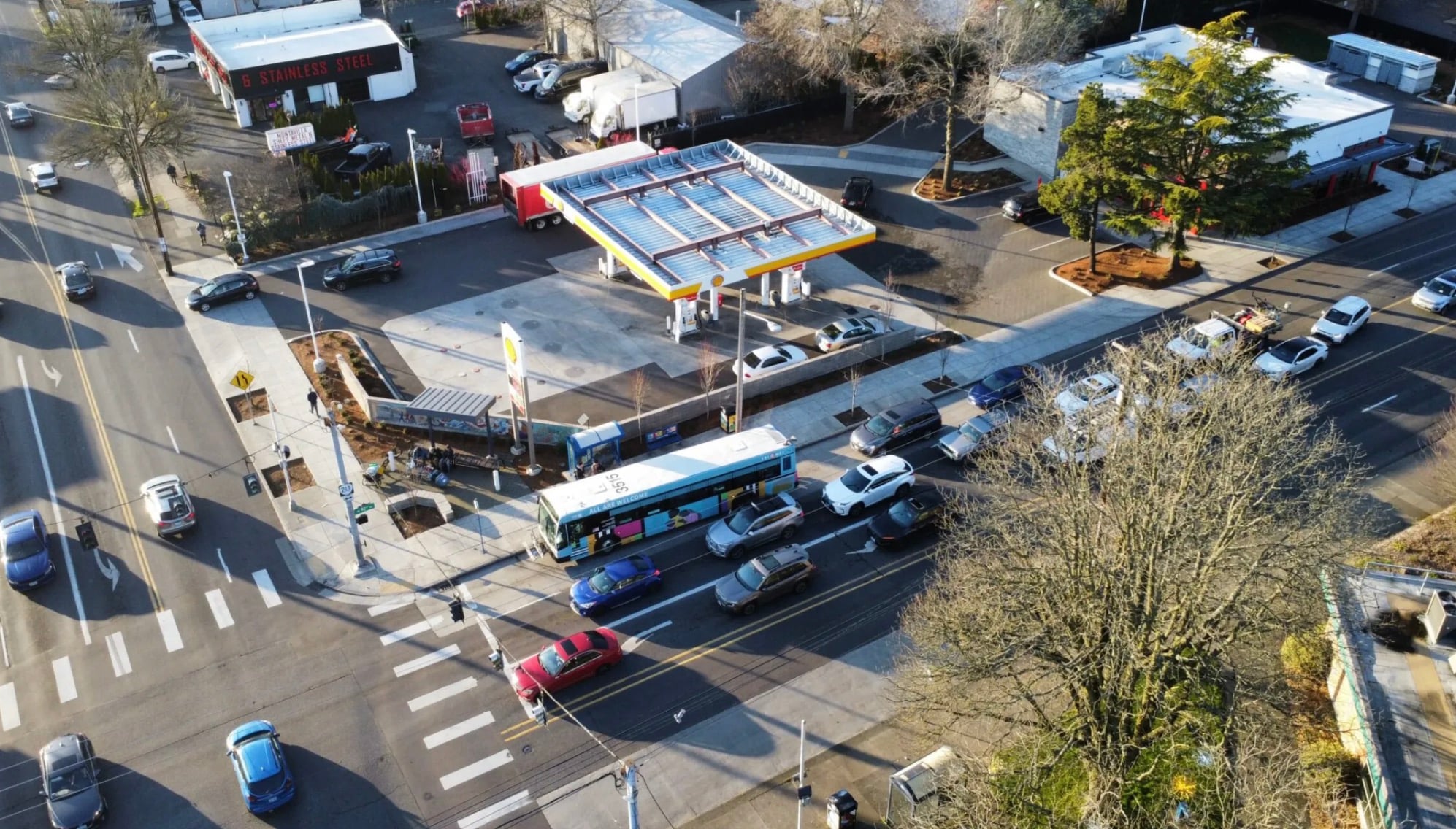
Aerial view of NE 82nd and Glisan. (Photo: TriMet)

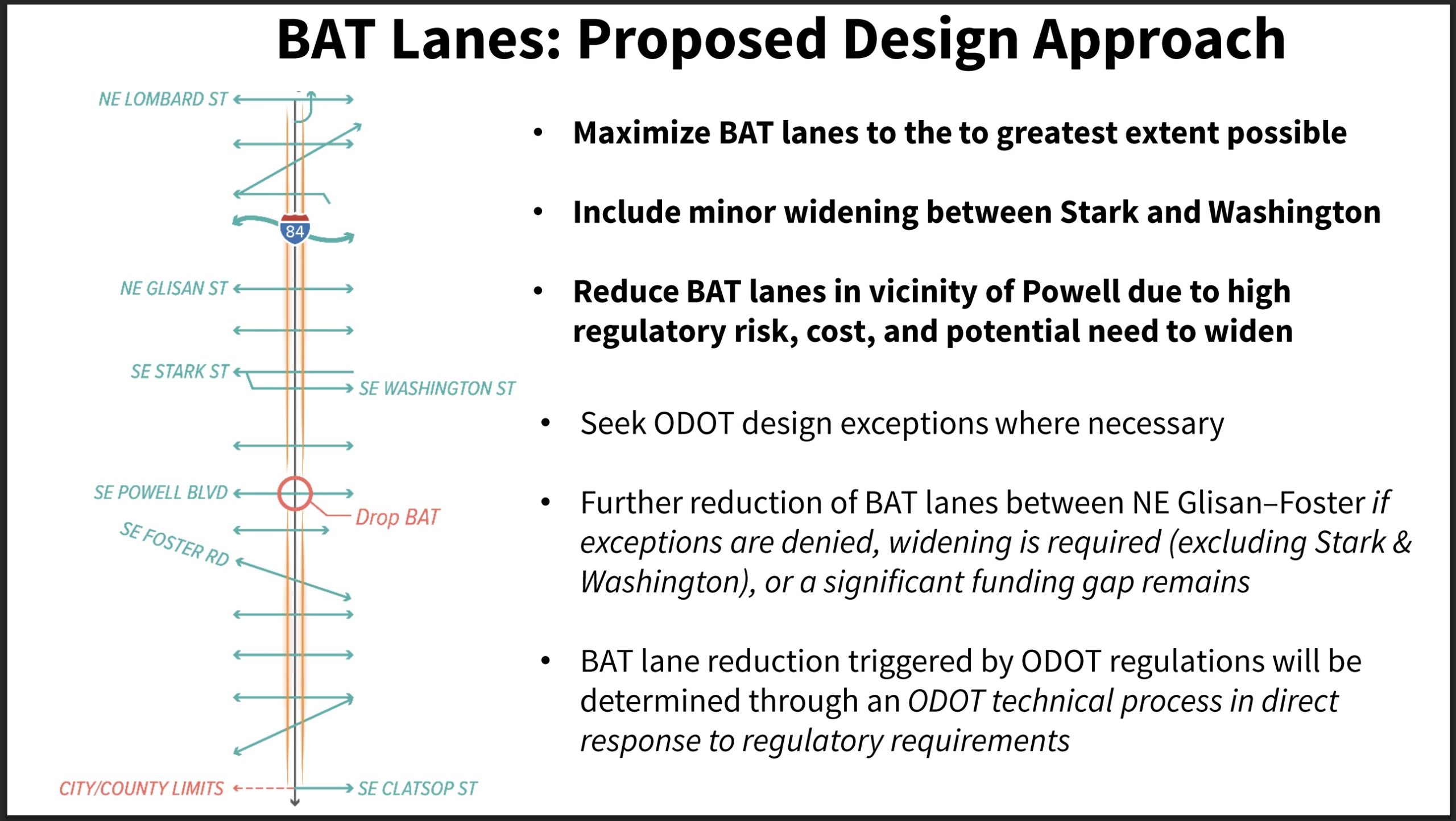
People who understand that excellent transit service is key to thriving 82nd Avenue corridor are celebrating a big win. That’s because at the project’s Policy & Budget Committee meeting on Friday, TriMet announced their intention to build semi-dedicated bus lanes on nearly the entire scope of their 82nd Avenue Transit Project — between Southeast Clatsop Street (Clackamas County line) and Northeast Lombard. One very notable compromise made official on Friday was the plan to drop the bus lanes at the Southeast Powell Blvd.

While the absence of bus lanes at Powell is a surrender to the status quo, getting semi-dedicated space for bus operators on what one committee member called “Oregon’s greatest main street,” is no small thing.

Back in October, project staff recommended just three miles of bus lanes as they faced threats of lawsuits from business owners and other serious concerns over how a major change in roadway space allocation on such a busy corridor might impact the project scope, budget, and timeline.

But on Friday, the same project officials who recommended three miles of “business access and transit” or “BAT” lanes (known as the “Some BAT” option) changed their recommendation to seven miles of BAT lanes (known as the “More BAT” option). PBOT Director Millicent Williams said during Friday’s meeting, “With this approach, the 82nd Avenue corridor will be the city’s largest investment in transit priority treatments with a cumulative 14 miles of BAT lanes. That is something to celebrate.”

Advertisement

The $320 million project has always come with major transit upgrades including longer buses, station improvements and signal upgrades. But given that 82nd Avenue carries the state’s busiest bus line and that many of the community leaders and elected officials around the table want a transformational transit upgrade, TriMet officials agreed to consider going even further by turning two of the former state highway’s four lanes into BAT lanes.

When they opted for a paltry three miles of BAT lanes in October, many Portlanders — including several Metro councilors and even TriMet board members — opposed the recommendation. The pushback forced project staff to reconsider their opinions and it put added scrutiny onto the final decision.

Latest design proposal. (Slide: TriMet)

TriMet was put in the difficult position of having to balance needs of many groups including: business owners (who equate any loss of driving space with a loss in business), Metro (whose regional plans call for safe, thriving main streets served by transit), the Oregon Department of Transportation (who opposes the BAT lanes on diversion and congestion grounds), the Federal Transit Administration (who wants to make sure their money is well-spent), the City of Portland (whose adopted plans call for great transit and a reduction in driving), drivers (who repel any change to the status quo), and thousands Portlanders who want better transit.

Advertisement

ODOT’s concerns took front and center after a meeting last month revealed their influence over the project. Since their Highway 26/Powell Blvd crosses 82nd, they have authority to veto changes they believe would negatively impact how the roadway functions. ODOT made it clear on Friday they do not want BAT lanes in the project because of how they might cause drivers to avoid the corridor and clog nearby roadways. ODOT Region 1 Policy and Development Manager Chris Ford told the Policy and Budget Committee on Friday that, “A lot of the caution that you hear from ODOT around is because we need to make sure that the system is working really well for all modes.” Ford said ODOT’s position is no BAT lanes because less space for drivers, “limits the overall system,” and, “Because it squeezes a system that already doesn’t have a lot of capacity and isn’t going to get a lot more added to it.” Ford acknowledged that while BAT lanes might add capacity to the system overall (if more people take transit), “It also just takes some (capacity) away.”

As for just how much the BAT lanes will be dropped at Powell is still being negotiated by ODOT, PBOT and TriMet. One source told me it will likely be 2-3 blocks on either side of the street.

The biggest fear from TriMet staff (and likely why they came out with the unpopular initial recommendation) is that BAT lanes require design changes that make the project significantly more expensive (adding about $8 million to the overall cost) and could slow down their timeline. TriMet has a tight window to finalize the additional funding needed to implement the BAT lanes and an economic impact study. They plan to apply for a $150 million FTA “Small Starts” grant this coming September, which means they need a rock-solid funding plan secured by August.

At Friday’s meeting, TriMet project staff and GM Desue emphasized that just because they’ve settled on the “More BAT” option, it doesn’t mean the bus lanes are a done deal. ODOT permitting and funding could still poke holes in these plans.

Because the new lanes could make significant changes to auto capacity at busy locations (like the stretch between SE Foster and NE Glisan and at the SE Stark and Washington couplet), TriMet will need to be granted “design exceptions” (DE) from ODOT in order to move forward. Both the DE and funding talks have begun, but GM Desue and TriMet staff issued clear warnings at the meeting that if either don’t resolve positively, BAT lanes might be dropped at more locations.

Advertisement

82nd Avenue Transit Project Manager Jesse Stemmler made it clear that the design decision made Friday needs to “retain some level of flexibility.” “Further reduction of BAT lanes may be needed,” he warned, “either in the case that design exceptions are denied, or widening is required, or a significant funding gap remains.”

TriMet Interim Director of Major Projects Michael Kiser dampened the celebratory mood when he explained the possibility of cutting project elements to save money and underscored the seriousness of keeping the project on time and on budget. Kiser explained that if the FTA feels the project has too much funding and/or design risks, they would require TriMet to have more money in a contingency fund before authorizing any grant funding.

“We could end up in September or August with too many risks, requiring too much contingency, so more of our funds would have to go towards contingency,” Kiser said. “And we’d have to look for additional cuts within the budget.”

Given what committee members said Friday, any further reduction of BAT lanes would be controversial. Metro Councilor Duncan Hwang said he believes a slightly longer commute (about one to two minutes) is well worth the added safety and reliability that dedicated bus service will provide. He also pointed out that 172 units of affordable housing near 82nd and Division have just 42 car parking spots between them. “These are TOD [transit-oriented development] projects,” Hwang said. “And we’ve made that decision that we’re going to build housing for people and not for cars.”

“So, how are our community members that are in these housing units are going to get around? It’s going to be by transit,” he continued. “And that was by design.”

Committee member (and wheelchair user who sits on the TriMet Community Advisory Committee) Franklin Ouchida echoed Hwang’s sentiment. “Those people [who live in affordable housing and don’t have cars] are going to have to get around. They’re not going to be able to afford an Uber ride everywhere they go. So [this project is] going to be revolutionary and a way to break the the idea of car-dependency, as well as having a viable community there.”

If all goes according to plan, TriMet will begin construction next year and the project would open for service in 2029.

Read TriMet’s announcement of this decision.

Monday Roundup: E-bike for your feet, Olympics, Waymo watch, and more

Hi everyone.

I’ve been out of town since Thursday and just got back late last night. So sorry for the delay on the roundup — and for not covering the TriMet 82nd Ave Transit Project news. I’m working on both right now.

Below are the most notable stories that came across my inbox this past eight days…

Long live jaywalking: Don’t miss this interesting and important history lesson about the racist and legal underpinnings of jaywalking laws and how the city where they first began — Kansas City, Missouri — has worked to overturn them. (KCUR)

Waymo watch: Since Waymo wants to be in Portland, I’m now tracking Waymo-related news more closely. On that note, they just launched an autonomous fleet in Nashville, Tennessee. (Reuters)

Cyclocross in the Winter Olympics: I had no idea this was even something folks were talking about, but it’d be really cool if ‘cross was named as a new sport for the 2030 games! (Cycling Weekly)

Private or public? A video that delves into the pros and cons of publicly subsidized bike and scooter share systems in Vancouver BC has relevance in Portland as folks debate how to keep Biketown viable. (Momentum)

Advertisement

Gas tax politics in California: Our neighbors to the south face many of the same political challenges as we do when it comes to weaning folks off the outdated notion that the gas tax adequately funds the transportation system — and more importantly — how to find a new source of revenue. The mere mention of a per-mile tax caused a political storm. (Politico)

Backwards on climate: Another step backward for our country thanks to the corrupt Trump Administration who have decided to reverse a key, common sense EPA finding that said greenhouse gas emissions are bad and are worth regulating. (NBC News)

New LA subway: After spending billions on one of the most congested sections of freeway in the country only to see induced demand work its predictable magic, Los Angeles officials are now considering a subway under Sepulveda Pass to get folks out of their damn cars. (Bloomberg)

‘E-bike for your feet’: The geniuses at Nike HQ in Beaverton are hard at work on a new product they describe as a bionic sneaker that helps propel your feet. (NPR)

The good kind of AI?: The City of Santa Monica in Southern California plans to equip its parking enforcement vehicles with AI scanning technology in order to bust folks who park in bike lanes. (Ars Technica)

In favor of free buses: With New York City on the cusp of fare-free transit, a social justice organizer and former public defender explains some of the oft-forgotten benefits of letting people ride for free. (NY Times Opinion)


Thanks to everyone who sent in links this week. The Monday Roundup is a community effort, so please feel free to send us any great stories you come across.