

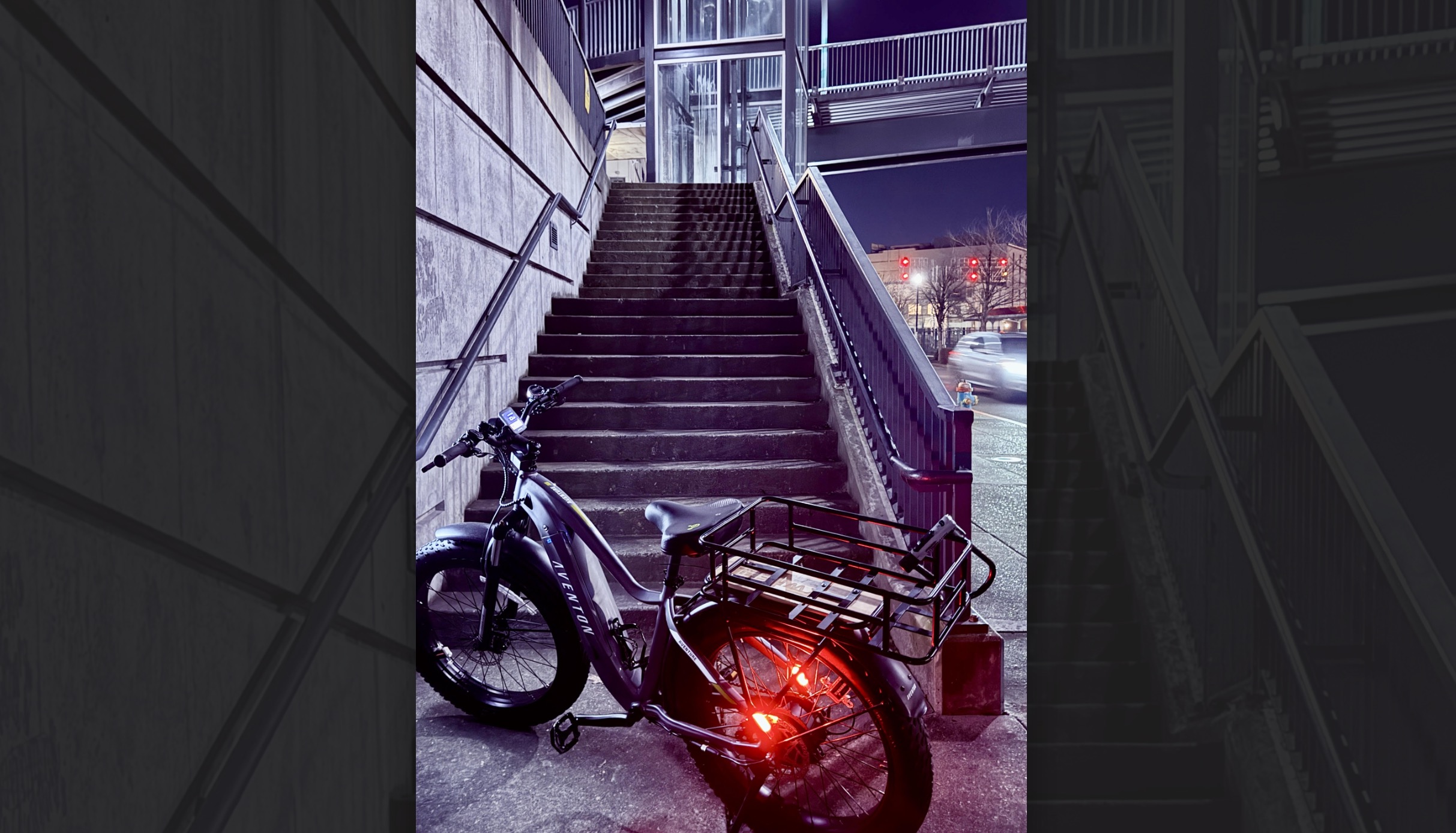
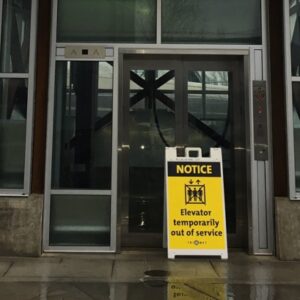
Residents of a multi-building apartment complex in Northwest Portland say their mobility has been unfairly restricted due to a broken elevator, and they want building owners to do something about it.
Last week The Yards Tenant Union — a group made up of folks who live at The Yards Union Station, a five-story, 128-unit building between the tracks at Union Station and Northwest Naito Parkway — sent a letter to Walter and Eric Grodahl; managing members of DBG Properties LLC.
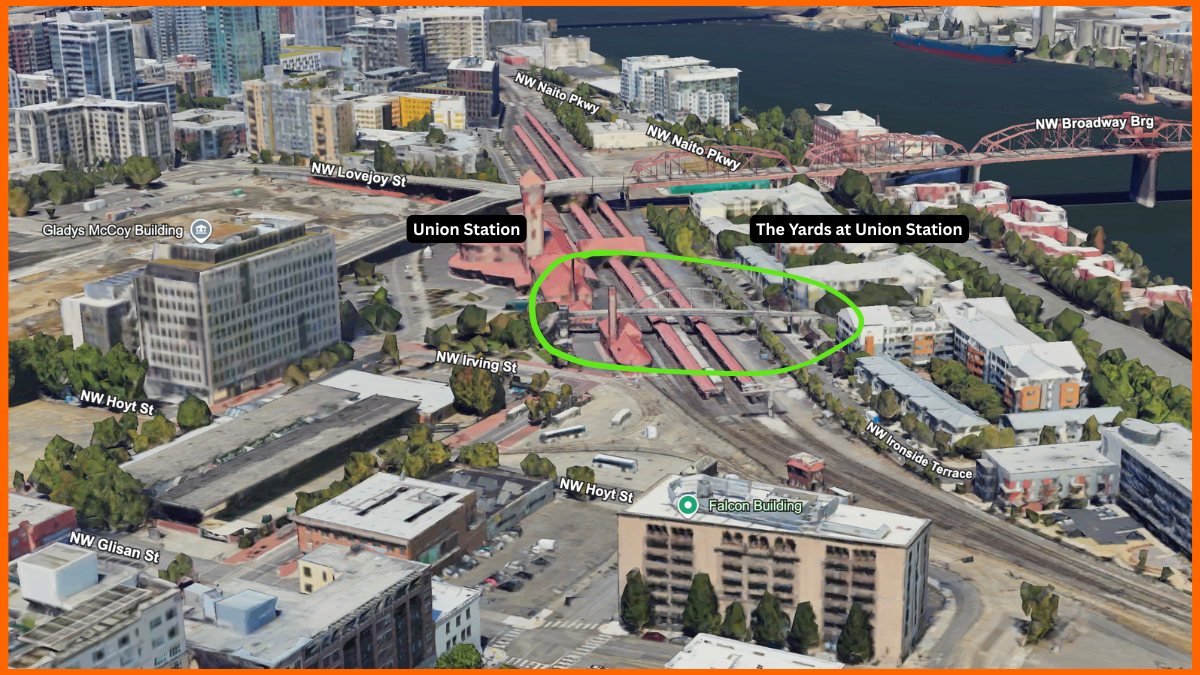
The tenants allege the building has been out of compliance with an access easement for more than two years — an easement that requires building owners to maintain the elevator on their side of a pedestrian bridge that goes over railroad tracks between NW Naito and Union Station, and provides access to the transit mall on NW 5th and 6th avenues. Below is an excerpt from the letter:
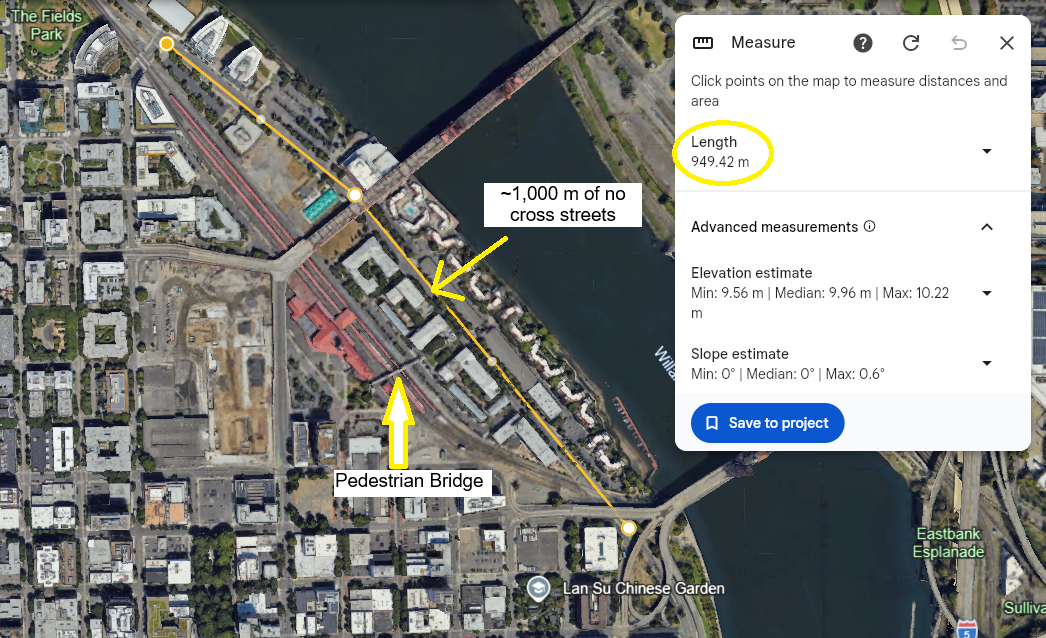
“Because the elevator has remained inoperable for years, mobility-impaired residents are effectively cut off from the Transit Mall and surrounding transit access. The bridge is the only practical pedestrian connection across the rail corridor. The stretch of NW Naito Parkway surrounding it, which contains more than 1,000 apartment and condominium units, has no cross streets for approximately 1,000 meters between the Steel Bridge ramp and NW 9th Avenue.”

Broken elevators that are meant to service pedestrian bridges are a persistent problem in Portland, and bicycle riders are hit especially hard. Due to vandalism and difficulty obtaining parts, the Portland Bureau of Transportation has failed to provide reliable access to the Bob Stacey Crossing and the Gibbs Street Pedestrian Bridge. TriMet has had similar issues with a pedestrian bridge at SE Lafayette St. For people able to walk on stairs, these closures aren’t a major issue; but it’s a different story for bicycle riders who have to carry themselves and their (often very heavy and awkward) bicycles up and down them. It’s also frustrating that bike ramps are a more reliable alternative to elevators that often get passed over due to an alleged lack of funding. Some stairways have ramps at the edges (often called “runnels”) for bicycle tires, but they often don’t work well and/or are difficult to use for people with heavy bikes and/or who have physical limitations.
According the easement, maintenance of the bridge between their building and Union Station are split between DBG Properties and Prosper Portland (owners of Union Station).
For The Yards tenant Michelle Ryding, the broken elevators on the Union Station Bridge have caused major mobility issues. “I can’t use the bridge to get to or from work because I’m not able to carry my bike up and down the stairs,” she shared with BikePortland via email. “And when freight trains block the crossings, it would make a huge difference to be able to load into the elevator and go over the tracks instead of being late for work.”
The Yards Tenant Union believes DBG Properties is in violation of the “meaningful access” clause in their easement. The easement agreement filed with Multnomah County (Recording No. 2015-034466) includes a section that states: “In the event that Grantors, or any one of them, fail to perform their obligations under this Agreement, the City shall be entitled to require such performance by suit for specific performance or, where appropriate, through injunctive relief.”
In their letter, dated February 11th, the tenant union made five demands:
- Within 10 calendar days of receipt of this letter, identify in writing the elevator contractor retained to perform repairs to the Yards-side pedestrian bridge elevator, including the contractor’s name, license, and scope of work.
- Within 14 calendar days, provide a written repair plan and schedule, including an estimated date that service will be restored.
- Return the Yards-side elevator to full operable condition no later than 45 calendar days from receipt of this letter.
- Provide a written commitment to ongoing maintenance and prompt repair sufficient to keep the elevator continuously operable, consistent with Section 2.3 of the Easement Agreement and applicable accessibility requirements.
- Identify a named individual with responsibility and authority for elevator operation, maintenance, and compliance with accessibility requirements going forward.
If DBG does not address these demands, the union plans to escalate the issue through ADA and building code enforcement channels. District 4 city councilors were copied on the letter.
In the meantime, folks like Michelle Ryding will have to continue to find other routes. Ryding says despite the closure, she still uses the bridge, but it means waiting until she can convince a passerby to help lift her bike up and over the stairs. “Not being able to access the bridge doesn’t just affect my commute. It means I’m less likely to visit shops, stores, or restaurants on the other side, too,” Ryding says.

Thanks for reading.
BikePortland has served this community with independent community journalism since 2005. We rely on subscriptions from readers like you to survive. Your financial support is vital in keeping this valuable resource alive and well.
Please subscribe today to strengthen and expand our work.
My wheelchair boundwife and I have lived at the Yards at Union Station since 2007, and particularly since 2020, the situation on the East elevator has been abysmal. The last two management companies have completely abrograted ALL responsibility for the elevators since the new owners “weren’t part of the original contract with the city” and have been directed to contact the City directly. I have had numerous emails to the 3 City Council representatives in the new city government, to whit I have received NO response. Likewise there has been NO response from Prosper Portland. The building we are in is NOT part of the Housing Authority and I make a 50K a year salary, so someone should be paying attention.
With Trimet severely curtailing the only route providing access on Naito, I would think it ADA imperative to repair and maintain access. Someone please show some adult responsibility.
As JM noted in the article, even PBOT has had issues maintaining public elevators due to vandalism and difficulty in obtaining parts. In all seriousness, at what point can private property owners like those who own The Yards Union Station point the finger at the city for refusing to adequately enforce vandalism laws and deter vandalism for both public and private infrastructure? If I were an owner of a big private multi family development that was repeatedly getting vandalized, I’d likely refuse to invest in repairs to an elevator that would only get vandalized again in a matter of days.
Given that the easement agreement says nothing about City of Portland, if I was DBG properties I would definitely reach out to the City of Portland as part of my homework and due diligence but at the end of the day, an easement is an easement and it’s my responsibility as the building owner to figure it out.
I believe the building is owned by Home Forward (aka The Housing Authority of Portland), which has seen a lot of commentary in Willamette Week about mismanagement, including The Yards. The elevator issue ultimately falls on Home Forward’s shoulders.
It’s pretty amazing with the billions of taxes our homeless industrial complex non-profits receive they can’t seem to do things right and proper. Almost makes you wonder if our taxes are going more for profit and less for actual work.
But they are well-intentioned! Who cares about efficiency or accountability?
Then if I were a resident I’d sue you.
Vandalism of public elevators is usually limited to superficial stuff – graffiti, trash, poop. All gross and unacceptable on it’s own merit; but not something that affects the functionality of the elevator. I highly doubt that crackheads are lucid enough to break an elevator in such a way that they could steal anything useful out of it.
More likely is that like anything else mechanical, elevators break. I just had to replace my chainring, not because there’s a chainring vandal about but because it’s a wear item and eventually my bike will break without it. In my previous building – a market rate one with resident-only entry – the elevator broke a few times and the property management always had some guys out to fix it within a day.
Like with all mechanicals, elevators are no exception and they have a prescribed maintenance schedule an elevator owner should follow to alleviate those mechanical issues.
Wanna make a bet at your previous building they were cutting corners and not doing the maintenance. I bet PBOT is no different.
“I highly doubt that crackheads are lucid enough to break an elevator in such a way that they could steal anything useful out of it.”
I think expecting rational behavior from that particular group is a mistake. Sometimes they just break stuff to break stuff – look at the public restrooms, for example.
“Vandalism of public elevators is usually limited to superficial stuff”
The glass in the Bob Stacy elevator is often broken out, and when it is, the elevator is shut down.
You really need to get out more.
Out here in outer-east Portland/Fairview, I’ve witnessed their destructive efforts first hand. They’ve stripped copper from lights and pump houses on the Columbia Slough, and they even stole a steel pedestrian bridge from the wetland area out here, resulting in a permanent trail closure.
For public elevators, I’ve seen smashed glass, broken steel panels, etc. It is absolutely more than superficial.
Is every one of these elevators a one off design, with no common parts, no service agreement, and no supply chain? Would anyone buy a car, or an airplane, without some regular arrangement for service? The elevator workers that I’ve seen in other contexts are employees of either national or perhaps regional companies with a specialty in that business.
The fact that it’s been years since this elevator worked makes me think there’s some non-mechanical reason that the building management is dragging their feet.
Probably because any enclosed public space in this area just becomes a place to defecate and use drugs. It’s expensive and a nightmare for the poor workers who have to clean and repair these elevators.
Sorry it sucks, but as long as the cleaners have proper and safe equipment to wear and use while cleaning said areas then they should be doing it. If they are too squeamish then they should look for work elsewhere and let someone who isn’t.
I’m just tired of all the lame excuses given why our local government can’t seem to do their jobs with the overabundance of tax money they receive at great expense to the taxpayers. Afterall we are some of the most taxed individuals in the country, and I want return on that money, and we currently aren’t getting it.
They are artisan, inclusive, hand-crafted, climate friendly and equity-based elevators.
Crikey! Two years to fix a lift and we are meant to call that progress?
If the easement says maintain the elevator, then maintain the flaming elevator. Mobility impaired tenants and bike riders should not need to audition a passerby to lug their rig up the stairs just to cross the tracks.
And here is the rub. We are paying some of the highest local taxes in the country, yet basic nuts and bolts governance feels like it is held together with duct tape and a press release. Between county muddle and endless performative box ticking, the simple stuff like keeping critical access open somehow never gets done.
You cannot spruik climate goals, active transport, and equity while leaving the only practical crossing out of action for two years. That is how you end up in the so called Portland doom loop, with businesses and taxpayers voting with their feet because the fundamentals are not being handled.
This is not about gold plated infrastructure. It is about competence. Fix the lift. Honour the easement. Do the basics properly. The rest might just follow
I live at the Yards at Union Station its been much more than two or three years that the elevators have been out of service. More since 2021 or 22 that they have been out with the responsible parties passing the buck.
We need to insist on ramps. In addition to the useless elevators listed here, the City failed to build accessible access to the Waud Bluff bridge by exploiting a loophole- a totally shameful black mark on the City.
An insistence on ramps / stairs in place of elevators is why we may not get any connection at all between the Burnside Bridge and the Esplanade when the bridge is replaced and the current connection is removed.
What? Why?
Because we convinced the county that elevators weren’t good enough, and an ADA compliant stairway / ramp combo would be far far far too complex and expensive for them.
The solution? No connection for you!
Please remember folks, if this was funded with taxpayer money, quality is sacrificed for profits in almost every case in Portland (heck in Oregon).
Oregon has no limitations on the amount a company can make in profit for a taxpayer funded (or partially funded) project like other jurisdictions across the country have.
Especially if you attach some progressive buzzwords to it. It makes accountability go away.
If I were the tenants (or a tenant) I would have started with filing ADA and building code complaints. You just go to the City’s website and fill out a form that takes a couple minutes and is free. Responsiveness by the City varies from very quickly to never, but it’s easy and gets it on record as one more bit of leverage.
Ah yes, just file the ADA complaint — right after your online form survives Portland’s legendary loading times. Responsiveness ranges from “maybe by next decade” to “archeologists will find it in 2093.”
Like I said, responsiveness varies. It’s sometimes poor, but I’ve often had timely responses, which have resulted in building owners being forced to make corrections because the City gives them inescapable deadlines, increasing fines, and threats of liens or revocation of occupancy permits.
Also, just getting the case opened can give tenants leverage against an owner.
Given the terrible record of maintaining public outdoor elevators, they should be presumptively non-compliant with accessibility standards whenever they are incorporated into a project. Just build the damn ramps unless lack of space makes it physically impossible to do so.
Michelle Ryding being a bike commuter is a wonderful little bit of nominative determinism.
Simply put, they need to fix that elevator. It appears that it would be the responsibility of Home Forward, Portland’s housing authority, to do so as they operate and manage the building. They have open drug markets running for months in other buildings though. I wouldn’t hold my breath on them taking any action.
Robert, Angus and others have called into question PBOT’s elevator maintenance practices. I agree.
We should not just tuck tail as though nothing can be done when we hear the excuse, “Due to vandalism and difficulty obtaining parts, . . .”
In 2021, I made a late-night 311 call about the Bob Stacey Crossing elevator being out once again. The operator, maybe erroneously, put me directly through to the on-call or designated elevator repair crew. I got an earful from that guy about how they couldn’t do their jobs because PBOT refused to stock parts, etc. etc.
I have mentioned that conversaton to you, Jonathan, and have in my records that in January of 2022 you put in a public records request for PBOT’s elevator maintenance and repair record. I was hoping to see an article on all the reasons the elevators break down so frequently and remain broken down for long.
PBOT is holding public input sessions in the coming weeks to gather feedback and solicit support on how to generate more funding. Portland taxpayers are notoriously generous in voting to increase their own taxes to do the right thing. Can we blame them if they now say to PBOT regarding bike/ped infrastructure, “No more new toys for you. You don’t take care of the ones you have.”
In 2021, it’s not hard to believe that PBOT couldn’t find the parts and the person you spoke to didn’t grasp the scope of the supply chain issues the world was experiencing.
Yup – that explains all the other broken elevators across the country.
Were there not any other broken elevator’s in the US during that time?
I worked in the American Bank building off of Pioneer Square between 2011 and 2018. The bank of 5 elevators typically had at least one elevator out of commission. Having two down elevators fairly common. All 5 elevators working was very rare.
Some one from my office got stuck in an elevator (typically for less than 15 minutes) roughly once a month.
Good point. I don’t disbelieve it, nor am I without empathy. However, instead of ordering the one part needed each time, how about ordering a spare to keep on the shelf, too? And lack of stocked parts was far from the worker’s only complaint, but I don’t have a temporal record and don’t want to misquote him.
Understand that this same scenario has repeated itself in the years since, with many months-long stretches of the Bob Stacey elevators being out of service more days than in service. As others have mentioned here, it is likely that steps can be taken to make elevator maintenance more reliable and efficient.
Blaming vandalism and supply chain is a throw-up-your-hands excuse that perpetuates and fuels Portland’s doom loop critics, as we have seen in the comment section here.
PBOT’s projects throughout the city were the ray of hope for me when the downtown Apple store and the Federal Building chose to remain boarded up for years longer than reasonably necessary after the George Floyd murder protests. Riding past construction on Better Naito made me say to myself, “This city is going in only one direction. Up.” Keep up the good work, PBOT. (Including, figuring out how to keep the elevators operational.)
I was purely commenting on the 2021 situation. Not today’s.
“It’s also frustrating that bike ramps are a more reliable alternative to elevators that often get passed over due to an alleged lack of funding.”
Ramps are an easy solution until you actually have to design, build and pay for them. ADA requires a slope not to exceed 1:12 with a level landing area for every 30 inches of rise. Providing clearance over a railroad track plus the depth of the structure can mean a ramp length of 400 feet. That takes lots of space even if the ramp switches back on itself, which presents its own challenges. Lots of people will complain the ramp is an eyesore. Cyclists will complain about out-of-direction travel.
I’m frustrated at the unreliability of elevators, too, but there is no easy solution.
I like the pedestrian tunnels going under the tracks, they sometimes even allow bicyclists to bike through them. I saw lots in Europe, but also in New Haven CT and San Jose CA.
“pedestrian tunnels”
Those are a great solution in places where people don’t camp in them. They don’t work here.
David, you haven’t been to Portland recently have you?….tunnels in Portland are now known as “tubular campgrounds”. Nobody really wants to have to go through a pedestrian tunnel here. I realize it’s probably different in NC.
They’re like, totally, tubular!
No, of course we have the same issues out here as well. It really boils down to location, design, enforcement and maintenance, as several people have already pointed out. But elevators (and escalators) as working machines are specifically designed to periodically break down, whereas tunnels and ramps are static, they rarely break down except in earthquakes and floods, so its really a matter of enforcement. Here in Greensboro we have two pedestrian tunnels, one under a highway, in a neighborhood, barely wide enough for one person, which usually has someone sleeping in it; the other is wider and connects two parts of a university campus under railroad tracks and is regularly patrolled by university police who take a very dim view of homeless residents (they technically work for the state). We also have a couple of highway bike overpasses, which like the ones on Going and in Lents, are exposed to the elements which tends to discourage camping.
The tunnels and bridges that I’ve seen that really work well are those that get a lot of foot and bike traffic by their very location and design, and so for the civil authorities it’s a political as well as safety priority to keep them clear; those that fail and where camping and illegal activities tend to thrive (including on sidewalks and streets) typically are out-of-the-way, narrow, and originally put in because the civil authority had a grant to use up or was trying to satisfy some local politician or neighborhood group (the 4 concrete walk-up-only non-ADA pedestrian bridges put in the 1970s in East Portland are prime examples – well-intended but utterly useless and expensive pieces of dumb infrastructure.) Brightly-colored wide pedestrian tunnels that two fire trucks could drive through tend to be much less threatening to vulnerable users than dark narrow tunnels barely wide enough for a cargo bike.
The few pedestrian tunnels we have in the city are quickly turned into horrific, dangerous places. We can’t do tunnels.
Maybe if we had a City Council that was more interested in helping and protecting the citizens rather than telling us what we can or can’t eat, we could have tunnels and many other things that other cities have.
Also, even the slope of ADA-compliant ramps can be difficult to negotiate for many people who need them. Long (as you said) ramps can be impossible.
If we don’t build a solution that 99.9 of persons can use because .1 might have difficulty is present zero other places in road design.
That’s usually true (not always true because, as one example, fire truck dimensional requirements can torpedo road designs that work for everyone else, even though those roads may rarely or never see a fire truck on it).
I mentioned the accessibility issue related to long ramps in reply to, and support of, J_R’s comment that there’s “no easy solution”. The fact that long ramps that are ADA-compliant aren’t useable by many people with disabilities is an additional problem beyond the several J_R mentioned.
Also, in general, the comments have focused (understandably) on bicycle access, but the needs of pedestrians and people with disabilities also need to be considered.
For the Bob Stacy Bridge, there was a very easy solution on the south side, where there is plenty of room for a straight, in-direction ramp leading right to the Clinton Street station.
For the north side there was no reasonable solution.
Let’s see here. More up front “cost” vs less future “cost” that is highly variable, nebulous and unclear if it will be done?
The number of people that defend complicated solutions over a ramp because it’s “hard”.
Portland’s doom loop in a nutshell. High taxes, low services, and a ruling class built around the homeless industrial complex and public unions.
Sunstone Way(aka All Good NW), one of Multnomah County’s largest contractors, allegedly overbilled taxpayers, splurged on pricier office space and retreats, and nearly missed payroll. When the finance director raised concerns, she says she was pushed out. The county and city keep funding the same insiders while basic oversight looks optional.
At the same time, residents cannot even rely on a working elevator to access a public bridge. Taxpayers fund shelter operators and subsidized housing through Home Forward, yet core services keep failing.
High taxes. Low accountability. Same connected players.
https://www.wweek.com/news/2026/02/12/shelter-provider-sunstone-way-sued-by-whistleblower-alleging-profligate-spending-mismangement/
I sure hope there’s a contract that supersedes the rest of it.
When my apartment building’s only elevator went out for 91 days two winters ago, bunch of tenants called BSD to file a code complaint.
Inspector came out but just made note “Insurance negotiations” and did nothing else to help us tenants.
Many tenants then hired a Lawyer (a CAT referral), he happened to have another similar case representing a disabled person, made its way to Oregon Supreme Court, as he kept our cases on Pause for months.
The case did NOT win because we were told under current law, elevators are not considered a “habitable” condition.
(Even though if you look at codes; it states, the elevator should be kept in working condition. )
We asked our lawyer if there’s anything else to be done, he said “work to change the law”.
It took multiple media stories about our Tenant Union and bad press against the landlord to TRION PROPERTIES to finally fix it.
(Btw: BSD showed same lack of concern with the same apt building outer door locks… Code reads, “locks are to be kept in working order” but when all outer locks were broken for over SIX months, Code Compliance did nothing after multiple complaints again and again.
When asked for help from the Neighborhood Assoc, the Chair called to inquire and learned there wasn’t a single complaint on file about it.
So what happened to all of those calls from multiple people multiple times?!)
It is beyond shameful disability access and tenant safety doesn’t rank higher importance with BSD and landlords. Maybe this bad press will help escalate it!
Putting the West Coast mainline train thru the center of Portland makes so little sense. The entire system needs a massive re-think.
Building a city around the West Coast main line train also makes little sense.
I disagree, for a long time, building a city around the West Coast main line railroad made the most sense.
True, but that was before people felt it necessary to cross the tracks with bicycles on elevators.
Regardless, we have a city with a railroad running through it, and it’s likely to stay that way for a while, so “re-thinking” without a huge pot of money to work with is unlikely to change anything.
Only if you ignore 150 years of recorded history
Maybe I should have said “building a city around a West Coast main line train then complaining that your city has a train running through it also makes little sense.”
Union Station was completed in 1896. Which means the train tracks were there before that. Portland was built around the tracks since it was the life line moving goods and people in and out Portland. Your statement sounds like people who buy a house near an airport that was built 50 years or more before the house was built. Then they complain about the noise from the aircraft. You want to blame the trains. I think the fault lies with GSL Properties Inc. and the Housing Authority of Portland. They chose the location.
The rails and rail station have been around 130+ years. For a big city, at that time, it made total sense.
What didn’t make sense was to concentrate apartments and condos near the train station and tracks and then for people to move there and start complaining about the noise and inconvenience.
Well, pretty much the only solution involves billions of dollars of tunneling so probably not likely in our lifetimes.
Sure. Let’s bypass the population center and no one will ride Amtrak. I guess they can just drive or fly to Seattle.
If it’s an easement, can it the elevators be limited to private use only?
I did raise this to building management last year
I drove past this thing in Salt Lake City a few days ago. It was a ramp to a led bridge crossing the road. It was a miracle of engineering. Still working after all these years.
I saw a double rainbow once, too. Now I complain about every single rainbow I see.
Salt Lake City is a different world from Portland. They can have nice things, we can’t.
But Portland DOES have ramps leading to bridges crossing roads. It also has roads sunk below other roads, or put into tunnels so not even ramps are needed.