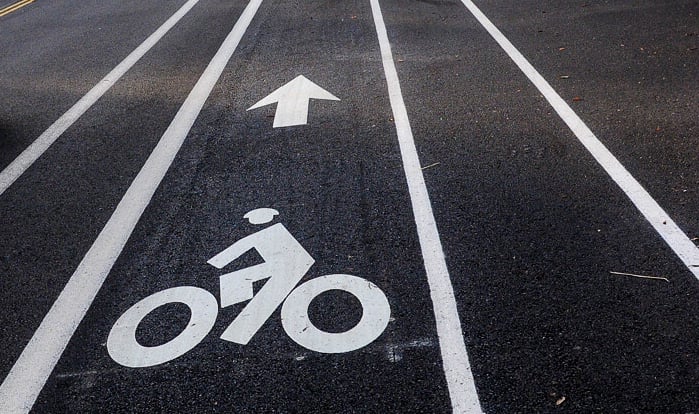
View looking south on downhill section of SW Capitol Hwy at intersection with SW California. SW Florida, where police say first responders were called to, is in upper left of image.
UPDATE, 7/25: PPB says Gad Alon died from, “a significant medical event.”
The Portland Police Bureau announced Wednesday evening that a man who fell from his bicycle while riding in in the Multnomah neighborhood 10 days ago has died from his injuries.
According to police, first responders were called to the intersection of Southwest Capitol Highway and SW Florida Street just before 7:00 am on Saturday, July 6th to help someone who seemed to have fallen off their bicycle. The man, 74-year-old Gad Alon, was taken to the hospital.
In a statement, the PPB said they were not called to the scene because, “there was no indication of a crime or traffic crash involving anyone else.” The PPB Traffic Investigations Unit has since taken on the case and says, “At this point, there is no indication that any drivers were involved.”
Alon died at the hospital Wednesday morning. He’s the third person to die while riding a bicycle in Portland this year.
Advertisement
I’ve asked PPB to share more details about the case in order to better understand Alon’s route and what might have led to his death. Since the investigation just began yesterday, they aren’t able to share which direction he was riding or where his bike and/or body was found when EMS first arrived.
If Alon was going north on SW Capitol Hwy (toward SW Vermont) he would have been going downhill for a block or so before coming to the SW Florida intersection. The bike lane ends abruptly right before that intersection and a curbed sidewalk juts out into the street.
In the southbound direction (toward Multnomah Village), Alon would have been in an uphill, unprotected bike lane as he approached SW Florida.
Advertisement
David Stein, a southwest Portland resident and cycling advocate who has served on the city’s bicycle advisory committee, said this section of SW Multnomah is a good example of why very few people ride in the area. “If you’re going toward Multnomah Village the facility is bad due to the persistent foliage growth blocking the uphill bike lane. Going downhill toward Hillsdale you lose the lane… These low quality routes to destinations are part of what make riding a bicycle in southwest so challenging.”
If you know more about what happened to Gad Alon on July 6th, please contact me. Also share your information with the PPB via crimetips@police.portlandoregon.gov with “Traffic Investigations Unit” and case number 24-178154 in the subject line.
Velotech, Inc. is a locally owned business that has operated in Portland since 2002. Velotech is the parent company of BikeTiresDirect, Western Bikeworks, and Trisports.
We are always hiring! We have flexible schedules that accommodate multiple needs. We are currently looking for full time, but if part-time works best for you, feel free to reach out as well. We love to promote from within, so if you are looking to get your foot in the door, this could be a great entry point.
This position is responsible for picking, packing and shipping customer orders. Qualified Shipping Specialists also execute product put-away, clean their work area, execute physical counts, and available for general physical and/or minor administrative labor.
Starting rate is $17.75 per hour.
ESSENTIAL FUNCTIONS INCLUDE BUT ARE NOT LIMITED TO:
Pick incoming web orders and warehouse pick up orders.
Pack and ship orders according to supervisor’s guidelines.
Maintain accurate inventory through regular cycle counting.
Assist receiving department with put away of new items.
Maintain a clean and organized workspace.
Assist with any projects, or assist in other departments as instructed by supervisor.
Perform all duties in a safe manner and report all safety concerns immediately to supervisor.
MINIMUM JOB REQUIREMENTS:
Wear closed toe shoes at all times in warehouse.
Be able to lift 25 lb above your head without assistance.
Stand for long periods of time.
Be able to lift 50 lb without assistance.
KNOWLEDGE, SKILLS, & ABILITIES:
Excellent communication and organizational skills.
Solid knowledge of cycling products.
Ability to work in a high volume, fast-paced environment.
Ability to work independently or with others to manage multiple task with minimal supervision.
BENEFITS:
Generous Employee Discounts
Flexible Schedules
Medical/Dental/Vision for all full & regular part-time employees
Paid Time Off – up to 15 days your first year
Quarterly ‘Get Outside’ days
PHYSICAL/MENTAL DEMANDS:
The physical demands described here are representative of those that must be met by an employee to successfully perform the essential functions of this job. Reasonable accommodations may be made to enable individuals with disabilities to perform the essential functions. While performing the duties of this position, the employee is regularly required to talk or hear. The employee frequently is required to use hands or finger, handle, or feel objects, tools or controls.
While performing the duties of this job, the employee is regularly required to stand; walk, reach with hands and arms, stoop, kneel, crouch and sit for extended periods of time.
The employee must occasionally lift and/or move up to 50 pounds. Specific vision abilities required by this position include close vision, distance vision, color vision, peripheral vision, and the ability to adjust focus.
The noise level in the work environment is usually moderate.
This description is intended to provide only the basic guidelines for meeting job requirements. Responsibilities, knowledge, skills, ability and working conditions may change as needs evolve.
Velotech is an Equal Opportunity employer.
How to Apply
If interested, please click on the link below to apply (or copy and paste into a browser). You can also find us on biketiresdirect.com careers page.
An illegally parked car in Sellwood Riverfront Park on Sunday, July 14th (Photo: Johnmark Larson)
People are driving cars in Portland Parks, upsetting the traditional calm and carfree respite many seek when visiting them. Two recent incidents stand out as just the latest examples of an erosion of norms around safe driving.
On the night of Monday, July 8th a man was relaxing in Creston Park in southeast Portland when the driver of a blue SUV hit him and then fled the scene. The mom of the victim posted to Nextdoor in hopes of finding the suspect. Here’s an except from the post:
“He was lying on the grass and hit by a car ‘presumably joyriding’ through the park. He sustained multiple injuries and is healing. Although he was unable to clearly identify the make and model of the car, the car is blue – the car sustained a smashed windshield and dented hood due to the impact. His glasses, keys and headphones were strewn over 30 feet behind him, he was hit hard and head on. If you have any information or witness a car that may have sustained these damages in the last 24 hours, please reach out to the Portland PD. Thank you for keeping your eyes out for me.”
Advertisement
Screenshot from KOIN-TV video.
The victim gave an interview to KOIN TV that aired Friday. “I was just trying to relax a bit before bed,” the man said. “I’m laying down and headlights come in my peripheral, so I immediately stand up and I turn around, and the car is like directly in front of me.” The driver of the SUV was reportedly going “full speed” through the park prior to the collision. The impact left the victim with serious lacerations on his leg and face.
“If I wasn’t aware, I’d be dead,” the victim said.
Another person interviewed said they’ve seen people “doing donuts and other things with their cars” in the park.
And this past weekend, Sellwood resident Johnmark Larson reached out to share their concerns about people parking and driving in Sellwood Riverfront Park. Crowds have flocked to the park to cool off during summer, leaving no more room to legally park. “I first noticed the issue while riding down the Springwater on Sunday afternoon.” Larson shared. “I thought maybe there was a permitted event, but then I saw it all again last night and it’s clear this is the next step in anything-goes overuse of the park.”
Advertisement
Larson contacted the Portland Parks ranger hotline to file a complaint and says the staffer on the line had also seen people driving and parking on park grounds. Portland city code prohibits parking cars on parks properties without a permit.
This is just the latest example of how some drivers are so entitled and selfish they feel like laws don’t apply to them. Whether it’s speed racing on our streets, not having a license plate or current registration, driving on carfree paths, or destroying the calm and safety of our parks — it’s clear the lack of action by Portland city leaders to defend public space from miscreant car users has led to widespread normalization of extremely dangerous behaviors.
Michelle DePass in Peninsula Park on July 15th. (Photos: Jonathan Maus/BikePortland)
Michelle DePass learned about the value of walkable neighborhoods from her grandmother, who taught her from a very young age that if she wanted a reliable way to get around she better take care of her feet and shoes. “My brother asked my grandmother one time, ‘Where is the car?’ and she pointed [at his feet] and said, ‘Right there. There’s your car.’ I just remember my grandmother taking care of her feet really well. That was her mode of transportation,” DePass shared with me on Monday during a conversation in Peninsula Park.
DePass is running for a seat on Portland City Council to represent District 2 (north and northeast), and she figures she’ll wear through two pairs of shoes walking and knocking on doors to convince voters to send her to city hall. She knows the district well not just because her family has been a part of it since the 1940s (her parents met at Dawson Park), but also through her role as chair (and currently vice-chair) of the the Portland Public School Board. In addition to that elected position (which she’s held since 2019), DePass works as a climate change analyst at the City of Portland Bureau of Planning & Sustainability.
Our chat in the park came 13 years after DePass stood up during a meeting of the North Williams Avenue Traffic Safety Project and expressed concerns that the process and plans for a new bike lane was severely misguided because the people pushing for it were clueless about the lived experience of Black Portlanders and the historical context of the neighborhood. “That was an example of my leadership,” DePass shared when I brought up that meeting. “We were literally in the hospital where I was born talking about that project. And I just thought, I studied this in school, there’s an intersection between race and transportation.”
Advertisement
Her voice not only altered the course of the Williams Avenue project, but had a vast influence on bike planning and advocacy in Portland in general. It was the first of many difficult, yet important, lessons Portland’s bike advocacy community would be forced to confront in the years to come. And it was just one of many topics we covered in this interview.
Here are some excerpts:
On her job as leader of PPS Board and how it will translate to city council:
“The school board is the toughest political job in Oregon. It’s really, really challenging. When I was the chair we had to engage the police in protection. We’ve had to beef up security… And then it’s also tough because you have to make decisions with at least three other people. So I think that the experience I bring is in decision-making. In a shared decision-making model your ability to be effective depends on how well you relate with other people, you have to be able to sell your idea and you have to be able to have someone else tear it down and say ‘That’s good, but I’d like to tweak it.’ … I have the ability to have a difficult conversation. I don’t get too emotional about it. But I do have a strong sense of right and wrong.”
Advertisement
On the concept of ‘school streets’ (making streets safer in front of schools):
“I’m 125% in favor of it. And in fact, last year, I started to broach this idea… I’m having coffee with somebody and saying, ‘You know, you’re gonna say no, but I have this great idea: What would it look like if I could get all the resources, including a free pilot, to take a look at our school campuses and see which ones we could put mechanical bollards up at either end of the street, to keep cars out to keep it active for parents and children?’… I can envision it. I don’t know which schools they would be at, but it’s something that I want to advocate for.”
On carfree Last Thursday street fair on NE Alberta St:
“I love that. And I love riding [my bike] on Alberta, because I just feel like a 12-year old whenever I ride down Alberta because I’m like, ‘Yeah, there’s no bike lane. And it’s just, you know, I got this!’ I don’t ride long stretches, I have a helmet on, and I’m very, you know, I can be aggressive. I can take a lane. I’m not afraid of doing that. It’s my street as much as anybody else’s. And I feel like I’m entitled to it when I’m on it.”
Asked to name a transportation issue in her district that needs attention, she mentioned I-5 through the Rose Quarter. She said she supports the highway caps, but when pressed to say whether or not she supported ODOT’s plans to widen the freeway, I didn’t hear a clear answer.
On the freeway itself:
“There’s a freeway that runs through the district that is a scar… like in many communities around the country, it goes through the most vulnerable neighborhood and gets built and it tears the community apart.”
Advertisement
You support the caps, but do you support ODOT’s plan for the freeway elements of the project?
“Not necessarily.”
Do you trust ODOT and the freeway elements of it?
“That’s a great question. And I was expecting that question coming from you. I think we’re looking at it as an either/or situation; but I’m always interested in finding out what the hybrid looks like. And that’d be something I would be willing to explore.”
Do you think ODOT’s current plans for the freeway will make climate change consequences worse?
“Oh yeah. It will absolutely.”
Advertisement
In this exchange, DePass shared how her style is to build relationships with people she’s critical of and discuss issues privately, instead of rabble-rousing in public:
“I know people that are working on that project that are decision makers, and we have a relationship so that I can push, push, push, push, push. And that seems to be effective for me. The activism part of me is gone. That part, the fighting piece, is gone because that hasn’t been effective and I want to be the kind of activist that’s extremely effective. I found that standing on the side and screaming, that’s our right to do that, but it’s also not very effective. So I would use my power — I have a position of power right now — and I’d like to use that to have the conversations offline that make change. Nobody sees those conversations except for me. But that’s how I’ve been effective on the School Board… taking things out of the public realm and having a one-on-one conversations to make change.”
Last week we opted for the shade of Ankeny Tap. This week we’ll be back on the Gorges Beer patio. (Photo: Jonathan Maus/BikePortland)
We have a special night planned at Bike Happy Hour tomorrow (Wednesday, July 17th). City of Portland staffers will be on-hand to help us understand what’s in store with the upcoming election and our transition to a new form of government.
If you’ve read some of our previous reporting on the charter reform effort, you’ve already done your homework. Or if you’ve clicked on those nice Ranked Choice Voting banners on BikePortland for the past few weeks, you might have already started learning about how the new voting process will work. Regardless, tomorrow night will be an excellent opportunity to get a hands-on education.
Advertisement
Vote here! Learn results at Bike Happy Hour, Weds, 7/17.
In addition to ranked choice voting experts, we’ll have City of Portland Charter Transition Project Manager Shoshanah Oppenheim in the crowd to answer all your questions about how things will work on January 1. How will the role of PBOT director change? How will the new Public Works Director manage PBOT? If no city council member is in charge of PBOT, how will transportation policies and projects get proposed and voted on? What other questions do you have for Shoshanah?
To spice things up, staff from the city elections office will do a short presentation about ranked choice voting that includes a mock election. We came up with nine candidates and the question to rank them with is, “What is the most important off-street path in the Portland cycling network?” You can visit this website and begin your voting now. We’ll also have a QR code to hit at Bike Happy Hour so you can make your decisions on the patio tomorrow night.
In addition to nerding out on elections and government, we’ll be joined by at least one city council candidate. District 2 candidate Jennifer Park will join us and will say a few words around 5:00 pm.
It will be a great night. Hope you can join us. (Bike Happy Hour is 3-6 pm every Wednesday at Gorges Beer Co on SE Ankeny Rainbow Road)
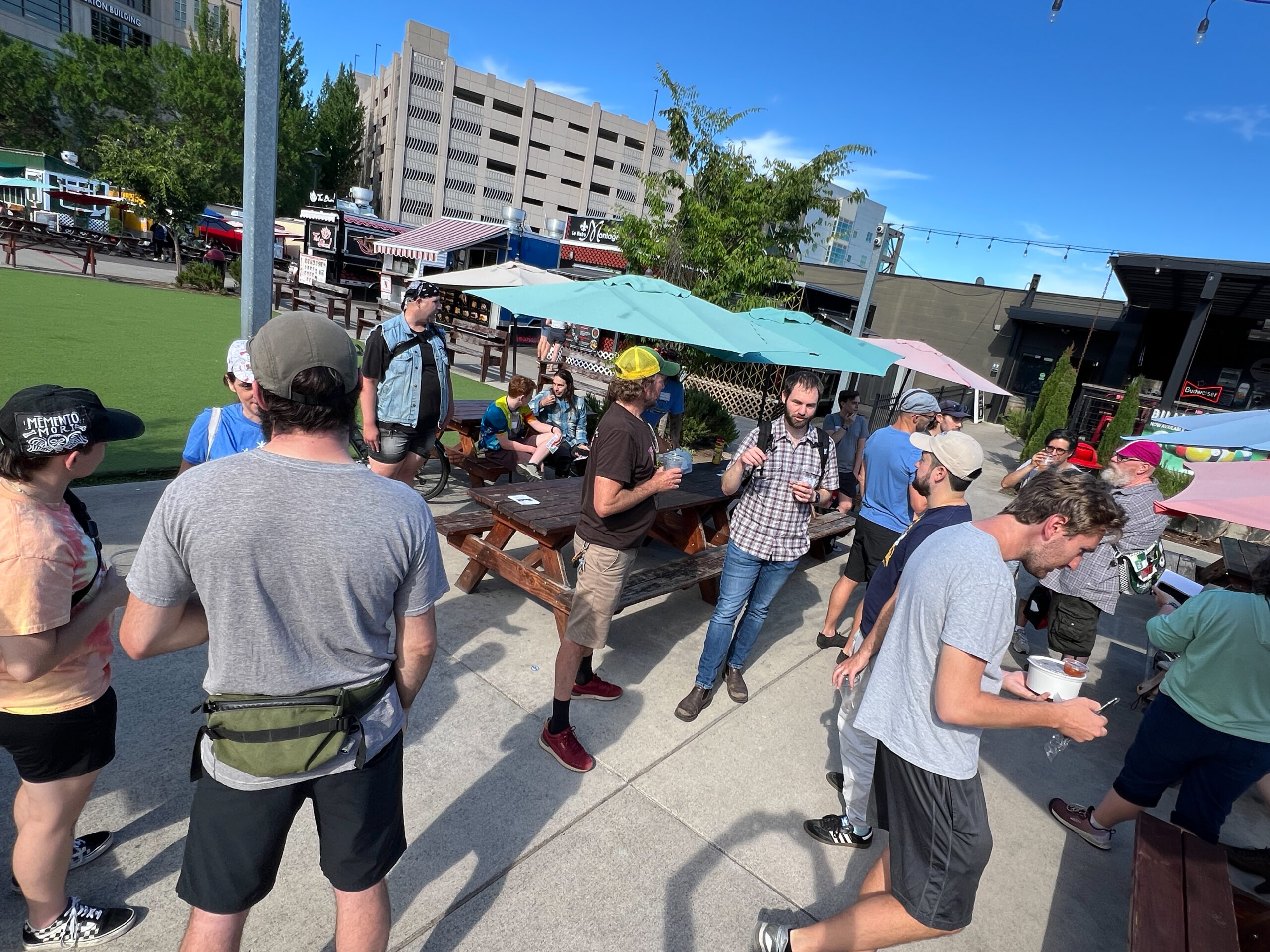
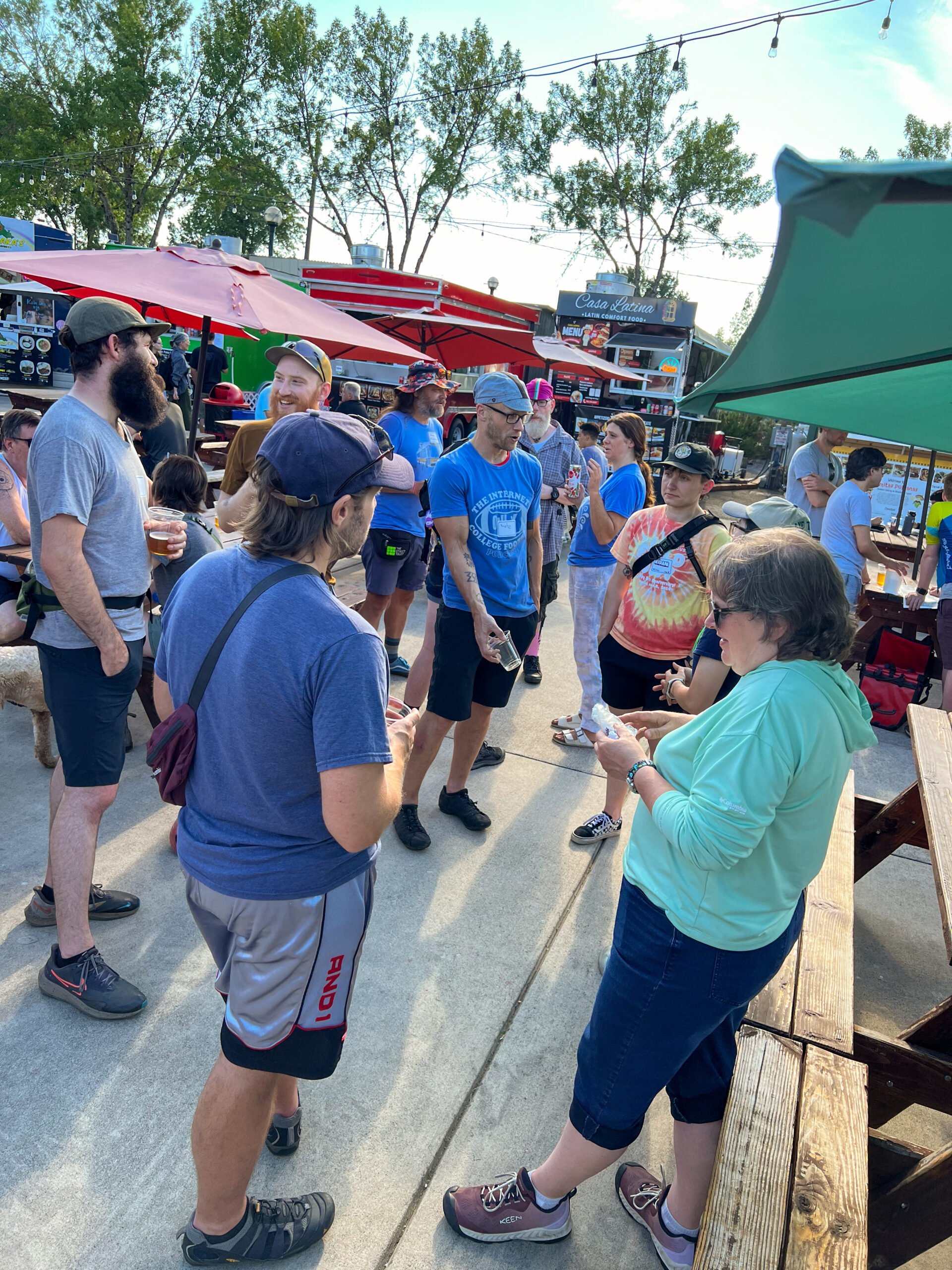
People who love cycling came together at a food cart pod in Beaverton Monday afternoon. (Photos: Jonathan Maus/BikePortland)
Turns out if you just go up and over the hills west of Portland and into Washington County, enthusiasm for better bicycling is bubbling up everywhere you look. That energy was on full display last night at the inaugural Westside Bike Happy Hour that took place across the street from Beaverton City Hall.
I’ve been poking at Washington County bike people for a while now to start a Bike Happy Hour (BHH) on the west side. With at least two solid groups hosting rides on a regular basis — Ride Westside (advocacy-oriented, slow-pace explorations of routes and infrastructure) and Westside Wednesday (fast and fun urban assaults that often go into the night) — and lots of advocates doing hard work in and out of government, I knew the necessary catalysts were in place.
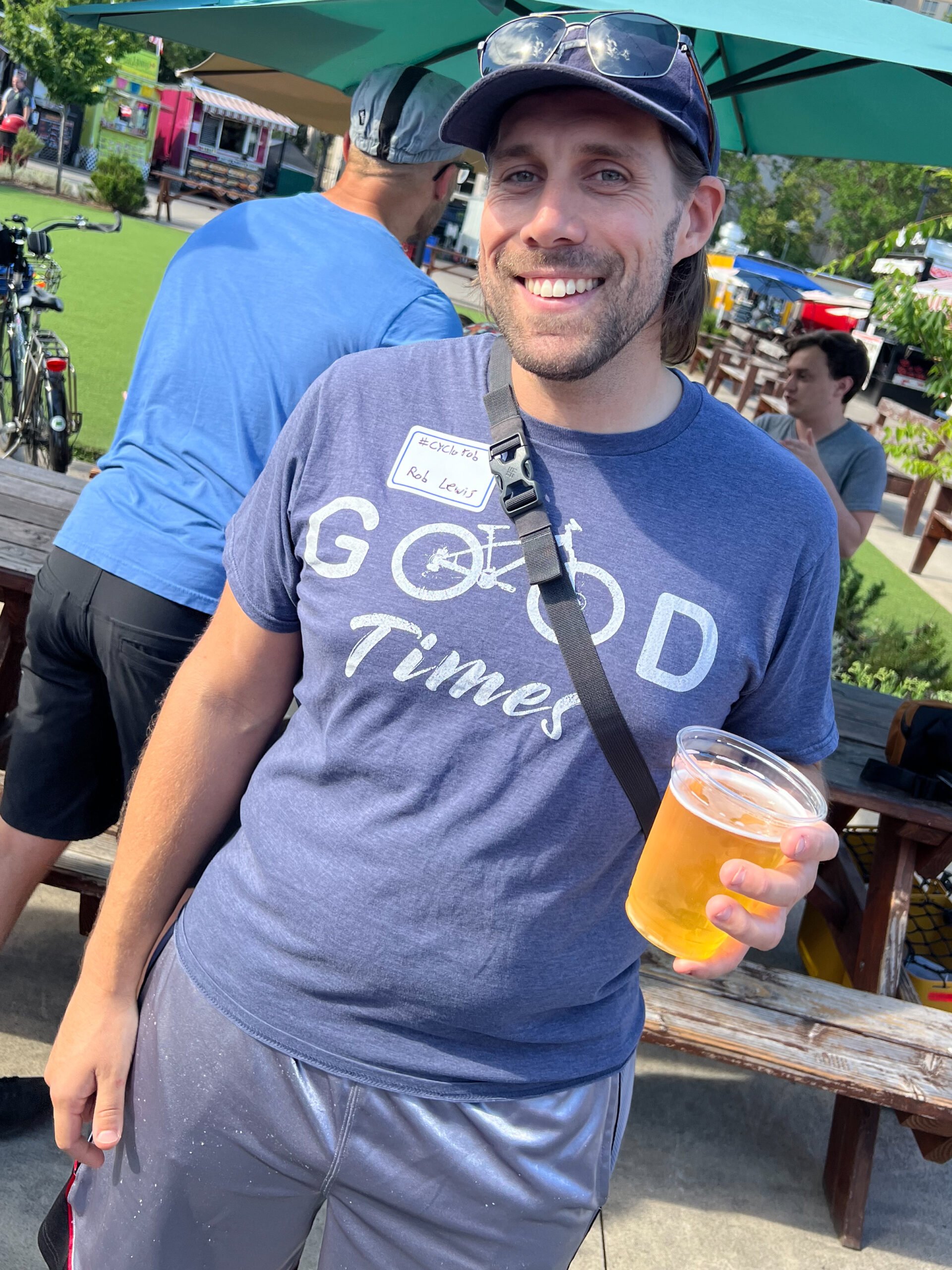
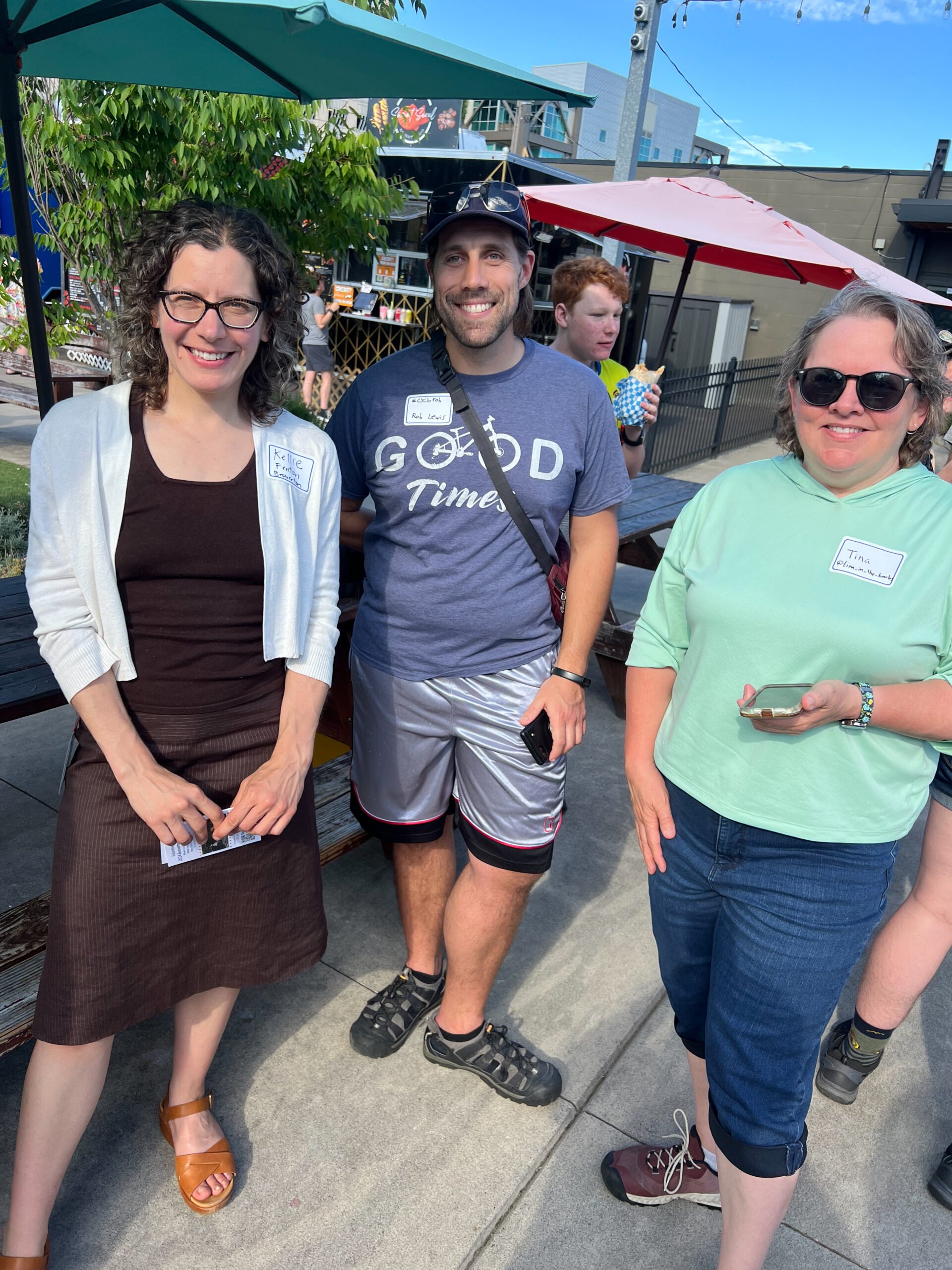
But great things often require one person to stand up and commit. That person was Rob Lewis (@cyclorob on Instagram). Late last month he messaged me about wanting to make it happen, then he connected with folks from those two riding groups and set a time, date, and location.
Advertisement
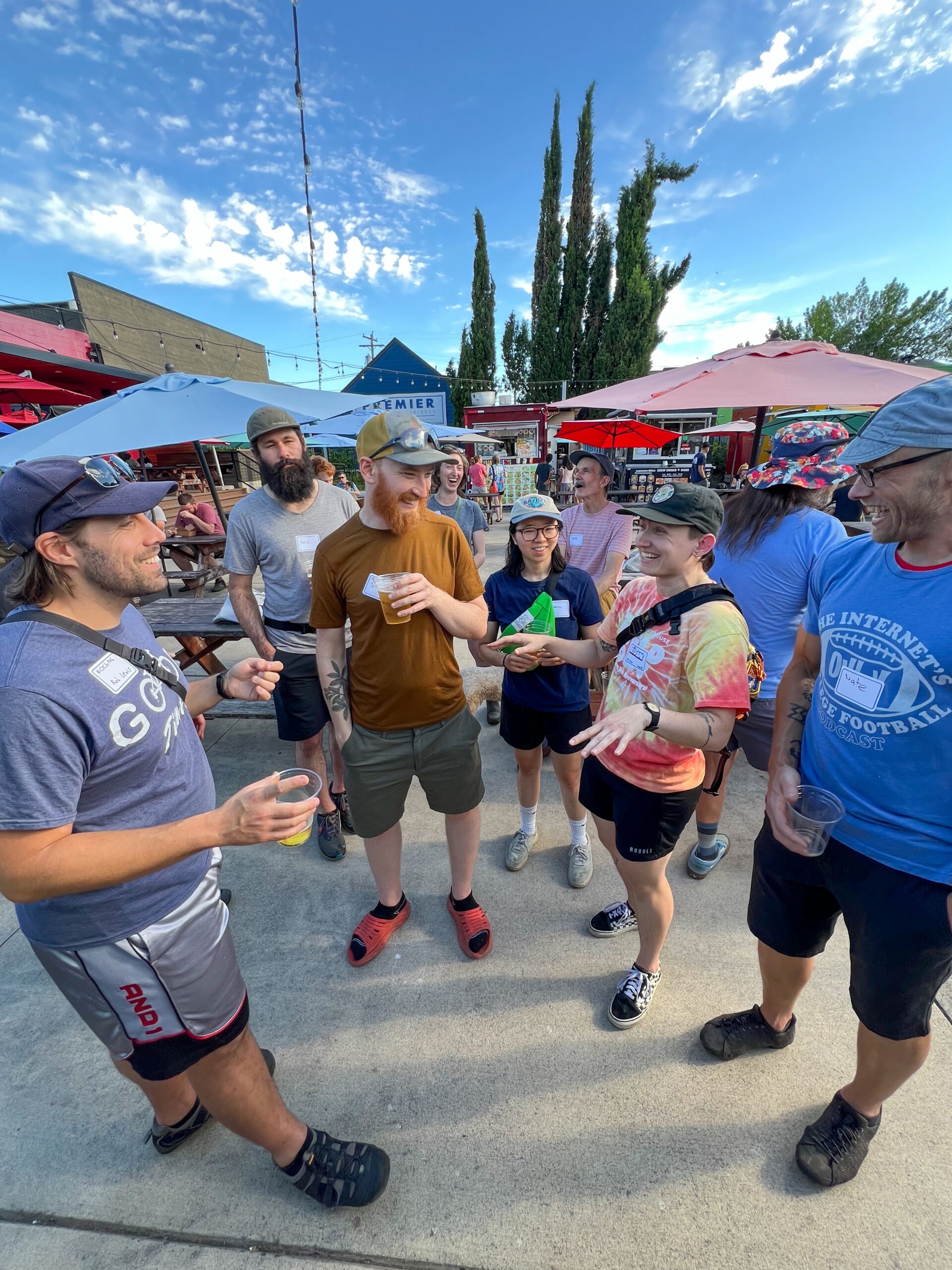
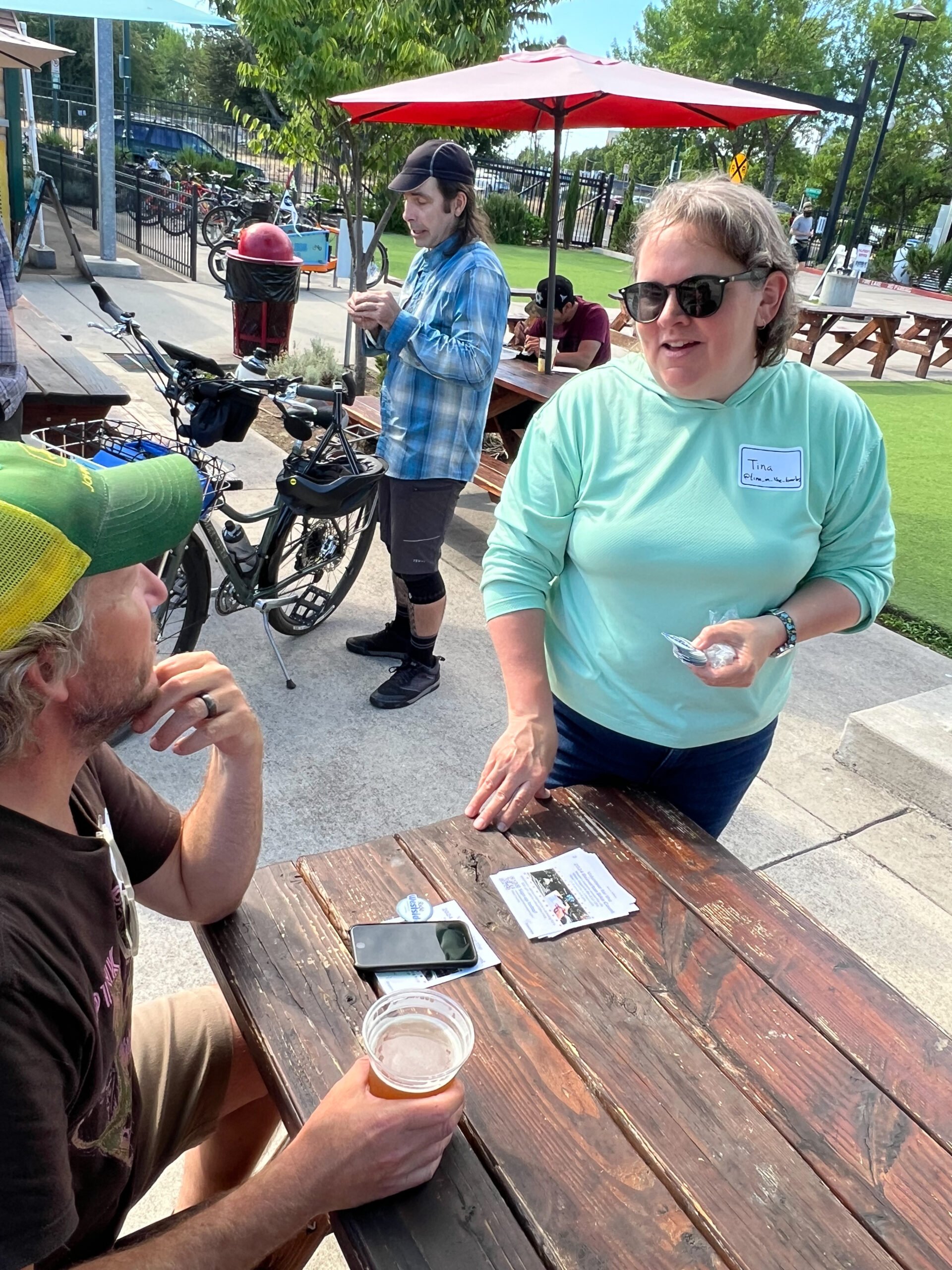
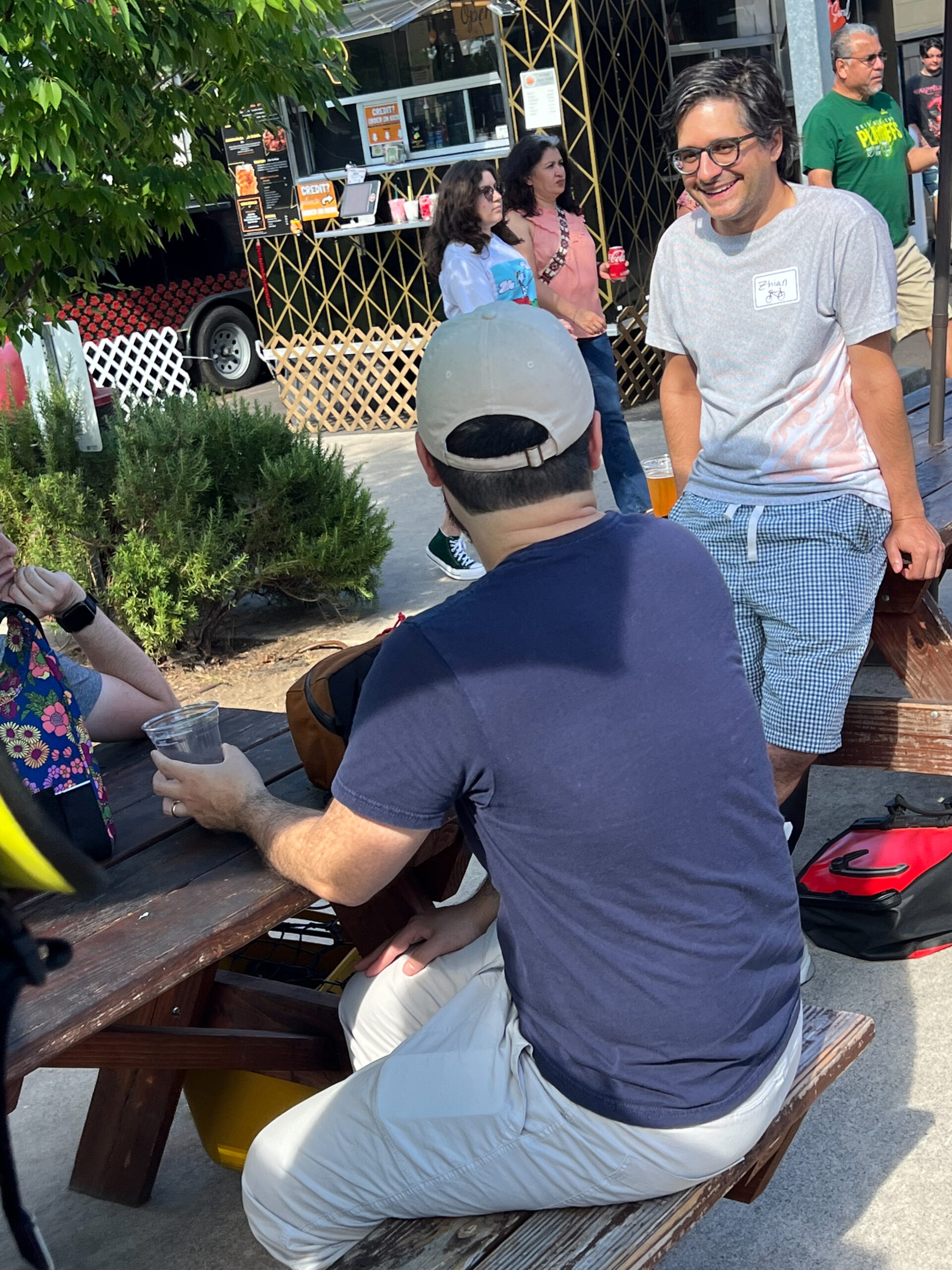
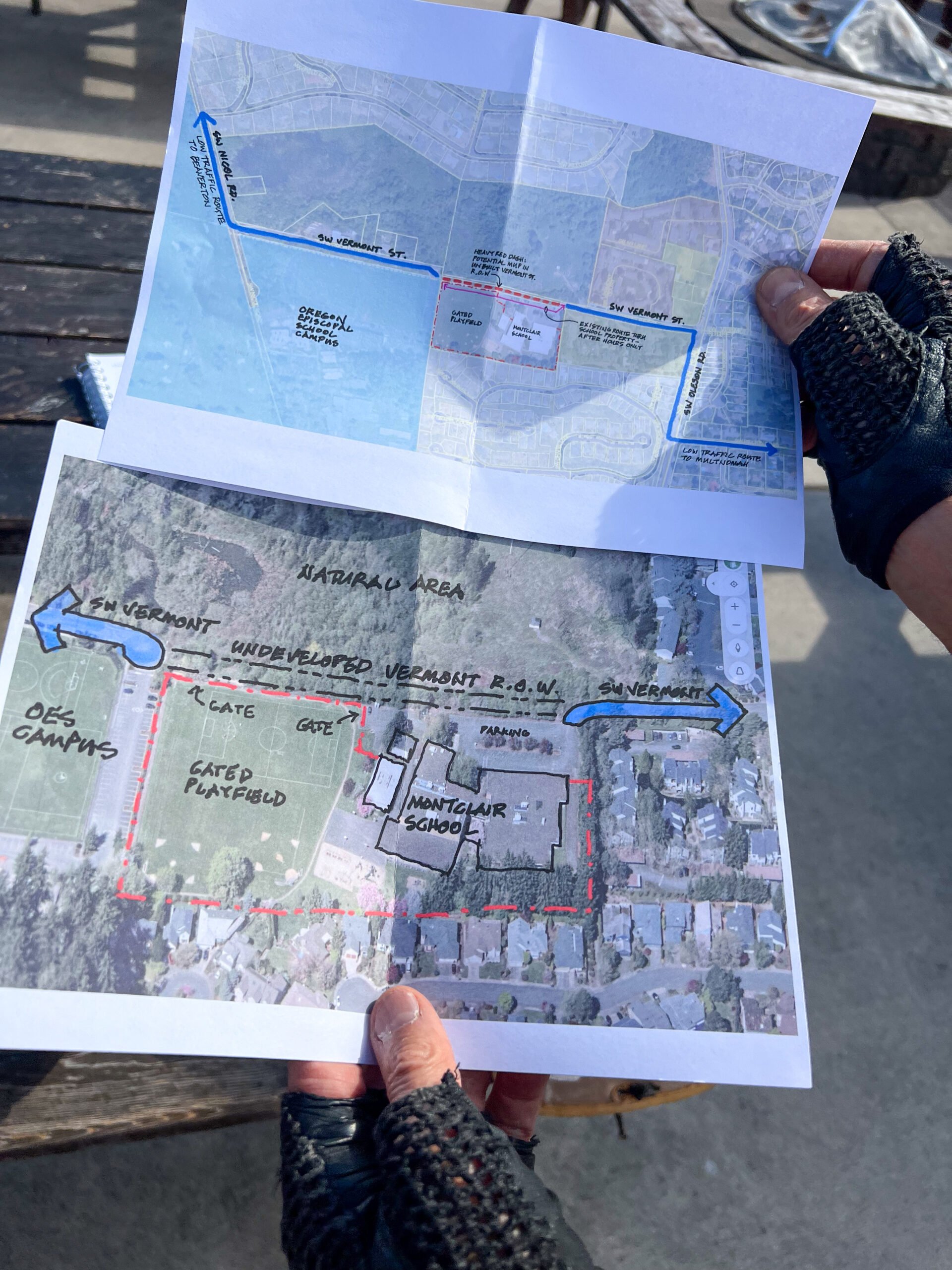
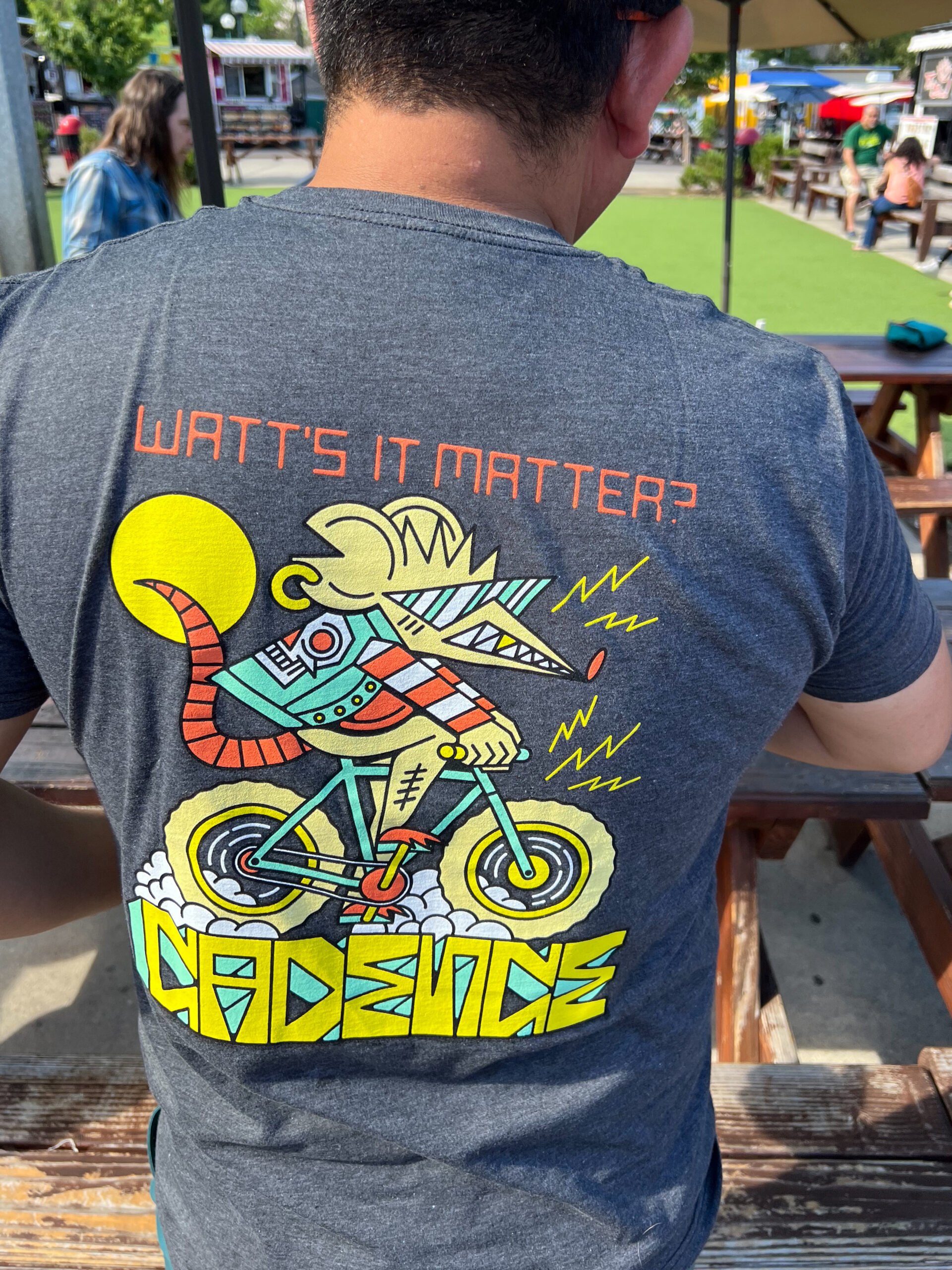
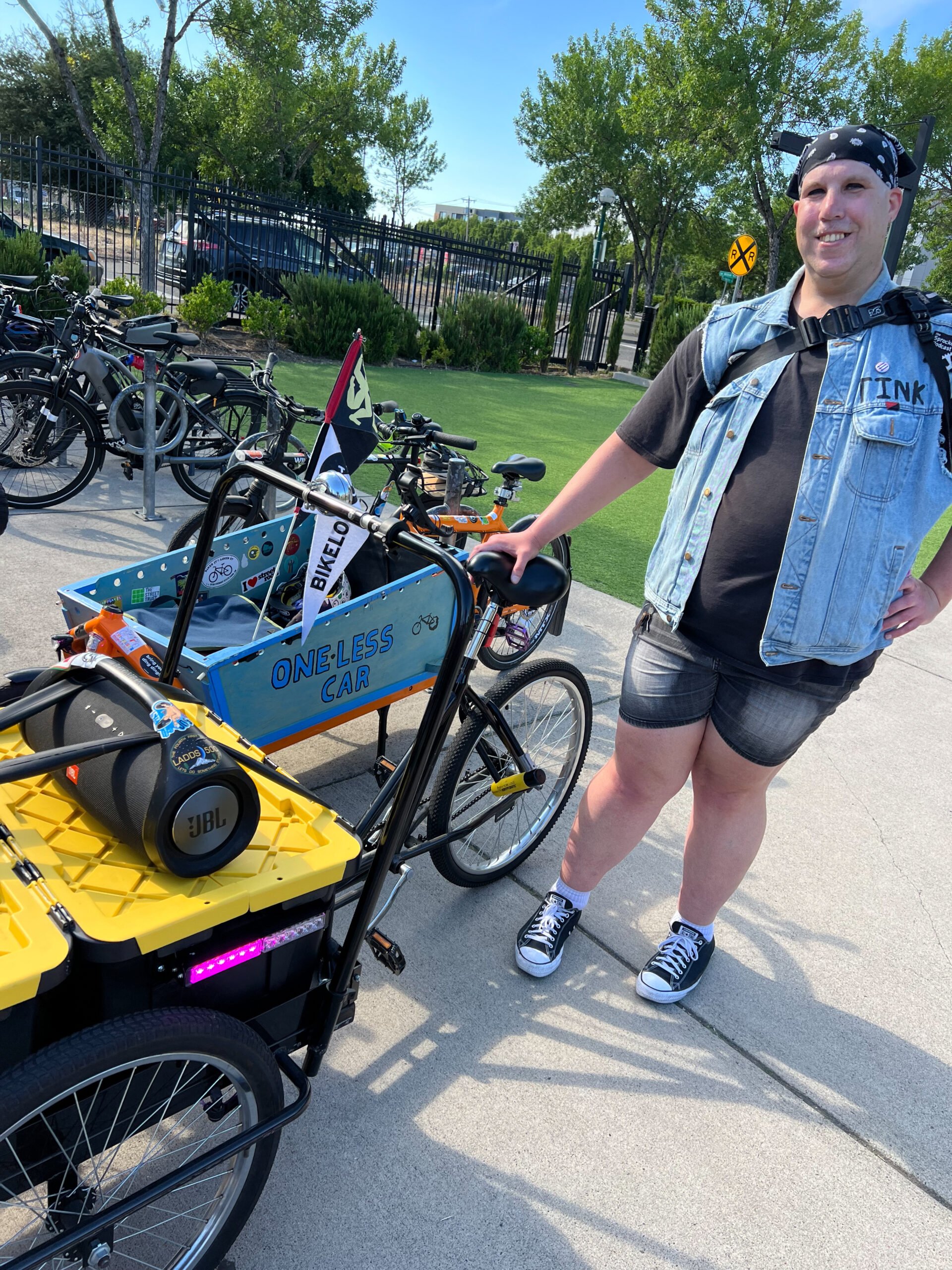
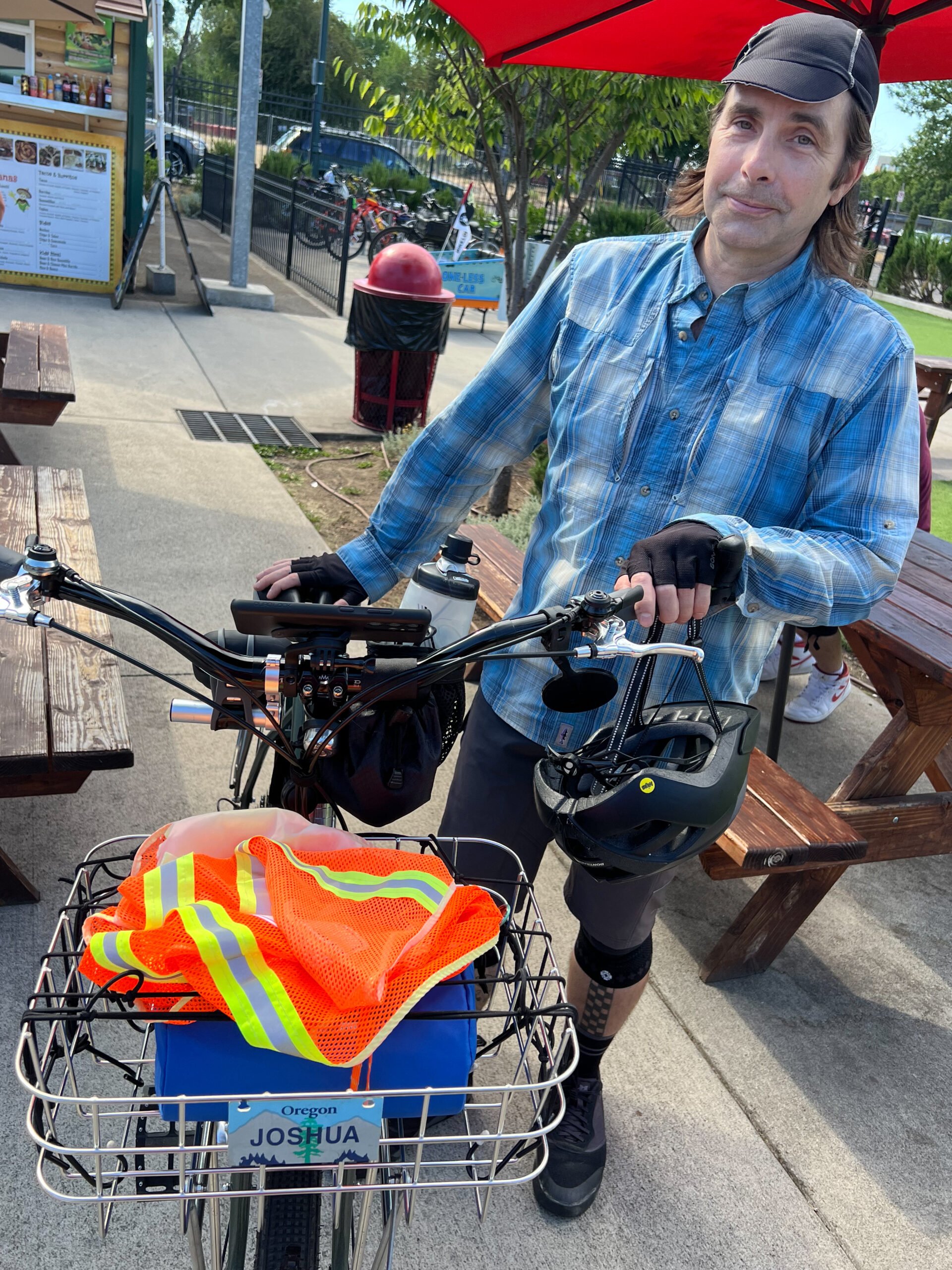
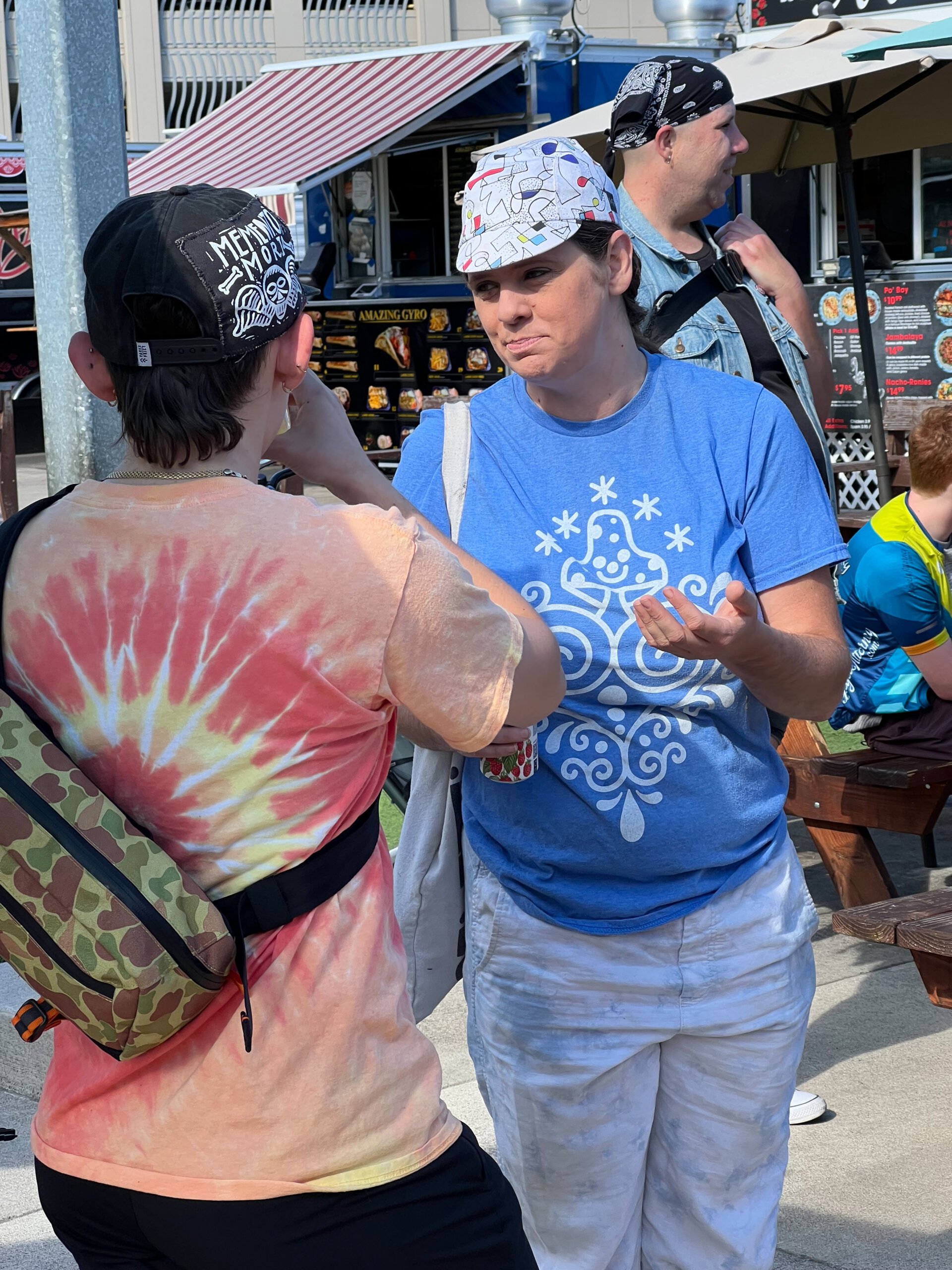
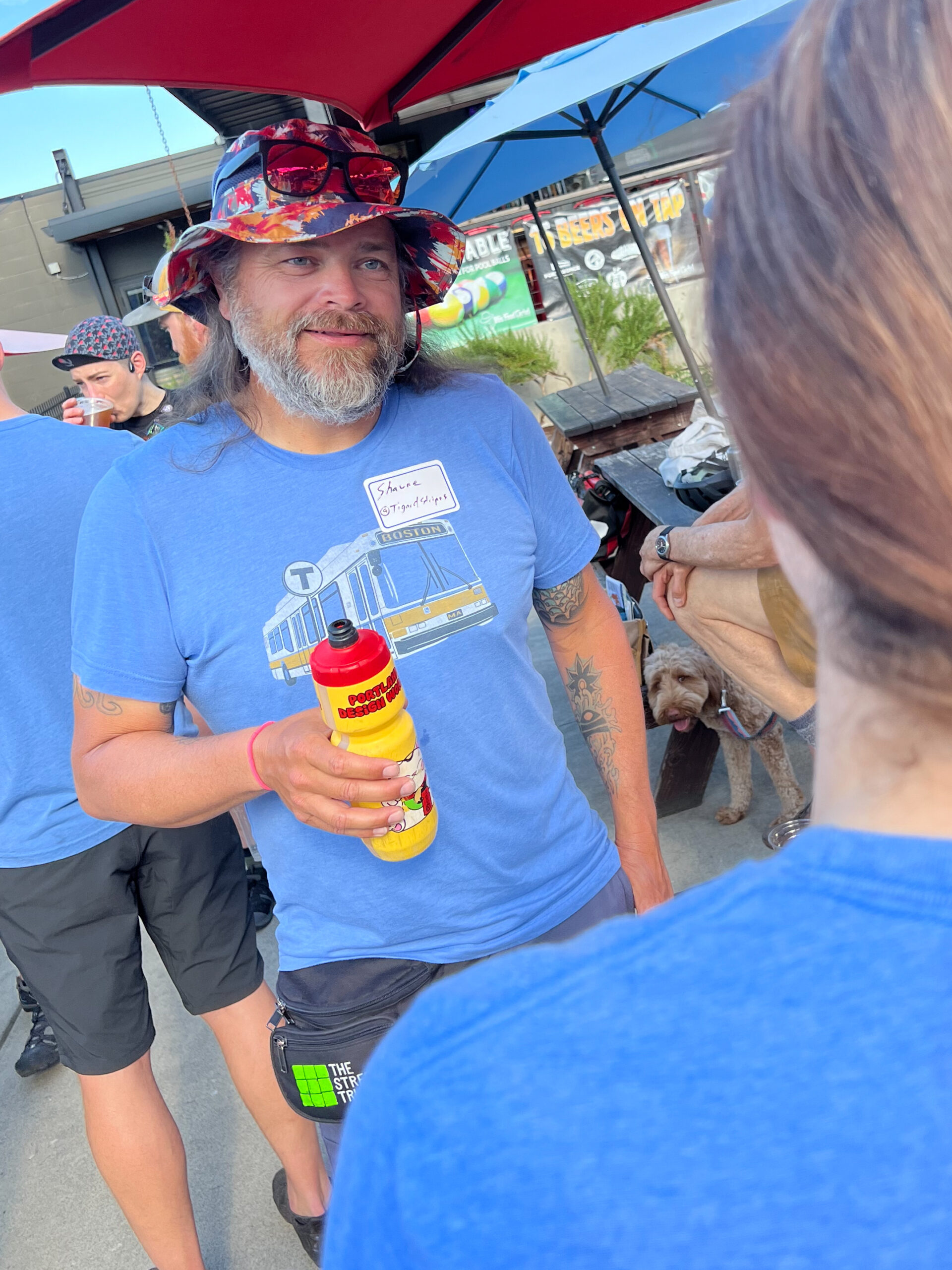
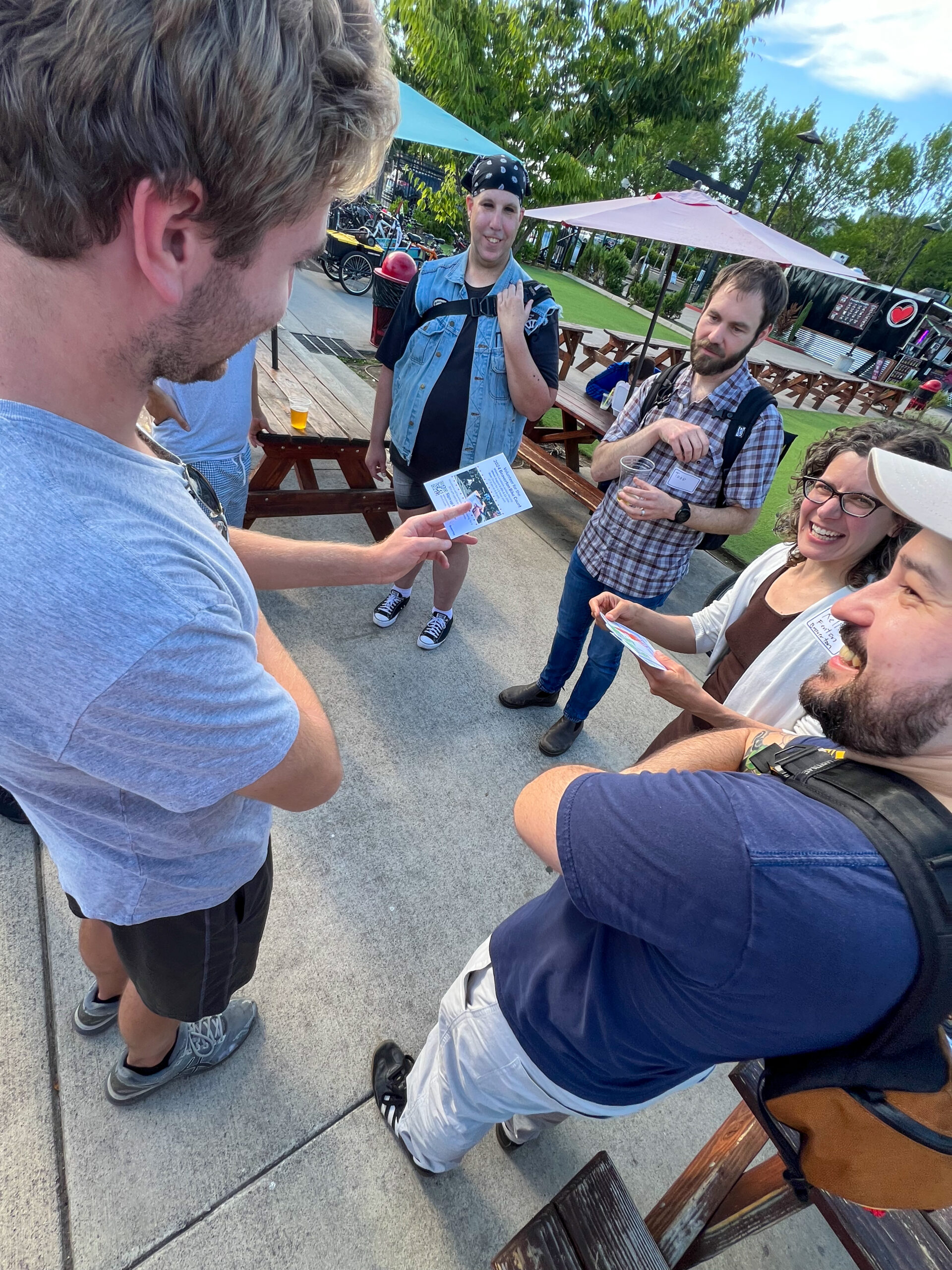
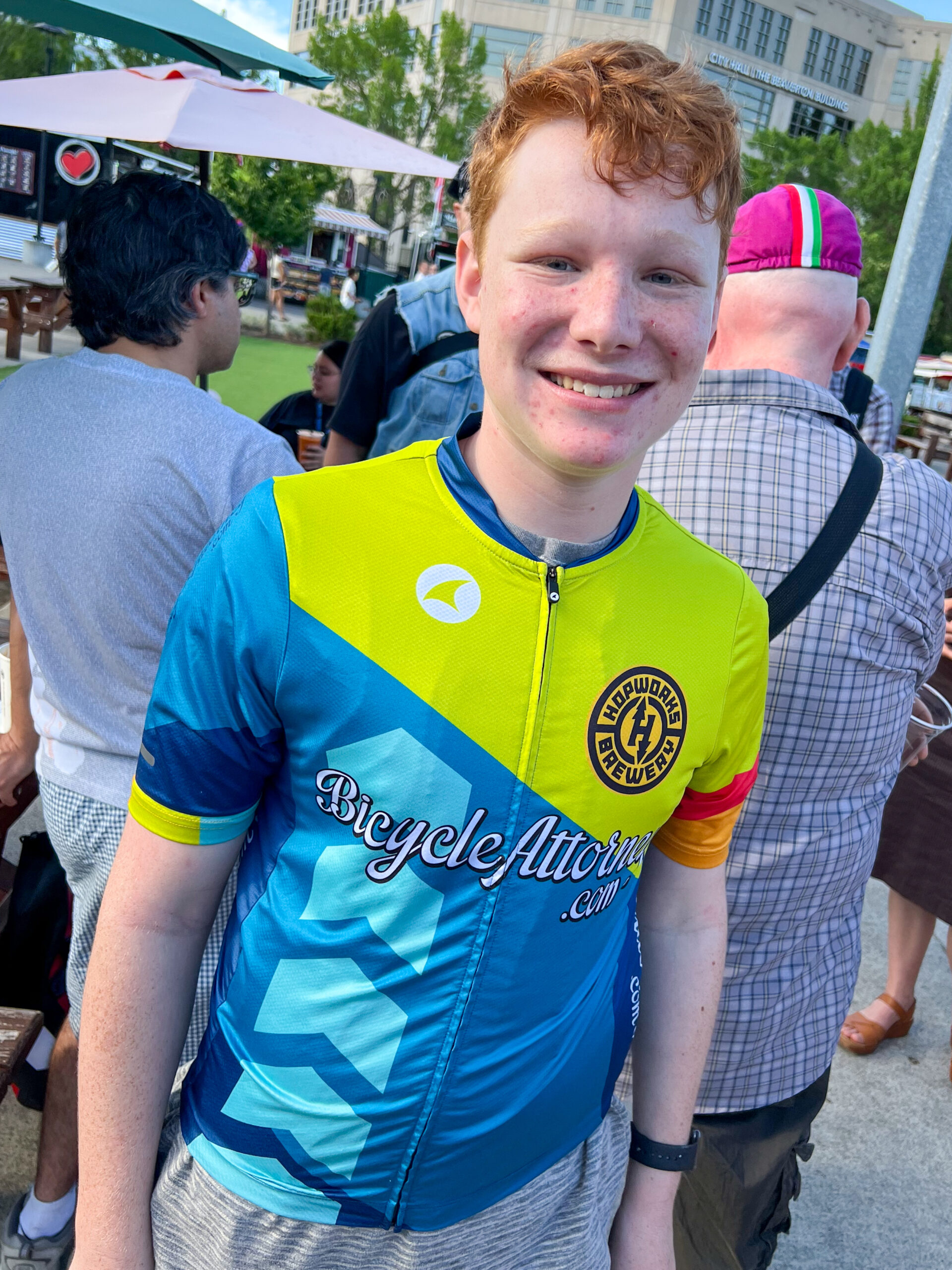
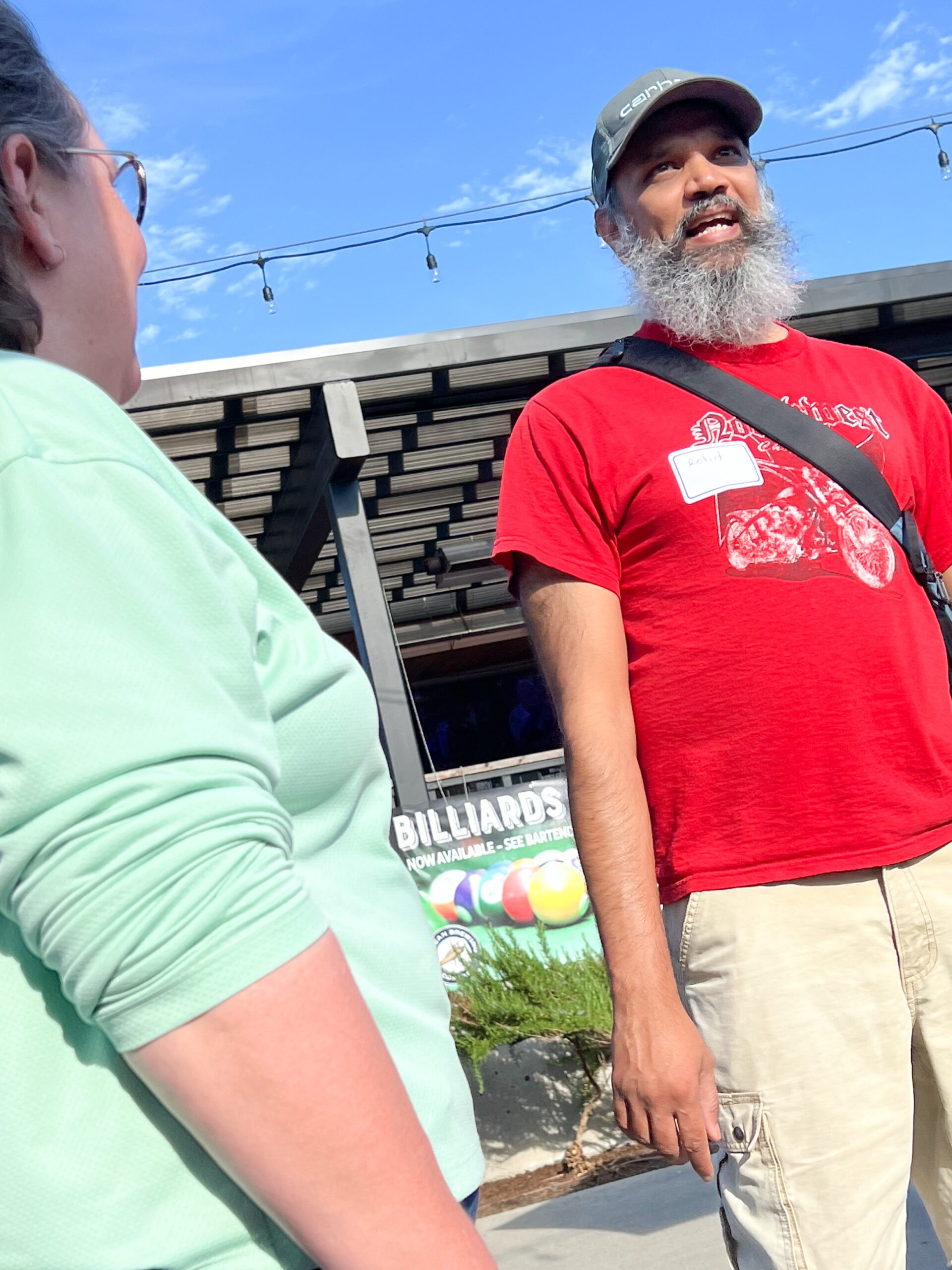
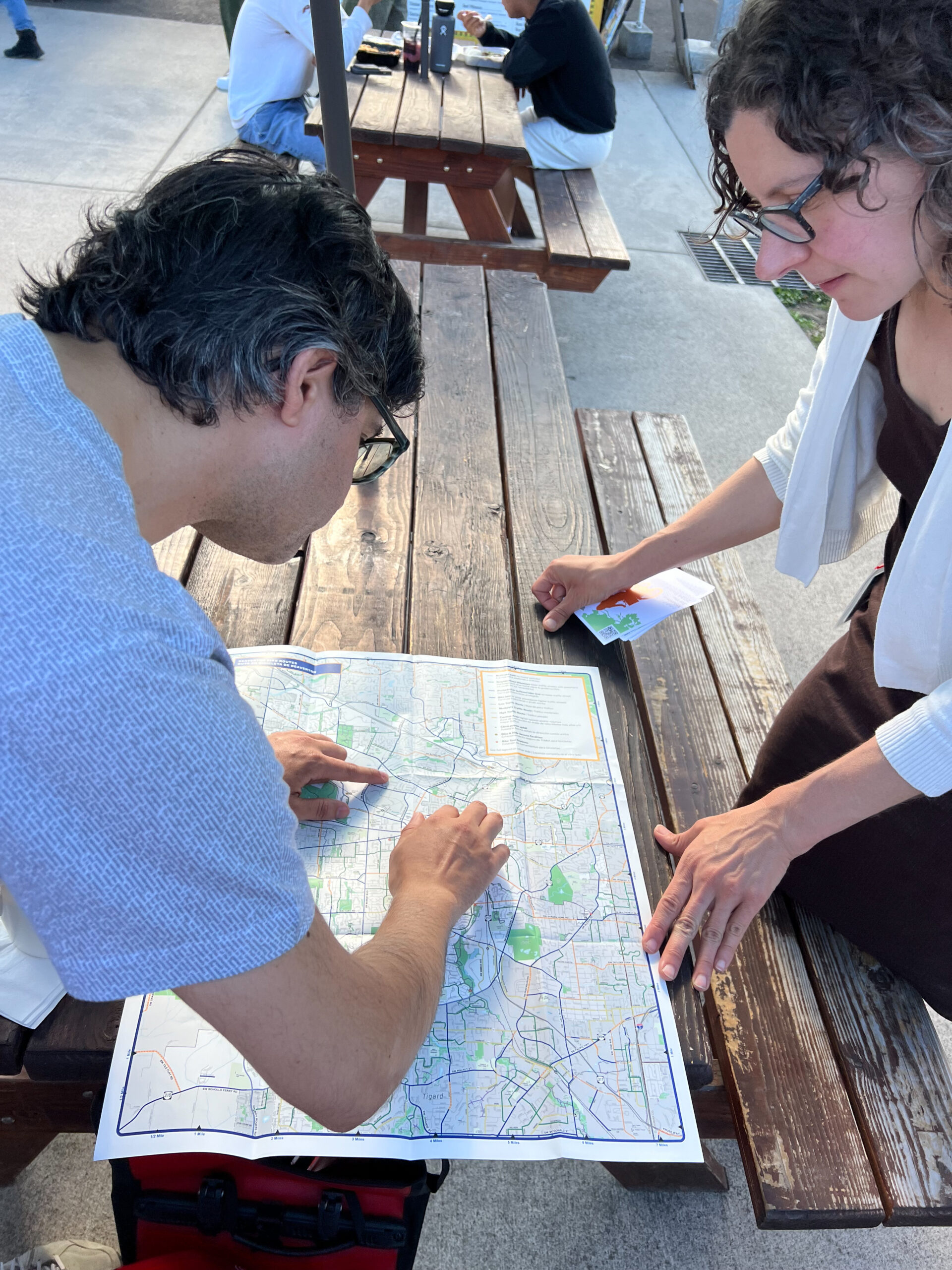
Westside Wednesday Ride crew showed up in force.BikePortland Washington County Correspondent Tina Ricks helped organize it. Zhian and MichaelKim shared this path gap he’d like to fix.Joel’s really cool t-shirt.Event organizer Rob Lewis.Tink and their rave trike.Joshua is carfree in Washington County.City of Beaverton Planner Kellie Fenton (left) with organizers Rob and Tina.@tigard_stripes sighting!Passing out flyers is a BHH tradition.Sam is 16 and already talks like a planning veteran.RohitI was thrilled that Kellie brought out a map to hear about peoples’ routes and concerns.
Last night I rolled out from north Portland and about 50 minutes later I was locking up at BG’s Food Cartel, an excellent food cart and quintessential “third place” a short walk from the Beaverton Central MAX station, for the first ever gathering.
Within a few minutes the first person rolled up. Then another. Then another. The crowd ultimately grew to several dozen. As picnic benches were pushed together to form a larger table, people were connected to form a larger community. Rob’s vision of creating a centralized space to unite and amplify bike lovers on the west side was coming true right before our eyes!
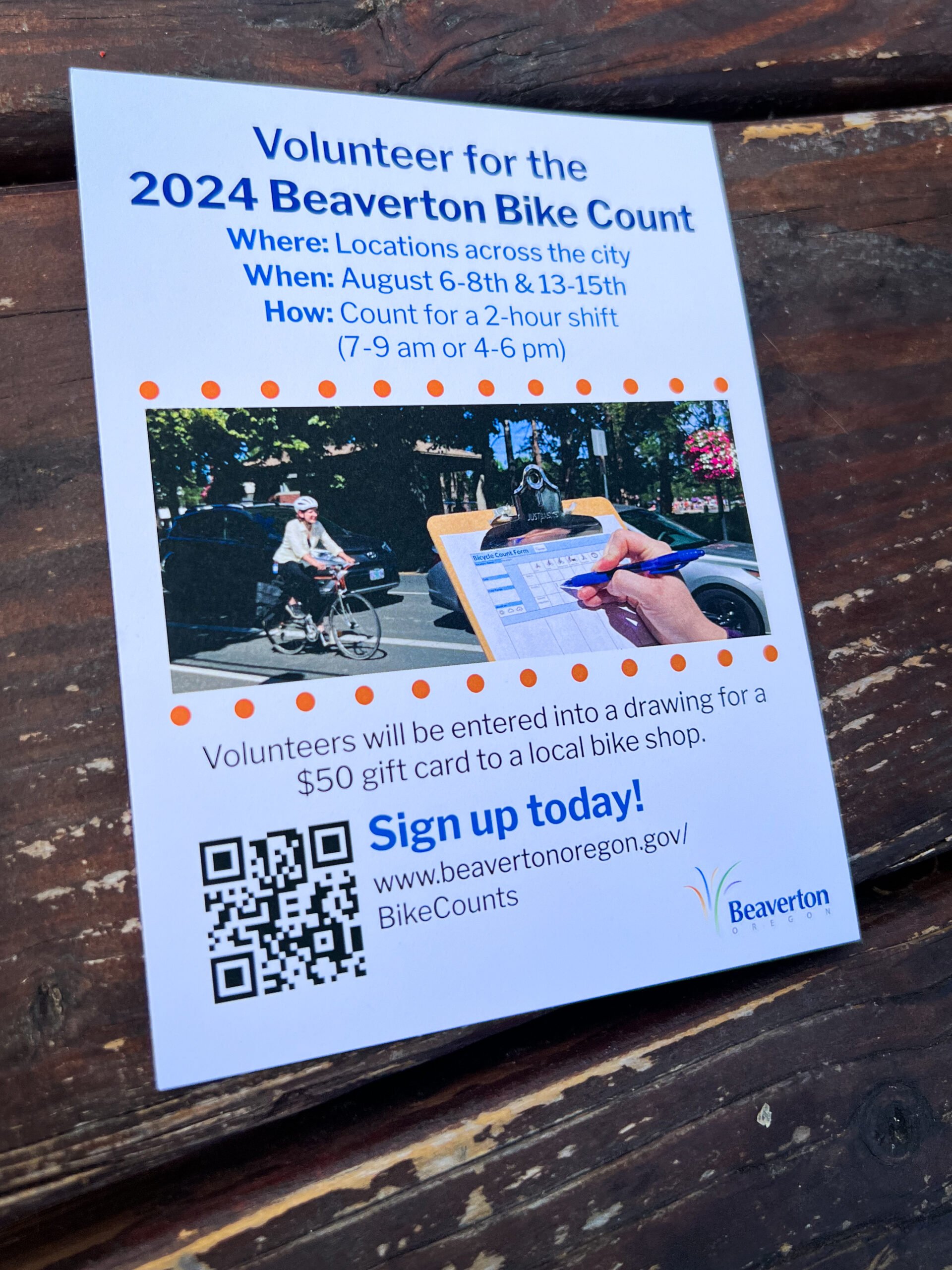
I met all types of great folks, from many different parts of the cycling life: an older couple on e-bikes, a 16-year old urbanism whiz kid who regaled me with stories about getting a new rapid flashing beacon near his Bethany home, a City of Beaverton planner armed with free bike maps and eager to sign up volunteers for an upcoming bike count, ride organizers looking for new recruits, someone with a story pitch for BikePortland, and folks who showed up because they simply wanted to meet other people into cycling.
Advertisement
And thanks to the generosity of Shawne Martinez (@tigard_stripes on IG), we even borrowed the eastside BHH tradition of free fries for everyone!
The event was a big success and is now officially scheduled for every-other-week at the same time and place. Well done west siders! I can’t wait to see how this evolves.
Westside Bike Happy Hour Every Other Monday 4:00 to 6:00 pm BG’s Food Cartel (4250 SW Rose Biggi Ave)
To experience this monumental transportation infrastructure without the normalized deadly threat of motor vehicles, I set out last night at the midnight closure, with a couple dozen intrepid explorers to ride I-84 by bicycle. Based on media reports of the civic emergency that necessitated this special intervention, I prepared mentally for what we might encounter.
The ride description said “Prepare for side streets, dirt paths, gravel and smooth pavement. Prepare to lift your bike and the bikes of others over things–if it comes to that. Prepare to go in the out way, and out the in way,” but my imagination embellished that further.
Compared to every bikeway I’ve ever been on, and most surface streets, I-84 was as clean as a whistle, and smooth as butter, before the cleanup even got started.
Advertisement
Map to strategize access.
I imagined graffiti abatement armies feverishly spraying paint over every surface of this dirty stricken corridor, a dangerous work zone motorway strewn with barriers, disoriented evicted campers, and slick with gallons of fresh ‘ODOT Gray.’ I pictured crews marching oblivious across the highway hoisting sharp-edged replacement signage like slapstick comedy setups on a heavily-traveled cratered moonscape of ruts and potholes. I think I was expecting these things because they are like what I often experience on the bikeways of Portland, a maze of obstacles, glass-strewn and overgrown, where riders must be ever-vigilant to arrive safely at their destination.
After a planning session over a hand-drawn map to determine the best access point, a steep embankment traverse, some off-camber singletrack over hobo trails, and a stealthy recon, a collective decision was made to “send it.” We lifted our bikes over the concrete barrier wall and pedaled west between the truck mounted attenuators and toward the river and the unknown. As we picked up speed under the half moon, and spread our wings across the generous and empty three-lane roadway, I experienced something new and surprising. We were freely gliding through the city — without any fear.
As a bicycle rider, you rarely get to have this experience. Bikeways in the US are designed to slow riders down, with chicanes, push-buttons, and ever-new safety interventions. Even separated bike paths are interrupted by debris, engineered obstacles, and increasingly by cars.
Advertisement
But I-84, the T.H. Banfield Expressway, is designed for going fast, and so we did. We quickly maxed out our gearing on the flat straightaways and banked turns, with the fixed-gear riders furiously spinning to keep up. Some turned off their lights to make our presence less pronounced, and because there were no defects to spot on the well-lit pavement.
Compared to every bikeway I’ve ever been on, and most surface streets, I-84 was as clean as a whistle, and smooth as butter, before the cleanup even got started. Were there colorful murals on the underpasses? I wouldn’t have noticed. We were busy enjoying the cool unpolluted night air, and the glorious quietude. There’s something about gliding through the city at high speed — in silence — that makes bicycling feel even more like you are flying.
Here’s something you can’t usually do while you are driving down a highway: have a conversation with other travelers. We talked about the exhilaration and the joy we were feeling, and how to experience it more often. “This is what we could have,” I said, thinking about Dutch bicycle highways. “This is what we already have,” was the reply.
Advertisement
Just like on our surface streets, it’s the cars that ruin our highways. Instead of spending millions painting the roses red, let’s give Oregonians an opportunity to enjoy the bed of roses under our feet.
We should prioritize building high-speed regional bicycle highways in Oregon, recognizing that e-bikes now enable fast climate-friendly long-distance travel for almost everyone. And we should certainly begin planning and construction of the Sullivan’s Gulch Trail along this central Portland corridor, a project that has sat neglected on the shelf for decades. But until those long-term projects are completed, we can better use what we already have. If we can close this busy roadway for a superficial painting party, we can easily close it periodically for everyone to experience a bicycle ride without fear.
Impossible you say? Perhaps you didn’t hear about Arroyo Fest last year. Car-obsessed Los Angeles closed seven miles of the 110 Freeway, one of the first freeways built in the US, for four hours last October for an open-streets event. It was a huge success with thousands turning out to enjoy the car-free route that in 1900 was an elevated wooden cycleway before it was converted to a freeway. You might have even gotten a taste of a car-free highway during Portland’s annual Bridge Pedal, and wondered how to have more events like this.
The Oregon Governor prioritized last night’s closure because there was a public perception that I-84 was too dirty and neglected to enjoy. But that perception was misplaced. Just like on our surface streets, it’s the cars that ruin our highways. Instead of spending millions painting the roses red, let’s give Oregonians an opportunity to enjoy the bed of roses under our feet. I-84 without cars is beautiful!
Today’s Monday Roundup is sponsored by the City of Portland 2024 election team who will be our special guest at Bike Happy Hour this week. Come out and join our mock election where we rank bike projects to learn how the new ranked choice voting system will work.
And with that, here are the most notable items we came across in the past seven days…
Expired registrations reality: Turns out that the estimated number of people driving cars with expired tags might be far lower than the City of Portland said it was when they sought to drum up political support for more enforcement officers. (OPB)
E-cargo bike share: Imagine bike share like Biketown, except the bikes are electric cargo bikes you could use to haul kids or cargo or both?! Learn more about CargoB in Boston. (Streetfilms)
Listen up: New research found that the use of headphones while cycling did not have significant cognitive impacts. (Transportation Research)
Olympic urbanism: Athletes and sport won’t be the only thing on grand display at the Summer Olympics later this month as Paris plans to use the global spotlight to highlight its commitment to bicycle urbanism. (Momentum Mag)
Central city progress: PBOT’s Central City in Motion plan was adopted in 2018 and the city is half way through the list of projects. (OPB)
Advertisement
Deadly hoods: Science now confirms that cars, trucks, and SUVs with squared-off front hoods come with a significantly higher risk of killing someone as a result of a collision. (Journal of Safety Research)
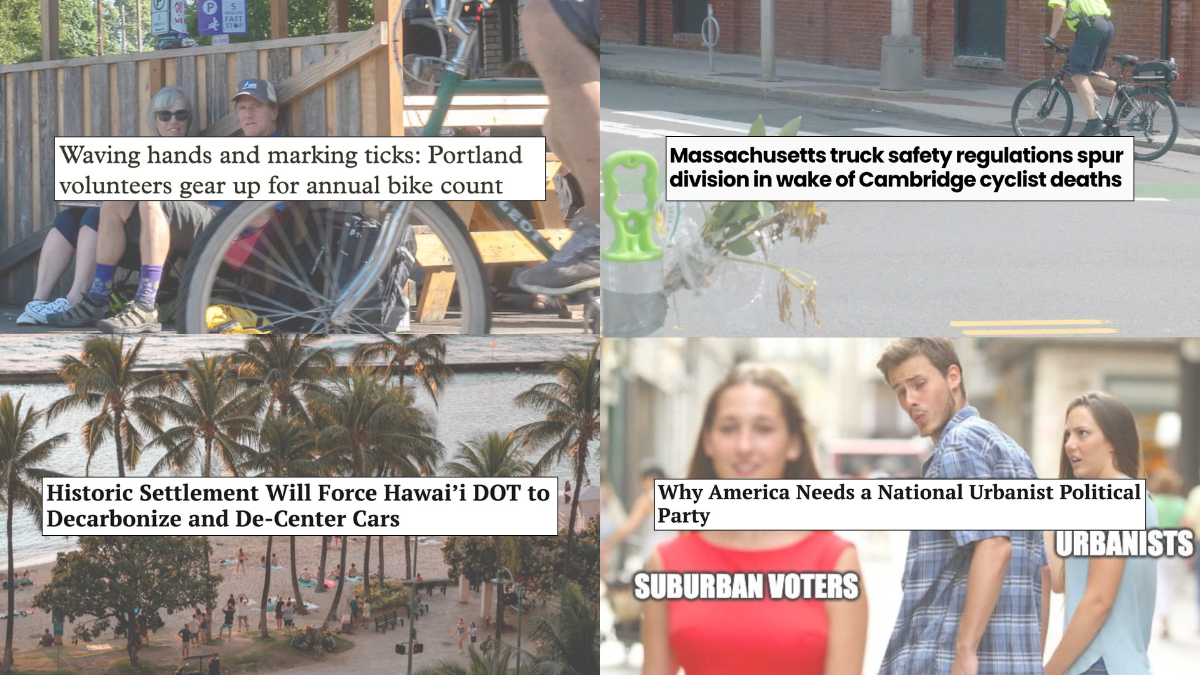
Bike counters, assemble! It’s that time of year when volunteers with clipboards closely watch traffic and record the number of bicycle riders on hand-written forms that become part of the city’s official database. (OPB)
Climate obligation and cars: Victory in a lawsuit brought by Hawai’i teenagers will force that state’s DOT to a list of reforms that will require them to “decenter cars” in transportation planning. (Streetsblog USA)
Truck lobby opposes safety regulation: In wake of cyclist deaths that involved large trucks, a lobby group is pushing back against new safety equipment requirements that advocates say will save lives. (Boston Herald)
National urbanist platform: Author and great cities advocate Diana Lind thinks it’s time for a national political party formed around urbanism — or at least a powerful urbanist PAC to raise money for candidates that understand the importance of smart city policies. (Streetsblog USA)
Summary:
We are seeking a passionate and experienced Retail Manager who is also a dedicated bike enthusiast. As the Retail Manager, you will be responsible for leading our team, driving sales, maintaining excellent customer service standards, and creating an engaging environment for both staff and customers. Your in-depth knowledge of bikes and cycling accessories will enable you to provide expert guidance to customers while fostering a community-driven atmosphere within our store.
Responsibilities:
1. Leadership: Demonstrate exceptional leadership abilities by effectively managing and motivating team members to achieve sales targets and deliver outstanding customer experience.
2. Sales Management: Drive revenue growth through effective merchandising strategies, promotional campaigns, up-selling techniques, and inventory management.
3. Customer Service Excellence: Ensure a high level of customer satisfaction by providing personalized assistance based on each individual’s biking needs or preferences while maintaining positive relationships with long-term clients.
4. Product Knowledge: Possess extensive knowledge of various brands, models, features, benefits, components, accessories related to bicycles in order to advise customers effectively.
5. Staff Training: Develop training programs to continuously enhance the knowledge base of the staff ensuring they are equipped with necessary product information.
6. Community Engagement: Foster relationships within the local biking community through hosting events such as group rides or maintenance workshops that encourage participation from both existing customers as well as potential new ones.
7. Visual Merchandising: Oversee store layout and visual presentation standards ensuring products are well displayed while adhering to brand guidelines.
8. Inventory Management: Monitor stock levels accurately by conducting regular audits; collaborate with suppliers regarding replenishment orders; ensure availability of popular models/accessories keeping demand trends in mind.
Requirements:
1. Passion for Biking: A genuine love for cycling with comprehensive knowledge about bikes including different styles (road/mountain/hybrid), features/functions/components is essential.
2. Previous Retail Experience: Proven track record as a successful retail manager preferably within the bike industry or sporting goods sector would be advantageous but not mandatory
3.Critical Thinking Skills – Ability to analyze sales reports/data trends & utilize them effectively when making informed business decisions
4.Communication Skills – Excellent verbal & written communication skills along with strong interpersonal skills enabling effective collaborations internally & externally
5.Leadership Abilities – Demonstrated ability in leading teams towards achieving sales goals/ targets whilst boosting morale
6.Customer Focus – Strong commitment towards offering exceptional customer service experiences; ability recognize/anticipate customer needs and preferences, and act accordingly
7. Flexible Schedule – Willingness to work weekends, evenings, or holidays as per business requirements
8. Physical Stamina – Ability to stand for prolonged periods of time, lift/move heavy objects if necessary
If you meet these qualifications and are eager to take on a leadership role in a dynamic retail environment that celebrates the biking community, we encourage you to apply for this exciting opportunity!
Monday – Saturday schedule FT
Wage: $28 + DOE
Contact:
Zita Letts: zita@optistaffing.com 360.553.7223
Brian Robles: brobles@optistaffing.com 360.553.7219
How to Apply
Contact:
Zita Letts: zita@optistaffing.com 360.553.7223
Brian Robles: brobles@optistaffing.com 360.553.7219
Eva Frazier and I are back with another bit of banter from The BikePortland Shed.
Learn how Eva’s Garden Bike Tour in the heat wave turned out, what I thought of Bike Play, why I’ll miss all the Bike Summer rides this weekend (basketball!), what happened on City Cast PDX podcast today, why someone is really mad at Thursday Night Ride, the difference between a nice honk and a jerk honk, and much more.
Have a great weekend and I’ll be back here on Monday.
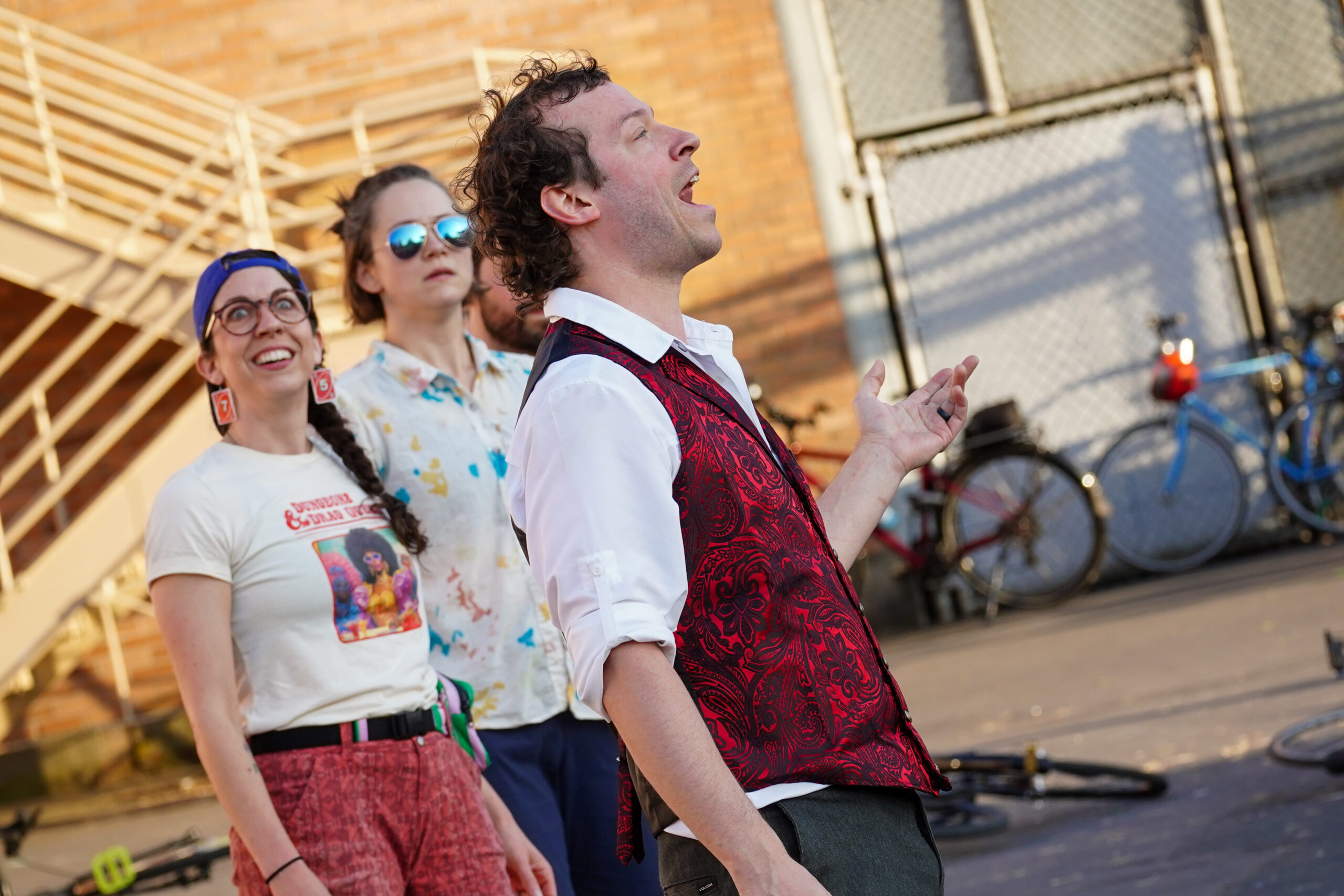
Noelle Eaton (as Patch Flatums) sings “All I Know is Bike” at Scott Elementary School. (Photos: Jonathan Maus/BikePortland)
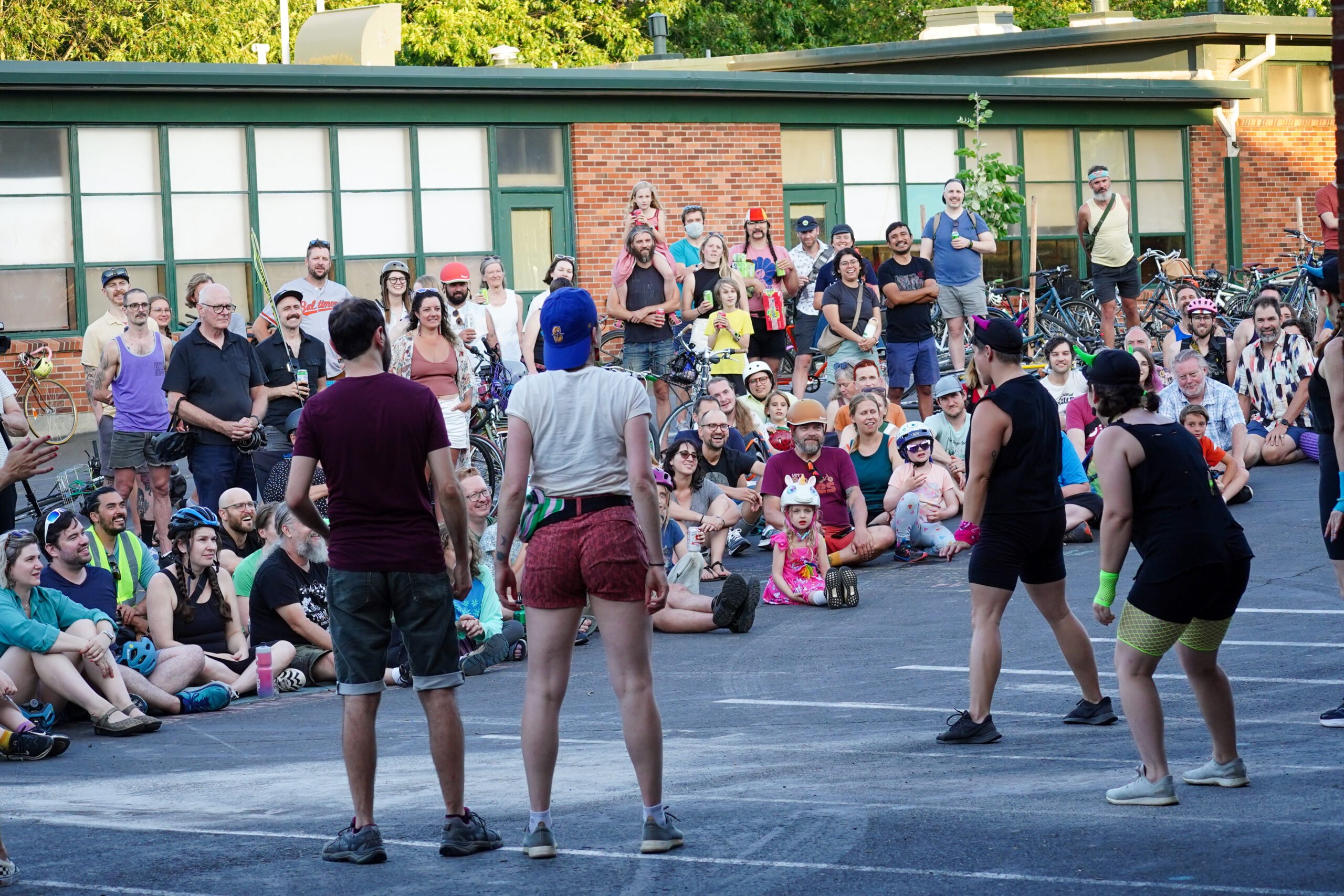
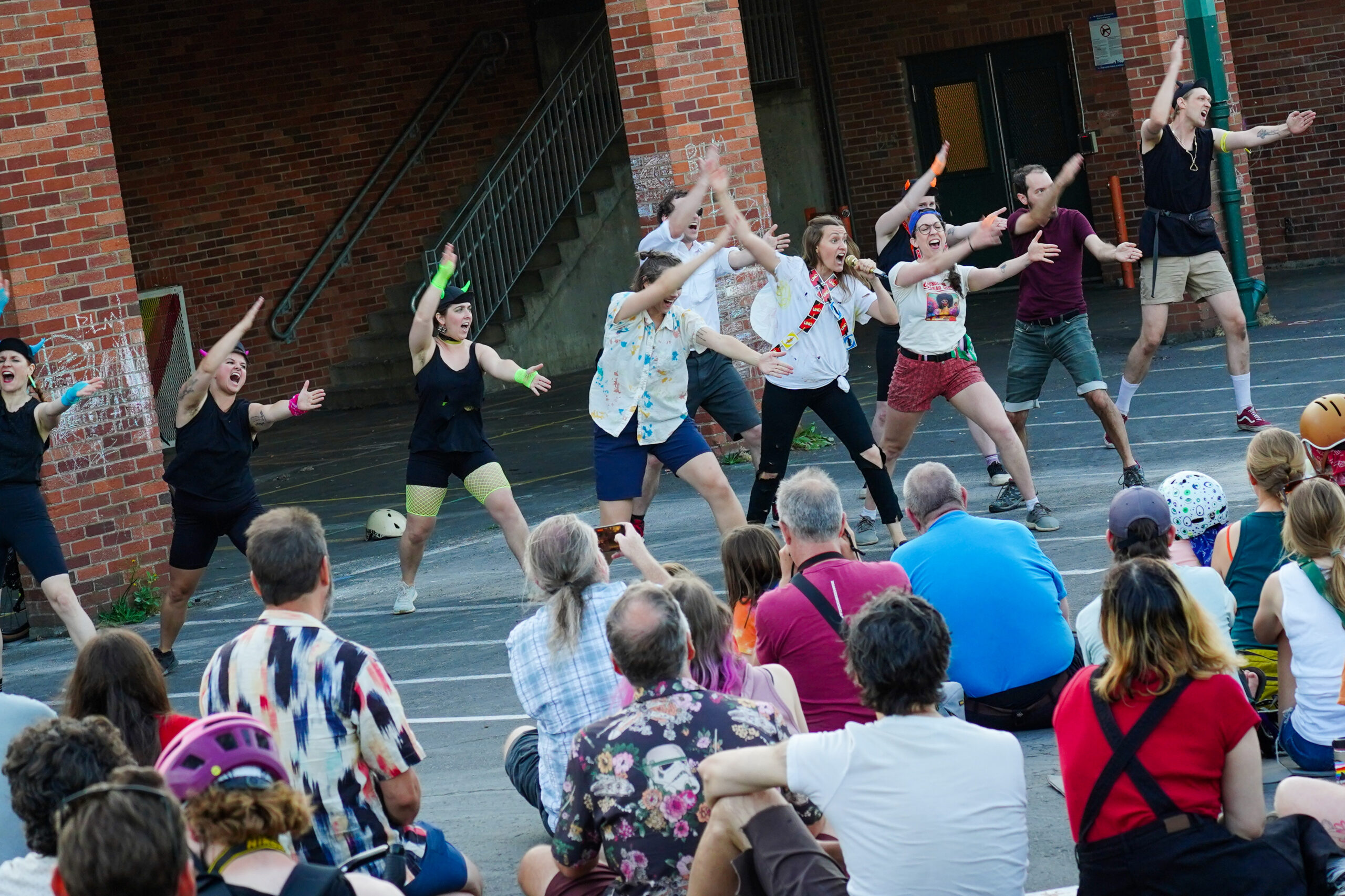
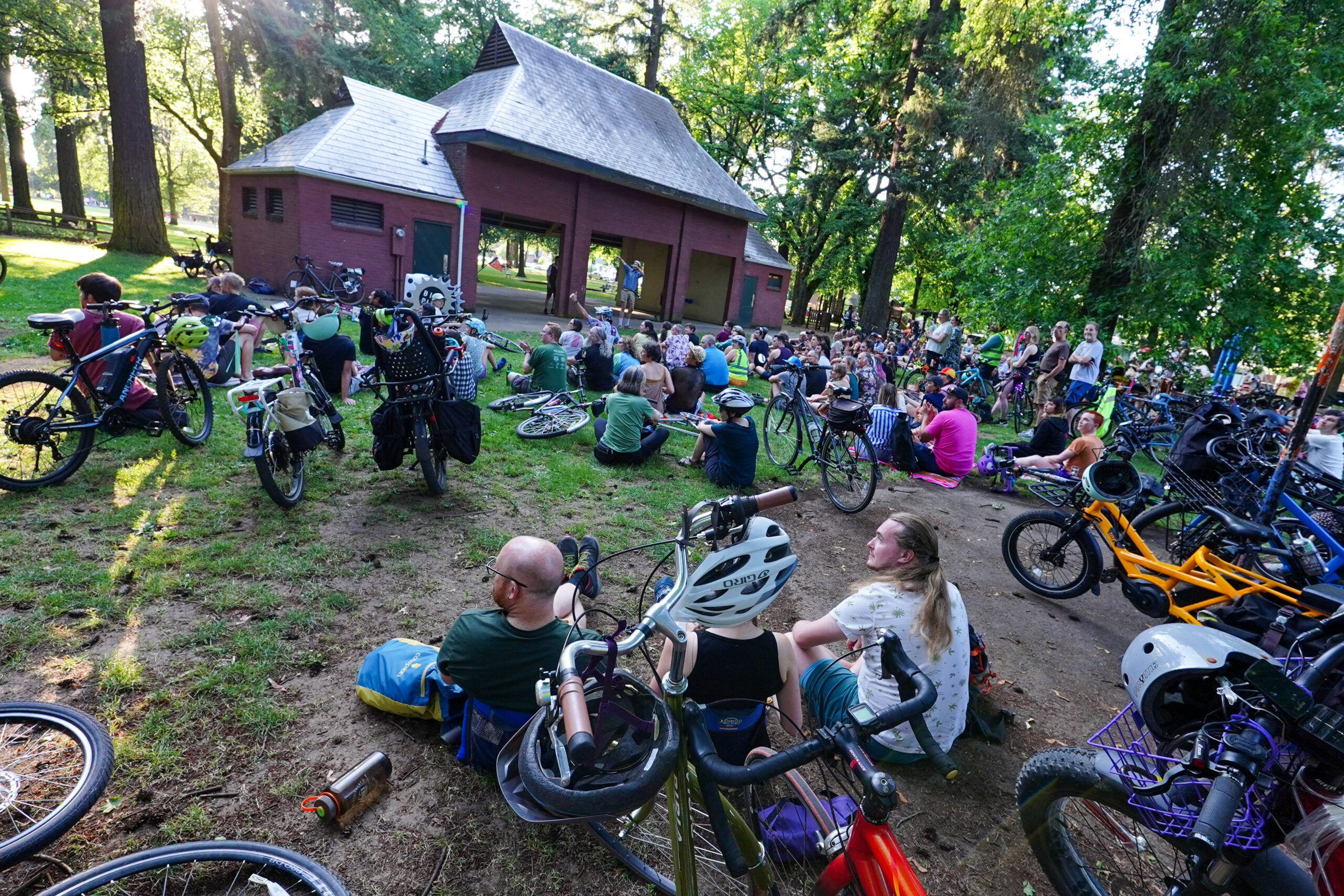
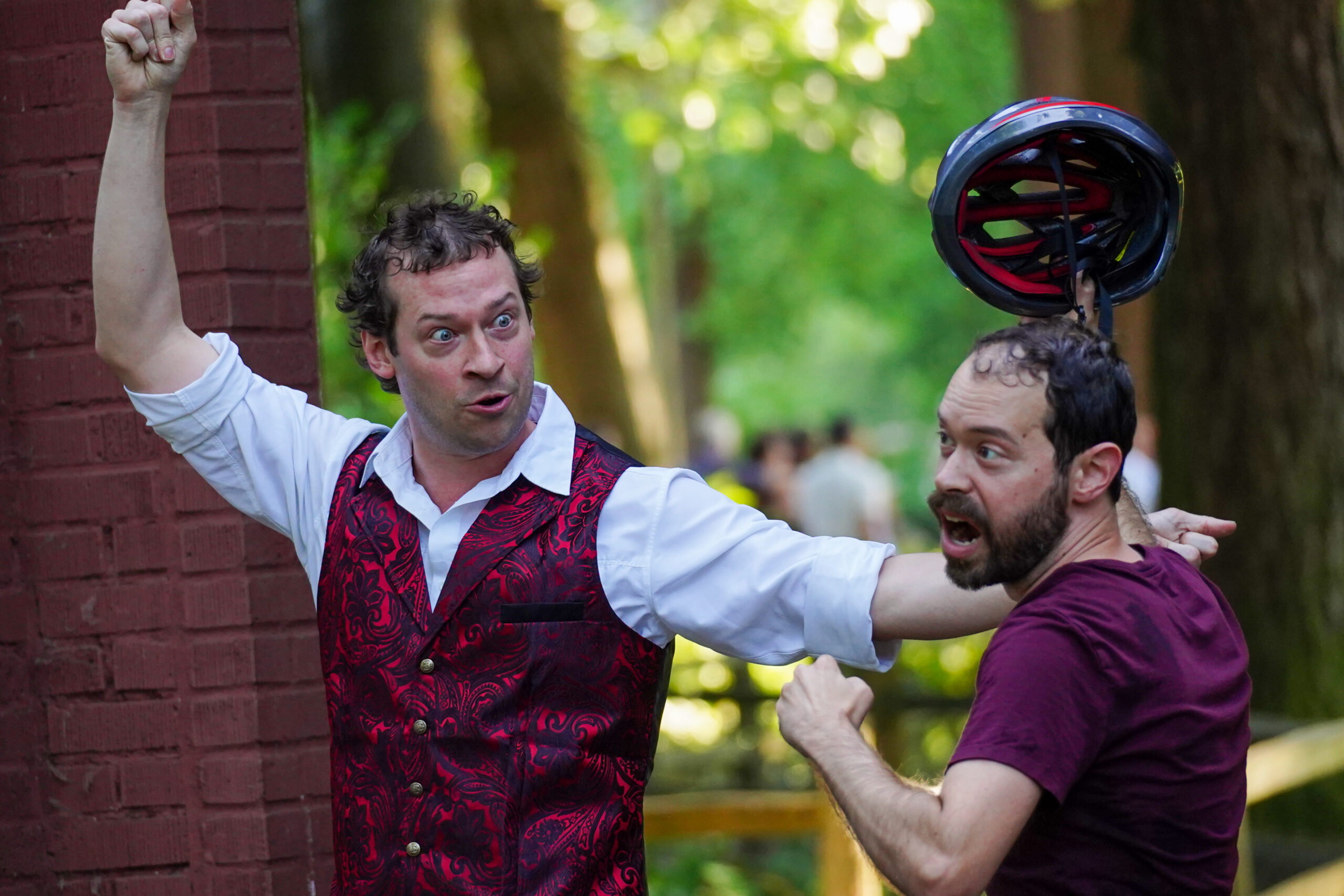
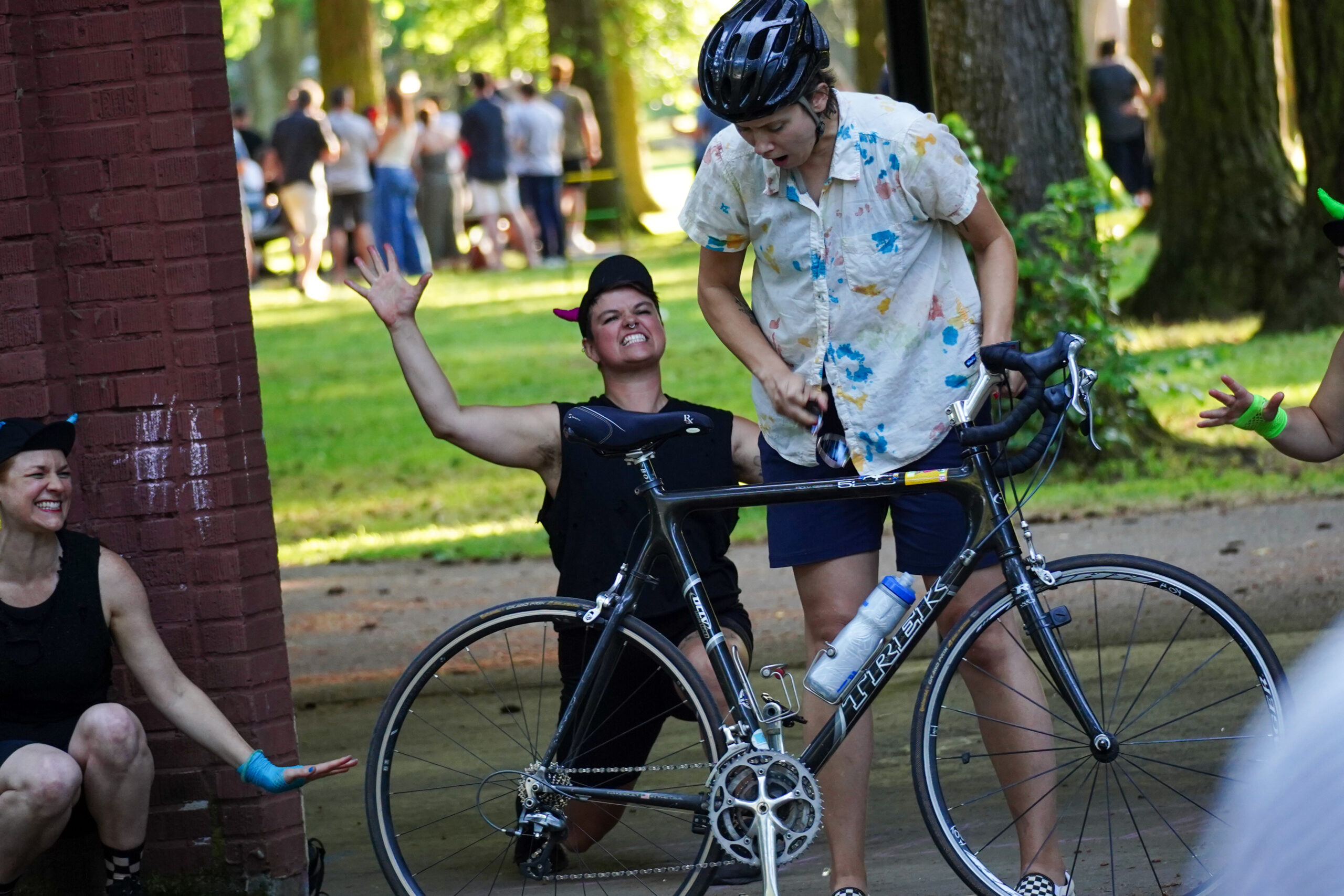
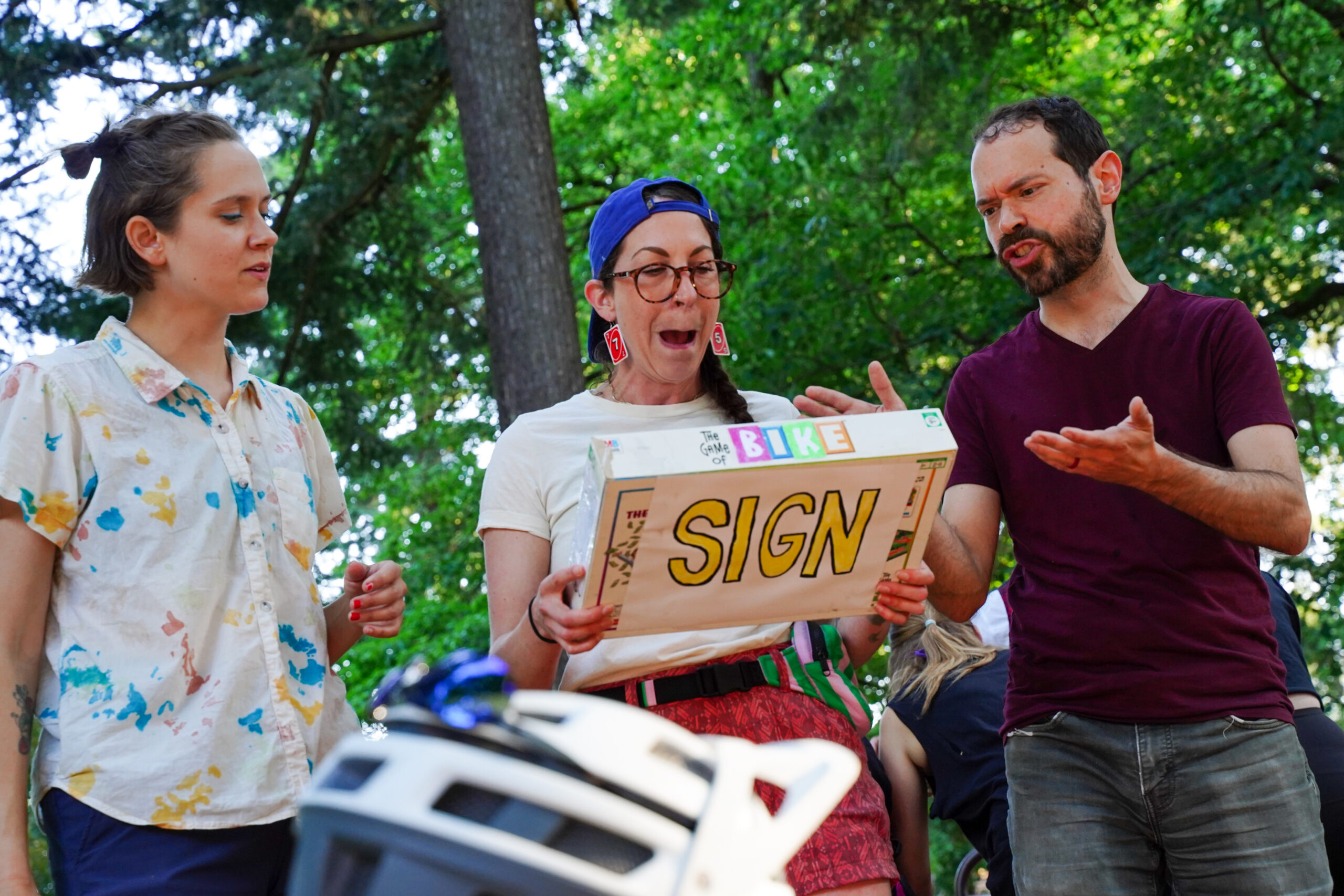
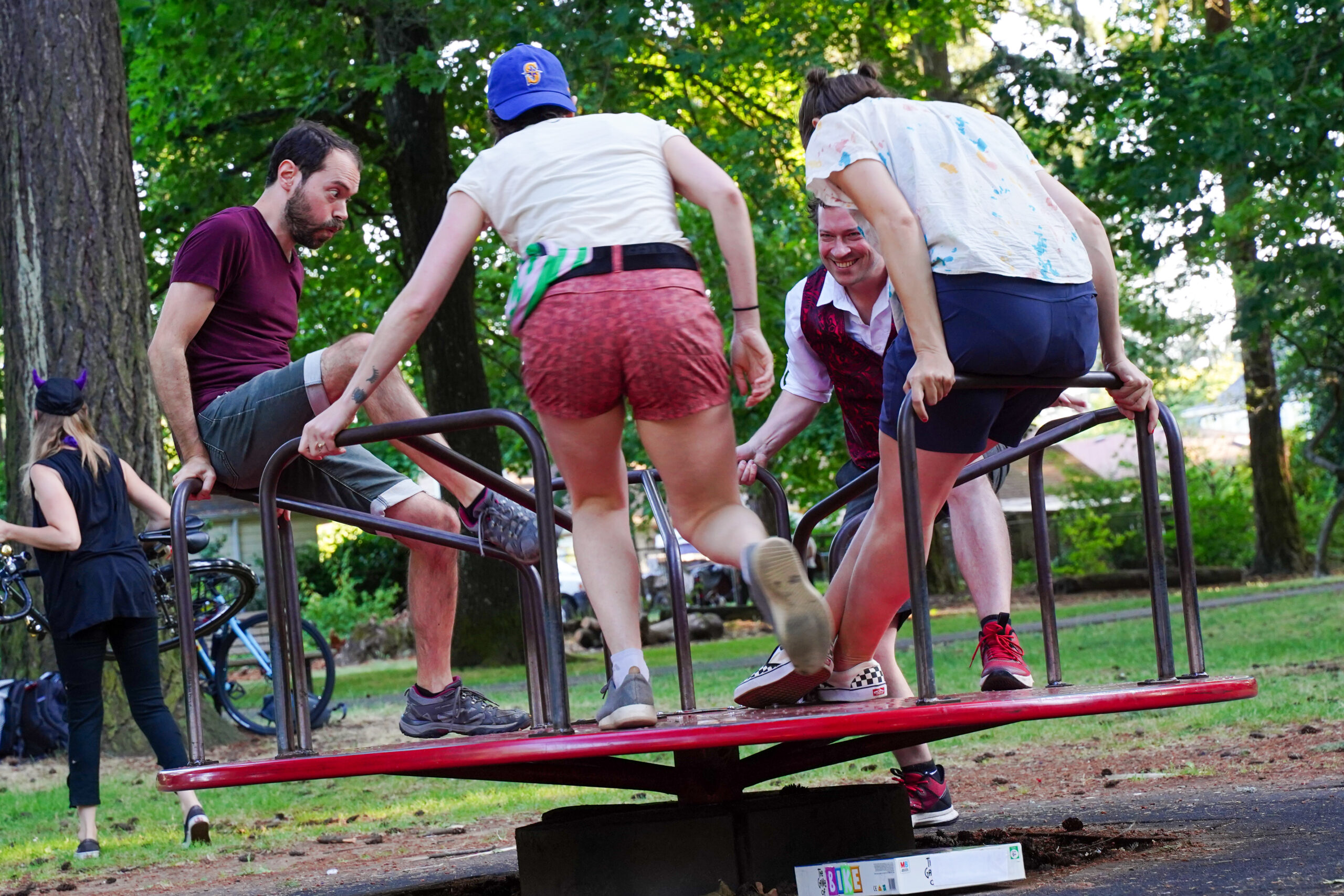
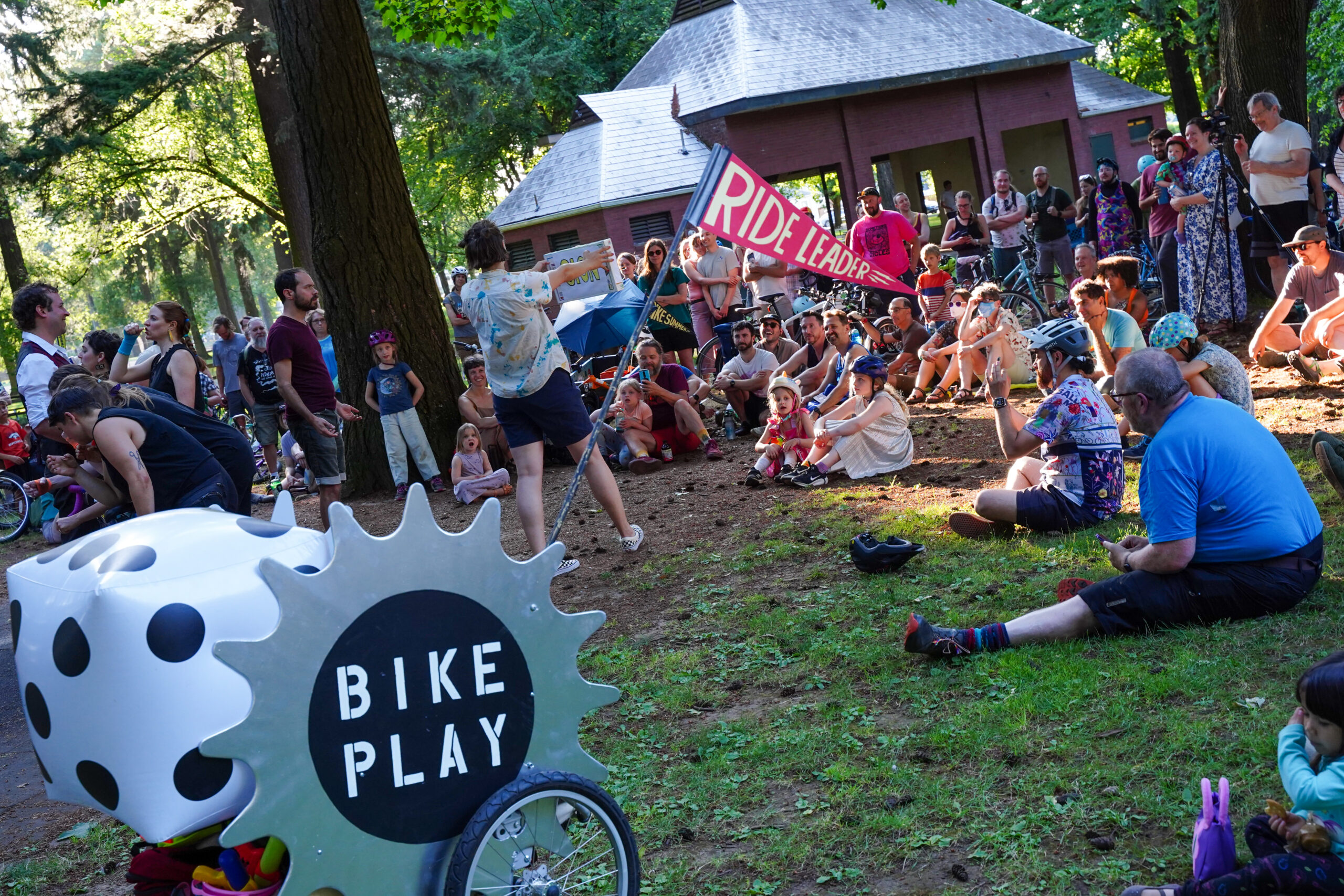
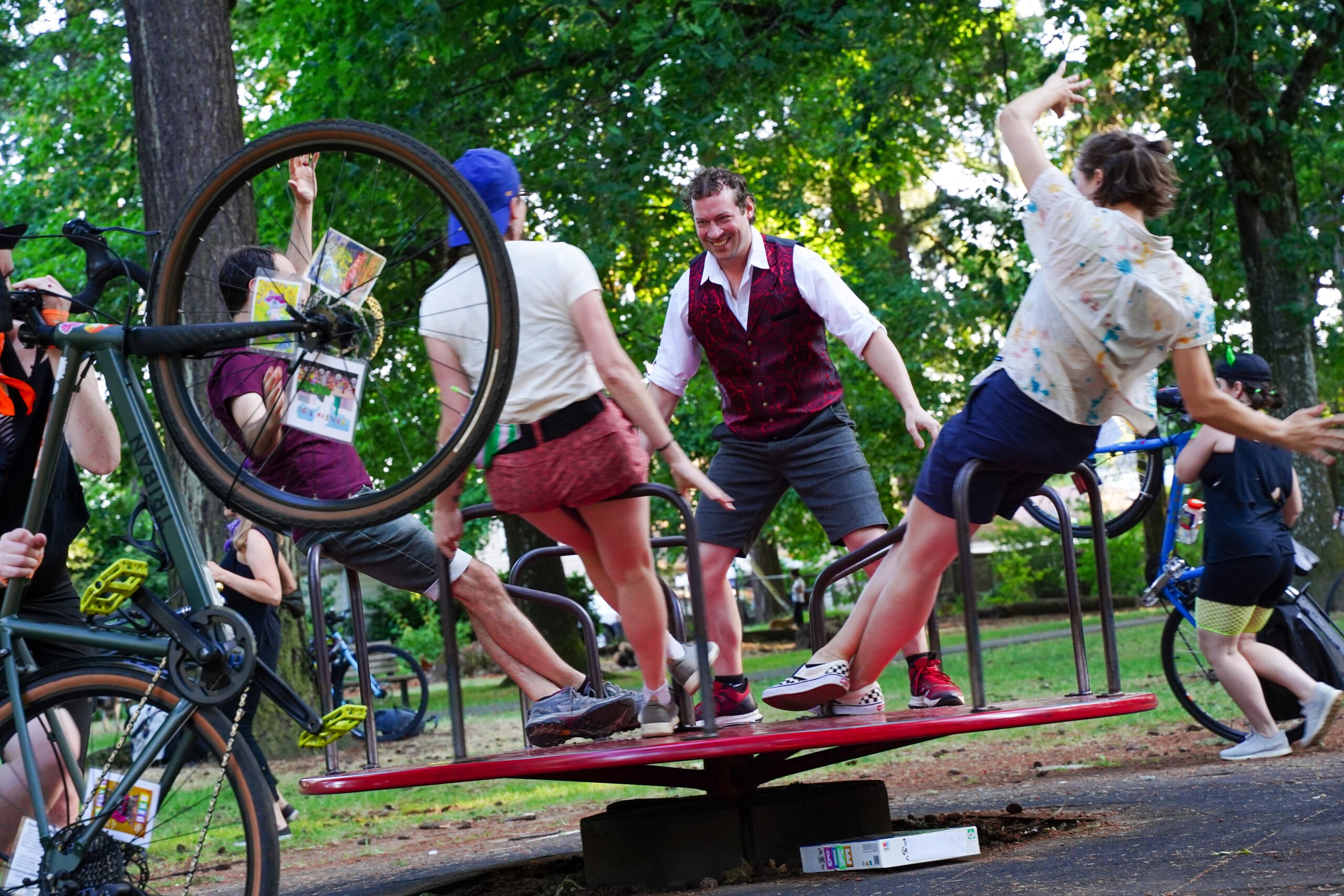
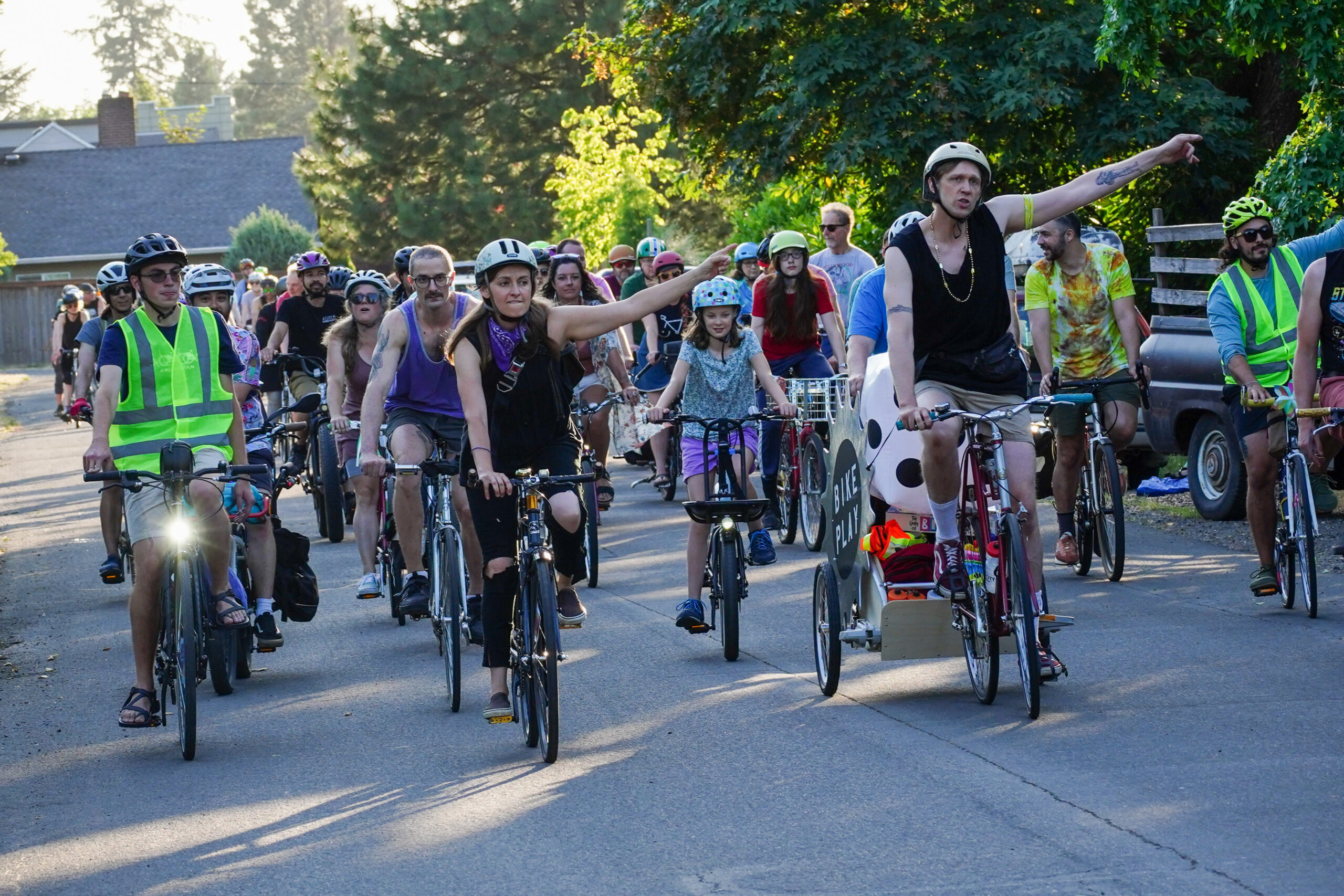
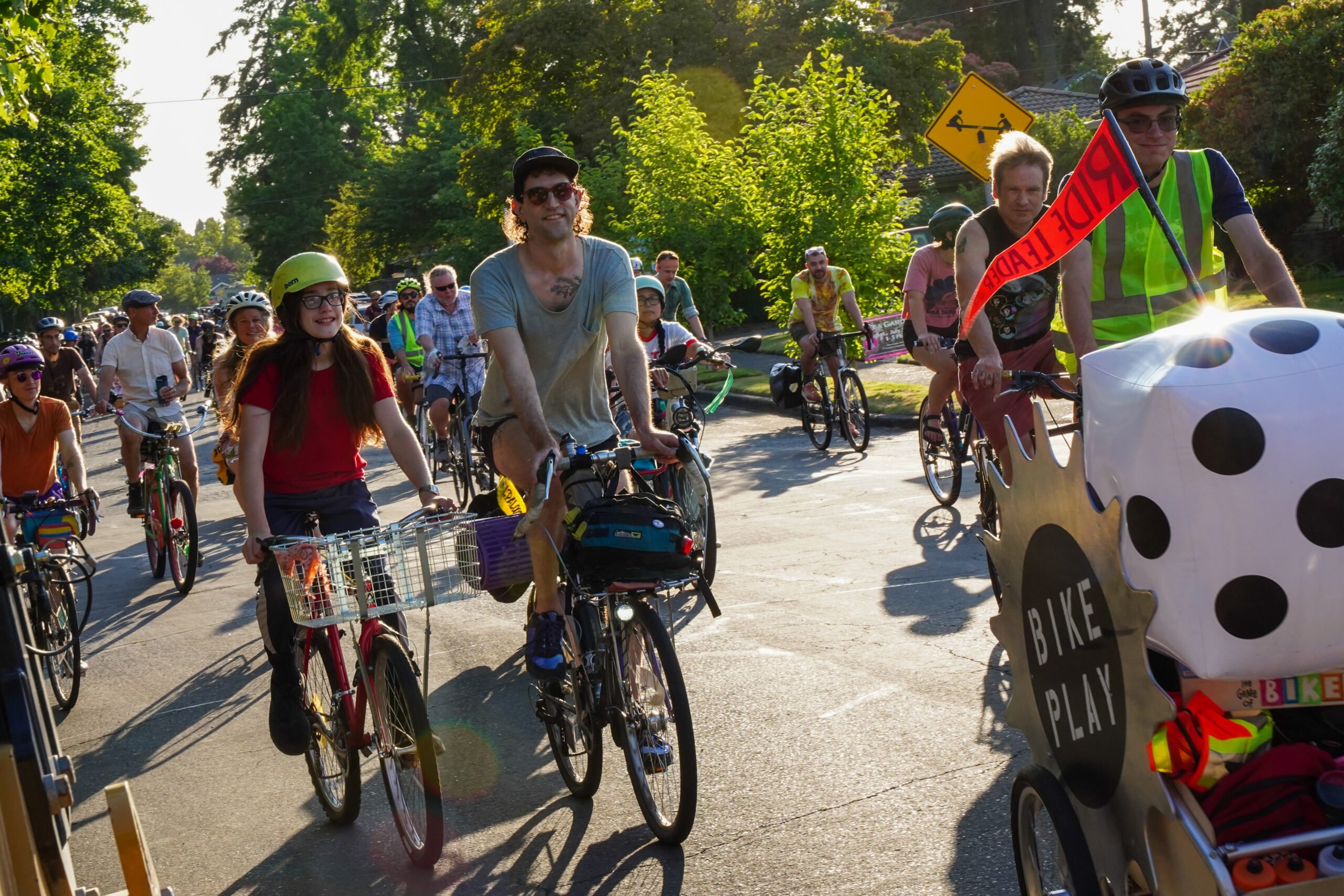
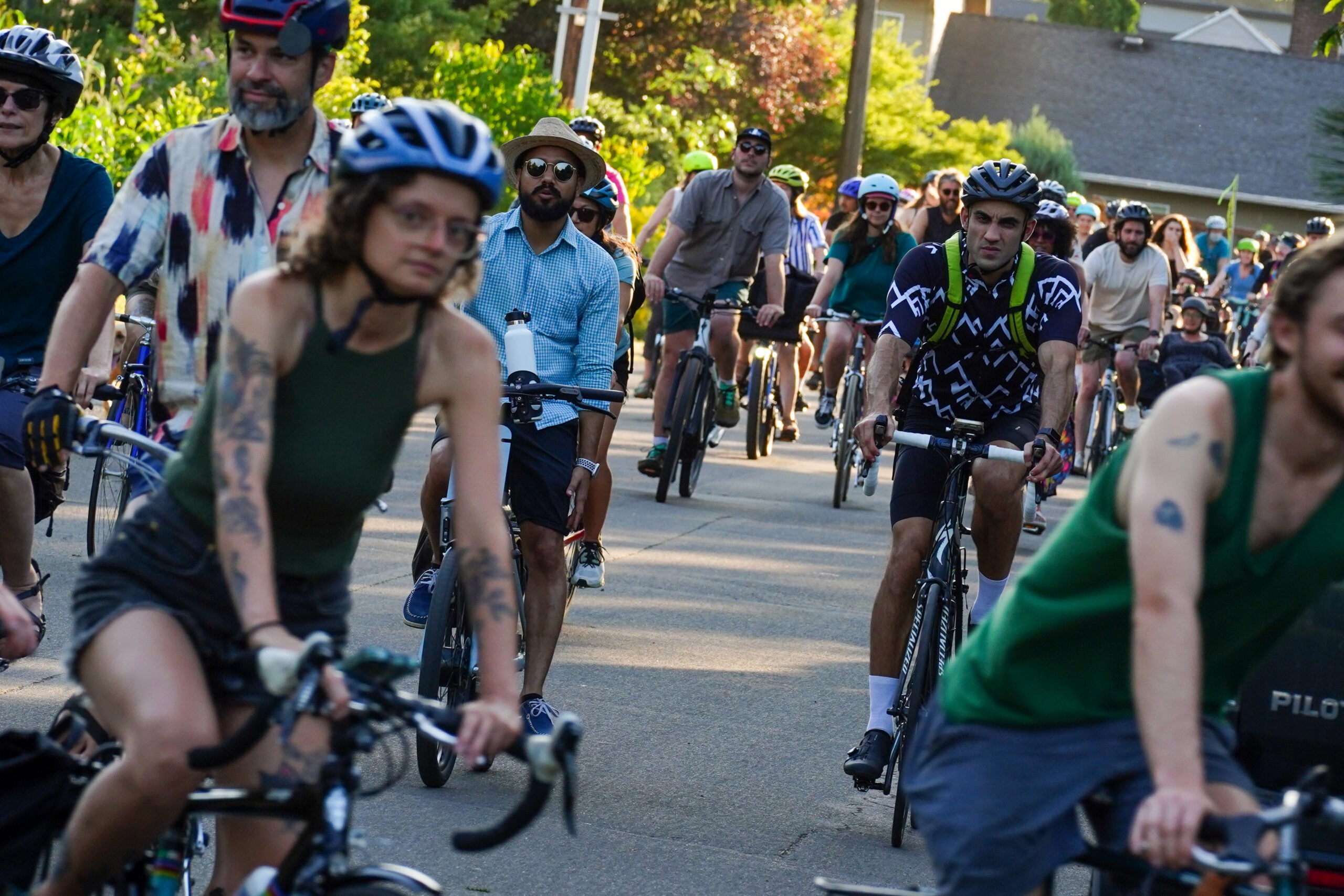
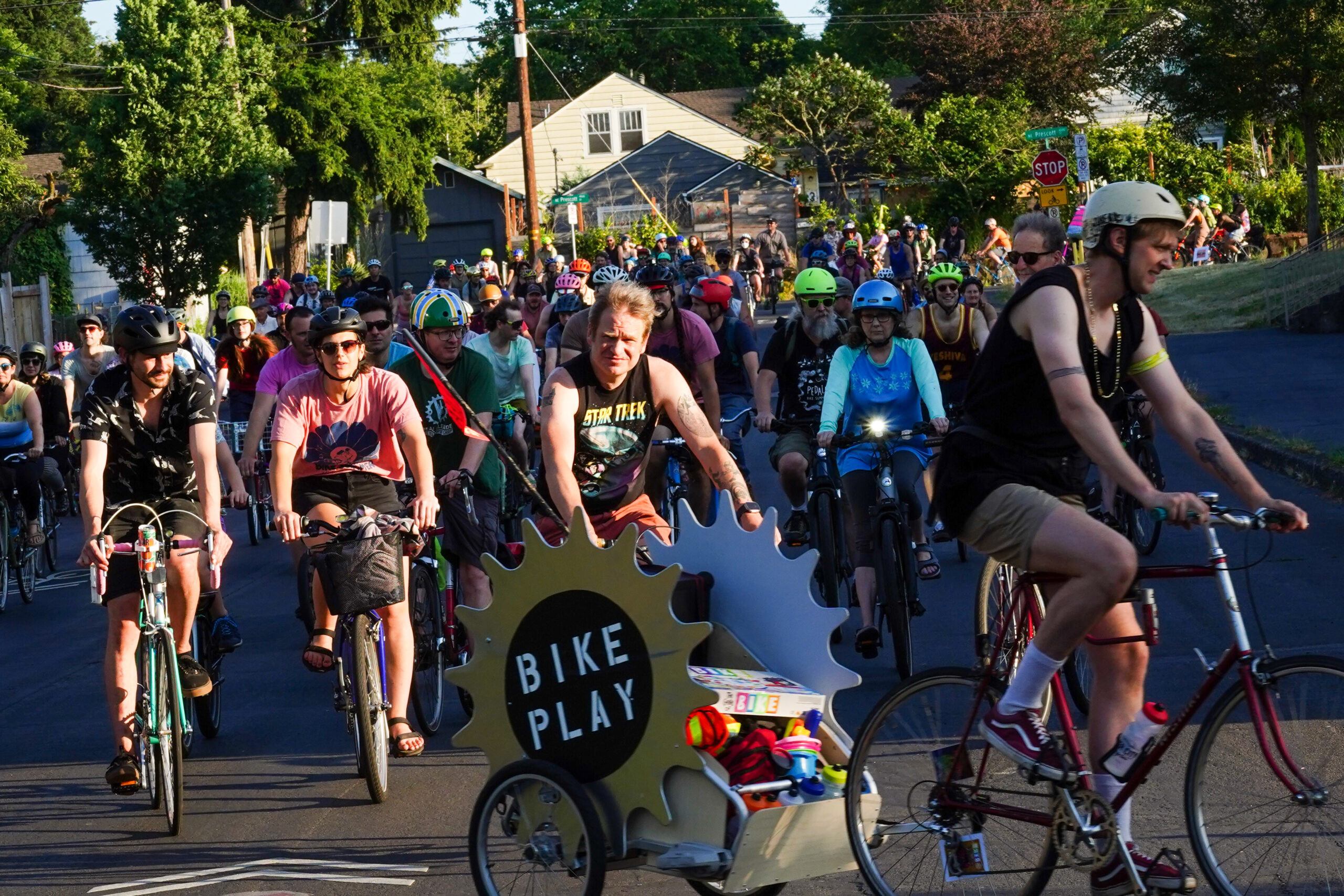
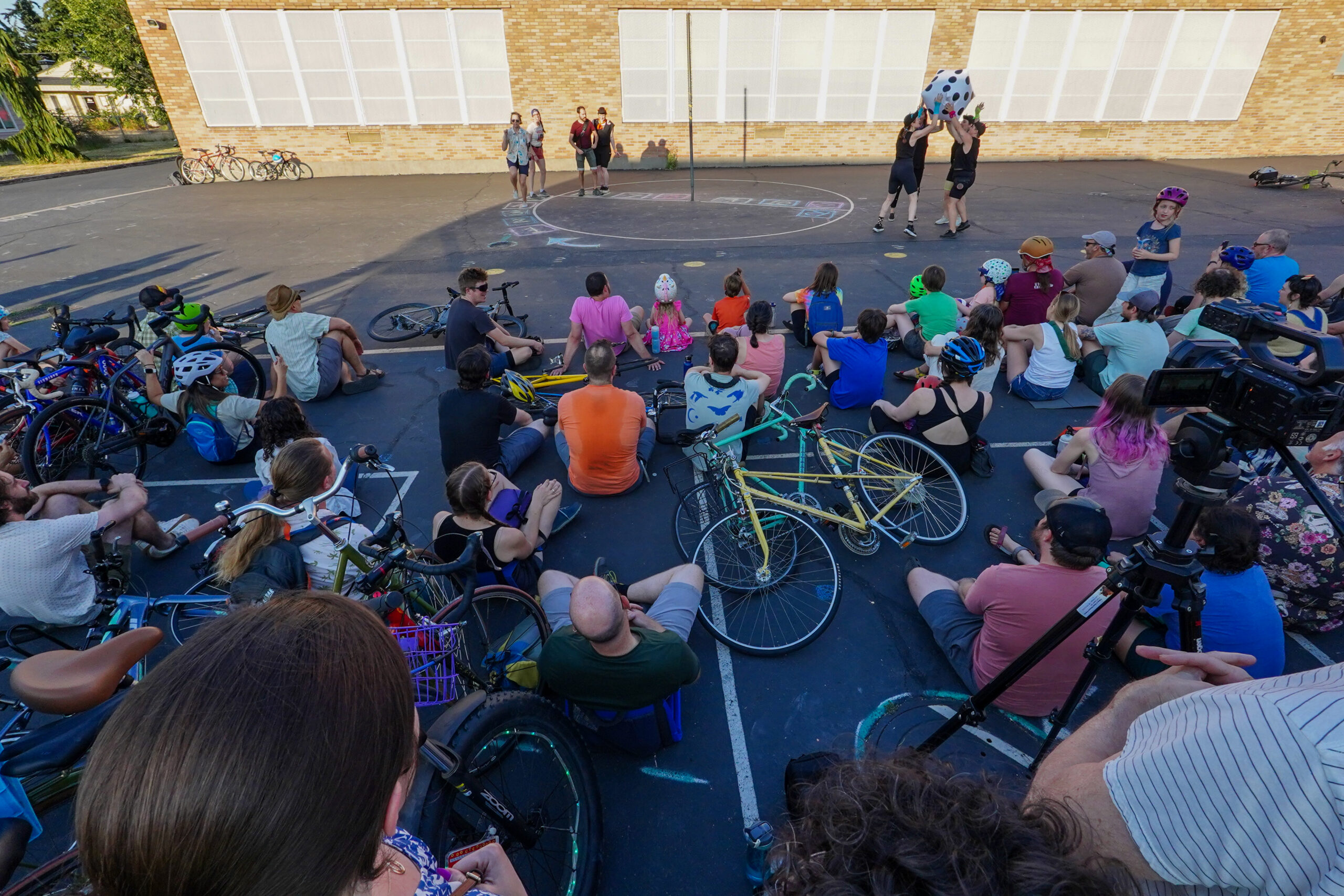
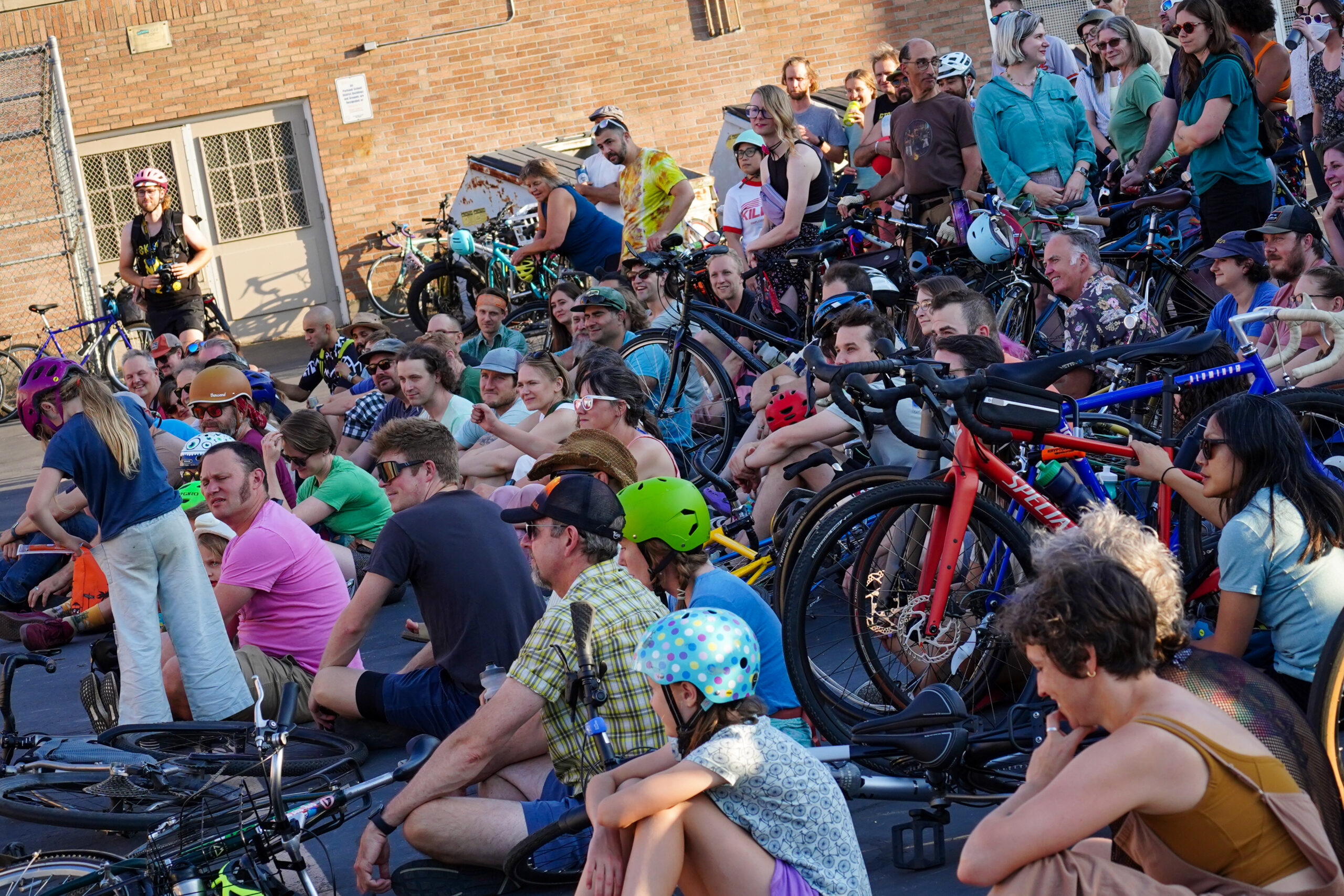
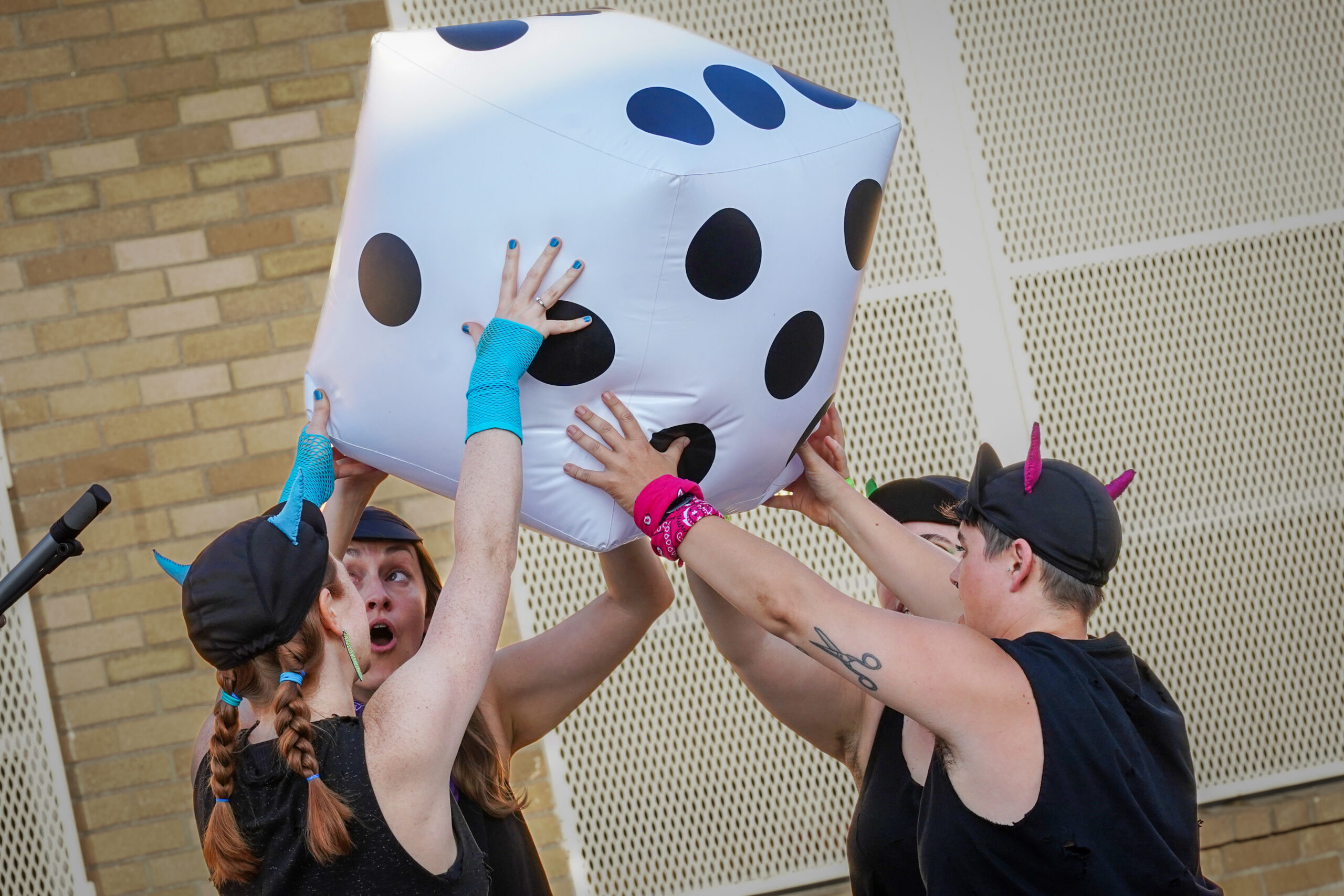
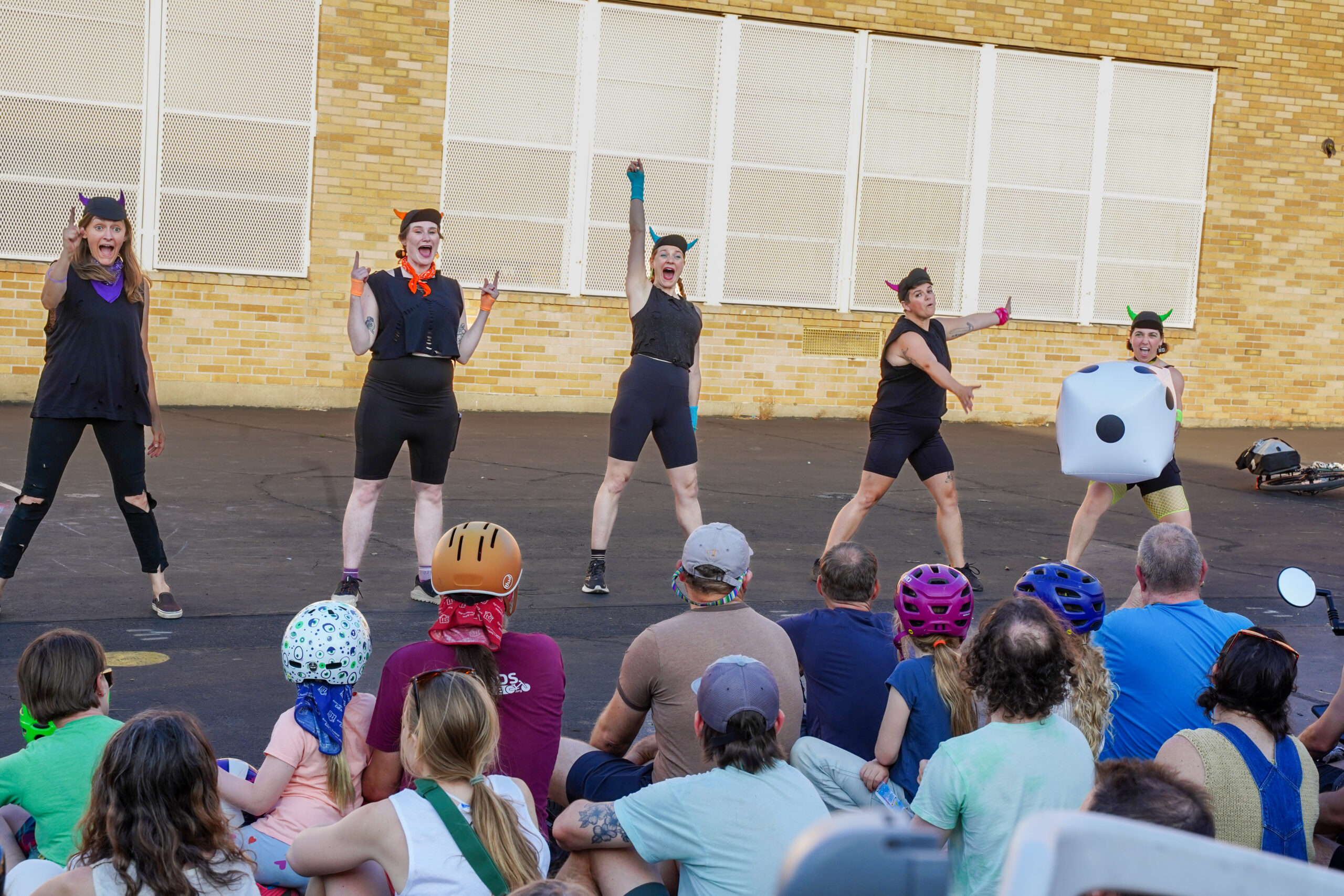
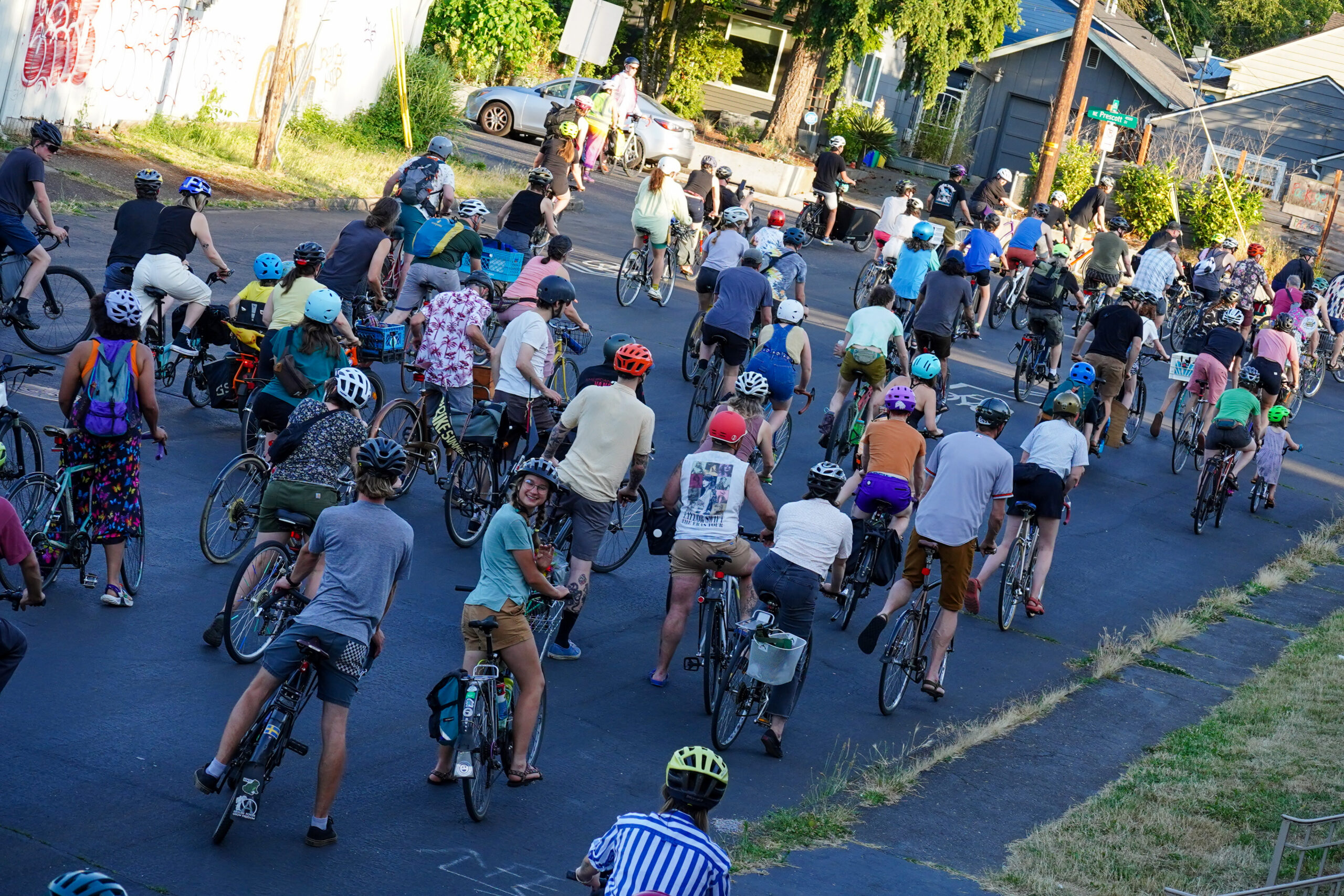
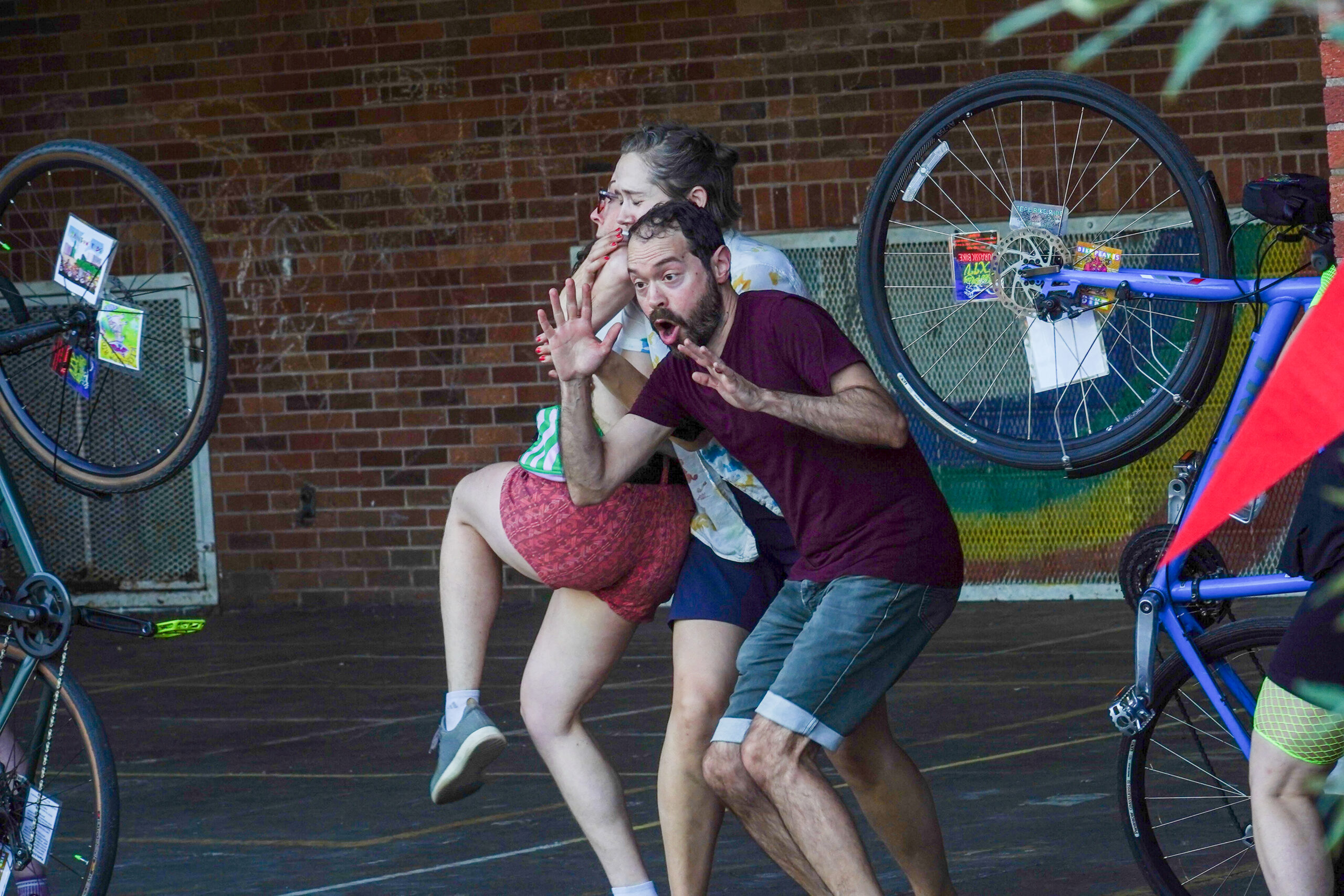
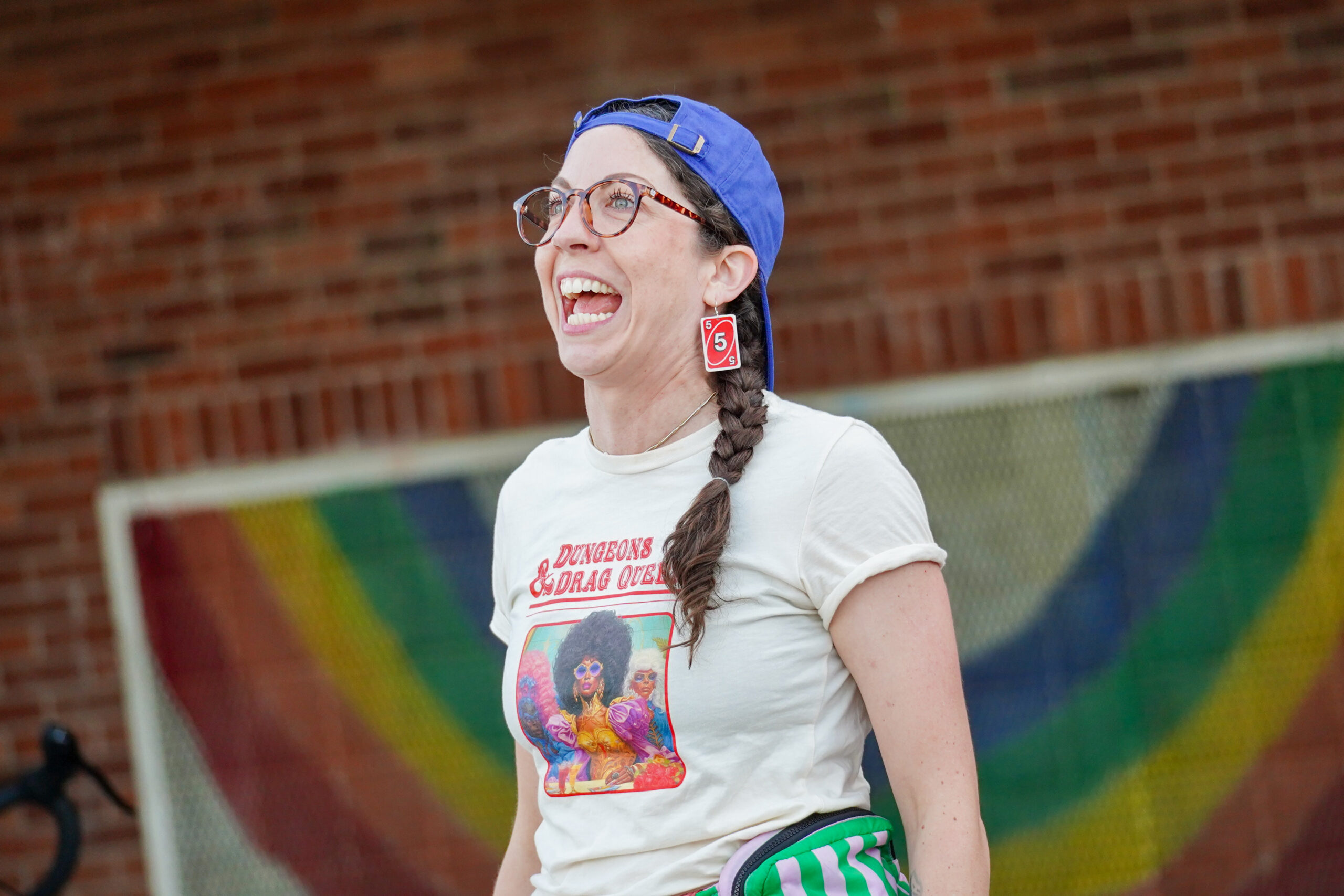
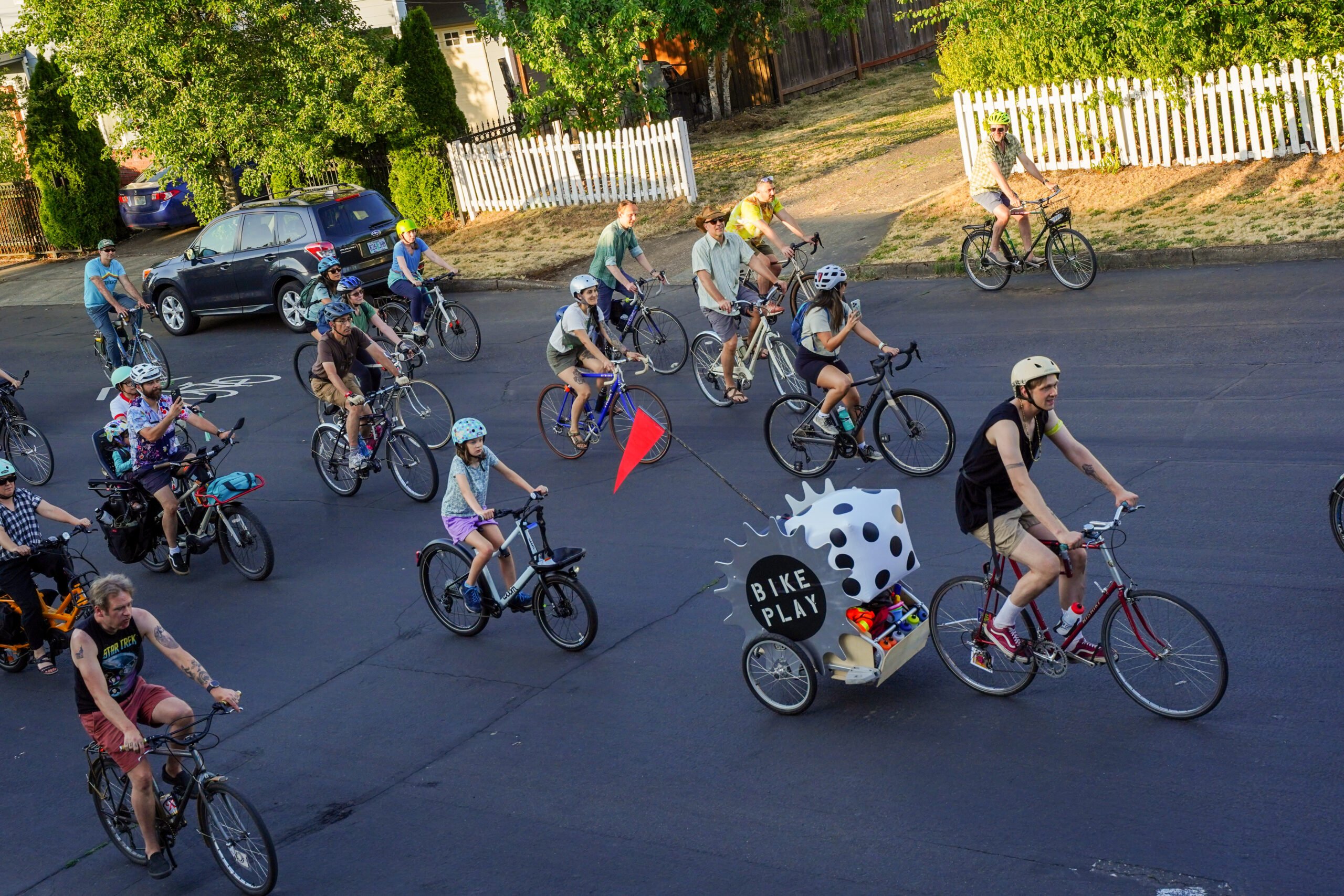
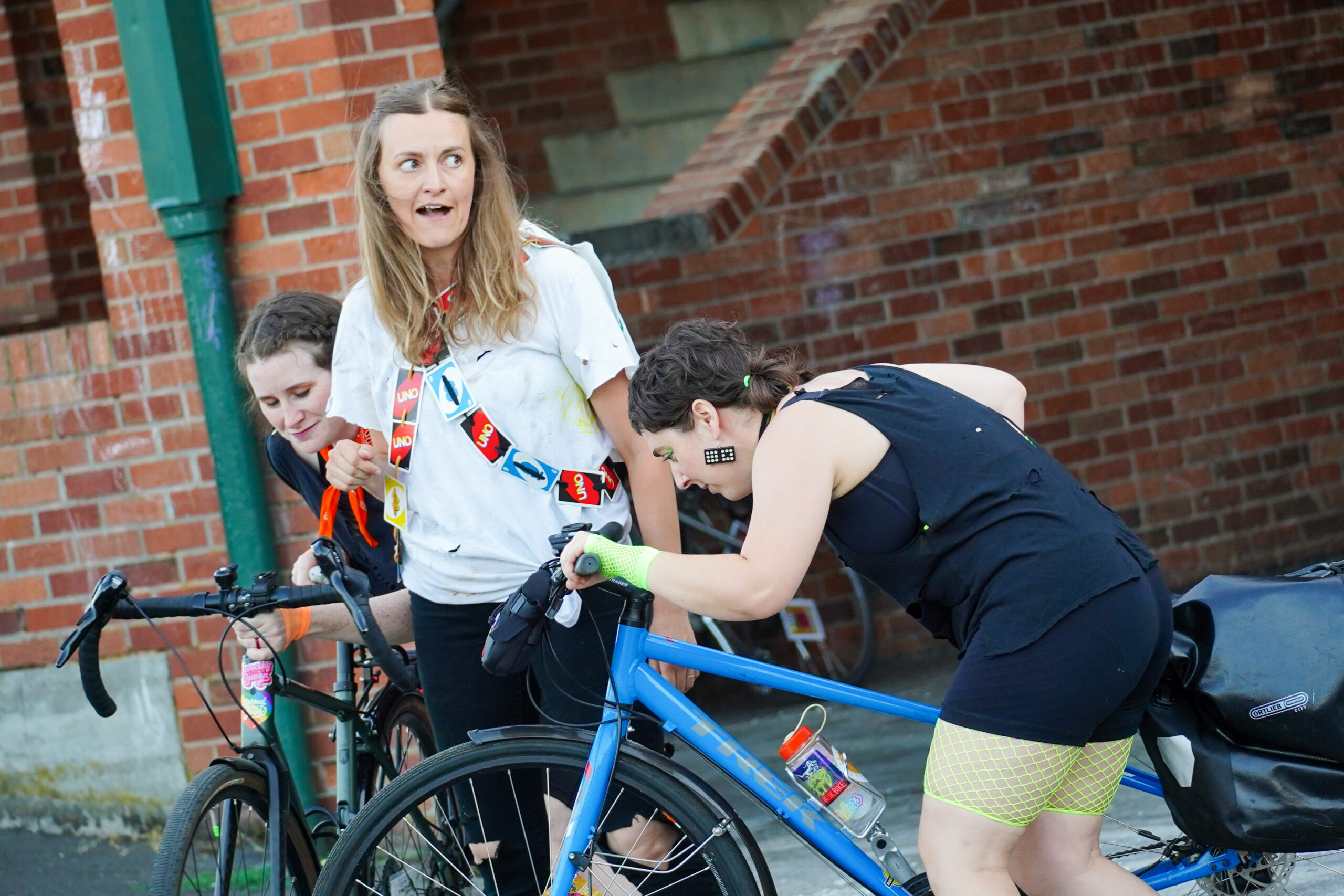
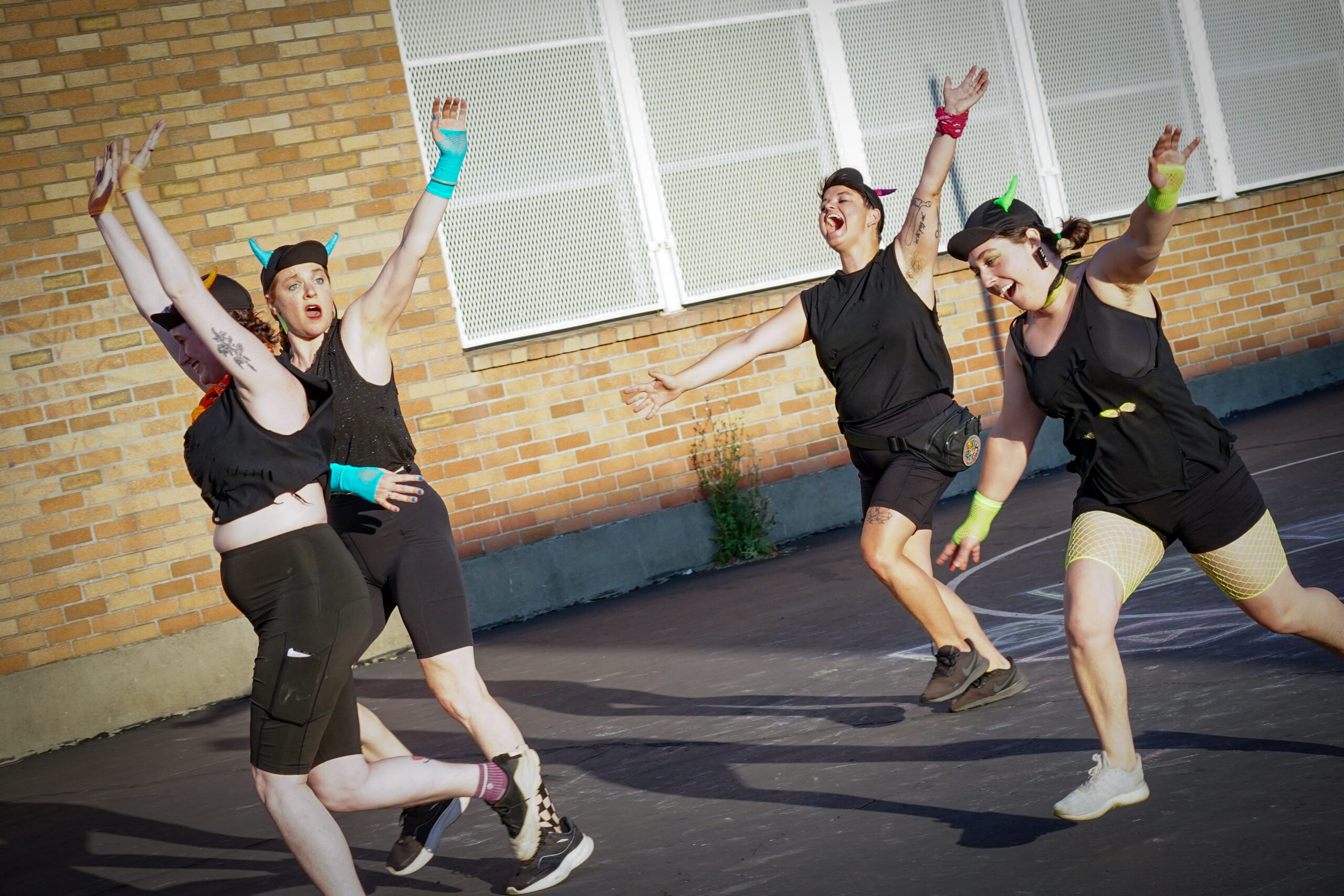
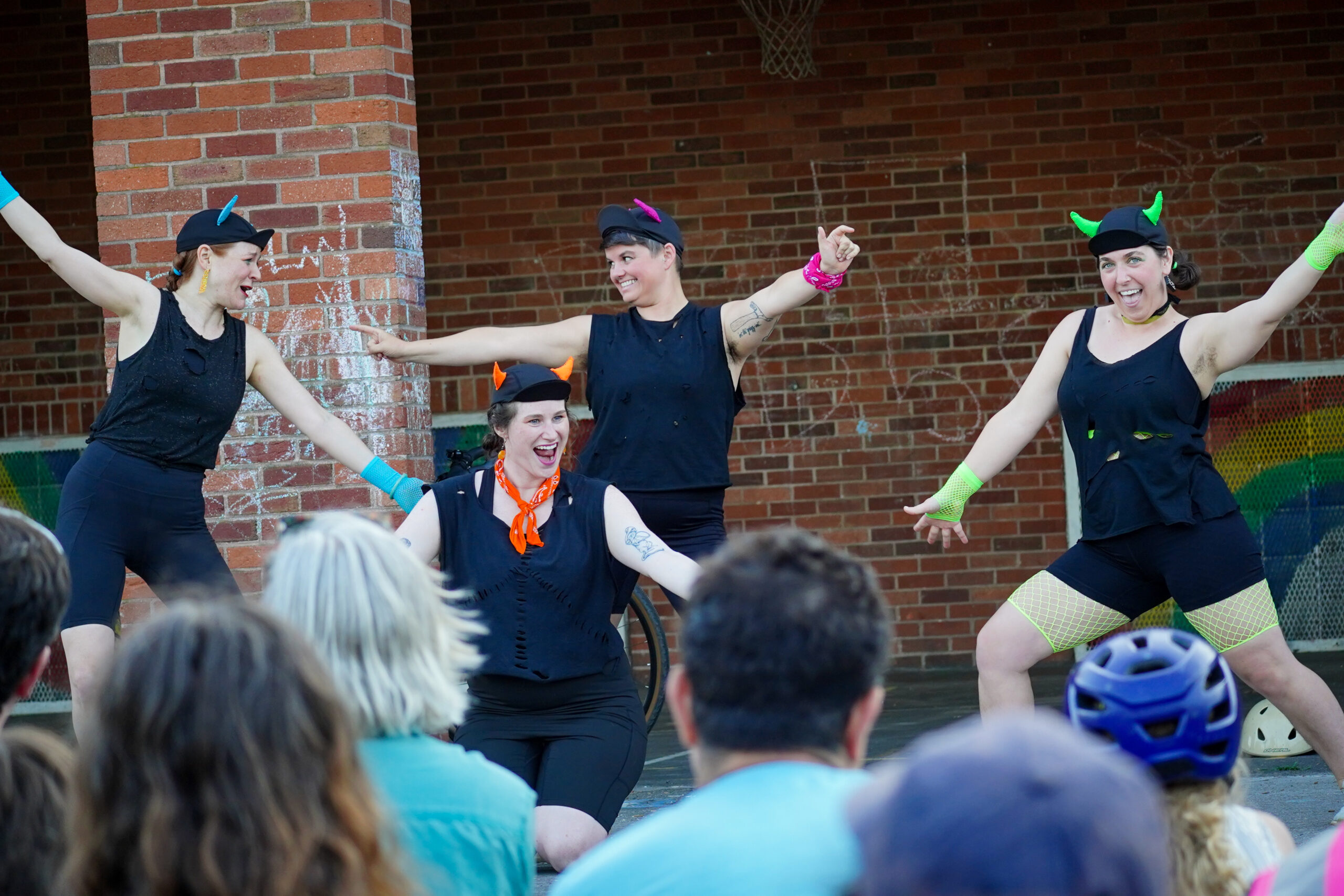
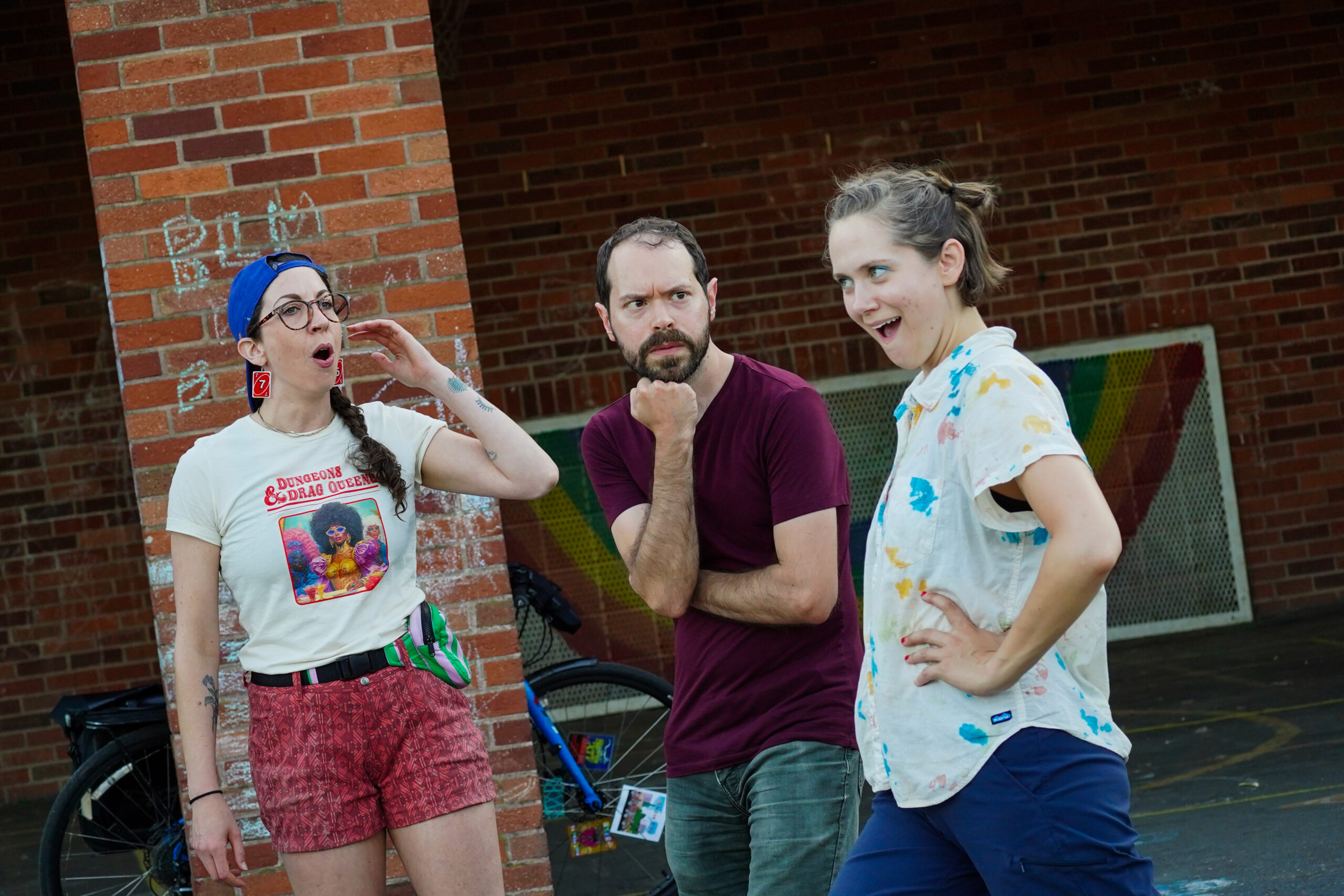
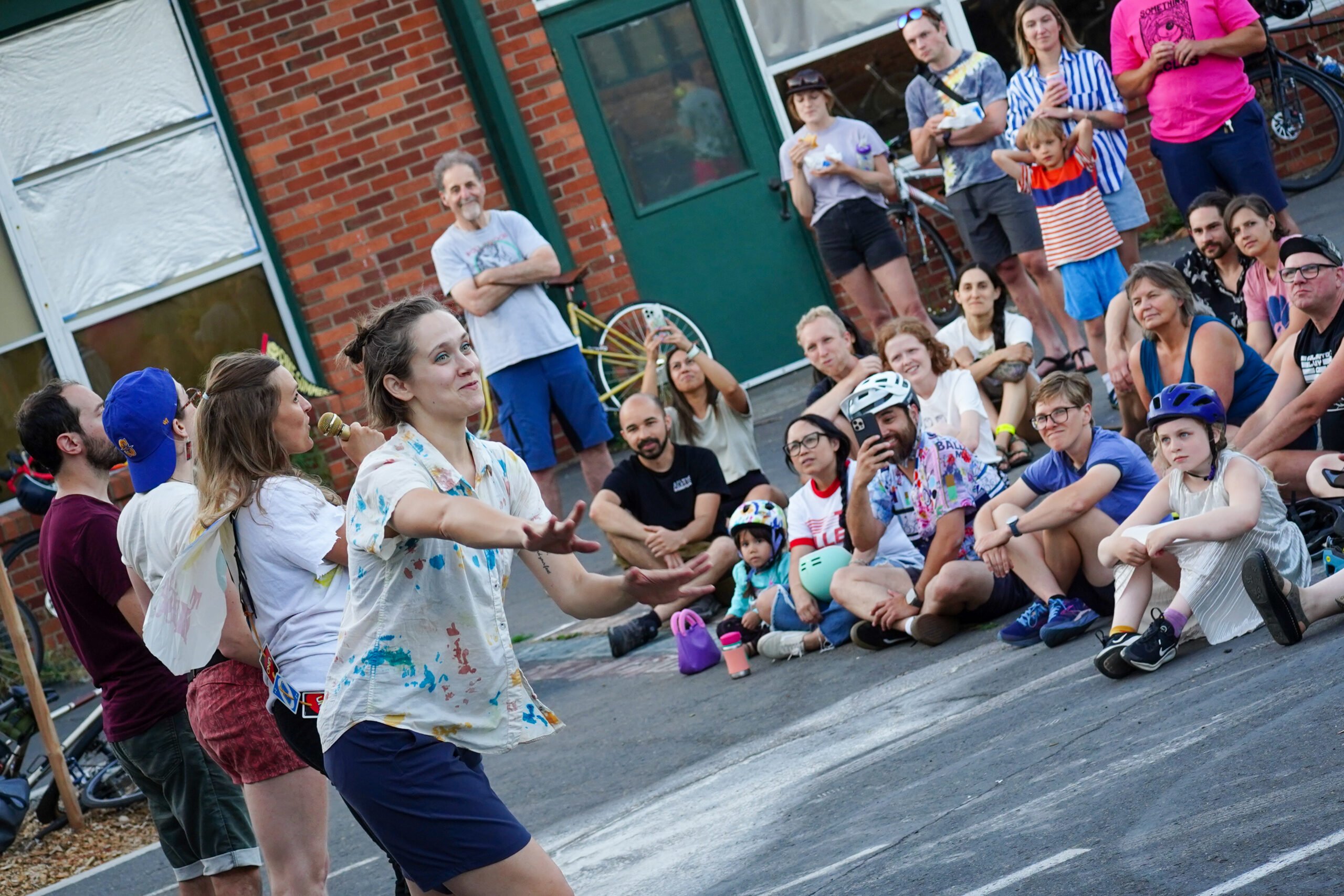
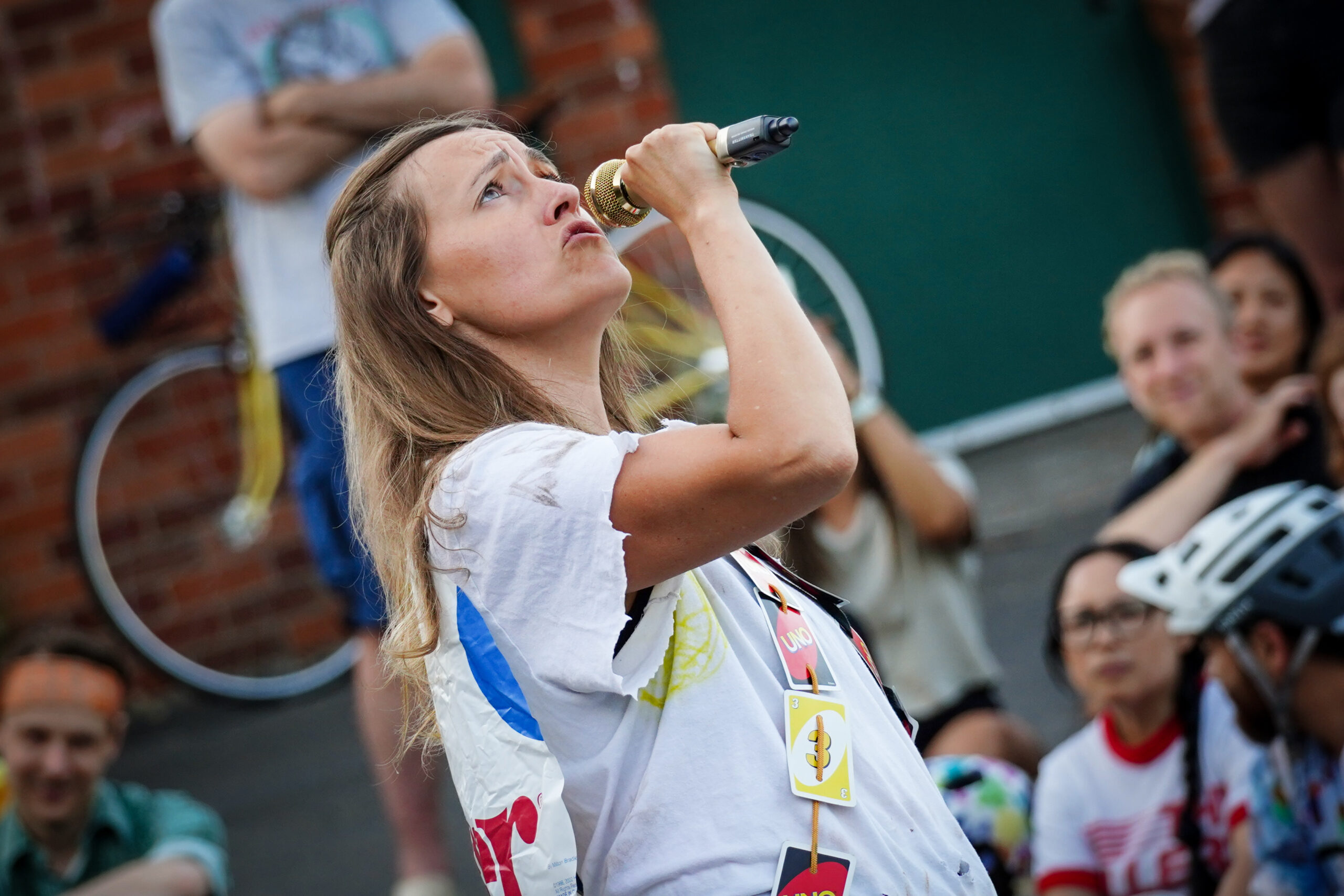
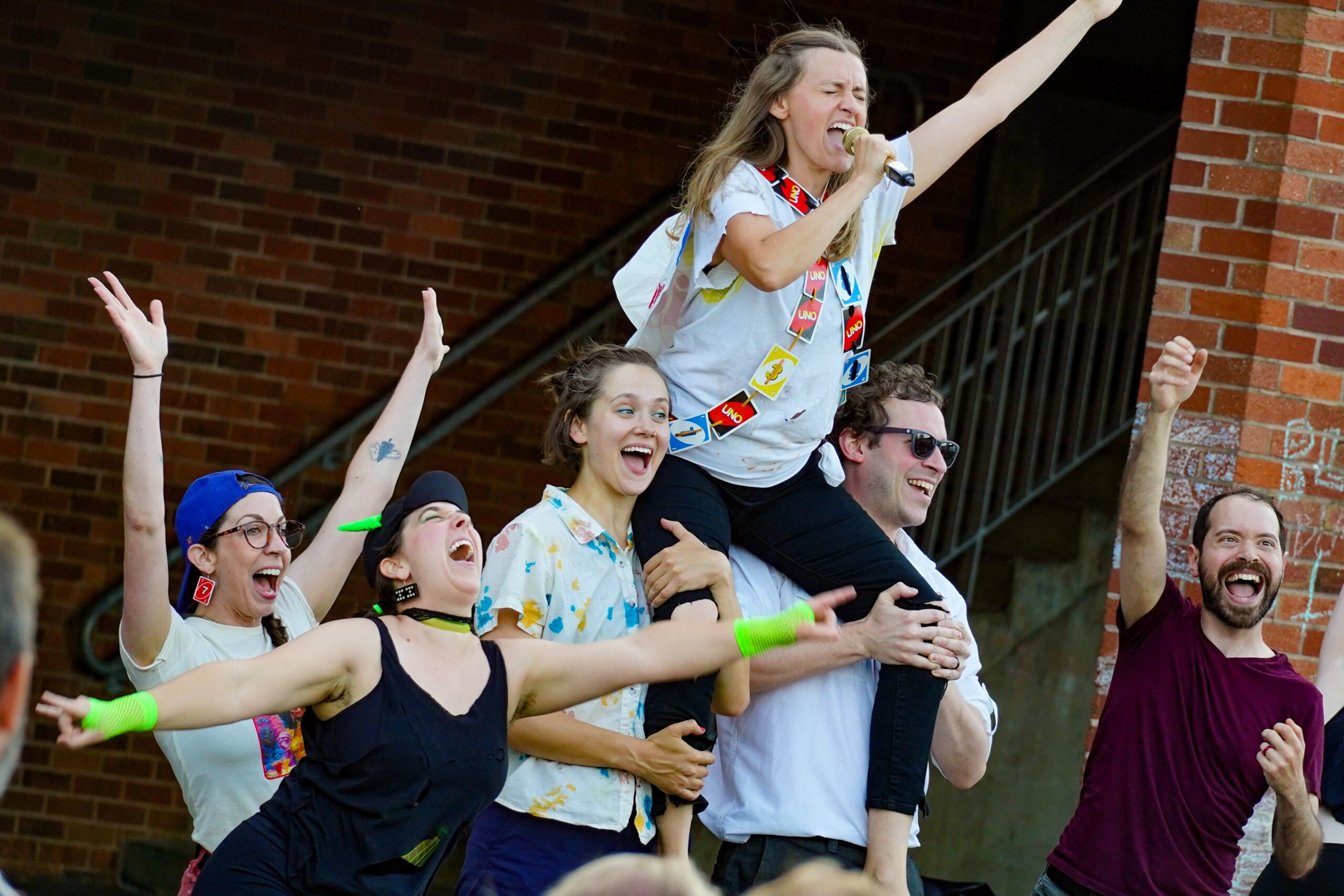
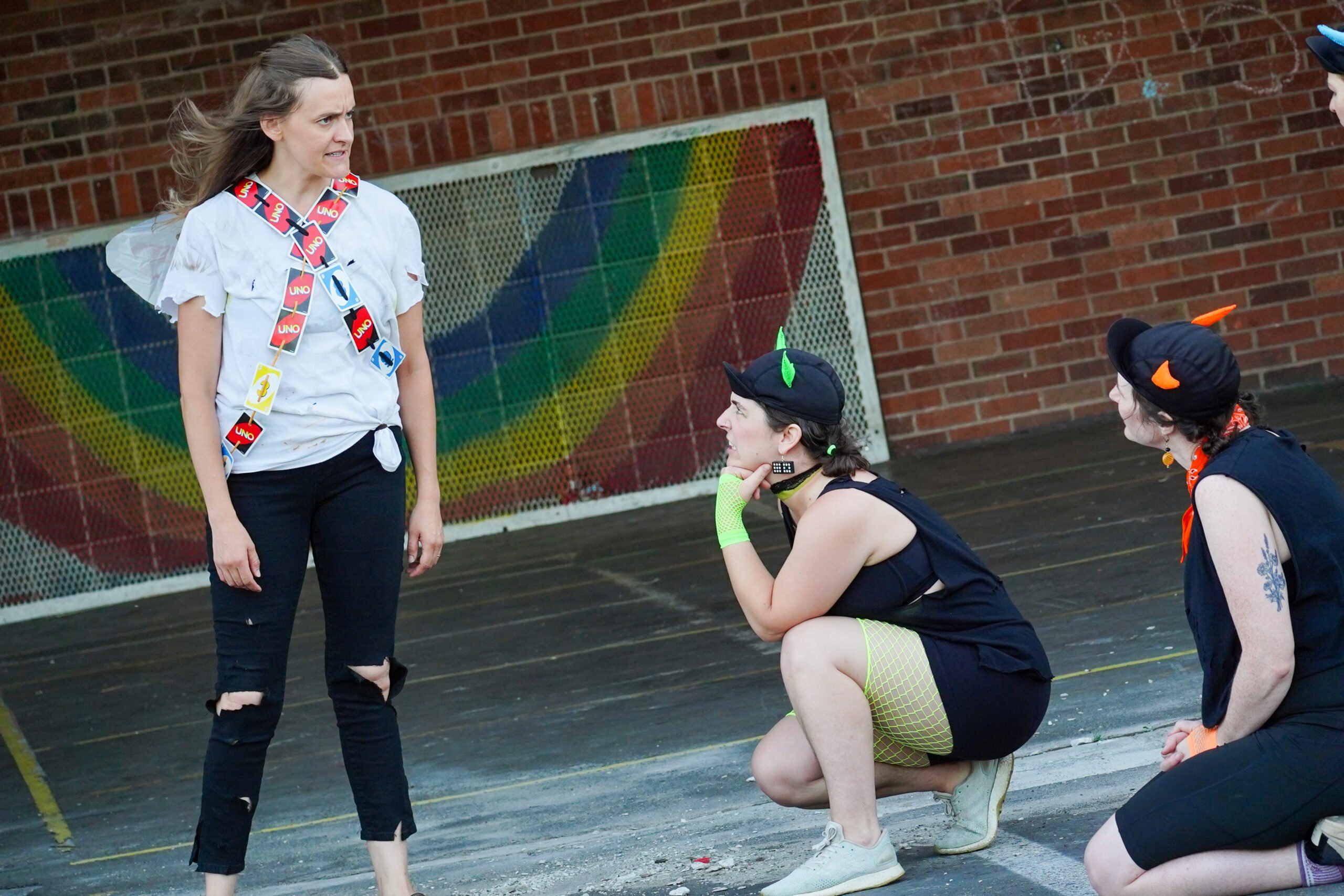
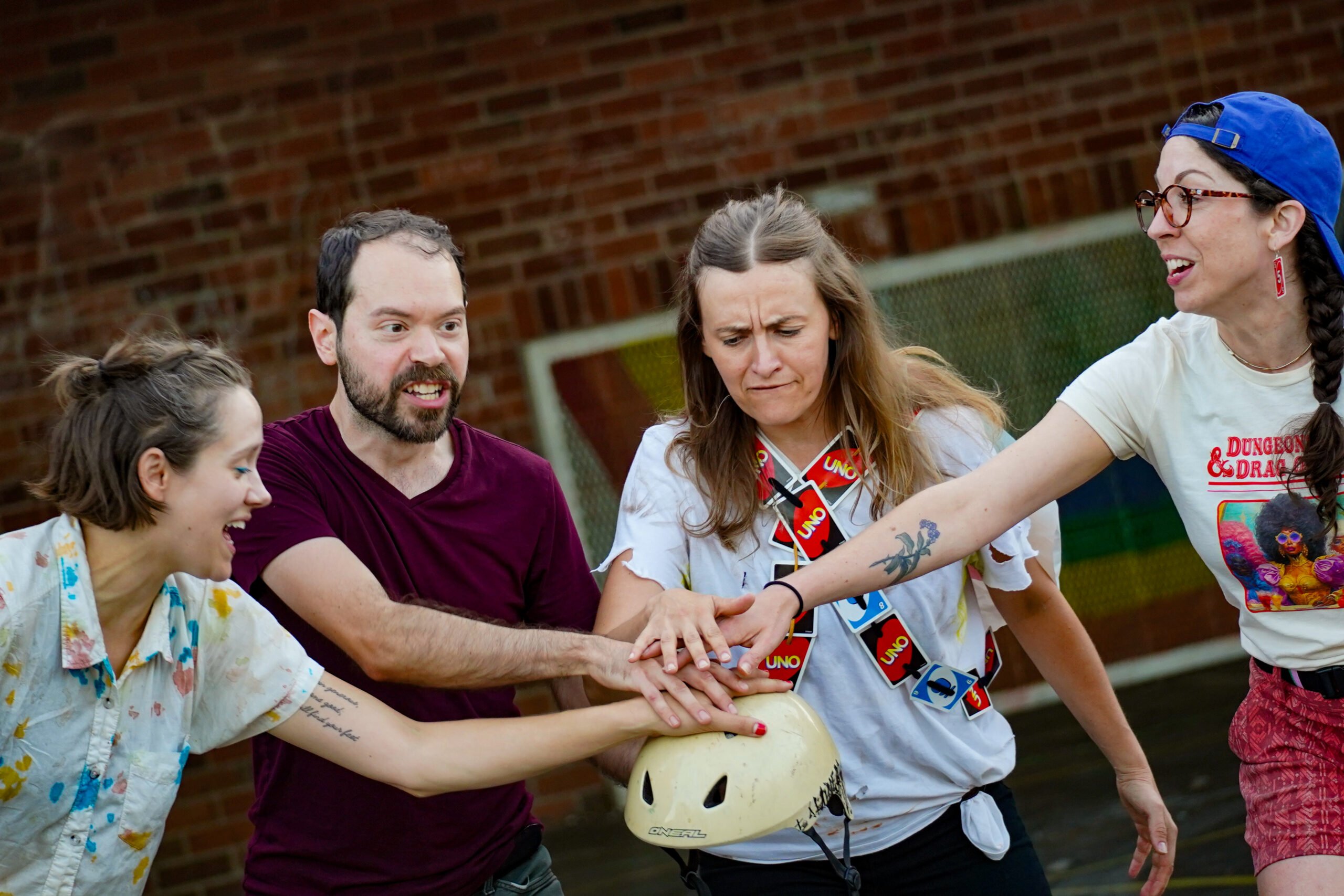
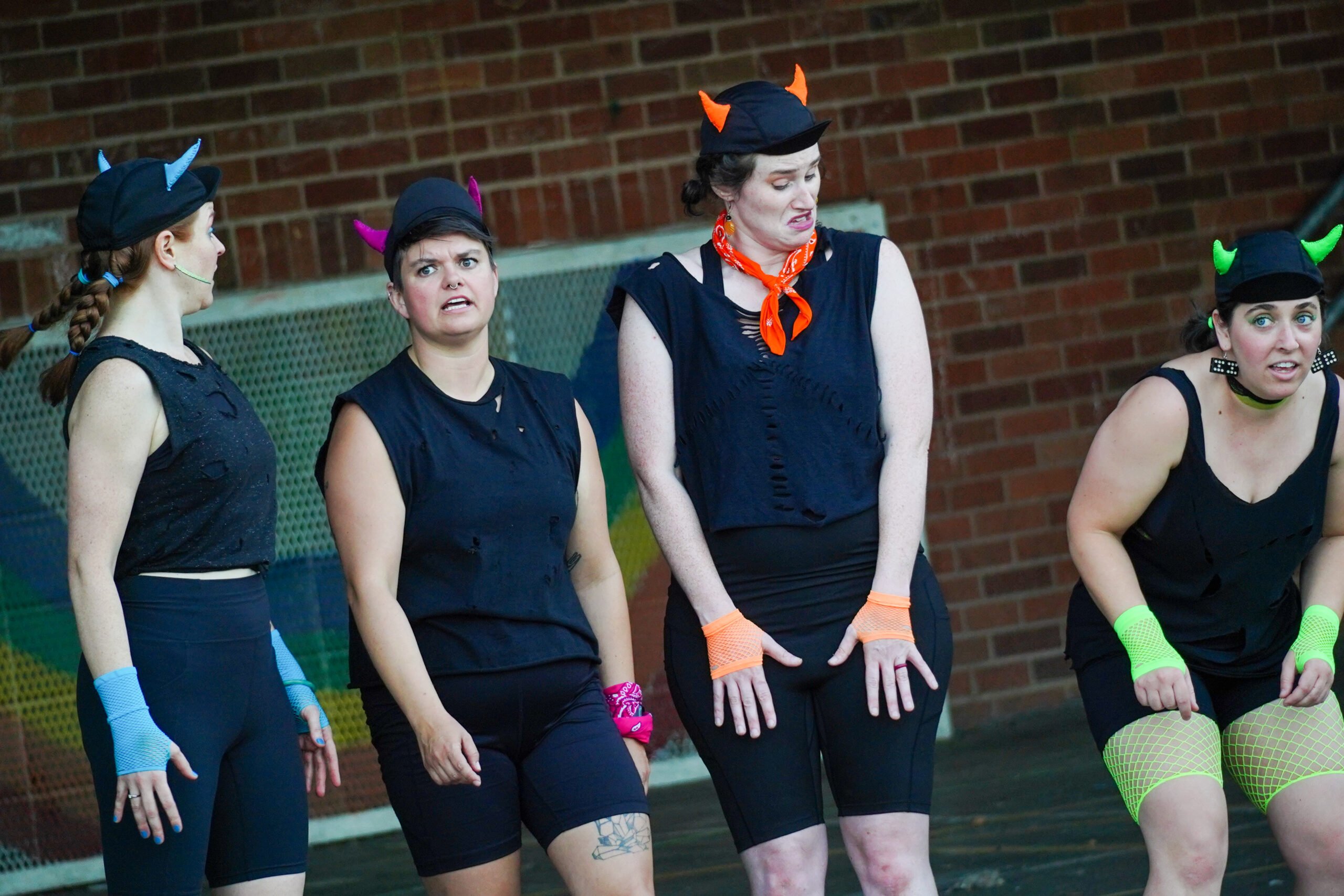
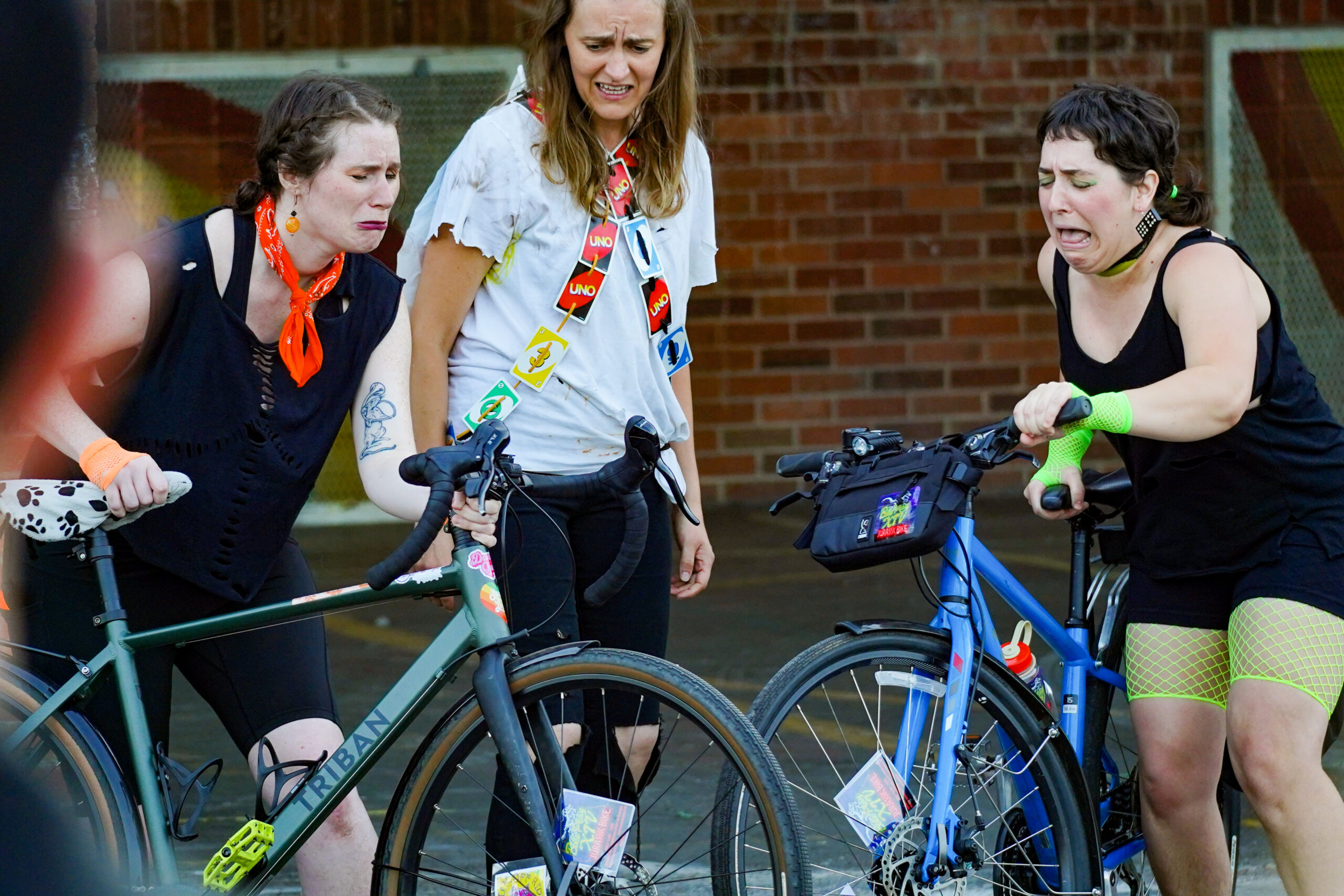
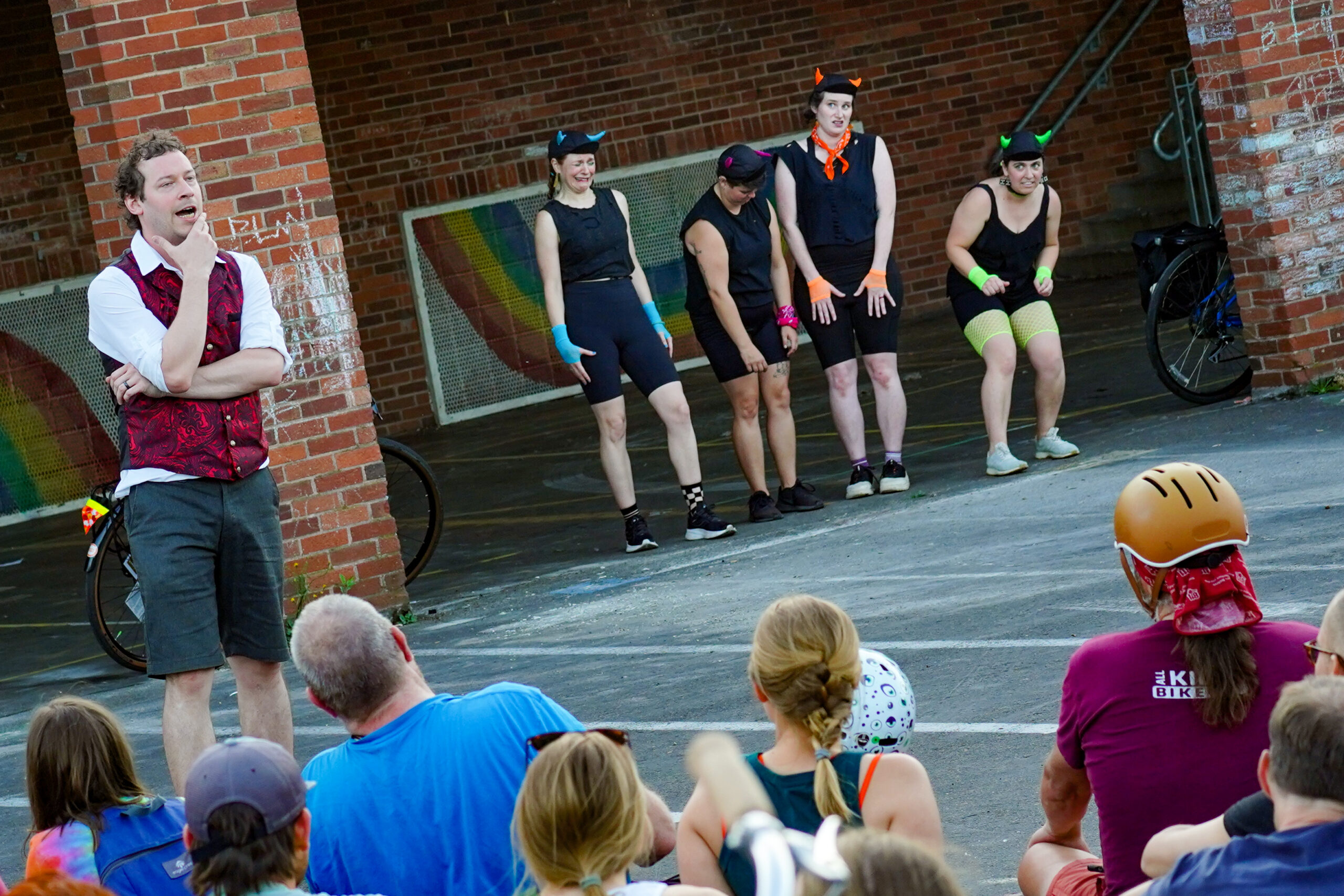
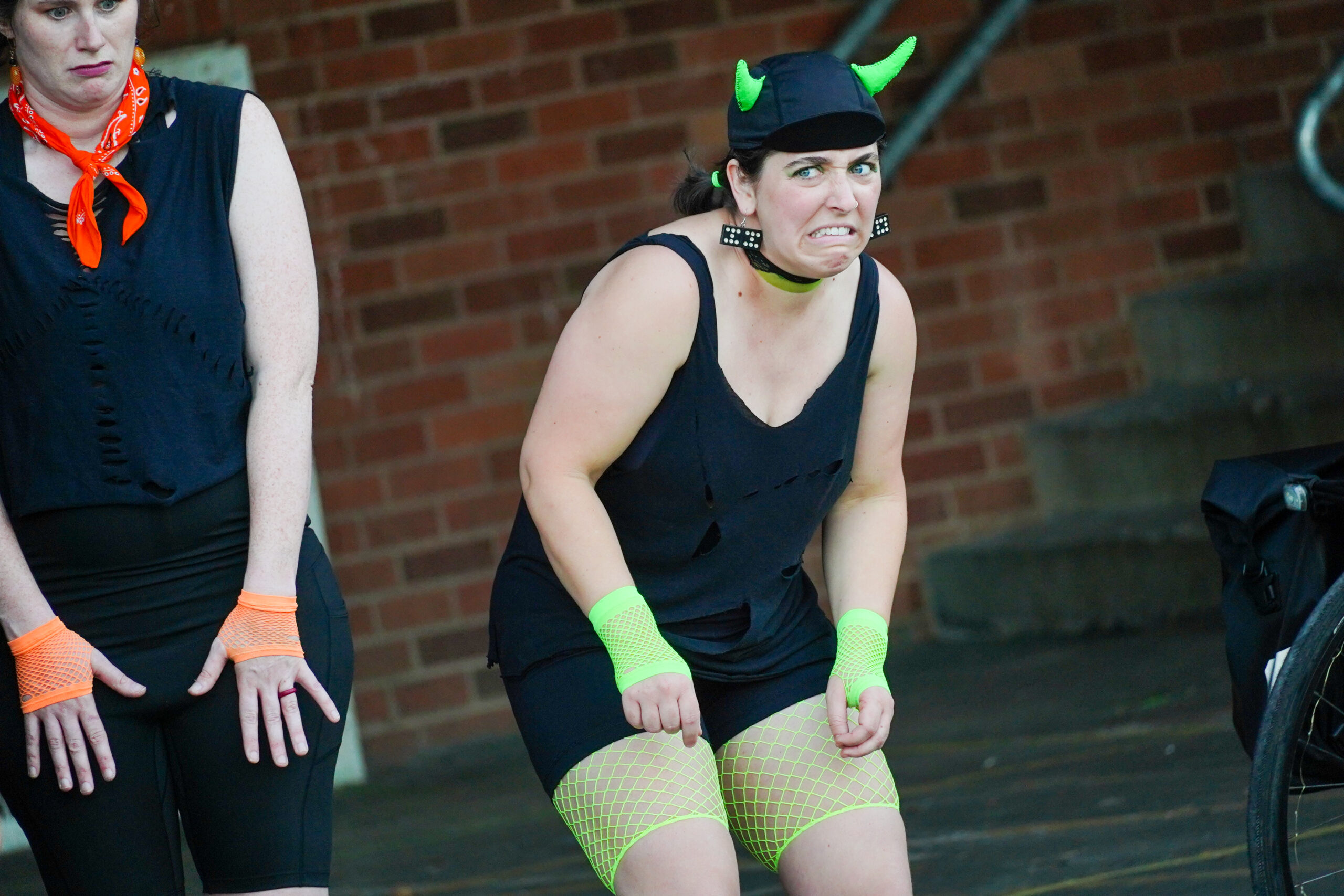
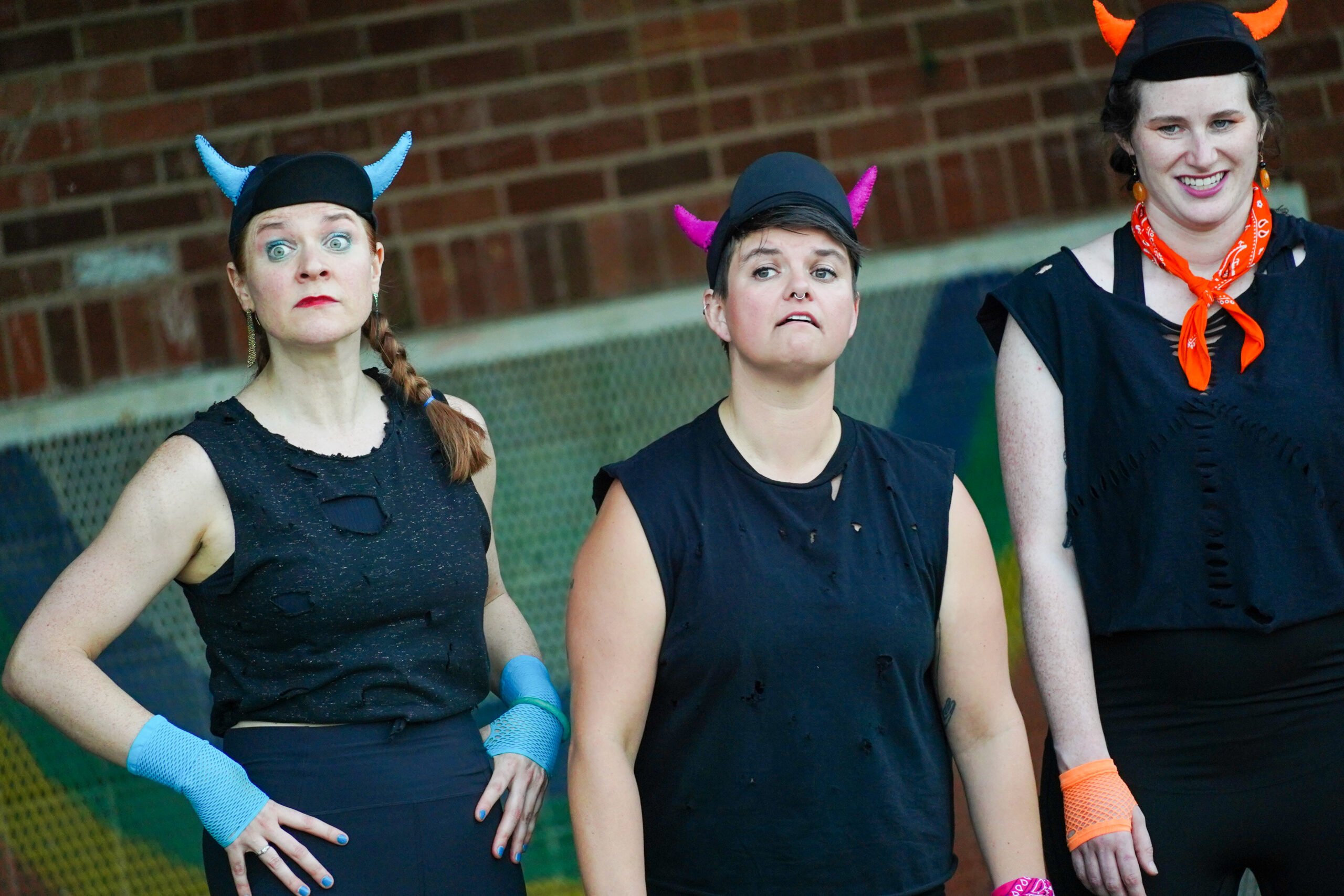
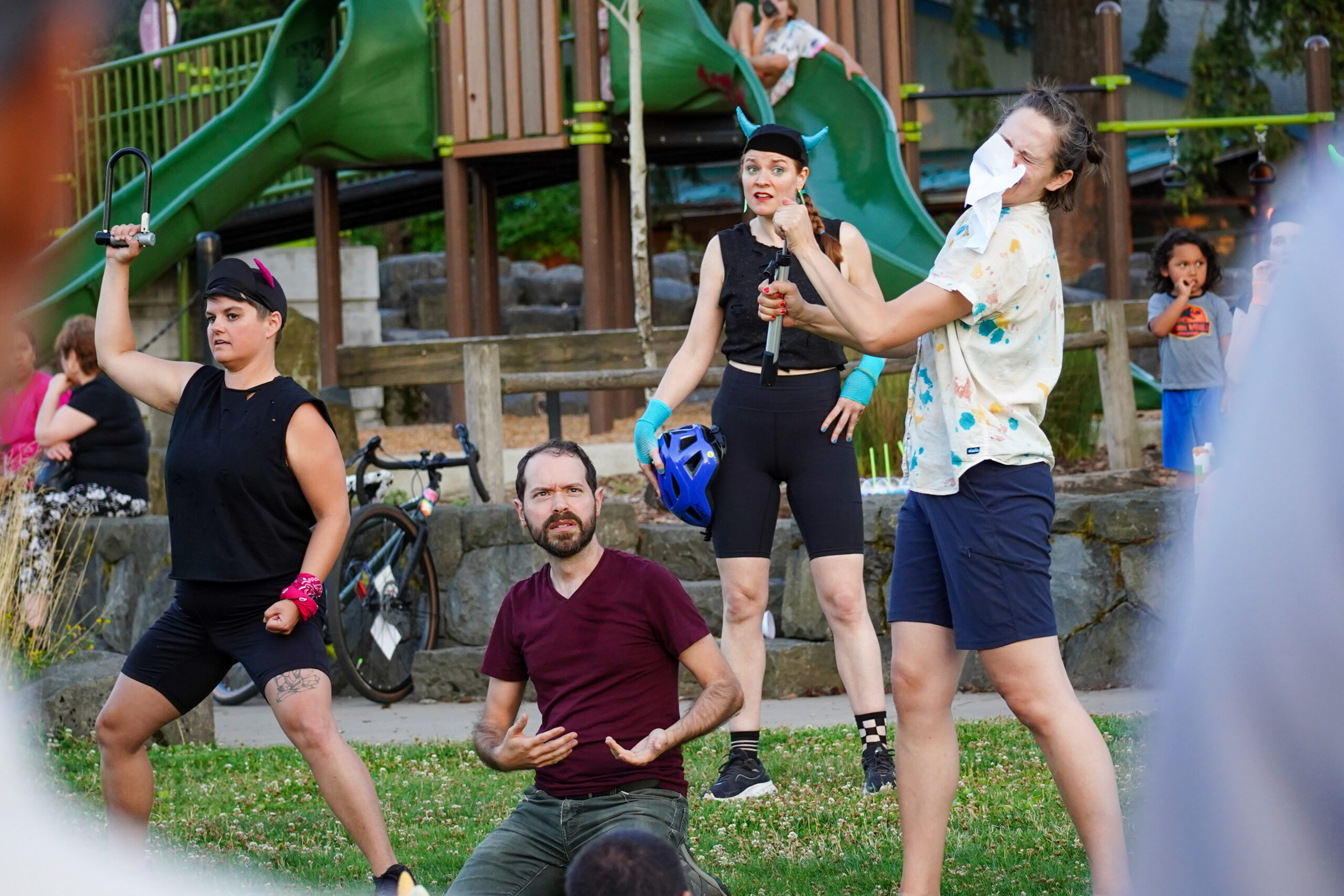
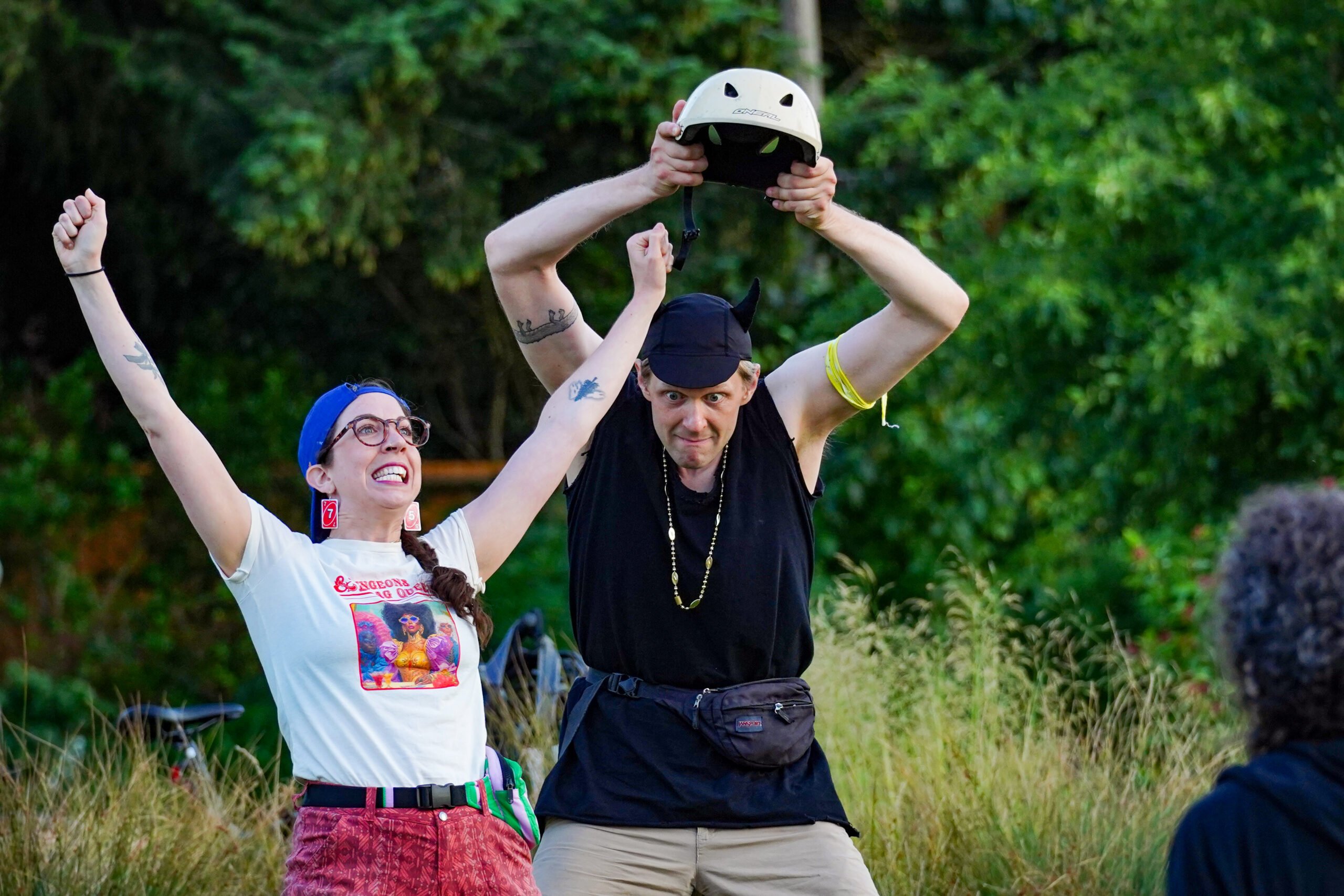
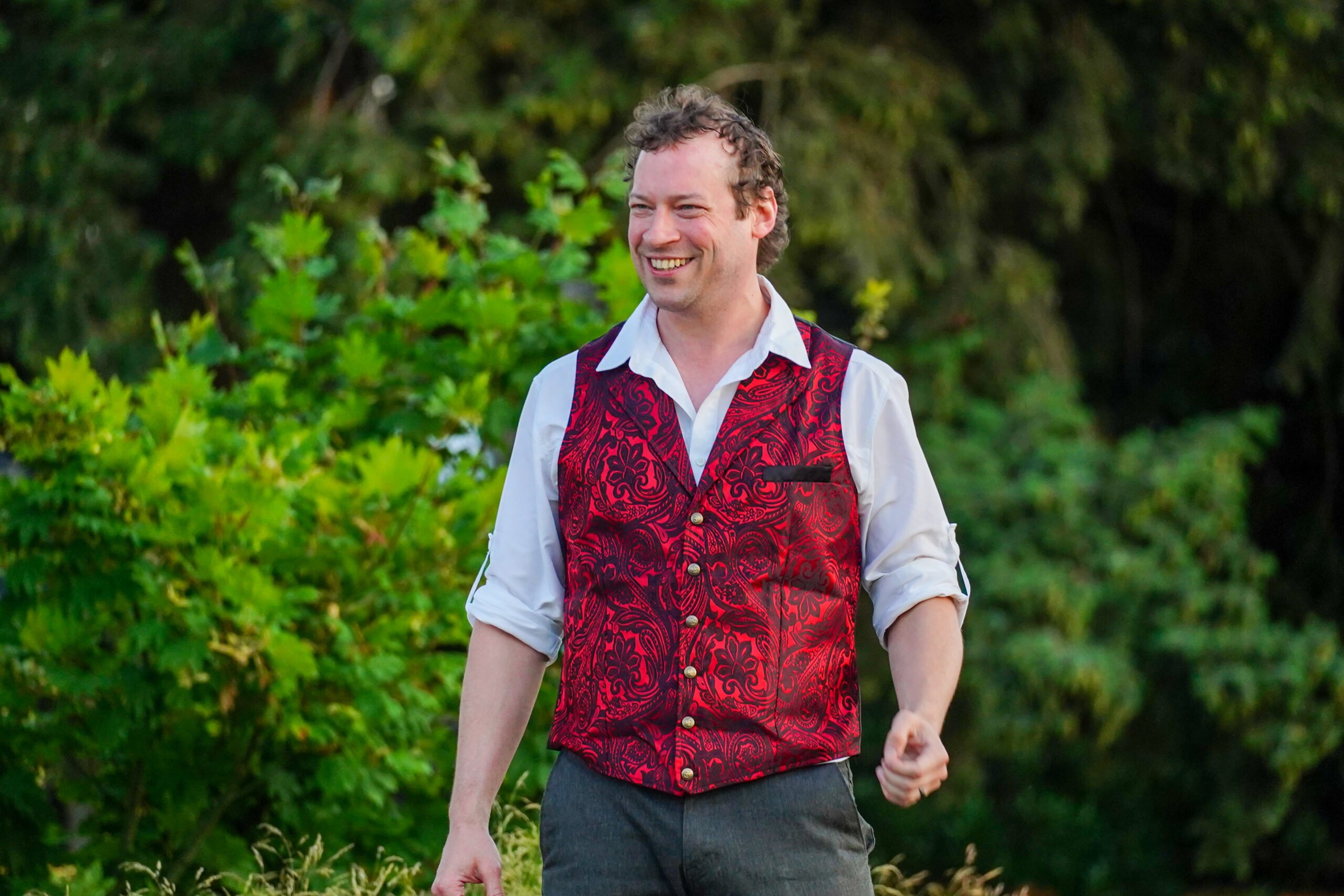
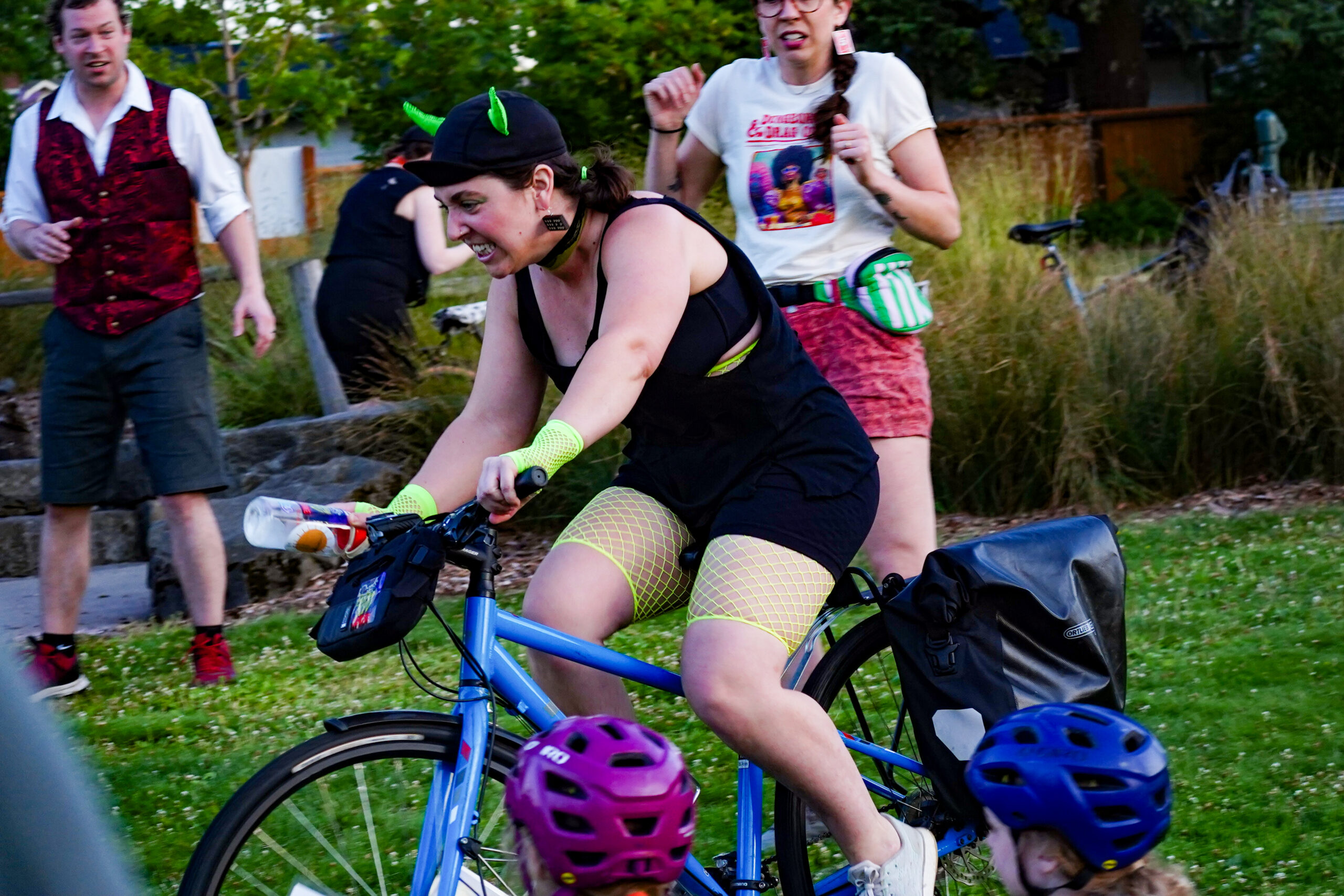
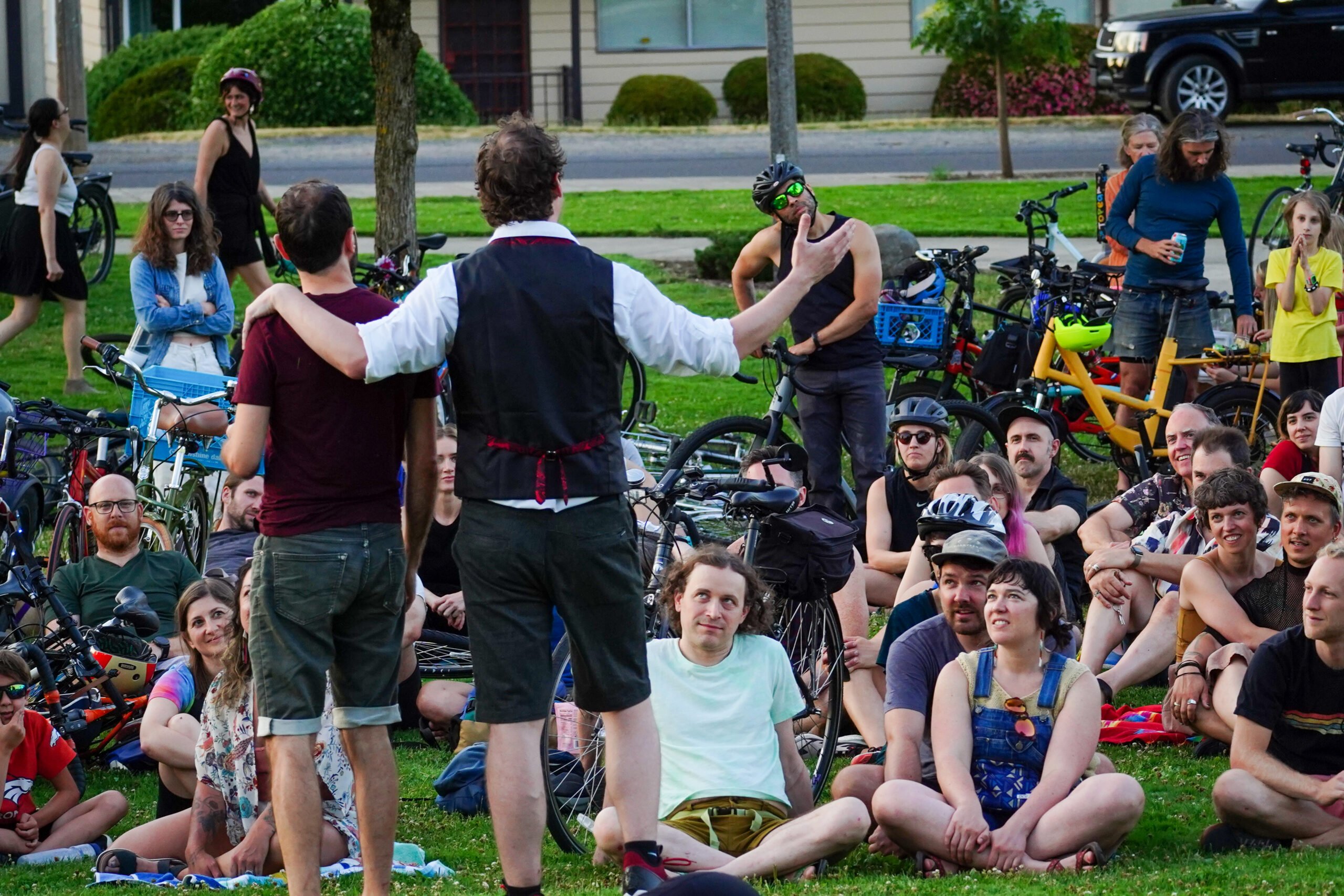
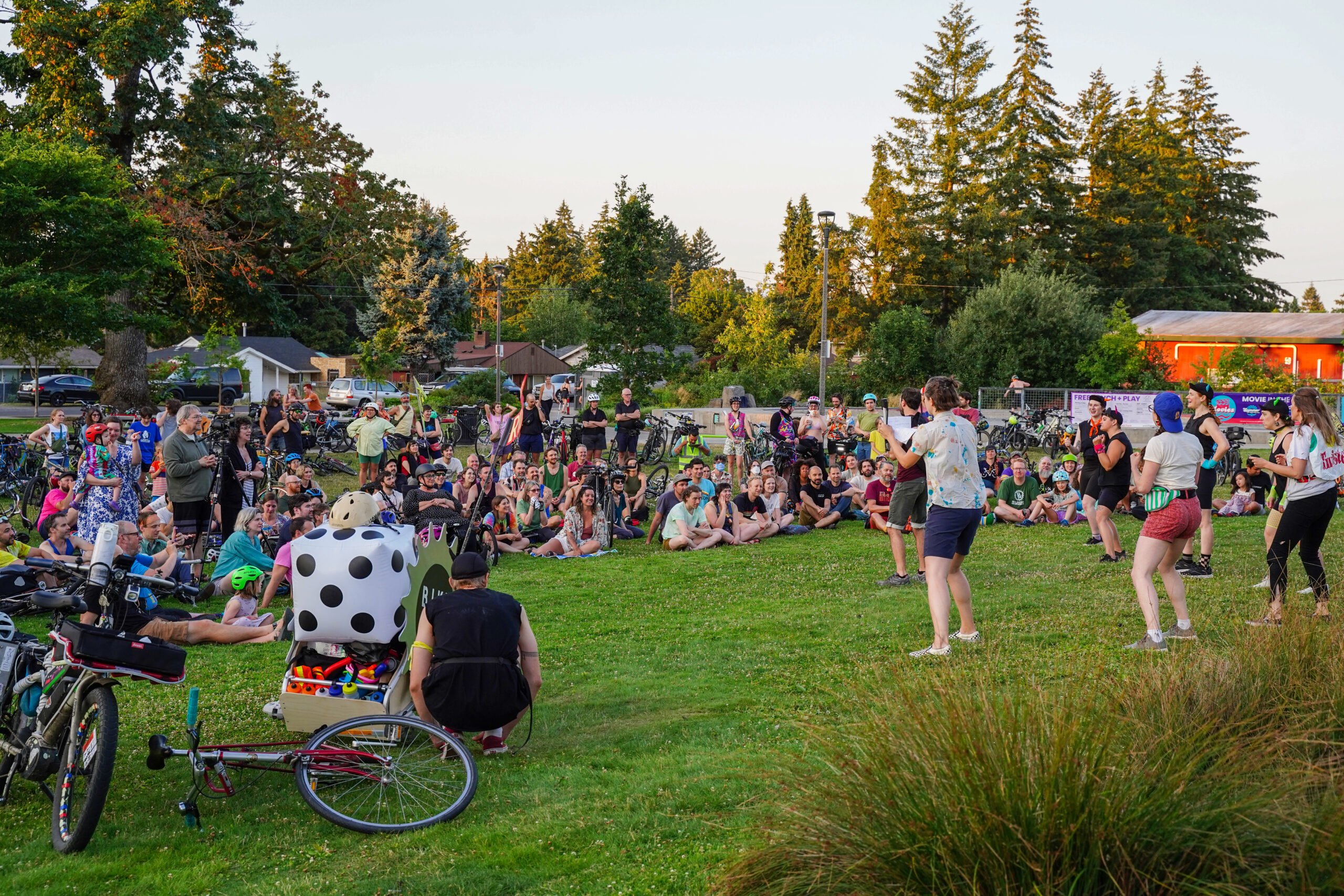
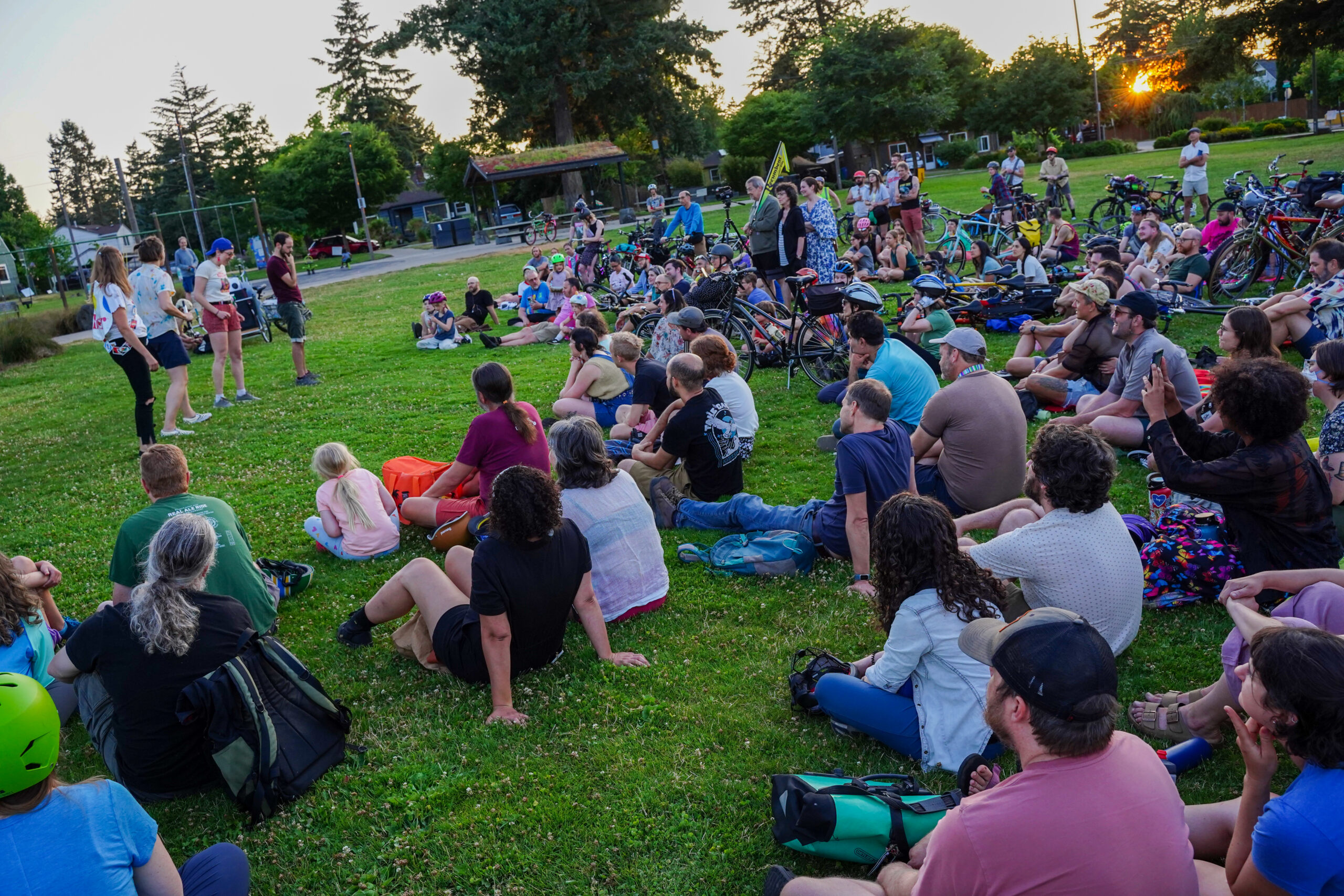
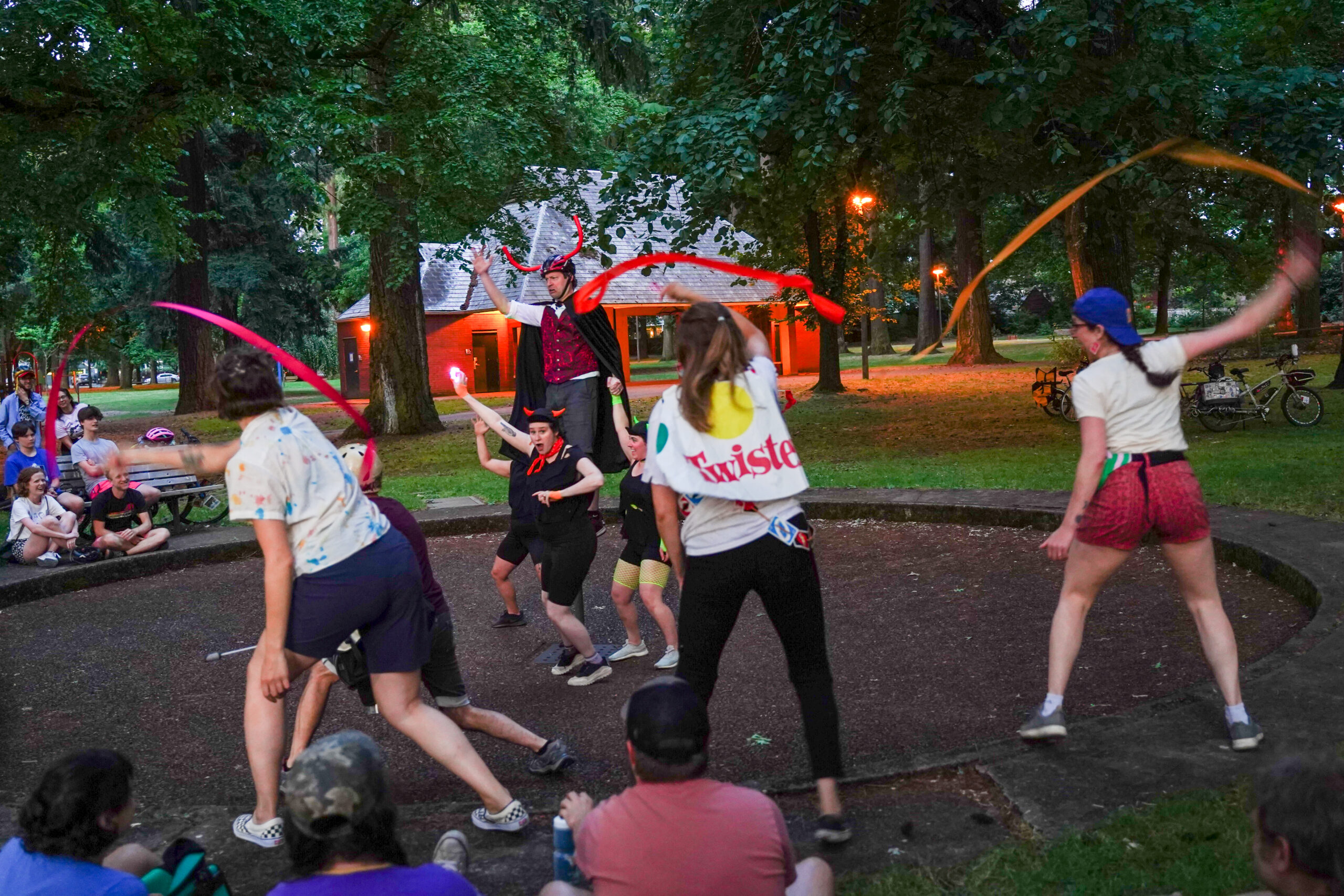
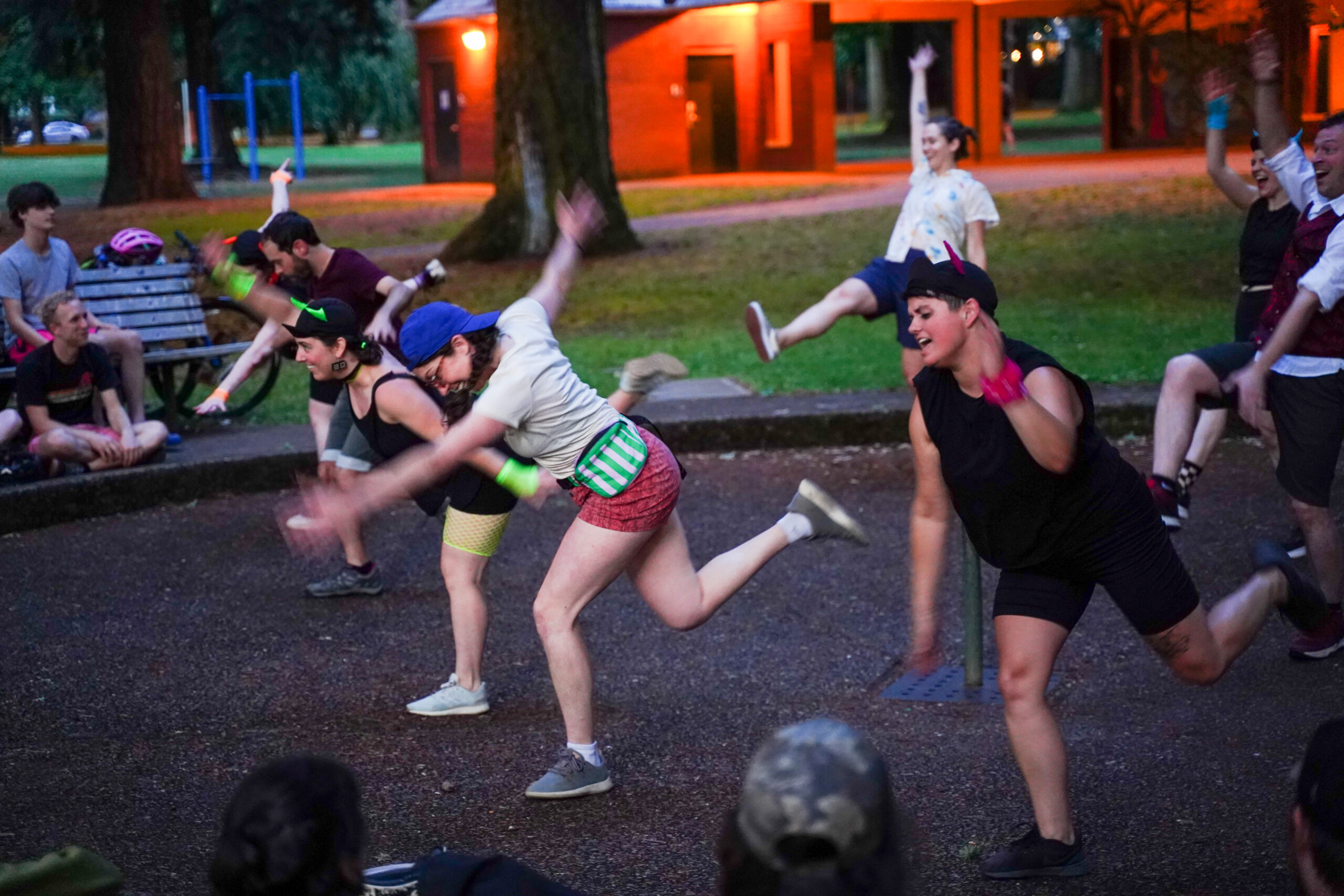
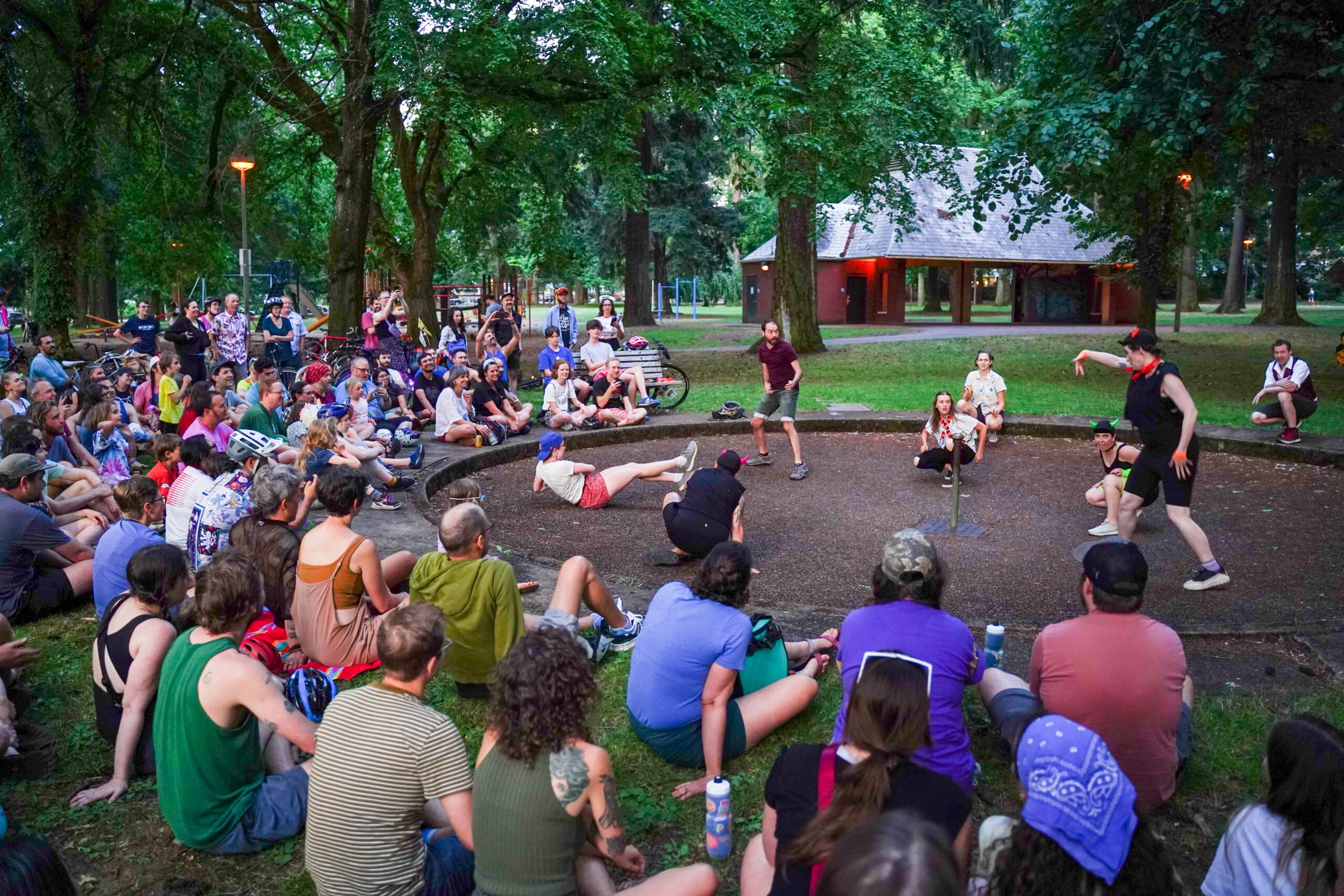
The 15th annual Bike Play production opened Thursday night and it was another smash hit. A large and appreciative crowd cycled with the cast to scenes at several playgrounds and parks in northeast Portland. They all followed along on a journey through the “Game of Bike” a Jumanji-esque adventure where the cast faced a big, bad, Bike Demon and a group of devilish imps.
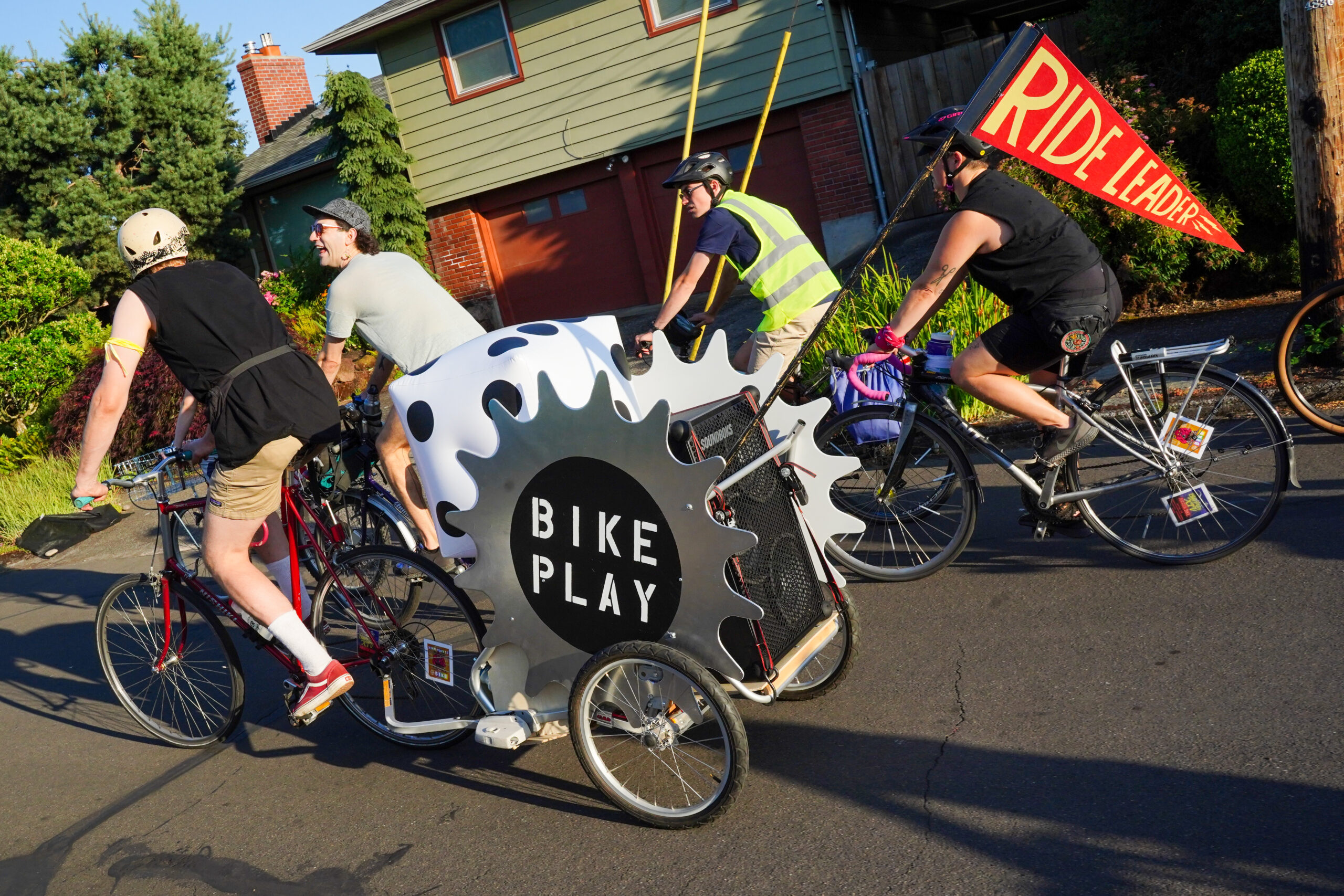
The production included a script filled with hilarious bike puns, original songs and dances, and enough creativity to tell an enjoyable story with props that could fit inside a bike trailer and costumes so spare the actors could ride in them.
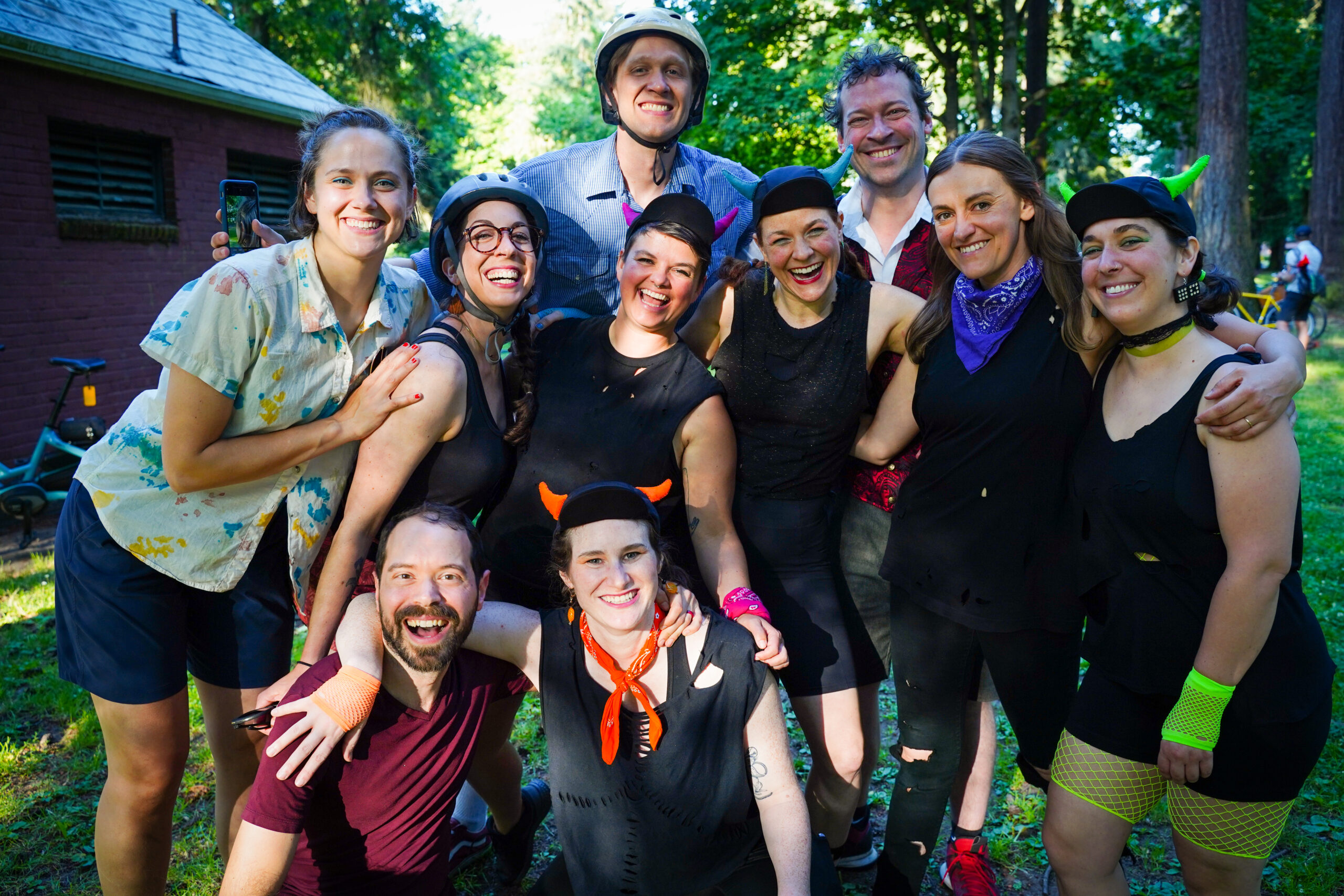
Bike Play is a cherished tradition of Bike Summer’s Pedalpalooza festival. The 10 member cast from Working Theater Collective began rehearsing in April and their hard work clearly paid off. Ashley Hollingshead, who played Mr. Bikeside and an imp, shared in a pre-show interview that they were part of the first year cast. “I don’t know if we imagined it would go on this long, but we definitely felt after the first one like, ‘OK, that was good,’ we’re going to keep doing this.”
View photo gallery below (use arrows to cycle through):
Advertisement
Bike Play is mostly a labor of love, but has received grants (from Portland Film Office and Regional Arts and Culture Council) for the past two years (and they filled several helmets worth of cash from the audience after last night’s performance). But like almost everything in Portland’s vibrant bike scene, it’s not about the money.
There’s a joy that emanates from Bike Play performances that makes it feel like a gift to our community. I left last night thinking about how lucky I was to live in a place where it happens. It’s different than other outdoor theater because of the current of bike love that flows among the actors, the audience, and the group rides between scenes.
Game of Bike Director (and cast member) Hans Ellis said Bike Play pulls actors from Portland’s theater community, but it exists mostly outside of the local scene and tends to attract actors who understand what makes it special. “We’ve talked about how we can merge and be more involved [in the local theater community],” Ellis said. “But a lot of people who do Bike Play just want to do this one thing.”
Advertisement
“We have very sizable audiences,” added Hollingshead, “But much of the Portland theater community doesn’t really know about Bike Play.” That’s just fine in Hollingshead’s view, because for many people it’s the only theater they see each year. “So we’re that thing that people who like bikes see as far as theater goes.”
Another thing that sets Bike Play apart is the cast are bike lovers themselves, so the stories they share are infused with cycling. “We love biking in Portland. It is an important part of our lives. The format has changed over the years as we’ve figured out what works and what doesn’t, but it’s always been a celebration of biking in some way or another.”
“Biking is definitely in the DNA of the stories,” Ellis added.
Game of Bike continues that tradition.
Advertisement
The story revolves around three friends — Schrader (Scott Weidlich), Steph (Lisa Gilham), and Wyatt (Jenny Bunce) — who find themselves pulled into a deal with the devil and sucked into a real-life game. A band of bad little imps and the Bike Demon try to keep them trapped and off their bikes for good.
A highlight of the show is an original song performed by Noelle Eaton as Patch Flatums, a character who’s been trapped in the game for many years and ends up helping the newer trio. It’s called “All I Know is Bike” and here are a few of the lyrics:
I was just a kid Just a kid who wasn’t good at school I knew I weren’t smart I knew I wasn’t cool Then one shiny morn Something glimmered rolling past A wheel, a bell, a zounds, a spell was cast I cleared my head of everything That wasn’t about bike All I know is bike. All I need is bike. All I know is bike. All I need is bike. It’s my day and my night The best part of my life Is cutting through traffic like butter with a hot knife All I know is bike Bike! Bike! Bike!
Advertisement
The cast: Top: Hans Ellis, Kris Mahoney-Watson. Middle: Lisa Gilham, Jenny Bunce, Ashley Hollingshead, Lindsay Liden, Noelle Eaton, Haley Hessler. Bottom: Scott Weidlich, Emilie Weidlich.
Talk about knowing your audience! It was a wonderful moment that had the huge crowd smiling and singing along.
Will this love for cycling overcome the challenges faced by the game players? Or will the Bike Demon rule supreme? You’ll have to see it yourself at an upcoming performance.
Thanks to an expanded run this year (which they did to help spread out the size of the crowds) you’ll have more chances to attend than even before. Bike Play: Game of Bike continues tonight and through Sunday July 14th. It returns on Thursday the 18th and runs through July 20th (with an ASL interpreter on-hand July 19th). Check out Bike Play on Instagram for updates and more information and check tonight’s event listing on the Shift calendar for details.
“Speed kills” is such a well-known mantra in transportation advocacy circles it’s at risk of becoming trite. So how can activists find new ways to communicate the crucial linkage between speeding drivers and the fatal crashes they cause?
One answer to that question comes from a project by Portland Community College Student Jake Veto. Veto partnered with nonprofit group Oregon Walks to create an interactive map that illustrates pedestrian fatalities in Portland between 2017 and 2020. The 48 locations where people where struck and killed are marked on the map alongside colored street segments. The darker red the color, the higher percentage of speeding on that particular street segment.
The combination of speed data to street segments, combined with the location of the fatality, gives us a new context to understand why people on foot are more likely to be killed in certain places. Veto’s map also allows viewers to click on any marked segment and see the the posted speed limit and the percentage of drivers who disobey it.
Advertisement
Heat map of fatal pedestrian crashes.Map detailMap detail
The map uses crash data from the Oregon Department of Transportation and speed monitoring data from the Portland Bureau of Transportation.
One speeding hotspot with two “x” marks for deaths is SE Division between SE 122nd and 145th, where PBOT data shows people drive over the speed limit at a shocking rate of 75% to 83% of the time. The dark red intersection of SW Capitol Hwy and SW Terwilliger reveals that 95.5% of drivers speed through that location (according to 2021 data). I’ll remember that next time in biking or walking through. Yikes! (Note: It’s important to keep in mind that the speed monitoring data is often several years old, so it’s likely that speeds are lower today than what the map shows, since PBOT and other agencies redesign and update several roadways each year.)
Here’s an excerpt from Veto’s writeup of his methodology:
ODOT crash points were filtered to identify pedestrian fatalities within the Portland urban area. A case number field was added to the crash points attribute table for better identification. Manual matching of crash points to police reports was performed using date and cross streets to ensure accuracy. Each matched record was updated with its corresponding case number, and matched points were exported as a new dataset.
Advertisement
Finally, the data from the street sections that each crash was on was joined to the data from the crash points. This allows us to make statements about how often drivers tend to speed near where these crashes occured. Manual validation was performed on the points to make sure they were pulling data from the correct street segment. Many of the fatalities occured in intersections with different data for each of the cross streets, so best judgement and cross reference with the police reports was used to make sure that each point was correctly associated with the right street.
In addition to all the speed and fatality location data in the main map, Veto also created a general pedestrian fatality heat map. This map helps visualize which parts of the city’s road network people are most at risk of being hit and killed.
Veto’s work has illuminated what could be considered red zones for pedestrian safety. It should be a useful resource for planners, engineers, advocates, and anyone else who spends time on foot on Portland streets.