

Happy holidays everyone! I’ve got family coming into town and my eldest daughter’s birthday is tomorrow, so I’ll be away from my desk for most of the rest of the week. Note that Bike Happy Hour won’t be held the next two weeks since Migration will be closed for Christmas and New Years Eve (both of which fall on Wednesdays this year!).
Now get caught up with the most notable stories I came across in the past week…
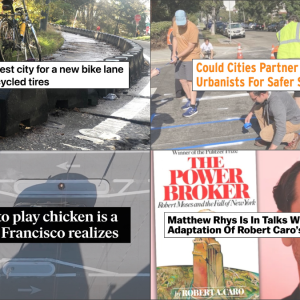
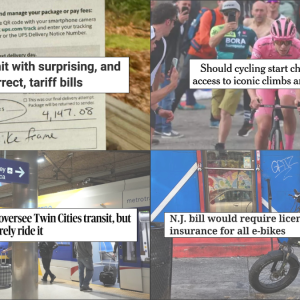
Too bad for Rad: Following an ugly disagreement with federal regulators over a major battery recall, the once dominant Rad Power Bikes has filed for bankruptcy. Their top liability claim is to the U.S. government whom they owe over $8 million in tariffs. The company says they’re not giving up and hope to complete a sale of the company soon. (Bicycle Retailer & Industry News)
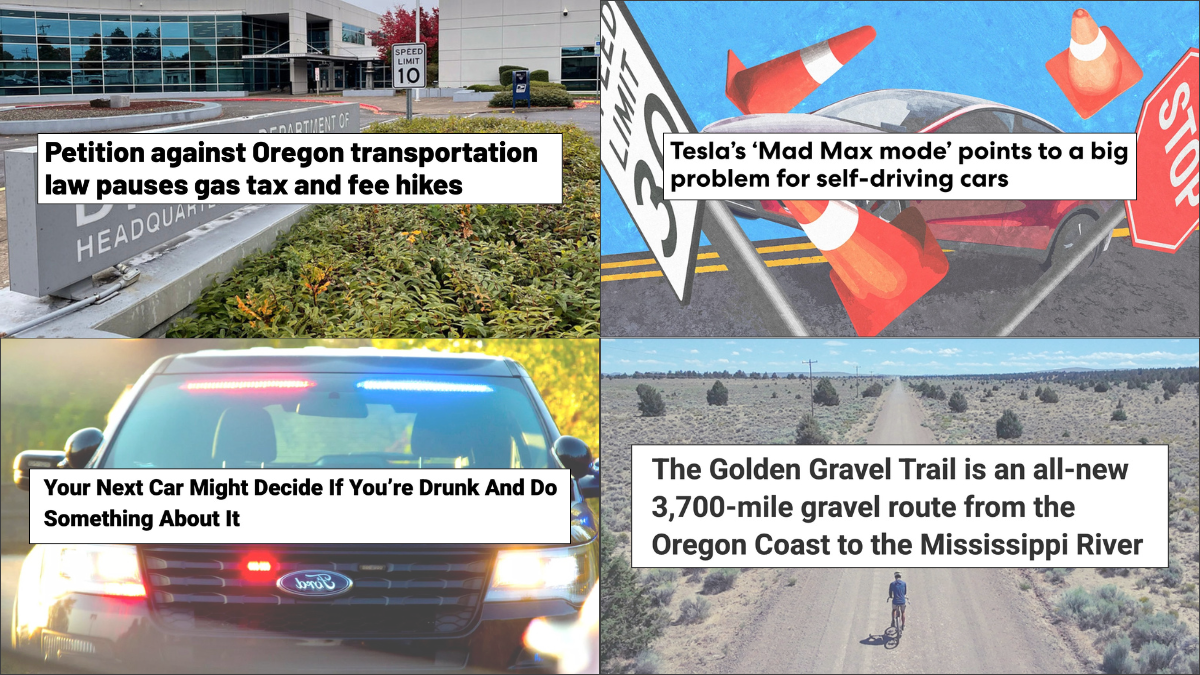
Musk gonna’ Musk: I can’t believe it’s not an Onion article, but the “Mad Max Mode” from Tesla is back and it’s as stupid and dangerous as ever. The fact that our government doesn’t just regulate and/or sanction Tesla out of business is how I know we are not serious about road safety. (Fast Company)
Good car tech: While Tesla is an example of bad car tech, Mitsubishi’s new AI-powered drunk driver detection system is an example of good car tech. (Car Scoops)
Transit politics: The government of Spain has introduced a flat-fee public transit pass they say is an example of how they make lives better for regular people, but critics see it as a political play to distract from scandals. (The Guardian)
Bike lanes and traffic: When the City of Boston installed more (and better) bike lanes citywide in 2023, an analysis of traffic patterns the following year showed a marked increase in bike traffic and a significant decrease in car traffic. (Good News Network)
New unpaved route! I’m genuinely inspired and excited to learn about the new “Golden Gravel” route — a 3,800 route created by Adventure Cycling that’s almost entirely unpaved and that starts on the Oregon Coast. (Singletracks)
When biking and walking mix: Fascinating debate in Brussels about a ban on bicycling through a popular pedestrian zone in the name of safety and how the alternate route for bicycle riders creates safety problems of its own. (The Guardian)
The Big Pause: After “No Tax Oregon” petitioners reached the required amount of signatures, state transportation funding passed last legislative session is on pause while roads fall into hillsides and the Democrats and Republicans gird for a fight in the upcoming short session. (Oregon Capital Chronicle)
Austerity and audacity: The same Republicans who celebrate the defunding of ODOT are now calling on Governor Kotek to release emergency funding to make up the difference. The audacity! (OPB)
Fewer ride share customers: For the most recent City of Portland fiscal year (ending June 30), the number of local trips on Uber or Lyft was down 37% from 2019 — a decrease ride share companies attribute to increased fees and regulations. (The Oregonian)
Where bike messengers still thrive: While bicycle messengers are a rare or dying breed in most cities , there’s still a successful bike courier business in Chicago. It’s worker-owned and it has a reputation for delivering the goods for popular local restaurants. (Block Club Chicago)
Thanks to everyone who sent in links this week. The Monday Roundup is a community effort, so please feel free to send us any great stories you come across.
Thanks for reading.
BikePortland has served this community with independent community journalism since 2005. We rely on subscriptions from readers like you to survive. Your financial support is vital in keeping this valuable resource alive and well.
Please subscribe today to strengthen and expand our work.
Regarding the drunk driving tech: AI surveillance is not a good thing for our future or for our safety.
We cannot trust the government nor big tech to properly regulate this technology, or be transparent about who is funding it, who is creating it, or what happens to the data that is collected.
Surveillance tech marketed to the public in the name of safety is an extremely slippery slope and we’ve already been sliding far too long. Speed cameras, dash cameras / other in-car cameras, doorbell cameras, and all similar surveillance tech should be under relentless scrutiny and subject to incredibly strict oversight and regulation.
This is not a debate about drunk driving, and to frame it as such is short-sighted and naive. This is an incredibly urgent and increasingly dire debate about privacy that holds future consequences for our collective well-being and autonomy that could not possibly be overstated.
I hear you on that Seth. And I agree it’s good to err on the side of caution with new tech like AI. But I also think it should be a thing where we don’t shut it out completely. So yes, keep up the scrutiny for sure.
I’d be willing to bet their tech isn’t “AI” as “AI” has recently been sold to us. It’s almost surely basic machine learning/classification models trained on simulator data (I don’t drink much, but it would be fun to knock a couple back and get the simulator).
Here are some toy examples as to how easy ML-basic classification is already:
https://scikit-learn.org/stable/auto_examples/classification/plot_classifier_comparison.html
These algorithms are already all over the place (e.g., how your phone knows when you’re driving or how it counts steps or stairs).
They’ve surely slapped the “AI” label on decades-old tech to get attention (like everyone else is)
That said, modern cars are second only to smart phones in terms of personal surveillance. So your point is taken that regard.
It’s been possible for a person to choose a car insurance rate plan based on the report from a sensor in their car that effectively taxes bad driving. A tweak of that system could report behavior associated with drunken driving. Ultimately, people who DUII are unlikely to opt for the sensor at all because it would cost them more money.
Instead of collecting data from cars, state government could mandate such insurance coverage, or else subsidize people who opt in. It’s a way to move toward the desired effect without the government owning the information.
I still believe that if more people drive at least sensibly, meaning without hard acceleration or braking, it would make it more difficult for the outliers to drive dangerously. I’d support some kind of vehicle tax that is redistributed to people who accept a boundary on how they drive.
There’s so much to unpack in this comment
They’ve all moved away from the fuse box dongles and now require an app on your phone that tracks all of your movement. When I asked All State about this and how it distinguishes times when I’m driving vs when I’m a passenger, the rep said, “Oh, you just go in the app and delete that ride from the log. Also, you can delete any ride from the log where you have to slam on the brakes or swerve to avoid hitting something…or anything else that might be a ding on your record“. So essentially, they don’t care about safety and reducing liability, they care about selling your data to advertisers and data brokers.
Huh? Who suggested that the government should own the data? In the case of a car having the sensors already built in, the government wouldn’t own that data.
Wait, a tax? Are you suggesting the government does need to possess all of the driving data collected by your phone or car?
New cars – even those without drunk-driving detection – are covered in sensors and absolutely hoovering up data about their occupants and everyone around them. Totally agree with you about things like ring cameras and dashcams. I think we’ve been sold this paranoid vision of the world where if you can just shove enough surveillance in your life you will be “safe”. It’s sad, because what really makes communities safe is real-life humans looking out for each other. Eyes on the street and all.
Technology with never be a substitute for real community.
Blaming a $2 tax for people taking fewer Ubers is dumb. Do they really think that they type of yuppies going to Kann are going to see the Uber costs $52 and be like “oh actually if it was an even 50 I’d do it but that price is too high.” More like, people are just not going out in the first place. Everything costs more; and continues to get more expensive so nights out are the first to go. If I have to go to the airport, I take transit or bum a ride rather than pay $100+ for an Uber.
The best thing that could be done to help balance this situation would be more late-night bus service. IMO, someone who lives in TriMet’s service area should be able to go to a show or bar crawling and know that they’ll be able to catch a bus home. Haters will bring up the bus being slow, but if you’ve ever tried to get a rideshare after an event, the wait time can stretch out such that it eats up any time savings you get compared to transit. Also, what a boon to local businesses that their customers would now have money that they’d otherwise spend on an Uber to spend on drinks or food or knickknacks!
Or avoid all those hassles and drive. It’s sad, but there just aren’t viable alternatives to going places like you describe.
Ride share is too expensive, Trimet is a failure, walking and biking late at night for any long distance would be fraught with dangers. I’ve tried, never again.
Curious where you’re riding that is “fraught” with danger.
Paths can have erratic homeless people which can be scary, especially in the dark. Places with bike lanes have cars driving faster and more aggressively than in the daytime due to low traffic congestion and (probably) driver intoxication. Especially downtown, lots of dipshit guys in trucks and chargers get really “alpha” when leaving the bars. Greenways tend to be pretty chill at night though.
I’ve been a yearround commuter since the 90’s and I like riding in the dark. I was stuck at work last night until after 9, and my ride home on INterstate was FRAUGHT! It was dark and rainy, but I think the MODA was emptying out or something because there was a LOT of drivers, and they were horrible- drifting into the bike lane, running red lights, going really fast (45+ I’d guess). This is a route I ridden daily since ’08, but I am just pointing out that terrible, anemic infrastructure sucks- you can have a quiet ride home in a skinny little bike lane for 100 nights in a row, then you hit it at the wrong time and it is truly scary. I was being as defensive as I could be, but there are not a lot of route options. I believe it was just luck that I made it home uninjured. Any route can can become “fraught” with danger if the infrastructure is terrible and the enforcement is non-existent.
For those who are either too poor to own a car or medically unable to drive, Trimet is not a failure, it’s a lifeline. Public transit struggles when the auto and oil industries, governments and private citizens insist that car ownership remains easy and cheap while shifting the costs and social burdens to anyone who does not or cannot drive.
The Max train to the Airport is excellent! Still haven’t found a neighborhood in Portland that’s at all menacing to walk in at night, but I’m not a woman.
Try the Central Eastside, by camps with bonfires and loose dogs.
Oh, and don’t rely on Max for an early morning flight — ghost trains abound.
A failure? I’ve been critical of Trimet, there’s lots to pick at and it could be so much better if we spent on it about ten percent of what we spend on cars. But it’s not a failure.
I still remember when I moved here after growing up in a town with no transit beyond school buses, and no train service at all. It was great to find out that foresighted people had built transit here! Now, as a person with ok eyesight, fair mobility, and bikes, I still find uses for transit in Portland. It’s economical, especially if you are one of various Honored Citizen categories, and pretty quick for routes with no transfers.
I’d love to hear more ‘I used this and here’s how it could better’ and less ‘Portland sucks’. There are so many other places that a person could have moved to and if they have been here for years the bed is made, and who made it?
I agree with you. For me, it’s always fairly easy and quick to get to an event space for concert etc. But getting home is untenable after 9 pm via bus in most of Portland. If you’re not on a max line, which most people aren’t, the busses come every 40-60 minutes in most places and that’s just not doable especially if you need a transfer. Too often I drive when I wish I could bus. We need busses to run more often after 9 pm.
Extended hours on dedicated bus ways could be a great place to employ automated systems. I think it’s great that people now have living wage jobs driving transit, Thank you TriMet operators! But, it’s hard to hire and retain enough drivers to keep the current system running.
The shift work is a bit onerous even now and drivers start out with split shifts meaning that they work early AND late in one day so it’s extremely difficult if a person has children or some other issue. Scheduling could be simpler with 24 hour buses but we’d have to invest more in labor costs to keep it going.
If transit were better for riders (actual frequent service, dedicated lanes, fewer conflicts, signal priority) it would also be better for operators. They’d be safer, more productive and without the frustrations of any person operating in a poorly designed surface transportation system.
Jonathan,
One thing missing from this framing is that the petition was non-partisan, and so is the concern about how this is being handled. There have been no transportation service cuts yet, and ODOT is still hiring seasonal workers using existing funds.
The messaging from the Governor’s office and legislative leaders has leaned heavily on warnings about layoffs and safety, but that feels like political pressure rather than a reflection of current reality. Many voters who signed the petition support basic road maintenance and essential workers — they just don’t agree that higher taxes were the only option, especially when ODOT spending still includes things like EV chargers, climate programs, equity offices, and large project reserves that may never be built as designed.
This isn’t about “defunding transportation.” It’s about priorities, accountability, and letting voters weigh in before more taxes kick in. Reducing this to a Dem vs. GOP fight glosses over why a broad, cross-partisan group of Oregonians supported the referral in the first place.
It’s not that deep dude; carbrains reflexively oppose anything that makes driving more expensive or less convenient. But I guess highway 6 could fix itself if ODOT would just stop with all the woke!!!
All petitions are non partisan, so that’s not a very useful or interesting framing.
This feels like a textbook example of Portland’s far-left governing philosophy eating its own outcomes. While Uber ridership globally is up 63% since 2019, Portland is down 37% — one of the slowest recoveries anywhere. That isn’t a coincidence or just “work from home.” It’s policy.
City Hall keeps layering fees, mandates, and ideological add-ons onto basic mobility — the highest per-ride fee in the country, rigid pay rules, insurance mandates — then pretends surprise when prices go up, drivers disappear, waits get longer, and people stop using the service. Fewer rides → less revenue → another budget crisis → another fee hike. Rinse and repeat.
This is the same pattern we see across Portland government: prioritize symbolism, climate branding, and social programs over functional service delivery, then blame “larger trends” when the system stops working. Downtown empties out, mobility options shrink, and working people are left with fewer safe ways to get around — especially at night.
For a city that claims to care deeply about equity and safety, making transportation scarcer, slower, and more expensive looks less like compassion and more like ideological self-sabotage. But I’m sure we’ll be told again that everything is fine.
A) I’ve never had an issue getting a Lyft/Uber when I needed one
B) Radiocab still picks up the phone.
Less Uber/Lyft rides are a good thing. They don’t reduce traffic or emissions.
You might want to consider the DUI angle, Chris. Even if ride-share doesn’t solve congestion or emissions, it does give people a safer alternative to driving impaired—especially late at night when transit options are limited. Fewer available rides can mean more people taking risks they otherwise wouldn’t, which undercuts public safety goals. Reducing drunk driving and injuries is still a meaningful benefit to keep in mind.
As far as insurance mandates – they’re regulated fairly similarly to taxis – for the simple reason that they serve the same function:
Taxi and rideshare companies are required to carry higher insurance limits primarily because they drive far more miles, in more complex conditions, with paying passengers
This statistically increases risk and expected loss, even if individual drivers are no worse than average.
The fact that rideshare, a hideously expensive alternative, is mentioned as “basic mobility” in a discussion just shows how morally bankrupt we are as a society.
To Uber to work would cost about $25 *one way* for me. This compares to $2.80 for transit and ~$1.35 (4 year amortized cost) of riding a bike. That’s not basic, that’s a huge hit to low income workers.
$2 rideshare fee is absurd because it impacts low SES folks most at a time when their options are so constrained that they feel they have no choice but to pay exorbitant costs.
But getting rid of it would still leave an hour’s wages (our warehouse workers earn around $20-$22/hr) for a one way trip.
No, rideshare is “break glass in case of emergency” not “basic, everyday mobility”. Forcing low SES people into it by (for instance) defunding transit borders on evil.
In addition to waymo cars being programmed to be more aggressive, they also don’t hold up during power outages and stop working, blocking traffic, as everyone in SF found out this last week.
$10 Uber/Lyft Coupon from PBOT:
Ah yes, the Portland way: whack ride-share with the highest taxes in the country, then chuck everyone a ten-buck Uber coupon once a year and call it “safety.” Cheers, PBOT.
If ride-hailing is good for getting people home safely, why make it painfully expensive the other 364 days? Feels a bit like putting a massive pothole in the road and then handing out free bike patches on New Year’s Eve.
The free transit’s a ripper — genuinely good stuff — but the Uber/Lyft bit is pure government ouroboros: tax it to death, then spend time and money undoing your own policy for a night.
Helping 2,100 people get home safely is great. Maybe next year try not making it harder for the other few hundred thousand in the first place. Just a thought, mate.
https://www.portland.gov/transportation/regulatory/events/2025/12/31/safe-ride-home-new-years-eve-welcome-2026
The price of ride share in Portland is on par with other west coast cities. A 2 dollar fee isn’t killing Uber, come on.
“Painfully expensive”
It’s a $2 tax. Is $2 painful? I can think of a long, long list of things that are too expensive before I get to paying an extra $2 for a $87 Uber home from the bar.
uber was artificially cheap in the 2010s. when things opened up after the pandemic, it was way more costly. people started driving more because it was cheaper. other factors were involved such as portland’s high fees. i think it mainly had to do with uber investors demanding a profit.
RE: in car intoxication detection systems.
It’s probably a good idea when we talk about new technology to remind people of the problme we’re trying to solve – In the US since the year 2000, impaired driving has caused over 1/4 of a million deaths and more than 8 million injuries.
Now, I don’t trust tech bros and I’m no longer a technology optimist, but if a technology exists that can reduce the carnage and can be regulated properly (legally mandated not to persist data *unless* an event is detected that requires it), then I don’t see a defensible argument against it.
This applies to in car systems and automated enforcement technologies.
There are countless defensible arguments against it.
We cannot continue to fall for the trap of surveillance “for our own good”
We are talking about a camera that scans your face every single time you drive and decides whether or not you’re allowed to start and drive your car. It is not at all difficult to imagine how this same technology could be abused.
This kind of tech normalizes a world where any one of us can be tracked and immobilized at will.
I would rather live in a world that is moderately dangerous than a world where all risk has been eliminated in exchange for our autonomy.
Regarding the pedestrian zone in Brussels:
I couldn’t tell from the article how bad the alternate cycling routes are- if they’re really dangerous, I can see why local riders would be upset. On the other hand, a busy pedestrian zone with shopping and dining doesn’t sound like a great through route for cyclists anyway.
One clue to the situation is the reference to a delivery bike rider. If there are riders zipping around picking up takeout orders, the bike traffic may be more aggressive than early morning commuters or leisure riders. We don’t have this in Portland, but apparently e-bike delivery riders in NYC are very aggressive and pedestrians really don’t like them.
So, while many riders will certainly slow way down and ride safely through the pedestrian zone, it’s likely that other riders go through at speeds that make pedestrians uncomfortable, or even cause collisions. That’s the same kind of bad apple problem we hear about on paths in Portland.
I believe that we should preserve bike access for linear MUPs, but there are good reasons to have pedestrian only zones.
Wait… what? Portland doesn’t have bike couriers any more?
Maybe one or two. And they are attached to a single business, so not like the traditional couriers of yore. And I might have spoken too soon as it appears Cascadian Courier Collective is still in business! https://www.pdxccc.com/
“New unpaved route! I’m genuinely inspired and excited to learn about the new “Golden Gravel” route…”
Same. This could be thought of as mainly recreational but I’m stoked to find out that Adventure Cycling took the trouble to map a long distance route on existing infrastructure that can be used for bike travel with less motor vehicle friction. I’m excited to see reviews even if I have to write them!
There are so many good things that could arise from a planned network of bike routes and if Golden Gravel meets half its potential it will be amazing.
There’s a current proposal to build a new container port on the southern Oregon coast for $billions at a time when the market for such a thing is unclear and strongly debated. (WW, Dec. 17). Ok, bikes aren’t containers, but the total new investment in GG is a few dollars for an app on the phones we already have! People often don’t see the point of bike infrastructure as economic development but you can’t get around the fact that it is cheap, cheap, cheap.
Yes the gravel route will be low vehicle volume. But riders should not be surprised by large groups of adventure motorcycles or off-road vehicles passing by. Before you give Adventure Cycling a lot of credit. It appears most there rout was mapped out for the Transamerica Trail. That’s been around for a number of years.,
https://www.transamtrail.com/
Without scrolling it, no doubt there’s some overlap. However even from the thumbnail I can see at least one difference, the GG trail goes through Southern Missouri and the TAT goes through Arkansas so maybe AC did a little work on it. Arkansas is higher in elevation and they might be going around some of that.
I’m not mad at all people using motor vehicles because really, in the US, you wouldn’t have that many friends. My experience has been that the farther you get from town, the more likely people are to have a talk, or at least give a little space when they pass. Riding clubs are most likely to be out on weekends, and you’re going to know when they are approaching.
The more use a route gets, the more chance you’ll find a store still in business. One of my first questions that I haven’t yet tried to answer is, how far is it between towns? There are likely some multi day gaps between resupply points, few USPS locations, and possibly serious water supply issues. Cell phone coverage, who knows? I’d definitely carry a solar panel.
That would be really good information before going. As a good example check out the website for Backcountry Discovery Routes
https://ridebdr.com/
This group has been scouting and mapping routes for Adventure Motorcycles for a number of years. There routes are broken into sections based upon 1 days travel on a motorcycle. There maps will show fuel stops, hotels, camping and food along the route. The website has current updates from the riders on the condition of the routes. That way if there is an issues with the track then they will suggest a detour to get around the issue. After watching videos on many of these routes I believe that many of the sections could done on a bike. Though I wouldn’t attempt the ones in Colorado or Utah. The route elevation will at times exceed 12,000 ft.
The best part about this group is that when they scout out a route they will talk to small communities on the route and inform them about what there doing and the benefits it could bring. They will also listen any of the concerns they may have.
Adventure Motorcycles and Overlanding have boomed in the last 5 – 10 years and I don’t see why bicycling cannot be part of it. I think much of that type of bike-tourism is un-tapped.