Clever Cycles is Portland’s original shop devoted entirely to bicycles as primary transportation. We serve urban households seeking practical alternatives to car dependence—think electric cargo bikes, folding bikes like Bromptons, and family haulers that turn errands into joyrides.
We are seeking a skilled and thoughtful mechanic to join our service team. If you enjoy building and servicing e-cargo bikes, thrive in a high-volume environment, and don’t mind when someone gushes over their Brompton, you might be a perfect fit.
What You’ll Be Doing:
-Build and service e-bikes, especially cargo bikes
-Work confidently with Bosch and Shimano systems
-Diagnose and repair hydraulic brakes
-Build wheels (or want to learn!)
-Provide excellent customer service to everyone from daily commuters to growing families
-Assemble new bikes efficiently and with pride
-Keep the shop flowing in a high-volume environment
What You Bring:
-Prior shop experience, ideally in a fast-paced setting
-A solid mechanical foundation: brakes, drivetrains, wheel truing, etc.
-Enthusiasm for e-bikes and urban transportation
-Comfort speaking with customers and solving problems with a smile
-A willingness to take Bromptons seriously (because our customers sure do)
What We Offer:
-Hourly pay: $20–$28 depending on experience
Benefits:
-Paid sick leave
-Paid vacation
-Partially paid health insurance (company match)
-Retirement plan
-Employee discounts on bikes and gear
How to Apply
Email your resume and cover letter to hr@clevercycles.com
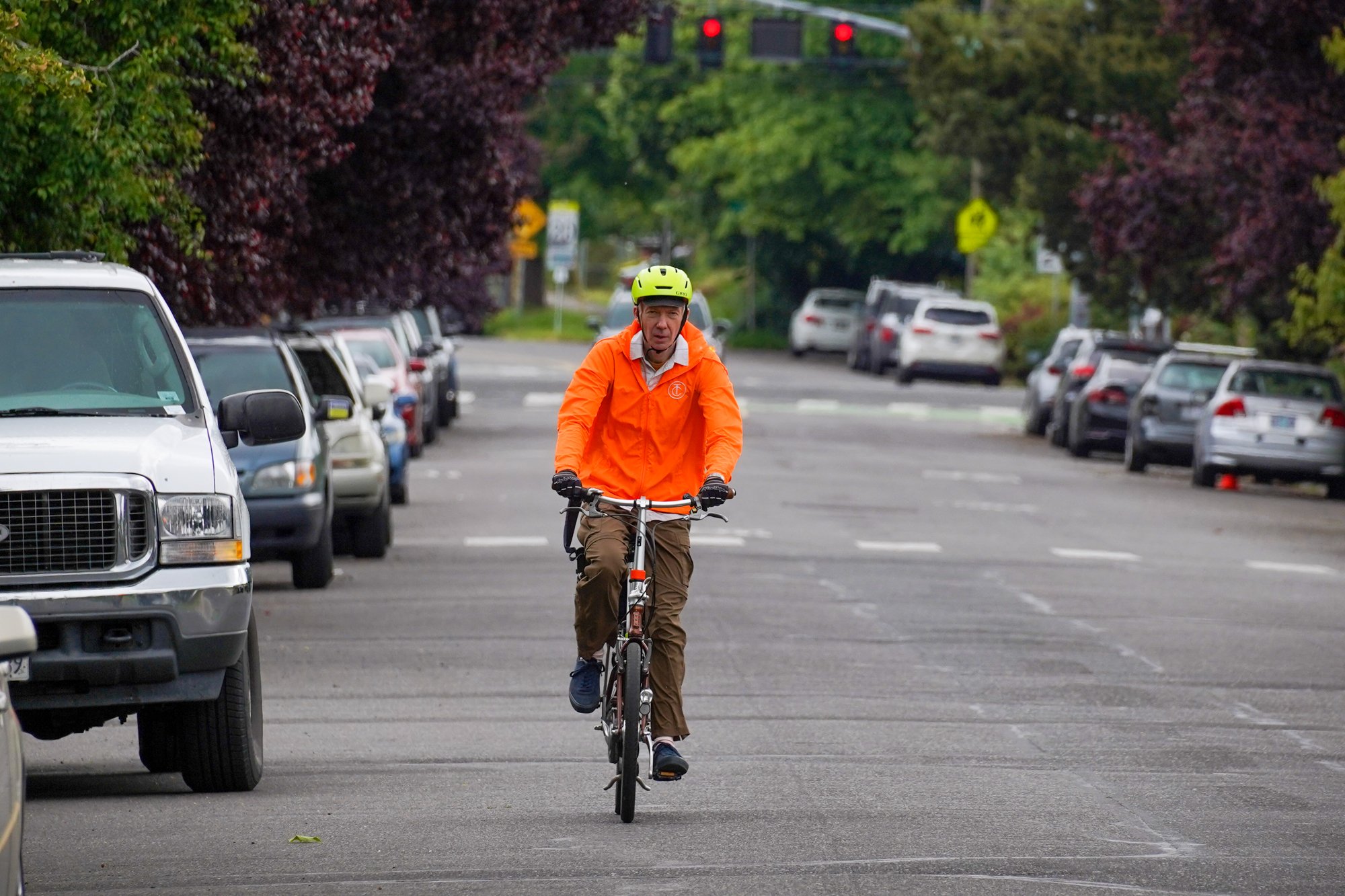
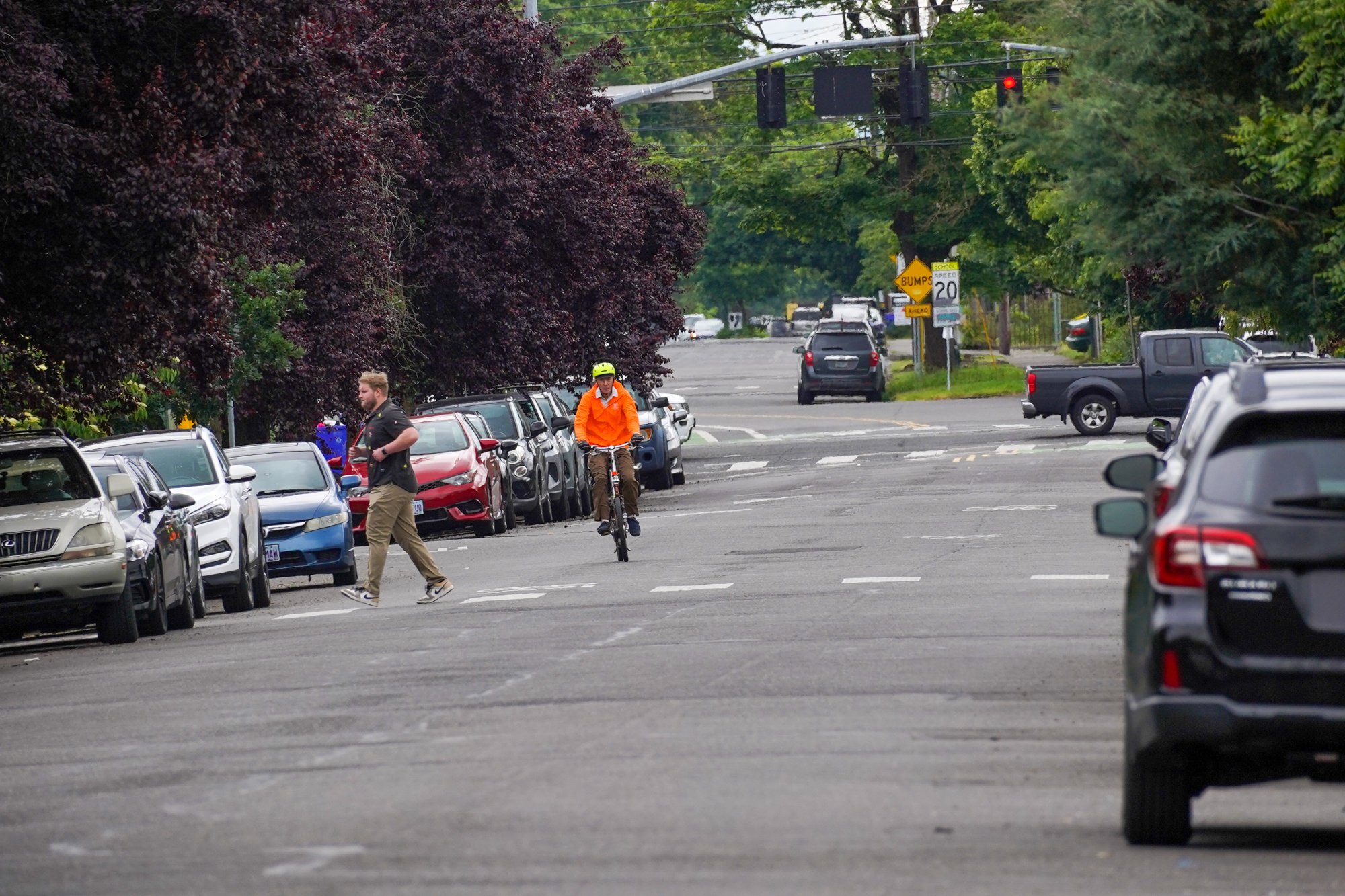
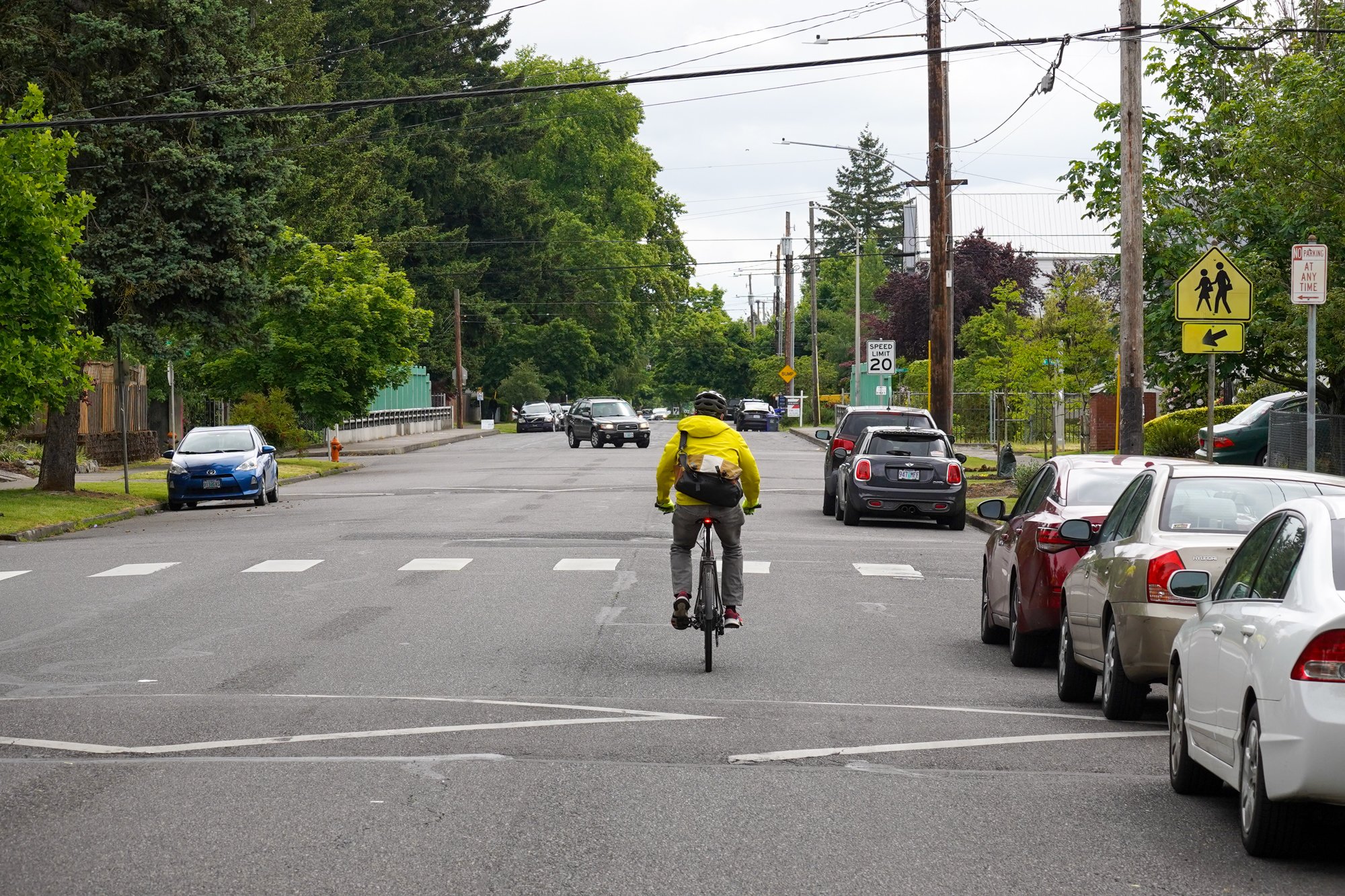
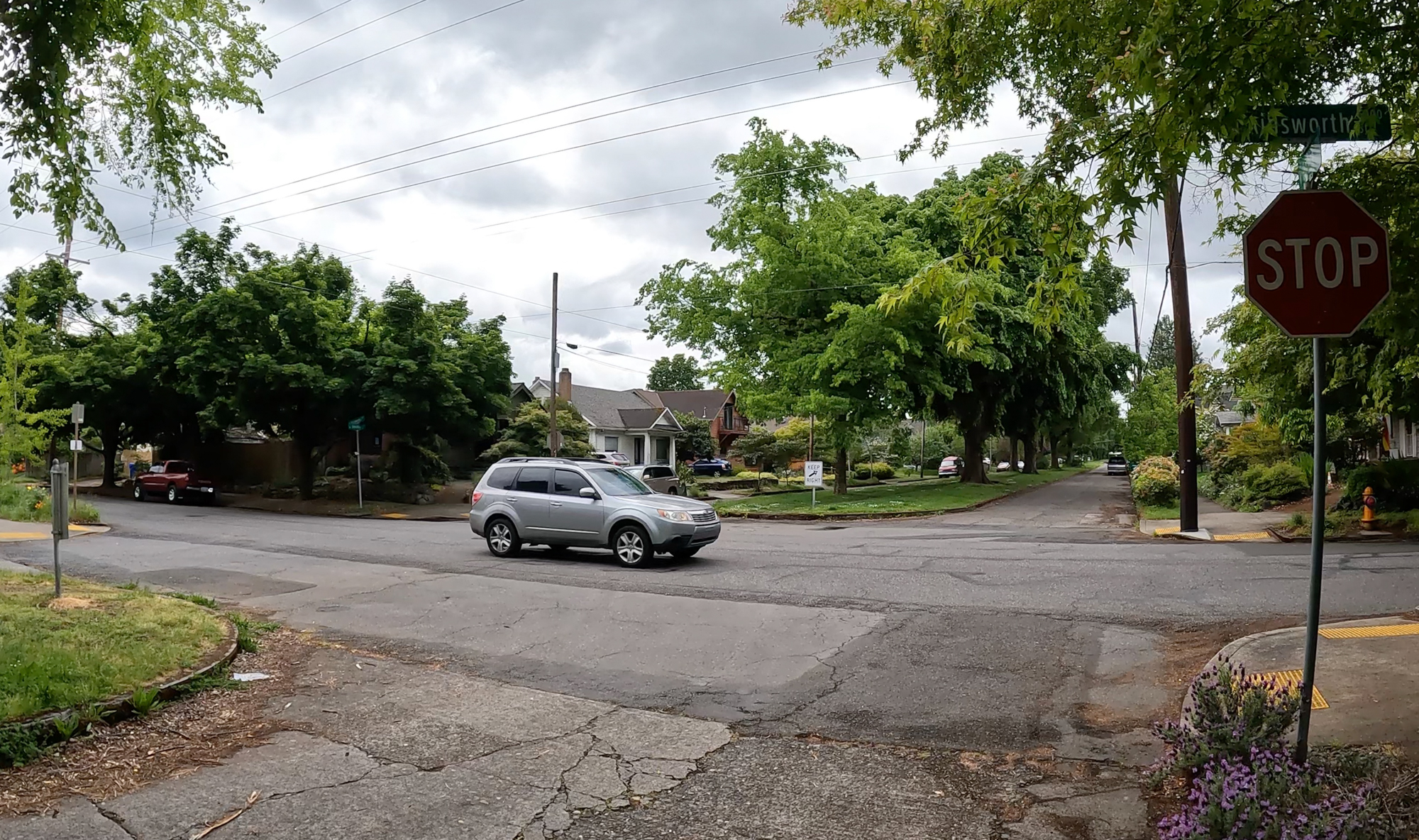
A person cycling westbound on N Ainsworth Street near N Concord this morning. (Photos: Jonathan Maus/BikePortland)
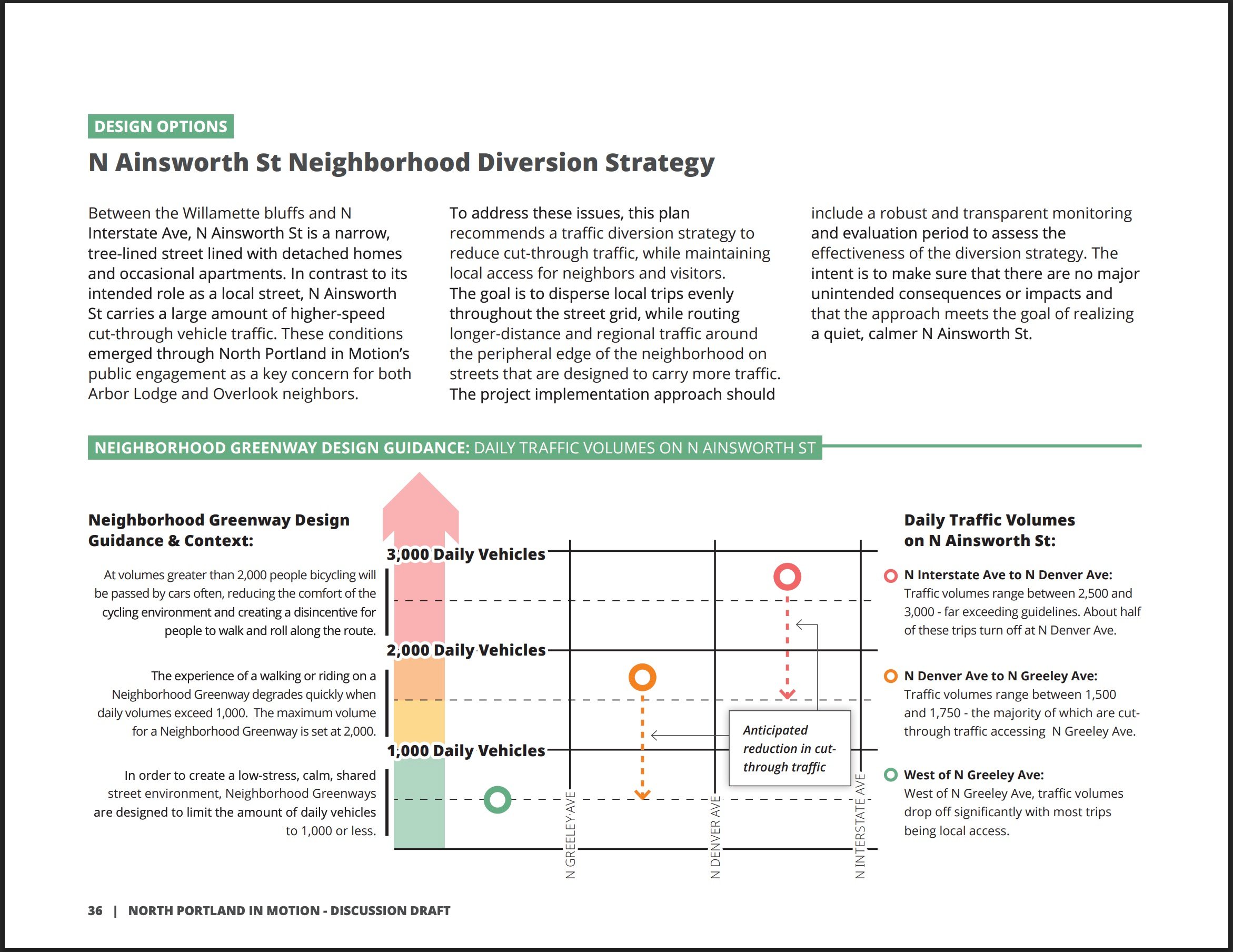
North Ainsworth Street between Willamette Boulevard and Peninsula Park is a hidden gem in the bike network. It’s an extremely popular cycling street due to its direct east-west connections, low-stress crossing of I-5, relatively few traffic signals, and low number of car drivers. Despite its heavy bike traffic however, it has almost no bike-specific infrastructure and as the volumes of car and bike users increase, it’s headed toward a breaking point.
Thankfully, the Portland Bureau of Transportation (PBOT) plans to save the day with a $400,000 project that will raise the profile of Ainsworth as a major cycling street and improve its safety for all users. The goals are to lower driving speeds and volumes and establish Ainsworth as a low-stress neighborhood greenway. Based on recommendations in the North Portland in Motion (NPIM) plan passed by City Council last year, PBOT officially launched a project in April that will bring significant changes to the street. The project is still in the development phase and some of the NPIM concepts will need to be vetted with Portland Fire & Rescue before more detailed designs can be finalized.
Advertisement
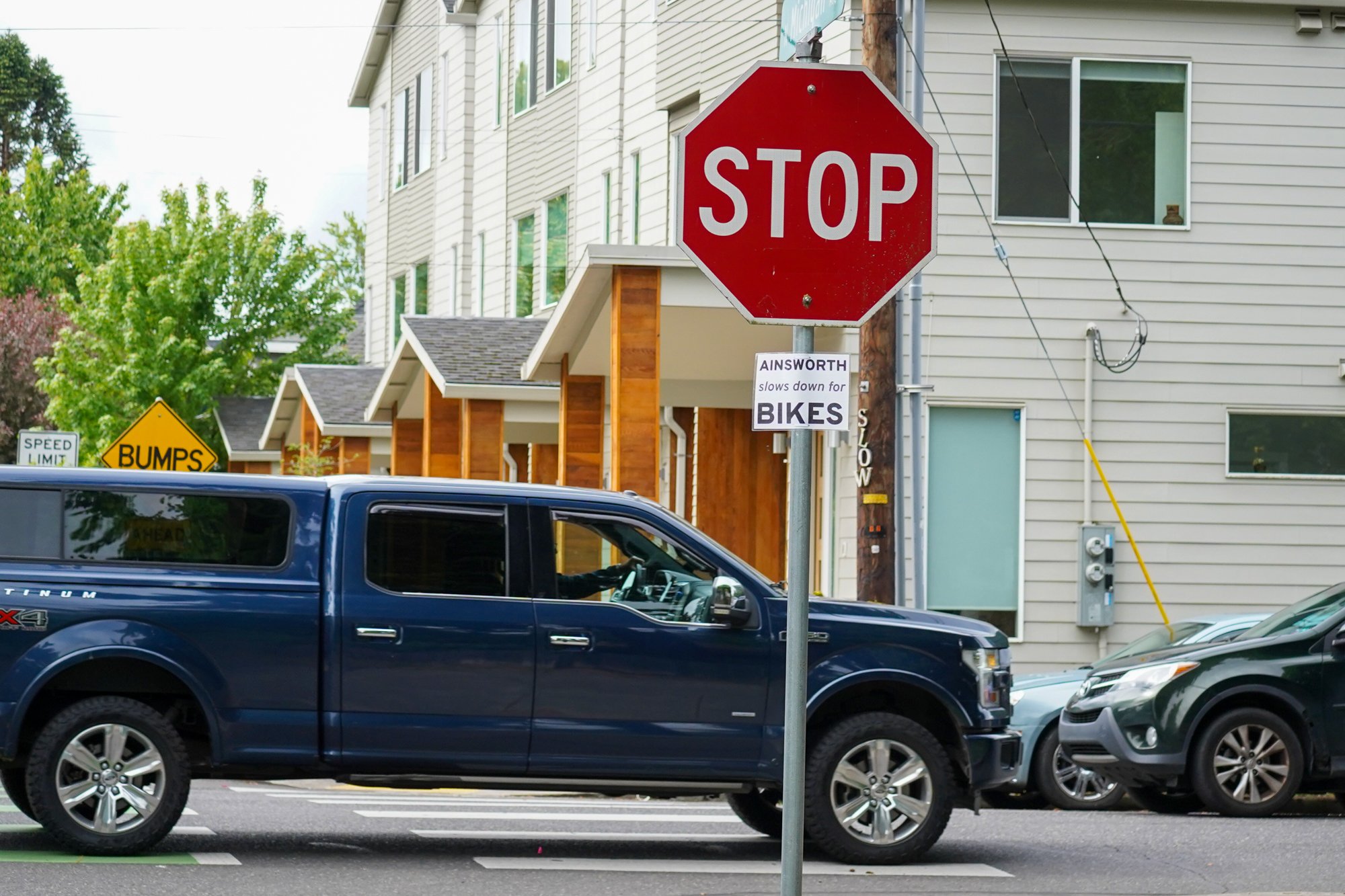
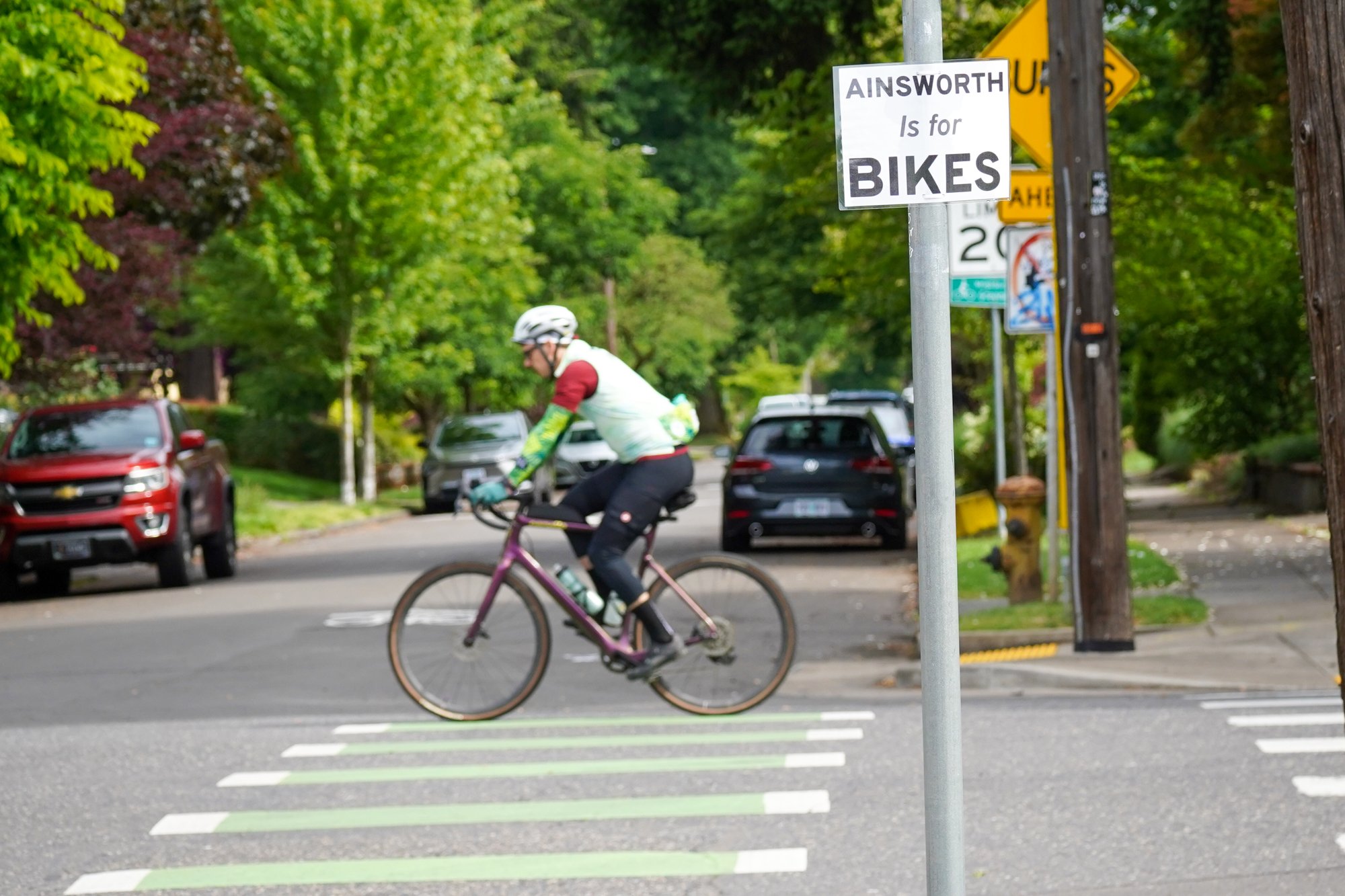
This is welcome news for folks who ride on the street — especially whoever recently plastered the corridor with homemade, pro-bike signs. If you’ve been on the street lately, you’ve probably noticed them. “Ainsworth Neighbors Ride Bikes,” “Ainsworth is for Bikes,” “Ainsworth Slows Down for Bikes,” the signs read. According to the person who posted them (who I’ll keep anonymous for now), it’s all part of the process of raising the street’s profile. “Ainsworth is sort of in a grey zone,” he shared in a phone conversation this morning. “So many people use it to bike and walk, but it doesn’t seem to have tipped over the threshold to being a biking and walking street.”
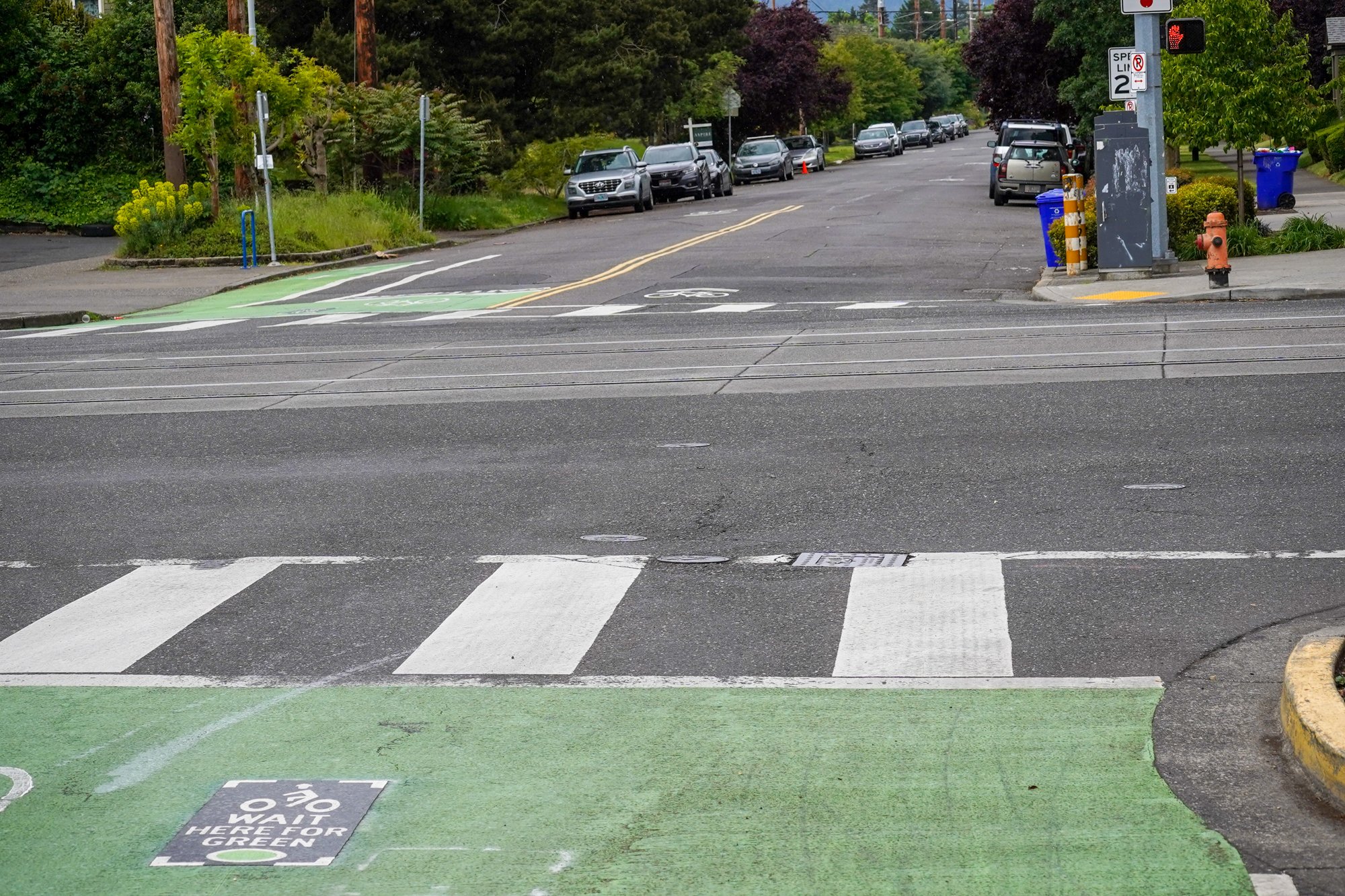
Looking west from N Concord.Sign at N Michigan.Sign at N. Michigan.Looking east from N Concord toward Interstate.Recently installed bike boxes at N Interstate.This is the lowest stress crossing of I-5 in the area. PBOT plans for buffered bike lanes here.Looking east toward I-5 overcrossing from Ockley Green School.Westbound at N Gay where the road suddenly narrows.Another view of the sudden neckdown headed westbound at N Gay.The Omaha Treeway would extend into the intersection.
The activist who posted the signs added he’s also trying to send a message to drivers, who use Ainsworth as a convenient cut-through and alternative to nearby (and larger) neighborhood collector streets N Killingsworth and N Rosa Parks Way. “Those are so close by,” he said; but he also realizes drivers like Ainsworth for the same reasons cyclists like it. “It’s a quick way for drivers to zip over the Greeley and Interstate; but to me that feels like an abuse of that road with Rosa Parks and Killingsworth so close by.”
PBOT has several changes in mind they hope will influence how — or if — people use the street. Their plan isn’t finalized and a public design process will kick off this summer, but the NPIM recommendation gives us a clue about what’s most likely to come (see below).
Advertisement
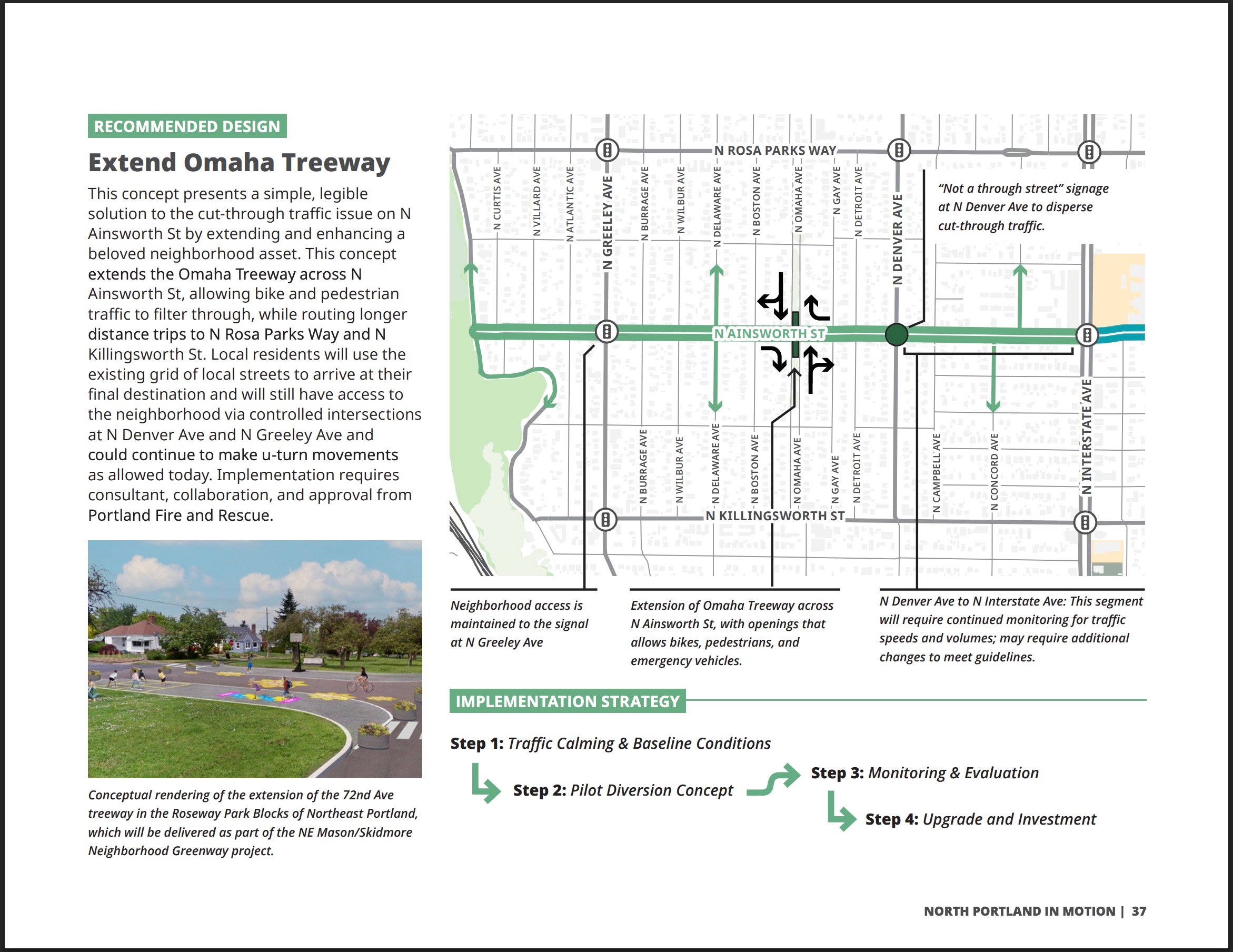
Detail of concept for Omaha Treeway extension.(Source: PBOT North Portland in Motion Plan)
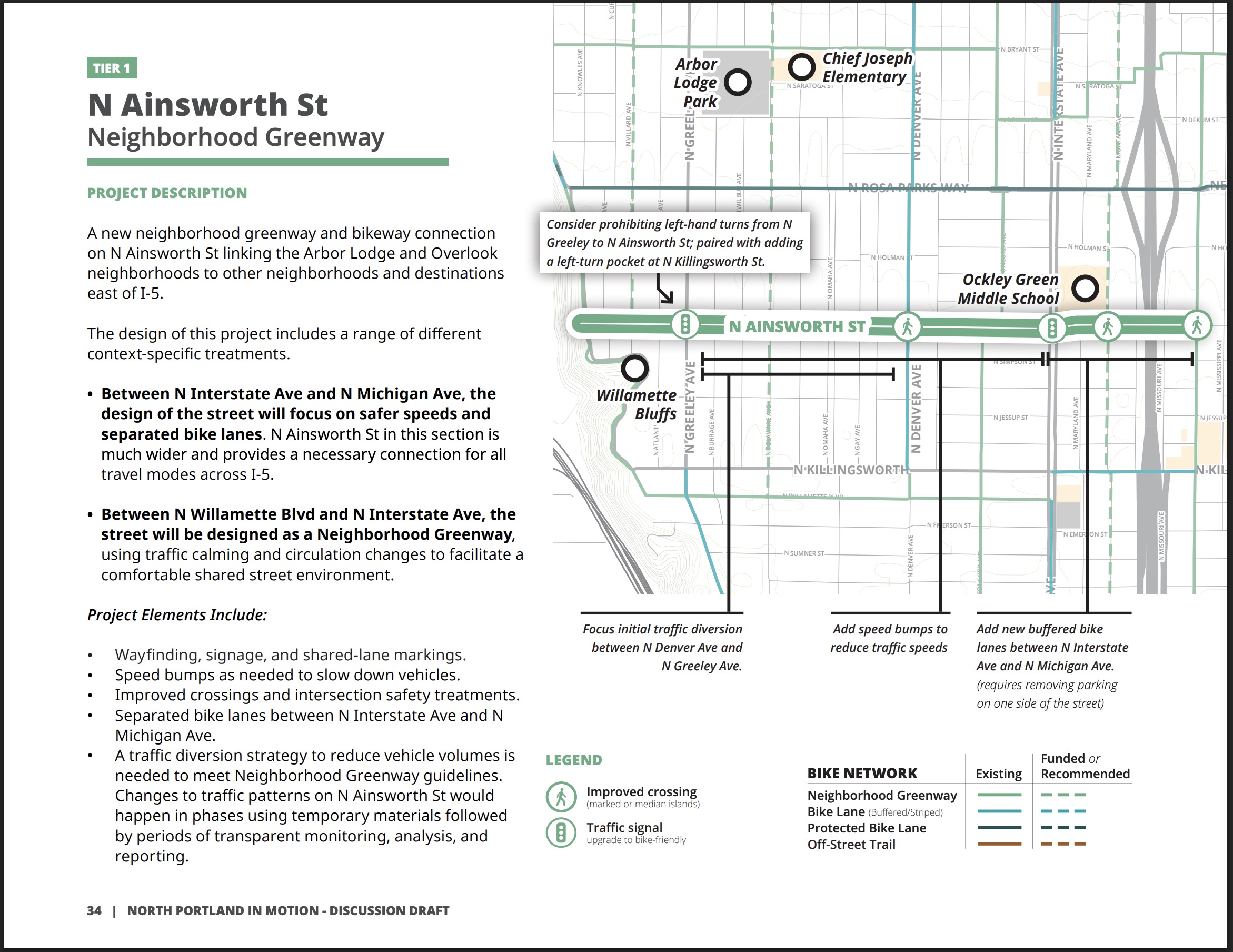
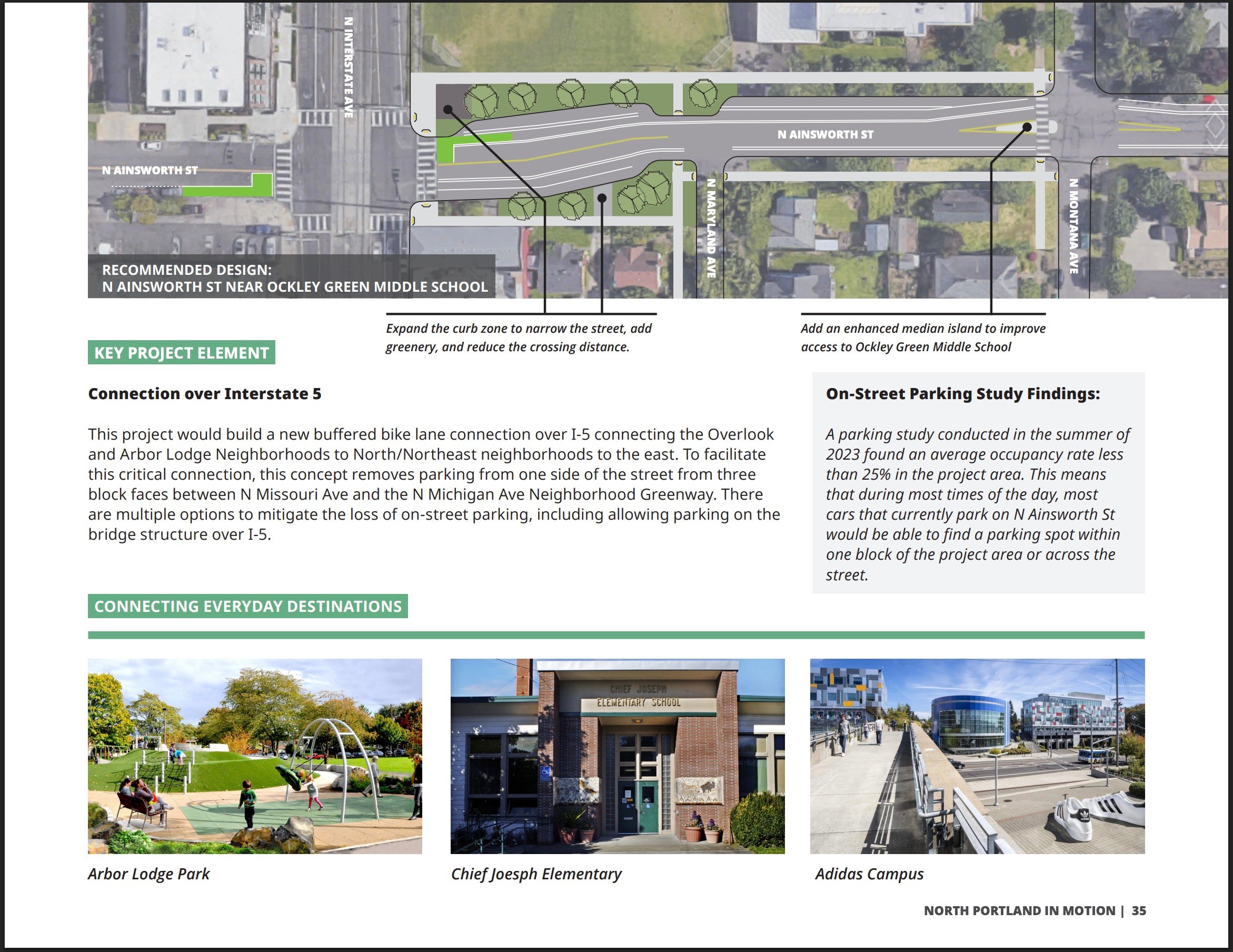
Between N Michigan Ave (already a neighborhood greenway) and N Interstate, PBOT will add buffered bike lanes to separate drivers from bike riders. This will require removing parking on the north side of the street between N Maryland and Minnesota. PBOT will add a new crosswalk and median island outside Ockley Green Middle School and a leading pedestrian interval (LPI) will be added to the signal adjacent to the school at N Interstate. To further calm traffic in front of the school, NPIM calls for an expansion of the curb zone between N Interstate and N Maryland in order to reduce the crossing distance. These changes near the school are also designed to improve the existing dangerous chaos by many drivers during drop-off and pick-up.
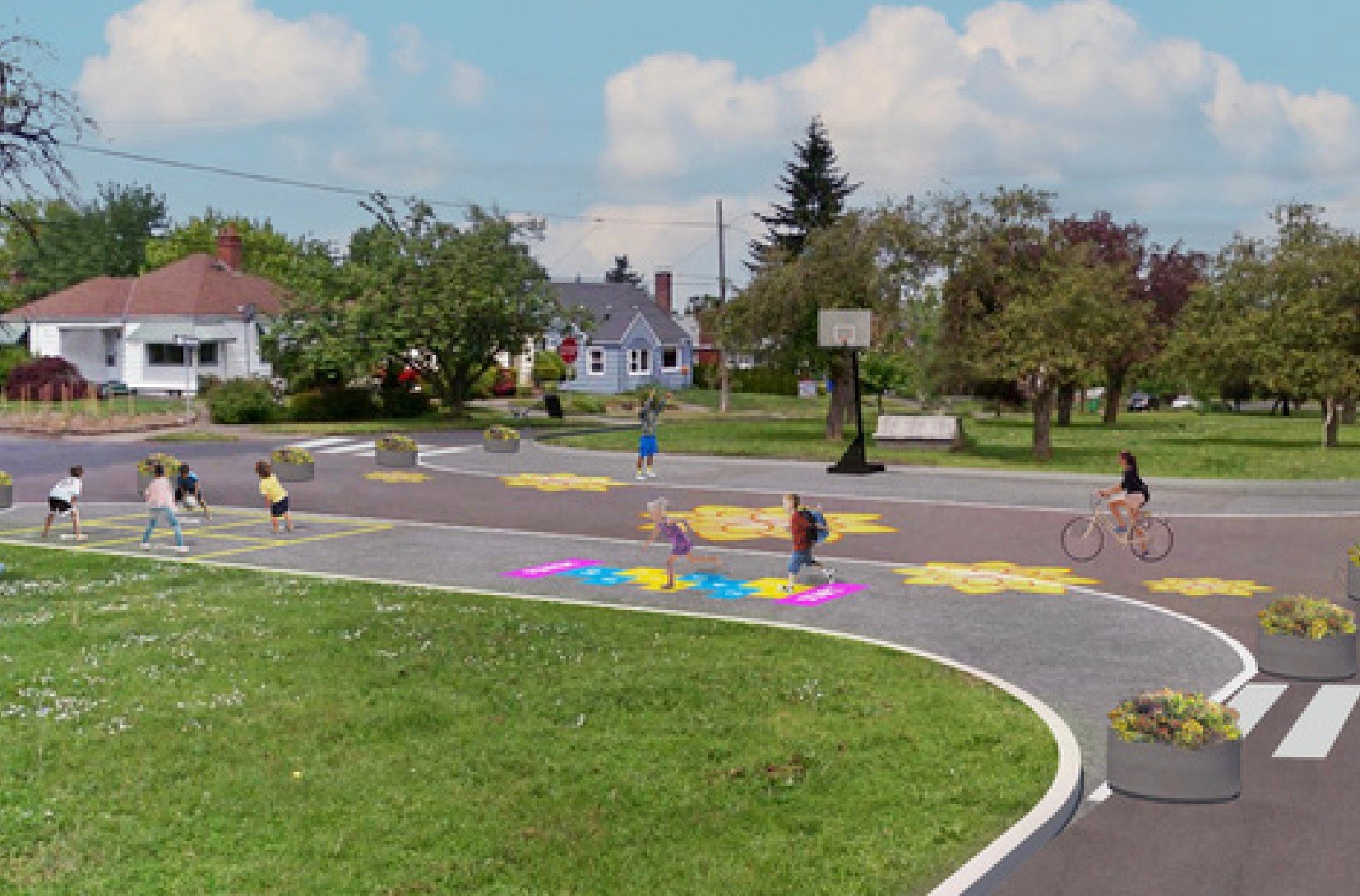
Then from N Interstate to Willamette Blvd — where the road narrows — PBOT will apply neighborhood greenway design standards and use traffic calming and modal filters to achieve the desired effect. The plan is to install bike-friendly speed cushions and “sharrow” pavement markings between N Willamette and Denver. The largest change could come to the intersection of N Ainsworth and Omaha, a wide street with a “treeway” in the middle of it. PBOT wants to extend the Omaha Treeway across Ainsworth, cutting it off completely to drivers while allowing bicycle riders, emergency vehicle drivers, and walkers to filter through (they’ve done a similar treat at NE Mason and 72nd).
PBOT just kicked this project off in April and they hope to begin construction and complete the project this fall. Whether the final product mimics the NPIM recommendation or not, remains to be seen. PBOT will do more outreach in the coming months. Stay tuned for updates.
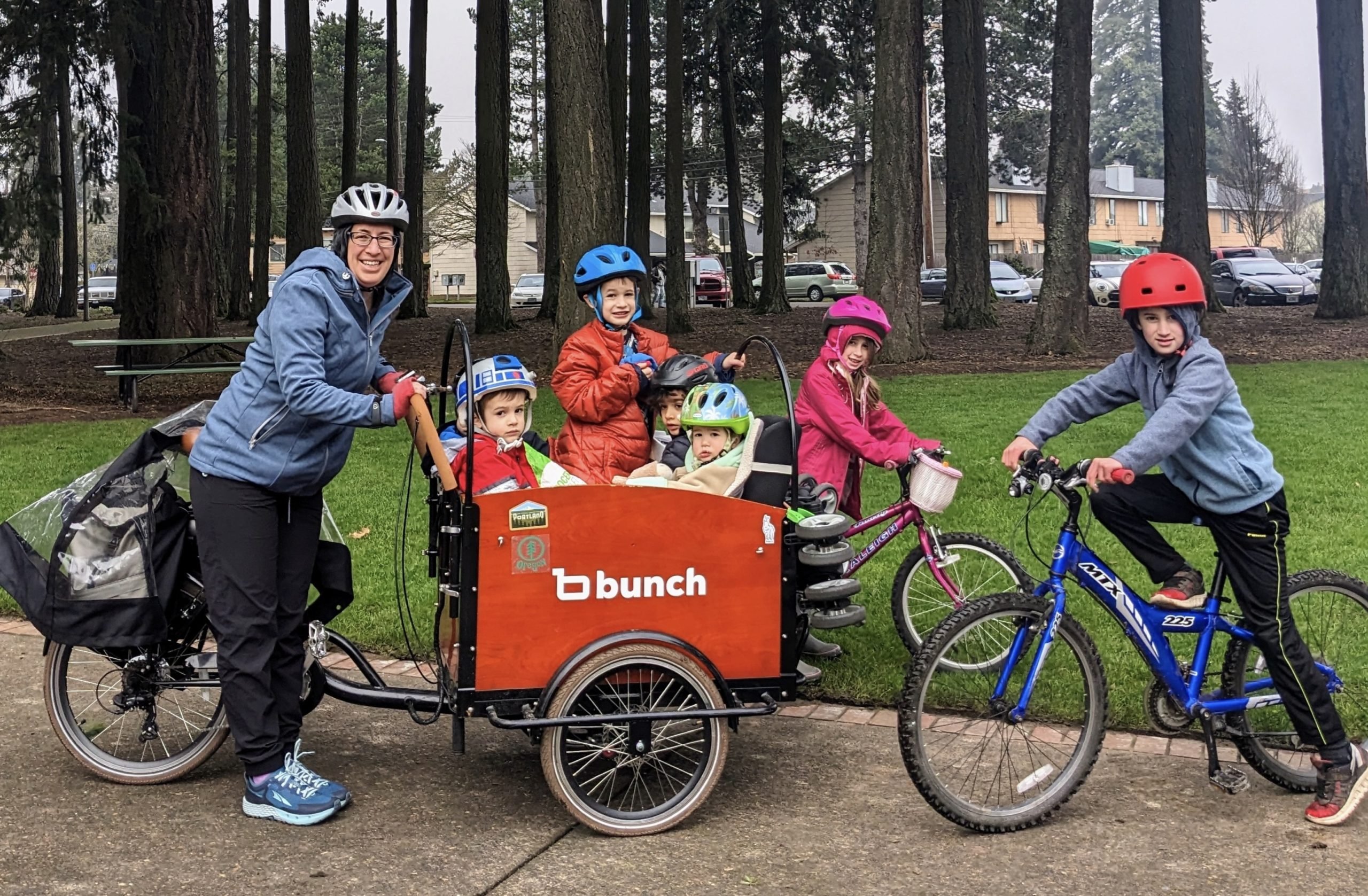
Shannon and the bunch on one of their many park adventures. (Photos: Shannon Johnson)
Hello BikePortland Community,
I have postponed writing this in hopes I wouldn’t need to write it. I had so many biking hopes and dreams and plans, so much that I still wanted to do, explore, and write about. So many bike adventures that I thought were yet to come! Indeed, last summer I started saving up money to buy a custom bike of my dreams from Splendid Cycles, a human-powered XL cargo bike that rode like a dream. I was even thinking about having another baby and was excitedly plotting how to situate a car seat in the box of my new Splendid Mama-bike. I thought the new custom cargo bike would be my “forever bike,” one that I would use to carry my groceries and grandchildren 20 years from now. I wanted to bike on my own power, farther and faster and fitter. I had lots of wild bike plans. I even bought a used 18-foot canoe and we were halfway through building a trailer for it to tow behind my anticipated Splendid Cycle–the nearest put-in spot is 2.5 miles away, and I wanted to take all the kids, car-free. (I love that the folks at Splendid didn’t think this was a crazy idea–they were 100% supportive of finding ways to do all things by bike.)
I had other plans and dreams for other types of biking too. Mountain biking was something new that I wanted to try. My oldest son got a mountain bike and we were planning to start mountain biking together. We went out to a great beginners’ spot (Chehalem Ridge) and I had the most fun that I have had since I was a child. I thought our mountain bike adventures were just getting started.
My cargo bike got a flat tire and I couldn’t muster myself to fix it. I looked every day at the totally deflated tire and thought, “That’s fitting. That’s how I feel.” I quit biking entirely, and the tire stayed flat
Advertisement
I was also planning to save up and buy folding bikes for all the kids, so that we could do carfree adventures in Portland and anywhere public transit could take us. With a big family, we can’t ever use the bike racks on the front of buses, and it’s even difficult for all of us to fit bikes on the MAX, so folding bikes have been another item on my biking wish list. I also dreamed that someday we might go bike-packing and bike camping, that we might travel to other cities and bike in new places, that one day we might even go bike-packing across the United States, or through Europe or South America–or all of the above!
But then my personal world fell apart last October. A family member suffered a devastating medical diagnosis and treatments have, so far, been unsuccessful. At the same time, I suffered a painful personal crisis, followed by financial struggle. The life I thought I had crumbled. It was like experiencing a private earthquake. My cargo bike got a flat tire and I couldn’t muster myself to fix it. I looked every day at the totally deflated tire and thought, “That’s fitting. That’s how I feel.” I quit biking entirely, and the tire stayed flat.
I had always, primarily, biked for joy. It made me feel carefree, playful and fun. I had previously biked myself out of depression, and held onto biking as a key support of my mental health and sanity as a mother to five kids. But now, as I looked at my cargo bike, I felt like I was looking at a vehicle from another life. Biking was something I did before my world collapsed, back when I had been happy, when my life made sense, when I had hopes and dreams that felt attainable. That all feels like an inaccessible past, far-away, never to be returned to again.
Advertisement
Part of me knows I am wrong to leave my bike unridden in the garage. But I guess emotional wounds may take longer to heal than even double-knee-replacements. I have been walking a lot. Walking can be sad and slow. The joyful pace of biking has felt too discordant with my personal suffering, as if riding would be lying. I am too deeply depressed to straddle a bicycle with my children, a bicycle that I associate with happiness.
My husband finally managed to replace my flat tire, but my bike still sits. We had some car trouble, so I did manage to ride a few times, out of necessity–but not for joy. My children have asked why we are walking, and when will we bike again? The answer is that I don’t know. My heart is broken, and I don’t know how to repair it. For now, I can walk, one step at a time, one foot in front of the other. It feels like all I can do.
I hope that this is just a hard season, temporary and passing. I hope it’s true that “time heals all things.” I hope that I can find a way to bike again with my children, to embrace joy again, and laugh as the wind blows in our faces.
Until then, I am stepping away from BikePortland as the family biking columnist, a role I have cherished. I grew so much as a mother and cyclist while writing here. My memories are happy ones. My children blossomed too. The older ones bike themselves around town, and love it. The younger ones are eager to join them. Together we learned how to enjoy living locally, riding to nearby parks and destinations, finding extracurriculars that were bikeable. Our family life flourished, as we spent less time driving and car-commuting, and more time together on bikes and closer-to-home. We grew closer to our neighbors and our community. We became more thoughtful about the choices we make, how we live, and how we relate to the world.
Advertisement
BikePortland, it was a beautiful ride. I enjoyed hearing from readers. I loved learning from you and sharing encouragement across the internet. And I am thankful that BikePortland is still here. Hopefully I’ll be back someday.
In the meantime, I am thinking about trying a new kind of biking, to see if I can develop a new relationship to cycling that isn’t laden with the brokenness I currently feel. At the moment, my cargo bike is full of broken dreams, and the money I had been saving for the custom cargo bike is long gone. But I have managed to ride my simple hybrid bike a few times, on my own. Perhaps that is my bike-path forward. I am wondering if I might be able to try road cycling, building up speed and distances that I wouldn’t ever attempt with kiddos in a cargo bike. I’m not quite sure how to make the jump from riding a few miles around town with my children to “training” and riding long distances on my own — the intimidating, lycra-type of riding. I don’t know if I can do it. But Jonathan is going to be back in the saddle with new knees. I’m hoping I can find a way back too.
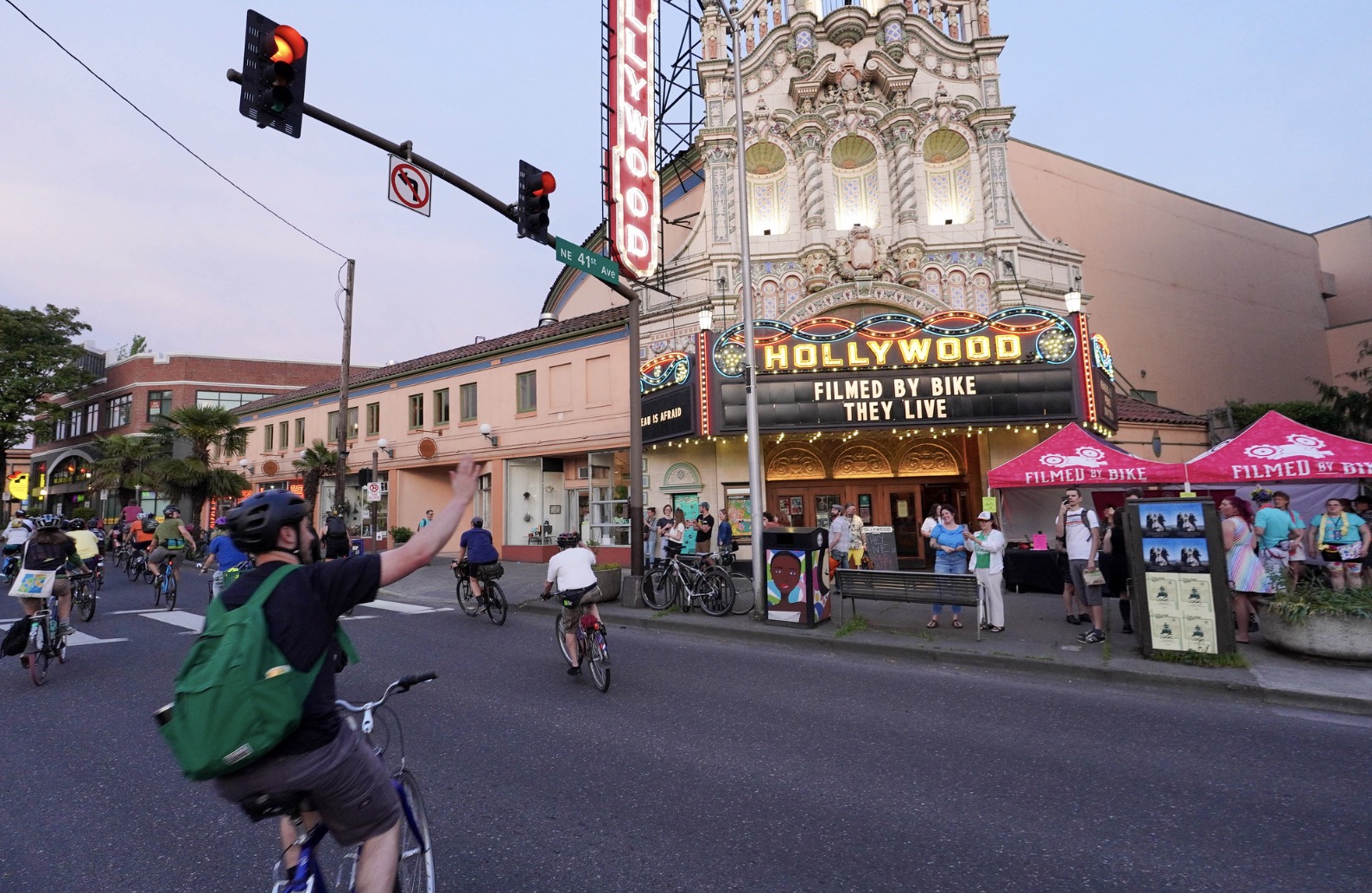
The scene outside the theater on opening night of Filmed by Bike 2023. (Photo: Jonathan Maus/BikePortland)
Happy Bike Month! I rode myself to Bike Happy Hour yesterday and it was so nice to be back out on the streets. I’m hoping the next few weeks I’ll be out there again with my cameras and such.
Also, if you haven’t already done so, now is the time to hit up your local bike shop to make sure your bike is in perfect working order for the upcoming onslaught of amazing rides. Speaking of which, see this week’s picks below. And happy biking!
Filmed by Bike
Don’t miss your chance to see inspiring and beautiful films inspired by cycling on the big screen at the historic Hollywood Theater. Beyond just watching cool movies, Filmed by Bike is about meeting other cinephiles, learning directly from filmmakers, fun parties, prize raffles, and more. The fest kicks off Friday and runs through the weekend. Each screening has a specific theme. For ticket and screening info, check out the official event website. Or go straight to the daily schedule to plan your weekend.
Friday, May 16th
Basic Bike Maintenance Workshop – 3:00 pm at North Portland Library (N) Hosted by the City of Portland, this event will empower you to fix your own bike. Bring your rig to practice on. More info here.
Filmed by Bike Opening Ride and Happy Hour – 4:00 pm at Steeplejack Brewing Company (NE) Enjoy a pint at Steeplejack and then join The Street Trust for a ride to the theater where you’ll take a group photo under the marquee before the first screening begins. More info here.
Friday Night Bikes – 6:00 pm in Forest Park (NW) Roll into the woods for this unsanctioned night of head-to-head racing on a 1.3-mile section of gravel road. More info here.
Saturday, May 17th
Good Dirt – 9:00 am at Rocky Point Trails (Scappoose) Grab your trail bike and join the good folks from River City Bicycles and NW Trail Alliance for a fun ride followed by a chill and grill session in the parking lot. More info here.
Bike Milwaukie Monthly Ride – 10:00 am at Milwaukie Bay Park Ride to Willamette Falls in Oregon City via the Trolley Trail and Clackamas River Trail. Expect a chill pace with fun stops along the way for sights and food. More info here.
Saturdays in May Southeast Edition – 10:00 am at Clinton Street Plaza (SE) Get plugged into bike activism with folks from BikeLoud PDX who will lead this ride while sharing insights on different types of bike facilities and what it takes to make our city a better place to ride. More info here.
Advertisement
Anti-Chevron Ride – 2:00 pm at Irving Park (NE) Revolutionary Bicycle Club wants you to join their resistance movement against this oil company. They plan to stop at Chevron stations to raise hell and raise awareness of the company’s many misdeeds. More info here.
Ride for Recovery – 4:00 pm at Colonel Summers Park (SE) Celebrate sobriety and wellness on this ride that caters to folks in recovery, or those helping them along the way. Expect an 8-10 mile route at a casual pace. More info here.
Sunday, May 18th
Sunday Parkways Southwest – 11:00 am to 4:00 pm (SW) The open streets season kicks off in southwest with a two-mile out-and-back carfree biking route and a separate, 3.6-mile walking route between Gabriel Park and Spring Garden Park. More info here.
“Motherload” Movie Screening – 4:00 pm at Tigard Public Library (West Side) Motherload” is an award-winning documentary that uses one mom’s relationship with her cargo bike to explore themes of modernity, transportation reform, urban planning, and mental and physical health. More info here.
— Did I miss your event? Please let me know by filling out our contact form, or just email me at maus.jonathan@gmail.com.
Councilor Tiffany Koyama Lane speaking at a traffic safety event on November 17th, 2024. (Photo: Jonathan Maus/BikePortland)
Like a coach at halftime to a team that’s way behind, Portland City Councilor Tiffany Koyama Lane wants to remind us that we are still a “Vision Zero” city and we need to get out there and start acting like it. Next month will be the 10th anniversary of when Koyama Lane’s council predecessors passed a high profile resolution that stated, “no loss of life is acceptable on our city streets.” Since then our Fatality Tracker has tallied 564 deaths on our streets.
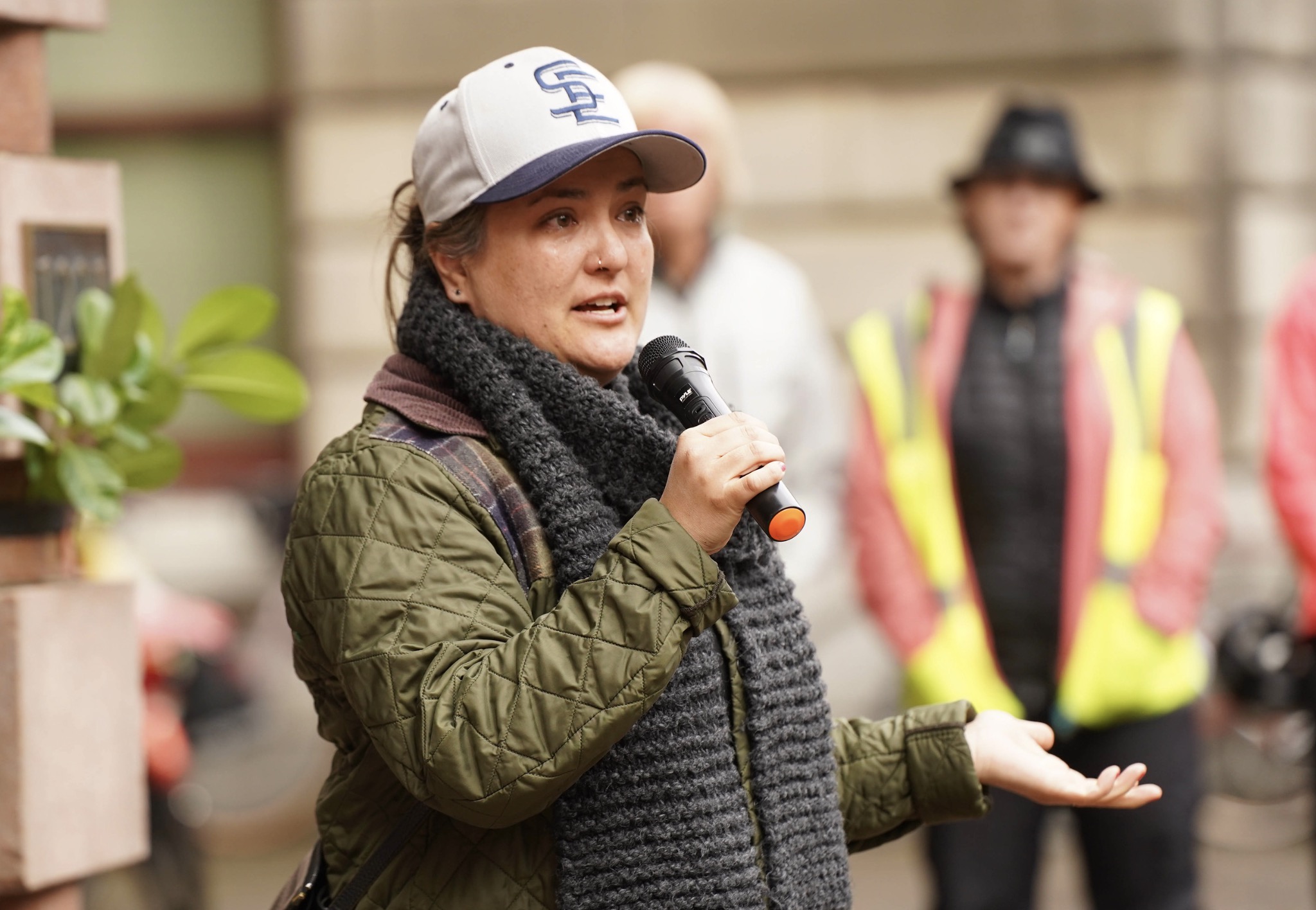
Councilor Koyama Lane has been a persistent voice in support of Vision Zero since taking her seat in City Hall in January. And she told us she would be. In November 2024 she fought back tears at a rally in front of City Hall to mark the World Day of Remembrance for Victims of Traffic Violence. “This shouldn’t be normalized,” she said. “This isn’t a topic that we’re just supposed to talk about when we’re running for office… we will keep fighting.”
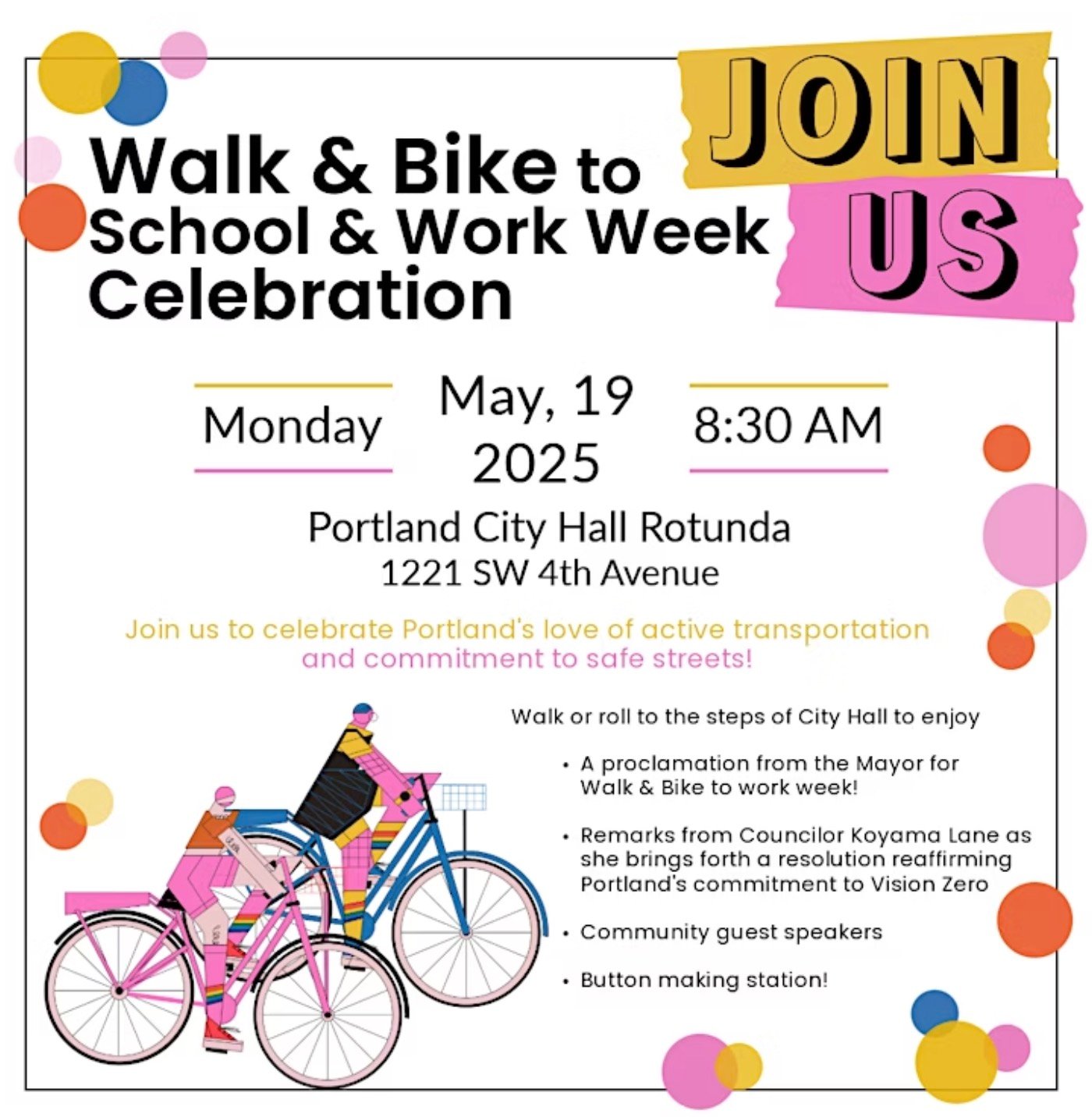
On Monday, Koyama Lane will return to the City Hall steps to host an event that will mix the seriousness of Vision Zero with a dose of celebration. Before a meeting of the Transportation & Infrastructure Committee where Koyama Lane will introduce another Vision Zero resolution, she’ll join Mayor Keith Wilson, street safety advocates, and her council colleagues for an official city proclamation to make the week of May 19th, Portland Walk and Bike to School and Work Week.
Advertisement
Event flyer.
“Whereas, creating a bike- and walk-friendly community grows the economy of Portland, advances traffic safety, moves us closer to our climate goals, and supports student learning outcomes,” reads the text of the proclamation. “And Whereas, increasing the number of people safely walking and biking to school or work can reduce wear and tear on our streets, mitigate traffic congestion, reduce noise and greenhouse gas emissions, and improve air quality.”
Koyama Lane wants to strike a tone that is urgent, yet hopeful. “Walking/rolling, biking and transit are the most joyful, healthy, connecting, and cost-efficient ways to get around our city,” reads a statement from her office. “Yet ten years into Portland’s commitment to Vision Zero, we still have a long way to go to ensure that walking/rolling/biking are safe, attractive, and convenient for everyone. We can get there, together.”
While Monday will mostly be an awareness-building effort aimed at increasing the public and political urgency around making streets safer ahead of what’s expected to be a very busy bicycling season; there is one significant piece of policy proposed in Councilor Koyama Lane’s resolution. She wants to re-convene a Vision Zero Task Force.
The Portland Bureau of Transportation (PBOT) created a Vision Zero Task Force as part of an action plan recommendation in 2017. The group’s members were a mix of high-ranking Portland Police officers, community and advocacy organization leaders, city staff, and elected officials. They met 11 times before being unexpectedly disbanded in 2021. At the time — a moment of massive upheaval and re-examination of policies citywide due to the racial justice protests — former PBOT Director Chris Warner said the move was needed to “evolve” the city’s Vision Zero engagement. The idea was to shift away from a traditional task force approach and launch in its place a, “model of community accountability that engages an even broader set of stakeholders.” Perhaps PBOT succeeded with that effort, but after the task force dissolved there was no longer a public and transparent venue to easily keep tabs the city’s Vision Zero efforts. Late last year, the Portland City Auditor gave PBOT mixed reviews in an assessment of Vision Zero work.
Advertisement
PBOT has succeeded in many elements of what it takes to make Vision Zero a reality. They’ve integrated the concept into their policies and projects (they also use the phrase ‘Safe Systems Approach‘ to clarify that Vision Zero is the goal, but ‘Safe Systems’ is how they will achieve it), and they’ve kept the concept relevant and in the public eye. But for most Portlanders, the only thing that matters when it comes to judging the city’s progress on Vision Zero is whether or not fewer people are being injured and killed on our roads. And with an alarming upward trend in traffic deaths every year since 2015 (except for this year), most Portlanders would say the program has failed.
Councilor Koyama Lane wants to turn the tide and raising the profile of the program and reconvening the task force are her first steps.
If city council passes her resolution, they’ll consider (since resolutions aren’t binding, they won’t be forced to) setting up a new Vision Zero Task Force that will be led by Deputy City Administrator (DCA) of Public Works and Public Safety Priya Dhanapal and co-led by the DCA of Community and Economic Development Donnie Oliveira. The task force will be, “staffed with key program and technical Bureau staff from across the City to collaborate on actions that support the City’s goal to eliminate traffic deaths.” The resolution also calls on PBOT to update the Vision Zero Action Plan and calls on the city to develop partnerships with external agencies including ODOT, Metro, TriMet, Multnomah County, and the Oregon Liquor and Cannabis Commission. The DCAs would then report quarterly to City Council on their progress.
In a scarce funding environment at PBOT and other city bureaus, it will be interesting to hear how new city council members plan to tackle traffic deaths. Will they hide behind budget woes, or will they propose innovative approaches? Either way, at least Councilor Koyama Lane has called the question.
Looking west on SE Powell Blvd at 80th, where man riding a motorcycle was killed Tuesday.
Another person has been killed while using SE Powell Blvd. While the number of fatal traffic crashes citywide are less than half what we had at this date last year, that is no solace for South Tabor Neighborhood residents who say the dangerous conditions on this state-owned urban highway is “no less than an emergency.”
Police say a motorcycle rider was involved in a collision with someone driving a van around 2:00 pm on Tuesday. The rider sustained serious injuries and died later that day at a nearby hospital.
That person is the 16th road user to be killed on SE Powell since 2022 — half of whom were bicycling or walking prior to being hit. 11 people have been killed on Powell in the four-mile stretch between SE Foster and 140th since Sarah Pliner was killed at SE 26th on October 4th.
South Tabor Neighborhood Association Chair Juan Cummings is beside himself. “In a sane world, we wouldn’t tolerate a single unnecessary death,” he wrote in an email today. “If a factory had dozens of deaths in a few years, the business would cease to exist, and managers would be facing criminal charges.”
Advertisement
Powell is owned and managed by the Oregon Department of Transportation (ODOT), and the agency is working on making repairs and upgrades needed in order to transfer jurisdiction to the City of Portland. That can’t come soon enough for Cummings and other nearby residents who are sick and tired of dealing with this deadly ticking time bomb in their neighborhood.
The STNA will host a meeting Thursday (May 15th) night at 7:00 pm at All City Church (2700 SE 67th). They’ve invited staff from ODOT, TriMet, and the Portland Bureau of Transportation. A staffer from City Councilor Angelita Morillo’s office is also expected to join.
It’s only been two months since the last time these folks came together to voice concerns and demand action from government agencies to help keep them safe. A meeting back in March came after an 86-year-old man was hit and killed while walking across Powell at 67th. I expect calls for action will be even louder this time around.
“We don’t want to talk anymore,” Cummings wrote today. “We want shovels in the ground.”
The City of Portland will bring its popular Sunday Parkways open streets event back to downtown this summer. It will be the first time since 2019 the event graces our wonderful central city; but there’s more to this event than meets the eye. When the Portland Bureau of Transportation announced this year’s four Sunday Parkways back in March, I wondered why the downtown edition was the only one they didn’t reveal any route info for. Last night it began to make a bit more sense.
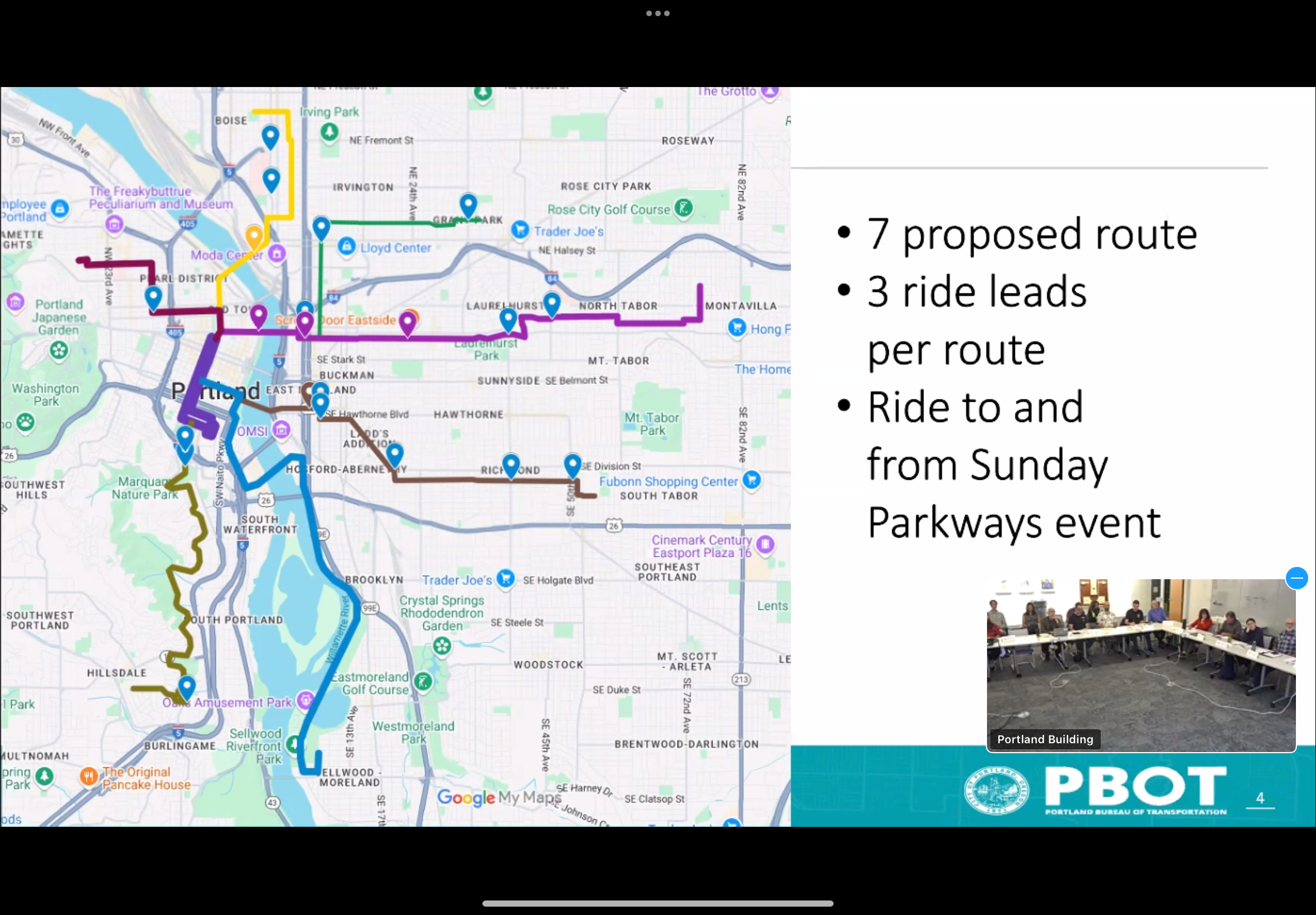
At a meeting of their Bicycle Advisory Committee on Tuesday PBOT revealed the route (above) of the September 14th Downtown Sunday Parkways. The event will feature a loop of carfree streets stretching from SW Harrison to SW Oak Street. The bulk of the 2.3-mile route will consist of a one-block couplet of SW Park (along the South Park Blocks) and SW Broadway, with an east-west spur from the Park Blocks to SW 2nd via SW Harrison (through Portland State University) and SW Mill. It’s not the highest-profile set of streets we could have had, but SW Broadway through the heart of downtown will be very cool to experience carfree.
Advertisement
Slides shared by PBOT at the Bicycle Advisory Committee meeting Tuesday night.
PBOT staffer Rachel Lobo said the route is, “Based on the moment in Portland we’re in right now,” and that they are, “Really wanting to support our local businesses, organizations, and the arts and culture that is downtown and help people rethink what it means to visit Portland’s living room.” The idea, the staffer said, is to, “create a vibrant, block party style event in the heart of downtown.” Highlights on the route will be Directors Park, Pioneer Square, the PSU Farmers Market, Lovejoy Fountain, the Cart Blocks on Burnside, and so on.
And what will make the event even more intriguing is how PBOT plans to tap into the local bike bus revolution and entice Portlanders to come downtown by bike from their neighborhoods. For the first time ever, PBOT will offer guided rides on vetted (and possibly even signed) routes to entice folks to pedal downtown. “We feel this is a great opportunity to showcase to people how to get downtown bike bike,” Lobo said at last night’s meeting. “We feel like the bike bus model, which has been so popular with kids and adults is a great way for us to be that support system for people.”
Advertisement
PBOT is eyeing seven different routes for these “guided neighborhood rides” and is looking for volunteer ride leaders that would ferry folks along each one of them. The rides would begin at community gathering spots like bike shops, community centers, and schools. In addition to getting more folks downtown, PBOT’s goal is to use the rides to educate people about safe bike routes and empower people to ride more — and maybe expand their sphere of confidence beyond their own neighborhood.
The routes are still in draft form and PBOT is asking BAC members, bike bus leaders, and anyone who’s part of an existing riding group to volunteer as ride leaders.
The idea was very well-received at the meeting. Jessica Fletcher, a bike bus leader in St. Johns who was at the meeting to encourage PBOT to do more to make streets on bike bus routes safer, spoke up to say, “I felt like doing a standing ovation, because it really reflects the movement of the bike bus that it is now implemented by the city, and it is very powerful.”
Job Summary:
The e-bike Mechanic at Wombi plays a crucial role in ensuring the maintenance, repair, and quality assurance of our eBike fleet. The primary responsibility is to perform mechanical repairs and diagnostics on eBikes, ensuring they meet safety standards and customer satisfaction.
Key Responsibilities:
– Assembly new bikes in order to keep our shop fleet well stocked for new subscribers.
– Conduct thorough inspections and diagnostics of eBikes to identify mechanical issues and perform necessary repairs or adjustments.
– Perform routine maintenance tasks, including brake adjustments, tire replacements, and drivetrain lubrication, to ensure eBikes are in optimal working condition.
– Diagnose and repair electrical components such as motors, batteries, and controllers, ensuring proper functionality and safety.
– Install and configure accessories and upgrades on eBikes as per customer requests or company standards.
– Assist in maintaining accurate records of service and repair activities using digital systems and paperwork, including parts used and time spent on each repair.
– Communicate effectively with customers to explain repair recommendations, provide cost estimates, and address any questions or concerns.
– Collaborate with other Mechanics and Service Manager to troubleshoot complex issues and develop effective repair solutions.
– Keep abreast of industry trends, new technologies, and best practices in eBike maintenance and repair to continuously improve skills and knowledge.
– Ensure compliance with safety protocols and procedures while performing repair and maintenance tasks, including the use of personal protective equipment.
– Maintain a clean and organized work environment, including the workshop area and tools, to ensure efficiency and safety.
– Ensure all eBike repairs meet company standards for safety and functionality. Minimize return visits and warranty claims by addressing customer concerns effectively.
– Complete repairs and maintenance tasks within established timeframes to meet service goals and customer expectations.
– Maintain positive customer feedback and satisfaction scores through timely and effective communication and service delivery.
– Actively participate in training and development opportunities to enhance skills and knowledge in eBike maintenance and repair.
Qualifications:
– Minimum of 3 years of experience in bicycle mechanics or related field, with specific experience in eBike maintenance preferred.
– Proficiency in diagnosing and repairing mechanical and electrical issues on eBikes, including motors, batteries, and electronic components.
– Strong understanding of bicycle components, systems, and maintenance procedures.
– Familiarity with diagnostic tools and equipment used in eBike repair and maintenance.
– Excellent problem-solving skills and attention to detail.
– Effective communication skills to interact with customers and team members.
– Ability to work independently and collaboratively in a fast-paced environment.
Work Conditions:
– Work primarily takes place in a workshop environment, with occasional outdoor repairs or service calls.
– May require work during evenings, weekends, or holidays to accommodate customer needs and service demands.
Physical Demands:
– Must be comfortable working with various hand and power tools and lifting objects weighing up to 50 pounds.
– Regularly required to stand, walk, and perform tasks requiring manual dexterity for extended periods.
– Frequently required to bend, stoop, kneel, and reach to access eBike components and perform repairs.
– Must be able to lift and maneuver eBikes and equipment safely and effectively.
How to Apply
Contact me, Justin, the GM at justin.scott@wombi.us. Send your resume and a brief intro. Must be in the Seattle area and able to commute to Greenwood for a work-stand trial
Bike Happy Hour, February 7th, 2024. (Photo: Jonathan Maus/BikePortland)
This Wednesday (tomorrow!) we’re bringing the Bike Happy Hour gathering back home. After a wonderful winter stint at Migration Brewing on North Williams Avenue, I’m excited to announce that this week we’ll return to Gorges Beer Co on SE Ankeny between 27th and 28th.
You might recall we headed north back in November after Gorges and Ankeny Tap & Table owner Travis Preece temporarily closed down both businesses to re-assess and remodel. Now that Travis has re-opened Gorges (in the space that used to be Ankeny Tap), I’m excited to bring our weekly get together back to the carfree plaza! Rainbow Road has grown into one of the coolest carfree plazas on the east side, and the block is full of energy and enthusiasm. Next to Gorges’ tables is the City of Portland’s public plaza which they recently furnished with gorgeous redwood benches and chairs.
Also this week we’ll be joined by the new crew behind Filmed By Bike, Portland’s homegrown bike movie fest that happens this coming weekend, May 16th, 17th and 18th. Alden Roth and Erik Douds will be on hand to share the scoop on all the bike fun goodness coming your way as part of FBB. They’ve put together an exciting mix of rides, filmmaker events, and parties to go along with the fantastic films that made the cut for this years screenings.
Advertisement
So come on out and join us!
As always, everyone is welcome at Bike Happy Hour. Don’t wait for an invitation to come and talk with us! If you have something to share — a project you need help with, an event to promote, a speech you want to give — just grab the mic and go for it. I’ll be there from 3:00 to 6:00 if you want to chat. There will be free appetizers coming out around 4:00 and we do announcements and open mic at 5:30. Remember to bring your name tags and get your sticker for showing up, or get a tag from me if you need one.
What else can you do at Bike Happy Hour? Bring bike gear to swap or sell, bring a craft to do and/or share with others, eat yummy food and enjoy great drinks, geek out at the cool bikes, and so on and so forth.
Can’t wait to see everyone in the plaza!
UPDATE, Weds 5/14: New special guests added! Come out and meet the crew from Cycle Homies, who’ve been chosen to lead the annual Bike Summer Kickoff Ride on June 1st. And we’ll also have Shay from the Kernside Business Association!
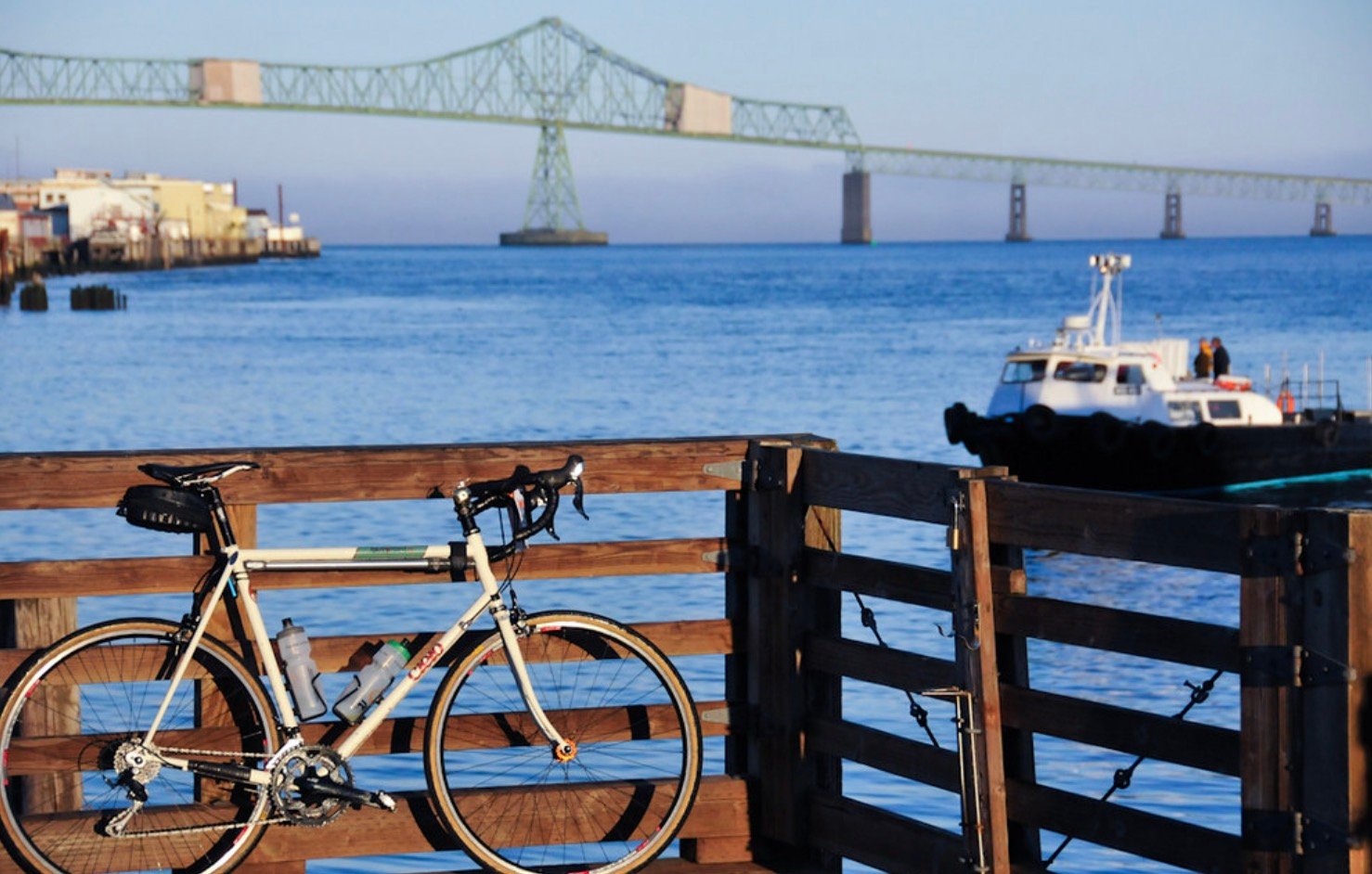
The northern route stops in Astoria. (Photo: Jonathan Maus/BikePortland)
Just in time for summer fun, there’s a new transit option to the Oregon Coast — and if you book your tickets in advance, you can even take your bicycle along with you.
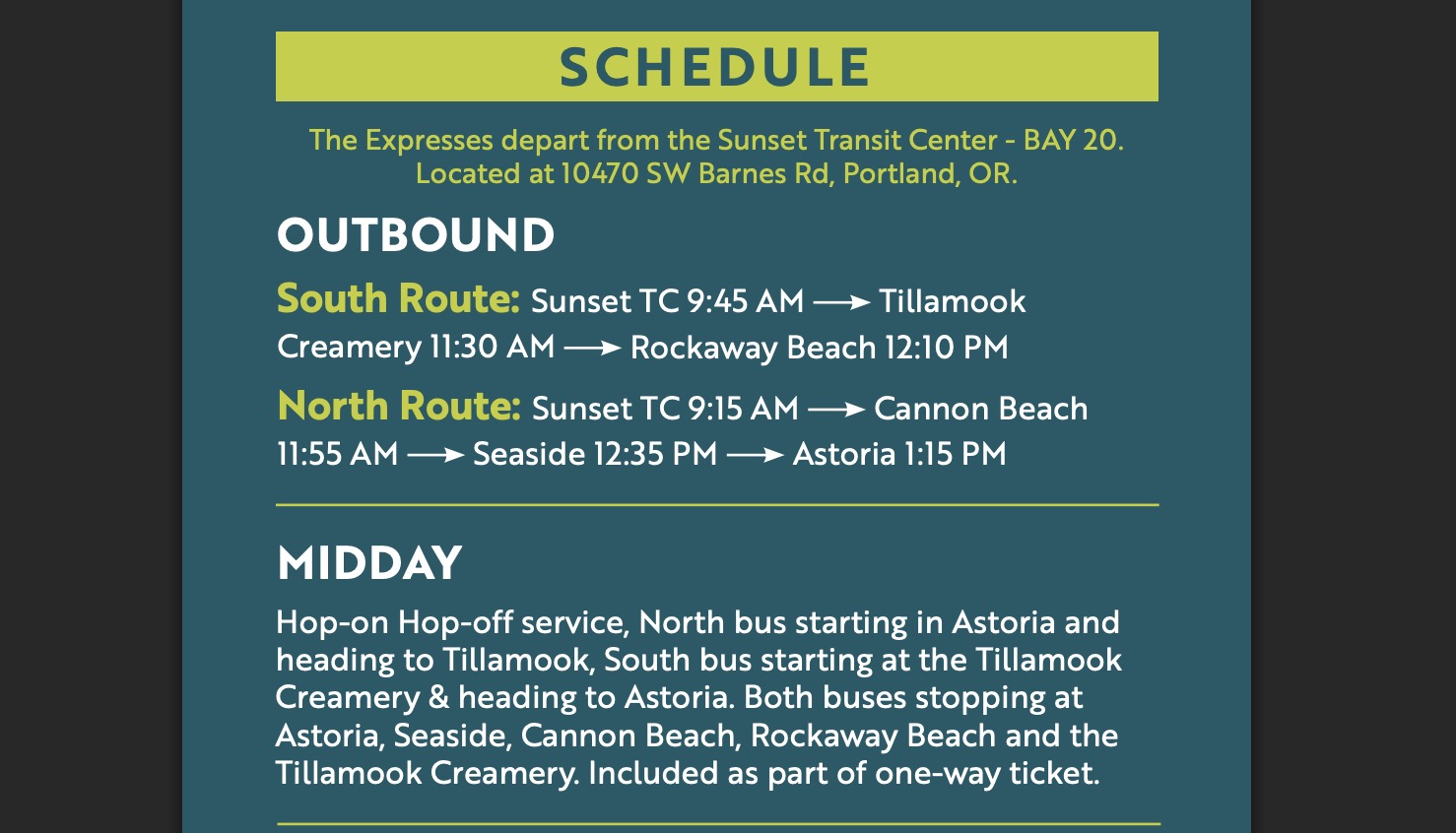
The North Coast Express is a new shuttle service that will depart Friday through Sunday mornings from Sunset Transit Center in Beaverton. There will be two routes to choose from: a northern route that makes stops in Seaside, Cannon Beach, and Astoria; and a southern route with stops at Rockaway Beach and Tillamook Creamery. Round trip tickets cost $49.99.
The service will be operated by Ecoshuttle and is funded through a mix of Oregon Department of Transportation (ODOT) and federal Environmental Protection Agency (EPA) grants, as well as funding from Travel Oregon, Travel Portland, and other tourism development agencies. Set up as a pilot project, the goal of the new service is to demonstrate how popular and effective a shuttle bus can be in reducing single-occupancy vehicle travel. If all goes according to plan, the agencies behind the ride hope to solidify the service as a long-term option.
Advertisement
(Details from the Ride Guide)
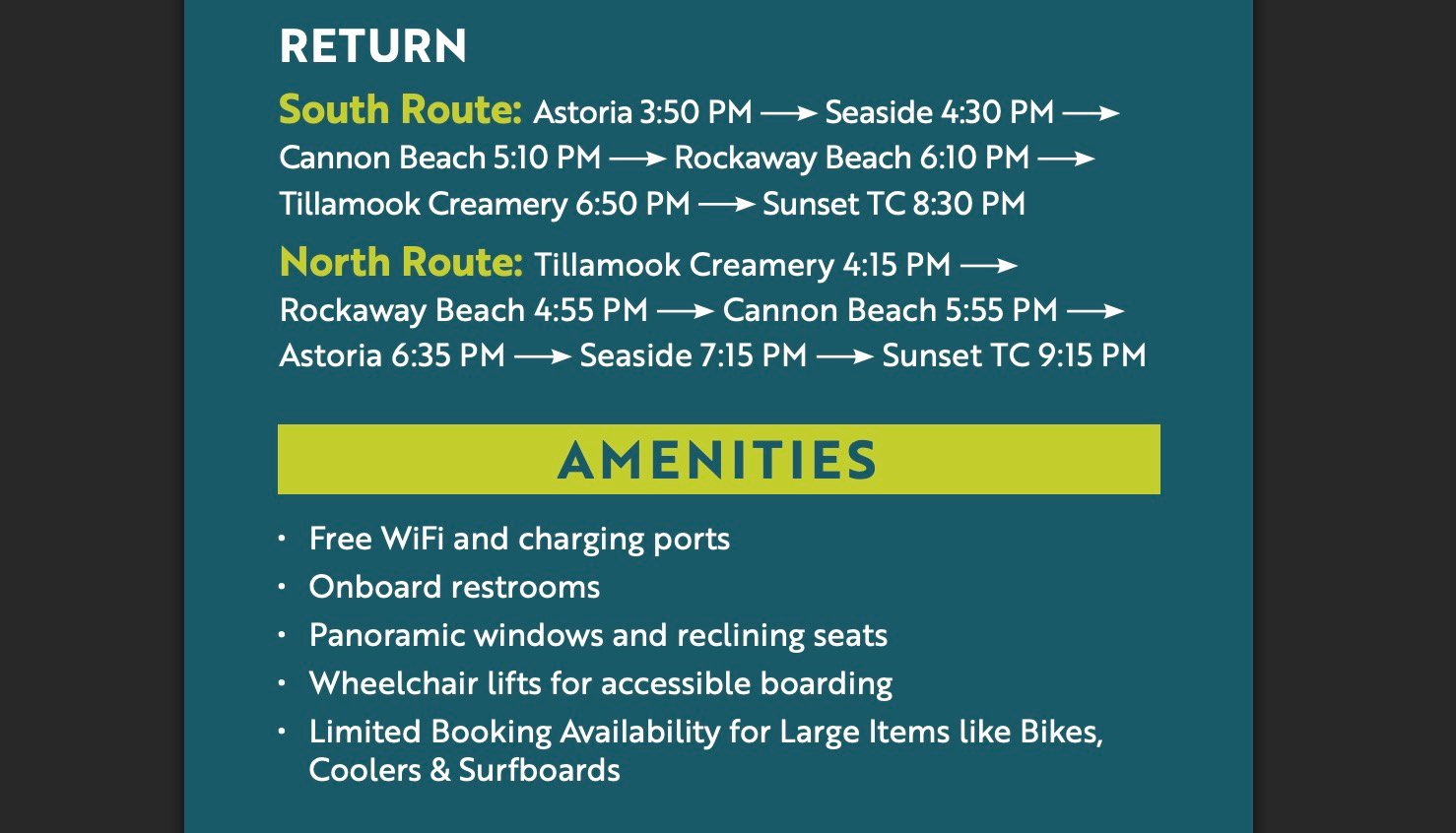
The buses are equipped with free WiFi, charging ports and restrooms.
If you want to bring your bike, make sure you book a “large items” ticket and do so in advance because there’s limited availability to store large items on each trip. If you book a large item ticket, you can bring a bicycle that weighs up to 50 lbs (which excludes almost every e-bike) and measures 70 x 41 x 8.5 inches (what North Coast Express calls a “regular size” bike). Also note that you will be responsible for loading your own bicycle in the storage area.
The North Coast Express launches Friday May 23rd and will operate Fridays through Sundays through the end of August. Tickets and more information here.
CORRECTION, 5/14 at 9:30 am: The North Coast Express website and press materials incorrectly stated that part of the funding for this pilot was provided by ODOT. That is incorrect. ODOT has not funded this pilot, because they already fund an Oregon Coast transit service called POINT.
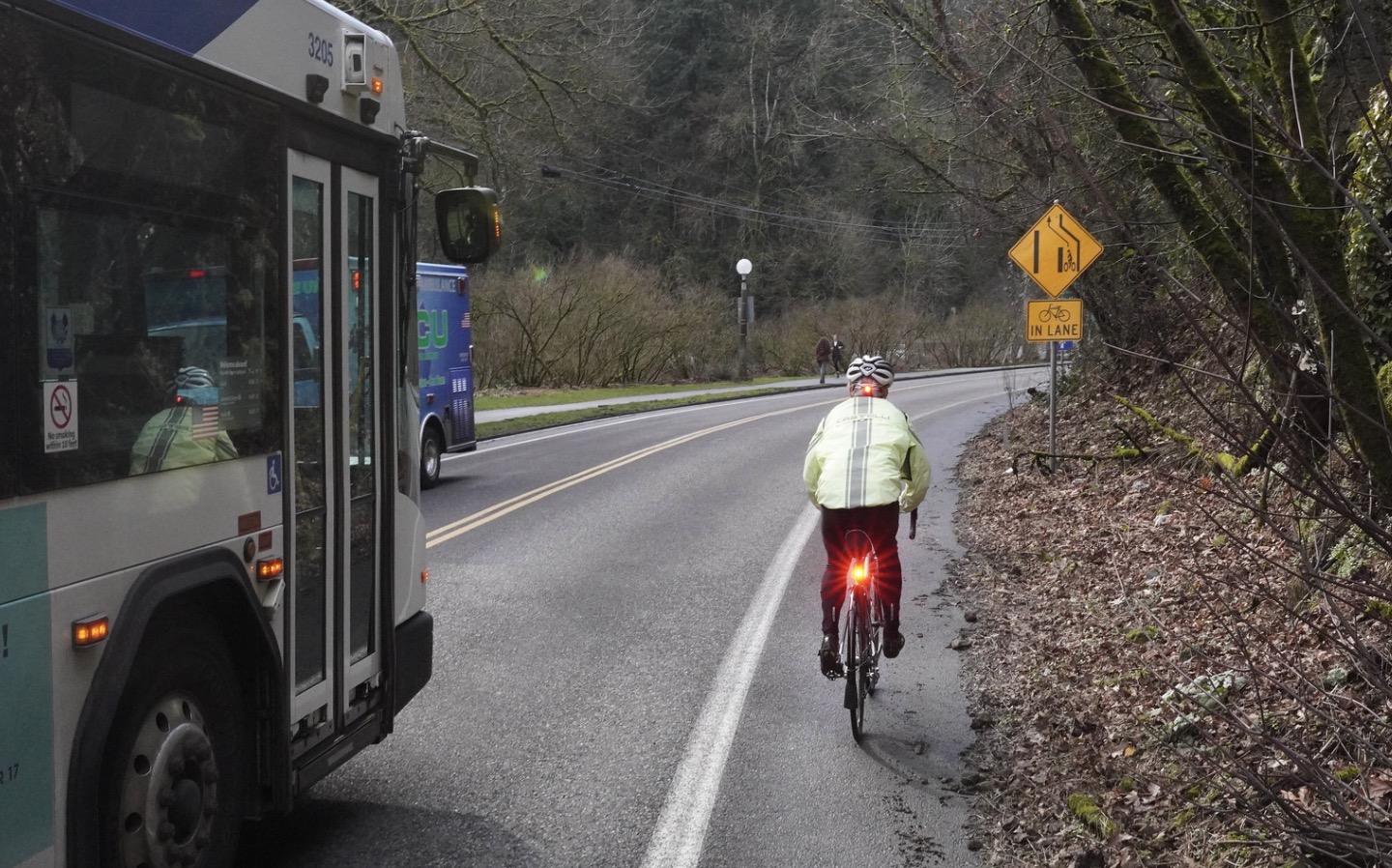
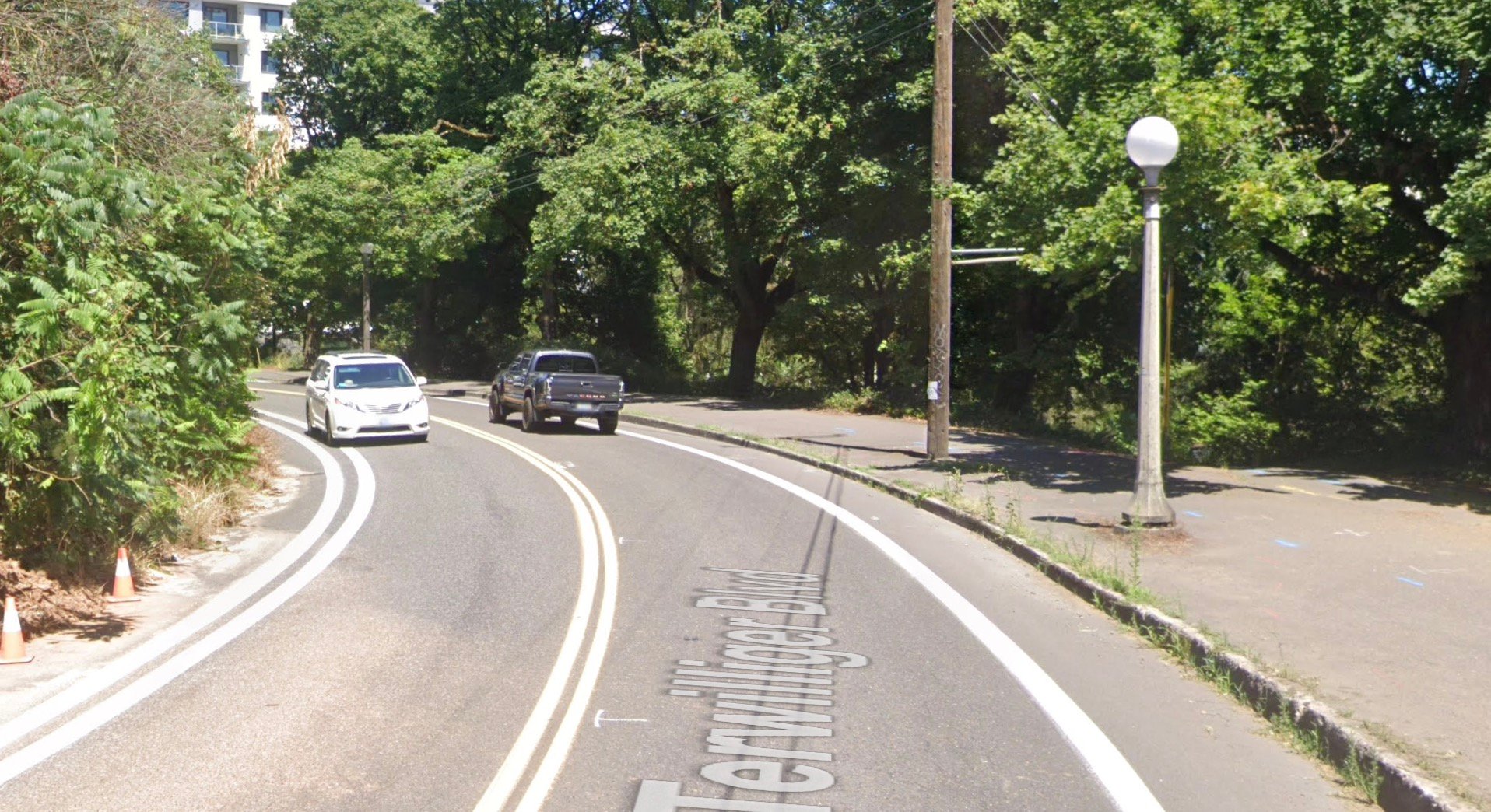
Riding west on SW Terwilliger toward SW Sam Jackson Road, right before the narrow bike lane drops and forces riders into a shared-lane. (Photo: Jonathan Maus/BikePortland)
A sewer pipe replacement project will bring a major upgrade to the bike network in southwest Portland next year; but advocates are pushing the City of Portland to seize the opportunity to go even further.
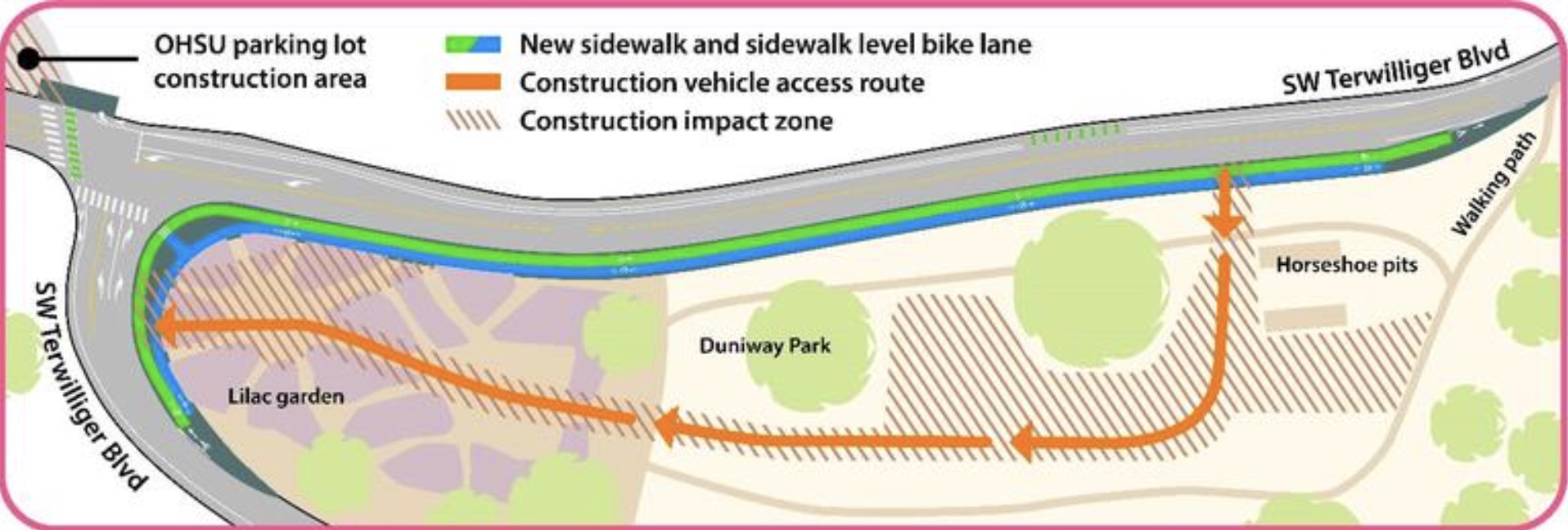
As part of their Sheridan Trunk Sewer Project, the Bureau of Environmental Services (BES) plans to replace 1,600 feet of old, worn-out sewage pipes that run below Southwest Terwilliger Boulevard between Marquam Nature Park and Duniway Park. In order to keep bicycle riders and walkers safe during construction, BES has agreed to upgrade bike lane striping and designs within the project area, then make the changes permanent once the project is complete.
Since this is a sewer project, BES will pick up the tab. That’s good news in terms of saving the Portland Bureau of Transportation money, but it also means the scope of the work doesn’t go as far as PBOT and cycling advocates want. The city’s Bicycle Advisory Committee and veteran southwest Portland cycling advocate Keith Liden hope PBOT will seize this opportunity and fully connect the bikeway on this crucial portal into downtown from southwest Portland.
Here’s what’s in the BES has planned…
Advertisement
Note upper right where current plans transition raised bikeway back onto the street. (Source: BES)
BES plans to restripe SW Terwilliger with a wider westbound (southbound, away from downtown) bike lane and add a two-foot buffer zone to separate bicycle riders from car drivers. South of SW Sheridan, there’s a curve in SW Terwilliger that is stressful for some bicycle riders to navigate and the unprotected bike lane is frequently encroached on by car users. Also as part of this project, BES would extend the westbound/southbound bike lane all the way to the intersection on SW Sam Jackson Park Road (it currently drops prior to the intersection, forcing riders to share the lane and merge in order to make a left turn at the signal).
At the SW Sam Jackson Rd intersection, bicycle users who want to turn left and stay on SW Terwilliger (the most common movement here), would roll up an ADA-compliant ramp to a new, paved waiting area at the north end of the intersection and then cross with a new bike crossing marking. The existing slip lane at the southeast corner would be removed, in order to shorten the crossing distance and provide ample width for walkers and bikers to use the corner. The Sam Jackson and Terwilliger intersection would also receive two new high-visibility crosswalks.
BES will also extend the bike lane on SW Terwillger south of the SW Sam Jackson intersection (adjacent to the gas station), to completely close the gap.
Advertisement
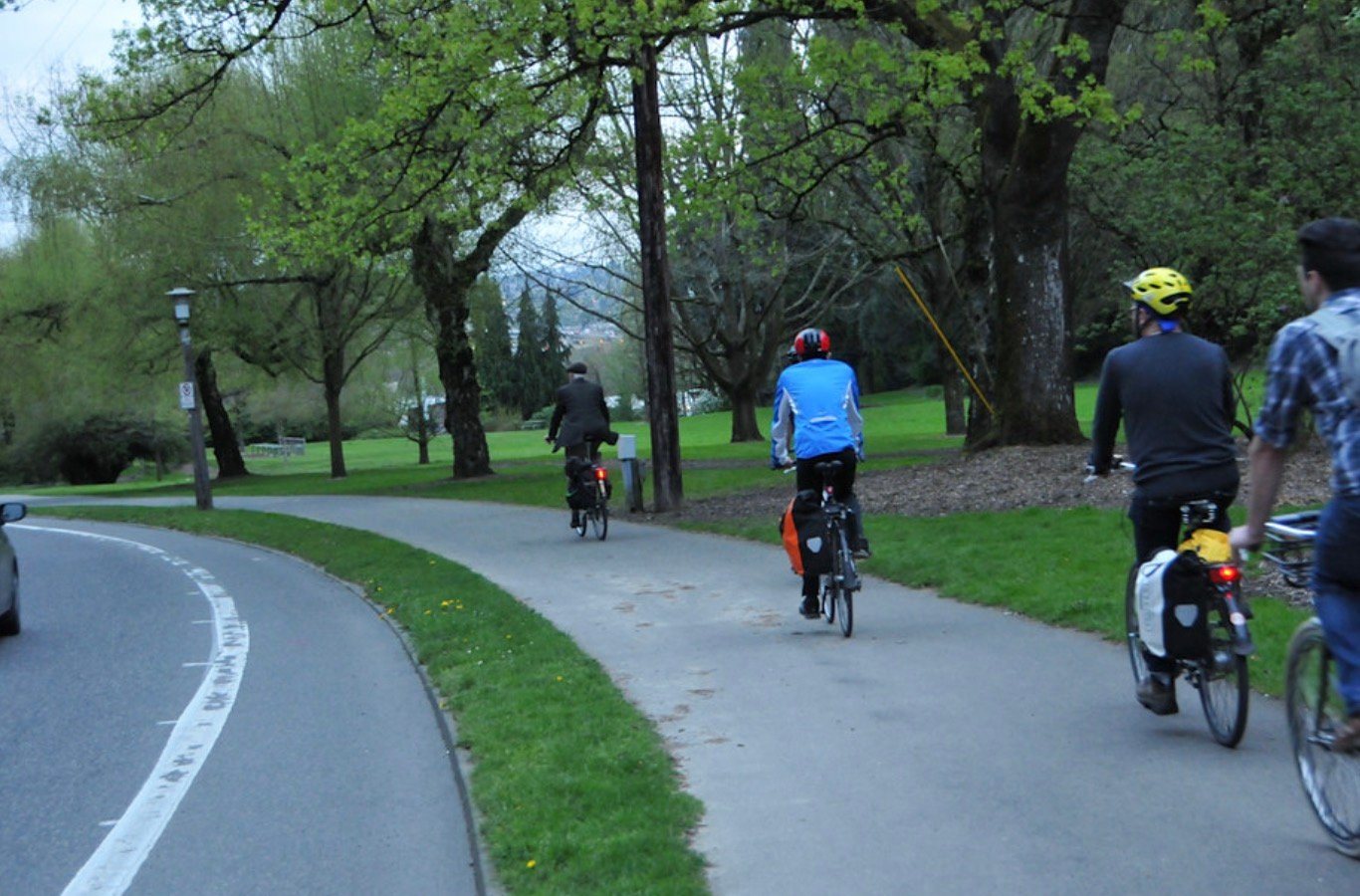
View eastbound (toward downtown) just before the curve. The narrow bike lane in the curve leads to some bike riders using the sidewalk. (Photo: Jonathan Maus/BikePortland)
For eastbound (northbound, toward downtown) riders, BES will construct a seven-foot wide, sidewalk-level bike lane on SW Terwilliger. A bright yellow rumble strip would be installed to separate bicycle users from walkers (similar to the design on westbound Hawthorne Bridge as it approaches SW 1st).
The plan from BES is to transition this raised bike lane next to Duniway park back to street level, right where the park’s walking path comes out and just before SW Terwilliger curves toward Sheridan. Liden thinks that design is unsafe and he’d like to see the raised bike lane continue another 200-feet to the intersection with SW Sheridan.
“This, in combination with the improvements planned on SW 6th between Caruthers and Broadway and implementing the bike lane improvement at the 6th/Jackson (SWIM project BP-02), would create a very good bike route on the Terwilliger/6th corridor between downtown and Capitol Hwy!” Liden wrote in a memo to PBOT project managers back in March. “We are so tantalizingly close – can’t we get this over the finish line?”
Advertisement
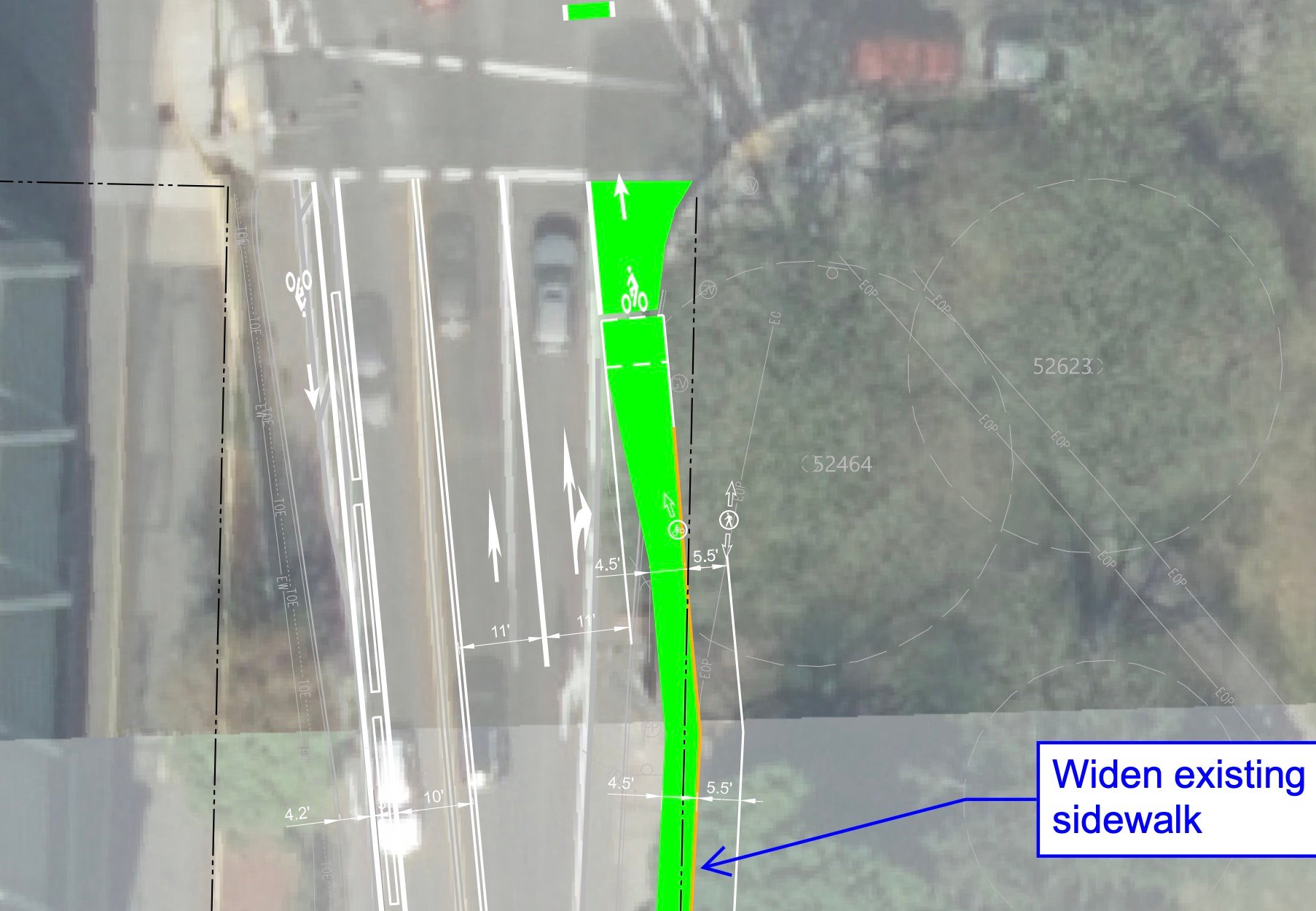
Detail of plan concept created by PBOT that would expand on BES project that would add protection to the southbound bike lane and connect northbound riders to intersection of SW Terwilliger and SW Sheridan.
Liden pushed PBOT to develop a plan (detail above) and cost estimate for expanding on the BES plans to provide more protection for bicycle riders in the curve on SW Terwilliger south of SW Sheridan. In response, PBOT mocked up a design that would add concrete curbs to the southbound bike lane and extend the raised bike lane to the SW Sheridan intersection. The design has been approved by PBOT’s bicycle and pedestrian coordinators.
Unfortunately, the cost would be around $476,000 (one utility pole would have to be moved) and PBOT has not committed the funding yet. According to Liden, the agency should have an update on the financial feasibility this coming fall.
The BES project will being fall of 2026. Hopefully by then, PBOT can find the money to capitalize on it and finally connect an important link in the southwest Portland bike network.
Happy Monday everyone. Hope you are all looking forward to the week. Remember Bike Happy Hour is back on Rainbow Road Plaza on Wednesday. I’m eager to see how that spot feels after our winter away and hope you can join us to meet the folks behind the upcoming Filmed By Bike festival!
Here are the most notable stories that came across my desk in the past week…
Traffic stops: The Trump Administration coupled ICE officers with the Tennessee Highway Patrol for an enforcement action that targeted drivers’ immigration status. (AP News)
Tour de France fundraiser: A Beaverton man will ride all 21 stages of the Tour de France as a fundraiser for his mom’s medical condition. (Kerry Eggers)
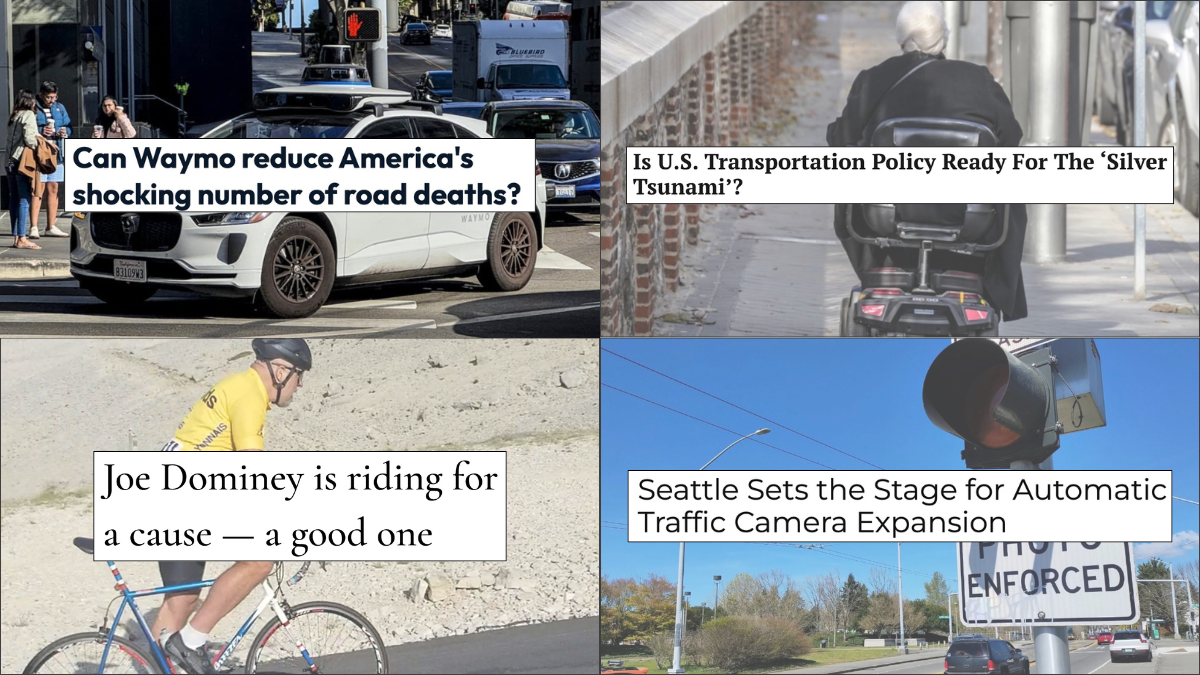
Silver tsunami: Is Portland ready for a large wave of aging residents who might not want to — or be physically able to — drive a car into their golden years? A noted voice in transportation says cities need to prepare for a low-car future when older folks stop driving. (Streetsblog USA)
Way-mo safer?: I’m very skeptical about robotaxis, but with every year they are on the road, I feel like I need to at least be open to the data. And a major new report from Waymo shows very clearly their cars are safer for non-drivers than human-driven cars. (Mashable)
Advertisement
More transit funding: Transit advocates and a growing group of lawmakers in Salem say the proposed framework for a statewide transportation package doesn’t go nearly far enough. (Portland Mercury)
Transit talk: Portland-based transit consultant Jarrett Walker gives a very informative overview of the state of public transit in the U.S. in this podcast episode (transcript available too). (Volts)
Congestion pricing success: The evidence is crystal clear that charging people to drive cars into Manhattan is a resounding success. Now we just need replicate it in more cities — understanding that it’s only possible when driving alternatives are widely available and competitive. (NY Times)
Automated camera politics: Interesting dynamic around automated traffic enforcement cameras going on up in Seattle as local and statewide policies evolve in an attempt to improve traffic safety without police. (The Urbanist)
Local influence: What could help with the governance of big transportation projects? A greater understanding of how local elected officials can sway the outcomes and a statewide mandate for a quicker timeline to force key decisions. (Urban Institute)