
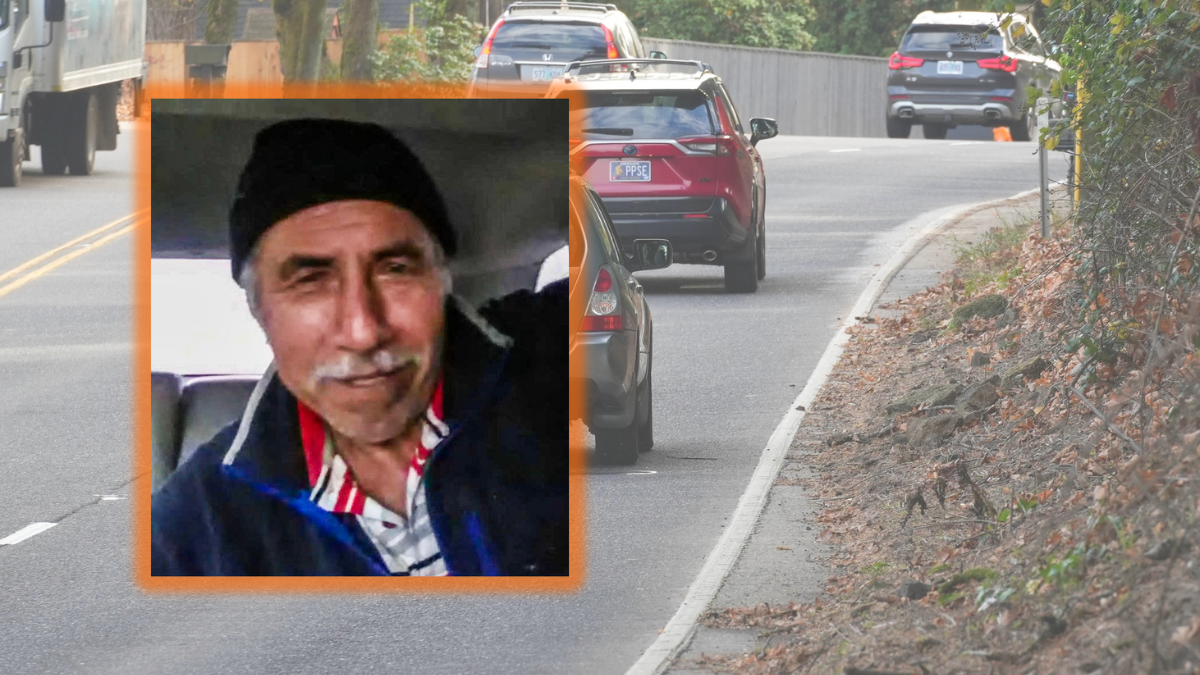
According to a family friend, 68-year-old Rutilo Jorge was a hard-working man who held down two jobs in order to send money home to his family in Mexico. He was in between shifts as a roofer and a gas station attendee when, around 5:30 pm on November 11th, he hopped on his bike to pedal southbound on Highway 43.
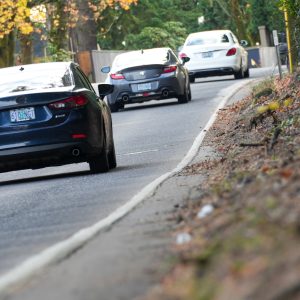
As he rode past a section of the high-speed highway with barely an inch of navigable shoulder, the Multnomah County Sheriff’s Office says he hit a rock and was then hit from behind by the driver of an SUV. Jorge died in the street that night. He left behind a wife and two daughters — one of whom is 20 years old and works at Clackamas Town Center.
After a memorial service on Sunday, November 23rd, Jorge’s friends and family arranged for his remains to be transported home to Mexico on the day before Thanksgiving so he could be with his wife and other daughter who still live there.
Meanwhile, the dangerous conditions that led to Jorge’s death remain. And given the lack of alternate routes, riders continue to pedal past the same rocky, debris-filled, deadly shoulder.
Nine days after Jorge was hit, staffers from the Oregon Department of Transportation (ODOT) began a review of the crash as part of a relatively new program called the Vulnerable User Crash Response (VCR). Launched in Oregon in January 2024, the program is based on a law passed by the Biden Administration’s Infrastructure Investment and Jobs Act (IIJA) in 2021.

According to the law, in states where vulnerable road users make up 15% or more of annual traffic fatalities, that state must spend at least 15% of their highway safety funds on projects that specifically address the safety of vulnerable users. Unfortunately, Oregon surpasses that threshold. According to ODOT data, non-drivers account for more than one out of every five deaths on state-owned roads. Using safety funds set-aside from the 2017 transportation package, the State of Oregon has funded ODOT’s VCR program to the tune of $10.6 million for the four years between 2024 – 2027.
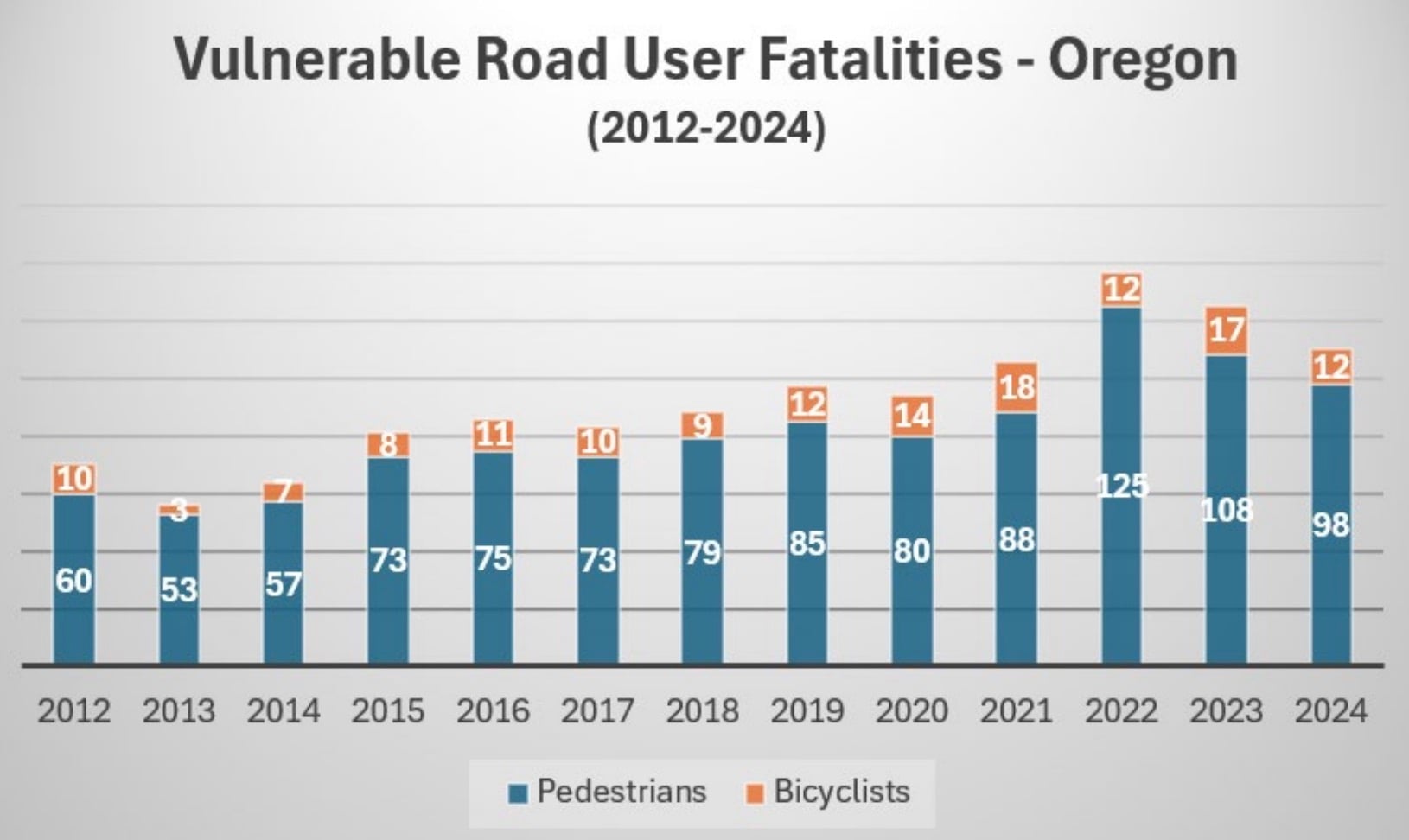
Program Annual Report, April 2025.
ODOT says their VCR Team is made up of a, “statewide group of technical experts” who will review the crash and determine if any improvements to the roadway are possible. While the team will note the need for larger-scale and longer-term fixes, the VCR program specializes in smaller solutions. “These quick-fixes are small in scale but can be big in impact,” ODOT Region 1 Active Transportation Liaison Kerrie Franey wrote in an email forwarded to BikePortland. “Some examples include illumination, signing or striping, speed feedback signs, or an enhanced crossing.”
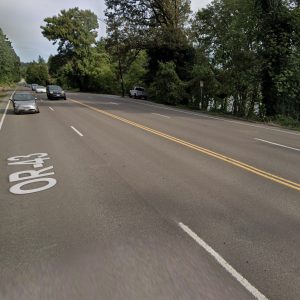
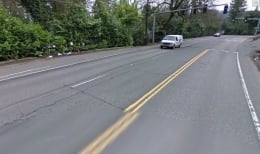
David House with ODOT public affairs, says the location where Jorge was hit and killed could qualify for a larger project that would improve safety for bicycle riders. In an email to BikePortland on November 20th, House wrote that ODOT’s Active Transportation Needs Inventory (ATNI) ranks this section of OR-43 (between the Sellwood Bridge and Lake Oswego) in the Top 10% for prioritization across the entire state. And according to ODOT’s Vulnerable Road User Assessment Score (accessible on ODOT’s TransGIS website), this spot on Highway 43 is ranked as “High Risk.”
That risk exists in large part because of the lack of safe shoulder space. When I asked House about sweeping the shoulder, he said ODOT gets to that section of Highway 43 every six to eight weeks and that his records show it was last swept on November 17th.
“When I asked about cleanup plans, the maintenance manager noted that this area does not have much shoulder, and the asphalt does not go all the way to the rock wall,” House shared in a subsequent email. That confirmed one of my concerns: The debris I stood in while making my video and that Jorge tried to avoid prior to being hit, is a natural feature that can’t be simply swept away.
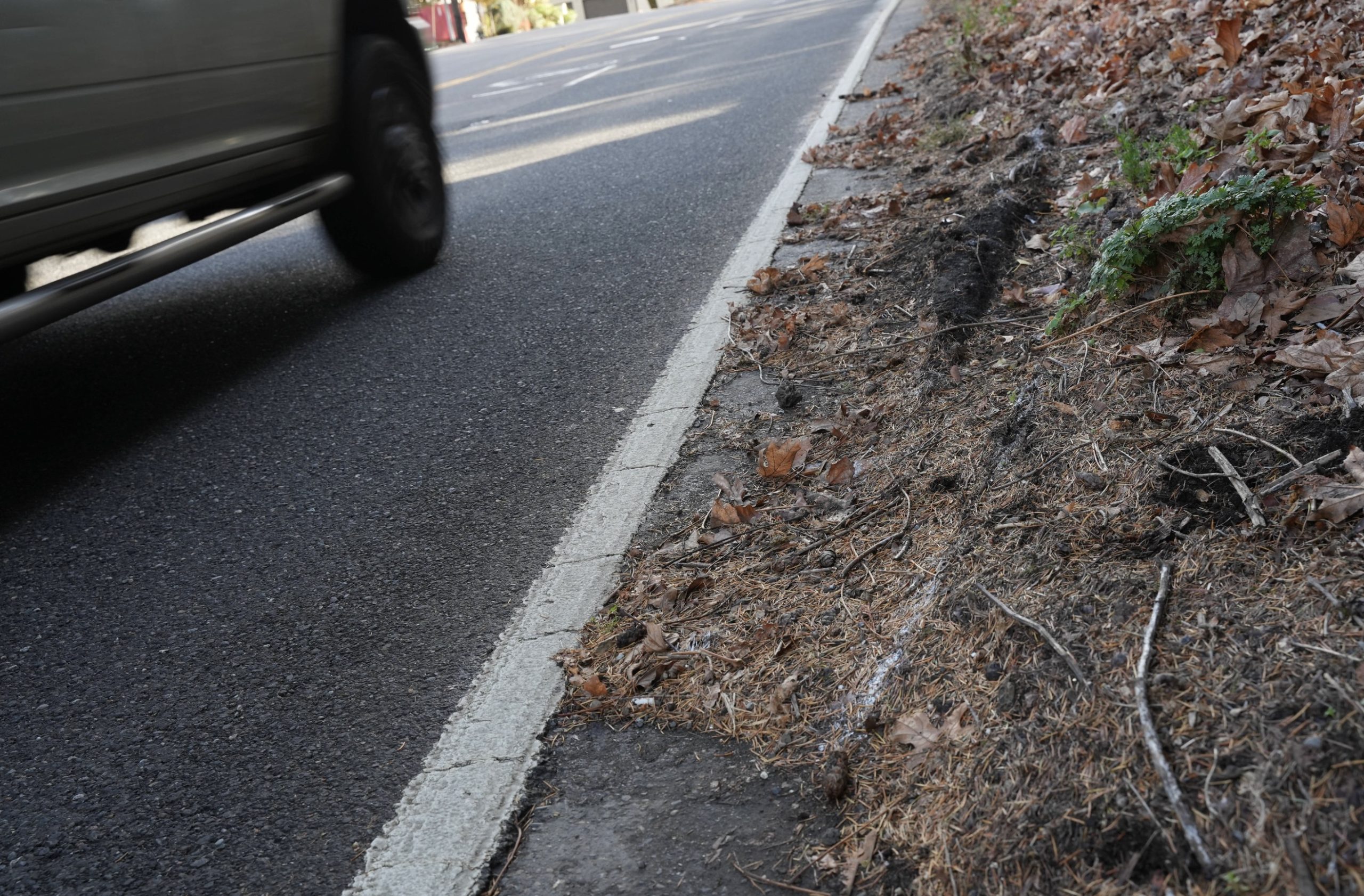
“I understand,” I replied to House. “But it begs the question: Since there’s not much of a shoulder, how are bicycle riders supposed to safely navigate this area? And would maintenance consider doing more aggressive sweeping to push back the rocks and sticks and dirt so at least there’s more room even if it’s unpaved? And longer term, would ODOT consider the idea of building a retaining wall and paving the shoulder to give users more shoulder space?”
“There isn’t much space for a shoulder in some sections of [Highway] 43,” House replied.
I’m not satisfied with that answer, but for now House and I agreed to let the VCR team complete their investigation before we discuss the issue any further. Earlier today House said he expects that work to take about 4-6 weeks, so I’ll touch base with him again in early January.
Another part of ODOT’s investigation is likely to include considerations of recommendations made in previous planning efforts that looked at building a bike lane on the highway or creating a parallel route. In 2010, Metro commissioned the Lake Oswego to Portland Trail plan. That plan examined the feasibility of a two-way bike lane on the east side of the highway that would be separated from traffic by a large, concrete barrier. I’ll take a closer look at that plan and share more about the history — and potential future — of this corridor in a separate post.

Thanks for reading.
BikePortland has served this community with independent community journalism since 2005. We rely on subscriptions from readers like you to survive. Your financial support is vital in keeping this valuable resource alive and well.
Please subscribe today to strengthen and expand our work.
When I emailed them years ago about bike lane conditions (gravel, debris) on outer Sandy Blvd, they told me that these kinds of highways have “self cleaning” shoulders and they don’t sweep them.
It sounds like they swept the “shoulder” here just after the incident as a CYA. I don’t think they do it regularly.
Seems like it would be more incriminating if you sweep it or fix an issue after someone is killed by negligent design/maintenance.
This doesn’t seem all that difficult. There’s only one northbound lane on 43 from Lake Oswego until the road widens a couple blocks north of Radcliffe. So why not one traffic lane, both ways, on the entire segment from Lake Oswego to the Sellwood Bridge? That should leave plenty of room for a protected multi-use path.
And build the Lake Oswego streetcar line for parallel transit, but develop a better plan than the previous version (which, IIRC, turned out to be significantly *slower* than the #35 bus as a commuter trip).
I’d rather skip the streetcar, which is tremendously expensive given the limited ridership and lack of redevelopment potential along the route, and convert the tracks to a multi-use path.vs. a path alongside a highway.
It’s my understanding (which might be incorrect) that the railroad easement is specifically for rail use, and doing anything to get rid of the railroad tracks – or permanently abandon rail use – would simply make the easement disappear. If that’s true, a rail-to-trail conversion will never be on the table.
Yes, that’s also what I understand. in fact, I wrote the same thing as you in another comment below.
I wasn’t saying converting the tracks to a trail would be easy, or even possible–just that that’s what I’d rather see.
If the tracks can’t be converted to a trail (which I don’t think is impossible) I’d still not want hundreds of millions of dollars (the cost estimate from years ago) spent on that route.
PCEF grant funds to provide all interested Portland cyclists with rail bikes they can use to get to LO safely. $2 million for 500 bikes.
I love this idea, and it seems like it’s literally the only one the citizens of Lake Oswego would actually support.
yes, one lane each direction and Center turn lane pockets where needed would leave room for a decent shoulder; not ideal but a helluvalotbetter than what’s there now.
It is mostly two lanes the whole way with a small stretch being one lane.
Traffic counts don’t warrant two lanes south of the Sellwood. It is not needed.
Probably true but I bet the bottle neck is that small single lane area. It is probably a single lane through that part because the topography demands it.
My point was that northbound traffic is only one lane from Lake Oswego until the road widens. There’s nothing feeding into the road at that point, so it’s just one lane expending to two for no particular reason except “there’s room for another lane now.”
And if one northbound lane is enough for inbound traffic (which it clearly is, because that’s what’s there now), one southbound lane should be sufficient for outbound traffic as well.
There is just that one spot which gets pretty narrow – where it transitions from 1-2 and 2-1 lanes – it is just one lane in each direction for a bit.
There’s still so much I don’t understand about this fatal crash. Your original report quoted the sheriff’s department:
Did Jorge fall into the travel lane (left side of the white line) where the SUV struck him from behind? In other words, he was in the lane when he was struck? And where does the info about hitting the rock come from? (probably from the driver who hit him?).
Oregon has a law that requires car- and truck-drivers to give cyclists room when passing. Did this driver do that? What speed was the SUV going when it hit Jorge? Did the sheriff’s office make any determination about safe following distance, which often happens when a vehicle strikes another vehicle from behind?
The sheriff’s office statement in your original story said that a decision about any charges for the driver would be forthcoming, so I hope you’ll follow up on that.
I ride on Hwy 43 regularly and I think it’s really important that these kinds of crashes lead to a revolution in how law-enforcement agencies view driver responsibility. Maybe if you’re driving and you see a cyclist in the lane ahead – or even hugging what is a dicey shoulder (that’s 43 in a nutshell), you slow to the cyclist’s speed and pass when it’s safe to do so, giving him a wide berth in case he falls or loses control of the bike.
That’s unknown at this point and might never be known without clear video evidence.
Good question! Also unknown. We’ll have to wait and see what the police report says. But even that could be biased.
Not yet. That will come once investigation is complete and DA has looked at everything. I will definitely follow up.
Thanks, Jonathan, for your continued good work in this area. One more question comes to mind:
Does the MultCo Sheriff’s Office have the investigative expertise to delve deeply into a crash like this? I ask b/c PPB has the Major Crash Team (MCT), which is deployed whenever there is a significant crash (fatality or serious injuries). The MCT isn’t some kind of magic elixir but they do develop expertise that I can’t imagine the MultCo Sheriff being able to muster. And I wonder why they had jurisdiction in this case (unincorporated Multnomah County?). Since MultCo gov’t is terrible at almost everything, I worry that the sheriff won’t have the expertise to determine what happened in this crash and will throw up his hands and say, “Accidents will happen.”
Reducing driving space to install a protected lane for biking and walking will also make driving safer. The width and sightlines allow drivers to treat it like a raceway, with predictable results. There’s plenty of room, build it now ODOT!
Thanks, Jonathan. As always, I appreciate your reporting on this.
It’s tough not to be cynical based on ODOT’s actions in the past. This quote from the article jumps out at me in particular:
Are these the same “technical experts” that helped design the RQ freeway expansion and Columbia Crossing boondoggles? In other words, are they actual experts in active transportation or are they just the typical car-brained “traffic engineers” (strong emphasis on the scare quotes here) that seems to pervade our Departments of Transportation?
Cynicism aside (deep breaths, Serenity Now, etc.), it’s nice to see them at least acknowledge that this tragedy might be actually due to problems with their infrastructure rather than victim-blaming or other finger-pointing. I remain somewhat hopeful.
I have interacted with some of ODOT’s “technical experts.” They were just as you predicted – “car-brained traffic engineers” who had no idea at all what it’s like to ride a bike on a road with cars. I’m dubious that this team will come up with any solution that makes cycling safer at the expense of drivers.
I’m not here to defend ODOT, but any transportation department is made up of varying staff with different opinions, including about bike and walking facilities. ODOT does in fact build excellent “complete roads” when it is given a clear mandate and money to do so such as on outer Powell (99th/205 to 174th) at $32 million/mile. The alternative is to turn the road over to Multnomah County or to PBOT. PBOT has had 39th since the 15th century and quite frankly it’s just as bad as highway 43, as is 82nd and numerous other city stroads.
The idea that any DOT is monolithic in its thinking I know is tempting, but it’s usually wrong – the DOT staff who champion for vulnerable users are not fighting against those who are deliberately against vulnerable users – all staff are concerned about safety and road deaths and severe injuries – but rather against institutional and structural biases about moving the most users the most safely most of the time the most efficiently – all of which are vague and often conflicting goals.
True, except in one respect: there are plenty of nearby N-S alternatives to Chavez, I know because I live here and bike them regularly. The same cannot be said for Hwy 43.
Except that it’s right, in my experience. Even the so-called bike-advocacy folks at ODOT are useless – they won’t go to bat for you against the car brains running the place.
If you have specific examples you can share where ODOT stood up for cyclists ahead of motor vehicles, I’d love to hear them.
I have one (surprisingly enough)! At least for pedestrians.
It’s even on Highway 43. A few years ago, I reported to ODOT hat the stop bars at several streets feeding into 43/Macadam were painted several feet too far forward, so cars pulling up to them were blocking people walking along Macadam when they were crossing those streets. They should have been painted in line with the stop signs, so cars stopped BEFORE they blocked the crosswalks.
ODOT fixed them within a week. It happened so fast, I found out when I got an email from ODOT saying they went out right away and the work was complete.
It’s probably an ADA violation to have the stop bar place cars in the crosswalk. ODOT was probably afraid of getting sued.
It’s funny because the majority of drivers ignore the stop bar anyway.
I don’t share your excitement – that’s just ODoT doing their job. I believe the MUTCD is very clear about the proper placement of stop bars. Hardly standing up for pedestrians v. motor vehicles.
My excitement was more for the fact I had an example–especially because I’ve often had poor experiences of the type ODOT is typically known for–versus excitement about what they did.
Saying it’s “just ODOT doing its job” isn’t wrong. Nevertheless, it was refreshing to me, when follow-through for requests like this–from ODOT, PBOT or any government agency–often take months or years of effort to get any action.
I encountered a government staffperson who got the work I requested–with a single email–completed in a week. That’s incredible service, and doing it that quickly IS standing up for pedestrians.
qqq, you’re right that it is standing up for pedestrians by doing what the MUTCD says they should do quickly. But this is hardly a litmus test since there is absolutely no sacrifice from the driving side of the equation.
There are literally thousands of spots where a hill was cut back just far enough to get a road by it; even if they had unlimited money, in some cases it just isn’t possible to widen the road, even for cars. The solution is to slow the traffic, and narrow the vehicle lane where possible. Neither ODOT nor PBOT likes to do those things, especially on a road with a designation any higher than ‘neighborhood collector.’
In Europe, there are bike lanes in the mountains, and they (and the road) might come to a pinch point, like a curve around a cliff or a tunnel; signs and paint indicate the road becomes shared. Not perfect, but it seems to work for them.
43 is usually near-empty and wide, perfect for going 70. Lowering the limit and narrowing the lanes mught be a minor hassle during rush hour, but would turn the road into a vital, safer bike/ped connection
I think a better solution would be to convert a whole car lane to a bike path with jersey barriers separating the two.
I did not encounter many bike lanes in the mountains when I’ve cycled in Europe. However, the drivers are much more courteous and patient with cyclists.
Same with Cornwall, UK where I cycled in September. The roads were half as wide, the hills were twice as steep and the drivers were about 10-times as courteous. I don’t know what’s wrong with us in the US, but it seems to be cultural. Maybe if we narrowed everything down to allow just a couple of Honda Fits to pass side-by-side safely by going six miles per hour, things would be better here.
Thank you Jonathan for continuing to follow this occurrence. I drive, and no longer ride this section of Hwy 43. It’s just not worth it to be there, I have alternatives, and use them. Would I love to see changes? YES!! I agree with the other comment of making WHY 43 one lane each direction, with a protected bike lane, Pedestrian way, Or better yet, make the Tourist Tolley way into a Bike way. Honestly, the Use would probably goo thru the roof if the Trolley way was a bikeway, walking path, running path… plus with the Tunnel and trestle it would draw people of all types to use.
Ironically, ODOT started building pedestrian improvements on Highway 43 today–at the Macadam/Taylors Ferry intersection, which is basically the north gateway to the stretch of 43 to LO.
But the improvements seem worthless. They just tore out the sidewalk and curb ramps at one island, which were just installed a couple years ago, and functioned fine (they were actually put in after I and others complained):
https://www.google.com/maps/place/Portland,+OR/@45.4712886,-122.6722954,3a,60y,275.95h,77.74t/data=!3m7!1e1!3m5!1sbXkd3yWRh4ZojqAxIS4DEQ!2e0!6shttps:%2F%2Fstreetviewpixels-pa.googleapis.com%2Fv1%2Fthumbnail%3Fcb_client%3Dmaps_sv.tactile%26w%3D900%26h%3D600%26pitch%3D12.263468561677342%26panoid%3DbXkd3yWRh4ZojqAxIS4DEQ%26yaw%3D275.9457604845432!7i16384!8i8192!4m6!3m5!1s0x54950b0b7da97427:0x1c36b9e6f6d18591!8m2!3d45.515232!4d-122.6783853!16s%2Fm%2F02frhbc?entry=ttu&g_ep=EgoyMDI1MTEzMC4wIKXMDSoASAFQAw%3D%3D
Then, at the small concrete island, they’re adding three curb ramps (I believe) so you can get to that island from all three directions. The thing is, there’s no way to get to it from the south–no pedestrians because there’s no shoulder and no destinations. And there’s no reason to ever go to or from it from the north or east.
https://www.google.com/maps/place/Portland,+OR/@45.4712823,-122.6717739,3a,83.2y,227.31h,71.9t/data=!3m7!1e1!3m5!1spspIoCXlvXNGbro0v8wYiQ!2e0!6shttps:%2F%2Fstreetviewpixels-pa.googleapis.com%2Fv1%2Fthumbnail%3Fcb_client%3Dmaps_sv.tactile%26w%3D900%26h%3D600%26pitch%3D18.09699384466927%26panoid%3DpspIoCXlvXNGbro0v8wYiQ%26yaw%3D227.30932896168943!7i16384!8i8192!4m6!3m5!1s0x54950b0b7da97427:0x1c36b9e6f6d18591!8m2!3d45.515232!4d-122.6783853!16s%2Fm%2F02frhbc?entry=ttu&g_ep=EgoyMDI1MTEzMC4wIKXMDSoASAFQAw%3D%3D
And those ramps will be inaccessible unless marked crosswalks are installed. I have no idea whether ODOT will spend $$$ adding the crosswalk markings, or just put in the unusable curb ramps. Maybe they’ll build the curb ramps then install 5 new “CROSSING CLOSED” barrier signs.
Point of all this is that even if ODOT spends money on 43 for safety, I don’t trust it will be spend logically.
Perhaps this is the prep for when they convert one of the “uphill” lanes of Taylor’s Ferry into a separated two-way bike plus pedestrian lane, to provide a PUBLIC route to go to/through/from Southwest that does not rely on the kindness of the private River View Cemetery to allow pedestrians and bicyclists on their property for 1.6 miles.
JK, that will never happen because a certain City Council member told me he needs that extra uphill lane because otherwise he might some time get stuck behind a truck that is going slowly up the hill, and he has to have a way to pass it.
I am not making that up. Need to occasionally pass theoretical truck on brief stretch of Taylor’s Ferry more important than safety of every bicyclist and pedestrian within the District this Council member serves.
Follow up question is when was it swept before Nov 17th.
Definitely not.
I think the best solution is to do whatever it takes to make the trolley tracks into a bike path. The historic trolleys could run on the spring water tracks that the train museum uses and the McMansion owners along the alignment can be either diverted around or just told to get over it.
I suspect ODOT will just put up a few “share the road” signs though.
It’s strenuous and expensive to win these fights for right of way. Nobody even wants to talk about eminent domain unless there’s a hundred(s) million dollar construction project riding on it, the Orange Line for instance. In the case of that trolley right of way, the value is in the access and the construction project is not even ten percent of what a light rail line would cost.
We don’t have any data on ridership because only lost tourists, daredevil roadies, or maybe a few working class guys trying to get to their other shift (Rutilo Jorge RIP) will ride OR 43. Bike traffic between Portland and Lake Oswego barely exists, and there’s no bureaucratic incentive to draw a line across the blank space. On the other hand, there is resistance to the notion of a trail from adjacent landowners who have time and resources and don’t want more of the public outside their back fence.
We won’t have a statewide bike network until there’s a move to pick some of these fights, and win them.
https://www.sltrib.com/news/2025/10/31/utah-bike-trail-network-planned/
The issue as I understand is that the trolley tracks are on easements along portions of the route through Dunthorpe. The easements are for rail use only, so the easements aren’t valid for a non-rail use. The homeowners own the land at those locations.
I also understand the trolley is run there to preserve the easements, because if there’s no rail use the easements would disappear.
Not guaranteeing this is accurate.
Let’s just build a long train of flatbed cars that goes from Sellwood to LO on the tracks and then build a path on top of the train.
Hmmm, this is actually an interesting loophole. Can we get the trolly to attach a flat car for bikes if, say, someone had enough money to fund it? Is the trolley limited to one car by weight?
This makes the Frog Ferry look like a good idea.
It sure does. A tourist trolley or a series of tourist trollies seems equally ridiculous, particularly for a route that is so crucial like this one. We are at a point in history where it’s required to own a large expensive metal box in order to move one person short distances between large population centers.
Maybe bikes shouldn’t be allowed on that dangerous stretch of road until a viable infrastructure solution is implemented.
Hard disagree with this idea. That would ensure ODOT just forgets about it and we’ll never make it better.
It sounds like in this case, at least, you believe bicycle access is more important than safety.
I’m not arguing that you’re wrong, only pointing out that no one really believes the idea put forth by others that safety is the most important thing.
Your framing here is very problematic.
Why would I want to curtail access for the mode that is not responsible for the problem? Yes I believe “safety” is paramount, but what’s making this highway unsafe isn’t the policy of allowing bicycle access, it’s the policy of allowing drivers to speed and not maintaining the shoulder. And the entire idea of “safety” is really hard to define and changes depending on who you ask
Obviously you don’t (nor do I). But that’s not what I’m saying.
My point is that if safety were the all-important value, the first doable thing we’d want to do is close 43 to cyclists to ensure no one else gets hurt while we implement whatever solution we choose to make the road “safe” (protected lane, trolley track trail, whatever). That closure could literally be done in a day or two by posting signs and perhaps blocking the shoulder before the dangerous section. Closing 43 to cars in the short term is not doable in my assessment.
Clearly you care about other things too (as do I). For example, you are willing to let people continue riding on 43, exposing themselves to great danger, in order to ensure that ODOT doesn’t forget about the need for safer bicycle access to that highway.
My post was aimed at those who repeatedly claim safety should be PBOT/ODOT’s overwhelming consideration (a position I don’t think can withstand scrutiny). I fully agree with you that while safety is very important, there are other important — perhaps more important — priorities to consider as well.
“the first doable thing we’d want to do is close 43 to cyclists to ensure no one else gets hurt while we implement whatever solution we choose to make the road ‘safe'”
“Closing 43 to cars in the short term is not doable in my assessment.”
Yeah, well, see, you just unilaterally decided that the one is ‘doable’ while the other isn’t. How do you arrive at this judgment? The inverse: ban the source of the problem rather than the category to which the victim belongs would be a lot easier to justify on logical grounds. It would also probably ‘work’ better and quicker since, you know, all those important people who would like to drive there are being inconvenienced right now, and we surely need to accommodate them asap.
I’m sure it is just a coincidence that your distinction fits neatly with what Alan Durning called CarHead.
“you just unilaterally decided that the one is ‘doable’ while the other isn’t.”
I didn’t “decide” anything. I looked at the way ODOT operates, and concluded that, as a factual matter, there is not one chance on a million that ODOT would close highway 43 to cars as a short term bicyclist protection measure.
Do you actually disagree? If so, can you cite any precedent or reason why? And if you don’t think ODOT would close the highway to cars in short order, why are you arguing to me?
“there is not one chance on a million that ODOT would close highway 43 to cars”
ah, yes, ever the Clear-Eyed Realist channeling *the man* for us here in these pages.
believe it or not I know that they wouldn’t consider it, which is part of the problem as I see it.
“And if you don’t think ODOT would close the highway to cars in short order, why are you arguing to me?”
Because unlike you I am not interested in Clear-Eyed Realist’s perspective but in what could be, or why it couldn’t be? Germany in 1973 closed all* roads to cars on four separate Sundays. Of course Clear-Eyed Realist would say there isn’t a one-in-a-million chance of that happening but it did, then, there. And it could here on Hwy 43, if momentum built as it did, for example, in the Netherlands (also in the 1970s).
*I think all, certainly freeways.
If you don’t care about my perspective, and you agree with it, then why on earth are you arguing with me about it?
I never said things couldn’t (or shouldn’t) be a different way, only that they aren’t that way. If you agree with that one narrow point, then you can discuss the could/should with whoever cares. I’ll listen politely, try to learn a thing or two, and stay out of it.
“If you don’t care about my perspective, and you agree with it, then why on earth are you arguing with me about it?”
Here’s the thing: you think it is useful to always and in every conversation play the Clear-Eyed Realist, the adult in the room, the one who knows how the world, bureaucracies, Important People will act. In the messy, screwed up, ineffectual, greedy, violent society we live in that (to me) gets old, is tiresome.
I’d rather spend my time exploring alternatives, asking why not?, imagining that people within and outside of bureaucracies could transcend their foolish, narrow, blinkered selves and make this world better.
I’m arguing with you because your wet blanket approach does work, unhelpful work, tears down what others are trying to build, to imagine.
This situation is not as static and pointless as you relentlessly try to tell us here. COVID, the Oil Crises, the Civil Rights struggles, etc., all shows that we can, sometimes, rise above ourselves.
Then please do it, ideally without involving me.
You involve/insert yourself into these conversations all the time. I have little/no control over that.
You entered this thread by condemning my assessment that ODOT was not going to close Hwy 43 to cars as a short term safety measure, an assessment, it turns out, you completely agree with, but which also, in your view, makes me a “wet blanket”. (And, which, incidentally, was completely in service to my argument that most of us agree that the transportation system has functions and requirements other than just safety.)
Here are some other options when you agree with what I say:
“I agree, and here’s why”“I agree, but wouldn’t it be great if things were different”“I agree, but have you considered this?”Make a funny joke.Share a weird bit of Portland or Oregon or North Carolina history.Give an upvote.Don’t respond at all, and start a thread elsewhere to explore alternatives and ask “why not?”Call me MAGA.
More of the cursed pudding that is WordPress formatting.
“You entered this thread by condemning my assessment that ODOT was not going to close Hwy 43 to cars as a short term safety measure, an assessment, it turns out, you completely agree with”
I am not in complete agreement with that at all, have no interest in reifying their intransigence.
Let’s recap: MotRG was the one to suggest it be closed to bikes. I responded that closing it to cars would make more sense. THEN you joined the fracas, speaking in Clear Eyed Realist mode, arguing that because ODOT wouldn’t countenance that modal closure it wasn’t worth discussing. I don’t agree that ODOT’s biases are all important in this discussion (bikeportland banter), where we get to argue amongst ourselves about justice, logic, language, politics, violence, bureaucracies, etc.
OMG can we just have a separate comment section for watts (aka 2wheels) to do his “but technically the status quo is most likely” schtick ad nauseam? It’s drowning the comments section again.
If safety were an all important value then cars wouldn’t be thing. Drivers of cars are exposing themselves to high enough risks of danger to make the activity irresponsible in this context. I don’t think this is a valuable direction for discussion.
Jonathan, I’m not proposing we close Hwy 43 to bicycles — but your argument does reveal a real tension worth acknowledging.
You say safety is paramount, yet you dismiss the only action that would instantly eliminate exposure to the known danger. I understand the strategic concern about letting ODOT off the hook, but that strategy inevitably places political pressure above immediate physical safety.
Pointing out that drivers cause the danger doesn’t resolve that contradiction — it just explains why the road is unsafe, not why vulnerable users should continue facing that risk in the meantime.
I’m not saying bikes should be banned; I’m saying your position implicitly accepts ongoing danger in service of a longer-term goal, and that complicates the claim that safety is the top priority.
Such shrill talk about tension that is worth acknowledging – oh my!
“You say safety is paramount, yet you dismiss the only action that would instantly eliminate exposure to the known danger.”
Would you also, symmetrically, advocate that schools be closed because we have school shootings? After all, no kids in schools is a pretty surefire way to guarantee that no kids will die in a school shooting….
Thanks 9watts. The premise of this questioning is so absurd I am having trouble finding the words to respond to it.
I would like to understand how people come to these views, engage with them. I’ve tried with MotRG for years. Doesn’t always work; folks don’t necessarily engage, explain their thinking, listen.
I agree it’s absurd. I’ve started comments about it several times, but never posted them because I didn’t want to get into the relentless nitpicking responses I’d get–ones that remind me of a boxer who knows they can’t deliver a knockout punch, so they’ll jab and jab and jab, thinking they can at least score some points on technicalities that don’t really have much relevance to the overall event.
9watts,
José explicitly said he isn’t calling for banning bikes. His point is that Jonathan’s position contains a real tension: claiming safety is the top priority while rejecting the one action that would immediately remove people from the known hazard.
Your school-closure analogy doesn’t match the argument. José isn’t saying “eliminate the activity to eliminate the risk.” He’s saying that if we refuse to eliminate exposure and we insist safety is paramount, we should at least acknowledge the tradeoff we’re making — not pretend it doesn’t exist.
It’s not a call to shut anything down. It’s a request for intellectual honesty about the balance between immediate safety and long-term political strategy
Oh please.
jose wrote
“yet you dismiss the only action that would instantly eliminate exposure to the known danger.”
Who decides that this is the ‘only action’ that would yield this result. There is so much ‘tension’ in the assumptions that went into Jose’s belief that this is the ‘only action’ which whether he is aware of it or not speaks volumes.
I reject the straw man accusation. I think my close the schools to eliminate children from dying in a school shooting is just as shrill and absurd as the suggestion that ‘closing the stroad to bikes is ‘the only action’ that would/could give us the result we desire.’
Angus Peters: “José explicitly said he isn’t calling for banning bikes.”
José: “Closing Hwy 43 to bikes […] is the only action that would instantly eliminate exposure to the known danger.”
Is this what they call a /distinction without a difference/?
That might be something someone would say if people were arguing that safety should be the sole consideration in how we run our schools.
But no one would make that ridiculous argument, so the situation is not symmetrical to this one, where people are arguing that safety should be PBOT’s only consideration (not in this thread, but in others very recently, and regularly).
My entire purpose in kicking off this argument was to illustrate that even the most militant car-hating cycling advocates do not actually believe that safety is the only important value in transportation. Other things matter too, and the trick is to get the balance right. This is critical: I am not arguing that we have the balance right, only that there is a balance to be struck.
If you also think the transportation system should be trying to accomplish more things than just safety (like, for example, transporting people), then we agree.
And if you’re thinking “well of course, that’s patently obvious” then you understand my point.
It’s the cars that create the danger. So why not just ban them from the highway?
The premise of your questioning here feels like it’s not in good faith.
a) it isn’t the only possible action
b) it wouldn’t instantly eliminate danger
If you can “instantly” close a lane to bikes, you can “instantly” close a lane to cars (and let bikes in it)
You would want to curtail access because it is dangerous to access. The three choices are curtail cars, curtail bikes, do nothing. Only one of those choices makes both logistical and safety sense.
“Maybe car drivers shouldn’t be allowed on that dangerous stretch of road until a viable infrastructure solution is implemented.” See? Works both ways.
I-5 and 99E aren’t very far away after all, why don’t they just use those? 😉
MotRG can always be counted on for crazy talk.
I have a variation for you:
Maybe cars shouldn’t be allowed on that dangerous stretch of road until a viable infrastructure solution is implemented.
Crazy talk galore.
Maybe only autonomous vehicles should be allowed on this stretch of road until people are able to move safely amongst themselves (with the exception of people who own the autonomous vehicles of course)?
MotRG can certainly be exasperating but like wspob and the-guy-who-goes-by-so-many-user-names-it-is-hard-to-keep-track they offer opportunities for the rest of us to sharpen our claws, I mean our arguments.
Do we really have to pay for every safety improvement with a human life? I’m so disappointed with Portland.
This is a narrow through way. Not enough room for safe passage? Immediate solution is to close off the lane to the dangerous vehicles that caused the death. There is plenty of room in just one of those lanes there to keep bicycles separate from cars if you just make that lane car-free.
(Sorry Emma, this was meant to be a separate comment not a response to yours. But since I am adding on, I would include Salem in my list of government hierarchies that disappoint with regard to safety improvements.)
In this case, they will study it and conclude that they need the extra car lanes for “throughput”. No changes will be made.
I really do not like these ‘solutions’. I do not think any address the core issue: there is no room for anything but cars on 43. It’s built like a highway, so people drive on it like a highway. I see the bus stops too with zero room to wait.
Only time will tell if ODOT can make meaningful changes, or more ‘education’ and ‘signage’
Very sad. Does anyone know if Rutilo was wearing a helmet?
Seriously?? You might want to read the article describing Mr. Jorge’s death. Two questions for you.
1) Do you have any idea what happens to a human body when it’s hit by 2 tons traveling around 50 mph?
2) Since you couldn’t be bothered to read the original article, why is his wearing a helmet important to you.
Ouch.
JM’s article reported that Rutilo’s bike helmet was found some distance away. Does anyone know if the strap was broken? I’ve often wondered what happens to a bike helmet when the person wearing it is hit by two tons moving at 50 mph. I’d imagine the strap breaks and the helmet goes flying.
I have fallen on my bike (several times) and slammed my bike helmet onto the pavement, but my helmet never came off my head, thanks to the strap that kept the helmet firmly wedged on my head. I often see kids on skateboards or bikes “wearing” their helmets with the straps unclipped and hanging down, and I always think “It’s not gonna help you if you fall on your head.”
Again I wonder if the MultCo sheriff has the experise to examine the helmet and know how it performed in the crash. I somehow doubt it.
As someone who has witnessed the death of someone wearing a perfectly functioning helmet, I’m not sure what use such an analysis would be.
The fact is there is ample room room for a fix with paint and a mini excavator. But this is odot that generates paper and not solutions despite billions of dollars. So what has to happen? A child is killed?
“There isn’t much space for a shoulder” as long as ODOT insists on filling the entire right-of-way with car travel lanes. A road diet is the obvious and simple answer.