🚨 Please note that BikePortland slows down during this time of year as I have family in town and just need a break! Please don't expect typical volume of news stories and content. I'll be back in regular form after the new year. Thanks. - Jonathan 🙏

Job: Retail & Workspace Manager – Community Cycling Center

Buffered Bike Lane with a bike symbol and arrow pointing forward

Job Title

Retail & Workspace Manager

Company / Organization

Community Cycling Center

Job Description

ABOUT THE COMMUNITY CYCLING CENTER

We love Portland and bikes. So, we put our two passions together nearly 30 years ago, creating a nonprofit organization on a mission to broaden access to bicycling and its benefits.  Our goal is to help create a healthy, sustainable Portland for all community members. Our vision is to help build a vibrant community where people of all backgrounds use bicycles to stay healthy and connected. We believe that all Portlanders—regardless of income or background—should have the opportunity to experience the joy, freedom and health benefits of bicycling. This is the motivation behind everything we do. 

The Shop Department of the Community Cycling Center consists of a DIY Workspace and retail storefront, warehouse sales and service, our classes, member events, and occasional pop-ups and events. This department is a revenue stream to provide funding for community programs.

This position operates out of our retail storefront at our membership based workspace in NE Portland. The Community Cycling Center (CCC) is an equal opportunity employer and strongly values diversity, equity and inclusion. Individuals with diverse backgrounds, abilities and experiences are encouraged to apply. 

GENERAL POSITION SUMMARY

The Retail and Workspace Manager is the main person responsible for keeping the retail store and workspace stocked, organized, and clean and working order. They will be responsible for managing inventory of new and used goods and parts for sale, used bikes for sale, and inventory of consumables used in the workspace. Listening to customers’ will be imperative to ensure the store is curated to best meet their wants and needs. This position works with the Processing and Production Manager and Classes and Membership Manager to set and meet membership, class, and retail goals; and contribute to the budget process. The Retail and Workspace Manager will be responsible for training and managing retail staff.

Seasonally, shop staff will need to provide retail support at pop-ups and events. Staff in all positions at the shop will also be responsible for providing support to the Programs department as needed. This may include working mechanic shifts at one of our free service events or locations, providing ride support at events, or assisting at a learn to ride event.

RESPONSIBILITIES

Retail (30%)
• Create displays to showcase products in innovative and efficient ways
• Analyze sales trends to determine adequate stocking levels and product selection for the Alberta store
• Work in the retail store on Alberta to sell new and used parts, accessories, to customers and members
• Place orders with vendors to fill special orders for customers and restock the retail space
• Regularly communicate needs for used parts and bikes to the Processing and Production Manager
• Market classes to members and customers in the retail and workspace

Workspace (15%)
• Maintain a clean and organized space for members to work
• Maintain stock of consumables used in the workspace
• Manage contracts with vendors for services (rag cleaning, janitorial, etc.)

Strategic Planning and Process Evaluation (30%)
• Collaborate with other shop managers and staff to maintain and improve shop systems and facilities
• Work with the Shop Leadership Team to evaluate opportunities, trends and feedback towards financial growth for the shop and professional development for their team
• Contribute to the Shop’s annual budget process
• Regularly communicate with the Finance direct and Executive Director to stay on top of the budget and make finacle plans that will meet the needs of the organization
• Management of Staff & Shop Operations (20%)
• Partner with Shop Leadership Team to hire, train, and evaluate staff based on the quality and effectiveness of their work
• Partner with Shop Leadership Team to develop and ensure adherence to policies and procedures governing shop practices
• Other duties as assigned
• Manage staff timesheets and schedules
• Point of contact for security and facilities at the Alberta location

Other Responsibilities (5%)
• Help advance the mission of the Community Cycling Center across all departments
• Contribute to the standard work environment – answer phones, maintain a safe, clean & organized workspace
• Collaborate with other senior staff to train and support less-experienced mechanics, including youth interns and apprentices
• Other duties as assigned

REQUIRED SKILLS AND QUALIFICATIONS
• 5+ years customer service experience or similar hospitality service
• Strong interpersonal communication skills
• Experience working with a diverse range of customers and being able to adjust to and accommodate a variety of expectations
• 5+ years of professional bike shop retail experience
• 3+ years experience managing staff
• Strong organizational skills including the ability to manage multiple assignments simultaneously
• Ability to meet project deadlines and account for detailed objectives
• Experience and success in creating inclusive work environments where people from diverse backgrounds feel safe and welcome
• Ability to lift, bend, squat, climb and more—this is a physically demanding job but reasonable accommodations can be made
• Ability to work nights and weekends

PREFERRED SKILLS AND QUALIFICATIONS
• Attention to detail and a methodical approach to accomplishing tasks
• Knowledge of local outdoor and cycling activities (bike routes/trails, camping, local cycling related social events, etc.)
• Experience with workflow improvement methods
• Experience in a high-volume shop
• Experience in large event planning
• Experience planning and executing social events
• Valid driver’s license
• Experience with Lightspeed POS, Excel, Microsoft Office Suite, Adobe
• Proficiency in Spanish

REPORTS TO: Executive Director
UNION/NON UNION: Non Union
HOURS: Full Time (40 hours)
COMPENSATION: Salaried $50K, Exempt
TERM: Permanent
SCHEDULE: 5-day week, workdays may vary, hours may fluctuate, may work nights occasionally
BENEFITS: Health, dental and vision, PTO and SICK time, HOLIDAY FLEX time

HOW TO APPLY: Send your resume, cover letter, and (3) references to Jobs@CommunityCyclingCenter.org. No phone calls, please.

We are unable to sponsor or take over sponsorship of an employment Visa at this time.

NON-DISCRIMINATION POLICY
The Community Cycling Center is an equal opportunity employer. We will not and shall not discriminate on the basis of race, religion, sex, age, national origin, gender identity, sexual orientation, citizenship, veteran status, marital status, sensory disabilities, physical disabilities, mental disabilities and/or any other bases protected by state and federal law. We take proactive measures to ensure against discrimination in hiring, compensation, promotions, and termination of staff, selection of volunteers (including board members) and vendors, and provision of services. We are committed to providing an inclusive and welcoming environment for all members of our staff, customers, clients, volunteers (including board members), subcontractors, vendors, and other members of our community.

How to Apply

Send your resume, cover letter, and (3) references to Jobs@CommunityCyclingCenter.org. No phone calls, please.

Portland’s World Naked Bike Ride will take the year off

The pre-ride gathering at Peninsula Park on July 31st, 2022. (Photo: Jonathan Maus/BikePortland)

There will be no World Naked Bike Ride in Portland this year. Think of it as a well-deserved year off for a ride that’s been working overtime for two decades.

Organizers announced today they plan to take a one-year hiatus to “retrench” and work on the ride’s vast, behind-the-scenes foundation and make it even stronger in the future.

First held in 2004, the Portland version of the global protest against Big Oil quickly became one of the largest in the world. It put Portland on the map as a naked cycling epicenter and by 2013, the ride set a record with an estimated crowd of over 8,000 people who flooded streets with smiles for miles. It peaked at an estimated 10,000 riders in 2014. The ride got so large that in 2022 we reported that organizers publicly hoped fewer people would show up.

As we shared in 2015, the nonprofit Portland World Naked Bike Ride (PDXWNBR) takes an army of volunteers and dedicated do-gooders to pull off. Imagine several thousand naked people on bikes — many of them novice riders who haven’t dusted off their bikes since last year’s WNBR — rolling through public streets open to other traffic, with or without a police escort, and being led by volunteers. And they expect a big, fun, safe gathering before the ride and a party afterward.

That’s a huge undertaking for a grassroots nonprofit without any paid leadership or staff and that features new ride leaders each year.

In a statement today, organizers said they simply don’t feel like they’ve got the leadership and help in place to do justice to such an important, iconic ride. “The planning for 2024 didn’t start in September as expected, and by springtime we realized we were behind on our leadership recruiting goals,” the statement reads.

Here’s more from the statement:

“Making the protest safe and accessible is a huge undertaking, months in the making. For many Portlanders, the PDXWNBR may be their only ride of the year, so we hold the event to a high standard, with comprehensive volunteer organization, neighborhood outreach, and coordination with agencies like TriMet and Portland Parks & Recreation. Our history has also shown us how a little more planning can make the protest even more welcoming, with local artists, musicians, medics, bike mechanics, and other community partners all on hand…

Portland deserves the World Naked Bike Ride to be done right, so we are retrenching and focusing on growing our diverse, all-volunteer team this year.”

Meghan Sinnott, a former lead organizer and dedicated volunteer of the ride over the past 10+ years who I spoke to for this story said the ride — and all the people it means so much to — deserve a year off. “As this ride continues to grow in popularity, there are persistent struggles that are real,” she said.

I got a feeling from Sinnott that she was crushed the ride wouldn’t happen this year, but that it would be a disservice to everyone if it went forward. “There’s such a deep, deep reverence and love and joy around this event,” she shared. “This ride is bigger than Bike Summer. It’s bigger than Portland bike culture. It’s iconic. There’s a lot of emotional investment in this.”

Now Sinnott and other organizers want to focus on volunteer recruitment and finding great leaders for next year’s ride. They’re especially looking for people with varied perspectives beyond the bike community. If you’re curious and want to be on next year’s Leadership Committee, use this form to apply. The deadline is 11:59 pm on September 6th.

If riding nude is your thing and you’re bummed to miss WNBR, there are several other opportunities to ride naked this summer. Browse the official Bike Summer Pedalpalooza calendar on the Shift website.

PDXWNBR.org

Southwest residents push for sidewalks on Shattuck Rd at meeting with city staffer

Sign on the west side of SW Shattuck Rd at the mouth of the Red Electric Trail. (Photos: Lisa Caballero/BikePortland)
The area surrounding the Alpenrose site, bounded by Beaverton-Hillsdale Highway, SW Oleson Rd, Vermont St and Shattuck Rd.

On Monday night, I listened to the most informative neighborhood association meeting I’ve ever attended. Tammy Boren-King, a senior planner at the Portland Bureau of Transportation (PBOT), was invited by the Hayhurst NA to bring it up-to-speed on last week’s Alpenrose Public Works Alternative Review (PWAR) decision. Boren-King is a member of the PWAR Committee, and the NA wanted to better understand what PWAR was all about.

As BikePortland reported last week, the city’s PWAR decision regarding frontages on the proposed 51-acre, 269-unit “Raleigh Crest” subdivision was quite positive. The city accepted (in concept) the developer’s proposal to build a multi-use path (MUP) and bio-swale along the frontage on the west side of SW Shattuck Rd. The MUP will narrow as it crosses a stream to intersect with Vermont, and then split along the short Vermont frontage into a more traditional sidewalk and bike lane. The PWAR decision also described its reasoning for using the Red Electric Trail on the north of the property as an east-west connection which runs at a relatively level grade and with little disturbance of a sensitive environmental area, as well as the potential road connecting the proposed subdivision to the west, into Beaverton.

Admittedly, this is pretty dry stuff. But I see it as an “as-it-unfolds-in-real-time” opportunity to tell a story that I have struggled with for my three-and-a half years writing for BikePortland. Namely, how to explain to a mainly east side audience, with its largely complete street grid, what is involved in trying to get a sidewalk or protected bike lane built in southwest Portland. It’s complicated, and frankly, I’m not going to try to make it seem less so. That it is difficult is my point.

You might not care. Maybe how government works isn’t your thing.

But maybe, just maybe, you are sick and tired of riding on disconnected bike routes. Why are bike facilities, particularly in southwest Portland, so piecemeal? Why can’t Portland just connect things?

PBOT’s Boren-King, in a forthright and expansive discussion, answered a lot of those questions, at least indirectly.

She began by explaining that the City of Portland is organized, “as a series of bureaus that are run independently … we are working on changing that, moving to a city manager form of government. But as a result, a lot of our codes operate kind of independently of one another.” One of the tasks of the Public Works review is to reconcile the code requirements of four different bureaus operating in the right-of-way — PBOT, Environmental Services, Water and Parks.

With questions about PWAR answered, neighbors turned to what is becoming the bigger issue for them: how to get an off-site sidewalk and bike path that continues from the Alpenrose frontage all the way to Beaverton-Hillsdale Highway (BHH) to the north. Shattuck Rd is one of the area’s few north-south connections to the commercial centers and bus routes on BHH, and it currently lacks a sidewalk all the way from BHH to Vermont.

Boren-King responded:

The policy of the City of Portland is that the streets are built at the expense of the abutting property owners. So the goal is that over time, as things redevelop, we will get a complete system. Of course, that doesn’t happen and we end up with capital projects. But for this large of a chunk of land — it feels like we can’t with a straight face say they don’t need to build a sidewalk, at all. So I feel like, I have to require a sidewalk, a multi-path to connect people especially from Illinois, which is a neighborhood greenway, along the frontage of Shattuck and up to the Red Electric Trail.

But this is our shot of getting a sidewalk for this property. Hopefully some day in the future there will be funding available to build the next segment and the next segment and the next segment. But I hear what you are saying, that this is another “sidewalk to nowhere.” I don’t have a perfect answer for you.

Hayhurst NA President Marita Ingalsbe then asked how to advocate for funding and prioritization for the rest of Shattuck Rd. “Is there any chance of the System Development Charges (SDCs) that the developer is going to be paying, [to] have those allotted to the rest of Shattuck? How would we go about that?”

Boren-King said she’s not an SDC expert but that funds from a specific development aren’t necessarily spent nearby. “It’s a priority [project funding] list based on the system-wide plan,” Boren-King explained.

This is just one snippet of an information-dense evening. I’ve been limiting my reporting to Shattuck Rd, but meeting attendees had questions about all the frontages, the crossings on Shattuck, traffic impacts on surrounding streets and more. Boren-King touched upon the legal limits of what a city can require a developer to build on public land and the city’s request for more information in the Traffic Impact Analysis.

That is a lot to understand for your average Portlander who just wants a safe space to commute by bike or on foot. One Hayhurst neighbor, Claudio Mello, captured the frustration of someone who doesn’t want to become an expert, but just wishes everything were more coordinated. Mello wanted to know why, given that the city wanted more people to take the bus, it wasn’t providing the neighborhood with a safe way to reach the bus stop on BHH. Indeed.

But there is good news too. All parties — the developer, the city and the neighborhood organizations — appear to listening to one another and working together. Boren-King, the city staffer, even praised the developer. Neighbors emphasized they were advocating for safe streets, and appeared sincerely interested in, and knowledgeable about, transportation. The developer has submitted early frontage plans which, in some instances, go beyond city requirements. So far, relations appear to be cooperative and free of the animosity that can often arise.

My take on the process, though, is that it eats the time of volunteers. Neighbors should not have to become mini-land use experts to get a sidewalk built. Couldn’t Marita Ingalsbe’s efforts be supported by a representative or three on a city council which is attentive to local issues? I noticed at least one District Four candidate, Bob Weinstein, on the zoom call, and that gives me hope that in the future neighborhood associations might not have to shoulder these issues alone.

The Friends of Alpenrose will be hosting a Community Conversation on June 24th which will be moderated by Metro Councilor Duncan Hwang and State Representative Dacia Grayber. My recommendation to the moderators is that they come prepared. This is a very knowledgeable group of neighbors.

[Correction, 6/13/2024: An earlier version of this story misidentified Tammy Boren-King as the Chairperson on the PWAR committee. That is incorrect. Boren-King is a member of the committee. We apologize for the error.]

Red light for everyone is now default at one Portland intersection

Late night road users will be seeing red when they approach SE 28th on Powell. (Photo: City of Portland)

The City of Portland is testing a new traffic signal technology that makes red lights the default. (Don’t worry, it’s only during late night and early morning hours.)

Last month, the Portland Bureau of Transportation flipped the switch on their first intersection with “rest on red” signal timing. Traffic signals on SE Powell Boulevard at 28th Avenue now display red lights in all directions during late night and early morning hours (10 p.m. to 6 a.m. on weekdays or 7 a.m. on weekends) when no drivers are approaching. Previously, this intersection displayed green lights during late-night hours.

Powell Blvd is a state-owned highway with a long history of crashes and speeding. City data shows it’s Portland’s second deadliest street (behind only Marine Drive). The crossing at 28th is adjacent to Cleveland High School and is a designated crossing for walkers and bicycle riders. In addition to this new signal technology, it has a center median island, a bicycle-only signal, and other elements owing to its important role in the 20s Bikeway route.

Since nearby 26th is infamous for its dangers, many people prefer to cross at 28th. (Photo: Jonathan Maus/BikePortland)

PBOT says the new technology aims to, “slow down drivers on one of Portland’s deadliest streets.”

Here’s how PBOT explains the new signal operations:

When a person driving a vehicle approaches a “rest in red” intersection, the traffic signal may stay red until it detects that the driver reached the intersection. Assuming no cross-traffic is approaching, the traffic signal will turn green to benefit people that are driving within the speed limit.

This change communicates to people driving on Portland’s second deadliest street to slow down as they’re approaching the traffic signal, which will turn green before they come to a complete stop (as long as they’re driving at or below the speed limit).

The “rest on red” pilot was a recommendation from PBOT’s 2023 Vision Zero Action Plan update. If all goes according to plan, PBOT will expand the pilot along SE Powell and other locations. Learn more on the city’s website.

Portland bike theft expert takes down international crime ring

Hance gets his due!

A Portland resident is being hailed for his role in taking down a major bike theft ring. In a feature story in Wired that was just published this morning, Bike Index co-founder Bryan Hance is credited with uncovering, “a bicycle-theft pipeline of astonishing scale.”

The article details Hance’s biggest catch yet: a man named Ricky Zamora who Hance estimates sold about 654 bikes worth as much as $1.2 million between 2020 and 2024. Zamora operated out of Jalisco, Mexico but partnered with a co-conspirator in San Jose, California. Their massive operation sourced bikes from up and down the west coast, including Portland.

Hance has spent countless hours in the past four years working with victims, law enforcement officials, and pulling all the threads that led to an indictment by the US Department of Justice back in February. The story in Wired pieces it all together while sharing more about Hance’s background.

You might recall Hance as BikePortland’s resident bike theft expert and the creator of our Stolen Bike Listings in 2009. Hance received a distinguished service medal from the Portland Police Bureau in 2012 and was instrumental in helping us set up the PPB Bike Theft Task Force in 2015. In 2016 Hance’s website Bike Index was credited with helping take down a prolific apartment bike room burglar.

Learn more about Hance from his interview on the BikePortland Podcast in 2022 and come out and meet him sometimes at Bike Happy Hour where he’s a regular attendee.

And don’t miss the amazing story from Wired that perfectly captures how Hance uses his unique skills and dedication to find justice for bike theft victims and reconnect them with their beloved steeds.

Shooter was out for revenge on speed cameras that shot him first

Screenshot from police video of shooter on SE Washington. Inset: Photo of damaged camera on SE Washington and 103rd sent in by a reader.

Portland Police have apprehended a man suspected of shooting a handgun at automated traffic enforcement cameras throughout the city. In a crime spree that spanned at least two weeks, 28-year-old Chase Grijalva allegedly fired his handgun 17 times at more than a dozen traffic cameras owned by the City of Portland and caused more than $500,000 worth of damage.

When the judge considers his case, Grijalva’s motive will become clear. According to court records, he’s received five speeding tickets from three separate traffic cameras in southeast Portland in the last four months. The video PPB shared last week of Grijalva pulling over and shooting the camera at SE Washington and 103rd was taken just three days after he was cited by that same camera for driving 56 mph in the 30 mph zone.

Grijalva must have really had it in for that camera on SE Washington because that was his third citation from it since early March. On March 5th that camera nabbed him for driving 43 mph (13 over the limit) and on April 1st it caught him driving 41 mph (11 over the limit).

Two other speeding citations on Grijalva’s record — one on March 2nd for driving 44 mph in a 30 mph zone on SE 102nd and Stark, and another on April 6th for driving 43 mph in a 30 mph zone on SE 122nd and Steele — were also at locations where cameras are installed and were coded by police as coming from “radar” so we can assume automated cameras are what issued them.

The PPB say they arrested Grijalva after he drove recklessly through southeast Portland “at times into oncoming traffic.” Once Grijalva was stopped by police, they say he left his vehicle “in a very non-compliant, agitated state,” and it took a physical altercation to subdue him and bring him into custody. (These details contradict a statement released Monday by PPB that said he was taken into custody “without incident.”)

Police have evidence that ties Grijalva to shootings at cameras along Stark at 122nd and 148th, and on NE Martin Luther King Jr. Blvd at NE Oregon. He faces 17 counts of Criminal Mischief in the First Degree and Unlawful Use of a Weapon, as well as a charge of Resisting Arrest. According to The Oregonian, Grijalva pled not guilty at his first court appearance Tuesday.

The Portland Bureau of Transportation currently operates about 27 traffic cameras that enforce speed and/or red light running. The speed and intersection safety camera program is considered a major pillar of their Vision Zero efforts.

On Tuesday afternoon, PBOT Mingus Mapps posted a statement to social media. “An alleged shooter damaged cameras that reduce deaths and serious injuries from traffic violence — while firing a gun on busy streets in our city,” Mapps wrote. “These reckless actions make our community less safe.”

PBOT is working to repair damages and Mapps appears to be undeterred. “We will continue to expand our use of this life saving technology,” he said.

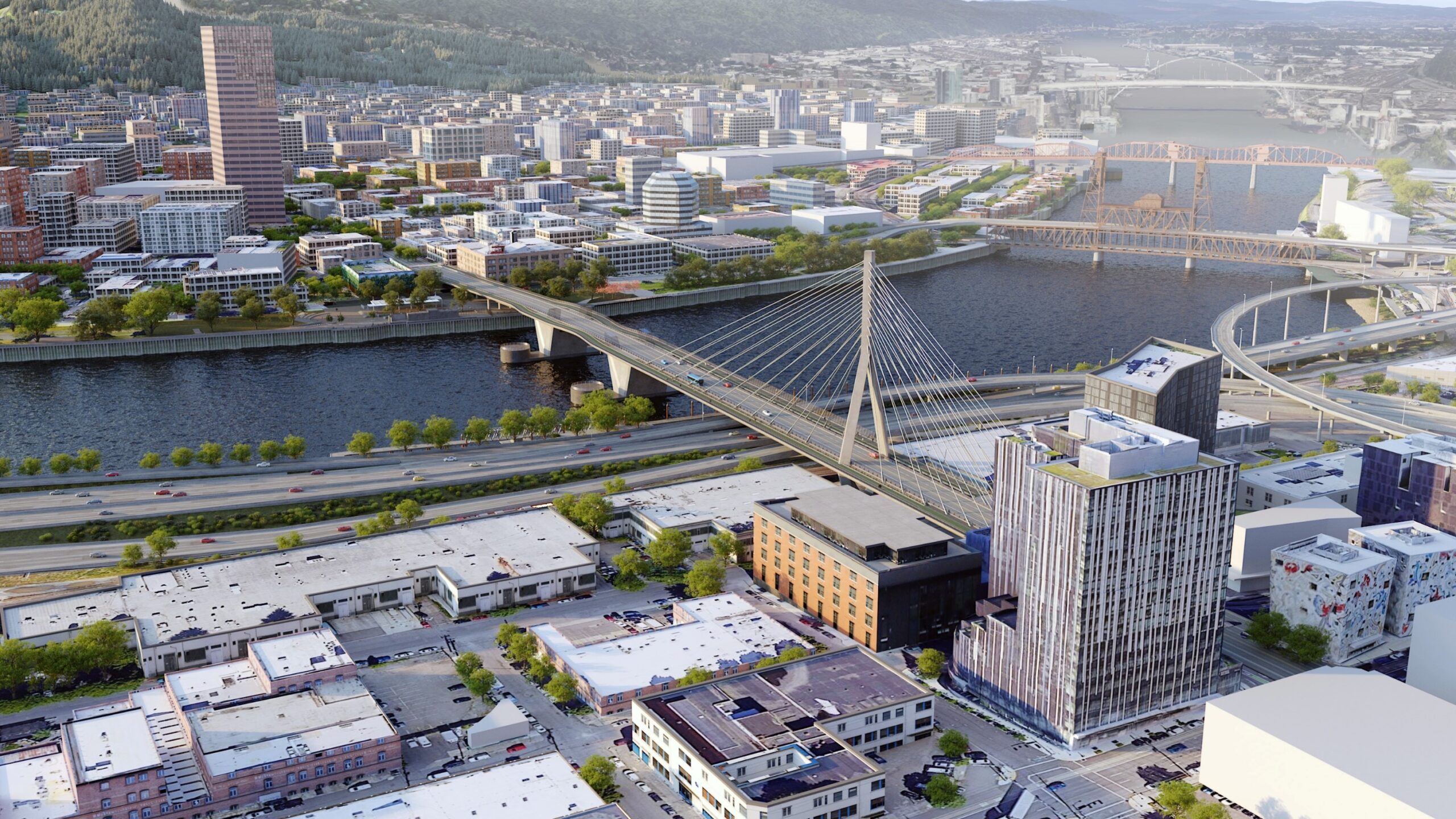
Republican lawmakers say cyclists should be tolled, question bike lanes on new Interstate Bridge

One is “traffic.” The other is not. (Photo: Jonathan Maus/BikePortland)

Republican lawmakers from both sides of the river are concerned that the project to widen I-5 between Portland and Vancouver and replace the Interstate Bridge is too focused on non-drivers.

In comments made Monday during a meeting of the bi-state legislative committee for the Interstate Bridge Replacement Program (IBR), Washington lawmakers questioned the wisdom of devoting lanes to walkers and bicycle users, and one wondered whether bike riders should have any access at all. And an Oregon House representative floated the idea of tolls for pedestrians and bicycle riders.

These are not random elected officials speaking out of their lane: these are influential legislators on important transportation committees that decide the fate of billions of taxpayer dollars.

The IBR is estimated to cost upwards of $7.5 billion, with $1.1 billion each coming from the states of Oregon and Washington and the rest split between tolls and federal grants. The project will widen five miles of I-5, build seven new freeway interchanges, and replace the existing bridge over the Columbia River (see graphic below). Despite delays due to traffic modeling disagreements, permitting negotiations, and environmental analyses, IBR Administrator Greg Johnson said at Monday’s meeting they are “steaming toward a path” of construction in 2026.

“I have a concern that we’re paying more attention to modes of transportation that are not at the top of mind. We need to be paying attention to, and directing our building of this bridge, according to the majority of what the bridges should be used for, which would be traffic and freight.”

– Lynda Wilson, Washington state senator
Left to right: Sen. Lynda Wilson (State of Washington), House Rep. Ed Orcutt (State of Washington), IBR Admin Greg Johnson (IBR), House Rep. Shelly Boshart Davis (Jonathan Maus/BikePortland)

Monday’s meeting was a chance for Johnson and other project staff to convince lawmakers that the project is doing great and moving forward as planned. There was a real “nothing-to-see-here” vibe to the presentations from project staff. As for legislators, beyond pointed questions from Oregon House Rep. Khanh Pham about modeling projections and concerns voiced by Washington reps about the possible loss of buildings on the Vancouver riverfront due to the freeway’s wide footprint, the most notable exchanges were, surprisingly, about bicycles.

Washington Senator Lynda Wilson, a Republican who represents the 17th district that includes rural Clark County, doesn’t seem to think that bicycle riders, transit users, or walkers are “traffic.”

“Traffic remains below 2019 levels and transit is actually lower than that. So I think we cannot lose sight of the fact that we’re building this big bridge with this big train on it to move very few people —and the important thing is that we have traffic moving,” Wilson said during the meeting.

Sen. Wilson also expressed concern about figures she read about in a story published in The Columbian on May 23rd, that despite the new bridge being almost three times as large as the existing one (208 feet of surface area compared to 75 today), it will devote only 55% of its lane space to “cars and freight” versus the 89% currently devoted to those modes.

Scope of the project (told you it’s not just a “bridge replacement”). North Portland is on the left. (Source: IBR)

Johnson knew what Wilson was getting at: “We’re not neglecting the highway mode,” he said, in a diplomatic but forceful tone. Johnson explained that while the new bridge will still have three through lanes for car and truck drivers, they will be wider (12 feet instead of 10 and-a-half today), there will be two auxiliary lanes, and four, 12 to 14-foot wide safety shoulders (in addition to the light rail and bike/walk lanes).

Then Johnson offered a question of his own: “Folks who believe we can widen this thing and put more through lanes in it, I ask the question: ‘What do you want us to tear out, Fort Vancouver or downtown Vancouver? Because if you widen and put more through lanes, that’s exactly what you will end up doing.'”

Then later in the meeting when Johnson was sharing a series of bridge visualizations, Wilson asked another question.

“Biking, walking, rolling, whatever you want to call it, ‘active transportation’, we can do that [on the bridge] now,” Wilson said, as if to question the wisdom of funding a major bikeway upgrade. “I would like to know what percentage of the rolling, walking biking is happening now compared to traffic?” she added, once again making it clear that in her mind, bike riders are not “traffic.” Then Wilson dropped all pretense:

“I have a concern here that we’re paying more attention to modes of transportation that are not at the top of mind, right? We need to be paying attention to and, and directing our building of this bridge, according to the majority of what the bridges should be used for, right? Which would be traffic and freight.”

Once again Johnson was ready with a quality response:

“I have walked across the bridge back-and-forth 42 different times. And it is an unpleasant experience on the best day. You have very narrow walkways, you have folks who are hauling bottles and cans on large conveyances on that pathway. You can’t hear well because if someone is coming they have to basically holler to get your attention for you to slide into the truss members. So the current bridge does not encourage walking or biking… I’ve been a bike rider all my life, and I refuse to ride across the bridge.”

Then Johnson made it clear that it doesn’t matter what his personal opinion is because quality bike and walk facilities are called for in the project’s adopted “Purpose and Need” statement so the project is obligated to build them or jeopardize federal funding.

“So we’re not neglecting any mode,” Johnson repeated. “We’re making sure that we’re building something that if you choose not to be in a car, you can safely have an enjoyable trip across this bridge.”

A few minutes later, Oregon House Rep. Shelly Boshart Davis followed-up on Wilson’s comments. Boshart Davis is a Republican who represents rural Willamette Valley, owns a trucking company and is co-vice chair of the legislature’s Joint Committee on Transportation.

Rep Boshart Davis was also hung up on how much space on the new bridge would be allocated to non-drivers. “As we’re talking about that great percentage of space [going to bikers and walkers] — which in my mind says money and costs — in that aspect, is that part going to be tolled?… We’re talking about a $7 billion budget and how we’re paying for the project. Is it equitable across the modes of transportation, and the people actually using the bridge?… I want to make sure that as we’re paying for the system, that we are looking at equity, as we’re talking about it all the time.”

“We’ve heard the question of whether there will be tolling for bicycles or pedestrians,” Johnson replied. “I’m not aware of situations across the country — or even across the world — where bicycling or walking is tolled. We’re trying to create options to to decongest the freeway system and that would be at odds with that purpose.”

Then Johnson took it a bit further as he sought to reset the narrative. “The thought that the biking and walking is an add-on is a misnomer. This is part of the Purpose and Need of this project. So as freight is a part of the Purpose and Need, so is biking and walking a part of the Purpose and Need. We can’t pick and choose which Purpose and Need statements we’re going to meet and which ones we’re not.”

Beyond their clear bias against and misunderstanding of people who can’t or don’t want to drive, the comments of Sen Wilson and Rep Boshart Davis are in part motivated by cost concerns, which became clear when Wilson asked Johnson to give her the total dollar amount the project will spent on the “extra lanes” for biking, walking, and transit. (As in “extra” because they’re non-essential.)

Even the bi-state legislative committee’s chair, Washington House Republican Ed Orcutt, got in a dig at bicycling and walking. Orcutt challenged Johnson’s reference to biking and walking as an important component of the project: “There’s about 308 miles of I-5 in Oregon, and I believe 280 in Washington. You say part of the need for this project is bike/ped. Can you tell me how much bike/ped is allowed on the other 590 miles of I-5 in Oregon and Washington?”

And again Johnson kept his cool while responding to another bad faith question. “Representative,” Johnson responded, “one of the one of the issues is that we have very limited crossings of the Columbia River in the Portland-Vancouver area. So when we have an opportunity to connect biking and walking facilities on each side of the river, that was part of the Purpose and Need that was established and agreed to by the transportation partners. So once again, we can’t ignore it… this is a unique opportunity that would be missed if we ignored the bike/walk community at this location.”

It’s good to know Johnson won’t be cowed by these legislators. But it’s not good to know we have such high-ranking public officials in positions of influence over transportation funding who suffer from such intense windshield bias.

Job: Master Technician – Clever Cycles

Buffered Bike Lane with a bike symbol and arrow pointing forward

Job Title

Master Technician

Company / Organization

Clever Cycles

Job Description

We are seeking a skilled and thoughtful individual to join our service team. We are an urban devoted shop entirely to bicycles as primary transportation, serving urban households seeking to avoid dependence on cars with practical, stylish bikes for everyday use.

Responsibilities:
Repair and maintain all types of bicycles, including folding, ebikes, and cargo bikes.
Provide customers with accurate cost estimate quotes and maintenance suggestions.
Thoroughly and accurately complete bike builds, repairs, tune ups, sales checks, and accessory installs on time and with the highest quality standards.
Maintain organized and efficient service areas.
Assist with the daily operations of the store.
Assist sales associates and customers with technical questions and purchases.

The Ideal Candidate:
Positive, friendly and professional.
Excellent customer service skills.
Well organized, with the ability to manage time and prioritize workflows for self and our service team.
Strong attention to detail.
Love for order, detail and communication.
Willingness to learn about electric and non-traditional bikes.
Excellent written and verbal communication.
Able to work both independently and as a member of a team.
Adaptable, teachable and thrives in a dynamic, fast-paced environment.
Previous bike shop experience is a requirement.
Weekend availability is a must.

Job Type: Full-time
Salary: $20.00 to $28.00 /hour based on experience

Other benefits include:
Sick pay
Paid vacation
Health insurance
Retirement plan
Employee discounts

How to Apply

What We Want From You:
A resume
A cover letter (tell us why we want you!)
At least 2 current references
Your availability
Email: hr@clevercycles.com

At Bike Happy Hour this week: Candidate Rex Burkholder, Bike Fun App, and WeBike!

Left: Rex Burkholder at Bike Happy Hour in April (Jonathan Maus/BikePortland). Right top: WeBike group photo at Peninsula Park (The Street Trust). Right bottom: Bike Fun App ride leader tokens.

Bike Happy Hour
Every Wednesday, 3-6 pm
Gorges Beer Co. (2705 SE Ankeny)

Bike Happy Hour (BHH) is right around the corner and we have a fun night planned. It’ll be hard to top last week, but perhaps you’ll join us and make it even better?!

(By the way: If you’d like to support BHH, help us pay for free fries and other cool stuff, consider making a contribution here.)

We have two special guests lined up so far: leaders of The Street Trust’s WeBike program and Portland City Council candidate Rex Burkholder. I’ll also have Bike Fun App ride leader tokens to hand out. Here’s the rundown…

It’s Pride Month, so we’ll share the mic with WeBike, a cycling group that, “aims to dismantle the barriers of cycling for trans people of all genders, gender non-conforming people, Two Spirit, and cis women.” WeBike began as a program from The Street Trust known as Women Bike in 2015. WeBike goes beyond bike rides and connects people through social gatherings, mentorship, and knowledge-sharing events. They’ve also got a private Facebook group where folks can tap into the collective wisdom and connect for rides and meet-ups.

Tomorrow night (Weds., 6/12) at 6:30 pm WeBike will host a fix-a-flat clinic at The Street Trust HQ in Lloyd Center, but they’ll hang with us on the patio first. Around 5:00 pm one of their leaders will be on the mic and then they’ll lead a ride over to the clinic. Come out and learn what this group is all about and consider tagging along on their ride. Who knows, maybe you’ll meet some great folks and end up joining them on an upcoming overnight bike camping adventure?

Also at BHH this week we’ll be joined by Portland City Council D3 (southeast) candidate Rex Burkholder. Many of you know Rex as one of the founders of the Bicycle Transportation Alliance (which became The Street Trust) and as a former Metro councilor. This will be Rex’s second visit to BHH. If you caught his speech back in April you’ll know why he’s running. Come out and hear more from Rex, then decide if he deserves one of your votes for D3.

And last but not least, I’m helping Aaron Corsi spread the word about his amazing Bike Fun App. If you haven’t heard, this app puts the entire Shift/Bike Summer calendar into your iPhone with a very easy-to-use and helpful app. Aaron isn’t able to join the fun on his bike this summer due to a lingering medical issue (he’s fine, it’s just a bummer!), so he wanted help handing out his ride leader tokens. What are these? They’re cool little plastic cards he created that allow anyone who’s leading four or more rides to share them with someone. There’s an RFID chip so you can just tap your phone and see all the leader’s rides. Watch his IG video for more info.

I have tokens to give to the following ride leaders:

  • Abernethy Bike Bus
  • Bad Bitches Bike
  • Bicycle Kitty
  • BikeLoud PDX
  • Breakfast on the Bridges
  • Corvidae BC
  • Cycle Cats
  • Cycle Homies
  • Dr. Doughnut
  • Joseph Bicycles
  • Kidical Mass PDX
  • Maplewood Bike Bus
  • Nakedhearts:PDX
  • Nic Cota
  • Pamela Schpamela
  • Ride Safe PDX
  • The Street Trust

What else?

Come at 4:00 for free fries. Stay till 5:00 for open mic where anyone can speak their mind.

See you tomorrow.

Comment of the Week: Doing math at the transportation package roadshow

Jonathan doesn’t like it if I engage in “navel gazing,” but his post last week about the kick-off of the state’s Joint Committee on Transportation 13-city tour in advance of Oregon’s 2025 transportation package was really good reporting. After spending seven hours with the committee — in the bus and, at the round-table, and during the public comments — he captured both the feeling in the room as well as the specifics of what participants said.

And you responded with 200 comments (so far). I just went through all of them again this morning—and this blows me away—all the comments are on-topic! I would say curl up with a cup of hot chocolate in front of the fire and read them, except that it’s nearly summer. But I defy anyone to find a more knowledgeable, civil conversation (open to all) on internet, and I think it’s worth spending time reading the whole thread.
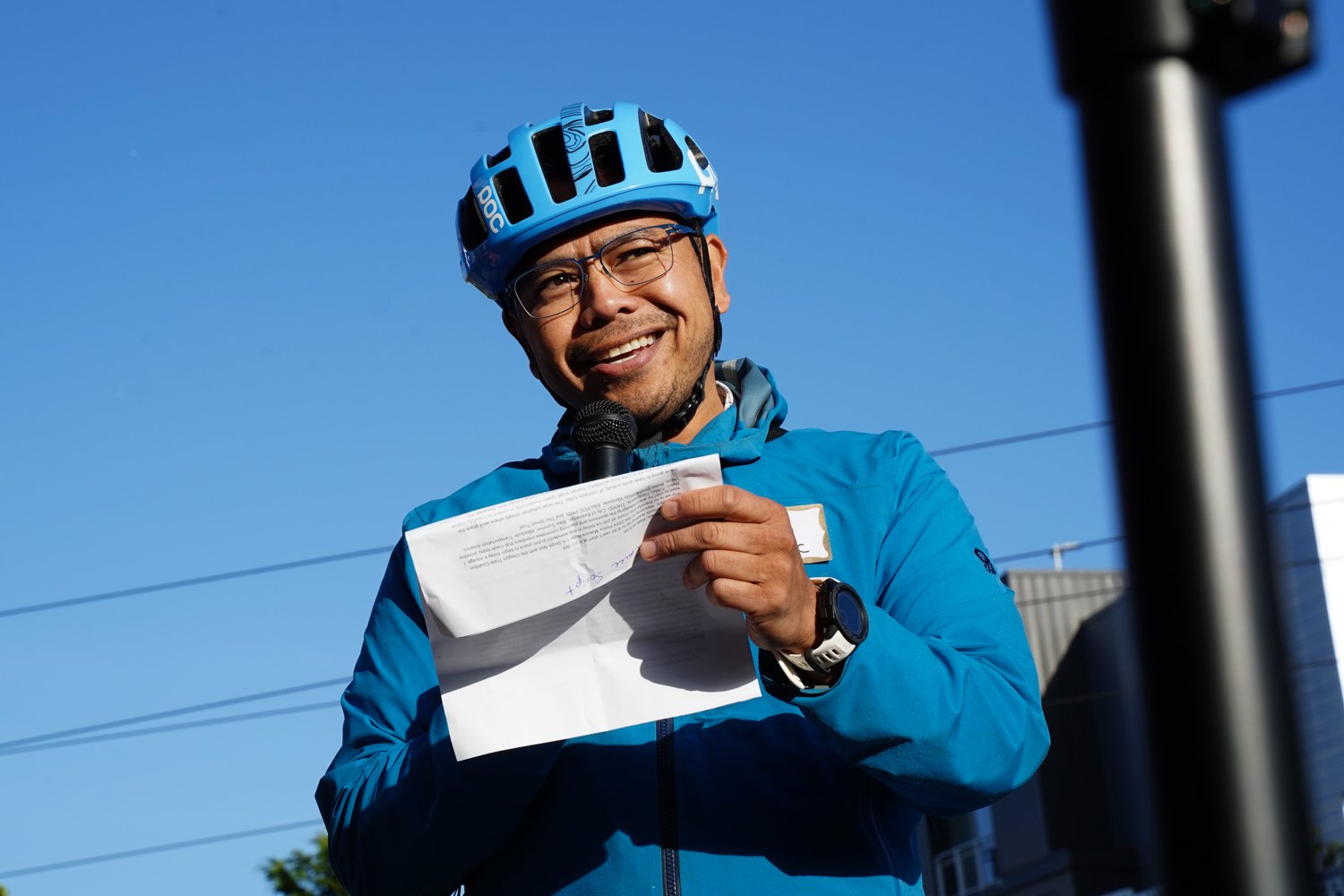
A comment from somone named, “Ivc” is this week’s selection. It got a COTW nomination (those nominations can be really helpful with this volume of comments, so please keep them coming) and a lot of thumbs up. I liked it because it stepped back from the details that many commenters were discussing, and instead zeroed-in on the core problem: the state cannot afford to pay for the car-centric mega-projects it has committed to.

Here’s Ivc’s comment:

There’s a lot to unpack in this post.

I wonder sometimes if advocates for freeway expansions are totally math illiterate. They need billions.

“…Many of those funds were diverted to non-road projects” — my rear end. A quick look at ODOT’s 2023-25 Budget, [shows that] “Public Transportation” (transit and active transportation) amounts to 465 million, 8% of ODOT’s budget for that cycle. Even if the state didn’t spend another penny on bikes or transit ever again, it wouldn’t be enough fund one of these expansions, let alone three of them. If they’re not sitting there dreaming up with massive new revenue sources for these fantasy projects, they need to be advocating for stopping these projects now. Anything else is just delusional.
I do find it curious that Director Williams appears to be completely unaware of freeway traffic in Southern California or around Puget Sound.

Thank you Ivc. Please treat yourself to reading Ivc’s comment in the context of 199 other fine takes on Oregon’s transportation situation.

First Look: New bike path to Portland Airport

The new path, adjacent to NE Airport Way, leads to the Airport MAX station and terminal. (Photos and video: Jonathan Maus/BikePortland)

There’s a new cycling route to the Portland International Airport (PDX).

Last Friday, TriMet quietly removed barricades from a 1.1-mile stretch of a protected bike path that takes riders directly to the end of the MAX light rail line and PDX terminal. The path was partially funded by the Port of Portland as part of TriMet’s “A Better Red” project, a $215 million investment into the MAX Red Line.

In addition to an extension of the Red Line in Washington County, A Better Red added a second track to sections of the line between Gateway Transit Center and the airport. The project also comes with two new sections of bike path: One from Gateway Transit Center to Gateway Green Bike Park adjacent to I-205, and the other on NE Cargo Road from just west of NE 82nd to the PDX terminal. The new Gateway Green path and all other elements of A Better Red are expected to be complete later this summer, but TriMet has opened the new path to the airport.

The path was built by TriMet and Port of Portland, who provided $2.3 million in funding. The Port seized the opportunity of TriMet’s project to realize their vision of a new path on the south side of Airport Way along the MAX line that was a key part of the Port’s 2014 Portland International Airport Bicycle & Pedestrian Master Plan.

I took a closer look at the new path on Saturday. I found it to be a welcome addition to the bike network, but it needs better connections to existing facilities. (Watch the video above for more.)

The old bike route to PDX required bicycle users to cross the wide and busy intersection of NE Airport Way and 82nd, then share lanes with car users on a frontage road before connecting to a half-mile path that ended on the north side of the terminal. The new route connects to an existing sidewalk/path near the airport’s designated cell phone waiting area and shopping center on NE Air Cargo Rd. The new path is bi-directional, wider, longer, and provides more protection from other road users. It also connects to a bike parking area near an entrance to the terminal.

Unfortunately the new path isn’t well-connected to existing infrastructure and we’re still a few major pieces away from having a bike route to the airport that’s safe, easy-to-use, and convenient for a broad slice of existing and potential riders.

As I rode on NE Alderwood toward 82nd Ave, I wasn’t sure where the new path began. I relied on signage or other design cues that I hoped would make it obvious, but I was disappointed. After a few wrong turns near the intersection of 82nd and Air Cargo Rd, I got up onto the sidewalk to check a map and emails on my phone. Once I found it where the new path began, I crossed 82nd in a painted crosswalk, navigated a slip lane (there are two at this intersection), and made my way onto the sidewalk on the northeast corner of NE 82nd Ave and Air Cargo Rd. I headed northwest past wide, busy driveways of a gas station, mini-mart, and fast food outlets and eventually found the start of the path.

Directing bicycle riders onto a sidewalk (even if it’s wide) with busy driveways is no way to introduce them to a protected path. Hopefully TriMet/the Portland will add more signage (including pavement markings) to let riders know they are in the right place and let drivers know they are crossing an important regional bikeway.

The path begins at NE Air Cargo Ct., a small but busy road that provides access to the PDX cell phone waiting area and rideshare driver parking lot. Again, more signage and perhaps an enhanced crossing is needed here to let drivers know this is more than just another crosswalk. Once I was finally on the new path, my blood pressure dropped and I could relax a bit. I looked up and saw a “PDX Terminal” bikeway network sign and knew I was in the right place.

The Port decided to route the path away from Airport Way and onto NE Air Cargo Rd (current alignment above), which is a change from the recommendation in their 2014 Bicycle and Pedestrian Plan shown above.

The new path is separated from other lanes via a standard curb. The width felt adequate at about 10-12 feet wide, although I was the only person out there so I couldn’t judge what it would be like with opposing bike traffic. A bit further north the path is directly adjacent to the MAX line and becomes an above-grade facility on its own raised track. About half-way on the path it crosses the MAX rails (“We really want to stress the importance of safety,” a TriMet official emailed me about the crossing). After the crossing is where the new path gets really nice. There’s a grove of trees (beyond the “Welcome to Oregon” sign and those wooden horses you’ve seen when you drive home from the airport) and grass. On one side you’ve got runways and airplanes next to light rail tracks, and on the other you’ve got the busy traffic lanes and the airport.

This final section of the path feels safe and separated and there’s a lot of interesting stuff to look at. The path is separated from multiple lanes of car users by heavy-duty steel posts and cables. Eventually the path ends into the airport MAX station. Just a few hundred yards away from the end of the path are a few bike corrals at a designated bike parking area. Keep in mind there are hundreds of employees at the Airport, so many of the users of this path will be shift workers. For travelers who need secure, long-term bike parking, the airport needs better options. There’s a gated bike parking area on the opposite side of the terminal, but I haven’t seen it for many years and I’m unsure of its status.

It’s also notable that the southern part of the new path veers away from the MAX tracks and Airport Way and instead goes along Air Cargo Rd and the new Travel Center development. That wasn’t the original plan. As you can see in the graphic above, the 2014 plan included a more direct route that would connect this new path to an existing path along Airport Way with a better connection to Cascade Station shopping center and other paths.

According to the Port, the 2014 recommendation is no longer in the plans. Port Media Relations Manager Allison Ferre told BikePortland they built the sidewalk on NE Air Cargo Rd with the intention that the new path would connect to it. As for why they chose to route the new path away from the MAX line along Airport Way, Ferre said, “The existing bike/pedestrian network converges at 82nd Ave and Air Cargo Rd, so the plan is to keep that as the focal point for practical and safety reasons (separate from vehicle traffic on Airport Way).”

If that’s the case, we must improve the 82nd Ave/Air Cargo Rd intersection. Currently it’s a mess (see above) and shows zero regard for bicycle travel. There are two slip lanes which add to the stress. It’s not enough to make islands of good bikeways when 95% of riders can’t swim.

Overall, this is a nice addition to the airport biking network and TriMet, Metro, and the Port should be applauded for making it happen! I can’t wait for the new path coming to NE Cornfoot Rd in 2026 and other improvements planned in the coming years. There’s no reason we can’t have safe and convenient bike connections to the airport from existing neighborhood bikeways in the Parkrose, Cully, and Woodlawn neighborhoods.

Monday Roundup: Hochul’s blunder, Ladds 500, exhausting men, and more

Welcome to the week.

Let’s start things off with a recap of the best stories our community came across in the past seven days…

**This week’s Roundup is sponsored by The eBike Store, where e-MTB season has begun.**

Oh Hochul: New York Governor Kathy Hochul caved on congestion pricing and she might have cratered her political career as a result. It’s the biggest political blunder I’ve ever seen in the transportation space — and the latest reports say she might need to update her infamous video to say it’s back on again. (Streetsblog NYC)

Engineering death: A former traffic engineer has written a tell-all about his former profession that lifts the veil on how design decisions are made and reads like a plea for reform. (Bloomberg)

Kids these days: The “throttle kids” phenomenon we covered two years ago has made it into a national news outlet as the trend of kids hopping on e-bikes instead of cars is alive and well. (Wall St. Journal)

Ladds 500 paean: A beautifully captured report on last April’s Ladds 500 event was well worth the wait. (Defector)

Blumenauer’s e-bike gambit: Excellent context on the bill announced by Portland Congressman Earl Blumenauer last week that aims to boost competitiveness of American electric bike manufacturing. (The Verge)

Heavy pedals: City of San Francisco employees are speeding all over the city, according to records dug up by a local news outlet that examined logs of the city’s vehicle fleet. (San Francisco Standard)

Decibel dudes: Talk about validating my feelings about people who love making absurdly loud noises with their car (or motorcycle) exhaust! This study found guys who do this (and they’re almost always guys) are often sadistic, psychotic creeps. (Car and Driver)

Power of bicycles: No big deal, just a story from a major city in Pakistan where women are building community and power by riding bicycles together. (Dawn)

Don’t overlook education: Teaching people — especially women and underserved groups — how to be confident on a bike and to integrate cycling into their lifestyle can help cities save themselves and reach cycling mode split goals. (Bloomberg)

Ride style: What should we make of the fact that one of the largest retailers of fast fashion in the world, H&M, delves into performance cycling apparel? (Global Cycling Network)

“Age means nothing”: An inspirational tale from the recent Unbound gravel cycling race where a 73-year old rider not only finished but crushed the course. (Cycling Weekly)


Thanks to everyone who sent in links this week. The Monday Roundup is a community effort, so please feel free to send us any great stories you come across.