Unless you’ve lived under a rock for the past year or so, you are probably aware that the 2025 session of the Oregon Legislature will be very consequential for transportation funding. Seven years after the multi-billion dollar HB 2017 passed, lawmakers will once again take on the Herculean task of putting a big funding package together that — hopefully — carries us into a better future.
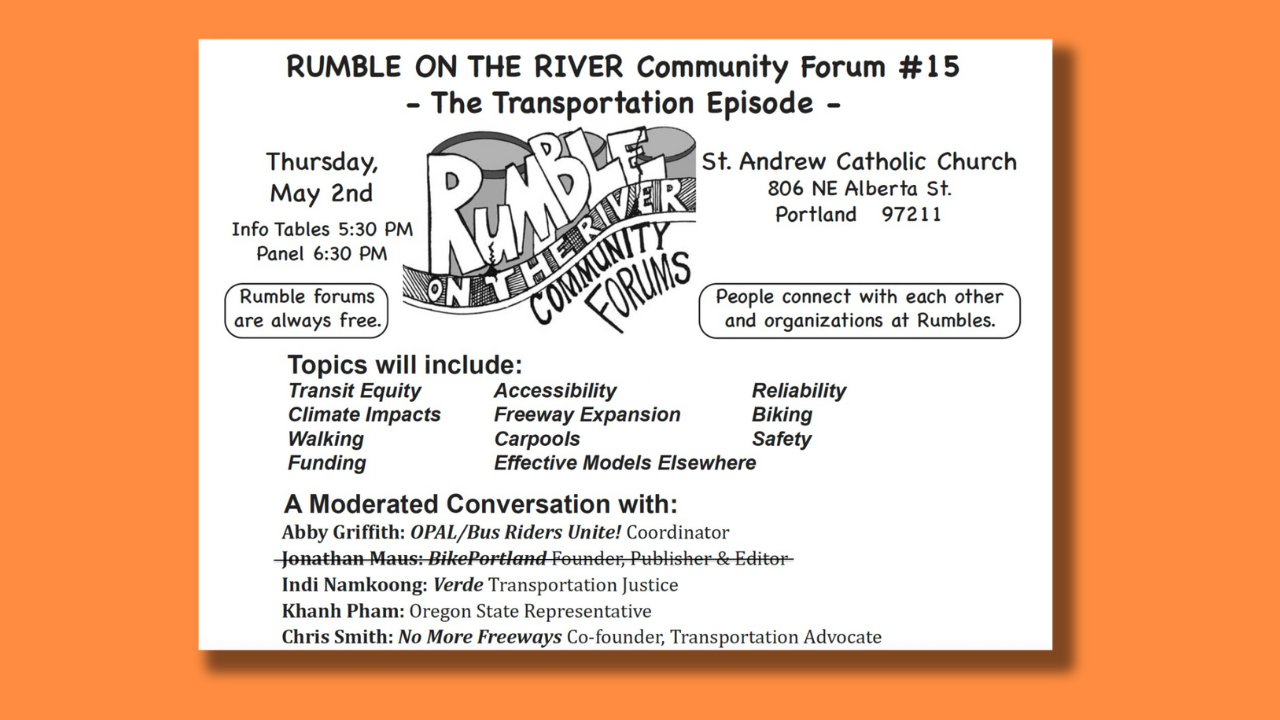
An event happening in northeast Portland tonight will build even more buzz for next year’s debates as advocates, elected officials, and nonprofit leaders gather for the Rumble on the River Community Forum. This is the 15th Rumble and it’s organized by a wide range of volunteers from a coalition of environmental advocacy organizations. Tonight’s event will be the “Transportation Episode” and will include a presentation from Oregon State Representative Khanh Pham and a panel discussion that features Abby Griffith from OPAL/Bus Riders Unite, Indi Namkoong from Verde, and Chris Smith from No More Freeways.
Rep. Pham, a member of the Joint Committee on Transportation that will develop the 2025 bill, will lay out what’s at stake and how Portlanders can influence the process. In addition to her speech, the panelists will have a moderated discussion on a wide range of topics. Rumble organizers emphasize networking at these events, so rest assured there will be lots of great folks and organizations to connect with. Come early to peruse tables set up by local orgs.
Advertisement
The Rumble is free and doors open at 5:30 pm, with the panel kicking off at 6:30. It will go down at St. Andrew Catholic Church, 806 NE Alberta Street.
In related news, the Joint Committee on Transportation has released a list of dates and cities for an upcoming listening session on the 2025 package. They will be in Portland on June 4th, so save that date. I’m trying to track down more details and will share them when I hear more.
One day after the JCT listening session, you can keep the conversation going at the Oregon Active Transportation Summit (OATS), hosted by The Street Trust. At 1:00 pm on Wednesday, June 5th Talia Jacobson of Toole Design will moderate a roundtable discussion during the lunch plenary session. According to the OATS website, the roundtable, “will feature experts from across sectors and jurisdictions to discuss where our money from transportation comes from, where it’s spent, and the uncertainties we face as we transition off the gas tax onto more equitable, more sustainable revenue sources… as the 2025 Legislative Session quickly approaches, the stakes are much higher this time.”
OATS requires paid admission. Peruse the full program, buy tickets, and learn more here.
And be sure to stay tuned to BikePortland as the clock ticks down on this all-important, upcoming legislative session.
I’m back in the The Shed after two weeks of an unexpected break. Before I dive head-first back into BikePortland, I wanted to share what happened and share a heartfelt thanks for your understanding and support while I was away.
Two weeks ago while celebrating the one-year anniversary of Bike Happy Hour, texts from my brother started to light up my phone: Dad had to be taken to the hospital. As it became clear how serious the situation was, I decided to drive down to Grants Pass (about four hours south on I-5) that same night. I expected to be gone for a few days. I was there two weeks — one in Grants Pass, and then one in Medford after he was moved to a larger hospital with better specialists. I spent about 12 hours a day in the hospital for the past two weeks trying to make dad as comfortable as possible.
And yesterday, we finally broke out! I dropped my dad at a rehab home in Grants Pass and finally got back home late last night. It has been a life-altering journey for both of us (and as anyone who’s been through this knows, the journey isn’t over).
While I dealt with this emergency and the days turned into weeks, I worried about keeping the BikePortland flame burning. It took a huge load off my shoulders to have Lisa Caballero step up with a few articles, and I’m very grateful for everyone who answered my call and shared a guest article. And the folks who sent in financial contributions to help offset meal and motel expenses — thank you so much! It was also wonderful to see photos of folks having fun at Bike Happy Hour these past two weeks. I can’t wait for next week to see all your beautiful faces again.
And now, back to your regularly scheduled programming…
This is going to be another wonky post about development and transportation. If you aren’t interested in development, or if you live in a Portland neighborhood that benefits from a lot of capital projects — public money — you probably don’t have to slog through all this, it’s not of immediate concern to you.
Everybody else, Portland is poised to get a new bureau!
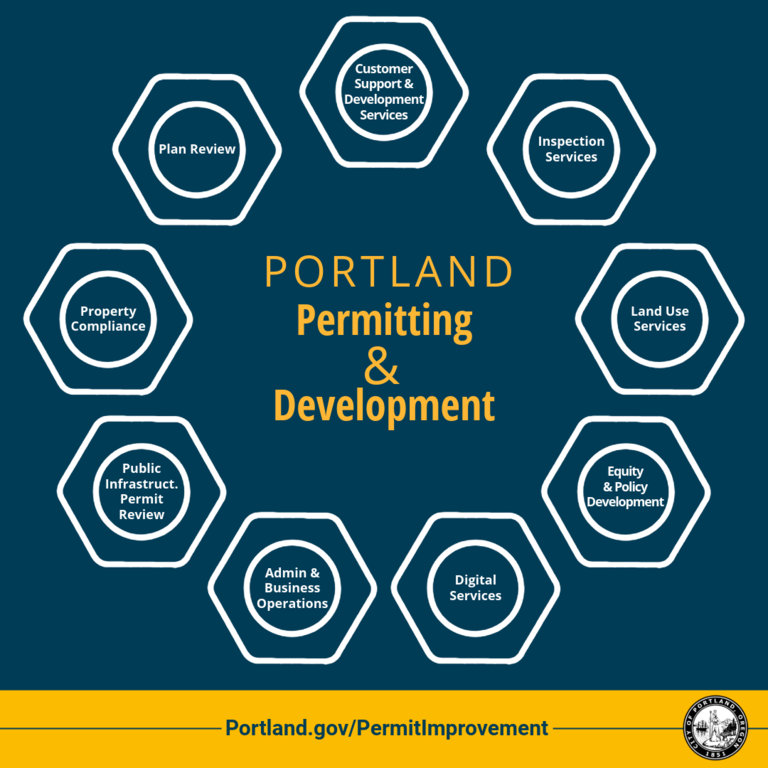
With the proposed creation of Portland Permitting & Development, the city has reached an important milestone in the intense reorganization underway to prepare for our new form of government. This new bureau also marks a significant shift for the Portland Bureau of Transportation. Once the change is adopted by City Council late next month, PBOT will no longer oversee the transportation piece of the development review process.
It’s all a part of what City of Portland Chief Administrative Officer Michael Jordan says is how the city is, “Committed to common-sense improvements that make our government effective and efficient.”
Advertisement
the transportation piece of the development review process is being moved out of PBOT and into PP&D [Permitting and Development]. And that’s a big deal.
The new structure
The new bureau will have about 350 employees, many of them from the Bureau of Development Services, which will become a legacy bureau set for phase-out. One new structural change, however, is that PP&D will also house work groups from the Parks & Recreation, Transportation, Water and Environmental Services bureaus in its Public Infrastructure section.
This reorganization seem to be in response to a damning 2021 audit of the building permit process which concluded that “An essential function of Portland’s building permits system does not work as it should.”
One noteworthy thing about the 2021 audit was that it singled out Portland’s antiquated Commissioner form of government as part of the problem:
Portland’s fragmented form of government exacerbates the situation. Seven bureaus and City Council are responsible for plan reviews, but no one entity manages systemwide performance. The bureaus have important improvement projects underway that were progressing slowly even before the pandemic. Meanwhile, the more difficult work to address persistent concerns about Portland’s complex regulatory environment has stalled altogether.
That same year, Commissioners Dan Ryan and Mingus Mapps began the work of streamlining permitting by appointing a large Permit Improvement Task Force comprised of civil servants from the permitting bureaus (Transportation, BES, Parks, Fire, Forestry, Water). The new PP&D bureau appears to be the result of all that behind-the-scenes effort.
The structure of the new bureau appears to address many of the issues about inefficiency raised in both the 2021 audit and the 2023 development stakeholder survey. But what does this insider baseball mean for a BikePortland reader?
Well, let’s start with me. For three and a half years, I’ve been trying to explain to BikePortland readers that not every bit of road work is a capital project. Yes, the Portland Bureau of Transportation (PBOT) has a Planning section with lots of project managers, and they do community outreach, surveys, meetings, and eventually big ticket changes like on Division Street, or 82nd Avenue get built.
But PBOT also has a development review section which oversees changes to the right-of-way triggered by new construction, and for which developers foot the bill. My stories about the new apartment building on Gibbs St (which went in without a curbed sidewalk), or the proposal for the Alpenrose site — and whether a sidewalk and bike lane on Shattuck will be part of it it — have all been about decisions made in the development review process. Got it?
Advertisement
What is happening with the current restructuring is that the transportation piece of the development review process is being moved out of PBOT and into PP&D. And that’s a big deal. It affects things like having a place to park your bike, a lane to ride in, and whether your neighborhood has sidewalks or not. Like it or not, development review is where a lot of decisions about the right-of-way are made.
It’s a good change, not the least because there is a chasm between the cultures of Planning and that of Development Review. An event organized by a Planning team will have a friendly slide show, maybe some refreshments, “and here’s some crayons for the kids.” Conversation tends to be aspirational.
At a development review meeting, people sometimes show up with lawyers. Conversation is about legal requirements, and the cost of frontage improvements. And what the public sector can fairly exact from private owners. So moving the activities of transportation development review away from PBOT and into the new bureau distinguishes between the two funding sources (public and private) and relieves PBOT of overseeing development review activities which I often felt the rest of the organization did not know much about.
After May 22nd, when the City Council votes on the proposed reorganization, I will no longer have to write “the development review section of the Portland Bureau of Transportation.” PP&D will do just fine.
The writer of this essay asked to remain anonymous because they did not get prior approval from management to contact media. It was submitted as part of a community project to keep BikePortland going while BikePortland Editor & Publisher Jonathan Maus is tending to a family medical emergency out of town and unable to work as normal.
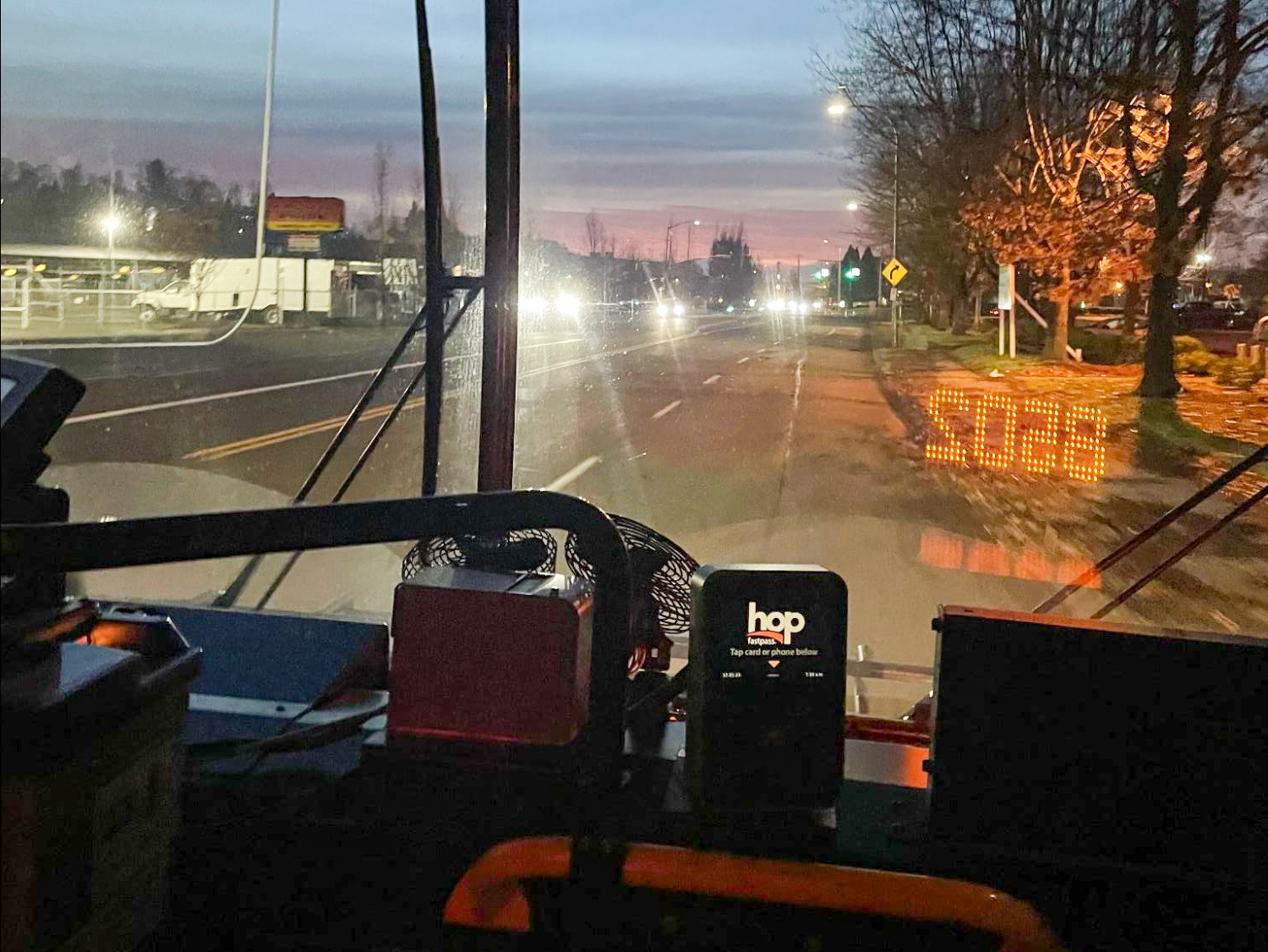
I’ve seen the sun rise more in the last six months than I have in the preceding 46 years of my life. Most days I wake up in the 4 o’clock hour to start my shift as a bus driver for TriMet. The pre-dawn risings began on the first day of training, when I rode my bike to Center Garage, TriMet’s main bus depot off Southeast 11th and Holgate, for a 6:00 am report time. This newfound appreciation for dawn isn’t the only thing I’ve learned in the last six months.
Training camp
On day three, I was behind the wheel of a bus on public streets with real cars, real pedestrians and real responsibility.
The training program for bus drivers is truly incredible. TriMet is a national leader in operator training, regularly receiving visitors from other agencies. Over seven weeks, trainers teach greenhorns to safely and efficiently navigate a 30, 40, and even 60-foot bus through narrow and often unknown streets, making turns in unfamiliar intersections in the dark of the night with rain-blurred visibility. The learning curve is steep: On day three, I was behind the wheel of a bus on public streets with real cars, real pedestrians and real responsibility. For the first few weeks, I would come home from a day of driving completely mentally and physically exhausted. Suffice to say: When you see “TRAINING BUS” on the overhead display, give that bus some extra room. Even after drivers are on their own, trainers conduct regular “check rides” to ensure they are following safe driving practices. That’s what’s happening when you see a person in a yellow vest standing near the driver.
Advertisement
There is no question of liability or fault. The only question is if an alert driver could have taken steps to prevent the accident from occurring.
The single biggest technique learned during training is to be constantly scanning. I scan my right and left mirrors every five to eight seconds, making sure to register what I’m seeing and how it may affect my operation of the bus. I scan those same side mirrors twice each when pulling out from a service or traffic stop. I’ve been taught to also look over my shoulder in both directions after servicing a stop to ensure a late-running passenger hasn’t slipped into my mirror’s blind spot. The options for maneuvering a bus are much more limited than a car so I scan way ahead down the road for potential hazards like road construction, cars being erratic, or stopped traffic. It’s also critical that I keep an eye on the overhead mirror inside the bus. I check it whenever someone pulls the cord to see which door they are likely to use, or if they have a large load to manage, or have a mobility issue that may affect where I land the bus at the stop. And of course I watch boarding passengers until they find their seat so I can keep a stable platform to avoid any falls. There’s a nearly unlimited amount of scanning and to do it effectively requires my constant attention.
The theoretical result of all this scanning is that we avoid “preventable accidents”, also known as PAs. If I rip off my side mirror on a tree branch, or catch an illegally parked car’s bumper in a turn, or end up being unable to squeeze down a narrow street due to a trash truck riding over the double yellow line, I get dinged with a PA, which can lead to termination. TriMet holds bus drivers to a completely different standard than state law does for driving a car. There is no question of liability or fault. The only question is if an alert driver could have taken steps to prevent the accident from occurring. If this sounds like an extremely high burden of responsibility, it is. Driving a bus is a big deal. A long-time operator once told me that there are no good drivers, just good driving.
Passengers and payments
When things are going smoothly, it can be really fun to help passengers get where they’re going. Every driver is different but my favorite passengers are the ones who wear a safety vest to catch my eye, wave a hand when I’m approaching to indicate they want a ride, make a little eye contact when boarding, have their fare ready to go, and find their seat quickly. Like most drivers, I don’t care two licks whether or not you pay. I’ve had passengers who paid with a Hop card end up causing problems, and other passengers pitch in to assist riders with mobility issues after asking for a free ride to the Bottle Drop to redeem their cans.
Advertisement
Personally, I appreciate it when passengers put a few coins in the fare box, or pleasantly ask for a free ride. Most drivers are happy to provide a free ride—we’re going that way anyway—so long as you acknowledge the graciousness. (Fare enforcers can appear anywhere, on any line at any time, so you ride at your own risk.) I deeply appreciate the opportunity to have a micro-relationship with everyone and often find that the free riders are among the most helpful in managing a busy bus. Fares are somewhere around 20% of TriMet’s annual revenue so we are taught to focus on ensuring an enjoyable and efficient ride for every customer rather than burning time arguing with someone about a fare. We have a button on our system to record a “fare evasion” and although that data could be used to target fare enforcement missions, it’s mostly used to record ridership counts—a critical data point in securing state and federal funding.
Don’t bother trying to reuse yesterday’s day pass, or feigning ignorance when your Hop card balance is at zero. Just ask for a free ride.
Don’t bother trying to reuse yesterday’s day pass, or feigning ignorance when your Hop card balance is at zero. We can see those little cheats coming before you even get on the bus. Just ask for a free ride.
Another thing I like are all the thank-yous and waves when riders leave the bus. I see your hand waves from the back door when you have your headphones on. I hear your little mumbles of thanks when you’re de-boarding in the middle of a pack. I notice your smiles as you leave through the front door. I don’t often respond, but I see you. I don’t often respond because managing newly-boarded riders, making sure everyone is off who wants to get off, and merging back into traffic is the most intense part of the job—often requiring one hundred percent of my concentration to get it done completely safely with a focus on speed to stay on schedule.
What I don’t see and hear is what happens in the back of the bus, up the steps. Or on the left side behind the driver’s cab. If you are getting bad vibes, or feel uncomfortable with something, or just don’t want to miss your stop, come up to your driver during a stop and say something. If you don’t want to tell your driver, call 503-238-RIDE. As long as the bus isn’t moving, I love helping passengers. Sit on the curbside seats ahead of the rear door so I can keep an eye on you, or call out your stop when it’s coming.
Advertisement
I honestly think that riding the bus is a safe and enjoyable thing. I’m not speaking as a TriMet representative here. I’m sure you’ve heard stories about assaults on drivers and people in a mental crisis making everyone else uncomfortable. And they’re all true, for sure. The bus is a slice of our broader society, nothing more and nothing less. In my six months, I’ve never really felt uncomfortable, for whatever that’s worth to you. And I think my passengers generally enjoy riding the bus.
While I love the tiny relationships I build with regular passengers, they all eventually come to an end. Every three months, all bus operators have the opportunity to sign up for a different work schedule. Some drivers choose to run the same route every day for three months while others work the “extra board” which is a bit of a daily lottery to fill in for buses that don’t have a driver. Some routes never get assigned a permanent driver which means a new driver runs it every day. I rarely work the extra board, but some operators love the variability and do it for years at a time. Instead, I work “vacation relief,” which means I fill in for other drivers on a weekly basis while they are on vacation from their regular work. It’s a great middle ground between getting bored doing the same thing every day and the uncertainty of being on the extra board.
The drivers
TriMet makes a lot of effort to have extra board operators on standby. But sometimes there aren’t enough drivers available for a route and it gets canceled. The driver shortage is real. In 2019, there were over 1000 drivers and service levels were growing. Then came COVID. Our excellent union, Amalgamated Transit Union Local 757, was able to avoid any driver layoffs but many drivers took the pandemic as an opportunity to retire or change careers. Now we are down to about 800 drivers, so it makes sense that service levels have suffered.
At current rates, it will take years to recover to pre-pandemic levels of service.My training class started with 28 people. Only 20 made it through the seven weeks. And with something like 30-50% of new drivers quitting or being let go within the six-month probationary period, TriMet isn’t churning out new drivers too quickly. (Oh and that juicy $7,500 bonus you’ve seen plastered across our in-house ads? It’s paid out over three years.)
Advertisement
The buses (and those back doors)
The back doors suck, let’s just be honest.
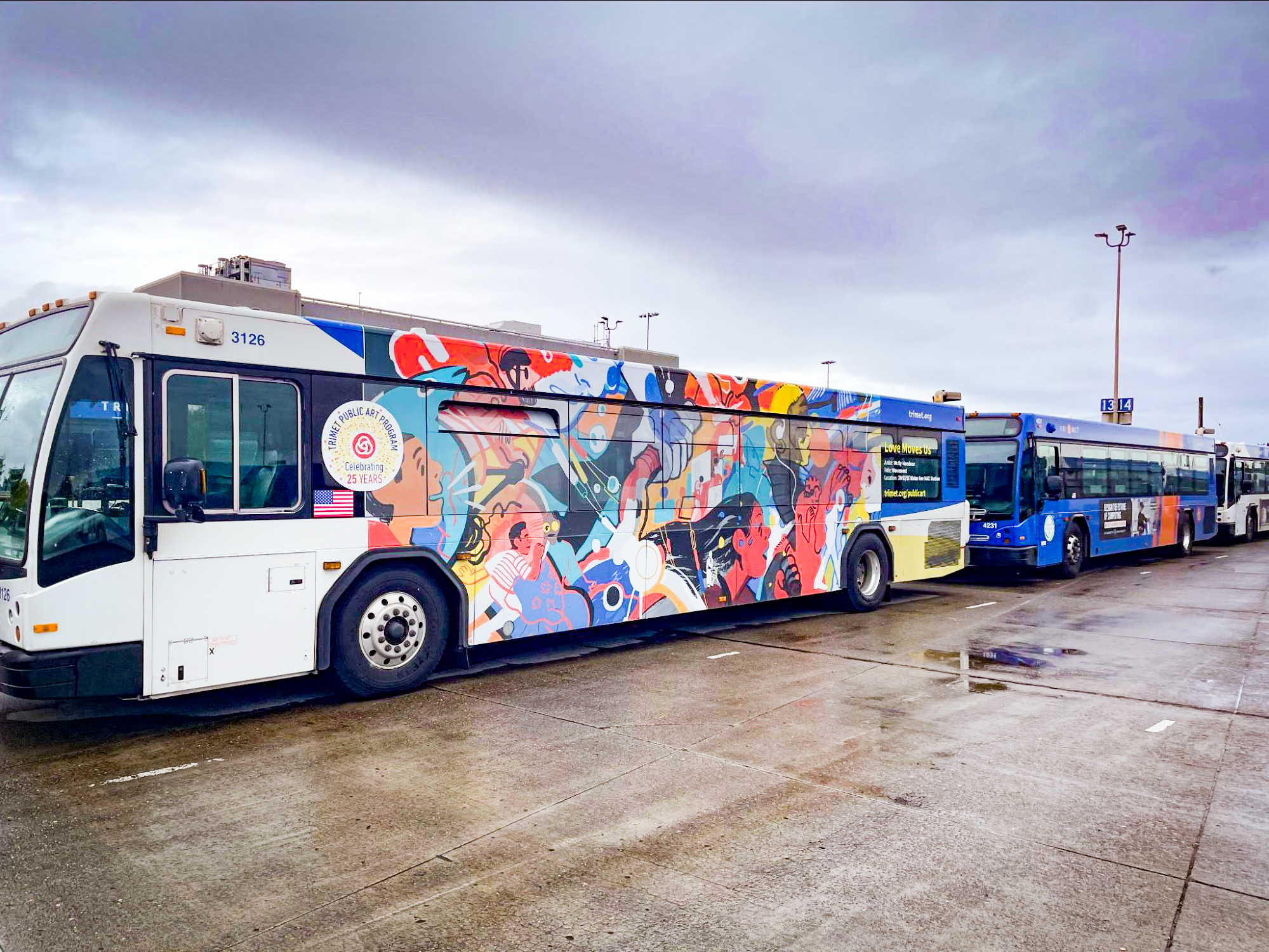
There are a lot of different buses to get used to. My favorite ones aren’t the newest. That might sound counterintuitive but many drivers I talk to agree. We like the 3500 and 3600 series buses because the rear doors close the fastest after a passenger gets off. The 4200 buses have a backup camera, but I’ve got worse problems than not being able to see behind me if I need to go into reverse.
The 4000 series models and up have intense red interior lights.They are supposed to help us keep our night vision, but I also think it’s a cool effect.
One thing I wish was standardized is the rear door opening action. Most buses have a motion-sensor eye above the door, by the green light. But some doors have touch-strips on the vertical door handles that you push to open. If I had a nickel for every time someone asks me to open the back doors when they’re already open, I could quit TriMet. I’ve found that the best technique to get the motion-sensor to see you isn’t to push on the doors themselves, but to gently push your whole forearm horizontally across the door. Small and quick stabbing motions with your hands sometimes aren’t seen by the eyes. So then you yell, “Back door!,” and I mutter, “It’s already open, just push!” and then you push and it finally opens (which makes you think that the doors finally opened because of something I did).
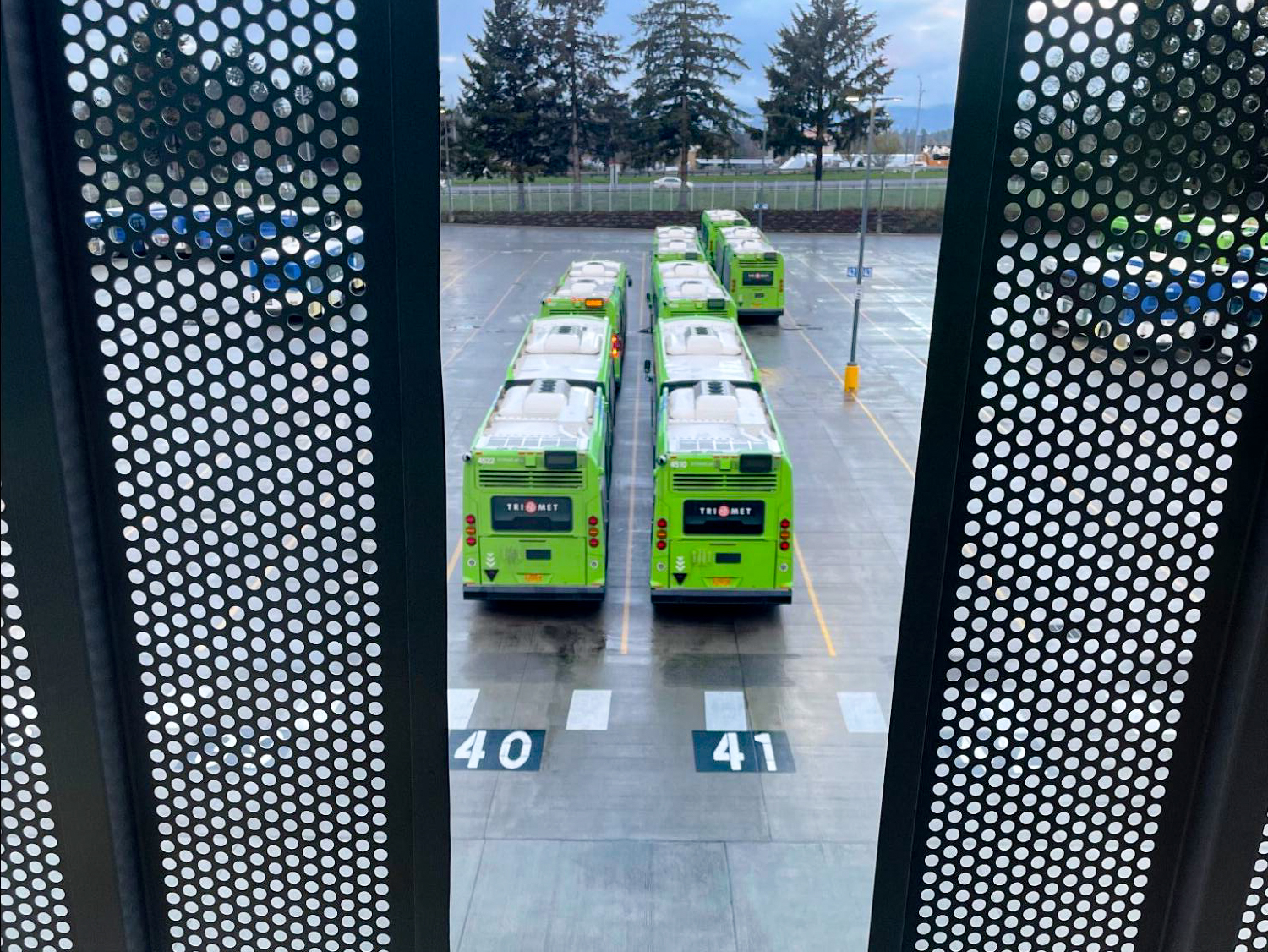
The back doors suck, let’s just be honest. I wish I could open and close all the doors all the time like on the green FX buses.
Look for the helpers
If something breaks, or a situation gets bad inside or outside the bus, we can summon help from a supervisor. They are the people driving around or parked at Transit Centers in the little white SUVs. You can tell a supervisor when they’re not in their cars by their light blue shirts. They can solve problems with unruly passengers, do light mechanical fixes, help out us drivers if we are having personal problems, help move things along if we are running late, and handle service disruptions like MAX trains breaking down or road construction interrupting bus stops.
I’ve learn a lot and I enjoy driving a bus much more than I thought I would. I’m now a bigger advocate for buses than ever. If you haven’t ridden a TriMet bus recently, maybe consider giving it another try. And keep up the thank-yous, even if you don’t get a reply. I’m probably scanning my mirrors, watching people move around the bus, and trying to stay on schedule.
— By BikeLoud PDX Board Chair Aaron Kuehn and Oregon Walks Executive Director Zachary Lauritzen
Fixing Our Streets, the measure to renew Portland’s gas tax (Measure 26-245), will be on the ballot this May. As the leaders of BikeLoud PDX and Oregon Walks, we are voting YES and encourage you to do so as well.
We know that our current car-centric transportation system is unsafe, harmful to our climate, unpleasant to use and live near, and is financially unsustainable. We believe these funds, by improving multimodal routes, will be part of the solution that our community needs. Both our organizations have frustrations with a number of decisions made by the Portland Bureau of Transportation, and we suspect many of you do as well. We have a long way to go to prioritize walkers, bikers, and transit users. And yet, we believe starving PBOT of these funds will only sacrifice some of the best programs they offer.
For the past eight years, this 10-cent per gallon tax funded over $150 million in basic infrastructure improvements for Portlanders to bike, walk, and roll throughout the city, and this renewal will continue to fund multimodal improvements. Some of the main priorities include investing in Neighborhood Greenways with diverters and smoother pavement, Safe Routes To School, and safety improvements to our dangerous busy streets. Plus, PBOT will fill potholes, something every traveler can appreciate.
Advertisement
In the face of PBOT’s budget gap, Measure 26-245 renews the same 10-cent tax we’ve paid since 2016. While maintenance needs continue to grow, the gas tax provides important funding to pursue our goals for multimodal infrastructure. A few dollars a month in local taxes will help maintain streets and make them safer.
This measure is bigger than any one political leader or any one person. You may disagree with any number of decisions made by PBOT leadership over the past months and years. Still, we need to give our future city leadership—especially the soon-to-be-elected 12 member City Council—critical safety and maintenance resources.
That’s why we are voting YES on Measure 26-245, the Fixing our Streets ballot measure.
Metro problems, Metro solutions? (Jonathan Maus/BikePortland)
[Hi everyone! I’m still in a hospital in southern Oregon with my dad, but I started looking into this story a few days ago and just started typing. I’m not back and working normal hours quite yet; but I hope to be back to Portland by Tuesday night! – Jonathan]
Councilor Rosenthal (Metro)
Two budget amendments proposed by Metro Councilor Gerritt Rosenthal last week would more firmly ensconce Portland’s regional planning agency as a key player in transportation funding talks that will be a top priority for state lawmakers during the 2025 legislative session.
Rosenthal, who represents Metro District 3 (portions of Washington and Clackamas counties and the cities of Beaverton, Durham, King City, Sherwood, Tigard, Tualatin and Wilsonville) wants Metro to fund two new staff positions and related consulting costs to study what a regional vehicle miles traveled (VMT) tax and tolling plan would look like. Those topics have traditionally been the realm of the Oregon Department of Transportation and state lawmakers, but Rosenthal believes since Metro represents the part of Oregon with the most congestion and largest megaprojects, his agency should play a larger role. He also doesn’t trust ODOT, members of the Oregon Transportation Commission (that oversees ODOT), or state lawmakers to uphold Metro’s values.
At Thursday’s Metro Council meeting, Rosenthal and other councilors put forward a total of seven budget amendments. Rosenthal proposed two of them: a “Vehicle Mile Tax Scenario Assessment” and a “Regional Values Tolling Prototype“. Each of the proposals would require Metro to fund one full-time staffer and cover costs for consultants and studies from the general fund. The VMTax proposal would fund one FTE and $25,000 for consulting-related costs, the tolling proposal would fund one FTE and $200,000 for “consultant support.”
Advertisement
“Who is asking us to do this? It just feels like there’s a disconnect.”
– Juan Carlos González, Metro councilor
“Logic is asking us to do this, because we’re the only entity that can.”
– Gerritt Rosenthal, Metro councilor
Electeds, experts, and advocates have been pushing for a VMT-based fax for many years. U.S. Congressman Earl Blumenauer introduced legislation for a VMT pilot program in 2012 as a way for the federal government to fill a deficit in the Highway Trust Fund. ODOT has spent over two decades trying to launch some type of VMT charge, but even with the official launch of their “OreGo” program in 2015, it is still voluntary and has not gained traction (there were less than 900 participants as of last summer). And the Portland Bureau of Transportation included a “road usage charge” as one of the recommendations in their Pricing Options for Equitable Mobility (POEM) plan adopted by City Council in 2021.
From a policy perspective, VMT taxes and tolling are widely considered reasonable ways to pay for transportation infrastructure amid dwindling gas tax receipts and shrinking budgets; but they are often politically toxic because most Americans don’t realize they vastly underpay for their use of streets, parking spaces, and other transportation infrastructure. And most people dislike having to pay for something they’ve received for years at a highly discounted rate due to government subsidies.
So it didn’t take long after Rosenthal’s amendments were posted publicly early last week for a predictable backlash to begin. PDX Real, an outlet that specializes in ginning up rage at progressive policies and whose founder, Angela Todd, spread a false conspiracy about former Portland City Commissioner Jo Ann Hardesty, shared a video Friday that’s been viewed nearly 50,000 times. In the video, Todd made it appear as though the VMT tax was a done deal. “Without our push, Metro will approve a full-time position for a consultant to come up with a plan for the VMT,” she warned. “Together we can cancel the vehicle mileage tracking plans dead in its tracks.”
Advertisement
As expected, outrage ensued in the hundreds of comments below the video. And Glenda Scherer, a small business owner from Gladstone, testified during the public comment period to make sure Rosenthal, Council President Lynn Peterson, and other council members heard that “No means no,” when it comes to tolling. And since the VMTax would require a transponder to track vehicle mileage, Scherer said, “This is government overreach and has a big brother, 1984 feel to it. We don’t want to be tracked.”
Even if passed, neither amendment would actually create a VMT tax or tolling program. Rosenthal says the idea is to just flesh out a proposal—from Metro’s point-of-view—for what each could look like in the region.
“We’re the only region in the state that was proposed for tolling,” Rosenthal explained at Thursday’s meeting, referring to ODOT’s tolling plans which were shelved last month by Governor Tina Kotek after widespread backlash, “And tolling effects all of our freeways, not just the interstates—we have congestion on all of them and we have to deal with this.” Rosenthal also says since the Portland region has the most expensive and complicated infrastructure projects and is the economic driver for the state, he feels “We have special needs and special concerns.”
Based on his comments at the meeting, Rosenthal doesn’t trust ODOT to develop a VMT or tolling system on their own that will match Metro’s values. He’s worried ODOT and state lawmakers will run roughshod over Metro’s adopted goals around transportation, climate, and land-use planning and that ODOT’s “main concern is to generate revenue for ODOT.” To be taken seriously in Salem, Rosenthal believes Metro must be more proactive and build up the research, marketing, and staffing capacity it takes to implement controversial—yet necessary—programs.
Advertisement
“It’s desirable to get ahead of the process,” Rosenthal said to his colleagues on Metro Council. “If we wait [for] the legislature… the die will be cast. And we will be playing catch up.” From Rosenthal’s perspective, Metro needs to be better-equipped to lead conversations about these policies, rather than react to whatever happens at the State Capitol. He wants Metro’s values to be, “on the table before the debate gets started.” “[These proposals] at least set the stage for future discussions.”
But Rosenthal clearly wants to do more than start a conversation or do a few studies. He’s already considered that Metro has a database of licenses and addresses that would make a tolling proposal, “technologically quite easy to do.” His VMTax idea, however, would be a bit more complicated. “A vehicle mile tax system involves creation of a whole new dataset that does not exist. And that could be both complicated both from a technical standpoint, as well as a political standpoint.”
When it comes to politics, Rosenthal’s idea has already run into a speed bump. District 4 Councilor Juan Carlos González expressed concerns with the proposals not from a policy standpoint, but from one of process. González spoke of the robust public engagement process Metro went through for the Regional Transportation Plan (RTP) and was clearly uncomfortable making the proposals a priority given all the other projects and policies the public has said they want Metro to focus on. “Who is asking us to do this? It just feels like there’s a disconnect.”
“Logic is asking us to do this, because we’re the only entity that can,” Rosenthal replied. “We’re the regional transportation planning entity in this area, so logic would dictate that this is a regional question that has to be asked by Metro and answered by Metro.”
Advertisement
González spoke diplomatically, but was clearly not supportive of how the amendments were proposed. “What I’m not seeing is the level of partnership required and buy-in from our jurisdictional partners. It kind of feels like putting the cart before the horse.”
But Rosenthal feels the time is now to “set the stage” because once state lawmakers set out their policy ideas and the wheels of legislative action spin into motion, “It would take twice as much—maybe five times as much effort—to change that direction.”
District 2 Councilor Christine Lewis was much more direct. “I just want to be really clear and on the record that I can’t support bringing resources to tolling at this time. Our region does not want tolling and there is no appetite in my district for us to put local resources towards this.” Lewis said going forward with a Metro-led plan not in consultation with ODOT, “Does not feel like the right direction or the mission of our agency.”
For fans of the ideas who’d love to see Metro shape (and possibly even administer) a future VMT tax and tolling plan, don’t pop the champagne just yet. And for foes, rest assured Rosenthal’s proposals are not likely to go anywhere. Sources say Rosenthal’s amendments aren’t likely to have more than one vote (his own).
Even Rosenthal is pessimistic about his proposals. “I’m not going to pretend that they are not controversial… I realize this is probably not going to be accepted.”
Metro’s budget committee will vote on amendments May 2nd. Budget work sessions will be held in June and the final budget will be up for adoption June 13th.
UPDATE, 4/30 at 8:50 am: Councilor Rosenthal withdrew both of amendments this morning. I’ve asked him for a comment and will share if I hear anything back.
Has everyone else been enjoying the week of guest posts? I have, and I noticed that having the variety of authors brought out some new, or at least infrequent, commenters.
One of them was Ilya. (How’s that for dumb luck, maiden comment selected for “Comment of the Week?”) I liked Ilya’s comment into Sarah Risser’s guest post, because they point out something we’ve probably all noticed, but I don’t think I’ve ever seen stated so simply in the BikePortland comments sections.
Don’t we all know that person who drives the kids to school, and then drives to a nearby park to walk a few miles? Here’s how Ilya describes it:
Advertisement
I see people from my block driving to the little shopping strip in Hillsdale, which is about 0.2mi away, to get a cup of coffee or a loaf of bread. It literally takes longer to drive there. This does not comport with the view that it’s a “useful tool.”
I don’t know that I would call it an addiction. It’s more like cars have become the default mode of locomotion. Walking, on the other hand, has become something that people plan for. They carefully plan out the route that they think would be safe. Sometimes, they even drive to places where they can walk. It’s fundamentally a different way of life. What can be done to change this paradigm?
Thank you Ilya. I’ve always experienced this as an east-coast, west-coast thing, which probably isn’t completely fair. But in the dense, east coast cities where I’ve lived, it’s easy to walk a couple miles a day just going about your business. In the west, for many people, taking a walk often seems to involve driving to a beautiful park. It’s recreational.
You can read Ilya’s comment and what everybody else thought, under the original thread.
Happy Monday everyone. I’m still in southern Oregon at a hospital (day 11!) while my dad recovers from a few surgeries and other issues. Should be home any day now and am able to do a bit more work now that he’s on the other side of this emergency. Can’t wait to get home and out onto the streets… might even be at Bike Happy Hour this week which would be so nice.
Here are the top stories our community has come across in the past seven days…
All riders welcome: If organizers truly want to make their events “inclusive” they should consider financial aid for entry fees, more sizes for event swag, longer hours for aid stations and more, says “All Bodies” advocate Marley Blonsky. (Cycling Weekly)
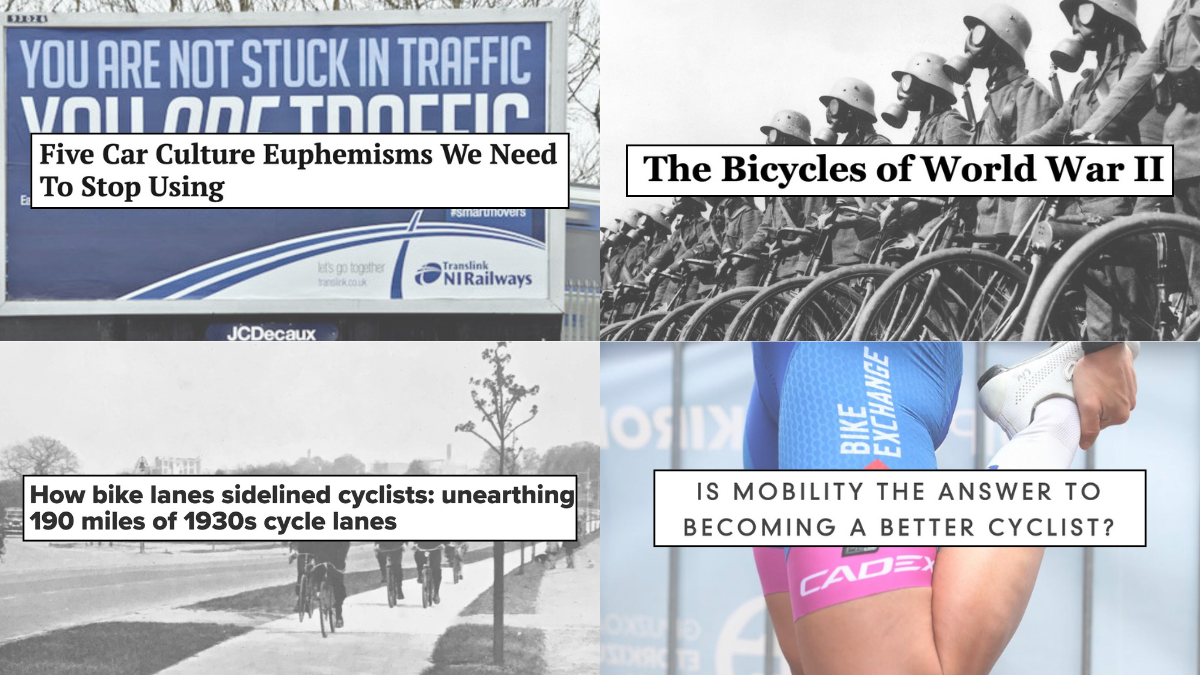
Car culture euphemisms: America’s dysfunctional allegiance to the automobile is hidden in many words and phrases most people use without even thinking twice. (Streetsblog USA)
Potholes and funding holes: This excellent deep dive explains why Portland has fallen so far behind in road maintenance and what we really need to get out of it (not just more money, but a new way to collect it.) (Willamette Week)
Not ambitious enough: “I don’t think we’re being honest with ourselves about how little progress we’re making on greenhouse gasses and climate,” said persistent critic Joe Cortright in this Earth Day article about Portland transportation. (The Oregonian)
Advertisement
War machines: A remarkable set of images that illustrates the diverse utility of bicycles used during World War II. (The Atlantic)
Better bike parking: Leading supplier of urban bike parking solutions, Oonee, has signed its first contract outside of the New York/New Jersey area with a major contract for secure bike parking pods to be installed in Minneapolis. (Oonee)
Final stages: Indoor riding and power meter brand Stages Cycling, which has several employees in a Portland office, appears to have shut down. (Bicycle Retailer & Industry News)
Stretched thin: If you don’t spend time on flexibility as part of your cycling routine, you will never reach your comfort and performance potential on the bike. (Roleur)
Class dynamics: UK transportation journalist Carlton Reid’s amazing history project has helped reveal not just long-forgotten cycle tracks, but the classism that forced bike riders off the roads and led to the car-centric cities we suffer from one century later. (Global Cycling Network)
Practice your slow-riding and waving skills before you get there. (Jonathan Maus/BikePortland)
Ever wondered what it would be like to walk and roll down 82nd Avenue without those pesky drivers getting all up in your business? On Saturday, biking, walking, and transit advocates will unite to create a multimodal float for the annual 82nd Avenue of the Roses Parade.
The float is organized by nonprofit Oregon Walks, a group that’s working closely with the Portland Bureau of Transportation to develop a plan for how best to invest part of the $185 million set aside to upgrade 82nd Avenue from a state highway to a civic corridor.
Volunteers and staff from Oregon Walks will join members of Bike Loud PDX, TriMet, local bike bus participants and others will meet at Eastport Plaza Saturday morning wearing blue and yellow. To spice things up, the Boom Bike will be the center of the float and local blues musician Steve Cheseborough will play a live set as the pedal-powered sound stage rolls down the street.
Advertisement
There’s still plenty of room to join the float. Just show up at the north lot of Eastport Plaza at 9:00 am and look for all the smiling faces wearing blue and yellow. If you go, be ready to ride at parade speeds (very slow!) and put your foot down a lot. I would not recommend SPD cleated shoes. If you plan to attend, please RSVP to Oregon Walks via this online form.
I’d love to join this and cover it, but I’m still in Medford (southern Oregon) taking care of my dad in the hospital. If anyone is able and willing to take photos and share a brief recap, please get in touch at maus.jonathan@gmail.com. Thanks and have fun this weekend.
Written by Portland resident and road safety activist Sarah Risser. You might recall Risser from her work on ghost bike installations or from a recent episode of our podcast. This essay was submitted as part of a community project to keep BikePortland going while BikePortland Editor & Publisher Jonathan Maus is tending to a family medical emergency out of town and unable to work as normal.
It is objectively and indisputably true that people who choose to walk, cycle, scooter, skateboard or negotiate urban roads in a wheelchair are vulnerable to being killed or injured by vehicular traffic. Portland’s roads are dominated by vehicles that are often driven too fast and embody more kinetic energy than any other mode aside from public transit. In Portland, sidewalks and many bike lanes — if they exist at all — merely separate users from vehicles without offering actual protection in the form of physical barriers. In a distracted or angry heartbeat, a driver could veer off the road and onto a sidewalk or bike lane, and the result would be grim. Feeling vulnerable makes traveling outside of a vehicle stressful and less enjoyable at times.
Leaders and advocates should continue to protect the most vulnerable road users with smart infrastructure investments, but they should think equally or more about reducing the danger itself.
But let’s be clear; it’s not the simple act of walking, biking, or otherwise rolling that evokes feelings of vulnerability. I feel powerful and particularly alive when I’m hiking to Angel’s Rest. And walking along the beach at Nehalem Bay or strolling through fields of spring wildflowers at Catherine Creek is peaceful and grounding. Cycling on the Springwater Corridor elicits a deep and pure sense of happiness. Feelings of vulnerability only arise in the presence of danger; there cannot be vulnerable road users (VRUs) without the presence of vehicular traffic. This may seem obvious, but it begs the question: why, when our roads are dominated by vehicles heavy and powerful enough to kill, do we use language that centers attention on the vulnerability of some road users rather than on the danger that threatens all road users?
Advertisement
To be honest, writing this guest article also makes me feel vulnerable. BikePortland readers are smart and involved and I’m pretty sure some will disagree with my take, because the phrase ‘Vulnerable Road User’ is in such widespread use, and it’s accurate even if it’s not very helpful. Also, I think this is a little nerdy compared to all the other guest articles Jonathan’s printed of people biking to fun places and living car-free lives and doing cool things. I hope you’ll hang in there with me.
The widespread use of ‘vulnerable road user’ by road-safety advocates and transportation professionals alike (and yes, I realize the phrase comes from the legal concept of the same name), draws attention to the symptom — that people’s safety is being continually threatened — of our unacceptably dangerous transportation system. This distracts us from focusing on the root cause of our road safety crisis and implies that living with exceedingly high levels of danger on our roads is locked in, something that we are resigned to tolerate forever. This, in turn, prompts leaders, planners, and safety advocates to call for resources to be directed toward managing the symptom at the expense of directly addressing the cause — the real danger — by reducing speed limits, restricting cars access where appropriate, aggressively incentivizing getting cars off the road etc. In no other realm of public life do we tolerate the levels of danger and violence that we see on our roads.
Advertisement
Of less importance and at the risk of being pedantic, the implication that some road users are “vulnerable”, and others are not, diminishes the scope of danger posed by vehicular traffic, which is huge. While being inside of a car makes a person less vulnerable than traveling outside of a vehicle, people inside of vehicles are killed by the tens of thousands in the US every year. In Portland the number of pedestrians killed and the number of people inside of vehicles killed, year to date, is the same. So, while travelling in a Mini Cooper is arguably safer than walking, because the car serves as a shield or armor for its occupants, there is no guarantee that the Mini won’t be hit head on by a Ford F350. This type of thing happens every day. The danger on our roads is so unacceptably high that every road user, to varying degrees, is at risk of death or injury. Every road user is literally vulnerable.
As Dutch traffic safety researcher Marco te Bormmellstroet pointed out in Increase Road Safety or Reduce Road Danger(Traffic Safety Research, March 5, 2024) leaders and advocates should continue to protect the most vulnerable road users with smart infrastructure investments, but they should think equally or more about reducing the danger itself.
When our use of language directs disproportionate focus on potential victims and shies away from calling out ‘Dangerous Road Users’ or ‘Potentially Lethal Vehicles’ we normalize road violence. We’d be more effective if we intentionally used language that centered and called out the danger itself. Let’s continue to demand safe infrastructure for the most vulnerable road users while talking ever louder and more intentionally about reducing the danger that makes them vulnerable. Let’s make it abundantly clear that the level of danger on our roads is unacceptable and that is our most important problem. Without a looming, ever-present, threat of danger there can be no vulnerability.
Need a job? Want a better job? Just looking for a change? You are in the right place. Don’t miss these recent job announcements. Remember, you can always stay abreast of jobs as soon as they get listed by signing up for our Job Listings email.
These are paid listings. And they work! We’ve helped hundreds of people find great jobs and great staff members. If you’d like to post a job on the Portland region’s most popular bike and transportation news platform, you can purchase a listing online for just $100. Learn more at our Job Listings page.
Writing and photography by Abdulrahman Alkhamees. Abe was born and raised in Kuwait, but now lives in in Portland. He’s the founder of The Paperclip.cc, a cycling publication where he shares stories and photos from the saddle. This is his first contribution to BikePortland.
Our Mother the Mountain (OMTM) rides and the community they’ve created are cherished by cyclists throughout our region. They’ve also inspired me to look for new routes and even create my own. When I build routes it feels like I’ve gamified my hobby. Thanks in part to excellent tools like (locally-based!) Ride With GPS, with just a few clicks I have access to detailed maps, previous route attempts, and like-minded riders. Route-building has became an irresistible pursuit and helped me venture far beyond my usual cycling spheres.
To learn more about what goes into making a great route, I tagged along on a recent ride with OMTM founder and master route builder Ron Lewis and observed his methods in real time.
In this post, I’ll use that McMinnville ride as a case study to share what I’ve learned about what it takes to create a great route.
Advertisement
To set the stage, consider this quote from Lewis:
“Great routes rarely come together in one shot. It usually takes a decent amount of trial, error and repeat visits to work out the kinks and establish a satisfying flow. The first visit somewhere is usually just the prelude to more research, exploration, more trial and sometimes more error.”
Following this philosophy, Ron sketched new lines on the map — weaving through familiar territories and uncharted sections of the coastal range. The grand motive behind the ride was to figure out the best lines and flow for an upcoming ride later in the year.
This brings up a great point I learned as I built more routes: Whether driven by curiosity or the allure of historical sites, natural marvels, or a hidden culinary gem, a motive infuses the journey with meaning.
Advertisement
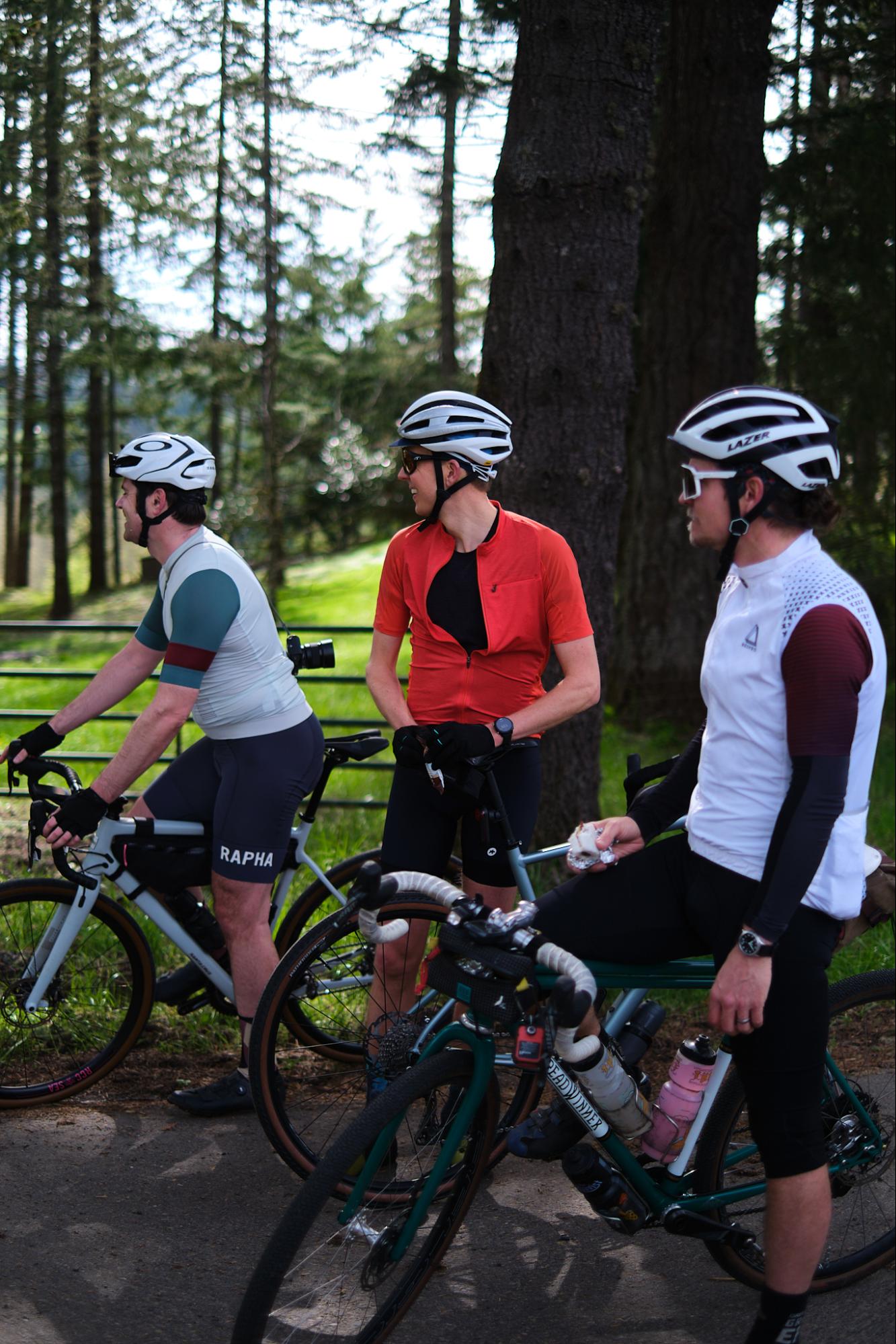
With the motive in check, you need a good group of venture buddies willing to ride and discover along with you. The best buddies are folks who are ready for anything and as curious as you are. Bonus points if your venture buddies are local to the areas you’re heading into, as they might have key intel on recent conditions and can help navigate when Mother Nature throws a curve. Locals not only know the best lines, they also know where to find the best post-ride snacks — another essential element of any great ride.
With the route, motive, companions, and culinary rewards in place, all that remains is the ride itself.
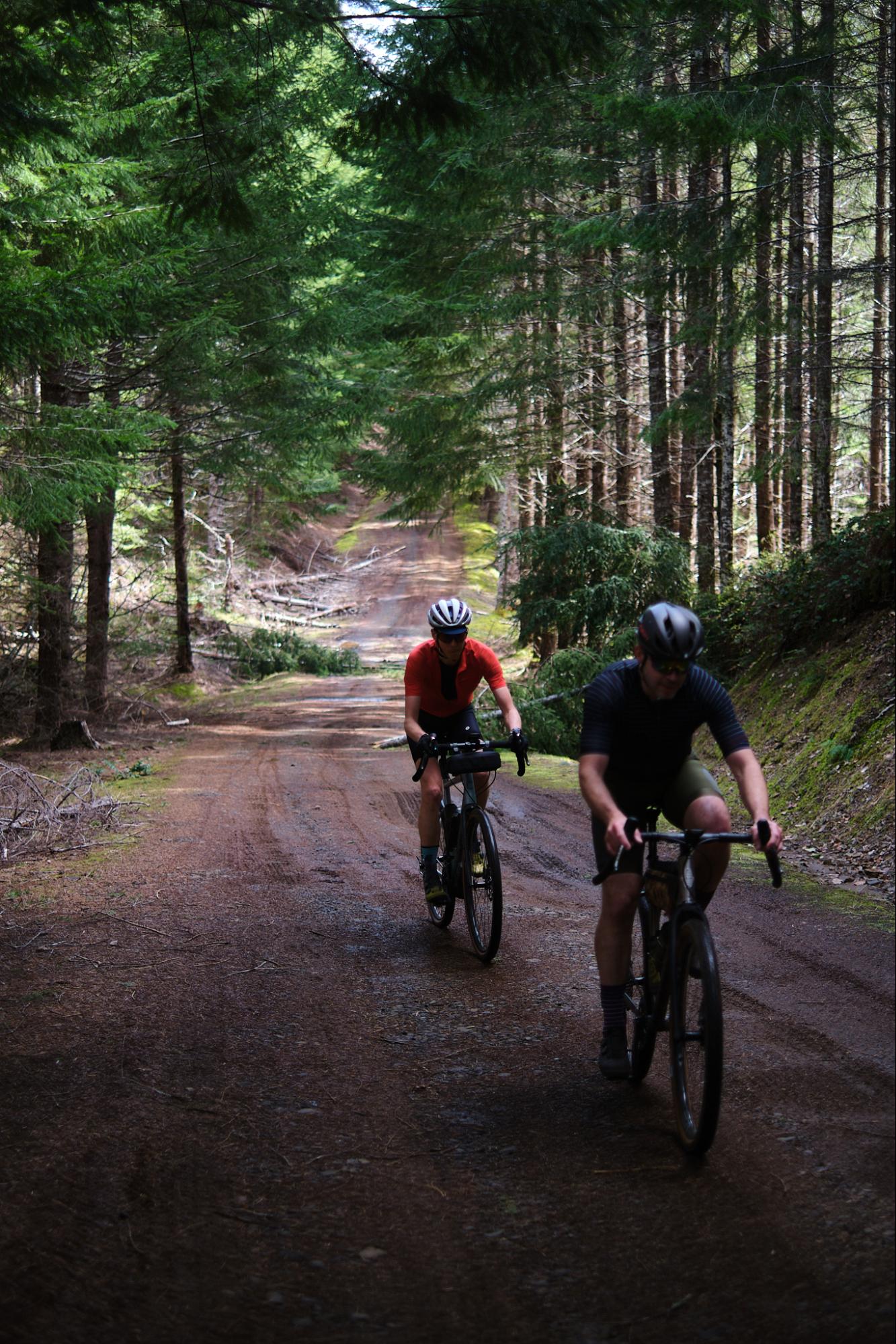
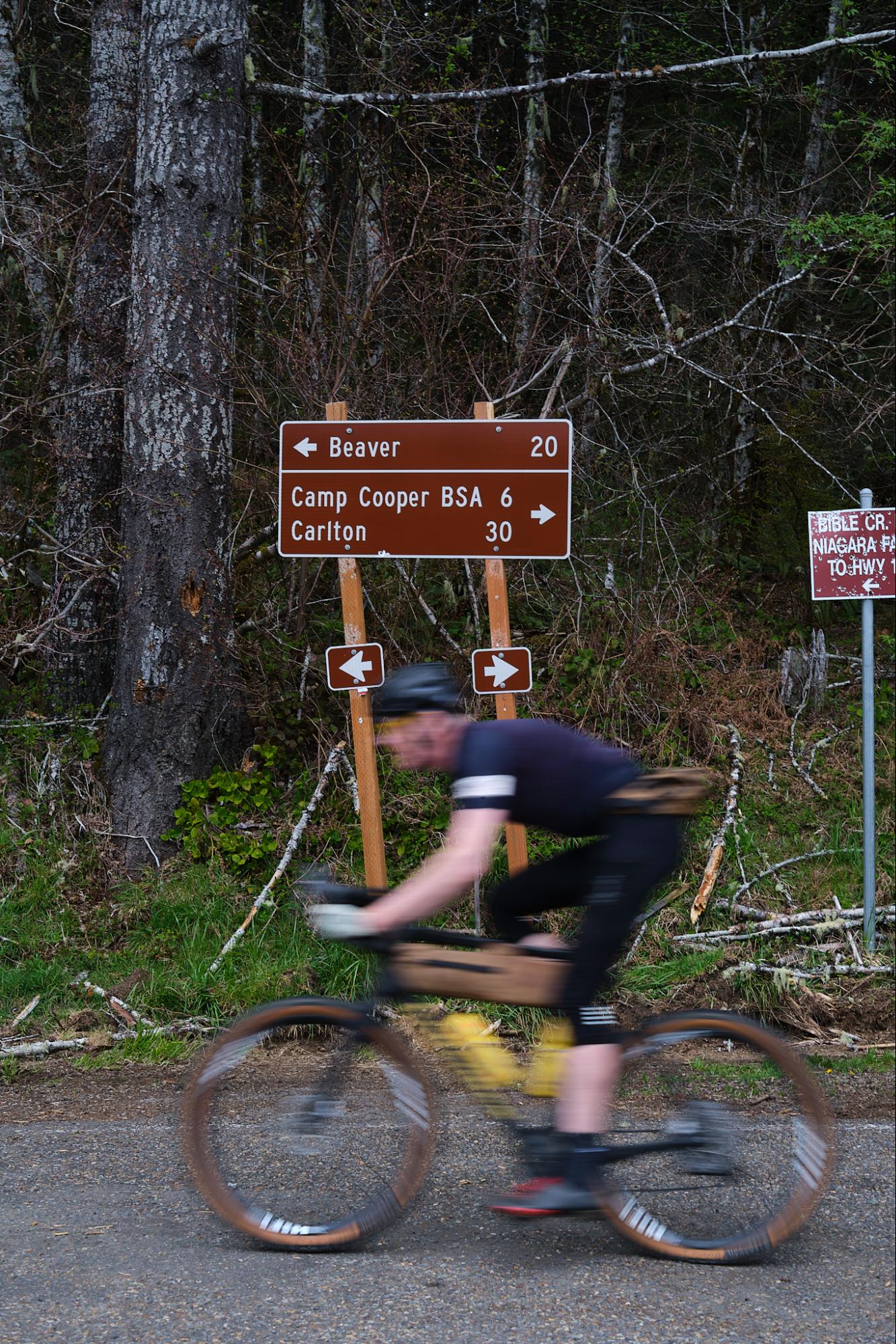
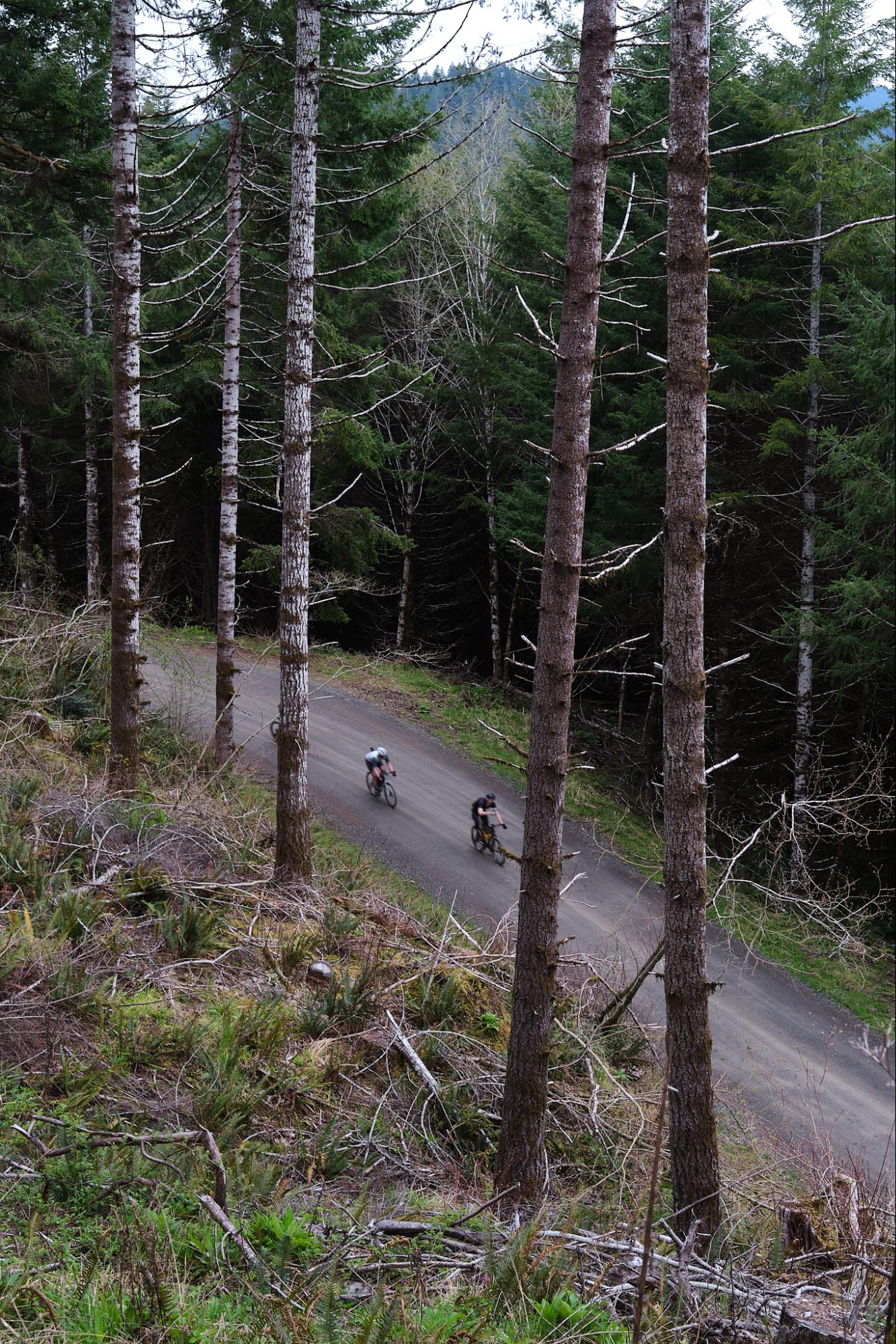
Kitted up, caffeinated, and in the saddle, we followed the lines on our GPS-enabled head units. When riding in McMinnville, the transition from urban to rural to national forest happens quickly. That’s one reason we love riding out there.
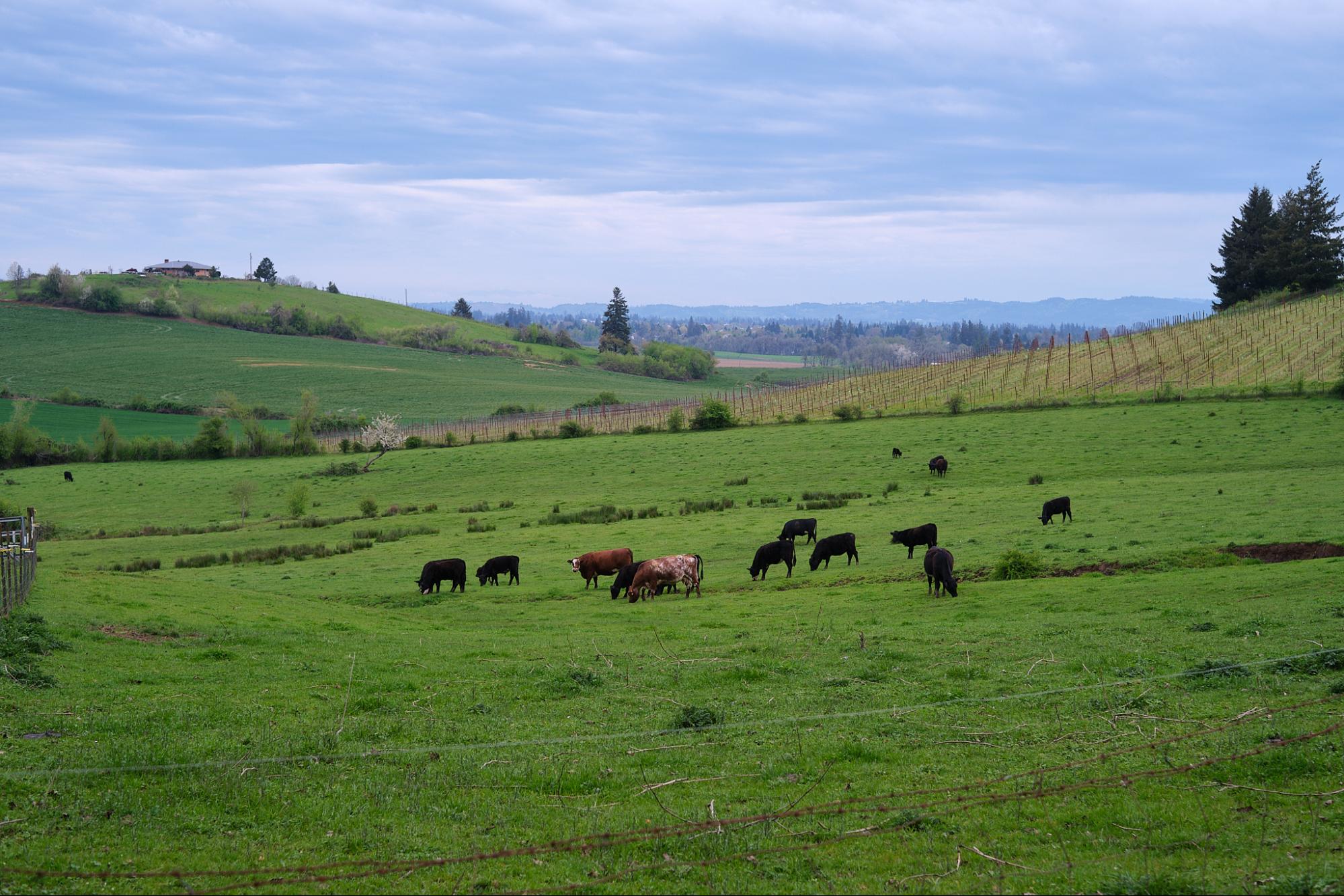
The first section of the route took us up a familiar climb past farmlands and steep hills above the Willamette Valley, eventually opening up to showcase the overlapping hills across the horizon. This brings me to the next point: Things like vistas, viewpoints, and peaks are essential to have on a route as they give you a holistic feel and connection with the area. They also help break the route into manageable chunks — going from an old farmhouse to a viewpoint, to a steep descent, and so on.
In other words, topography sets a flow and rhythm.
Advertisement
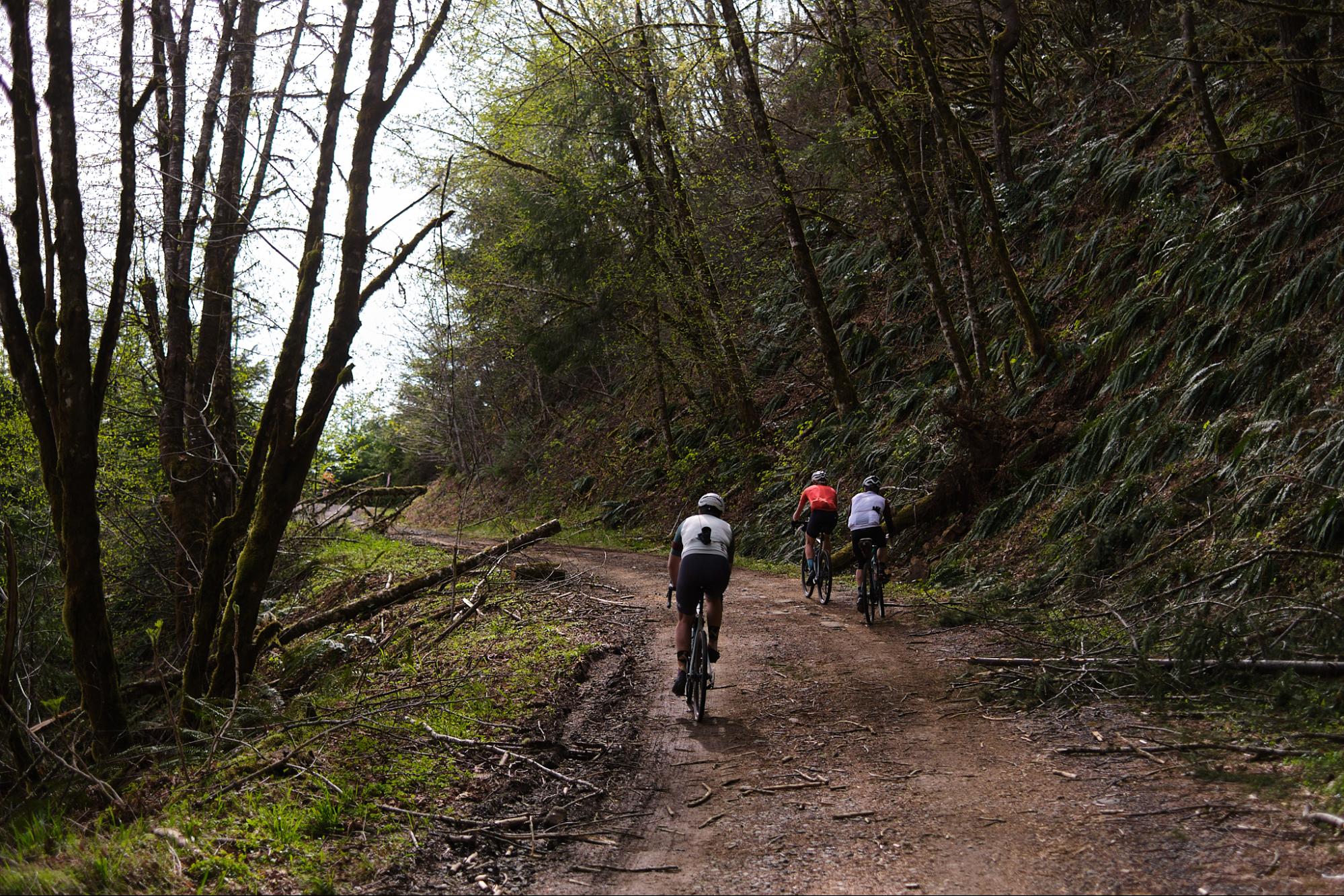
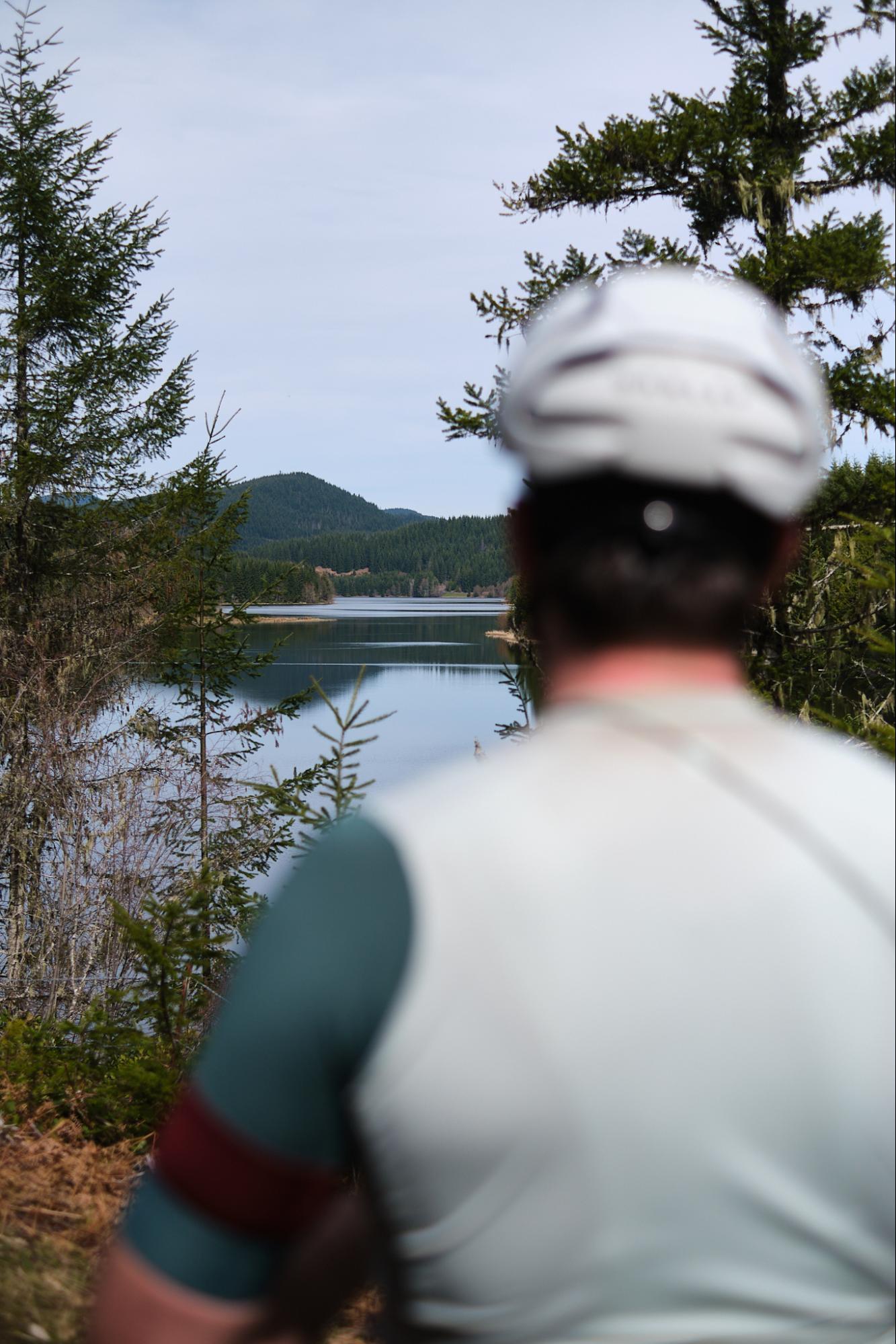
We were back on gravel roads past the pavement and a few twisty descents. We made our way up yet another steep climb towards McGuire Reservoir, right on the other side of where we would end up later in the day. We climbed up Bald Mountain Road towards the day’s first summit just shy of Sheridan Peak.
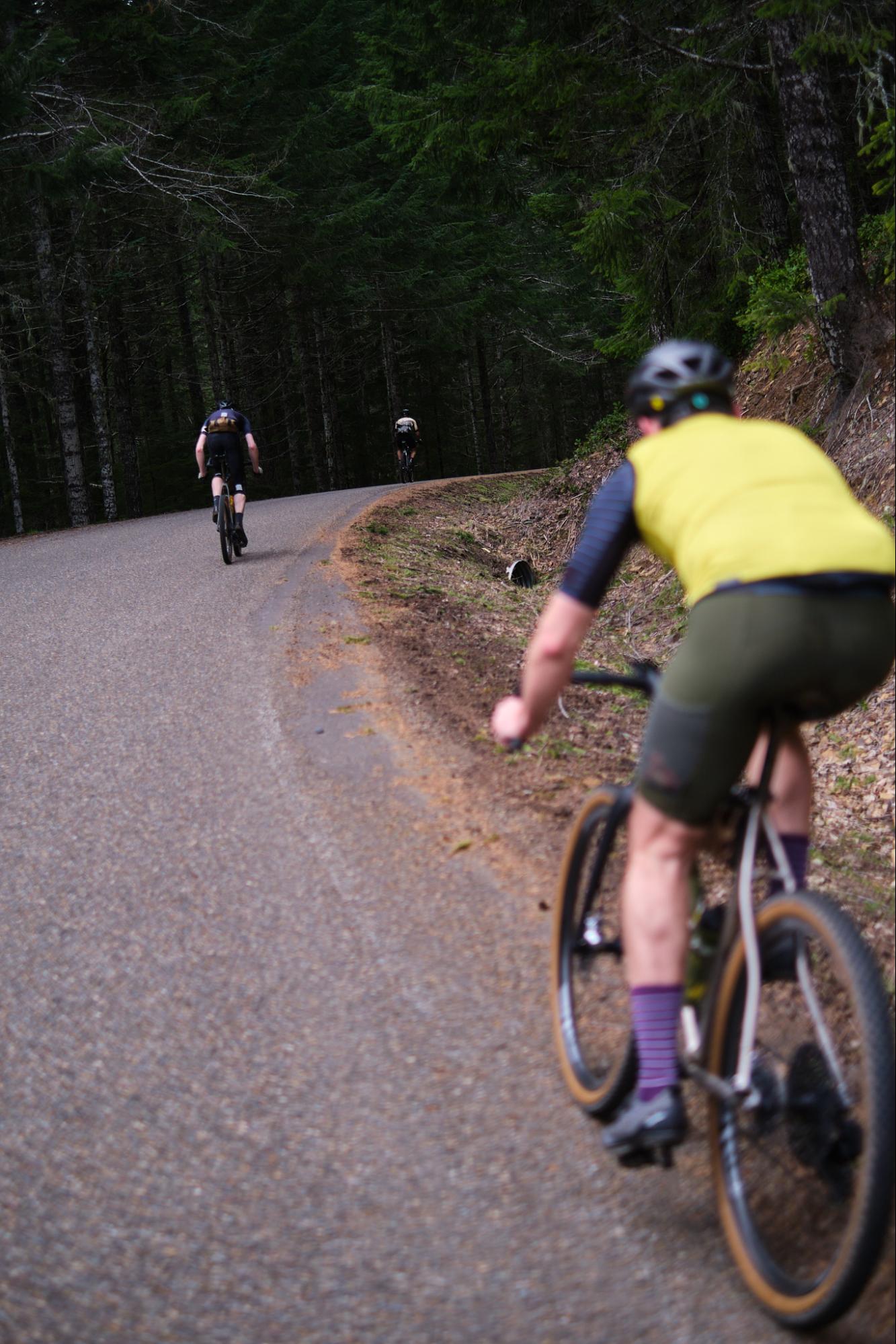
What followed the climbing was a 19-mile descent (with a few uphills) taking advantage of main roads, B roads, and everything in between.
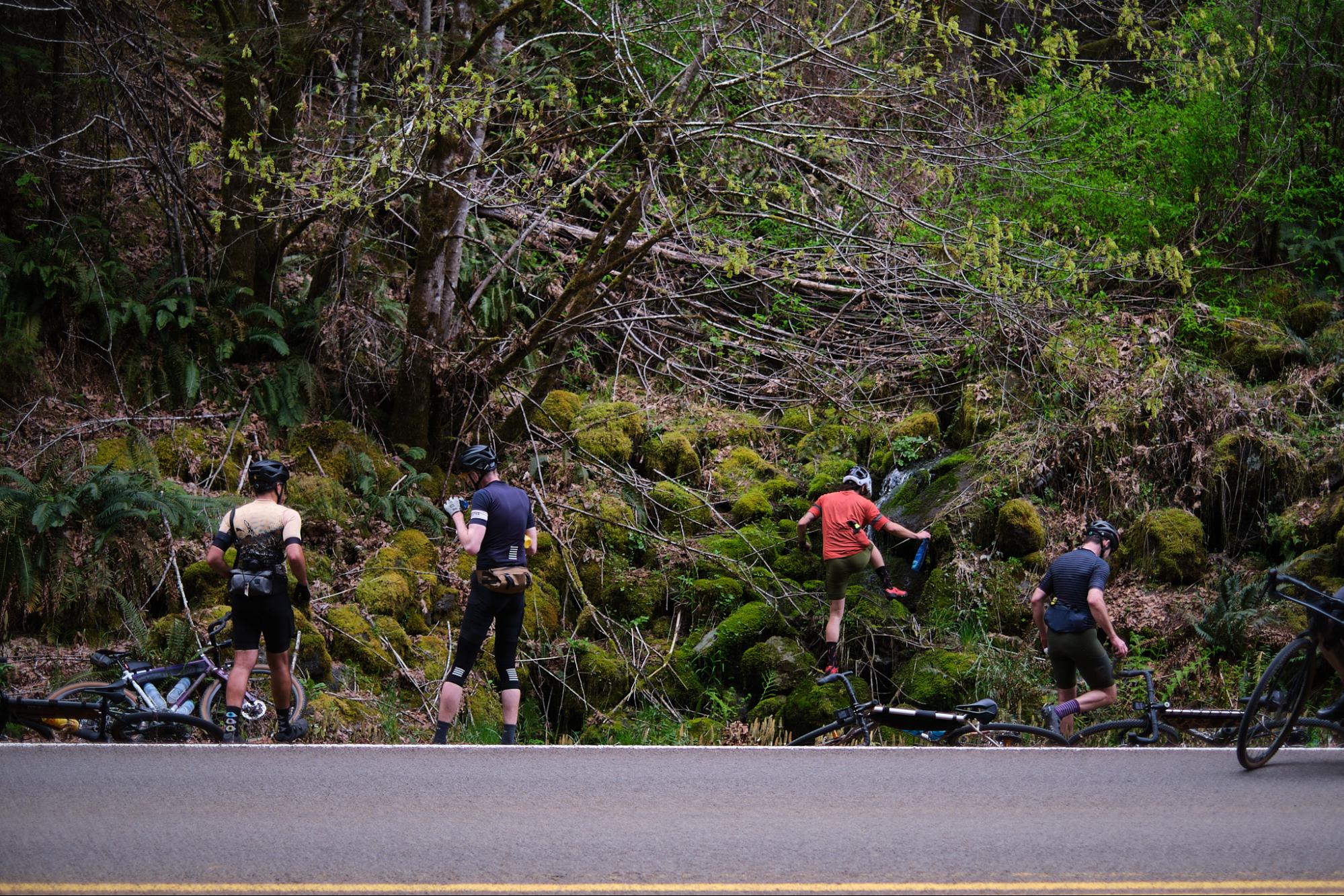
After descending through winding turns and the occasional pothole bounce, we reached the popular and well-traveled Nestucca River Rd (we were drawn by the news of a landslide blocking the road, which meant carfree riding for a bit). This brings up yet another point to consider when building a route: use well-known and well-ridden sections of roads as dependable byways back to the car after a long day, or even as bailout options.
Advertisement
Nestucca River Rd is a gradual climb that cuts through the coastal range back towards the Carlton/McMinnville area. Front-loading the route, especially if you plan on climbing most of the day, helps prepare for the route in terms of fuel and energy, as well as the kind of day you want to have. I tend to enjoy front-loading the climbs and finishing the ride with a descent back to where I started. We had that option in McMinnville with the abundance of paved and gravel roads all around.
Reaching McGuire Reservoir signaled the “smell the barn” part of the ride. What’s left was a well-earned 19-mile descent back into town. As you fly downhill — weaving under tree canopies as the forest compresses and expands — it’s a feeling nothing can match!
After a long day of grinding up inclines, bunny-hopping ruts on B roads, and tucking in on descents, we finished up the ride at a local pizza joint, still buzzing from all the stoke.
Sure, it’s enough to just enjoy the ride. But before a great ride can ridden it must be conceived and created.
— Abe Alkhamees. See more of his work on his website or via Instagram at @thepaperclip.cc. Explore the McMinnville ride featured in this article here.