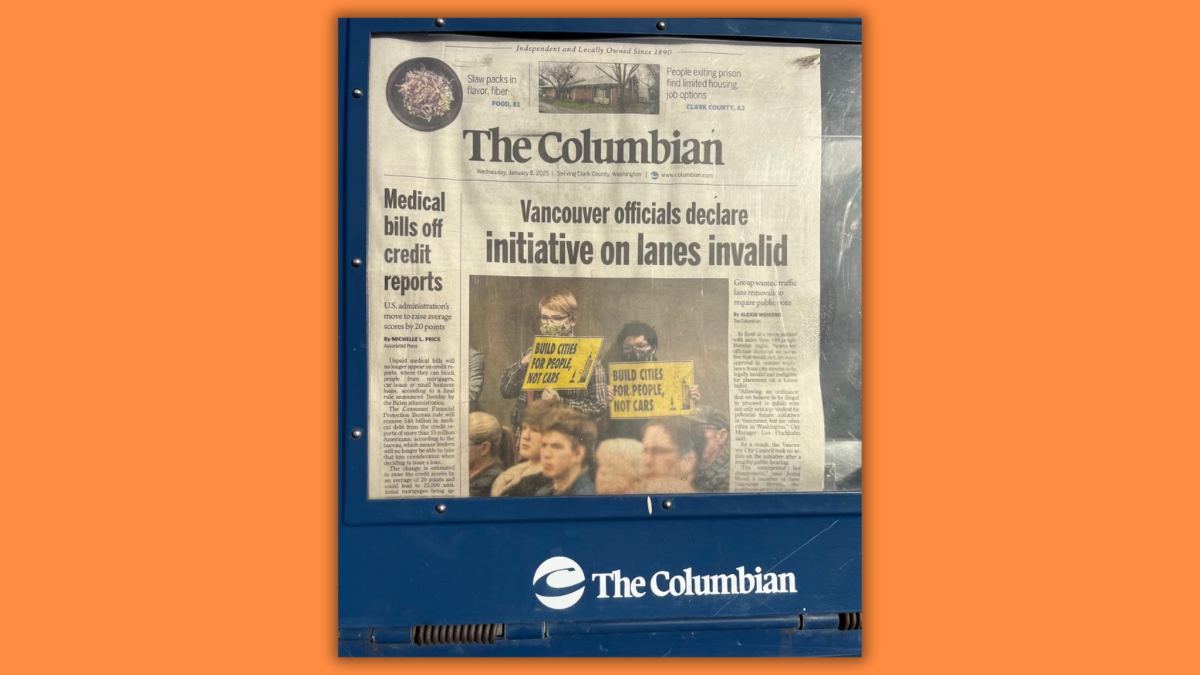
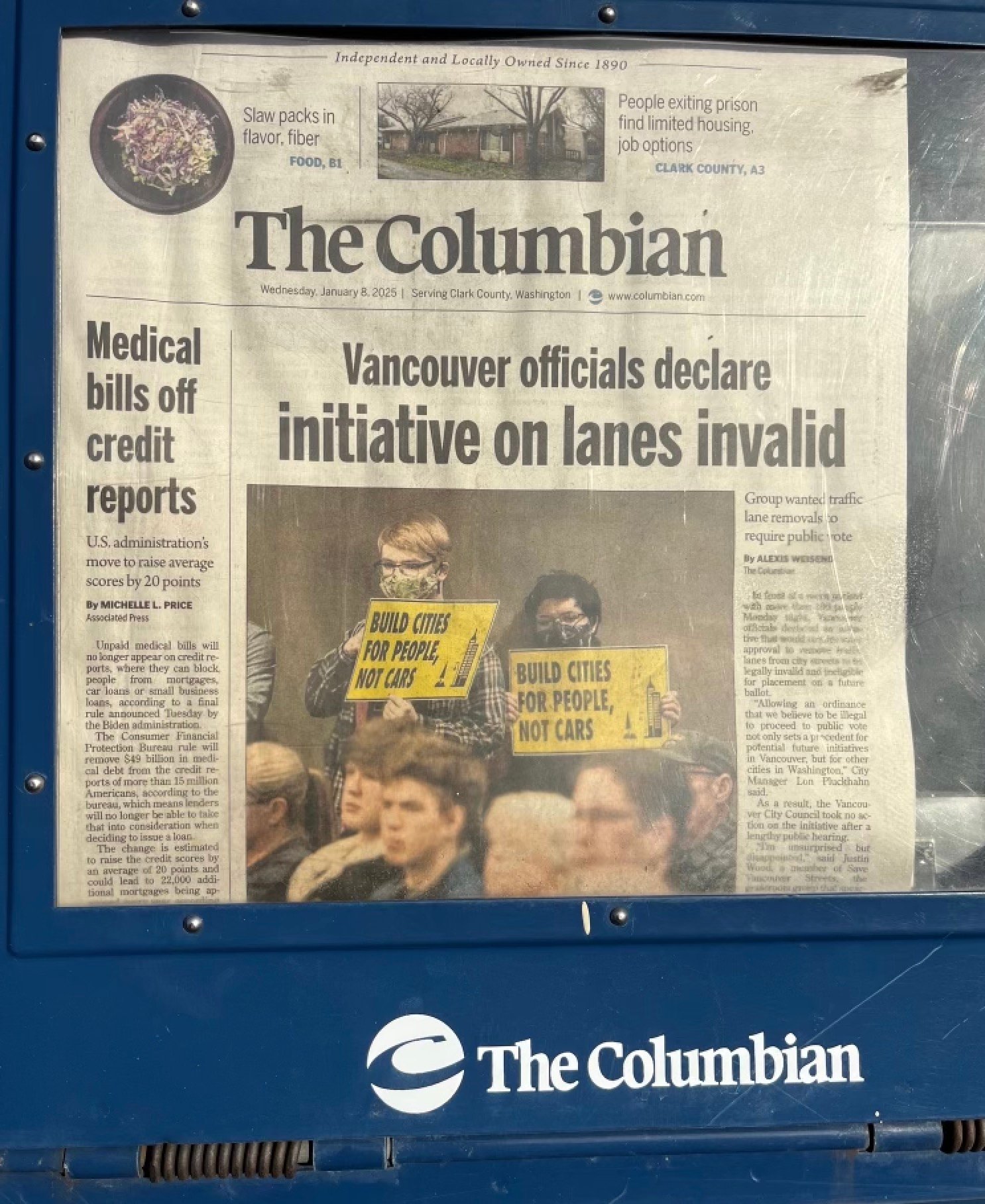
A group of Vancouver, Washington residents who hoped to force a vote of the people prior to any road diet project saw their dreams dashed Monday night. Officials from the City of Vancouver said in their legal opinion, a proposal to change city code supported with over 6,500 signatures is simply illegal and cannot move forward.
“In front of a room packed with more than 100 people Monday night, Vancouver officials declared an initiative that would require voter approval to remove traffic lanes from city streets to be legally invalid and ineligible for placement on a future ballot.
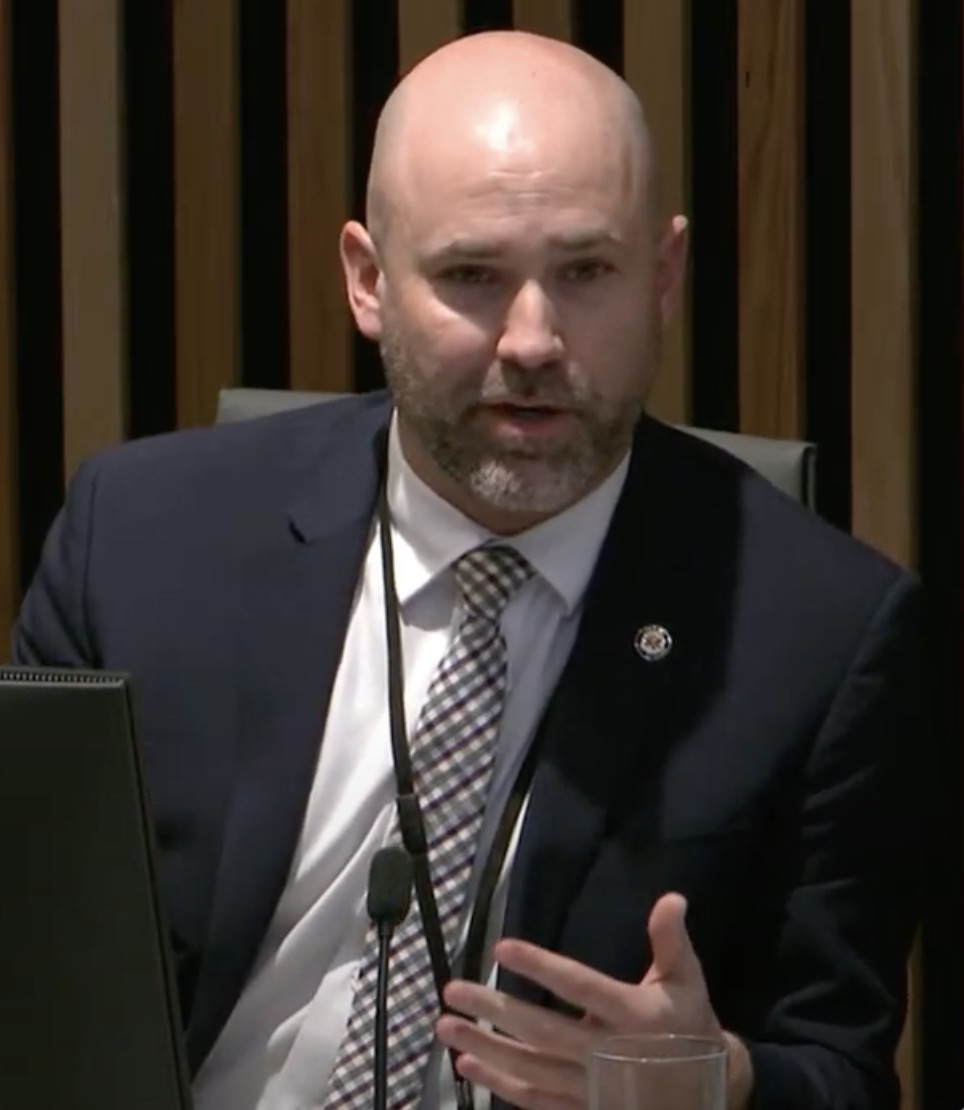
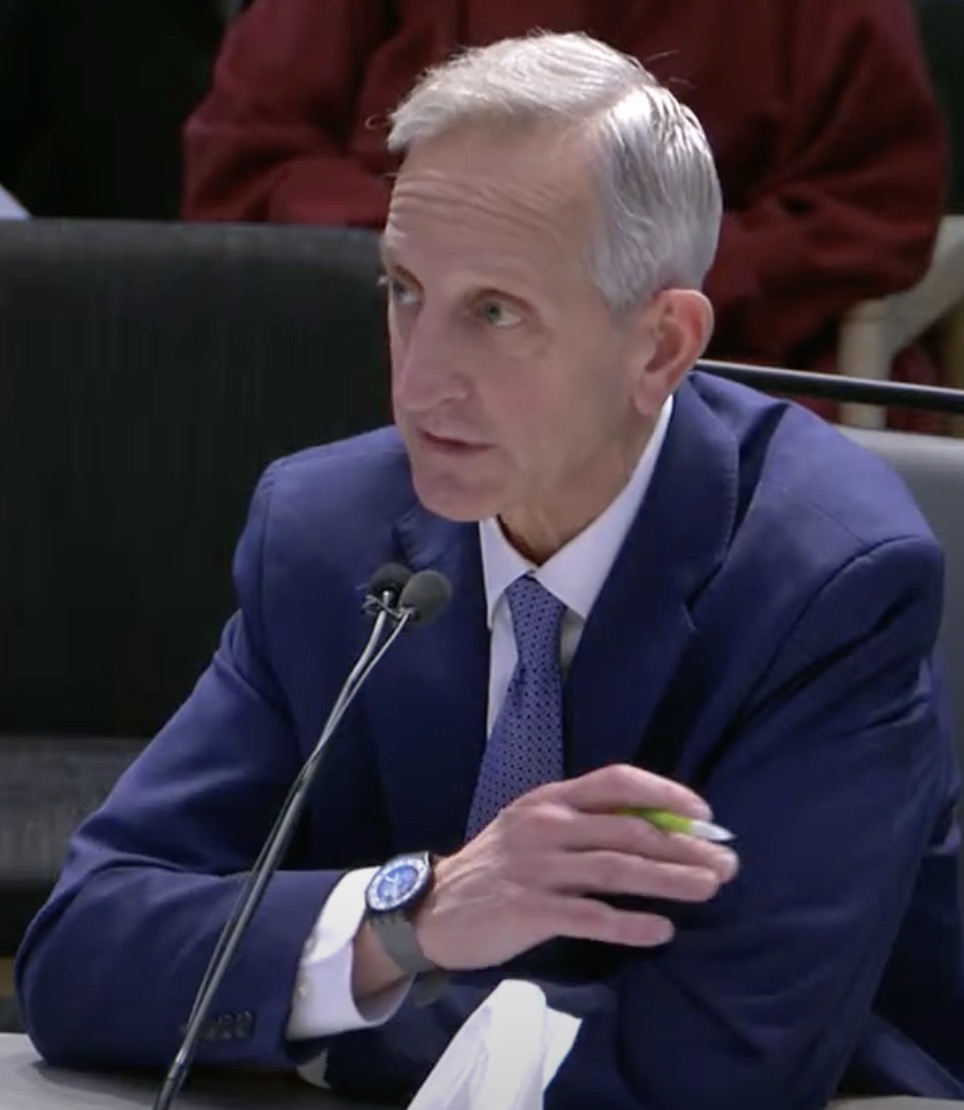
“Allowing an ordinance that we believe to be illegal to proceed to public vote not only sets a precedent for potential future initiatives in Vancouver, but for other cities in Washington,” City Manager Lon Pluckhahn said.
As a result, the Vancouver City Council took no action on the initiative after a lengthy public hearing.”
Advertisement
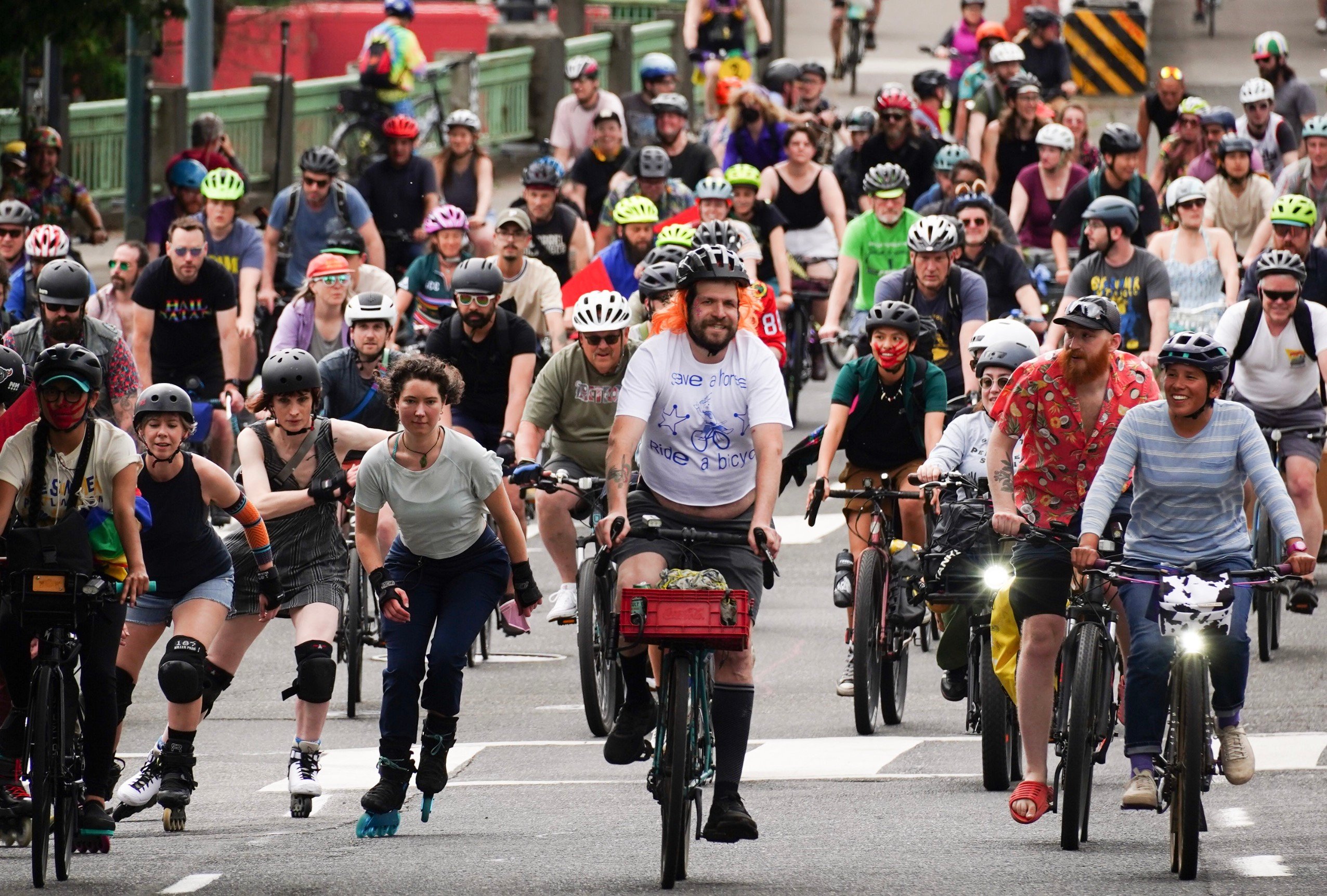
Jason Cromer is an advocate with Cycle Vancouver. He was at the council meeting Monday night and reached out to BikePortland to share his takeaways. He said the vibe in the room was “tense” but that a massive showing against the initiative petition told the story. Of the 57 people who testified on the issue, Cromer estimated about 45 of them spoke against the change in city code that petitioners seek. That huge majority that showed up spoke out in favor bike lanes, transit, safety, and “transportation freedom,” Cromer shared. “Those folks came from varying backgrounds, ages, and ethnicities. Meanwhile, the few that spoke in favor of the initiative made no effort to speak about safety, or transportation freedom, but focused purely on why a lane removal would add a few seconds to their commute.”
Justin Wood, a lead petitioner and representative of Save Vancouver Streets, the grassroots group that pushed the initiative, told BikePortland they plan to move forward with a lawsuit. He said their attorney disagrees with the opinion of the City of Vancouver’s attorney and that they believe their proposal is allowable under state law.
“This was a huge success for the city, and for the people of Vancouver. Whether or not you drive, giving people the freedom to choose how they get around is instrumental for combatting traffic, poverty, and safety issues.”
– Jason Cromer, Cycle Vancouver
“We are planning to move forward [with a lawsuit against the city] in large part to honor the work that the people did to collect the signatures.” Wood said he and other Save Vancouver Streets activists are not opposed to bike lanes. “I just don’t think it is being done right,” he said. “And I don’t think the city is doing a good job engaging and educating what they are doing and the value [of what they are doing].”
While Save Vancouver Streets raises money for the upcoming legal battle, urbanists in Vancouver like Jason Cromer are relieved and buoyed by the show of support at city council. “This was a huge success for the city, and for the people of Vancouver. Whether or not you drive, giving people the freedom to choose how they get around is instrumental for combatting traffic, poverty, and safety issues.”
About Us:
Bike Clark County is a non-profit organization that creates opportunities for empowerment, education, and social change through bicycles and bicycle repair. As a nonprofit, we run a full-service bike shop and repair bicycles donated from the community, and redistribute them through our charitable programs and affordable bike sales. Join us and contribute to a fun, friendly, and welcoming environment for all customers and staff.
General Position Summary
This position is a technical role within the BCC Bike Shop and works to meet service goals and standards. A Bike Mechanic is responsible for conducting mechanical service, including customer bicycle repair, bike refurbishment, and fleet maintenance. This position primarily operates within the Bike Shop location.
As a member of the Bike Shop Staff, Mechanics are also expected to provide support for shop-based programming, including the supporting Community Bench and Volunteer Night. Additionally, Staff in all positions at the Bike Shop may also be responsible for providing support to other off-site programs and events, as needed.
Position Title: Bike Mechanic
Reports To: Service Lead
Position Type: Full-Time / Part-Time
Hours: 32-40 hours per week
Compensation: $19-25 per hour, DOE
Benefits: Annual cost-of-living wage increases, paid vacation (1 week per year), Health Care Stipend ($100 per month), access to industry discounts
Schedule: Regular Shop Hours (Wed-Sat) & Workshop Day (optional)
Location: BCC Bike Shop – 1604 Main Street Vancouver, WA 98660
Position Responsibilities:
Service Workspace
• Thoroughly complete work orders for repairs, assemblies, refurbishments, safety checks and accessory installs for many types of bicycles;
• Complete work in a timely manner to normal industry specifications and high-quality standards;
• Ensure the safe operation of all bikes serviced by BCC;
• Assist in service intake and customer correspondence for related service needs;
• Assist other BCC Staff and customers with technical questions and recommendations;
• Maintain a clean and organized space for Staff and customers;
Retail
• Work in the retail space to provide consultation with customers on new and used bicycles, components and accessories
• Be able to provide education to customers on how to properly maintain their bikes.
• Assess mechanical integrity of used inventory & assist in maintaining organization
• Notify a Shop Lead of service items needing restocking
• Add service items to weekly ordering lists, including special orders, when needed
• Regularly communicate needs for service operations, used parts and bikes to the Shop Leadership Team
How to Apply
Send your resume, and cover letter:
<apply@bikeclarkcounty.org>
Include the following items in the email:
Email Subject Line: “Last Name, First Name – Bike Shop Lead: Service”
Resume (name the file as follows: “Last Name, First Name – Resume”)
Cover Letter (name the file as follows: “Last Name, First Name – Cover Letter”)
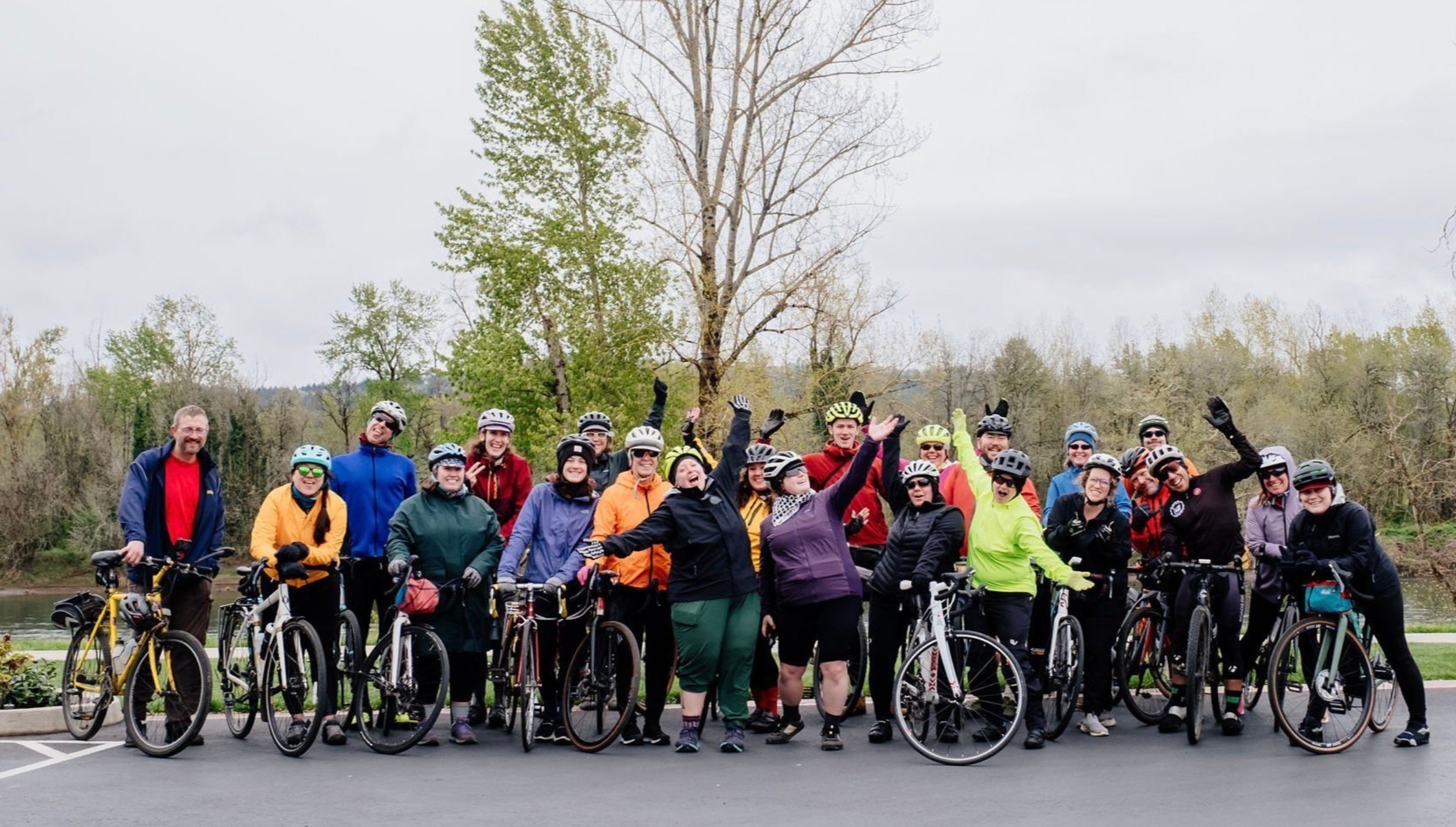
An All Bodies on Bikes group ride in 2022. (Photo: All Bodies on Bikes)
When we talk about building a more inclusive cycling community here in Portland, some folks might think only of race and/or gender. But there’s another tendency in the cycling world that makes lots of folks feel left out: an industry-wide focus on thin bodies. It’s true: the cycling world has a body image problem.
That’s not surprising given that the cycling industry revolves mostly around elite racing, and those who compete and train at the highest levels shed ounces from their bodies with as much fervor as weekend warriors shed ounces from their bikes. It’s also not surprising that there’s a growing pushback led by a nonprofit organization founded in 2021 called “All Bodies on Bikes.”
Almost four years since that group launched with a popular video (that happened to be filmed in Oregon), Portland will finally get a local chapter of its own. All Bodies on Bikes Portland is lead by Colt Seidman, someone who’s own experience with the group speaks to its positive impact.
Advertisement
Seidman told BikePortland they first heard about All Bodies on Bikes a few years ago while recovering from a bike injury. “As a disabled, neurodivergent bicyclist, All Bodies On Bikes helped me feel less alone.” The All Bodies on Bikes community opened a world to Seidman that inspired her to take better care of her body and to become a better cyclist. “As a plus-size queer woman, I really felt a connection with All Bodies On Bikes (ABOB) and wanted to bring this special space to Portland, with some help of some community members.”
ABOB co-founder and Oregonian Kailey Kornhauser and board member Brian Benavente are helping Seidman with the launch. To help kick things off, they’ll host a film screening and group ride on February 9th (location TBD).
For now, roll over to Bike Happy Hour this week (Wednesday, 1/8 from 3:00 to 6:00 pm at Migration Brewing on N Williams Ave) to meet Seidman and learn more about what’s in store. And follow @ABOBPortlandOR on Instagram for updates.
Please nominate comments by replying with “comment of the week” or “COTW” so I can more easily find them via search. Thank you.
This week’s COTW is about the benefits of bicycling that aren’t always front-and-center in debates about policy, projects, and politics — and why those benefits don’t change depending on geography and shouldn’t succumb to the whims of what “makes sense” for an elected official. Reader Lois Leveen’s initial comment touched off a lively set of responses and she followed-up with an explanation of why she believes bicycling is important and worthy of support citywide.
Perhaps my initial comment misled people into thinking that climate crisis is the only measure of public health or public good. It is not. I bike commute 18 miles roundtrip to my job. My workplace is not very easy to get to on public transit and bicycling requires a particular commitment because of our location, even for folks who live closer to our workplace. Yet my colleagues who commute by bike generally describe their commute as one of the best parts of the day. I haven’t heard that from any of those who drive to campus, even though they are the vast majority of my coworkers. Oh, and although it’s anecdotal, I’ve noticed my driving coworkers get sick a lot more than I do. So yes, we need people to understand the emotional, cognitive, psychological, and physical benefits of bicycling and walking. And the social benefits of all of those and of taking public transit. I often interact with friends/acquaintances I happen upon during my commute. I also get to interact pleasantly with strangers just by saying hello as I pass them. Transit riders can have the same social interactions (please spare me the comments about how dangerous public transit is; statistically, drivers of motor vehicles are injuring and killing and threatening way more than people on transit).
And also just a reminder, even with abundant clean energy (which we do not and likely never will have), electric cars, trucks, and SUVs would still pollute, as tires on the road cause devastating pollution and so does the manufacture of electric vehicles. And electric vehicles still injure and kill when driven recklessly; in fact, drivers’ ability to accelerate faster in electric vehicles — even when not driven aggressively — makes them deadlier in collisions. So, um, yeah sorry to disappoint everyone who went sideways in response to my initial comment but public good/public health takes many forms and government should advance rather than undermine it.
They don’t call it the “comedy of the commons”, nor the “romance of the commons”.
I chose this comment because I appreciate when someone stays engaged with a thread and doesn’t just comment-and-run. I also like how Leveen took time to expand on her point and shared her views without going negative on other road users (or readers). As for the contents of her comment, I think given that societal breakdown is the cause of many of our problems, the positive impact of non-driving modes on community (re)building is something that deserves more attention.
There have been some very lively, high-volume comment threads lately. (I’m not sure why.) But with just one moderator (hi!) these days, I am very grateful at how productive and thoughtful almost all of them are. Thanks everyone for helping make BP comments a useful platform and helpful resource.
Remember to reply with “comment of the week” or “COTW” if you want to nominate a comment this coming week.
After a solid break, I’m eager to get back into the swing of things around here. There’s a lot of work to do, so let’s get started by catching up on some of the most notable stories.
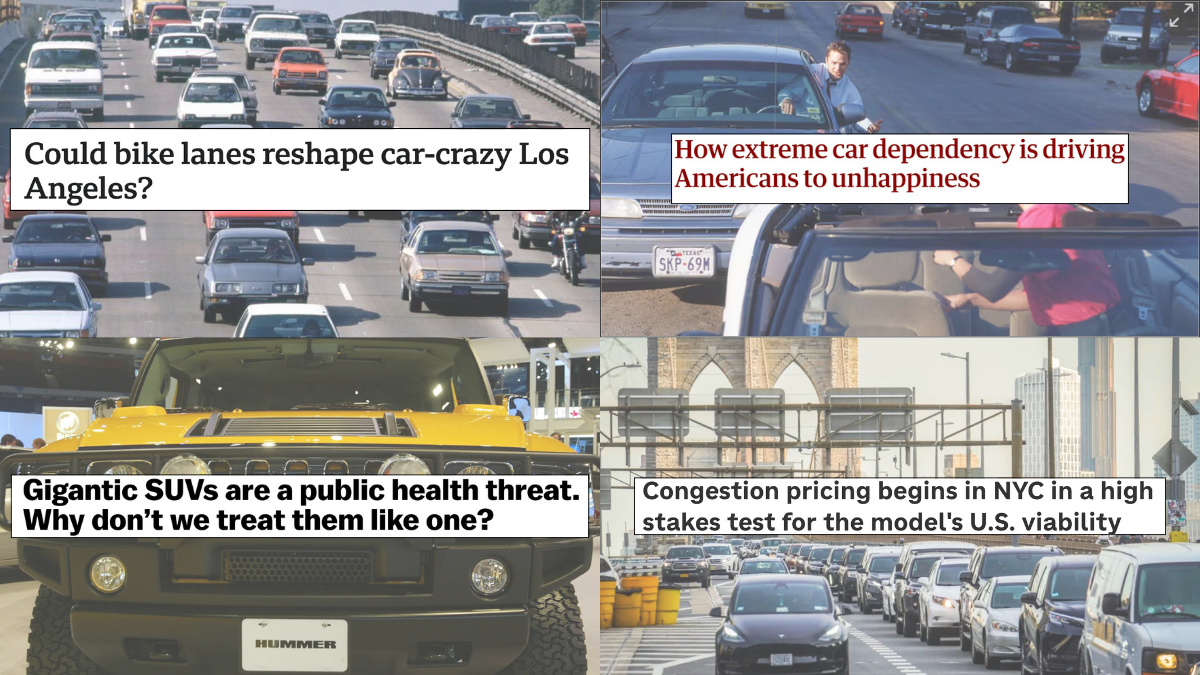
A new era: I think I speak for many city lovers when I say there’s nervous excitement as New York City’s congestion pricing program has finally gotten underway with a $9 per car fee. There are hopes that once the dust settles, charging drivers more to drive in central cities and using the money to fund driving alternatives could spread beyond Manhattan. (NPR)
Zero emissions: I loved reading about these new “zero emissions zones” in cities in The Netherlands because it made me proud that PBOT already has a similar program in place. (Zag Daily)
Cars are the new cigarettes: The deadly rampage of a large truck driver in New Orleans is just the latest thing to ramp up the campaign against “car bloat” and its risks to us all. An expert on the topic thinks the advocacy approach should mimic how we used secondhand smoke to change smoking culture. (Vox)
Two chains: Very cool to see innovation in utility bikes made for use in Africa. Instead of a derailleur, SRAM developed a two-chain, two-speed drivetrain system. Can anyone tell how a rider switches between the two chains? (Cycling Weekly)
Advertisement
Crime trucks: America’s crime truck problem also includes this guy in Dallas, OR who drove into a convenience store and proceeded to steal beer and cigarettes before trying to escape and then eventually came to his senses. (KOIN)
AI doesn’t see you: “It’s classic Silicon Valley hubris to assume Waymo’s ability to predict my behavior supersedes a law designed to protect me,” says a reporter who was not yielded to by a robotaxi. (Washington Post)
Happy times: A new study shows that once someone drives enough to be considered “extremely car-dependent” they also become less happy. (The Guardian)
Olympic effort: The buzz in Los Angeles is how best to manage traffic as the world descends on the car culture capital of America for the 2026 World Cup and 2028 Olympic Games. How about a massive shift toward transit and other non-driving modes like bikes and scooters? This article is a good summary of where those conversations stand. (BBC)
Yes I took some liberties with that headline, but I promise it’s accurate.
Mayor Keith Wilson (seated at bottom left) at council yesterday.
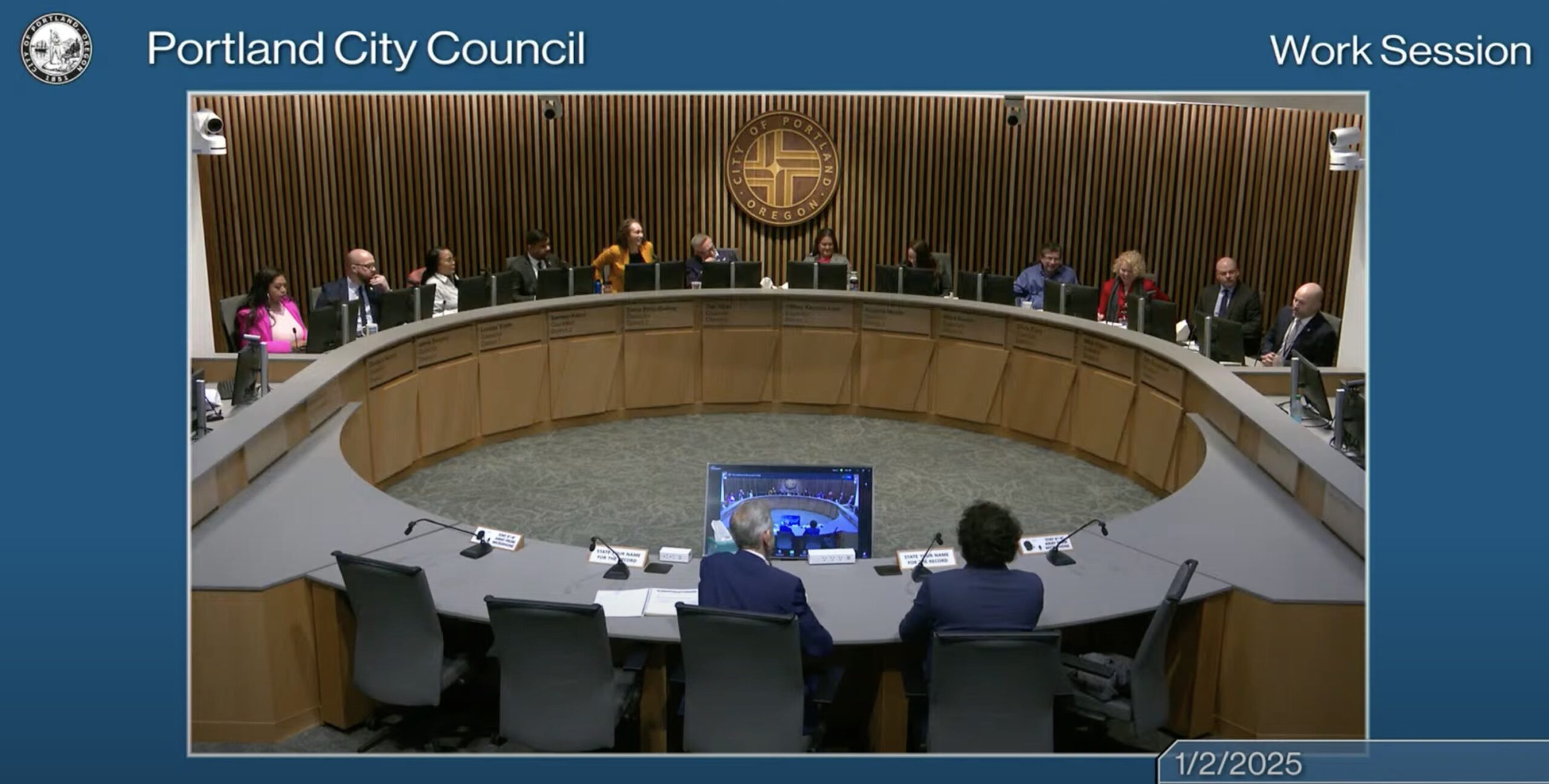
Thursday was the first ever meeting of Portland’s new, 12-member City Council. While all the eyes and headlines were on the general meeting where councilors elected their president and vice president after nine rounds of voting, I found an interesting exchange that happened in a subsequent work session to be just as notable.
First things first.
The first day on the job for the new council and Mayor Keith Wilson was fascinating. Seeing the 12 elected officials seated in an arc inside the remodeled City Hall, right under the seal of the city, made the changes to our form of government very tangible. And when Mayor Wilson finally joined the meeting as a guest — sitting in the same seats used for public and invited testimony instead of as an equal to council members — was a striking contrast to the old way of doing business.
“When you say, ‘It doesn’t make sense that we’re putting a million dollars into this bike lane,’ and it doesn’t make sense to you and your neighbors — you now have voice to bring that idea forward.”
– Keith Wilson, mayor
Advertisement
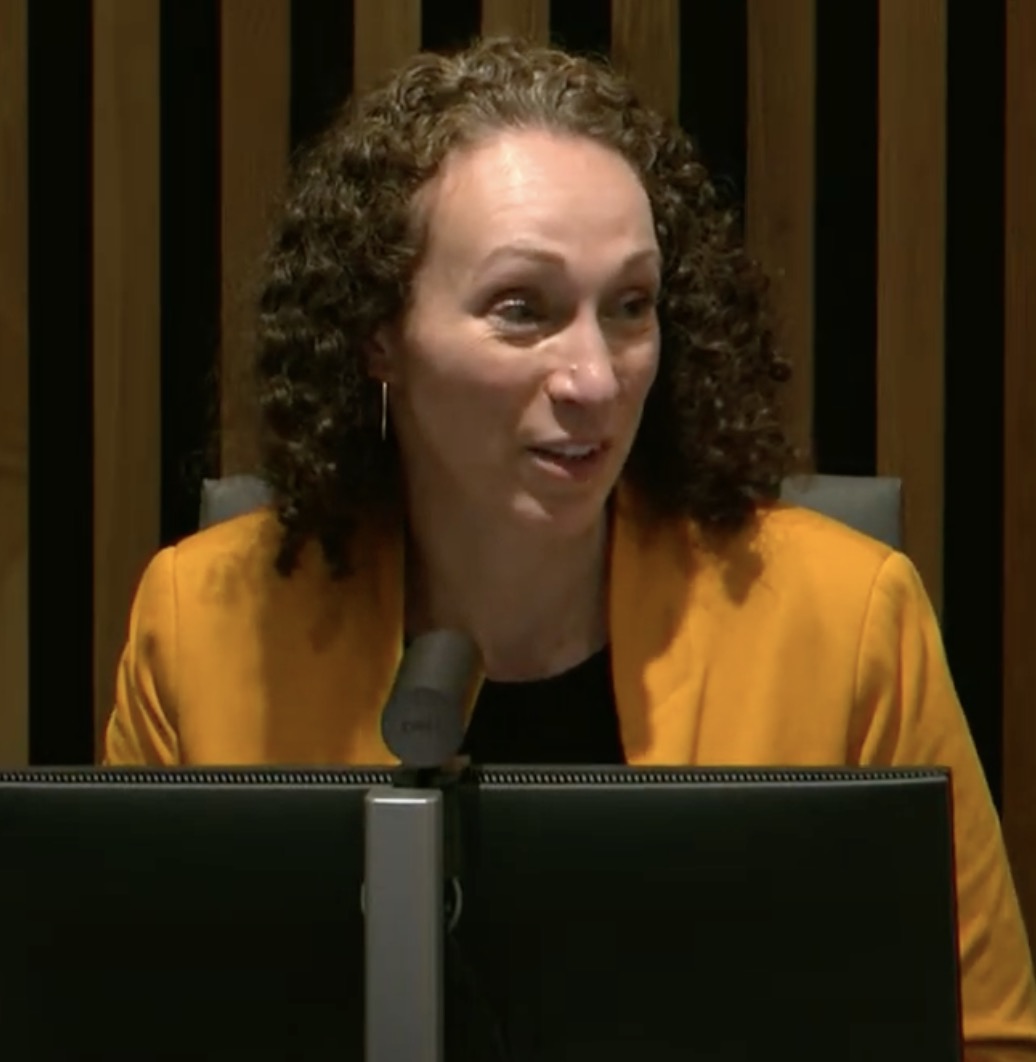
Council President Elana Pirtle-Guiney
Having the mayor seated below council is a symbol of this new council’s independence. During the vote for council president, there was a debate about whether or not the mayor should be able to cast a tiebreaker vote. Council ultimately sided with City Attorney Robert Taylor (and against Councilor Loretta Smith) in keeping the mayor out of it. This set a precedent going forward that the mayor’s tiebreaker is only intended for legislative issues like passing ordinances and adopting policy documents, and that council administration will remain solely in council’s hands.
And that could be an interesting precedent. Because with 12 members of council, we could be in for a lot of tie votes. Yesterday’s 6-6 deadlock was first between Councilor Candace Avalos (D1) and Councilor Olivia Clark (D4). This gave us our first view of what could be future blocs of progressive (for Avalos) and more centrist/moderate council members (for Clark). Then after several 6-6 votes, Councilor Elana Pirtle-Guiney (D2) was thrown into them mix and she eventually earned all the Clark votes. New candidate, same tie. The deadlock was only broken when Councilor Mitch Green (D4) switched his vote from Avalos to Pirtle-Guiney. It was a big surprise, given Green’s progressive credentials (he’s backed by the Democratic Socialists of America) and the fact that he’s the one who initially nominated Avalos for the post. (For a blow-by-blow recap of the vote and meeting, with quotes from Green and other councilors, browse my thread on Bluesky.)
From what I’ve gathered, Pirtle-Guiney is well-liked by folks on all ends of the political spectrum and is seen as a compromise between Avalos and Clark (Clark herself referred to Pirtle-Guiney as a “potential compromise” in my interview with her before the holiday break). Pirtle-Guiney is a political insider with deep roots in the labor movement and was a top aide to former Oregon Governor Kate Brown. Pirtle-Guiney will have former schoolteacher Councilor Tiffany Koyama Lane (D3) by her side as council vice president (Koyama Lane won as the sole nominee with a unanimous vote). These are new roles in Portland city government, so their impact and influence are still unknown.
Advertisement
While there was plenty to glean about councilors’ comments and actions at that marathon first meeting, I want to share a notable exchange from a work session with Mayor Keith Wilson held just after it.
Councilor Eric Zimmerman
Mayor Keith Wilson
The work session was ostensibly a chance for Wilson to update council on his work to set up winter shelters for people who live on the streets. But it was also a chance for the 12 councilors to address him publicly as members of city council for the first time. District 4 (westside and Sellwood) Councilor Eric Zimmerman used the opportunity to plant a flag in the mayor’s mind about local control. Or put another way, protecting his turf (district) from city agencies. Zimmerman made it clear he wants a district perspective on all decisions and I’m sharing this here today because he specifically mentioned implementation of “pedestrian type plazas” and “certain lanes or traffic changes.”
And what made this exchange even more interesting to me is how Mayor Wilson responded.
Zimmerman said he wants district leaders to have sway over how city projects and plans are implemented “on the ground.” “I am not so interested in park development happening in exactly the same in every single neighborhood, or how public plazas happen across the city. I think each geographic area has a say in what works, what their needs are, what they’re interested in,” he said. “And that won’t happen unless we force the issue from a leadership standpoint, that the bureaus understand that there is a district perspective, and there are great things that have worked in in my district that have not worked in others, and vice versa.”
Advertisement
Then to flesh out his point, Zimmerman mentioned specifically, “some public plazas or pedestrian type plazas in downtown,” and “certain lanes or traffic changes.” He made it clear he sees his role as councilor to “being able to move and change those slightly.” “We want to hear from the [city] bureau, but we also want to make sure it makes sense specifically for that area.”
“My constituents and I personally feel that too much has been one-size-fits-all in the City of Portland for a generation… and my support will be much easier to get for everything we do if I know that there’s a lens for the district perspective on everything we do.”
Note that Zimmerman also talked about how he’s committed to partnering on this approach with council members from District 1 (east).
I’ll try to learn more about what projects and/or policies inspired these comments from Zimmerman. But it sounded relatively clear to me he’s thinking specifically about the Portland Bureau of Transportation (PBOT) and his remarks came from a sense of concern that some types of road designs and lane configurations that are used in the central city and inner neighborhoods, might not make sense in further-out places. Was he thinking about road diets in east Portland and bus priority lanes in southwest? Will Zimmerman carry the voices we’ve heard from some Portlanders who oppose projects that make major changes to how lanes and public right-of-way are used?
What further raised my eyebrows was Mayor Wilson’s response. Even though Zimmerman said nothing about bicycles, that’s what Wilson heard.
Advertisement
“To your last point about having perhaps a bike boulevard in a community,” Wilson replied. “When you say, ‘It doesn’t make sense that we’re putting a million dollars into this bike lane,’ and it doesn’t make sense to you and your neighbors — you now have voice to bring that idea forward. And what I commit to every one of you is: if it makes sense, if we think slow, look at the data, talk to the neighbors, find out different best practices, we stop, we pivot, and we act fast upon a change. That’s one thing I’m really looking forward to.”
It’s fascinating to me how Wilson heard concerns about plazas and “certain lanes or traffic changes” and his mind immediately went to being opposed to a bike boulevard.
If that’s what Zimmerman was thinking about, how will he represent voices from his district to lobby for changes to PBOT projects? Will council members from different districts align together to push for big changes in transportation? If so, will they push us forward or backward?
With just one meeting under our belts, it’s hard to know. But consider me intrigued.
The Bike Summer kickoff ride in June was a big highlight of 2024 for bike fun lovers of all stripes. (Photos: Jonathan Maus/BikePortland)
Hello BikePortlanders, welcome to 2025. It’s great to have you here and I’m excited about getting started on our 20th year in business, but first let’s take a look back at 2024.
Before I get into some of the big stories, trends, and my thoughts for the future; here’s a bit about the output from BikePortland over the past 12 months.
It was another very productive year. We posted 621 stories here on the blog, published 21,460 of your comments, uploaded 62 videos to our YouTube channel and shared 52 podcast episodes. We also posted a ton of videos, photos, and updates on our social media channels.
Advertisement
Bike Happy Hour in February 2024.Bike Happy Hour in November 2024.
Bike Happy Hour was another big part of our 2024. We kept the tradition going strong by establishing our event as one of the best and busiest weekly social gatherings in the city. We welcomed almost every city council member and Mayor Keith Wilson to the event and brought city politics directly to the urbanist and livable streets community.
The Shed (the BikePortland HQ) continued to be a place where important conversations take place. I welcomed folks into this space for interviews, brainstorm sessions, met folks virtually during my Friday Office Hours, and of course hung out with Eva Frazier every Friday for our In the Shed podcast. Thanks to support from financial contributors and monthly subscribers, I was able to invest in equipment that allows me to easily share many of these conversations via video on our YouTube channel.
On the news and editorial front, here’s what I’ll remember from 2024.
Advertisement
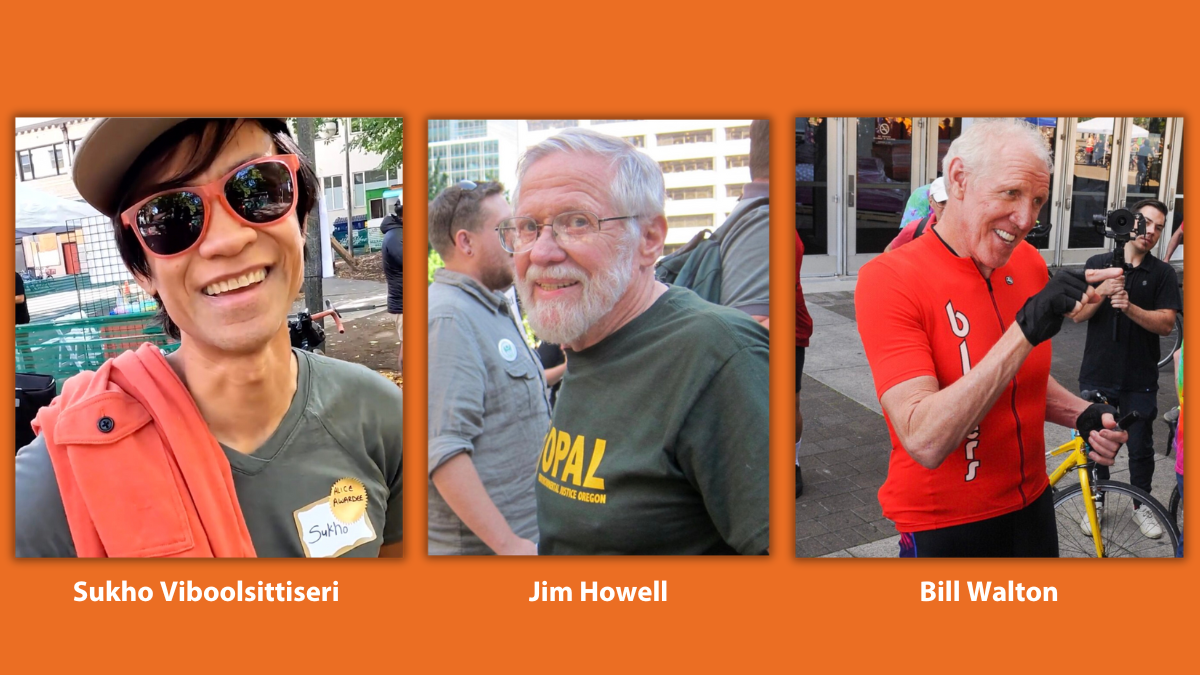
We lost too many really great people. The deaths of veteran activist Jim Howell, bicycling basketball legend Bill Walton, and community organizer Sukho Viboolsittiseri will echo far beyond last year.
And on our streets, we had yet another unacceptably high number of fatal traffic crashes. The Portland Police Bureau says 65 people died while using our roads. I’m still working to verify the exact numbers and victim details, but we know that five of those crashes involved someone riding a bike (one suffered an apparent medical event prior to the crash): David Bentley, 49; Johnathan Henderson, 40; Gad Alon, 74; Sergio D. Hunt, 38; and Damon M. Cousins, 32. I’ve made my thoughts on traffic deaths clear in a recent opinion piece so I won’t go much more into this now. Bottom line: something needs to change and I’ll be here to help build pressure so that it does.
An issue that’s related to deaths on our roads is the disturbing trend that strengthened last year of car drivers using off-street paths and even grassy space in public parks. This abuse of the driving privilege shows how eroded social norms around driving have become and illustrate the vast dysfunction that exists within our driving culture.
On a happier note, the bike bus phenomenon continued to spread far and wide. Even city agencies launched bike buses to help gets staff to work healthier and happier! Local bike bus advocate Sam Balto launched a nonprofit to further push the idea into the mainstream and ended his year dropping his new business card with friends made at the White House in Washington D.C.
Advertisement
While Balto shows us the impact a single activist can have, the continued maturation and growth of BikeLoud PDX demonstrates that there’s no substitute for good, old-fashioned community organizing. The nonprofit BikeLoud reached new heights in 2024 by remaining a steady and positive presence in the community and winning its first major grant that will allow the group to hire its first paid staffer in 2025.
BikeLoud has also emerged as an important platform in and of itself. Their Slack communications channel is the go-to spot for activists who want to learn and get things done. On that note, 2024 was the year some Portlanders officially stopped waiting for the Portland Bureau of Transportation to clean up the damn bike lanes. To a level I’ve never seen before, folks are organizing their own bike lane maintenance. They are modifying equipment, sharing DIY videos, and getting their hands dirty cleaning up leaves, gravel, snow, and whatever else comes our way.
Underlying that DIY trend is a rising dissatisfaction and frustration with PBOT — not just among the safe streets and bike advocacy crowd, but across wide swaths of Portland. PBOT, an agency beleaguered by years of budget cuts, also had a very rough year, PR-wise. They were called out by some candidates during election campaigns for making driving too inconvenient, one guy got so mad at their enforcement cameras he shot at them with a gun, and we even saw the emergence of “anti-PBOT extremists” in Rose City Park. BikeLoud’s lawsuits against PBOT moved forward in 2024, including lengthy depositions last month with top planning staff regarding implementation of the State of Oregon’s “bicycle bill.” Even a visiting bike blogger made a point to criticize PBOT’s progress on building a safe bike network.
Advertisement
And to top things off, PBOT posted an inappropriate and tone-deaf video to social media last month the morning after a 75-year old person was hit and killed by a driver while walking in a crosswalk. PBOT must realize that the gargantuan task of changing traffic culture on a limited budget will be impossible without strong internal morale and the community on their side.
One thing our community usually loves are big projects, and 2024 had its share. TriMet opened a new bike path to the Portland Airport and cut the ribbon on a new path and bridge for bikes into Gateway Green. PBOT made big progress on a coming reconfiguration of NE Broadway and the exciting N Willamette Blvd project came into focus. And while many folks are pleased to see 82nd Avenue finally changing into a more humane, city-run street, there are growing concerns that its lack of bike access and/or a compromised plan for bus service might not let it reach its full potential.
When it comes to potential, Biketown’s year was mixed. The quality and quantity of e-bikes and e-scoters in our bike share system went up, but the lack of bikes overall and the relative cost of rentals still kneecaps what could be a transformative transportation option.
There are reasons for optimism in 2025. Big projects, big funding, and big structural changes should make an impact.
We’ve got a new slate of leaders in Portland and a new form of government to empower them. PBOT no longer has to answer to one politician and should have a more stable trajectory as a result. Our new 12-member council will have some sort of transportation committee, and with a strong “Bike Happy Hour majority” in place we should expect strong awareness of our issues that (hopefully!) translates into priority and good policy.
Advertisement
Oregon House Rep. Khanh Pham at a stop on ODOT’s listening tour for the 2025 transportation package. As a member of the Joint Committee on Transportation, she could play a key role in the upcoming session’s debate about funding.
2025 will be the year of funding for transportation. At the state level, lawmakers and lobbyists (aka advocates) will debate a multi-billion funding package for the Oregon Department of Transportation. Given the work of the Move Oregon Forward coalition (The Street Trust and Oregon Walks are steering committee members), we’re likely to see hundreds of millions dedicated toward biking, walking and transit. And if they try to leave our stuff at the side of the road, we’ve got the very transparent and comprehensive listening tour to fall back on as proof of what the majority of Oregonians want (hint: it’s not larger freeways and highways).
Locally, the Portland Bureau of Planning and Sustainability will launch a long-awaited, $20 million e-bike rebate program in the summer of 2025 and we’ll see the first batch of an expected 6,000 new e-bikes that will hit the streets in the next five years as a result of this investment.
Bringing it back to PBOT… the bureau’s desperate need for new revenue and the new faces on city council tasked with coming up with ways to create it, will be one of the most intriguing things to watch in 2025.
What new revenue source will PBOT (and ODOT for that matter) arrive at?
What impact will the new e-bike rebate program have on our streets?
What type of transit will 82nd Avenue get?
Will Good Samaritans be ready to make a significant dent in bike lane maintenance before spring?
What will the freeway industrial complex demand in compromises for raising fees on driving and funding biking, walking and transit at the state level?
Will Portland City Council follow through on promises to make safer streets a priority?
These are just some of the questions I’ve got at the start of a new years. What are yours?
Allow me to break into the holiday week with the latest interview from The Shed.
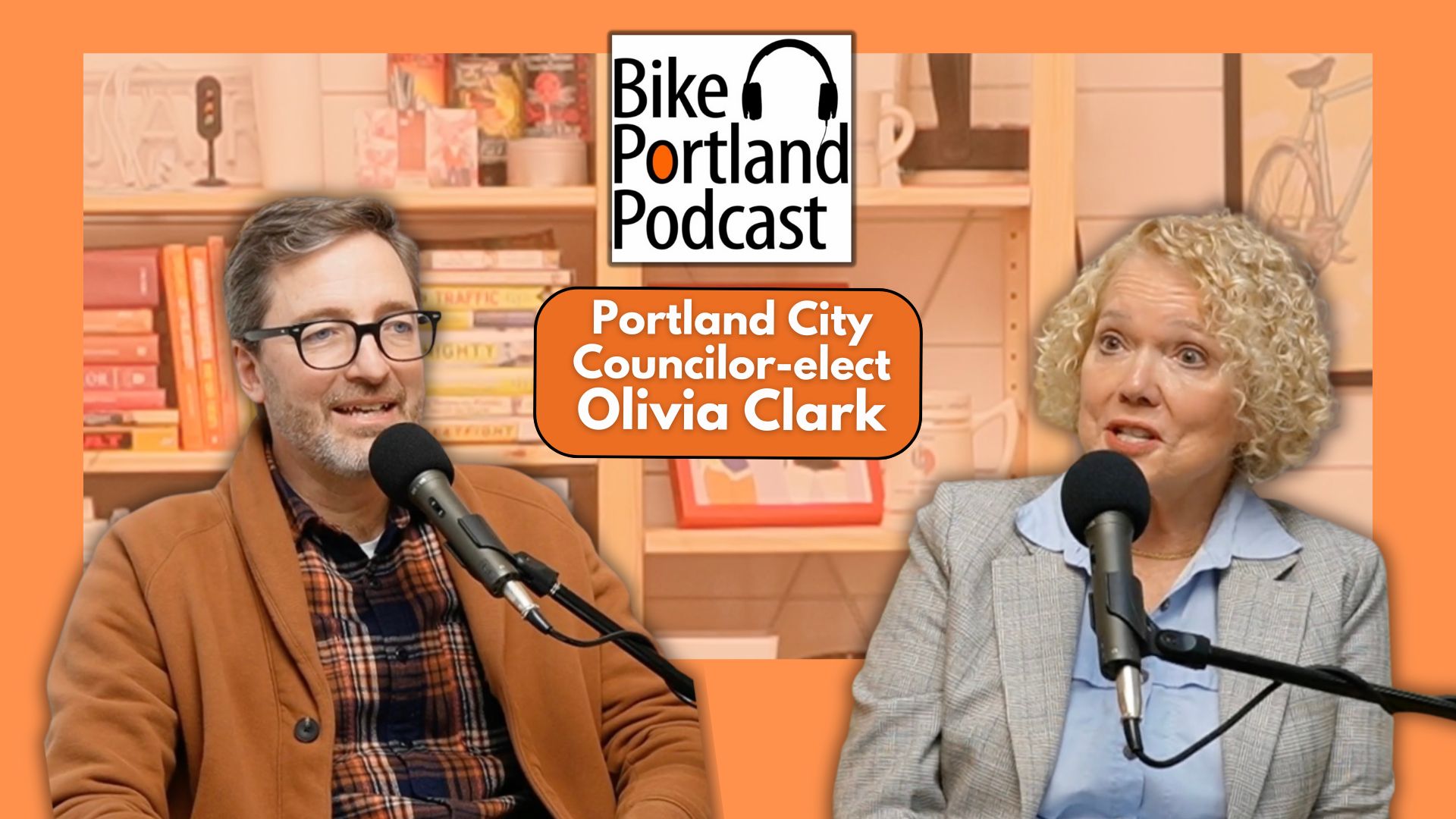
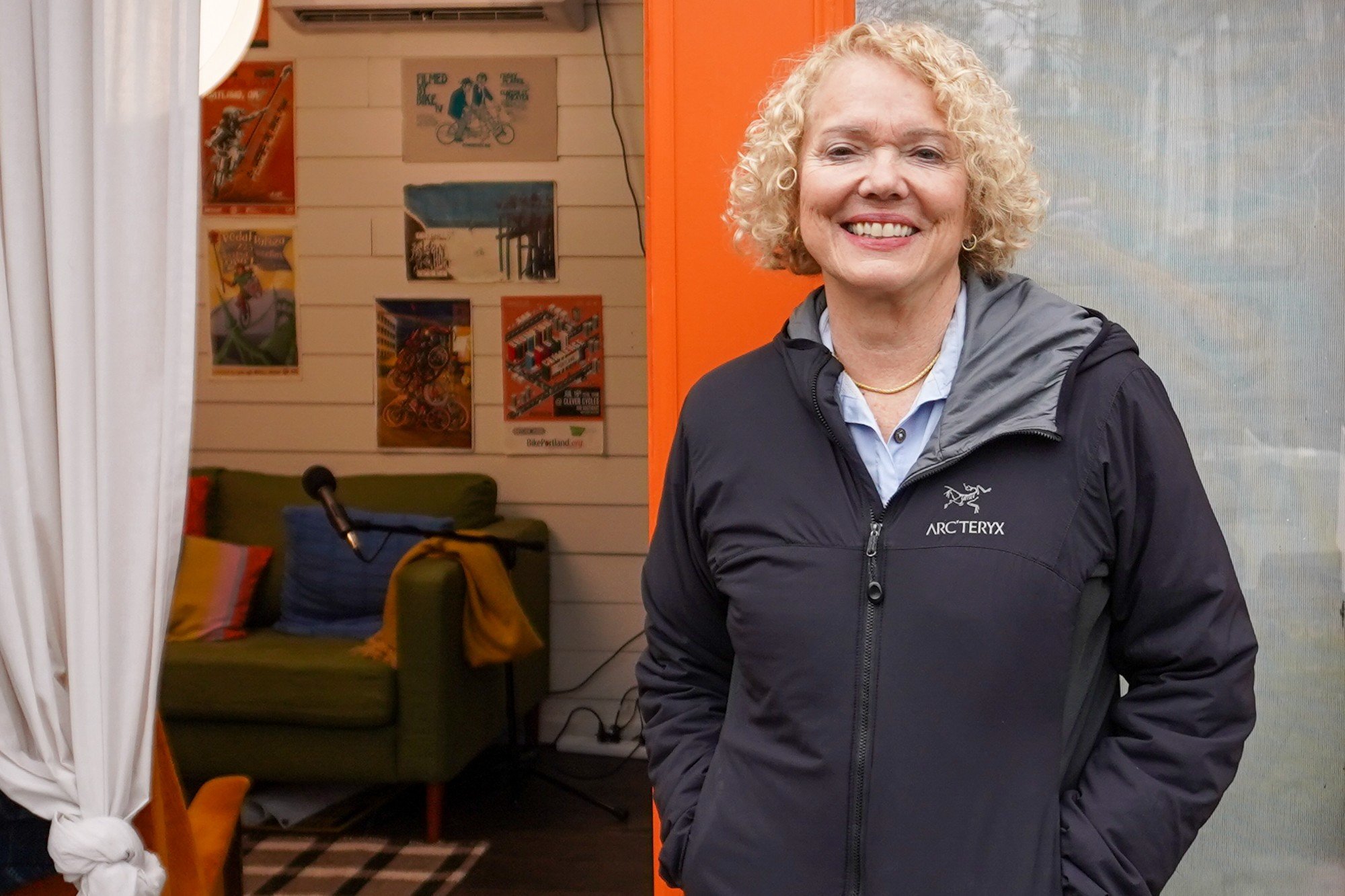
On Friday, Portland City Councilor-Elect Olivia Clark came by and we had a wide-ranging conversation. Clark was the top vote-getter in District 4 (everything west of the Willamette River and a small piece of southeast including Sellwood) and has a good shot at becoming City Council president. Why? Her background is very impressive. It includes: founding of an affordable housing nonprofit in the 1980s that focused on farmworker housing; leading legislative affairs for former Oregon Governor John Kitzhaber; being board chair of Providence Health Systems, then working as TriMet’s executive director of government and public affairs for over two decades. During her time at TriMet her job was to secure funding for the Orange Line MAX project and she’s credited for helping fund the Tilikum Bridge.
(Photo: Jonathan Maus/BikePortland)
During our conversation we talked about how to revitalize downtown Portland, how to approach transportation funding, why Clark thinks Seattle is going to outperform Portland in transit unless we find another stable revenue source, and more.
Find the interview in the players above, on YouTube, or wherever you get your podcasts.
NOTE: Today is my daughter’s birthday (she’s 22 years old) and then we’ve got that Christmas thing on Wednesday. So I’m taking a break this week and likely won’t be posting anything further until Monday, December 30th. Have a great week and I’ll see you on the other side.
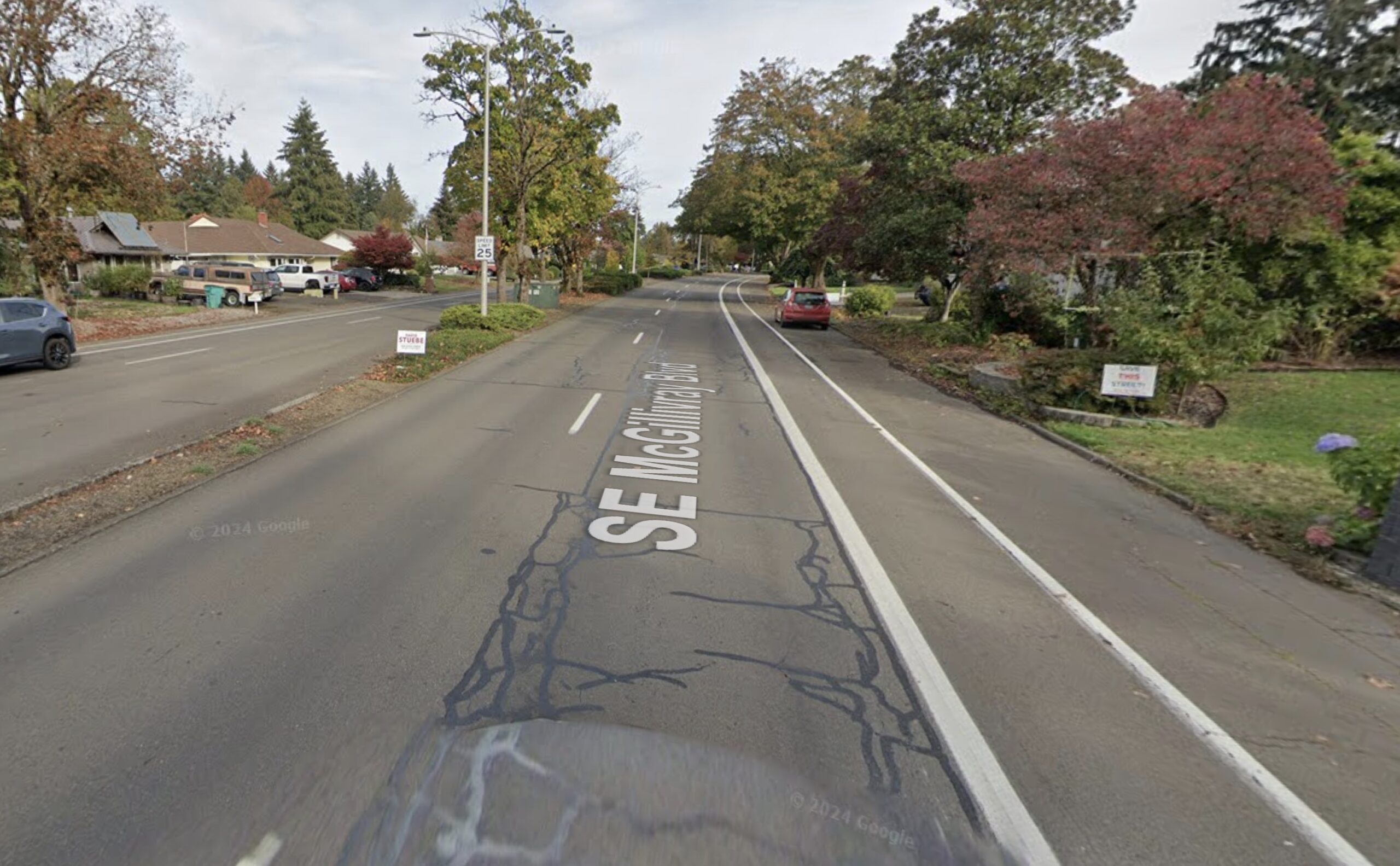
SE McGillivray Boulevard in Vancouver. Note the “Save This Street!” sign on the right.
Transportation politics in Vancouver, Washington got a little more interesting earlier this month when a group of grassroots activists turned in enough signatures to move their “Save our Streets” petition forward. Volunteers gathered 6,572 signatures (2,300 more than they needed) to support their goal to amend Vancouver Municipal Code to state that an election of the people must take place before the city can move forward on any project that reduces driving lanes and converts them to other uses.
“If passed, any changes to traffic lanes that result in the loss of a lane for vehicle travel will have to be approved by a majority of voters in Vancouver,” reports The Columbian.
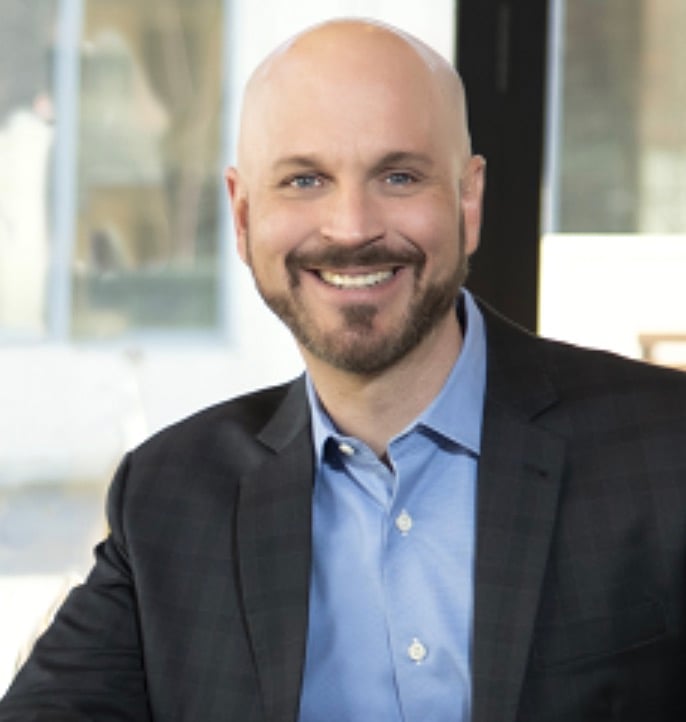
The signatures are a huge victory for “Save Our Streets,” the group behind the petition, but they haven’t accomplished their goal just yet. In an interview with BikePortland today, Vancouver City Council Member Ty Stober explained how the initiative must still be validated by the city clerk. Whether it ultimately passes or not, Stober said the entire episode illustrates how difficult it can be to accept change.
Advertisement
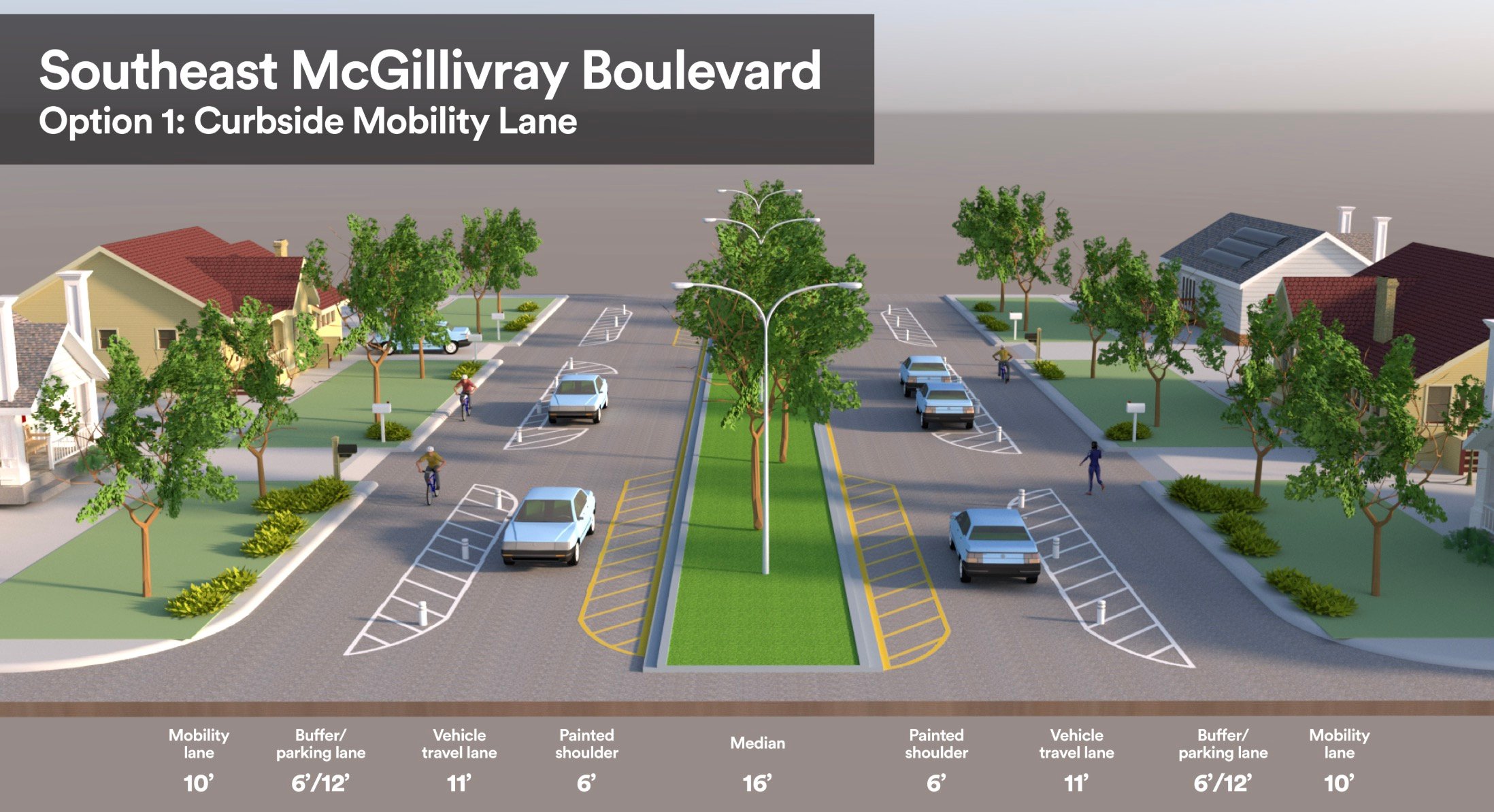
City of Vancouver Design Option #1.
Save our Streets has pushed back on the City of Vancouver’s Complete Streets Program, which includes major road redesign projects that look to improve safety and add protected “mobility lanes” (how Vancouver smartly refers to bike lanes), reduce speeds, and improve safety. One subject of the group’s ire is a project on SE McGillivray Boulevard set to begin next year. The preferred design (above) would change the street from its current profile of six lanes for car users (four for driving, two for parking) and one narrow, unprotected bike lane; to two lanes for drivers, fewer parking spaces, and a 10-foot wide mobility lane buffered from traffic by a parking lane buffer.
That more modern, safer design is what “Save Our Streets” and their supporters want to save Vancouverites from.
One of the chief petitioners, Laurie Arndt, who’s lived a few blocks off McGillivray for 46 years, told me today she’s worried that the city’s design will lead to more dangerous driving. Not less. She says having only one lane for drivers isn’t enough. “People are very frustrated when they can’t go fast and it’s just going to cause a lot of congestion and frustration, and people will veer out of the areas that they are supposed to drive in, and they will create hazards.” Arndt also worries that when school buses let students out in the travel lane, frustrated drivers will veer into the bike lane and hit them.
The way Arndt puts it, filing the petition was a last ditch effort to get the City of Vancouver to listen to them. And she said her and her husband (who helped gather signatures with her) don’t want to take the bus and are too old to ride bikes.
Here’s the language Arndt and Save Our Streets want added to city code (and that was attached to the signature-gathering initiative form):
The City of Vancouver shall not construct or contract for the construction of any project which results in the conversion of a lane or lanes of vehicle travel on any existing principal arterial, minor arterial, collector, industrial or access street to pedestrian, bicycling, mobility, or transit use without approval by a majority of voters in the City of Vancouver in an election for the project.
This provision will apply to any applicable project approved after its enactment or to any applicable project previously approved for construction by the City in which:
1. the contract has not been awarded pursuant to a competitive bidding process or
2. funding has not been appropriated.
Advertisement
Vancouver City Council member Ty Stober.
The Save Our Streets website offers a litany of concerns and questions about the project and states, “This is not anti bike, pedestrian or mobility lanes.” Instead of eliminating two driving lanes, they say the city should find space by narrowing the center median, and put the mobility lane on just one side of the street. Stober said he’s also aware that many Save Our Streets supporters believe increased police enforcement would accomplish the city’s goals.
The group’s main charge is a claim that changes planned for McGillivray and other streets, “are being done without community involvement.” That claim doesn’t stand up to scrutiny however, because the project spent two years in development and went through a wide range of community outreach. The City of Vancouver received 1,300 survey responses, held walk and bike audits, hosted an open house attended by 120 people (including some folks from Save Our Streets), and mailed three project flyers to over 8,000 households.
Those facts aside, Arndt says the outreach process was a sham, with city officials sharing surveys with predetermined outcomes. Ultimately, Arndt feels like the city’s plan just won’t work in her neighborhood. “Vancouver was designed as a suburb,” she said. “We understand and support busses in the city, downtown, and those kind of things. But it’s different out here in the suburbs. It just wasn’t built like that.”
Stober, a veteran of transportation project controversies now in his third term on council, is sanguine.
He chalks up the controversy to tension in the community that has built up over time. “We all want great things for our city and change is stressful,” he shared with me today. Stober also says now that the City of Vancouver’s major transportation projects are moving out of the older, more progressive-leaning, closer-in neighborhoods and into the suburbs, they are being met with stiffer opposition. He says many people who live in the Cascade Park and neighborhoods surrounding McGillivray are former Portlanders who moved to the area specifically for its suburban appeal when Interstate 205 was built in the 1980s.
“One of the messages we hear is, ‘I don’t want to live in Portland. I don’t want this to feel like Portland.'”
Advertisement
Vancouver City Council doesn’t want their city to feel like Portland either. Stober said they’re just trying to achieve the vision laid out in their adopted plans. “We want to create a transportation infrastructure that promotes community. We want transportation infrastructure that supports some of our more vulnerable people,” he continued. “Our elderly seniors who no longer have the ability to drive or to go outside and feel shut-in, giving our kids the opportunity to be able to play outside. We’re making decisions not just for today. We’re making decisions for generations to come.”
The next big decision the city will make will come on January 6th. That’s when the Vancouver city auditor will issue a final report on the validity of the signatures and the initiative language. If the auditor finds both are valid, the vote to enact the code changes would be in November 2025. If the initiative language is ruled to be illegal or otherwise invalid, the petitioners could sue the city. Another avenue might be a court stepping in and letting the vote happen. Then if it passes, Vancouver City Council could file suit against the petitioners to block it.
Either way, the legal process will take a while to work itself out. Meanwhile, the City of Vancouver is moving forward with the SE McGillivray project and plans to break ground this coming spring.
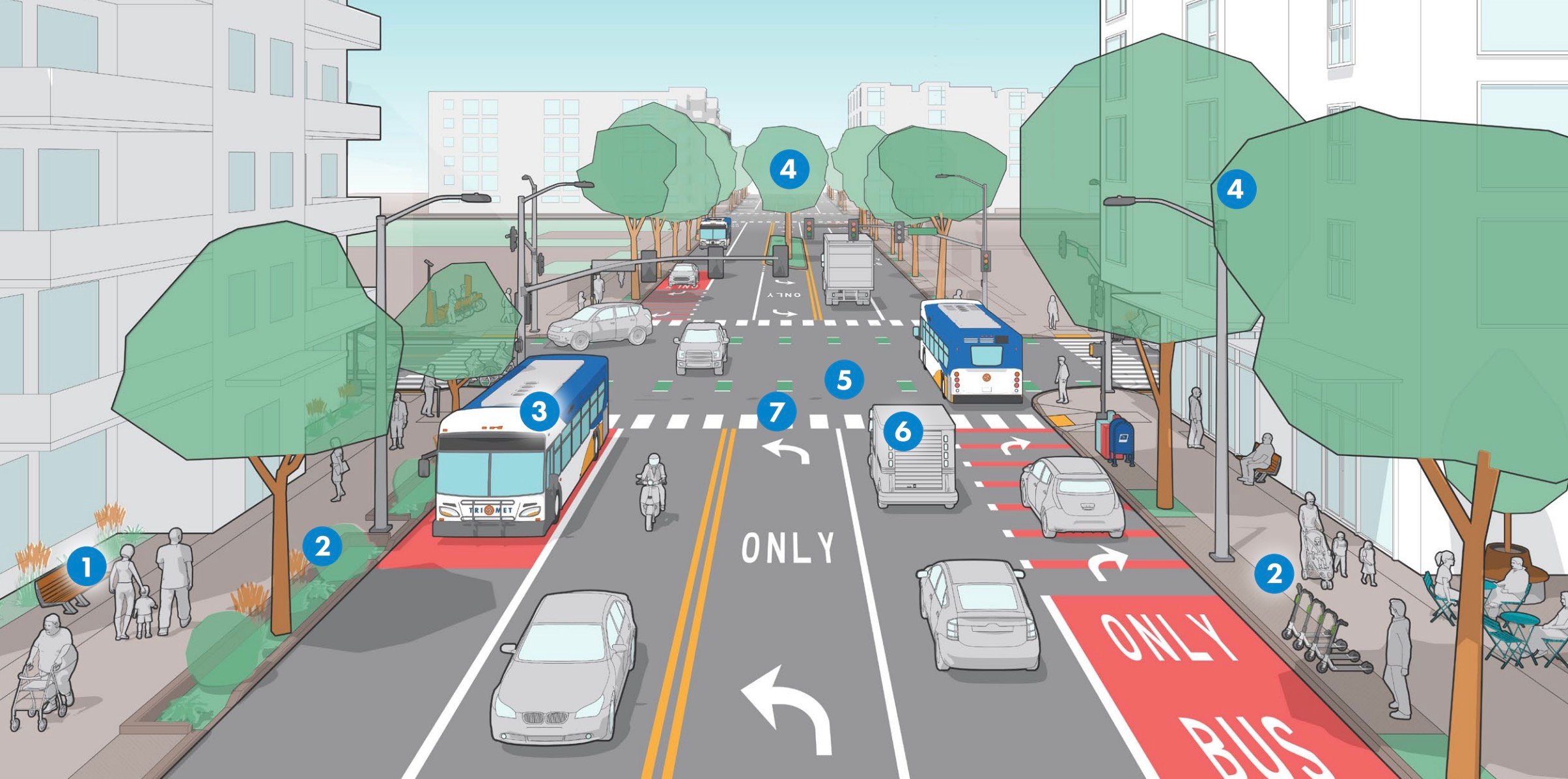
Can you find the bikes in this image? (Source: City of Portland)
Let’s play a game: Look at the City of Portland’s concept for the future of 82nd Avenue in the image above and try to find a bicycle. I’ll wait.
Every mode besides the bicycle is clearly represented in the drawing, but you need to look very closely and use x-ray vision to see a few bikes hidden behind a tree in the center left. Meanwhile, the Portland Bureau of Transportation is so eager to show that car users will still have access to all five lanes they placed three drivers in “Bus Only” lanes. Sigh.
This drawing is from PBOT’s Building a Better 82nd Avenue Plan that was unanimously adopted by Portland City Council on December 4th. We knew PBOT wasn’t going to include dedicated bike facilities on 82nd Avenue. We first reported that fact almost two years ago and followed-up back in August with a story that made it official. The council hearing two weeks ago was another opportunity for PBOT to explain their rationale, and for Portlanders and city council members to weigh in.
Advertisement
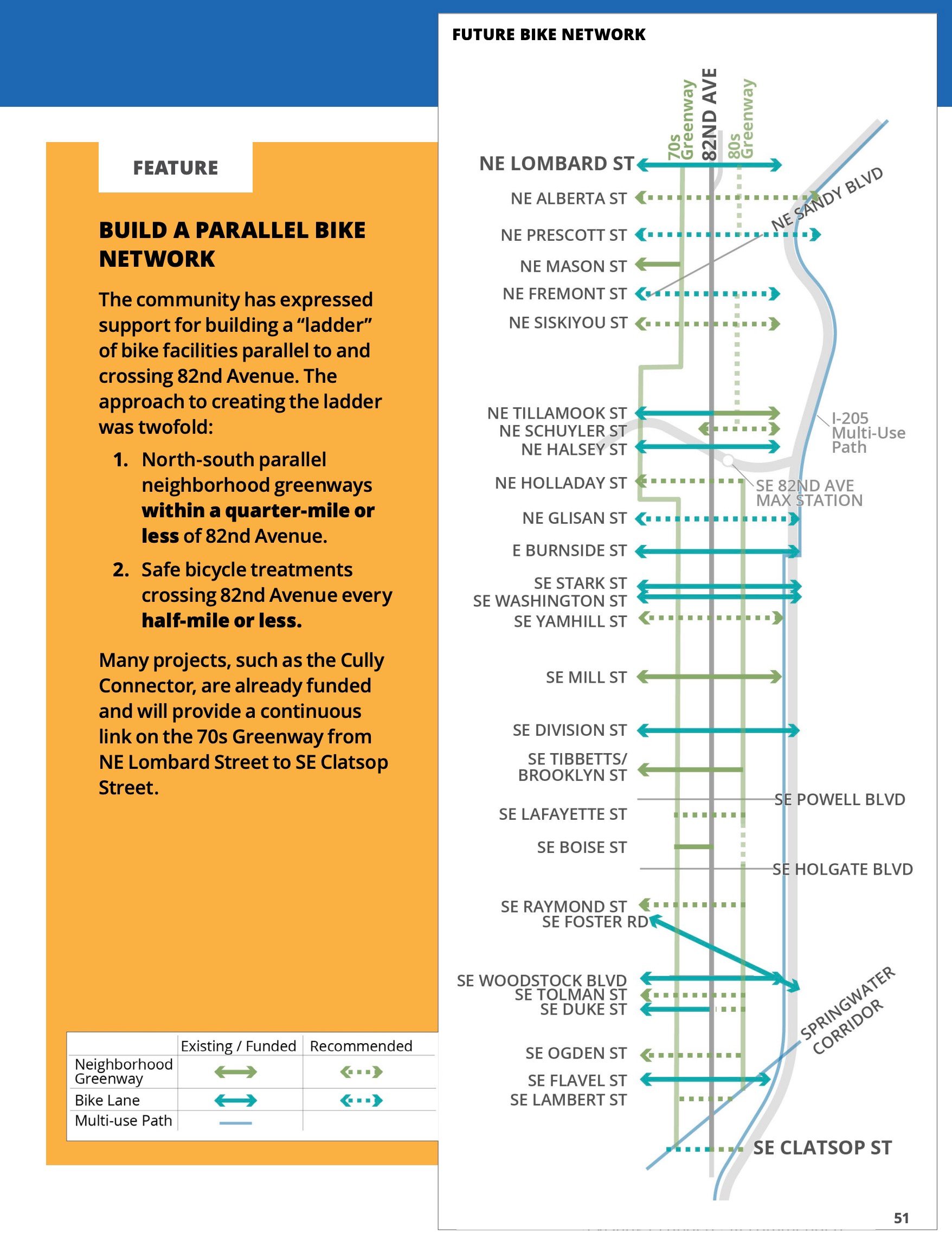
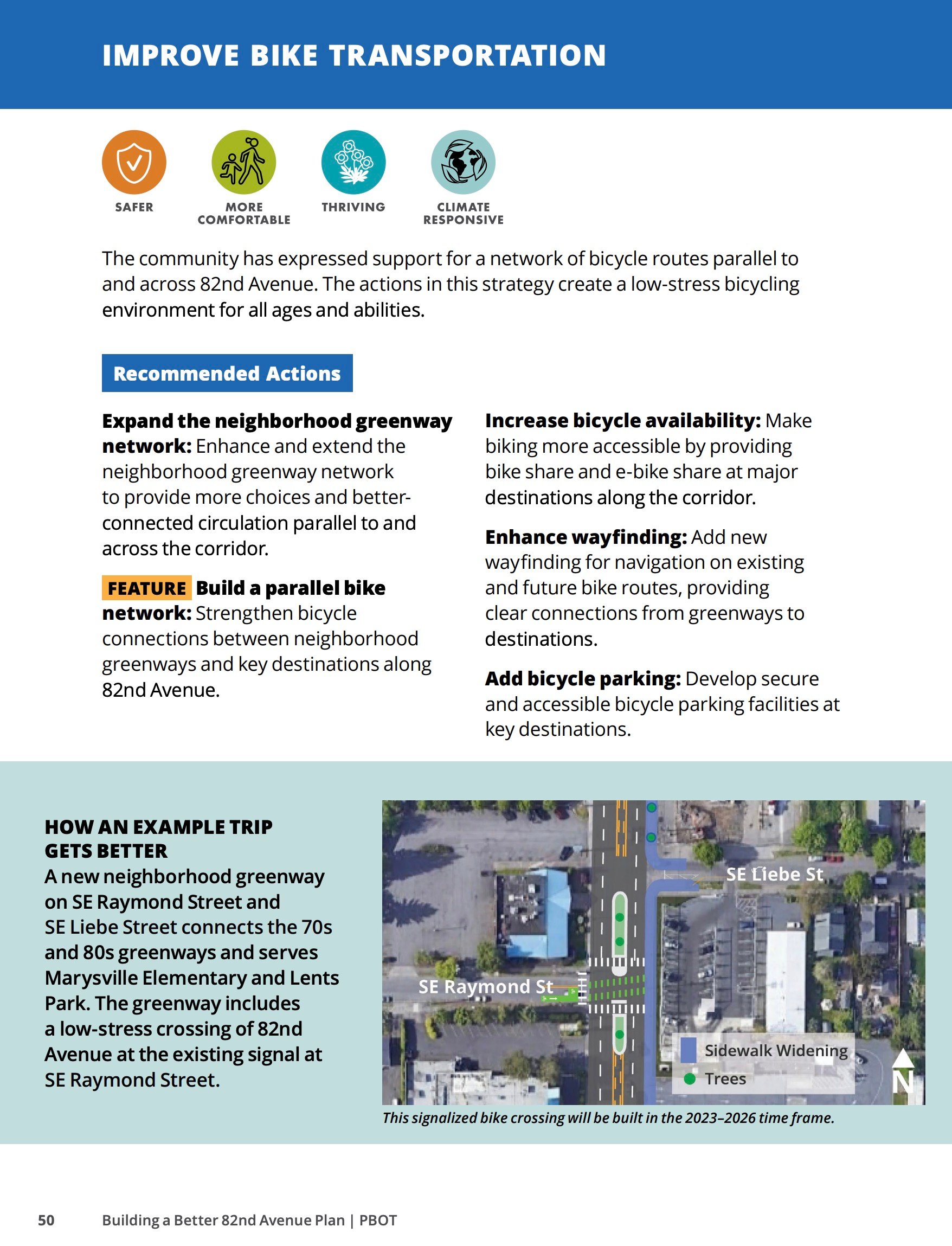
PBOT’s bicycle strategy.From PBOT’s Building a Better 82nd Avenue plan.
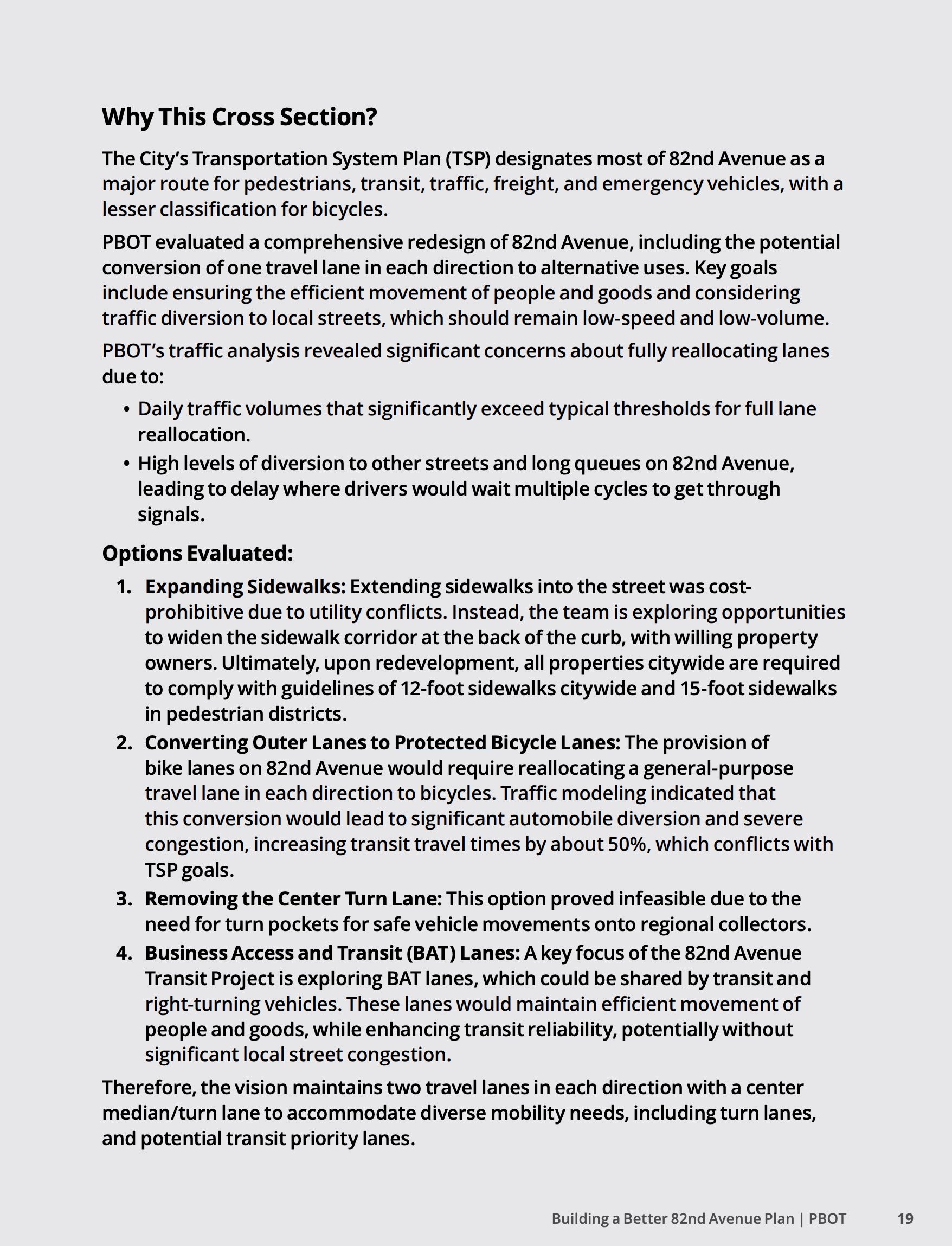
In a presentation on the plan, PBOT Planner Julia Reed told Mayor Ted Wheeler and the rest of council that bicycle use on 82nd is a lower priority than other uses due to its lower classification compared to other modes in our Transportation System Plan. Even so, PBOT considered it. They ran the traffic numbers on converting the outermost lane to a protected bike lane and found it wasn’t workable, due to transit delays and automobile diversion. So the PBOT plan will focus instead on cycling improvements on nearby neighborhood greenways, then make sure there are safe crossings and access points across and onto 82nd.
PBOT calls their cycling approach a “bicycle ladder” strategy. Imagine the sides of the ladder being bike-friendly streets on either side of 82nd, with the rungs of the ladder being the crossings.
“We explored the possibility of incorporating dedicated protected bike lanes,” Reed explained at council. “But modeling showed that would result in the Line 72 bus [the busiest line in Oregon] facing major congestion — a more than 50% travel time delay.” In the plan itself, PBOT says their modeling showed the installation of a protected bike lane would also “lead to significant automobile diversion.”
Hearing PBOT so clearly pit transit against bicycling (an unforced error in my opinion) was music to the ears of Commissioner (and council member-elect) Dan Ryan. “I’m enjoying this!” he exclaimed at one point while clarifying with Reed that there would be no dedicated bike access on 82nd Ave. Ryan has long advocated for getting bike users off major roads. He sees streets less as community-builders and more as corridors for commerce and believes it was a mistake for PBOT to install protected bike lanes on SE Division and often cites business owners who agree with him.
Advertisement
“I think sometimes in Portland we try to put too many modes of transportation in a small space,” he said before voting “aye” on the plan. “And we’re not connected to the reality of the importance of arterials to move goods and services around which everyone wants. So I think you’re striking a really great balance.”
Thomas Ngo, board chair of The Street Trust, also expressed support for the plan during his invited testimony. He spoke about how he lives nearby and how dangerous it is to cross 82nd or access its transit stops. He made no mention of the bicycling issue.
Two leaders from Bike Loud testified at the council meeting and expressed strong disappointment in the plan. Bike Loud Vice Chair Kiel Johnson said, “We are concerned that this plan fails to meet our most basic transportation priorities,” he said. “What you’re being asked to approve today does not include a plans to have a continuous ADA compliant sidewalk, or any bicycle facilities, or a street layout that will create the safe, vibrant Main Street the east Portland community has been asking for.” Johnson said if PBOT really wants to save lives and reach its transportation goals, they should “repurpose car lanes”. He likened this opportunity to the choice former Oregon Governor Tom McCall faced in the 1960s when he decided to remove Harbor Drive and create Waterfront Park. “All the transportation planners told him removing the freeway would lead to ‘carmageddon’… but they decided to buck their own transportation planners and remove the freeway, because it was the right thing to do.”
Advertisement
Kiel and Bike Loud Chair Aaron Kuehn both testified that the lane cross-section outlined in the 82nd Avenue Plan does not comply with Oregon’s Bike Bill, which requires transportation agencies to provide adequate cycling facilities whenever a major road reconstruction or repaving project takes place (and which they know something about as representatives of plaintiffs in a pending lawsuit against the city for not following it).
(Source: Aaron Kuehn)
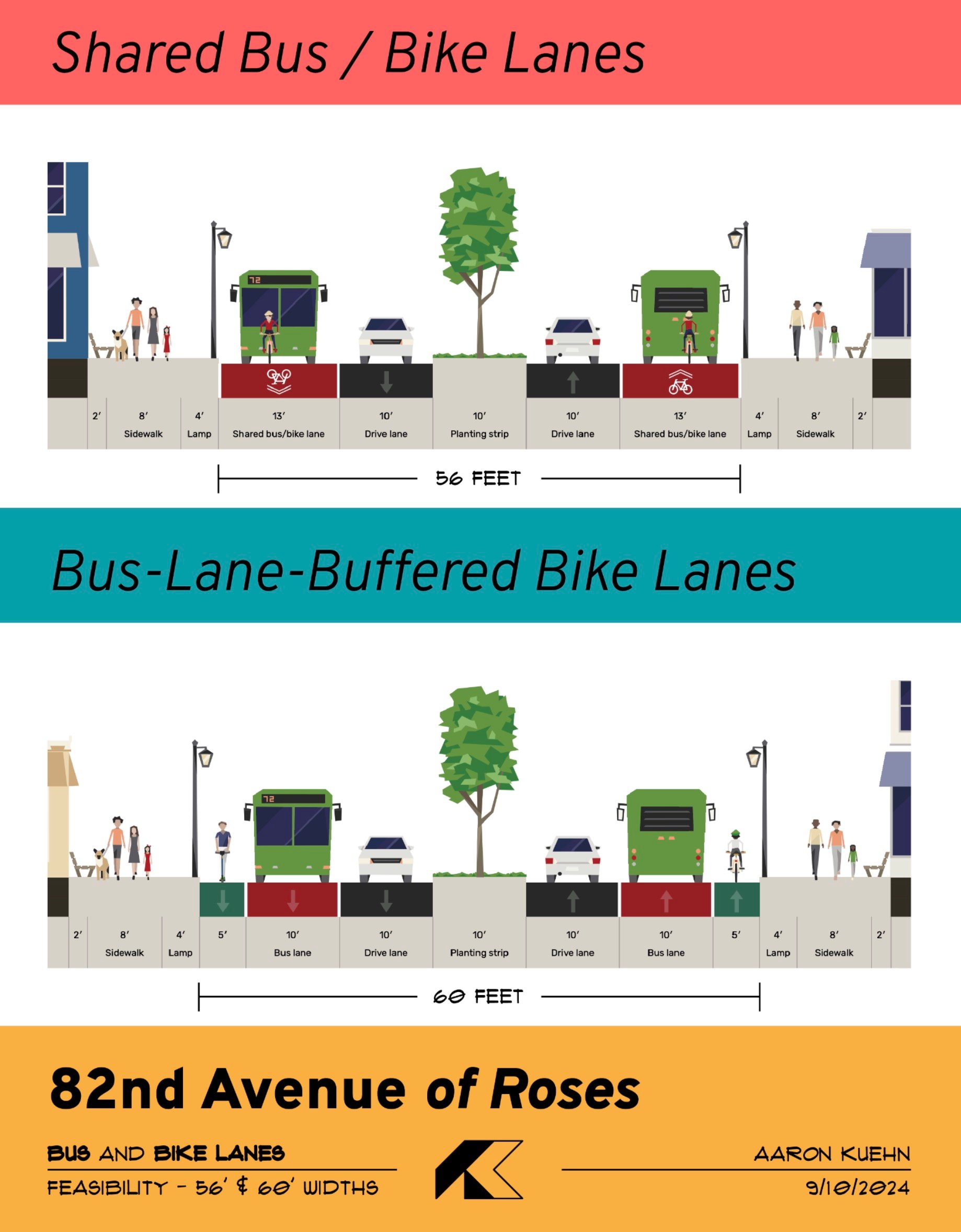
Kuehn says the plan replaces 82nd Avenue with essentially the same cross-section it has today. At the least, he believes 82nd should have a shared bike/bus lane. Kuehn wants a dedicated bus lane on the entire seven-mile corridor and an explicit acknowledgement that bicycle riders are permitted to ride in it if they choose (much like riders do on current Rose Lanes on Martin Luther King Jr. Blvd and elsewhere)
Kuehn points to current Biketown data that shows a significant amount of people using bikes and electric scooters on 82nd (and its sidewalks). He wants to see the street re-classified as a Major City Bikeway in the TSP to bring it up to par with other modes. Kuehn has sketched out two cross-sections showing how bike riders can be accommodated on 82nd: One shows the shared bus lane, the other shows a bike lane that’s protected from car drivers by a bus lane buffer.
The future of the bus lane is still up in the air. There’s a separate process currently underway to determine exactly what type of transit facility 82nd gets.
Advertisement
Oregon Walks Executive Director Zachary Lauritzen is closely tied to this project, having received sizable city grants to organize support for new sidewalks. He didn’t take a position on whether or not 82nd should have bike access, but he made it clear he’s disappointed PBOT isn’t opening up the conversation about the lane configuration. “The community really wants to have that conversation [about lane dedication],” Lauritzen said. “They want to know what the future of 82nd Avenue looks like. They want it to be slower. They want there to be fewer cars, and they want it to be safer.”
Reed emphasized that there’s nothing in the adopted plan that dictates the type of bus lane that’s ultimately built on 82nd Avenue, or whether or not we allow bike riders on it. I’m reminded of a conversation I had with TriMet Planner Michael Kiser about this subject back in June 2023: “I’d like to say, ‘We did Division, now let’s go bigger’ But we don’t control the right-of-way and want to work with our partners.” Those partners on Portland City Council will be much different starting January 1st. Whether or not they’ll be willing to have this conversation remains to be seen.
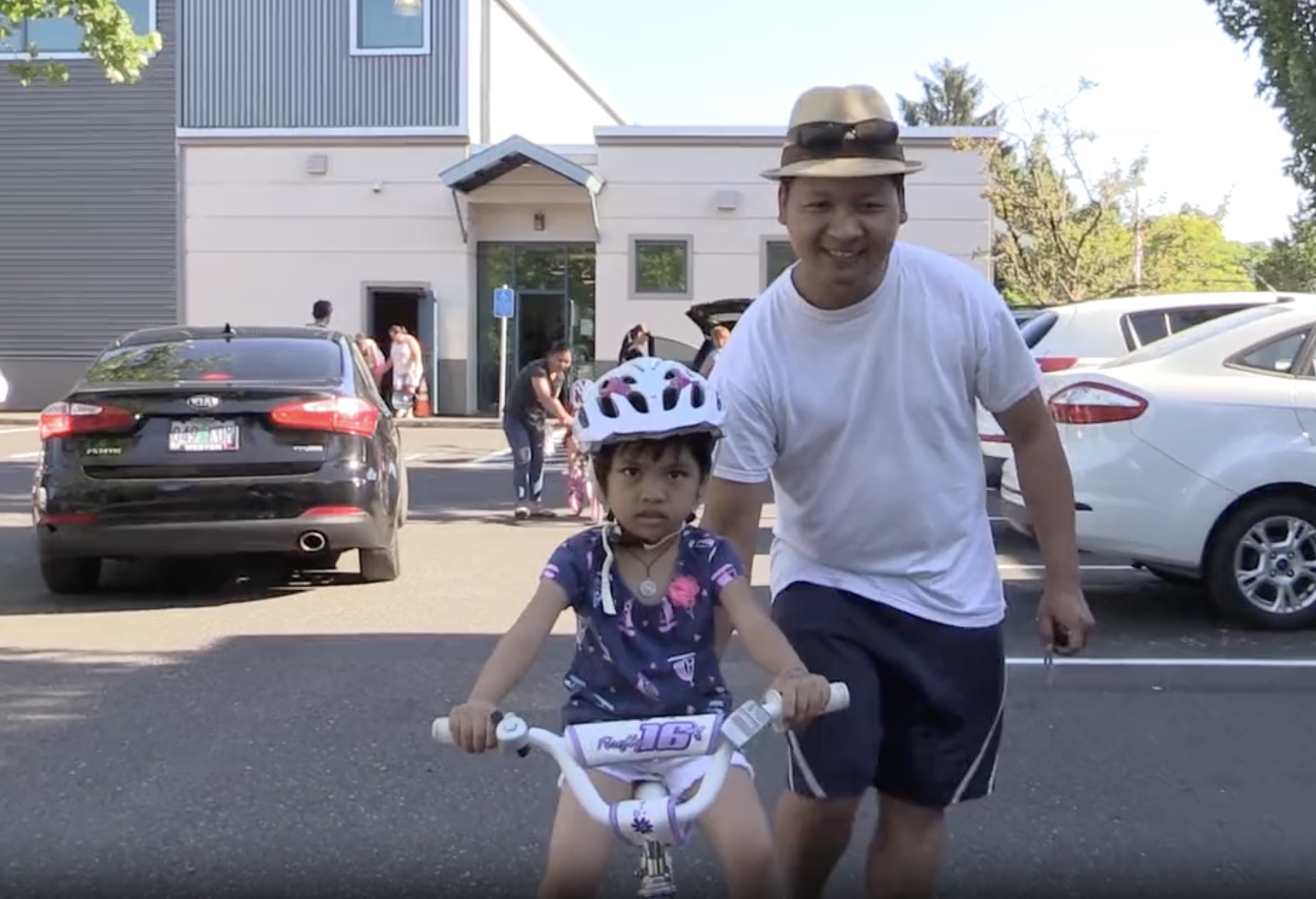
Outside an event at the Immigrant & Refugee Community Organization hosted by Free Bikes 4 Kidz, one of the nonprofits who won a state grant. (Photo: Free Bikes 4 Kidz Portland)
Bike repair clinics for homeless Portlanders, free bikes for refugees and immigrants, an electric cargo-bike library for underserved youth — those are just some of the 26 projects that have been awarded grants by the Oregon Department of Transportation’s Innovative Mobility Program.
This program was the idea of former Oregon Transportation Commission member Alando Simpson. It was launched in 2022 and is funded through $10 million set aside (out of a total of $412 million) from Oregon’s share of the federal Infrastructure Investment and Jobs Act passed in 2021 and $10 million from the state’s general fund.
ODOT has awarded over $330,000 in microgrants this go-round. Unlike the first round of grants in 2022, which were limited in size to just $5,000, these latest awards went up to $15,000. Preference for the grants are given to communities that are historically underserved and the idea is to make an immediate impact by funding projects that can reduce car use.
Advertisement
The grants were passed out statewide. Below are a few notable ones from Multnomah County:
Blanchet House of Hospitality ($13,000): Host reoccurring bike repair clinic for people with low incomes and people experiencing homelessness.
Free Bikes 4 Kidz Portland ($14,895): Expand bicycle safety programming and bicycle distribution to reach Veterans, immigrants, refugees, and students and families of Title 1 schools.
ROSE Community Development Corporation ($15,000): Host bike camps and learn-to-ride events and purchase a bicycle fleet for youth at Rose CDC’s affordable housing complexes.
Bike Works by p:ear ($15,000): Host various active transportation outreach events and provide bike safety gear to young, low income and homeless individuals.
Community Cycling Center ($15,000): Support youth bicycle mechanic programming that occurs in alternative high schools.
Play Grow Learn ($15,000): Host community bike rides and provide bicycle safety education. Create an e-cargo bike lending library in partnership with River City Bicycles.
WashCo Bikes ($14,990): Expand bicycle safety programming and bicycle distribution to reach the Hispanic community and youth and families of Title 1 schools.
Next up for the program are more grant funding cycles and an expansion into study and assessment grants. To learn more, check out the Innovative Mobility Program page on ODOT’s website.
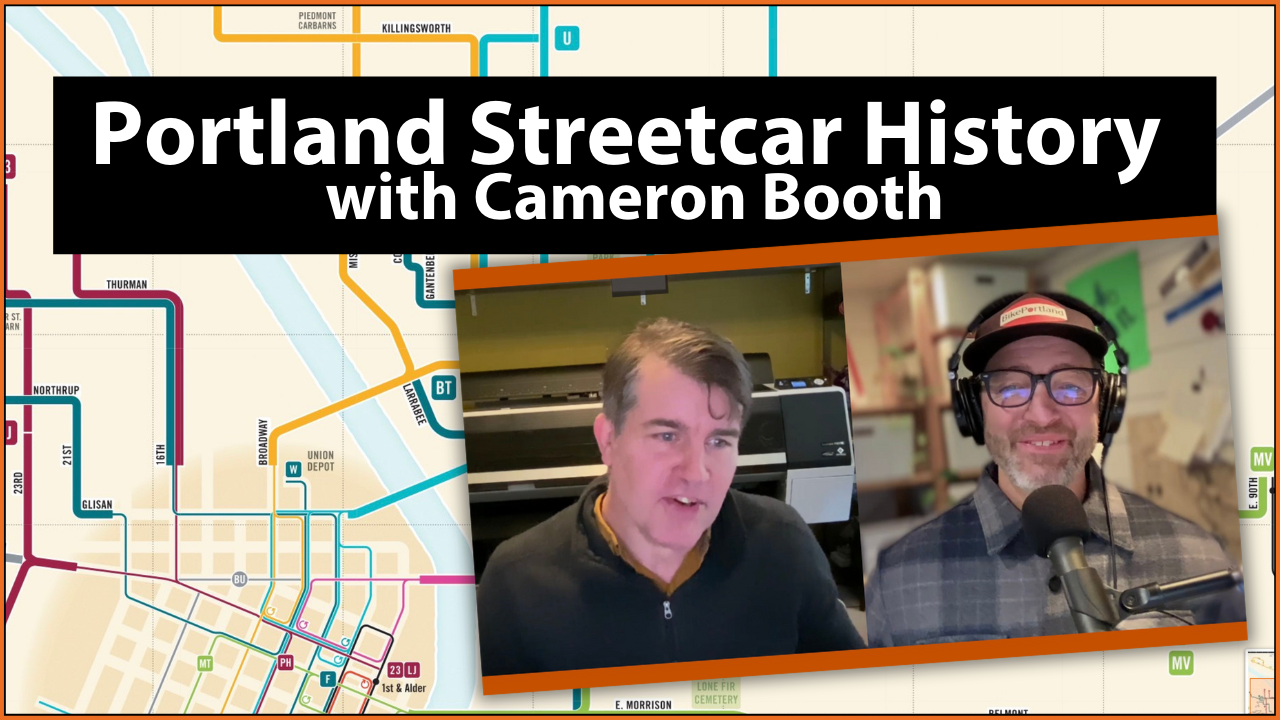
Many of us can summon a general outline of Portland’s streetcar legacy. We know the city was once filled with tracks and lines that criss-crossed both sides of the Willamette and we have experience seeing old tracks on or under a street we ride on. But for transit buff Cameron Booth, it is a history that deserves to be understood in greater detail. Booth, whose fascination with public transit maps began after a boyhood ride on the London’s “Tube”, is a graphic artist by day who’s working on a project to digitize Portland’s streetcar history.
Some of you might know Booth as the guy behind Transit Maps, the very popular blog and online store that features nearly 200 vintage and artistic transit maps from all over the world — including the BikePortland collab, “1896 Cyclists Road Map of Portland.” Booth enjoys restoring old transit maps and creating his own. A few months ago, he mentioned to me in passing that he was researching streetcar information via historical articles in The Oregonian and then sharing what he learned on a website. I’ve always been fascinated by how streetcars have shaped our city, so I was instantly intrigued by the project. This morning I finally got to learn more about it.
Advertisement
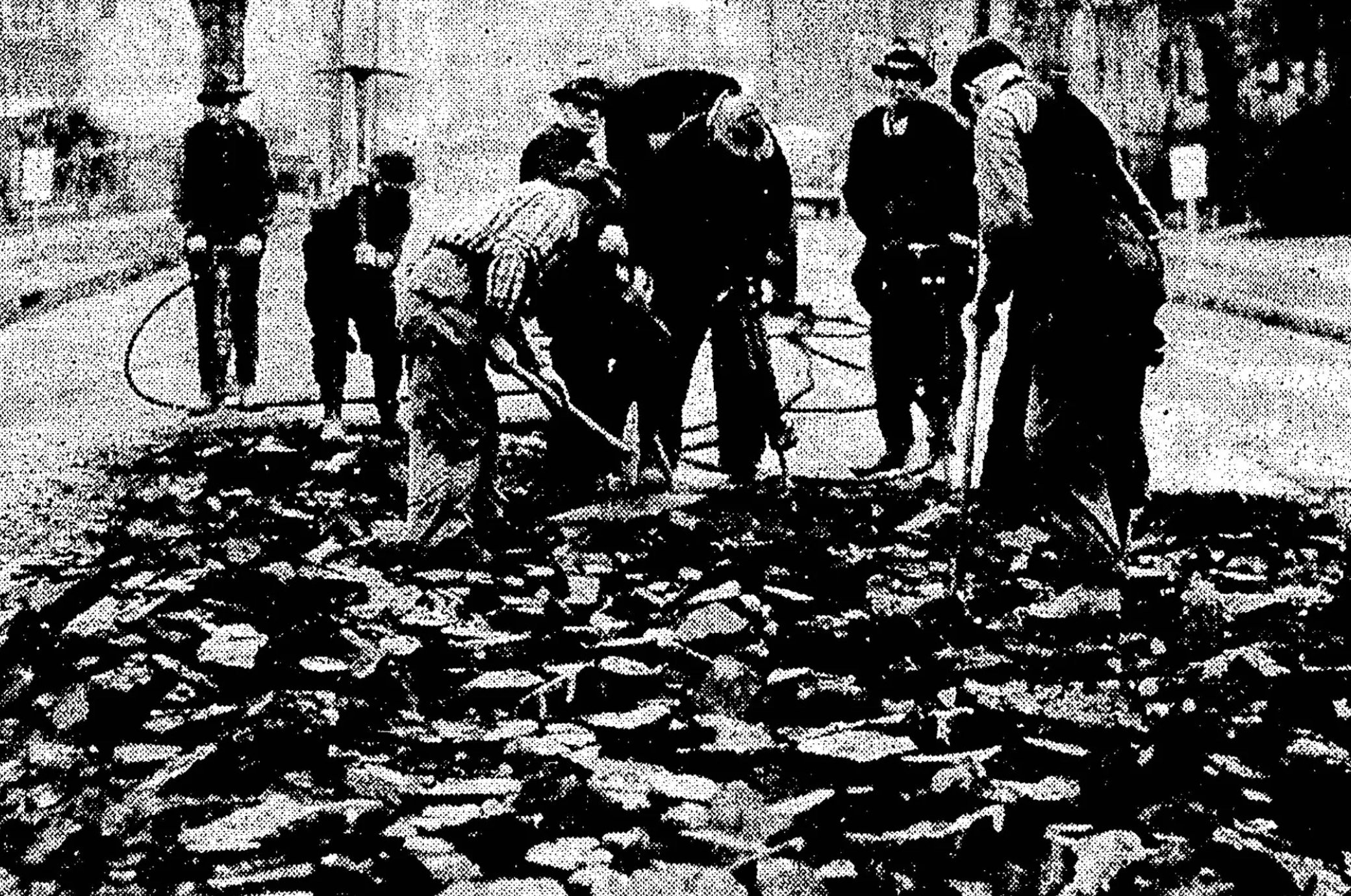
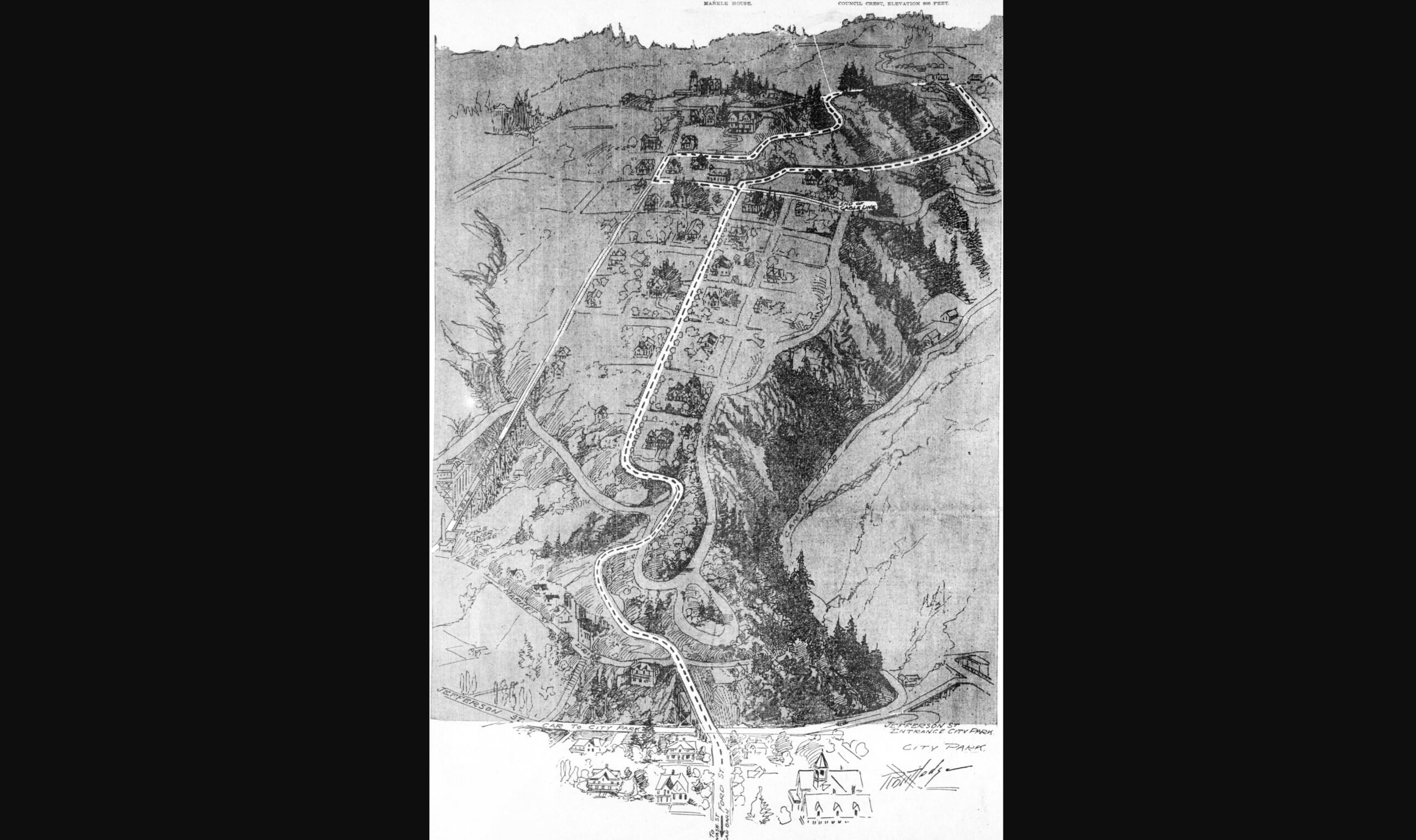
Crews digging up a portion of the Bridge Transfer line during WWII.Map – Around New Portland Heights Loop, 1904.
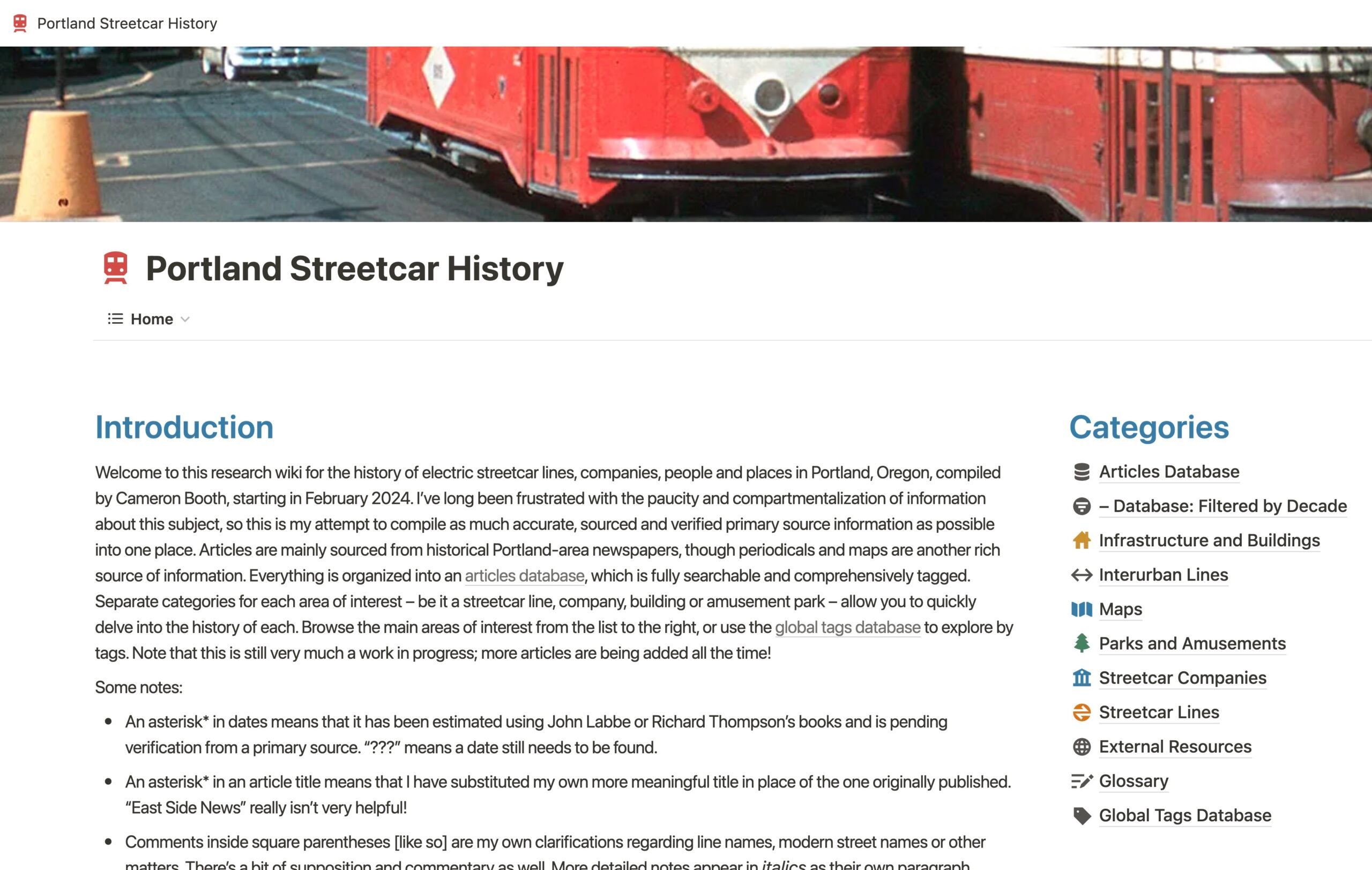
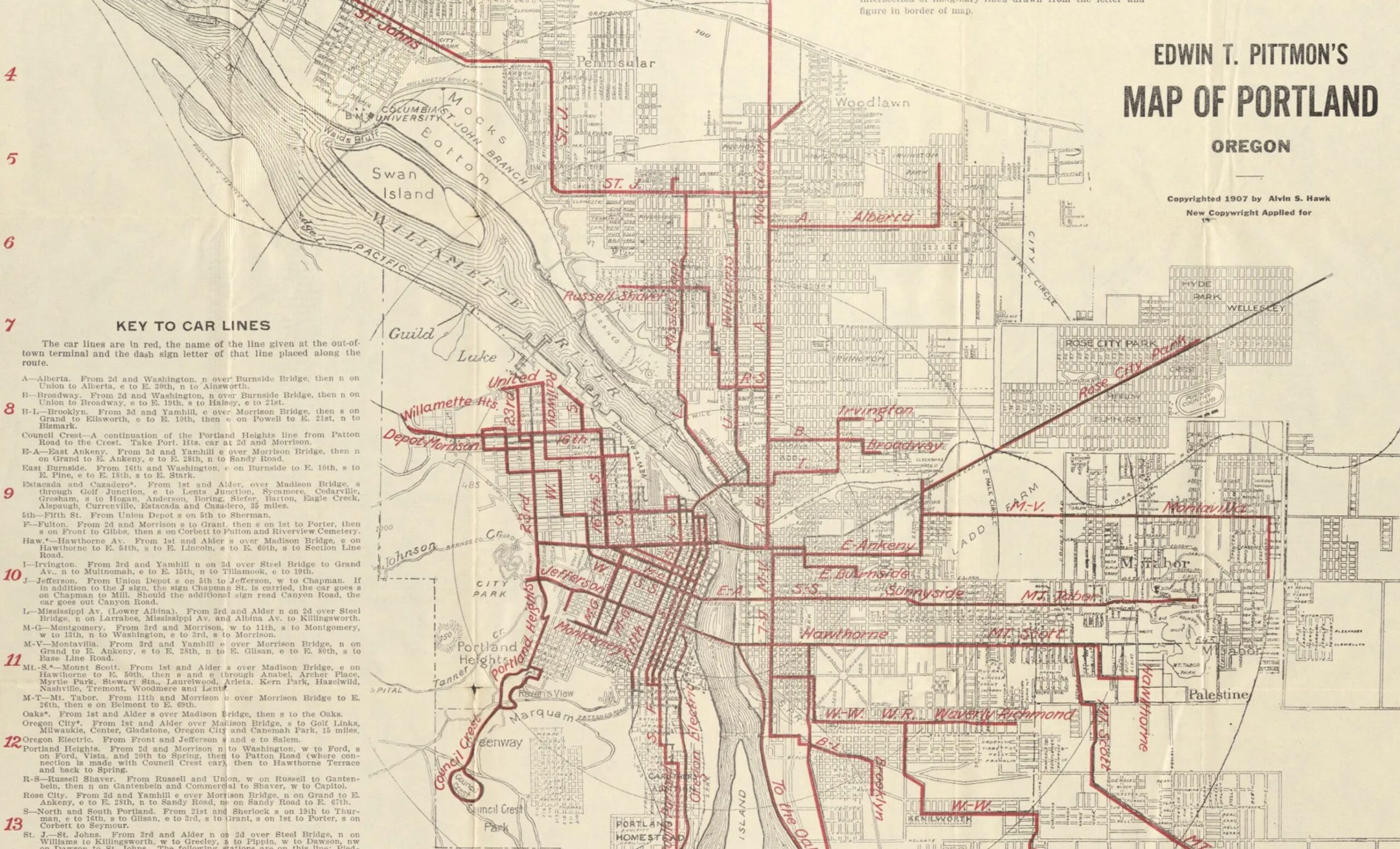
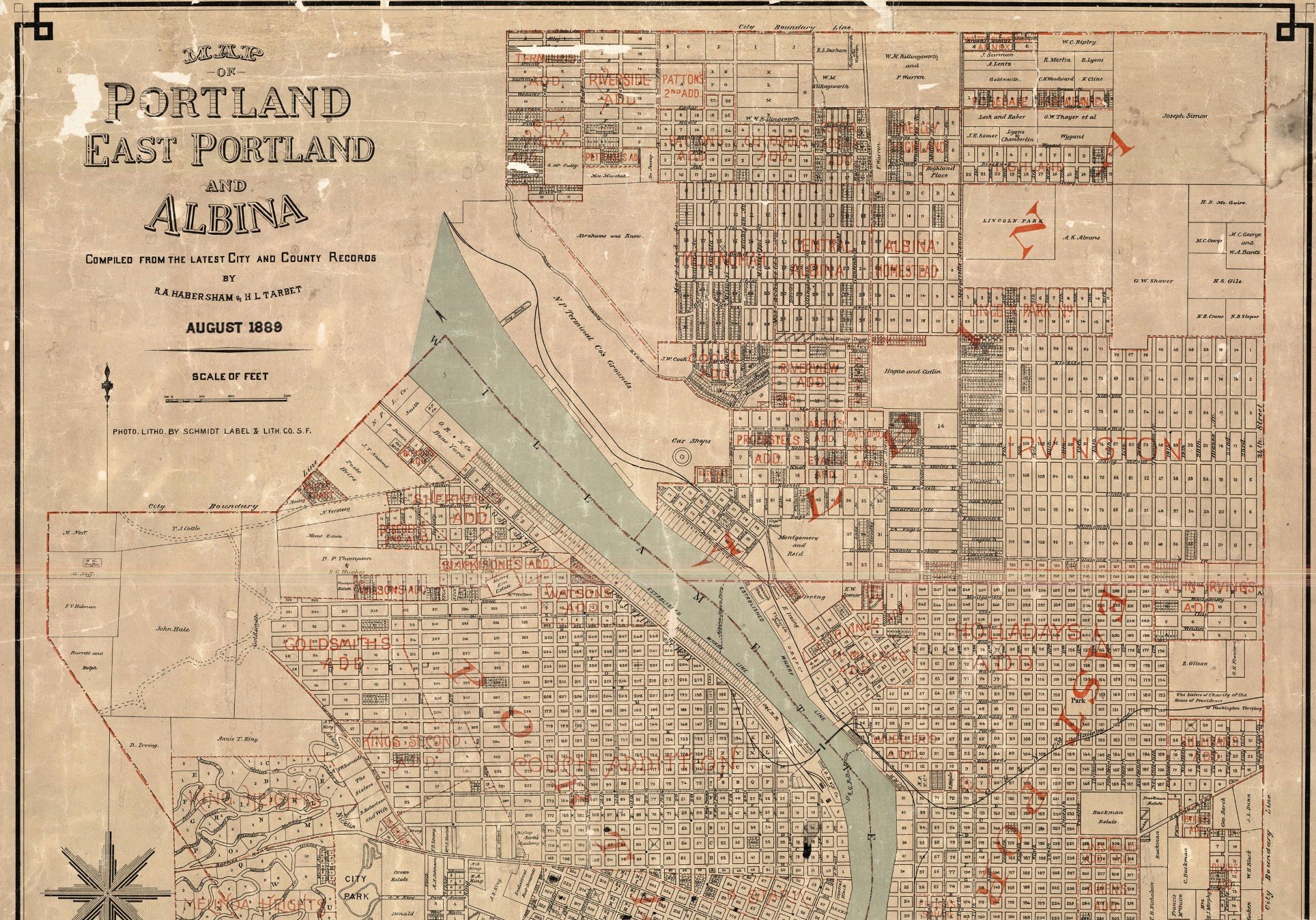
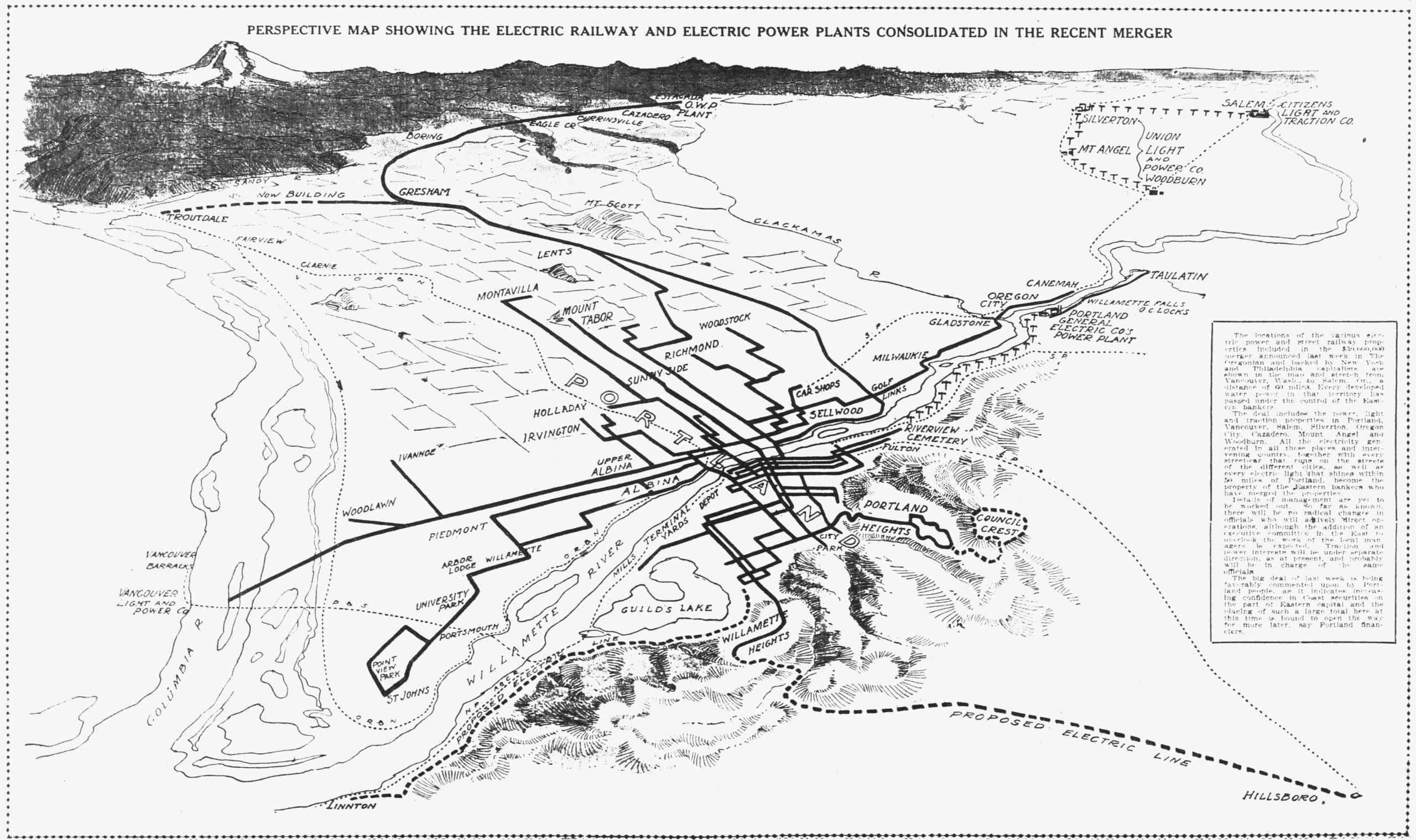
Portland Streetcar History is a website where Booth is sharing the over 1,000 articles he’s transcribed so far. He’s sharing illustrations of old maps and has compiled information on 35 different streetcar companies and 68 distinct streetcar lines. He began the project in February 2024, armed with nothing more than a Multnomah County Library Card and an insatiable curiosity. The project started because he was already doing the research for this map projects, “And every time I went to work on them,” he told me in an interview this morning, “I have to go the library and borrow like eight different books, or I have to look on the Internet and find four or five different websites to get that information that I’m after. So in the end, I guess I was just like, well, what if I just started compiling all this stuff myself?”
Judging from the changelog on the wiki-style website he’s using to share everything he finds, Booth edits a few articles a day. Browse the list, choose something to click on, and you might find an article from June 19, 1904 that details a new “through line to St. Johns” that would have created a new route, “from the heart of Portland” all the way up the peninsula to St. Johns. Or you might click on a detailed, high-resolution image of a 1932 map of transit lines in the central city. Each item is notated by Booth with updates and insights, creating an intriguing trove of transit information.
What started as a way for Booth to fact-check specific route locations and line information, has grown into a project that tells a wider story. Through all the articles he’s transcribed, Booth says, “You can see the social impact and the way that the streetcar basically, in a lot a lot of ways, defined the way Portland looks now. You know, all the cool neighborhoods are all along the old streetcar lines.” It makes you wonder what those neighborhoods were like in the peak of Portland’s streetcar era, which Booth pins to 1915-1920.
Advertisement
Beyond that, Booth said he’s learned of a brief revival during World War II. “There was shortages of gas and tires and stuff like that, so they actually dug out one of the streetcar lines. They’d buried it in 1940 and then there was a rubber shortage for tires so they basically dug up this old line and started running streetcars on it again.” It was the Bridge Transfer line that ran from the Broadway Bridge to the Hawthorne Bridge on Grand and Union (not Martin Luther King Jr Blvd) on the eastside. “There’s photos in the newspapers of them jack-hammering out the tracks,” Booth said.
The tracks would all be buried eventually as rising maintenance costs and stagnant rider fares buried streetcar companies in debt. Booth says from what he’s gathered in contemporary news articles, it was not the onslaught of cars or any conspiracy by Big Auto to buy up companies and bankrupt them. They just weren’t cool anymore. “By the 1930s, they were seen as old-fashioned and out-of-date,” he said. Unloved and unmaintained, the streetcars were replaced by buses which were considered to be much more modern and comfortable.
“And you can literally see the attitude change to streetcars through the newspaper articles,” Booth shared. “At the beginning it’s all, ‘Oh my goodness, another streetcar line! How exciting!’ And by the end, it’s like, ‘Thank goodness that’s gone.’ The public attitude towards them was changing drastically.”
Advertisement
Has Booth come across any mentions of bicycle riders in his research? Yep. He recalled two stories.
In 1890 or so he came across an article about a man who was biking on SW Jefferson near the old Portland Heights cable car line. The man fell into the hole where the cable returned and was seriously injured. “He wanted to sue the cable car company, but they said, ‘Well, you were riding a dangerous and defective bicycle.'” Booth also said around the turn of the 19th century, when American was solidly in its bicycle craze era, streetcar companies lamented that they were losing ridership to bike riders.
Booth’s research is full of fun little nuggets like that. And it’s all available online. Check out his Portland Streetcar History website to learn more. And if you’re looking for an excellent holiday gift, check out his store on Transit Maps.