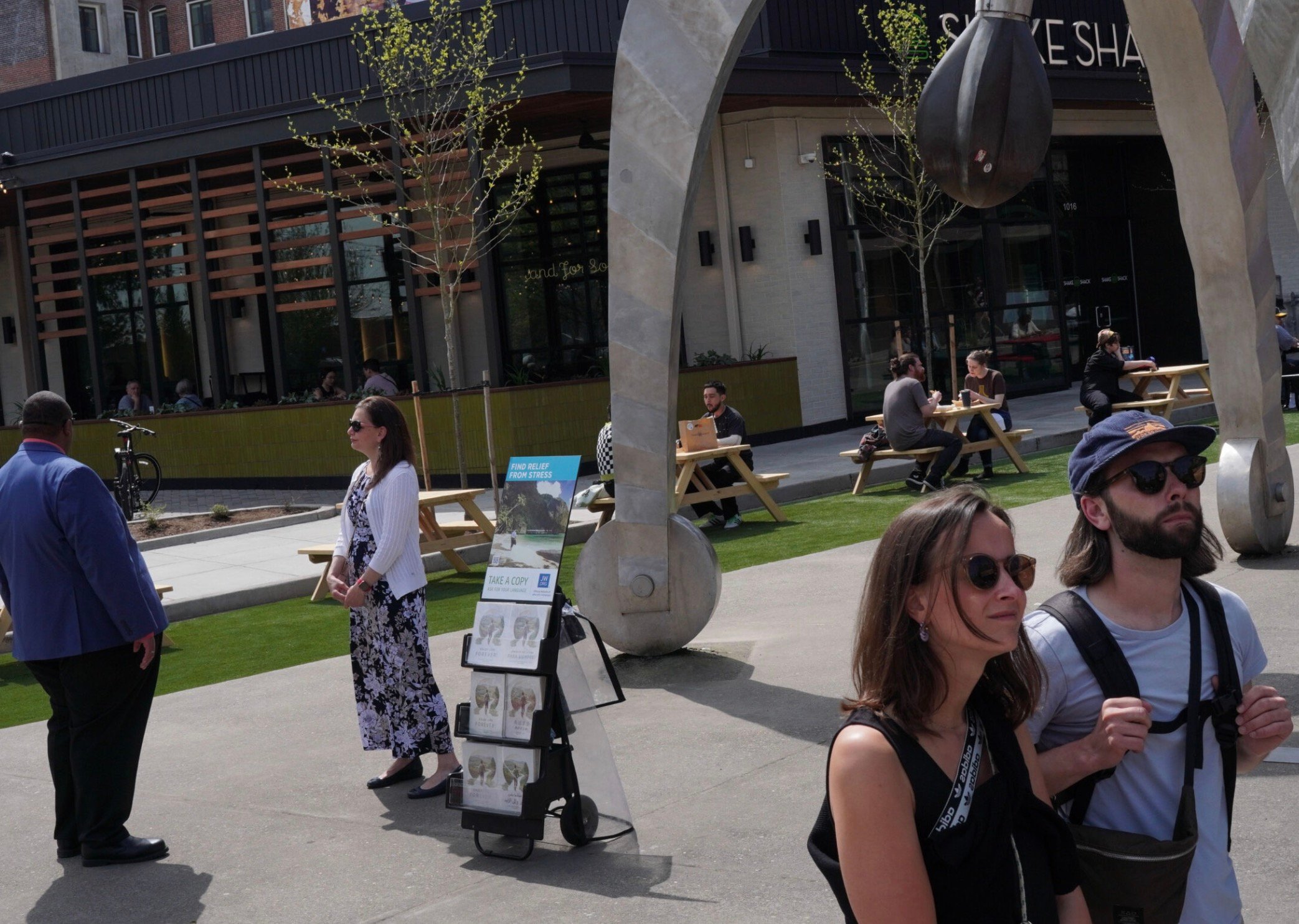
W Burnside and 10th. (Photo: Jonathan Maus/BikePortland)
Downtown Portland’s renaissance will get another jolt of energy thanks to a newly funded project that will improve walking conditions.
Travel Oregon, the state’s tourism commission, announced $6.2 million in grants today. Awards were granted to 65 projects statewide, including two from the Portland region. One of them is a $150,000 grant to the nonprofit Oregon Walks for a project that will, “develop and deploy a pedestrian wayfinding pilot project in downtown Portland.”
Oregon Walks is a nonprofit that focuses on making walking safer, more convenient, and more fun. They worked with the Portland Bureau of Transportation as a partner on the grant application. Better wayfinding signage in downtown Portland was recommended as a top priority in the City of Portland’s Pedestrian Master Plan.
Advertisement
Oregon Walks Executive Director Zachary Lauritzen said PBOT played a major role in making this happen. “They’ve been an amazing partner. [PBOT Pedestrian Realm Coordinator] Gena Gastaldi and her team put together a really compelling pitch/design and deserve a ton of credit for moving this forward.”
According to a statement form Travel Oregon, the “Walk Portland” project will include installation of high-quality maps and signage, public art and lighting, visitor engagement, data collection and photo/video documentation. Described as a “pedestrian wayfinding system in downtown Portland,” there will also be an accompanying website.
“Through signage, artwork, and a designated downtown walking route, Walk Portland will help people feel more confident exploring downtown as a pedestrian—whether you’re new to Portland or have lived here your whole life,” says Lauritzen. “We’re stoked to lend a hand in the rejuvenation of downtown,” he added. “We really believe in activation—getting more people out and about—as a way to make places feel safe and welcoming.”
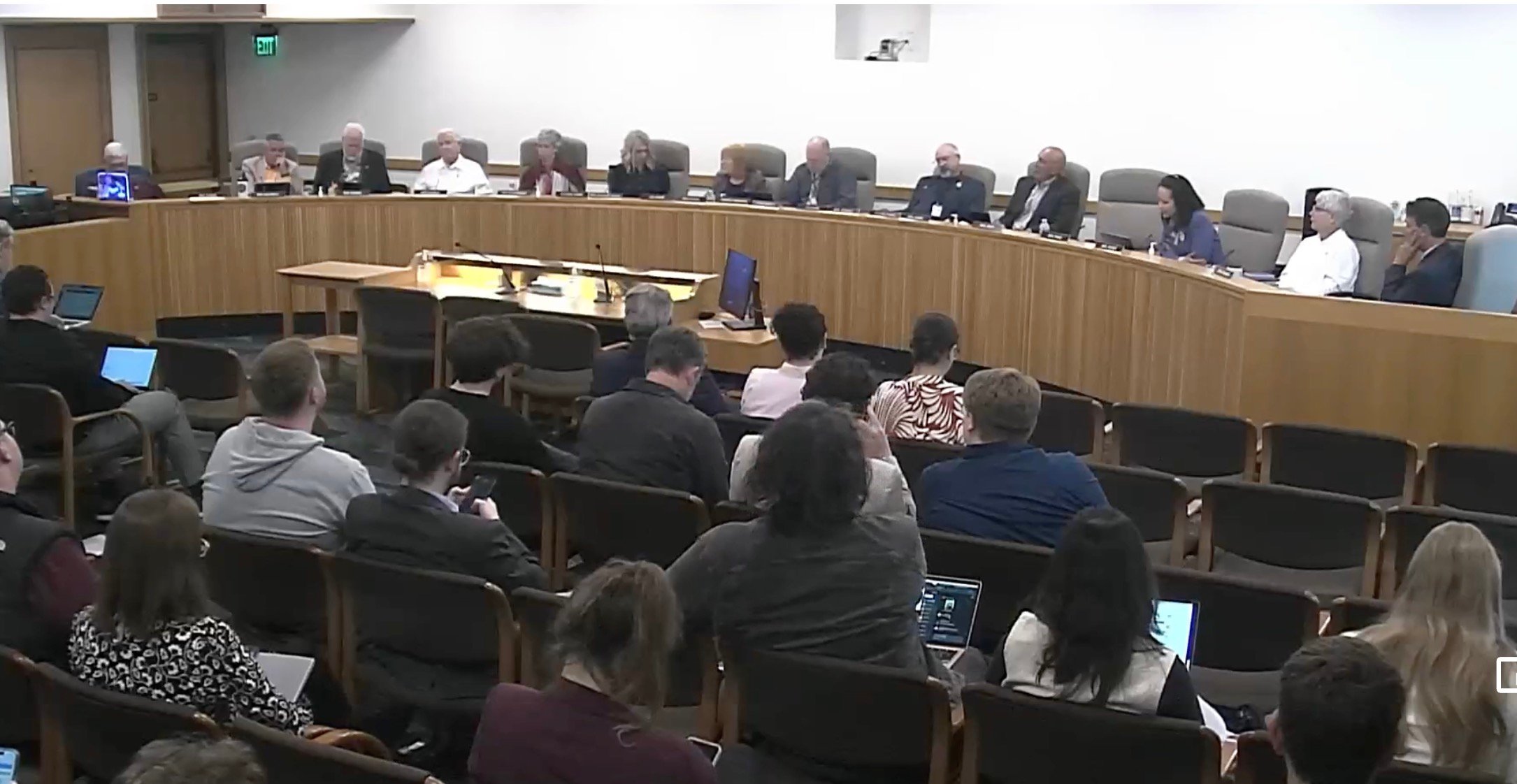
Joint Committee on Transportation Reinvestment at their meeting on Friday.
With just one full week left in the legislative session, Oregon’s transportation funding package, House Bill 2025, is in a very precarious position.
The bill is seen by supporters as a vital funding lifeline for the Oregon Department of Transportation as the agency transitions away from the gas tax and looks to shore up its ailing highway fund. It comes with dozens of tax increases and several new funding sources in order to pay for bridge and road maintenance, freeway expansion projects, safe routes to schools, updates to urban highways, new off-street paths, public transit, and more. Overall, HB 2025 is slated to raise $14.6 billion in new revenue for transportation over the next 10 years.
An amended version of the bill (-23 amendment) passed out of the Joint Committee on Transportation Reinvestment on Friday on a party-line vote of 7-5; but it took a last second procedural maneuver by Senate President Rob Wagner (a Democrat) to make it happen. Since Democratic committee member Mark Meek made clear his intention to vote against the bill, Wagner replaced Meek in order to ensure passage.
As if having a committee member present but unable to vote wasn’t awkward enough, a pointed exchange between two committee members punctuated a meeting full of strong disagreements.
Boshart Davis is a leading voice from a chorus of Republicans who think HB 2025 is nothing more than a Democratic tax grab and that ODOT needs to focus on its “core mission” of catering solely to car users and letting cities fund transit and cycling needs. “We are looking at the largest tax increase in Oregon’s history,” she said at Friday’s meeting. Boshart Davis is also opposed to what she calls a “really bad process” that was “grossly irresponsible” because she feels the public hasn’t had enough time to weigh in on the bill (the full fiscal analysis wasn’t released until Friday).
As Boshart Davis repeated these stinging critiques at Friday’s meeting, committee Co-Chair Senator Chris Gorsek — a Democrat and architect of the bill — interrupted her (see exchange above). “Excuse me,” he said, “You are impugning all of us that have worked on that bill. So stop with that! You’ve made your point representative. Enough!”
Committee Co-Chair Susan McLain calmed things down, but the damage was done. Later in the meeting, Boshart Davis said she planned to make a formal complaint about Gorsek’s behavior. Today, House Republicans issued a statement calling for Gorsek to be removed from committee assignments and face censure on the Senate floor.
Advertisement
While Democrats have a super-majority in the House and Senate, they spent weeks trying to hash out a bill that would garner at least a few moderate Republican votes — but that effort has produced no fruit. A large bloc of Republicans that are vehemently opposed to the bill are already saying they’d work to refer it to voters if it passes. There are also threats of a walkout if and when the bill comes to a floor vote. One Republican, Darcey Edwards, who represents portions of Washington and Columbia counties west of Portland, boycotted today’s floor session because of her opposition HB 2025.
While a floor vote was scheduled for early this week, a few hours ago Oregon Public Broadcasting reported that Democrats would send HB 2025 back to committee for consideration of possible amendments.
So far no further committee meeting has been scheduled and no new amendments have been posted.
With just days left in the session, Democrats still have road blocks to clear before passing their highest priority legislation.
At the end of Friday’s meeting, Portland Democrat Khanh Pham said, “I recognize this is a major investment, and that is part of what I think is my responsibility, our responsibility as as legislators, to actually govern for our state. And for that reason, I am unapologetic about the need for investing in our roads, for the health of our communities and the health of our economies.”
UPDATE, 3:05 pm: Senate President Rob Wagner has taken himself and Sen. Gorsek off the committee and has added three new members: Senator Khanh Pham, Senator Lew Frederick, and Senator James Manning Jr. HB 2025 has also been rereferred to the committeeand OPB has the latest on how House Speaker Julie Fahey is trying to amend the bill with moderate Democrats to ensure passage.
I’m three days post-surgery on my second knee replacement and I’m feeling OK. I plan to work when I can, but things could be touch-and-go for the next week or so depending on a combination of factors like pain, the effects of my pain meds, and so on. The great news is that in a few weeks I’ll be on my way to a new chapter in my life. One where my knees are healthier and I can move through the world with more confidence. I’m excited, but I’ve gotta’ get through this tough slog first. Thanks for your patience and understanding.
Here are the most notable stories that came across my desk in the past seven days…
In defense of vision zero: After a newspaper’s editorial board labeled Boulder’s quest for vision zero “juvenile,” an advocate responded with a very thoughtful and effective defense of the road safety approach that Portlanders would be wise to read. (Daily Camera)
A mural and a culture war: A colorful mural with the message “All Bike(r)s Welcome” touched off a huge controversy in Bentonville, Arkansas — a city that prides itself on being the most bike-friendly in America. The debate revealed a clash of cultures in a city full of contradictions. (Cycling Weekly)
Parking wars: People in a U.K. town have resorted to blockades and physical altercations as they fight against an “invasion” in car parking from a nearby neighborhood. It’s a war on cars IRL. (Birmingham Mail)
Parade death: A truck carrying one of the U.S. Army tanks used in Trump’s military parade ran over and killed a pedestrian on the streets of Washington D.C. (USA Today)
Advertisement
Pike Place pedestrianization: Seattle’s iconic public market finally went carfree because their mayor stood up and wanted to make it happen. So far it appears to be going very well. (Seattle Met)
Hypercar hypocrisy: It is totally absurd that we allow automakers to sell “hypercars” that go 0-60 mph in under two seconds regular people to be used on public streets. Seriously. When will a leader step up and say enough is enough? No regulatory agency that stands by and allows these products to be sold should be considered credible when it comes to discussions of road safety. (CNBC)
An expensive addiction: This article is an excellent overview of the many ways cars have become even more expensive to own in recent years, and it helps explain why city leaders and planners have an opportunity to swoop in and give folks options to ditch driving for good. (Wall St. Journal)
Cycling and dementia: A major new study shows that people who cycle regularly into older age are less likely to have dementia because their brains stay sharper and more active. (Vice)
Damn allergies: A pro cyclist decided to end his career because his allergies were so overwhelming. I’m sure a lot of folks in Portland can relate! (Cycling Weekly)
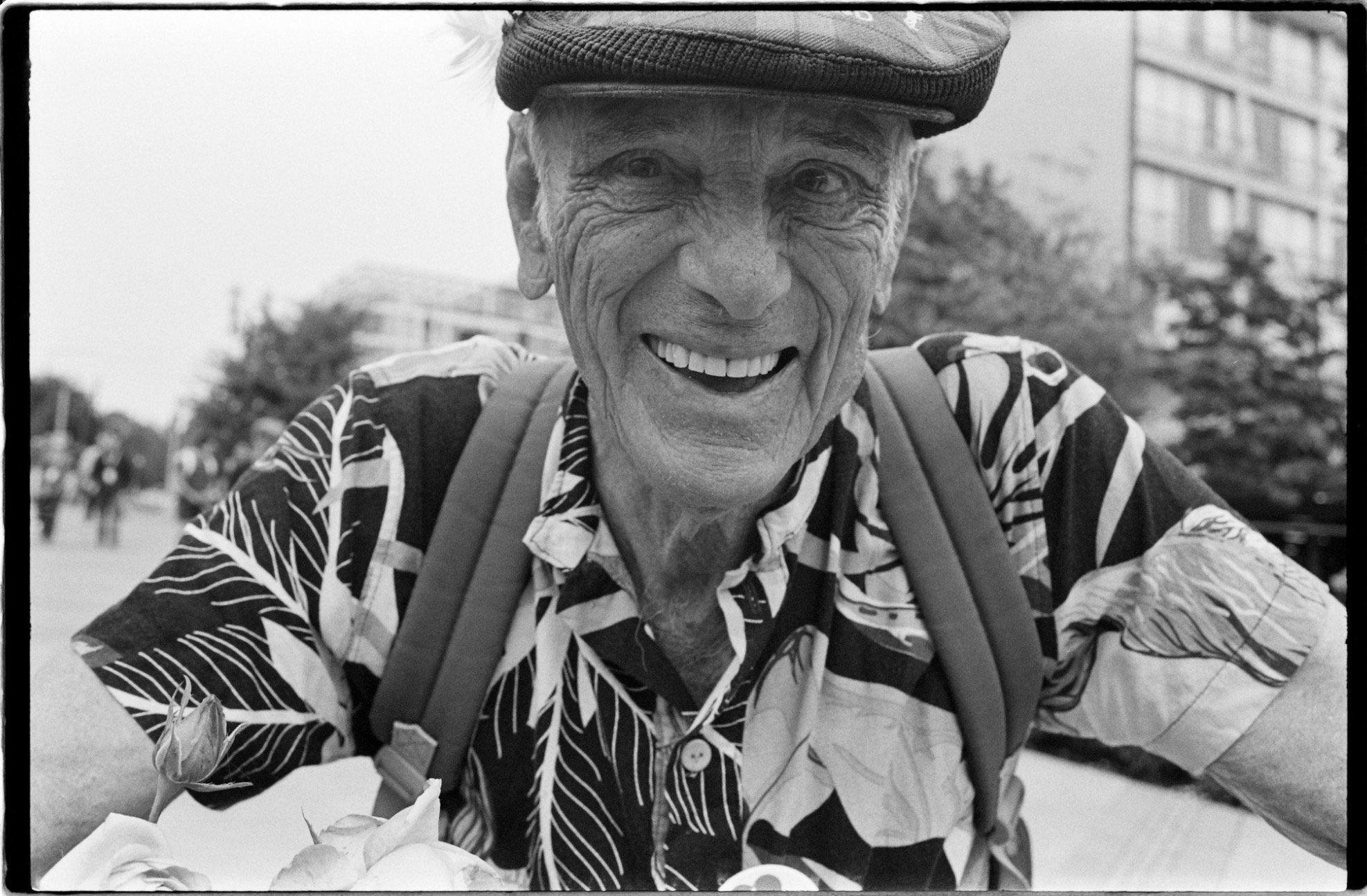
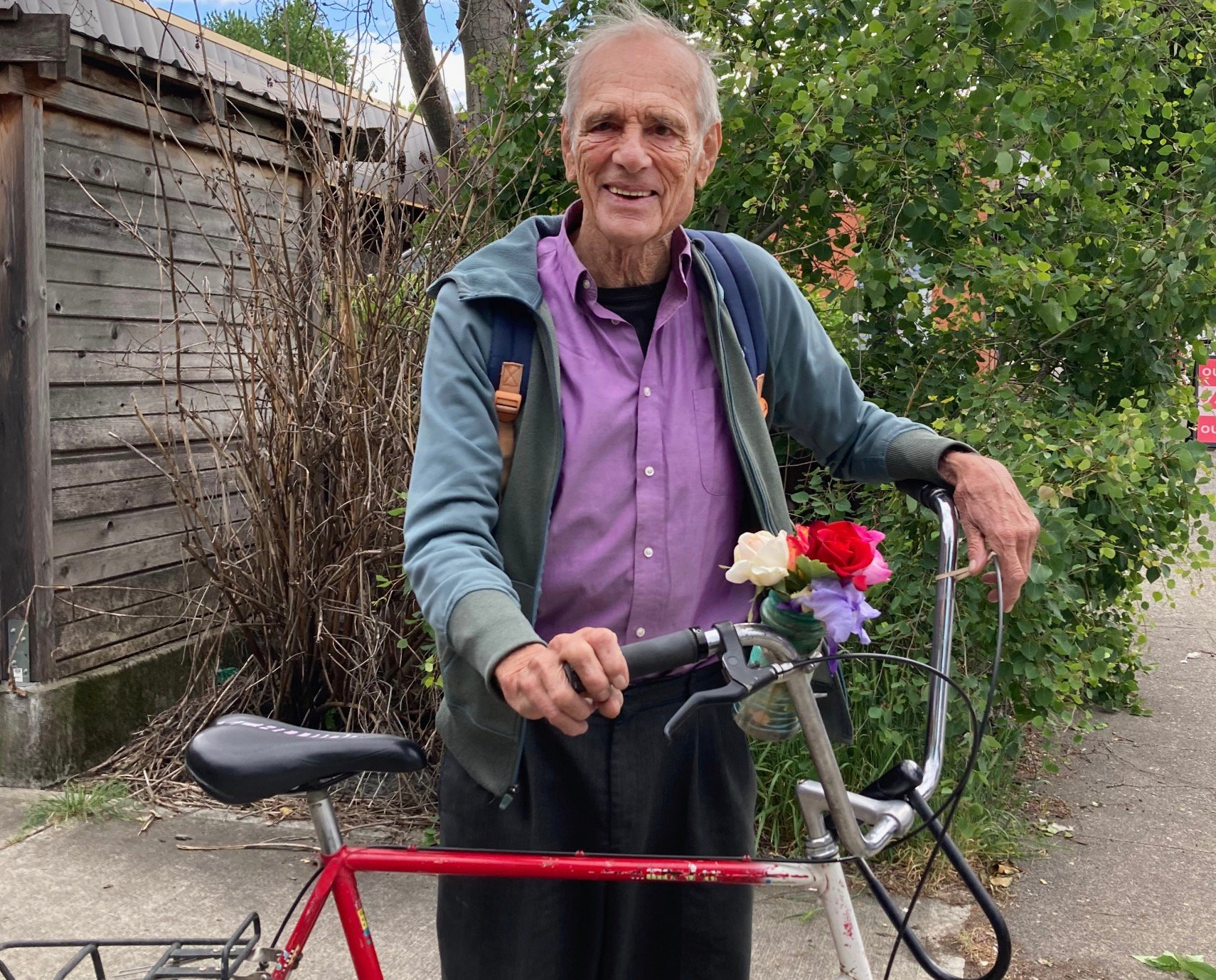
The man who died after being struck by a MAX light rail train on Wednesday was 81-year old Michael O’Callaghan. He was a lifelong activist who organized and implemented several successful community initiatives in over a half-century of public service. And he showed no signs of slowing down, as he ran an inspiring campaign for Portland Mayor just last year.
Some of us got to know “Mayor Mike” during his recent mayoral campaign and his regular attendance at Bike Happy Hour. Mike, who lived in a makeshift shelter on Portland streets for the past 15 years, was eager to speak during open mic and tell us about his ideas.
Zack Reinhardt, a mechanic at Splendid Cycles near the entrance to the Springwater Corridor path, told BikePortland that Mike was a good friend of the shop. “Mayor Mike was a fixture of southeast Portland,” Zack shared. “You could often find him drinking coffee at Spielman’s bagels on Division or riding his bike along the Springwater.”
Michael O’Callaghan. (Photo courtesy of his campaign)
Here’s more from Zack:
Advertisement
“He would routinely visit Splendid Cycles to thank us for providing an open water spigot to the public, occasionally bringing us gifts: freshly picked flowers, a potted orchid, and even once home made blackberry wine. He was a living example of kindness and generosity.”
Mike hailed from Anchorage, Alaska where he was known for decades of grassroots activism that focused on helping people in need. Whether it was giving away free food from the back of his bicycle trailer or free bicycles from a bike share program he created in 1977 — Mike never shied away from a bold idea and was the quintessential do-it-yourselfer.
In 1987, his work earned him a mention as an “unsung hero” in Newsweek magazine.
Mike at Bike Happy Hour in October 2024. (Photos: Jonathan Maus/BikePortland)
Mike had such an impact on his former hometown that the Anchorage Daily News published a where-are-they-now profile of him in 2020. Here’s an excerpt from that article:
“For several decades, Michael O’Callaghan was one of Anchorage’s most colorful activists and political gadflies. His causes were myriad and wide ranging. With him now in Portland, is there anyone left in Anchorage that combines his mixture of humanism, flair for the dramatic and quixotic inclinations?”
It’s still unclear what exactly happened before Mike was struck and killed. He lived along the Springwater Corridor, very close to the rail crossing at SE 8th and Division, and had likely made it across that same intersection countless times without any problems. What we do know is that Portland has lost a wonderful human who embodied much of what makes our city so special.
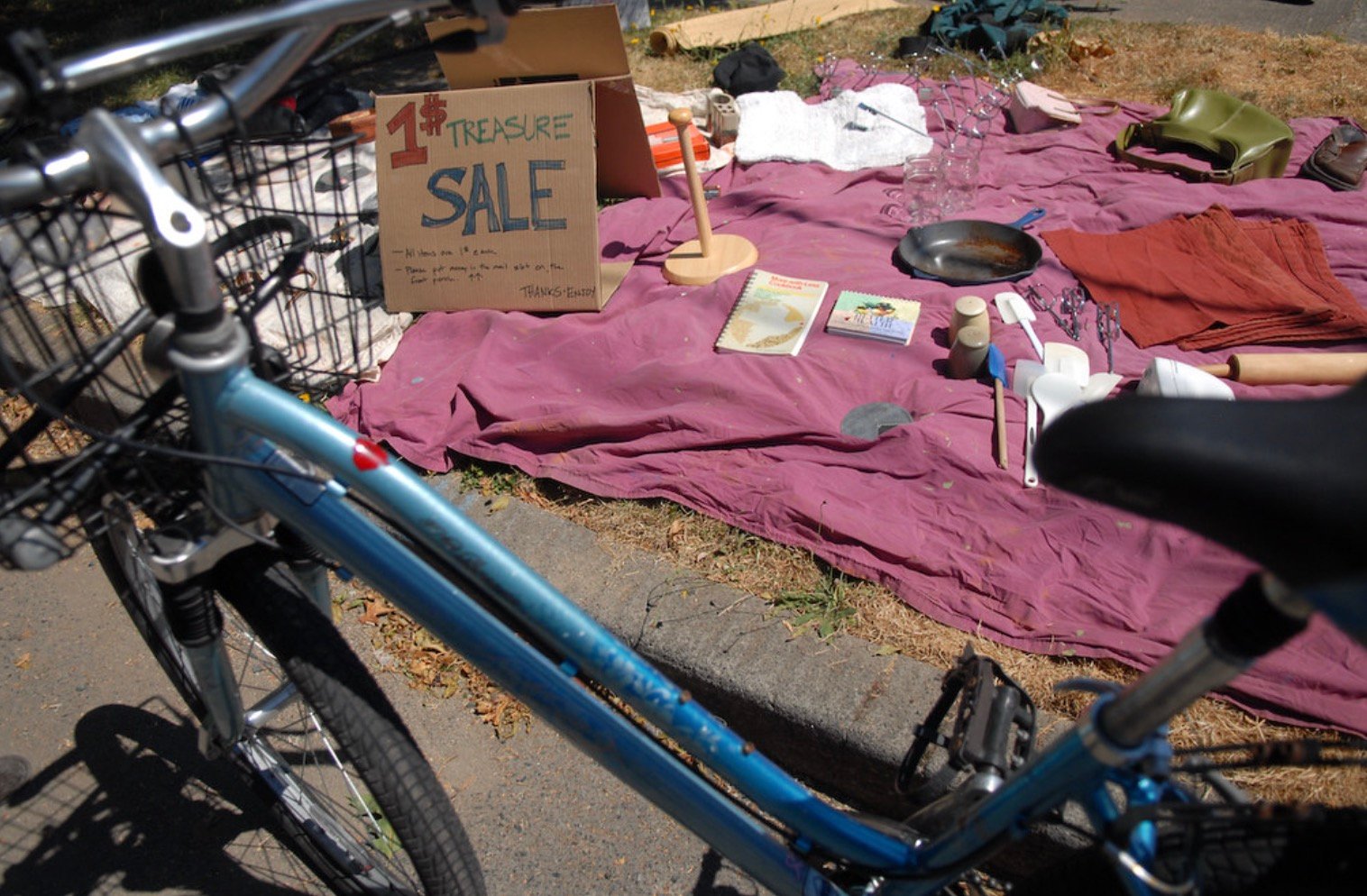
Yard sales by bike are so fun. (Photo: Jonathan Maus/BikePortland)
Honestly it is sort of a bummer putting this guide together knowing that I get my second knee surgery tomorrow and I’ll be out of commission (again!) for a bit. Have fun for me and I hope to be back out there documenting fun rides later this summer or early fall.
🚨 NOTE: The Hawthorne Bridge will be closed to all vehicles (bikes included!) from 6:00 am to 6:00 pm this Sunday (6/22)! More info here.
Below are my selections for the best rides this weekend…
Saturday, June 21st
Urban Arrow Product Launch Event – 9:30 am at Clever Cycles (SE) Cargo bike company Urban Arrow has a big new model and Clever Cycles is having a party to celebrate the big reveal. Come and enjoy family-friendly activities and learn more about this cool new bike. More info here.
Laurelhurst Yard Sale Ride – 9:30 am at Crema PDX (SE) There’s no better way to peruse a massive, neighborhood-wide yard sale than from the seat of your bicycle. Prizes given for bikey-est item, most unusual find, and more. More info here.
Grilled by Bike – 11:00 am at Ladd’s Circle Park (SE) It’s the 10th anniversary of this wonderful tradition that melds grilling, chilling, and bicycles. Put a grill on your bike and join the fun — or come out and gawk at the cool contraptions and burner set-ups and get inspired to build your own. More info here.
Salmon Painting – 4:00 pm on Salmon Street between 10th and 11th (SE) Join Strongtowns PDX, City Repair, and Pacific Rivers for a street painting block party. On the agenda: Painting big salmon on our beloved greenway. More info here.
Advertisement
Sunday, June 22nd
Sandy Donut Ride – 10:00 am at Meadowlark Shopping Center (SE) The Portland Bicycling Club will lead this group ride to the famous Joe’s Donuts in Sandy. Expect a 35-mile route through rural eastern parts of Multnomah County. More info here.
Bike Milwaukie Monthly Ride – 10:00 am at Milwaukie Station Food Cart Pod (Milwaukie) Get hip to the next big things in the cycling network of Milwaukie, the quaint city to our south. Experienced Milwaukieites will show you where future greenway routes could go. Ends at a great place for lunch. More info here.
Pedals, Places, and Possibilities – 11:30 am at Irving Park (NE) Get to know some of Portland’s best placemaking projects — some of which are right under our noses yet often unsung. Ride is led by City Repair as part of the annual Village Building Convergence. More info here.
The MySpace Ride – 2:00 pm at Tanner Springs Park (NW) Harken back to that glorious yesteryear of 2005 when a site called YouTube just launched and folks posted cringey status updates on their MySpace pages. “Because nothing says “social networking” like a bunch of adults pretending it’s still 2005… on bikes,” says the ride leader. More info here.
— Did I miss your event? Please let me know by filling out our contact form, or just email me at maus.jonathan@gmail.com.
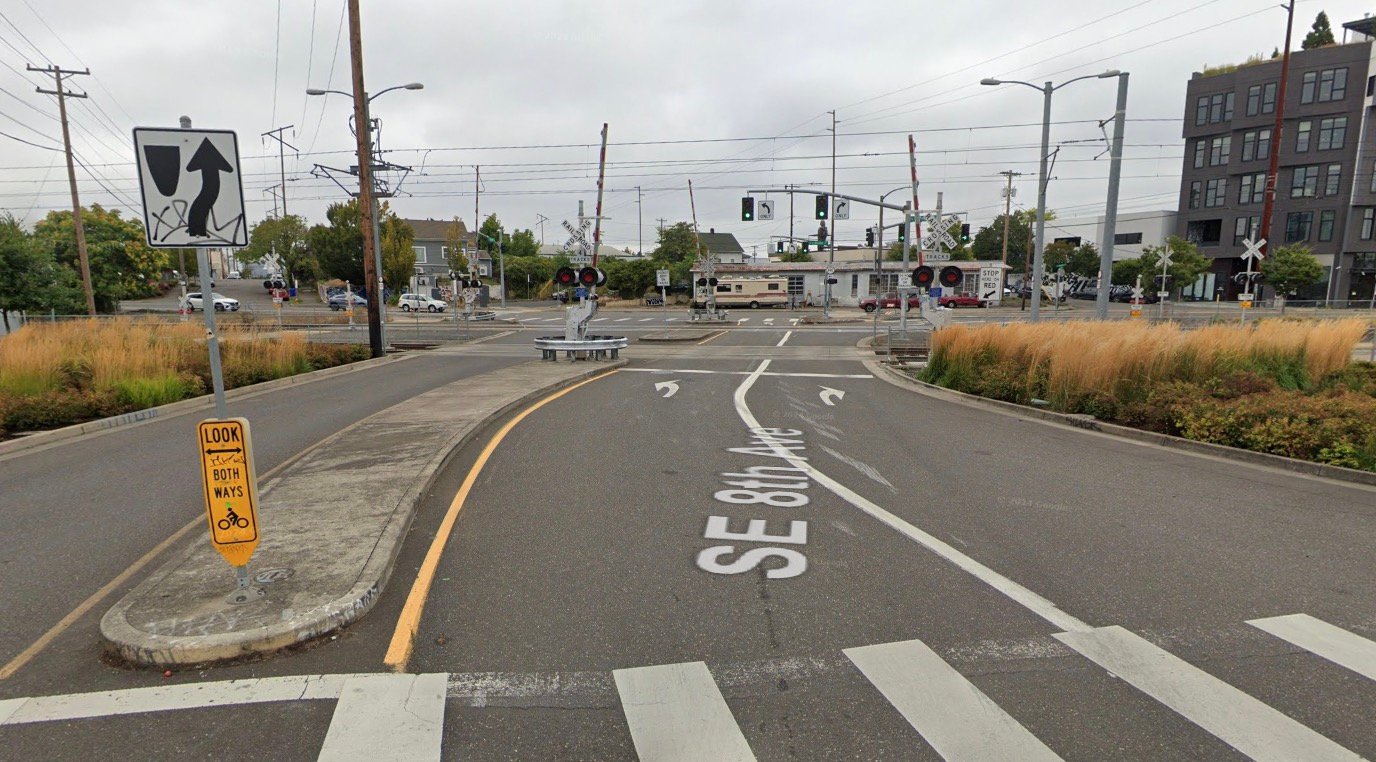
Looking north on SE 8th Avenue where it crosses the rail tracks.
A person riding a bicycle died after being involved in a collision with a MAX light rail train today around 1:30 pm. It happened near Southeast Division and 8th Avenue.
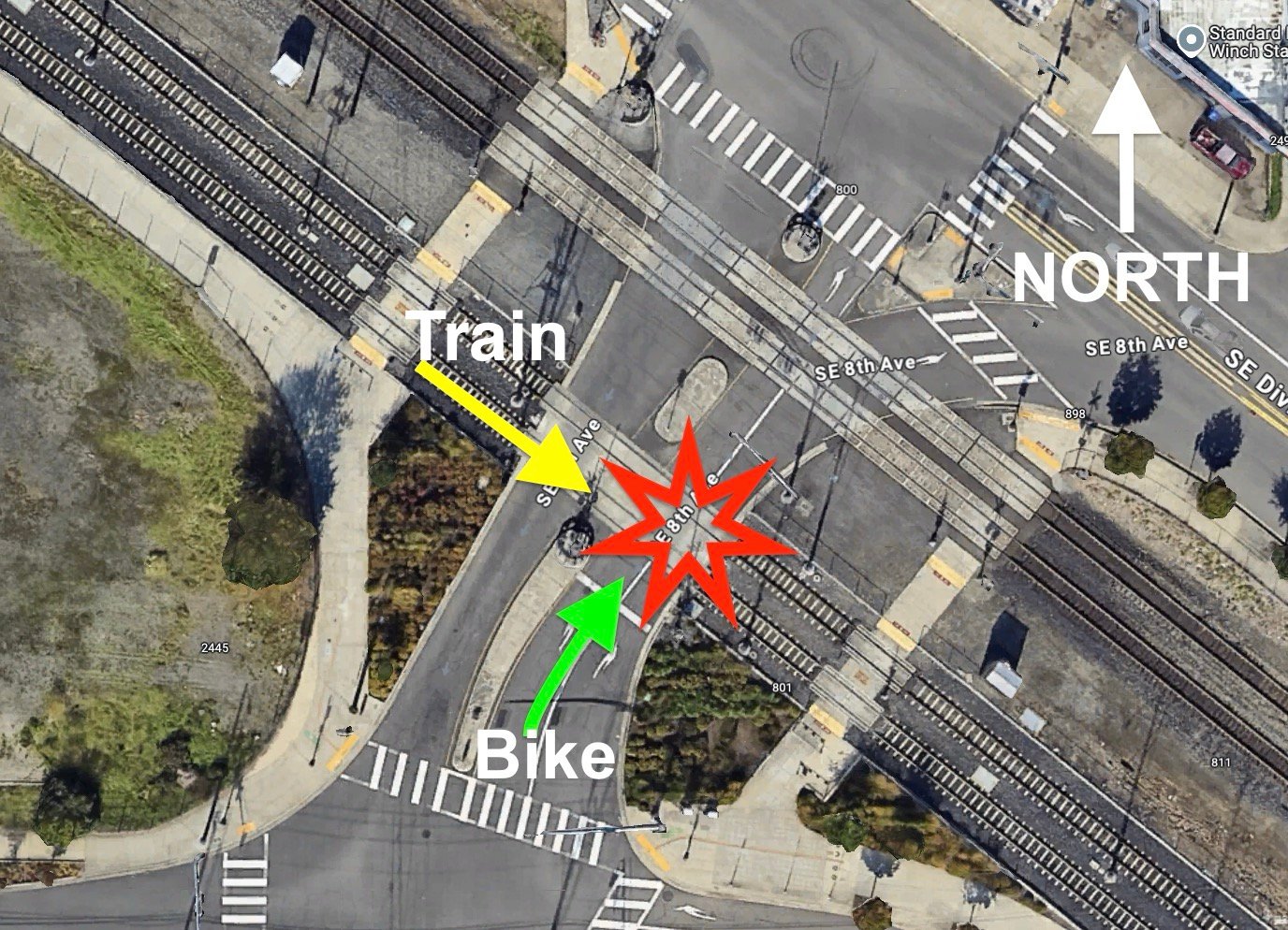
It appears that the bicycle rider was using the street, not the bike path. The Multnomah County Sheriff’s Office says the rider was headed north on SE 8th when they went around caution barriers that had been lowered due to the passage of a Union Pacific train.
“The cyclist rode his bike into the opposing southbound lanes of travel, where there are no crossing arms, and was subsequently hit by a MAX train traveling in the direction of Milwaukie as he crossed the railroad tracks,” reads the Sheriff’s statement.
There are four rail tracks at this location — two northern tracks for heavy rail and two southern tracks for light rail. According to local news reports, TriMet Media Relations Manager Tia York said at the scene that, “Maybe [the cyclist] was anticipating or looking out for the Union Pacific train and didn’t stop to think that there could be a MAX train here as well.”
With four sets of tracks it’s very possible this bike rider saw one train clear the intersection and believed it was safe to cross — only to be hit by a train they never saw.
There is still more to learn about this crash. Stay tuned for more coverage. If you saw what happened and have anything to share, please get in touch.
UPDATE: A BikePortland reader rolled past the scene right after it happened and shared this account:
I rode past as the 2nd fire rescue was arriving on-scene.
The MAX train was headed east toward Gresham and was in the furthest South TriMet line of the 4 tracks.
There was a white ball-cap (and some misc other debris) in the northbound car lane on SE 8th Ave. and the cyclist was dragged east from the crossing before the MAX train stopped with the cyclist on the south side of the train outside the rail pinned under one of the MAX cars.
Even if there had been a Union Pacific freight train, that would have not obscured the cyclist view of the MAX train. Perhaps there was an approaching UP train that they were racing to beat and had tunnel vision on the UP locomotive. Or they were just trying to beat the MAX train at the very last second, going north in the southbound lane to avoid the crossing arm.
UPDATE, 6/19 at 3:50 pm: KOIN is reporting (via the Multnomah County Sheriff’s Office) that the person who died in this collision was 80-year-old Michael O’Callaghan. O’Callaghan, who liked to be called “Mayor Mike,” ran for Portland Mayor in the last election and was a regular at Bike Happy Hour where he spoke several times on open mic about his plans to help the homelessness crisis. This is such sad news. Mike was a really bright and warm guy. Check out his campaign website to learn more about him.
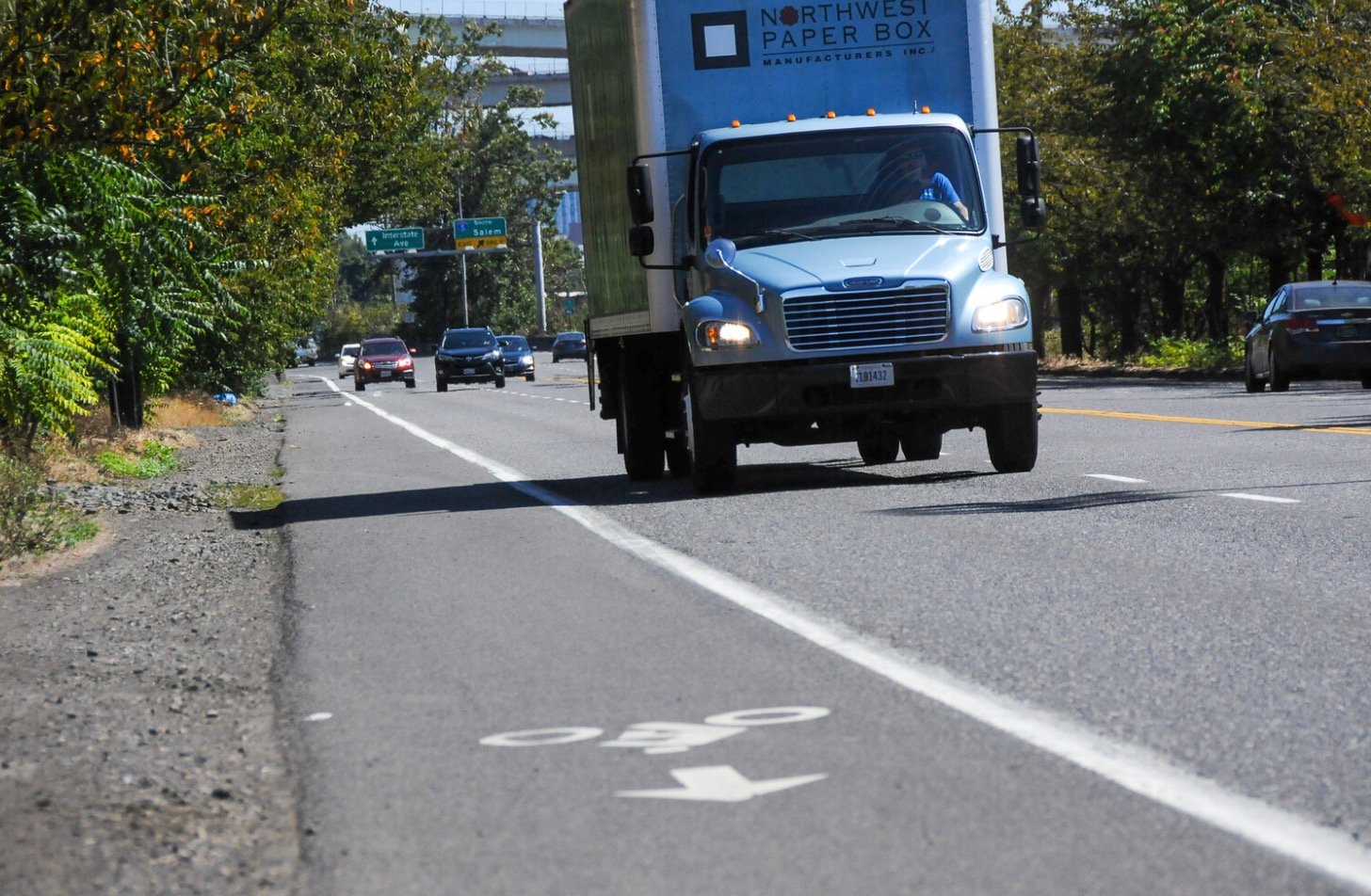
Lane widths matter. (Photo: Jonathan Maus/BikePortland)
A slew of additional amendments to House Bill 2025 have been posted in the last 24 hours as lawmakers attempt to pass a major transportation spending package before the end of the session.
There are now a total of six amendments to the original bill. Some are very minor, while others are consequential. Yesterday I shared how lawmakers want to address an e-bike rebate program and a funding increase for the Oregon Community Paths Program — both of which were left out of the original bill.
Two new amendments seeks to address a major concern of may transportation safety advocates: a provision in the original bill that seeks to establish a minimum lane width of 12-feet on all major freight routes in Oregon.
This provision, likely inserted into the bill by a lawmaker at the behest of trucking industry advocates, would have codified into law a minimum lane width of 12 feet on “identified freight routes.” The trust deficit around this issue and ironclad, top-down rule about something as important as lane widths, raised many eyebrows. In a newsletter to her constituents in Albany and Corvallis, State Senator Sara Gelser Blouin said the impacts of the legislation would be “alarming”. Sources told BikePortland that even top planners and engineers at the Oregon Department of Transportation were opposed to the idea.
Advertisement
The two amendments — the “dash 13” introduced by Joint Committee on Transportation Reinvestment Co-chairs, Sen. Chris Gorsek and Rep. Susan McLain; and the “dash 15” introduced by Rep (and Joint Committee on Transportation Reinvestment member) Mark Gamba — seek a compromise: it would still call for 12-foot lane widths, but not if “safety or access considerations require otherwise.” The proposed new rule would also apply only to: newly constructed lanes, lanes that are officially designated freight routes on state highways, and lanes are located outside of an urban growth boundary.
The changes proposed in these amendments are clearly aimed at preventing the lane width provision from having a negative impact on bicycling, walking, and other road users whose safety is directly connected to crossing distances.
Gamba’s 95-page amendment (known as “dash 15” because it’s HB 2025-15) seeks many other changes to the original bill and it’s based on the same “SMART [Safe, Modern, Affordable & Accountable, Reliable Transportation] Framework” that he and a group of progressive Democrats released earlier this month.
The Joint Committee on Transportation Reinvestment held an informational meeting on HB 2025 Tuesday evening and is scheduled for a work session and possible vote Thursday (6/19). Learn more about the bill via the Oregon Legislative Information System (OLIS) or in the BP archives.
One glaring omission from the transportation bill that was released last week was language that would create an electric bike rebate program. When I spoke to House Representative Mark Gamba (D-Milwaukie) in April, he assured me the rebate policy he crafted in House Bill 2963 would be folded into the larger bill. But when HB 2025 came out, it was nowhere to be found.
Now the e-bike has returned to the bill in an amendment that was just made public a few minutes ago. The amendment would also boost funding for carfree biking and walking paths after a week of intense lobbying from transportation and environmental advocacy groups.
The amendment adds an increase to the existing vehicle privilege tax for luxury cars, bringing the rate to 4% of the retail price. Oregon’s vehicle privilege tax was set at 0.5% in 2017 and with this amendment to HB 2025, it would be raised to 1% for vehicles that sell for less than $75,000 and up to 4% for vehicles over that price.
As I reported yesterday, a “luxury vehicle tax” emerged from a coalition of advocates and lawmakers who were concerned that major transportation needs were left out of HB 2025. Chief among them were electric vehicle and charging infrastructure subsidies and more funding for off-highway walking and cycling paths. The -11 amendment posted today addresses these concerns.
Advertisement
Of the total revenue raised by this tax increase, half will go to the Railroad Fund (no change with this amendment), but of the remaining 50% would now be split in the following ways:
33% to the Multimodal Active Transportation Fund (that funds the Oregon Community Paths Program),
37% to the Zero-Emission Medium- and Heavy-Duty Vehicle Incentive Fund,
15% to the Medium- and Heavy-Duty Electrification Charging Fund,
10% to the Department of Transportation Operating Fund, “for the purpose of providing rebates for the installation of electric vehicle charging stations under the department’s community charging rebates program,”
and 5% to the Electric Bicycle Incentive Fund.
According to the amendment, the E-Bike Incentive Fund would remain largely the same as Gamba first proposed. It would give a rebate voucher of $1,200 to individuals who are 16 or older and who are already enrolled in a state program that provides medical assistance. The program would be housed in the Department of Human Services and they would coordinate with Oregon Health Authority using the existing Oregon Eligibility (ONE) System to verify who qualifies.
The only difference I can see in the program is that there would no longer be a set amount of revenue for it. Gamba initially asked for $5 million to kickstart the fund, which would have been enough for about 4,000 to 5,000 vouchers. I haven’t seen the math yet on how much revenue 5% of the vehicle privilege tax would raise.
The next hearing on the bill is an informational meeting scheduled for 5:00 pm tonight (Tuesday). Then on Wednesday at 3:00 pm the Joint Committee on Transportation Reinvestment has scheduled the bill’s first work session. Check out HB 2025 on the state’s legislative information website for more information.
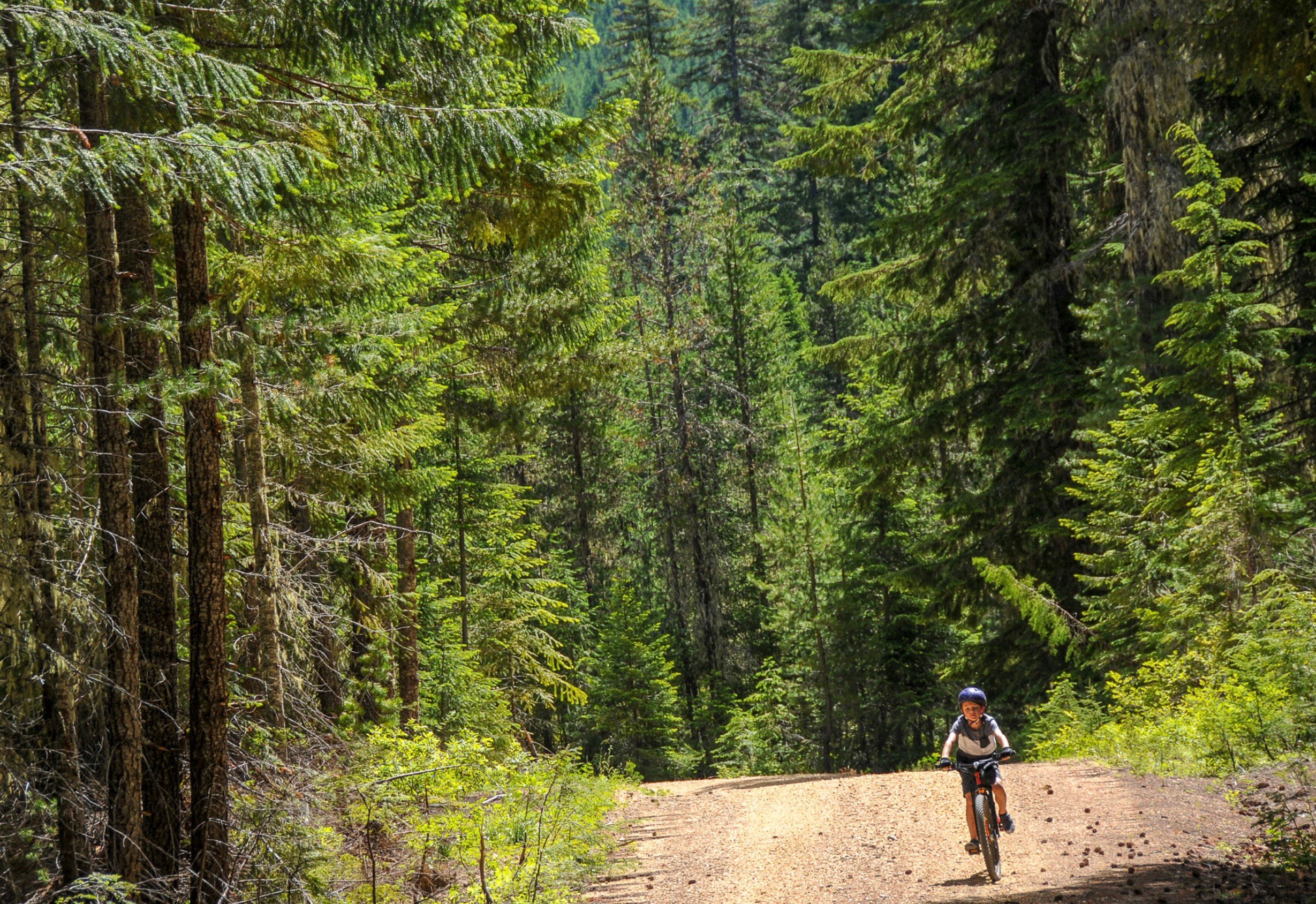
Riding in the Gifford Pinchot National Forest near Trout Lake. (Photo: Jonathan Maus/BikePortland)
A plan to sell off about millions of acres of public land for housing development has raised eyebrows among many Oregonians who say it threatens popular cycling routes in nearby forests.
The legislation is included in the Trump Administration’s budget bill and it was released last week by the Senate Committee on Energy & Natural Resources (ENR). The proposal would require the Bureau of Land Management and U.S. Forest Service to identify between 2 and 3 million acres of land and sell it to the highest bidder. Any land sold through this process must be developed into housing or “community needs as defined by the Secretary of the Interior.”
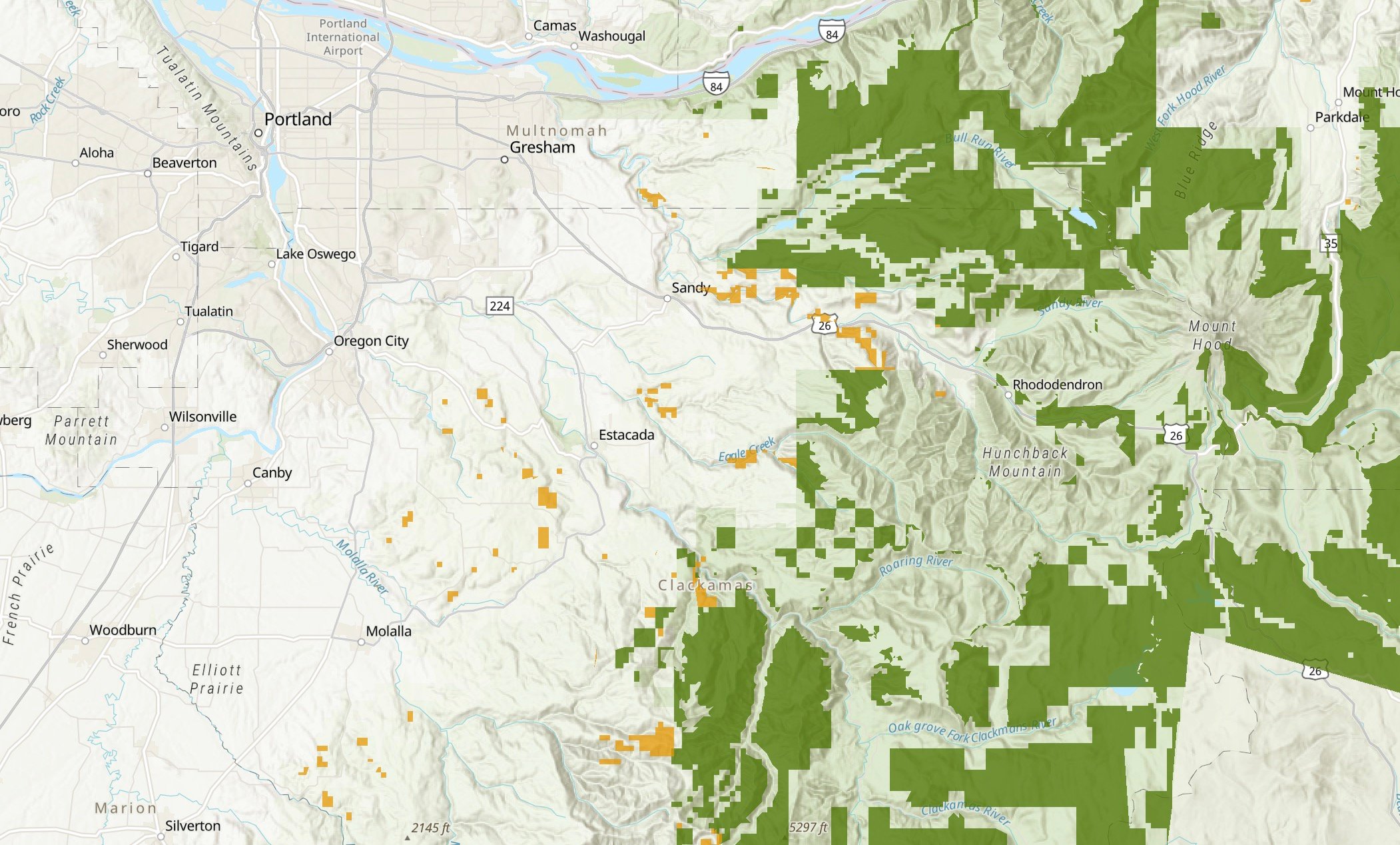
According to the Wilderness Society, 21.7 million acres of public land in Oregon would become available for sale. A map shared on their website shows large swaths of land in the Cascade Range that could be sold. USFS tracts east of Portland between the Sandy and Columbia Rivers — including popular roads and trails around Larch Mountain and the Bull Run Reservoir — could be sold for development. And while the bill text says protected areas, national parks and national monuments would not be eligible for sale, the Trump Administration is also making moves to undo those designations.
Advertisement
Tracts of public lanes eligible for sale in yellow (BLM) and green (USFS). (Source: Wilderness Society)
The ranking Democrat on the ENR Committee, Sen. Martin Heinrich from New Mexico, said the legislation would, “Take a sledgehammer to our national public lands,” and that it’s not about housing: “It’s about giving their billionaire buddies your land.” The Wilderness Society says the bill would set an “extremely dangerous precedent” and that it, “includes a range of extraordinary giveaways aimed at privatizing public lands.”
Republicans who support the legislation reject these criticisms and say the total acreage sold would amount to just 0.5% to 0.75% of the total land currently held by the BLM and USFS. They say it would help solve the housing affordability crisis because only lands that are 1-5 miles from a major population center would qualify for the sale. A fact sheet published by the ENR Committee states that, “Unlocking federal land for housing will develop millions of single-family homes, resulting in greater housing supply and making housing more affordable.” (Note they mention “single-family homes,” which validates fears that any housing built on the lands wouldn’t be affordable.)
If the bill were to pass, the current language says the Secretary of the Interior would have to consult with the Governor of the state were the land sale is proposed, as well as local government and tribal representatives. But given the track record of playing fast-and-loose with the law and major lack of trust in the Trump Administration in general, those provisions are no source of solace.
The public lands sale legislation is part of a package of proposals in Trump’s “big beautiful bill” that includes a vast overhaul of energy policy that would, “repeal billions in unspent Green New Deal handouts,” vastly expand timber farming and oil and gas leases, encourage coal mining, and more. Learn more about the bill at ENR’s website.
The Fanno Creek Trail in Washington County is the type of facility that could be funded with Oregon Community Path Program grants. (Photo: Jonathan Maus/BikePortland)
Oregonians are flooding the voicemails and inboxes of state lawmakers in hopes of reminding them that something left out of the big transportation bill is worth funding: off-street, walking and cycling paths.
When some path advocates looked through the 102-page House Bill 2025, they were dismayed to find that the Oregon Community Paths Program was nowhere to be found. Now, with support from Joint Committee on Transportation Reinvestment Co-chair Senator Chris Gorsek, they’re pushing a new luxury tax on expensive cars to help the program meet demands.
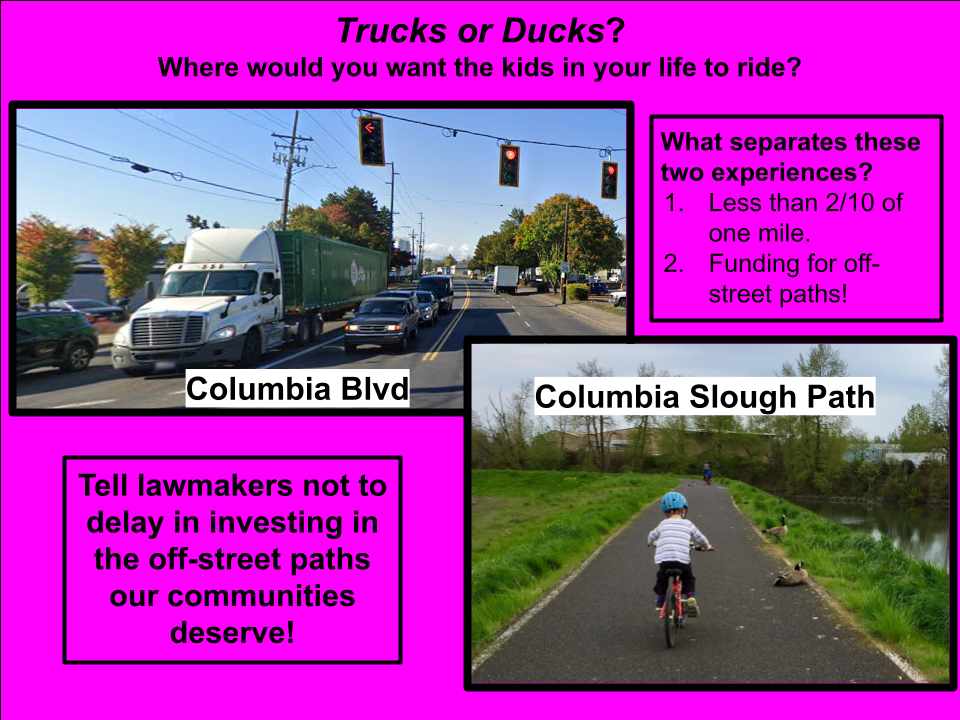
“Trucks or ducks? Where would you want your kids to ride? Tell lawmakers not to delay in investing in the off-street paths our communities deserve!” reads a graphic from the nonprofit Oregon Trails Coalition that features an image (below) of a semi-truck on Columbia Boulevard next to a child riding on the Columbia Slough Path.
Advertisement
The Oregon Community Paths (OCP) Program was established in 2017 when the previous transportation bill created the Multimodal Active Transportation Fund and filled it with revenue generated by the $15 bike tax and a portion of Oregon Lottery proceeds. Since 2017, ODOT has added funding from the Federal Highway Administration and a portion of a statewide tax on car dealers to bolster program resources. Grants are awarded every other year. In its first year (2021), the program awarded $11.3 million to 21 projects across the state. In its second year, $37 million was awarded. While that sounds like good news, keep in mind that for every dollar the program awarded in its first two funding cycles, four dollars in project applications were denied. This year, the Oregon Department of Transportation says they have $61 million to allocate and they’ve had over $120 million worth of project applications.
(Source: Oregon Trails Coalition)
House Bill 2025 as it was released last week included no new funding for the OCP program, which means demand for these projects will continue to outstrip demand. The lack of new funding was surprising given that the bill framework released back in April mentioned the OCP and included very positive language about the need to fund them. That initial proposal sought an increase in the bike tax which ostensibly would have led to a commensurate boost to the OCP Program; but when the bill finally came out last week, the bike tax increase was off the table.
Given the myriad benefits of providing safe places for Oregonians to walk and roll without the stress of drivers and their cars, path and trail project advocates say the time is now to increase funding.
Advertisement
“We cannot accept a transportation package that puts hundreds of millions of new transportation dollars on the table while making zero attempt at addressing the funding shortfall for Oregon Community Paths!” exclaimed Oregon Trails Coalition Executive Director Steph Noll in an email to BikePortland last week.
Instead of increasing the existing bike tax, Noll and other groups — along with hundreds of their supporters — have been busy in the past week writing letters to lawmakers asking for support of a luxury vehicle tax. Path and trail advocates have joined forces with environmental, energy, and electrification nonprofits to push for a 4% luxury tax on vehicles that sell for over $75,000. Revenue from the new tax would fund the OCP Program and vehicle electrification initiatives.
Marisol De La Torre, a legislative advocate with Oregon Just Transition Alliance testified in support of the tax at a public hearing on HB 2025 last week. She told lawmakers it’s not fair when higher taxes and fees hit lower-income communities. “Those with the means must pay their fair share,” De La Torre said. “We are encouraged by the idea of a luxury vehicle sales tax.”
Advertisement
Rogue Climate Legislative Coordinator Zoe Serrano told lawmakers via testimony on the bill that, “It’s time to get creative with ideas like the 4% luxury vehicle tax that calls on those who can afford it most to invest in safe, healthy, connected communities across Oregon.”
Noll says an official amendment to HB 2025 is forthcoming, but I haven’t seen it posted yet. The language is expected to spell out that one-third of revenue generated by the new tax would go to OCP Program (via Multimodal Active Transportation Fund) and the remaining two-thirds would go toward electric vehicle incentives and charging infrastructure. (A group of Democrats are pushing a SMART Framework that would raise $20 million per year for the OCP Program.)
Given that HB 2025 already seeks to impose a 3% tax on new cars (a 1% vehicle privilege tax and a 2% transfer tax on new vehicles), the additional luxury tax would put a 7% tax on new luxury vehicles. Proponents of the concept say this would put Oregon on part with nearby peer states like Connecticut, Idaho, Montana, and Nevada, who have similar new car taxes of 7.75%, 6%, 11% and 8% respectively.
After hosting three public hearings for HB 2025 last week, the legislature is continuing to debate and negotiate the bill. Stay tuned for more coverage.
It’s sticker night! (Photos: Jonathan Maus/BikePortland)
Hope you can join us at Bike Happy Hour this week. On Wednesday from 3-6 pm we’ll gather in the Ankeny Rainbow Road Plaza for food, drinks, and conversations. As per usual, we’ll do free snacks around 4:00 and if you’d like to speak at open mic, just show up and step up around 5:30.
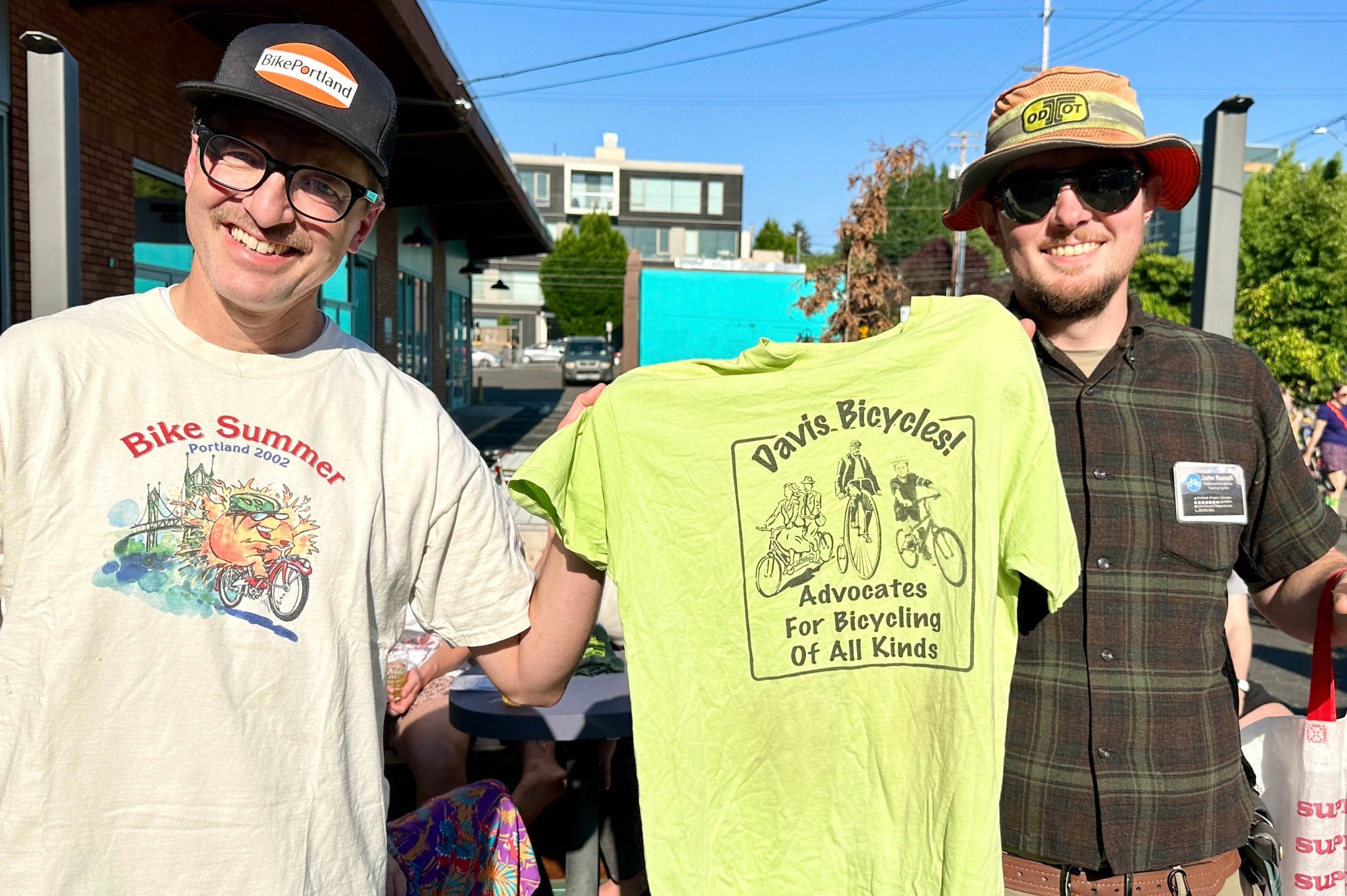
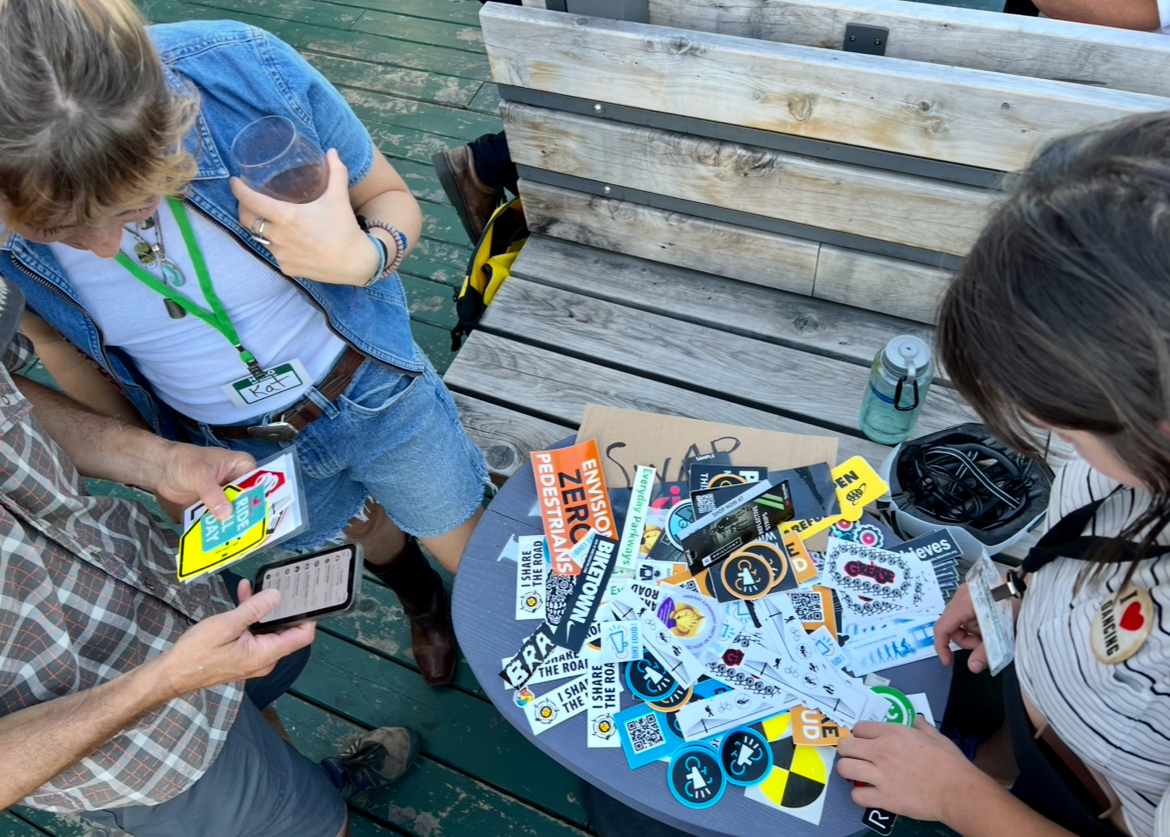
This week we’ll share stickers and bike t-shirts! Wear your fave bike-related tee and tell us a story about it. We’ll have a free pile table if you’ve got extras you want to recycle. I’ll bring a bunch of stickers to share and show, and I encourage everyone else to do the same. I just got some new stickers printed that I’m happy to share (especially if you make a contribution to BikePortland!) and I’ve got special “BikePortland Subscriber” stickers to give out as well. Stickers and t-shirts are the cultural currency of our community. They make our bikes and lives more colorful and interesting and they are a great way to spread propaganda and the joy of cycling.
I also noticed that the Cat Ride leaves from nearby Colonel Summers Park at 6:30 pm, so Bike Happy Hour would be a perfect spot to meet friends and pre-party!
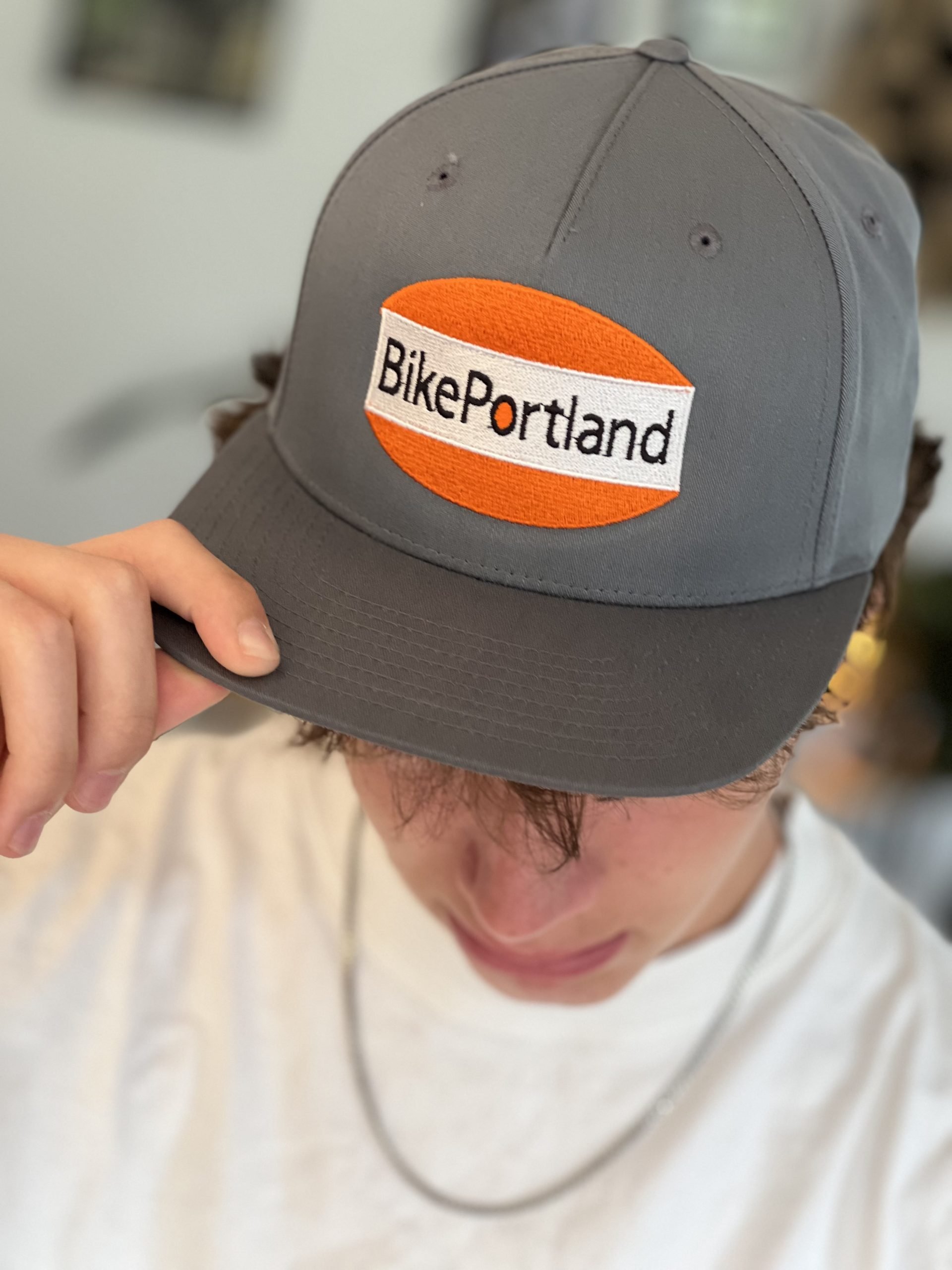
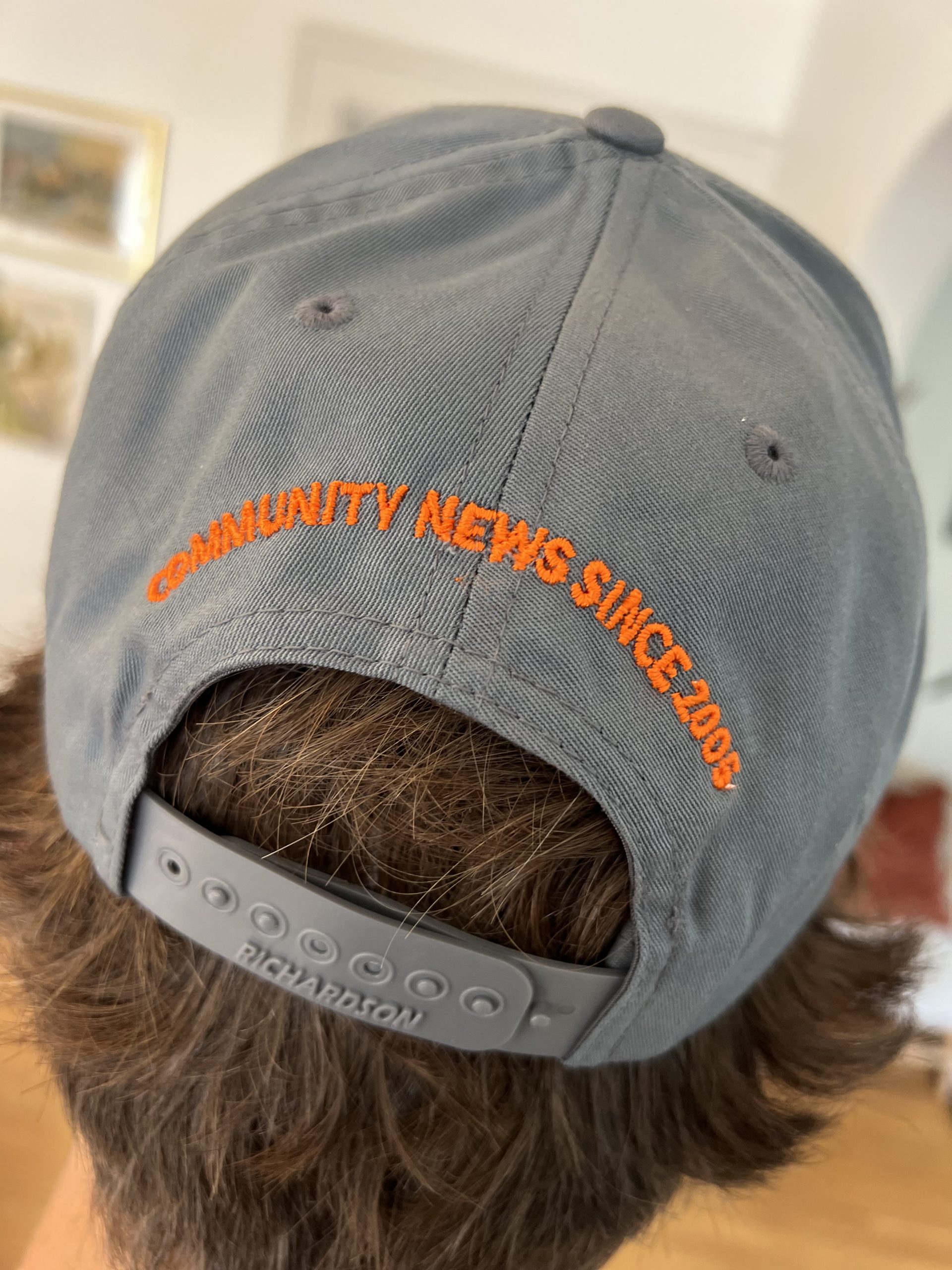
But wait, there’s more! I’ve got new BikePortland hats! They’re slate grey with the logo embroidered in the front and “Community News Since 2005” across the back.
After missing last week, I’m excited to see everyone. This Wednesday is also two days before my second knee replacement surgery, so I’ll be counting on see you to lift my spirits and get me through another rehab.
By the way, if you work in City Hall and want to sit down for an informal, live chat during Bike Happy Hour, just email me at maus.jonathan@gmail.com and we’ll make it happen. I’d love to talk with local electeds and city staff. Let’s open up our conversations to the community and expand our perspectives by listening to each and learning from one another.
Dig out your classic-est bike tee and tell us what it means to you!
Hope everyone had a nice weekend. I got through three graduation events and family in town, so this week should be a bit more chill for me. I’m really looking forward to Bike Happy Hour Wednesday where we’ll have our sort of annual sticker swap.
And with that, here are the most notable stories that came across my desk in the past seven days…
Boosting U.S. bike industry: A bill introduced in Congress with bipartisan sponsors would eliminate tariffs on components used to assemble complete bikes in the U.S. (Bicycle Retailer & Industry News)
Land sell-off: In their latest attempt to screw up our country just to own the libs and make a quick buck, the Trump Administration is prepping to sell millions of acres of public lands, including over six million acres in Oregon. So much for “This land is our land.” (The Wilderness Society)
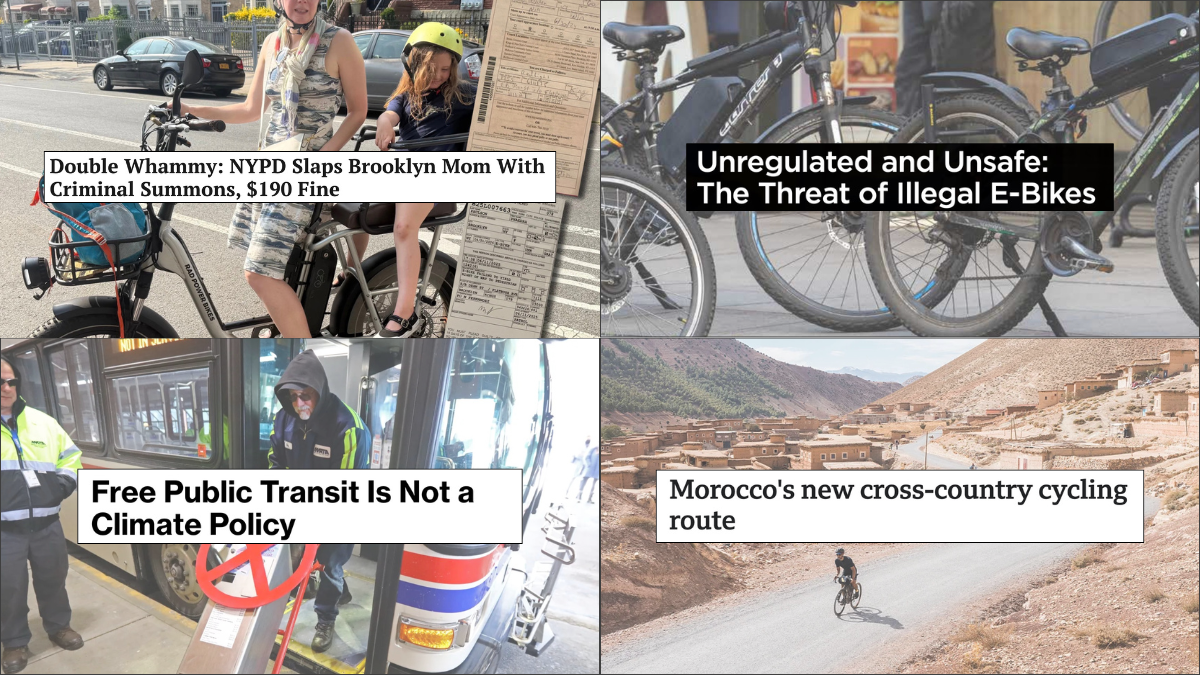
No fare, no healthier air: As you debate about fare-free transit, make sure to understand that it only has a positive emissions impact if it results in drivers switching to transit — and many examples show that doesn’t typically happen. (Bloomberg)
Advertisement
‘Fake’ e-bikes: A report by a UK parliamentary workgroup recommends taking aggressive action against what they call “fake e-bikes,” warning that their unsafe batteries, impacts on gig workers, and regulatory confusion is a threat to public safety and to legitimate e-bikes. (All-Party Parliamentary Group for Cycling and Walking)
Destroying a good thing: New York City continues to try and ruin all their progress as a cycling city by allowing their police officers to seek out cyclists with a heavy hand. (Streetsblog NYC)
Bikes save the day: A transit strike in Montreal led to a massive upswing in cycling trips as folks flocked to shared bikes and shattered daily ridership records when they couldn’t get on the bus or train. (CBC)
The Caravan Route: A new, 520-mile route in Morocco that follows the path of ancient trading caravans (hence the name) looks to be a perfect adventure to add to your bucket list. (BBC)