I’ve spent many hours thinking about how best to use BikePortland to help our community in this time of unprecedentedly reprehensible behavior from our national government and people who support it. I didn’t build this platform to stay in my lane when shit hits the fan. Sorry if this is off-topic for the Monday Roundup, but wanted you to know where my head has been lately. I’ll share more as the week goes on.
For now, below are the most notable stories folks shared with me and/or I stumbled on in the past seven days…
Brooklyn bribery: We think backroom deals between a commissioner and business owners is shady? In Brooklyn they do straight-up cash payments to get rid of bikeways! (Streetsblog NYC)
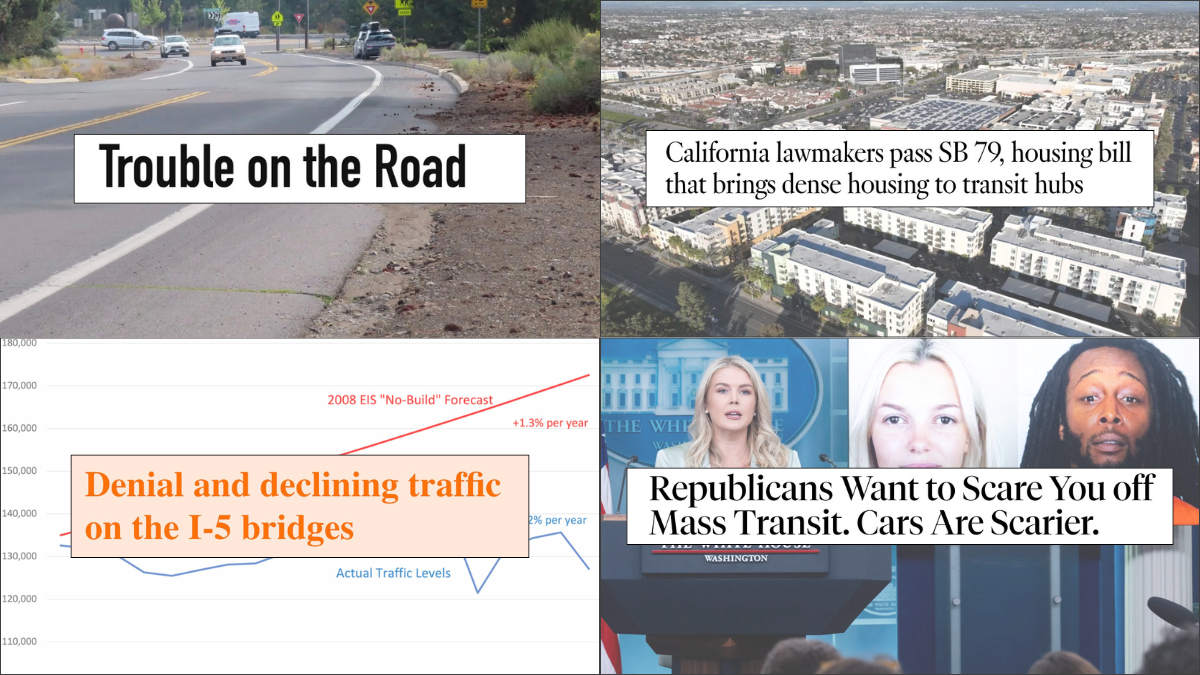
Big housing win: “California lawmakers passed SB 79, a bill that would override local zoning laws to allow dense housing developments up to nine stories near transit hubs statewide.” (LA Times)
Don’t fall for it: Some Republicans are capitalizing on a horrible death that happened on a light rail train in Charlotte, NC as a way to further marginalize public transit and push the narrative that driving cars is the only answer. (The New Republic)
Historic protest: An immense crowd of Free Palestine supporters stopped the final stage of the Tour of Spain. The bike race has been held for 89 straight years, but it couldn’t withstand fierce protests by large, well-organized pro-Palestine groups who wanted more visibility for the cause and objected to the Israeli sponsorship of one of the teams. The UCI has condemned the protestors and says their actions violate the Olympic Charter. (AP)
Advertisement
Road rage in Bend: A grown man driving a truck was so triggered by a bicycle rider in the road that he decided to assault him, causing multiple serious injuries. Turns out the cyclist was just a teenager. Thankfully, police arrested the driver. (The Source)
Real talk about mopeds and e-motos: This article from the UK about the rise in injuries from collisions involving large, high-powered “e-bikes” is chilling and could probably be written about a city in the U.S. (BBC)
Wasted money?: “ODOT and WSDOT are proposing to spend as much as $10 billion to widen a roadway where traffic is declining, is less than it was twenty years ago, and shows no signs of ever reaching the levels claimed in the project’s modeling and environmental analysis.” (City Observatory)
Thread of the week: The Bluesky thread from Qagggy! about what Seattle could accomplish with a bold mayor is very solid and inspiring. Let’s expect more than the status quo from “bike friendly” mayors!
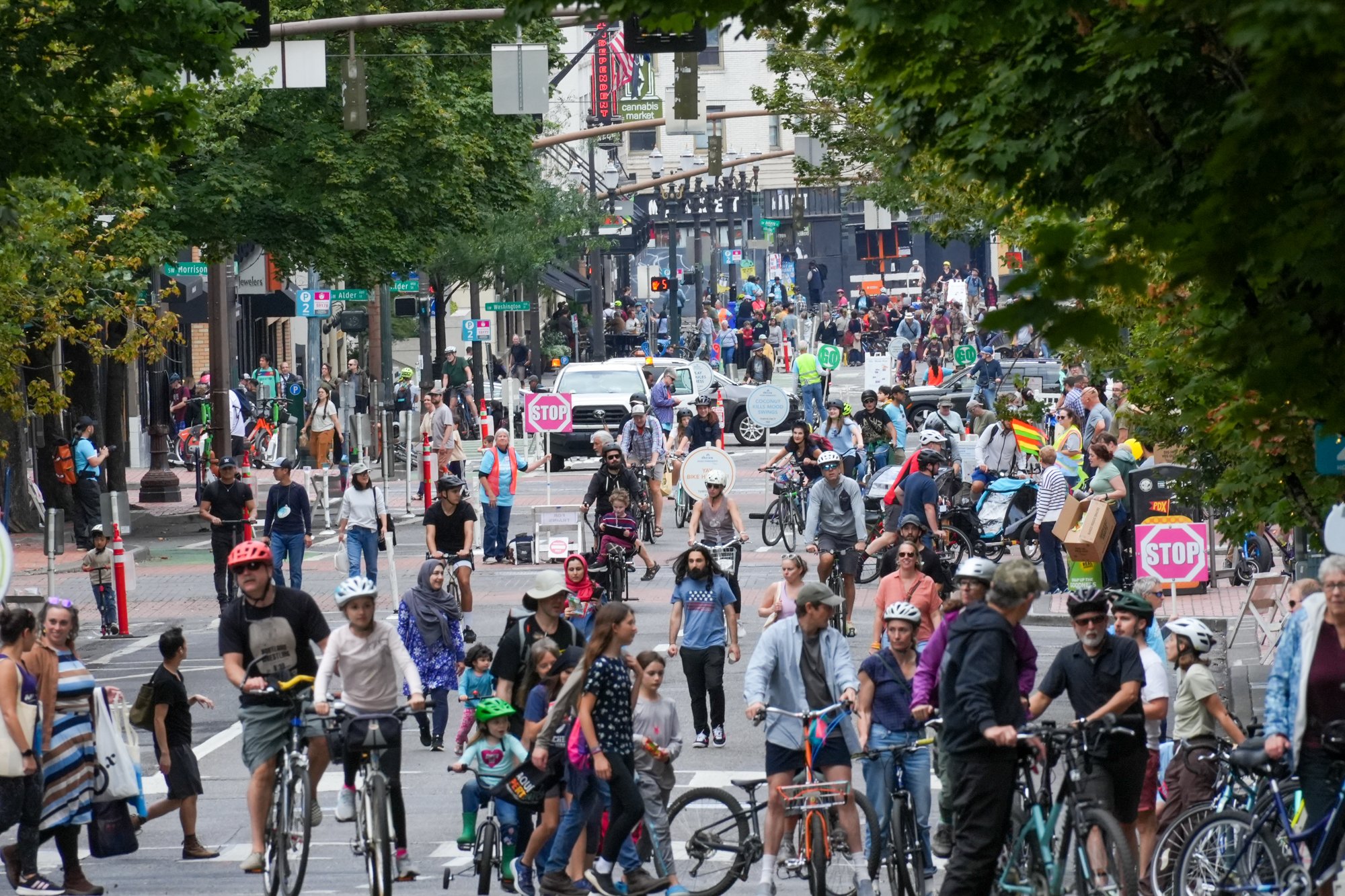
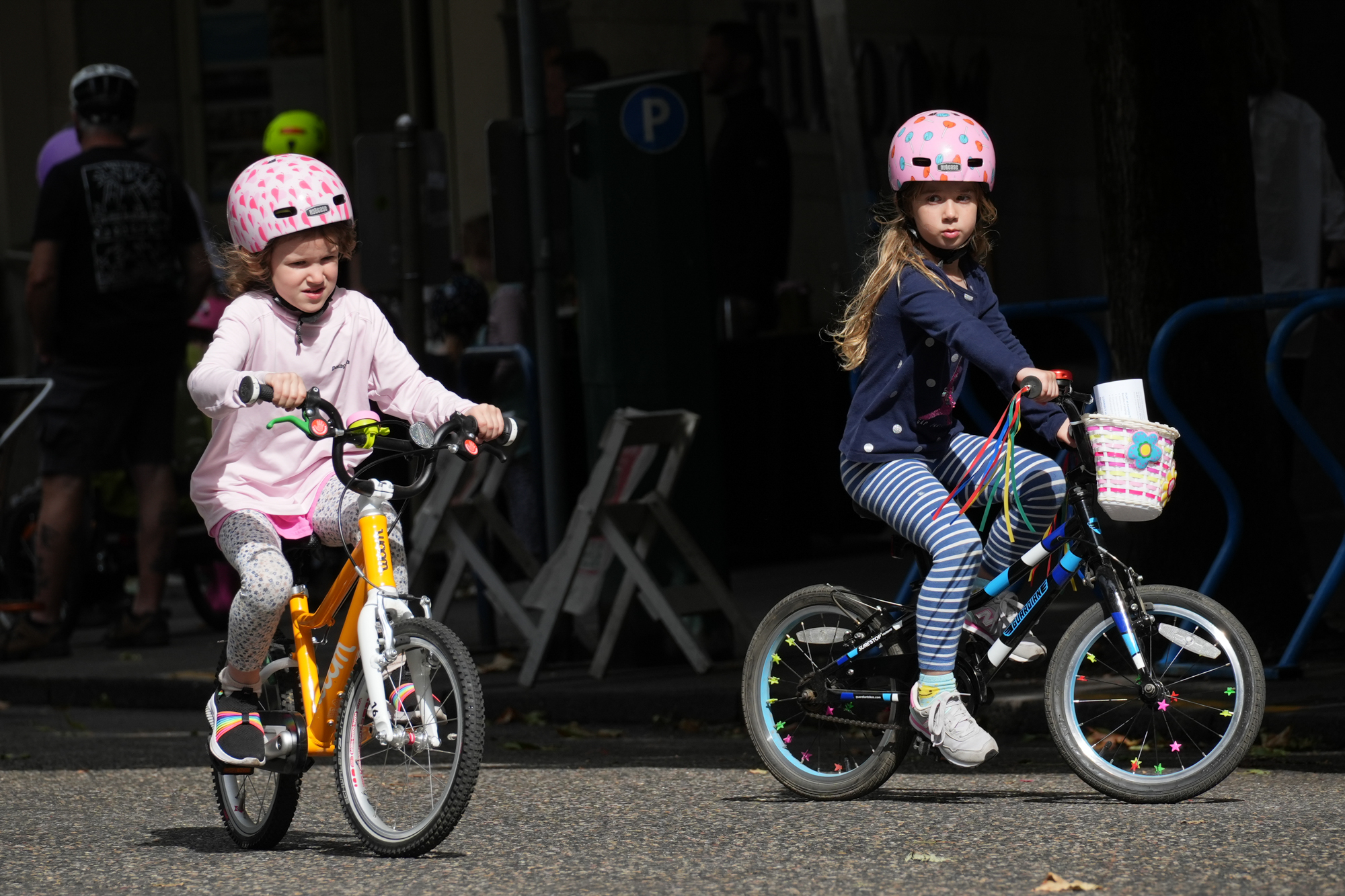
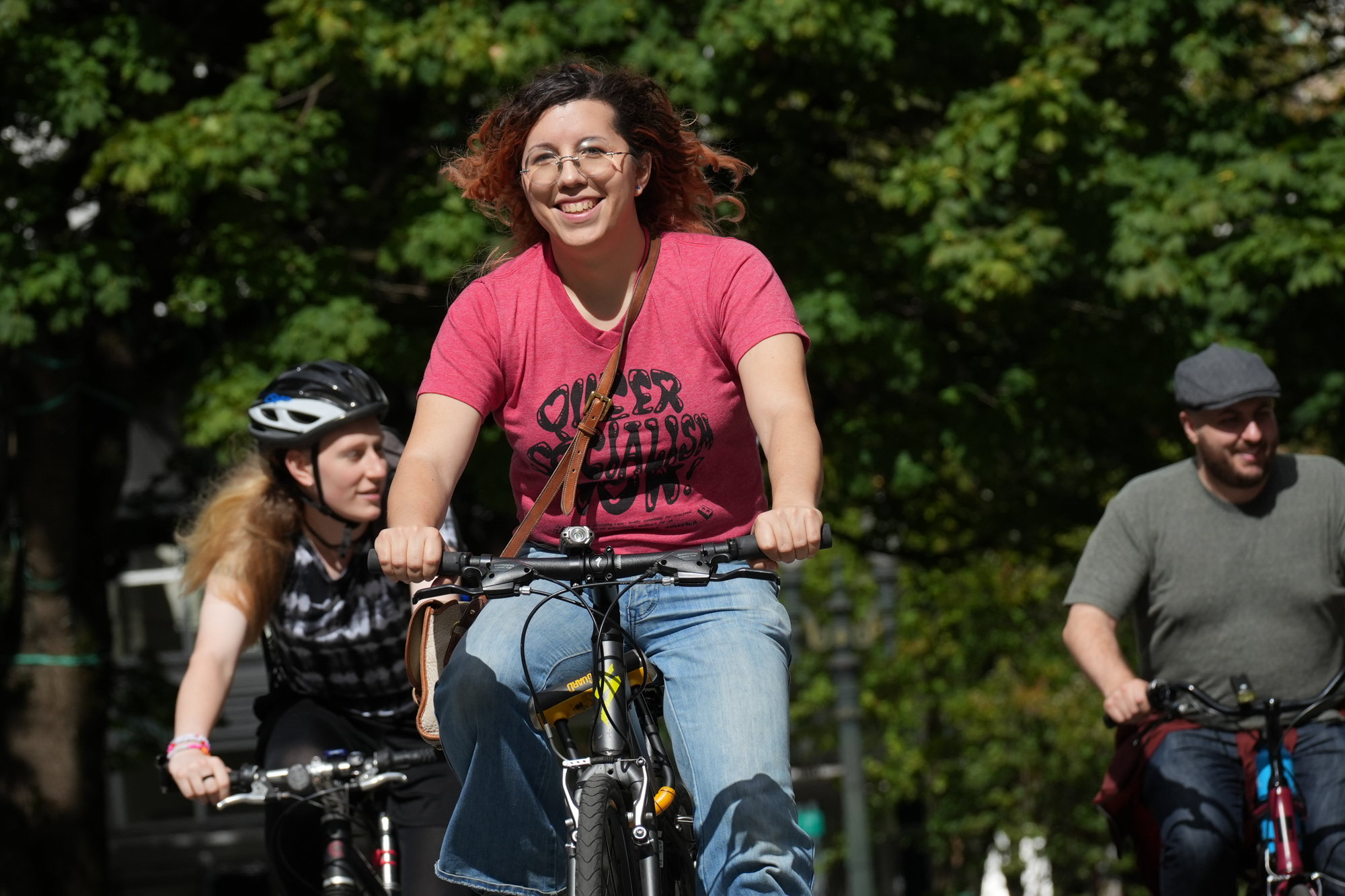
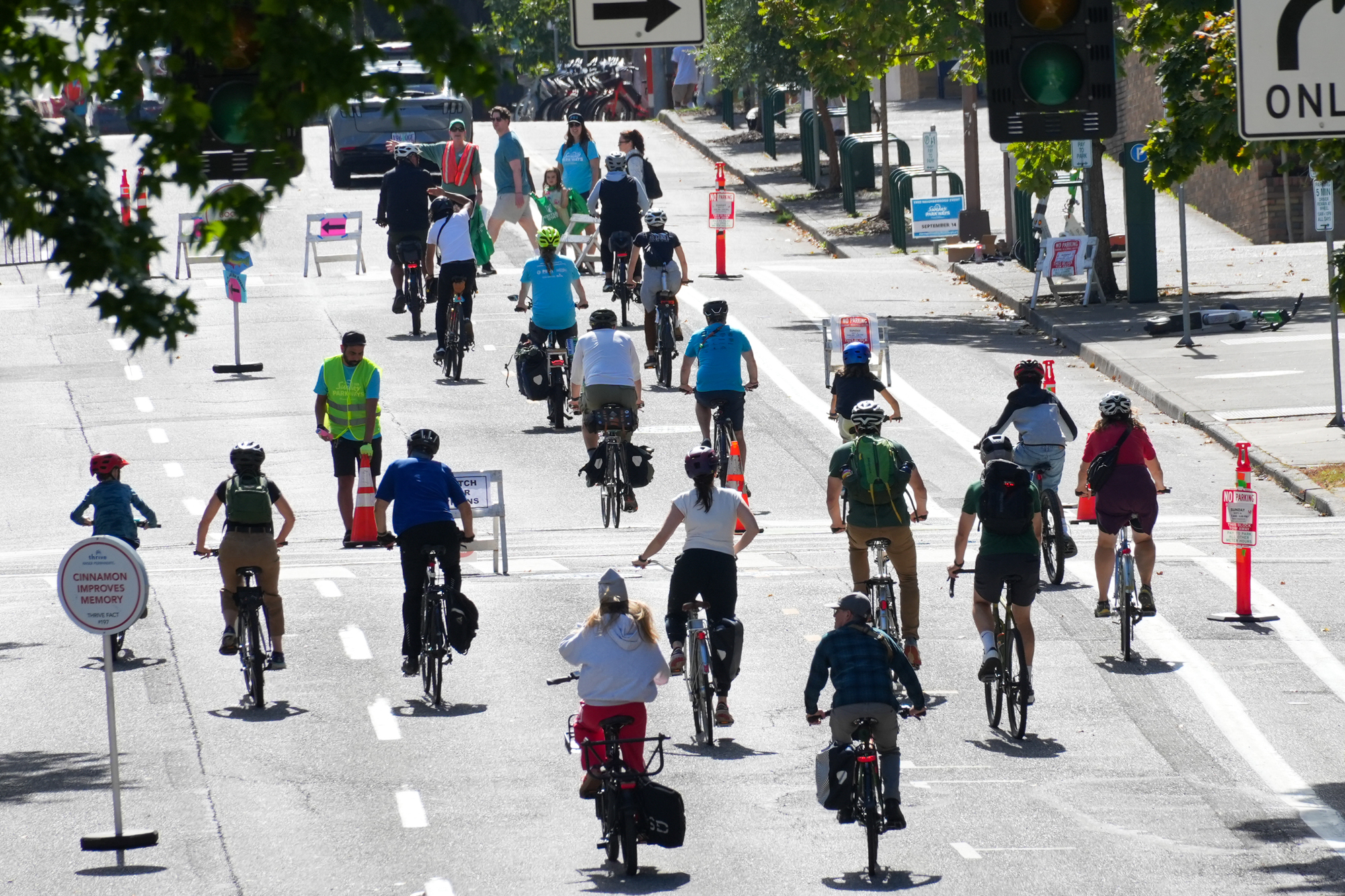
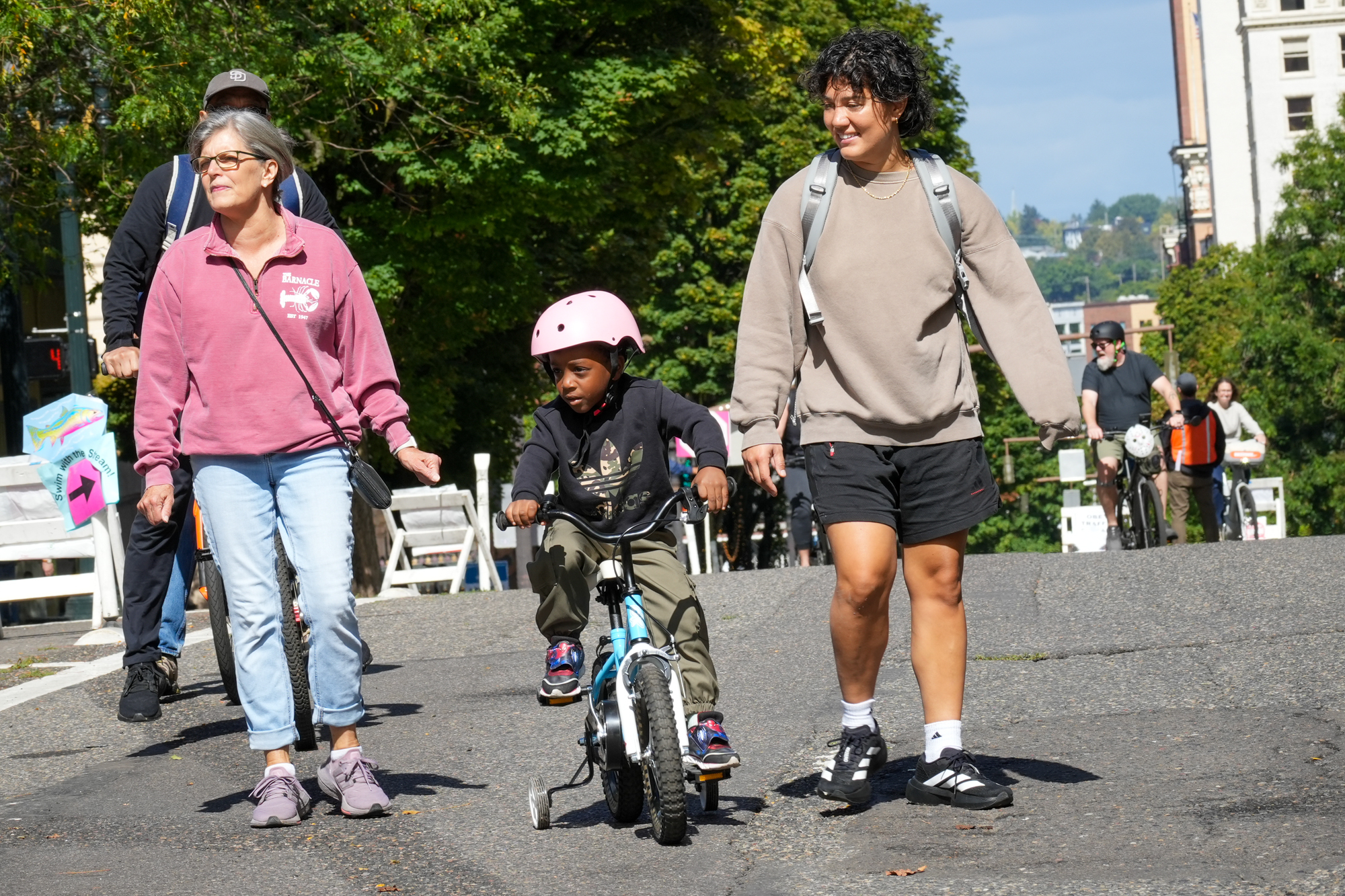
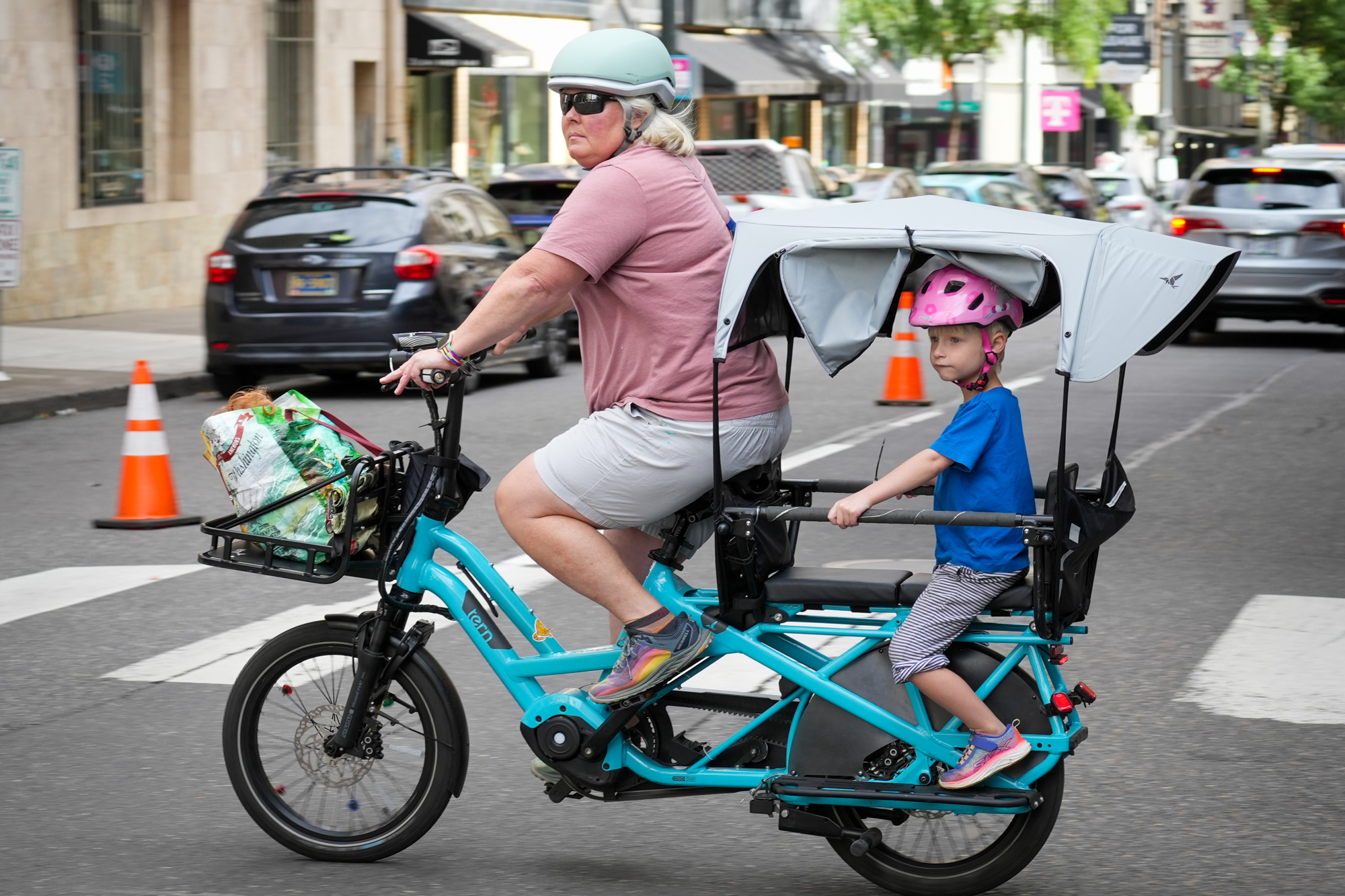
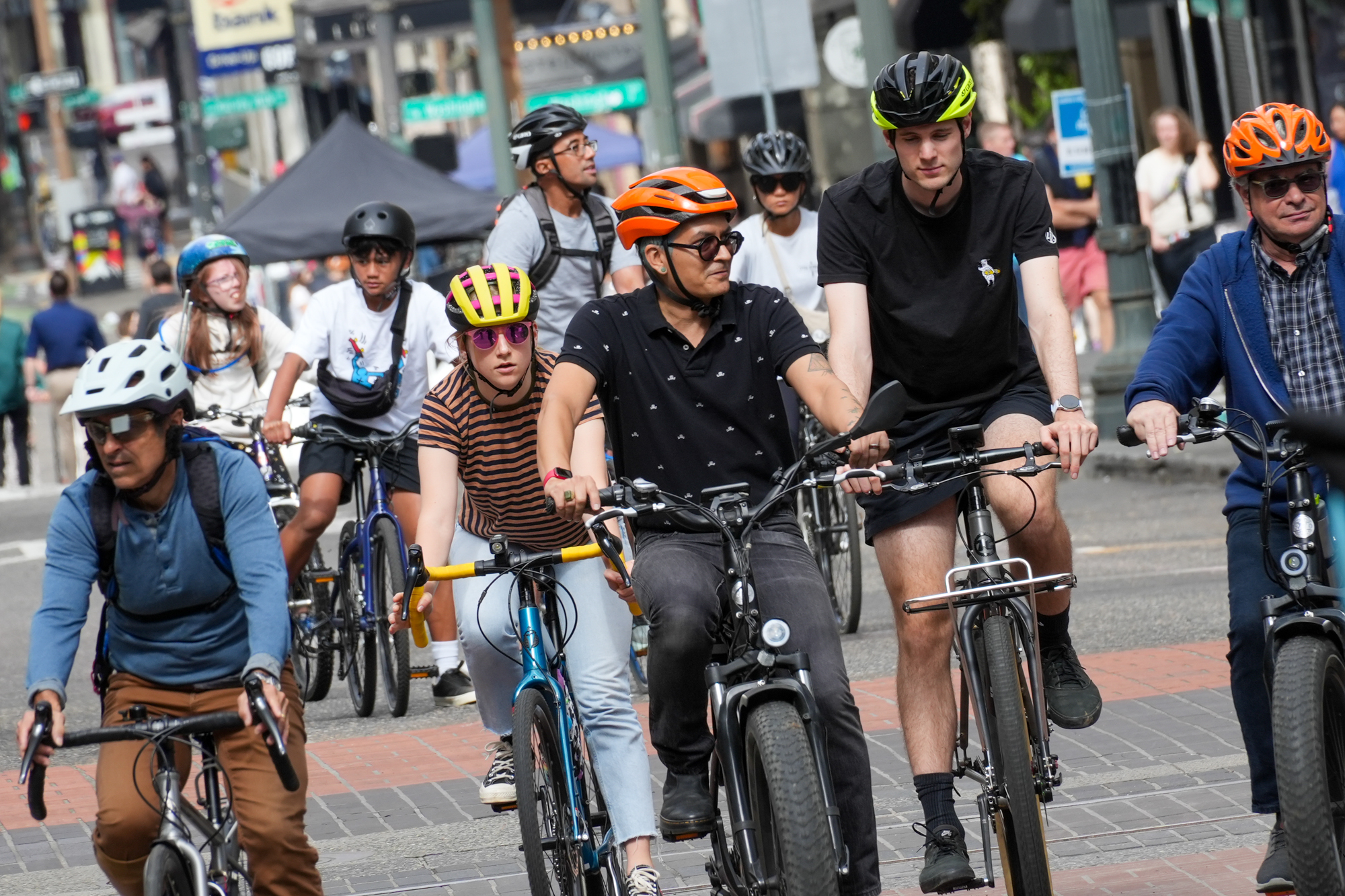
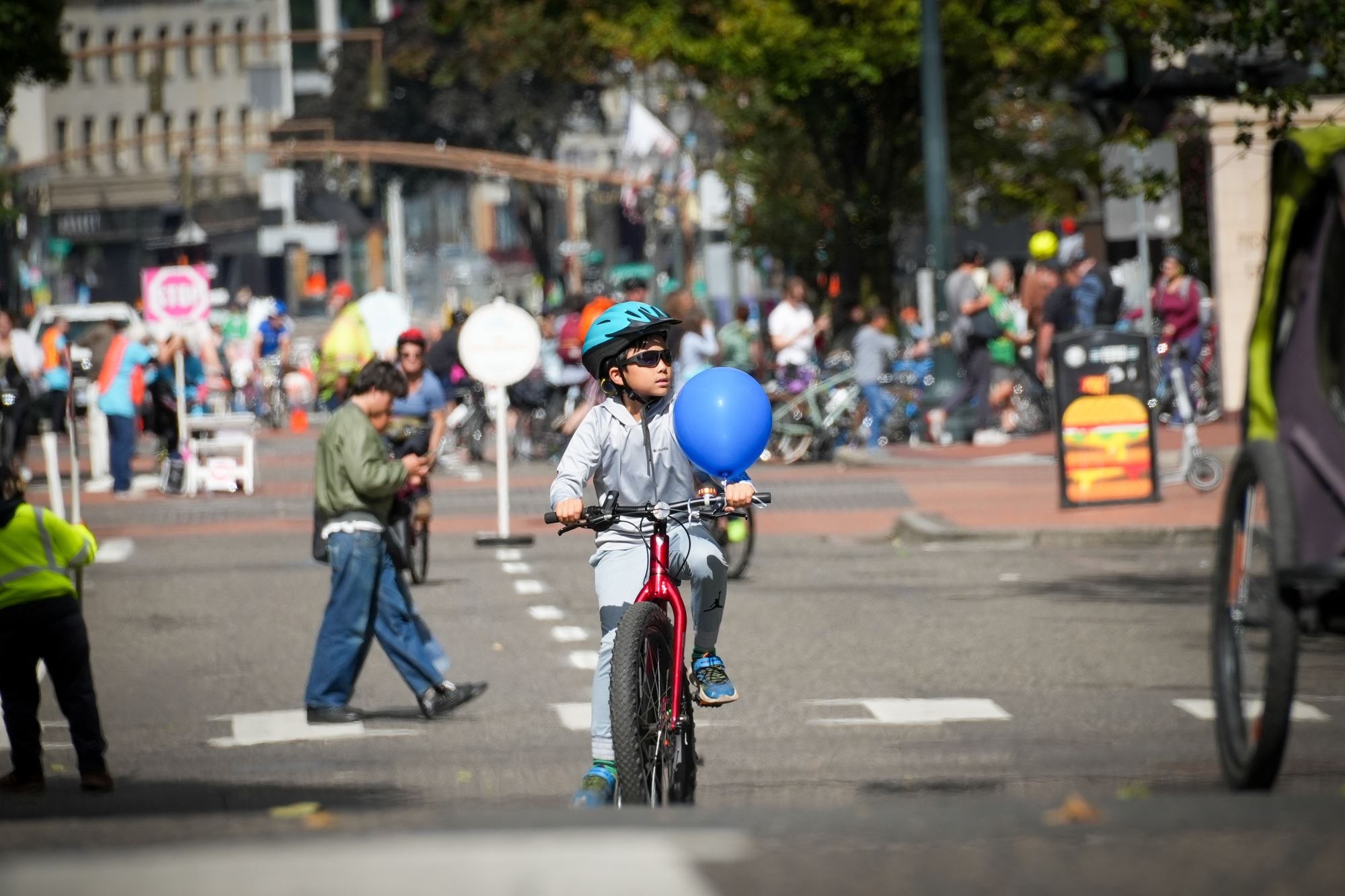
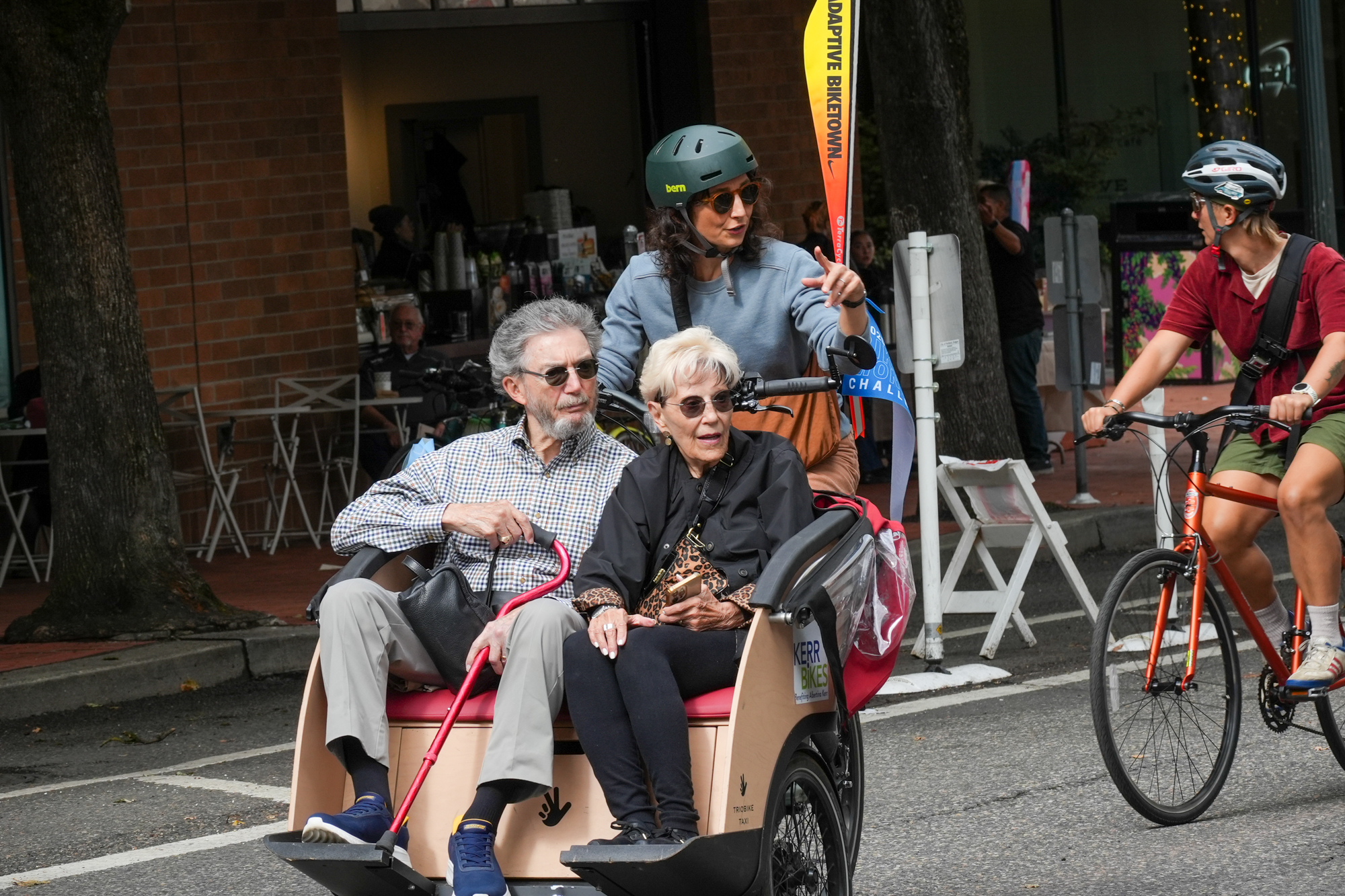
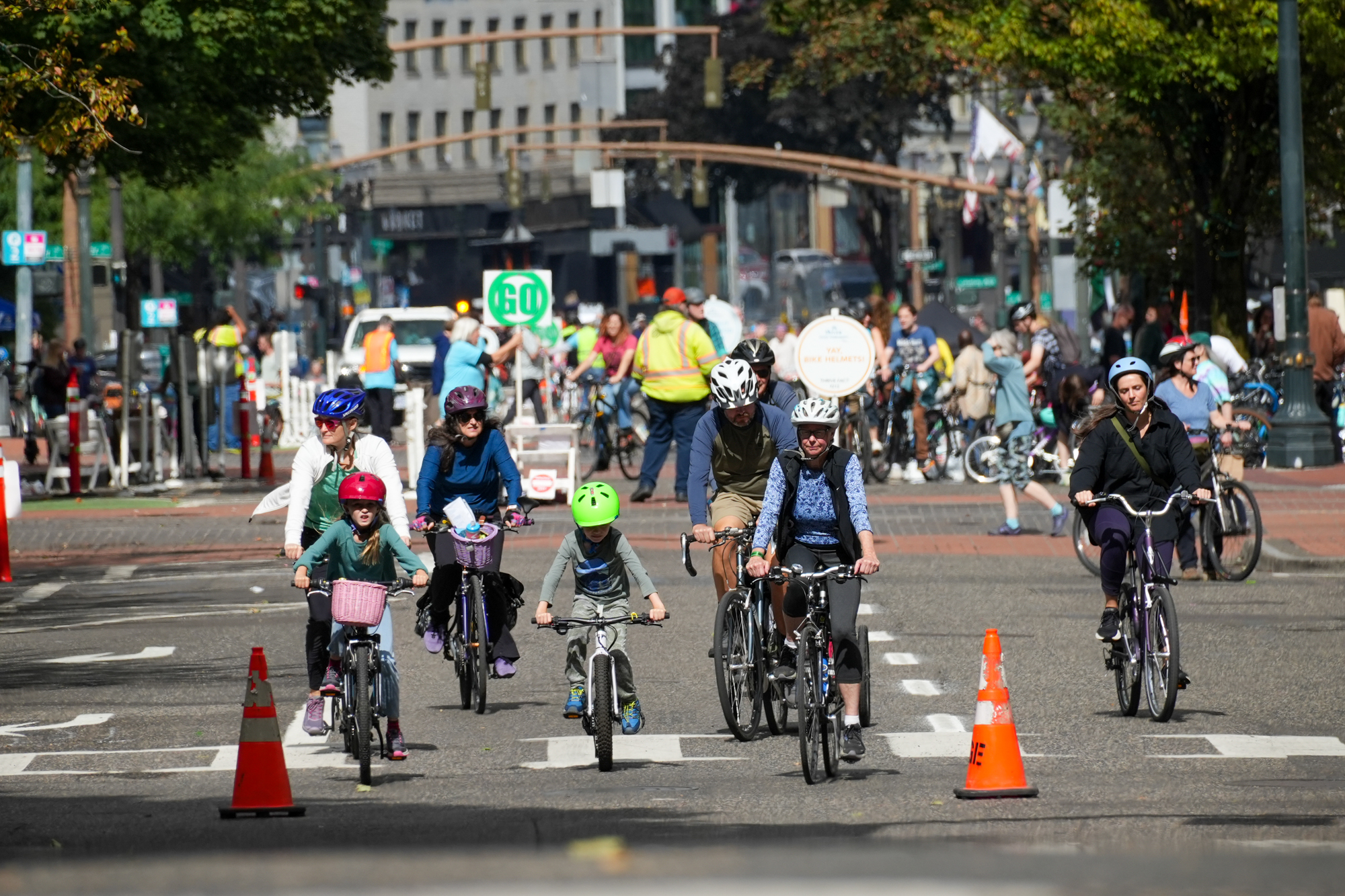
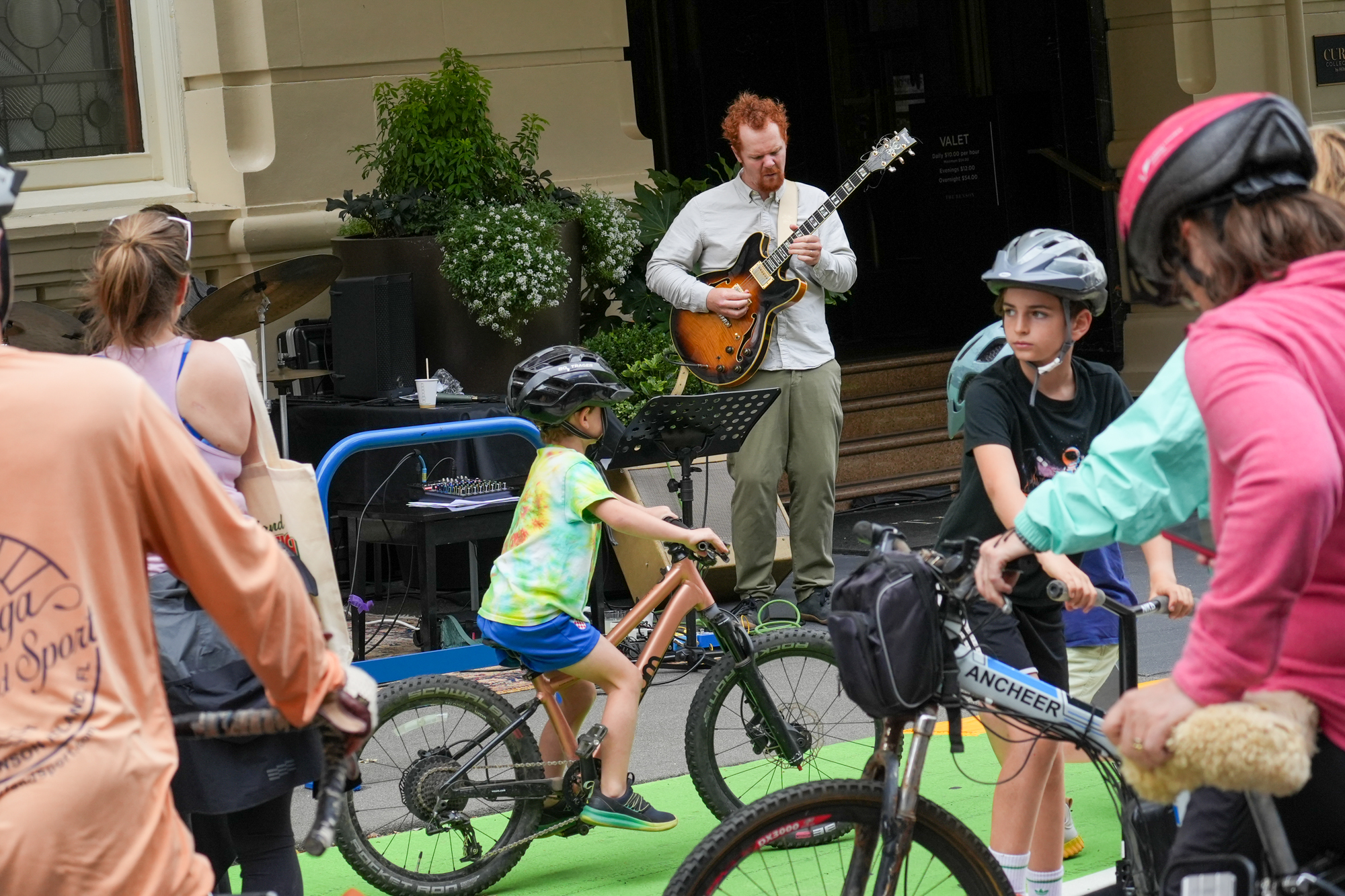
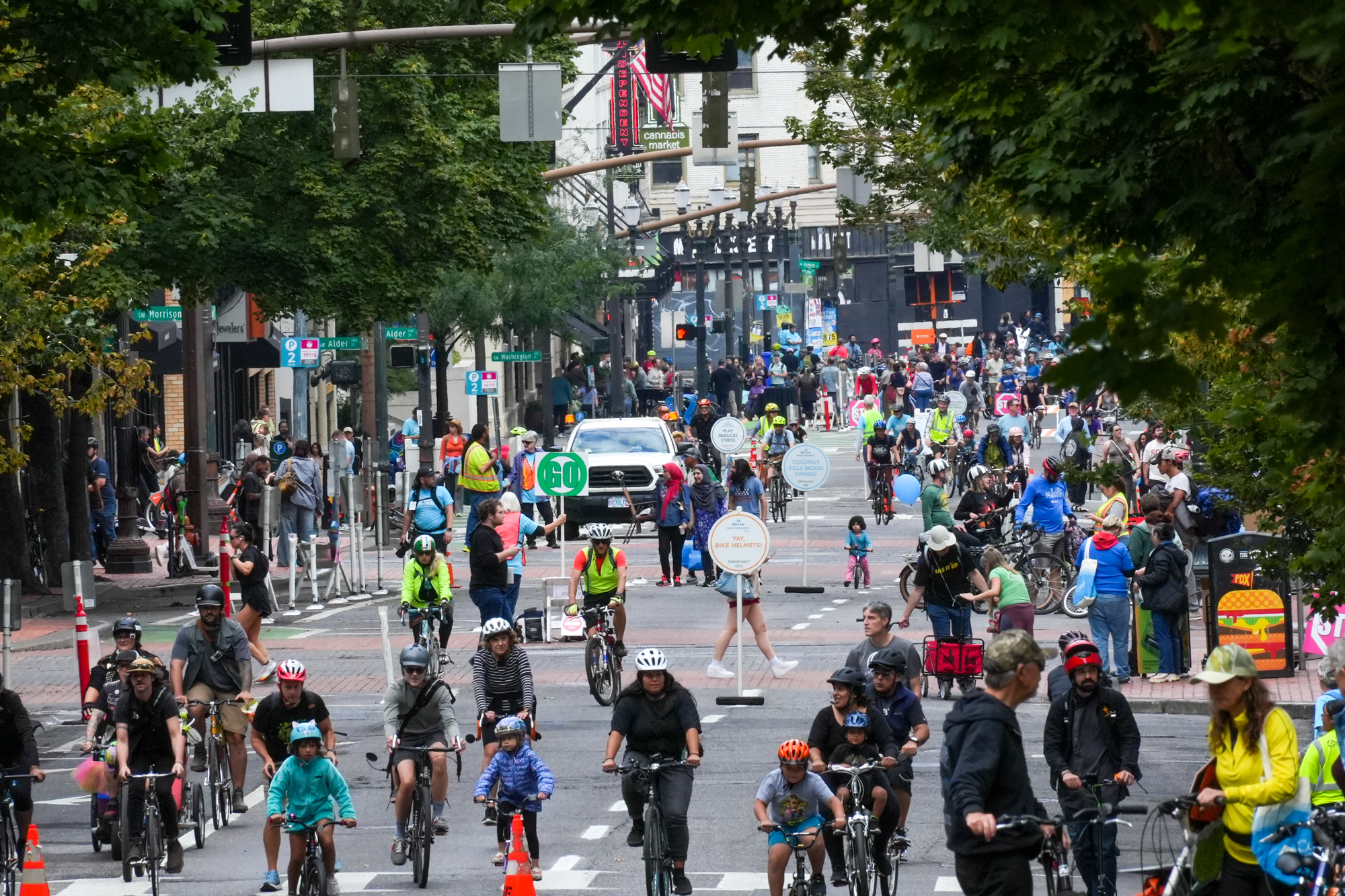
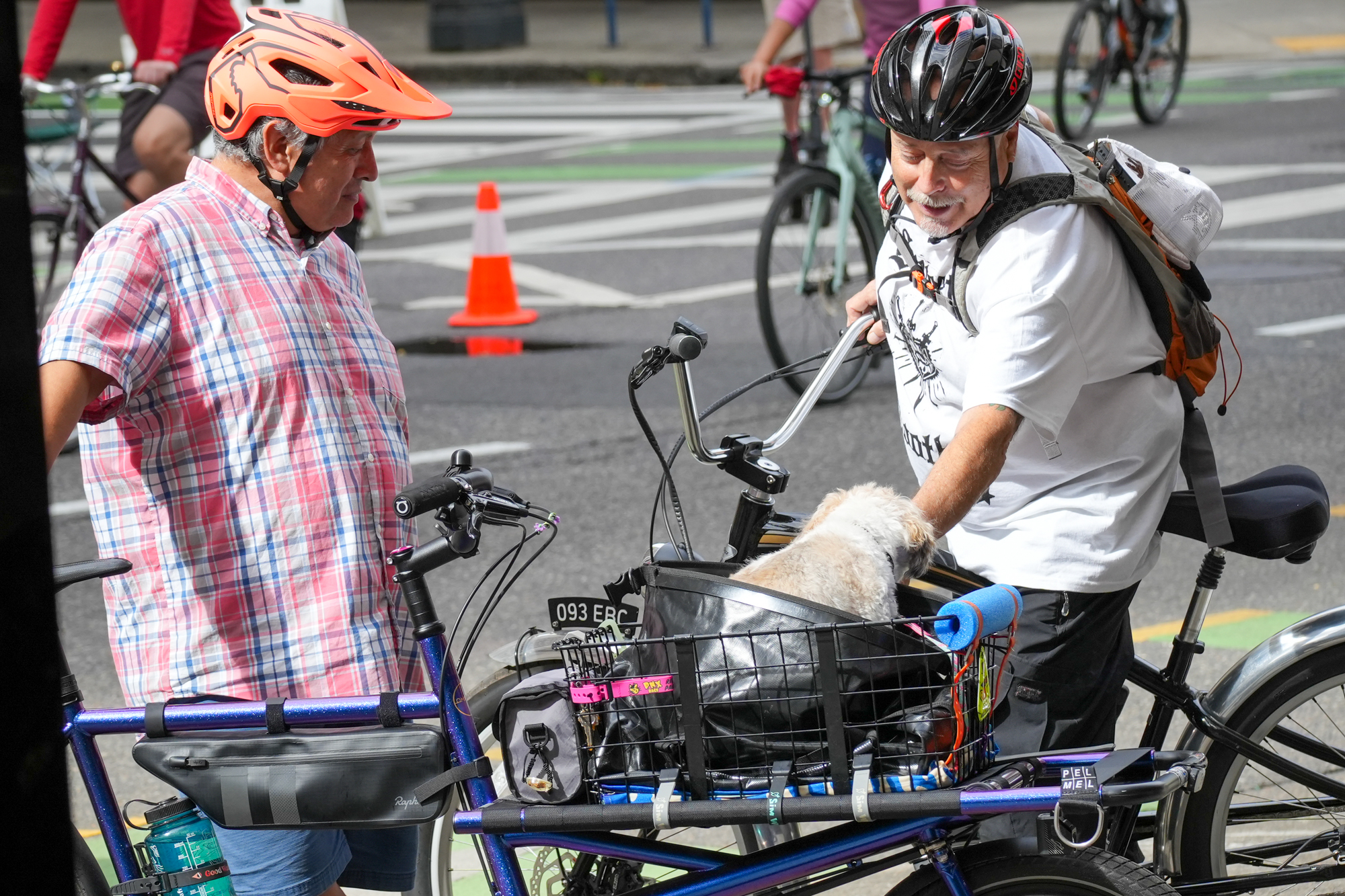
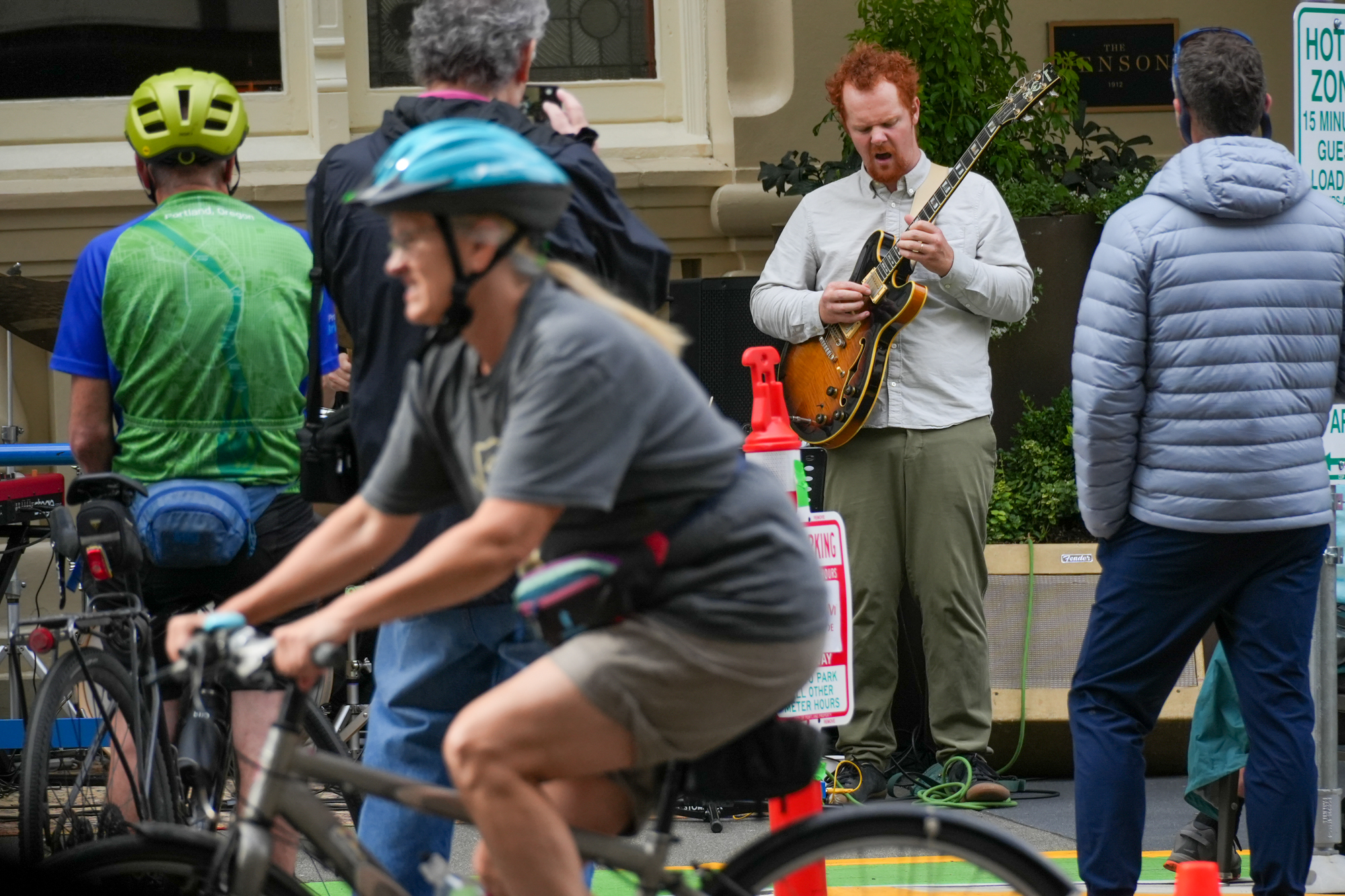
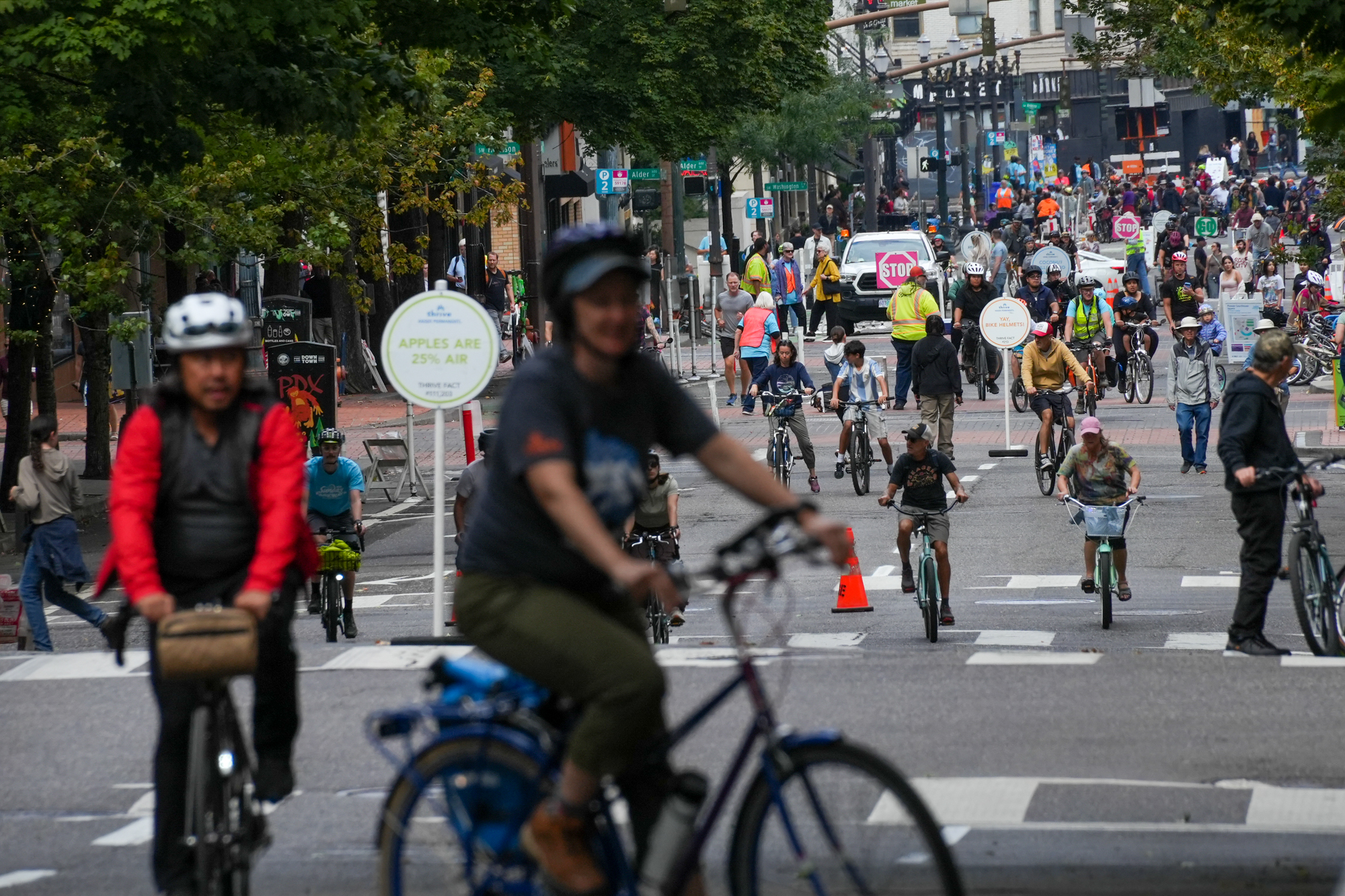
Southwest Broadway was hoppin! (Photos: Jonathan Maus/BikePortland)
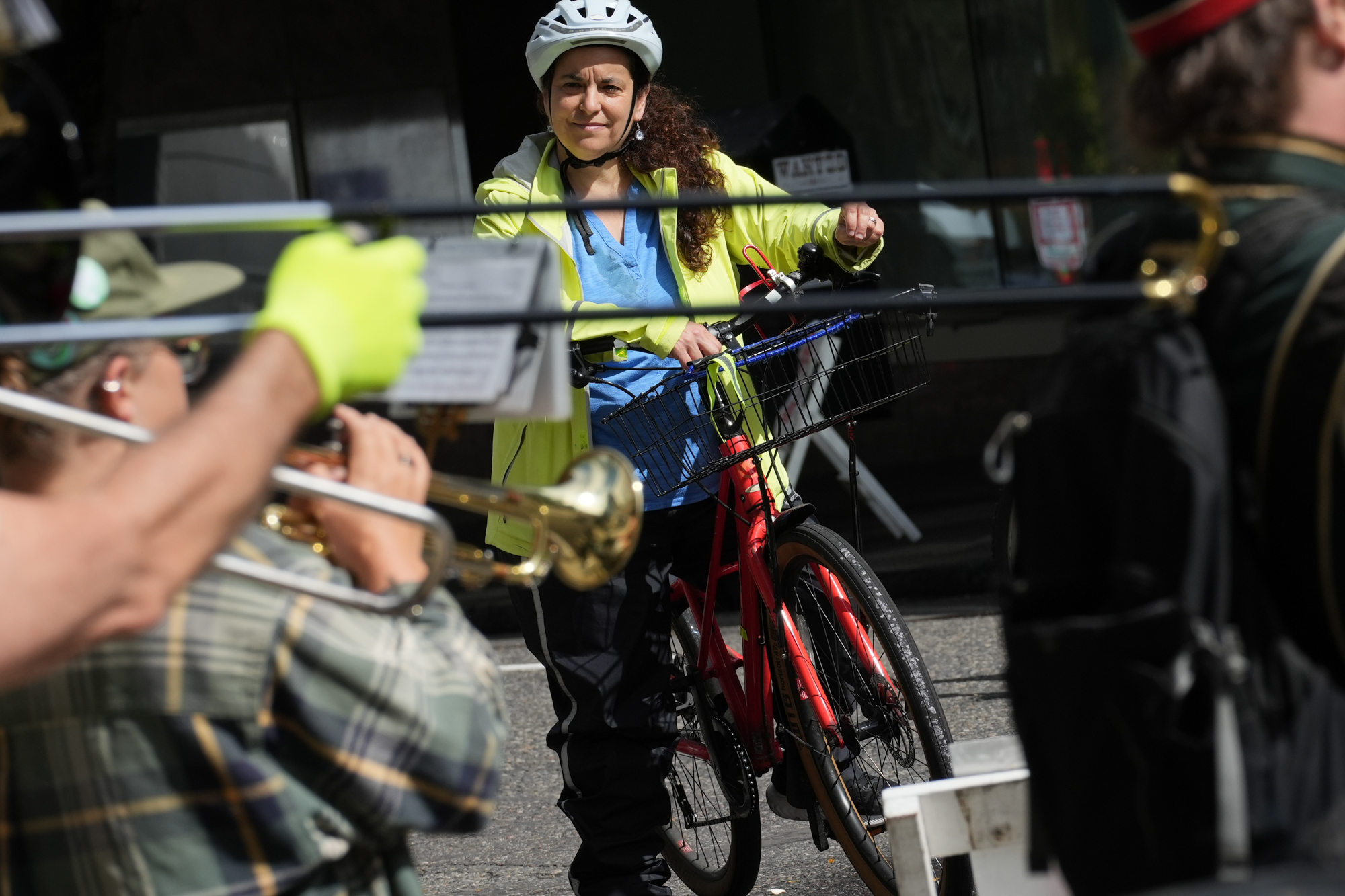
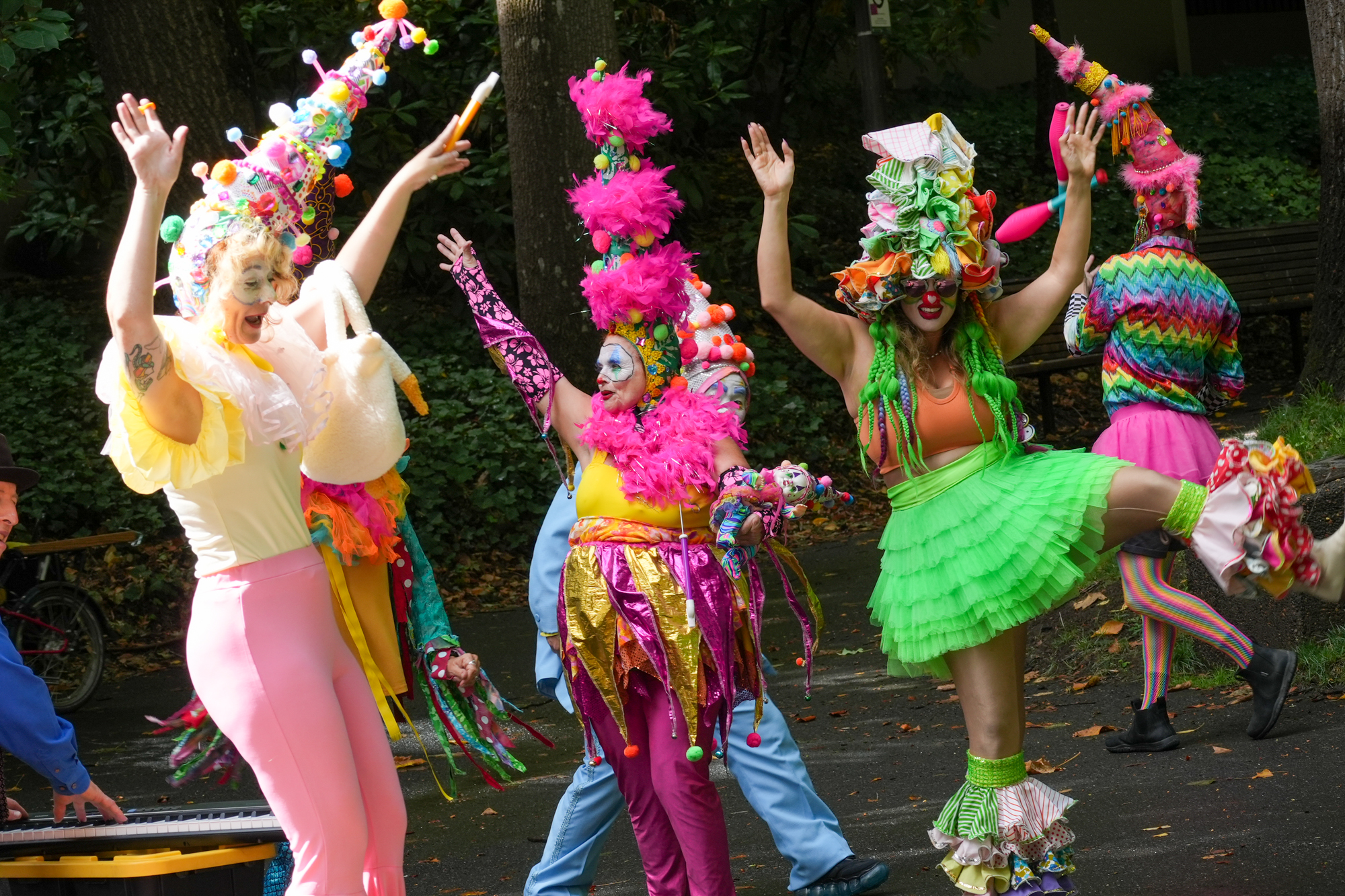
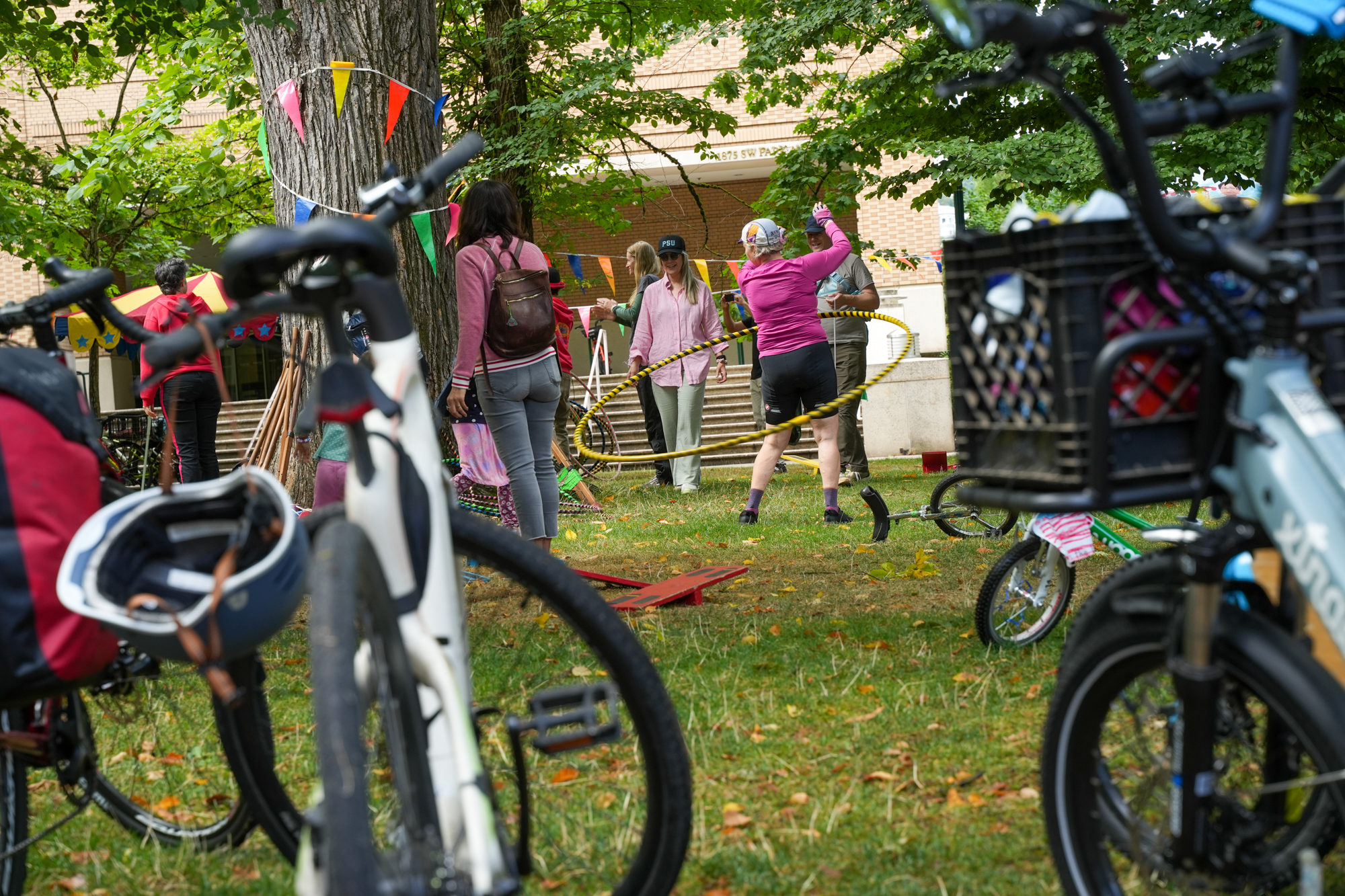
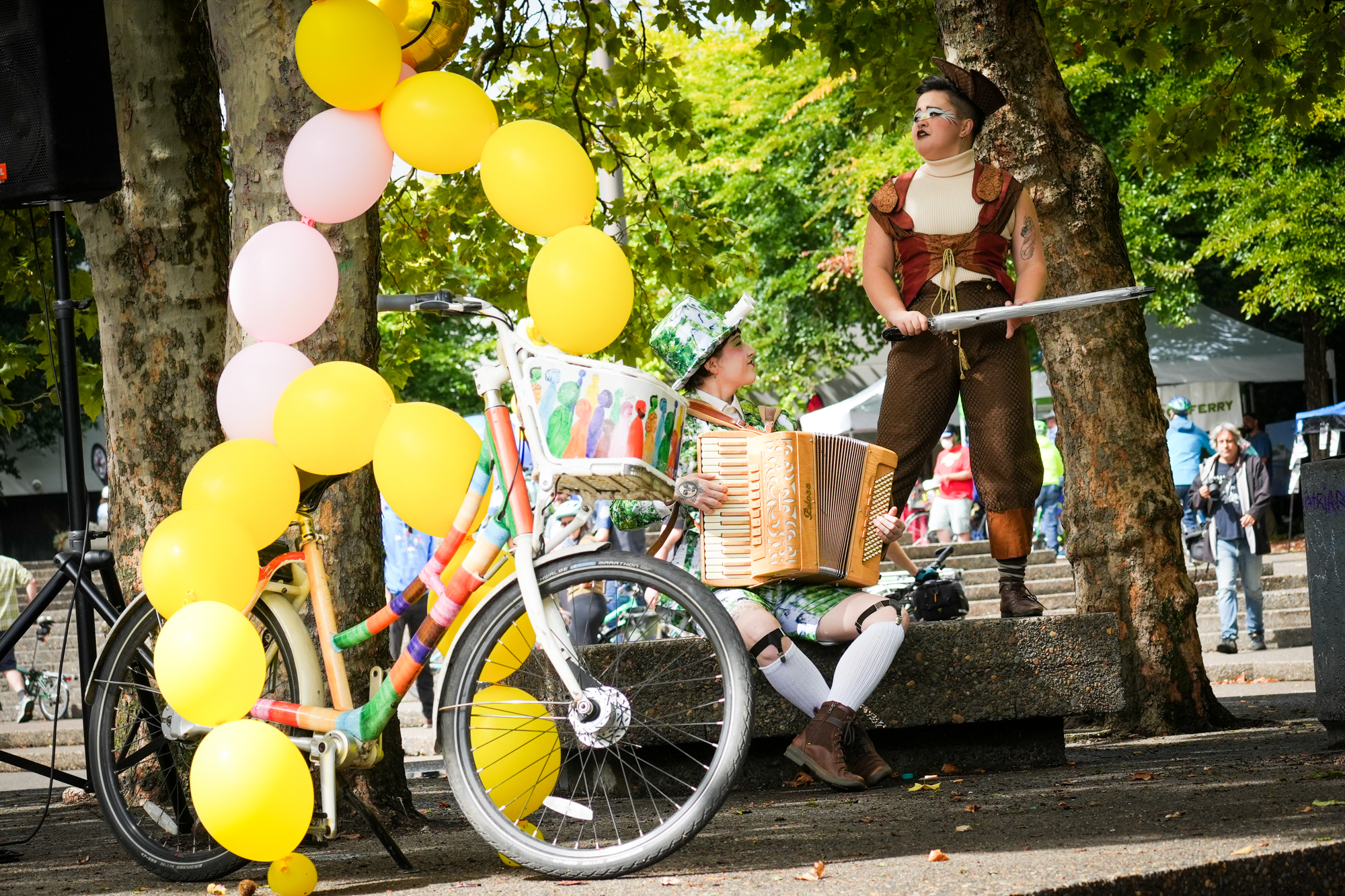
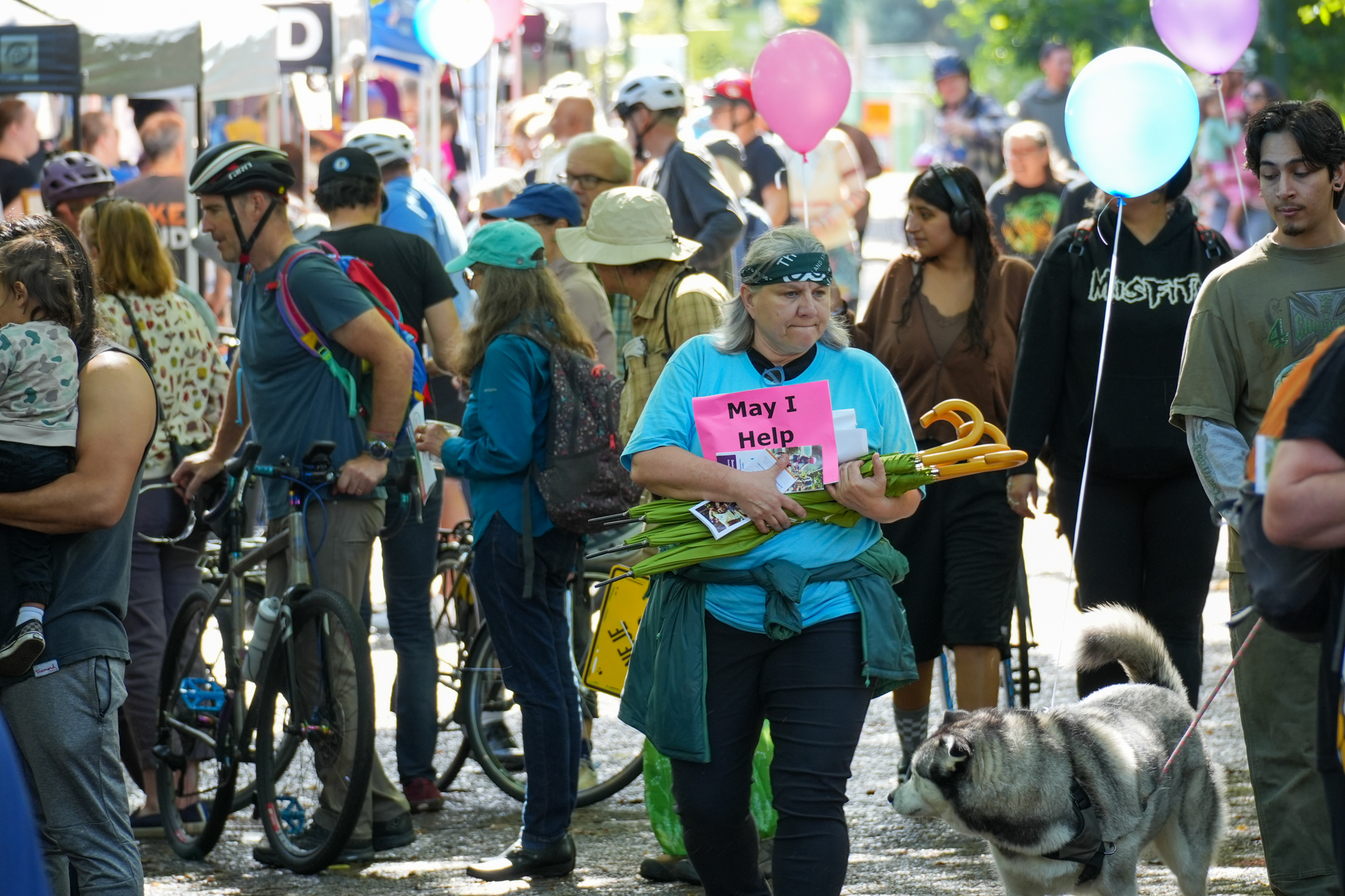
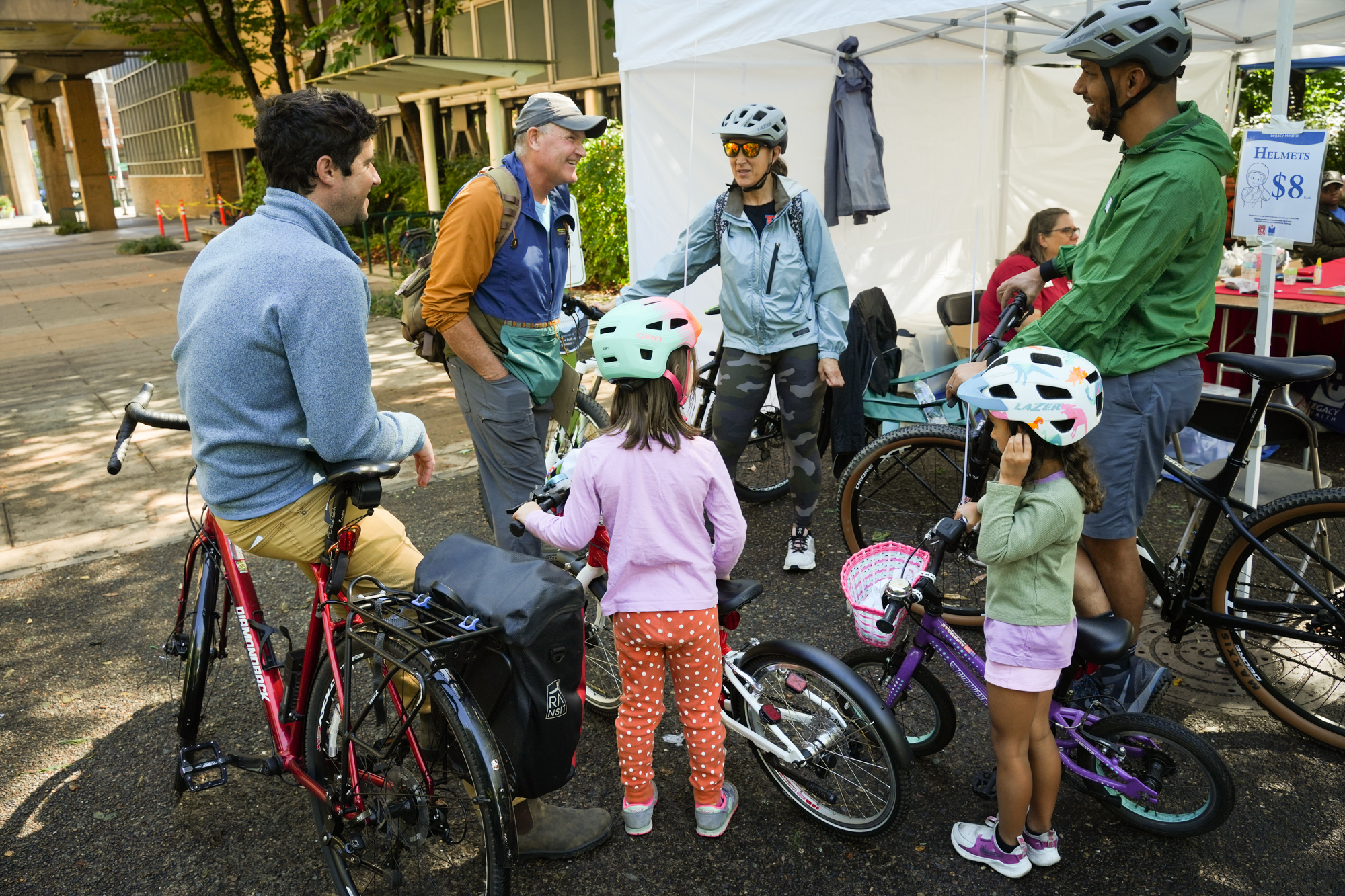
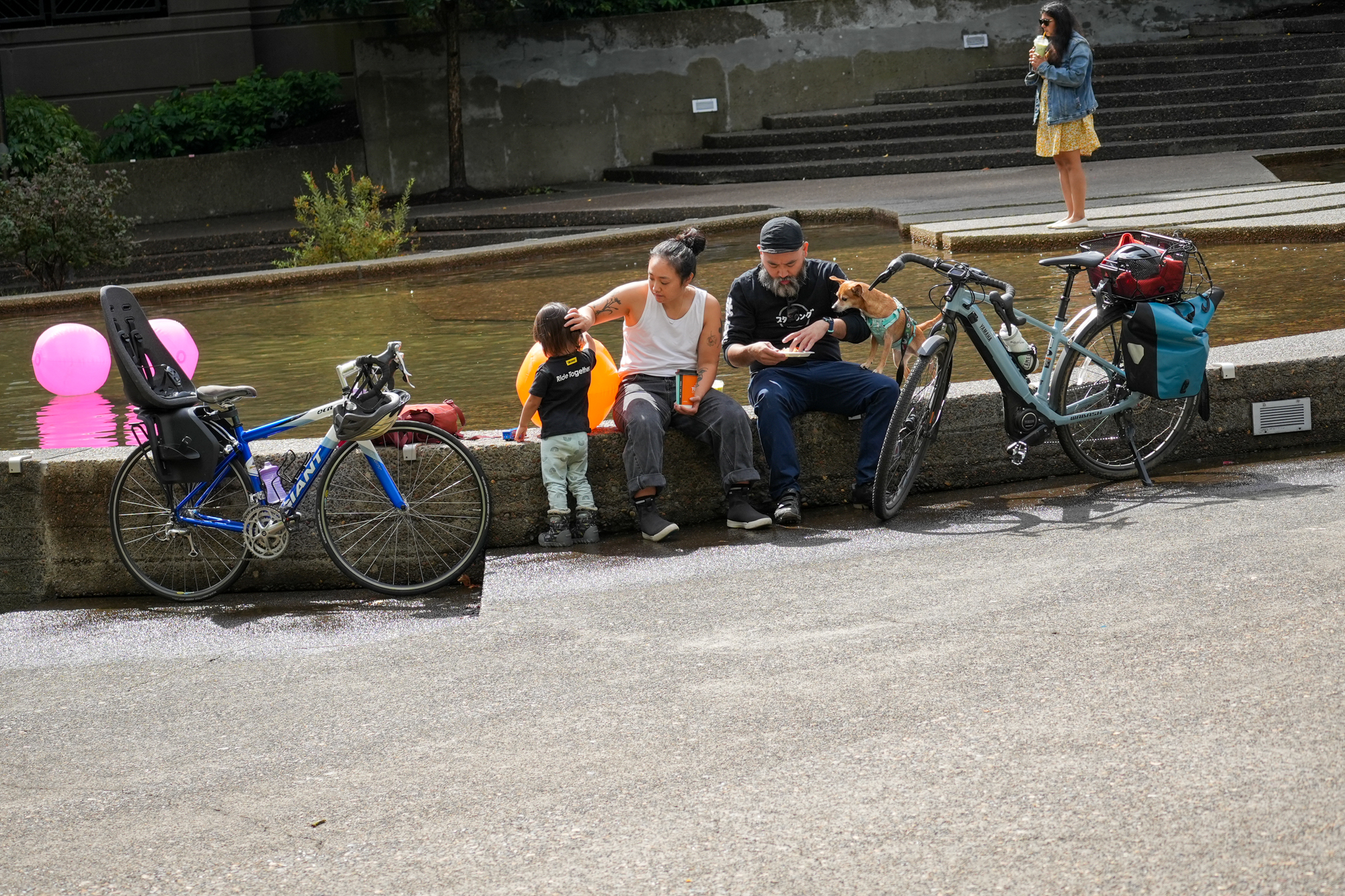
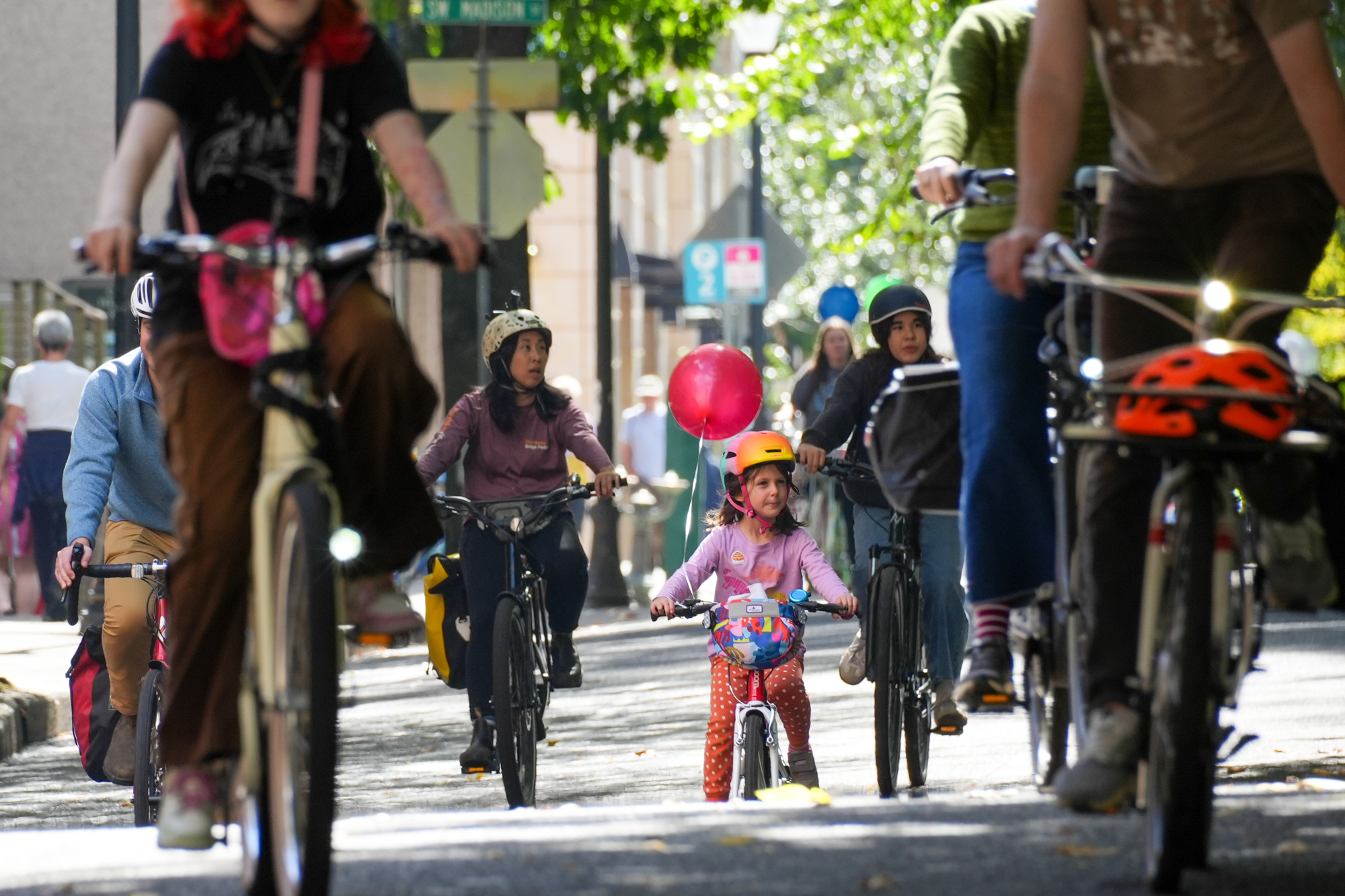
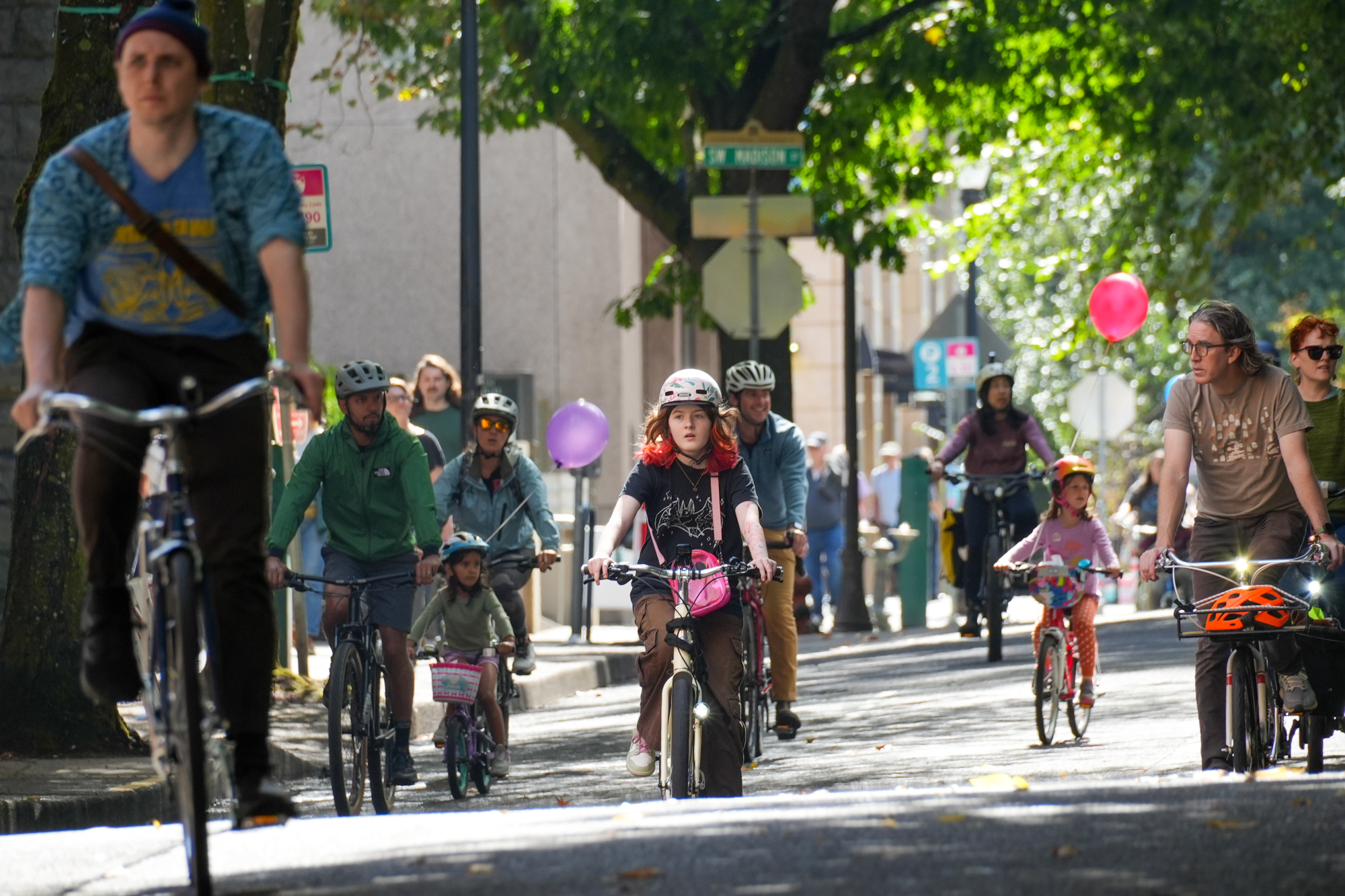
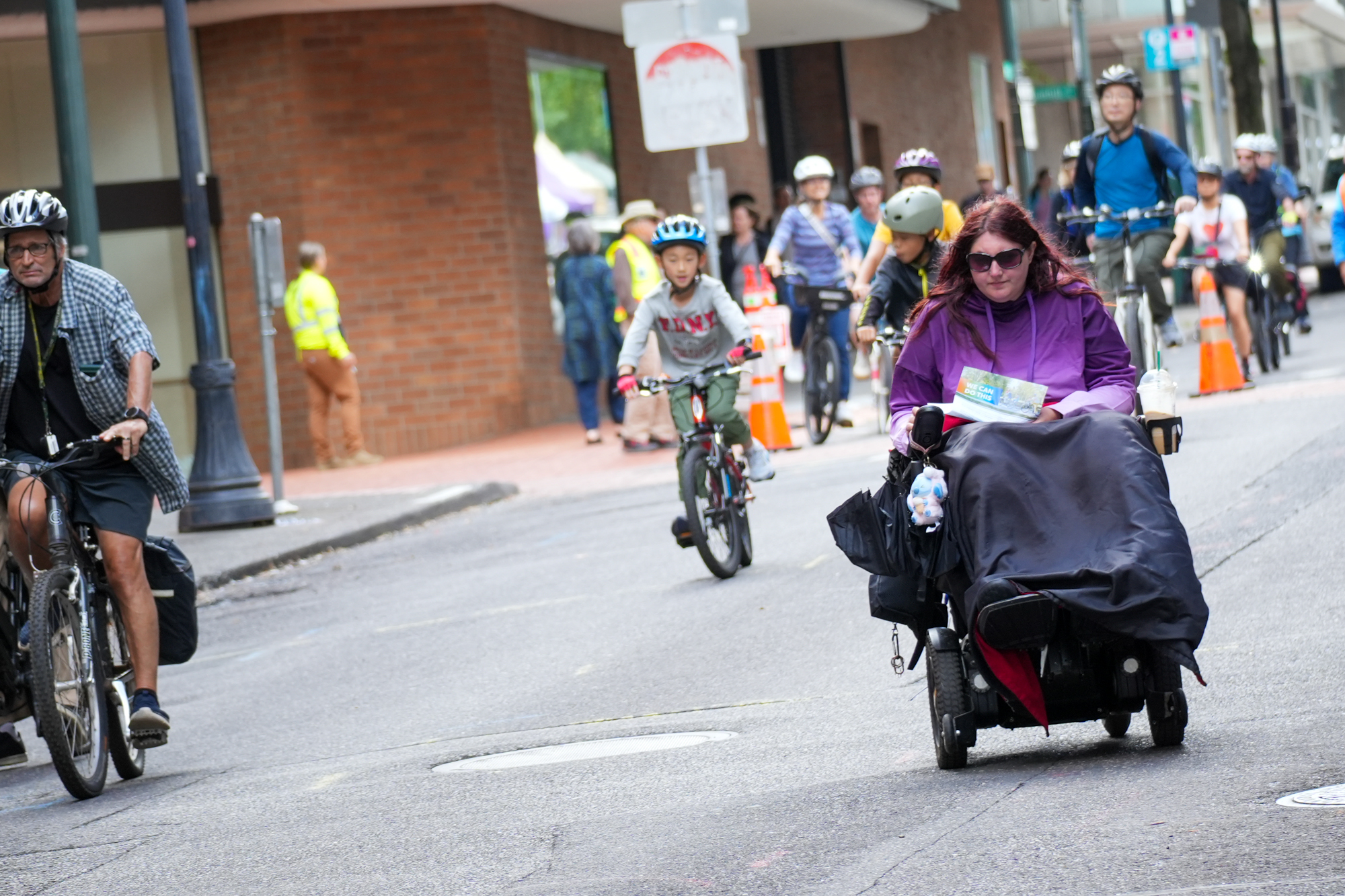
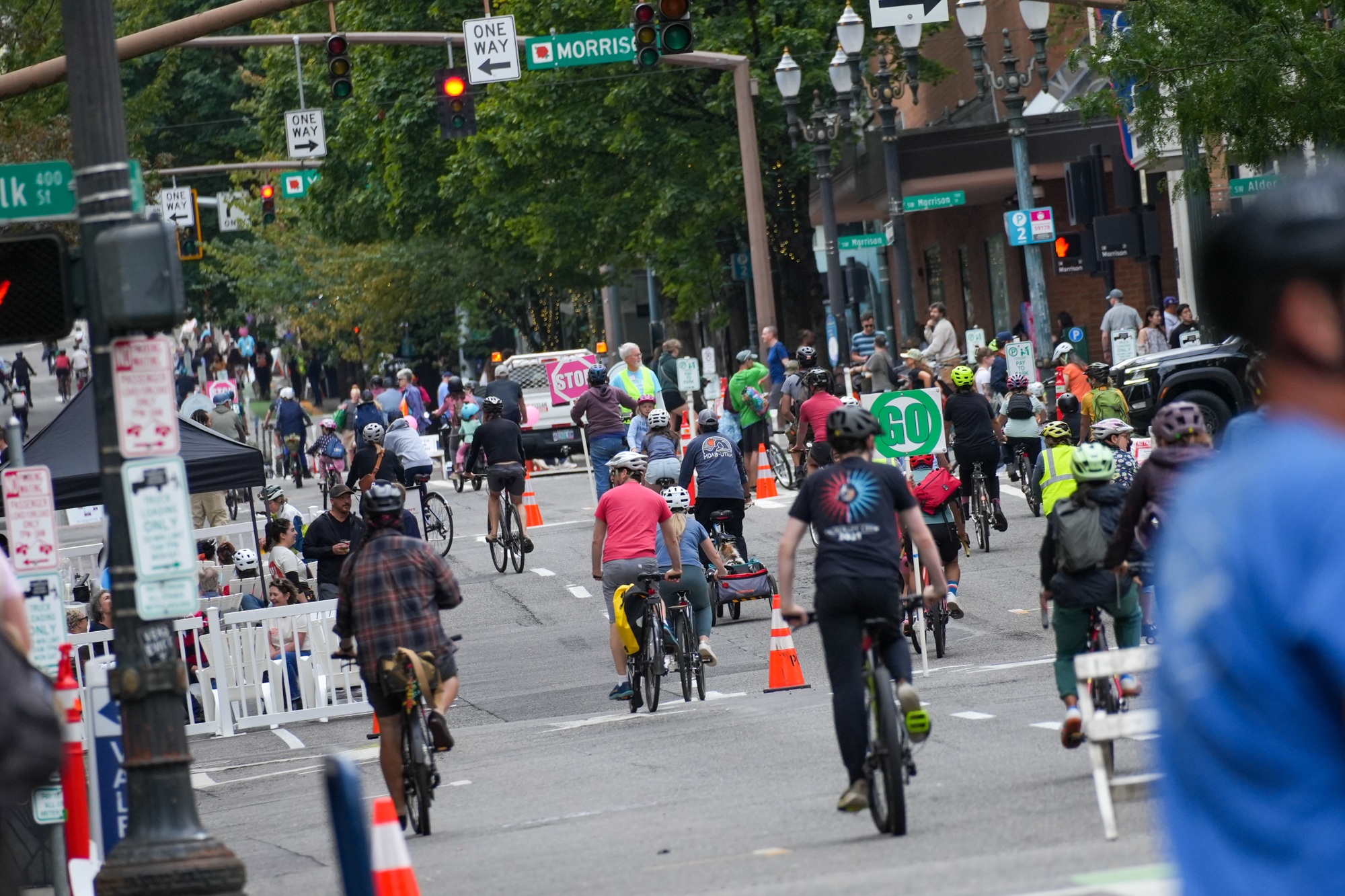
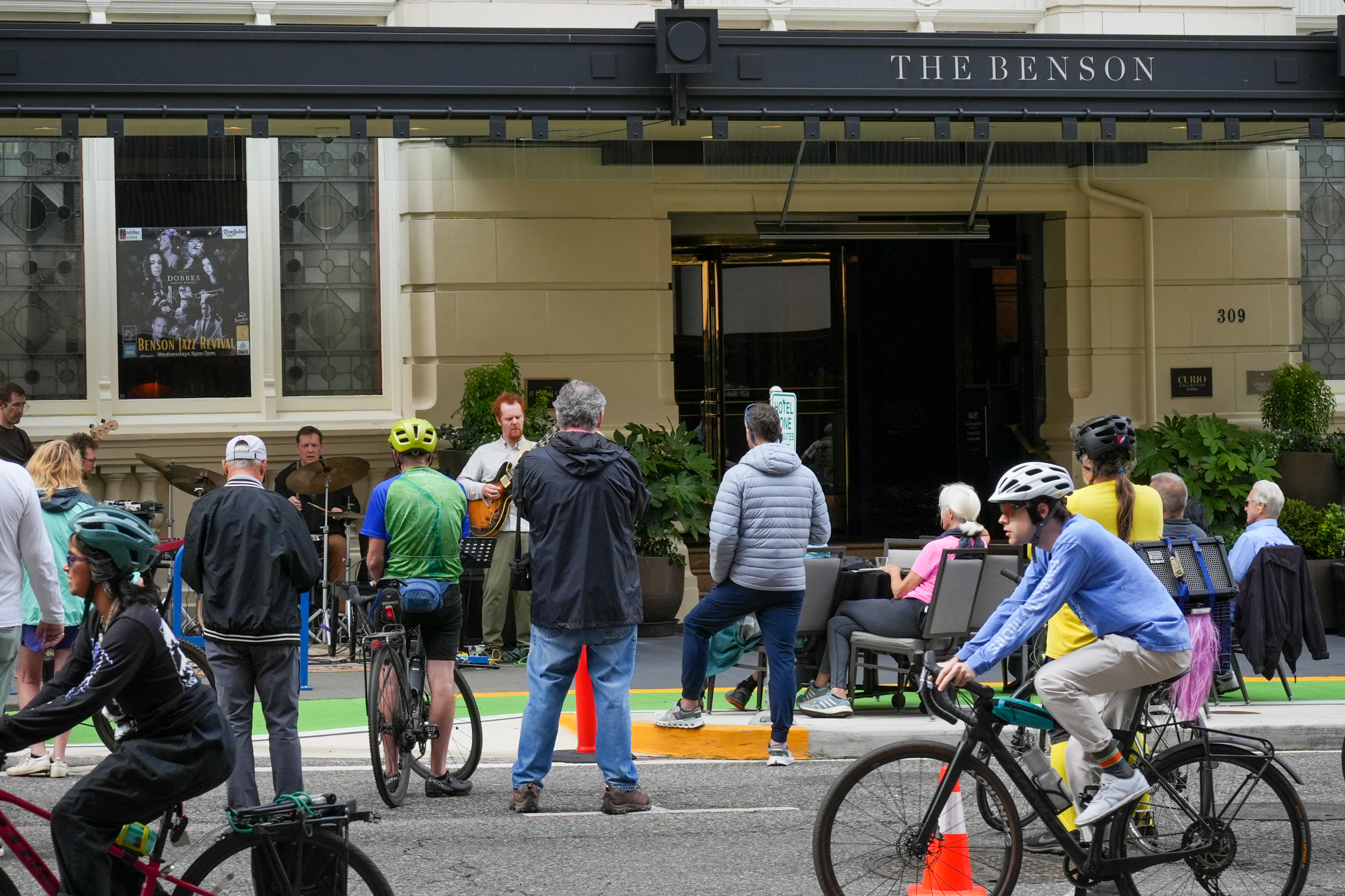
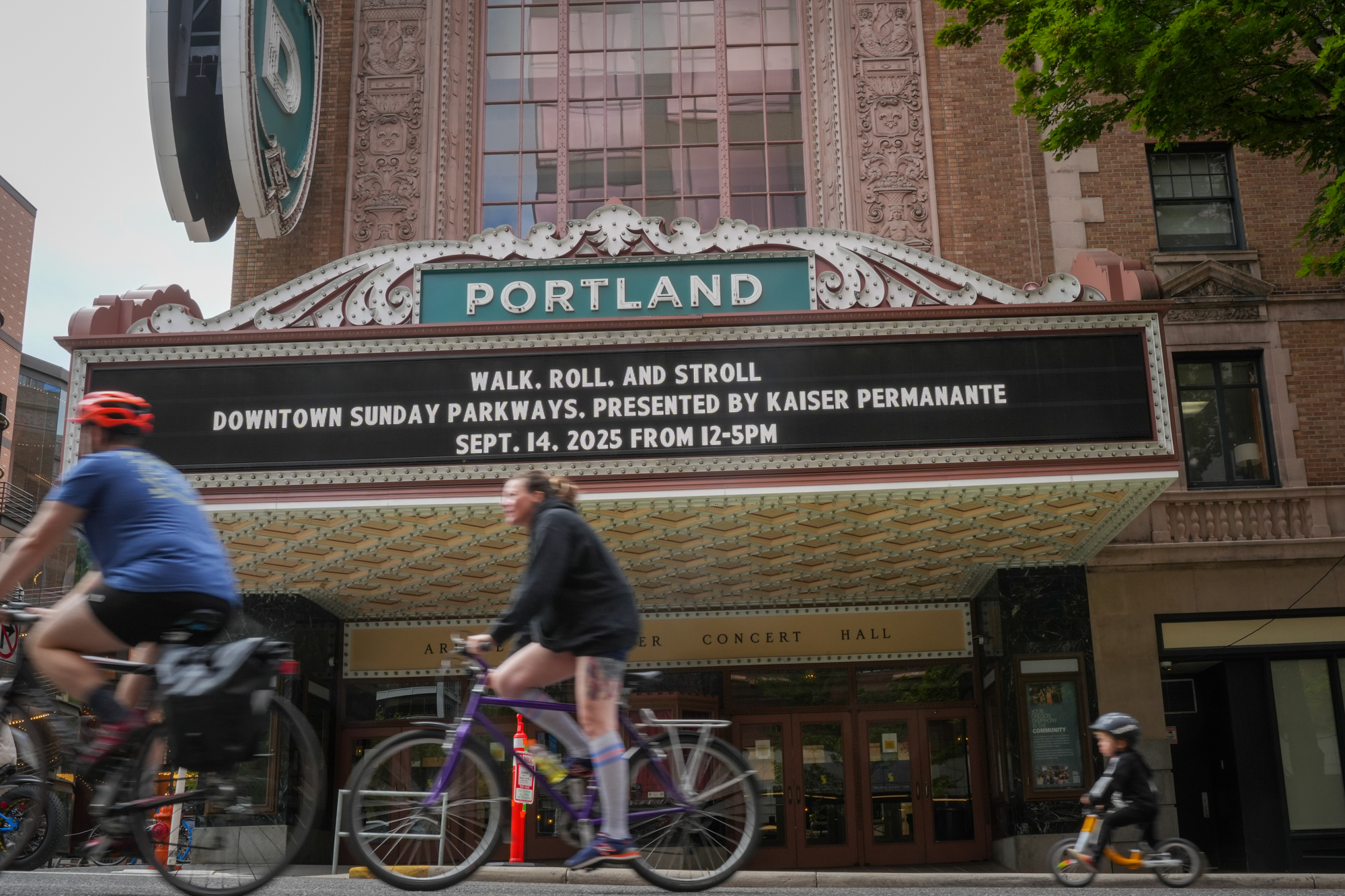
Despite an early morning deluge, thousands of Portlanders turned out to walk and roll around a loop of carfree streets as part of the Sunday Parkways event today.
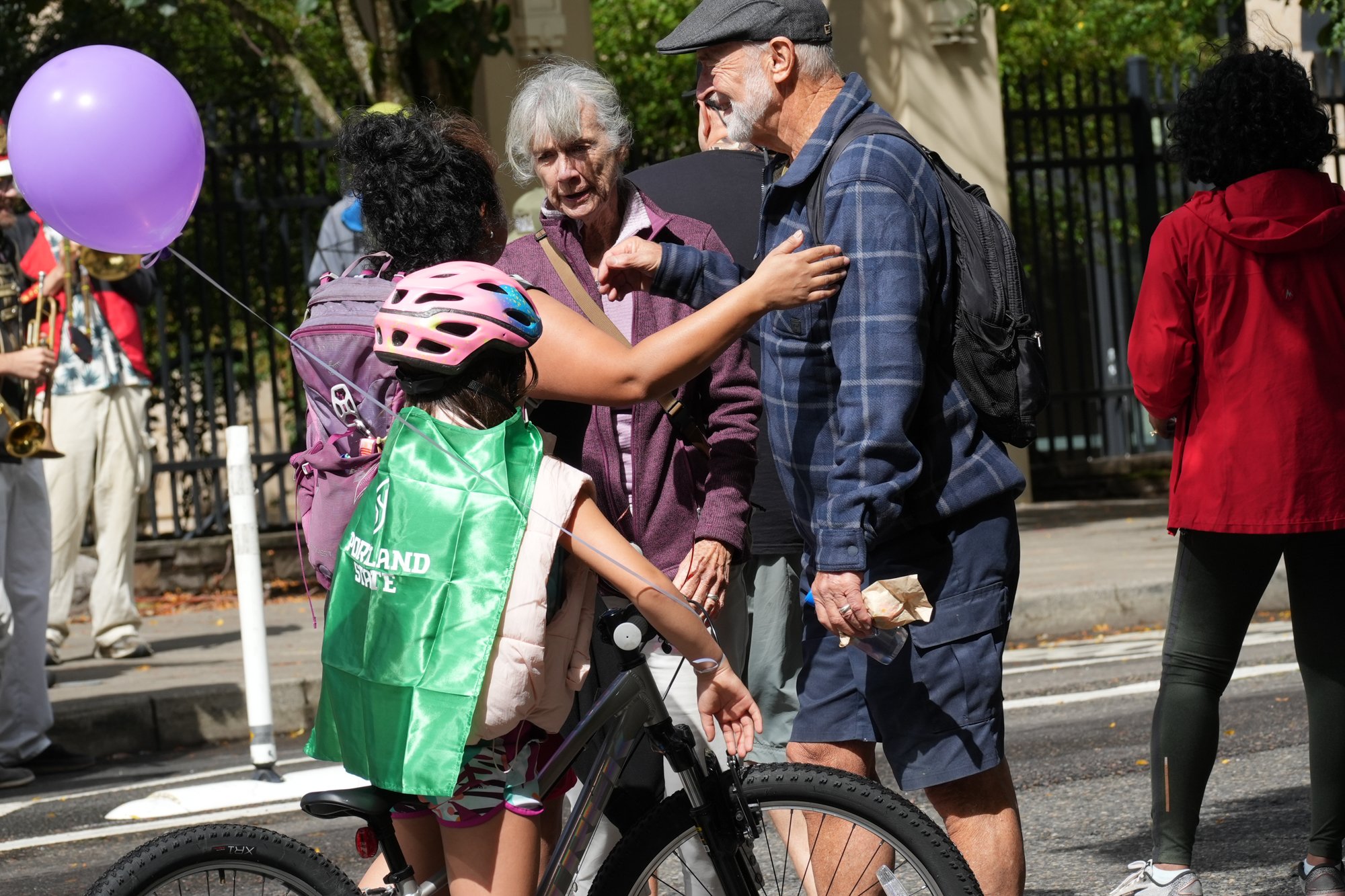
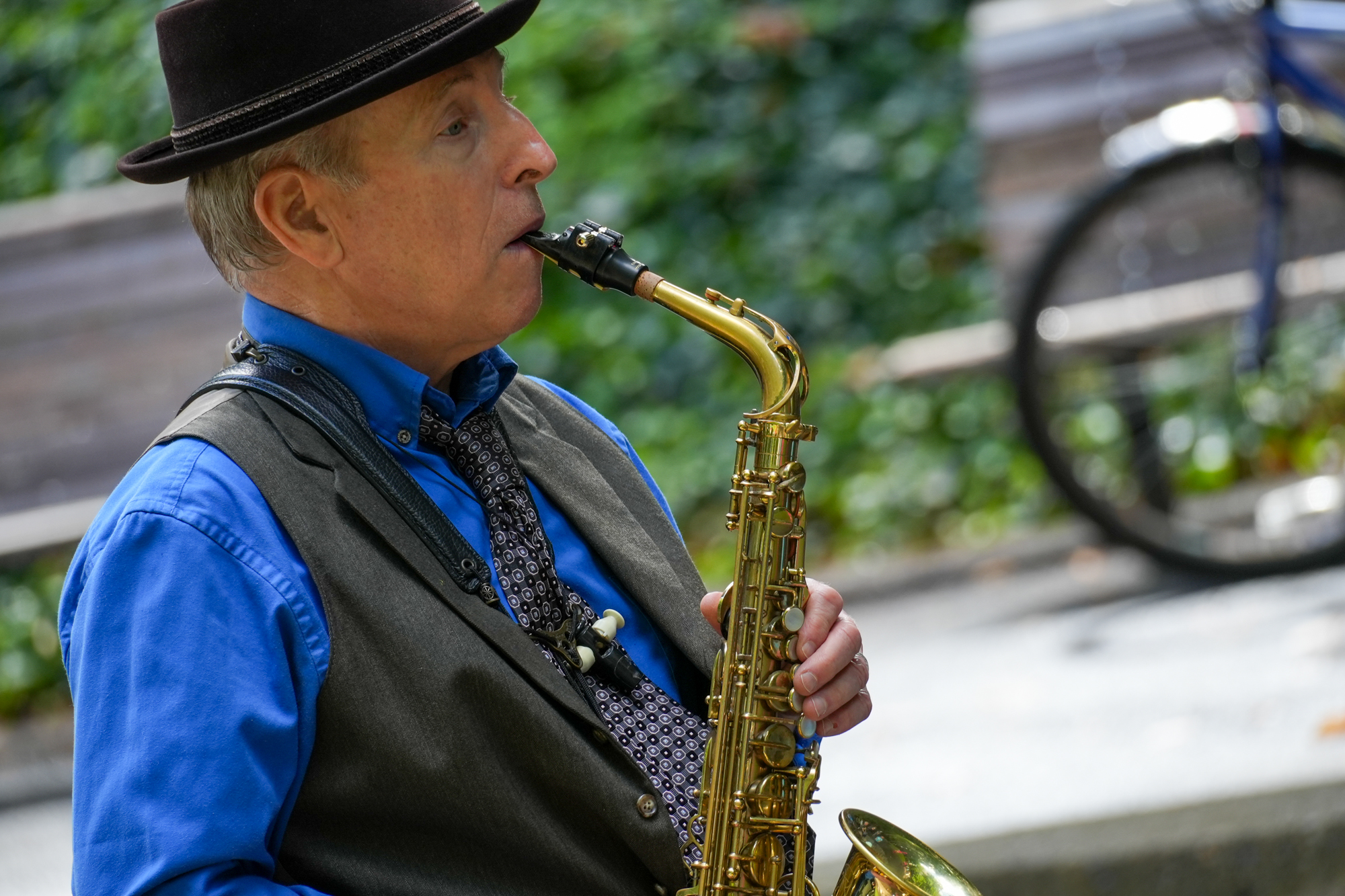
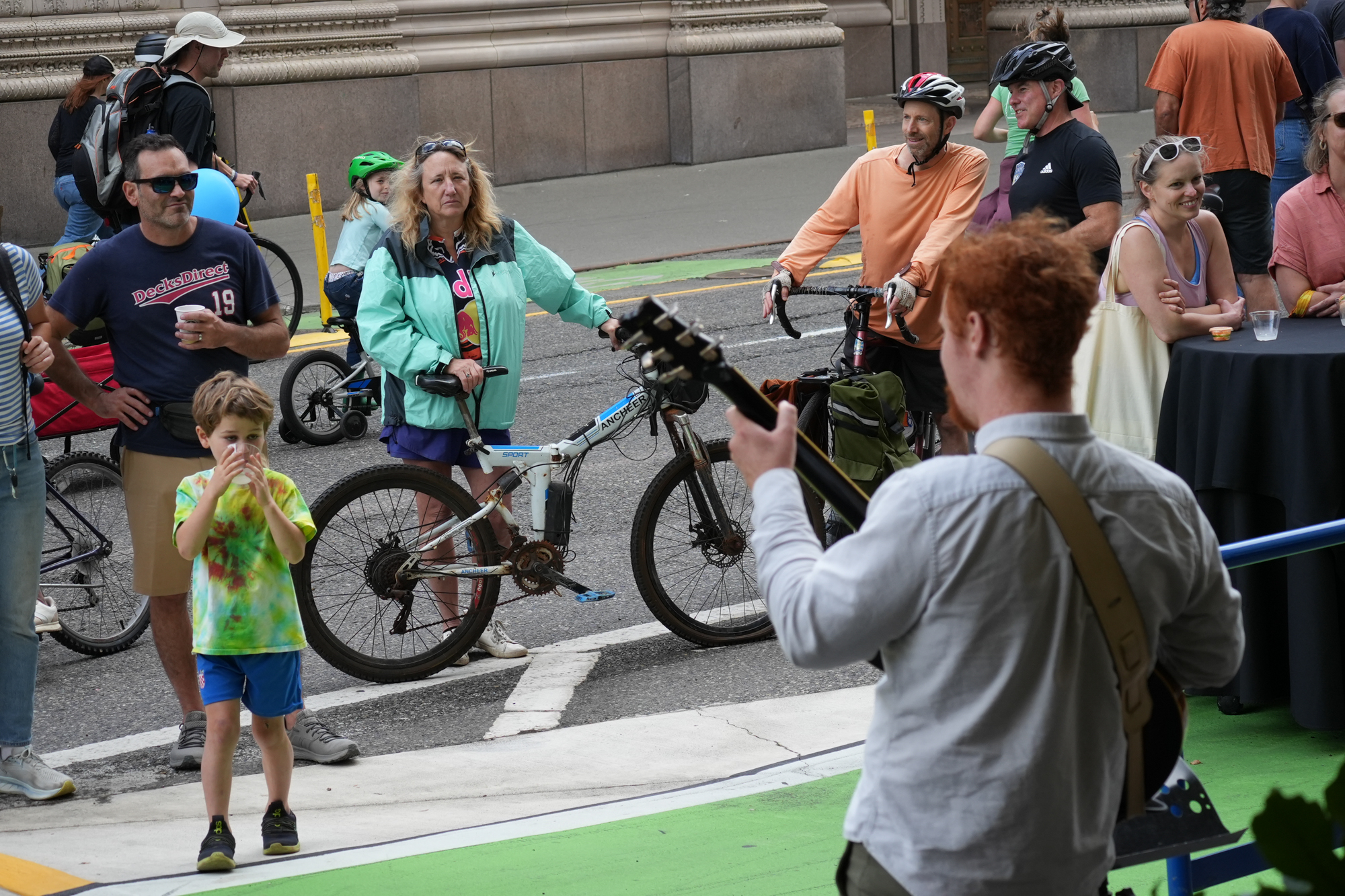
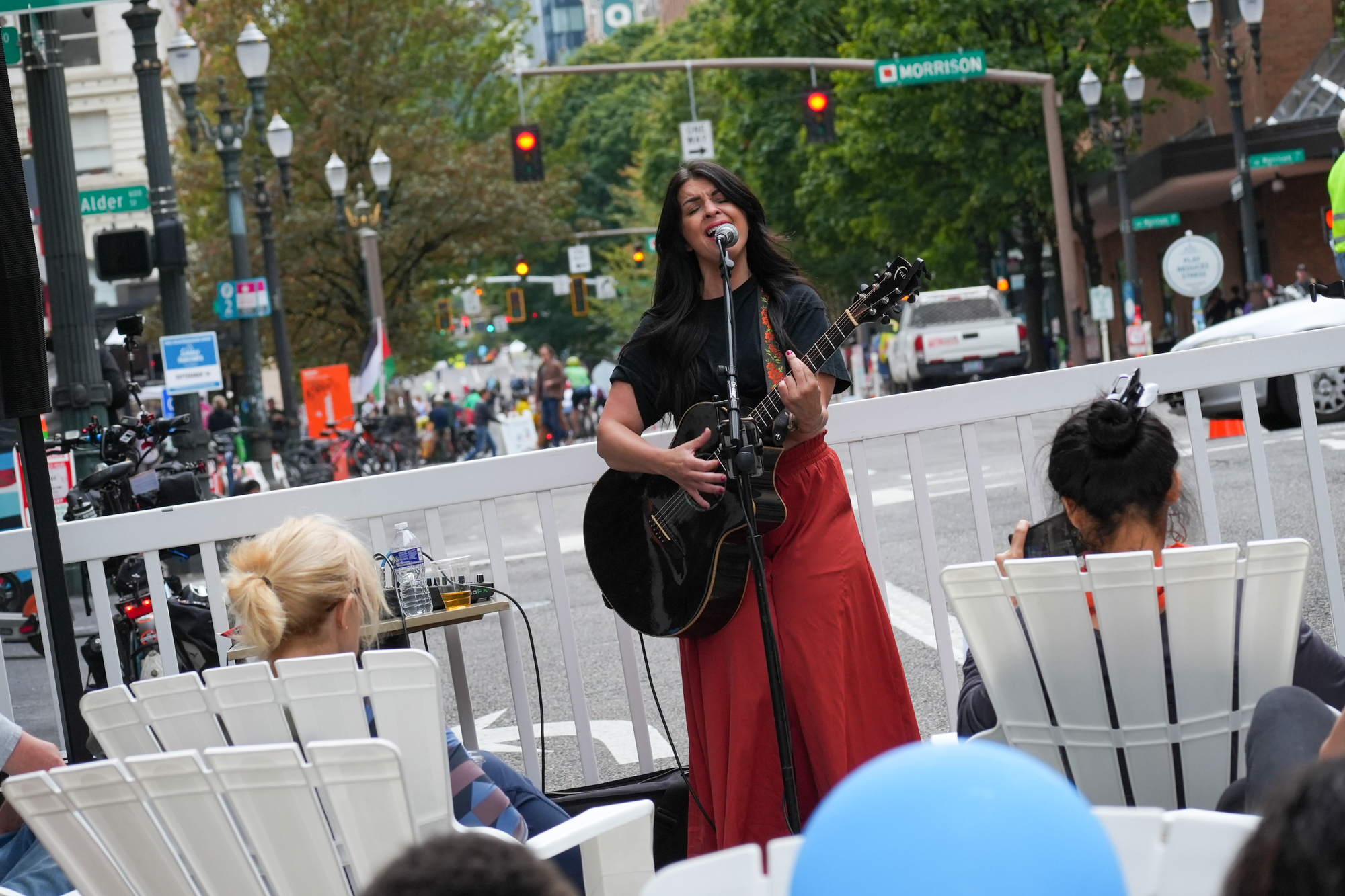
The open streets event that began in 2008 hasn’t visited downtown Portland since 2019. The route of this year’s event was a loop of SW Broadway and SW Park, and it felt like there was something fun to discover on every block. Businesses opened up for the open streets, giving away food and drink and hosting excellent live music. From the legit jazz band outside the Benson Hotel (who ironically blocked the bike lane with tables and chairs for viewing the music) to Karl Blackwood playing trumpet while the folks at Alder Bistro handed out free hot dogs, the sounds of the streets echoed for blocks.
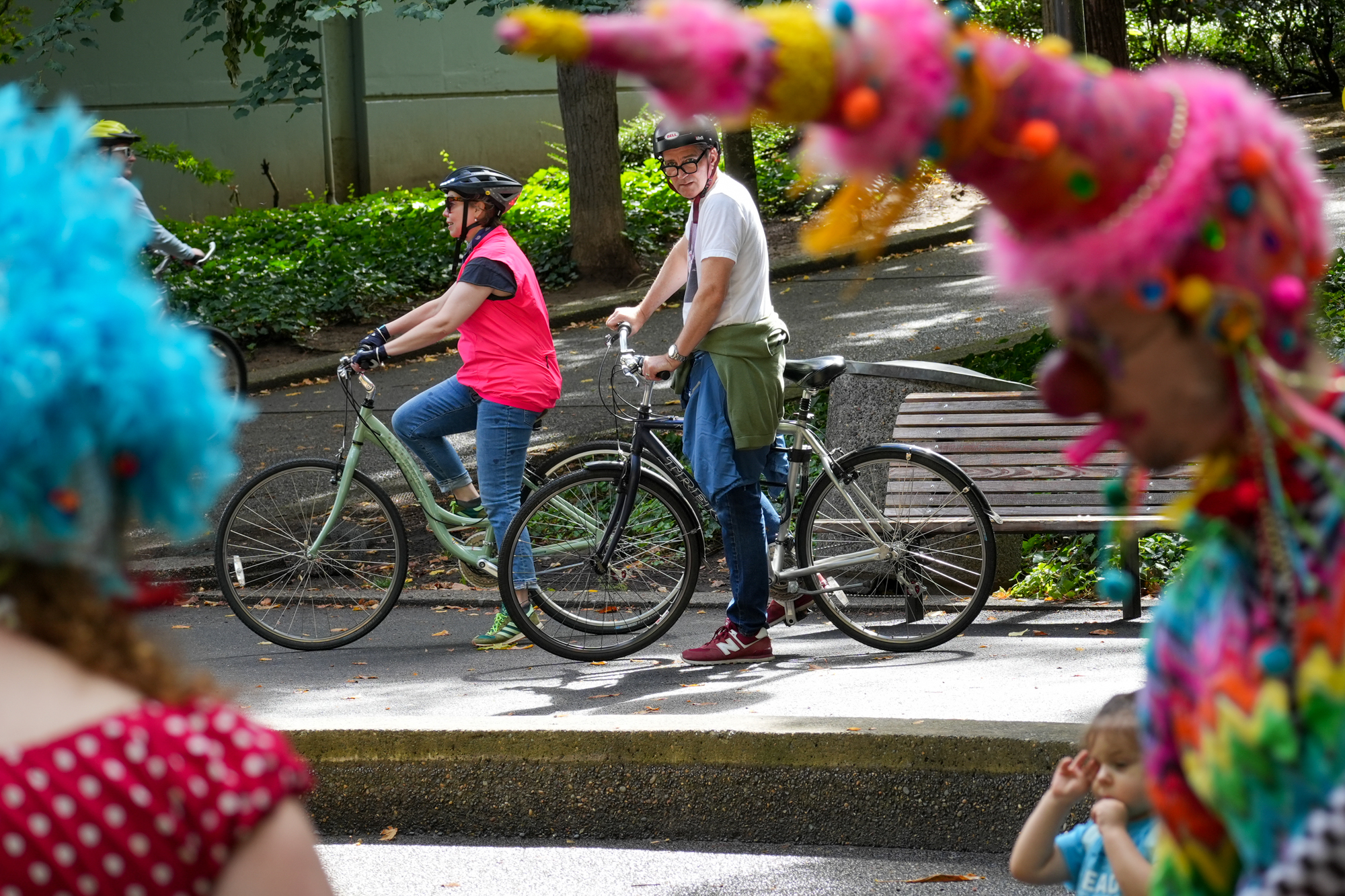
I bumped into clowns, opera singers, theater actors, a saxophonist, and all types of community groups and nonprofits at the marketplaces along the route. It was also really nice to meet so many BikePortland readers and I appreciate everyone who introduced themselves!
This event has become just as much about community as it is about mobility. It’s a way for Portlanders to come together in the street.
Check out the rest of my photos below and stay tuned for a video Monday morning.
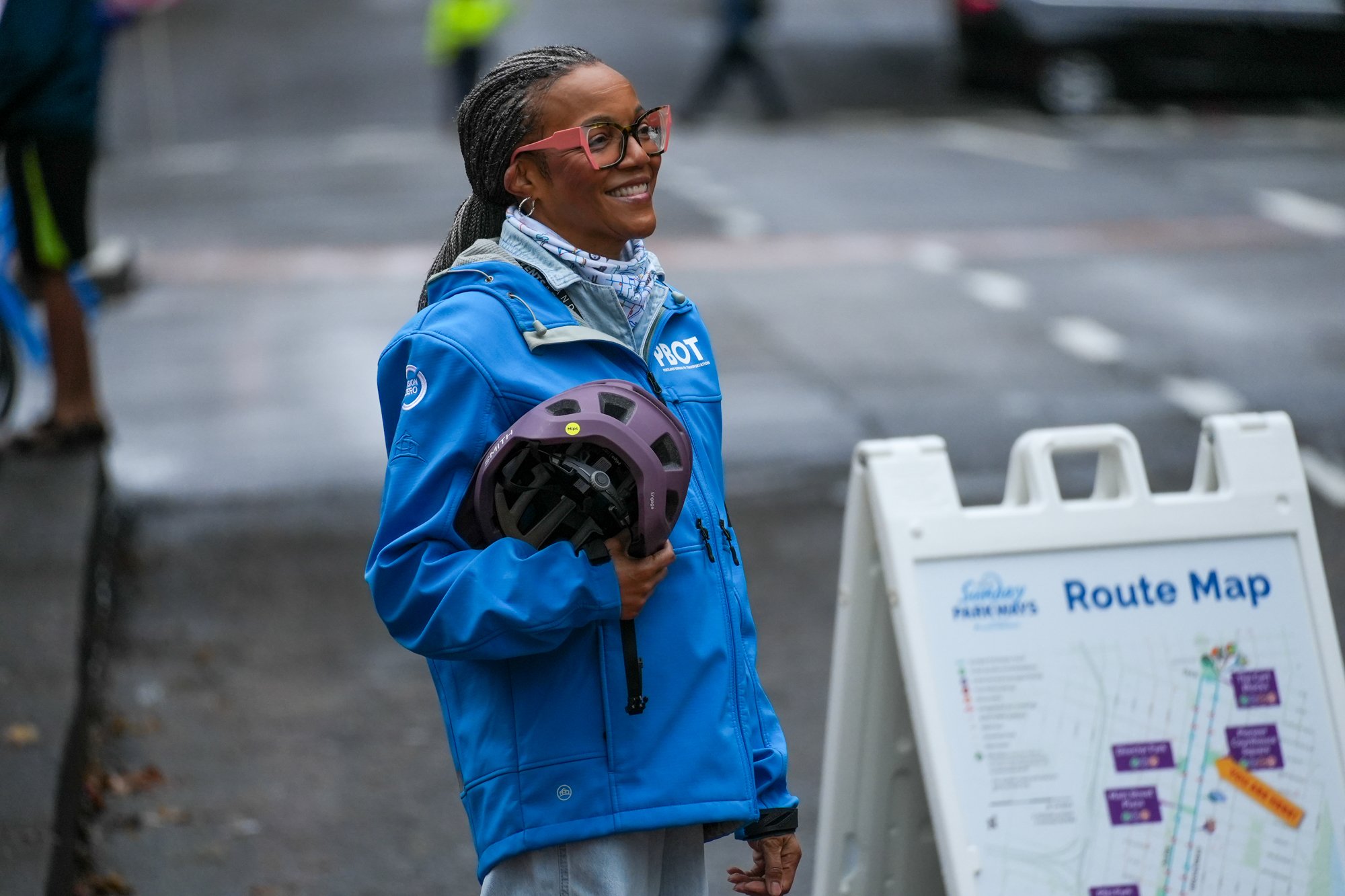
PBOT Director Millicent Williams admires her handiwork.Shoehorn! I’ve been watching this guy play for 20 years now.
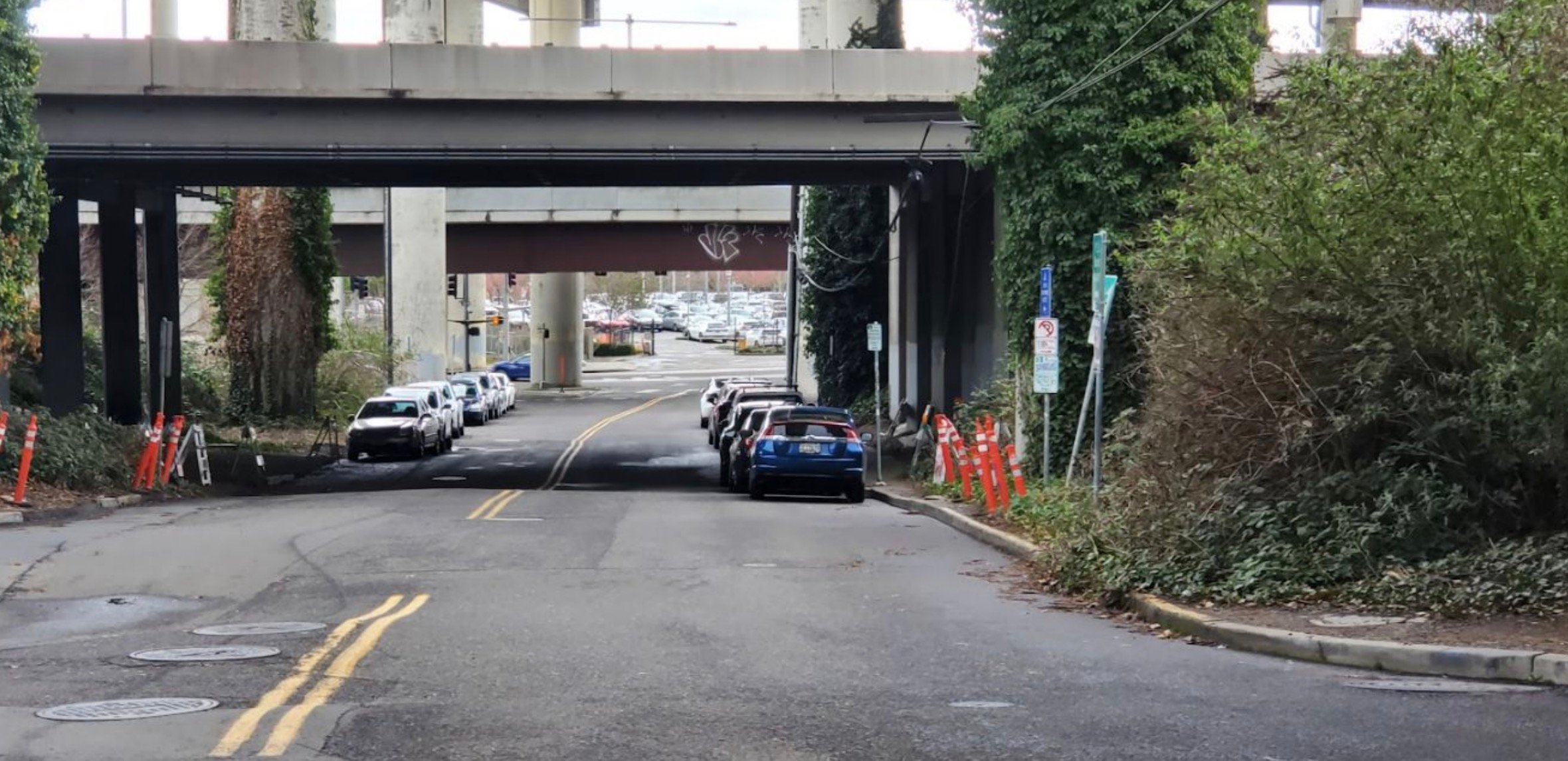
Believe it or not, this is the main route between the protected bike lanes on S Moody in South Waterfront and a 400-student preschool. (Photo: Better Block PSU)
The Portland Bureau of Transportation has a laudable history of working with community groups to help bring road projects to life. The “Better Naito” protected bike lanes on Naito Parkway began as a demonstration project. So did the carfree plaza on SW Ankeny and 3rd and the recent NE Broadway Pave and Paint. Now, a project that aims to reimagine South Sheridan Street and connect the campus of Oregon Health Sciences University and the South Waterfront district to a thriving school, could take these city partnerships to the next level and set an important precedent for community-led projects.
PBOT Director Millicent Williams appeared at City Council last week to inform members of the Transportation and Infrastructure Committee about some of this work. “Our ability to continually improve the transportation system and respond to community-identified needs is foundational to building trust with Portlanders,” Williams shared.
“As downtown and the South Waterfront have grown, the conditions of Sheridan Street have only worsened.”
— Bodo Heiliger, International School of Portland
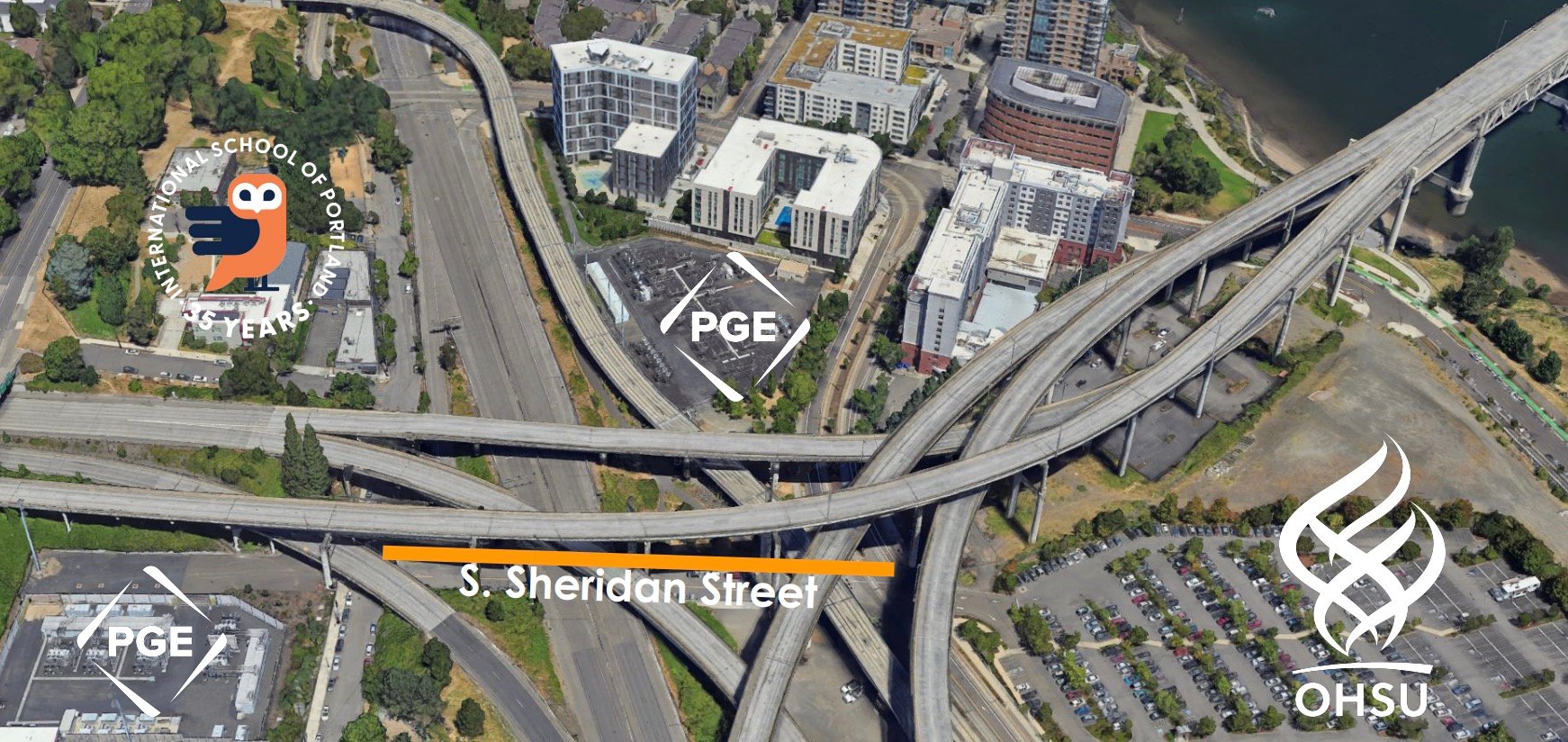
A few minutes later, that trust-building was on display as Bodo Heiliger took to the mic. Heiliger runs the International School of Portland (ISP), a 400 student, pre-K to fifth-grade school sandwiched between I-405, Naito Parkway and Harbor Drive (see map below). The one connection between the school and South Waterfront is South Sheridan, a street Heiliger said, “Has long been the street that time has forgotten.” “As downtown and the South Waterfront have grown, the conditions of Sheridan Street have only worsened,” he continued. “A jumble of incomplete sidewalks, missing bike connections, a freeway exit ramp and minimal traffic control right in the heart of a school zone make this area treacherous for our three-year-olds walking hand-in-hand to school.”
Advertisement
(Source: Better Block PSU)
Heiliger came to City Hall as part of a panel of partners working to remake Sheridan into a safer, more pleasant street. He and several volunteers at the school have taken advantage of an innovative program developed by nonprofit urbanism group Better Block PDX and the Transportation Research and Education Center (TREC) at Portland State University. They host open calls for project ideas, then wed them to student planners and engineers. Chosen ideas become a capstone project for Master’s program students, who then create design and engineering plans that tee the projects up for construction.
ISP parent and school volunteer Ryan Mehan submitted the concept to Better Block and PSU in spring 2024. It was accepted and has since been developed into the 30% design stage — a key step toward getting built.
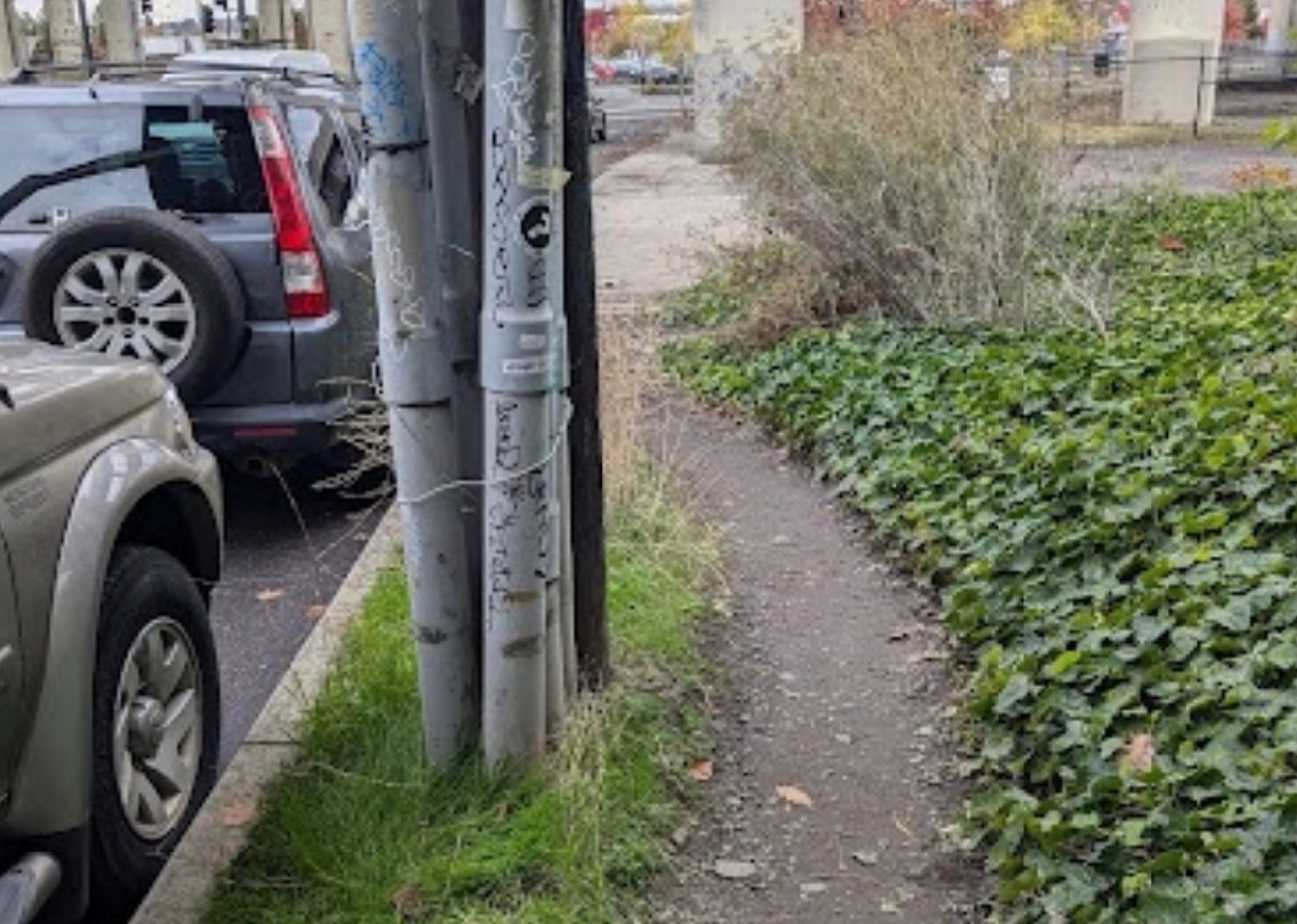
Today, Sheridan is shrouded in overgrown ivy and darkened by highway lanes that rumble overhead. It’s a street people use as quickly as possible and its value as a place for OHSU staff to park cars barely outweighs its general sketchiness. I had no idea there was a large, thriving preschool just yards away until I watched Mehan, Heiliger and others testify at City Council Monday.
Existing conditions on S Sheridan.
Advertisement
“To see small children have to navigate that area, it just gives me, you know, a nightmare!”
– Olivia Clark, city councilor
One of them was Paula Cano, a mom of two students (ages 3 and 7) who attend the school. Cano, who’s also head of early childhood development at ISP, and her husband (an OHSU employee) bike their kids to the school every day. “Right now it is not safe,” Cano told the councilors. “Our own faculty and staff often share with me the fears of simply walking down Sheridan to get a cup of coffee. There’s blind curves, missing sidewalks, poor lighting, and a lack of bike lanes make it frightening for adults — let alone our young students.”
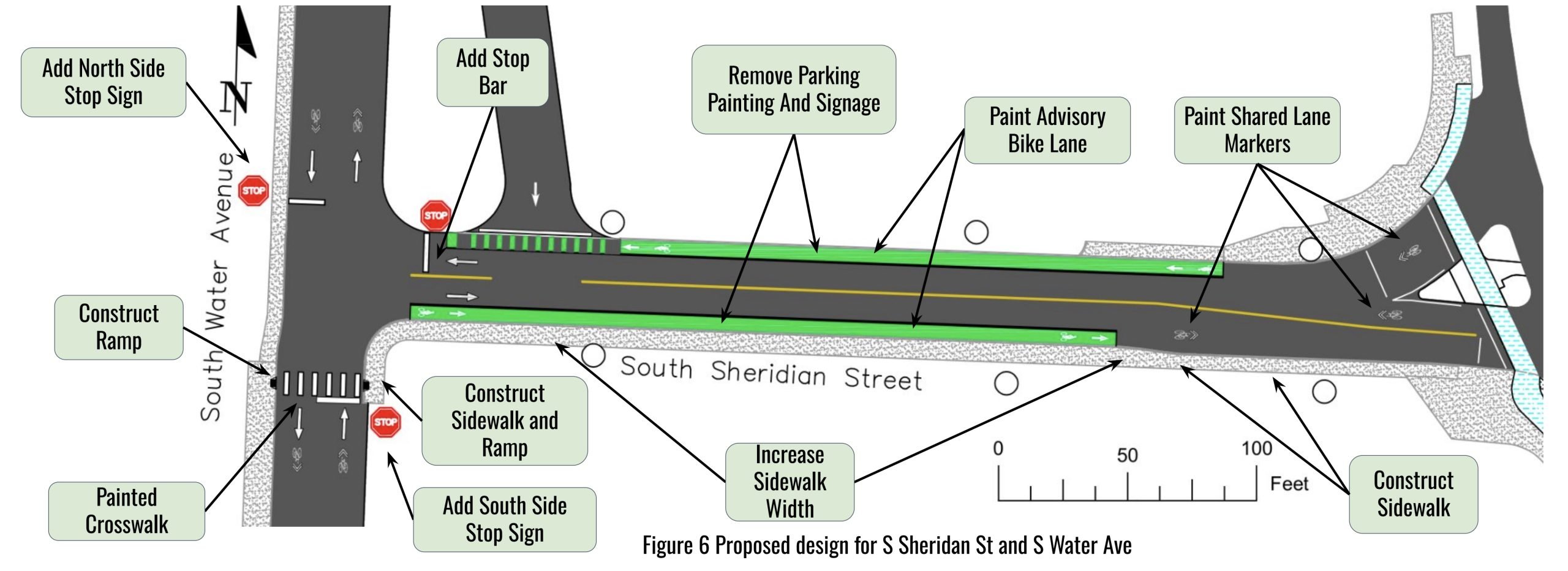
That will all change once the Reimagining South Sheridan Street project becomes a reality. The plan is to update the street with continuous sidewalks, safer crosswalks, an all-way stop, and dedicated bike lanes. “We’ve long sought to create safe space for active transit along the block,” Mehan shared at the council meeting.
But just how to approach such a big project felt out of reach to Mehan, until he learned about the Better Block PSU program.
Better Block’s Ryan Hashagen has been on the ground floor of several exciting projects that began with someone like Mehan. Hashagen feels the Reimagining South Sheridan project could play a role in finally cementing the Better Block PSU program at the City of Portland. Up until now, PBOT has worked on the projects, but they’ve done so outside any formal guidelines or program structure. To get projects like Better Naito done, PBOT staff would bend existing street permit programs into new shapes to allow a demonstration, and then provide other assistance in whatever way they could cobble it together. But with the continued maturation of the Better Block PSU program, combined with the respect it has built at PBOT over the years, a new city council and form of government; and a project that has support from such high-profile partners as ISP, OHSU, and the Downtown Neighborhood Association — Hashagen thinks Reimagining Sheridan could set a precedent.
Advertisement
His goal is to firmly ensconce the program at PBOT so that community-led projects have an even more accessible path toward completion. That would take some sort of city council action and funding to make it real — and given the politics of the moment, where road safety and transportation planning advocates have numerous allies on City Council — that might happen sooner than we think.
Transportation and Infrastructure Committee Chair Olivia Clark (who happens to represent the district this project is in) has visited the project site. “I stood there and watched cars just rip through the stop sign, like they ignored it.” she recounted at Monday’s meeting. “To see small children have to navigate that area, it just gives me, you know, a nightmare!”
Clark was clearly interested in seeing this project through. She asked an OHSU representative how they’d feel about removing the parking to make room for the planned bike lanes. When given a supportive response, she turned her attention toward Better Block (a group she seemed impressed by). Upon being told by a PBOT staffer that Better Block is a community organization that’s ready and willing to step up and assist, a light bulb seemed to go off in Clark’s head.
“So [Better Block] is really a resource for us to consider working more with,” she stated. (I could imagine Hashagen smiling and nodding deeply as she said that.)
Now, if PBOT can just find a reliable way to fund it, they will have the administrative infrastructure in place to develop community ideas into real projects relatively quickly.
Go downtown and ride your bike on Sunday. (Photo: Jonathan Maus/BikePortland)
Happy Friday everyone. Please tell your friends and co-workers and neighbors to head downtown for Sunday Parkways on Sunday. Let’s show the haters what kind of city we are and stoke the cycling renaissance!
Beyond that, here are my picks for the weekend…
Saturday, September 13th
The Chocolate Ride – 11:30 am at Irving Park (NE) No matter your favorite way to enjoy chocolate, this ride will have something for you. Ends at a new chocolate store with games and prizes. More info here.
El Grito Ride – 6:15 pm at Salmon Street Springs (SW) It’s the Cumbia edition, so get ready to dance to music from a guest DJ. Biketown bikes available on first come, first served basis. More info here.
Advertisement
Sunday, September 14th
Carry Shit Olympics – 9:00 am at Alberta Park (NE) Final event of this annual ode to cargo bikes. Come out and connect with other cargo bike aficionados and see all the amazing things cargo bikes can do (and can’t!). More info here.
Sunday Parkways Downtown – 12:00 noon to 5:00 pm This is it folks! Hop on a bike bus from your neighborhood and get ready to part of Portland’s downtown revitalization with thousands of other awesome people. Let’s show the world what Portland can be! More info here.
Capes and Costumes Cosplay – 1:00 pm at Director Park (SW) Dress up and join cosplay friends while you roll the Sunday Parkways route together in full costumed splendor! More info here.
Read, Write, Ride – 3:00 pm at Ladd Circle Park (SE) There’s more to life than Sunday Parkways. And if you love poetry and the written word, you’ll love this chill gathering aimed at inspiring your creativity. More info here.
Singles Bike Ride – 6:00 pm at Colonel Summers Park (SE) Back by popular demand, this is a great chance to hang with other singles in a low-pressure environment. Expect a river stop and a ride out to Cartopia food cart pod for food and drinks. More info here.
— Did I miss your event? Please let me know by filling out our contact form, or just email me at maus.jonathan@gmail.com.
National Inside Sales and Customer Service (Part Time)
Company / Organization
HGNR Inc (distributor of Dumonde Tech)
Job Description
National Inside Sales and Customer Service (Part Time)
Part-time employment
Location: St. Johns (North Portland, OR)
HGNR Inc, the distributor of Dumonde Tech bicycle products in the USA is looking for a part-time Inside National Sales Rep and Customer Service position.
Reports To: President, HGNR Inc.
Job Overview: The National Sales Rep’s (NSR) primary role is sales and customer service. A successful NSR will maintain and grow current dealer orders while soliciting new dealers with the goal of increasing annual company revenue.
Responsibilities and Duties:
• Sell HGNR distributed products to current and new dealers.
• Increase current dealer order volume and solicit new dealers.
• Promote products through promotional opportunities and sponsorships (events, teams, bicycle organizations).
• Be a product expert for dealers and consumers.
• Attend trade shows and local bicycle events as needed.
• Keep current with competition and trends in the bicycle lubricant market.
Qualifications:
• Minimum HS graduate, post-secondary education a plus.
• 3+ years sales and/or customer service experience. Bicycle or outdoor specialty retail industry a plus.
• Excellent verbal/phone communication skills.
• Comfortable soliciting new business in a professional and courteous manner.
• Strong written communication skills (primarily via email). Marketing writing skills a plus.
• Proficiency in Microsoft Windows, Word and Excel.
• Energetic, positive thinker, reliable, competitive yet caring.
• Bicycle mechanic experience or certifications a plus.
• Valid driver’s license.
• Able to lift 50 lbs. Trade show attendance may also require extended periods of standing.
PAY and HOURS:
Starting wage: $20.00/hr. (annual performance bonus available after the first year).
Schedule: flexible schedule
Hours: 20 hours a week (occasional weekends required)
Vacation: 80 hrs. paid vacation after one year, 40 hrs. floating and 40 hrs. during our holiday closure at the end of December each year.
How to Apply
Please email a letter of interest with your resume to jobs24@hgnr.com
Portlanders gathered for a memorial ride for Fallon Smart on August 26, 2016. (Photo: Jonathan Maus/BikePortland)
Portland City Councilor Tiffany Koyama Lane is about to take her commitment to traffic safety to the next level. In what she’s calling “Vision Zero Week,” the councilor will preside over a resolution next Wednesday (September 17th) that will reaffirm the city’s ambitious proclamation issued one decade ago.
Inspired in part by her connection to Jeanie Diaz, a southeast Portland librarian who was killed by a reckless driver in 2023, Councilor Koyama Lane elevated Vision Zero during the city’s most recent budget cycle. While her resolution does not obligate any funding for capital projects or programs, it would make significant administrative changes that could increase political urgency around the issue.
And Vision Zero needs all the help it can get. When the proclamation passed in 2015, advocates wanted the city to include a firm date to reach zero deaths. That date? 2025. Today we’ve still got way too many people killed while using Portland roads. And we’re still searching for answers as evidenced by a newly formed City Club research project that will study Vision Zero for the next 12 months.
If passed, the resolution would do two main things. It move the lead Vision Zero staffer from the Portland Bureau of Transportation into the Deputy City Administrator’s office. As we’ve seen with a plan hatched by an office overseen by Mayor Keith Wilson — and pushed for by City Administrator Mike Jordan — that would have removed traffic diverters in northwest, there’s a clear need for a stronger PBOT presence in the DCA’s office.
Advertisement
Slides from a presentation made by Councilor Koyama Lane’s office in May 2025.
The resolution would also establish a new Vision Zero Task Force, “focused on identifying actions to meet the City’s goals in eliminating traffic deaths.” PBOT used to have a Vision Zero Task Force but they disbanded it in 2021. Also unlike the previous task force, this new one will not include reps from advocacy groups or individual road safety activists. Instead, it will be comprised solely of city staff and will connect with external groups or subject-matter experts only “where appropriate.”
Councilor Koyama Lane released a video on social media last week encouraging Portlanders to testify on the resolution and to wear orange when they show up. She’s also promoting three events for Vision Zero Week: on Wednesday there’s a ride to City Hall and a parade planned before the council meeting, on Thursday Portland will host the Age-Friendly Oregon summit, and Friday is the annual PARK(ing) Day where Koyama Lane says she is “taking to the streets” to convert a car parking spot on SE Stark and 30th into a community space with road safety-related activities.
I also hear Koyama Lane would love to meet more bicycle riders and lovers of safe streets at her Constituent Coffee event this Saturday (9/13) from 9:00 to 10:30 am at the PDX Saints Love Day Shelter (247 SE 82nd Ave).
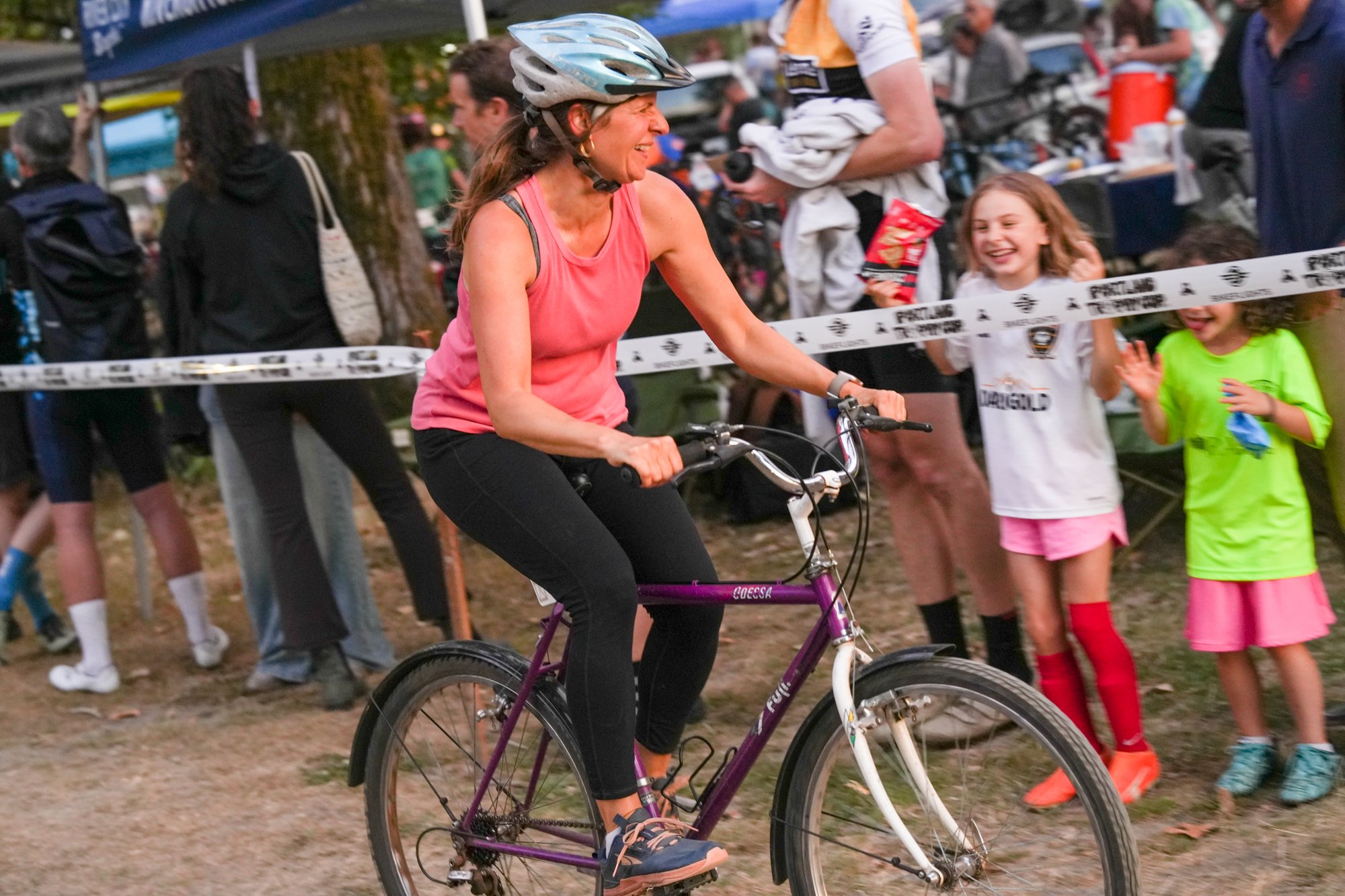
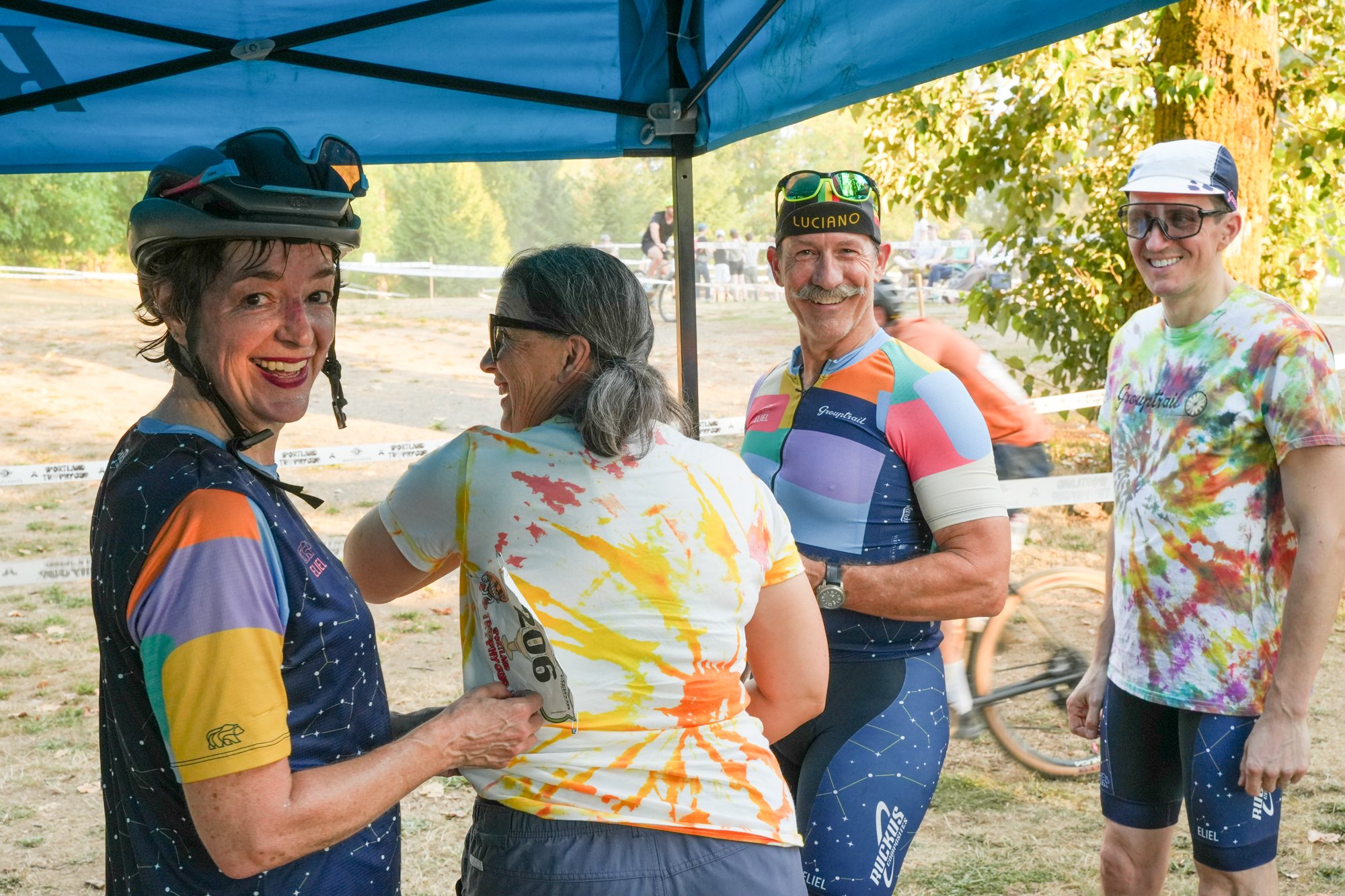
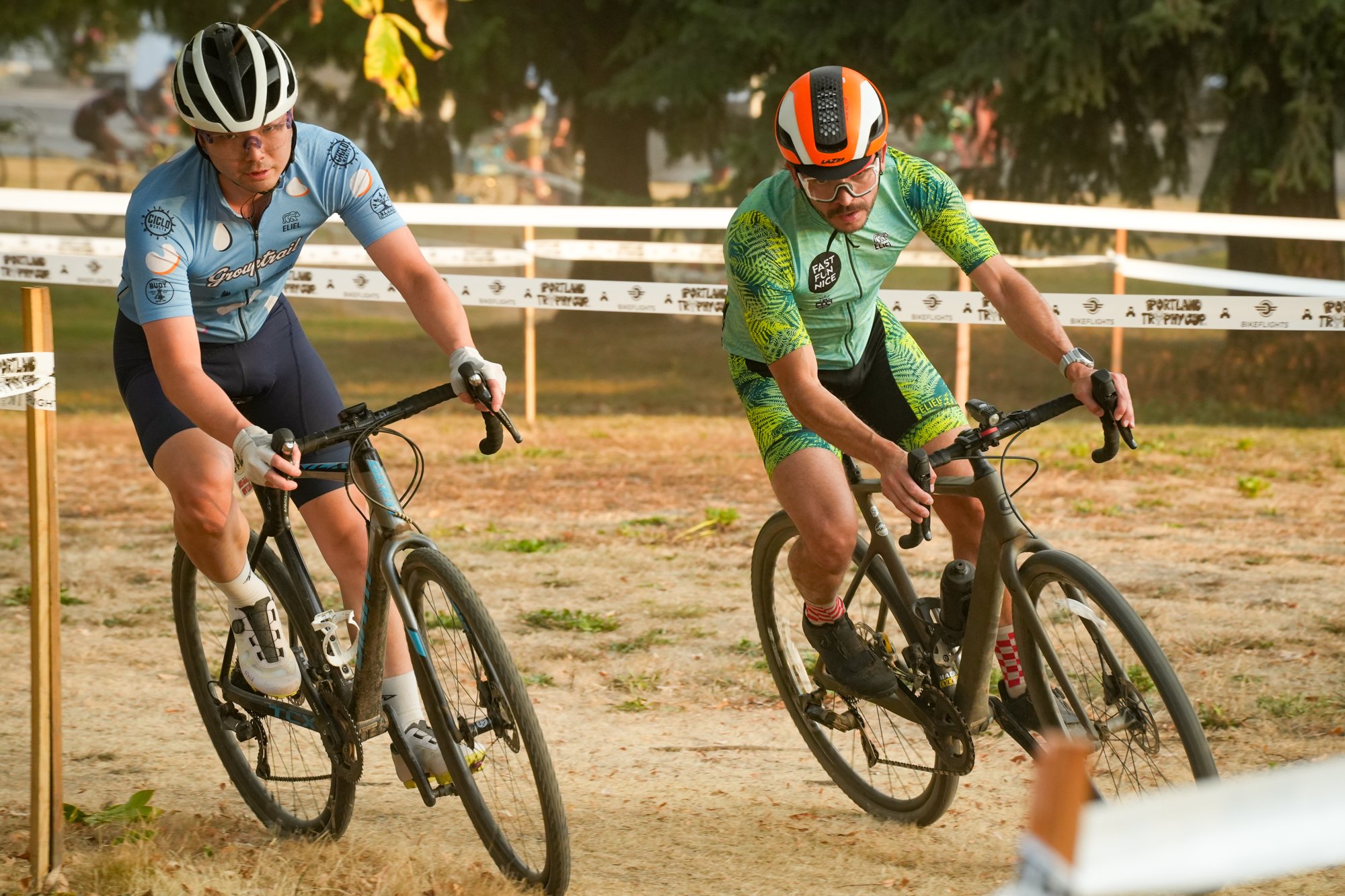
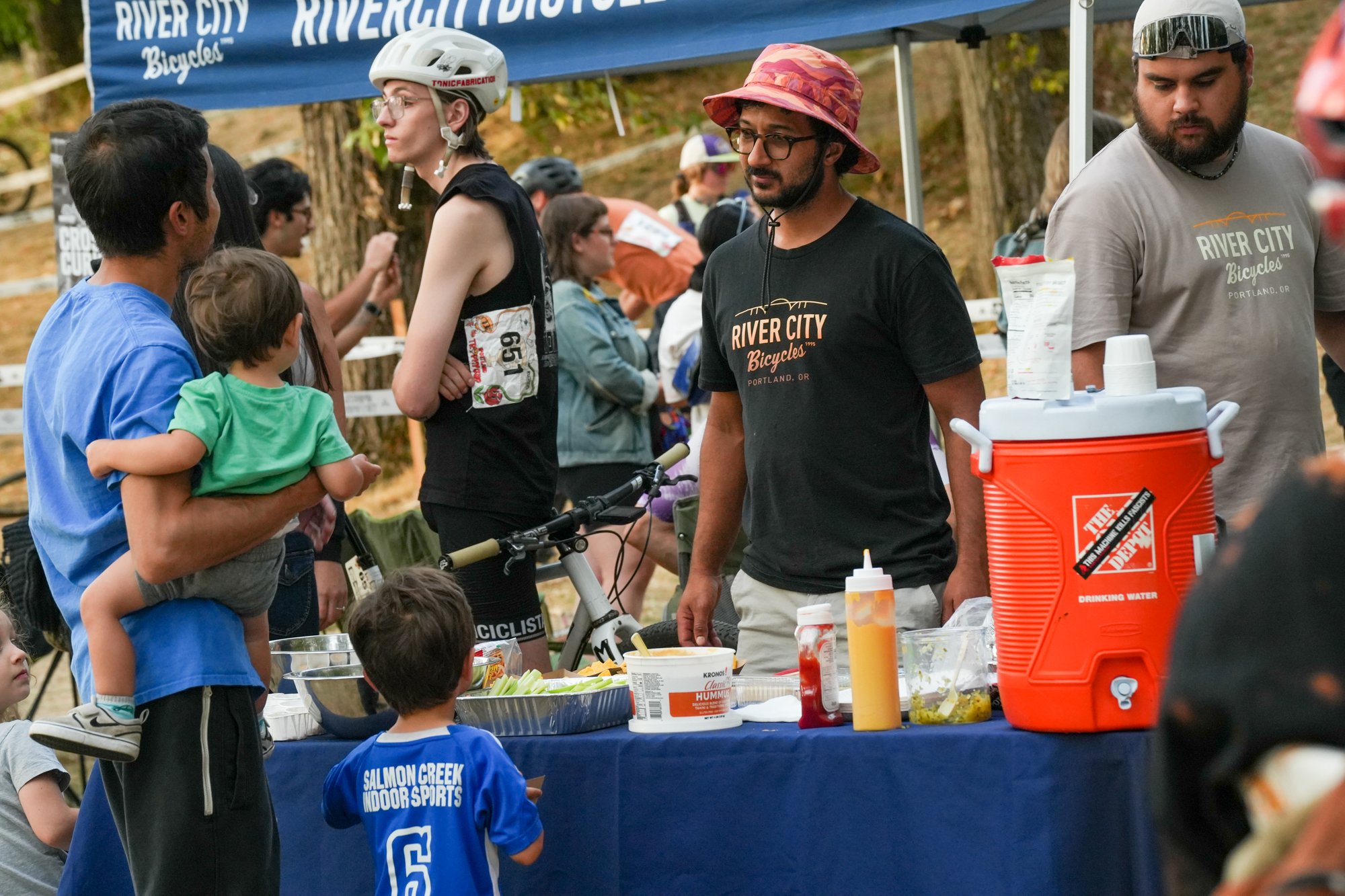
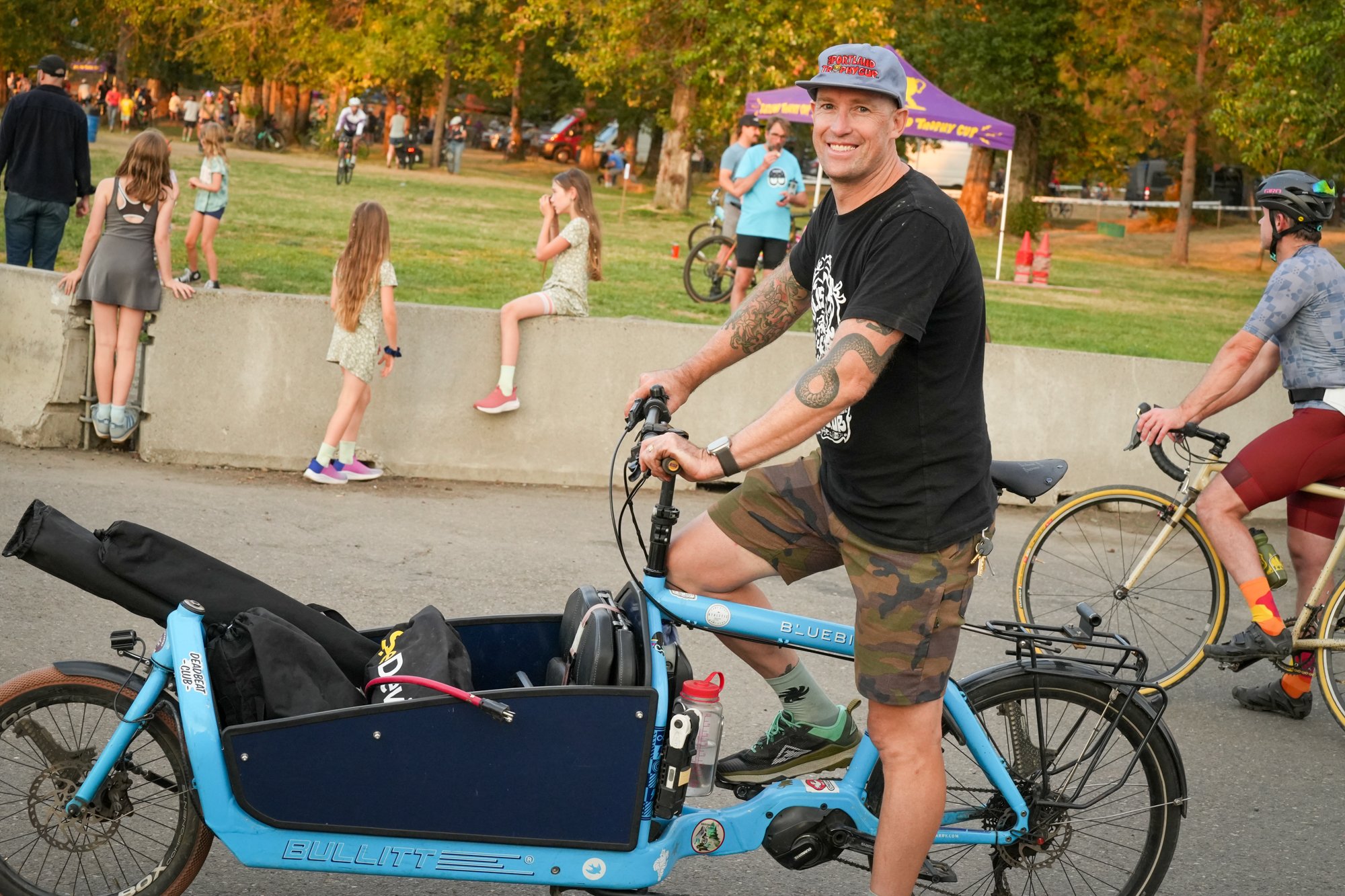
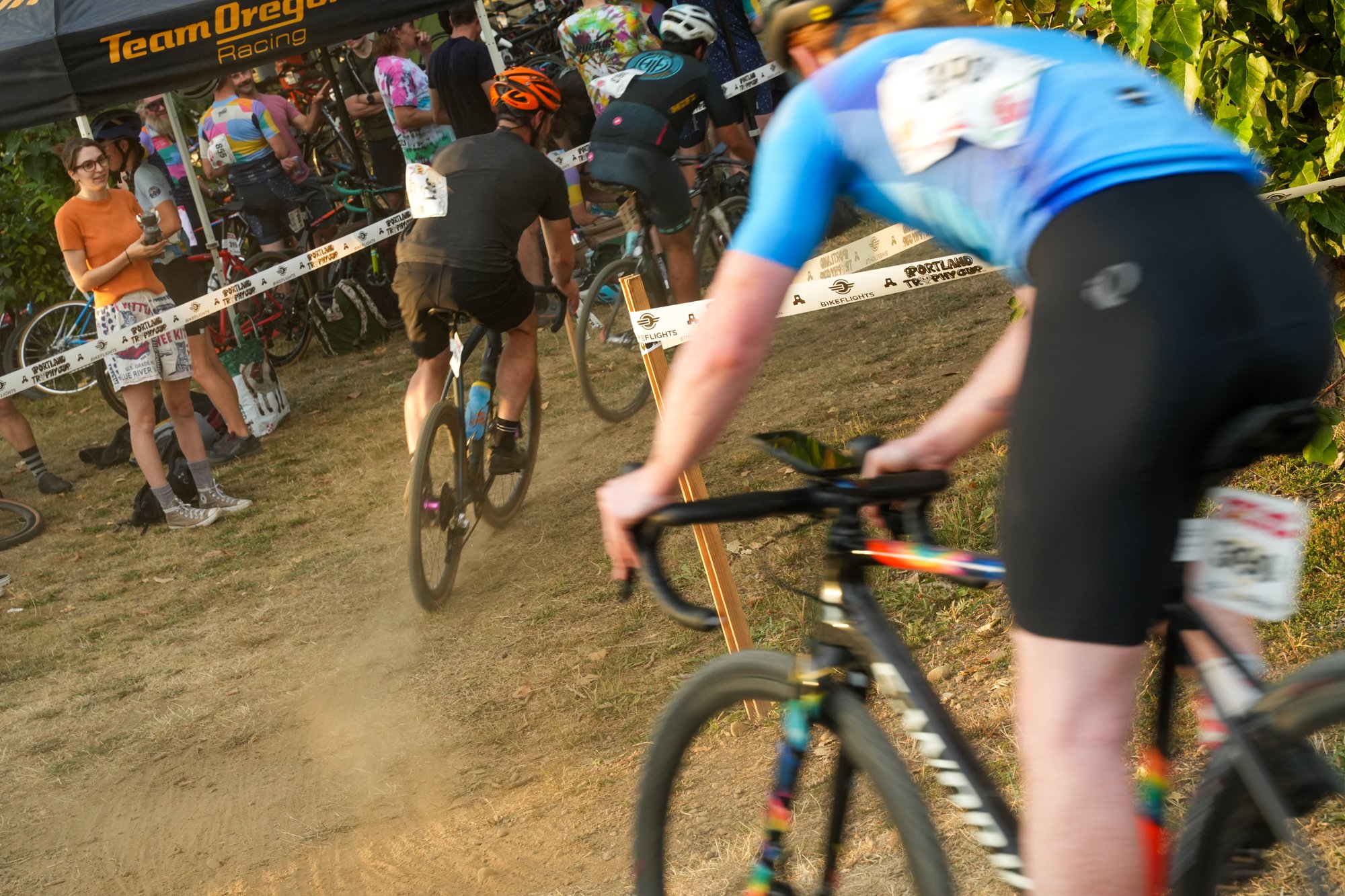
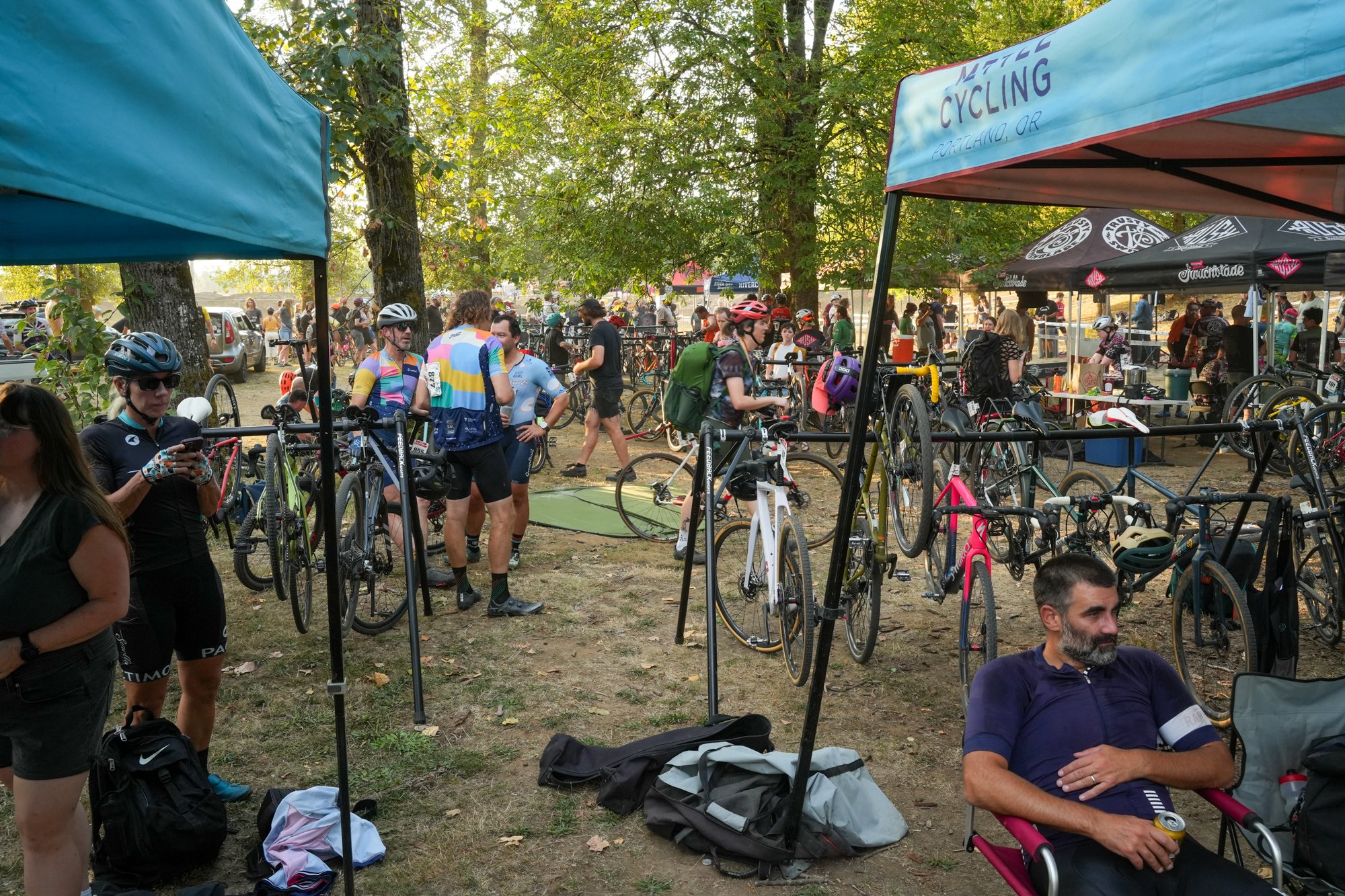
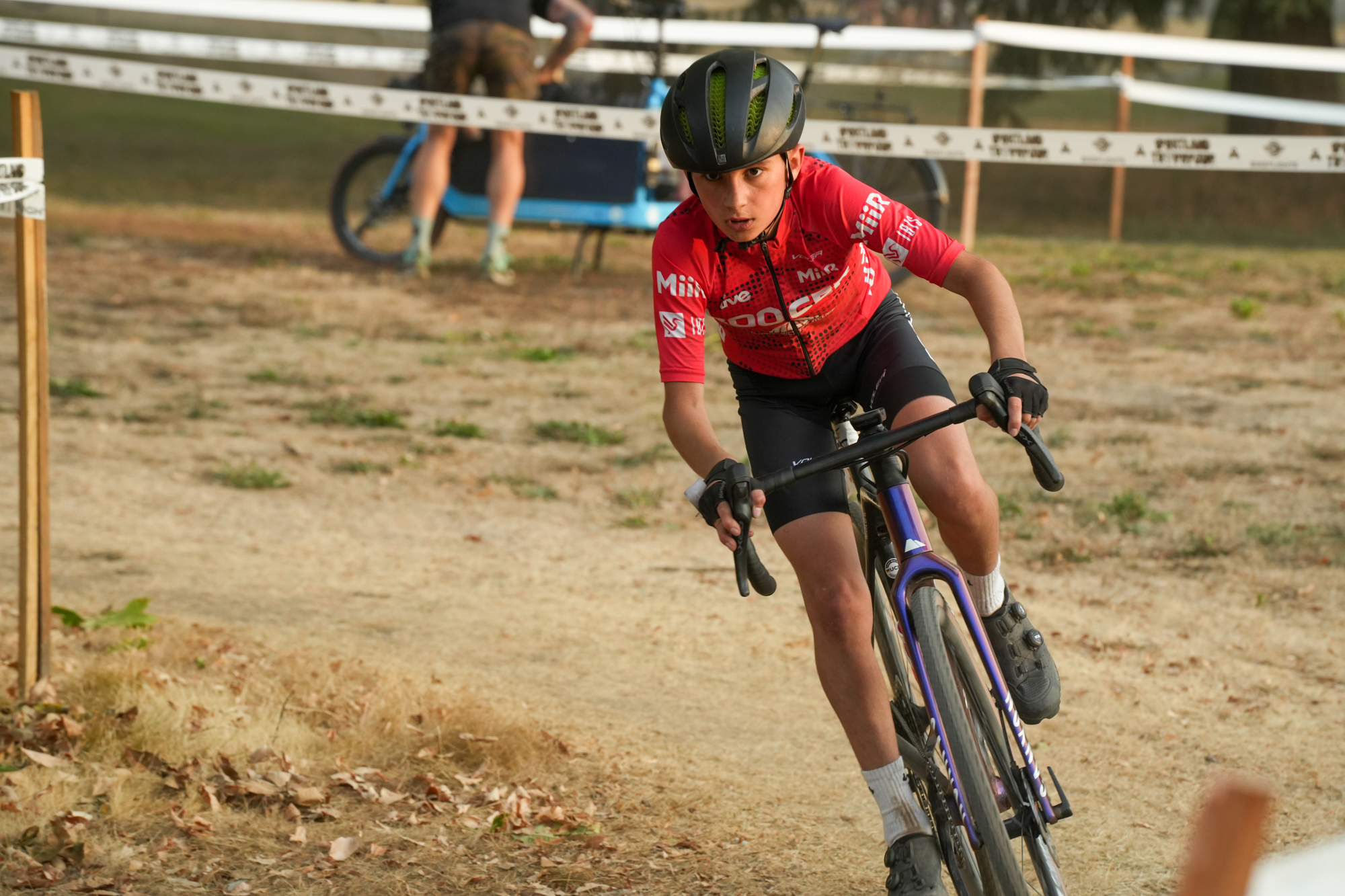
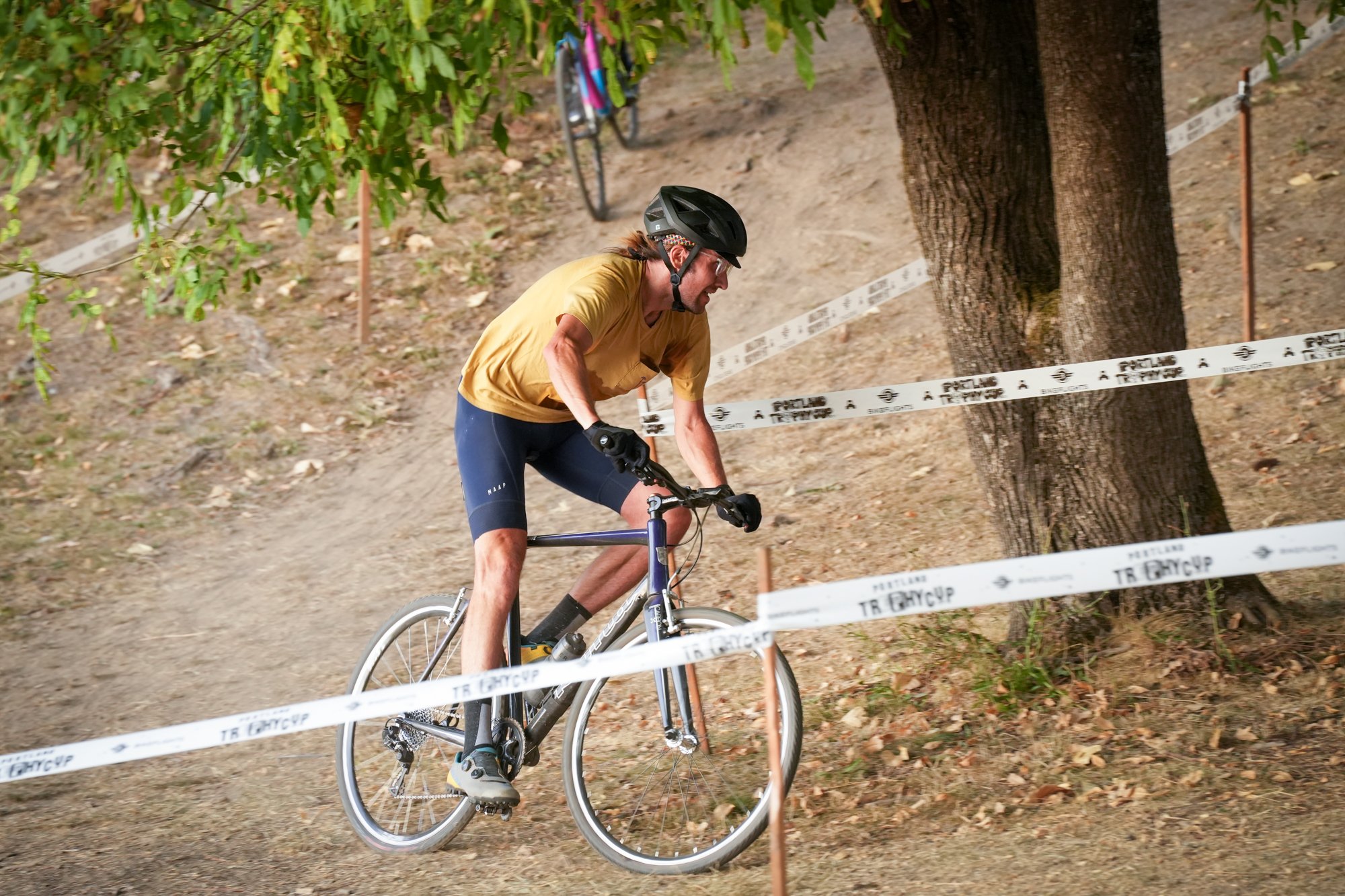
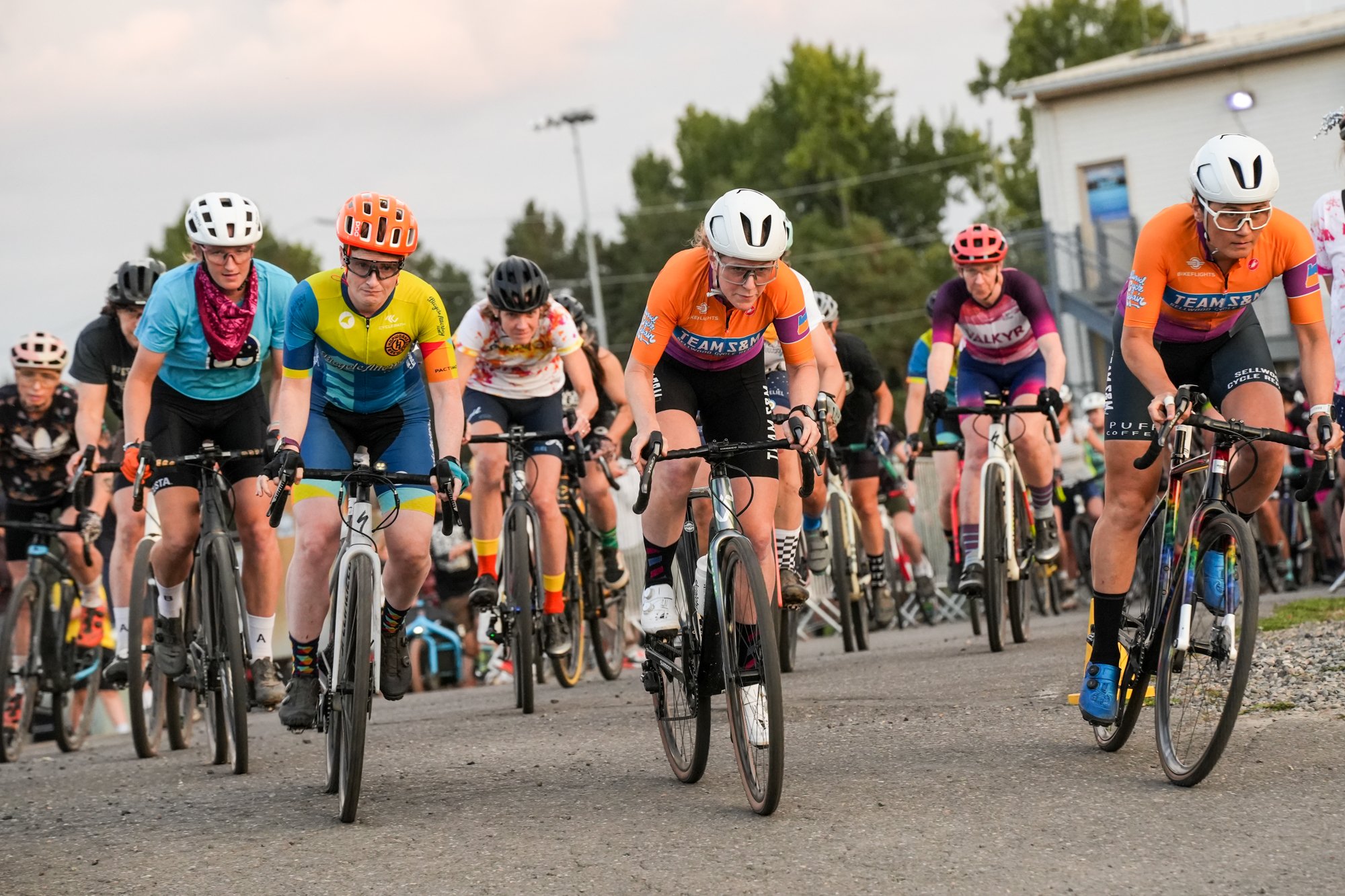
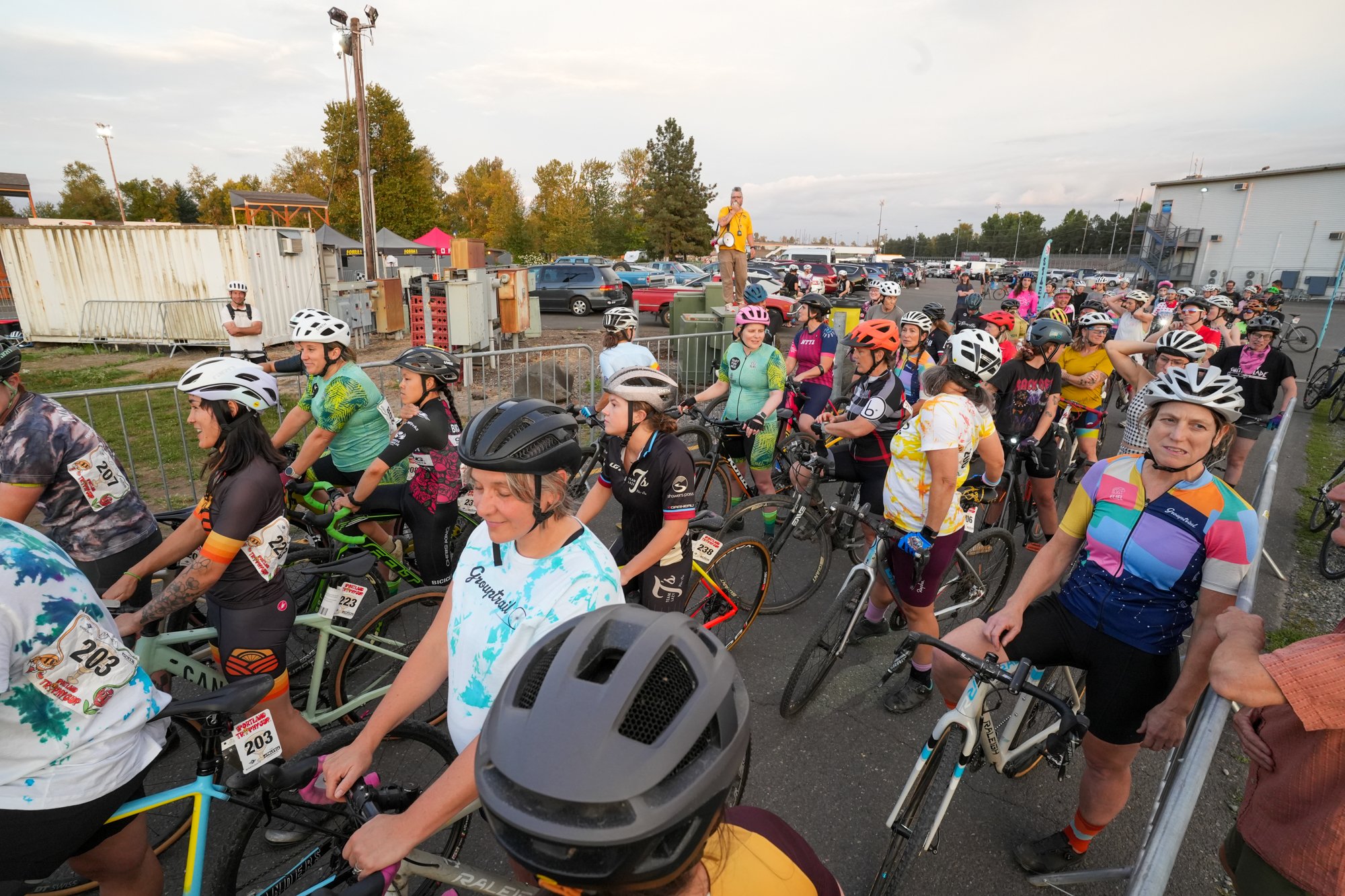
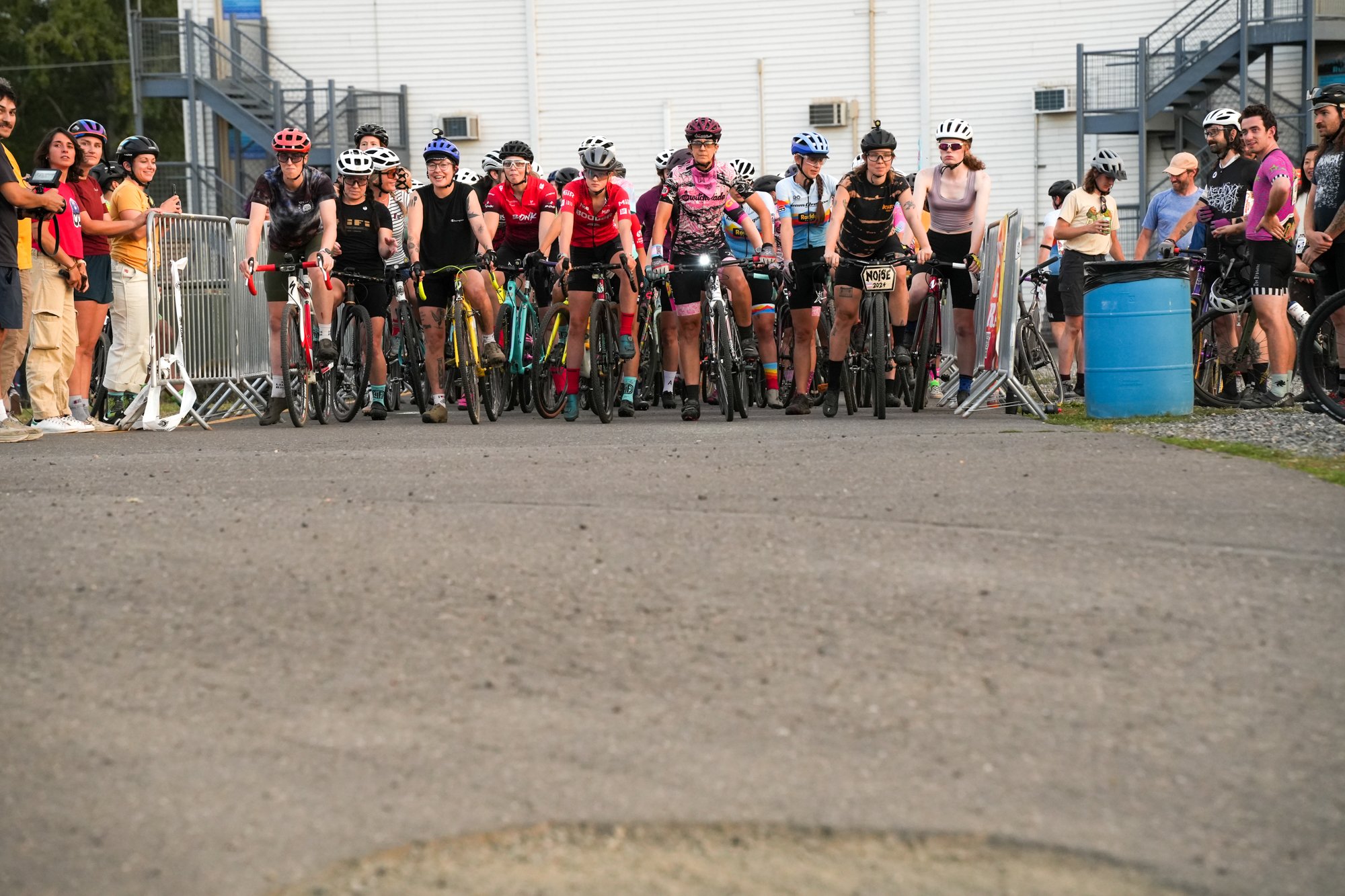
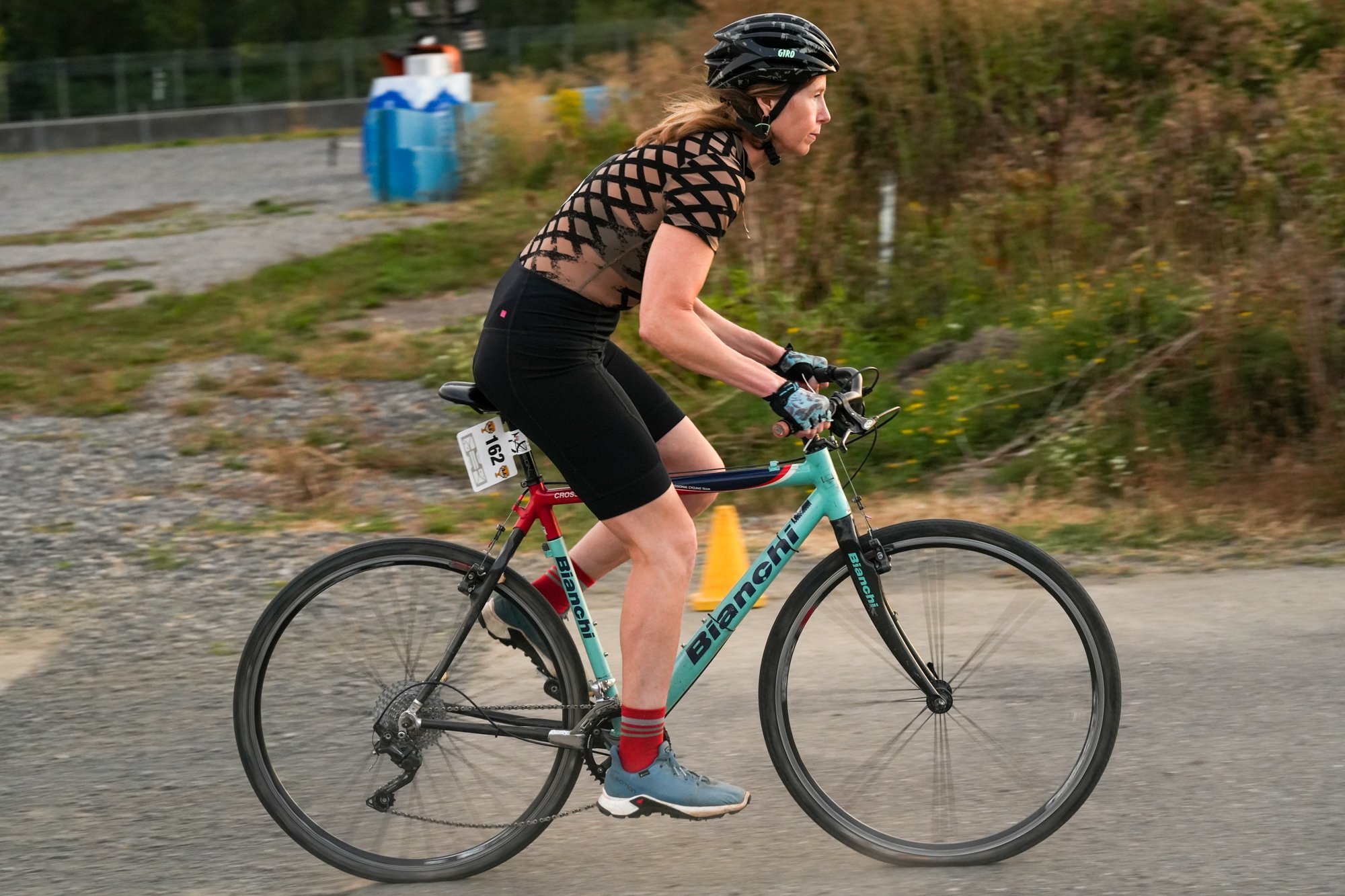
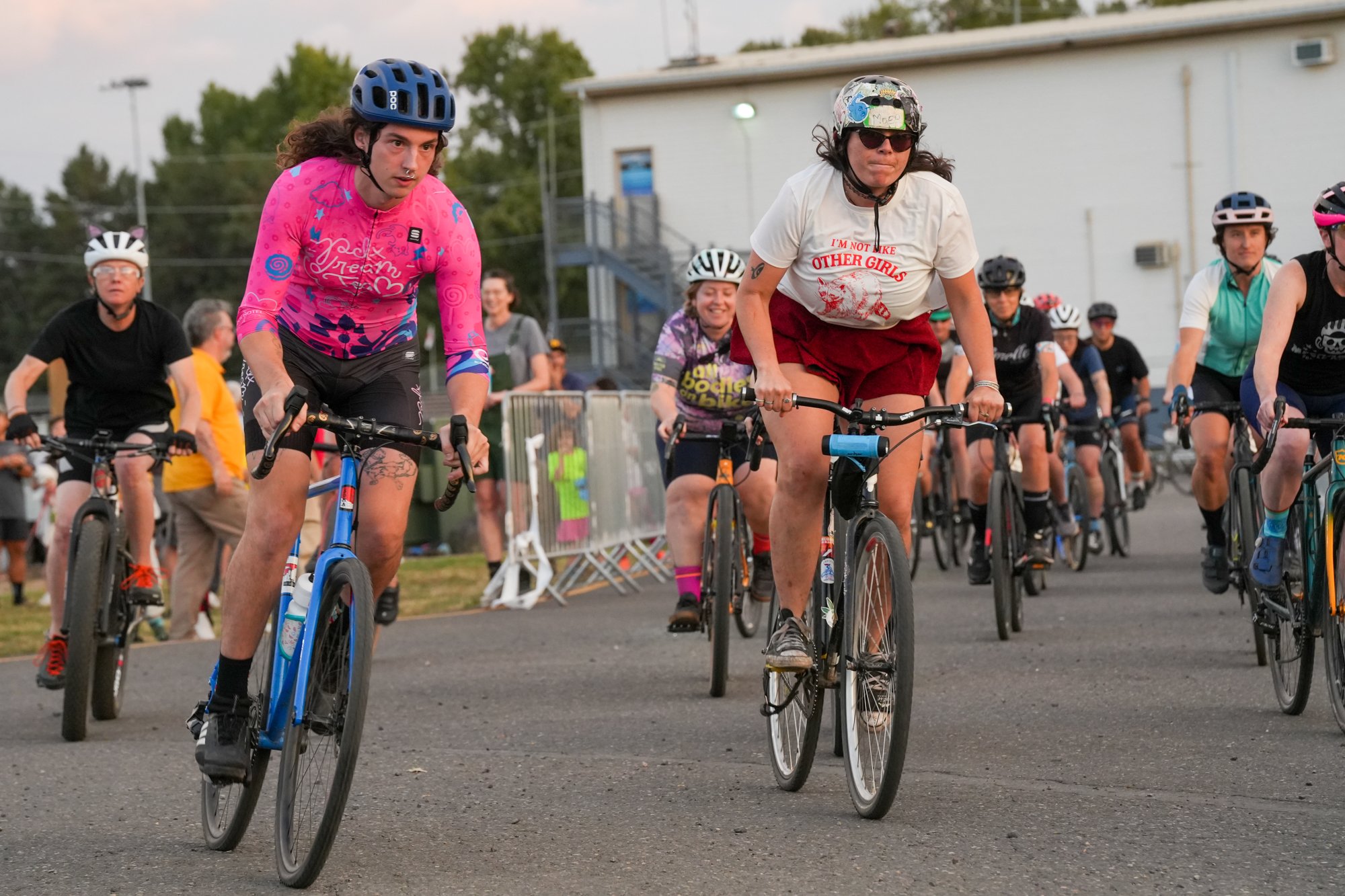
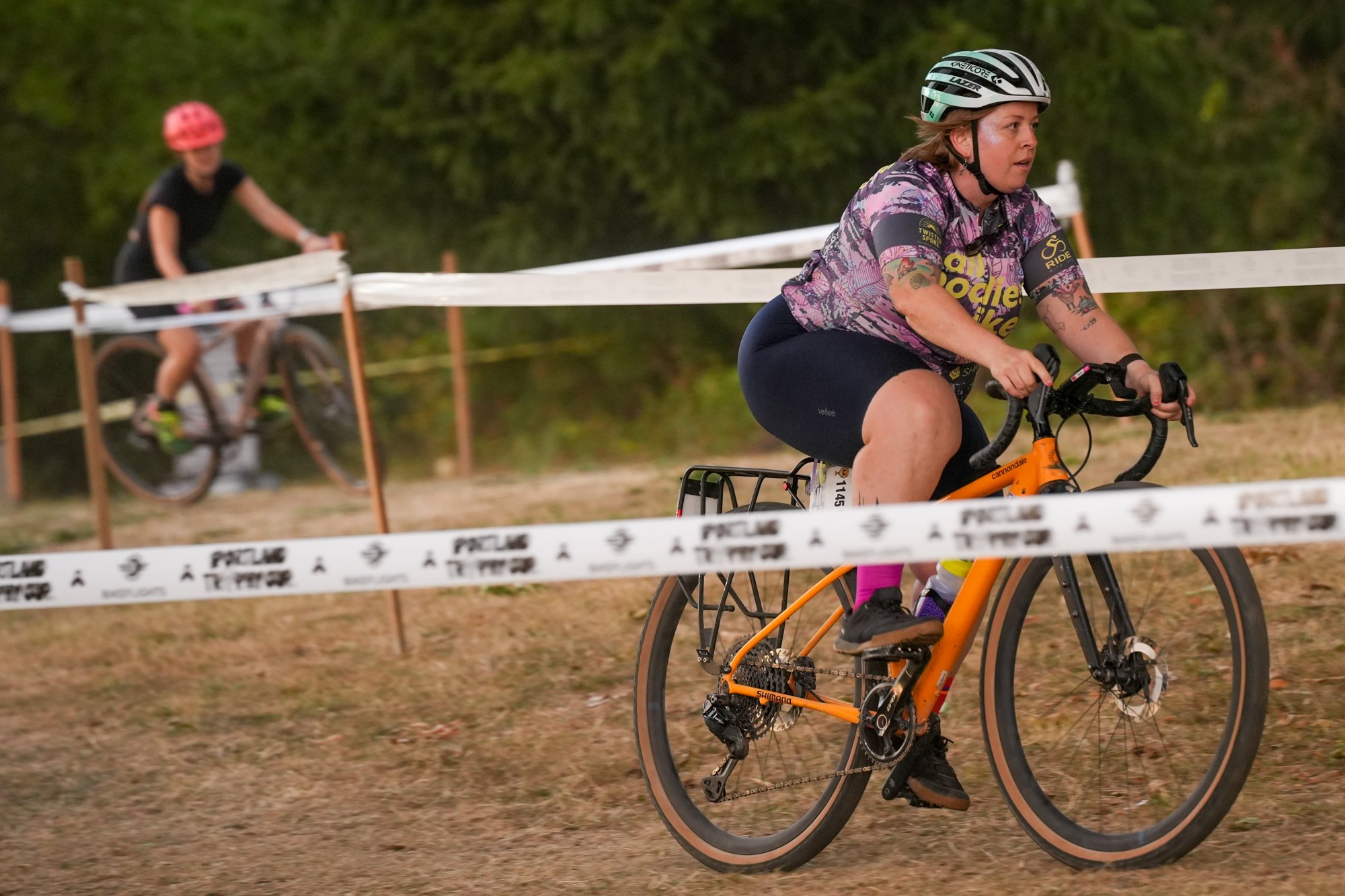
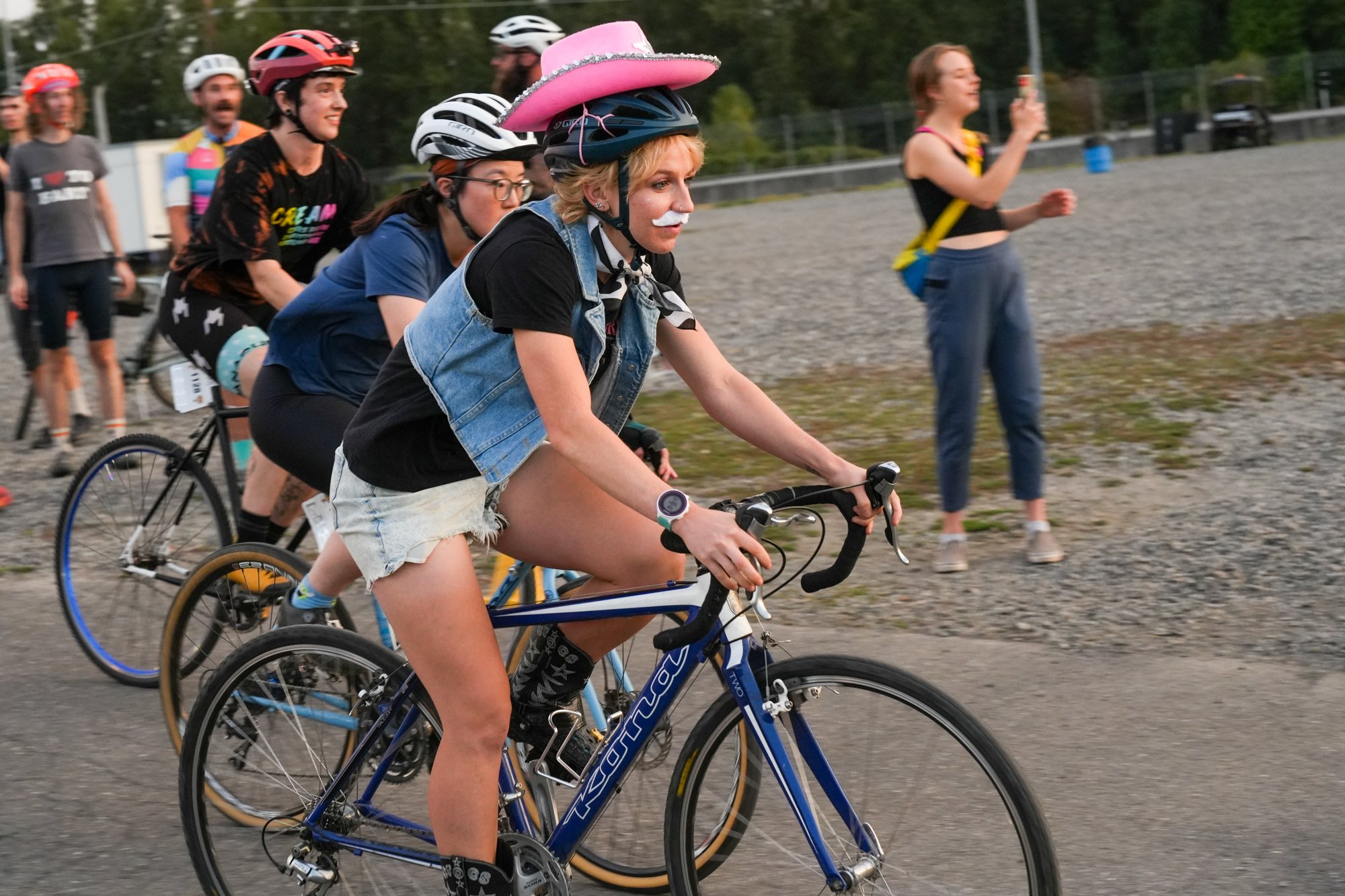
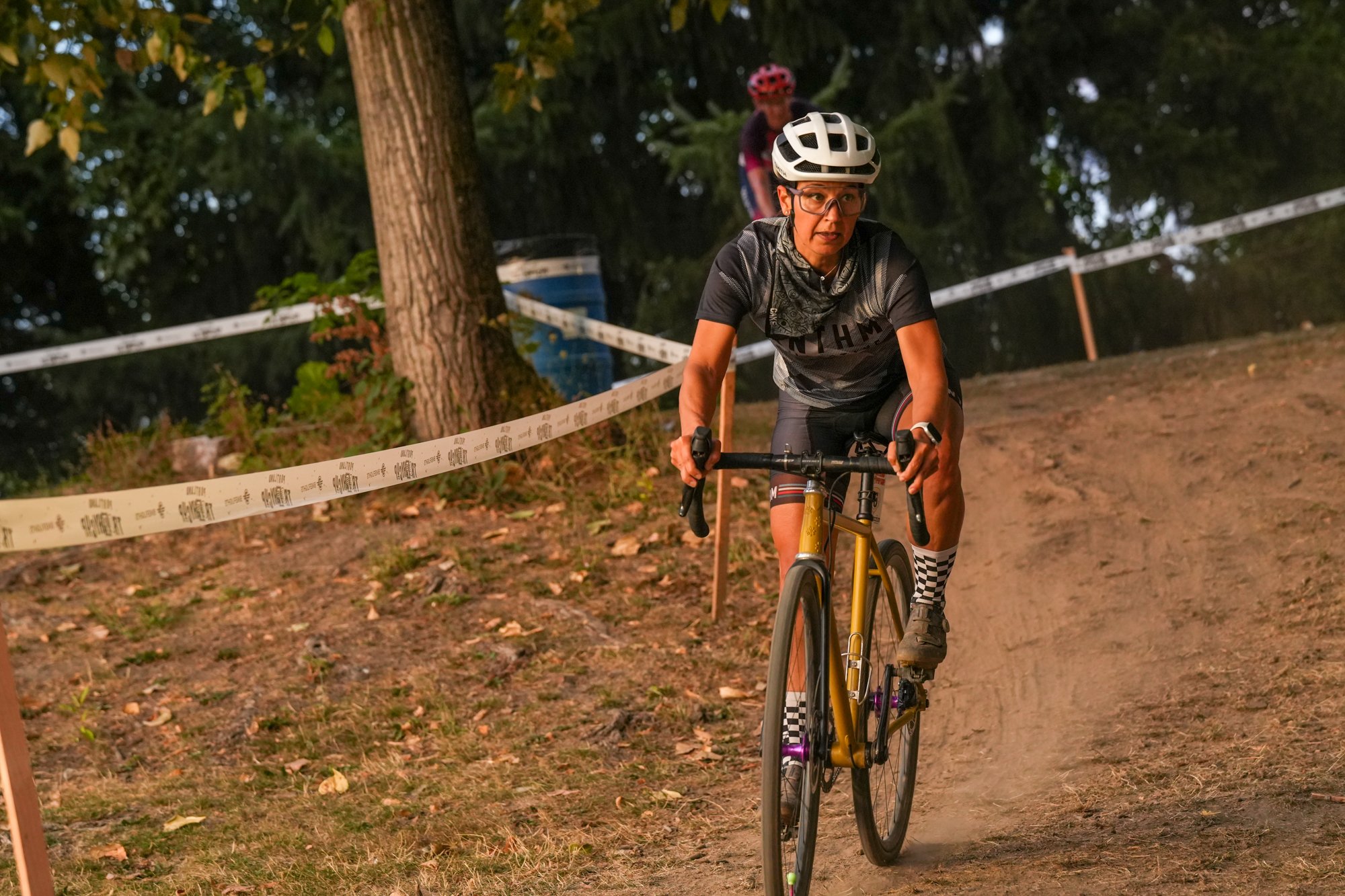
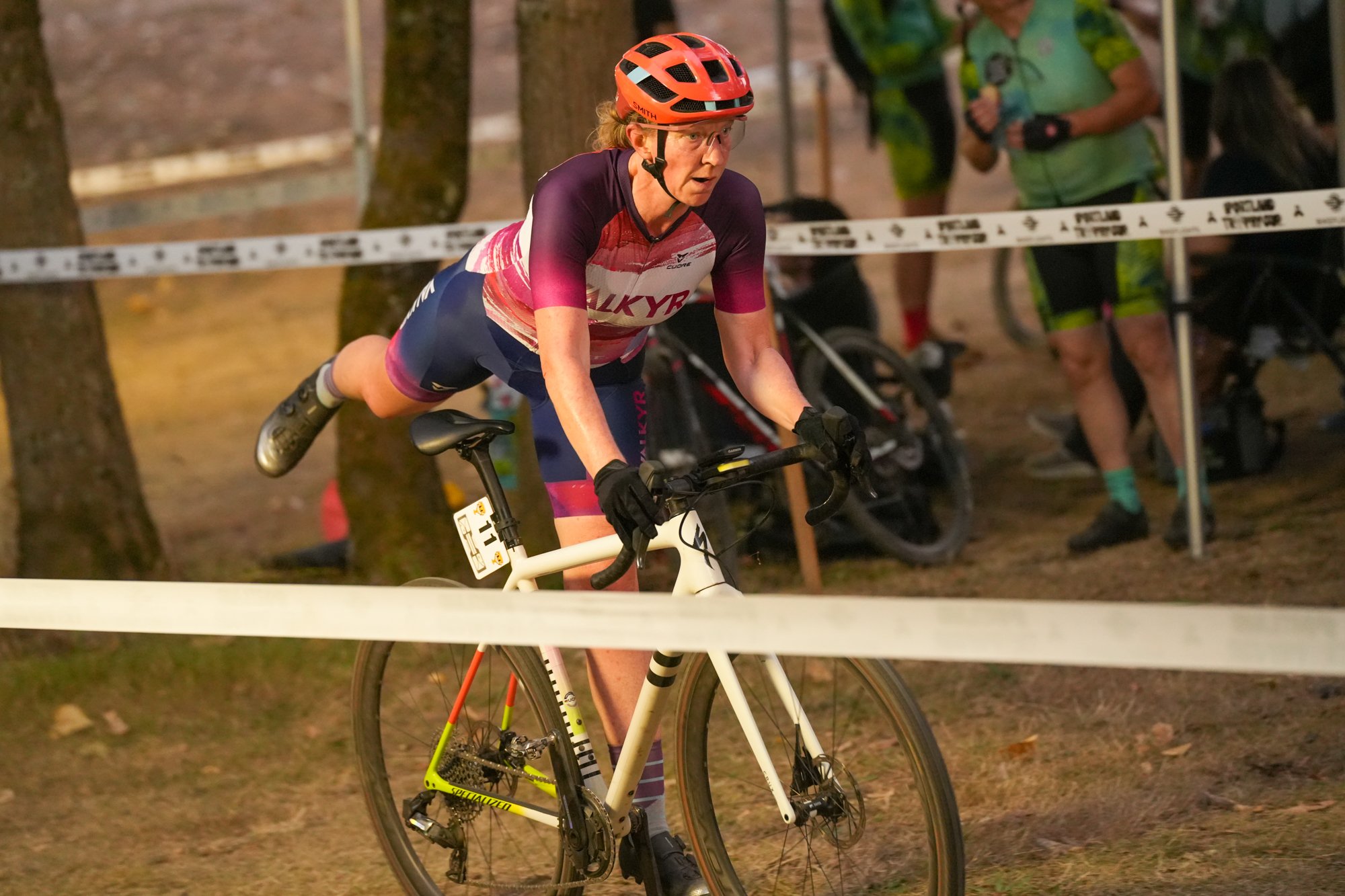
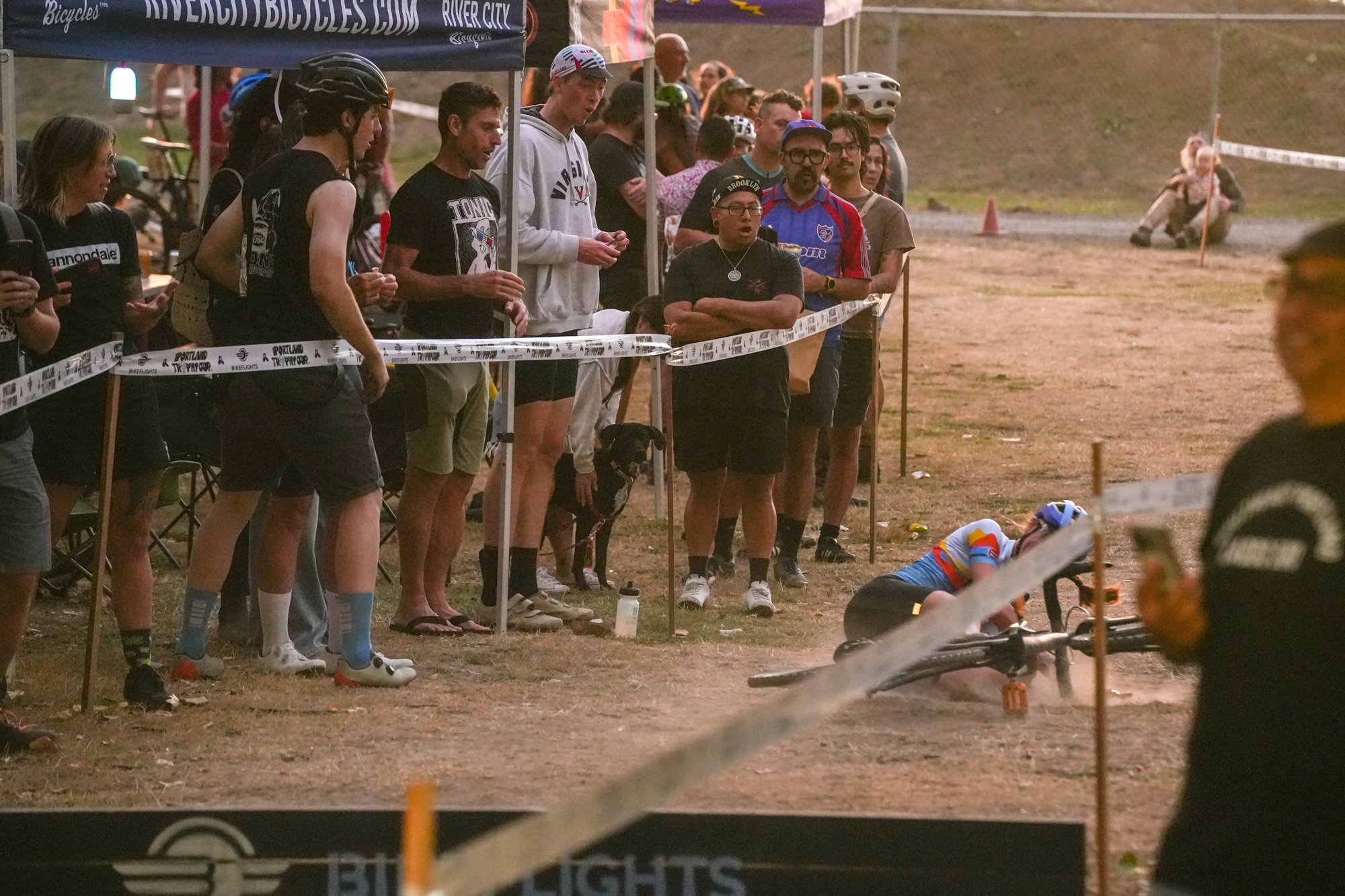
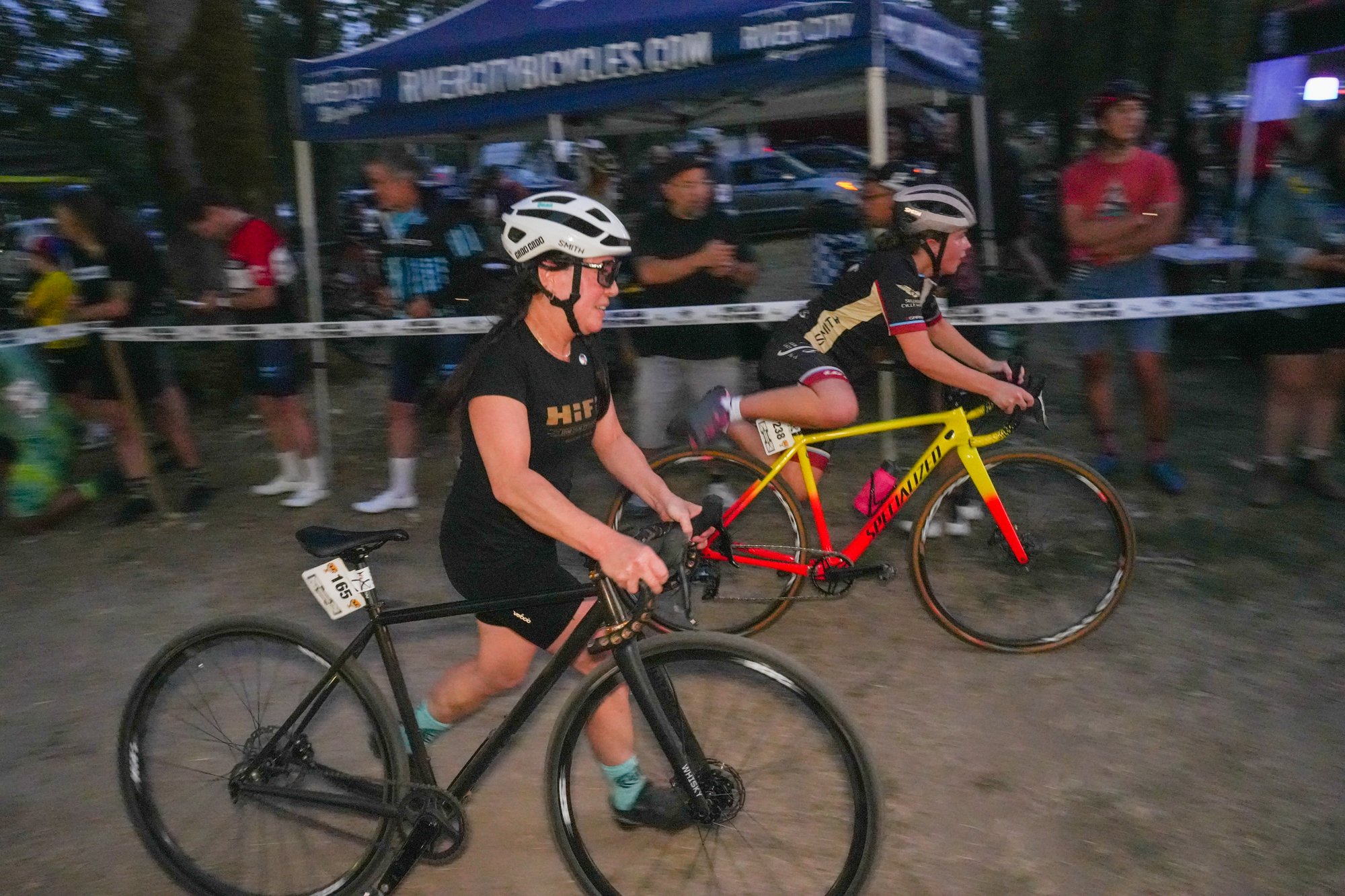
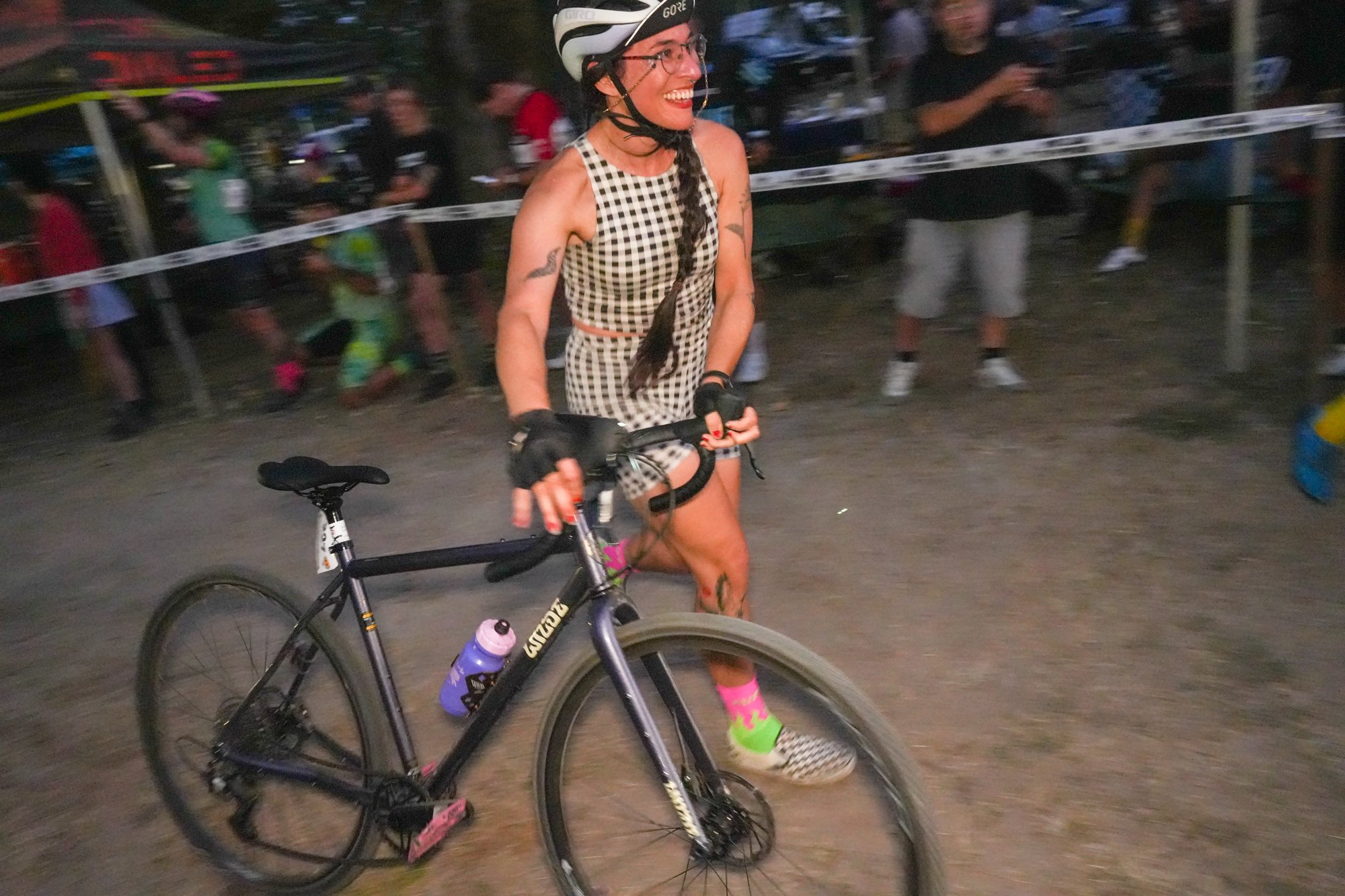
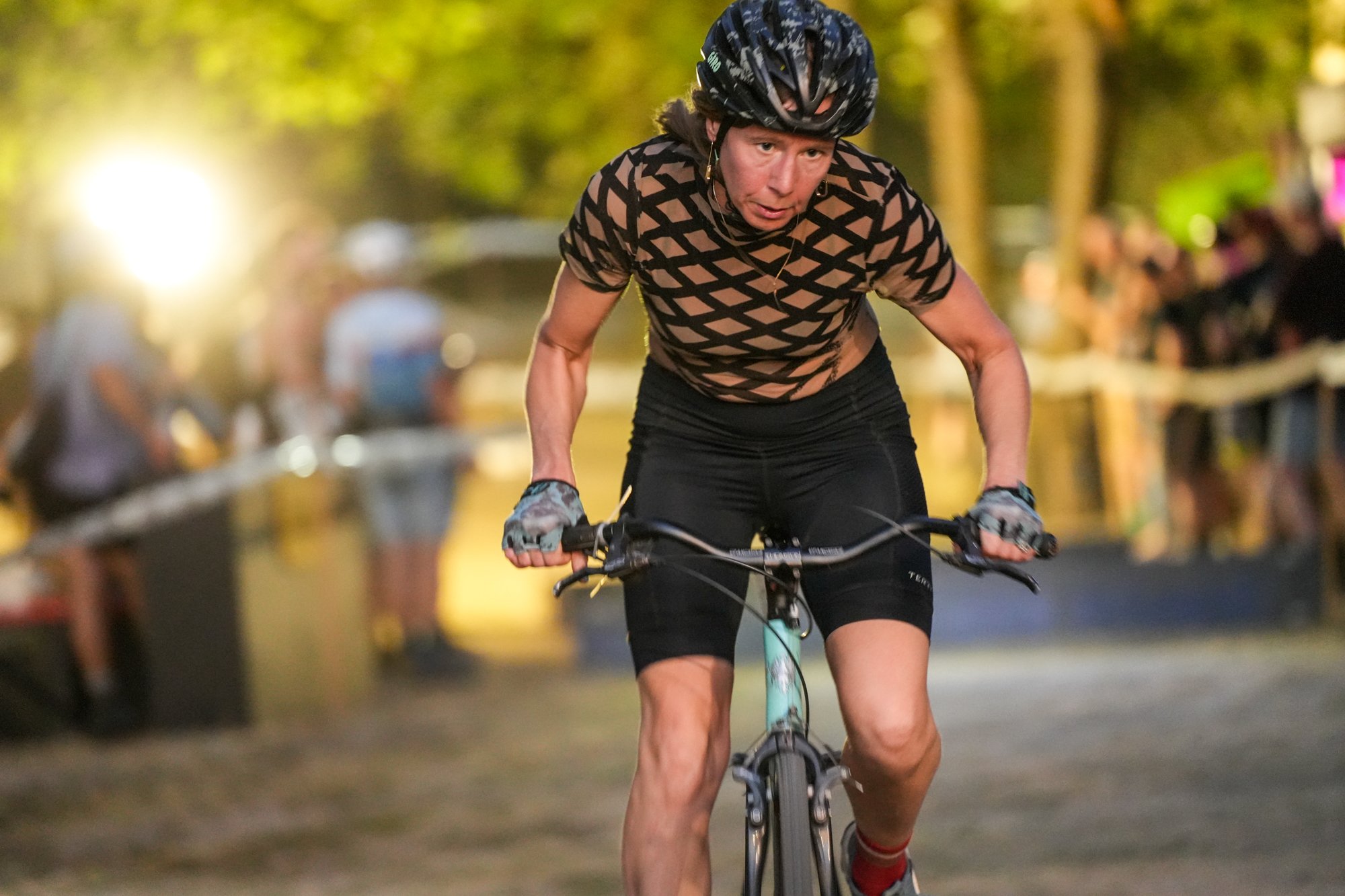
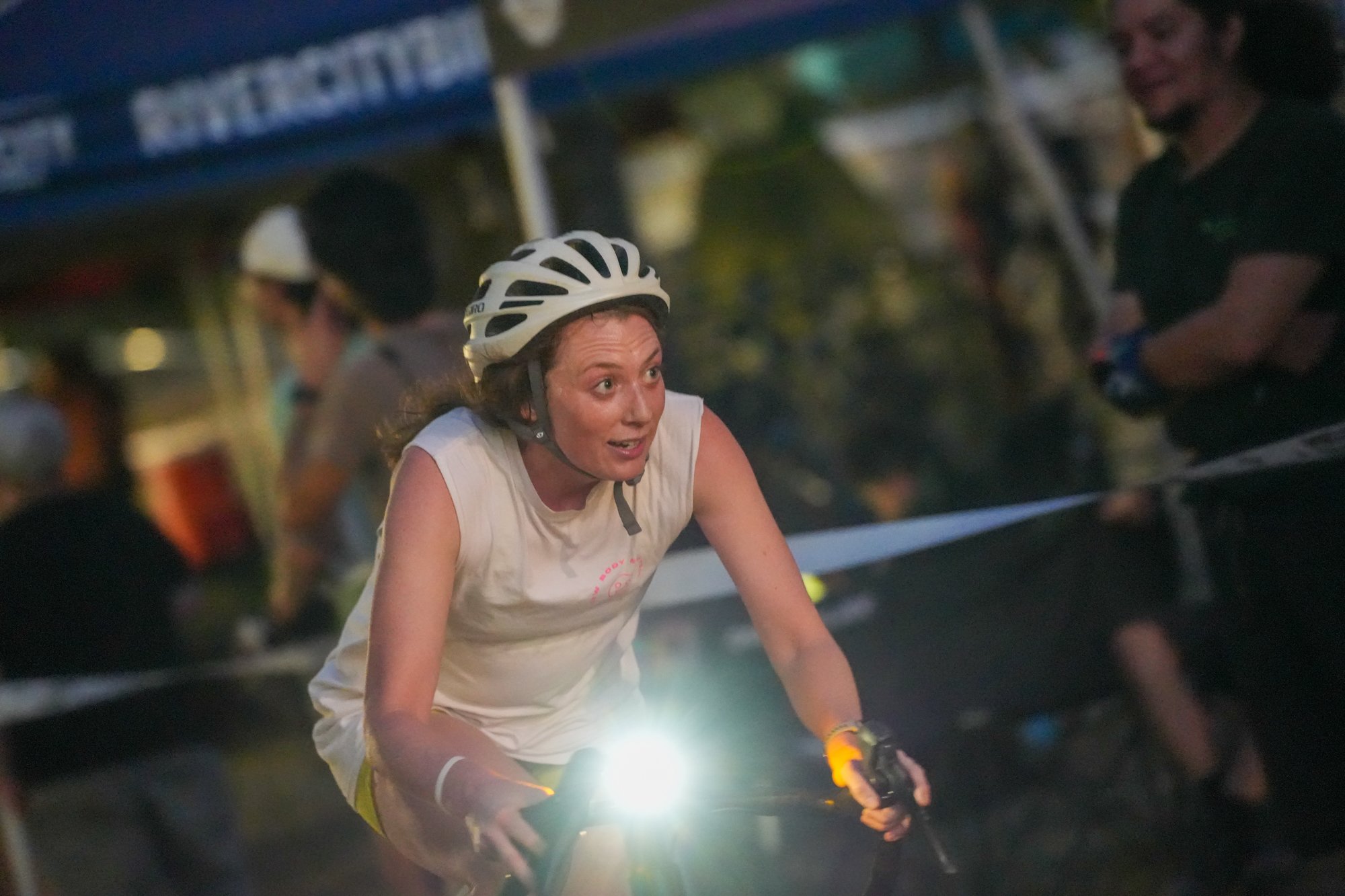
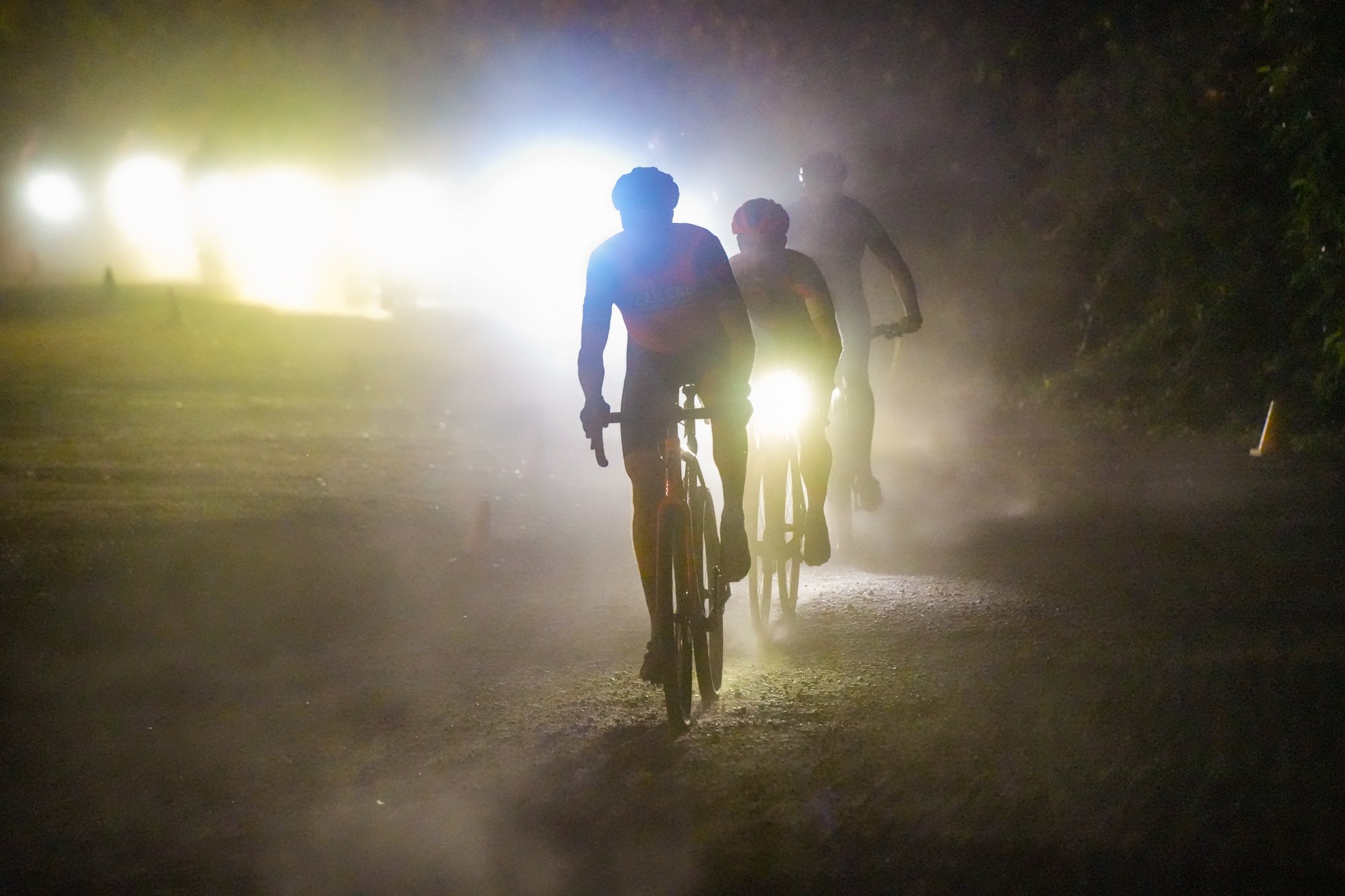
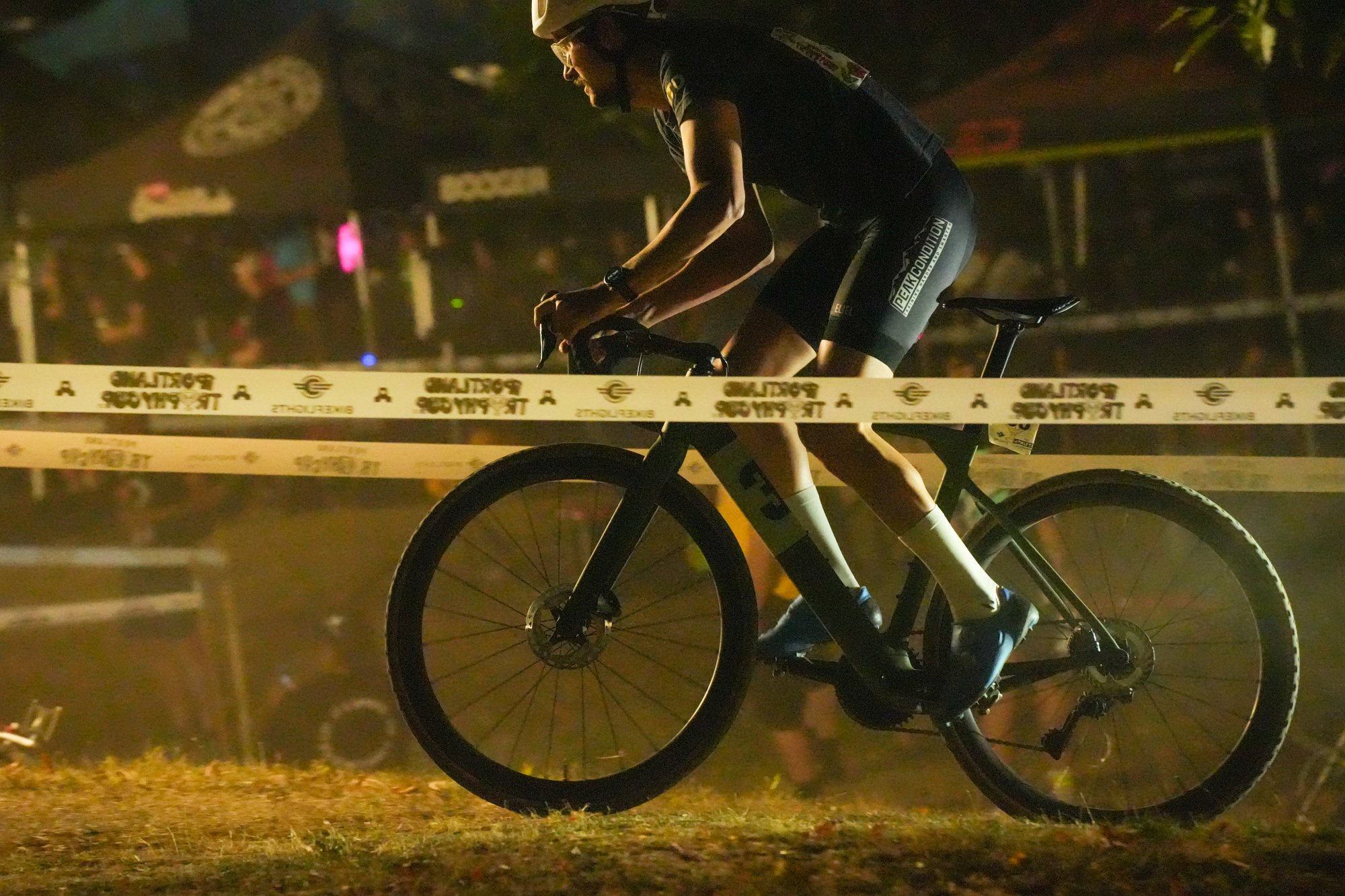
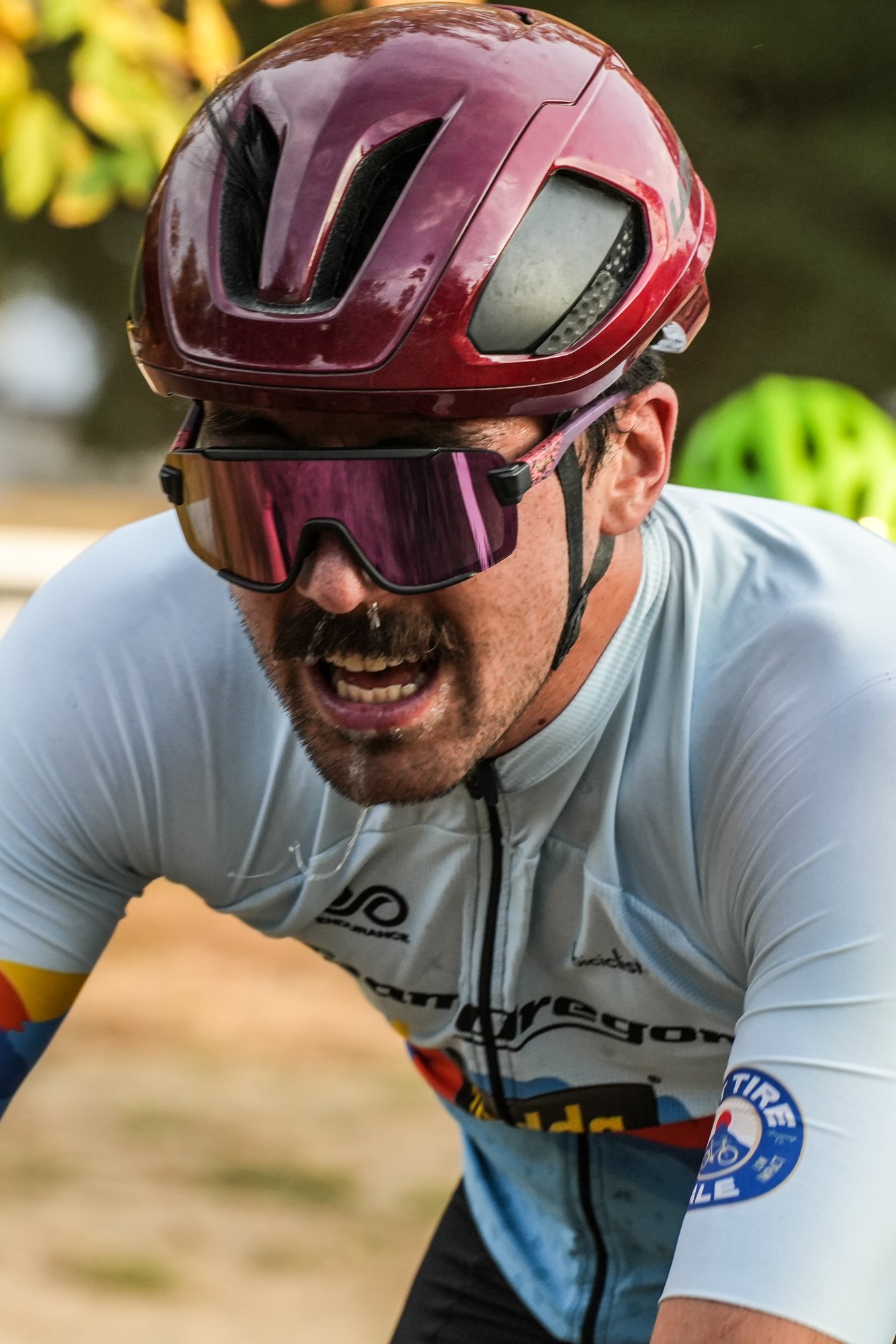
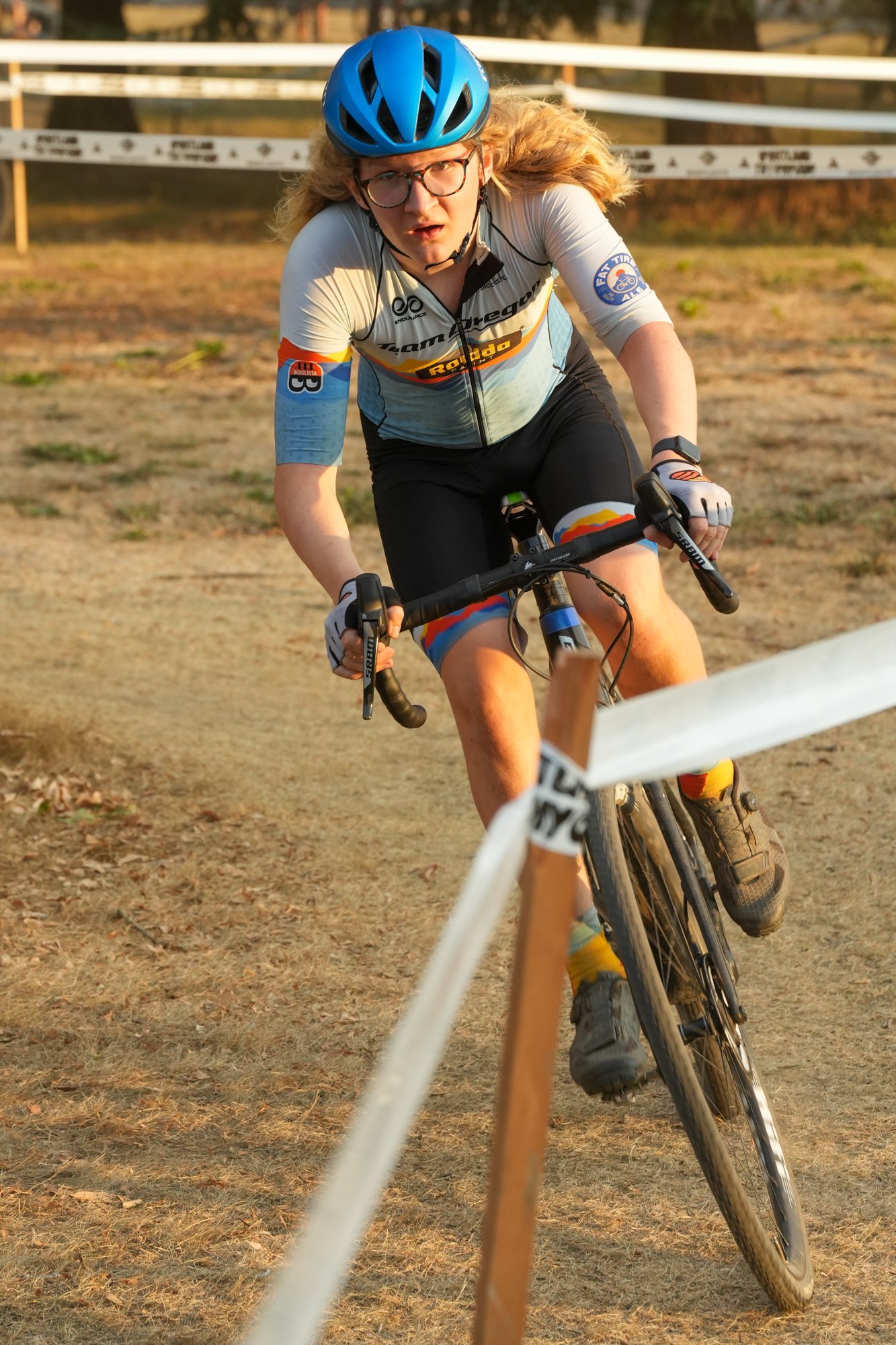
Nearly 500 people lined up to compete at opening night of the Portland Trophy Cup at Portland International Raceway last night. This event, now in its 10 season, shows what’s possible when promoters embrace inclusion, eliminate barriers to entry, and make the spectating almost as fun as being on the course.
I was amazed at the size of the fields. One of the men’s fields had almost 70 participants. That’s a lot for a weeknight ‘cross race in 2025! And the women’s fields really blew me away. I caught the starting line-up and was so excited to see the massive crowd. Organizer Clint Culpepper and his crew of volunteers and sponsors has really done a wonderful job with this event. Trophy Cup offers free registration for juniors and beginner women and there are also free clinics to anyone who wants to learn.
Advertisement
(See rest of gallery below)
When it comes to inclusion, Trophy Cup embraces itself as a place where all racers are welcome. Despite a recent USA Cycling policy change (goes into effect later this month) that bans transgender women from competing in women’s categories, Trophy Cup allows trans women (and nonbinary folks) to race in whatever category they’d like. (That’s because Oregon’s sanctioning body for competitive cycling, Oregon Bicycle Racing Association (OBRA) is independent.)
Whether you’re a hardened racer, newbie, or just cross-curious, I’d highly recommend checking out this weekly event. It happens every Tuesday through October 14th at Portland International Raceway (PIR), just north of Kenton. It’s easy to bike there: just hop on your neighborhood greenway and get to the Columbia Slough Path and/or North Denver Avenue. And remember to have lights for the ride home because I bet you have so much fun you’ll stay until dark.
Back in March, 33-year-old Oscar Burell posted dozens of videos he took while driving his large, lifted pick-up truck through the streets Portland.
These weren’t just ordinary videos of him driving; he would be sitting half-way out of the drivers’-side window while steering with his leg and singing, he’d go painfully long stretches without even looking at the road ahead, and in one video he filmed himself while speeding and doing donuts in the grass at a public park on a sunny day.
It’s hard to convey in words what his videos were like. They demonstrated a shocking level of recklessness and total disregard for others — all while operating a multi-ton steel vehicle on public streets.
This morning KATU reported that Burell got his day in court. Here’s the consequence handed out by the judge:
Advertisement
Oscar Burell Jr., 33, got a 90-day license suspension and 18 months of probation.
He’s also getting 80 hours of community service, which can be reduced if he makes a video telling people not to do what he did.
I was hesitant to post anything about this case because I haven’t read the court documents and/or any supporting evidence from the prosecution or Burell’s defense (he represented himself and pled not guilty to the charges). I wasn’t in the courtroom and I have not heard why the judge made this decision.
That being said, this feels like a completely inappropriate consequence for what this man did. I worry that, once again, our justice system is sending a message that crimes and violence committed while using a car are just not that big of a deal. This case seems like a good example of how our car-centric culture isn’t willing to levy significant consequences on drivers until someone is seriously injured or killed by their actions — and even then they’re often not brought to justice. I also wonder if Portland’s lack of good alternatives to driving figured into the judge’s thinking. The inconvenient truth is that having to live without a car in a transportation system where cars are the most viable mobility option for most people, leads to judges who are reluctant to take away that privilege. What that leads to however, is that we trade community safety for one individual’s mobility needs.
I can appreciate that Burell might have been going through a rough patch in life and that perhaps he’s a different person now after this experience. I also don’t think his life should be ruined because of something he did in the past and that he might fully regret and want to move on from. Everyone deserves a second chance.
Advertisement
But I can’t stop thinking about how light of a sentence this is and the message it sends to others.
I watched a lot of Burell’s videos (before his account was taken down) and I can say we are very, very lucky that he never hurt or killed anyone — especially after speeding through a public park! To think that he’ll be driving again in a few months — after doing all that stuff I saw in those videos — is wild to me.
I hope Burell will drive safely in the future. I also hope he takes up the offer to make a video telling folks why it’s important to drive with respect and care for others. We can use all the help we can get spreading that message.
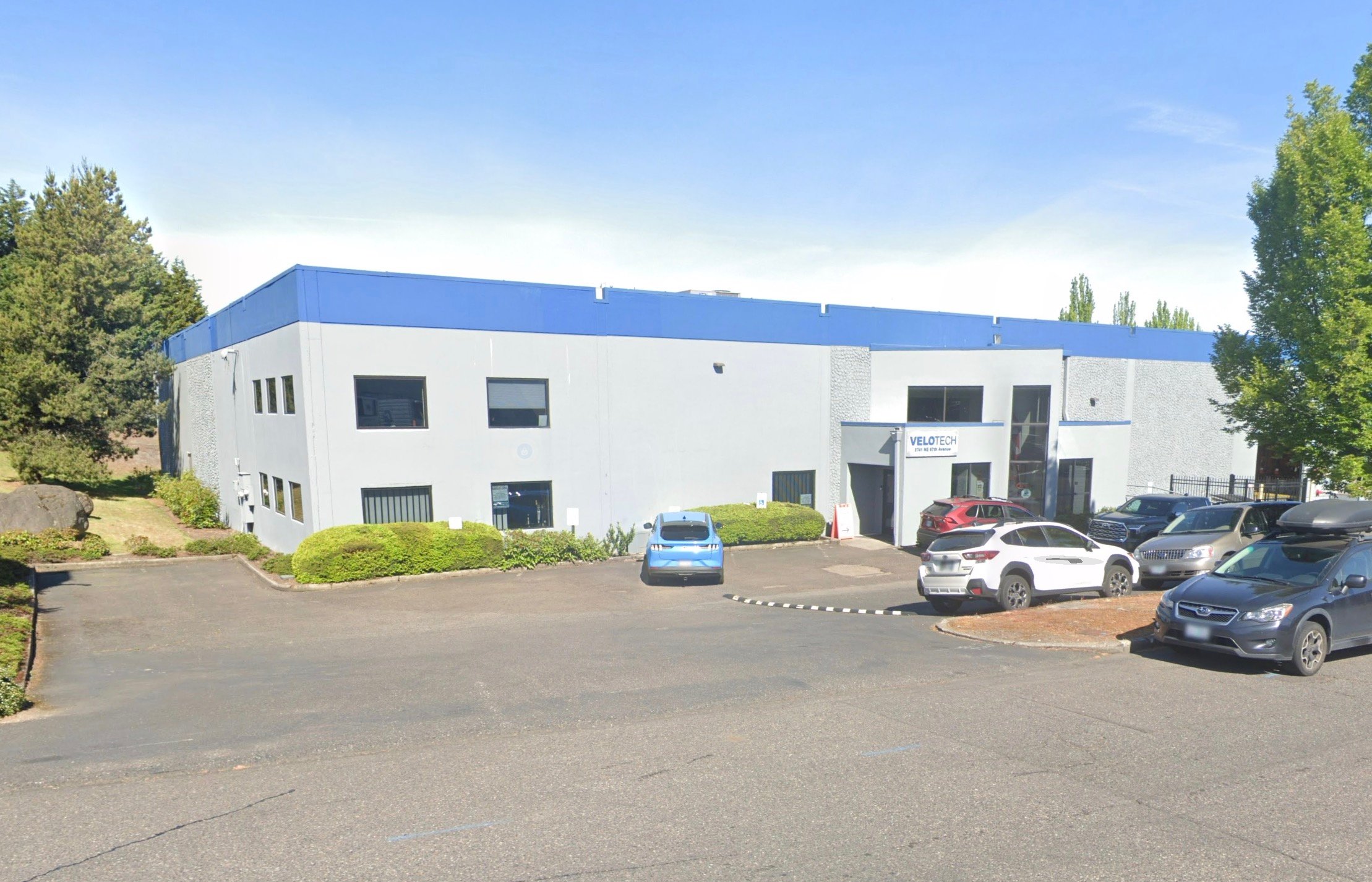
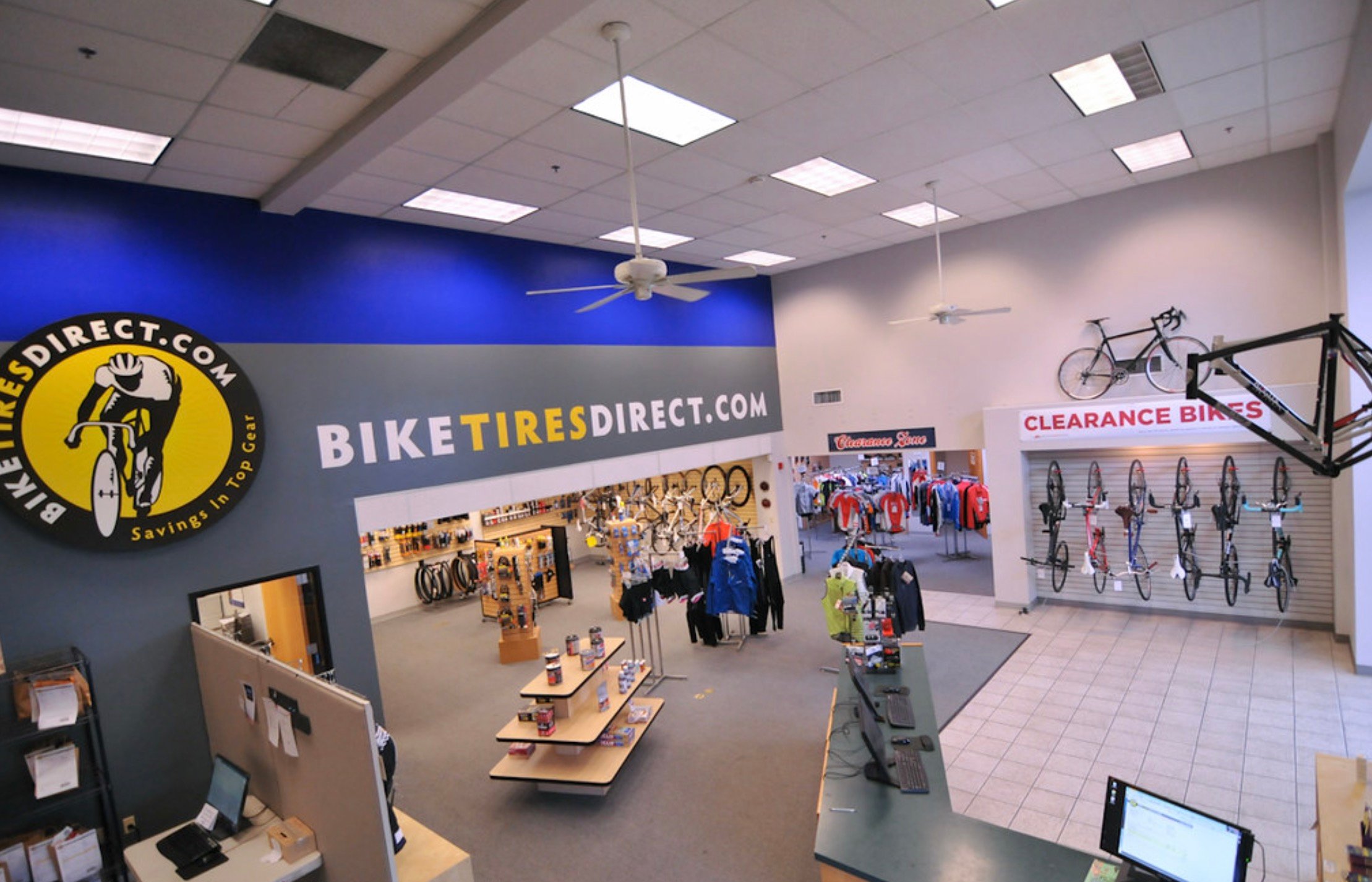
Inside the Velotech HQ in northeast Portland in 2014. (Photo: Jonathan Maus/BikePortland)
Portland-based Velotech Inc. has been acquired by Backcountry. The sale was reported in Bicycle Retailer & Industry News Magazine (BRAIN) on Thursday. Backcountry is an industry pioneer that made their first sale on the Internet in 1996 and is largely credited with being the first online retailer of outdoor goods.
Velotech was founded in 2002 and is the parent company of e-commerce brands BikeTiresDirect, Western Bikeworks and TriSports. Here’s more from BRAIN:
“Velotech’s cycling-first DNA and operational excellence make them a highly strategic addition to Backcountry,” said Kevin Lenau, the interim CEO of Backcountry. “This partnership is rooted in brand independence and fueled by a shared ambition to better serve riders everywhere.”
Advertisement
Velotech will continue to operate its existing sites independently of Backcountry, according to the company. “Over time, Backcountry and Velotech will explore opportunities to collaborate on product assortment, rider education, content, and fulfillment to further enhance the customer experience,” the company said in a release.
“We’re excited to join the Backcountry family,” said Jay Torborg, CEO of VeloTech. “Backcountry’s scale and outdoor expertise will help us serve more riders than ever, while staying true to our roots.”
Reached via email, Torborg told BikePortland he’ll exit the company once the dust settles. “I am looking forward to retiring once I’ve helped to make sure the integration with Backcountry goes well,” Torborg wrote. “I think they will be a great partner.”
A PR rep for Backcountry confirmed that Velotech will maintain their existing warehouse and will-call showroom in Portland. “Velotech staff will continue to operate independently and customers can expect the same great price and same-day shipping,” I was told.
Velotech used to operate a retail store in the Pearl District under its Western Bikeworks banner, but closed that shop in 2020 and consolidated into their current warehouse and showroom in northeast Portland near NE 87th and Columbia Blvd.
Disclaimer: Velotech is a regular BikePortland advertiser, but that relationship did not influence this story.
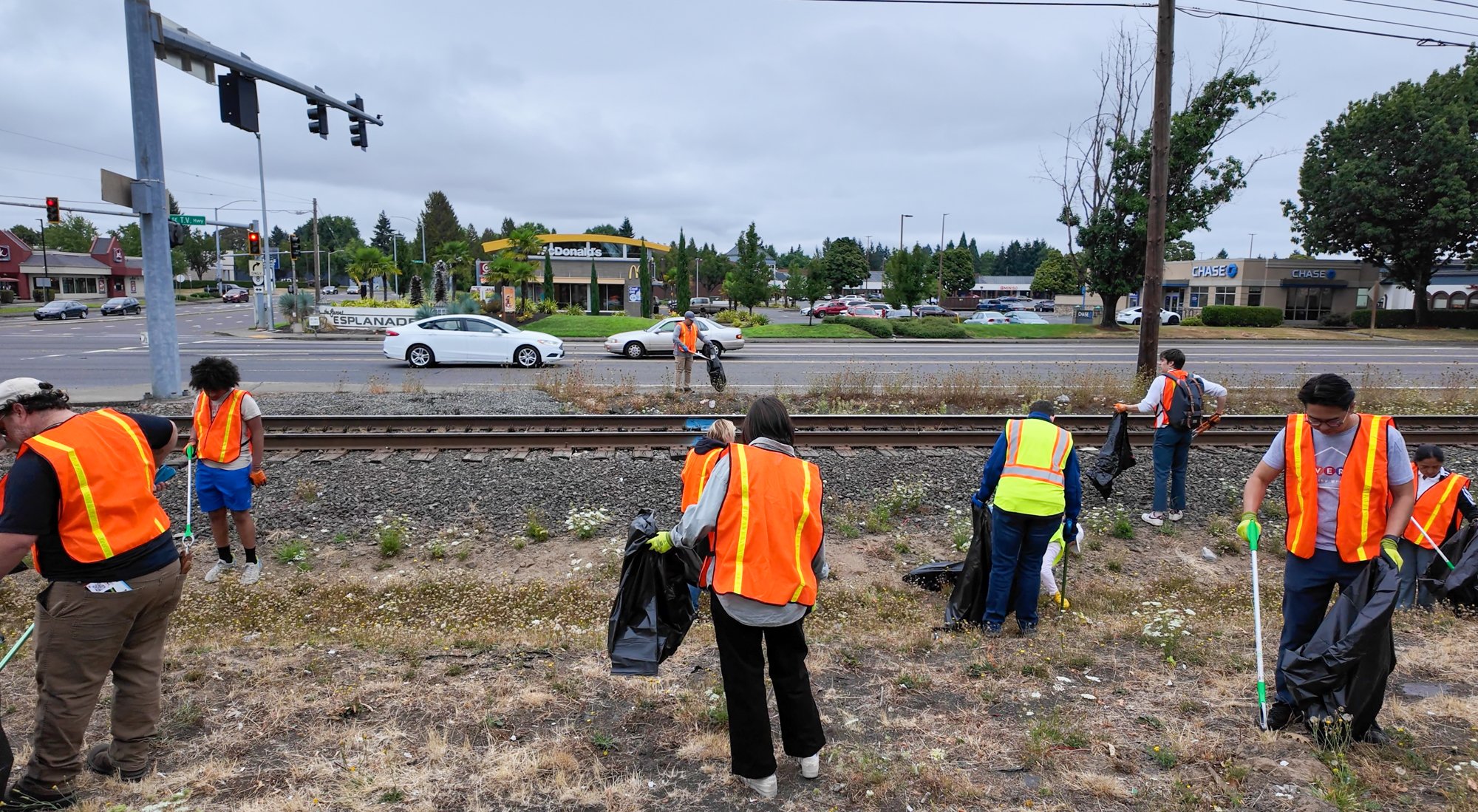
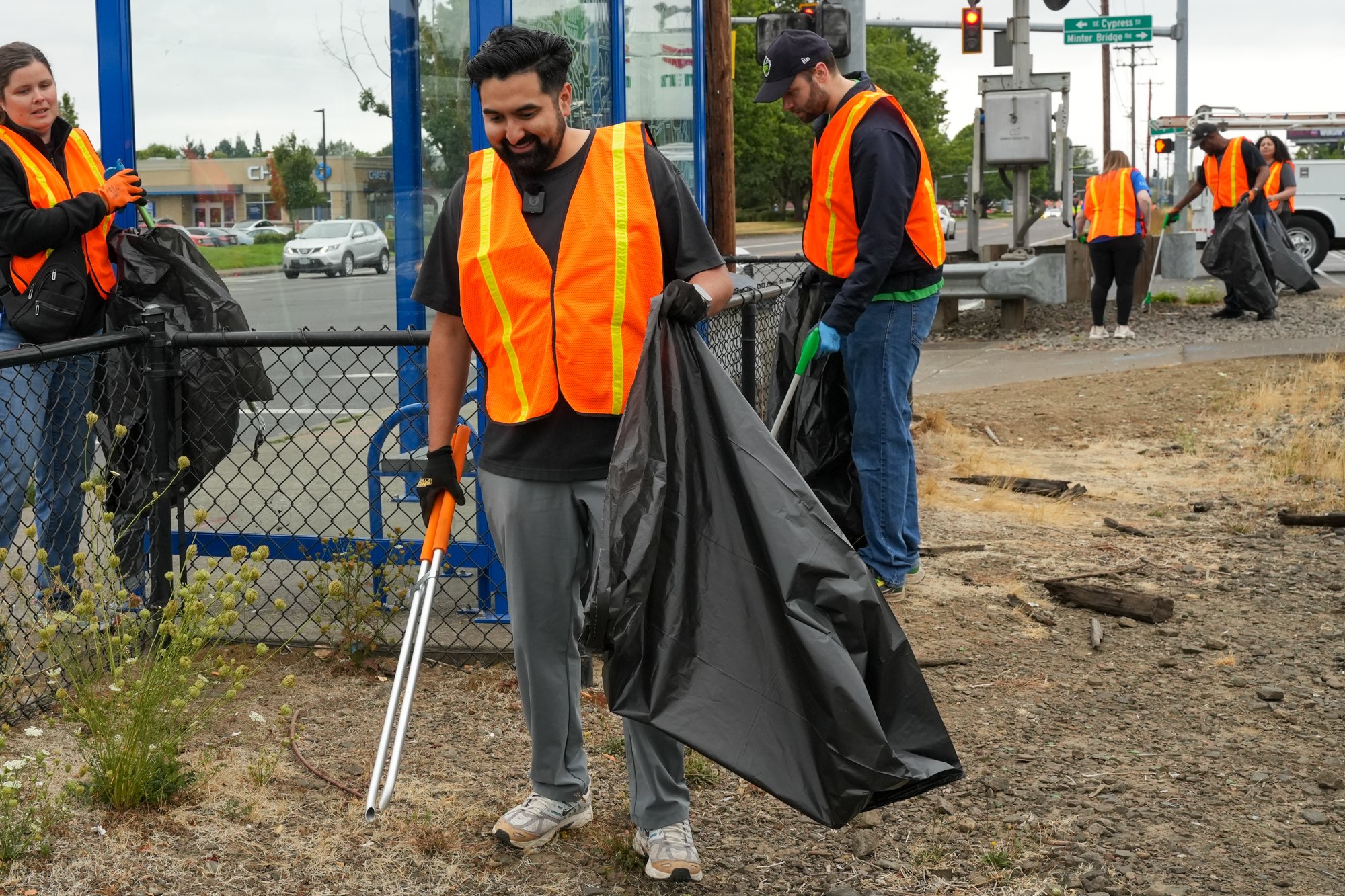
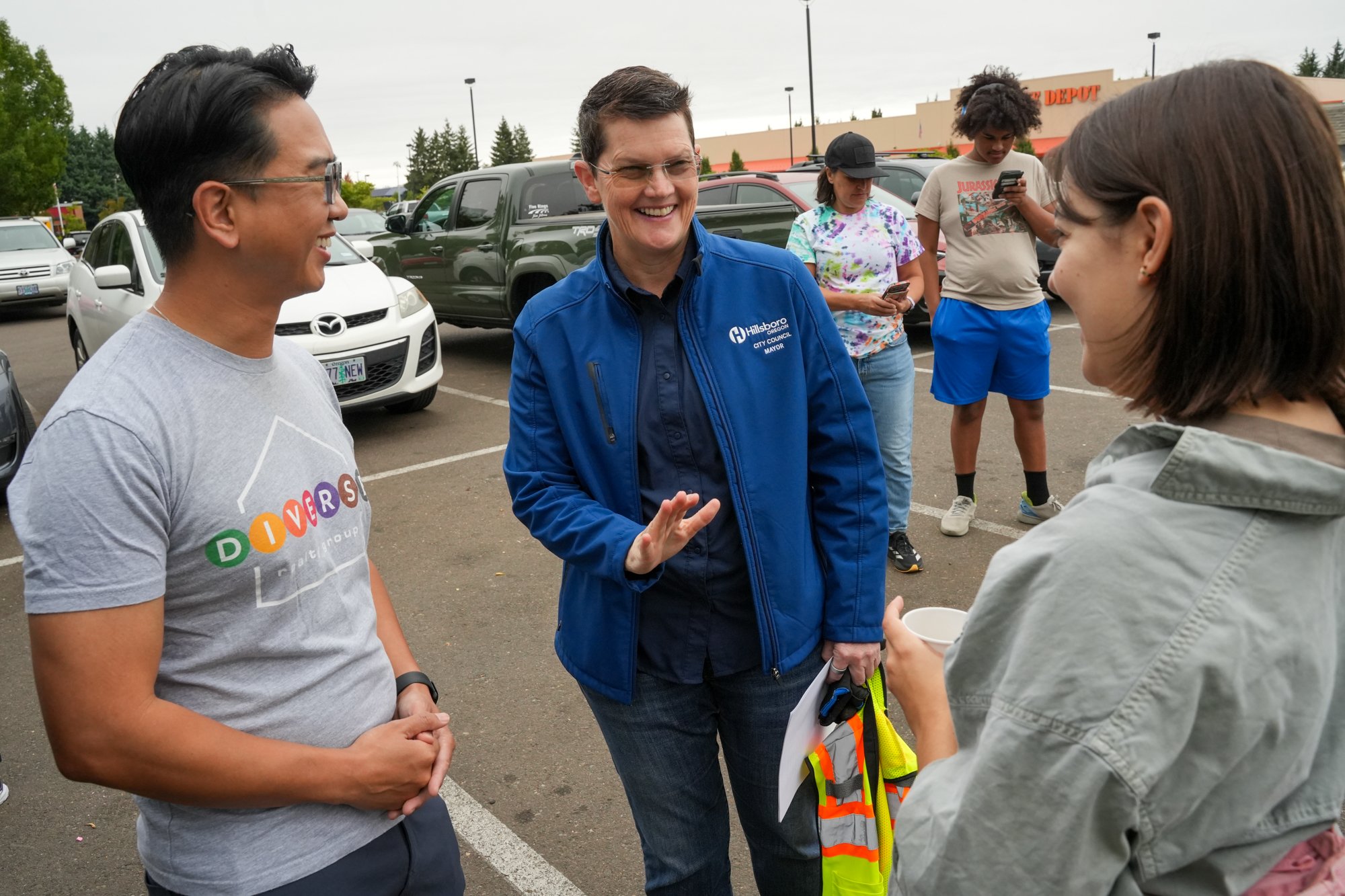
Metro Councilor Juan Carlos González picked up trash along T-V Hwy Saturday morning. (Photos/video: Jonathan Maus/BikePortland)
Metro Councilor Juan Carlos González could be the first elected official in our region to cut the ribbon on a major transportation project that will improve a bus line he rode on as a very small child. And if it all goes according to plan, he might even be Metro President when it happens.
González announced his campaign for president last week. On Saturday morning he was at a Home Depot parking lot in Hillsboro playing host to a crowd of several dozen people at an annual cleanup event he organizes. Wearing an orange safety vest and standing next to Hillsboro Mayor Beach Pace, González addressed the crowd above the whir of highway traffic to tell a story he’d never shared in public before. The story helped explain why the Tualatin Valley Highway transit project has become such a passion project for him since he became the first Mexican-American elected to Metro Council in 2018.
“I grew up on T-V Highway. I was born in Forest Grove,” he began. “When I was growing up, I remember one day — I was like, three or four years old — we went to a little toy store on the bus with my Aunt Tonya and I grabbed a little toy and I put it in my pocket. Then when we got home, and I was playing with it, my tia [aunt in Spanish], was like, ‘Where did you get it?’… She was like, ‘No sir!’ and she grabbed my hand. And I remember, like the shame of little kid, right? Getting on that bus again with my little toy and she made me go back into the store and be like, ‘I’m sorry I took this.’
That’s one of my first memories of being on a bus, and that was on line 57.”
Advertisement
González might get to repeat that story when the TV Highway transit project breaks ground. While that’s years away, he and a broad coalition of supporterx have already made solid progress. Five different jurisdictions — Metro, TriMet, Washington County, and the cities of Beaverton, Hillsboro, Cornelius, and Forest Grove — agreed on a locally preferred alternative (LPA) for the project back in May (a political “miracle,” according to González). That’s a key step that unlocks the potential of the big federal grants the estimated $300 million project might need. $30 million has been raised so far and the design process is moving forward.
The project will focus mostly on creating a bus rapid transit system on 17 miles of T-V Hwy (also known as State Highway 8) between Beaverton and Forest Grove. Despite the highway having a horrific record of traffic deaths and injuries, it still ranks as the fifth busiest bus route in the region. 45% of its riders are from Hillsboro, and that’s partly why Hillsboro Mayor Beach Pace spent part of her Saturday picking up trash.
Hillsboro Mayor Beach Pace
“We’re working to make the bus service better — with better stops and shelters and lighting and seating — to make it more easy to use,” Mayor Pace shared with my in a short interview. “And frankly,” she added, “with more dignity, so you’re not standing next to a pole in the rain.”
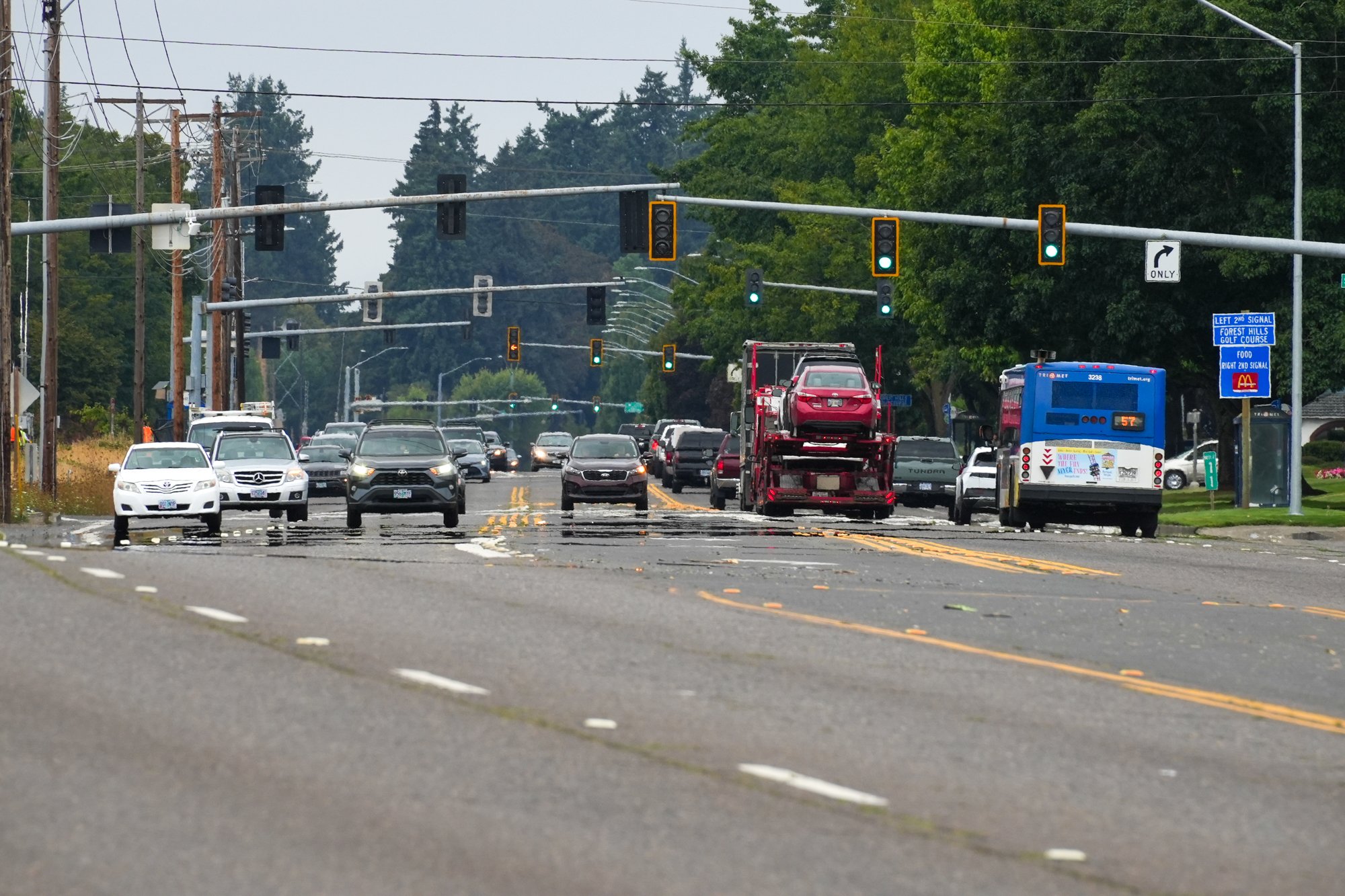
The service planned for Line 57 will be similar to TriMet’s FX service between downtown and Gresham along SE Division. 12 minute service intervals are in the plans, along with longer buses, and many road safety upgrades so that more people can safely hop on and off. The changes should make bus trips along the corridor 15-20% faster.
Mayor Pace sees better bus service as an anti-poverty tool. “Many Line 57 riders have lower incomes and they don’t have the option to drive,” she said. “This project will uplift the mobility of these riders, and it will provide a more dignified experience for all of them.”
Advertisement
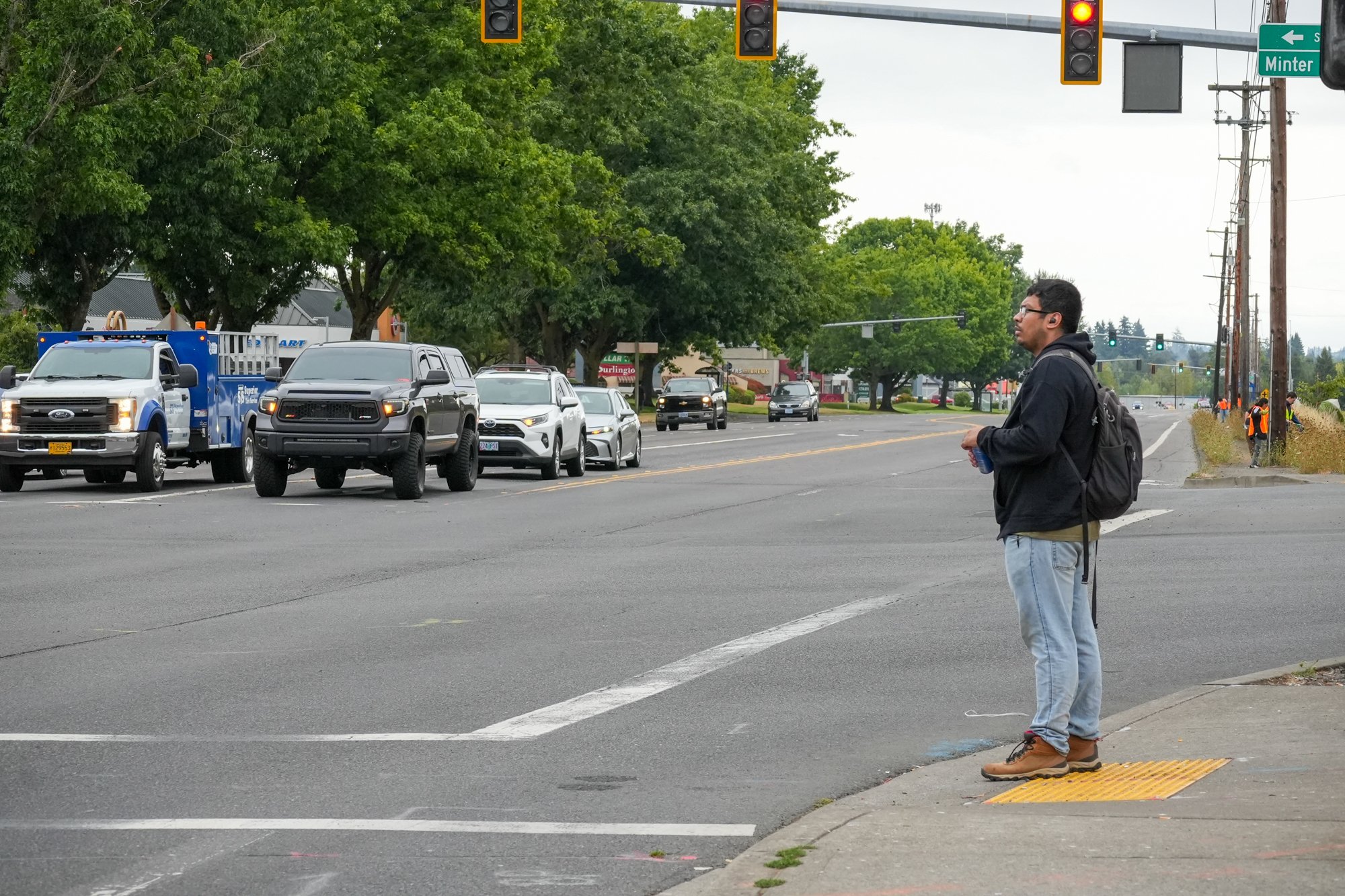
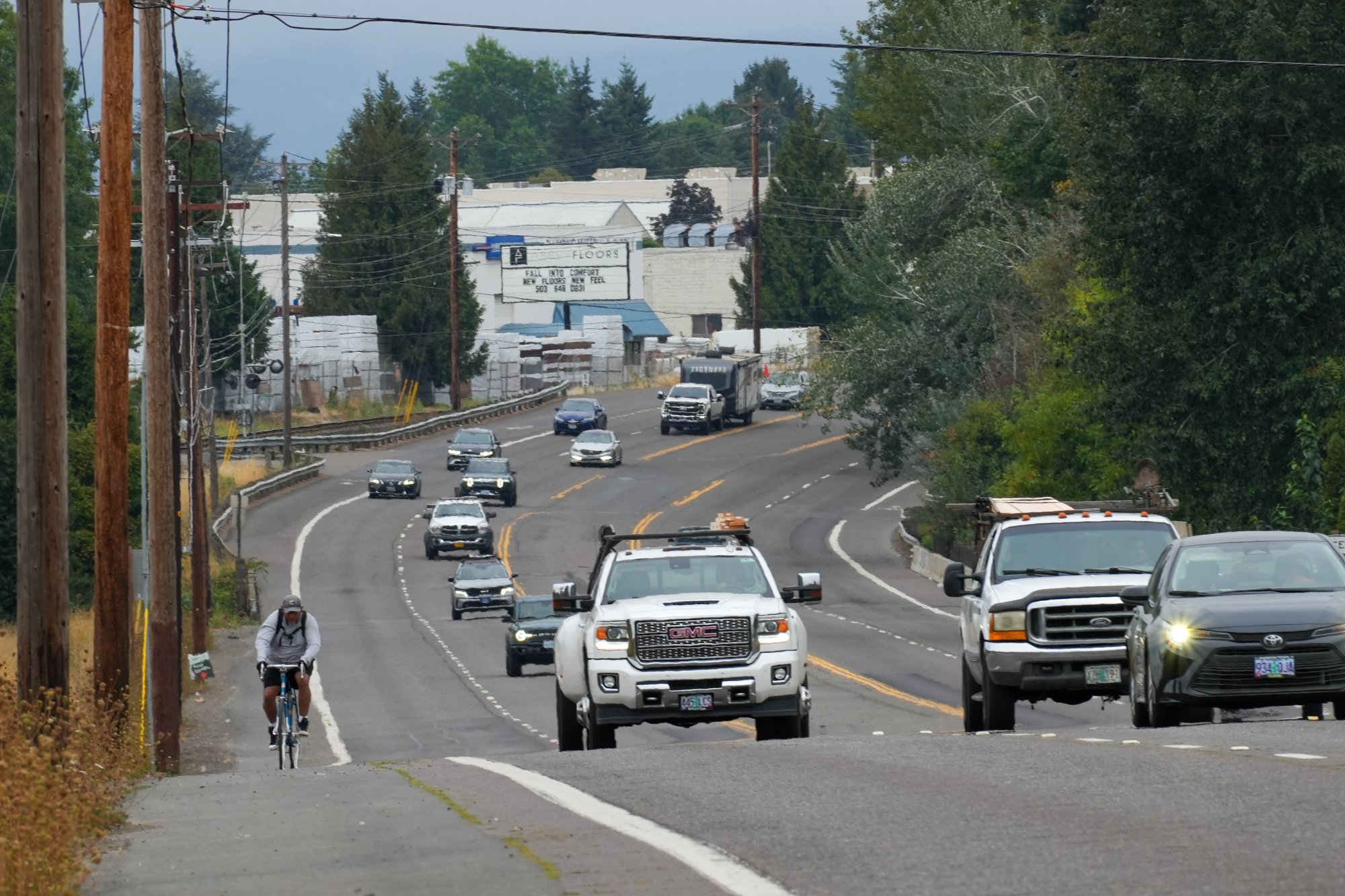
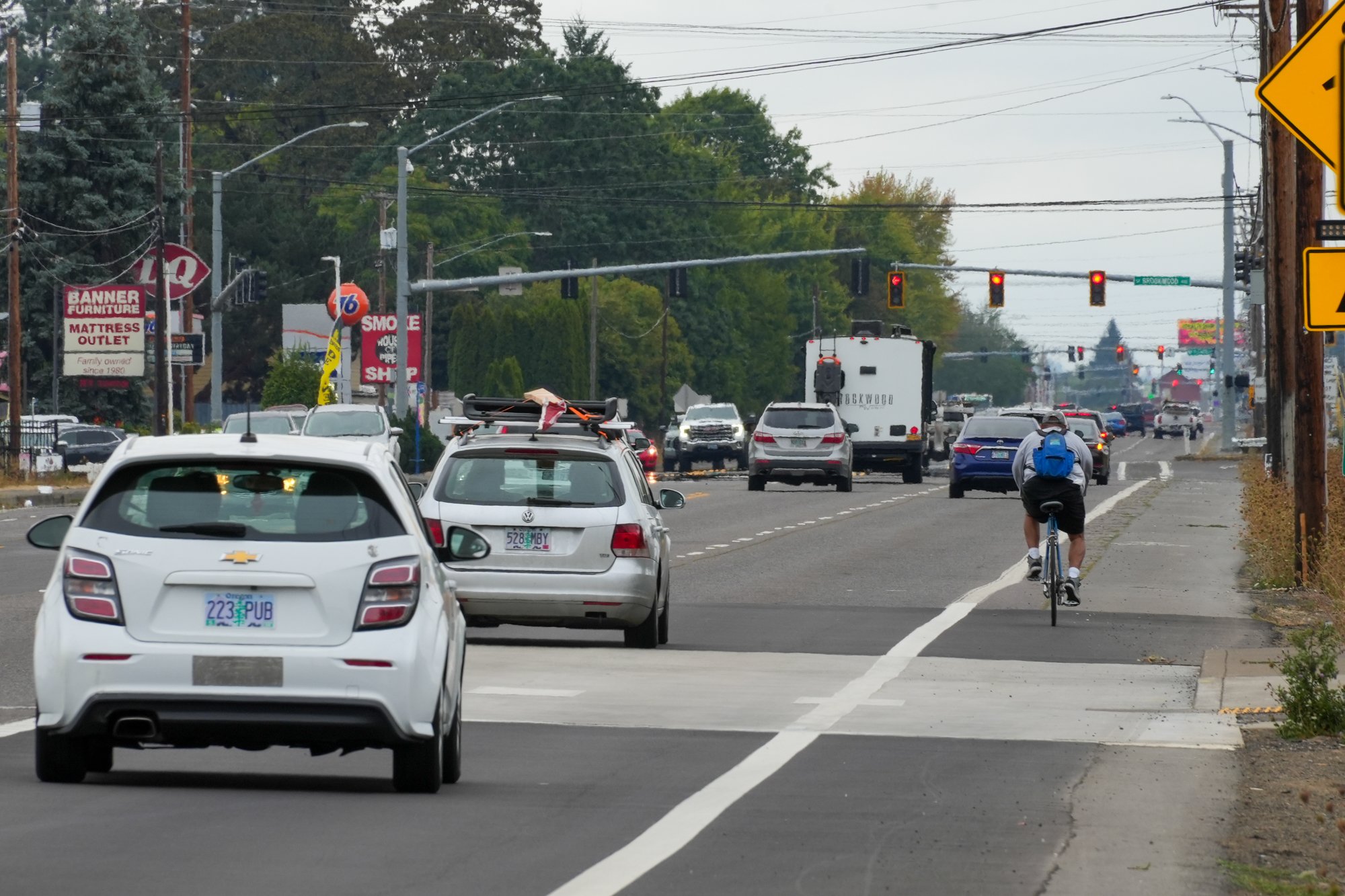
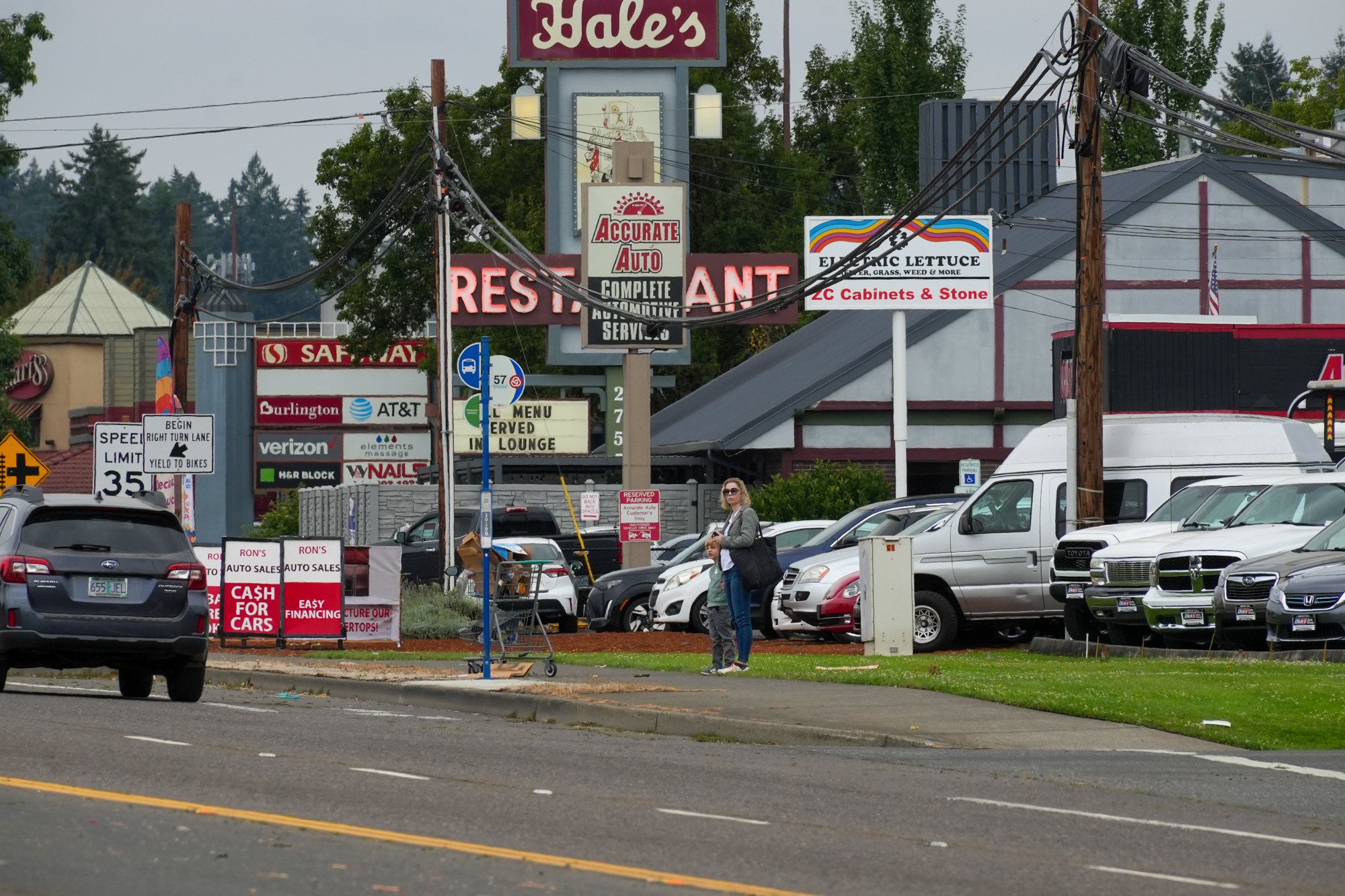
Existing conditions on T-V Hwy.
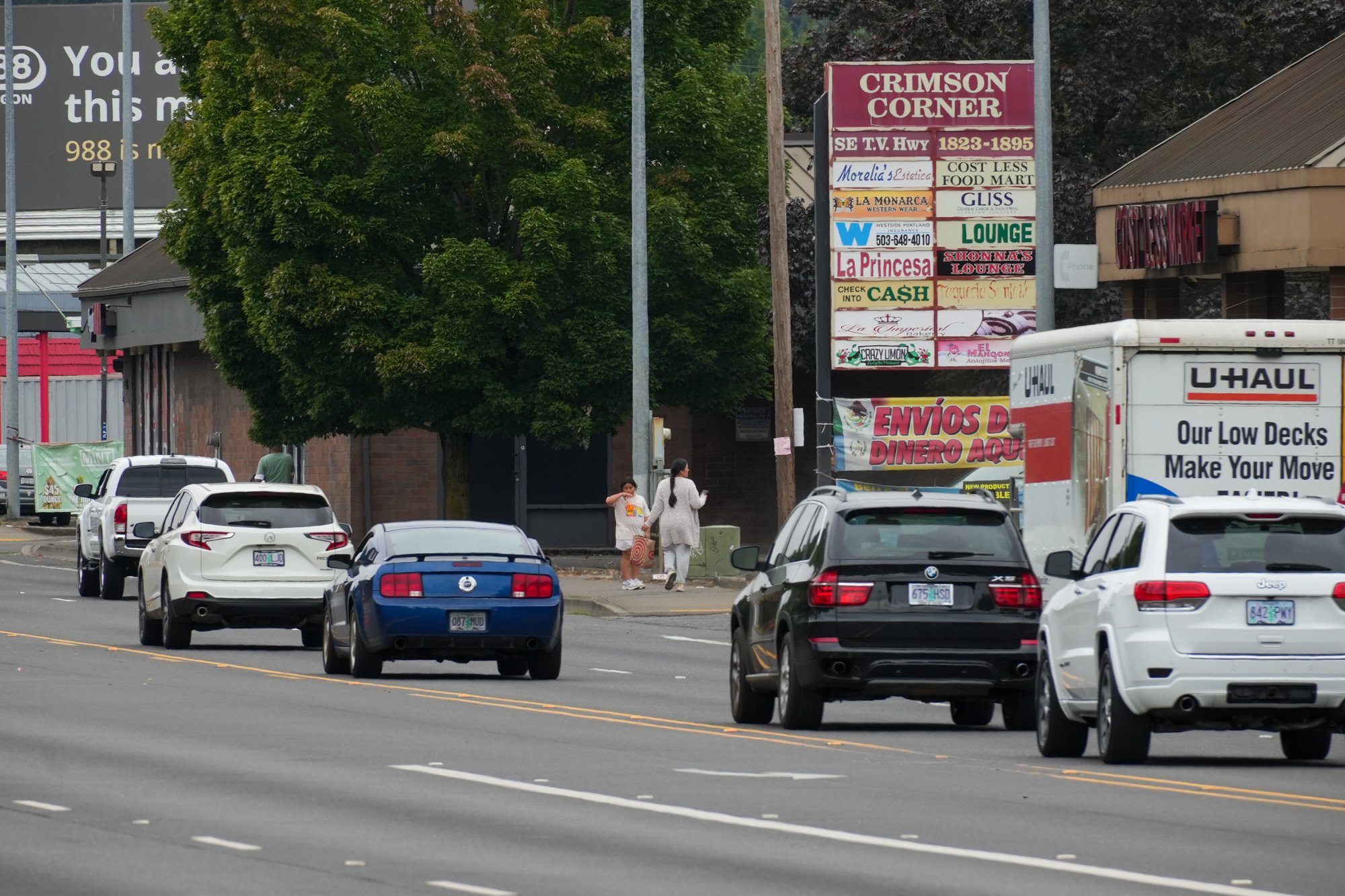
Four intersections along the 17-mile project scope will be completely rebuilt as part of the project — including the one just yards from where volunteers gathered Saturday morning at the corner of TV Hwy and SE Minter Bridge Road. About 300 people get on an off at that stop every day, and when their feet hit the skinny chunk of concrete around the stop, they’re on an island surrounded by freight rail tracks and 11 lanes of fast-moving traffic
30% of T-V Hwy doesn’t have sidewalks, and half of the people who were killed while using it were within a few feet of a transit stop. Councilor González repeated those stats at every opportunity on Saturday. “There’s so much need, and it’s the backbone of my district,” he added. As volunteer crews fanned out along the highway, González worked among them, stabbing bits of trash with a picker and sticking them into a large plastic trash bag. “This corridor has lacked investment for a really long time,” he told me. “We need funding.”
Just last month, Gonzalez and the Metro Council agreed to allocate $28 million in bond funding in hopes of unlocking larger, federal transit grants. But with federal funding uncertain in the Trump era, more local sources are more important than ever. An early version of the statewide transportation package would have directed investment toward T-V Hwy, but that’s since been cut out of the highly compromised bill currently awaiting passage in the legislature.
González lamented that missed opportunity. “I’ve been talking with legislators about the leadership we need from the state and Salem. Frankly, we’re not where we need to be,” he said. “And the sad thing is that there are T-V highways everywhere in the region where people can’t walk, let alone bike safely. That’s a huge problem. That’s not the kind of region I think we should be.”
CORRECTION, 9/10 at 7:48 am: This story initially stated that “one in four” intersections would be rebuilt as part of the T-V Hwy transit project. That is incorrect. Four intersections (total) will be rebuilt. I regret the error and any confusion it caused.
Cycling in Portland is pretty great, actually: Lots of local advocates are sharing this story from a travel writer who says the secret weapon for the ultimate Portland vacation is a bike because it’s a wonderful way to experience our city. (Business Insider)
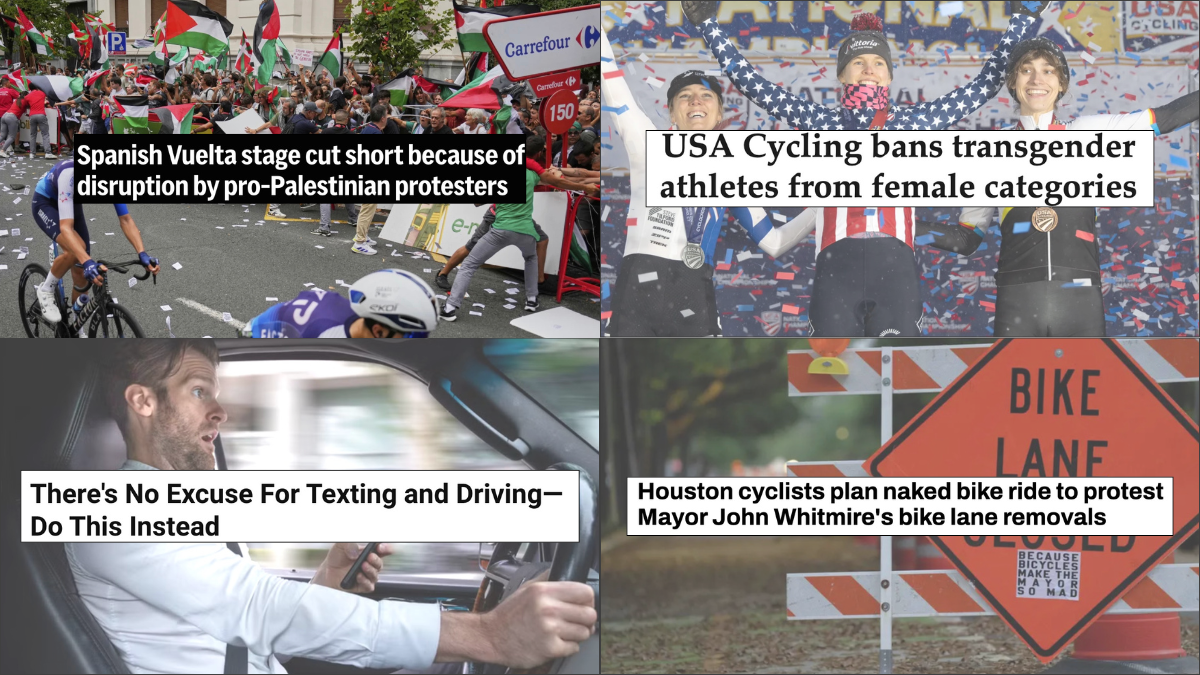
No bike lanes? No clothes! This is pretty good opening line: “As Houston peels away bike lanes, a group of cyclists plans to peel away its clothes and pedal through the city in protest.” (Houston Chronicle)
Transgender ban: Cycling’s governing body, USA Cycling, has taken a stronger stance against transgender women with a new policy that prohibits them from competition at all levels. Note this won’t apply to local races organized under the Oregon Bicycle Racing Association banner, because OBRA is an independent organization. (Cycling Weekly)
Advertisement
Protestors at the Vuelta: One of pro cycling’s highest profile events is reeling over disruptions from pro-Palestinian protestors, who are seeking awareness for the cause of human rights and do not appreciate a team funded by an Israel-based company, while organizers say the protests create major safety problems for riders. (Associated Press)
Keep your bike: A good lock is one of your best defenses against bike thieves, so check out this review of the best ones on the market before you buy your next one. (Guardian US)
It’s nobody else’s fault, so don’t do it: Please send this story to everyone you’ve ever known that has texted while driving. (How to Geek)
Meme come to life: Whoever gave e-car company Rivian a permit to shoot a commercial during an open streets event was either woefully ignorant or just woefully inconsiderate. Either way, I hope a serious inquiry comes out of this. (Seattle Bike Blog)
He made the switch: A Republican Oregon House member who represents the northern coast, and who I’ve singled out for his support of the transportation bill, was so disgusted by his party’s position on the legislation that he became a Democrat. (OPB)
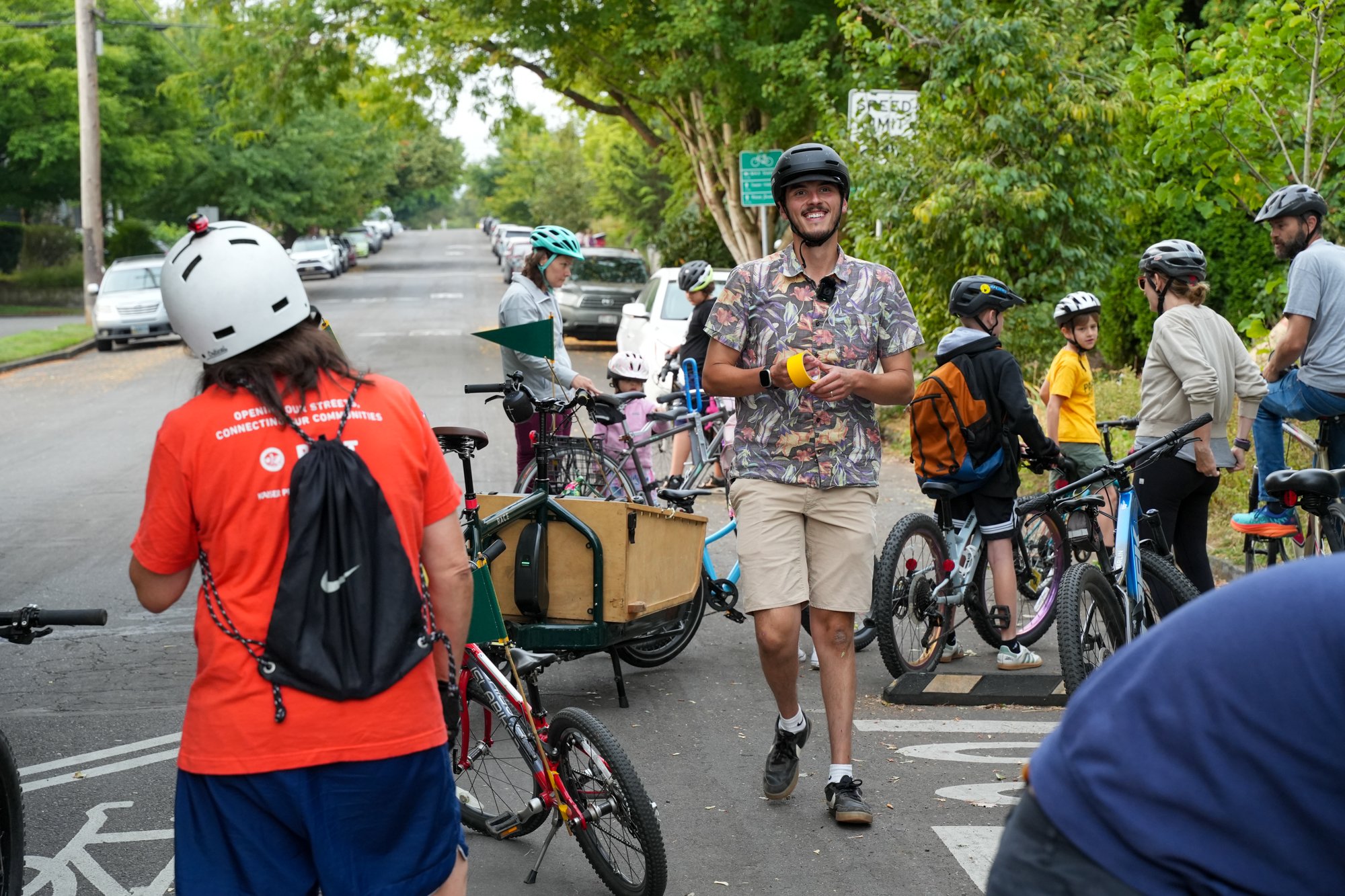
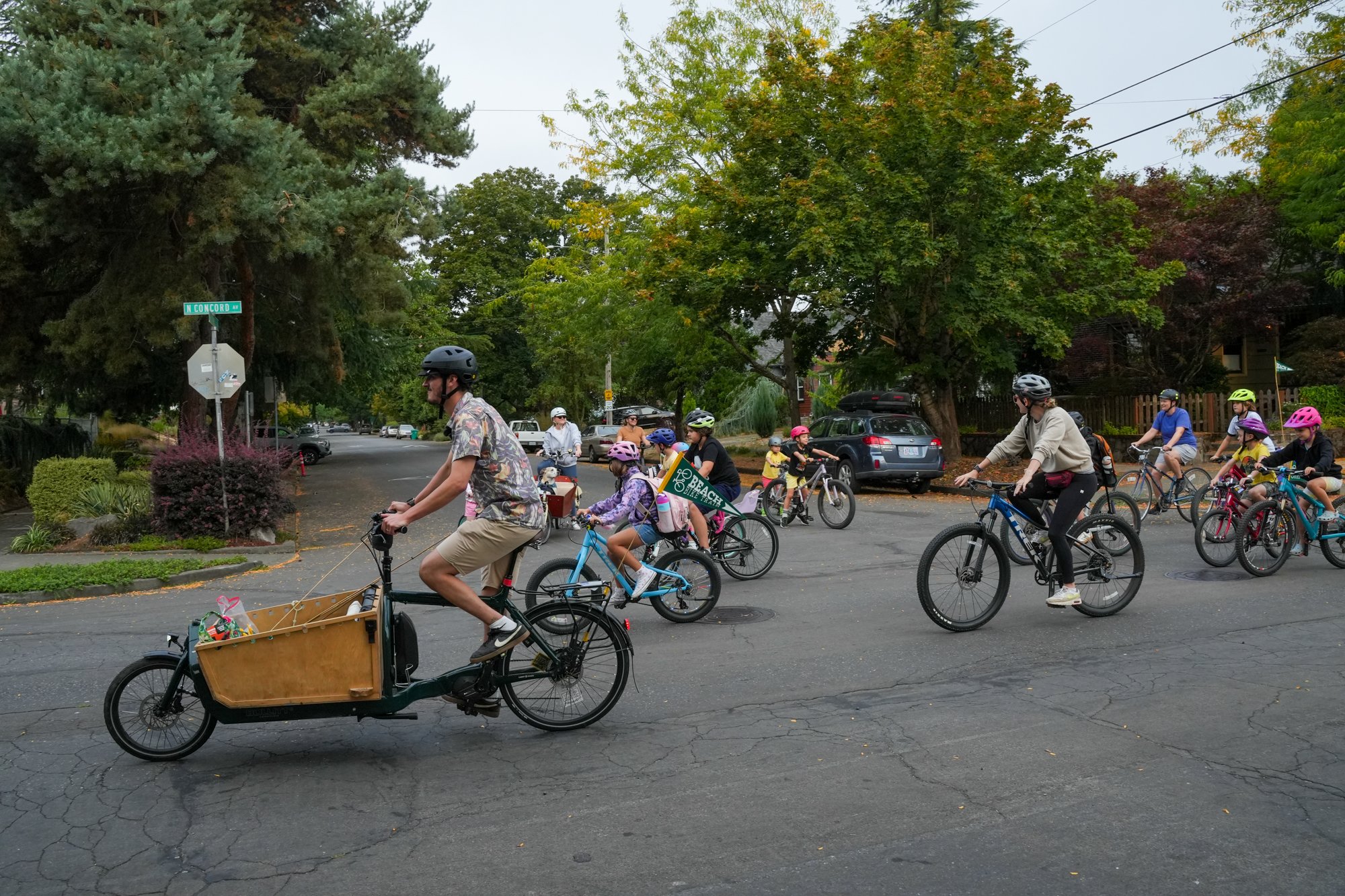
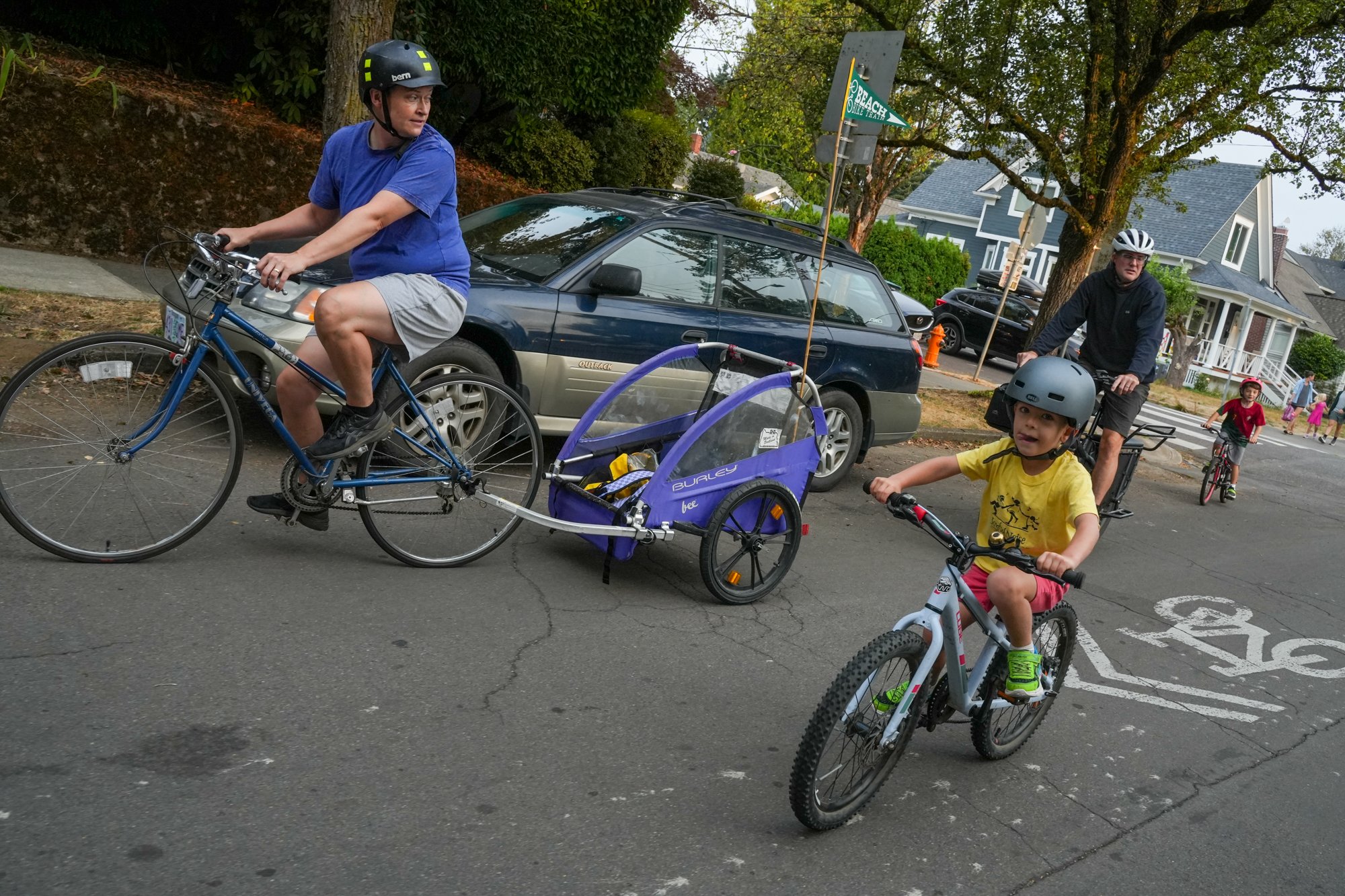
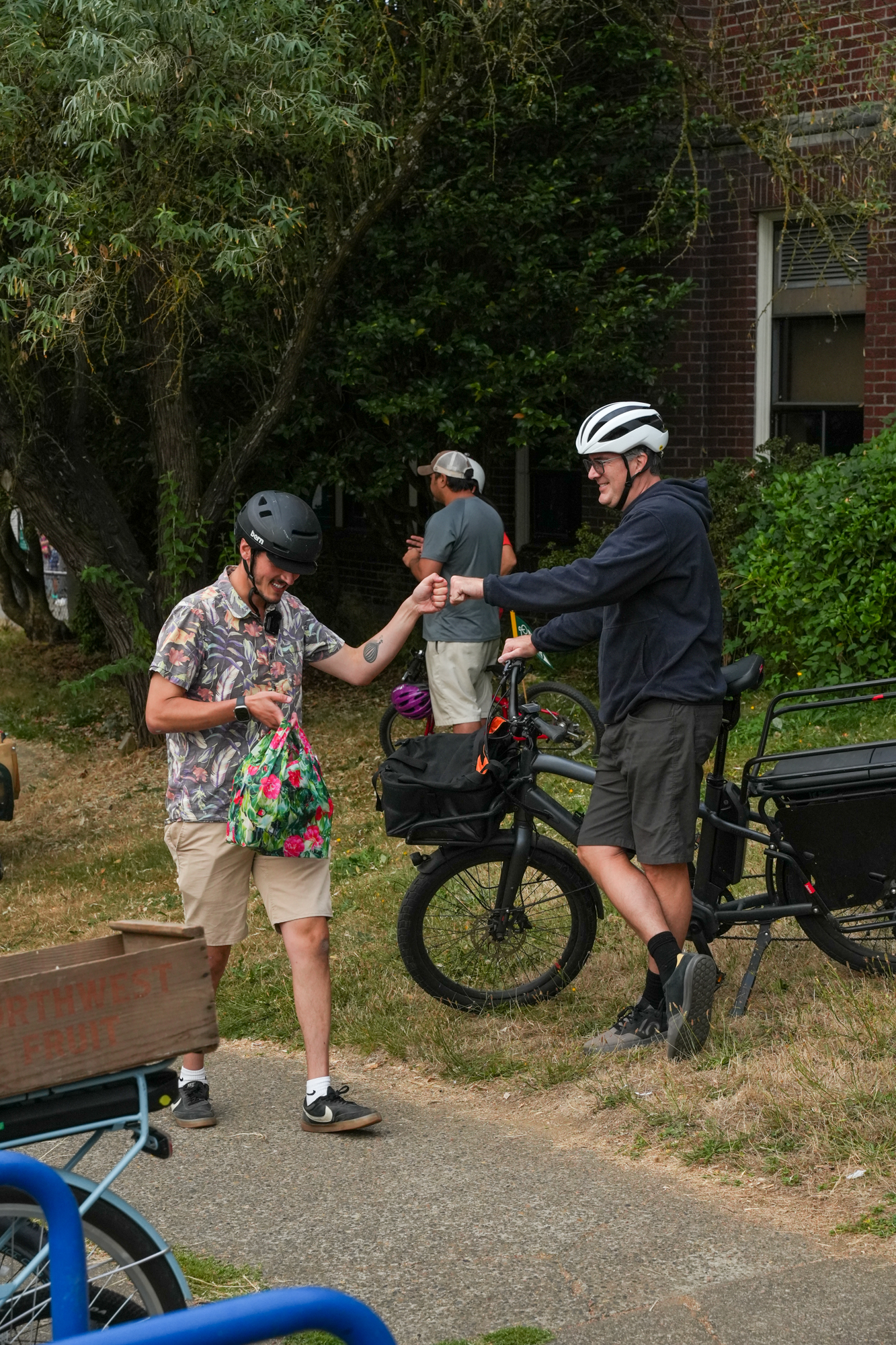
Nic Cota helping folks get ready to roll out on the Beach Bike Train this morning. (Photo: Jonathan Maus/BikePortland)
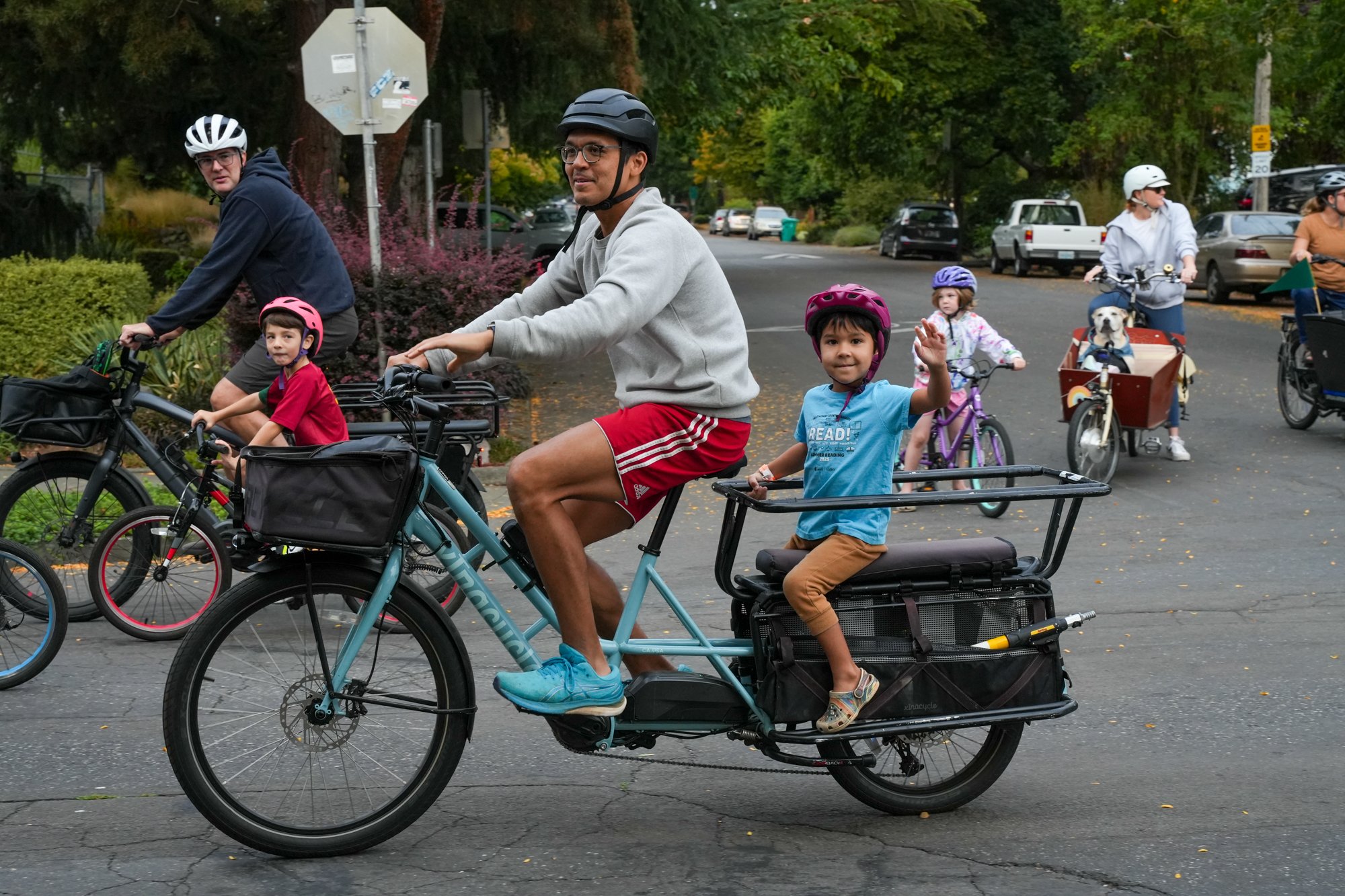
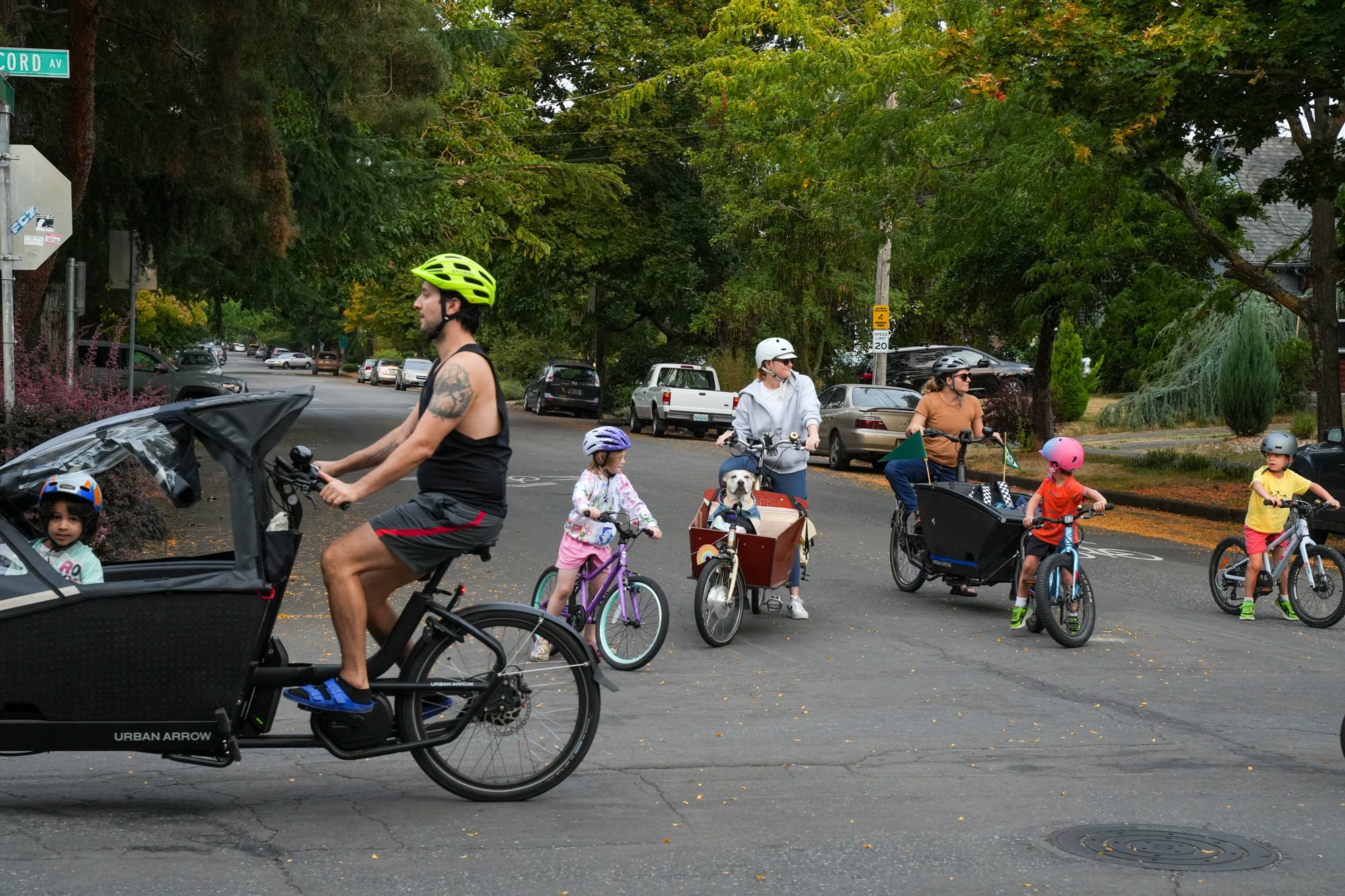
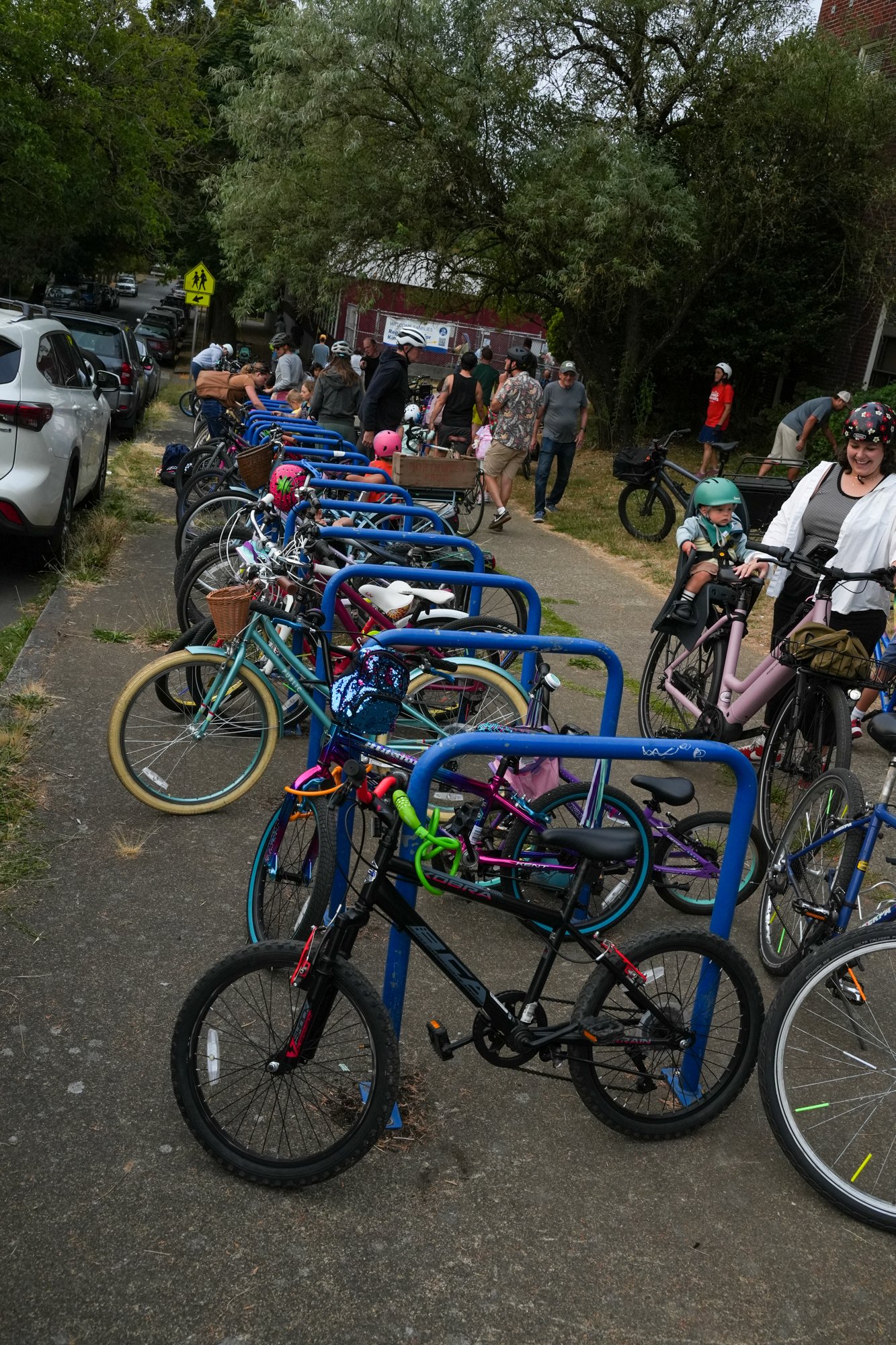
All over Portland this week, bike bus leaders showed up to help families and students get to school on two wheels. It’s a local revolution that has packed school bike racks, inspired thousands to hop on bicycles, influenced city politics, and shows no sign of slowing down. Behind all the excitement are volunteers who wake up early to meet families in the street and lead the weekly rides to school.
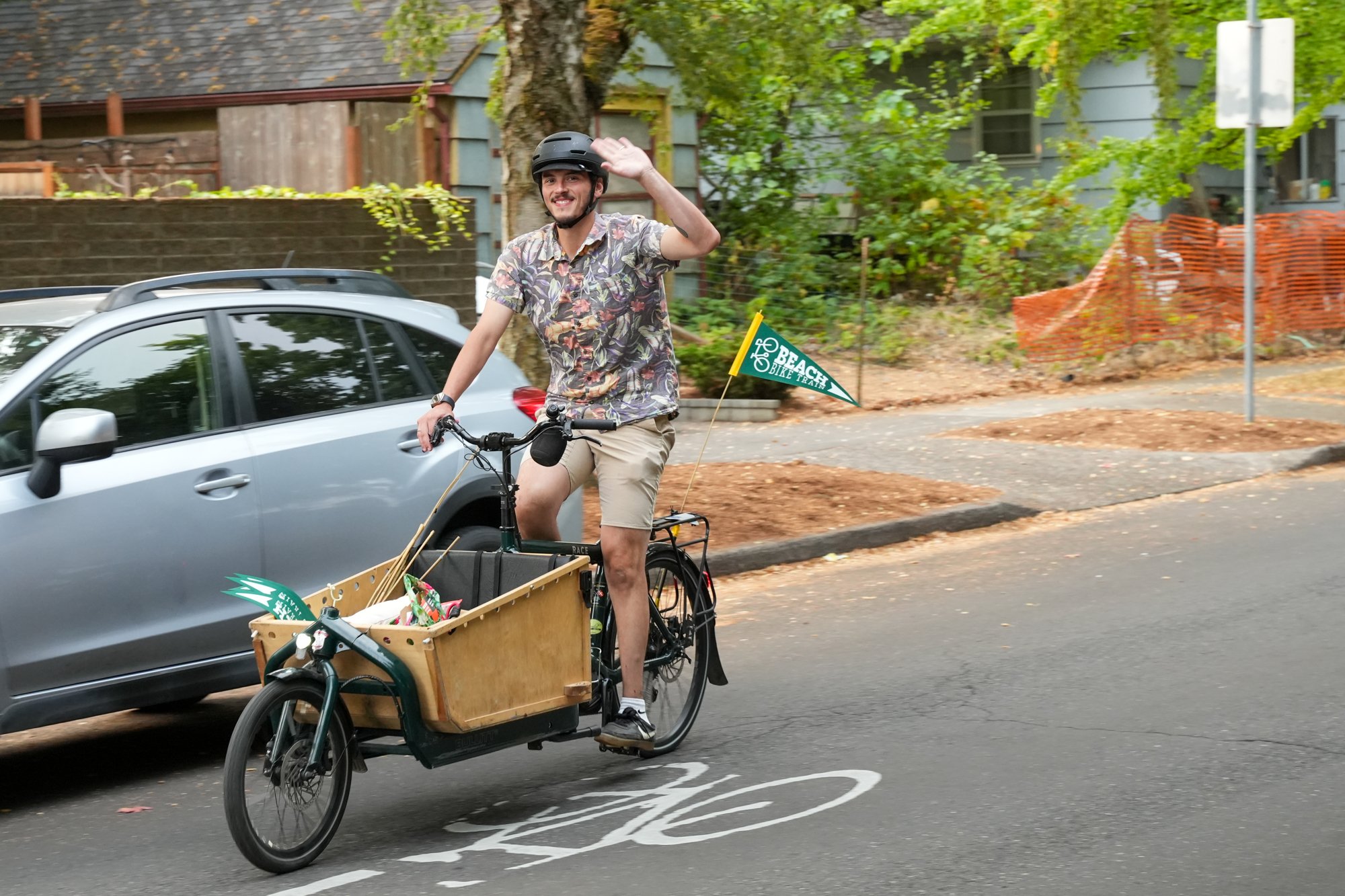
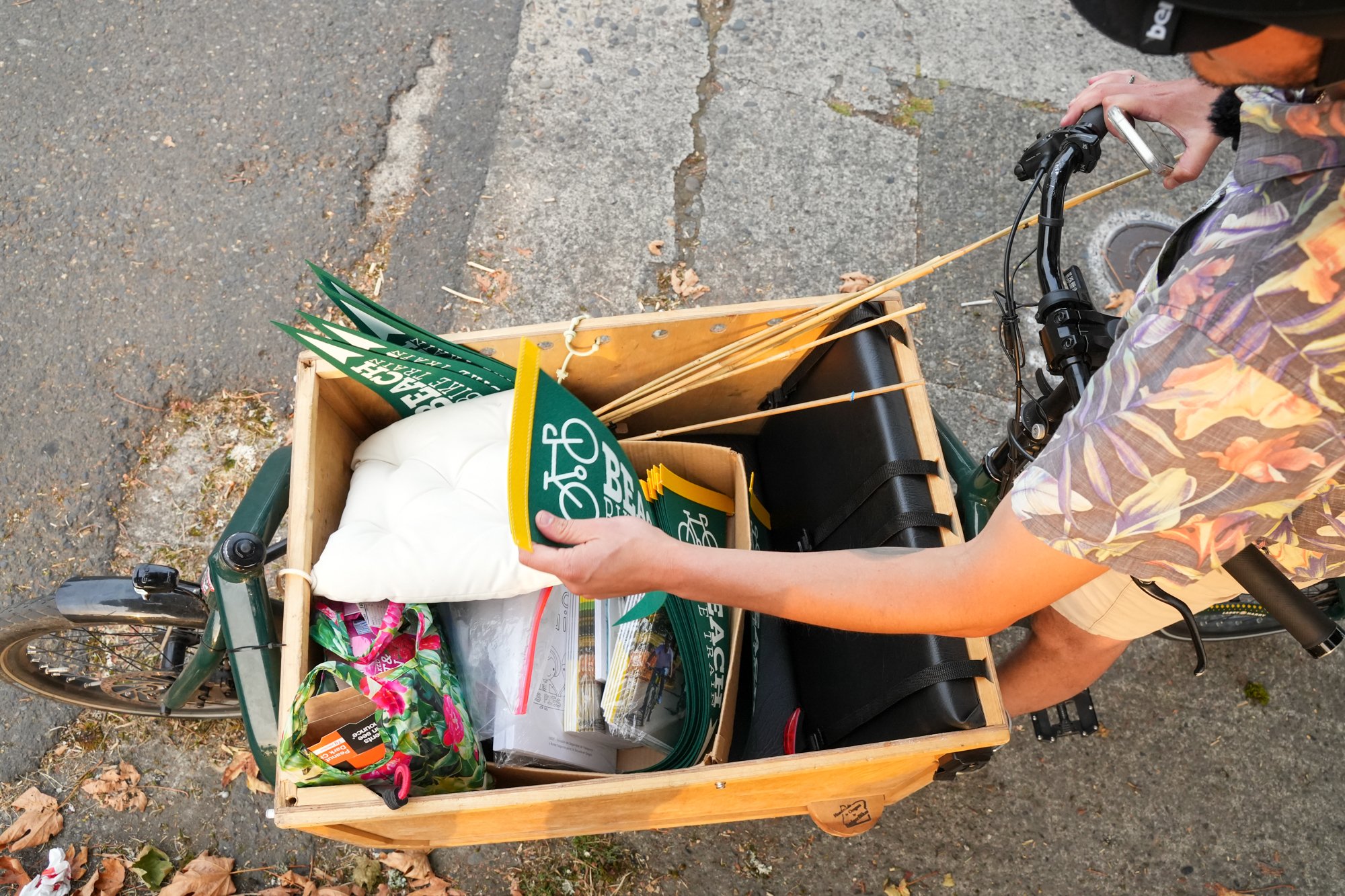
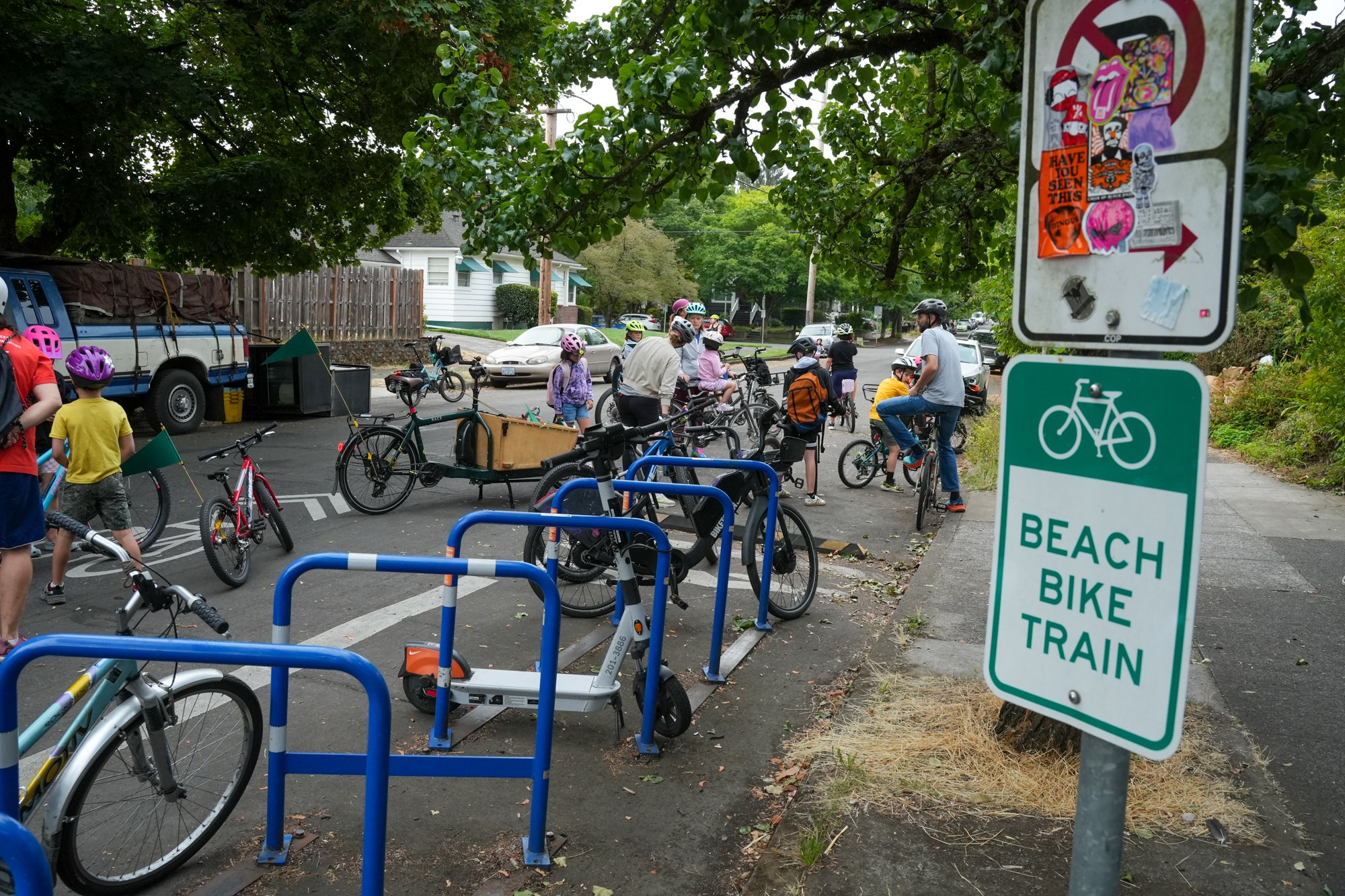
Overlook neighborhood resident Nic Cota doesn’t even have a child at Beach Elementary School (not yet at least, his son is one), but that hasn’t stopped him from leading the school’s “bike train” every Friday morning (this one’s called a bike train in keeping with its original name from when it first started in 2010). With the front box of his cargo bike full to the brim with swag (funded by a Metro grant), he rides to a meet-up spot at North Rosa Parks Way and Concord every Friday at 7:30 am.
“We all good with Daft Punk? That’s what the people voted for,” Nic calls out to the kids and parents who’ve shown up. I stuck a mic on Nic when I arrived and didn’t tell him to say anything. What I captured (listen in the video below) is mostly him offering words of encouragement, thanking people for showing up, and giving away free stuff. Ask any Safe Routes to School advocate and they’ll likely tell you the same thing: never underestimate the power of free goodies.
Advertisement
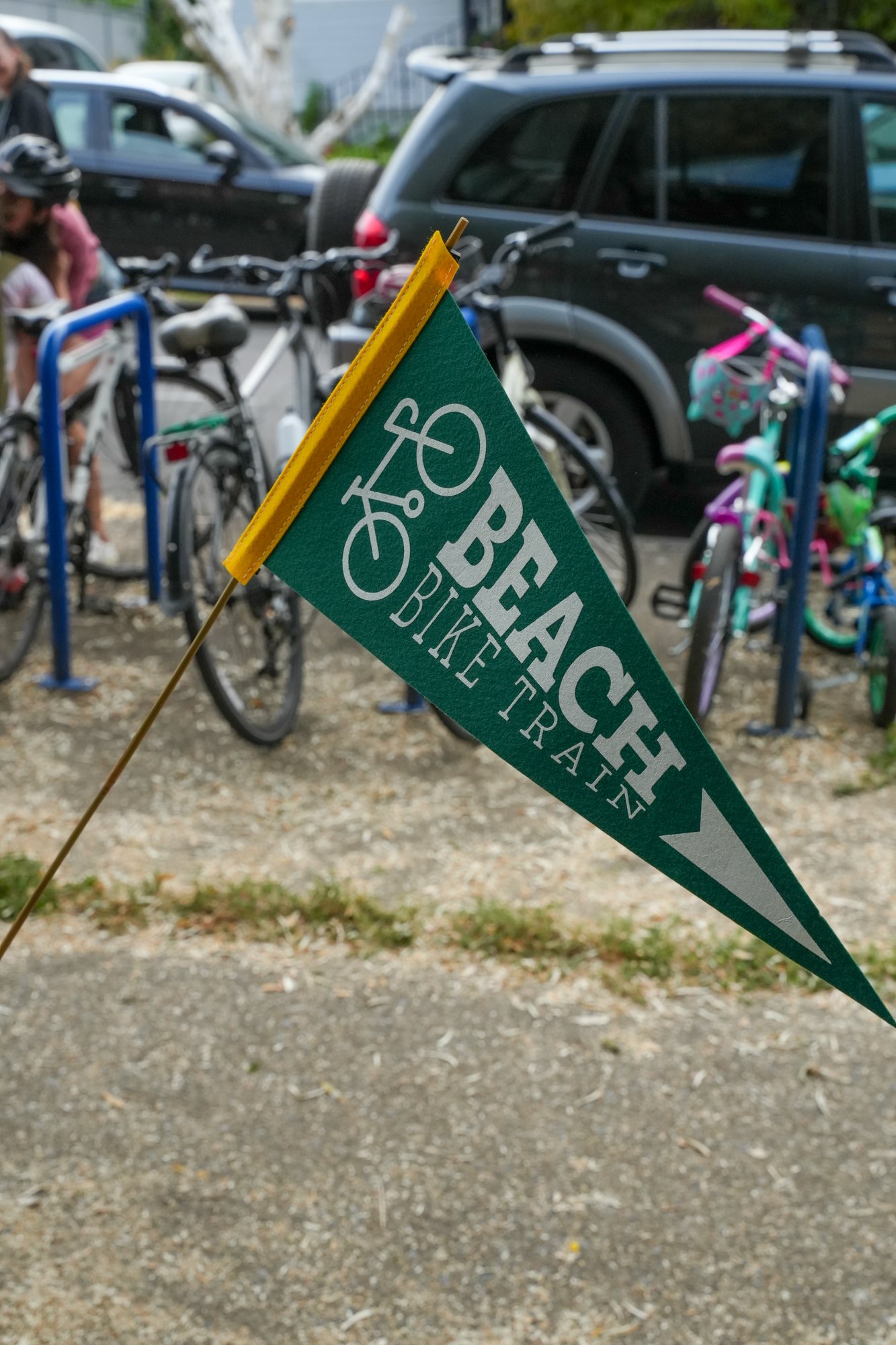
“Does anybody want a pennant? I still have plenty of spoke reflectors. Who needs a granola bar?! I’ve got spoke cards,” Nic calls out as folks gather around. “If you ever need a light, let me know.” As Nic rummaged through his bin, he pulled out an extra bike lock, bike maps, and other odds and ends. “It’s whatever I can do to motivate,” he said.
This is happening on street corners citywide as bike bus fever grips Portland.
Folks like Nic make it easier for people to give cycling to school a try. Between installing spoke reflectors and pennants on bikes, he made sure to meet new arrivals since making people feel welcome is key.
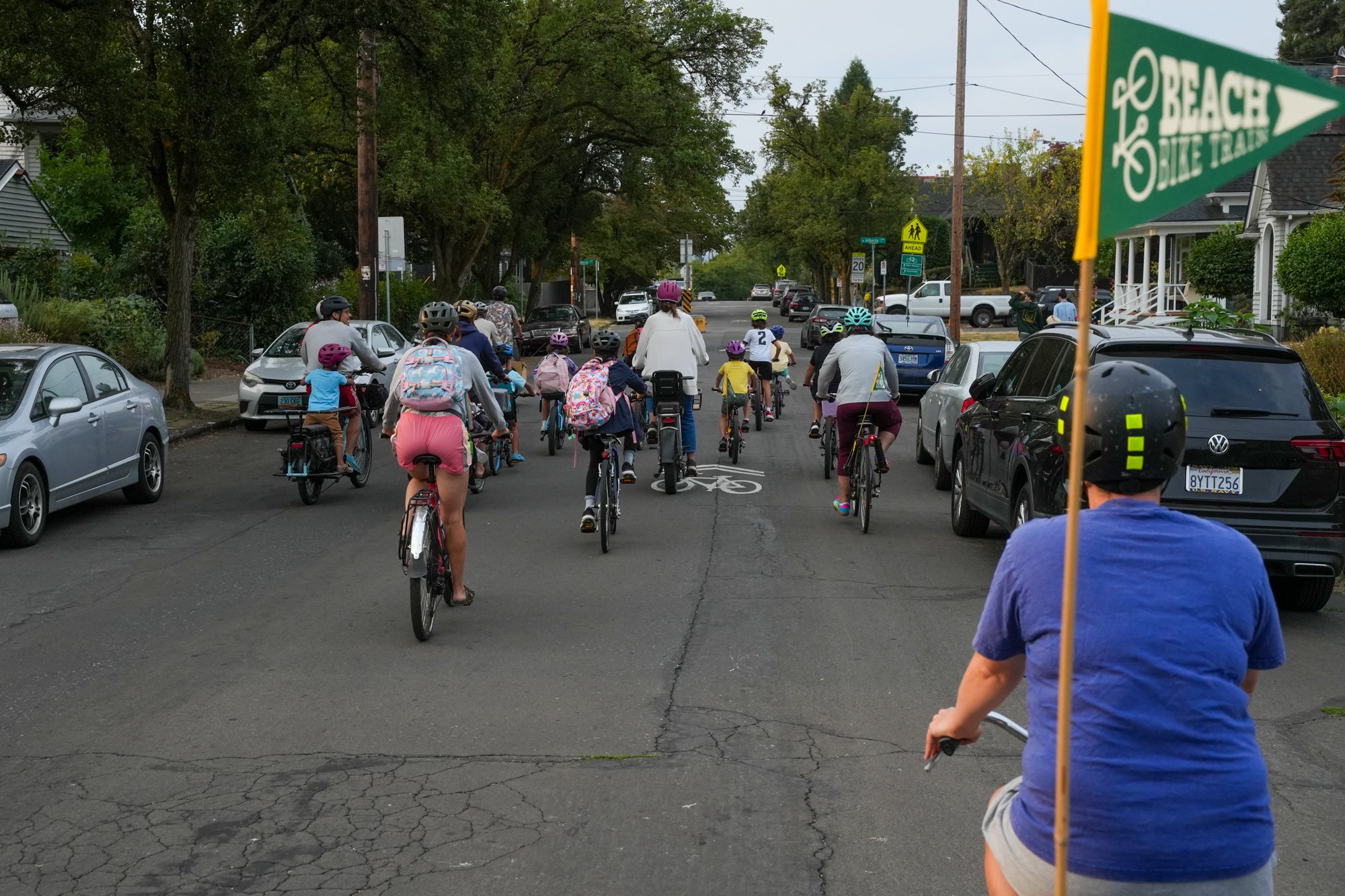
When it was time to roll, bells rang out and the size of the group swelled as families hopped on from side streets. N Concord is a neighborhood greenway, which means most drivers expect to see cyclists and these large morning groups have become so common they’ve been normalized and accepted by all but the meanest drivers. Following sharrows like breadcrumbs south on Concord, and benefitting from diverters and safer crossings that encourage car users to stop and yield at cross streets — the Beach Bike Train chugged its way to a large row of bike racks outside the school.
As parents fussed with locks and school supplies and kids dashed off to class (after grabbing one last free raspberry granola bar of course), Nic was peppered with greetings and questions. One mom approached and said she was new to biking. She asked Nic for bike shop recommendations.
“This is our first bike ride,” the woman said. “Thanks for coming,” Nic replied. “We do this every week.”
And just like that, another Portlander was welcomed into the cycling ranks.
— Tag along with Nic and the Beach Bike Train in the video below.