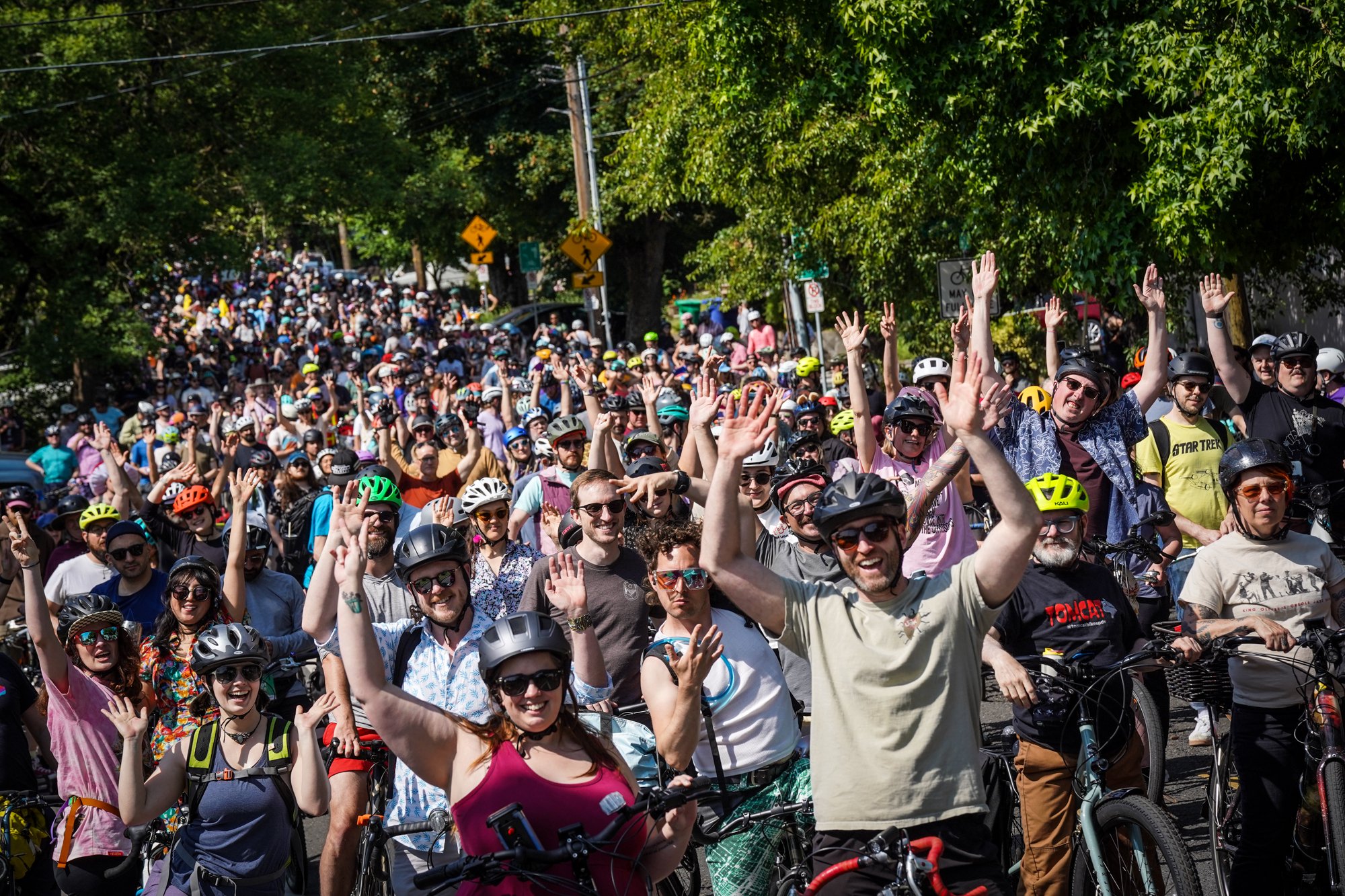
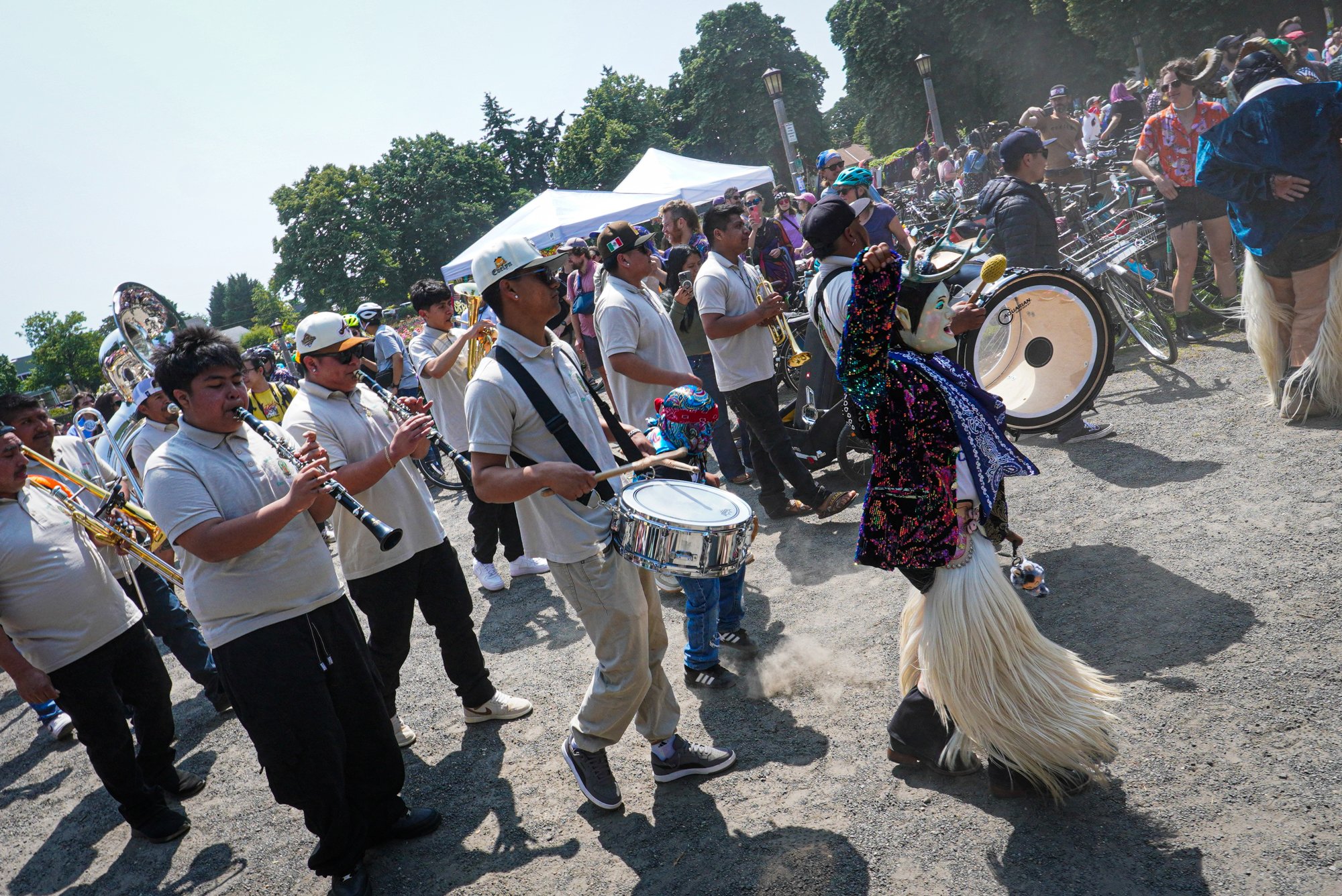
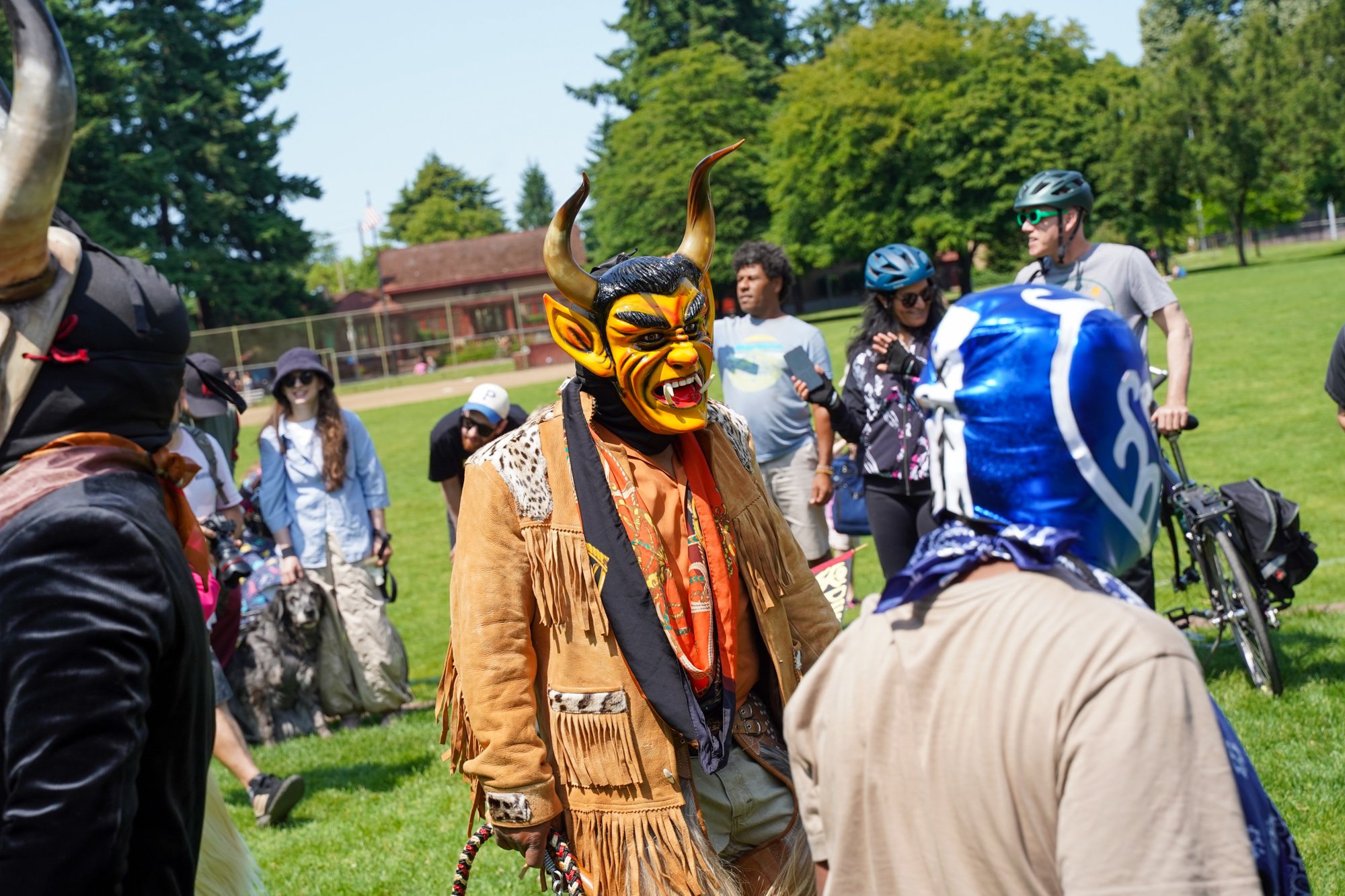
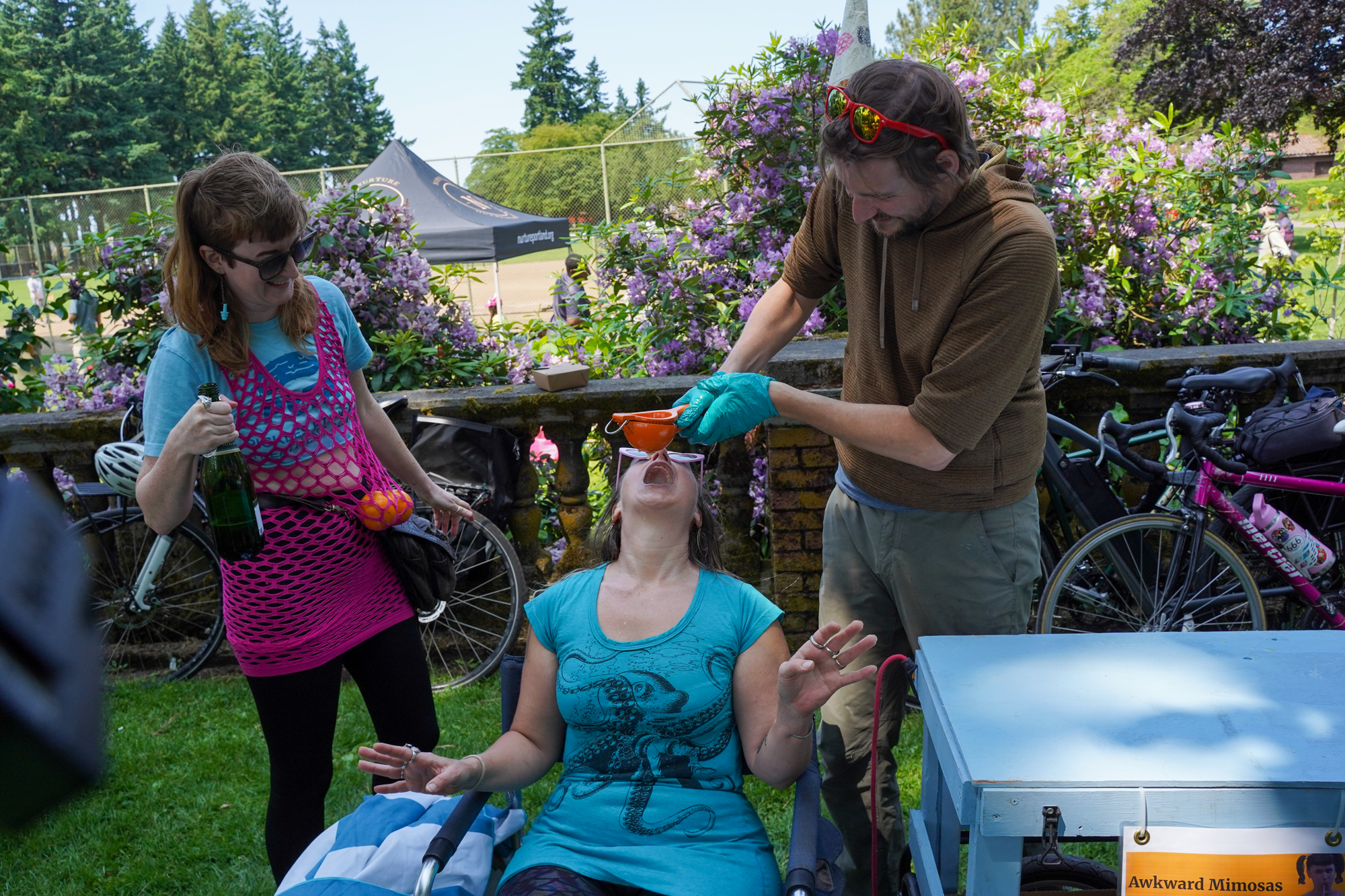
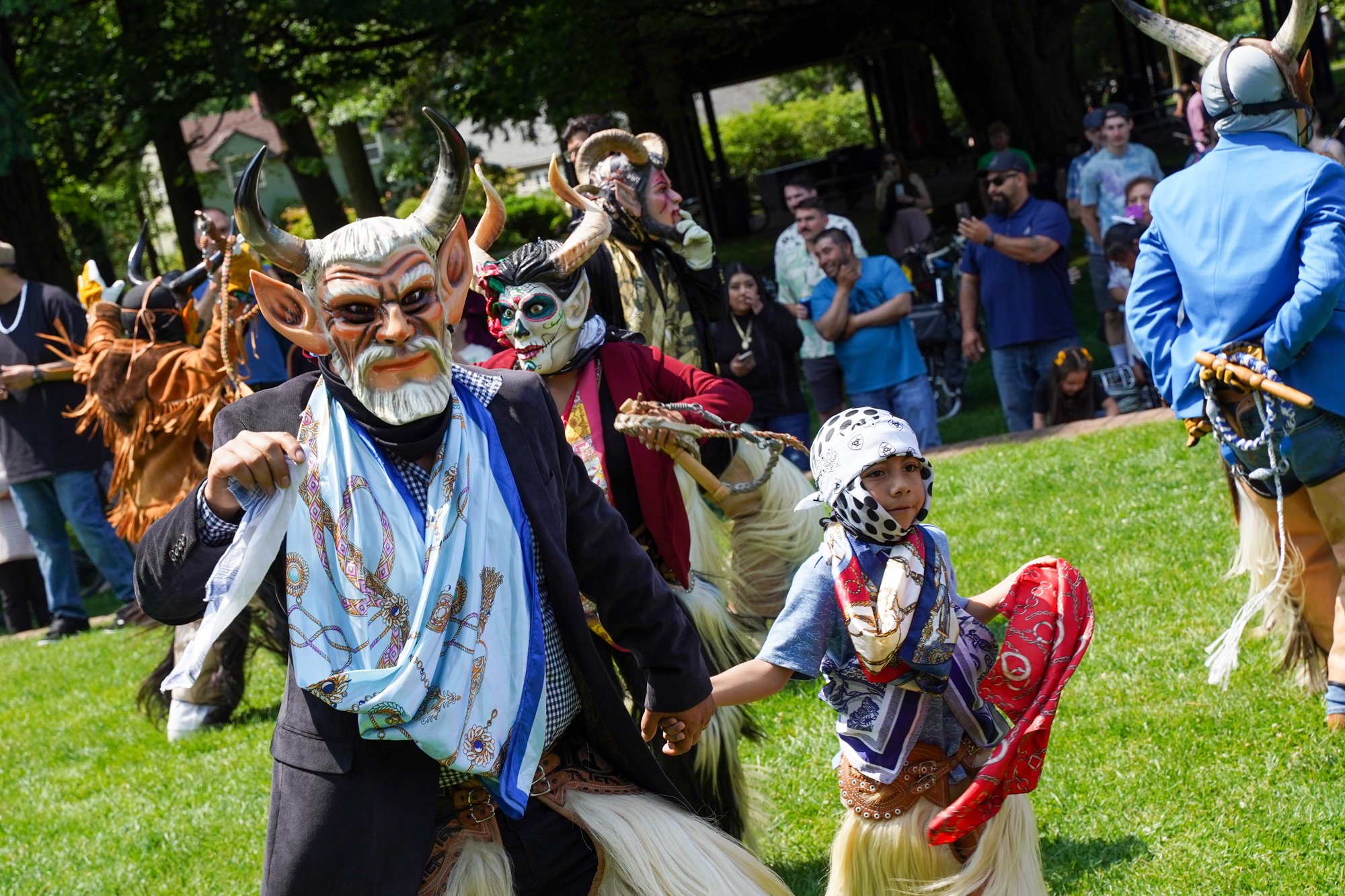
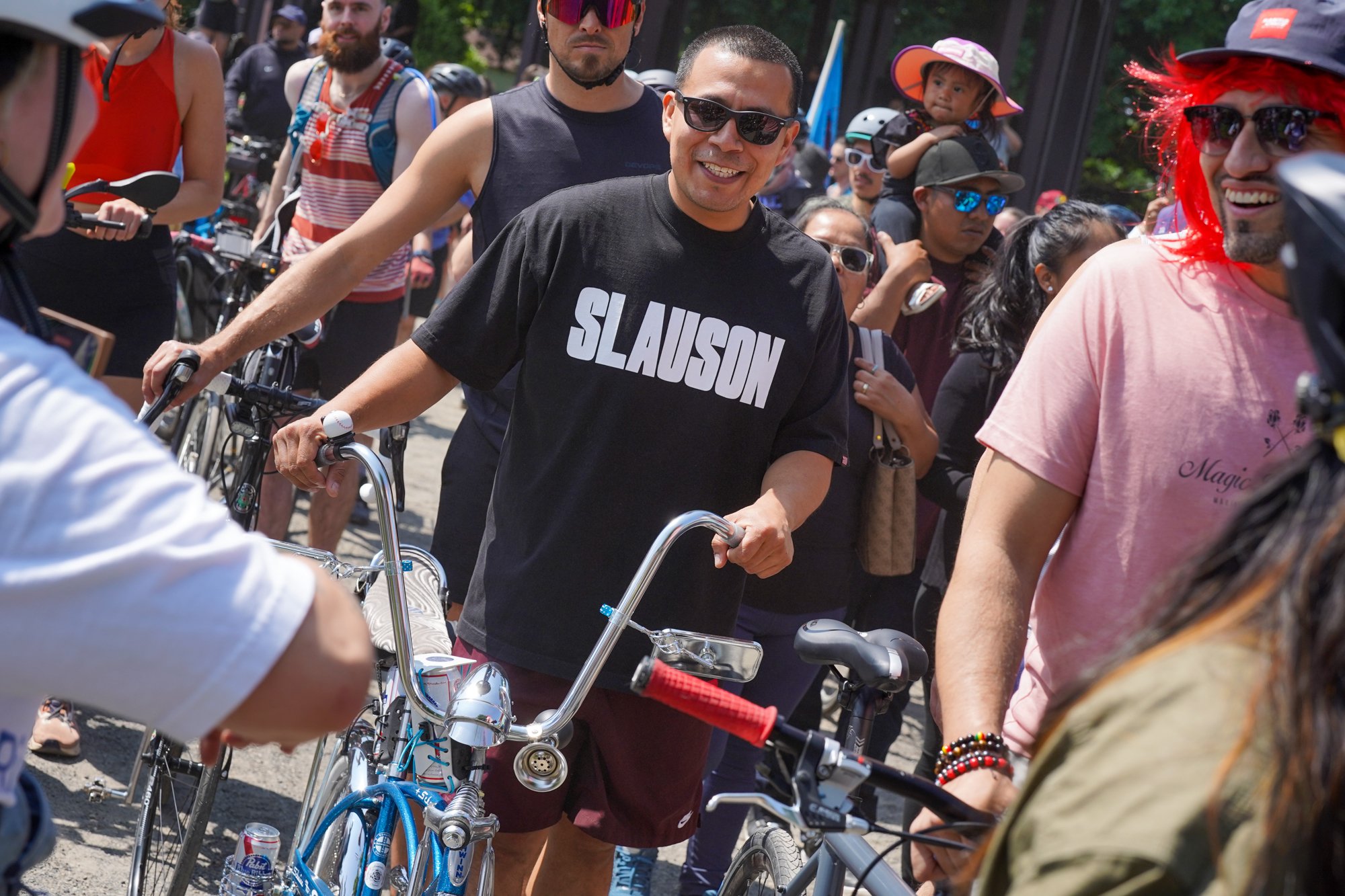
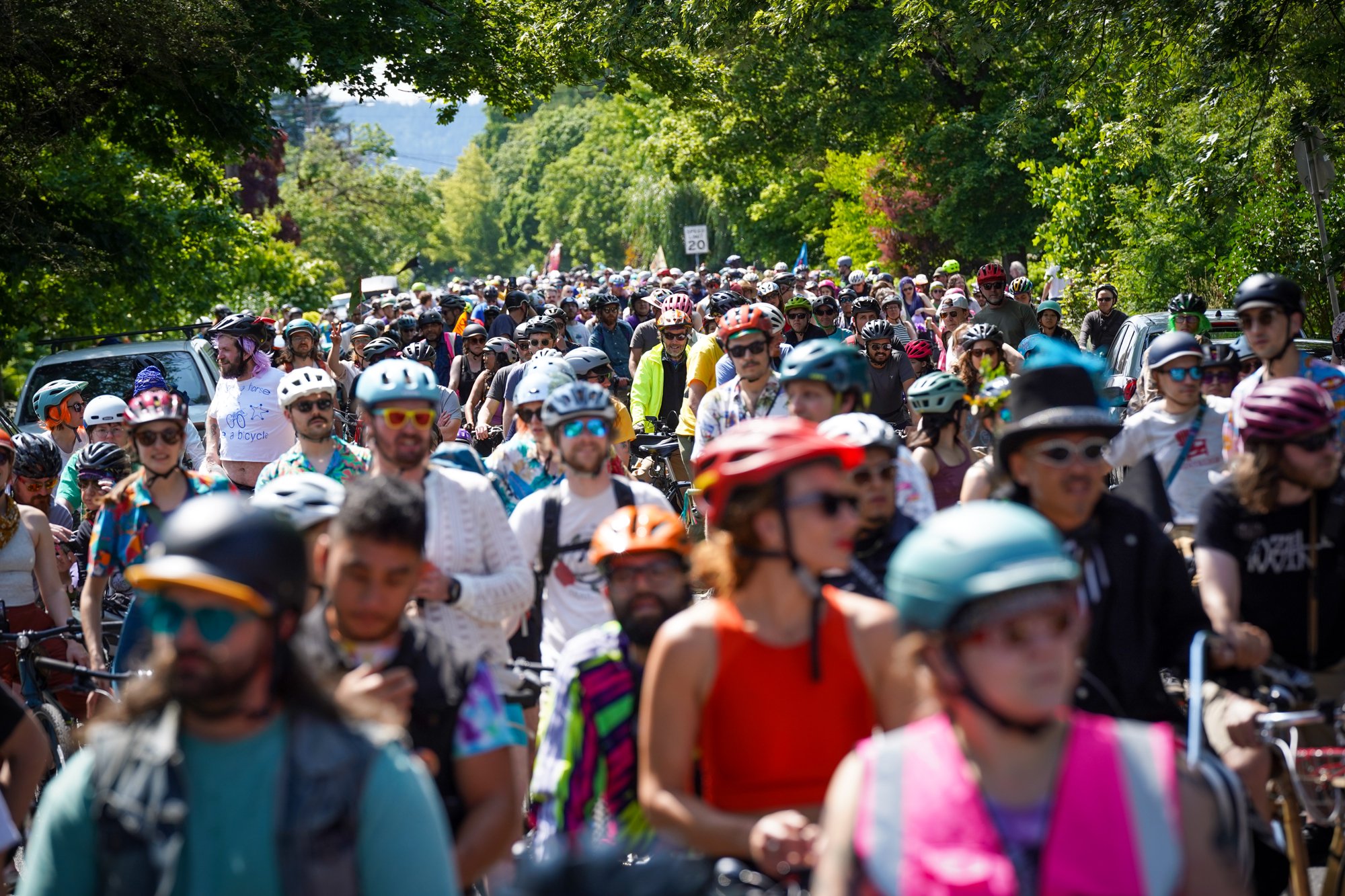
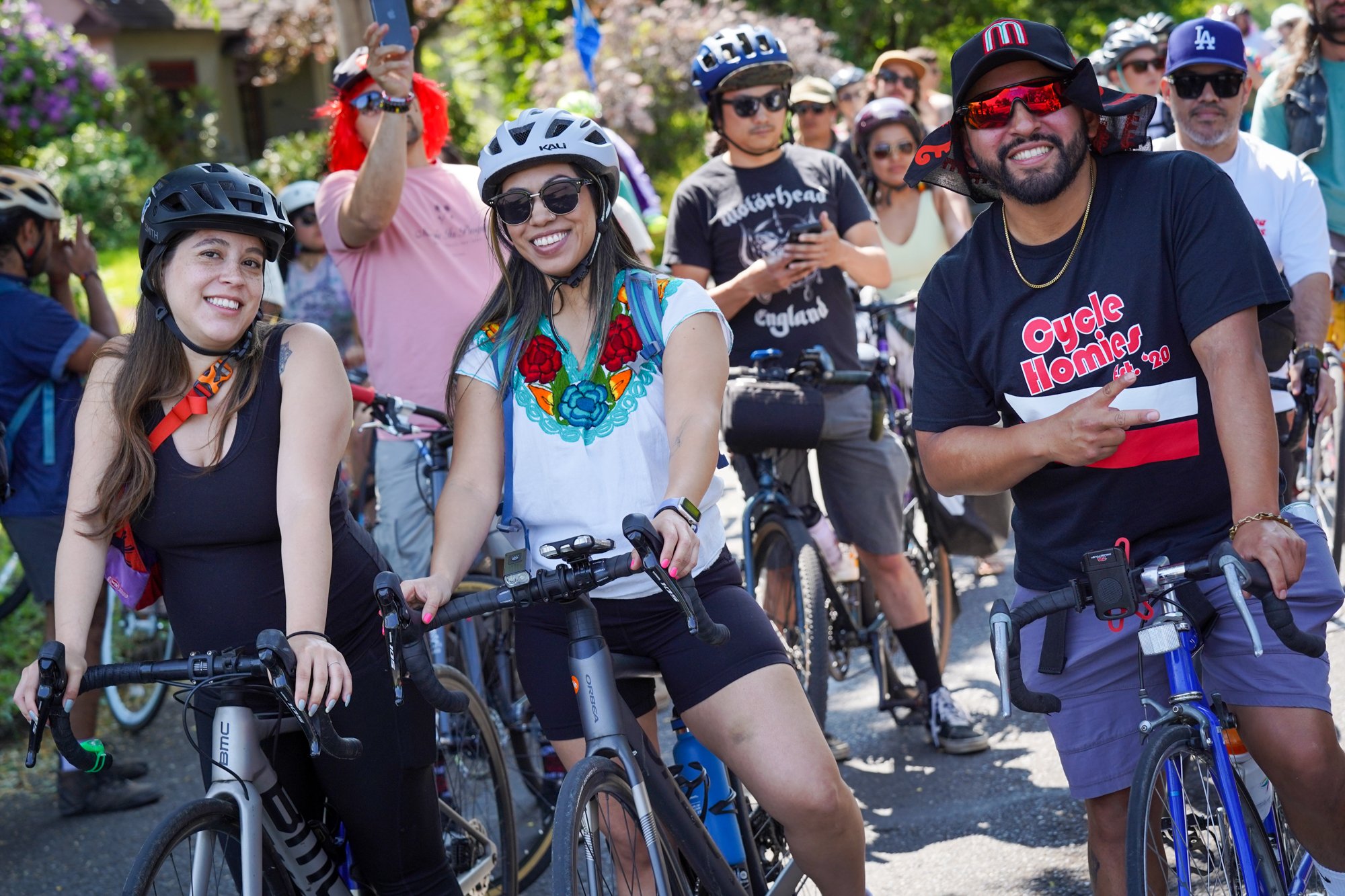
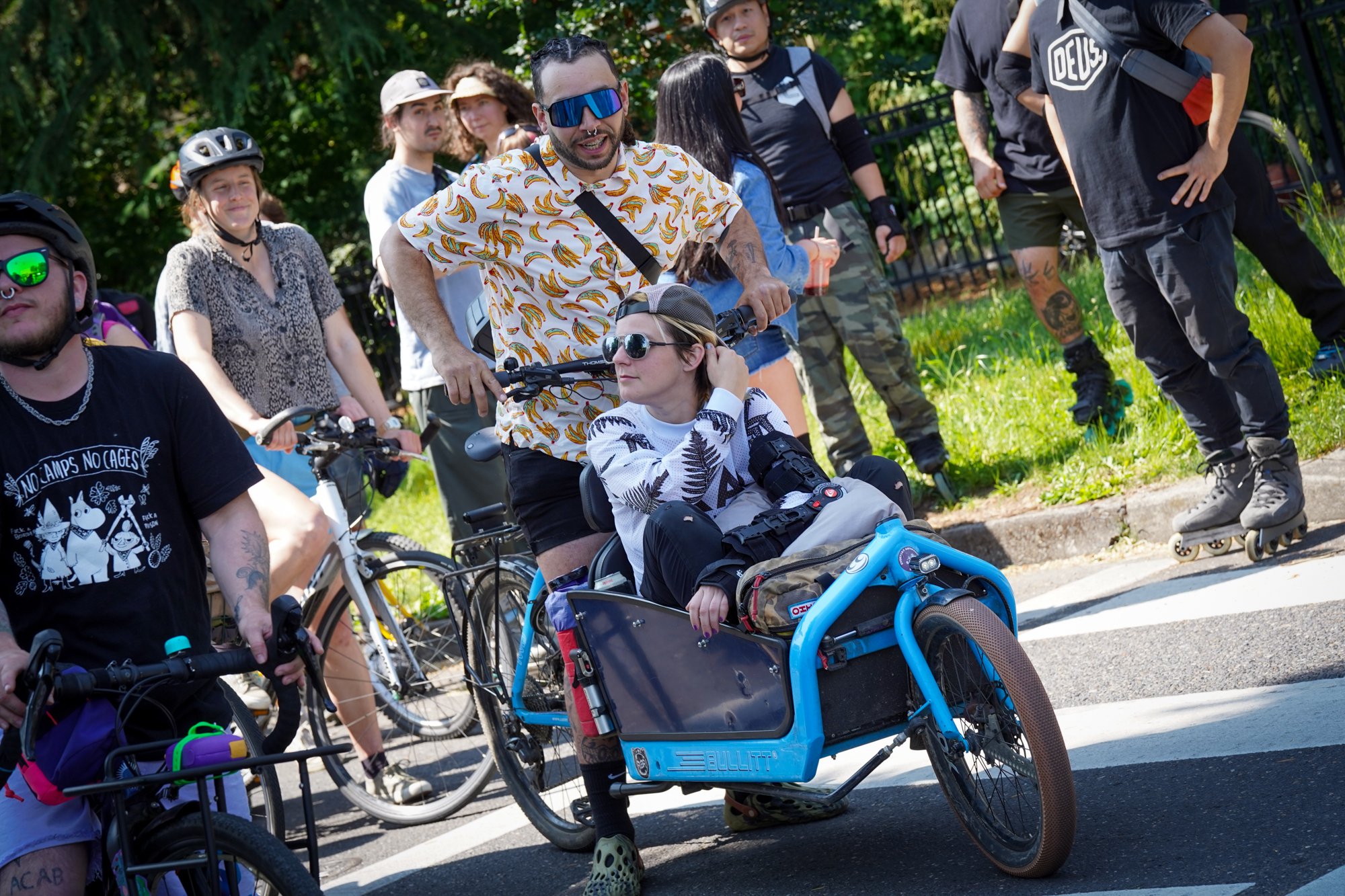
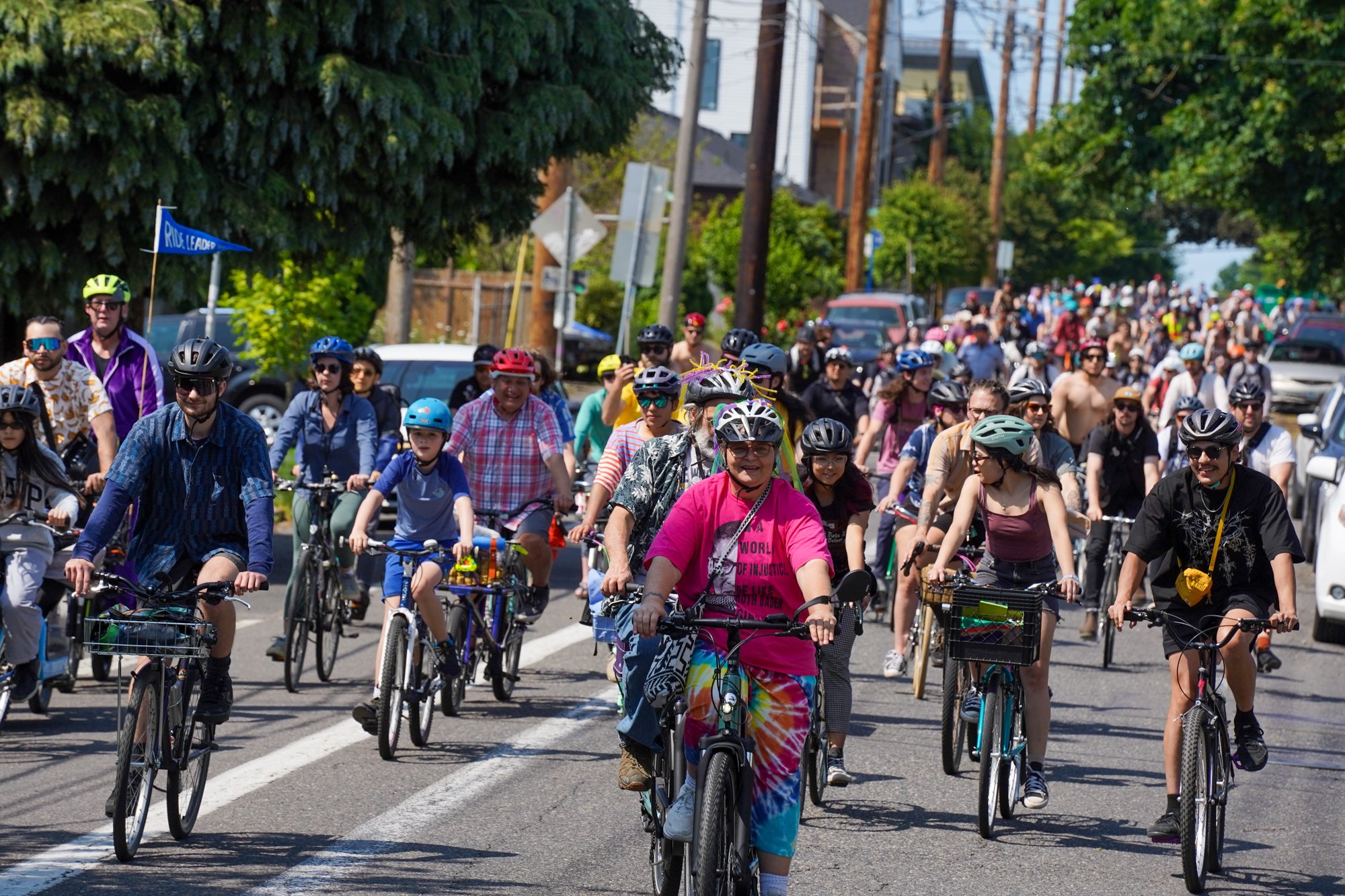
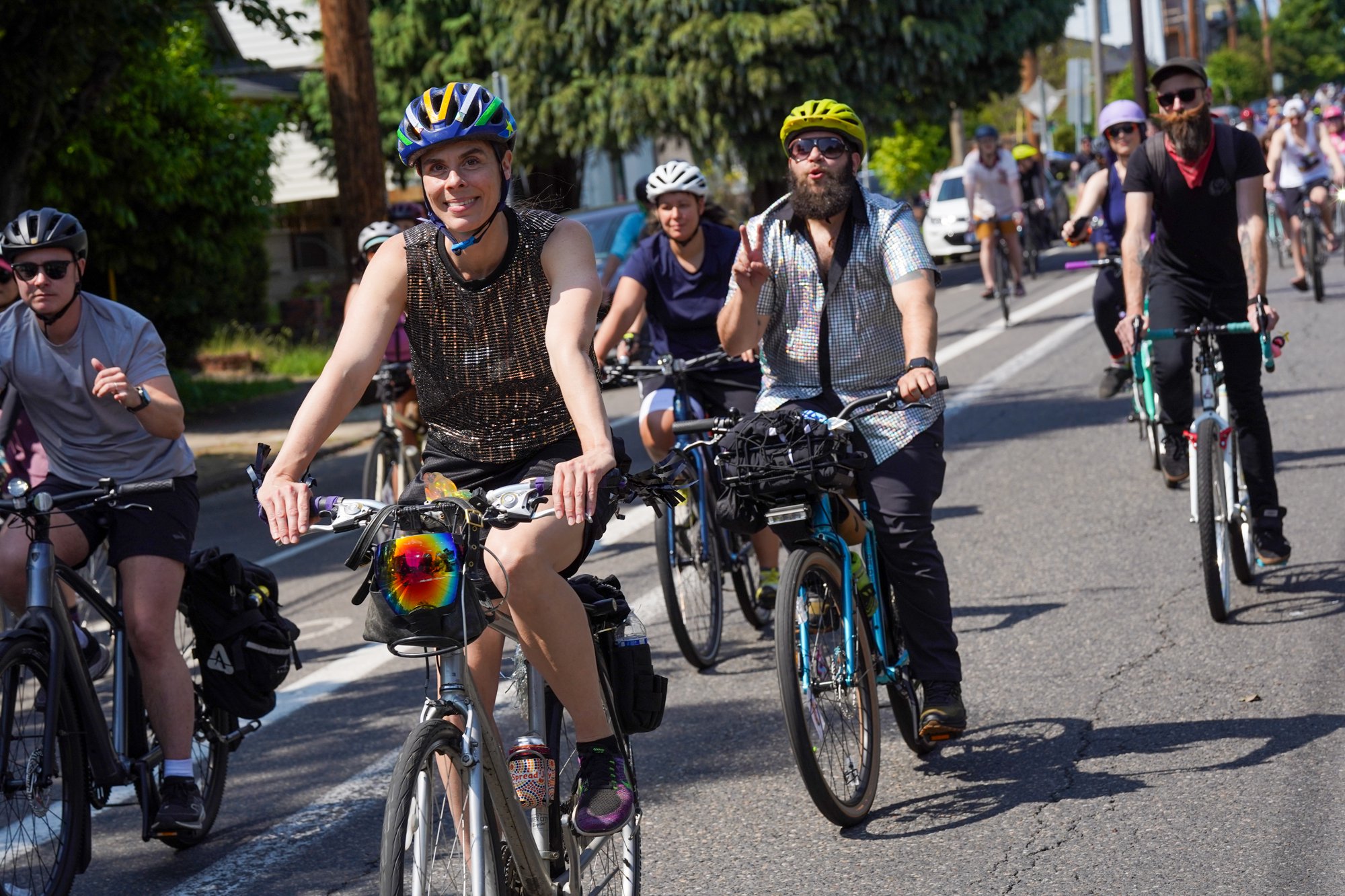
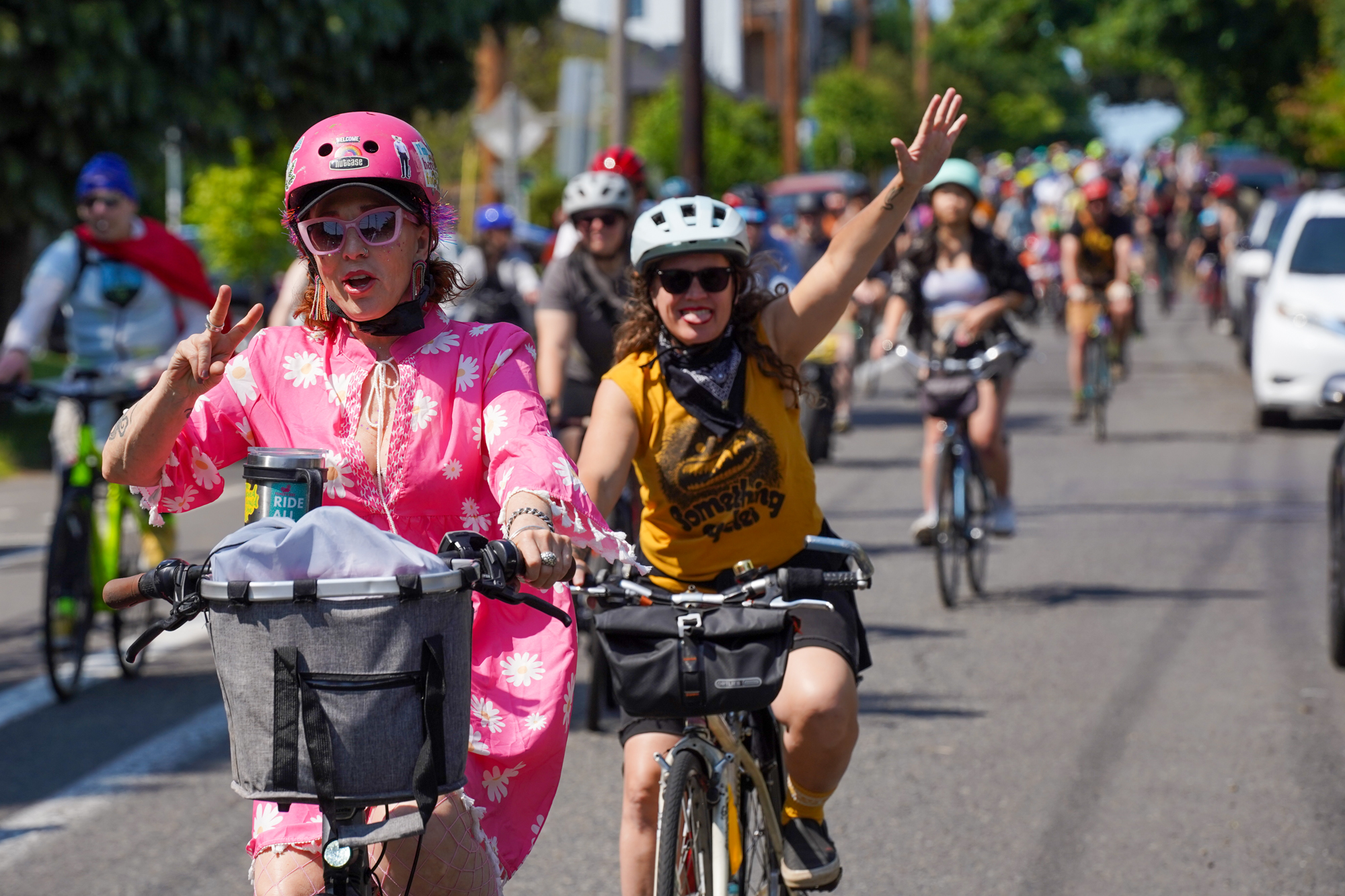
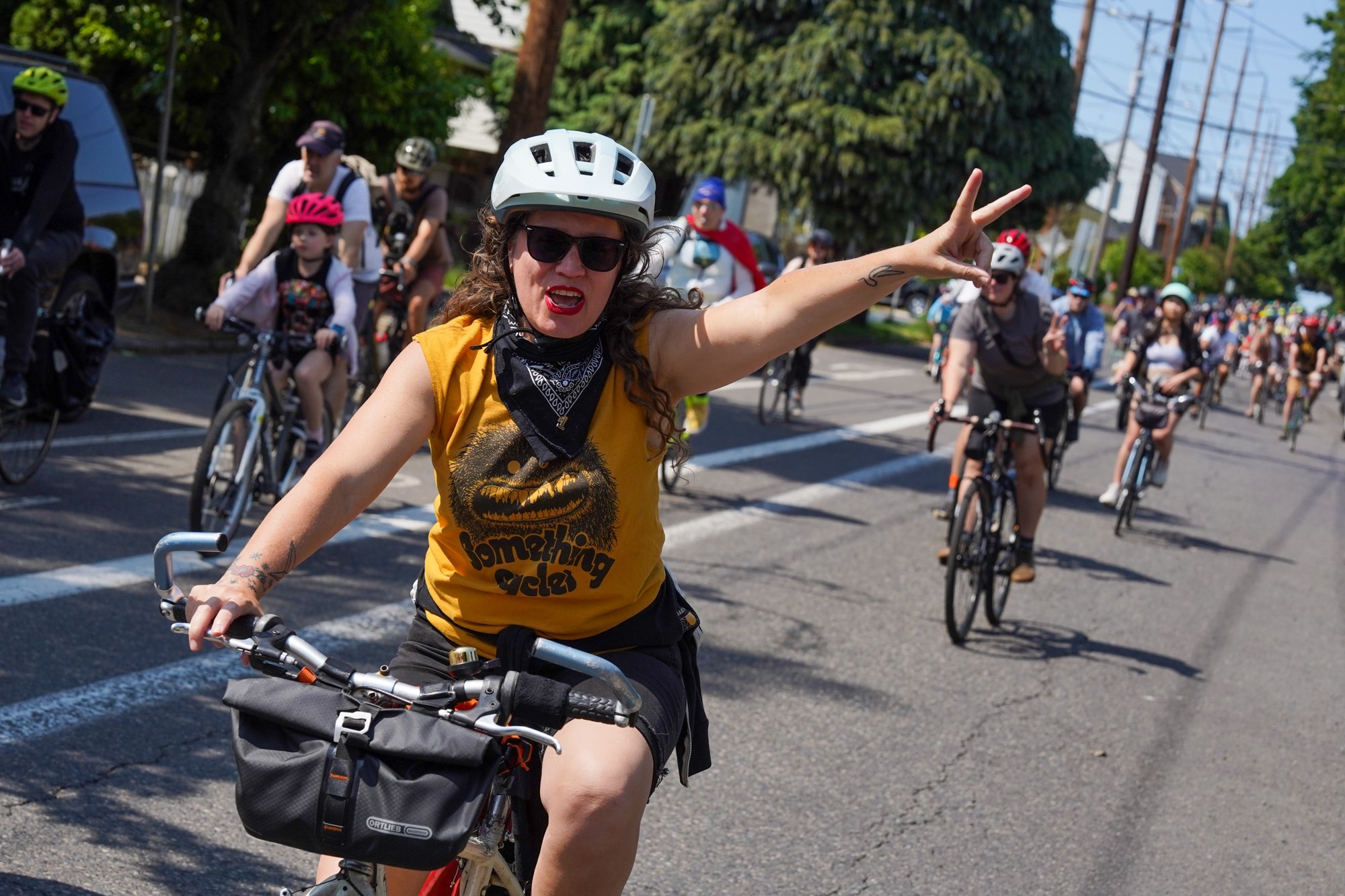
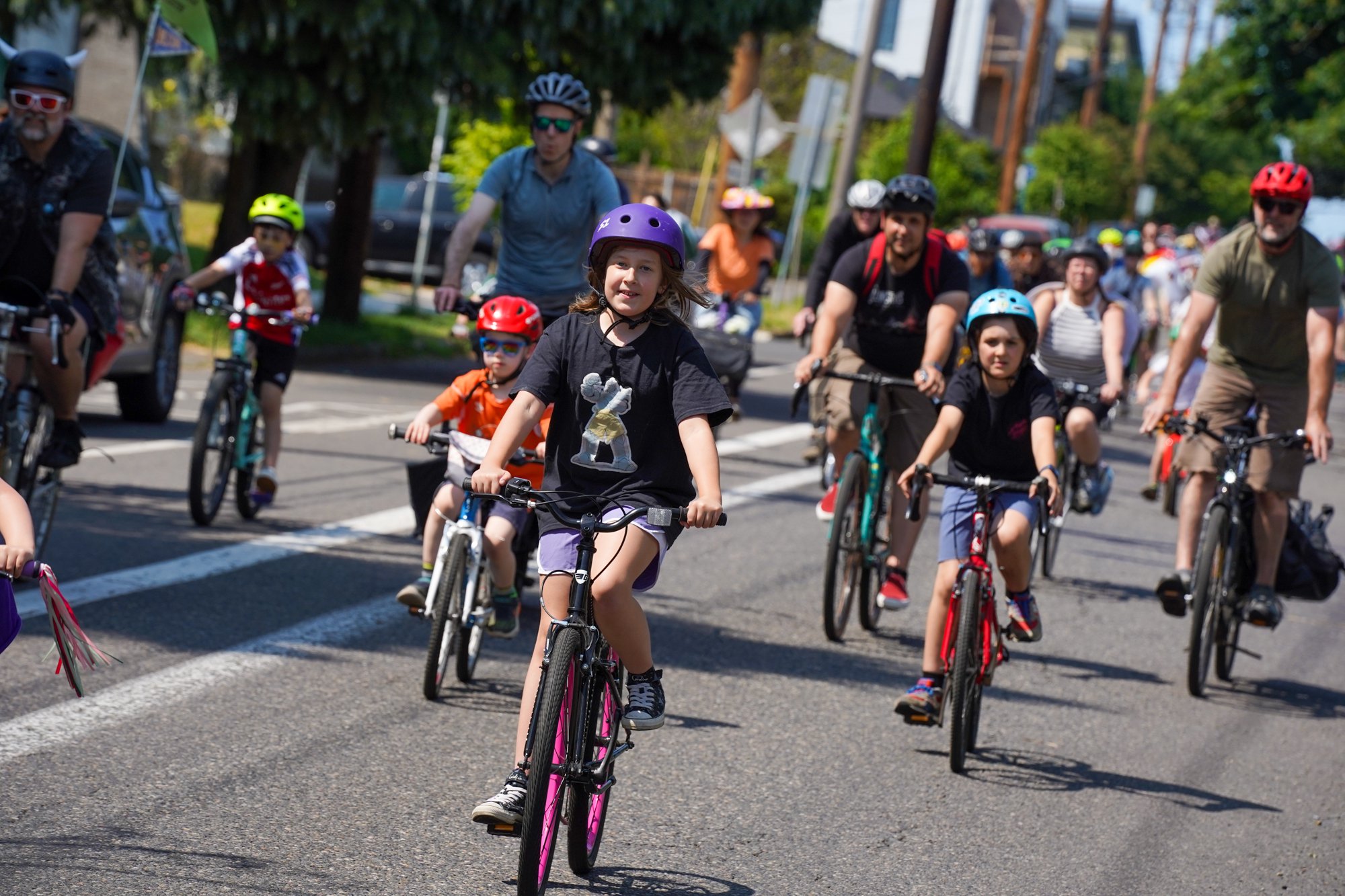
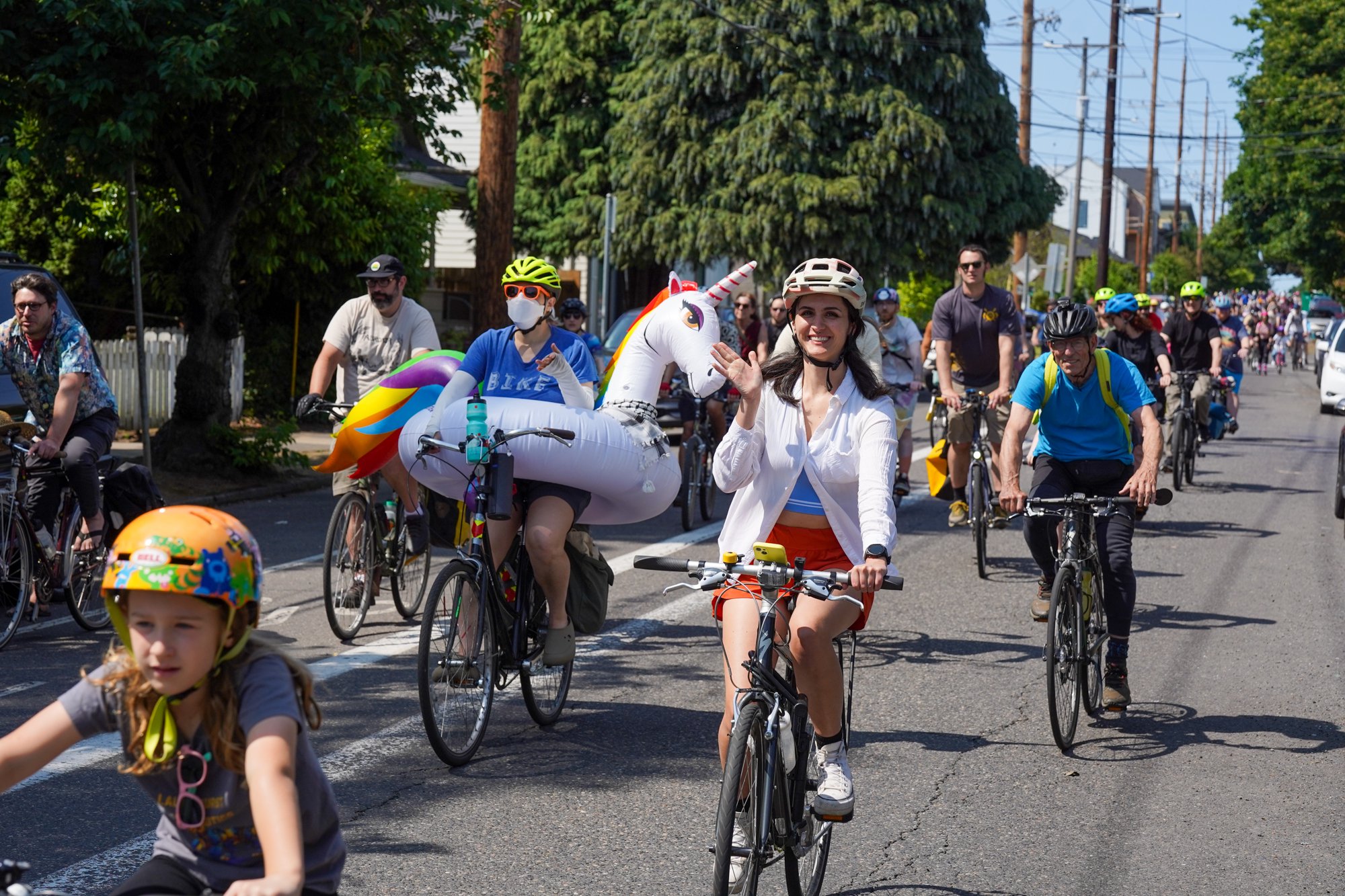
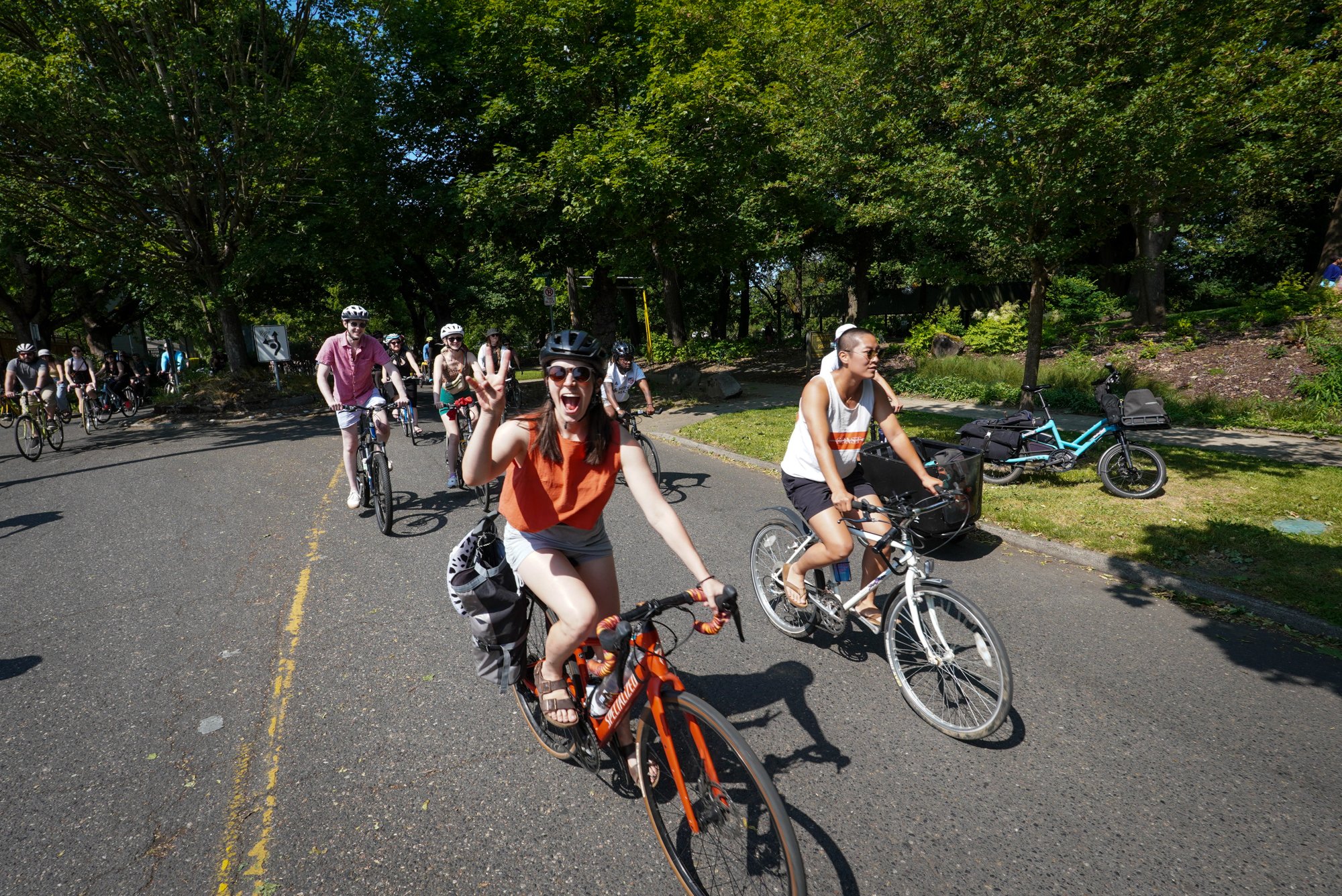
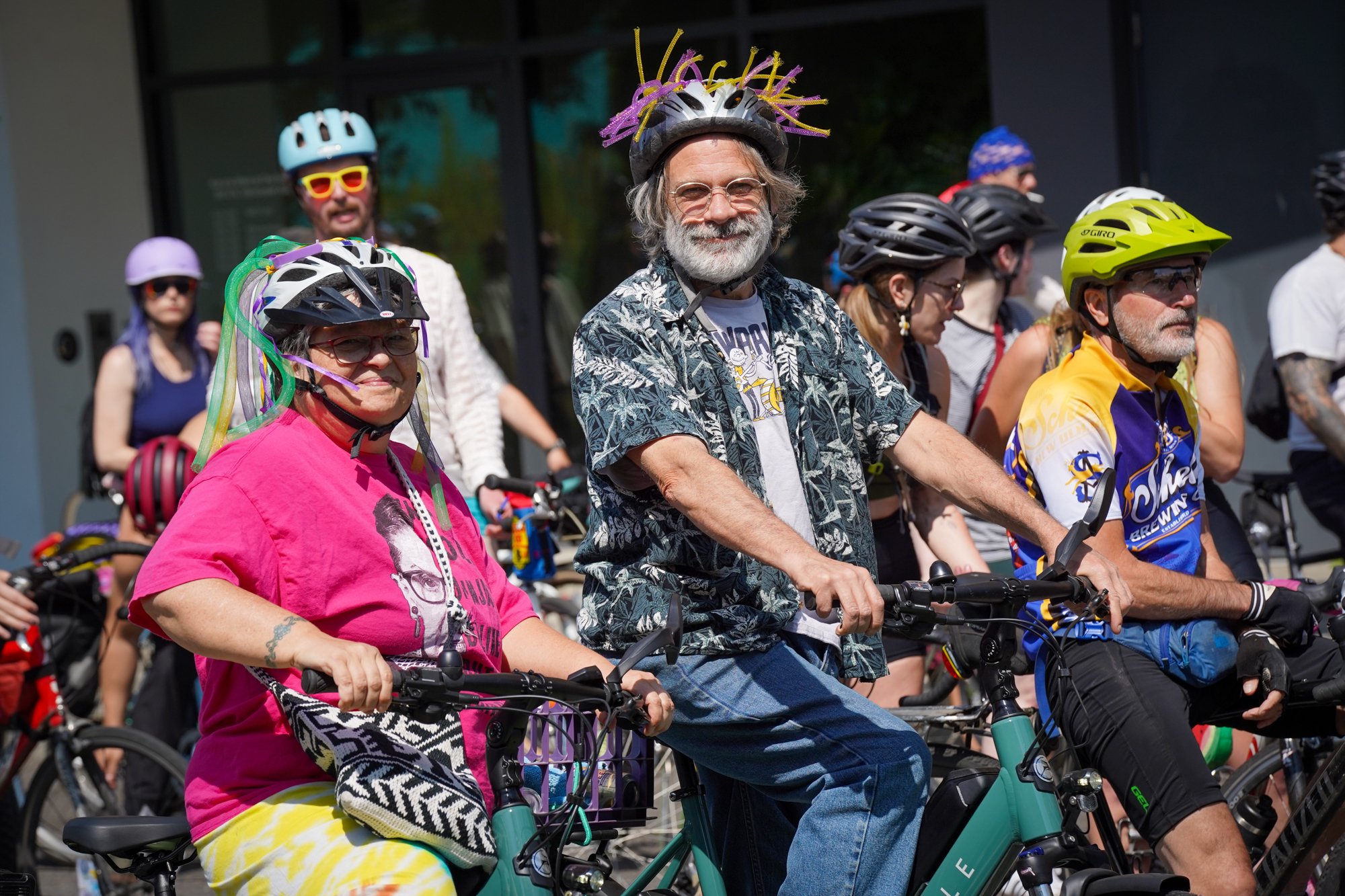
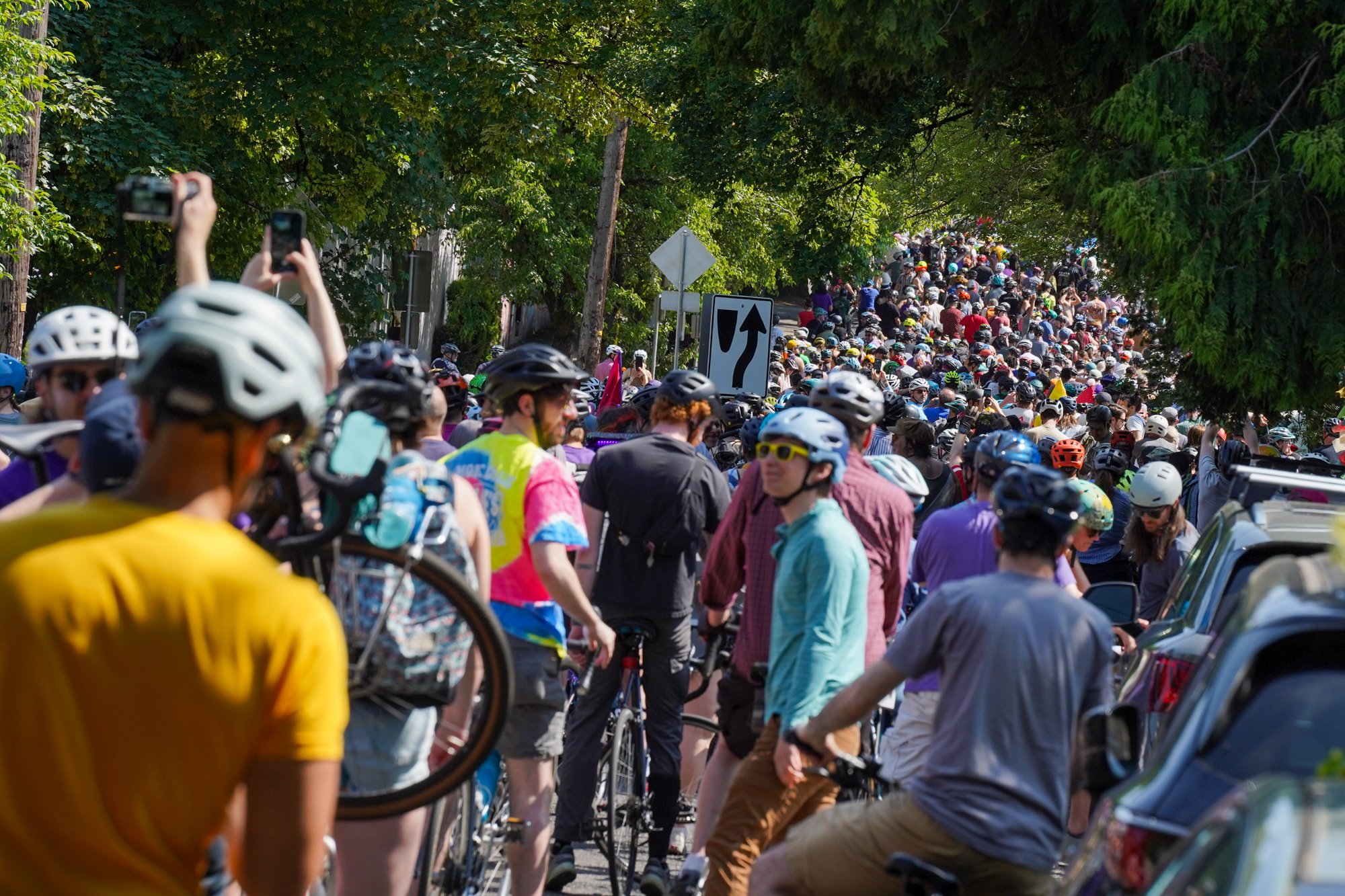
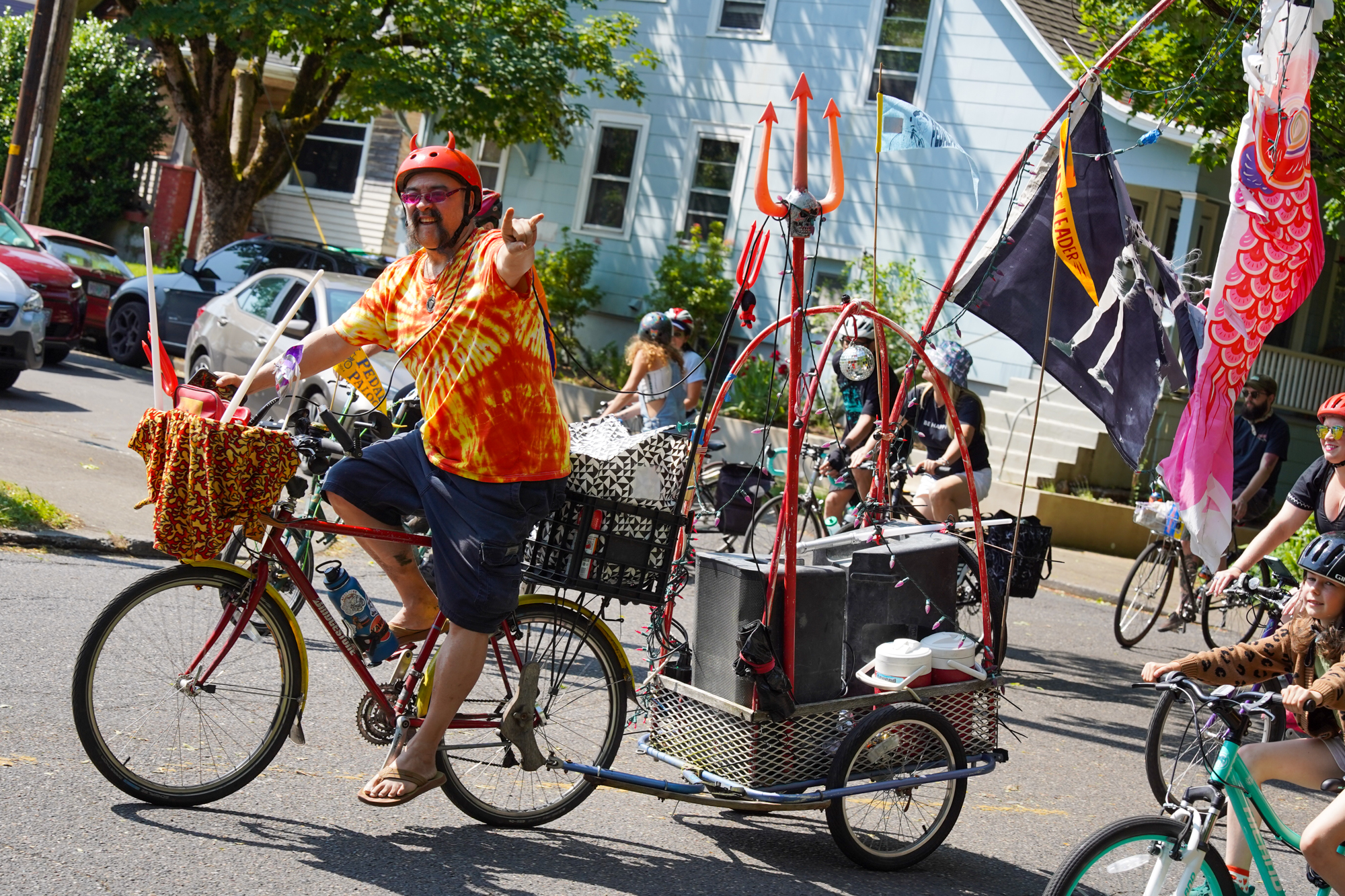
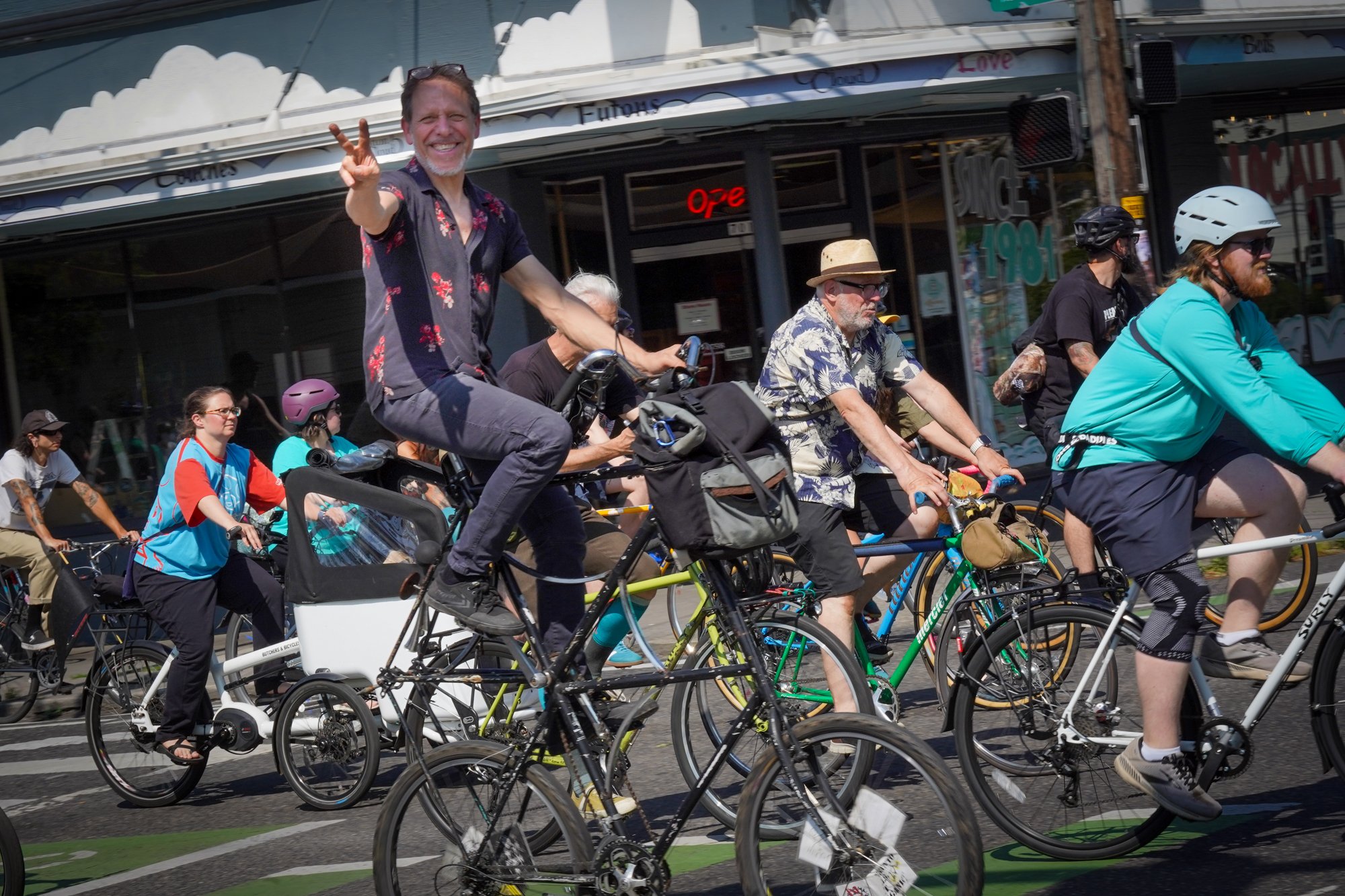
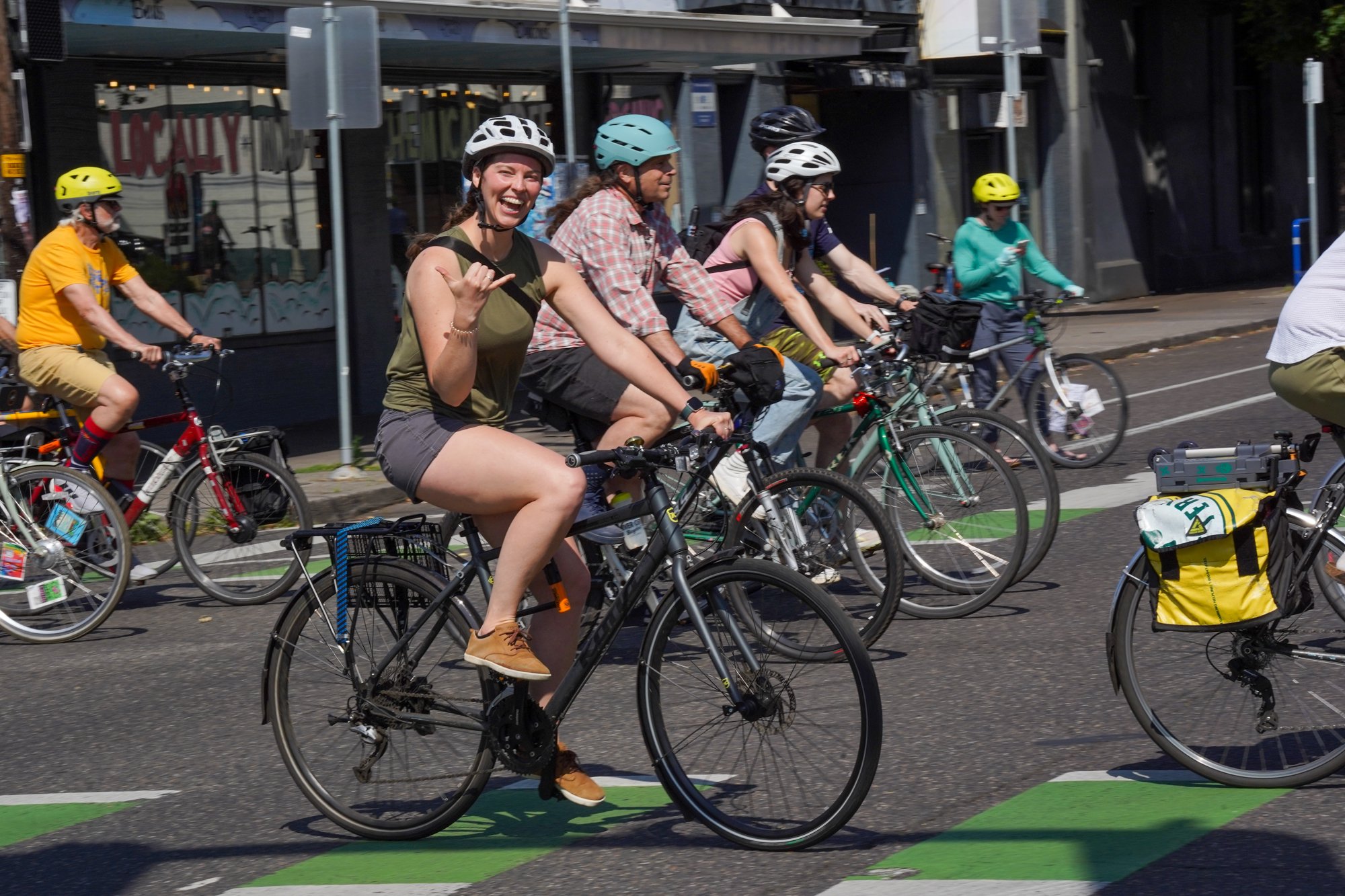
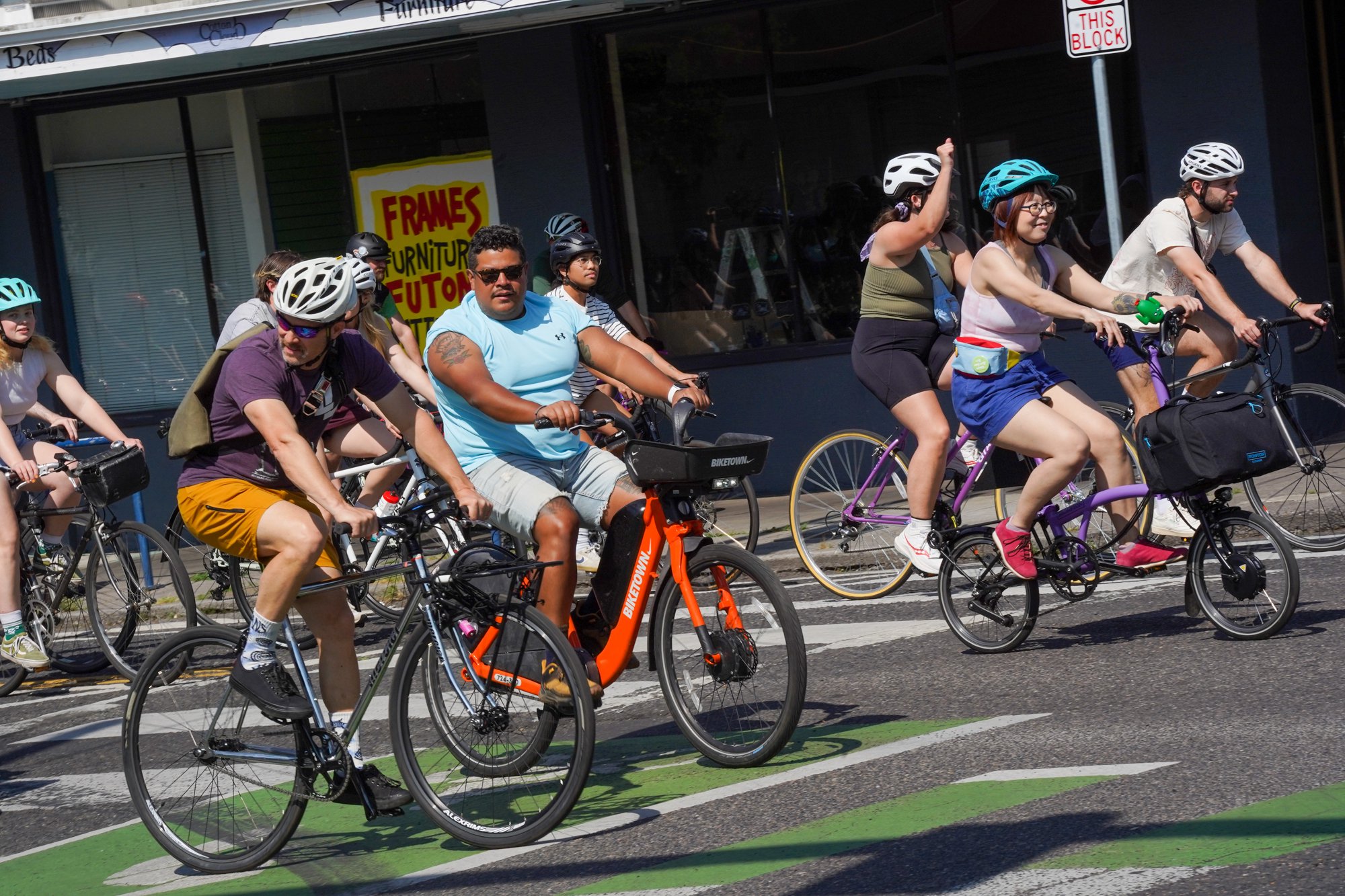
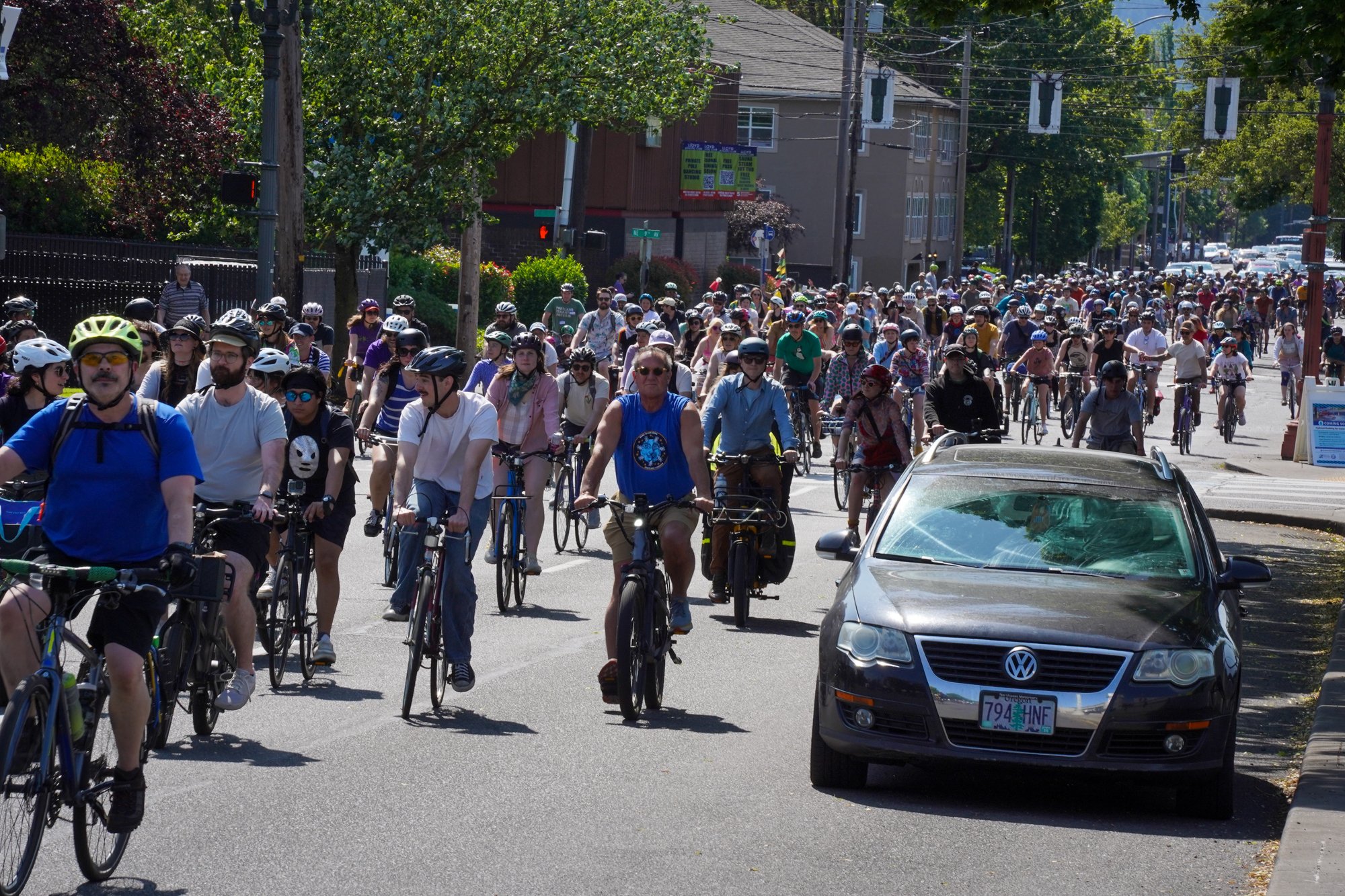
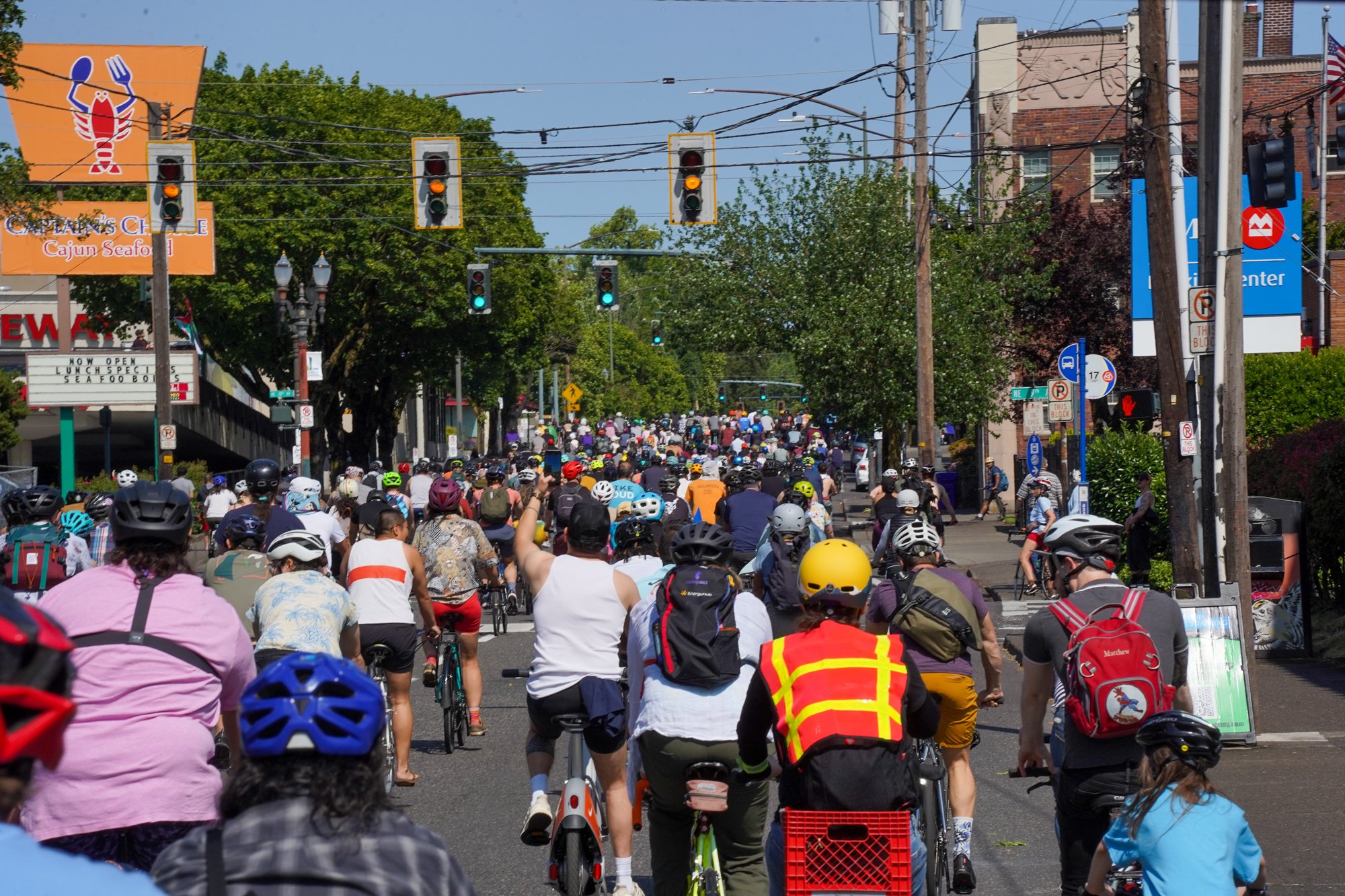
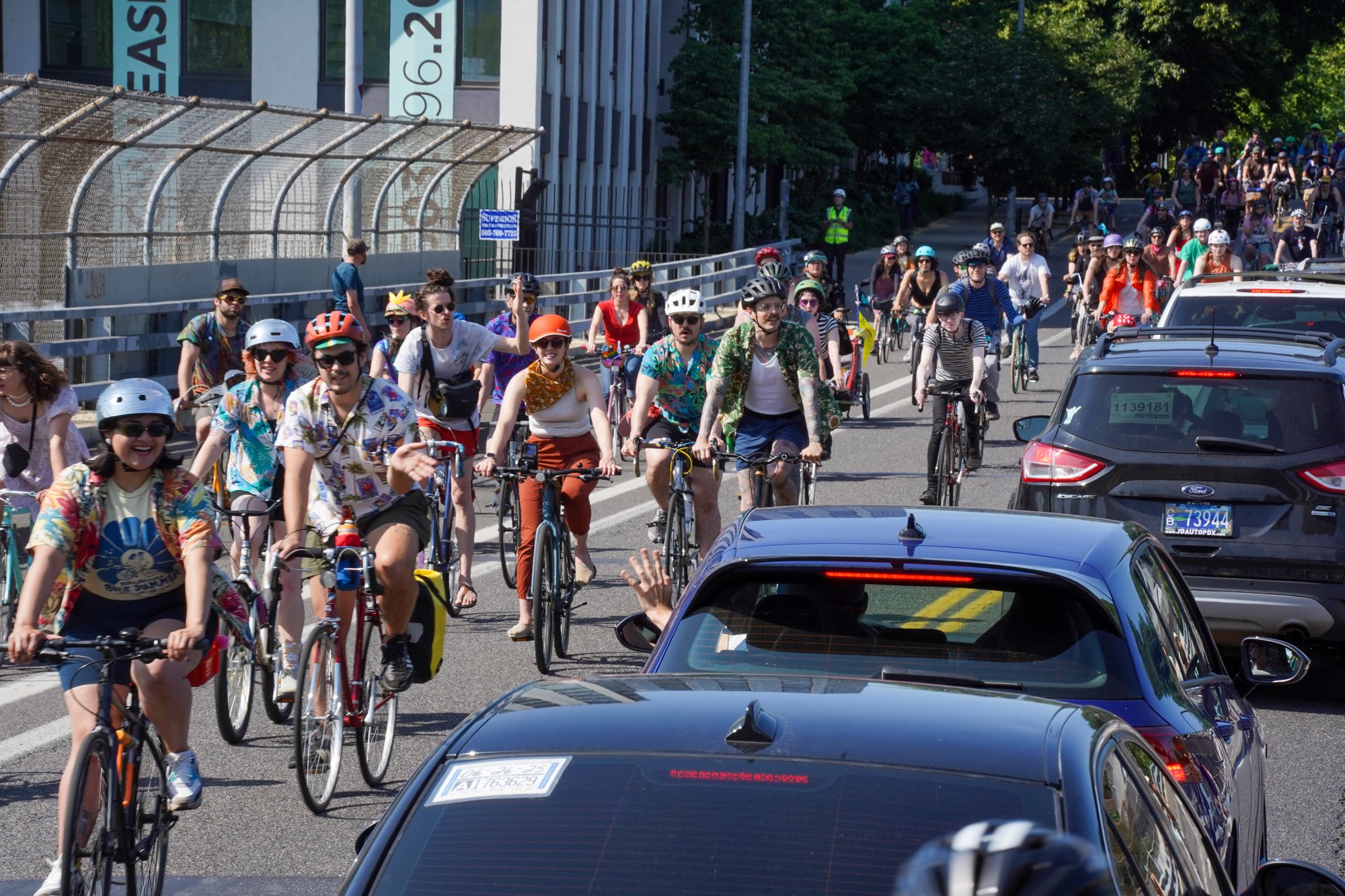
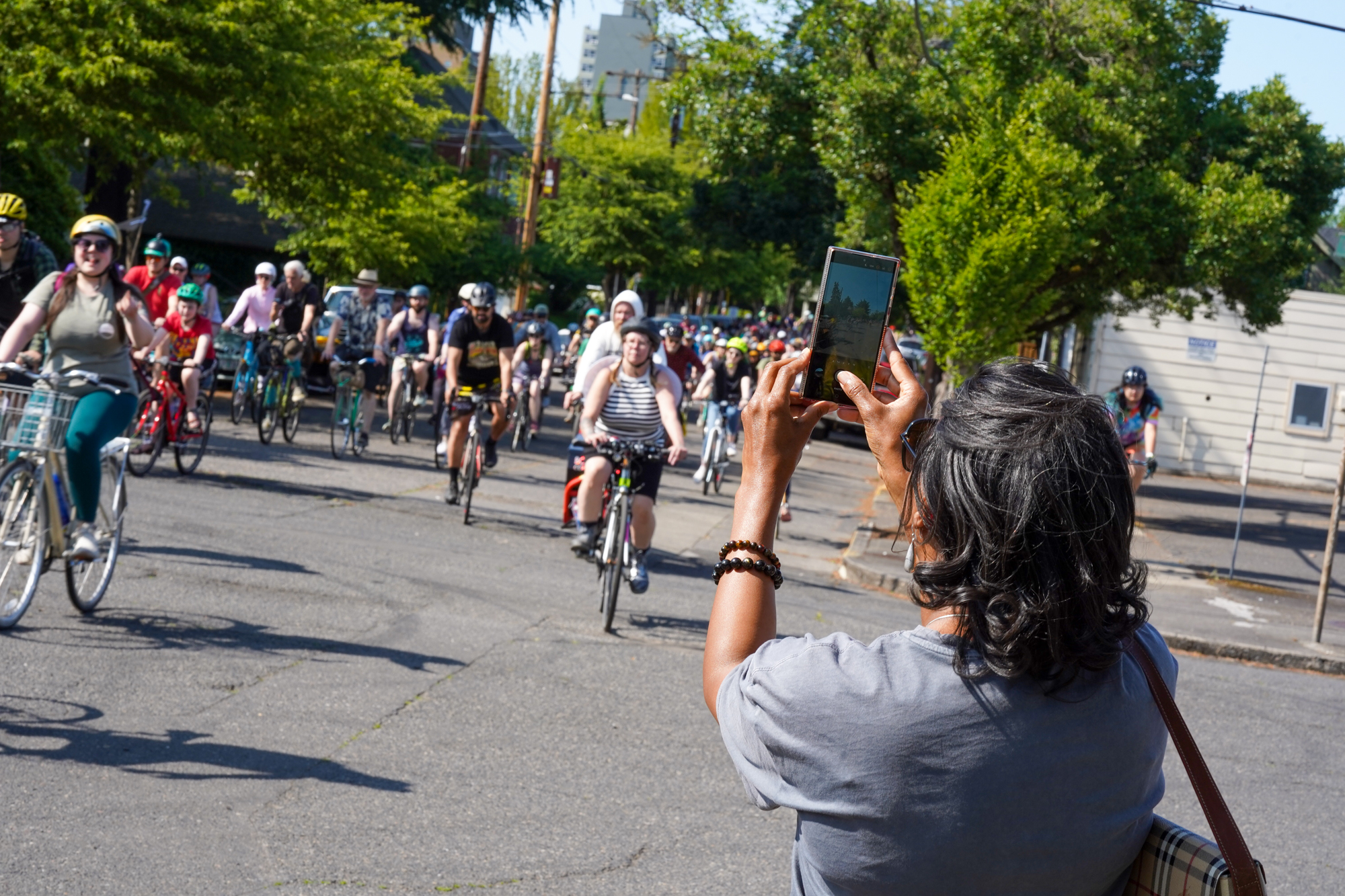
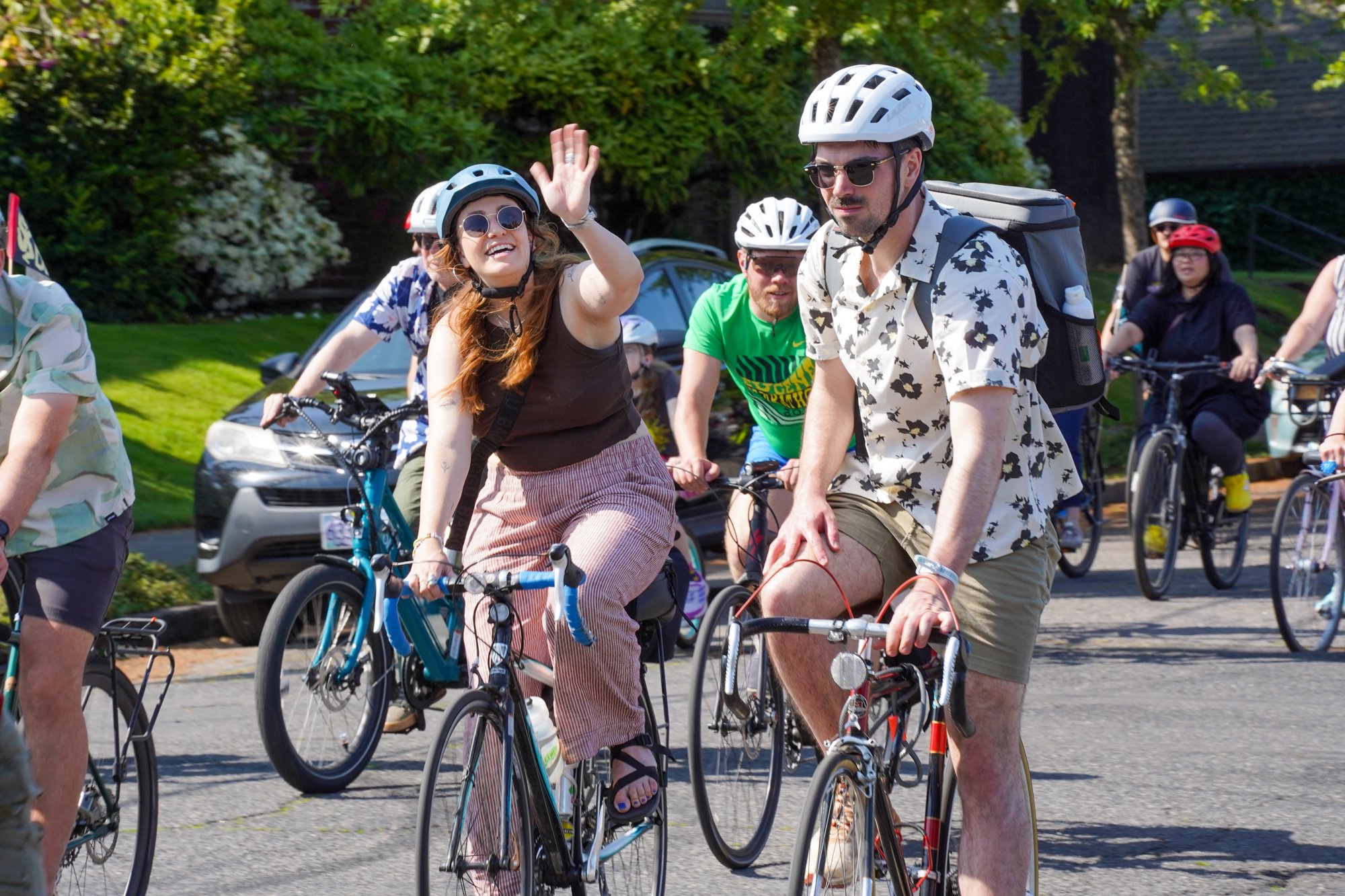
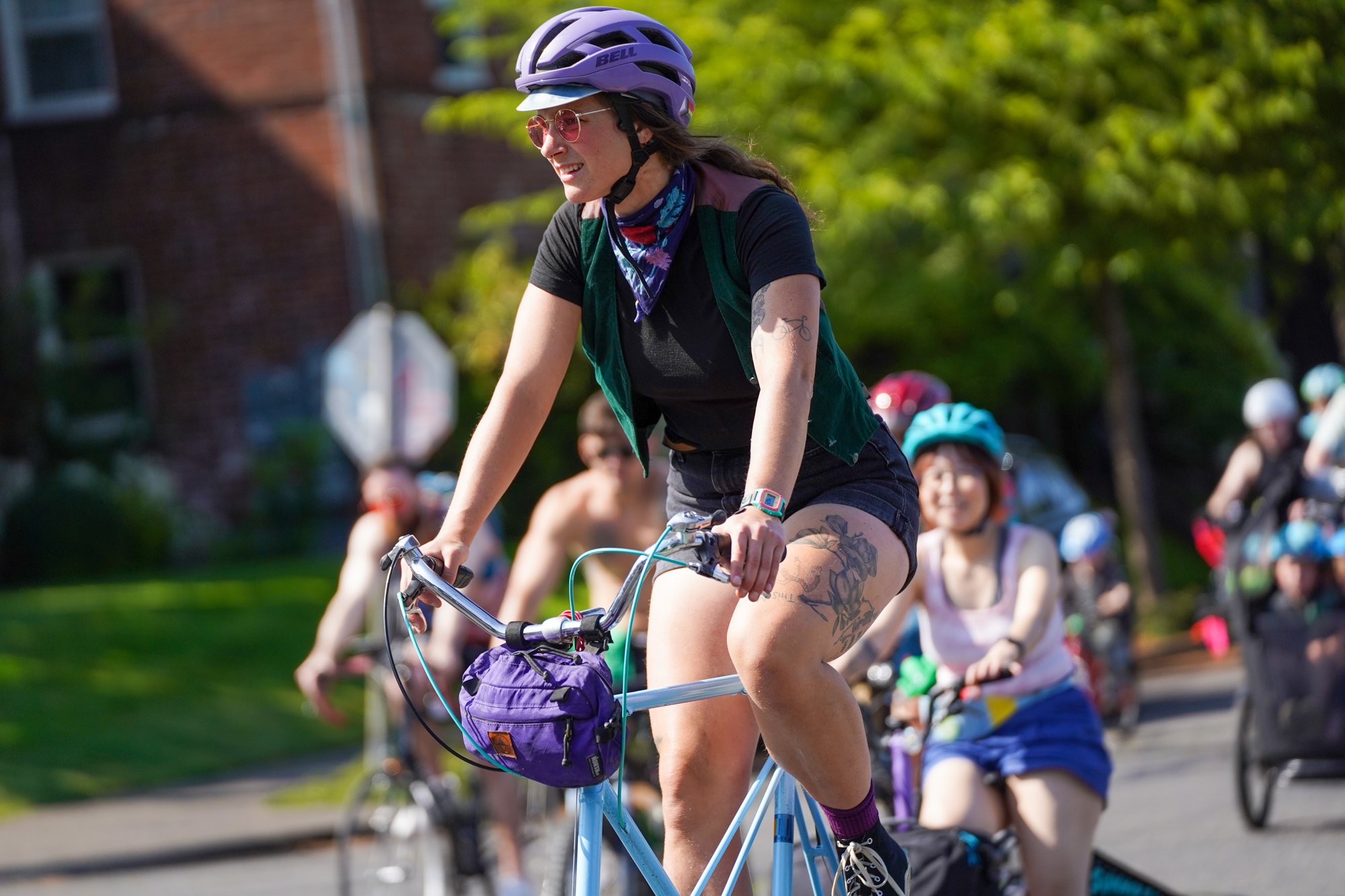
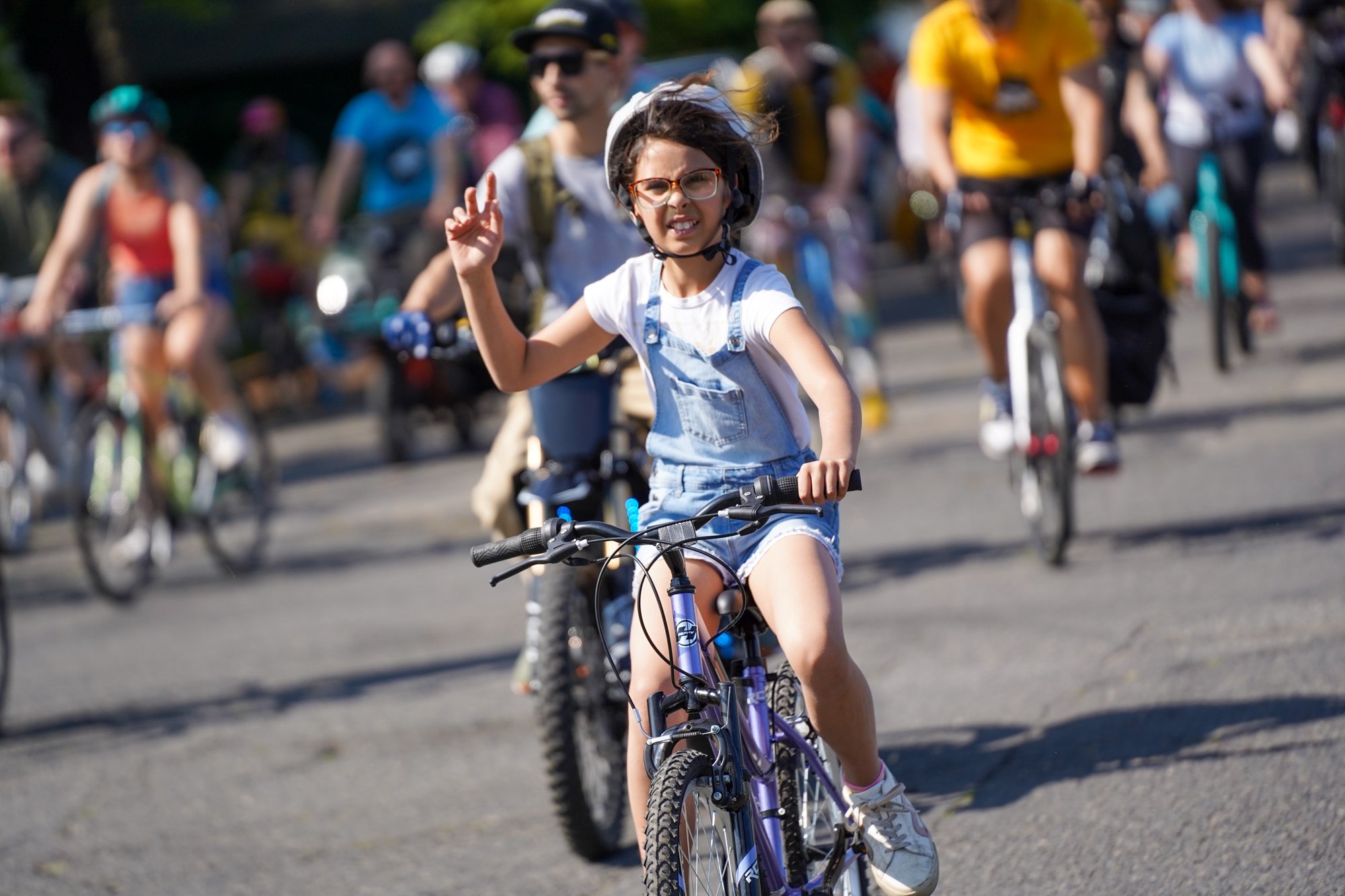
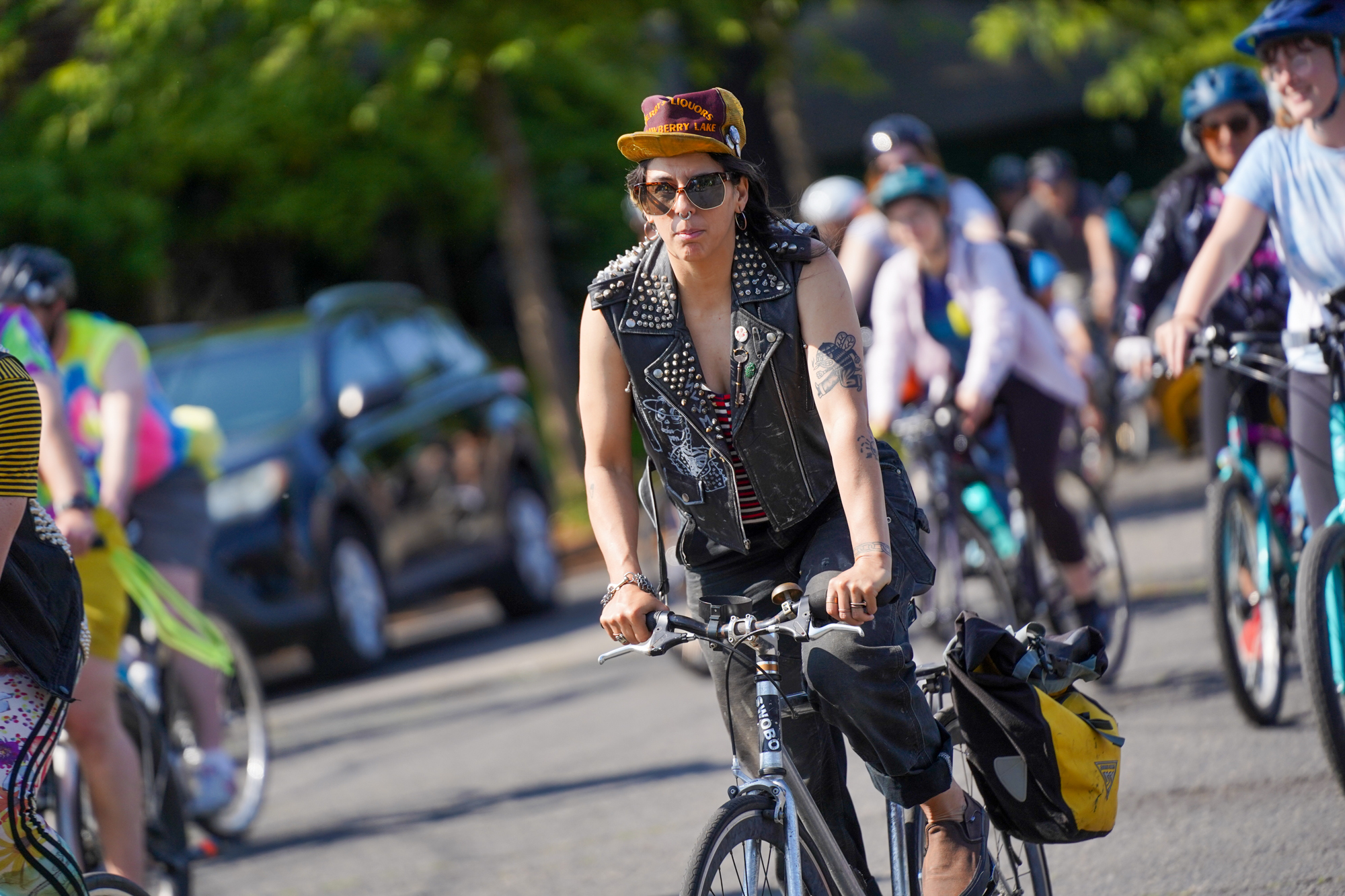
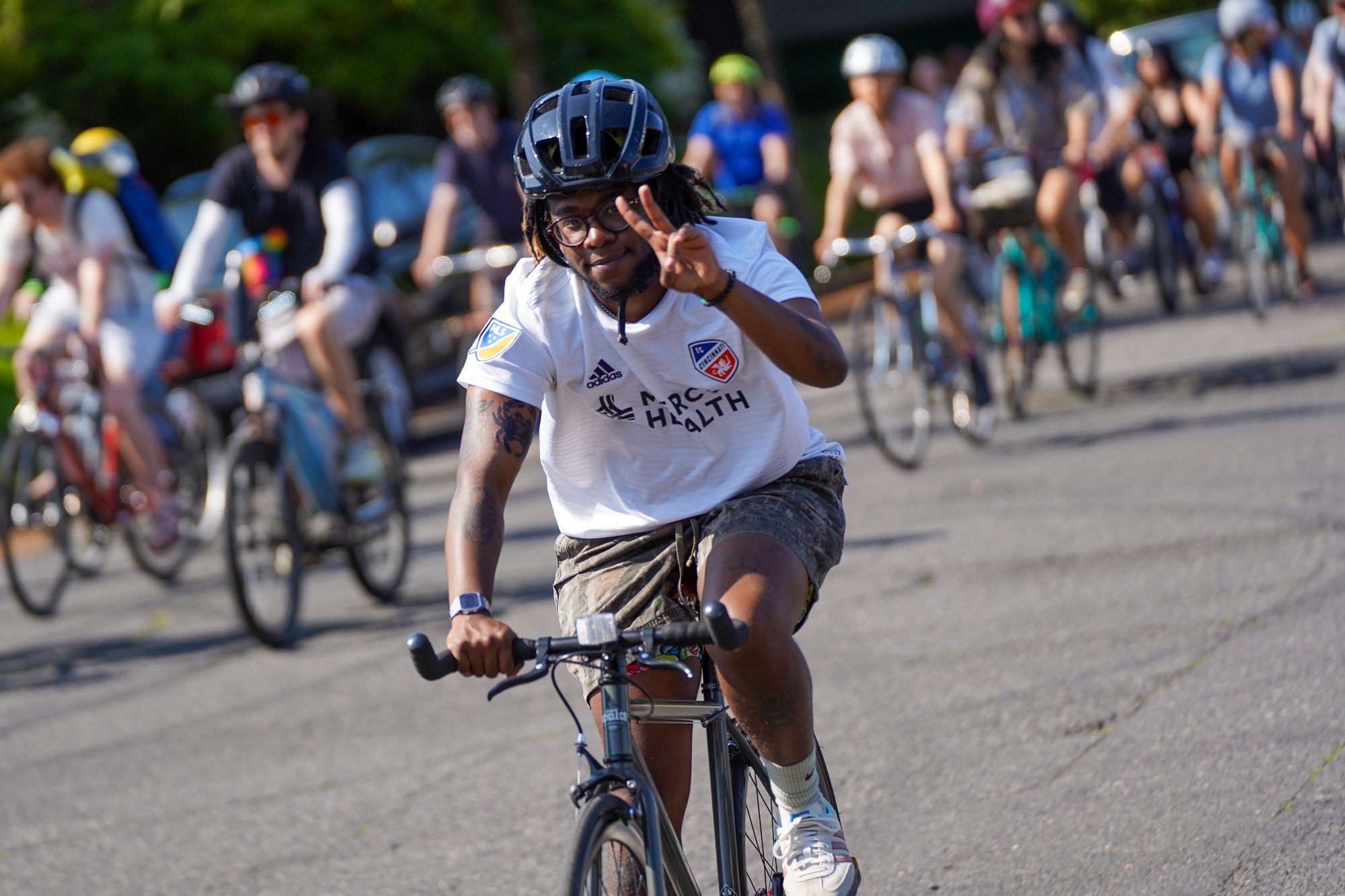
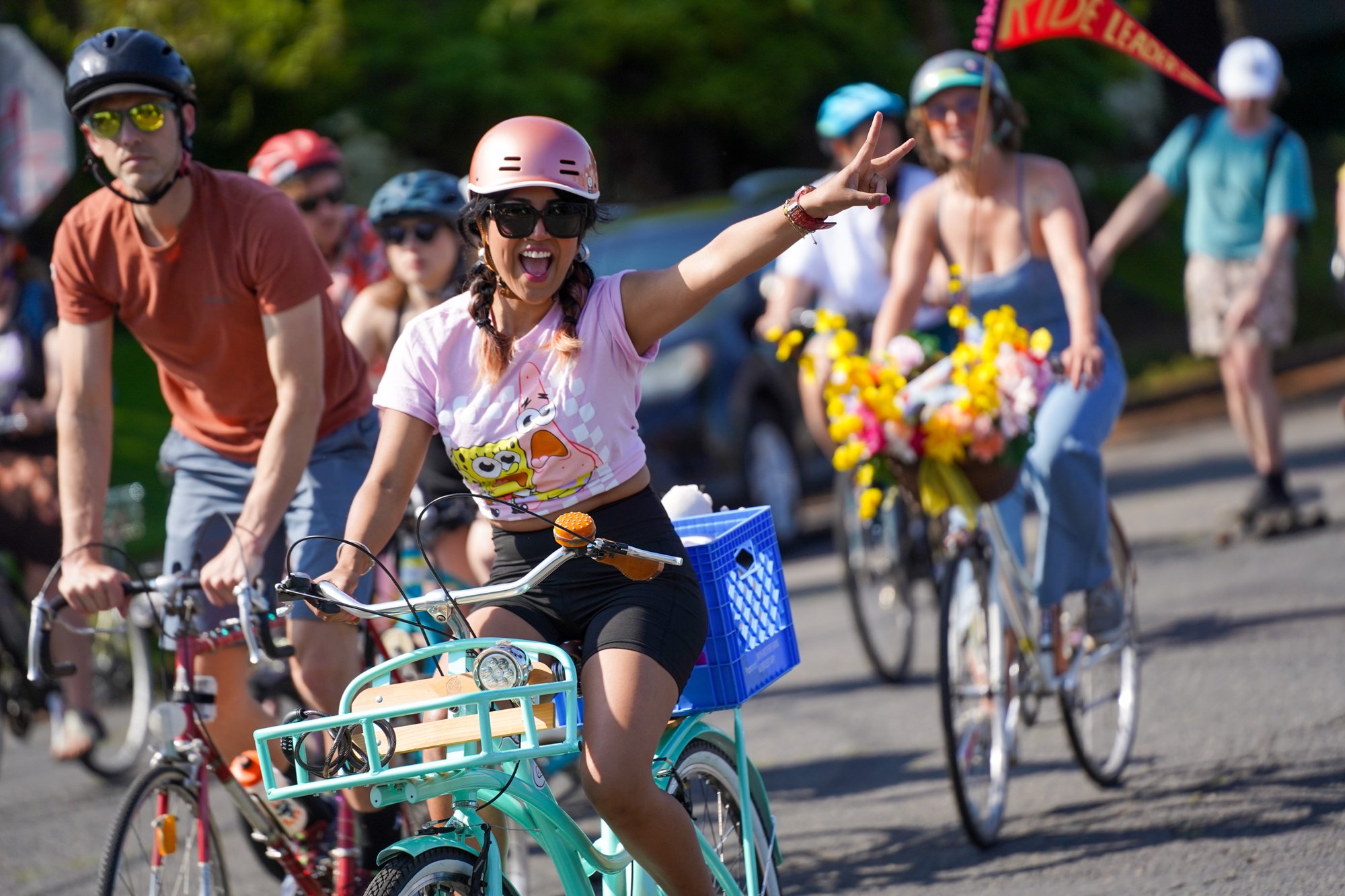
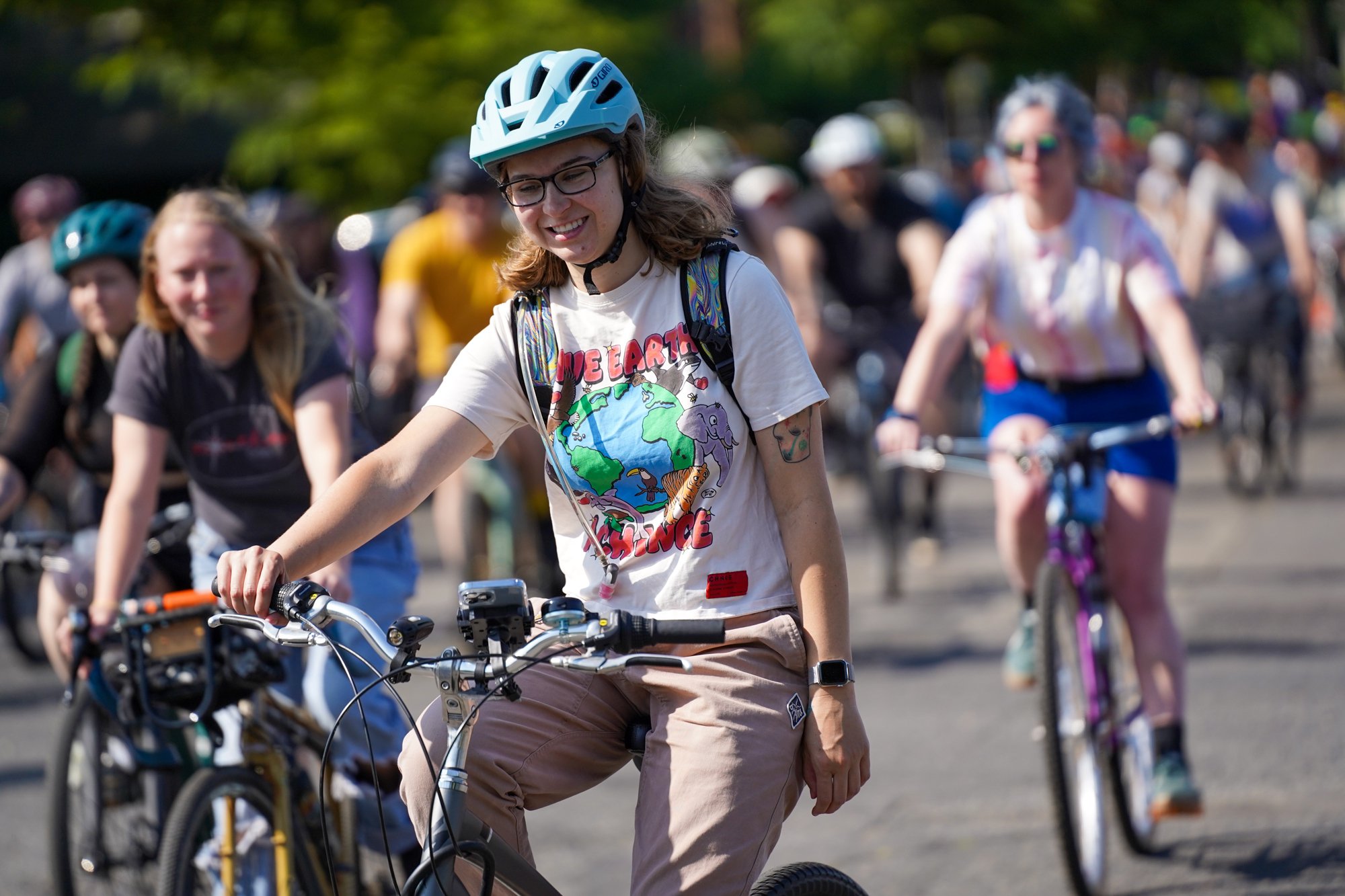
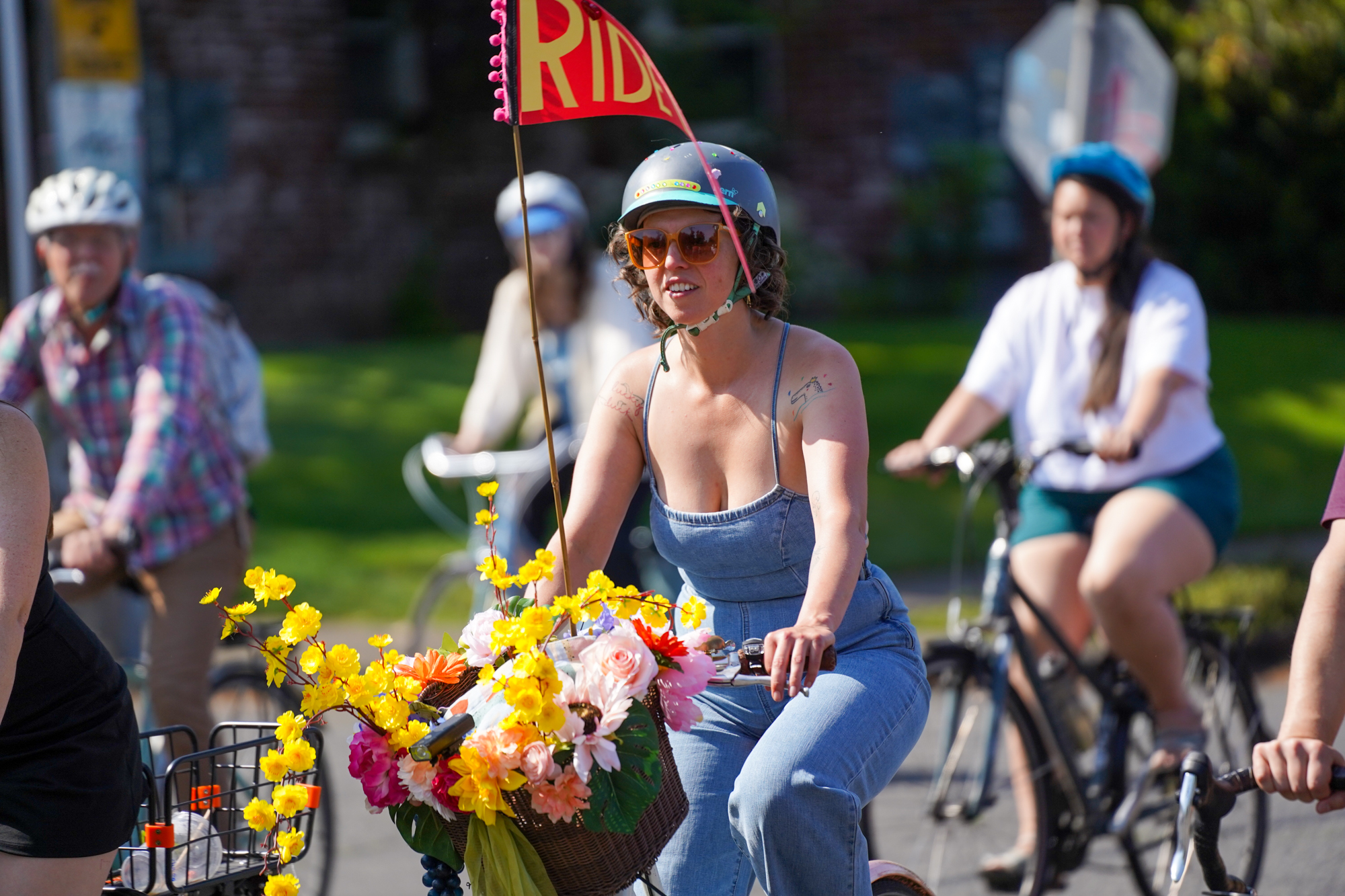
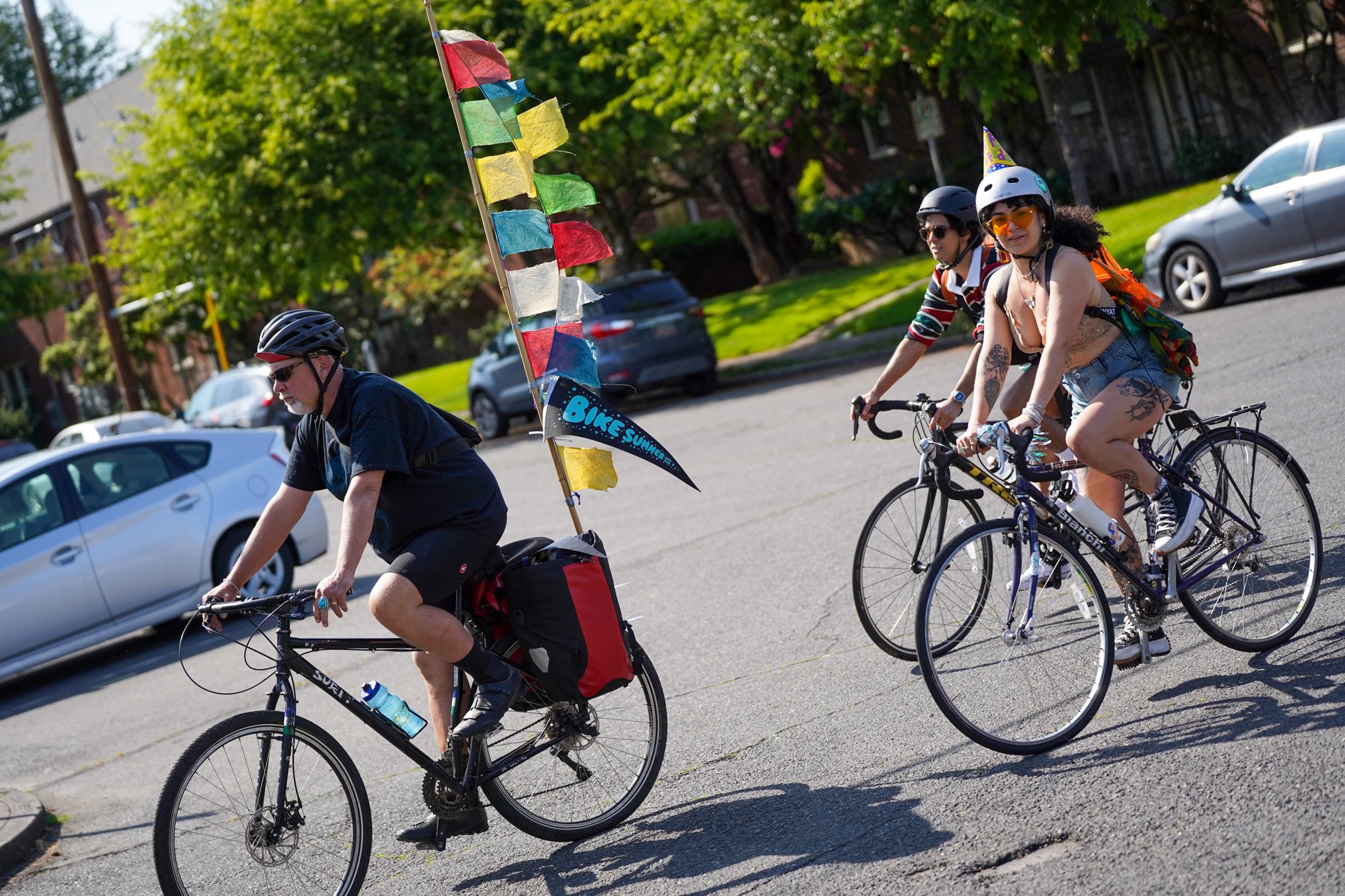
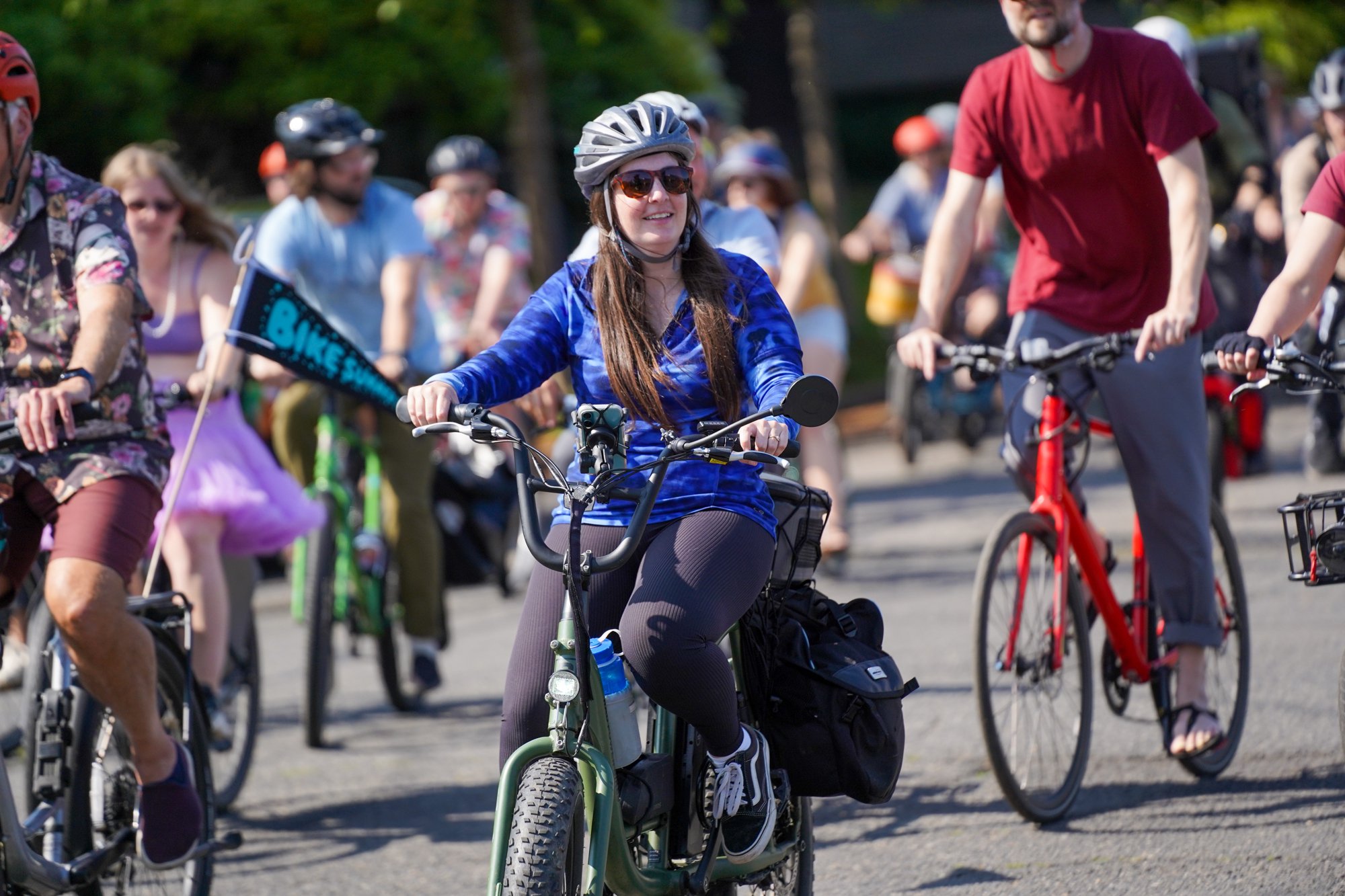
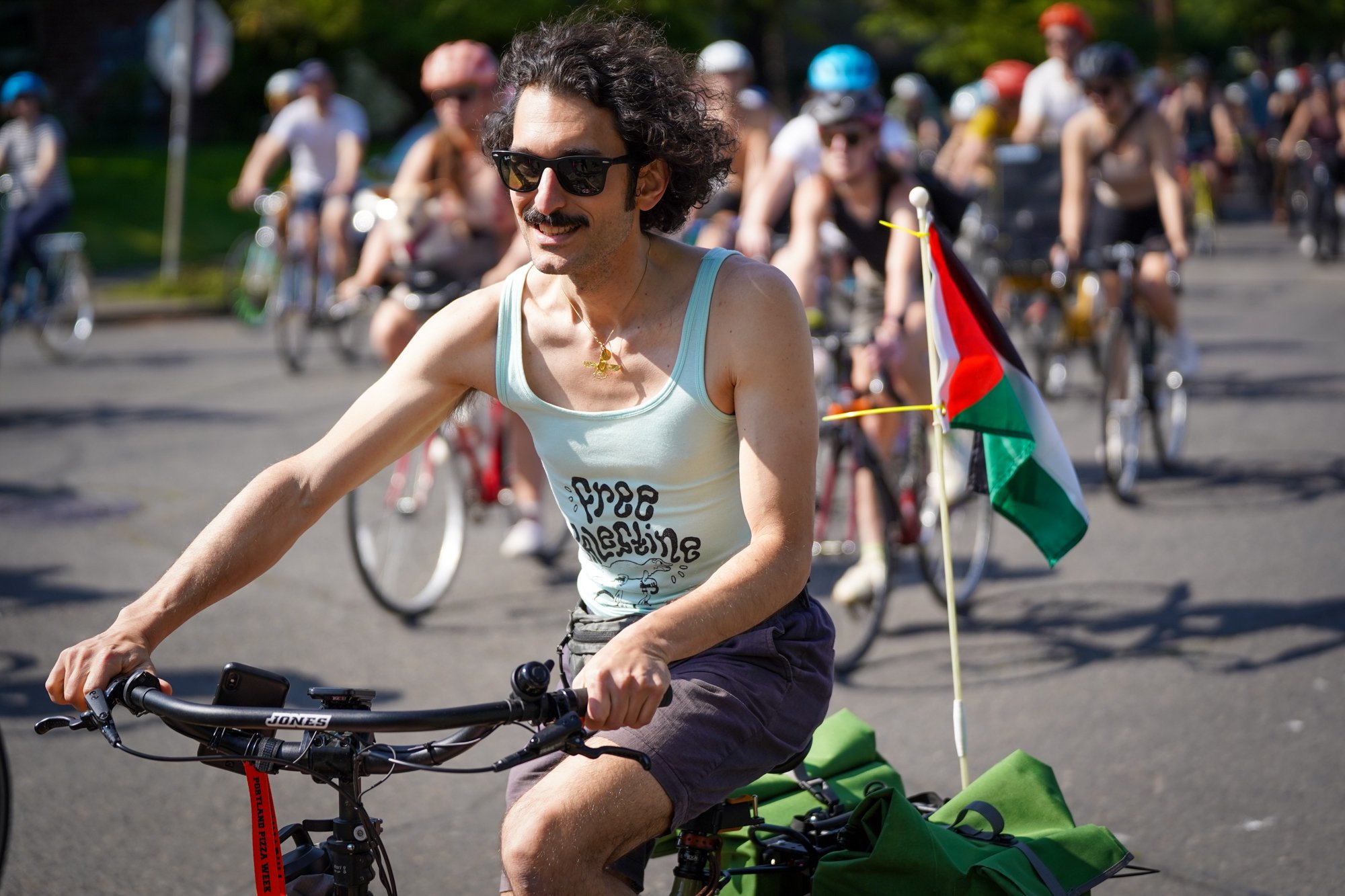
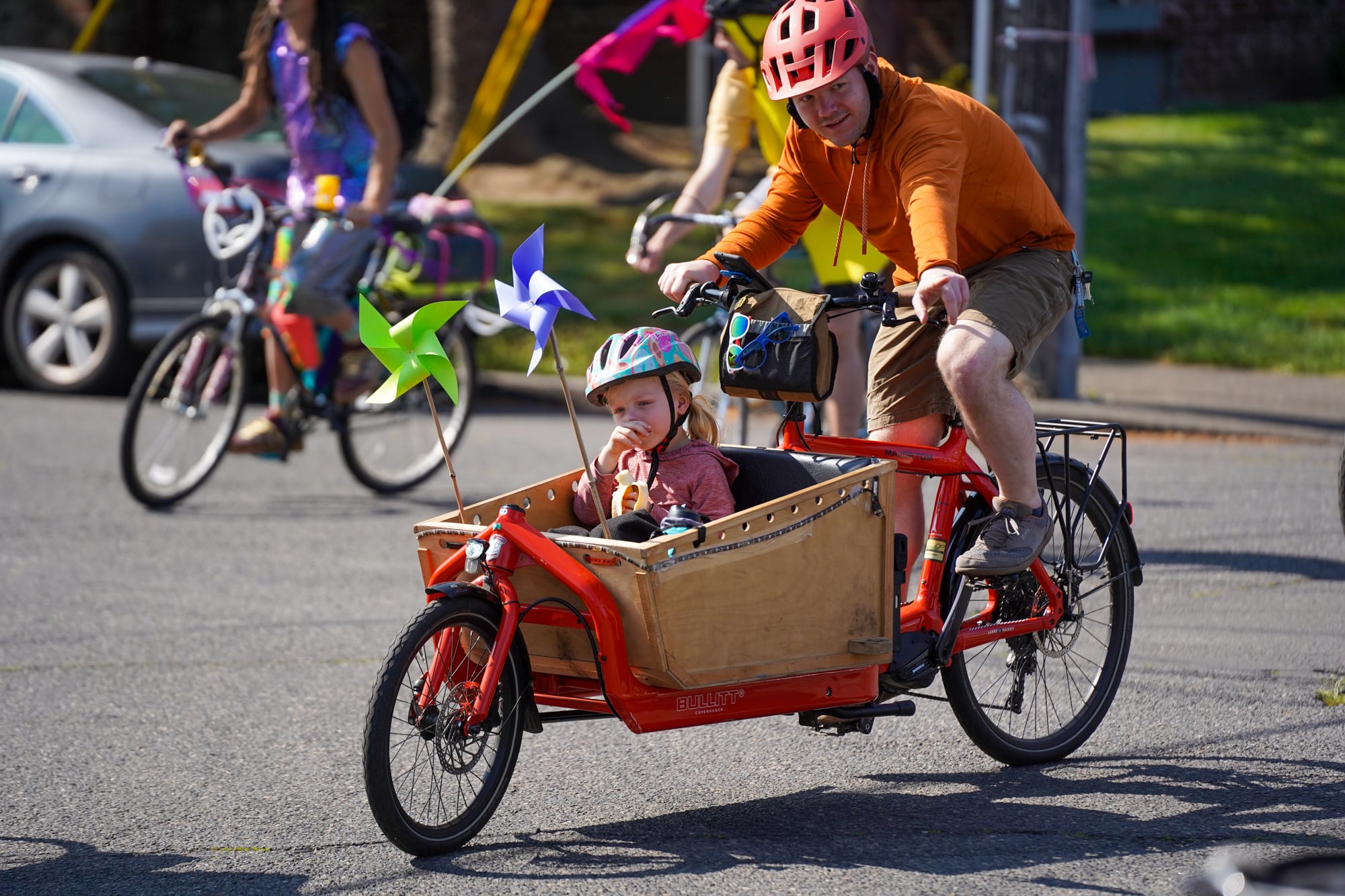
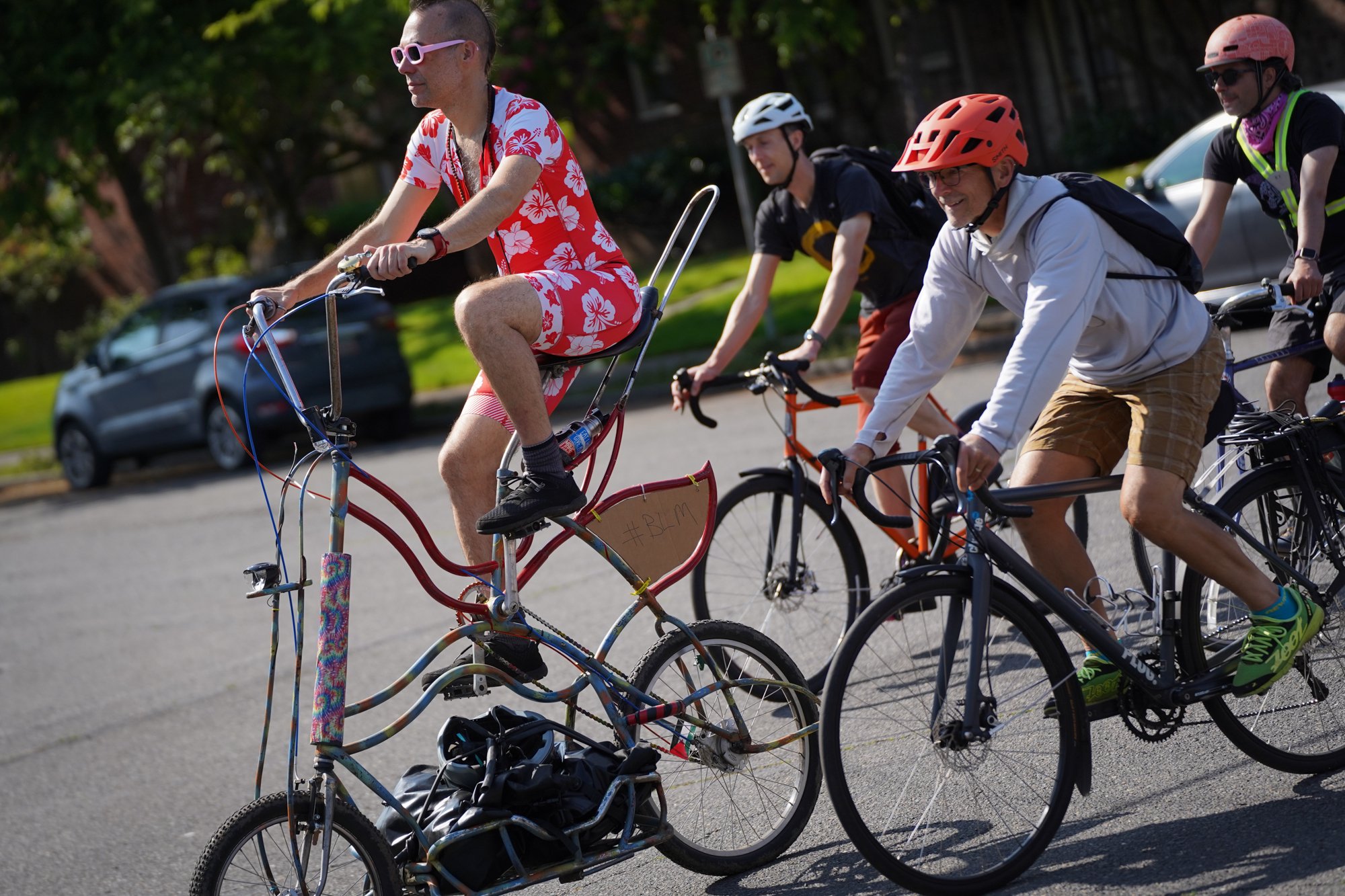
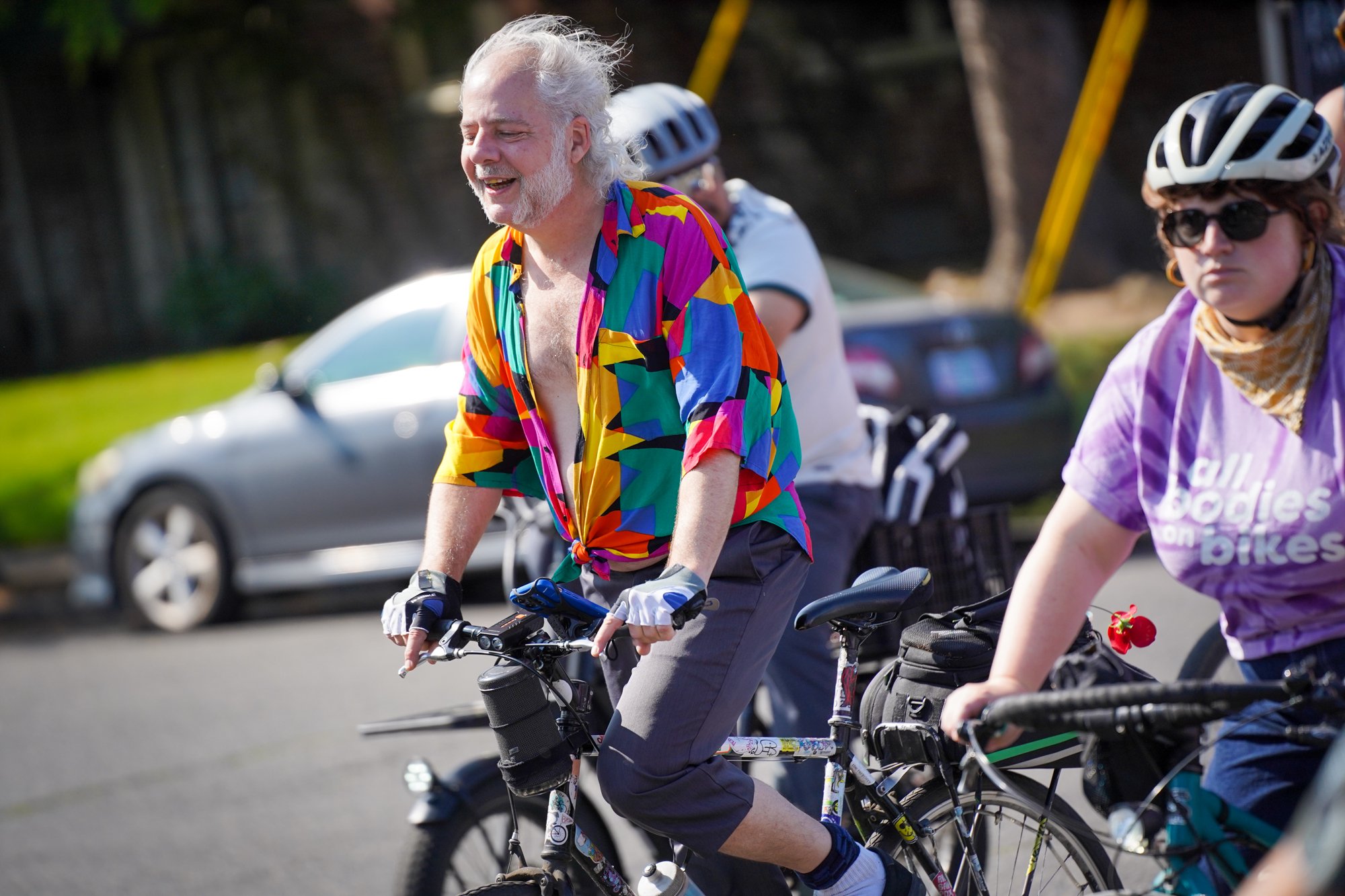
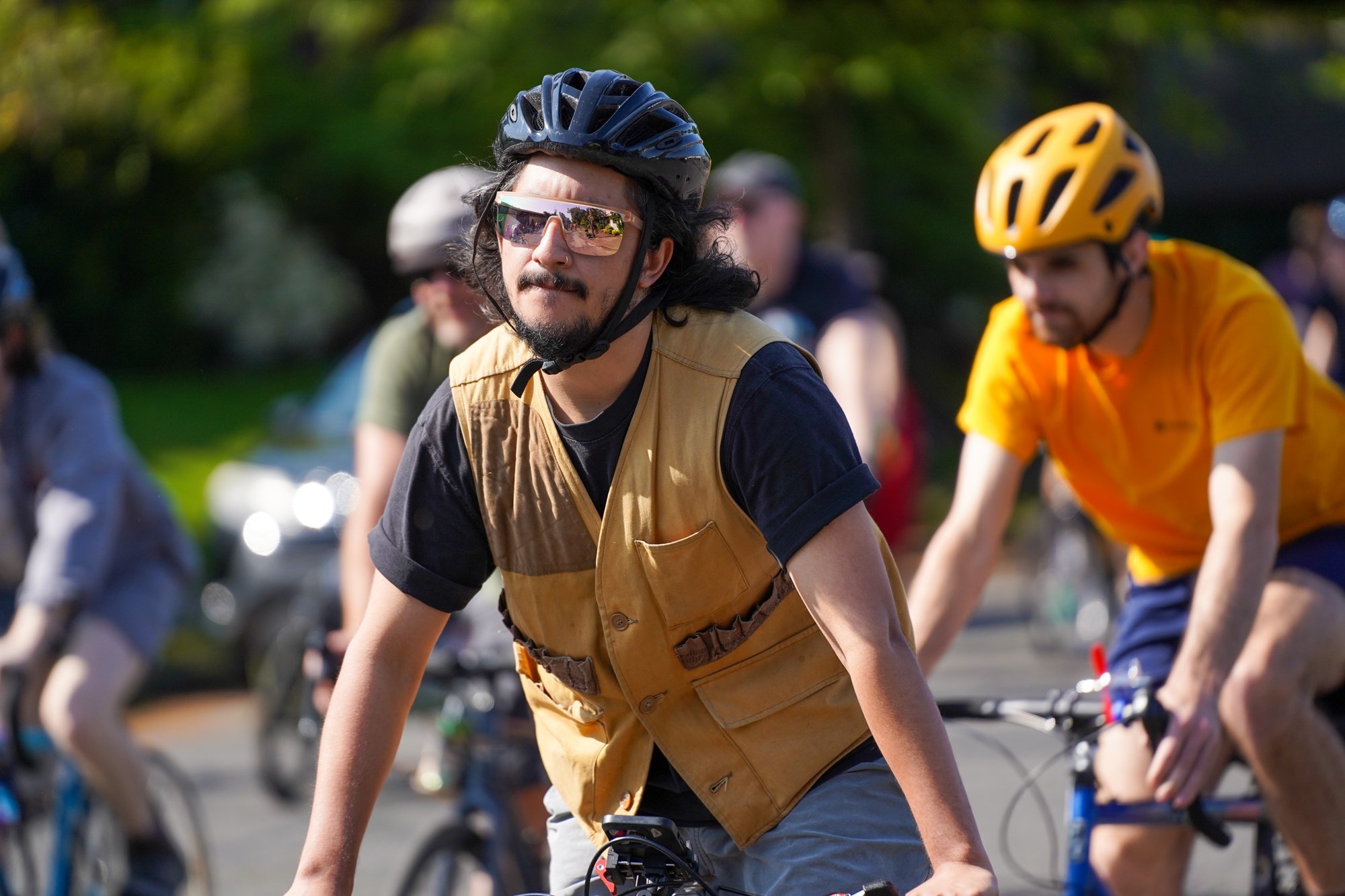
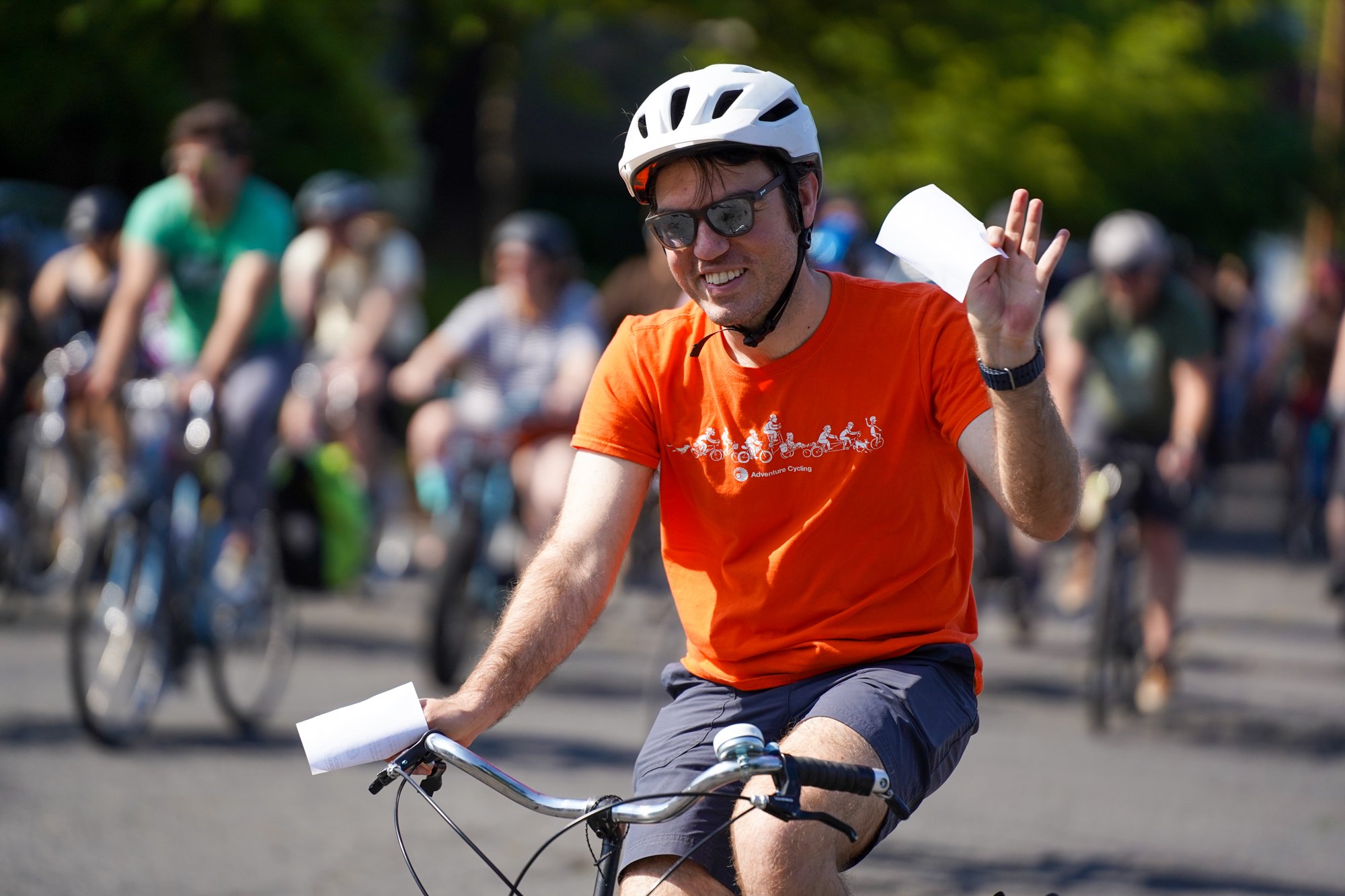
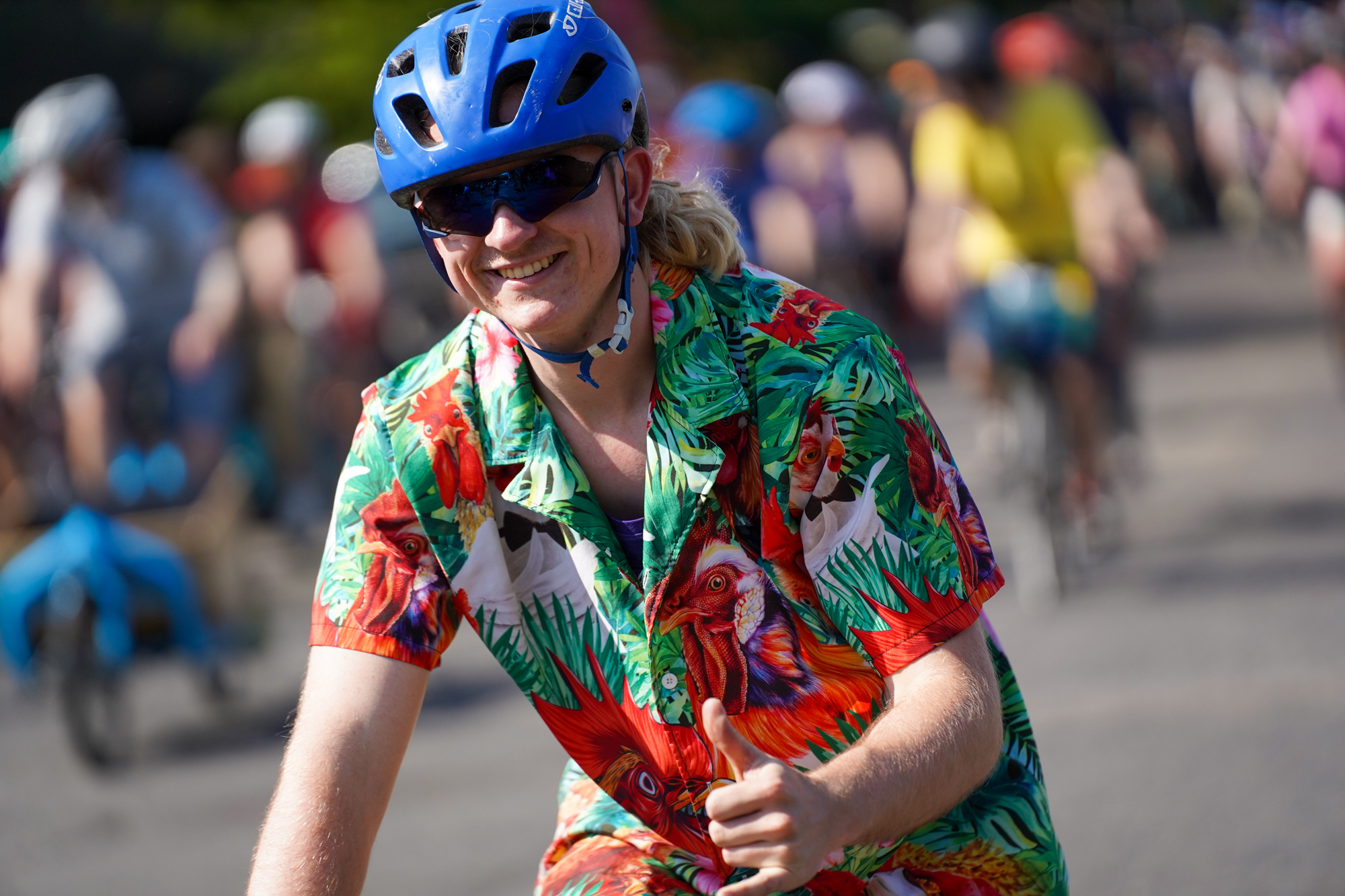
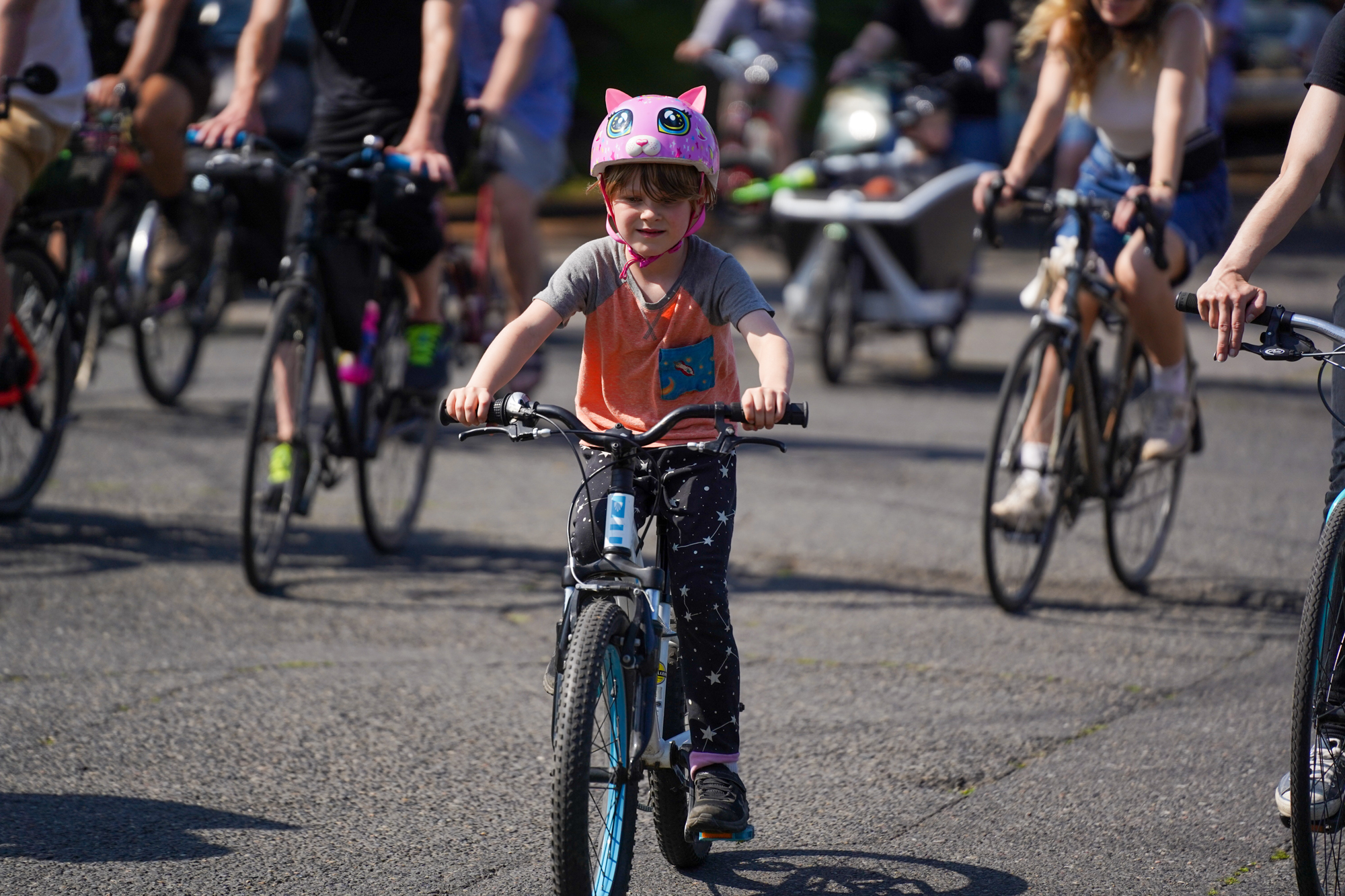
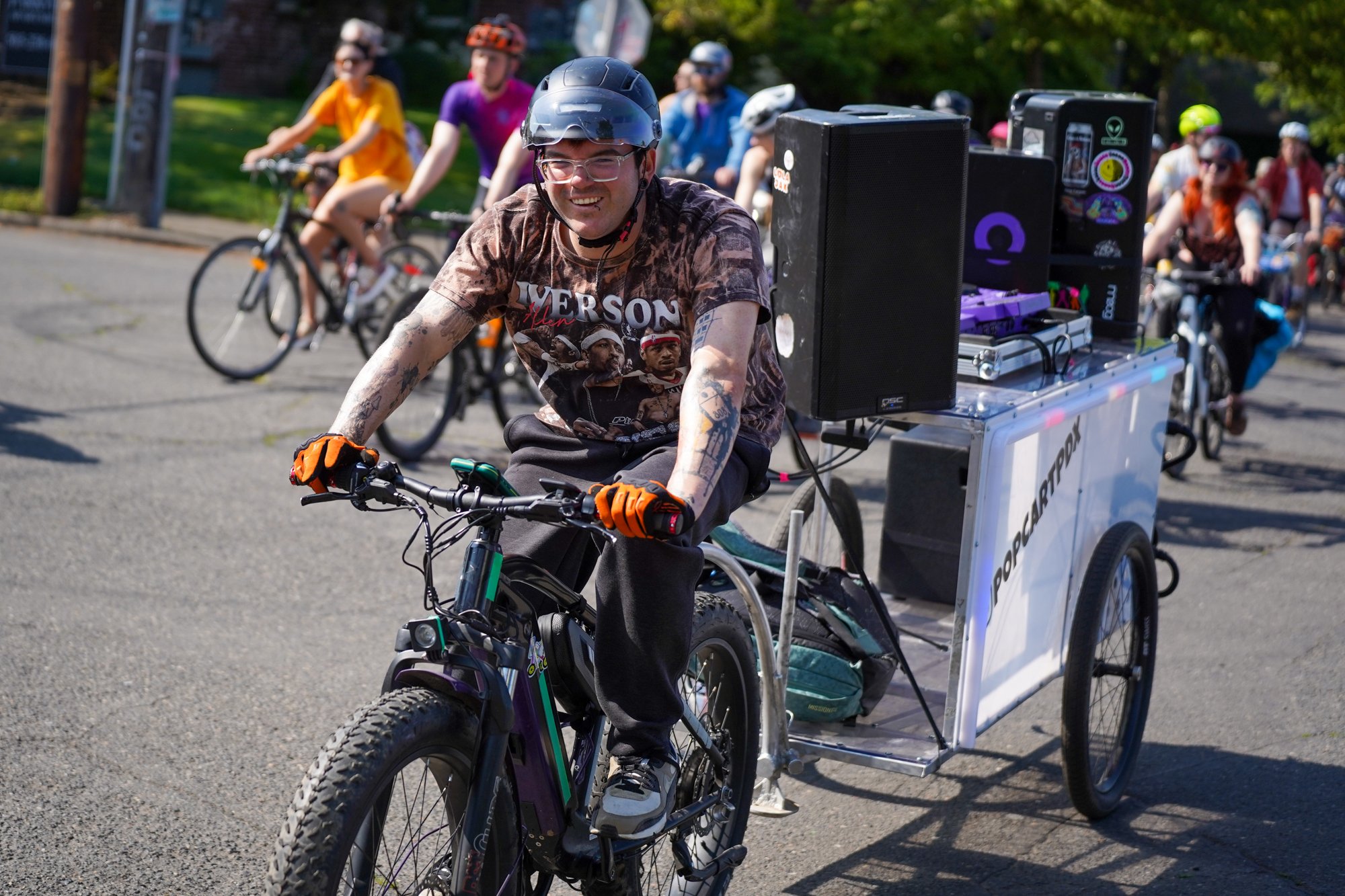
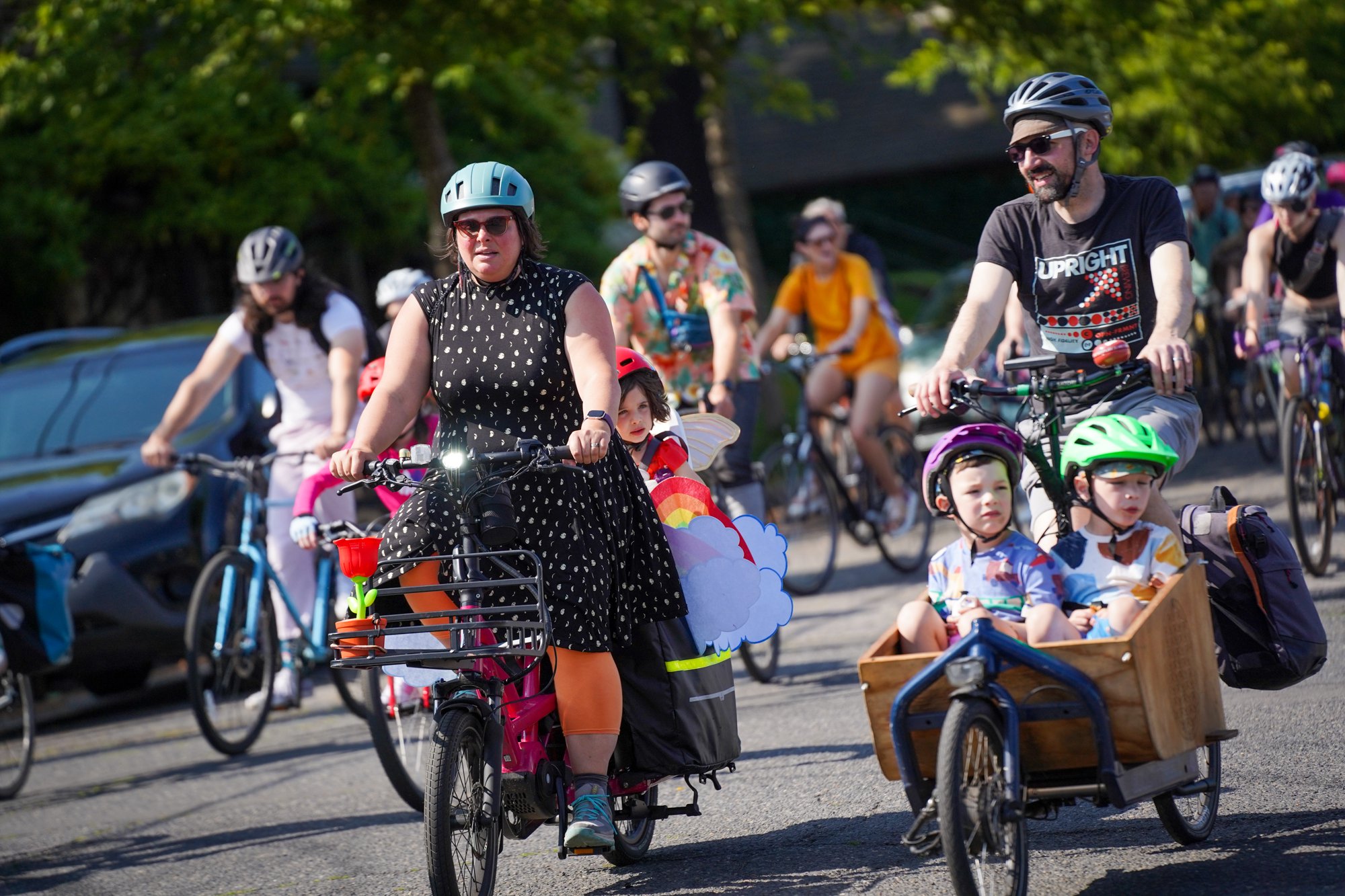
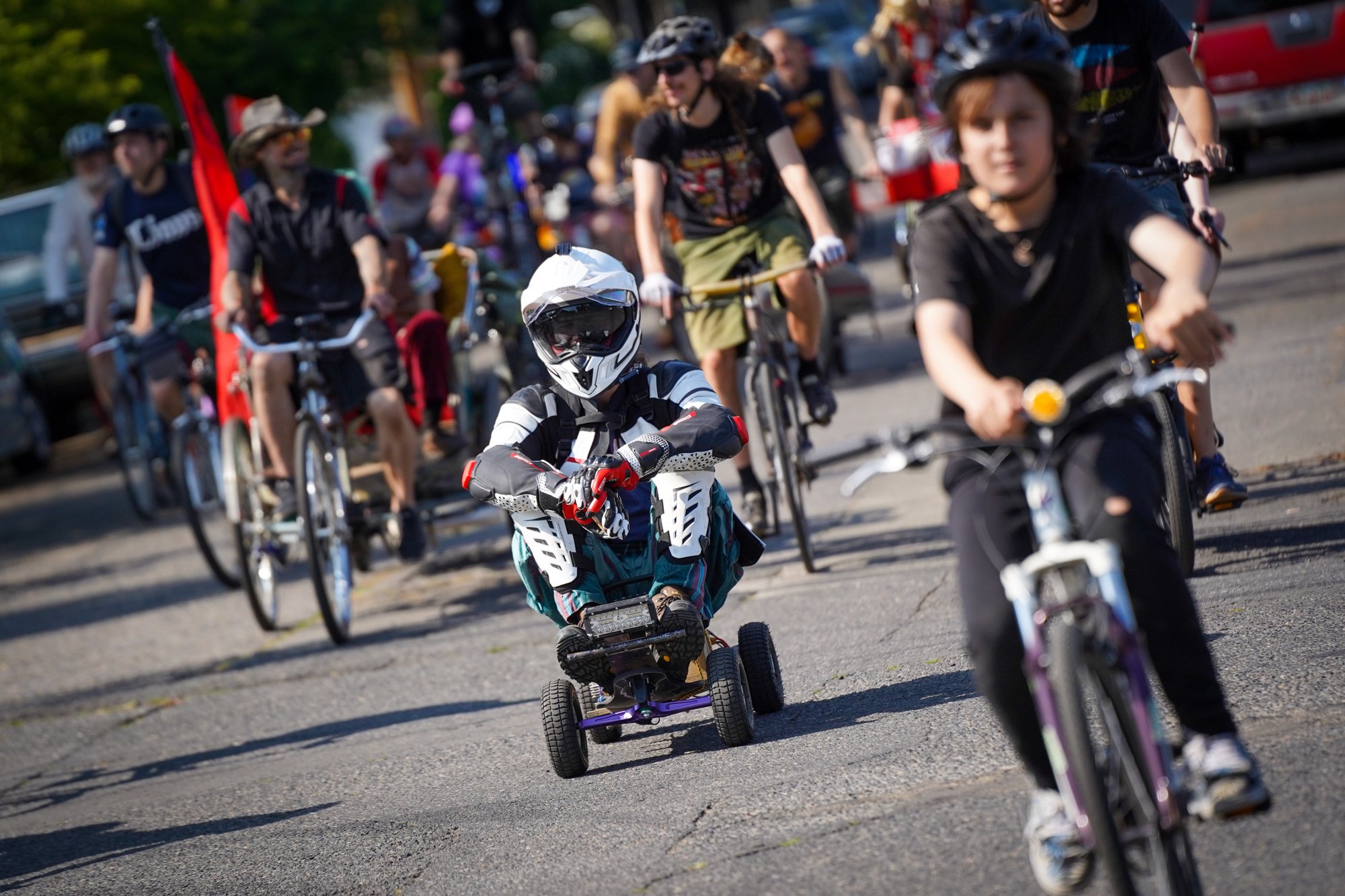
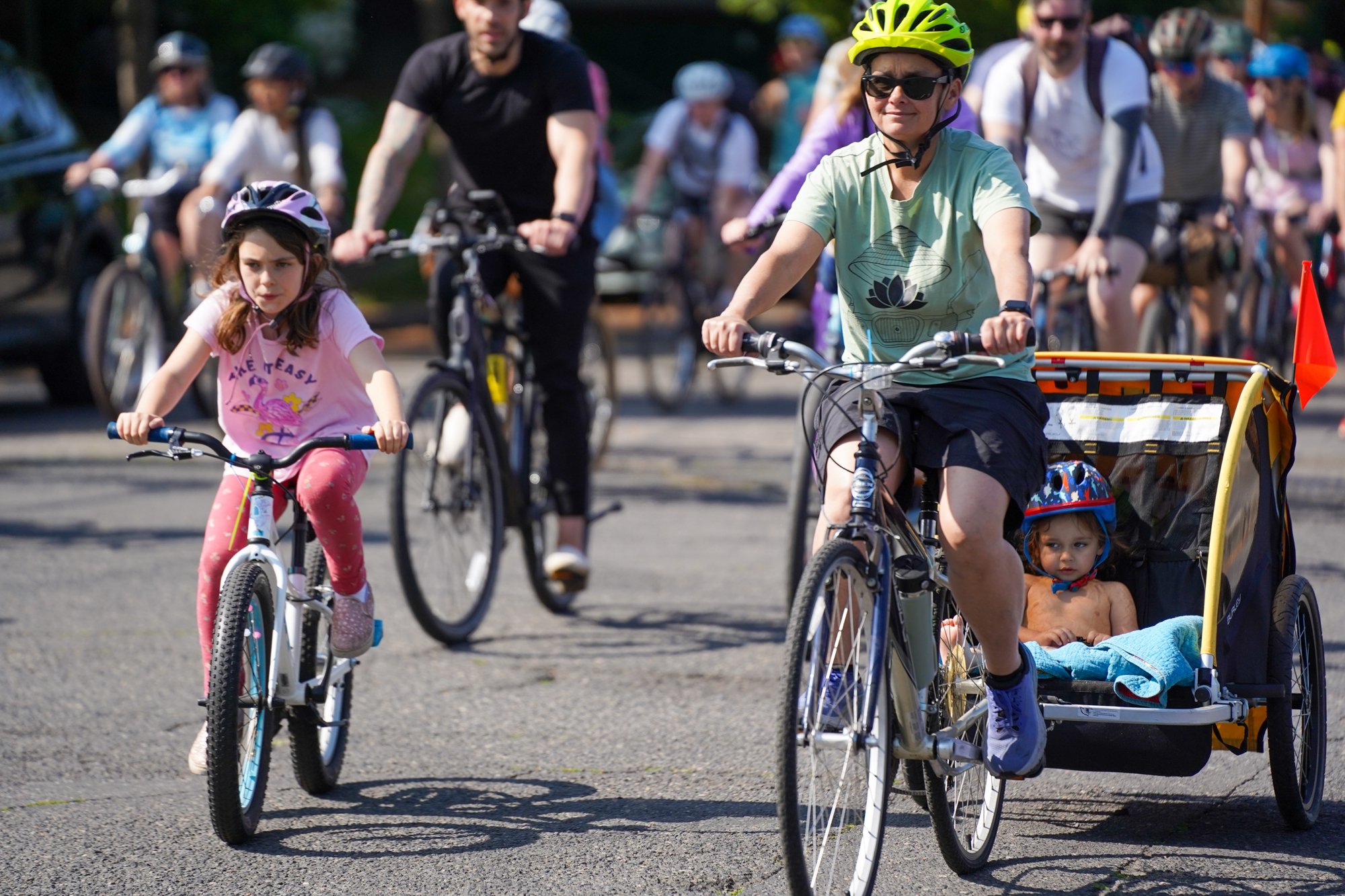
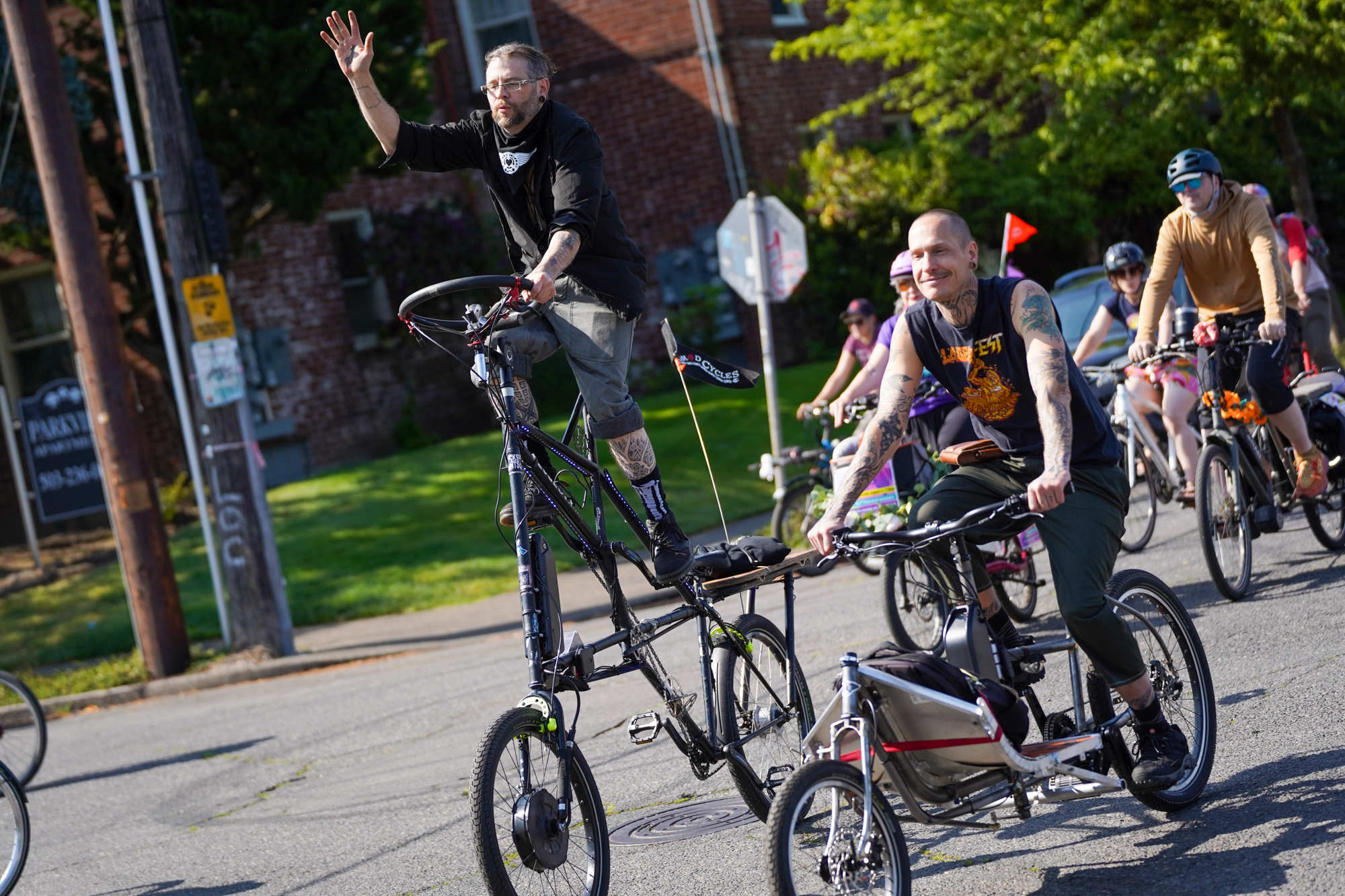
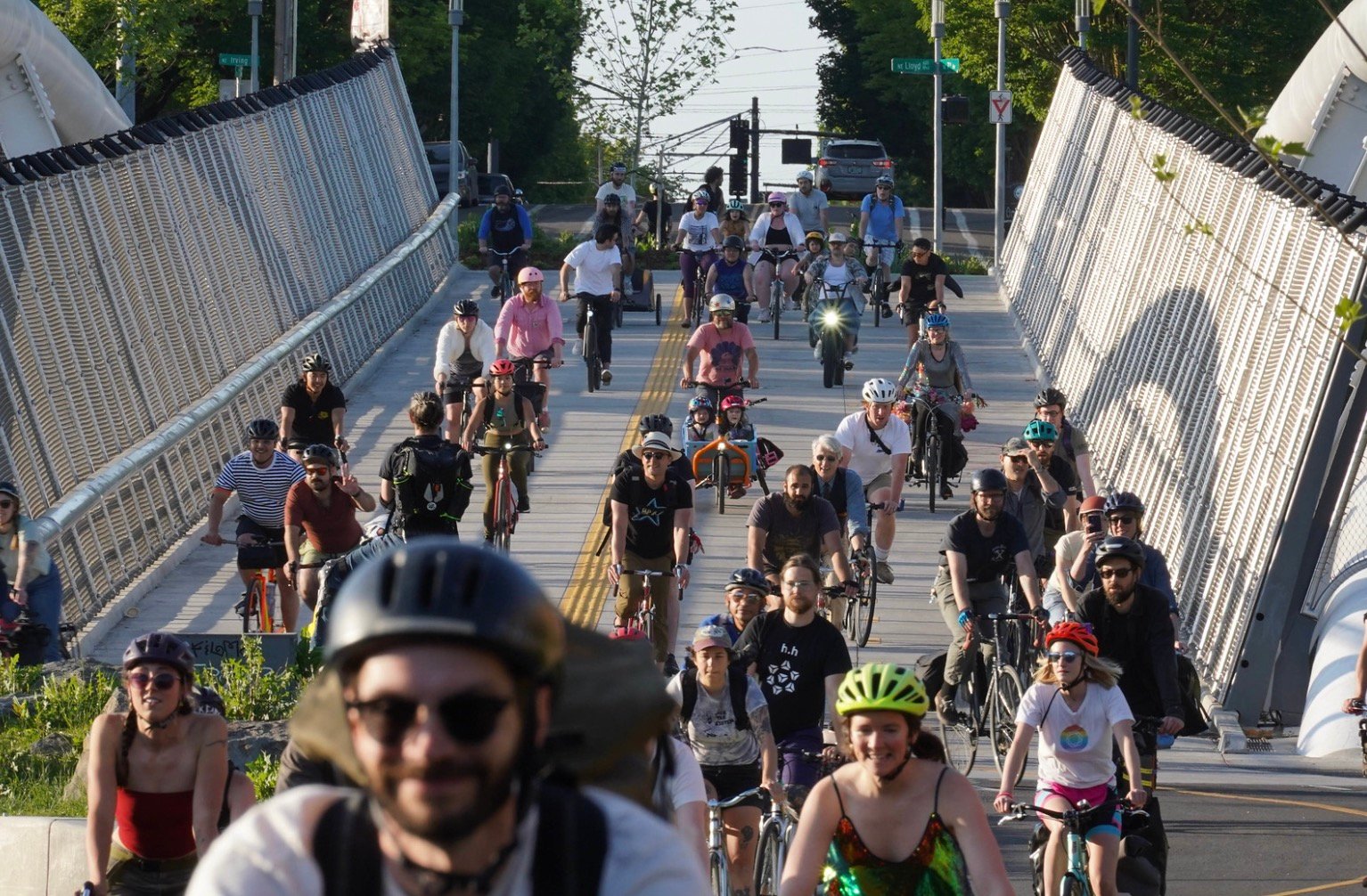
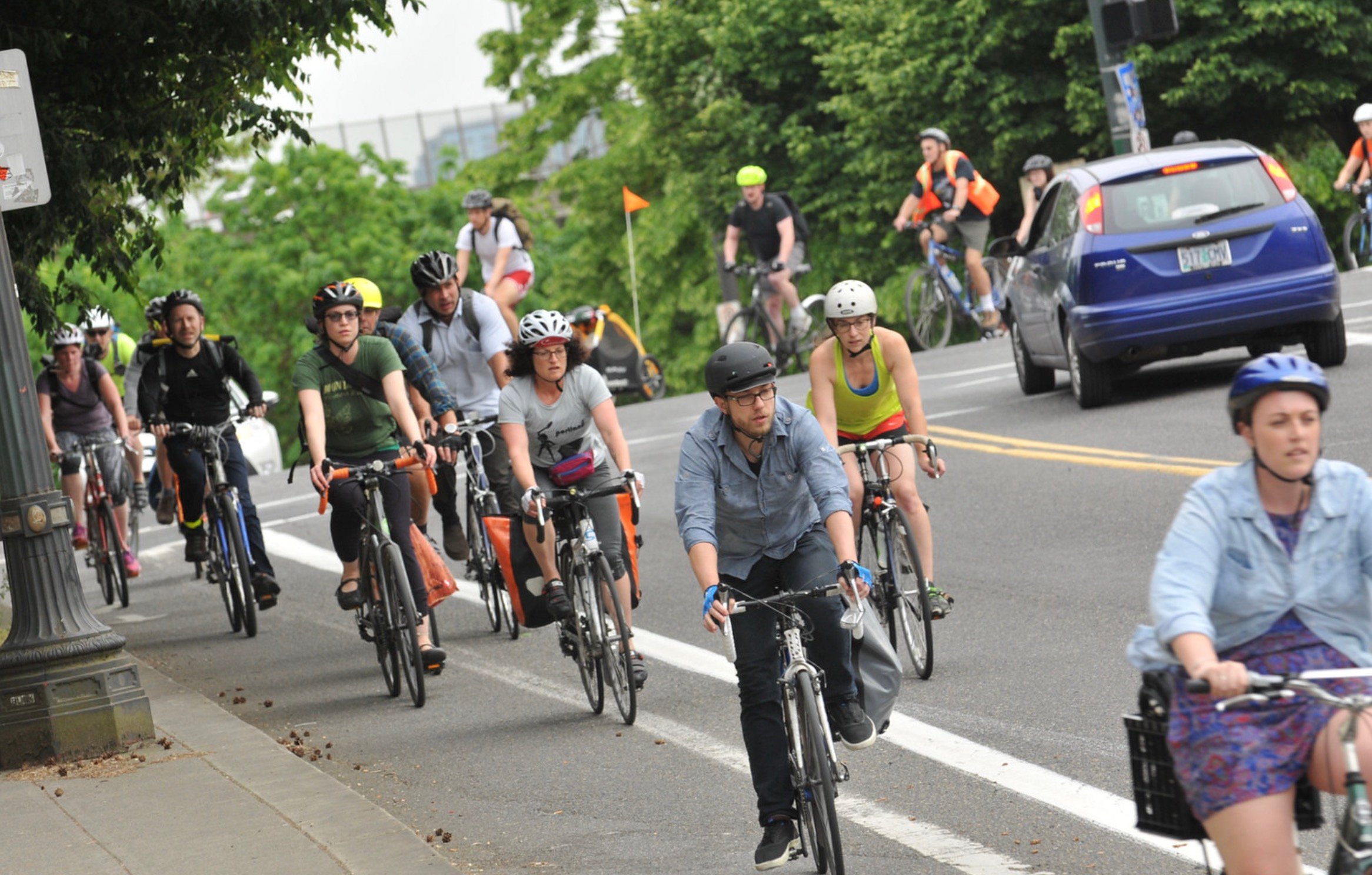
What an amazing way to launch Bike Summer 2025! Thousands met up at Peninsula Park in north Portland for the 23rd annual event that includes three months of free, fun bike rides.
I’ll have a recap video and more thoughts Monday, but here’s the photo gallery. Sorry couldn’t snap everyone! Y’all looked amazing out there. Big thanks to Pedalpalooza organizers and Cycle Homies and all the volunteers who made this day so memorable!
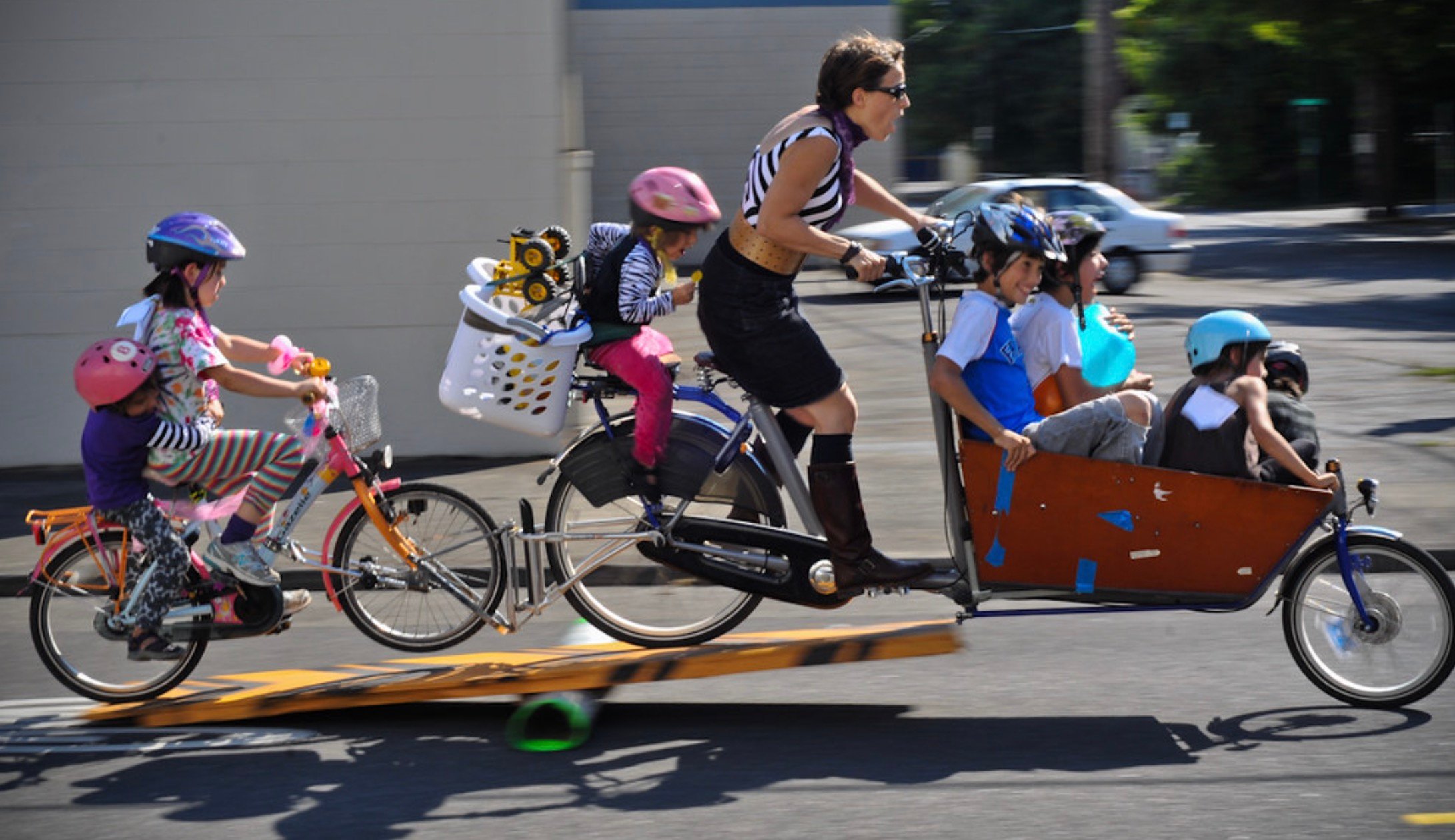
No surprise my 2012 story on a carfree mom with 6 kids spurred a lot of conversation. (Photo: Jonathan Maus/BikePortland)
Had a few things on my mind about comments so figured it was time to check in.
It’s been different without the great Lisa Caballero around. Not only did she do some great writing and reporting for BikePortland, she also spent a lot of time reading, moderating, and writing comments. She would also encourage folks to make “Comment of the Week” nominations and then she’d choose one and write it up on Monday mornings. Lisa understood that to me, it’s not about the quantity of comments we get, but the quality.
Without Lisa’s help, all that comment work has fallen to me. I’m alone these days when it comes to editorial work. I’ve actually scaled back in general and am transitioning to more of an intentional “just a guy with blog” type of outlet. But that’s a topic for a different day.
Back to the comment section. I still read each one that comes in and they all get held back until I manually approve them. But I don’t take as much time to consider each one like Lisa did. And I’m sorry but I haven’t been able to do a Comment of the Week on Mondays. I still want to add that to my weekly rhythm however, so please keep nominating (by replying with “comment of the week” or “cotw”).
Advertisement
Generally, folks have been well-behaved and we have very few mean, troll-ish folks (and when they do pop up, I just delete them and move on). That’s a testament to our community and moderation work over the years. That being said, I always appreciate folks giving me a heads up about comments they feel are inappropriate. Remember, being solo means I have no proofreader, no editor, no second set of eyes to run things by! Just like those of you who point out typos and other mistakes, BikePortland a community endeavor and I value — and need — your help on stuff like this.
This week in particular was very busy in the comment section. So far we’ve had about 450 comments total since Monday. One reader saw how that guest article by Missy LeDoux racked up nearly 300 comments and wondered what our all-time high comment record was. I took a look and it was fun to see the list.
Below are the top 10 most commented articles in BikePortland history (since April 2005) along with their date of publication and total comment count:
Quite the gamut of topics, huh? I love how it reflects the broad array of things I’ve published here. We’ve got tragedies, a fun profile of a carfree mom (that went viral before that really existed), some old-fashioned activism, the emergence of the homelessness crisis in Portland, some police stuff — and I’m so glad one of Michael Andersen’s housing stories made the cut!
I could tell a story about each one. All the emotions and wild bits of detail that surround them. What’s cool is if you go back and browse those comment sections, you can feel some of that emotion without even hearing it from me. That’s the magic of a good comment section! It’s a capsule of our community’s emotions, stories and insights. I cherish all 574,408 of them.
If you don’t typically comment for some reason, I’d love to know why. If there’s anything I can do to encourage you, please let me know. And if you do comment frequently, please remember it’s a privilege, not a right. Treat other commenters as if you were talking to them in person, give the benefit of the doubt and keep an open mind.
Every comment is a contribution to this community, which is something I feel is more important than ever as some of the conversations have splintered off into social media. I like those comment sections too, but it just doesn’t feel like home.
Thanks for being part of BikePortland. I appreciate your comments.
Need a job? Want a better job? Just looking for a change? You are in the right place. Don’t miss these recent job announcements. (Remember, you can always stay abreast of jobs as soon as they get listed by signing up for our Job Listings email.)
These are paid listings. And they work! We’ve helped hundreds of people find great jobs and great staff members. If you’d like to post a job on the Portland region’s most popular bike and transportation news platform, you can purchase a listing online for just $100. Learn more at our Job Listings page.
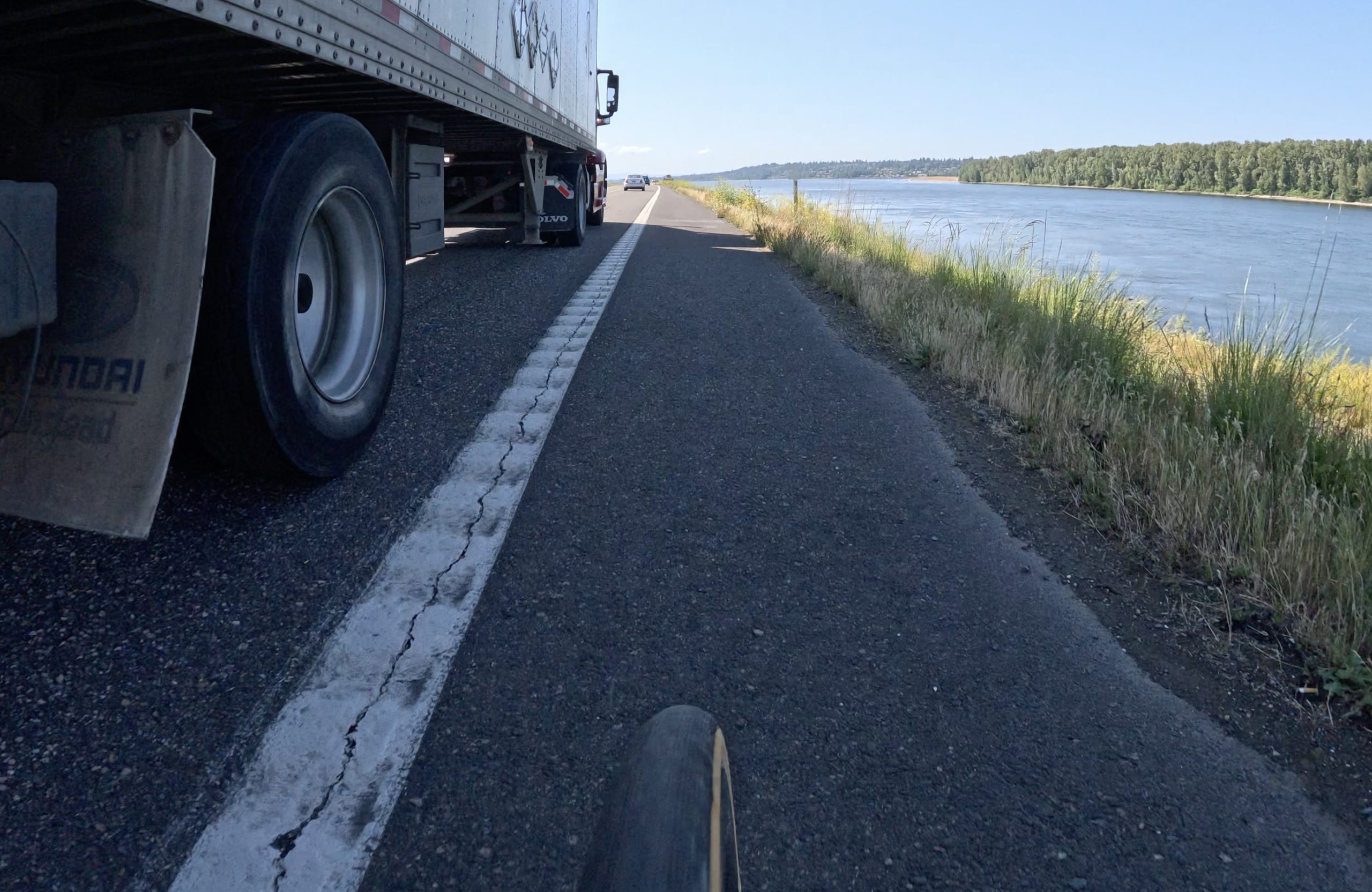
Portlander Chris Ho was cycling on Northeast Marine Drive this week when the driver of a large freight truck passed him very closely. Chris shared the video online and it has spurred conversation and confusion about Oregon passing laws and road user choices. I want to elevate the incident because this is an important issue that deserves clarity and understanding.
Chris is an experienced bicycle rider. He’s a veteran volunteer in local bicycle advocacy circles, a regular at Bike Happy Hour, a collector of road bikes, and a participant at local races. On Wednesday around 4:00 pm he was cycling westbound on Northeast Marine Drive about 1.5 miles west of I-205 and adjacent to Portland Airport runways. There are two route options for bicycle riders at this location: there’s a dedicated, off-street path along the Columbia River and a shoulder on the main road. Chris was (obviously) riding on the shoulder.
As Chris pedaled on a clear and sunny day, the truck driver whizzed past, just inches away from his body and bicycle. The pass was so close it created air suction effect that threw off Chris’s trajectory, and pulled his bicycle even closer to the big rig. (This is a well-known effect that has led to many fatal bicycle crashes over the years — even if police reports often fail to take it into account and instead blame the bicycle rider for “falling into” the truck operator’s path.) “This was a very close call, and super scary!” Chris shared in a post on his Instagram. Chris’s video captured the truck driver’s license plate number and he’s considering pursuing charges.
Advertisement
When I shared Chris’s video on BikePortland’s social media, I heard two main responses that stood out to me: some folks didn’t think the truck driver did anything wrong, and others wondered why Chris was even on the road in the first place (and not the path).
First let’s talk about the pass itself. Chris was in a legal cycling position, riding on what’s technically known as a shoulder bikeway. It’s not a “bicycle lane” as defined in Oregon law. The way we can tell the difference is by the width of the white stripe and the absence of bicycle lane markings and signage. (The distinction between a shoulder and a bike lane matters because different laws apply in each situation.)
The speed limit in this location is 40 mph and it’s a “no passing” zone. Given all those conditions, the truck driver clearly made an illegal pass. Oregon Revised Statute 811.065 states that motor vehicle operators must pass bicycle riders at a “safe distance” which is defined as a distance that is, “sufficient to prevent contact with the person operating the bicycle if the person were to fall into the driver’s lane of traffic.” Based on Chris’s video, that provision of the law was broken. The passing law was expanded in 2023 to require that drivers slow to at least five miles under the posted speed limit and to clarify that they can move over across a double yellow line in order to complete the safe pass.
After the law went into effect in 2024, the Oregon Department of Transportation made a PSA video that includes an example of a pass that closely resembles this situation.
Advertisement
For folks who think Chris should have been cycling on the adjacent path, keep in mind that not all bicycle riders are the same and people are allowed to choose where they ride. And in this case, not only was it entirely legal for Chris to be on the shoulder (which is classified as a “City Bikeway” in our Transportation System Plan), but the path option isn’t as attractive as you might think. This part of Marine Drive has a reputation for people pitching tents along the path. Public safety concerns get exacerbated here because the path is far below the street, which means it lacks visibility. Many riders also don’t like taking the path because it requires them to criss-cross Marine Drive at several locations and they feel these crossings are more hazardous that just riding on the shoulder. For fast, road cyclists, off-street paths can also be less desirable because they often have uneven surfaces, bumps and cracks that make for an unpleasant ride.
Dangerous and illegal passes like this are way too common. They are a symptom of our dysfunctional road user culture and illustrate the blatant disregard for human life far too many people have when they get behind the wheel of a motor vehicle.
I hope this post helps add context to this dangerous incident. And I’m very glad that Chris was not injured or worse.
For anyone who drives on Marine Drive, please slow down and pass bicycle riders with the utmost caution. And remember, “This isn’t some sort of video game!” as Chris shared on Instagram Thursday. “I could have very easily died today.”
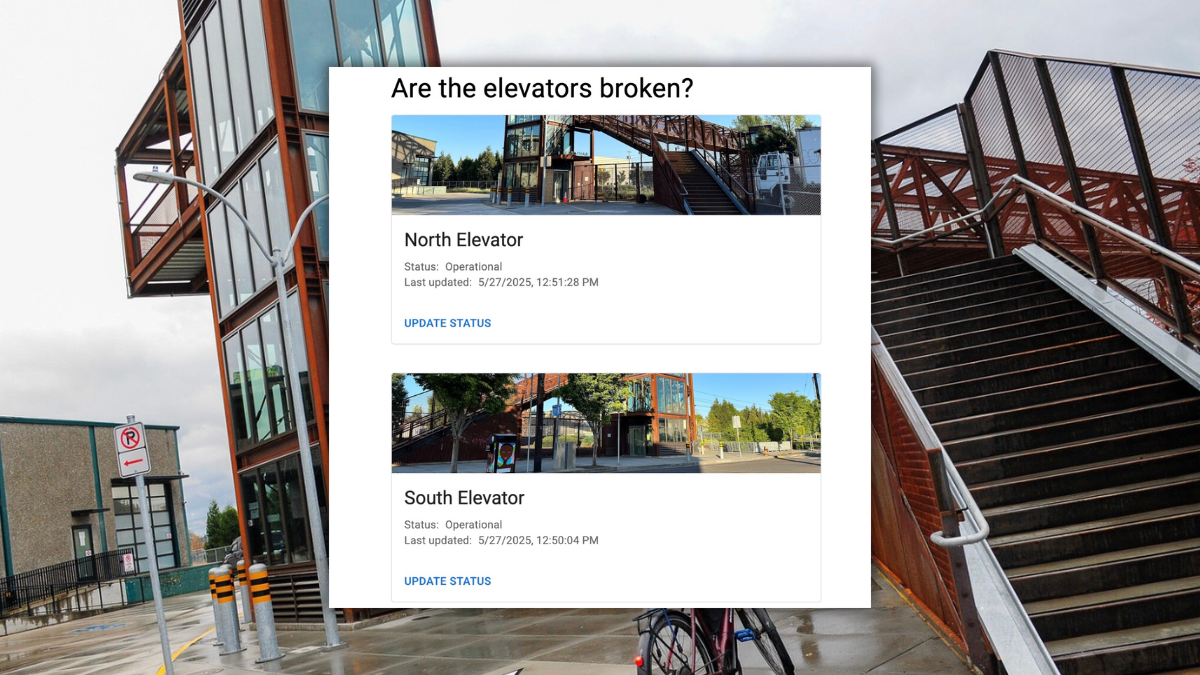
Inset: Screengrab from AreTheElevatorsBroken. com. (Photo: Jonathan Maus/BikePortland)
To say the Portland Bureau of Transportation has had a hard time keeping the elevators open at the Bob Stacey Overcrossing would be a massive understatement. The overcrossing plays a vital role in the bike network. It connects safe bikeways and is a bridge over light and heavy rail tracks in an area criss-crossed by large arterials. Unfortunately, since it opened in 2020 it seems like its elevators are closed more often than not. Vandalism and mechanical failures are to blame.
A new website doesn’t do anything to keep them open, but at least it gives riders an early warning to optimize and plan their detour.
AreTheElevatorsBroken.com is the work of Xavier Salazar, a software engineer who lives in the Brooklyn neighborhood. Brooklyn is a great place to live, but one of its downsides is how it’s hemmed in by Highway 99E to the west and south, the Brooklyn rail yard to the east, and SE Powell (Highway 26) to the north, there are already limited route options for bicycle riders.
Advertisement
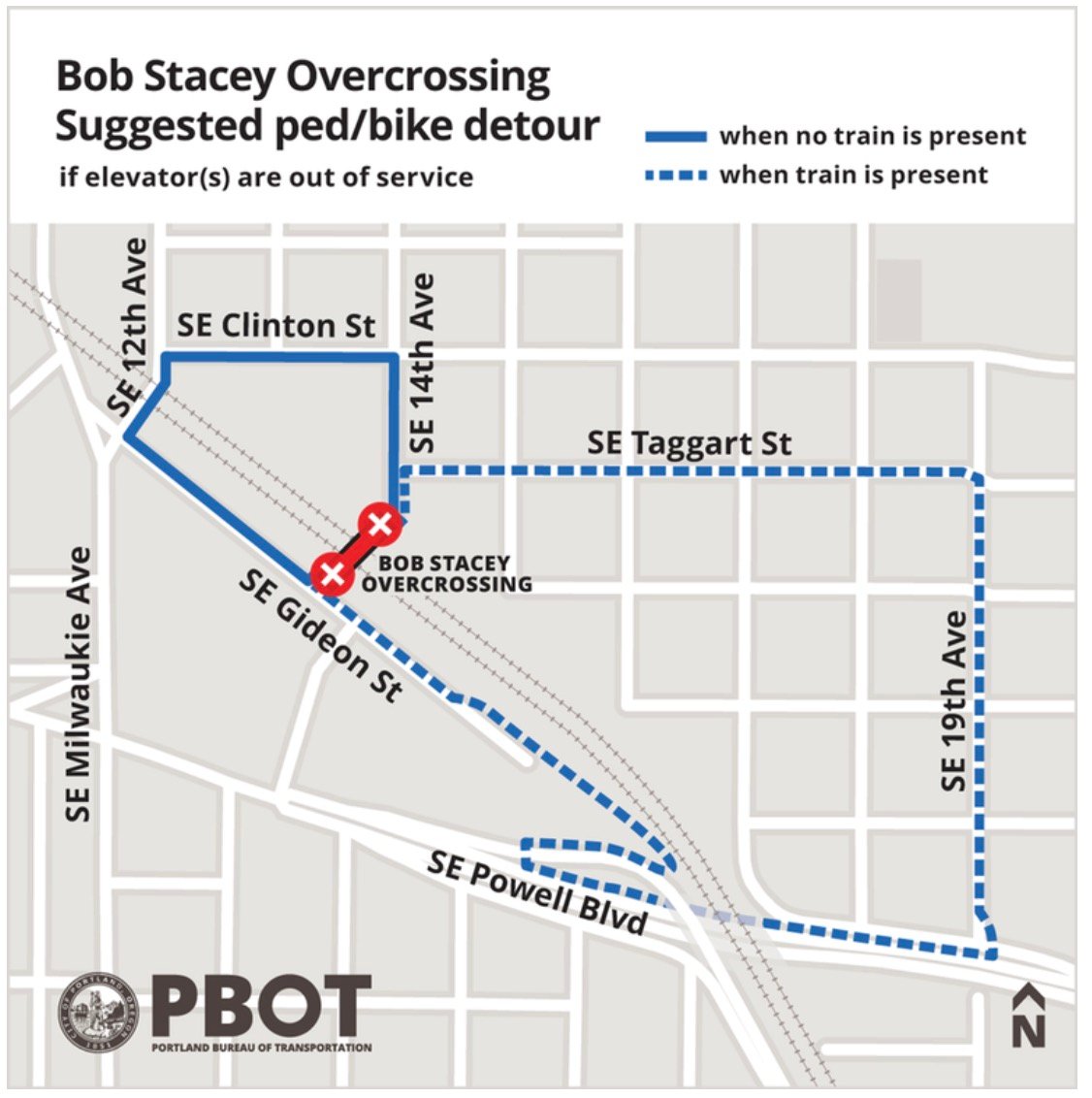
The detours illustrate how important these elevators are.
Salazar, who gets around almost exclusively by bike, says when he’s headed north, freight trains routinely block his routes (a well-known and infamous problem that has spurred its own DIY responses). Because of the aforementioned infrastructure challenges, even PBOT’s recommended detour around the blocked rail tracks and/or in the event of Stacey Overcrossing elevator closures, requires riders to go nearly one mile out of their way. And that’s if the Powell underpass isn’t blocked by street campers. If it is, the detour is even longer. (And yes, there are stairs, but not everyone can lug their bicycles up and then down them.)
Salazar knows a few options, but they are all long and cumbersome.
“Ultimately, I’d rather just avoid the on-the-fly gymnastics to find an open route because I don’t know if the elevators are working until I show up to them,” he shared with BikePortland today. “It’s much simpler to just choose to get on the waterfront or take the Rhine-Lafeyette bridge from the get-go to avoid even biking to the pedestrian crossing I can’t use.”
So Salazar created his website to offer useful status updates on the elevators. It’s based largely in the spirit of IsATrainBlocking11th.com (which itself is currently out of order) and he sees it as more useful than PBOT’s website, which Salazar says has been too unreliable in the past (“It’s only as up-to-date as someone from the bureau knows/cares quickly enough to update it.”)
Advertisement
“If I know where I want to go, it’s so much less stressful to just check the site before I leave and formulate a route based on that.”
What if you forget to check the website, or don’t even know it exists? Salazar has placed two small QR code stickers near the buttons on both elevators that, when scanned, allow folks to update the status immediately to warn others.
Salazar says the ideas is, “If you’ve got a bike full of groceries, or a kid in tow, it’s a bit more straightforward to make the judgement call to rely on the elevators if you can see it was just updated yesterday and someone said they’re both working.”
The more people that know about this site, the more updates it will receive and the more reliable the information will be for everyone. So check out AreTheElevatorsBroken.com and pass it along to your friends.
Bike Summer, coming right atcha’. (Photo: Jonathan Maus/BikePortland)
You’ve toiled through another Portland winter and now it’s time to shed those layers and embrace the warmth of Bike Summer. The big Kickoff Ride happens at Peninsula Park on Sunday. See you out there! I’ll have my bright neon green vest on and will be looking for folks to talk to for a podcast episode. So don’t be shy (or if you are, that’s fine too! No pressure).
Below are my selections for the best rides for the coming weekend…
Saturday, May 31st
Cycle the Well Field – 8:45 am at Aloft Cascade Station (NE) An educational foray that will help you understand the value and mechanics of our local watershed, led by experts and staff from Columbia Watershed Council and Portland Water Bureau. More info here.
Westside Critical Mass Party Ride – 9:00 am at Cascade Bikes (Beaverton) Be a part of west side bike activism history as a mass protest ride hosted by Ride Westside looks to raise the profile of cycling in Washington County and build a stronger community of riders. Don’t miss my story back in March for background. More info here.
Saturdays in May Sandy Blvd Takeover Edition – 10:00 am at Wilshire Park (NE) Nonprofit BikeLoud PDX will lead a route through northeast with a focus on assessing the quality (or lack thereof) of bicycle infrastructure — with a climactic cruise down Sandy Blvd to cap things off. More info here.
Advertisement
The Stripey Ride – 3:00 pm at Rainbow Road Plaza (SE) Stripes rule! If you agree with that, put on your fave striped shirt and roll out for this fun ride that will meet on a striped road, visit stripey locations, and have a stripey good time. Loaner striped shirts available. More info here.
Sunday, June 1st (First Day of Bike Summer!)
Breakfast on the Bluffs – 9:00 am at Skidmore Bluffs (N) Start Bike Summer off right with a community gathering on the bluffs where all types of wonderful morning drinks and snacks will be had. Bring something to share and connect with your Bike Summer besties. More info here.
Bike Summer Kickoff Ride – 3:00 pm at Peninsula Park (N) This is it folks! Be sure to show up plenty early (event opens at 1:00 pm) to soak up all the fun. There will be DJs, a bike wash fundraiser, Bike Summer merch for sale, bike maintenance help, lots of wonderful people to meet, and much more. Route is an easy, family-friendly cruise down to Colonel Summers Park (SE Belmont and 20th) where there will be food carts and great hangs. More info here.
Larch Mountain Ride – 9:00 am from Lewis & Clark State Rec Site (Gorge) I think Larch is the most challenging major climb in the area. This is a nice opportunity to tackle it with a group led by an experience Portland Bicycling Club leader. Expect 50 miles and 14 of it uphill! More info here.
— Did I miss your event? Please let me know by filling out our contact form, or just email me at maus.jonathan@gmail.com.
Riding bikes is fun. But if you ride a lot, it’s easy to get stuck in a rut. Sometimes you need something — like a goal or a game — to awaken your cycling spirit. For Portland-based Ride With GPS, the Cutty Cap Challenge is exactly that.
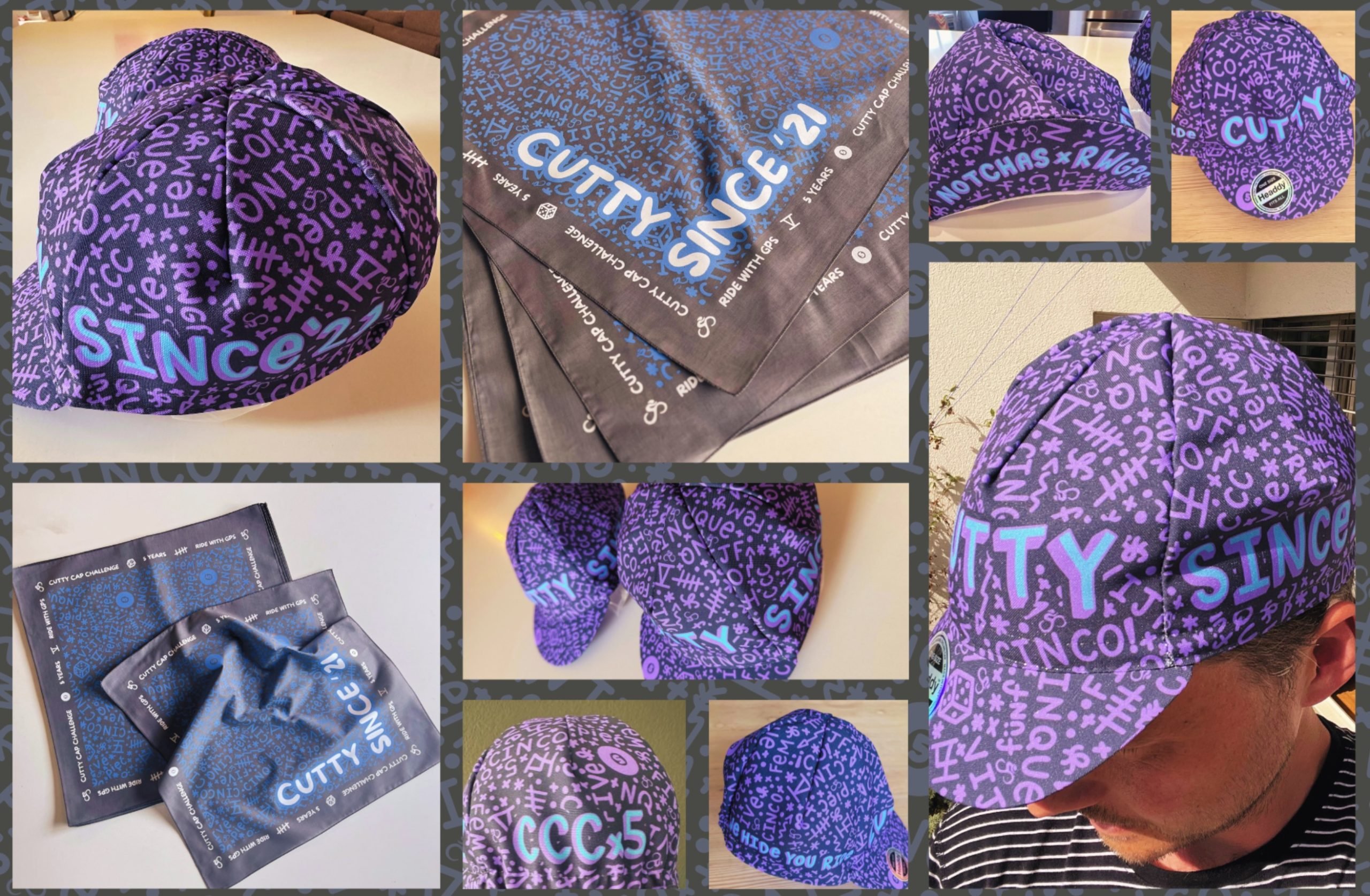
Now in its fifth year, the event has been reimagined as a live-action game that will be played by adventure seekers in 55 cities across the globe. It started in 2021 as a relatively traditional scavenger hunt. Ride With GPS (RWGPS), a company known for its popular route sharing and route making app, hid cycling caps in random locations and encouraged customers to go find them. The next year they added prizes, then expanded it to cities beyond Portland, and now it’s become a hotly anticipated start to the summer riding season.
“Cutty” is a term used to describe a route that’s a bit hidden or off the beaten path. Think of a cool spot you ride that isn’t well known, or that is borderline trespassing or sketchy for some reason. That’s cutty. There are a lot of beloved cutty routes in Portland, and this scavenger hunt is meant to encourage more folks to use them.
Advertisement
Screenshot of RWGPS app.
RWGPS Marketing Director and creator of the Challenge, Kevin Prentice, says the goal is, “To get people out riding in their city, and hopefully to a location or multiple locations they have never ridden. A new park, a new viewpoint, new trail, new business, solo or with friends, and have fun doing it.”
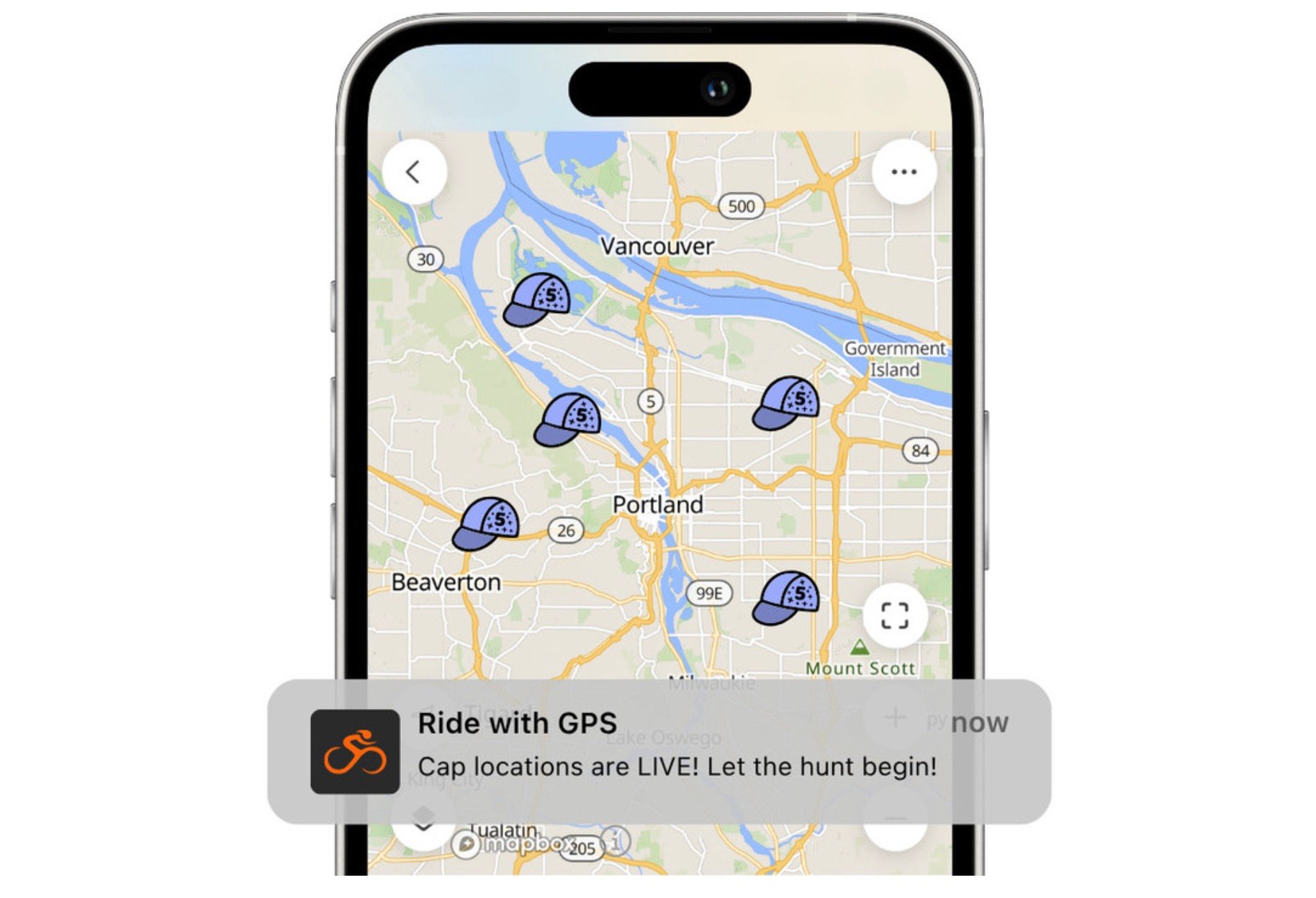
The challenge kicks off at 8:00 am sharp local time in 55 different cities around the world — from Sydney to Santiago, Osaka to Oslo. That’s when the location of at least 10 custom designed cycling caps will go live (additional cap locations will be announced after the first batch goes live). The locations are revealed in the RWGPS mobile app and participants compete by seeing who can find the most caps and bandanas (with a very cool design by artist and bike adventurer, Chas Christiansen aka @notchas on Instagram). Points accrue with each cap located. If you find it first, it’s yours and you get the bragging rights. But you can also score if it’s already been claimed. Players get bonus points by uploading photos and completing various missions that are broadcast throughout the day.
Advertisement
For Portland players, RWGPS has set up special prize giveaways with The Athletic. But to win them, you’ll need to unravel the hiding skills of Ron Lewis, one of the guys behind riding group Our Mother The Mountain, who Prentice describes as, “the unequivocal leader when it comes to both cutty locations and their descriptions.” “His locations will be off the beaten path, sometimes hidden in a drain pipe, not just a tree but a particular tree branch that resembles something, or maybe the cap is in a somewhat popular spot but his clues to find them are often riddles that also include song lyrics. Plus, nobody knows the city and it’s cutty locations better than he does.”
So if you like a good bike scavenger hunt and want a really fun excuse to explore the city — all while competing against other riders for points in a real-time digital game — download the app and check out the Cutty Cap Challenge website for more information.
Typical evening commute in 2016. (Photo: Jonathan Maus/BikePortland)
The City of Portland is laying groundwork for a marketing campaign that aims to spur a cycling renaissance. Hoping to put an end to years of declining and/or flat cycling growth and harken back to a decade ago when Portland was last seen as a global leader for cycling culture, the Portland Bureau of Transportation has released a survey that tests seven different pro-cycling messages.
“Whether you bike or not, the City of Portland wants to understand what messages could make it easier for you and your fellow Portlanders to say yes to biking around the city,” reads a new PBOT website. The survey will, “help us shape our city’s transportation future and how best to reach more community members,” the site reads.
The anonymous survey first asks how the respondent feels about riding bicycles and why they feel that way. Then the survey proposes seven different taglines intended to increase bicycling in Portland. Survey takers are asked how they feel about each tagline and then they’re asked to rank their top three based on whether or not it would encourage them to ride more. Here are the seven taglines (parentheticals taken directly from PBOT):
Advertisement
See your city in a new way. Bike. Explore. Portland.
Biking – a gateway to better community. (This tagline would be accompanied by an image of a big group of people riding bicycles together.)
Want to help reduce air pollution? It’s as easy as riding a bike.
Want to be healthier? It’s as easy as riding a bike.
What kind of family-time do you want? (This tagline would be accompanied by a juxtaposed image of a chaotic family car scene with a scene of a happy family bicycling.)
Want to have more cash in your pocket? It’s as easy as riding a bike.
A healthier, happier you. For $0.00 a gallon. Ride a bike.
I haven’t heard back from PBOT about this survey, and I don’t think it’s had an official public launch yet (or if it will get one). However, it is likely part of a marketing effort BikePortland reported about late last year. In November 2024, PBOT Bicycle Coordinator Roger Geller unveiled a plan to get Portland cycling again. By his estimation, a major factor needed to create a resurgence of cycling in Portland is to simply make it more popular via peer pressure and good, old-fashioned marketing. “We don’t have time to wait to build protected bike lanes on every roadway where we want them,” Geller told a meeting of PBOT’s Bicycle Advisory Committee as he made his pitch for more mass bike rides and compelling advertisements.
Geller isn’t wrong; but the devil is in the details. One reason driving has such a strong hold on Portlanders is because automakers spend billions on persuasive, inescapable marketing campaigns. It’s unclear how much PBOT will spend on this campaign and where its taglines will ultimately end up. On the survey website, PBOT hints that, “you may see [the taglines] in the future in print, on billboards, online in banner ads, or on radio/TV.”
Do any of these speak to you? Do you think these are compelling enough to break through to the masses and significantly grow the size of the pedaling pie?
Don’t forget to take the survey yourself and let PBOT know. It will be up through Sunday, June 15th.
— A guest article by northeast Portland resident Missy LeDoux.
I live in the Kerns neighborhood of inner Northeast Portland, which is usually a lovely place to live, walk, and bike. One of the reasons I chose to live here is because it has access to three bus lines: the 12, 19, and 20. That makes life much easier for me as a car-free person who gets around primarily via biking and public transit.
And walking. A lot of walking. Rain or shine, I walk. One of my personal mantras is “anywhere is walking distance.”
But recently, someone in my neighborhood has been loudly declaring: “Cars reign here. You are secondary.”
That declaration has come in the form of an unknown person installing (non-PBOT approved) street signs along NE 24th Ave. They state in big bold letters: LOOK! MAKE EYE CONTACT BEFORE CROSSING, and they proudly display a depiction of a pedestrian making eye contact with a driver.
Advertisement
I first noticed one of these signs back in August of 2024. My husband and I were walking home from hanging out with friends and spotted the sign attached to a telephone pole at the NW corner of NE Sandy and 24th. We posted about it in the BikeLoud PDX slack channel to raise awareness, and were met with frustration that mirrored our own. A group member reported the clearly non-approved signage using PDX reporter, and it was removed within a few days (whether by the city or by a citizen, we don’t know).
The signage clearly comes from the perspective of a driver who wants pedestrians to take on more responsibility for their own safety.
Some of you reading this might understand immediately why we were frustrated by this signage. But in case you’re wondering “What’s wrong with that? Seems like good advice,” let me explain the issue.
Let’s ignore the legality of the signage for a second and focus on its content. The messaging is clearly giving a directive to pedestrians. In high-vis yellow, made to look like an official street sign, it makes up a new law: pedestrians must make eye contact with drivers before they cross the road. The implication is that if they don’t, their life and safety are at risk. I’d even go so far as to say this signage implies that if you don’t make eye contact with a driver before crossing, the driver cannot be held responsible for hitting you. And I don’t think this interpretation is a stretch; the signage clearly comes from the perspective of a driver who wants pedestrians to take on more responsibility for their own safety in their interactions with cars. This naturally implies that car drivers should have less responsibility.
Advertisement
Missy LeDoux
Fast-forward to today. I was walking through the neighborhood and spotted one of the signs again. I’d mostly forgotten about the sign from last summer, but here it was again, screwed into a stop sign pole at NE 24th and Oregon.
And it wasn’t alone. I looked around and spotted more signs, on nearly every corner of the intersection. I also spotted bright flashes of yellow at nearby intersections along the street.
My nemesis was back, and more prolific than ever.
But let me address the more gracious interpretation. What if this person isn’t my nemesis? What if they actually just want me to be safe and not get hit by a car? Maybe they think they’re doing a public service by providing unsolicited advice about how not to get hit.
But I’ve said it before and I’ll say it again: it should not have to be the responsibility of vulnerable road users to not get hit. It should be the responsibility of car drivers to look out for vulnerable road users who are not protected by metal cages. Should pedestrians be careful? Of course. While walking and biking around Portland, I’ve had numerous near misses with cars that almost hit me. In every instance, my own awareness and ability to quickly stop or swerve saved my life.
But does this mean car drivers should drive however they want, clinging to made-up rules about responsibility? No.
Advertisement
Additionally, what these signs advertise is simply not the law. According to ODOT, every intersection is a crosswalk, whether marked with zebra stripes or not. That means that legally, it’s the job of car drivers to look out for people walking and rolling at every intersection.
Finally, let’s look at the root of this sign’s advice: making eye contact with car drivers.
Should pedestrians have to do this? The short answer is, no. This is not listed anywhere in Oregon traffic law. Personally, I try to do it anyways when possible, simply because I feel marginally safer crossing if I know a driver has seen me. But should I have to? No. My presence at the intersection should be all it takes to make a car driver follow the law and yield to me.
“Should” aside, the more pressing question is: can pedestrians always make eye contact with car drivers? The answer to this is also no. Reasons include but are not limited to:
Some cars have tinted windows (often tinted above the legal threshold, but this law is rarely enforced).
Sometimes drivers and pedestrians wear sunglasses.
Weather conditions can make it difficult to see someone’s eyes.
But even for pedestrians who could make eye contact, it would have to be a two-way exchange. In my experience standing on street corners trying to cross, most drivers are not looking for me, and certainly not trying to make eye contact. My nemesis’s “rule” gives an out to any driver who doesn’t want to stop for pedestrians. It says, “Don’t want to stop? Just don’t look at their faces!” And unfortunately, that’s already what many drivers do.
Advertisement
At the end of the day, these signs are simply yet another instance of drivers shifting the responsibility of safety off of themselves, and onto pedestrians and cyclists. I love my neighborhood, but just like anywhere else in Portland, it’s also a place where drivers regularly speed on residential streets, ignore stop signs, and treat Sandy like the Autobahn. In light of these safety issues, we need more accountability for drivers, not less.
For now, I’ve reported these signs to the city using PDX reporter, and I hold out hope that they’ll be taken down soon. But I can’t singlehandedly protect Kerns, and Portland broadly, from this kind of insidious rhetoric. I hope others join me in this fight. I hope pedestrians can feel more safe and empowered in our city. And I hope drivers learn how to drive more safely, or not drive at all.
Update: A city of Portland employee responded to my report, stating: “It is true that un-permitted signs are not allowed to be posted on utility poles according to City Code 17.64.040, however the City does not have resources to enforce this code and the power utility companies own and maintain most utility poles in the City of Portland. You can contact the PGE Team to request their removal.”
Looks like my nemesis wins this round, thanks to the city’s lack of resources. But you’d better believe I’ll be contacting PGE and continuing to fight the good fight.
— Missy LeDoux lives and writes in Northeast Portland. She loves biking in dresses, walking everywhere, and convincing friends to take the bus with her. Find her ice cream and travel-related writing on Substack @withcherriesontop.
UPDATE, 5:30 at 7:05 am: PBOT Communications Director Hannah Schafer reached out to BikePortland with the following:
“I want to thank Missy for raising her concerns and apologize for the initial, unsatisfactory response she received. As a result of her op-ed, one of our engineering associates visited the site this morning and also identified some signs on our stop sign posts in addition to being on utility poles. Due to safety concerns, especially regarding the impact these signs may have on vision-impaired individuals, and the fact that they conflict with Oregon statute ( ORS 801.220Crosswalk, ORS 811.028Failure to stop and remain stopped for pedestrian), we’ve put in a maintenance request to have these signs removed.
We’re working to identify where the initial request may have gone in (if Missy wants to share that with me, I’d really appreciate it) so we can provide a better service outcome in the future.”
You can do a lot with $75,000. (Photo: Jonathan Maus/BikePortland)
With all the City of Portland budget action last week, there was one interesting tweak you might have missed. Among the 126 amendments proposed by the 12-member City Council, one of them earmarked $75,000 to traffic safety projects in District 4.
City Councilor Mitch Green had unspent funds in his office budget, and according to his Chief of Staff Maria Sipin, he chose to dedicate it to small street improvements in their district. “Instead of carrying it over for staffing and other expenditures,” Sipin shared with BikePortland, “We wanted to hold it to do some quick, high-impact pedestrian safety projects.”
Each council office is allocated about $1.3 million per year to cover expenses like security, a share of the recent City Hall remodel, staff salaries, and so on. The city’s fiscal year ends June 30th, and funding cannot be carried over to the next year. Sipin says each office was given several options with what they could do with unspent funds. They could: return it to the General Fund, where it could be used by any bureau; donate the money to District 1 to help get a district office constructed; or they could re-appropriate the funds to FY 2025-2056. Green’s office chose the last option.
Advertisement
Councilor Mitch Green speaking at the World Day of Remembrance rally in November 2024. (Photo: Jonathan Maus/BikePortland)
“We heard from people in our people in our district that they sometimes need just a tiny piece of traffic calming, or they need a crosswalk restriped or a sign repaired — and they weren’t getting a quick response from PBOT [Portland Bureau of Transportation],” Sipin shared. “Earmarking it for some kind of safety projects is aligned with what we’re trying to do.”
Councilor Green is an everyday bicycle rider and has spoke often about safe streets as a candidate. During a speech at a traffic safety rally in November 2024, he spoke about almost being hit by a car driver on his way to the event. As more people drive larger cars to stay safe, “Those who do not drive are increasingly exposed to the collateral damage of this arms race,” Green said. He has also made the connection between safer streets and making walking and cycling a more attractive choice over driving.
Before putting forth the budget amendment Wednesday, Sipin explained they reached out to PBOT to run the idea by the agency. PBOT approved, so they went for it. The amendment passed with a unanimous 12-0 vote.
$75,000 isn’t a lot when it comes to major street projects, but it’s enough to make a significant dent in smaller, quick-build projects — and it’s especially needed given the crisis-level transportation budget. For context, PBOT says those large concrete planters used as modal filters (aka diverters) cost about $5,000 to build and install. A new crosswalk can cost about $3,000 and PBOT has said they can daylight an intersection for about $700-$800 in materials and labor. In 2023, PBOT striped a bike lane for two blocks and completed 24 other small “missing links” projects for just $300,000.
Sipin says since this is the first time they’ve tried this budgeting move, it will be considered a pilot. As far as where they’ll spend the money, they’ve got their eyes on a crosswalk project, but the exact location hasn’t been determined.
(Note: While Green is one of the architects of the Sidewalk Improvement and Paving Program (SIPP) that passed council earlier this month, these funds are separate from that program.)
Happy Tuesday everyone. We’ve got a short week, so let’s get right into it.
Here are the most notable stories that came across my desk in the past week…
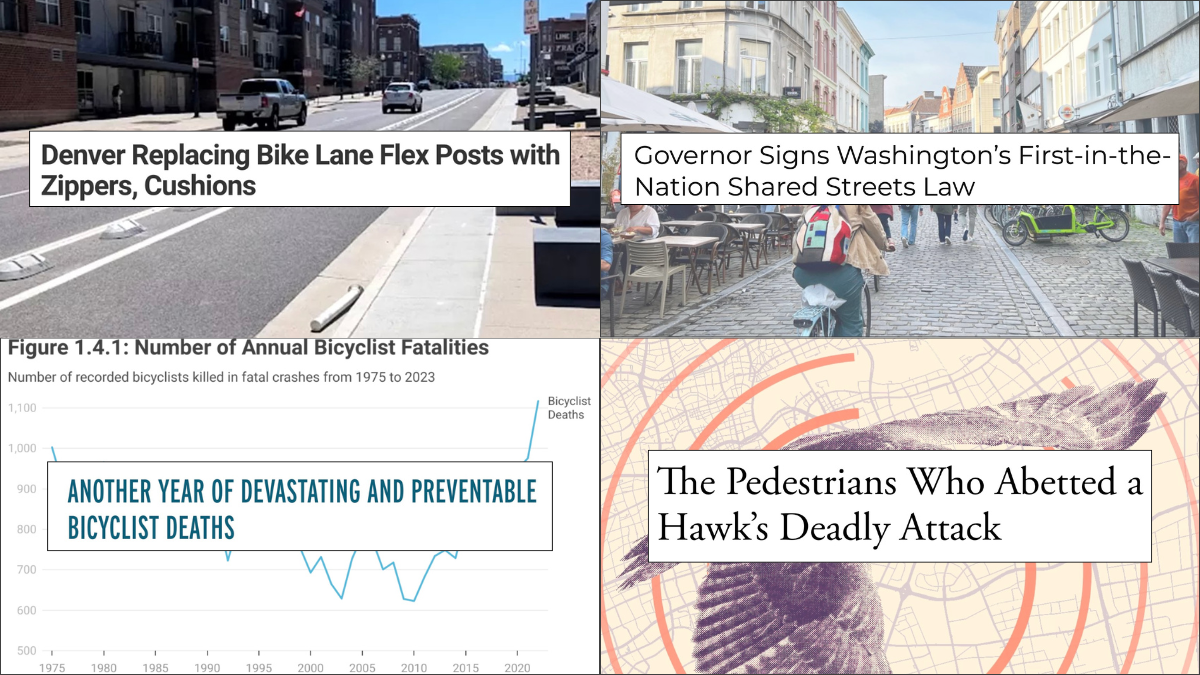
School bollards: When PBOT gets serious about school streets (notice I said “when,” not “if”) I really hope they order a bunch of these pencil bollards to keep drivers away. (Detritus of Empire)
Shared streets law: Washington has passed a new “shared streets law” and I’m jealous. It allows cities to establish speed limits as low as 10 mph and removes the requirement for pedestrians to cross at crosswalks and corners. It unleashes the possibility for “woonerfs” statewide. We need this in Oregon! (The Urbanist)
It’s the bike share: A key to London’s massive growth in cycling rates is their Lime bike share system, which has 30,000 bikes and offers “zippy” e-bikes that offer an easy and convenient way for folks to get around. (The Economist) 🔒
Advertisement
Is this why they call it a HAWK signal? 🤣: A zoologist has document a hawk in New Jersey that uses a pedestrian-activated crosswalk signal as a hunting aid. (The Atlantic)
Bye bye flex posts: The City of Denver says plastic posts that protect bike lanes are too ugly and hard to maintain, so they’re replacing a bunch of them with rubberized curbs. (Westword)
Best kind of bus driver: Seattle bus operator Nathan Vass (who was keynote speaker at Oregon Walks fundraiser event two weekends ago, by the way) is all about community and has written a book about what he’s experienced driving routes many other drivers try to avoid. (KUOW)
Fatality trends not good: “Since an all-time reported low of 623 bicyclist deaths in 2010, we’ve seen an 87% increase in bicyclist deaths with consecutive all-time records for the most deaths in the last two years of available data.” (League of American Bicyclists)