(Photo: Portland Police Bureau)
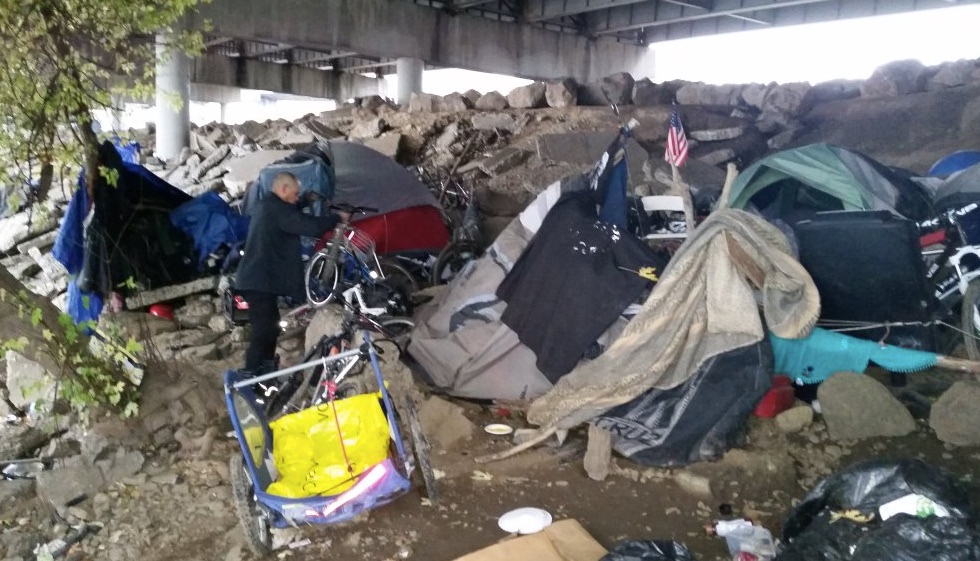
Portland police officers call it “the boneyard” and frustration is growing about how to clean it up once and for all.
🚨 Please note: BikePortland is currently on hiatus and only publishing guest articles. Learn more here. Thank you. - Jonathan 🙏
Here are the bike-related links from around the world that caught our eyes this week:
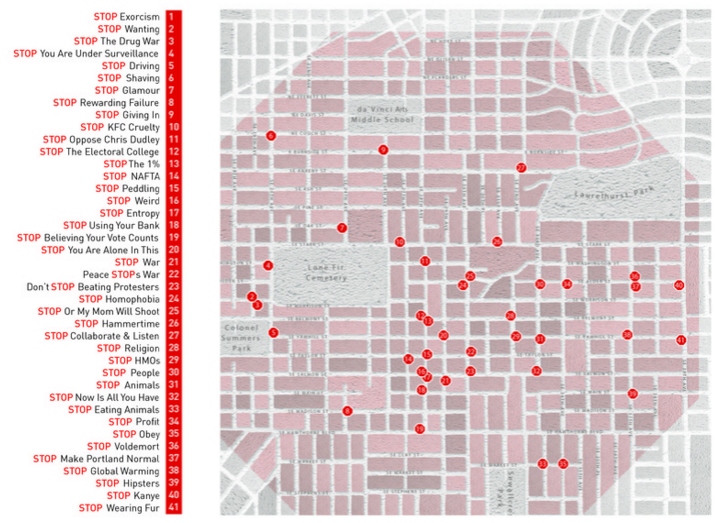
“Stop” signs: A new book of creative Portland maps includes a comprehensive directory of everything Southeast Portland’s traffic-sign graffiti artists don’t want you to do.
City liable: A California city will pay $5.8 million because a judge said “narrow bike lanes and lack of streetlights” contributed to an alleged drunk driver’s fatal rear-ending of a man on a bike.
I’ve rarely seen BikePortland readers as frustrated as many seemed to be beneath Wednesday’s post about the state of Oregon’s decision to remove temporary memorials to people killed on state roads because they (the memorials, not the people who were killed) might cause people to slow down or stop while driving.
A huge wave of upvotes backed many of the black-humor responses that followed.
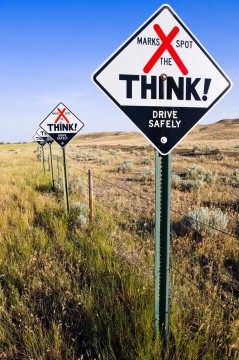
But amid the well-written venting was an interestingly constructive suggestion: if Oregon feels that handmade memorials are distracting, maybe it should create its own official memorials instead — just like South Dakota does.
That was the comment from BikePortland reader GlowBoy, who (if I’ve been following his comments correctly) recently relocated from Portland to Minneapolis:
I think we should have a monument to remember every single person who’s been killed by (or on) a road facility.
Oregon ought to enact the same law requiring signs like those in South Dakota, marking EVERY SINGLE SPOT where a person has died on their roads. SD may not be considered a very progressive state, but I think it’s a brilliant idea and should be copied everywhere.
When I started getting seriously interested in bicycles a few years ago, I already knew they were pollution-free, cheap, healthy, quiet, nonlethal and space-efficient.
What threw me for a loop, when I was talking to other Portlanders who were already interested in bicycles, was that they kept talking about community. Biking (and walking, and public transit) connected them with their neighbors and surroundings in a way that driving can’t.
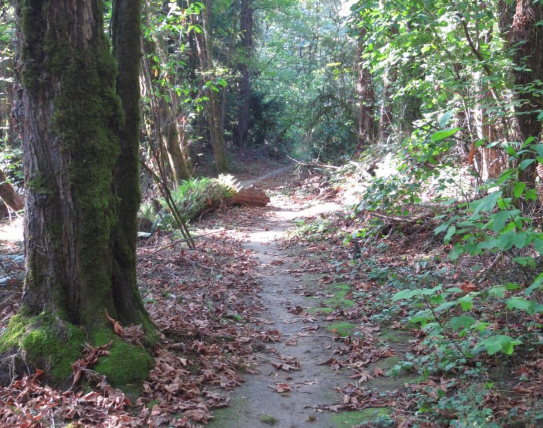
The Portland parks bureau has released its final management plan for the River View Natural Area and they’ve left the door cracked open — ever so slightly — for the possibility of off-road cycling access in the future. However, because the city’s process prevented a robust discussion of all potential trail uses, the plan is full of uncertainty. If it’s adopted by City Council as scheduled in mid-December it could have the unintended consequence of making it harder to allow cycling even if the city’s own planning process deems it appropriate at a later date.
“The bicyclist was wearing dark clothing and had no rear lighting on the bicycle.”
— Oregon State Police statement
For the past week I’ve been standing by, reading headline after headline about “distracted pedestrians.” And then I get this in my inbox (emphases mine):
The Oregon State Police is continuing it’s investigation into Thursday evening’s fatal crash involving a bicyclist.
At approximately 9:05PM a Lane County Deputy in a patrol vehicle was traveling northbound on SR99W near MP118 (just south of Beltline Highway in Eugene) when he struck a female bicyclist in the northbound slow lane. The female was pronounced deceased on scene.
The highway was blocked for approximately 1 hour. The highway was then partially open, reduced to one lane in each direction. The scene was cleared at 1:00AM.
Preliminary information indicates the bicyclist was traveling northbound in the travel lane at the time of the incident. The bicyclist was wearing dark clothing and had no rear lighting on the bicycle. It was full darkness with very little ambient lighting when the crash occurred.
Until this week, Portland seemed poised to eliminate one of the many ways it prioritizes housing for cars over housing for people.
For decades, there’s been exactly one way to build a 15-foot-tall structure up to the edge of most Portland property lines: put a car in it.
Want an accessory dwelling unit the same size as a garage? Sorry, that’ll have to be set back five feet from the property line, even if it has no windows or doors facing the property edge.
Bike sheds currently face the same restriction: unlike garages that were designed for cars, bike sheds must be at least five feet away from the property line in all single-family residential zones.
This menu of delicious rides and events is brought to you by our friends at Hopworks Urban Brewery. Their support makes BikePortland possible.
We know what you’re thinking: Ride? In this weather? That’s what most people think, but you’re different. You embrace the beauty of this time of year and you relish the empty bikeways that were chock full of people just a few weeks ago.
And besides, it’s a time to be thankful for our freedom to ride. Or should I say crankful? Saturday is Cranksgiving where you and 100 of your fellow Portlanders will come together to talk, ride bikes, and help people in need.
What are your plans? Check out our suggestions below…
But first, here’s the forecast:
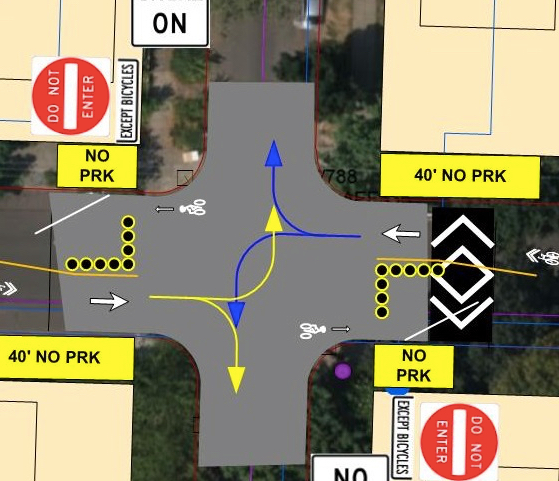
The Portland Bureau of Transportation is moving forward on their plans to tame auto traffic on Southeast Clinton.
In a statement released today, the city clarified their intentions to install diverters and take other actions to improve cycling conditions and discourage people from driving on Clinton — a street set-aside as a low-stresss bicycling route that has seen traffic skyrocket as nearby Division Street has added housing and businesses.
As part of their Clinton Neighborhood Greenway Enhancement Project, here’s what PBOT has announced:
A few weeks after left-leaning former Metro president David Bragdon all but called for the firing of Oregon’s top transportation official, legislative Republicans are calling for it explicitly.
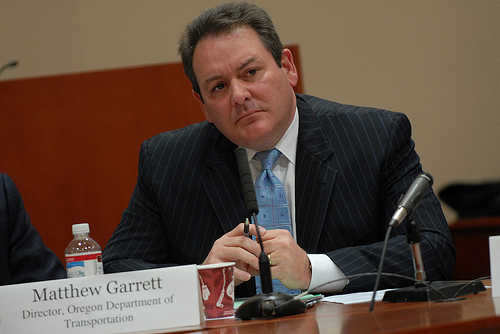
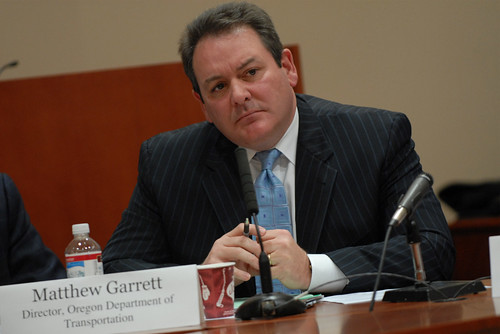
Oregon Department of Transportation Director Matt Garrett is facing criticism from both sides over the incident, earlier this year, when his office and Gov. Kate Brown’s temporarily claimed that tens of millions of dollars in freeway investments would be part of reducing long-run carbon emissions in Oregon by more than 2 million metric tons.
Job Title *
Painter
Company/Organization *
Argonaut Cycles
Job Description *
Argonaut Cycles is looking for a driven, talented, self-motivated person to join our small team here in Bend, OR. We’ve recently installed a paint booth, and need someone to paint frames full-time. Some prior bicycle frame finishing experience is ideal, but not required as we are willing to train the right person. Working at Argonaut is all about developing and maintaining best in class practices across the board. Our aim is to make the best road bike on the market, and it takes a special kind of person to contribute to that effort.
How to Apply *
Please send resumes and cover letters to contact@argonautcycles.com.
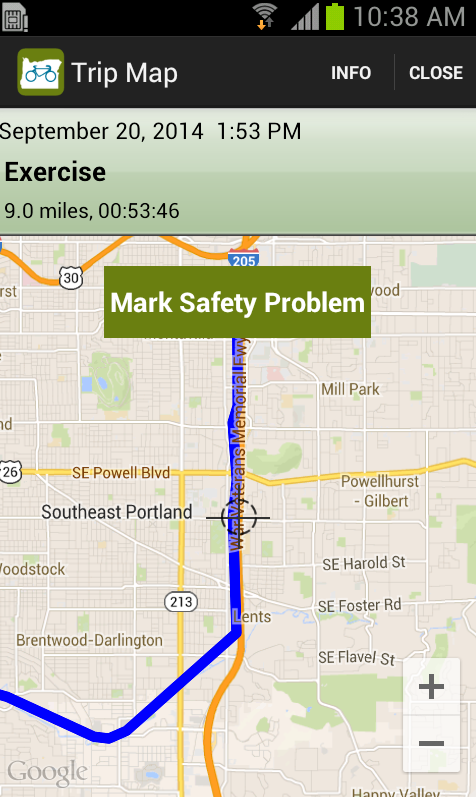
If you run into a bike safety problem in Oregon and own a smartphone, you no longer need to know who to complain to.
The ORcycle mobile app, a partnership between the Oregon Department of Transportation and Portland State University, has just been hooked up directly to the state’s “Ask ODOT” hotline, which has pledged to forward all reports it receives about bike safety issues to the appropriate local agency — or to its own team, if the road is owned by ODOT.
It’s a huge leap for the project, which has existed in demo form for a year but has been little-used because any reports were stashed for weeks or months under PSU’s supervision rather than piped directly to ODOT, let alone forwarded to other agencies.
Now, however, the free app has been integrated directly into the state agency’s operations.