

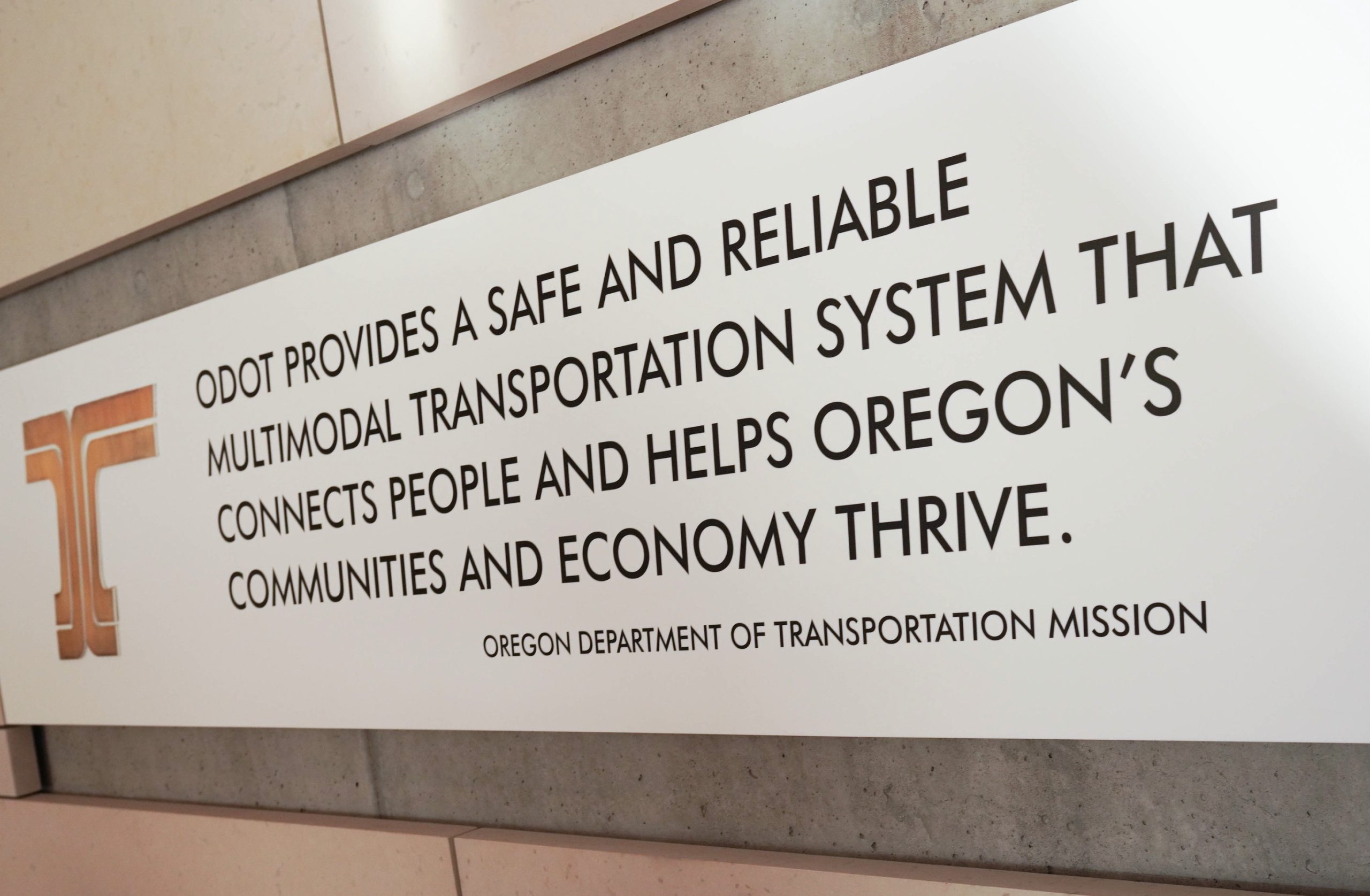
Governor Tina Kotek released new details about the working group I reported on earlier this week whose goal will be to hash out a vision that could inform work on a major funding package in the 2027 legislative session.
It will be named the Rebuilding Our Transportation Vision Workgroup and it will be co-chaired by transportation leader Grace Crunican and former lawmaker Bruce Hanna.
Crunican has deep experience in the transportation space and most recently served as GM of the San Francisco Bay Area Rapid Transit District (BART) from 2011 to 2019. She was also the Oregon Department of Transportation director from 1996 to 2001 and led the City of Seattle’s transportation department from 2002 to 2009.
Hanna is a former Republican lawmaker who represented southern Oregon (Roseburg area) for five terms in the House. He was co-speaker of the Oregon House in the 2011-2012 session. Hanna has had a long career in the beverage industry as president of a regional Coca-Cola distributor.
In a press release today, Kotek’s office didn’t name the members of the new workgroup. A spokesperson told BikePortland today that information will be released in the coming days. They did, however, share more details on what the workgroup will do:
- Analyze spending needs and trends over the next 10 years for maintenance and operations across all modes of travel (driving, walking, biking, public transit, etc.) and determine how these trends align with existing or proposed key performance measures.
- Review the current and projected financial condition of major transportation funds including the Highway Trust Fund, which currently provides equal funding to state and local transportation systems, and the Statewide Transportation Improvement Fund, which helps to fund public transit across Oregon.
- Provide a framework for a transportation package that can pass in the 2027 legislative session that supports public safety, economic development, prioritizes affordability for Oregonians and rebuilds our transportation future.
We can expect this workgroup to have public meetings which will begin in April and happen once a month (roughly) through November. Stay tuned for the workgroup member roster and more information about public engagement opportunities.

Thanks for reading.
BikePortland has served this community with independent community journalism since 2005. We rely on subscriptions from readers like you to survive. Your financial support is vital in keeping this valuable resource alive and well.
Please subscribe today to strengthen and expand our work.
Another “vision” workgroup from Kotek? Bold move, considering the prosperity council vanished faster than a snag at a barbie.
Teaming up with a Republican might look like reaching across the aisle, but if this turns into more chinwagging and no actual results, it’s just the same old story with a flash new label. Reckon Oregonians are keen for outcomes, not another round of “we’re having conversations.”
I’m just not excited about this group at all. The co-chairs seem very experienced, but how can we have any progress in transportation in Oregon when Repubs are practicing a scorched-earth policy, in which no type of revenue generation (taxes, fees, tolls etc) will ever be acceptable? The so-called “party of personal responsibility” now believes that no one should have to pay for anything, ever.
This committee is all about transport planning electioneering. How will Kotek gaslight the Black Freeway Warrior builders with the Red wave of tax slashers and their bike pumpers punching over their weight classes.
Thank you Republicans for challenging the gas tax and challenging the gov’s election. Without that the bike pumpers would have gotten steamrolled.
Shaping up to be another epic saga of the freeway wars. When will Kate Browns epic dish of cold revenge appear? Alongside the Portland cold $shoulder check mate.
Fred, your scorched-earth rhetoric might energize your base, but it’s not getting anything done. It just deepens the divide and makes real solutions harder to reach.
Oregonians don’t need more hyperbole or political theater—they need progress. And that only happens when leaders are willing to step back from extremes and meet in the middle.
Dial it down, come to the table, and focus on solutions people can actually live with.
I think you’re missing the point Fred is making. The Republicans in the Oregon legislature have proven time and again that they’re not interested in actually governing, collaborating, or acting in good faith. We have two parties in Oregon right now, the Corporate party and the Wrecking Ball party.
John, mate… that’s a tidy story, but it doesn’t quite pass the pub test. You’ve got a full-on Democratic supermajority and a Democratic governor running the show in Oregon—no blockers, no excuses, no “big bad opposition” holding the pen. When one side’s got all the levers, they also own the outcomes, yeah?
Blaming the minority party for everything going pear-shaped is like spilling your own beer and yelling at the bloke across the bar. At some point, you’ve gotta say, “righto, maybe this one’s on us.”
By all means, call out bad behavior wherever it pops up—but if your team’s got the numbers to do whatever they want and things still aren’t humming, maybe it’s less “Wrecking Ball party” and more a bit of a self-inflicted mess, eh?
It’s a bit like giving your pint the old bushman’s top-up and blaming your mate for warming it like a Top End dingo in the midday sun. Dems need to stand in your storm, not hide under the brolly.
Why, I’ll have a shrimp, three Fosters, and a proper wobble-gob of your finest galah wazzah.
Mate, I’ll take the agreement, but I’ve gotta pull you up before the language police revoke your Aussie card
“Shrimp”? That’s a paddlin’. It’s prawns, always has been. And no one’s knocking back three Fosters unless it’s 1993 and the pub’s run out of everything else.
“Bushman’s top-up” sounds like something you made up halfway through your third beer, and I respect the creativity—but we don’t talk like a souvenir shop t-shirt. Same goes for that “Top End dingo in the midday sun” line… poetic, sure, but no one at the servo is saying that without getting side-eyed.
You were on safer ground with “brolly” and “galah,” I’ll give you that. But you’ve gone and stuffed the whole lot into one sentencek like a dodgy sausage roll.
Anyway—points for backing me up. Next round’s on you… just make it an actual Aussie beer, yeah?
I was playing to the yanke. I’ve always been partial to Coopers.
You’re missing a key puzzle piece: our referral system. The R’s demonstrated they can get revenue increases on the ballot, meaning they wield a whole heck of a lot more power now. D’s have the supermajorities and the governor’s mansion, but it doesn’t mean nearly as much at the negotiating table now. Will be fascinating to see how that changes the discussion moving forward.
That’s the point though—it wasn’t “the Republicans.” It was a mix of Republicans, Democrats, and independents who pushed this onto the ballot.
Framing it as one party misses the actual signal: voters across the spectrum are fed up enough with spending and outcomes to act together. That’s not a partisan maneuver—that’s a broad-based check on the status quo.
You can debate the system and the leverage, but the ballot itself is pretty clear: this wasn’t one side making noise, it was a whole lot of people from all sides saying “enough.”
What’s your evidence it was a mix of Republican, Democrats, and independents who pushed this onto the ballot? I’m not saying that’s not true, but I don’t know from where you are making that claim. As far as I know, all the core funders and organizers are in the Republican leaders/funders circle, so that’s why I made the assertion I did.
Plenty of people are paying plenty–you think they’re making it up? It’s frightening sometimes,when you think about how many taxes have been passed in the last ten years–when does it end–even more are constantly being proposed.
“Kill every freeway megaproject” would be a very good place to start.
If the gas tax vote goes down in flames as everyone predicts it will, what will stop Republicans from replaying the referendum strategy if they don’t like what Democrats come up with in 2027? (Besides, of course, Democrats finding a proposal that the public will actually vote for.)
Whatever this workgroup comes up with needs to have bipartisan and/or popular support, or it isn’t going to work.
Exactly. And just to clarify, it wasn’t only Republicans who pushed the gas tax, registration tax, and payroll tax increases to the ballot—many Democrats and Independents signed on too. The message here is that Oregonians across the spectrum want their voices heard.
That’s why the 2027 proposals must have broad support. Hyper-partisan or extreme ideas won’t survive a vote—or build lasting solutions. Bipartisan buy-in and real public backing are the only ways to make it work.
It’s such a cynical strategy. People will also vote against eating vegetables and getting exercise, if you give them a choice.
Our system gives people the choice, and therefore any funding strategy needs to have some level of support from the residents who, nominally, at least, control the government.
The Democrats need to get more creative about where the tax money comes from and get it from all the capital that is stuck circulating at the top. The Republicans were successful at getting the referendum on the ballot because what got rushed out the door in September was a deeply regressive tax that hits peoples’ wallets directly.
How about taxing consultants of failed transportation projects at 100%?
Feels like spinning wheels. The lack of urgency around this is deeply troubling to me.
Democrats made a number of mistakes with the last transportation bill. First, they tried WAY too hard to design something that a couple Republicans would vote for so they could call it bipartisan. They didn’t realize that the Republicans were not negotiating in good faith and weren’t going to vote for anything at the end of the day. Republicans’ proposal was to gut all public transit, active transportation, transportation safety, and local road money and direct everything into a slush fund for ODOT. That proposal proved that they weren’t serious about finding a solution.
That first mistake caused Demorats to run out of time and resulted in a second mistake–a stop-gap bill that nobody liked and wasn’t properly communicated to the public. This made it easier to get the repeal initiative on the ballot. I don’t agree that Republicans can successfully refer ANY tax increase to the ballot in the future. Democrats handed this opportunity on a silver platter by increasing taxes with little explanation about why it was needed beyond avoiding layoffs at ODOT.
The third mistake was to make the funding solution regressive, hitting car drivers at all income levels more or less equally rather than taxing the rich for a larger share of the revenue. Sales taxes on cars >$100K and an income tax surcharge on incomes >$1M or so would have communicated fairness–even if registration and gas taxes were raised a little for everyone. Now that Washington has passed an income tax for income >$1M, the argument that rich Oregonians will just move to Washington if we tax them more will hold less water.
The fourth mistake was a total lack of communication to the public about what the new taxes will buy. There should have been a list of projects in every legislative district that would be completed in the next two years with the new money. In Washington County, it is easy to tell when you turn from a county-owned arterial onto a state highway because the road suddenly becomes bumpy. I’m sure that is true statewide. If a road I use every day will be repaved with the proceeds, I am more likely to support a small tax increase. Transit agencies could publicize the improvements in bus service from the new money, and sidewalk projects leading to schools would be popular to promote as well.
Ultimately, everyone should pay for road use by mileage and the weight of the vehicle. This system was going to start with the new charge for EV owners, who don’t currently pay road taxes at all. I think this system should apply to everyone and should be used to pay for all forms of transportation and safety projects made necessary by the existence of cars. Transit riders already pay transportation taxes in the form of fares, so VMT taxes can cover transit operations as well as roads. And I still think that wealthier people should contribute more to our overall transportation system.
“they tried WAY too hard to design something that a couple Republicans would vote for”
Sure. If they had done something that would be even less popular with voters, how would that have helped? For example, adding a sales tax on expensive cars would not exactly have endeared voters (who well know how taxes tend to creep over time), and probably would not have raised much revenue in any event.
I don’t see many things in your list of ideas that would convince the bulk of voters to support the tax proposal. And unless the voters are on board, the Republicans will have a lot more leverage the next time around because they will have demonstrated to everybody (including themselves) that they can make good on their threat.
Shutting them out of negotiations may feel satisfying, but will not help.
The critical thing here is to define the tasks. When someone says “spending needs” what exactly does that mean? To complete started highway expansions?
Crunican whitewashed a previous effort to back the Rose Quarter expansion and has pretty much done what ODOT wants to answer the wrong questions – I don’t think she’s up for a serious revisiting of the status quo like the highway expansions she was central to creating when she directed ODOT.
Hopefully I’m wrong.
This task is entirely impossible and full of contradictions, if you define highway expansions as economic development, which they generally are not:
“supports public safety, economic development, prioritizes affordability for Oregonians and rebuilds our transportation future”