

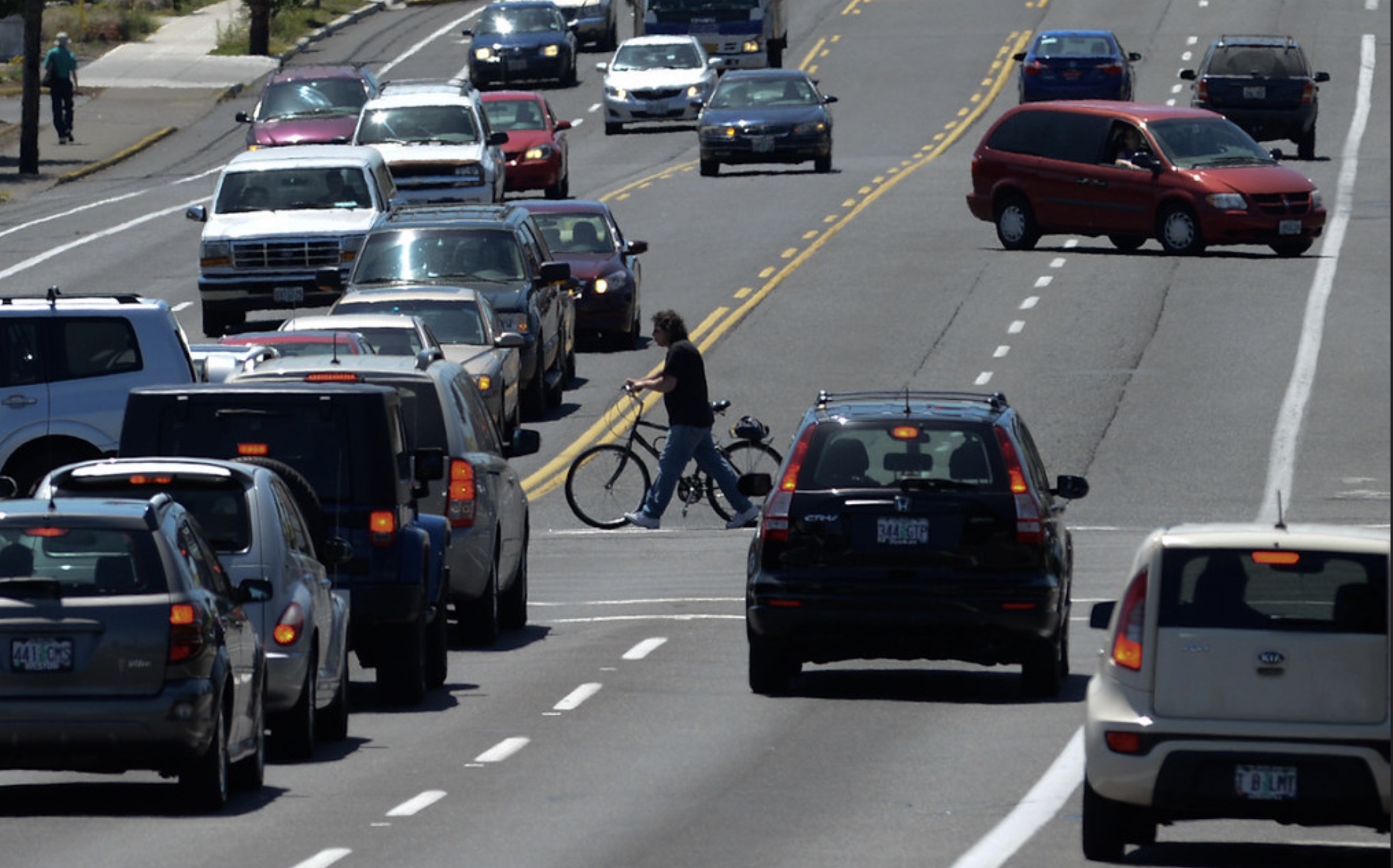
Oregon Governor Tina Kotek has put together a working group that will try and find a path out of our state’s transportation funding quagmire. The roster of the group hasn’t been made public, but Kotek’s Transportation Advisor Kelly Brooks told members of the Oregon Transportation Commission at their meeting last week that the first meeting will happen in April and they’ll publish a report with funding recommendations before the end of this year.
Since an attempt by lawmakers to pass a major transportation funding package failed spectacularly in 2025, it’s been common knowledge in Salem that they’d try again in 2027. What’s considered a band-aid funding bill was passed at the recent short session, but it’s only a temporary measure.
Speaking at the OTC meeting Thursday, Brooks said the working group’s goal will be to frame the 2027 conversation. The working group will include both Democrats and Republicans, as well as transportation experts, advocates, and everyday users of the system. Former Oregon Governor Kate Brown did something similar prior to the previous major transportation package that passed in 2017. The Governor’s Transportation Vision Panel produced a reported titled One Oregon that came out in May 2016. It was used to inform a series of public meetings about funding prior to the 2017 session.

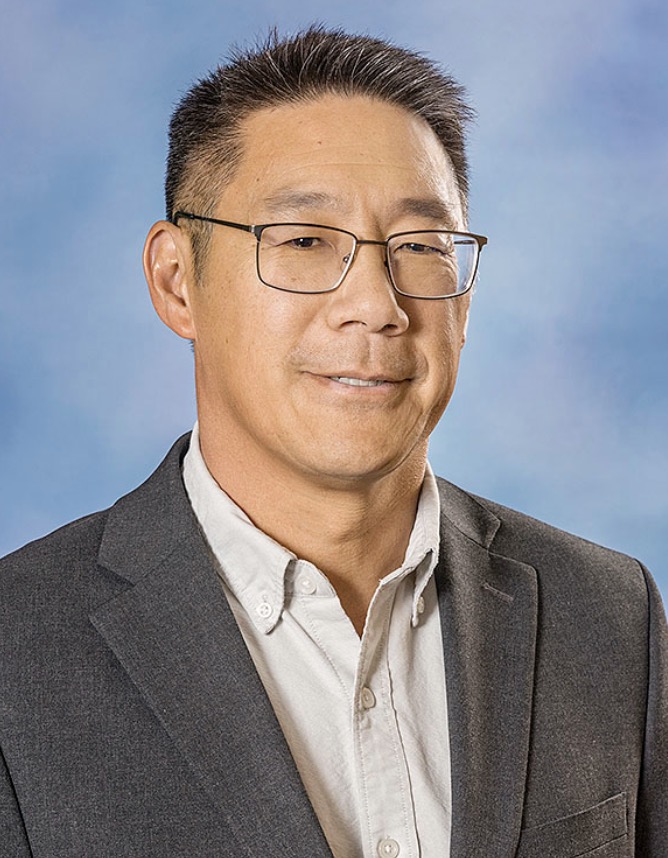
Kotek’s transportation working group project is being led by Susan Peithman, a 10-year ODOT veteran who began in the agency’s Active Transportation group. Prior to ODOT, Peithman spent two years at the Transportation Research and Education Center at Portland State University and was the statewide policy advocate for The Street Trust for over three years. Peithman’s other role at ODOT is director of the Climate Office.
Brooks didn’t reveal many details on Thursday, but did hint that Kotek is seeking to be innovative. “We are in a new place now, given what’s happening on the ballot and elsewhere, where we have to take a new approach to solutions,” she said. “What are what problems do we want to solve? How are we going to solve them? And how are we going to do it together?”
When it comes to the assignment the working group will be given, Brooks said they must address Oregon’s “structural revenue issue.” “We have a set of needs; so the first thing they need to do is grapple with, ‘What do our adopted plans say we’re supposed to be doing, and what are we actually doing? And how does our revenue match up with that?'”
ODOT and lawmakers had an opportunity to change their approach in the short session when the state faced a $288 million budget hole and sought to reallocate or “rebalance” $117 million into highway operations and maintenance. Despite many adopted plans calling for greenhouse gas emissions and more funding for bicycling and walking statewide, lawmakers raided $25 million in grant funding sources that would have gone toward projects that make it safer for kids to bike and walk to school, give people the ability to bike and walk on carfree paths, and they chose to reduce money available for passenger rail maintenance.
This political choice to maintain funding for highway expansion megaprojects like the I-5 Rose Quarter or I-205 widening projects while reducing funding for Safe Routes to School, passenger rail, and the Community Paths program was made crystal clear at Thursday’s meeting by Oregon Transportation Commissioner Phil Chang.
“I heard a little bit about the the legislative horse-wrangling around this [funding] rebalance,” Chang revealed in a moment of candor. “I think that projects like I-5 Rose Quarter and Center Street Bridge [a $470 million project in Salem] had specific legislative champions who, you know, didn’t convince all of their colleagues, but convinced enough of their colleagues, that those projects stayed untouched by this rebalance.”
Chang seemed displeased by how the funding reallocations went down. “I want to make it really clear for people that services delayed are services denied,” he said. “We are not going to be able to do multimodal projects in this biennium [ODOT’s two-year budget cycle] that would make pedestrians, cyclists, and particularly kids trying to get to school safer.”
Whether this new working group comes out strong in favor of more robust spending on non-freeway, non-driving infrastructure, remains to be seen. Brooks said the scope of the effort will look at funding needs beyond ODOT and that the report will address, “local system needs and transit as well.”
Stay tuned for an official announcement of the working group and its members sometime this week.

Thanks for reading.
BikePortland has served this community with independent community journalism since 2005. We rely on subscriptions from readers like you to survive. Your financial support is vital in keeping this valuable resource alive and well.
Please subscribe today to strengthen and expand our work.
Chang revealed in a moment of candor. “I think that projects like I-5 Rose Quarter and Center Street Bridge [a $470 million project in Salem] had specific legislative champions who, you know, didn’t convince all of their colleagues, but convinced enough of their colleagues, that those projects stayed untouched by this rebalance.”
Votes have consequences. The primaries are coming up and we desperately need less Democratic Corporatist incumbents screwing the rest of us over.
“Votes have consequences.”
Over 80% of the readers here will vote to uphold the status quo.
It’s amazing that you know to the exact percentage what readers of Bikeportland think….How exactly do you know this and which candidates of the non status quo should we vote for?
I assume since only you know how we all feel that you also know who we should vote for.
How about some names?
Not at all — I think it’s pretty clear to everyone. It’s not like the topic never gets discussed.
And of course I don’t know the exact percentage. 80% was a conservative estimate… the true number is probably closer to 90%.
So you still won’t tell us you are voting for Dudley or Drazen?
What a brave person you are. We are not worthy.
I made the observation that most people here will vote for the status quo candidates in the next election; one person said I must be a Heritage Foundation lib-owning robot, another said I was attacking them, and a third malfunctioned and started running malware and spraying spittle onto his screen.
Is the idea of voting for someone other than the incumbent really so wild?
So which is it, person with opinions on everything, Dudley or Drazen, not a hard question?
Funny you can’t answer… it’s much easier to attack the status quo with no alternative you can support and defend.
The internet warrior MO.
Dudley? Drazen? Hell no — I’m joining y’all in voting for Kotek.
I mean, things are great in Oregon. Right? I wouldn’t want to screw that up.
A cute line, but a mind-numbingly gross oversimplification.
I am a member of that 80% who will almost certainly vote for my incumbent legislator (just House, as this is an off year for my Senate district) in both May and November; in May because she is unopposed, and in November because her opponent has no website or public positions that I can find, but is a member of a state political party who publicly opposes all non-highway transportation spending. I also don’t think she is one of the folks Chang is alluding to, but since no one will name names, I can’t say for sure.
You strongly imply that there’s something inherently flawed in my reasoning and intended course of action. But, in my shoes, would you do differently? How so? I promise to genuinely consider any alternative you may provide.
Now, if I lived in District 29, you bet your ass I would be voting against Susan McLain in May because I have zero doubt that she is the ringleader (or one of a few, perhaps) of the folks Chang won’t name. She has consistently been an embarrassment when it comes to all of the wheedling she has done to try and fund stupid highway megaprojects at the expense of all else. Now, if McLain wins her primary, would I vote for her Republican opponent? Probably not, since bad as she is on transportation, a generic Republican (i.e., not one of the vanishingly few who are good on transit and active transportation) would probably manage to be worse, to say nothing of all of the other issues. For better or for worse, this won’t be relevant, because it doesn’t look like any Republican opposition has filed for the seat.
You seem to have plenty of time and energy for making snide facile comments. It seems like you would actually like to see some change. Have you considered putting that time and energy into coming up with solutions rather than just passive-aggressively attacking people on a blog?
Pointing out that people voting for corporatist dems are voting for more inequality, more SUVs, and no action on the climate crisis is hardly a snide comment. It’s a fact.
Dudley or Drazen, which is your Fav?
The dem primary election according to BB:
Kotek or Kotek or Kotek or Kotek or Kotek etc.
The actual dem primary candidates, thus far:
Tina Kotek, Forest Alexander, James Atkinson, Donnie Beckwith, David Beem, Brittany Jones, Cal Kishawi, Steve William Laible, Tristan Sheppard, Miranda Weigler
I would hope she has a serious candidate to challenge her but she doesn’t. I don’t know how to change that but I doubt your rants here will.
The primary is 2 months away.
Many of these people seem like good candidates but I live in the real world where none has a chance.
Democracy is hard, takes work, money, time and volunteers.
None of the people on your list has any of those.
I picture two guys in an office at The Heritage Foundation who have been given an assignment to “own the libs in Portland.” Libs all ride bikes, so they are good to target. Then pick a name that sounds vaguely bike-ish: “2WheelsGood.” Add some AI and proceed to stoke rage in the cycling community. When we are all fighting with each other, then mission accomplished.
If thats true then they’ve been remarkably determined. This is the third name this person has used over the years that I know of and their views have been remarkably steadfast throughout. It would be nice if you could just deal with the reality that people have different views and not continually try to use the AI or bot snide attack to try to avoid a discussion.
this user strikes me as the rebranding from our old contrarian Watts, granted only 2wheels, Jon, and Watts would know for sure, but I bet you’re spot on with other users, mate.
If you vote for more of the same, you should expect more of the same. If you don’t want to shake things up, then there’s nothing wrong with your reasoning.
Yes.
And I’m sorry if you felt attacked by what is actually a pretty anodyne reflection of what many people here have repeatedly said about themselves.
You conveniently left out the second half of that paragraph. Here, I’ll add it for you:
I realize that I forgot to include the governor’s race. I hereby pledge to vote for one of Kotek’s primary opponents. I will furthermore encourage everyone I know to do likewise.
So, aside from that bit of performative democracy, what’s next?
I don’t know… do you see voting as “performative democracy”?
If so, why bother?
Voting for a candidate who has no chance of winning is absolutely performative democracy. But I’m going to do it. If enough people do, maybe we can drop the “performative,” but I think you and I both know better.
Why bother? Because if enough of us do, maybe someone will notice the dissatisfaction with the status quote, even if we’re unable to defeat the entrenched incumbent? Not likely, but I’m grasping at straws here. So I can hold my head high and post in some comment thread that I took some bold step of voting against Kotek? Sure, I guess. That’s probably why I dubbed it “performative.”
And the question of what solution you propose remains unanswered.
“solution you propose”
My suggestion for people who don’t like the status quo is to stop voting for it.
Over the last 30 years, I have voted in every significant election (I’ve twice skipped school board elections when I didn’t feel I had the time to educate myself adequately enough to cast an informed vote). Every single time I voted for the candidate I felt had views on transportation that most closely aligned with my own (boost active transportation, transit, and inter-city rail). Furthermore, I have used my limited social capital to persuade others to do likewise.
“Mission Accomplished!”
No really, what’s next?
If you want to take it further, convince your friends, family, and neighbors to vote with you as well. At some point you need to convince people that they should support your views.
But ultimately, we live in a large and complex democratic society, and not everyone gets their way.
we absolutely need more Progressive Idealists screwing us over.
Sure, because it’s clearly not the parasitic-class of wealthy individuals and their corporatist politicians who have been stealing the wealth of the American middle class over the last 50 years, while starving the governments of tax funds leading to this austere hellscape that we are forced to exist in.
Interestingly, one can also draw a direct line to the left and its demand for equality via all adults in a home working for a faceless corporation while other people raise the children. Did you think wages would go up when the workforce is effectively doubled?
As I understand it, dual-income households were the response to stagnating wages, not the cause it of them.
So the “demand” from the “left” for fair hiring practices and compensation for the work being performed is perfectly rational.
Probably some “chicken or the egg” here, however, was it likely the causes of stagnating wages were secular or cyclical? We know interest rates came down dramatically as inflation did then as well, yet wages have never recovered in real terms, suggesting the economic factors were cyclical, yet how people have participated has been secular.
I’d agree that on the surface, where most people hang out, it is perfectly rational, but even a slight digging beneath the surface suggests due the the second order effects it isn’t rational and doesn’t make a lot of economic sense either. Even today there are a good number of examples of this. Say, PPS, the teachers went on strike and executed a contract that the district can’t afford, resulting in school closures and mass layoffs of teaching and administrative staff. On the surface that sounded good, more money, the second order effect is that many of the people who thought they were getting more money now don’t have jobs and the people who supported it, now have their kid in a classroom with 30 other kids.
Low skilled service jobs are another great example. The push for a $20 minimum wage, even for waiters, increased the costs on restaurants so much it pushed many over the edge to incorporate kiosks as the primary way to order. Worked okay for those that made the cut, but at a place that used to have 4 front of the house workers, now there may be 1, and in many restaurants waiters became a fixed cost, so the number went down along with service. These are just perfect metaphors for many policies the left pushes, costs go up for everyone, service goes down, in aggregate, nobody is better off. Fun.
There is no primary challenge for Kotek, feel free to jump in or just vote for Chris Dudley. That will stop us for getting screwed over I bet.
You do know Kotek isn’t the only one up for re-election, don’t you? You don’t actually have to vote for an incumbent without a primary challenger. You can write in a vote for “reform ODOT” or something similar. If enough people do that it will send more of a message than voting for the incumbent as usual.
I realize that most dems don’t really vote in primaries* (because the corp-fascist party machine candidate is the only choice) but there are currently 9 democratic candidates for governor.
Rabbi Fora Alexander, in particular, looks like the kind of democrat I might vote for given the lack of an open and democratic primary:
https://foraoregon.com/issues/environment.html
https://foraoregon.com/issues/safety-net.html
* or care about them
Tina Kotek is a corporate fascist…….. you are so unserious and frankly all you do is post ridiculous claims.
I won’t vote for her but your slanders here are juvenile and embarrassing.
You should absolutely vote for her in the primary. I may well join you. Do you think she will win? You rail incessantly about ‘corporate dems’ and needing to vote all the incumbents out, but you don’t explain how voting for fringe candidates will render the democratic governing coalition more responsive or effective. Like it or not, any serious governing coalition will have to deal with conservatives one way or another.
Right Micah, this team-owning is all entirely pointless. Unless people have a realistic alternative, we vote least worst as usual. I’m sure (hope) many of us would prefer to have a parliamentary system where party affiliation isn’t akin to identity or team, and we can actually vote for policy based on what has worked, but unfortunately we don’t have that option.
Most of us are aware of a lack of great choices, but at least we still have that vote at present. I don’t think most people recognize how fragile that is. OR is actually one of the few states where the right to vote isn’t being systematically undermined. Let’s stop the petty complaining, and start producing solutions to change our political system.
Are the continually re-elected incumbents going to be the ones to change a system that benefits themselves and their established power dynamics very well? I don’t think they will.
Who is going to do it then?
Voting the incumbents out or at least getting close enough to scare them is the first step in shaking up the system and showing that the voters do have power.
Who are you supporting, who is your representative?
You keep avoiding the question. Do you live in Oregon?
Who do you think needs voting out of office?
I suspect you don’t live in Oregon.
I agree both about desiring a parliamentary system and being thankful that we still have the right to vote.
An unexpected shift away from Kotek to a progressive/left-leaning candidate in the primary would cause panic in the democratic establishment and cause them to stop dismissing progressives (as opposed to their disgusting pandering towards MAGA republicans).
It pains me to have explained that.
I’m sorry to have caused you pain, but I think a progressive uprising is exceedingly unlikely statewide and in most legislative races. The places where people prefer progressive candidates already have pretty progressive representation. What would make more sense is for the progressive and regressive parts of the democratic party to learn how to cooperate so they could wield power effectively.
I hope you and others here grow tired of waiting for the regressive dems to be less regressive..
Someday this war’s gonna end.
I grew tired of regressive dems years ago (my heart broke when they made Hillary bake cookies). If progressive idealism could carry the day, it would have by now. Better to engage in the actual world as it exists than cling to the fantasy that if we blow up our coalition something better will emerge.
Every vote for these progressive candidates on my part has been a lesser evil vote*. I’m literally voting for politics that I don’t like only because I view electing violent republican fascists as a greater evil. Heck if the election comes down to Kotek (really despise her politics) and a MAGA fascist#, I will vote for Kotek and drink heavily afterwards.
* not a lib, progressive, or social democrat
# Dudley included
Yet it doesn’t pain you to acknowledge that a candidate like that won’t be successful because after 40 years of uni-party rule, their utopian vision of the future is always an additional leftward shift of the Overton window and a few billion dollars away. Additionally, that four decade run has effectively diluted or ruined every institution they have touched, which I think even bleeding heart liberals are beginning to openly see.
Keep on voting for the right-wing duopoly* where a corp- and billionaire-captured party is nominally “left”, PS.
#3rd parties effectively illegal
Ah, Kotek’s at it again—round two of ‘Councils That Go Nowhere ’ Remember the Prosperity Council? Tax disconnects harming businesses, big talk, zero bite. This new transport crew’s shaping up to be the sequel no one asked for. Popcorn’s ready, mates!
https://www.wweek.com/news/state/2026/02/26/some-members-of-koteks-prosperity-council-unhappy-about-tax-change/
Gov. Kotek should spend less time appointing yet another blue-ribbon commission and more time getting good at politics within the Democratic party.
Last year the legislature spent umpteen hours traveling around the state, hearing what Oregonians want in their transportation system. It all got ground up into a bill that was crashed by ONE senator (Mark Meek).
So maybe Dems getting their own house in order is what they should concentrate on.
“So maybe Dems getting their own house in order is what they should concentrate on.”
This is exactly what the poster has been suggesting that you have disparaged as being a conglomeration of Heritage Foundation AI using bad people.
Getting the Corporatists incumbents out is the first step for the Dems to get their house in order.
Feel free to tell us who your Rep is and who you think will do a better job.
My rep is Thuy Tran and she votes mostly for issues I support. Do you know your Reps name or how they vote?
Who are you supporting?
This weird no name blame game you and others do here is really cute.
You bring up the word Corporate Dems in every post.
Which ones don’t you like, who are the Mythical heroes that you are voting for to save us?
There are no heroes I’m afraid, its just us.
If you’re comfortable with how Portland in particular and Oregon in general is doing than I’m happy for you, it sounds like you are doing well. It’s not working for a lot of people though and while I understand your desire to protect what you have at the expense of others, I do not like it. I first moved to Portland by chance in ’05 and fell in love. Times were hard, but there was so much energy and fun things to find. I moved away, and then moved back a little while ago and the change from those earlier days is shocking. If you’ve been here the whole time you might not have noticed what is happening, the parable of the frog slowly boiling in the ever increasing water temperature springs to mind.
A big part of the problem is the established power dynamics in the House and Senate where the deal makers, lobbyists, and donors know the representatives far too well. They have an outsized hand in crafting the legislation and priorities instead of the politicians listening to the people. Remember all those listening sessions for the transportation bill that were ignored? Aside from outlawing lobbyists, capping all donations at perhaps $50 and installing term limits (all things the representatives would need to do to themselves) the next best thing is to shake up the established power circles and give the incumbents a reason to listen to the voters instead of being assured of victory as they are now.
I have been rendered disabled (hopefully temporary) by a car and the lack of a coherent transportation plan that works all over the city and not just on a few bourgie routes has taken on a whole new frustration. The democratic party inability over decades to budget for the basic movement of the citizenry is no longer as academic as it was before.
I am very frustrated. I see that you are not. Deal with it!
Oh, and you seem fortunate to live in Tran’s district. A newly elected person who has actually challenged herself in life and succeeded in several different areas. It will be nice to see what she can do in a few terms and then it should be someone else to give it a try. When we say “No Kings” it means “No political royalty at any level”.
So you don’t know who your representative is?
How are things in the state you live in?
It’s none of your business who my rep is and I don’t care whose yours is. I don’t think you read my post so that was the last time I’m going to feed the angry troll here. Take care and keep those kids off your lawn.
I believe “FlowerPower” is a real person that has appeared by name here. If I’m correct, they are younger and not so cynical and paranoid.
Nah, it was crashed by Oregon voters who referred it to the November ballot. Of course the kings and queens of the supermajority don’t like direct democracy by the people—so now it will probably be shot down in the primary ballot (unless the lawsuits against that go through).
Ironic, practically overnight our elected officials found money in the couch cushions for a billionaire but can’t to keep the lights on (aka roads maintained, etc).
As I’ve always said, we don’t have a crisis with our excessive tax burden (being near the top in the country is such a win win for Oregon), we have a spending crisis by our elected officials who can’t seem to take care of the actual taxpayers in this state and our most basic of needs.
I wonder how many court side blazer tickets and campaign donations made it into the hands of our elected officials?
Agreed, and our emergency is that we have a city management salary crisis, community committee group salary crisis, and non profit emergency, that doesn’t actually accomplish the things most of us Portlanders thought they were signing up for. It’s like the government saying we can’t afford universal healthcare while spending billions of our tax dollars daily on bombs, guns, planes, ships and ammunition
They are going to spend a bunch of time and money on this blue ribbon committee, and will come back with the same recommendations we already knew; toll roads, increase gas tax, vehicle mileage tax, increase registration fees. Worse they will recommend a flat tax for all Oregon residents regardless if you even own a car. Rinse and repeat.
I would urge Portland-area bicycling advocates to hone their message. Focus on some specific projects that you legitimately think will convert drivers to riders. Non-site-specific arguments pitting bikes against cars won’t carry much weight.