This past week was a rough week to be the pregnant family biking columnist at BikePortland. Heck, it was a rough week to be a human being in Portland.
Like many Pacific Northwesterners, our home doesn’t have AC, so we just roast and try to figure out survival strategies. Cooling off with young kids is more difficult since the pandemic has shut down the majority of kid-friendly indoor spaces or forced them to close their air-conditioned play areas. We tried riding the bike a bit in the mornings at the beginning of the week, but by the end of it, I was actually making up excuses to drive our van around, just for the needed respite of cooler temperatures via car AC. I even went shopping, with four children, in actual stores, just to avoid sweating it out at home. We visited the library to cool off and volunteered to cook dinner at a friend’s house who had air conditioning.
Even with our best efforts to make the best of things, by the week’s end I was beat, hot, tired and even bored. I was too hot to do chores, to accomplish any projects, to exercise, to ride a bike, or lift a finger. At last I took a cold shower and began to fantasize about winter biking in drizzle, rain, and blustery cold.
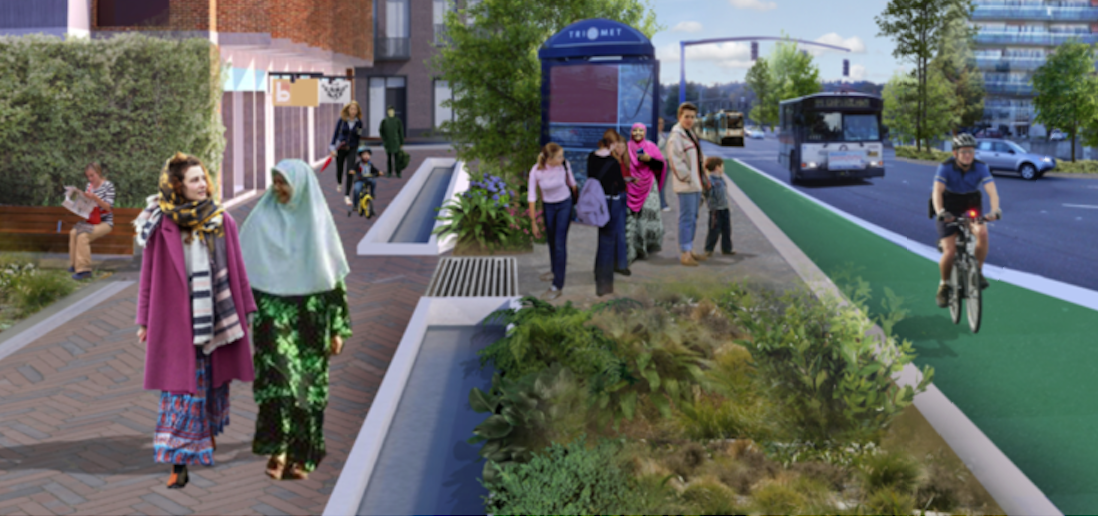
This week, the Bureau of Planning and Sustainability (BPS) released the long-awaited Proposed Draft of their West Portland Town Center Plan (WPTC). It “leads with a health and racial equity lens” and the WPTC effort has baked in anti-displacement policy into every aspect of their ambitious plan. If they can maintain the diversity and affordability of the Town Center as it grows, this will be a showcase for equitable development.
Map of the West Portland Town Center. Source: Bureau of Planning and Sustainability
The purpose of the Town Center designations is to use public investment and zoning changes to jump start private investment in the Center as part of an overall city-wide growth strategy. This particular Town Center covers an area dominated by I-5 and SW Barbur Blvd, and sits astride “The Crossroads,” where SW Capitol Hwy, Barbur Blvd and I-5 meet in a starburst pattern.
The Crossroads is car-dominated, with longstanding infrastructure deficiencies which have hindered building travel networks for people walking and on bicycles. Barbur Blvd is a “high-crash corridor,” and the Crossroads intersection is in the top 10% of the statewide Safety Priority Index System. The intersection is also the target of ODOT’s $3 million Barbur Crossroads Safety Project, scheduled to break ground this year.
The public investment would begin with the land under the Barbur Blvd Transit Center, a park-and-ride sandwiched between I-5 and Barbur Blvd.
Advertisement
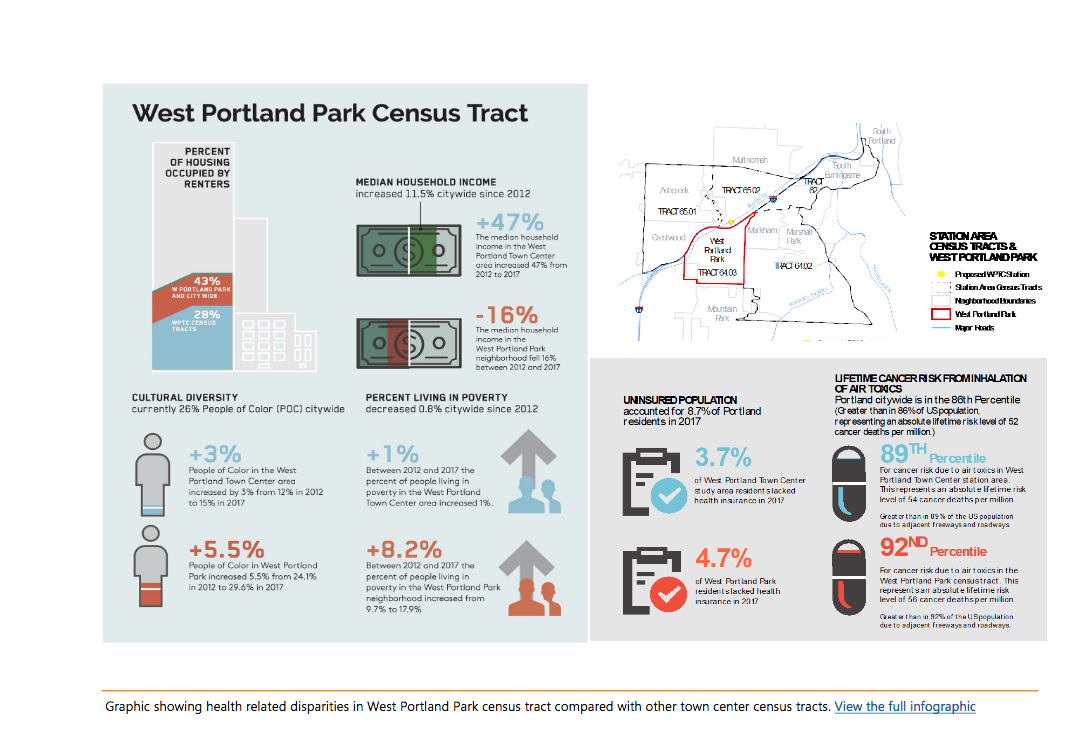
Consistent with leading with a “racial equity lens,” the report’s Introduction emphasizes West Portland Park (WPP), a neighborhood which is home to an Arab and East African immigrant community. A commissioned demographic study in Appendix B compared WPP to other neighborhoods in the region along key demographic features such as race/ethnicity, income and education level, among others.
I ran into a couple of roadblocks with the demographic study which prevented me from fully understanding the special significance of WPP. One, the “study area” to which WPP was compared came from census tracts which appear to extend beyond the Town Center boundaries into more affluent neighborhoods to the north and east. Although the demographic report was interesting, it did not seem specific to the WPTC. And two, I could not find any hard numbers (just percentages) for WPP and “the WPTC Study Area” — I was unable to learn how many people the report was talking about. (BikePortland has contacted BPS to verify the accuracy and completeness of these observations and will update this article when we have more information.)
An earlier BPS report, The Barbur Concept Study of 2013, identifies “resolving the congestion issues and improving the street design to better accommodate all users” as the “real catalyst” to growth near the Crossroads. Improving congestion issues and accommodating all users, in turn, depend on the cooperation of ODOT and investment in stormwater infrastructure. The WPTC draft plan does not boldly address either of these issues. Along with the fate of the Southwest Corridor light rail project, they remain uncertainties.
Of transportation and stormwater deficiencies north of I-5, the plan states that
Allowing sufficient amounts of new housing to be developed gradually over time in this area is critical to providing a population large enough to create the market demand for new commercial amenities nearby … It will also support needed transportation and stormwater infrastructure improvements.
This build first, figure out the infrastructure bit later, leads to large gaps in the cycling network, and perpetuates southwest Portland’s position of having the least sidewalk coverage in the city.
The WPTC team invites your feedback in anticipation of a hearing before Portland’s Planning and Sustainability Commission. From there the Commission presents their amended version of the plan to the City Council in late fall or early winter.
Metropolis Cycles is looking for a year round part time mechanic. We are looking for someone who has 4 plus years experience. Option to move into full time next season. This job requires customer service, sales, as well as a ton of mechanical work. Working Saturdays is required. Pay starts at $16-17 hour (based on experience) . This position has PTO after 90 days and health benifits. Raises are based on performance. Must be friendly with customers and staff. Our shop works on most bikes, from mountain bike suspension to Bosch E bikes. Modern mechanic skills are a plus. Looking for a punctual, professional person who does not have reservations talking with the public.
How to Apply
Submit a resume and cover letter to brad@metropoliscycles.com. Please have at least 2 references from previous related work (preferable a business contact).
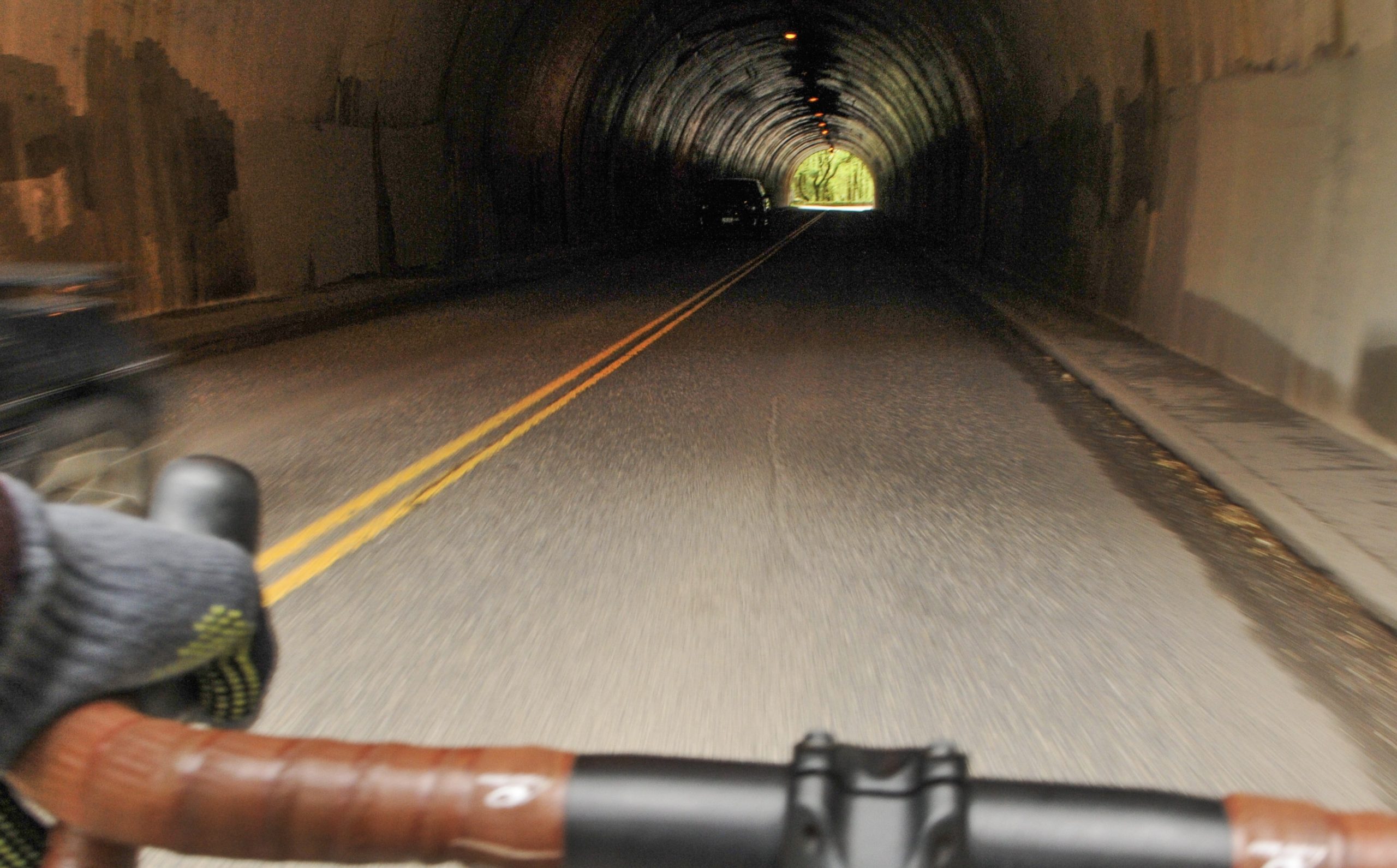
Heading down one of the two tunnels on Cornell Road.
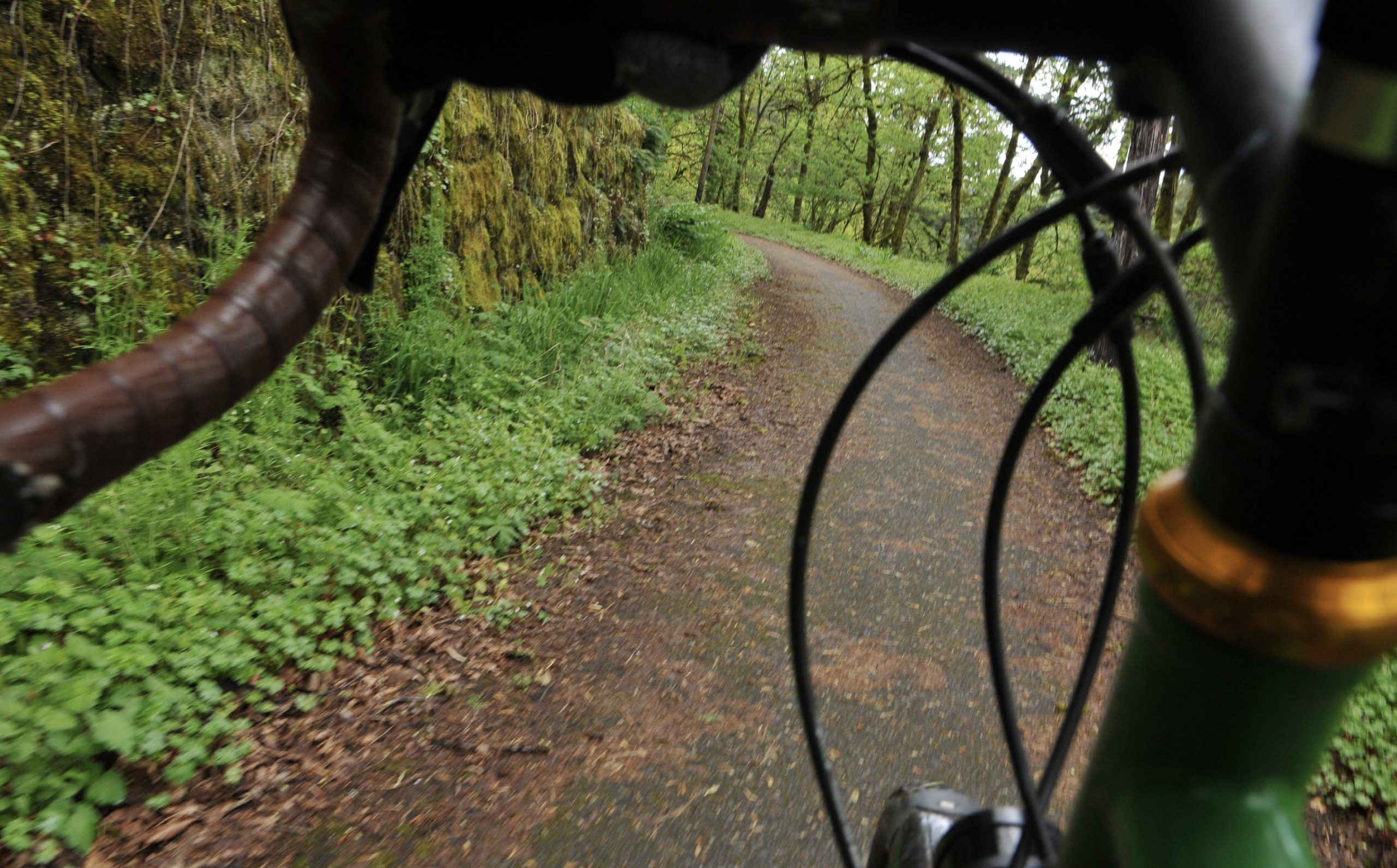
One of the two fortuitous paths around the tunnels.
(The section of Cornell that will be closed to drivers through spring 2022 is a very popular bike route. Click for captions. Photos: Jonathan Maus/BikePortland)
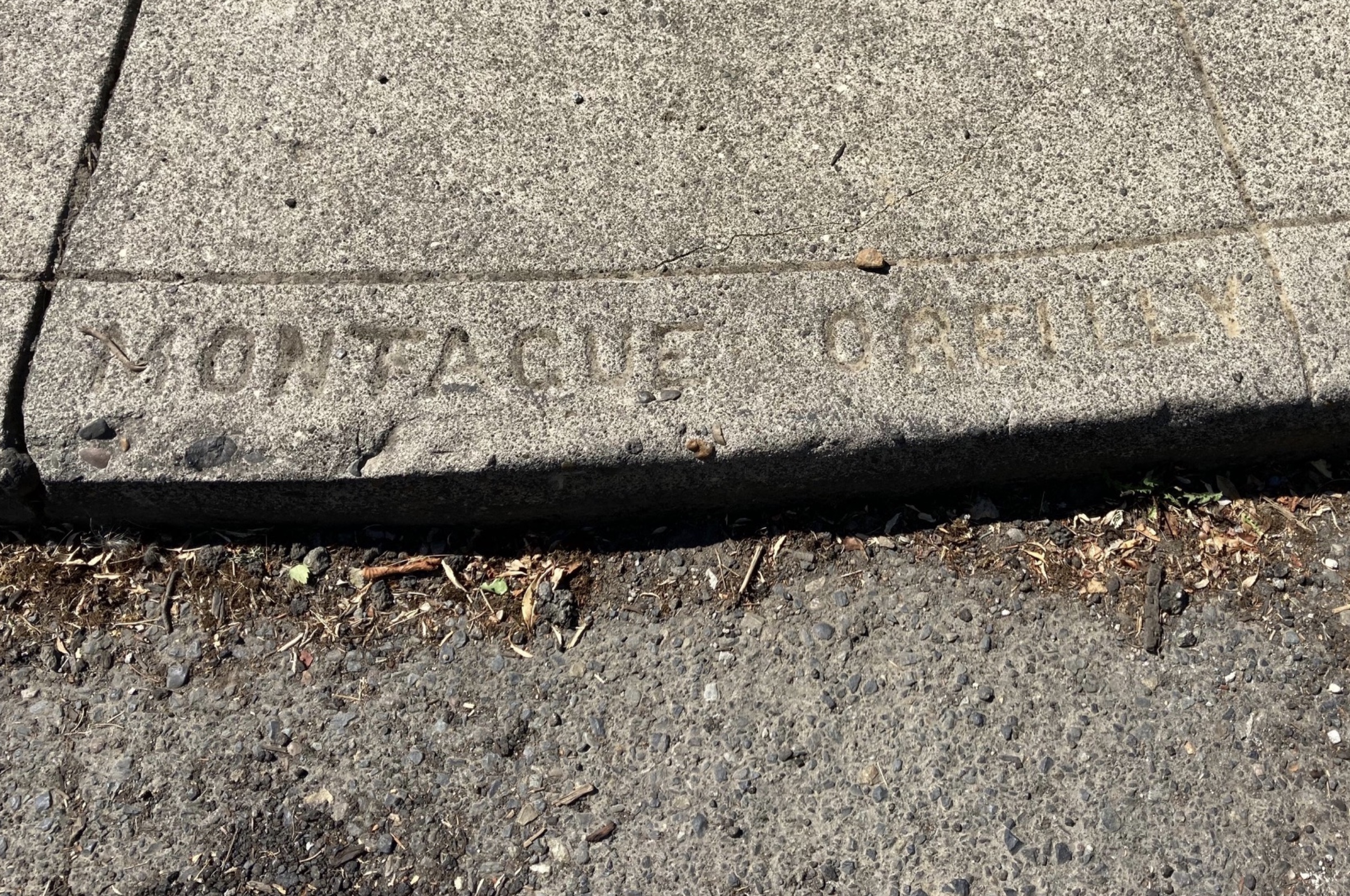
Exactly who pays for building Portland’s sidewalks has been inconsistent throughout the city’s history. The inconsistency “is illuminating to the degree that it falsifies a long-standing myth among citizens and government officials alike—that all of Portland’s local streets were paid for by the abutting property owners.”
That quote is from a 2000 draft report titled Recommendations for the Local Improvement District Process (PDF). BikePortland reader and frequent contributor of comments, David Hampsten, forwarded the PDF to BikePortland this weekend, and we’ve uploaded it because it’s not available anywhere else online.
Tom Miller at a PBOT event in August 2012. (Photo: Jonathan Maus/BikePortland)
The latest shakeup to Portland Mayor Ted Wheeler’s staff includes another name that will be familiar to many of you: Tom Miller. After adding former mayor Sam Adams to his team back in January, Wheeler has now brought on Adams’ former chief of staff. Miller was Adams’ most trusted advisor during his ascent in local politics until Miller was named Bureau of Transportation director in 2011.