(Photo: Multnomah County)
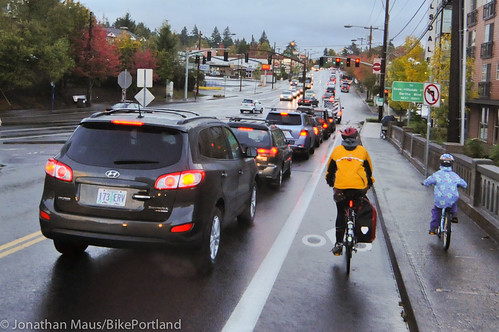
Multnomah County has made major progress on the Sellwood Bridge project and at the start of next month they’ll flip the switch on a traffic change that will impact your bike ride.
🚨 Please note: BikePortland is currently on hiatus and only publishing guest articles. Learn more here. Thank you. - Jonathan 🙏
Multnomah County has made major progress on the Sellwood Bridge project and at the start of next month they’ll flip the switch on a traffic change that will impact your bike ride.
Last week at the Ann Niles Transportation Lecture, Los Angeles Transportation Director Seleta Reynolds said the overwhelming majority of her job is good management, not the clever policymaking that everybody usually wants to talk about.
Here at BikePortland, we’re guilty of talking a lot about clever (or not so clever) policymaking. But this year, the Portland Bureau of Transportation is also going through some operational changes that are worth knowing about.
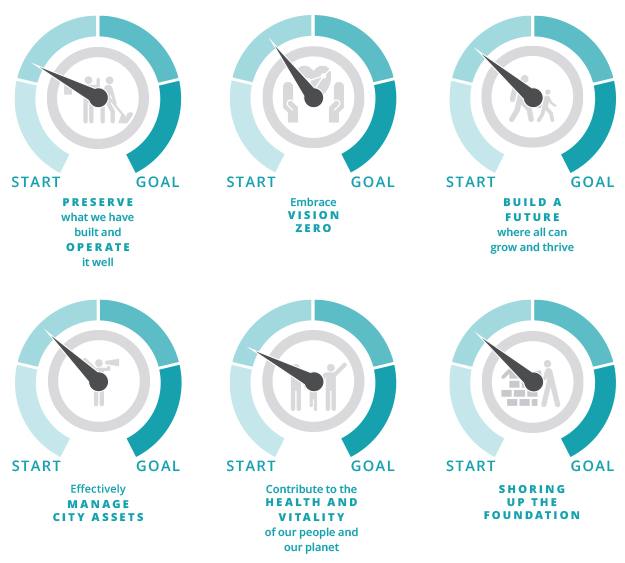
Under Director Leah Treat, PBOT is working to be more precise and public about the status of its many projects. And a new tool on its website looks a lot like a gimmick but is actually a pretty good new way to keep track of everything the city is up to.
Bike theft is a topic that gets lots of air play these days. We probably know the basic facts, but, curiously no one has so far produced a statistic that would help us understand the probability of having a properly U-locked bike stolen (here in town, or anywhere). Gerald Fittipaldi recently ventured that upwards of 95% of bikes stolen on the PSU campus were *not* locked with a U-lock, but beyond that all we hear are anecdotes. One would think that the Bike Theft Task Force would have some figures.
Vancouver is one of the busiest bike corridors in the city and the signal came as part of the N Williams Traffic Safety Project.
City press release below. More coverage to come…
PBOT, local organizations and community representatives to switch on new traffic signal at North Vancouver and Cook on October 14
(Oct. 12, 2015) On Wednesday, October 14, Portland Bureau of Transportation Director Leah Treat will join local businesses and community members to activate the new traffic signal at North Vancouver and Cook and highlight the positive impact of the North Vancouver Avenue and Cook Street Local Improvement District.
In their open-ended comments about traffic diverters and speed bumps proposed for Southeast Clinton Street, one Portlander after another has chimed in to support the concept of making Portland’s most important bikeways more comfortable to bike on.
“Please fix things before my girlfriend moves to Detroit,” one frustrated Clinton Street user wrote.
As we reported last month, people who’ve participated in the city’s very public open house and its online survey have been overwhelmingly in favor of the diverters. But as fans and critics of the city’s plan both organize politically, the city has received memorable comments on both sides of the issue. Here’s a selection of what they said, lifted from results of the open house and online survey that we requested under the state’s open records law.
Three seemingly unrelated bike thefts in the past four days have Portland’s close-knit racing community feeling frustrated and fed up.
It started Thursday night and we just got word of another bike stolen a few hours ago. In that period five high-end racing bikes have been nabbed by thieves. The incidents don’t appear to be connected, but it’s rare that so many expensive bikes used for racing would be stolen in such a short period of time.
Please be on the lookout for these bikes:
— Shawn Small, founder of Ruckus Composites, got his custom mountain bike stolen last Thursday night. The bike is a one-off that he made and custom-painted himself. He has ridden it on the Oregon Outback and raced it at a 24-hour event. The bike was stolen from Southeast Portland. See details and photos below…
If you’ve followed this site for a while you know that here in Portland, people do a lot of amazing things by bike: raising a family, getting married, moving, and responding to disasters are just a few of them.
I like to share those types of stories here on BikePortland because they challenge people’s assumptions about what bicycles make possible. That’s why I get excited when larger media outlets give them attention because their I know their audiences will be even more amazed and inspired.
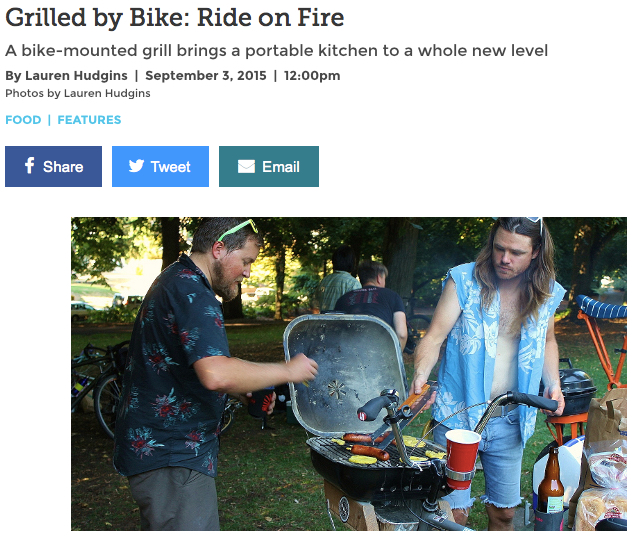
Case in point are two recent bits of media attention worth noting: Portland’s “Grill by bike” trend highlighted in Paste Magazine and the Pedal Powered Talk Show earning a spot on Oregon Public Broadcasting’s Oregon Art Beat program.
By a scan of headlines and social media feeds, last week’s International Walk and Bike to School Day was a big success. But the full picture reveals a more sobering truth: The vast majority of kids didn’t walk or bike to school.
[This post was submitted by BikePortland subscriber Colin Reis. See more BikePortlander Posts here.]
If you live in North Portland anywhere west of Denver Avenue, then you’re probably familiar with Greeley Avenue. It cuts diagonally from Arbor Lodge neighborhood through Overlook and towards the Fremont Bridge, where it meets up with Interstate Avenue. This means that if you biked south on Greeley from St. Johns or The University of Portland, the 12 blocks that you’d have to travel to get from Greeley to Interstate @ Killingsworth Avenue would be avoided entirely because of Greeley’s diagonal tilt. If you prefer direct and efficient routes, hopefully you’ve signed on by now, especially if you’re a North Portland resident. A nice bonus is that Greeley goes right through the Adidas Factory with all of its flair.
Here are the bike-related links from around the world that caught our eyes this week:
Bike migration: Refugees from Syria, Iraq and Afghanistan are arriving in Storskog, Norway, 250 miles north of the Arctic Circle, by biking across the border from Russia.
Ghost bikes: Grist traces the history of the memorial tradition to St. Louis.
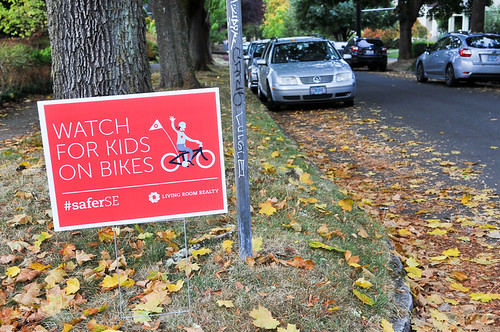
A Portland real estate firm is handing out free signs that encourage people to ‘Watch for Kids on Bikes.’
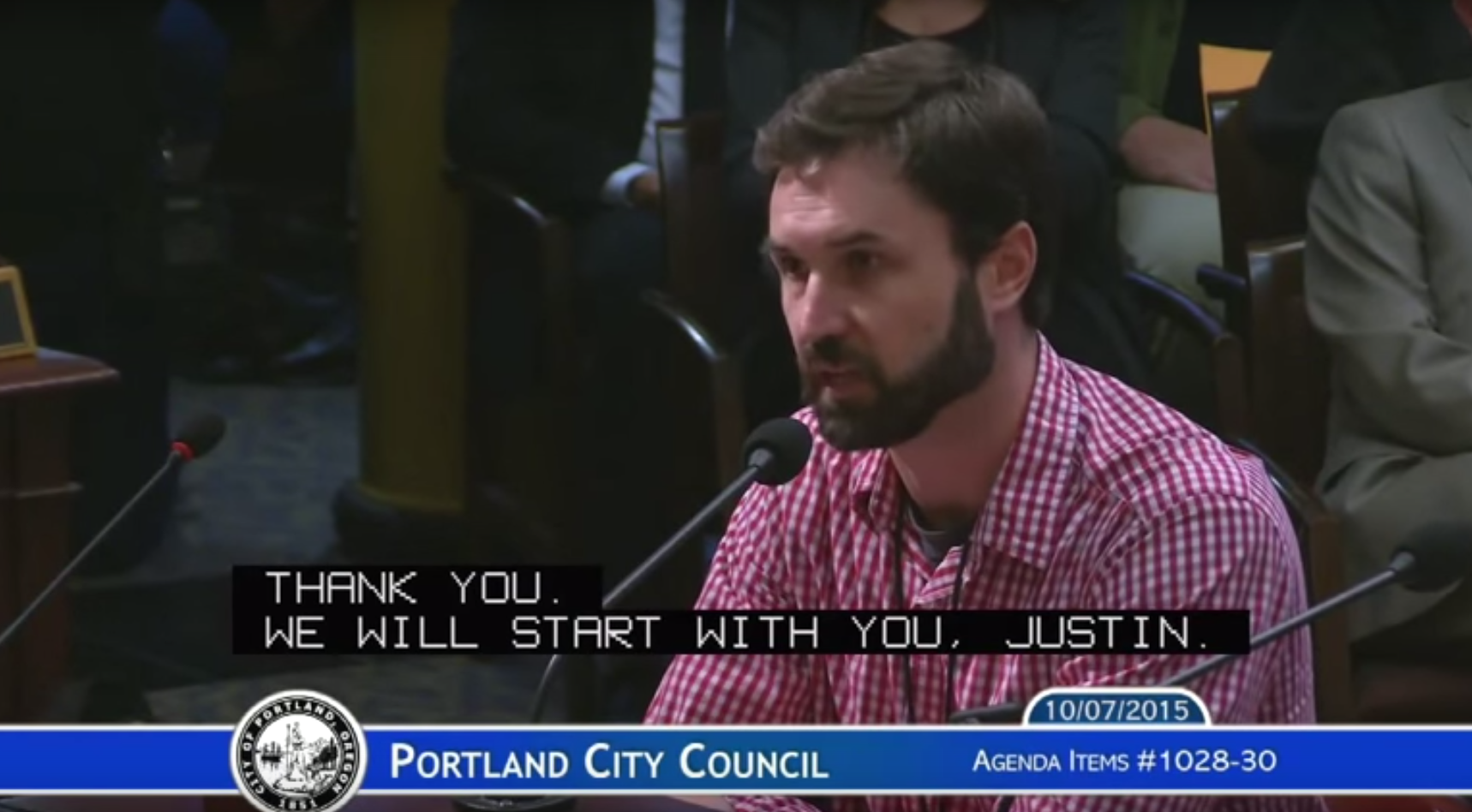
At City Hall on Wednesday, a searing picture of what it means to be a low-income renter, looking for space in Portland’s housing crisis.
At City Hall on Thursday, a seemingly earnest discussion of whether it’s fair to charge cars more than $0 for taking up space.
Nobody is claiming that an opt-in neighborhood parking permit system — the main measure the city is considering — is anything close to a solution for Portlanders searching for housing amid one of the country’s worst housing shortages. Still, it was odd this week to watch Portland’s City Council lament as if capitalism mandated that even the very poor must pay for 130 square feet of bedroom, and then 21 hours later debate whether the government should continue to guarantee free 130-square-foot parking spaces almost everywhere in the city.