




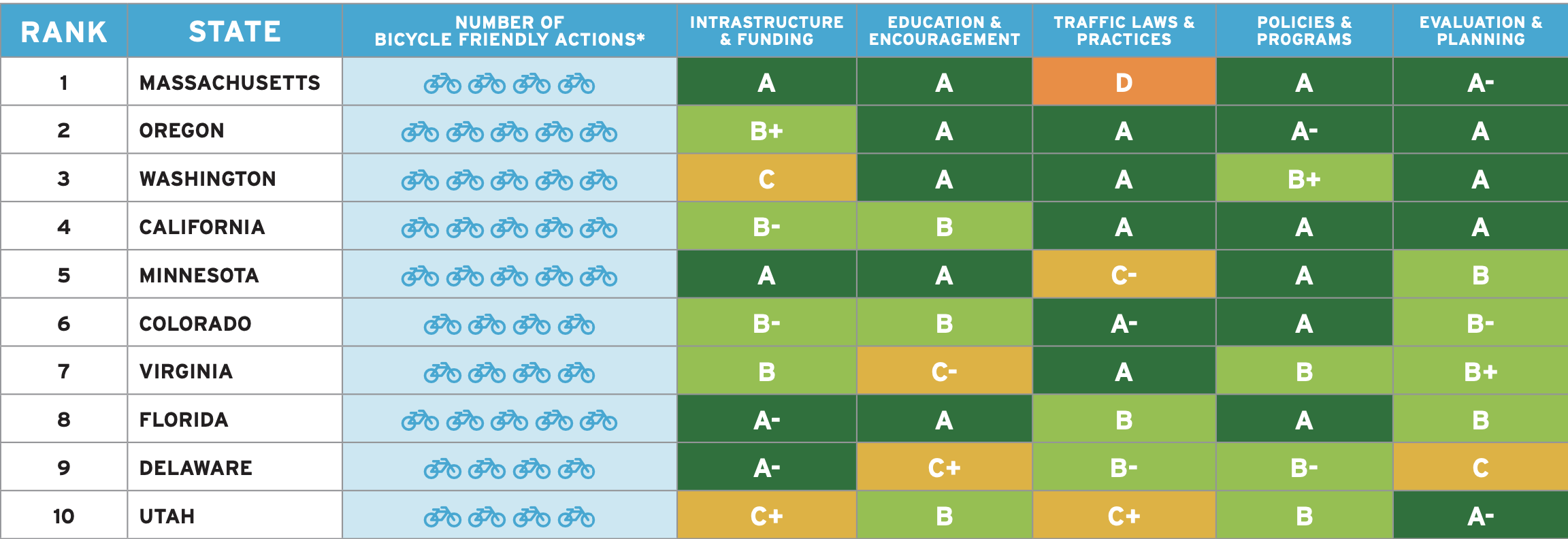
According to The League of American Bicyclists, which recently released its 2022 list of the most bike friendly states, Oregon is the second most bike friendly state in the United States, coming in right behind Massachusetts. We made second place the last time the League published their rankings in 2019, when we were beaten out by Washington.
Speaking of Washington, our neighbor to the north slipped from its first place placement for the first time since the League started publishing these rankings, this year coming right behind us at third place. (Psst: while we enjoy a little friendly Pacific Northwest rivalry, keep it between the Ducks and the Huskies. We want to see all states succeed when it comes to biking.) California and Minnesota came in at fourth and fifth respectively.
The rankings are determined based on five factors, which are outlined below. Here’s how our report card looked:
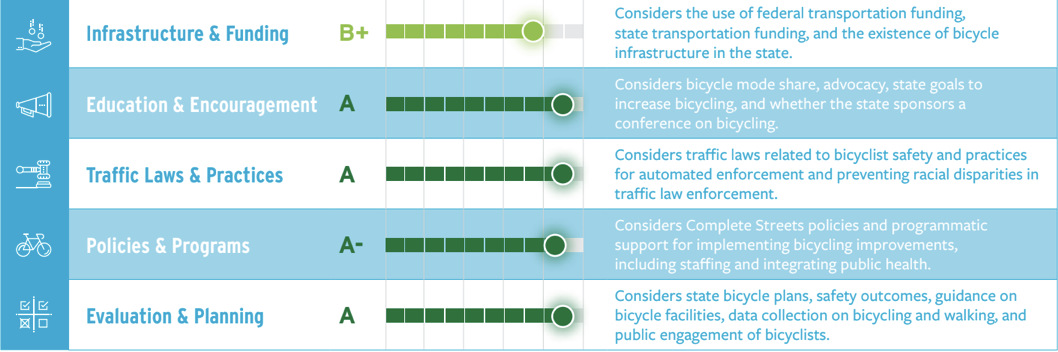
Oregon is one of 10 states to have adopted all five of the League’s ‘bike friendly actions,’ which include a Complete Streets policy, a safe passing law, a statewide bike plan, spending 2% or more of federal transportation money on biking and walking and having a bicycle safety emphasis area.
Oregon comes in at first place nationally for bike commuting mode share, as almost 2% of commuters bike to work here. This number is higher in cities like Portland, Eugene and Corvallis (the last of which beat Portland handily as Oregon’s top city for bike commuting in 2020), and we’d like it to be higher statewide, but considering how rural much of Oregon is, coming in first place here is nothing to scoff at.
Advertisement
Despite doing so well overall, the League did provide some ideas of how we can improve in their individual state report for Oregon. These suggestions are things Portland bike advocates talk about often, like how we need to increase mode share in non-emitting modes of transportation like biking and walking, and that “reducing or increasing scrutiny of projects to increase motor vehicle capacity will be key to achieving reductions in greenhouse gas emissions.” With multiple anti-freeway campaigns taking place in Portland right now, there is certainly the people power to make this happen.
The League praises Oregon’s bold commitments to climate action, but also says leadership needs to act to reduce transportation-related greenhouse gas emissions in order to actually meet those goals.
In fact, the League calls out the Oregon Department of Transportation by name, saying they’ve had “high-profile opportunities for cultural changes at the agency” but haven’t acted on those opportunities as they should.
“As a national leader in bicycling and walking, how the Oregon DOT and other partners navigate these changes can have national impacts. The League hopes to see positive cultural changes that embrace equity, communities, and active transportation gain momentum moving forward,” the report says.
Advertisement
Taking a 10,000 foot view, this report shows some national improvements, stating there has been a “marked increase” in bicycle friendly actions over the last 10 years.
“We found many states answering the call to design safer streets for all people. The League of American Bicyclists congratulates every state that is taking action to improve the safety and experience of people bicycling. Since 2015, we have seen the number of states taking all five of our recommended Bicycle Friendly Actions nearly double,” the League reports.
It’s good to see national trends indicating biking and bike safety is on the rise. There has been much ado about the ‘pandemic bike boom,’ and with this report, it looks like leadership is at least attempting to meet the demand.
Since I’ve lived in Oregon for so long, it’s hard for me to remember what biking anywhere else was like, and I think I take it for granted how nice it is to bike here. That being said, we can acknowledge we’re doing a comparably great job while still holding our leadership accountable.
You can read the whole report here and find out more about how the League suggests leaders act on making their states more bike-friendly.

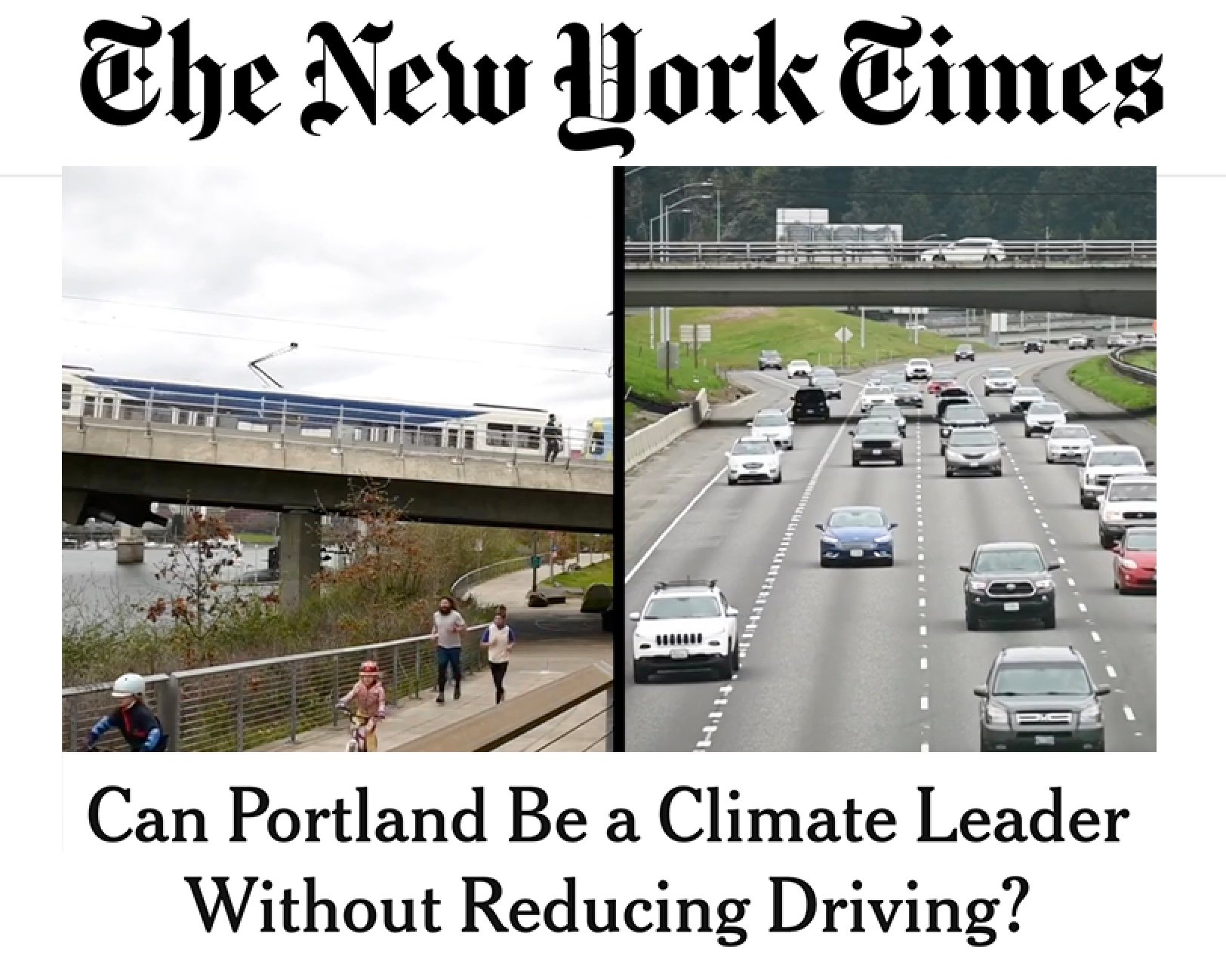
It’s a huge day for Portland transportation reformers who want Oregon to more quickly adapt to a future where freeway expansions don’t happen and we finally break off our dysfunctional relationship with cars.
Activists who’ve spent years fighting against the negative impacts of our region’s car overuse problem woke up to a major story in the New York Times that gave their positions and opinions a national platform. To make it even better for them, the venerable news source framed their story around a question, “Can Portland Be a Climate Leader Without Reducing Driving?” that isn’t much different than the main tagline of local nonprofit No More Freeways: “Climate leaders don’t widen freeways.”
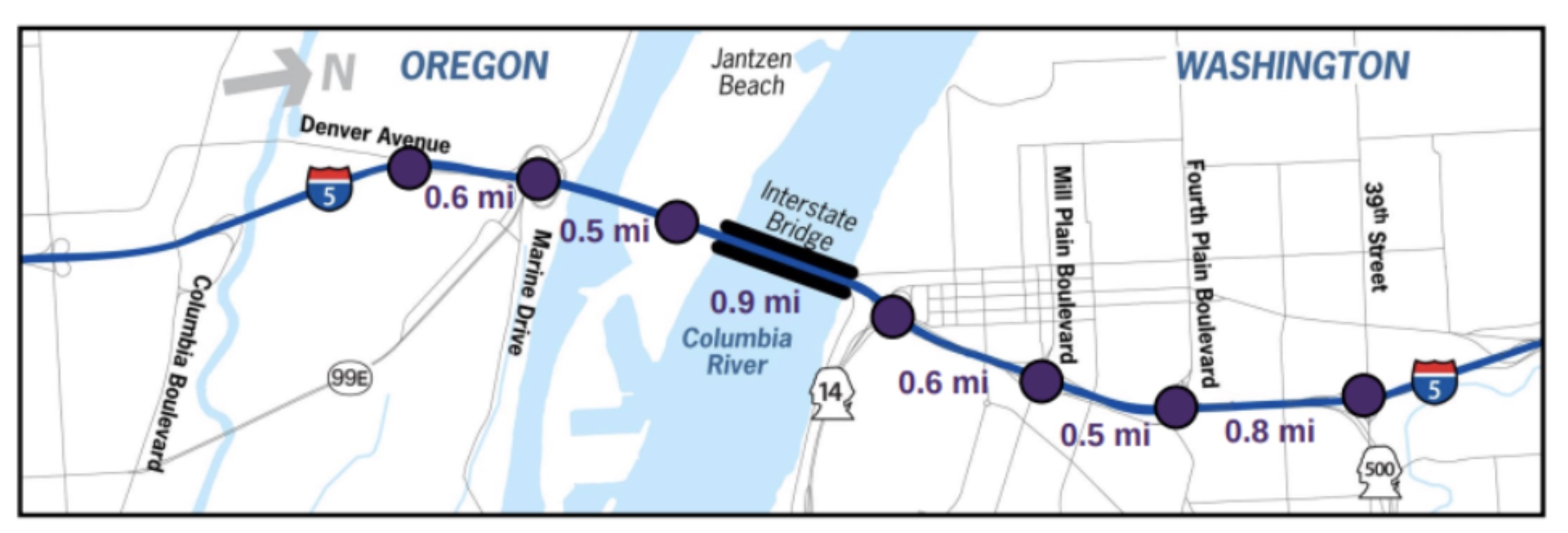
Also this morning was a meeting of the Interstate Bridge Replacement Program where project leaders outlined the Locally Preferred Alternative to elected officials from around the region. One of them, Portland Bureau of Transportation Commissioner Jo Ann Hardesty picked apart their presentation and assumptions and offered some of her sharpest opposition yet to the project (full story in a few minutes). And that was Hardesty’s second meeting of the day. She was up early for Metro’s Joint Policy Advisory Committee on Transportation where she expressed discomfort about ODOT’s plan to toll I-205 and use the money to invest in more freeways.