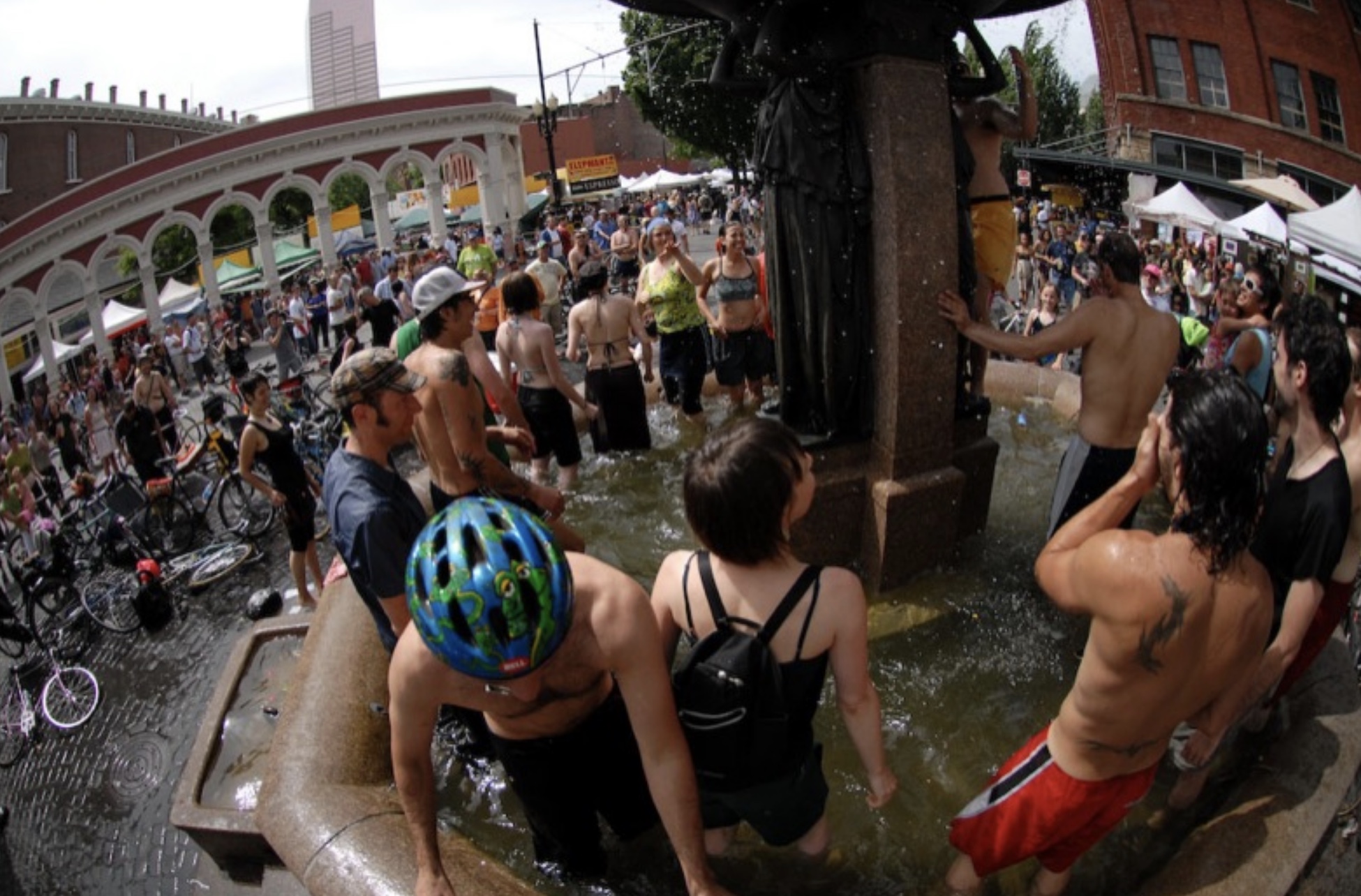
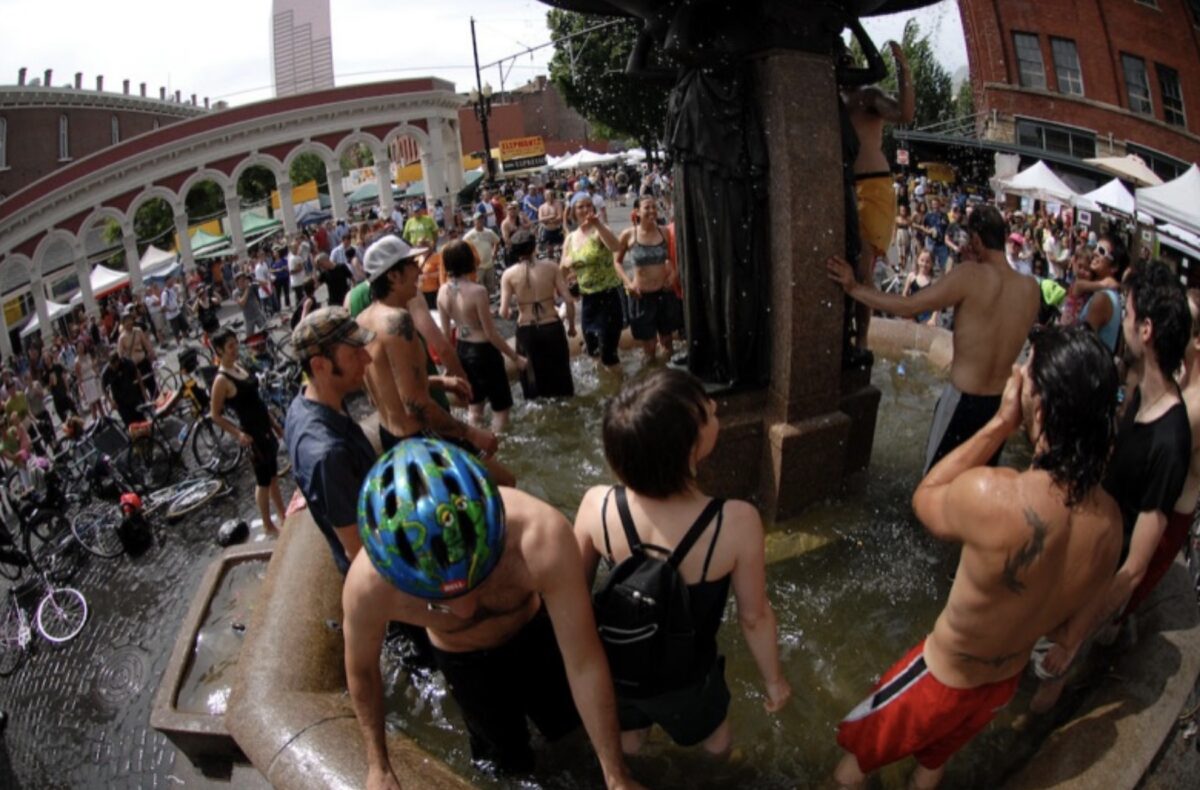
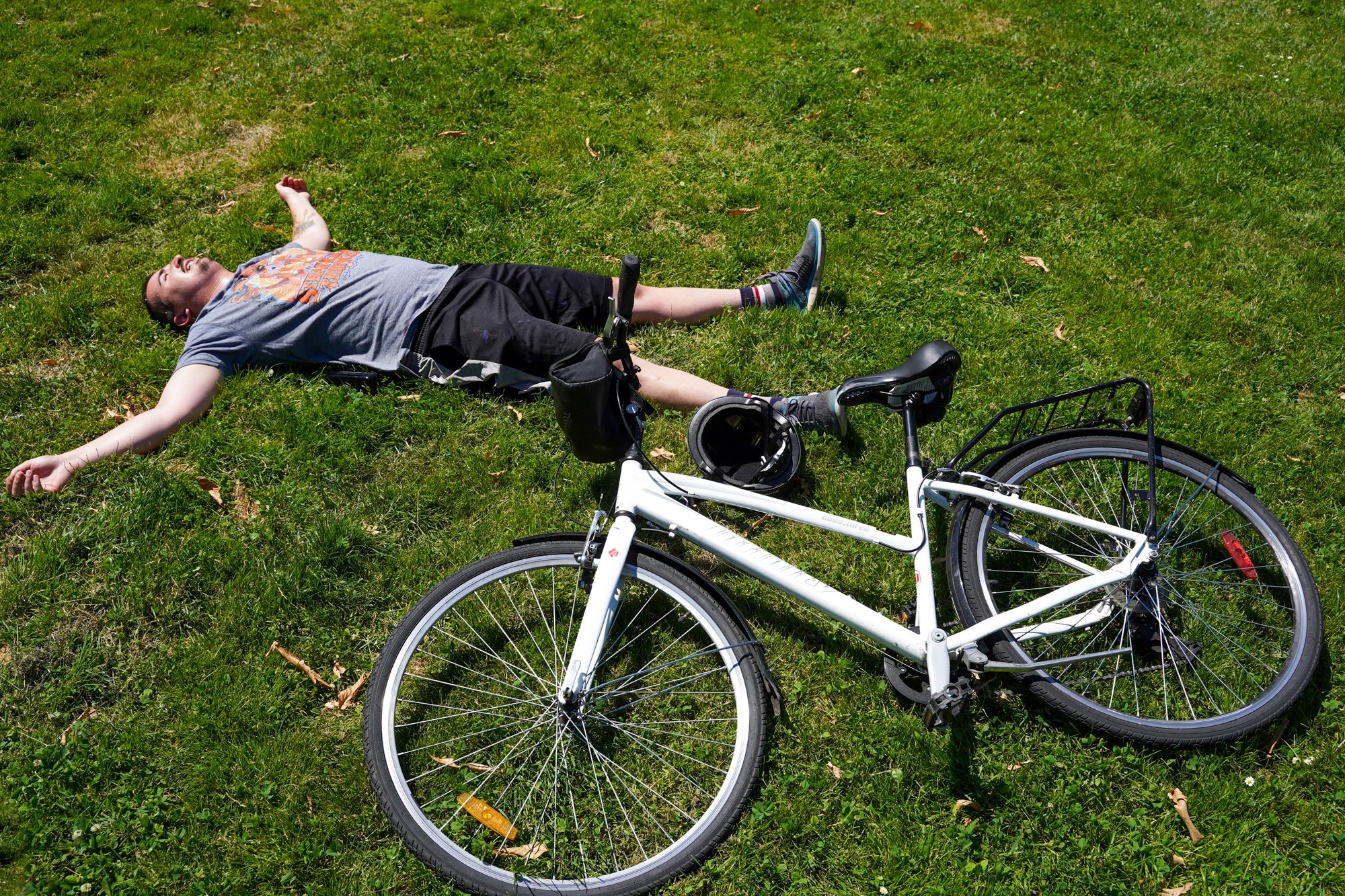
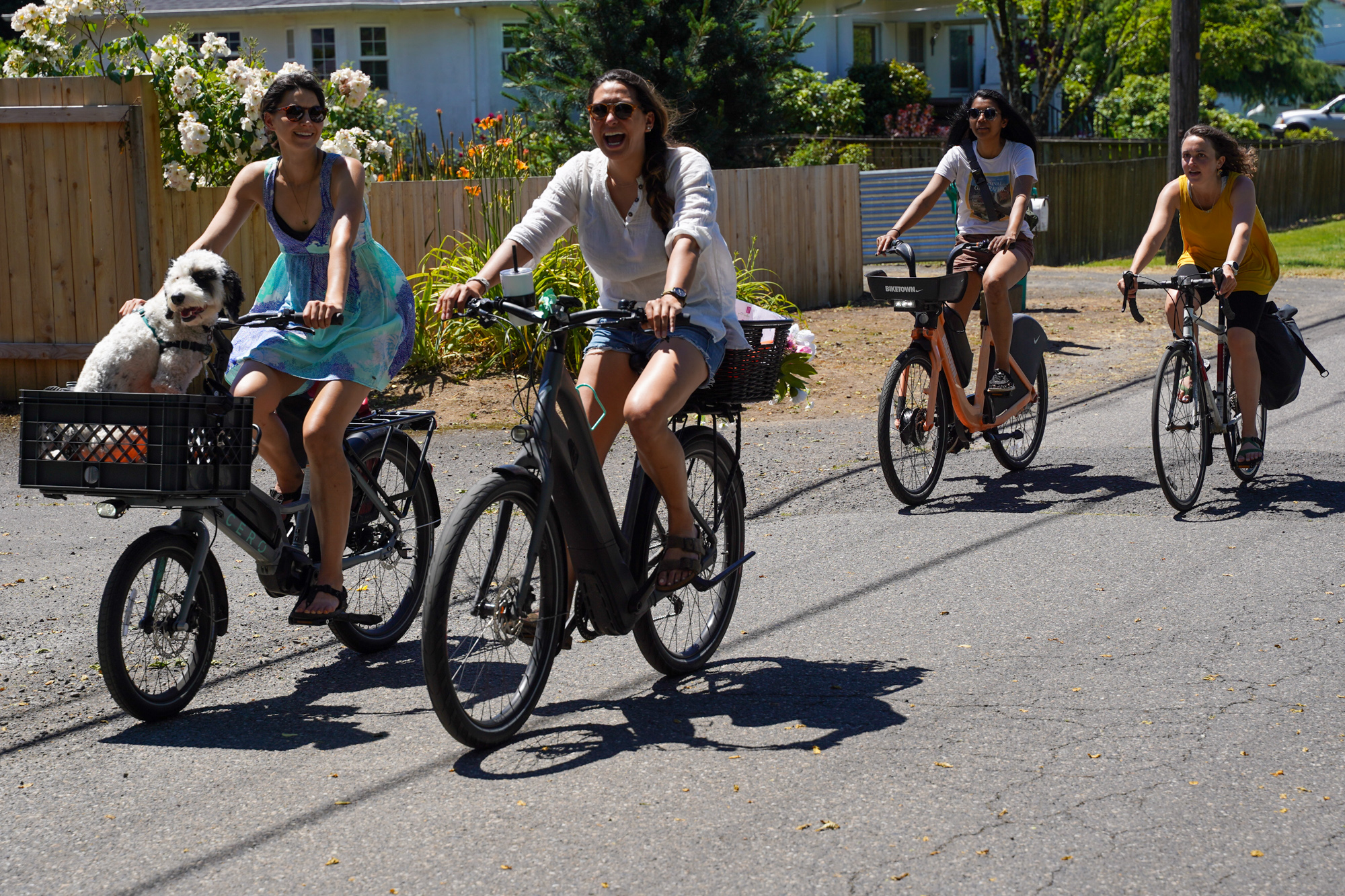
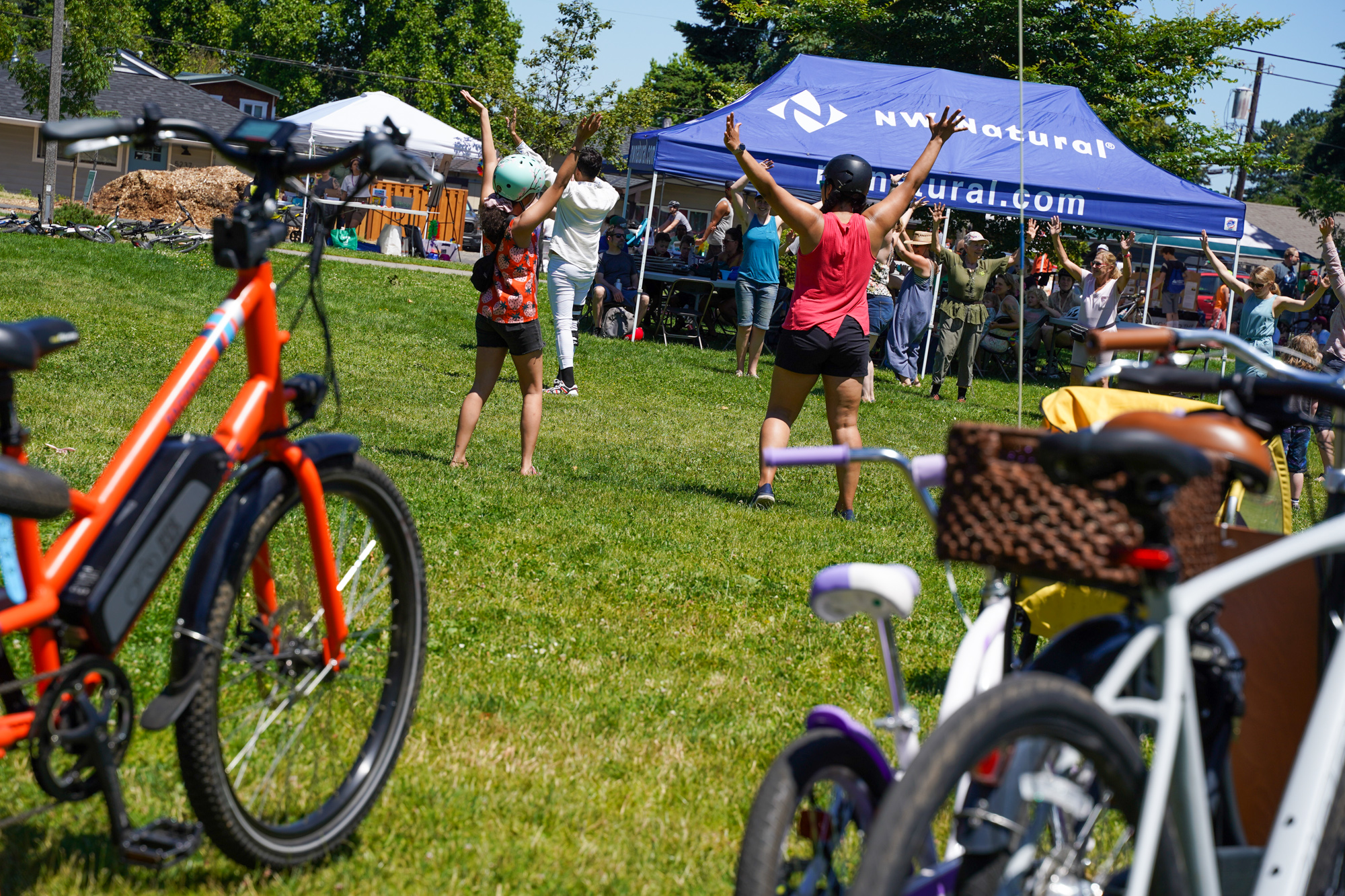
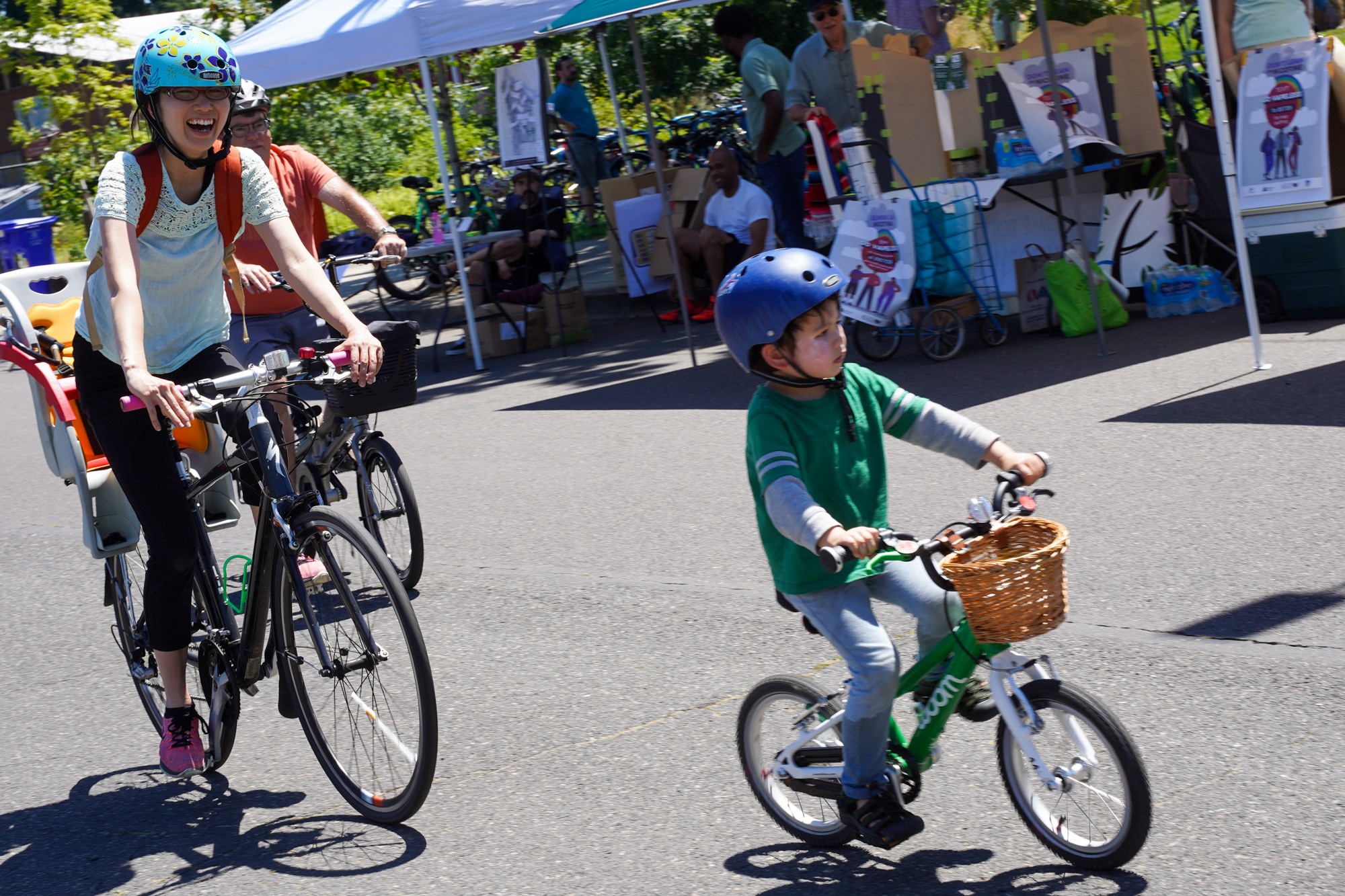
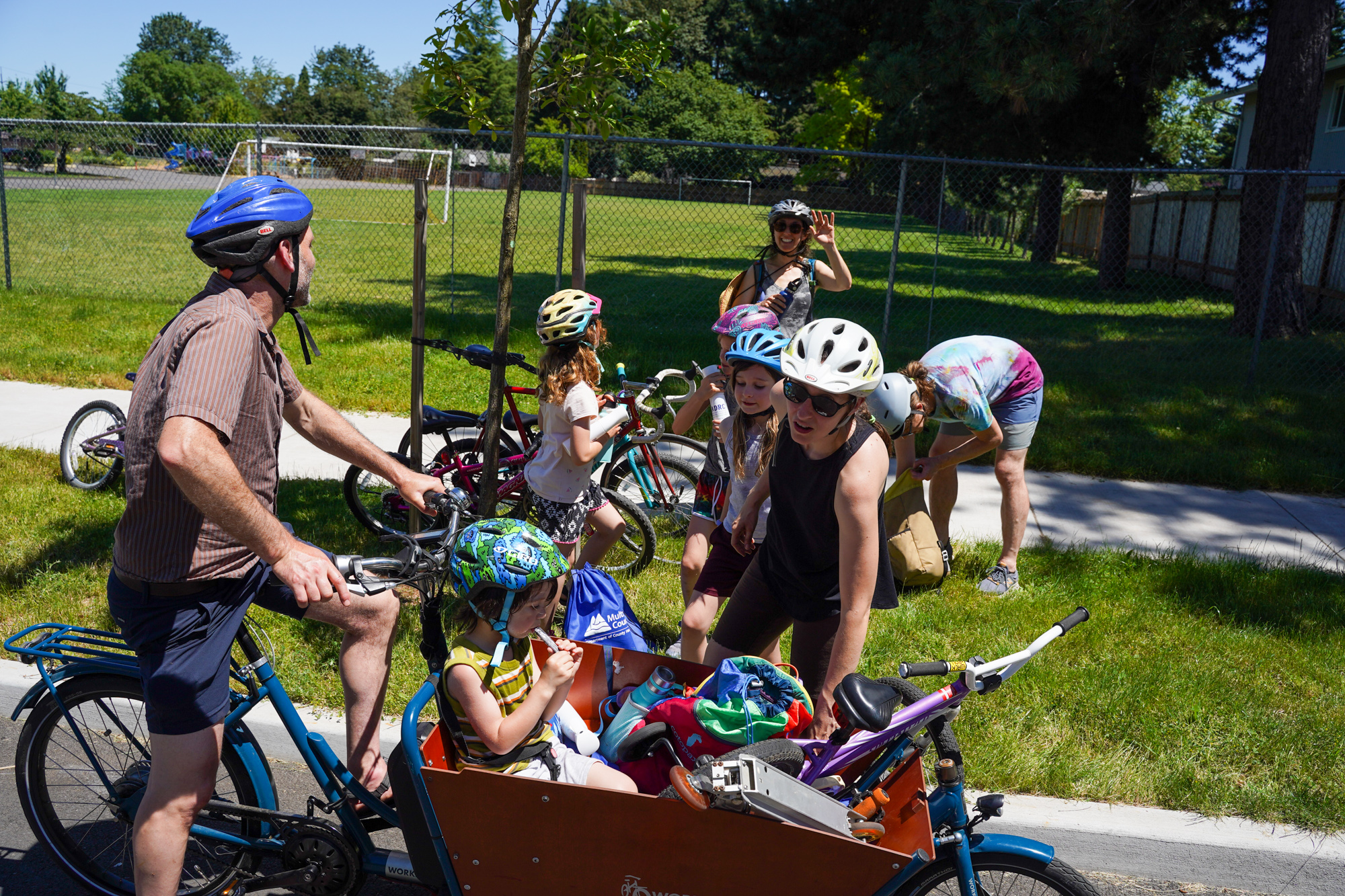
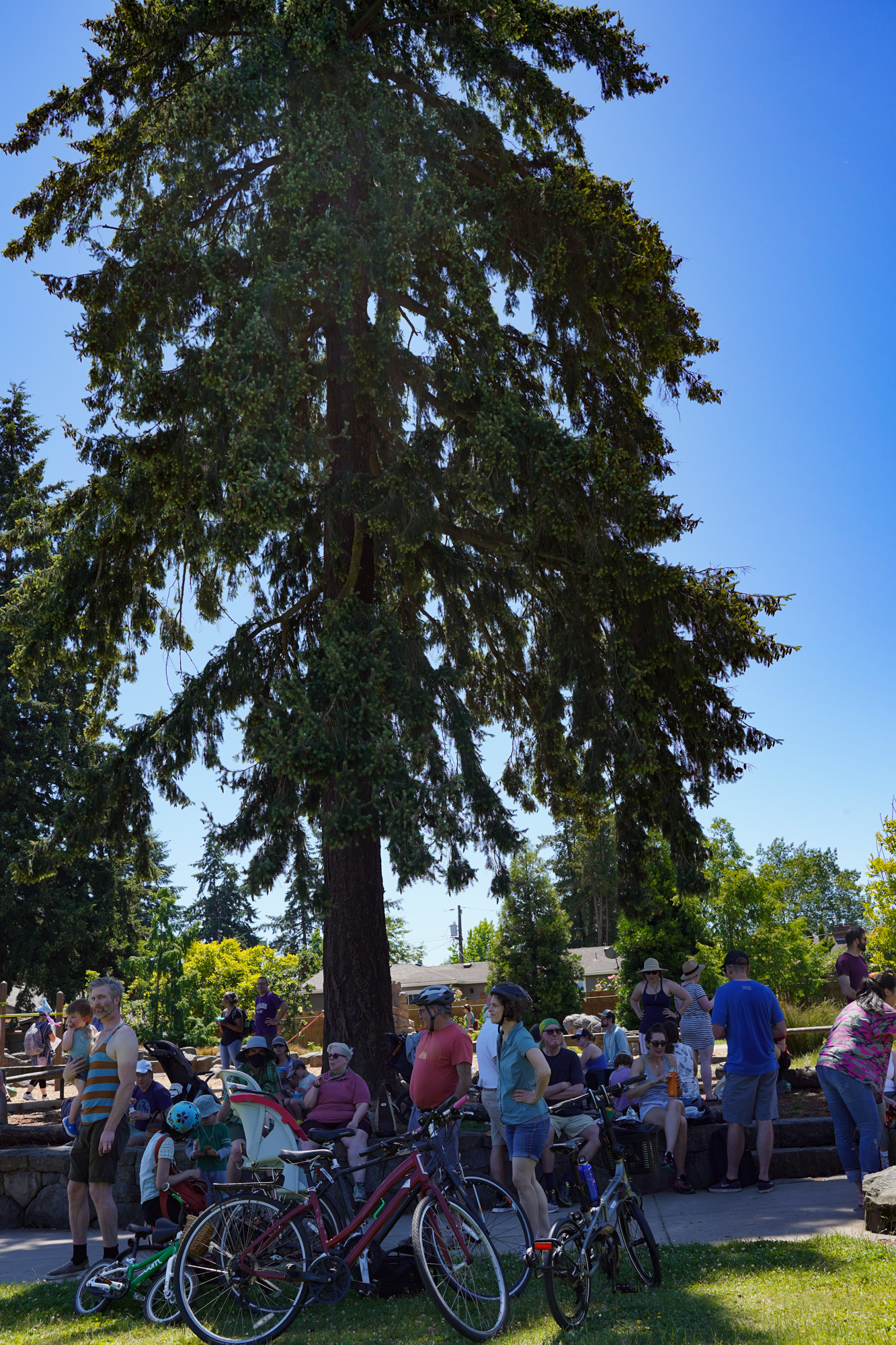
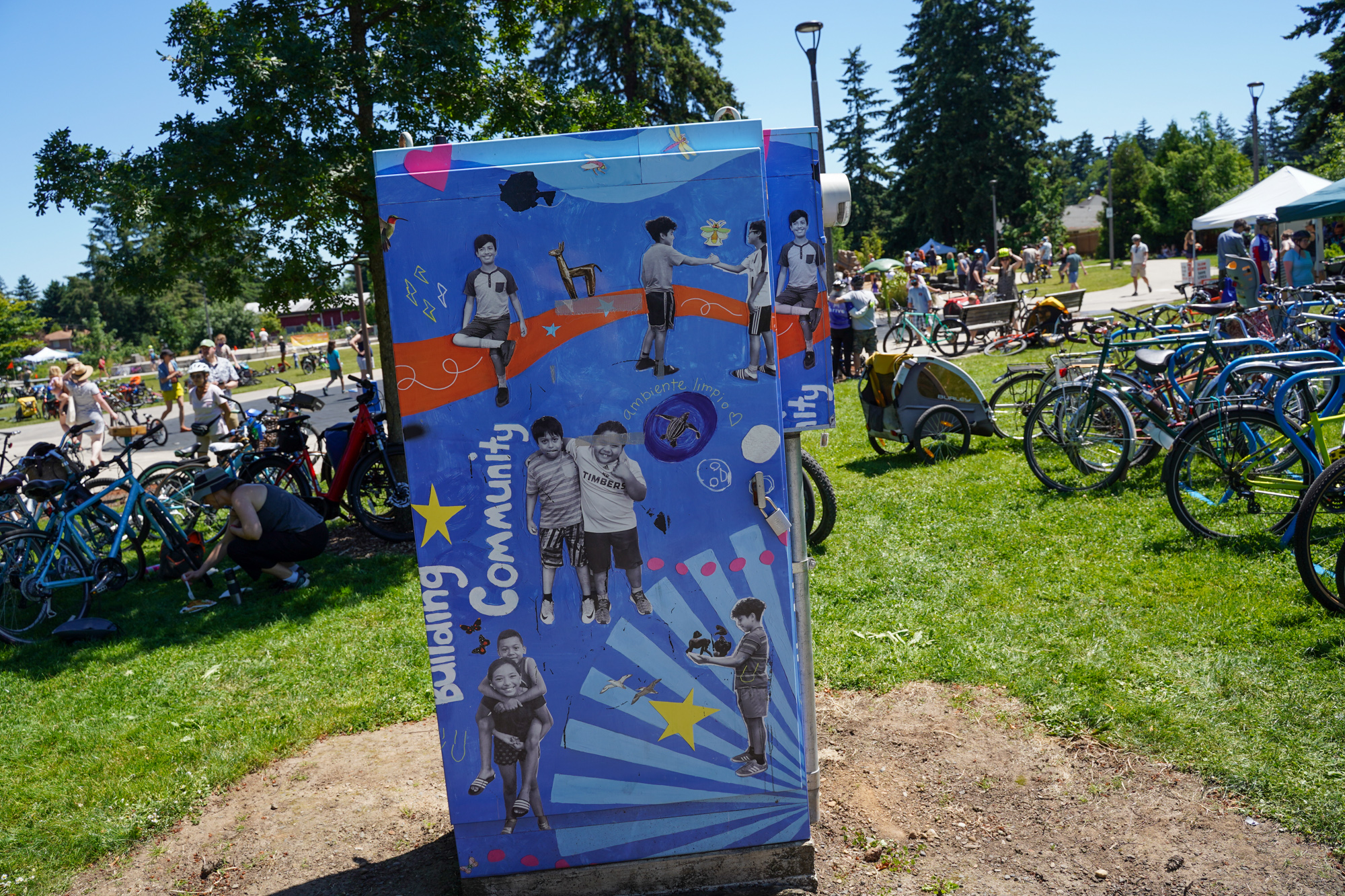
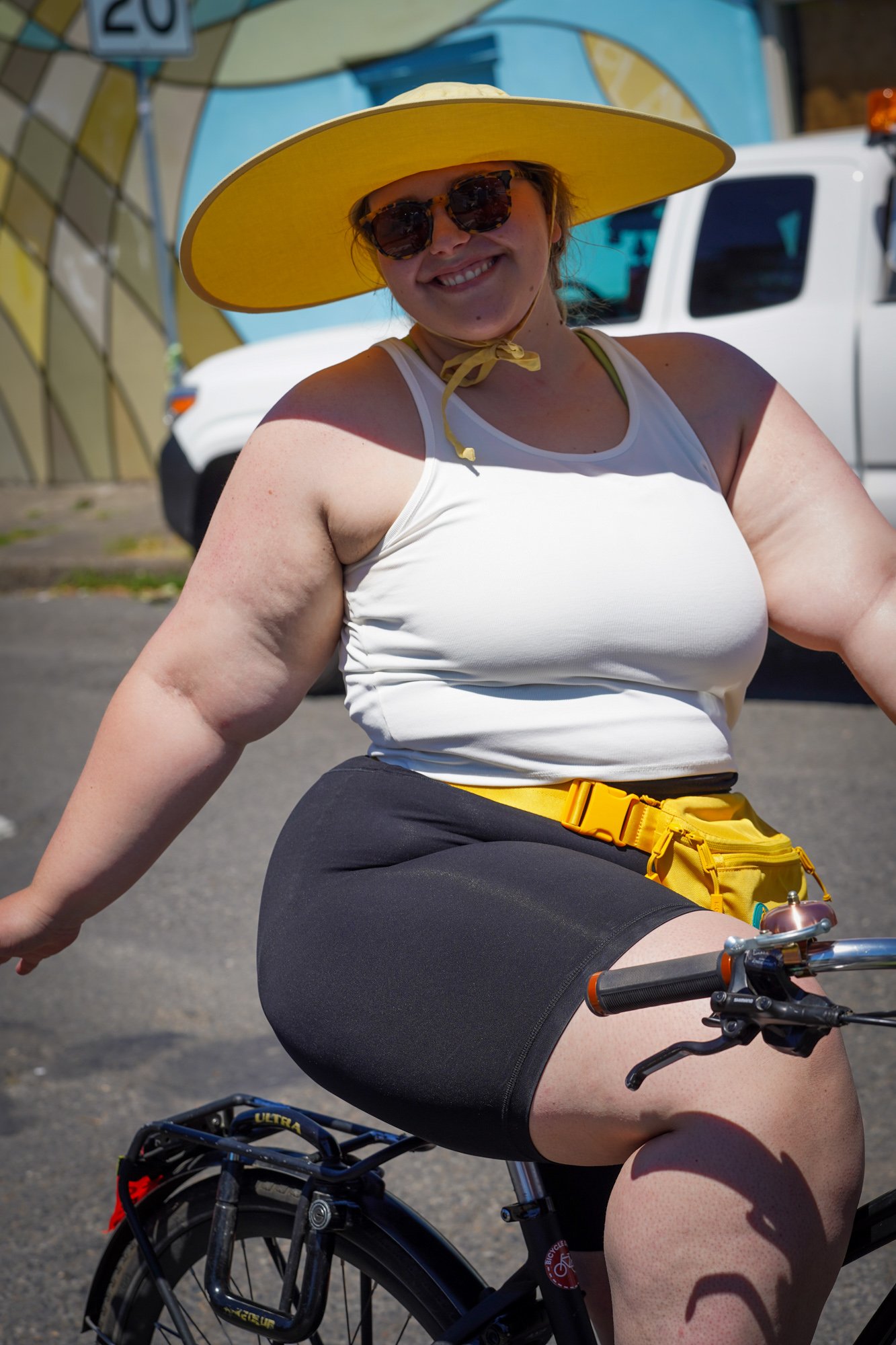
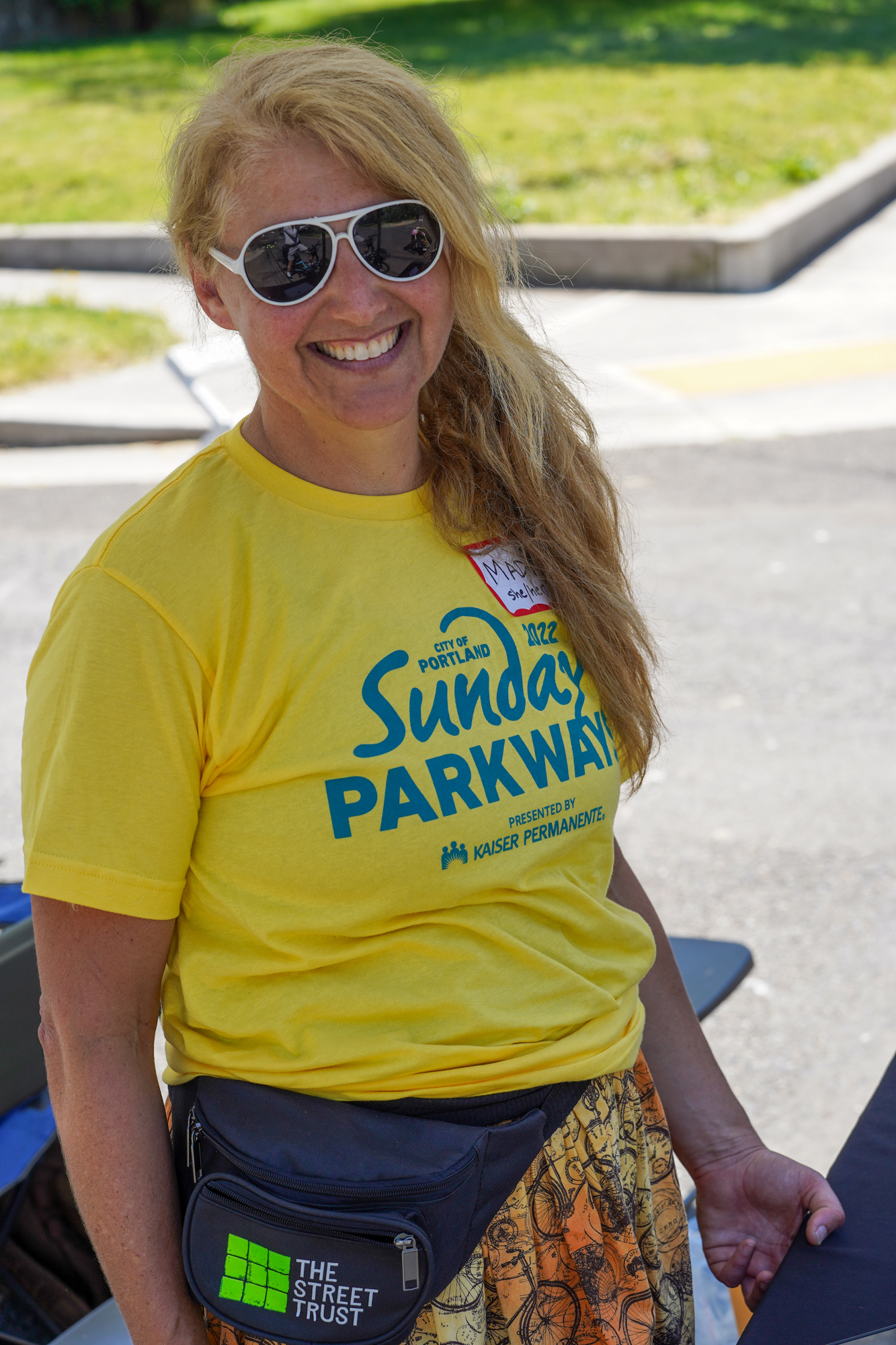
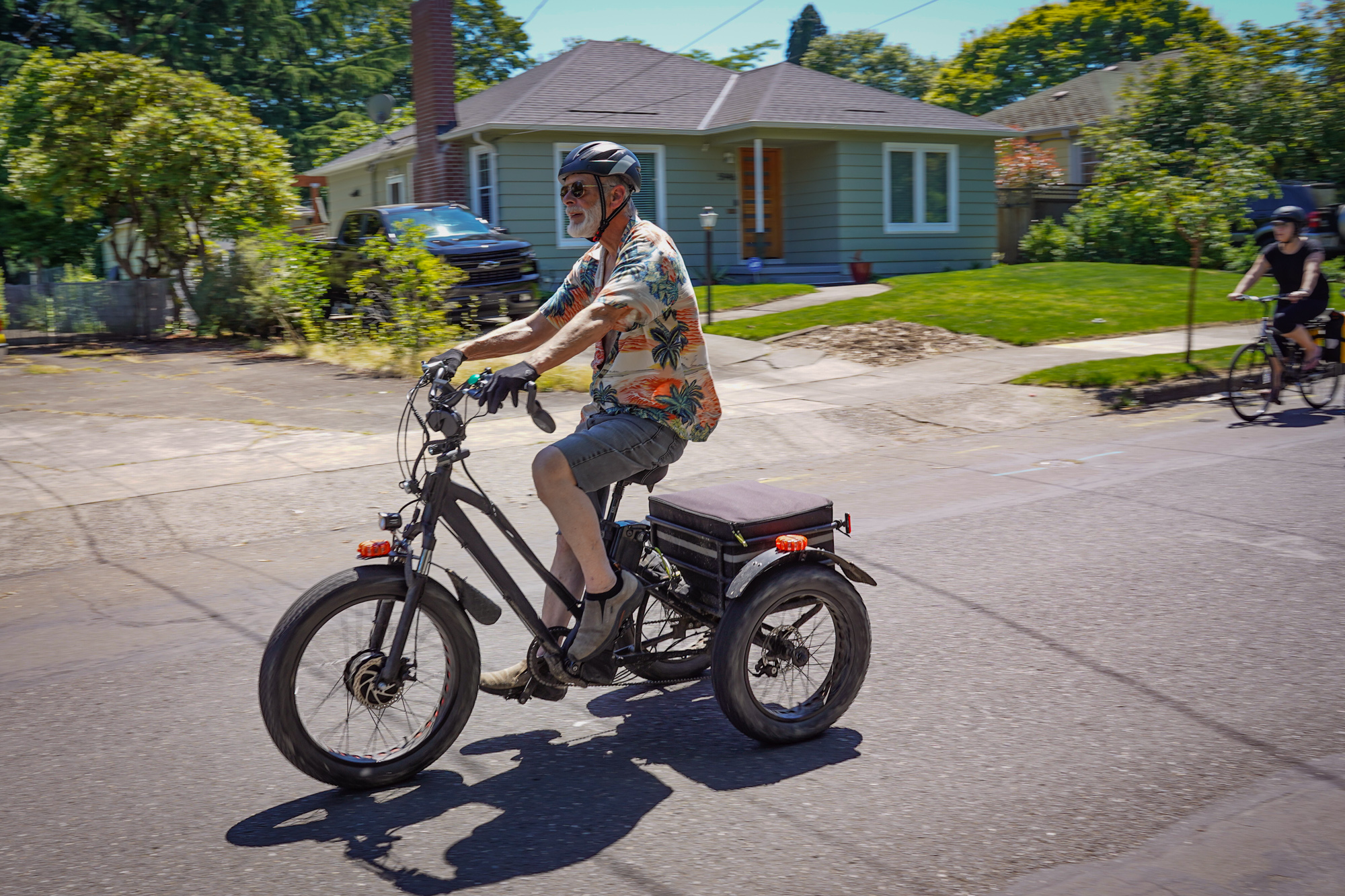
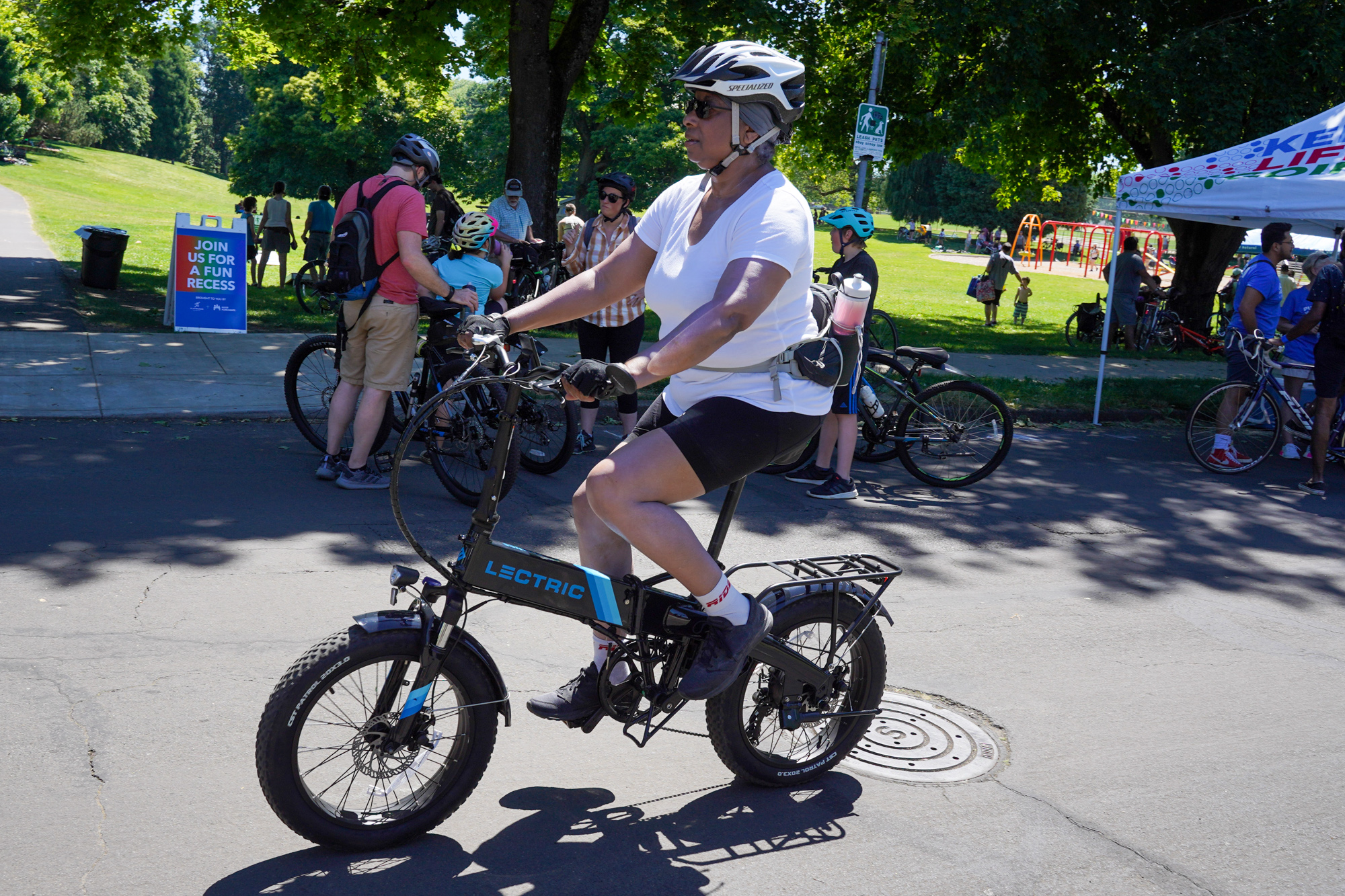
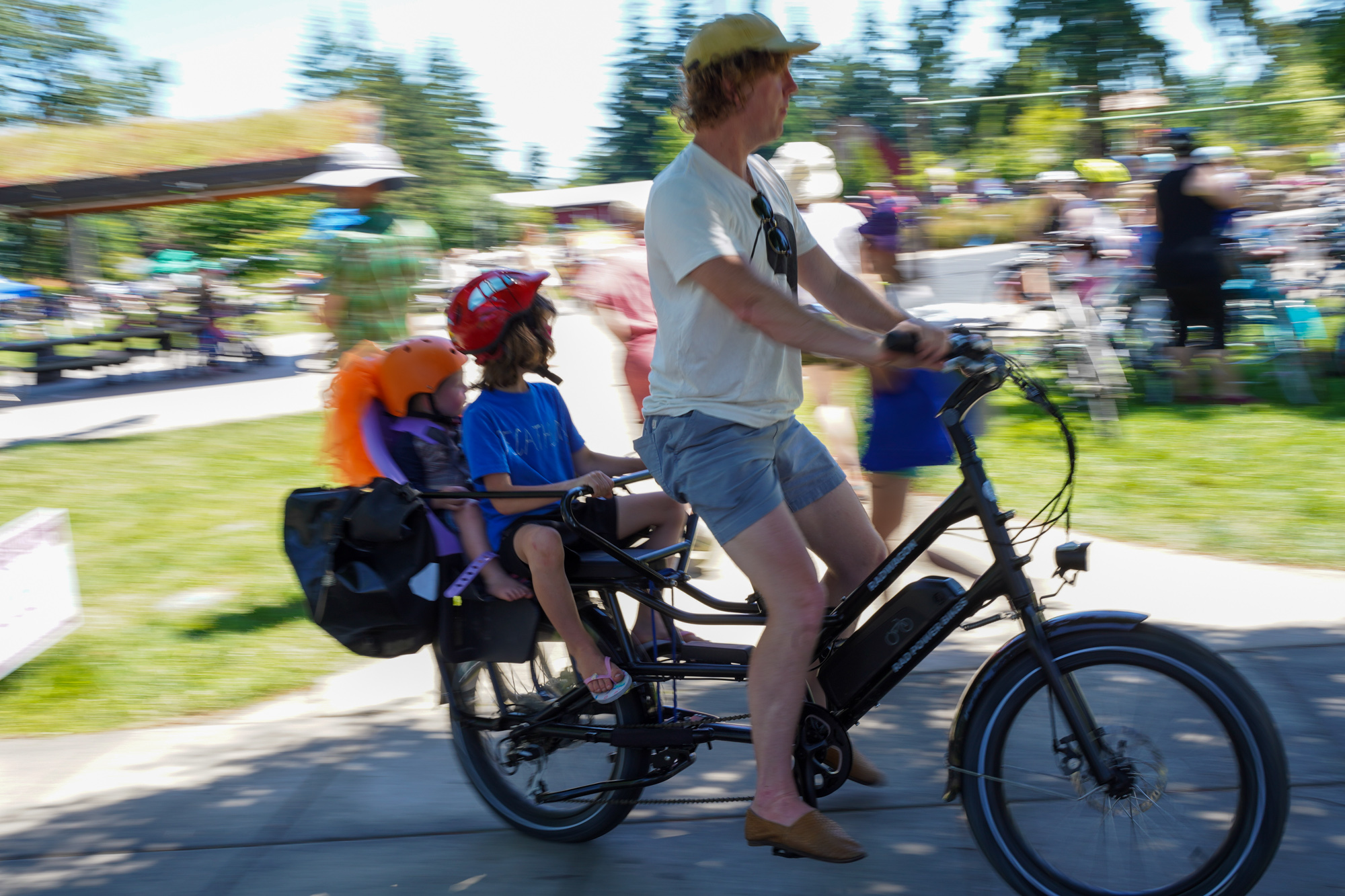
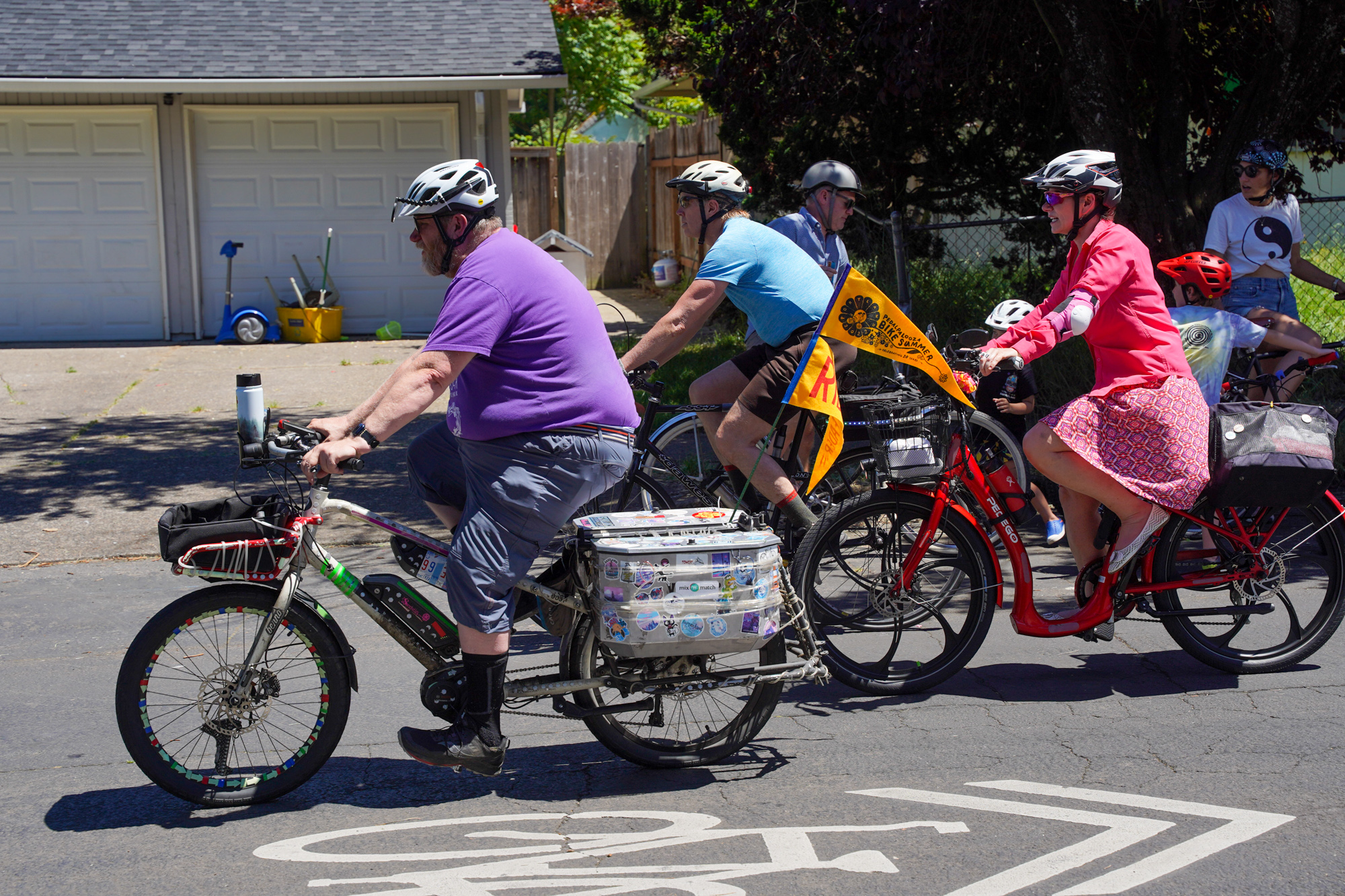
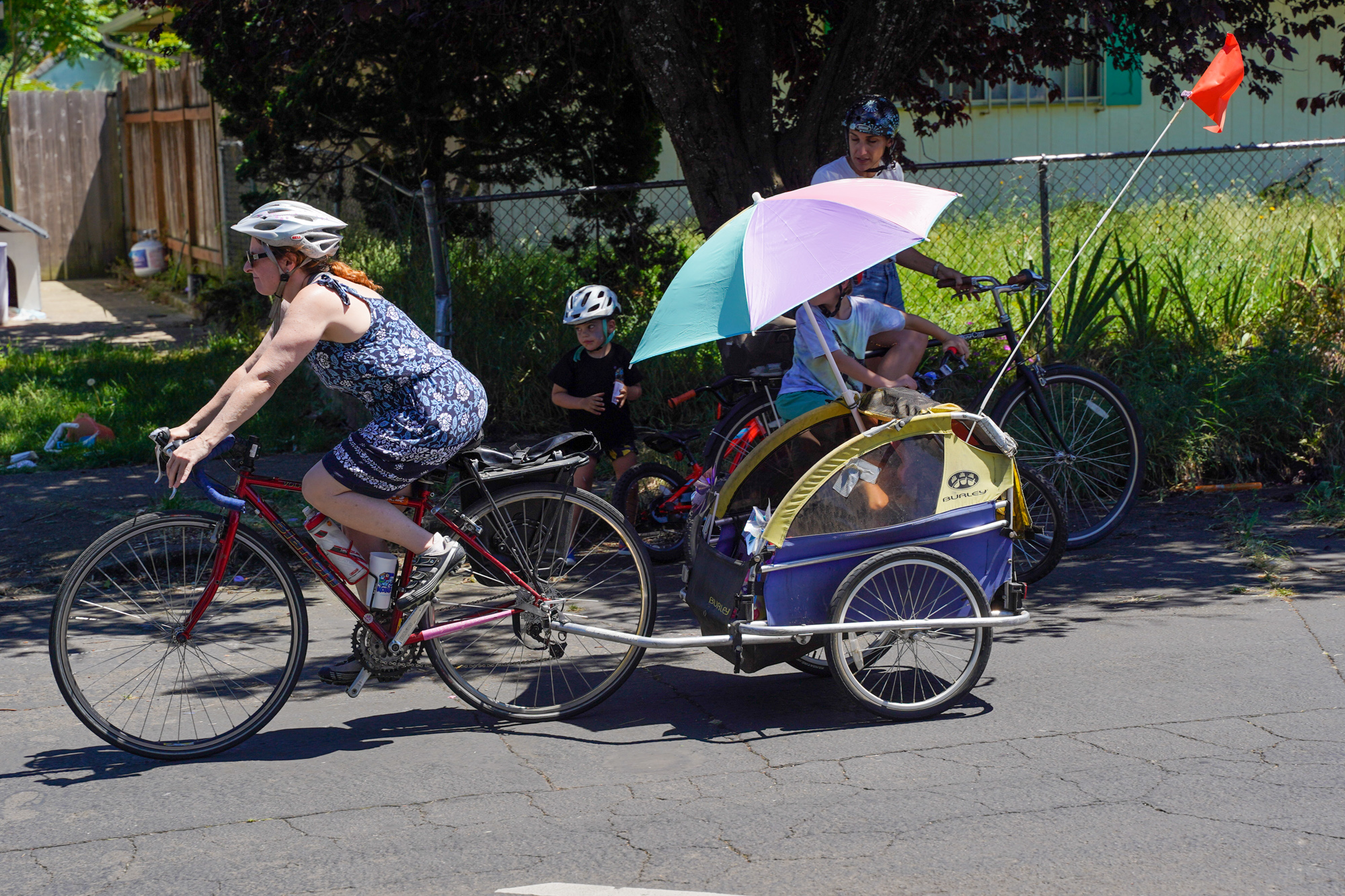
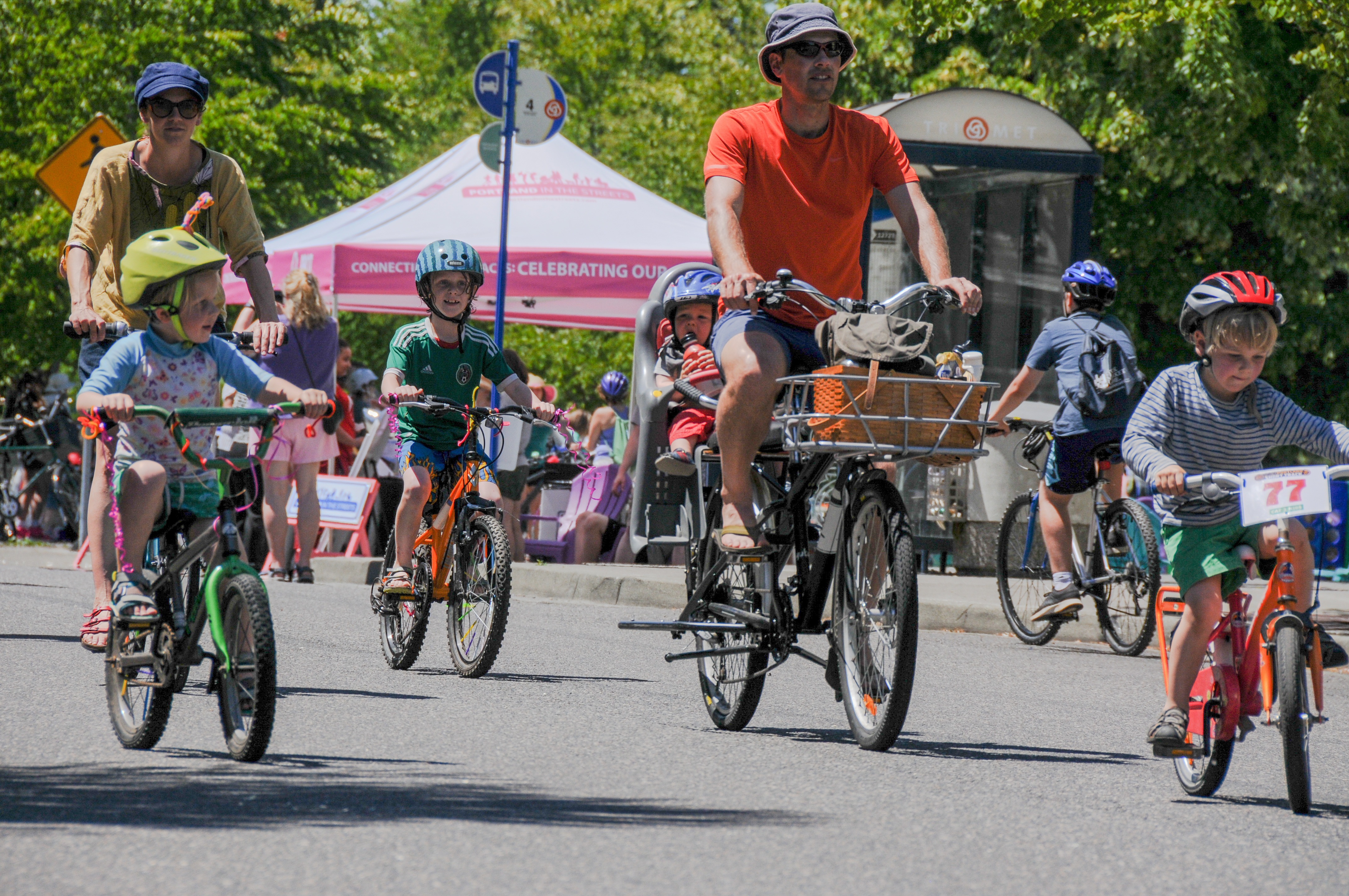
A scene from the epic Splash Dance ride in 2008. ( (Photo: Jonathan Maus/BikePortland)
Can you believe it’s already week four of Pedalpalooza Bike Summer. How are you holding up?
To help guide you through the fun options, every Monday we choose one ride from each day that looks interesting and worthy of your attention. As always, check out our Weekend Event Guide and Calendar for more of our ride selections (remember you can filter our calendar to only show the Pedalpalooza category).
Here are our selections for tonight and the coming week:
Monday, June 27th
Heat Wave Splashdown – 5:00 pm at Bill Naito Legacy Fountain (Naito Parkway at Portland Saturday Market) Fountain splashing is one of my favorite Pedalpalooza ride genres. If you are new to town, we swim in our fountains here (despite what signs might say). So grab your suit and roll out for some good cool fun. More info here.
Tuesday, June 28th
Taylor Swift Ride – 6:30 pm at Laurelhurst Park (NE) News got you down? This ride will help you “Shake it off”. Haha. Get it? I’ll let you imagine how this ride will go. More info here.
Wednesday, June 29th
The Big Lebowski Ride – 7:00 pm at Colonel Summers Park (SE) Put on your favorite Big Lebowski outfit and watch devoted fans act out scenes from this classic movie. More info here.
Thursday, June 30th
Star Trek Ride – 6:00 pm at Oregon Park (NE) Join fellow Trekkies for a mission to new planets where you’ll admire and show off costumes and take part in a trivia contest with a Grand Prize! More info here.
Friday, July 1st
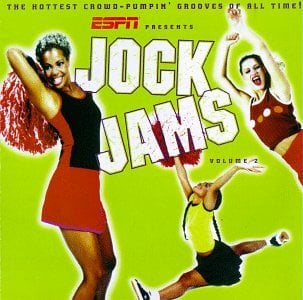
Jock Jams Ride – 7:30 pm at Laurelhurst Park Show the world how Portland sports fans roll. Grab those jerseys and pads and other sports gear and rock out to fun music. More info here.
As always, check the official calendar for details on every single ride. And be sure to check official event pages for latest updates and cancellations before you roll out. Have fun out there!
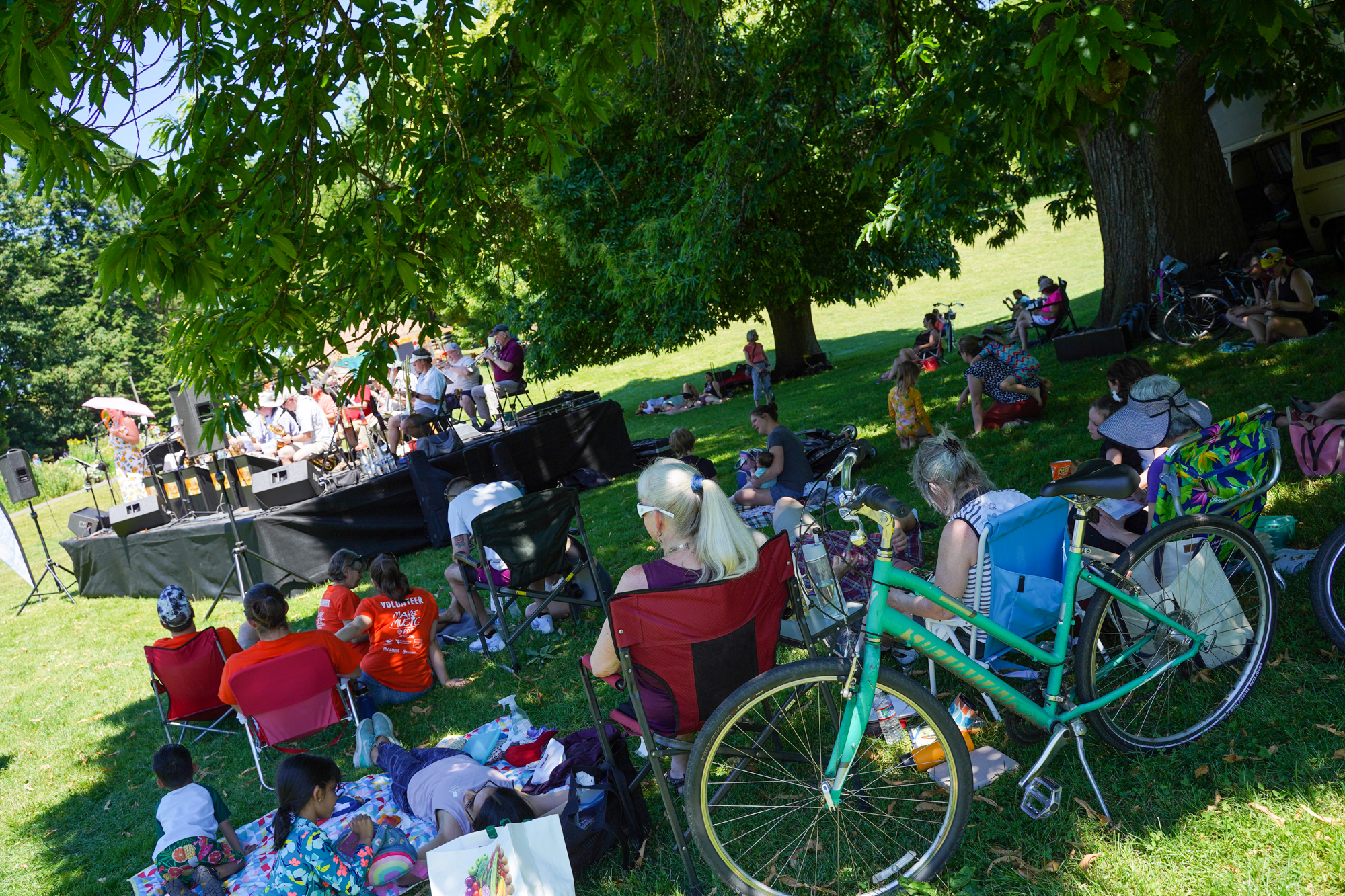
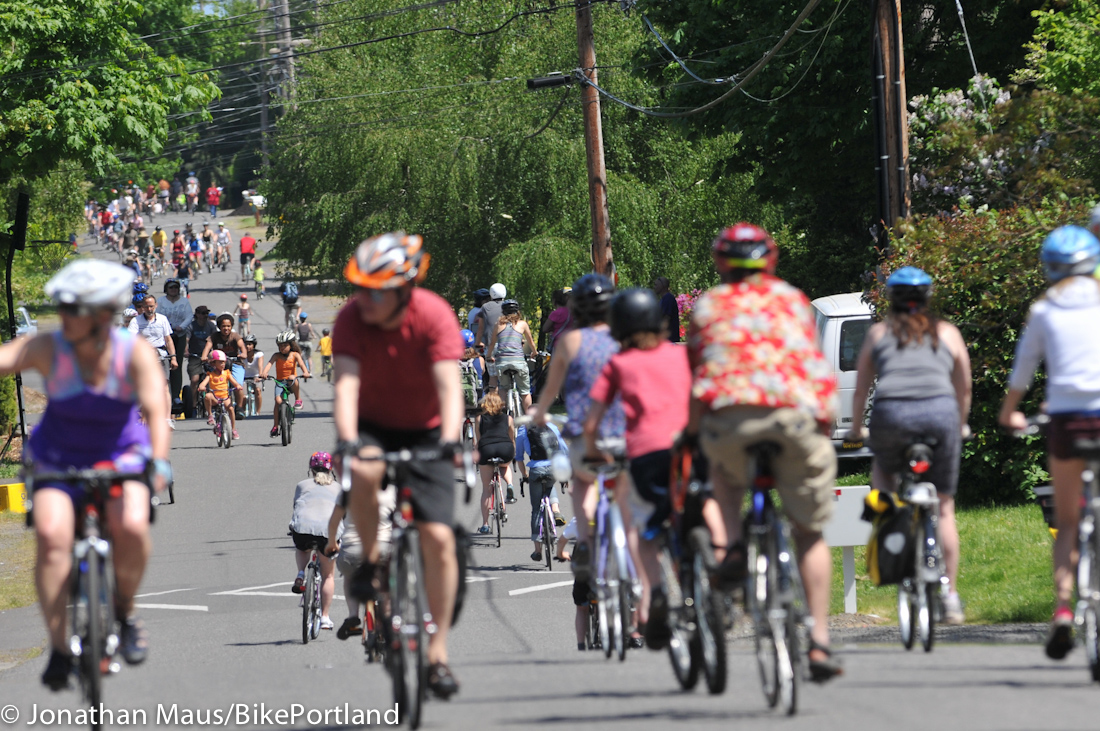
Soaking up sun at Fernhill Park.Riding through Cully’s rural-feeling streets.Bhangra!Riding up NE 37th Ave(Photos: Jonathan Maus/BikePortland)
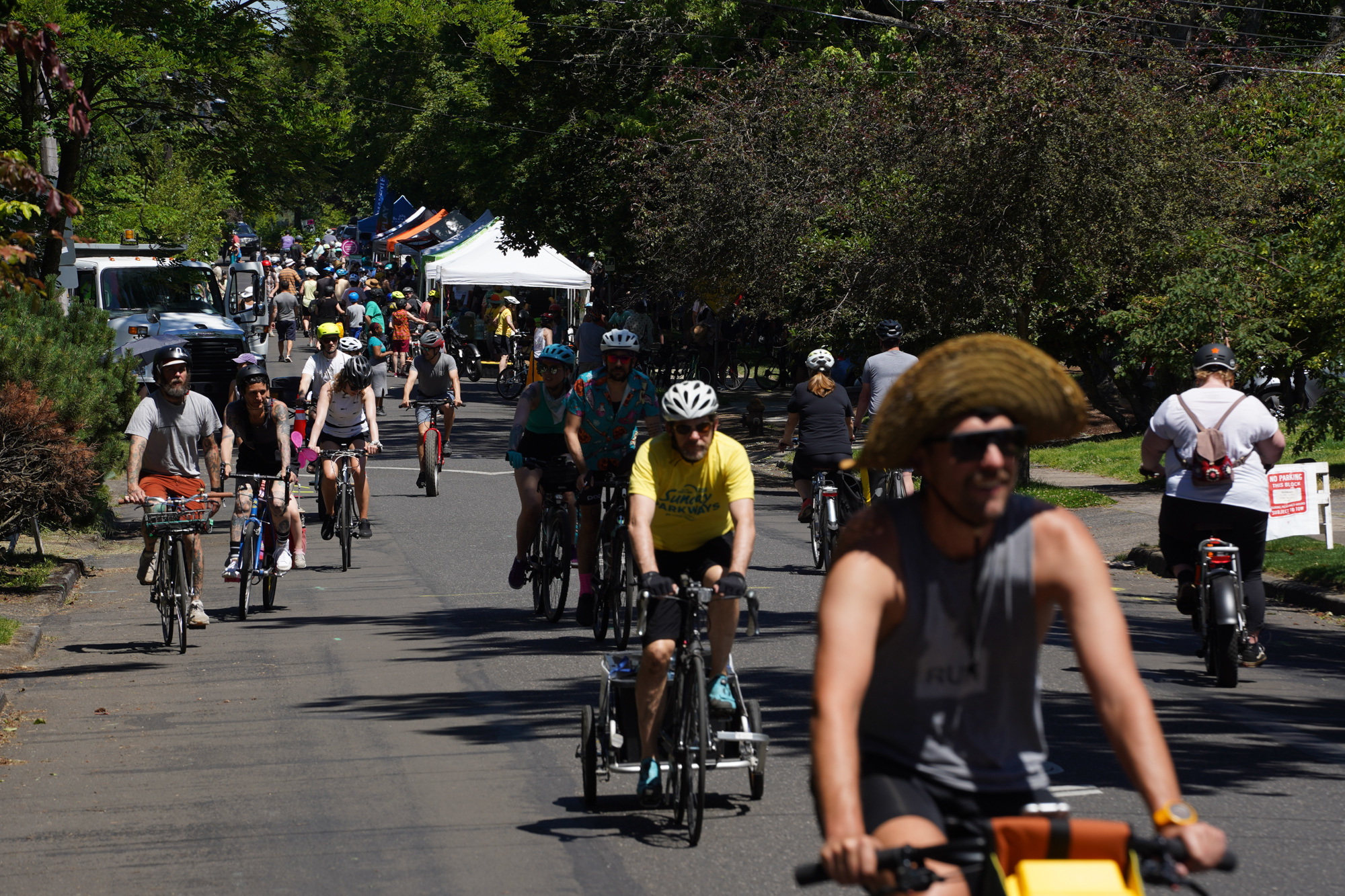
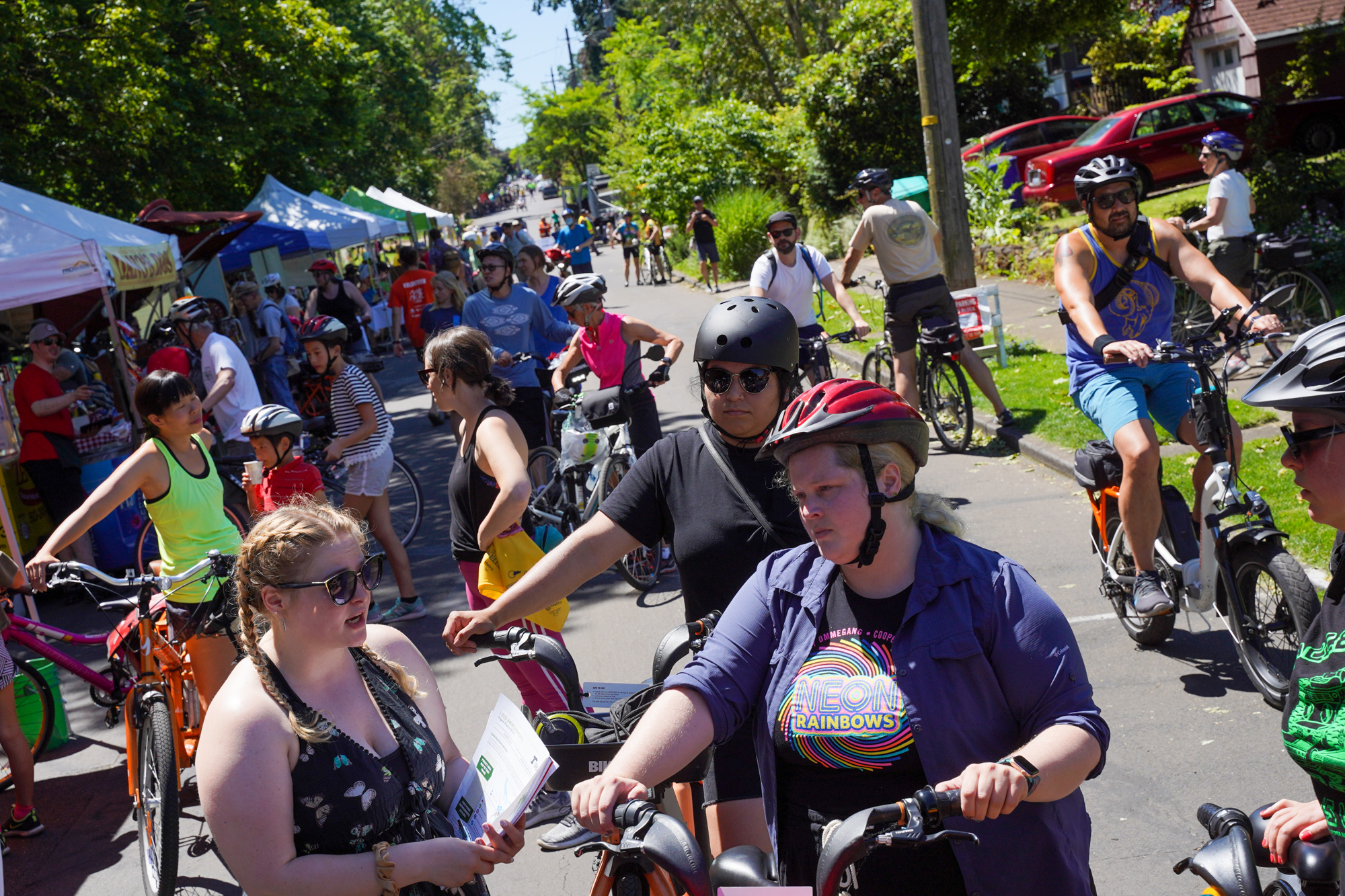
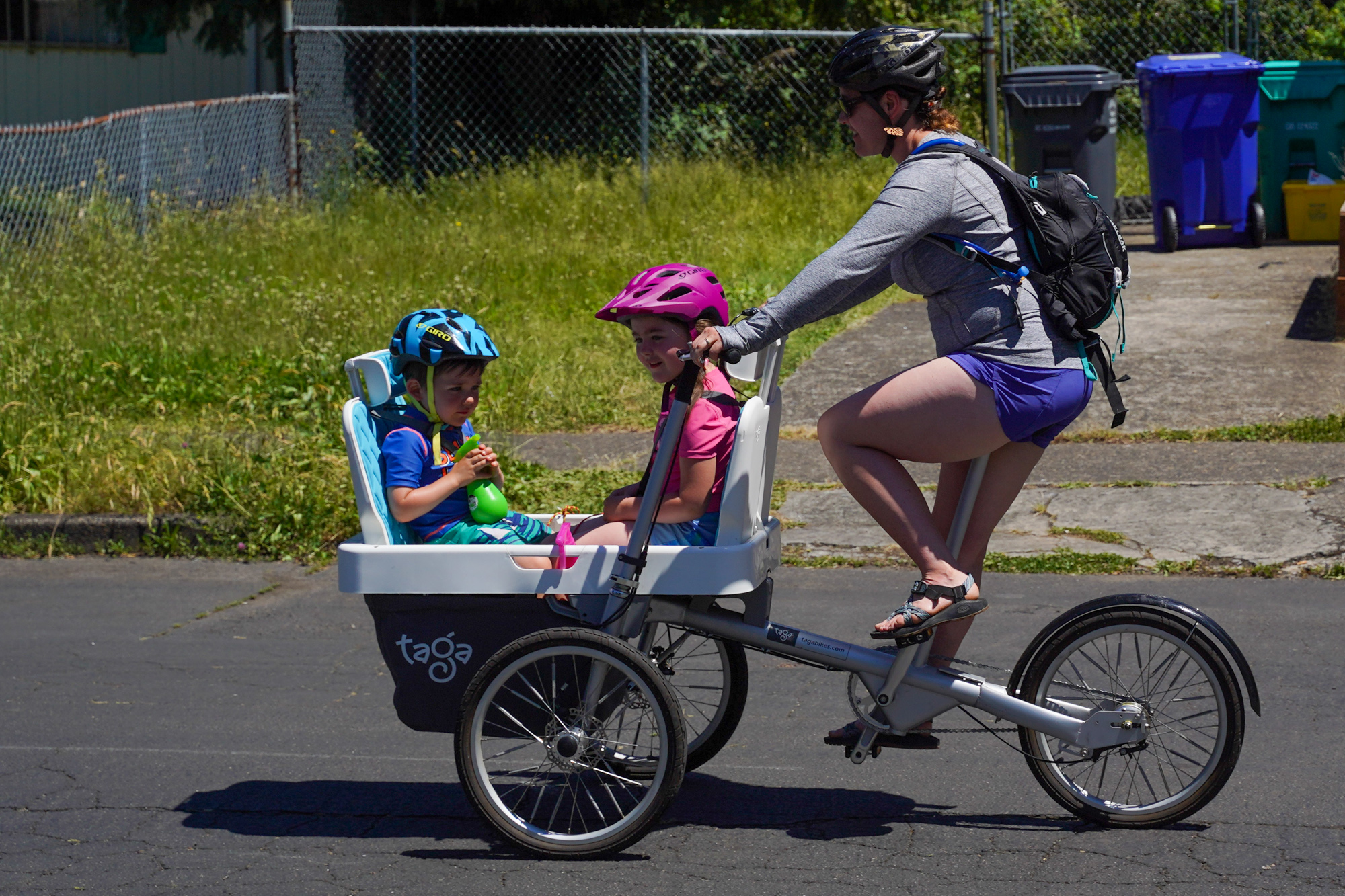
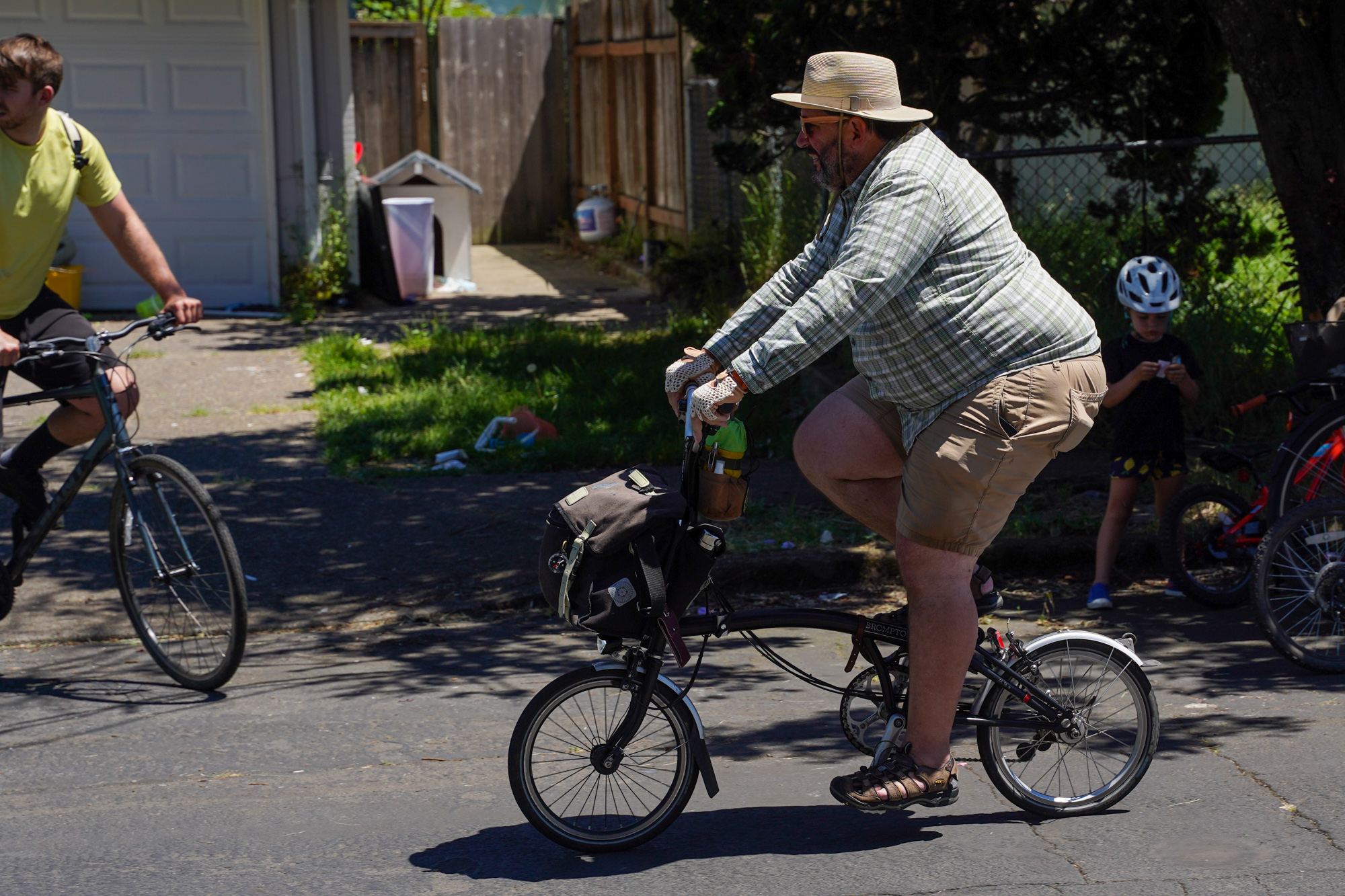
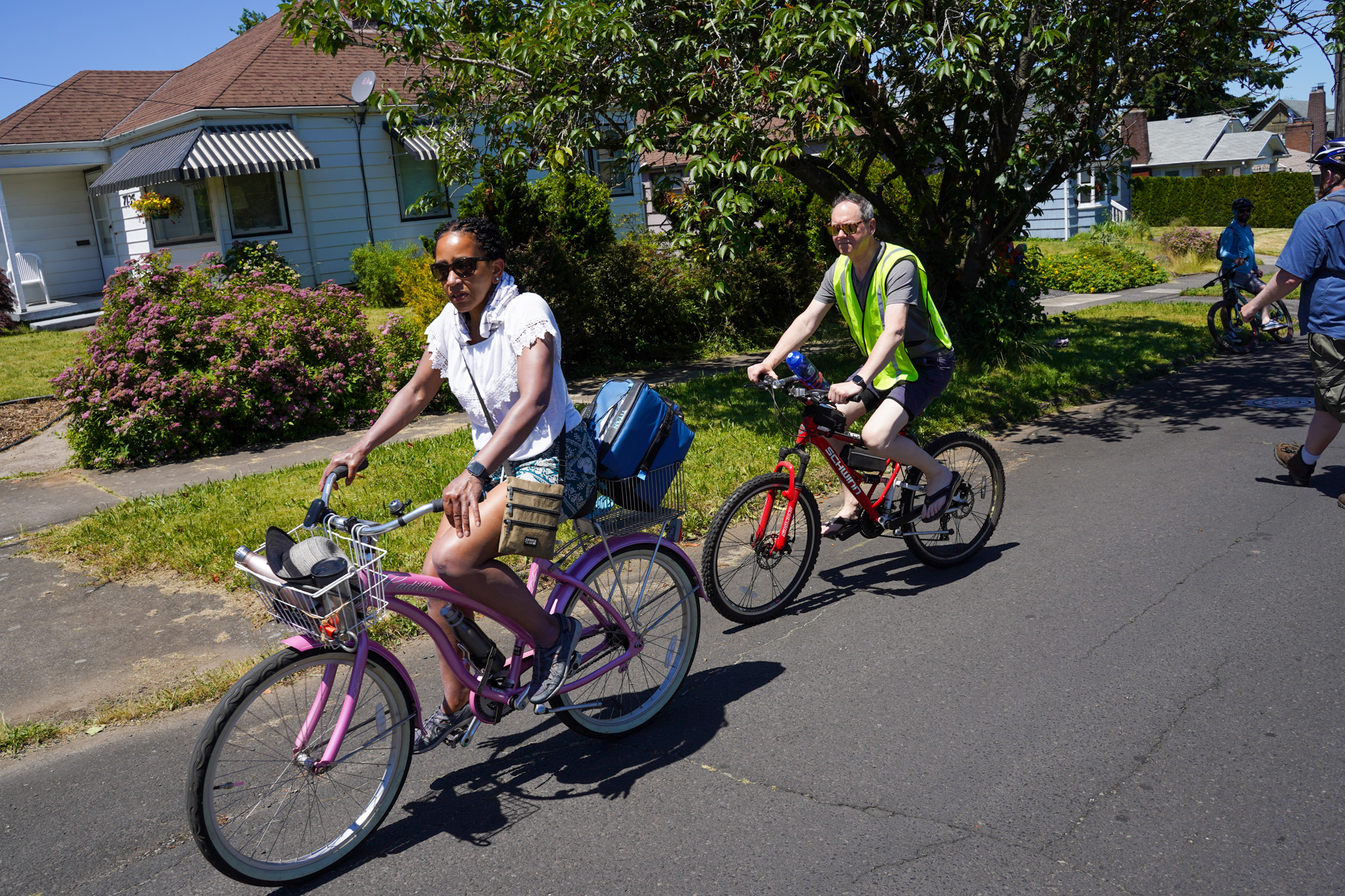
It almost felt like old times on Sunday: The live music, the freebies and food from vendors in the parks, smiling families where everyone is on a bike. Sunday Parkways made a big comeback yesterday after a two-year hiatus and thousands of Portlanders showed us once again that when given a safe place to ride a bike, they will turn out in droves.
The route stretched from NE 37th to 72nd, and from NE Mason in the south to Holman in the north. The two most popular parks along the route, Fernhill and Khunamokwst (“K Park” I heard someone call it), were popping right from the start. With 90+ temps forecast, it was clear most people showed up right at the 11:00 am opening to try and squeeze in some fun before the heat became unbearable.
Given the heat and hiatus, I was actually surprised how well-attended the event was. Maybe it’s just me, but as cool as Sunday Parkways is, I feel like it has stagnated a bit since it first happened in 2008. If you would have told me at that first one 15 years ago that we’d still be doing exactly the same thing in the same way, I’d have scoffed and chided you for being so pessimistic. “We’ll be rolling on major streets!” I’d have said back then. “The city will keep them closed to drivers all day and into the night. You just wait and see. We’ll have so much fun!”
That hasn’t happened. I hope we can push to make Sunday Parkways even bigger and better in future years, but I digress.
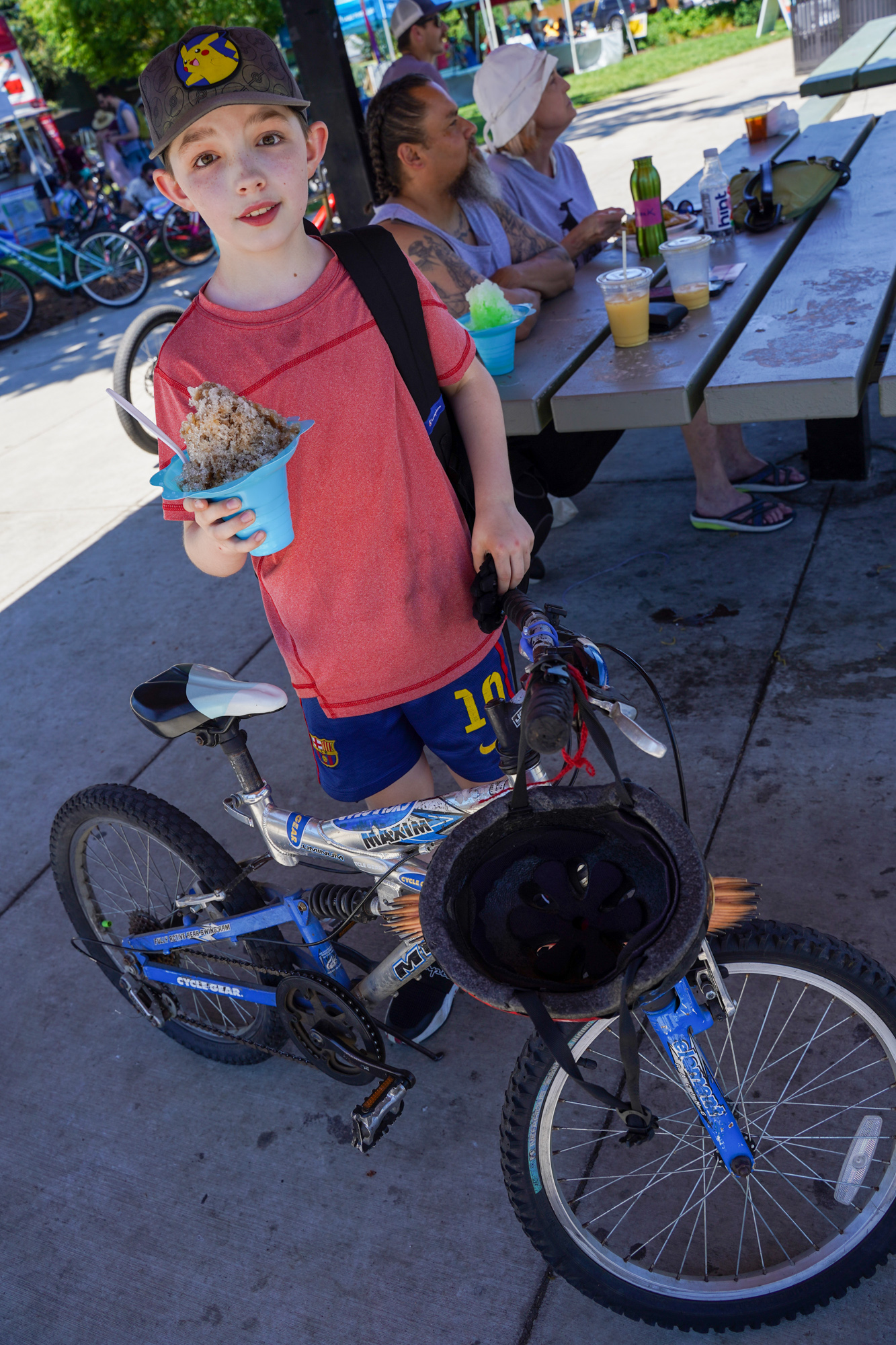
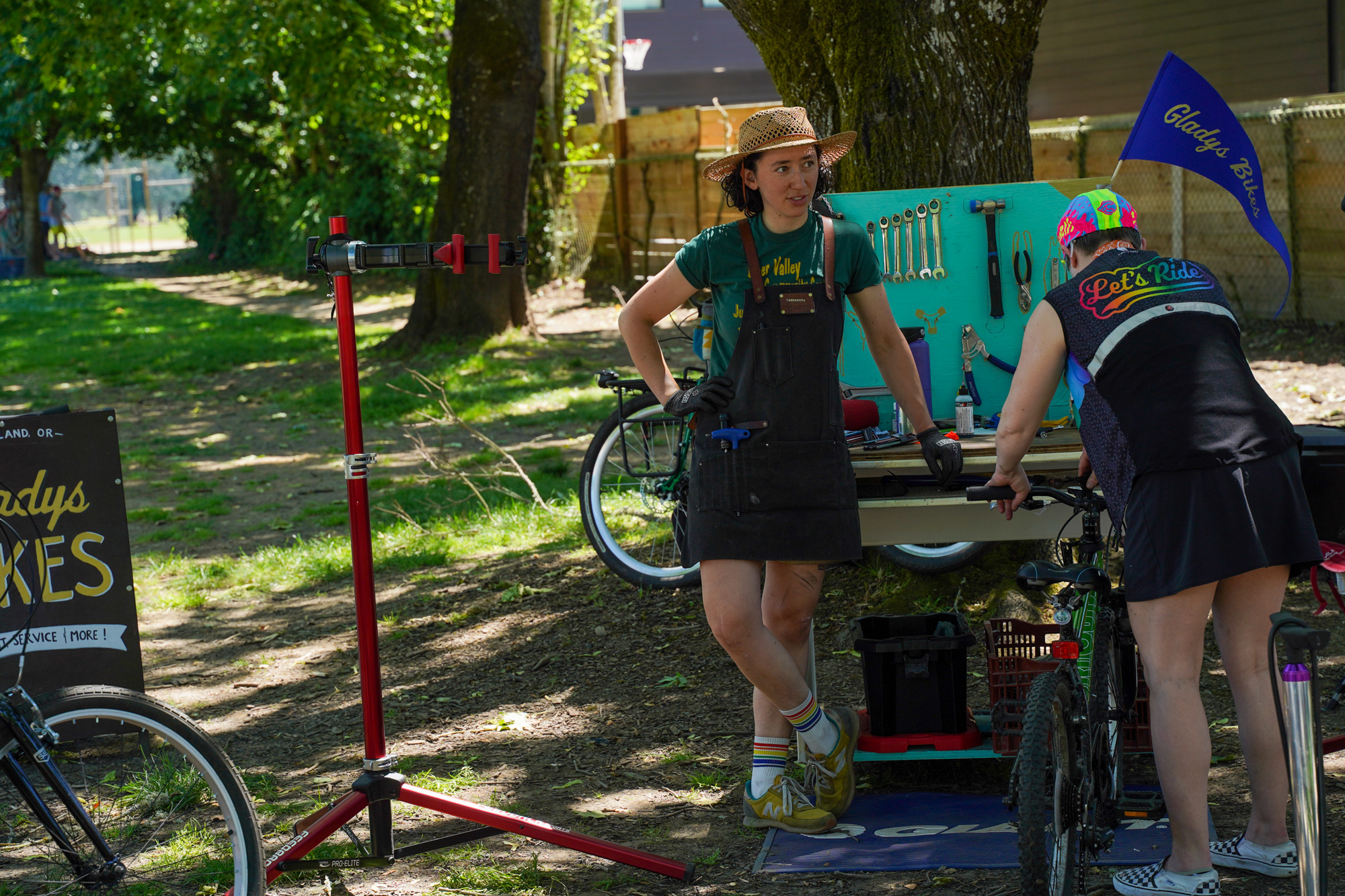
So many smiles! Listening to the band in Fernhill Park.So many families!Like cheetahs in Africa, they swarmed the shade.That’s right.Sno cone!Love these little stands.Cassie from Gladys Bikes.Portland Opera singer.Josh Hetrick from Shift.Jumptown Big Band was splendid.
Yesterday it was clear PBOT hasn’t forgotten how to make streets and parks a lot of fun!
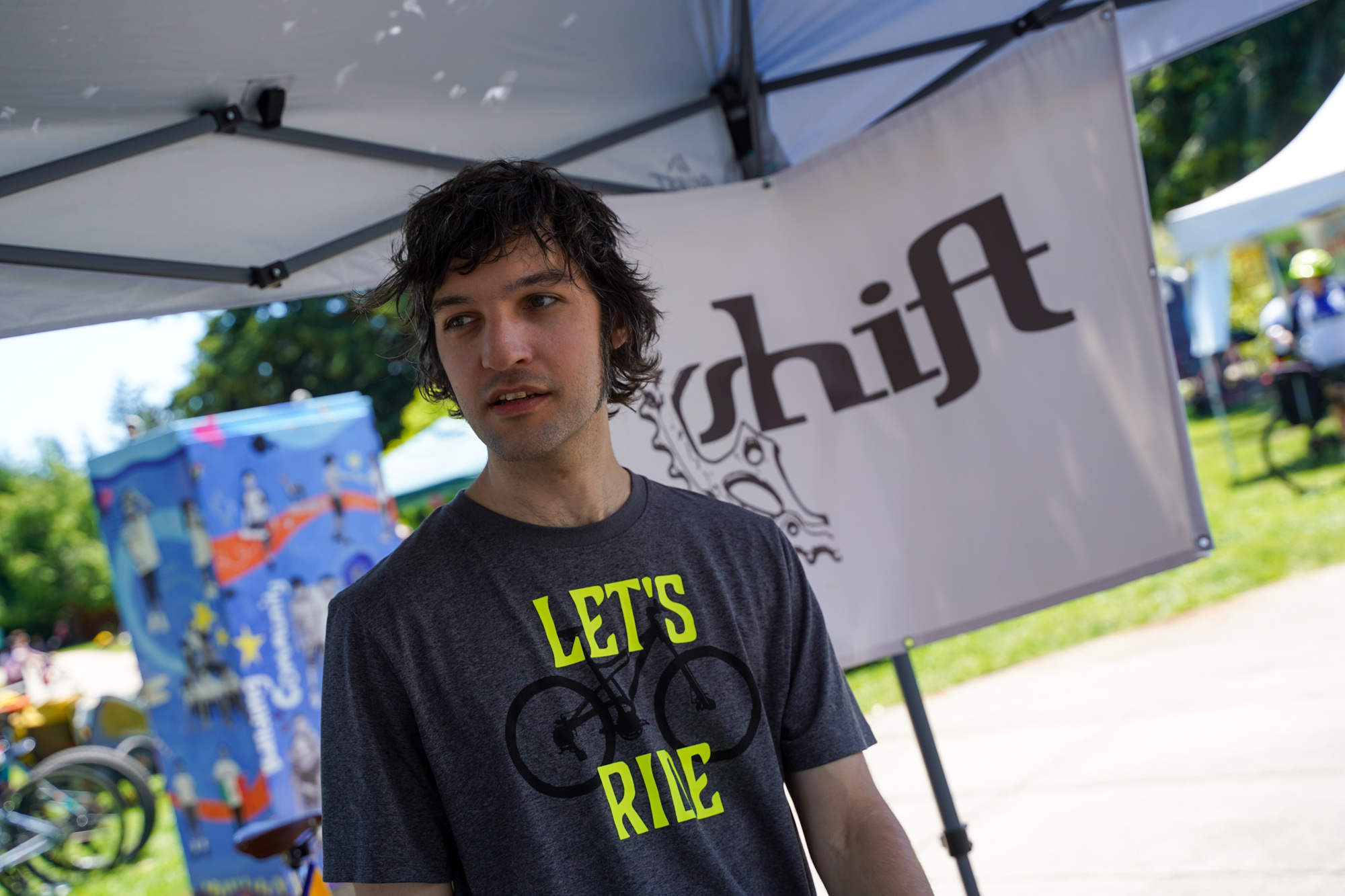
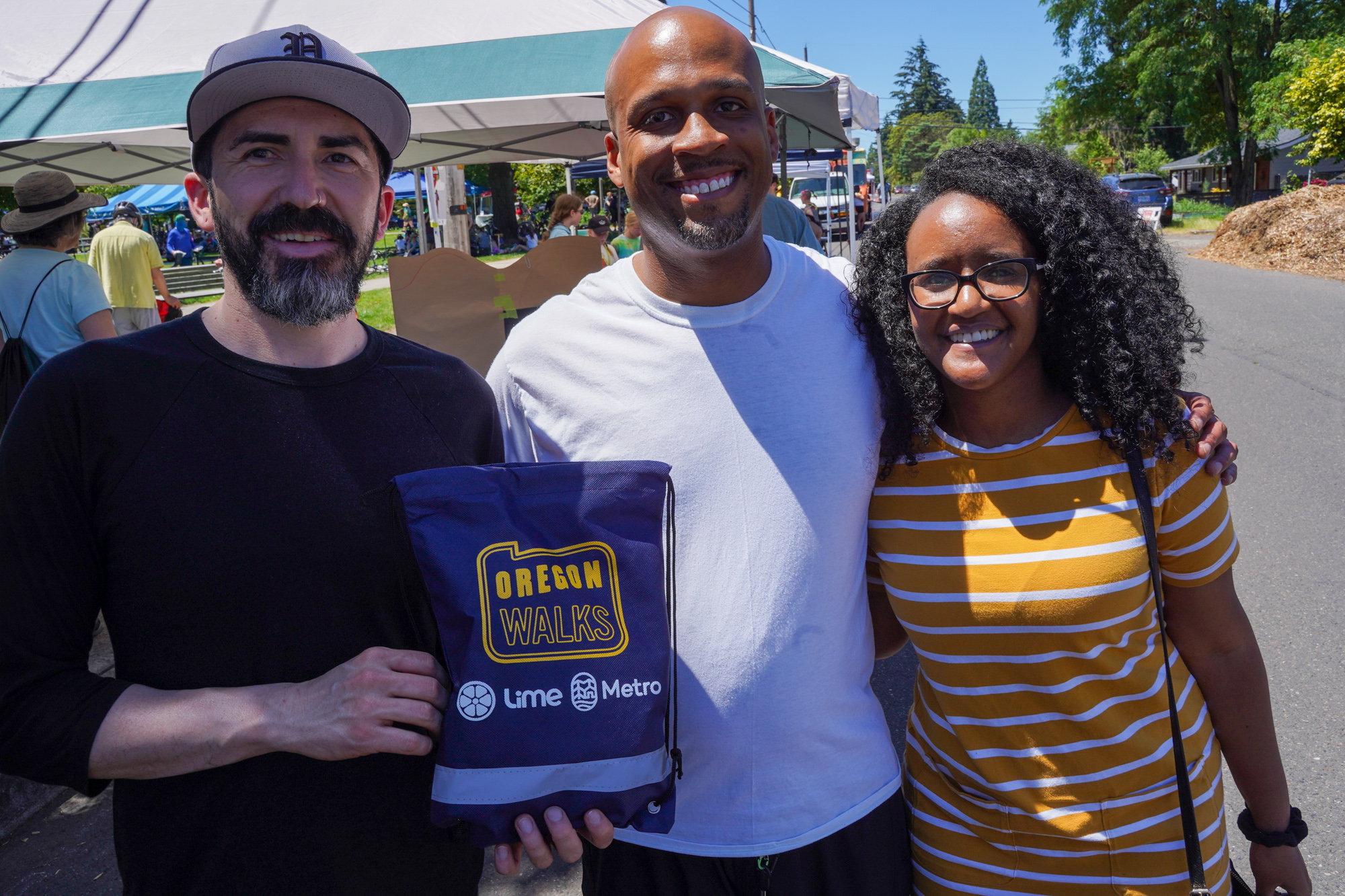
In Khunamokwst Park, I watched a few dozen folks dance Bhangra (traditional folk dance of Punjab region in India) and even more wait in line for sno-cones. Folks seemed to relish the chance to talk to nonprofits and other groups that had set up tables and tents. Our friends at Shift were there to quiz people on local bike fun trivia. So were Oregon Walks, where I scored a cool walking kit with a fanny pack, water bottle, mask, and tote bag.
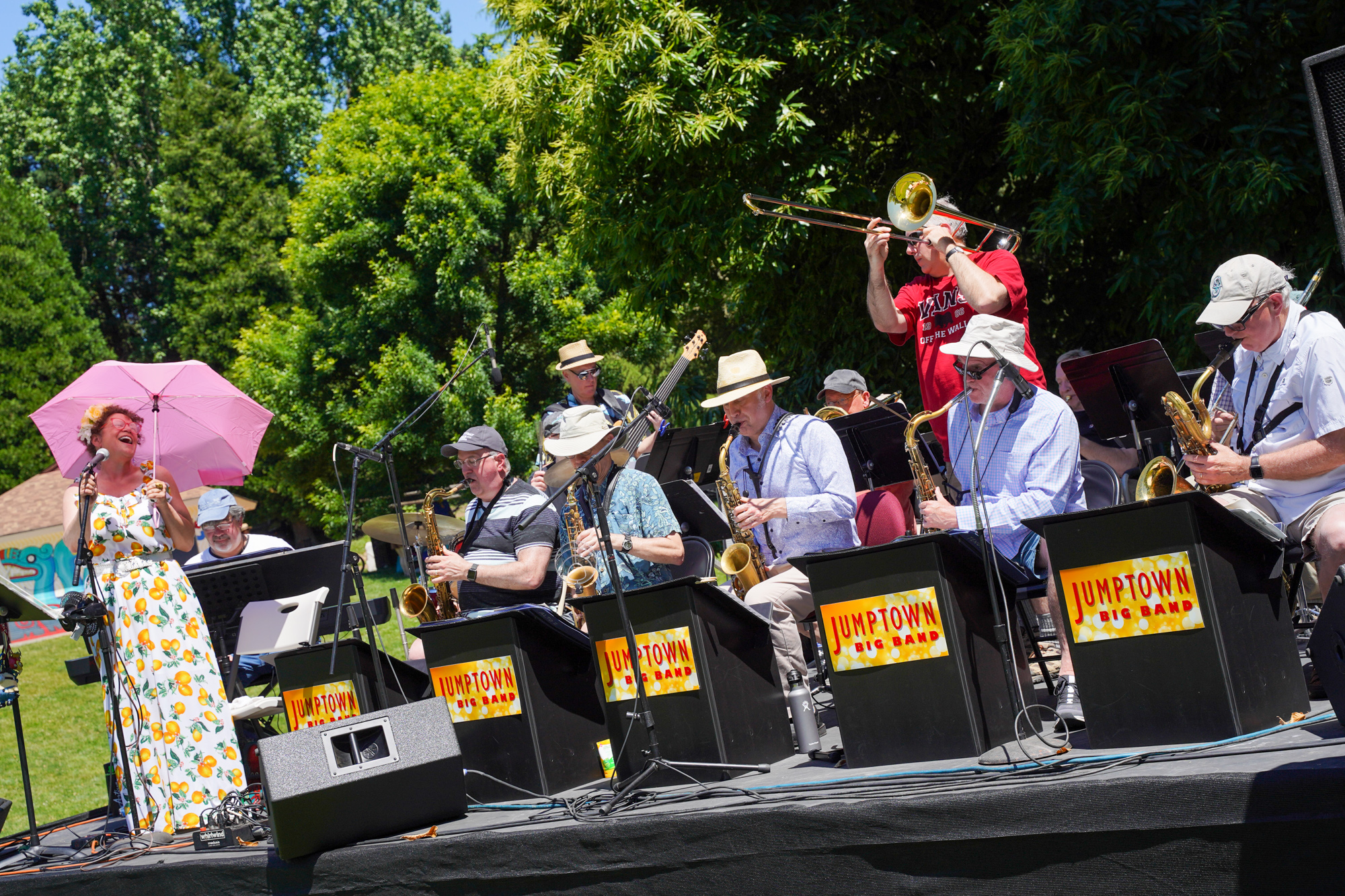
At Fernhill Park, ODOT’s Urban Mobility Office had a booth and somehow the staffers who worked it managed to make the I-205-Abernethy Bridge freeway widening project to interesting that lots of folks stopped in to chat about it. A bit later in the day, the Jumptown Big Band took over the main stage and — despite sweltering heat — did a fantastic rendition of Ella Fitzgerald’s very apropos tune, Too Darn Hot.
Jenna!Madi from The Street TrustPaul B from BikeLoud PDXIzzy Armenta, Ashton Simpson, and Mical Yohannes from Oregon Walks.
But what’s most special about Sunday Parkways are the little nuggets of joy you see scattered in lesser-known spots along the route.
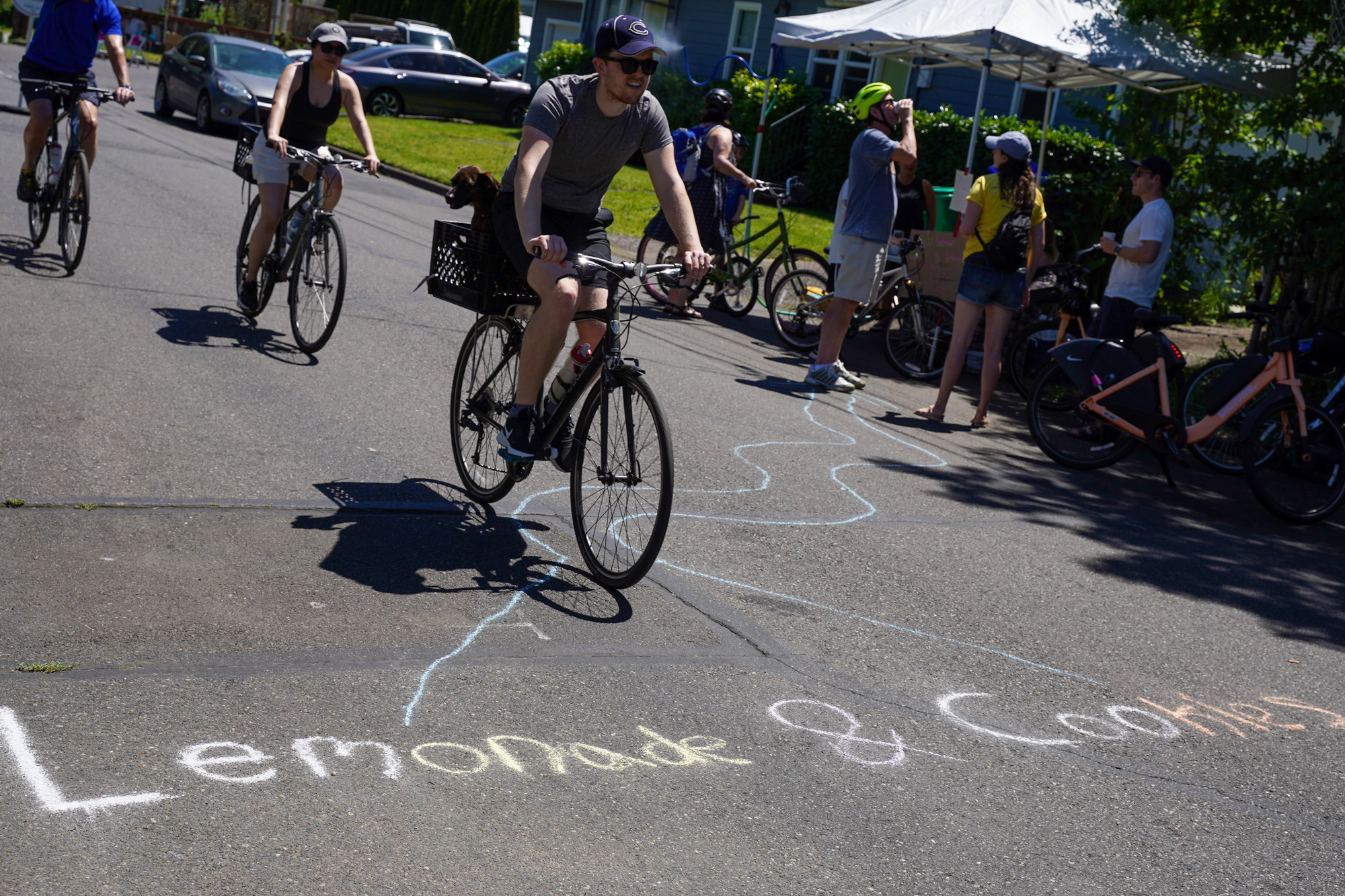
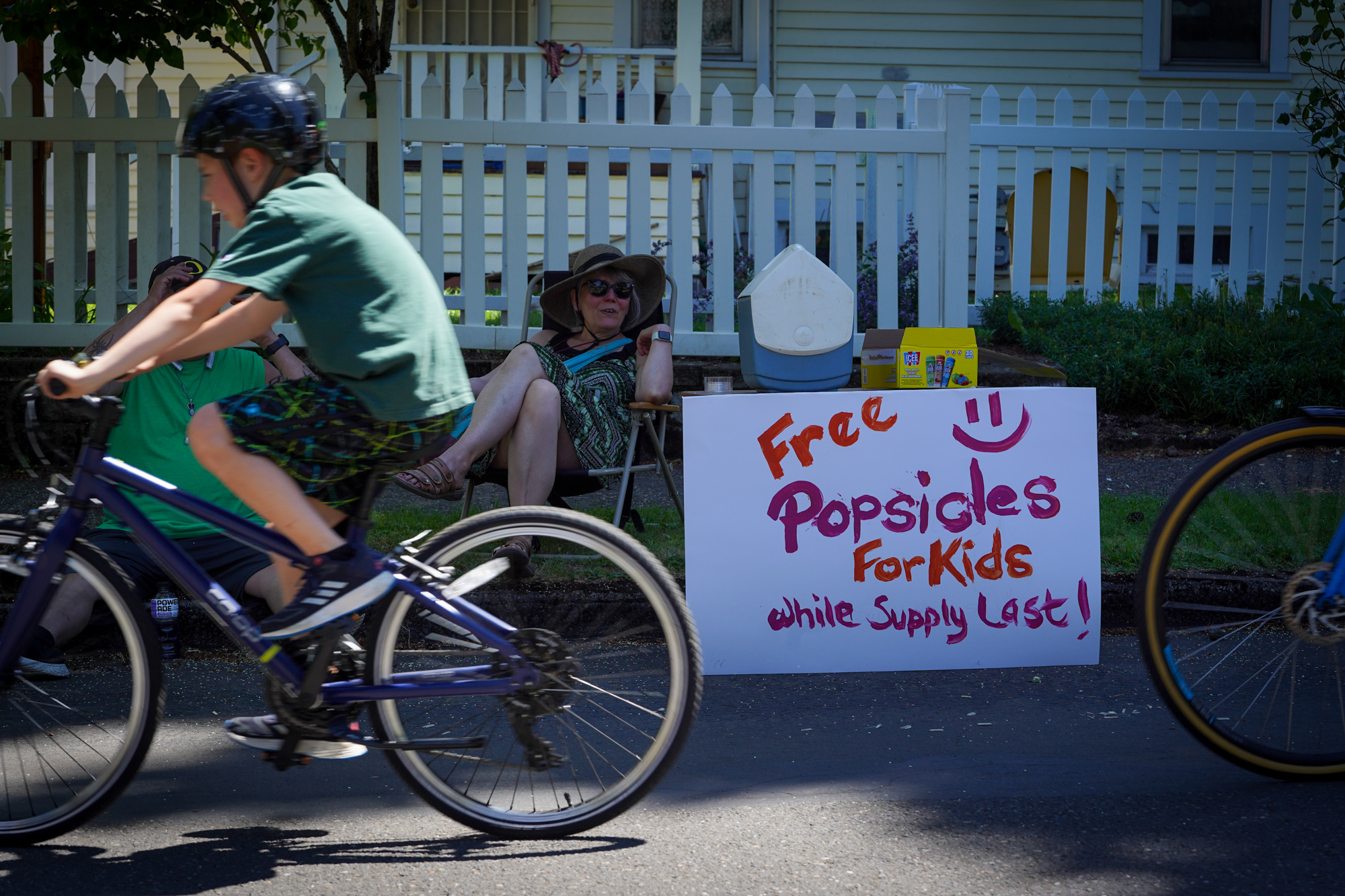
Business at household lemonade stands was brisk and there seemed to be misters and sprinklers pointed into the street every few tenths of a mile.
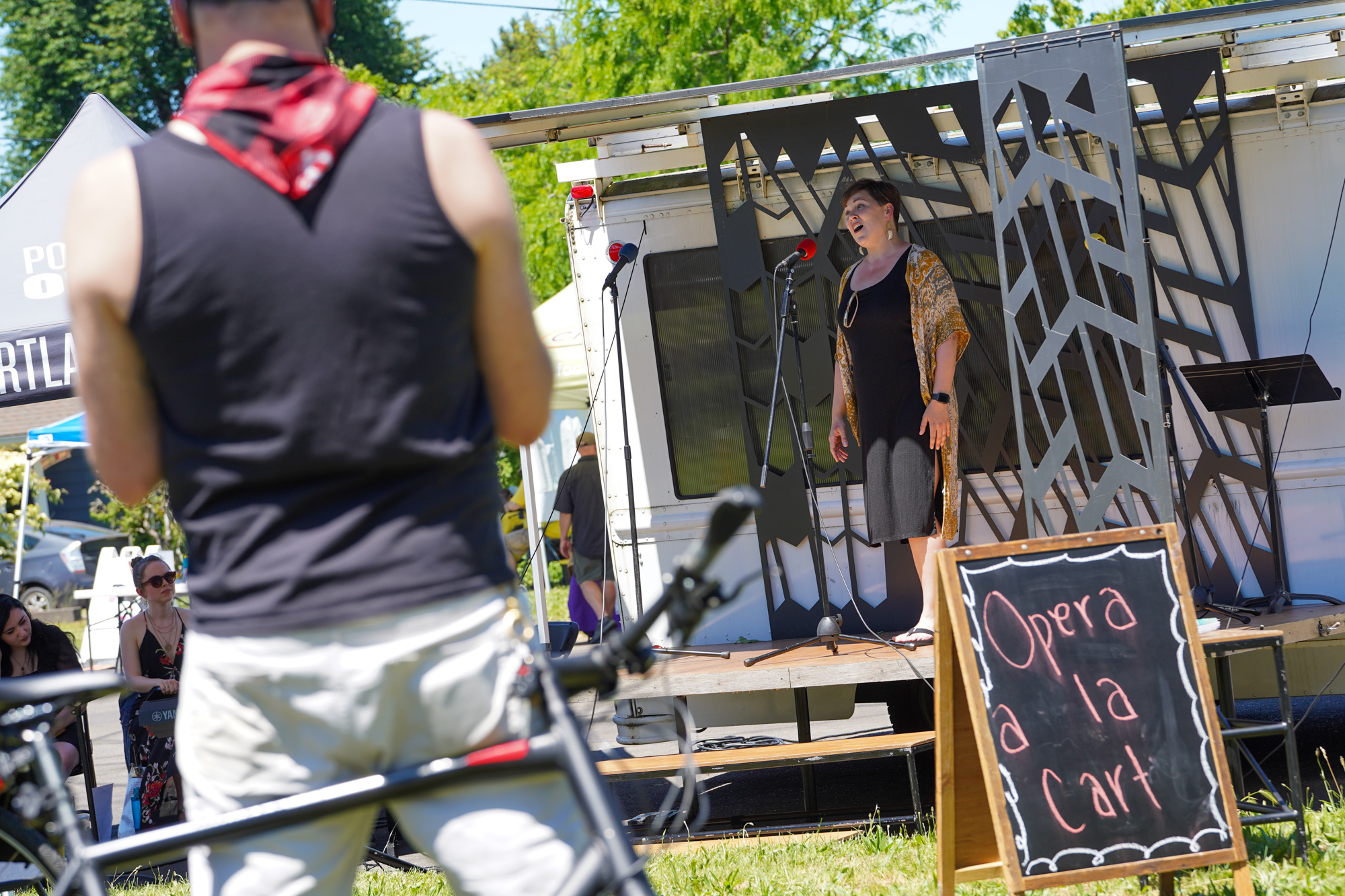
As I turned onto NE 72nd and the lush Roseway Parkway, an opera singer’s voice pierced so sharply through the heavy air it instantly felt 5-degrees cooler. It was Opera a la Cart (thanks Portland Opera!) and there were no seats to be had under the viewing tent as folks took full advantage of this artistic respite from the route.
If you missed it, you’ve got just one more chance this year. The final Sunday Parkways of the season is on August 21st. See PBOT’s website for all the details.
“Lesser Evil candidate knows they don’t have to be good, they just have to be slightly less evil than Greater Evil candidate.”
Welcome to the Comment of the Week, where we highlight good comments in order to inspire more of them. You can help us choose our next one by replying with “comment of the week” to any comment you think deserves recognition.
Everything I know I learned from the BikePortland comments section.
Okay, not really, but we do regularly get commenters who are quite knowledgeable about their subject—you can learn a lot from them even if you don’t agree with what they are saying.
In response to our post about City Council now appearing to support the I-5 Rose Quarter project, Damien grabbed the elephant in the room by the tusks. What do we have to do to get representatives who don’t just talk tough on climate change but actually follow through in their decision making?
Damien’s insightful comment points to voting (and just happens to be a nice follow-up to today’s article on charter reform). Here’s what Damien wrote:
Quite the contrary, dwk – supporting compromised candidates is what gets us bad candidates. It incentivizes it.
The problem with the “lesser of two evils” rationale/strategy is that it’s only rational in the context of one election. Over multiple elections, it’s a self-defeating downward spiral, i.e., it always leads to greater evil. Taken to its absurd conclusion, we eventually get a choice between, say, just for example’s sake, a mass-murdering psychopath who killed 100 people last week and a mass-murdering psychopath who killed 99 people last week, and well, you’d better vote for the 99-count murderer because they are the lesser of two evils. In the next cycle they’ll double those numbers, because Lesser Evil candidate knows they don’t have to be good, they just have to be slightly less evil than Greater Evil candidate.
Thank you, Damien, for the pushed-to-the-extreme example. You can read Damien’s comment and the full comment thread under the original post.
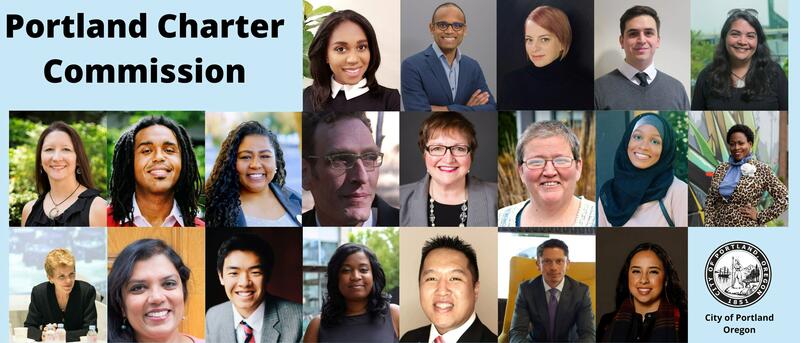
Charter Commission members. (Source: Portland Charter Commission)
Our city hamstrings itself by putting city commissioners — who possibly have no management experience, background or interest in a bureau — in charge of running them.
Portland took another step toward good governance with the recent Charter Commission vote to advance their reforms to the November ballot. This City Council appointed, 20-member group of volunteers has been grappling for a year and a half with how to improve the way we run our city, this vote was a milestone in their efforts.
With their recommended changes to Portland’s charter more formalized, I decided it was time to become better informed about the issue.
With an open but skeptical mind, I plunged into the Commission’s materials. It only took a few hours for me to realize that I wasn’t bringing a very big pole to this pond.
How to design fair elections is a well-studied field and there is a lot of expertise involved, much of it technical. Probably the most useful thing I can do for the BikePortland reader is to summarize and link to the sources that most helped me become “informed enough” about charter reform.
So on that note, what follows is a link-rich synopsis of my path to charter enlightenment.
The Big Picture
Portland has had a “commission” form of government for over a century. It is an antiquated system in which each commissioner, in addition to their roles of passing ordinances and responding to constituents, oversees a portfolio of bureaus. In other words, commissioners have both policy and executive roles. This type of governance was long ago abandoned by other major US cities, with Portland being the last hold-out.
Currently, we elect four “at-large” commissioners and a mayor using a winner-take-all system. Voters get to choose candidates in all four races and are not restricted by having to live in a particular district. The candidate who receives the majority of the vote wins the seat, although this may take two rounds of voting, a primary and a run-off.
Oregon Public Broadcasting published a helpful article by Rebecca Ellis which describes our current system and the proposed changes.
(Source: Charter Committee Progress Report #5)
What the Charter Commission is proposing
The Commission has proposed three changes to the way we elect our Commissioners and run the city:
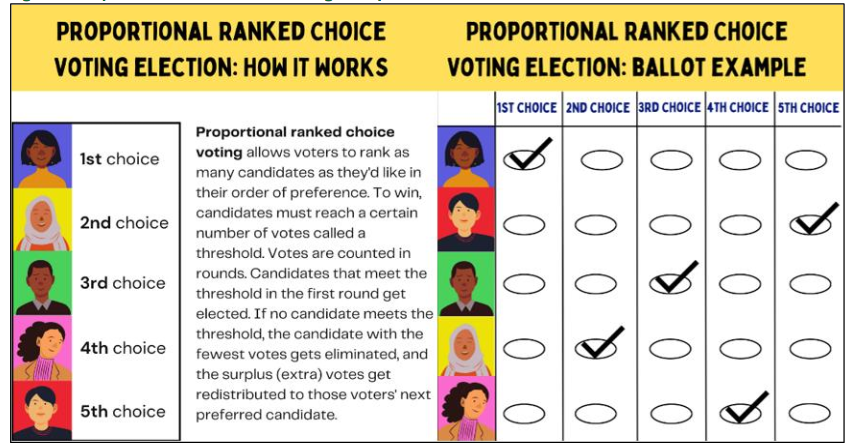
• Allowing voters to rank candidates in order of their preference, using ranked choice voting
• Four new geographic districts with three members elected to represent each district, expanding the city council to a total of 12 members
• A city council that focuses on setting policy and a mayor elected citywide to run the city’s day-to-day operations, with the help of a professional city administrator
They write that “it is the Commission’s belief and desire that this proposal will make Portland’s government more accountable, transparent, efficient and effective, responsive, and representative of every area of the city.”
The Charter Commission Progress Report #5 discusses the proposed changes in detail beginning on page 23. UPDATE (6/29/2022):Soon after our original preparation for this story, the Charter Commission released Progress Report #6 which is a summary designed “to give a high-level view of the approach and work of the Charter Commission at this stage in the process.”
How did they come up with that?
There are two main parts to the proposed changes: 1) moving management of the bureaus away from the commissioners and to the mayor/city manager and 2) changing the way Portlanders elect the City Council.
Concerning jettisoning the commission structure, the Charter Commission conducted discussions with bureau directors and elected officials, as well as 106 sessions with community groups and the public. There does not seem to be significant opposition to dropping the commission system from any quarter. On the contrary, the idea appears to have a lot of support. One vocal supporter, City Commissioner Mingus Mapps, said of the commission system, “It’s a crazy way to run a city, and it’s one of the reasons Portland underperforms on everything from homelessness to permits, time after time.”
The Progress Report summarized what Portlanders believe are the main weaknesses of our current way of doing things including: lack of accountability, failure to move forward on complicated issues, lack of coordination, silos, inconsistent and unqualified management, micromanaging, et cetera. It is a long list.
Broadway bike lane last fall. (Photo: Jonathan Maus/BikePortland)
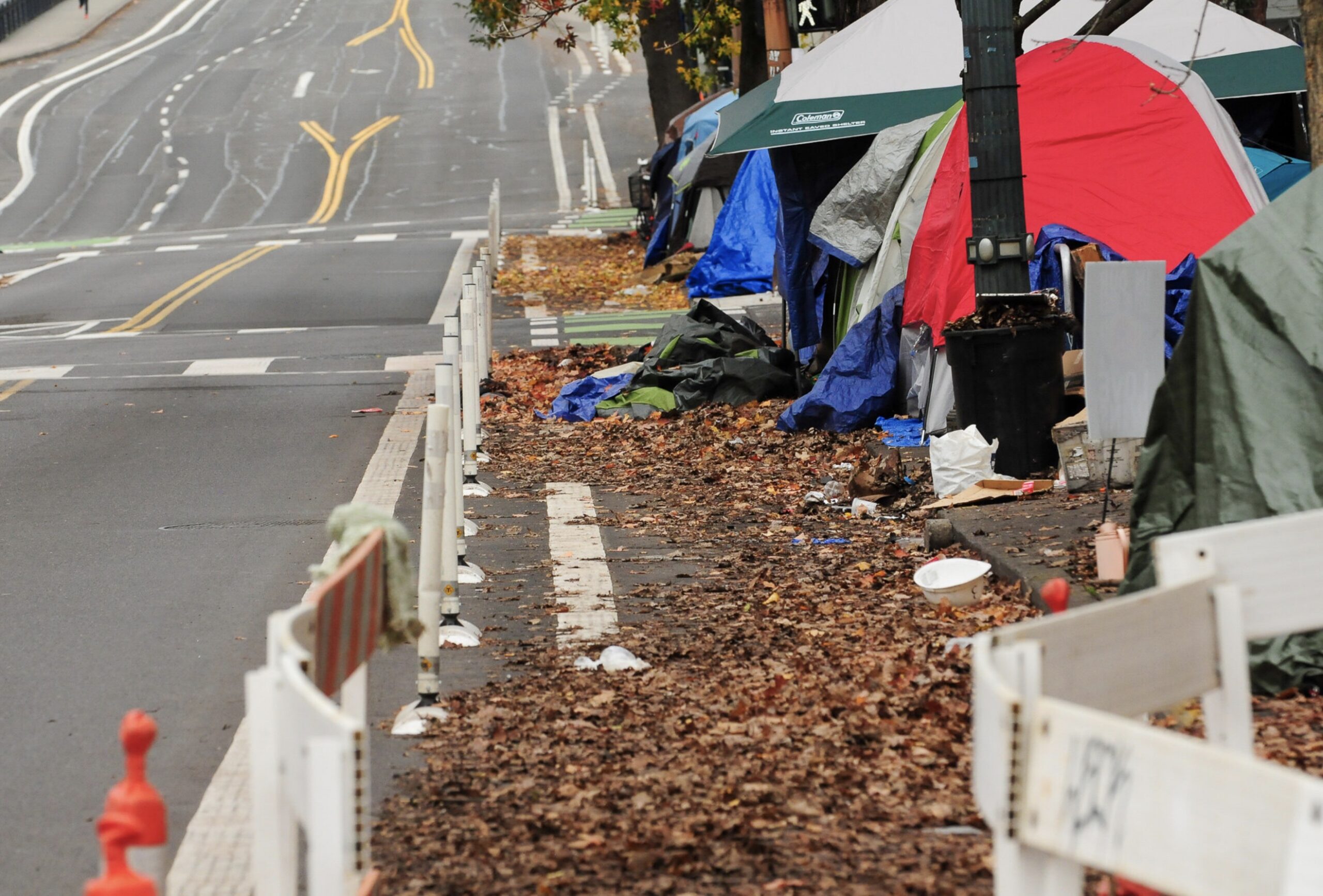
Portland’s homelessness crisis serves as a good example of this government dysfunction. Last week’s BikePortland Monday Roundup included an article about Houston’s success in addressing homelessness and their use of a “Housing First” model. They credited getting everyone “to row in unison”—the city and the non-profits—with their success.
But Portland’s more fundamental problem is getting the citybureaus to row in unison. As Mapps told KOIN 6 in March,
One of our challenges right now is to get different city bureaus to work together. I know Portlanders are furious with the state of houselessness out there, but one of the reasons why we struggle is that we have about five different bureaus that play a role in solving houselessness. It’s not just a matter of providing housing, houselessness is often a mental health issue, and a public safety issue. And if you’re camping in a park, it becomes a Parks issue, if you are camping on a sidewalk it becomes a PBOT issue.
One of the things we have failed to do over and over again is to get these different bureaus to work together to solve problems like getting people off the streets to safe, supportive housing. You see the results of what the status quo does. If we move toward a coordinated system run by professionals, I believe we would do much better.
To sum up, our city hamstrings itself by putting city commissioners — who possibly have no management experience, background or interest in a bureau — in charge of running them.
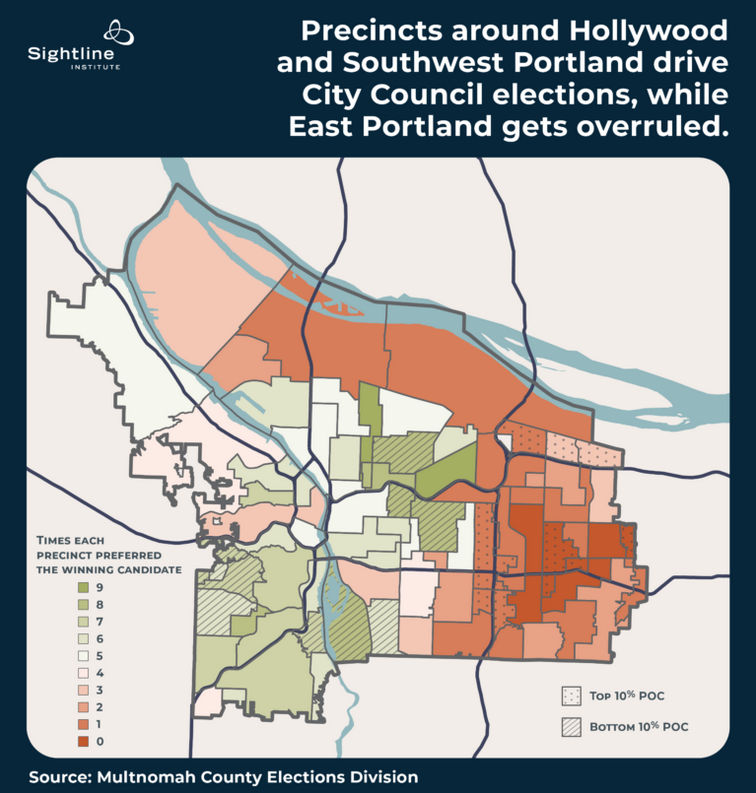
Eberhard makes a strong case for proportional ranked-choice voting and brings to life the analysis that the MGGG Redistricting Lab at Tufts University did of Portland voting.
It is the MGGG (Metric Geometry and Gerrymandering Group) mathematical models of how various voting schema would play out in Portland that informed the Charter Commission’s recommendation of ranked choice voting for multi-member districts. And although MGGG used race as their model for underrepresented voters, Eberhard points out that “the results apply to Portlanders who are in the minority for any number of reasons: small business owners, people who are dependent on transit, those who get around by bike, youth, or parents of school-age children.”
The Charter Commission concluded that four multi-member districts and ranked-choice voting will bring fairer and fuller representation to city government, could improve participation, and also promote more issue-oriented, civil campaigns with less negative campaigning.
But it wasn’t a unanimous vote. One of the three commissioners who voted against the reforms was recent city council candidate Vadim Mozyrsky. Similarly, City Commissioner Mingus Mapps has not taken a strong public position in support or in opposition to the whole package, although in an April interview with the Rose City Reform substack he expressed doubts about some aspects of it. So there are dissenting voices, but it is probably too early to detect an organized opposition. The Charter Commission work sessions were taped, and around 1:18:00 of the June 6th meeting, you can listen to the comments of two dissenting commissioners, as well as an impassioned rebuttal by the committee co-chair.
The takeaway
The four-district, multi-member proposal combines elements of both geographical representation and of fairer representation of non-geographically defined minority concerns. The tension between geography (with neighborhood associations often being the stand-in representative) and minority interests (such as better bicycle infrastructure) underlies many of Portland’s political skirmishes. The changes the Charter Commission recommends could result in a more productive political dynamic with more non-majority concerns achieving a voice on the city council.
UPDATE(6/29/2022): Yesterday the Willamette Week reported that two newly-forming PACs (political action committees) will be taking opposing sides on charter reform. Vadim Mozyrsky has recruited Chuck Duffy and Steve Moskowitz (two former Bud Clark aides) to his yet-to-be-named PAC which will oppose the package of reforms advanced by the Charter Commission, and Building Power for Communities of Color is starting a PAC to support the reforms. Mingus Mapps’s existing Ulysses PAC will most likely be hosting “educational forums” about the reforms, as a softer way of pushing back against the bundled changes. Mapps and Mozyrski favor adopting a mayor-manager system but are against aspects of the other commission-proposed reforms.
This week’s roundup is sponsored by Action LED Lights, where you can currently receive 40% off some models.
Below are the most notable stories our writers and readers came across in the past seven days…
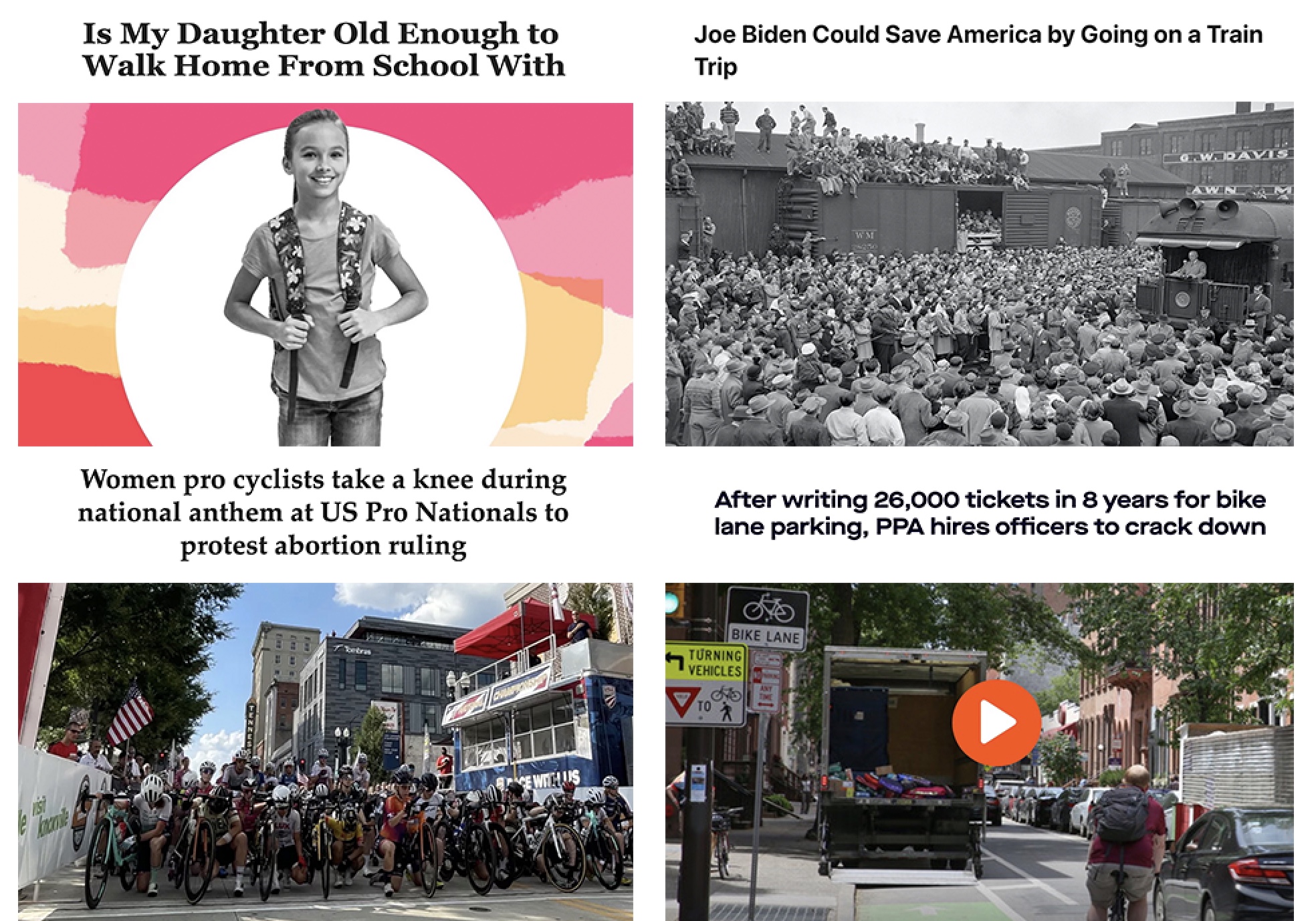
Safety mom: In this very relatable essay, the daughter of America’s foremost advocate for traffic gardens shares what it was like to grow up with a “safety mom” who’s doing her part to build the type of street utopia she wants to see in the world.
Roe decision protest: Women competing at the U.S. National Road Race Championships took a knee during the national anthem at the start line of their race in Knoxville, Tennessee.
Biden’s gas tax error: Oregon’s Earl Blumenauer and Peter DeFazio are among the environmentally-minded influencers who are very critical of President Biden’s plan to suspend the gas tax. They and many other transportation reform advocates say Biden should instead improve access to driving alternatives.
Joe’s Train Tour: Noted environmental Bill McKibben makes a very strong case that Biden should go on a nationwide train tour to simultaneously save our country from anti-democratic rule and boost the profile of his beloved mode of travel.
Video of the Week: YouTuber RM Transit takes a look at Portland’s transit system and has some very solid recommendations on how to make it better, including creating superblocks downtown, building that tunnel under the Willamette, and much more.
Great benefits. Competitive pay. We know these are some of the things people look for in a job.
But if you’re the kind of person who also cares about making an impact and serving our nation’s wounded warriors and their families, then you’re exactly the kind of person we’re looking for. When you join Wounded Warrior Project, you’re committing to making a difference. We make a commitment to you too – helping you to find that spark, ignite your passion to serve, and embark on a career with meaning and purpose.
At Wounded Warrior Project we recognize our mission cannot be accomplished without our talented teammates, which is why we’re proud to offer benefits such as:
A flexible hybrid work schedule (3 days in office, 2 days’ work from home)
Full medical, dental and vision coverage for both teammates AND family members
Competitive pay and performance incentives
A fun, mission focused and collaborative team environment
A mission that matters is just the beginning, so if you’re ready to get started, we’re ready for you.
The Wounded Warrior Project (WWP) Soldier Ride Specialist conducts planning and facilitation of WWP Soldier Rides. These all-ability events include single and multi-day rides of varying modalities with adaptive and standard equipment.
DUTIES & RESPONSIBILITIES
Collaborate with the Soldier Ride team to plan, resource, and facilitate events.
Recruit warriors to Soldier Ride (SR) events. Work with all relevant technology to facilitate a seamless recruitment process (Salesforce/Cvent/phone/Zoom).
Coordinate with Travel and Events team for Soldier Ride event logistics, ensuring appropriate contracts for hotels, meals, and warrior travel accommodations. Serve as liaison between hotel and WWP while onsite for events.
Coordinate all transportation logistics for participants and fleet of bicycles.
Distribute all relevant information and be primary point of contact (POC) for warriors who may participate in any Soldier Ride opportunity.
Develop, cultivate, and maintain relationships within Soldier Ride event cities and with associated vendors, community supporters, and volunteers, distributing promotional items as needed.
Coordinate with local law enforcement and EMS for support during Soldier Ride events. Maintain contact through event completion and cultivate the relationships for future opportunities. Submit and track appropriate permitting required by host locations.
Order and inventory all swag and equipment for Soldier Ride events, to include promotional items.
Assist with all aspects of event execution including, but not limited to: loading and unloading of equipment from trailer; driving support vehicles; warrior check-in; delivery of pre-ride meetings; equipment fitting and maintenance; group stretching
Directly engage with warriors and community to create an environment that encourages connection and learning. Mitigate any issues with immediate engagement.
Demonstrate intermediate-level cycling fitness, with the ability to maintain the pace of the group during Solider Rides and to hand-push warriors needing assistance.
Serve as WWP subject matter expert on cycling, adaptive cycling, gear, and equipment.
Coach warriors during group events, instructing warriors in road cycling, mountain biking, skiing, snowboarding, and any other modality identified by the program.
Facilitate virtual programming content via Zoom, Facebook Live, Strava, and other technology-based platforms.
Establish effective WWP relationships and work collaboratively with teammates and community partners to promote all WWP events.
Other related duties as assigned.
KNOWLEDGE, SKILLS, & ABILITIES
Demonstrated ability to coach warriors to help them achieve their goals.
Demonstrated basic competency of the mechanics of bicycles and related adaptive equipment.
Demonstrated ability to hand-push cyclists needing assistance.
Demonstrated intermediate-level road and mountain bike fitness, and abilities.
Demonstrated ability to model and instruct basic road and mountain bike skills to warriors.
Demonstrated intermediate-level skiing or snowboarding abilities.
Good organizational and time management skills. Effectively complete assignments and meet deadlines.
Strong interpersonal skills. Ability to interact effectively with diverse individuals and build effective working relationships. Demonstrated emotional intelligence. Ability to respond to sensitive matters with diplomacy and empathy. Demonstrated ability to build rapport with warriors.
Strong written and verbal communication skills, to include public speaking.
Ability to travel in support of WWP programs and services.
Demonstrated computer proficiency using Microsoft Office software, e.g., Word, Excel, Outlook.
Unequivocal commitment to the highest standards of personal and business ethics and conduct.
Mission-driven, guided by core values, and a pleasure to work with.
EXPERIENCE
Requirements
Two years of road or mountain biking experience at the intermediate level. This includes group riding experience.
Two years of business or administrative experience.
Preferences
Two years of intermediate-level skiing or snowboarding experience.
Two years of experience coaching.
Two years of experience working with military or veteran populations.
One year of public speaking experience.
EDUCATION
Requirements
High school diploma or GED.
Preferences
Bachelor’s degree.
CERTIFICATIONS & LICENSURE
Requirements
Valid state-issued driver’s license.
Preferences
Cycling coach/instructor certification – USAC or other
Ski/snowboard instructor certification, e.g., PSIA – AASI or other relevant certification
WORK ENVIRONMENT/PHYSICAL DEMANDS
Participation in outdoor activities and events under varying weather conditions.
Cycling for extended periods of time.
Up to 50% travel.
May require lifting/carrying items up to 50 pounds.
*ca-ag
Wounded Warrior Project® is an equal opportunity employer committed to providing equal employment opportunity to all persons without regard to race, color, religion, national origin, gender, gender identity, sexual orientation, marital status, citizenship, age, veteran or military status, disability, genetic information, or any other characteristic protected by law.
Please note:
Wounded Warrior Project is not seeking assistance or accepting unsolicited resumes from search firms without a written search agreement in place. All resumes submitted by search firms to any employee at Wounded Warrior Project via email, the Internet or directly to hiring managers at Wounded Warrior Project in any form without a valid written search agreement in place will be deemed the sole property of Wounded Warrior Project, and no fee will be paid in the event the candidate is hired by Wounded Warrior Project as a result of the referral or through other means.”
These are paid listings. And they work! If you’d like to post a job on the Portland region’s most popular bike and transportation news platform, you can purchase a listing online for just $75. Learn more at our Job Listings page.
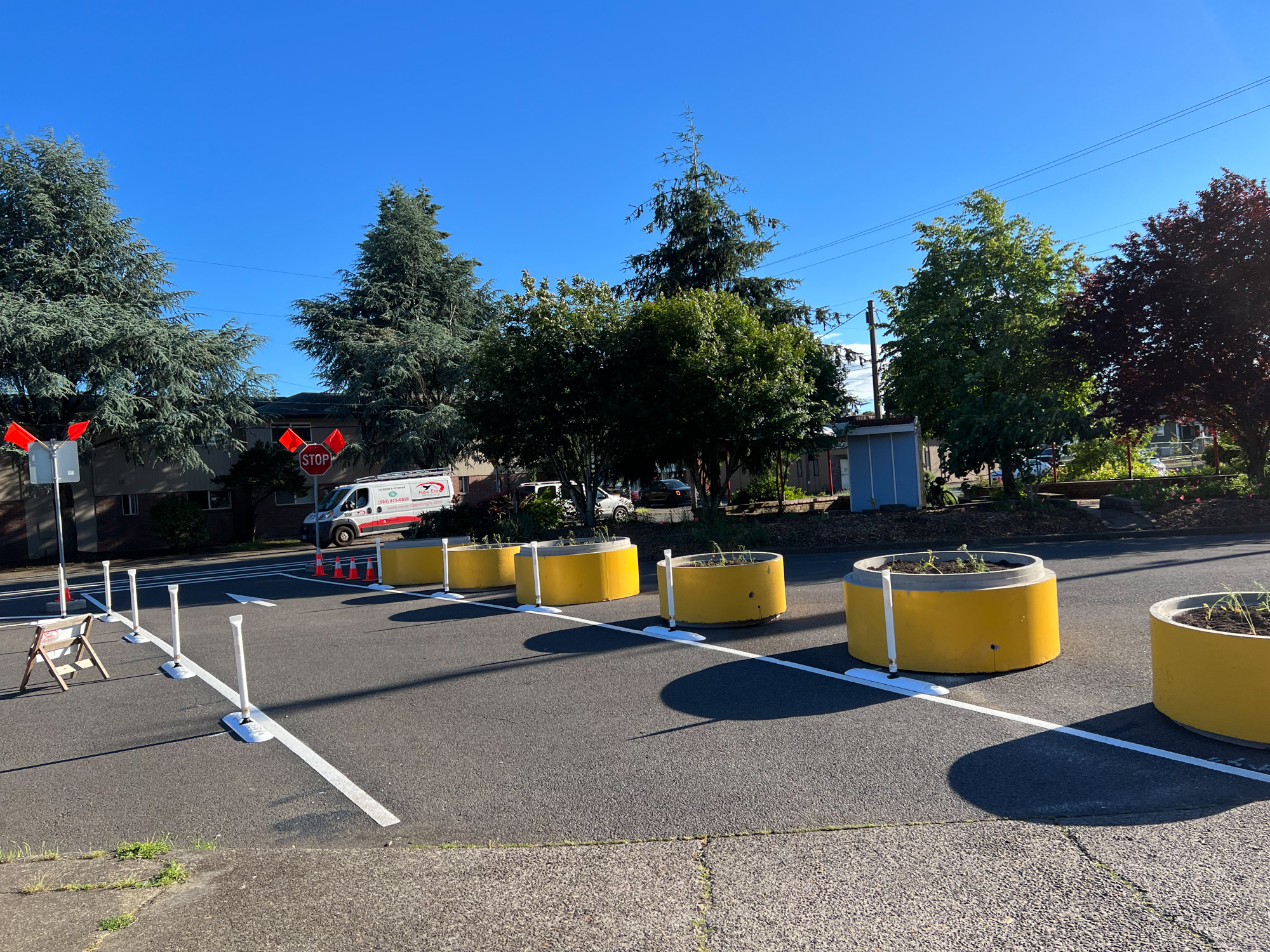
Looking north on 72nd toward Mt. Scott Park.View looking northwest across Woodstock toward 72nd.Hopefully these barricades do the job. View looking southeast from 72nd toward Woodstock.The exit lane for mini-mart customers.Looking southeast across 72nd.(Photos: Jonathan Maus/BikePortland)
“Seeing the slip lane closed, the traffic calmer, and more people walking about and enjoying our neighborhood has left me with a renewed sense of hope.”
– Nadine Salama, resident
What began on a wish list from neighbors has become a reality.
This week transportation commissioner Jo Ann Hardesty announced the latest development in her effort to reduce gun violence and restore public safety in the Mt. Scott-Arleta neighborhood just south of Foster Road.
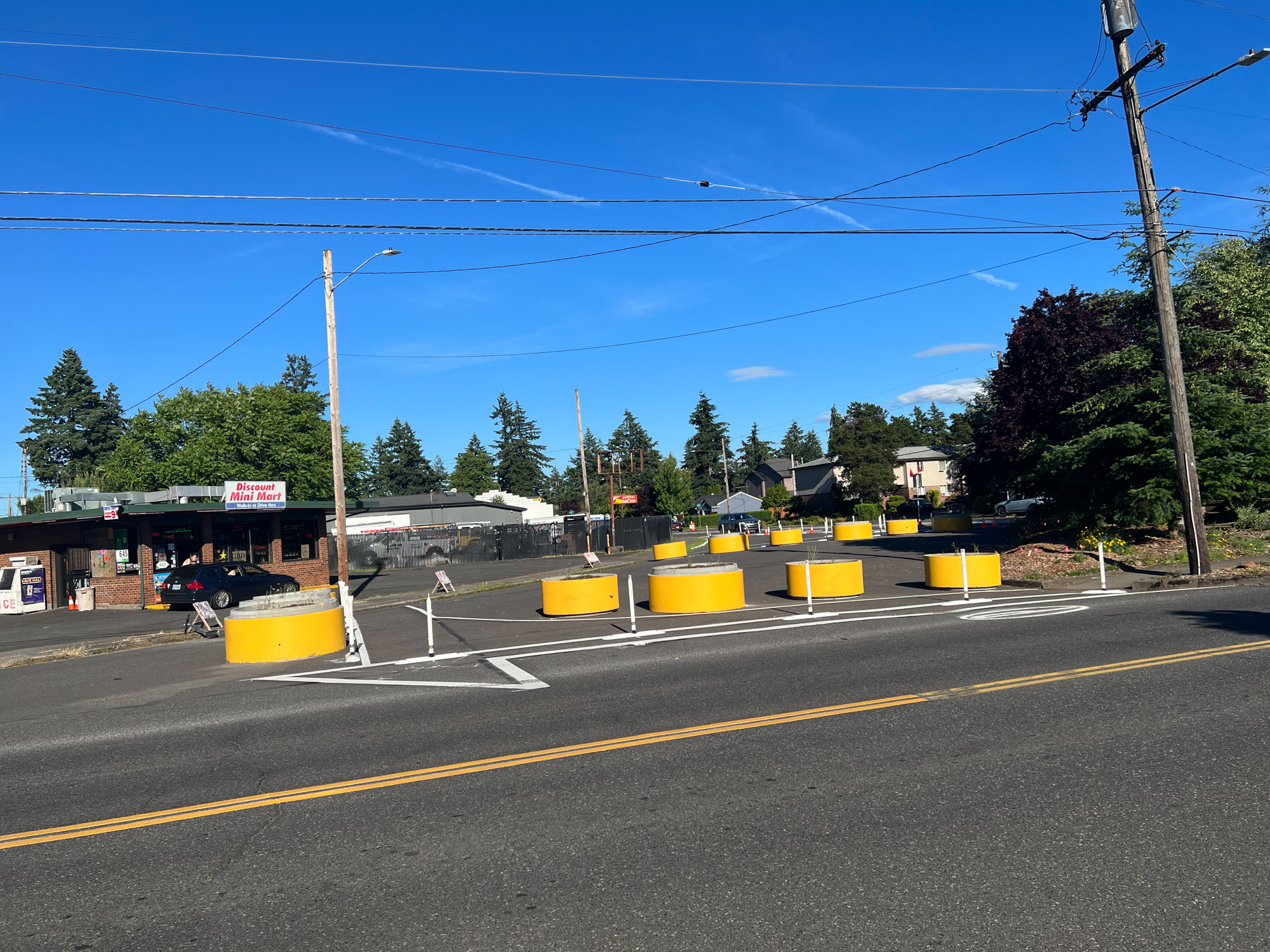
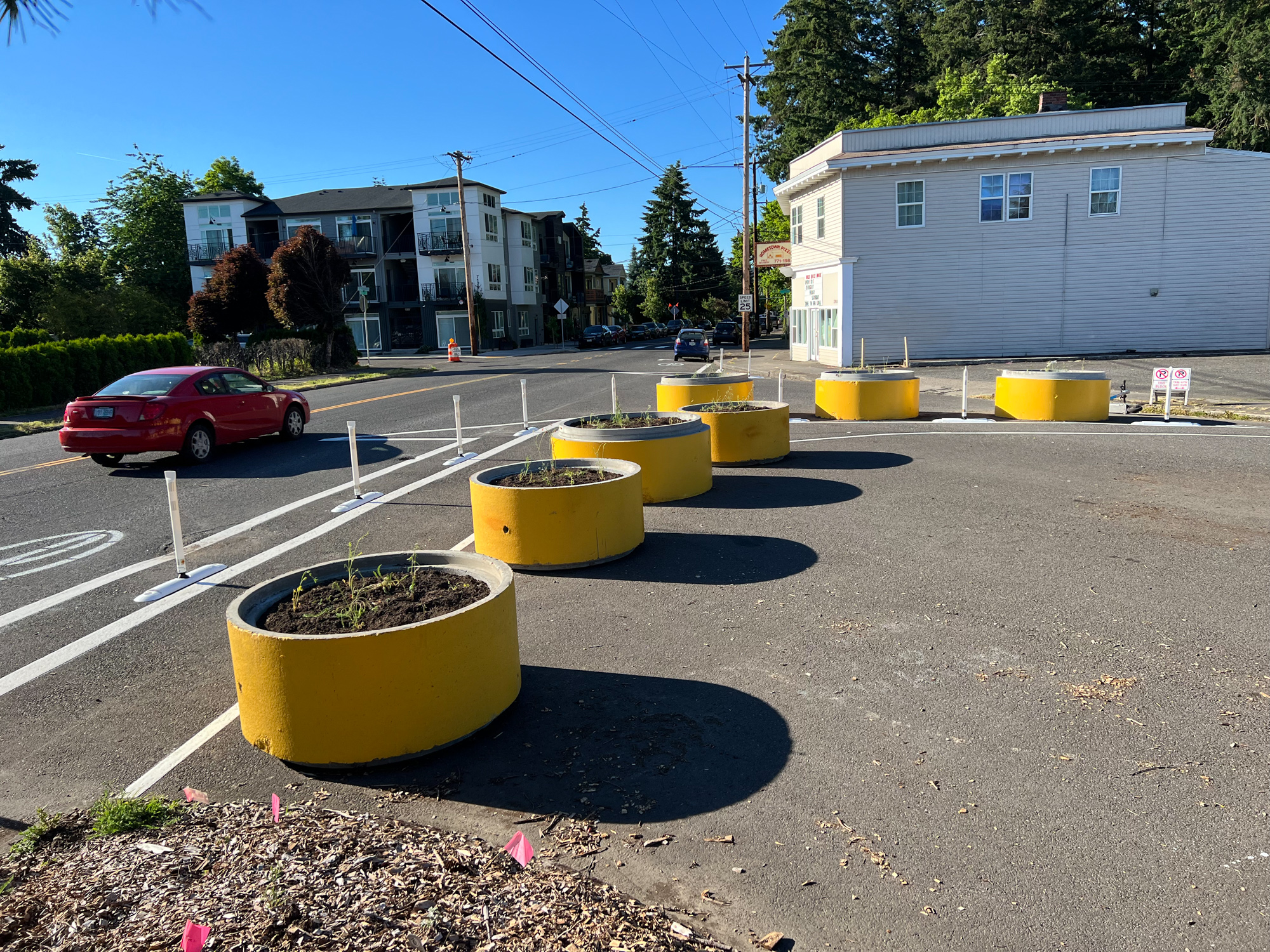
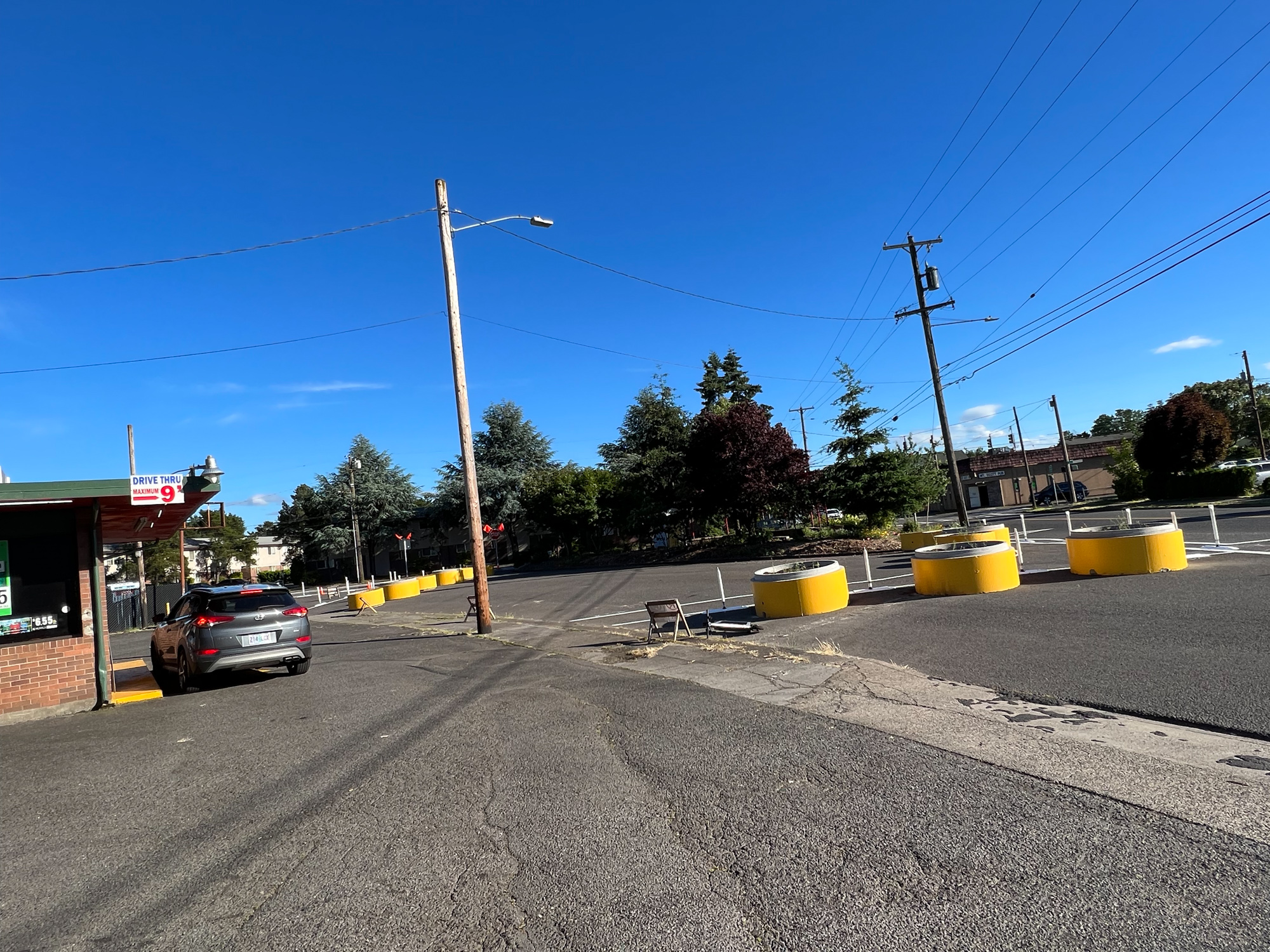
The wide slip lane between SE 72nd and Woodstock Boulevard that used to provide a speedy getaway for criminals in cars and drivers looking to avoid red lights, is now closed off with 12 large concrete barricades. Arleta Triangle, a community space that used to be on an island surrounded by dangerous auto traffic, is now at the tip of a public plaza peninsula that has become the most high-profile element of the city’s effort to employ the principles of crime prevention through environmental design.
And future plans for the space look even better.
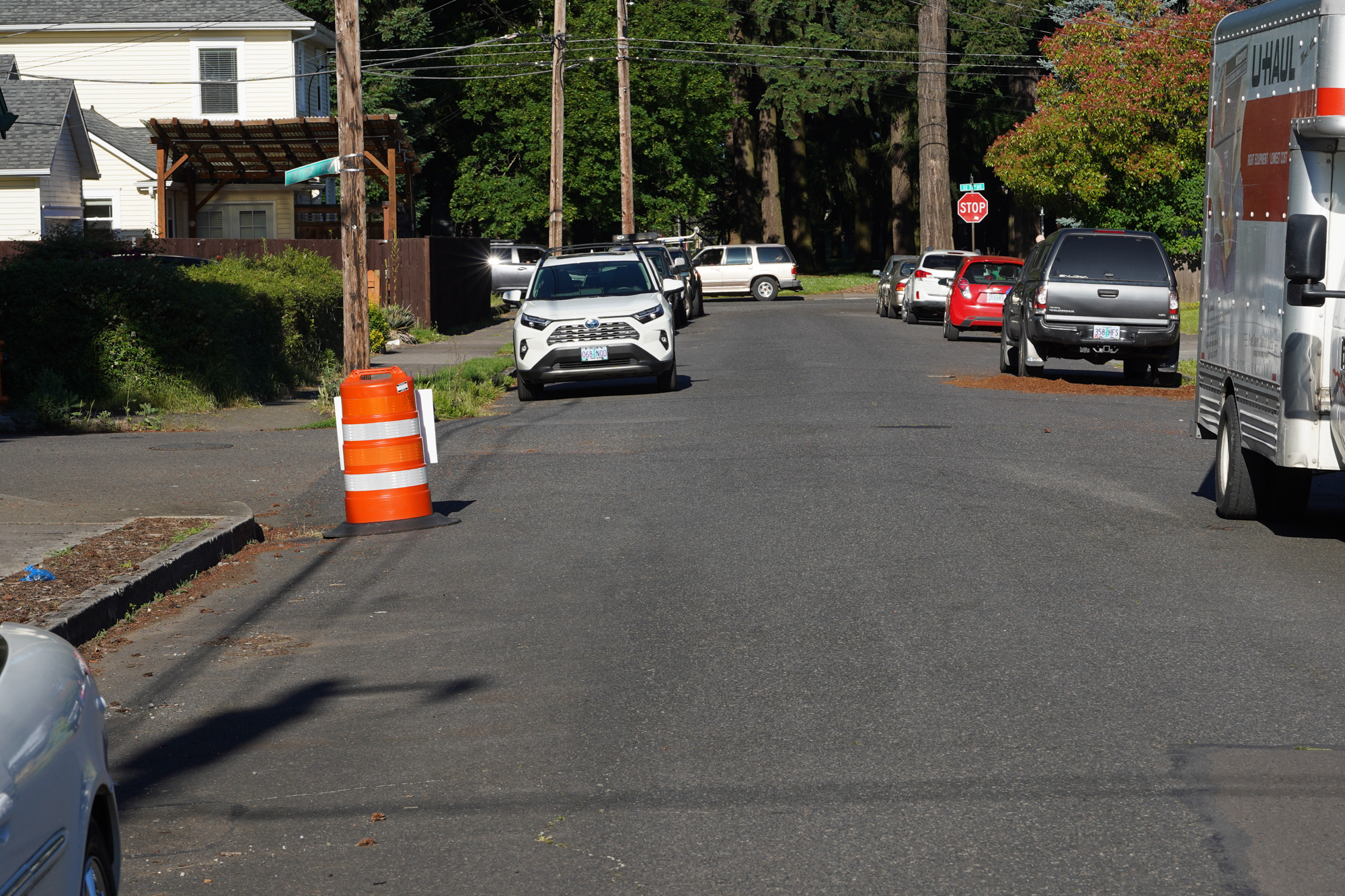
Led by Commissioner Hardesty, PBOT began this project last fall by installing 18 orange traffic barrels on streets around the park. The idea was to discourage people from speeding through the neighborhood and it came in direct response to residents who complained about dangerous driving related to shootings and other crimes.
One of the orange traffic-calming barrels.
The barrels are not that effective on their own. They are easily moved to the curb and when I visited on Wednesday, many of them already were (see photo). But when these traffic calming actions are combined with neighborhood relationships that have led to more trust and collaboration to tackle this public safety crisis, more significant change is possible.
It is no small task to close a large slip lane between two busy streets. It’s even harder when there’s a drive-through business smack dab in the middle. However, despite the presence of Discount Mini-Mart and its steady stream of customers in cars, PBOT has managed to pull it off.
Two weekends ago crews added new striping, plastic curbs and bollards, and the aforementioned concrete barricades to create the plaza. The $23,000 investment has yielded a new carfree space and a much quieter intersection.
While I was there yesterday afternoon, I watched mini-mart customers drive up to the service window from the edge of the plaza on 72nd, then exit through a one-way lane PBOT carved through the east side of the plaza so they can continue onto Woodstock.
While it’s odd to have a carfree space bisected by cars, it seems to work fine and it’s a big improvement over the free-for-all that existed before. A worker at the market told me she doesn’t think the changes will stop people from driving dangerously (and even worried that drunk local bar patrons will crash into the barricades), but she did say it might prevent near-misses.
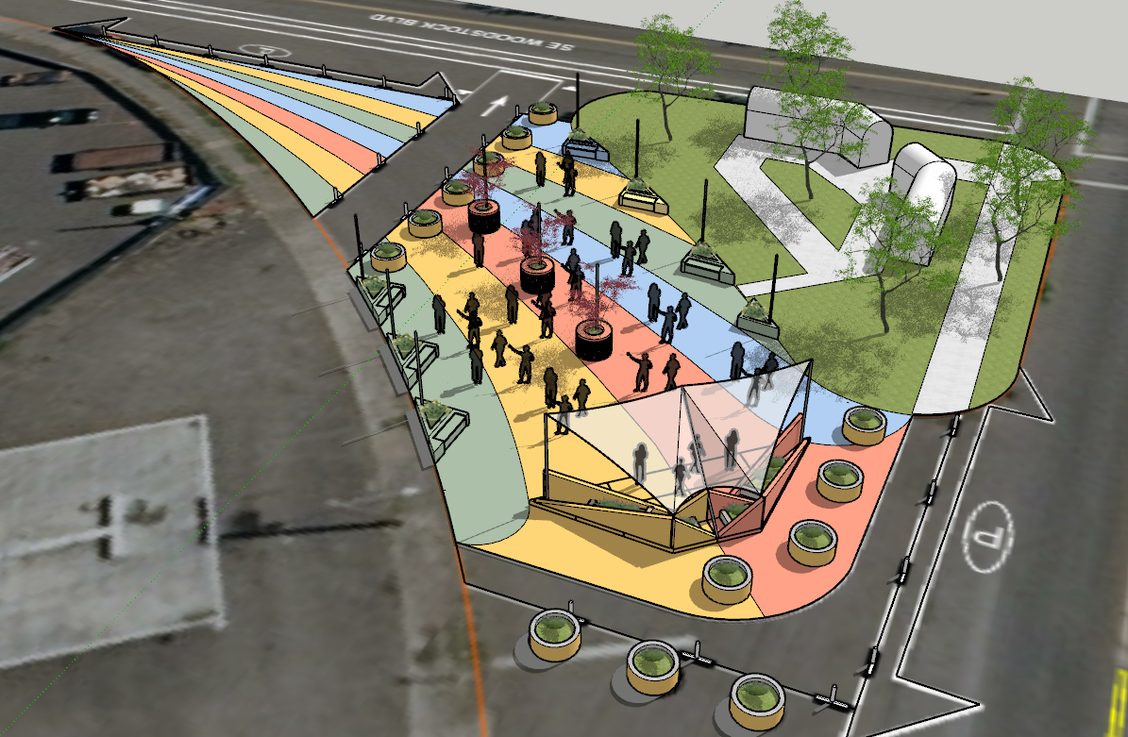
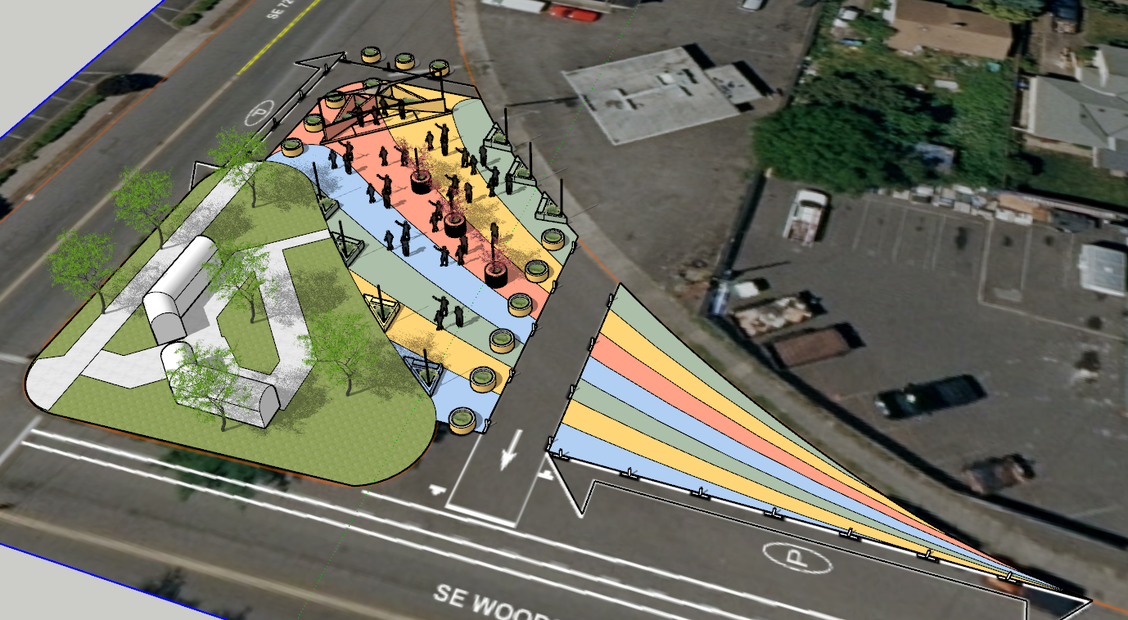
PBOT concept drawings.
For local resident Nadine Salama, who spearheaded this collaboration with Hardesty’s office after witnessing shootings outside her home, the new plaza is a very welcome development.
“Standing in this same spot last August, when our neighborhood was experiencing a surge in gun violence, and seeing it deteriorate was heartbreaking,” Salama shared in a PBOT statement. “Today, seeing the slip lane closed, the traffic calmer, and more people walking about and enjoying our neighborhood has left me with a renewed sense of hope… I am looking forward to a hopefully wonderful summer in and with my community!”
Summer in the plaza will be even better when PBOT brings to life the full plans for the plaza. In drawings released this week (above), the city revealed plans (based on neighborhood feedback) that include painting the street and adding lights, trees, benches and even a performance stage.
If you’ve feeling a bit of envy, Hardesty says she’s already working to bring a similar approach to public safety to other parts of Portland. “There is optimism we will be able to bring similar interventions to neighborhoods experiencing a high level of violence,” she said.
Stay tuned. And roll over to 72nd and Woodstock to check it out for yourself.
A scene from a Sunday Parkways event in 2018 in north Portland. (Photo: Jonathan Maus/BikePortland)
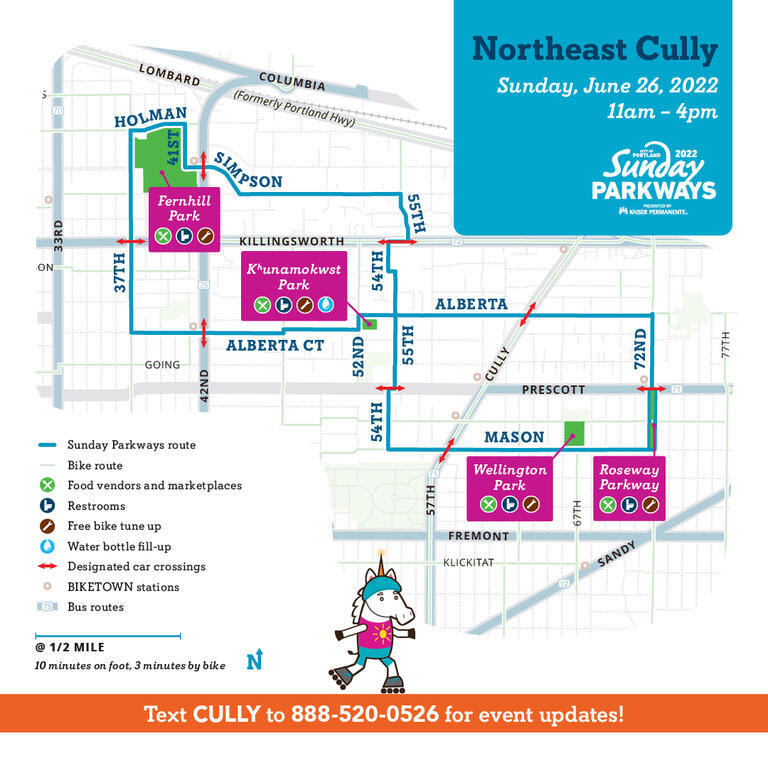
Map of the Northeast Cully Sunday Parkways loop. (Credit: PBOT)
This Sunday, six miles of streets in Portland’s northeast Cully neighborhood will be free of cars and open to people walking, biking and rolling. That’s right: Sunday Parkways, Portland’s beloved annual summer open streets event, is back in-person after two years off and it’s almost time for the kickoff.
During the last two summers, the Portland Bureau of Transportation made Sunday Parkways virtual to keep people safe during the pandemic. They came up with some innovative ideas to try to fill the hole, but nothing beats the real thing, so we expect people will be raring to go this summer. And not only does will this Sunday hold Portland’s first big open streets event since 2019 – it also marks the start of the 15th annual Summer Parkways season. Combined with Pedalpalooza’s 20th anniversary bike summer in full-force, there’s a lot for Portland’s active transportation enthusiasts to celebrate this year!
From 11 am to 4 pm on Sunday, people can take over carfree streets and enjoy free activities while hopping between four parks in Cully – from Roseway Parkway on NE 72nd to Fernhill Park on NE Holman and 37th, and K’unamokwst and Wellington Parks in between. There will be food vendors, live music, community mural-making, free bike tune-ups and more.
Don’t have a bike, or want to ride an electric one for the day? Biketown is offering unlimited free 60 minute rides. You can rent a Biketown e-bike free of charge for the whole event – you’ll have to lock it back up within the hour, but you can start another free trip right away.
This is one of the two Sunday Parkways days this summer – the other one will be on August 21 in east Portland. In pre-pandemic summers, there have been five Sunday Parkways events, but we’ll take two over none. Check out some of our stories about past Sunday Parkways to see how cool these open streets days can be.
“This year’s Sunday Parkways events will have a role in reconnecting neighbors, and in celebrating our shared values of health and mobility for all Portlanders,” PBOT Transportation Director Chris Warner said in a press release for the event. “After two years of not having many opportunities to come together as a community, I can’t wait to reconnect and roll with Portlanders on the open streets of NE Portland.”
You can check out the full event program and details here. Keep in mind that it’s poised to be a hot one (almost 100 degrees) this Sunday – so wear sunscreen, drink lots of water and don’t overdo it. (A free Biketown rental could save you some sweat!)
Live in Hood River and work on e-bikes! Oregon E-Bikes is looking for an experienced bike mechanic to join our growing team. Previous experience working on e-bikes is a plus, but not a must.
The position can be part-time or full-time, seasonal or year round. Our shop is riding distance from some of the best trails and road riding around.
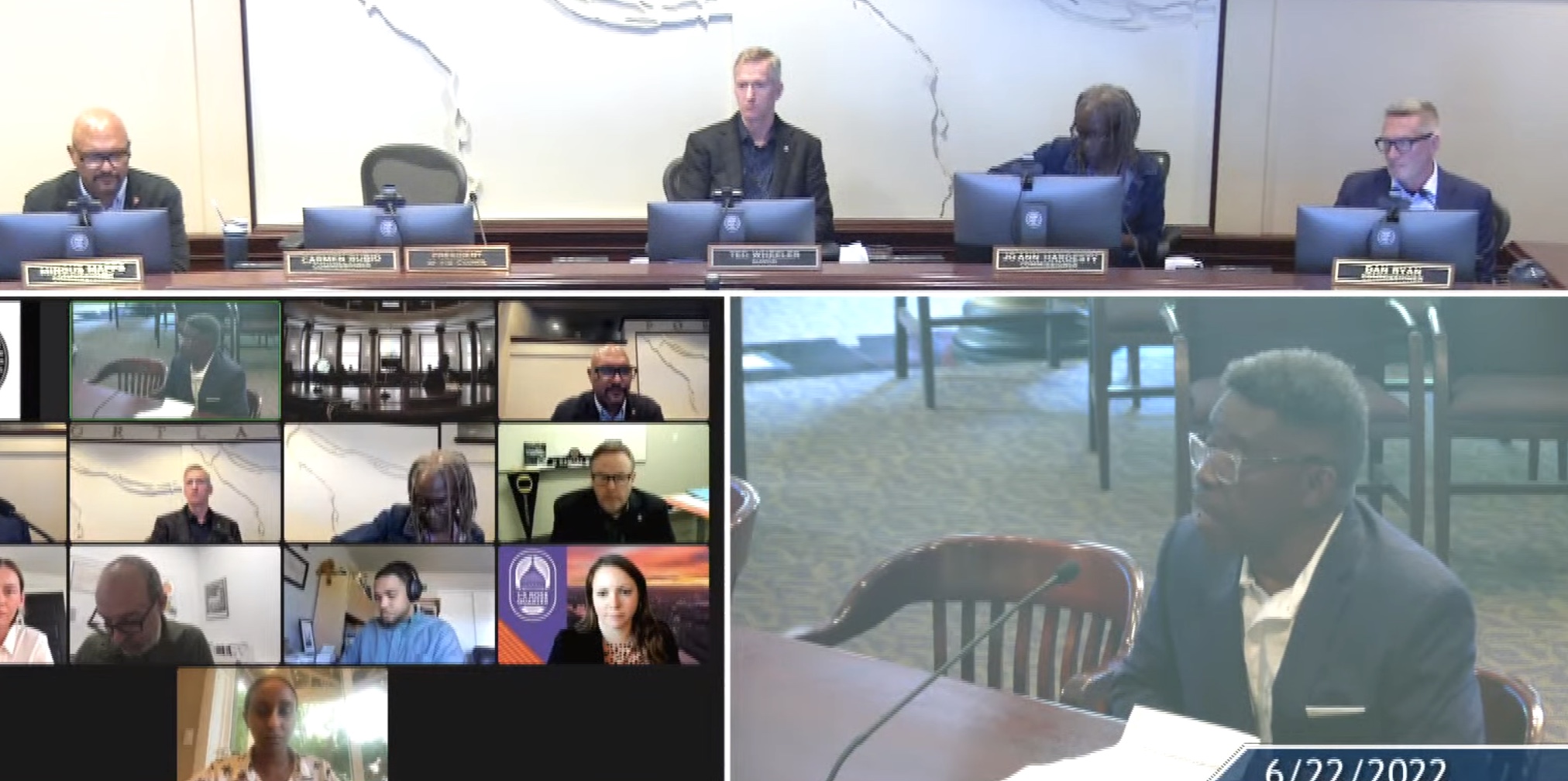
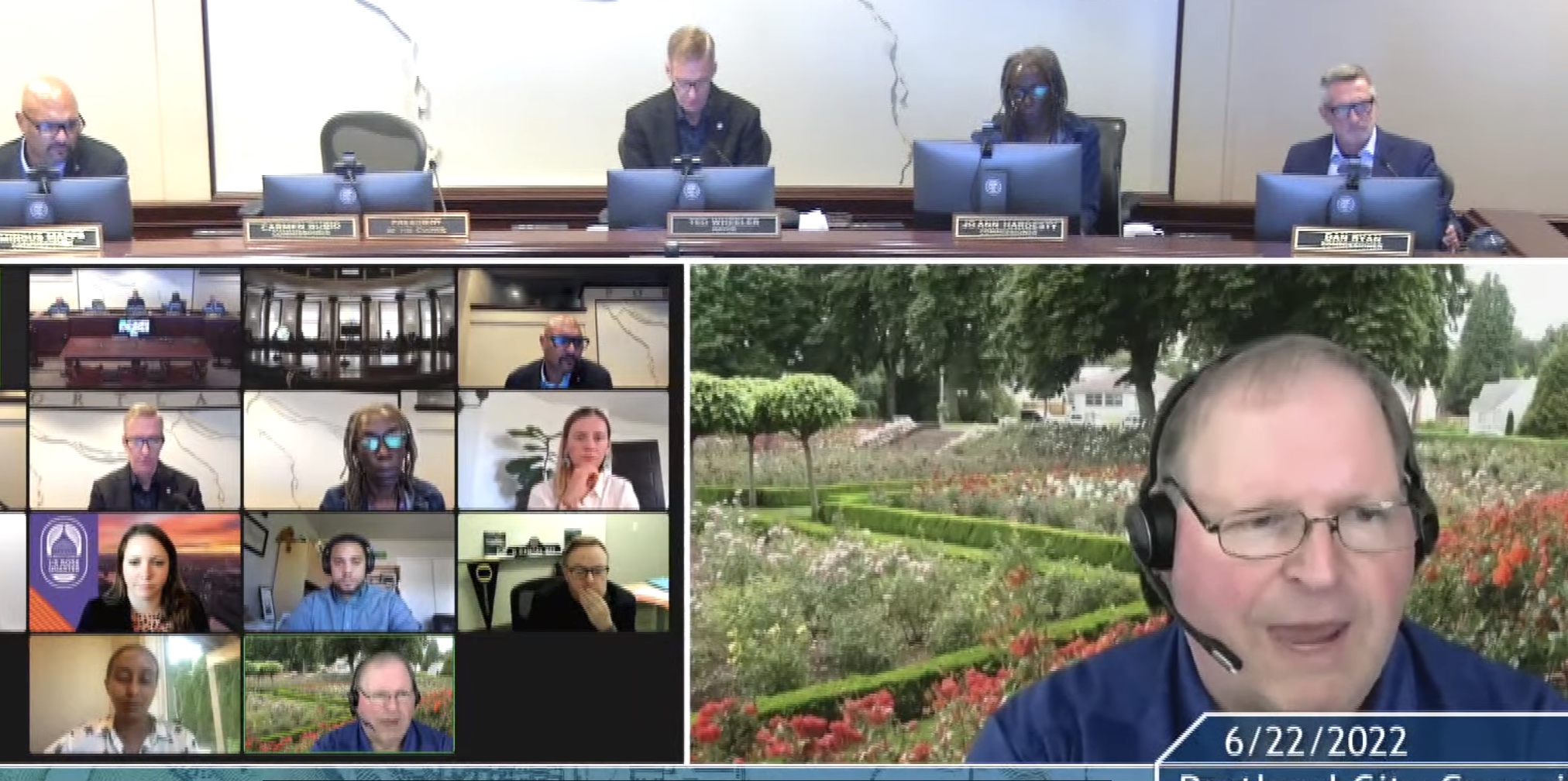
Some harsh words were spoken about the legacy and impact of I-5 through the Rose Quarter at a Portland City Council meeting Wednesday. But for a project that has withstood years of stinging criticism and controversy, the overall tone was downright collegial.
“This is a big step.”
– Jo Ann Hardesty, commissioner
At one point, the leader of Albina Vision Trust, a nonprofit that walked away from the project in 2020 said, “This is a family reunion.”
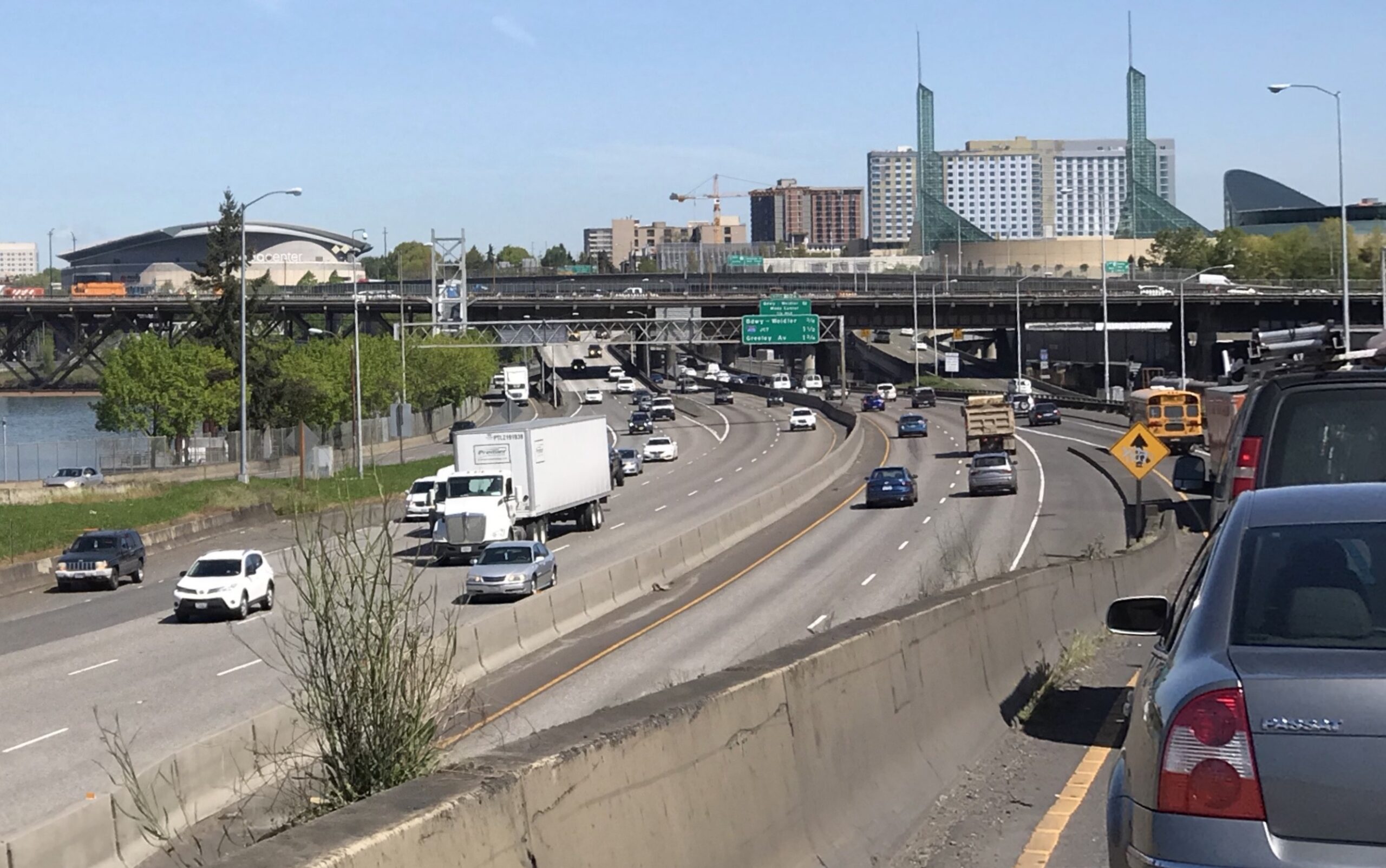
After two years of keeping their distance from the contentious I-5 Rose Quarter project — a project that would expand the freeway between I-84 and the Fremont Bridge, build a highway cover and update surface streets — Portland City Council made it clear they’re ready to join forces with the Oregon Department of Transportation to move it forward.
As commissioner-in-charge of the Portland Bureau of Transportation, Jo Ann Hardesty had to walk a fine line in her introductory remarks. Just two years ago, the project was so out-of-step with Portland’s values that Commissioner Hardesty’s predecessor took the unprecedented step of issuing a formal stop work order. The project has also faced stiff opposition from people who don’t trust ODOT and who fear any new capacity on I-5 will create more driving and move us in the wrong direction in the battle with climate change.
“The concessions that have been made around the highway cover design and the width of the freeway itself have all been important.”
– Winta Yohannes, Albina Vision Trust
On Wednesday’s agenda was the first reading of an ordinance that would reverse the 2020 order and enter the City of Portland into an intergovernmental agreement (IGA) with ODOT so the state can pay nearly $5 million for PBOT planning work related to the project.
Hardesty’s comments struck a tone of indignation with ODOT’s legacy and past decisions around I-5, and at the same time painted her agency’s work as a major win.
“The Black community bore the burdens of this highway and the city’s failed urban renewal efforts. Instead of a neighborhood we have a trench filled with inhospitable highway traffic and pollution. All this for the sake of making it easier for people who live further away,” she said.
Left to their own devices, Hardesty said ODOT would have added even more lanes to the freeway and would have made the same mistakes over again. “The City of Portland stopped that plan,” she continued. “Today I’m proposing that the City of Portland come back to the I-5 Rose Quarter project. This is a big step.”
Hardesty gave her bureau a lot of credit, but she didn’t mention that it was the work of activists like Sunrise PDX and No More Freeways who pushed the Overton window and helped create space for elected officials like her and the more conservative advocacy group Albina Vision Trust to force ODOT into compromises.
PBOT says they’re back at the table, not only due to the deal forged by Governor Kate Brown last August, but because ODOT has committed to several promises. According to Hardesty, ODOT will: use congestion pricing to manage traffic and reduce emissions, move Harriet Tubman Middle School away from the freeway, work closely with Albina Vision Trust (AVT), and award construction contracts to Black-owned firms.
James Posey testifying at the meeting.
“[These construction contracts are an] opportunity to make our community whole… to build economic capacity for black people. That’s huge as far as I’m concerned.”
– James Posey
James Posey is co-founder of the National Association of Minority Contractors of Oregon and was invited to testify in support of the project. Posey, also a member of the project’s Community Oversight Advisory Committee, said despite ODOT’s “historical problems” the agency has “bent over backwards” to do things right this time around. Posey called the construction contracts an “opportunity to make our community whole” and a way to “build economic capacity for black people.” “That’s huge as far as I’m concerned.”
AVT Executive Director Winta Yohannes credited the City of Portland for standing up to ODOT. “Because of the city’s clear and decisive action, the community did not get steamrolled,” she said. “The concessions that have been made around the highway cover design and the width of the freeway itself have all been important.”
When public testimony began, the glowing reviews ended.
Chris Smith testifying at the meeting.
“We have allowed climate justice to be pitted against racial justice. In the long run, we can’t win if we allow those two things to be put in opposition to each other.”
– Chris Smith, No More Freeways
No More Freeways co-founder Chris Smith testified that he is supportive of the highway cover and surface street improvements, but not the wider freeway:
“We are both celebrating and mourning today. We’re celebrating the achievement of our friends at Albina Vision and the HAAB [Historic Albina Advisory Board, convened by ODOT]… But we’re mourning the missed opportunity on climate. Your own climate emergency declaration says that we should consider pricing solutions before widening freeways. ODOT has deliberately manipulated the process so we will do it in the other direction. We will program the expansion and then we’ll talk about pricing.”
Every (non-council member) speaker at Wednesday’s meeting who spoke in favor of the project was Black and everyone who opposed it (just two people) was white.
Smith, who is white, was the only person to address this when he said, “What’s happened here is we have allowed climate justice to be pitted against racial justice. In the long run, we can’t win if we allow those two things to be put in opposition to each other.”
Terrence Hayes put a fine point on this dynamic. He testified as an employee of Black-owned Raimore Construction who said his job allowed him to recently purchase his first home. “I see that there’s a lot of different concerns and those concerns are fair. I think the city needs to also take climate and all those things into consideration. But when we talk about the black community — the community that was more affected by that original redlining than anybody else — we have to hear from folks from that community.”
“Induced demand only matters if you’re creating an induced demand for carbon-based vehicles that pollute.”
– Ted Wheeler, Mayor
After public testimony, councilors discussed the ordinance.
Commissioner Mingus Mapps said he wanted to hear more about how to answer the many environmental concerns he’s received from constituents. ODOT and PBOT staff answered by outlining their efforts on congestion pricing.
ODOT Urban Mobility Office Director Brendan Finn said they hope to have an I-5 pricing system up and running in the Portland region by the end of 2025. Then he appeared to misspeak when he said pricing would happen, “prior to the construction… or prior to the completion of the construction of the project.”
That gets at the heart of Chris Smith’s comments that ODOT is doing this backwards. “We could cap the existing freeway and manage the congestion with pricing, and get the same benefits while dramatically reducing the negative impacts and probably save money in the process,” Smith said. He wants Council to pause, renegotiate the IGA and do a full analysis of the pricing-first strategy.
Given the tone of comments Wednesday, that seems very unlikely. And given a comment by Mayor Ted Wheeler, more cars on wider freeways isn’t necessarily bad for climate change.
Toward the end of the meeting, Mayor Wheeler said the only analysis he’d like to see is how many people will be driving “zero emission vehicles” in the future. “Somebody raised during public testimony the issue of induced demand… but my question is demand for what kind of vehicles?… I’d like to know what the assumptions are for zero emissions transportation, because induced demand only matters if you’re creating an induced demand for carbon-based vehicles that pollute,” he said.
Wheeler is dead wrong. Emissions are just one of many ways cars pollute and have a negative impact on our city, but that’s a post for another day.
For now, the ordinance will come back next week for a vote. If it passes, the agreement will be in place for two years. At that time, project staff must return to City Council to make the case that ODOT has kept its promises.