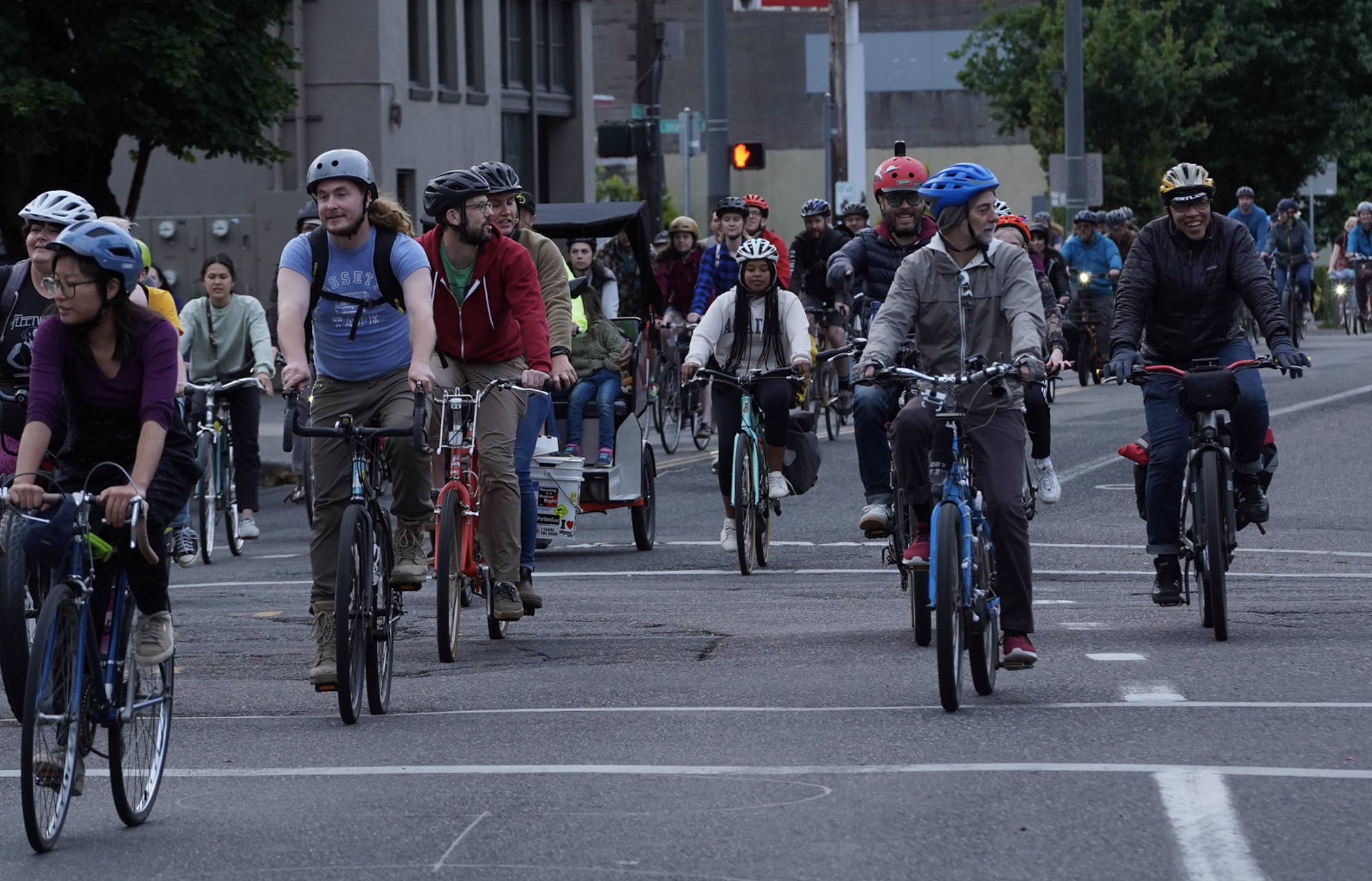

Roundabout at SE Harold among ideas to make 122nd Ave a safe ‘civic corridor’

(Photo: Jonathan Maus/BikePortland)

“We are looking at a more significant change to the streets.”

– Bryan Poole, PBOT

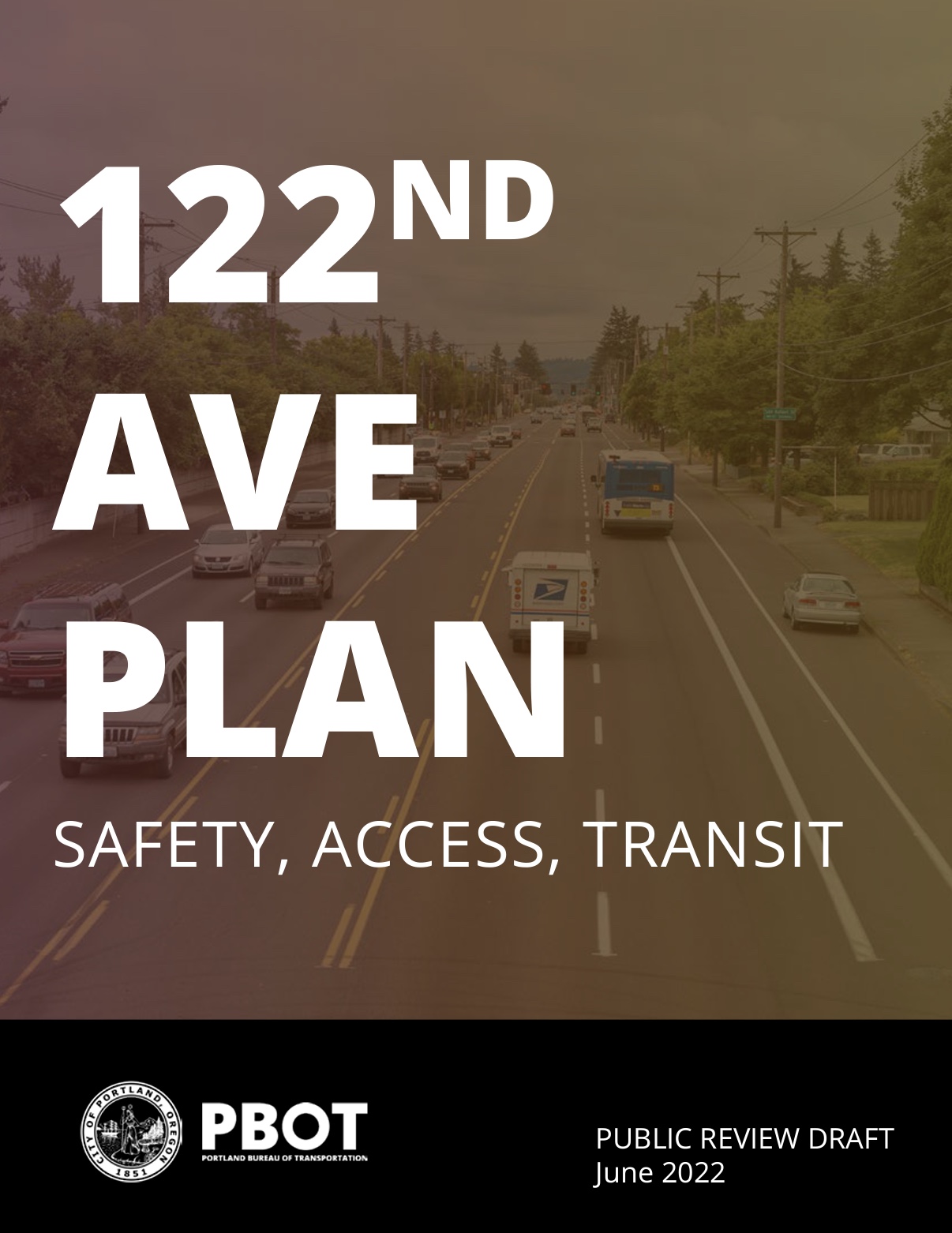
A plan to update 122nd Ave in east Portland has taken a big step forward. After almost a year of collecting feedback, the Portland Bureau of Transportation has released the 122nd Ave draft project plan. It includes our first look at concepts for a roundabout and other significant changes that could finally tame this street.

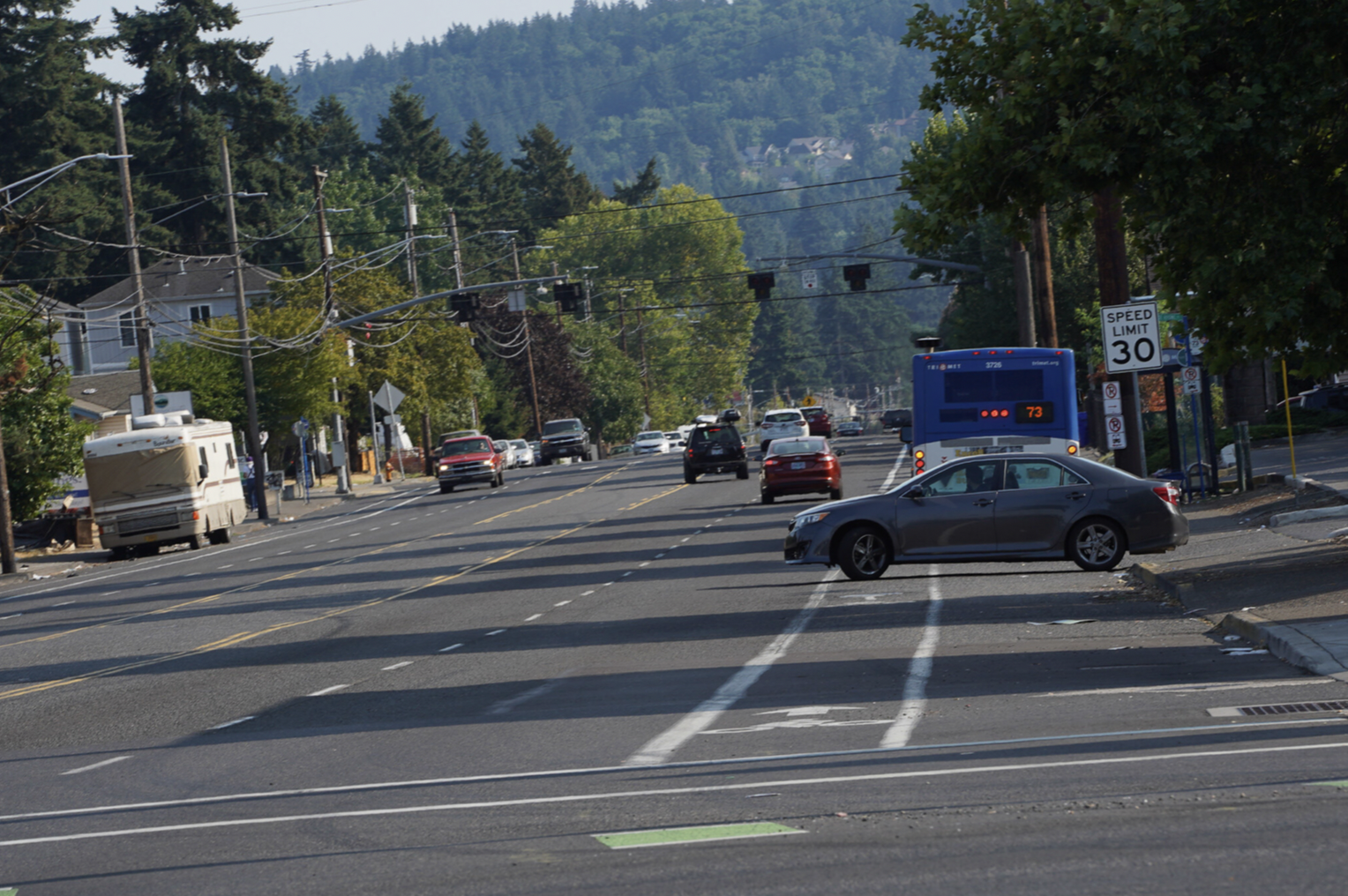
122nd Ave is one of the most dangerous corridors in Portland for people walking, biking or taking transit. PBOT readily admits there are major safety concerns on the street: in the draft plan, they state “the wide roadway has inadequate infrastructure and its large intersections are among the most dangerous in the city. Significant changes are needed to save lives and reduce life-altering injuries.”

Right now, 122nd is on PBOT’s High Crash Network, and is generally unpleasant to walk or bike on. PBOT’s goal is that 122nd Ave would not only be a safe place for people walking and biking, but also that it would become a “civic corridor,” which the city defines as a street that is “attractive and safe for pedestrians while continuing to play a major role in the City’s transportation system.”

PBOT identified four recommendation categories in the plan:

Safety, which will involve “redesigning 122nd to achieve safe driving speeds, safe intersections and better separation between users” and include projects such as implementing more street lighting and pedestrian and bike crossing and improve speed management

Multimodal and Access Enhancements to “improve the areas where people walk, roll, bike and wait for transit” with projects like protected bike lanes, access management and increased Biketown stations

A map of heat-related deaths in Portland between June 28th and July 7th, 2021. (Source: PBOT)

Transit Performance and Experience to “ensure buses operate on time even during congested periods” with bus stop and access improvements and transit priority treatments to allow buses to move through car traffic

Develop 122nd Avenue as a Civic Corridor to “exemplify the benefits of green infrastructure and minimize urban heat island effects, while also being enjoyable places to live, work, and gather” by widening sidewalks, increasing tree canopy coverage and studying the potential for a bus rapid transit service on 122nd Ave

As we reported back in March, tree canopy coverage was a particularly important issue to survey respondents. Shade from trees is essential in pavement-heavy areas like the 122nd Avenue corridor. During last year’s heat wave, some parts of east Portland recorded temperatures of up to 124°F.

For the sake of this plan, PBOT has split the long corridor into three parts. Within the northernmost segment, which stretches from Marine Drive to San Rafael Street, PBOT has unveiled plans to make major changes near the Sandy Boulevard (Hwy 30) intersection.

Currently, there are two free-flowing slip lanes from 122nd south of Sandy that provide access to NE 121st. PBOT suggests closing off those lanes to create T-intersections. The concept shown in the draft plan also calls for new sidewalks and marked crossings.

Below is the current view of this intersection and PBOT’s conceptual design:

Another notable recommendation is in the southern segment of 122nd, where PBOT wants to reduce the space available to drivers.

We outlined PBOT’s potential design options for this southern stretch in a recent article, but the draft plan brings something new to the table: a roundabout at the intersection of 122nd and SE Harold made possible by a reduction in driving lanes.

“We are looking at a more significant change to the streets,” PBOT planner Bryan Poole said in a June 14 Bicycle Advisory Committee presentation. “Because the volumes are lower, we’re proposing doing a road diet here: reducing the number of vehicle lanes from five to three, providing space to really improve bike facilities and also adding trees along the corridor, which is something we heard a lot about.”

Here’s how it would look compared to current conditions:
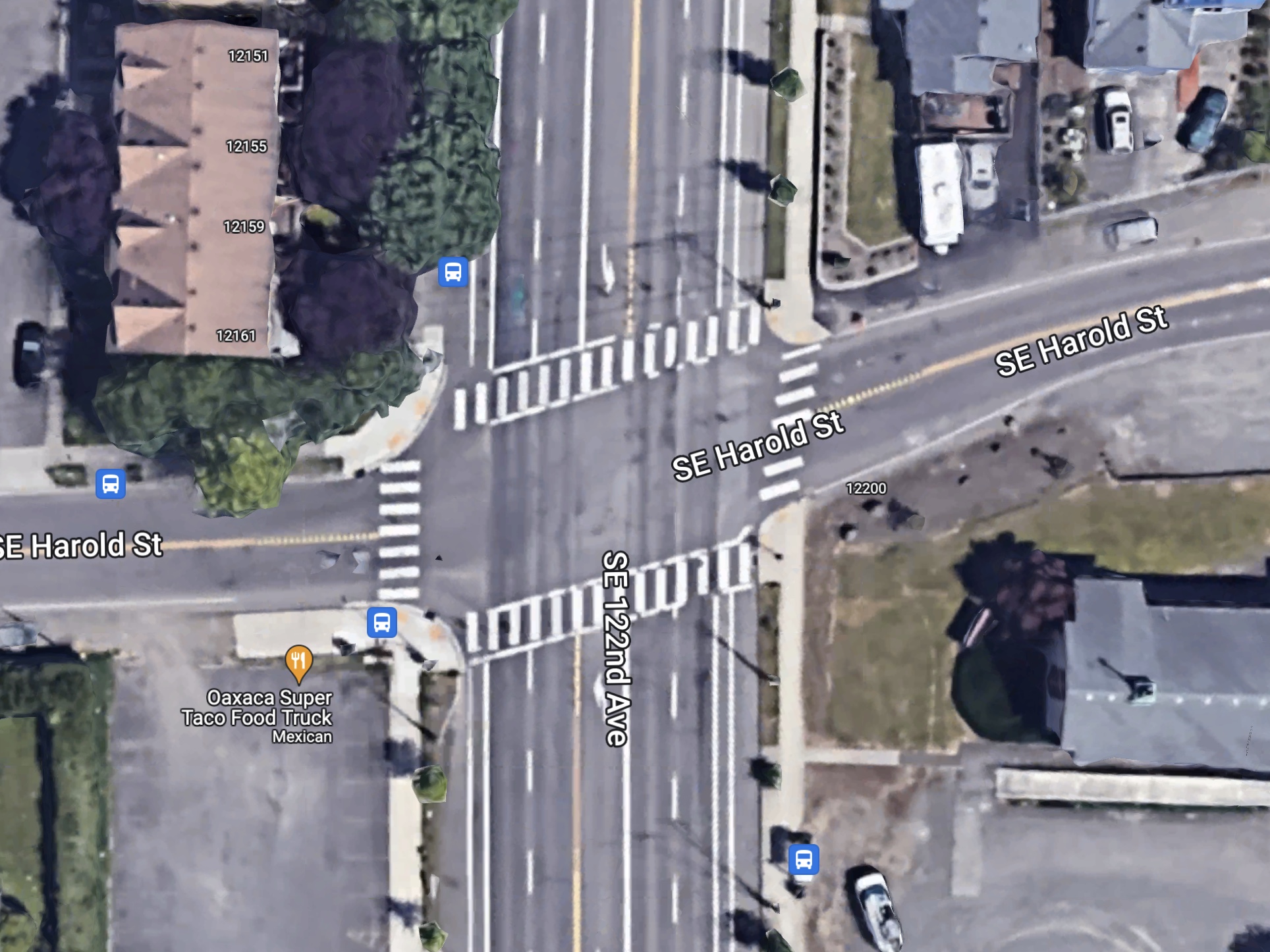
PBOT’s design drawing shows how drivers would face a much more narrow roadway than they do now, which would dramatically reduce speeds and improve safety for everyone. Median islands and extended corners would slow drivers down as they enter the roundabout. The bike lanes are shown as being raised to sidewalk level and would cross adjacent to pedestrian crossings.

Roundabouts on major streets are extremely rare in Portland. Sharing this concept shows PBOT is willing to take bold steps to change how our streets are used and who will feel safe using them.

A list of “future plans” includes converting TriMet Line 73 to bus rapid transit (BRT) and establishing standards that would require raised and protected bike lanes for future developments.

The next step is for PBOT to find more money to implement these recommendations. You can help create urgency for that by sharing your feedback via the 122nd Ave Plan online survey. Find the full plan and learn more about the plan on PBOT’s website.

OHA: Climate change anxiety plays large role in youth mental health crisis

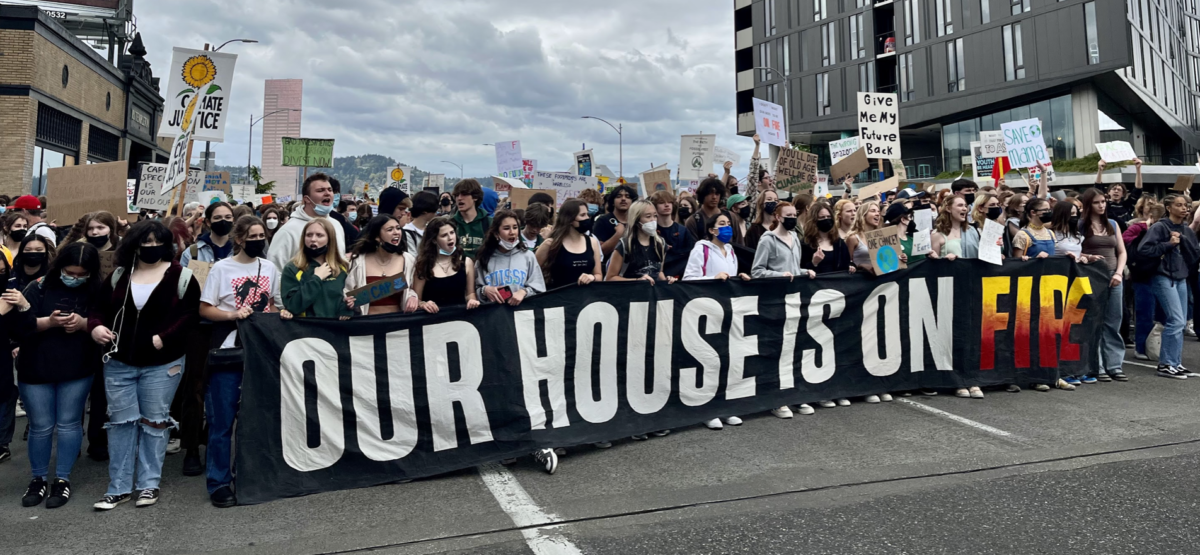
Youth protesters at the Portland Youth Climate Strike protest earlier this year. (Photo: Taylor Griggs/BikePortland)

Youth are playing a major role in Oregon’s climate movement, but the flip side of their admirable passion and activism prowess is a looming mental health crisis.

A report released last week from the Oregon Health Authority (OHA) shines light on this crisis. While its conclusion won’t be revelatory to people involved in climate work, its insights provide legitimacy to an issue that has not gotten the attention it deserves.

The report, written by OHA’s public health division, categorizes the different causes and effects of climate change-induced mental health issues. There are a multitude of experiences youth have that will inform how they react to the crisis. People who have experienced climate-related disasters, like the wildfires that devastated Oregon in September 2020, will probably have a more different mental health response than someone whose wellbeing has been impacted over an extended period time by chronic climate stressors like drought or poor air quality. The report also addresses “climate anxiety,” which authors define as general fear and worry about the effect climate change is having on the planet.

“I think this report has the potential to make people think more… Just knowing that you’re not alone and a lot of other young people are feeling the same and having similar emotions can feel really good.”

-Ukiah Halloran-Steiner

Then there’s the dynamic between young people and well-meaning adults.

“Adults may remark in a well-intentioned way that they are inspired by the passion and determination of youth in advocating for action on climate change,” the report states. “However, youth may perceive that as adults alleviating themselves of the responsibility and placing it on youth.”

Young people have never been able to live without fear of the climate crisis, and they feel ignored by people in power who are not acting quickly enough to help avoid the worst effects of global warming. They’re not wrong to feel this way, either. While powerful adults have heralded youth climate activists like Greta Thunberg as a prophet come to save the world, they’re not actually acting on their pleas for policy change.

Young people in Portland who have been involved in the youth movement against the Oregon Department of Transportation’s proposed I-5 freeway expansion have done a lot to raise awareness about the environmental impacts of transportation. But the work takes an emotional toll.

Ukiah Halloran-Steiner, one of the leaders of the Youth vs ODOT movement, told me she became passionate about climate activism after the Labor Day fires in 2020, which were startling and scary. She said becoming involved in activist work has allowed her to talk to like-minded people and find support.

“Just knowing that you’re not alone and a lot of other young people are feeling the same and having similar emotions can feel really good,” Halloran-Steiner said.

But she’s skeptical this report will do much to spur action.

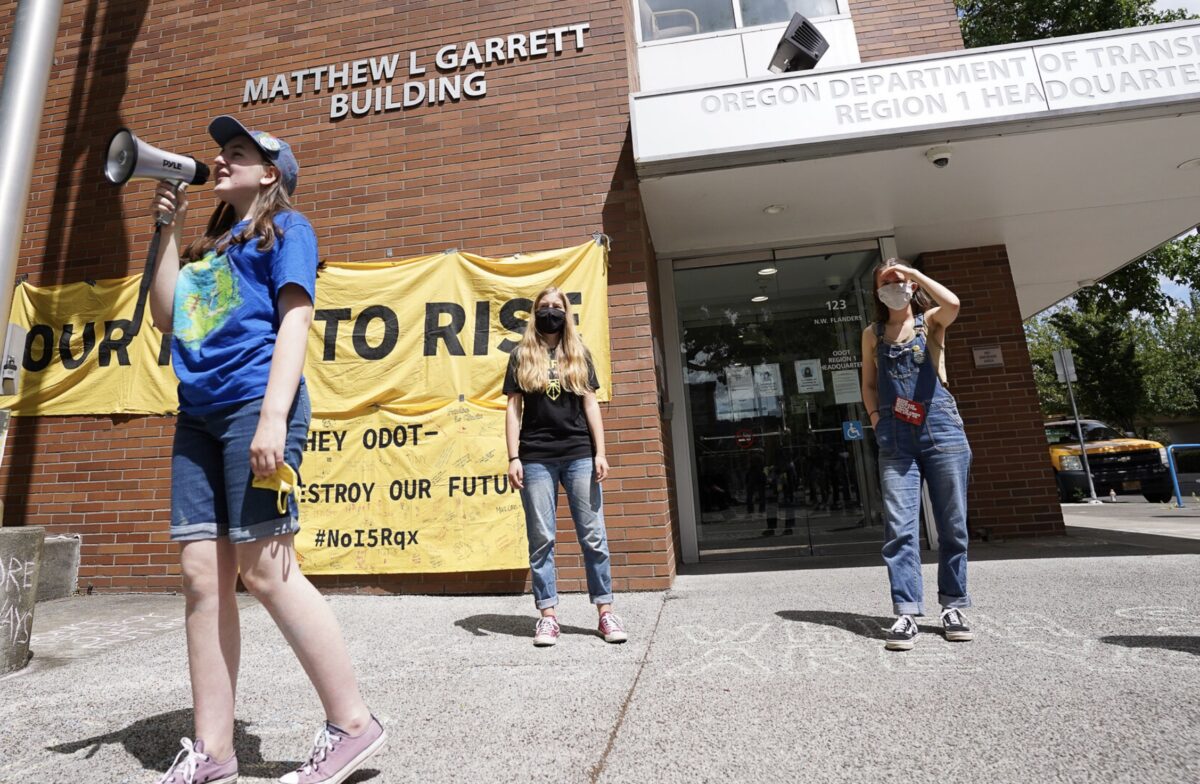
Youth climate activists outside ODOT Region 1 headquarters in June 2021. (Photo: Jonathan Maus/BikePortland)

“I think this report has the potential to make people think more. But the report alone isn’t doing anything, it’s just informing other people about what a lot of people already know,” she said.

In the foreword to the report, Governor Kate Brown wrote a strong statement acknowledging the frustration some youth feel when trying to influence policymakers. But the Governor has so far shirked away from calls to take a stand against freeway expansions and youth climate activists want her to take a more aggressive stance.

At 25, I’m older than most of the youth surveyed in this study. But I strongly relate to the feelings they expressed. I remember learning about global warming when I was probably 8 or 9, and as someone with an anxious disposition to begin with, the threat of climate change seriously impacted the way I saw the world. I didn’t find comfort in talking to adults, who I found either dismissive or inappropriately alarming. My most memorable wake-up call was in sixth grade, when my science teacher spent the entire year teaching us about the greenhouse effect and showing us presentations and documentaries about the dying earth that sent me into panic and guilt spirals. I suppose this feeling was an impetus to action for me, but it has come at a cost.

While there’s only so much young people can do on their own to influence climate policy, the report has suggestions for things people can do to keep themselves mentally well while dealing with such a heavy issue. Among other suggestions, the report echoes Halloran-Steiner’s positive experience joining an activist community, saying many youth have reported finding other people to work with on climate action has been significantly helpful.

“If I need to talk to someone, I can go to people, we can all be mad together and find out what to do,” one youth said. “Meeting people like you all gives me hope.”

Read the report here (PDF).

Job: Customer Experience Specialist – Velotech, Inc.

Buffered Bike Lane with a bike symbol and arrow pointing forward

Job Title

Customer Experience Specialist

Company / Organization

Velotech, Inc.

Job Description

Velotech, Inc. is a locally owned business that has operated in Portland since 2002. Velotech is the parent company of BikeTiresDirect, Western Bikeworks, and Trisports.

This position is responsible for responding to customer phone calls, emails, and for working directly with customers in our store. Customer Experience Specialists provide product information, advice and order assistance. Qualified Customer Experience Specialists also review orders and price match requests and assist with site content, including product reviews, photos and descriptions.

ESSENTIAL FUNCTIONS INCLUDE BUT ARE NOT LIMITED TO:
Answer product questions & assist with the order process
Analyze customer questions, troubleshoot, and provide clear answers in an efficient and professional manner
Develop trust and loyalty with consumers and build value in our brands
Navigate a sophisticated order processing system
Generate performance reports and recommend improvements
Coordinate with Returns to assist customers with returns and exchanges
Assist walk-in customers with product questions and purchases
Retrieve products from the warehouse to assist walk-in customers

ADDITIONAL RESPONSIBILITIES/DUTIES:
Navigate a sophisticated order processing system
Work with Marketing to assist with customer-facing content, including site maintenance, product images and descriptions
Increase sales by genuinely helping customers learn about additional/alternative product options

MINIMUM JOB REQUIREMENTS:
Basic computer skills
Strong knowledge of cycling
Previous customer service experience is a plus, as is sales, service and mechanical experience in the cycling industry

KNOWLEDGE, SKILLS, & ABILITIES:
Excellent communication and organizational skills
Solid knowledge of cycling products
Ability to work in a high volume, fast-paced environment
Ability to work independently or with others to manage multiple task with minimal supervision.

BENEFITS:
Paid Time Off – up to 15 days your first year
Medical/Dental/Vision
Life/LTD
Voluntary Options including Life, Accident and Hospital Indemnity
Awesome employee discounts
Quarterly ‘Get Outside’ Days

How to Apply

If interested, please click on the link to apply:
https://www.paycomonline.net/v4/ats/web.php/jobs/ViewJobDetails?job=53890&clientkey=F102FCECFB43ED66CAD0C8276CB962A9

TriMet to temporarily reduce service levels this fall due to historic operator shortage

From TriMet:


TriMet is adjusting service on 10  bus lines this fall as we temporarily reduce service levels based on our available workforce. This comes amid the largest operator shortage in agency history. While most of the affected lines currently see low ridership, TriMet took a balanced and careful approach with an eye on preserving service in areas with high concentrations of people with low-incomes and communities of color.

Reduced service will take affect starting on September 18, 2022. We aim to begin adding back the service hours in 2023 as long as our operator ranks continue to increase.

“We would much rather be expanding our transit service. But by reducing our service levels, we increase our schedule reliability so riders experience fewer canceled or late buses,” said TriMet General Manager Sam Desue, Jr. “While rebounding from this historic operator shortage will take some time, TriMet is committed to hiring scores of new operators to meet the needs of our community.”

Temporary service level reductions

Beginning with our fall service change in September, TriMet will shift, reduce or cancel some service, with a focus on low ridership lines and times.

— Cancel two bus lines: 50-Cedar Mill and 92-South Beaverton Express

— Reduce service hours on three low-ridership bus lines to only run buses during peak travel time for high school students: 1-Vermont, 18-Hillside and 26-Thurman/NW 18th

— Weekend service will be canceled on 26-Thurman/NW 82nd Ave

— Cancel extra weekday rush-hour trips on three bus lines as peak ridership trends have changed: 8-Jackson Park/NE 15th, 9-Powell Boulevard and 72-Killingsworth/82nd Ave

— Cancel extra trips added during the pandemic for physical distancing on one bus line: 81-Kane/257th

— Reduce frequency on one low-ridership bus line to hourly service: 82-South Gresham

TriMet will also be making some slight adjustments with our TriMet FX™ (Frequent Express) bus service launching on Sept. 18. The new service along Division Street will still give riders a faster and more convenient way to travel between Gresham and Downtown Portland, using longer buses with multiple-door boarding and transit-priority in key locations. Once up and running, it will improve service along the busy corridor, reducing travel times by 20%.

Buses on the FX 2-Division line will run every 12 minutes for the majority of the day with only a couple of buses added during commuting hours. With the Line 2 being replaced by the FX 2-Division, the Line 10-Harold St route will still change and weekend service will be added. But we will not be able to add buses during the weekdays as we had planned.

Forward Together

The trickle-down effects of our operator shortage can cause frustration despite our best efforts. In short: it’s been a challenge to hire and train enough operators to replace those lost to retirement and attrition. And we’re not alone. Because our operator shortage is part of a larger trend affecting transit agencies and industries nationwide, we’ve taken unprecedented actions to recruit and retain the talented workforce on which our riders rely. We’ve bumped up the starting pay to $25.24, boosted our hiring bonus to $7,500 and begun looking outside state lines to bring in new operators.

When we do grow our operator ranks and start adding back service, we want to make sure we are serving the needs of our community. With the COVID-19 pandemic changing the way people travel, TriMet has launched Forward Together, a comprehensive service analysis and community engagement effort to determine a better bus system. 

We’re taking a look at where buses are running now and where they should run. And the community is involved. We’re asking if we should focus buses on where people ride the most or spread them out to serve more neighborhoods. We’ll be sharing more about the effort in the coming months.


After 2 million rides, Lime upgrades e-scooter fleet with locking mechanism, swappable batteries

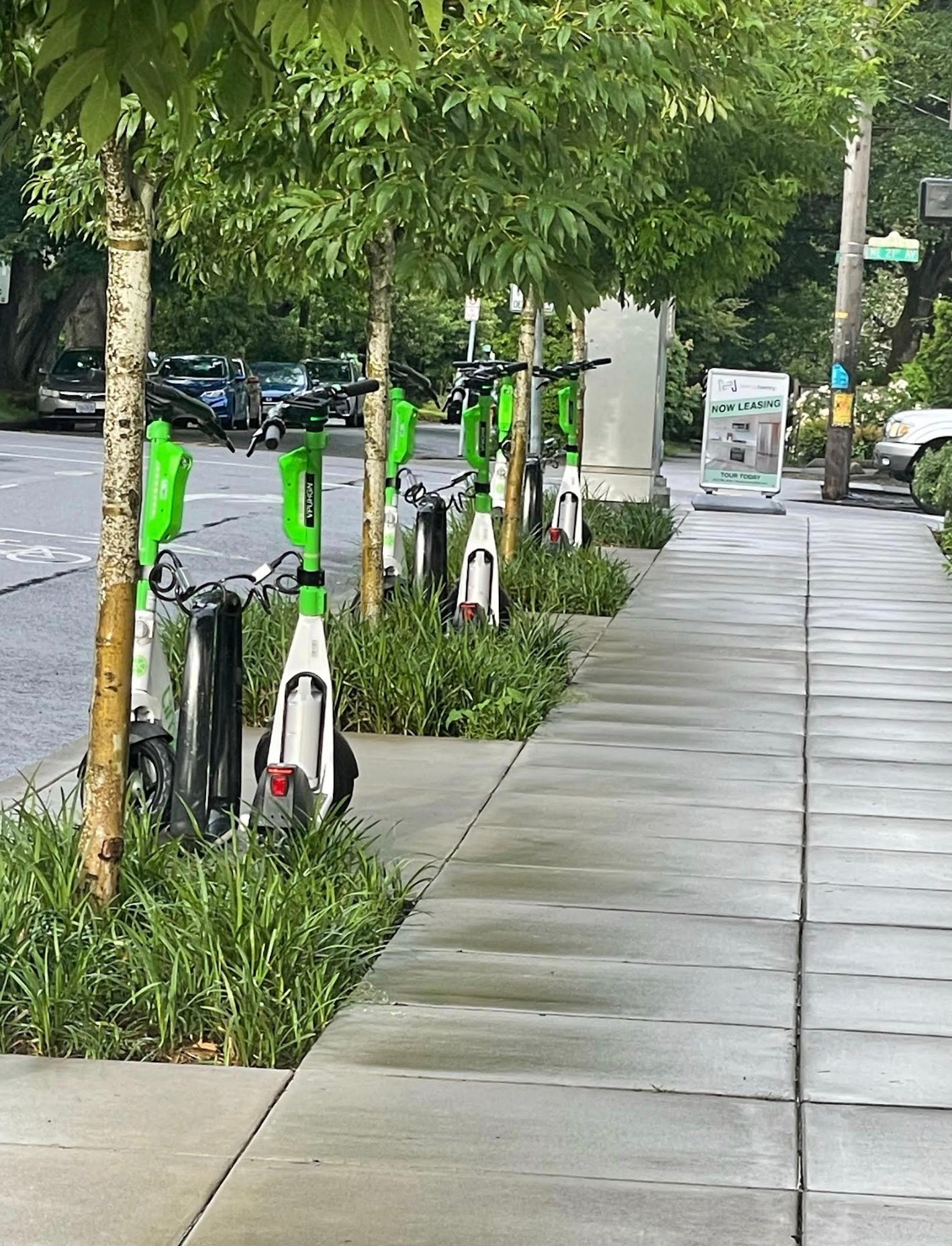
Lime can boast two million rides on their scooters and the company wants to show the City of Portland they’re ready for a long-term relationship.

As we reported last week, the Portland Bureau of Transportation is looking for one or two scooter operators to take over the existing pilot program and provide a larger fleet and other upgrades in exchange for less competition and a more stable contract. One of the major changes PBOT has asked prospective vendors to make is a locking mechanism that would allow scooters to be attached to designated parking stalls.

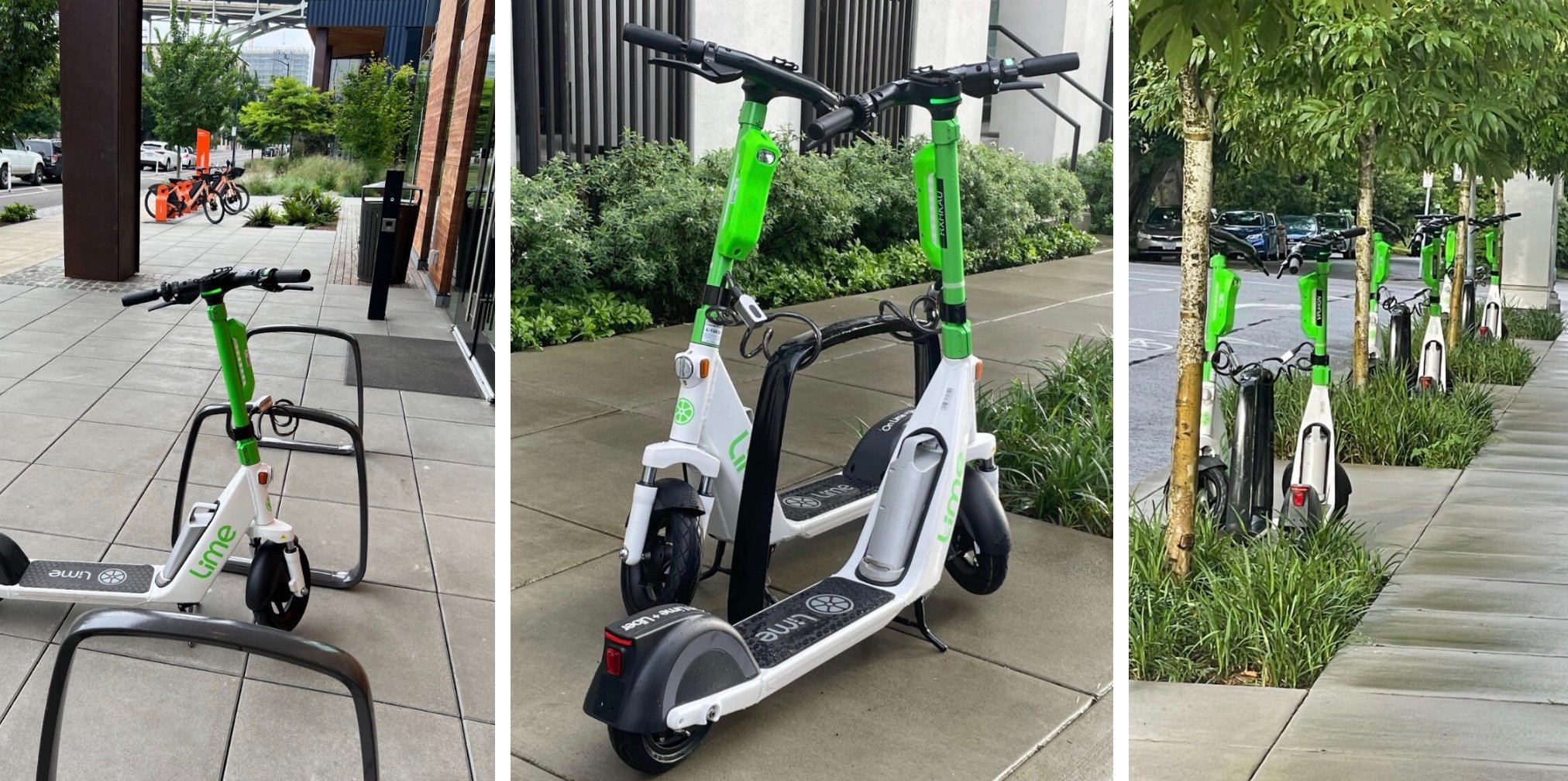
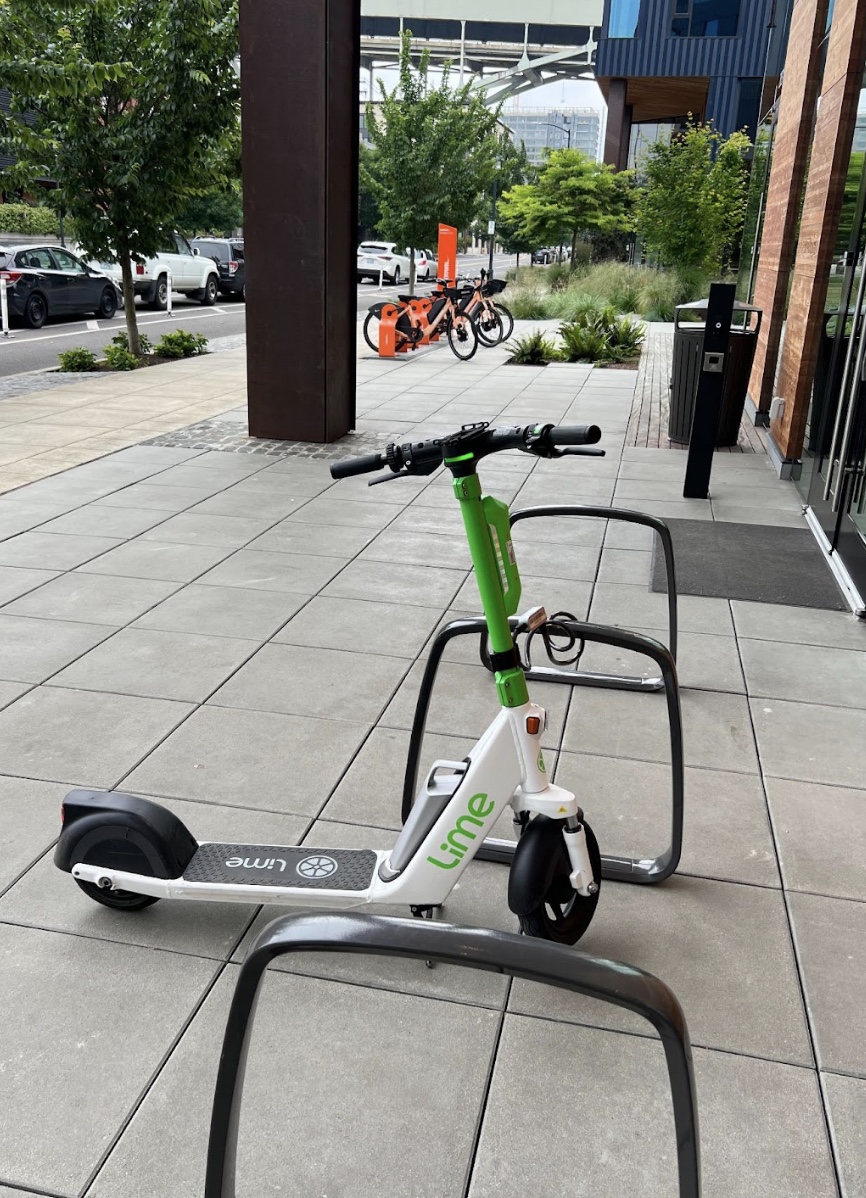
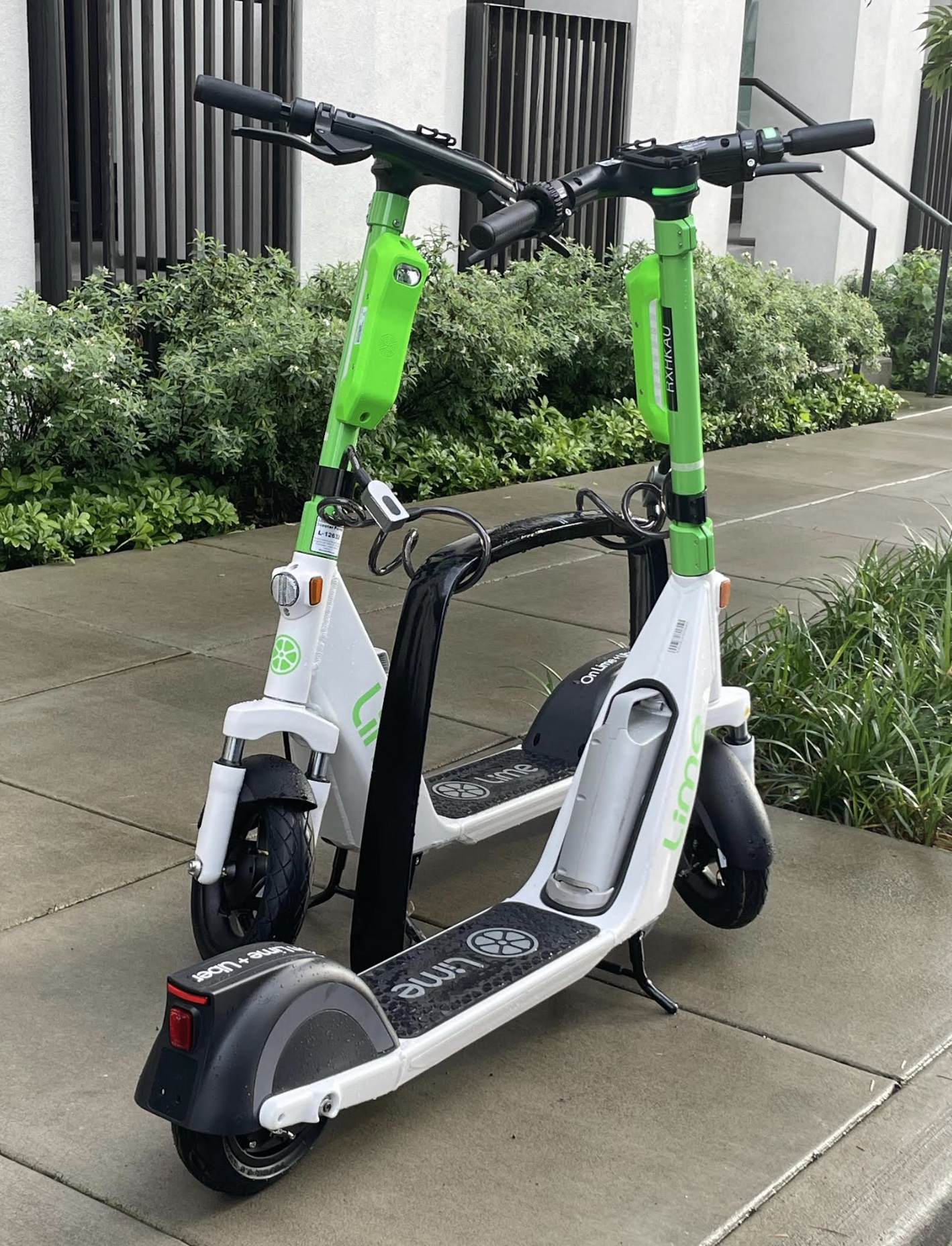
Lime says their new Gen4 scooters are up to the task. The company announced today they’ve begun to swap out their existing fleet with upgraded scooters that include a cable lock to encourage riders to lock them to bike racks and other designated parking spots. “This will decrease street clutter and promote safety, improving the micromobility experience for everyone in the city including non-riders and other pedestrians,” a Lime statement said.

With more scooters parked in racks, PBOT will need to work extra hard to make sure there are ample spaces available for bicycle users.

(Source: Lime)

The upgraded Lime scooters will also include swappable, interchangeable batteries. That means maintenance crews can re-charge scooters more efficiently in the field without having to round them up. This will reduce the vehicle miles traveled of Lime maintenance vehicles and lead to fewer carbon emissions.

Other new features of Lime’s Gen4 model are swept-back handlebars (“reminiscent of bike handles” the company says), an improved kickstand, better brakes, beefier suspension and larger wheels, and a lower deck.

Lime has operated scooters in Portland since the first pilot program began in 2018 and will soon announce riders have taken over two million rides. The company has over 1,100 scooters on the ground in Portland, more than any other vendor. They expect a full fleet swap to be completed in the next few weeks.

PBOT says all current scooter vendors can operate through fall 2022 until a new vendor (or vendors) are chosen.

Activists wary as City of Portland plans vote to re-start work on I-5 Rose Quarter project

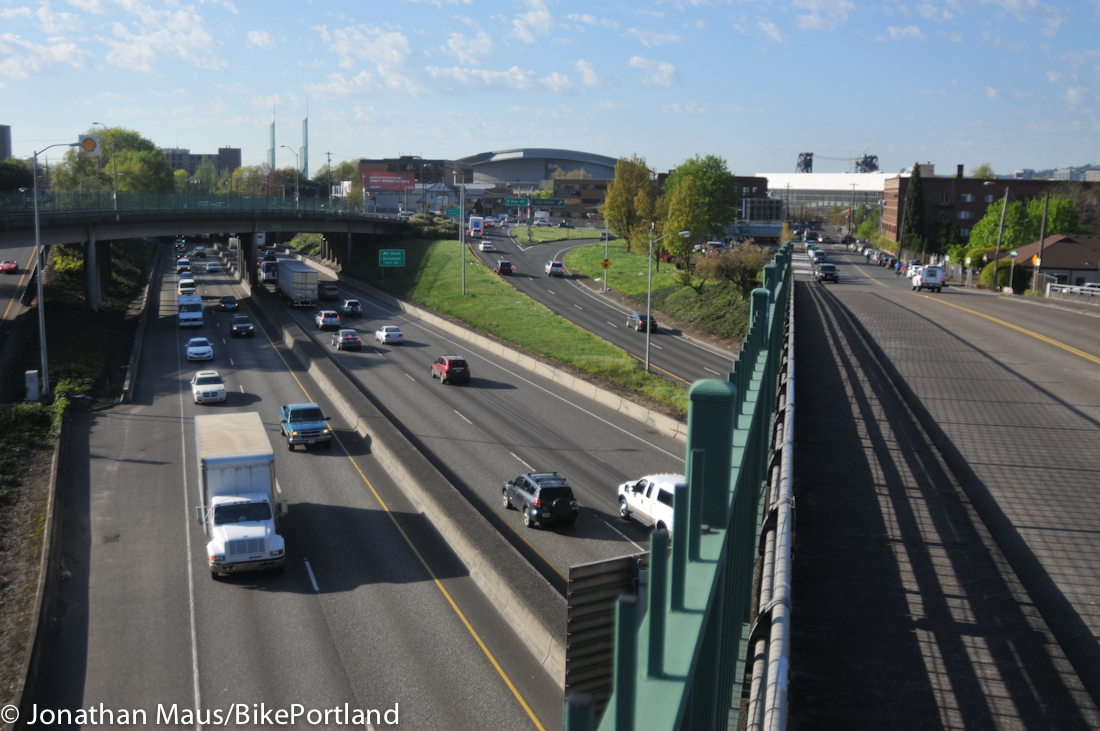
I-5 at the Rose Quarter in Portland.

After years of back and forth between the City of Portland and the Oregon Department of Transportation on the plan to widen I-5 at the Rose Quarter in Portland, a negotiation may be back on the table. At today’s Portland City Council meeting, the city will adopt an intergovernmental agreement (IGA) with ODOT to provide the state transportation agency with planning and design services for the controversial project.

In July 2020, the Portland City Council, led by Portland Mayor Ted Wheeler and then-Portland Bureau of Transportation head Commissioner Chloe Eudaly, pulled all support for the Rose Quarter expansion and directed all city staff to cease working on the project. A few months later, the city entirely split from ODOT on this project. Eudaly wrote a letter to the Federal Highway Administration which said they were taking this unprecedented step because the project is “not aligned with the values of the city as articulated in [the Central City 2035 plan], Racial Equity Plan or Climate Emergency Resolution.”

With their updated plan for the expansion, some advocates feel ODOT has sufficiently addressed the equity concerns. But climate activists have not been satiated, and they’re calling on the city to call off their participation until ODOT shows they’re serious about tackling the climate emergency.

“The agreement coming to City Council is a big step for PBOT and the city. It marks a turning point for the project.”

– Dylan Rivera, PBOT

Activists have been concerned about the freeway expansion’s impact on the surrounding Albina area, which consists of historically Black neighborhoods in North and Northeast Portland that were decimated when I-5 was constructed in the 1960s. The nonprofit group Albina Vision Trust (AVT), formed in 2017 to advocate for restoring the Albina area, has put pressure on ODOT to ensure the expansion won’t recreate the past damage.

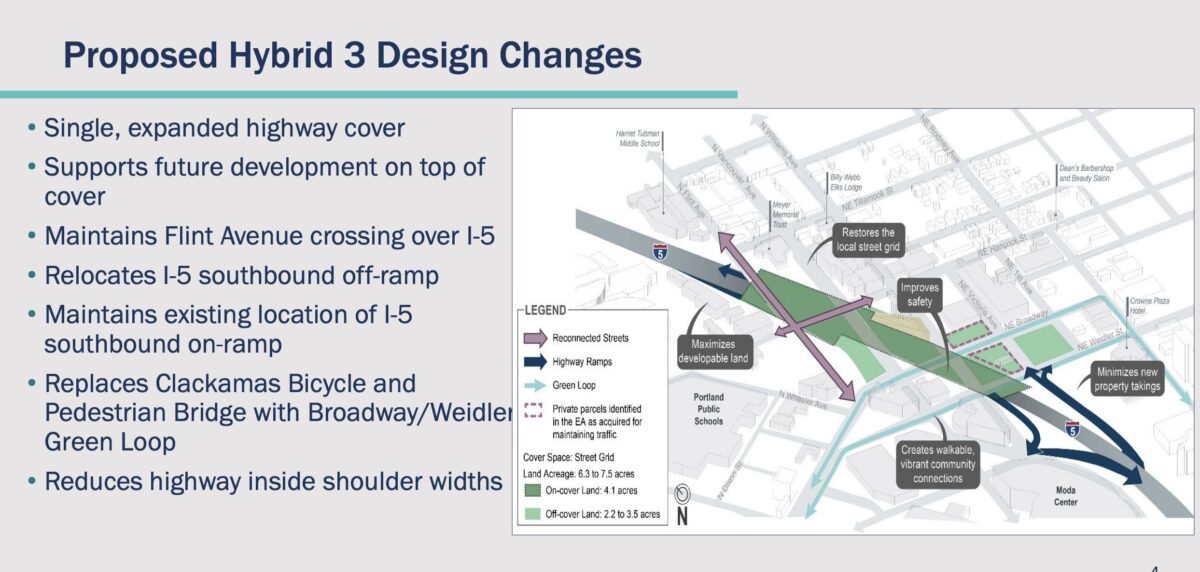
While AVT pulled support for the Rose Quarter project in 2020, they rejoined the conversation last year after Oregon Governor Kate Brown stepped in to orchestrate a compromise that would require ODOT to cap the freeway enough to create a street grid over I-5. AVT’s primary goal has been ensuring a robust cap system over the Rose Quarter freeway to create opportunities for Albina neighborhood restoration. Now that ODOT has provided capping plans they find sufficient, AVT is back on board, and the city is following behind.

Current PBOT Commissioner Jo Ann Hardesty also signed on in support of this design (dubbed “Hybrid 3”) earlier this year, previewing this PBOT/ODOT Rose Quarter reconciliation.

The expansion and cap design AVT approved of.

Other freeway fighting groups, however, are still not pleased, and they’re asking the city to hold off on adopting an IGA with ODOT until they can more sufficiently leverage their power. Climate activists from groups like No More Freeways (NMF) say adding lanes to the freeway will encourage more driving and increase greenhouse gas emissions from transportation. Right now, ODOT is planning a potential road use pricing plan on I-5 in addition to the lane expansion. But climate activists say ODOT is being wishy-washy on pricing, and they could manage congestion simply by adding road use fee requirements to disincentivize single passenger vehicle trips – no freeway expansion needed.

A June 20 letter to Portland City Council from NMF as well as Allan Rudwick of the Eliot Neighborhood Association and Mary Peveto from Neighbors for Clean Air asks Council to rethink adopting the IGA with ODOT until they analyze a pricing-only alternative to lane expansion. They cite the city of Portland’s Climate Emergency Declaration, adopted two years ago, as evidence moving forward with the project is in opposition with Council’s own goals.

“We are disappointed that the City is not using its leverage in returning to the table for this project to ensure accountability for the climate and environmental impacts of highway expansion,” the letter reads. “ODOT’s position on the timing of road pricing is plainly at odds with adopted city policy.”

Anti-freeway activists want ODOT to complete a lengthy Environmental Impact Statement of the expansion that meets their standards, which the state does not want to do. But they must comply with an environmental analysis requirement from the feds, which has set the timeline for this project back. According to a Council document outlining details of the IGA, the city will not be required to play a large role in the federal environmental review, but will “have an opportunity to review the supplemental environmental assessment” and provide comment to the state and the Federal Highway Administration on the results.

This could be an opportunity for the city to make requests of ODOT local climate activists are asking for.

“We urge you to withdraw the IGA from today’s agenda and renegotiate it to include a commitment to a full Environmental Impact Statement (EIS) including analysis of a pricing-only alternative,” the letter from NMF reads. “Anything less is willful neglect of your self-declared climate obligations and your duty to the community to ensure accountability for all the impacts of freeway expansion.”

“We urge you to withdraw the IGA from today’s agenda and renegotiate it.”

– No More Freeways

Portland Bureau of Transportation Public Information Officer Dylan Rivera told BikePortland via email this agreement is “a big step” for the bureau and the City of Portland.

“It marks a turning point for the project, enabled by the Hybrid 3 option that Commissioner Hardesty negotiated for the city in talks directly with the governor, regional leaders and community partners in the last year,” Rivera writes. “Everyone agrees that pricing is essential and that it is expected to be in place before the opening of the Rose Quarter project. With the agreement in place, the City will be able to engage and advocate for appropriate environmental study. Since Hybrid 3 is a new option, it requires a re-evaluation of the environmental assessment that ODOT did on the project.”

While the state could theoretically move forward with the project without city involvement, it would be a lot easier for ODOT if they could form a united front.

“At this time, the City of Portland’s participation is crucial to ensure a successful project that stays accountable to the commitments the State has made, and to ensure the interests and values of the City of Portland are represented,” the IGA ordinance impact statement says.

Given the widely-publicized controversy the Rose Quarter expansion project has attracted, it’s hard to imagine this IGA will slip under the radar without a hitch. Stay tuned for details about how the City Council discussion plays out today.

BES contractors want more detour compliance and warn of near misses at central eastside project

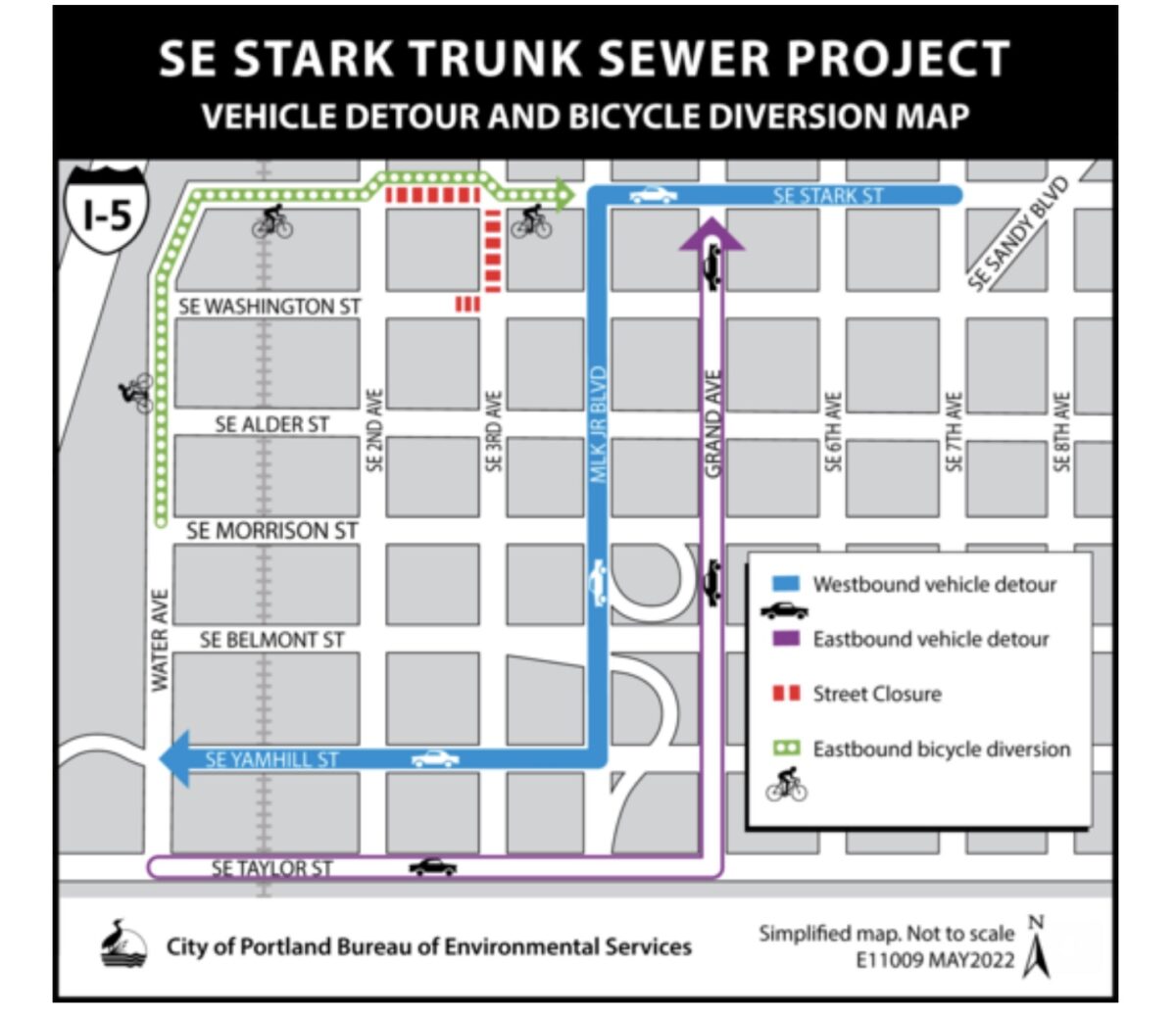
SE Stark Trunk Sewer Project vehicle detour and bicycle diversion map. (Source: BES)

Contractors working on a City of Portland Bureau of Environmental Services project in the central eastside want to spread the word about near collisions between bicycle riders and heavy equipment. 

BES recently broke ground on their SE Stark Trunk Sewer Project, which will install a stormwater diversion structure to redirect combined sewer from a pipeline on Stark to the Willamette River during heavy rain events. Big pieces of material and heavy equipment are staged on SE 3rd near Stark. This is a relatively popular bike route that connects to SE Water Avenue.

We heard from a BES rep today that the contractor has reported some near misses with equipment operators  and they’re worried about keeping the area safe. 

One block of SE Stark between 2nd and 3rd, and one block of 3rd between Washington and Stark are closed during construction (which is expected to continue for five more months).

The detour is to use the sidewalks on Water Ave to get around the construction zone. Since sidewalks can be crowded, please consider walking your bike if you are unable to pass other people with safety and respect.  “Cyclists must avoid riding on closed roadways even if it looks like there’s enough room for a bike to navigate around construction,” reads a BES construction bulletin sent out today.

The BES source we spoke to also said if the near misses continue, they might have to hire police officers to direct traffic.

Learn more about the detour on the project page

Hawthorne, Morrison bridges will close to motorized vehicles for July 4 fireworks show

Buffered Bike Lane with a bike symbol and arrow pointing forward

From Multnomah County:

The Hawthorne Bridge and the Morrison Bridge will close to motorized vehicles Monday, July 4 for the Waterfront Blues Festival fireworks show. Both bridges will close to cars and trucks from 7:00 p.m. to 11:30 p.m. Drivers will need to use alternative routes. The bridges will remain open for bicyclists and pedestrians. Multnomah County is closing the bridges during this time because crowds often fill the bridges and cars stop to watch the fireworks. This can cause safety issues. Multnomah County maintains the Morrison and Hawthorne bridges as well as four other Willamette River bridges. For information visit: https://www.multco.us/bridges

Job: Sundays on Going Coordinators – BikeLoud PDX

Buffered Bike Lane with a bike symbol and arrow pointing forward

Job Title

Sundays on Going Coordinators

Company / Organization

BikeLoud PDX

Job Description

Sunday on Going Coordinators

BikeLoud is looking for help coordinating our Sundays on Going event this summer. Sundays on Going is a mini Sunday Parkways every Sunday this summer. We are helping coordinate block parties and leading a community bike ride each sunday until the end of August. Coordinators would help out for up to 5 Sundays this summer and would be paid $100 per Sunday.

As a coordinator your role would be:
-Pick up block party supplies at NE 47th and Going and deliver to block parties along Going before 10am using our bike with a long trailer.
-Lead Slow Roll ride at noon from the King Farmers Market up to Kʰunamokwst Park and back
-Pick up supplies and return at 2pm.

Outgoing, can-do attitude a big plus. Must be able to comfortably lift and move supplies.

Coordinators will be joined by one of BikeLoud’s Sundays on Going leads for their first event.

How to Apply

If you are interested in helping please email bikeloudpdx@gmail.com with a paragraph about why you would like to help out and your summer availability.

Bike trailer + scooters are winning combo for family biking fun

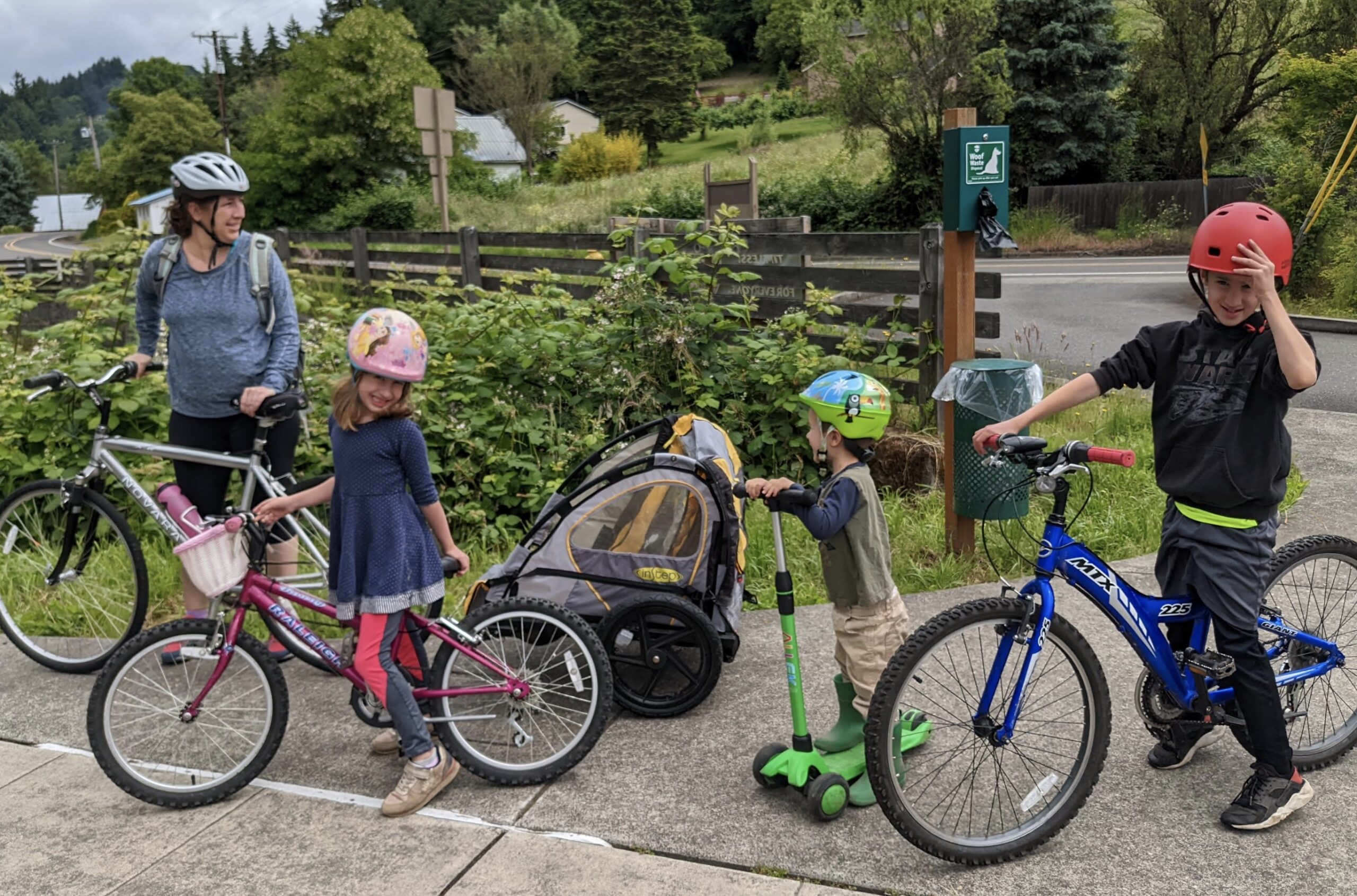
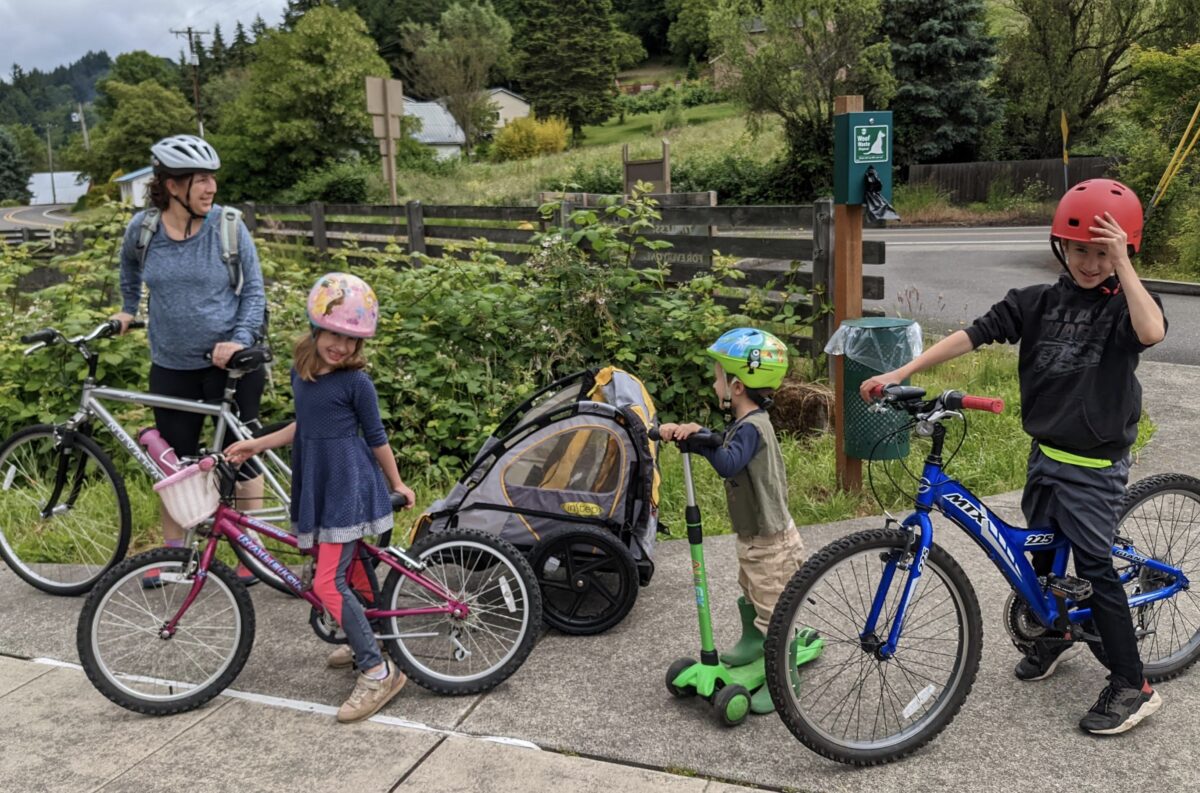
Group shot at start of Banks-Vernonia Trail.

Do you have any summer bike adventures planned with the little ones? Ready to put them in the trailer and go for a nice long ride?

There’s just one problem: those tots have lots of energy! None of which gets used during a trailer ride. Likely as not, they take a sweet nap in the trailer, leaving them with energy to burn when you’re ready for a rest. And as they get older, they’ll want to ride on their own, engaging actively alongside the rest of the family. Trail-a-bikes are a common option for this phase, but they might not work for everyone. Some folks have two tots to tote, which won’t fit a typical trail-a-bike or tandem. Also, what happens if a little one begins to nod off on the trail-a-bike? (Has that happened to anyone? I can imagine my tired kiddo just falling over.)

We recently discovered a happy, easy, and fun solution to this phase: scooters.

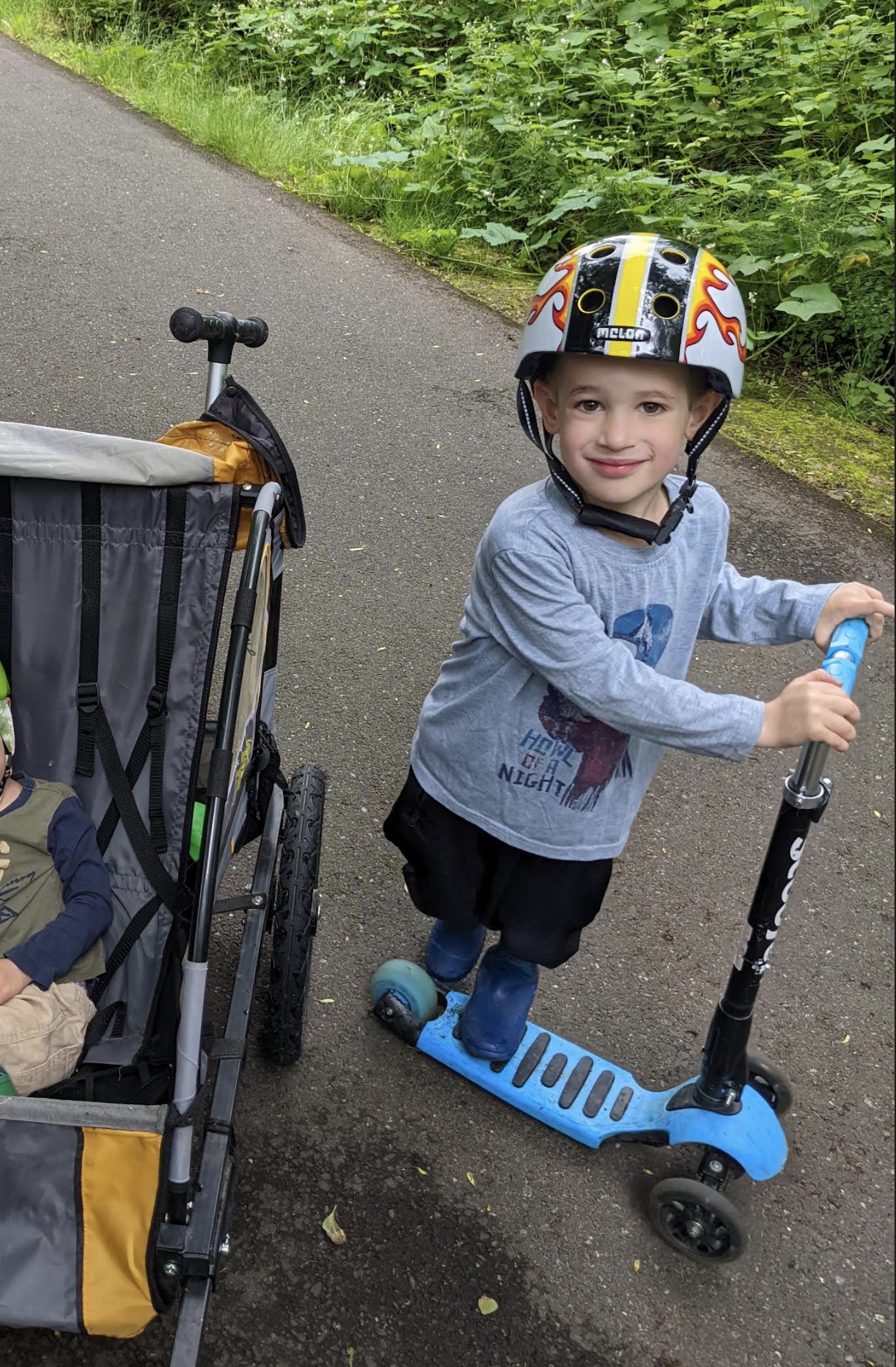
Our little ones are proficient scooter riders. They use lightweight three-wheeled scooters, which are easier for them to navigate than the “big kid” and slightly tippy two-wheeled options. They typically ride back-and-forth on the one block of sidewalk in front of our house. I rarely let them ride the scooters to the park because they are just too darn fast…it’s impossible to keep up with them walking, and I don’t like trying to coach them from a bike as they speed those little wheels past driveways, which pose a real danger to a two-foot-tall speedster. Thus, the scooter riding has largely been relegated to the sidewalk in front of our house, which gets plenty of daily use. 

But I didn’t really appreciate how fast, far, and long my little guys could scoot, until we tested them on a family bike ride with their grandparents.

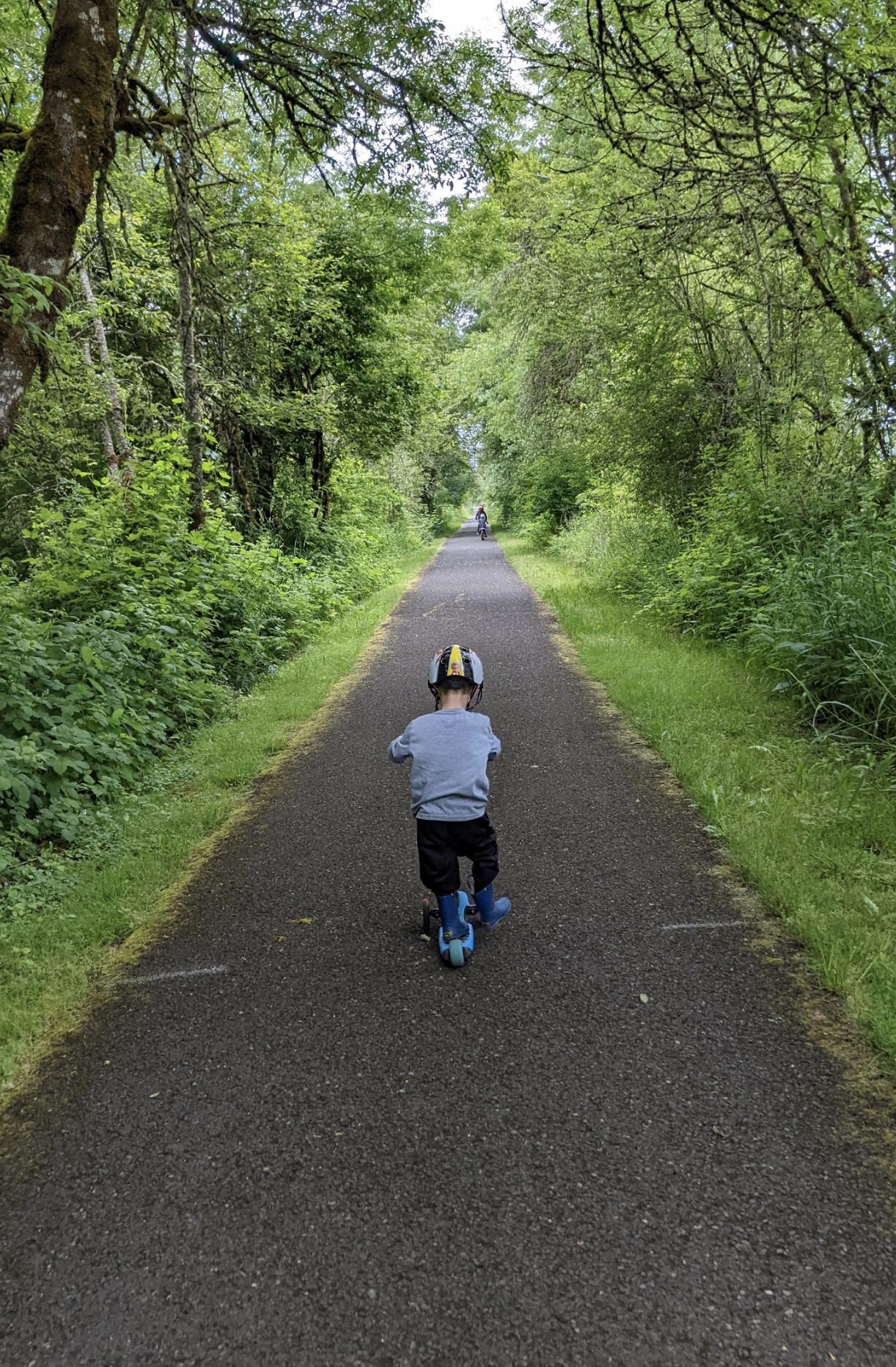
We planned a morning of family biking on a car-free path. Grandpa offered to stay behind and walk with the scooter boys. My mom had seen them in action and laughed. “You better get a bike to ride, or you’ll never keep up,” she advised. It was true! My three and four year old boys happily scooter at a leisurely bike pace. They are flying, while grown-ups do a comfortable pedal. My boys scooted approximately four miles with us (with snacks and play breaks). Grandpa pulled an empty two-kid bike trailer, which also fit snacks and water bottles. 

When the little guys finally got worn out, we put them in the trailer for a ride, with their scooters easily tucked into the trailer’s trunk.

It was a fabulous, cheap, space-saving solution that allowed my boys to scooter to their heart’s content. They got to expend all of their energy (a benefit of incalculable value!) They got to enjoy the independence of propelling themselves on their own power. And when they got tired, it was easy to tow them and their scooters in the bike trailer. 

This is now a good family biking option for us, which works great for visits to carfree paths like the Banks-Vernonia Trail. It could also be great for parents who need to tow kids through high traffic areas, but then let them get out and ride their own scooters around parks and pathways. For summer bike vacations, scooters pack down into small spaces. I’m even thinking this could be a good option for multi-modal rides, as big families like ours can’t easily take bikes on public transit, simply because there are so many of us. 

The bike trailer + scooter option is a new favorite that we are excited to utilize this summer. Happy riding!

Pedalpalooza Ride Guide: June 21 ~ 24

Pedalpalooza Bike Summer keeps rolling along. (Photo: Jonathan Maus/BikePortland)

Finally! It appears we have warmer, sunnier weather on the horizon. And it’s a good thing because Bike Summer is still going strong into its third (of 12!) weeks.

To help guide you through the fun options, every Monday (sorry, I couldn’t get to this yesterday) we choose one ride from each day that looks interesting and worthy of your attention. As always, check out our Weekend Event Guide and Calendar for more of our ride selections (remember you can filter our calendar to only show the Pedalpalooza category).

This week you’ll have a chance to make some noise with some fun music-themed rides…

Tuesday, June 21st

Sync It! – 7:00 pm at Woodstock Park (SE)
Booming music makes group rides better. But a cacophony of competing crooners can be sound more like chaos than coolness. Leaders of this ride will sync up their devices and roll with a shared Spotify playlist that everyone can contribute to. More info here.

Wednesday, June 22nd

Bleeps and Bloops Ride – 6:00 pm at Holladay Park (NE)
A different take on a musical ride, organizers promise a musical parade and encourage participants to, “Strap on your synthesizers, your noisemaking devices, your ring modulators and Gameboys…and your mini-xylophones, too,” as they pedal from park to park. More info here.

Thursday, June 23rd

Drum n Bass Ride – 8:00 pm at Powell Park (SE)
If you’re looking for a dance ride, this could be right up your alley. Ride leaders say, “There will be plenty of jungle, breakbeats, bangers, new and old.” More info here.

Friday, June 24th

Better Naito Forever Celebration Ride – 5:00 pm at Salmon Street Fountain (SW)
The new protected bike lanes on Naito Parkway that opened last month are a huge deal. Just as important as the lanes themselves is how the project came about. This ride will be led by activists from Better Block PDX who were there at the beginning. They will regale you with tales of pushing the limits of PBOT and will share what it took to get this project over the finish line. More info here.


As always, check the official calendar for details on every single ride. And be sure to check official event pages for latest updates and cancellations before you roll out. Have fun out there!

Comment of the Week: A new perspective on chop shops

Comment of the Week

Comment of the Week

“Most chop shop operations are not threats to legitimate bike shops, as the customer base is completely different – our customers are too poor […] to shop at any normal bike shop.”

Welcome to the Comment of the Week, where we highlight good comments in order to inspire more of them. You can help us choose our next one by replying with “comment of the week” to any comment you think deserves recognition.


Regular readers of BikePortland know David Hampsten as a frequent commenter on our posts. His comments take a lot of different tones, but the ones I like best are informative. He can often fill in useful background on a range of topics from his long years as an east Portland transportation advocate.

David lives in North Carolina now, but his comments in response to our post about a new ordinance in Los Angeles banning “chop shops” were not only colorful vignettes, but also added depth to my understanding of the “chop shop” world. David helps run something similar to a chop shop in NC. He writes from personal experience with a world-weary voice which can be hard to pull off, but which coming from David seems authentic.

Here’s what David wrote:

I help run a (barely) “legitimate” nonprofit chop-shop operation here in Greensboro NC. We collect and process about 600 donated bicycles per year from other nonprofits, the police, individuals, churches, and so on. This year we gave away about 75 bikes to Afghan refugees plus other bikes to the homeless, the nearly homeless, inner-city black kids, and to the working poor. We also typically sell about 25 used bicycles and scrap about 200 bikes.

From my experience in working with our volunteers (I’m a volunteer too) and in meeting with other chop-shop operators (including other nonprofits but mostly illegitimate back yard operations), I’ve come to some basic conclusions about the chop-shop industry at least in pleasantly mediocre cities like Greensboro (as we are clearly not on par with lofty Portland):

— Most chop shop operations are not threats to legitimate bike shops, as the customer base is completely different – our customers are too poor […] to shop at any normal bike shop, all of which are too far away from where our customers live – in what you might call bike-shop deserts.

— Nearly all chop shop mechanics and volunteers are too inept to ever work successfully at any local bike shop – either they are too slow at fixing stuff, don’t know how to fix even basic equipment, or worse yet cannot tell the difference between high quality equipment from junk – if it’s shiny then it must be good. It’s a serious challenge training our mechanics.

Unfortunately our customer base similarly knows next to nothing about bicycles and cannot tell the difference between total junk like Next or Magna from a used Trek with all its original parts still on it – they always prefer the shiny Next. And they don’t have bike tools nor a pump at home.

David wrote two other comments about his chop shop in dialogue with Watts, and I thought they were all interesting. You can read them and the full comment thread under the original post.

Thank you for sharing your perspective David.