
(Photo: J. Maus/BikePortland)
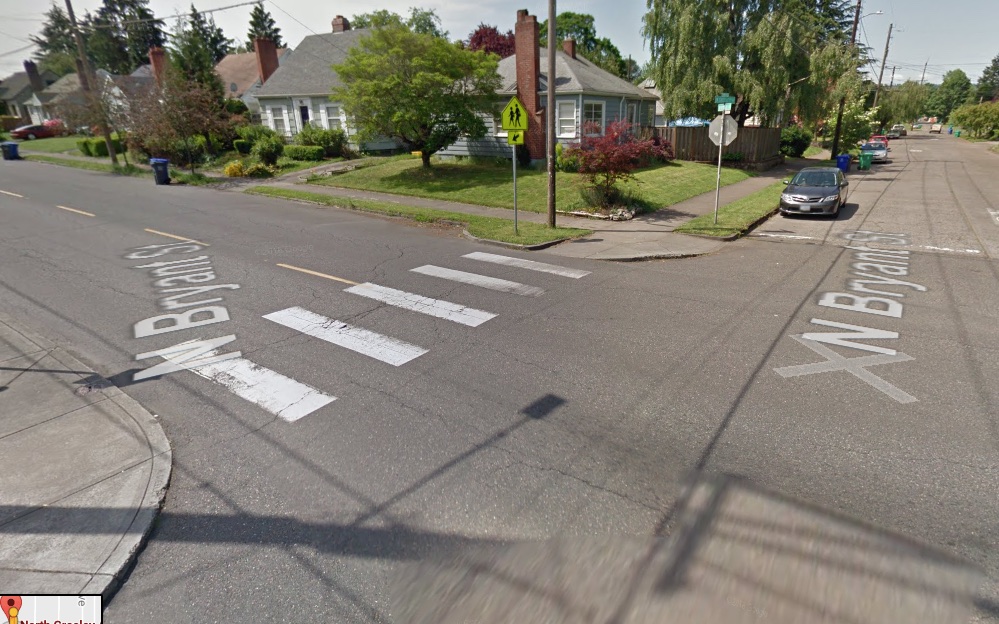
People who live in the neighborhood where Stanley Grochowski was hit (and later died) on August 30th have placed a white marking on the pavement in the shape of a human. Similar to a ghost bike, this is a ghost walker.

🚨 Please note: BikePortland is currently on hiatus and only publishing guest articles. Learn more here. Thank you. - Jonathan 🙏
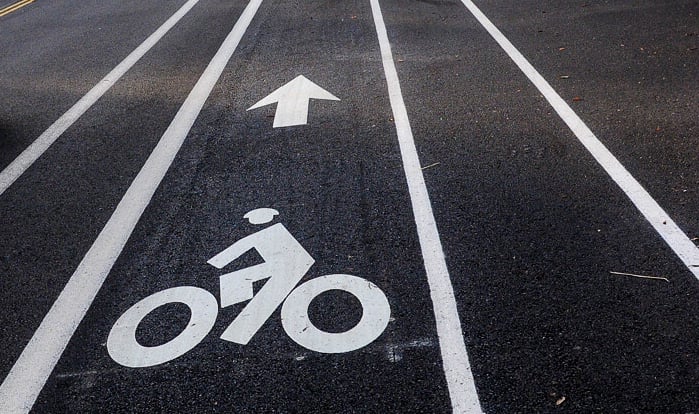
People who live in the neighborhood where Stanley Grochowski was hit (and later died) on August 30th have placed a white marking on the pavement in the shape of a human. Similar to a ghost bike, this is a ghost walker.
I’ve noticed two trails up on powell butte have been closed to bikes. One trail has been closed to bikes for about 30 days. I just saw another trail close last night. Does anyone know if any other trails will be closed also. The trails aren’t closed to anyone else.
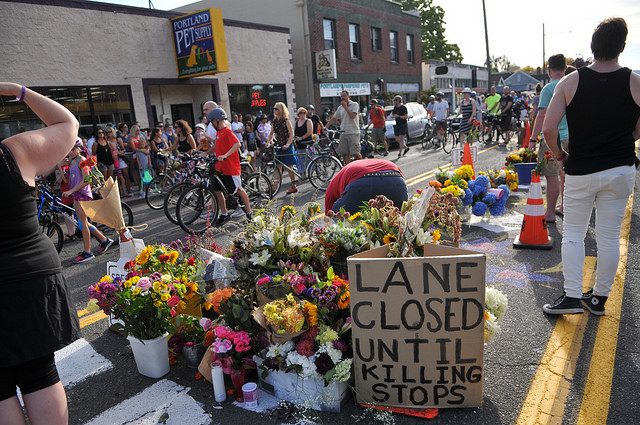
This post was written by Katherine White as a letter to the community in response to news that the City of Portland plans to clear out the memorial where Fallon Smart died sometime this week. White is the program coordinator at One With Heart, a martial arts studio located adjacent to the 43rd and Hawthorne intersection.
——
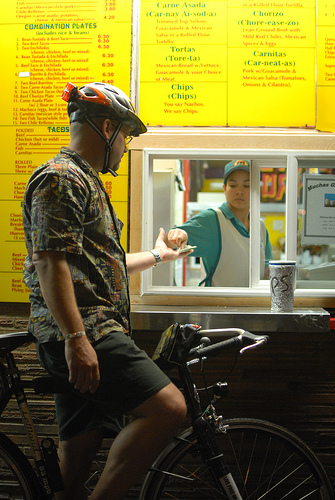
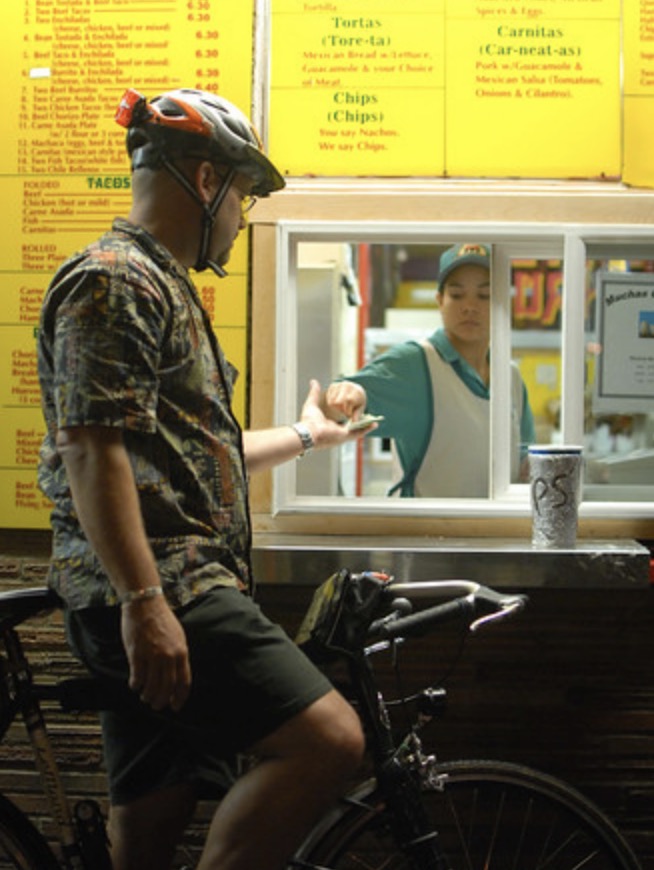
The City of Portland is not a fan of drive-through windows. For decades Portland has adopted regulations that limit how and where drive-throughs can be built.
City planners believe drive-throughs don’t serve the community’s best interests and that they lead to auto-oriented development that’s directly counter to adopted policy goals and dangerous for people on foot, on bike, and on mobility devices.
Now the city’s Planning and Sustainability Commission wants to ban new drive-throughs east of 80th Avenue and require all establishments that already have them to serve all customers, not just those using cars.
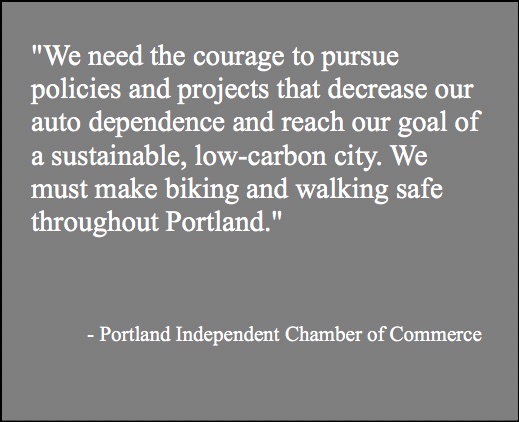

The Portland Independent Chamber of Commerce (PICOC) has turned their influential attention to an issue near and dear to our hearts: the struggle for safer streets.
Launched early this year by a relatively young cadre of tech industry leaders as an antidote to the Portland Business Alliance, PICOC wants more Portland businesses to step up and support “the Vision Zero movement.”
Their latest campaign hit inboxes and social media feeds today. It’s timed to influence City Council’s upcoming vote on the Vision Zero Action Plan released by the Portland Bureau of Transportation earlier this month. Council is slated to formally adopt the plan on October 12th.
It all started on the evening of March 30th.
Brian Duncan, the former chair of the Arbor Lodge Neighborhood Association, was hit while trying to bike across North Rosa Parks Way at Greeley. He’s now paralyzed from the neck down. Then at the same intersection just three months later, Diana Miller-Dixon died after someone ran a red light and crashed into her car. Then two months after that on August 30th, and just two blocks away, Stanley Grochowski was walking in a crosswalk when he was hit by someone driving a car. Grochowski died from his injuries 10 days later on September 9th and police are still looking for the person that ran into him.
These tragic and violent acts committed by people driving dangerously on neighborhood streets have forever altered the lives of Brian Duncan and the families that Diana Miller-Dixon and Stanley Grochowski left behind.

Seattle transportation reform advocates are celebrating a major milestone this morning: last night Seattle City Council unanimously approved a measure that sets a default speed limit on some central city arterials of 25 miles per hour (instead of 30) and 20 miles per hour on all residential streets (instead of 25).
This is a big deal. Joshua Cohen reports on Next City that the new policy will effect a whopping 2,400 miles of neighborhood streets.
Today’s question (actually it’s more of a statement in need of clarification) comes from reader Douglas K.:
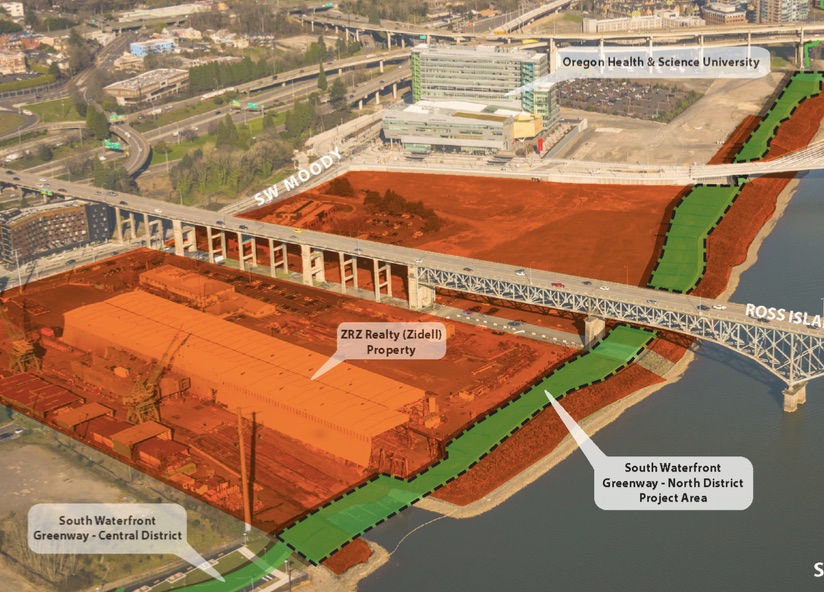
Zidell says they’ll be building just one more barge. That could clear one of the last major obstacles to completing the Willamette Greenway trail sooner than expected.
Could it? Many of you have contacted about this in the past few days. Here’s the lowdown and background on the issue:

The Portland Police Bureau has nabbed another big-time thief who has a taste for high-end bicycles.
The PPB worked with officers from the Bike Theft Task Force and task force partner BikeIndex.org to arrest Joshua Dutcherson last Thursday. The 32-year-old suspect is being held in connection with three burglaries of apartment complex garages where he’s accused of lifting “numerous bicycles.”
Here’s how it went down, via the official police statement about the case:
The Bike Index website (https://bikeindex.org/) was instrumental in identifying some of the stolen bikes. An off-duty detective saw a suspicious van with three high end racing bikes the week prior and took note of the plate and the driver. While officers were investigating some new bike thefts the detective recognized the suspect and the vehicle as the same one he had seen a week prior…
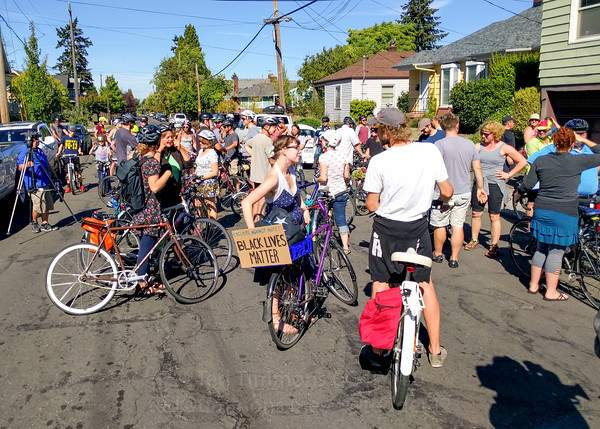

The Cycling Against Hate ride, planned in response to an ugly pepper-spraying incident in northeast Portland last week, happened on Sunday. BikePortland correspondent Ted Timmons was there and shares the following recap…

This week’s Monday Roundup is brought to you by the Oregon Handmade Bike & Beer Festival, coming your way October 7-8th.
Welcome to Monday! Here are the links and stories that caught our eyes last week…
‘Share the road’ is bullshit: This is hands-down the best thing on “share the road” we’ve ever read. “The legacy of ‘share the road’ is suppression of, and increased danger to, the less heavily-armed side of the sharing.”
Car culture down under: In Australia, burnout competitions are a serious thing (I know this from experience). And for one dad they are very serious. So much so that he has trained his five-year-old to do them on his own. Unfortunately for him that’s illegal and authorities have intervened.
