


On Wednesday morning, Portland City Council will vote on Mayor Keith Wilson’s pick for City Administrator: former city manager of Greeley, Colorado, Raymond Lee. Lee, 41, was announced as Wilson’s choice on December 2nd. If confirmed he would become the first (non interim) person to ever hold the position of city administrator in Portland’s history.
The city administrator plays a very important and powerful role in our new form of government. It will be Lee’s job (along with his team of deputy administrators) to execute the mayor’s visions and city council’s legislative actions. Among his powers will be the ability appoint, reassign, discipline, and remove bureau directors. According to Rose City Reform, the city administrator will be the, “mayor’s trusted advisor.” and is likely to function as a bridge between the executive (Mayor’s Office) and legislative (City Council) branches.
What’s he likely to do with that power when it comes to shaping our transportation system? I honestly couldn’t tell you. I don’t know enough yet. But I spent a few hours looking at Greeley and Lee’s past work experience to find out what we might expect when it comes to his mobility-related mindset. Let’s dive in….
Lee’s former town is much smaller than Portland. While he made it clear in just about every video I watched that, “Greeley is one of the fastest growing cities in the state,” it still has a population of about 116,000. That’s one-sixth the size of Portland (pop. 630,000). It’s represented by Democrats in the U.S. Senate, but the county it’s located in (Weld County) voted 61% for Trump and only 39% for Harris in the 2024 presidential election and several residents on Reddit described it as “conservative.” Greeley is on the plains just east of the Rocky Mountains and about an hour drive north of Denver. It’s home to a large meat-packing plant, a mid-sized public university and a community college.


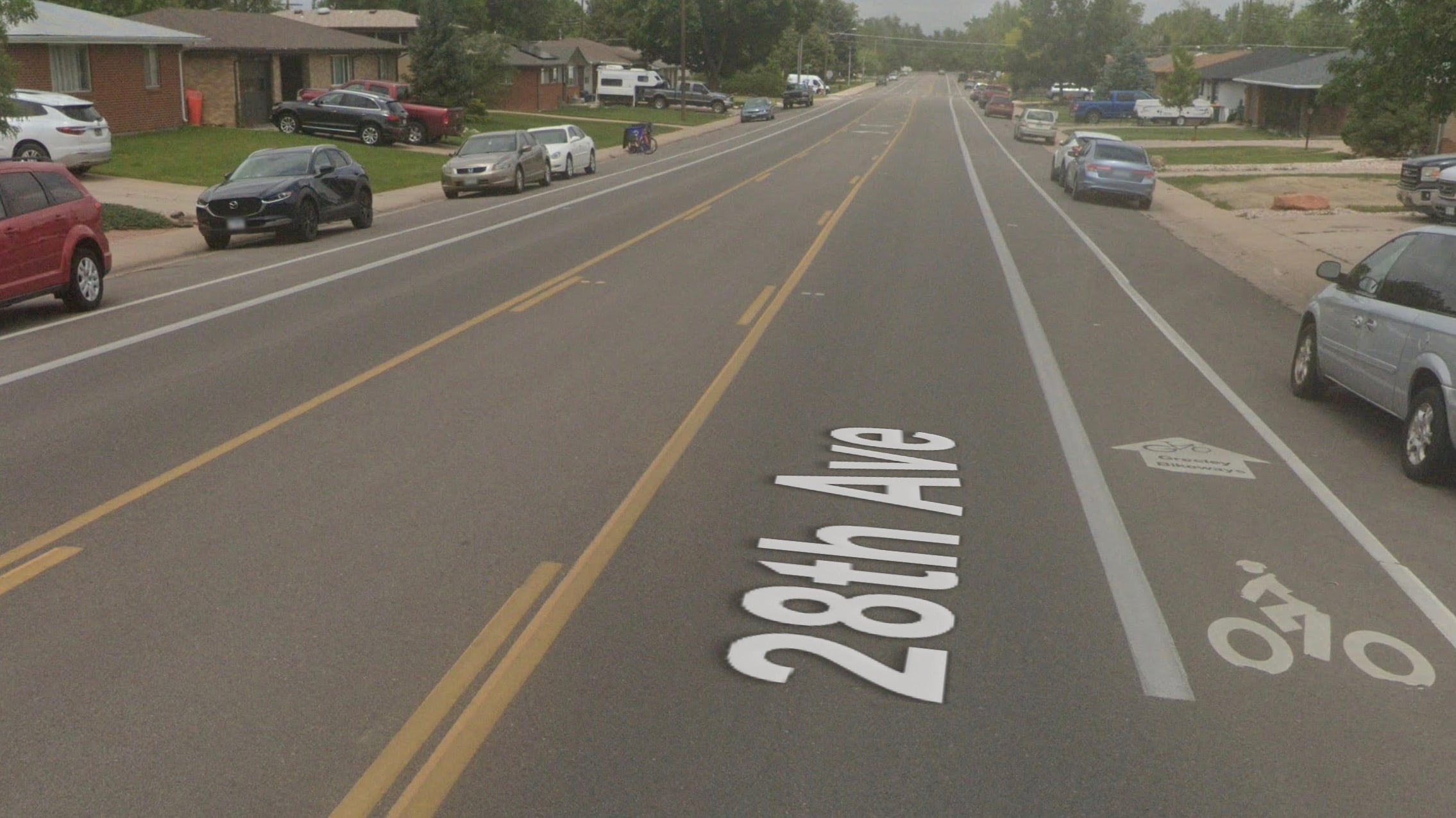
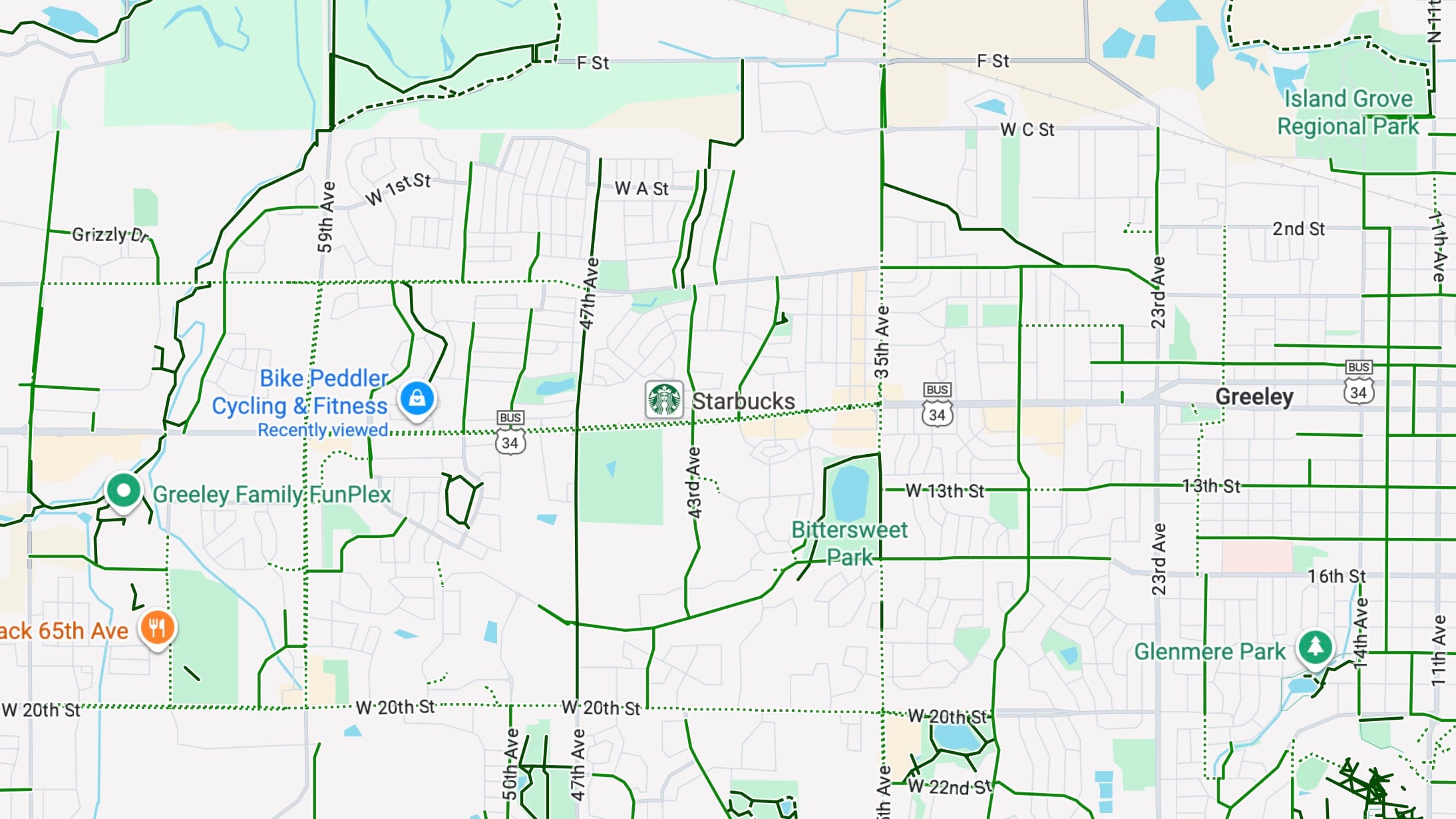
From a bicycling perspective, there’s not a lot to write about. The League of American Bicyclist gave Greeley a Bronze award for its bicycle friendliness, but from what I can tell the city’s 85 miles of bike lanes are most just standard, painted lanes — often next to high-speed car traffic. To Lee’s credit, Greeley has recently made more noise for transportation reform: They launched a bike share system in October 2024 and by the following spring they’d deployed 250 bikes along with 80 shared electric scooters (about 25% of all bike share use is on the local college campus).
Greeley declared a goal in January of this year to reach zero traffic deaths by 2045 — and kicked off their effort with a $9.9 million federal safe streets grant. The city had 11 total traffic deaths in 2024, and they even hosted a World Day of Remembrance event to raise awareness about it.
Greeley is currently rebuilding a major downtown corridor into a more human-centric environment with public art, roundabouts, less driving space, and wide sidewalks. In the concept drawings I saw however, there was no dedicated space for bicycling.
Lee will have had some experience with free bus service, an idea that pops up in Portland from time-to-time and is getting a life lately because it’s an idea championed by New York City’s mayor-elect Zohran Mamdani. Greeley’s transit system has implemented a free transit pilot for two months in the summer through a state program to improve air quality.
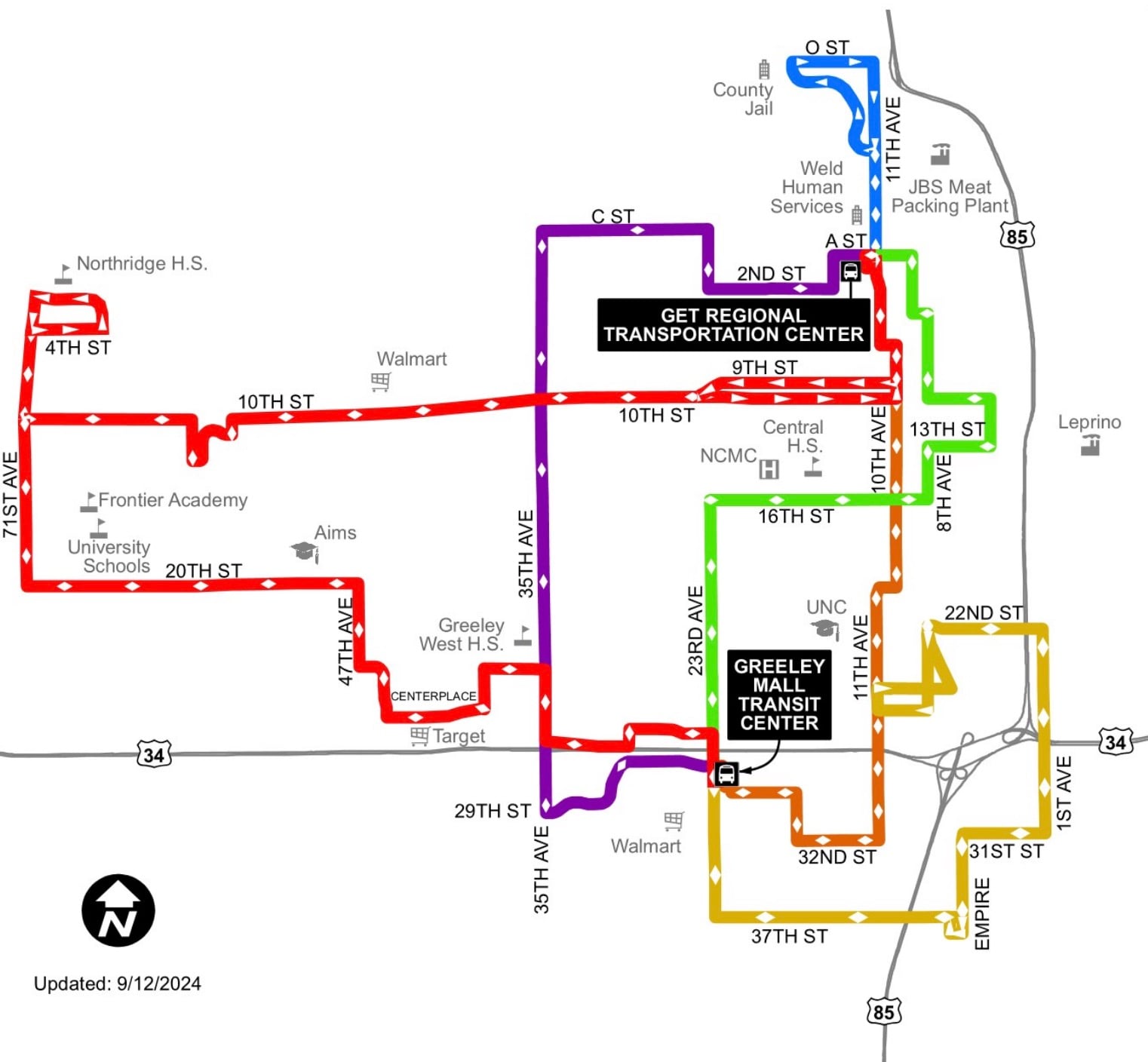
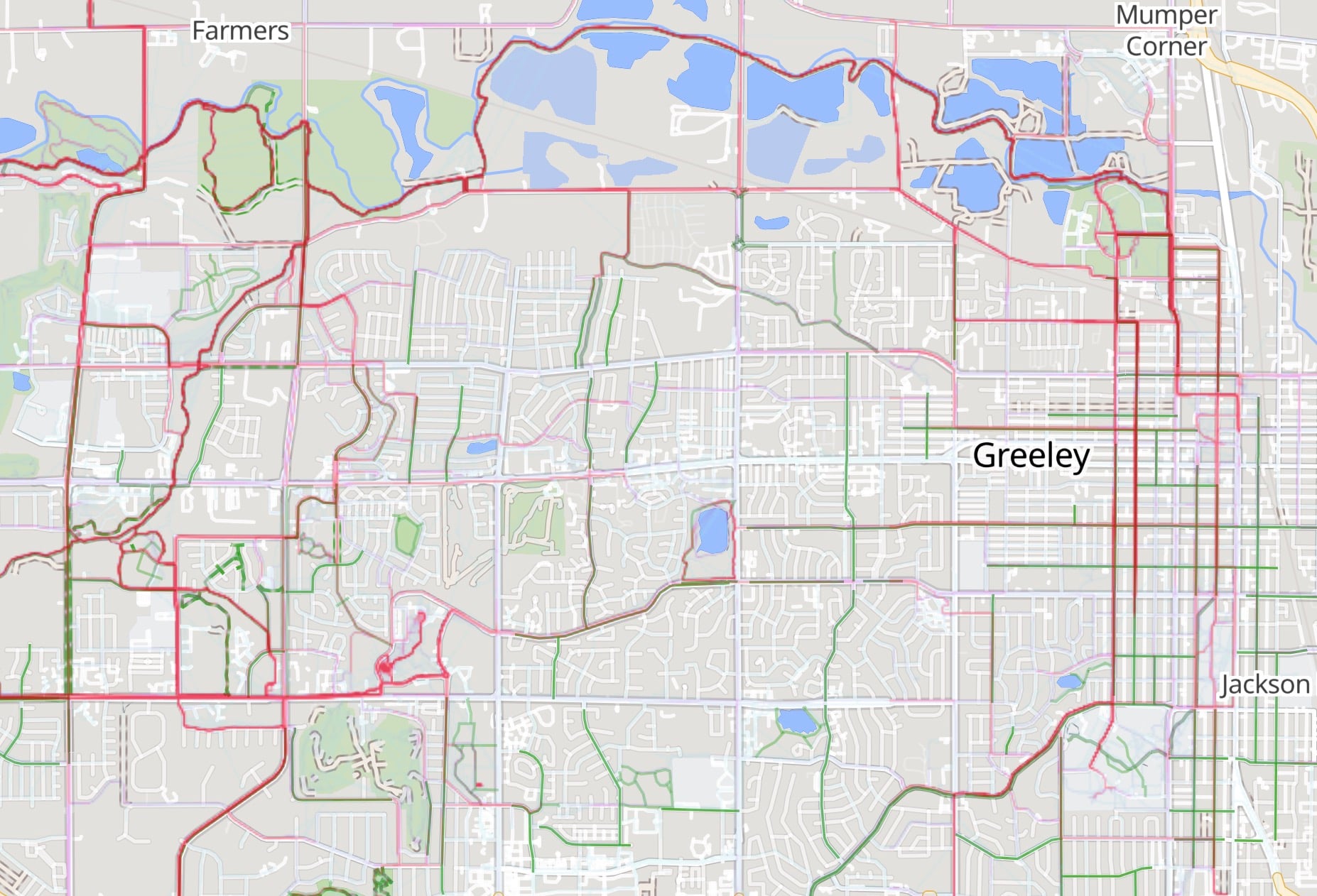
When it comes to Lee’s professional experience, he doesn’t talk about transportation much. In his 12-page resume, Lee shares a long bullet list of accomplishments, yet none of them are transportation-related. The largest transportation project he’s overseen is a $132 million investment into Greeley’s biggest highway — US 34 — which bisects the city. The Mobility Enhancements for Regional Growth & Equity (MERGE) Project will build two interchanges for the freeway in order to reduce crashes and will develop transit hubs where folks can safely connect to transit and other modes.
The highest profile project Lee has been involved in is a major redevelopment project known as Catalyst (or Cascadia), a public-private partnership estimated to cost around $1 billion that would build an arena and related amenities for a local hockey team. According to the Greeley Tribune, a community group that’s skeptical about the project ran a successful petition campaign that will put a repeal of the zoning for the project in front of voters. A public vote is coming in late February.
Here’s more from the Tribune:
Residents who oppose the project have remained doubtful the project will deliver the promised economic boom. More concerns arose once the city issued certificates of participation, one of the primary funding mechanisms for the early stages of the project, which temporarily leased city buildings to secure a loan.
Another group, Greeley Deserves Better, petitioned to put the city council’s approval of the certificates of participation issuance on November’s ballot. After a city-appointed arbiter ruled that such an action was not within the residents’ power, Greeley Demands Better gathered more than 5,000 signatures in an effort to repeal zoning for the project that was approved in September.
Before his tenure in Greeley, Lee served a four-year stint as public works director for the city of Amarillo, Texas.
I’ve reached out to a few transportation advocates in Greeley to see if they have anything to add about Lee, but I’ve yet to hear back. If you know anything about his views on transportation, please share them in the comments. I’ll get to see and hear from Lee in person on Wednesday morning, so stay tuned for more about this man who will play a pivotal role in the future of Portland.
UPDATE, 12/10: After posting this story, I learned that Greeley’s Public Works Director Paul Trombino (their point person for major transportation projects) also resigned shortly after Lee did. I’m trying to learn more. For now, check out the stories about this from local blogger Jack Bogdanski.
UPDATE, 12/10: I asked the City of Greeley Mobility Manager Michelle Johnson to tell me more about Lee’s work/position on transportation. Here’s what Johnson shared:
“During his time here, City Manager Lee supported several projects that helped move Greeley forward on mobility. He backed the work on our Mobility Development plan, which focused on improving safety and connections for people walking, biking, driving and using transit. You can see an overview of that work here: speakupgreeley.com/mobility-development-plan.
We are currently working on year 1 activities based on this plan, which will include route improvements, the introduction of a transit app, and expanding regional transportation with a new line between Loveland and Greeley.
Also under his leadership, we launched our first micromobility pilot, which gave residents more short-trip options and helped us learn how shared scooters and similar tools could fit into our system. Details on that pilot are here: speakupgreeley.com/micromobility-pilot.
Overall, we have worked hard to expand mobility options, trying new (to us) approaches to give people more ways to get around our city.“
Update, 12/10: Jim Riesberg, founder of nonprofit advocacy group Greeley Walks and organizer of events like Week Without Driving and World Day of Remembrance for Traffic Victims, said he thinks Greeley is on a solid trajectory when it comes to transportation reform. “I think Greeley is way ahead of many other cities, particularly of its size and the attention that they’re paying to transportation, mobility, safe streets, improving public transportation and making it easier for people to get around,” Riesberg shared with me in an interview this morning.
During Lee’s tenure as city manager, the Greeley Public Works Department has been busy with traffic calming initiatives, Riesberg says. “A number of what were four-lane streets have now been reduced to two-lane streets by painting medians and things in them.” Riesberg also added that Lee hasn’t attended any meetings or forums he has hosted and he’s never seen Lee at a meeting of the city’s Citizens Transportation Advisory Board.
As for the quality of bike infrastructure? Riesberg said Greeley has 27 miles of bike lanes and the majority of them are of the unprotected, door zone variety.
“The city has increased the number of bike lanes getting into the downtown area,” Riesberg shared, “But we don’t have any good bike parking stations in downtown yet. We’re working on that.”
Riesberg also said he was “shocked” by the resignation of former Public Works Director Paul Trombino, who left his post shortly after Lee resigned. “I had high praise for [Trombineo],” Riesberg shared. “And [his resignation] really shocked me because I thought he was just moving Greeley in a very important direction — and quite rapidly. So I’m not sure what happened there.”
When Riesberg asked city council members about why Trombino resigned, they didn’t tell. “They won’t share anything,” he says. “They just said, ‘I can’t get into that.'”

Thanks for reading.
BikePortland has served this community with independent community journalism since 2005. We rely on subscriptions from readers like you to survive. Your financial support is vital in keeping this valuable resource alive and well.
Please subscribe today to strengthen and expand our work.
Greeley resident here. Check into the Cascadia and downtown Civic Campus projects for some of the things Mr. Lee started but has landed short of the mark on during his tenure. Also look at the state of our budget.
Also look into the reason for his departure from Greeley, which is apparently being protected by a mutual agreement between him and his former employer.
I think a LOT more info is needed before people start cheering.
Bojack has some details
https://www.bojack2.com/2025/12/more-turbulence-in-lees-wake.html
https://www.bojack2.com/2025/12/all-lawyered-up.html
That’s good enough for me. I much prefer a *clean* but “unprotected” bike lane to one of Portland’s wonky experiments that is filled with leaves and trash.
I tend to agree, though it really depends on how much and how fast that traffic is.
Like a stroad with a 45mph speed limit? I’ll take Naito any day over that: https://keepgreeleymoving.com/wp-content/uploads/2021/02/35th-Avenue-Construction-Plans.pdf
Page 2 has a full roundabout.
lol all the unprotected bike lanes on my commute are filled with leaves
Greeley, Loveland, & Fort Collins are all essentially in the same metro area – Fort Collins is the dominant city and has good bike advocacy. https://bikefortcollins.org/
As a resident, I have to tell you that these are completely different areas. Fort Collins is FAR more bike friendly and should not be used to measure what Greeley is up to. I know that on a map they look close together, but you have to understand that this area is made up of smaller cities that are completely disconnected geographically, transportation-wise, culturally, and governmentally. It’s not like a Portland/Hillsboro thing where things are similar and there’s kind of a suburb thing going on, it’s more akin to a Portland/Tillamook thing. I’ve lived in both, and Fort Collins and Greeley are VERY different, bikewise.
Yes, the idea that those three cities are a metro area is laughable. I used to work in that area, and they are three very distinct cities: one sorta farm Red politics country, one a liberal university town, and one just an extension of the hell that is Denver.
I want to push back a bit on the tone of this article which seems very much deep in the “Portland bubble”. In other words, “those people” are somehow immediately suspect because of where they are from or who their neighbors vote for or because they don’t meet some performative metric.
Greely does have an a landing page for bike access and a master plan, though the map links appear to be broken. Does this mean Greely is biking paradise? I doubt it. Does this mean Mr. Lee has all the answers? No.
But the correct way to discuss what he can or can’t do in Portland isn’t suggest he is suspect by association from the place he has called home. It would be to talk to him. Bring him in the shed, ask him questions, see what he knows, see if he is interested in learning, see if he has new ideas, etc. He could be a tool, he could be awesome, but whatever he is, its not going to be built around some dude that lived down the block from him voting for someone or the city council not building out Amsterdam 2.0.
I don’t really get what you saying here. I’m just sharing a bit about Greeley so folks know where he’s from. The only suggestion that he is suspect is coming from your comment. Careful with your projections.
I take Kreig’s point: there’s a limit to how much you can know about a senior employee by looking at her/his past working environment. But it is good to ask the question, and look into any red flags you may find (you didn’t find any, apparently).
Obviously cyclekrieg makes good points… My point is that in my position I must publish something about the guy even though I know very little.
I’ll do that! But he’s not even open for one-on-one interviews until after he starts later in January.
I think it’s a reasonable “projection” when you share random demographics
Followed up by
As if there is no additional context for why that might be the case. You literally have maps showing how suburban the city is so the options the city has are drastically limited. The climate makes biking less of a year round option to start with. We in Portland, bike capital of the country, already have a hard enough time convincing car owners to give up road space, muchless a city in a rural county.
And even ignoring all those factors (and more), WE have bike lanes that look JUST like the ones in the streetview photos you showed. Just look at east Burnside. It is INDISTINGUISHABLE from “Typical neighborhood collector” .
I would also go so far as to argue that Greeley’s bike network is better than Portland’s in many ways. We have so many greenways but our dedicated bike lanes are woefully disconnected from each other.
At best the article can’t decide if it’s comparing Portland and Greeley’s bike infrastructure or talking about Lee and I think that’s where OP’s comment comes from (to say nothing of the fact you’re platforming a racist conspiracy theorist amongst all that)
Excuse me, who is being platformed?
sorry, but if we have visions for Portland’s future that are extraordinary — only relative to North America, but still — then it matters how basic the background of one’s political milieu is, when they are coming in to help implement our visions.
Why is he leaving Greeley? Don’t ask anybody in city government over there; they’re all under nondisclosure agreements. https://www.bojack2.com/2025/12/all-lawyered-up.html
Excellent question. I’m really concerned about the NDA surrounding this hire and the lack of transparency from Mayor Wilson and the current council. Regardless of anyone’s politics, the city has a responsibility to fully vet applicants for major leadership positions. We’ve already seen what happens when that process breaks down — like when Commissioner Mapps hired someone with a serious criminal history (convicted felon) to run PBOT without adequate public scrutiny.
At minimum, Portlanders deserve assurance that every candidate is being thoroughly investigated based on qualifications, experience, and public safety considerations. The public shouldn’t have to guess whether important questions were skipped or buried. Transparency and due diligence shouldn’t be optional, no matter who is doing the hiring.
Apparently all of our elected reps (city councilors) interviewed the candidate and he was subject to the usual vetting.
As for the convicted felon, there is a notion that committing a felony doesn’t doom a person for life and Portland leaders adhered to that notion. Past misconduct may indicate future misconduct but not always.
Fred, honest question, mate: if you owned a multimillion-dollar business, would you hire someone convicted of lying on tax forms to run it? Most people wouldn’t hand over the keys and say, “She’ll be right!”
Honest Question — Is our criminal justice punishment, rehabilitation, or both for people convicted of crimes?
What should it be?
If the answer isn’t purely punishment, at what point are people ready to be accepted back into society? If the answer is purely punishment and we can’t consider anyone’s debt to society paid and their past in the past, why do we even let them out of jail?
What if the person in your hypothetical was a very good accountant who was coerced by an abusive boss early in their career and had 15 years of spotless service since returning to the workforce?
I agree with what you wrote, and yet… it’s harder to trust someone who has violated trust in the past, regardless of what happens subsequently. That’s how we’re wired.
Agree completely. But that’s why we have laws around hiring practices and what is and isn’t acceptable grounds for rejecting a candidate.
They’re all for second chances and prison abolition and “ban the box” until the individual doesn’t do their bidding.
Thanks for sharing bojack. Reading your articles with interest.
Careful there, Jonathan — next thing you know you’ll be agreeing with Jack Bogdanski. Wild stuff, I know. Have a peek at his blog and you might start drifting into… dare I say it… moderate territory. Wouldn’t want to jeopardize your ideological purity with all that reasonable-sounding “crazy talk,” mate
Please don’t, unless your interest is conspiracy theories and talk radio
Nice to see your stuff again. A long time ago I was reading your blog and you recommended Bike Portland as a place to check out and I’m glad you did:-)
If you don’t like NDAs make you should write a post about that to convince all your readers to vote for people want want to get rid of them, not use their blanket ubiquitous existence as a reason why a black man shouldn’t be allowed to hold office in Portland.
I don’t think the complaint is specific to black men — it would apply to everyone, regardless of race or gender.
But I agree with the point I think you are making that NDAs are a standard tool, and while they can be used to hide bad behavior, they aren’t in themselves evidence of it.
We’re dealing with a new process here. It is fundamentally NOT the city manager/city administrator’s role to say “Let’s do bikeshare. Let’s do transportation projects.” If he does not list transportation projects in his list of accomplishments, that suggests that the executive & legislative teams that he worked with did not prioritize those sorts of things — not surprising to me. In your example:
“Greeley declared a goal in January of this year to reach zero traffic deaths by 2045 — and kicked off their effort with a $9.9 million federal safe streets grant.”
It would have been the Greeley City Council’s choice to prioritize the goal, with the city manager advising them how feasible that would be. And then the city manager would typically be heavily involved in securing that grant — so that seems to be a good point in his favor.
For me, it is much more important to know how well he can get along with the mayor and council and not fight with them. It is still in the hands of City Council to prioritize the projects. If Lee starts driving the direction of projects towards or away from any transportation objectives without explicit backing of City Council, then the system will be failing.
Mick O,
Keep in mind that just because I share stuff about Greeley in this post does not mean that I think Lee had something do to with accomplishing it. I am just trying to paint a picture of the civic context that existed during his tenure. That is to say, at least he is familiar with thinks like micromobility and vision zero. I realize he isn’t pulling the levers on that stuff, but figure folks want to know that Greeley did them while he was there.
And in talking about his resume, I’m trying to let folks know whether or not this is a transportation guy and whether it’s a big issue for him. Fine if it’s not, but from what I’ve learned so far, Lee isn’t someone who thinks of mobility and transportation — at least in terms of not driving cars — as a top priority in how they go about their business of making cities successful.
If the transportation system falls short, you can’t let anyone say “Yeah, this new administrator isn’t a transportation guy.” The Mayor can MAKE him a “transportation guy” by setting transportation as a priority. His job is to be whatever kind of “guy” the Mayor prioritizes. That is how the new system is designed to run, at least. He literally shouldn’t have mobility and transportation as a top priority of how to go about business, unless that comes from the Mayor and Council. That is all I am trying to remind people of, not trying to disagree with you.
I hear you. And I totally agree. Sometimes on here I need to respond to comments to make things clear so that folks don’t assume incorrect things about what I believe.
I understand what his role is and I understand he wouldn’t officially be a “transportation guy.” But that doesn’t mean I can’t try and figure out if transportation is important to him and/or if he has some personal interest in it or not. That’s what I’m trying to do. Because regardless of what the charter says his role is, how he thinks about transportation is interesting to me and it’s my job to figure that out. Thanks!
Oh dude, Greeley, Colorado! What a place.
When I was in college, my school was in the same athletic division as University of Northern Colorado, the school in Greeley. Hope I’m not doxxing myself – but I was in band and our pep band would often travel with the team. I remember we did a whole thing where we played a halftime show with UNC’s band and got to hang out with them in the stands.
Anyway, the night after the football game we snuck out (really just walked out, professors DGAF) of the hotel and walked like two miles to a party that some of the UNC band folks invited us to. It was pretty crazy, got broken up by the cops at like 2AM, I climbed out a window. Friends gathered, we started walking (what we thought) was the direction back to hotel. We figured we were wrong when the sidewalk ended and we got to empty farm fields. We were also quite drunk. This was like – October, I think? So not freezing but pretty chilly. This was also before the proliferation of smartphones and easy access to map apps. We spent about three hours walking around before we decided to follow the signs to the UNC campus and go from there. A gas station was open near campus, and the guy working there was able to get us directions back to our hotel just in time for sunrise and a couple hours before we got on the bus to go back home.
Anyway, goofy memories aside, I wish all the best for Mr. Lee and am interested to see how he handles the job. I also hope he finds Portland to be pleasant, welcoming, and interesting in all the unique ways that I have since moving here.
I have just today learned who the blogger linked here is, and I have honestly lost a bit of respect for BikePortland for platforming this guy.
He uses awful language to talk about the non-white members of city council, thinks that Portland’s new tax breaks for the rich *aren’t enough*, and calls Better Naito a useless pet project.
I don’t understand this choice as someone who is supposed to be a journalist.
Hi Natalie,
I think it’s important for people to know things about people in positions of power. And I think the community is best served when they are aware of information that is out there. In this case, I made the decision that what Jack Bogdanski shared was important for people to be aware of. I also don’t agree with you that simply linking to another site means that I’m “platforming” someone or that I am somehow endorsing or agreeing with everything they do. As you can see from the reaction from me sharing that information, others have shared their opinion of that information source. Again, I trust folks to make their own judgments on information sources and I want BikePortland readers to be well-informed.
Just gonna leave some quotes from said “local blogger” who I’m sure has every intention of providing honest information about a government official. Really any government official.
“Look at the socialist-controlled Portland City Council, whose solution to every problem is new and higher taxes, and who utterly demonize landlords and anyone else with money.”
“Today corporate America is looking at Jessica Vega Pederson, Angelita Morillo, Steve Novick, Lynn Peterson, Shannon Singleton, Sarah Iannarone, and so many other Portland face cards. And to business people, each one of these “leaders” looks like the big bad wolf with a bib around his neck”
“In the news that got the most play, the far-lefties on the City Council failed in their attempt to defund Mayor Keith Wilson’s current program of forcing tent-dwellers and trailer occupants to move on.”
“Since many of the squatters resist, the operations are not always a festival of goodwill. And a lot of the street folks have warrants out for their arrest; for them, their next stop after a “sweep” is the pokey, at least for a little while.”
“That’s the kind of thing your arts tax money is going for, that and some fat nonprofit salaries. It’s time to grab Mayor Wilson by the lapels and get rid of Portland’s weirdest, and worst, tax gouge.”
“As usual, the cops offer no information about what’s going on with all the violence. And so we’re all left to wonder whether it’s safe to leave the house, or even to sit near the windows. But don’t forget to send in that arts tax check!”
Patrick,
Look, people can take issue with Jack Bogdanski’s tone — sure. But one thing he’s earned over the years is a reputation for calling things out long before anyone in Portland politics is willing to admit there’s a problem. And in a city that has been sliding into a doom-loop dynamic, that kind of clarity is not just useful — it’s necessary.
Bogdanski has been one of the few consistent voices willing to scrutinize the city’s spending, expose contradictions in policy, and question the glossy narratives that officials use to cover real decline. He actually reads the budgets. He digs into documents. He tracks the follow-through. And he’s been remarkably accurate in predicting how certain policies would backfire years later. That’s not conspiracy — that’s analysis.
The reason his writing hits a nerve is because he talks about what regular Portlanders have been feeling for a long time:
that services are deteriorating,that accountability is thin,that taxes keep rising with little visible return,and that the city’s leadership has been reluctant to confront reality.In a city where polite civic culture often pressures people to “stay positive” even when things are objectively falling apart, Bogdanski’s bluntness cuts through the fog. That doesn’t make him the enemy — it makes him one of the few people offering an honest assessment of the situation.
You don’t have to agree with every adjective he uses, but dismissing him misses the bigger point:
Portland needs watchdogs. Portland needs contrarians. Portland needs people who refuse to pretend everything is fine.
And for decades, Bogdanski has been one of the only ones consistently doing that work.
That’s why his perspective matters, especially where Portland finds itself right now.
Quelle horreur!
I am sorry that this thread has become about me. The important questions are whether Lee is qualified, whether he’s worth a compensation package of $535,700 in his first year here, why he left his last job, and why Portland is hiring the highest-paid executive in its history despite being legally disabled from getting an honest evaluation of him from people at his previous employer. When you’re not allowed to ask questions about a candidate for a job like this, from anybody you want to call, the smart thing to do is hire someone else.
BTW, I don’t hate bikes as much as you guys hate cars. Just sayin’.
Greeley resident: Greeley is horrific for bike riding, walking, and public transpo. Bus system is the only public transport, it’s a fairly small city, and the bus doesn’t even run on Sundays.
The “bike program” Lee may have spoken about was just letting one of those for-profit companies like Lime put a bunch of bikes and scooters in town, and they just pile up in a couple different spots. The city didn’t do shit on that front, they just okayed a company to come in and do their thing. There’s zero added infrastructure involved with that.
The bike lanes are those classic type designed to impress with stats, “X miles of lanes,” but LOTS of them are in neighborhoods where bike lanes are totally unnecessary (and end up being parking lanes), these are very suburban neighborhoods where there’s no traffic and nobody is passing through, or lanes are along busy roads that you’d have to be pretty bold to bike along. Many bike lanes also just vanish at key intersections. You cross, and the bike lane is just gone. There are also lots of problems with bike lanes that turn into right turn lanes at intersections. NONE of the bike lanes in Greeley are protected or marked by anything but paint.
Keep in mind, this is also a fairly red area, land of MANY lifted, giant pickups rolling coal that make it pretty dicey to share a lane, and not to stereotype too hard, but I don’t generally find drivers of those vehicles to be kind to cyclists. This is an area that very much has a “walking/biking is for poor people who can’t afford cars” attitude.
The only bike riders here are people who do not have other options available to them. It’s unsafe, drivers are very discourteous, and there is zero biking infrastructure that makes biking a reasonable way to get around. I say this as someone with a pretty high risk tolerance who would strongly prefer to bike to work and chooses not to because its wildly unsafe here. I wouldn’t let anyone I care about commute by bike here.
Walking is also mostly unpleasant. There are almost no non-road-adjacent trails or even much access to natural areas without first getting in your car. Most walking paths put you on narrow sidewalks that are right along busy streets with cars going 35-40 MPH. Our parks are almost all bordered by busy roads.
There is a particularly low-income part of town, and there are no sidewalks there at all. It’s not possible to safely walk to a bus stop or out of the neighborhood. There’s no bike line in or out either.
I couldn’t say that Lee is primarily responsible for this, but I will say that I don’t think he has a clue about government in a city where public transportation and alternatives to driving are valued, and to my knowledge he was not instrumental in any way when it came to improving the options in Greeley.
I don’t want to just sound bitter about where I live, but having visited your city many times and being a big fan, good luck to you, and you’re going to have to find a transportation advocate in someone other than Lee.
Thank you. Perhaps the first fully informed comment in this thread.
Couple of things: Not sure why you are interested in Lee. City Managers have almost no authority in determining the trajectory of bike-related improvements. They are bureaucrats, who do what their City Council tells them to do. Very little independent judgement regarding transportation. Or, maybe you can point out to me where a weak City Manager system has resulted in major bike transportation-related progress in Oregon. Second question: on other websites, I asked why the City Council did not get clarity about why Lee resigned as City Manager 4 weeks before his selection in Portland. To me, it was a giant red flag. One of two things: Wilson had already told him he had the Portland job in the bag (highly unlikely given Wilson’s integrity IMHO) OR Lee was being forced out of Greeley. In discussion groups, I was called everything from a racist to paranoid. Now, with this other resignation (very likely not coincidental), the lack of vetting in Portland becomes more of a concern. That said, the recruitment process garnered below mediocre candidates. Nobody with big city experience or even a remotely close budget size. No highly qualified person would touch the Socialist Council vs results-oriented Mayor drama in Portland. Lee is in way over his head. He will either learn really fast or we will see another golden parachute paid out in a year or two.
The deputy public works director in Greeley has also quit. https://www.bojack2.com/2025/12/and-another-one-gone.html