When the Bike Commuter Benefit Act passed back in October, it was somewhat of a shallow victory for advocates who had pushed for its passage for seven long years. Not only did it pass as a ploy to build support for the controversial financial bailout bill, the “benefit” it provides is small ($20 per month compared to $230 for parking a car and $120 a month for taking transit), and the implementation has been the source of massive confusion to HR people across the country. Worse yet, the Bike Commuter Benefit Act included language that required bike riding employees to choose between the bike benefit or the transit benefit.
Oregon State Rep defends registration idea: “Share the Road — Share the Load”
Sal Esquivel
It has been interesting to follow the widespread discussion spurred by the proposal in the Oregon legislature that would establish a $54, mandatory bike registration fee in Oregon. Even though the bill is highly unlikely to pass, it has drawn the attention of advocates, the media, and citizens like few other issues I have covered.
Yesterday, a reader sent me over an email newsletter sent out by one of the sponsors of the bill — Representative Sal Esquivel, a Republican from Medford. In that email, Esquivel admits that the bill, “may never see the light of day”, but he also defends the idea on similar grounds as his fellow co-sponsor on the bill, Rep. Wayne Krieger (learn more about what he thinks of the bill in my interview with him last week).
What special interest lobbying is all about
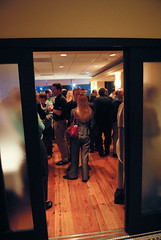
Last night I experienced an important part of how special interest lobbying works. At a classy restaurant just steps from Capitol Hill, I joined bike industry and advocacy leaders for a reception (and dinner, but I didn’t stay for that) hosted by BikesPAC.
BikesPAC is a political action committee founded by the non-profit Bikes Belong Foundation that raises money from donors and then spends the money on congressional campaigns of members that are supportive of biking. Each year during the National Bike Summit, BikesPAC hosts a reception and dinner and invites members of Congress to stop by. The idea is to share with them what the Bike Summit is all about, give thanks for their support of biking, and generally just try to strengthen the name of biking on Capitol Hill.
Getting pumped on urban trails and bike parks
This story is part of our special 2009 National Bike Summit coverage (sponsored by Planet Bike). For more coverage, follow BikePortland on Twitter and browse the latest photos in our Bike Summit photo gallery.
Most talk about biking in cities revolves around commuting to work and urban biking culture. But there’s another way to enjoy riding without leaving town that is just starting to get on the map in Portland — urban trails, jump parks, and pump tracks.
The topic is very hot in Portland right now. Our Gateway Green project is rolling along, and discussions are afoot for more bike access in Forest Park and possibly even our first pump track/skills park near the Burnside Bridge.
With Complete Streets, Matsui says roads will be for everyone
This story is part of our special 2009 National Bike Summit coverage (sponsored by Planet Bike). For more coverage, follow BikePortland on Twitter and browse the latest photos in our Bike Summit photo gallery.
With a commitment to focus on livable communities, and with active transportation advocates in key positions of power on Capitol Hill, this just might the year when a complete streets bill becomes the law of the land.
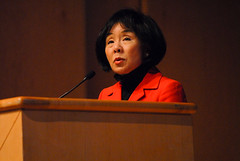
Spearheading the legislative effort is House Representative Doris Matsui (D-CA). Matsui addressed the National Bike Summit this morning to kick of the introduction of the Complete Streets Act of 2009 into the 111th Congress. (Matsui is one of the chief architects of the bill).
Dirt Rag publisher begins era of Bicycle Times
This story is part of our special 2009 National Bike Summit coverage (sponsored by Planet Bike). For more coverage, follow BikePortland on Twitter and browse the latest photos in our Bike Summit photo gallery.
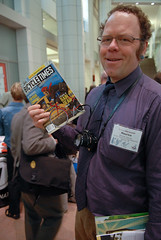
I ran into Dirt Rag magazine publisher Maurice Tierney a few minutes ago and was excited to see one of the first copies of his latest endeavor — Bicycle Times magazine.
I have a lot of respect for Tierney and have been a fan (and contributor a few times) of Dirt Rag for many years. Tierney and his team in Pittsburgh built Dirt Rag from a small, regionally-focused newsprint magazine into one of the industry’s most respected publications.
As its name suggests, Dirt Rag started out as a magazine and forum for mountain bikers. But over the years, Dirt Rag’s articles, product reviews, and how-tos began to cover a much wider scope that included advocacy issues and city/utility bikes. It was a natural progression, but it became clear to Tierney that he needed to launch a new title.
Citizen advocate works to improve calm on Lincoln bike boulevard
That is, until you get past SE 50th.
(Photos by Spencer Boomhower)
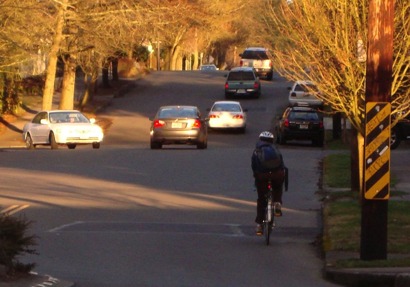
The bike boulevard on Harrison and Lincoln Streets between SE 12th and SE 60th Avenues is one the most popular in Portland, and with good reason: it offers a pleasant ride in a straight shot from Ladd’s Addition all the way up to Mount Tabor.
“It’s obvious that they are intimidated by the bus revving up the hill and would rather just wait it out then feel this mass coming up behind them.”
— Michael Shaver, SE Portland resident
Like most bike boulevards in town, the Lincoln Street route slows and minimizes automotive traffic with selective use of automotive diversions, traffic-calming devices and bicycle cut-throughs. The result is a stretch of road that makes cyclists feel safer and more welcome than they might elsewhere on the streets of Portland.
Until, that is, Lincoln crosses 50th Avenue, into the ten-block stretch that continues up to 60th. Suddenly Lincoln starts to seem less like a bike boulevard, and more like a standard Portland street. There’s faster-moving automotive traffic, and more of it.
Seeking a national legal standard to ensure traffic justice
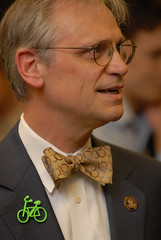
Representative Jim Oberstar (D-MN) — the man whose passion for Safe Routes to Schools helped establish it as a national priority in America — is now throwing his energy behind a new idea. And, as Chairman of the House Transportation and Infrastructure Committee that will be writing the new transportation bill, Oberstar’s ideas have real potential to turn into policy.
Today at the National Bike Summit in Washington D.C., Oberstar will meet with the country’s top bike lawyers to discuss the potential of a new legislative initiative to draft the country’s first piece of legal policy that would directly relate to the respect and recognition of bicycles as users of our roadways.
Sec. LaHood: “You have a full partner at the US DOT”
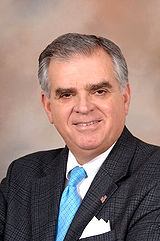
Ray LaHood addressed the National
Bike Summit this morning.
(Photos © J. Maus)
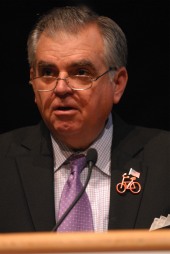
Ray LaHood, President Obama’s Transportation Secretary kicked off the opening plenary at the National Bike Summit this morning.
LaHood, sporting the ubiquitous bike pin, made it clear that he symbolizes a new era of cooperation between the U.S. Department of Transportation and bike and active transportation advocates around the country. As I reported last night, LaHood is focused on the idea of “livable communities”.
At the outset of his remarks, he said, “I want all of you to know you have a full partner at the US DOT in working toward livable communities”. A key theme of LaHood’s remarks was that he and President Obama will work hard help make communities nicer places to walk and bike. LaHood said that he and Obama, “Will work toward an America where bikes are recognized to coexist with other modes and to safely share our roads and bridges.”
LaHood and the potential for livable communities
Secretary Ray LaHood tomorrow
morning.
Tomorrow morning, President Obama’s Secretary of Transportation Ray LaHood will address the 2009 National Bike Summit.
When LaHood was announced as Obama’s pick back in December, many in the bike movement didn’t really have much to say about him. He’s been a strong supporter of rail, but his background on bike issues wasn’t too deep.
Tomorrow, he’ll have his first chance to acquaint himself with America’s bike power brokers and, if a recent story in Congressional Quarterly is a reliable sign, LaHood is sure to win many fans.
Kids will take Safe Routes message to City Hall
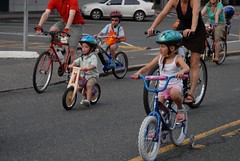
The Bicycle Transportation Alliance (BTA) plans to use their monthly “Kidical Mass” ride as way to send a clear message to City Council about their upcoming budget: Find more money for the city’s Safer Routes to Schools program.
Hoping it is seen as, “a show of force for the Portland City Council,” the BTA wants to bring attention to a 40% reduction in the Safe Routes program that’s currently being proposed by the City of Portland Bureau of Transportation. The 40% dip is the result of PBOT holding back “one-time” funds (given out from surpluses in the city’s General Fund) it has enjoyed over the past two years.