

By Lois Leveen.
I want a street named Dolores Huerta
Let me tell you why
It would show us where we’ve been
And where we can go if we try
And if I ever feel lost
On a night that’s dark and bleak
I’ll find my way back home
On Dolores Huerta Street– Alice Bag
Just after waking up on Thursday morning, I heard on OPB that Portland City Councilor Candace Avalos was proposing a street be renamed for Dolores Huerta. Huerta, a ninety-five-year-old activist who has dedicated her life to community building, political organizing, and bettering conditions for those whose labor makes our nation function, deserves to be honored. But the street Avalos identified already bears the name of one of Huerta’s longtime fellow activists, Cesar E Chavez. Avalos’s proposal is one of many such responses to the startling revelation, newly documented by the New York Times, that for years, Chavez sexually abused girls and women, including Huerta.
Although the news broke on Wednesday, I somehow hadn’t heard it. Nevertheless, I had been thinking and speaking about Huerta on Wednesday evening, as I stood in the Abernethy Elementary schoolyard, singing with the Wild Rose Resistance Choir. Wild Rose is a street choir dedicated to singing songs of solidarity, resistance, and liberation. One of our favorites is Carsie Blanton’s “Little Flame,” a song that commemorates and inspires action in the face of injustice. “Little Flame” references a number of resistors and revolutionaries, and that night we took time to talk about each of them and the movements they were part of, including “Dolores,” as she is named in the song.

Wild Rose is a radically welcoming choir, and we invite anyone who shares our commitment to resistance to sing with us. One of the participants on Wednesday, Perry, was joining our song circle for the first time. But, as is often the case, this person wasn’t a stranger. As fellow bicyclists, we’d connected on various group rides around Portland. And as a pedaling parent, Perry noted during our discussion of “Little Flame” that in April, various Portland schools would be participating in El Camino de Dolores, an Oregon Safe Routes to School “walk and roll to school day … to celebrate Dolores Huerta’s dedication to social justice” when “students will have the opportunity to learn about the farmworkers’ movement, her fight for equality, and how these struggles connect to current efforts for positive change.”
Wednesday evening, the intersection of two parts of my Portland community-building life – singing as resistance and bicycling as connection – filled me with joy. But the revelation of the abuse Huerta and other women and girls survived has filled me and countless others with shock, horror, betrayal, and regret that someone we admired and lauded and studied had intentionally enacted such harm. As journalist Julio Ricardo Varela put it, “The years I spent defending César Chávez make me feel like a fool.”
In 2024, I had co-taught Songs of Activism: The Music and the Movements of Harry Belafonte and Cesar Chavez, a course designed as part of an ongoing effort to diversify whose voices we raise up in music classes and jams. My co-teacher Avery Hill and I undertake this work because of how many beautiful and valuable voices have been marginalized or silenced, over many decades and centuries. We did not imagine that Huerta, whose inspirational activism we discussed in the class, was also one of the many beautiful and valuable voices who had been silenced. Now that we can finally understand from her own words what she carried all these years, we are even more inspired and moved to learn from her.
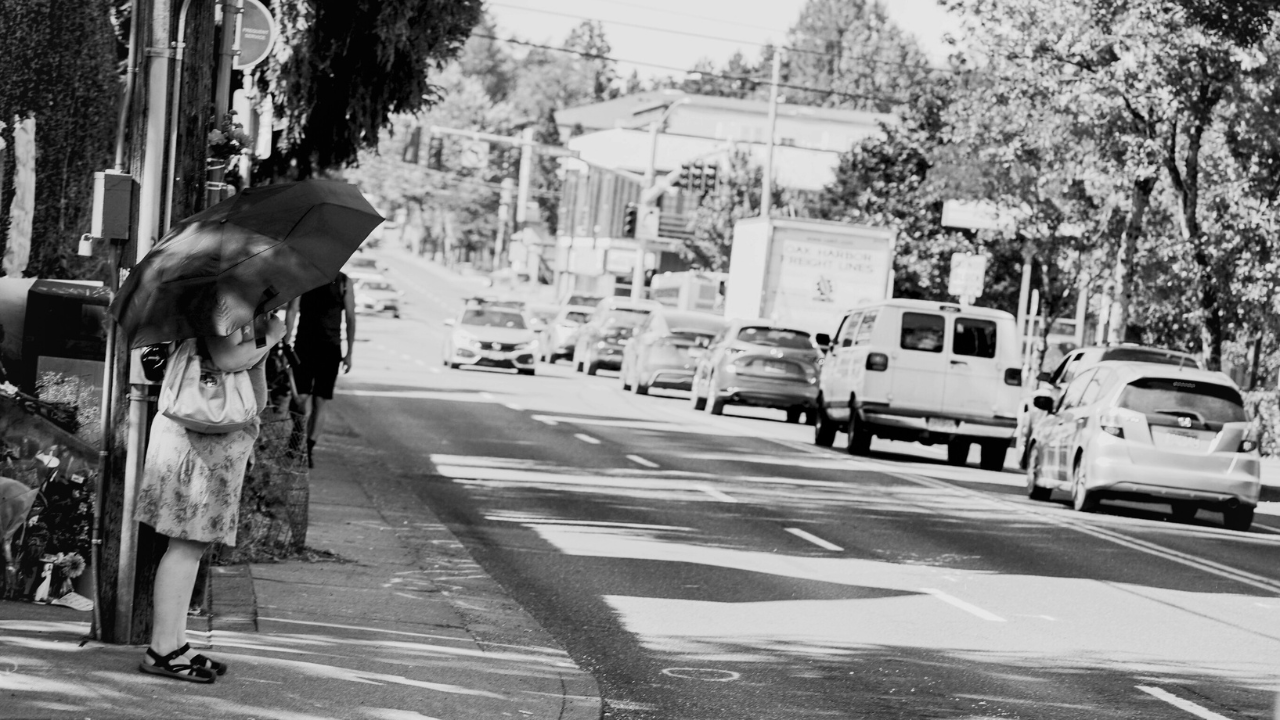
Every day, I cross Cesar E Chavez Boulevard. And every time I do, I think of terrible violence, violence that people in power have not done enough to prevent. I think of beloved children’s librarian Jeanie Diaz, killed by a driver across the street from the Belmont Library, while waiting for a bus to bring her home to her family. Of my beloved friend Grey Wolfe, a therapist and activist who, like Diaz, touched the lives of innumerable community members, and who was killed by a driver on the day before Thanksgiving, as she took her morning walk to Mount Tabor. Of Jocelyn Latka, a teenager I chatted with regularly when I patronized Movie Madness, where she worked, who was killed by a driver on 39th, as it was still called in 2006, partway along the seven-block-stretch where Diaz and Wolfe would later die. And of the others who have also died or been injured on this dangerous street, because Portland leaders fail to protect us.
Renaming one street is not enough to make us safe. Not safe from vehicular violence, nor safe from sexual predators. But renaming this particular street will make a difference. Reeling from the revelations about Chavez’s sexual predation, I composed a message to send the students who had taken Songs of Activism. I wanted to include a musical tribute to the women of the farmworkers movement, and that is how I discovered “Dolores Huerta Street,” a song written and performed for Huerta several years ago by the Latina punk pioneer Alice Bag. One verse, referring to an unspecified man for whom a street is named, seems particularly prescient in light of what we now know:
Those worn roads help preserve
And cement his story
Ignoring all her deeds
But think what it could mean
To a girl in her teens
If she could see what she could be
What she could be
Every day of my life, I cross a street named for someone we now know did terrible things over and over again, in a calculated and cruel way. I cannot honor that man, and I don’t want my city to honor him either.
Naming a street or a school or anything for a particular individual can distort our understanding of history, because it’s not a single hero who makes meaningful change; positive historical change is always the work of many people, joining together. Labor movements in particular demonstrate the power of union: coming together in collective struggle is a necessary strategy to make things better for everyone. Dolores Huerta herself is now reminding us that “The farmworker movement has always been bigger and far more important than any one individual.”
So when my friends suggest the street formerly known as 39th might be better named Farm Workers Boulevard, or Grape Boycott Boulevard, or Solidarity Forever Boulevard, or Sí, se puede Boulevard, I know I would be proud to travel any of those streets. But I also know what Huerta has always meant to those whose lives she improved and to those whose own activism she inspired, and how much more she means to us for all she is modeling now.
I don’t want to laud individual heroes. The cult of personality is part of what protects perpetrators like Chavez, just as it is part of what silences and isolates those they harm. And yet, in these times that feel so dark and bleak, I find that like Candace Avalos and Alice Bag, I also want a street named Dolores Huerta.
As Nikki Darling wrote in “A Street Called Dolores Huerta,” the poem that inspired Alice Bag’s song,
What would it feel like
and where would it go?It would be like taking a journey
down a road I knew was meant for me.A road I knew had been travelled
before my arrival.A street named Dolores Huerta
would be a street worth seeing.It would be valuable.
It is necessary and urgent.Let us come together and build it.
We need desperately someplace to go.
Lois Leveen is an author, activist, bicyclist, and ukulele player in Portland.
(Photo: Jonathan Maus/BikePortland)


Thanks for reading.
BikePortland has served this community with independent community journalism since 2005. We rely on subscriptions from readers like you to survive. Your financial support is vital in keeping this valuable resource alive and well.
Please subscribe today to strengthen and expand our work.
Thank you Lois, for the time and thought you put into this piece. While I disagree that we need to immediately put Dolores Huerta’s name on the street instead of Chavez (qqq said that this would be another way of tying her to Chavez, and I found that persuasive), I appreciate and take seriously your argument here. Reading the NYT story was, as is so typical these days, shocking but not surprising. My partner always notices how I instinctually recoil from “charming” male leaders, and I have to keep telling him that it’s the charming/charismatic ones you have to look out for. They’re the ones everyone loves, everyone admires, everyone listens to, and they will get away with a lot of bad behavior because they are skilled at holding together a movement.
All of that said, this comment section is not passing the vibe check. There are a number of commenters who I believe to be men who are writing comments that are at best insensitive or uninformed, and at worst offensive. I’m not calling anyone out, but I would encourage everyone to reflect on the comments they’ve left on the post and ask whether they would be comfortable reading their comments out loud to a group of strangers in person after Lois made her argument for the street name change. I have a feeling a lot of what has been written below this post would not actually be spoken out loud.
And lastly, I just want to point out that when male-presenting commenters behave this way on a post specifically about sexual abuse against women, it makes the whole space that Jonathan is providing here feel unsafe for women. Bike Portland has been a great place to exchange ideas about urbanism, the joy of riding bikes, and keeping up to date about city politics that are relevant to how we move through the city every day. I have learned so much from the commenters on here, and love reading through them. But when someone makes a dumb joke on a post about the rape of an activist and the ongoing sexual violence against women, do you think I’m going to feel comfortable sharing my thoughts/opinions on a post about bike lanes or politics knowing someone who doesn’t take sexual violence seriously is going to be reading them? This has been an ongoing topic on here, that male commenters make female commenters feel unwelcome. You always have the option of not saying anything on here, and I would encourage everyone to consider that before posting.
Hi Paige,
I noticed your mention about the comment section not passing the “vibe check.” I think I understand what you’re referring to, but if you have any specific comments you feel I should consider deleting/moderating, please let me know. I think I know which one(s) you’re talking about, and I am happy to see that another commenter rebutted and challenged that person. In moderating an online community like this one, I often feel like it’s healthier to let some comments stand that I don’t personally like, and then allow the community to self-correct by having someone else call it out. I try to keep a very light hand on who’s allowed to say what partly for that reason. Thanks.
Hi Jonathan – I do not see this as a moderation issue, and I have no issue with how you moderate the comment sections. I actually think most commenters are reasonable people, which I why I thought it was worth it to ask the commentariat at large to reflect on what they are writing.
Thanks, as always, for your work here. 🙂
Paige, thanks for your comment. I am one of the women that Lois mentioned downthread reaching out to her personally to thank her for the article. I wrote directly to her rather than in the comments because, like you said, the comments here generally don’t pass the vibe check, and as a result I generally avoid posting. It’s too bad, because I know I’m not the only one to have essentially silenced myself on this platform and that just serves to reinforce the status quo. Maybe if more of the men who claim to be allies were willing to challenge the bad takes, we would feel more welcome. As it is, we are left to either let it slide unchecked or deal with it ourselves.
I like the idea of renaming it back to 39th. If we are to name it after an actual person, maybe we can find someone local who has contributed to labor, or an indigenous person from the area who also contributed something of value. Dolores Huerta is inspiring and also not from the area. I don’t think it’s set in stone the street needs to be named after a certain type of person so why not celebrate the local heritage? Anything is better than a disgusting pedophile rapist still having their name splashed all over though.
Do you read the news? This story started in the NY Times and has spread.
yes, I read – can you backup your pedophile claim with facts? It is not cool to just throw out nonsense just becuase you view yourself as a victim. So, please share this magical wisdom you have that allows you to make such claims in public.
Its always helpful that people come out of the woodwork and self identify as part of this particular problem. It’s time to ask yourself why you are so against the idea that a powerful and lauded man was abusing women and girls.
Ann Murguia was 13 years old when the sexual abuse started and she had been groomed since she was 8 or 9.
Debra Rojas was 15 when she was assaulted and 12 when Chavez started feeling her up.
These are the ones that have come forward. In this cases it is usually the tip of the iceberb. Sexual abuse of children is pedophilia.
I am making this claim in public as are all the people who are canceling Chavez days and celebrations.
It’s time for you to start outlining your beliefs on how Chavez didn’t do any of this or how all these women are conniving liars. It will make good reading for all of us I’m sure.
Ok I’m convinced.
I’d be fine with reverting to 39th instead of changing the name yet again.
There are many downtown streets that could be co-signed in the style of Harvey Milk. I appreciate the historical connection for Stark, much like there was for Front or Union, but obviously there is room for exceptions: 39th is the obvious example and Chavez never really stuck as a name anyway.
I would think the César Chavez episode would be a learning opportunity for us. People, even inspiring people, are flawed. As the old saying goes, you should never meet your heroes. If we’re going to correct a mistake, it’s perhaps best not to repeat the same mistake, which is to name something after some inspiring person while we ignore whatever flaws, public or private, that they might have. Alternatively, if we’re going to memorialize a person, we should be ready and willing to embrace the whole person, warts and all. Chavez’s abuse does not erase the inspiring work he did to organize farm labor. Likewise, his inspiring work does not erase the horrific crimes he committed against other people. If we decide on balance that he no longer deserves a memorial in the form of a dangerous car sewer, we should also recognize the risk that someone like Dolores Huerta might have some pretty nasty skeletons in her closet, too. In any case, a stroad is a pretty crappy way to memorialize someone; I certainly don’t feel honored when I drive over a highway dedicated to me and my fellow veterans. Let’s be a little humble and just rename it back to 39th if we’re going to change the name at all.
As cynical as this is going to sound; to reach the pinnacle of any endeavor, you have to be a sociopath. There may be a relative handful of saints and truly wonderful people that rise to the top, but it is nearly a given that our most celebrated political and business leaders, intellectuals, artists, entertainers, athletes, and activists have done some terrible things on their way to the top. Most have probably used, abused, deceived, coerced, destroyed, cheated on, lied about, stole from, took liberties with, offered quid pro quo, or otherwise acted improperly with some or many individuals in their pursuits.
Society might be better off if we stopped rushing to honor the powerful, the wealthy, and the famous without proper vetting and the passage of time.
Boy I disagree with your first sentence, Lazy.
Yes. I don’t quite get the ‘Huerta bandwagon’. Unless I have my facts wrong, she continued to have consensual relations with CC, after the alleged rapes, bearing two children with him, worked alongside him for decades, covered up his deeds while he did the same to other young women. Until there is a full exposition of her actions during the decades after the alleged rapes, any honoring of Ms. Huerta should be put on hold.
You do have your facts wrong. The two children are the results of the two rapes. She did not bear the children “with him”, she gave them up for adoption. Trauma can be and is a result of rape and can affect the person’s ability to flee the situation. I don’t know your age, but back when it was difficult for a woman to have outside employment which forced many to remain in abusive relationships. Also, I imagine it would be difficult to bring up the horrible actions of someone being continually praised by everyone around you. Even now you use the phrase “alleged”. It was not her fault that Chavez continued to abuse women and girls, it was Chavez’s.
It’s not just one person’s story. Do some research on the subject. Its from the NYT and pretty much any other reputable news site has covered it.
From published accounts, Huerta’s two children that were mentioned were raised in other households but she remained in their lives. There’s a reason given for her choice, people can decide for themselves if it is plausible.
She stood by him, worked side-by-side with him for decades after the alleged rapes. I see pictures ten years afterwards that show her looking up at him admiringly. That is not the behavior of a traumatized woman. She was a strong, successful person who covered up and enabled further rapes. Do you have any proof that she was actually raped? Unless he was convicted in court, or admitted it, it will always be alleged. Do you really believe that having just two sexual encounters resulted in two births, and that she did not have many consensual relations? The odds of that at incredibly high. She is not telling the whole story.
Hi Steve, I want to start out by saying I’m always glad when people come right out and self identify as part of the problem. Its time to ask yourself why you are so opposed to the idea that Chavez was sexually abusing girls and women. Why is it easier to believe that Huerta and the other women interviewed are conniving liars even after the expose in the NYT?
Obviously you are not familiar with dealing with rape victims and also obviously you have not bothered to educate yourself about how rape trauma and social stigma can mess with a person’s head. Basing the result you want on a few viewed pictures is laughable in the extreme. Huerta explained that she let the cause take precedence over her own safety. She sacrificed in a horribly private, personal way for a cause that rewarded her abuser with accolades, security and the opportunity to attack girls and women over and over.
I am shocked at the lack of biological knowledge your post exhibits. Yes, it is very easy to get pregnant after having sex a single time. Very easy for that to happen more than once. If you are referring to the very unfortunate myth that a woman can’t get pregnant from rape than I am glad we are having this discussion.
Clinging to quibbling on whether Chavez will ever be found guilty in a court of law is always the last refuge of people who have a tendency to behave as Chavez clearly did.
I’m amazed that the moderator allows you to imply that I am a rapist. I just lost all respect for Jonathan. You are the lowest of the low. You also lied about my comments: I never said that Chavez did not rape anybody. I just said that Huerta was complicit in continuing to support him and enable him to continue abusing women for decades. I am willing to give her a pass on not reporting his alleged crimes for decades, but not for her silence, which actually benefited her, by keeping her in a well paid position and a place of honor from her supporters.
“ I never said that Chavez did not rape anybody.“
Oh please, reread your comments. You stated several times it’s all alleged and if you don’t believe his principal accuser why should you believe anyone else?
As an aside I don’t think Huerta or any other sexual assault victim cares about how you judge them for what they did to survive.
Somehow you’ve managed to twist what happened into the victim being at fault by benefitting from her abuse and deserving of your scorn. All while stressing all accusations against Chavez are only alleged.
Why am I not surprised.
George Washington was by all accounts a particularly nasty Virginia slave owner. I’m looking forward to seeing all the various “Washington” streets, counties, cities, and one state in this country get renamed but I’m not going to hold me breath on it. A go-around that many jurisdictions employ is to keep a controversial name but declare it was named after their father, cousin, or uncle. Here in Greensboro NC we have a Washington Street, but apparently named for his cousin Col. Henry Washington; we also have a Lee Street but not named after Robert E, but his grandfather Henry Lee. Yeah right.
Librado Chavez was born in Mexico and came (legally) to the USA as a child, so he might or might not qualify.
I still think they ought to rename 82nd after Bart Simpson.
Agreed
I think that this whole incident might be an example of why waiting only 5 years after someone has died to rename a street after them isn’t actually long enough…
Three thoughts on street names:
(1) Portland has a numbered avenue (N/S) and named street (E/W) scheme. We should stick to it. If we’re going to name streets for people in Portland, put the names on E/W streets.
(2) Street names serve a practical purpose of helping you figure out where you are going. They should be short and simple, and in the case of named streets, sufficiently different from every other named street to avoid confusion. A person’s last name should normally be enough for a street name, if it’s not duplicative of another street.
(3) Changing a street name means inconvenience and expense for every property owner who needs to change their address. For businesses, it means new business cards and stationery, and you’ll eventually need to notify suppliers and customers. Small things, but it hits a lot of people and that adds up. Everyone who had to change their address to Cesar Chavez Boulevard a few years ago will have to do it over again now. So if we’re going to name a street after a person, let’s wait until they’ve been dead for at least 50 years. Prior to that time, if we really feel the need to publicly celebrate them, put up a statue or rename a school or government building or public park or bridge. That way, if we learn something awful about them later, or if values change, we limit the impact of renaming it again later.
So change Cesar Chavez Boulevard back to 39th Avenue and leave it that way. If we want to name something for Dolores Huerta, find a school or a park. Or put up a statute in a prominent place.
(“Statue” not “statute”)
How about we name it your favorite activist AFTER the street isn’t a deadly car racetrack?
“El Camino de Dolores” translates from Spanish to English as “The Way of Sorrows”, also referred to as “Stations of the Cross”. I am surprised by the Safe Routes to School initiative intentionally making reference to this religious story about the leadup to inevitable death. Or is this parallel unintended, much like a “Hail Mary” for an unexpected victory?
Dear Lois,
What are you resisting? Is it particular people that can be named? Particular policies that need changing? Or are you just resisting the dark side of human nature? Fighting Satan as it were.
I cannot think of anything that comes out of renaming a street.
Here in India the politicians busy themselves with renaming roads, even entire cities, often after obscure and unpronounceable people that the common man has never heard of and the locals still call it “Marine Drive” instead of “Muthaswammihuttaswami Marg.” They call it “de-colonization.”
What percentage of people living in Portland know who Dolores Huerta is? Do you think that we should all now start calling it Dolores Huerta Avenue, after training ourselves to call it Cesar Chavez, when for a hundred years we called it 39th?
Why, amongst the thousands of historical figures that fought against the powers that be, should we now know who she in particular is? MLK, Jesus, Jefferson, all fought against injustice.
Politicians in India or Portland could try to enforce some common decency on the roads and bike paths in poor areas, or tackle the disgusting street scenes in both places but instead they posture.
Bombay became Mumbai. The local kings had no interest in that swampy, reeking hothouse–the British filled the swamp to ship out their ill gotten gains and named it “Bombay” creating a wondrous city. But the politicians scored another win–that’s really what matters isn’t it?
If street names didn’t carry significance there wouldn’t be so many named after folks. Of the three alternates you suggest (MLK, Jesus, Jefferson), two have major streets in PDX named after them. If it doesn’t make any difference, it should be no problem to let the woke mob go crazy naming things after figures of significance to various marginalized groups, right? The truth is that such memorials encode softer cultural information that can be quite meaningful to some people some of the time. So, while I don’t have a strong position on whether we should change Chavez to Huertas, I think it’s disingenuous to simultaneously oppose efforts to make place names more equitable and claim that ‘nothing comes out of’ such memorials.
My first thought was I like the symbolism of replacing Chavez’s name with Huerta’s.
On the other hand, it seems strange that the main reason that particular street would be named after Huerta is because it was named after Chavez. It ties honoring her to him, making it feel like her name is being used for the purpose of erasing his. She sounds worth honoring (although so did he) but to me that’s a strike against honoring her with renaming 39th, vs. something not tied to Chavez.
Plus I agree with others about the problems arising from renaming streets in general, and on top of that going against the established Portland pattern of using numbers for N/S streets. Several reasons “SE Cesar E Chavez Boulevard” never has been fully embraced would apply to renaming it after her.
39th wasn’t misnamed when the city “fixed “ it. Change it back to 39th and when cultural heroes warrant commemoration install a plaque or memorial in a public location. There is a reason and rightness in the numbered N/S streets that is worth retaining.
I propose “Virtue Signal” Boulevard, and every intersection and be named after some facet of intersectionality.
This is not a defense of Chavez, what he accused of, or a debate on the validity of the NYT article…the accusations are horrific and indefensible.
Tearing down street signs so fast of someone who has traditionally been a hero to Latinos, especially if that change is driven primarily from the white Portland progressive community, Avalos not withstanding, could really be problematic and hurtful.
Chavez has been a hugely important figure, especially as a voice and a fighter for Chicanos for over 60 years, and the city should be as cautious how they move forward, especially in the time of ice and the repression of Latinos by our government over the past year.
This is not to say that things shouldn’t be changed, but a call to step back and let the Latino community take the lead.
Imagine if the NYT brought out an article about sexual abuse of women by Martin Luther King Jr? How would it look if the white Portland community (which makes up the majority of power in this town) was fast to change MLK blvd back to Union, even if initially proposed by say Jo Ann Hardesty? I would think there would be a call to step back and talk about centering the voice of the black community on how to move forward.
All I’m saying is Ms Leveen might want to let the Latino community process this, and not be so bold as to choose a new successor for us so fast, especially after what we have been put through recently. All of this, combined with the actions of the current administration kind of feels like double punch to the face, regardless of the correctness to rethink Chavez’s legacy.
Well, in the face of such a great response to such a great opinion piece, it would seem there is only one solution to lay this to rest for everyone else to know how performative their support one way or the other needs to be.
12pm, Cinco de Mayo, a Virtue Signaling Duel, presented by Modelo and Por Que No, intersection of 39th (for now) and Hawthorne. You and Ms. Leveen will make a speech on the topic of “Resistance: How never having it better can still feel so awful, because white people”. When your speech is complete, we’ll have a decible meter to gauge support in an unbiased way. Please note, Ms. Leveen will get 5 more points because she is a woman, and then also have a 5 point deduction because she is white. If your speech wins with the highest decibels, you get to go first in picking a Lucha Libre wrestler from a line up. Ms. Leveen gets to do the same thing with whoever is left. Whoever’s wrestler wins gets to pick the street name.
This could be a really fun event to bring the entire community together.
Point taken. Though I do like Modelo.
In retrospect the “white Portlander” comment was unfortunate on my end.
I call out people for bringing race into conversations and I failed here, so that is on me.
My frustration as a Latino, is a build up in anger over the last year, at the people who hold the power and try to make us somehow feel like less of an American because of our last names, or where my great grandparents immigrated from, the outright racism towards us, all under the current administration, by my country that I am citizen of, that my parents are a citizen of, that their parents was a citizen of, has been a lot to deal with. My rational mind knows this doesn’t have anything to do directly with the Chavez accusations but somehow it feels like it does.
This all with Chavez, and the rush to tear down everything by people in power, when the rules don’t seem to apply equally to other cultures hero’s, for example accusations against to person sitting in the White House, only when it’s a Chicano (I rationally also know that is not true, but it is a real gut punch feeling), just seems to be the icing on top of everything over the last year.
I’m disappointed but perhaps shouldn’t be surprised that commenters here are not at all engaging with the words what Alice Bag and Nikki Darling wrote. This isn’t just literally about a street name. It’s about what it means for girls and women to not find spaces where their experiences are honored, acknowledged, reflected. It’s a call for how we must “come together and build,” and “where we can go when we try.”
Male readers may not realize this: The news about Chavez is devastating because, honestly, sexual harassment is so common. Sexual predation on this level (grooming children, etc.) is not as common but honestly we have been learning about so many men in positions of power who engaged in or at least tolerated this kind of behavior, not just involving Chavez.
Quibbles about north/south versus east/west street names, or attacks on me as being too politically correct, or whatever, show just how astonishing a divide there is around this. I have had so many women/femmes reach out to me directly to thank me for writing this piece. And yet the BP commenters, even those who are not hostile and who may also be as appalled by the revelations, are just not able to engage around what is at the core of this matter: while bicyclists and pedestrians are unsafe on our roads, girls and women are unsafe in many, many, many other places as well. If it breaks your heart that Jeanie Diaz’s children don’t have their mother because of vehicular violence, it should break your damn heart that other children and mothers are suffering sexual violence.
I’m writing this in hopes that a few of you will read it and try to understand why this is so common. Ask the women you know about times they have been sexually harassed, at work or at school or just in life. And for the others, those who will attack me for writing this — ha ha joke is on you, because when you try to silence women for speaking up about women being silenced, you aren’t defeating us. You are making the same damn point we are.
In all honesty Lois, I like this rebuttal more than your original piece. This is direct, blunt, powerful, to the point and is more about women and girls and how they are not safe at a constant tempo which is hard for many of us to wrap our minds around.
I admire your willingness to put your writing out there to be discussed by strangers safe in our anonymity.
Thank you for the time you spent on your thought provoking piece and your excellent rebuttal.
Portland doesn’t allow renaming of streets for people who haven’t been dead for 5 years, much less are still alive, so your idea won’t really be an option for a good while longer.
My vote would be rename the street after Hugo Chavez — it would be a big FU to Trump, and would reduce the cost and disjointedness of another name change.
Amen. You’re making the same damn point that men who would like to see predators rot behind bars (or worse), but are labeled as inhumane and the same exact point as men who would like to see women’s spaces reserved for women, but are labeled as bigots and transphobes.
It is uncomfortable to make a few people sad, but we used to do that to protect the majority, we could just do that again.
Yikes. Trans women are women. We have many trans folks who are beloved and valued members of the bike community and I don’t appreciate you making them feel unwelcome here.
Hi CV,
In the context of female safety, security and Trans I have to respectfully disagree. In the course of my duties I have listened to women who were rape victims vehemently object to having to share sleeping quarter, showers and locker rooms with anything with a penis. In that regard I come down on the side of excluding whatever you want to call a person with a penis while providing for the safety of women with vaginas. I am for the safety and safe places for people with vagina’s and don’t mind excluding penises at all from those places. Penises should indeed be unwelcome in some places. That is based on my experience with survivors and does not reflect negative views on how people live their lives. Also, apologize if the biological descriptions is odd, I am not up to date anymore on the gender naming conventions and so thought it would be the easiest way to properly describe the situation.
Oh, well the IOC just banned them from the Olympics, so you’re going to have to appreciate that this is not a minority opinion on the issue.
Patriarchy is grotesque. It is horrific to see some men treating women so terribly. The majority is wrong on many things and does not need protection.
Why would you say that “male readers” may not realize this? Are you implying that males cannot understand things as well as other genders? Why do you believe that Male Readers cannot process this information? I am sorry that your Male friends do not know about your storied sexual harassment. I am sure you are a victim and that your disdain for males is super justified. Please stop making gender based assumptions. It is NOT okay.
Hi Adam,
You pose a fair question wondering if the OP is “implying that males cannot understand things as well as other genders?” For the sake of my response I am going to assume that the “things” you refer to are sexual harrasment and not being safe as that is what the OP states.
So, since I’m guessing you’re male as males have historically been the ones to not understand and perpetuate sexual harrasment I have a question for you…can you process that women are sexually harrassed? That when women are sexually harrassed it also comes with a sense that the harasser might quickly become sexually violent or just plain ole violent? I’m not being rhetorical here, I’m genuinely curious.
Do you work or inhabit male only spaces? I ask this because if you don’t then I am very sure you’ve see sexual harrasment and simply not noticed, not cared or been an aware or hopefully unaware participant.
Sex based assumptions are at some point very fair to make. For instance, which sex is overwhelmingly the one sexually harrassing the other? Which sex is overwhelmingly sexually assautling the other?
In a class of profesionals on our way to counselor credentialing we were separated into male and female groups and asked to list out the things we had done or seen that was harrasment or degrading to the other sex. The women’s list consisted of asking men to get things for them or looking at a man’s butt. The men’s list was longer and much more callous and disturbing.
We are slowly getting better as a culture in at least more people being aware sexual harrassment exists and that it is not okay. I know we have a long way to go still, but acknowledging the reality is an important first step.
Maybe it’s time we quit naming public spaces, things, etc. after humans. No one is perfect and at some point, in the future they’ll get cancelled for some travesty in their lives.
Name stuff after animals, plants, birds, stars, whatever, but NO MORE HUMANS!!
Well Via de Dolores might not be such a bad name, because some of us have a few of those.
It never should have been renamed to begin with. Put it back to 39th. Stop wasting taxpayer money.
Cool poem bro. If Alice Bag and Candace Ávalos want a street named after Dolores Huerta, they can wait five years after Huerta kicks the bucket and go through the renaming process set in city code. Lately, the renaming of streets, parks, and schools in this town has really been the pasttime of a vocal cadre of virtue signalers trying to fix the past one shallow gesture at a time with sometimes tongue-twisting results. There is no saving the past from the people who lived it. You’re not going to bring anything resembling real justice to the ALLEGED victims of Chávez by renaming a street in Portland, Oregon. I’d bet reverting the name back to 39th would get the most votes from Portlanders, and mine, but at this point let it be. Chávez Blvd can be a fresh reminder of how some people can do great things and wicked things all in one lifetime. That’s a hard lesson to learn and live with. We’re not going to rename every street, park, and school in this town every time we find the namesake did something bad, I hope. Chávez has already received his eternal reward. It’s same reward we’re all gonna get no matter how we lived our life. Chávez can no longer defend himself and can no longer be punished for any wrongdoings he may have committed. We can only punish ourselves for his sake by handwringing about a street name. Chávez Blvd should’ve stayed 39th Ave, and César Chávez School should have stayed Portsmouth School, but those names were too apt. It’s done now. Lie in the bed you’ve all made just like the rest of us.