



Hoping to wipe out the stains of the 2025 session, lawmakers who care about transportation have their work cut out for them this session. For a short session, it feels like there are a lot of significant bills up for consideration in Salem right now. With just about a month left for laws to be passed — or be passed over — the tight deadlines mean we’ll know soon which bills have a shot. But as of right now, everything is still in play.
Given that, I figured I’d share the list of 16 bills I’m tracking so far. I’ll start with the House first and then the Senate. If you know of any other interesting bills related to transportation or something else you think I should know about, please pass them along.
House Bill (HB) 4007 – Powered Micromobility, E-Bikes, and Much More
As I reported yesterday this bill does several important things around electric bike regulation and legislation. The big one is that it defines “powered micromobility device” and should add much-needed clarity around separating bicycles from all the other types of vehicles being used on streets these days. HB 4007 also lowers the legal age for e-bikes (Class 1 only) to 14. The reasons for doing so (to acknowledge reality of the market and open up educational opportunities when kids need it most) make sense, but I could see that making some lawmakers nervous.
- Bill overview
- Status: Work session (possible vote) scheduled for Monday, February 9th in House Transportation Committee.
HB 4008 – Transit Funding Task Force
This bill would create a new, 21-member task force to, “Determine the level of funding needed to maintain adequate transit service statewide that is reliable, safe and accessible and allows for population growth over time; and explore funding mechanisms to achieve the funding needs…” Transit funding is a hot topic in Salem right now as Democrats caved to Republicans last session by supporting a sunset on the existing payroll tax that funds transit statewide. Governor Tina Kotek has said as ODOT moves money around to keep the lights on and fund maintenance, transit funding is the only thing that can’t be touched.
- Bill overview
- Status: Public hearing scheduled for Monday, February 9th in House Committee on Transportation.
HB 4009 – EV Road User Charge for E-Commerce Deliveries
This bill would, “phase in a mandatory per-mile road usage charge for owners and lessees of electric and hybrid cars and delivery vans engaged in e-commerce. The Act would allow a flat annual fee in lieu of the per-mile road usage charge.”
- Bill overview
- Status: Public hearing and possible work session February 11th in House Committee on Transportation.
HB 4063 – Legalize Kei Trucks
Kei trucks are delightfully small Japanese workhorses that have become sought after by many Americans. But because of auto regulations, these trucks aren’t currently allowed. This bill has a ton of bipartisan cosponsors and it was vetted in the previous session, so I’d bet on it passing.
- Bill overview
- Status: In House Committee on Transportation.
HB 4081 – Photo Radar in Highway Work Zones
This bill would allow ODOT to create a photo radar program that specifically targets work zones. Given the folks most impacted by unsafe work zones are very popular with politicians, and its broad bipartisan support, this bill is on track to pass.
- Bill overview
- Status: Work session (possible vote) scheduled for Monday, February 9th in House Transportation Committee.
HB 4085 – Self Driving Vehicles
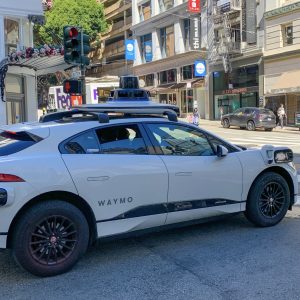
This is the bill I wrote about yesterday that would help autonomous vehicle companies like Waymo unleash fleets of robotaxis by pre-empting local governments.
- Bill overview
- Status: Public hearing scheduled for Monday, February 9th in House Committee on Transportation.
HB 4090 – Eliminates Vehicle Registration Fees
Three democrats (including Senate Committee on Transportation Chair Chris Gorsek) sponsor this bill. It appears to be a way for Dems to talk up affordability by exempting lower-income folks from payment of county vehicle registration fees.
- Bill overview
- Status: In House Committee on Transportation.
HB 4126 – Road Usage Charge Rate
10 Democrats (four from the House, six from the Senate) sponsor this bill which would require ODOT to come up with a rate for a per-mile road usage charge every other year starting this September. The rate would need to be set at a level that, “that would sustainably raise the revenue necessary to maintain the public highways in this state.”
- Bill overview
- Status: Public hearing and possible work session February 11th in House Committee on Transportation.
HB 4129 – Clean Fuels Program
This is a Republican-backed effort to slow down ODOT’s clean fuels program, which mandates carbon reductions in fuels by certain amounts and certain dates. Current law requires a reduction of GHG emissions in fuel by 10 percent below 2010 levels by the year 2025. This bill would cap that reduction by at no more than 10 percent and remove the goal year. This bill also takes direct aim at Portland’s fight with Zenith oil by proposing to make it illegal to outlaw, or limit the size of, fuel storage tanks.
- Bill overview
- Status: In House Committee on Climate, Energy, and Environment.
HB 4175 – Gut and Stuff for Transportation Funding Legislation
This is a placeholder bill (don’t be fooled by the “speed bump height study” nonsense) where lawmakers will stuff any legislation they propose around a new transportation bill.
- Bill overview
- Status: In House Committee on Rules.
Senate Bills
SB 1542 – ODOT Governance “Measure What We Drive”
This is a bill created by transportation reform advocates and Senate Committee on Transportation leadership that seeks to improve accountability and transparency among the Oregon Transportation Commission (OTC) and ODOT. It directs the OTC to create a 10-year Capital Investment Plan (CIP) that scores and ranks projects before they are added to the ODOT Statewide Transportation Improvement Program (STIP). The regional Advisory Committees on Transportation (ACTs) would play a crucial roll in this process. This is intended to weed out staff that partake in “safety washing” their projects — that is, calling something a “safety project” when it actually isn’t. I’ll have more on this bill in a separate post.
- Bill overview
- Status: Public hearing and possible work session on February 9th at Senate Committee on Transportation.
SB 1543 – ODOT Debt Policy: “Guardrails for Good Governance”
A tandem bill with SB 1542, this would establish Oregon’s first debt management policy for transportation investments. ODOT debt has skyrocketed by 400% since 2007 as they lose traditional funding mechanisms and lean even harder into using their credit card to pay for megaprojects. Advocates and senators who understand the risks this poses (namely, that debt must be repaid first and obligates finances for 25 years that could be spent on other things) want to make sure ODOT’s debt practices are more sound by providing more checks and balances and by having clear policies in place.
- Bill overview
- Status: Public hearing and possible work session on February 9th at Senate Committee on Transportation.
SB 1544 – Gut and Stuff for Transportation Funding Legislation
This is the Senate version of HB 4175 and is a placeholder for any major funding legislation to come.
- Bill overview
- Status: In Senate Committee on Transportation
SB 1580 – Save Oregon Journalism
Championed by Portland Senator Khanh Pham, this bipartisan bill seeks to compensate Oregon journalism outlets whose work is used by Google and Facebook in search results and AI products. In order to avoid a lawsuit, these massive companies would have to have a signed agreement with the outlet. The bill would give an outlet (or a consortium of outlets) the right to sue for damages and it would create a grant-making body to help fund Oregon news outlets.
- Bill overview
- Status: Public hearing and work session set for February 11th at Senate Committee on Commerce and General Government.
SB 1593 – Recreational Liability Fix (*Newly added)
Oregon has suffered inadequate laws around liability waivers for years, which means it’s too easy for people to sue any company that offers recreational services — including mountain bike parks! As a result, insurance companies won’t insure Oregon businesses and many have fled the state altogether. BikePortland commenter Jered Bogli says, “If you partricipate in anything that requires a waiver you need to support this bill. If we don’t fix this expect gym prices to go up, ski resorts will become unworkable as insurance companies continue to pull out of the state due to our antiquated recreational liabilitiy laws.”
- Bill overview
- Status: Public hearing and work session set for February 11th at Senate Committee on Commerce and General Government.
SB 1599 – Referendum Vote
Democratic party leaders Senator Rob Wagner and House Rep. Julie Fahey are the sponsors of this bill that would move the elected date for the referendum on HB 3991 to May. Petitioners who successfully gathered signatures to block the new taxes and fees in HB 3991 planned on the vote being in November, where it would have more voters and a greater political impact on the general election. But Democrats want it to happen during the May primary. The party line is that an earlier vote would provide much-needed clarity around ODOT funding, but everyone understands this is a political maneuver from Democrats to thwart the chances of it passing (Senate President Wagner admitted this in a press conference last week).
- Bill overview
- Status: Public hearing set for February 9th in the Joint Special Committee on Referendum Petition.
That’s it for now. I will add others as I find them. If you know of ones I missed, let me know.

Thanks for reading.
BikePortland has served this community with independent community journalism since 2005. We rely on subscriptions from readers like you to survive. Your financial support is vital in keeping this valuable resource alive and well.
Please subscribe today to strengthen and expand our work.
Supporting HB 4063 for now…but I have to wonder in 5 to 10 years we will ‘rue the day’…once our shared use paths [unless designed differently or effectively enforced] will see way too many Kei trucks using them as bypass routes for highway congestion or tolling fees.
I love Japanese trucks, but only if they meet modern emissions standards, which most of the old imported ones do not. I also have safety concerns about trucks with drivers on the right side of the cab.
Electric Kei trucks would be really cool. I think that Telo is probably the closest we’ll get in the short term, and I genuinely hope they succeed.
The RH drive seems like a huge issue, especially in urban environments.
Oh, and these things are not crash-tested to US standards. Good luck to anyone driving these in a high speed crash.
Here’s a good article on how all the states are dealing with Kei Trucks
https://www.jalopnik.com/1831031/kei-trucks-public-roads-legal-states/
As far as right hand drive vehicles go, there already is a number of JDM (Japanese Domestic Market) cars driving around the Portland area. Lets not forget all the right hand drive jeeps used by rural mail carriers and the USPS.
All these vehicles being imported are at a min. 25 years old, so the emission standards are the same as a 25 year or older domestic car. Besides this bill has nothing to do with emissions since Kei Trucks are already being imported.
Since I hang with Subaru enthusiasts, and in that community there is a huge interest in seeing this bill pass (see Subaru Sambar)
“All these vehicles being imported are at a min. 25 years old, so the emission standards are the same as a 25 year or older domestic car.”
This doesn’t follow. The emission standards for cars and trucks might be quite different, and the difference in emissions standards between Japanese vehicles and American ones may also differ.
The emissions of a 25-year-old American car may be quite different than those of a 25-year-old Japanese truck.
And also I have to assume that the best running specimens are not exported to the US.
So Oregon stops emission testing on cars that are older than 20 years. Washington stop emission testing on all vehicles in 2020. The only state where emission could be and issue is California where cars from 1976 and newer are still tested. The Subaru Kei Truck I posted about started production in 1960.
Vehicles generally become exempt from federal emissions (EPA) testing requirements when they are older than 25 years.
Emissions are still a an important issue whether we test them or not; perhaps even more so if we’re not testing.
When I’m riding, I’m breathing what they’re emitting. I don’t want more old dirty vehicles on the street.
I do understand your concerns, but the state and federal government does not. Let me ask a question. Which is worse licensing a Kei Truck with a 660cc motor (smaller than many motorcycles). Or something that can already be licensed in Oregon like a mid 90s Nissan Skyline GTR with a 2500 cc motor with a high chance of being modified to at least 500 HP and producing more emissions than 20 Kei trucks. The Skyline is one of many JDM performance cars being imported.
“the state and federal government does not”
I realize that, but I was expressing my unhappiness with importing more old fossil fuel powered vehicles with unregulated emissions.
It may be perfectly legal, but I don’t like it. If it were up to me, we would not be importing either of the vehicles in your comparison.
I doubt that Kei trucks would be using MUPs given that 1) we don’t actually have that much MUP mileage and 2) the experience of driving a Kei truck on a MUP, even for someone who is enough of an asshole to do so, would probably suck. More likely, they will be using arterials and collectors, which is fine.
I recognize the self-driving vehicle bill could be pretty controversial so I am skeptical it will pass this short session but, if it doesn’t, something like it will be back next year.
I wrote a pretty comprehensive analysis of it, if people are interested.
https://www.mortlandia.com/p/autonomous-autos-and-vision-zero
SB 1599 should alarm anyone who cares about democratic norms. Oregon’s referendum process is one of the few direct-democracy tools voters have to check the Legislature, especially on major tax and fee increases. Moving a qualified referendum from a high-turnout general election to a low-turnout primary because leaders fear the outcome weakens that safeguard.
This isn’t about efficiency or “funding clarity.” Senate President Wagner has already admitted the timing change is political. Changing the rules after citizens have gathered signatures sends a clear message: public participation is welcome only when it produces the “right” result.
Progressives routinely — and rightly — condemn efforts to manipulate election rules, suppress turnout, or game the system for partisan advantage. Those principles don’t stop applying when Democrats are the ones doing it. If anything, they matter more. Democracy depends on consistent rules and maximum participation, not moving the goalposts when voters become inconvenient.
If this precedent stands, future legislatures will feel free to sideline referendums whenever the public pushes back. That’s not just bad transportation policy, it’s a real threat to Oregon’s tradition of direct democracy.
That’s a real noble stance and all but look at where taking the high road has gotten us over the past 30 years. The GOP lied about these new taxes, created this referendum and are totally screwing over their constituents, again, who stand to lose out the most if ODOT isn’t funded properly. They have no alternative solution and will gladly sit back and watch as our streets crumble just to win some political points. Taking the high road has been and is a losing option if your opponent will lie and stab their own constituents in the back just to then turn around and blame it on you.
“look at where taking the high road has gotten us over the past 30 years”
It has brought us to a place where Democrats control all levels of government, and have a supermajority in the House and Senate.
And some people are still blaming the state’s problems on the Republicans, despite having close to zero power.
(Though it’s probably worth noting that Democrats have not taken the high road when it comes to drawing electoral maps, for example. Oregon needs a nonpartisan electoral commission.)
For having close to zero power those republicans seem to be doing a good job screwing up funding for ODOT. Not to mention all the other shenanigans they’ve been up to over the past decade. We had to pass a law to keep them from shutting down our government even though they had “zero” power. Even after that they still have enough power to gum up almost every legislative session and water down nearly everything that we pass. See tolling for example. But sure they have “zero” power you really got me there…
The Democrats have screwed things up all by themselves, and the tolling decision was Kotek’s alone.
One thing both Democrats and Republicans seem to agree on is that the public will not support funding ODOT the way the Democrats chose to do so. If they did something that had more popular support, the threat of a referendum would not be as frightening as it apparently is.
> One thing both Democrats and Republicans seem to agree on is that the public will not support funding ODOT the way the Democrats chose to do so.
No, that’s your spin. I don’t believe it, and nobody is claiming that. You’re saying it to push a narrative.
There isn’t much doubt that it would pass. An explanation below makes a lot more sense, that it would increase Republican turnout in November.
Great, if you are right, then the referendum will fail and ODOT will get its funding, and Republicans will have learned that this is another failing strategy, at the cost of some possible increased Republican turn out in November (and isn’t higher participation good?)
Is also supports my view that Democrats are completely in control is Salem.
“Regardless of the election date, lawmakers of both parties have said they expect voters will defeat the tax hikes.”
https://www.oregonlive.com/politics/2026/02/oregon-transportation-tax-hike-one-step-closer-to-landing-on-may-ballot-following-key-vote.html
You can’t have it both ways. Either Republicans have “zero power,” or Democrats — who hold the governorship and supermajorities in both chambers — are responsible for the outcomes. It can’t flip back and forth depending on who you want to blame.
Republicans don’t control the agenda, the budget, or the votes. Democrats do. If ODOT funding, tolling, or tax policy is unpopular or poorly designed, that’s on the people actually in charge.
And this referendum wasn’t invented by the GOP. Over 250,000 Oregonians signed it, many of them not Republicans. Dismissing that as “Republican shenanigans” is just a way to avoid engaging with widespread public opposition.
Who decides the November date in the first place, and why does that decision hold some special significance? It seems reasonable that the legislature should be able to decide when the vote happens, unless the petition process already said something and I they really are “changing the rules”.
“Who decides”
It’s in the Constitution. The legislature can set the date, but if they don’t it’s the next general election.
So, they’re setting the date. Not weird, illegal , or even problematic, and in fact there is a ton of precedent for it if you just looked at the history of the referendum in Oregon.
It’s a stupid claim to make that the party should go out of their way to get out the vote to try and kill their own bill.
https://sos.oregon.gov/blue-book/Documents/elections/initiative.pdf
The argument Democrats should be making, and everybody who supports moving the date earlier should make is simply: we want to have the vote now so we can resolve this issue and move on.
I see nothing nefarious about changing the date. Politics is a game and this is a legitimate move.
Hi Tropical Joe!
Are you willing to apply a similar analysis to the republican tactic of denying the state legislature a quorum to prevent any governance? Or is that just ‘smart politics’? Nothing is stopping people from voting in the primary election to keep their precious gas from being taxed. If republicans don’t want acrimony, they should engage in shared governance in good faith instead of their obstinate ‘my way or no way’ stance. If you feel like the dems have overstepped their authority by setting the date for the referendum, organize a lawsuit. If you want to live under republican governance, try Idaho.
Ironically, holding the referendum during the primaries may backfire as Republicans are having a contested primary and the Democrats are not (at least not so far). That may boost turn out amongst those likely to support the referendum.
But as we know, Kotek and other Democrats seem quite willing to abandon the tax increase, so maybe a loss of the ballot box would not be a problem.
Yeah. My uninformed sense is that Kotek et al. have accepted that the referendum will easily pass. I think the salient question is how the presence of the referendum will affect the outcomes of the contested republican primaries (what flavor of nutter will be running in the general?). I don’t know republican politics well enough to offer any insight. I’m sure the democrats will find a way to dig an even deeper hole than they have so far.
“Are you willing to apply a similar analysis to the republican tactic of denying the state legislature a quorum to prevent any governance? “
I saw the Texas Dems were lauded when they fled their state to stop legislation that they didn’t like on two recent occasions. Please note that the Texas Repubs did not retaliate against them the way Oregon Dems retaliated against the fleeing Repubs by passing legislation banning re-election after so many unexcused absences. I mean, Oregon Dems walked out as recently as 2001.
Partisanship is good until it starts obscuring history.
I don’t follow TX politics closely. I certainly did not ‘laud’ the legislators that walked out (although I was glad to see them at least put up a fight). Also, my comment was in response to accusations that OR democratic politicians were endeavoring to “manipulate election rules, suppress turnout, or game the system for partisan advantage.” I felt this was an overblown charge in response to putting the referendum on the May ballot. IIRC, the TX case was a protest against an especially egregious gerrymander of the federal congressional districts in TX. So, in that case as in most, it was the republican politicians who were gaming the system for partisan advantage. (Also, IIRC, the republicans succeeded, so the blue wave will have to wash away 5 extra seats come Nov.)
Look what’s happened in California which was highly egregious and what is about to happen in Virginia after they elected a CIA officer as Governor. Regardless of the lack of morality behind it, there will be more than enough gerrymandered seats to offset Texas.
I am impressed how you make a value judgement on the same activity (fleeing to prevent a quorum) to reflect that your own tribe is more upright.
Oregon Democrats are clearly trying to “manipulate election rules, suppress turnout, or game the system for partisan advantage.” I’m surprised that accusation bothers you. It’s the political system in action without cover of it’s propaganda. The R’s did it in Texas, the D’s are doing it in Virginia and Oregon is trying their best as well. If you can find a moralistic political leader who only acts for the good of all (or at least for the good of good hearted people) please share as I would like to hear of one. Ascribing morality to a Political party is a dangerous idea as that is not the function of politics.
As I mentioned in my previous post, not too long ago the Democratic party was the party of racist bigotry. How the turntables….turn.
“Look what’s happened in California…”
Indeed, look what happened in CA. Democrats enacted a highly principled, non-partisan, algorithmic redistricting scheme (i.e. took the position that CA would not participate in gerrymandering). That was an offering to other states to follow suit. Instead of taking the path of comity and following suit, republican-led states went the opposite direction and looked to gerrymander as aggressively as possible. In response to this provocation, CA temporarily suspended their system to address the emergency that our autocratic slide represents. There is no equivalence between TX (R) and CA (D): the republicans started the fight at the explicit command of a small-handed egomaniac. You can take the position that CA should turn the other cheek, but you can’t reasonably argue that CA is just as despicable as TX.
I find it dismaying that someone who is as enjoyable to converse with as you, with a sharp wit and kind heart that is evident in your comments, chooses to both-sides this issue. On one politically controversial issue after another, democrats consistently hew towards values of fairness, justice, and inclusivity in a way that appeals to me, while republicans work to further the worst impulses and traditions of our (very flawed) nation. I do not harbor any illusions that democratic politicians are paragons of virtue. I find the national party to be craven and morally bankrupt. The state parties in OR and WA are no better. Nevertheless, as I said above, I think it is imperative for all of us to work together to form a stable coalition. It doesn’t have to be within the democratic party, but I think that is the easiest and best way, despite all the problems the democrats have.
“The state parties in OR and WA are no better. Nevertheless, as I said above, I think it is imperative for all of us to work together to form a stable coalition.“
And the Repubs everywhere are absolutely no better. I disliked the both siding as well and it’s mainly as I hate gerrymandering with a passion. It shouldn’t be this hard to simply provide people within a similar geographical area representation of their own local interest. That the Supreme Court has the gall to say that it’s okay to be as corrupt as you want as long as it’s solely political as if anything could be solely political without racial, economic and geographical grievances. Gerrymandering is simply ridiculous and to me anyway, clear evidence of the lack of morality in politics.
Now that my rant is over let me say as I said in the other thread that I agree with you 100% that we need to band together, ignore any little discourse and crush the modern Republican Party into the dust do that something better can rise up.
HB 4090 would apply only to counties with 700,000+ residents — which in practice means Multnomah County. It would allow the county to reduce or eliminate vehicle registration fees in select “low-income” zones, but the structure raises serious concerns.
The county gets wide discretion to decide whether to create zones and where to draw the boundaries, with relief based on geography rather than household income. That means some neighborhoods in Multnomah County could get a free pass while equally poor households just outside an arbitrary line get nothing.
Beyond the equity problem, the policy moves in the wrong direction on climate and safety. Vehicle fees are one of the few ways we price the real costs of driving — carbon pollution, road damage, and traffic violence. Cutting or eliminating them makes car ownership cheaper at exactly the moment many Oregonians say they wants fewer emissions, safer streets, and more mode shift.
It also weakens the principle that everyone should have some skin in the game. Registration fees help fund maintenance and safety projects that benefit people walking, biking, and taking transit. Reducing those fees in carve-out zones shifts costs onto everyone else and undermines stable transportation funding.
If lawmakers want to help low-income residents, there are better tools than subsidizing private vehicle ownership based on ZIP code. For Multnomah County in particular, HB 4090 looks less like equity and more like a retreat from stated climate and safety goals.
Let’s be real—HB 4090 is a disaster waiting to happen. The only thing it’s setting up is a mess, with arbitrary lines, more burdens on Multnomah County (which already can’t juggle its current responsibilities), and a policy that misses the mark on everything from climate to fairness. Here’s hoping it gets the treatment it deserves and goes up in smoke before anyone starts taking it seriously.
I agree with both of these commenters (Joe and Angus). Certainly the gov’t has a role to play in crafting policy that allows low-income people to get around, but subsidizing – and thereby encouraging – car use isn’t it. Since this is BikePortland, we should all agree that creating great bike infrastructure is a terrific way to help low-income people get around, since cycling is 100X cheaper than driving. And it’s way more fun.
Best thing for engaged citizens to do is drop the chief sponsor Ricki Ruiz an email expressing why you are opposed (respectfully of course).
Rep.RickiRuiz@oregonlegislature.gov
The state’s climate goals are complete performative bullshit so no real retreat there.
Thanks for highlighting SB 1580 – Save Oregon Journalism. Google and other news consolidators absolutely need to start paying for the news content they aggregate and pass on to users. They are some of the most profitable companies in history so they can absolutely afford to pay for the content they use.
And to play devil’s advocate, what will the shareholders demand? (full disclosure I have a few shares of google in my retirement portfolio)
They’ll demand the same or more profits.
How will that happen? Maybe they’ll charge more for ads.
What will the companies do that have to pay more for ads to sell us stuff? They’ll raise their prices.
Who gets to pay? We all do.
You mean consumers will have to pay, one way or another, for content? Oh no.
My understanding from the previous reporting on the topic is that Democrats want to move the transportation funding referral to the May ballot not because they think it might fail by moving it earlier (no one seems to think it has any chance of failing), but because they don’t want it on the general election ballot where it would have more chance of increasing Republican turnout and potentially hurting Democratic candidates.
Kindly add SB 1593 to the list. This will help to fix our Recreational Liability laws, bringing them inline with other western states. If you partricipate in anything that requires a waiver you need to support this bill. If we don’t fix this expect gym prices to go up, ski resorts will become unworkable as insurance companies continue to pull out of the state due to our antiquated recreational liabilitiy laws.
Yes. Thanks for the reminder Jered. Added to my list.