

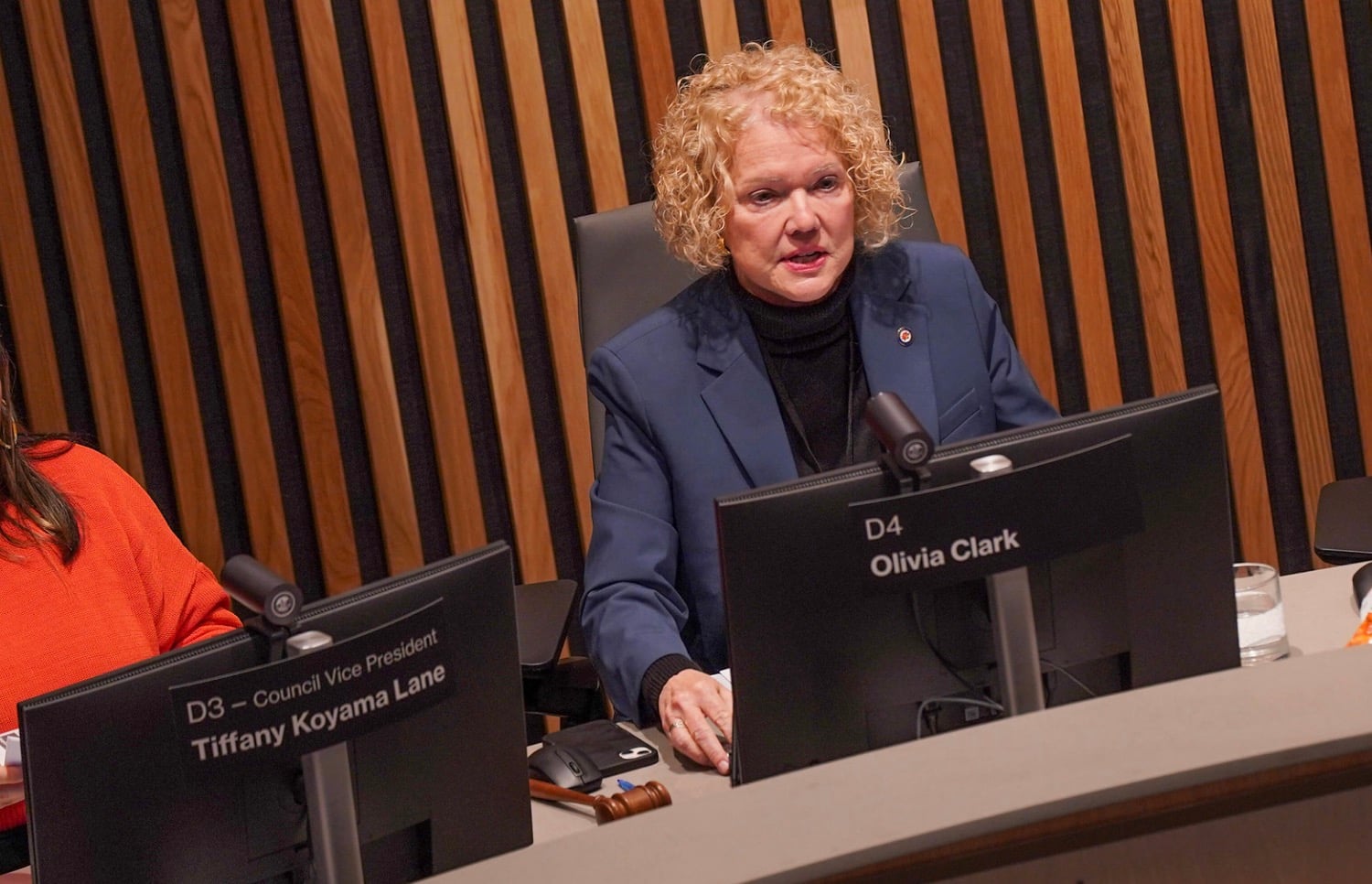
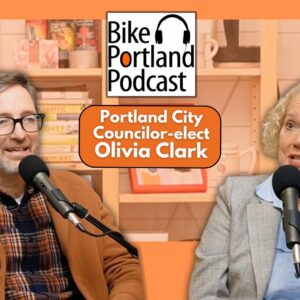
For Portland City Councilor Olivia Clark, it’s all about the potholes.
Today, Clark will become the latest Portland politician to put their face on an effort to boost transportation spending when the City Council Transportation and Infrastructure Committee discusses the Alternative Transportation Funding Report for the first time. With roads in disrepair and a bleak city budget, Clark is doing this not because the timing is right, but because she feels there is no other choice.
“I am nervous,” Clark shared in an interview with me in City Hall last week. “It’s not a great environment for talking about money at all. I’m nervous about asking for anything… Is this the right time? I don’t know. But we, we just have to have this conversation.”
One of Clark’s first moves as Chair of the T & I Committee was to order the Portland Bureau of Transportation to create a report on new ways to raise revenue. The result is a 42-page conversation starter that lays out the case about the need for more funding and puts forward four recommendations for where to find it.
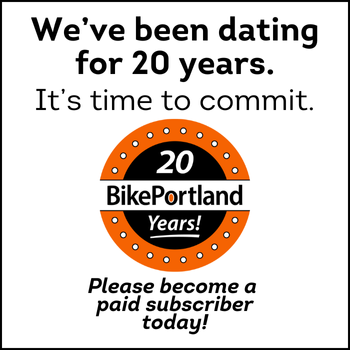
The top four recommendations in the report are: a transportation utility fee, a street damage restoration fee, a retail delivery fee and a third-party food delivery fee (see more about each of them below). The report includes a detailed breakdown on the pros and cons of each of those approaches, along with insights on 20 other fees that could be part of the mix.
Clark ordered this report with the expectation that the legislature would pass an adequate funding package. What ended up making it through a brutal legislative process was what Clark called a “humble little package.” And now even that package is going to be referred and voters will be able to choose whether or not they want to pay more for transportation. “I’ll just be honest with you, it’ll go down,” Clark shared with me on Thursday. “So it was sort of prescient that we now have this report.”
“Is this the right time? I don’t know. But we… we just have to have this conversation.”
— Olivia Clark
Clark, who brings over two decades of executive-level experience at TriMet to the table, believes doing nothing is not an option and she understands that PBOT is in dire straits as their entire funding model has been turned upside-down. With the Trump Administration playing politics and the Oregon Legislature incapable of securing even a modest funding package, she understands that no one is coming to PBOT’s rescue. “We’re not getting any help from the federal government,” she said. “And we have so many other crises — but if we don’t do something about the potholes and the streets, it’s going to cost us so much more in the future.”
Below is a brief description (taken from the report) of the four funding mechanisms that show the most promise via PBOT’s initial analysis:
Transportation utility fee:
Who pays: Utility billpayers
A Transportation Utility Fee (sometimes called a “TUF” or “Street Fee”) is a fee for maintenance and improvement of the transportation system paid for by a broad base of users, typically collected using existing public utility billing systems. This broad collection base allows for substantial revenue generation at relatively low cost for rate payers. Implementation is low-cost because of the ability to use existing billing systems and leverage existing low-income discount programs. Fees are not tied to fossil fuel consumption or driving single-occupancy vehicles and thus do not create cross-incentives for City revenue and policy goals. The premise of the Transportation Utility Fee is that the transportation system is a utility, like the electric or water system, that benefits everybody and should be supported to some extent by everybody; even a person who never leaves their residence benefits from the goods and services that travel on the transportation system. A Transportation Utility Fee provides stable, robust support for the transportation system that does not shift with user behavior changes. This fee can be partially connected to system use through trip generation by use. For example, rates for single family and multi-family residences, and businesses can be calculated based on estimated trips generated by property type for residential properties, and property type and size for non-residential properties.
Street damage restoration fee:
Who pays: Utilities that cut into the public streets
Transportation maintenance experts have identified that when streets are cut open for utility work, the “trenching” damages the integrity of the street and accelerates deterioration. Cutting into a street, even when the cut is patched, can shorten its life by up to 65%, meaning the city needs to repair it about 10 years sooner than expected. A Street Damage Restoration Fee (SDRF) can ensure that when utilities cut into streets to reach water, sewer, gas, or telecom lines, they share in the cost of the wear and tear that work creates. The existence of this fee also incentivizes utilities to better coordinate cuts with scheduled street work in order to avoid duplicative work, minimize disruption to the transportation system, and avoid incurring the fees. Portland already charges a fee in the Utility Street Opening permit process, but it is intended to pay for staff time to process the permit, not to address the future maintenance costs resulting from the cut.
Third-party food delivery fee:
Who pays: Consumers who use third party food delivery apps
The growth of third-party app-based food delivery has dramatically increased vehicle trips on city streets, particularly in high-demand commercial and residential districts. These services generate thousands of short, high-frequency trips every day, contributing to congestion, double-parking, emissions, curbside conflicts, wear and tear on roads. A small per-order fee on prepared food deliveries would generate meaningful new revenue and
Retail delivery fee:
Who pays: Consumers receiving retail goods delivered to Portland addresses
As e-commerce and home delivery have grown, so too have the number of delivery trucks and vans traveling on Portland’s streets each day. These trips contribute to congestion, emissions, and street wear, while placing increasing demands on curb space. Several cities are exploring potential delivery fees, but no city has yet implemented them. Two states – Colorado and Minnesota – have implemented fees on delivery of retail purchases. A Retail Delivery Fee would ensure that customers who choose delivery share in the cost of maintaining and improving the transportation system that supports these services. The fee would apply to most retail goods delivered to a Portland address. A small, pertransaction amount would appear at point of sale and be remitted to the City by qualified retailers. Exemptions could also be considered for specific goods and to reduce administrative burdens of collection for businesses below certain revenue thresholds. Revenue from a Retail Delivery Fee could support a broad array of investments that address the growing impacts of delivery and e-commerce activity. Stakeholder engagement with residents and businesses will be critical to understanding the opportunities and challenges of this fee.
PBOT staff say today’s T & I committee meeting is just the first of many steps. From here, there will be public open houses and surveys and a lot more conversations.
I asked Councilor Clark how she’d react to Portlanders who reject the idea of more new fees and taxes outright. How would she convince them to get on board? “All I can do is show them the numbers and show them the facts,” she said. “And if you don’t want to believe it, fine, live with the potholes.”
Clark kept coming back to potholes throughout our interview. When a PBOT staffer who sat in said new taxes and fees are necessary to “stabilize revenue,” Clark interjected: “That’s not what it is for me. What it is for me is filling the potholes, you know, and fixing the streets… I start with damn potholes. It’s killing me.” When I pressed her on how she’d respond to a person who opposes paying more, she said. “I would say, personally, I’m sick of potholes. How about you? I mean, are you tired of this? Are you tired of having to get your car realigned, or you’re falling on your nose on your bike when you go into a pothole? It’s not safe.”
In 2008 former Portland Mayor Sam Adams attempted to pass a street fee that crashed-and-burned when public sentiment turned and gas station lobbyists rose up. In 2014 Councilor Steve Novick infamously attempted again, only to blame his eventual election loss on the effort. Portland has been more successful since 2016 when the first of three local gas tax measures were passed by voters by comfortable margins. Clark will hope those recent successes carry this new initiative forward.
And unlike Novick (who has since won re-election to council and will undoubtedly have some interesting perspectives on this latest revenue attempt), who has said it was worth losing votes to push the idea of funding forward, Clark made it clear to me that she will drop this effort it proves unpopular.
“If there’s not public support, I’m not going to do anything that the public doesn’t want to do. I’m going to scream about potholes until I’m blue in the face. But if the support to do this isn’t there, then I’m not going to, you know, commit Harakiri.”
“My whole message when getting elected was that I want this form of government to work. That’s why I’m here… This is what the public expects us to do is to take care of what we have, take care of the streets. And if they don’t make the connection, then so be it. You know, I’m not going to push where there’s no support.”
— Alternative Transportation Funding Report (PBOT)
— Watch the 12/15 Transportation and Infrastructure Committee meeting here.
Thanks for reading.
BikePortland has served this community with independent community journalism since 2005. We rely on subscriptions from readers like you to survive. Your financial support is vital in keeping this valuable resource alive and well.
Please subscribe today to strengthen and expand our work.
How difficult would it be to reconnect PBOT to 100% of its funding through the General Fund (honest and non-rhetorical question)? Portland does not have enough funds to meet its needs.
Perhaps it’s time for the council to have an honest, transparent discussion of what we feel the role of local city government is and what those needs are that we want to fund? Then gather all the services under the General Fund and fund what we agree is important to us as best as can be determined?
There is only so much general fund dollars and most of it gets spent on public safety, with a smaller amount going to parks. Doesn’t leave anything for PBOT. Can’t increase general fund taxes because compression.
So “the general fund” is really a misnomer then. I remember reading where PBOT used to get most of its funding through GF. Am I remembering that right?
Yes, I think you’re mis-remembering. Almost all PBoT funding has come from fuel/registration/parking fees of various stripes, as well as fed/state/metro grants, over (at least) the last 40 years.
PBOT has something called “general transportation revenue” or GTR, which is frequently confused with “general funding revenue” even among PBOT staffers. GTR is gas tax revenue, parking fees, licenses, etc.
Okay, thank you David. I was hoping you’d weigh in:-)
Yet the COP has plenty of money for jobs UNRELATED to core municipal services. There is still LOTS of money it just it gets spent on non-core responsibilites of a city. It’s long past time to get back to basics..
Immigrant Affairs Lead
Employer
City of Portland
Salary
$95,201.60 – $142,792.00 Annually
Location
1120 SW 5th Ave, OR
Job Type
At Will
Job Number
2025-00954
Bureau
Office of the Mayor
Opening Date
12/08/2025
Closing Date
12/15/2025 at 11:59 PM Pacific Time (US & Canada); Tijuana
Immigrant Affairs Lead (Senior Mayor’s Aide) *Updated* in 1120 SW 5th Ave, OR | GovernmentJobs.com
Rodrigo, you and “José” keep beating this drum about immigrants etc. Is it possible that you are using Hispanic names to throw us all off?
On the substance of your post, I don’t feel qualified to judge whether or not expenditure on this position is worthwhile or not. Do you have such qualifications and if so can you please share them? In my many years of working for gov’t agencies, I observed that a job title didn’t always capture what the employee actually did.
What is the proper view on immigration for someone with a Hispanic sounding handle?
Fred,
I hate to debunk your conspiracy theory but I’m of Portuguese descent on my Mom’s side–hence the Rodrigo. It’s actually a common Portuguese name but don’t feel bad I get the “do you speak Spanish?” thing often.
Yes of course, whatever is not your problem personally just isn’t very important, right?
You posted a job that I think was supposed to illustrate a “non-core” job of the city, but I think you failed. I don’t see anything obviously wrong with that job listing. So why don’t you say a little more? Why don’t you spell out specifically why you think the ridiculousness of that job speaks for itself?
The city should not create positions (especially administrative positions) that look to provide scare city resources, particularly at a time that they have been struggling to provide basic services at comparatively high cost, to those without legal status. It is fiscally imprudent, creates additional federal scrutiny that is unnecessary, perpetuates fiscal volatility, and is frankly an affront to those that create the vast majority of tax revenue the city relies so heavily on.
A position, that for a multiple millennia, was the modus operandi of successful civilizations.
I think the question that should be asked is “would that money provide more value elsewhere?”
More value FOR WHO?
For me, and I assume you, immigrant services provide no direct value. For the people who need immigrant services, it’s probably extremely high value.
High value for a small group of people has less aggregate value than low value for 10s of thousands.
Street damage restoration fee = the 1988 Utility License Fee (the ULF is still being charged), which was originally designed to repair streets that were being cut into by utilities (phone, cable, water, sewer, etc) including by other city agencies. Only 3% of the ULF goes to PBOT now, the other 97% goes to the general fund for police, fire, etc.
In general, any tax or fee that the City Council can ultimately use for use things other than transportation will be taken away from PBOT sooner rather than later during each inevitable “fiscal emergency” that the city has every 10 or so years.
I agree, moving everything, including gas tax revenue, parking fees, property taxes, hotel taxes, PCEF, the Art Tax, and every other revenue source into a single pot or slush fund would be the wisest course for Portland to take, since the city has already tried (and failed) every other possibility.
The ULF is what I was half remembering then, I really appreciate your institutional knowledge! I remembered PBOT had a funding stream that was redistributed to everyone else, I just couldn’t remember any of the particulars.
Yeah, the city just needs the single pot to draw from so they know what they have.
Actually. Last I heard PBOT gets zero from the ULF!
Here’s that article I was half remembering…..
https://bikeportland.org/2023/05/01/comment-of-the-week-how-city-council-siphoned-away-transportation-funds-374108
“But guess what happened to the accumulated revenue? Since these funds are not required by law to be used for streets or their intended purpose, City Council then took the funds and spent them on parks, police, housing, fire, and so on – at first it was 20% of the ULF, then 40%, and now it’s 97% – less than 3% actually goes to PBOT.”
Kind of hard to be sympathetic to Councilor Clark’s efforts when the council has been horrible stewards of the funding programs they have set up in the past.
Yes, PBOT needs funds, but perhaps those funds can be located from within the government? By the council spending some of their vast spare time identifying what’s needed and what’s not?
And back in February, at the first meeting of the Transpo and Infra committee, I wrote this:
And keep in mind all of those changes to the ULF happened in a different form of government. Things are different now in how our gov’t functions, not to mention the fact that PBOT has broad support among 12 city councilors — something that is very important to keep in mind. And your argument that they should just “find the money from within gov’t” is a nice thought, but it just doesn’t match with reality. We have to be adults and realize the situation we are in requires more revenue. PBOT has been in a revenue crisis for a very long time now and they have already done a lot of cutting of the agency. Here’s a snip from the report:
I hear you Jonathan, I think we just disagree on how well the council is effective in managing the tax/fee dollars it is taking in.
“We have to be adults and realize the situation we are in requires more revenue. PBOT has been in a revenue crisis for a very long time now and they have already done a lot of cutting of the agency.“
I agree with you. However, the P in PBOT means it’s part of the Portland government and I question whether it should be such a distinct entity that requires specialized funding streams.
This is a time for the new council to rethink the way they allocate funding throughout the whole of government. For instance, do we as a city need to fund Prosper Portland? Money to transfer to PBOT right there. PBOT’s funding problems should not be taken in isolation and I am concerned that history will repeat itself by council (new and improved they might be) creating new fees that help for a year or so and then are siphoned away to other areas and departments.
So sure, more fees for a temporary fix since we’re in a hole and blame throwing, while satisfying doesn’t get results. Also though, combine the new fees with a stated acknowledgement that’s it’s time to reorder the way the council takes in and spends money in a whole of government overhaul.
I think I rolled the dice editing my reply once to many times and it might be in the spam folder.
I feel like council should start chipping away at putting those funds back where they belong, and work on replacing the funding they plundered those funds for.
It’s really infuriating that when funding was needed for something, instead of, you know, raising the funds, they just stole money basically from themselves.
I’m sure it was sold as doing exactly what people are saying they should do now: people are tired of taxes so save money on something nonessential. This is what happens when you do that. Turns out that money was already doing something essential.
“Actually. Last I heard PBOT gets zero from the ULF!”
This is INSANE. Every politician who has voted on City budgets for decades needs to be hounded on their failure to appropriately appropriate this funding. Ugh.
How about we start by giving the ULF back to PBOT?
Sure that sounds nice. But I think a lot of folks on here need to understand that wishing something and understanding what’s feasible from a political standpoint, are very often totally at odds.
How is restoring the previous PBOT funding stream that is ULF back to PBOT anymore wishful thinking than creating brand new funding streams?
Would that necessitate creating funding streams for the areas that now rely on UKF? Yes, but it’s a whole of government reform that needs to happen from the new council system. It hasn’t been a year and it’s like they’re already obsessed with not rocking the boat rather than doing what’s right.
What’s feasible from a political standpoint would be what’s voted on by 7 councilors. It shouldn’t be this hard. Not much has changed for the good with the new council so it’s becoming increasingly difficult to give them the grace of patience. I understand that new ideas can take time, but they’re not even coming up with truly new ideas. Just the same disjointed government desperately trying to raise fees in the the same ways.
Because the former requires one agency to “take money from” another agency and that would be super awkward and almost a nonstarter politically. And the latter is easier because it wouldn’t have any of that type of baggage. Obviously it’s not “easy” to create a new revenue stream, but it might be more feasible than changing how money is currently allocated.
Amen, brother! About half of my comments here boil down to this point.
I don’t know the politics of the ULF, and honestly don’t really care, but I agree with what FlowerPower wrote above: we need to take a holistic view of what we’re trying to do with Portland government and apportion our income — from whatever stream — accordingly.
Put the money in a big pool, and divide it up amongst all our essential services, funding the “nice-to-haves” with whatever is left.
This would require some real political work by the council (and they honestly don’t seem up for it) but I don’t think voters voted for a redesigned city government in order to continue business as usual.
“ Put the money in a big pool, and divide it up amongst all our essential services”
I disagree and for reasons stated here in the past. A gas tax. A real one indexed to the Asphalt Index or 3x the Asphalt Index would accomplish all sorts of secondary and tertiary benefits that reduce the costs automobility exact onto our society all the while raising millions. That is the brilliance of the gas tax so many keep forgetting. Why do you think Germany has such a world class infrastructure? Their gas taxes and related fees raise three times (!!) as much money as they need to build and maintain their enviable roads and related infrastructure. The two thirds raised above and beyond that get shared with other public needs.
This is why we can’t have nice things because we are always playing with half a deck.
Yes, sure, like I wrote in response to you elsewhere, raise the gas tax. I’m all in. I’m not sure how to get it done, but I’d support it.
What I was writing here was that the city shouldn’t tie funding specific services to specific revenue centers, except for the occasional case where it really makes sense.
A big bump in the gas tax would tend to favor electric cars and motivate the retirement of some big old gas burners or maybe they get sold into Idaho or whatever. We’d have slightly smaller vehicles and they’d be more likely to have some autonomous capability. The sticky part would to channel some of the money into mobility, as opposed to lane miles, before the revenue stream dries up.
I still like the idea of a utility tax because the impact on one person’s budget isn’t so drastic and the longevity of the revenue stream has more staying power for making bond payments.
The elasticity of demand for gasoline is pretty inelastic. In the short run the taxing entity raises a bunch of money, and (some) people realize that some/much of their driving was discretionary and they could also skip it. In the long run everyone gets tons of benefits (see Norway).
“motivate the retirement of some big old gas burners”
You say that like it’s a bad thing! That’s exactly why I like the gas tax… it helps motivate the behavior I think we very much need (replacing gas cars with electric ones that are significantly less polluting). It also has the advantage of being very easy to levy. We can always roll something else out later.
It’s my sense that if the utility fee is moved forward, it’s not going to be well received.
Treating each department and bureau as separate from the rest for raising funds in a piecemeal way has not worked and I don’t think it ever worked. Bring everybody into the pool, sunset all the special/unique funding streams, determine what Portland government costs and tax us what is needed.
I had high hopes that a new form of council would be a way forward on reforming the whole of how the city works, but so far it’s just more of the same as it’s ever been with no sign of anyone in power willing to even consider things changing. It’s very frustrating!!
“any tax or fee that the City Council can ultimately use for use things other than transportation will be taken away”
Look what happened to PCEF…
I’d much rather have them focus on international issues like Gaza/Israel.
I guess it’s a coin toss on whether a funding stream to PBOT or Gaza gets passed first.
International issues are non-value added items. The city should not waste any time on them, even in discussion. It is not in scope for what local municipalities are responsible for.
What is it with people and their obsession with potholes? Somehow these little maintenance needs frequently overshadow much bigger projects. Potholes are brought up on nearly every thread/forum/comments section about any road project in Portland, especially if it’s related to bike or pedestrian safety improvements. It’s always “Why are they building/spending $ on X, if there are potholes on Y?!” The sad part is a lot of people don’t realize/care that there’s a pothole reporting line (with a quirky name/number), email address, and even a map! https://www.portland.gov/transportation/maintenance/report-pothole-sinkhole-or-emergency-road-hazard
There will always be potholes, even if we have pothole response teams circling roads 24/7. There will be even more potholes as we drive bigger and heavier vehicles on aging roads in an ever-expanding system. The system needs to be made safer, and expanded, and there will be potholes at the same time. There would be less potholes if we drove smaller vehicles. There are less potholes on bike paths. The potholes are not the problem.
POTHOLES!
Yes — Roads indeed need to be continually maintained. If you let them go too far without maintenance, the fix moves beyond patching asphalt and into repairing the road’s foundation, which is a geometrically more expensive task.
Basically, you risk getting into a financial death spiral if you lack the funding for basic, regular maintenance. Entropy is relentless.
Think this like the maintaining your planet’s little tidy volcanoes in The Little Prince.
Yes, I am aware that potholes need to be continually patched/filled in order to avoid larger problems from happening. My point here is that people seem to frequently use potholes as something to focus/fixate on, so they don’t have to actually say they don’t support a project, or even give it a second thought. We need transformational changes in our systems, and yet people just repeatedly point out maintenance needs and refuse to go any further.
I have your answer: It’s because Portland has too many of them!
PBOT sucks at maintaining our roads, including the bike lanes.
You’re welcome.
Potholes are kind of shorthand for most pavement-related maintenance. In a similar vein my friends say “bike lane streets” when they really mean neighborhood greenways but I’m not going to be a pedant.
“Fix the potholes” rolls off the tongue a lot easier than what you said. I pretty much agree with you though. Especially the frustration about people saying “why are they building bike lanes when they could be fixing the potholes HMMMM??”
Right? Next it’s going to be gravel or fallen foliage in bike lanes. Focus on the big issues.
Last year, I hit a pothole on SE 17, crashed, broke my wrist and my elbow, and missed over a month of work!
The route that I take to work on my bike is based on part on the presence or absence of terrible pavement. I have to make these choices because bad pavement is dangerous!
Don’t tell me potholes don’t matter!
My wife is an early childhood/sped teacher, visiting families in home, across Gresham, Troutdale and Parkview. Lots of these families are Latino and of unknown immigration status (doesn’t even matter with current administration immigration policy), they leave the house very little, so home visits it is. She must drive for work to make visits across a wide area making cycling impossible. Other people have to drive to get to work or for work, too. I’m not one of them. I bike everyday but if I could motivate myself to wake up earlier I’d love to walk to work. It’s just over 5 miles but I run much farther than that regularly, I’m just not an early riser. When potholes get too big you can hit them and they will flatten your car tires. Sometimes you might hit a pothole and flatten both passenger side tires when you’re trying to get to your dinner reservation at a friends restaurant. When you abandon your car on a side street off Killingsworth and hoof it to the restaurant, you’ll come back to your car and find 4 other cars and their owners, calling AAA or whoever, they’ve all hit the same pothole and it flattened their tires too. You might be in an ok enough financial situation that this isn’t a big budget hit, it’s infuriating, but you can deal with it. For others it might fuck their budget to hell. The roads shouldn’t be in such disrepair they fuck someone’s month up.
TLDR: “My wife…must drive for work to make visits across a wide area making cycling impossible. When potholes get too big you can hit them and they will flatten your car tires. The roads shouldn’t be in such disrepair they fuck someone’s month up.”
Ok…
What if I told you our road designs are in such a state of disrepair that they are lacking basic safety features, and that they maim and kill vulnerable road users and F up the rest of their lives? We need to keep moving forward with bigger safety improvements, while still repairing potholes and all the other ongoing maintenance needs. We need to stop the whole “We can’t do anything new because potholes exist” bit.
“We need to stop the whole “We can’t do anything new because potholes exist” bit.”
Who’s saying that?
Did I miss the part of the article with Councilor Clark said that?
Well done, Councilor Clark! I’d say that all four funding mechanisms should be put into effect, though utilities will need to be able to get rate recovery for the first two to work, which is no longer a given with Oregon’s politicized PUC.
I’m glad she didn’t pit potholes against bike lanes, which is what so many in the media tend to do. Potholes are as much of a problem for cyclists as they are for motorists.
Me too. Shitty pavement isn’t a deal breaker alone, but when it’s windy, rainy, you’re going uphill, and drivers are being assholes, hitting huge potholes or crocodile skin pavement can be the straw that breaks the camel’s back when it comes to someone choosing a bike over a car.
“Profiles In Courage” this is not.
Bring it to council even if unpopular and take your risks next election cycle. That’s how it’s supposed to work, not d’uck and cover.’
I noticed that weak posturing also. As Clark’s constituent, I would be glad for her to die on that particular hill. There are plenty of qualified and smart people in D4 who would be glad to take over.
That is how it is supposed to work though. Councilors are supposed to represent the will of their constituents. If it’s unpopular with her district, she should drop it.
Many of Eisenhower’s constituents didn’t want Black people going to school. Should he have told the Little Rock Nine ‘tough sh*t it isn’t popular?’
Sometimes leadership requires you lead people somewhere they might not like as individuals, but is better for society.
You are supposed to espouse your values on the campaign trail. Then when elected you should stay consistent and act with those values as impetus. If the voters then decide, ‘we didn’t like how your values played out in the field’, so be it.
I think Clark is playing this really, really well. But I want to point out that as Chair of the T&I committee, she is not just representing only the constituents who vote for her in District 4, but the entire city. In that regard, her stance is very savvy, politically.
If voters don’t want to pay for road maintenance, hey, that’s how it is, travel on decaying roads. Portland voters need some tough love, and they need to grow up. Clark’s willingness to treat voters as adults might be what’s needed to get voters to start paying attention to local government and how the city works.
Not really sure “you made your bed now lie in it” is a great philosophy for elected leaders.
Preferable, I suppose, to “Apres moi, le deluge!”
Novick felt strongly about giving Portland some castor oil, didn’t stop when everyone made faces and lost an election, But he didn’t whine that he wasn’t going to try to do what;s best for the city if voters didn’t want to be adults about it. She should be using him and our rampant potholiness as a cautionary example of what happened the last time we decided fixing PBOT’s ills wasn’t worth it, not threatening to storm off in a huff. If she can’t generate public support, perhaps her argument is the wrong one.
If she wants us to act like adults, she shouldn’t treat us like children who argue about eating our vegetables.
She’s playing chess, you’re playing tic-tac-toe (while wearing an animal skin, and carrying a club). LOL. Think it through a little. She just made funding PBOT a campaign issue for the six councilors up for re-election in 2026. Do I need to keep explaining?
but I look fabulous while doing it.
Maybe not the campaighn issue she wants
“Olivia Clark wants to make you spend more of your money! – paid for by Portlanders Against More Fees”
I still say ‘I am going to push on this through next election cycle and win over council, mayor and voters!’ is a better tactic than ‘not gonna exert myself too much’
Half of what you write, maybe more than half, is pure fiction. Kind of like “welfare queen in a cadillac,” you are just painting pictures that play into biases and prejudices.
Have you followed the dynamic on council this year? Your tactic would produce some fireworks, it might be entertaining to watch (if you get your jollies that way), but it would most likely fail.
Clark is presenting facts and possible solutions. The other councilors can take their positions, and if they are in D3 or 4, face the voters in ‘26.
“The other councilors can take their positions, and if they are in D3 or 4, face the voters in ‘26.”
“Facts and possible solutions” aren’t going to move these ideas forward. They need a champion, probably several, and if their author isn’t going to be one, I didn’t know who will.
I doubt Novick is going to try it again 😉
The dynamic on council is that Peacock has unveiled animosity toward anyone on Council who isn’t part of their clique. So Clark “championing” something, or letting an issue become too closely associated with her, possibly invites gum-in-the-works obstruction by Morillo, Koyama-Lane and Kanal.
She is trying to get something done and has chosen a strategy most likely to be successful.
I’m going to modify what I’ve written in light of having just watched the T&I meeting. The meeting was a master class in how to build consensus, and Clark gets the credit for that. So yeah, she is building consensus for a stable funding source for PBOT. Not dictating from above what that needs to look like, but rather leading a process. Peacock (in this case Green, Morillo and Koyama-Lane) appear to be on board with the effort.
It’s a wholly, 180-degree change from the lone-hero-in-charge, champion-of-a-bureau leadership model which our old system encouraged. Watch the meeting, learn something.
I was thinking about doing a compare/contrast between Mapps’ failed revenue attempt and this one.
That’s a nice idea–oh, and btw, I really liked this current article. It might be nice to expand a followup to include how the old council structure led to competition between bureaus, and stakeholders, and contrast that with the incredible consensus building on display at the T&I meeting. That way it’s not so much a contrast between individuals, but rather (perhaps) a consequence of the new form of govt. (Cooperation and coalition building is a hallmark of proportional systems.)
Ok. Thanks Lisa.
If you do, please also include Novick’s successful effort. It would make an interesting contrast.
Thanks. I’ll try for 100 percent next year.
Cynical accelerationism that screws over those most dependent on a functional transportation system.
I’m sure the coming tidal wave of AI-generated content and online/social media unfettered from any semblance of legal or moral limits will fix this.
City government had a moral obligation to educate the public of fiscal/policy realities by funding/fostering/promoting reliable fact-based media/information outlets. City government failed to do this because Portland’s parochial brand of oligarchy perpetuated itself by pandering to suspicion, ignorance, and a dark current of prejudice.
Wow the Portland Doom seems to be accelarating. People that pay a lot taxes are leaving, people that pay less are moving in. Lovsl government revenue predictably falls. Now those left will be hit with more fees (aka taxes). And the bike lanes are still full of leaves. When does it become time to leave my hometown? It’s getting closer for me.
Affluent people lead the way among those leaving Multnomah County – oregonlive.com
“there’s too many poor people moving here and I’m gonna move away”
Oh yeah? Where are you gonna move that has low taxes, good city services, and no poor people?
I’d be fascinated to see a list of those American cities.
Ah, Kate, seems like you’re trying to normalize Portland’s chaotic vibe like it’s some sort of urban charm. But when the city’s falling apart and people are fleeing to places like Austin, Nashville, and Vancouver, WA (where you can still shop tax free in PDX and pay zero state taxes), it’s not just “quirky dysfunction.” It’s a red flag, mate. Heck, even Boise is out t here making Portland look like it’s got its head stuck in a hole.
I mean, sure, you could stick around and pretend the leaves on the bike lanes are just “nature’s confetti”—but for those of us who want a bit more than rustic chaos, there are starting to look like better options. Call it what it is: Portland’s turning into the city that gave up, and many ex-Portland taxpayers are now just watching it from the safer side of the river (or, you know, a city that remembers how to pick up trash)
This myth of the wealthy fleeing Portland has now been firmly debunked by newer research. See the 2025 report at bottom of this page:
https://www.portland.gov/council/districts/4/mitch-green/news/2025/6/21/councilor-mitch-greens-office-debunks-myths-tax
A couple of points about Erik Dean’s report:
I personally know at least ten people who haven’t moved to Multnomah County b/c of high taxes. Again they won’t show up in data b/c they did NOT move here. It’s another opportunity cost you can’t measure.
The best indicator of Portland’s decline is the sale of Big Pink for pennies on the dollar. Yes, the downtown homeless crisis is a factor in the decline of downtown commercial real estate, but talk to any business owner and s/he will complain bitterly about high taxes and will have already been looking to move.
You can admit it’s a problem or side with Mitch, in which case I’ll check in with you in ten years when Portland’s tax base has collapsed completely.
Not having people with far above median income come here and drive up house prices further doesn’t seem so bad. I don’t give a rat’s ass about the rich people who (you claim) don’t move here. We shouldn’t strive to be San Francisco.
“Opportunity cost you can’t measure” just sounds like “ignore the actual measured evidence and look at this hypothetical I pulled out of my butt.” It’s what-ifs.
John,
Fred is spot on. What’s missing from this entire debate is a basic understanding of how property tax revenue actually works.
When commercial real estate values collapse, tax revenue collapses with them—even if tax rates go up. Portland is now living through that math in real time.
Downtown and inner-city commercial properties are being reassessed at fractions of their prior values. When buildings sell for 40–70% below peak—or can’t sell at all—the tax rolls follow. The sale of Big Pink for pennies on the dollar wasn’t just symbolic; it permanently reset its assessed value downward. That loss compounds every year.
Take Montgomery Park as a concrete example. It sold in 2019 for roughly $255 million. After default and foreclosure, it was taken back by the lender in 2023 at a credit bid of about $38 million, and then resold in 2024 for roughly $33 million. That’s an 87% collapse in transactional value in five years. The tax base doesn’t recover from that by wishing it away.
Or look at the former Gordon’s Fireplace building. It sold in 2017 for about $2.7 million with redevelopment plans. After years of delays, vacancy, and blight, it went to auction and sold in 2025 for roughly $575,000—a nearly 80% loss in value. During that time it generated little economic activity and now contributes a fraction of the property tax revenue it once did.
Multiply these stories across downtown office towers, older industrial buildings, and stalled mixed-use sites, and the scale of the problem becomes obvious.
You can’t “tax the rich” if the assets you’re taxing have imploded. And you can’t make up the difference by squeezing what’s left without accelerating the decline.
Capital doesn’t have to leave Portland to stop producing tax revenue. It only has to stop investing, stop expanding, or reprice downward. Opportunity cost is invisible in reports, but devastating in practice. Projects that are delayed, downsized, or never built never appear in the data—yet they represent permanent lost revenue.
The result is fewer productive commercial assets supporting the same or growing public obligations. That gap doesn’t disappear—it gets pushed onto remaining homeowners, renters, and small businesses through higher taxes, fees, or service cuts.
This isn’t ideological. It’s Economics 101
Which is why a gas tax (mysteriously absent from the list discussed in Jonathan’s article) would be perfect. The higher you crank the gas tax the less people drive and with it the problem we are trying to address also goes away. No lose-lose like in your property tax example.
Absolutely, raise the gas tax; this should be done at the state and/or federal level.
At some point people will just fill their tanks in Gresham or Beaverton. Cars are mobile.
The city mothers and fathers there would love the same kind of revenue; there is nothing stopping them from copying good ideas from their neighbors.
“At some point people will just fill their tanks in Gresham or Beaverton.”
That’s why you have to raise rates at the national or at least state level.
Yes, but the small minded thinkers in Portland just want to raise local taxes. It doesn’t work. Portland is not an island.
Commercial real estate is nationally over invested. Every city in the US is having the same devaluation issues with commercial property. National economic problems won’t get solved by destroying the local social safety net.
Big commercial properties are stupid boondoggles. Small commercial property provides a much better tax base and more functional community, which is why the suburban high streets of Portland have survived for a century.
If you wanna talk about lowering taxes on small businesses, I’m interested. But this hand wringing about skyscrapers and wealthy folks leaving Portland is just silly when you look at it from the national economic perspective.
You’re focusing on housing prices, but that isn’t really the main issue for tax revenue, especially given he massive discrepancy between assessed and market values.
As another commenter notes below, commercial real estate has collapsed, and those tax revenues are cratering. The city has created an environment that is not friendly to business, relatives to communities just outside of Portland, and to similar cities in the US. With commercial real estate prices so low, you’d think that businesses would be re-locating to Portland. Why is that not happening?
I just want to point out, for the record, I was focusing on house prices because we were talking about individuals moving here (or not). Then you and Jose decided to change the subject.
On commercial real estate, it’s an orthogonal problem, likely not really related to taxes. Nobody works downtown, why would anyone expect the buildings there to increase in value? With our essentially collapsing society, where the only growth market is the AI bubble, this is and will continue to happen everywhere. We shouldn’t be pretending that slashing our public services and groveling to big businesses to please move here is going to reverse the larger trend.
I think the business angle is probably more important than the idea of high earners fleeing the city (or choosing not to move here) in droves. Individual people move or don’t move for tons of reasons, sometimes concrete but usually just vibes.
It does feel like death by a thousand cuts trying to do business here sometimes. Like – high taxes can be fine, but having to pay a million different little bespoke fees and taxes, fill out tons of paperwork, and get the run around from dozens of city employees is really discouraging.
“high taxes can be fine”
So long as they return good value. Which, in 2025’s Oregon, they’re not. We’re paying a lot and getting mostly dysfunction in return.
Despite a constant drumbeat of headlines from the Oregonian, Willamette Week, and TV stations, crying about the Portland area’s allegedly sky-high income tax rates, the clear facts are: 1) Those higher tax rates (Preschool for All and Supportive Housing Services) ONLY apply to the portion of income above $125K single/$250K joint, which means they only affect the top 5 to 10% richest households in the area (Mult. Co. for PFA and metro-area for SHS). 2) More than 80% of Preschool for All’s total revenue comes rich households earning more than $500K/year–i.e., rich people who can afford it, especially after their huge new federal tax cuts. 3) The vast majority of Portland area households don’t pay those taxes at all. But business elites–furious about having to pay a genuinely progressive regional tax that actually funds vital services for everyone–have peddled disinformation and managed to convince lots of low- and middle-income folks that their own modest taxes are the highest in the US. Shameful.
Even David Sedaris is getting his licks in.
https://www.newyorker.com/magazine/2025/12/15/and-your-little-dog-too
OMG, I love David Sedaris! This story on his horrible recent Portland escapade is sadly hilarious. I wonder if he will be canceled after writing this.
This is where I stopped reading. 16th highest out of 51 is “average”?
You can be very close to the average without your percentile ranking being close to the median (50th percentile).
You achieve this with highly skewed distributions.
This confusion you’re having is one of the pitfalls of mixing parametric and non-parametric stats, out nation’s focus on calculus as the goal of mathematics education, and our general lack of numeracy.
We don’t have the data on the distribution, so you are making assumptions.
We are in the top third, but statistically, we may be very close to the median! That’s a winning argument to make to taxpayers feeling pinched, for sure!
I’m not assuming anything about the actual distribution of tax rates. I explained how such a pair of truths can coexist.
Take the sarcasm and tone somewhere else, please.
If you randomly picked a city from the list, how far would you expect it to be from the median city on the list? 16th is certainly in the middle of the distribution.
Yeah, this is how they obfuscate the tax burden people endure who come here, buy a new home and have the income to afford that new home all while getting the pleasure of absorbing the latest new marginal tax that many others don’t pay. If you fit that demographic, you’re easily in the top 5 city taxes, but many here don’t get close. What they forget is that if you’re in that demographic as well, and your job is mobile (i.e. not based in OR), a move to WA, ID, UT, AZ, well just about everywhere other than NY, CA, and MA, would save thousands of dollars PER MONTH in taxes.
If we start running out of bay area tech workers with remote jobs who want to live in Portland, we are in big trouble.
Consider the source. I’ve often felt that on any contentious issue, the Oregonian’s take cleared my mind on the road not to go on.
Home delivery services of meals and goods actually reduce the number of cars on the roads.
Instead of thousands of individual Portland families getting in their cars to go out to get dinner, breakfast, or lunch , car delivery drivers can fill that role and reduce individual cars on the road by factor of how many deliveries that driver does in a shift.
Same with home goods delivery services, each home they deliver to means that is another car not getting on the road, not filling up the street, not taking up parking spots, not speeding or running a red light.
Or…just maybe…the car-light Portlander could prepare food at home…or…just…maybe…walk/bike to dinner/breakfast/lunch.
Because buying local or shipping items to a fixed location for pickup are impossible for the car-light Portlander???
Is another delivery vehicle parked haphazardly (often in a bike lane or only a few paces from a legit parking spot) without regard for it’s impact on the community really a net benefit?
“Home delivery services of meals and goods actually reduce the number of cars on the roads”
Theoretically, yes. But all the latest research (pandemic and post-pandemic) indicates home delivery services have increased urban traffic by as much as 30%, with corresponding emmissions and road maintenance impacts.
People aren’t really driving less, but they are cooking less, and buying more.
Do have a source for your claim there has been a 30% increase in urban traffic directly attributed to delivery services? I know that car trips are up since Covid but I haven’t seen anything about a 30% increase from delivery services. All the articles I can find say that delivery services are mostly better for the environment and in reducing car trips.
And to the others, saying people should just cook at home… that is not going to happen and it’s not a viable policy to legislate. Americans have been addicted to fast food since the 1960s and it increases each year.
Also, food delivery services help small businesses by providing an expanded customer base outside of their immediate vicinity.
Someone in North Portland can now purchase food from a food cart in Foster Powell, whereas before that would have been considered too far for many people, especially if they don’t own a car.
Also consider how many late night intoxicated drivers have been taken off the road going out for late nigh munchies due to delivery services.
Not to mention how many of your neighbors can supplement their income by providing these delivery services to their community.
Delivery services are good for the environment because they reduce the number of cars on the road, which reduces emissions.
Delivered goods are even better because ups etc can bundle deliveries in the most efficient way that reduces the amount of miles driven and infrastructure needed to transport goods to homes.
https://urbanfreightlab.com/in_the_media/how-your-online-shopping-snarls-traffic-on-city-streets/
Apart from GHG emissions, abuse of the urban commons, and the human cost of the gig economy, fast-shipping is also a contributor to driver-caused carnage:
https://www.nytimes.com/2019/09/05/us/amazon-delivery-drivers-accidents.html
PS: Apologies for posting a link from the quisling NYT but this work was done in collaboration with ProPublica.
This is pretty shoddy logic, because it presumes that every delivery would be replaced by the person who’s ordering the delivery driving to get the same item. Not too long ago, people went grocery shopping at a store, and then cooked the food at home. I mean, some of us still do that. But in many instances, what was a once-a-week or similar trip is now many deliveries.
Moreover, the delivery companies incentivize distracted driving, speeding, careless driving, illegal stopping, etc. by being dependent on apps and paying more the more deliveries that are made. They collectively make our streets more dangerous. *AND* they aren’t paying their share for the road use. That’s especially true of the retail giant with the electric delivery vans — chosen not because they are a greener option (there is nothing green about pushing rampant consumerism and single-item deliveries) but because it allows the giant corporation to avoid gas taxes.
Great points, Lois. There’s a reason it’s called DoorDash and not “Meals Delivered Safely to Your Door By Driving Sustainably and Under the Speed Limit.”
“Not too long ago, people went grocery shopping at a store”
Not too long ago, people went to work in office buildings. The world has changed.
I highly doubt that conclusion. Home delivery means any time an idea to buy this or that little $15 doodad, they can frictionlessly have it appear on their doorstep. I don’t believe for a second that every time someone buys some little thing online, that it is a trip they otherwise would have made.
Same with delivery of food. Especially in places that are a little wealthier, the cost of delivery is much lower than the time cost of going somewhere.
I bet both of these are massively driving up car trips. And even if they’re not (both of us are speculating), there is no way it’s saving much if anything.
Nothing says “I love my family” like $50 a head soggy and lukewarm food thrown at your porch by a stressed out Venezuelan guy on his 16th hour of work.
If the family member was to jump into their car to go get their family that $50 soggy meal, it would be somehow better?
Also the Venezuelan guy comment is…. Well I think you already know.
Honestly all the above arguments seem to be “people should just stop being lazy and not eat fast food” and that is just not a realistic policy. If people want to spend money on fast food we should encourage people to get those goods in the most environmentally friendly way possible.
Also why are we talking even at all about making food and food expensive right now and not the real solution which is to directly charging private car users for their usage and impact?
Citation needed.
These food delivery people are rarely grouping trips. The food delivery drivers are a menace on our quiet neighborhood streets (speeding, parking counter-flow, blowing stop signs) and I would be happy if the city taxed them into oblivion.
Citations
https://www.washington.edu/news/2013/04/29/grocery-delivery-service-is-greener-than-driving-to-the-store/
https://www.epa.gov/greenvehicles/what-if-more-people-bought-groceries-online-instead-driving-store#:~:text=What%20would%20it%20be%20like,household%20driving%20to%20the%20store.
https://www.sciencedirect.com/science/article/pii/S1361920923001190#:~:text=Results%20suggest%20that%20delivery%20can,shifted%20to%20off%2Dpeak%20hours.
https://sustainability.stackexchange.com/questions/10413/efficiency-of-delivery-services-vs-individuals-travelling-to-purchase-items#:~:text=The%20Umweltbundesamt%20(sort%20of%20German,options%20on%20the%20last%20mile.
https://progresschamber.org/new-research-shows-online-delivery-reduces-emissions/#:~:text=E%2DCommerce%20deliveries%20are%20able,%23%23%23
Those are nearly all not based on observed practices, but rather pipe dream potential future scenarios with optimized routings. The reality on the ground is much, much different.
I guess you can fairly say “food delivery COULD be much more efficient, assuming everyone does it and there is a very short list of providers”.
Amusing that you did not bother reading your EPA link:
Moreover, your premise that the only alternative to Bezos’ fast-shipping is for people to drive to the store is the epitome of car brain. It’s also utterly false to compare fast shipping from a distant warehouse to slow delivery from a local grocery store.
More on US car-brain:
https://www.cnn.com/2019/07/15/business/fast-shipping-environmental-impact
Also amusing that you did not read other links:
https://www.sciencedirect.com/science/article/pii/S1361920923001190#:~:text=Results%20suggest%20that%20delivery%20can,shifted%20to%20off%2Dpeak%20hours
Moreover, much the research you cite focuses not on online fast-shipping but on slow delivery from local retail (an entirely different thing from Bezos’ Amazon or door dash)”
https://www.scientificamerican.com/article/delivery-from-local-store-is-greenest-shopping-method-most-of-the-time1/
Multiple studies show that non-car shopping and local delivery from a local store is less environmentally damaging than Amazon/door-dash fast shipping:
https://pubs.acs.org/doi/full/10.1021/acs.est.9b06252
https://www.sciencedirect.com/science/article/abs/pii/S0959652620354469
And then there is the issue that Amazon’s GHG emissions have skyrocketed with massive increases in the carbon intensity of its shipping due to fast shipping (increases in air freight-shipping) and fast delivery (of fewer items):
https://www.pacificenvironment.org/wp-content/uploads/2024/09/PRIME_POLLUTER-09.2024.pdf
Amazon has also vastly undercounted its GHG emissions by obfuscating the emissions of the 3rd party brands which comprise the vast majority of its sales:
https://www.ecowatch.com/amazon-carbon-emissions-reporting.html
Actually thanks for the response and with links. I’ll check them out.
As someone who did DoorDash for a while… I don’t find this accurate. Other commenters have cited studies showing it’s not. Anecdotally, it was surprising to me how much traffic (especially night traffic) is strictly gig workers. And especially on slow nights, I’d spend a lot of time aimlessly driving, hoping my moving location would unlock new orders for me. Many times, I’d be delivering orders that were probably walkable (and easily bike-able). If this fee discourages doordash use I’m all for it; many of those trips either wouldn’t happen, or would occur by a non-car mode of transportation. The Doordash fee would be my preferred revenue stream proposed out of the options.
Antidotes noted but can you post those studies? How can it be more environmentally friendly for each and every individual in Portland to get into in their SOV cars and drive to get the same goods? Like how is that even possible?
Is the argument just an anti consumption statement, anti big tech, anti bourgeoisie? I maybe could understand that in a big picture sense.. but why not just focus on the ones causing the real issues and deaths in Portland – everyone driving their single occupancy vehicles everywhere and for anything.
Why are we looking for funding by making food and goods more expensive than they already are when the real issue is cars?
Tax cars not food
DoorDash-Amazon urbanism ruins cities.
I would love to see steep fees on burrito taxis and MAGA Amazon.
Those fees would probably be applied to a sale without regard for what kind of vehicle is used to make the delivery.
I would too, but only to see what kind of knots the PortlandOR subreddit people twist themselves into to stand up for the poor, downtown Massive Corporations that provide on-demand treat delivery and the treatlers who use their services heavily.
Why is draconian traffic enforcement (just raise the fees so it’s profitable) never considered an option…
i completely agree with this. I have long wanted to move the decimal point on the ticket prices for all moving violations. Thus, the $165.00 ticket for talking on the phone and driving changes to $1,650.00. This is just an example, not an exact number but the point stands. The structure already in place for this. While your at it, double the points on your license. I hope this happens before somebody kills one of my kids with their car and I have to name a bill after my child.
It needs to be linked to income somehow (maybe with some minimum level). Maybe the bluebook value of your car. The problem is, $165 is meaningless to anyone on a middle class income or more. It’s nothing. But it is a very serious burden to many low income people. And even at $1650, that’s not not much money to a lot of upper income people, but would be big enough to put many people out on the street.
You may say, don’t drive like an idiot. Well sure, yes. That doesn’t change how wildly unfair it is that some people get a large number of basically free chances to drive like an idiot, screw up, and MAYBE change behavior some, whereas others can be devastated by the one in a million chance they’re the one person to get a ticket.
More consistent enforcement might help (mostly cameras, or preferably not armed police, but we don’t have to get into it).
Is there any actual evidence that wealthier drivers drive recklessly because traffic fines are too low? If there’s no evidence the problem actually exists, let’s not worry about solving it.
I’ve opted out of paying traffic tickets of any magnitude by driving legally. I’d be happy if others adopted that strategy as well.
Is there any actual evidence that anybody responds to price signals at all? If no, that’s an interesting position coming from you. If yes, there is no reason this would be different.
Do you think only poor people should be faced with fines to alter behavior?
Traffic fines are not “price signals”; they are punishments for violating traffic laws. You are arguing, without evidence, that some people ignore the penalty because it is too low relative to their income, and that increasing the fine would improve driving practices.
If what you say is true, we’d expect that lower income people would be more careful drivers because the size of the fine relative to their income is greater. You are making a factual claim about the world. If you want to convince me, show me your evidence. All the data you need has already been collected and analyzed.
Do a quick google search and report back.
John, you’re right to highlight that flat fines hit low-income people harder than high-income people. That part is real and well-documented. But the rest of your argument overreaches in a few important ways.
First, you assume that higher-income drivers effectively get “free chances” to drive recklessly because fines don’t hurt them. That only holds if fines are the only deterrent. They’re not. Points, license suspension, insurance hikes, court time, and the risk of injury or liability all apply regardless of income. A $165 ticket isn’t the whole cost, even for someone wealthy.
Second, the “one in a million chance” framing cuts both ways. If enforcement is rare, then income-scaled fines don’t solve the core problem either. You’re still talking about a low-probability event with huge consequences—except now you’ve added uncertainty and complexity to how penalties are calculated. That can undermine perceived legitimacy, which matters for compliance.
Third, tying penalties to income (or car value) sounds simple but is administratively messy and legally fraught. Income isn’t static, easy to verify, or always relevant to behavior. Car value is a terrible proxy—plenty of reckless drivers are broke with expensive cars, and plenty of cautious drivers are wealthy with cheap ones.
Finally, fairness cuts more than one way. It’s also unfair to people who don’t speed or run lights to design a system around the assumption that everyone will break the law and just needs the “right” price signal. The baseline expectation—drive legally, isn’t unreasonable.
If the real concern is safety, the strongest case is for consistent, predictable enforcement and road design that reduces dangerous behavior in the first place. Income-based fines might be worth discussing at the margins, but they’re not the silver bullet your comment implies, and they risk creating new inequities while trying to solve one.
“Income-based fines might be worth discussing at the margins, but they’re not the silver bullet your comment implies, and they risk creating new inequities while trying to solve one.”
You write as of this didn’t exist in other countries, were some hare-brained idea. It does exist in other countries, and because there are occasionally dramatic examples, like €1.3 million fines for super wealthy speeders it gets a lot of press.
Let’s not get ahead of ourselves with our dismissals.
Was it implemented in other countries because of an evidence-based demonstration of need, or was it done out of a sense of equity in fines?
The fact that a handful of other places do something is not evidence we should, or even that it’s a good idea.
If you want to see an idea implemented here, people are going to ask for evidence it has the intended effect. That requires at least a modicum of evidence.
“The fact that a handful of other places do something is not evidence we should, or even that it’s a good idea.”
Another weird, oblique response from Mr. Status Quo. You so often prefer Innuendo to engaging with the substance of someone’s comment. Can you articulate why you apparently don’t think it is a good idea or that we shouldn’t consider it given the context in which we are here discussing this?
I think there is no evidence that there is a problem to be solved.
I thought I made that pretty clear.
Unlike here, most policies I am aware of in other countries are sound or strike me as sound, from infrastructure to policing, and even fuel/vehicle taxes. They are all parts of a more coherent set of policies than we here seem able to muster and I think the results speak for themselves.
You, I’m sure see this all very differently, but I can’t remember the time anyone from say Norway or Greece or the Philippines sent a delegation of govt officials to the US to study our amazing transportation policies.
These are all nearly technically true, but practically have little to no bearing on changing behavior. Oregon does not issue points on a license. License suspension only occurs on extremely egregious offenses like DUIs, and the likelihood of someone continuing to drive is over 75% according to MADD. Risk of injury again is just negligible in changing any behavior barring near death experiences. Liability insurance in Oregon is $25k. Yeah, no.
There’s very little evidence to suggest fines are a deterrent to recidivist speeders. So you are correct that “low-probability event with
hugeconsequences” may have little effect. But there is most certainly an amount that reaches that threshold.As 9watts mentioned below, there are countries who have extremely progressive scales for offenders based on income and speed (e.g., Finland, Switzerland). So disregarding that outright based on ideology and not evidence, is incredibly presumptuous. Finland uses evidence to base their system on, and these extreme “daily fine” actually do work (though not as well as behavioral intervention/prevention, below).
Speeding and red light running behaviors are a learned pattern, a normalized and reinforced behavior. Every time someone speeds through a red light, and they get reinforced for that behavior by getting somewhere faster (with maybe a little adrenaline on the side), that increases the likelihood of that behavior over time, and reduces the chance they will think about it.
In order to break learned patterns, a variable ratio reinforcement schedule is most effective whenever people speed/red light run. That means ubiquitous (or at least very frequent) traffic cameras as most developed countries have implemented (except the US). Every time someone goes through an intersection and sees a flash (receives a speeding ticket), the likelihood of that behavior is reduced. And the evidence is overwhelming, across countries and settings.
Where is the evidence that too-low fines (for some people) are an actual problem? Your solution (which to me sounds ideological) will never be implemented unless someone can show it actually solves something.
The state of Oregon has all the information needed to prove your case. Do you really believe no one ever bothered to look?
Hold on now, there needs to be an equity factor in those fees. Like if you are a descendent of some from from the Albina neighborhood, the penalty reduces to zero.
Traffic enforcement is racist, doncha know.
I have long wished that PBOT could hire enough staff to thoroughly enforce parking and license plate rules. It’s my understanding that the reason this doesn’t work is because most of the revenue they get from issuing parking tickets, etc, doesn’t come back to them, but goes to the state. To remedy that we would have to change how these fees are directed. If I misunderstood this, someone please correct me.
It would still reinforce behaviors, which is needed.
If DTE worked it would destroy the revenue stream. If it doesn’t work it’s pay-to-play for mayhem. Also, have you considered where the fines go, and how inefficient the courts are as a revenue source?
We don’t need “draconian” traffic enforcement, we just need enforcement period. I’m so tired of drivers getting away with all kinds of dumb and dangerous stuff. Like, not playing on your phone is such an obvious low-hanging fruit for driving safe, yet, it feels like half of drivers are playing on their damn phones.
They are.
There’s an inherent conflict between improving street safety and using increased fees from unsafe driving behavior to balance a budget.
As quoted in the article, PBOT does not want to “create cross-incentives for City revenue and policy goals,” especially when they would be difficult to forecast…
I would propose an additional fee on businesses that claim that >90% of their customers arrive by car and that want to keep it that way. From the 82nd ave discussion, we know that these businesses are excited to keep a high vehicle to person ratio. Big box stores that require greater road use, should pay an additional fee. Not only do they increase traffic and wear and tear, they funnel more money out of the local economy. We have built our transportation system around a model of excessive distances basic needs.
Perhaps the Portland Metro Chamber should lead the way, since they are always trying to increase the number of vehicles on the road. Tax exemptions could be given to businesses that demonstrate a certain percentage of people arrive by foot, transit or bike. The city could stop paying the salaries of Chamber execs.
And how is it that, in 2025, we don’t have a weight/ size -based tax on personal vehicles? Cities around the world are finding creative ways to encourage small vehicle use. Many monster truck users have claimed tax right offs for their over-sized vehicles. This is low hanging fruit.
We would solve rush hour traffic if everyone was zipping around in smart cars and mopeds instead of personal quad cab dually commuter pickups!
Right!? Parking, traffic, noise, pollution, injuries, deaths, transportation costs and maintenance… could all be tremendously improved by shrinking personal vehicle size. Even if you had a small vehicle that topped out at 30 mph, it would be faster and less frustrating than sitting in stop and go traffic. I-5 could have 6 lanes in each direction. The Rose Quarter would be widened without lifting a shovel or spending a dime.
Instead, we set no limits on manufacturers, allowing them to build vehicles with the goal of maximum wealth extraction from consumers. This leaves small local governments the task of managing all of the extremely costly negative externalities. Another example using public funds to subsidize private profits.
Check out this great article summarizing all of the reasons to disincentivize large vehicles
https://www.forbes.com/sites/lauriewinkless/2025/05/07/suvs-make-traffic-worse-and-are-more-dangerous-than-cars/
SD,
Fact check: The City of Portland does NOT pay Metro Chamber exec salaries. The Chamber is a private nonprofit; city funds only go to specific service contracts, not payroll.
As for the proposal to tax businesses based on how customers arrive:
1️⃣ Businesses don’t reliably track this—enforcement would be arbitrary.
2️⃣ Passenger cars don’t cause most road damage—freight does.
3️⃣ Firms can’t control where customers live or how they travel.
4️⃣ Fees would hit families, seniors, trades, and lower-income and POC residents the hardest.
5️⃣ Portland’s commercial market is already struggling—this would drive more disinvestment.
6️⃣ It doesn’t solve the real problems of distance, transit access, or land use.
Bottom line: Punishing businesses for how customers travel is bad economics and bad public policy
The clean and safe contract helped to pay the executive salaries. The city administers and pays into clean and safe.
“Public documents show the Clean & Safe contract pays for nearly 50% of the chamber’s executives salaries. Pumphrey, the condo owner, underscored this fact in his testimony.
“What is the true purpose of Clean & Safe? Is it to keep our sidewalks and streets cleaner and safer?” he said. “Or is it a way for taxpayers to fund the Portland Metro Chamber, and the exorbitant salaries of a handful of executives that are incapable of producing any measurable results?”
The city doesn’t directly fund Clean & Safe — its revenue department only collects fees from property owners and funnels them to Clean & Safe. But, because the city owns property within the Clean & Safe district, it contributes to the organization through the fee payment system. In recent years, it contributed more than $500,000 annually to the program.”
https://www.opb.org/article/2024/11/01/proposal-expand-portland-downtown-district-mixed-reactions/
Otherwise, yeah, obviously a tax on businesses that accounts for how much car infrastructure they rely on would be difficult. It wasn’t meant to be taken literally. The point is that many businesses and people in general don’t appreciate the tremendous, unaffordable costs of a car-based transportation system. And guess what, it is already hurting them financially.
You know what would be great? If the city would keep things clean and safe downtown without involving the Portland Chamber.
The need for this program is a failure on the City’s behalf.
Yes. This is a big criticism of “clean and safe.” This should be a public service that is not outsourced to the Portland Metro Chamber, like in other cities. Especially, when the PMC donates money to elections that influence their contracts. They take a large cut of the funds and it begs the question, how good have they been at making downtown Portland “clean and safe?”
That said, you could tax parking spots (with a minimum number of spots), car washes and drive throughs, to trigger the tax. This would target the businesses that use the most car -intensive resources and the box stores. The next entrepreneur like Micael Liu that writes a car sewer into their business plan could factor this into the cost of doing business.
We need to enact all four of these mechanisms, which will distribute the burden among many responsible parties. Bravo to councilor Clark for pushing this forward. But I don’t think she (or any councilors) needs to be nearly so cautious when talking about raising desperately-needed revenue for transportation.
–First of all, Portland voters are far more progressive than statewide voters as a whole when it comes to fees/taxes, and they will support these proposed revenues (or not overturn them if referred to the ballot). But most of these proposals (except for the TUF) don’t actually fall on households–they rightly fall on specific industries that are damaging our streets.
I suggest that Clark and other councilors make the key promotional message be something like: “Huge corporations (e.g. Amazon, utilities, DoorDash, Uber, etc.), who heavily use and disproportionately damage to our streets, are not paying anywhere near their fair share of the upkeep, and they need to start doing so.”
–Second, we need to get much more comfortable proudly defending the need to fund basic public services as a central function of government–and nothing could be more basic than adequately funding street maintenance! Stop apologizing for working to properly fund core government functions. As Oliver Wendell Holmes famously said, “Taxes are the price we pay for a civilized society.”
My first take is that the simplest and most broad based way of raising revenue is the best. That’s the TUF. I think that adding delivery fees on single deliveries is clunky in the same way that our Oregon bike excise tax is clunky, it puts extra transaction costs on businesses and might put multiples of the tax on customers. Sometimes the extra cost seems to come out of the workers…
What about an experiment with delivery vehicle zones in congested areas that operators could opt into, with a chip or bar code reader that triggers a fee for entry and time above a minimum. People know that finding parking is a cost and they might support a system like that.
What’s complicated about taxing deliveries? You pay 50 cents for each delivery, and that’s it. 99% of people would pay without batting an eyelash.
But that’s penalize ng people who actually haven’t done anything wrong. It’s just a cash grab.
Exactly. They’re already paying $25 for a soggy burger and fries. I say we make it a flat $5 fee per order.
Good points Robert. One thing that some cities are considering is logistical hubs for last mile or so delivery. Having semis drive through the city might be less expensive for some businesses, but poses a lot of difficulties for the city (e.g., safety, parking).
Another idea would be to incentivize (however you want to do it carrot/stick-wise) small package/food delivery via things other than a car. That means a lot less wear on the roads as well as increasing the demand for non car infra and decreasing parking space. Cargo bikes and even heavier electric bikes have much less effect on road surfaces and can travel just as fast as a car on local streets.
I stopped reading at more money. Yeah, wtf are we doing with the gas tax? She must’ve been sleeping when all the signatures were gathered so quickly by anti-Odot folks. Make Portland affordable again. I’ve personally done so by visiting less stores, restaurants, and doing away with beer. So wild to think that you can’t have any fun because these people keep coming up with wild ways to tax the people.
The local gas tax is being used to pave local roads and to build essential safety infrastructure like safer crossings and better bike lanes. Turns out that it takes a lot of money to maintain a transportation system… especially when people drive so much and drive heavier vehicles. Combine that w inflation and skyrocketing materials costs and such, and you get to a difficult point. We can protest and complain, or we can actually do the hard work of finding fair and accountable ways to pay for stuff.
Maybe it should be “do the hard work of finding fair and accountable ways to pay for stuff with what we already get and cut out the unnecessary fluff”?
How many executives and middle managers really need “administrative assistants”? Maybe it’s time they manage their own calendars.
If there’s a hiring freeze, and if not already, why not, then eliminate the majority of the HR recruiting positions.
Citizens of Portland have been taking care of their own trees quite well for dozens and dozens of years. We don’t need the Forest “team” micromanaging everyone.
I’m sure the list could go on and on finding all sorts of money saving opportunities. Times are tough for all of us, time City of Portland gets cutting the fat.
Laying off a bunch of people to make the hard economic times go away is a bold strategy.
I hate hate hate how pro-cyclical our politics are: when Keynes is rolling in his grave.
You would need to argue that the dollars collected (through often inefficient taxing schemes) creates additional economic value (above and beyond the money collected) when spent on city programs. It’s going to be very hard to make the argument for departments like Urban Forestry. Cutting that department completely and returning that money to the taxpayers to spend in our local economy would be an improvement.
Federal gas tax in 1993: 18.4 cents/gallon
Federal gas tax in 2025: 18.4 cents gallon
A dollar now buys 43% less than it did in 1993.
Maybe it’s just me but I’d rather have a diverter than a bunch of mostly useless speed “cushions.” At $7k a bump…. Wow. Also, potholes affect all of us. My former neighbor died on SE52nd after hitting a pothole in the bike lane.
we have also been experiencing this rare and poorly understood thing called inflation. What that means is that the real value of the 2016 gas tax is eroded so … you need to index that tax not just to inflation but say to the Asphalt Index. This is not difficult. It is done the world over, just not here in the US.
of course the gas taxes we have here have always been paltry, puny, pathetic, which is why we keep having these discussions,
Have you been asleep for the last decade? Portland voters have approved a 10 cent gas tax three times now starting in 2016. It passed with 72% support the last time. That’s higher support than pretty much anything we vote on.
The republican backed measure to lie about the ODOT funding while providing no alternative solutions is likely not supported by many Portlanders considering it’s over a 6 cent gas tax increase.
Either I was asleep or the people we elect are? Maybe both? I’d say that there’s a portion of the 72% were more hopeful of the maintenance aspect of the tax and not so much the “safety projects.” Doesn’t take one long to find someone along Division that loves the safety project. See the current 82nd issues.
Bicycle Registration | Department of Customer Services
“All bicycles in the City and County of Honolulu with 20″ or larger wheels are required to be registered. There is a one-time fee of $15 and a fee of $5 when transferring ownership of a bicycle. After payment of the fee, the owner will be provided with a decal to be attached to the bicycle frame’s seat tube facing the forward direction.”
We already pay a $15 bike tax. Bike licenses are dumb and have cost more to administer every time they’ve been tried.
Next time you can just type “I don’t like bicycles”.
Whether or not the program pays for itself depends upon what price you set on licenses and renewal periods.
Next time you can just type “I don’t want to pay my fair share, I’m special”
In terms of wear and tear on a road and the adjacent infrastructure, how impactful is a bike compared to a typical automobile? For the sake of discussion let’s say a crossover like a Rav4 or CRV is typical in Portland.
It’s beyond frustrating that PBOT fumbled the parking situation so badly that they aren’t even bringing it up in this report anymore? They act like POEM doesn’t exist (which it might as well not because they never tried to implement it). Seriously, PBOT?
If I remember correctly, they were going to extend paid parking hours and up the price but they backed down after some backlash. At any rate, I actually don’t think that PBOT’s funding should be coming from things like parking and gas tax – both revenue streams that incentivize PBOT to keep people driving.
“The premise of the Transportation Utility Fee is that the transportation system is a utility, like the electric or water system, that benefits everybody and should be supported to some extent by everybody”
Wrong.
My electric bill is based on how much electricity I do, or don’t, use.
Same with my water bill.
Same with NW Natural.
I’m financially incentivised to use less so I spend less.
The Transportation “utility fee” doesn’t work that way.
IF we had a true Transportation Utility fee, it would be mileage based, AND it would be weighted to charge heavier vehicles at a higher rate, incentivising users to drive less and own lower-impact vehicles.
Until policy makers have the guts to actually implement such a system, I am absolutely opposed to a “Transportation Utility Fee.”
Well, I use the transportation system as a bicyclist, a pedestrian, a transit user, and a driver/passenger. I understand that driving puts the most costly strain on the system, and have always bristled at the “bicyclists need to pay their fare share” argument. I feel like PBoT does a pretty good job of providing facilities for bicyclists/pedestrians/bus riders, so I’m not opposed to a small transportation utility fee that presumes we are all users of the system to some degree, which, unless you don’t leave your dwelling, you are.
You know, I’ve gone back and forth on this one, and here’s where I’ve finally landed. Until the Death of Private Cars, cyclists and pedestrians and transit riders shouldn’t have to pay a f****** dime. They’re reducing traffic, cutting emissions, saving the health care system money, reducing noise pollution….people who don’t drive are already subsidizing driving in so many ways. Enough of the “fair share” pandering already.
You are right in principle, but it’s not a politically realistic position. Doesn’t make it any less true.
As noted in the proposal, even people who never leave their dwelling still use the system, since they get mail, have stuff delivered to their home, and presumably have friends and family use the roads to come visit. Everyone uses the transportation system, including shut-ins.
If you used zero gas, electric, or water for a month you’d still get a bill. Each utility charges a flat rate for infrastructure regardless of use.
Maybe they are a libertarian at heart?
That true only if you choose to use the utility. If you choose not to, they shut you off. Utilities do charge a flat fee, but also a fee based upon the meter reading. You fail to pay, you get disconnected until you do pay. That is why streets are not considered utilities – no meter.
Yea, I know. But the bulk of what I pay each utility goes for what I actually use in a month. If the TUF was structured similarly, with everyone paying a base fee, but the bulk of money collected based on miles driven and rated by vehicle weight, I could get on board with that.
As it’s presented here, it’s another lazy tax everyone attempt to collect money for PBOT, whose funding crisis could be a catalyst for something so much bolder.
NW
naturalfracked gas is obligated to remove their meter at their expense upon customer request. No meter, no bill.My water bill has a lot of fees not related to usage.
The proposal to consider streets the same as real utilities is very wrong indeed. Streets have never been considered utilities for good reason. Water and electric utilities have meters that measure directly the amount used, and charges accordingly. Sewer fees are correlated to water use. For those “utilities”, if you use less (or in the case of sewers discharge less) you pay less, and vice versa. There is an incentive to use less and get benefit. By treating streets as utilities, and having no “meter” someone who desires to drive a car less subsidizes those who drive more. Michael is spot on about the need to make it mileage and weight based.
And multiple technologies exist to measure miles driven, the most basic one being read the odometer. But “privacy concerns” are always trundled out in opposition. This kind of funding apparatus faces a stiff headwind. But it’s the right way to fund DOTs.
Instead of seeking new revenue, please review our current programs. The tax payers are not an infinate source of funds.
Exactly which “current programs” do you think PBOT should cut??
Anything unrelated to infrastructure.
Are you proposing cutting Sunday Parkways. Then say it.
In an era of austerity and if they use PBOT funds, sure.
FWIW, I volunteered for many of those events – but they are a luxury item. If they were self-finded in their entirety, then let’s have them.
Sorry, that was about PBOT.
What does PBOT spend money on that isn’t transportation related now?
PBOT isn’t where you will find the bloat! Out of the whole pile of taxes and fees collected in Portland, I’d venture that PBOT probably gets too small a share.
Not sure how much revenue could be raised for this, but the city definitely needs to charge for parking in more areas and increase parking prices where it already does. Personally, I’m in favor of the San Francisco approach of aiming for 60%-80% occupancy for a given area at a given block of time with frequent re-evaluation to re-price when and where those targets are being missed.
I would like to see registration fees by weight, and for those rates to go up on a bell curve getting exponentially more expensive as a vehicle gets bigger. I see people driving Sprinter motorhomes around as personal vehicles- they are so big that drive up on the curb/sidewalk to park. I also think you could require a permit to drive with studs, like a snow pass. You could buy a season pass, or a 3-day, or a day use pass, but if you get caught driving without a pass, you get a ticket
Washington state adds a $1 fee per studded tire sold that goes to road maintenance. That fee increases to $5 on 1/1/26.
Oregon doesn’t (but should) have a corresponding fee, but you are liable to a $165 ticket if you’re still driving with studded tires after April 1st.
If these funding methods go through, I really hope they earmark some of the funds for non-car users. If we want to push forward as a city, we need to get people out of cars and onto bikes, buses, their feet, or other more efficient methods of transport.
In the Netherlands they use pavers instead of asphalt on local, low speed limit roads. This has numerous benefits including traffic calming, being cheaper in the long run, and making it easier to do utility work. Amongst these benefits: no potholes!
I wonder is Clark would be receptive to that. Maybe some sort of rule where when a local street is in bad shape and would otherwise be repaved, it’s instead replaced with pavers.
The cynic in me thinks that Clark isn’t actually that obsessed with potholes and is instead trying to appeal to a common frustration of voters, and since voters likely wouldn’t be receptive to the pavers, Clark wouldn’t either, even if she thinks it’s best for our city.
Are these really bumpy on a bike? I’m
Imagining it’d be a harsh ride, but I’ve never been to the Netherlands.
Small cobblestones and brick pavers can be very rough both by bike and on foot – you need dual suspension in most of inner Rome for example, and foot blisters from walking is very common in older medieval city centers throughout Europe. However, most pavers that Adam is talking about are actually quite smooth and large, usually laid on a bed of sand that itself is on top of permeable gravel where the water pipes, electrical conduit, and so on are laid – almost as smooth as brand new cement. Very easy and safe to bike and walk on in most cases. Curbs are also removable (as they still are in many East Coast US cities) which also saves a lot of money. The technology is largely based on Roman engineering from over 2,000 years ago, with many roads still in use today with regular maintenance.
I think you can design them to be about as bumpy as you want. I think in the Netherlands it’s a pretty subtle amount of bumpiness, judging by a) Street View in Google Maps and b) bikers in the Netherlands don’t seem to be deterred by the bumpiness.
An important term here is “externality”.
It’s commonly accepted amongst economists that if you impose a negative externality and aren’t taxed proportionately, it leads to market failures. Cars impose many negative externalities (safety, environmental, congestion, etc.) that aren’t nearly covered by the taxes or fees their drivers pay.
I wish that this all was called out here and more often in general.
It’s too late now though because cars have become so baked in. Taxing the working man more is not the answer we need. Tax the people that can afford it first.
I hear ya on wanting wealth redistribution. I want that too and I think almost everyone does.
One way to get wealth redistribution is via progressive taxation. But from what I understand, I along with standard economic thought don’t think that making taxes on externalities progressive is a good way to accomplish the goal of wealth redistribution.
If you make taxes on externalities progressive you’ll get too many negative externalities. For example, someone driving a car who is taxed at a rate where the marginal benefit (to them) of driving is larger than the marginal cost (to society and them), they will drive an amount that is harmful to society as a whole.
To sidestep this, you can use the income tax or some sort of refund or subsidy to get the wealth redistribution you want.
The world is full of good ideas. The problem is we have people in positions of power who don’t know of or can’t be bothered to learn and implement these good ideas.
The example highlighted by Bloomberg News in 2015 was instructive (link below) They showed the current gas prices (incl. taxes) for dozens of (maybe all?) countries. Norway had the highest gas tax rate. Then overlaid they showed the (average) share of income spent by households on gasoline in all those countries. Norway was near the bottom compared to the other countries! Of course we here in the US were exactly opposite: hardly any fuel taxes but the share of income spent on gasoline by the average house is/was near the top.
Go figure.
found a link https://grist.org/climate-energy/why-we-should-raise-the-gas-tax-and-why-we-wont/
Another comparison between us and a tiny petro state the size of New Mexico. And from 10 years ago. I’m all for raising the gas tax federally and or by the state, but these comparisons when done in this fashion just put up too many red flags.
This is such a weird, opaque response.
How exactly is country size and elapsed time relevant much less raise red flags? What are those flags? Are you suggesting that the massive imbalance in our fuel taxes compared to most of the other countries to which we otherwise compare ourselves is not relevant, or for that matter, not still basically exactly the same as it was ten years ago? Because I can assure you that the same is true for larger countries than Norway, and nothing has changed about this cross-national comparison since 2015. Maybe try to engage with the substance rather than impugning a claim obliquely?
For those who are interested: https://en.wikipedia.org/wiki/Pigouvian_tax
I like Councilor Clark and I think she means well, but I would like some comprehensive funding re-alignment so that we don’t have politicians scratching their head every 1-3 years wondering how to pay for one or another essential service. Like, how about some big pie-in-the-sky type of thinking about what if we did away with x and y taxes and replace with z taxes that more fully represents the basic funding for essential services and have the z taxes reviewed every 5-8 years by an independent commission? Portland is nowhere near the most innovative city these days or has been in quite a while. I would like big ideas and promising realistic alternatives that force the hard questions rather than more of the same. And no, I don’t think we need to send councilors on a junket to Europe to do this.
YES. I’m very sympathetic to Clark… but taxes and fees are higher than ever while property tax revenue is down, the economy is teetering, and many voters resent the piles of cash building for preschool, PCEF, etc.
Voter-approved taxes have shifted the conversation in a real toxic way. They effectively drive funding toward noble causes, but have distorted the balance of appropriations and are very unpopular- even with many voters who voted for them!
That’s what I’m suggesting. Having a bigger conversation about what we want to fund and how. In the process we would reconsider the PCEF and PFA taxes, ULF, etc and ideally pulling those pet projects back.
If you put in a food delivery fee I would charge the company and not the consumer. Charging extra to the consumer is going to reduce the amount left they are willing to give for a tip. Those drivers rely on tips to even get to minimum wage. Taxing the underprivileged doesn’t seem very progressive.
Who should pay for services and who shouldn’t? Like what’s the line on who has to fund things everyone benefits from?
“Like what’s the line on who has to fund things everyone benefits from?”
Streets as we experience them in 2025 are not such simple animals.
Education, for instance, to which streets-as-public-goods are sometimes compared, offer benefits to everyone in society. Better education benefits everyone. With the-streets-we-have not so much. The streets-we-have are laid out and maintained for mostly fossil fuel powered heavy rigs that destroy communities, the environment, and our budgets. They don’t invite use by people who are not inside those big, heavy, dangerous, expensive rigs. As such our transportation infrastructure (here discussed as streets) is nothing like the kind of public good that our education system is; it is really a very expensive, lopsided liability, a stranded asset even.
Personally, I find riding my light, inexpensive, human powered bicycle on Portland streets to be a great experience, except where paving condition is poor. I also like the fact that emergency services can easily reach me and that the ease with which the things I buy locally can get here is of great value.
Your experience — while perfectly valid for you — is far from universal.
My personal experience matches yours, but you and I have been reading this blog for decades and we both know people get maimed and sometimes killed here doing these things you and I find OK. I wasn’t talking about potholes but about safety; I guess that wasn’t clear.
You do seem to enjoy all the benefits (goods and services) that those heavy rigs provide, though.
Ah yes, Mr. Gotcha again.
Our cities and our material lives could be organized, structured, funded so differently. I think you know this, but your penchant for jeering from the sidelines makes it hard to tell.
if you troubled yourself, just once, to respond to the substance of my posts here, instead of lobbing one-line zingers maybe we’d make some progress. You should give it a try.
Who pays a tariff? Does China pay the tariffs? Or do *you* pay the tariff when you buy something from China?
Come on — companies aren’t going to absorb that fee. They’ll just raise prices to compensate. Not rocket science.
This is the typical Portland delusion that the “big evil companies” will somehow be the ones paying for it. They won’t. The cost always gets passed to consumers, and in this case it just means less money left for tips from highly taxed Portlanders.
Here’s a few ideas:
COTW
9) Mandatory homage to cars whenever they pass: Lowering of eye gaze, coinage tithing bags on each car, small occasional blood sacrifice of local fauna/pets, and curling brooms to remove any potential impurities that might touch those mmmm hmm, supple, vulcanized deity feet.
It doesn’t really matter what you vote on the ballot. Put it before voters? Thats a load of garbage. Just like the last measure that was put to Oregon voters and the majority of voters declined the transportation bill, only to have state congress and the governor to shove it down our throats after the majority already indicated they didn’t want it.
Maybe some of Raymond Lee’s $535,700 first-year compensation package could have fixed a few.
I like the Street Fee, with a few caveats.
First of all, it should be sent straight to voters for approval instead of passing it through council and generating opposition that will put on on the ballot anyway. My sense is that this is a case where it really is better to ask for permission first.
Second, there should be a mandatory “local spending” component to the Street Fee. For example, 60% of funds raised must be spent in the neighborhood where the money is collected. Another 20% is reallocated throughout each neighborhood coalition (Southeast Uplift, Central Northeast Neighborhoods, etc) based on need, so a lot of that money still gets spend “locally”. The remaining 20% could be reallocated city-wide, based on need, to satisfy equity concerns. (I suggest this because I think if the City asks you to approve the street fee, it becomes a little more palatable when you know most of the money you pay will go to fix the streets in your neighborhood, rather than somewhere far across the city.)
Third, make it clear that the money can be used only for maintenance and safety improvements on existing streets; it can’t be used to build new roads, off-street bike paths, streetcar lines, bus shelters, new viaducts, etc. Try to preempt any allegations that it’s a slush fund for pet projects. “Safety improvements” covers a lot of territory in terms of creating traffic calming within existing streets, and that can include pedestrian and bicycle infrastructure. (I would define the scope of permitted spending just broadly enough to include paving gravel streets and adding sidewalks.)
Fourth, include some provision to lockbox all road maintenance funding to ensure that Street Fee revenue (and any other money raised) is guaranteed to be additional revenue for road maintenance, rather than replacement revenue. No point in adding money for road maintenance just to see existing maintenance spending redirected elsewhere. I’d put existing utility license fee into that lockbox as well).
I think there’s the potential to create a permanent adequate maintenance fund for Portland’s streets, maybe by using multiple revenue streams into a lockbox written into the city charter.
That, sadly, is illegal under state law IIRC… it’s why all the money westside developers paid in lieu of required ROW work didn’t come back to west side. At least it helped fix some of the worst streets elsewhere.
Also, they need to use reasonable data to do the forecasting. IIRC, the 2014 version didn’t include Cascade Station businesses, and was based on some combination of current and ancient business license data. A home that once had an in-home psychologist’s office, but it had been gone 15 years, was assessed as a 25 employee medical clinic, and proposal would burden current homeowner to go make an appeal. The building on Division with Stumptown, a small shop, and The Woodsman was assessed as the same number of employees as a one-person in-home accountant business. It was total “garbage in, garbage out.”
Please no more fees. Use the Clean Energy Fund for this. Poorly paved roads can cause up to 10% extra energy expenditure by vehicles.
Send that money back to people if it is unspent. Then they can buy ebikes with it.
? source
Speaking of potholes, I reported one to PBOT last Thursday, and it was patched this morning.
I did mention to them that it was in a location where it was easy for bikes to not see it. Also, (but I didn’t mention) the pothole was made earlier this year by PBOT when they tore out the paving driving their heavy equipment up the street. In any case, it was a really fast response.
Can anybody be sympathetic to the thought that the bureau transportation needs more money when they just purchased bespoke French or Italian or whatever made bike lane sweepers that are electrically powered . I asked this when it was proven by DIY users to do the same job premiere pennies with human power. The bureau does not have a revenue problem. They have a spending addiction. Add to the fact that they go around and find ways to not make roads safer.
I would not pay more for this. When I see a PBOT team doing road work, it typically consists of one person being paid to do the actual work and 4 to 5 people being paid to watch.
This is a spending problem, not a revenue problem.
Interesting perspective. Are you dismissing flaggers and safeties as not working? Construction using heavy equipment can be dangerous, even more so on active streets, and requires people not wrapped up in the “actual work” to keep everyone safe.
I agree with Tom V.
And no, not flaggers. All too often see 1 or 2 doing the actual work while 4 – 6 are standing around yakking. It’s no wonder street work costs so excessively.