
Funding picture for ODOT’s Rose Quarter freeway expansion looks bleak

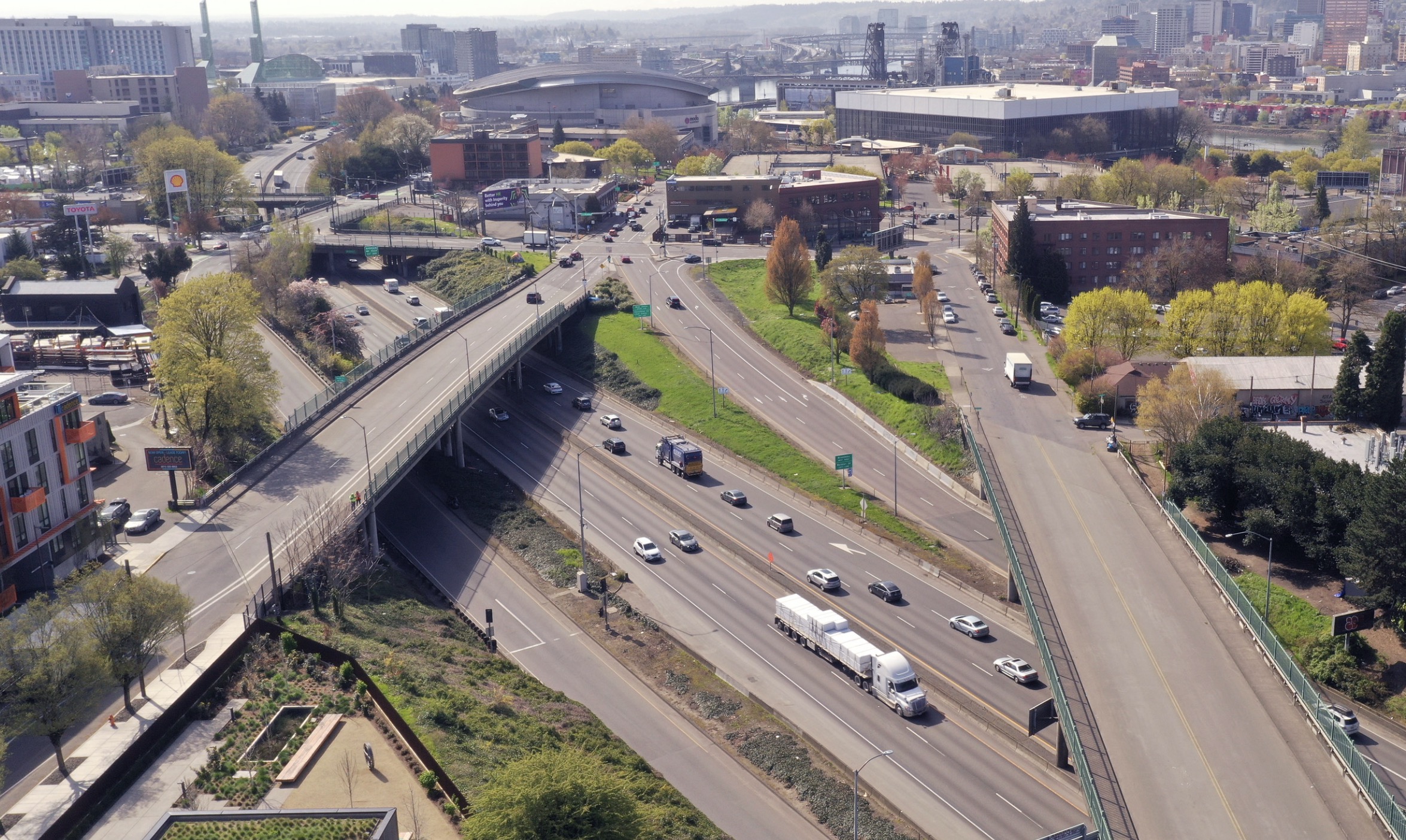
I-5 looking southwest between the N Vancouver and N Flint avenue bridges. (Photo: ODOT)

“Given what we all know about our financial picture at this point, I’m not sure how we finance this project.”

– Lee Beyer, Oregon Transportation Commission member

It’s never a great sign for a transportation project when, six years after the legislature came up with a down payment, project leaders still don’t have a plan for how to pay for it.

After being dogged by years of negative headlines, high-profile protests, and shaky support from politicians and key public agencies, the I-5 Rose Quarter project seemed to take yet another step backwards today. The estimated $1.3 billion project seeks to add lanes to I-5 between I-84 and the Fremont Bridge and build a cap over the freeway where it crosses through the Lloyd near Moda Center. At the Oregon Transportation Committee meeting today, the director of ODOT’s Urban Mobility Office (a new department tasked with getting this and other freeway expansions in the Portland region built) Brendan Finn asked commissioners for a big favor: He requested a one-year extension on coming up with a financing plan for the project.

Finn and his team were supposed to present a funding scenario to the OTC by July of this year. But he says he needs more time. According to Finn, there are two man reasons a funding plan has proven elusive: First, the design of the project has changed dramatically since it was first conceived; and second, a recent moratorium on tolls has taken away one of the project’s main revenue sources. Finn didn’t mention at the meeting today that the estimated cost of the project has tripled since it was first endorsed and funded by the legislature.

When ODOT pitched the project to the legislature in 2017, it was all about congestion relief and “fixing the bottleneck.” Rural lawmakers said this section of I-5 was making it harder for their farmers to get goods to market and we heard the usual hue and cry about traffic backups. But once ODOT got into the local politics, they realized that it’s very tough to add driving capacity on a freeway in Portland’s central city — a place filled with politicians and activists who are proud of our freeway fighting legacy and who understand the terrible policy implications of freeway widening. So ODOT tried to shift to making the project about safety. But when called out on that rationale, they could not show a compelling crash and fatality history that would necessitate such an immense cost. Then the project became all about re-invigorating the lower Albina neighborhood (that the original freeway construction wiped out). But smart people realize it’s much easier and cheaper to rebuild lower Albina without expanding the freeway.

When you combine a shaky rationale with an even shakier political footing and what seems like one controversy after another, you get a project that is in a lot of trouble.

The OTC ultimately granted Finn’s request for a delay today, but not without some tough love from the commissioners.

Commissioner Sharon Smith pointed out that, “The longer these projects take, the more they cost and so delay is not always our friend. And especially with escalating costs and impacts it’s just, it’s hard to do because it’s just going to cost us all more later.”

And Commissioner Lee Beyer (a former legislator who spearheaded the 2017 transportation funding package that committed $30 million per year to the project starting in 2022, money which was recently taken away from this project so ODOT could build a wider Abernethy/I-205 Bridge ) said, “It’s obviously been a controversial project.” Beyer says he understands the delays in the funding plan because of how much the project has changed since 2017 (freeway caps were a distant possibility then, but have become the most important — and expensive — part of the project since). “And so the need to develop the funding plan is important and it makes sense to take the time to do that,” he said at the meeting today. Then his next comment really made sit up straight:

“I have to say that given what we all know about our financial picture at this point, I’m not sure how we finance this project. I think it’s going to require some additional legislative action and commitment that we’re going to move forward on this… It’s a challenge financially. And so that’ll be something that I want to make sure from a fiduciary standpoint that we limit our financial exposure while still supporting the project until those finance decisions are made.”

So not only does ODOT have no plan to pay for the project, but the earmark the legislature gave them is being used on a different project, they can no longer count on tolling in the short term, and one of their bosses on the OTC just said he’s not even sure how the numbers will add up.

Meanwhile, while ODOT tries to fundraise for a freeway expansion, the prospects for a separate plan to rebuild the Albina neighborhood over I-5 have never looked better.

In March the nonprofit Albina Vision Trust won an $800,000 “Reconnecting Communities” grant from the Biden administration to jumpstart a planning process with the City of Portland that help solidify their vision. And late last month, Nike founder Phil Knight and his family foundation pledged $400 million to the 1803 Fund, a new group that will spearhead investments in the historically Black neighborhood. The fund will be headed by Rukaiyah Adams, one of the founding board members of Albina Vision Trust.

Funding a project that will make the neighborhood stronger seems to be much more popular than funding one that would do the opposite. Go figure.
State legal office says civil disorder bill would not apply to bicycle corkers

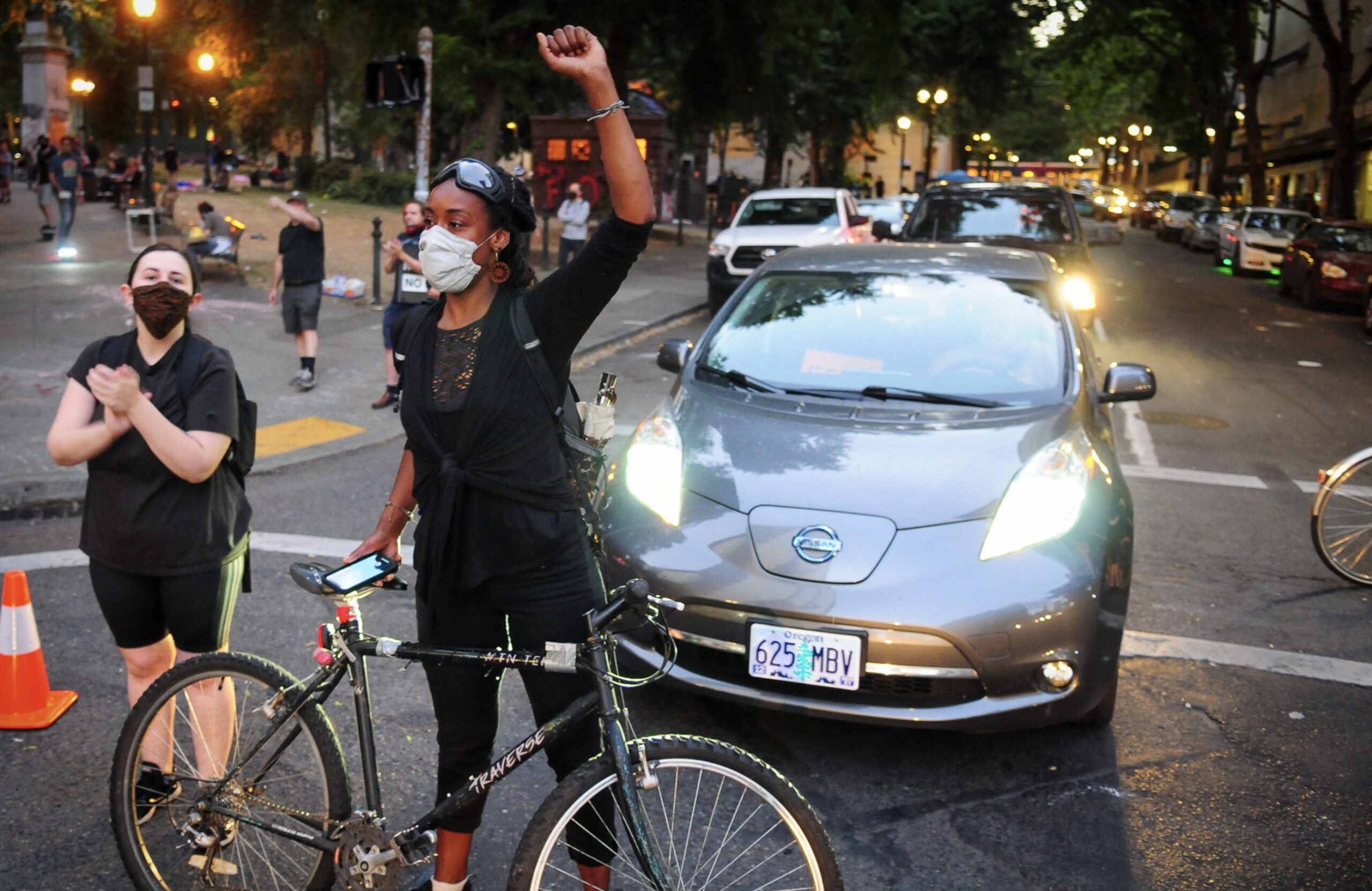
A woman stops traffic with her bicycle during a protest in downtown Portland, July 2020. (Photo: Jonathan Maus/BikePortland)

As we shared last month, a law making its way through the legislative process in Salem has some folks concerned that it could be applied broadly enough to capture a common form of traffic management during large events known as “corking.” In Portland, corking is typically done by bicycle riders because of their ability to move quickly through streets and use their bikes to form a wall in front of cross-traffic in a way that encourages drivers to stop and wait for people in a parade, protest or big group ride to get across an intersection safely.

The chief sponsor of House Bill 2572, Representative Dacia Grayber (D – Tigard), heard this concern from the community and took up the issue directly with the state’s Office of Legislative Counsel. “LC” as it’s known in Salem, is an office of legal experts that writes and edits bill language, researches statutes, advises lawmakers on legal matters, and so on.

Grayber and other supporters of the bill see it as a crucial tool to thwart paramilitary activity from groups or individuals who do things like attack power stations, form gun-toting militias to intimidate others, and so on. To increase its odds of passage, Grayber wants to prove to Oregonians that activities like bicycle corking would not be caught up in the law if the bill passed.

According to the Chief Executive of the Office of Legislative Counsel, Dexter Johnson, corkers have nothing to worry about.

In a letter (PDF) to Rep. Grayber dated April 28th, Johnson writes: “You asked whether the -3 amendments to House Bill 2572 would apply to persons engaging in ‘corking,’ or using bicycles in a coordinated manner to restrict or block traffic during a protest, march or demonstration. The answer is, most likely, no.”

Here’s the salient excerpt from Johnson’s letter:

“In order to be subject to a cause of action under the -3 amendments to HB 2572, a person who engages in corking would need to: (1) act as part of, on behalf of or in furtherance of an objective of, a private paramilitary organization; (2) be armed with a dangerous or deadly weapon; and (3) engage in the specific conduct described in the -3 amendments. The conduct that seems most applicable to corking is when a person “[a]ssumes, exercises or asserts, without legal authorization, the functions, powers or duties of” law enforcement or local government officials, or prevents a person “from engaging in conduct in which the other person has a legal right to engage.” Beginning with the third element described above, it is possible that a court would find that, by blocking traffic, a person engaging in corking is preventing persons from being able to engage in conduct in which they have a legal right to engage (proceeding down the street), or is assuming the function of a law enforcement officer performing traffic control functions. However, a person engaging in corking likely would not satisfy the other two elements and therefore would not be subject to the cause of action…

a group of persons blocking traffic with bicycles is most likely not functioning as a combat, combat support or law enforcement unit. The term “security services” is not defined, but a court seeking to determine the meaning of that term would engage in a structured methodology to discern the intent of the Legislative Assembly that enacted the statute in question.2 Under this methodology, a court looks first to the text and context of the statute, considers proffered legislative history and finally weighs general maxims of statutory construction if there is any remaining uncertainty.”

As to whether a bicycle could be considered a “dangerous weapon,” Johnson says that’s very unlikely:

“… a bicycle is not a deadly weapon, as it is not ‘specifically designed for’ causing death or serious physical injury. A bicycle is also not a dangerous weapon unless the bicycle is ‘used, attempted to be used or threatened to be used’ in a manner that is ‘readily capable of causing death or serious physical injury.’ A court would almost certainly find that when a person is simply standing with a bicycle, blocking traffic, the bicycle is not a dangerous weapon.”

Johnson concludes by saying his office believes corkers would not be subject to the law.

HB 2572 is scheduled for a work session and possible vote today (5/11) at 1:00 pm in the House Committee on Rules.

New traffic signals (and much more!) coming to key bike routes in Central Eastside 

A new signal at SE Ankeny/Sandy/11th will be much appreciated. (Photo: Michael Andersen)

One of the myriad reasons Portland’s bicycle route network suffers in the Central Eastside is because it is bisected by two arterials: Martin Luther King Jr.  and Grand avenues. Both streets are car sewers and getting across them often feels like playing Frogger. At Tuesday night’s meeting of the PBOT Bicycle Advisory Committee, we learned that this stressful link will get a bit better very soon.

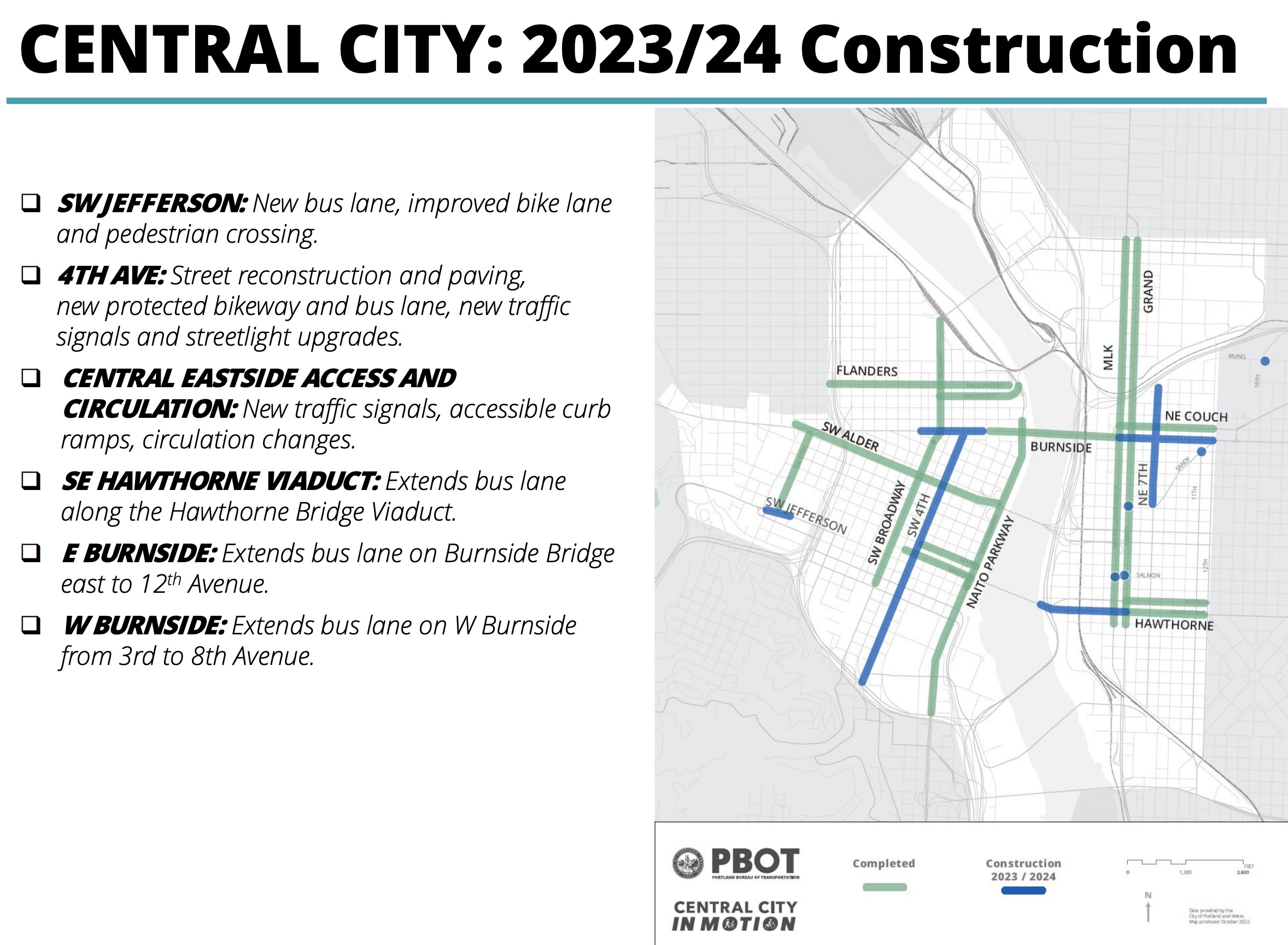
PBOT Project Manager Gabe Graff shared that construction will begin this summer to install two new traffic signals on SE Salmon at MLK and Grand. Salmon is an important, east-west neighborhood greenway route, but its lack of signals at the MLK/Grand couplet meant the recommended route took you one block away to SE Taylor. With the new signals, you’ll be able to stay on Salmon the entire way. This is great news because Salmon also makes a direct connection to the Eastbank Esplanade. Graff also pointed out this project was a priority for PBOT because Taylor is a freight route and has bad pavement condition.

This was just one of several Central City in Motion plan project updates Graff shared at the meeting. In related news, he also said construction will finally being this season on the long-awaited signal and diverters on SE Ankeny where it crosses 11th and Sandy. This diagonal intersection has long been the worst part of the Ankeny neighborhood greenway. Having a bike signal to get across it will be a huge relief for the many folks who rely on this route on a regular basis.

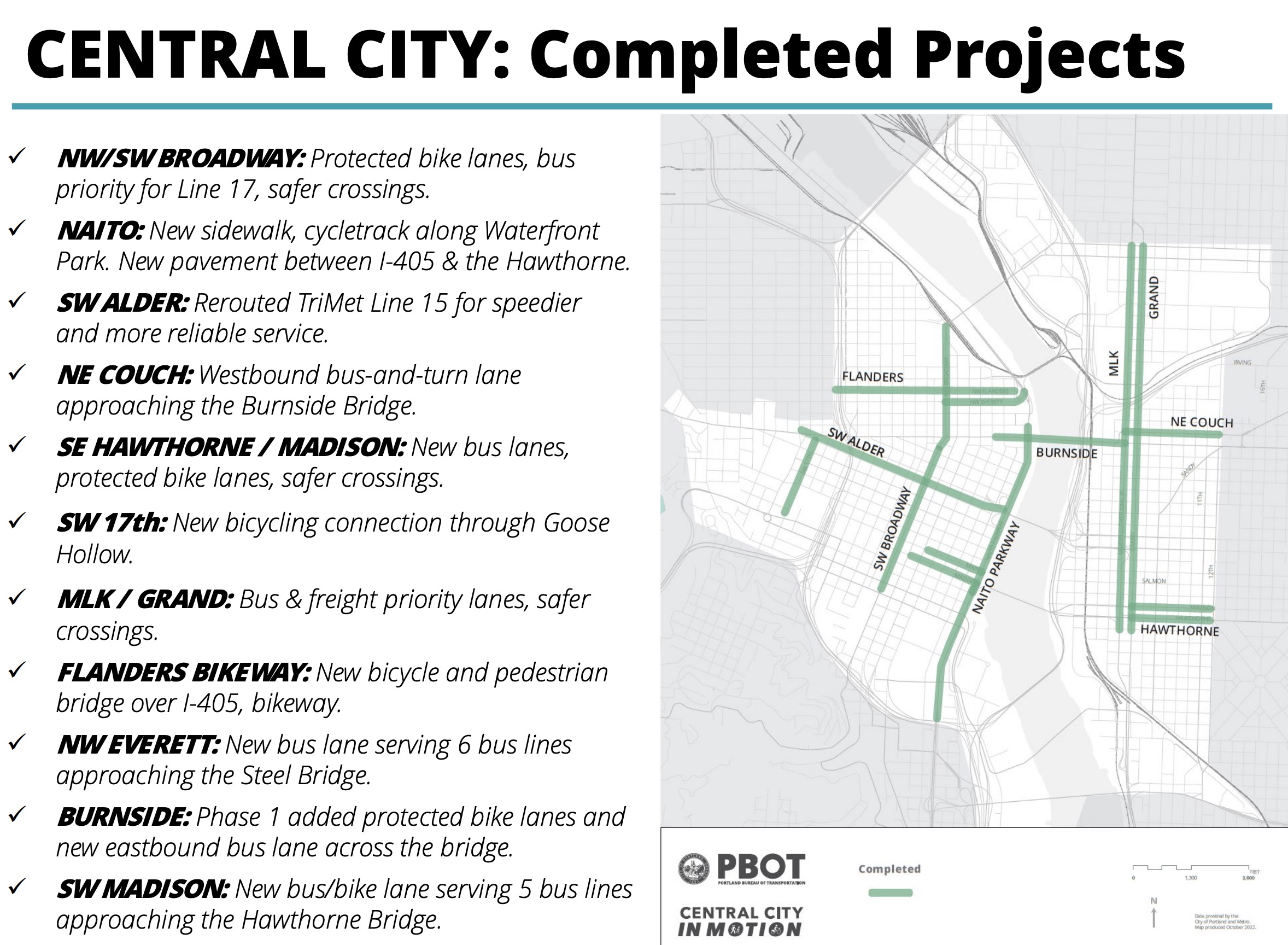
It’s now been more than 10 years since we first shared news about the Central City in Motion (CCIM) plan. It took almost six years of planning, fundraising, and process for the plan to get adopted by City Council in 2018 and PBOT has been making steady progress on ever since. PBOT has completed 11 of the 18 top priority projects so far.

At Tuesday’s BAC meeting, Graff said they’ll build six more of them in the coming fiscal year: a new bus lane and improved bike lane on SW Jefferson; a massive new protected bike lane project on SW 4th between Lincoln and Burnside; new crossings on SE 7th at Washington and Stark; changes to the bike and bus lane on the eastbound Hawthorne Bridge viaduct; an extension of the Burnside Bridge bus lane to 12th Ave; and an extension of the W Burnside bus lane from 3rd to 8th.

The SW Jefferson project we reported on last month has broken ground and is currently under construction.

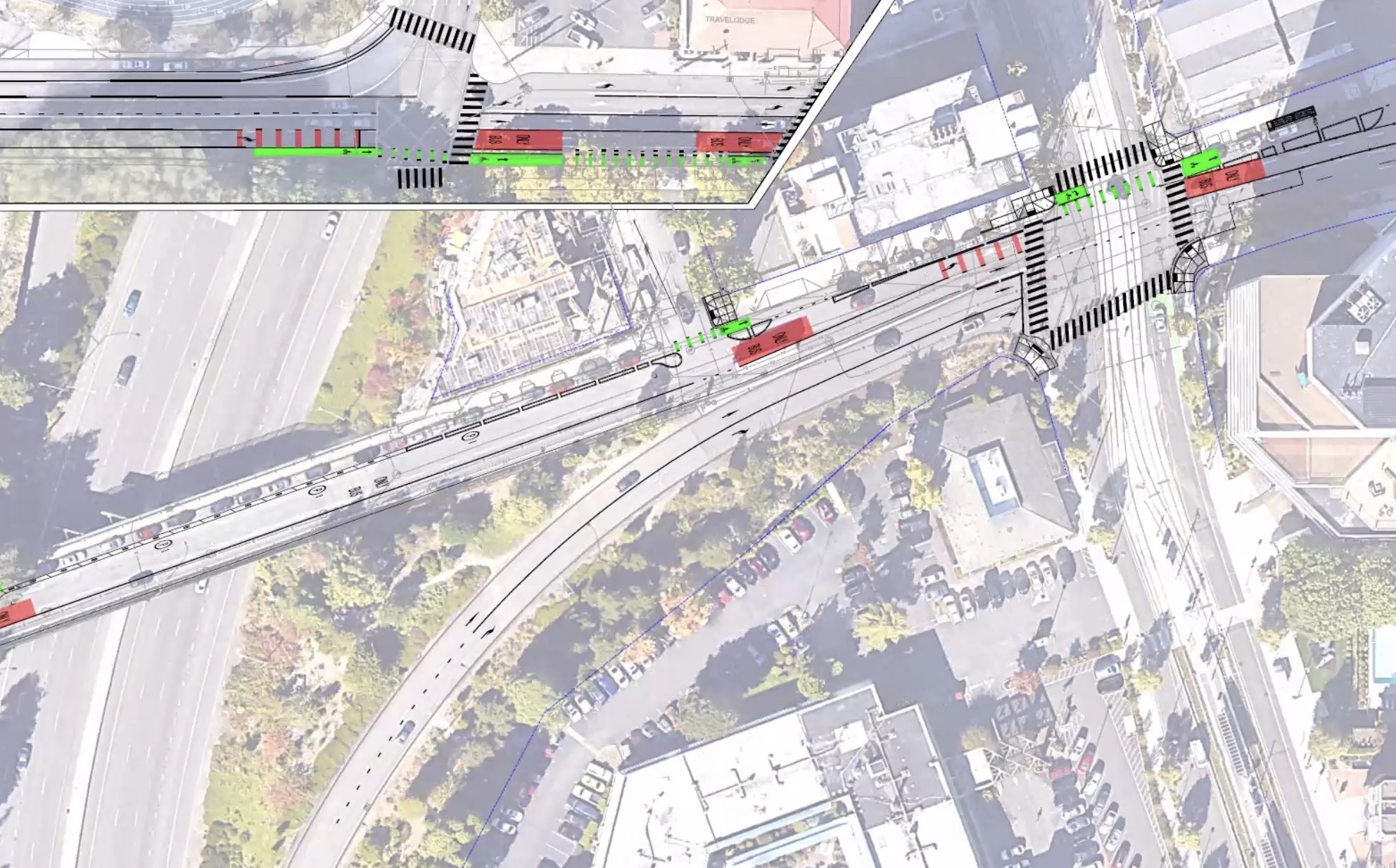
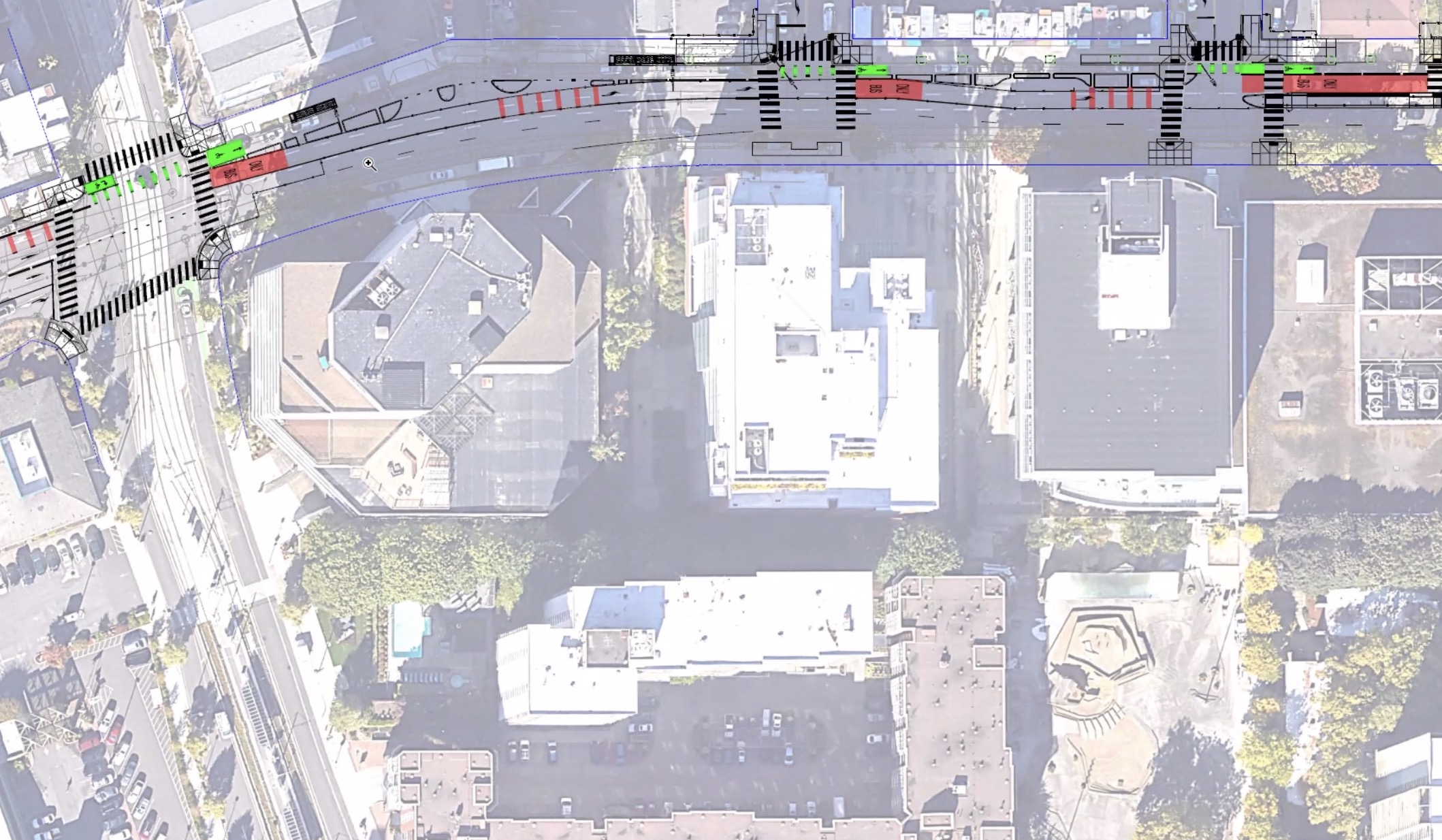
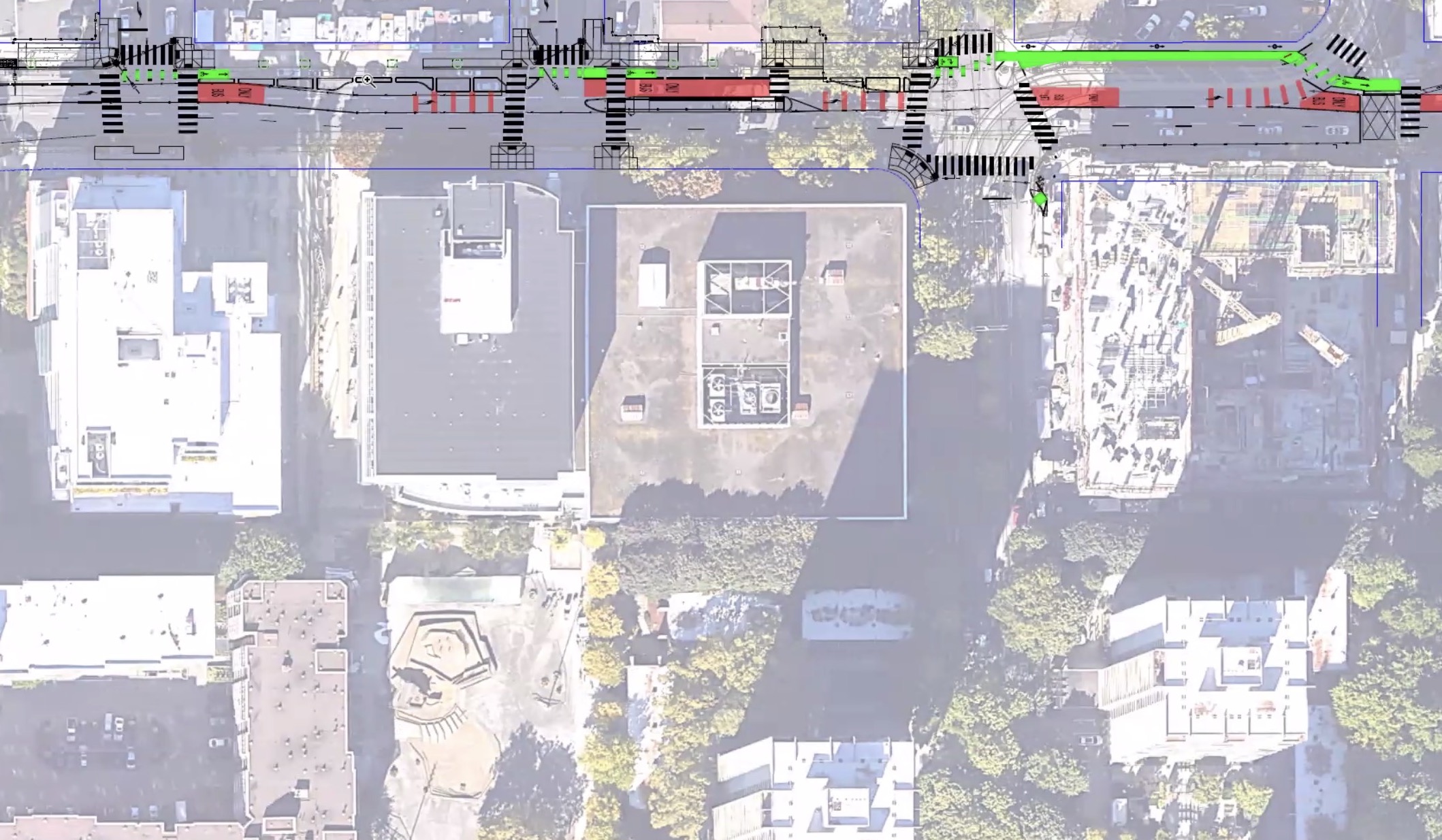
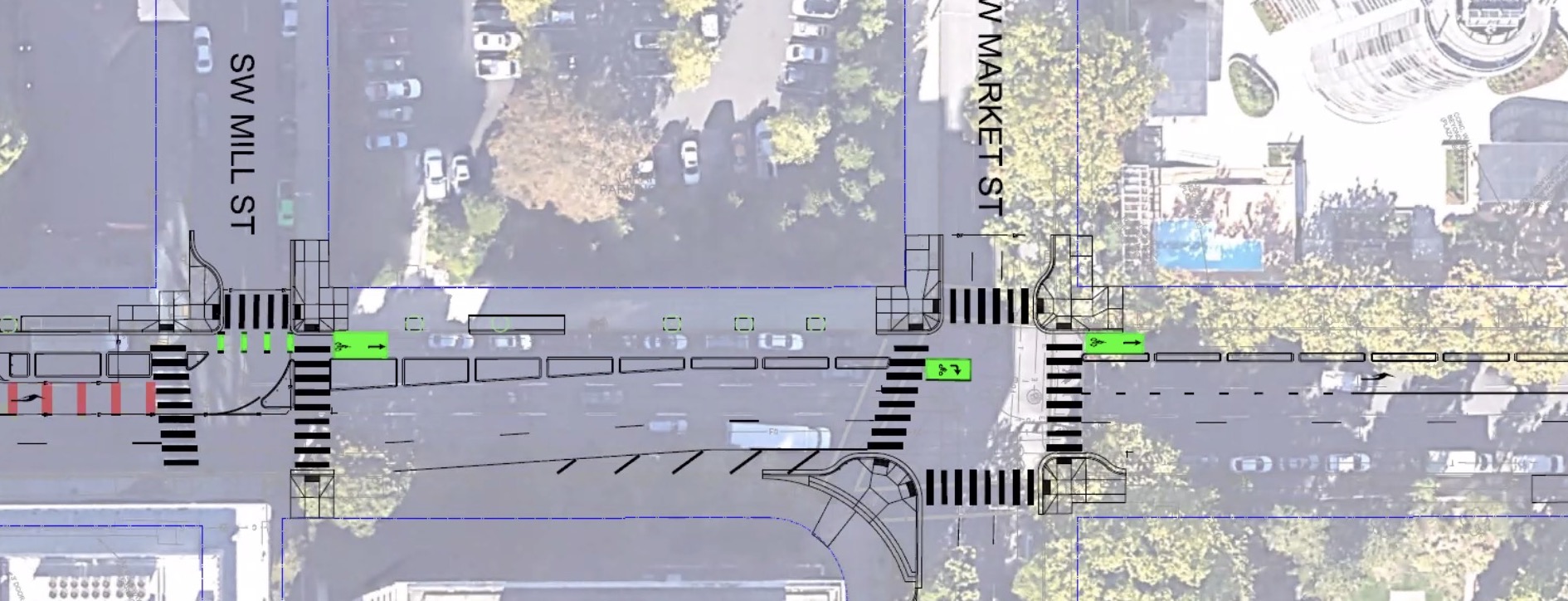
The SW 4th Ave project is finally going to start construction! This project will repave and dramatically reconfigure SW 4th Ave from Lincoln to Burnside, create a new, left-side protected bike lane, a dedicated bus lane, add much safer crossings, new signals, updated streetlights and more.

Here are some plan drawings Graff showed BAC members:

We recently reported on the new bike crossings coming to 7th Ave at Washington and Stark that will be built this summer. At Tuesday night’s meeting someone asked Graff about the much more ambitious plans from nonprofit Depave. That group wants to add greenspace and a pocket park to the 7th/Washington intersection. “Depave has done some good work,” Graff said. “It’s a complicated one. They’ve done some good placemaking work and we’re excited to keep working with them. We haven’t identified the funding to construct that vision yet, so we’ve still got some work to do; but it’s an exciting partnership.”

Graff shared that PBOT is working with Multnomah County to add a floating bus island on the eastbound Hawthorne Bridge viaduct. This will mean bus operators no longer have to swerve over into the bike lane to pick folks up.

The E Burnside project, that comes with a bike signal to help riders connect from Burnside to Ankeny, should be completed by July.

This is all good news and shows solid progress on CCIM from PBOT. Can’t wait to see how these individual improvements impact the quality of the overall network. It’s always said that a bike network is only as good as its weakest point, and several of these projects strengthen weak links.

Learn more about CCIM on PBOT’s website.

Weekend Event Guide: Fat Bike Fest, slough sleuthing, short track racing, and more

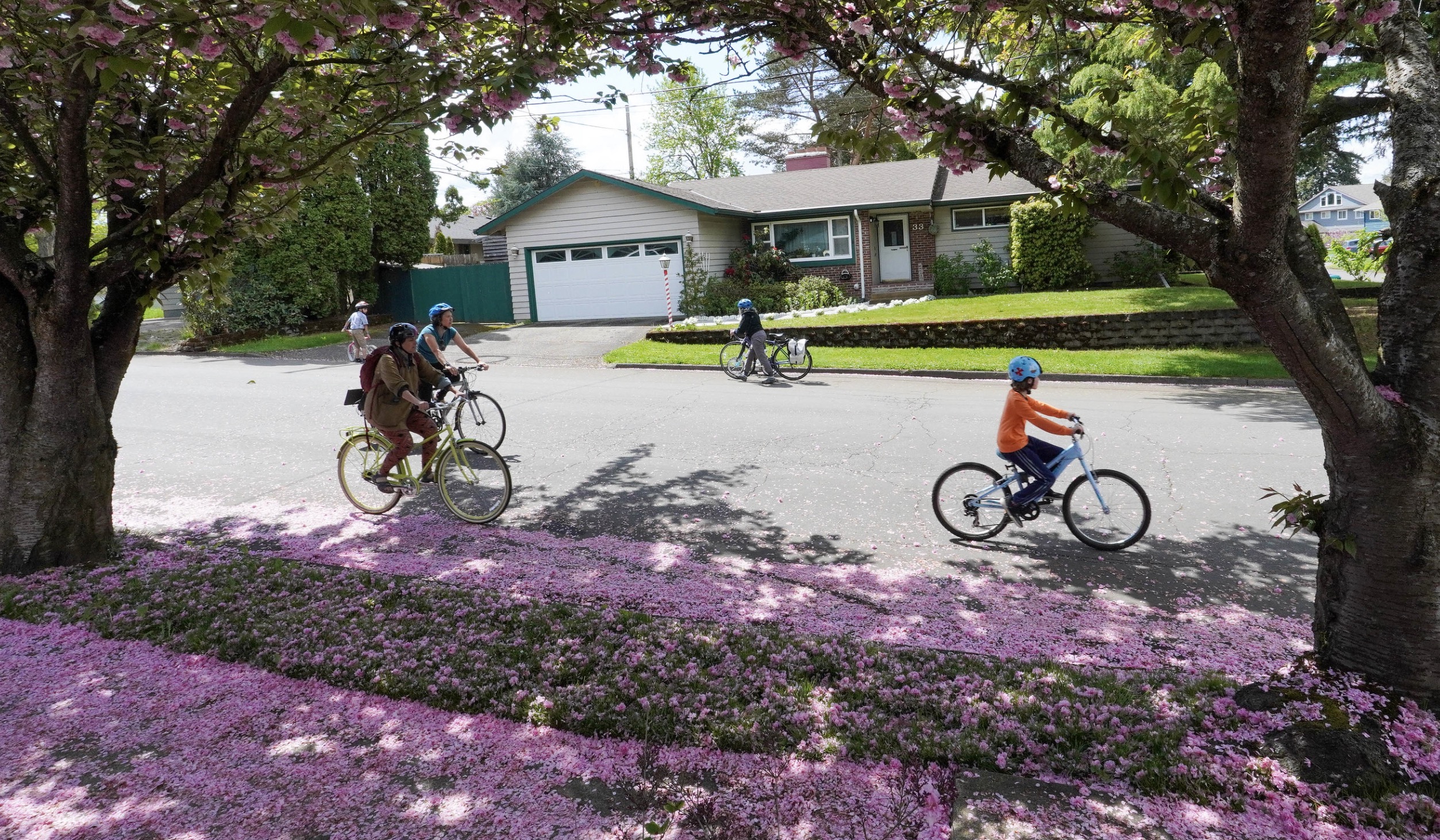
Portland’s flowers have been a joy to ride through lately. (Photo: Jonathan Maus/BikePortland)

Welcome to the weekend! Here’s our weekly selection of rides and events worth your time.


This week’s guide is sponsored by the Cannon Beach Fat Bike Festival (May 12th – 14th). This weekend is a perfect time to head to the Oregon Coast and you can make it even better by signing up for three days of fat biking bliss.


Friday, May 12th

Bike Book Author Talk at Powell’s – 7:00 pm (Downtown)
Author Kristen Jokinen (we profiled her back in March) will share her inspiring story of adventure on two wheels as told through her book, Joy Ride. More info here.

Saturday, May 13th

PNW Short Track Cup #1 – All day at Washougal MX Park (Washington)
Get ready to rip on an a one-mile off-road course with enough turns-n-berms to satisfy your inner bicycling beast. More info here.

Cycle the Well Field – 8:45 am at Cascades Parkway (NE)
Learn all about the Columbia Slough watershed straight from the source on this popular annual ride that takes you behind-the-scenes with the Portland Water Bureau and water quality advocates. Advance registration required. More info here.

Tigard Mural Ride – 9:30 am at Tigard Public Library (West Side)
Join Shawne Martinez for a tour of public art in and around Tigard as part of the city’s “Move 4 May” events. (More info here)

Beginner Gravel Clinic – 10:00 to 11:30 am at Cyclepath Bike Shop (NE)
Professional bike coach Julie Browning will lead her informative skills clinic that will help build your confidence in riding unpaved roads and trails. Optional ride follows! More info here.

PSU Farmers Market Ride – 10:00 am Clinton/41st, 10:10 Clinton/26th, 10:30 am East end Tillikum Bridge (SE)
Join a friendly group of folks and get some shopping done at a local outdoor market downtown. Simple, social, fun. More info here.

Saturday Social Ride – 10:00 am at Wilshire Park (NE)
The Portland Bicycling Club will host this intermediate level ride that will cover about 20-30 miles. More info here.

Sunday, May 14th

PNW Short Track Cup #2 – All day at Washougal MX Park (Washington)
Get ready to rip on an a one-mile off-road course with enough turns-n-berms to satisfy your inner bicycling beast. More info here.

Mother’s Day Ride Bridgetown Tour – 9:00 am at Wilshire Park (NE)
Veteran Portland Bicycle Club member Ann Morrow will lead a bridge-centric ride through the central city. Non-mothers welcome! More info here.

Monthly Overlook Ride – 9:30 am at Stacks Coffeehouse (N)
Overlook Neighborhood Association member and BikeLoud PDX Chair Nic Cota will take you on a north Portland pleasure cruise as he points out the good, bad and ugly about bike routes. More info here.