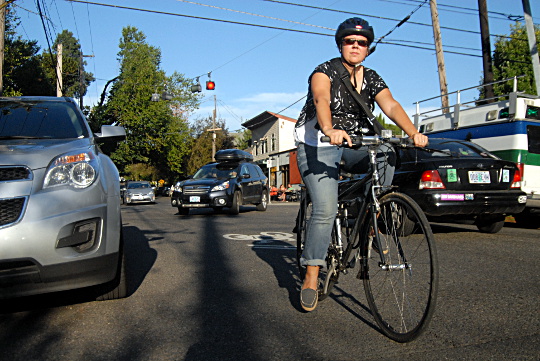

Please note: ‘Paving’ projects can also be ‘safety’ projects that improve bicycling

out of balance

The line isn’t as clear as you think.
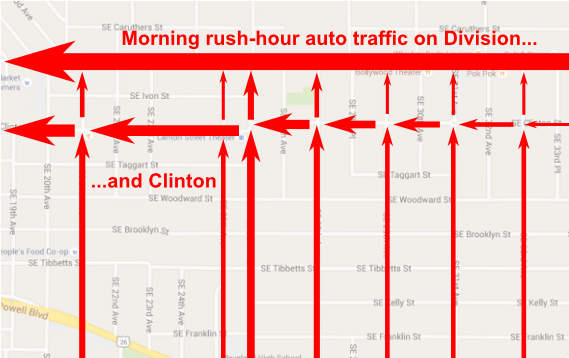
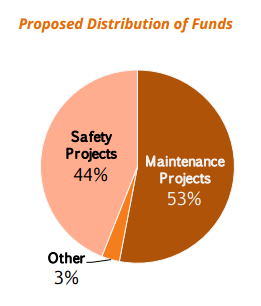
(PBOT graphic)

We have tendency in Portland to think of transportation investment as a zero-sum game. Our local leaders and media like to split people up into nice, little, convenient groups so they can create narratives and a dichotomy that grabs attention.

One way that tendency often manifests itself is with the “paving/maintenance versus safety” debate. During the push for the Our Streets funding measure, the Portland Bureau of Transportation used percentages and pie charts to split these two priorities into categories. With such clear lines in the sand it’s no wonder that the community (and the media) latch on and start shouting about which one deserves more (I admit it, I’ve been guilty of doing this myself in the past).

It doesn’t have to be this way. The truth is, paving/maintenance projects can also be safety projects that improve bicycling and walking. And guess what? PBOT gets it.

Read more

Time to weigh in on PDC’s Broadway Corridor Plan

bwaylead

Map of the Broadway Corridor Plan focus area.
(Image: PDC)

By the end of this year Portland City Council will adopt a redevelopment plan that will have a huge impact on the central city — and it’s your job to make sure that plan includes a world-class vision for cycling.

Read more

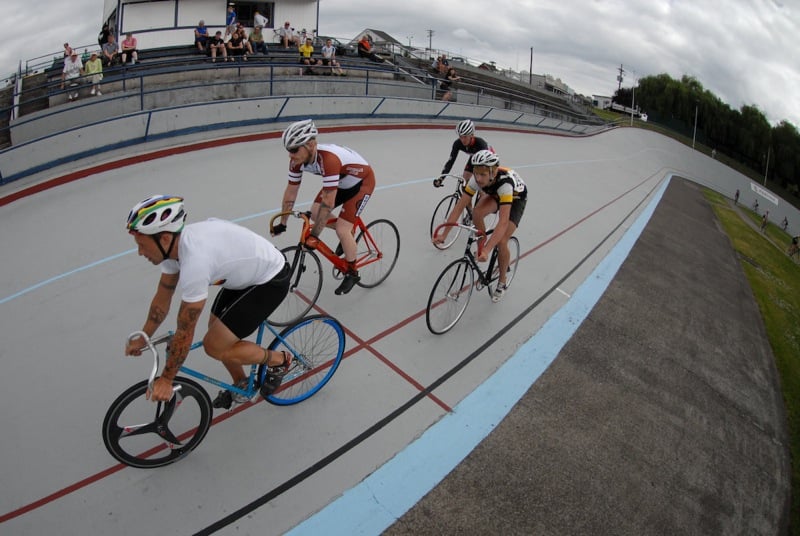
Weekend Event Guide: Track racing, mystery ride, and more

alpenrose2638619136_7e0be907fc_o

Go ahead, fly your flag!
(Photo © J. Maus/BikePortland)

This menu of delicious rides and events is brought to you by our friends at Hopworks Urban Brewery. Their support makes BikePortland possible.

I’m happy to finally be able to report that the heat wave is over! This weekend we’re finally getting a reprieve from 90-degree temps and the riding weather should be perfect.

The ride calendar is pretty light this week, so that means you’ve just got to be creative and think of your own adventures.

Have fun out there!

Friday, July 10th

Read more

Dangerous, high-speed pass on neighborhood street caught on camera

videot

Still from video by T.Lavender/Vimeo

Question: What’s one way to know when people don’t feel safe riding bicycles? Answer: When a growing number of them feel like they need to ride with an on-board video camera.

Here in Portland (and nationwide), we’ve noticed a strong uptick in the amount of people who equip themselves with a camera every time they ride around the city. This trend is the result of three main things; the advent and availability of smaller, cheaper and higher-resolution cameras, the epidemic of distracted driving that has resulted in more dangerous and illegal driving behaviors; and a growing sense that the police can’t (or won’t) do their part to enforce the laws.

With video evidence, the thinking goes, if something does happen, at least someone will have a greater chance at justice in court.

Read more

Business owner to City Council: Bicycling is ‘lifeblood’ of a city’s future

mike lettunich

Mike Lettunich of Twenty Four Seven.
(Image: City of Portland)

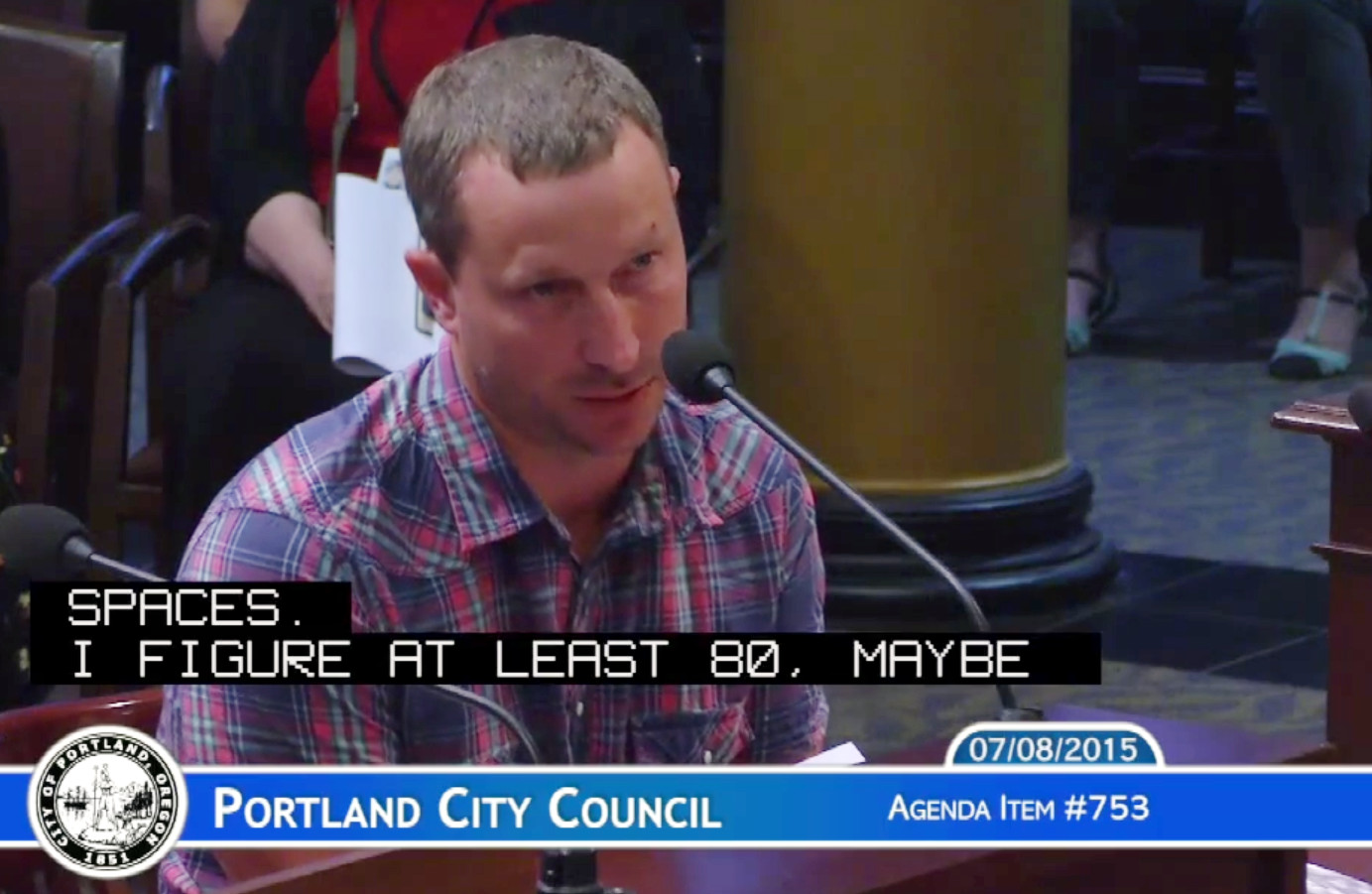
Here’s a business owner’s perspective that breathes some fresh air into the us-versus-them framing that can bog down so many discussions about bike infrastructure in Portland.

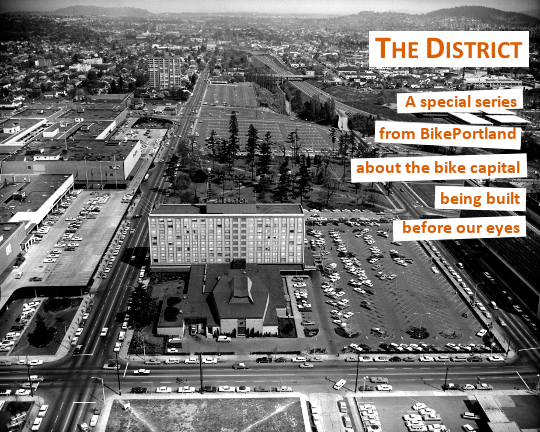
Yesterday we kicked off a three-part series about the past and future of the Lloyd District. The third post in the series, coming in several weeks, will focus on the many street changes the city is lining up over the next 10 years that could help the neighborhood finally reach its potential — first among them, probably, a new biking-walking bridge that’s been proposed across Interstate 84 at 7th, 8th or 9th avenues.

Read more

Portland’s next great bike neighborhood may be its most unexpected triumph yet

the district lead image

The Lloyd, waiting to be born. City of Portland Archives: A2012-005, April 24, 1964.

This is the first in a three-part series made possible by Hassalo on Eighth.

At first glance, the changes sweeping across the Lloyd District right now look like a story Portland has told at least twice before.

Developer makes big bet on underused land near downtown. Residential towers shoot up. Amenities multiply. Streetcar whistles through. Bikes roll in by the hundreds and eventually the thousands.

Read more

New ODOT resource demystifies funding for biking and walking projects

Buffered Bike Lane with a bike symbol and arrow pointing forward
fundinglead

Detail of Funding Walking and Biking Improvements.
PDF

Finding money to pay for bike and walk-centric projects in Oregon is no easy task. The big pots of money are all but reserved for traditional highway projects like freeway widening and bridge repair (like the gas tax, for instance, which is constitutionally limited to such projects). What’s left is a myriad of smaller sources — some of them in separate pots and others so deeply rooted in policy language only experts know how to pry it out.

Now a new webpage (and PDF document) published by the Oregon Department of Transportation aims to demystify this process. Think of it as a treasure map that leads to more biking and walking projects.

Titled Funding Walking and Biking Improvements, this exhaustive new resource lists 38 different sources of cash to help make your active transportation project dreams come true.

Read more

Guest article: Biking on the cheap

Disaster Relief Trials -43

Reuben Deumling.
(Photos © J. Maus/BikePortland)

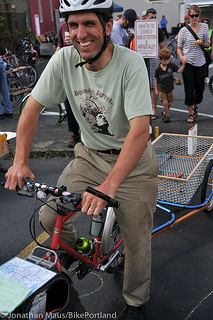
This article was written by Reuben Deumling, a Portland resident, active participant in the local cargo biking scene, and frequent commenter who some of you may know as “9watts.” You might also recall the cool, DIY wooden child seat he shared with us back in 2010.

——

I often read here on BikePortland about $5,000 singlespeeds and $6,000 cargo bikes, and I think about a lifetime of used or discarded bikes I’ve fixed up and ridden or resold. I enjoy the lines of a Vanilla or Ahearne or Bullitt as much as the next person, but choosing to live lower on the pecuniary totem pole, that is just not my market.

I’d like to share what the economics of bicycling looks like from my perspective.

Part of the fun of not owning a car is that you avoid all the bills — gas, oil, insurance, parking, and repairs, (not to mention buying the car itself and eventually replacing it) — that come with it. For me, that statistic you read about that suggests the average car-owning household spends around $9,000 per year in car-related expenses, is inconceivable given how our household has chosen to spend money.

Read more

Coalition of legislators scores $17 million to rebuild 14 blocks of Outer Powell

Buffered Bike Lane with a bike symbol and arrow pointing forward
SE 136th Press Conference-7

State Rep. Shemia Fagan has stepped
up for safer streets in east Portland.
(Photo © J. Maus/BikePortland)

It’s not the $25 million that would have been wrapped inside last month’s ill-fated bipartisan transportation bill, but Powell Boulevard is lined up for a long-awaited improvement.

The state-run road is lined up to get $17 million to add sidewalks, pedestrian-friendly crossings and bike lane upgrades — which, as we reported last month, could come in the form of protected bike lanes. Another $3 million pledged by the City of Portland Friday would bring the project’s funding to $20 million for the blocks between SE 122nd and 136th avenues.

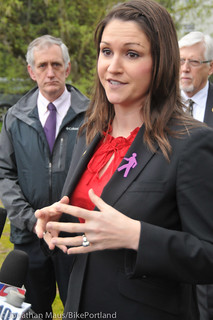
The rebuild “will break ground in 2018,” according to Rep. Shemia Fagan (D-Clackamas) a second-term legislator in a swing district who has been a dogged champion for better walking and biking in the area.

Joining Fagan in support for this funding was a chorus of other local legislators, including Rep. Jessica Vega Pederson (D-East Portland), Sen. Chuck Thomsen (R-Hood River), Sen. Rod Monroe (D-East Portland), Sen. Michael Dembrow (D-NE Portland), Rep. Jeff Reardon (D-Happy Valley/East Portland), and Rep. Alissa Keny-Guyer (D-Portland).

Read more

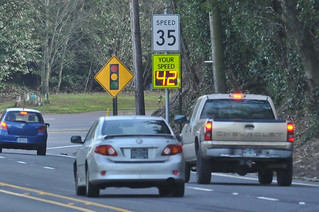
Smile speeders! Photo radar bill headed to Governor’s desk for signing

SW Barbur Blvd observations-14

Speeding on SW Barbur Blvd.
(Photo © J. Maus/BikePortland)

After many people had already begun their holiday weekend, the Portland Bureau of Transportation chalked up a major legislative victory.

HB 2621, which will allow PBOT to operate fixed photo radar cameras on Portland’s deadliest major streets, passed the Oregon Senate on Friday afternoon by a vote of 17-12. The bill now heads to the desk of Governor Kate Brown for signing.

PBOT Director Leah Treat said via email today that she’s “very happy” the bill passed. “As the City is implementing Vision Zero,” she wrote, “automated speed enforcement should prove a critical tool in getting drivers to slow down.”

Friday’s vote capped a dizzying week of activity for the bill. On Monday morning it hadn’t even pass out of committee in the House.

The bill allows the City of Portland to install photo radar camera units (a pair of cameras, one for each direction) only on High Crash Corridors. Here’s how the bill defines them:

“urban high crash corridor” means a segment of highway that has an incidence rate of reported traffic crashes resulting in fatalities or serious injuries that is at least 25 percent higher than the rate for highways with the same speed limit or designated speed within the jurisdiction on average between January 1, 2006, and January 1, 2016, and for which the governing body of the city makes a finding that speeding has had a negative impact on traffic safety.

Read more