
“This isn’t a smaller project. It’s the same bloated mega-project, just sliced into pieces so the full commitment is harder to see.”
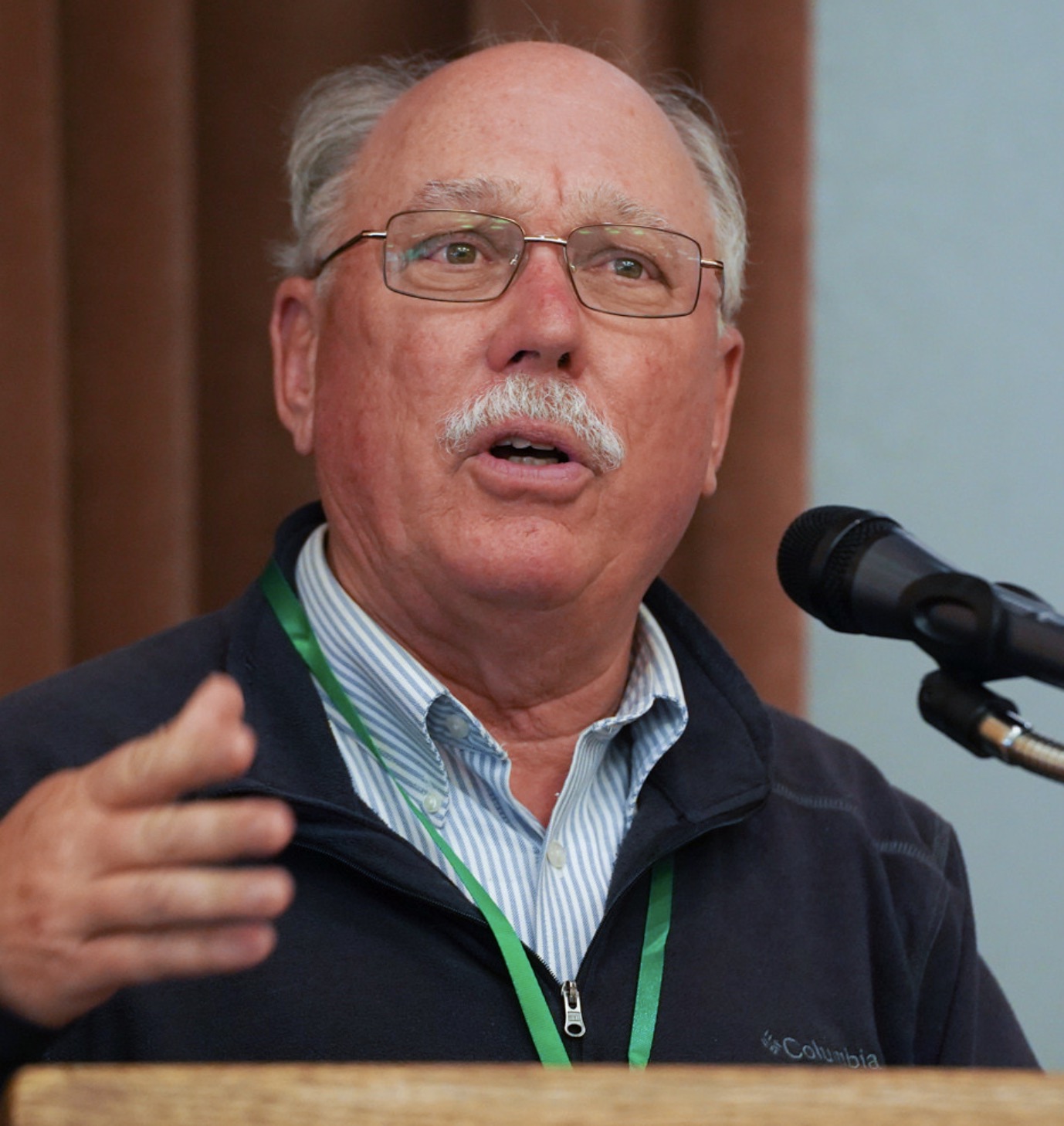
This guest opinion was written by urban economist and City Observatory publisher, Joe Cortright (in photo above).
The Interstate Bridge Replacement Program (IBR) has finally released the cost estimates it’s been promising for more than two years — and the numbers confirm what we’ve been saying since January: this project has more than doubled in cost, from $6 billion to as much as $15.2 billion.
The spin merchants who work for the IBR have packaged the increase as much smaller, claiming that they’re going to just build the “core elements” of the project. That’s led some in the media — including, unfortunately, BikePortland — to report the project is being “right-sized.”
That’s simply not true: IBR is stretching out the project (through the 2040s), but has actually said nothing about giving up on the whole boondoggle, including widening five miles of freeway and building seven intersections. And the way they’ve designed the project, once you start, we’ll have no option to say “no” later on.
This is the oldest trick in the megaproject playbook — the Robert Moses strategy: get a shovel in the ground, then dare anyone to stop you.
Moving ahead with this so-called “Phase I” will mean that the IBR becomes the region’s top priority for transportation spending for the next two decades and will have first call on every available dollar. Just as the Iran War shows how tragic and costly car dependence is, the region will squander its scarce capital building one last monument to the highway lobby, exactly as the climate crisis hits with full force.
But the real story isn’t just the price tag. It’s the timeline. Portland and Vancouver are being asked to sign up for two full decades of construction, debt, and disruption — with no exit ramp.

The “Phase I” fiction
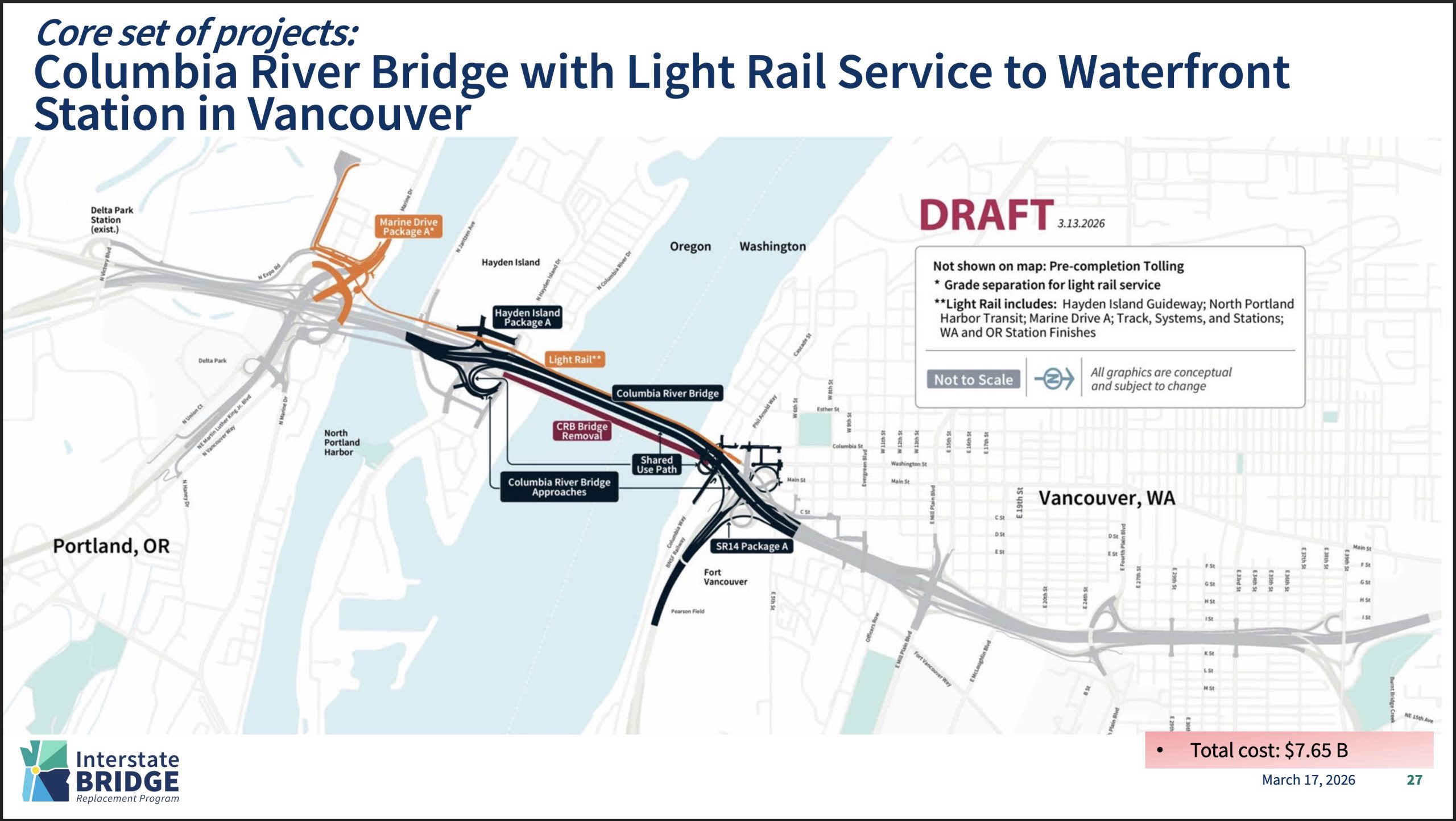
No one should be fooled by IBR’s talk of a scaled-back “Phase I” costing $7.5 billion (see above). This isn’t a smaller project. It’s the same bloated mega-project, just sliced into pieces so the full commitment is harder to see. The 115’ vertical clearance of the bridge, by design, forces them to raise up the freeway and the interchanges.
Once you build a new high-level bridge, you are locked in — physically and financially — to rebuilding every approach, every interchange, every elevated freeway on both sides of the river. ODOT and WSDOT designed it that way deliberately. This is the oldest trick in the megaproject playbook — the Robert Moses strategy: get a shovel in the ground, then dare anyone to stop you. Once construction starts, the politics of a half-built bridge make it nearly impossible to say no to the next funding request, no matter how large.
A project that grows, never shrinks
And notice that the IBR’s cost estimate is now vastly higher than what they assured us in 2022 was the “highest” possible cost, something they said had less than a 10 percent chance of happening. And this project is no anomaly: the other highway megaprojects in the region (the I-205 Abernethy Bridge and the I-5 Rose Quarter project) have tripled and quadrupled in price (respectively) to more than $800 million and more than $2 billion. Does anyone believe that once ground is broken the cost won’t continue to rise?
And already the new estimate of the “core” portions of the project leaves things out. There’s no money in the budget for the $488 million cost of removing the two existing bridges. There will be more surprises. There always are.
You can’t trust these people
What makes anyone think that you can believe these cost estimates? Keep in mind, IBR has delayed releasing these numbers for more than two years, and deliberately waited to release them until after both the Oregon and Washington Legislatures had adjourned — even though the stated reason for these estimates was to have new numbers in time for the 2026 sessions. Greg Johnson, the former project director, instructed staff to keep the draft and final estimates secret.
Moreover, it’s pretty clear we can’t trust the IBR team. The project’s own consultants — who have collected $273 million over five years to design “basically the same project” as the failed Columbia River Crossing that came before it — now put the cost at $13.5 to $15.2 billion, up from $6 billion just three years ago. IBR wants to blame inflation, but its own estimates attribute only about $1 billion of that $9 billion increase to higher prices. The rest is scope, complexity, and the compounding costs of delay. The fastest-growing line item in the IBR budget isn’t steel or concrete — it’s staff and consultants, whose costs have grown 400% and are projected to reach $1.2 billion over the 20-year construction period. Already more than 20 years in the making, the IBR promises to be a “forever” project for these consultants.
Twenty years of financial exposure
The IBR plans to break ground in 2028 with less than a third of the project’s total funding identified. The gap isn’t $2.5 billion — it’s $10 billion or more. That’s a decade-plus of lobbying, appropriations battles, and cost overruns still ahead, stretching well into the 2040s. Notice that Washington Governor Bob Ferguson exclaimed “We’re going to build the damn bridge,” but said nothing about how it would be paid for. That’s because it’s not his problem; but it will be a problem for future taxpayers and future governors.
One thing is certain: tolls of $3 or more per trip will begin hitting I-5 commuters as early as 2027 — not after the new bridge opens, but years before. Those tolls will drive traffic off I-5 and onto I-205, gridlocking an already strained crossing, while the region waits years for the new bridge to open. And tolls will depress traffic levels on the I-5 bridges — already lower than they were twenty years ago — permanently below 100,000 vehicles per day, meaning that we’ll have spent billions for added highway capacity that will be half-used.
The real question
Oregon and Washington are being asked to commit — right now, today — to a project that won’t be finished until the 2040s, at a cost that has already doubled and shows no signs of stabilizing, The state transportation departments sponsoring this project have repeatedly failed to estimate its costs accurately, kept those estimates secret from the very legislatures funding it, and have yet to produce a credible financing plan.
At a moment when gas prices are surging, state transportation budgets can’t keep up with basic maintenance, and climate commitments demand we reduce car dependence — not subsidize its expansion — committing two decades and $15 billion to this project deserves far more scrutiny than it’s getting.
The IBR hasn’t been right-sized. It’s just found a way to make the full commitment harder to see.