Publisher’s note: This essay is from Southeast Portlander, former PPS School Board candidate, and Bike Bus PDX organizer Rob Galanakis. Last we heard about the Bikeable Portland plan it was being considered for funding amid a special allocation from the Portland Clean Energy Fund. It was not chosen for funding, but backers plan to re-apply for PCEF funding at a later date. You can learn more about the plan via a presentation from its creator, City Bicycle Coordinator Roger Geller, at the monthly meeting of the PBOT Bicycle Advisory Committee on Tuesday, March 10th.
City leadership is largely united on a goal: make Portland the most livable city in the United States. And though it doesn’t always feel like it, there is broad agreement on how to get there: more housing, more jobs, more transit.
And more biking.
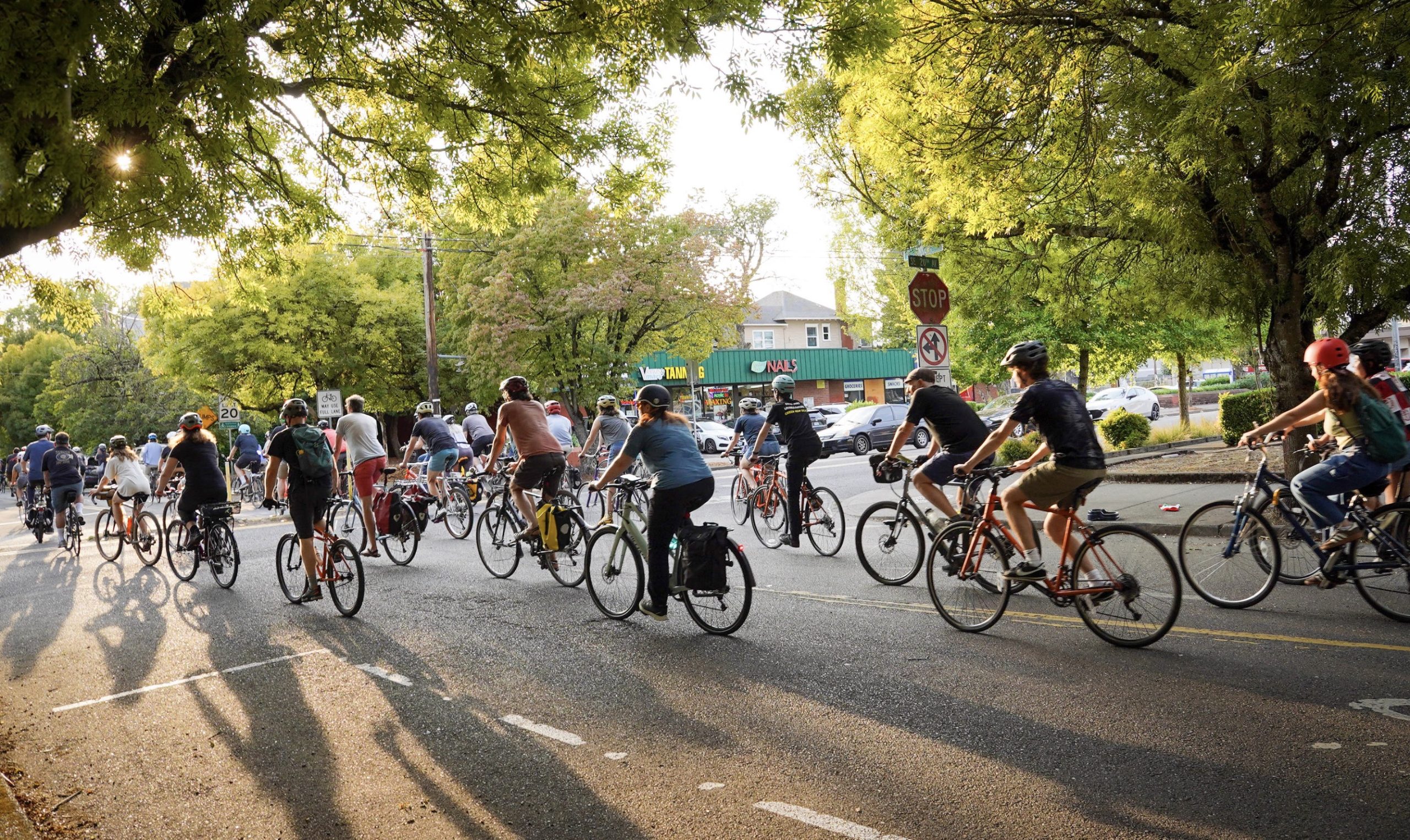
You and I and endless “beautiful PDFs” already know why getting more people riding is essential. What I’m here to explain is how the Bikeable Portland plan from PBOT does that. The plan seeks to boost ridership by activating people where they are: in their neighborhoods. It would fund ride organizers to go door-to-door, help them get riding (again or for the first time), and invite them on regular rides. There’d be minimal infrastructure built — just enough to stoke the flames being lit by those organizers and to get bicycling back into the headlines.
“My initial response was unapologetically harsh and expletive-filled. But I’ve come to believe, enthusiastically, that the plan provides our best – perhaps only – lever to get more people riding quickly.”
I’ll admit, it took a lot of discussion and consideration for me to come around. My initial response was unapologetically harsh and expletive-filled. But I’ve come to believe, enthusiastically, that the plan provides our best – perhaps only – lever to get more people riding quickly.
Bikeable Portland is focused mostly on the “social infrastructure” of our bike transportation network. If done for the wrong reasons, this is destined to fail, like sharrows on a 40 MPH road. But the plan’s reasoning, rationale, and practicality is sound.
This does mean we have to take a bit of a detour to understand why the plan will work. We’ll put Portland infrastructure and ridership in context, look at the role Bikeable Portland can play, and see why it sets us up for Portland’s next chapter in livability.
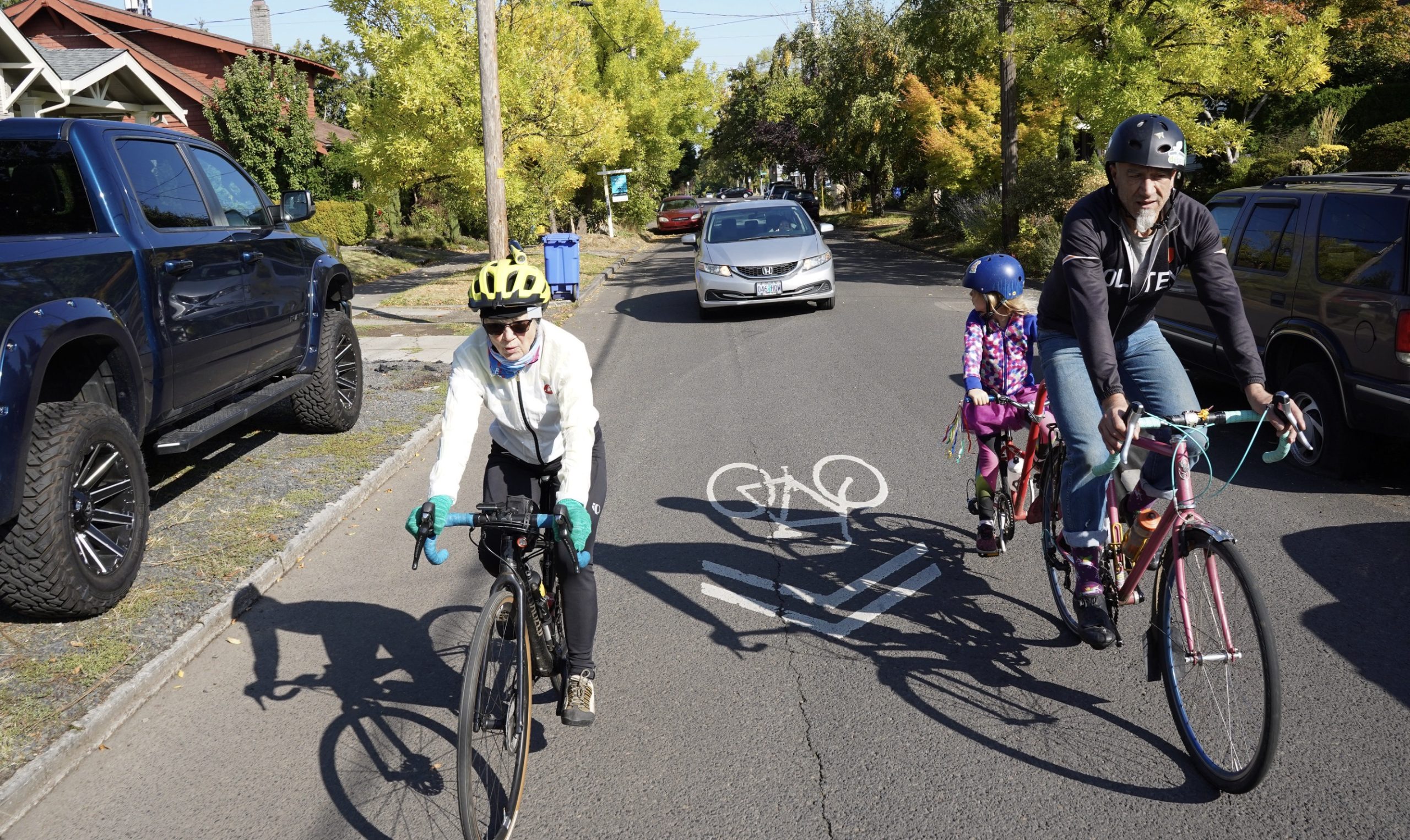
Portland’s Greenway-focused bike network
There are two globally unique aspects of Portland’s bike scene: our culture, and the fact that we created a bikeable city while building little hard infrastructure (off-street paths, Protected Bike Lanes (PBL), and diverters). Instead we lead on neighborhood greenways. We have a much higher proportion of miles of greenways to protected bike lanes than any other city.
Greenways are much easier to create than a protected or off-street network. Find a low traffic street, paint some wayfinding, change some maps, and voilà, you have a new greenway. Add some signals to crossings as funding becomes available.
The problems here are obvious:
- Greenways don’t pass through commercial areas, where people want to be.
- Greenways wind and detour instead of being direct.
- Signal timings are often slow when crossing higher-traffic streets.
- Greenways are undiscoverable unless you’ve been educated about them.
These are well-illustrated on our Micoromobility Dashboard, which shows trips counts on commercial corridors like SE Hawthorne similar to parallel greenways. Greenways are simply less practical for unfamiliar riders.
That said, Greenways have some major benefits:
- They can be extremely pleasant.
- They are extremely safe.
- They allow more social, side-by-side riding.
- They can be relatively cheap to create and improve.
The problem with “if you build it, they will come,” is that you need to build a network. And right now our protected bike lanes on their own do not form a network. In fact, there are very few places they even intersect. Greenways, because they are undiscoverable, don’t augment our protected network for most people.
Diagnosing the decline of ridership
If we’re going to turn around the decline of biking in Portland, it’s useful to know why it declined in the first place. PBOT’s Bicycle Coordinator Roger Geller has research and diagnosis from last year that is well-sourced and evidence based:
- Bicycle ridership, in both absolute numbers and as a percentage of trips (mode share), has declined since peaking in 2014/15. Areas of Southeast and Northeast Portland had well over 20% of commuters riding bikes to work.
- Trends on the street in Portland (declining bike mode share, rising overall traffic deaths) largely mirror national trends. These trends pre-date COVID-19. That is, “drivers are acting crazy post-COVID” is both true (and may explain part of the rise in non-cycling traffic deaths), but it obviously cannot explain the decline pre-2020.
- Portland has built many miles of protected bike lanes and neighborhood greenways. The physical network is better than in 2014.
- Riding a bike in Portland has been, and remains, statistically very safe. Our greenways in particular almost never see fatal crashes. However the comfort of many greenways has likely gone down, given larger vehicle sizes and more car trips.
- The Central City, where most of our bike infrastructure and ridership was, has seen significant population turnover, with an influx of residents who chose to drive. This both eliminated people with greenway knowledge, and also put more cars on our greenways, which are often convenient cut-through streets.
Given what we know about greenways, this ridership decline is easy to understand. What can be done about it?
Bikeable Portland is “educating by doing”
Bikeable Portland has been called a “marketing” plan for biking. And in a sense it is: bikes are an incredible product, and Portland has a good network to use them on, but we need to help people learn how to use the product on that network.
That’s really all there is to it: Bikeable Portland is “educating by doing.” Get people onto bikes, help them learn the network to get them where they need to go, give them the information and skills necessary to continue biking. Everything in the plan is designed to get more people onto bikes. The coaches, the wayfinding, the street paintings, the evaluations, everything.
Greenways require minimal hard infrastructure, but because of their inherent limitations, they require more social infrastructure. When we spend money on hardening a buffered bike lane with curbs, we expect more people to use it, because they will feel safer. But greenways also need hardening, but instead of pouring concrete, we’re pouring knowledge, skills, and culture.
There is reason to be confident this will work: this is exactly what the Bike Bus movement in Portland has been doing. At schools with sustained effort and existing infrastructure, bike mode share has grown massively. Similar work has been going on in different communities through various non-profits. Bikeable Portland scales these concepts up to the city level. We can (and will!) debate the tactics of what interventions in the plan are most effective, but it’s pretty clear that an investment in the “social infrastructure” of biking will increase ridership.
Whether that can be sustained is a different story.
A Bikeable Better Portland
How do we make sure the gains from Bikeable Portland are sustained and expanded, and we don’t fall right back into the current baseline?
Ultimately, transportation isn’t that complicated: most people will make the choice that is least expensive for them, where “expense” is some combination of time and money. As a society, we’ve spent a massive amount to subsidize and externalize the cost of driving to make it seem cheaper and faster than alternatives. This has put us all on the road to financial and ecological ruin.
As a City, we have limited ability to change this. Undoing the damage of urban freeways, for example, is far beyond our own resources. It will take decades of effort.
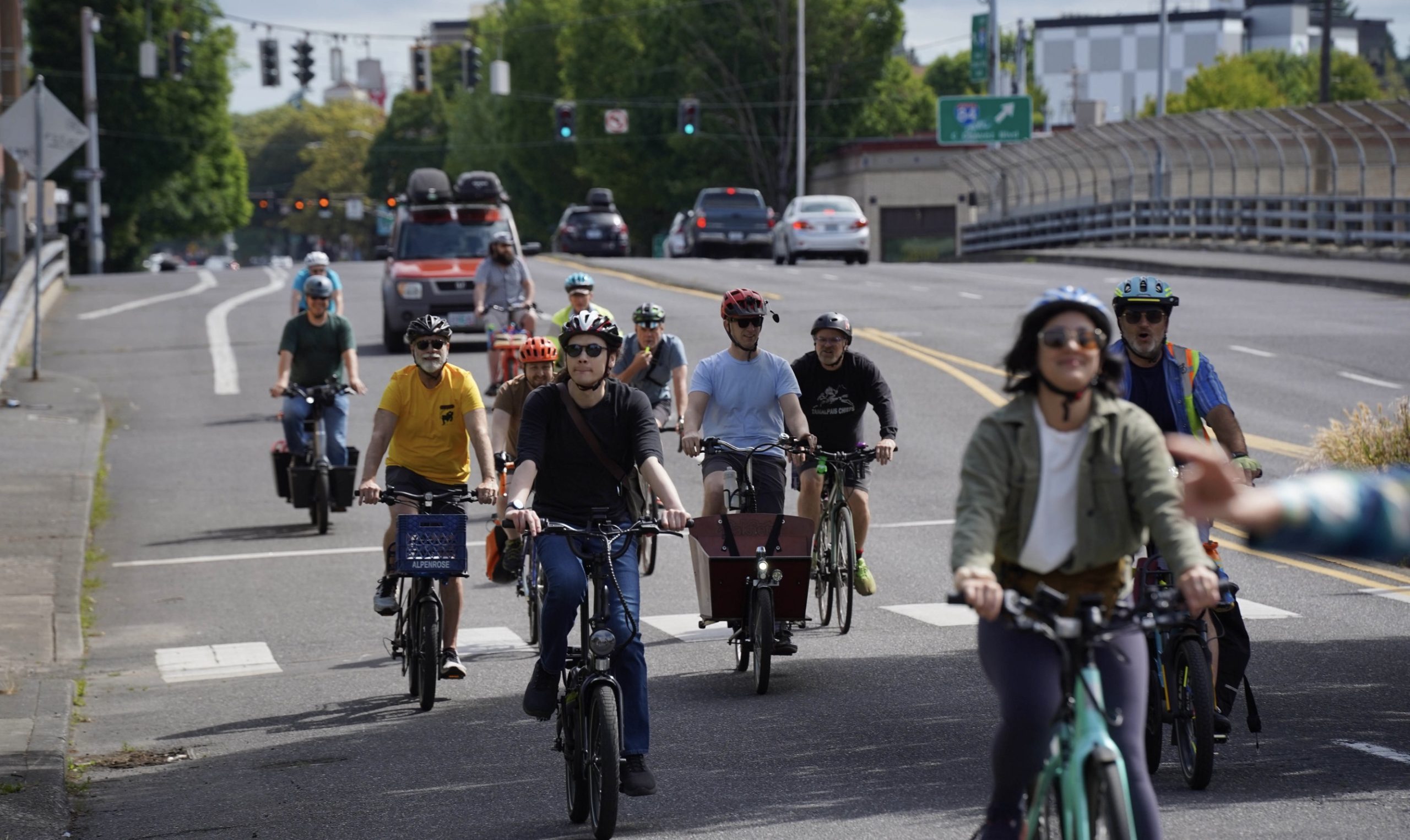
But, as a City, we can do a lot more than we’ve been doing. We could have built out a full protected network in the last 10 years. We could have installed dozens of miles of bus lanes. When we decide against putting bike lanes on a commercial street or force buses to sit in traffic, these aren’t financial or practical decisions. These are political decisions.
Getting more people on bikes through Bikeable Portland has a direct impact on City goals, like reducing emissions. But more people on bikes changes the political environment that has resulted in Portland moving backwards on many of its goals. This isn’t necessarily about changing who we elect, but creating the environment where electeds have more confidence in taking a swing on transportation policies that are sure to ruffle feathers before they’re accepted and appreciated.
Or put differently: spending $6-$9 million (there’s no formal ask on the table at this time) on Bikeable Portland makes it more likely we have the political will to spend another $6 million on hard infrastructure. Getting more people on bikes, quickly, will get an infrastructure network built faster than just spending directly.
I don’t know yet where this money will come from. But I do know, and the evidence is clear, that nothing we could spend this amount of money on – no bike lane, no diverter, no bus lane – will go further to advance our City’s transportation goals than implementing Bikeable Portland, to leverage the investments we’ve already made and strong culture we’ve created. If Portland needs to transform from the “City that Plans” to the “City that Does,” if we’re going to be the country’s most livable city, we’re going to need Bikeable Portland.