
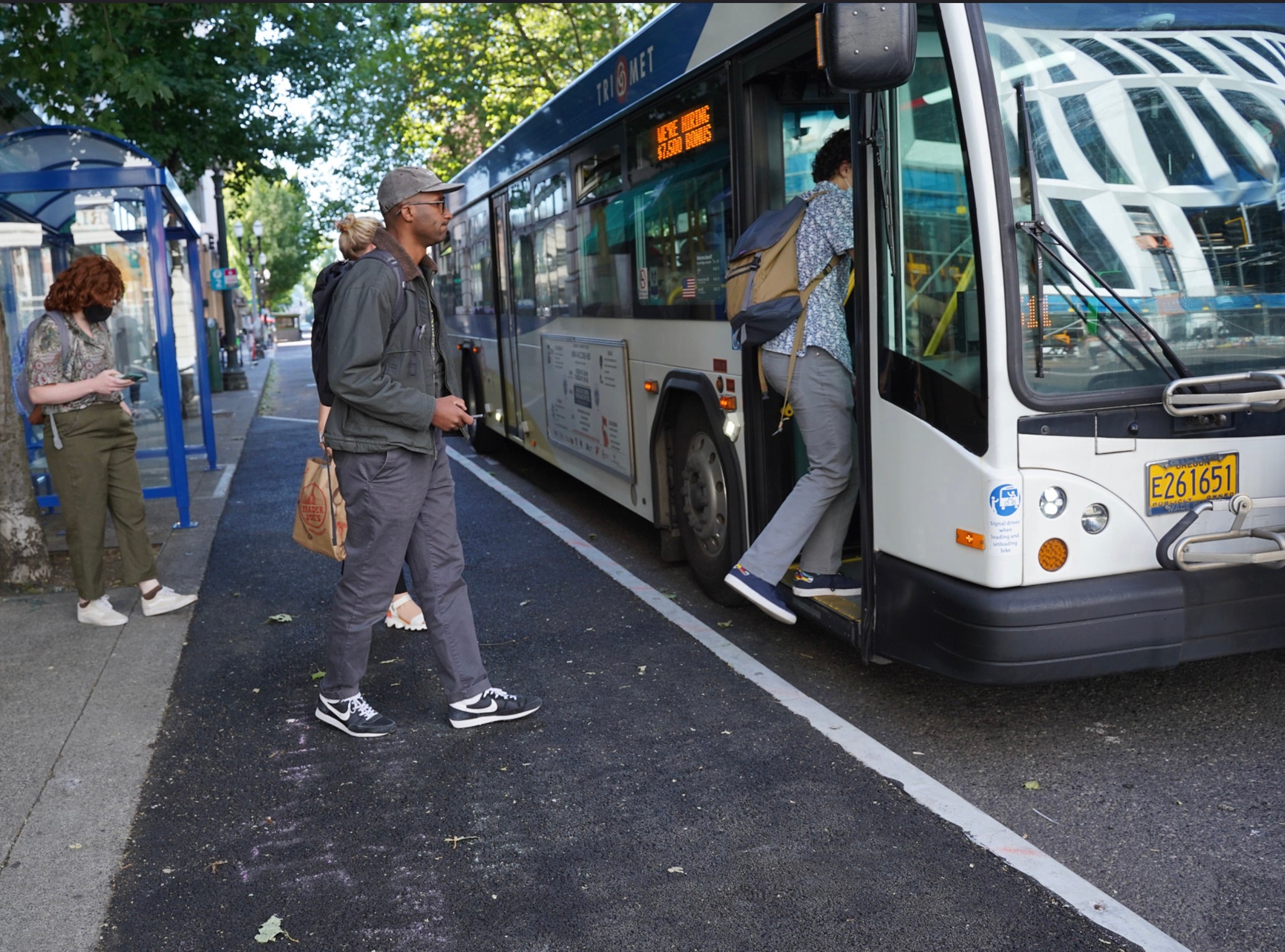
Portland City Councilor Mitch Green is worried our public transit system might be headed for a “doom loop” and he favors tapping into the Portland Clean Energy Community Benefits Fund (PCEF) to prevent it. His comments at a meeting of the Transportation and Infrastructure Committee this morning come just one week after TriMet proposed serious service cuts they say are necessary to grapple with a $300 million budget gap.
“In my view, the biggest threat to our climate goals is backsliding and losing ground on ridership,” Green said. “Which is a potential doom loop for transit.”
Green said making an investment into transit with PCEF dollars is something folks have been whispering about in private City Hall conversations, but now it’s time to bring it into the public. PCEF is a voter-approved fund administered by the City of Portland Bureau of Planning and Sustainability and made up of revenue collected from a 1% tax on the Portland sales of large retailers (companies that sell over $1 billion nationally and $500,000 locally).

Green was just spit-balling at this morning’s meeting, but he is clearly serious about the idea, which he described as, “Potentially approaching the climate investment plan (CIP, the plan that sets PCEF investment strategy) amendment process with a lens towards using some PCEF revenue to support TriMet through some sort of IGA [Inter-governmental Agreement].”
T & I Committee Chair Olivia Clark said she liked Green’s idea and wants to discuss it further at their next meeting.
T & I Committee Vice Chair Angelita Morillo said the topic of using PCEF funds for transit is already on the agenda for a meeting of council’s Climate, Resilience, and Land Use Committee scheduled for this Thursday, January 15th. The PCEF CIP adjustments on that agenda are part of a regular review process to make sure investments are set up for success and are in alignment with program goals. Separate from a larger investment in TriMet via an IGA as Councilor Green proposed, there’s currently a $15 million reduction to the CIP’s Targeted Electric Vehicle Financing Tools program that was slated to be spent instead on the Clean Energy in Regulated Multifamily Affordable Housing program. At least one councilor I talked to about that switch was uncomfortable that the funds were going from a transportation program to a housing program (given that transportation is the largest contributor to greenhouse gas emissions). Given Morillo’s comments today it seems there’s an opportunity here — given the severity of TriMet service cuts that have recently come to light — to keep this $15 million in transportation and put it toward bus service.
If a PCEF deal between Portland and TriMet was struck, it wouldn’t be the first time climate tax dollars funded transit. Back in December 2024, TriMet won $55.5 million from PCEF for their 82nd Avenue Transit project.
At this morning’s meeting, Councilor Morillo said the Climate Committee (which she co-chairs) will, “discuss different options for about $15 million in PCEF dollars that are available.” “Whether or not we should keep using them for housing infrastructure and making that more climate-friendly, or, what if we invested it on the bus? This is an open discussion.”
And since there’s often heartburn among climate advocates and politicians whenever PCEF funds get stretched into new places, Morillo added, “And as a transit user that desperately needs some of the bus lines that are getting cut, we need to balance the need to protect PCEF and its integrity and what it was meant for, and also look at some of these emerging issues given that the federal and state legislature abandoned us on public transit issues.”
That sense of urgency to fund transit is shared by Councilor Green.
“Once people switch away from riding a bus and they decide to get in that car, they’re never going to go back to riding a bus,” he said at the meeting today. “Or if they do, it’ll take pretty herculean effort to do so.”
— Learn more about Thursday’s Climate Committee meeting and view the PCEF CIP ordinance here.