Less than three months after launching a bid to raise more revenue for transportation, Councilor Olivia Clark has heard enough: At a meeting of the Portland City Council Transportation and Infrastructure Committee this morning, Clark said she was so “moved” by the level of support for two new fees that she was ready to put forth a proposal.
“I did not start out at this point, but given all the community feedback,” Clark said, “I’m going to take a risk here, and I’m going to open up with a funding proposal for you to discuss.”
Clark’s confidence came from a presentation by Portland Bureau of Transportation staff that summarized public feedback from four recent open houses and an online survey. Over the past several weeks, PBOT hosted open houses in each district. 254 people attended the in-person events and another 477 completed the online survey. While obviously not a scientific sampling of opinion, Councilor Clark feels like it’s time to move forward.


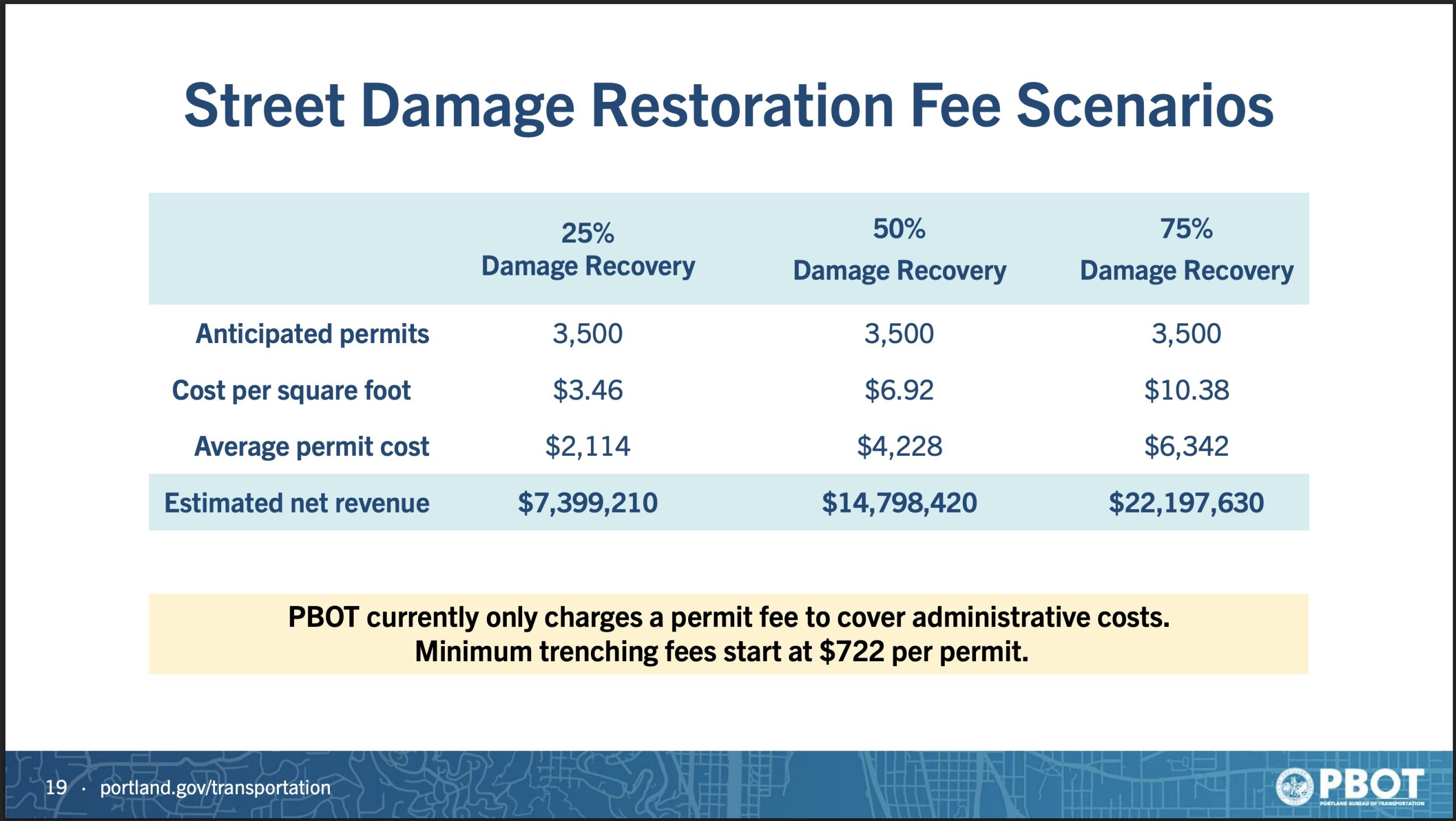
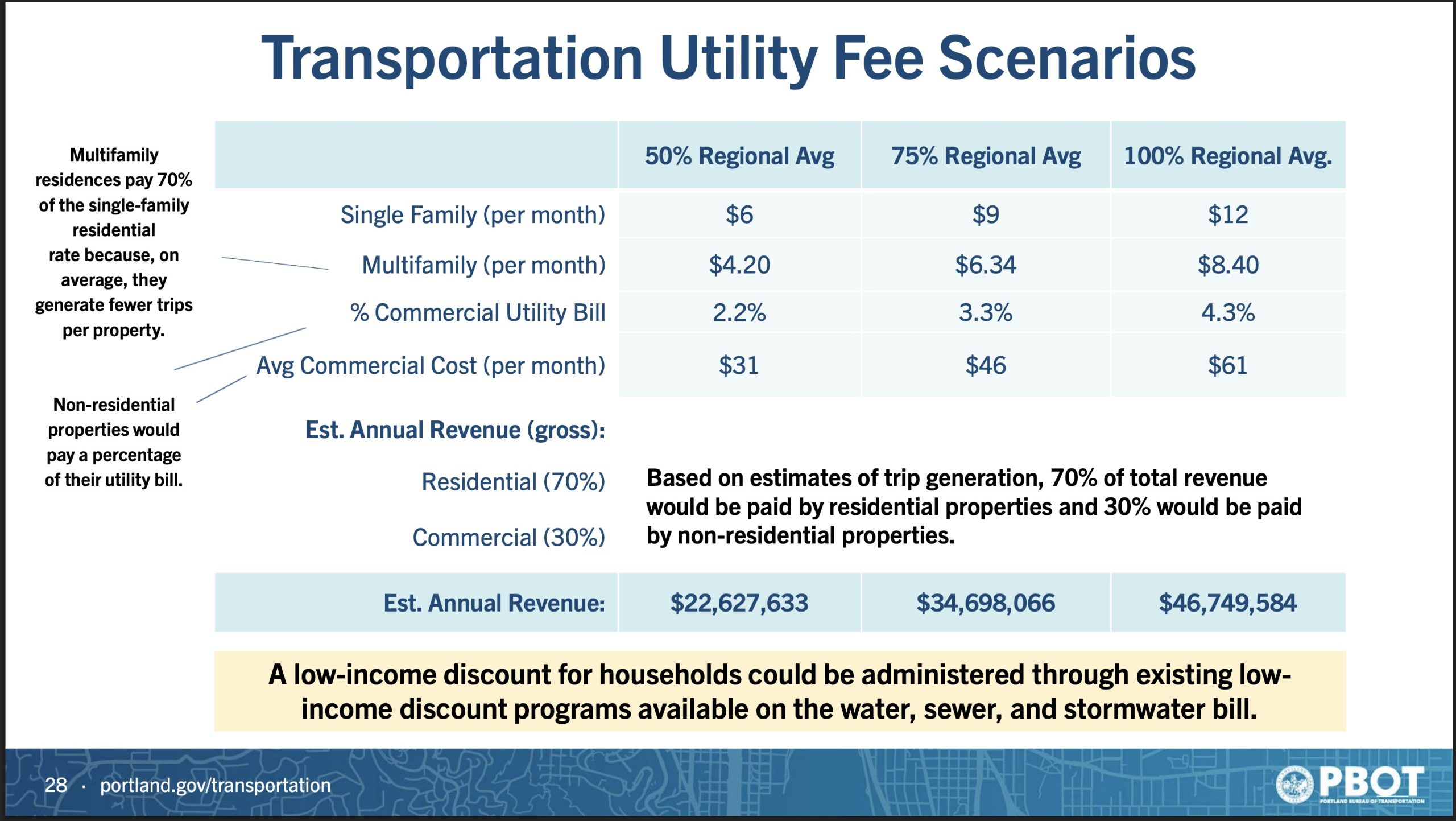
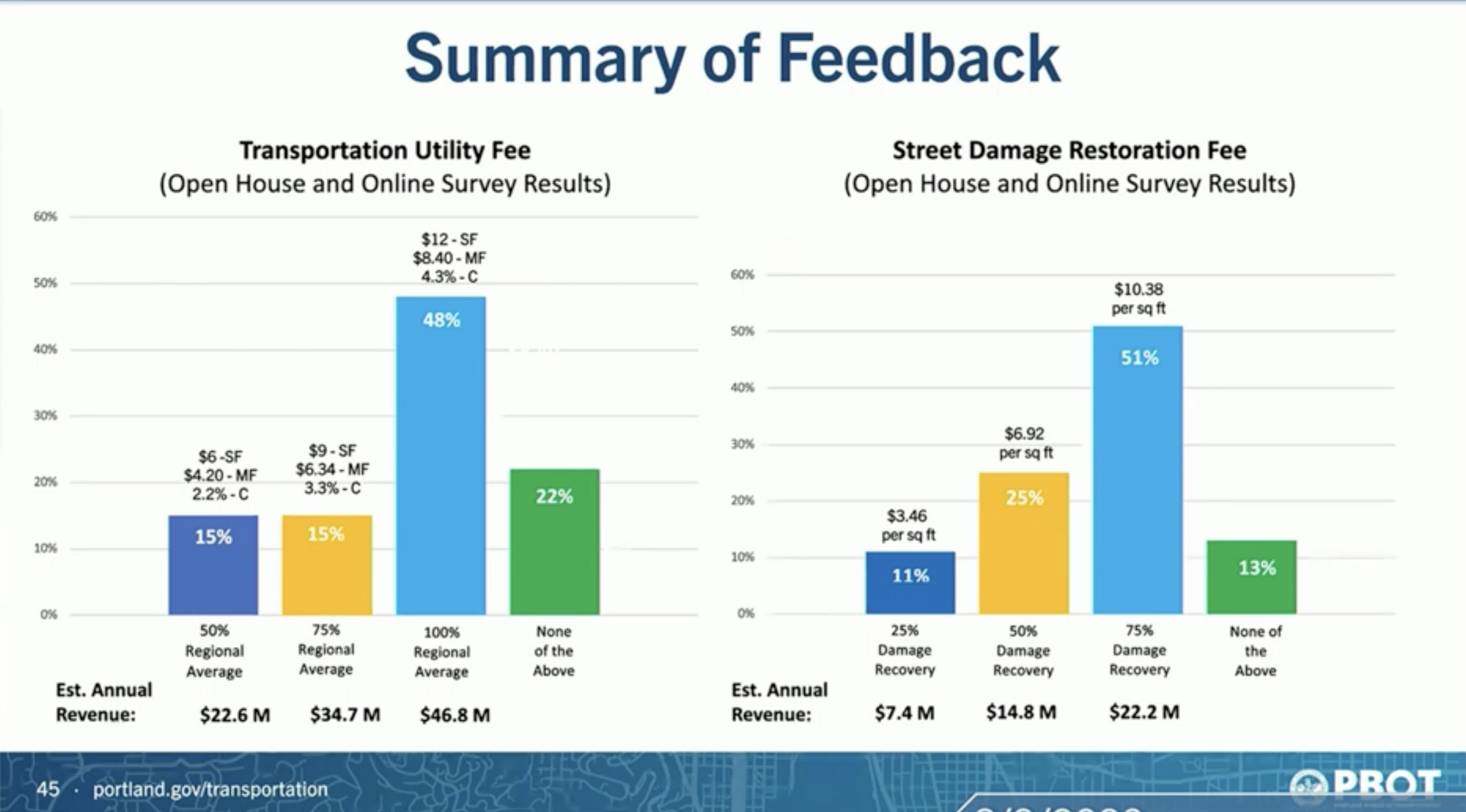
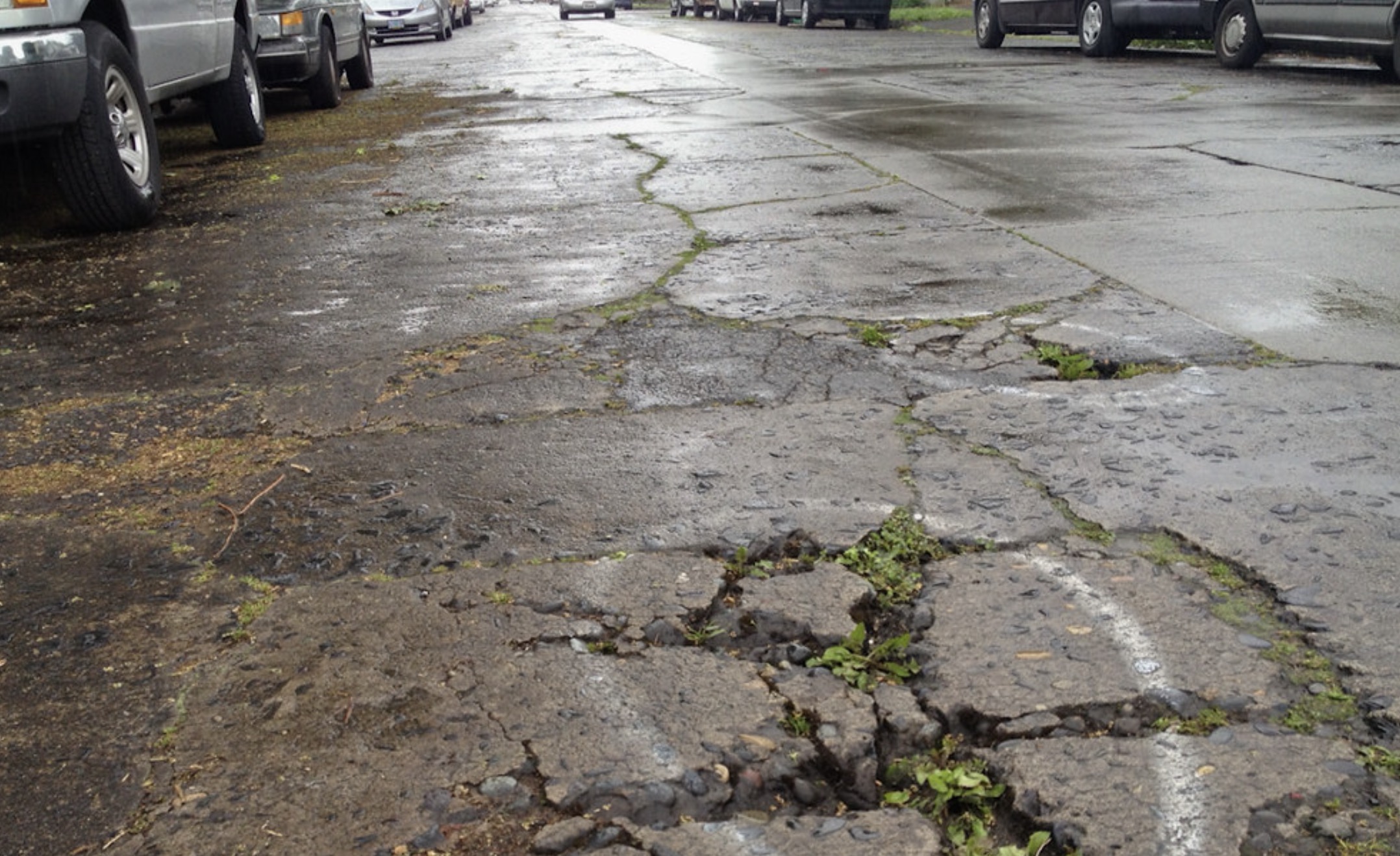
Clark plans to draft legislation that would authorize the City of Portland to pursue a Transportation Utility Fee (TUF) at around $12 per household (or $9.50 per multifamily unit) and a Street Damage Restoration Fee (SDRF) at $10.30 per square foot. The TUF is something 31 other Oregon cities have already implemented. It would be charged on utility bills and would elevate well-maintained streets to the same level as other basic city services like sewer, power, and water. The SDRF would be charged to utility companies and other contractors who dig up streets. The fee would compensate PBOT for damage done to the right-of-way.
Despite the conventional wisdom that voters are reflexively against any new taxes or fees, PBOT’s recent outreach showed that 78% of those who offered feedback support the TUF and 87% support the SDRF. Of those who support the TUF, 48% said it should be the same as the regional average, or about $12. This is significant, because folks were given options to support $6 or $9 per household — yet they still chose $12. (Note: The TUF is technically a fee, not a tax, so it doesn’t need a public vote.)
PBOT says they must fill a $25 million budget in the short-term, but the overall cost to address their maintenance backlog is $6 billion.
Taken together, the TUF and SDRF would raise about $68 million per year and would give PBOT a flexible pot of funds they’d have discretion over. This is a key point given that the vast majority of PBOT’s funding is from sources that are dedicated to specific projects and programs. Add in the $18 million (or so) per year PBOT brings in from the Fixing Our Streets (10 cent local gas tax) program and the bureau would have enough to fill their budget gap and make headway on that maintenance backlog.
There are still a lot of details to hammer out. Clark said she’d likely include language in the ordinance that would mandate a certain amount of funds raised from the TUF be spent on maintenance. But Clark wouldn’t stipulate an end to PBOT’s existing local gas tax, which is an idea floated by Mayor Keith Wilson at the open houses. Councilors Clark, Smith and Angelita Morillo said that gas tax conversation should not be mixed with conversations about new alternatives.
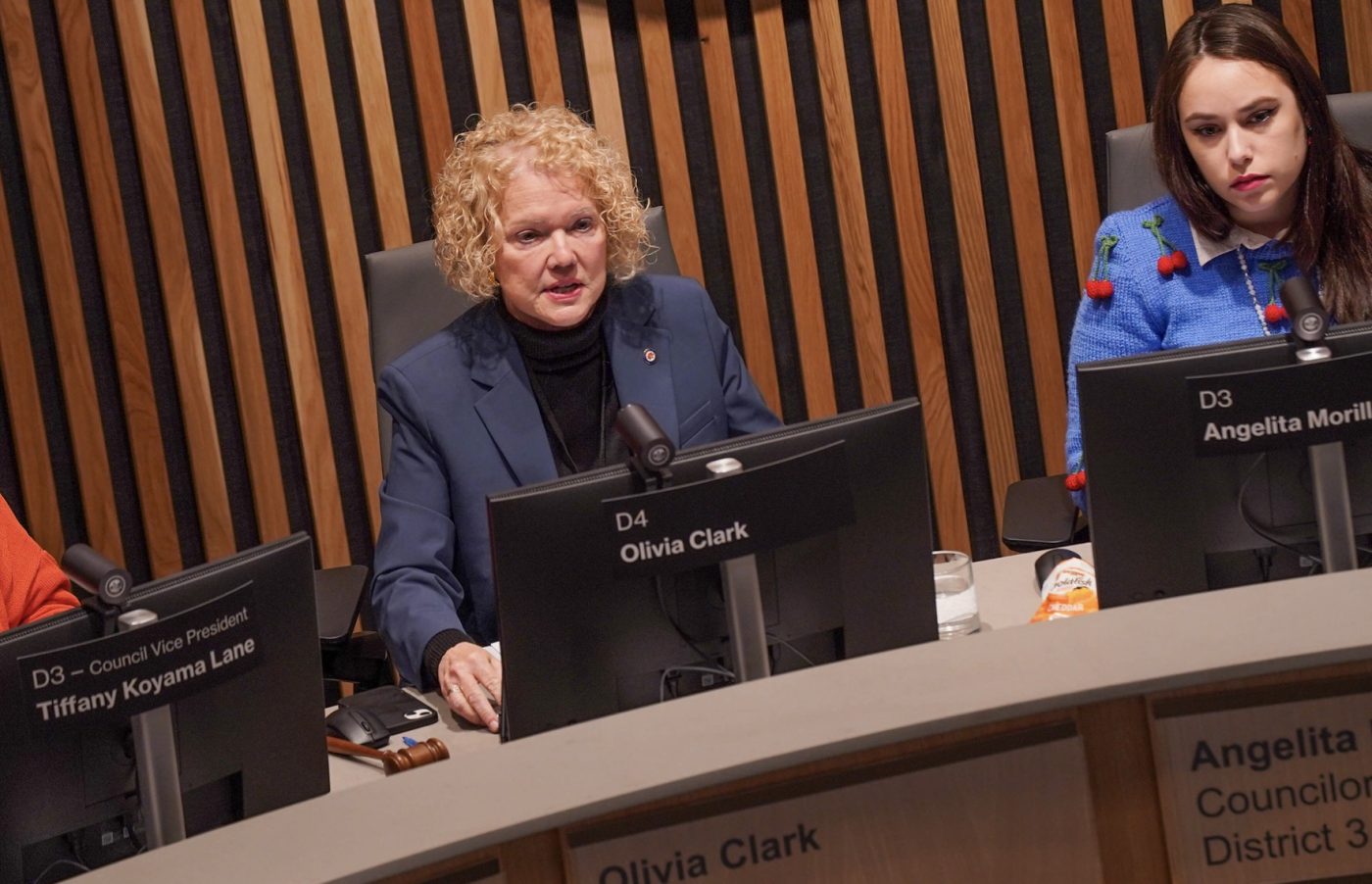
“This is an important moment in Portland history.”
– Olivia Clark, city councilor
At council Monday morning, Clark’s proposal was met with strong approval from the other four members of the committee. Councilor Loretta Smith voiced her support, seeing it as a way to fund her Sidewalk Improvement and Paving Program.
Councilor Mitch Green also said he’s ready to support the proposal. He also said the future of Portland local gas tax could be a moot point if city planners use new revenue to, “Shape the transportation system that gives people options to not drive their car.” Green said the U.S. war in the Middle East could soon lead to lines as gas stations and provide a strong impetus for people to drive less and/or seen other options. “We have an opportunity here,” Green said, “To use that geopolitical crisis as an opportunity for us to lead a city forward that’s not exposed to that kind of energy shock.”
Two other alternative funding sources — a retail delivery fee and a third-party food delivery fee — were considered not quite ready for prime-time and won’t move forward in this proposal.
As leader of this effort, Councilor Clark wants to move forward at relatively breakneck speed. She hopes to have legislation drafted and delivered to the full City Council by next week and continue the conversation at the (newly assembled) Committee of the Whole on April 2nd (which will be the first opportunity for public testimony). If all goes according to plan, the proposal will be in front of full City Council on April 8th, before the city budget process officially begins.
“Let’s move on,” Clark said at the end of this morning’s conversation. “This is an important moment in Portland history.”