The City of Portland is gearing up to persuade everyone who uses the transportation system that the time has come to pay more for it. At a meeting earlier this week, Bureau of Transportation staff offered the most detailed look yet at four new revenue mechanisms they say hold the most potential for lifting the city out of its street budget crisis.
As I reported last month, City Councilor Olivia Clark, in her capacity as chair of the Transportation and Infrastructure Committee, is spearheading this effort. She tasked PBOT to publish a report on new ways the bureau could raise revenue. We got a glimpse at that report in December. At the T & I meeting this week, staff returned with estimates on how much in new fees we might be asked to pay, and how much revenue the city could raise.
PBOT finds themselves at this undesirable juncture because their budget is breathing its last gasp. PBOT Director Millicent Williams told councilors Monday that the agency, “has faced years of reduction and currently there is no end in sight.” With uncertainty at the state level, Williams said PBOT would lose an additional $35 million over the next two fiscal years if the Oregon Legislature isn’t able to pass a new funding package.
To restore PBOT’s coffers and rebuild streets, Williams said her team has further vetted four funding ideas from the report. They include: a street damage restoration fee, a transportation utility fee, a retail delivery fee and a third party food delivery fee. I summarized each of these last month. What’s new this week are estimates about how much each fee would raise.

Street Damage Restoration Fee
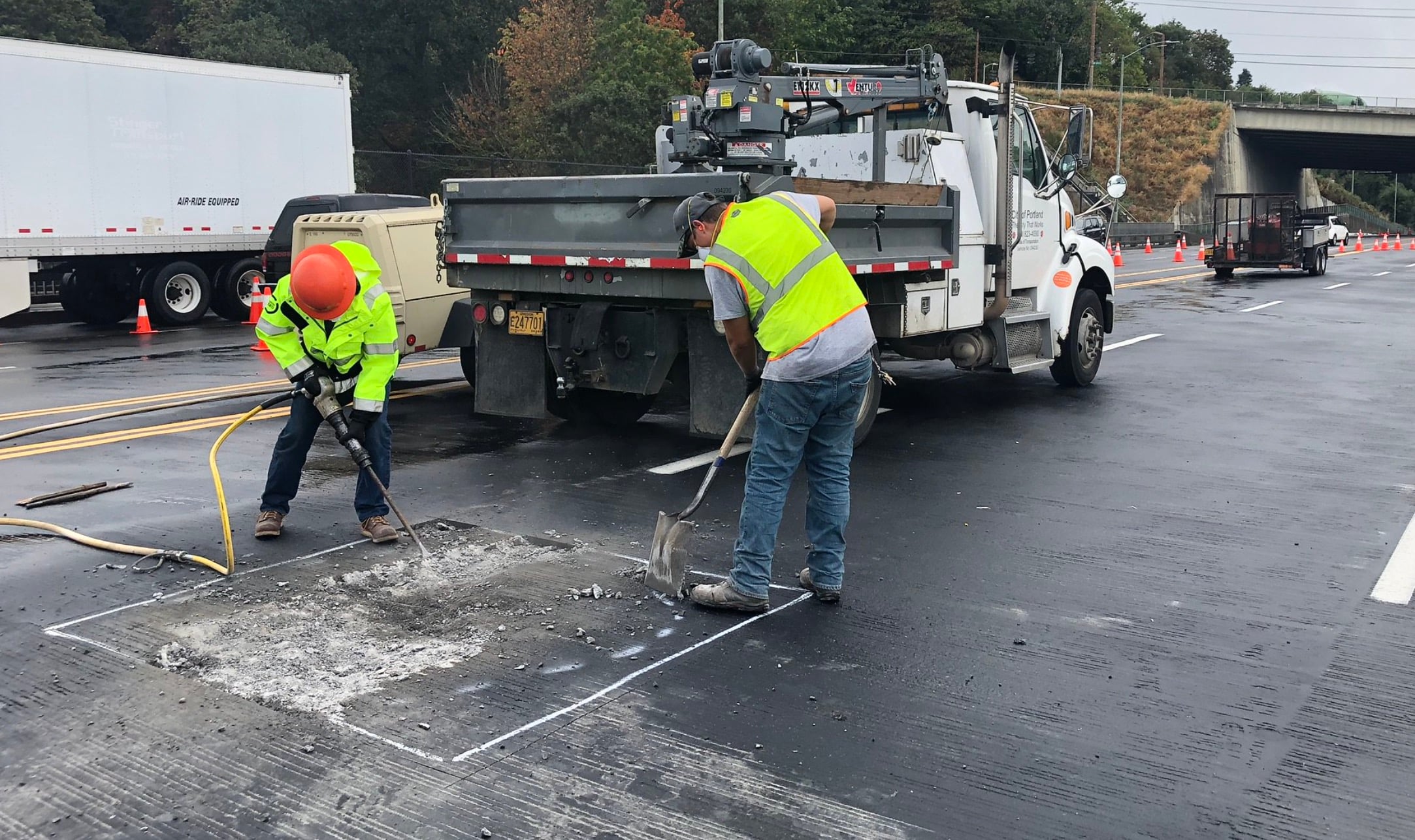
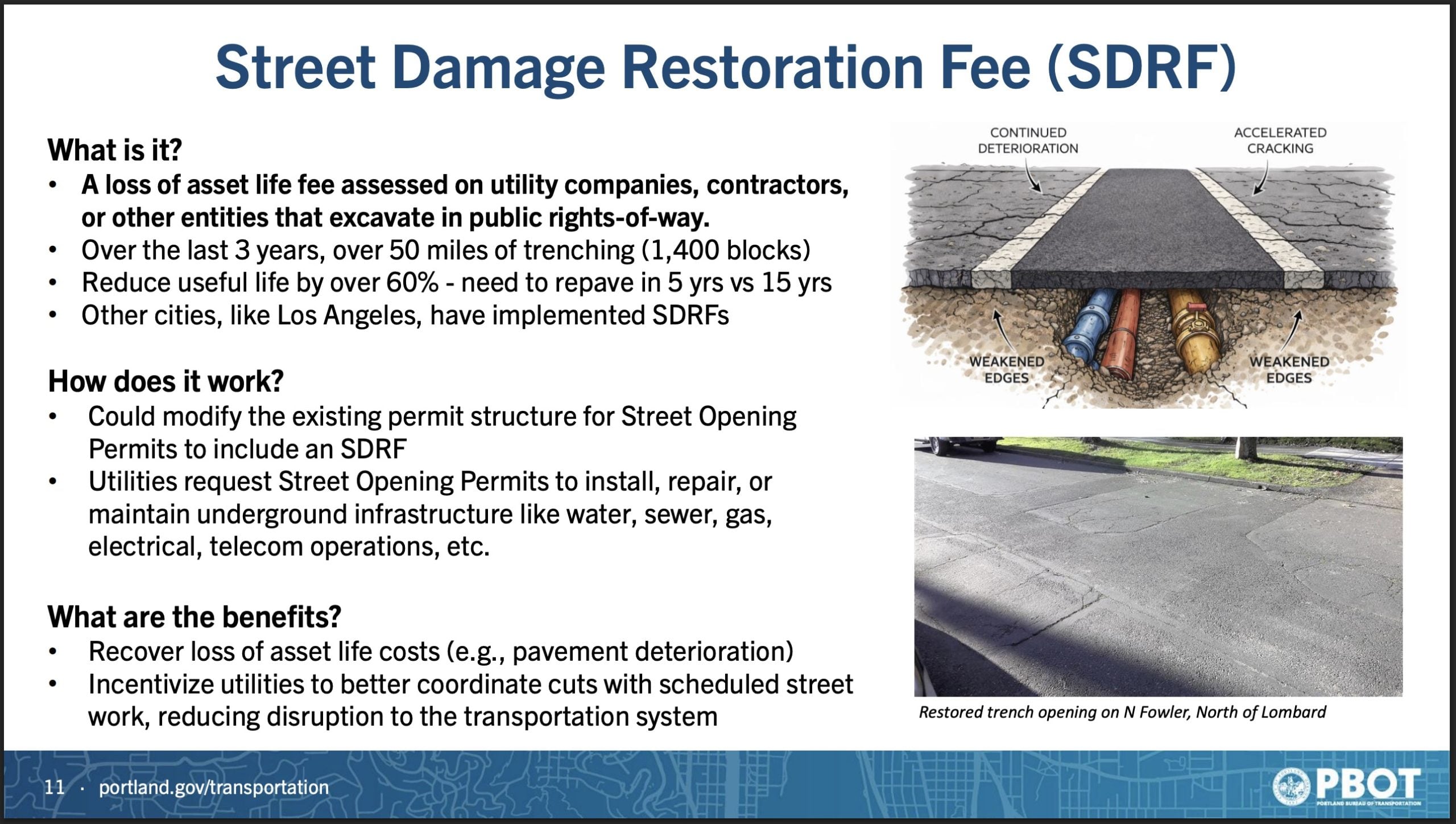
This fee would be charged to entities like utility companies who cut into city streets to install pipes and other infrastructure. PBOT estimates that in the past three years Over the last 3 years, various companies and agencies have ripped open 1,400 city blocks. Currently PBOT only charges for administrative costs related to permitting these projects and they do not charge for the street repairs. (To be clear, the agency/company is required to pay for patching the street back up, but the work often leaves the street worse off and PBOT is left making up the difference).
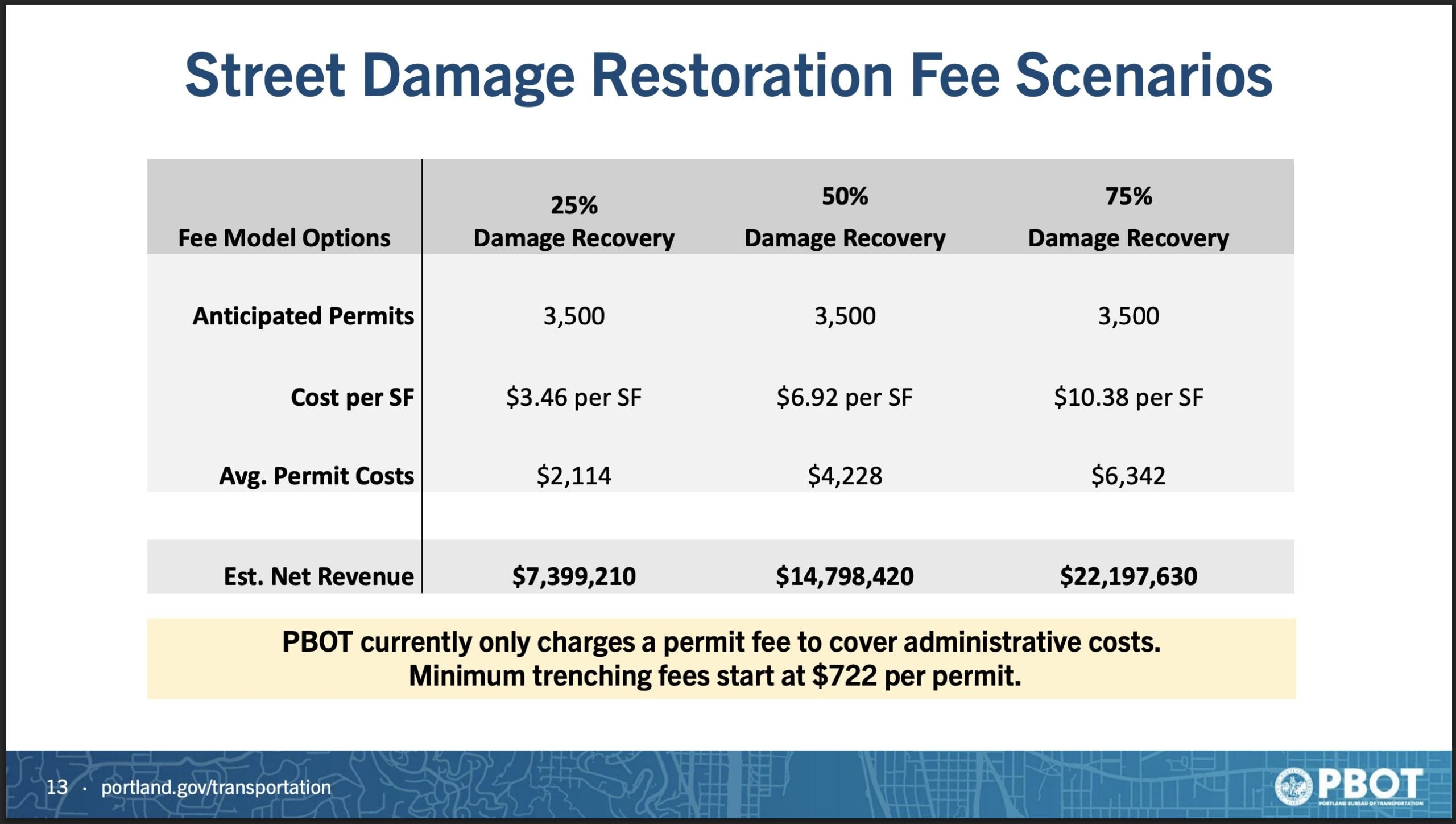
PBOT presented a range of “damage recovery fees” from 25% to 75%. Depending on what they settled on, this fee could raise between $7 million to $22 million per year.
Transportation Utility Fee
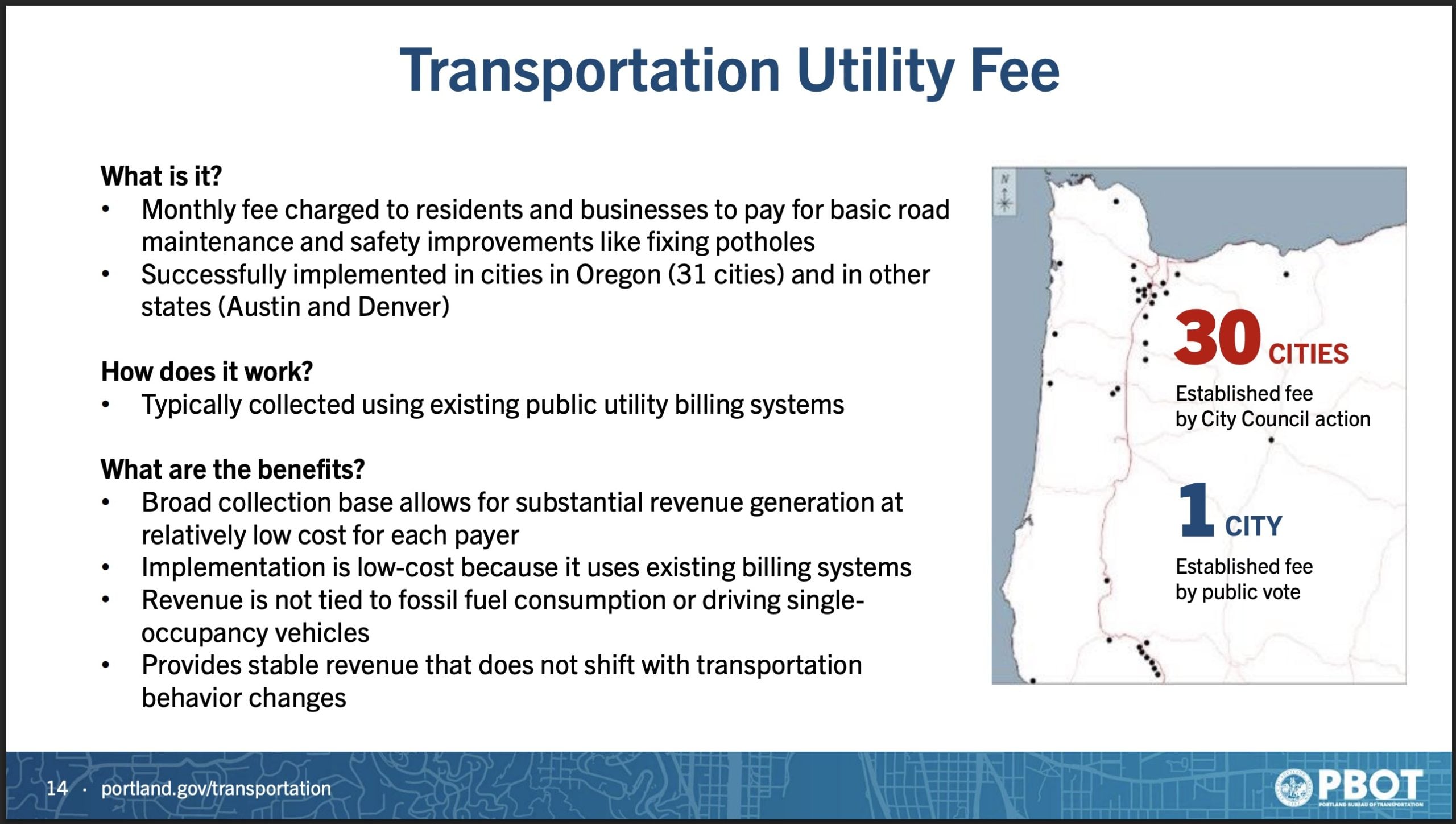
According to PBOT Policy Partnership and Resources Manager Mark Lear, “Of all the potential new revenue sources that we evaluated in our report, the transportation utility fee (TUF) scored the highest on our evaluation matrix.” This would be a monthly fee charged to residents and businesses based on their use of the transportation system.
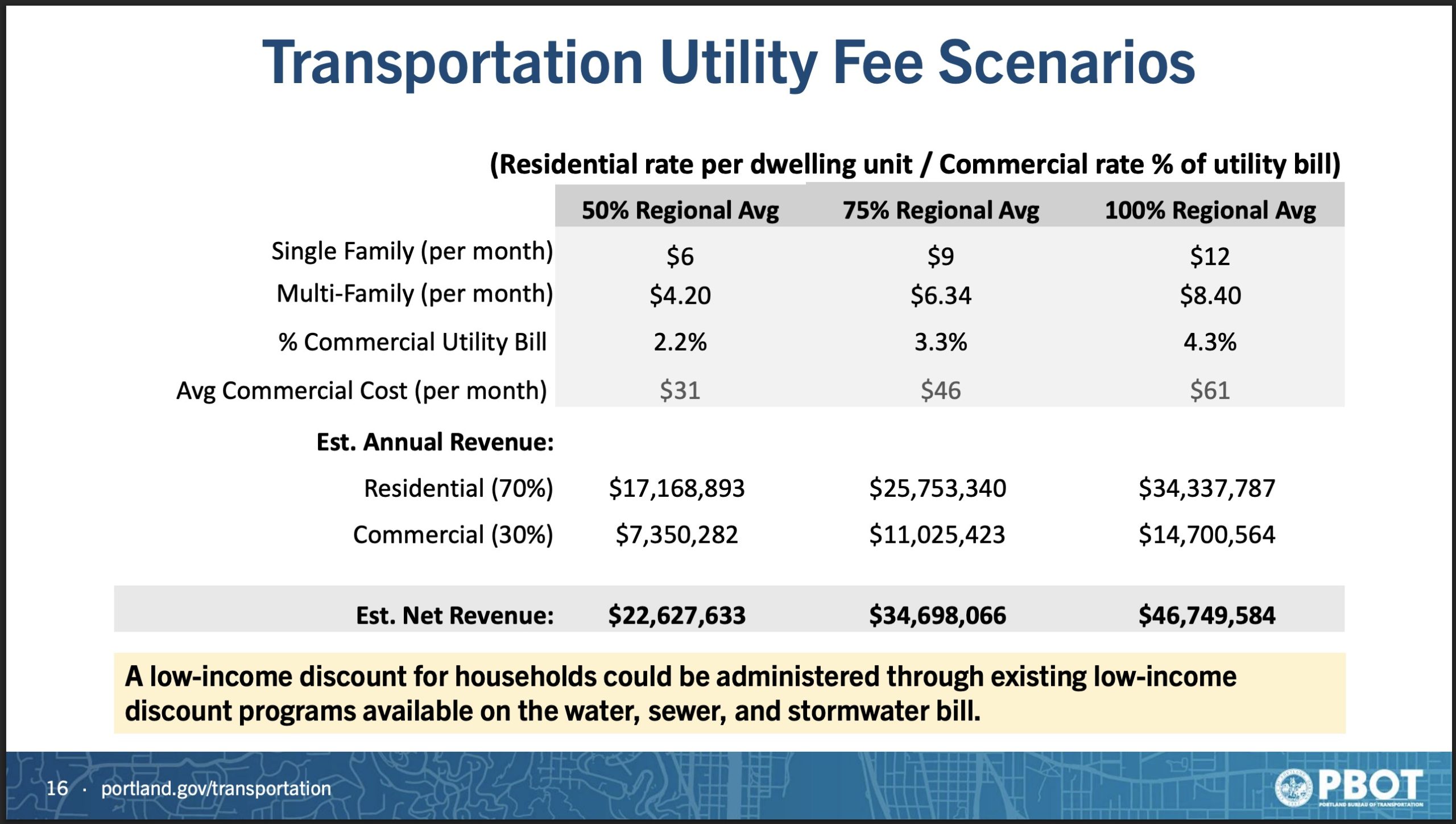
There are nearly a dozen cities around the region that already have a TUF. The fees range from $3.79 per month for a resident of a multi-family dwelling, to $18.53 per month for a single family home. Depending on how much they decide to charge, this fee could raise about $23 million to $47 million per year.

Retail Delivery Fee
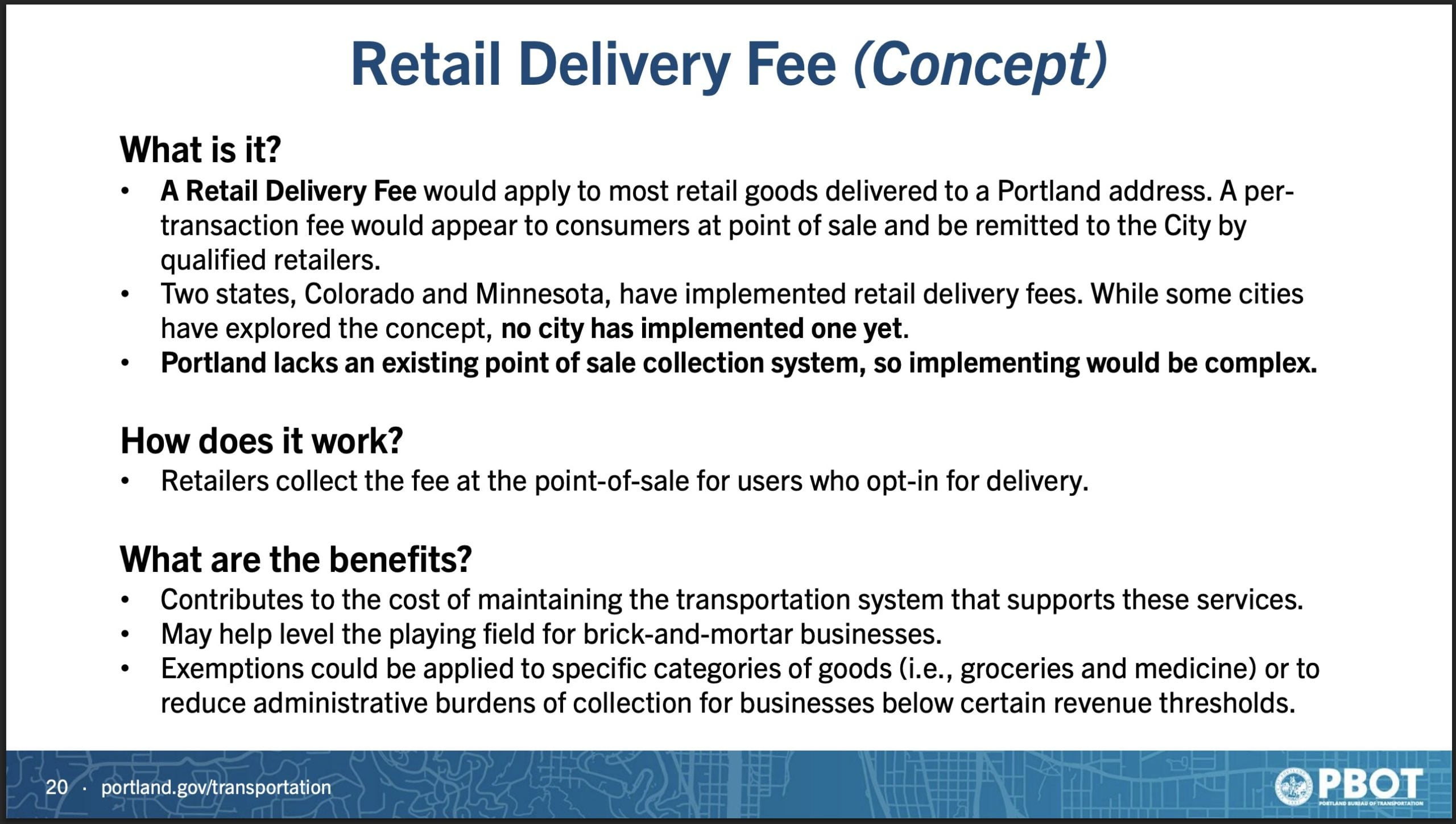
Unlike the two fees above, this one is still in concept phase. It would be charged to consumers who choose to have certain items delivered to their home or business. PBOT Mobility Innovations Manager Jacob Sherman told councilors Monday that two other states have already instituted a retail deliver fee, but Portland would be the first city to do so. With e-commerce exploding by 40% since 2019, PBOT says the time has come for someone to pay for the added trips these purchases add to our road network.
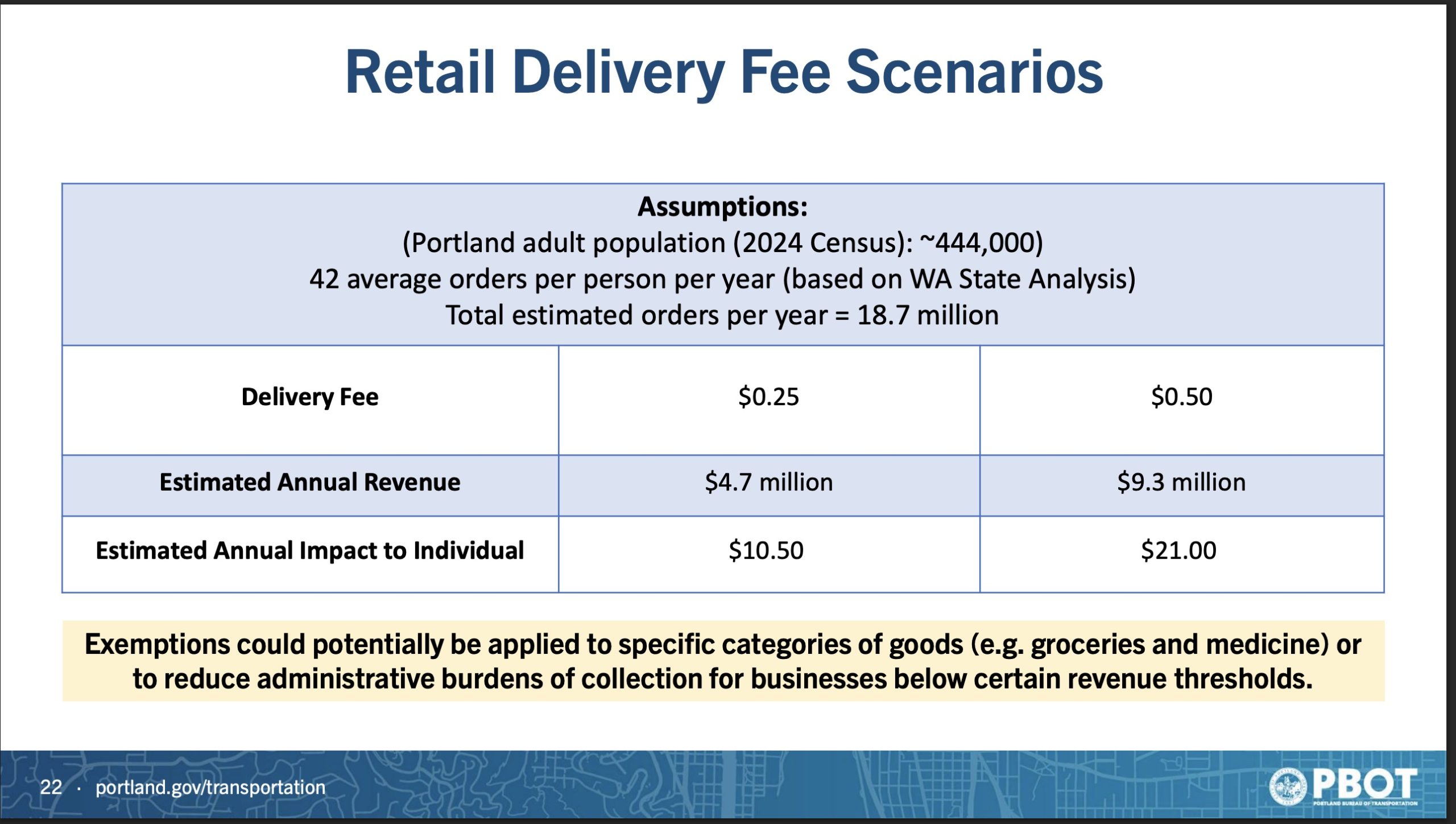
PBOT floated a per delivery fee range between 25 and 50 cents that would raise an estimated $5 million to $9 million per year. Note that exemptions would be made for deliveries that include groceries or medicine.
Third Party Prepared Food Delivery Fee
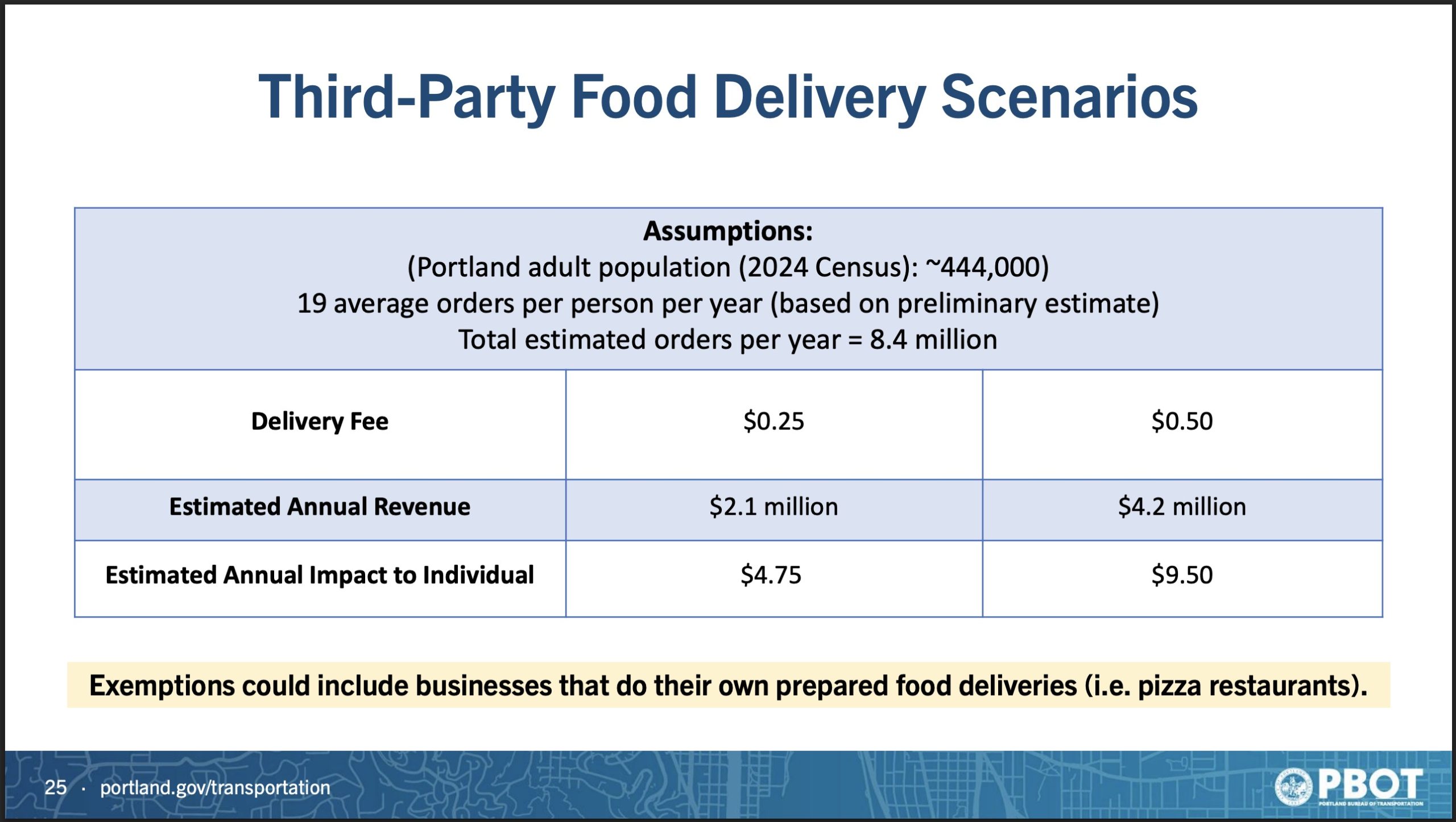
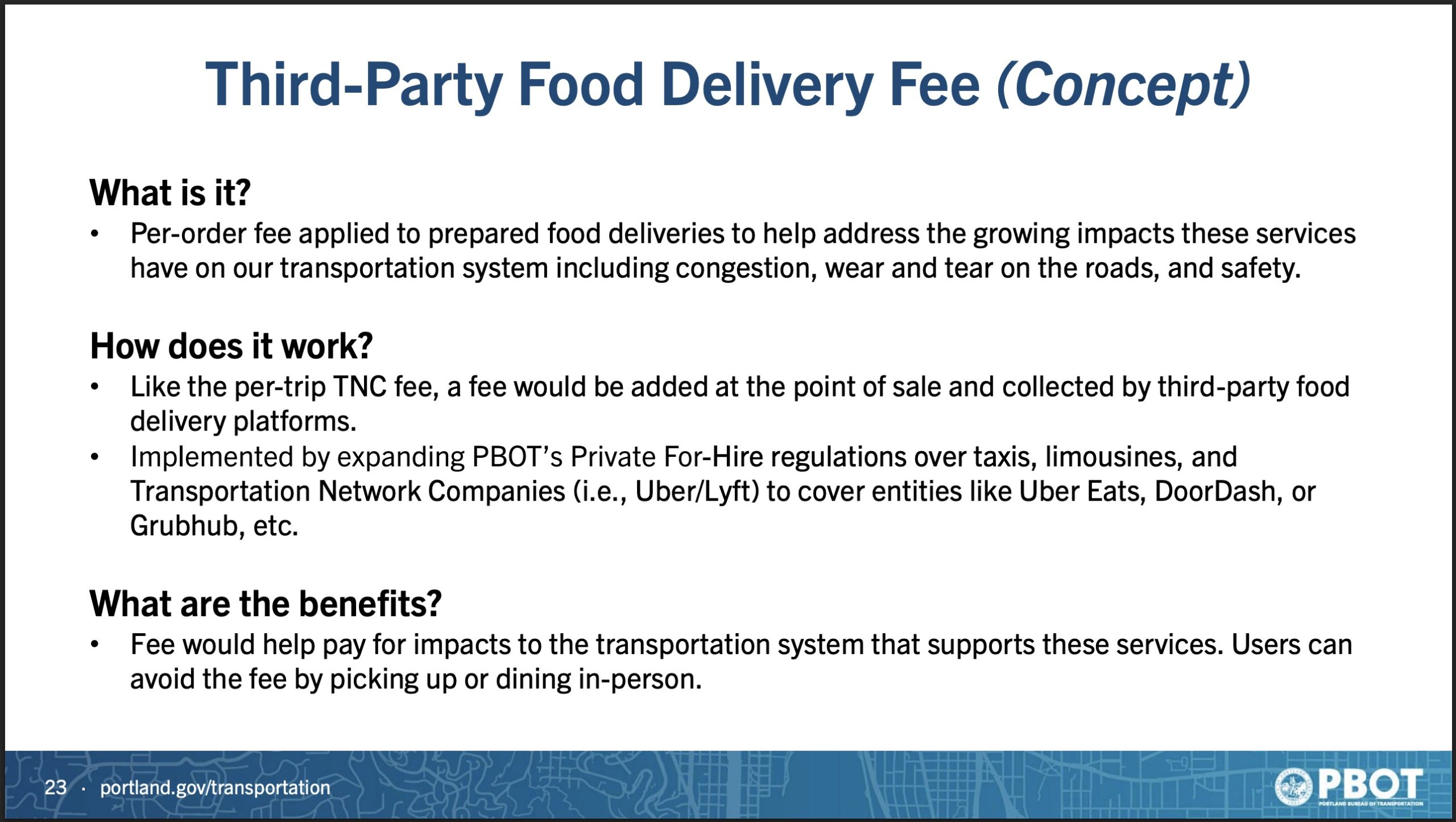
Also still in concept phase, PBOT likes this idea in part because it might encourage some people to patronize businesses in person (which has a ripple effect on the local economy). The idea would be a fee similar to PBOT’s current surcharge on Uber and Lyft rides. “By implementing a fee on these convenient services, it would send a price signal to consumers and generate resources to maintain and hopefully improve the transportation system,” Sherman said.
A per delivery fee of 25 or 50 cents could raise between $2 million and $4 million respectively.
Bonding
One other idea City Council asked PBOT to explore is bonding. Cities can sell bonds to get money up front for infrastructure projects. When interest rates are low, cities can pay back these bonds on relatively good terms. Director Williams told councilors that PBOT has explored selling $50 million in bonds that would cost them only $4 million in debt service over 20 years. “This could be a meaningful part of the proposal we discuss over the next few months,” Williams shared.
When it came time for councilors to ask questions and share opinions about the new fee ideas, there wasn’t a lot of pushback or fireworks (it’s still early enough where no one is being asked to make hard decisions).
Councilor Mitch Green cautioned PBOT about setting the TUF rate too high. Green feels like the regional average of $12 per month is, “Kind of a lot to ask.” He’d like to see something closer to $6 a month. When it comes to the delivery fees, Green said PBOT should consider going much higher than 25-50 cents. That amount, he said, “Is not going to be a meaningful impact to get people to change… You’ll just absorb that. It’s a rounding error.” “A delivery fee needs to be something that you notice on the bill and are like, ‘All right, I’m done. We’re going to take this bus trip into town,” he continued. “If it’s at least a couple bucks, then people say, ‘All right, let me go in and spend my money at this place,’ and that will have broad benefits to our economic development. So so I think we should be a little more aggressive on that front.”
Green also PBOT if they could make food delivered by bikes (or any non-car vehicle) exempt from the fee. “Most definitely,” PBOT staff replied. “Those are things we’ve been thinking about.”
From here, PBOT will organize a series of open houses in each district. Those dates haven’t been released yet, but we can expect them to happen at the end of February and early March. Stay tuned.
— View the full presentation that was shared at this week’s T & I Committee meeting.