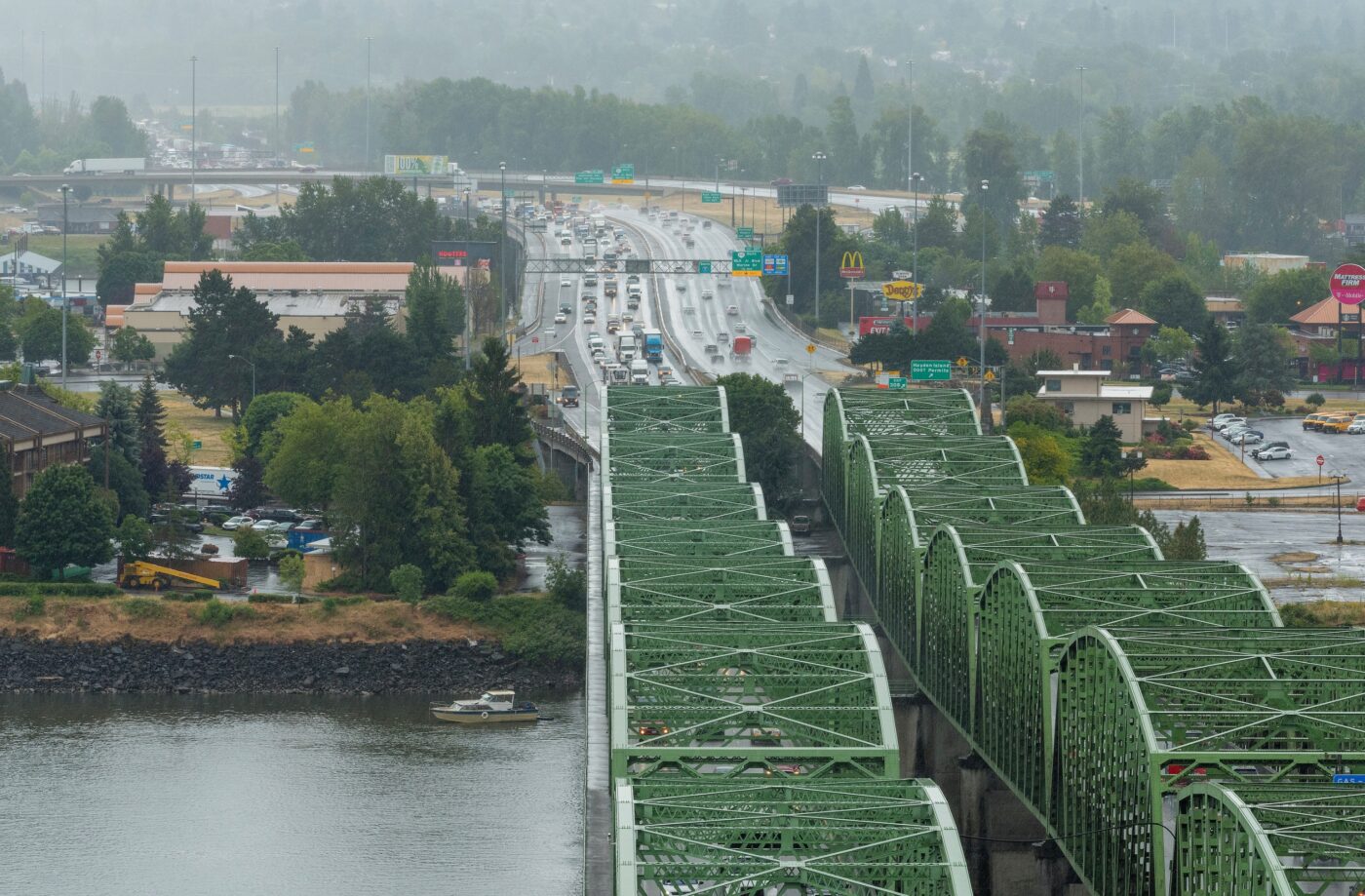

The project to expand five miles of Interstate 5 between Portland and Vancouver and replace the Interstate Bridge reached a big milestone last month with the release of the federally-mandated Draft Environmental Impact Statement (DEIS).
The Interstate Bridge Replacement Program DEIS (actually the SDEIS in this case because it’s a “supplemental” EIS that builds on the old EIS from the Columbia River Crossing project which was the precursor to the IBR) reveals key details about what we’ll get for the estimated $7.5 billion price tag and it opens a public comment period that runs through November 18th.
I plan to dive into the weeds of the active transportation infrastructure and other salient elements of the DEIS in future days and weeks, but to re-ignite our coverage of this megaproject, I interviewed someone who’s deep in the activism trenches. Je Amaechi (“Jay A-may-chee”) is a community organizer with Just Crossing Alliance, a coalition of dozens of environmental, transportation, and social justice nonprofits working to influence the project. Among the partner organizations is BikeLoud PDX, The Street Trust, No More Freeways, Oregon Trails Coalition, Oregon Walks, and others.

“One thing all the members have in common is this urgent need to mitigate and adapt to climate change and the need to balance all the fiscal needs with all the other infrastructure priorities,” Amaechi said during our video interview on Wednesday.
Amaechi and her crew are working hard to educate our community about the project. Given the dizzying amount of information to get a handle on, Just Crossing Alliance has put together a helpful list of links to official public hearings and other events. Amaechi also wants to help log as many official comments as possible. Why? “These public comments are important is because it’s building a record for potential future actions,” she shared. “Public comments become part of the official record… so they can’t say, ‘Well, we didn’t know this,’ or, ‘We weren’t aware.'”
“The assumption that we have to build it in a Robert Moses-style freeway expansion way and the prioritization of car infrastructure: That’s the thing that fundamentally we don’t agree with and we say that there are better ways that we can design this bridge for a future that like more Portlanders want to see.”
– Je Amaechi, Just Crossing Alliance
The way I see it, comments like, “Don’t build this bridge!” probably won’t be very influential because at this point it doesn’t look like anything can stop the project’s inertia. So far Oregon and Washington departments of transportation have raised over $4 billion (split between federal grants and state allocations). Barring some unforeseen opposition or glitch, it will likely move forward eventually.
Even Just Crossing Alliance isn’t trying to stop the project. Their goal is to right-size it and bend project leaders — and the elected officials who hold the pursestrings — toward new perspectives and possibilities.
When it comes to the DEIS, Amaechi said the over-arching concern is its “defeatist way of thinking.” In other words, she thinks it assumes the status quo of car and truck-centric transportation will exist well into the future (projects and models in the DEIS are based on 2045). “This way of thinking limits the possibilities for this bridge and how it could serve a lot of different populations,” she said.
Amaechi says many folks are worried about the financial commitment this bridge demands — both from our state coffers and from the pockets of everyday folks. Tolls will be a big part of the revenue picture, and those tolls are likely to hit some groups much harder than others if carveouts and subsidies aren’t well-crafted.
Then there’s the simple fact that this is a massive expansion of freeway lanes and driving capacity.
“The assumption that we have to build it in a Robert Moses-style freeway expansion way and the prioritization of car infrastructure: That’s the thing that fundamentally we don’t agree with and we say that there are better ways that we can design this bridge for a future that like more Portlanders want to see,” Amaechi said.
“This idea that we’re alleviating congestion by adding lanes is something that has been disproven many, many times,” she added. “And in fact, the opposite has been proven to be true. Induced demand is slightly mentioned [in the DEIS], but it’s not addressed in a realistic way.”
Amaechi believes the modeling and design options laid out in the DEIS make it clear that DOTs on both sides of the river are planning for a future many Just Crossing Alliance partners and their supporters simply don’t want. She acknowledges that people will continue to drive and need goods delivered by trucks in the future, but if our projects tilt too much toward serving those needs, we’ll be locked into the same earth and community-destroying ways of life that have hastened climate catastrophe across the globe.
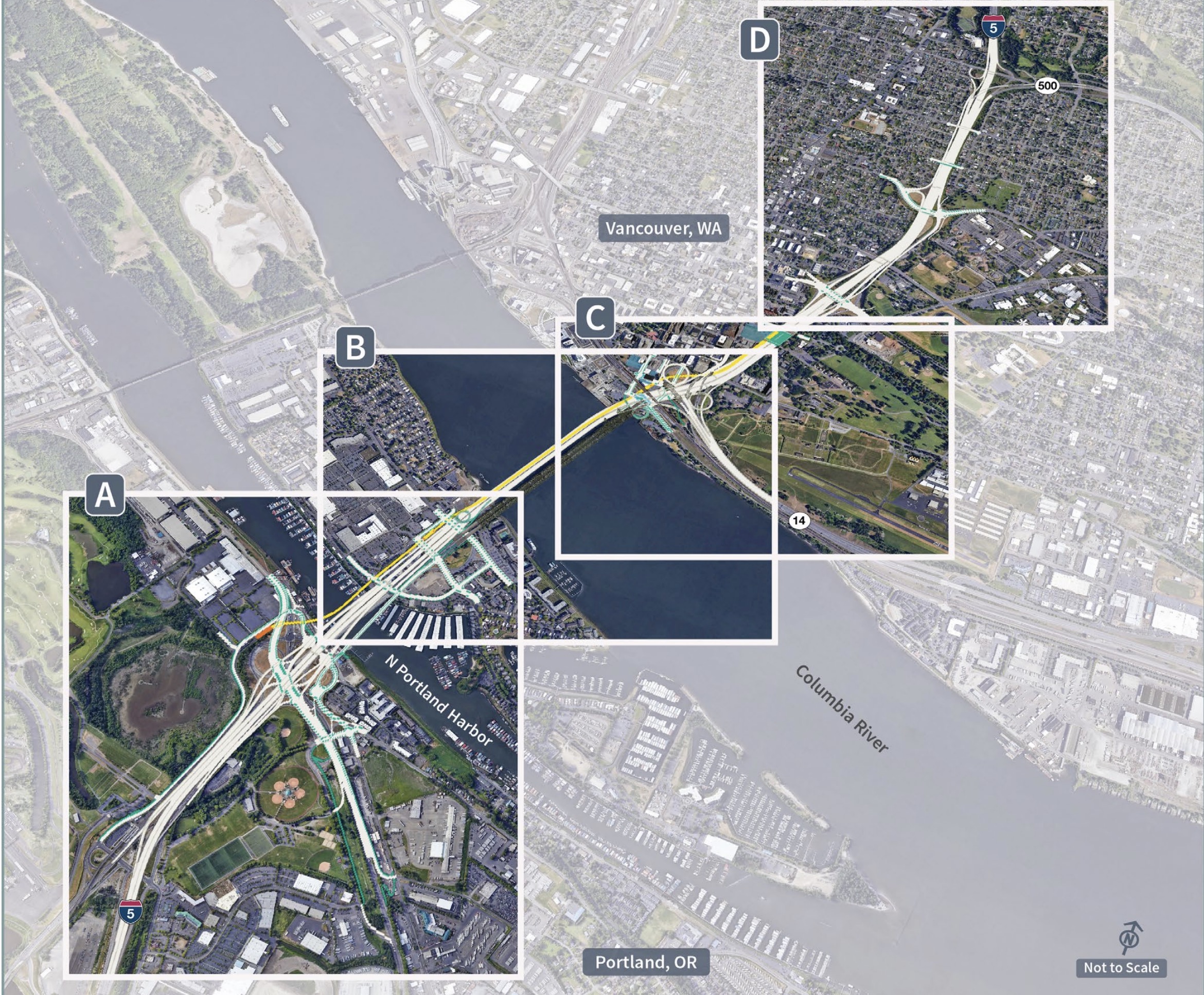
With an investment of this size, we should build infrastructure that truly moves the needle for biking, walking and transit. Current plans for the bikeways begin on N Expo Road by Delta Park dog park, where the IBR will create a bike lane toward Expo Center to connect to new paths and bridges over the Columbia River. While the DEIS talks about shared-use paths and protected bikeways, Amaechi says it will take work to make sure the project builds excellent and safe bike infrastructure that is welcoming too all riders and skill levels.
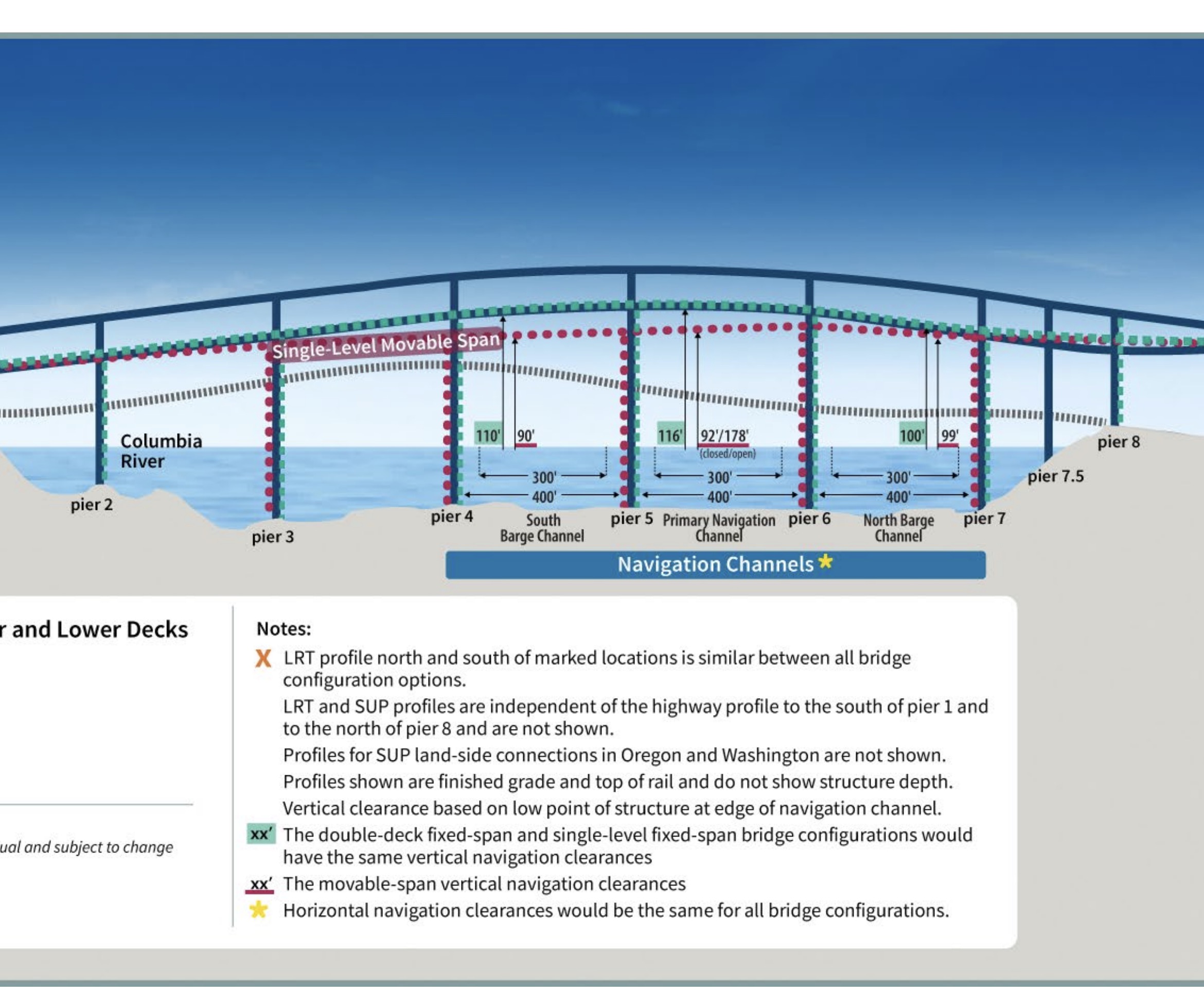
The new bridge is likely to be much higher than the existing one, requiring bike riders to scale some sort of long spiral ramp to reach the top. “For people who are new to biking, just looking at one of those spirals is very scary — especially if they’re talking about these things being 100 feet in the air.”
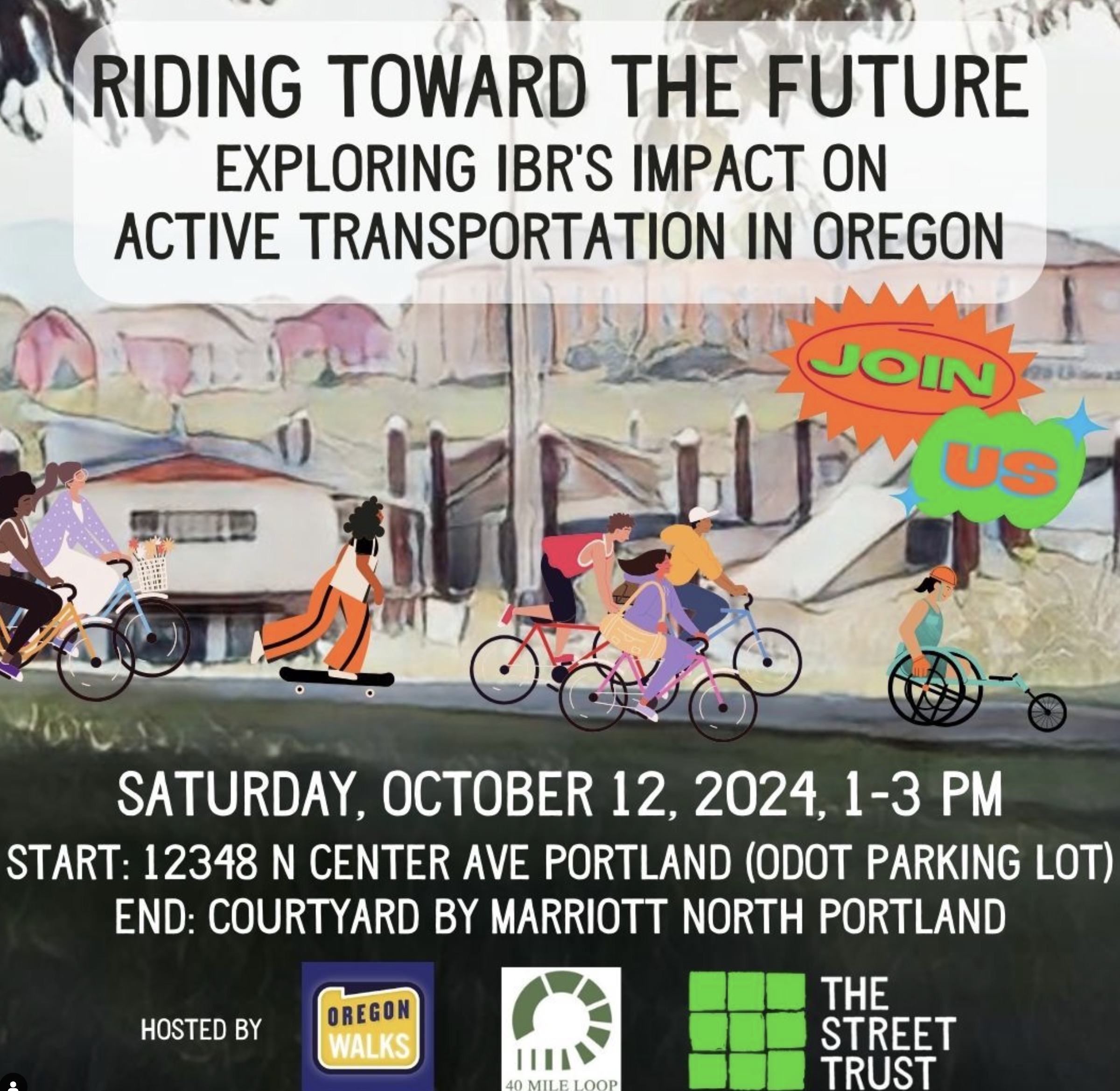
If you’re curious how changes proposed in this project will connect (or not) to the existing bike network, sign up for “Riding Toward the Future: Exploring IBR’s Impact on Active Transportation in Oregon.” The ride is Saturday (10/12) at 3:00 pm and will be co-hosted by Oregon Walks, 40-Mile Loop, and The Street Trust.
And stay tuned to BikePortland, the JCA’s work and the official IBR website to stay engaged on this important project.