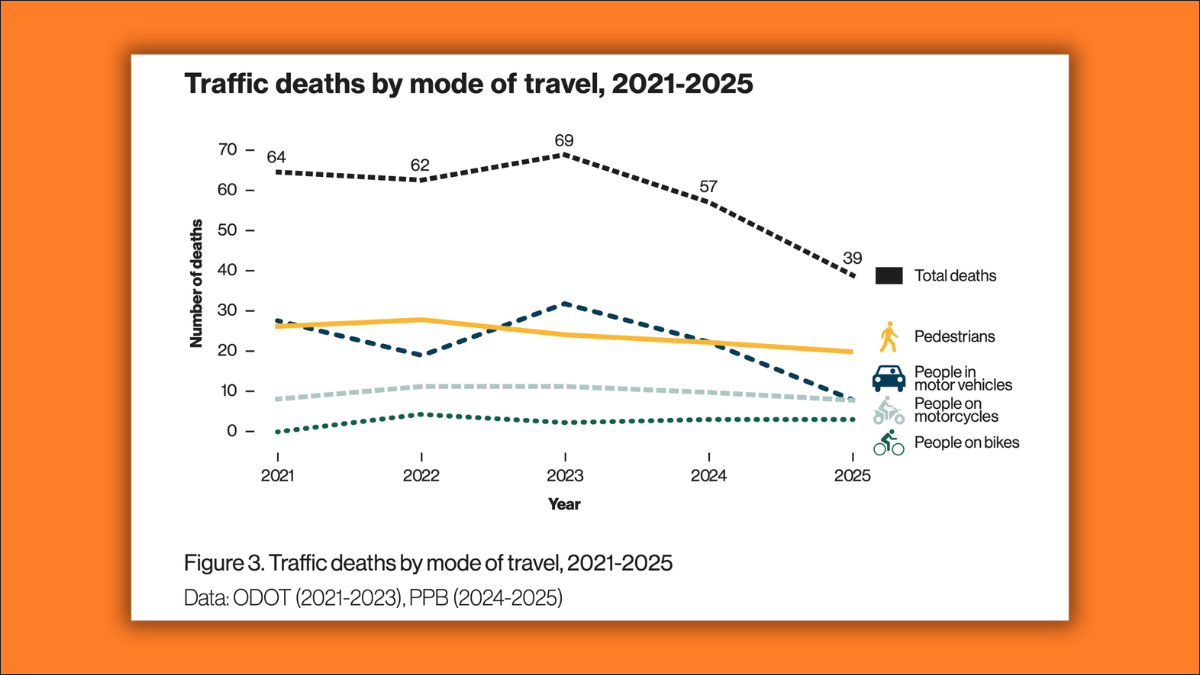
It’s nowhere near time to celebrate, but the City of Portland says after years of struggle they are finally making progress on their Vision Zero safety goal. The transportation bureau released its annual Deadly Traffic Crash Report today, which outlined a second consecutive year of declining deaths and marked what PBOT referred to as, “a decisive return to pre-pandemic levels and a 38% decrease from the average of the previous four years.”
PBOT’s tally of 39* traffic fatalities in 2025 is a steep decline from just two years prior when they recorded 69 deaths. (*Note: There are 10 additional deaths you’ll find in the BikePortland Fatality Tracker that PBOT doesn’t count in their Vision Zero tally because they don’t meet the federal definition of traffic death. See more at end of story.)
The City reports especially promising figures from East Portland, where road deaths fell by 56% compared to the previous four year average. The 11 fatalities in East Portland was the first time since 2018 that part of our city recorded fewer than 20 deaths.
Another good sign is that fatal hit-and-run crashes are down. Four people died in crashes when the driver failed to stop, that’s the lowest figure since before the pandemic.
In a statement, Portland Mayor Keith Wilson said he’s, “Proud of the lifesaving progress we’ve made.” “I’m grateful for my Council colleagues and City personnel as we align and inspire people and resources across the city to reach the true goal of Vision Zero,” he added.
The downward trend in Portland mimics national trends. And while it’s too early to fully understand why, it’s likely that policies that make road safety a priority, combined with federal funding from the Biden Administration, and a return to pre-Covid behavior standards play a big role.
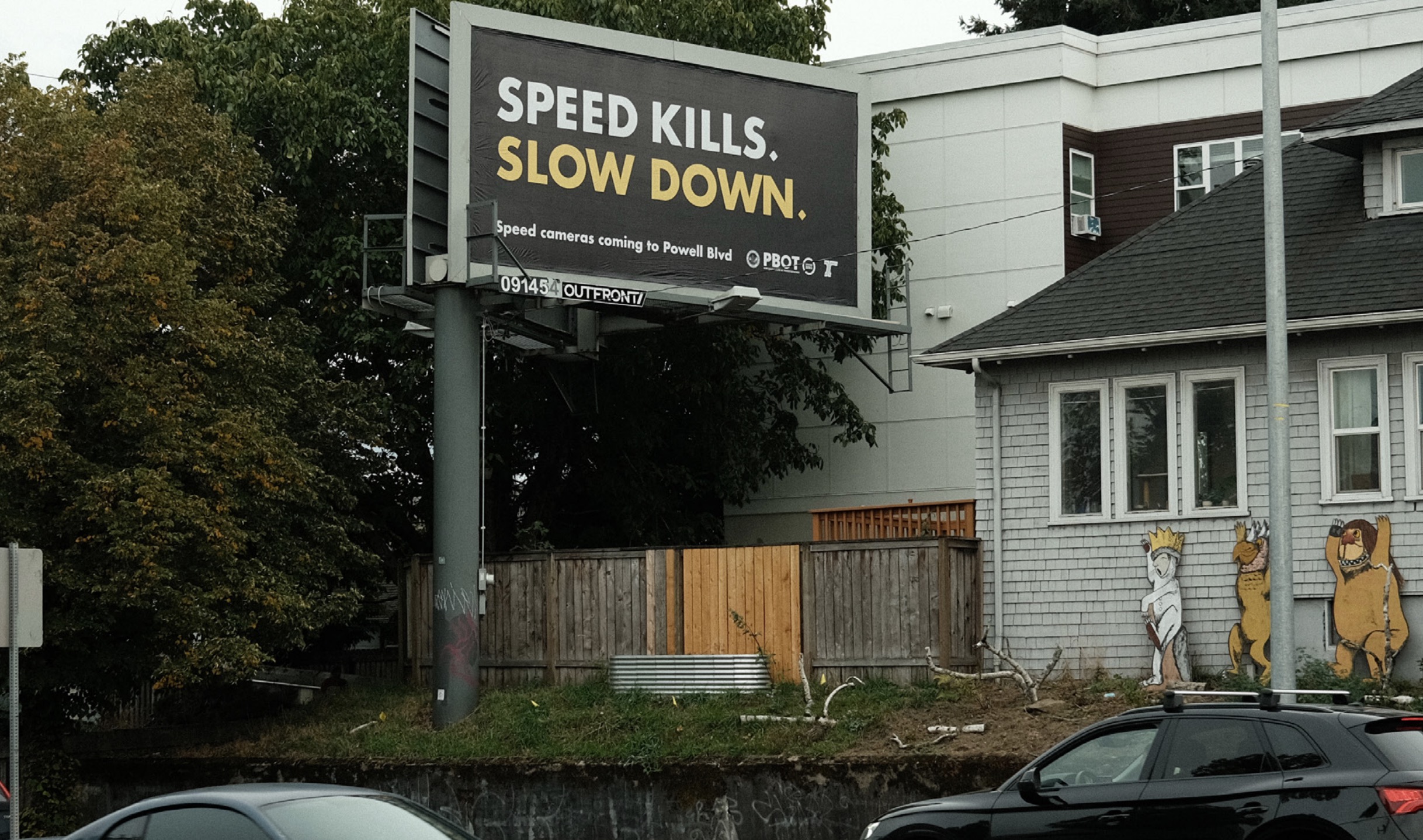
In Portland, PBOT has maintained a steady and serious focus on their Safe Systems approach to making roads safer. The agency has: reduced speed limits citywide (aiming for 20 or 25 mph on most streets); redoubled automated camera efforts; implemented small but important changes like “no turn on red” and vision clearance at dozens of intersections; and they’ve completed and/or broken ground on major capital projects that reduce driving space while adding safer, more protected spaces for bikers, walkers, and transit users.
Beyond those efforts, PBOT has worked to expand this effort beyond their bureau and they’ve found a political champion for Vision Zero on City Council. Last fall, Councilor Tiffany Koyama Lane passed a resolution that reaffirmed the city’s work.
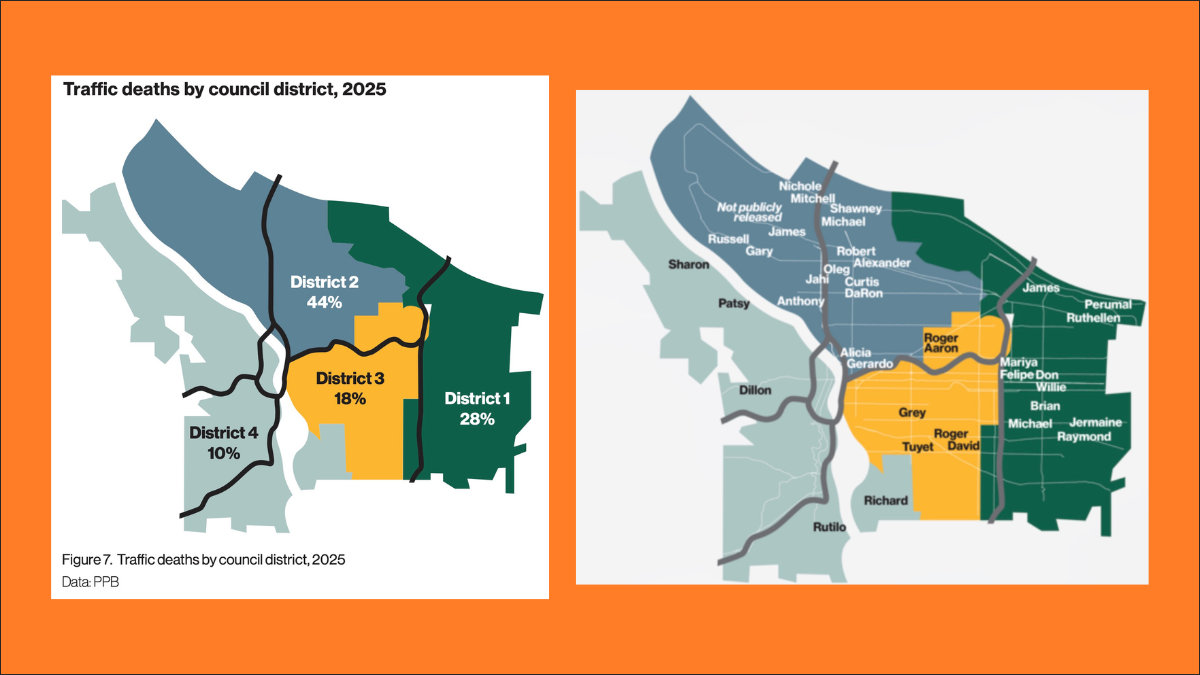
Much of the lower number last year was a result of fewer fatalities in East Portland. In their report, PBOT said the traffic death rate in East Portland in 2025 was almost on par with the rest of the city — 6.4 per 100,000 residents compared to 6 per 100,000 in the rest of the city. “This reflects a dramatic drop in traffic deaths for East Portland residents compared with prior year, when the rate was three times higher than the rest of the city,” reads the report.
PBOT’s press release about the report was also notable in the prominence of the Portland Police Bureau (I have a hunch this might have resulted from input from Mayor Keith Wilson’s office, since the report itself didn’t talk much about PPB’s role). In years since the murder of George Floyd in 2020, PBOT and other bureaus distanced themselves from enforcement as public sentiment around policing soured (even the PPB said they’d de-emphasize traffic violations in the name of racial justice). The relationship became so strained at one point that the PPB decided to shut down its Traffic Division altogether (it was reinstated two years later). But times have changed. In this morning’s release, PBOT called PPB a “key partner with PBOT in traffic safety.” PBOT also touted the 7,564 citations, 1,396 warnings, and 311 arrests by PPB Traffic Division officers last year. “These efforts reflect the Bureau’s continued commitment to accountability, prevention, and collaborative action in pursuit of safer streets for everyone,” stated the press release.
As to how people died on our streets in 2025, speeding is still the most prominent factor with 41% (16 people) of traffic deaths involving speeding or excessive speeds. To learn more, check out the 2025 Deadly Traffic Crash Report or read more on PBOT’s website.
PBOT adheres to the definition of traffic death published by the National Highway Traffic Safety Administration (NHTSA). This means they do not include people whose death:
- Occurs more than 30 days after initial crash
- Is the result of a suicide
- Is an act of homicide, when a person intentionally crashes into another person
- Occurs in a crash not involving a motor vehicle, such as a MAX train and a pedestrian
- Is caused by a prior medical event, such as a heart attack or drug overdose
- Happens in a crash on private property, such as a parking lot.