
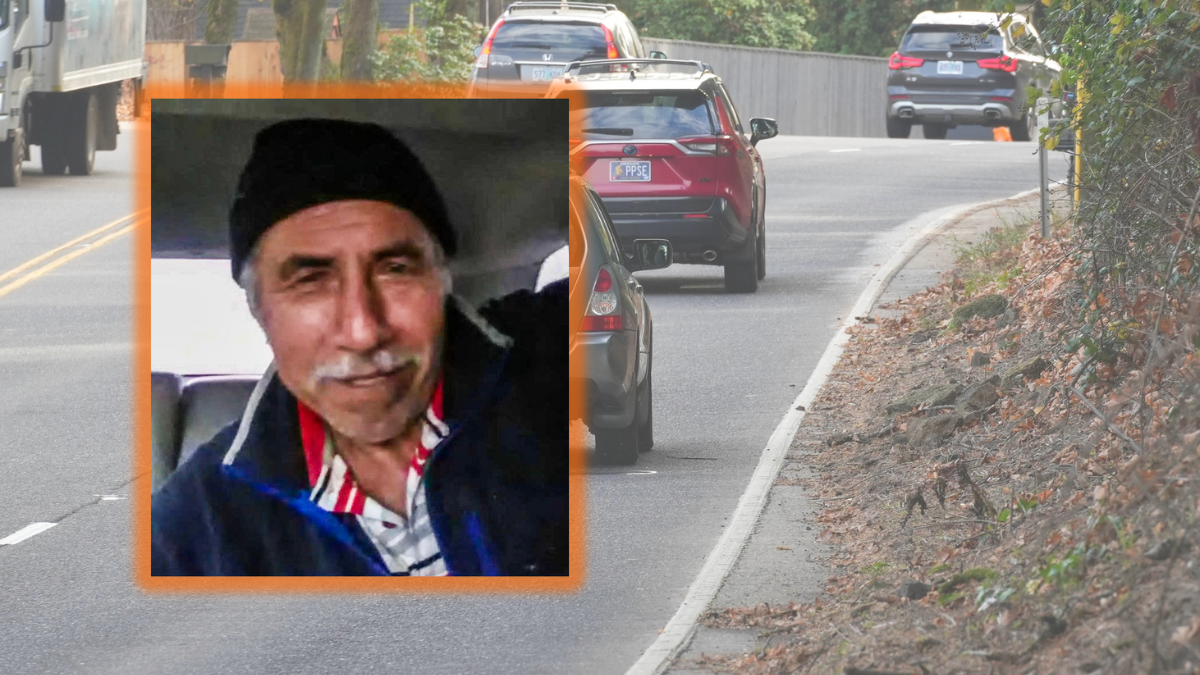
According to a family friend, 68-year-old Rutilo Jorge was a hard-working man who held down two jobs in order to send money home to his family in Mexico. He was in between shifts as a roofer and a gas station attendee when, around 5:30 pm on November 11th, he hopped on his bike to pedal southbound on Highway 43.
As he rode past a section of the high-speed highway with barely an inch of navigable shoulder, the Multnomah County Sheriff’s Office says he hit a rock and was then hit from behind by the driver of an SUV. Jorge died in the street that night. He left behind a wife and two daughters — one of whom is 20 years old and works at Clackamas Town Center.
After a memorial service on Sunday, November 23rd, Jorge’s friends and family arranged for his remains to be transported home to Mexico on the day before Thanksgiving so he could be with his wife and other daughter who still live there.
Meanwhile, the dangerous conditions that led to Jorge’s death remain. And given the lack of alternate routes, riders continue to pedal past the same rocky, debris-filled, deadly shoulder.
Nine days after Jorge was hit, staffers from the Oregon Department of Transportation (ODOT) began a review of the crash as part of a relatively new program called the Vulnerable User Crash Response (VCR). Launched in Oregon in January 2024, the program is based on a law passed by the Biden Administration’s Infrastructure Investment and Jobs Act (IIJA) in 2021.

According to the law, in states where vulnerable road users make up 15% or more of annual traffic fatalities, that state must spend at least 15% of their highway safety funds on projects that specifically address the safety of vulnerable users. Unfortunately, Oregon surpasses that threshold. According to ODOT data, non-drivers account for more than one out of every five deaths on state-owned roads. Using safety funds set-aside from the 2017 transportation package, the State of Oregon has funded ODOT’s VCR program to the tune of $10.6 million for the four years between 2024 – 2027.
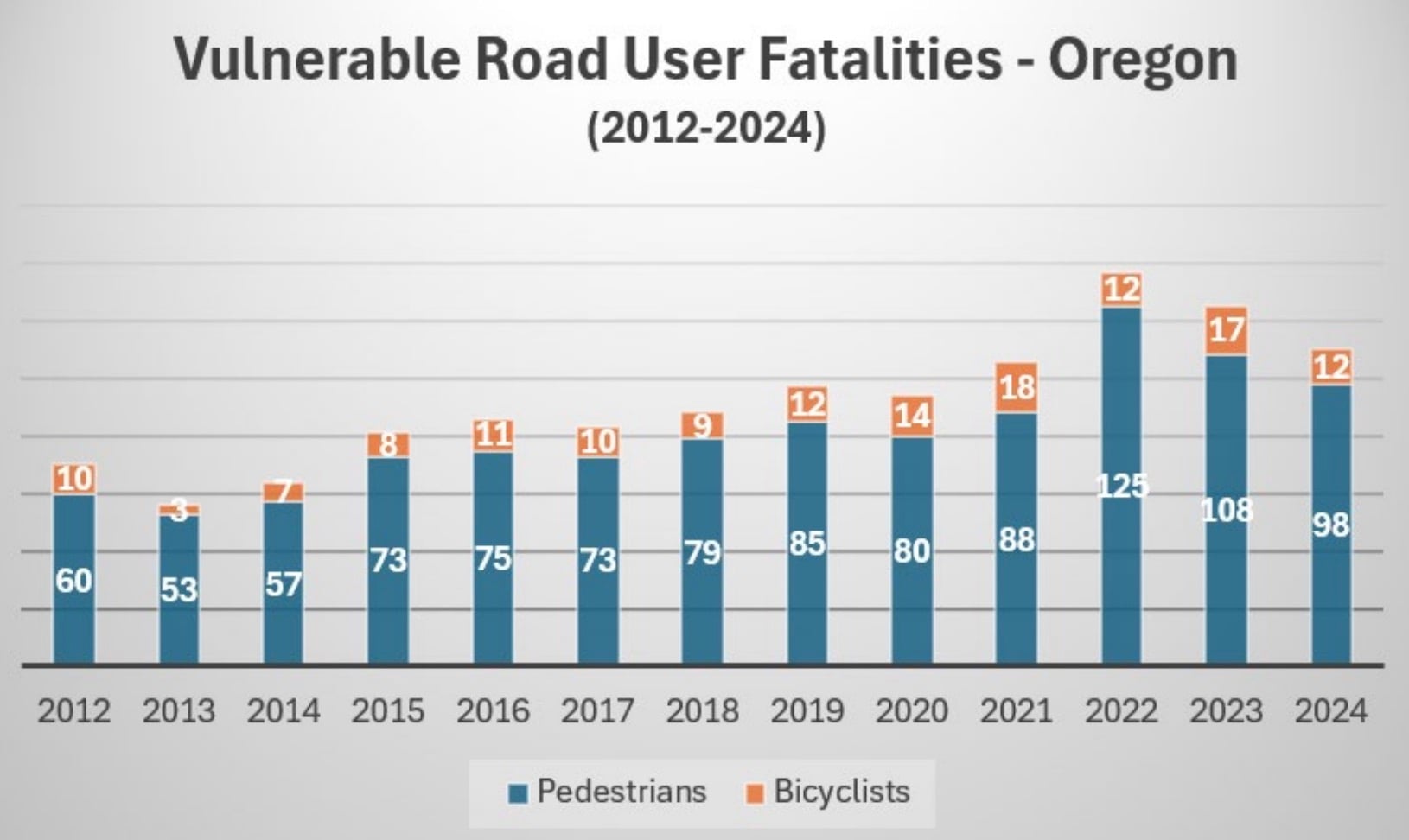
Program Annual Report, April 2025.
ODOT says their VCR Team is made up of a, “statewide group of technical experts” who will review the crash and determine if any improvements to the roadway are possible. While the team will note the need for larger-scale and longer-term fixes, the VCR program specializes in smaller solutions. “These quick-fixes are small in scale but can be big in impact,” ODOT Region 1 Active Transportation Liaison Kerrie Franey wrote in an email forwarded to BikePortland. “Some examples include illumination, signing or striping, speed feedback signs, or an enhanced crossing.”
David House with ODOT public affairs, says the location where Jorge was hit and killed could qualify for a larger project that would improve safety for bicycle riders. In an email to BikePortland on November 20th, House wrote that ODOT’s Active Transportation Needs Inventory (ATNI) ranks this section of OR-43 (between the Sellwood Bridge and Lake Oswego) in the Top 10% for prioritization across the entire state. And according to ODOT’s Vulnerable Road User Assessment Score (accessible on ODOT’s TransGIS website), this spot on Highway 43 is ranked as “High Risk.”
That risk exists in large part because of the lack of safe shoulder space. When I asked House about sweeping the shoulder, he said ODOT gets to that section of Highway 43 every six to eight weeks and that his records show it was last swept on November 17th.
“When I asked about cleanup plans, the maintenance manager noted that this area does not have much shoulder, and the asphalt does not go all the way to the rock wall,” House shared in a subsequent email. That confirmed one of my concerns: The debris I stood in while making my video and that Jorge tried to avoid prior to being hit, is a natural feature that can’t be simply swept away.
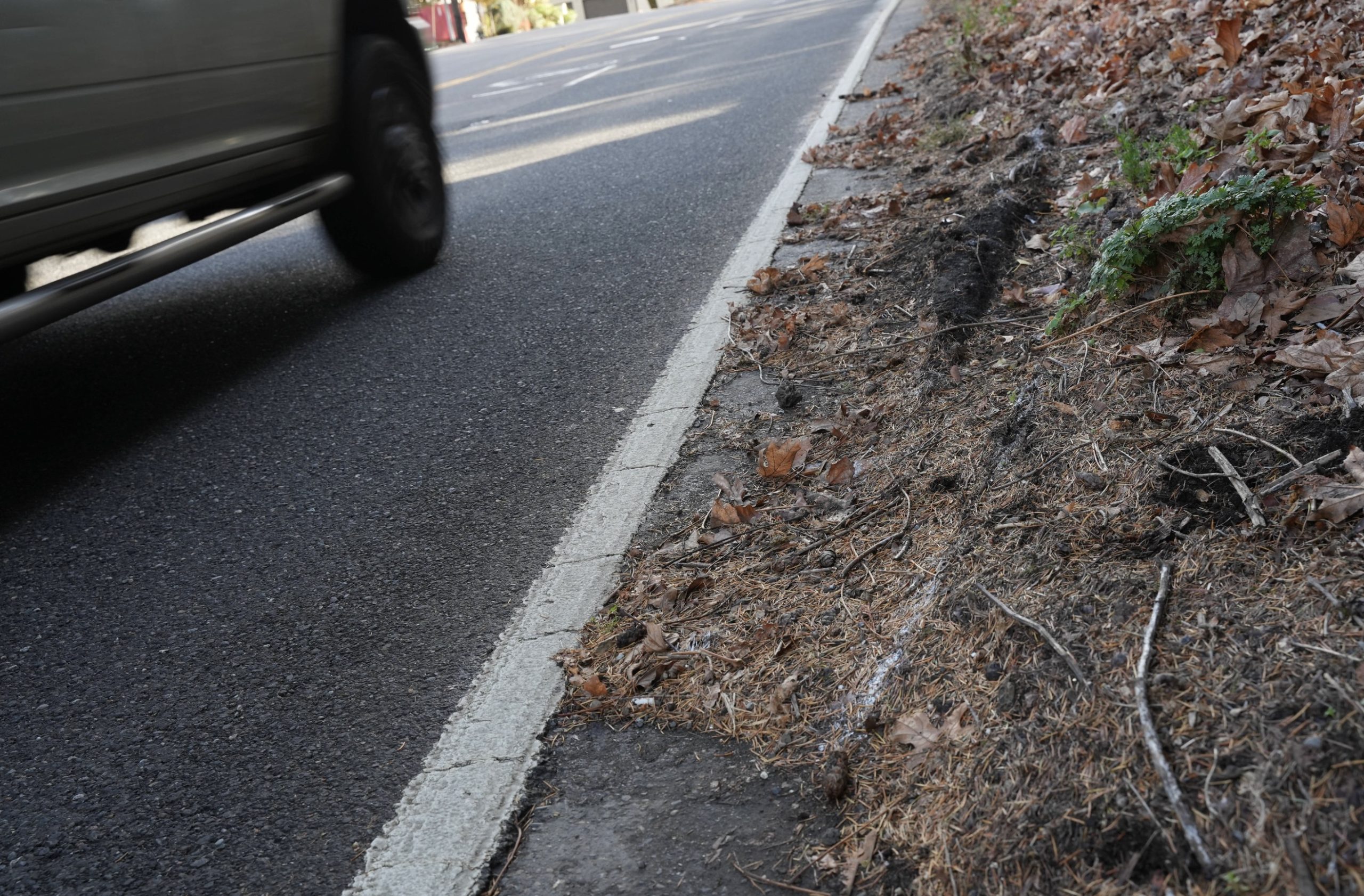
“I understand,” I replied to House. “But it begs the question: Since there’s not much of a shoulder, how are bicycle riders supposed to safely navigate this area? And would maintenance consider doing more aggressive sweeping to push back the rocks and sticks and dirt so at least there’s more room even if it’s unpaved? And longer term, would ODOT consider the idea of building a retaining wall and paving the shoulder to give users more shoulder space?”
“There isn’t much space for a shoulder in some sections of [Highway] 43,” House replied.
I’m not satisfied with that answer, but for now House and I agreed to let the VCR team complete their investigation before we discuss the issue any further. Earlier today House said he expects that work to take about 4-6 weeks, so I’ll touch base with him again in early January.
Another part of ODOT’s investigation is likely to include considerations of recommendations made in previous planning efforts that looked at building a bike lane on the highway or creating a parallel route. In 2010, Metro commissioned the Lake Oswego to Portland Trail plan. That plan examined the feasibility of a two-way bike lane on the east side of the highway that would be separated from traffic by a large, concrete barrier. I’ll take a closer look at that plan and share more about the history — and potential future — of this corridor in a separate post.