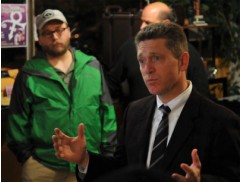

passing out crime stats at a recent
neighborhood meeting.
(Photos © J. Maus)
Portland is a town where being involved is just how we roll. Lots of folks here volunteer for non-profits, speak up at City Council when necessary, and are generally engaged on issues that impact their daily lives. Portland is also known for its 95 distinct neighborhoods, each one of which has an official neighborhood association attached to it.
If there’s one thing I’ve learned over the years doing this site, it’s that the people in the City of Portland building and in City Hall, listen to — and care about — what neighborhood associations have to say. I’ve also seen a lot of transportation activism start at the neighborhood level.
“When neighborhood associations care about something, we hear about it.”
— Catherine Ciarlo, Transportation Policy Director for Mayor Sam Adams
If you live in Portland and aren’t already a regular at monthly neighborhood association meetings, you should be. They’re ground zero when it comes to making a difference on livability issues, especially learning about transportation projects. Here’s just one example…
Back in February 2007 I was at my local neighborhood meeting and heard, for the first time, about a big new transportation project that was coming to my area; the Columbia River Crossing. That meeting opened my eyes about the CRC project and it left a very bad taste in my mouth. I went home and blogged about my concerns and I’ve been following the project ever since.
Catherine Ciarlo, Transportation Policy Director for Mayor Sam Adams, says neighborhood associations are a key part of how they make decisions. “When neighborhood associations care about something, we hear about it.” Ciarlo says City Hall and PBOT rely on neighborhood associations to weigh in on transportation plans and when they put together committees, they look to have neighborhood representatives on them.

information with your neighbors.
Being involved with your neighborhood association is “a pretty direct connection to City Hall,” says Ciarlo.
When PBOT has a particular route in mind for a new Neighborhood Greenway, for instance, Ciarlo says they’ll bring it to the neighborhood. “Usually the route has been decided only conceptually… Then we will go to them and say, ‘Here’s the concept, but what’s your input on how it’s going in on the ground?'”
But Ciarlo offers a caveat. While neighborhood associations are vital how Portland works, she says “It’s important to make sure we reach beyond them. They’re good for those involved, but they leave out renters and others who aren’t involved in the community.”
Most neighborhood associations have a Transportation Chair, someone who volunteers to track transportation projects in the neighborhood. You can be that person. Or, you can get to know that person, help them, and ask them questions. Neighborhood police officers are also regulars at meetings. They can help you track bike theft and keep an eye out if speeding or other traffic issues need attention.
Get involved. Before you know it, you’ll be helping make the streets in your neighborhood better for bicycling. A good place to learn more is Portland’s Office of Neighborhood Involvement (ONI). They’ve got a helpful map where you can track down your local association.
If you are involved with transportation issues with your neighborhood association, it’d be great to hear your experiences.